A crochet skinny neck scarf gives fall outfits a handmade layer without adding the volume of a full winter scarf. The narrow shape can sit inside a blazer, hang over a sweater, tie beside an open collar, or add color to a simple jacket while leaving most of the outfit visible.
The projects below do not all use the same construction. Some are long rectangular scarves made for wrapping or loose knots. Others taper toward the ends, sit more like small neckerchiefs, or use special features such as mesh, fringe, a keyhole, Tunisian texture, stripes, or bow styling. Those differences affect more than appearance: they change how much fabric gathers at the neck, how easily the scarf knots, and how practical it feels under fall outerwear.
Quick List
- Crochet Long Line Folded Skinny Scarf
- Crochet Fine Mesh Scarf And Belt Tie
- Crochet Filet Mesh Skinny Neck Scarf
- Crochet Pointed Ribbed Skinny Scarf
- Crochet Tapered Mini Neck Scarf
- Crochet Tunisian Purl Skinny Scarf
- Crochet Bordered Mini Skinny Scarf
- Crochet Mixed Texture Mini Neckerchief
- Crochet Moss Stitch Skinny Scarf
- Crochet Long Fringe Lace Scarflette
- Crochet Pull Through Keyhole Skinny Scarf
- Crochet Knotted Skinny Scarf Or Belt
- Crochet Mixed Row Thin Scarf
- Crochet Striped Long Skinny Scarf
- Crochet Multi Wear Bow Skinny Scarf
- Crochet Woven Fan Skinny Scarf
- Crochet One Ball Single Crochet Skinny Scarf
Choose the Scarf Shape Around the Fall Outfit
A long rectangular skinny scarf works differently from a short tapered one. Long versions can hang down the front of a coat, wrap once around the neck, or form a loose knot over a sweater. They create strong vertical lines and can add color without covering much of the garment underneath.
Tapered mini scarves put more emphasis around the neckline. They can work well with crewnecks, cardigans, denim shirts, and jackets because the pointed ends reduce some of the bulk where the fabric crosses. Keyhole and short scarflette constructions are another option when you want the scarf to stay close to the neck rather than leave long tails.
Think about the neckline before choosing a project. A decorative mini scarf can disappear under a high coat collar, while a very long scarf may compete with a cropped jacket. The intended styling position is often more useful than an arbitrary scarf measurement.
Drape Matters More When the Scarf Is Narrow
A skinny scarf has very little fabric to hide stiffness, curling, or uneven edges. If the yarn-and-hook combination creates rigid fabric, the scarf can behave more like a strap than an accessory that falls naturally around the neck.
Before making major yarn substitutions, crochet enough fabric to fold, twist, and loosely knot. Mesh and lace need enough stability to keep their openings recognizable, while Tunisian or ribbed fabric may need extra attention to flexibility. Fuzzy yarn can soften the overall appearance but may hide textured stitch patterns that were intended to be visible.
A narrow scarf also exposes its side edges. If a long rectangular piece slowly gains or loses width, the change can become obvious when both ends hang together.
Plan Color and Texture for Fall Layering
Skinny scarves are well suited to fall because they can introduce a small amount of texture or color without turning an outfit into full cold-weather dressing. Rust, burgundy, olive, camel, chocolate, charcoal, cream, deep blue, and muted pink can all work naturally with seasonal layers, but the construction should still guide the yarn choice.
A striped scarf already has strong visual movement and may not need fringe. A textured mini scarf can look effective in one solid color because the stitches supply the detail. Open mesh looks noticeably different over a contrasting sweater than it does over a similar-colored shirt.
When planning a scarf for a specific coat or cardigan, hold the yarn against that garment before committing. The scarf occupies little visual space, so contrast—or the lack of it—can change the entire effect.
1. Crochet Long Line Folded Skinny Scarf
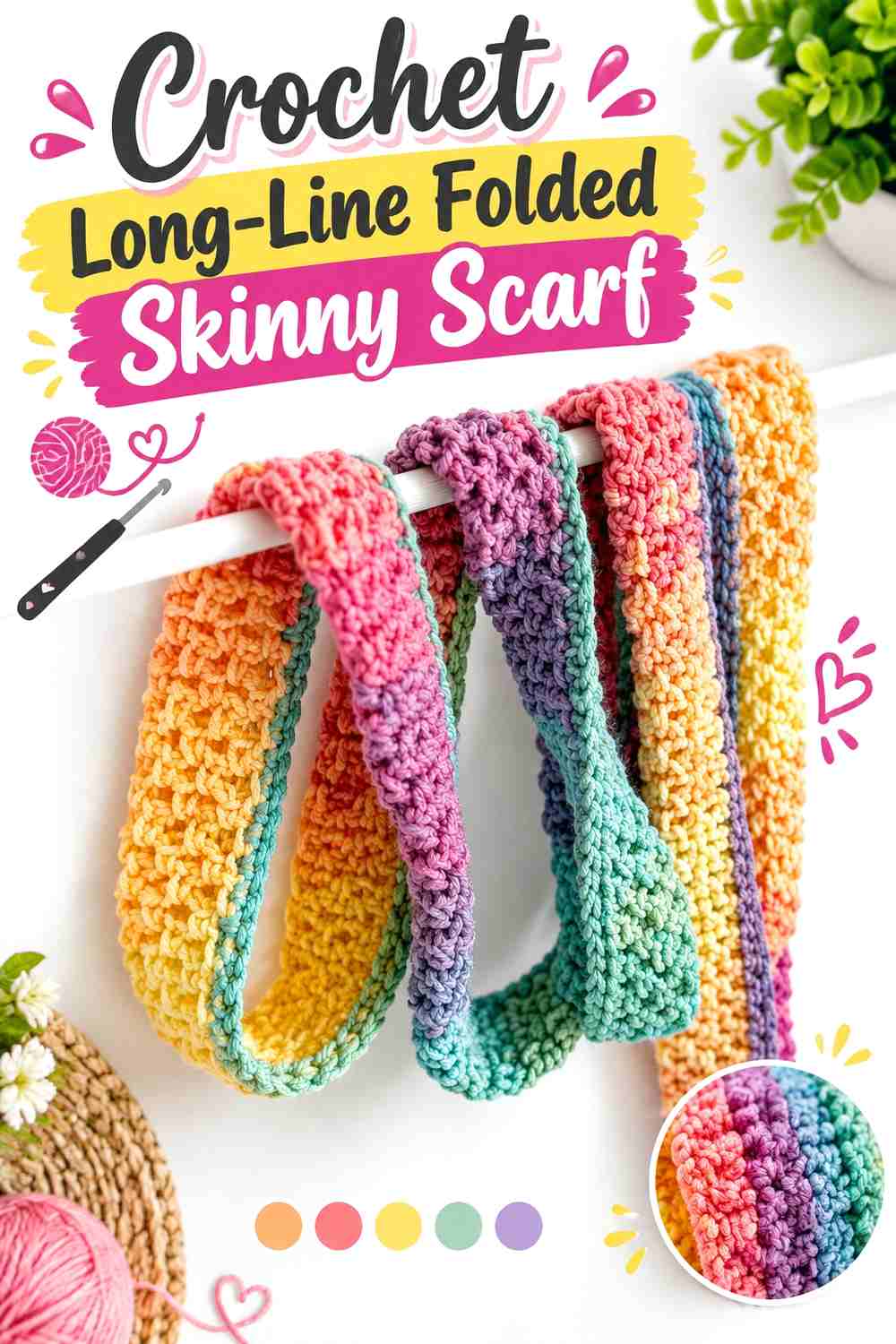
This long crochet skinny scarf keeps the silhouette especially narrow while providing enough length for wrapping and loose knots. The tutorial shows a construction that can produce a very slim finished scarf, making it a strong direction when you want a modern vertical accent rather than the coverage of a conventional fall scarf.
Extra Length Gives the Scarf More Styling Range
A long scarf can be worn with both ends straight, loosely crossed, or wrapped before the ends fall forward. Those options use very different amounts of length, so decide which styling method matters before making the scarf shorter.
For a fall outfit, a longer version can look particularly clean over a plain sweater or beneath an open coat because the narrow ends create vertical lines without obscuring the layers underneath.
The Narrow Finish Makes Fabric Flexibility Important
Very slim crochet can become cord-like if the fabric is too firm. If substituting yarn, make a sample and see whether it bends comfortably into a loose knot. A thicker yarn does not automatically make a better fall scarf if it causes the narrow strip to stand away from the body.
Compare the Wider and Narrower Looks Before Finishing
The tutorial’s construction offers a useful reminder that a small change in width can alter the character of a skinny scarf considerably. Before committing to the narrowest finish, drape the work over the jacket or sweater you plan to wear it with and decide whether you want a delicate line or slightly more visible fabric.
Creator Credit: Krampolinka Crochet Designer and Free Patterns
2. Crochet Fine Mesh Scarf And Belt Tie
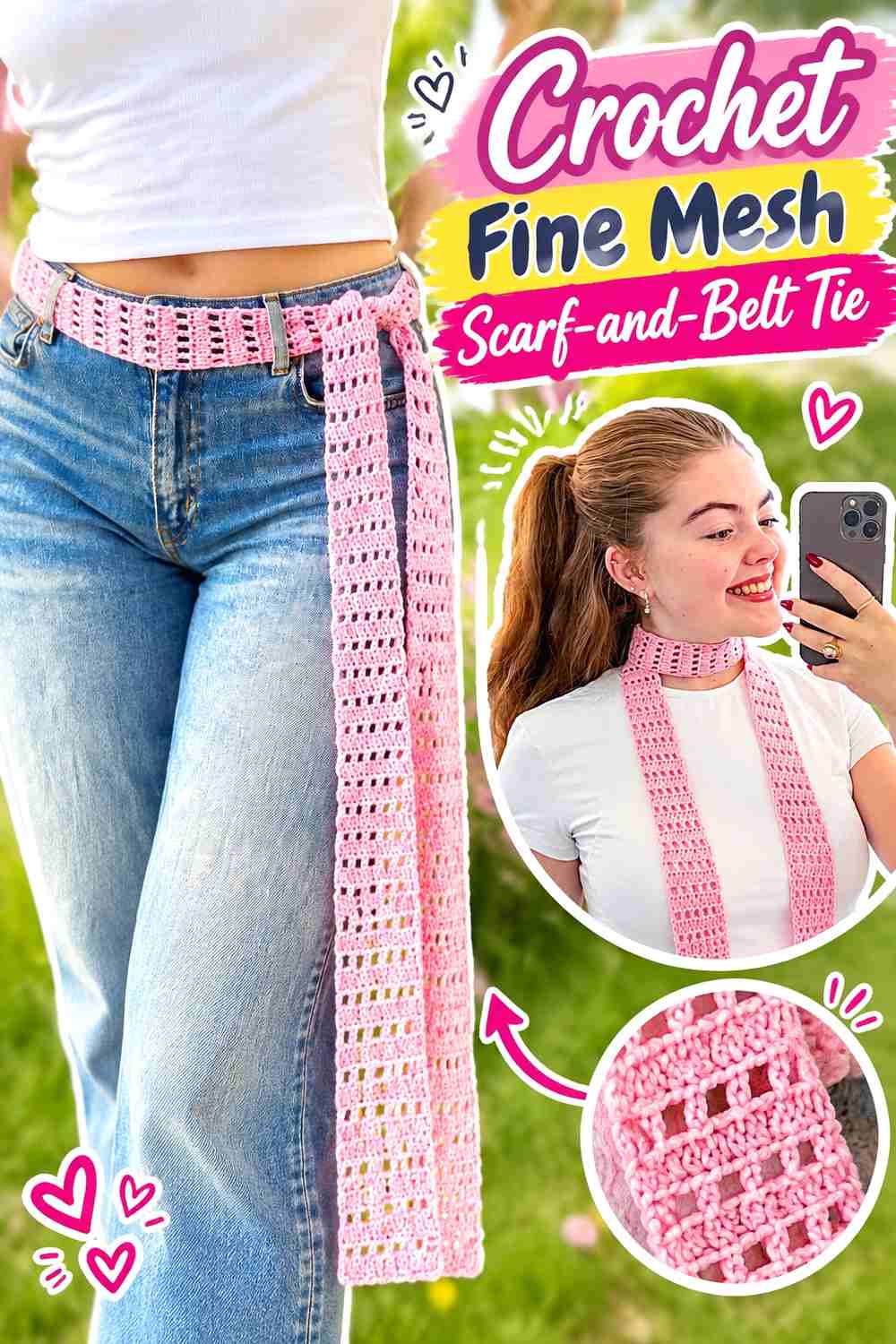
This project treats a skinny crochet scarf as a true fashion accessory rather than only neckwear. The tutorial is designed so the long narrow piece can also be worn as a belt, which makes the project especially useful with fall dresses, long cardigans, and oversized shirts.
Dual-Purpose Styling Puts More Pressure on Drape
A scarf can hang comfortably even if the fabric has some body, but a belt needs to curve around clothing. When changing yarn, bend your sample around your hand rather than assessing it only while it lies flat.
If the fabric is too stiff for the waist, you may still prefer the project as neckwear. Prioritize the use you expect most rather than forcing one yarn choice to perform identically in both situations.
Keep the Ends Clean Enough for Visible Ties
When the piece is used at the waist, the ends may be more exposed than they are inside a neck knot. Tidy edge tension and discreetly woven tails become part of the finished look.
This is also a project where oversized tassels or heavy embellishments could reduce versatility. A streamlined finish keeps both styling options available.
Fine Fabric Can Layer More Easily Under Outerwear
A slender scarf with relatively little bulk can sit inside a blazer or coat without creating a large ridge around the neck. That makes this construction particularly useful during early fall when you want an accessory layer but do not yet need a heavy scarf.
Creator Credit: Crochet with Linni
3. Crochet Filet Mesh Skinny Neck Scarf
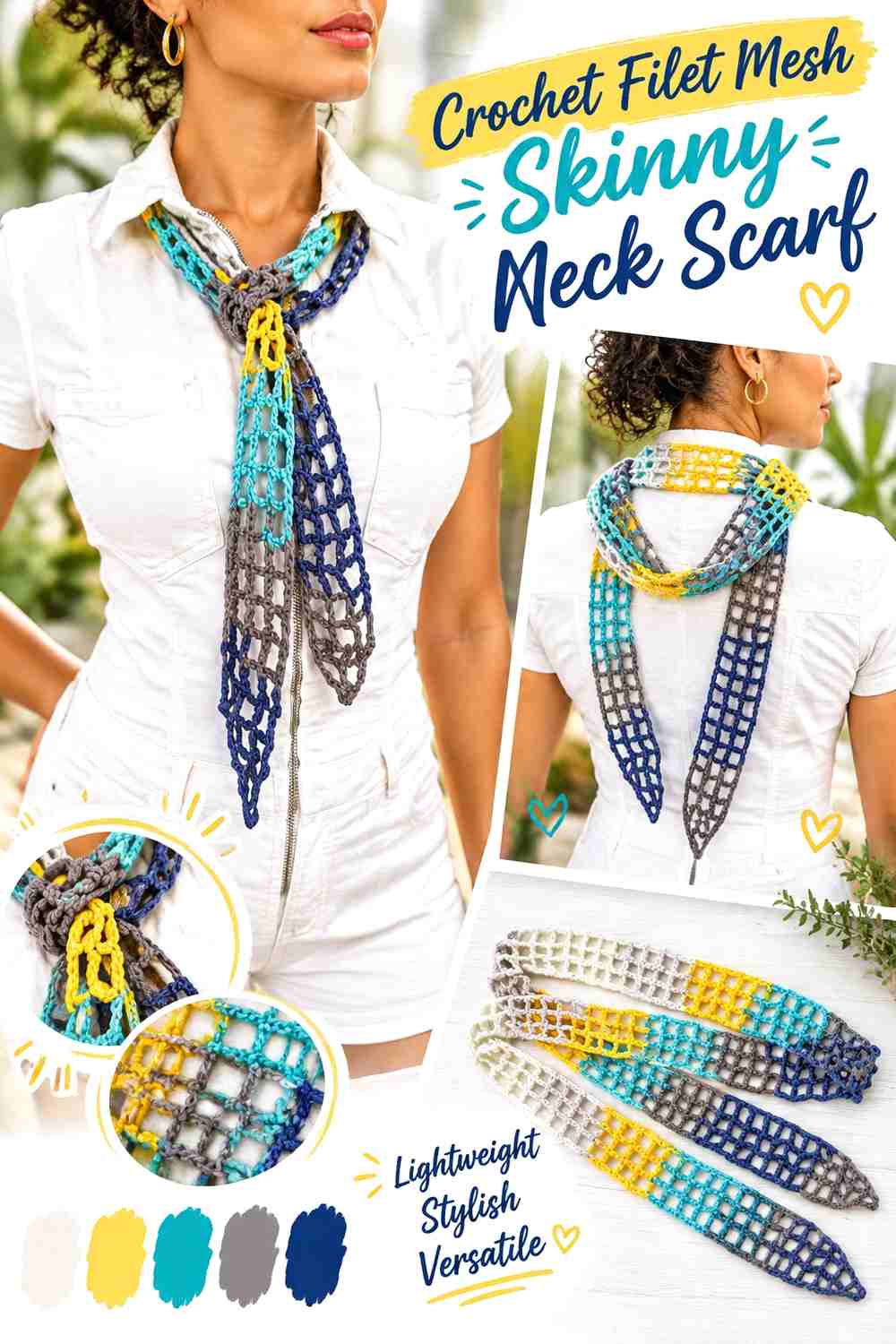
Open mesh turns the skinny scarf into a decorative layer rather than a dense strip of fabric. Ravella Design’s tutorial presents the narrow mesh piece as a scarf that can also be adapted to other accessory uses, so the project is especially suitable when you want the crochet structure itself to remain visible.
The Clothing Underneath Becomes Part of the Design
Mesh lets the sweater, blouse, or dress underneath show through. A light scarf over a dark top emphasizes every opening, while a low-contrast combination produces a subtler textured effect.
That makes outfit planning particularly useful for this project. The same scarf can look graphic over black and much softer over a neighboring tone.
Enlarged Mesh Can Change the Scarf Quickly
Changing to a thicker yarn or larger hook does more than increase the overall width. It can enlarge every opening, shifting the scarf from delicate gridwork toward a bolder open structure.
Make enough of a sample to see several openings together before judging a yarn substitution.
Watch for Snagging Around Fall Hardware
Open crochet can catch more readily on exposed zippers, decorative buttons, jewelry, or rough bag hardware. If this scarf will be worn with a heavily detailed jacket, a clean finish may be more practical than adding beads or extra fringe.
Creator Credit: Ravella Design
4. Crochet Pointed Ribbed Skinny Scarf
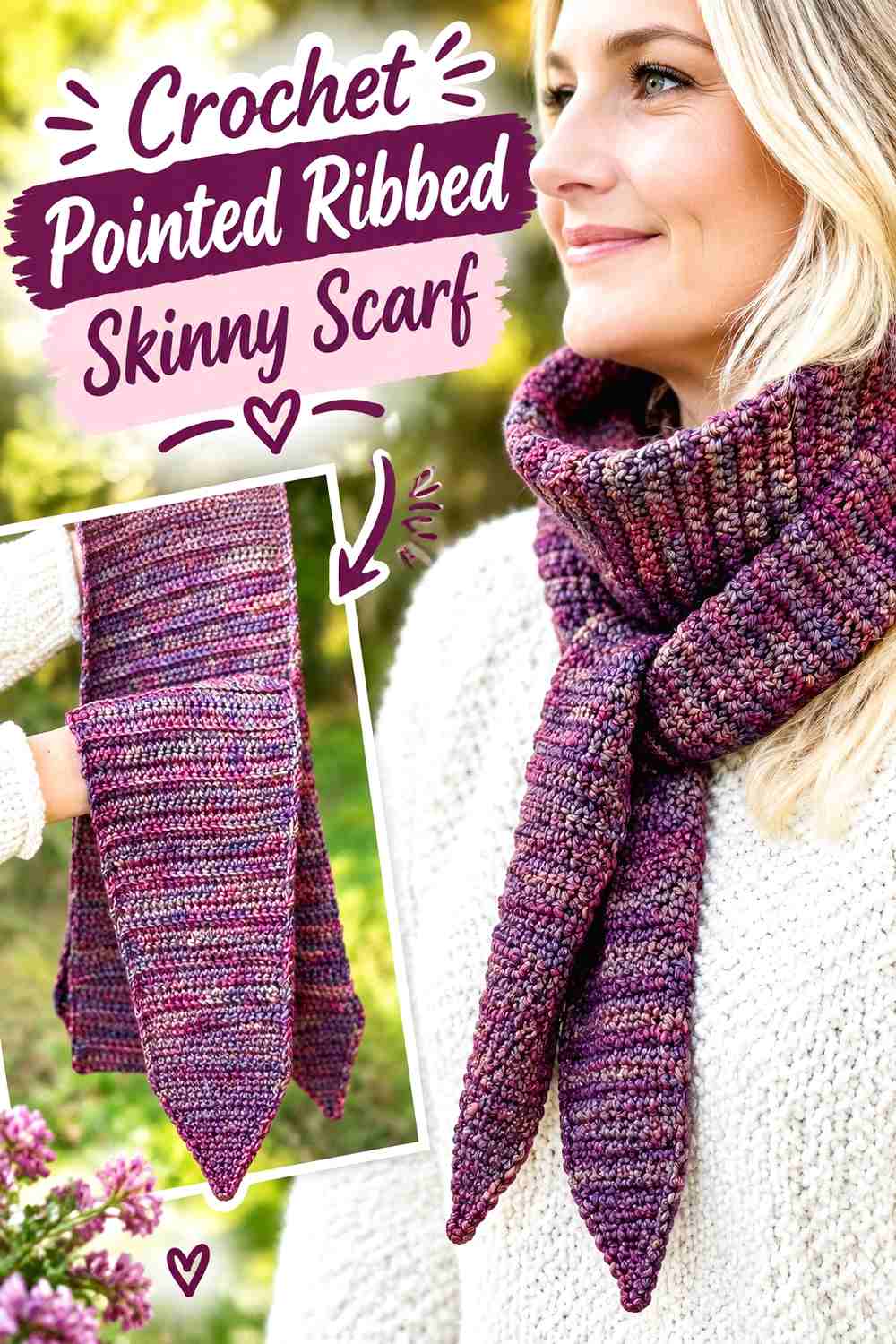
Instead of keeping the same width from end to end, this crochet skinny scarf uses shaping to create pointed ends and a wider center section. The tutorial combines increases, decreases, and textured crochet, so the result sits closer to a shaped neck scarf than a simple rectangular strip.
Pointed Ends Reduce Fabric Where the Knot Forms
Tapering can help a scarf tie with less fabric stacked at the crossing point. That makes this shape useful with a cardigan or blazer where a wide rectangular scarf might create too much bulk near the neckline.
When altering the proportions, consider the ends and center separately. More center width adds coverage, while extra tip length mainly changes tying room.
Raised Texture Can Feel Heavier Than the Width Suggests
A narrow scarf may look delicate from a distance but still feel substantial if its stitch texture creates thick fabric. Test the widest section against the neck before completing the second half if you have changed yarn.
A soft, flexible fabric will generally form a cleaner small knot than one that remains rigid.
The Center Section Determines Whether It Still Looks Skinny
As the shaped area becomes deeper, a pointed scarf can start moving toward shawlette territory. If the goal is a modern narrow neck accessory, watch the center profile rather than focusing only on total length.
Creator Credit: Handy Little Me
5. Crochet Tapered Mini Neck Scarf
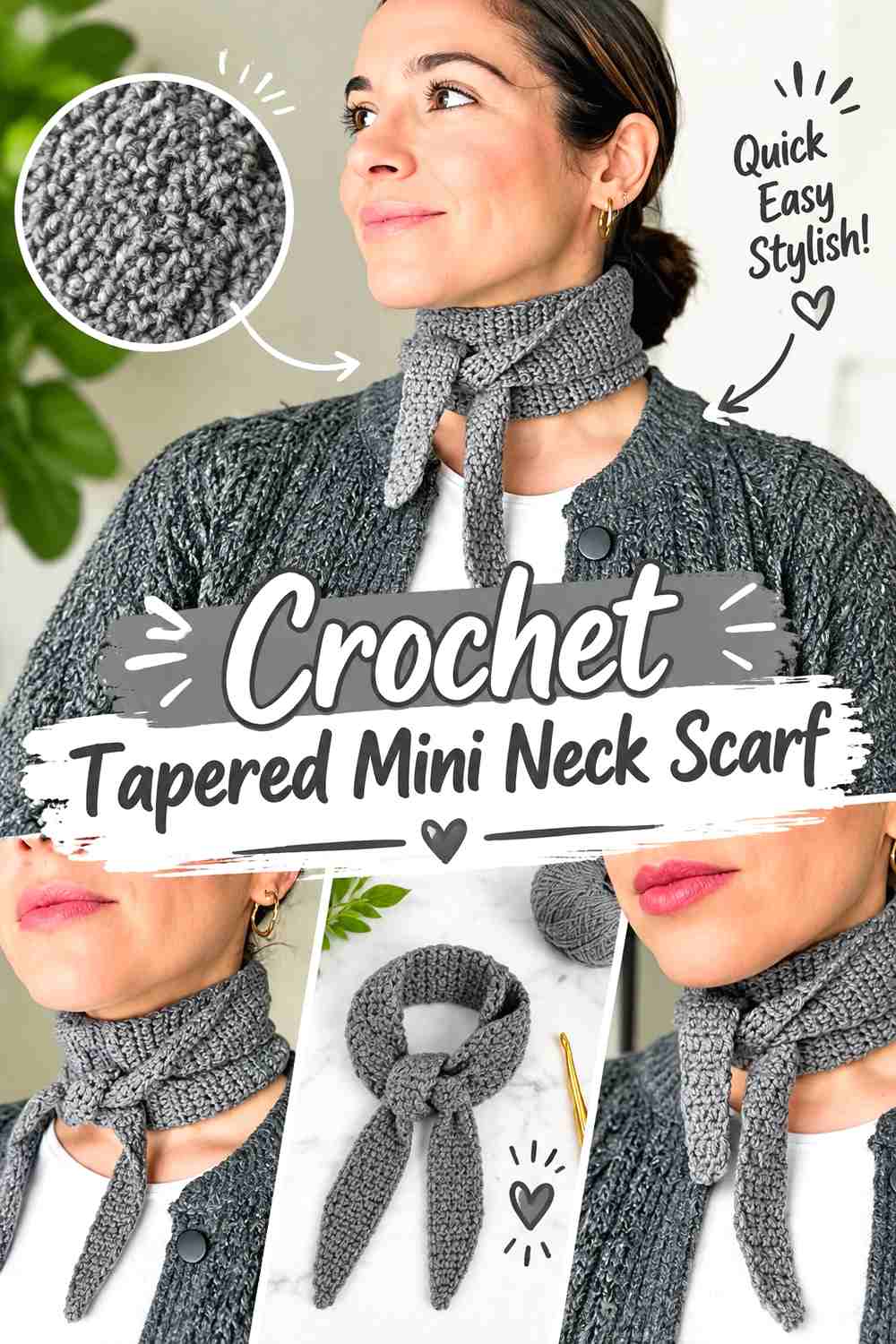
This compact crochet scarf uses gradual shaping to create a small neck accessory with pointed ends. Compared with the long rectangular projects, the visual focus stays close to the face and neckline, making it useful with crewneck sweaters, button-down shirts, and light fall jackets.
Short Ends Need to Tie Comfortably
Mini scarves have less excess fabric to compensate for stiffness. Even when the scarf technically reaches around the neck, firm tips can make the knot awkward.
If substituting yarn, test the tips by crossing and gently tying them before deciding the length is finished.
Small Proportion Changes Are Easy to See
On a compact scarf, an extra band of width or a heavier border can alter the silhouette much more dramatically than it would on a full-size shawl. Check the growing scarf around the neck rather than relying only on a flat view.
Side-Tie Styling Can Change the Entire Look
A tapered scarf does not need to be centered. Moving the small knot toward one side can work well with a plain neckline and keeps the scarf from competing with buttons or a jacket opening down the middle.
The styling choice requires no change to the underlying construction, but it is worth considering when selecting length.
Creator Credit: VIARA – tutoriales de crochet
6. Crochet Tunisian Purl Skinny Scarf
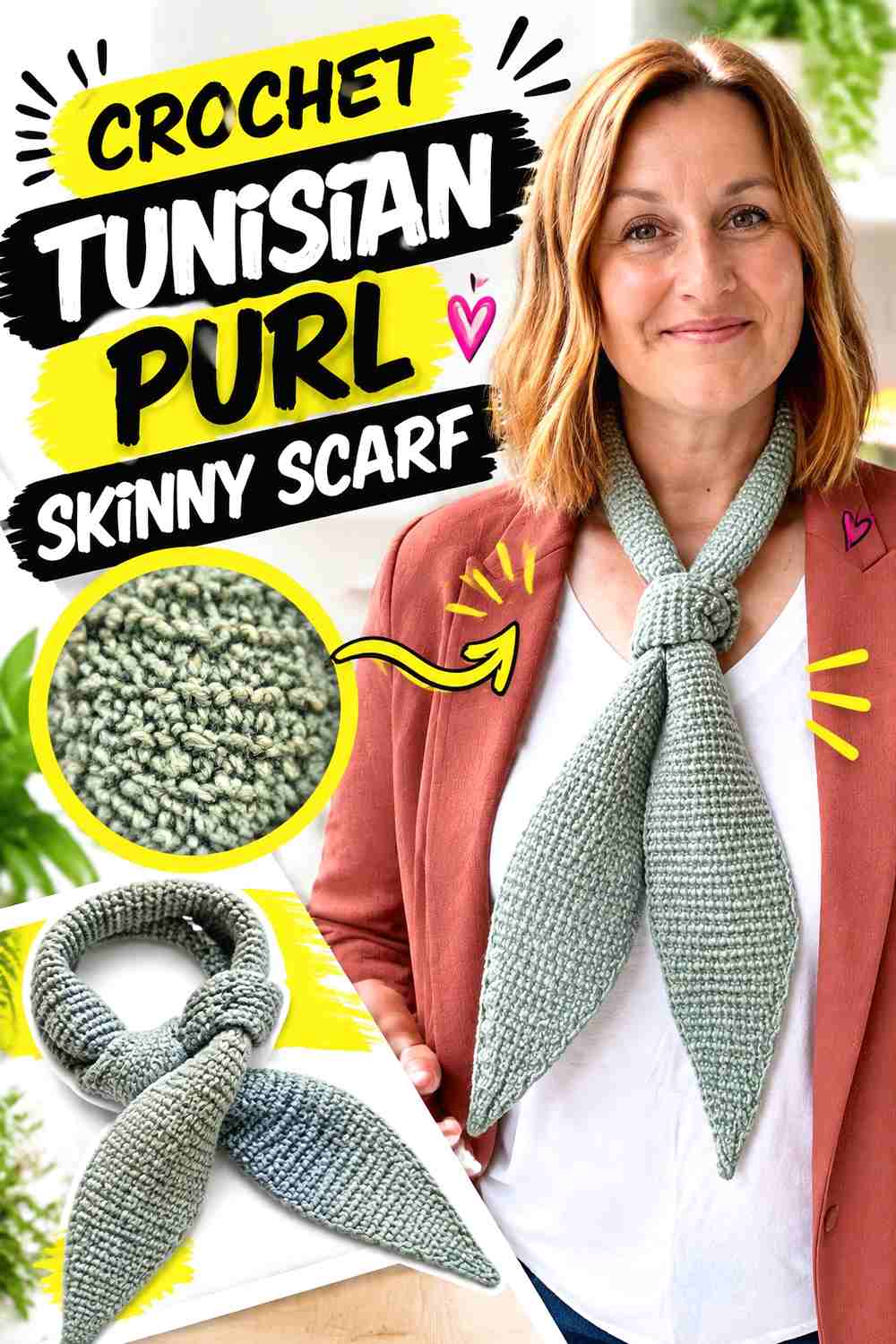
Tunisian crochet gives this skinny scarf a surface that differs noticeably from standard back-and-forth crochet. Blue Star Crochet uses Tunisian purl texture with shaped ends, producing a narrow accessory where the stitch surface is one of the main design features.
Check Curl Before Working the Full Length
Tunisian fabrics can behave differently from ordinary crochet, including a tendency for some stitch patterns to curl. Work enough fabric to evaluate the relaxed edge before assuming finishing will correct every issue later.
A skinny scarf makes edge behavior especially visible because there is so little surrounding fabric.
Smooth Yarn Helps the Purl Texture Read Clearly
If the stitch definition is what attracts you to this project, highly fuzzy yarn can hide much of that detail. A smoother yarn lets the vertical and purl-like surface remain more visible.
For fall styling, a solid or gently tonal shade can also keep attention on the texture rather than dividing it with frequent color changes.
Tapered Ends Balance the Denser Technique
Tunisian crochet can produce a substantial fabric even in a narrow width. Pointed ends reduce the amount of material gathered into the knot, which helps preserve the scarf’s small scale.
If you widen the center, check the crossing point again rather than assuming the original tie will still feel the same.
Creator Credit: Blue Star Crochet | Veronika Cromwell
7. Crochet Bordered Mini Skinny Scarf
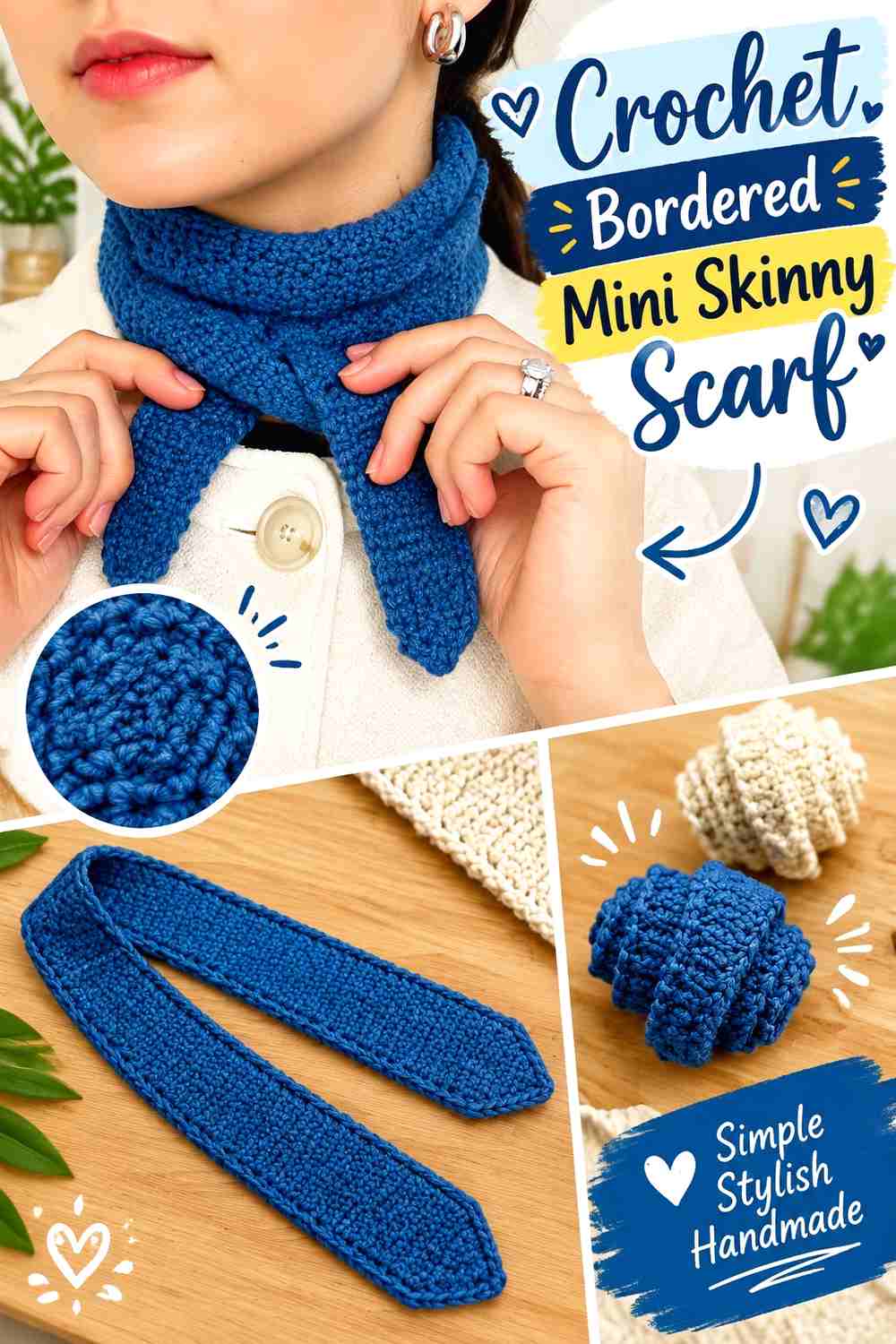
This mini scarf adds a defined border after the main shaping, giving the finished outline more emphasis than a completely unedged tapered scarf. The construction is useful when you like the compact Sophie-style silhouette but want the edge itself to contribute to the finished appearance.
A Border Has a Bigger Effect on a Small Scarf
On a full-size scarf, one edging round may be visually minor. On a mini scarf, that same addition can represent a noticeable share of the total width.
Look at the unbordered piece around the neck first. You may want strong contrast, a subtle same-color edge, or simply the finishing shown by the creator.
Edge Tension Can Distort the Taper
A tight border can pull on shaped sides and make the scarf cup or twist. If the outline changes unexpectedly, compare the edge tension with the body before assuming the increase-and-decrease shaping is wrong.
Blocking Should Respect the Actual Fiber
Finishing can help shaped edges settle, but fiber care varies. Check the yarn label and use an appropriate method rather than applying one universal blocking technique to every material.
Creator Credit: eliznuts
8. Crochet Mixed Texture Mini Neckerchief
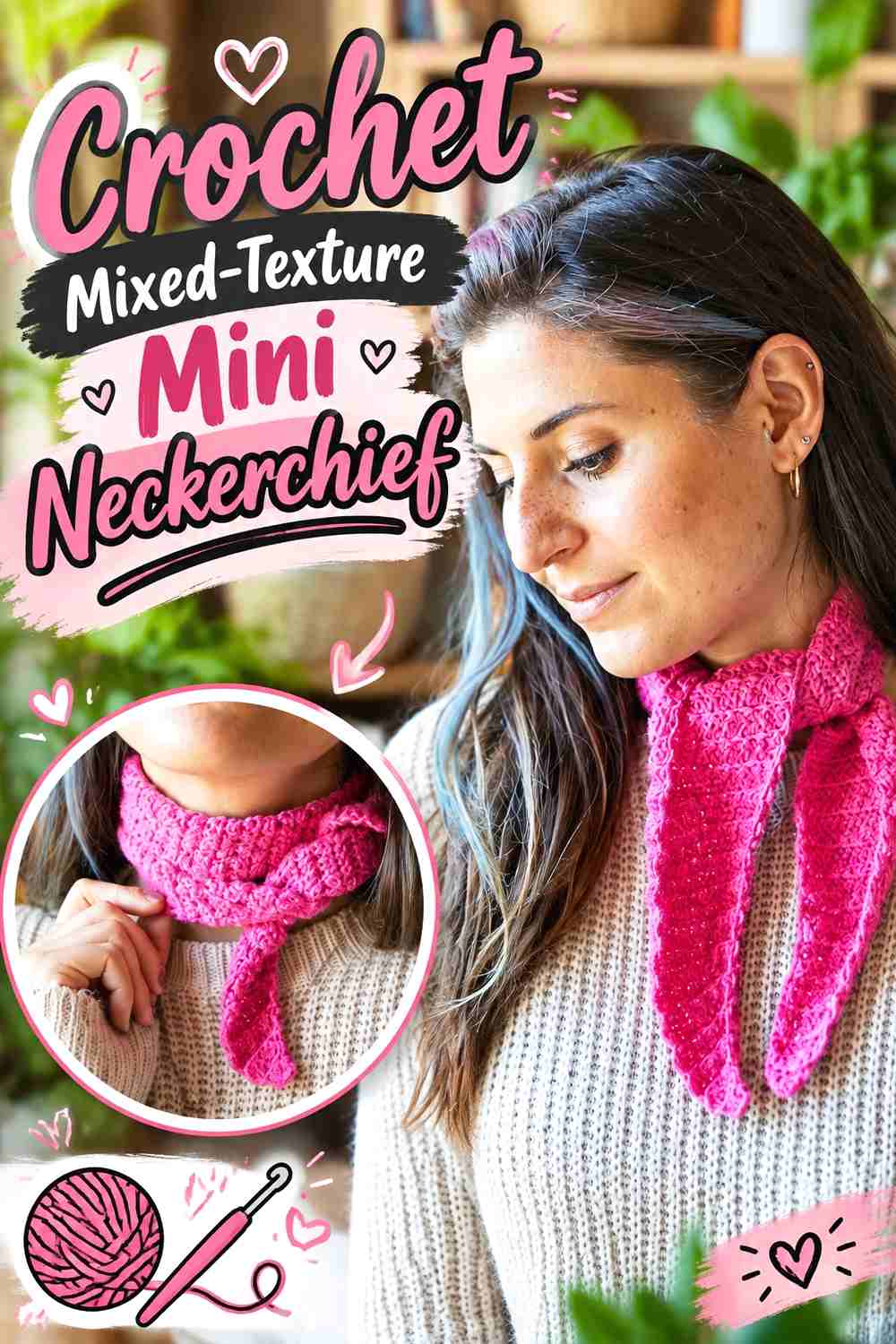
This crochet mini scarf combines shaping with noticeable surface texture, allowing a small accessory to carry visual interest without fringe or a wide decorative border. Bloodimaryart Crochet presents it as a mini scarf or neckerchief, making the scale especially suitable for close-to-the-neck styling.
Texture Adds Detail Without Making the Scarf Wider
A small scarf does not provide much space for large motifs. Mixed stitch texture is one way to add definition while preserving the compact silhouette.
A solid fall color can work particularly well here because the texture supplies variation that would otherwise need to come from stripes or embellishments.
The Knot Is a Major Part of the Finished Design
With a neckerchief-sized scarf, there is little extra length to hide an awkward tie. The tapered ends should cross comfortably and the knot should sit where you expect it to.
If you change yarn thickness, test the scarf during construction instead of assuming the same finished length will create the same knot.
Finishing Is Very Visible Near the Face
A bulky woven-in tail or uneven point is easier to notice on a small scarf worn near the chin than on a long scarf hanging below a coat. Inspect both faces of the fabric, because a narrow accessory can rotate while being worn.
Creator Credit: Bloodimaryart Crochet
9. Crochet Moss Stitch Skinny Scarf
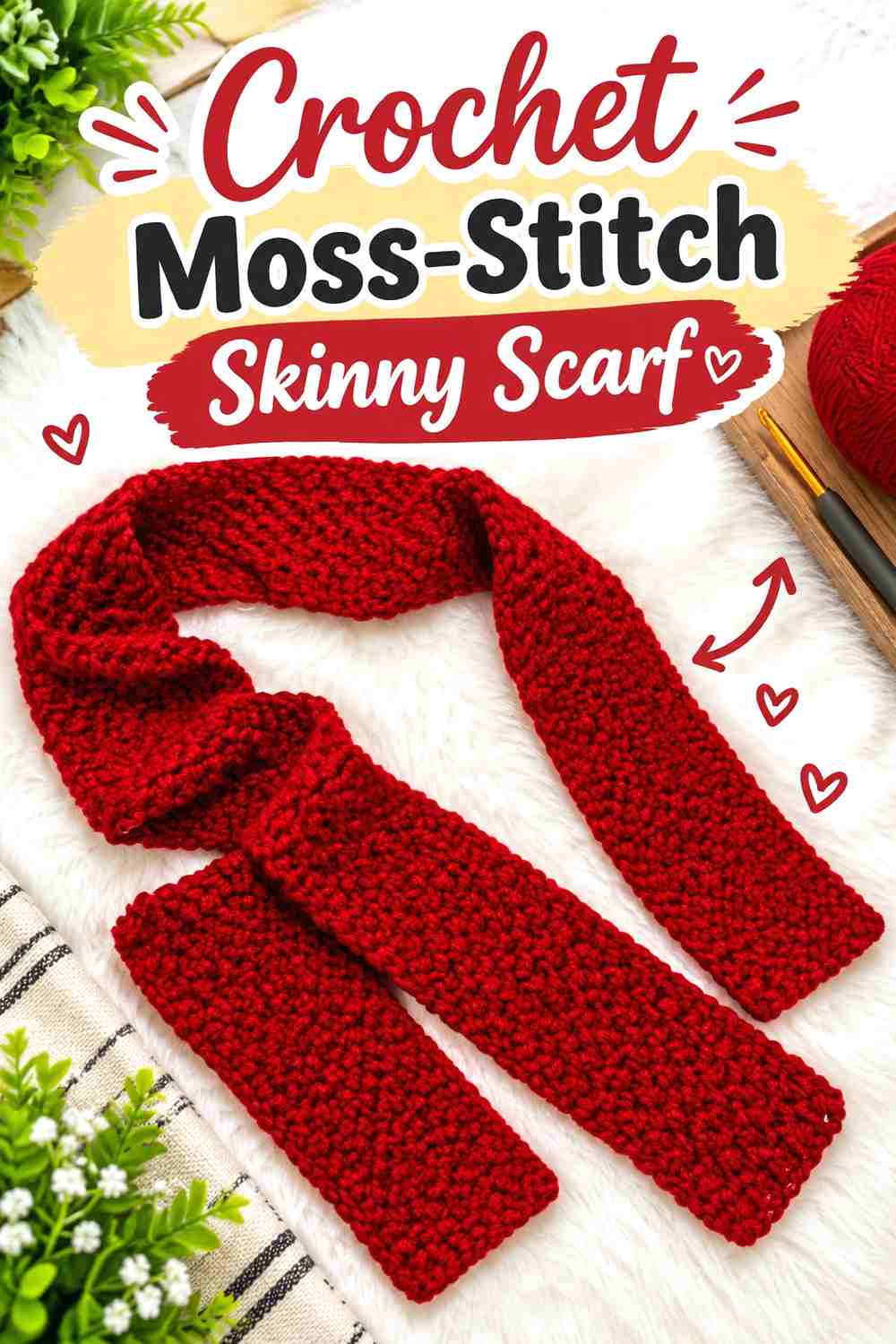
Moss stitch gives this scarf a compact repeating texture without requiring dramatic shaping or large motifs. Carroway Crochet’s tutorial uses the stitch in a skinny scarf specifically, making this a good choice when you want a clean rectangular accessory that can coordinate with many fall outfits.
Straight Edges Carry the Minimal Look
The simple shape puts more attention on consistent width. Check your side edges periodically so an accidental gain or loss does not become a long gradual taper.
This matters especially if the scarf will be worn with both ends hanging side by side.
Moss Stitch Lets Color Do More or Less Work
A solid yarn highlights the small repeating texture, while a multicolor yarn may make color distribution the dominant feature. Neither approach is automatically better.
Work a sample if using variegated yarn, because a narrow width can distribute colors very differently from a wide scarf or blanket.
Keep the Fabric Supple Enough for a Small Knot
Moss stitch can create a tidy surface, but the finished drape still depends on yarn and tension. Fold your sample over itself to see whether two layers remain comfortable before planning a close neck knot.
Creator Credit: Carroway Crochet
10. Crochet Long Fringe Lace Scarflette
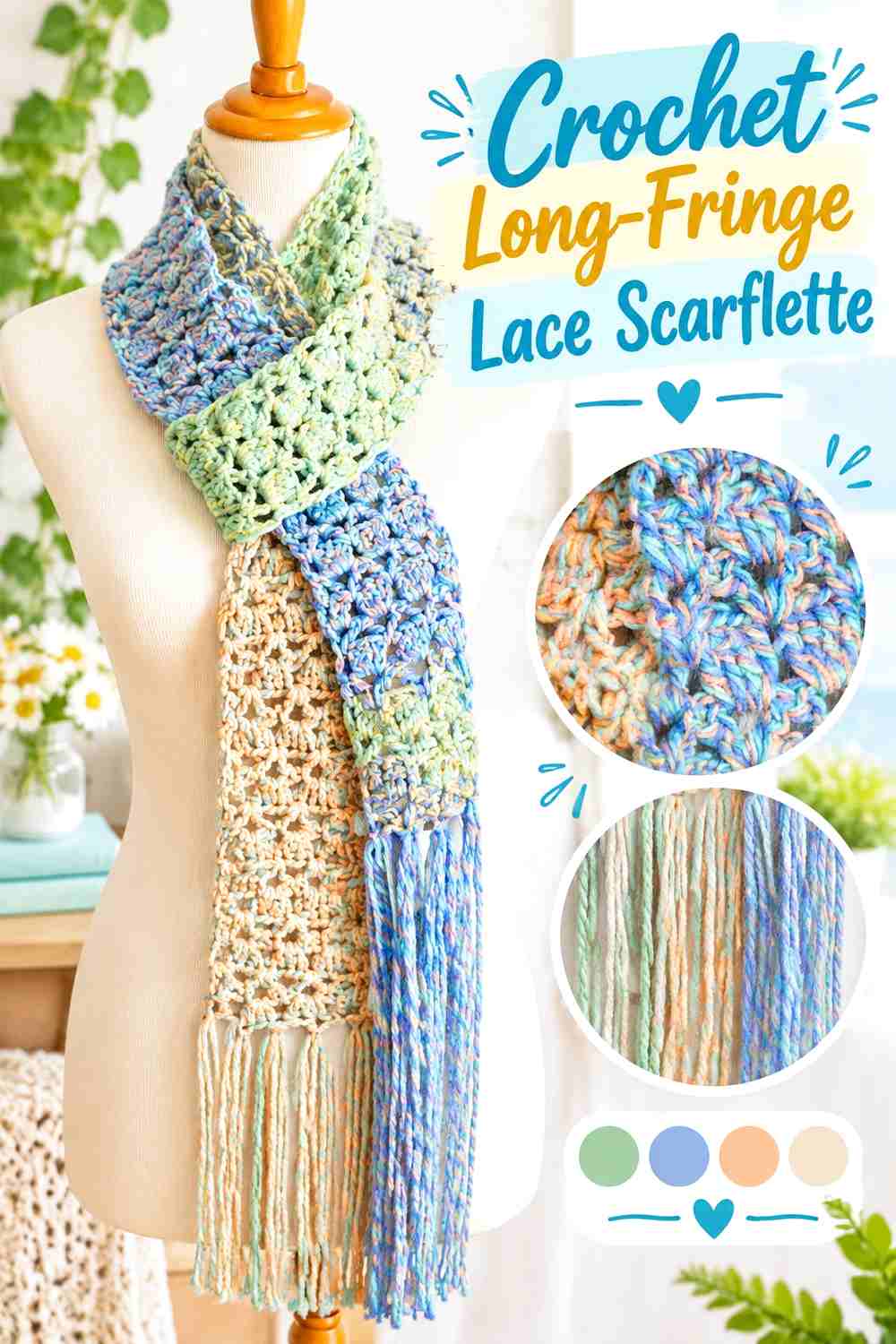
This project pairs an open crochet body with very long fringe, making the finishing almost as important as the scarf itself. It works well when you want a skinny accessory to create movement over a sweater, jacket, or simple dress rather than remain visually minimal.
Fringe Changes the Effective Length
The crocheted body is not the only part determining how far the scarf extends down an outfit. Long fringe adds considerable vertical movement.
If you alter the body length, reassess the fringe afterward instead of assuming the original proportion will still look balanced.
Airy Fabric and Loose Fringe Need Visual Balance
Lace creates organized open spaces; fringe introduces irregular movement. Those two textures already give the scarf plenty of detail.
Adding beads, pompoms, or another strong trim could make the narrow piece feel busier than intended.
Fringe Can Interact With Fall Outerwear
Long strands may sit beautifully over a plain knit but can become less convenient around jacket zippers, bag straps, or heavily textured coats. Consider where the fringe will fall when the outfit is fully assembled, not just when the scarf is worn over a simple top.
Creator Credit: Fiber Flux
11. Crochet Pull Through Keyhole Skinny Scarf
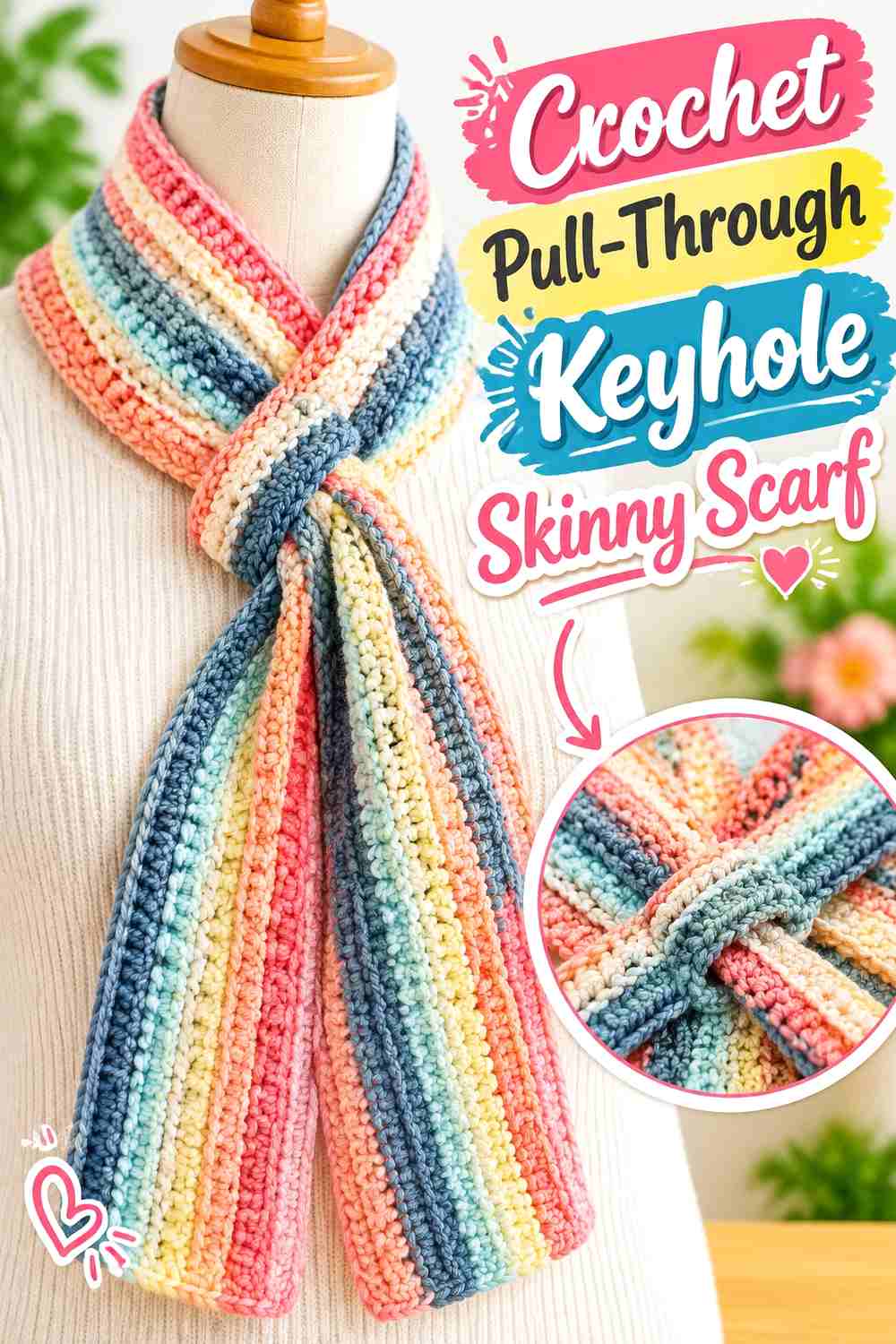
A keyhole changes the fastening rather than relying on two long ends tied into a conventional knot. Atreyu Crochet’s tutorial demonstrates this pull-through construction, making it useful for readers who want a compact scarf that stays in a more controlled position.
The Opening and Scarf End Must Work Together
The keyhole should allow the intended end to pass through without excessive pulling while still holding the scarf in position. If you change yarn thickness or width, test this relationship before finishing.
A decorative border can also alter the effective thickness of the section that must pass through the opening.
Less Hanging Length Can Work Better Under a Coat
A pull-through design can avoid the bulk of a large knot and the movement of very long tails. That can make it practical with structured jackets or coats.
Try the scarf with the actual outerwear if possible, because a high collar may change where the keyhole needs to sit.
Keep Large Decorations Away From the Functional Area
A tassel, button, flower, or other raised embellishment can interfere if it sits on the section that passes through the opening. If you want decoration, place it where it will not obstruct the closure.
Creator Credit: Atreyu Crochet
12. Crochet Knotted Skinny Scarf Or Belt
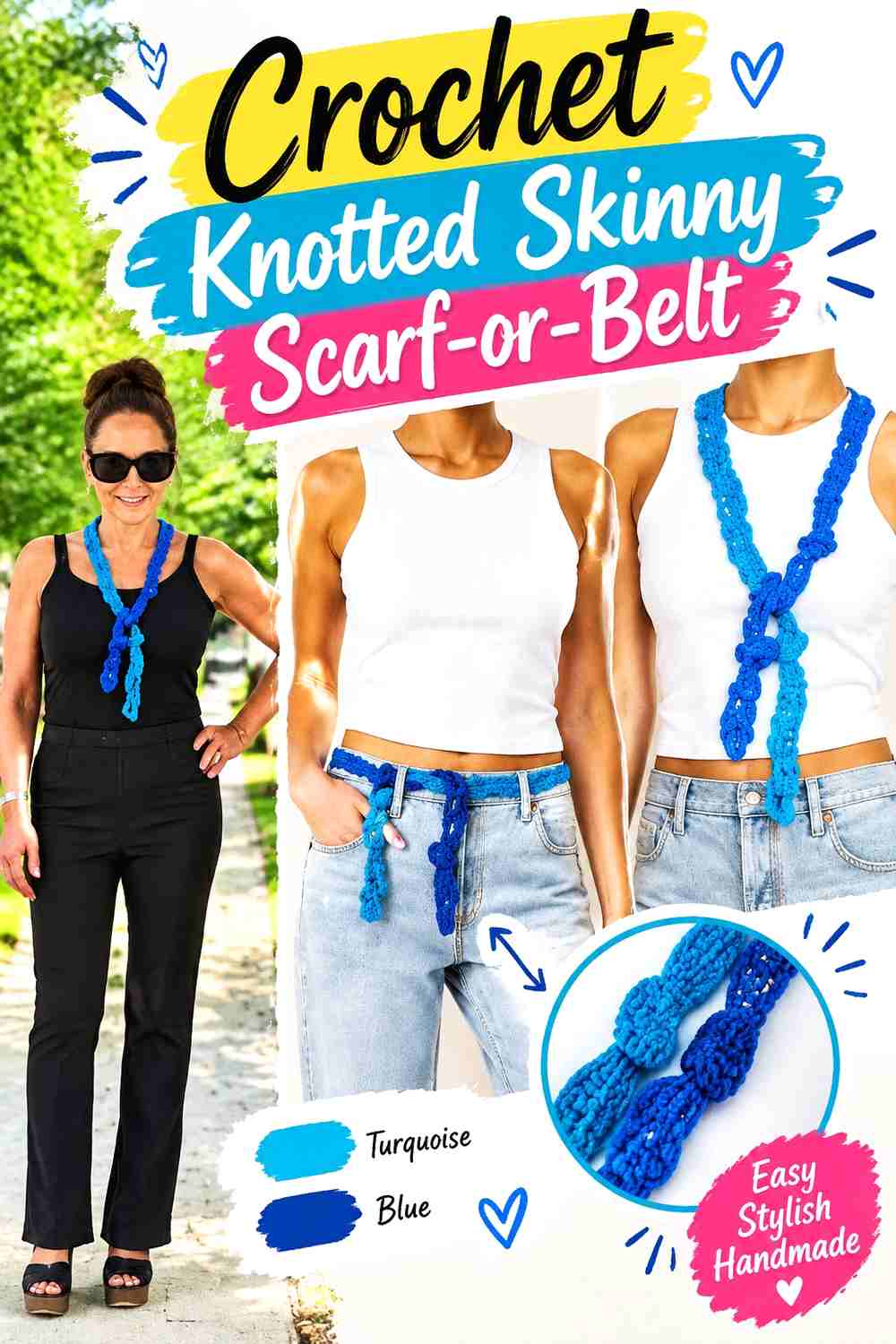
This narrow accessory takes a more playful direction by allowing knots or similar small details to become part of the long scarf. Hectanooga1 also presents the construction as something that can be worn as a belt, so the project works well for readers who prefer an intentionally casual or bohemian finish.
Knots Add Texture Without Increasing the Whole Width
Instead of making the entire scarf thicker, localized knots create points of dimension along an otherwise narrow piece. Their placement therefore matters.
Spread-out details create a quieter rhythm, while clustered decoration can pull visual attention toward one section.
Belt Use Makes Stretch Worth Checking
If you plan to wear the scarf at the waist, gently test how much the fabric lengthens under tension. Significant stretch can change where knots or decorations land once the accessory is tied.
Neckwear is usually less demanding in this respect, so choose the primary use before making major adaptations.
Beads or Added Details Should Not Overload the Ends
A skinny scarf has little visual mass to balance heavy embellishment. If you add beads or other decorations, compare their weight with the finished crochet before attaching many of them.
The scarf should still fall naturally rather than being pulled into awkward curves by its finishing details.
Creator Credit: Hectanooga1
13. Crochet Mixed Row Thin Scarf
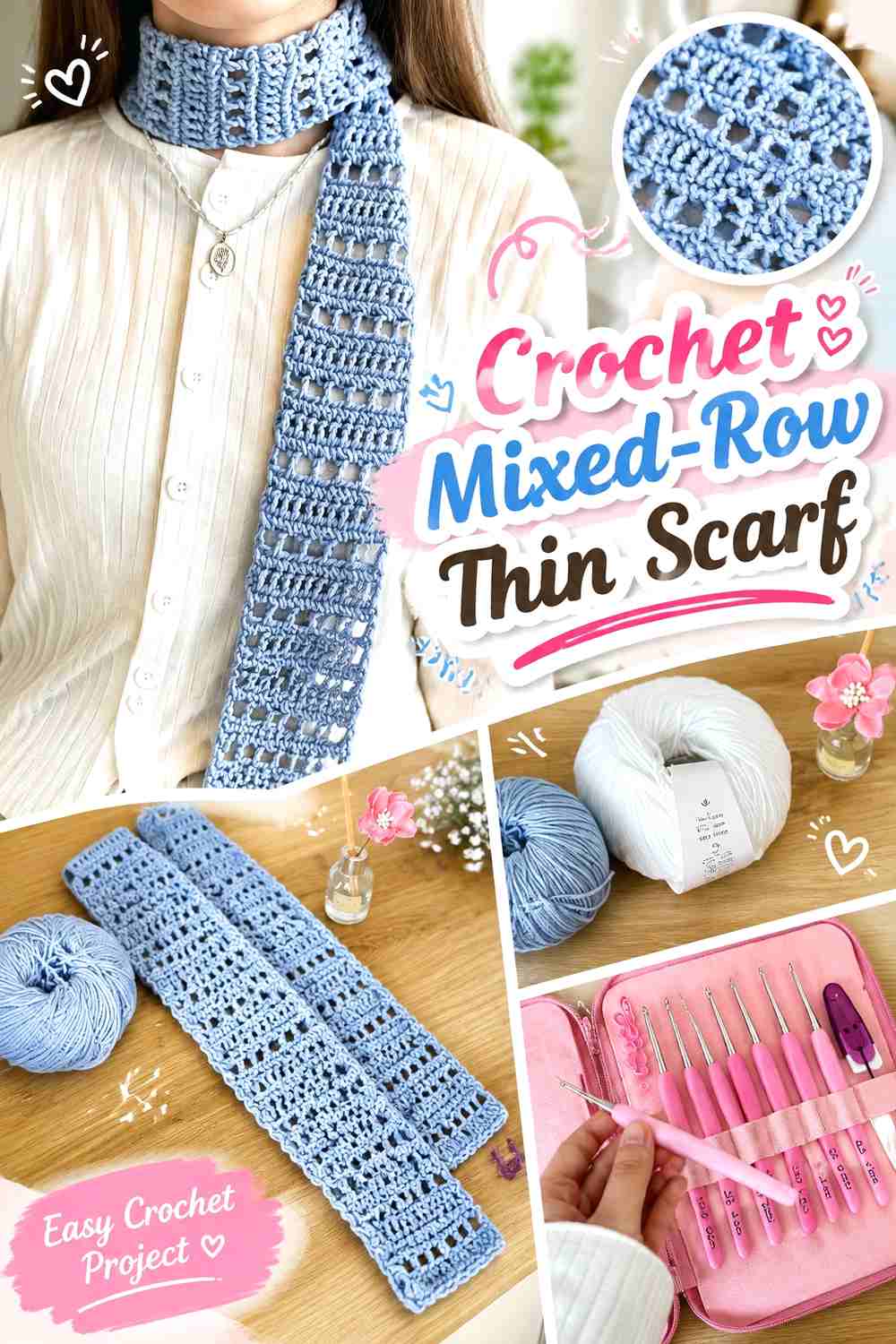
This thin crochet scarf gets its character from changing surface treatment rather than dramatic shaping. The tutorial uses a combination of solid and more open row textures, creating a narrow accessory that can add detail to a fall outfit without relying on fringe or large motifs.
Changing Texture Can Create Subtle Horizontal Bands
When different stitch structures alternate, light falls across each section differently. Even in one yarn color, the scarf can show visible bands of openness and density.
This works well when you want texture that is noticeable up close but less graphic than contrasting stripes.
Keep the Different Sections at a Consistent Width
Changing stitch types can alter tension. Compare the side edges as the scarf grows to make sure one texture is not pulling inward while another flares outward.
If the width shifts, correcting tension early is preferable to depending on a later border to hide the difference.
A Lightweight Scarf Can Transition Through the Season
A thin open scarf is more of a fashion layer than a heavy neck warmer. It can work particularly well during mild fall weather or indoors with cardigans and blazers.
For colder conditions, choose the project based on appearance rather than assuming the narrow open construction will provide the same coverage as a dense winter scarf.
Creator Credit: Annie’s crochet
14. Crochet Striped Long Skinny Scarf
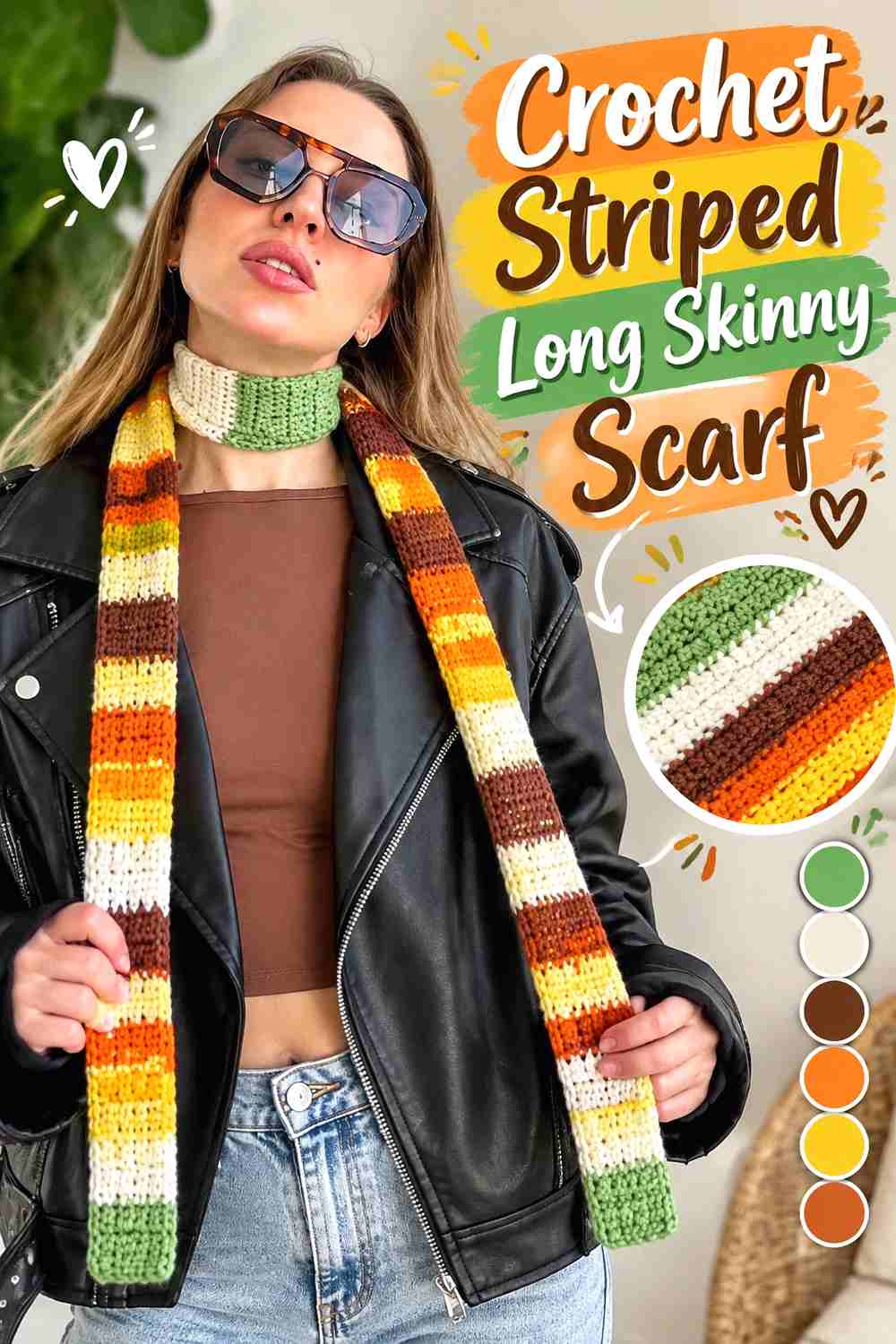
Stripes turn a simple narrow silhouette into a graphic fall accessory. GYSEVAKAT’s tutorial shows a long striped skinny scarf, giving this option a stronger color-driven identity than the solid or textured projects elsewhere in the list.
Stripe Scale Changes the Mood
Narrow repeated stripes create a busier, more energetic look. Larger blocks allow each color to dominate for longer and can make the scarf feel more modern and graphic.
Lay the yarns beside your coat or sweater before deciding the sequence. Two shades that appear different in the skein can merge visually when placed in narrow alternating bands.
Long Vertical Ends Make Color Placement Noticeable
When the scarf hangs down the front of an outfit, the two ends may appear beside each other. Consider whether you want the stripe sequence to feel symmetrical or whether an intentionally uneven arrangement suits the look better.
There is no universal correct answer, but it is useful to decide before the final sections.
Too Much Fringe Can Compete With Strong Stripes
Color changes already add substantial detail. Finish the main body first and view the scarf with your intended outfit before adding extra trim.
A clean end can make bold stripes feel contemporary, while fringe pushes the styling toward a more nostalgic or bohemian direction.
Creator Credit: GYSEVAKAT – crochet by Kat
15. Crochet Multi Wear Bow Skinny Scarf
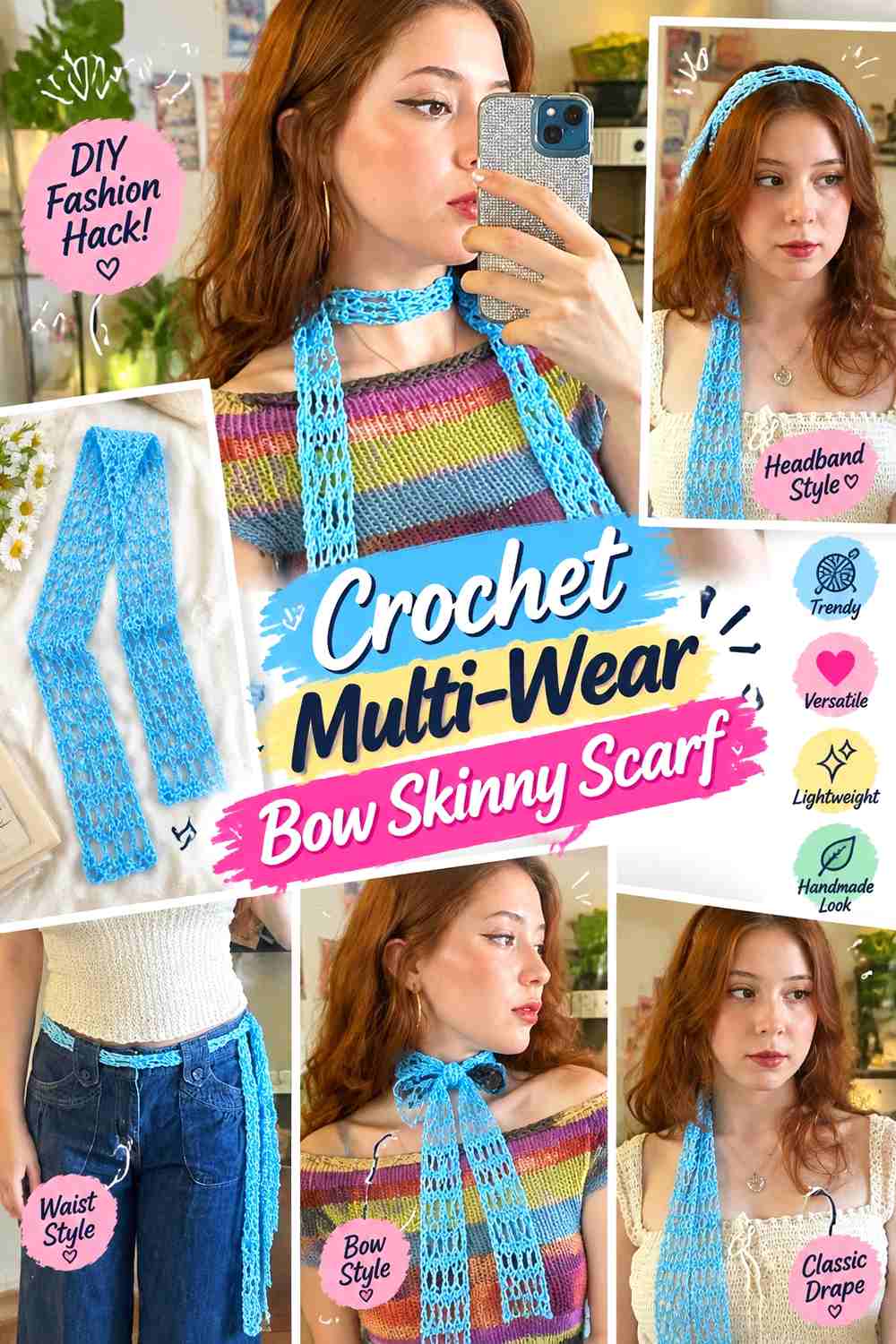
This project is designed as a multifunctional narrow scarf that can be arranged as a bow and used in several accessory positions. The bow styling immediately separates it from the simple rectangular scarves because the ends become part of a decorative focal point rather than simply hanging down.
Bow Styling Needs Flexible Fabric
A crisp scarf may hold a dramatic bow shape, but fabric that is too stiff can make the knot bulky and uncomfortable around the neck. Softer fabric creates more fluid loops.
Decide whether you want a structured bow or a relaxed tie before substituting yarn.
The Same Scarf Can Move Beyond the Neck
Because the narrow piece can be styled in more than one way, finishing needs to look intentional from different angles. A tail hidden inside a neck bow may become visible if the accessory is later worn at the waist or in the hair.
Take extra care with both ends and both faces of the fabric.
Keep Fall Bow Styling Proportional
A small side bow can look polished with a cardigan or collared shirt, while a large centered bow becomes a stronger statement. The scarf does not need to change construction for these different effects; the amount of fabric pulled into the loops changes the visual scale.
Creator Credit: nat’s record
16. Crochet Woven Fan Skinny Scarf
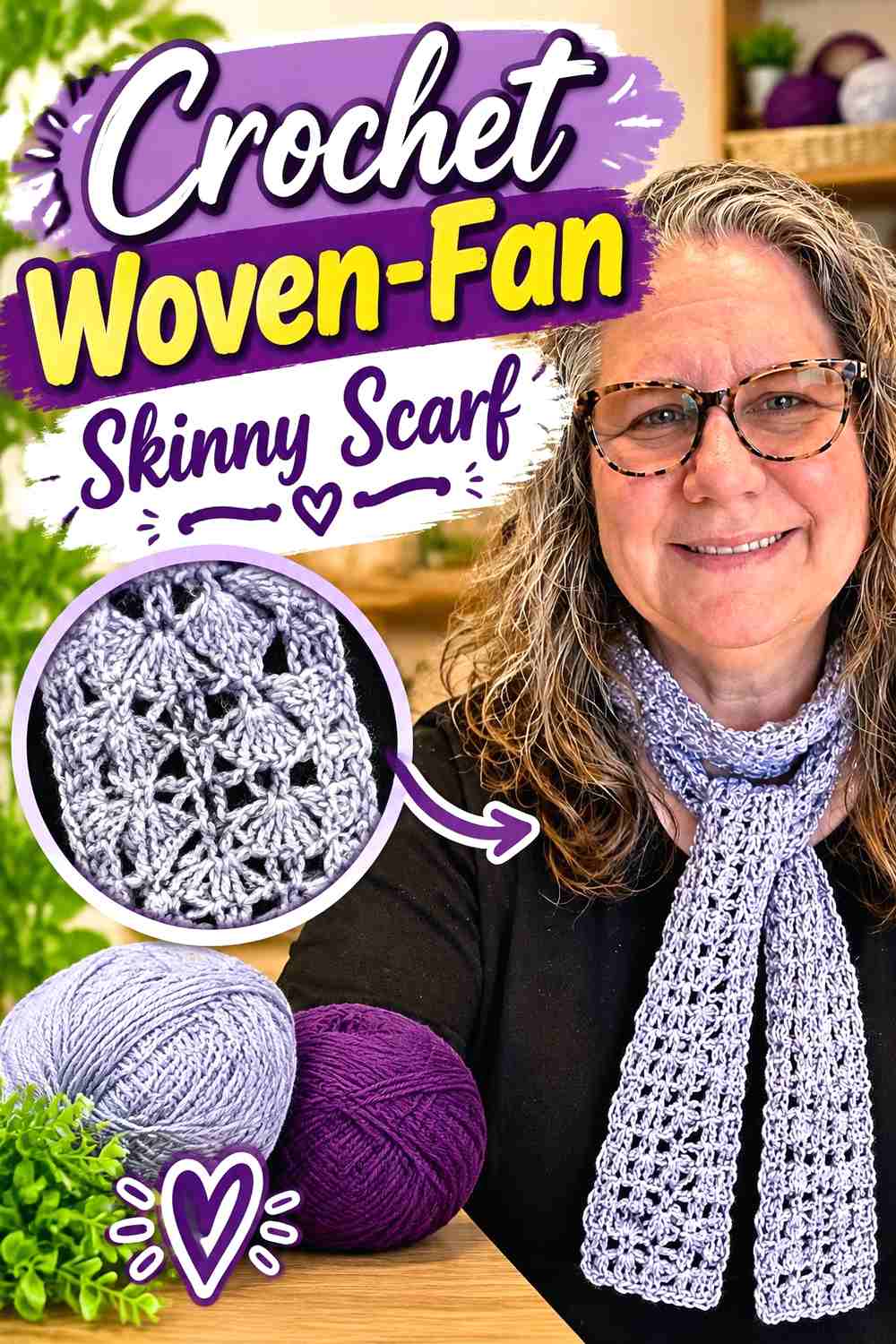
This narrow scarf uses a decorative fan-like stitch pattern, giving the long shape a repeated architectural texture rather than a plain grid or solid surface. The design is useful when the stitch pattern itself should be the main visual feature.
Fans Can Make the Edge Look Wider in Some Areas
A decorative repeat may expand and contract visually even if the underlying scarf is consistently narrow. Judge the width after several complete repeats instead of evaluating a single row.
That helps prevent accidental over-widening when the goal is still a distinctly skinny silhouette.
Solid Yarn Can Make the Structure Easier to Read
Strong variegation may compete with a detailed fan pattern. If the stitch architecture is the reason you chose this project, a single fall shade or a gentle tonal yarn can keep the repeat visible.
If color is the priority, a busier yarn can deliberately shift attention away from the stitch structure.
Decorative Repeats Need a Drape Check
Patterned crochet can contract differently from plain rows. Once enough repeats are complete, let the scarf hang vertically and see whether the fabric falls smoothly.
A scarf that looks attractive flat but feels stiff when hanging may need a different material choice rather than extra length.
Creator Credit: Stringsandthreads
17. Crochet One Ball Single Crochet Skinny Scarf
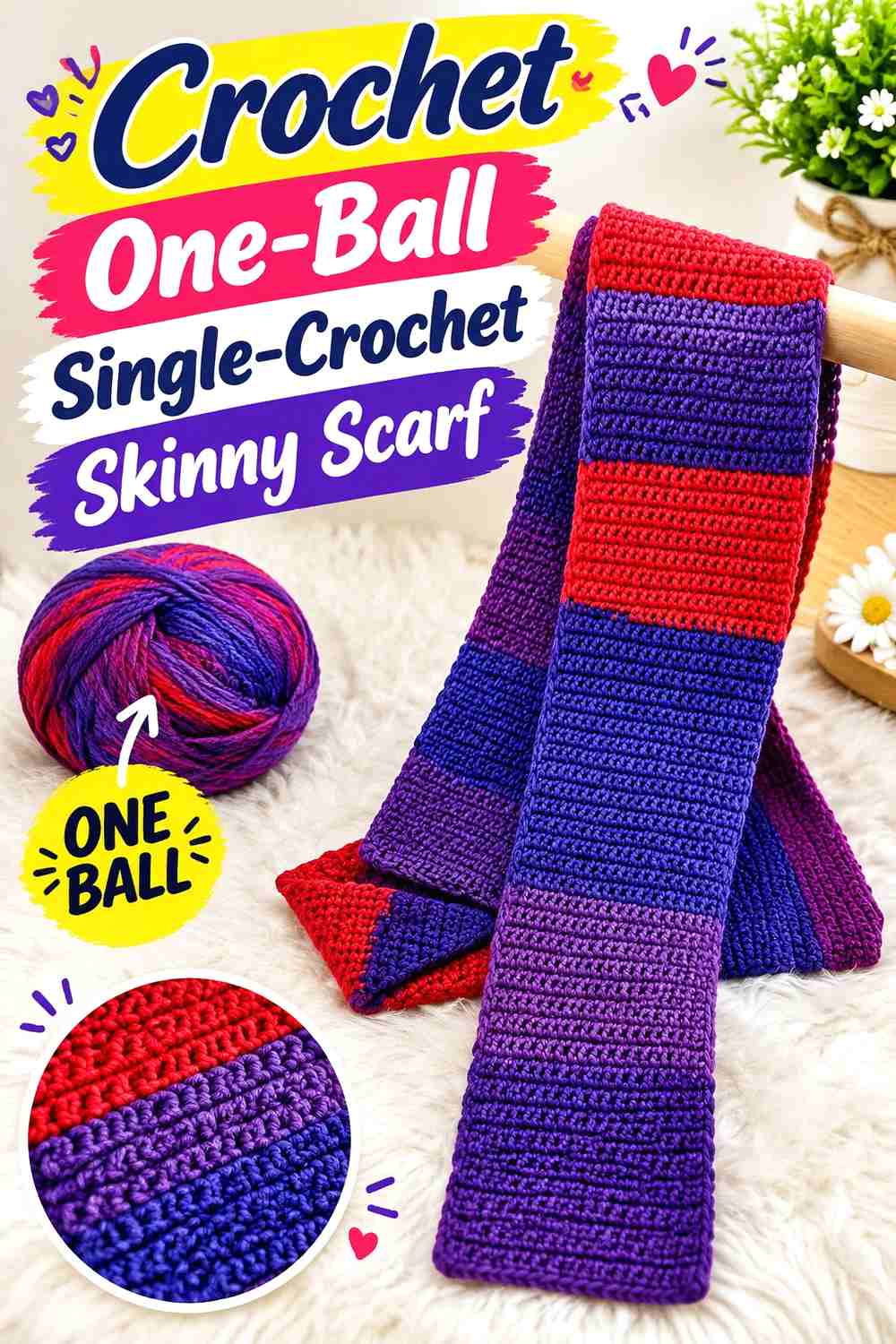
This project returns to a straightforward narrow scarf construction and lets simple crochet and yarn color do most of the work. It is a useful contrast to the lace, keyhole, Tunisian, and heavily shaped projects because the finished form stays uncomplicated.
Dense Crochet Still Needs Enough Drape
A narrow width does not guarantee flexible fabric. Compact stitches can become stiff depending on yarn, hook, and individual tension.
Crochet enough length to fold the fabric over itself. If it springs back strongly instead of hanging, decide whether that behavior suits the way you plan to tie the scarf.
Long Color Changes Can Suit a Skinny Format
A color-changing yarn behaves differently in a narrow scarf than it does in a wide shawl. Each shade may travel much farther along the scarf before transitioning.
That can create long sections of color without repeated manual yarn changes, which works particularly well with a simple construction.
Minimal Construction Puts the Edges in Focus
Without fringe, borders, or dramatic shaping, both long sides become prominent. Check them regularly so the scarf does not slowly widen or narrow.
Careful finishing also matters because a skinny scarf frequently twists and shows both faces while being worn.
Creator Credit: Posh Crafts
Which Crochet Skinny Neck Scarf Works Best With Your Fall Style?
For a long modern line over sweaters or coats, start with the Long-Line Folded Scarf, Moss-Stitch Scarf, Striped Long Scarf, or One-Ball Single-Crochet Scarf. Their relatively simple silhouettes allow length and color to do most of the styling work.
For small scarf styling close to the neckline, the Pointed Ribbed Scarf, Tapered Mini, Bordered Mini, and Mixed-Texture Neckerchief put more emphasis on shaping. They pair naturally with cardigans, button-down shirts, crewneck knits, and light jackets because the scarf remains concentrated near the collar.
Choose the Filet Mesh, Mixed-Row Thin, Long-Fringe Lace, or Woven-Fan options when open space and decorative stitchwork matter more than warmth. The Tunisian Purl scarf is the clearest option for a different crochet technique, while the Keyhole scarf changes the fastening completely.
For an accessory with more than one wardrobe role, look at the Fine Mesh Scarf-and-Belt, Knotted Scarf-or-Belt, or Multi-Wear Bow Scarf. Their usefulness depends heavily on drape and finishing because the piece may be viewed from different angles and tied in different positions.
Conclusion
The most useful way to choose a crochet skinny neck scarf is to start with how you want it to sit with your fall clothes.
Pick a long straight scarf when you want vertical lines and multiple wrapping options. Choose a tapered mini when you want a small neck accent that works around collars and crewnecks. Mesh, fans, mixed texture, and fringe make the crochet itself more decorative, while stripes and color-changing yarn shift the focus toward color. Keyholes and bows change how the scarf fastens and can reduce the need for a traditional knot.
Whichever direction you choose, pay close attention to drape. A skinny scarf can be only a small amount of fabric, yet stiffness, curling, edge tension, or a bulky knot can still determine whether it integrates naturally with an outfit. Use the original creator tutorials for their exact construction details, then make material or styling changes only after checking how they affect the finished scarf.
Frequently Asked Questions
How narrow should a crochet skinny neck scarf be?
There is no universal width that defines a skinny scarf. A very long rectangular fashion scarf may be extremely narrow, while a tapered mini scarf needs a wider center so it remains visible around the neck. Judge the proportion together with yarn thickness and the intended knot rather than chasing one measurement.
Is a tapered crochet scarf better for wearing with fall jackets?
It can be useful because the ends narrow where the fabric crosses, potentially reducing bulk. However, a long straight scarf may work better if you want the ends to hang outside the jacket. The jacket’s neckline and collar height should guide the decision.
What yarn qualities matter most for a skinny crochet scarf?
Pay particular attention to softness, flexibility, stitch definition, and how the fabric behaves when folded. A yarn can look attractive in the skein but produce fabric that is too rigid for a narrow scarf knot. Swatching is especially worthwhile when changing substantially from the material shown in a tutorial.
Why is my crochet skinny scarf curling or twisting?
Possible causes include the stitch structure, tight tension, inconsistent edge stitches, or the behavior of the chosen yarn. Check the width and edges early. Finishing can help some fabrics settle, but it is better to identify strong curling before completing an entire long scarf.
Can a skinny scarf be worn as a belt?
Some constructions are specifically designed for both uses, while others are not. A belt experiences different tension and needs to curve comfortably around clothing. Check stretch, length, edge finishing, and any fringe or embellishment before assuming a neck scarf will work equally well at the waist.
Should I add fringe to a crochet skinny scarf for fall?
Fringe can add movement and strengthen a bohemian or retro look, but it is not necessary. Long fringe can compete with stripes, interfere with bag straps or jacket hardware, and overwhelm a tiny scarf. Finish the main crochet first and judge whether the ends actually need more visual weight.
How can I make a skinny scarf look modern rather than bulky?
Keep the proportions intentional. A flexible fabric, restrained width, clean edges, and a knot suited to the scarf’s thickness usually matter more than adding decoration. When the stitch pattern is already detailed, a simple solid fall color may create a cleaner result than combining several competing finishes.