A crochet tarot card pouch can be a close-fitting sleeve, a soft drawstring bag, a flap case, or a larger wrap that opens into a reading surface. Those differences matter when you are storing an everyday deck, carrying cards outside the house, keeping an oversized oracle deck, or planning a pouch that becomes part of an autumn altar or reading setup.
The 23 ideas below range from purpose-built tarot pouches to carefully chosen card cases and small-bag tutorials that can inspire deck-sized adaptations. You will find celestial wraps, structured closures, tactile stitch patterns, granny-inspired construction, geometric colorwork, and practical zippered options. Rather than assuming one standard measurement fits every deck, the guidance focuses on checking real card dimensions, managing fabric bulk, choosing a closure, and adapting non-tarot tutorials without copying measurements that were designed for smaller contents.
Quick List
- Crochet Selenic Reading-Mat Tarot Pouch
- Crochet Sedge-Stitch Roll-Up Tarot Pouch
- Crochet Tapered Tarot Mat Wrap Pouch
- Crochet Minimal Everyday Tarot Card Pouch
- Crochet Gathered Drawstring Tarot Deck Bag
- Crochet Made-to-Measure Tarot Cozy Pouch
- Crochet Jaipur Tie-Closure Tarot Pouch
- Crochet Folded Button Tarot Card Pouch
- Crochet Crystal-Pocket Tarot Reading Pouch
- Crochet Color-Motif Tarot Drawstring Pouch
- Crochet Suzette-Stitch Tarot Button Pouch
- Crochet Scalloped Envelope Tarot Pouch
- Crochet Basketweave Tarot Deck Wallet
- Crochet Seamless Flap Tarot Card Holder
- Crochet Folded Magnetic Tarot Pouch
- Crochet Moss-Stitch Zipper Tarot Case
- Crochet Direct-to-Zipper Tarot Deck Pouch
- Crochet Granny-Square Tarot Card Pouch
- Crochet Mosaic Geometric Tarot Pouch
- Crochet Honeycomb Tarot Drawstring Bag
- Crochet Scalloped-Flap Tarot Sleeve
- Crochet Moss-Stitch Treasure Tarot Pouch
- Crochet Waffle-Texture Tarot Drawstring Pouch
Measure the Whole Tarot Deck, Not Just One Card
Tarot and oracle decks differ in face dimensions, card count, cardstock thickness, edge treatments, and packaging. Measure the complete stacked deck before committing to a pouch size. Decide at the same time whether the publisher box, guidebook, cloth, or any other accessory needs to fit inside.
The stacked thickness is especially important with flap and button designs because the closure has to travel over the top of the deck. With drawstring bags, sufficient body width still matters; a gathered opening cannot compensate for a case that squeezes the cards below it.
When adapting a credit-card, playing-card, dice-bag, or notions-pouch tutorial, use its construction as the reference rather than copying its dimensions. Check the stitch repeat, make a swatch when the yarn changes substantially, and compare the developing fabric directly with your own deck before permanent seams, buttons, zippers, or hardware are installed.
Choose the Closure Around How the Deck Will Be Used
A soft tie or drawstring keeps rigid hardware away from the card faces and accommodates modest changes in thickness, although cords need to move freely and knots should stay clear of corners. A button creates a definite fastening point but works best when its position is determined with the full deck inside.
Zippers provide a more enclosed edge, which may appeal to readers who carry a deck inside a larger bag. Leave enough room between the card edges and zipper teeth so cards are not scraped while being removed. Magnetic fittings create a very clean exterior, but they also add a hard component; cover and position them carefully.
For home storage, a simple wrap or flap may be sufficient. For frequent travel, examine the seams, opening, lining if present, and closure periodically instead of assuming crocheted fabric alone will protect cards from every type of bending, pressure, moisture, or abrasion.
Give a Fall Pouch Witchy Character Without Sacrificing Function
A fall palette can do plenty of the seasonal work: blackened plum, rust, lichen green, smoky blue, brown, charcoal, cream, and muted gold all suit tarot storage without requiring elaborate embellishment. Texture can add even more atmosphere. Basketweave, waffle, honeycomb, moss, and raised mosaic fabrics each create a noticeably different surface.
Celestial charms, beads, tassels, and appliqués can reinforce the theme, but keep hard or dimensional decoration away from the card path. Anything attached to a drawstring should also be light enough that it does not constantly pull on the casing.
Fiber choice changes the final feel as well. A yarn substitution may alter stretch, thickness, stitch definition, and the amount of bulk around the deck. Follow the original creator’s material guidance where it is important to the construction, and follow the yarn label for care rather than assuming every finished pouch can be washed the same way.
1. Crochet Selenic Reading Mat Tarot Pouch
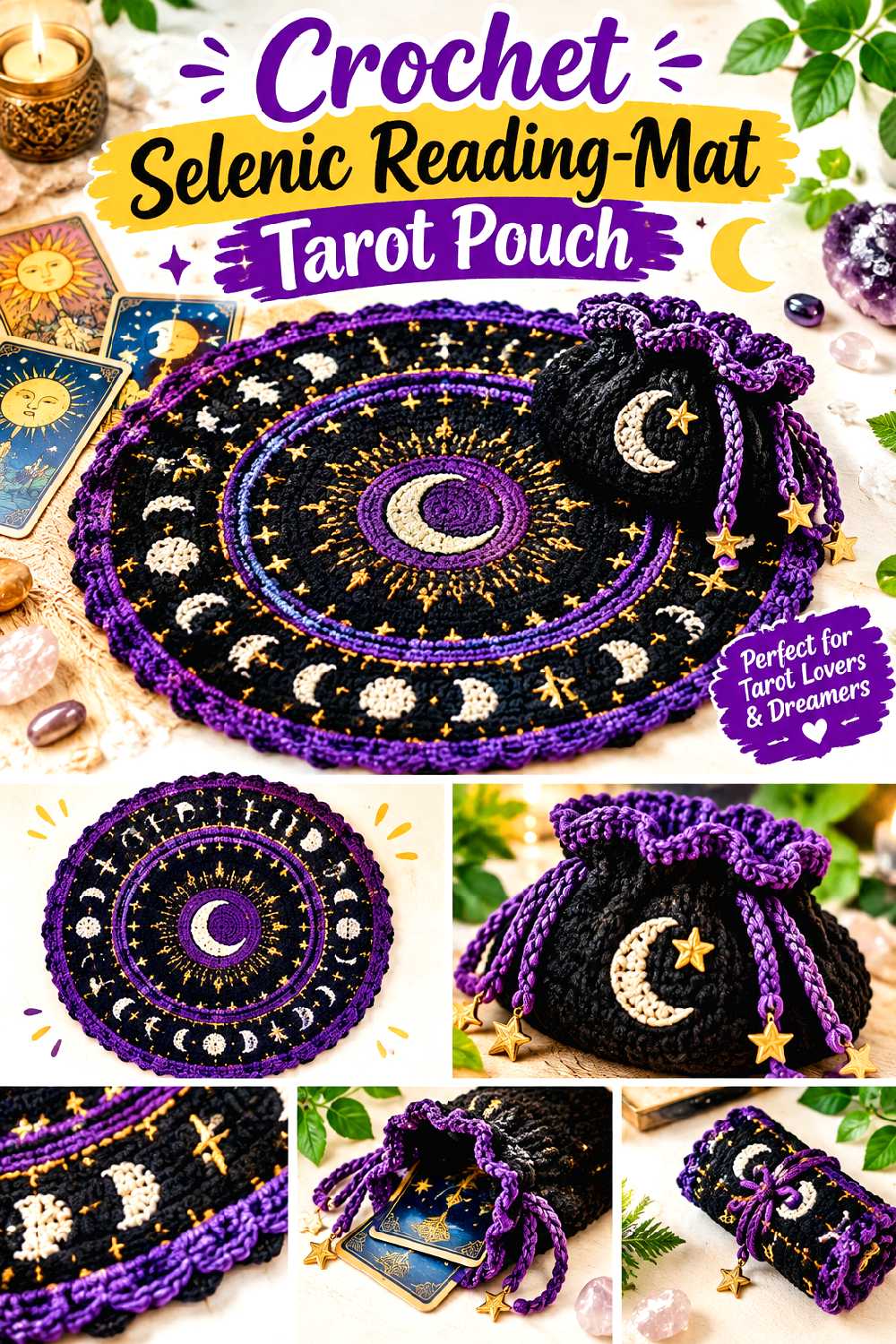
This multifunctional design is for readers who want their storage pouch to participate in the reading itself. Yarn Bean Fiberworks’ Selenic design combines a deck pocket with an extended section that unfolds into a reading mat, giving the finished piece a substantially different purpose from a simple drawstring sack. The original tutorial identifies a defined pocket and longer mat section, making it especially relevant for a home reader or someone who likes carrying a compact reading setup together.
A wrap-style case does create more folded fabric around the cards, so think about portability as well as appearance. Thick borders, tassels, or large charms can quickly turn an elegant roll into a bulky bundle.
Check the Folded Thickness Before Decorating
Spread-out dimensions only tell half the story. Fold the developing pouch around the complete deck and look at how many crochet layers overlap. A border that seems subtle while flat can become prominent once several sections stack together.
If the finished piece will travel inside another bag, prioritize a closure that keeps the bundle contained without compressing the deck. Decorative additions can always be introduced after the basic folded profile has been checked.
Let the Mat Remain the Main Feature
This design already has a strong visual transformation from pouch to reading surface, so it does not need heavy embellishment to feel special. Autumn color blocking, a contrasting edge, or one restrained closure detail can give it a witchy seasonal character while preserving a smooth area for laying out cards.
If you substitute yarn, consider how the new fabric behaves both folded and fully opened. A significantly heavier material changes the experience in both configurations.
Original Tutorial and Creator Credit
Creator/Site: Yarn Bean Fiberworks — Sabrina Cordon
2. Crochet Sedge Stitch Roll Up Tarot Pouch
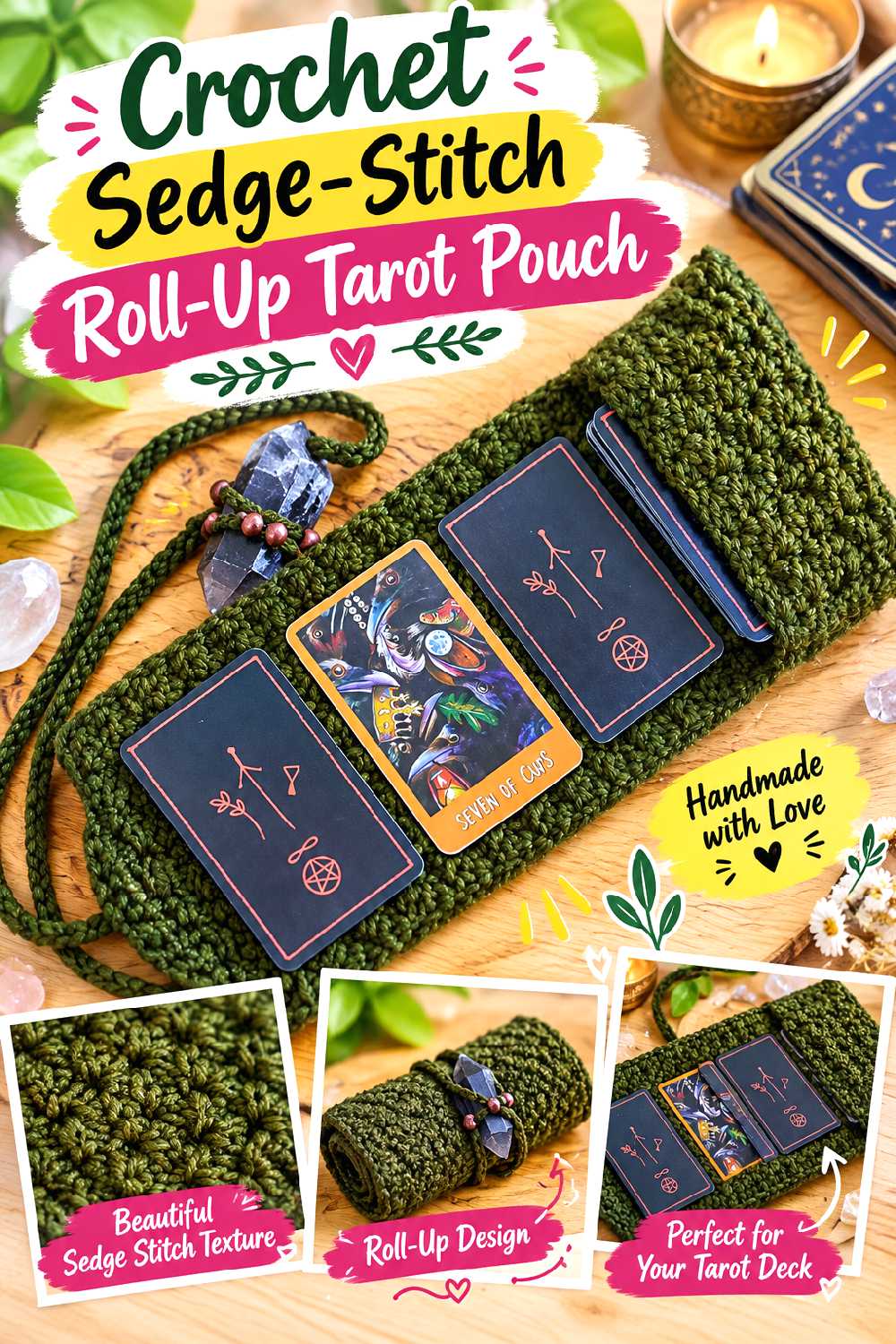
Witch of Brush Hollow’s tarot case takes another reading-mat approach, but the textured sedge-stitch fabric gives it a different character from a broad decorative wrap. The creator describes it more as a flexible recipe because decks vary, and the finished case rolls out for a small three-card reading. That deck-specific thinking makes this an appealing option if you dislike forcing an unusual deck into somebody else’s fixed dimensions.
The texture suits earthy fall colors particularly well—think bark brown, muted moss, wine, or charcoal—but texture also contributes thickness. This style is strongest when the stitch surface is allowed to carry the design rather than being buried under many additional embellishments.
Treat Your Deck as the Sizing Reference
A flexible recipe works only if you actually check the intended contents. Include the stacked depth of the cards rather than measuring one card face and stopping there.
If you normally keep the deck in its manufacturer box, determine whether the crocheted case is supposed to replace that box or surround it. Those two uses call for very different interior capacity.
Control Bulk Along the Rolled Edge
Raised texture, edging, and multiple folded layers can accumulate at the same side of a roll. Before adding beads or a thick border, roll the pouch around the deck and see where the fabric naturally overlaps.
A soft tie can keep the profile relatively forgiving. Whatever closure you choose, establish its position with the actual deck inside rather than fastening an empty mat and hoping the fit remains the same.
Original Tutorial and Creator Credit
Creator/Site: Witch of Brush Hollow — Tarot Readings from a Bitch
3. Crochet Tapered Tarot Mat Wrap Pouch
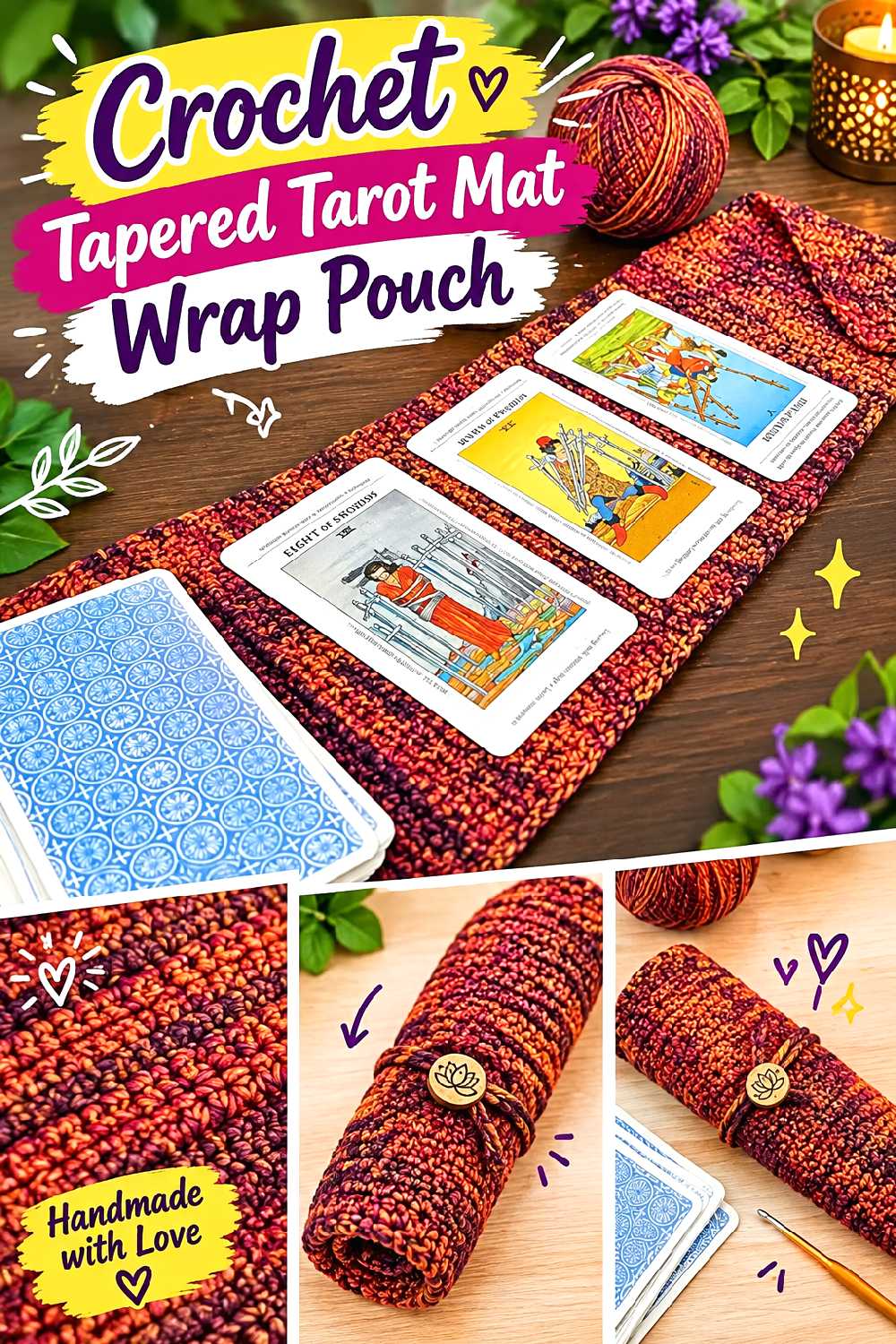
Darn Good Yarn’s tarot-mat tutorial starts as an elongated crocheted surface that folds around the cards and forms a storage pocket. A tapered end and flexible closure options give it a different silhouette from a rectangular envelope pouch. The tutorial also explicitly tells readers to measure their own cards because deck dimensions vary.
This is a strong fall option when you want one substantial textile piece rather than a small fitted case. In a rust-and-black combination it can read distinctly seasonal without added motifs; in cream and plum it becomes softer and more ritual-like. The trade-off is scale: more mat means more material surrounding the cards once everything is closed.
Decide Whether Portability or Surface Area Matters More
A larger reading area is useful when the pouch regularly becomes part of the spread, but extra length inevitably has to fold or wrap somewhere. Test the closed size before assuming the widest possible mat is automatically better.
Readers who mainly use a deck at home may welcome the additional fabric. For a deck carried daily, a slimmer wrap may be more convenient.
Fit the Closure Only After Folding the Deck Inside
The source presents more than one possible closure treatment, which is useful because there is no universally best fastening for a wrap. A tie remains soft, while a button provides a fixed anchor point.
Whichever route you choose, establish its position with every layer folded around the complete deck. The empty textile will not reproduce the same circumference.
Original Tutorial and Creator Credit
Creator/Site: Darn Good Yarn — Kate Curry
4. Crochet Minimal Everyday Tarot Card Pouch
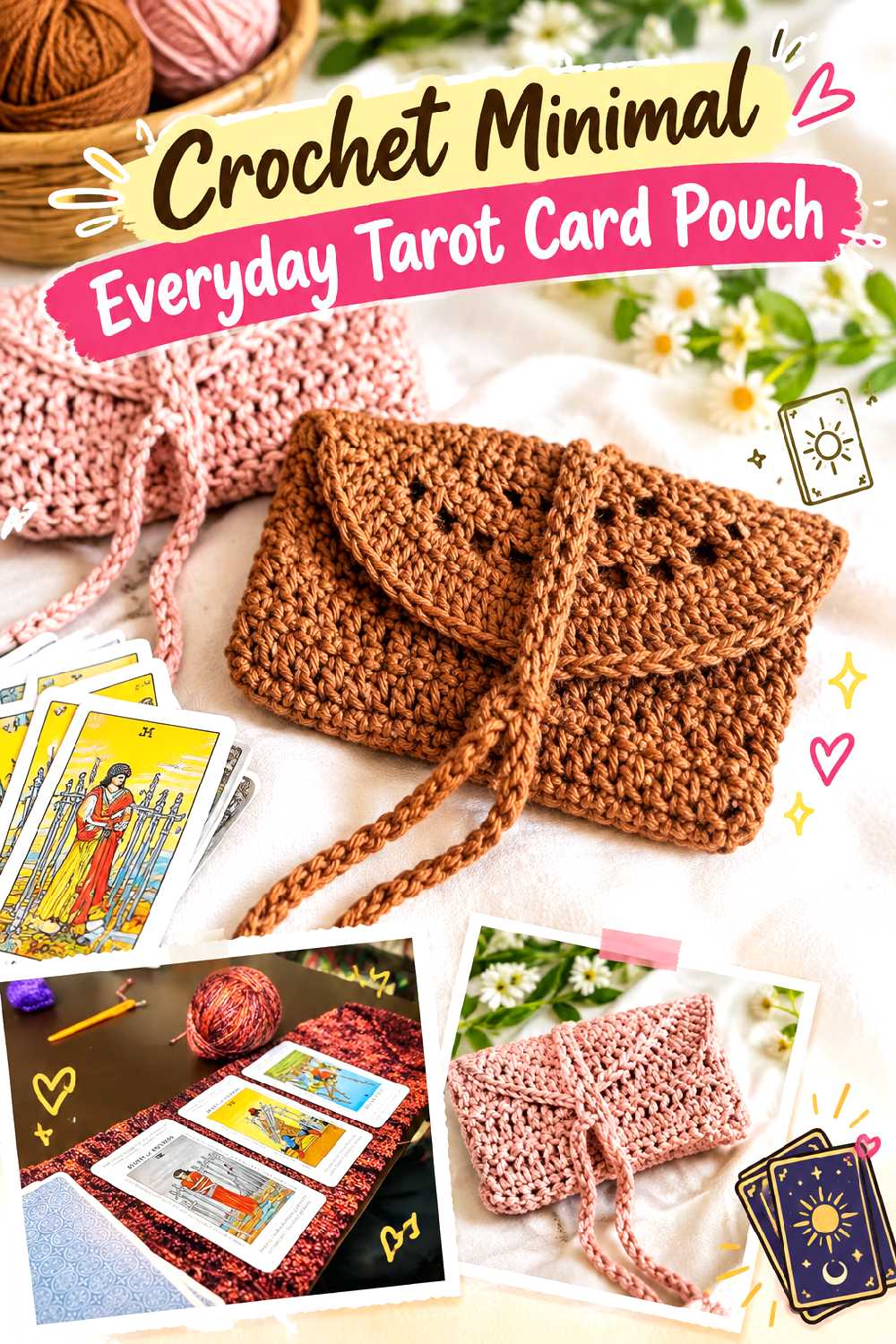
Ashten Stitches demonstrates a straightforward pouch specifically for tarot cards, making this a useful choice for readers who want the deck itself—not elaborate construction—to remain the focus. The visible form is compact and uncomplicated, and the tutorial uses a combination of basic crochet fabric rather than a separate reading mat, zipper assembly, or decorative granny motif.
For fall, this minimalist form can work in almost any palette. A solid dark olive or aubergine keeps it restrained, while a softly variegated yarn can provide all the visual movement needed. Because the pouch is comparatively simple, clean finishing around the opening and sides matters more; irregular edges have fewer decorative elements to distract from them.
Make Simplicity Work Through Fit
A plain pouch looks deliberate when the proportions suit the deck. Too much excess width can make it look like a generic bag, while an excessively tight fit makes card removal awkward.
Check the full stack during construction whenever the tutorial permits. Leave enough practical room for the deck to slide rather than forcing the corners past a narrow opening.
Strengthen the Areas That Get Handled
Simple storage pouches receive most of their repeated handling near the opening. Check that ends are securely finished and that decorative edging, if added, does not reduce usable space.
If you plan to add beads or a charm for a witchier finish, attach them to an exterior area where they cannot rub across the cards during insertion and removal.
Original Tutorial and Creator Credit
Creator: Ashten Stitches
5. Crochet Gathered Drawstring Tarot Deck Bag
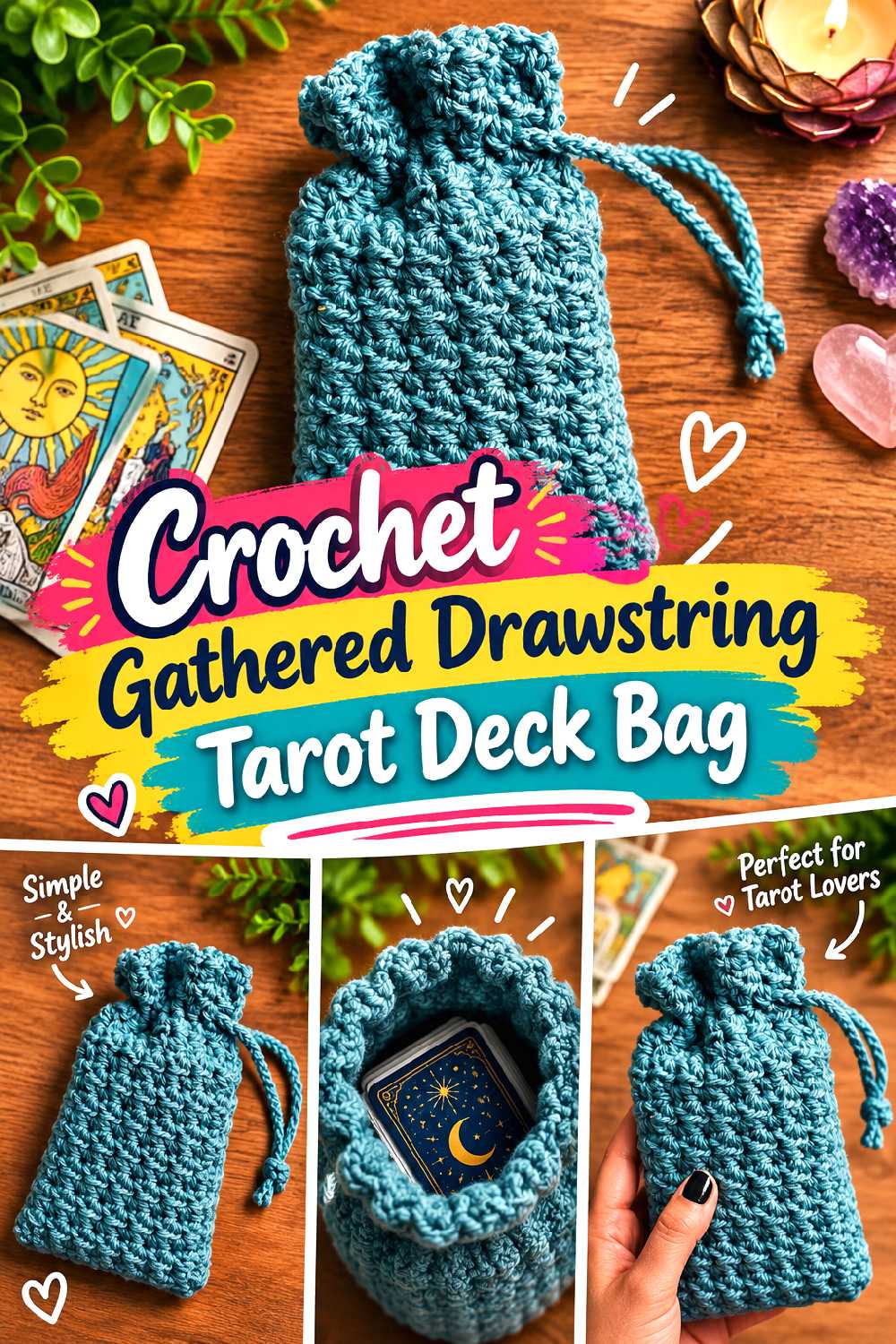
Tarot with Ruby’s dedicated tutorial uses the familiar drawstring-bag format specifically for tarot storage. Compared with a fixed button or zipper, the gathered top provides a softer closure and avoids requiring the flap to line up with one exact fastening point. The creator also demonstrates the final fit and discusses variations on the basic bag.
This shape suits a deeply autumnal treatment: dark pumpkin, mulberry, moss, brown, or midnight yarn can give the familiar silhouette a much more atmospheric identity. Drawstring ends also provide a natural location for a restrained tassel or bead, although any added weight should remain outside the card area.
Give the Drawstring a Smooth Path
A drawstring closure is only convenient when the cord can travel through the casing without excessive resistance. Very fuzzy yarn, oversized cords, or tightly worked openings may make gathering harder.
Test the closure repeatedly before trimming, knotting, or decorating the ends. The top should gather evenly rather than collapsing into one stiff bunch.
Do Not Use the Cinch to Correct a Tight Body
A drawstring can accommodate the opening, but it cannot create room around the lower part of a deck. Confirm that the cards sit naturally inside before judging the closure.
If the side walls bow around the stack or the corners have to be pushed into place, revisit the body dimensions instead of relying on the gathered top to hold everything under pressure.
Original Tutorial and Creator Credit
Creator: Tarot with Ruby
6. Crochet Made To Measure Tarot Cozy Pouch
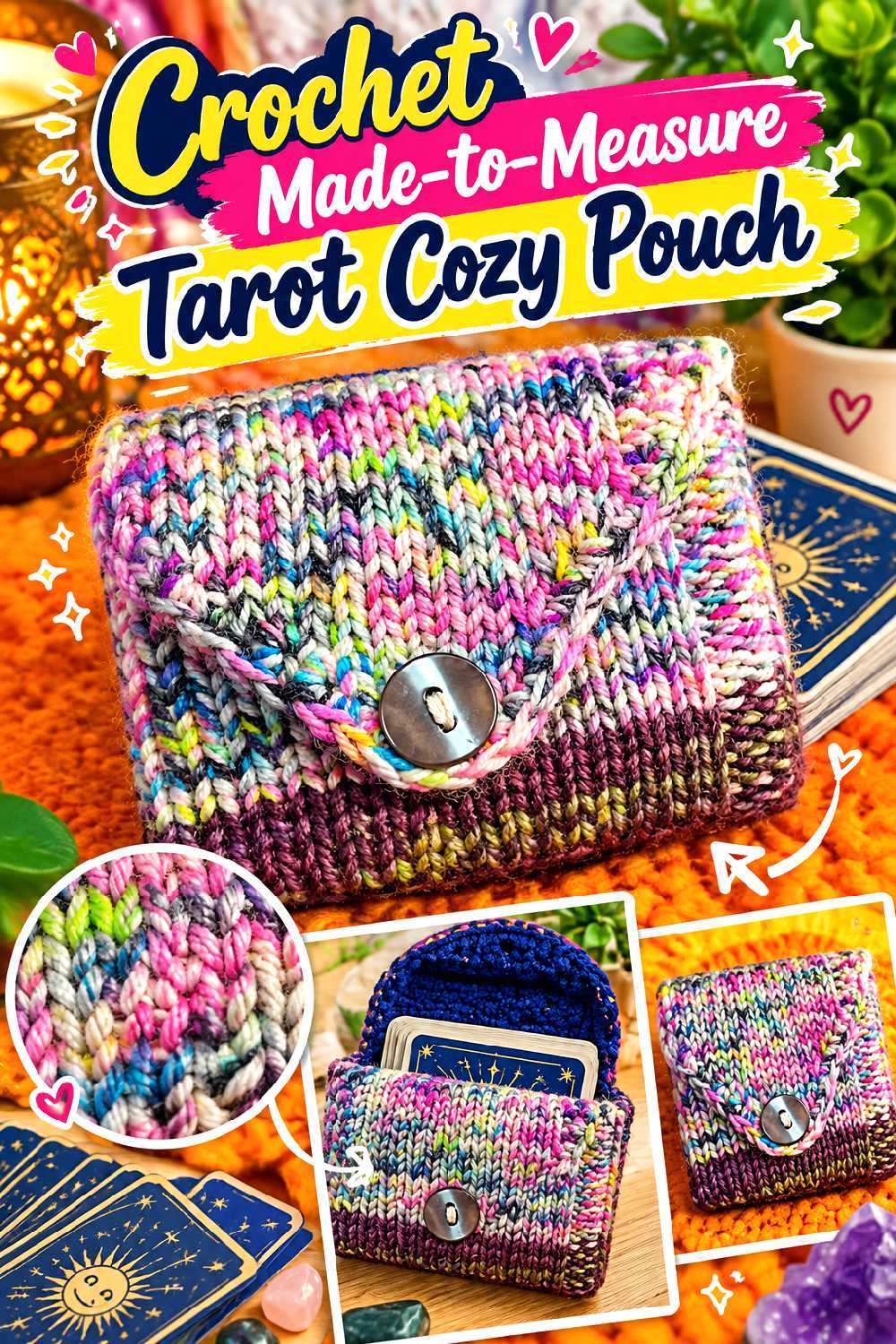
Tarot By Nature approaches tarot storage from the deck outward rather than treating one predetermined size as universal. The first part of the crochet-along focuses on choices such as yarn, fabric character, bag style, and the base while working toward a pouch suited to a specific tarot or oracle deck.
That makes this idea especially helpful for unusually thick decks, oversized oracle cards, or collections where different decks have noticeably different proportions. Visually, the finished concept can remain minimal or become a base for autumn embellishment later. The important difference is that sizing decisions happen intentionally rather than as an afterthought.
Use the Deck to Resolve Width and Depth Together
A tarot pouch must accommodate the stacked thickness as well as face width. A flat measurement across the front of one card does not tell you how the completed three-dimensional case will behave.
Once the base develops enough dimension, compare it with the actual stack. Early checking can prevent completing a tall body only to discover that the bottom is already too restrictive.
Choose Fabric Character Before Choosing Decoration
A dense, structured fabric and a more flexible fabric produce different storage experiences even at the same measurements. Decide whether you want the pouch to hug the deck or remain softer and more relaxed before adding decorative motifs.
For fall, color can carry much of the theme while the made-to-measure construction keeps the pouch practical.
Original Tutorial and Creator Credit
Creator: Tarot By Nature
7. Crochet Jaipur Tie Closure Tarot Pouch

Angélique of Atelier Pèlerine designed the Jaipur pouch specifically around tarot and oracle storage. The finished case has a more polished clutch-like personality than a basic gathered bag, with a flap and soft tie creating a strong front silhouette. The creator’s supporting information identifies the design for classic tarot formats and discusses enlarging it for other decks.
That makes Jaipur a natural candidate for a refined witchy fall palette: antique rose, cream, warm brown, smoky blue, or deep aubergine can emphasize the shape without needing pictorial motifs. Because the flap and closure are prominent, careful fit around the full deck matters more than adding extra ornament.
Keep the Flap Relaxed Over the Stack
A flap that looks correctly proportioned while empty may pull upward once a thick deck is inserted. Test the complete stack before considering the closure finalized.
Aim for a natural fold rather than using the tie to force fabric over an overfilled interior. The deck should slide in and out without corners catching at the upper edge.
Recheck Fabric Behavior When Resizing
Moving to a thicker yarn may increase overall dimensions, but it can also create heavier edges, larger stitches, and more bulk where the flap overlaps.
For a significantly larger oracle deck, compare those consequences with other resizing methods supported by the designer. A larger pouch should still behave like the intended case rather than becoming stiff simply because the materials were scaled up.
Original Tutorial and Creator Credit
Creator: Angélique – Atelier Pèlerine
8. Crochet Folded Button Tarot Card Pouch
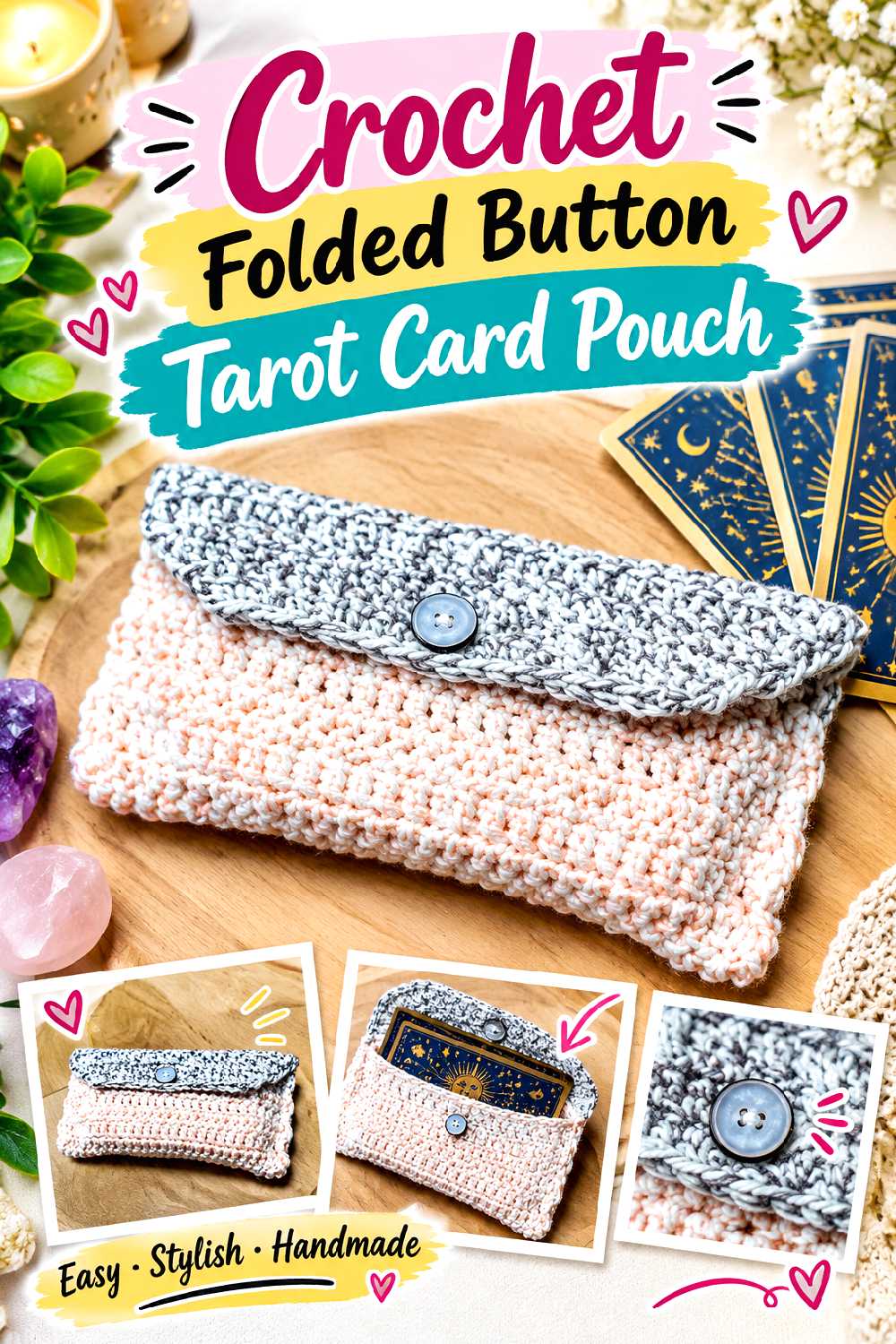
WolfyCraftsNL’s tarot pouch uses a folded construction and button closure, giving the finished case a wallet-like appearance rather than a cylindrical or gathered bag. The original is designed around tarot storage and the creator specifically notes that it is better suited to home storage than being relied on as the deck’s only protection while traveling.
That limitation is useful to know. Soft crochet can organize and visually contain a deck without functioning like a rigid protective box. For an autumn version, color-changing yarn against a neutral contrast or a single deep seasonal shade can emphasize the fold without adding extra hardware beyond the button.
Position the Button With the Deck Loaded
Buttons are less forgiving than loose ties because both the fastening point and buttonhole have fixed positions. Fold the pouch naturally over the actual card stack before securing the button.
If the flap has to be pulled hard to reach the fastening point, the placement or capacity needs reconsideration. The closure should not be responsible for compressing the deck.
Use This as Storage, Not a Hard Case
Crocheted fabric does not provide the crush resistance of a rigid box. If the pouch will travel inside a backpack or heavily packed tote, consider placing the crocheted case inside another protective compartment.
At home, the soft folded construction can be a neat way to identify decks by color while keeping loose cards together.
Original Tutorial and Creator Credit
Creator: WolfyCraftsNL
9. Crochet Crystal Pocket Tarot Reading Pouch
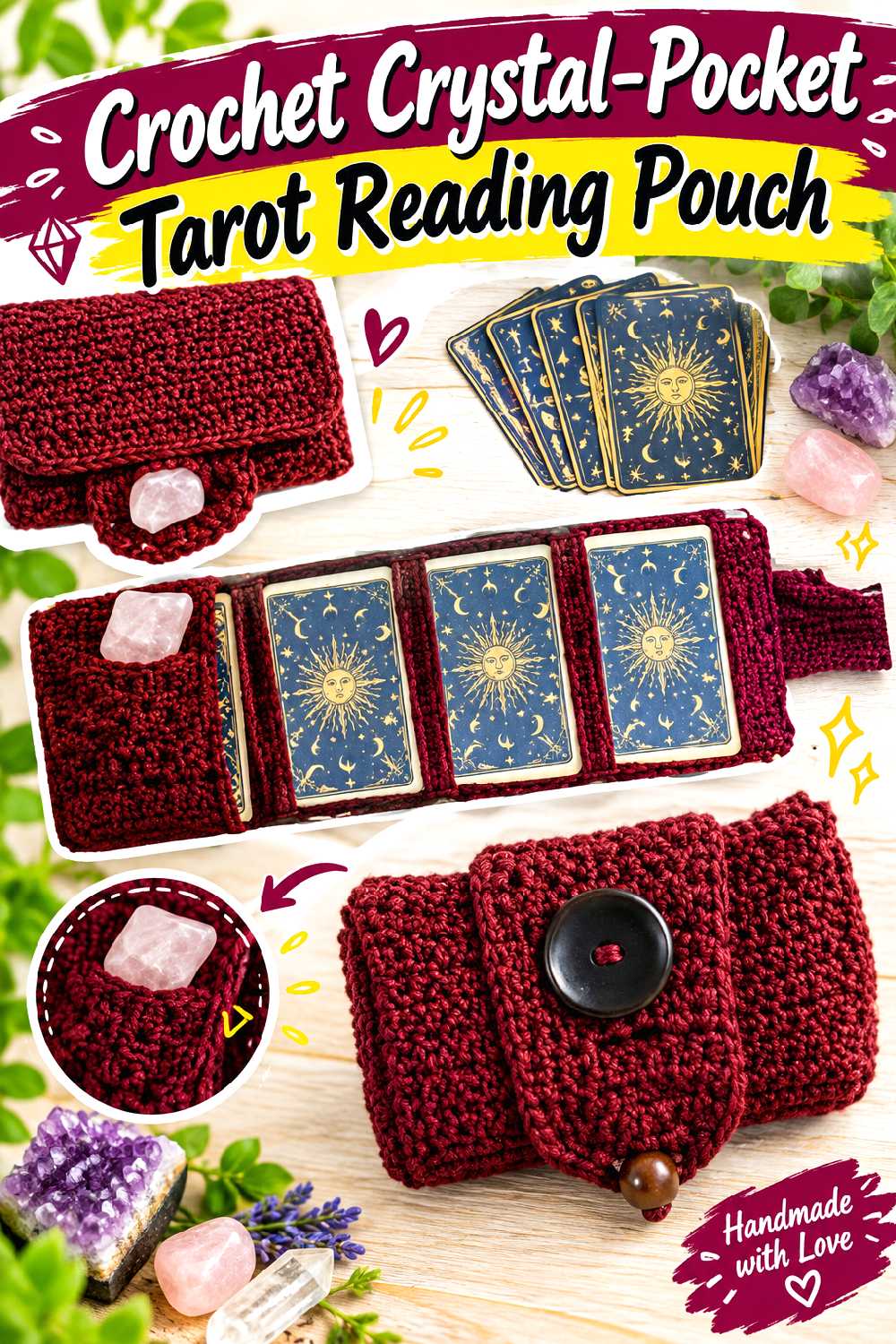
Mud’s Yarn adds a second layer of function by combining tarot storage, a small reading mat, and an extra granny-style pocket intended for a crystal or small charm. That auxiliary pocket immediately distinguishes the design from cases devoted solely to the card stack.
This can make a cohesive fall reading kit when you normally pair one small object with a deck. The practical limit is weight and surface hardness: a dense stone or bulky charm changes how the pouch folds and may press against the cards if the layers overlap awkwardly. Use the extra compartment selectively rather than treating it as permission to load the case with every small tool.
Separate Hard Objects From Card Faces
A pocket creates organization, but it does not automatically prevent its contents from pressing through flexible crochet. Fold the loaded case and check where the extra compartment lands relative to the deck.
If a crystal creates a distinct hard point against the cards, change its position, choose a smaller object, or carry it separately. The soft fabric should not be expected to absorb concentrated pressure.
Keep the Reading Surface Uncluttered
An auxiliary pocket is visually interesting, but the main mat still needs to function when opened. Avoid placing dangling charms or oversized beads where they interfere with laying cards flat.
Autumn colors can differentiate the pocket from the mat without adding physical bulk—consider charcoal with muted gold, plum with cream, or moss with rust.
Original Tutorial and Creator Credit
Creator: Mud’s Yarn
10. Crochet Color Motif Tarot Drawstring Pouch
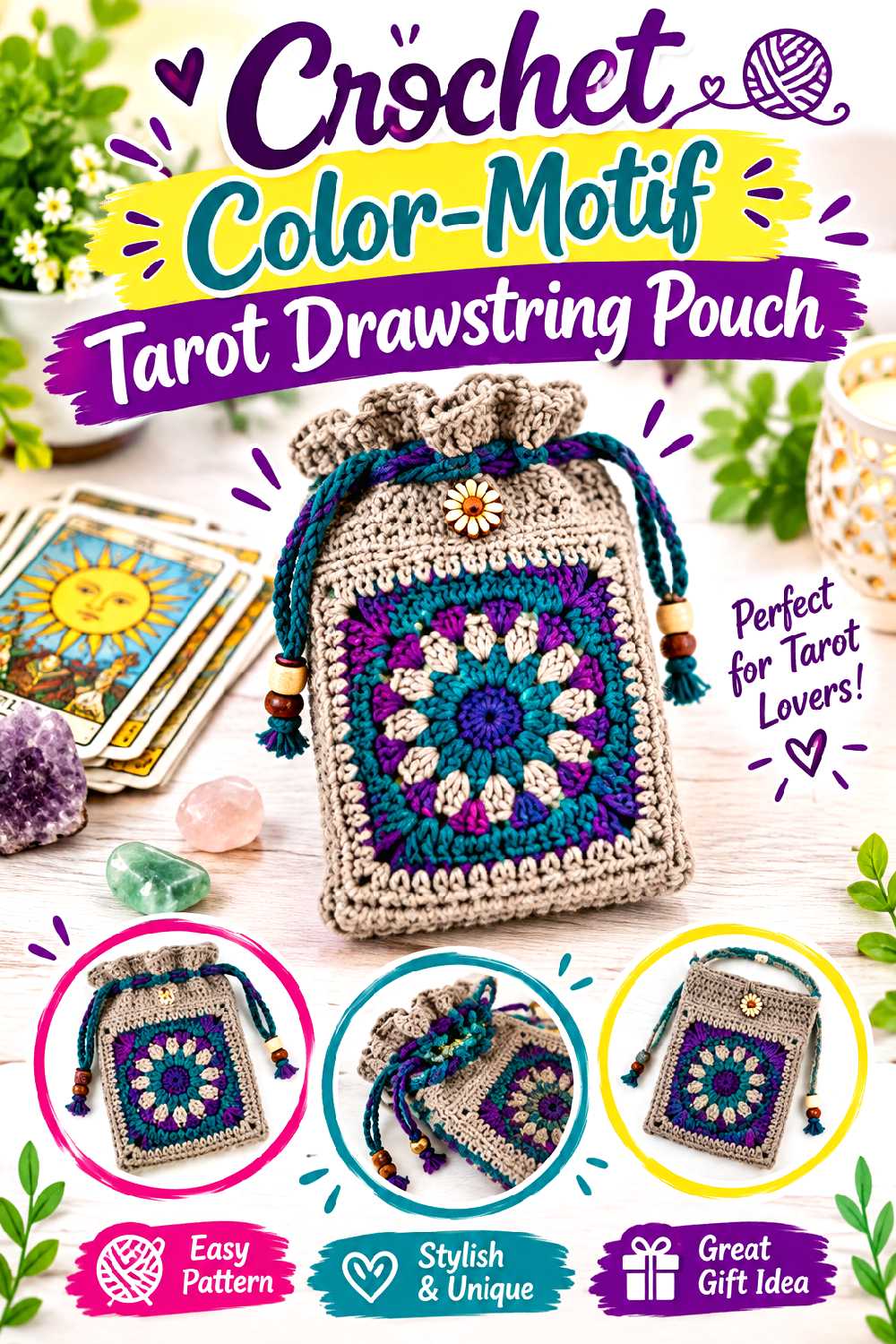
Green Fox Farms Designs’ Calliope Festival Pouch is built around a colorful granny-inspired motif and includes a drawstring finish that the designer explicitly identifies as useful for tarot cards, dice, and small objects.
That motif-based construction gives this project a completely different visual rhythm from solid rectangles and textured cylinders. For fall, replace summery brights with pumpkin, dusty rose, moss, plum, cream, or tarnished-gold-inspired shades while maintaining enough contrast for the motif to remain legible. Because the design depends on multiple pieces and color placement, blocking and consistent motif size matter more than they do in a simple one-color bag.
Keep Every Motif Consistent
Small size differences may become obvious when motifs are joined into one compact pouch. If several colors or scraps come from yarns with different behavior, compare the pieces before assembly.
Blocking can improve visual consistency where appropriate for the chosen fiber. It is easier to correct a slightly uneven motif before joining than to reshape a completed pouch around a deck.
Use Color Placement Instead of Extra Appliqués
The Calliope surface already contains strong pattern and color movement. A witchy treatment can come entirely from the palette instead of attaching moons, stars, or charms on top.
That restraint also keeps the card path cleaner. Let the motif act as the decorative feature and reserve additional embellishment, if any, for the drawstring ends.
Original Tutorial and Creator Credit
Creator/Site: Green Fox Farms Designs — Lisa Fox
11. Crochet Suzette Stitch Tarot Button Pouch
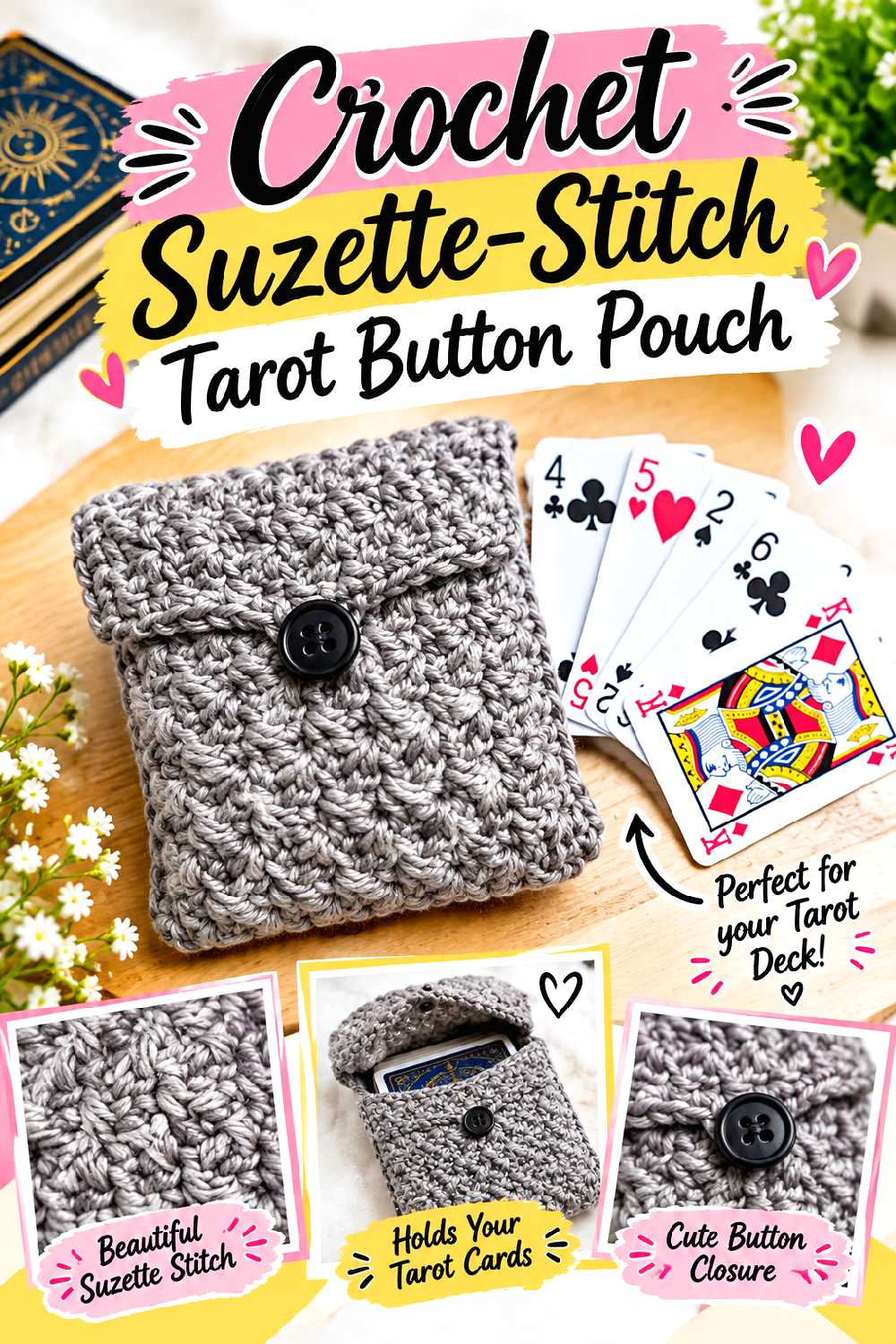
Sweet Bee Crochet’s source project is designed for a standard playing-card deck rather than tarot, but its Suzette-stitch body and button closure provide a useful structural reference for a deck-sized adaptation. The original finished pouch is deliberately compact, so its measurements should not be transferred directly to taller tarot cards.
For tarot storage, the value is in the combination of a textured flat fabric, flap, and visible button. A deep brown or muted wine version could feel distinctly autumnal while remaining more understated than a celestial appliqué design. Adapting it responsibly requires recalculating around the actual tarot deck and keeping the Suzette-stitch repeat intact.
Resize the Fabric, Not Just the Length
Tarot cards may differ from playing cards in height, width, and total stack thickness. Simply adding extra rows addresses only one of those dimensions.
Make a swatch, identify the stitch repeat, and establish a new body size around the full tarot stack. Use the creator’s project for construction logic rather than treating the original stitch counts as tarot instructions.
Delay Final Button Placement
Once the tarot-sized body and flap are complete, insert the full deck and close the fabric naturally. That is the moment to determine where the button should sit.
A hard button also creates an interior attachment point. Keep the reverse side tidy and avoid positioning exposed hardware where it could continually rub card faces.
Original Tutorial and Creator Credit
Creator/Site: Sweet Bee Crochet — Rebecca
12. Crochet Scalloped Envelope Tarot Pouch
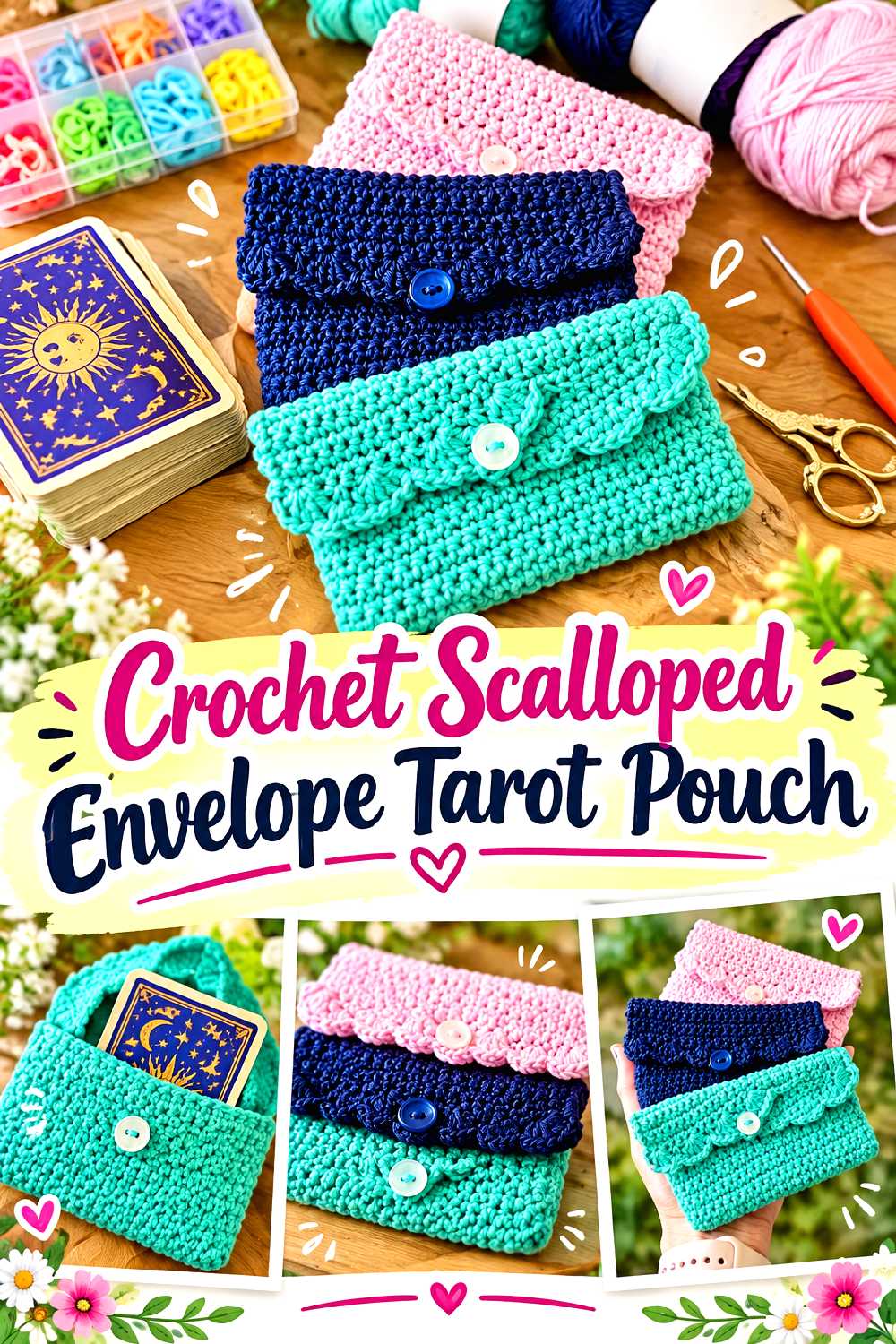
Pink Bows & Twinkle Toes’ original card case is a credit-card-sized envelope wallet with internal pockets, a button, and a scalloped flap detail. It is not a tarot pattern, so the project works here as an adaptation concept rather than a ready-to-follow tarot size.
The layered envelope format is its main attraction. Enlarged thoughtfully, it can create a more tailored tarot holder than a basic sack, and the scalloped edge naturally suits romantic gothic or cottage-witch styling. The challenge is bulk: a tarot deck is much thicker than several bank cards, so directly multiplying the original dimensions could produce awkward folds without providing enough depth.
Prototype the Fold Before Finishing the Sides
Wrap a swatch, paper template, or unfinished crocheted rectangle around the full tarot stack to understand where additional depth is needed.
The exterior width alone is not a reliable capacity measurement in a folded wallet because multiple layers consume space. Establish the deck cavity first, then decide how much overlap the flap actually needs.
Keep Scallops Out of the Card Opening
Scallops should frame the flap rather than curl into the route the cards take when they slide in and out. Check the decorative edge after shaping or blocking as appropriate for the fiber.
If the enlarged scallops become too dominant, a smaller repeat or simpler edge may create a cleaner tarot-sized proportion while retaining the envelope character.
Original Tutorial and Creator Credit
Creator/Site: Pink Bows & Twinkle Toes
13. Crochet Basketweave Tarot Deck Wallet
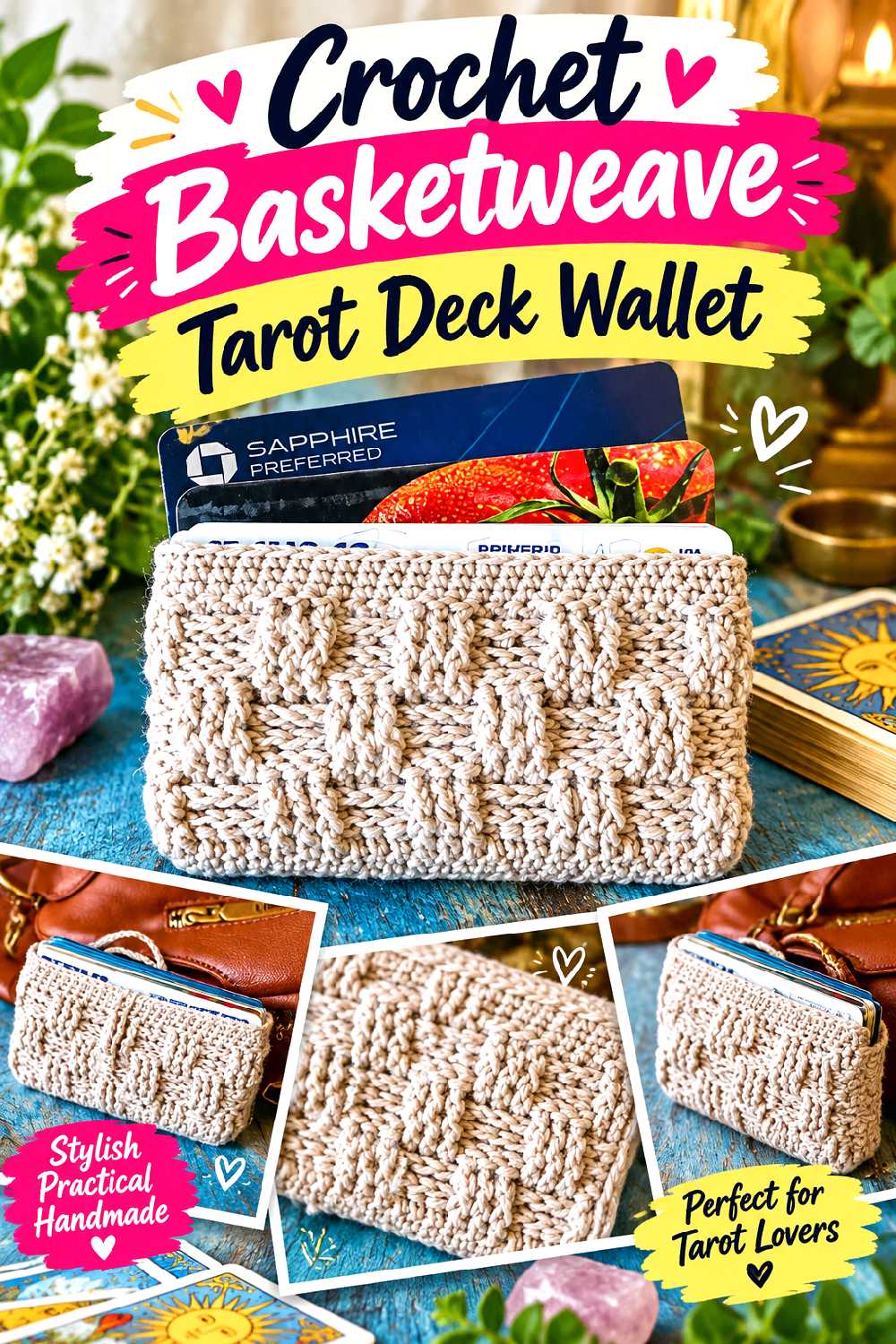
Heart Hook Home’s Basketweave Card Wallet is another small-card project rather than a tarot pattern, but its deeply raised basketweave fabric offers a tactile direction that few simple deck pouches provide. The original uses a loop-style closure, making the overall effect more like a substantial textured wallet than a loose bag.
For a fall tarot adaptation, this surface would work particularly well in chestnut, charcoal, forest green, muted copper, or natural cream. The major trade-off is thickness. Raised post-stitch fabric can be bulkier than flatter crochet, so the completed case may occupy more room even before a deck is inserted.
Preserve the Basketweave Repeat While Enlarging
Basketweave texture depends on a structured front-post and back-post rhythm. Adding arbitrary stitches to reach tarot width can interrupt that pattern.
Identify the repeat from the original tutorial and resize in compatible increments. A swatch also gives you a realistic sense of how much the raised texture contracts or expands compared with a flatter stitch.
Test the Loop Around a Full Tarot Stack
The source’s loop closure is sized around its original contents, so a tarot version needs a completely new fit. Load the case before deciding the loop length.
Yarn loops may relax through repeated use depending on the fiber and construction. Keep the fastening secure without making it so tight that it compresses the cards.
Original Tutorial and Creator Credit
Creator/Site: Heart Hook Home — Ashlea
14. Crochet Seamless Flap Tarot Card Holder
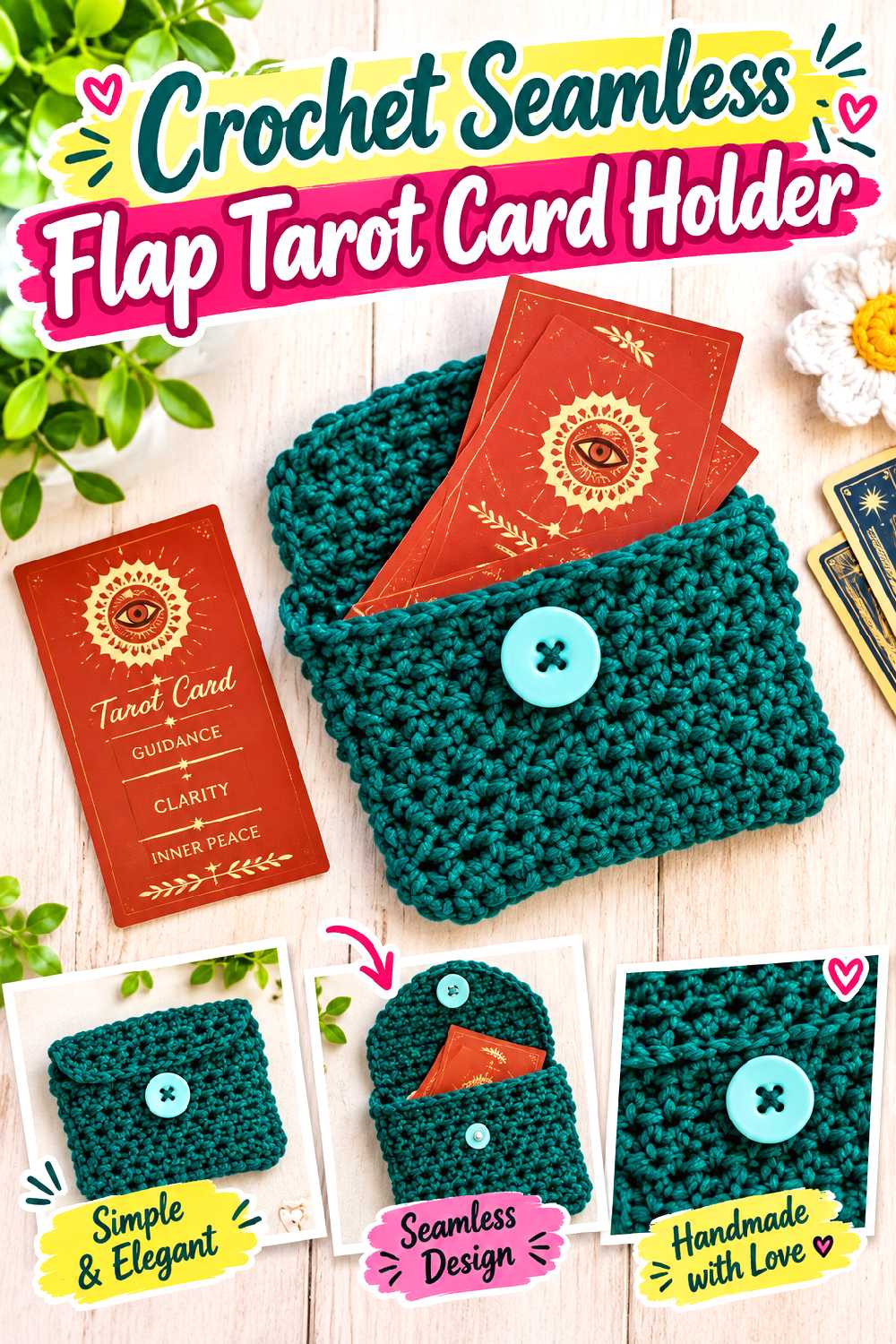
Carroway Crochet’s Practical Card Holder is made in the round with a fold-down button flap, reducing the need for conventional side seams. The source is intended for bank, business, or gift cards rather than tarot cards, so its finished dimensions and counts need to be replaced when adapting the construction.
A tarot-sized version could appeal to anyone who dislikes prominent side seams beside card edges. The flap also creates an obvious place for one decorative statement button. For a witchy fall version, a dark solid yarn and understated wood-look or matte button can provide atmosphere without making the closure overly bulky.
Think in Circumference, Not Flat Width Alone
An in-the-round case accommodates both the face width and the thickness of the stack through its circumference. That makes resizing different from extending a two-panel rectangle.
Check the developing tube against the full deck. If the cards distort the sides noticeably, correct the capacity before continuing upward.
Let Seamless Construction Reduce Edge Bulk
Removing side seams can create a cleaner profile, particularly in a medium-weight yarn. It does not eliminate every possible snag point, however.
Inspect joins, the flap transition, woven ends, and the reverse of the button area. The cards should encounter a simple interior rather than loose tails or hard attachment points.
Original Tutorial and Creator Credit
Creator/Site: Carroway Crochet — Pam Carr
15. Crochet Folded Magnetic Tarot Pouch
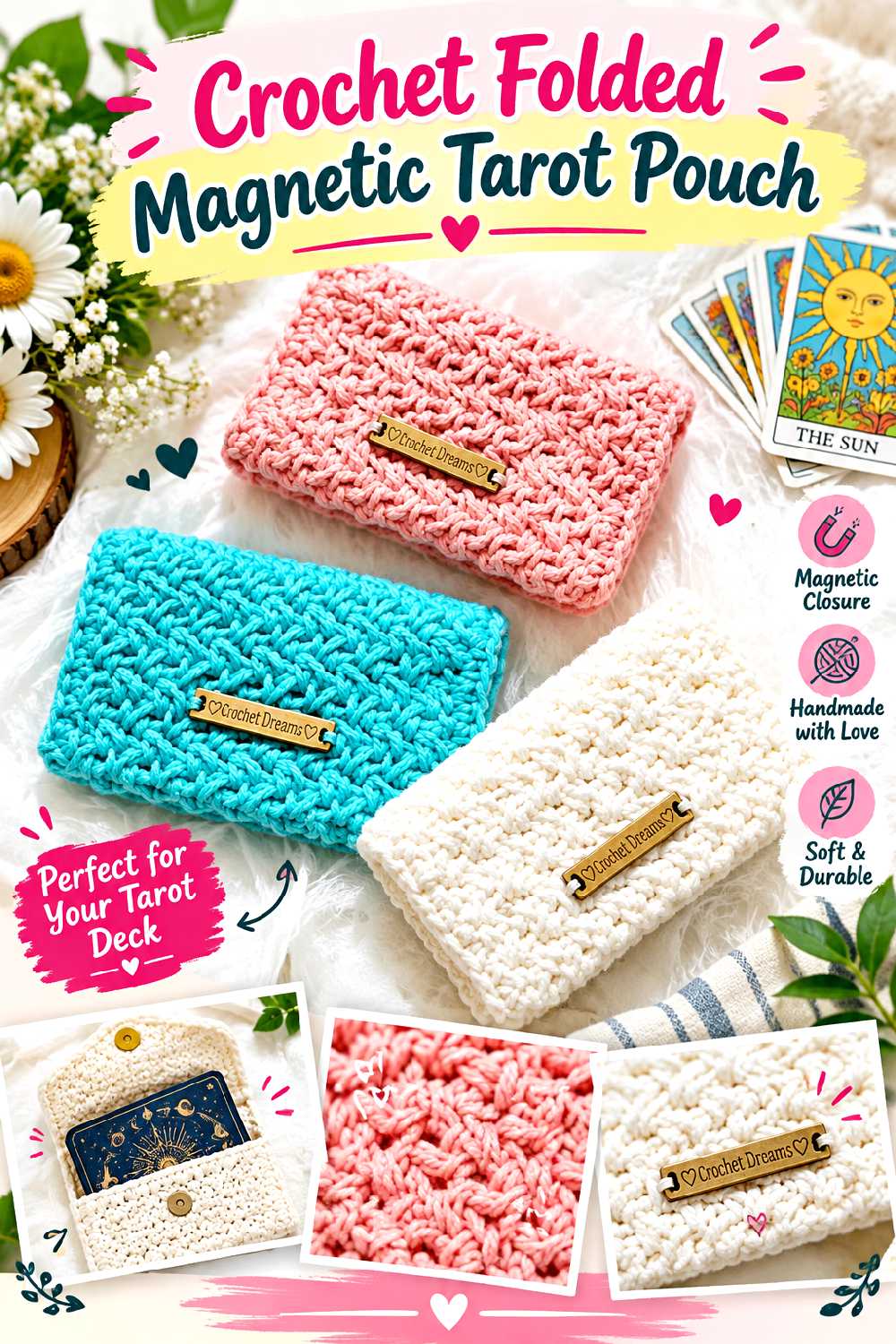
Crochet Dreamz builds its original credit-card holder from a crocheted rectangle that is folded and fitted with sew-on magnetic snaps. It is not designed for tarot cards, but the clean rectangular geometry suggests a sleek deck-holder adaptation for readers who want minimal external decoration.
The important consideration is the magnetic hardware itself. A tarot deck occupies far more surface area and thickness than a couple of wallet cards, so a hard fitting should not become a concentrated pressure point. This option makes most sense for crocheters comfortable redesigning proportions and carefully positioning the closure after the enlarged fabric is wrapped around the intended deck.
Establish New Fold Lines Around the Tarot Deck
Do not scale the original fold positions by percentage. Crochet the new-sized fabric, place the tarot stack on it, and determine where the material naturally needs to turn.
Mark those positions temporarily before sewing anything. Small changes in yarn thickness can alter where an apparently symmetrical rectangle folds once a real deck adds depth.
Isolate the Magnetic Hardware
Inspect both sides of each snap after attachment. The cards should be separated from any hard edge, fastening stitch, or metal component by sufficient fabric.
If you prefer to avoid rigid fittings entirely, choose one of the tie, loop, or button designs elsewhere in the list instead of forcing this concept to serve every deck.
Original Tutorial and Creator Credit
Creator/Site: Crochet Dreamz — Shehnaaz
16. Crochet Moss Stitch Zipper Tarot Case
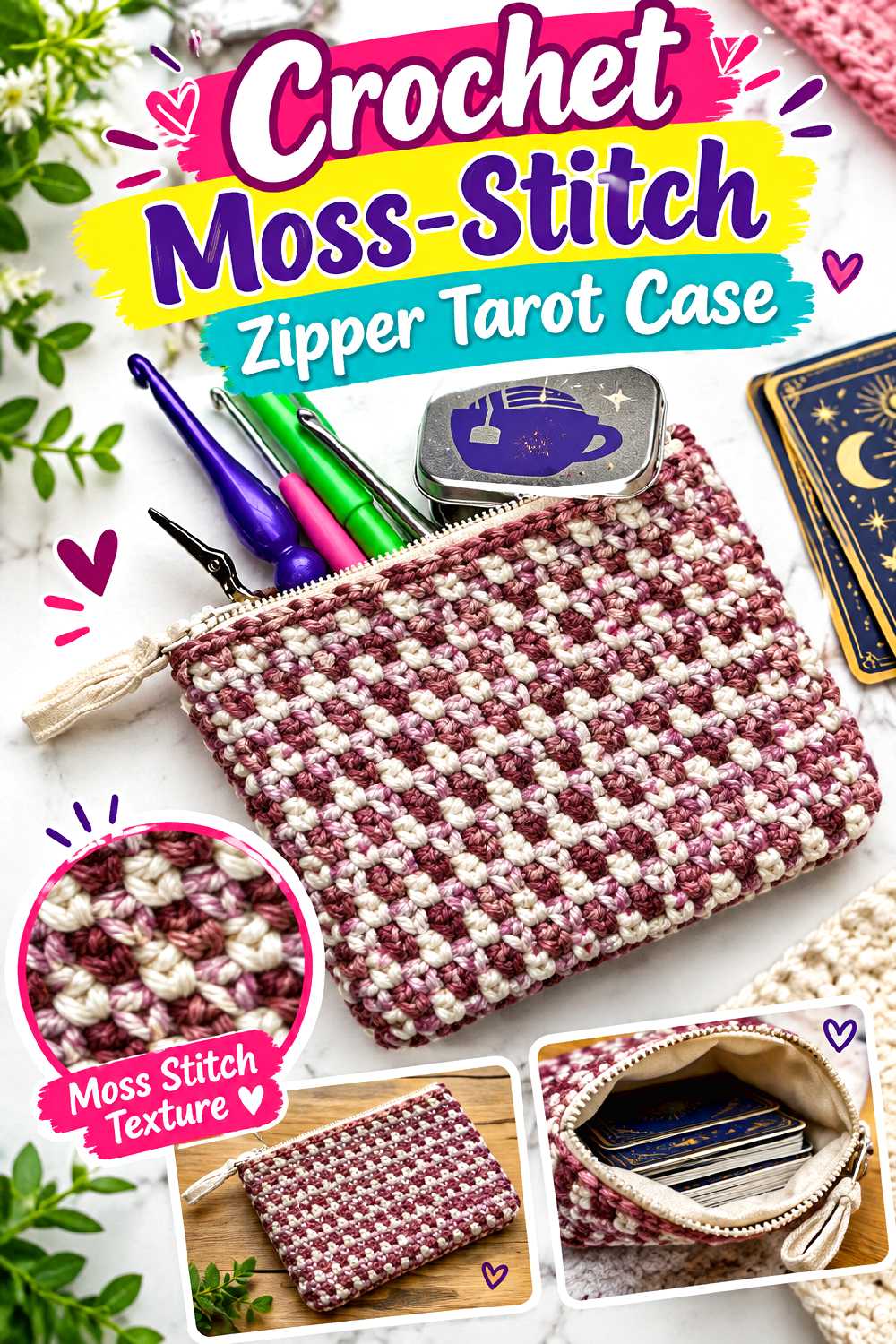
Juniper and Oakes’ striped moss-stitch pouch uses a crocheted cover with a zippered inner pouch, giving the finished piece a level of enclosure that soft flap cases do not provide. The source is a general organizer rather than a tarot tutorial, so first confirm that the inner pouch dimensions are appropriate for your particular deck.
For tarot use, this approach is attractive when you prefer cards to sit inside a smoother inner case while crochet supplies the exterior look. A striped fall palette can suggest moon phases, fading autumn skies, or harvest colors without requiring a complicated motif. The structure also makes lining and zipper quality more important than in a simple drawstring bag.
Check the Inner Case Before Crocheting the Cover
The crochet exterior cannot compensate for an inner pouch that is already too small. Place the full deck inside the chosen insert and operate the zipper comfortably before making the cover.
Keep card edges below the zipper path and avoid packing the case so tightly that the teeth scrape or press against the deck.
Use Moss Stitch for Surface, Not False Rigidity
The woven appearance of moss stitch gives the exterior a tidy texture, but the structural performance still depends heavily on the pouch beneath it.
Treat the crochet as an attractive cover and added textile layer rather than assuming it turns a soft insert into a rigid protective box.
Original Tutorial and Creator Credit
Creator/Site: Juniper and Oakes — Erin Toews
17. Crochet Direct To Zipper Tarot Deck Pouch
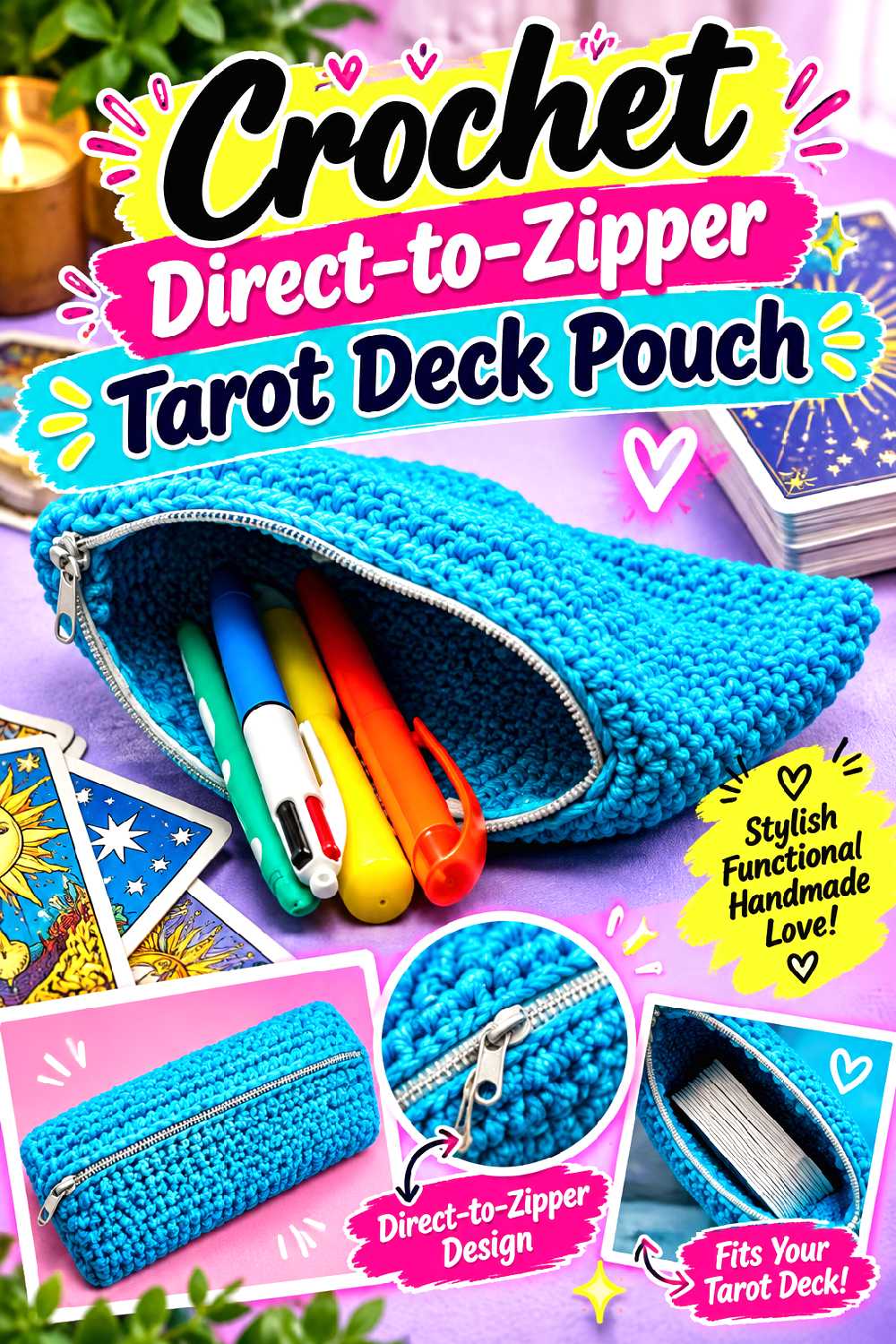
The Crochet Crowd demonstrates a different zipper strategy: instead of simply covering a separate finished case, the pouch is crocheted in relation to the zipper itself. The original project is intended as a general zipper pouch or pencil case rather than tarot storage, so the zipper length and finished body must be chosen around the deck you intend to use.
This construction gives a very clean top edge and removes the need for a drawstring or flap. For a fall tarot case, one rich solid color can emphasize the stitchwork, while a contrasting zipper becomes the visual accent. The most important practical question is clearance: the cards should pass the zipper smoothly without scraping the teeth.
Choose the Zipper From the Deck Outward
Measure the width and thickness of the complete deck and allow comfortable insertion rather than choosing hardware because it happens to be in your sewing box.
A zipper that barely matches the card width can become frustrating once the pouch seams and fabric thickness reduce the usable opening.
Protect the Card Corners at the Opening
Run a hand along the inside of the finished zipper area and check for rough threads, exposed tape edges, or attachment points.
When inserting the deck, it should drop into the main body without the corners repeatedly catching. If you carry the pouch often, periodically inspect this high-contact area.
Original Tutorial and Creator Credit
Creator/Site: The Crochet Crowd
18. Crochet Granny Square Tarot Card Pouch
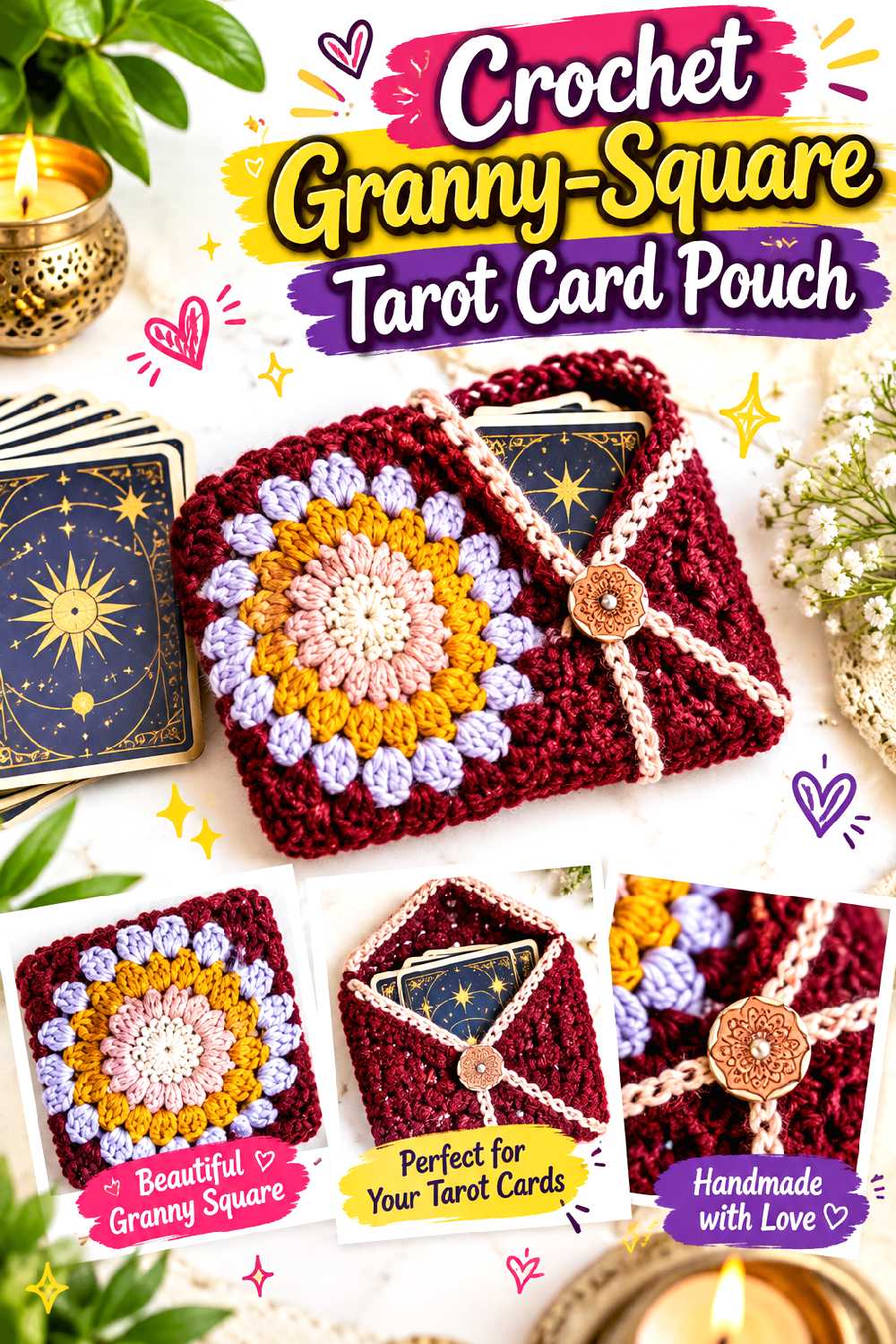
Morine’s Shop demonstrates how to turn a granny square into a pouch and explicitly discusses adjusting the idea for different square sizes. The source project is not specifically a tarot case, which means your deck—not its sample measurements—should determine the scale of any adaptation.
The visual potential is strong for fall 2026. A sunflower-inspired center can shift toward burnt orange and dark brown, while a star-like or geometric granny square can move into black, rust, moss, and cream. Because the square itself is the main design feature, this pouch can feel richly decorative without attaching extra appliqués.
Build the Square Around the Required Fold
Before completing an elaborate large motif, consider how it will be folded into the pouch shape. The visible center, corners, and color transitions may move once the square becomes three-dimensional.
Temporarily fold the motif around the deck as it approaches the required size. That helps you judge both capacity and visual placement.
Keep the Deck Side of the Fabric Smooth
Granny-inspired surfaces can include gaps, bobbles, or pronounced joins depending on the motif selected. Examine the inside after folding.
If decorative joins or yarn tails sit directly against card edges, finish them securely and consider whether a smooth lining would improve the intended use. Any lining choice should be sized separately rather than assumed from the crochet measurements.
Original Tutorial and Creator Credit
Creator/Site: Morine’s Shop — Morine
19. Crochet Mosaic Geometric Tarot Pouch
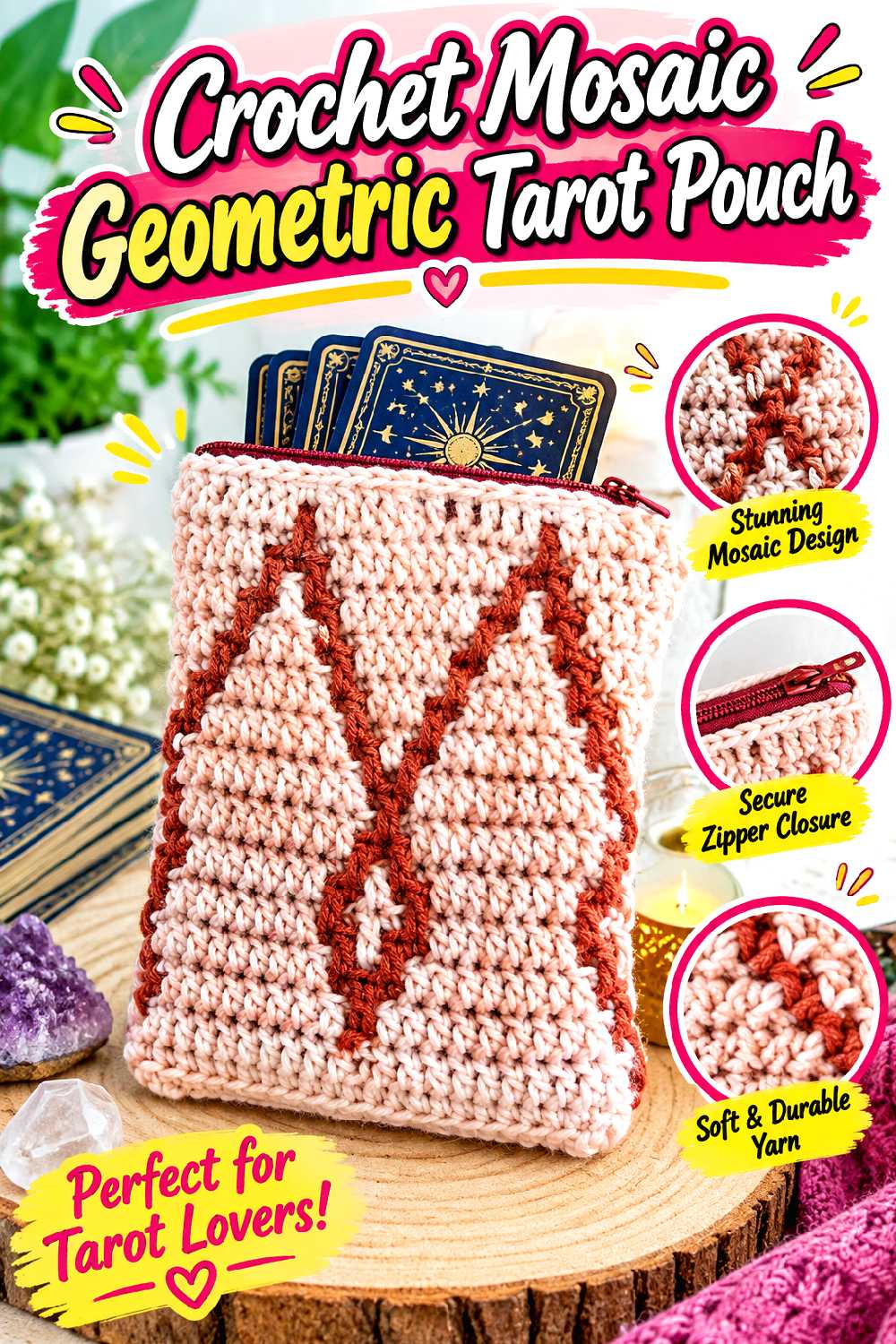
Nicki’s Homemade Crafts’ mosaic pouch offers a much more graphic direction. The source uses overlay mosaic crochet and includes an optional zipper and lining, creating a substantial geometric surface rather than the softer texture of moss or Suzette stitch. It is a general pouch tutorial, not a tarot-specific pattern.
For fall, two-color mosaic work can look particularly striking in cream and black, rust and charcoal, moss and tan, or plum and muted gold. The technique creates its own decorative identity, so extra moon or star appliqués are unnecessary. Because the source dimensions were chosen for another use, establish tarot capacity before deciding whether to retain the same repeat count or zipper treatment.
Maintain the Mosaic Repeat During Resizing
Graphic mosaic designs depend on stitch placement. Randomly inserting stitches to reach a preferred width can break the geometry.
Study the repeat, swatch the fabric, and expand only in ways that preserve the charted rhythm. Your final tarot dimensions may need to be slightly larger than the theoretical minimum to accommodate a complete repeat cleanly.
Decide Whether a Lining Is Worth the Extra Layer
A lining can create a smoother card-facing interior and keep small openings in decorative crochet away from corners. It also adds another layer and requires separate fitting.
If you include one, construct it around the actual interior capacity rather than cutting fabric from the flat exterior measurements alone.
Original Tutorial and Creator Credit
Creator/Site: Nicki’s Homemade Crafts — Nicole Riley
20. Crochet Honeycomb Tarot Drawstring Bag
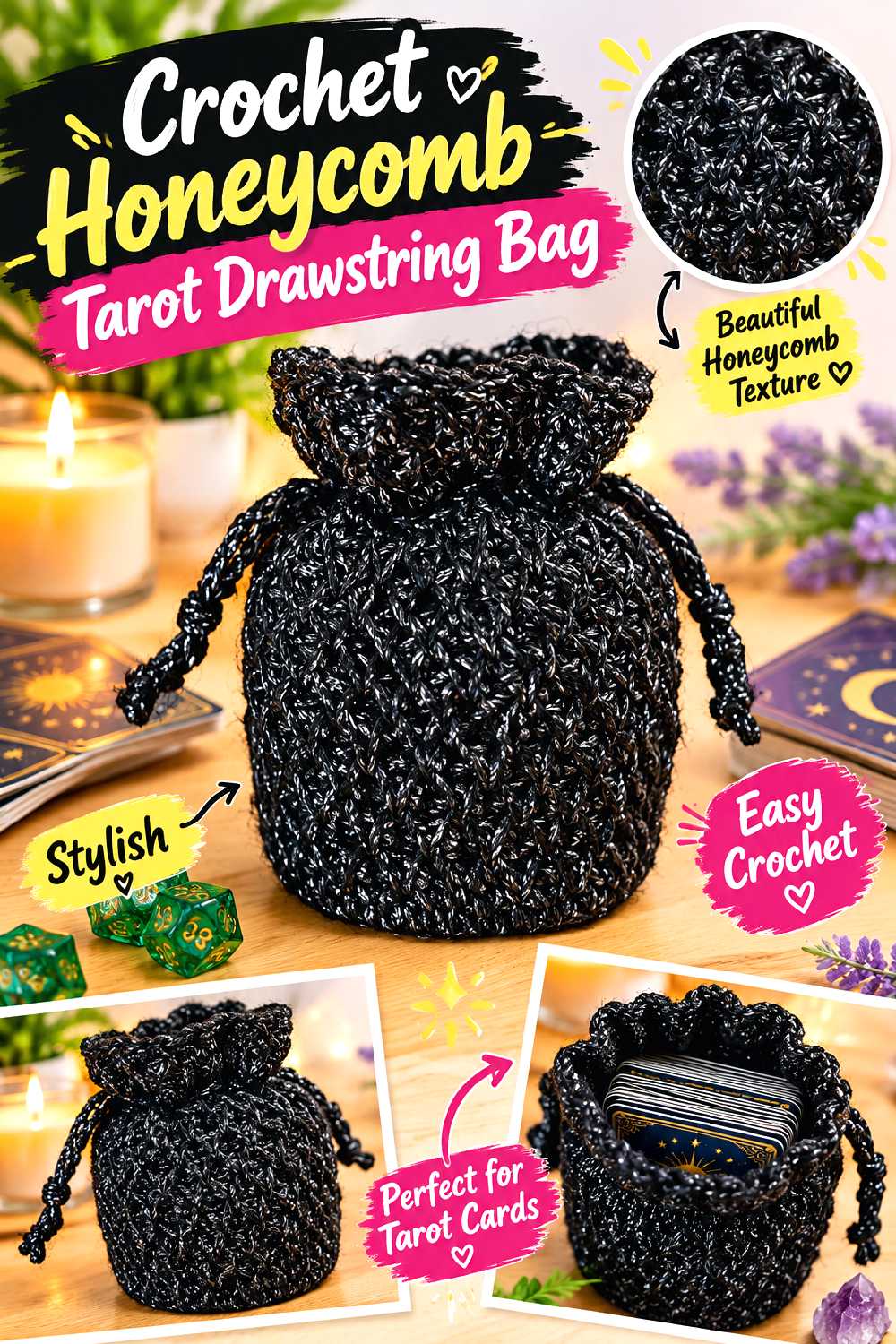
Artsy Maki’s video teaches a honeycomb-stitch pouch originally presented for dice, project storage, or larger bag use. It is not a tarot tutorial, but the textured drawstring form can be adapted when you recalculate the body around a card deck instead of copying a dice-bag size.
Honeycomb texture brings a distinctly dimensional look that suits autumn yarn beautifully. Deep ochre can make the stitch structure obvious, while charcoal, brown, or forest green creates a quieter witchy mood. Compared with a flat tarot sleeve, the raised texture adds visual and physical bulk, so this design is better for readers who prioritize tactile fabric over the slimmest possible storage.
Swatch the Honeycomb Before Choosing Width
Raised stitches can produce a different gauge and elasticity from smooth single crochet. A flat numerical width alone may therefore be misleading.
Work enough texture to understand how the fabric stretches around the deck. Preserve the stitch repeat while adjusting dimensions rather than interrupting the honeycomb merely to gain a small amount of space.
Match the Cord to the Textured Casing
A bulky body does not automatically require a bulky drawstring. The cord still needs to slide through the opening without dragging.
Test the completed top several times with the deck inside. If closing requires force, inspect the cord and casing before assuming the entire bag needs to be remade.
Original Tutorial and Creator Credit
Creator: Artsy Maki
21. Crochet Scalloped Flap Tarot Sleeve
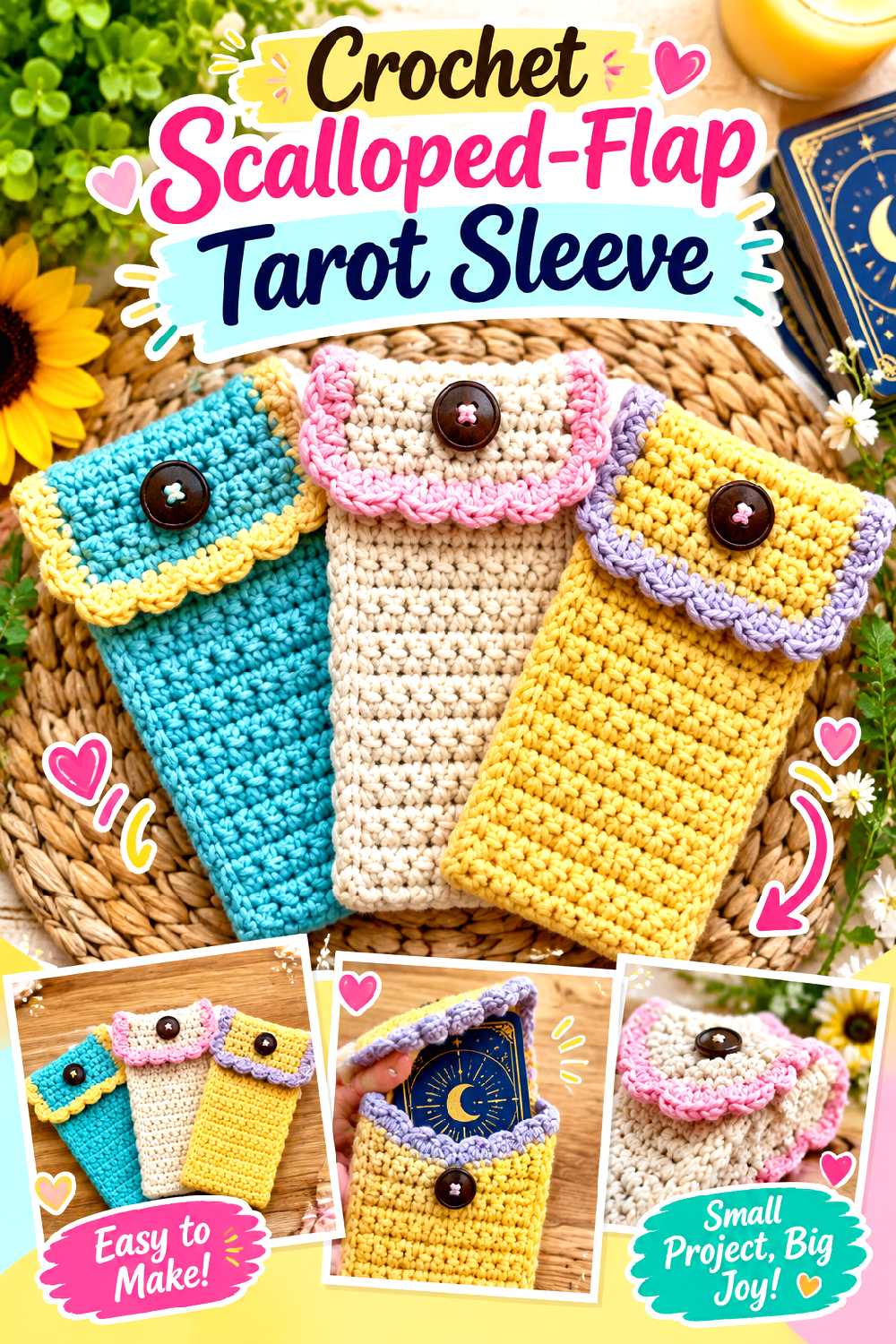
Crochet Chronicles teaches a long flat pouch panel that becomes a flap case with a buttonhole and decorative scalloped edging. The source is intended for items such as stationery, hooks, or glasses rather than tarot cards, so the original panel dimensions are not a tarot sizing guide.
As an adaptation concept, though, the construction is appealing because the flap grows directly from the main panel and the decorative edge is concentrated at the closure. A tarot version in muted pumpkin, plum, cream, or sage could look seasonal without becoming overly ornate. Compared with the layered scalloped envelope earlier in the list, this idea has a simpler single-pouch silhouette.
Establish Panel Length From the Folded Deck
A flat strip must eventually cover the back, bottom, front, deck thickness, and flap overlap. That means finished exterior height cannot be calculated from card height alone.
Fold the developing panel around the full stack before completing the flap. This gives a much more realistic picture of where the buttonhole needs to land.
Keep the Scalloped Edge Crisp
Decorative edging draws attention to uneven tension more than a plain straight flap. Shape or block the finished edge as appropriate for the fiber and confirm that the scallops sit outside the card opening.
If the enlarged tarot version makes the original scallop scale look too small or too busy, adapt the decorative treatment while preserving the source construction rather than blindly enlarging every element.
Original Tutorial and Creator Credit
Creator: Crochet Chronicles
22. Crochet Moss Stitch Treasure Tarot Pouch
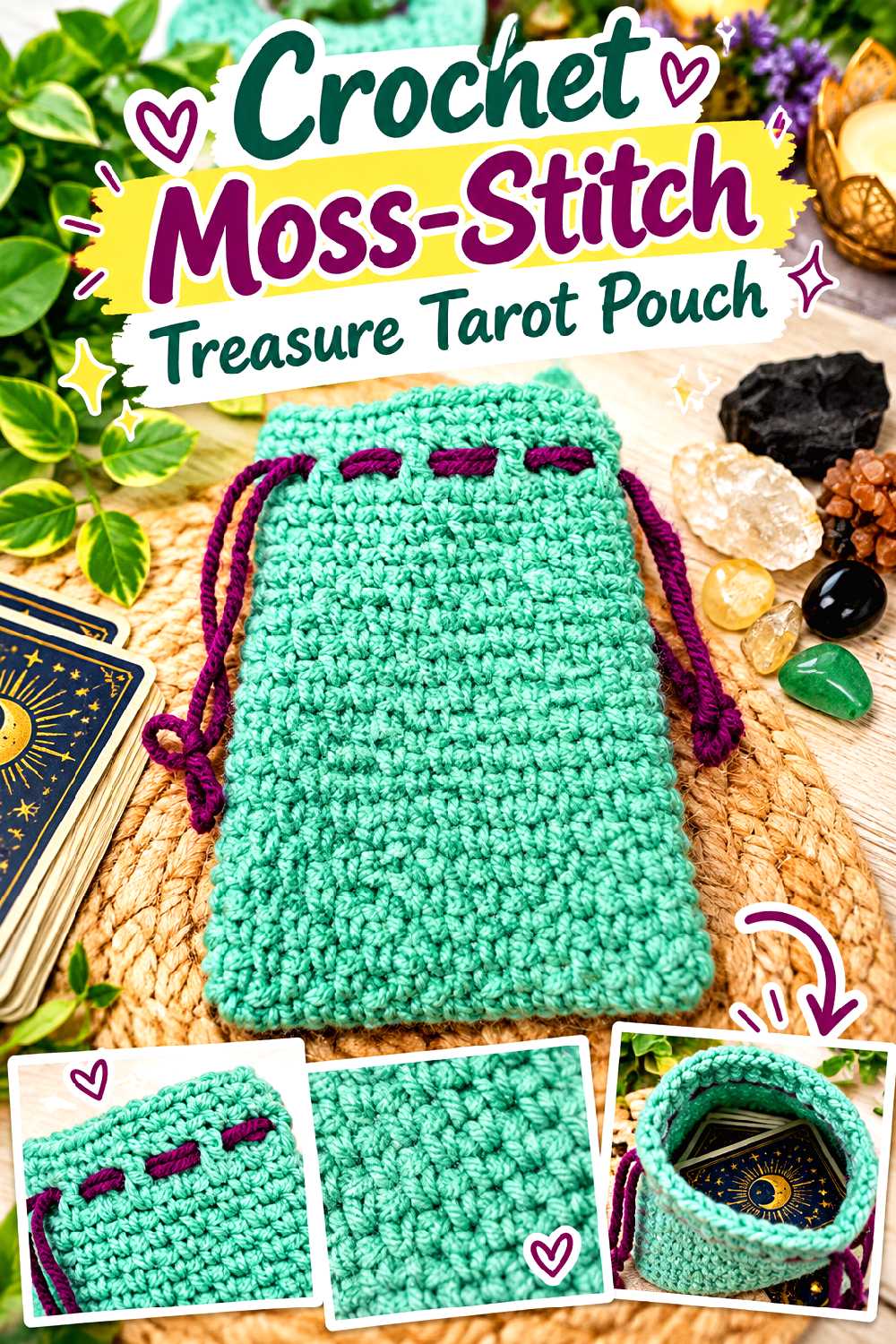
The Restful Stitch’s Treasure Pouch uses moss stitch in the round with a drawstring closure. The original project is intended for small treasures such as gemstones, money, jewelry, or gift cards rather than a tarot deck, so a tarot adaptation requires a new base and body size.
Its appeal is the woven-looking surface. Unlike the zipper-cover moss pouch earlier in the list, this one is a self-contained drawstring bag, giving you a softer and more flexible way to use the same general stitch family. For fall, subtle alternating shades can emphasize the stitch without competing with the deck itself.
Enlarge the Base Before Adding Height
When adapting a small treasure pouch to tarot storage, increasing only the number of body rounds creates a taller bag but not necessarily enough room for the card stack.
Establish sufficient base width and depth first. Once part of the deck can sit inside naturally, confirm capacity again before working the upper section and drawstring channel.
Keep the Woven Texture Consistent
Moss stitch shows tension changes clearly because its visual appeal depends on regular spacing. If you use scraps or several autumn shades, check that the yarns behave similarly.
A sudden change in thickness can affect both appearance and the pouch’s usable width. When in doubt, swatch the substituted combination before committing to a full deck case.
Original Tutorial and Creator Credit
Creator/Site: The Restful Stitch — Heather
23. Crochet Waffle Texture Tarot Drawstring Pouch
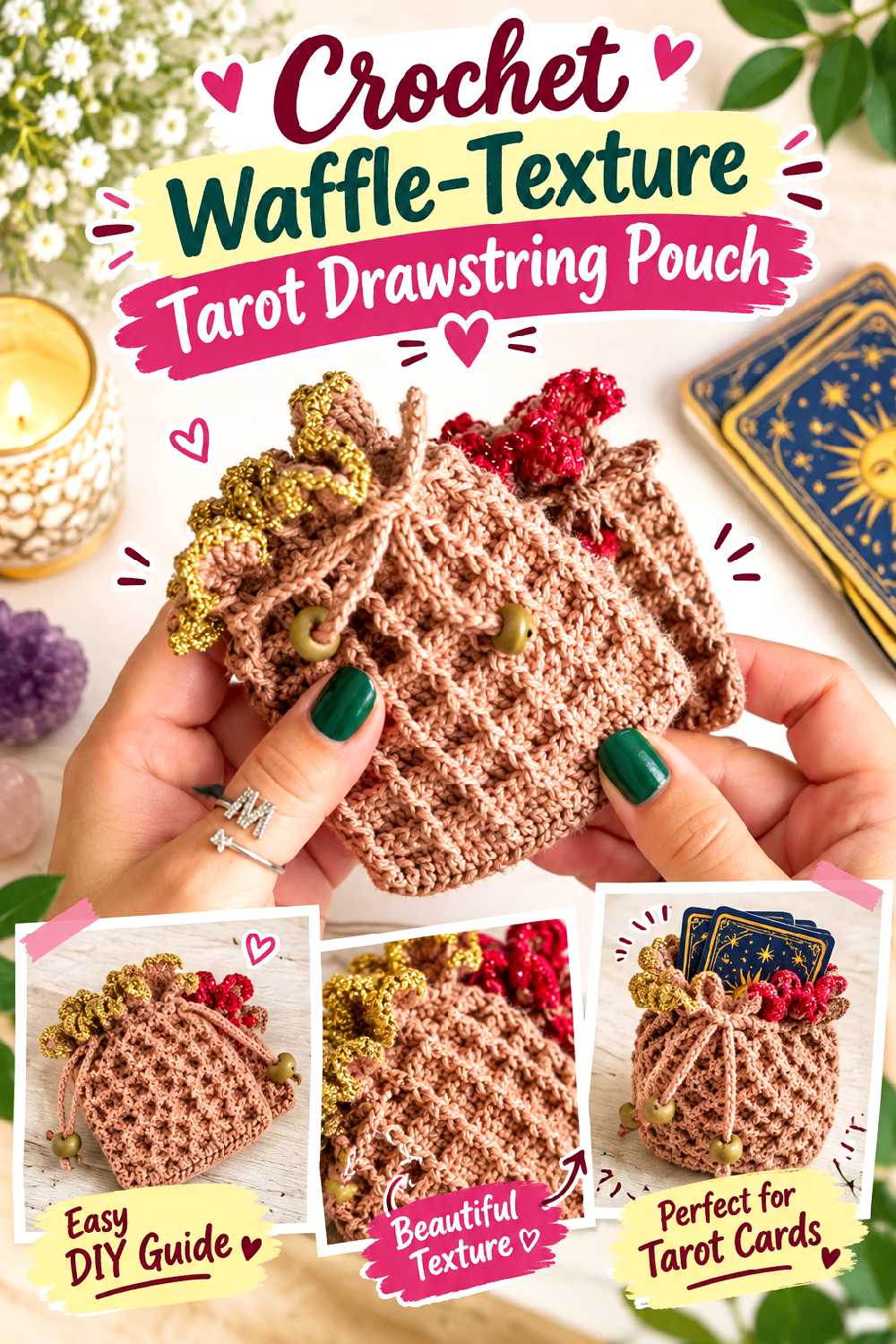
The final idea uses atolye_masal’s waffle-textured drawstring pouch as an adaptation reference. The original tutorial is a general storage pouch rather than a tarot-card case, but its strongly dimensional grid texture makes it visually distinct from the other drawstring options in this collection. The tutorial was published in 2026, making it one of the newer source designs included here.
Waffle stitch is a natural match for fall because the raised grid catches light and shadow even in a single yarn color. Try rust, dark mustard, brown, moss, plum, or charcoal rather than relying on additional motifs. The main compromise is bulk: deep texture can create a thicker case than a smooth sleeve.
Allow Extra Room for a Raised Fabric
A waffle surface consumes yarn and creates physical depth of its own. Do not assume that a flat swatch measuring exactly the deck width will translate into comfortable interior capacity.
Wrap the fabric around the stack and check how the raised sections behave at corners. A little usable ease is preferable to compressing the cards inside a highly textured wall.
Keep the Top From Becoming Too Stiff
The drawstring zone needs to gather, which can conflict with a dense three-dimensional stitch if the upper edge remains very rigid.
Follow the source’s construction for the closure and test the finished channel repeatedly. A deck pouch is more practical when it opens widely enough for clean card removal rather than merely looking textured while closed.
Original Tutorial and Creator Credit
Creator: atolye_masal
Which Crochet Tarot Pouch Style Should You Choose?
| If you care most about… | Consider… | Main checkpoint |
|---|---|---|
| A built-in reading surface | Selenic, sedge-stitch mat, or tapered mat wrap | Check folded bulk around the complete deck |
| Flexible everyday storage | Drawstring tarot bag or made-to-measure cozy | Confirm body capacity before the cinch |
| A polished closure | Jaipur, seamless flap, or Suzette button pouch | Fit the closure with the deck loaded |
| Strong visual texture | Basketweave, honeycomb, or waffle pouch | Allow for thicker fabric and stitch repeats |
| Decorative colorwork | Calliope, granny-square, or mosaic pouch | Keep motifs consistent and the interior smooth |
| A more enclosed opening | Moss-stitch or direct-to-zipper case | Keep card corners clear of zipper teeth |
| Extra reading accessories | Crystal-pocket reading pouch | Prevent hard objects from pressing into cards |
The most compact choice is not automatically the most useful. A smooth fitted sleeve suits a deck that stays on a shelf, while a reading-mat pouch earns its extra bulk by serving two functions. Drawstrings offer flexibility, fixed buttons reward accurate sizing, and zippers provide a more enclosed edge but introduce hardware beside the cards. Choose by how and where the deck is actually handled.
Conclusion
The most useful crochet tarot card pouch is the one whose construction fits the deck and the way you read. A small everyday deck may suit a fitted button sleeve, while an oversized oracle deck benefits from a made-to-measure approach. Reading-mat designs trade compactness for extra function, and richly textured honeycomb, basketweave, mosaic, or waffle cases make the storage piece more visually prominent.
For a witchy fall 2026 look, color and stitch texture can create plenty of atmosphere without loading the pouch with hard decorations. Measure the full deck, test closures while it is inside, and keep the card path smooth. Once you choose a concept, use the credited original tutorial for its exact construction details rather than trying to recreate the designer’s pattern from a roundup description.
Frequently Asked Questions
Should a crochet tarot pouch fit the deck tightly?
It should generally feel secure without forcing the cards into the opening or visibly distorting the fabric. Remember that the complete stack has width, height, and depth. A pouch that matches the face dimensions of one card exactly may still be too small once the whole deck is inserted. Check the developing project against the intended deck and follow any sizing guidance provided by the original designer.
Can I resize a crochet playing-card or credit-card holder for tarot cards?
Yes, but treat the source as a construction reference rather than copying its stitch counts. Tarot decks are usually a different shape and can be substantially thicker than the contents for which a wallet was designed. Identify required stitch repeats, swatch substituted yarn, and recalculate around your deck. Fixed hardware and fold positions should be established again after resizing rather than scaled mechanically.
Is a drawstring or button better for a tarot pouch?
Neither is universally better. Drawstrings accommodate modest variations in deck thickness and avoid one fixed fastening point, but the cord needs to move smoothly. Buttons create a tidy, obvious closure but require careful placement with the complete deck inside. For either style, keep knots, beads, button backs, and other hard or bulky components from repeatedly pressing against the cards.
Should I line a crochet tarot card pouch?
A lining can create a smoother interior, reduce contact with open stitch spaces, and add another barrier between card edges and decorative joins. It also adds bulk and requires its own accurate sizing. A lining is therefore an option rather than an automatic requirement. If the original tutorial includes one, follow its construction guidance; otherwise, make sure any adaptation does not reduce the interior below what your deck needs.
What yarn is best for a crochet tarot pouch?
There is no single best fiber or weight for every design. A yarn that creates dense, relatively stable fabric may suit a fitted case, while a reading mat may benefit from a fabric that folds more readily. Changing the designer’s yarn can alter stretch, bulk, drape, and stitch definition, particularly in mosaic, basketweave, honeycomb, or waffle designs. Swatch substantial substitutions and follow the yarn label for care.
Can I add beads, crystals, charms, or celestial decorations?
Yes, provided they do not compromise the card path or closure. Keep hard pieces on the exterior and check where they land when a wrap is folded. Heavy beads on drawstrings can pull repeatedly on the casing, while dimensional appliqués may snag when the pouch is carried inside another bag. For a softer witchy effect, consider achieving the theme through seasonal color and textured stitches instead.
Will a crochet pouch protect tarot cards while traveling?
Crochet can organize a deck and provide a textile layer, but a soft pouch should not automatically be treated as crush-proof or waterproof storage. Some original designers explicitly distinguish home storage from stronger travel protection. If the deck is valuable or will share space with heavy objects, use an appropriate rigid or padded outer compartment and inspect the crocheted closure and seams regularly.