A crochet hooded scarf earns its place in a fall wardrobe because one project can cover several very different needs. Some versions behave like long scarves with an added hood, while others wrap closely around the neck, spread across the shoulders like a shawl, add usable pockets, or turn granny-square motifs into a statement accessory.
The 18 ideas below focus on those real construction and wearing differences rather than color changes alone. You’ll find rounded hoods, continuous striped fabric, thick ribbing, double-wrap infinity scarves, wide pocket shawls, faux-fur finishes, and compact snood shapes. Along the way, the comparisons highlight what to check before committing your yarn: hood depth, scarf bulk, pocket placement, drape, motif consistency, and how the finished piece is likely to sit with your fall outerwear.
Quick List
- Crochet Continuous-Stripe No-Sew Hooded Scarf
- Crochet Pixel-Texture One-Piece Hood Scarf
- Crochet Minimal Everyday Hood Scarf
- Crochet Two-Tone Long Hooded Scarf
- Crochet Modern Coat-Layering Hoodie Scarf
- Crochet Deep-Rib Scoodie
- Crochet Draped Infinity Hooded Scarf
- Crochet Double-Wrap Infinity Hood Scarf
- Crochet Ribbed Pocket Hood Scarf
- Crochet Broad Wrap Hooded Pocket Scarf
- Crochet Made-to-Measure Pocket Hood Scarf
- Crochet Triangle Hooded Wrap Scarf
- Crochet Wide Pocket-Shawl Hooded Scarf
- Crochet Faux-Fur Trim Pocket Hood Scarf
- Crochet Rounded-Crown Scoodie
- Crochet Faux-Fur Snood Hood
- Crochet Rounded-Hood Pocket Scarf
- Crochet Two-Style Granny-Square Scoodie
Choose the Hood Shape Before You Choose the Color
The hood is the part most likely to determine whether a scoodie becomes something you regularly wear. A rounded crown can produce a smoother back profile, while simpler seamed constructions may create a more defined top. Infinity versions also behave differently because the scarf section already surrounds the neck and can help anchor the hood.
Before choosing a tutorial, look at the finished piece from the side as well as the front. Notice whether the hood sits loosely around the hair, stays close to the face, or continues into a wide neck wrap. If you plan to wear the scarf over a bulky sweater or under a structured coat, that relationship matters more than a decorative edging. A beautiful oversized hood can become cumbersome beneath a narrow coat collar, while a compact hood may not give the relaxed drape you want.
Yarn Weight and Drape Change the Whole Wearing Experience
A thicker yarn can create fast visual impact and a substantial hood, but more fabric around the neck also means more bulk. That becomes especially noticeable in infinity scarves, pocket wraps, and heavily textured designs. Smoother yarns make ribbing, stripes, and stitch definition easier to see, while fuzzy or faux-fur yarns soften the surface and can make individual stitches harder to identify while you work.
When substituting yarn, compare the tutorial’s fabric rather than matching appearance alone. Ask whether the hood needs to collapse softly, hold a rounded shape, or support pockets without stretching excessively. If you change yarn weight or fiber behavior, make a sample and compare its dimensions and drape before using the tutorial’s size assumptions. Hood depth and scarf length are much easier to correct during planning than after everything has been joined.
Match Scarf Length, Pockets, and Neck Bulk to Your Outerwear
Long scarf tails offer styling flexibility, but they also add fabric beneath a coat. Pocket scarves need enough hanging length for the pockets to land where they are actually comfortable to use. Infinity designs remove loose ends altogether, although wrapping them twice can create considerably more volume at the neckline.
Think about how you normally dress for fall. A long open coat can accommodate sweeping scarf ends differently from a short jacket with a high collar. For a pocket design, hold a measuring tape or existing scarf against your body to estimate where you naturally place your hands before deciding on final length. For cowls and snoods, compare the neck opening with your preferred hairstyle and outerwear. Those small planning checks can matter more than choosing between two similar-looking stitch textures.
1. Crochet Continuous Stripe No Sew Hooded Scarf
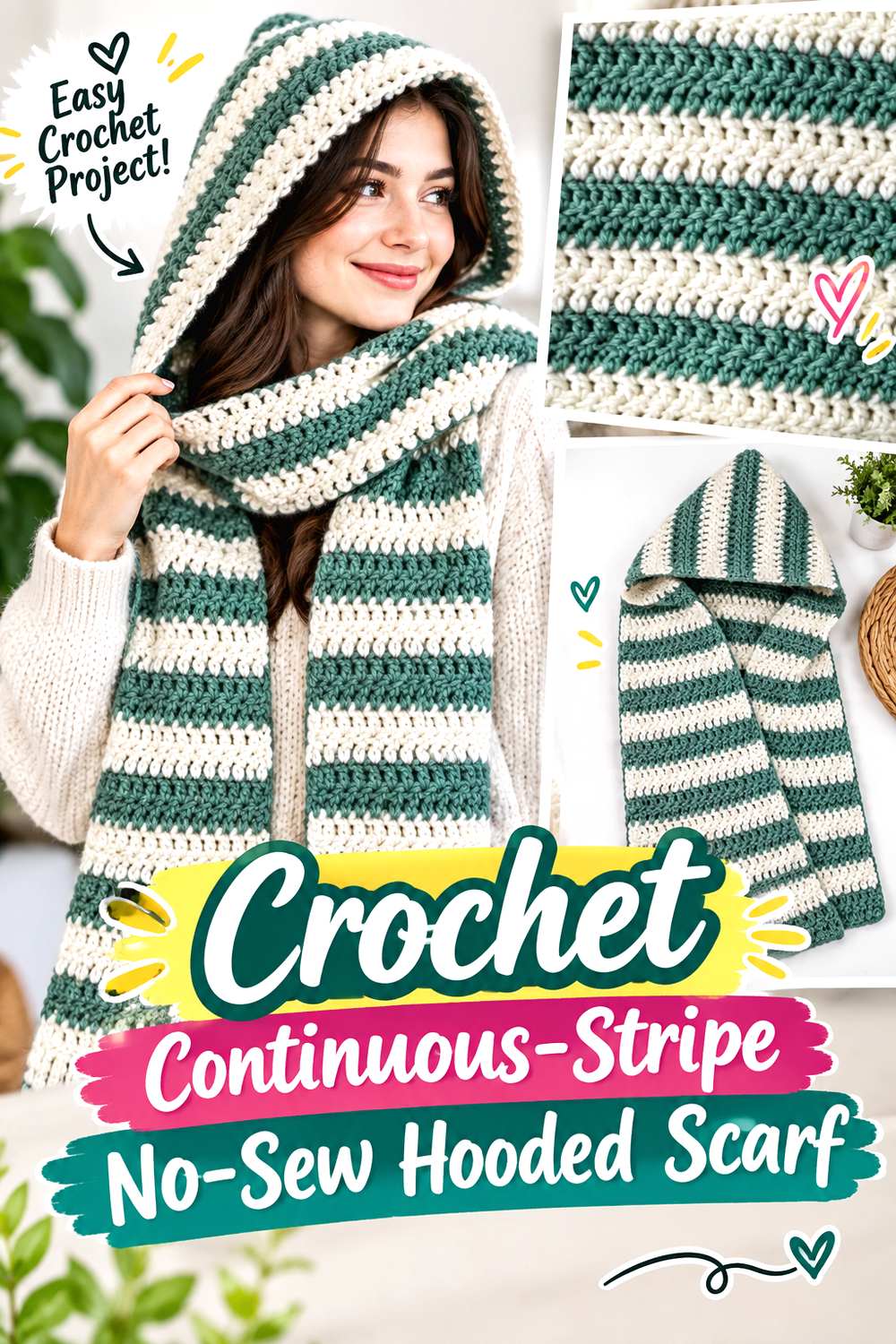
This striped scoodie from VivCrochets is especially interesting because the stripes are incorporated without requiring the yarn to be cut after every row, and the tutorial emphasizes a rounded rather than sharply pointed back to the hood. The result feels graphic without depending on complicated decoration.
This is a useful direction when you want the scarf and hood to read as one coordinated accessory instead of separate pieces joined visually by an edging. Solid yarn would quiet the design, while deliberate stripe spacing can make the long scarf portion feel more directional.
Continuous Stripes Need a Color Plan Before the Hood
A continuous color treatment is convenient, but it also makes stripe placement visible across a large area. Decide whether you want evenly distributed contrast or one color to dominate before beginning. Pay particular attention to how a color change will appear near the face and around the crown. A stripe that looks minor on a long scarf tail can become visually prominent when it crosses the hood.
Check the Rounded Crown After the Fabric Relaxes
A hood can look different on a table than it does once yarn weight pulls on the scarf ends. Before declaring the shape finished, place or pin the work in its intended wearing position and see where the crown settles. If you substitute a much heavier or more fluid yarn, verify the fit rather than assuming the same proportions will create the same rounded profile.
Original Tutorial and Creator Credit
Creator: VivCrochets
2. Crochet Pixel Texture One Piece Hood Scarf
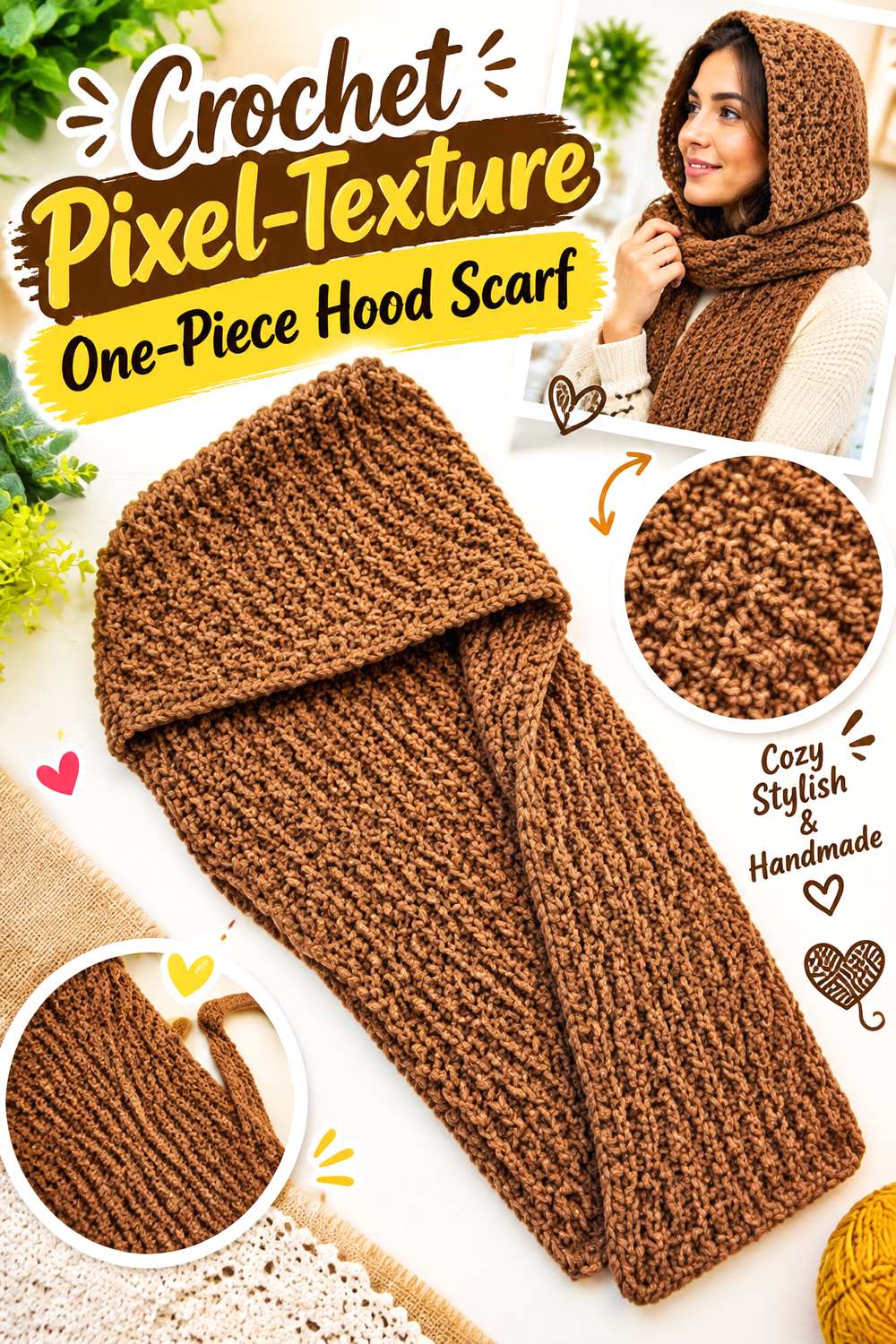
Passionate Crafter’s Pixel Hooded Scarf takes a streamlined approach: the tutorial describes a one-piece, no-sewing construction and uses a compact textured fabric built from slip-stitch and half-double-crochet techniques. The creator also includes guidance for adjusting the size.
That combination makes this option feel more minimal than a pocket scarf or motif-based scoodie. Its appeal comes from the relationship between texture and silhouette rather than added features, which can work especially well when you want a hooded scarf to layer with a patterned coat.
Dense Texture Can Change How the Scarf Folds
Textured fabric may look beautifully defined when flat yet feel thicker once doubled at the neck. Before making a very long version, consider how many layers you actually want around your collar. If your sample fabric feels firm rather than fluid, a slightly less elaborate wrap may be more comfortable than planning several turns around the neck.
One-Piece Construction Makes Proportion More Important
When hood and scarf are visually continuous, an awkward transition is harder to disguise with separate seaming or a contrasting border. Use the tutorial’s sizing discussion and check the work against your own head and preferred scarf position as it develops. If you customize the length, keep the hood centered in the overall composition rather than changing one side independently.
Original Tutorial and Creator Credit
Creator: Passionate Crafter
3. Crochet Minimal Everyday Hood Scarf
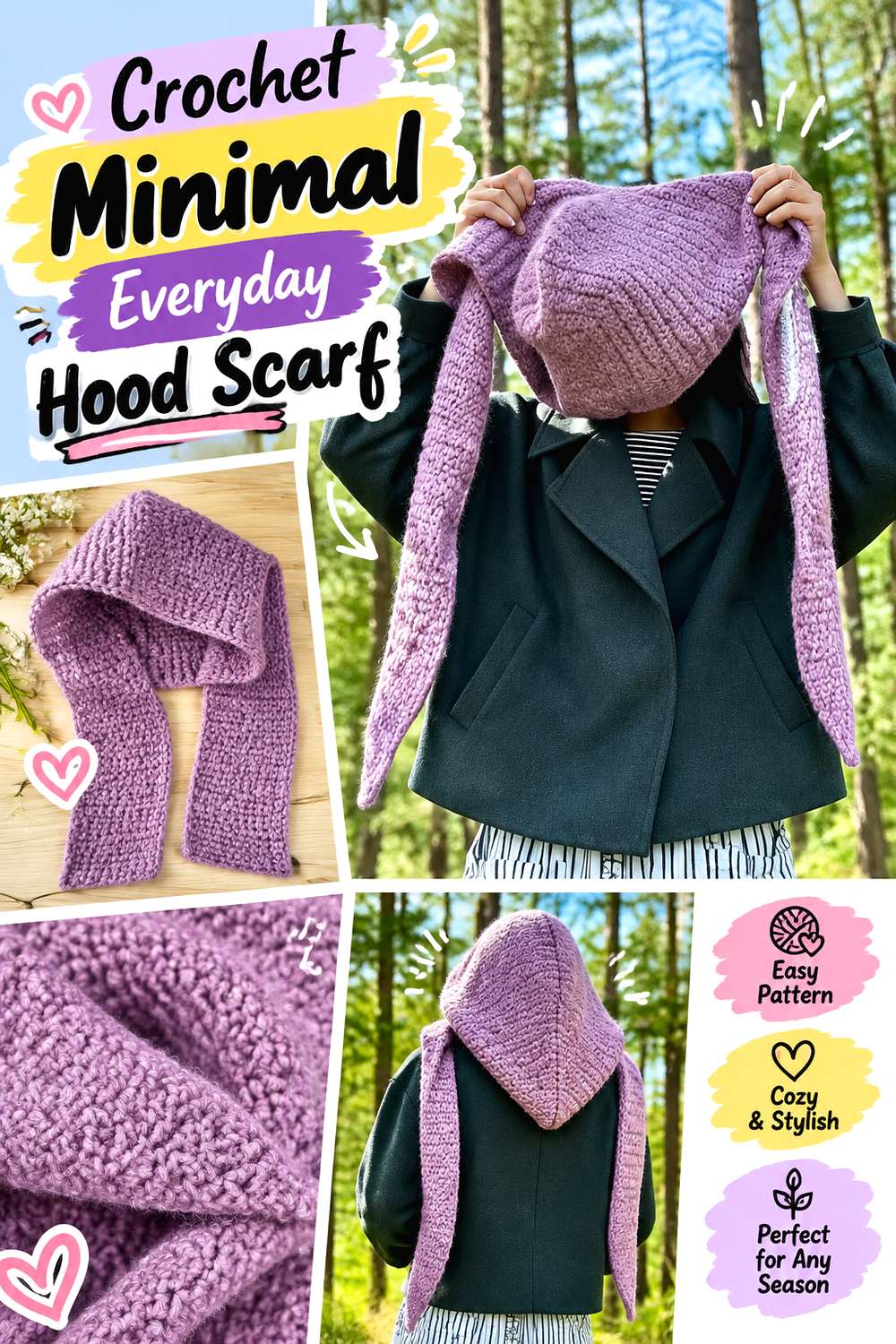
ABoC Studio’s tutorial offers a straightforward hood-and-scarf silhouette without making pockets, motifs, or elaborate trim the main feature. That makes it a strong reference for readers who prefer a cleaner accessory and want the finished shape, rather than decorative additions, to do most of the work.
A pared-back version is also easier to coordinate with different fall outfits. Because fewer features compete for attention, yarn texture and overall proportion become more noticeable, so this is a design where careful finishing can have a bigger visual effect than adding extra embellishment.
A Simple Scarf Exposes Uneven Proportions Quickly
Minimal designs have fewer places to hide a hood that sits too far forward or scarf ends that feel unbalanced. Periodically fold the project as it will be worn and compare both sides. If you are altering the original proportions, make the adjustment deliberately rather than continuing until the scarf merely “looks long enough” on a flat surface.
Let the Yarn Supply the Detail
A clean silhouette can handle either a smooth yarn with crisp stitch definition or a more softly textured fiber, but those choices produce different results. Smooth yarn highlights every edge and transition. A haloed yarn softens them. If your priority is seeing the crochet structure clearly, examine a small swatch in natural light before committing to a strongly fuzzy option.
Original Tutorial and Creator Credit
Creator: ABoC Studio
4. Crochet Two Tone Long Hooded Scarf
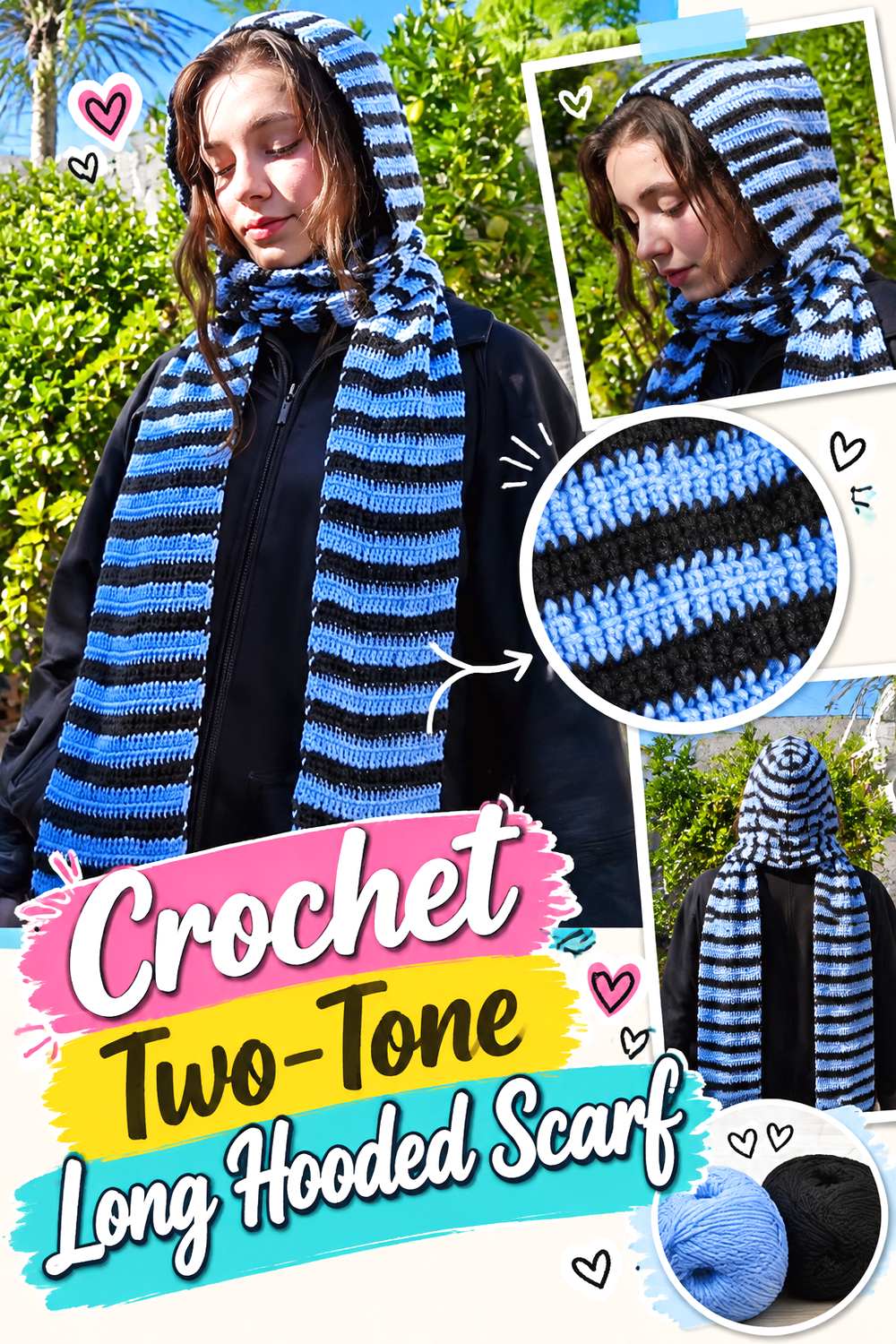
Anna Greene’s hooded scarf uses two colors across a long scarf-and-hood format, with the tutorial separating the scarf work, hood section, and hood attachment. The visible color contrast gives the accessory definition without relying on pockets or fringe.
This approach makes sense if you like longer scarf tails but still want a clear design feature. Two closely related shades can keep it understated, while stronger contrast makes the hood and scarf much more graphic. Either way, the color relationship deserves planning before the first large section is underway.
Give Each Color a Clear Visual Job
Instead of alternating colors simply because two skeins are available, decide what you want the contrast to emphasize. One shade might visually frame the hood while the other dominates the scarf, or the balance may be intentionally closer. Lay the yarns beside your coat before beginning; a dramatic contrast in the skein may read very differently against patterned outerwear.
The Hood-to-Scarf Join Should Disappear Into the Design
A color change close to an attachment point can draw attention to any unevenness there. Before finishing, check that the hood sits at the intended center and that neither scarf side is being pulled upward. Careful placement matters more with long tails because even a small offset can become obvious when both ends hang freely.
Original Tutorial and Creator Credit
Creator: Anna Greene
5. Crochet Modern Coat Layering Hoodie Scarf
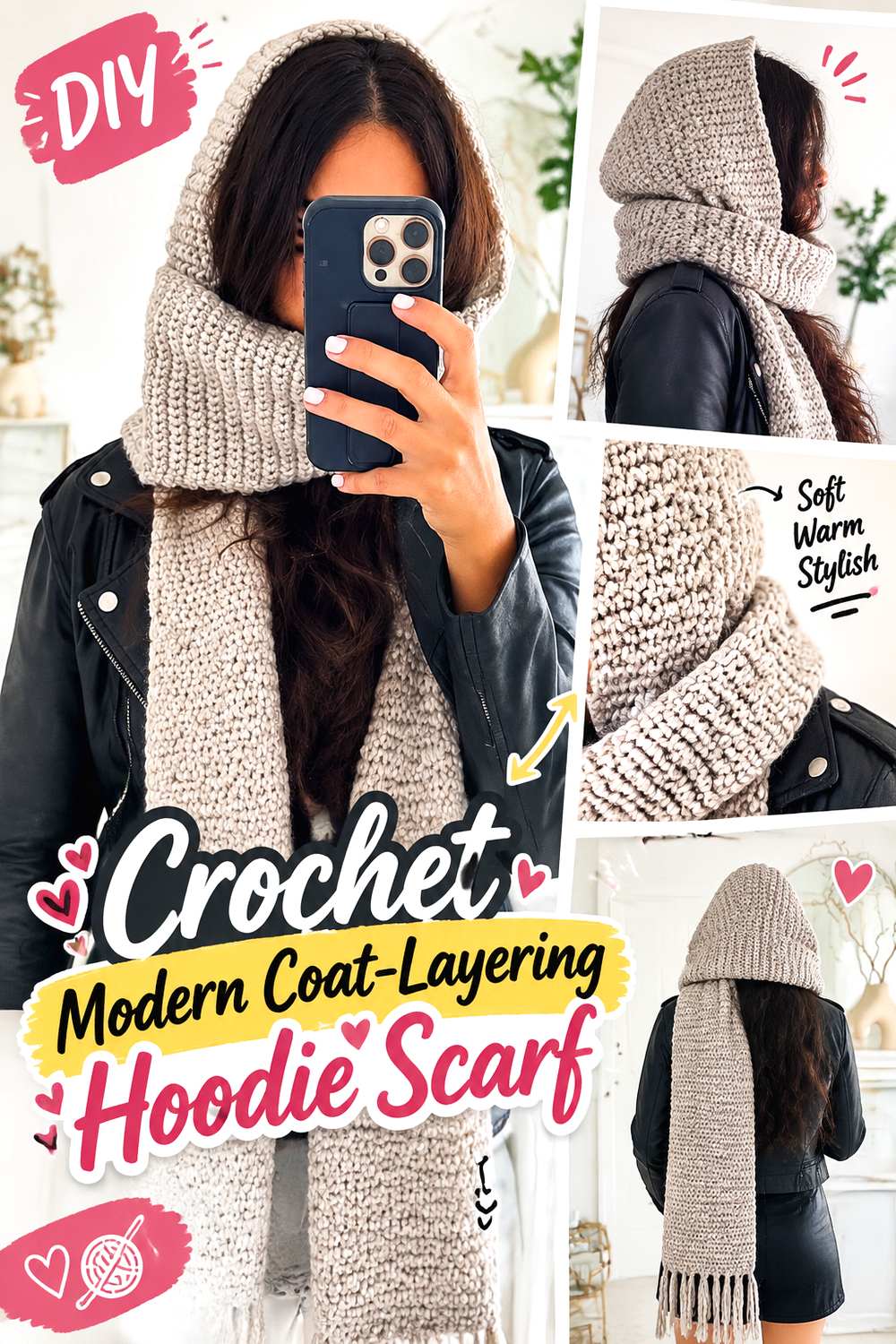
Azunudo’s hoodie scarf leans toward a simple, modern finished shape and explicitly presents customization as part of the design. The streamlined look makes it a useful choice for fall outfits where the crochet piece needs to work with a coat rather than dominate it.
Compared with wider pocket shawls later in this collection, this concept keeps the focus closer to the head and neck. That can make styling simpler, but it also means the hood opening, scarf width, and coat collar need to cooperate rather than competing for the same space.
Test the Neck Area With the Coat You Will Actually Wear
A scarf can feel perfectly comfortable over a shirt and suddenly become bulky when placed inside a high coat collar. During construction, drape the developing fabric around the neckline while wearing your usual fall layer. This reveals whether you prefer the scarf outside the coat, tucked partly inside, or wrapped only once.
Modern Shapes Benefit From Controlled Edges
When a design has relatively little ornament, stretched or rippled edges become more noticeable. If an edging begins to flare, check your tension before adding more length. Blocking can refine fabric, but it should not be expected to correct a strongly distorted edge caused by inconsistent tension or an incompatible modification.
Original Tutorial and Creator Credit
Creator: Azunudo
6. Crochet Deep Rib Scoodie
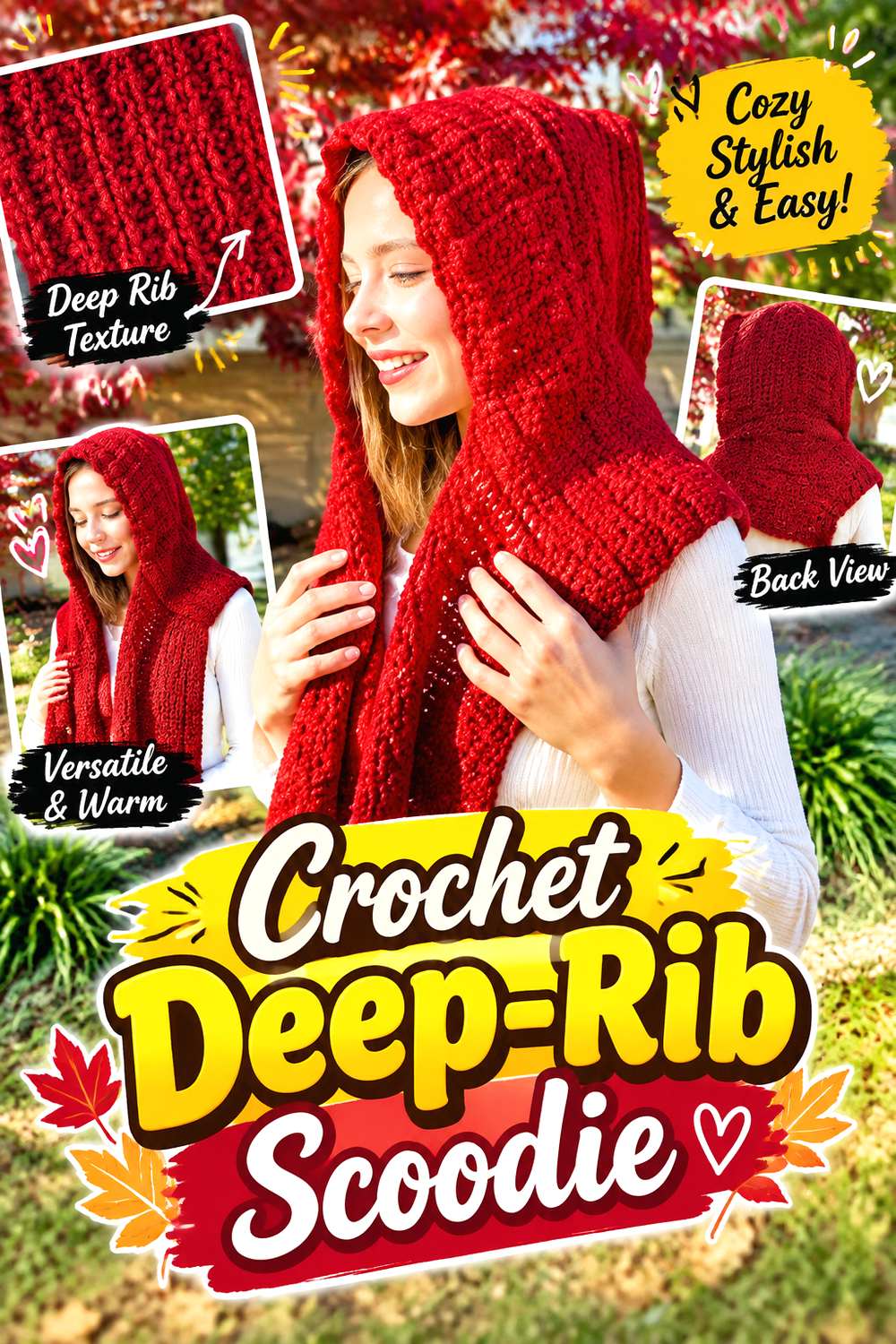
Faith.Wisest uses front-post and back-post double crochet to build a visibly substantial ribbed panel in this hooded-scarf tutorial. The source describes a thick texture, making this one of the more dimensional surfaces in the collection.
That depth gives the piece a strong handmade character, but it also changes how the scarf occupies space around the neck. If you love pronounced ribbing, this can be an appealing cool-weather option; if you regularly wear fitted jackets, the same thickness deserves consideration before you make very generous scarf ends.
Deep Ribs Add Warmth and Physical Volume Together
Raised texture is not only a visual choice. More dimensional fabric can create a thicker fold at the neck than a flatter stitch pattern using a comparable yarn. Try folding your sample two or three times to approximate how the finished scarf will overlap. That simple test can tell you whether your planned width feels comfortable before you commit to the full piece.
Stitch Definition Matters More in This Design
The ribbing is part of the identity of the scarf, so a yarn that obscures surface structure will change the effect. A smooth or moderately textured yarn generally lets raised columns remain more visible than a highly fuzzy one. If you want to substitute fiber, make enough of a sample to see multiple ribs rather than judging from a single stitch.
Original Tutorial and Creator Credit
Creator: Faith.Wisest
7. Crochet Draped Infinity Hooded Scarf
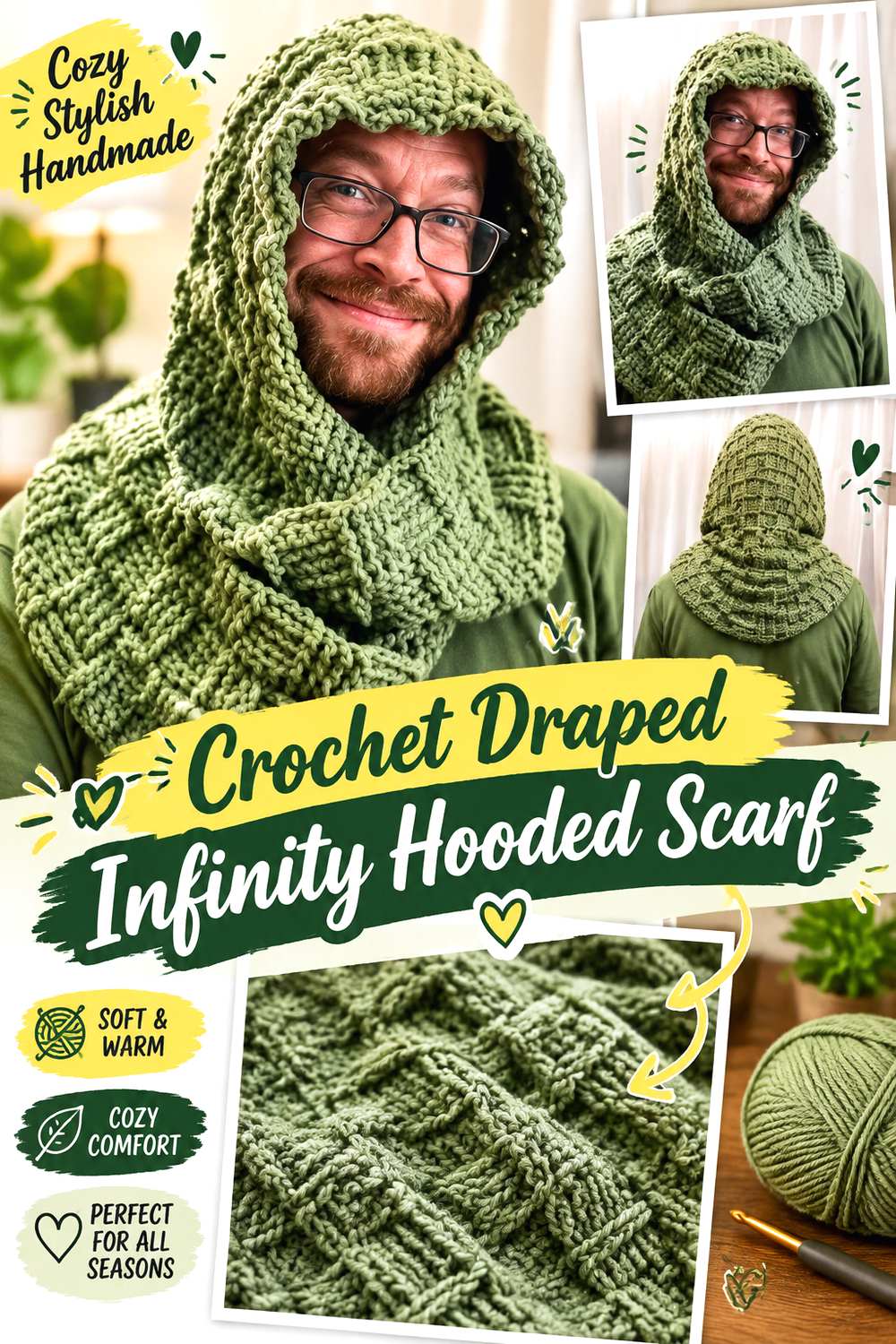
Fiber Spider’s design combines an infinity scarf with an attached hood, eliminating loose scarf ends. The tutorial shows a circular scarf base followed by a hood flap and joining stage, so the finished accessory behaves differently from a conventional long scoodie.
This shape can be especially appealing if dangling ends annoy you or if you want a more contained neckline. The trade-off is that the loop itself determines how the piece sits, so circumference, fabric thickness, and hood placement all work together.
The Loop Becomes Part of the Hood Fit
With an infinity scarf, the neck section helps anchor the entire accessory. If the loop is dramatically looser or tighter after a yarn substitution, the hood can sit differently even when its own dimensions have not changed. Check the scarf loop around your neck before completing the later structure, keeping comfort and your usual outerwear in mind.
Center-Back Placement Is Worth Marking Carefully
A hood attached to a continuous loop has no loose scarf ends to make its center obvious. Before joining, identify the true back of the infinity section and temporarily mark the relevant positions. A hood that is slightly off center can twist the loop and become more noticeable once the accessory is worn.
Original Tutorial and Creator Credit
Creator: Fiber Spider
8. Crochet Double Wrap Infinity Hood Scarf
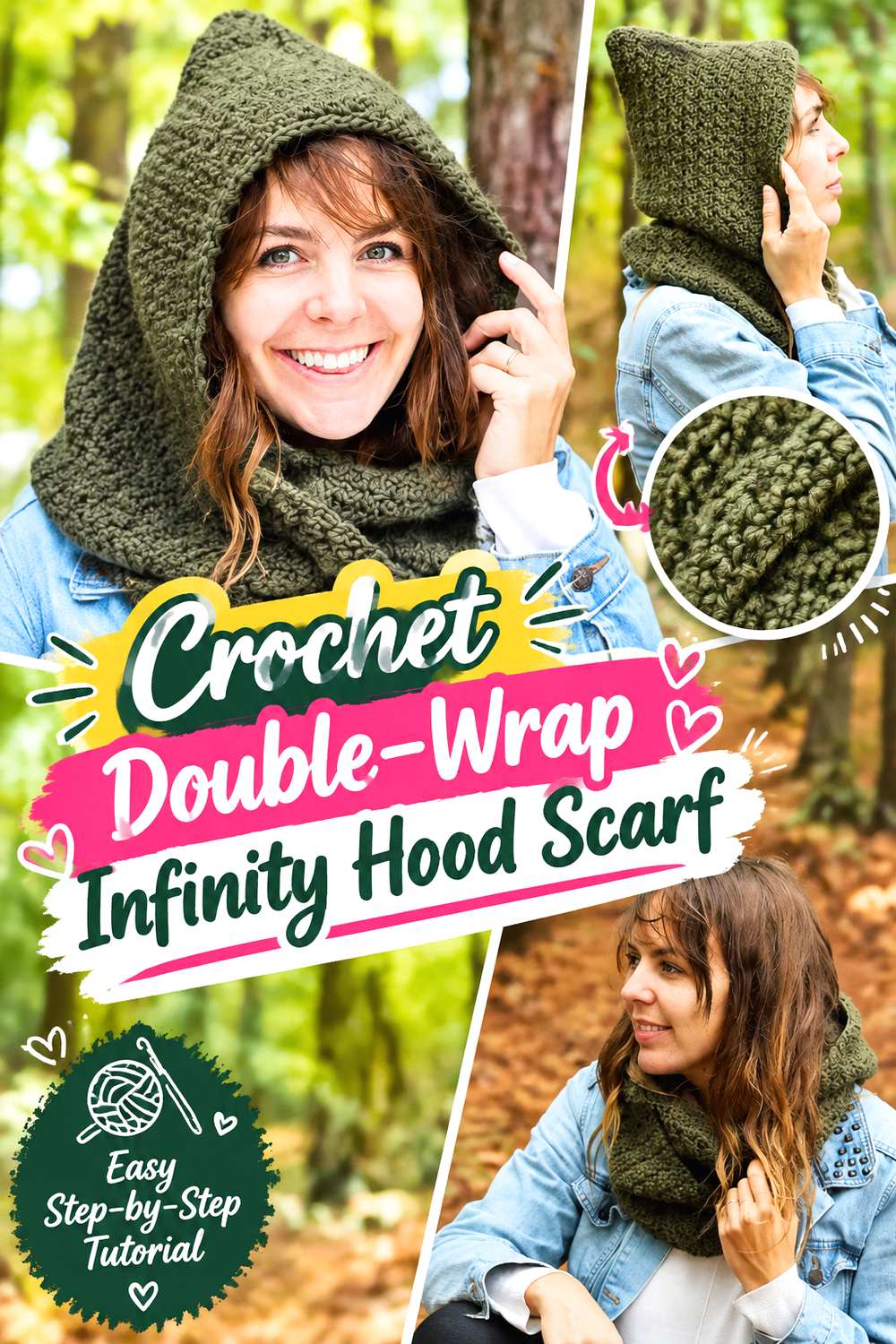
Kay Krochets’ Trailhead Hooded Scarf combines an attached hood with an infinity scarf designed to wrap twice. The creator describes a one-piece, side-to-side construction and offers multiple size options in the accompanying pattern information.
Compared with the previous infinity option, the double-wrap emphasis creates a fuller collar effect. That can be attractive in cool weather when you want the neck section to make a stronger statement, but it also deserves more attention to fabric weight and bulk.
Two Wraps Multiply Fabric Faster Than Expected
A scarf that feels moderately thick in a single layer may feel dramatically fuller after the second wrap is added. Make your yarn decision with the final wearing method in mind. If your sample is very rigid, the loop may stack outward instead of settling into soft folds. A fabric with some give can create a more relaxed collar effect.
Side-to-Side Construction Changes How You Judge Length
When a project grows in a direction that differs from your usual scarf construction, it is easy to rely on familiar visual cues that no longer apply. Use the tutorial’s sizing information rather than estimating solely from rows on the hook. If customizing, check the developing piece against its intended wrapped position before finishing.
Original Tutorial and Creator Credit
Creator: Kay Krochets
9. Crochet Ribbed Pocket Hood Scarf
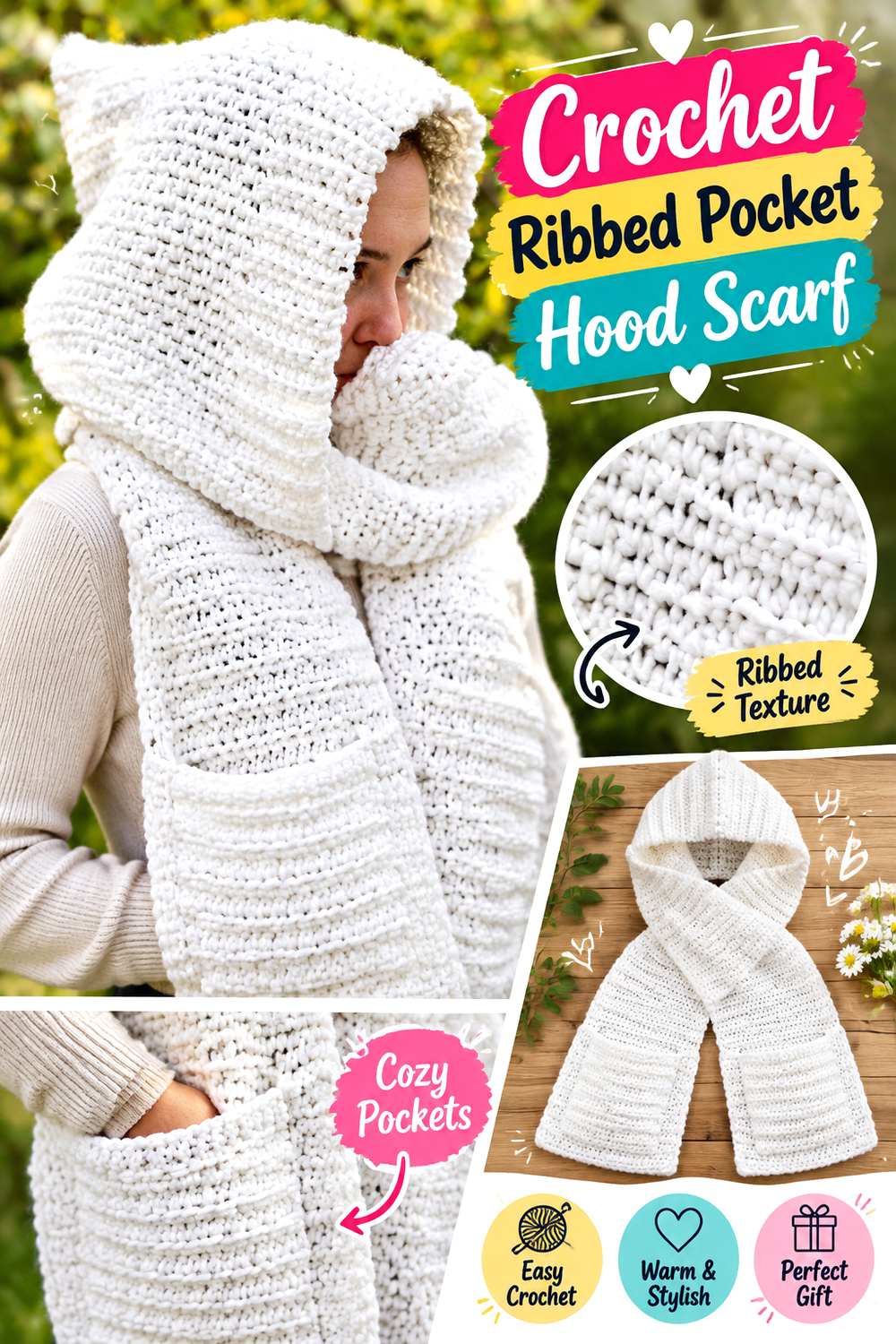
Winding Road Crochet’s hooded scarf adds pockets to a long textured scarf and uses techniques that create linear surface detail and ribbed-looking edges. The pockets turn the scarf ends into functional parts of the garment rather than simple hanging tails.
That makes this option useful for readers who like wrapping up without carrying separate gloves for every quick outing. It also adds a new planning issue: the ends need to land at a practical hand position rather than simply reaching an attractive scarf length.
Pocket Position Should Follow Your Arms, Not a Generic Length
Before finalizing scarf length, stand naturally and notice where your hands fall. Someone with a different height or arm length may prefer the pockets higher or lower than the sample. If you customize, evaluate both sides while standing rather than measuring the scarf only on a table. Pockets that hang too low become awkward even when the scarf looks nicely proportioned.
Ribbed Edges Should Frame Instead of Cinch
Any strongly textured border can behave differently from the center fabric. Watch for an edge that begins pulling the scarf inward or creating a pronounced wave. If that happens, investigate tension and fabric compatibility before proceeding. The goal is for the edge to finish the piece without changing the way the long scarf hangs.
Original Tutorial and Creator Credit
Creator: Winding Road Crochet
10. Crochet Broad Wrap Hooded Pocket Scarf
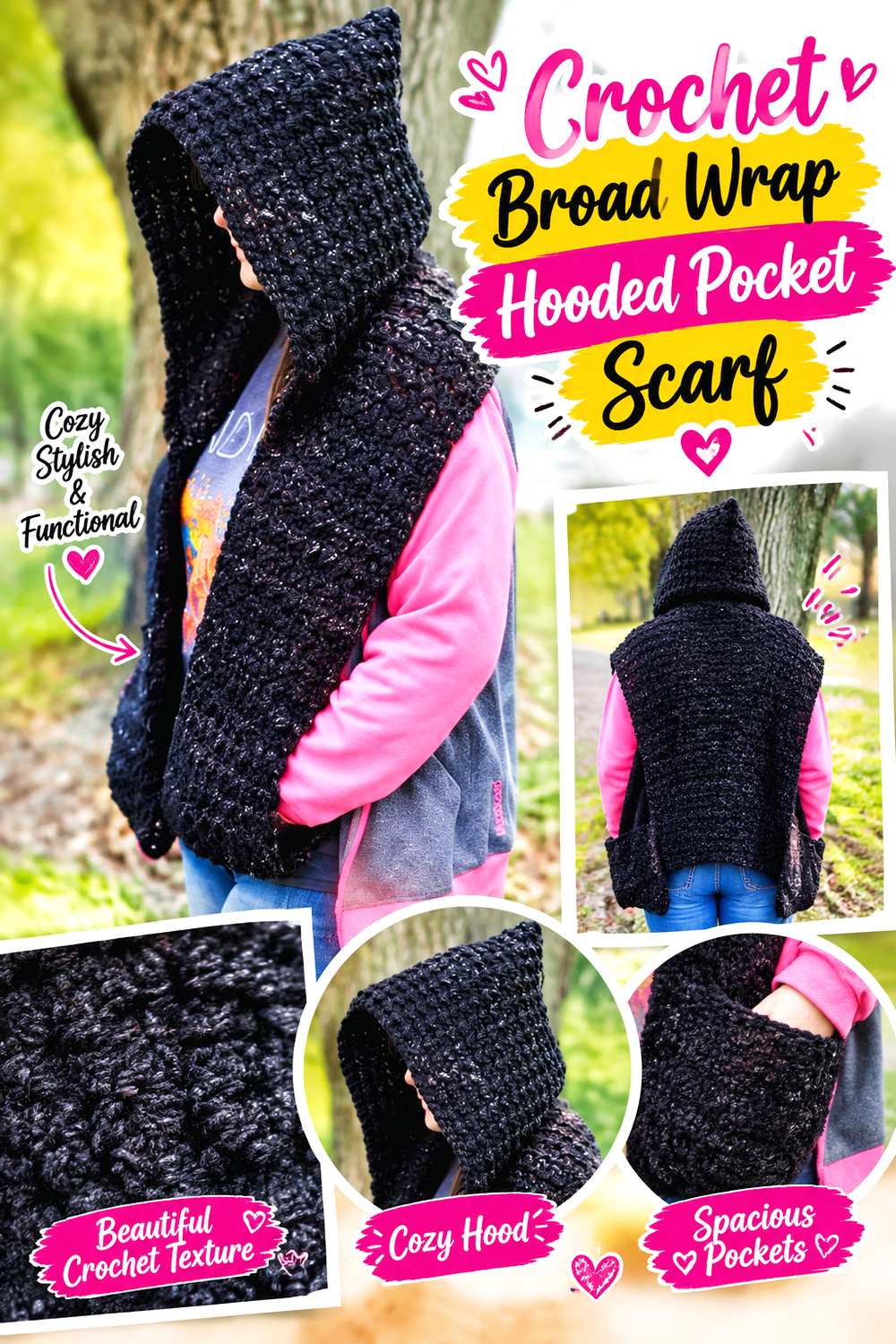
Bag-O-Day Crochet’s tutorial uses the familiar hooded-pocket-scarf idea in a broad wrap format. Rather than keeping all the fabric concentrated at the neckline, this type of piece can read more like a substantial shoulder wrap with accessible pockets at the ends.
For fall, that extra surface area can be useful when the weather is cool but you do not necessarily want a full jacket indoors. It also means the project should be evaluated as something closer to a wearable layer than a narrow decorative scarf.
Wider Fabric Changes the Shoulder Experience
A broad scarf can cover more of the upper body, but extra width also adds weight and may bunch where a coat sleeve or shoulder seam meets the wrap. If you expect to wear the piece mainly indoors, generous width may be appealing. For frequent coat layering, test a comparable piece of fabric around your shoulders before increasing width beyond the source design.
Pockets Can Pull on a Soft Wrap
Hands, phones, or other contents place downward force on crochet pockets. Even without making a specific load claim, it is worth watching how your chosen fabric stretches when the pockets are in use. If the material is very elastic, the ends may lengthen more than expected. Treat pockets as light functional features unless the construction and yarn behavior support more.
Original Tutorial and Creator Credit
Creator: Bag-O-Day Crochet
11. Crochet Made To Measure Pocket Hood Scarf
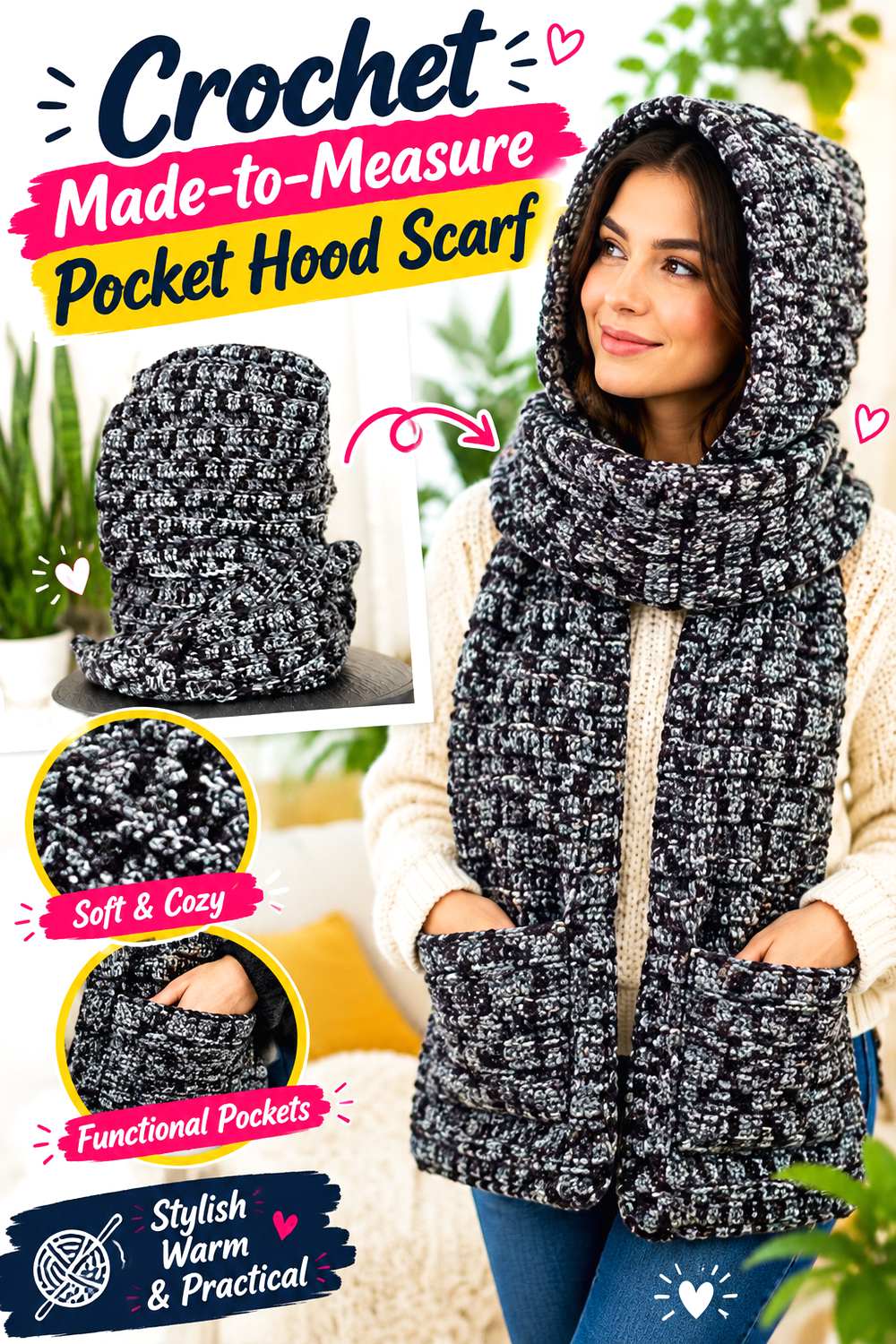
TCDDIY’s hooded pocket scarf is presented as a made-to-measure design, which shifts the focus from following a fixed finished size to checking proportions against the wearer. Its roomy hood and integrated pockets make it a practical option for someone whose main concern is getting the scarf placement to suit their own body.
This approach is particularly valuable when standard scarf lengths tend to leave pockets in the wrong position. It still requires careful planning, because “customizable” does not mean every dimension can be changed independently without affecting balance.
Measure the Pocket Level While Standing Normally
Instead of deciding length from a flat scarf, estimate where you want the pocket openings while the piece hangs from your head and shoulders. This accounts for the portion of fabric consumed by the hood and neck. If you normally wear a coat beneath the scarf, take that extra layer into account when checking placement.
Keep Both Sides Symmetrical During Custom Sizing
Made-to-measure projects invite adjustment, but that freedom can lead to gradual imbalance. Use removable markers or written measurements to track equivalent points on both sides. When the pockets are part of the long scarf ends, even modest asymmetry can affect how the whole piece appears from the front.
Original Tutorial and Creator Credit
Creator: TCDDIY
12. Crochet Triangle Hooded Wrap Scarf
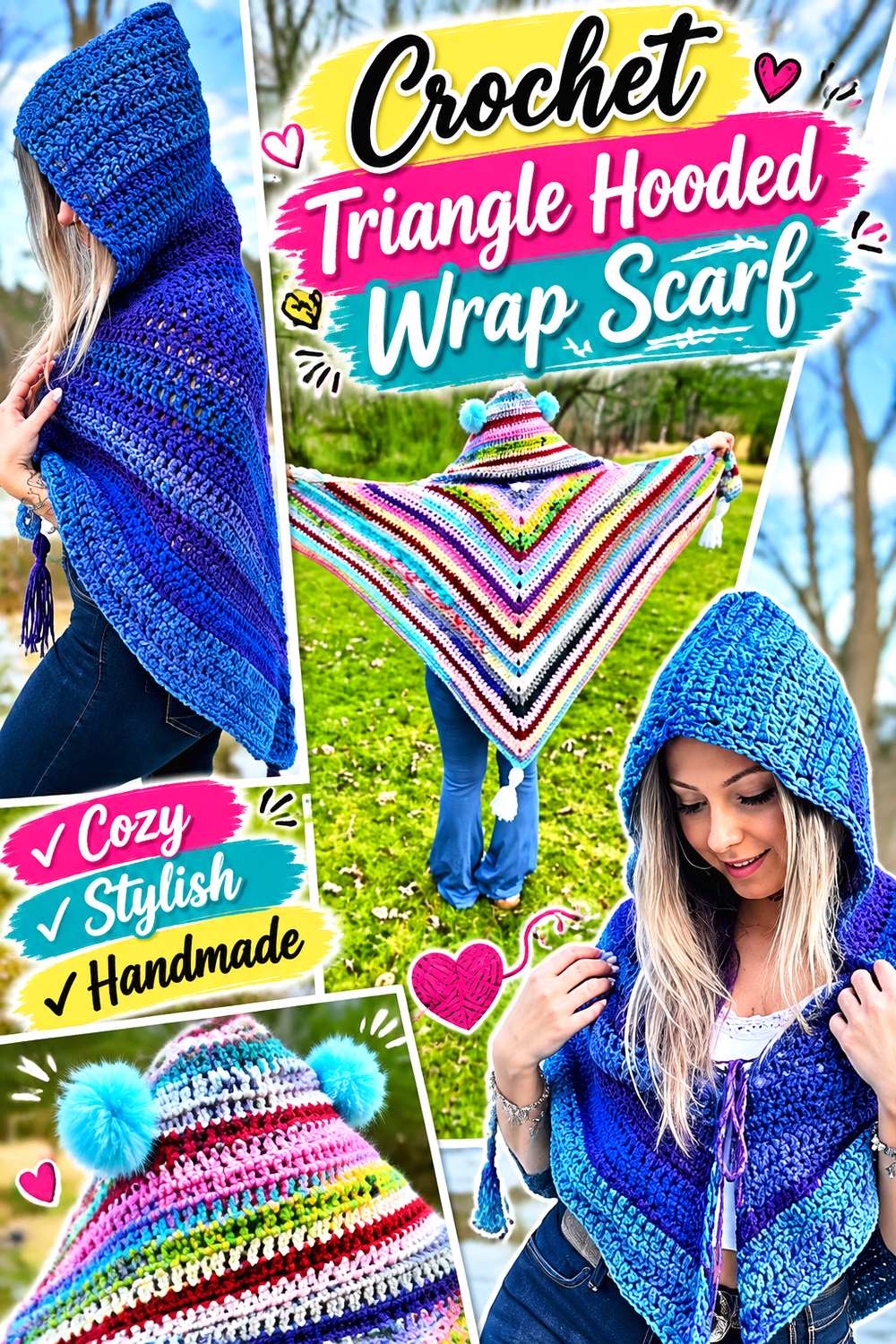
AstroKnotty’s hooded wrap moves beyond the usual straight scarf by pairing a triangular shawl body with a hood. The tutorial also includes finishing options such as a border and fringe or tassel treatment, giving this project much more shoulder coverage than a conventional scoodie.
This is a good concept to consider when you want the hood to belong to a larger wrap rather than a narrow neck accessory. The triangular body can create a stronger visual focal point across the back, so yarn drape and finished width become especially important.
Shoulder Coverage Needs Enough Drape to Settle
A triangular wrap that is too rigid may stand away from the body instead of falling across the shoulders. When evaluating a yarn substitute, drape a larger swatch rather than judging softness from the skein. A fabric can feel soft in the hand yet still be too structured for the flowing effect you want across the back.
Fringe Changes Both Movement and Maintenance
Fringe or tassels can emphasize the triangular outline, but they also increase movement and may catch on bag straps, zippers, or textured outerwear. Decide whether the decorative finish suits how you actually plan to wear the piece. Leaving it simpler can make sense if the wrap will spend most of its time under a coat.
Original Tutorial and Creator Credit
Creator: AstroKnotty
13. Crochet Wide Pocket Shawl Hooded Scarf
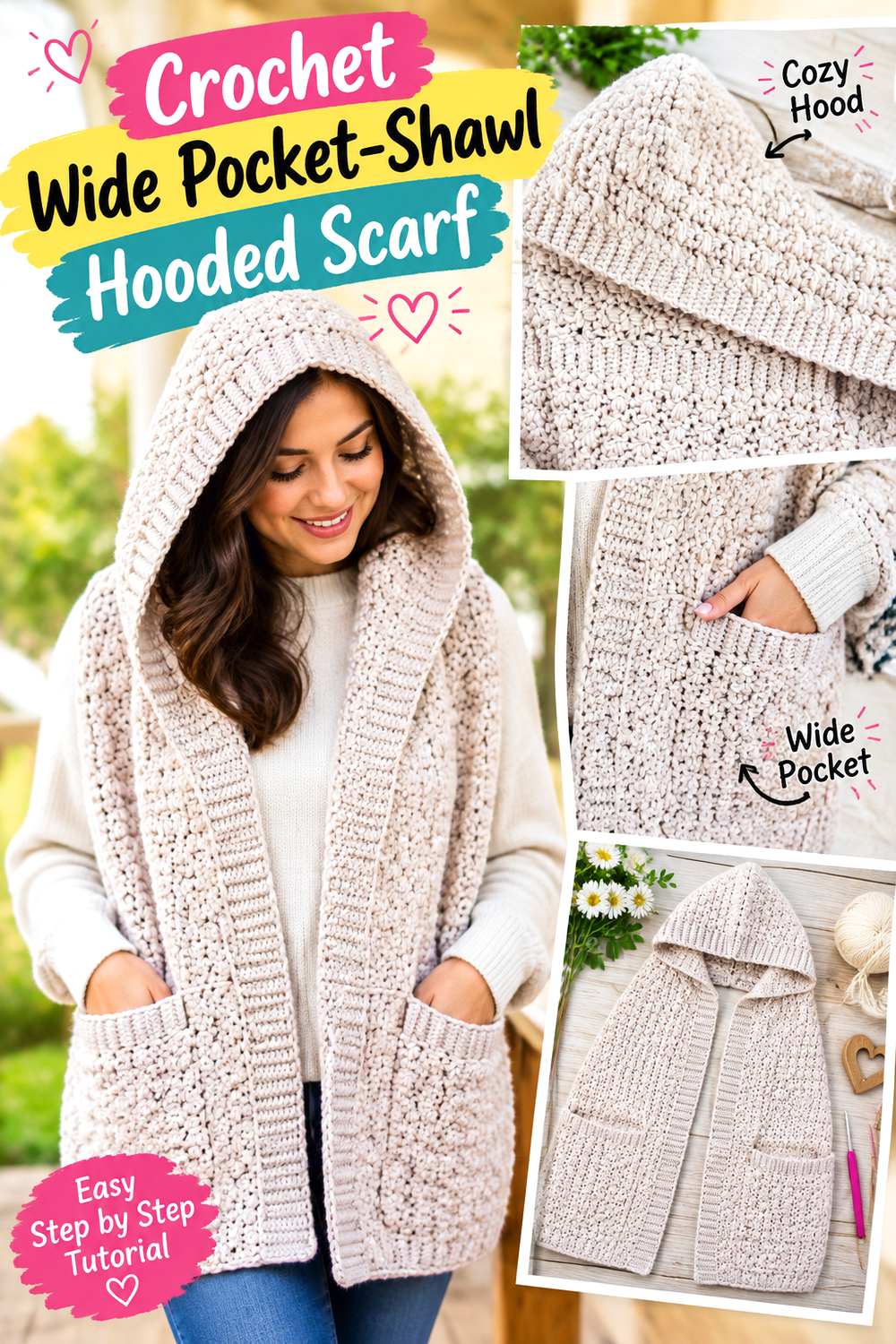
Diving Ducks Crochet’s version sits in the crossover between a pocket scarf and a pocket shawl. The tutorial covers a broad scarf section, pockets, a hood, and the stage where the hood is attached, giving the finished piece a wider presence than a standard narrow scoodie.
This shape can suit anyone who likes the usefulness of pockets but wants more fabric across the upper body. Compared with the triangular wrap, the visual direction remains more linear, so the scarf ends and pocket placement still frame the front.
Center the Hood Before the Wide Body Hides the Reference Point
On a generous rectangular piece, a small placement error can become difficult to spot while everything is spread flat. Mark the midpoint of the scarf section and compare it with the hood before joining. Then try the piece on temporarily if possible. Correct centering helps the two sides fall more evenly once pockets add weight at the ends.
Wide Scarves Need a Storage Plan Too
More fabric may be welcome while wearing the scarf, but it also creates a bulkier accessory when folded. If your fall wardrobe has limited entryway storage or you travel frequently, compare the finished volume of a wide shawl-style scarf with a compact cowl before choosing. Function includes what happens when the scarf is not on your shoulders.
Original Tutorial and Creator Credit
Creator: Diving Ducks Crochet
14. Crochet Faux Fur Trim Pocket Hood Scarf
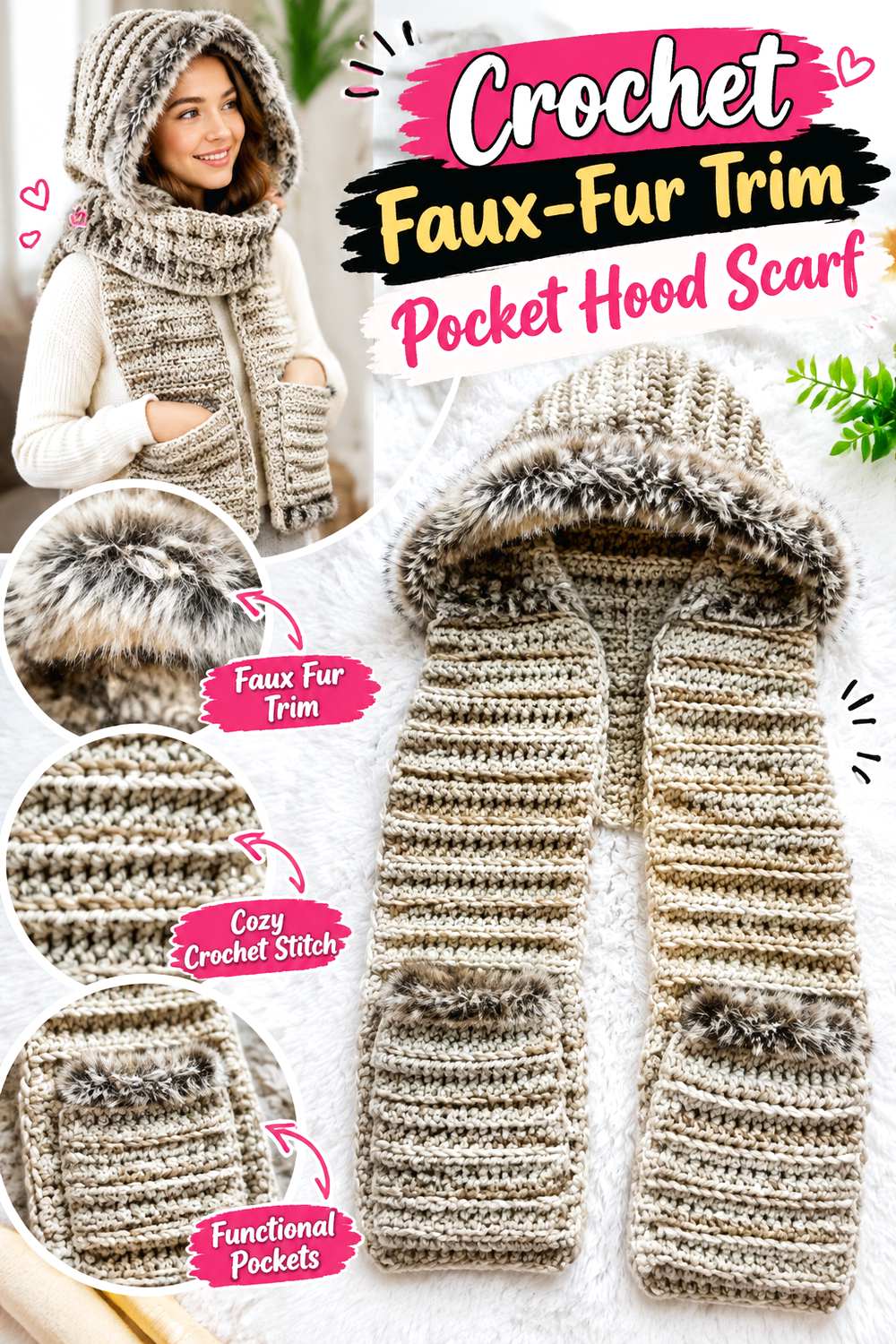
CreationsMisfit’s Phantom Faux Hooded Scarf combines pockets with super-bulky fabric and a faux-fur accent. The trim gives the hood a much softer, more dramatic outline than the cleaner ribbed and minimalist pieces elsewhere in the list.
This option makes sense when the hood itself is meant to be the focal point. The contrast between regular crochet fabric and fuzzy trim creates visual depth, though the different yarn surfaces also require more attention during finishing.
Faux Fur Can Hide Both Stitches and Small Mistakes
Fuzzy yarn produces a soft edge because individual stitch anatomy becomes much less obvious. That same quality can make it harder to see where the hook should enter or whether spacing is consistent. Work in good lighting and count or mark important placement points rather than depending entirely on visual stitch recognition.
Trim Weight Belongs in the Fit Check
A hood may sit differently once a substantial border is added. Before permanently finishing all trim, check how the added material affects the front opening and crown. If the hood starts falling farther forward than you prefer, it is better to notice while adjustments are still practical rather than after every decorative edge is complete.
Original Tutorial and Creator Credit
Creator: CreationsMisfit
15. Crochet Rounded Crown Scoodie
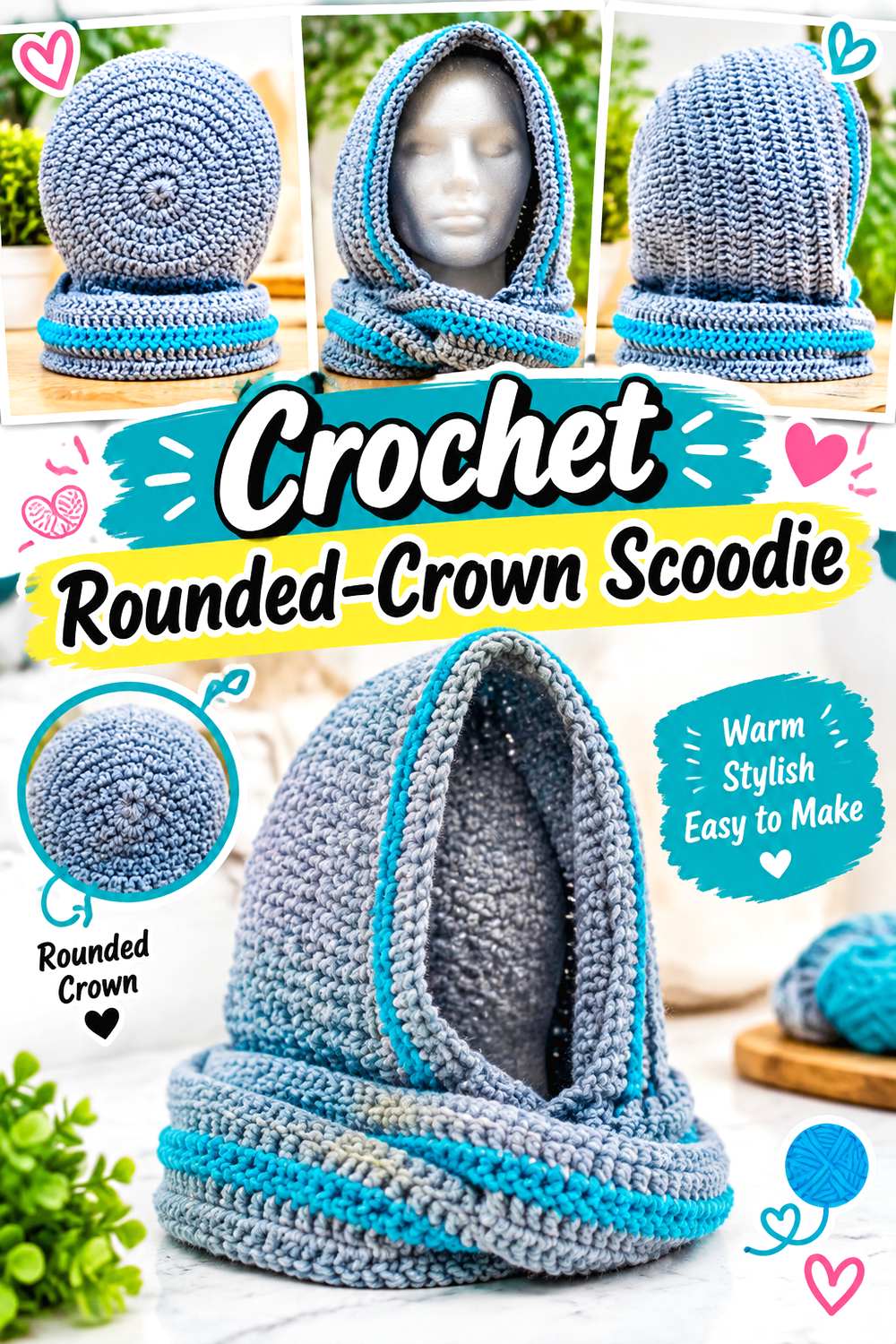
Crochet with Clare’s tutorial makes the rounded hood the central feature. That is a meaningful alternative to the pointed peak that can appear when a simple rectangular hood is joined without additional shaping. The source also pairs the video with written pattern support.
If the profile of the hood matters more to you than pockets or decorative texture, this project deserves a close look. A smooth crown can make the accessory feel more like a deliberately shaped hood and less like a folded scarf extension.
Judge the Crown From the Side, Not Only the Mirror Front
The feature that distinguishes this design is easiest to assess in profile. When trying on the developing hood, use a second mirror or photo to see how the back settles. A crown can look perfectly balanced around the face while still creating more projection at the back than you expected.
Written Support Is Useful for Cross-Checking the Video
When a creator provides both video and written material, use them together instead of assuming one format must contain every detail you need. The video can clarify physical positioning and shaping, while written information can be easier to consult when confirming where you are in the project. Follow the creator’s current source for exact construction details.
Original Tutorial and Creator Credit
Creator: Crochet with Clare
16. Crochet Faux Fur Snood Hood
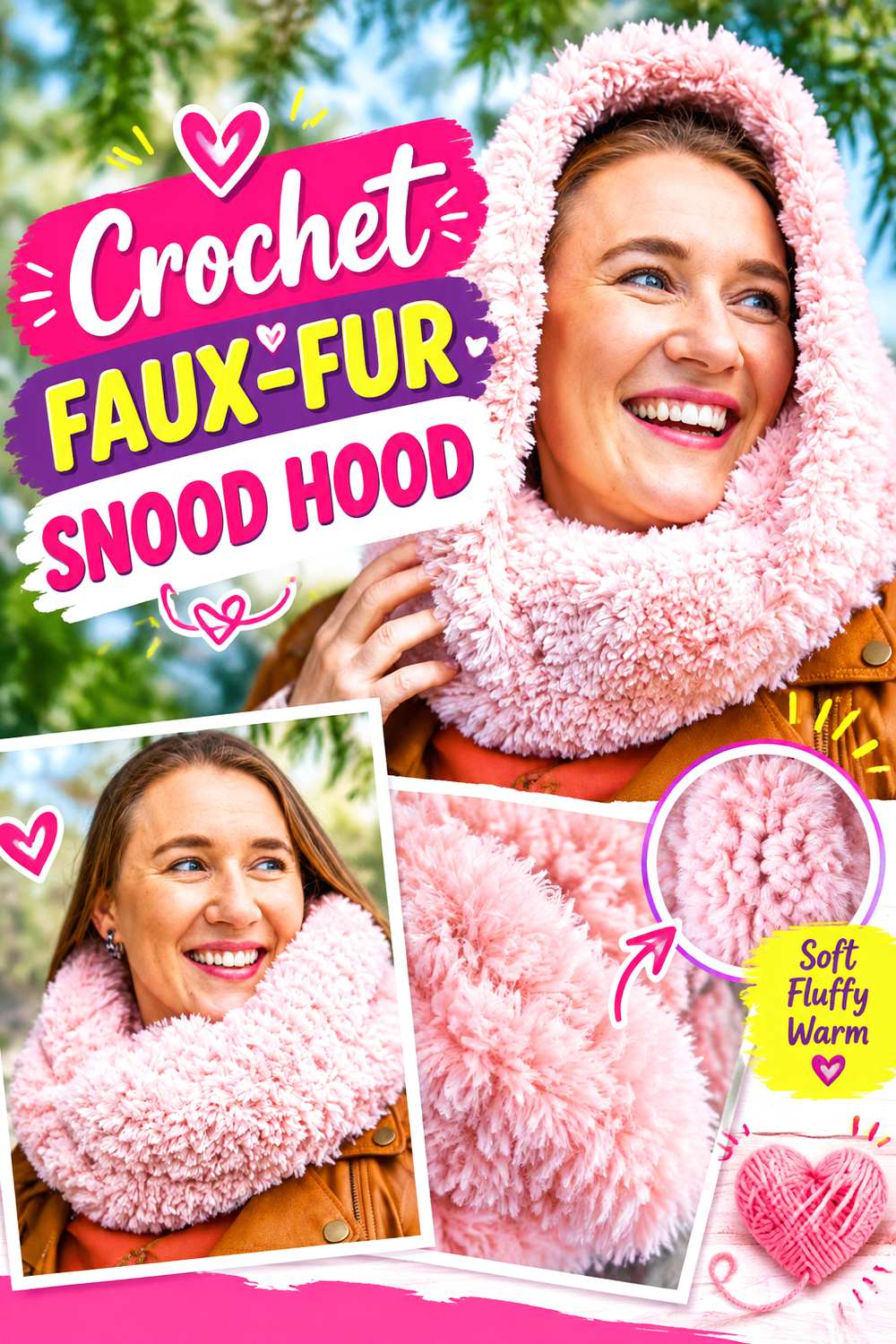
Nicki’s Homemade Crafts takes a compact approach with a faux-fur hooded cowl or snood rather than a long scarf. The tutorial is built around fuzzy yarn and a contained neck-and-head shape, so there are no long scarf tails or pockets competing with the texture.
This is one of the most distinct options in the collection. It can work well when your priority is a compact accessory that stays concentrated around the neck and hood area, especially if you dislike dealing with long ends.
A Snood Opening Has to Work for Both Head and Neck
A compact tube needs enough room to move comfortably over the head while still sitting the way you want around the neck. Those are competing requirements. If you substitute yarn or alter sizing, test the opening before finishing. A fabric that stretches easily may behave very differently from a dense faux-fur fabric with limited visible elasticity.
Fuzzy Yarn Rewards Tactile Checking
Because faux fur can obscure individual loops, relying only on sight may slow the work down. Use your fingers to feel the edge and keep important transition points marked. Also inspect the interior as you work; the outside fluff can make a small irregularity look invisible even though it remains noticeable against the skin.
Original Tutorial and Creator Credit
Creator: Nicki’s Homemade Crafts
17. Crochet Rounded Hood Pocket Scarf
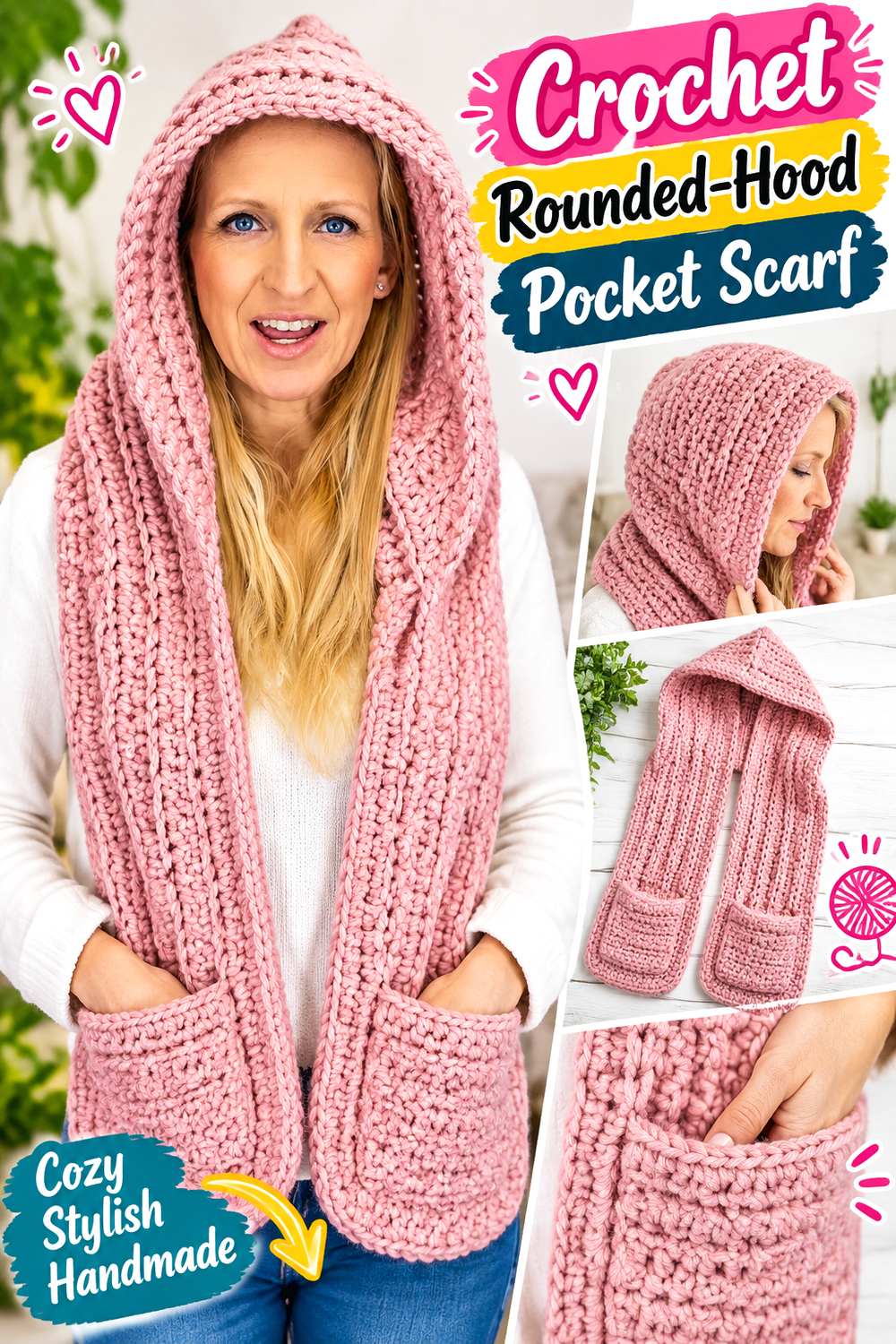
Naztazia’s hooded pocket scarf combines several practical features in one design: a rounded top, long scarf sections, pockets, and substantial yarn. The creator explains that the hood is formed first and the scarf portion is then joined, which distinguishes its construction from designs where a rectangular hood is simply attached afterward.
This is a useful choice when you want pockets but still care strongly about crown shape. The back-loop texture also gives the fabric a pronounced linear appearance rather than a flat, plain surface.
Rounded Shaping and Bulky Fabric Need to Work Together
A rounded crown can lose some of its intended profile if a replacement yarn behaves very differently from the source fabric. Before changing yarn weight substantially, compare your sample’s thickness and flexibility. The goal is not simply to match width; the hood also has to bend comfortably around the head without becoming either floppy or overly rigid.
Pocket Length Should Be Checked After the Hood Is Positioned
Because the hood consumes part of the overall vertical arrangement, evaluate the scarf ends while the hood is actually on your head. This gives a more realistic pocket position than holding the scarf at shoulder height. If customizing length, confirm both pocket level and how much fabric remains available for comfortable neck coverage.
Original Tutorial and Creator Credit
Creator: naztazia
18. Crochet Two Style Granny Square Scoodie
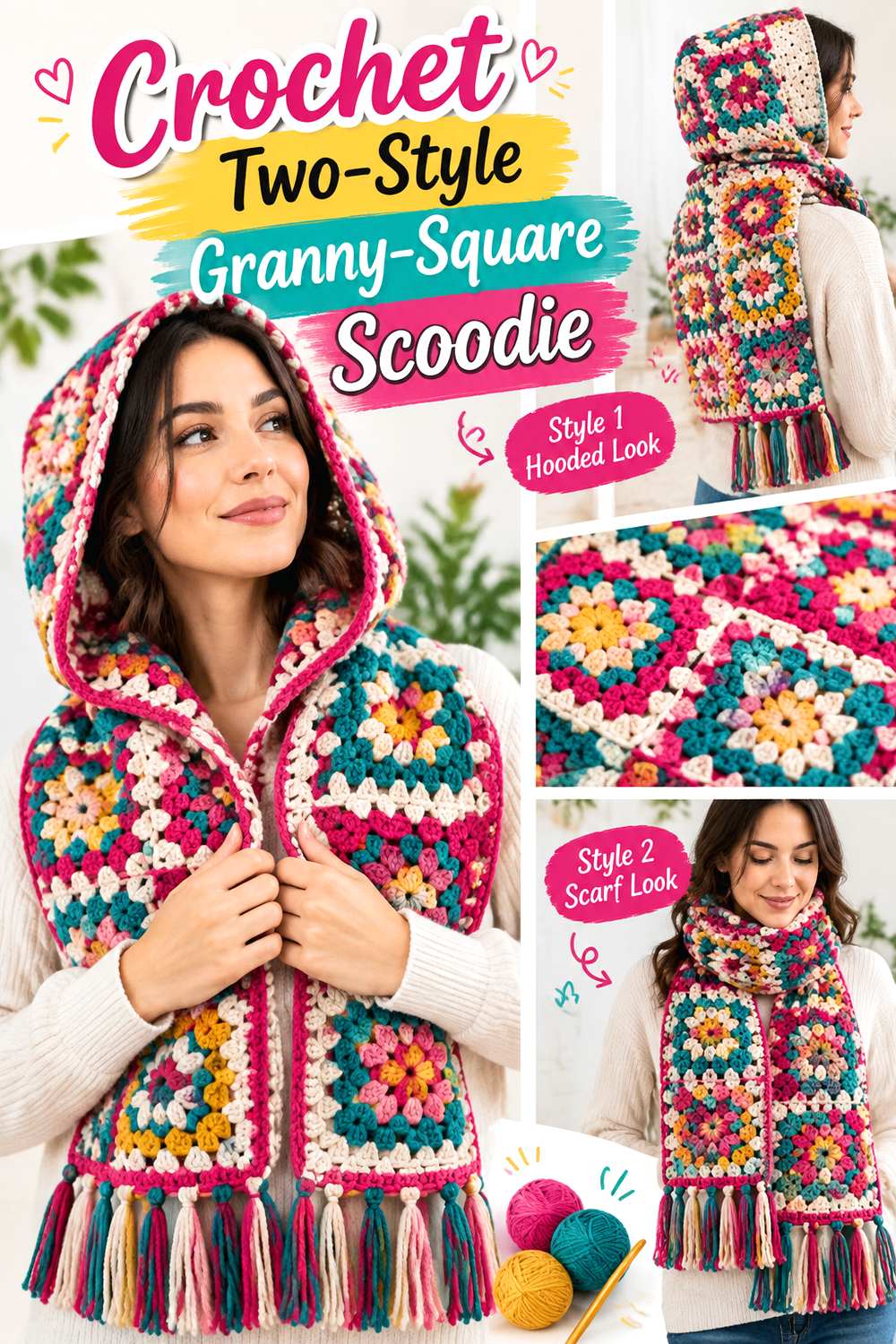
Mrs.H brings granny-square construction into the hooded-scarf category and demonstrates two different styles in the same tutorial. That motif-based approach immediately separates this piece from the continuous fabrics used throughout most of the list.
Here, color placement and motif consistency become as important as overall scarf length. The squares create natural visual blocks, making this a strong choice when you want a fall accessory that visibly celebrates crochet construction rather than disguising it beneath a smooth texture.
Block the Motifs Before Trusting Their Final Size
Granny-style pieces are much easier to assemble cleanly when the motifs agree in dimensions. If some squares are looser or tighter, joining them first can transfer that inconsistency into the hood. Compare the finished motifs after appropriate blocking for your yarn and correct noticeable differences before treating them as interchangeable building units.
Choose the Tutorial Style Before Planning the Palette
Because the source demonstrates two versions, decide which finished arrangement you intend to follow before assigning colors. A palette planned for one motif layout may create unexpected concentration or imbalance in another. Sketching the color order on paper is enough; you do not need a detailed crochet chart to identify whether one shade is becoming too dominant around the face.
Original Tutorial and Creator Credit
Creator: Mrs.H
Which Fall 2026 Hooded Scarf Shape Fits Your Wardrobe?
For the most traditional scarf experience, the long two-tone, striped, ribbed, or rounded-hood scoodies keep familiar tails while adding head coverage. Pocket styles make more sense when you want the ends to serve a second purpose, although their length and stretch deserve extra planning. Infinity designs eliminate loose ends and create a fuller neckline, while the faux-fur snood is the most compact option here.
The triangle and wide shawl versions provide noticeably more shoulder coverage, so they behave more like an extra wearable layer. The granny-square scoodie is the strongest choice when motif placement and color are meant to define the look. In other words, choose the silhouette first; texture and palette are easier decisions once you know how much fabric you actually want around your neck and shoulders.
Conclusion
For a versatile fall accessory, start by deciding what you want the scarf to do when the hood is down. Long striped and two-tone versions behave most like familiar scarves, pocket designs add practical front weight, infinity scarves create a contained collar, and the snood keeps everything compact. If shoulder coverage matters, the hooded wrap or pocket-shawl shapes offer considerably more fabric, while the granny-square option puts motif work at center stage.
Whichever direction fits your wardrobe, check hood depth, scarf placement, yarn drape, and outerwear compatibility before making major adjustments. Use the original creator tutorials linked above for their exact construction details, then make any personal changes with the finished shape—not just the yarn color—in mind.
Frequently Asked Questions
What yarn works well for a crochet hooded scarf intended for fall?
There is no single ideal yarn because these 18 designs depend on different fabric behavior. A compact cowl may tolerate more body, while a long wrap often benefits from enough drape to fold without becoming stiff. Smooth yarn highlights ribbing and stitch texture; fuzzy yarn creates a softer surface but can obscure individual stitches. Before substituting, compare yarn weight, flexibility, fiber care information, and the fabric produced by your own sample.
How can I check whether the hood will fit before the whole scarf is finished?
Whenever the construction allows it, temporarily position the developing hood on your head before final finishing or permanent joining. Check the opening around the face, crown depth, back profile, and how much room remains for your hair. Also test it with the clothing you expect to wear underneath. A hood that feels roomy over a thin shirt can sit quite differently when a high coat collar is added.
Are pockets worth adding to a hooded scarf?
Pockets are useful when you genuinely want a scarf that also gives your hands a resting place, but they change the planning. The scarf ends need to reach a comfortable height, and stretchy fabric can lengthen under pocket weight. If your priority is a light, flowing accessory, a pocket-free scoodie may feel less cumbersome. If you choose pockets, determine their position while standing with the hood in its normal wearing position.
What is the practical difference between a scoodie, an infinity hood, and a hooded cowl?
The names can overlap between creators, so judge the actual finished construction rather than relying only on terminology. A scoodie commonly combines a hood with scarf-like ends. An infinity version uses a continuous loop instead of loose tails. A hooded cowl or snood is generally more concentrated around the neck, with much less hanging length. Always use the finished photos and tutorial itself to confirm what a creator means by the label.
Can I use a different yarn weight than the tutorial recommends?
Possibly, but changing yarn weight can alter far more than appearance. It may affect width, hood depth, scarf length, stretch, stiffness, and the amount of bulk around your neck. Do not assume that using the same construction with a different yarn will automatically produce the same size. Make a sample, compare its measurements and drape with the source fabric where information is available, and adjust only when you understand which dimensions will change.
How do I keep a crochet hooded scarf from feeling too bulky under a coat?
Start by controlling how many layers meet at the neckline. A double-wrap infinity scarf, heavily ribbed fabric, super-bulky yarn, and a high coat collar can all occupy the same space. If coat layering is the priority, consider a narrower scarf section, softer drape, fewer wraps, or a simpler long-tail construction. Test the developing project with the actual coat whenever possible rather than waiting until the scarf is completely finished.