An oversized crochet bow can turn a simple Christmas wreath into a much stronger focal piece. With plush chenille, velour-feel, or other soft yarns, the finished surface can resemble velvet while still keeping the handmade texture of crochet.
The main challenge is scale. A bow that looks balanced as a hair accessory or ornament may need different proportions when adapted to a full-size wreath, and a thicker yarn can change the way loops fold, tails hang, and the center wrap sits. Several tutorials in this collection demonstrate bows at smaller scales or with standard yarn rather than finished oversized velvet wreath bows. They are included as construction and shape references, so check the tutorial carefully before adapting the yarn, size, or attachment method.
The 13 ideas below use noticeably different bow structures, placements, tail treatments, edging choices, and wreath arrangements rather than relying on color changes alone.
Quick List
- Oversized Crochet Plush Velvet-Look Wreath Bow
- Crochet Velvet-Look Bow-Topped Christmas Ring Wreath
- Crochet Wide-Ribbon Velvet-Look Wreath Bow
- Crochet Long-Tail Velvet-Look Door Wreath Bow
- Crochet Clustered Triple-Bow Velvet-Look Wreath
- Crochet Coquette-Tail Velvet-Look Wreath Bow
- Crochet Rounded-Loop Velvet-Look Wreath Bow
- Crochet Flat-Ribbon Velvet-Look Wreath Bow
- Crochet Jewel-Tone Velvet-Look Wreath Bow with Shimmer Center
- Crochet Compact-Knot Velvet-Look Wreath Bow
- Crochet Asymmetrical Corner-Bow Christmas Wreath
- Crochet Mini-Wreath-Inspired Oversized Velvet-Look Bow Wreath
- Crochet Minimal Cinched Velvet-Look Wreath Bow
How to Make Plush Yarn Read Like Velvet Without Losing the Bow Shape
A velvet-look wreath bow needs softness, but softness alone does not create a convincing bow. The loops still need enough definition to separate visually from the tails and center wrap.
Chenille and similar plush yarns can make individual stitches much less visible than smoother yarn. That can be useful when you want a fabric-like surface, but it also means a highly textured stitch pattern may disappear. Before committing to a large bow, make a small swatch and look at it from several feet away. For wreath decor, the overall silhouette often matters more than fine stitch detail.
Also consider how easily the fabric folds. A very dense plush fabric may create thick, rounded loops, while a softer fabric can droop more like ribbon. Neither is automatically better; the choice depends on whether you want a sculpted statement bow or relaxed hanging tails.
Plan the Bow Proportion Before Scaling Up a Tutorial
Do not assume that multiplying every part of a small bow will automatically produce a balanced wreath bow. Increasing yarn thickness changes the depth of the fabric as well as its width and length.
A practical approach is to mock up the proposed bow footprint before crocheting. Place paper, scrap fabric, or another temporary shape across the wreath and judge how much of the ring you want visible. Check the width of the loops, the length of the tails, and whether the center section appears substantial enough to connect them visually.
For a front-door wreath, also think about projection. Very puffy loops may press against a storm door or nearby surface. If the wreath will hang indoors, greater depth may be easier to accommodate.
Think About Attachment, Storage, and Reuse Before Finishing
A large plush crochet bow can carry noticeably more weight than a small ornament bow, so its attachment deserves planning. Decide whether the bow will be permanently incorporated into the wreath or removed after the season.
A removable attachment can make storage easier and allow the same bow to move to another wreath, garland, mantel display, or package-style wall decoration. A permanent attachment may create a cleaner integrated composition but can make the entire wreath bulkier to store.
Whichever approach you choose, make sure the bow is supported at more than a fragile decorative point. Follow the yarn manufacturer’s care guidance rather than assuming a plush yarn can be washed, steamed, or exposed to weather. Keep textile decorations away from open flames and direct heat sources.
1. Oversized Crochet Plush Velvet-Look Wreath Bow
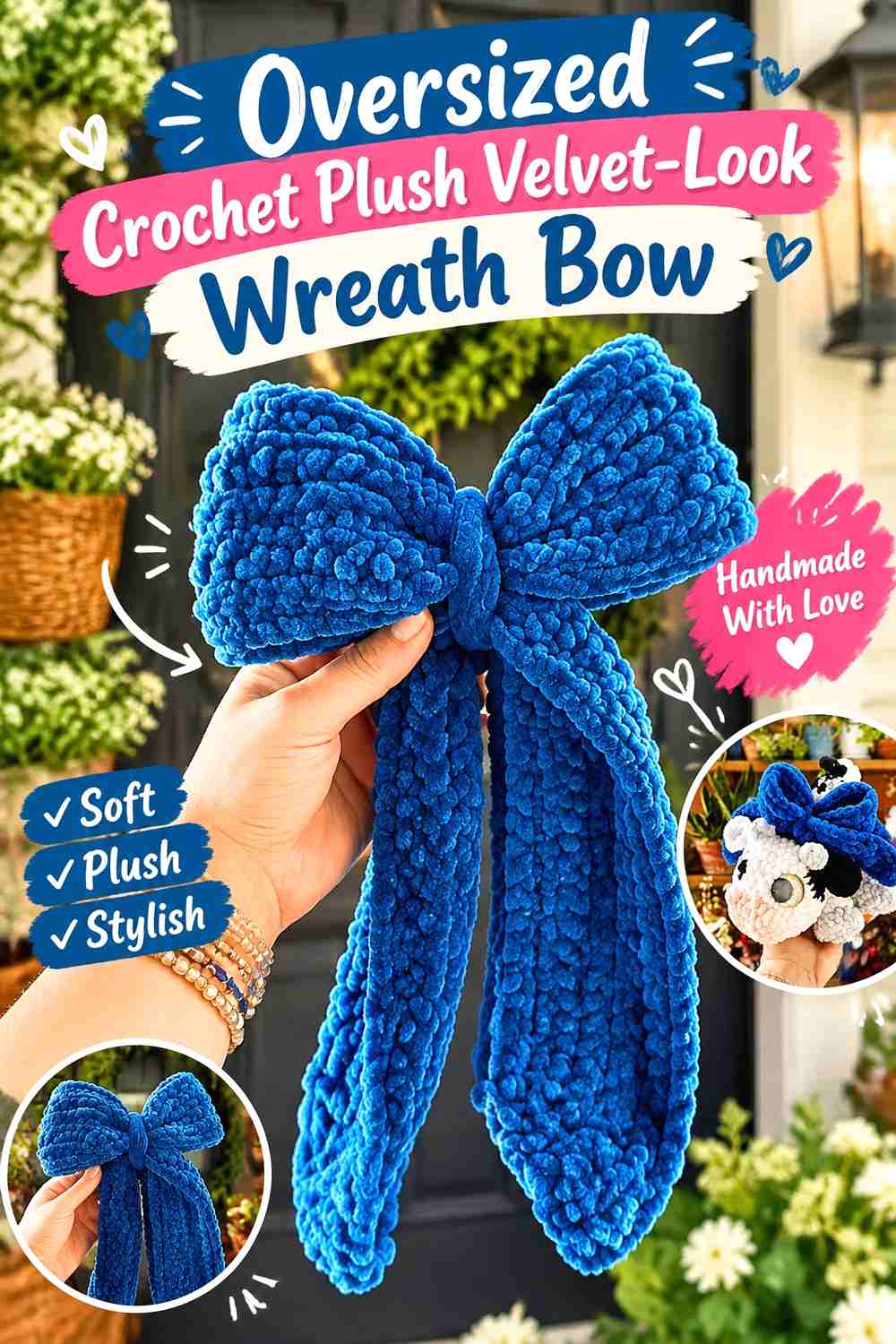
This is the most direct interpretation of the theme: one generously scaled plush bow used as the primary decoration rather than as a small finishing accent. A chenille-style yarn is especially suited to this direction because the surface can appear soft and dense from across the room.
The shape works well when you want the wreath itself to remain relatively restrained. Instead of filling every open space with ornaments, berries, and ribbon, let the crochet bow supply most of the visual volume.
Deep Loops Need Enough Structure to Stay Distinct
Large plush loops can begin to merge visually if the fabric is extremely soft. Before enlarging the bow, consider whether the loop shape in the original tutorial still reads clearly in your chosen yarn.
If a swatch collapses completely when held vertically, you may prefer a smaller enlargement, firmer fabric, or internal support appropriate to your own decorative use rather than continuing to add size.
Give the Center Wrap Enough Visual Weight
Scaling only the outer bow while leaving the center narrow can make a large project look disproportionate. Treat the center as an important design element.
For a Christmas wreath, it can also create deliberate contrast. A matching center gives the bow a smooth monochromatic look, while a coordinating yarn can define the knot without changing the main plush surface.
Creator Credit: Lori | EntreTejidosCrochet
2. Crochet Velvet-Look Bow-Topped Christmas Ring Wreath
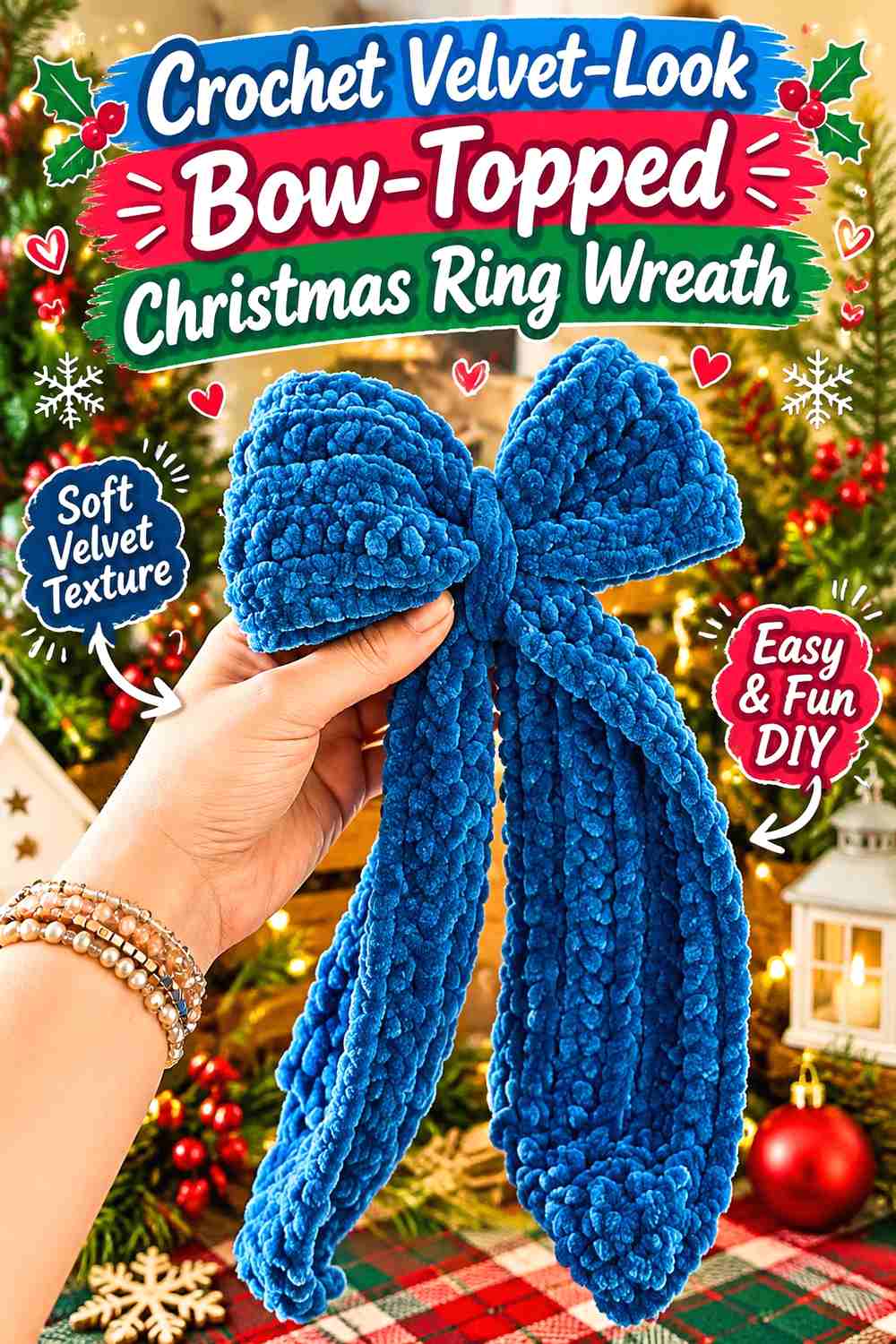
Instead of attaching a huge bow to the bottom of a wreath, place it at the top so the tails visually frame the ring. This gives the wreath a gift-wrapped character without covering the lower portion.
A top-mounted bow is particularly useful when the wreath base already has interesting crochet work that you do not want to hide.
Top Placement Changes the Way the Tails Need to Hang
With the bow positioned at twelve o’clock, the tails naturally become vertical design lines. Check their relationship to the inner opening of the wreath before committing to their final length.
Tails that overlap too much of the center can make the opening appear narrow. Shorter or slightly outward-directed tails preserve more of the ring.
Keep the Wreath and Bow From Competing for Thickness
If both the wreath covering and the bow use very bulky plush yarn, the finished piece can become visually heavy. One approach is to let the bow supply the deepest texture while keeping the ring comparatively restrained.
This contrast makes the bow easier to identify as the focal feature even when the entire decoration stays within one color family.
Creator Credit: vvw.studio
3. Crochet Wide-Ribbon Velvet-Look Wreath Bow
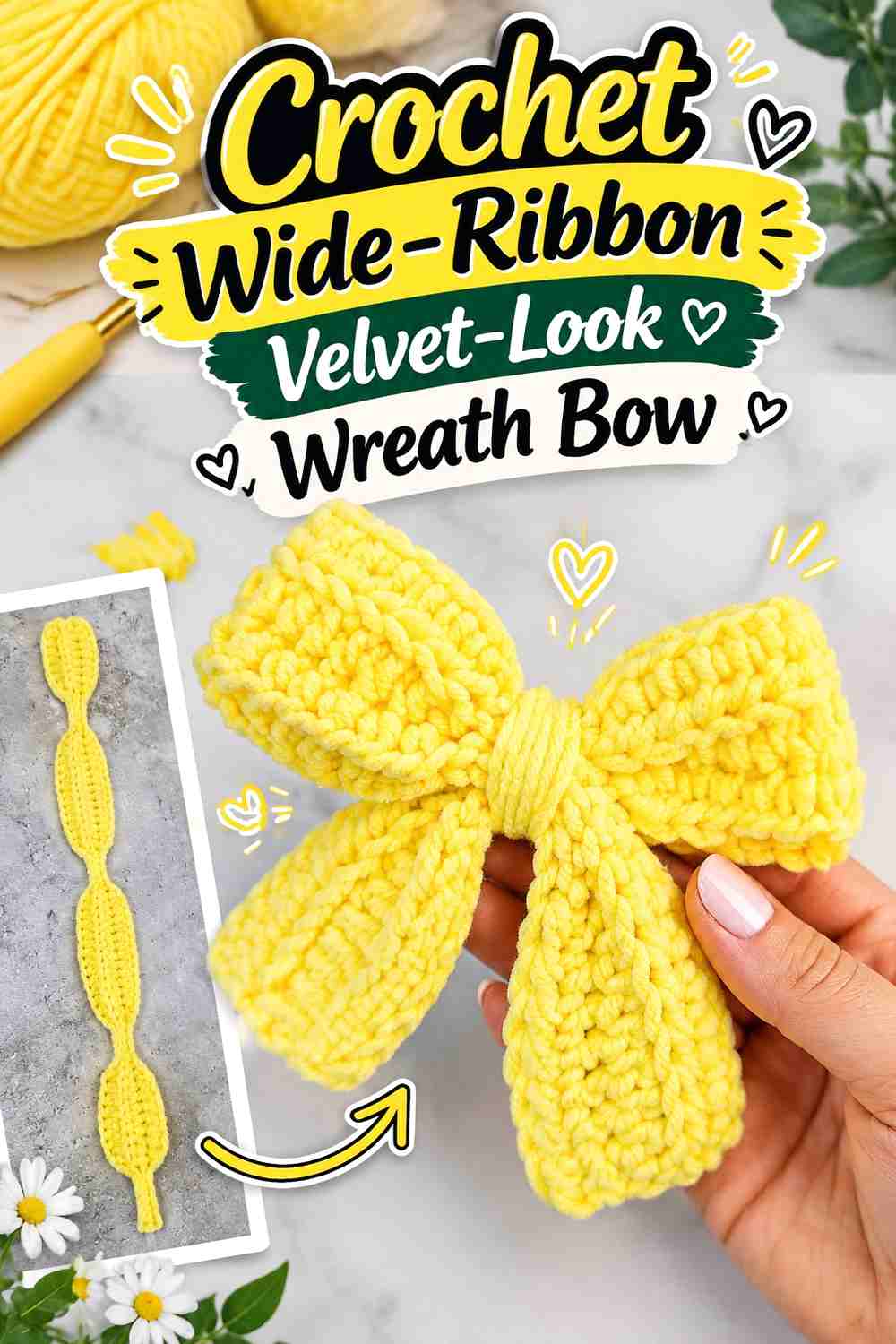
For a more tailored appearance, choose a bow construction that resembles a broad strip of ribbon folded into loops. The straighter edges provide a useful contrast to the round shape of a Christmas wreath.
This style can look especially effective in deep red, burgundy, forest green, cream, or another solid color where the plush surface provides enough interest without extra embellishment.
Width Matters More Than Extra Embellishment
When adapting a ribbon-style bow, first decide how broad you want each loop to appear relative to the wreath. A narrow strip enlarged only in length can produce long, thin loops rather than the generous ribbon effect suggested by the theme.
Check both dimensions before scaling. Plush yarn will also make the finished strip physically thicker than the smoother yarn used in many accessory tutorials.
Crisp Edges Help a Plush Bow Read From a Distance
A highly fuzzy yarn can soften every edge. If the whole bow begins to look like one cloud-like shape, the ribbon illusion becomes weaker.
A clearly defined outer edge, controlled fold, or subtle contrasting border can restore separation without requiring complicated surface decoration.
Creator Credit: Brunaticality
4. Crochet Long-Tail Velvet-Look Door Wreath Bow
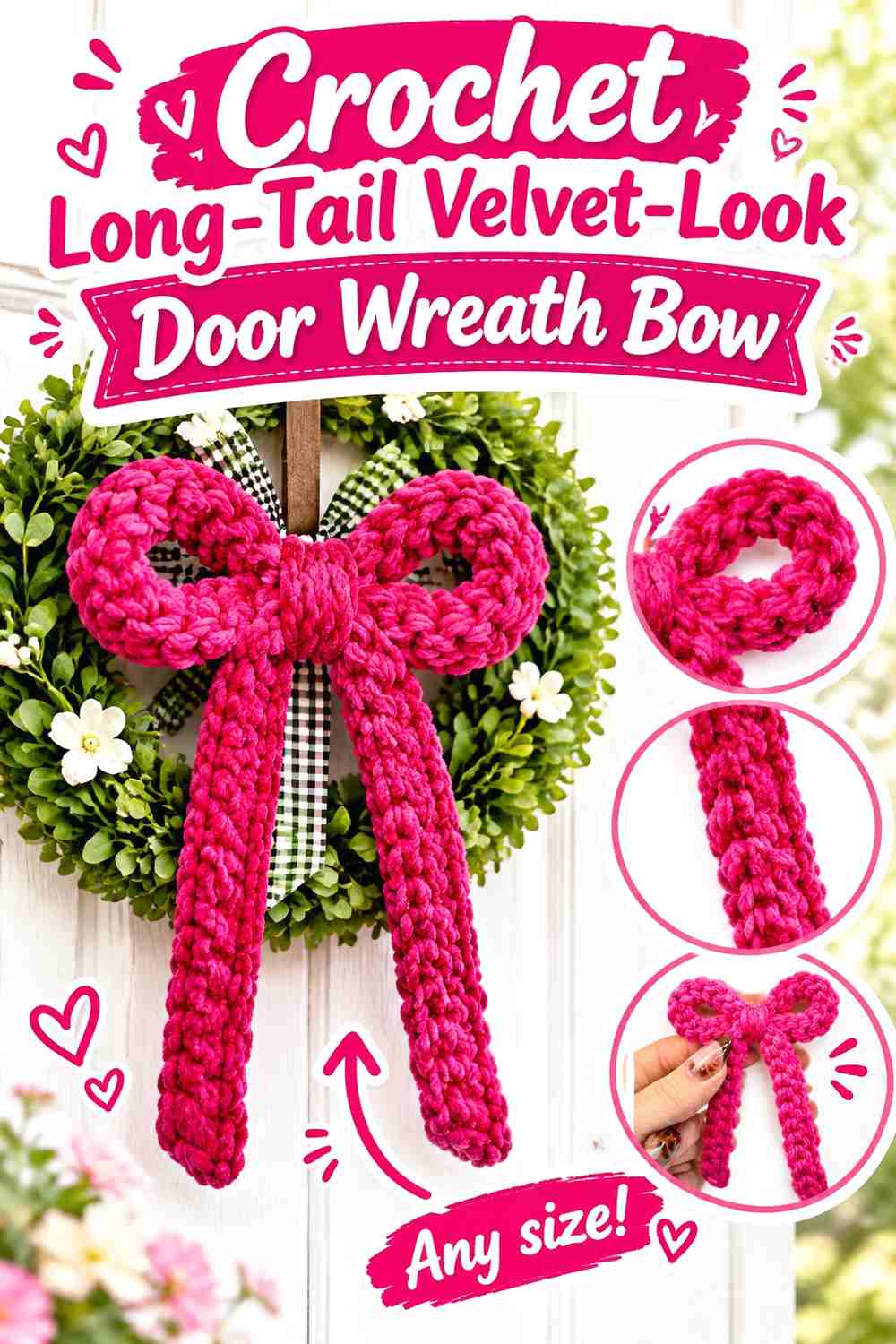
Long tails give an oversized bow more vertical movement and can make even a relatively simple wreath feel more dramatic. Instead of increasing the loop size indefinitely, put some of the added scale into the hanging sections.
This is a useful direction for taller door arrangements or wreaths positioned above a console, fireplace, or interior wall where there is open space beneath them.
Check the Tail Length in the Actual Display Position
Long tails can look elegant on a wall but awkward if they repeatedly catch on a door handle, furniture, or surrounding decor. Test the planned length where the wreath will actually hang.
If clearance is limited, you can preserve the long-ribbon impression by widening or angling the tails instead of extending them farther downward.
Velvet-Look Yarn Changes the Drape
Do not expect plush crochet tails to behave exactly like commercial velvet ribbon. Crochet fabric has its own weight, stretch, and edge behavior.
If flowing tails are a priority, compare the drape of your swatch before making the entire bow. A yarn that produces excellent rounded loops may create heavier tails than expected.
Creator Credit: ElyseCrochets 💌
5. Crochet Clustered Triple-Bow Velvet-Look Wreath
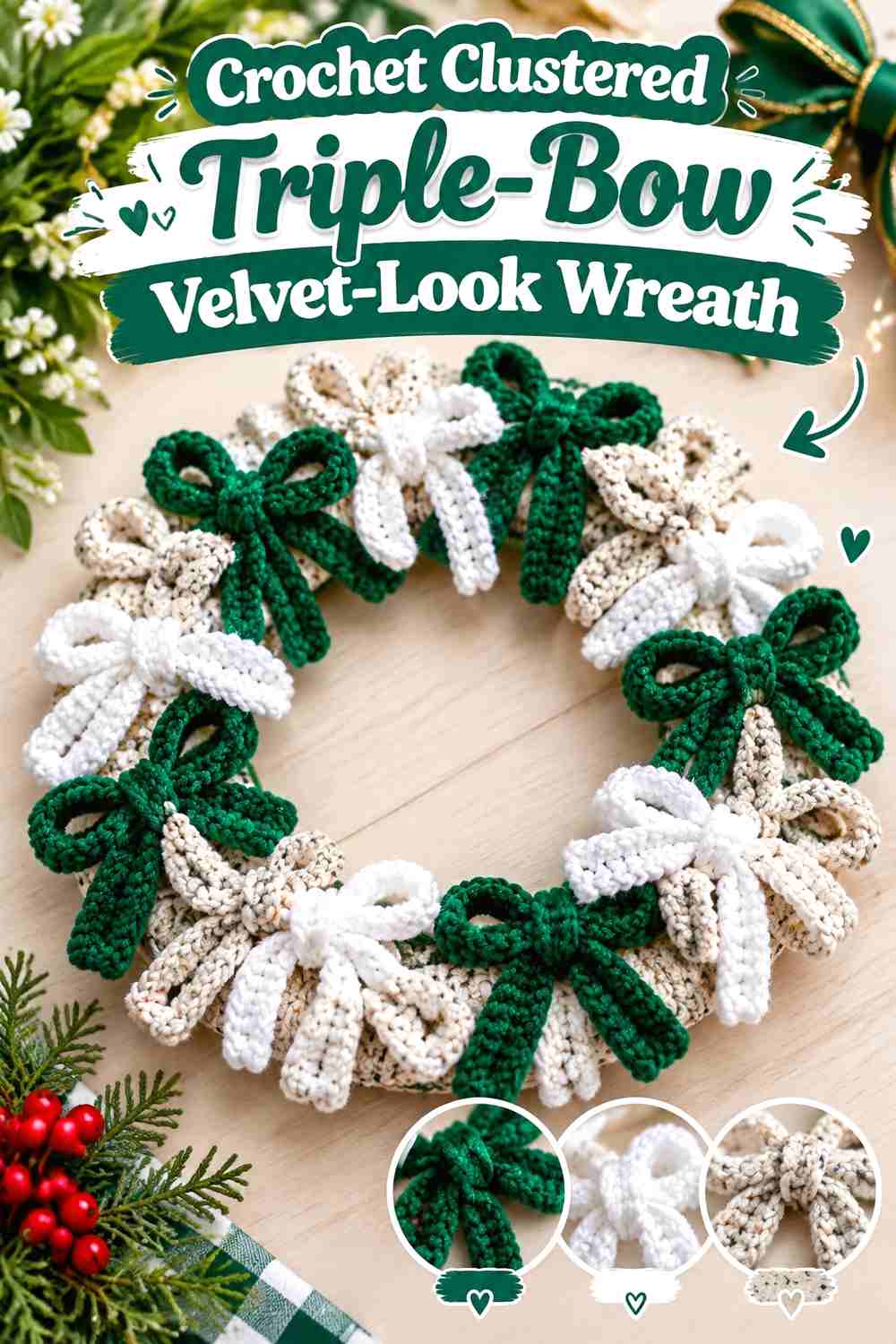
Instead of one enormous bow, group several substantial crochet bows into a single wreath focal area. The effect can still read as oversized because the cluster occupies a large portion of the wreath, but each individual bow remains easier to shape.
A clustered design also creates room for several related textures or tones without turning the whole wreath into a multicolor arrangement.
Repeat the Shape but Change the Scale
Three identical bows placed in a straight line can start to resemble garland components. For a wreath focal point, variation in scale or angle usually creates a more unified cluster.
One dominant bow can establish the main silhouette while smaller companions fill nearby gaps.
Control the Space Between the Bows
Plush yarn creates significant visual volume. If every bow touches every other bow, the individual loops may disappear into one mass.
Leave enough separation for the center and outer curves of each bow to remain identifiable when viewed from normal decorating distance.
Creator Credit: Make It With Megan
6. Crochet Coquette-Tail Velvet-Look Wreath Bow
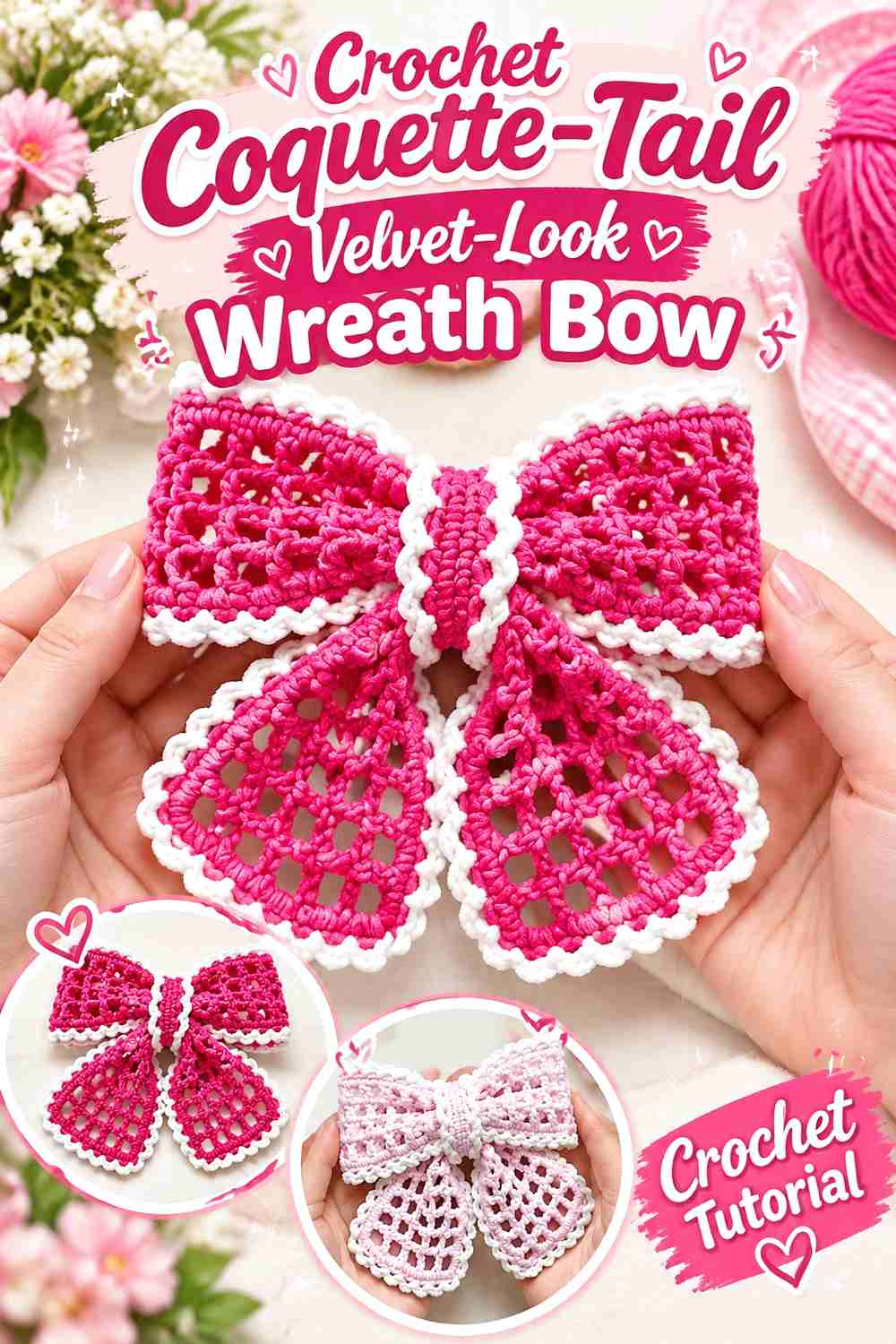
A coquette-inspired bow uses a more delicate ribbon silhouette, usually emphasizing defined loops and distinct hanging tails. Enlarged in plush yarn, that graceful shape becomes a softer alternative to a chunky traditional Christmas bow.
It suits wreaths where you want an intentionally decorative bow rather than something that resembles a conventional florist’s bow.
Preserve the Difference Between the Upper Bow and Lower Tails
This style depends on visual separation between its sections. When switching to thick plush yarn, closely spaced layers can become difficult to distinguish.
Arrange the finished pieces temporarily on the wreath before securing them. You may find that a little more spacing improves the silhouette more effectively than simply making everything larger.
Use Color to Support the Shape
Because this bow already has a recognizable decorative structure, it does not need many additional ornaments. A single velvet-look color can keep attention on the outline.
For a more Christmas-specific adaptation, the wreath base or surrounding greenery can carry the seasonal colors while the bow works as a contrasting focal piece.
Creator Credit: Crochet Everyday
7. Crochet Rounded-Loop Velvet-Look Wreath Bow
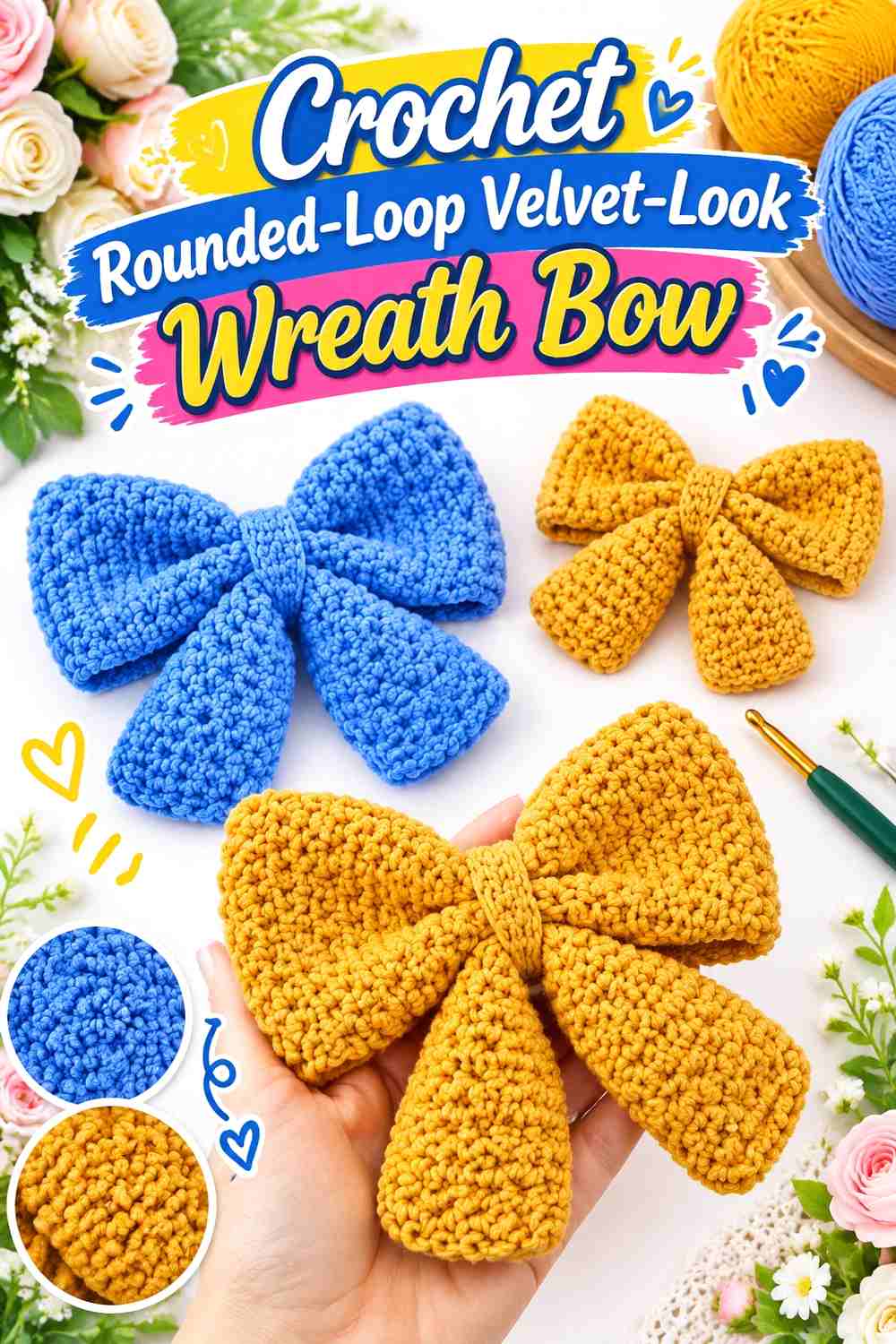
This option emphasizes soft, rounded sides instead of sharp ribbon-like corners. It is a good direction when the yarn itself is the main attraction and you want the finished bow to look cushioned and substantial.
The curved silhouette also echoes the wreath’s circular shape, creating a softer composition than a crisp rectangular ribbon bow.
Rounded Loops Can Become Too Puffy When Upsized
There is a point where extra thickness stops improving the silhouette. If the loops project forward much more than the wreath, the bow may appear detached from the base.
Judge the bow from the side as well as the front, particularly when planning a door display.
A Firm Center Creates Useful Contrast
The middle section can act as a visual pinch point between two plush rounded loops. If it is equally loose and bulky, the entire bow can lose definition.
Aim for a center treatment that visibly gathers the bow while remaining proportional to the heavier yarn.
Creator Credit: Crochet Decor
8. Crochet Flat-Ribbon Velvet-Look Wreath Bow
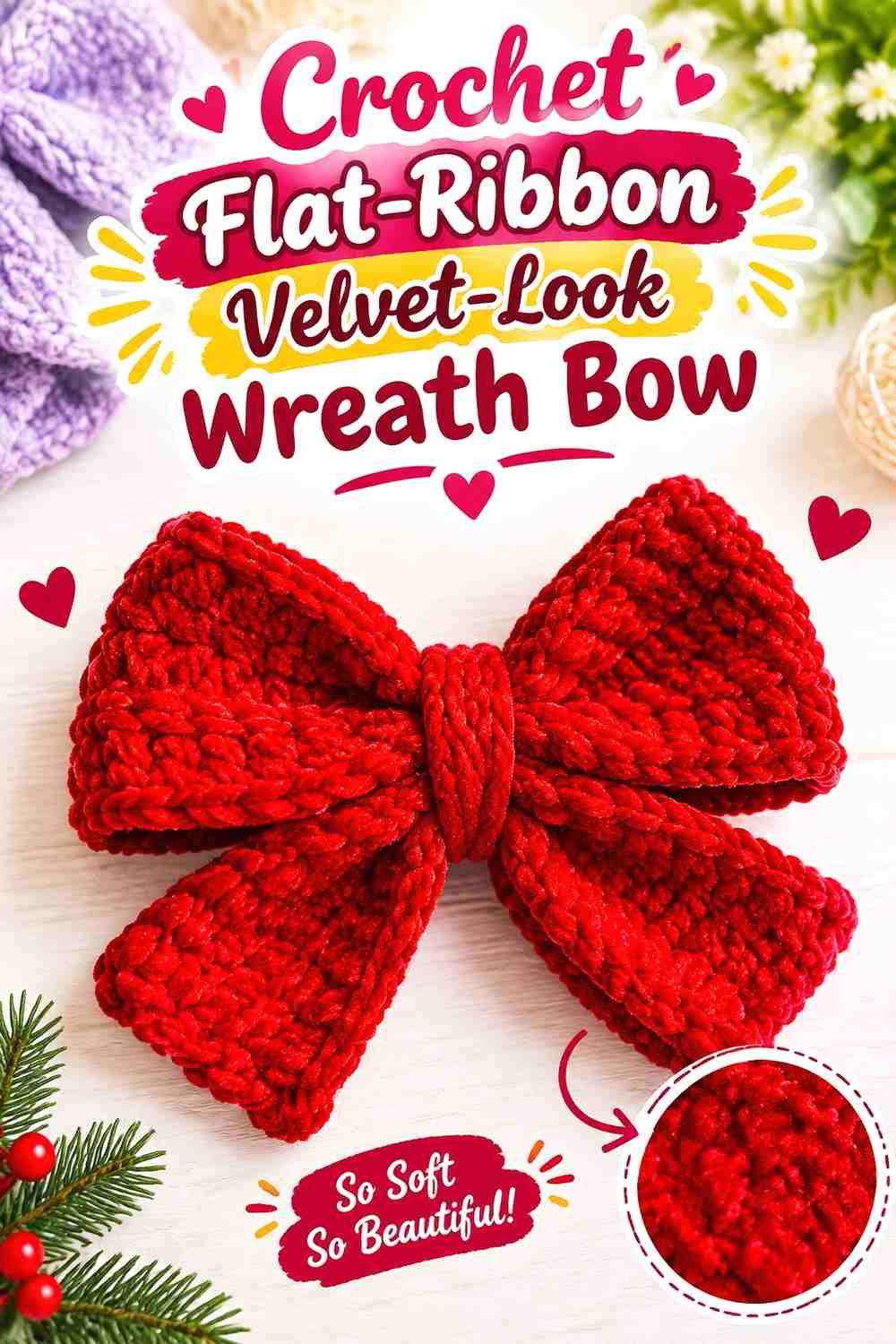
A flatter bow is useful when you want an oversized appearance without excessive depth. The loops can spread across a broad section of the wreath while staying closer to the surface.
This makes the design noticeably different from the deeply stuffed or rounded-loop styles and can work well where front-to-back clearance matters.
Scale Outward Before Scaling Forward
The goal here is width rather than puffiness. When adapting the tutorial, concentrate on the overall footprint of the bow and how far its sides travel across the wreath.
A broad, shallow bow can look larger from the front than a smaller but much thicker one.
Blocking Decisions Matter More With Straight Edges
If your chosen yarn and construction tolerate the finishing method recommended for them, careful shaping can help a flat ribbon form look deliberate rather than rumpled.
Always follow the fiber’s care instructions before applying moisture, heat, or steam. Plush synthetic yarns should not be treated as though they all respond the same way.
Creator Credit: Shunu YT
9. Crochet Jewel-Tone Velvet-Look Wreath Bow with Shimmer Center
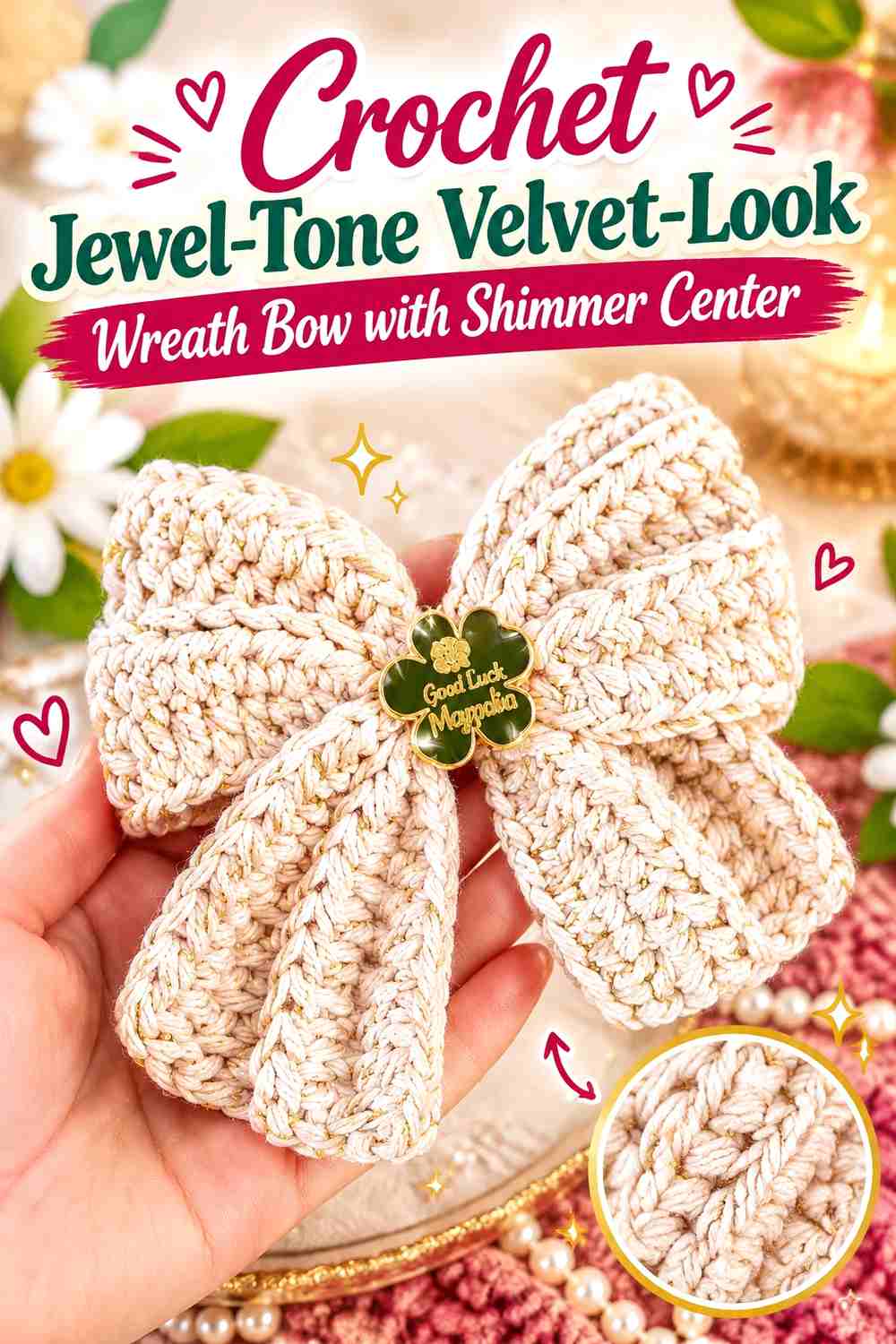
A deep velvet-look color paired with a more reflective center creates a Christmas bow that feels decorative without covering the whole project in metallic yarn.
Emerald, wine, navy, plum, or rich red can provide the plush main body, while a restrained contrasting center separates the loops.
Keep Reflective Yarn in a Supporting Role
Shimmer is most effective here as contrast. If both the body and center are visually busy, the silhouette can become harder to read.
A narrow sparkling or smoother center section can emphasize the gathered shape while leaving the larger plush surfaces calm.
Compare the Thickness of Two Different Yarns
Combining plush yarn with a thinner decorative yarn can change the apparent size of the center. Do not assume that the same construction will create the same proportions in two different materials.
Make the visual relationship your checkpoint rather than trying to force unrelated yarns to behave identically.
Creator Credit: Crochê da NANDA
10. Crochet Compact-Knot Velvet-Look Wreath Bow
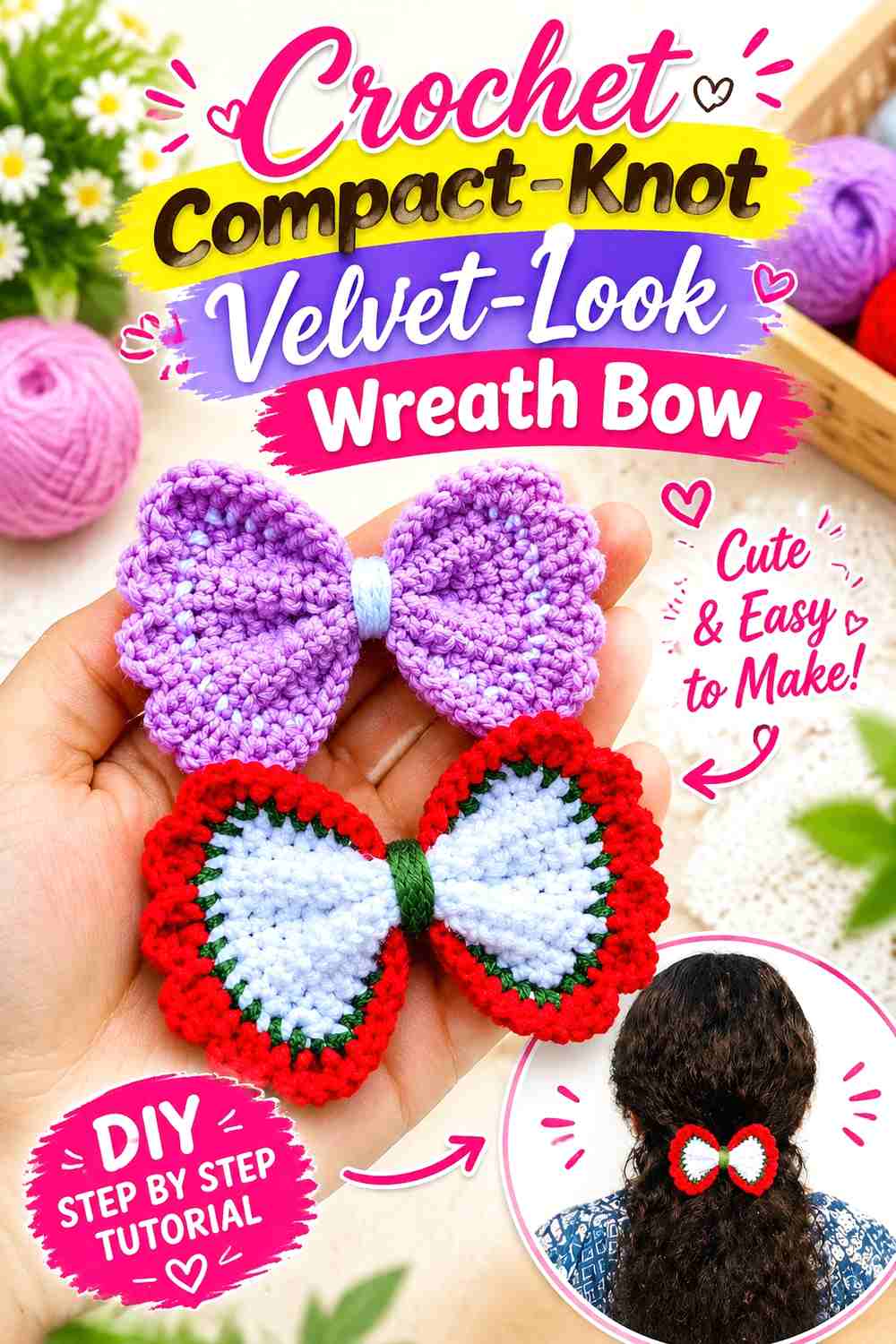
Not every oversized wreath bow needs extremely long tails. A broad bow with a compact center and restrained lower sections can make a strong statement while keeping the decoration visually contained.
This approach is useful for smaller wreath bases or doors where dangling components would be inconvenient.
Make the Loops the Main Source of Scale
With shorter tails, the eye concentrates on the bow body. Increase the visual impact through width and loop shape rather than adding unnecessary length.
This can also keep more of the wreath ring visible beneath the focal piece.
Plan a Secure Attachment Behind the Center
A compact bow can concentrate much of its mass in one area. Consider how that section will sit against the wreath before completing the decorative front.
The visible center does not need to carry all of the structural load by itself; the attachment can be planned separately from the decorative knot.
Creator Credit: Pakhi Kar
11. Crochet Asymmetrical Corner-Bow Christmas Wreath
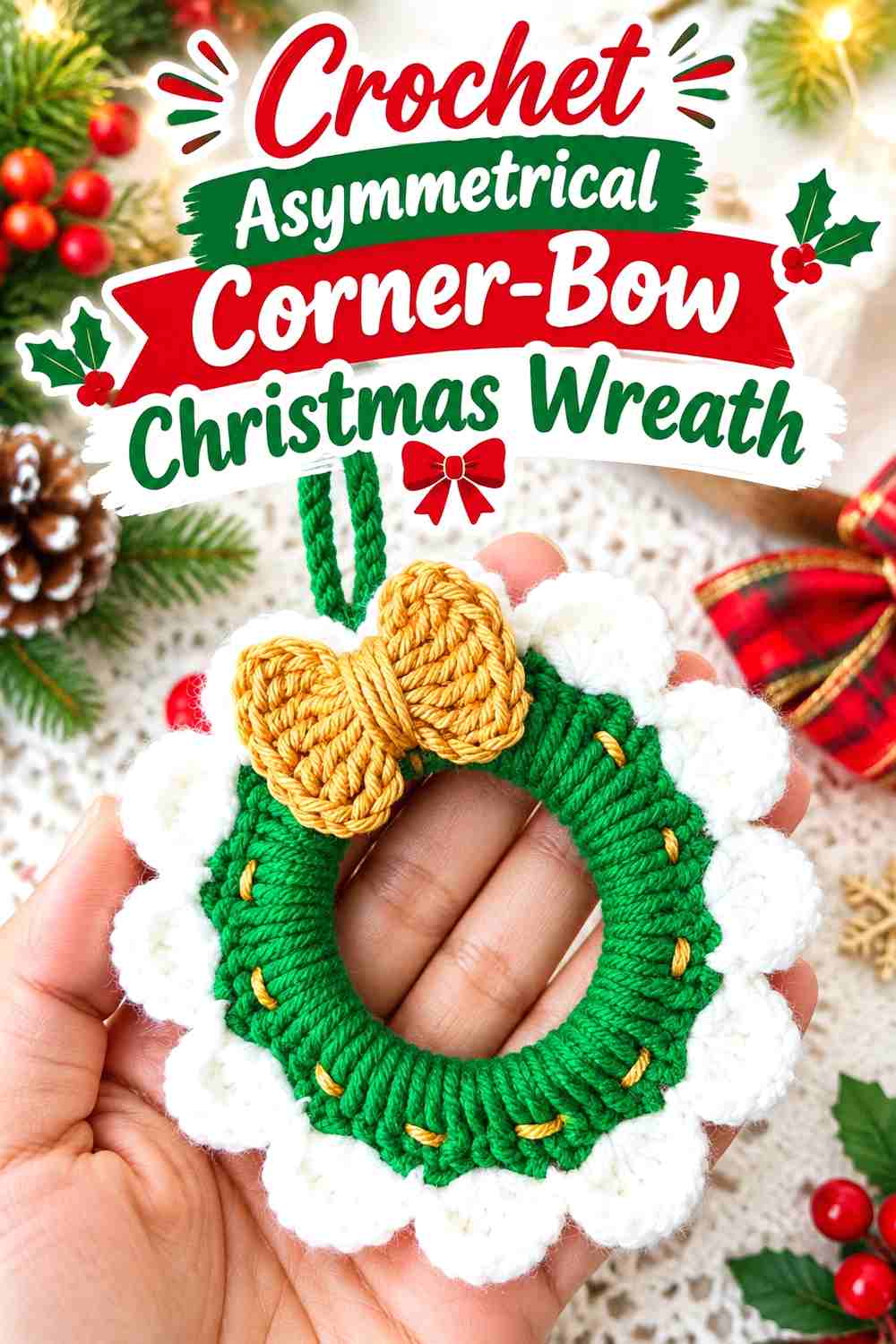
Move the oversized velvet-look bow away from the top or bottom center and place it toward one side of the wreath. The asymmetrical arrangement leaves a larger uninterrupted section of the ring visible and makes room for greenery, stars, berries, bells, or other crochet elements on the opposite side.
This is especially useful when the wreath itself contains decorative work worth seeing.
Use the Bow to Create Visual Direction
A side bow naturally pulls the eye toward one part of the wreath. Let the tails continue that direction rather than forcing them into perfect symmetry.
One tail can visually follow the outer curve of the ring while another drops more vertically, provided the finished arrangement remains balanced.
Check Balance Before Permanent Attachment
A substantial crochet bow can affect how a lightweight wreath hangs. Position all major components temporarily and lift the wreath from its intended hanging point before finishing the attachment.
That simple check can reveal whether the bow causes the piece to tilt or rotate.
Creator Credit: Aquele Crochet
12. Crochet Mini-Wreath-Inspired Oversized Velvet-Look Bow Wreath
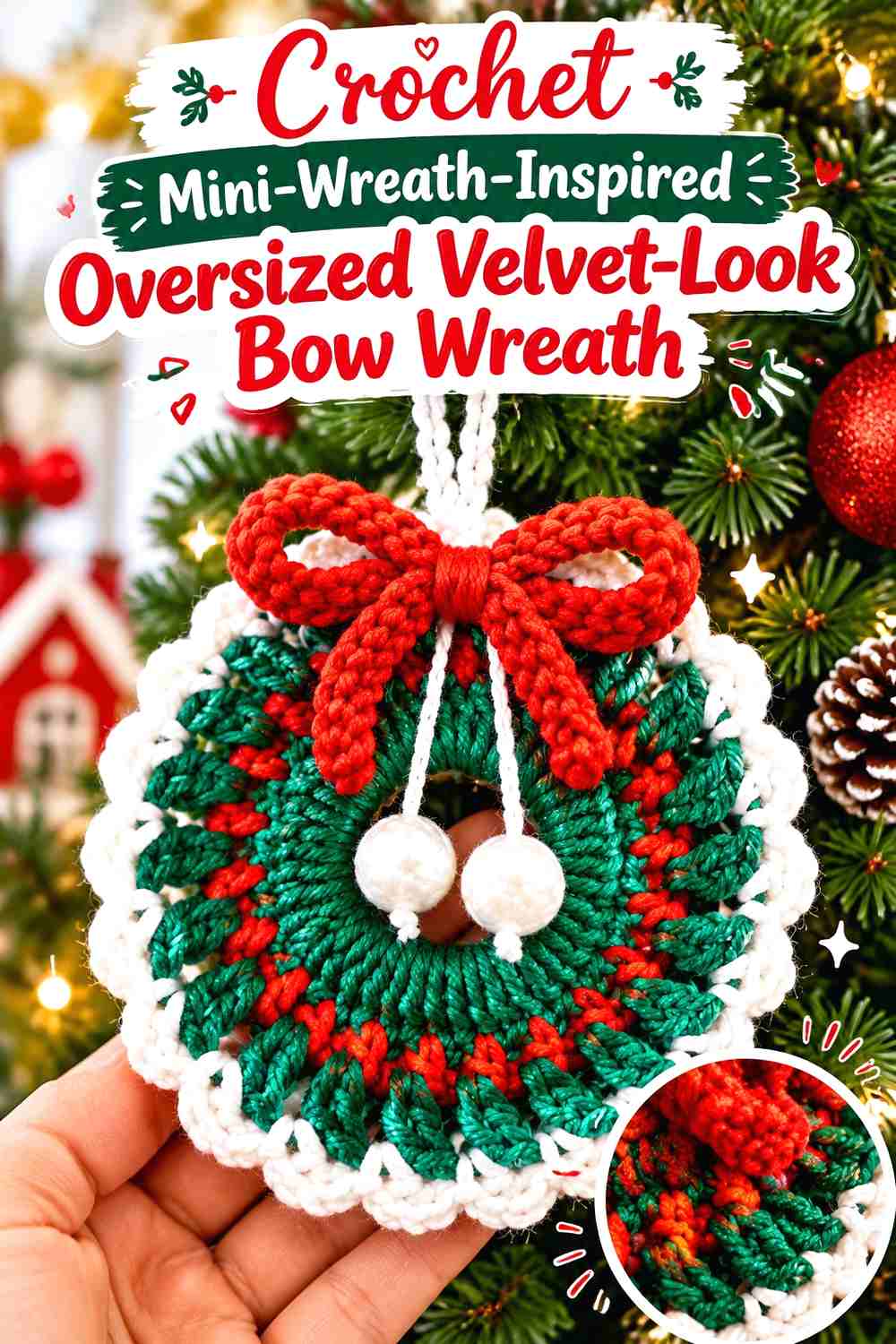
A small ornament wreath can provide useful proportion ideas for a larger Christmas display: ring, bow, hanging point, and open center. Instead of copying the small piece at a fixed multiple, use those relationships as a starting point for planning an oversized bow composition.
This direction works particularly well when you want the finished wreath to remain simple and graphic.
Recheck Every Proportion at the Larger Scale
A bow that occupies a particular percentage of a tiny ornament does not necessarily need to occupy the same percentage of a large door wreath. Thick yarn and greater physical depth change how the components interact.
Mock up the bow on the actual wreath before deciding its final scale.
Keep the Central Opening Intentional
Large bows and tails can gradually cover the open center until the wreath reads more like a solid wall hanging.
If you want a recognizable ring silhouette, periodically view the project from farther away and check that enough negative space remains visible.
Creator Credit: POSITIVITY WITH CROCHET
13. Crochet Minimal Cinched Velvet-Look Wreath Bow
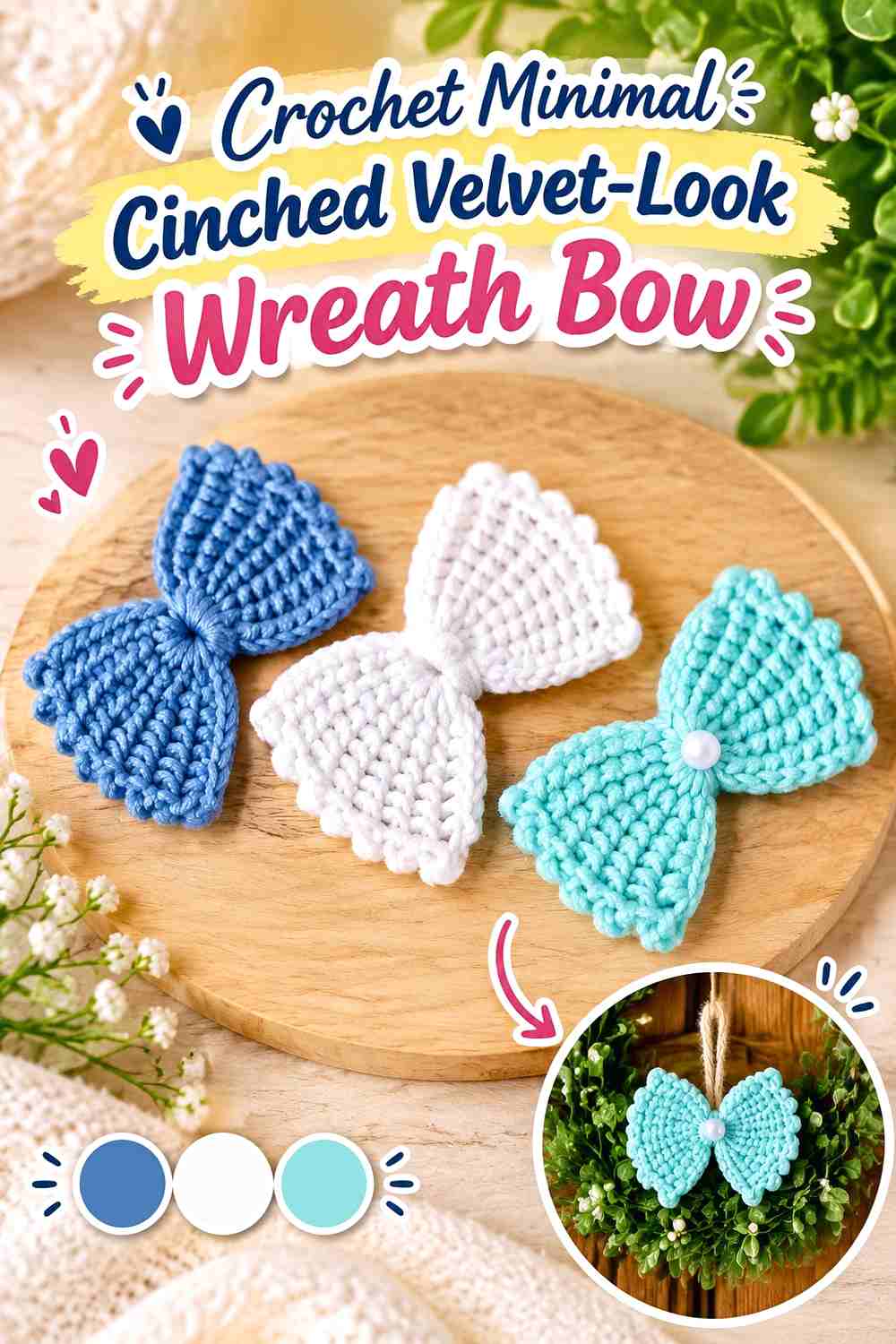
The final idea strips the design back to a simple cinched bow. Instead of multiple layers, borders, contrasting tails, or clustered decorations, the project relies on a clear bow shape and a plush surface.
It is a useful option for Scandinavian-inspired, neutral, farmhouse, or restrained Christmas decor where an elaborate florist-style bow would feel too busy.
Simplicity Makes Proportion More Important
With fewer decorative details to distract the eye, uneven loop size or an undersized center becomes easier to notice.
Spend more time evaluating the basic silhouette before attachment. A straightforward bow benefits from clean, intentional shaping.
Let the Wreath Supply the Remaining Texture
If the bow is deliberately minimal, the surrounding wreath can carry the contrast through greenery, crochet leaves, a wrapped ring, or another textured base.
This division of roles prevents the bow and wreath from competing for attention while still producing a complete seasonal display.
Creator Credit: Chompu Handicrafts
Which Oversized Crochet Wreath Bow Style Should You Choose?
For the fullest plush effect, start with the Oversized Plush Bow or Rounded-Loop Bow. They put volume and the velvet-look surface at the center of the design.
For stronger ribbon definition, the Wide-Ribbon, Flat-Ribbon, or Contrast-Edge Bow makes the bow outline easier to read. The Long-Tail and Coquette-Tail options are better when you want more vertical movement beneath the wreath.
Choose the Clustered Triple-Bow when several smaller forms are easier to manage than one very large piece. The Compact-Knot Bow is the opposite approach: it creates width without long hanging tails.
If the wreath base deserves equal attention, consider the Bow-Topped Ring, Asymmetrical Corner Bow, or Mini-Wreath-Inspired composition because each leaves more of the ring exposed.
The Minimal Cinched Bow works when material, proportion, and color should do most of the decorative work.
Conclusion
The strongest oversized velvet-look wreath bow is not simply the largest one you can crochet. It is the bow whose scale, yarn behavior, tail length, and placement make sense on the actual wreath.
For maximum plush impact, focus on deep loops and a substantial center. For limited clearance, use a wider and flatter ribbon shape. Long-tail and coquette versions add movement, while compact or asymmetrical bows preserve more of the wreath itself. Contrast edging or a decorative center can help when a plush bow would otherwise disappear into similarly colored greenery.
Because several of the supporting tutorials use smaller bows, different yarn weights, or ornament-scale wreaths, use the original tutorials for their demonstrated construction and then verify your own measurements and materials before enlarging anything. Plush yarn can change proportion quickly, so a small swatch and a temporary wreath mockup can prevent a much larger remake.
Frequently Asked Questions
Can I use velvet or chenille yarn in any crochet bow tutorial?
Not automatically. Changing to a thicker plush yarn can alter gauge, stiffness, loop thickness, and overall scale. Make a swatch and check the finished fabric before adapting a tutorial designed for thinner yarn.
How do I keep an oversized crochet wreath bow from looking floppy?
Start by checking the fabric rather than simply making the bow thicker. The bow needs enough body for its loops to remain recognizable. If the fabric collapses in your chosen yarn, reconsider the scale, construction, or support before finishing the full project.
Should an oversized crochet bow cover most of the Christmas wreath?
It depends on the intended look. A statement bow can cover a substantial area, but leaving part of the ring and its center opening visible usually helps the piece continue to read clearly as a wreath. Mocking up the bow footprint first makes this easier to judge.
Can I enlarge a small crochet hair bow directly for a wreath?
Use a small bow tutorial as a shape reference rather than assuming every measurement can simply be multiplied. Yarn thickness, fabric depth, tail weight, and the size of the center section can change significantly at wreath scale.
What colors create the strongest velvet-look Christmas effect?
Deep solid colors such as burgundy, red, green, navy, or plum can emphasize the shadows in a plush surface, while cream and other pale neutrals create a softer look. The fiber and texture matter more than color alone, so check the actual yarn rather than relying on its color name.
How should I store a large plush crochet wreath bow after Christmas?
Avoid crushing it into a tightly packed container if maintaining the loop shape matters. Follow the yarn label for care, make sure the piece is dry before storage, and support or loosely arrange the bow so other decorations do not permanently flatten it.