A crochet chainmail hood is less about reproducing historical metal armor and more about borrowing its recognizable silhouette: close head coverage, a framed face opening, layered neck protection, repeating texture, and the muted colors associated with weathered metal. That makes modern balaclavas, hooded cowls, snoods, and knight-inspired hats useful starting points for fall costumes, Ren Faire outfits, fantasy wardrobes, and medieval-inspired layering.
The tutorials below are not presented as historically accurate chainmail reproductions. Some are modern hood or balaclava designs that can be adapted visually with pewter gray, charcoal, iron, tarnished silver, brown, moss, or other subdued fall colors. More open constructions can suggest linked rings, while cables, ribbing, or dense texture create a heavier armored impression.
Fit matters as much as texture. A hood intended to sit directly over the head needs different room from one worn over long hair, another cap, a tunic collar, or costume layers. The projects are intentionally varied in silhouette, coverage, construction, drape, and neckline so you can compare them rather than treating them as color variations of one hood.
One limitation should stay clear: crochet chainmail is costume clothing, not protective armor. It should never be relied on for impact, blade, heat, reenactment-combat, or other physical protection.
Quick List
- Crochet Knight-Helmet Chainmail Hood
- Crochet Fitted Sentinel Chainmail Hood
- Crochet Granny-Link Chainmail Balaclava
- Crochet Checkered Mercenary Chainmail Hood
- Crochet Drawstring Guard Chainmail Balaclava
- Crochet Cabled Chainmail Cowl Hood
- Crochet Adjustable Monk Chainmail Hood
- Crochet Draped Chainmail Snood Hood
- Crochet Chunky Gatekeeper Chainmail Cowl
- Crochet Striped Ranger Chainmail Hooded Scarf
- Crochet Long Traveler Chainmail Hood
- Crochet Broad-Panel Chainmail Hood Scarf
- Crochet Infinity Chainmail Hooded Scarf
How to Make Crochet Read as Chainmail
Color alone will not automatically create the illusion of mail. The strongest interpretations combine the right silhouette with a surface that has visible repetition.
A close hood with a defined face opening naturally resembles a coif more closely than a loose fashion hood. Open granny spaces can suggest linked rings, while cables and raised stitches create heavier visual relief. A simpler dense fabric can still work when the neckline extends downward like armor beneath a helmet.
Consider color in layers rather than searching for one perfect metallic yarn. Pewter, medium gray, charcoal, gunmetal, faded black, taupe-gray, and muted brown can all work. For a weathered fantasy look, small areas of rust, moss, burgundy, leather brown, or forest green can connect the hood to a fall outfit.
Very shiny yarn is not automatically more convincing. Strong sparkle can push a project toward novelty costume territory, while matte or lightly heathered gray may photograph more like aged metal.
Choose the Hood Shape Before Choosing the Texture
A medieval-inspired hood can behave very differently depending on how much of the neck and shoulders it covers.
A fitted balaclava creates the closest coif-like profile and layers easily beneath another costume piece. A hooded cowl puts more fabric around the throat and can look heavier and more defensive. A hooded scarf creates long front lines that work well for ranger, traveler, monk, or fantasy-mercenary styling.
Also check the face opening. Tight openings produce a guarded silhouette but can become uncomfortable if edging has little stretch. Large openings expose more hair and underlayers and create a softer, less armored appearance.
If the hood will be worn over another hat, wig, braids, thick hair, or padded costume layer, make fit decisions with those pieces present.
Plan Medieval Fall Colors Around the Rest of the Outfit
Gray is the obvious chainmail choice, but an all-gray costume can become visually flat. Fall colors give the crochet more context.
A steel-gray hood can sit over a brown tunic, burgundy shirt, dark-green cloak, or ochre layer. A charcoal hood works well against oatmeal or leather-colored pieces. A muted silver-gray can create stronger separation from black outerwear.
Hardware-inspired embellishments can help, but restraint matters. A single clasp, cord, button, or contrasting edge may be enough. Heavy decorative pieces can distort crochet fabric and add uncomfortable weight around the neck.
For festival or costume wear, also consider heat and movement. Dense crochet around the head and neck can become warm, especially when combined with cloaks, wigs, armor-look pieces, or multiple autumn layers.
1. Crochet Knight-Helmet Chainmail Hood
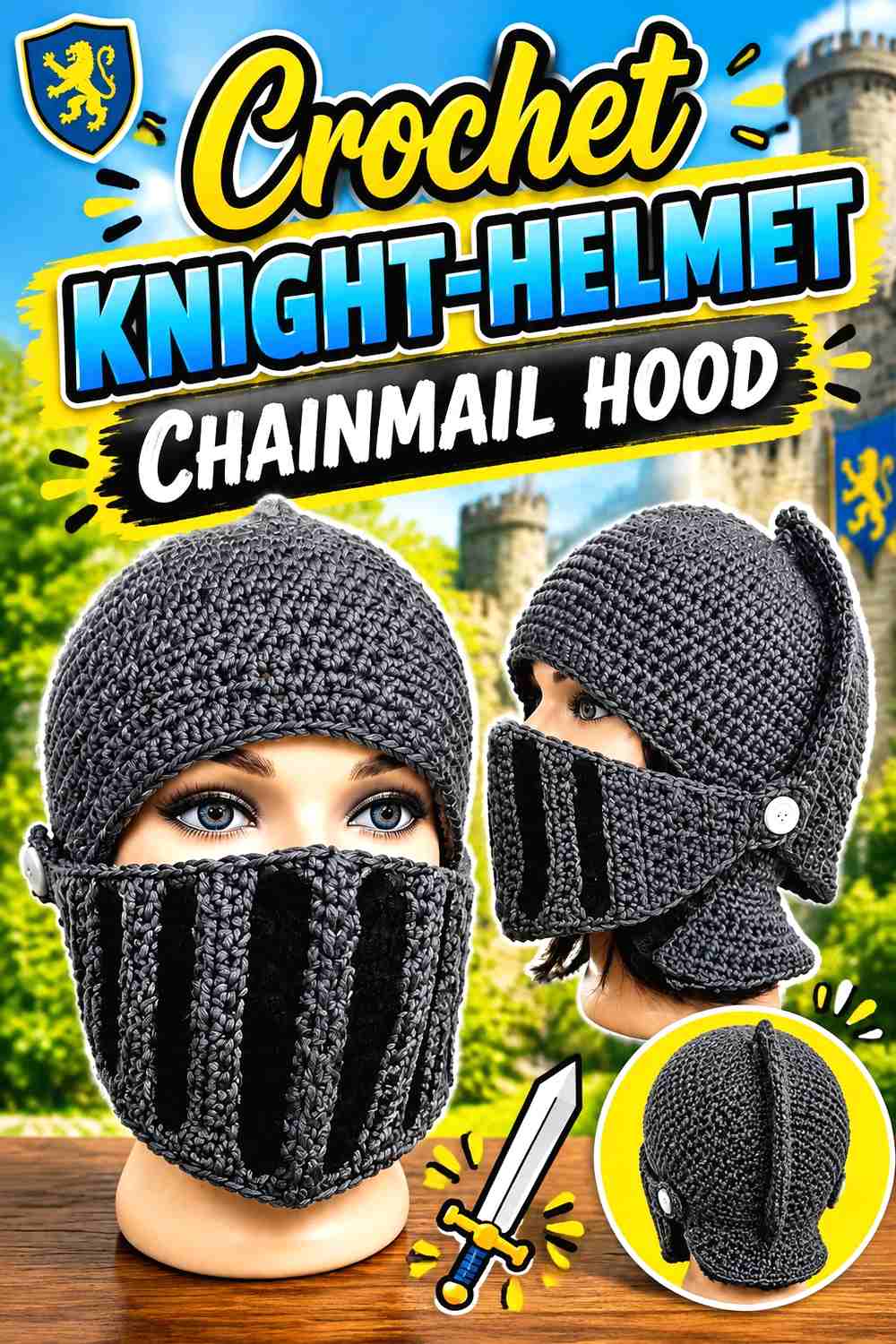
This is the most literal armor-inspired option in the collection. Crochet Jewel demonstrates a crochet knight helmet hat designed around a recognizable helmet silhouette rather than an ordinary winter hood. That makes it an especially useful starting point when the headpiece itself needs to communicate “medieval armor” before any other costume pieces are added.
For chainmail-inspired styling, consider treating the helmet and lower sections as related but visually distinct materials. A deeper charcoal can suggest a solid helmet area while a slightly lighter or more textured gray suggests mail beneath it.
The Helmet Shape Does Most of the Work
Because the silhouette is already armor-specific, you do not need excessive embellishment.
Adding too many metallic cords, appliqués, or decorative edges can make the project busier without making it look more medieval. Concentrate on a readable helmet outline first.
Check Face Movement Before Final Finishing
Helmet-style crochet places more visual structure around the face than a relaxed hood.
Try the piece while turning the head, looking downward, and speaking. Decorative extensions should not interfere with vision or force stiff crochet against the mouth or nose.
Costume Armor Is Still Textile
The finished piece may look armor-inspired, but crochet cannot provide the function of a real helmet or mail coif.
Use it for styling, costume, photography, or appropriate festival wear—not protection.
Creator Credit: Crochet Jewel
2. Crochet Fitted Sentinel Chainmail Hood
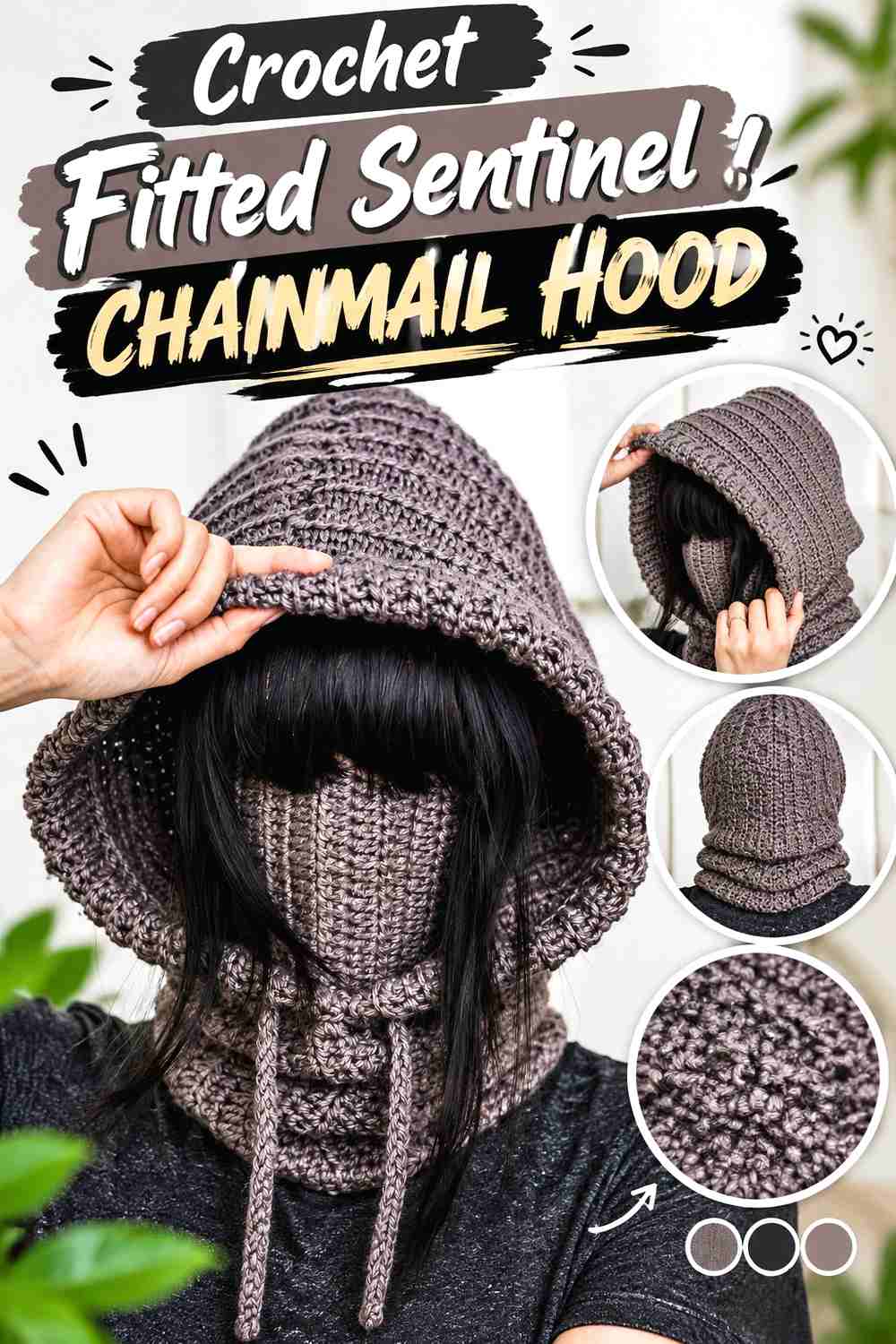
TCDDIY’s hooded balaclava combines close head coverage with a substantial neck section and a defined face edge. That compact shape can translate well into a sentinel, castle-guard, scout, or under-helmet chainmail look because there are no long scarf tails competing with the coif-like profile.
The tutorial’s textured construction also provides more visual depth than a completely flat hood, which can help a gray version avoid looking like an ordinary ski mask.
A Tall Neckline Strengthens the Armor Effect
Chainmail coifs are visually associated with coverage extending below the jaw rather than ending like a beanie.
A substantial neck section therefore does more for this interpretation than simply choosing metallic-looking yarn.
Check how that neckline fits beneath whatever tunic, cloak, or costume collar you intend to add. Too many thick layers in one area can become uncomfortable quickly.
Keep the Face Ribbing From Becoming Too Tight
A defined face border makes the hood look finished, but it also controls how the opening sits against the forehead and cheeks.
If you substitute yarn, compare its stretch with the yarn used in the tutorial. A firmer fiber can make an unchanged border feel considerably tighter.
Creator Credit: TCDDIY
3. Crochet Granny-Link Chainmail Balaclava
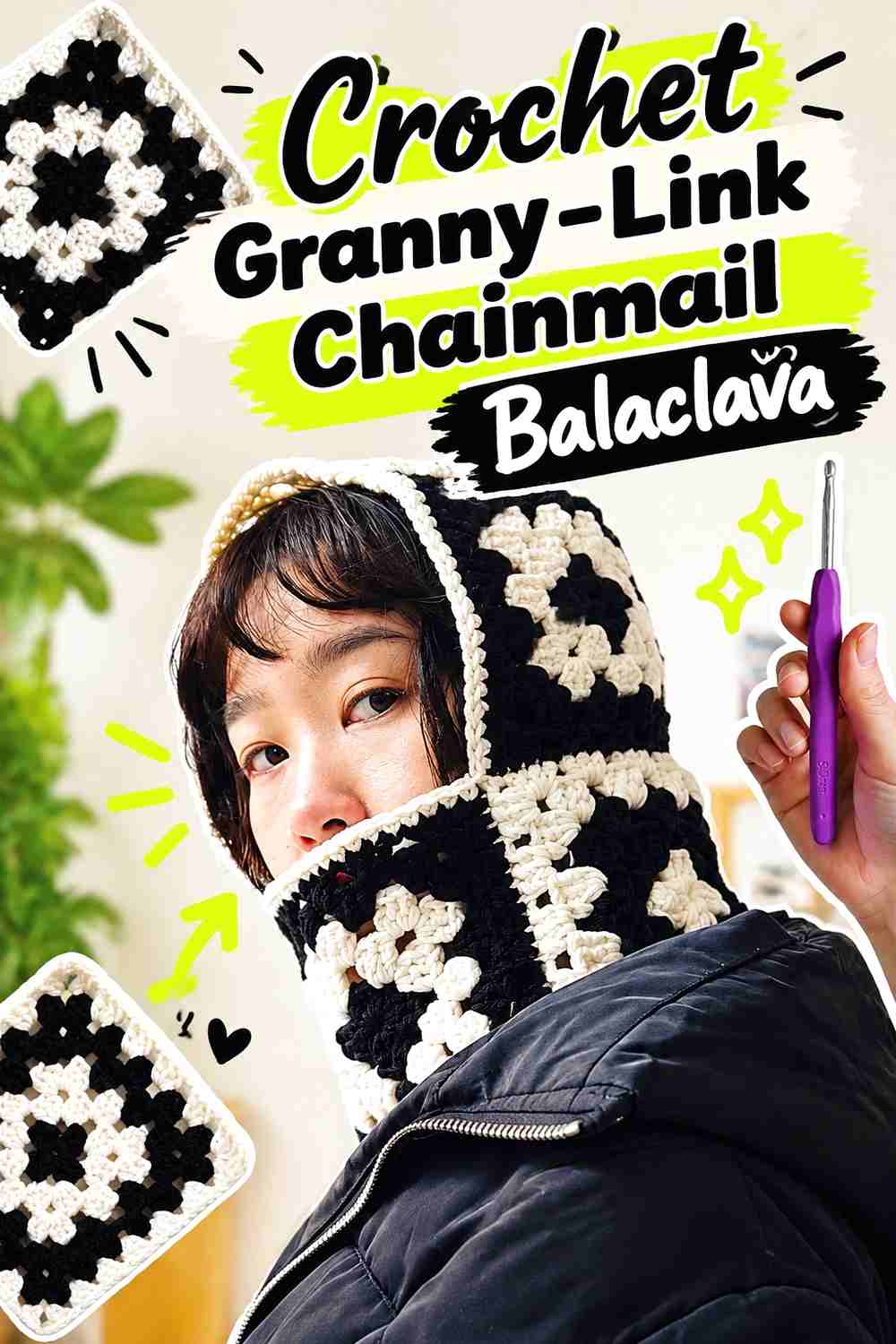
Day la Hanh’s balaclava is assembled from granny squares, immediately separating it from the solid hoods in this list. The visible openings and repeated square structure create a modular surface that can be pushed toward a fantasy chainmail look more easily than many dense fabrics.
In pewter, smoke, iron gray, or a mixture of closely related gray shades, the repeated openings can suggest interlocking armor from a distance without claiming to reproduce an actual mail pattern.
Treat the Motifs Like Armor Panels
The location of each square becomes part of the finished composition.
Before joining, arrange the motifs in the planned hood layout and check where the strongest joins or color changes will land beside the face. An uneven distribution is much harder to correct after assembly.
Matching Square Size Is Essential
Modular hoods amplify small differences between motifs.
If some squares block larger than others, joining them can create rippling, pulling, or an uneven face opening. Compare the finished dimensions before assembly rather than assuming the seams will correct mismatched pieces.
Open Fabric Shows the Layer Beneath It
That can be an advantage for chainmail styling.
A black, charcoal, or dark-brown underlayer can make gray openings more obvious. Similar colors create a quieter effect. Test the hood over the actual garment you plan to wear because the visible background becomes part of the design.
Creator Credit: day la hanh
4. Crochet Checkered Mercenary Chainmail Hood
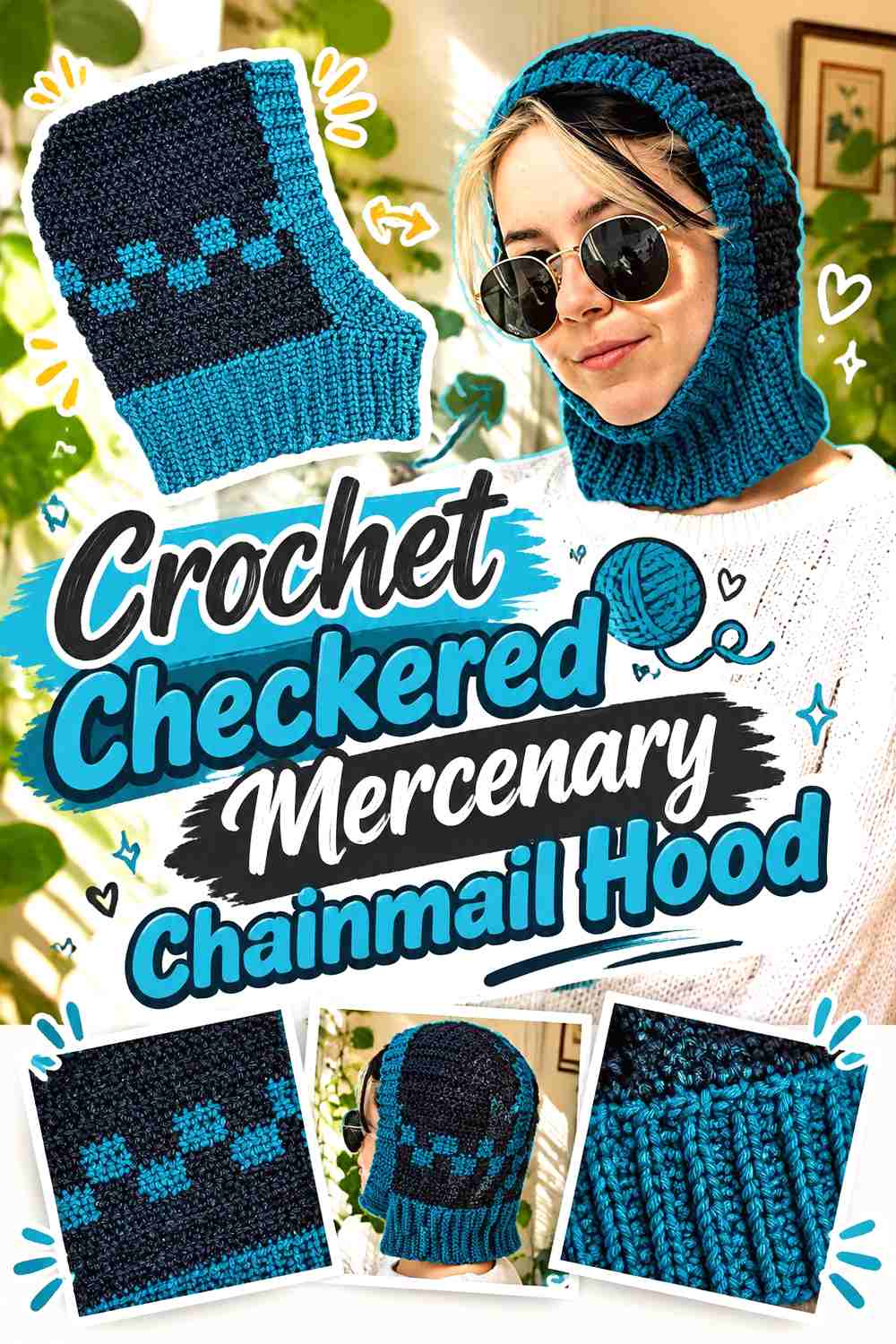
The Made in the Moment balaclava includes optional checker detailing and a clearly framed face opening, giving you a different route from the granny-square approach. Instead of large modular openings, the visual interest can come from controlled blocks of texture or color.
For medieval fall style, the checkered concept could suggest heraldic or mercenary clothing rather than literal rings of mail. Gray-on-gray creates subtle contrast, while charcoal and muted burgundy can connect the hood to a larger costume palette.
Use Low-Contrast Checks for an Aged Look
Sharp black-and-white checks can dominate the garment.
Closer shades—such as pewter and charcoal—keep the pattern visible while allowing the hood silhouette to remain the main feature.
If the rest of the outfit already contains heraldic colors, repeat only one of them here rather than introducing several new shades.
Watch the Crown Shaping
Close-fitting headwear exposes proportion problems quickly.
If you change yarn weight or tension, check the crown and face opening during construction rather than waiting until the hood is completely finished. Changes at the top can affect how the entire balaclava sits.
Creator Credit: made in the moment
5. Crochet Drawstring Guard Chainmail Balaclava
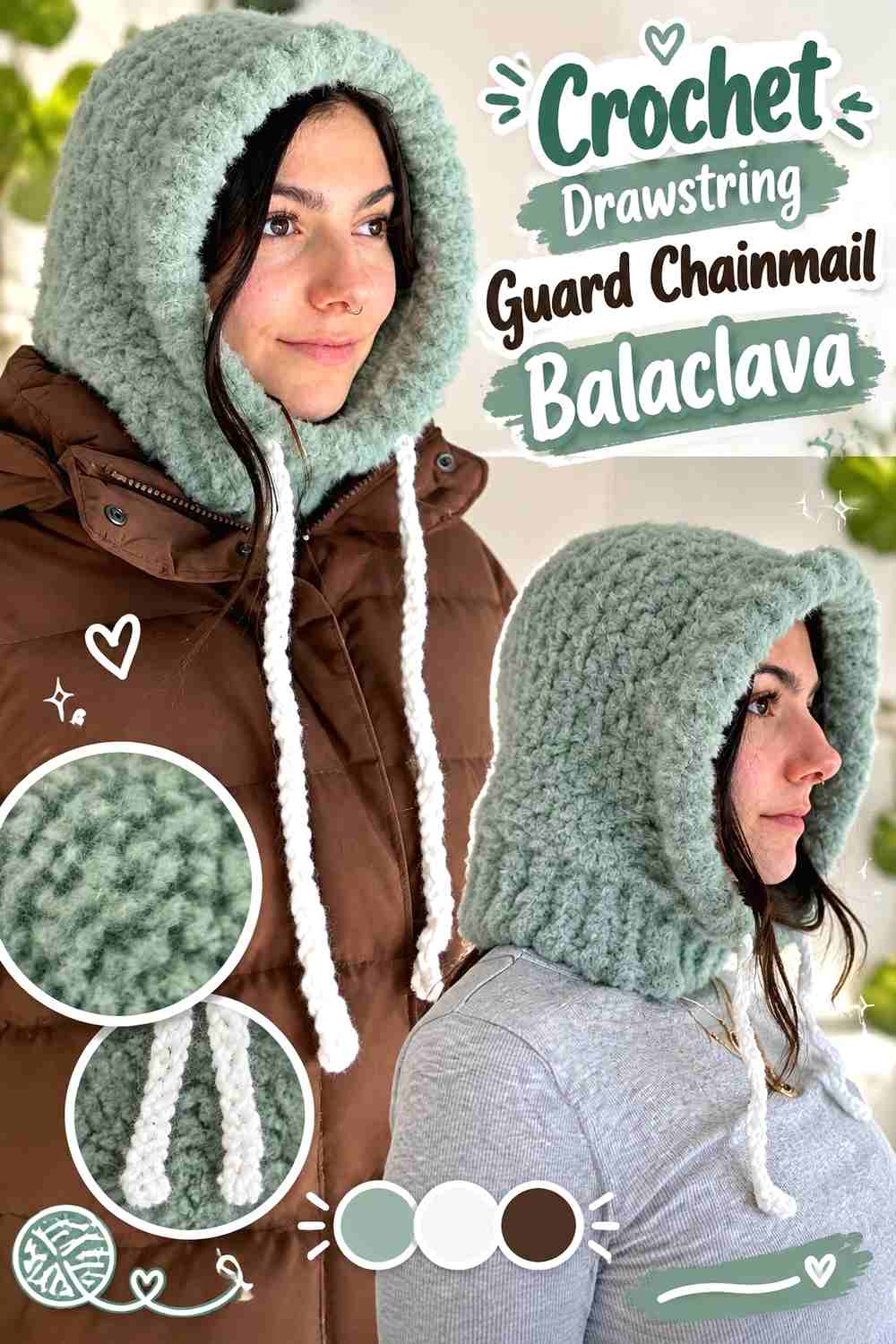
Natalie’s made-to-measure balaclava offers a useful difference: the construction includes face ribbing and a drawstring, giving the opening a more adjustable visual frame than a plain fixed edge.
That feature can suit a fantasy guard or traveler interpretation where the hood needs to feel less like a rigid helmet and more like a textile layer that can be pulled closer around the face in cool weather.
A Drawstring Changes Both Fit and Character
A cord can make the opening more adjustable, but it also becomes a visible costume feature.
For medieval styling, a restrained cord in the same color family usually integrates better than a bright modern contrast. If decorative ends are added, keep them light enough that they do not constantly pull the cord downward.
Avoid Unnecessarily Long Hanging Cords
Long ties can snag on costume pieces, bags, branches, props, or other people in crowded environments.
Keep practical movement in mind if the hood will be worn at a festival, market, or outdoor event rather than only for photographs.
Made-to-Measure Construction Helps With Layering
Use the creator’s measurement guidance as the starting point, then consider what will actually be underneath the hood.
Thick hair, braids, caps, or costume headwear all change the amount of space needed.
Creator Credit: Natalie
6. Crochet Cabled Chainmail Cowl Hood
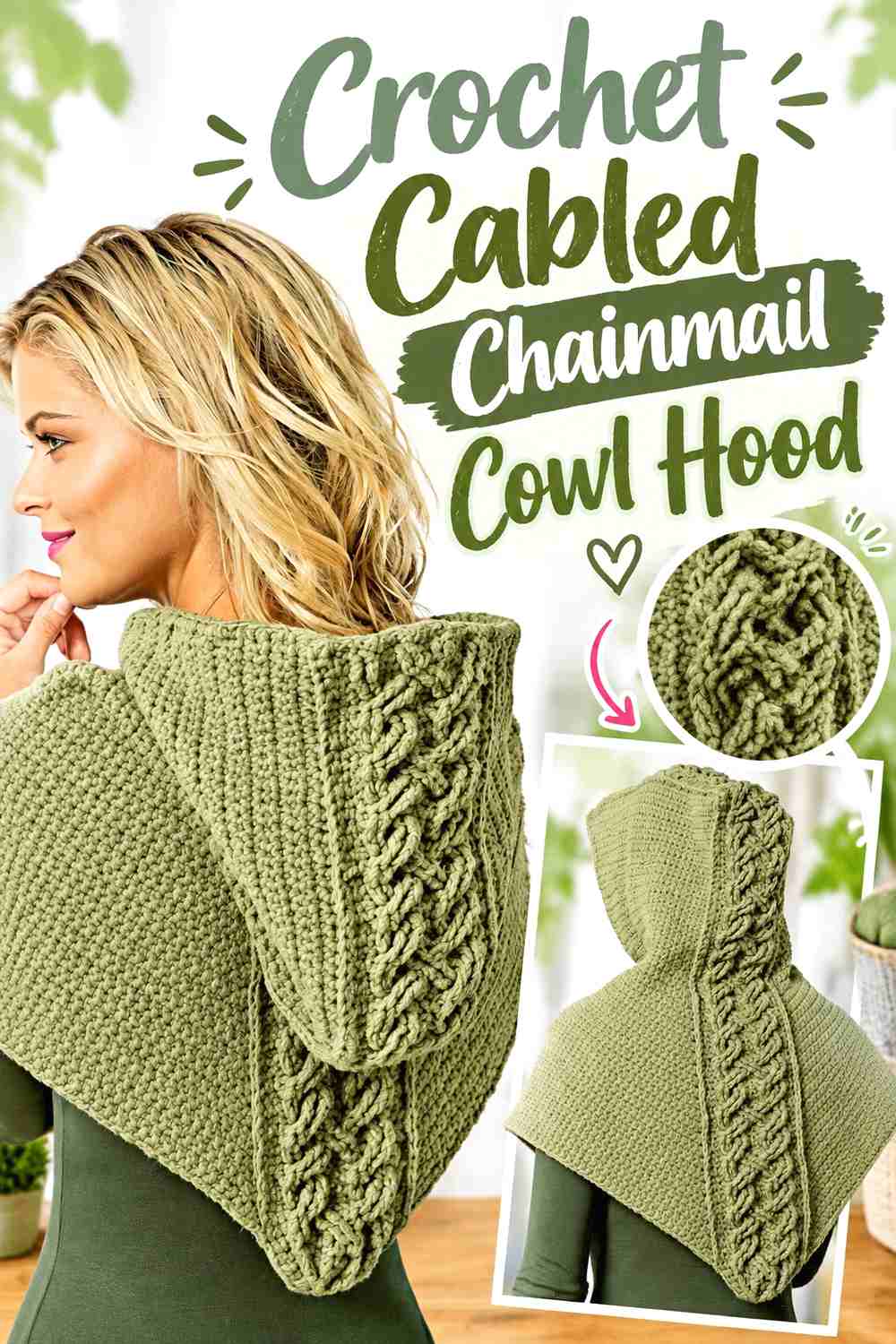
Marly Bird’s hooded cowl uses pronounced crochet cables as a major decorative feature. Those raised lines create a much heavier visual surface than open granny work or a plain balaclava, making this option useful for a fantasy guard, guild member, knight’s attendant, or ceremonial armor-inspired look.
It does not imitate individual mail rings. Instead, the cables can suggest reinforced sections or ornate armor through relief and shadow.
Let the Raised Texture Replace Extra Decoration
Cables already produce substantial detail.
Solid or lightly heathered yarn usually lets that relief remain easier to see than rapid color changes. If your goal is old iron or weathered steel, texture may create more convincing depth than glitter.
Consider Bulk Under a Cloak
Cable fabric can be substantial around the neck.
If you intend to add a cape, cloak, jacket, or costume breastplate, compare the hooded cowl with those layers before adding further edging.
A dramatic neckline is useful only if the wearer can still turn the head comfortably.
Creator Credit: Marly Bird
7. Crochet Adjustable Monk Chainmail Hood
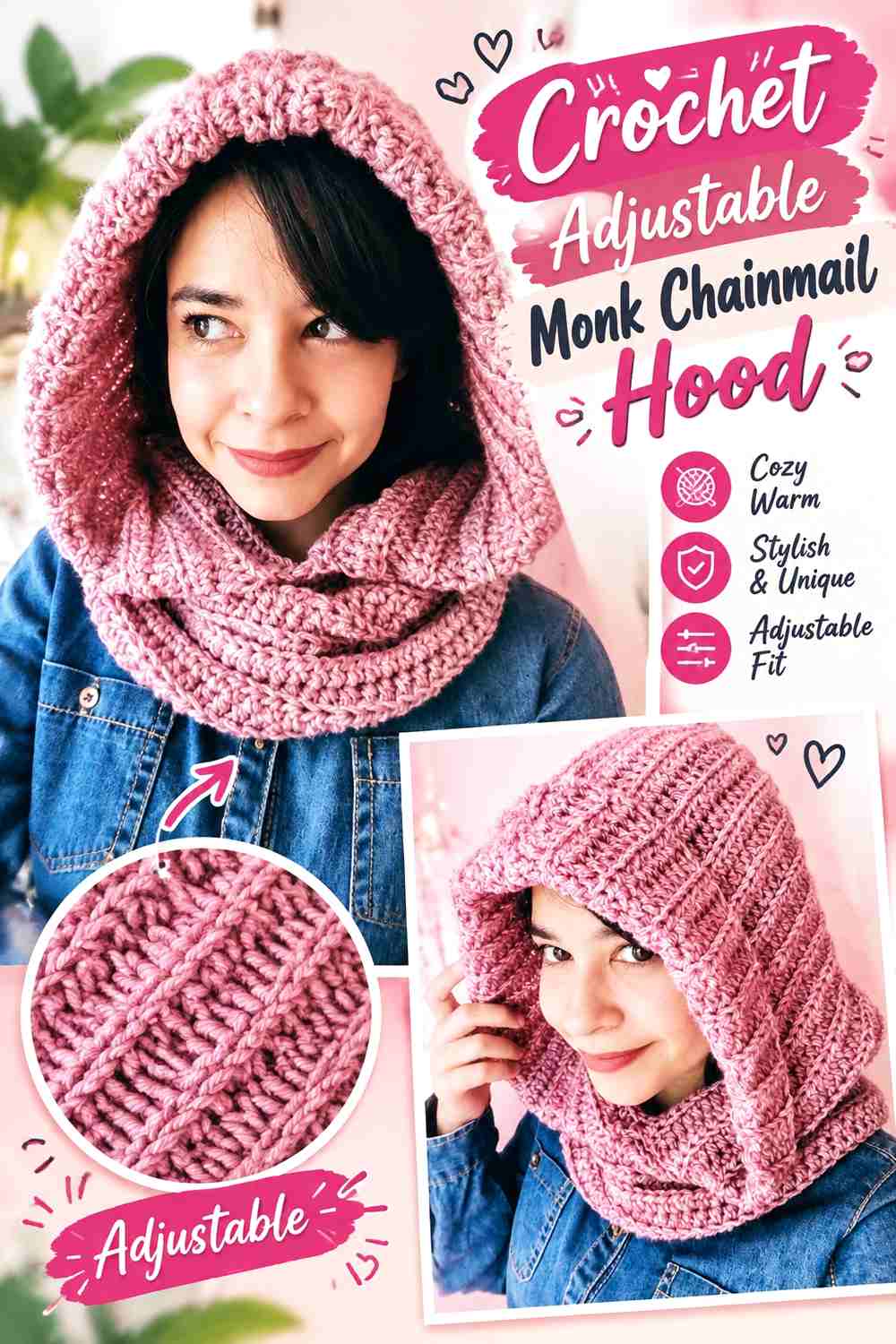
Kiri Kiri demonstrates an adjustable hooded cowl rather than a close helmet-style piece. That extra room can create a monk, scribe, traveler, or fantasy-healer silhouette when worked in a subdued gray or brown-gray palette.
It is a useful option for readers who like the medieval atmosphere of chainmail-inspired texture but do not want fabric sitting tightly over the entire face and neck.
Extra Hood Depth Creates Softer Armor Styling
A loose hood drapes instead of tracing the skull.
That makes the result less literal as a coif but often easier to integrate into everyday fall outfits. Pairing a gray hood with brown, olive, rust, or deep burgundy layers can keep the medieval reference without looking like a full costume.
Adjust Size Before Adding Decorative Edges
A roomier hood gives you adaptation freedom, but edging can change both circumference and drape.
If you add a contrasting border to suggest armor trim, test a short section first. A firm edge may pull an otherwise soft opening into a different shape.
Creator Credit: Kiri Kiri
8. Crochet Draped Chainmail Snood Hood
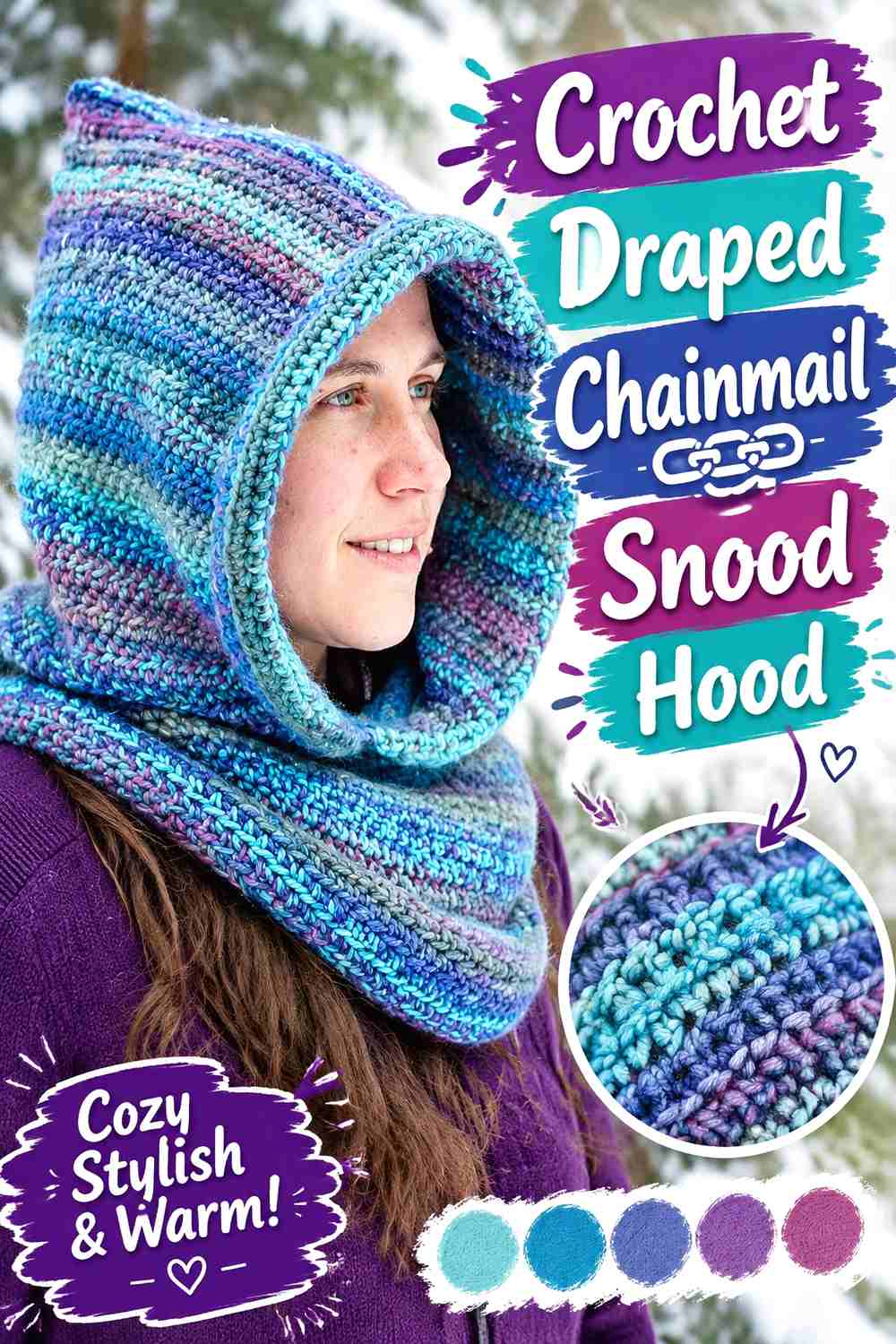
Crochet with illJay demonstrates a snood that can function as a balaclava or hooded cowl. That convertibility makes this one of the strongest choices for readers who want medieval-inspired styling without committing to a fitted costume piece every time they wear it.
Pulled up, the fabric surrounds the head and neck. Lowered, it behaves more like a substantial cowl. A medium gray or tarnished-silver shade could suggest a loose chainmail mantle while remaining wearable with modern fall layers.
Drape Determines Whether the Snood Looks Intentional
A snood needs enough movement to rearrange around the head and neck.
Very stiff yarn may create bulky folds instead of a soft chainmail-like fall. Before making a major fiber substitution, let a swatch hang vertically and see how readily it collapses.
Judge the Hood Up and Down
Convertible pieces need to look balanced in more than one position.
Extra length that creates an impressive raised hood may become excessive bulk when gathered at the throat. Try both configurations before deciding that an adaptation needs additional depth.
Creator Credit: Crochet with illJay
9. Crochet Chunky Gatekeeper Chainmail Cowl
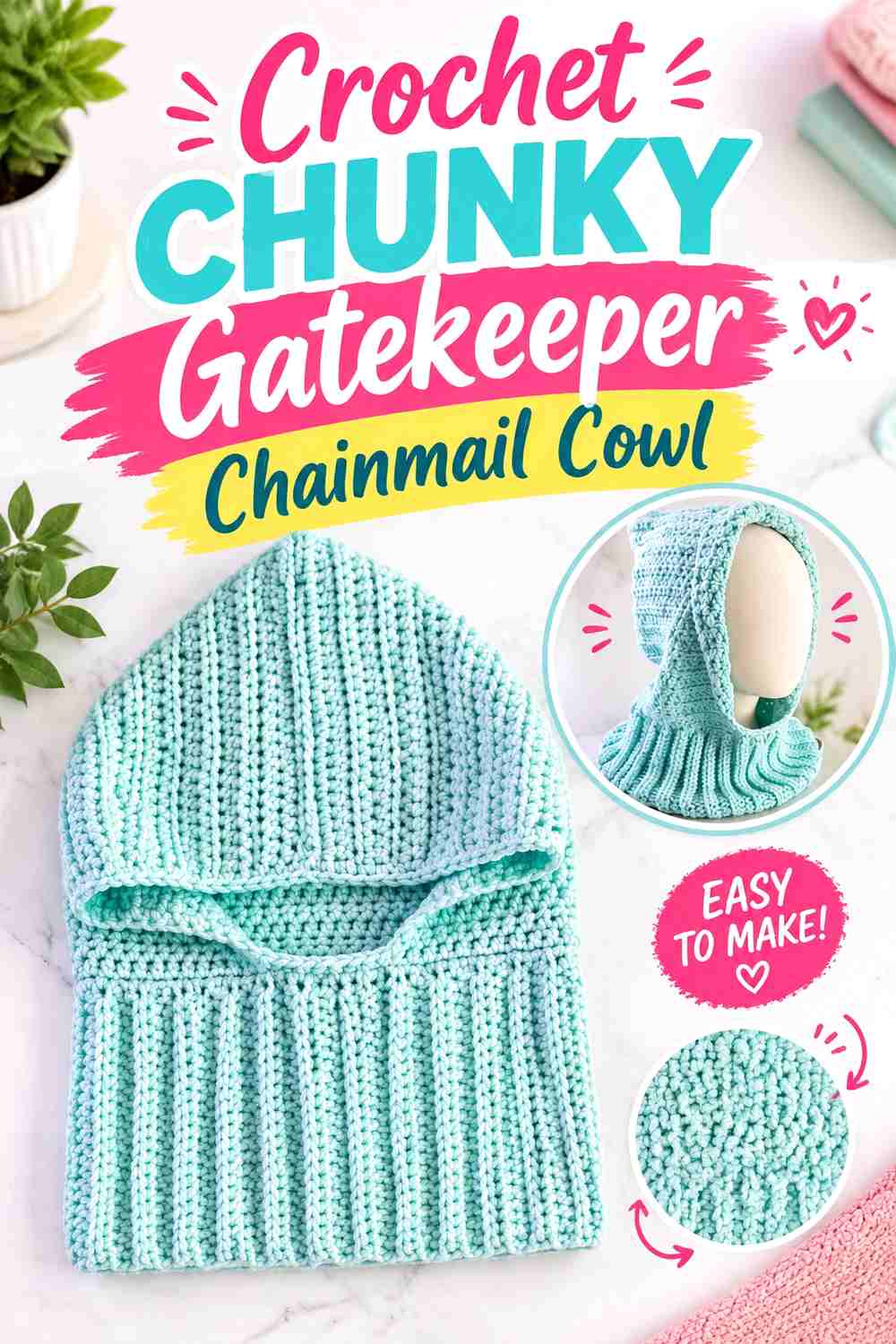
Treasurie’s hooded cowl uses a deliberately chunky construction and simple hood-plus-cowl format. That gives it a strong, heavy silhouette that can work well for a gatekeeper, northern guard, blacksmith, or fantasy-village interpretation.
Unlike the modular granny balaclava, this project gets its presence from fabric mass rather than visible holes. It is therefore better for readers who imagine chainmail as a heavy protective-looking layer rather than a delicate ring pattern.
Chunky Yarn Changes the Scale of the Illusion
Large stitches will not resemble small historical mail rings.
Instead, they create an exaggerated fantasy version of armor. That can work particularly well for theatrical costumes or stylized fall outfits where readability from a distance matters more than realism.
Make Sure the Neck Does Not Become Overloaded
A chunky hood plus a chunky cowl already places significant fabric around the head and shoulders.
Avoid automatically adding a heavy cloak, oversized scarf, and thick collar over the same area. Build the complete outfit gradually and check comfort and head movement as layers accumulate.
Creator Credit: Treasurie
10. Crochet Striped Ranger Chainmail Hooded Scarf
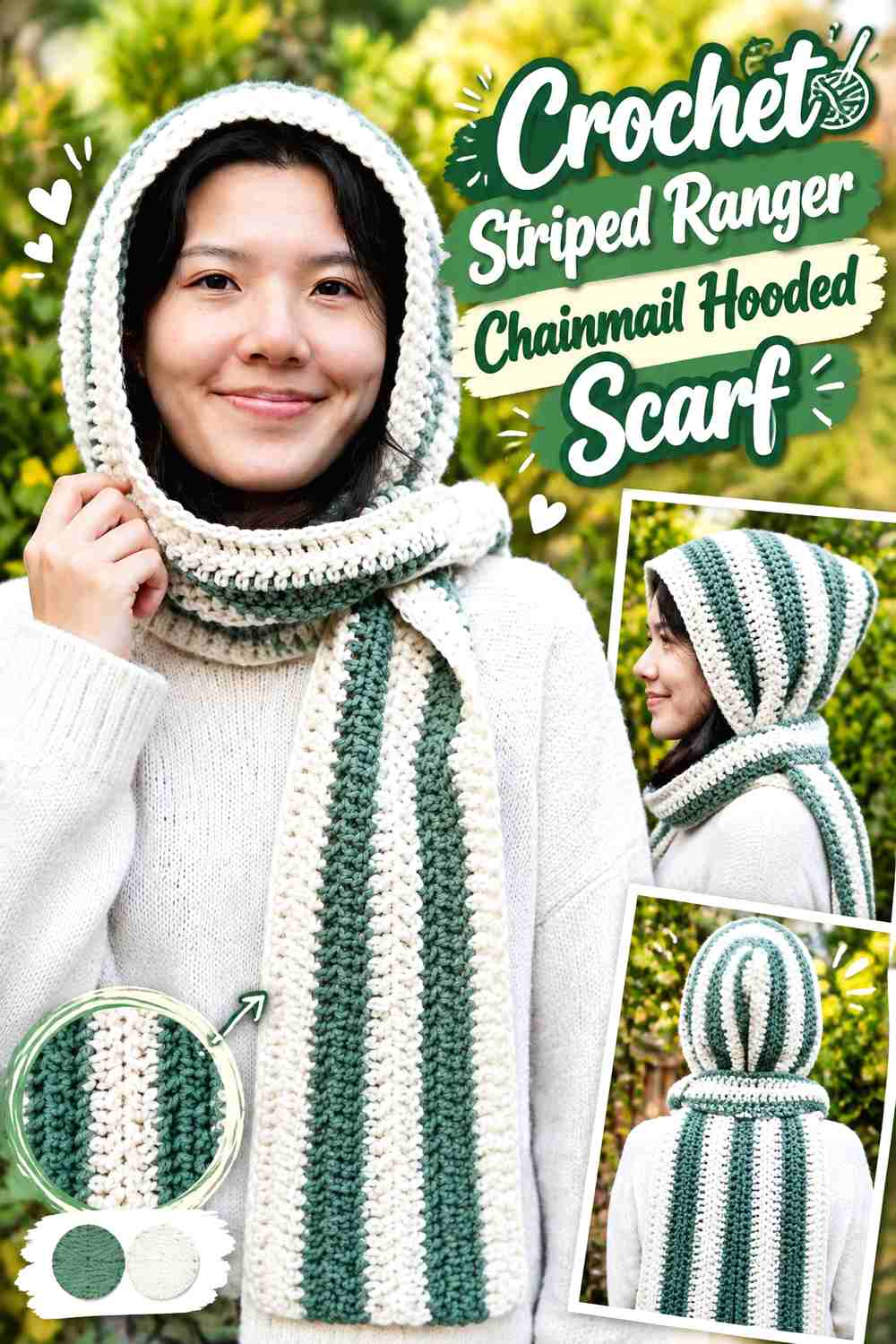
VivCrochets demonstrates a no-sew hooded scarf with a rounded hood profile and optional continuous striping. Long scarf extensions make this idea read very differently from compact coifs and balaclavas.
For medieval fall styling, those long front panels can suggest a ranger’s wrap or traveling layer. Gray can remain the dominant “mail” shade while narrow brown, moss, rust, or burgundy bands connect the accessory to a woodland palette.
Long Front Panels Create a Traveler Silhouette
The scarf remains visually important even when the hood is down.
That makes this a stronger choice for an outfit where the accessory should continue below the shoulders rather than disappear into the collar.
Check the length against the wearer and intended outerwear before deciding whether additional trim is necessary.
Stripes Can Suggest Age Instead of Bright Contrast
Continuous striping does not have to look modern.
Using two close gray values can create the impression of uneven or weathered metal. A narrow rust-toned band can suggest age without covering the whole piece in orange or brown.
Creator Credit: VivCrochets
11. Crochet Long Traveler Chainmail Hood
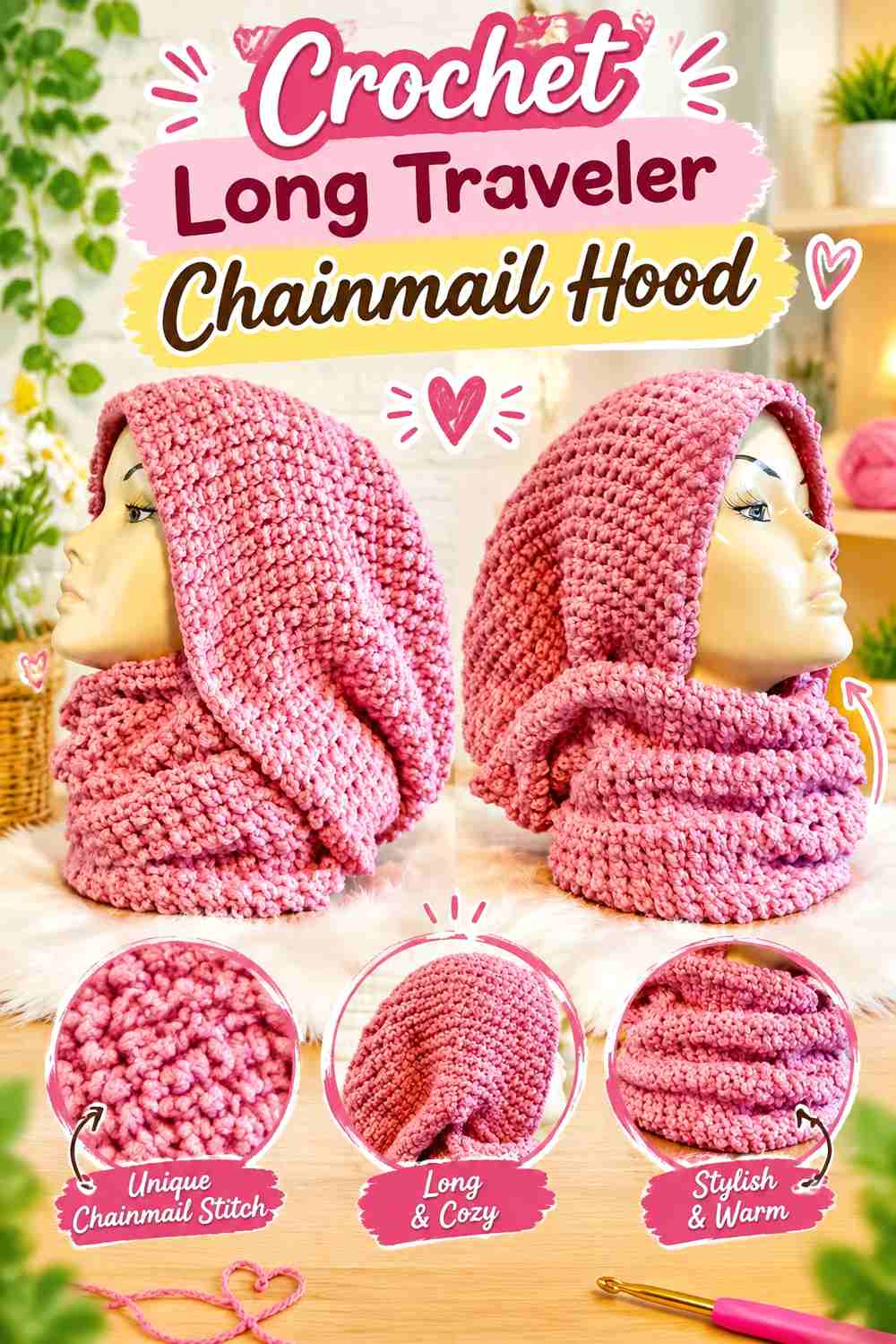
Hobby Crochet’s hooded scarf uses a broad continuous scarf form with enough length to wrap around the neck. Compared with the fitted balaclavas, it creates a softer and more substantial fall layer with much more freedom around the face.
For a chainmail-inspired interpretation, imagine this as a traveler’s mail hood worn loosely rather than a tightly fitted combat coif. Muted steel gray works naturally, but dark brown-gray or mossy charcoal can make the piece blend into a medieval woodland wardrobe.
Wrapping Changes the Neck Silhouette
The same scarf can look relatively light when hanging and much heavier when wrapped.
Make styling decisions with the intended number of wraps in place. A border that seems subtle when flat may become visually dominant once several layers overlap.
Softer Drape Works Better for Everyday Fall Wear
This construction offers a bridge between costume and normal cold-weather clothing.
If you want something that can accompany boots, a wool coat, or a long cardigan outside a medieval event, prioritize comfortable drape and face softness over trying to make the crochet appear rigid.
Creator Credit: Hobby Crochet
12. Crochet Broad-Panel Chainmail Hood Scarf
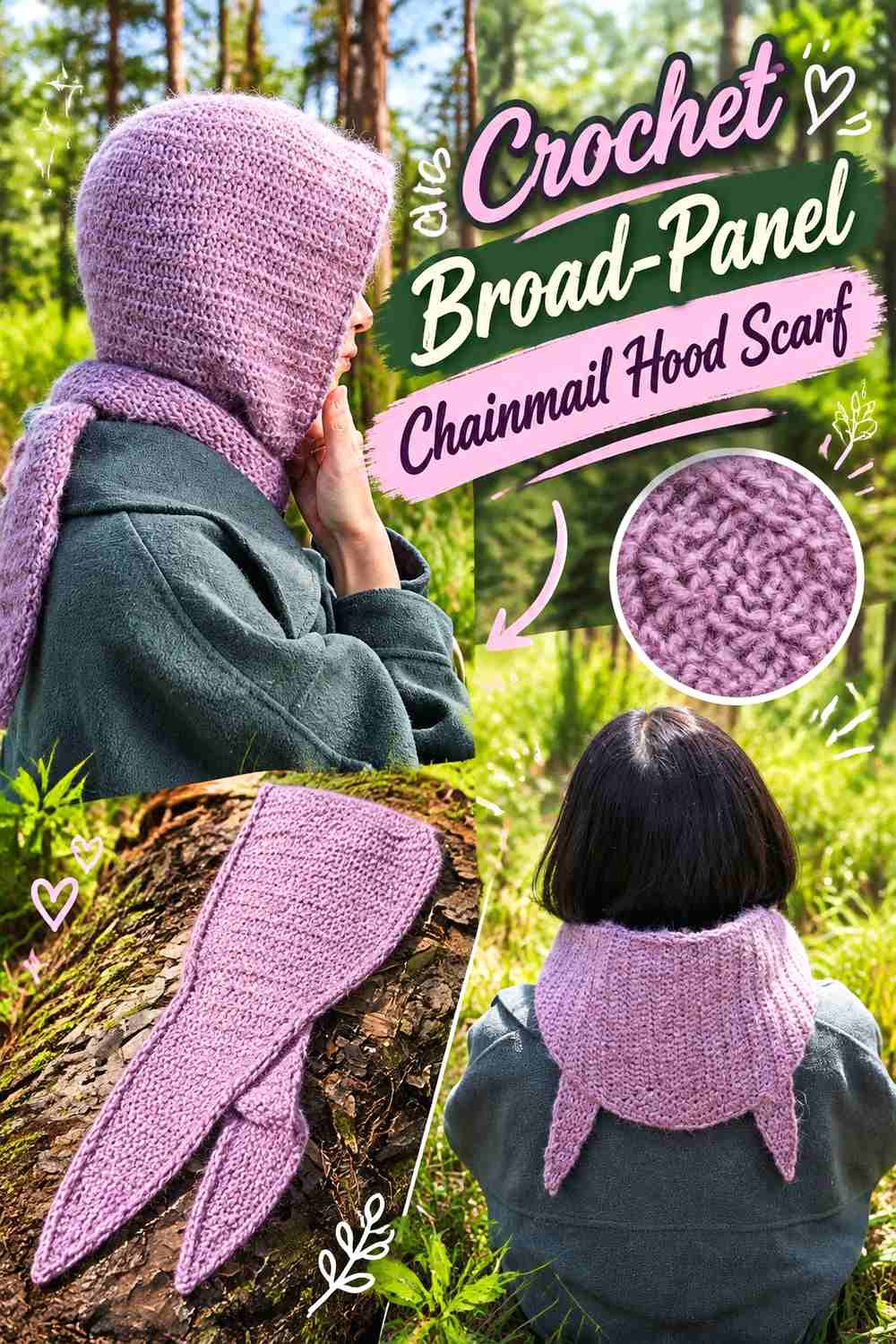
ABoC Studio’s hood scarf provides another long-form construction, but its broad scarf-and-hood presentation can be styled more like a tabard or mantle than a close balaclava.
That width gives you a useful canvas for subtle medieval color work. Rather than filling the fabric with many shades, consider a dominant iron gray with one darker edge or narrow accent inspired by leather, heraldry, or woodland clothing.
Width Adds Visual Weight Without a Tight Fit
A broad scarf can make the upper body feel more layered even when the hood itself remains relatively relaxed.
This is useful if you want an armor-adjacent silhouette but dislike tight crochet around the jaw and neck.
Decide Where the Ends Should Land
Long panels affect the proportions of the entire outfit.
Try them with the tunic, dress, coat, belt, or cloak planned for the final look. Ends that stop at an awkward point can compete with waist belts or costume hardware.
If adapting length, maintain visual balance between the two sides.
Creator Credit: ABoC Studio
13. Crochet Infinity Chainmail Hooded Scarf
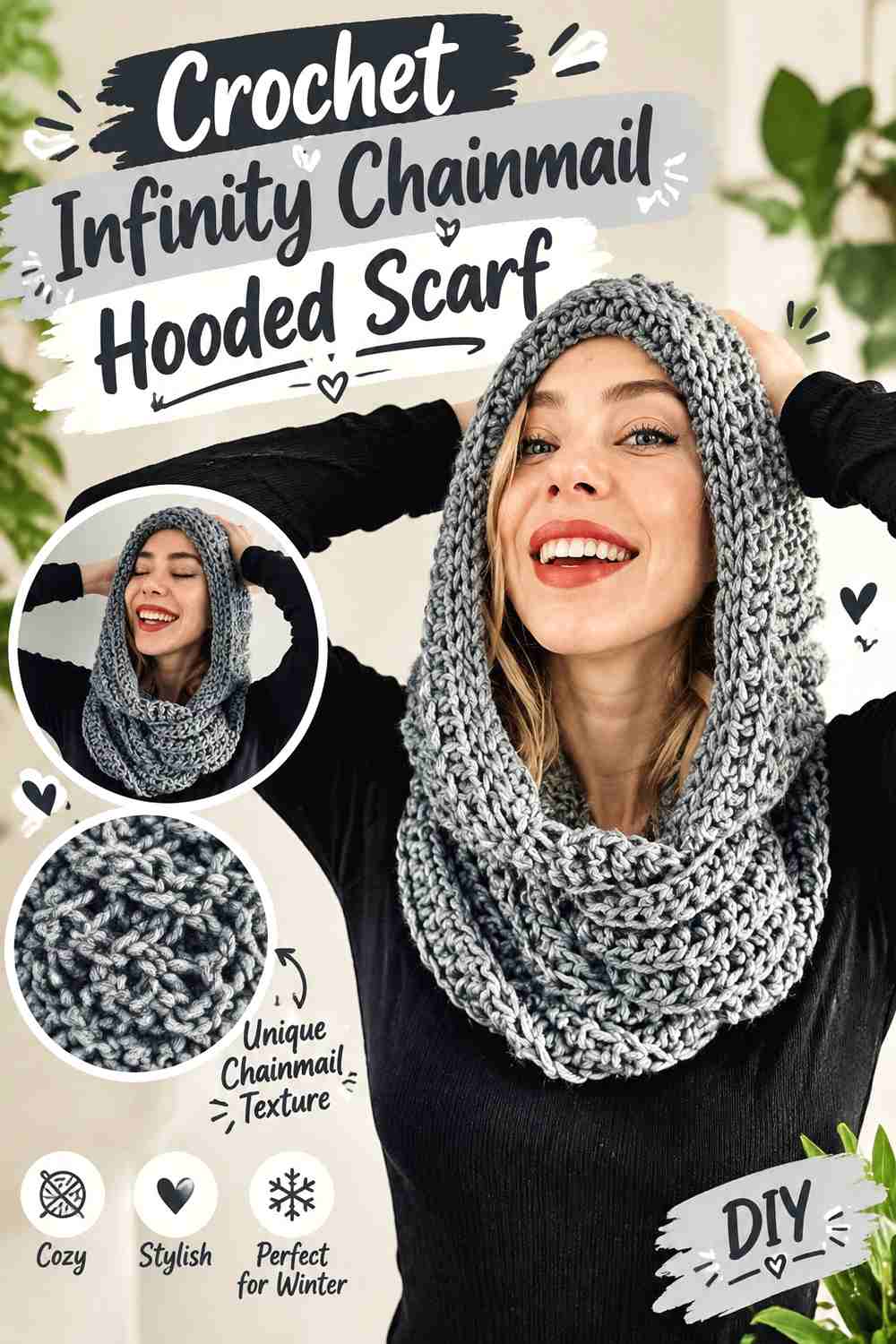
Wilma Westenberg’s hooded scarf combines an infinity-style neck section with a hood and textured brim. The circular scarf base produces a contained, wrapped neckline rather than long hanging ends, making it useful for a scholar, herbalist, monk, merchant, or traveling character.
For chainmail-inspired fall styling, the infinity form can read like a soft mail collar underneath the hood. A darker brim can strengthen the face opening while a slightly lighter gray across the main fabric keeps the texture visible.
The Infinity Base Keeps the Neckline Controlled
Long scarves bring movement, but they can also interfere with belts, bags, costume props, or outer layers.
An infinity base concentrates the fabric around the neck instead. That makes it particularly useful under a cloak or over a simple tunic when you want fewer loose components.
Let the Brim Define the Face
The textured face edge naturally attracts attention.
Before introducing a contrasting color, examine your main yarn against the wearer’s skin, hair, and any under-cap. A dramatic dark border can create a strong helmet-like frame; a tonal one keeps the appearance softer.
Check the Loop Before Permanent Joining
A circular scarf has to be comfortable in its final wearing position.
Fiber substitutions can change stretch significantly, so use the creator’s measurements and construction guidance rather than assuming another yarn will produce an identical opening.
Creator Credit: Wilma Westenberg
Which Crochet Chainmail Hood Style Should You Choose?
For the strongest knight or armor impression, start with the Crochet Knight-Helmet Chainmail Hood. Its silhouette communicates the theme more directly than a standard hood.
For a coif-like shape that can sit beneath other costume layers, the Fitted Sentinel, Checkered Mercenary, Drawstring Guard, and Granny-Link Balaclavas keep the fabric relatively close to the head.
Choose the Cabled Chainmail Cowl when raised texture matters more than literal ring-like openings. The cables create strong shadow and relief without needing multiple colors.
The Draped Snood, Adjustable Monk Hood, and Chunky Gatekeeper Cowl provide more room around the neck and work well when you want a heavier medieval-fantasy silhouette.
For a ranger or traveler outfit, the Striped Ranger, Long Traveler, and Broad-Panel Hood Scarves extend the visual line down the torso. The Infinity Chainmail Hooded Scarf is the cleaner alternative when you want neck coverage without loose ends.
Conclusion
The most convincing crochet chainmail hood is not necessarily the one with the most metallic yarn. Shape, repeated texture, face framing, neck coverage, and the surrounding outfit usually contribute more to the medieval impression.
Choose the knight helmet for an unmistakable armor reference, a fitted balaclava for a coif-like layer, granny construction for visible openings, cables for heavy relief, a snood for flexible drape, or a hooded scarf for a ranger-style silhouette.
Then build the fall palette around the hood rather than forcing every piece to look metallic. Pewter gray with brown leather tones, charcoal with forest green, or weathered silver with burgundy can create a richer medieval-fall outfit than gray alone.
Use the original creator tutorials for exact construction, sizing, stitch placement, and finishing. When changing yarn, check gauge, stretch, drape, face-opening comfort, and compatibility with the other layers you plan to wear.
Frequently Asked Questions
Is a crochet chainmail hood protective like real chainmail?
No. Crochet versions are textile costume pieces. They should not be relied on for protection from weapons, impact, heat, reenactment combat, or similar hazards, regardless of how armor-like the finished hood appears.
Which crochet hood shape looks most like a medieval chainmail coif?
A fitted balaclava or close hood with coverage around the jaw and neck generally creates the closest visual resemblance. Large hooded scarves and snoods can still produce convincing medieval-fantasy styling, but their looser drape reads more like a traveler or monk hood than a fitted coif.
What yarn colors work for a weathered chainmail effect?
Medium gray, pewter, charcoal, smoke, gunmetal, faded black, and brown-gray are useful starting points. Combining closely related shades can create more depth than using one flat silver color. Small amounts of rust, moss, burgundy, or dark brown can connect the hood to an autumn palette.
Do I need metallic yarn to make crochet look like chainmail?
No. Metallic yarn can provide shine, but stitch texture and silhouette often matter more. A matte heathered gray can look convincingly aged, while an extremely sparkly yarn may make the piece feel more theatrical. Make a swatch if you are unsure how the yarn will look under daylight and indoor lighting.
Can I turn a regular crochet balaclava tutorial into a chainmail-style hood?
Visually, yes. You can follow the creator’s construction and change the styling through color and the surrounding outfit. More significant changes—such as replacing the yarn weight, enlarging the neckline, or adding heavy trim—can alter fit, so confirm the original tutorial’s measurements and gauge before adapting it.
How do I keep a crochet chainmail hood comfortable under a cloak?
Avoid stacking too many bulky layers at the same point around the neck. Try the hood with the cloak before adding heavy borders, cords, or embellishments. Make sure you can turn your head normally and that the cloak collar does not force the hood forward against the face.
What should I check before wearing a crochet chainmail hood to a Ren Faire?
Try the complete outfit before the event, including hairstyle, underlayers, cloak, belt, bags, and costume accessories. Check visibility, head movement, heat buildup, dangling cords, and anything likely to snag. Event rules vary, so confirm the venue’s requirements separately if your outfit also includes props, metal costume pieces, or reenactment equipment.