A crochet robe coat sits somewhere between a cardigan, a wrap, and relaxed outerwear. The most convincing versions have enough length for coverage, generous front panels, comfortable sleeves, and either a belt, overlapping front, substantial collar, or another detail that creates the wrapped-up feeling associated with a robe.
The tutorials in this collection approach that silhouette from several directions. A few teach actual crochet robes or wrap cardigans, while others provide long coats, dusters, hooded cardigans, and oversized winter layers that can be adapted toward a robe-coat look. When a source does not include a belt or overlapping front, that modification is identified as an adaptation rather than presented as part of the original design.
For winter use, pay particular attention to yarn weight, sleeve room, front coverage, garment weight, and length. A beautiful duster designed for flowing drape may need different planning from a dense coat intended to hold its shape.
Quick List
- Crochet Hooded Belted Robe Coat
- Crochet Crossover Wrap Robe Coat
- Crochet Airy Maxi Robe Duster Coat
- Crochet Hooded Pocket Robe Coat
- Crochet Relaxed Made-to-Measure Robe Coat
- Crochet Long Rectangular Winter Robe Coat
- Crochet Ribbed Longline Robe Coat
- Crochet Textured Balloon-Sleeve Robe Coat
- Crochet Top-Down Hooded Robe Coat
- Crochet Oversized Minimal Robe Coat
- Crochet Plush Chunky Winter Robe Coat
- Crochet Shawl-Collar Robe Coat
- Crochet Super-Bulky Belted Robe Coat
- Crochet Waterfall-Lapel Robe Coat
- Crochet Structured Raglan Robe Coat
Decide How Much Front Overlap You Actually Want
A robe-style layer is not simply a long cardigan with a cord tied around it. The front panels need enough width to meet or overlap comfortably if you plan to close the garment at the waist.
Try to separate three possible looks. An open robe coat uses a belt mainly to define the waist while the fronts remain apart. A meeting-front coat brings the edges together without much overlap. A true crossover style allows one front to move over the other before tying.
That difference affects sizing. Extra body width does not automatically create useful front overlap because shoulder width, armhole placement, and panel shaping still need to fit correctly. Follow the source tutorial for the upper garment first, then evaluate whether its front geometry supports the robe treatment you want.
Winter Yarn, Length, and Garment Weight Need to Work Together
Long crochet fabric can gain noticeable weight as the garment grows. A soft yarn that makes a comfortable hip-length cardigan may pull more strongly from the shoulders when extended toward the knee or calf.
Swatch with the yarn you actually intend to use and evaluate the fabric after washing or blocking according to its care instructions. Look at both drape and recovery: a robe coat should move comfortably, but excessive stretching can shift pocket placement, sleeve position, belt level, and total length.
For colder-weather layering, also compare sleeve and armhole room with the sweaters you expect to wear underneath. Simply choosing a larger garment size can create overly wide shoulders, so use finished measurements wherever the tutorial provides them.
1. Crochet Hooded Belted Robe Coat
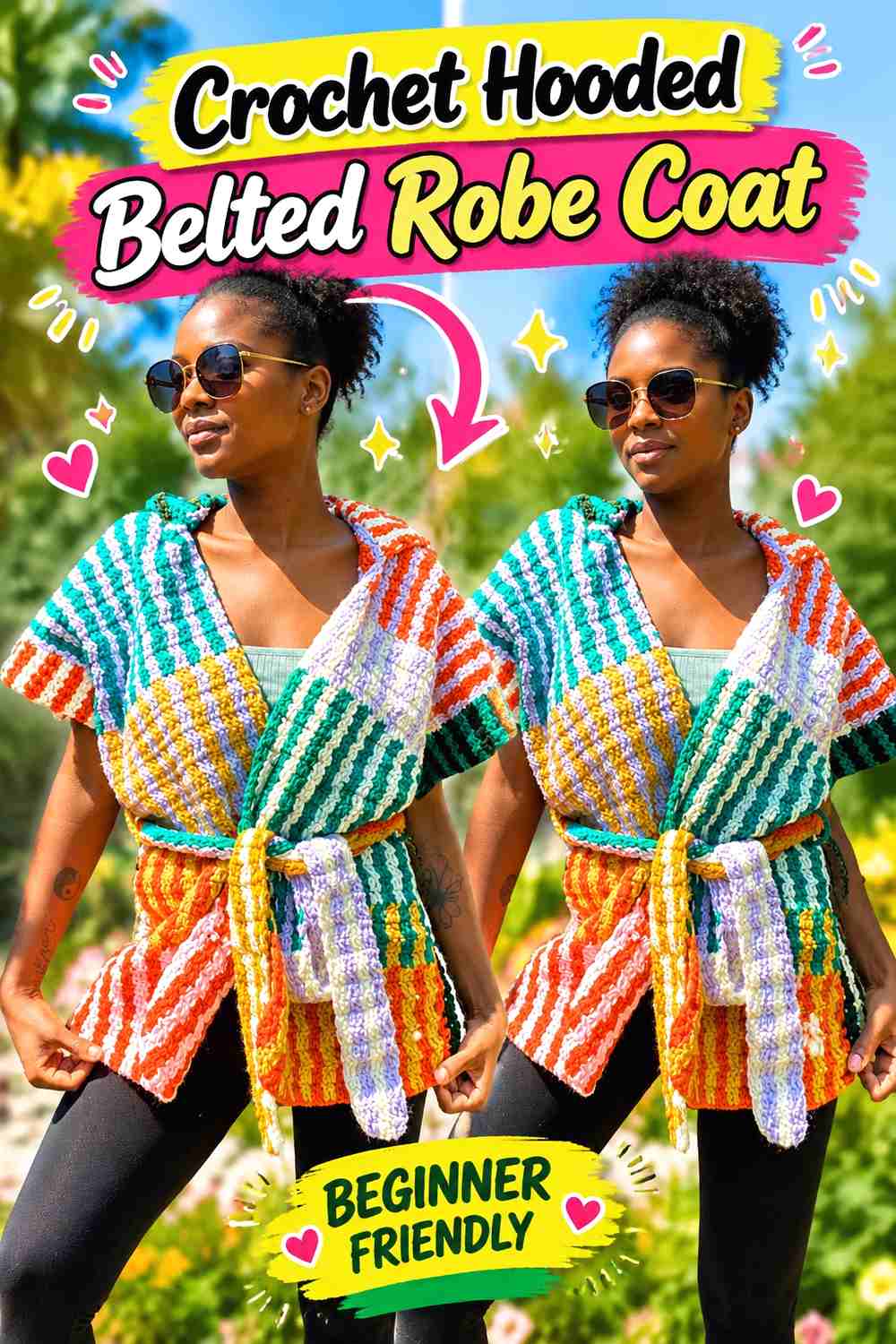
Kiara’s Hooks provides the most direct robe starting point in this collection. The tutorial is specifically presented as a crochet robe and includes front panels, a waist string, back construction, sleeves, and a hood.
That combination already contains the defining robe features, so adapting it for winter is primarily a material, length, fit, and styling decision rather than an attempt to convert an unrelated cardigan.
The Waist String Makes Front Coverage the First Fit Check
Before focusing on the hood or hem, check where the two front panels sit when you bring the belt around your waist.
If you want substantial crossover, the panels need to provide that coverage without pulling the shoulder seams forward. Use the creator’s construction as the reference and judge any sizing alteration with the garment on the intended wearer.
A Hood Adds Weight to the Back Neck
A long robe plus a hood can place considerable fabric behind the shoulders. If you substitute a significantly heavier yarn, the neckline may behave differently from the tutorial sample.
Make a meaningful swatch and avoid assuming that a thicker yarn is automatically better just because the goal is winter warmth.
Keep Belt Placement Related to Your Natural Waist
A belt sitting too high can make a long robe flare abruptly below the torso, while one placed too low may allow the upper front to gape.
Try the developing garment over typical winter clothing before fixing belt loops or another permanent belt-management detail.
Creator Credit: kiara’s hooks
2. Crochet Crossover Wrap Robe Coat
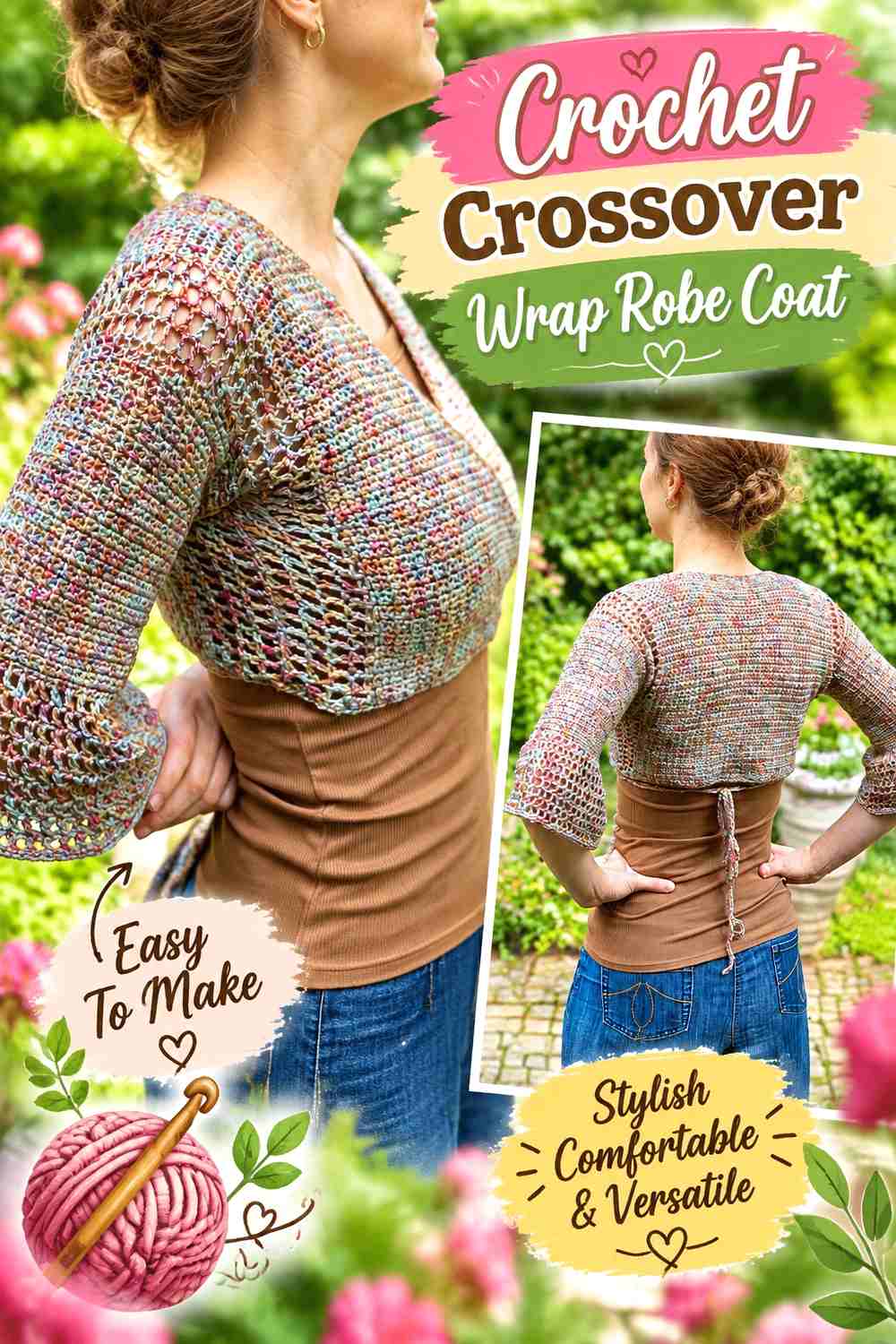
Crochet with Gabi’s tutorial is specifically a wrap cardigan, making it a logical choice for a more fitted robe coat with crossover fronts rather than a loose duster. The creator notes that the design has been made in more than one yarn weight, reinforcing the importance of treating fabric choice as part of the finished silhouette.
This direction suits someone who wants a robe influence without the very oversized shape of a bathrobe.
Crossover Shaping Gives the Waist More Definition
Unlike an open-front cardigan, a wrap construction already directs one panel across the torso.
If you extend the garment toward coat length, preserve that upper-body shaping rather than widening every section equally. The lower body can become longer without losing the purpose of the crossover neckline.
A Narrower Belt Keeps the Wrap Looking Refined
A highly shaped front does not necessarily need a very wide bathrobe sash.
Consider whether the garment already has enough visual structure through the crossover. A slimmer tie can emphasize the waist without adding another heavy horizontal feature.
Creator Credit: Crochet with Gabi
3. Crochet Airy Maxi Robe Duster Coat
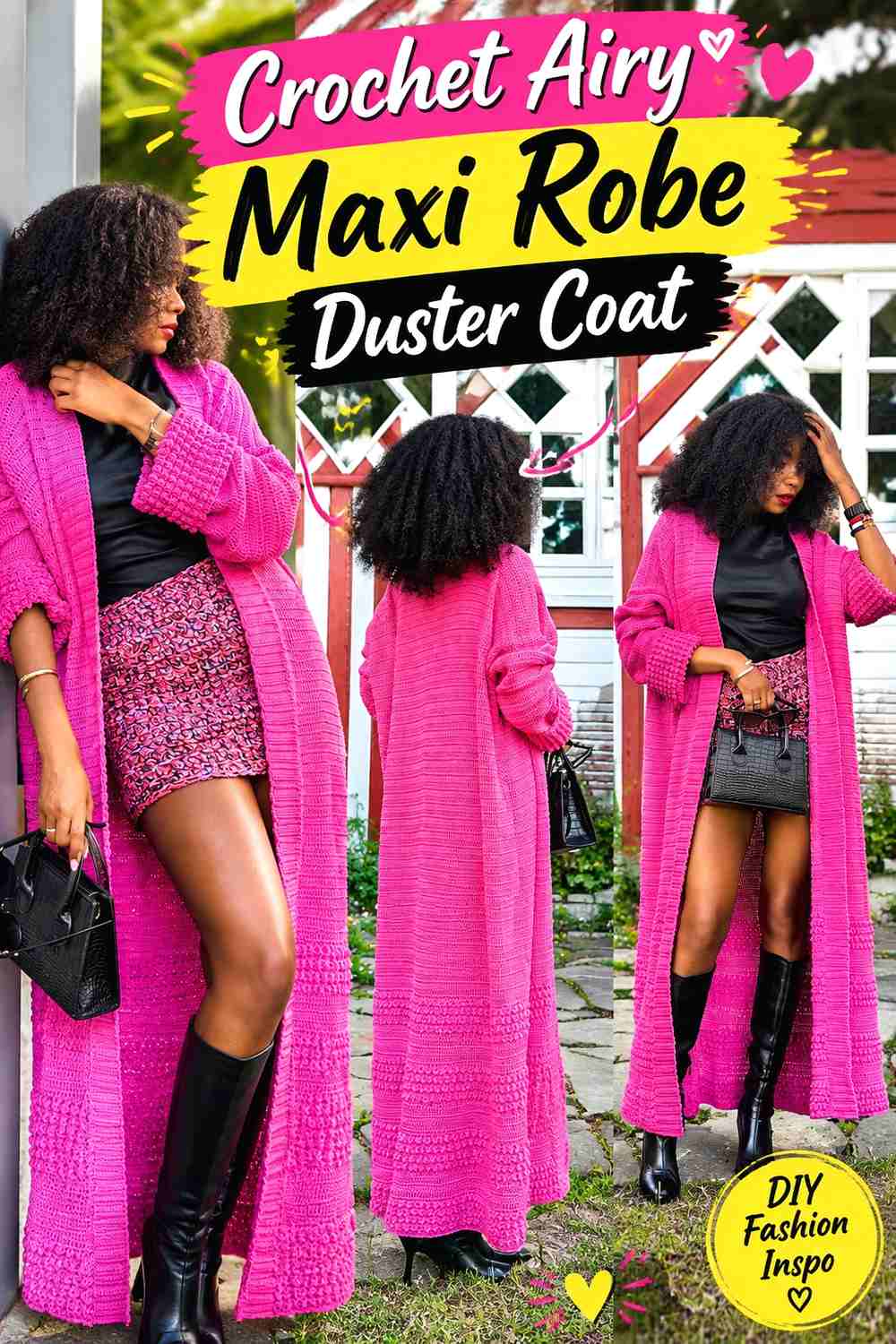
AC Crochets describes this long design as a duster, cardigan, kimono, robe, or cover-up. It uses a measurement-driven approach and a lighter-weight fabric, making it the fluid option in this winter collection.
For colder weather, think of it as an indoor robe coat or a layer for milder winter days rather than assuming an airy fabric will perform like dense outerwear.
Drape Is the Main Feature Here
This design works because the long panels hang and move freely. Replacing the original fabric with something extremely bulky could remove the quality that makes the silhouette distinctive.
If more warmth is required, a warmer fiber at a compatible gauge may make more sense than simply making every stitch much thicker.
A Removable Belt Preserves Two Styling Options
Because the source garment is naturally open and flowing, a removable belt provides the robe look without permanently changing the front.
Wear it tied when waist definition matters and open when you want the original duster movement.
Creator Credit: AC Crochets
4. Crochet Hooded Pocket Robe Coat
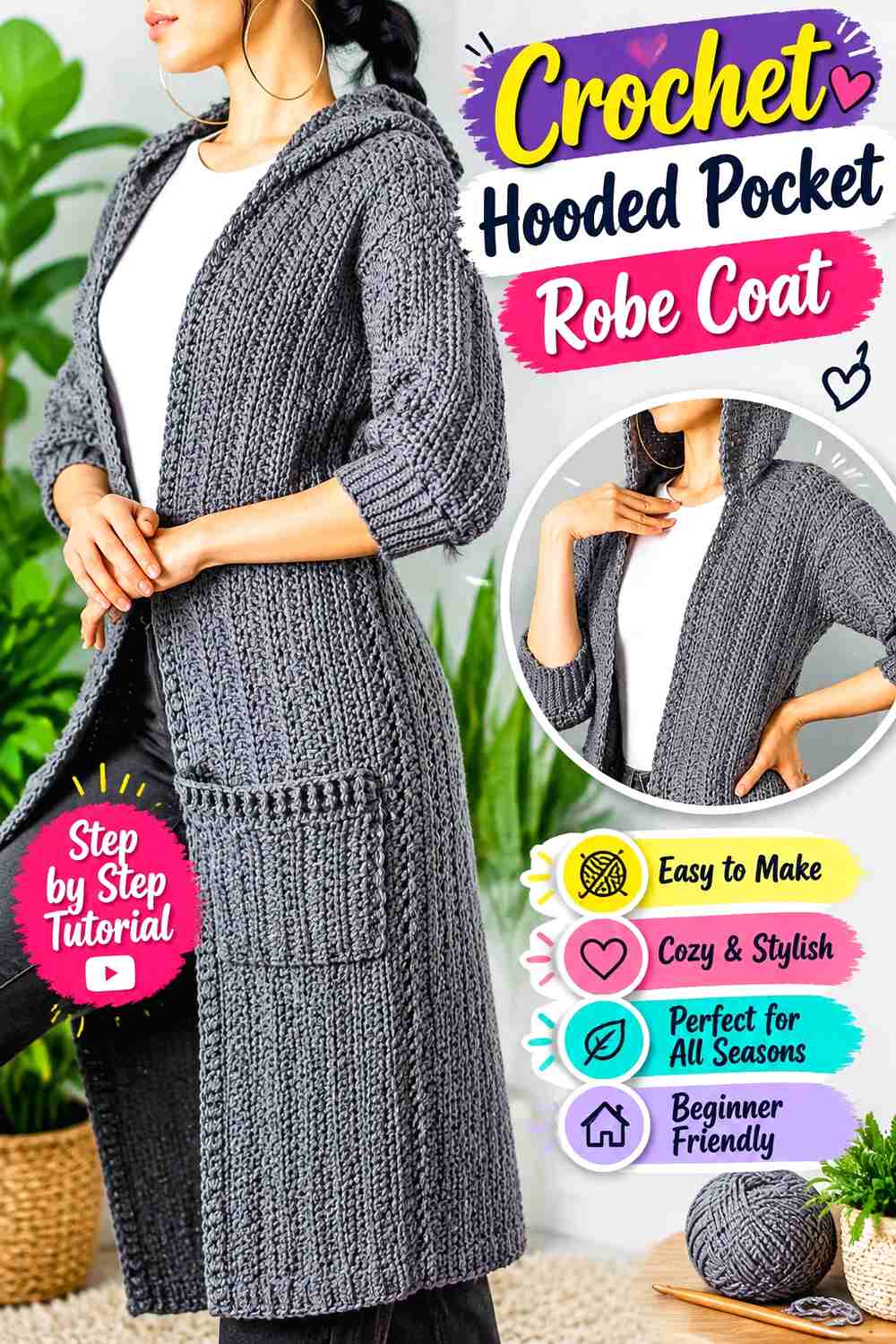
TCDDIY’s duster tutorial combines long panels with a hood, front finishing, a bottom band, and pockets, giving this version several practical coat-like features before a belt is even considered.
A soft belt added at waist level can shift the finished impression from hooded cardigan toward robe coat while keeping the pockets available.
Position the Belt Without Blocking the Pockets
Pocket location becomes especially important when adding a waist tie to an existing duster.
Try the garment on and mark the belt position relative to the pocket openings. A sash that crosses directly over them can make the pockets awkward to use and visually bunch the front.
The Hood and Belt Compete for Garment Weight
Both features add fabric. When the robe is tied, that weight is distributed differently than when the cardigan hangs open.
Check the neckline and shoulder area in both positions before deciding that the fit is finished.
Creator Credit: TCDDIY
5. Crochet Relaxed Made-to-Measure Robe Coat
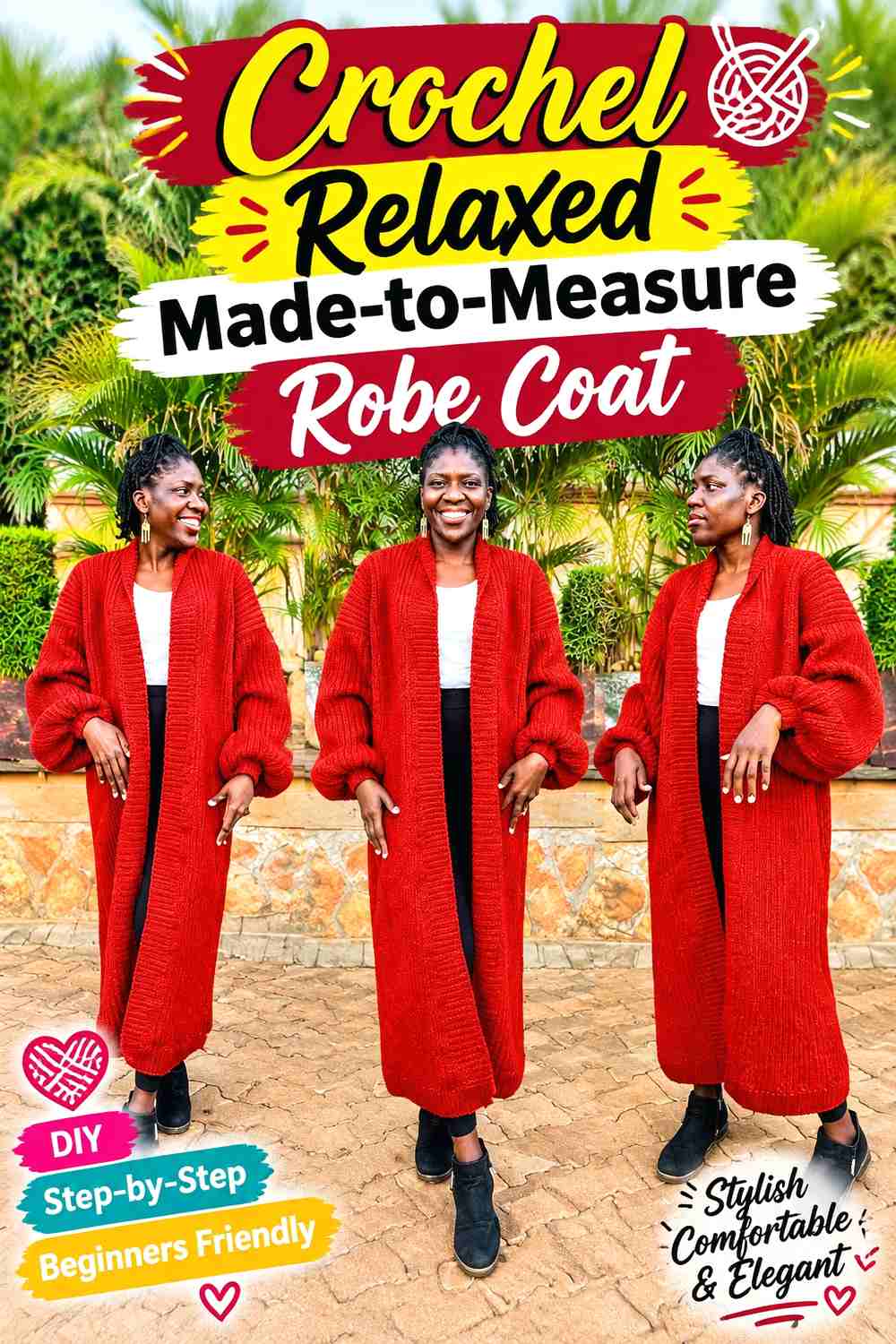
BzzzMagicHands🧶 demonstrates a full duster cardigan and states that the tutorial includes measurements for multiple sizes. That makes it useful for a robe-coat adaptation where overall proportion matters more than complicated surface detail.
This can become a straightforward everyday robe coat by keeping the long open silhouette and introducing a removable tie only after the main fit is established.
Do Not Add Extra Width Just Because You Add a Belt
A relaxed cardigan already contains ease. Increasing both body width and overlap can quickly turn a comfortable robe into a garment that feels bulky through the upper torso.
Follow the original sizing information first, then pin the fronts into the amount of overlap you prefer and judge whether adaptation is actually necessary.
Use the Belt to Control Volume, Not Hide Poor Fit
If the shoulder seams sit too far down or the armholes are uncomfortable, tying the waist tighter will not correct those issues.
Settle the upper-body fit before making the belt an important part of the silhouette.
Creator Credit: BzzzMagicHands🧶
6. Crochet Long Rectangular Winter Robe Coat
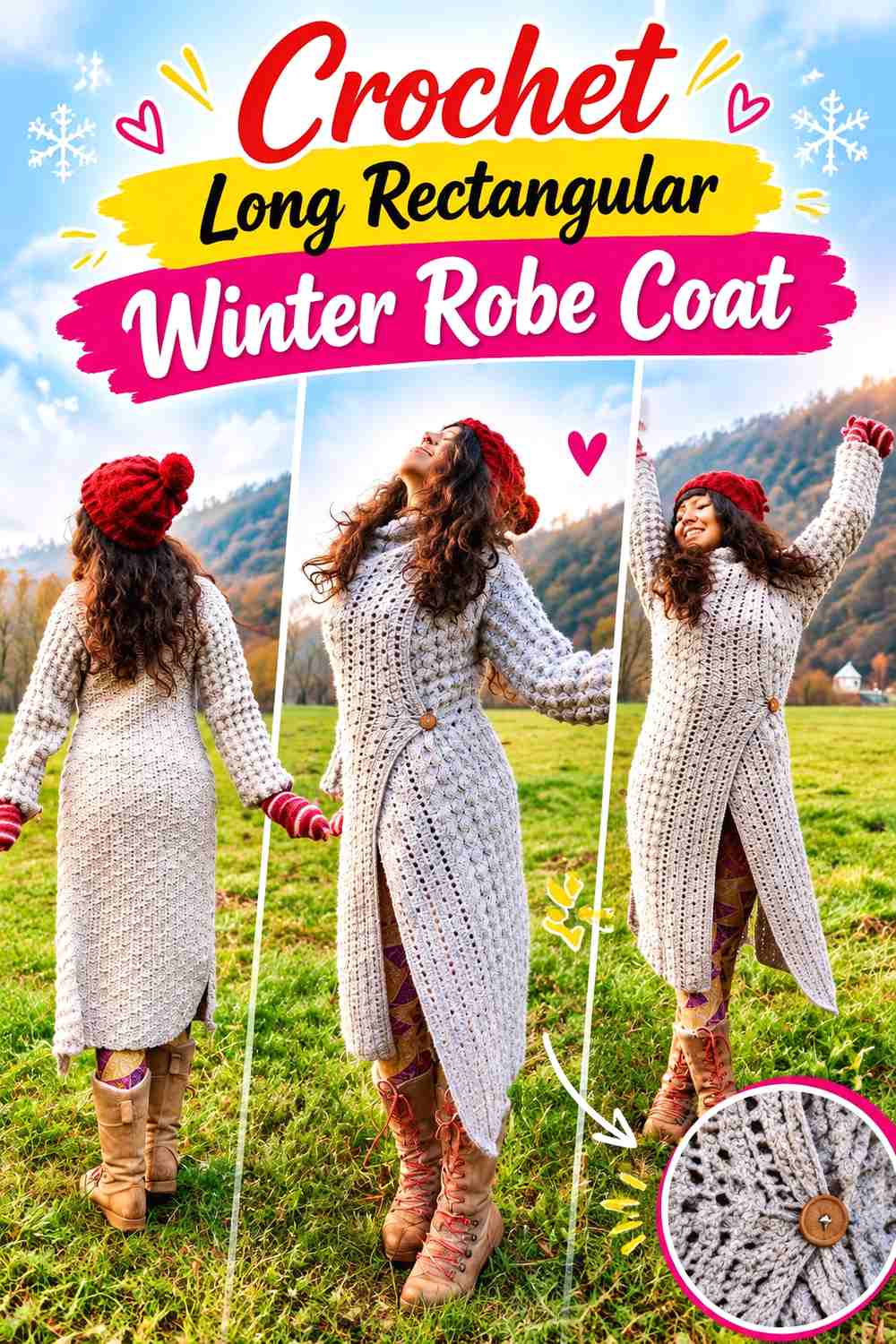
MayaLunaCorazon DIY CROCHET & BUSINESS demonstrates a long coat cardigan based on rectangular panels and winter-oriented yarn. The source includes a long coat silhouette and front closure details, making it one of the more coat-like bases in the group.
For a robe interpretation, retain the strong long panels but use a removable sash in place of making the buttons the dominant visual feature.
Rectangular Panels Create a Strong Vertical Line
This construction has less built-in crossover shaping than a dedicated wrap cardigan.
That makes the collar and belt important. Rather than forcing a deep overlap, allow the fronts to meet or overlap moderately and let the long panel geometry remain visible.
A Substantial Fabric Needs a Proportional Belt
A narrow cord can disappear against a heavier long coat.
If the finished crochet is visually substantial, compare several belt widths against the completed fabric before making the final sash. The goal is enough presence to control the coat without creating a stiff band around the waist.
Creator Credit: MayaLunaCorazon DIY CROCHET & BUSINESS
7. Crochet Ribbed Longline Robe Coat
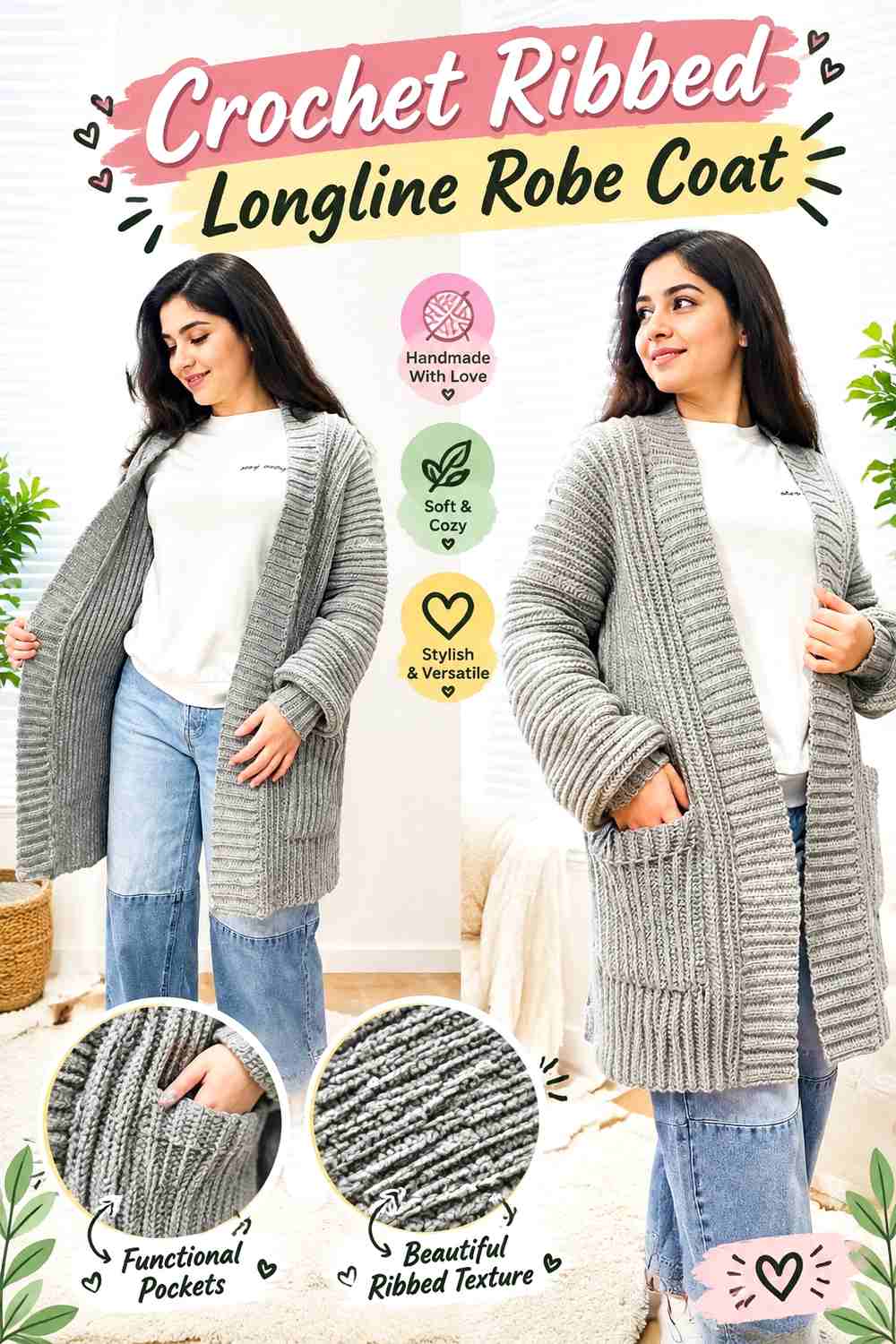
Yarnalina’s classic ribbed long cardigan uses a highly consistent ribbed surface and is specifically intended as a colder-weather long layer.
That makes it a good choice for a robe coat where texture provides the design interest and the belt can remain simple.
Ribbing Makes Stretch Part of the Fit
A ribbed fabric may expand more readily across the body than a dense, non-ribbed panel.
Judge the amount of overlap while the garment is being worn rather than measuring only on a flat surface. Pulling the belt too tightly can distort the ribs around the waist.
Keep the Sash Visually Quieter Than the Body
The cardigan already has a strong repeated texture.
A simple sash in matching yarn can complement that surface without introducing another stitch motif that competes with the ribbing.
Creator Credit: Yarnalina
8. Crochet Textured Balloon-Sleeve Robe Coat
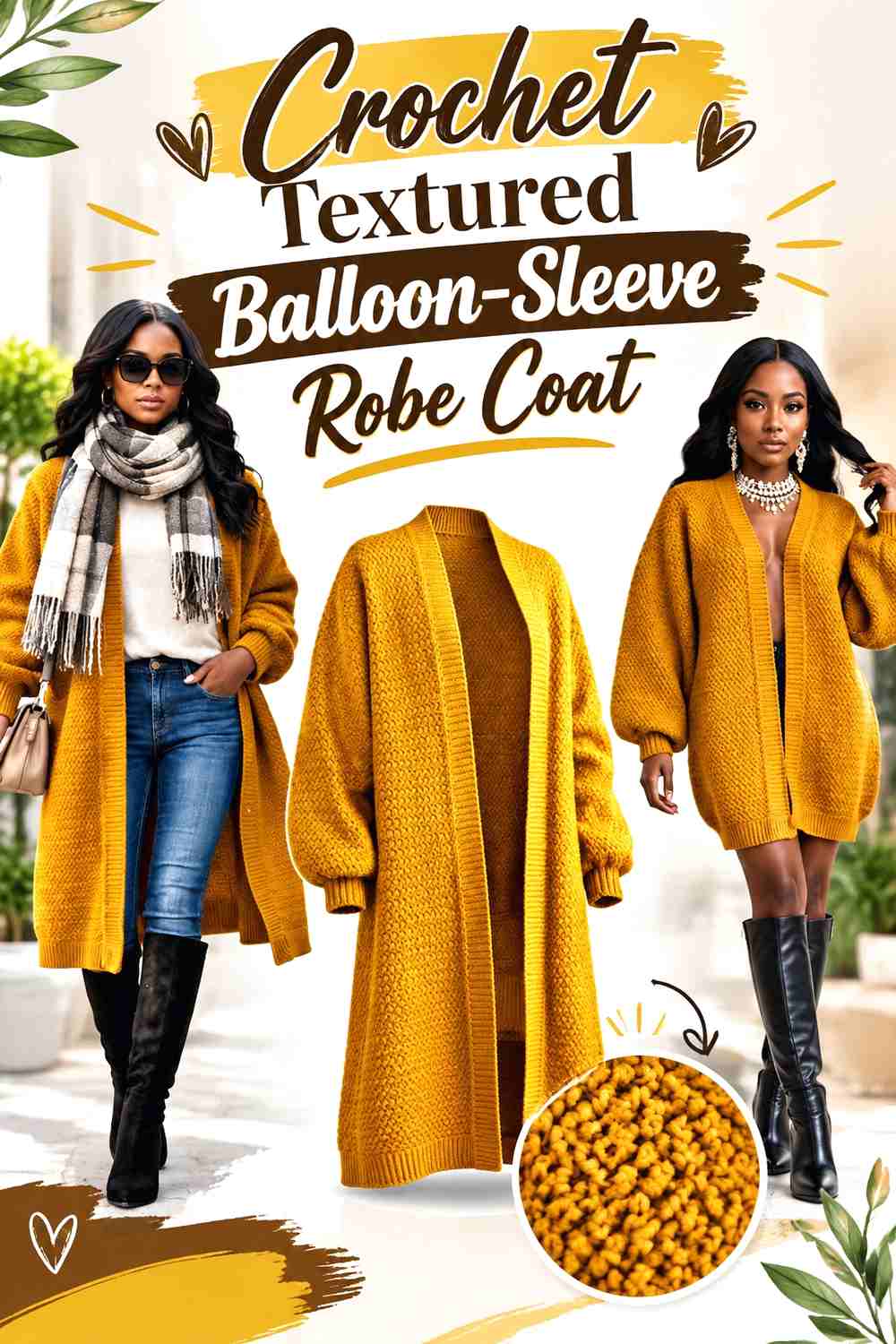
Shylercrochets’ Golden Hour cardigan is described as a dense, textured, made-to-measure duster with ribbed edging and balloon sleeves, and the design can be worked at different lengths.
The combination of substantial texture and fuller sleeves makes this one of the strongest choices for a dramatic winter robe coat.
Balloon Sleeves Need Room Under and Over Them
Full sleeves affect layering in two directions. You need enough space inside for winter clothing, but they may also prevent the robe coat from fitting comfortably beneath another outer coat.
Decide whether this garment is intended to be the final visible layer before choosing how exaggerated you want the sleeve volume to feel.
Dense Texture Can Become Heavy at Maxi Length
Length, texture, and sleeve volume all add fabric.
Before extending the hem as far as possible, let the partially completed garment hang and evaluate whether the shoulders still feel balanced.
Creator Credit: Shylercrochets
9. Crochet Top-Down Hooded Robe Coat
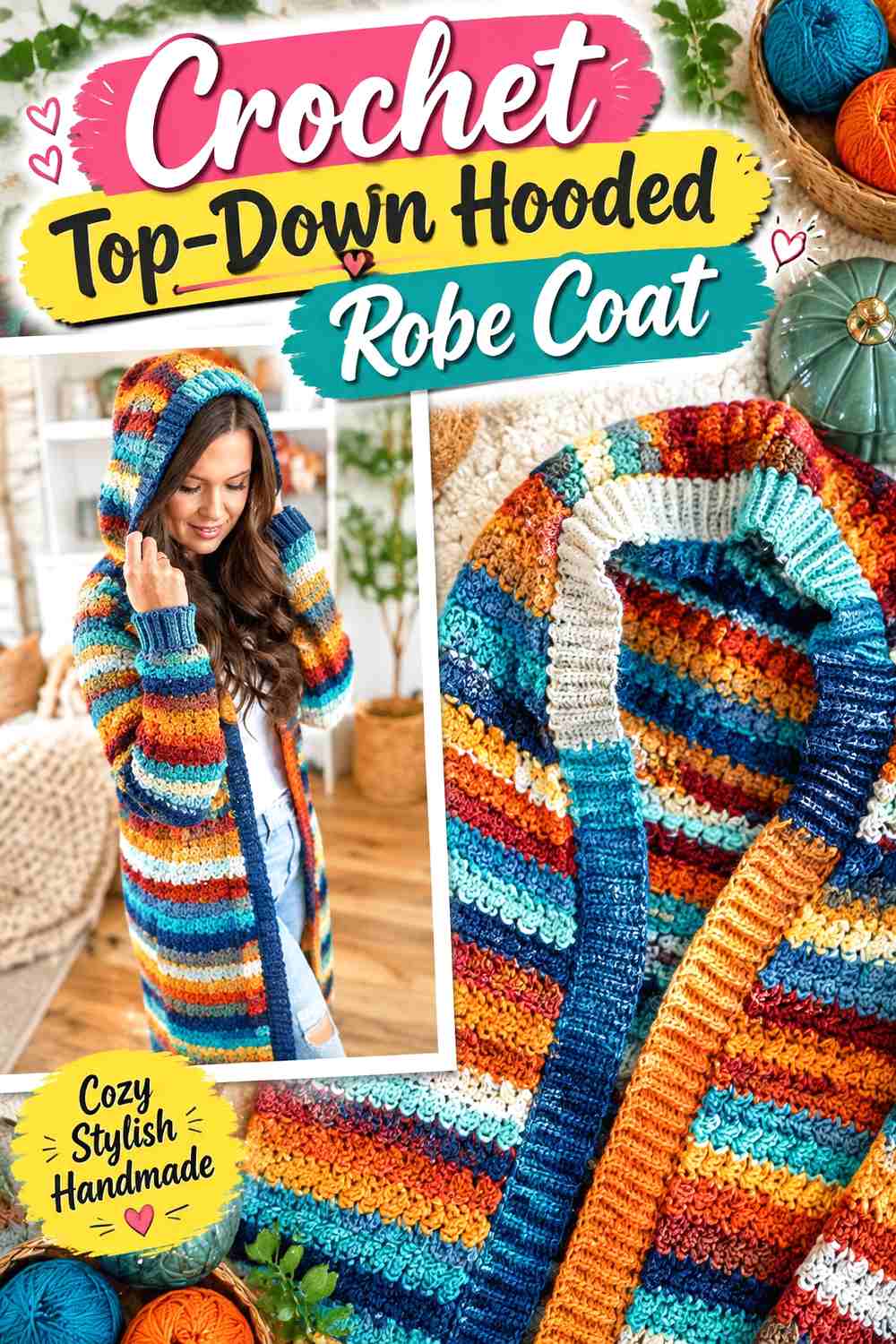
MJ’s Off The Hook Designs’ Suzette Raglan Cardigan includes a long hooded option with pockets and is constructed from the top down. That gives this idea a different fitting route from the paneled robe coats above.
The long hooded version can be worn open as designed or adapted with a removable sash for a more obvious robe silhouette.
Top-Down Construction Lets You Evaluate Layering Early
Before investing in the entire long body, assess shoulder placement, armhole depth, and sleeve room over a winter base layer.
That is particularly useful for a robe coat because the body can be generous without requiring the shoulders to become excessively oversized.
Put the Belt Below the Raglan Shaping
The sash should visually belong at the waist rather than cutting across the part of the garment where upper shaping is still happening.
Try on the cardigan once enough body length exists and mark the most natural belt level instead of assuming a fixed distance from the neckline.
Creator Credit: MJ’s Off The Hook Designs
10. Crochet Oversized Minimal Robe Coat
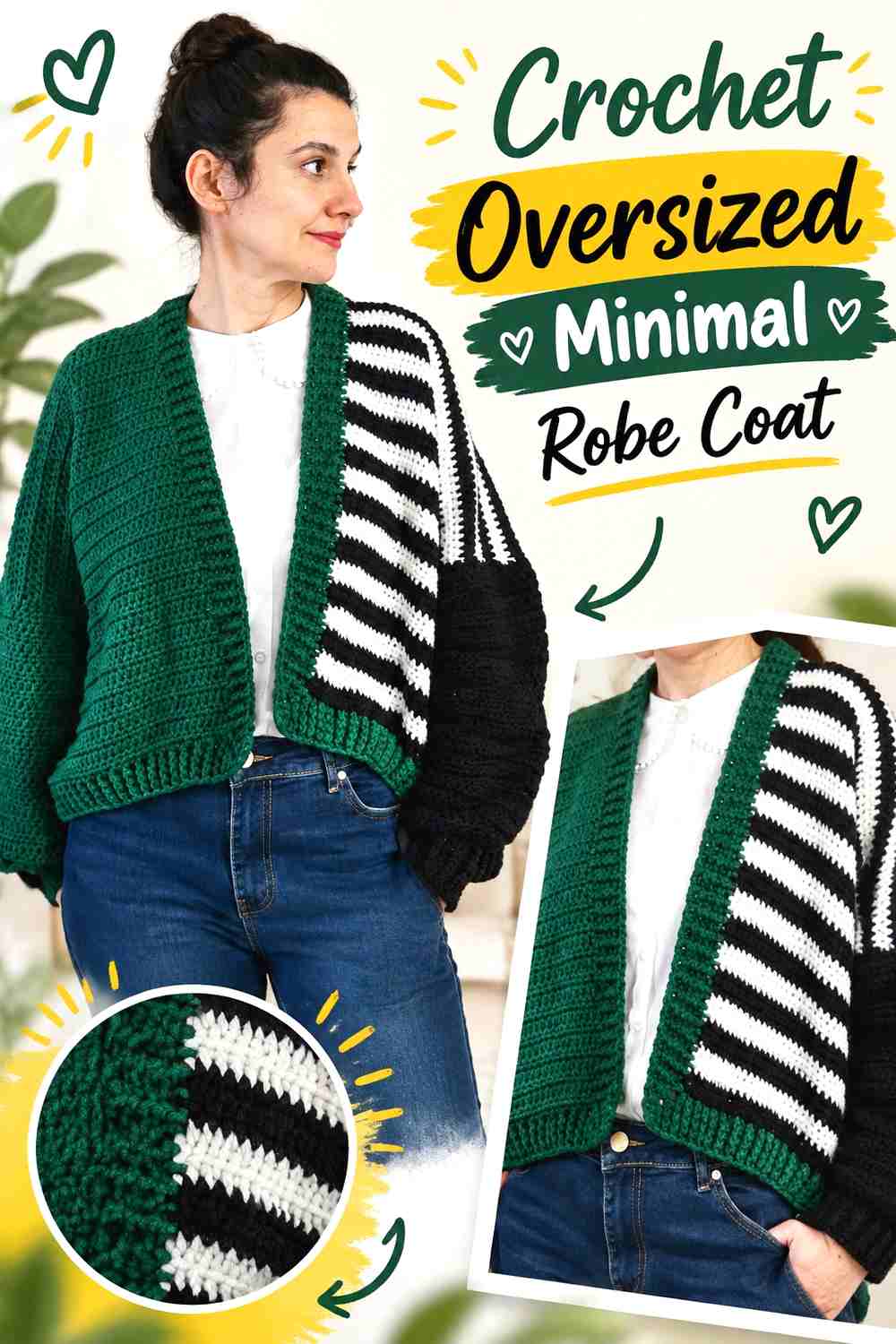
Sirin’s Crochet demonstrates an oversized cardigan that can be adapted for different sizes. The uncomplicated body makes it useful as a minimalist robe-coat base when you would rather emphasize proportion than cables, motifs, or colorwork.
For a winter interpretation, extend only within the logic of the original construction and use a soft belt to control the generous body.
Oversized Should Be Intentional Through Specific Areas
You may want a broad body and relaxed shoulder without equally oversized cuffs or sleeves.
Identify where the volume creates comfort and where it interferes with daily movement. A robe coat feels relaxed because of ease, not because every measurement is maximized.
A Plain Front Makes Finishing More Visible
When there are few motifs or decorative stitches, uneven edging becomes easier to notice.
Pay extra attention to the front band before adding a belt because the two edges will sit close together whenever the garment is tied.
Creator Credit: Sirin’s Crochet
11. Crochet Plush Chunky Winter Robe Coat
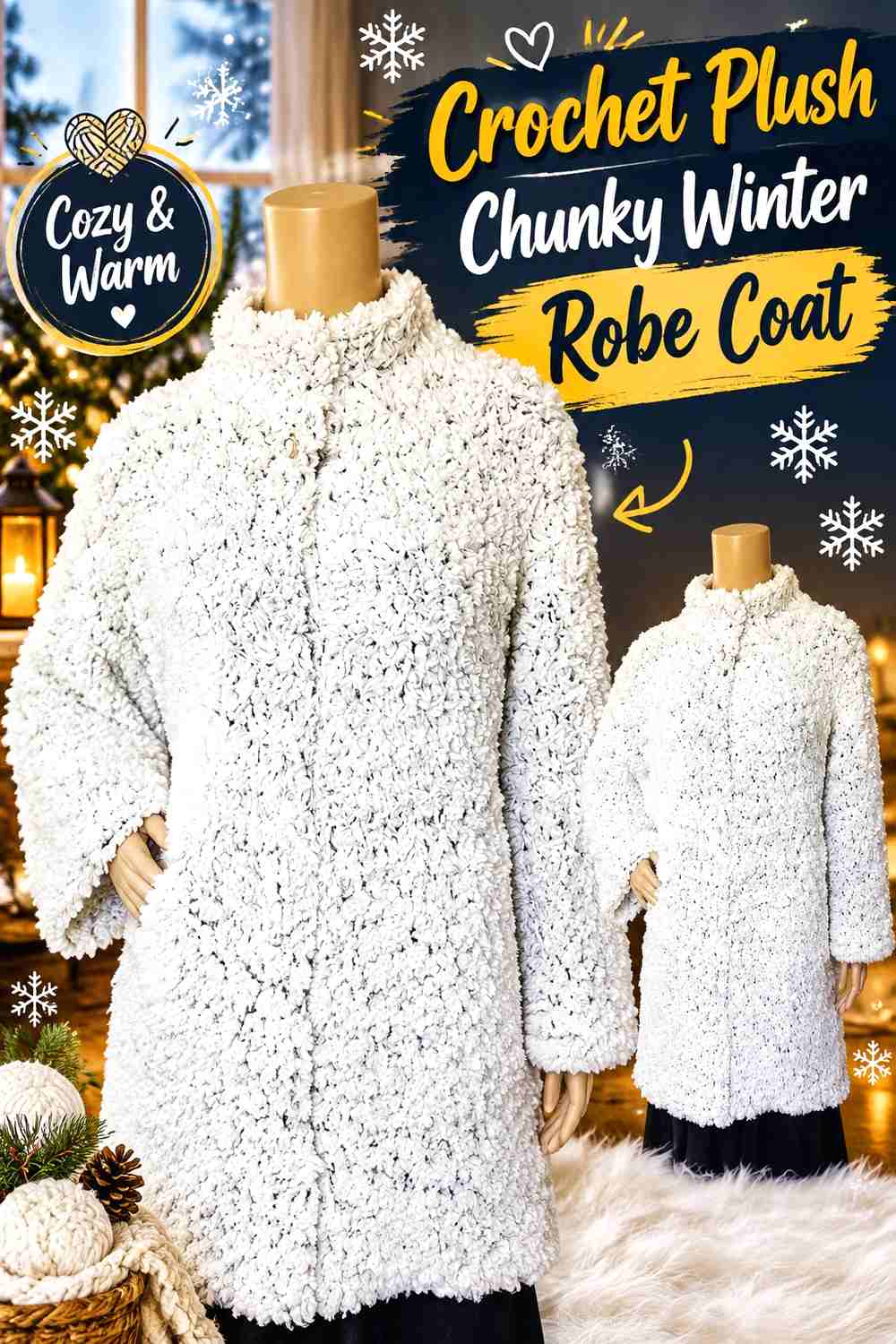
L’angolo di Criss demonstrates a soft winter crochet coat made with a large hook and substantial yarn, giving this idea the heaviest visual character in the collection.
Adding a matching belt can turn that plush coat shape into a strongly wrapped robe coat, but the extra bulk needs to be managed carefully.
Chunky Fabric Does Not Need Deep Overlap
Two thick fronts layered completely over each other can create considerable bulk through the waist.
Try a meeting-front or shallow-overlap arrangement before deciding that the garment needs the same crossover depth as a lightweight bathrobe.
Make the Belt Flexible Enough to Bend
A very thick, rigid sash can feel like another structural panel around the waist.
A slightly lighter or narrower belt may control the coat more comfortably while allowing the chunky body to remain the main feature.
Creator Credit: L’angolo di Criss
12. Crochet Shawl-Collar Robe Coat
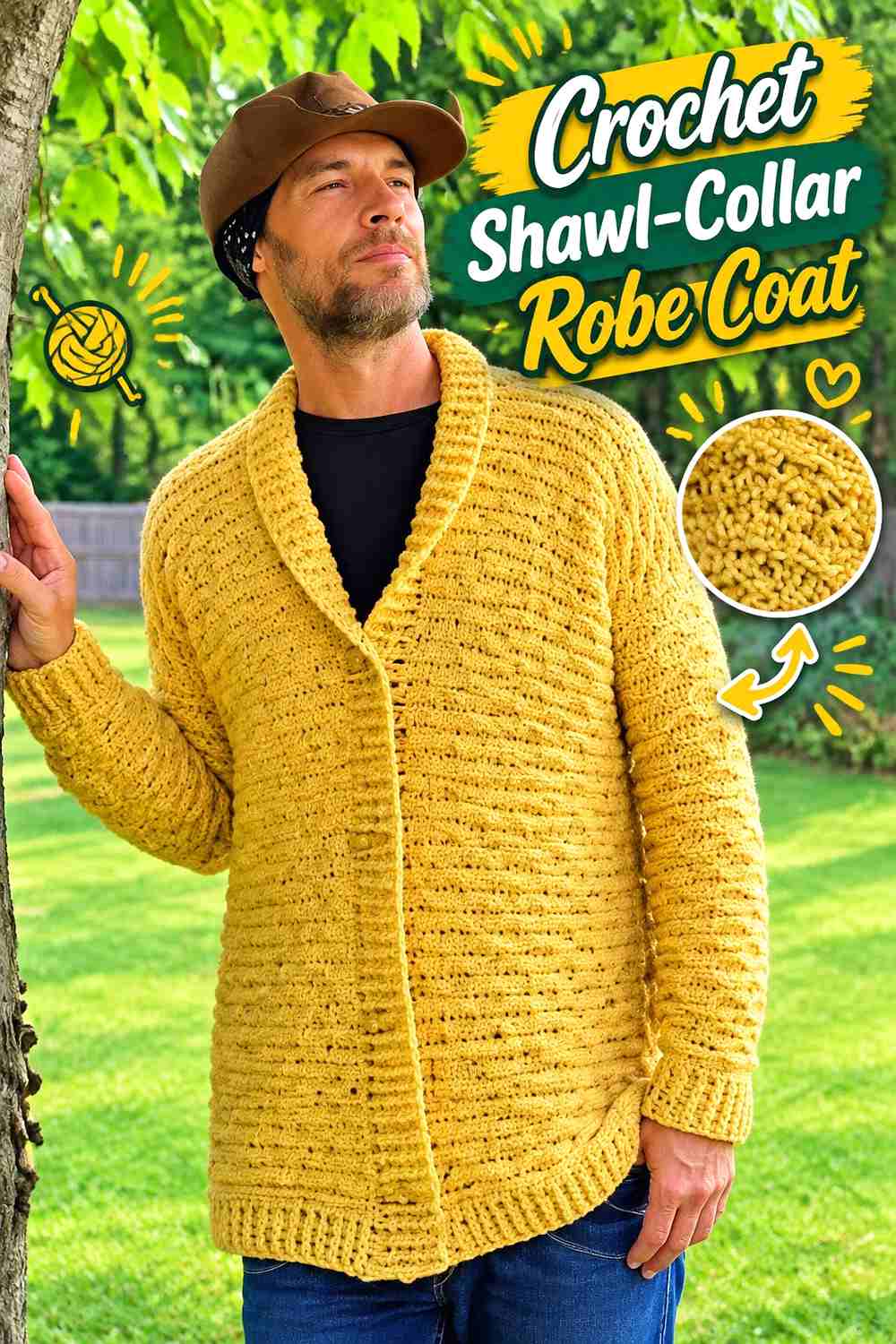
Bag-O-Day Crochet demonstrates a shawl-collar cardigan suitable for different wearers. The substantial collar makes this especially relevant to a robe-coat look because a folded shawl neckline already resembles classic dressing-gown construction.
This is the option to consider when neck coverage matters more than a hood.
Complete the Collar Before Choosing Belt Width
A deep shawl collar creates a lot of visual volume at the upper front.
If the sash is equally heavy, the coat can feel dominated by horizontal bands. Finish or mock up the collar first, then select a belt proportion that supports rather than competes with it.
Let the Collar Form the Upper Overlap
When the fronts cross, the shawl collar naturally layers over itself.
Pin the proposed closure position before permanently adding belt loops so the collar can fold without bunching under the tie.
Creator Credit: Bag-O-Day Crochet
13. Crochet Super-Bulky Belted Robe Coat
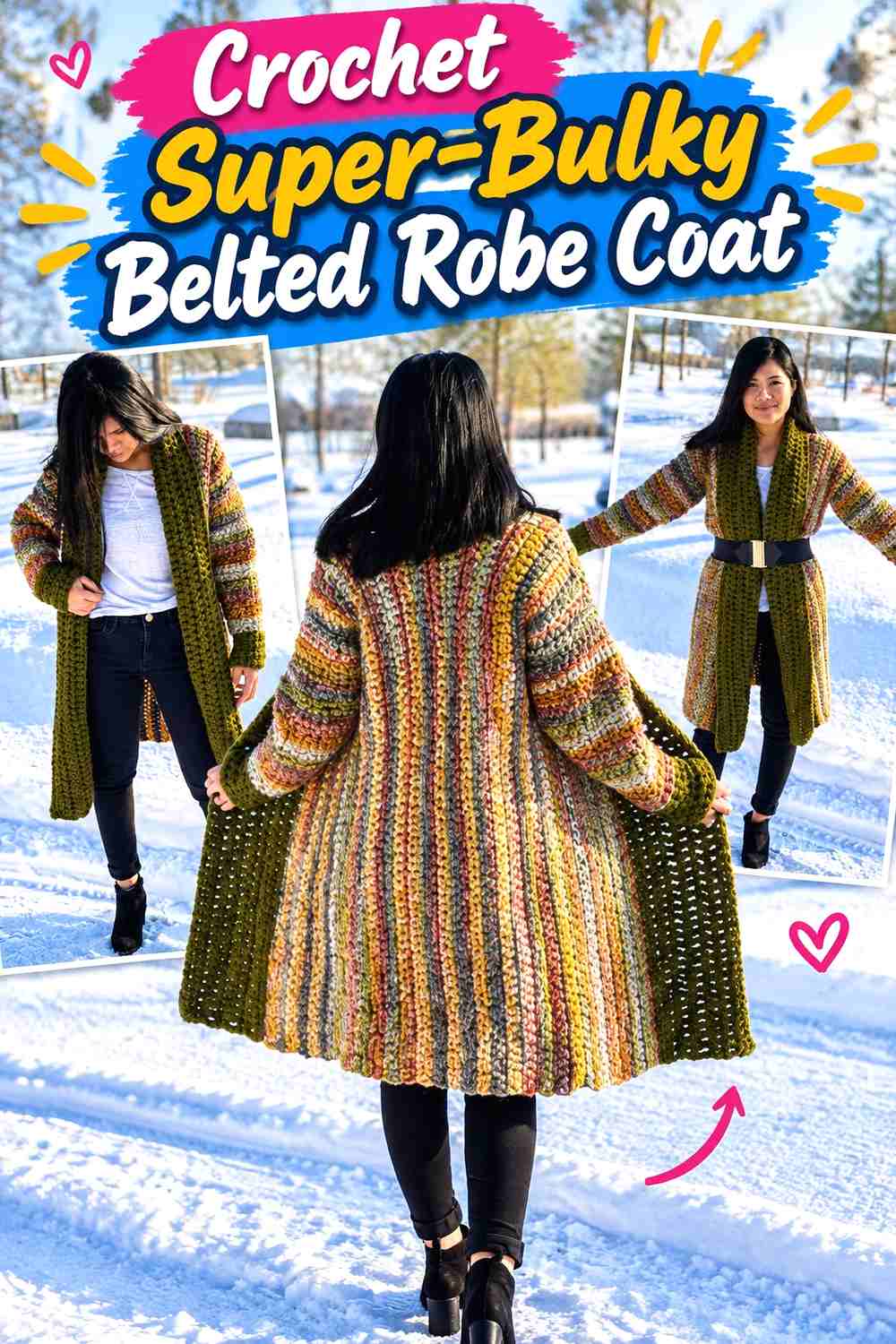
KnitcroAddict’s long cardigan uses a super-bulky construction made from separate garment pieces, with the collar added after assembly. The designer also notes that the long cardigan can be worn with a belt or left open.
That makes it a useful bridge between a conventional long cardigan and a true robe coat.
Super-Bulky Yarn Gives the Belt More Work to Do
A belt around thick fabric needs to gather a much larger volume than a belt around a lightweight duster.
Do not compensate by tying it uncomfortably tight. Instead, evaluate whether the body already has an appropriate amount of ease and whether a broader, softer sash sits more naturally.
Collar Depth Changes the Robe Impression
Because the collar is an added finishing element, it has a strong effect on how the finished opening looks.
A substantial collar plus a belt pushes the garment further toward a robe coat, while a narrow finish keeps more of the original cardigan character.
Creator Credit: KnitcroAddict
14. Crochet Waterfall-Lapel Robe Coat
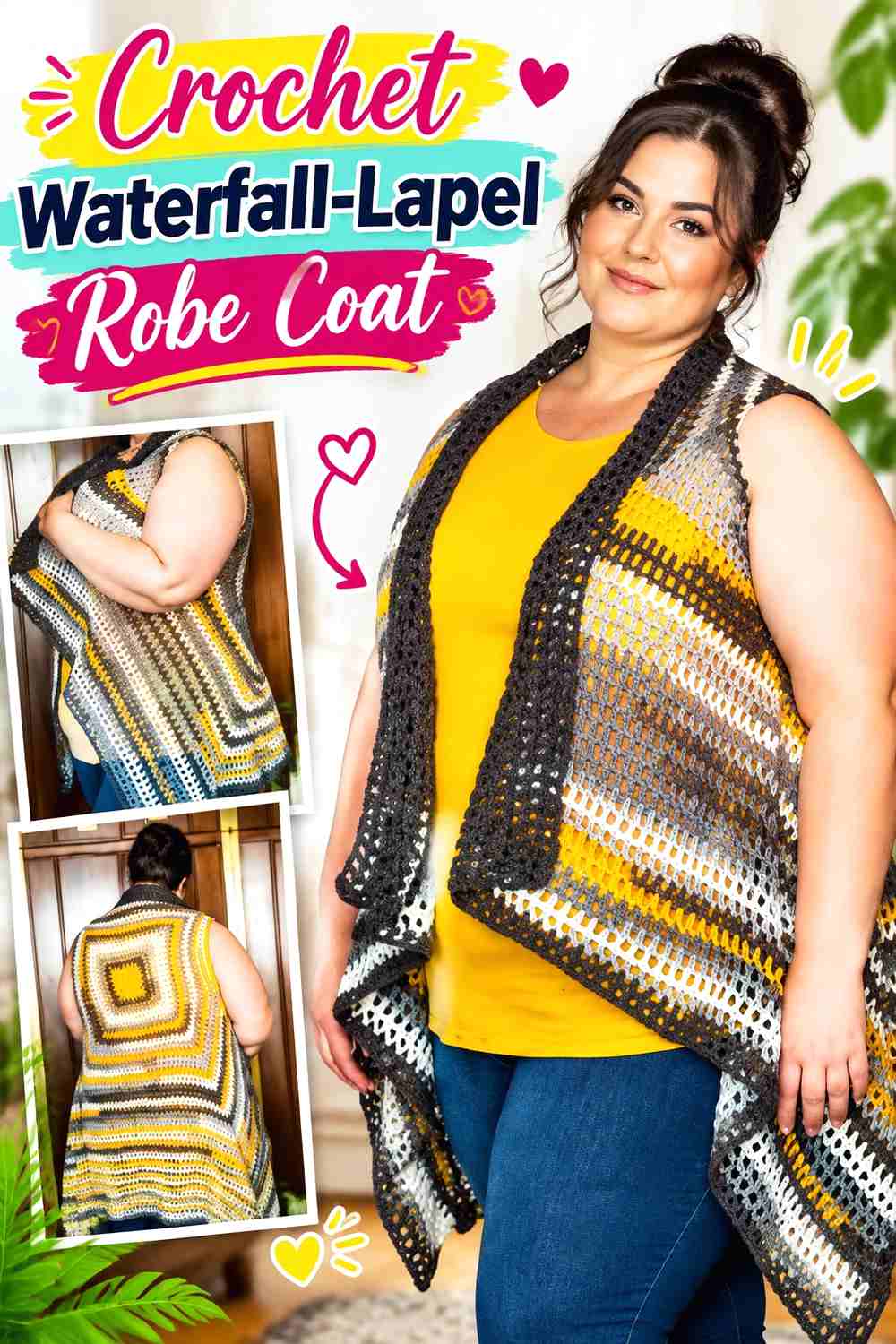
Crochet With Bernie demonstrates a loose waterfall cardigan construction. The source version is sleeveless, so this idea is best treated as a front-drape reference rather than an exact winter robe coat tutorial.
Its value here is the generous cascading front: the same visual principle can inform a robe coat where broad lapels remain soft rather than forming a sharply tailored collar.
Waterfall Fronts Behave Differently When Belted
Fabric designed to cascade freely may form deep folds once gathered at the waist.
Before committing to a belt, pin the front edges where you expect them to sit and check whether the folds look intentional or simply crowded.
Use This as a Layering-Vest Direction if You Keep It Sleeveless
The original construction can also remain sleeveless and be worn over a close-fitting winter sweater.
That creates the robe-coat outline without reconstructing sleeves the source does not teach.
Creator Credit: Crochet With Bernie
15. Crochet Structured Raglan Robe Coat
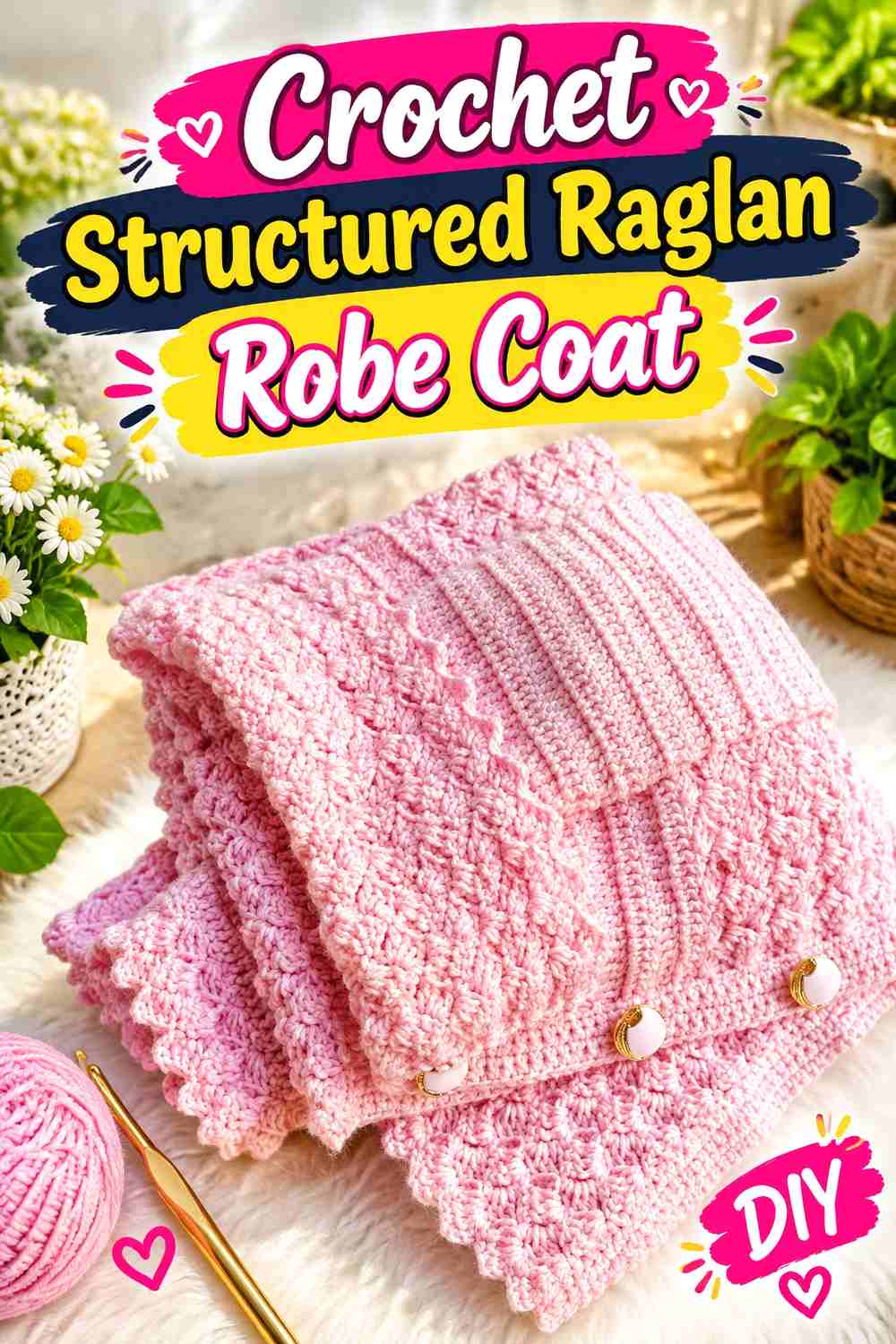
The coat tutorial from attractive loops uses raglan-style shaping and produces a more conventional fitted coat silhouette than the loose dusters above.
For a robe-coat adaptation, this option works best when you want the waist tie to soften a structured upper body rather than create the entire garment shape.
Raglan Shaping Keeps the Shoulder More Defined
A robe coat does not have to be boxy.
Keeping a shaped upper section while allowing the lower body to remain longer and more relaxed can produce a cleaner outerwear silhouette, especially if you plan to wear the coat beyond indoor lounging.
Use a Belt as an Optional Styling Layer
A structured coat can work both belted and unbelted.
Rather than permanently altering the original closure system, a removable sash gives you a robe-like version when desired while preserving the coat’s intended open or closed styling.
Creator Credit: attractive loops
Which Crochet Robe Coat Style Should You Choose?
For the clearest traditional robe shape, start with the hooded belted robe, classic bathrobe-inspired coat, or crossover wrap robe coat. Their source constructions already include wrapping or robe logic, so less adaptation is required.
For serious winter texture, compare the balloon-sleeve duster, ribbed longline coat, chunky winter coat, and super-bulky belted coat. These designs use more substantial-looking fabric, but increased weight makes gauge and shoulder fit particularly important.
If you prefer a lighter silhouette, the airy maxi duster and waterfall-lapel version offer more movement. They read as robe coats through drape and front treatment rather than thickness.
For extra coverage around the head or neck, choose between the hooded pocket robe, top-down hooded robe, and shawl-collar robe coat. The hooded designs feel more casual, while a broad shawl collar can create a cleaner dressing-gown-inspired neckline.
Conclusion
The most convincing crochet robe coat is not necessarily the longest or thickest option. What matters is how the front wraps, how comfortably the sleeves accommodate winter layers, whether the collar or hood stays balanced, and whether a belt actually works with the fabric instead of fighting it.
Choose a true robe or wrap tutorial if crossover coverage is your priority. Choose a duster if you want movement and length, a ribbed or textured cardigan for surface interest, or a dense long coat if you want the strongest outerwear appearance.
When adapting an open cardigan with a sash, complete enough of the original construction to evaluate fit before changing the front. Use the credited tutorial for its exact measurements and garment instructions, then treat additional overlap, belt loops, or robe-style closure as separate design decisions.
Frequently Asked Questions
What makes a crochet cardigan look like a robe coat?
Length helps, but the front is more important. Wide fronts, crossover coverage, a removable sash, shawl collar, hood, or broad front edging can all contribute to a robe-like silhouette. A long cardigan with very narrow fronts may still look primarily like a cardigan even after a belt is added.
Can I add a belt to any crochet cardigan?
You can add a removable belt to many cardigans, but it will not behave equally well on every construction. Check front width, fabric bulk, pocket location, and waist placement first. A very open or delicate stitch may also distort where a tight sash compresses it.
How much overlap should a crochet robe coat have?
There is no universal amount. A lightweight wrap can tolerate deeper crossover, while thick winter crochet may become bulky if two wide panels overlap completely. Pin the fronts together while wearing the garment over your normal winter layers and choose the amount that feels comfortable.
What yarn qualities are useful for a winter robe coat?
Look for the balance of warmth, drape, stitch definition, and garment weight required by the tutorial. Dense or bulky yarn can create more structure, while lighter yarn produces easier movement. Fiber choice also affects care and stretch, so follow the yarn label and compare substitutions against the pattern’s gauge.
Should I make a robe coat one size larger for layering?
Not automatically. A larger size can add room, but it can also move the shoulder seam, deepen the armhole, and make the sleeves excessively wide. Compare the pattern’s finished measurements with a coat or cardigan you already wear comfortably over winter clothing.
How do I stop a long crochet robe coat from stretching downward?
Follow the tutorial’s gauge, make and block a useful swatch, and consider the weight of the complete garment when choosing yarn. Long hems, hoods, pockets, and thick sleeves all add weight. If the fabric already stretches significantly in a swatch, adding much more length can magnify that effect.
Are crochet robe coats suitable as outdoor winter coats?
That depends on the fabric and conditions. Crochet can provide substantial warmth, but stitch openings, fiber choice, wind, precipitation, and lining all affect performance. Do not assume a handmade robe coat provides the same wind or weather protection as purpose-built winter outerwear.