A crochet high-neck shrug gives you warmth where a standard sleeves-only shrug often leaves a gap: around the neckline and upper shoulders. That makes the style especially useful over sleeveless dresses, fitted tops, bodysuits, and lightweight turtlenecks when you want extra coverage without wearing a full sweater.
The first projects in this collection are the closest matches to a true high-neck shrug, including cowl-neck and turtleneck constructions. Several later tutorials teach collarless arm-warmer sweaters, boleros, or shrugs instead. Those are included as adaptation bases because their shoulder and sleeve structures can support a separate collar or higher neck treatment, but the original tutorial should remain your guide for the underlying garment.
For winter, the most important differences are not only collar height. Sleeve volume, fabric density, neck stretch, upper-back width, openwork, yarn weight, and how the shrug fits beneath another coat all affect whether the finished layer is practical.
Quick List
- Cowl-Neck Crochet Winter Shrug
- Turtleneck Crochet Sleeve Shrug
- Ribbed Crochet High-Neck Arm-Warmer Shrug
- Minimal Crochet Neck-Panel Shrug
- Textured Crochet High-Neck Sleeve Shrug
- Color-Block Crochet Collar Shrug
- Compact Crochet High-Neck Arm-Warmer Shrug
- Mesh-Sleeve Crochet High-Neck Shrug
- Fishnet Crochet High-Neck Layering Shrug
- Striped Mohair Crochet High-Neck Shrug
- Bell-Sleeve Crochet High-Neck Shrug
- Filet-Motif Crochet High-Neck Shrug
- Granny-Raglan Crochet High-Neck Shrug
- Faux-Fur-Edge Crochet High-Neck Cocoon Shrug
- Top-Down Crochet High-Neck Winter Shrug
- Ribbed-Cuff Crochet High-Neck Bolero Shrug
- Ribbed Neck-Panel Crochet High-Neck Shrug
High Neck, Mock Neck, or Cowl: Choose the Collar First
A high-neck shrug can take several forms. A close turtleneck gives the strongest sweater effect and works well when you want the shrug to look like the upper section of a full pullover. A mock neck is shorter and can be easier to layer under coats. A cowl is wider and softer, giving more room around the throat but adding more fabric.
The collar also changes how you put the garment on. A close pull-on neck needs enough stretch to pass over the head and then recover. A wide cowl relies less on stretch but can become bulky under a high coat collar.
If you are adding a neck to a tutorial that does not already include one, treat it as a structural adaptation. Check the original neckline, shoulder construction, and opening size before attaching a large collar.
Build Winter Warmth Without Making the Shrug Too Heavy
A shrug already concentrates fabric around the upper back, arms, and shoulders. Adding a substantial turtleneck, bell sleeves, faux-fur trim, or chunky yarn can make that upper section much heavier than expected.
Swatch any yarn substitution and let the fabric hang vertically. A high-neck shrug should have enough structure to support the collar while still allowing the sleeves and shoulders to move comfortably.
Openwork projects need a different strategy. Instead of forcing a lace or mesh shrug into a very heavy yarn, it can be more effective to wear it over a fitted winter base layer and use the high collar primarily for styling and neck coverage.
Check the Neck and Shoulder Fit Together
A collar cannot be planned independently from the shoulder line. If the shrug pulls tightly across the upper back, adding a stiff high neck may make that restriction more noticeable. If the neckline is too loose, a heavy collar can pull it farther out of shape.
Try the underlying shrug before finishing an adapted neck whenever construction allows. Check arm movement, shoulder width, and where the neckline sits when your arms are raised.
Also consider what goes underneath. A shrug that fits beautifully over a tank may feel completely different over a substantial winter dress or sweater.
1. Cowl-Neck Crochet Winter Shrug
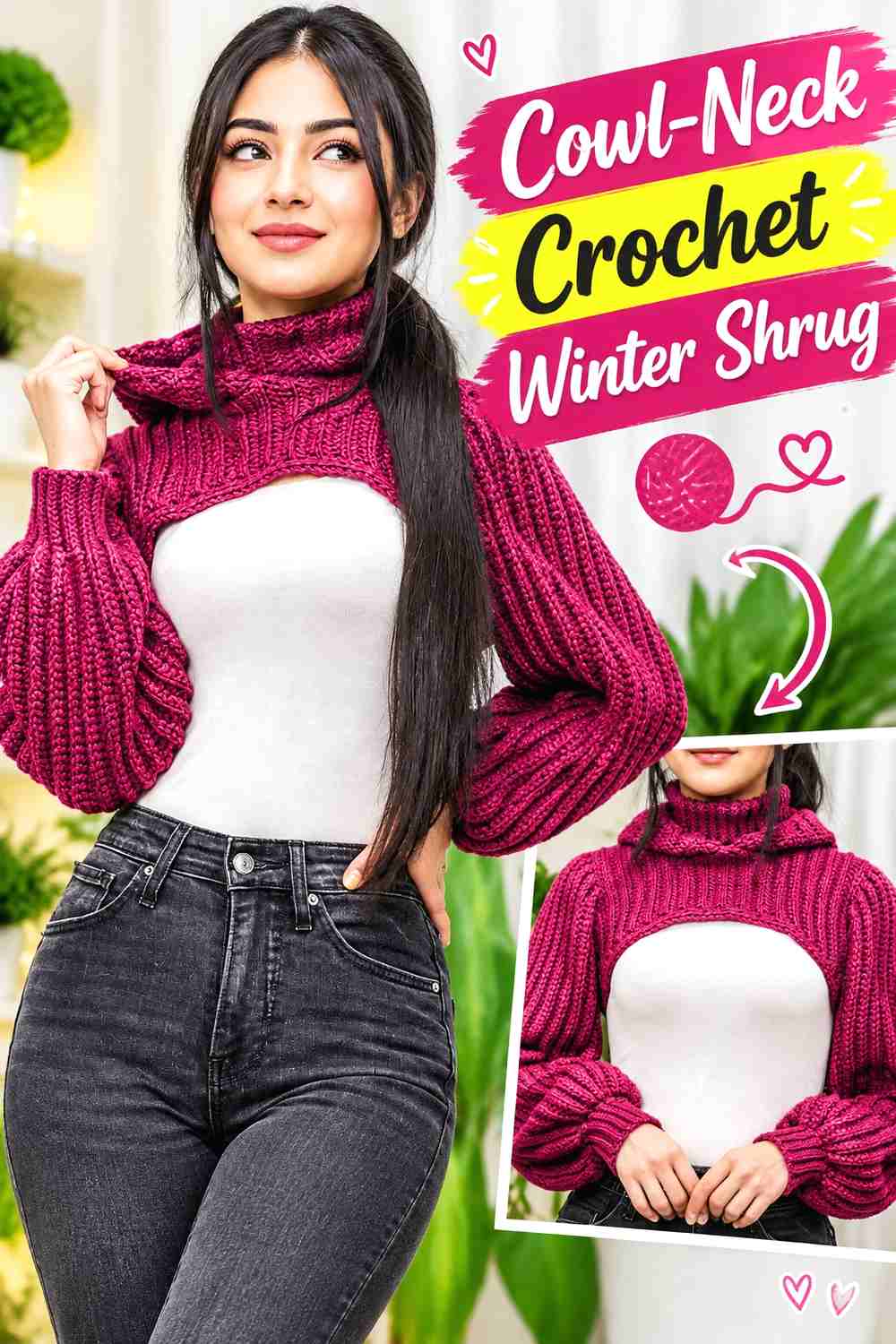
This is one of the clearest direct matches for the topic. The source project combines a cropped shrug-like body and sleeves with a substantial cowl-neck section, giving you upper-body warmth without extending into a conventional full sweater.
The cowl is especially useful when you want winter coverage but dislike the close pressure of a fitted turtleneck.
The Cowl Adds Warmth Without Closing the Front
A high cowl can frame the face and cover the back and sides of the neck while the lower garment remains cropped.
That contrast is what makes this style useful for layering. You still see the dress or top underneath, but the upper body reads as a complete winter garment rather than separate sleeves.
Check Cowl Bulk Beneath Your Coat
A generous cowl occupies more space than a mock neck.
If you regularly wear a coat with a high stand collar or narrow neckline, test the shrug underneath it before deciding whether you want additional collar depth. More fabric is not always more comfortable.
Keep Sleeve and Collar Weight in Balance
When both the sleeves and neck are substantial, the entire garment hangs from the shoulder area.
If you substitute yarn, compare weight and drape carefully so the collar does not pull the shrug backward.
Creator Credit: TCDDIY
2. Turtleneck Crochet Sleeve Shrug
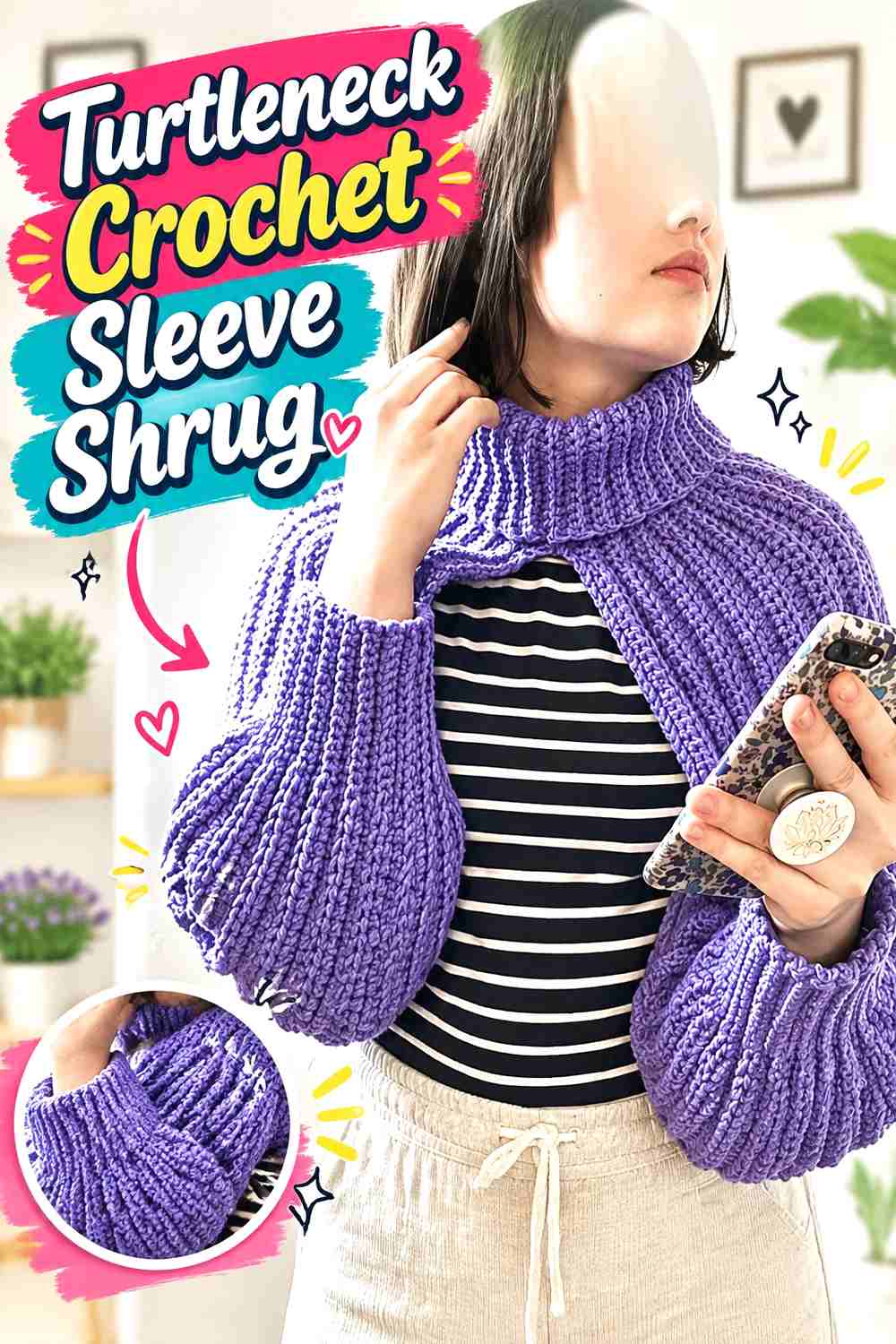
This tutorial is specifically presented as a shrug, turtleneck sweater, and neck-warmer style garment, making it another direct fit for a high-neck layering collection. The finished idea is essentially the upper portion of a sweater without a conventional torso.
That makes it particularly useful over dresses or fitted tops when you want the visual effect of long sleeves and a turtleneck without adding fabric around the waist.
A Close Neck Makes the Shrug Look Like a Cropped Sweater
A true turtleneck changes the garment more dramatically than a decorative collar.
Instead of reading as separate arm warmers, the sleeves and neck become visually connected across the shoulders. This is a strong option if you want a streamlined winter silhouette.
Head Entry Matters More Than Collar Height
A tall neckline still has to pass comfortably over the head.
Do not deliberately tighten the neck in an attempt to increase warmth. Use the tutorial’s construction as your fit reference and test stretch before finishing.
Light Fabric Can Still Work for Layering
A high-neck shrug does not have to be extremely thick to be useful.
A lighter fabric can work over another winter layer and is less likely to create excessive bulk at the shoulders or beneath a coat.
Creator Credit: Hobbi CROCHET
3. Ribbed Crochet High-Neck Arm-Warmer Shrug
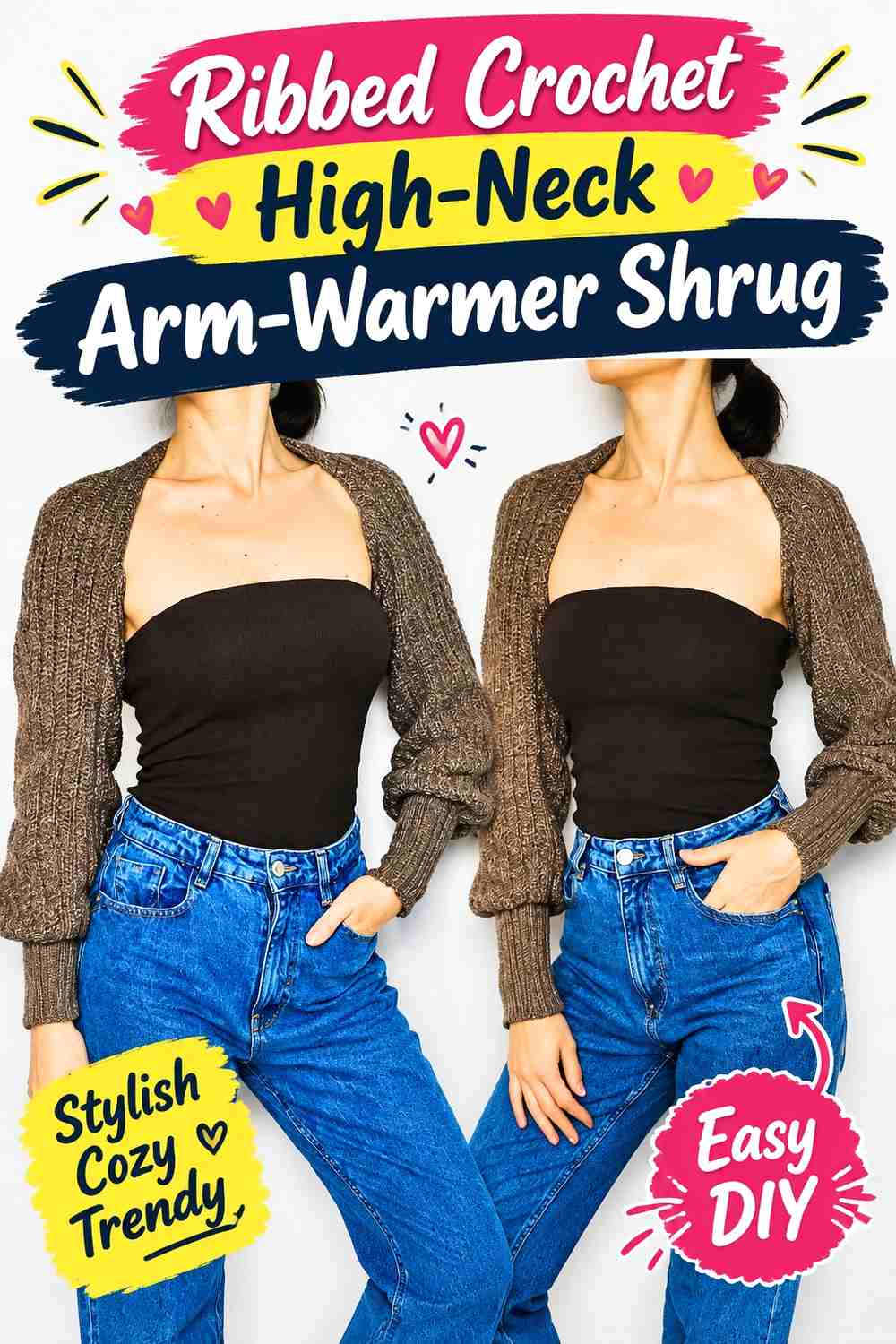
This source teaches an arm-warmer sweater with long sleeves and a cropped upper-body structure, making it a useful foundation for a high-neck winter shrug.
The clean sleeve shape makes this direction particularly suitable when you want the collar to be the main modification rather than adding several decorative features.
Ribbing Helps Connect the Neck and Cuffs
A repeated ribbed texture can make separate garment areas feel related.
If you adapt the neckline upward, echoing the visual language of the cuffs can make the collar look intentional rather than attached afterward.
Keep the Upper Back Wide Enough for Movement
A sleeves-only sweater still needs enough room across the shoulder blades.
Before adding a high collar, raise and cross your arms while wearing the basic shrug. If the back already pulls tightly, a collar will not solve the fit.
A Mock Neck Can Be Easier Than a Full Turtleneck
If the original neckline is relatively open, a shorter mock-neck treatment may require less additional weight and stretch than a deep folded collar.
Choose collar height according to the existing garment rather than forcing every shrug into the same turtleneck proportion.
Creator Credit: By StellaM
4. Minimal Crochet Neck-Panel Shrug
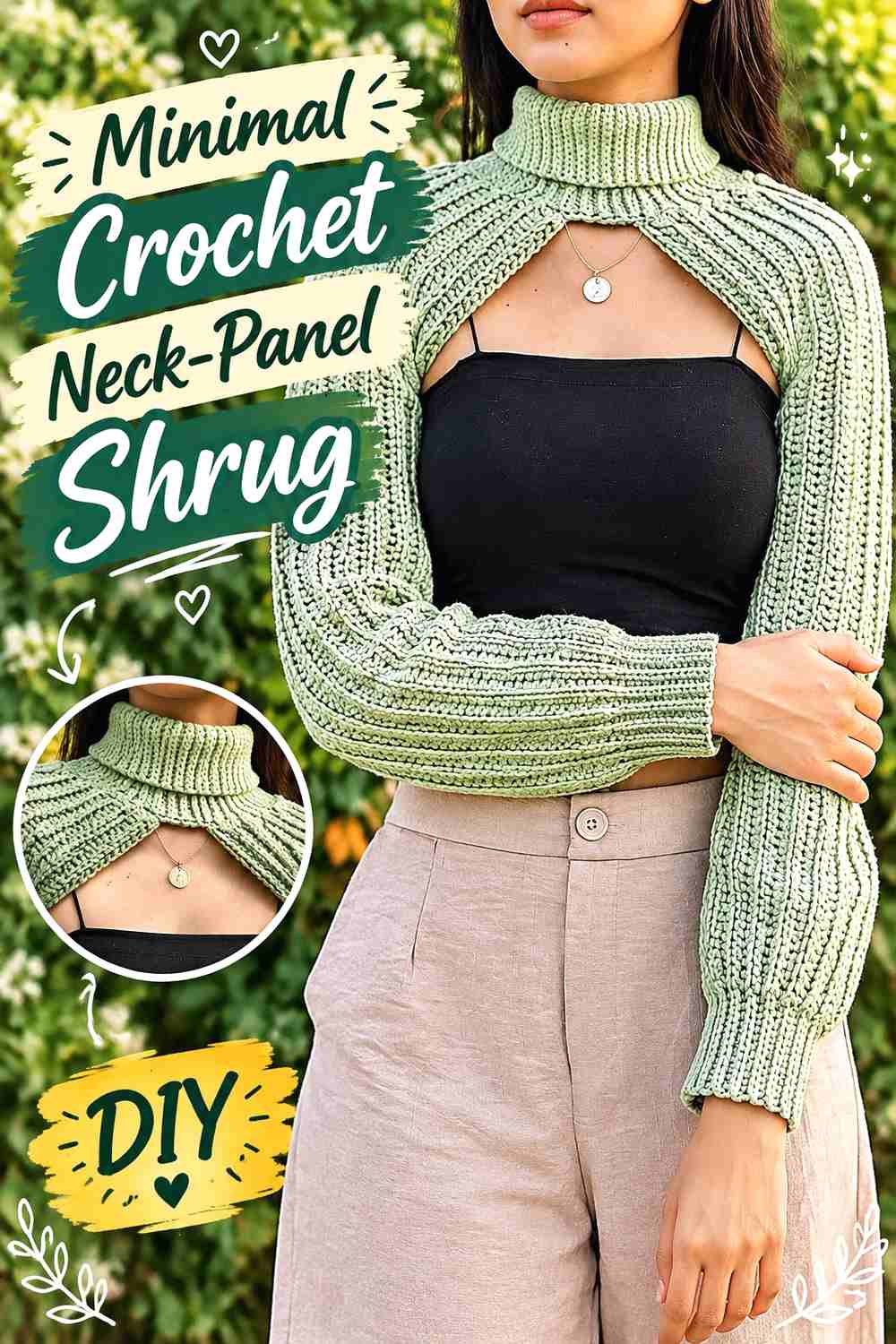
This arm-warmer sweater tutorial uses a simple cropped construction and is useful as a minimalist base for winter layering. The source garment focuses on sleeves and the upper-body connection rather than a full torso.
For a high-neck version, keep the adaptation clean: one controlled collar is enough.
Minimal Construction Makes Collar Proportion Obvious
On a simple shrug, the neckline becomes a major visual feature.
A very deep turtleneck can dominate the garment, while a compact ribbed collar creates a quieter winter look. Decide which proportion suits the sleeve volume.
Keep the Underlayer Visible on Purpose
The appeal of a bodiless shrug is that the garment underneath remains exposed through the torso.
That makes it easy to combine the shrug with fitted dresses, camisoles, or high-waisted separates without hiding their shape.
Use the Base Fit Before Adding Neck Structure
Complete the shoulder and sleeve fit according to the tutorial first.
Only after that should you judge whether the opening needs a close mock neck, taller collar, or softer cowl.
Creator Credit: Chenda DIY
5. Textured Crochet High-Neck Sleeve Shrug
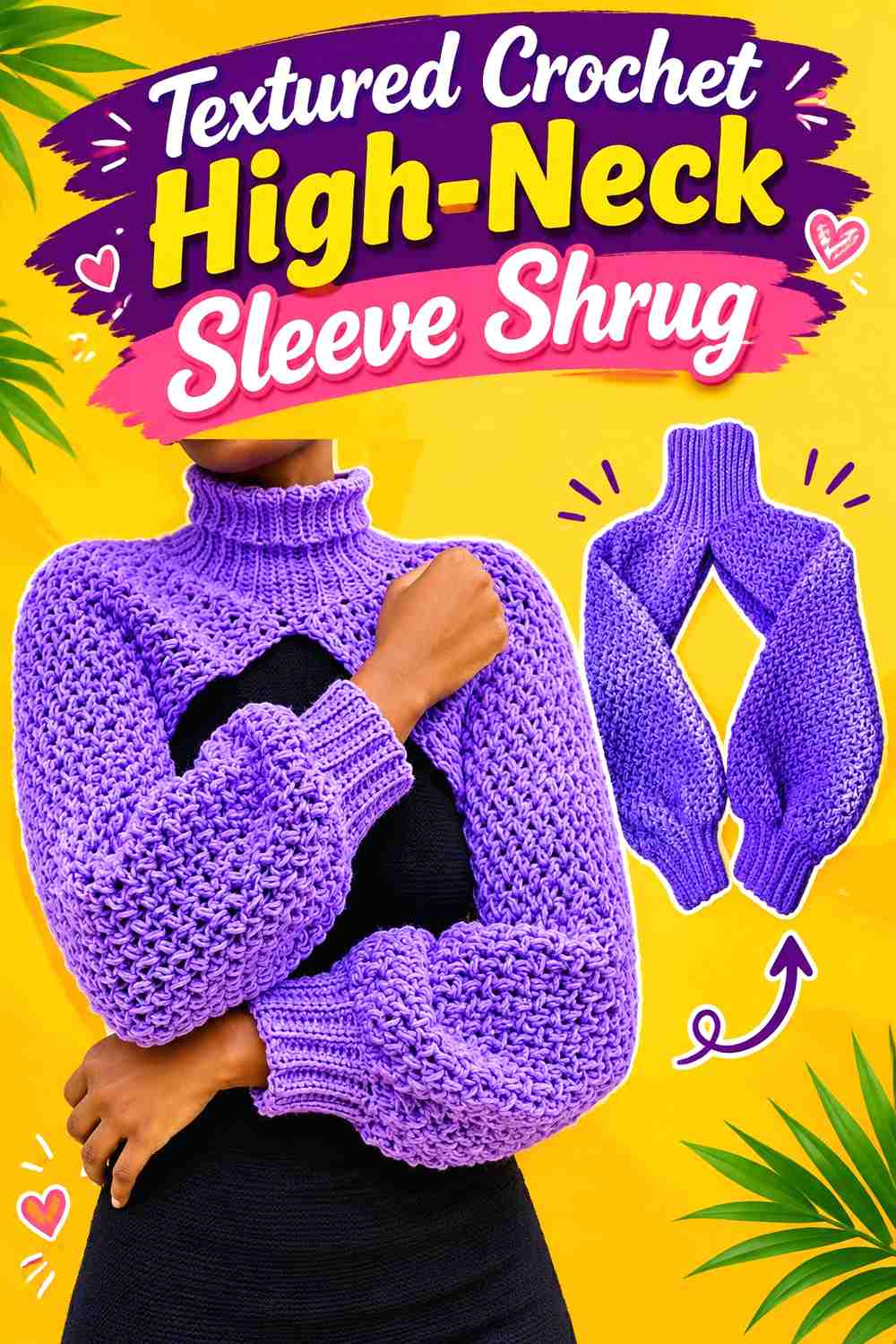
This source arm-warmer sweater stands out because the crochet texture is a noticeable part of the finished design rather than relying only on basic flat fabric.
That makes it a strong adaptation base if you want a high-neck shrug where the sleeves remain visually important.
Let the Sleeve Texture Lead
A textured stitch already gives the garment plenty of surface interest.
If you add a high neck, consider making it simpler than the sleeves so the two areas do not compete. Smooth ribbing or a restrained collar can frame more decorative arm fabric.
Compare Texture Stretch With Neck Stretch
A stitch pattern that works well across the arms may not be appropriate around the throat.
The collar needs to stretch and recover according to its own job. Do not assume the same stitch should automatically continue into every part of the shrug.
High Contrast Can Emphasize the Neckline
A collar worked in one of the sleeve colors can visually connect the project without requiring identical texture.
This can be especially effective when the body section is small and each color placement becomes noticeable.
Creator Credit: Zx Crochets
6. Color-Block Crochet Collar Shrug
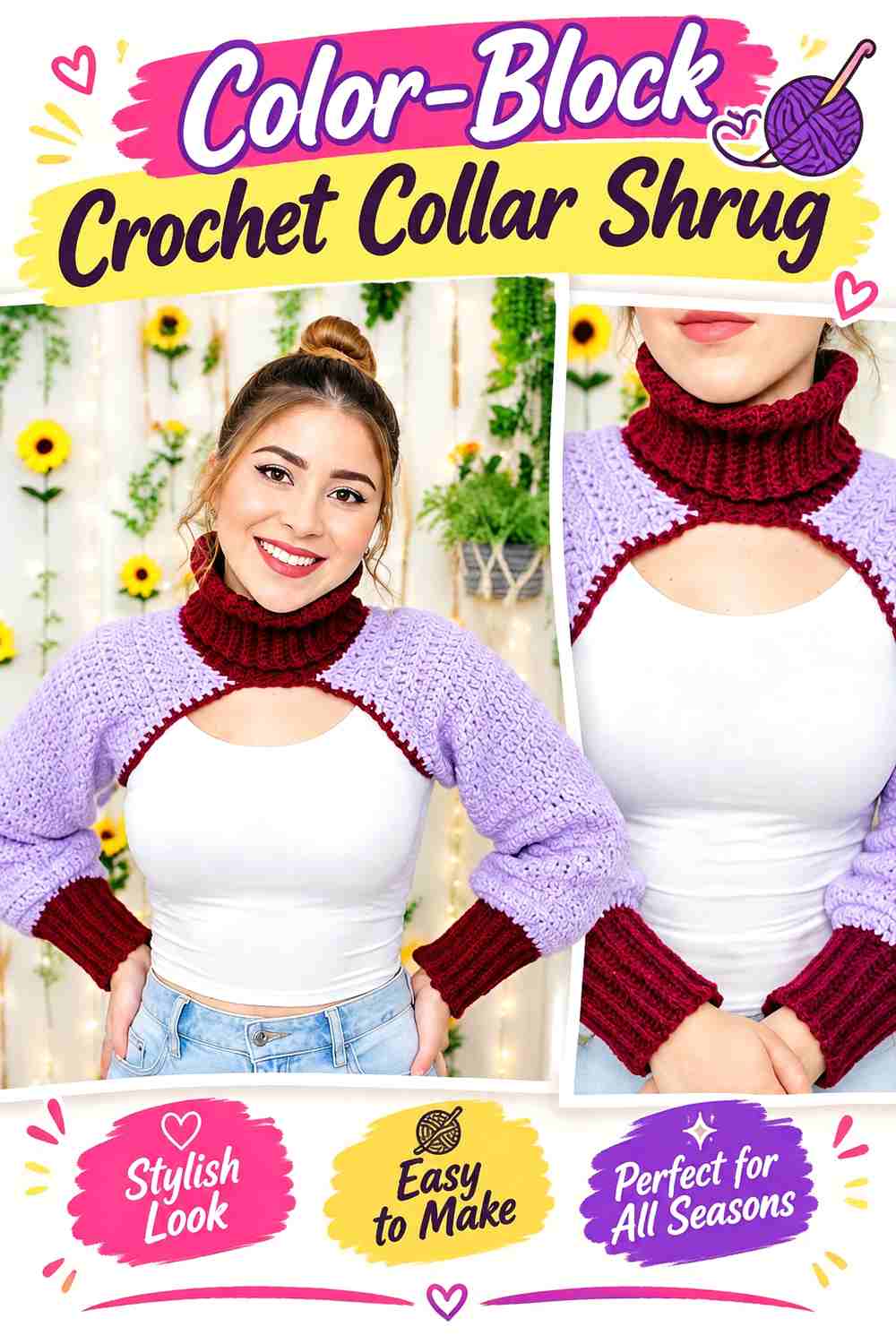
This tutorial uses color blocking across an arm-warmer sweater, providing a good base for a high-neck shrug where contrast placement becomes part of the winter design.
Unlike a one-color ribbed shrug, this direction lets the collar become another deliberate color zone.
Use the Collar to Complete the Color Story
A high neck can repeat the cuff color, match one sleeve section, or remain neutral.
Choose one relationship instead of introducing an unrelated additional color. On a very cropped garment, even a small collar occupies a large percentage of the visible design.
Keep Color Blocking Symmetrical Only If the Base Design Needs It
A high-neck shrug does not have to be perfectly mirrored.
Asymmetrical color placement can work, but the neck remains central and therefore naturally draws attention. Make sure its color helps balance rather than accidentally divide the garment.
Winter Yarn Can Alter Clean Color Boundaries
Fluffy or highly marled yarn can blur crisp color transitions.
If graphic blocks are the main reason you chose this source, use yarn with enough definition to keep those divisions readable.
Creator Credit: Brunaticality
7. Compact Crochet High-Neck Arm-Warmer Shrug
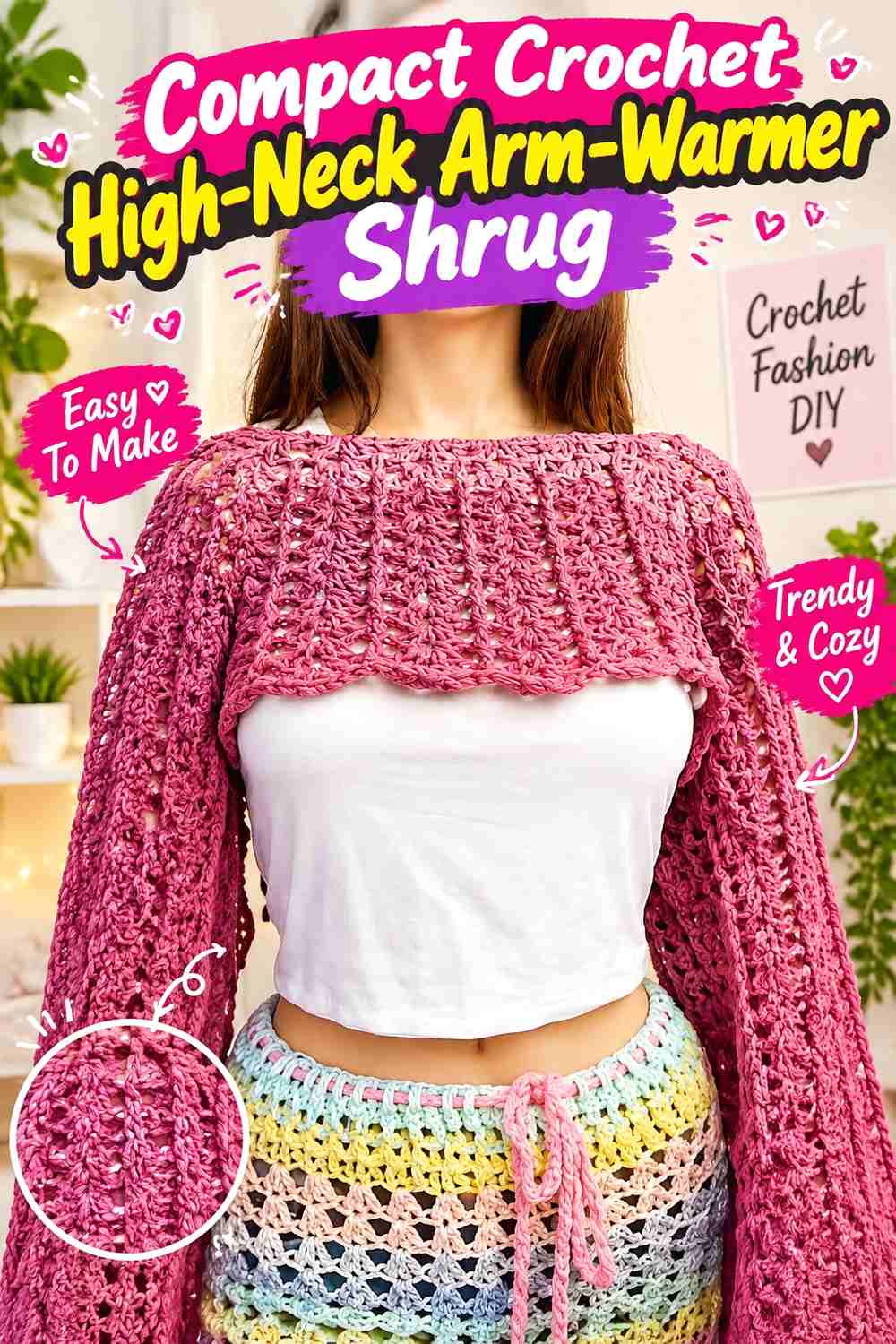
This tutorial teaches a straightforward crochet arm-warmer/shrug form with a short body and long sleeves.
Its relatively simple silhouette makes it useful when you want to experiment with a higher neckline without also managing a complicated body shape.
A Short Upper Body Puts More Attention on the Collar
The less torso fabric a shrug contains, the more prominent the neckline becomes.
A medium-height mock neck can sometimes look more balanced than an oversized cowl on a very compact body.
Sleeve Fit Determines Everyday Comfort
Because the project is mostly sleeves and shoulders, any tightness in those areas becomes noticeable quickly.
Check elbow movement and upper-arm ease before investing time in an additional winter collar.
Keep the Collar Soft Enough to Move
A high-neck shrug is meant to move with the upper body.
If the added collar is extremely stiff, turning the head or layering beneath another garment may feel awkward even when the circumference appears correct.
Creator Credit: K Rod Crochet
8. Mesh-Sleeve Crochet High-Neck Shrug
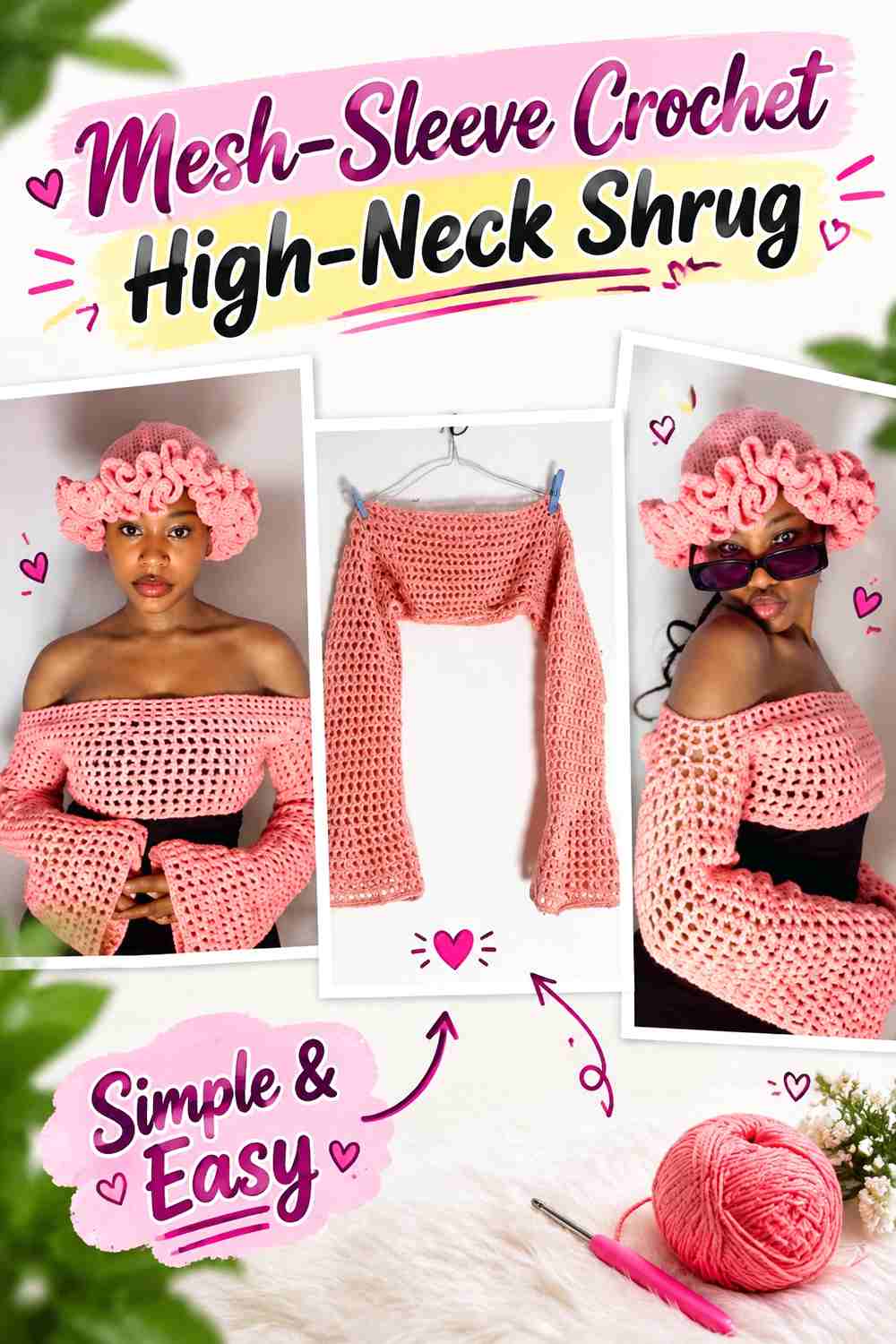
This source produces an off-shoulder mesh shrug, so the high-neck idea is an adaptation rather than part of the original tutorial.
Its value for winter lies in the contrast: an airy sleeve structure over a dense base layer, paired with a more substantial collar if the neckline can support one.
Mesh Works Best Over a Warm Base Layer
Open crochet does not suddenly become dense because a high neck is added.
Treat the shrug as the decorative outer layer and use a fitted long-sleeve top, dress, or bodysuit underneath when warmth matters.
Do Not Let a Heavy Collar Distort Openwork
Mesh has much less structural density than compact ribbing.
A thick turtleneck attached to an airy neckline can pull the fabric downward. If adapting this construction, keep collar weight proportionate to the surrounding crochet.
Contrast Can Make the Open Pattern More Visible
A mesh shrug often looks clearest over a base layer in a contrasting tone.
That styling choice can also strengthen the winter look without altering the stitch pattern itself.
Creator Credit: Mary Paula
9. Fishnet Crochet High-Neck Layering Shrug
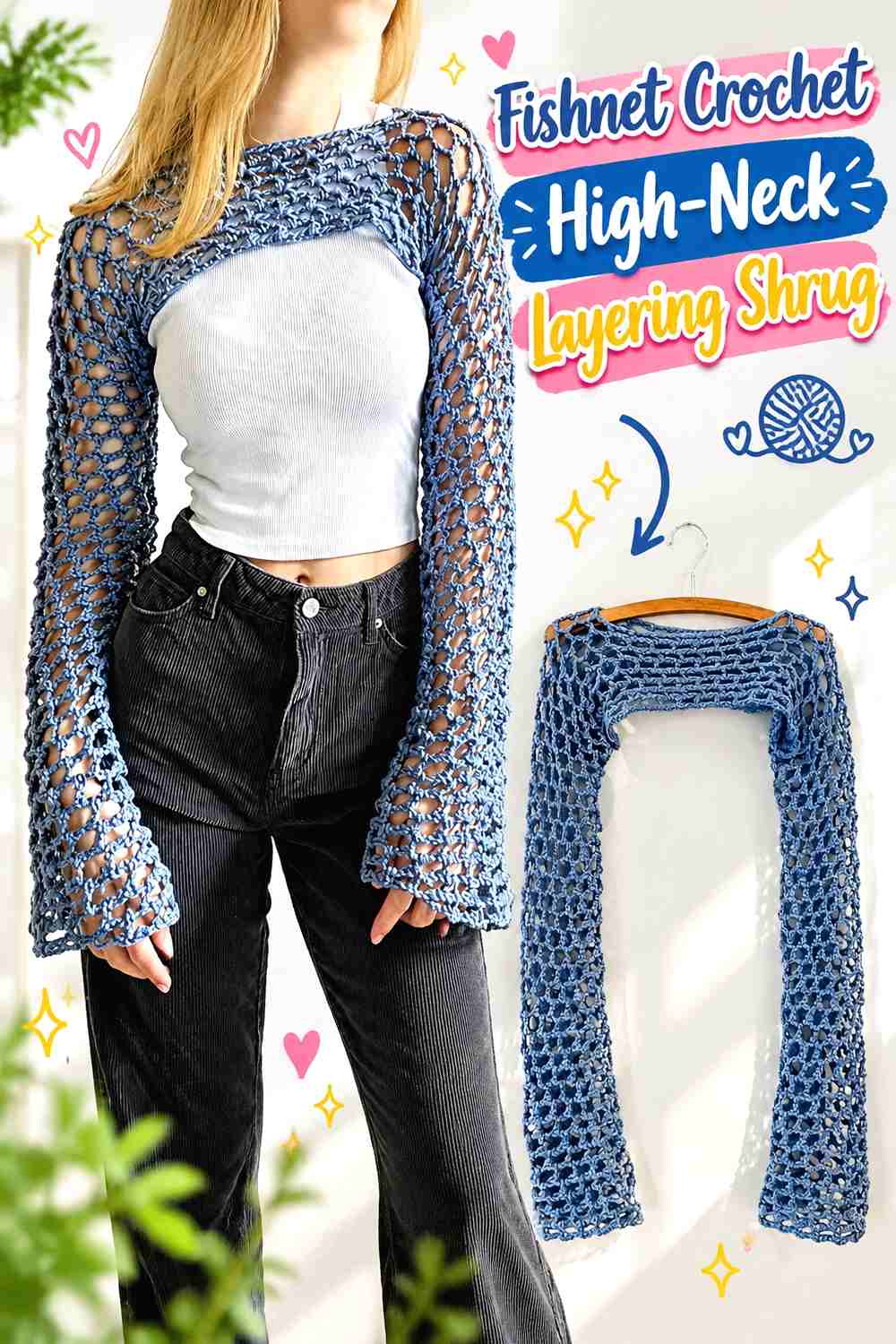
This tutorial teaches a made-to-measure fishnet sleeves/shrug construction, giving you an especially lightweight base for a high-neck adaptation.
It is best considered a fashion layer for winter rather than a dense insulating garment.
Measure Before Adding Neck Depth
The source construction is customized to body measurements.
Preserve that approach when thinking about the collar. A neck that fits another person’s shrug may not sit correctly on yours even when the sleeves are similar.
Pair Open Sleeves With a Solid Collar
A useful adaptation is to create contrast between the airy body and a more compact neckline.
The solid neck can visually anchor the garment, but keep the join flexible enough that the mesh is not gathered unintentionally.
Choose This for Indoor Winter Layering
Fishnet fabric works particularly well for winter events, heated indoor spaces, or outfits where the underlying garment supplies most of the warmth.
It is not the same kind of layer as a dense chunky shrug.
Creator Credit: Anna Greene
10. Striped Mohair Crochet High-Neck Shrug
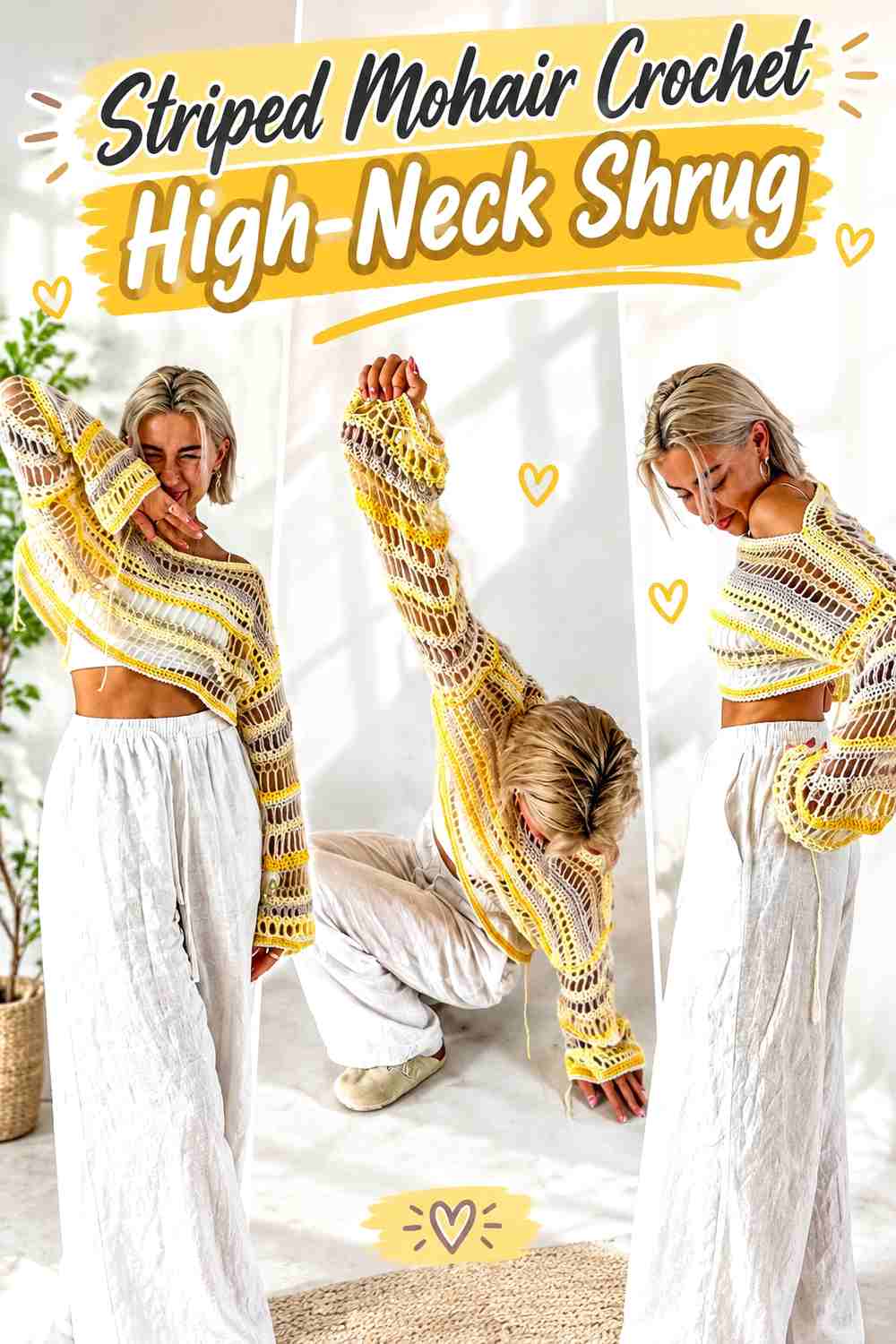
This tutorial uses a sleeves/shrug format with stripes and a mohair-style airy surface, providing a softer visual direction for a winter adaptation.
The source is not a high-neck winter shrug as made, so the collar should be planned as a separate design element.
Fuzzy Yarn Softens Both Stripes and Collar Edges
A haloed yarn blurs sharp stitch definition.
That can make a high neck look soft and cloud-like, but it also makes it harder to see individual stitches during joining. Use clear markers if you add a collar.
Keep the Stripe Pattern From Becoming Too Busy
A striped shrug already contains horizontal or sectional movement.
A solid collar can create a useful visual pause instead of continuing every color change upward.
Test Soft Yarn Against the Neck
Mohair-like or fuzzy fibers may feel very different at the throat than they do on sleeves.
Before committing to a tall collar, hold the yarn against the neck and consider whether the fiber is comfortable for prolonged wear.
Creator Credit: Belina Bellwood
11. Bell-Sleeve Crochet High-Neck Shrug
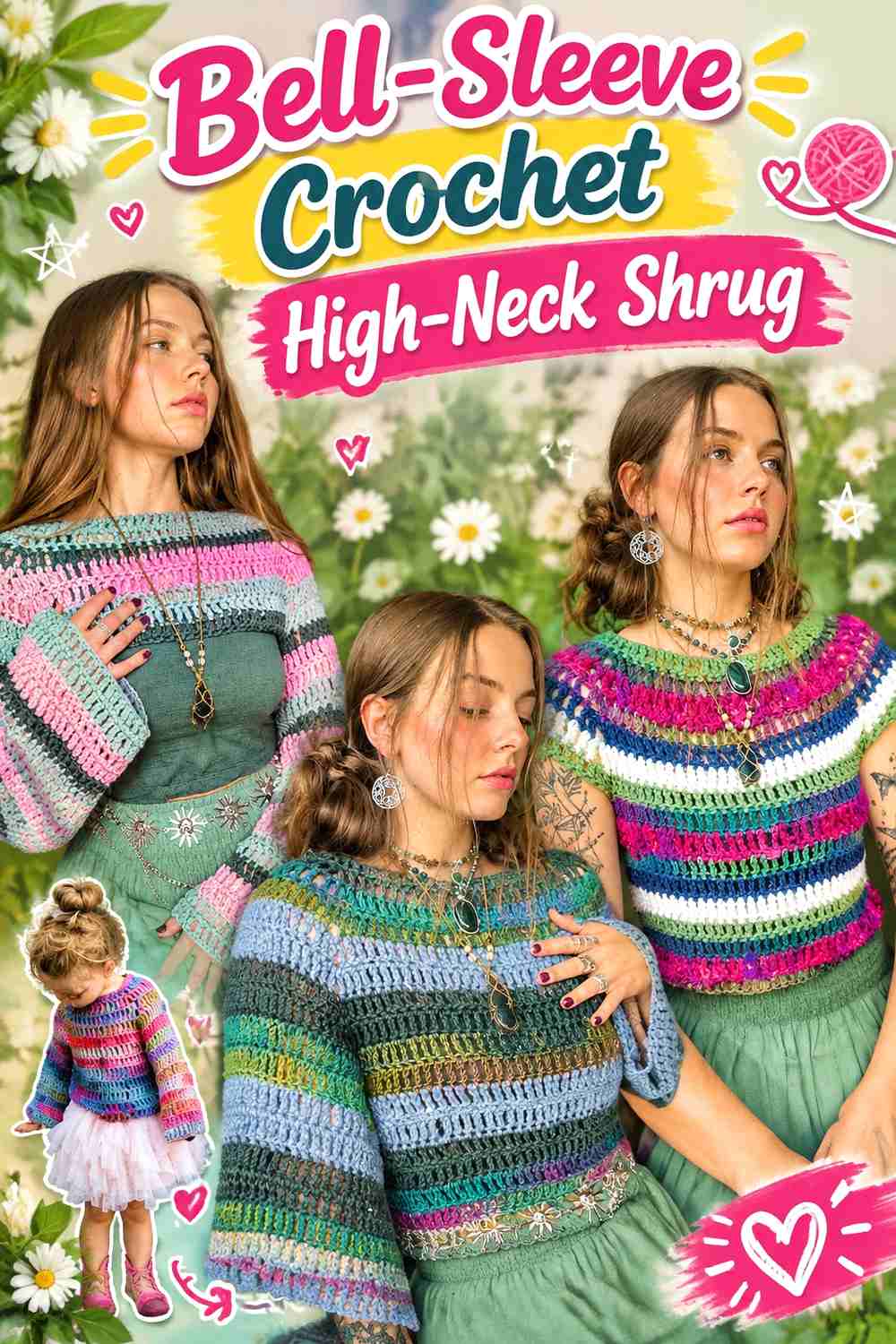
This three-in-one source includes a shrug variation with statement bell sleeves, giving you a dramatically different silhouette from fitted arm-warmer styles.
A high collar can balance those wide lower sleeves by adding visual weight at the opposite end of the garment.
Balance Sleeve Flare With Collar Volume
Bell sleeves already create significant width.
If the collar is equally oversized, the shrug can appear broad at both the neck and wrists with very little visual rest between them. A moderate high neck may produce a cleaner shape.
Check Bell Sleeves Under Outerwear
Wide cuffs and fitted coat sleeves are not always compatible.
If the shrug will be worn beneath a winter coat, test the sleeve opening before making the flare larger.
Keep the Center Section Controlled
With dramatic sleeves, the upper back and neckline benefit from relatively clean construction.
That gives the high neck a clear anchor and prevents the garment from looking equally voluminous everywhere.
Creator Credit: Hannah Drapinski
12. Filet-Motif Crochet High-Neck Shrug
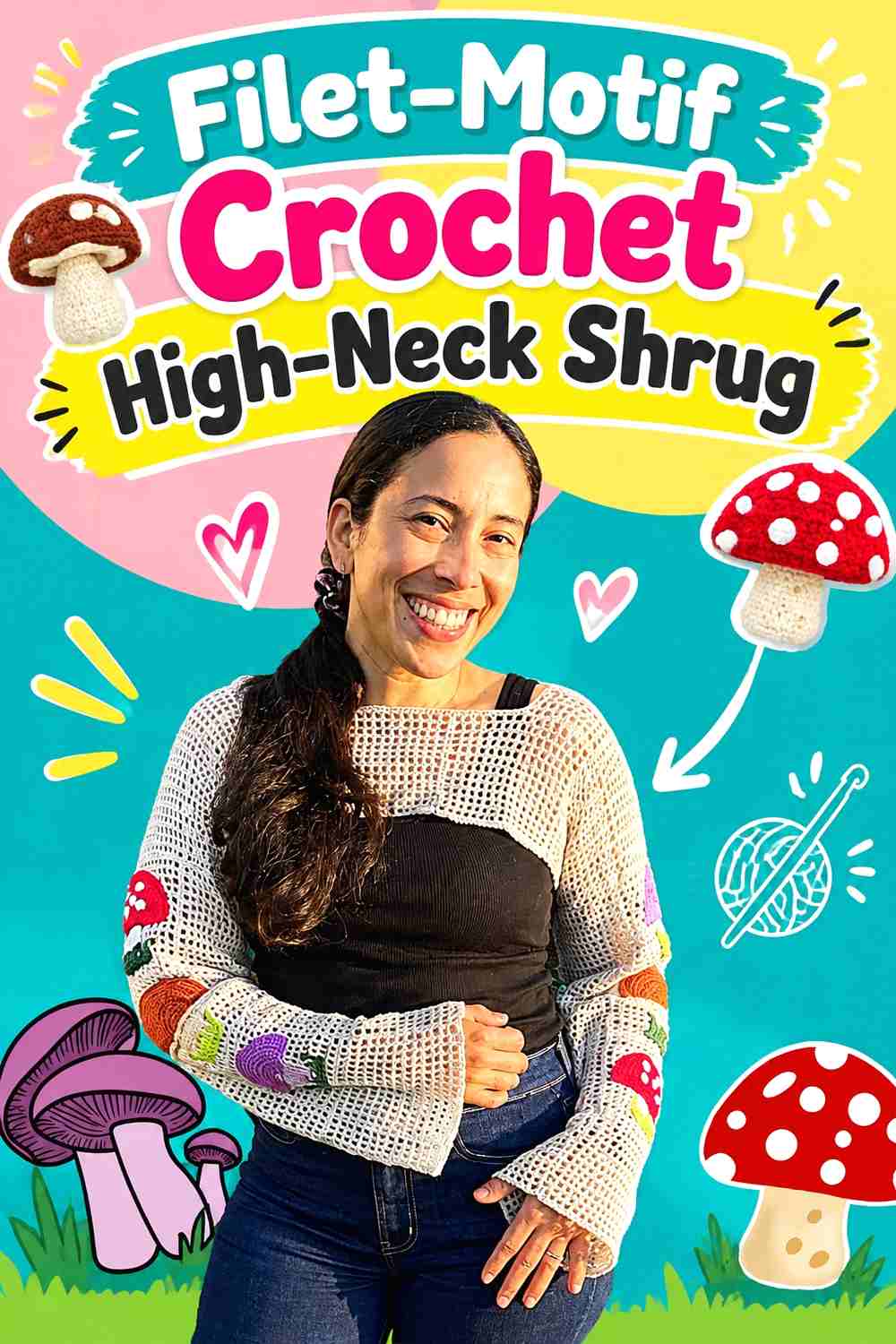
This source shrug uses filet-style squares and mushroom motifs, giving the garment a playful surface and modular visual structure.
For winter, the most convincing high-neck adaptation would let the motifs remain the feature while the collar stays comparatively simple.
Motifs Need a Quiet Collar
A decorative filet body already contains recognizable shapes.
Repeating another complex motif around the neck can make a compact garment visually crowded. A solid or lightly ribbed high neck can frame the motif work instead.
Open Filet Fabric Still Needs an Underlayer
The spaces that make the motif readable also allow airflow.
Treat this as a statement winter layer over another garment rather than expecting the filet fabric alone to provide the same coverage as dense crochet.
Square Construction Makes Alignment Important
When a shrug is built from distinct geometric areas, an uneven neckline becomes obvious.
Before adding a high neck, make sure the upper edge is balanced and the shoulder placement is sitting as intended.
Creator Credit: Pops de Milk Crochet
13. Granny-Raglan Crochet High-Neck Shrug
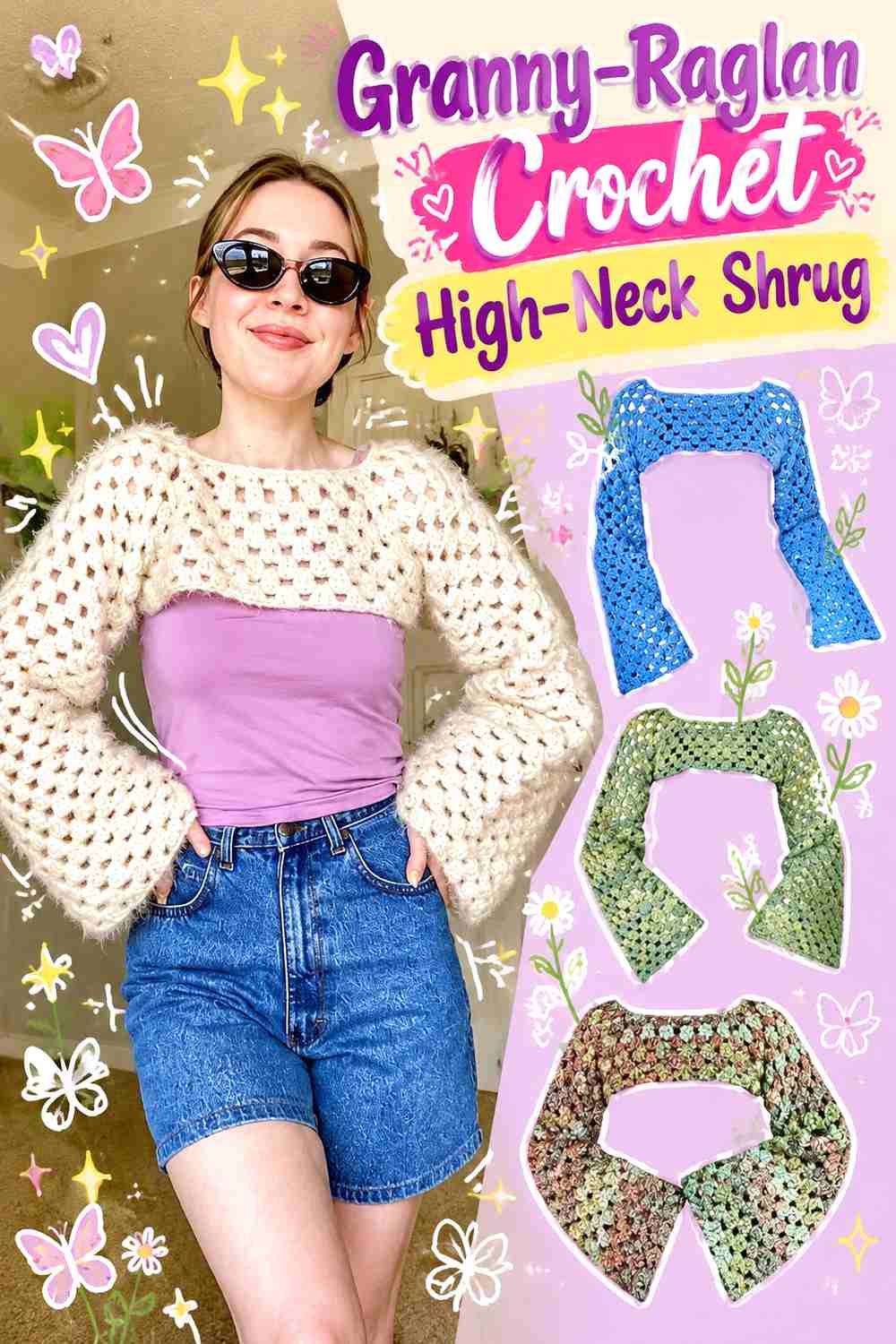
The Faerie-style granny shrug uses a top-down raglan construction with clustered crochet, making it structurally different from rectangle and paneled shrugs.
Because the neckline is established at the start of a top-down garment, any high-neck adaptation needs to respect that original opening.
Raglan Lines Must Fit Before the Collar Changes
Shoulder shaping controls how the shrug sits around the upper body.
Get that fit right first. A tall collar attached to a poorly fitting yoke can make the upper section feel even more restrictive.
Granny Texture Benefits From a Solid Neckline
Clustered fabric creates a recognizable rhythm of stitches and spaces.
A denser collar can provide useful contrast while also making the high-neck area feel more sweater-like.
Novelty Yarn Can Soften the Granny Structure
This type of project lends itself to mixing textures, but a very fuzzy collar can become visually disconnected from crisp clusters.
Compare the two fabrics next to each other before deciding how dramatic the texture change should be.
Creator Credit: HayHay Crochet
14. Faux-Fur-Edge Crochet High-Neck Cocoon Shrug
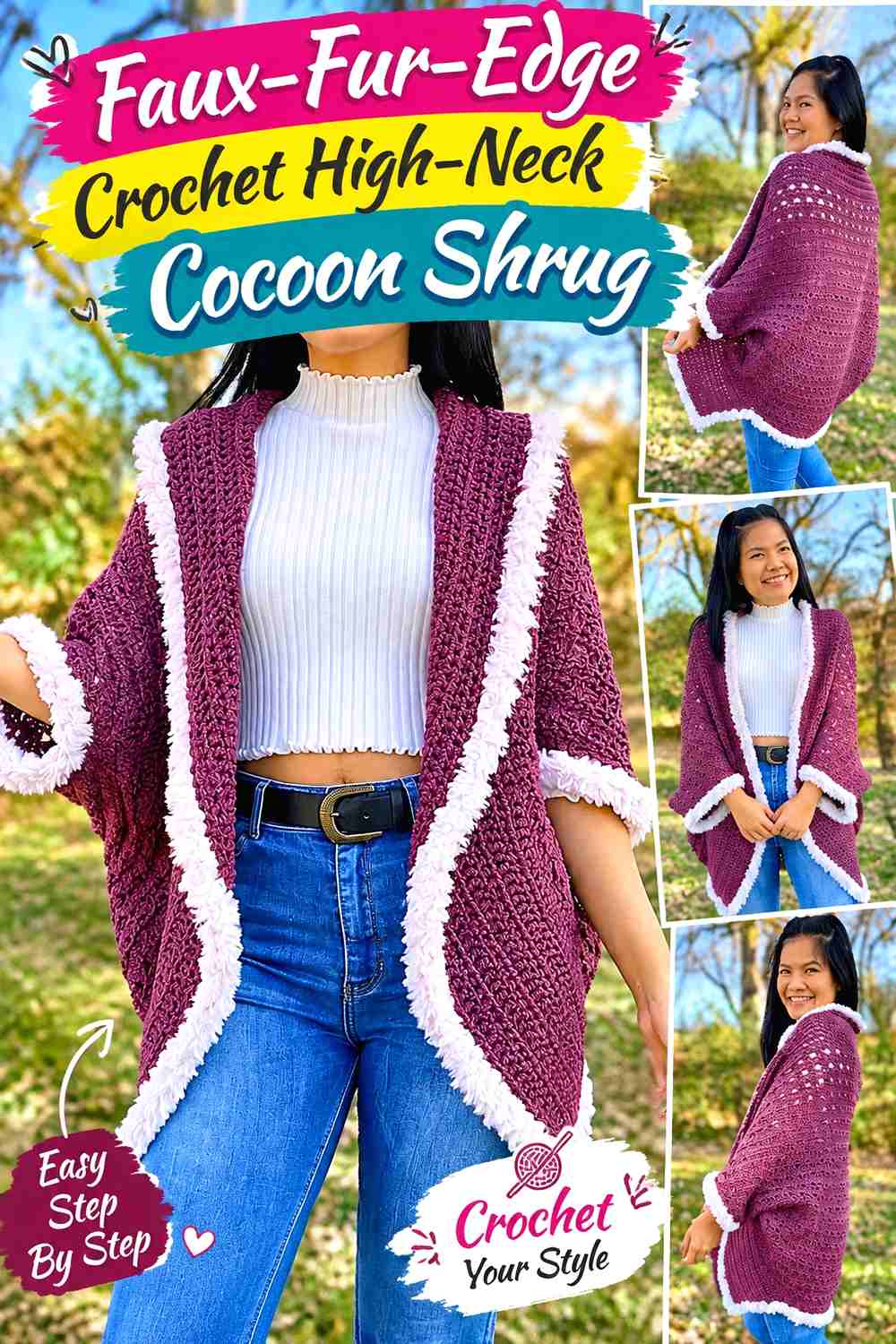
This cozy shrug uses a one-piece body and adds a substantial collar area, with faux-fur yarn incorporated into the finishing.
It is a useful starting point if your ideal high-neck shrug is softer and more cocoon-like rather than a fitted sleeves-only sweater.
The Existing Collar Gives You a Natural Adaptation Zone
Because the shrug already includes a defined collar, you do not have to invent a neckline from an entirely open edge.
For a higher-neck version, the key decision is how much additional height the collar can support without becoming excessively heavy.
Faux Fur Changes the Visual Scale
Fluffy edging makes a collar look larger than the same number of rows in a smooth yarn.
Judge the finished proportion visually rather than deciding collar depth only from measurements on paper.
Cocoon Construction Creates More Back Coverage
This style wraps more fabric around the upper torso than a minimal arm-warmer shrug.
Choose it when you want shoulder and upper-back warmth to matter as much as the high neck itself.
Creator Credit: KnitcroAddict
15. Top-Down Crochet High-Neck Winter Shrug
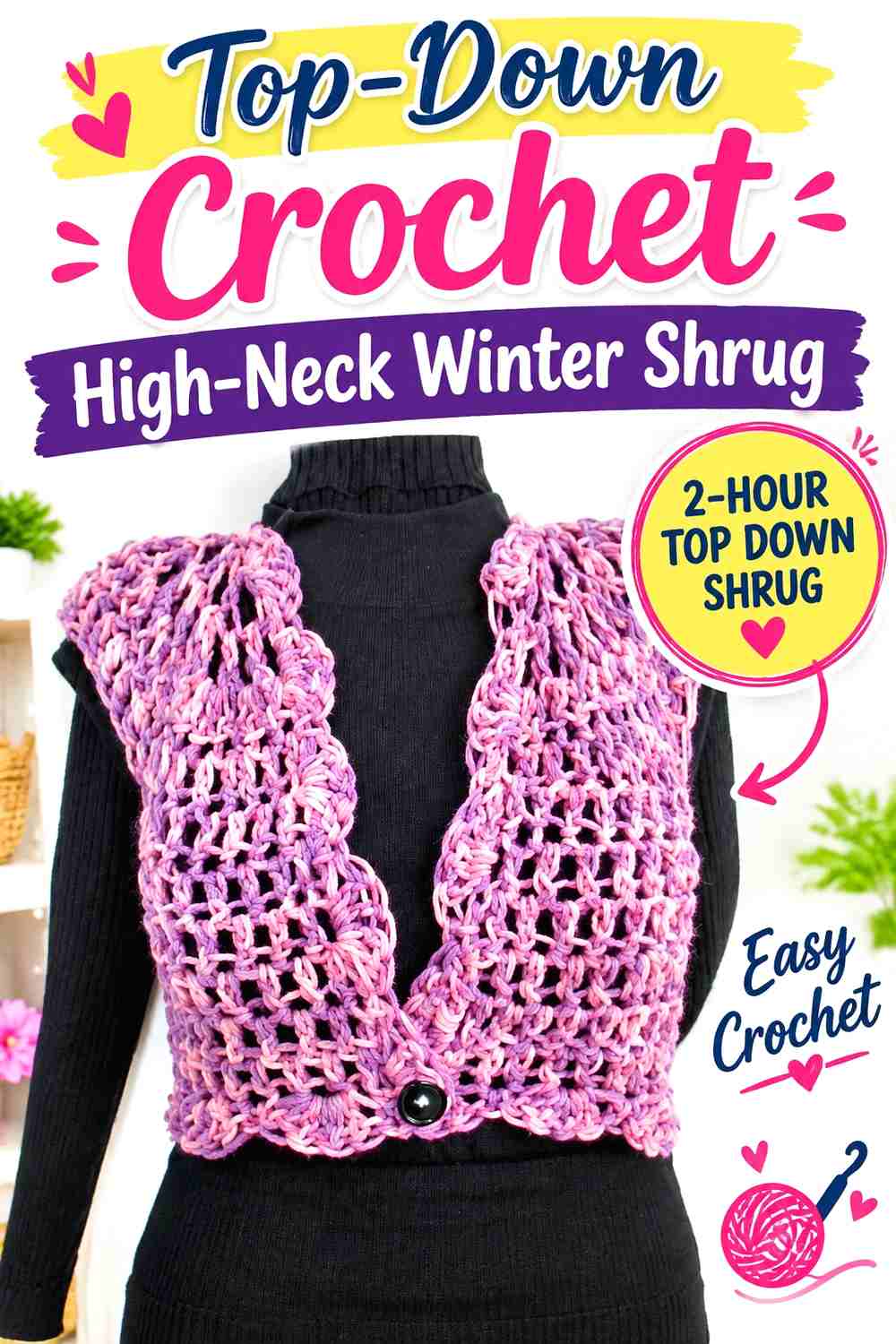
This source teaches a top-down shrug construction rather than beginning with a large rectangle, providing another useful route for an adapted high neckline.
The method is particularly interesting if you prefer to establish the upper-body fit before committing to all of the sleeve length.
Top-Down Fit Gives You an Early Neckline Check
When the upper section develops first, you can evaluate how the shrug sits around the shoulders relatively early.
That is the right time to decide whether a high collar will complement the opening or make it feel crowded.
Keep a Winter Collar Proportionate to a Fast, Simple Body
A straightforward shrug construction usually looks strongest when adaptations remain equally clear.
A simple ribbed mock neck may integrate more naturally than adding several complicated cable or lace sections to a minimal base.
Use Sleeve Length to Control Overall Warmth
If the high neck already supplies noticeable coverage, sleeve length becomes another way to adjust how substantial the finished garment feels.
Follow the source construction and choose the winter balance you actually need.
Creator Credit: Hectanooga1
16. Ribbed-Cuff Crochet High-Neck Bolero Shrug
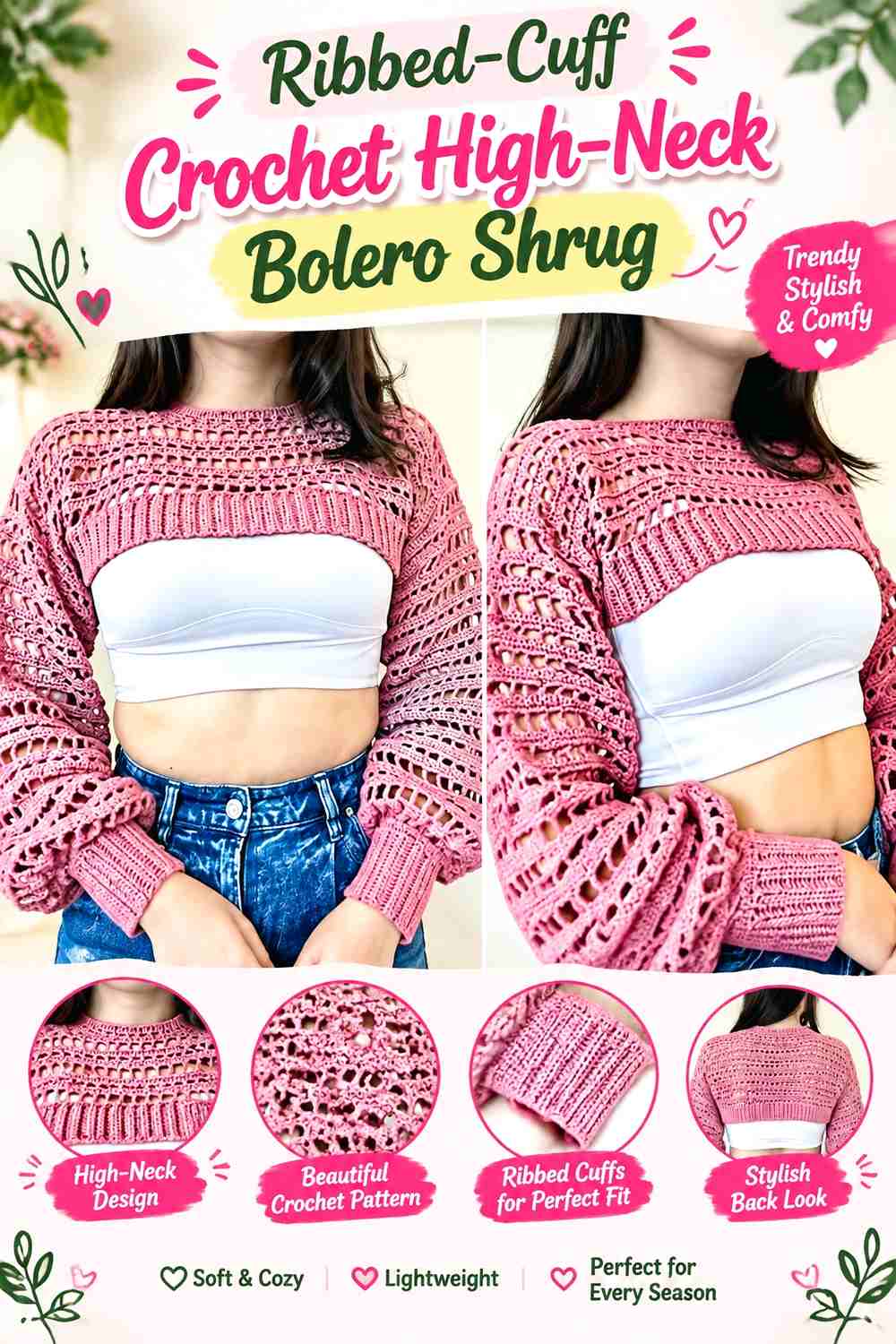
This bolero shrug combines a cropped body with ribbed details and an airy stitch structure. The original is designed as a lighter garment, so the high-neck winter version is an adaptation rather than an exact reproduction of the source.
Its main advantage is the contrast between defined ribbing and open body fabric.
Use Existing Ribbing as the Collar Reference
The cuffs provide a ready-made visual language.
A high neck that echoes that ribbed appearance can make the adaptation feel integrated even if the body remains airy.
Keep the Open Body Flexible
Changing the entire shrug to heavy yarn may reduce the drape and openness that distinguish the source.
For winter, layering it over a fitted warm top may produce a better result than trying to make every part of the bolero dense.
Check the Cropped Length With Your Base Layer
A short shrug reveals much of the garment underneath.
Choose a base layer whose neckline, color, and torso proportions work deliberately with the high-neck bolero rather than treating the underlayer as an afterthought.
Creator Credit: Yarnalina
17. Ribbed Neck-Panel Crochet High-Neck Shrug
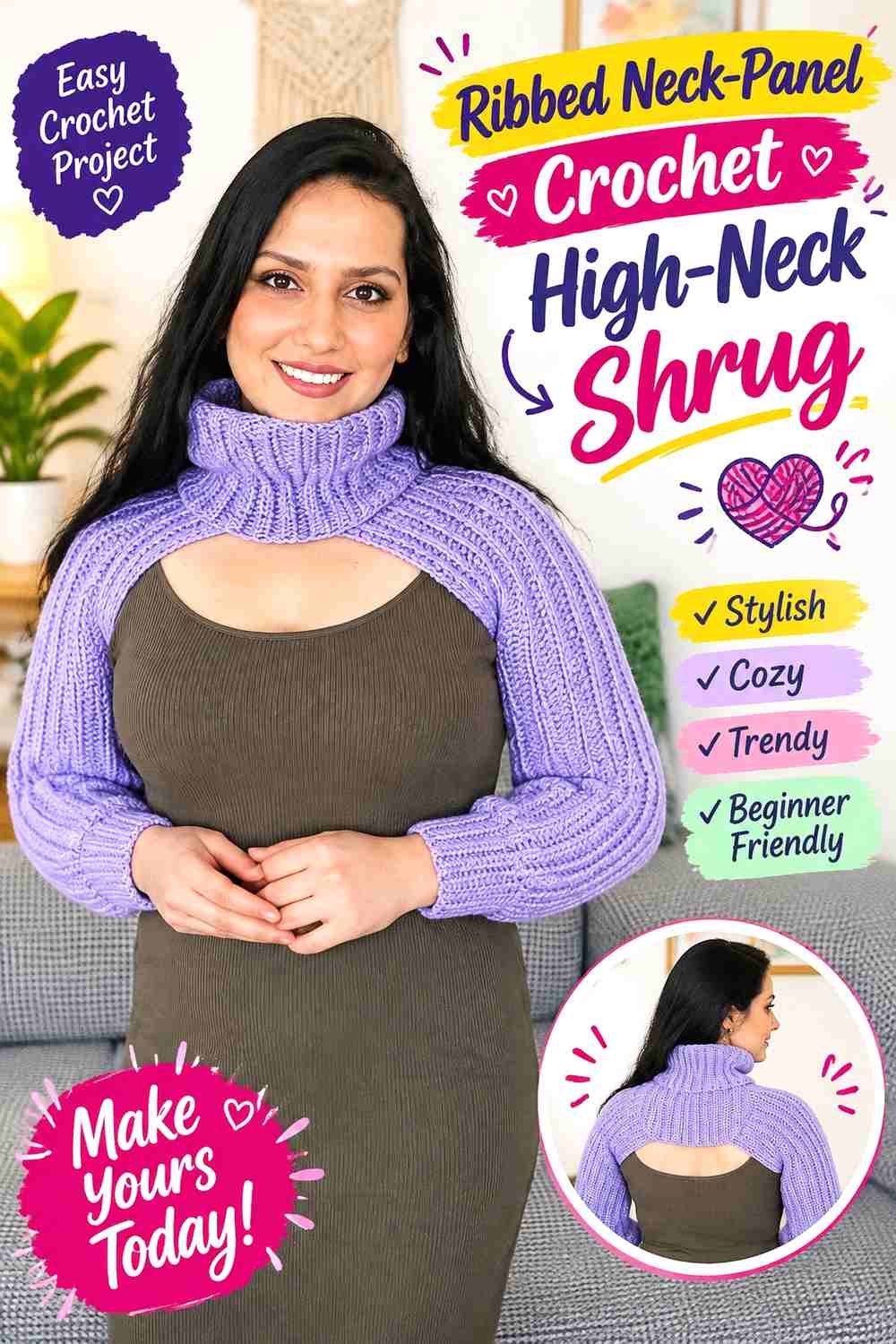
This arm-warmer sweater is built around sleeves and a separate ribbed neck/body panel, which makes it particularly relevant to the high-neck concept even though the source describes the project more broadly as an arm-warmer sweater or bolero.
The panel-based structure creates a strong sweater-like line across the back of the neck and shoulders.
A Separate Neck Panel Makes Collar Planning Clearer
When the neck area already exists as its own component, you can evaluate its width and structure before thinking about additional collar height.
That is more controlled than trying to attach a neck to a completely open rectangular shrug.
Ribbed Texture Supports the Winter Look
Back-loop-style ribbing gives the fabric a sweater-like appearance even without complex cables or motifs.
Keeping the collar in the same visual family can create a clean high-neck shrug that pairs easily with several outfits.
Fit the Neck Panel Before Final Assembly
The central panel affects the distance between the sleeves as well as the way the garment crosses the upper back.
Follow the creator’s assembly and sizing method rather than changing that piece only to obtain a taller collar.
Creator Credit: Gülşah Özcan Filiz
Which Crochet High-Neck Shrug Should You Choose?
| If you want… | Consider… | Main point to check |
|---|---|---|
| A true cowl-neck shrug | Project 1 | Collar bulk beneath outerwear |
| A true turtleneck-style shrug | Project 2 | Head entry and neck stretch |
| A close sleeves-only shape | Projects 3–7 | Upper-back and shoulder mobility |
| Openwork winter layering | Projects 8–10 | Base-layer warmth and collar weight |
| Soft fuzzy texture | Project 11 | Comfort of haloed yarn at the neck |
| Dramatic sleeves | Project 12 | Coat compatibility |
| Decorative motifs | Project 13 | Keeping the collar visually simple |
| Granny texture | Project 14 | Raglan fit before adding neck height |
| Maximum upper-back coverage | Project 15 | Overall garment and collar weight |
| Simple top-down shaping | Project 16 | Neckline position early in construction |
| Airy bolero styling | Project 17 | Ribbing and underlayer coordination |
| Ribbed sweater effect | Project 18 | Neck-panel fit before assembly |
Conclusion
For the closest ready-made high-neck construction, Projects 1 and 2 are the strongest starting points. The cowl-neck version offers a softer neckline with more drape, while the turtleneck shrug creates the clearest illusion of wearing the upper portion of a full winter sweater.
Projects 3 through 7 are useful when you prefer the slimmer arm-warmer-sweater silhouette. Their cropped bodies leave most of the outfit visible, so a high collar becomes the main winter feature rather than part of a larger sweater.
The openwork designs in Projects 8 through 10 and 17 work differently. They are best treated as decorative layers over a warm base garment rather than as dense insulation. Projects 13 and 14 add motif or granny texture, while Project 15 provides the most cocoon-like upper-body coverage.
When adapting any collarless shrug, settle the shoulder and sleeve fit first. Then decide whether the neckline truly supports a mock neck, turtleneck, or cowl. Follow the original creator’s tutorial for the garment construction and use the high-neck concept as a separate, carefully tested adaptation rather than assuming one collar will work on every shrug.
Frequently Asked Questions
What is a crochet high-neck shrug?
A crochet high-neck shrug is a cropped upper-body layer that covers the arms and shoulders while adding a raised neckline such as a mock neck, turtleneck, or cowl. Unlike a full sweater, it usually leaves much of the torso uncovered.
Is a turtleneck shrug warmer than a normal crochet shrug?
It provides more coverage around the neck, but total warmth still depends on yarn, stitch density, sleeve construction, and what you wear underneath. A dense normal shrug may provide more overall fabric coverage than a very open turtleneck version.
Can I add a turtleneck to any crochet shrug?
Not automatically. The neckline needs the right circumference, structure, and placement to support the extra fabric. Rectangle shrugs, raglan shrugs, paneled boleros, and arm-warmer sweaters all behave differently. Evaluate the original neckline before adapting it.
How tight should a crochet high neck be?
It should sit according to the intended style without feeling restrictive. A pull-on collar also needs enough stretch or opening width to pass over the head comfortably. Avoid deliberately making the neck excessively tight to create warmth.
Is a cowl-neck shrug easier to layer than a turtleneck shrug?
It depends on the outerwear. A cowl offers more room around the throat but may create more bulk beneath a high coat collar. A closer turtleneck can fit more neatly under some jackets but requires more precise neck stretch and fit.
Can a mesh crochet shrug work for winter?
Yes as a layering piece. Mesh and filet fabrics allow substantial airflow, so pair them with a suitable base garment when warmth matters. A high collar can add visual winter character, but it does not turn the open body fabric into dense insulation.
What yarn qualities work well for a high-neck shrug?
Look for yarn that produces the gauge and drape required by the selected tutorial and feels comfortable around the neck. Smooth yarns highlight ribbing, cables, and stitch definition, while fuzzy yarns soften the surface. Very heavy yarn can make both collars and sleeves substantially bulkier.