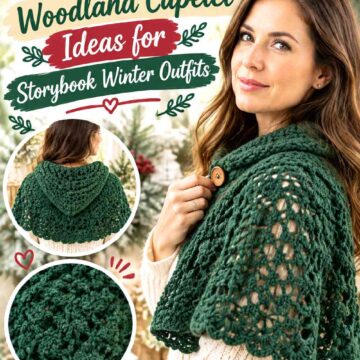
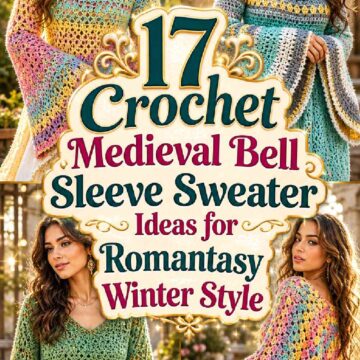
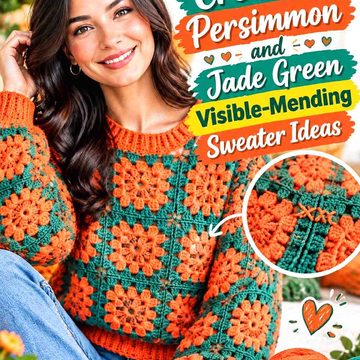
A crochet shoulder warmer can do much more than fill the space between a scarf and a sweater. With the right construction, it can create a deliberate shape around the neck and shoulders: a standing collar, rounded yoke, raised cable panel, exaggerated ribbing, structured fold, or short architectural cape.
That is what makes these ideas sculptural. The effect comes from how the crochet holds, folds, expands, or frames the upper body rather than from decoration alone.
Several tutorials below are true shoulder warmers or compact capelets. Others are short capes and cowl-ponchos whose collars, yokes, cables, or side-to-side shaping make them useful references for a more compact shoulder-warmer interpretation. Where the original garment is larger than a shoulder warmer, preserve its construction logic rather than simply removing rows without checking the resulting neckline and circumference.
For winter layering, also consider what sits underneath. These pieces work especially well over fitted turtlenecks, dresses, slim sweaters, and long-sleeve tops because the base garment supplies arm coverage while the crochet adds warmth, shape, and texture around the upper torso.
Quick List
- Sculpted Turtleneck Crochet Shoulder Warmer
- Crossed-Texture Crochet Shoulder Warmer
- Convertible Collar Crochet Shoulder Warmer
- Popcorn-Texture Crochet Shoulder Snug
- Celtic-Cable Crochet Architectural Shoulder Warmer
- Snowdrift Cable-Yoke Crochet Shoulder Warmer
- Victorian Ribbon Crochet Sculptural Shoulder Cape
- Buttoned Crochet Structured Shoulder Warmer
- Asymmetrical Crochet Outlander Shoulder Warmer
- Jumbo Button Crochet Cocoon Shoulder Warmer
- Box-and-Bow Crochet Geometric Shoulder Warmer
- Draped Crochet Capelet Shoulder Warmer
- High-Collar Crochet Rectangle Shoulder Warmer
- Deep-Ribbed Crochet Funnel Shoulder Warmer
- 1860s-Inspired Crochet Pelerine Shoulder Warmer
- Side-to-Side Ribbed Crochet Shoulder Warmer
What Makes Crochet Look Sculptural?
Sculptural crochet depends on three things: fabric body, shaping, and proportion.
Raised post stitches and cables produce physical relief. Ribbing creates ridges that can fold or stand away from the body. Circular yokes control how fabric spreads from the neck across the shoulders, while side-to-side constructions can create dramatic vertical folds without complicated fitted shaping.
A tall collar can also make an otherwise simple shoulder warmer look architectural. However, the collar needs support from the fabric below it. A very heavy neck attached to a loose, highly open capelet may collapse or pull the neckline outward.
Think of the whole piece as one shape. The collar, shoulder spread, lower edge, and closure should reinforce each other rather than becoming four unrelated statement details.
Structure and Drape Need to Stay in Balance
Sculptural does not necessarily mean rigid.
A cable capelet needs enough definition for the raised texture to remain visible, but it still has to curve around the shoulders. A chunky cowl can hold dramatic folds while remaining soft. A vintage pelerine may use lighter crochet yet appear structured because its neckline and lower edge are clearly controlled.
When substituting yarn, judge more than gauge. Fold the sample, let it hang, and gently compress it. If a fabric refuses to bend, it may project outward instead of following the shoulder line. If it collapses completely, a collar or cable pattern may lose the dimensional effect you wanted.
Do not assume the bulkiest yarn creates the strongest sculpture. Stitch architecture often contributes more than thickness.
Check Neck Comfort and Arm Movement Before Adding More Volume
A short shoulder warmer concentrates most of its fabric around an area that moves constantly.
Reach forward, cross your arms, turn your head, and raise your shoulders when evaluating fit. A piece can look perfectly proportioned while standing still yet creep upward at the neck as soon as the arms move.
The lower circumference matters too. If the shoulder edge is too tight, additional textured rows can make movement worse. If it is excessively loose, a heavy collar may cause the piece to slide.
Finish the functional fit before adding pompoms, fringe, oversized buttons, or another decorative border.
1. Sculpted Turtleneck Crochet Shoulder Warmer
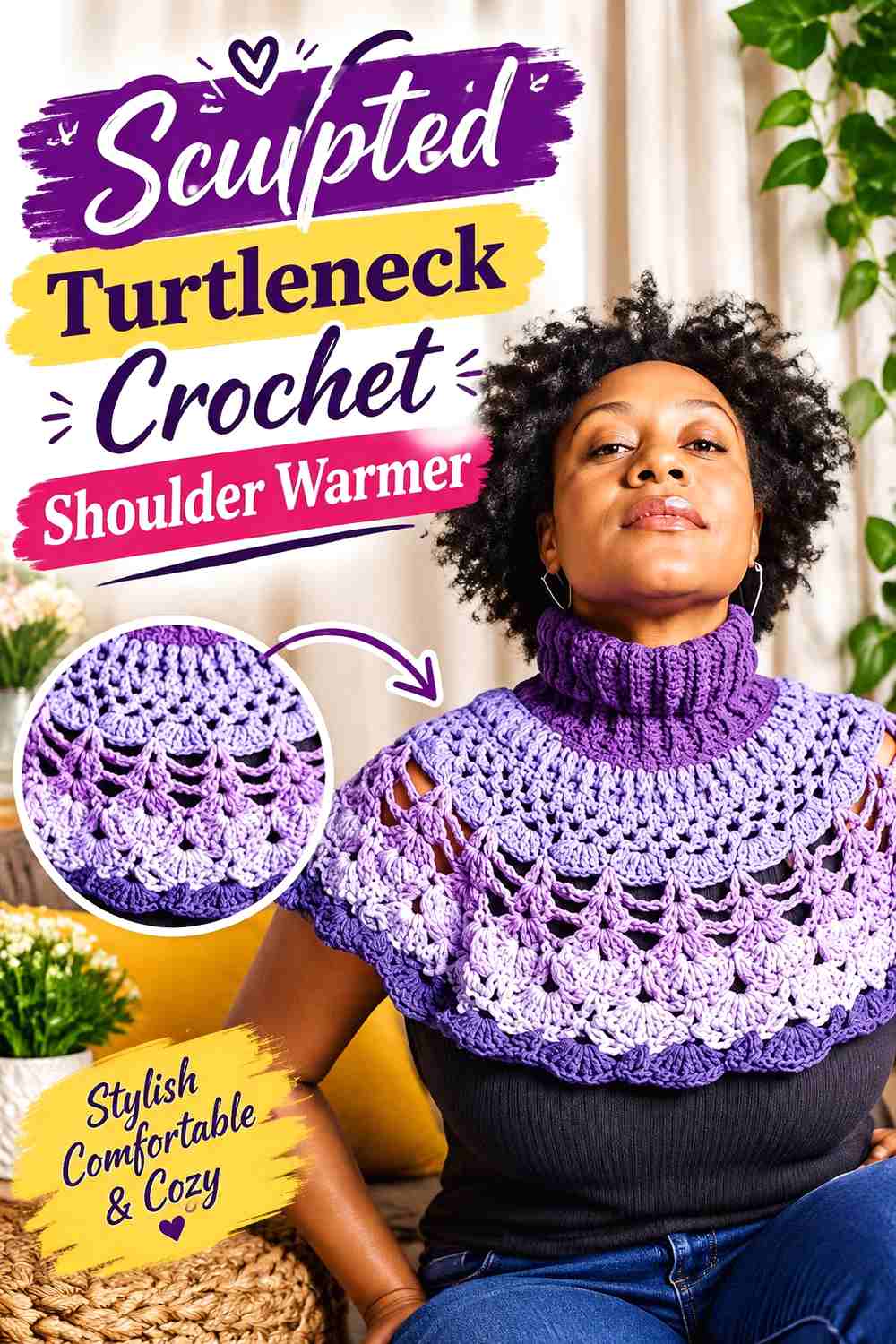
This true turtleneck capelet combines a defined collar with a textured yoke that spreads across the shoulders, making it one of the closest matches to a deliberately sculptural winter shoulder warmer.
The neckline supplies vertical structure while the lower section creates width, so the garment has a clear top-to-bottom change in form rather than behaving like a simple tube cowl.
A Tall Collar Creates the Main Vertical Shape
The collar brings visual height toward the face and provides a strong counterpoint to the wider shoulder section.
If you change yarn, pay close attention to whether the finished collar folds, stands, or collapses. Those three behaviors can make the same basic construction look completely different.
Mixed Texture Works Better With a Clear Hierarchy
The source uses several stitch textures, so the finished surface is already visually active.
For a sculptural interpretation, let the collar and yoke shape remain dominant. Avoid automatically adding a large fringe or highly contrasting lower border that would compete with the texture.
Check the Collar and Yoke as One Unit
A heavier collar can pull against the upper yoke.
Try the piece on before deciding that more collar height is desirable. On a compact shoulder warmer, a small increase in neckline volume can have a large visual and physical effect.
Creator Credit: Poya Stitches
2. Crossed-Texture Crochet Shoulder Warmer
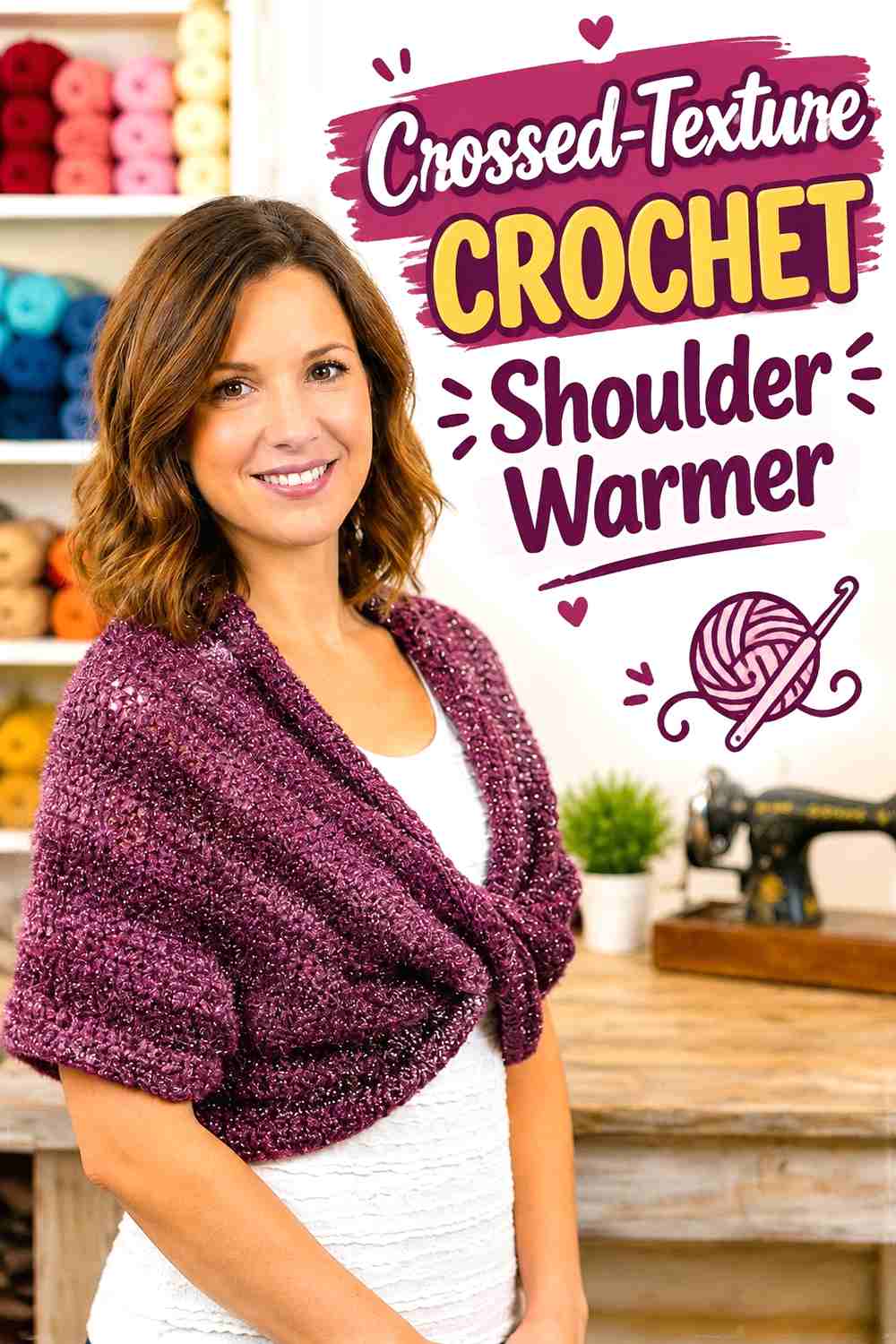
This tutorial is specifically designed as a shoulder warmer and uses a repeated crossed texture that wraps around the upper body.
It is a strong option when you want sculpture to come from surface relief rather than from a tall collar or complicated closure.
Crossed Stitches Create Directional Movement
The raised crossing effect gives the eye a path around the shoulders.
That is especially useful in a solid color, where texture must provide most of the visual depth. A strongly variegated yarn may make those crossing lines harder to see.
Circular Fit Needs Enough Shoulder Expansion
A shoulder warmer has to widen as it travels away from the neck.
Follow the tutorial’s sizing approach instead of treating the piece like an oversized cowl. If the lower edge is too narrow, the fabric can bunch near the neck rather than spreading smoothly.
Keep the Lower Edge Quiet
The crossed texture already supplies a sculptural surface.
A simple finishing edge can preserve that effect better than adding another unrelated raised stitch or deep ruffle at the bottom.
Creator Credit: Alextitia Tuto Crochet
3. Convertible Collar Crochet Shoulder Warmer
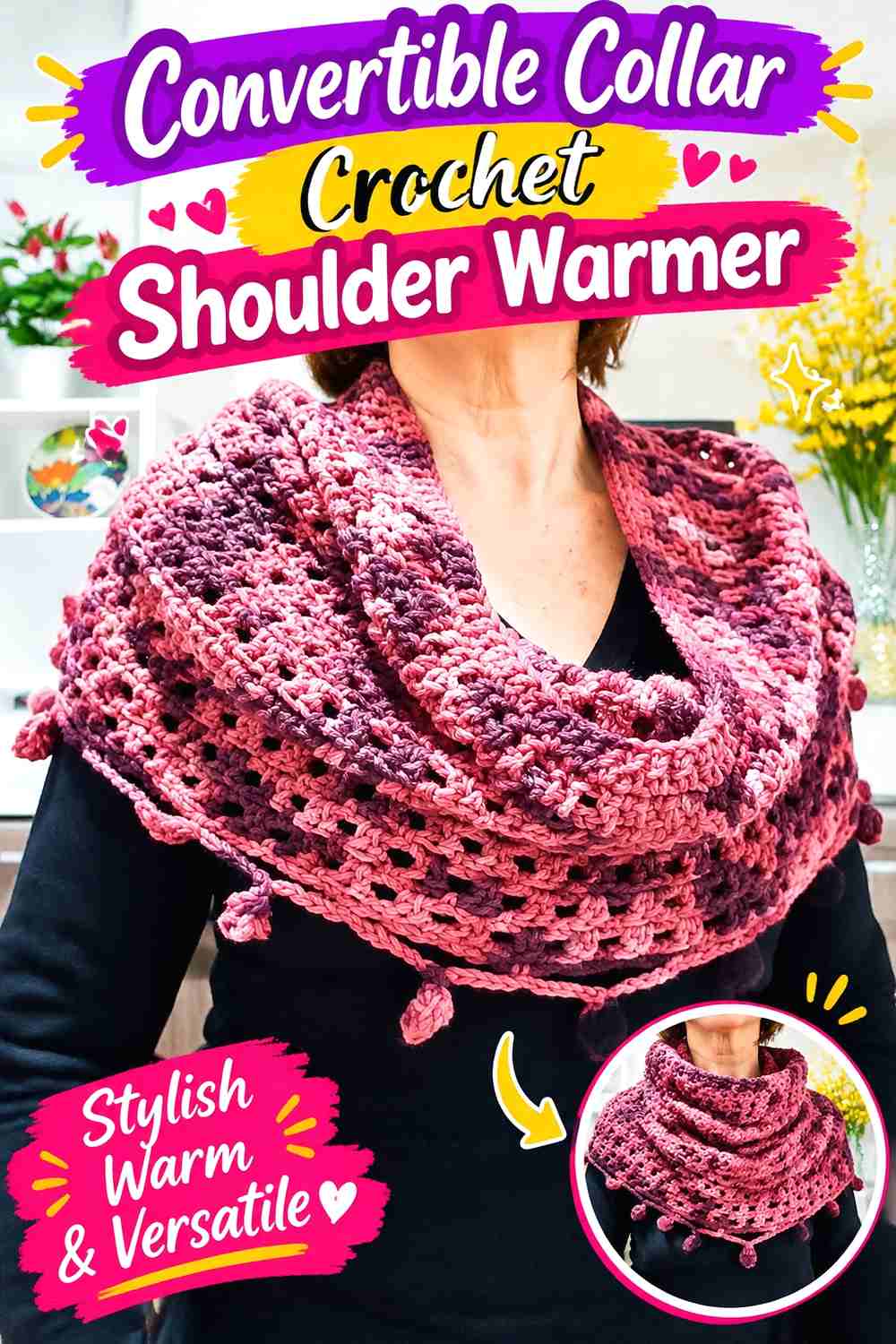
This winter accessory can function as a cowl, capelet, or shawl, which makes it particularly useful for studying how one circular construction changes as it spreads from the neck onto the shoulders.
For a sculptural version, the important decision is how firmly you want the upper section to frame the neck compared with the softer drape below.
Conversion Depends on the Circumference
A close cowl and a shoulder cape do not need the same amount of width.
If you want the piece to sit lower across the shoulders, make sure the chosen version has enough circumference for that position rather than forcing a neck-sized tube downward.
A Folded Collar Can Create Soft Sculpture
Instead of relying on cables, this direction can use a controlled fold near the neckline.
That softer architecture works particularly well if you want a shoulder warmer that looks substantial without feeling rigid.
Let One Wearing Position Be the Priority
Convertible pieces rarely perform every configuration equally well for every body and yarn.
Decide whether your main goal is a high collar, shoulder spread, or shawl-like drape, then judge adaptations from that primary use.
Creator Credit: Procurando Ideias com Penha
4. Popcorn-Texture Crochet Shoulder Snug
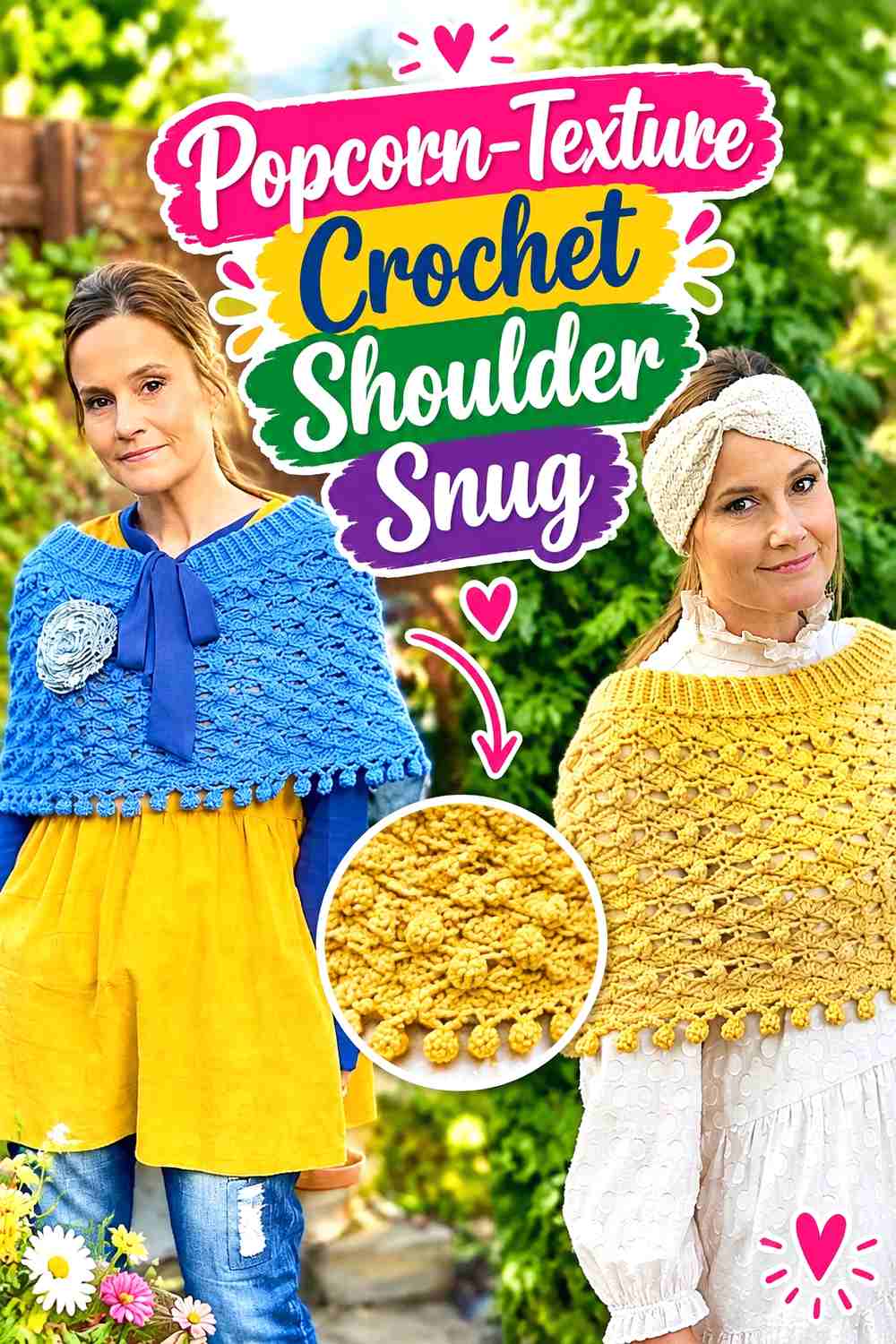
The Mabel Shoulder Snug is explicitly designed as a compact shoulder covering and uses a combination of open shells and raised popcorn-like texture, along with a defined neckline and decorative lower finish.
It provides a useful sculptural option for readers who prefer rounded, dimensional texture instead of sharp cables.
Raised Dots Give the Fabric a Three-Dimensional Surface
Popcorn or similarly raised stitches project beyond the base fabric.
That makes even a relatively shallow shoulder warmer look substantial. Keep yarn color relatively calm if the dimensional pattern itself is the main attraction.
The Neckline Anchors a Decorative Lower Body
A ribbed or controlled upper edge helps prevent the decorative section from looking like a loose circular shawl.
When adapting yarn, make sure that upper area still has enough recovery to stay where intended.
Pompom-Style Edging Adds Another Layer of Volume
The lower edge can become part of the sculpture rather than merely a finish.
If you prefer a cleaner winter garment, keep the main textured body and simplify the edge instead of assuming every decorative element needs to remain.
Creator Credit: Loopy Mabel Crochet
5. Celtic-Cable Crochet Architectural Shoulder Warmer
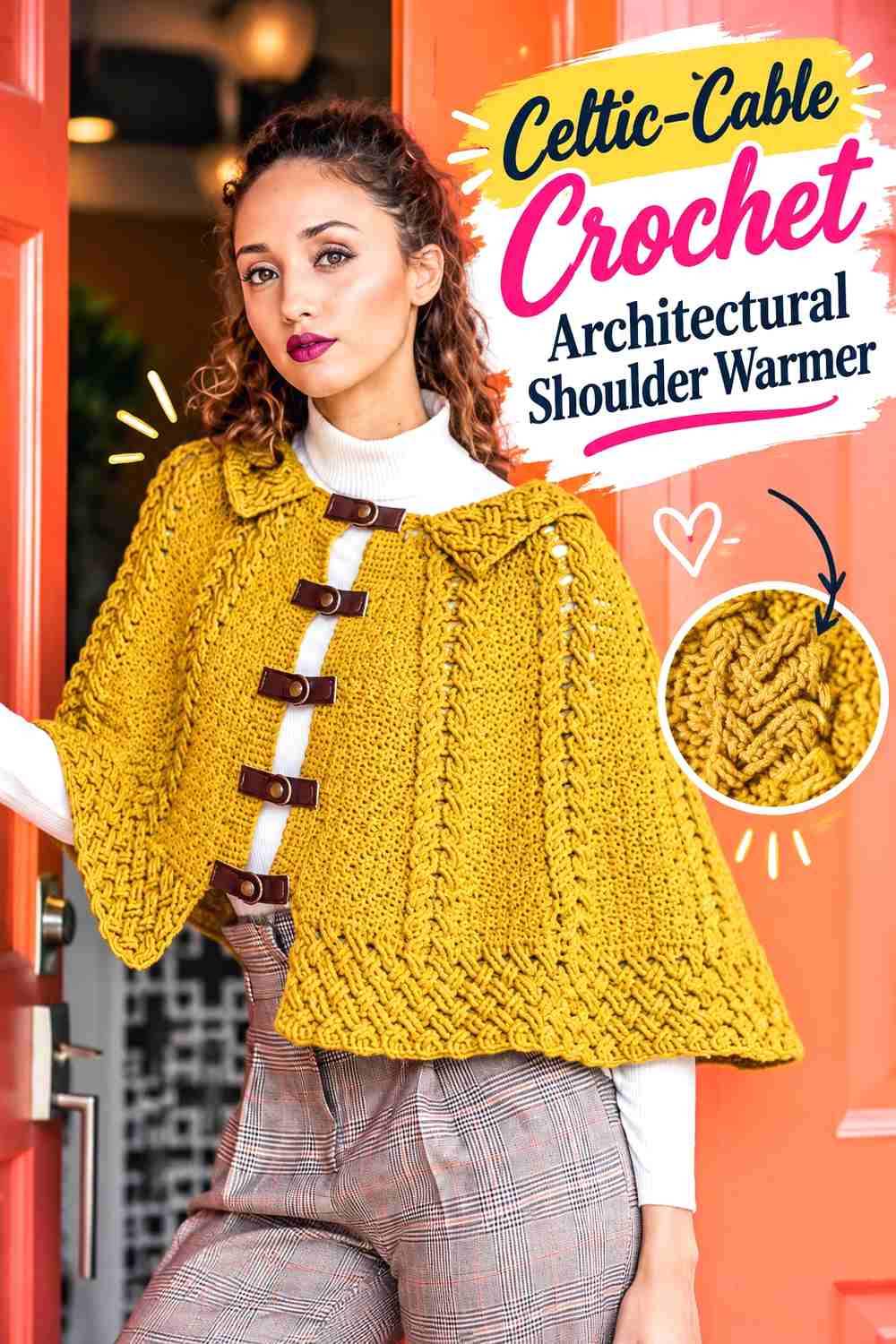
This cabled capelet combines several pronounced crochet cable textures, including wheat-like and woven effects, so the surface itself creates a highly structured winter look.
It is one of the strongest choices when “sculptural” means obvious raised stitch architecture rather than minimalist shaping.
Multiple Cable Types Need Clear Stitch Definition
The dimensional effect depends on being able to see where one raised element passes beside or across another.
A heavily fuzzy yarn may soften those distinctions. If the cable surface is the reason you chose the project, test the texture before changing fiber.
Cables Add Visual and Physical Weight
Raised post work can produce a substantial fabric even without using extremely bulky yarn.
That means the lower shoulder spread deserves attention. If the piece feels heavy before finishing, adding another wide border may not improve it.
Closures Can Reinforce the Architectural Look
A visible clasp or structured closure can suit a cable-heavy capelet because the fabric already has a strong outerwear character.
Choose hardware only after the finished front edges are established so its scale matches the actual garment.
Creator Credit: BonnieBayCrochet
6. Snowdrift Cable-Yoke Crochet Shoulder Warmer
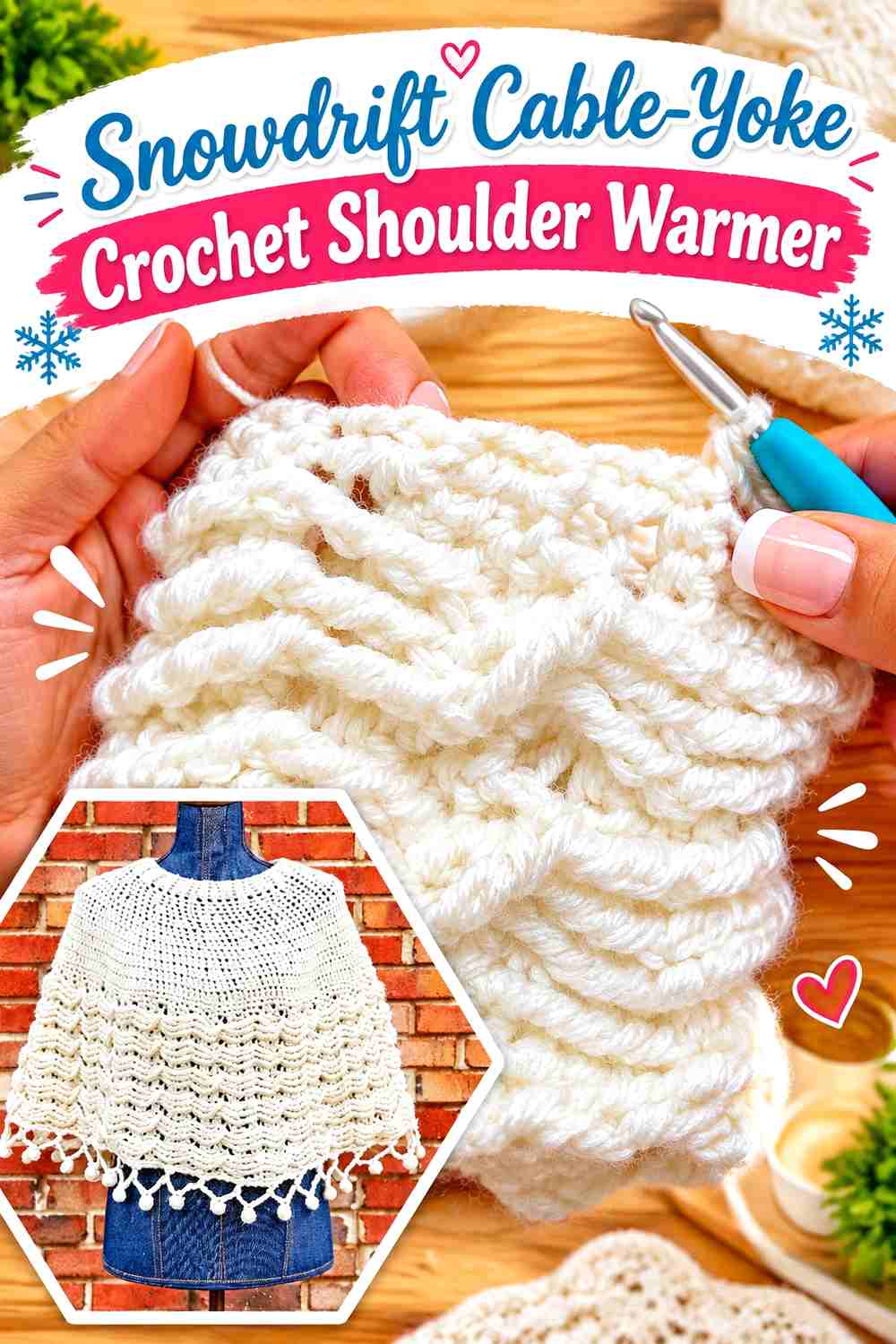
This winter capelet uses pillowy cable texture through the body and transitions into a shaped circular yoke and collar, giving it a noticeably different architecture from a simple top-down shell.
The construction is especially useful for a sculptural shoulder warmer because texture and shaping are doing separate jobs: the cables build relief while the yoke controls how the piece sits.
Sideways Cables Create a Broad Sculptural Band
Cable direction can change the perceived width of the garment.
A broad horizontal or sideways textural zone emphasizes the shoulders, making the piece feel more like a mantle than a long poncho.
The Yoke Controls Where the Fabric Lands
Once a capelet contains significant lower texture, the yoke becomes critical.
If the neck-to-shoulder transition is too loose or too tight, the entire textured body can sit at the wrong height. Follow the creator’s shaping rather than trying to reposition the cape through edging.
A Dimensional Border Is Optional, Not Mandatory
A pompom-style lower finish increases the sculptural quality, but the cable body already has significant depth.
Choose the simpler finish when you want the cables to remain the dominant feature.
Creator Credit: Stitches n Scraps
7. Victorian Ribbon Crochet Sculptural Shoulder Cape
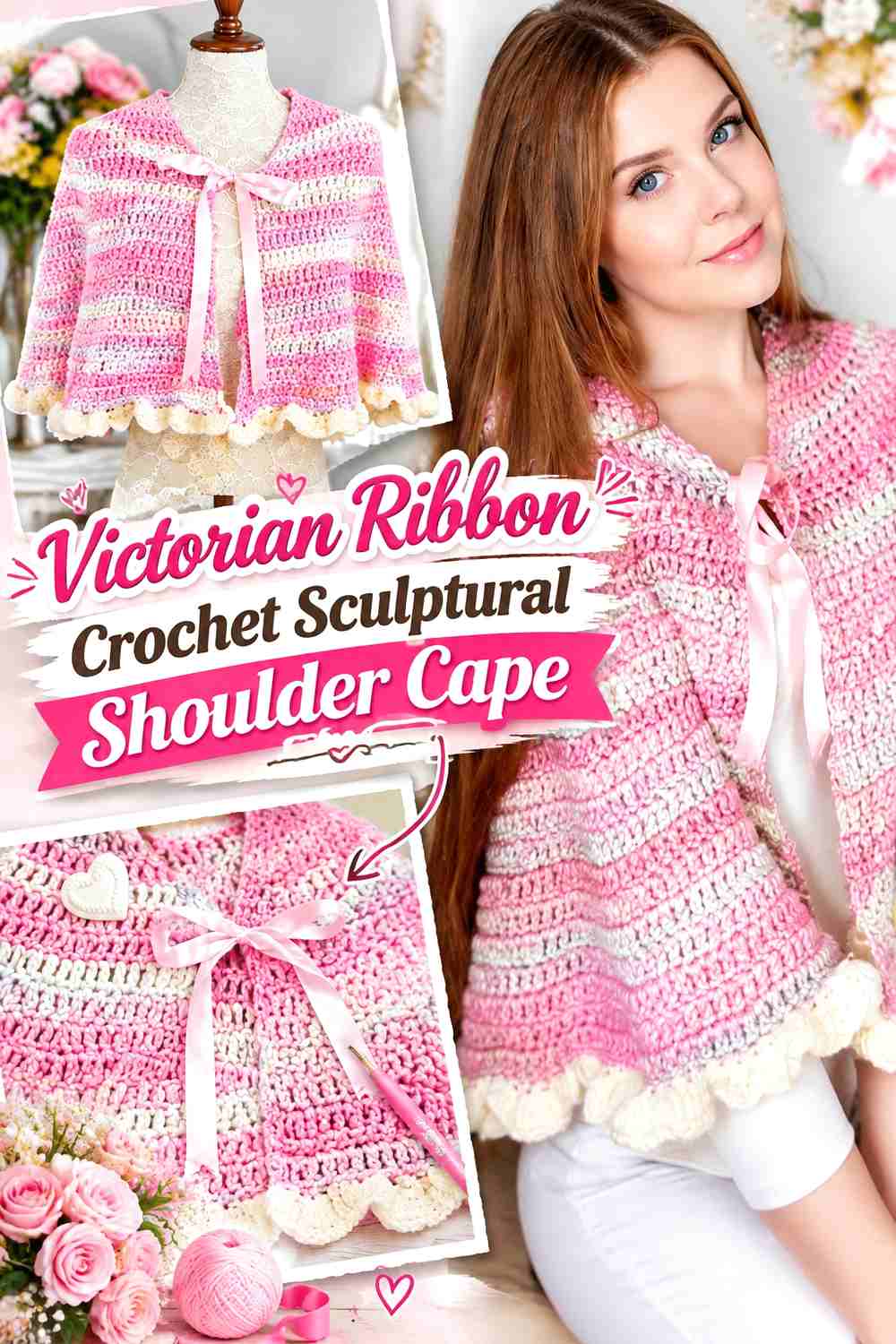
This vintage-inspired cape uses a crescent-like shoulder shape and ribbon ties rather than a rigid front closure.
Its sculpture comes from controlled curved drape rather than dense cables, which makes it useful if you want a softer historical interpretation.
Curved Shaping Can Be Sculptural Without Being Stiff
A crescent or half-circle form naturally organizes folds around the shoulders.
That geometry can create a graceful three-dimensional line even in lighter yarn. Do not assume you need bulky fiber to make the piece visually substantial.
Ribbon Ties Keep the Center Front Delicate
A narrow tie creates less weight and less visual interruption than a broad button band.
This works well when the shoulder silhouette and lower curve should remain the main features.
Winter Adaptation Needs Drape Preservation
If you replace the original yarn with something dramatically heavier, the curved edge may hang differently.
For cold-weather styling, consider layering the cape over a warm garment rather than automatically making the cape itself much denser.
Creator Credit: Selina Veronique Crochet
8. Buttoned Crochet Structured Shoulder Warmer
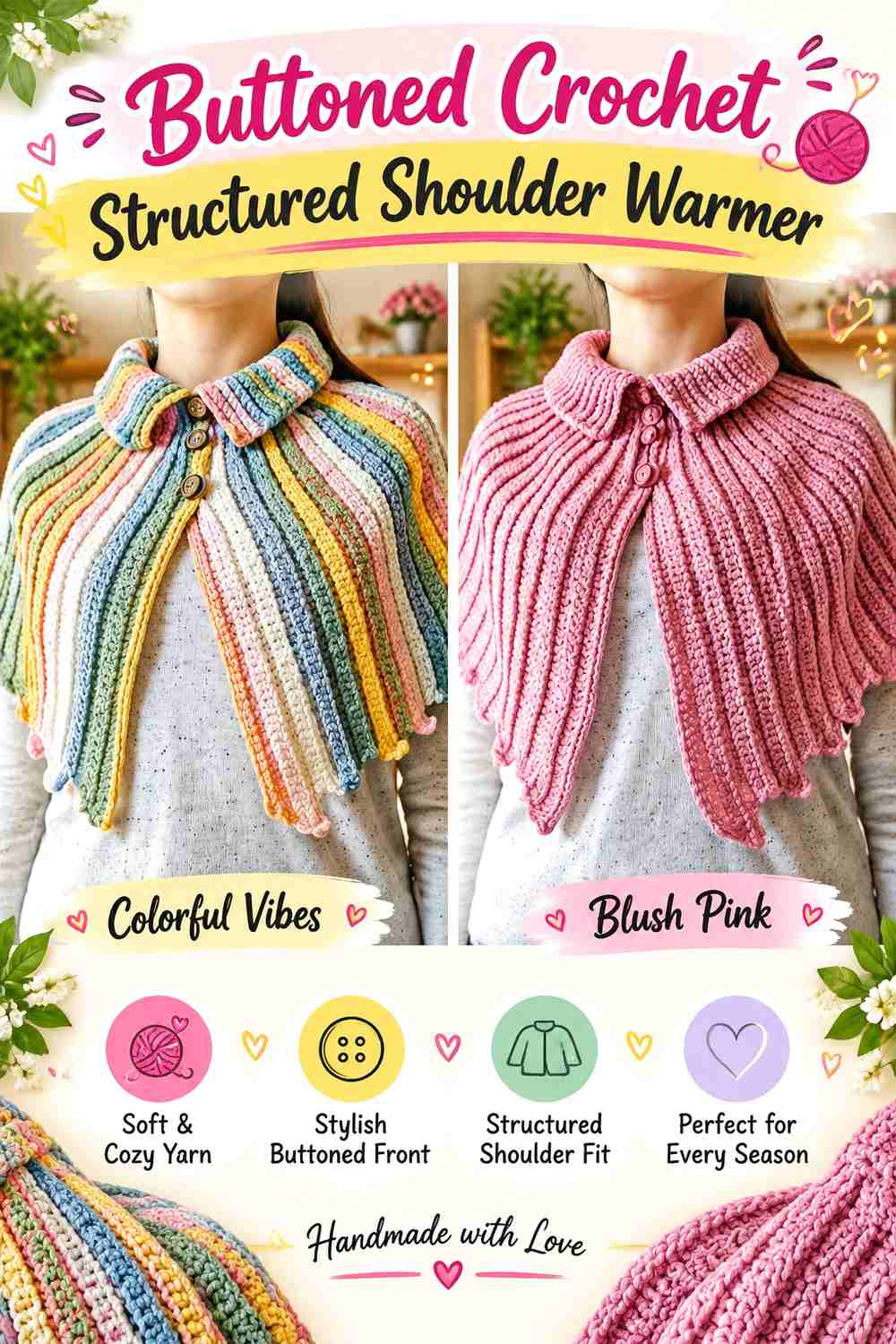
This buttoned capelet creates a clear front opening and a compact shoulder silhouette, making it useful for a more jacket-like interpretation of a shoulder warmer.
Compared with a closed circular capelet, the front edges become part of the structure and give the garment a more defined orientation.
Buttons Create a Strong Front Axis
A row or group of buttons establishes where the eye lands.
That makes symmetry and edge alignment important. Make sure the fronts sit where intended before treating button placement as a purely decorative choice.
A Structured Front Can Balance a Softer Body
The main cape may drape, but a defined closure keeps the overall form from feeling like a loose shawl.
This can be a useful compromise if you want sculpture without a standing collar.
Check How the Cape Opens During Movement
A short buttoned cape can shift as the arms move.
Try reaching forward and lifting the arms before deciding whether a closer lower fit would improve the shape. Too little movement room can make the neckline ride upward.
Creator Credit: Sabrina Melodieuse
9. Asymmetrical Crochet Outlander Shoulder Warmer
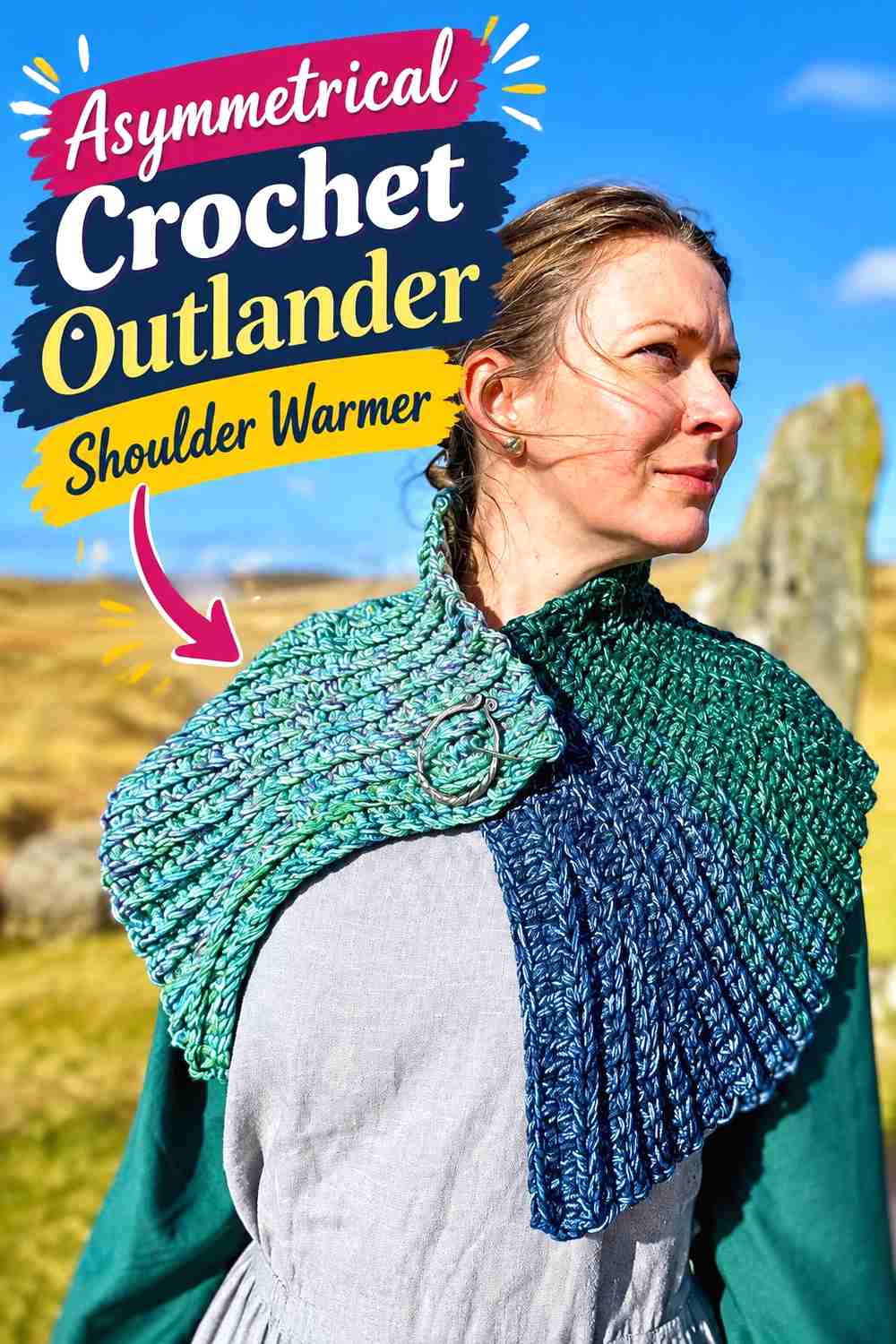
This capelet is inspired by the compact shoulder layer seen in Outlander and uses shaping that creates a less uniform, more directional silhouette than a standard circular cape.
That asymmetry makes it useful for a sculptural roundup because the shape itself becomes the design feature.
Uneven Drape Creates Movement Across the Body
A symmetrical cape distributes visual weight evenly. An asymmetrical one directs attention toward a particular side or diagonal line.
That can make even simple stitches look more dramatic.
Do Not “Correct” Intentional Unevenness
When adapting the garment, distinguish between deliberate asymmetry and accidental distortion.
Use the tutorial’s finished result as your shape reference rather than trying to make every lower edge sit at exactly the same height.
Simple Yarn Lets the Silhouette Read First
A strongly directional garment does not require a highly complicated color pattern.
A solid, heathered, or gently tonal yarn can make the unusual drape easier to see.
Creator Credit: Ophelia Talks Crochet
10. Jumbo Button Crochet Cocoon Shoulder Warmer
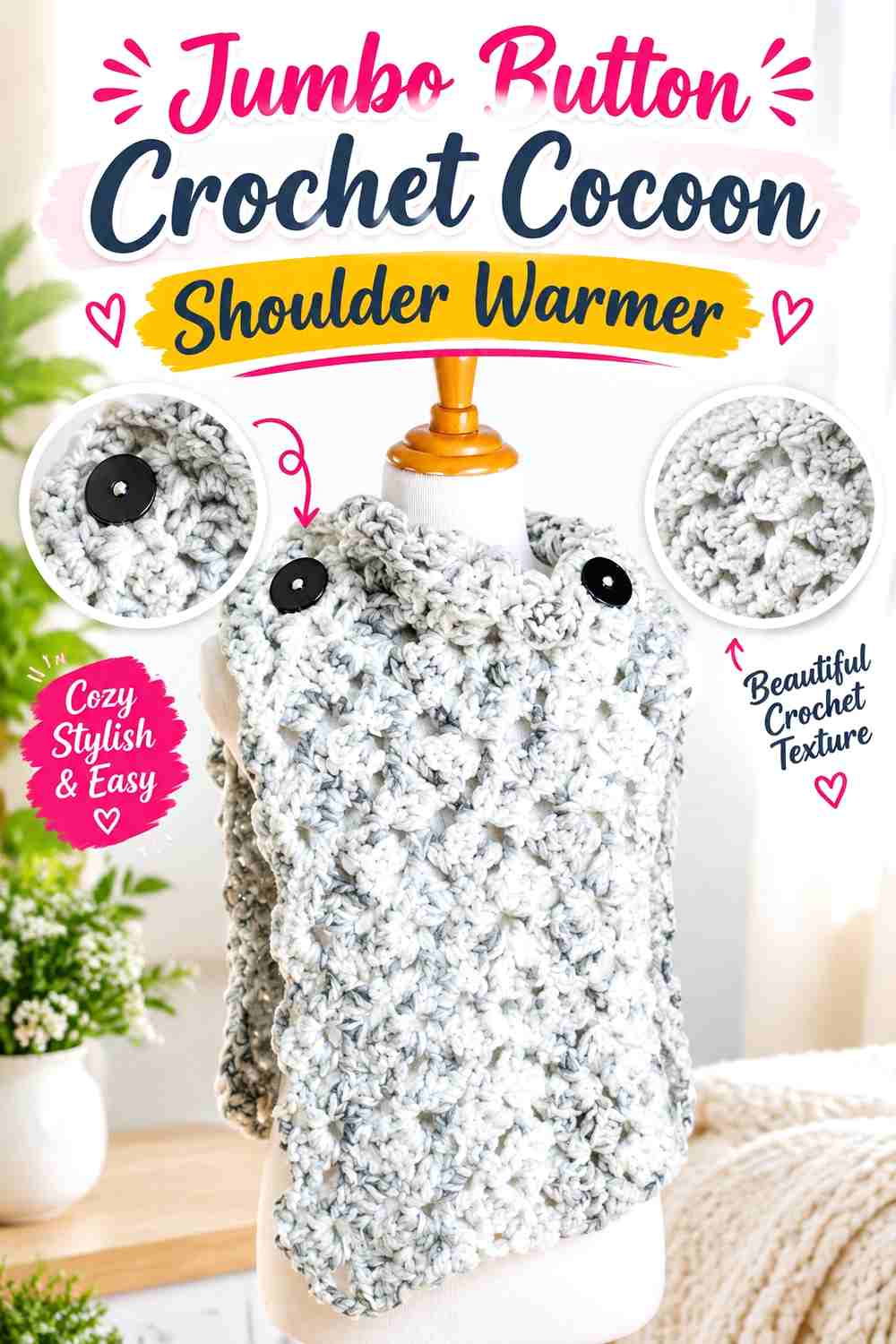
This capelet-cowl uses very thick fabric and an oversized button, creating a compact wrap with substantial volume around the neck and shoulders.
Its sculpture comes primarily from scale: thick folds, a broad overlap, and a large closure.
Chunky Folds Need Space
Very thick fabric cannot compress and drape like fine crochet.
Allow the wrap to form its natural folds rather than tightening it so much that the material stacks uncomfortably around the neck.
One Oversized Closure Is Enough
A large button already gives the piece a strong focal point.
Adding several equally large embellishments can make a compact capelet look crowded. Let the scale of the fabric and closure provide most of the drama.
Check Weight Before Increasing the Width
A wider wrap may look appealing in theory, but thick yarn adds weight quickly.
Try the source proportion first and decide whether you actually want more shoulder coverage after seeing how the fabric hangs.
Creator Credit: Fiber Flux
11. Box-and-Bow Crochet Geometric Shoulder Warmer
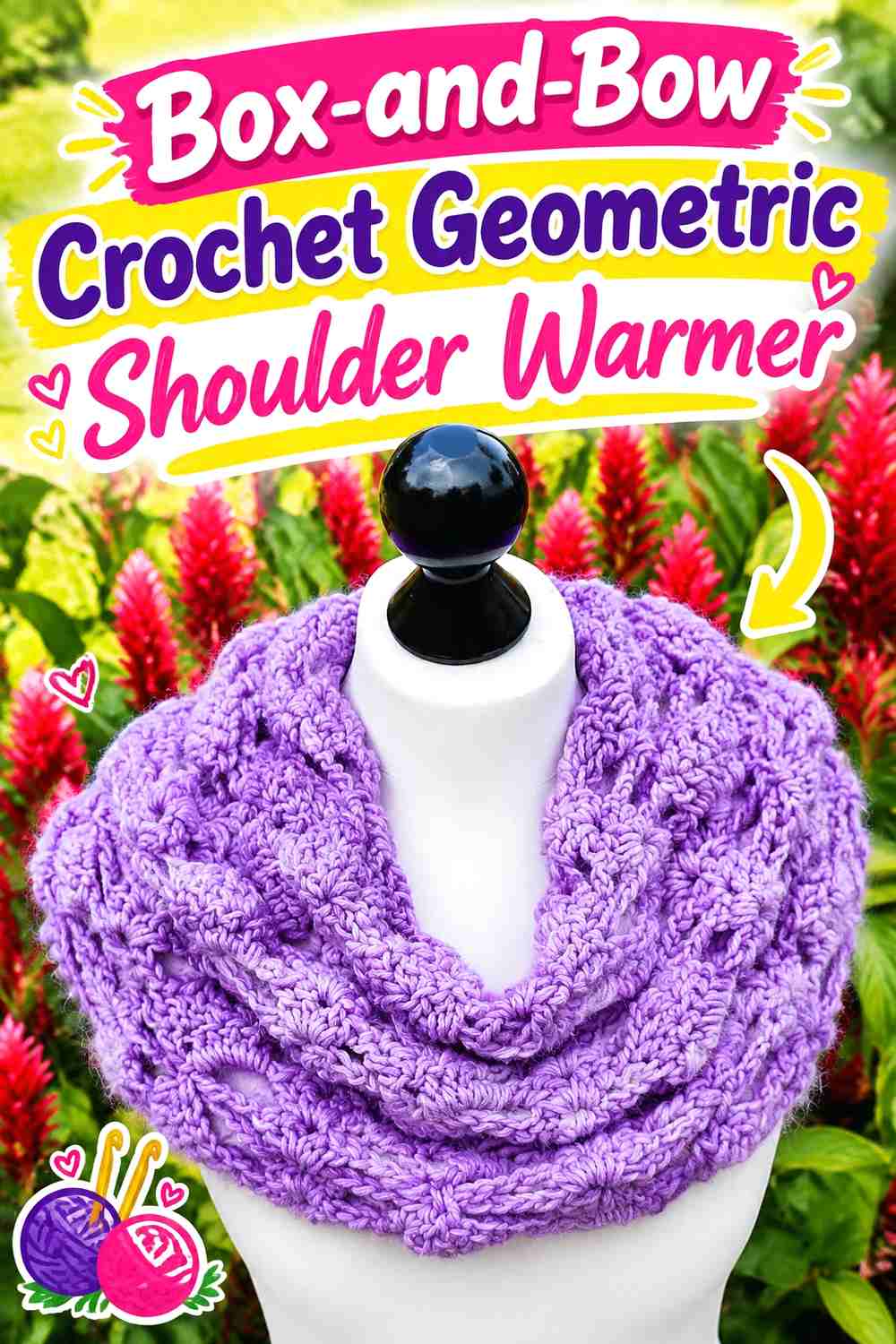
This convertible design can be made as a capelet, cowl, or neck warmer and uses alternating open and solid sections that form a distinctive geometric surface.
It provides a different kind of sculpture from cables: repeated boxes, openings, and gathered-looking transitions create architecture through negative space.
Open and Solid Areas Need Visible Contrast
The pattern works because dense sections and open sections remain visually distinct.
A very fluffy yarn may fill the gaps visually and reduce that contrast. Choose a fabric that lets the geometry remain obvious.
Wider Capelet Sizing Changes the Whole Shape
The shoulder-warmer version needs more circumference than a close cowl.
Use the capelet-oriented sizing from the creator rather than assuming a neck-warmer version can simply be stretched lower onto the shoulders.
Geometric Texture Does Not Need Heavy Trim
The surface already contains repeated shapes.
Keep closures and edging restrained if you want the box-and-bow structure to remain the primary sculptural feature.
Creator Credit: The Secret Yarnery
12. Draped Crochet Capelet Shoulder Warmer
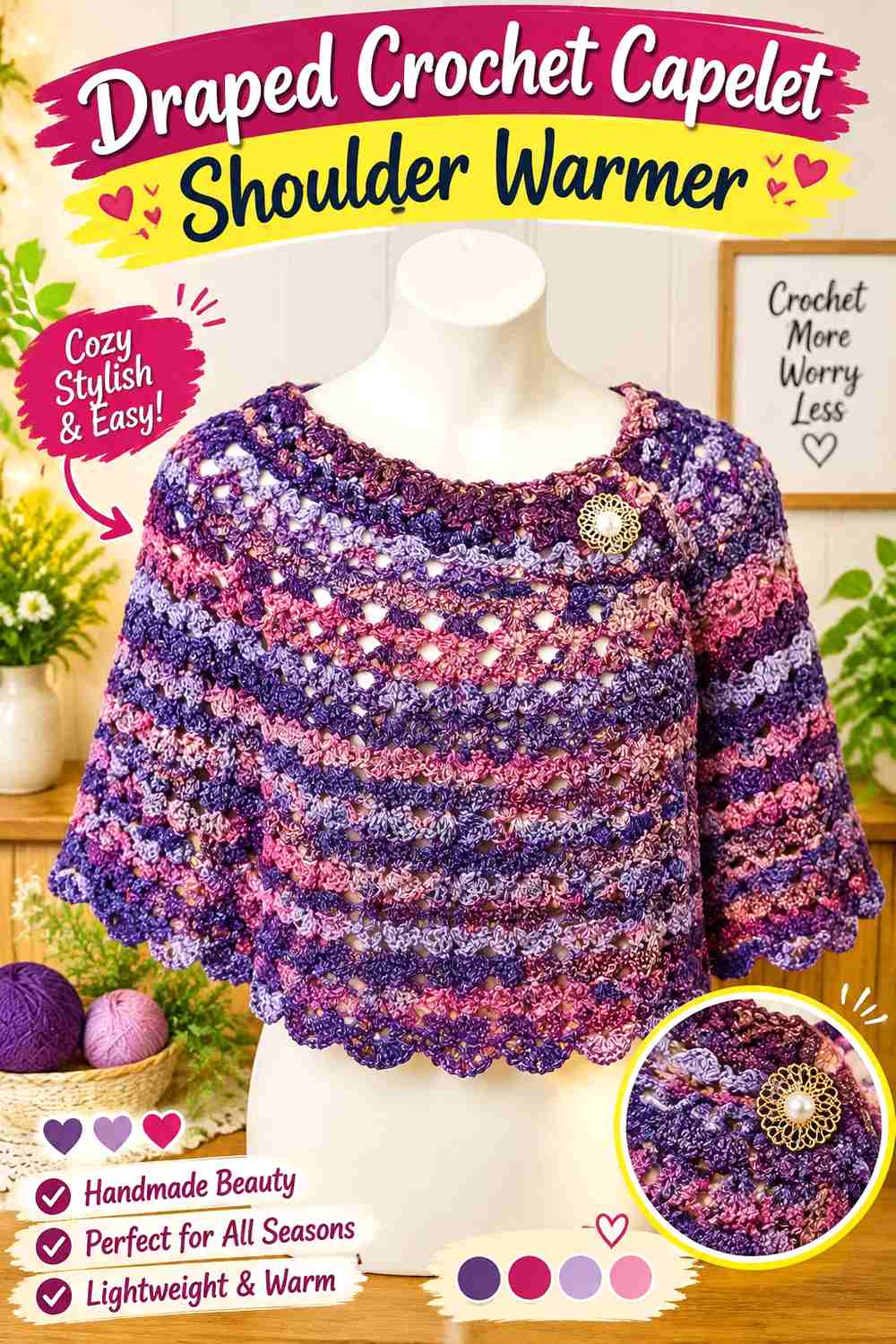
This project intentionally sits between capelet, shawl, and poncho, giving more relaxed shoulder coverage than the compact collar-style designs earlier in the list.
For a sculptural interpretation, use the broader drape itself as the form rather than trying to turn every section into dense relief.
Width Creates Large-Scale Sculpture
A broad wrap forms deeper folds than a tiny shoulder collar.
Those folds can be visually dramatic even when the stitch pattern itself is simple. This is a good direction if you prefer shape over intricate surface texture.
More Fabric Makes Yarn Weight More Important
A yarn that feels pleasantly substantial in a small sample can become heavy across a wide cape.
Let a larger swatch hang vertically before making a major substitution.
Keep the Neckline Controlled
A broad body needs a neckline that stays in place.
If the upper opening becomes too loose, the sculptural folds can slide downward and lose their intended relationship to the shoulders.
Creator Credit: Bag-O-Day Crochet
13. High-Collar Crochet Rectangle Shoulder Warmer
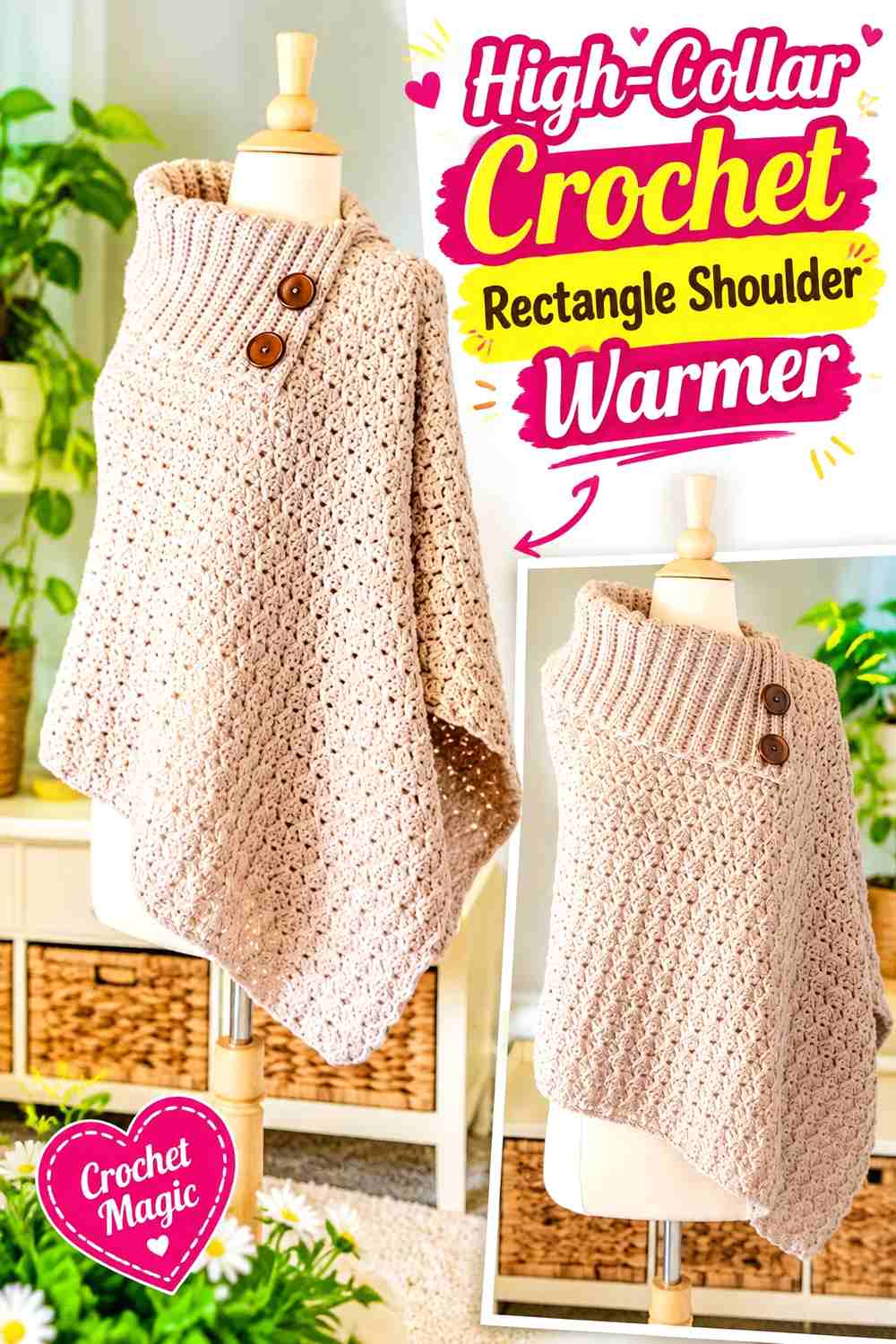
This collared poncho is constructed from simple rectangular pieces and includes a collar or turtleneck option, making it useful for a shoulder-warmer adaptation where the neck is the dominant sculptural element.
The original is longer than a compact shoulder warmer, so treat the source as a construction reference rather than assuming that removing length leaves every proportion unchanged.
A Rectangle Base Creates Clean Geometric Lines
Straight-edged components can produce a deliberately minimal architecture.
If you crop the idea toward shoulder-warmer proportions, keep enough body depth to balance the collar rather than leaving a large neck sitting on an extremely narrow strip.
The Collar Needs Visual Counterweight
A tall neck looks proportionate on a longer poncho because there is significant fabric below it.
As the body gets shorter, reconsider collar depth. The most dramatic collar is not automatically the most balanced one.
Texture Can Replace Additional Shaping
The source body already has a textured surface.
On a shortened version, that texture may provide enough dimensional interest without introducing extra cables or bobbles.
Creator Credit: crochetdreamz
14. Deep-Ribbed Crochet Funnel Shoulder Warmer
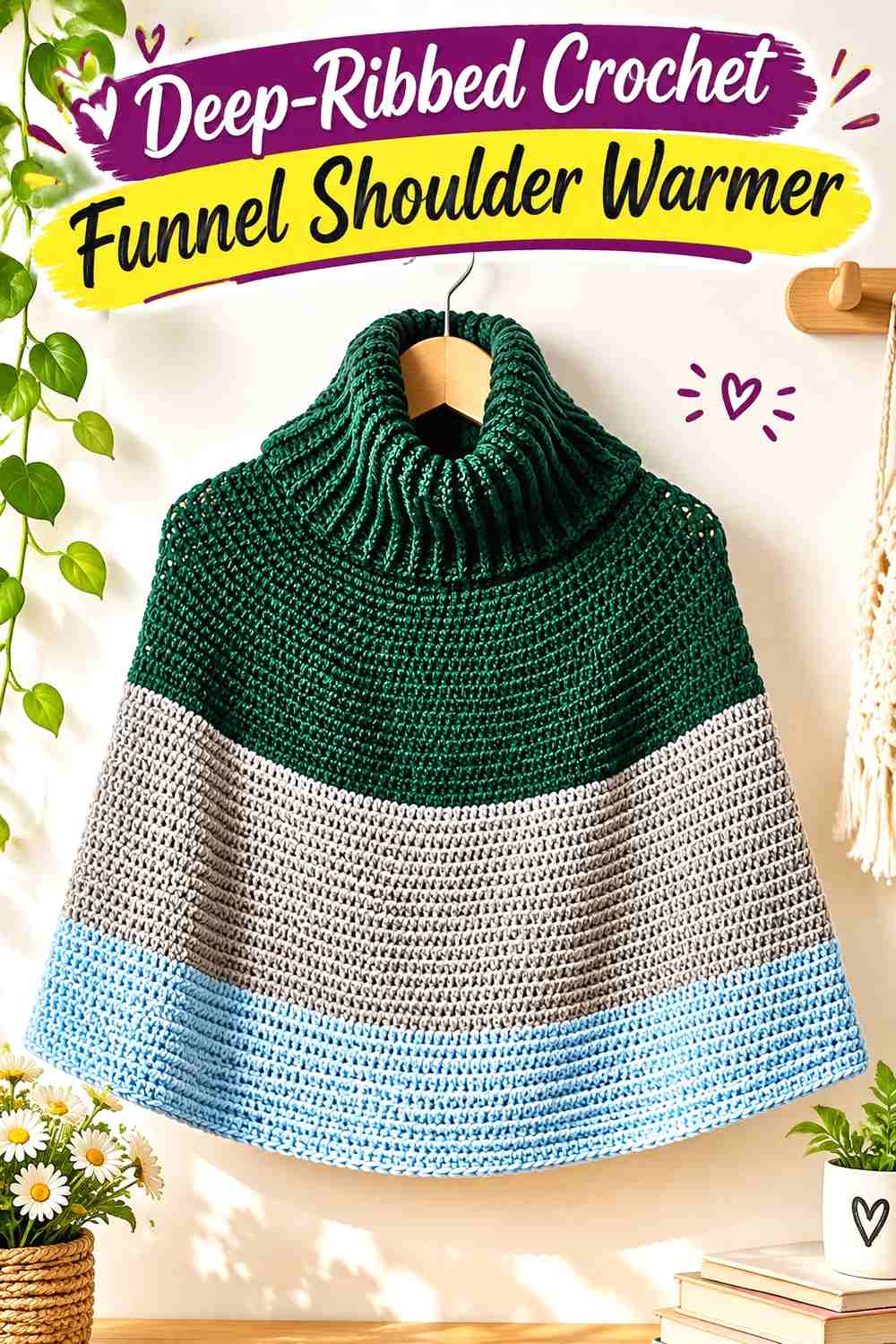
This cape/poncho uses a pronounced high ribbed collar with free-flowing fabric below, providing a strong reference for a funnel-neck shoulder warmer.
The original garment extends farther down the torso, so the sculptural shoulder-warmer idea is an adaptation centered on preserving the neckline and upper drape.
Deep Ribbing Can Stand or Fold
A substantial ribbed collar has more than one possible personality.
Worn upright, it looks architectural and dramatic. Folded or allowed to collapse slightly, it becomes softer and more cowl-like. Consider which behavior your yarn supports naturally.
Cropping Magnifies the Collar
A collar that looks moderate on a full cape can dominate a much shorter garment.
If adapting the length, reassess the neckline proportion after the shoulder area is established rather than automatically reproducing the full collar depth.
Keep the Lower Shoulder Fabric Fluid
The contrast between structured ribbing and softer drape is what makes this direction effective.
A stiff body can make the entire garment look like one rigid cone instead of a sculpted neck above relaxed shoulders.
Creator Credit: The Crochet Crowd
15. 1860s-Inspired Crochet Pelerine Shoulder Warmer
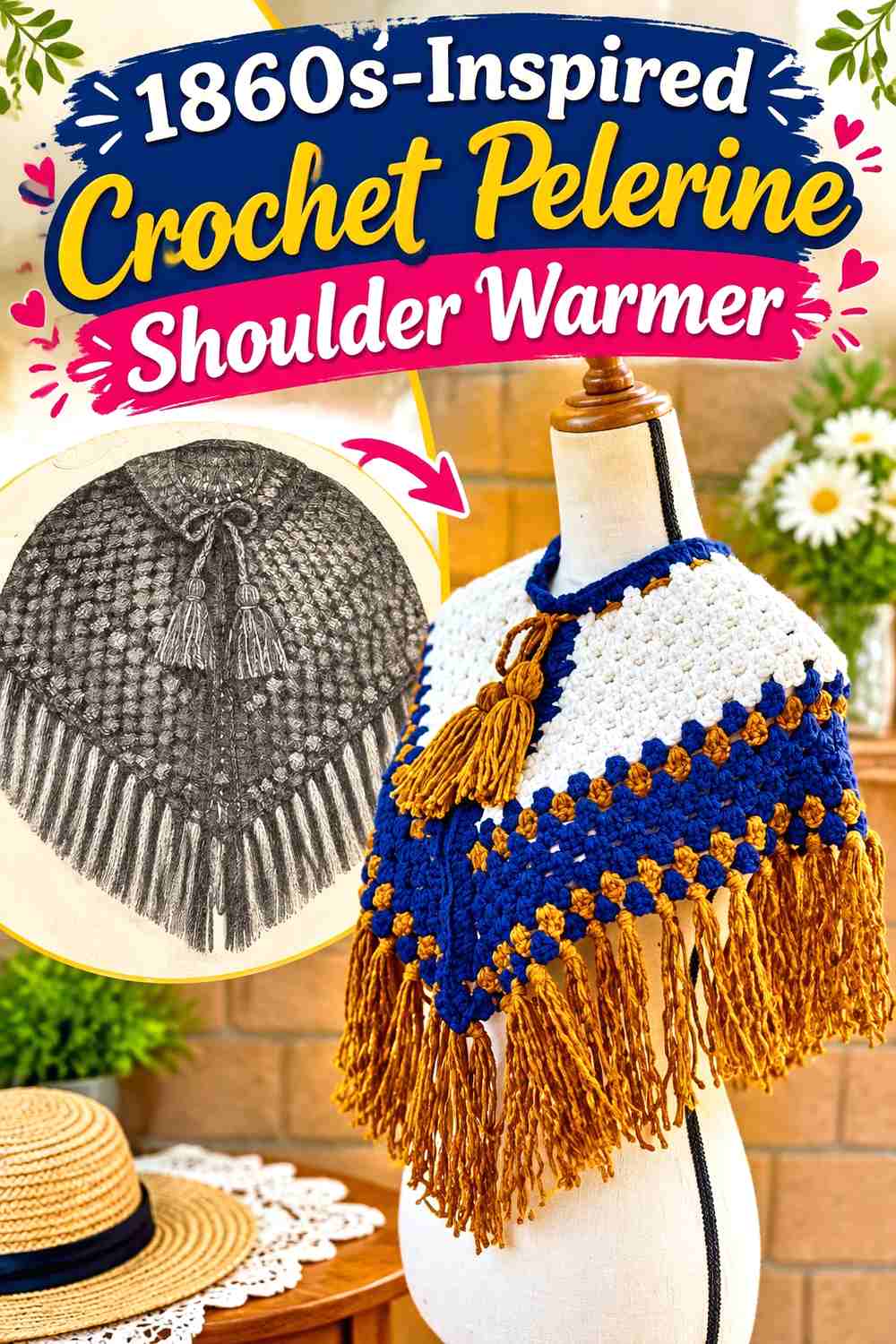
This tutorial recreates an 1864 pelerine, giving the collection a historical form that sits around the neck, shoulders, and upper chest in a manner quite different from modern circular capelets.
Its value here is proportion: a pelerine demonstrates how a relatively small amount of fabric can create a formal, clearly shaped shoulder layer.
Historical Proportions Create a Distinct Silhouette
A pelerine does not need a massive collar or thick cables to appear sculptural.
The controlled neckline, shoulder spread, and shaped lower outline create the form. Preserve those relationships if you use the tutorial as inspiration for a modern winter version.
Avoid Assuming Thicker Yarn Improves the Shape
Historical-style crochet may rely on relatively fine stitch definition.
A much bulkier yarn can enlarge every element and change how the piece lies across the chest. Sample first if you want a warmer adaptation.
Let the Outline Carry the Drama
This shape already has a recognizable historical character.
A simple winter color can keep attention on the unusual profile rather than turning the garment into a collection of competing embellishments.
Creator Credit: Just Vintage Crochet
16. Side-to-Side Ribbed Crochet Shoulder Warmer
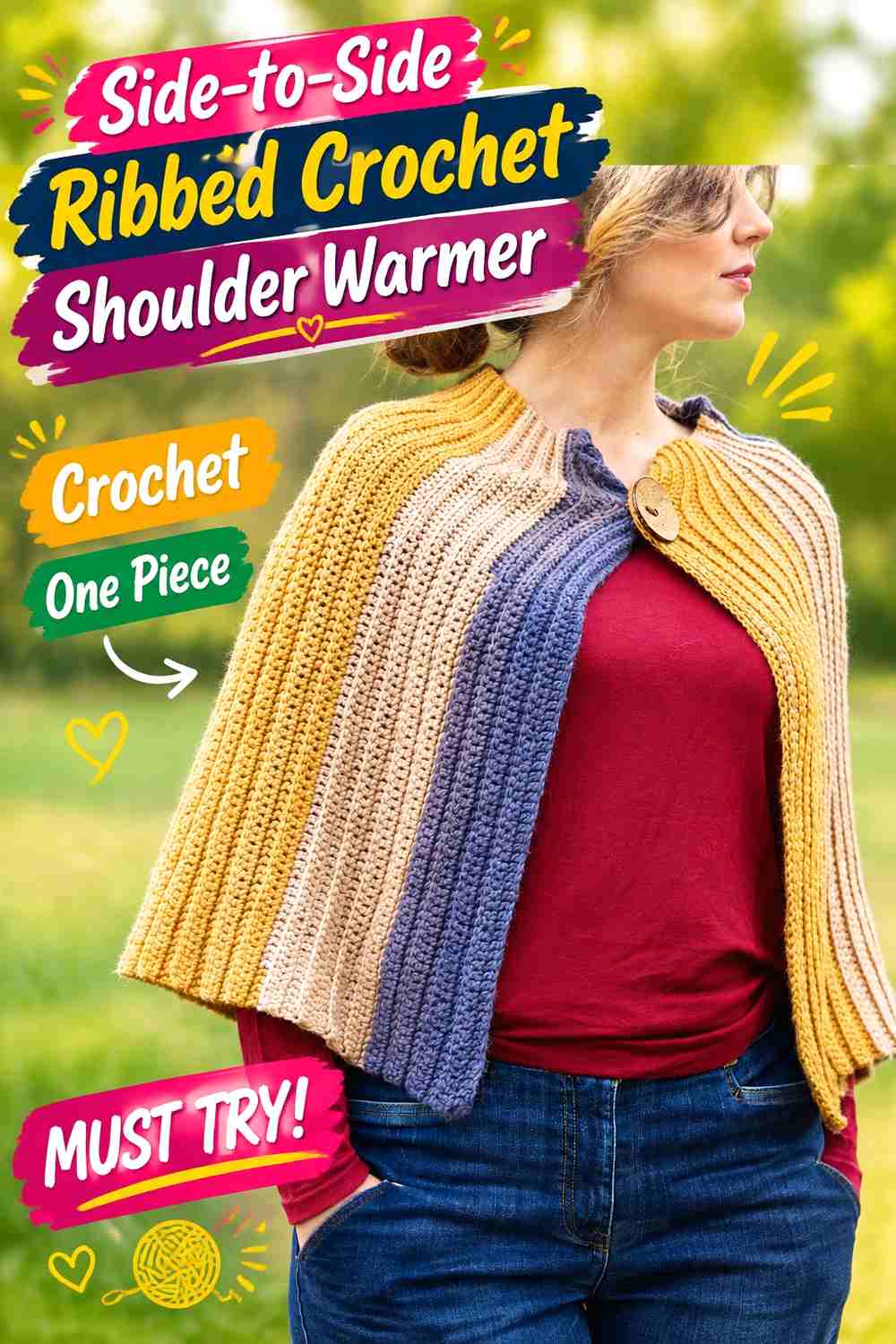
This one-piece capelet is worked side to side using back-loop texture and changing stitch heights, producing a ribbed, gradually shaped piece that folds around the shoulders.
That construction makes it an excellent final option because its sculpture comes from row direction and folding rather than circular increases, cables, or an oversized collar.
Side-to-Side Ribs Create Strong Vertical Folds
When ribs run around a curved shoulder garment, they encourage the fabric to form repeated ridges.
That texture can look especially architectural in a solid or gently shaded winter yarn.
Changing Stitch Height Shapes the Cape Without a Traditional Yoke
The neck, shoulder, and lower edge can occupy different depths within the same row direction.
Follow the source’s construction carefully rather than treating those different zones as arbitrary texture changes.
Decide Whether the Button Is Structural or Decorative
The source uses a visible button detail.
For your version, determine whether the closure actually needs to open or whether the folded shoulder shape is already secure. That decision affects both placement and hardware weight.
Creator Credit: Nana’s Crafty Home | Tonya Bush
Which Sculptural Crochet Shoulder Warmer Style Should You Choose?
| If you want… | Start with… | Main thing to evaluate |
|---|---|---|
| A dramatic high neck | Projects 1, 13, or 14 | Collar weight and head/neck comfort |
| True compact shoulder coverage | Projects 2, 3, or 4 | Lower circumference and mobility |
| Strong raised cables | Projects 5 or 6 | Stitch definition and total fabric weight |
| Soft historical shaping | Projects 7 or 16 | Drape and neckline proportion |
| A structured buttoned front | Projects 8, 10, or 17 | Closure placement and fabric support |
| Asymmetrical sculpture | Project 9 | Preserving intentional directional drape |
| Geometric openwork | Project 11 | Clear contrast between solid and open areas |
| Broad folded volume | Project 12 | Yarn weight across a wider garment |
| Decorative shell relief | Project 15 | Repeat visibility and comfortable flare |
Conclusion
The most sculptural crochet shoulder warmers are not necessarily the bulkiest.
Projects 5 and 6 create obvious physical relief through cables, while Projects 1 and 14 make the neckline itself the architectural feature. Project 11 uses open and solid geometry, and Project 17 creates structure through side-to-side ribbing and folding.
If you prefer softer forms, Projects 7 and 16 show how historical shoulder pieces can create a strong silhouette through proportion rather than heavy texture. Project 9 introduces asymmetry, while Projects 8 and 10 use closures to establish a more outerwear-like front.
Start by deciding what kind of sculpture you want: height at the neck, relief across the fabric, broad shoulder folds, a geometric edge, or a controlled historical outline. Then choose yarn that supports that specific effect without making the garment too stiff or too heavy.
For exact shaping, sizing, stitch placement, and assembly, follow the original creator’s tutorial. Treat any cropping, yarn substitution, or neckline alteration as a separate adaptation and check fit around both the neck and shoulders as you work.
Frequently Asked Questions
What makes a crochet shoulder warmer look sculptural?
A sculptural shoulder warmer has a clearly defined three-dimensional feature such as raised cables, deep ribbing, a standing collar, repeated puffed texture, shaped folds, an unusual yoke, or a strongly controlled silhouette. It does not need to be stiff; soft folds can be sculptural too.
Is a crochet shoulder warmer the same as a capelet?
Not exactly. A shoulder warmer is usually compact and concentrated around the neck and shoulders. A capelet can extend farther down the chest, back, or upper arms. The categories overlap, which is why short capelet tutorials can be useful construction references for shoulder warmers.
What type of crochet stitch creates the strongest raised texture?
Post-stitch cables, popcorns, puffs, bobbles, and deep ribbing can all create obvious relief. They produce different results, however. Cables form directional lines, popcorns and puffs create individual raised forms, and ribbing produces repeated ridges and folds.
Should I use bulky yarn for a sculptural shoulder warmer?
Only if it suits the chosen construction. Bulky yarn can produce large folds and dramatic collars, but it also increases garment weight and stitch scale. Some sculptural cable or vintage designs benefit more from clear stitch definition than from maximum thickness.
How do I stop a tall crochet collar from collapsing?
Start with the yarn, gauge, and collar construction recommended by the tutorial. A standing collar generally needs a fabric with enough body to support itself, but making it excessively stiff can affect comfort. If you are adapting a collar, sample the actual texture and test several heights before committing.
Why does my shoulder warmer ride upward when I move my arms?
The lower circumference may be too restrictive, the shoulder shaping may not provide enough room, or the garment may be sitting at the wrong height. Evaluate the underlying fit before adding more edging or collar weight.
Can I wear a sculptural crochet shoulder warmer under a winter coat?
Some compact versions can work well under roomy outerwear, particularly those with flatter shoulders. Large cables, oversized collars, pompoms, and very chunky folds require more space. Try the finished or developing piece beneath your actual coat before adding extra volume.