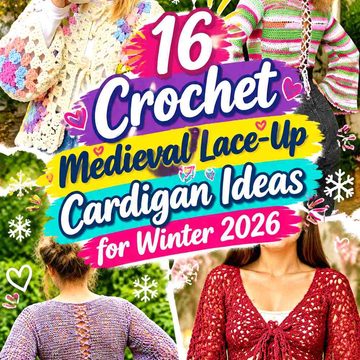
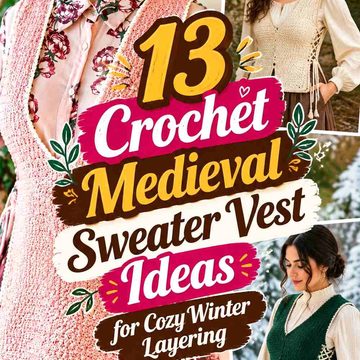
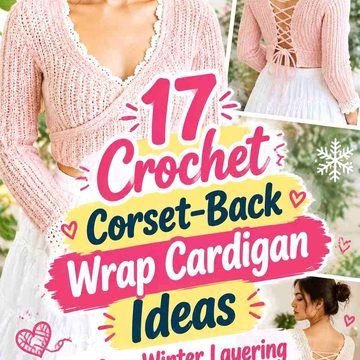
A crochet military jacket does not have to reproduce a historical uniform to capture a strong medieval heritage mood. Structure matters more than literal replication. A defined collar, disciplined front opening, close cuffs, substantial edging, rows of closures, shoulder emphasis, or a long coat silhouette can push an ordinary crochet cardigan toward an officer, guard, cavalry, or fantasy-garrison look.
The tutorials below cover bomber jackets, button cardigans, collared layers, long coats, hooded pieces, cropped jackets, toggle-front garments, and textured cardigans. Some already contain details that suit the theme, while others provide a useful garment foundation for independently planned braid, contrast edging, decorative frog-style closures, shoulder tabs, or heraldic color placement.
Not every tutorial is an exact military or medieval jacket. Where the heritage styling is an adaptation, it is identified as such. Use each creator’s tutorial for the original garment construction, measurements, gauge, sleeves, and finishing rather than treating the styling suggestions here as replacement instructions.
Quick List
- Crochet Alpine Bomber Military Jacket
- Crochet High Collar Guard Jacket
- Crochet Toggle Front Medieval Officer Coat
- Crochet Cropped Cavalry Button Jacket
- Crochet Hooded Ranger Military Cardigan
- Crochet Heraldic Hooded Coat Jacket
- Crochet Argyle Officer Jacket
- Crochet Striped Regiment Cardigan Jacket
- Crochet Made To Measure Parade Jacket
- Crochet Ribbed Garrison Jacket
- Crochet Drop Shoulder Heritage Jacket
- Crochet Cropped Court Bolero Jacket
- Crochet V Neck Cadet Button Jacket
- Crochet Hexagon Campaign Jacket
- Crochet Heavy Winter Guard Cardigan
- Crochet Cropped Heritage Button Jacket
- Crochet Textured Command Jacket
Build the Military Look From Structure, Not Decoration Alone
Rows of decorative braid cannot make a very loose cardigan behave like a tailored jacket. Start by looking at the garment’s shoulder line, front edges, collar, hem, sleeve shape, and overall ease.
A compact bomber or cropped button cardigan naturally supports a sharper military interpretation. Long cardigans can suggest an officer coat or fantasy guard coat, while hooded pieces move the style toward a ranger or medieval campaign layer.
If you intend to add strong trim, test it against the finished garment first. Thick cords, several closures, appliqués, and shoulder pieces all add weight. A soft cardigan can begin to sag if too many heavy details are attached to areas that were designed only to drape.
Plan Closures Before Adding Heritage Trim
Military-inspired styling often draws attention to the center front. Buttons, toggles, crossed cords, braid loops, or decorative frog-style closures can all create that effect, but they should not compete with one another.
If the original cardigan already has functional buttons, decide whether those will remain the true closure while additional trim stays decorative. Replacing the closure system is a larger modification because front overlap, button-band width, and neckline behavior may depend on the original construction.
Repeated horizontal trim also changes proportions. Closely spaced decorative lines can make a short jacket appear broader, while vertical contrast edging emphasizes length.
Winter Fit Needs Room Beneath the Jacket
A medieval heritage winter jacket will often be worn over more than a thin shirt. Check the garment over the sweater, blouse, thermal layer, or dress you realistically expect to wear.
Shoulder width and upper-arm room deserve particular attention. Adding epaulette-inspired tabs or a structured cuff will not correct an armhole that is already restrictive.
Length also changes how a jacket works with winter clothing. A cropped cavalry-style piece can sit neatly above a full skirt or high-rise trousers, while a long officer-style coat provides a completely different layering proportion.
1. Crochet Alpine Bomber Military Jacket
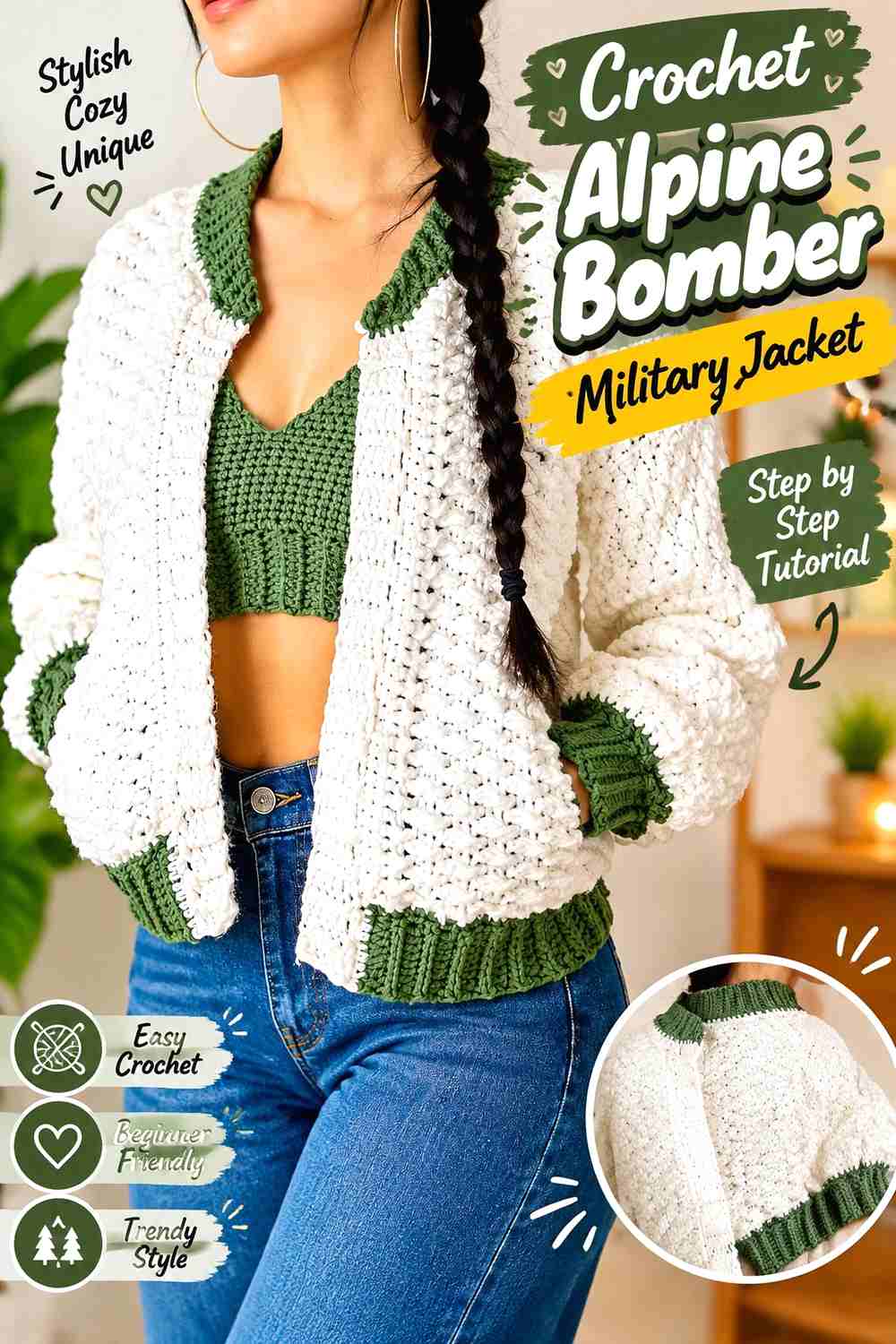
TCDDIY’s bomber-jacket construction is one of the strongest foundations here for a true jacket rather than a loose cardigan. The project uses a slightly cropped shape, pockets, textured fabric, and contrasting details, giving it enough structure to carry additional military-inspired styling without first having to redesign the entire silhouette.
Let the Bomber Shape Supply the Structure
The compact body already creates a clear hemline and strong upper-body proportion. That means you can keep heritage additions controlled: contrast cuffs, narrow front braid, or a few carefully placed closure details can be enough.
Avoid covering every surface with trim. The more compact the garment, the quicker repeated decoration can become crowded.
Shoulder Detail Works Better When It Follows the Existing Seam
If you want epaulette-inspired tabs, first identify where the shoulder actually sits when the finished jacket is worn. A decorative piece placed too far down the sleeve can make the shoulder appear wider without looking intentional.
Treat it as an applied styling feature, not as structural reinforcement.
Creator Credit: TCDDIY
2. Crochet High-Collar Guard Jacket
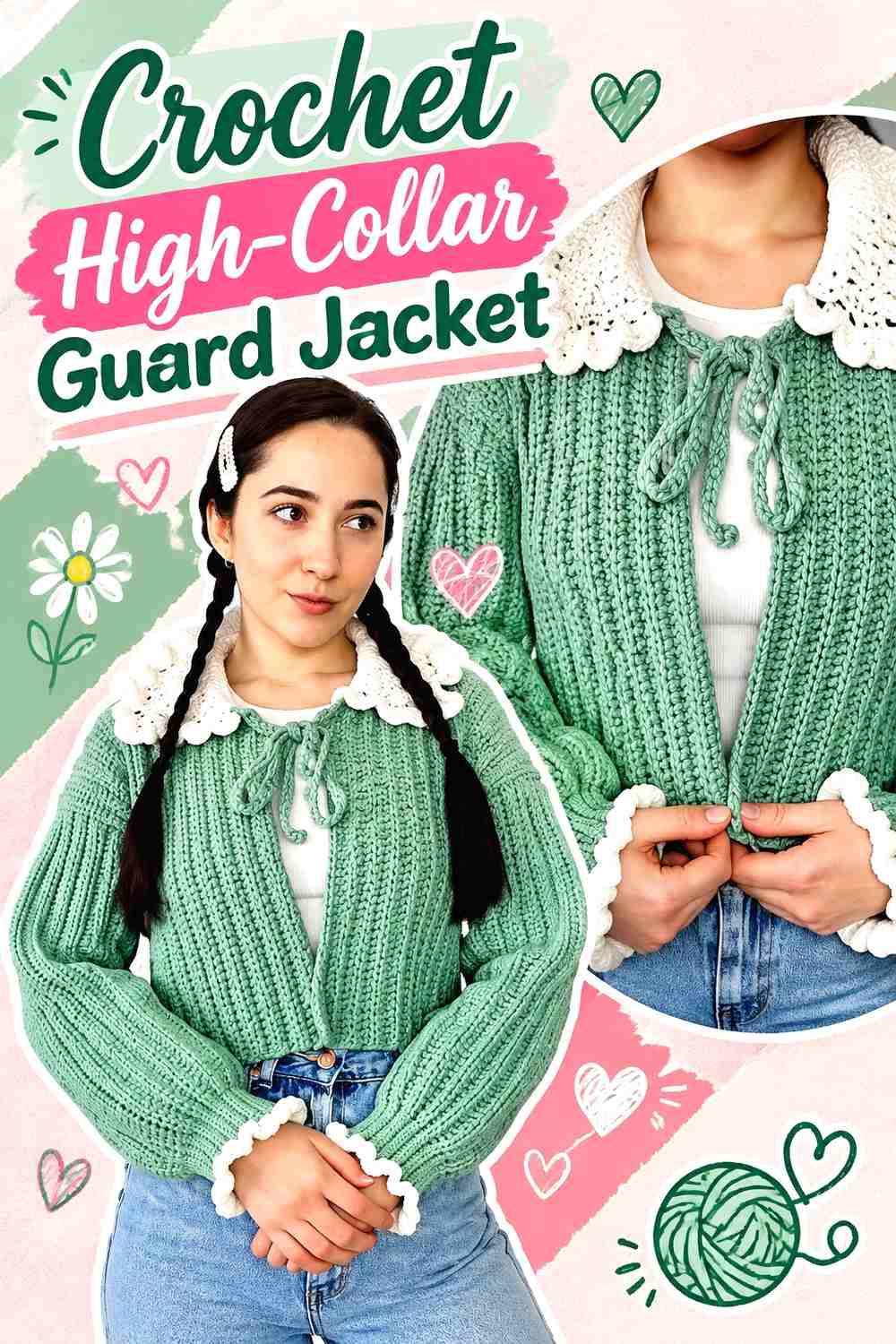
Вика с крючком🧶 demonstrates a cardigan with a distinct collar, contrast finishing, sleeves, and front ties. The collar immediately gives this foundation a more formal upper edge than an open V-neck cardigan, making it useful for a guard-jacket or court-uniform adaptation.
Make the Collar the Main Heritage Feature
A defined collar already frames the face and neckline. Contrast edging around it can create enough visual authority without requiring a large amount of decoration elsewhere.
If you extend or stiffen any collar treatment independently, check that it can still lie comfortably against the neck and does not push the garment backward.
Keep the Front Symmetrical Before Adding Braid
Military-style fronts depend heavily on visual balance. Compare both front panels while the cardigan is laid flat and worn.
Decorative horizontal cords exaggerate even small differences between the two sides, so fix uneven front lengths before attaching anything that visually connects them.
Creator Credit: Вика с крючком🧶
3. Crochet Toggle-Front Medieval Officer Coat
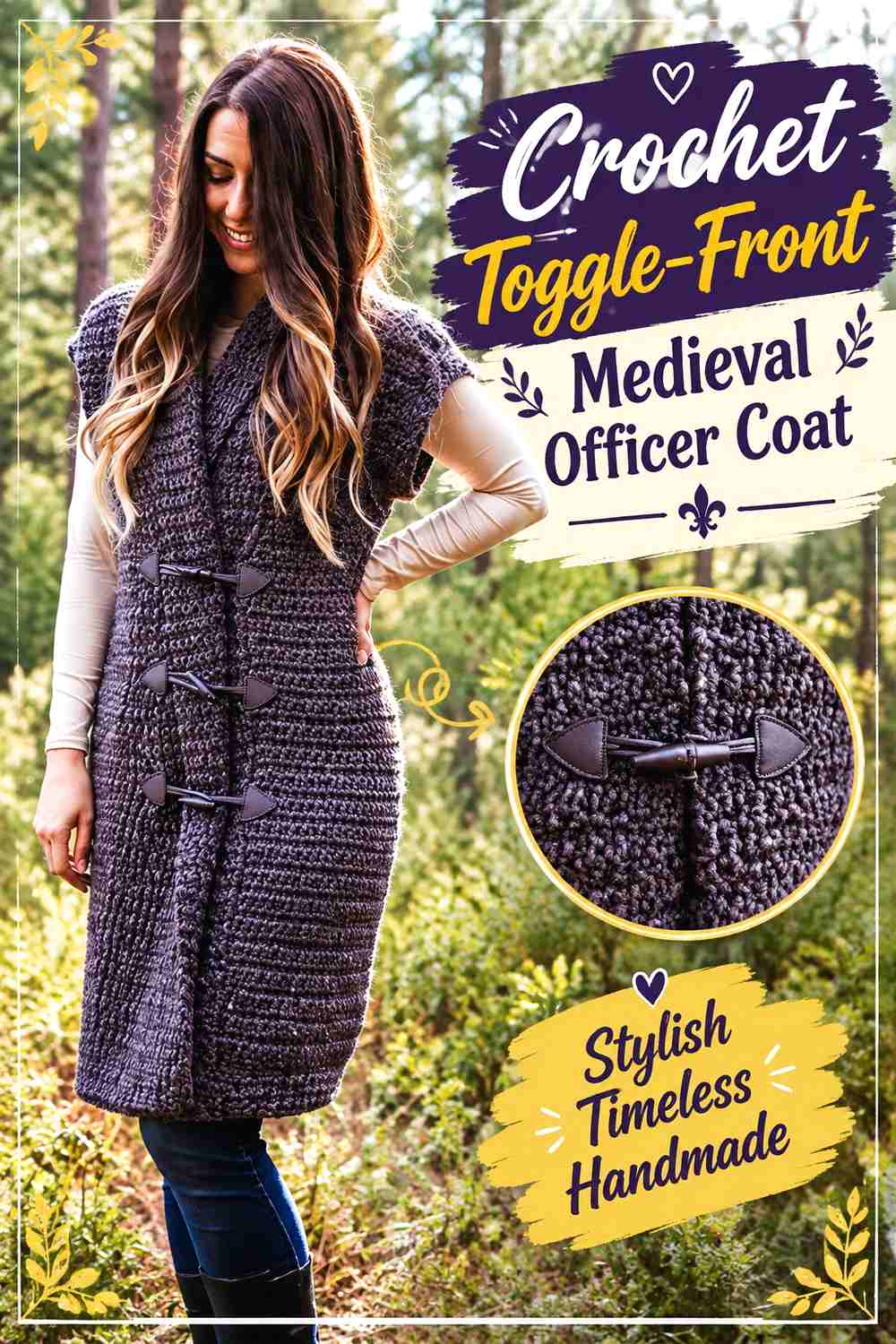
Briana K Designs’ long cardigan-dress construction is especially useful for this theme because the original garment already incorporates multiple front toggles and a long silhouette. Those features create a convincing starting point for an officer-coat interpretation without requiring the closure system to be invented from scratch.
Repeated Toggles Create a Strong Center Front
Several closures naturally lead the eye vertically down the body. That works well with a medieval heritage palette because the hardware or loops can become part of the overall design.
If you change toggle size or style, make sure the supporting front edge can handle the new weight.
Long Length Needs a Stable Shoulder
A coat-length crochet garment puts more weight below the shoulder than a cropped cardigan. Added decorative cords, braid, and heavy trim increase that load.
Evaluate the coat after the main body is complete before deciding how much additional surface decoration it really needs.
Creator Credit: Briana K Designs
4. Crochet Cropped Cavalry Button Jacket
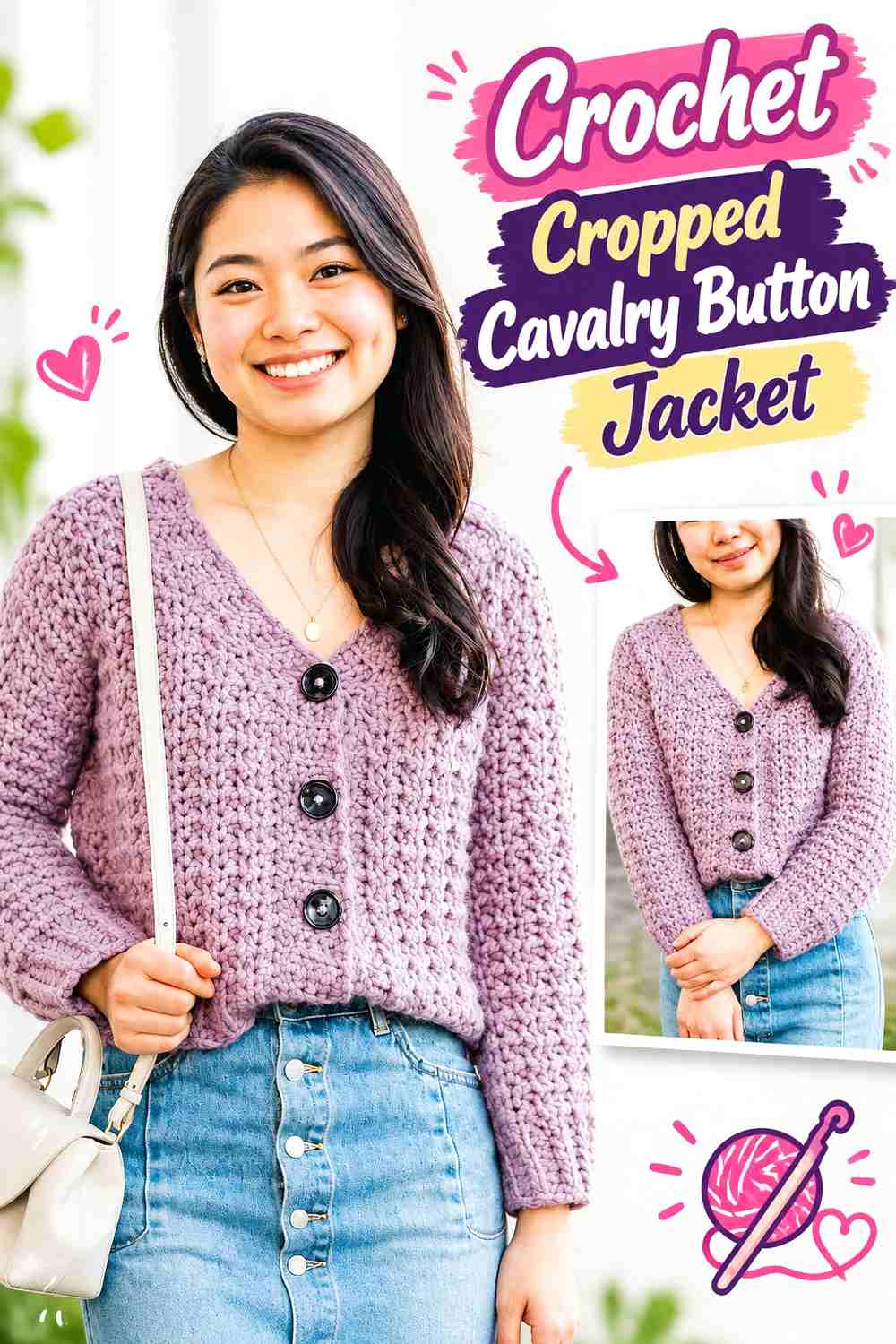
forthefrills’ chunky cropped button cardigan combines a compact body, V-neck shaping, visible buttons, and substantial textured fabric. Those proportions make it a useful foundation for a short cavalry-inspired or parade-style jacket rather than a flowing medieval coat.
Use the Crop to Emphasize the Waist
A short jacket works especially well with high-waisted trousers, long skirts, or layered dresses because the hem creates a clear break at the torso.
If you add decorative braid, keeping most of it above the hem preserves that compact shape.
Buttons Can Stay Functional While Braid Stays Decorative
The original button system can handle the practical job of closing the cardigan. That leaves any added loops, cords, or military-style bands free to remain visual details.
This is usually simpler than asking a completely new decorative closure to control the garment fit.
Creator Credit: forthefrills
5. Crochet Hooded Ranger Military Cardigan
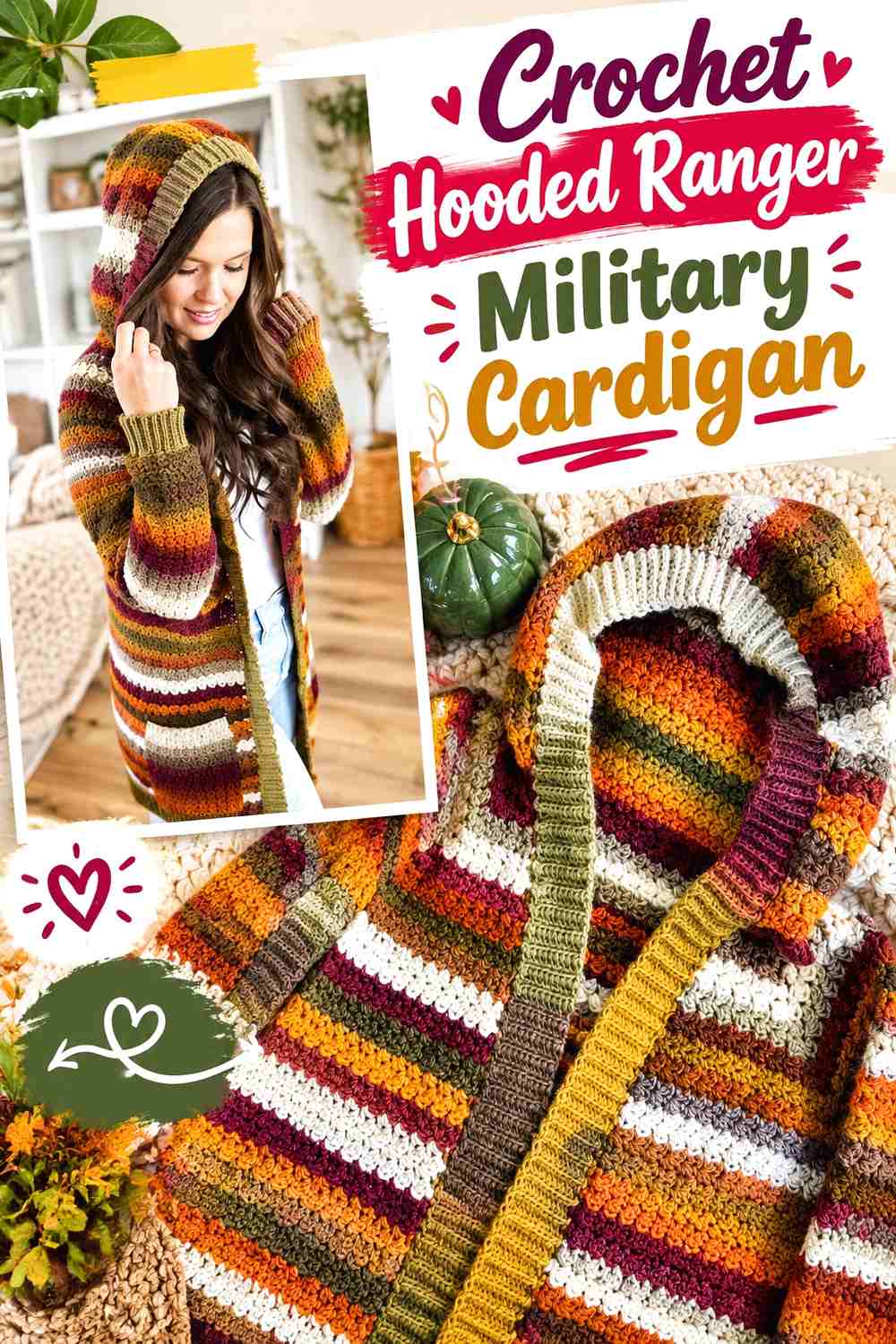
MJ’s Off The Hook Designs demonstrates a top-down cardigan with options that include a hood, pockets, ribbed finishing, and a shorter buttoned version. The long hooded direction makes a strong basis for a medieval ranger, winter patrol, or campaign-style jacket.
Let the Hood Shift the Style Away From Formal Uniform
A hood immediately makes the jacket feel more practical and travel-oriented. Instead of elaborate parade trim, consider restrained contrast borders, sturdy-looking cuffs, or a small number of closure details.
That keeps the design closer to a field or ranger interpretation.
Check Neck Balance Before Adding Shoulder Decorations
A hood adds fabric behind the neck. Heavy epaulette-inspired pieces or thick shoulder appliqués can add still more weight to the same region.
Try on the completed cardigan with the hood down before deciding whether the shoulder really needs another strong feature.
Creator Credit: MJ’s Off The Hook Designs
6. Crochet Heraldic Hooded Coat Jacket
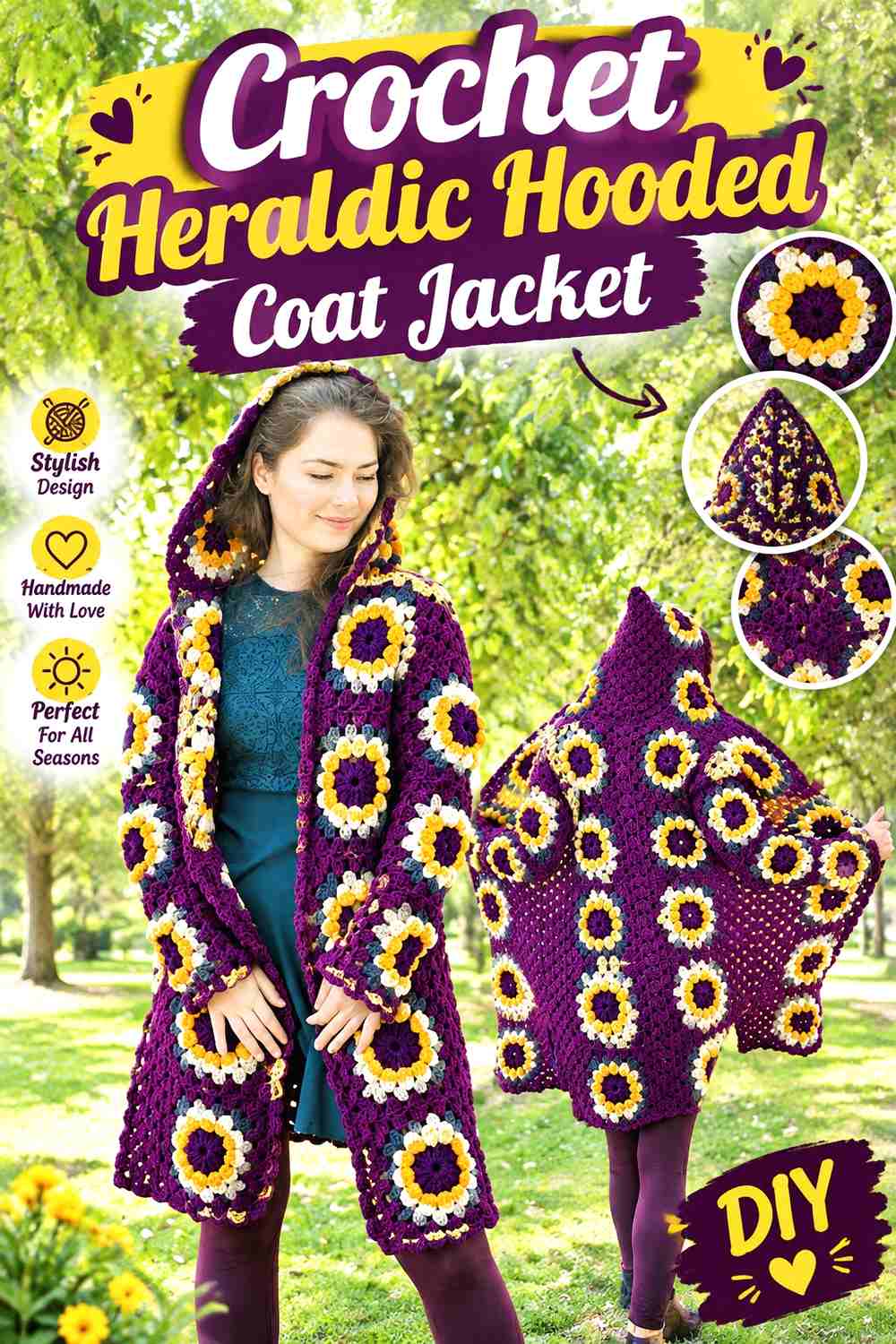
Colour Ceilidh Crochet’s long sunflower cardigan combines granny-square motifs, an extended coat shape, side slits, and a hood. The original floral motif is not military, but the modular construction makes this a useful heritage adaptation when you want heraldic color blocking or repeated emblems rather than a plain jacket surface.
Treat Motif Placement Like a Heraldic Layout
If you change the visual theme, plan repeated motifs before joining the entire garment. Emblem-like squares can be concentrated at the upper back, front panels, or lower coat rather than distributed randomly.
Any substituted square must still be compatible with the original construction dimensions.
Side Slits Keep a Long Coat From Feeling Too Rigid
Long crochet coats contain a lot of fabric. Existing side openings can help the lower section move more freely.
Avoid covering those movement areas with heavy continuous trim that could reduce the flexibility the coat construction provides.
Creator Credit: Colour Ceilidh Crochet
7. Crochet Argyle Officer Jacket
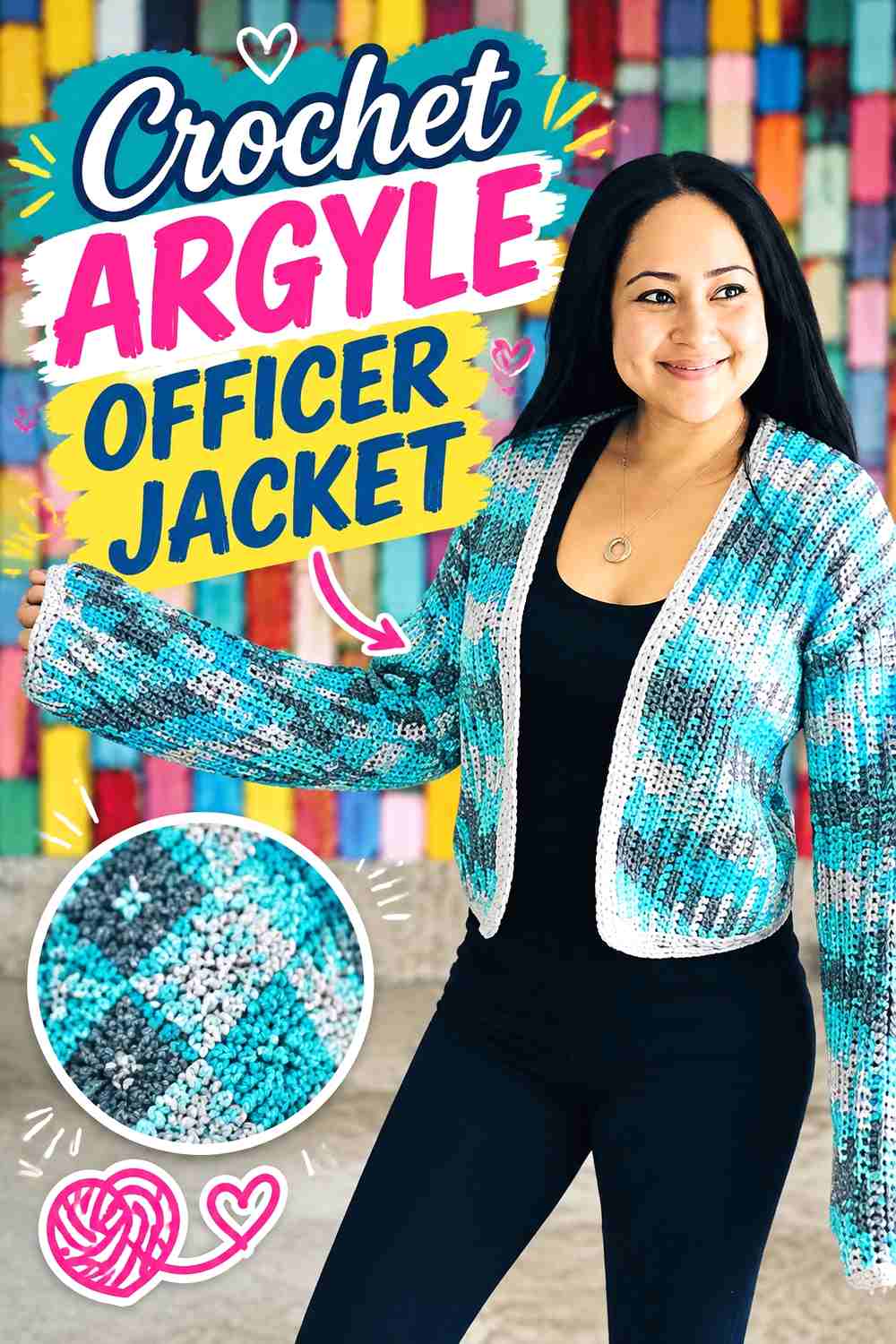
The Knotty Lace’s cardigan jacket uses planned pooling to create an allover argyle surface, and the source specifically discusses optional shoulder pads. That makes this one of the most naturally structured officer-jacket foundations in the collection.
Shoulder Emphasis Changes the Entire Silhouette
Even moderate shoulder structure can make a cardigan appear more formal and jacket-like. If you explore that option, evaluate the shoulder width against the hip and sleeve proportions rather than judging the feature by itself.
The goal is balance, not simply the widest possible upper body.
Let Argyle Replace Some of the Decorative Braid
The planned-pooling surface is already visually active. Adding several rows of contrasting cord can compete with the diamond pattern.
A cleaner military adaptation may use solid edging, strong buttons, and controlled shoulder emphasis while allowing the argyle to provide the main ornament.
Creator Credit: The Knotty Lace
8. Crochet Striped Regiment Cardigan Jacket
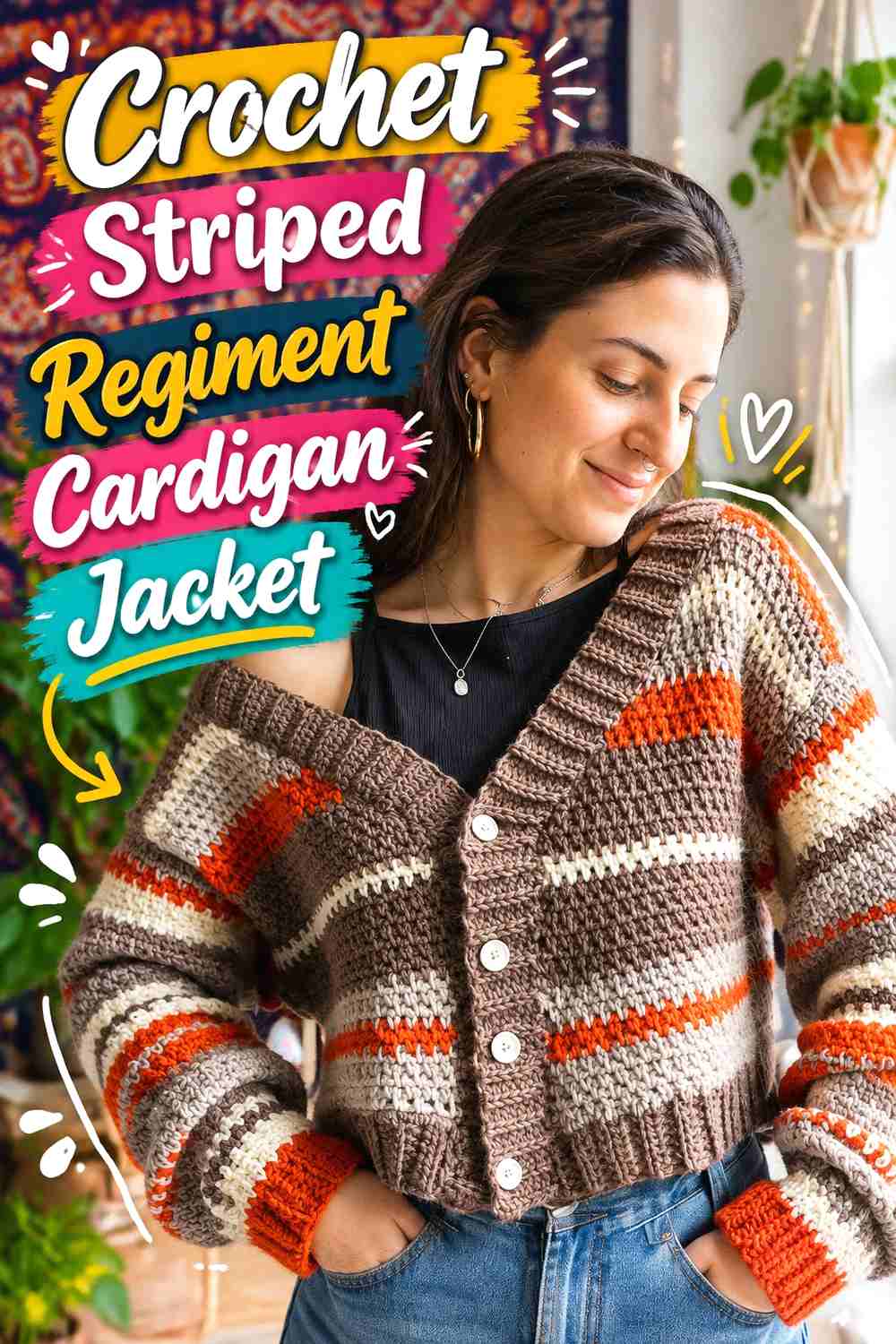
Bloodimaryart Crochet’s oversized striped cardigan uses moss stitch, several colors, buttons, and finishing ribbing. Its horizontal bands make it especially suited to a regiment-inspired color story where stripes replace some of the braid traditionally associated with military styling.
Use Stripe Placement to Control Visual Rank
A narrow accent stripe near the shoulder or cuff reads differently from equal bands covering the whole cardigan.
Before crocheting, sketch the sequence so one shade acts as the main body color while secondary colors provide deliberate accents.
Keep Added Trim From Fighting the Existing Bands
Horizontal braid over horizontal stripes can quickly create too many competing lines.
If the cardigan already has a strong banded pattern, concentrate heritage trim around the front opening, cuffs, or shoulders instead of repeating it across every stripe.
Creator Credit: Bloodimaryart Crochet
9. Crochet Made-to-Measure Parade Jacket
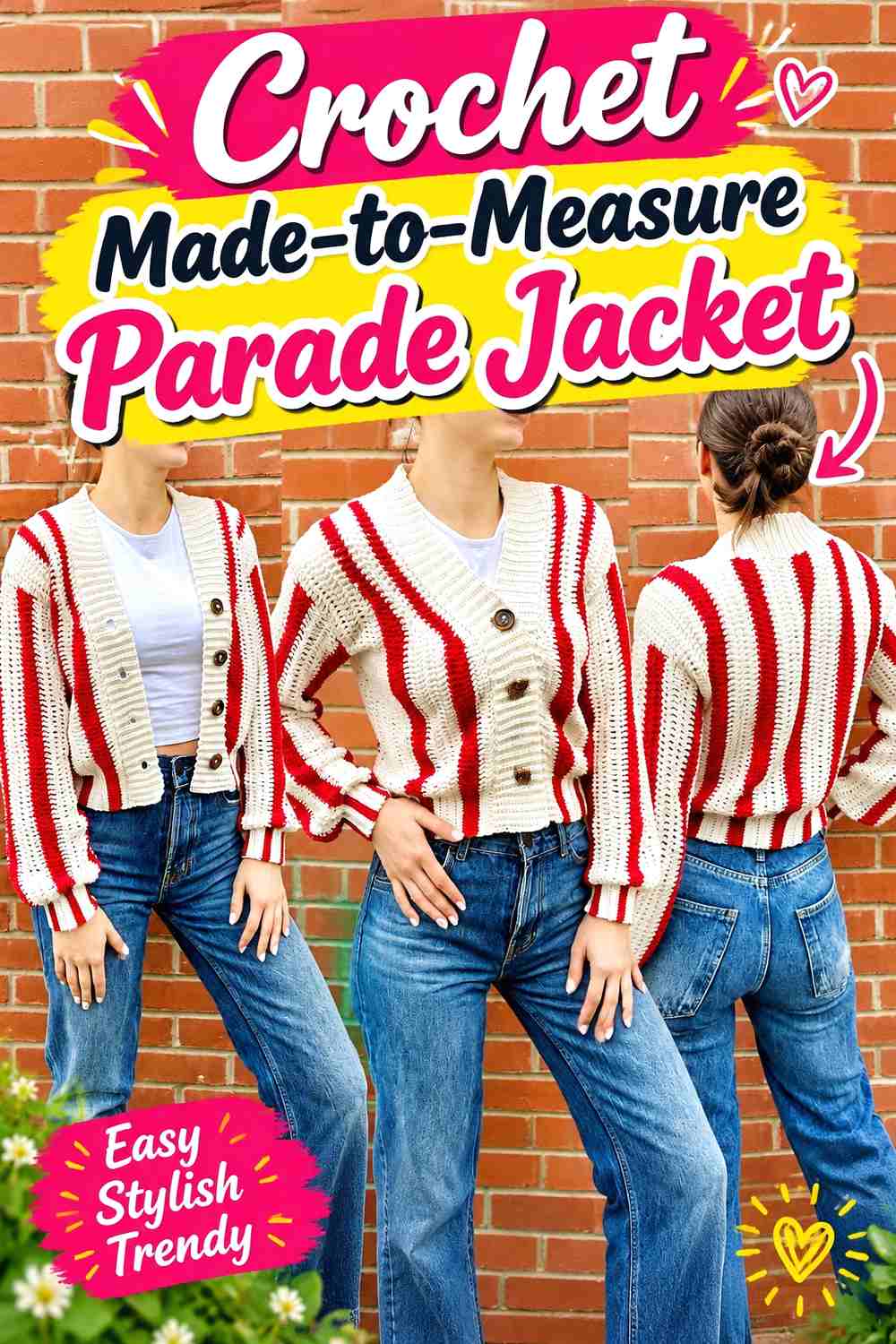
Kenikse Crochet’s made-to-measure cardigan uses two colors, buttons, ribbing, separate panels, and a defined front opening. Because the project is planned around body measurements, it provides a useful base when you want a closer parade-jacket silhouette rather than an intentionally oversized coat.
Decide on Ease Before Planning Decorative Closures
A fitted-looking military jacket still needs enough room to move. Establish the intended cardigan fit before adding rows of ornamental closures.
Decorative cords should not be used to pull an overly small front into alignment.
Contrast Edging Can Create a Uniform-Like Frame
A second color at the cuffs, front band, and neckline can create a disciplined outline without requiring complex surface embroidery.
If you introduce a third accent color, keep it limited so the original two-color structure remains readable.
Creator Credit: Kenikse Crochet
10. Crochet Ribbed Garrison Jacket
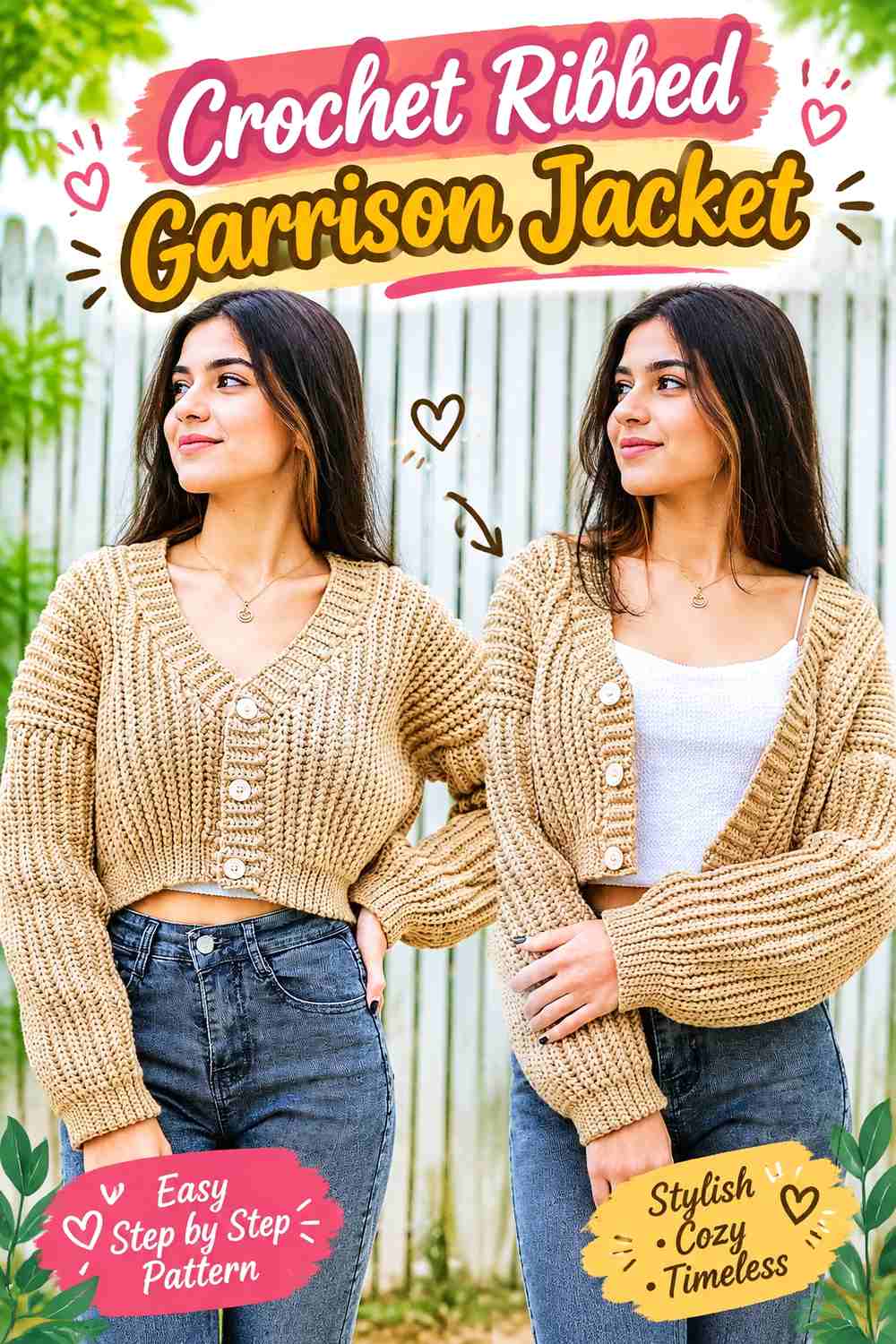
Chenda DIY’s chunky cardigan uses strong vertical ribbing, buttons, and a substantial cropped body. The deep ribbed surface gives this project more visual structure than a loose mesh cardigan, which suits a winter garrison or fortress-guard interpretation.
Vertical Ribbing Already Creates an Ordered Surface
The repeated lines can provide much of the disciplined look associated with the theme. Instead of covering them, place decorative features where they can work with that direction.
Front bands, cuffs, and shoulder details are natural areas to emphasize.
Heavy Fabric Needs Restraint Around the Front
Chunky crochet plus several buttons already creates physical weight. Adding very thick cords across the entire front may cause the opening to feel bulky.
Test a small trim sample against the completed fabric before committing to several rows of decoration.
Creator Credit: Chenda DIY
11. Crochet Drop-Shoulder Heritage Jacket
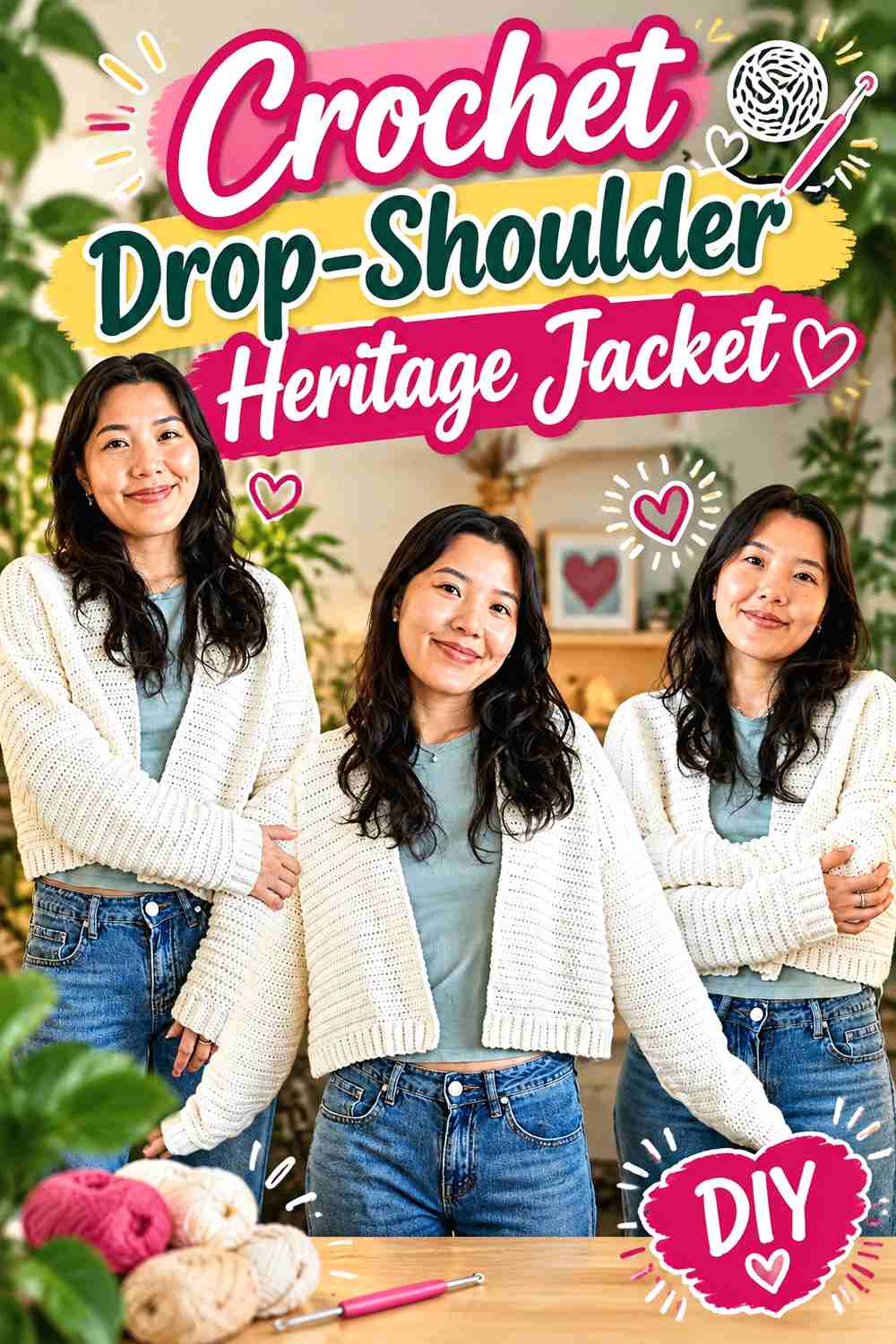
VivCrochets’ cardigan uses a clean drop-shoulder shape, ribbed finishing, and relatively simple construction. Its uncluttered surface makes it a useful blank canvas when you want the military character to come primarily from applied trim, color, or closures.
A Relaxed Shoulder Creates a Softer Military Look
Drop shoulders do not produce the sharpest tailored line, so this foundation suits an informal medieval-garrison or heritage-workwear interpretation better than a highly formal officer jacket.
Use the relaxed shape intentionally rather than trying to disguise it with rigid decoration.
Keep Decorative Rows Parallel
On a plain cardigan, uneven braid placement is easy to see. Mark placement while the garment is flat, then check it again while worn before permanently attaching repeated horizontal details.
The front edges should remain able to hang naturally after decoration is added.
Creator Credit: VivCrochets
12. Crochet Cropped Court Bolero Jacket
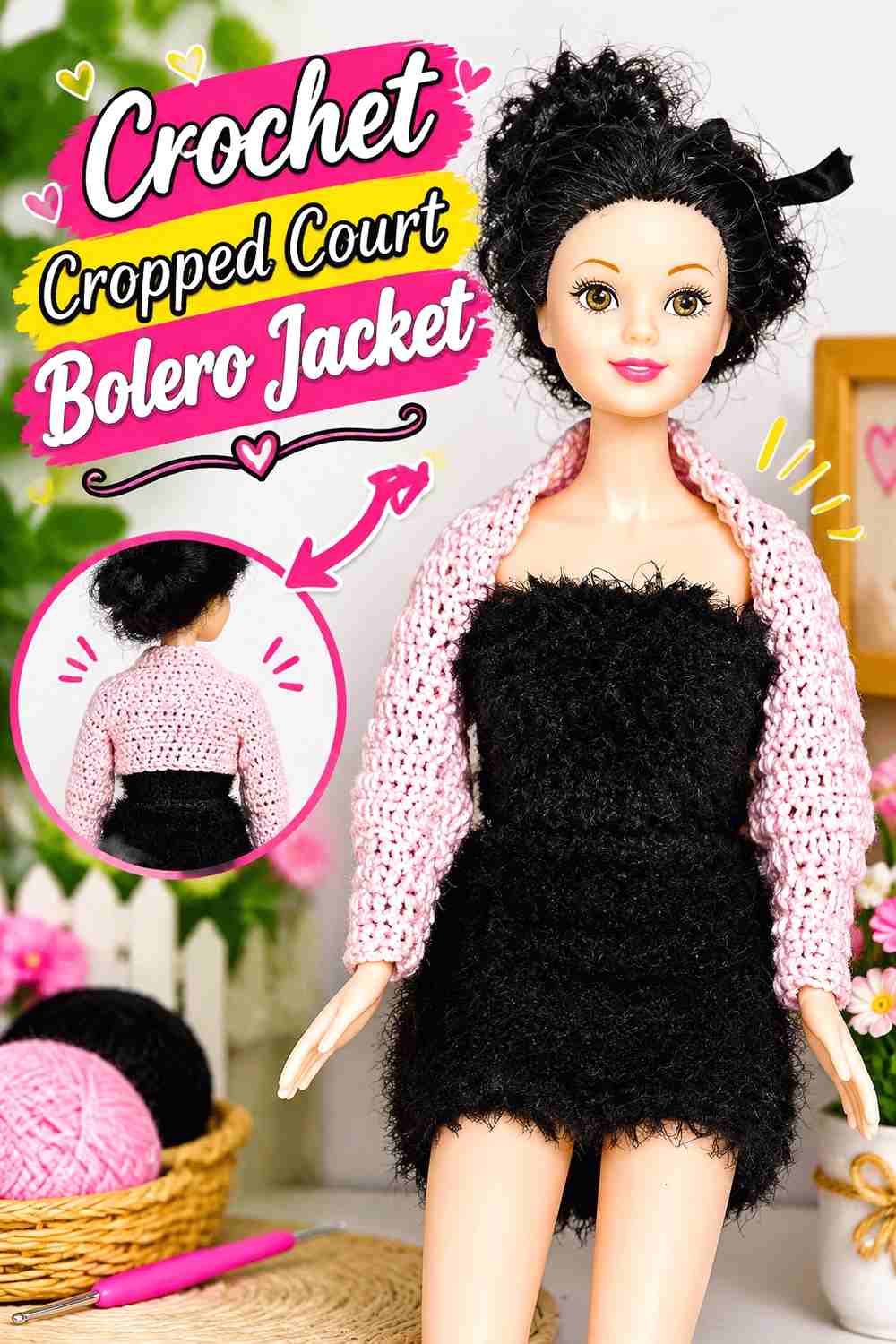
Woolpedia’s bolero tutorial provides a distinctly shorter jacket shape than the coat and cardigan options in this list. A bolero can support a court-guard or ceremonial interpretation where sleeves and shoulder detail matter more than torso coverage.
Use the Short Body With a High-Waisted Base Layer
A bolero exposes much more of the clothing underneath. That makes it particularly effective over a long dress, fitted vest, or high-waisted skirt where the lower garment carries the medieval heritage silhouette.
The jacket can then concentrate on cuffs, edging, and shoulder detail.
Avoid Overloading a Small Garment With Hardware
Because there is less front surface, several large closures can dominate quickly.
One or two deliberate fastening details or a narrow decorative front band can provide enough character without making the bolero feel crowded.
Creator Credit: Woolpedia
13. Crochet V-Neck Cadet Button Jacket
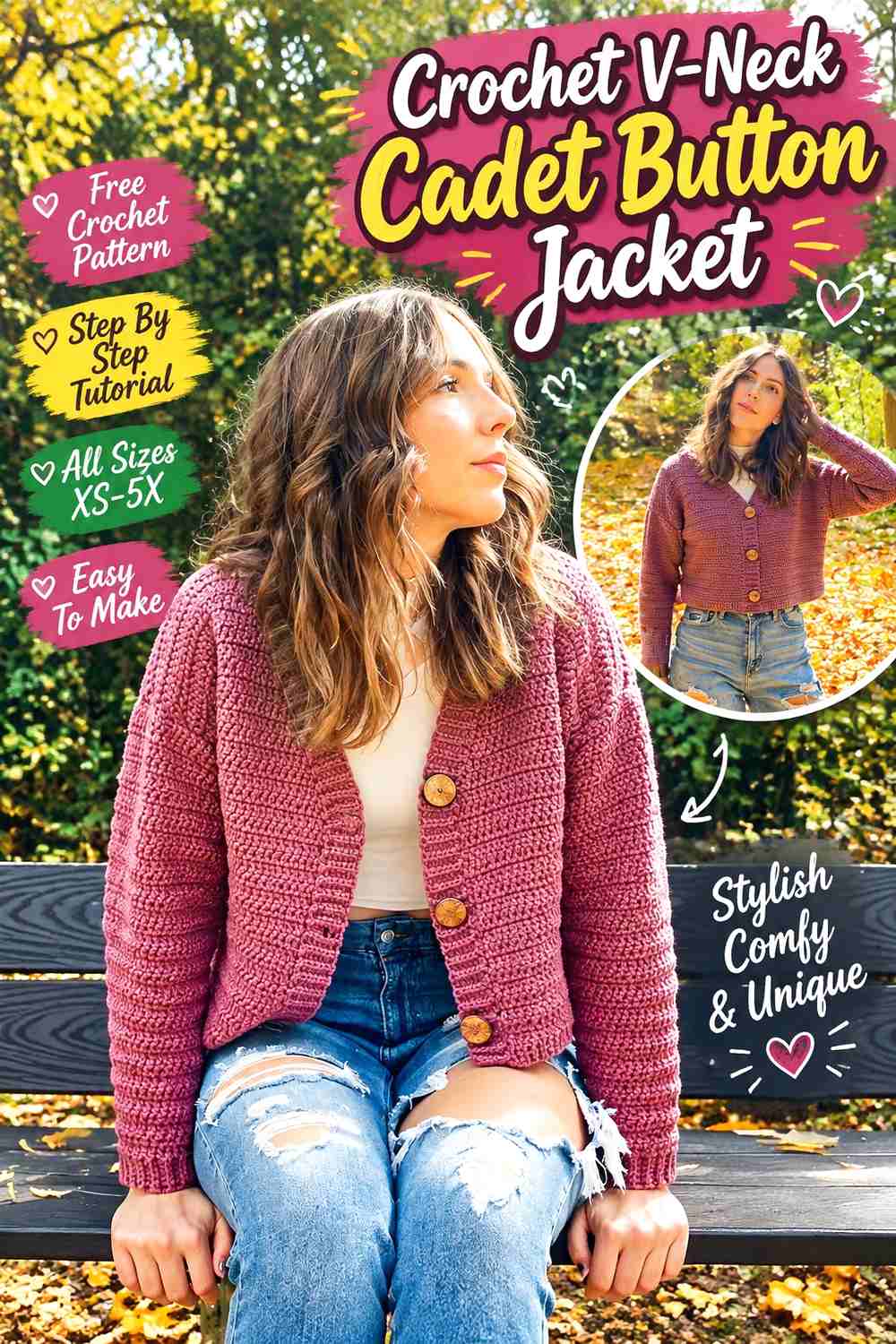
Evelyn And Peter Crochet’s Carl Cardigan uses separate panels, a cropped V-neck shape, ribbed finishing, and optional buttons. Its recognizable button-cardigan structure makes it a practical foundation for a cadet-inspired winter jacket with a cleaner, more restrained military influence.
Use the V-Neck to Frame a High-Collar Underlayer
Instead of trying to convert the cardigan itself into a stand-collar jacket, layer it over a turtleneck, mock neck, or collared blouse.
That preserves the original neckline construction while still creating a more formal heritage appearance.
Ribbing Provides a Natural Boundary for Contrast Trim
The front border already defines where the cardigan opens. A contrasting yarn choice there can create a strong frame without covering the main body.
If you add decorative buttons, check their weight against the ribbing before sewing them permanently.
Creator Credit: Evelyn And Peter Crochet
14. Crochet Hexagon Campaign Jacket

PassioKnit Kelsie’s granny-hexagon cardigan is constructed from large crocheted hexagons rather than conventional back and front jacket panels. That makes it the least tailored option here, but also one of the most useful for a patchworked campaign, mercenary, or folk-military interpretation.
Use Color Blocking to Create the Heritage Theme
Because the construction itself is geometric, color can do much of the styling work.
A controlled palette with one dominant shade and a small number of accent bands will feel more uniform-like than a completely random rainbow arrangement.
Do Not Expect a Hexagon Cardigan to Become a Tailored Coat
This construction naturally produces a different shoulder and body shape from a paneled jacket.
Preserve that relaxed character. Treat military styling as a visual overlay through color, cuffs, edging, or modest applied details rather than trying to force the garment into a close-fitting officer silhouette.
Creator Credit: PassioKnit Kelsie
15. Crochet Heavy Winter Guard Cardigan
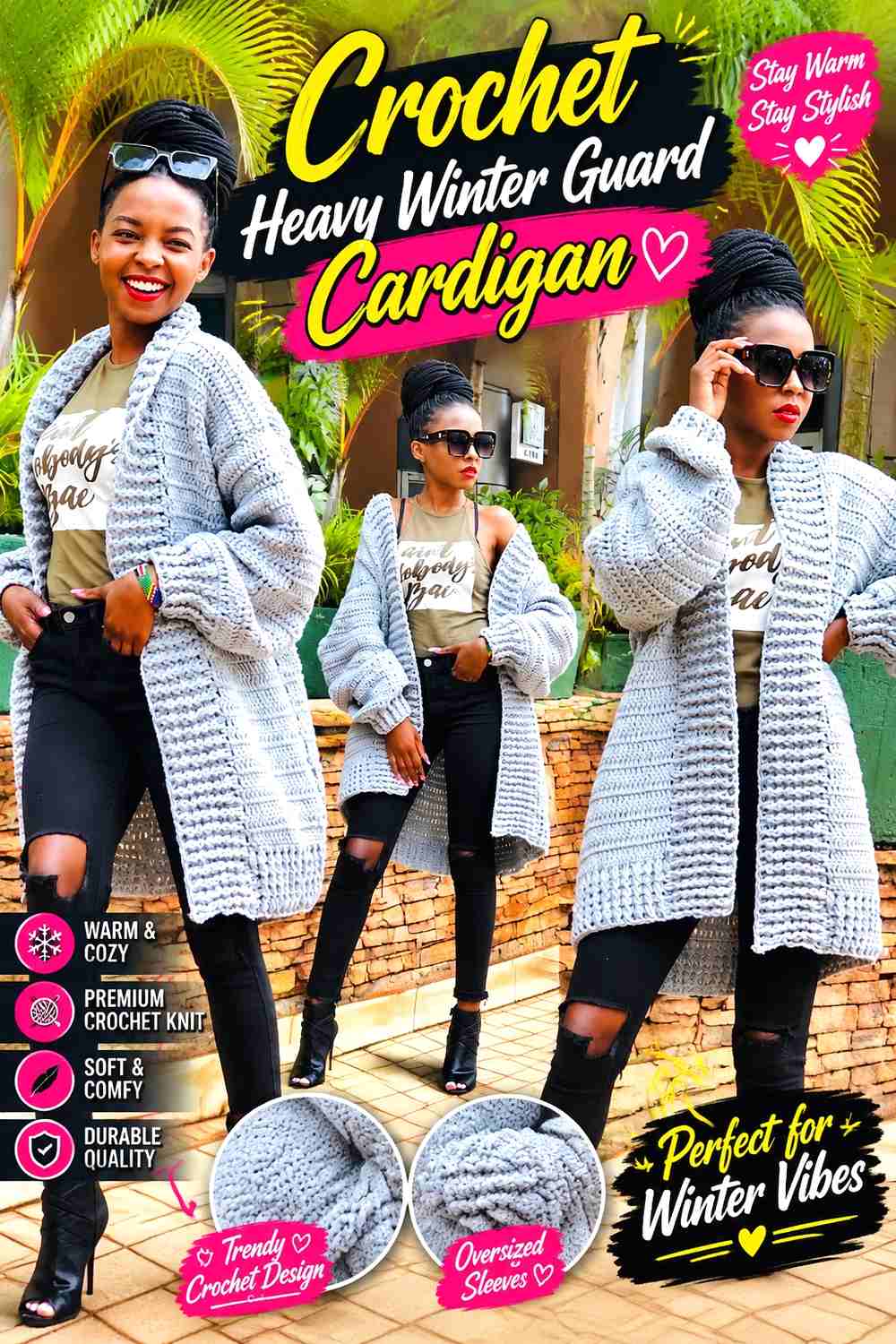
AC Crochets’ cold-weather cardigan uses chunky yarn and a straightforward panel-based construction. Its substantial fabric makes it useful for a practical winter-guard interpretation where warmth and layering matter more than ornate historical detail.
Dense Fabric Can Carry Stronger Contrast
A solid, substantial surface can support dark edging, cuff bands, or applied decorative lines without the additions disappearing into an airy stitch pattern.
Hold the trim against the finished fabric before attaching it so you can judge both scale and weight.
Leave Enough Space for Winter Layers
A guard-inspired jacket may look sharper with less ease, but winter function still matters.
Check shoulder movement over the clothing you expect to wear beneath it before adding any decorative front system that reduces flexibility.
Creator Credit: AC Crochets
16. Crochet Cropped Heritage Button Jacket
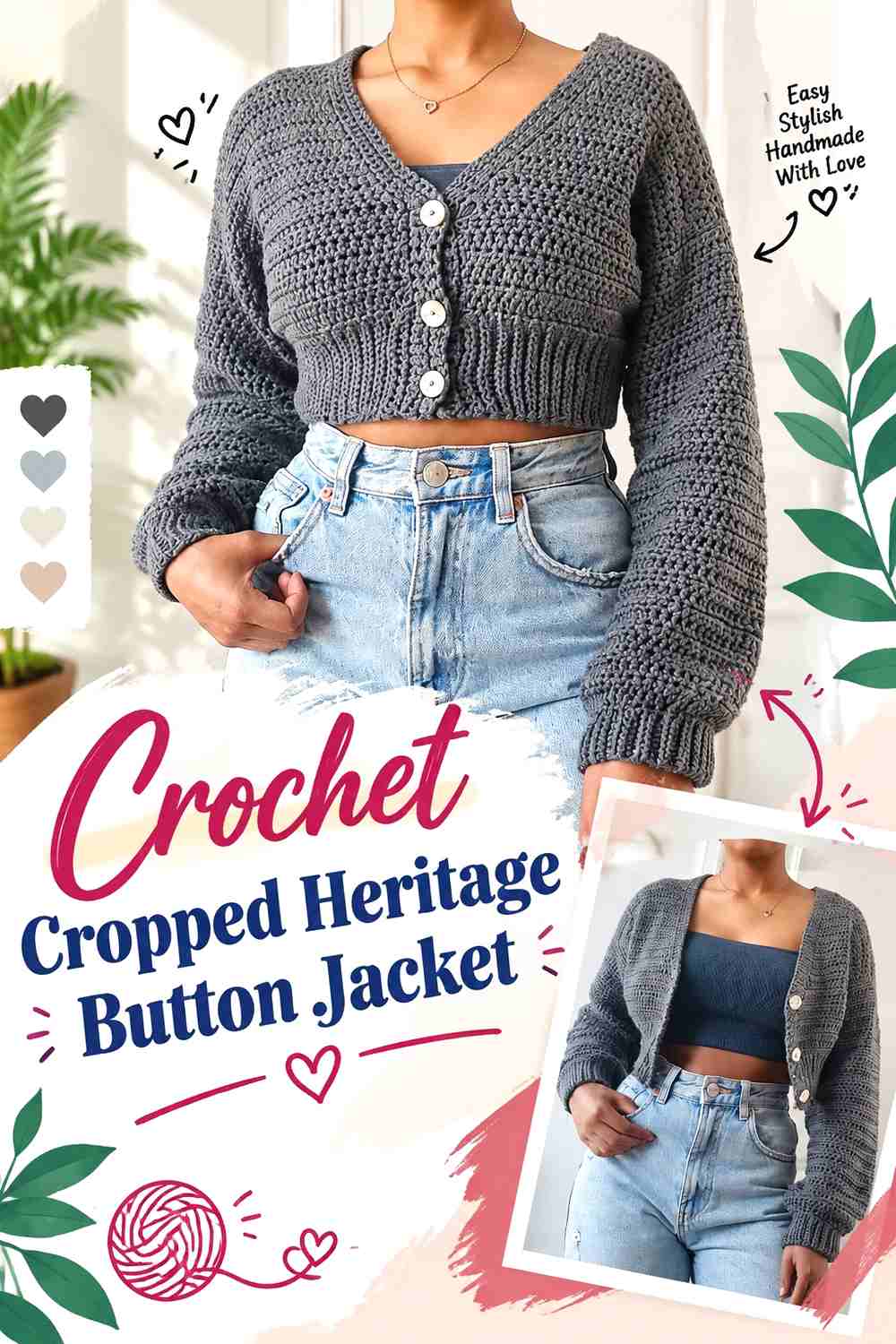
Rosa Ferns’ cropped cardigan uses ribbed finishing, buttons, and a compact made-to-measure silhouette. That combination works well for a restrained heritage jacket where neat proportions matter more than dramatic length.
A Compact Body Makes Cuffs More Noticeable
On a short jacket, sleeve finishing occupies a larger share of the overall visual design.
Contrast cuffs or narrow bands can create strong military influence without requiring elaborate decoration across the torso.
Position Buttons Before Adding Secondary Ornament
The button line should remain visually clear. If you add braid, cord loops, or embroidered-style surface crochet, arrange those elements around the functional closure rather than obscuring it.
A simple center front is especially useful when the jacket will be worn beneath a winter coat.
Creator Credit: Rosa Ferns
17. Crochet Textured Command Jacket
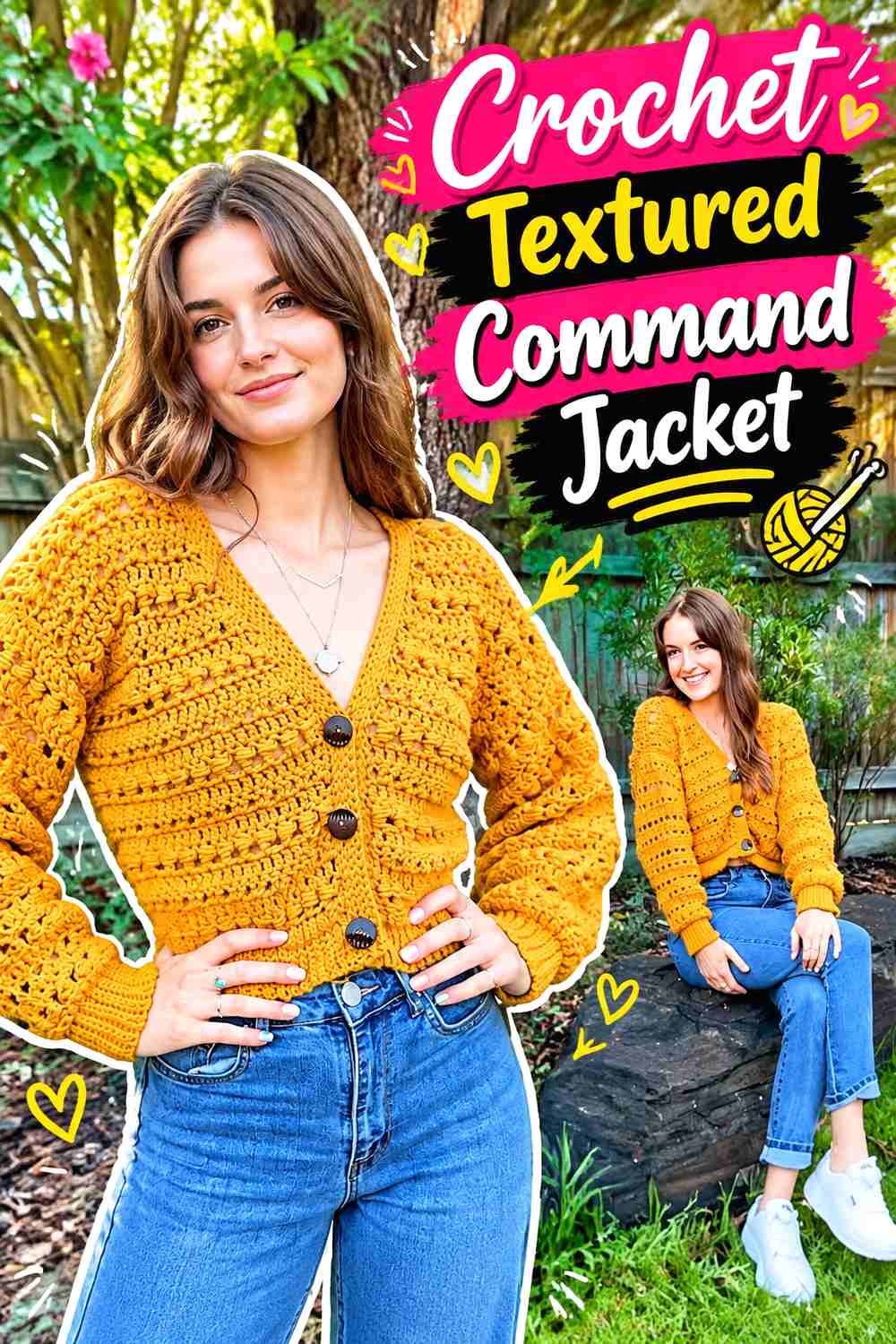
Stephanie Tashi’s cropped textured cardigan combines buttons, ribbed areas, shaping, and a visibly textured crochet surface. It offers a useful final direction for a command-style jacket where surface definition contributes as much as contrast trim.
Let Texture Replace Excess Ornament
A strongly textured fabric does not need every traditional military-inspired detail added on top.
Consider a controlled button line, solid cuffs, and perhaps one shoulder accent while allowing the stitch texture to provide the rest of the visual interest.
Keep the Hem and Front Band Equally Deliberate
A command-style interpretation benefits from clean boundaries. If the waist ribbing appears substantial but the front border looks visually weak, the garment can feel unfinished.
Compare those edges together before deciding whether additional contrast trim is necessary.
Creator Credit: Stephanie Tashi
Comparing the 17 Crochet Military Jacket Directions
| Jacket Direction | Strongest Feature | Heritage Adaptation to Consider | Winter Priority |
|---|---|---|---|
| Alpine bomber | Compact structured shape | Shoulder tabs or contrast edging | Leave room through sleeves |
| High-collar guard | Defined neckline | Front braid or restrained frog-style detail | Keep collar comfortable |
| Toggle officer coat | Long body and closures | Emphasize existing toggles | Watch total garment weight |
| Cropped cavalry | Short buttoned body | Decorative front bands | Coordinate with high waist |
| Hooded ranger | Hood and pockets | Minimal field-style trim | Balance hood weight |
| Heraldic coat | Motif layout and hood | Emblem-like color placement | Stabilize long body |
| Argyle officer | Graphic surface and shoulders | Solid military edging | Do not overcrowd pattern |
| Striped regiment | Horizontal color bands | Regiment-inspired palette | Keep ribbing flexible |
| Parade jacket | Made-to-measure fit | Contrast front framing | Preserve movement |
| Ribbed garrison | Heavy vertical texture | Strong cuffs and front bands | Avoid excessive trim weight |
| Drop-shoulder heritage | Simple blank canvas | Applied braid or buttons | Accept relaxed shoulder |
| Court bolero | Very short jacket | Ceremonial shoulder detail | Layer over warmer base |
| Cadet V-neck | Cropped button cardigan | Contrast ribbing | Use warm high-neck layer |
| Hexagon campaign | Patchworked geometry | Controlled heraldic colors | Keep relaxed construction |
| Winter guard | Dense chunky fabric | Simple military accents | Prioritize layering ease |
| Cropped heritage | Compact ribbed finish | Cuff and button emphasis | Keep front low-bulk |
| Textured command | Strong surface texture | Minimal structured accents | Preserve clean edges |
For the most jacket-like result, start with the Alpine bomber, high-collar cardigan, argyle officer jacket, cropped cavalry cardigan, or textured command jacket. Their compact proportions and defined edges already provide much of the structure associated with military-inspired styling.
For a stronger medieval heritage direction, the toggle-front long cardigan, hooded ranger, heraldic coat, and campaign-style hexagon cardigan provide more room for long silhouettes, hoods, symbolic color placement, and layered winter styling.
Conclusion
The strongest crochet military jacket ideas begin with the right underlying silhouette. A bomber, cropped button cardigan, or collared jacket works well when you want a sharp cavalry, cadet, or garrison look. Long toggle-front and hooded garments lean naturally toward medieval officers, guards, rangers, and fantasy campaign layers.
Decoration should support that construction instead of hiding it. Strong edging, repeated closures, cuffs, controlled shoulder emphasis, and a disciplined palette can create more impact than covering every panel with braid.
For winter, keep practical fit ahead of styling. The jacket needs enough shoulder and arm room for the layers beneath it, and any additional closures should complement the original garment rather than forcing it into a smaller shape.
Use each creator’s original tutorial for exact construction, sizing, gauge, and assembly. Add military or medieval heritage details only after the base jacket fits and hangs correctly.
Frequently Asked Questions
Are these all exact crochet military-jacket tutorials?
No. Some tutorials, particularly the bomber and structured jacket designs, already have jacket-like features that closely suit the theme. Others are cardigan or coat foundations that can be adapted with independently planned heritage details such as contrast edging, decorative closures, shoulder tabs, or controlled color placement.
What makes a crochet cardigan look more like a military jacket?
Defined front edges, a structured collar, compact cuffs, repeated buttons or toggles, shoulder emphasis, strong contrast trim, and a disciplined silhouette can all shift a cardigan toward a military-inspired look. You do not need to use every feature at once.
Can I add frog-style closures to an existing crochet cardigan?
Possibly, but first determine whether they will be decorative or functional. A decorative closure can be attached with relatively little tension, while a functional closure needs a stable front edge capable of handling repeated pulling.
Should a military-inspired crochet jacket have very little ease?
Not necessarily. A close visual silhouette does not mean the garment should restrict movement. For winter especially, allow enough room for the layers you expect to wear beneath the jacket and confirm comfortable movement through the shoulders and upper arms.
How can I create a medieval military look without copying a historical uniform?
Work with broad design ideas such as long coat proportions, toggles, hoods, contrast cuffs, heraldic colors, structured fronts, or decorative cord placement. This creates a heritage-inspired garment without presenting it as a reproduction of a specific historical uniform.
Where should shoulder tabs be placed on a crochet jacket?
Base their position on the finished garment’s actual shoulder line rather than placing them from a flat measurement alone. Try the cardigan on first, identify where the shoulder sits, and make sure any added tab does not interfere with arm movement or pull the neckline sideways.
Which of these jacket styles is most practical for winter layering?
Dense bombers, chunky ribbed jackets, long toggle-front cardigans, hooded cardigans, and substantial button-up designs generally offer more coverage than boleros or open motif garments. The final warmth still depends on the specific yarn, stitch density, fit, and layers worn underneath.