A crochet lace bandana can add a softer, vintage-inspired detail to winter outfits without replacing the practical warmth of a hat. Scalloped borders, shell stitches, floral openwork, picots, and decorative points frame the hair differently from a plain triangle, making the accessory useful when you want texture around a coat collar, cardigan, or layered dress.
The tutorials below do not all use identical scalloped edging. Several are exact scalloped or shell-edged bandanas, while others use picots, floral lace, filet, granny openings, or motif construction that can support the same romantic styling direction. Those differences are intentional: a broad shell edge creates a very different outline from tiny picots or an all-over floral triangle.
For winter outfits, color and layering can shift an airy bandana away from its usual warm-weather styling. Cream, oatmeal, burgundy, chocolate, deep rose, muted plum, charcoal, forest green, dusty blue, and antique gold can all make open crochet feel more at home beside heavier seasonal fabrics.
Quick List
- Crochet Classic Scalloped Granny Bandana
- Crochet Rounded Scallop Lace Bandana
- Crochet Sunny Lace Scallop Bandana
- Crochet Airy Mesh Picot Bandana
- Crochet Linked-Stitch Scalloped Bandana
- Crochet Textured Picot Kerchief Bandana
- Crochet Lace-Edge Tie Bandana
- Crochet Low-Bulk Granny Lace Bandana
- Crochet Flowing Floral Lace Bandana
- Crochet Filet Multi-Wear Lace Bandana
- Crochet Daisy-Motif Romantic Bandana
- Crochet Cluster-and-Shell Lace Bandana
- Crochet One-Piece Openwork Bandana
- Crochet Shell-Edged Lacey Bandana
- Crochet Dragonfly Motif Lace Bandana
- Crochet Flower-Pattern Openwork Bandana
Choose Scallop Size According to the Triangle
Scallops are not simply decoration added after the bandana is finished. Their scale changes the entire outline.
Small rounded arches create a delicate lace-handkerchief effect. Larger shells are more visible against loose hair and can make a simple triangle feel considerably more ornate. If the center already contains floral or geometric lace, a quieter border may keep the design balanced.
Pay particular attention to the lower point. A scallop centered neatly around the tip can emphasize the triangular shape, while an awkward border transition can make the point look off-center even when the main fabric is symmetrical.
Plan Winter Styling Around Hair Coverage, Not Warmth
Open crochet bandanas usually leave considerably more air space than winter hats. For cold weather, it is more accurate to treat them as decorative hair accessories rather than reliable insulating headwear.
Think instead about how the bandana works with the rest of the outfit. A deeper triangle can remain visible above a coat collar, while a shallow kerchief keeps more hair exposed. Long ties can form a visible bow beneath a ponytail, whereas narrow cords disappear more easily under loose hair.
If you wear a hood, test the bandana underneath it. Large shells, thick knots, flowers, or motif joins can feel very different once another layer presses against the back of the head.
Yarn and Drape Matter More With Decorative Edges
A scalloped lace bandana needs enough flexibility to curve over the crown without making the border stand outward.
Changing to a substantially thicker yarn can enlarge every shell, picot, motif, and open space. It can also create extra bulk around the ties. If you substitute materials, judge the developing bandana on the head instead of assuming the tutorial’s repeat count will still create the same proportions.
Smooth yarn often keeps lace shapes easy to see. A soft halo can create an appealing winter texture, but it may blur small flowers, filet shapes, and delicate picots.
1. Crochet Classic Scalloped Granny Bandana
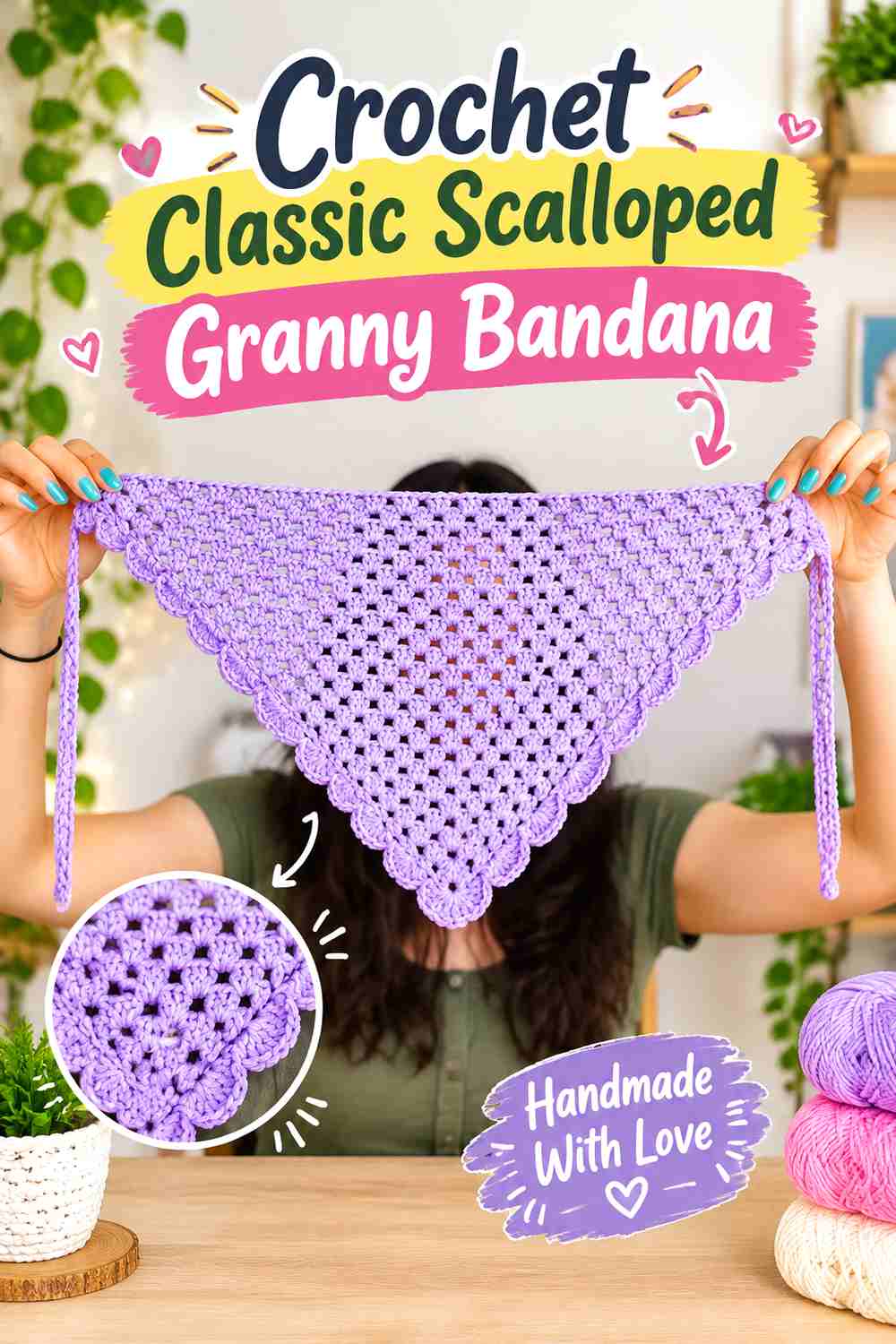
VivCrochets provides one of the closest direct matches to this collection. The design combines an orderly granny-style body with a clearly defined scalloped border, so the romantic effect comes mainly from the perimeter instead of complicated lace throughout the entire triangle.
The Calm Center Gives the Scallops More Impact
A relatively regular center gives broad rounded edging room to stand out.
This is useful for winter styling because you can choose a rich seasonal color without adding several competing stitch patterns. In cream or soft neutral shades, the border creates a vintage handkerchief effect; in burgundy or dark green, the same curved outline can feel more dramatic.
Check the Border Before Finishing Both Sides
Shell-style edging places considerably more fabric along the perimeter than a plain single-crochet finish.
After working several scallops, let the bandana relax and check whether the edge follows the triangle naturally. Strong rippling or pulling is easier to address before the complete border and ties are finished.
Creator Credit: VivCrochets
2. Crochet Rounded Scallop Lace Bandana
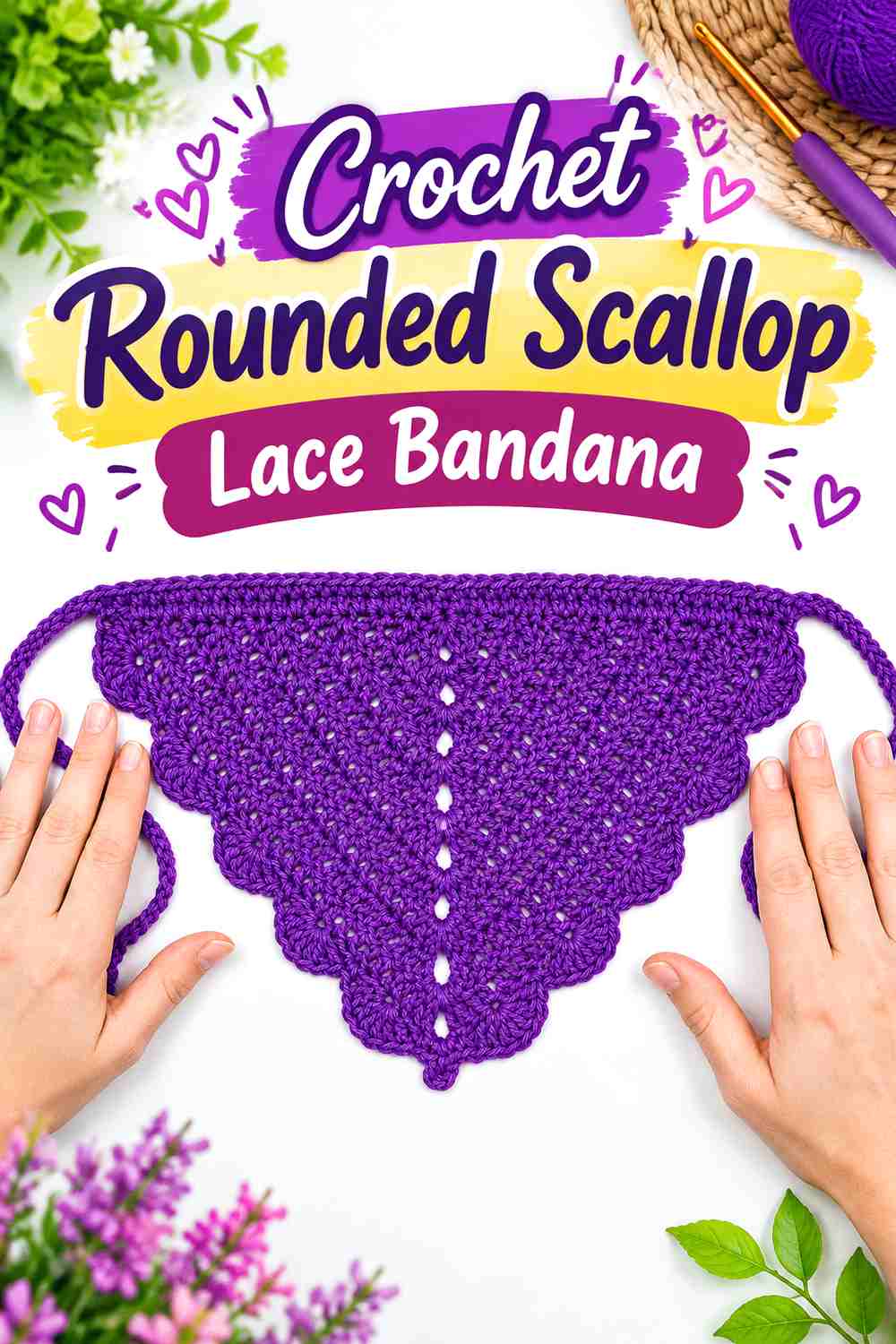
PassioKnit Kelsie’s bandana also places scallops at the center of the design, but it offers a different reference for how a decorative curved edge can change a triangular headscarf. This is a good direction when the border itself is the feature you want people to notice.
Rounded Edges Soften a Sharp Triangle
A basic bandana has strong diagonal sides and a pointed bottom. Repeating scallops visually interrupt those hard lines.
That makes this style especially compatible with romantic winter outfits built around ruffled blouses, long skirts, soft cardigans, velvet details, or rounded coat collars.
Avoid Adding Too Many Competing Trims
Once the perimeter is visibly scalloped, another dense row of tassels, beads, flowers, or contrast trim can make the small accessory feel crowded.
Complete the main bandana first and look at it with the intended coat. The curved edge may already provide enough decorative movement.
Creator Credit: PassioKnit Kelsie
3. Crochet Sunny Lace Scallop Bandana
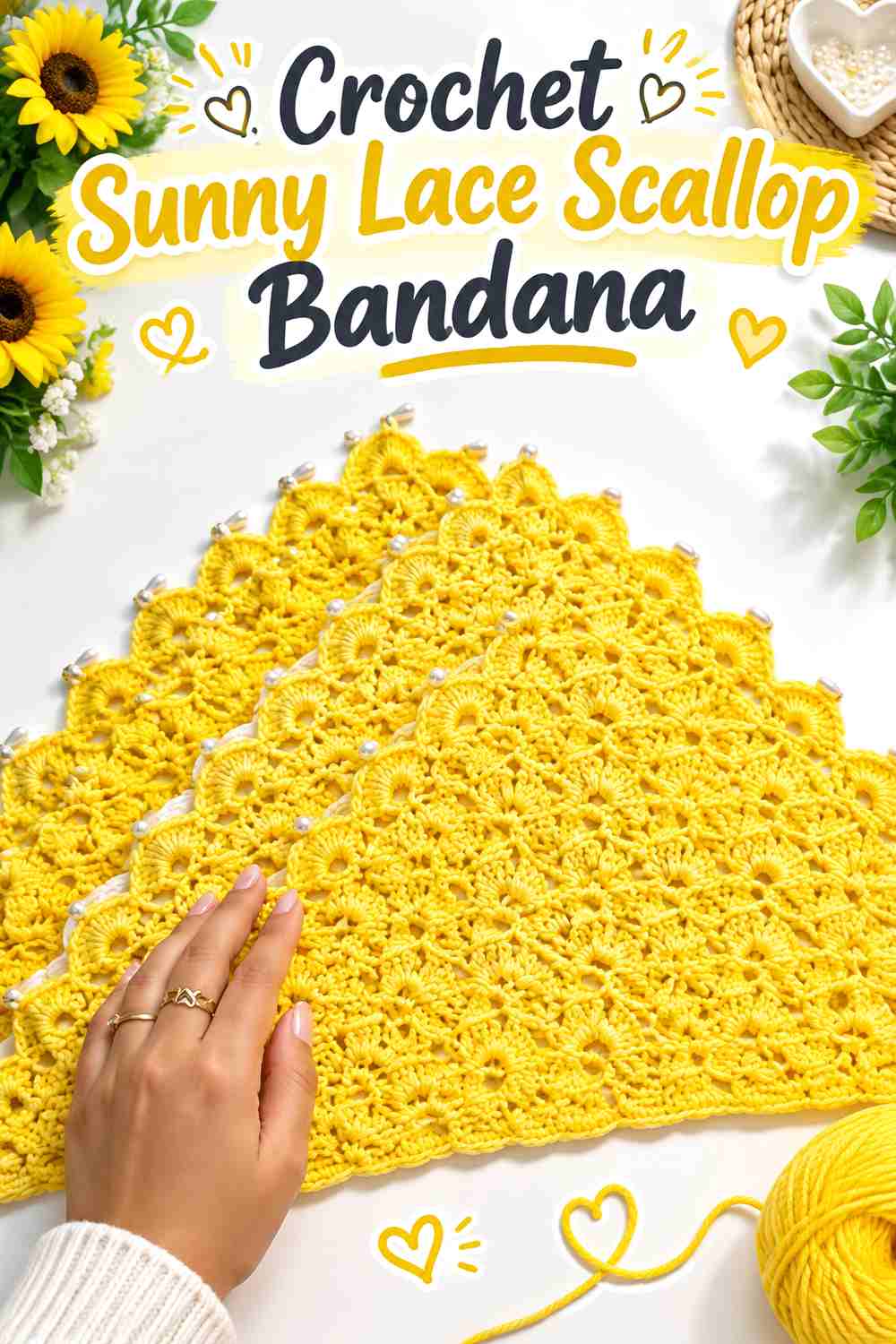
Crochet Corner Ph combines an open lace body with scalloped edging and optional hanging details. The project can also function beyond a headscarf, so it has a slightly more flowing, scarf-like quality than a compact granny kerchief.
All-Over Lace Makes the Border Feel Lighter
When the center already contains generous negative space, scallops do not sit against a solid visual block.
The result can feel especially delicate in a monochrome palette. For winter styling, try thinking in terms of antique cream, muted berry, brown, dark olive, or smoky blue rather than automatically adding more stitch decoration.
Decide Whether Dangling Details Suit Your Hairstyle
Optional hanging elements create movement, but they can interact with earrings, coat collars, scarves, and loose hair.
If the bandana will be worn under a hood or beside a high collar, a cleaner edge may be more practical while still preserving the scalloped lace silhouette.
Creator Credit: Crochet Corner Ph
4. Crochet Airy Mesh Picot Bandana
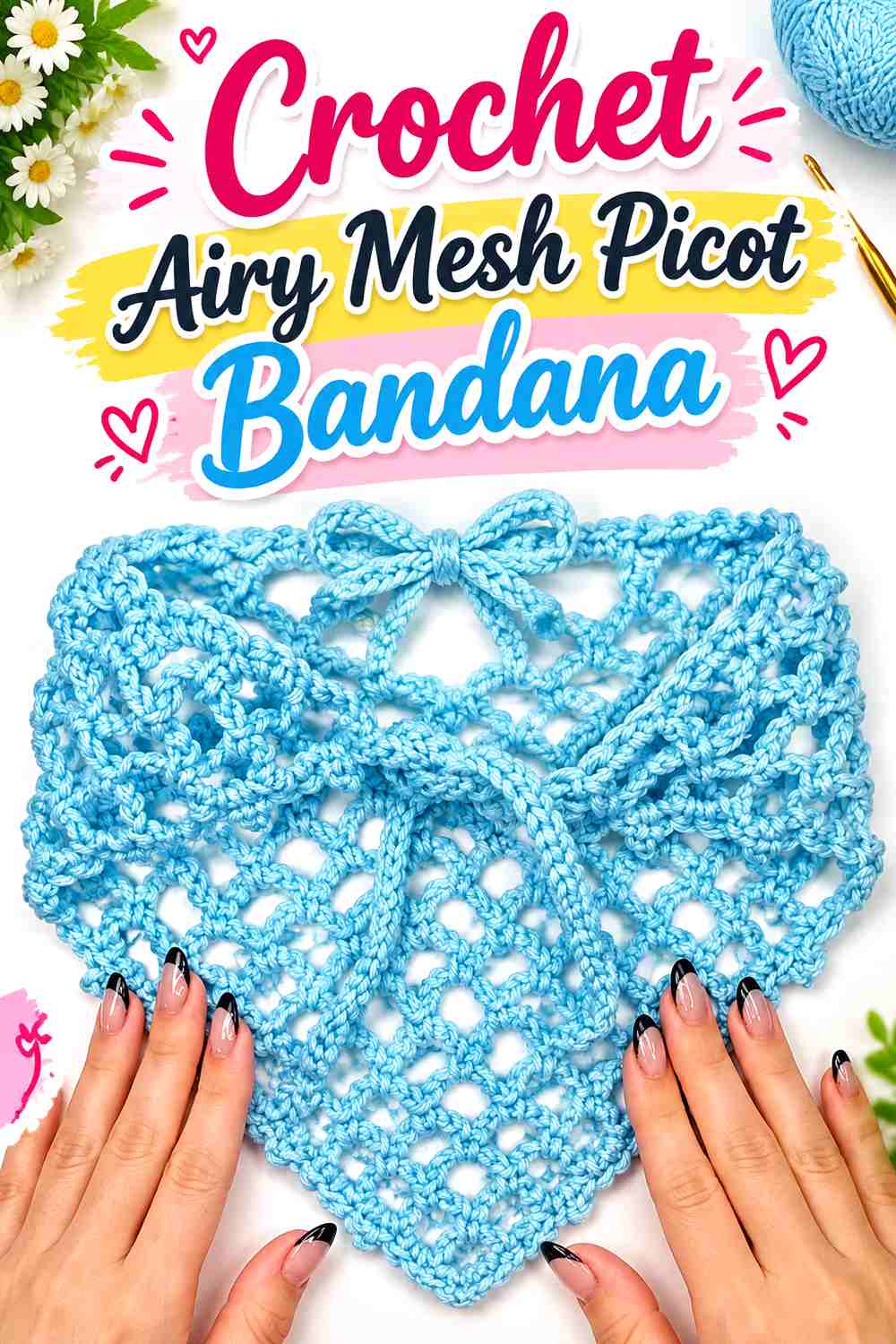
ElyseCrochets 💌 uses broad mesh through the main triangle and finishes the perimeter with smaller pointed detail. It is not a large-shell scallop design, but the picot edge provides a useful contrast for readers deciding how much border decoration they actually want.
Picots Create a Finer Outline Than Shells
Large shells produce obvious curves. Picots create tiny points that read more like lace trim.
Choose this direction if you want the body of the bandana to remain visually dominant. The smaller border detail can look especially refined against dark hair or a solid winter coat.
Wide Mesh Makes Hair Part of the Design
Because much of the hairstyle remains visible through the openings, hair color becomes part of the finished visual effect.
Before choosing a very dark yarn, consider whether you want high contrast or a subtler tone-on-tone result. Both can work, but the same lace can look dramatically different depending on the background beneath it.
Creator Credit: ElyseCrochets 💌
5. Crochet Linked-Stitch Scalloped Bandana
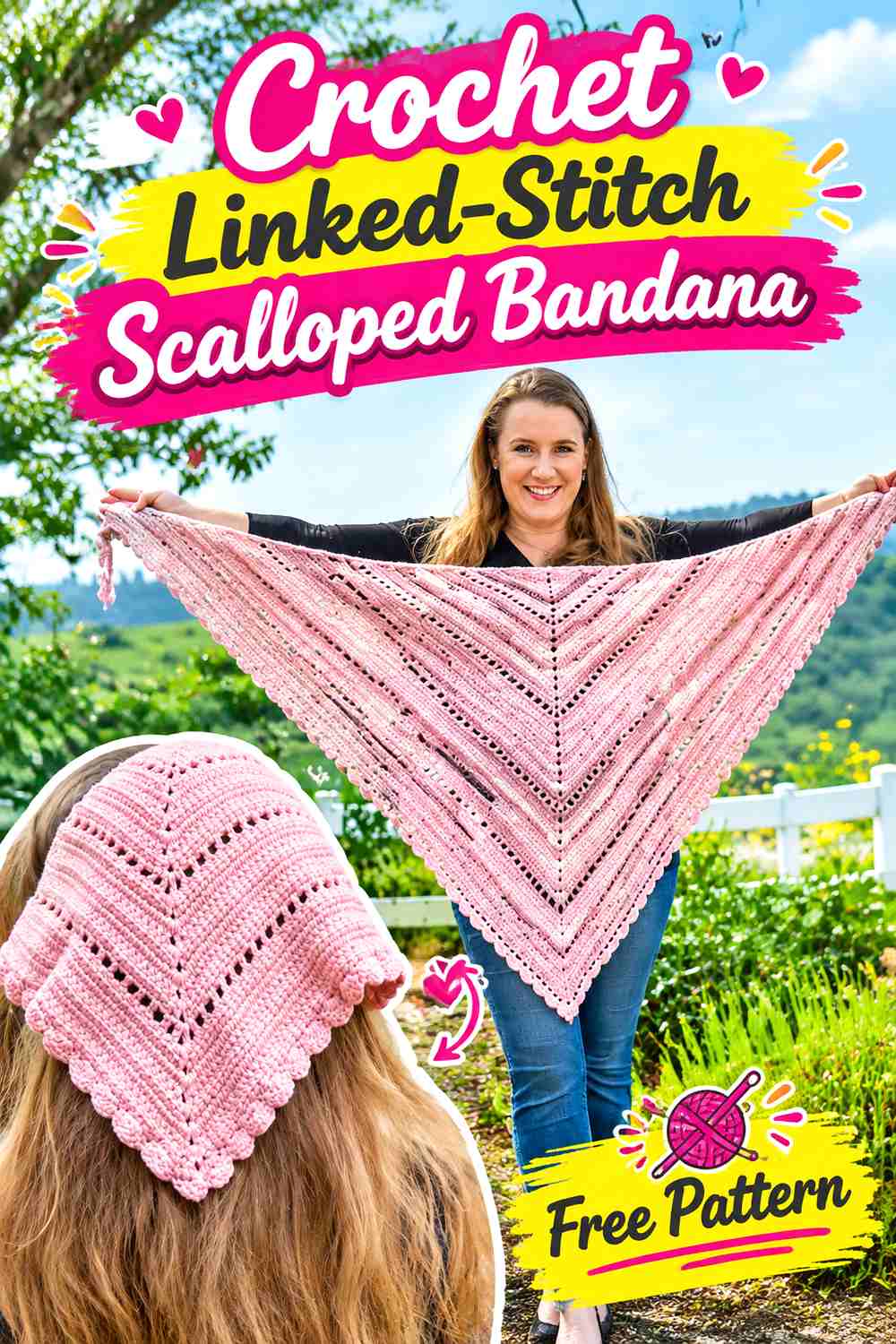
Nicki’s Homemade Crafts uses linked crochet to create a more substantial triangle, then introduces a scalloped border. This makes it noticeably different from the open-mesh projects: the romantic edge surrounds a body with more visual coverage.
More Coverage Makes the Border Stand Out Clearly
When fewer large holes appear through the center, the eye naturally follows the contrast at the perimeter.
This can work well with winter clothing because the bandana remains visible as a textile layer even when worn with heavier fabrics and darker colors.
Mixed Density Changes the Way the Point Hangs
A denser body contains more yarn than a loose mesh center, while the scallops add extra weight around the sides.
Before finishing, hold the bandana from its upper corners and check whether the point hangs centrally. If one side repeatedly twists, investigate the fabric balance rather than relying on the ties to pull everything straight.
Creator Credit: Nicki’s Homemade Crafts
6. Crochet Textured Picot Kerchief Bandana
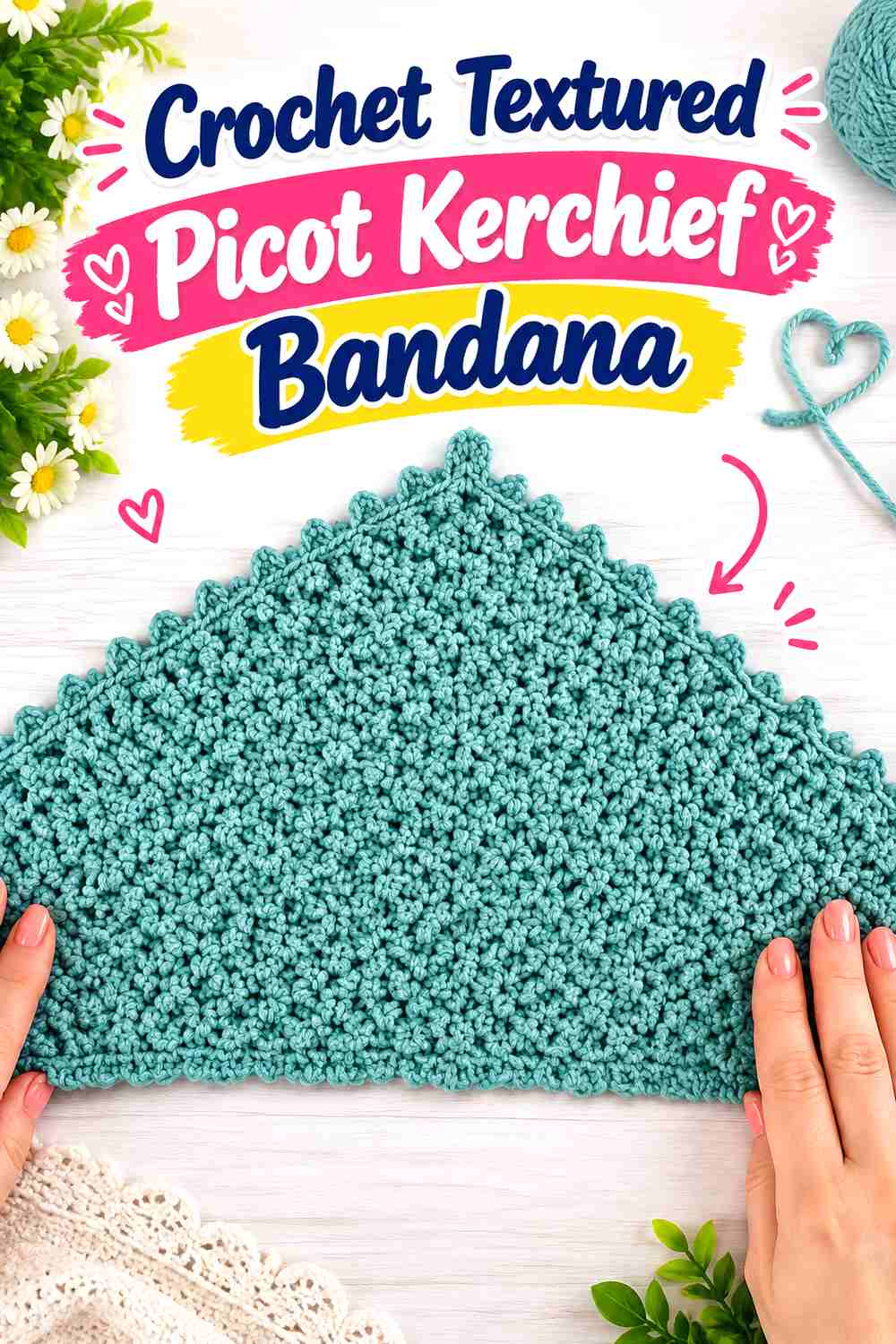
The Turtle Trunk’s kerchief takes a more textured route. Instead of making large transparent lace the dominant feature, small raised picot details bring delicacy to a more substantial fabric.
Texture Can Feel Romantic Without Maximum Openwork
A romantic bandana does not have to resemble fine thread lace.
Repeated small bumps and decorative points can create enough detail while leaving more crochet visible over the hair. That balance may also pair more naturally with chunky cardigans and textured winter coats.
Make Sure the Ties Are Not Correcting a Small Body
Decorative kerchiefs can distort if the main triangle is pulled hard just to make the corners meet behind the head.
Try the body before completing the fastening. The ties should secure the piece rather than stretch the decorative fabric into the required width.
Creator Credit: The Turtle Trunk
7. Crochet Lace-Edge Tie Bandana
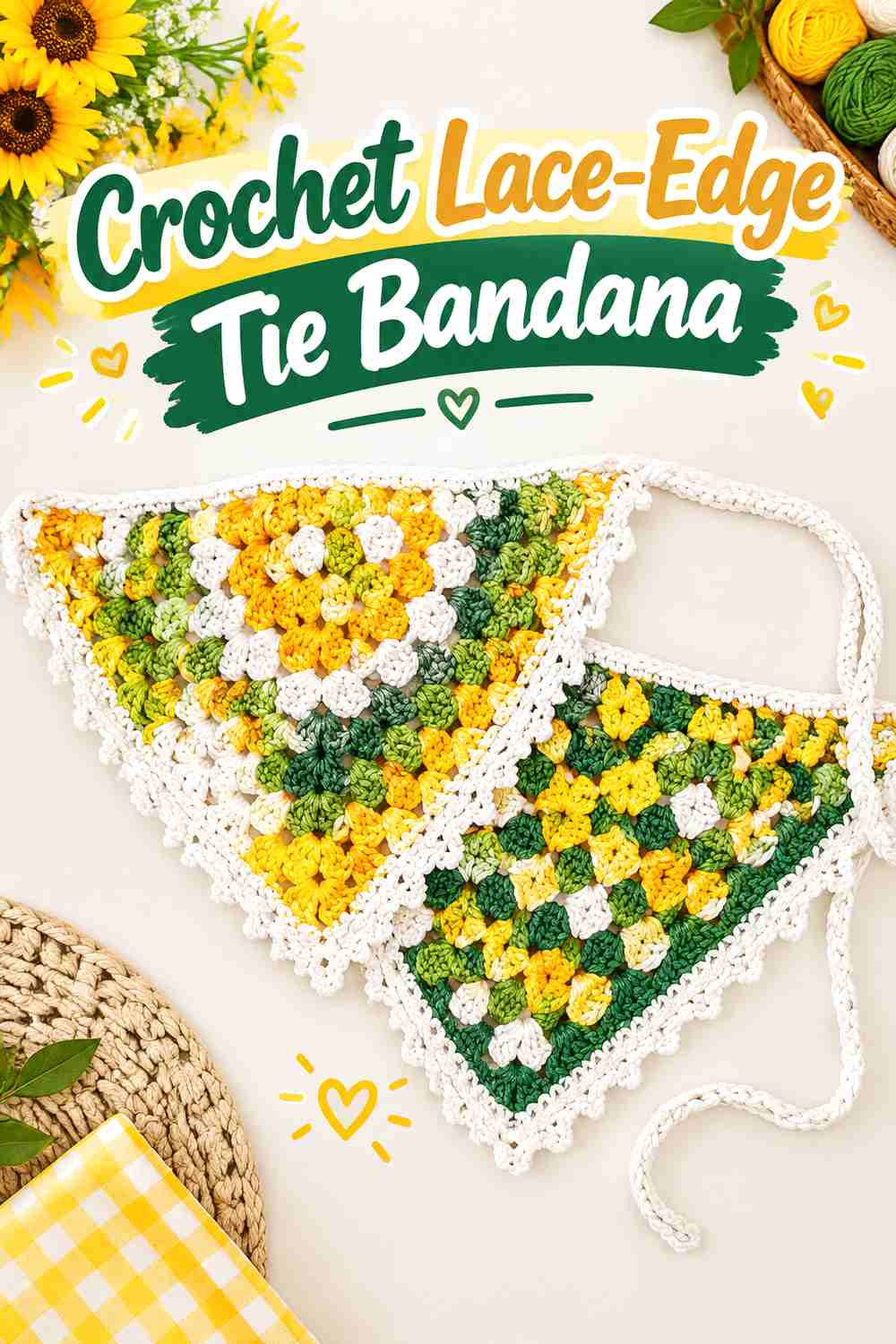
Ashten Stitches makes the fastening itself part of the design choice, with decorative edging and alternative tie treatments. That makes this project especially useful if you want the back of the bandana to be as considered as the front.
Tie Width Changes the Romantic Effect
Thin ties can nearly disappear beneath the hair. Wider straps can form a visible bow and become another soft detail in the finished accessory.
Think about hairstyle before choosing between them. A bow can look intentional with a low bun or ponytail but may create unnecessary bulk beneath very thick loose hair.
Keep the Border and Bow in Proportion
A small triangle with large scallops and broad ties can quickly become dominated by its finishing details.
View the whole piece from normal wearing distance. If the edging and fastening overwhelm the center, reducing one decorative element can make the bandana look more polished.
Creator Credit: Ashten Stitches
8. Crochet Low-Bulk Granny Lace Bandana
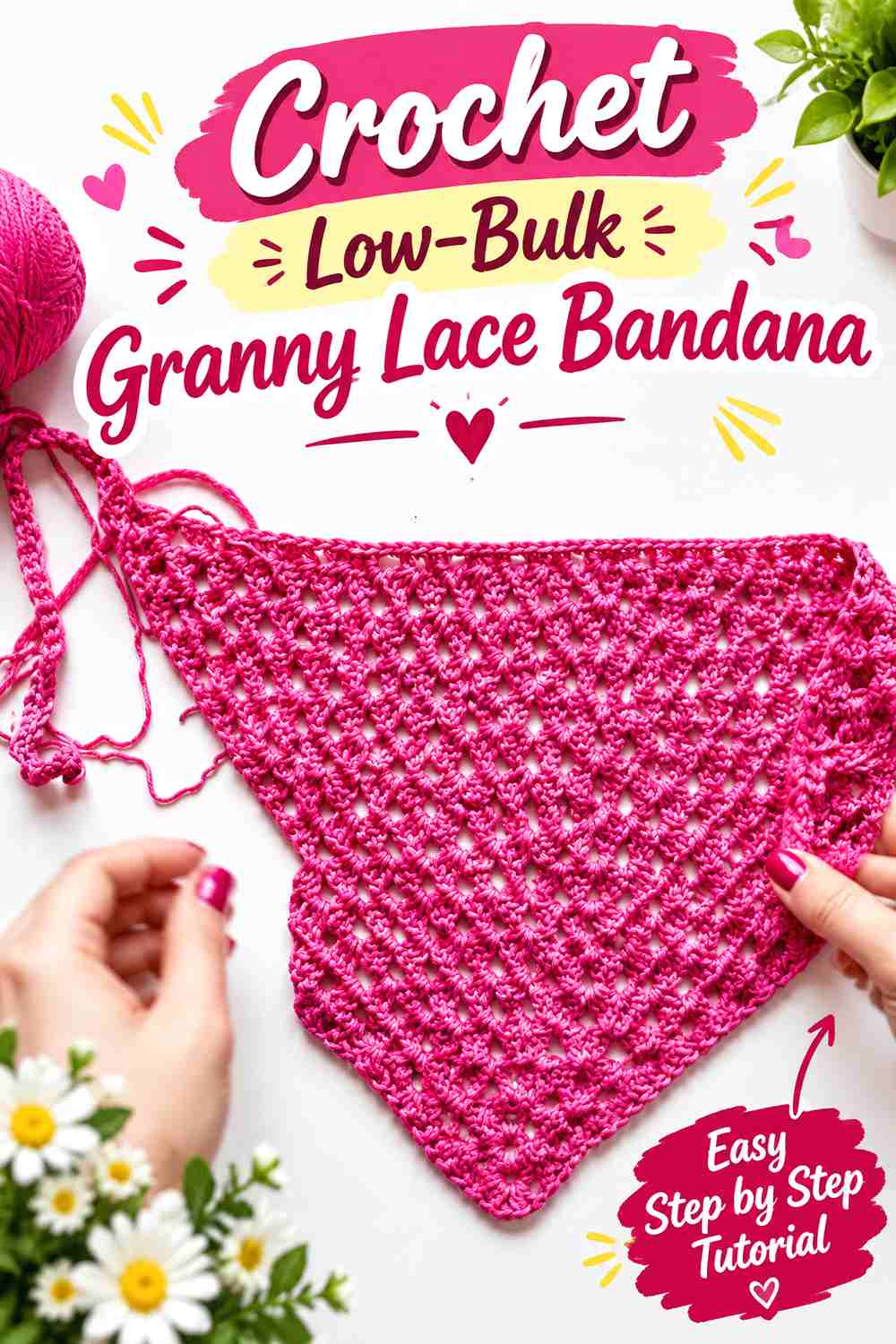
Dorothy Jean Crochet’s design addresses one practical issue that can become especially noticeable under winter layers: excess fabric around the sides of a granny-style bandana. The construction keeps the familiar open granny appearance while reducing unwanted bulk.
Lower Side Bulk Helps Around Coat Collars
A bandana may look fine from the back but feel crowded once thick hair, ties, and a raised coat collar meet behind the neck.
This option is worth considering if you want the romantic crochet look without a large knot or heavy corners near the ears.
Add Romance at the Edge Rather Than Through Extra Thickness
Because the foundation is visually simple, a restrained shell, picot, or lace-inspired finishing treatment can shift the mood without making the whole triangle denser.
If adapting the edge, preview a short section first and make sure the additional trim does not erase the low-bulk advantage that made the construction appealing.
Creator Credit: Dorothy Jean Crochet
9. Crochet Flowing Floral Lace Bandana
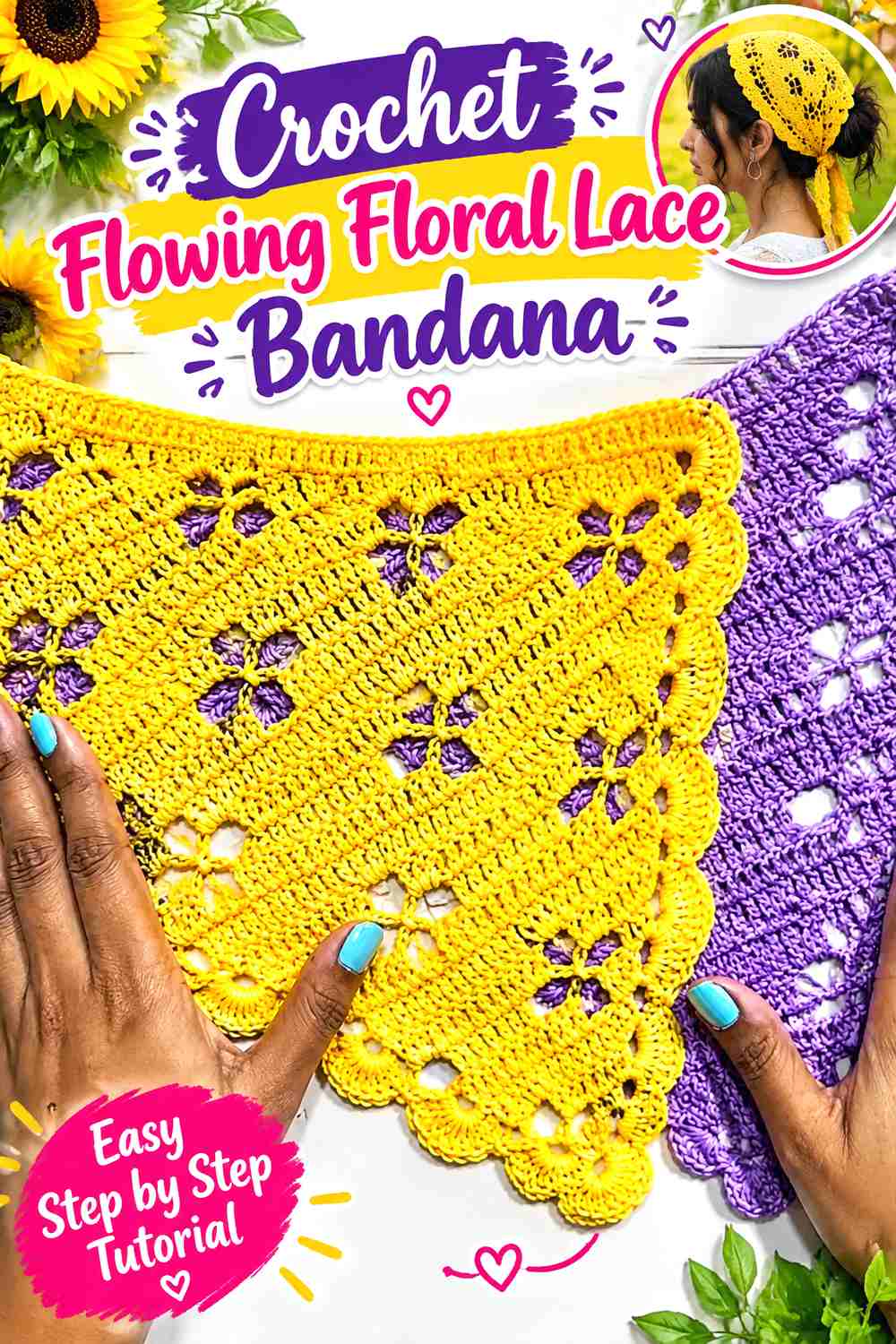
Crochet by Amrita uses floral openwork within the fabric itself, moving the romantic detail away from the perimeter and into the main triangle. This is a useful alternative when you want flowers to emerge from the stitch pattern rather than being sewn on afterward.
Floral Lace Needs Enough Definition to Stay Recognizable
A very fuzzy yarn may soften the bandana beautifully while hiding the petal-like openings that make the design distinctive.
Complete enough of the repeat to see a full flower before committing to a winter yarn substitution. View it from several feet away as well as close to the hook.
Use a Quieter Border When the Center Is Already Decorative
All-over floral lace can make a large scalloped trim unnecessary.
A restrained finish can keep attention on the flowers while still giving the triangle a clean romantic outline. If you do add shells, keep their scale in proportion to the motifs within the body.
Creator Credit: Crochet by Amrita
10. Crochet Filet Multi-Wear Lace Bandana
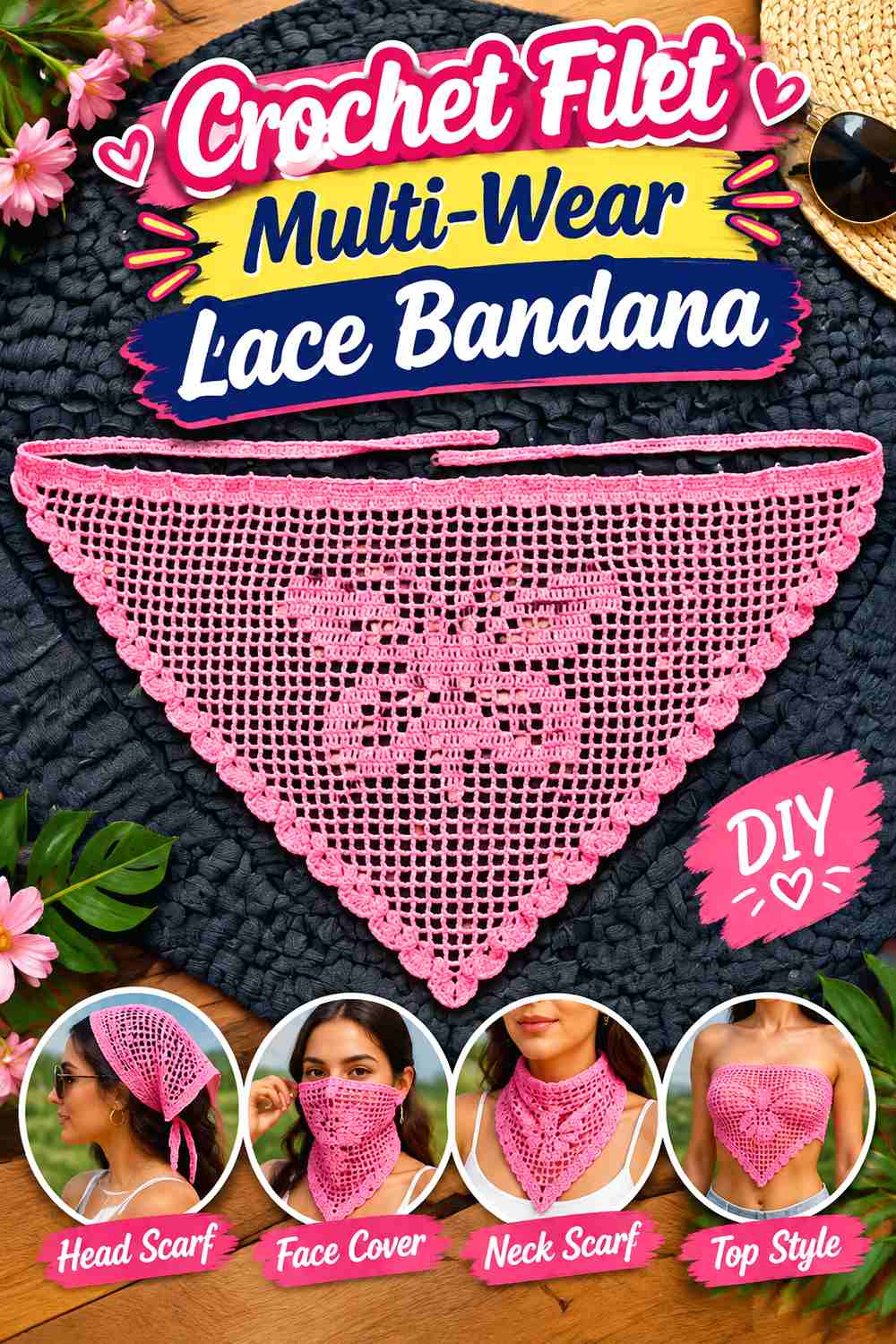
DIYGuru’s triangle uses grid-like filet openwork and can be styled in more than one way. The broader scarf-like character gives it a different presence from a tiny hair kerchief.
Extra Width Creates More Styling Options and More Fabric
A larger triangle can be attractive because it gives the lace room to show.
On the head, however, that additional fabric has to gather somewhere. Test how much bulk sits behind the ears and beneath the knot before deciding that a larger version automatically looks more romantic.
Filet Works Well With a Decorative Outer Edge
Regular square openings create a controlled geometric center, so curved scallops can provide useful contrast.
If you adapt the edging, make sure its spacing follows the actual filet perimeter. A border that pulls unevenly can distort an otherwise orderly grid.
Creator Credit: DIYGuru
11. Crochet Daisy-Motif Romantic Bandana
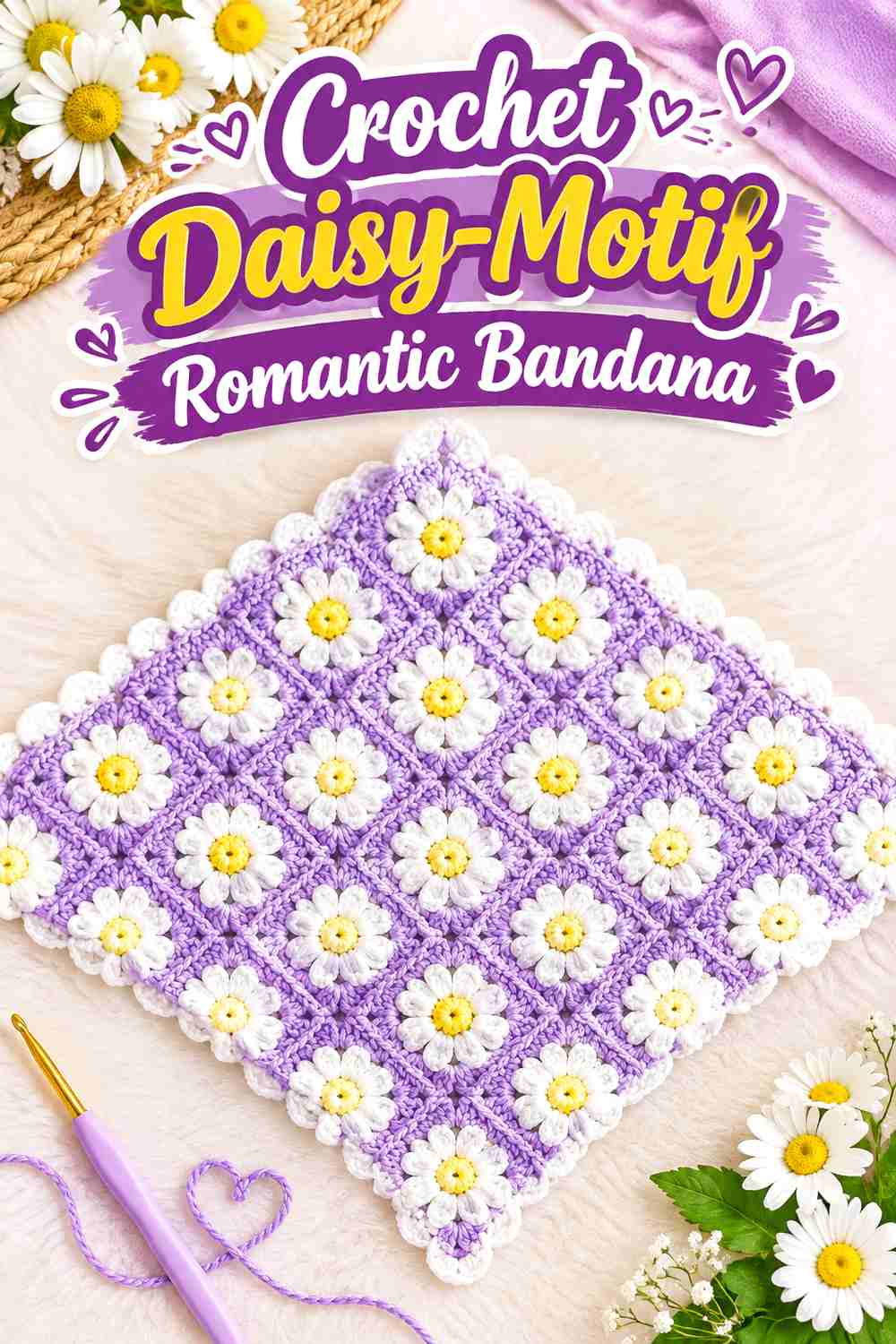
cosybearcrochet takes the bandana away from continuous rows and builds the look through separate daisy motifs. That modular construction creates an obvious cottage-romantic quality before any additional edging is considered.
Motif Size Controls the Whole Fit
With a continuous triangle, another row gradually changes the dimensions. With a motif bandana, the size of each flower and the chosen layout determine the final shape.
Compare completed motifs before joining them. Small differences can turn into puckering once several pieces must fit together across the crown.
Winter Color Can Make Daisies Less Summery
Daisy motifs do not have to stay white and yellow.
Cream with brown, dusty rose with burgundy, oatmeal with rust, or muted blue with charcoal can preserve the floral structure while shifting the overall effect toward colder-season outfits.
Keep Added Scallops Secondary to the Flowers
If you want an even more decorative perimeter, use restraint.
The joined daisies already create an irregular floral outline. A huge additional shell border may hide that construction rather than enhance it.
Creator Credit: cosybearcrochet
12. Crochet Cluster-and-Shell Lace Bandana
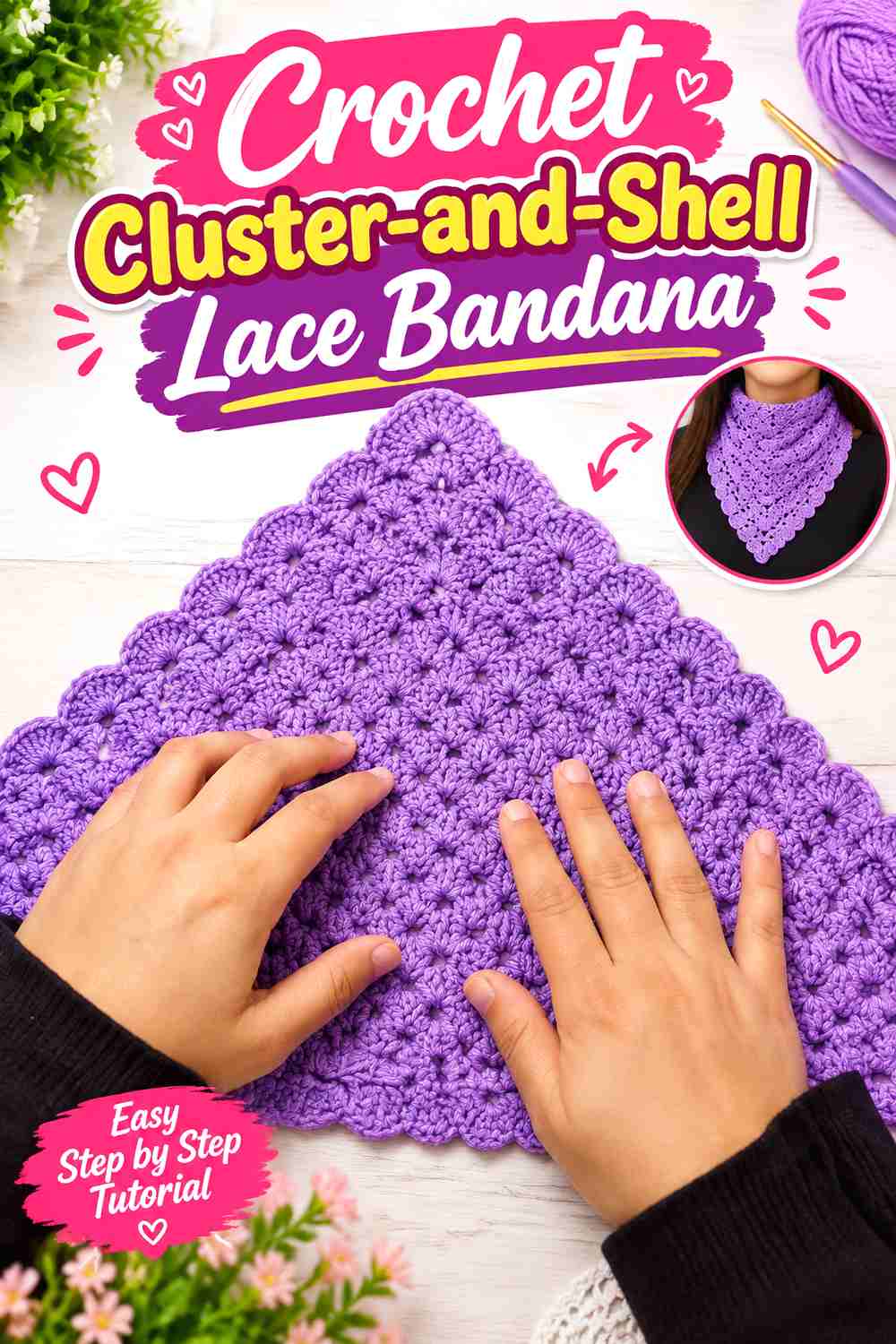
Happy stockist uses grouped stitches and decorative shell-like elements to create more substantial lace than a simple net. This produces a middle ground between airy mesh and a nearly solid kerchief.
Clusters Give the Triangle More Visual Presence
Grouped stitches create stronger areas of crochet that remain visible even against similarly colored hair.
For a winter palette, this can be useful with espresso, plum, dark green, charcoal, or navy, where extremely fine lace might visually disappear from a distance.
Shell Edges Need Room to Relax
Decorative shells place extra fabric around the outside of the triangle.
Work a representative section and let it settle before continuing. If every shell is forcing the edge into a strong ruffle, consider whether the spacing or tension needs attention before finishing the rest.
Creator Credit: Happy stockist
13. Crochet One-Piece Openwork Bandana
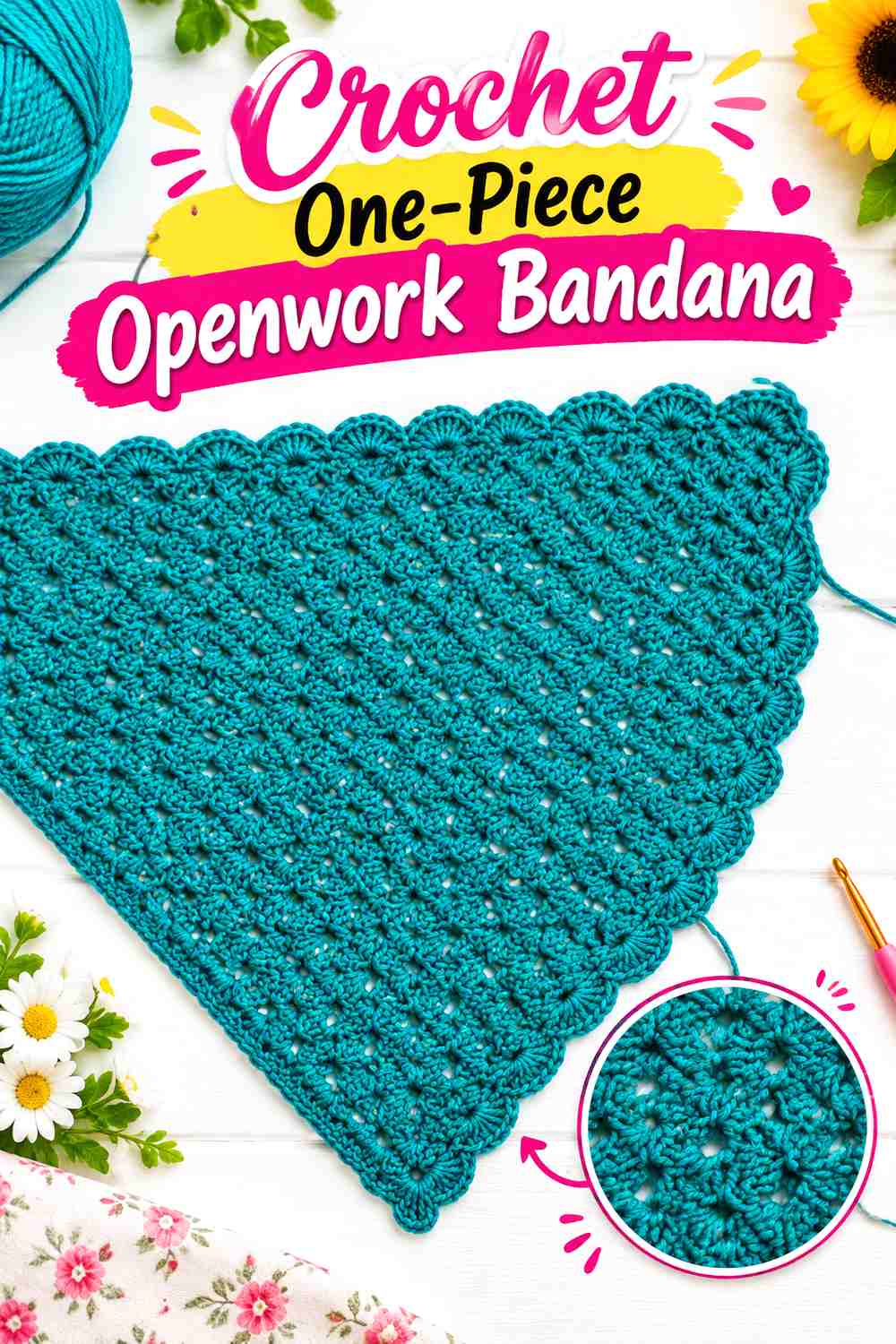
Häkelwelt’s one-piece construction offers a streamlined alternative to motif joining and separate assembly. That simplicity makes it useful when you want to concentrate on the shape, lace, and final edging rather than multiple components.
Continuous Construction Makes Fit Easier to Monitor
Because the triangle develops as one piece, you can repeatedly check its overall width and depth.
Do this before committing to a decorative border. A scalloped finish can refine a correctly sized triangle, but it should not be expected to compensate for a body that is already too narrow or excessively deep.
One-Piece Lace Works Well With a Statement Edge
A continuous center creates a clean foundation for a romantic perimeter.
If the source edge is quieter than the look you want, a compatible decorative treatment can be considered as an adaptation—but keep the bandana’s existing stitch spacing and fabric behavior in mind rather than attaching an arbitrary trim.
Creator Credit: Häkelwelt
14. Crochet Shell-Edged Lacey Bandana
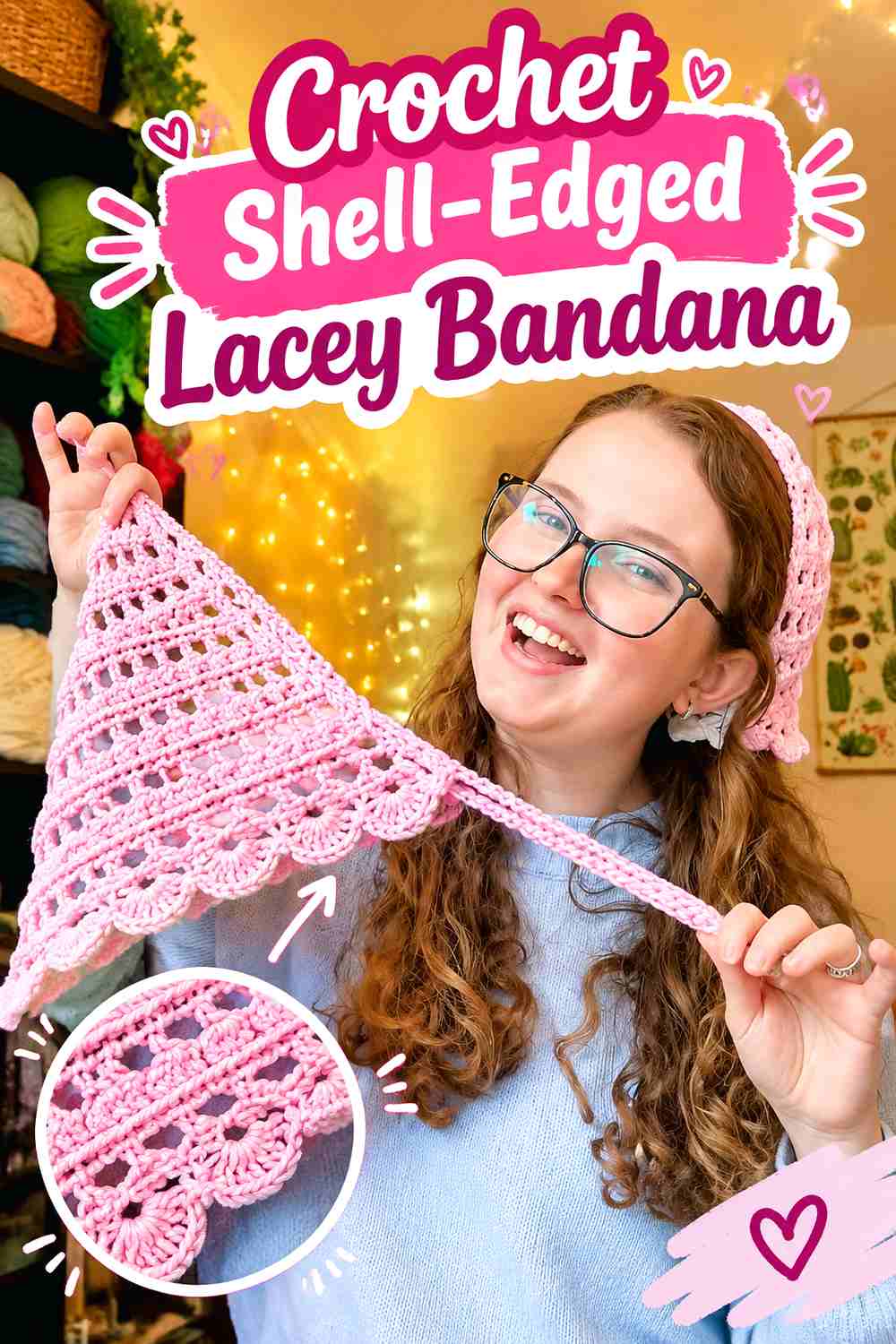
Riana Crochets combines alternating open and more substantial sections with a pronounced shell-style finish. The result is useful for this theme because the bandana already balances a lace center with a noticeably romantic perimeter.
Alternating Density Keeps the Lace From Feeling Too Empty
A triangle made entirely from large mesh can almost disappear against the hair.
Sections with more stitches give the fabric enough visual structure to remain noticeable, while the open rows prevent it from reading as a solid head covering.
Broad Shells Create a Strong Vintage Outline
The outer shells are larger and more visible than tiny picots.
That makes this idea suitable when you want the bandana edge to show clearly beneath loose hair. Keep other embellishments restrained so the repeating curved border remains easy to read.
Creator Credit: Riana Crochets
15. Crochet Dragonfly Motif Lace Bandana
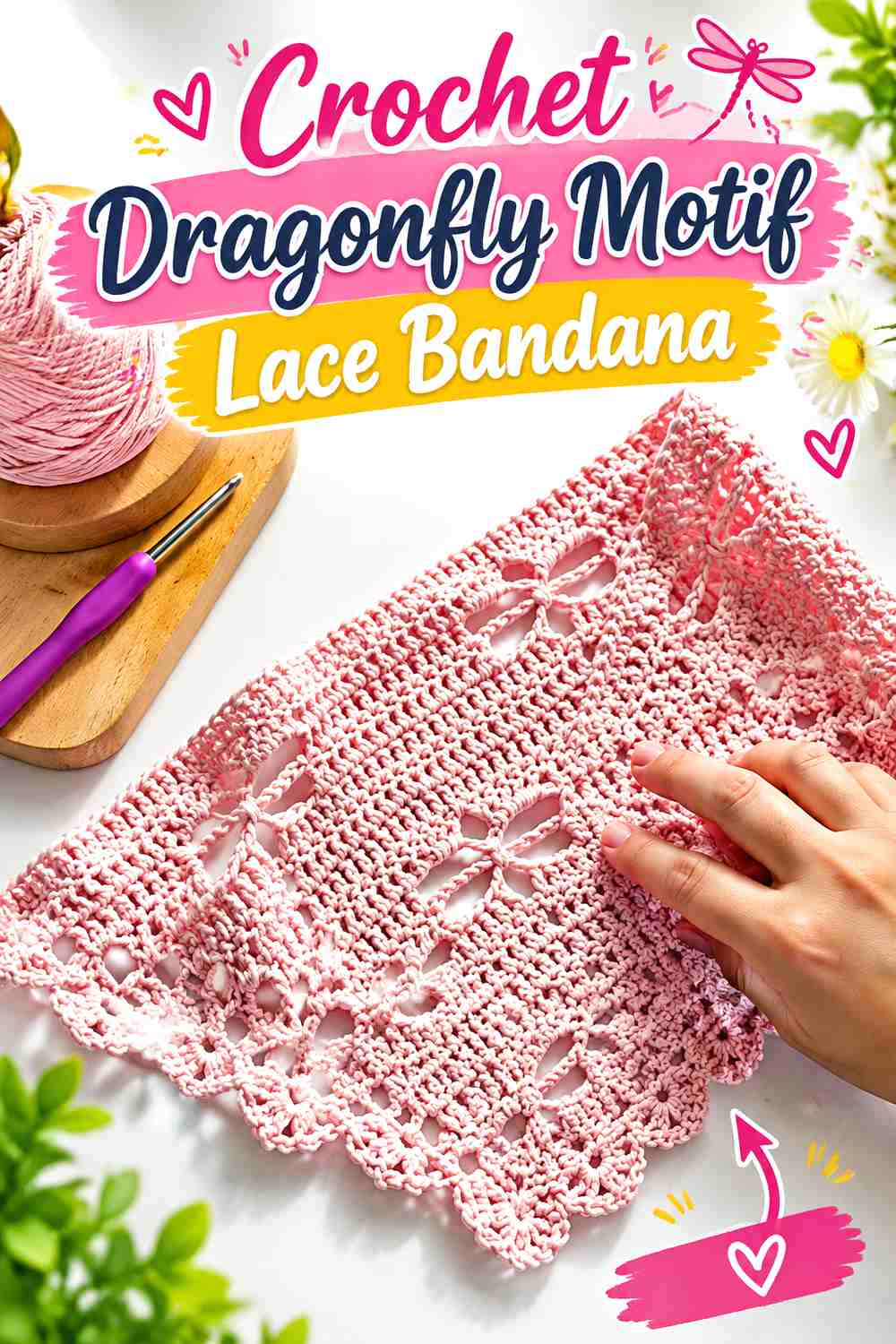
Monica Mabry’s bandana makes negative space more specific by incorporating a recognizable dragonfly motif. This gives the center of the triangle a clear focal image rather than treating every section of openwork equally.
Figurative Lace Needs a Calm Background
The motif is easier to recognize when the yarn allows the openings to remain distinct.
Strongly speckled or highly contrasting color changes may divide the dragonfly into unrelated patches. A solid winter shade can make the image easier to see while giving the bandana a richer seasonal mood.
Keep the Border From Competing With the Center Motif
A recognizable central design already gives the eye a destination.
If adding or enlarging scallops, compare the finished edge with the dragonfly from normal viewing distance. The border should frame the motif rather than becoming the first and only thing you notice.
Check Symmetry Before Final Edging
Central imagery makes an uneven triangle easier to detect.
Compare both sloping sides before finishing. A decorative edge can emphasize asymmetry rather than conceal it if the underlying shape has drifted.
Creator Credit: Monica Mabry
16. Crochet Flower-Pattern Openwork Bandana
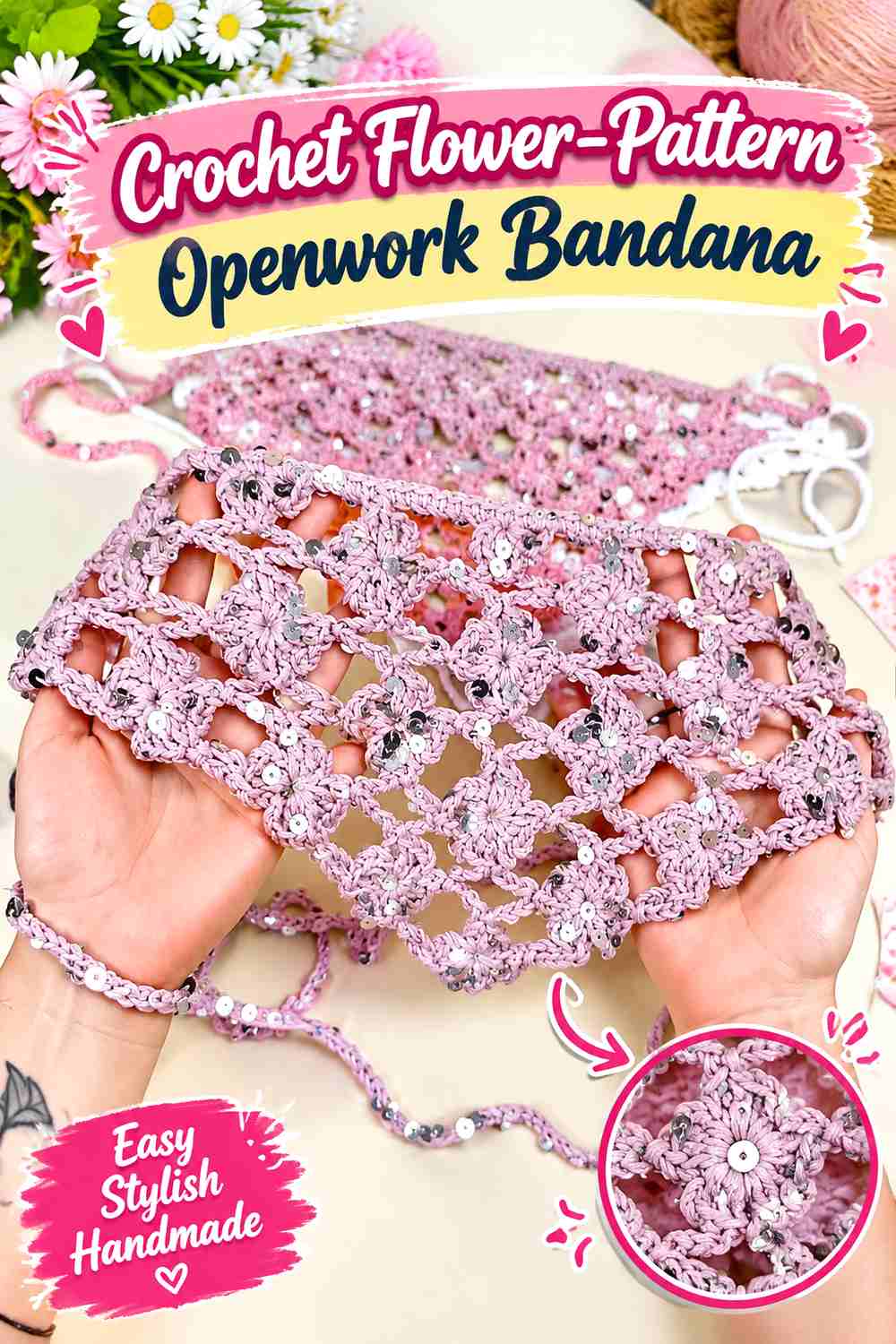
Maylily Knitting uses flower-like openwork across an adjustable kerchief, creating a delicate floral surface without constructing and joining separate motifs. It offers a useful contrast to the daisy patchwork design because the flowers emerge continuously from the fabric.
Continuous Flowers Give a Softer Rhythm Than Squares
Joined motifs tend to create visible boundaries. Continuous floral openwork flows across the triangle with fewer obvious divisions.
That makes this option useful with romantic winter outfits where you want a softer lace texture rather than a graphic patchwork appearance.
Let the Floral Body Decide How Ornate the Edge Should Be
The flower pattern already contributes significant detail.
Before adding any extra scalloped treatment, look at the completed triangle. A simple border may allow the flowers to remain dominant, while a modest rounded edge can strengthen the vintage mood without overwhelming them.
Check Floral Scale When Changing Yarn
Thicker yarn enlarges the flower-like openings along with the overall triangle.
Make enough of the fabric to judge whether the motifs still look delicate enough for the style you want before making the entire bandana.
Creator Credit: Maylily Knitting
Which Scalloped Lace Bandana Style Fits Your Winter Look?
For the clearest scalloped outline, start with the Classic Scalloped Granny Bandana, Rounded Scallop Lace Bandana, Sunny Lace Scallop Bandana, or Linked-Stitch Scalloped Bandana. These put the curved perimeter high in the visual hierarchy.
If you prefer finer edging, the Airy Mesh Picot Bandana, Textured Picot Kerchief, and Lace-Edge Tie Bandana create detail without the large rounded lobes of shell borders.
For floral romance, compare the Flowing Floral Lace Bandana, Daisy-Motif Romantic Bandana, and Flower-Pattern Openwork Bandana. The daisy version is modular, while the other floral ideas create their motifs within continuous fabric.
Choose the Filet Multi-Wear Bandana or Dragonfly Motif Lace Bandana when you prefer more graphic negative space. The Low-Bulk Granny Lace Bandana is particularly useful when comfortable side shaping matters, while the One-Piece Openwork Bandana keeps assembly comparatively streamlined.
Conclusion
A romantic crochet bandana does not need every decorative technique at once. The strongest choice usually comes from deciding whether you want the border, the center lace, or the flower motif to be the focal point.
Choose broad scallops or shells when you want an immediately visible vintage outline. Pick picots for a finer lace finish. Floral and daisy designs create a softer cottage-inspired mood, while filet and dragonfly lace provide clearer geometric structure.
For winter styling, use these bandanas primarily as decorative hair layers. Rich seasonal colors and thoughtful pairing with coats, cardigans, velvet, corduroy, and other heavier fabrics can change their mood without pretending open lace provides the same cold-weather protection as a hat.
Before finishing the ties and border, try the growing bandana in its intended position. Check the triangle depth, side bulk, point placement, and how the edging behaves around the hair. Use each creator’s original tutorial for the exact construction details, then make any color, border, or seasonal styling adaptations around the finished form.
Frequently Asked Questions
What is the difference between a scalloped crochet bandana and a picot-edged bandana?
Scallops usually create broader rounded arches along the edge, while picots produce much smaller points. Scallops therefore change the overall silhouette more noticeably. Picots add detail while allowing the triangular outline to remain sharper.
Can a crochet lace bandana be worn in winter?
Yes, as a decorative accessory. Open crochet usually does not provide the coverage or insulation of a winter hat, so choose separate cold-weather protection when conditions require it. The bandana can still add color and texture to a winter outfit.
What colors make a lace bandana look more appropriate for winter?
Cream, oatmeal, chocolate, burgundy, plum, rust, charcoal, navy, forest green, muted rose, and dusty blue can all shift open crochet toward a colder-season palette. The stitch construction itself does not require specific colors.
Why is my scalloped bandana edge ruffling?
A decorative edge can wave when it contains more fabric than the underlying perimeter can comfortably support. Tension, yarn substitution, hook choice, and scallop spacing can all affect the result. Check a short border section before completing the whole edge.
How do I know whether a crochet bandana is deep enough?
Place the unfinished triangle where you expect to wear it and look at the back point. A shallow design behaves more like a headband with a small triangle, while a deeper design covers more hair and creates more fabric near the knot. Choose according to your hairstyle and preferred coverage.
Can I add scallops to a crochet bandana tutorial that uses a plain edge?
Sometimes, but a new border changes the fabric around the perimeter and may require different spacing. Test a small section first and make sure it lies naturally. Do not assume one scallop formula will fit every triangle or stitch pattern.
Which crochet bandana style works well under a winter coat hood?
Lower-bulk triangles with flatter ties are usually easier to layer beneath a hood than designs with large bows, thick motif joins, or very raised edging. Test the finished bandana with the actual hood because hairstyle, yarn thickness, and knot placement can change the result.