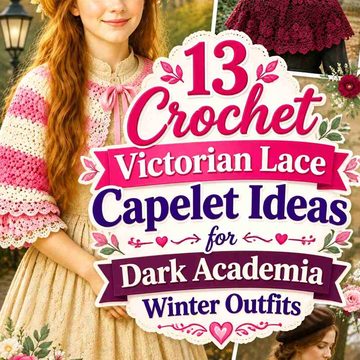
Butter yellow gives a crochet cardigan warmth without the visual intensity of a brighter golden yellow. On a winter cardigan, the color becomes especially useful when paired with a lace collar because the collar can either continue the soft tonal look or introduce enough contrast to define the neckline against coats, scarves, and layered tops.
The main color decision is not simply which shade looks good beside butter yellow. The supporting color needs a job. Ivory can clarify delicate lace, chocolate brown can define cuffs and edging, sage can give the cardigan a muted botanical direction, and navy can create a stronger winter contrast while leaving butter yellow dominant.
Color placement matters across the entire garment. Front panels create the largest visible area, while collars, cuffs, button bands, pockets, hems, and sleeve edges provide smaller places for contrast. The tutorials below support cardigan, collared-cardigan, lace-cardigan, or related garment construction. The butter-yellow lace-collar palettes are independent adaptations unless a creator happens to use similar colors.
Quick List
- Butter Yellow and Ivory Crochet Lace Collar Cardigan
- Butter Yellow and Oatmeal Crochet Lace Collar Cardigan
- Butter Yellow and Soft Gray Crochet Lace Collar Cardigan
- Butter Yellow and Chocolate Brown Crochet Lace Collar Cardigan
- Butter Yellow and Sage Green Crochet Lace Collar Cardigan
- Butter Yellow and Dusty Rose Crochet Lace Collar Cardigan
- Butter Yellow and Burgundy Crochet Lace Collar Cardigan
- Butter Yellow and Midnight Navy Crochet Lace Collar Cardigan
- Butter Yellow and Camel Crochet Lace Collar Cardigan
- Butter Yellow, Cream, and Black Crochet Lace Collar Cardigan
- Butter Yellow and Lavender Crochet Lace Collar Cardigan
- Butter Yellow and Forest Green Crochet Lace Collar Cardigan
- Butter Yellow and Taupe Crochet Lace Collar Cardigan
- Butter Yellow and Powder Blue Crochet Lace Collar Cardigan
Let Butter Yellow Lead the Cardigan Before Coloring the Lace Collar
Butter yellow usually works most clearly when it covers the body panels or another large uninterrupted portion of the cardigan. That gives the garment a recognizable main color before the collar introduces its secondary shade.
A contrasting lace collar can become a strong focal point because it surrounds the face and sits above the front panels. If the collar color also appears heavily on the cuffs, hem, pockets, and button band, the supporting shade can begin competing with butter yellow. Repeat it selectively instead.
Use Butter Yellow Contrast to Keep Crochet Lace Visible
Openwork and decorative lace depend partly on the background beneath them. A cream lace collar on a cream blouse may visually disappear even when it contrasts clearly with the butter-yellow cardigan itself.
Check the cardigan with the tops you expect to layer underneath. Darker underlayers can make butter-yellow or ivory lace openings easier to distinguish, while similar pale shades produce a softer, lower-contrast effect.
Balance Butter Yellow Across Sleeves, Cuffs, and Front Edging
The collar should not feel isolated from the rest of the cardigan. A small repeat of its color at the cuffs, button band, hem, or pocket edge can connect the neckline treatment to the rest of the garment.
Keep those repetitions controlled. If every edge becomes contrasting, the eye may follow the trim instead of reading the butter-yellow panels as the main garment color.
1. Butter Yellow and Ivory Crochet Lace Collar Cardigan
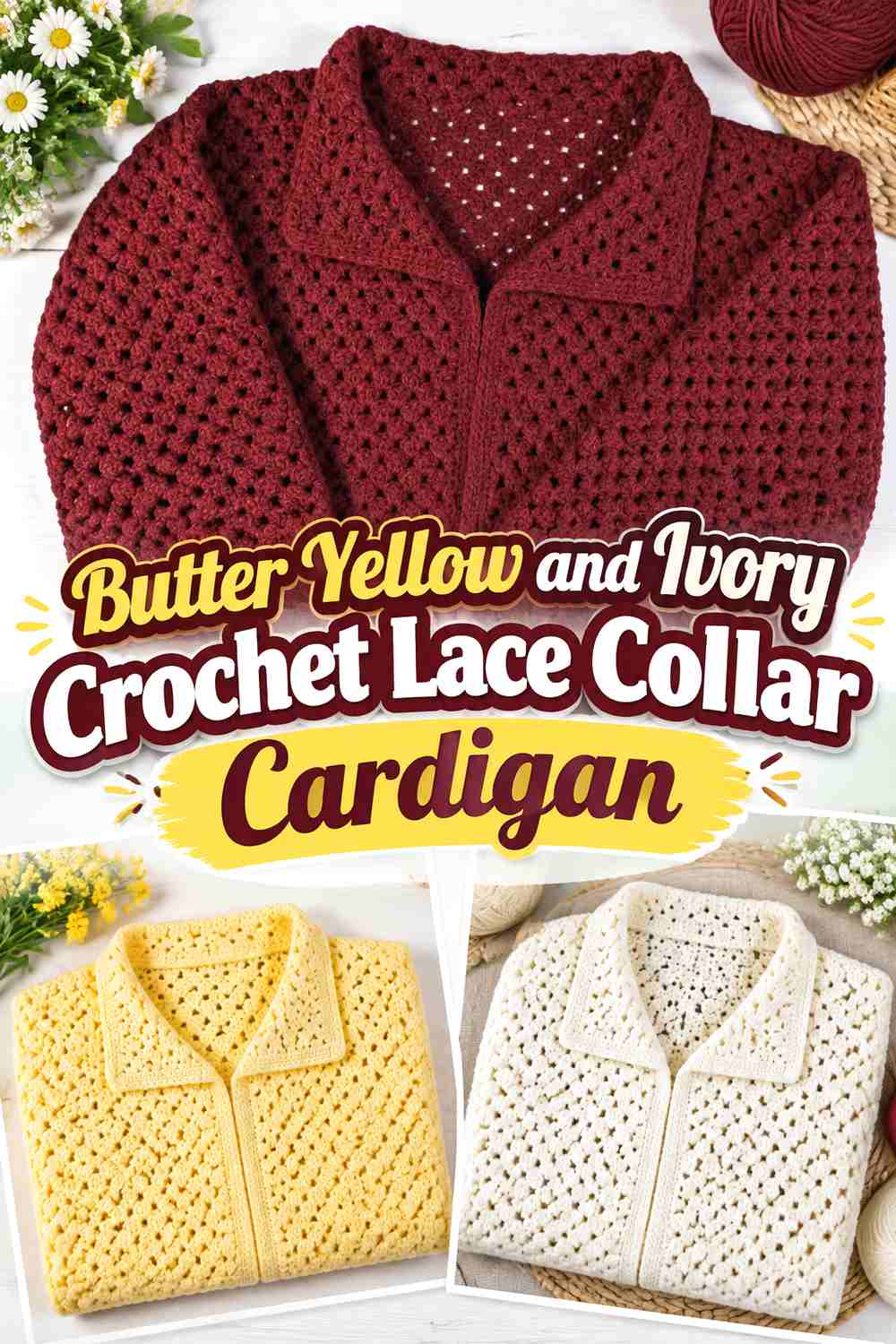
Butter yellow and ivory create the lightest tonal pairing in the collection. Let butter yellow cover the front panels, back, and most of the sleeves, then use ivory for the lace collar and perhaps one small repeated edge. The difference is subtle, so this palette relies more on texture and gentle value change than strong color blocking.
Butter Yellow Needs Ivory Lace to Stay Visibly Separate at the Neckline
Compare the two yarns before beginning the collar. If the ivory is almost identical in value to the butter yellow, the lace pattern may blend into the cardigan body.
A slightly lighter ivory can preserve the tonal appearance while giving the collar enough separation to register as its own feature.
Butter Yellow Should Continue Through the Cuffs When Ivory Frames the Collar
Keeping the cuffs butter yellow prevents ivory from surrounding both ends of the garment. If you want a repeat, use a narrower ivory cuff edge rather than making the entire cuff pale.
Creator Credit: Hannah Drapinski
2. Butter Yellow and Oatmeal Crochet Lace Collar Cardigan
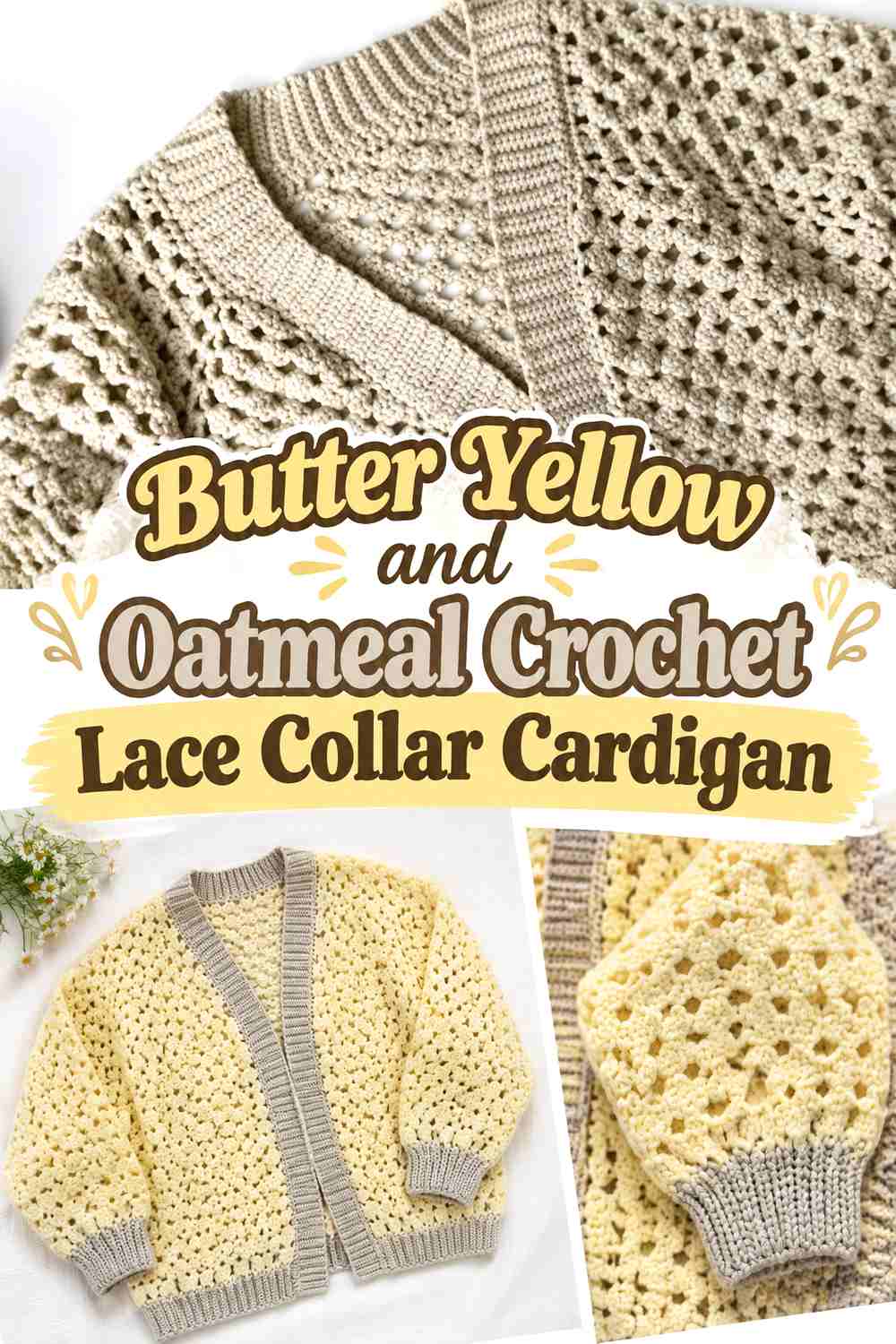
Oatmeal gives butter yellow a warmer neutral partner than bright white. It suits a cardigan where you want the lace collar to be visible without creating a sharp contrast. Butter yellow can dominate the panels while oatmeal appears around the collar, button band, or a restrained cuff detail.
Butter Yellow Looks Softer When Oatmeal Frames the Lace Collar
Use oatmeal around the openwork neckline and keep the surrounding shoulder area butter yellow. The neutral provides a clear transition without pulling the cardigan toward a high-contrast two-tone look.
Butter Yellow Needs More Surface Area Than Oatmeal on the Front Panels
Avoid extending oatmeal too far down both front bands if you want butter yellow to remain visually dominant. A narrow repeat near buttons or edging can connect the collar without creating two broad neutral columns down the garment.
Creator Credit: MJ’s Off The Hook Designs
3. Butter Yellow and Soft Gray Crochet Lace Collar Cardigan
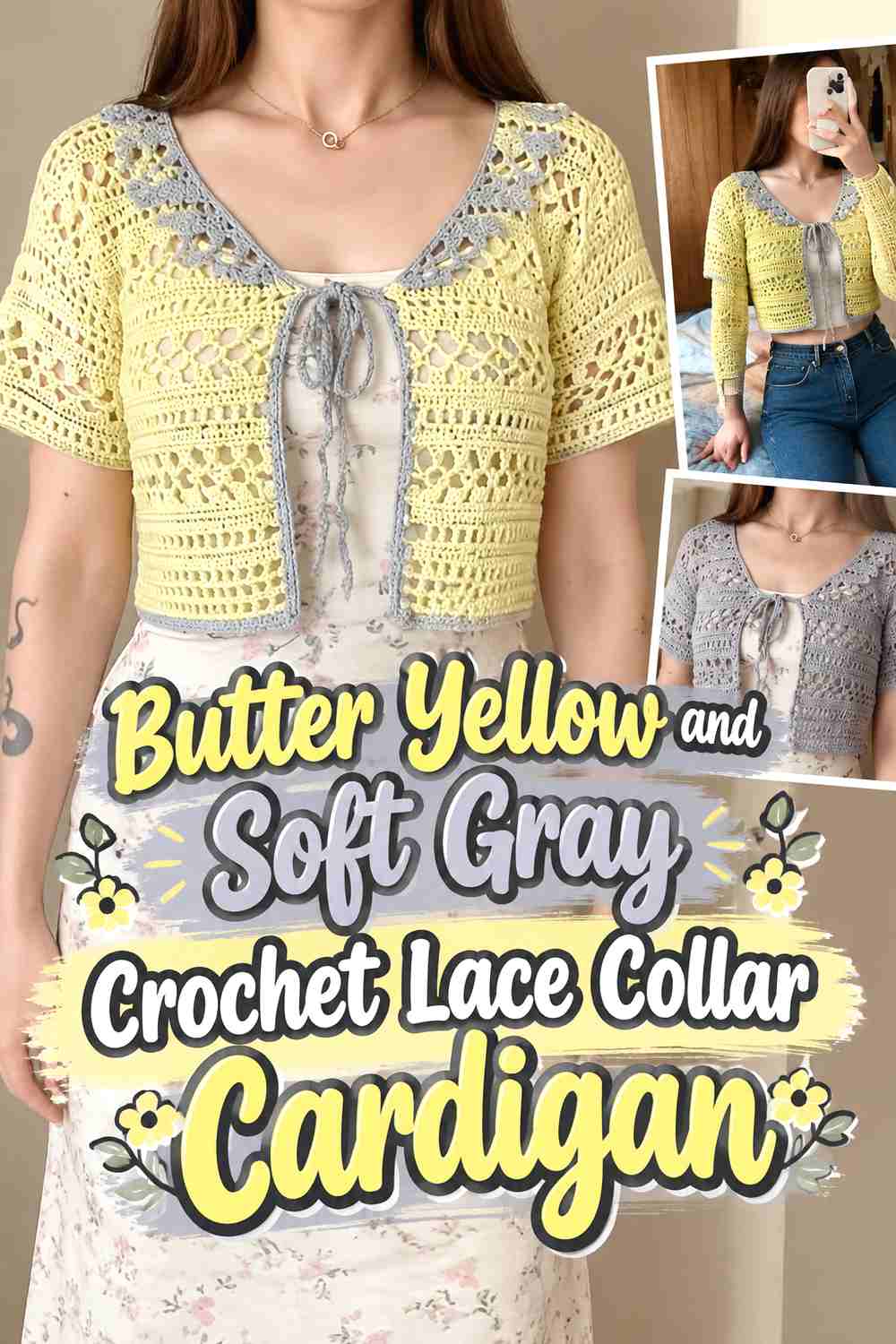
Soft gray cools butter yellow without making the cardigan dark. It works particularly well when you want the lace collar and edging to feel quieter than black or navy but still visibly distinct from the yellow body.
Butter Yellow Gains Cooler Definition From a Soft Gray Lace Collar
Keep soft gray concentrated around the neckline where its cooler appearance can separate the collar from the warmer body panels. A wider gray area is usually unnecessary because the color difference already gives the collar a defined role.
Butter Yellow Should Repeat Beside Soft Gray at the Sleeve Cuffs
If soft gray appears again at the wrists, keep butter yellow immediately above it. That repeated yellow-to-gray transition connects sleeves and neckline while maintaining a clear dominant-supporting hierarchy.
Creator Credit: Alona crochets
4. Butter Yellow and Chocolate Brown Crochet Lace Collar Cardigan
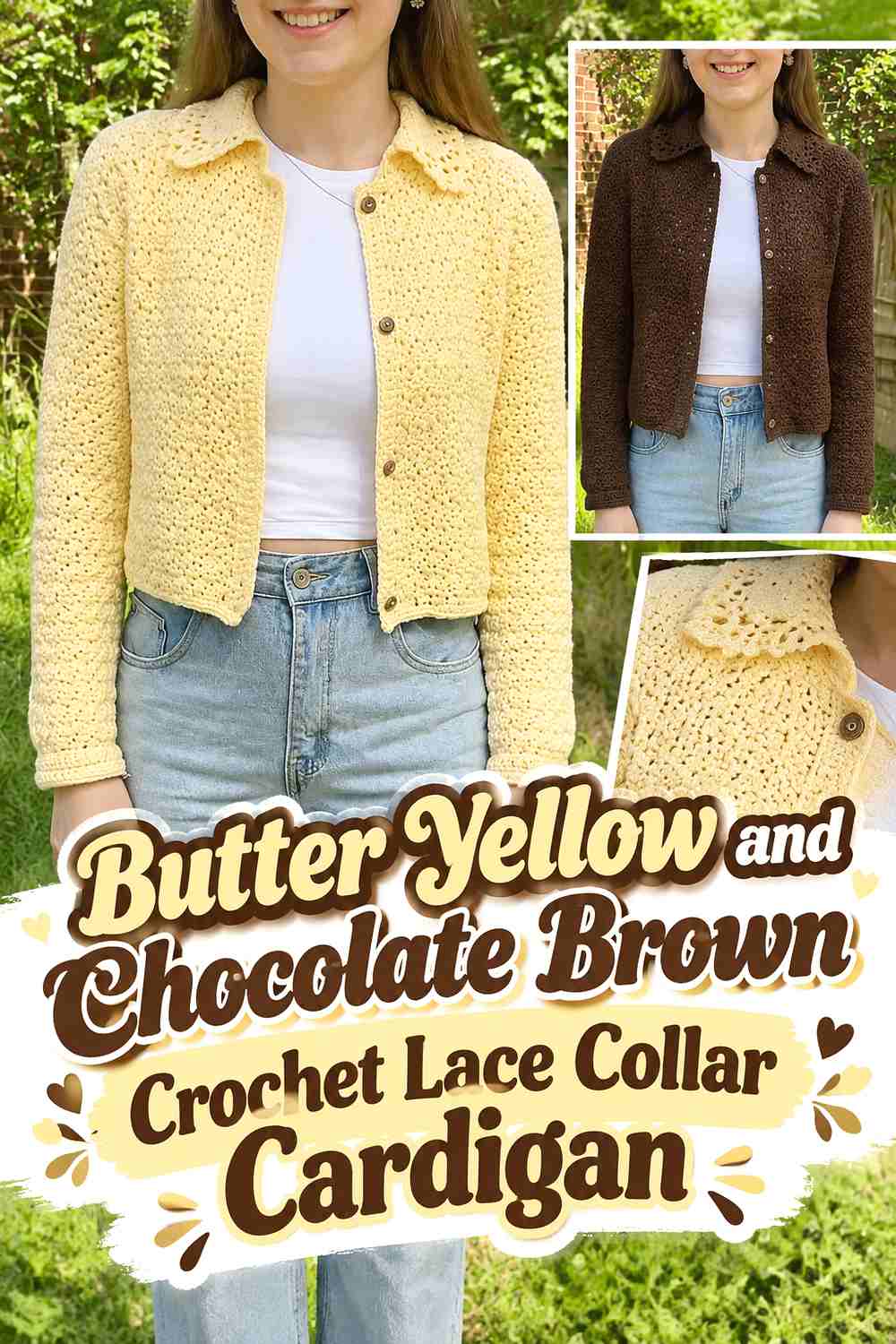
Chocolate brown creates one of the strongest warm contrasts with butter yellow. Use yellow across most of the cardigan and reserve brown for the lace collar, small buttons or button-area edging, and perhaps a restrained cuff detail.
Butter Yellow Needs Chocolate Brown Lace in a Controlled Neckline Area
A dark collar carries considerable visual weight against a pale yellow body. Keep the brown concentrated around the neckline rather than extending it across large shoulder or chest areas unless a deliberately color-blocked effect is wanted.
Butter Yellow Can Keep Chocolate Brown Cuffs From Feeling Too Heavy
If the cuffs are brown, avoid adding a broad brown hem as well. Preserving butter yellow through the lower body prevents the darker trim from visually enclosing the cardigan.
Creator Credit: Stephanie Tashi
5. Butter Yellow and Sage Green Crochet Lace Collar Cardigan
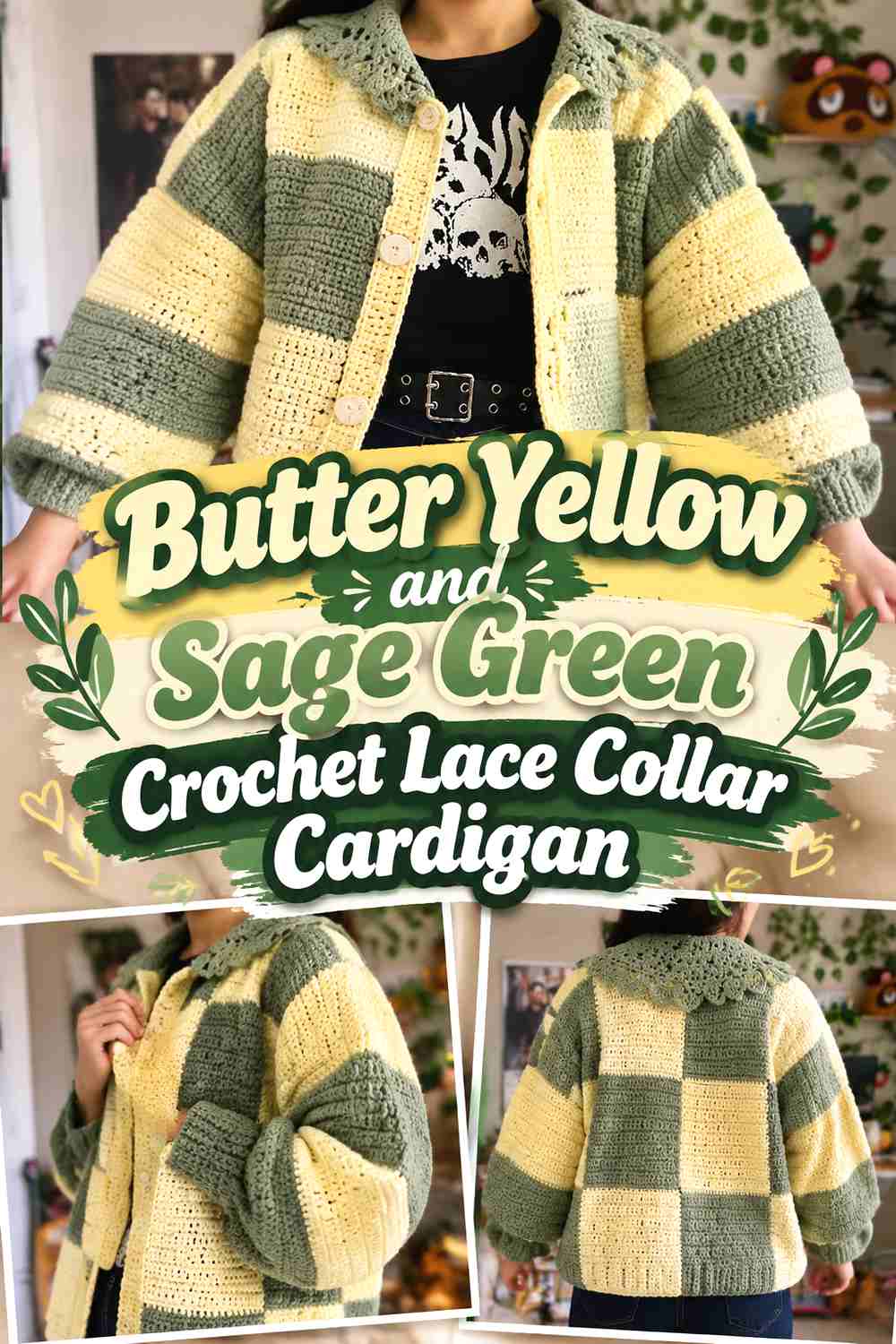
Sage gives butter yellow a muted botanical direction that remains soft enough for winter layering. Butter yellow can lead across the panels while sage defines the lace collar and appears again in one small garment detail.
Butter Yellow Should Surround the Sage Lace Collar
Keeping the shoulder and upper-front areas butter yellow gives the sage collar a distinct outline. If sage spreads too far across the upper garment, the cardigan can begin reading as an evenly divided green-and-yellow piece.
Butter Yellow and Sage Work Better With Repetition at the Cuffs
A narrow sage cuff edge can connect the sleeves back to the neckline. Keep the main sleeve butter yellow so the green repeat feels intentional rather than becoming a second dominant block.
Creator Credit: ikoxun
6. Butter Yellow and Dusty Rose Crochet Lace Collar Cardigan
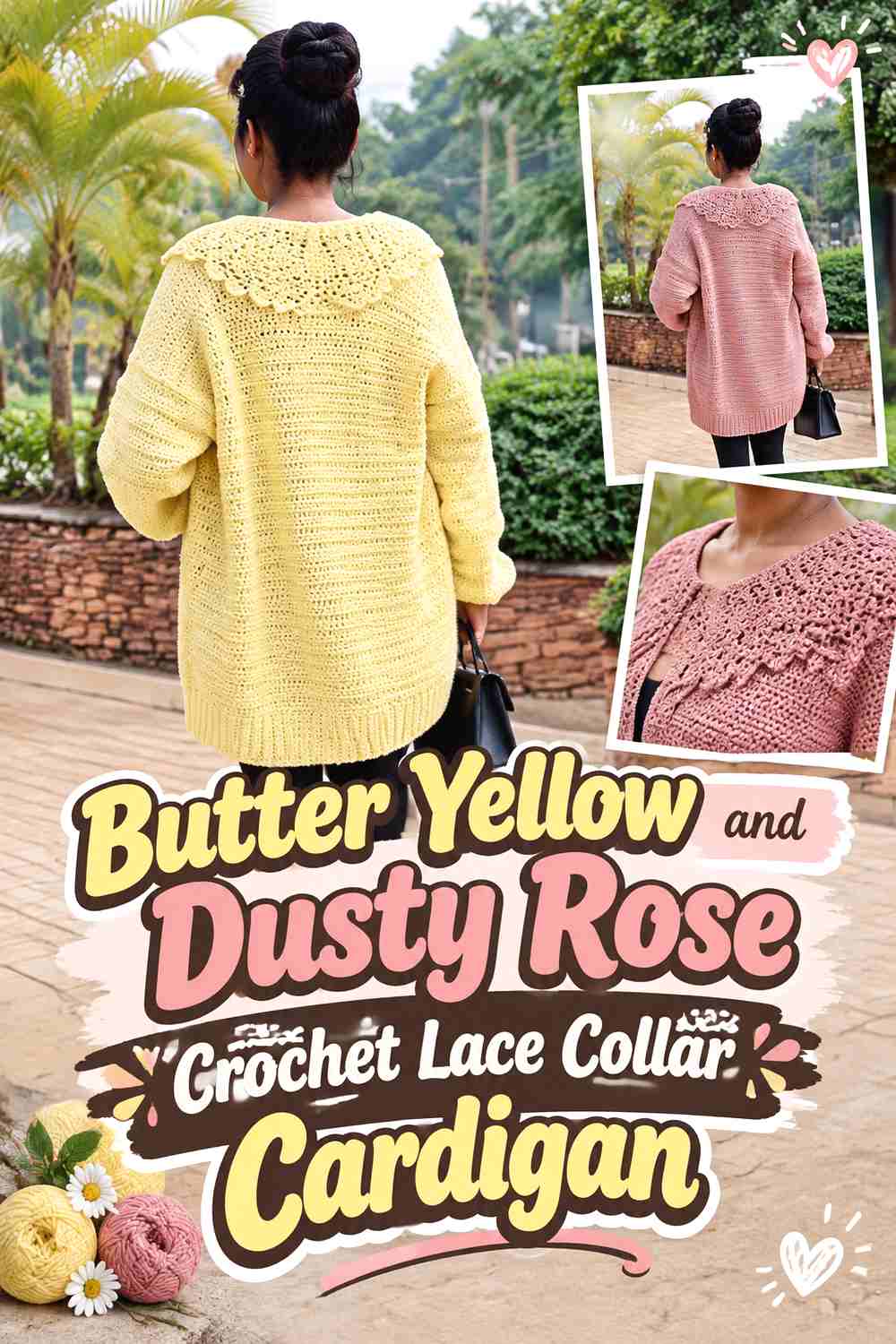
Dusty rose introduces a muted pink accent without overpowering the softness of butter yellow. This pairing works well when the collar is the romantic focal point and the rest of the cardigan stays relatively simple.
Butter Yellow Makes a Dusty Rose Lace Collar More Noticeable
Place dusty rose where the lace structure is most decorative and leave the neighboring chest panels butter yellow. The contrast remains gentle, but the difference in hue helps the neckline stand apart.
Butter Yellow Should Dominate When Dusty Rose Reappears at the Hem
If you repeat dusty rose below the collar, keep it to a narrow hem or edging detail. Broad rose cuffs and a broad rose hem together can shift too much visual weight away from the butter-yellow body.
Creator Credit: AC Crochets
7. Butter Yellow and Burgundy Crochet Lace Collar Cardigan
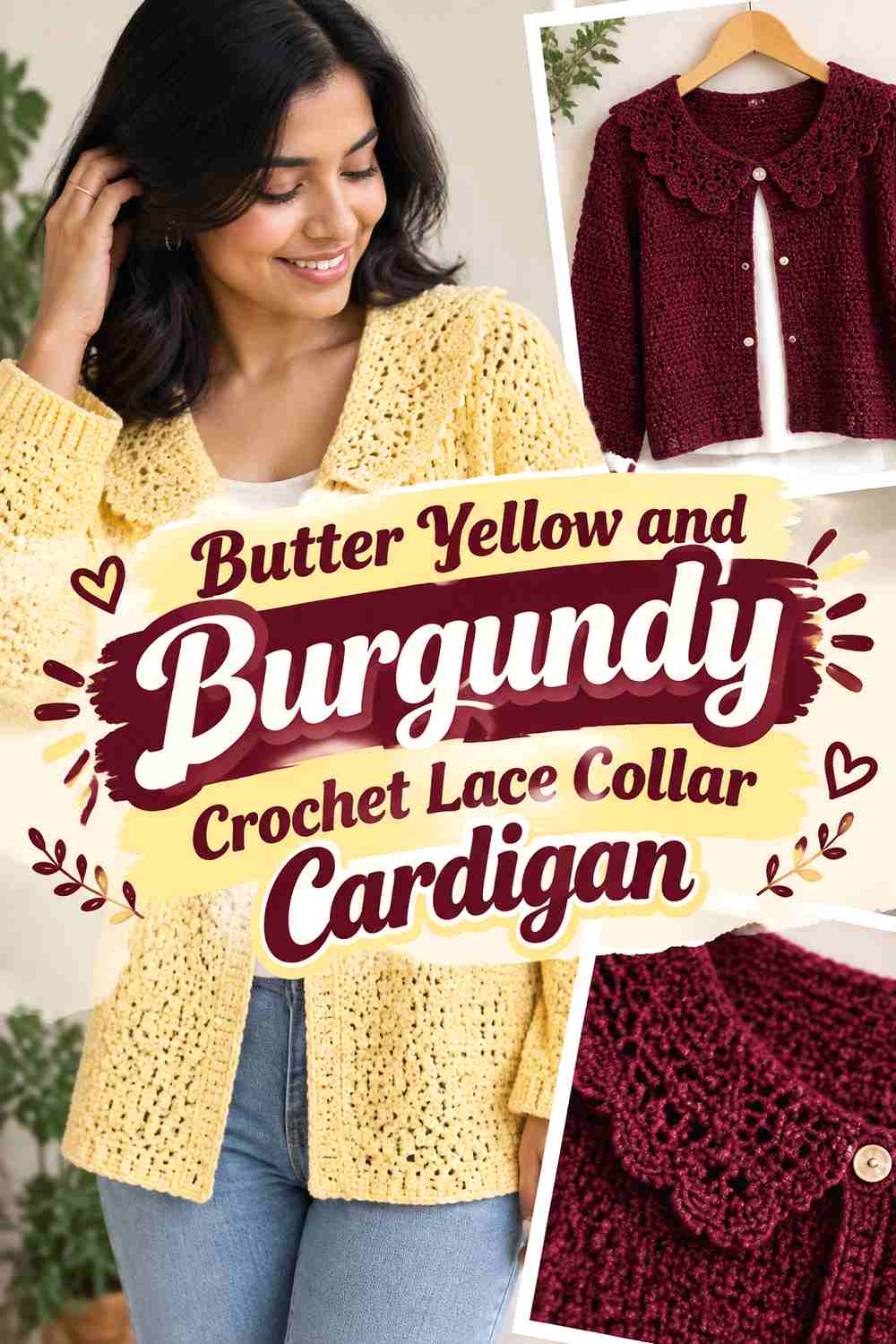
Burgundy gives the pale yellow body a much deeper winter contrast. Because burgundy is visually heavy, it works best in deliberate areas such as the lace collar, button edging, or narrow cuffs rather than covering large portions of every panel.
Butter Yellow Needs Burgundy Lace to Stay Focused Around the Collar
A burgundy lace collar can immediately become the garment’s strongest detail. Let butter yellow remain uninterrupted across most of the chest so the dark neckline looks framed rather than dominant.
Butter Yellow Can Separate Burgundy Cuffs From Dark Winter Layers
If the cardigan is worn under a black or charcoal coat, allow some butter yellow to remain visible between the outerwear sleeve and burgundy cuff. Otherwise the dark cuff may disappear into the coat.
Creator Credit: KnitcroAddict
8. Butter Yellow and Midnight Navy Crochet Lace Collar Cardigan
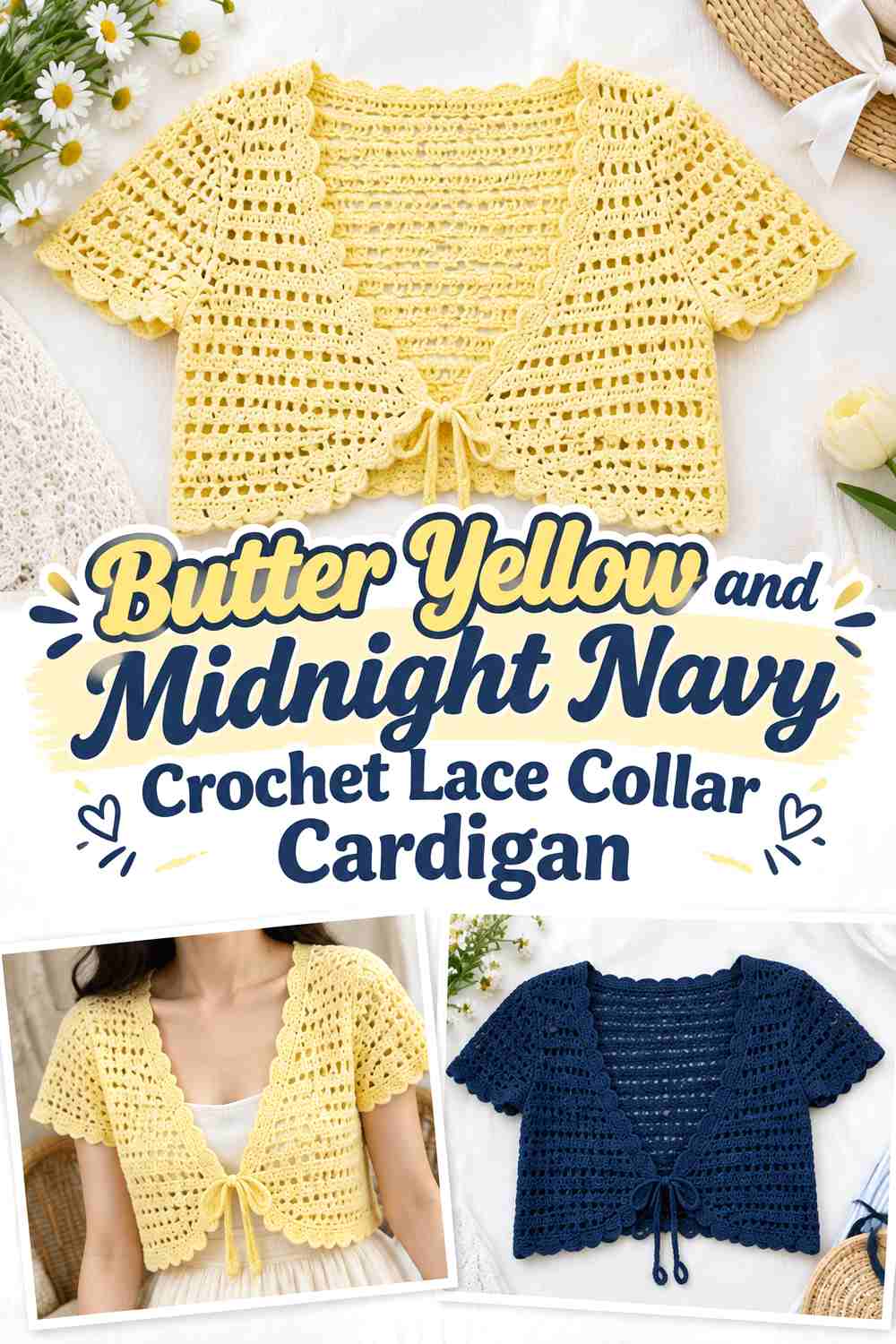
Midnight navy provides cool, deep contrast without using black. Butter yellow should carry the main panels and sleeves, while navy can sharpen the collar, front opening, or small cuff accents.
Butter Yellow Needs Midnight Navy Restricted to Structural Edges
Navy works particularly well where you want to clarify the shape of the cardigan: around the collar, front opening, or cuffs. Avoid adding it randomly across the body because small disconnected navy sections can interrupt the softness of the yellow panels.
Butter Yellow Should Stay Visible Between Midnight Navy Collar and Cuffs
Leaving broad yellow areas through the torso and sleeves gives the dark accents space to repeat without visually enclosing the garment. The eye should still register butter yellow before it notices the navy framing.
Creator Credit: Chenda DIY
9. Butter Yellow and Camel Crochet Lace Collar Cardigan
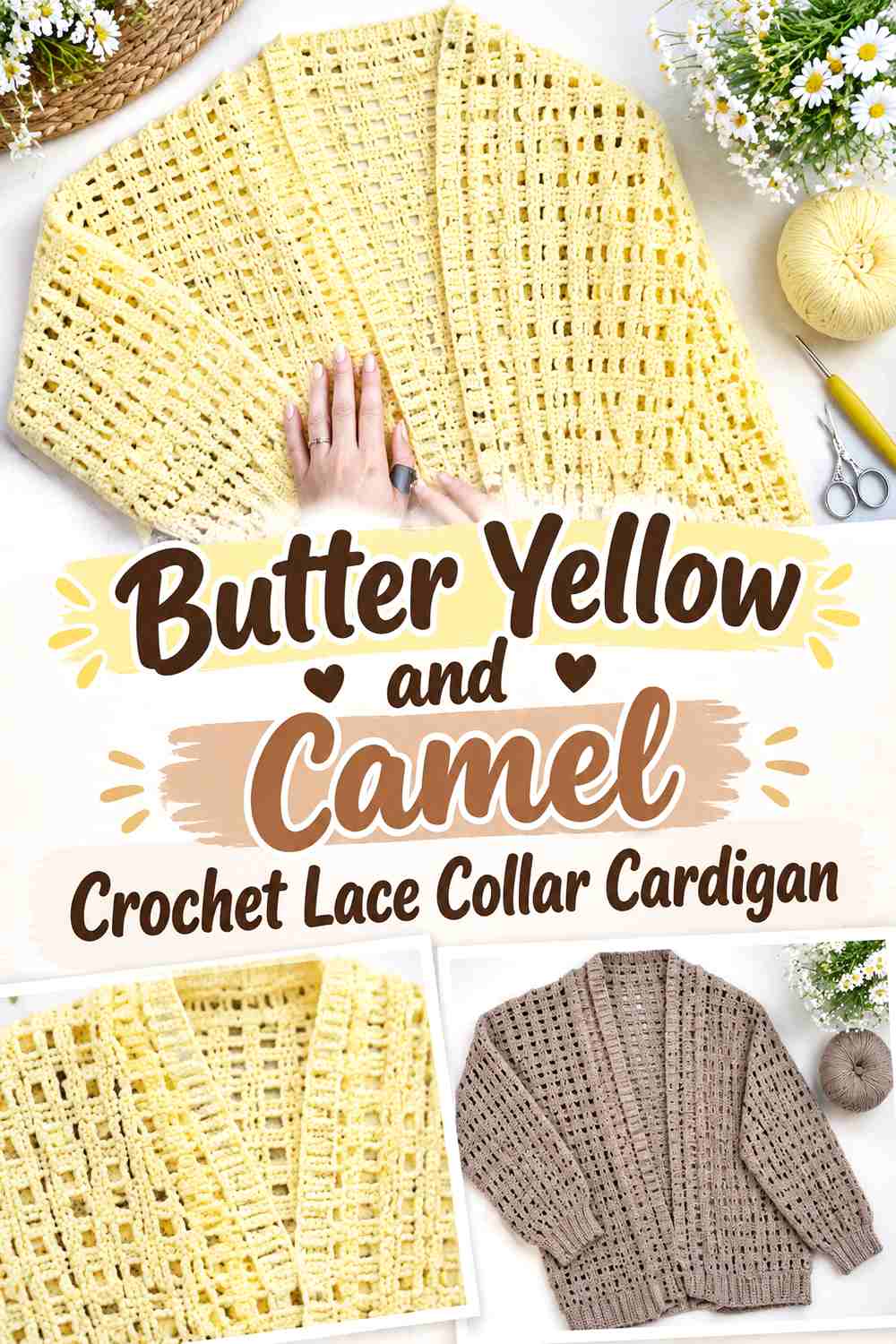
Camel creates a warm tonal progression rather than a high-contrast border. This palette is useful when you want a winter cardigan that feels warmer and earthier while still letting butter yellow remain clearly visible.
Butter Yellow Should Be Lighter Than the Camel Lace Collar
Choose a camel shade that is noticeably deeper than the yellow. If the two values are too similar, the collar may lose definition even though the hues are technically different.
Butter Yellow Needs Camel Repeated Sparingly Along the Front Edge
A small camel border can connect the collar to the lower cardigan. Keep that front trim narrow so it supports the neckline without turning the front panels into two long brown-edged sections.
Creator Credit: Briana K
10. Butter Yellow, Cream, and Black Crochet Lace Collar Cardigan
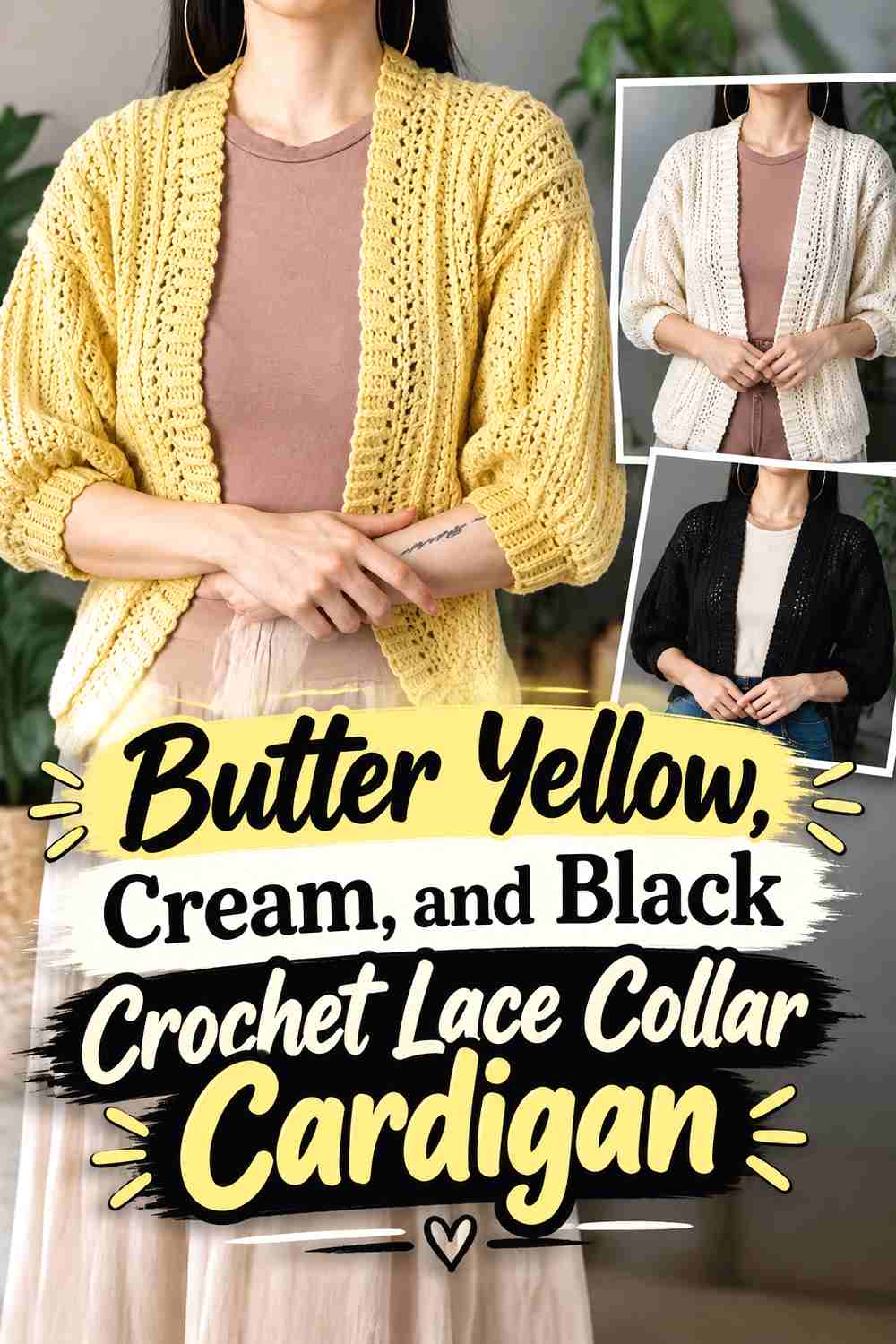
This three-color palette gives butter yellow both a soft neutral and a dark defining shade. Use yellow for the body, cream for most of the lace collar, and black only in the smallest structural details.
Butter Yellow Needs Cream to Buffer Black Around the Lace Collar
Rather than placing a heavy black collar directly against yellow, use cream as the main lace color and reserve black for a narrow edge or another contained accent. The lighter neutral keeps the neckline soft while black provides definition.
Butter Yellow Should Remain the Largest Color Beside Cream and Black
Do not give all three shades equal garment coverage. Keep yellow across most panels and sleeves, cream around the neckline, and black limited to details such as a slim edge or small repeated accent.
Creator Credit: TCDDIY
11. Butter Yellow and Lavender Crochet Lace Collar Cardigan
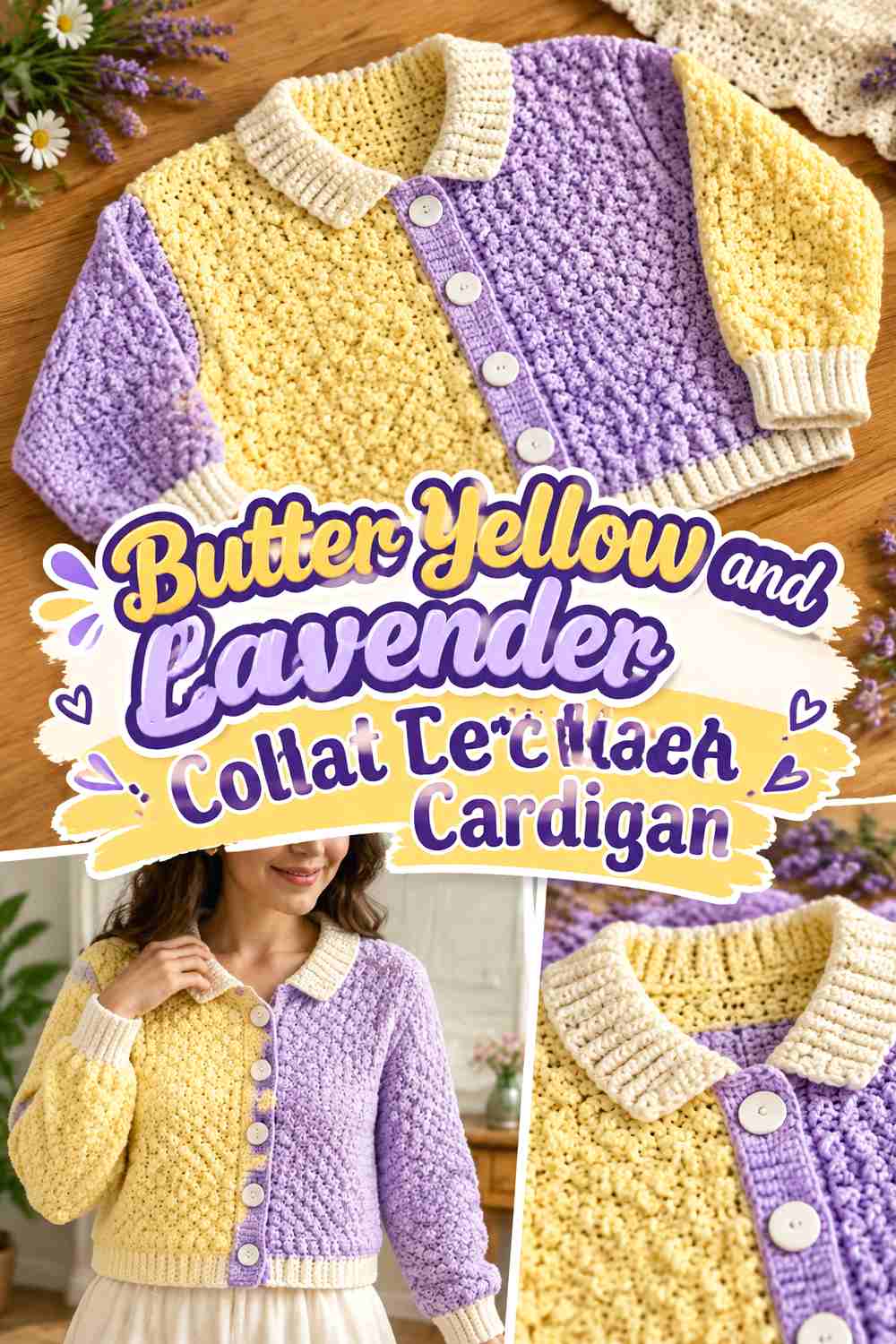
Lavender gives butter yellow a cool pastel partner while preserving the cardigan’s soft color direction. Because neither shade is extremely dark, the success of this combination depends on enough value difference for the collar and cuffs to remain visible.
Butter Yellow Needs Lavender Lace to Be Clearly Distinct in Value
Compare the yarns from a distance before crocheting the collar. If they merge visually, choose a lighter or slightly deeper lavender instead of adding a third color simply to rescue the contrast.
Butter Yellow Should Frame Lavender at Both Sides of the Collar
Keep the shoulder and upper chest sections yellow so lavender remains a contained neckline feature. That yellow frame prevents the pastel pairing from becoming visually diffuse across the entire upper cardigan.
Creator Credit: CROCHET BY BEV
12. Butter Yellow and Forest Green Crochet Lace Collar Cardigan
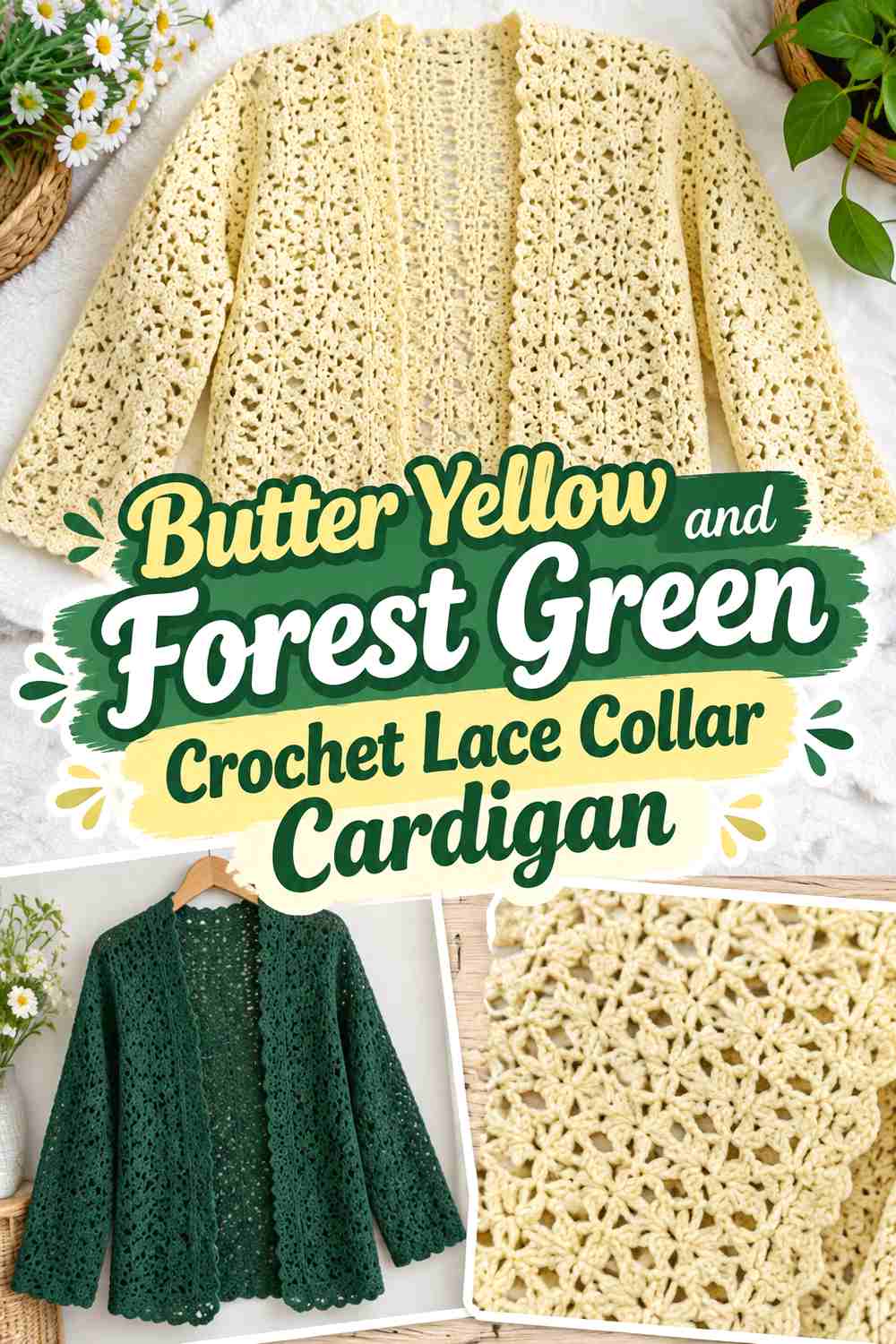
Forest green gives butter yellow a richer botanical contrast than sage. It can make the collar feel more substantial and winter-focused, so limit it to areas where that visual weight is useful.
Butter Yellow Keeps a Forest Green Lace Collar From Looking Too Heavy
Let yellow surround most of the neckline and chest rather than adding large green shoulder sections. The contrast is already strong enough for the lace collar to be visible without extensive green color blocking.
Butter Yellow Should Carry the Sleeves When Forest Green Defines the Cuffs
If forest green repeats at the wrists, keep most of each sleeve butter yellow. This creates a controlled collar-and-cuff relationship rather than turning the arms into dark extensions of the accent color.
Creator Credit: Hey Carrie
13. Butter Yellow and Taupe Crochet Lace Collar Cardigan
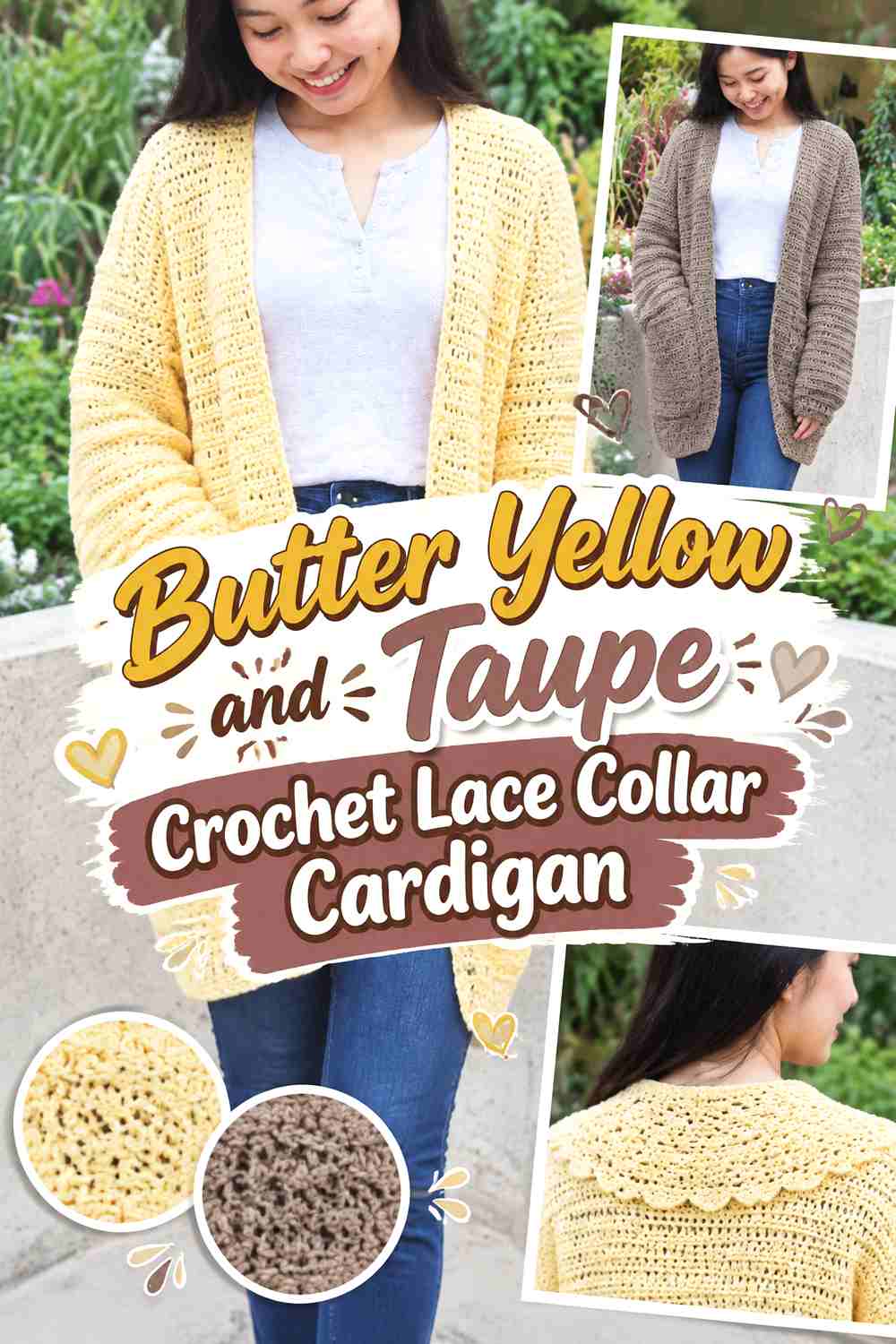
Taupe gives butter yellow a restrained neutral partner with more depth than cream but less contrast than chocolate brown. It works well when you want the lace collar to remain visible without becoming the darkest feature in the outfit.
Butter Yellow Should Stay Brightest Beside a Taupe Lace Collar
Use taupe around the neckline and keep butter yellow uninterrupted through the front panels. The slightly deeper neutral can outline the lace while the yellow remains the color that carries most of the visual area.
Butter Yellow Needs Taupe Repeated Near the Cardigan Opening
A narrow taupe opening edge can link the collar to the body. Keep it slimmer than the collar itself so the neckline remains the principal decorative use of the supporting shade.
Creator Credit: forthefrills
14. Butter Yellow and Powder Blue Crochet Lace Collar Cardigan
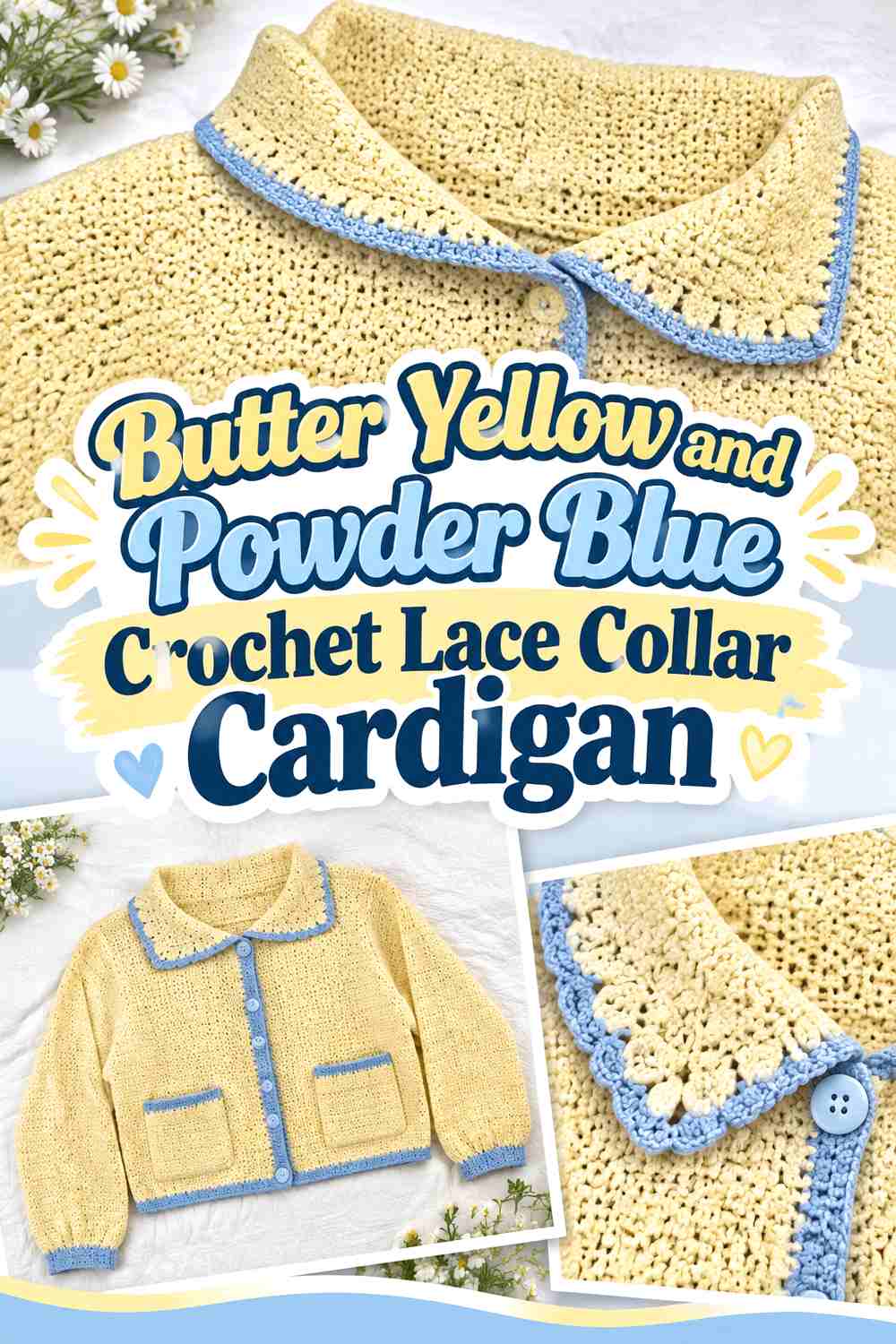
Powder blue creates the coolest and airiest color contrast in the collection. Butter yellow can cover the cardigan body while blue defines the lace collar and a small repeated detail at the cuffs or opening.
Butter Yellow Gives Powder Blue Lace a Warm Cardigan Background
Keep the upper panels yellow so the cool collar has a clear field behind it. The temperature difference can distinguish the colors even when both shades are relatively light.
Butter Yellow Should Repeat Between Powder Blue Cuffs and Collar
Do not connect the blue neckline and cuffs with broad blue front bands unless you want a stronger two-tone garment. Leaving the torso and most of the sleeves butter yellow maintains the soft yellow focus.
Creator Credit: Bag-O-Day Crochet
Which Butter Yellow Lace Collar Cardigan Palette Fits Your Winter Style?
For the palest, softest direction, ivory, oatmeal, taupe, camel, and soft gray keep the contrast restrained. These palettes allow lace texture and cardigan shape to provide much of the visual variation.
Sage, dusty rose, lavender, and powder blue add muted color while keeping the garment light. They are useful when you want the collar to be noticeable without giving it the visual weight of a very dark border.
Burgundy, midnight navy, forest green, chocolate brown, and controlled black accents create the strongest winter contrast. These shades are particularly effective around collars and cuffs, but they need less surface area because they can compete quickly with pale butter yellow.
Conclusion
A butter-yellow lace collar cardigan works most clearly when the body, collar, and smaller finishing areas have defined color roles. Keeping butter yellow across the major panels preserves the soft main color, while the collar becomes a deliberate place for ivory, sage, dusty rose, burgundy, navy, or another supporting shade.
For a subtle cardigan, choose a supporting color close to butter yellow in lightness and let lace texture create the distinction. For stronger winter definition, move a deeper color toward the collar, cuffs, or opening while protecting enough uninterrupted yellow surface.
Also consider the clothing beneath the lace collar. Openwork exposes whatever color is underneath, so the same collar can appear more or less defined depending on the blouse, knit top, or dress worn with it. Use the credited tutorials for their original cardigan construction guidance, then plan the butter-yellow color distribution around the finished silhouette you want.
Frequently Asked Questions
What color lace collar works well with a butter yellow crochet cardigan?
Ivory, oatmeal, taupe, sage, dusty rose, lavender, navy, burgundy, brown, and other shades can all work depending on the desired contrast. A pale neutral creates a softer transition, while a dark shade makes the neckline more prominent.
Should the lace collar match the cuffs on a butter yellow cardigan?
It can, but an exact match is not necessary across the entire cuff. A narrow repeat of the collar color at the wrist is often enough to connect the two areas while leaving most of the sleeves butter yellow.
How can I keep a pale lace collar visible against butter yellow?
Compare the yarn colors side by side and check their light-dark values. If they merge from a distance, choose a lighter or deeper collar shade, or rely on a more clearly defined edge around the lace rather than adding many extra colors.
Can a dark lace collar overpower a butter yellow crochet cardigan?
It can if the dark shade is repeated across too much of the garment. Keep colors such as burgundy, navy, forest green, chocolate brown, or black concentrated around the collar and smaller finishing details when butter yellow is intended to remain dominant.
Where should I repeat the lace collar color on a butter yellow cardigan?
Cuffs, front edging, a narrow hem detail, pocket edges, or button-area trim are useful locations. Choose one or two rather than repeating the contrast around every possible edge.
Does the top underneath a butter yellow lace collar cardigan affect the color scheme?
Yes. Open crochet lace allows the underlayer to show through. A dark top can make pale lace openings more obvious, while an underlayer close to the collar color creates a softer, more blended appearance.
How do I substitute another yellow without losing the soft cardigan palette?
Choose a yellow with a similarly light, softened character rather than switching automatically to a highly saturated or very dark yellow. Then recheck the contrast with the collar shade because changing the main yellow can alter how clearly the lace stands out.