Crochet plaid kitchen chair pads can bring the warmth of flannel, tartan, and buffalo check into a room without requiring every design to use the same construction. Some of the most practical foundations are flat pads that lift off easily, while others wrap around a round stool seat, contain filling, use thick yarn for cushioning, or build their visual interest through mosaic, granny, bobble, and woven-strip techniques.
The ideas below use verified chair-pad, chair-cushion, seat-pad, and stool-cover tutorials as their structural foundations. Where a source does not specifically teach plaid, the plaid treatment is an adaptation concept rather than a creator claim. That distinction matters because color changes can affect yarn usage, carried strands can change fabric thickness, and a fitted cover should retain the sizing and edge structure intended by its designer.
Choose first by chair shape and function. Then decide whether you want crisp buffalo check, a finer tartan effect, relaxed granny patchwork, or subtle winter windowpane lines.
Quick List
- Crochet Buffalo Check Kitchen Chair Cushion
- Crochet Chunky Farmhouse Plaid Chair Pad
- Crochet Tapestry Winter Plaid Chair Pad
- Crochet Padded Patchwork Plaid Chair Cushion
- Crochet Marled Tartan Round Chair Pad
- Crochet Granny Circle Plaid Chair Pad
- Crochet Mosaic Windowpane Seat Pad
- Crochet Bobble-Grid Plaid Stool Pad
- Crochet Woven-Strip Plaid Chair Cover
- Crochet Cabin Stripe Plaid Round Chair Pad
- Crochet Geometric Tartan Stool Pad
- Crochet Giant Granny Plaid Chair Pad
- Crochet Medallion Plaid Kitchen Stool Pad
- Crochet Elastic-Edge Buffalo Plaid Stool Pad
- Crochet Jumbo Motif Plaid Stool Pad
- Crochet Retro Plaid Kitchen Stool Cover
- Crochet Cinched Granny Plaid Stool Pad
- Crochet Heirloom Tartan Fitted Stool Pad
- Crochet Simple Fitted Plaid Stool Cover
- Crochet Granny Patchwork Plaid Seat Cushion
Match the Pad Shape to the Kitchen Chair First
Plaid is a surface design; it cannot correct a poorly matched seat shape. Measure the usable sitting area rather than assuming all dining chairs are square. Some seats narrow toward the back, some have rounded front corners, and kitchen stools may be completely circular. A pad that extends beyond the seat edge can fold under pressure, while one that is substantially undersized may shift during use.
Flat chair-pad tutorials are easiest to adapt when the seat already matches their general outline. Fitted stool-cover tutorials make more sense for round wooden stools because their sides or elasticized edges help hold the crochet in place.
Also check whether a source uses ties, stuffing, an elastic edge, a cinched underside, or no fastening at all. Preserve those structural features when adding plaid. Decorative colorwork should not cover a tie attachment, prevent an edge from stretching, or change the opening needed to pull a fitted cover over the seat.
Plan Plaid Before Choosing Too Many Colors
Buffalo check generally depends on clear blocks of light, medium, and dark value, while tartan can use narrower crossing bands and more colors. Windowpane plaid is visually simpler because a mostly solid background is interrupted by widely spaced lines. Those differences affect crochet construction.
For a pad worked in rows, planned color blocks can create a clean grid. Granny construction naturally produces patchwork-like plaid when colors repeat in an organized sequence. Mosaic and tapestry methods can create sharper geometric changes, but they may also make the fabric denser. On circular pads, concentric stripes cannot produce a conventional woven plaid by themselves; the plaid impression usually comes from added surface lines, segmented color placement, or a deliberately tartan-inspired palette.
Swatch the color relationship before committing to a complete set. Two colors that look distinct in skeins may merge visually once surrounded by a third shade.
Think About Thickness, Sliding, and Winter Use
A chair pad needs more than an attractive top surface. Thick yarn can provide noticeable cushioning on a hard seat, while a thinner decorative cover may need an existing cushion or filling beneath it. The original tutorial should guide that decision rather than the plaid theme.
Pay attention to the underside as well. Crochet can move on polished wood, particularly when the pad has no ties or fitted edge. A source that includes ties, elastic, cinching, or a wraparound side offers a built-in strategy for staying positioned. Do not assume a textured yarn automatically makes a pad non-slip.
For kitchen use, consider crumbs, spills, and repeated sitting before adding loose fringe, long surface floats, or heavily raised decorations. Care also depends on the actual fiber and any insert used. Follow the yarn label and the creator’s care information rather than applying one washing method to every plaid pad.
1. Crochet Buffalo Check Kitchen Chair Cushion
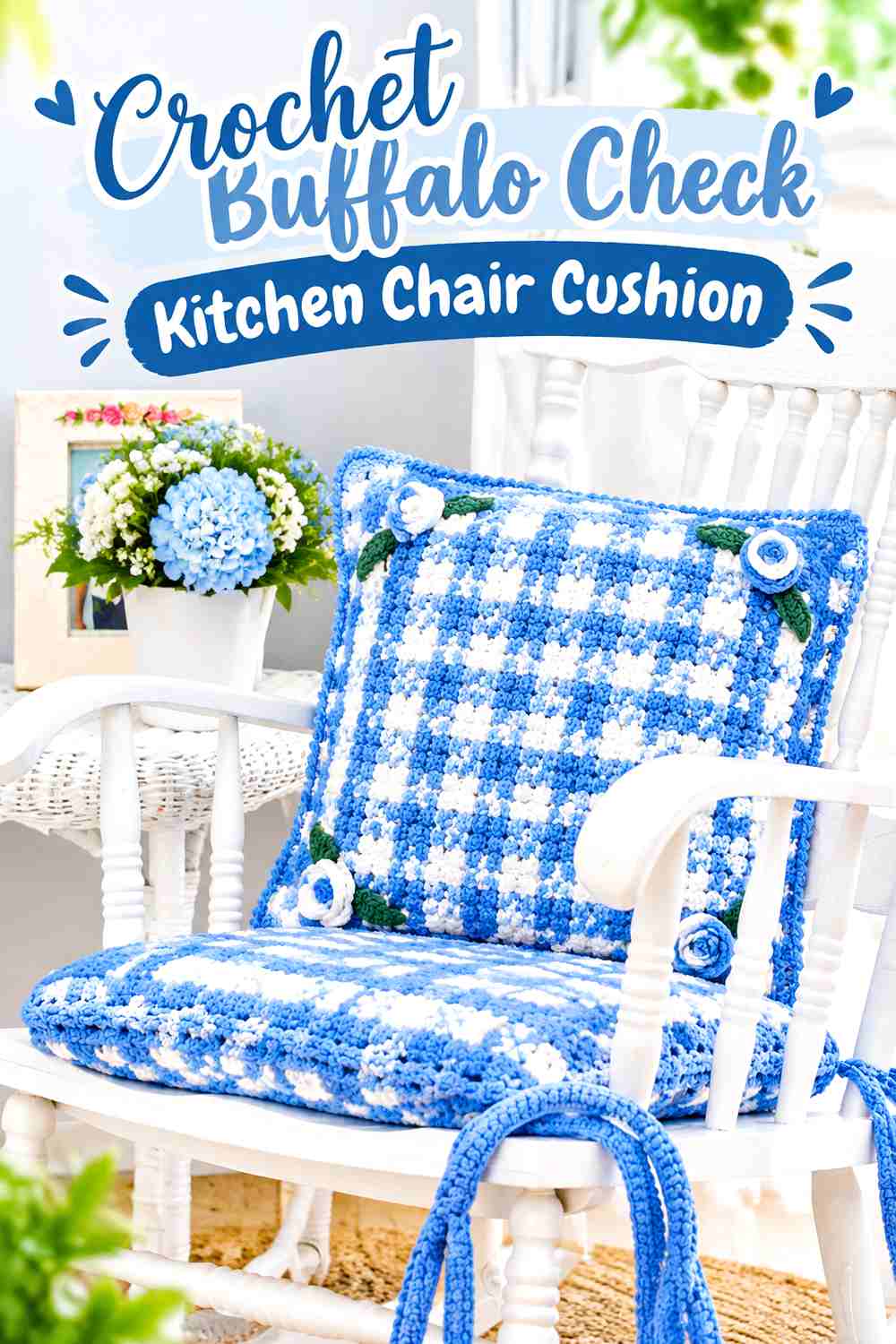
This idea begins with the Lily Sugar’n Cream chair cushion from Yarnspirations, a square crocheted cushion design that uses contrasting colorwork and is intended for a cushion form or filling. Pattern records identify the design as a check-pattern chair cushion, making it the most direct foundation in this collection for a classic kitchen plaid interpretation.
For a winter version, a red, deep burgundy, and charcoal value progression could create a buffalo-check mood, while cream, taupe, and brown would feel quieter. Because this is a filled cushion rather than a single flat crochet layer, it suits readers who want more substantial seating comfort. Before changing the color arrangement, preserve the source pattern’s finished proportions and make sure any new color sequence still allows the check pattern to remain balanced across the whole face.
Let Value Create the Check
Buffalo check works because neighboring blocks have clear differences in value, not simply because three attractive colors are used together. Choose one light shade, one middle shade, and one noticeably darker shade before crocheting the full cushion.
Photographing the yarns in grayscale can help reveal whether the three values are sufficiently distinct. If two shades look almost identical without color, the resulting plaid may lose its recognizable block structure.
Remember the Insert Changes the Finished Shape
A filled chair cushion behaves differently from a flat pad. Once the insert or stuffing is inside, the top surface curves and the edges gain depth, which can make a perfectly square color block appear slightly softened.
If exact plaid alignment matters to you, evaluate the design on the filled cushion rather than judging it only while the crochet panels are lying flat.
Keep Chair Attachment Separate From Colorwork
If you intend to add ties for your particular kitchen chairs, place them according to the chair structure rather than the plaid repeat. They need to reach stable back rails or posts without twisting the cushion.
A tie placed merely to preserve visual symmetry may not sit at the correct point for securing the pad.
Creator Credit: Yarnspirations
2. Crochet Chunky Farmhouse Plaid Chair Pad
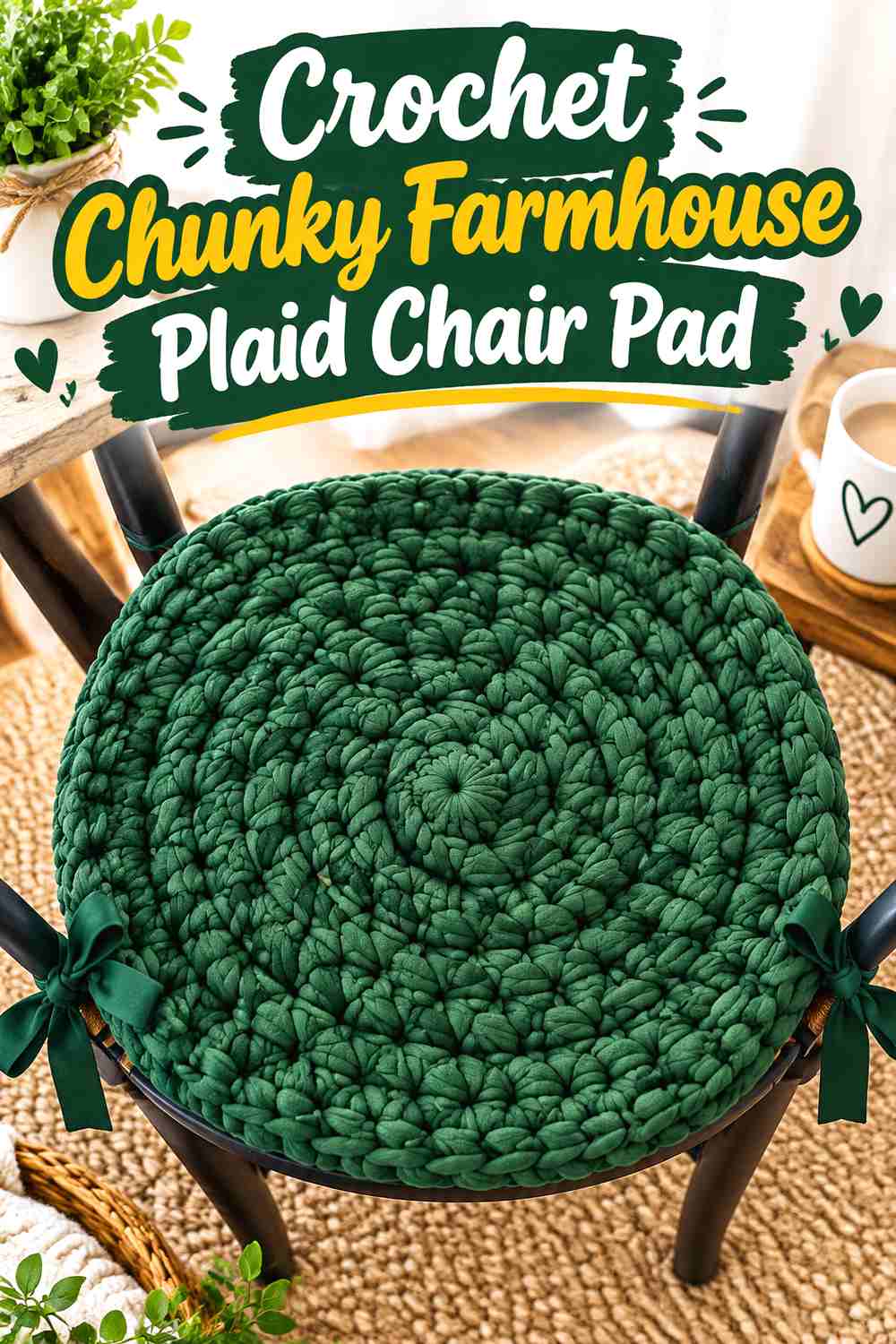
Cozy DIY Home’s video tutorial teaches a chunky crochet chair pad made for a farmhouse breakfast nook. The project uses very thick yarn and a large hook, so the finished pad derives much of its presence from scale and substantial stitches rather than from a cushion insert.
That chunky surface is well suited to an oversized farmhouse plaid. Instead of trying to reproduce many narrow tartan lines, use broad blocks or a simple two- or three-color buffalo arrangement that remains readable at the large stitch scale. This idea works especially well for solid wooden breakfast-nook chairs where a visually weighty pad suits the furniture. Check your own seat dimensions carefully before adapting the color layout, because fewer, larger stitches mean even a small change in the repeat can alter the size of each plaid block substantially.
Use Larger Plaid Blocks With Chunky Yarn
Tiny checks and fine tartan lines can look fragmented when every stitch is physically large. A broad grid gives the yarn enough room to show the color relationship without creating an unnecessarily complicated surface.
Sketch the number of color sections across the seat before starting so the outermost blocks do not end as very narrow slivers.
Watch the Weight of a Full Set
Chunky yarn makes substantial chair pads, and several pads together can require much more storage space than thin covers. That is worth considering if the set will be used only in winter.
A simple folded stack may compress raised stitches, so store the pads without heavy objects on top if preserving their surface texture matters.
Creator Credit: Cozy DIY Home
3. Crochet Tapestry Winter Plaid Chair Pad

Moogly’s Soft Sunshine Chair Pad is a thick, round design worked with tapestry crochet and multiple strands held together. The original creates a bold radial motif rather than plaid, but its color-carrying technique makes it an interesting foundation for readers comfortable planning their own geometric color arrangement.
A winter plaid adaptation could replace the sunny contrast with dark forest green, cream, and black or another limited palette, using repeated segments to suggest crossing bands around the circular pad. It will not look like woven rectangular tartan unless the color chart is deliberately redesigned, so treat this option as plaid-inspired geometry rather than a literal fabric imitation. The thick construction is useful on hard seats, but any adaptation should retain the pattern’s flatness and increase structure.
Manage Carried Yarn Without Excess Bulk
Tapestry crochet traps or carries unused colors through the work, which can make a chair pad denser than ordinary single-color crochet. Adding more colors than the source technique needs may increase that bulk further.
Practice the planned color changes on a small swatch and compare its thickness with the source fabric before committing to the entire pad.
Keep Circular Plaid Intentional
Straight tartan lines naturally suit rectangles better than circles. On a round pad, repeated wedges, concentric contrasts, or carefully spaced vertical-looking bands can communicate the same winter textile mood without pretending to be a conventional woven check.
Choose a consistent rule for color placement so the result reads as deliberate geometry rather than random striping.
Creator Credit: Moogly
4. Crochet Padded Patchwork Plaid Chair Cushion
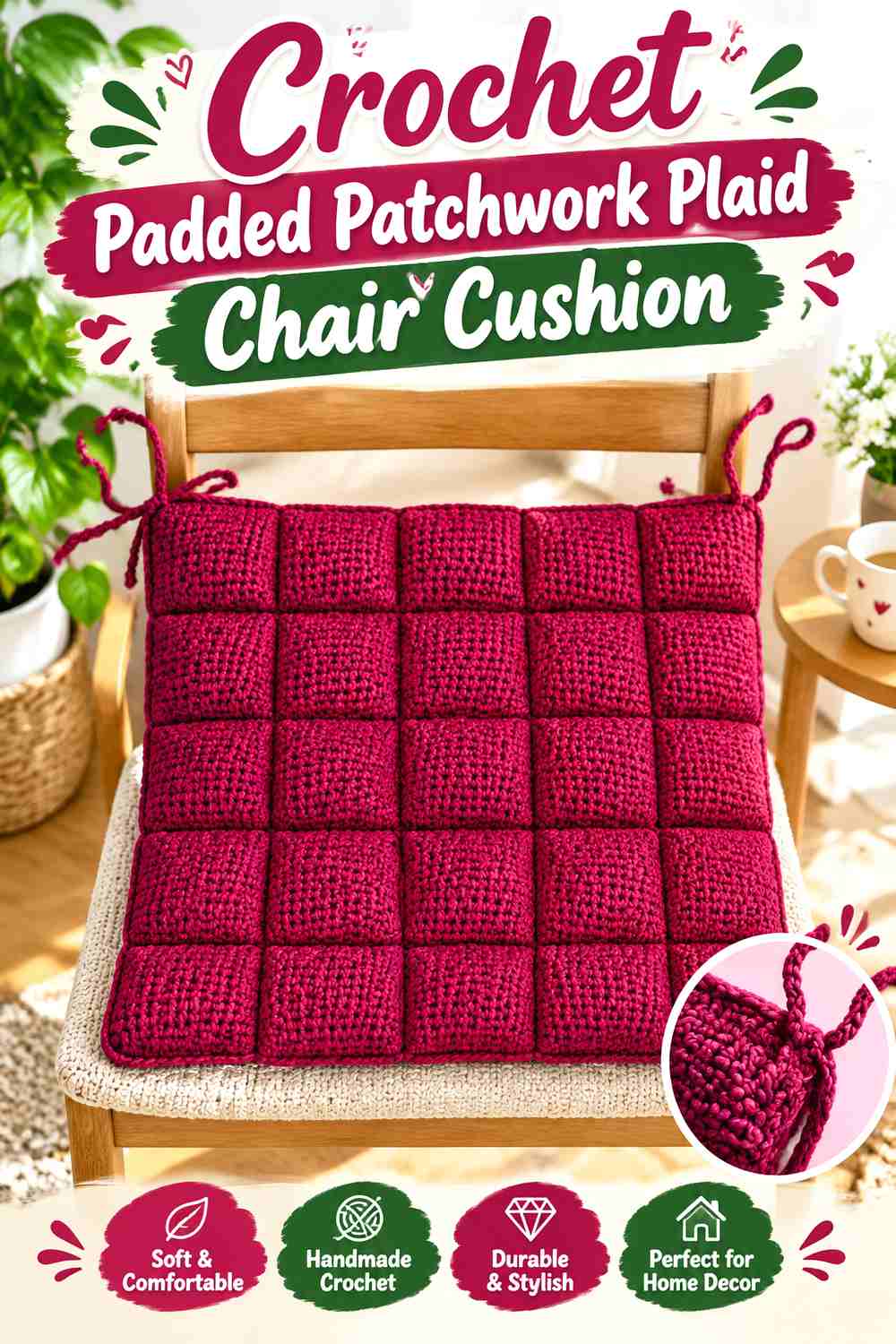
Crochet Spot’s chair cushion is built from multiple small crocheted squares that are individually stuffed and then joined. The modular construction also allows the overall cushion size to be altered by changing the number of squares used.
That structure almost invites a patchwork plaid treatment. Instead of creating plaid within every square, assign each padded block a color from a controlled tartan or buffalo-check palette and arrange the pieces as a larger grid. The resulting chair pad has a quilted appearance and considerably more dimension than a flat crochet mat. Because each block contains filling, however, this is not the place for an intricate surface pattern that disappears once the squares puff outward. Plan the plaid at the assembly stage, where the entire grid can be seen at once.
Lay Out Every Square Before Joining
A modular plaid can go wrong even when all of the individual pieces look good. The important relationship appears only when the complete set of squares is arranged together.
Place the blocks on a flat surface in their final orientation and photograph the layout before joining. That reference reduces the chance of accidentally swapping similar colors during assembly.
Control Cushion Firmness Consistently
The source allows the small units to be stuffed, so consistency matters across a chair pad intended for sitting. One heavily filled block beside a softer one can create an uneven surface.
Aim for comparable fullness across the whole grid and judge the completed cushion as functional seating, not only as patchwork decoration.
Use Joins as Part of the Plaid Design
Visible seams can reinforce the grid. A dark joining yarn produces strong outlines between colored blocks, while a matching join lets the blocks blend more softly.
Choose deliberately, because the join color can become as visually important as the squares themselves.
Creator Credit: Crochet Spot
5. Crochet Marled Tartan Round Chair Pad
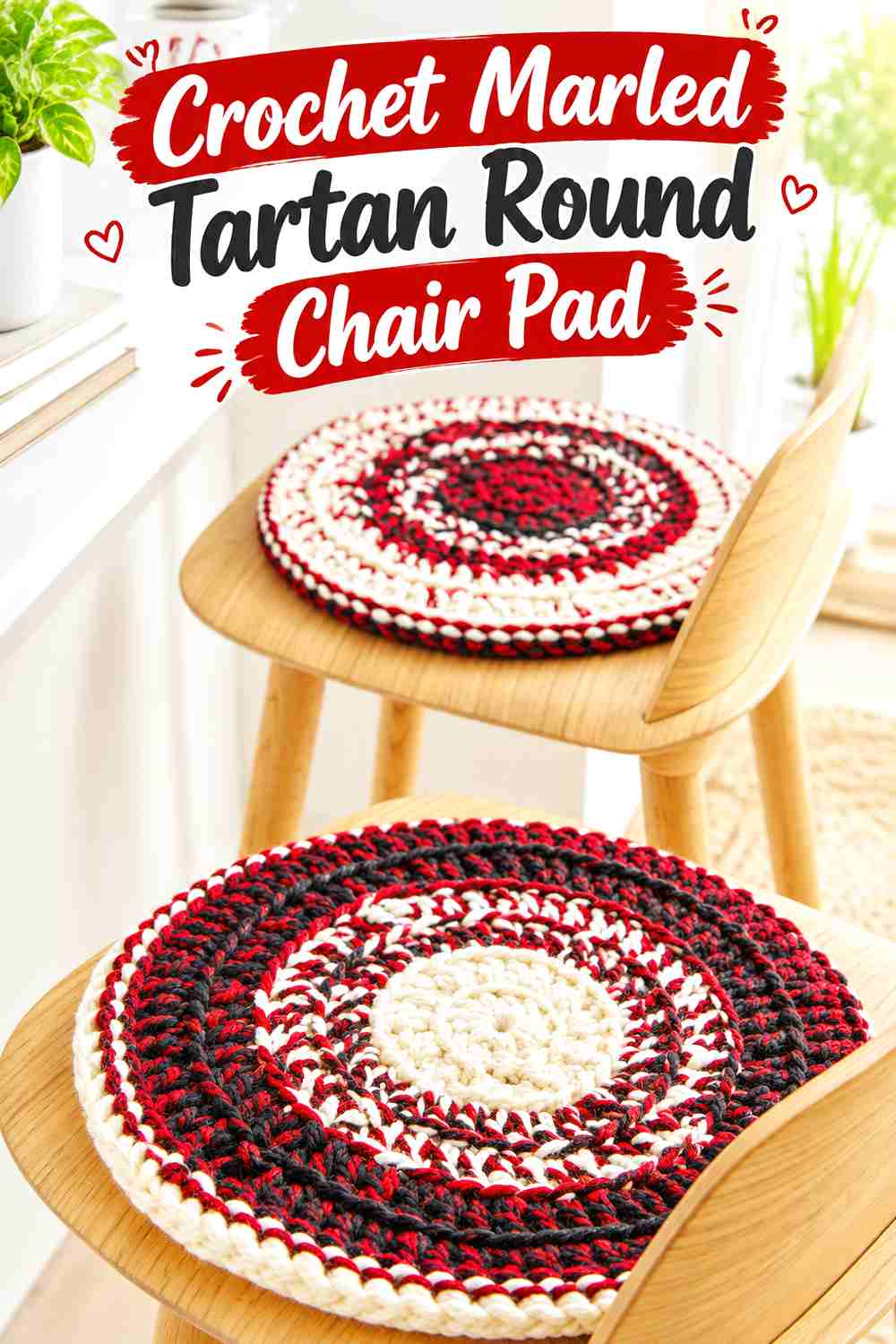
Yarnspirations’ Patons Marled Chair Pad is a round design worked with two strands held together, creating a mixed-color surface and a substantial pad. The published pattern is sized as a compact round chair pad rather than a square kitchen-chair cushion.
For a winter tartan interpretation, use the marling itself as the muted background and introduce controlled bands or color changes rather than trying to force sharp check blocks into the circular construction. Dark green mixed with charcoal, for example, could create a heathery foundation before narrow cream or red accents are introduced. This option suits round kitchen stools particularly well. If your chair seat is square, compare the finished circle with the usable seat area before deciding whether the smaller contact area is acceptable.
Use Marling for the “Mixed” Plaid Color
Traditional plaid often creates darker-looking intersections where bands cross. Holding two colors together can suggest that visual mixing without requiring every intersection to be separately charted.
Keep enough contrast between the solid and marled sections so the effect remains visible from standing distance.
Check Fiber Care Before Kitchen Use
The source specifies a particular bulky wool yarn and provides its own care guidance. If you substitute another fiber for easier kitchen maintenance, do not assume the same finished texture or dimensions.
Match the pattern gauge and follow the care label for the yarn you actually use.
Creator Credit: Yarnspirations
6. Crochet Granny Circle Plaid Chair Pad
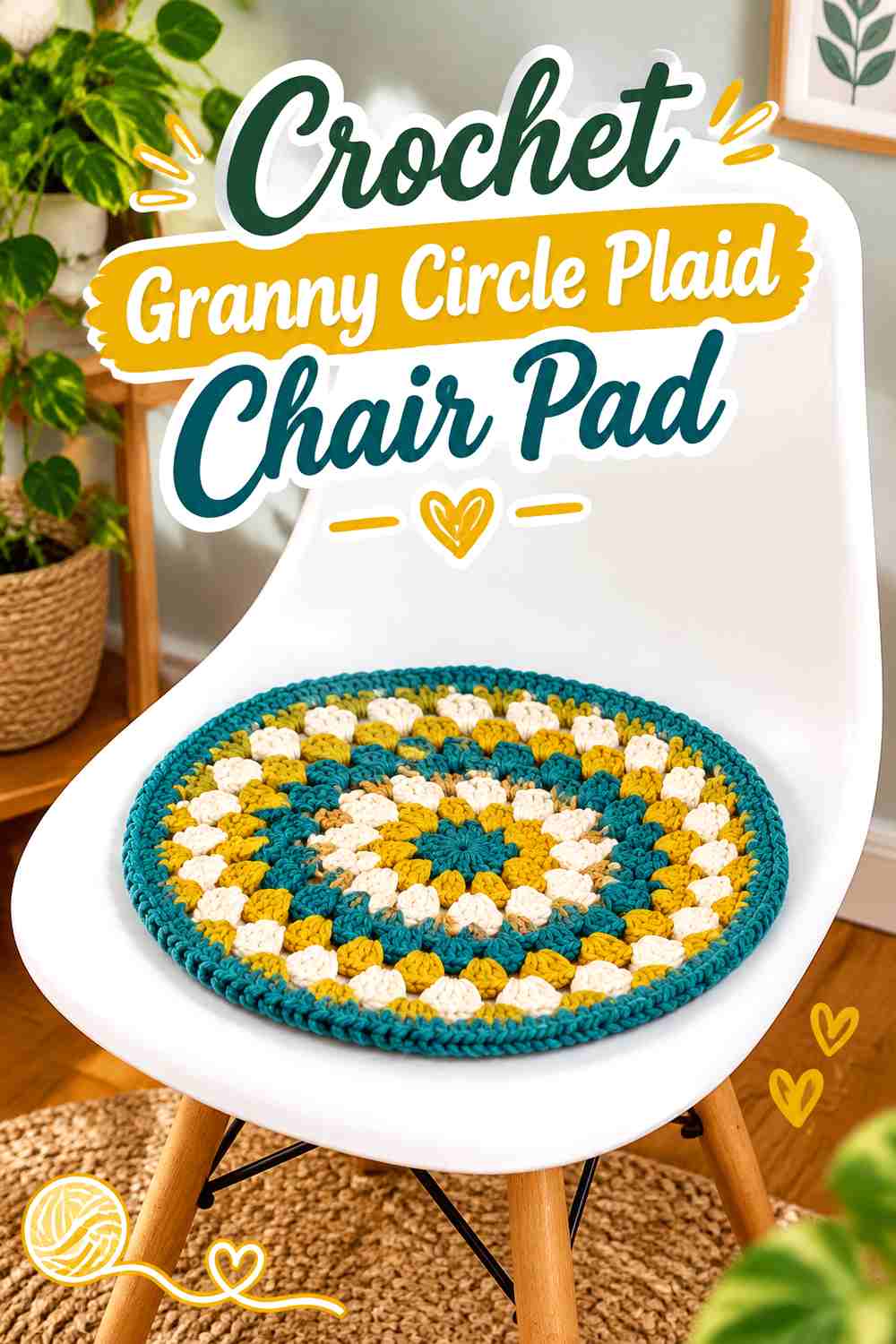
Joy of Motion Crochet’s Granny Circle Chair Pad is worked outward in rounds with classic granny-style clusters and multiple colors. The source uses bulky yarn and finishes as a round seat pad.
This construction works well for a relaxed plaid interpretation because granny spaces visually break each color band into small repeated units. Alternating deep red, black, oatmeal, and muted gray in a planned sequence can suggest a lodge-style tartan without trying to imitate woven cloth exactly. The finished piece is a flat pad rather than a stuffed cushion, so it suits readers who want a removable layer over a hard chair rather than substantial upholstery. Because the color changes occur by round, the strongest plaid effect will come from the palette and any optional surface lines rather than square checks built directly into the base pattern.
Repeat Colors With a Clear Rhythm
Random scrap colors produce a lively granny look, but plaid needs repetition. Decide which shade acts as the dominant field and which colors appear as narrow accent bands.
Writing the color order before starting helps prevent an accidental rainbow effect that no longer reads as winter plaid.
Add Surface Lines Sparingly
If you want stronger crossing lines, surface crochet can add a second direction after the main pad is complete. Avoid packing those lines too closely, since they can stiffen an otherwise flexible granny fabric.
Test one line first and make sure it does not cause the pad to cup or pucker.
Creator Credit: Joy of Motion Crochet
7. Crochet Mosaic Windowpane Seat Pad
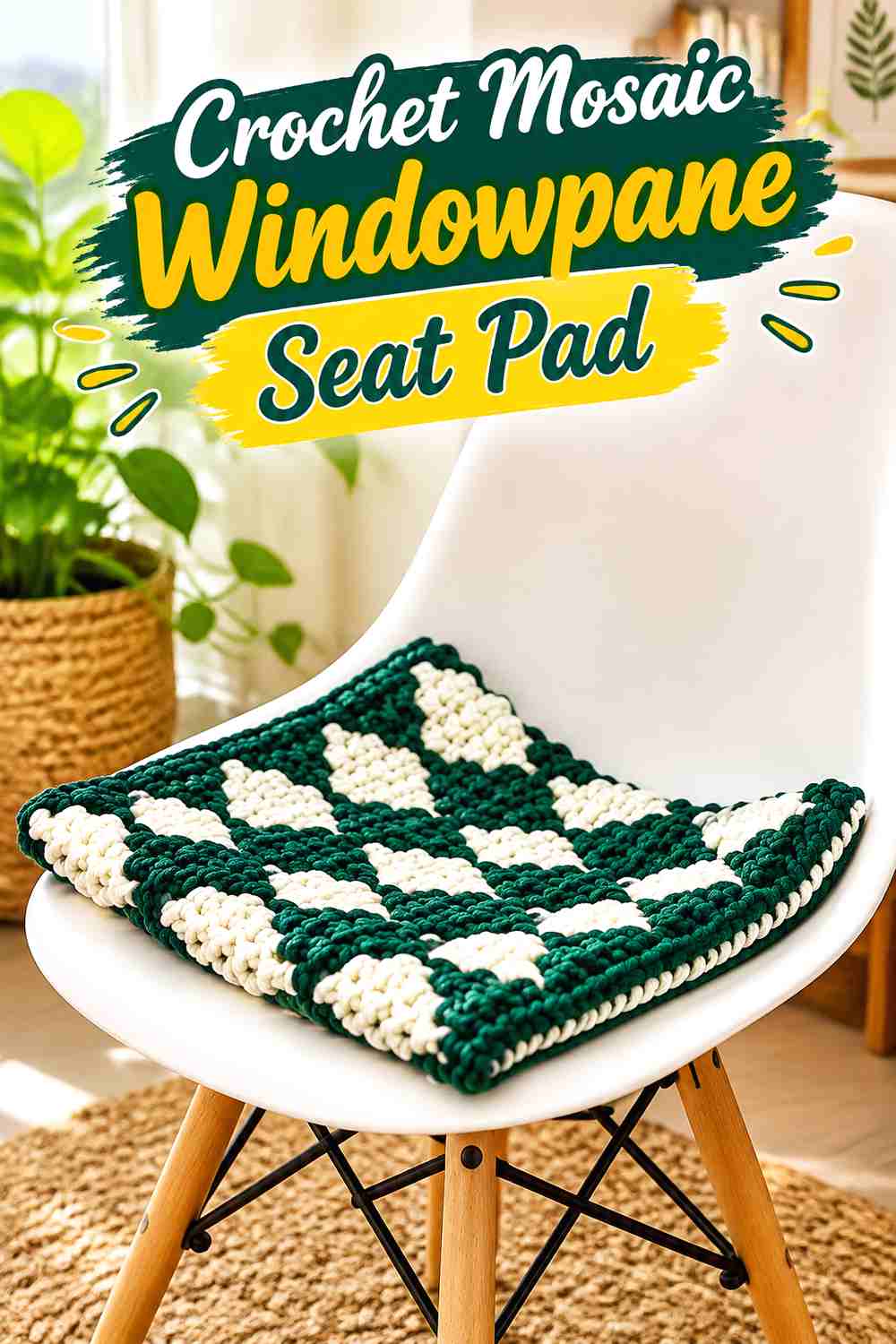
The Mosaic Crochet Seat Pad from Joy of Motion Crochet uses two-color mosaic crochet in the round and thick padded yarn. The source is designed as a seat cushion for dining chairs and includes guidance for adjusting its dimensions.
Mosaic crochet is particularly useful for a windowpane-plaid interpretation because a dark background can be interrupted by crisp repeated lines without changing color within every stitch in the same way traditional stranded work might. Rather than trying to duplicate a complex multicolor tartan, use two colors to create a clean oversized grid. This style suits contemporary winter kitchens where red-and-black buffalo plaid may feel too rustic. The structural concern is density: mosaic fabric can become substantial, so any resizing should follow the source’s repeat requirements rather than simply stopping at an arbitrary point.
Choose Windowpane Over Busy Tartan
Two-color mosaic crochet has enough graphic strength without adding several extra shades. A simple light grid over charcoal, navy, forest green, or brown can create a recognizable plaid reference with a cleaner finish.
The reduced palette also makes it easier to keep repeated motifs consistent across a set of chairs.
Respect the Pattern Repeat When Resizing
Mosaic motifs depend on stitch counts and repeat lengths. Removing a few stitches simply to match a chair measurement can interrupt the design.
Use the adjustment information in the original tutorial and compare the resulting size with your chair before altering the chart.
Keep the Reverse Side Practical
A decorative mosaic face may have a different texture from the back. Decide which side will contact the chair and make sure carried or structural elements are not likely to snag on rough wood or exposed hardware.
That check is especially useful on older kitchen chairs.
Creator Credit: Joy of Motion Crochet
8. Crochet Bobble-Grid Plaid Stool Pad
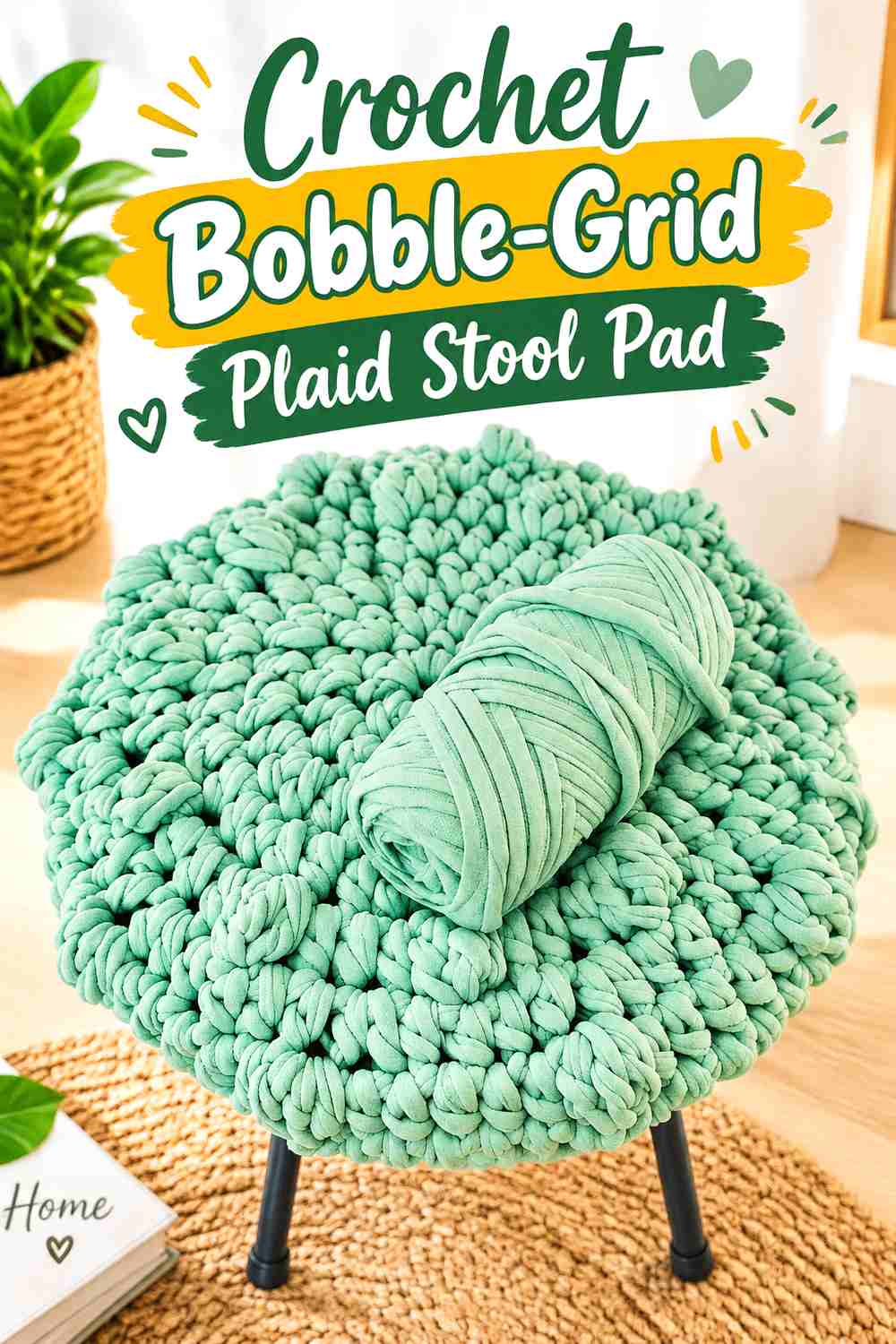
Amelia Makes teaches a round stool cover worked largely in half double crochet with a pronounced bobble round and a fitted side section. The project was developed for a small stool seat and includes discussion of adjusting depth for a thicker stool top.
For plaid styling, the bobbles can act like textured intersections in an otherwise simple grid. Work the main cover in a winter neutral and reserve contrasting bobbles or selected surface lines for the check structure. Because this design wraps over the stool edge, it is better suited to round kitchen stools than to flat square dining chairs. Its fitted form is an advantage when chairs are frequently moved, since there is more structure holding the crochet around the seat.
Treat Bobbles as Plaid Intersections
Raised stitches attract attention, so placing them where imagined plaid lines meet can make a simple two-color design feel more deliberate. They do not need to appear at every crossing.
Using too many bobbles may make the sitting surface noticeably uneven, so keep comfort in mind when determining where texture belongs.
Preserve the Fitted Side Depth
The side section controls how securely a cover sits on the stool. Changing yarn thickness or adding a dense surface treatment can alter how that portion stretches.
Check the cover on the actual stool before finishing decorative elements around the edge.
Creator Credit: Amelia Makes
9. Crochet Woven-Strip Plaid Chair Cover
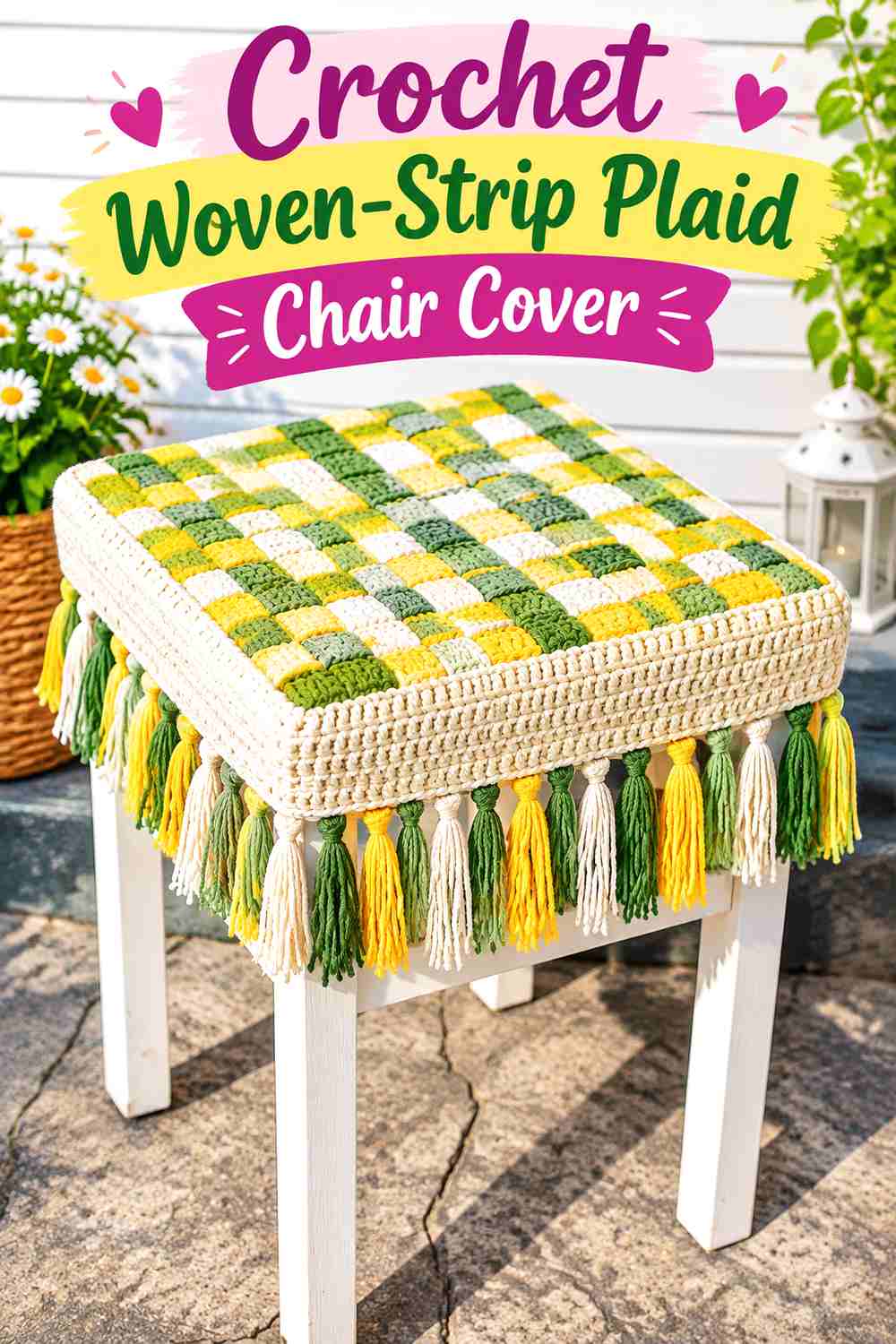
Atty*s takes a distinctly different approach to a stool cover: crocheted strips are made separately, interlaced, and then edged to form the finished cover. The woven structure is the defining feature of the project.
That makes it one of the most natural bases for a literal crochet plaid effect. Instead of trying to simulate crossing bands with surface embroidery, alternate colors among the strips before weaving them together. The overlaps automatically create a textile-like grid. This is best viewed as a fitted stool-cover idea rather than a conventional loose chair pad, so confirm that your kitchen seat has a compatible shape and edge. Because strip width determines the scale of the plaid, plan the entire color order before producing a large stack of pieces.
Plan Warp and Weft Colors Separately
Think of one strip direction as the horizontal plaid sequence and the other as the vertical sequence. They can match for a regular check or differ for a more tartan-like effect.
A written color chart is useful because the design becomes difficult to reorganize once the strips are fully interlaced and edged.
Avoid Excess Thickness at Intersections
Every woven crossing places one crocheted strip over another. If you substitute a substantially thicker yarn, the intersection points may become noticeably raised.
Use the source material guidance as your starting point and swatch a few woven crossings before committing to the full cover.
Keep the Edge Strong and Even
The perimeter turns the woven center into a usable seat cover. Uneven tension there can distort an otherwise square-looking plaid.
Check the woven panel for squareness before working the outer structure, and correct strip alignment while the pieces can still move.
Creator Credit: Atty*s
10. Crochet Cabin Stripe Plaid Round Chair Pad
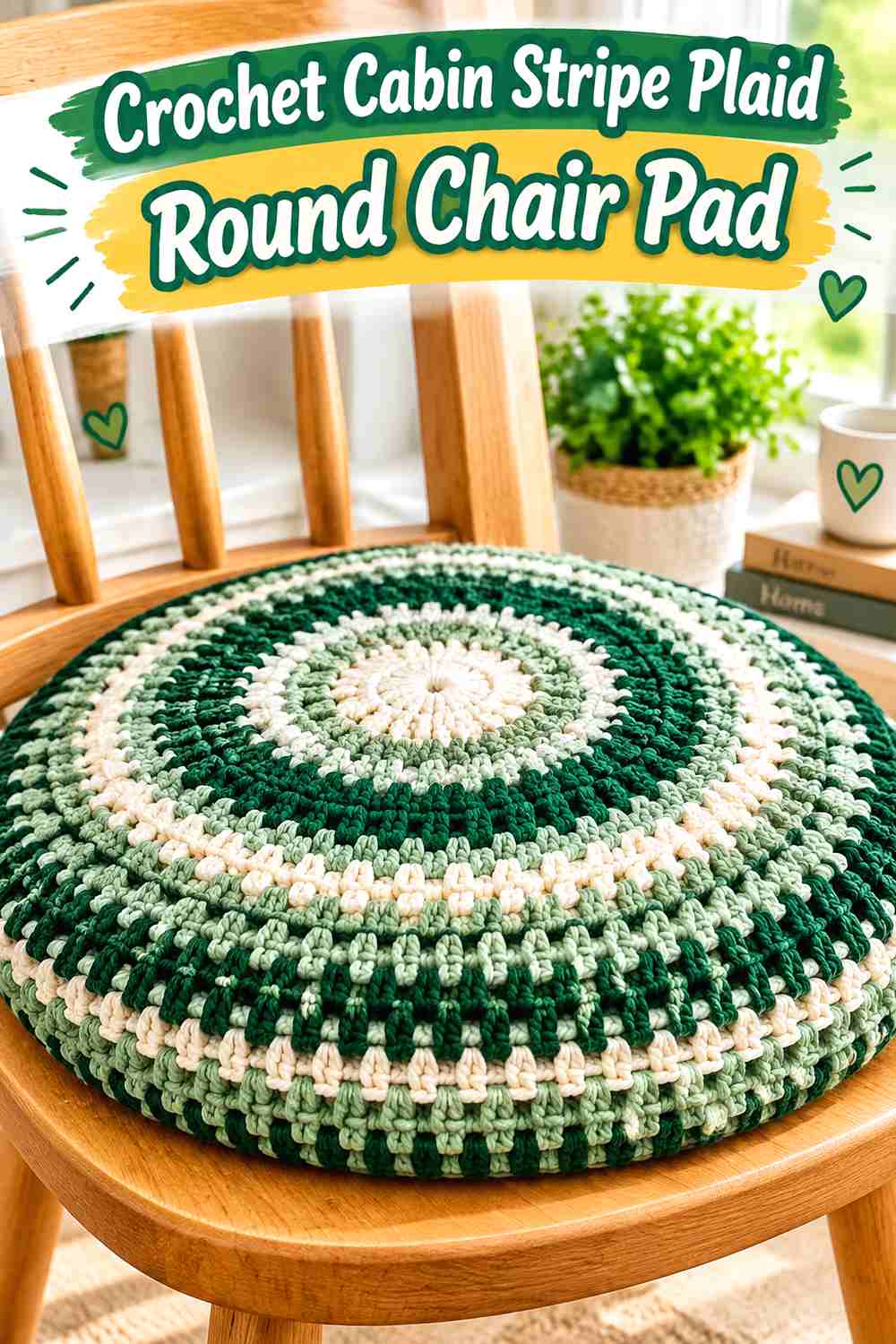
The Green Dragonfly’s round stool-cover tutorial builds a flat circular top with regular increases, color changes between rounds, and a side section that wraps around the stool before being secured underneath.
Because the source already uses repeated color changes, it makes a practical base for a cabin-style tartan palette. Concentric bands of rust, cream, forest green, and charcoal can establish the winter mood, while a few vertical surface-crochet lines added afterward can create the second direction associated with plaid. Keep those added lines light so the fitted cover retains its stretch. This project suits round kitchen or breakfast-bar stools much better than square dining chairs, and its wrapped edge is useful when a loose circular pad might otherwise shift.
Build the Horizontal Bands First
Let the original round-by-round color changes provide one half of the plaid. Wider neutral bands can act as the field, with narrower red or green rounds functioning as accents.
This creates a controlled base before any optional vertical detailing is considered.
Add Crossing Lines After Fitting
Surface lines should be positioned only once the cover is sitting correctly on the stool. A line that looks vertical on an unstretched circle can twist after the sides are drawn underneath.
Mark positions while the cover is fitted, then remove it for finishing.
Creator Credit: The Green Dragonfly
11. Crochet Geometric Tartan Stool Pad
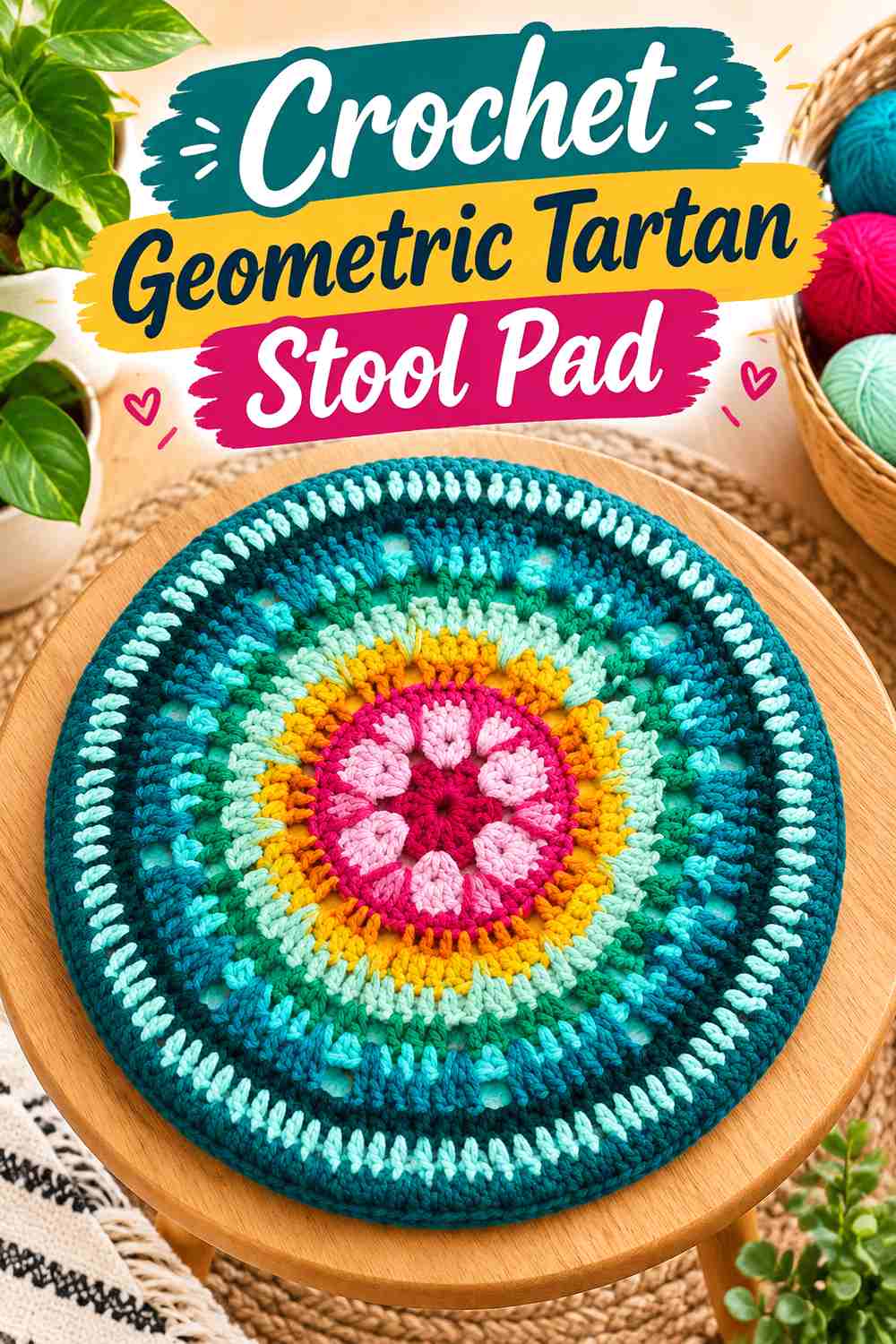
A second Green Dragonfly stool-cover tutorial uses a more motif-like center with repeated groups and frequent color changes rather than the simpler solid-round construction. The design expands outward before forming the fitted portion of the stool cover.
That geometric structure supports a more decorative tartan interpretation. Instead of relying on perfectly straight crossing lines, repeat four winter shades in a predictable sequence so the clustered motifs form colored bands around the seat. A restrained plaid palette can make an intricate crochet structure feel more tailored and less multicolored. This option is useful when you want a fitted round seat cover that still has visible stitch architecture. Before adding any extra surface lines, decide whether the existing cluster pattern already provides enough visual movement.
Let Motif Spacing Break Up the Plaid
Plaid does not have to be a continuous solid grid. Small spaces between clusters can act like tiny gaps in a woven textile and keep the round pad from becoming visually heavy.
Maintain the same accent-color order across each repeat so the pattern still feels organized.
Check Flatness During Color Changes
Frequent color changes can make it tempting to pull ends or joins tightly. On a circular seat cover, that tension can contribute to cupping before the fitted side section even begins.
Lay the top flat periodically and correct tension issues before continuing.
Creator Credit: The Green Dragonfly
12. Crochet Giant Granny Plaid Chair Pad
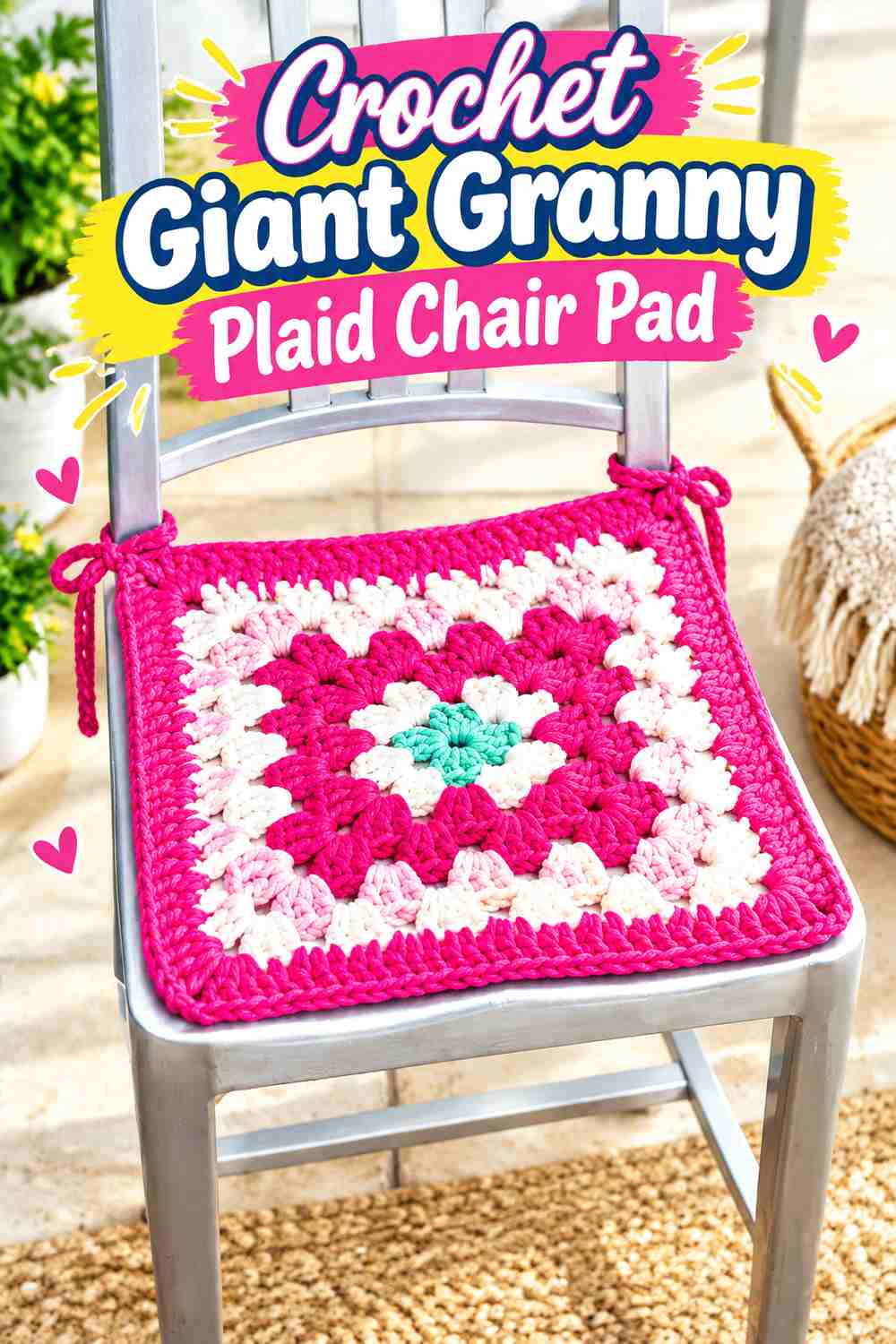
Creative Jewish Mom’s giant granny-square chair pad is made with commercial T-shirt yarn and was designed as a thick square pad for a chair. The creator specifically discusses the stretch and variability that can occur with T-shirt yarn.
Its square format is ideal for an informal patchwork plaid. Rather than changing color every round randomly, repeat two dark shades, a light neutral, and one accent in a planned sequence. You can also treat the large granny spaces as the background and add carefully placed surface lines afterward. The substantial T-shirt yarn gives the piece enough visual weight for rustic wooden kitchen chairs, but its stretch means perfectly rigid tartan geometry may not be realistic. This is a design where a slightly relaxed plaid looks more natural than a precision graph.
Expect Some Movement in the Square
The source notes that T-shirt yarn can vary and stretch, so do not base an elaborate plaid layout on the assumption that every edge will remain mathematically straight.
Use the chair itself as the final visual test rather than judging the pad only on a blocking surface.
Coordinate the Ties With the Plaid
The original project includes ties at the back corners. Those can disappear into the dominant color or become part of the winter palette.
Either approach works, but make sure the ties remain long and flexible enough for the intended chair rather than shortening them for visual neatness.
Choose Consistent T-Shirt Yarn Where Possible
Different fabric-yarn skeins can vary in thickness and elasticity. In a plaid design, that difference may make one color band wider or firmer than another.
Compare the yarns side by side before starting and adjust only according to the source guidance and your own gauge checks.
Creator Credit: Creative Jewish Mom
13. Crochet Medallion Plaid Kitchen Stool Pad
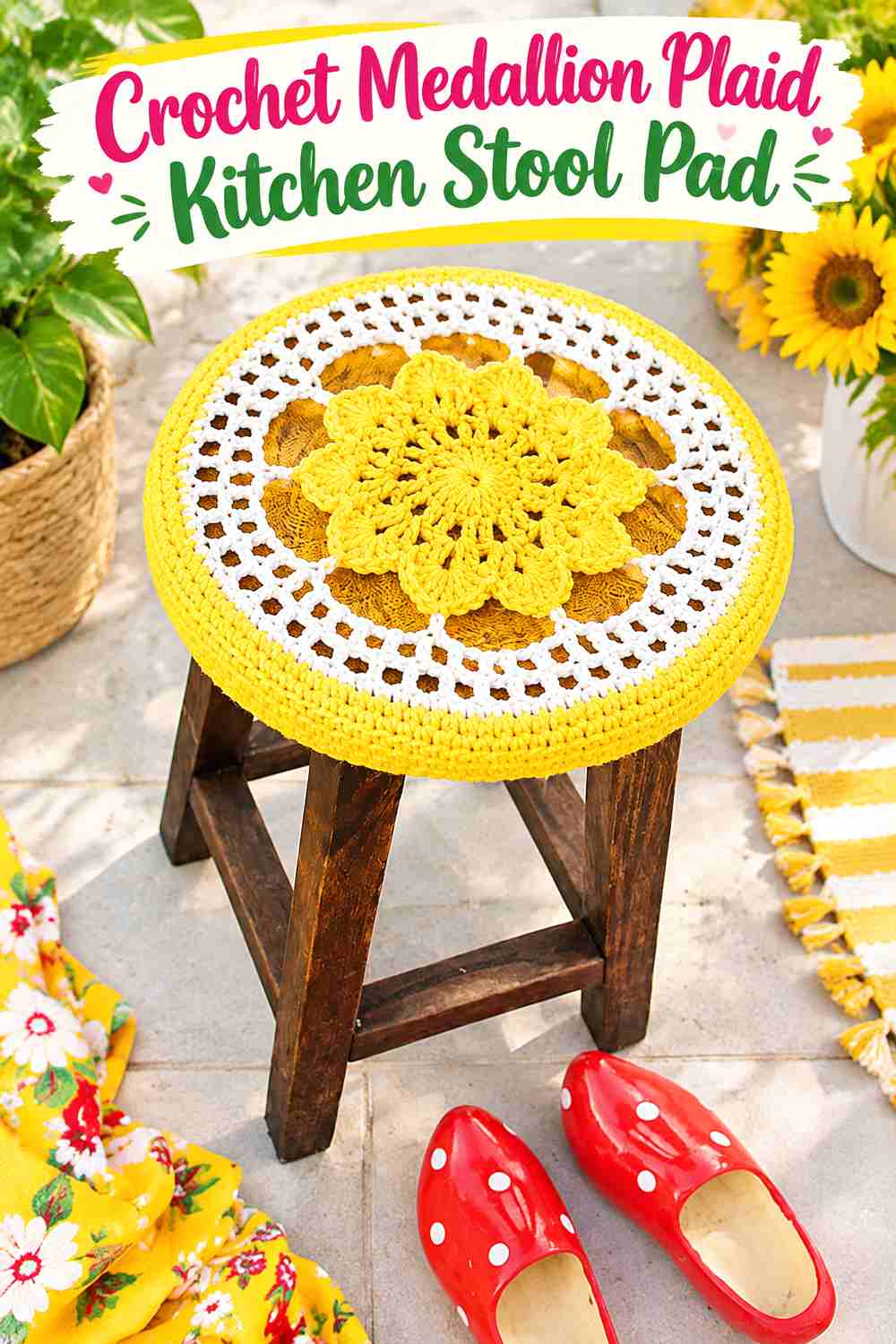
Creative Jewish Mom’s flower-doily stool cover develops a large central floral medallion before continuing outward and down around the stool. The tutorial also explains that the number of rounds may need to vary with stool size, yarn, and hook choice.
To turn that floral foundation into a winter plaid idea, use the medallion as the center of a tartan-inspired palette rather than trying to disguise its shape. A cream center, deep red middle band, and green-and-charcoal outer sections can coordinate with plaid textiles elsewhere in the kitchen. Optional surface lines near the broader outer rounds can introduce a subtle check without obscuring the flower. This version is especially suitable when you want winter color without giving up a vintage crochet look.
Keep the Center as a Focal Point
A medallion already has a strong center-out composition. Adding a full plaid grid directly across it may fight the structure rather than enhance it.
Let the central flower remain readable and concentrate crossing-line details toward the simpler outer area.
Resize Before Adding Extra Bands
The source allows adjustments according to the stool and materials. Make those functional decisions first.
Extra decorative rounds added purely for color can unexpectedly increase the top diameter and shift the point where the cover should turn down around the seat.
Secure the Underside Neatly
A drawstring-style or tied underside needs to pull firmly enough to hold the cover without becoming impossible to remove.
Keep colorwork tails and added surface-crochet ends away from that working edge so they do not interfere with tightening.
Creator Credit: Creative Jewish Mom
14. Crochet Elastic-Edge Buffalo Plaid Stool Pad

Heart Hook Home’s stool-cover pattern uses super-bulky yarn and finishes around elastic so the cover cinches beneath a round wooden stool. That elasticized edge is the feature that distinguishes this base from loose circular pads.
For a buffalo-plaid adaptation, keep the top visually simple: large dark and medium blocks or broad concentric sections can suit the substantial yarn better than small checks. The elastic makes this a practical option for frequently used round kitchen stools because the cover is intended to wrap around the seat rather than simply rest on it. Any colorwork should stop before it complicates the final elastic area, which needs to remain flexible and functional.
Protect the Elastic Channel
The finishing edge needs to stretch and contract. Avoid carrying multiple unused colors through that section or adding surface crochet over it.
A single dark finishing shade can visually frame the plaid top while leaving the elastic area uncomplicated.
Test the Cover Before Final Tightening
An elastic edge that is too loose may not hold the cover securely, while excessive tension can make removal unnecessarily difficult.
Follow the source method and test the cover on the actual stool before permanently finishing the elastic.
Creator Credit: Heart Hook Home
15. Crochet Jumbo Motif Plaid Stool Pad
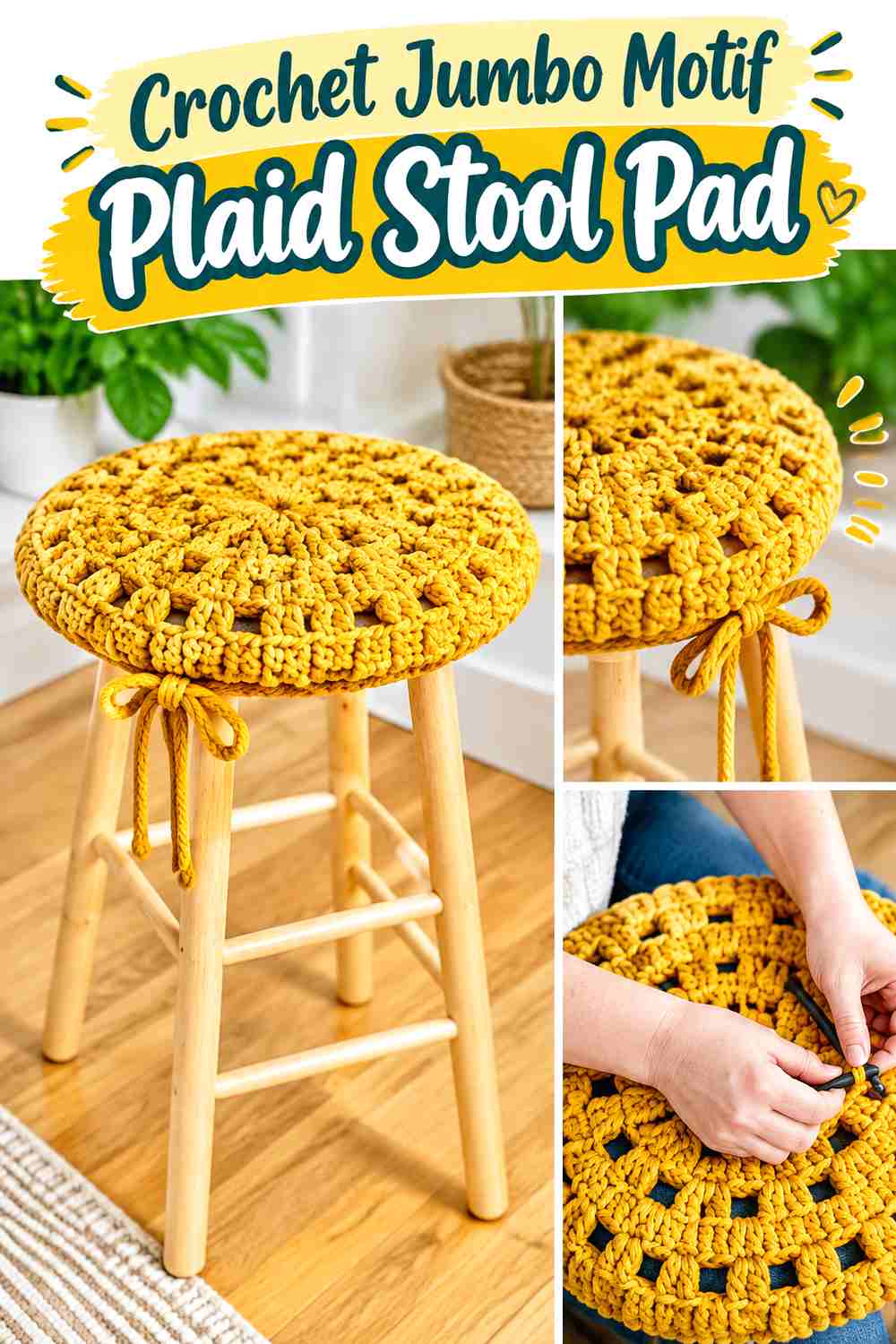
The Firefly Hook motif stool cover published on My Hobby Is Crochet uses jumbo fabric-style yarn and a large central crochet motif, then cinches around the stool. The finished form is compact and highly graphic because of the oversized material.
Rather than forcing small buffalo checks into that scale, use a limited tartan palette within the motif itself. Deep red, black, cream, and muted green can create a plaid association even when the actual structure remains radial. An optional contrasting cinch cord can repeat one of the accent shades. This approach suits modern round stools where the crochet texture is meant to be obvious. Because the yarn is extremely substantial, avoid adding thick appliqués or extra layers on the sitting surface.
Scale the Plaid to the Yarn
Jumbo yarn needs broad color areas. One narrow stripe may be only a stitch or two wide and can disappear into the larger motif.
Assign complete motif sections to colors rather than trying to create fine woven-looking lines.
Keep the Cinch Functional
The cover is held by gathering around the stool. Decorative knots, tassels, or extra colorwork near that area should not prevent the cord or finishing strand from tightening properly.
Hide the working closure beneath the stool when possible and let the top remain the decorative focus.
Creator Credit: My Hobby Is Crochet
16. Crochet Retro Plaid Kitchen Stool Cover
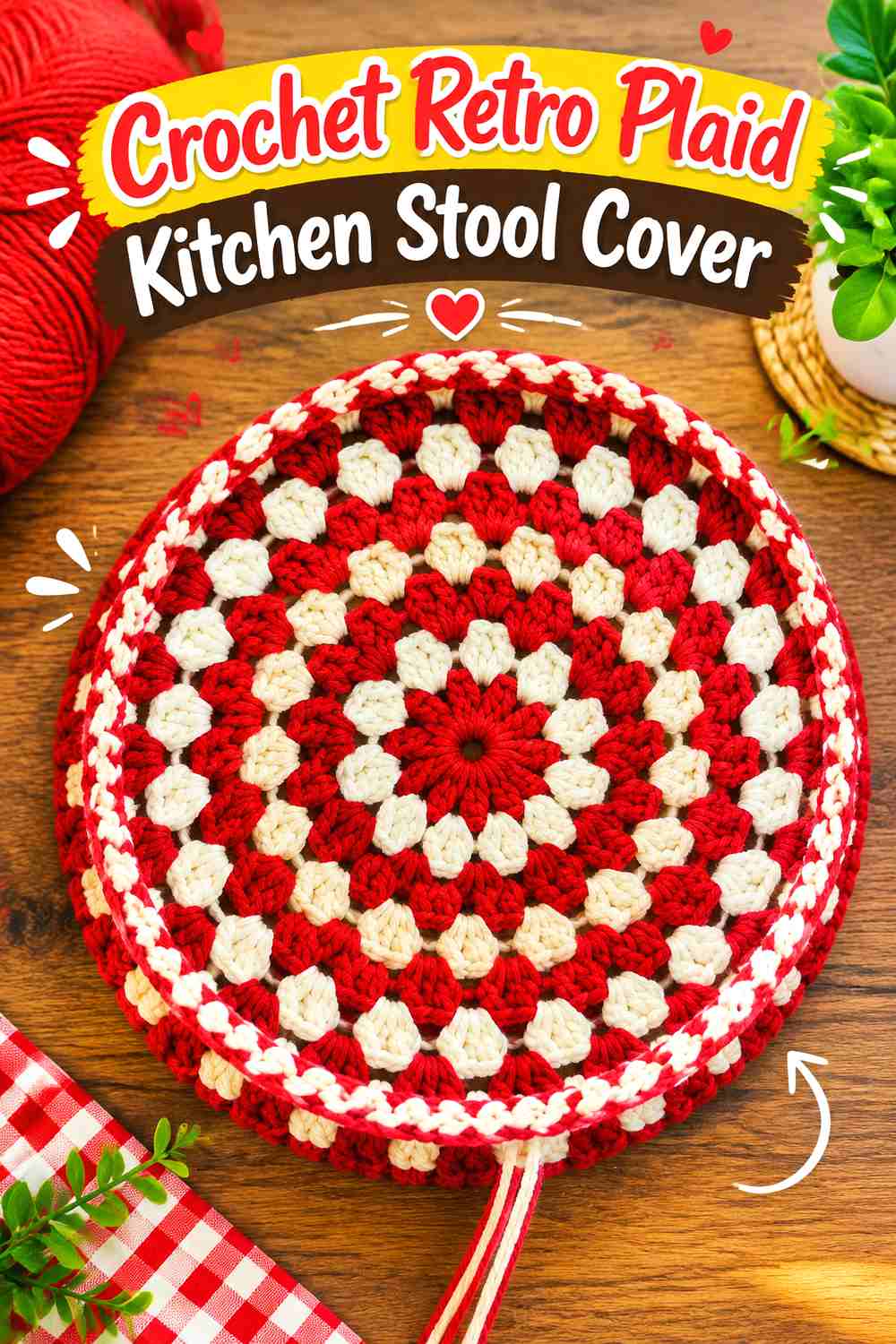
Mamma.stitches’ video demonstrates a fitted crochet stool cover with a distinctly retro color-blocked look. The tutorial uses ordinary acrylic yarn rather than an especially bulky seat-pad material and is intended to wrap over a stool.
That retro foundation can shift easily into a 1970s winter plaid by using mustard, brown, rust, cream, and dark green in a repeated grid or stripe sequence. Because the source is a stool cover rather than a filled cushion, the crochet primarily changes the seat surface and appearance; do not assume it will provide the same cushioning as a thick pad. This is a good choice for readers who care more about color and fitted coverage than substantial padding.
Build a Vintage Palette With Controlled Repetition
Several earthy colors can look period-inspired without becoming random. Repeat the same dominant and accent shades at predictable intervals.
If every section changes to a new color, the design may read as general retro crochet instead of plaid.
Check How the Cover Grips the Seat
Different stool finishes create different amounts of friction. A fitted crochet cover may behave differently on painted wood, smooth laminate, or upholstered material.
Test the completed base during normal sitting before adding any decorative edge that could change how it sits.
Creator Credit: Mamma.stitches
17. Crochet Cinched Granny Plaid Stool Pad
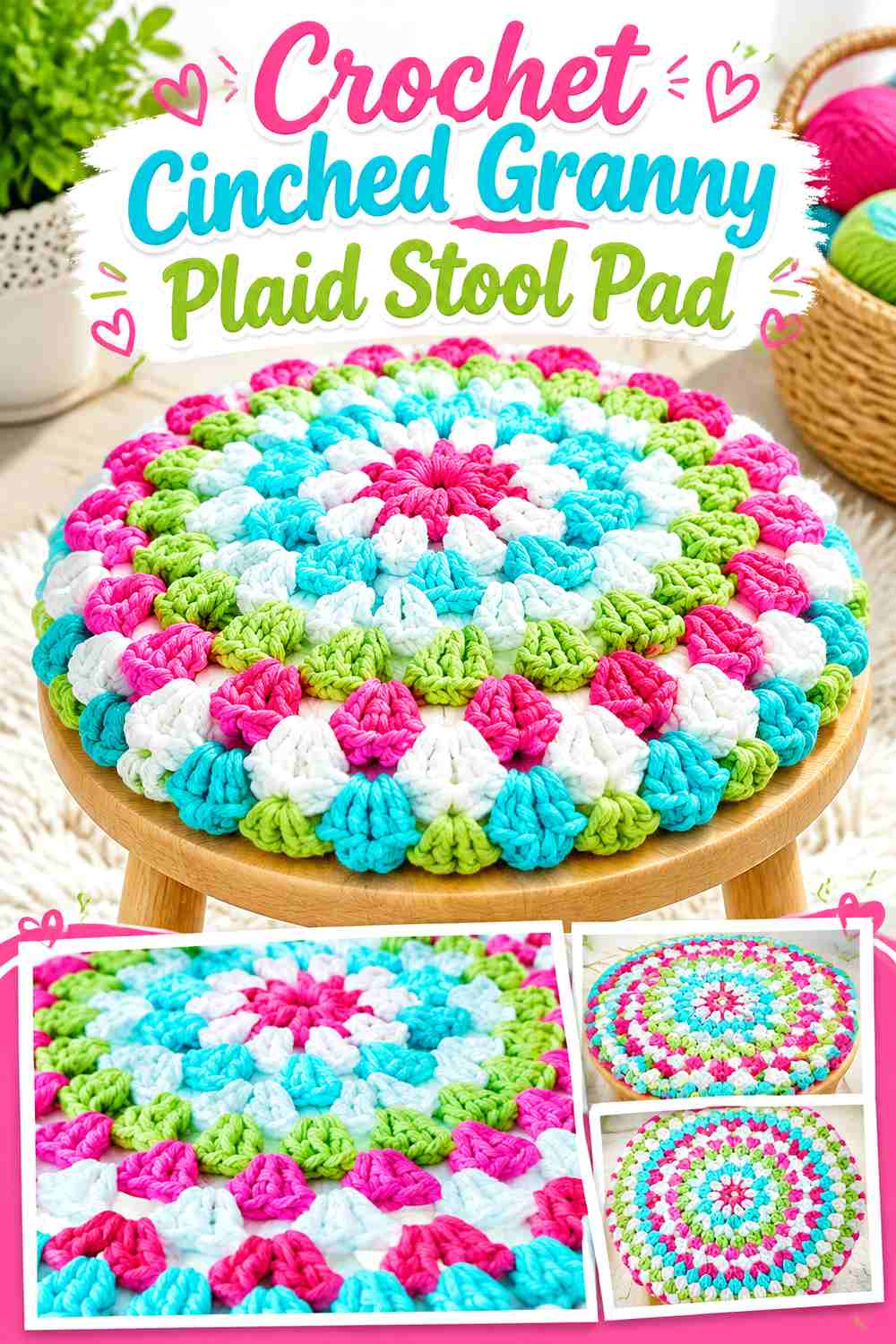
Annemarie’s Haakblog provides an English-language stool-cover pattern built with repeated cluster sections, multiple color changes, and a finishing method that draws the cover tightly beneath the seat.
The granny-like clusters make a useful base for a traditional cabin plaid palette. Instead of introducing a different shade at every opportunity, repeat cream, red, charcoal, and forest green in a consistent order so the circular color bands relate to one another. A few vertical surface lines could create a stronger tartan reference, but the existing clusters may already provide enough texture. Since the cover is cinched to the stool, keep the lower rounds simple and flexible.
Make the Outer Bands Do the Plaid Work
The center of a circular motif naturally draws the eye. Plaid-style repetition can become clearer as the circumference grows and there is more room for longer colored sections.
Reserve the most deliberate band sequence for the outer half of the top rather than crowding the small center.
Leave the Drawn Edge Uncluttered
The final section must pull underneath the stool to hold the cover. Avoid knots, bobbles, or carried strands that make the edge unnecessarily stiff.
Once the cover is fitted, the gathered portion should remain largely out of sight anyway.
Creator Credit: Annemarie’s Haakblog
18. Crochet Heirloom Tartan Fitted Stool Pad

Dedri Uys’ Sophie’s Stool is a highly detailed fitted stool cover that combines an elaborate mandala-style top with sturdy side fabric designed to hug the stool. The source includes explicit gauge and fitting guidance because the finished cover needs to fit snugly.
This is the most intricate foundation in the collection and is better suited to an heirloom tartan interpretation than simple buffalo check. Choose a restrained Scottish-inspired palette—perhaps burgundy, moss, navy, cream, and charcoal—and repeat those colors through the existing motif structure instead of attempting to redraw the design as plaid. The complex stitchwork already supplies considerable detail. A subtle tartan palette can make it winter appropriate without hiding what makes the source pattern distinctive.
Treat Color as the Tartan Element
This project already contains enough stitch architecture. Additional surface grids would compete with the mandala and could change the texture of a fitted cover.
Use repeated tartan colors as the adaptation and allow the original stitch pattern to remain visible.
Gauge Matters More Than Plaid Symmetry
The source stresses fitting and gauge because the cover must hug a specific stool form. If a planned color sequence tempts you to add or remove rounds, do not let the decorative goal override sizing.
Follow the designer’s fitting guidance first and adjust only where the original tutorial permits it.
Consider the Side Fabric Separately
The elaborate top and simpler sides do different jobs. Keeping the sides in a quieter dominant color can make the patterned top resemble a tartan seat inset.
It also prevents the fitted side section from becoming visually crowded.
Creator Credit: Look At What I Made
19. Crochet Simple Fitted Plaid Stool Cover
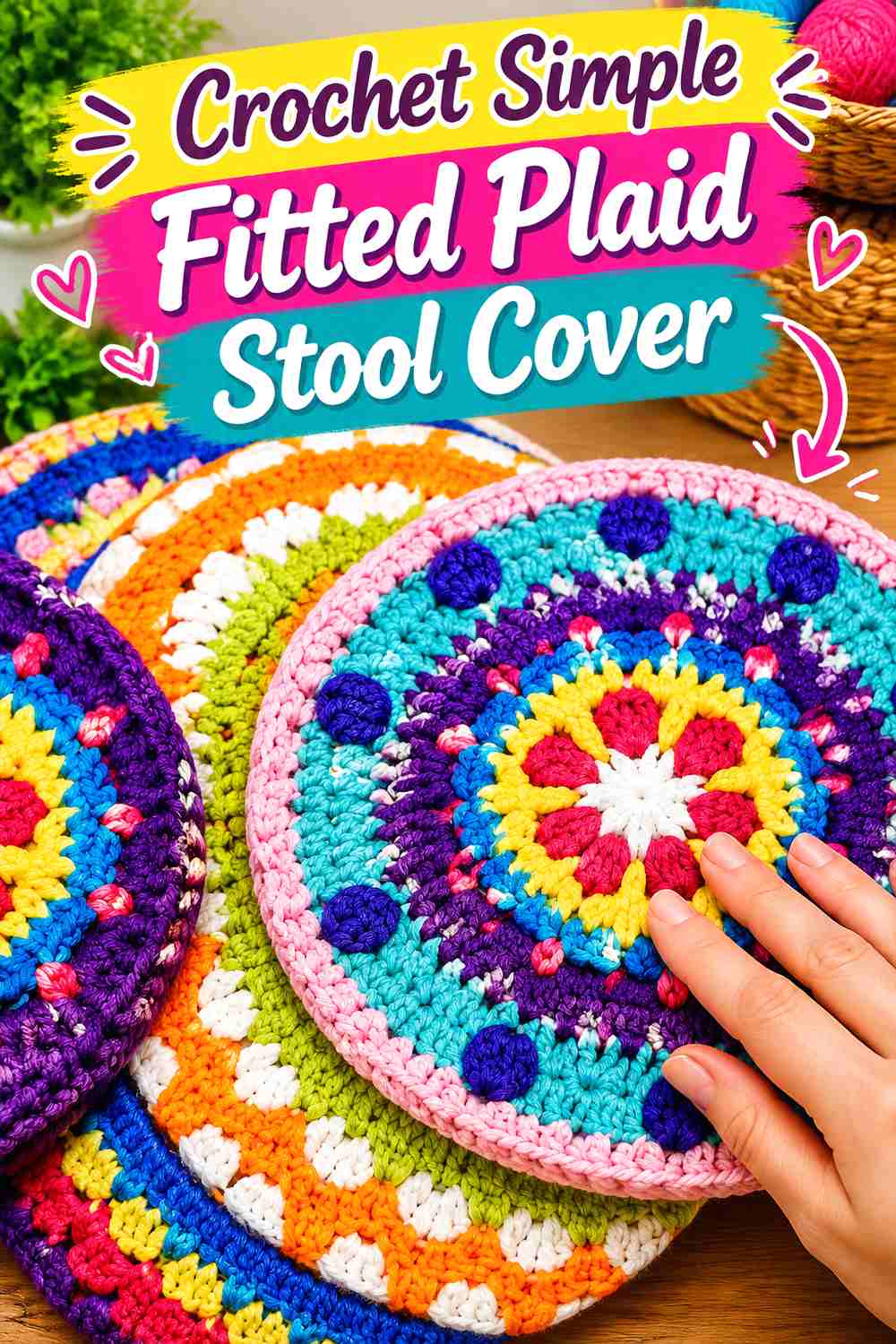
Crochets4U has a dedicated video tutorial for a crochet stool cover, with the project cataloged as a full video tutorial rather than a short-form clip.
Use this type of straightforward fitted construction when the plaid itself is meant to be the main attraction. A simple red-and-black winter palette, cream-and-taupe windowpane, or green-and-navy tartan-inspired sequence can provide the visual detail without requiring an elaborate stitch motif underneath. Because the source is specifically a stool-cover tutorial, this idea is most appropriate for a compatible round seat rather than a square dining chair. Confirm the construction and fit directly in the video before planning the color repeat.
Swatch the Planned Color Changes
Even simple plaid can become complicated when color changes fall at shaping points. Work a small sample of your intended sequence first so you know how the yarn behaves at transitions.
That is particularly useful when the colors come from different yarn lines or have slightly different thicknesses.
Let Fit Determine the Final Repeat
A plaid repeat does not need to finish with the same color it began with. If the cover reaches the correct size midway through a planned color cycle, functional fit takes priority.
Ending with a coordinating solid edge is usually cleaner than adding excess fabric simply to complete the repeat.
Creator Credit: Crochets4U
20. Crochet Granny Patchwork Plaid Seat Cushion
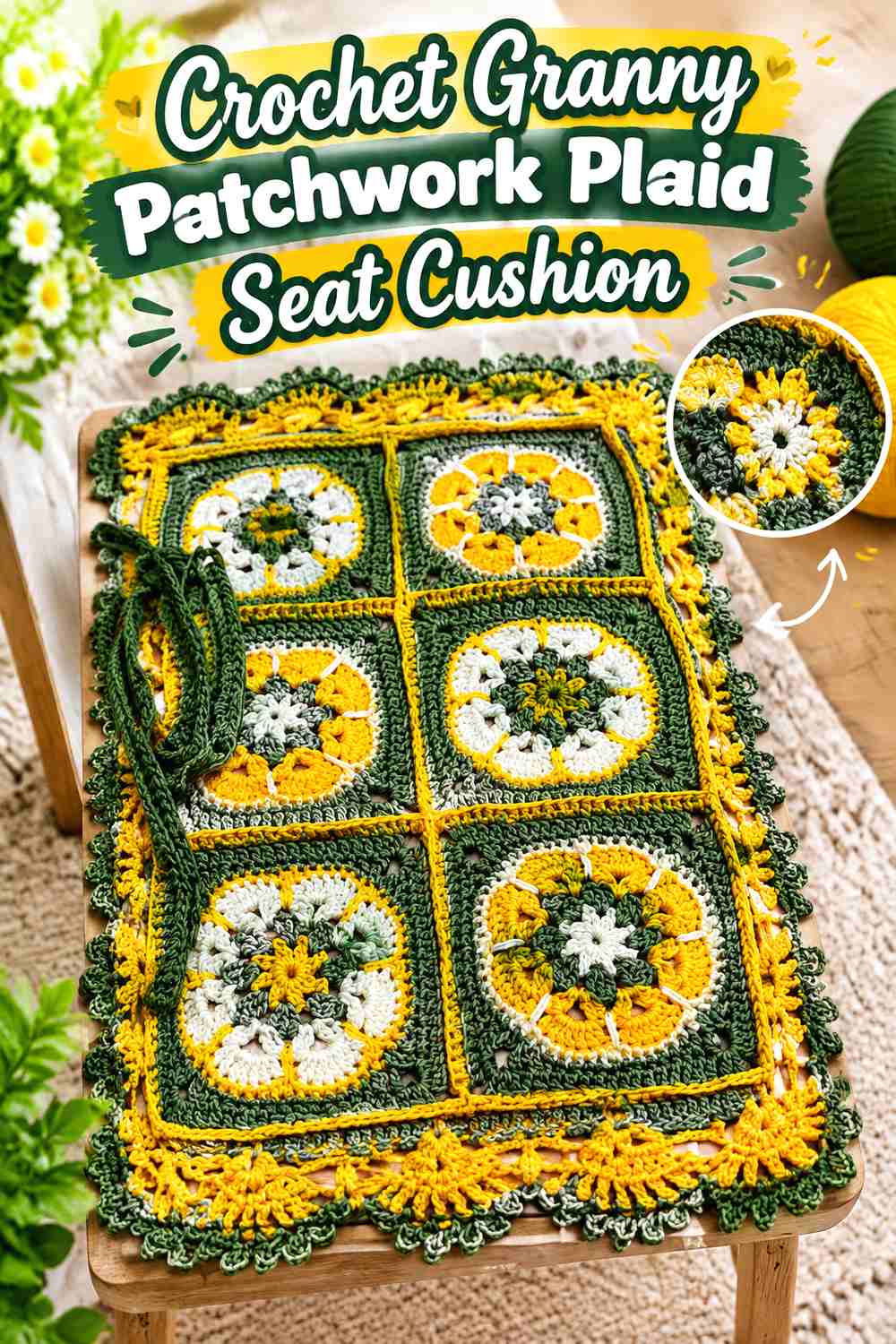
Anxin_crochet’s video tutorial teaches a seat cushion made from colorful granny squares and finishes it with dimensional edging. The modular square construction makes this one of the clearest foundations for a true patchwork-style plaid arrangement.
Instead of making every granny square multicolored, assign complete motifs to a limited winter palette and join them in a buffalo-check grid. Another option is to repeat the same colors within each square so the motifs collectively form a softer tartan effect. Because the source includes decorative three-dimensional edging, decide whether that feature complements your kitchen chairs or competes with the plaid. A simpler border may make a strong geometric grid easier to read, but any structural changes should be evaluated against the original tutorial.
Map the Whole Patchwork Before Joining
Individual granny squares are easy to rearrange, which is an advantage for plaid. Create the complete seat layout on a table or floor before joining anything permanently.
Stand back from it. Plaid balance is often easier to judge from several feet away than from directly above the motifs.
Decide Whether the Border Should Compete
A dimensional border can turn the cushion into a decorative statement, while a plain edge keeps attention on the plaid grid. Neither choice is automatically better.
For chairs tucked closely under a kitchen table, also check whether raised edging will brush against the chair frame or neighboring furniture.
Reinforce a Frequently Used Seat Thoughtfully
A motif cushion has many joins, and those joins become part of the functional sitting surface. Secure ends carefully and inspect connection points periodically if the pad sees regular use.
If you alter the joining method, make sure the replacement remains suitable for the weight and construction shown in the source tutorial.
Creator Credit: anxin_crochet
Conclusion
Crochet plaid kitchen chair pads do not need one universal pattern. A filled square cushion gives buffalo check a traditional upholstered look, while granny squares make patchwork plaid straightforward to plan. Mosaic crochet produces crisp winter geometry, marled yarn softens tartan into a heathered surface, and fitted round covers are practical for kitchen stools that need something more secure than a loose pad.
Start with the chair rather than the color chart. Decide whether the seat needs actual cushioning, a removable decorative layer, ties, an elasticized edge, or a fitted cover. Then choose a plaid scale that suits the yarn and construction. Large stitches usually benefit from broad checks; thinner yarn can carry more detailed tartan arrangements.
For exact stitches, sizing, materials, shaping, and finishing, follow the original creator tutorial linked with each idea and treat the plaid suggestions here as styling adaptations rather than replacement patterns.
Frequently Asked Questions
Which crochet plaid style works best for a farmhouse kitchen?
Buffalo check is the most immediately recognizable farmhouse option because its large blocks remain visible on wooden chairs and chunky yarn. A three-value combination such as cream, medium gray, and charcoal offers a quieter version, while red and black creates a stronger seasonal statement. For a less literal farmhouse look, marled or granny-style plaid can provide the same rustic mood with softer color boundaries. Choose the construction according to the chair first; the plaid palette can then be adapted around it.
Can I turn any crochet chair pad into plaid?
Not equally well. Square pads worked in rows or joined motifs are the easiest because plaid naturally depends on crossing horizontal and vertical lines. Circular pads can still feel tartan-inspired through controlled stripes, tapestry colorwork, or surface crochet, but they may not produce a conventional rectangular check. Fitted and elasticized covers also need enough stretch to remain functional, so avoid adding dense surface work in areas that must expand around the chair or stool.
What yarn is practical for kitchen chair pads?
Use the yarn type and weight recommended by the original tutorial as the first reference point because changing either can affect gauge, thickness, stretch, and fit. For kitchen use, also consider how often the pad may need cleaning and whether the chosen fiber suits that routine. Do not assume cotton, wool, acrylic, or fabric yarn will behave interchangeably. If substituting, make a gauge swatch and follow the care instructions for the actual yarn rather than the source yarn.
How do I stop a crochet chair pad from sliding?
The most reliable solution depends on the chair and the original design. Some tutorials use ties, while fitted stool covers may cinch underneath or incorporate elastic. Those structural methods are preferable to assuming crochet texture alone will grip a smooth wooden seat. If the original pad has no attachment and sliding is a concern, evaluate the chair construction before adding anything. Any added tie or backing should be positioned securely and should not damage the chair finish.
Is buffalo check easier to crochet than tartan?
It can be simpler to plan because buffalo check usually relies on large repeating blocks and a limited value range. Traditional-looking tartan may involve narrower lines, several colors, and careful spacing, which becomes more demanding when adapted to crochet. Granny-square patchwork and mosaic techniques can simplify the planning because the grid is already built into the construction. For a first plaid chair pad, large checks or an oversized windowpane arrangement usually require fewer competing color decisions.
Should crochet chair pads be stuffed?
Only when the source construction is designed for filling or an insert. A padded cushion can soften a hard dining chair more substantially, but many crochet chair pads are intended as thick single layers, while fitted stool covers mainly add surface coverage and modest cushioning. Adding stuffing to a pattern that was designed to lie flat can change its dimensions, edge behavior, and stability. If comfort is the main goal, choose a tutorial that already includes the type of padding you want.
How can I make several plaid chair pads look consistent?
Use the same yarn line, hook, gauge target, plaid chart or color order, and finishing method for the entire set. Measure each completed pad before moving far into the next one so tension changes can be caught early. For modular designs, make all motifs before joining and distribute small variations across the set. If the kitchen chairs themselves differ slightly, prioritize correct fit on each seat while keeping the color sequence and edging consistent enough to visually connect the group.