Natural rattan baskets have a lovely warm texture, but adding a crochet liner can make them feel softer, more personal, and better suited to a cozy boho home. These 22 scalloped rattan basket liner ideas explore everything from simple ivory shells and muted sage stripes to terracotta checks, delicate lace, botanical accents, and layered decorative edges. Each concept brings together visible crochet stitches and the earthy character of woven rattan.
Whether you are styling a bathroom shelf, organizing craft supplies, decorating an entryway, or refreshing a bedroom storage basket, the right liner depends on more than its color. Basket depth, opening shape, scallop size, yarn texture, and the way the liner folds over the rim all affect the finished appearance. This collection helps you compare those details and choose ideas worth adapting to your own space.
These are AI-generated crochet design visualizations for inspiration, not photographs of tested handmade pieces or step-by-step patterns.
Quick Design Selection Guide
| What you want | Design to explore | Why it suits the purpose |
|---|---|---|
| A simple neutral accent | Crochet Ivory Shell Basket Liner | Broad ivory scallops provide definition without extra color |
| Bathroom shelf organization | Crochet Sage Stripe Basket Liner | An oval shape suits folded towels and layered neutral interiors |
| A bold living room basket | Crochet Terracotta Checkered Basket Liner | Dense checkered walls and large scallops add stronger visual texture |
| Delicate dressing-table storage | Crochet Champagne Lace Basket Liner | Fine openwork looks lighter in a shallow basket |
| A cozy magazine corner | Crochet Patchwork Rattan Basket Liner | Joined crochet squares create a more noticeable handmade pattern |
| Colorful craft storage | Crochet Apricot Lattice Basket Liner | Its open lattice adds detail around visible yarn skeins |
If you are starting with a basket you already own, measure the internal bottom, sidewall height, rim circumference, and handle openings before choosing an edging style. A stiff rattan basket will not necessarily match standard crochet pattern sizing.
For a related look at storage rather than liners, explore 12 Crochet Storage Basket Ideas. It offers other approaches to incorporating crochet into home organization.
1. Crochet Ivory Shell Basket Liner
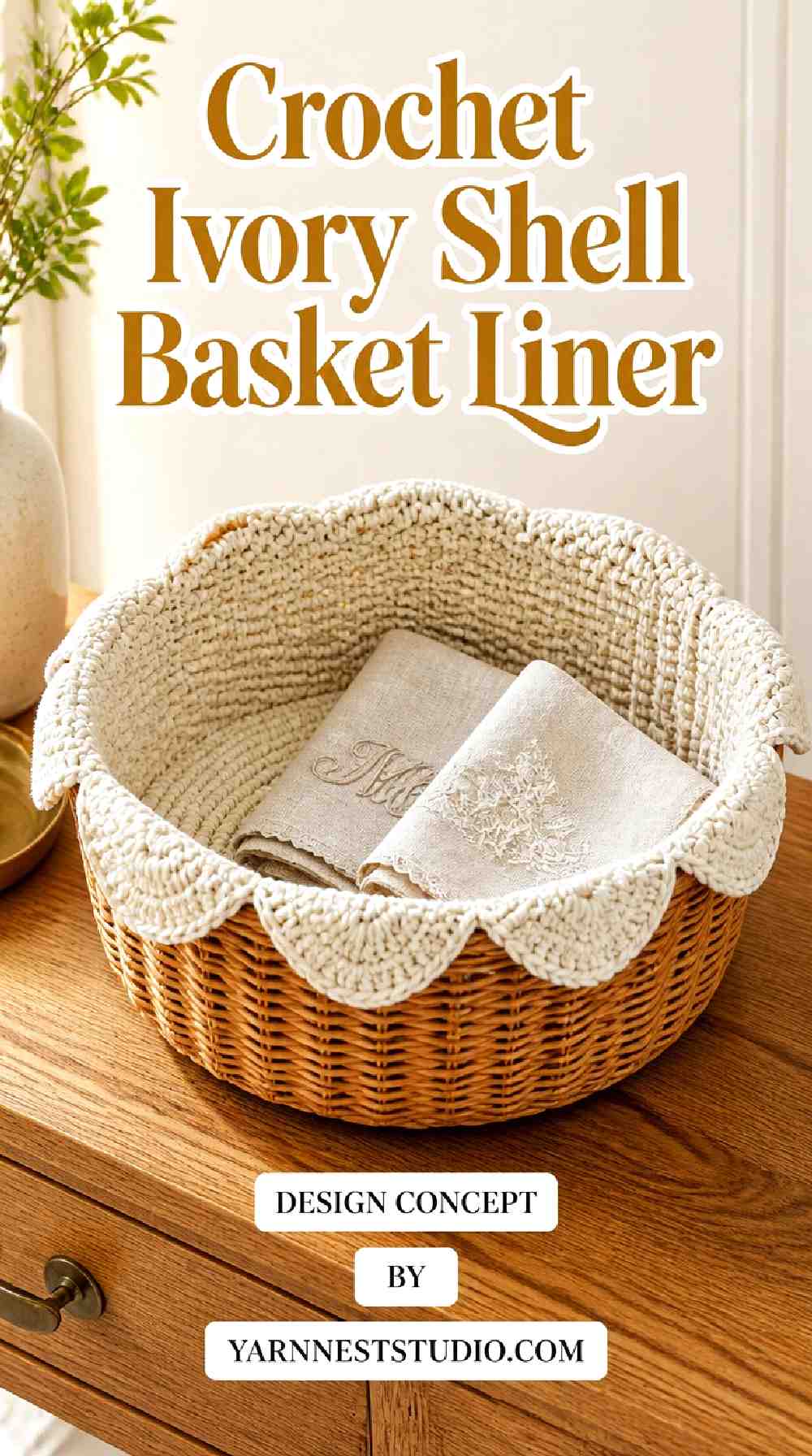
Wide ivory scallops give this round rattan basket a soft, traditional finish. The crochet liner has a closely stitched circular base, smooth inner walls, and six broad shell-shaped curves folding over the golden rim. The simple ivory color allows the shell pattern to stand out without competing with the basket’s natural weave.
This idea suits an entryway basket used for lightweight fabric accessories. The important detail is how evenly the crochet shells sit around the opening. A well-fitted liner should follow the basket’s shape instead of gathering awkwardly inside.
Round Basket Measurements
Measure the basket’s inside base diameter, side height, and top circumference. Woven rattan baskets sometimes widen toward the opening, so check both widths.
Creating Six Even Scallops
Six large scallops need to be distributed evenly around the circumference. Adjust the underlying stitch count before completing the decorative shell border.
Keeping the Base Flat
A circular crochet base should sit smoothly against the bottom. Test the increase spacing with a swatch to avoid an unwanted bowl shape.
Choosing an Ivory Yarn
A smooth cotton yarn is worth considering because it makes individual crochet stitches easier to see. Check its actual washing and stretching behavior first.
Managing the Fold-Over Edge
Keep enough liner height to fold naturally over the rim, but avoid an excessive overhang that could conceal too much rattan.
Suitable Storage
Small folded linen accessories suit this shallow decorative arrangement. Loose keys or sharp metal objects could catch on the crochet loops.
Preventing the Liner from Sliding
If the liner shifts during use, consider discreet removable ties or another gentle attachment method that will not damage the rattan weave.
Washing and Reshaping
Follow the yarn label’s care instructions. Reshape the circular base and scallops while drying rather than stretching the border out of proportion.
For an actual construction reference, Yarnspirations provides a free crochet basket lining pattern. It is a separate project, not the pattern for this concept.
2. Crochet Sage Stripe Basket Liner
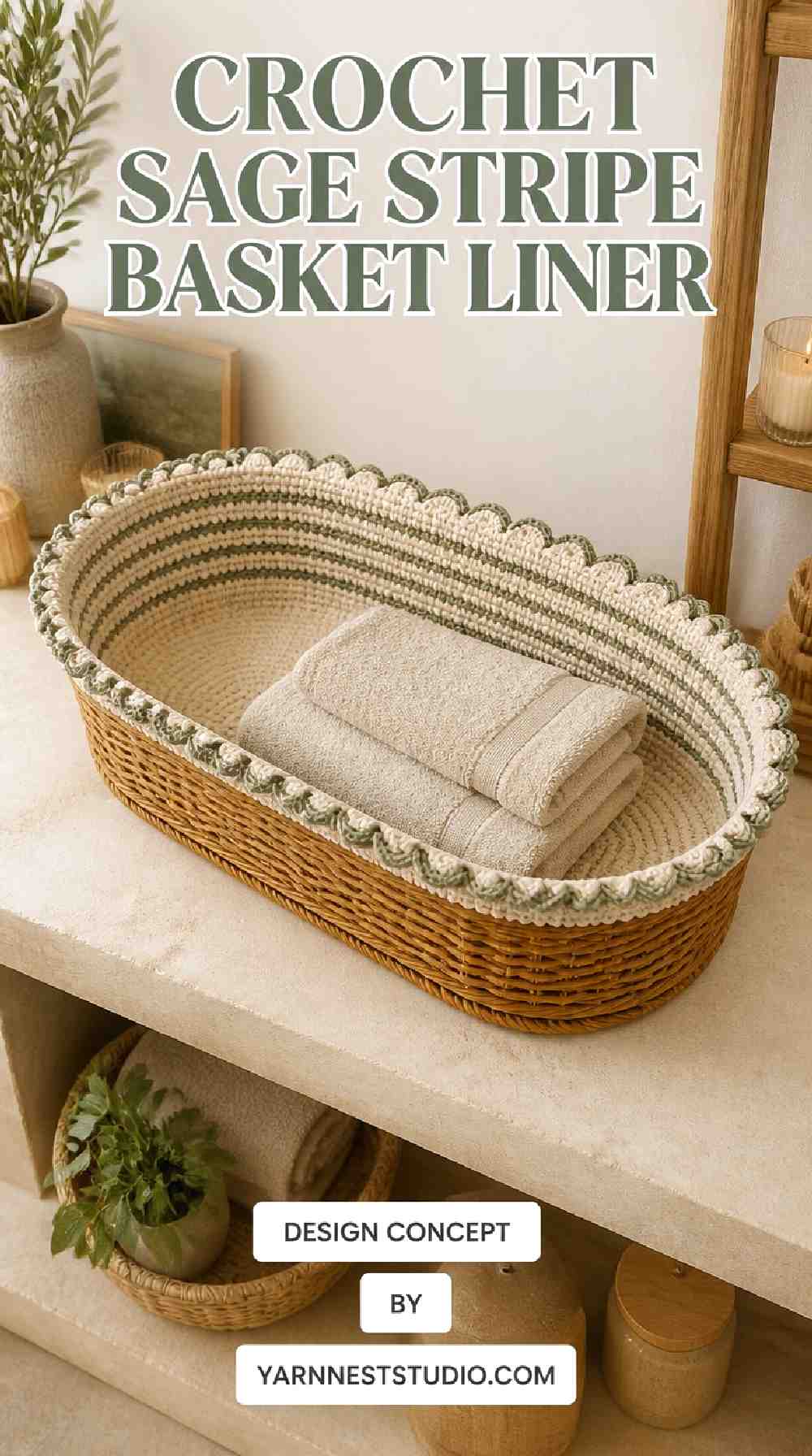
Oatmeal crochet brings a gentle neutral base to this elongated oval basket, while narrow sage stripes introduce color along the upper interior walls. The alternating sage-and-cream scallops continue the striped effect around the complete rim, giving the basket a coordinated finish without making it overly decorative.
The oval design is especially attractive for folded towels. Its closely stitched base offers fuller coverage than an open lace lining, although the actual fabric’s usefulness will depend on the yarn and stitch density chosen.
Fitting an Oval Bottom
An oval base needs straight central sections and curved ends. Check both dimensions so the finished liner does not twist inside the basket.
Planning the Stripe Placement
Keep the sage stripes around the upper inner walls, as shown. Their position allows the color to remain visible above folded towels.
Alternating Border Colors
Plan the sage-and-cream scallops before completing the rim. Balanced color placement matters most where the stitch repeat meets the oval ends.
Choosing Towel-Friendly Materials
Consider a smooth, low-shedding yarn for a towel-storage basket. Fibers that release loose fluff may cling to freshly folded linens.
How Much of the Rim to Cover
A modest overhang leaves the natural rattan visible. Too much folded fabric can make a slim basket appear heavier than intended.
Coordinating Bathroom Colors
Sage works naturally with pale stone, oak, and warm white. If the room already has strong green accents, keep the crochet stripes narrow.
Moisture Around Stored Textiles
Use the basket in a reasonably dry, ventilated area. Damp towels can leave moisture trapped between the crochet lining and natural rattan.
Removable Care Arrangement
A removable liner is easier to inspect and clean. Avoid permanent attachment if the basket will frequently hold laundry or towels.
3. Crochet Butter Yellow Petal Liner
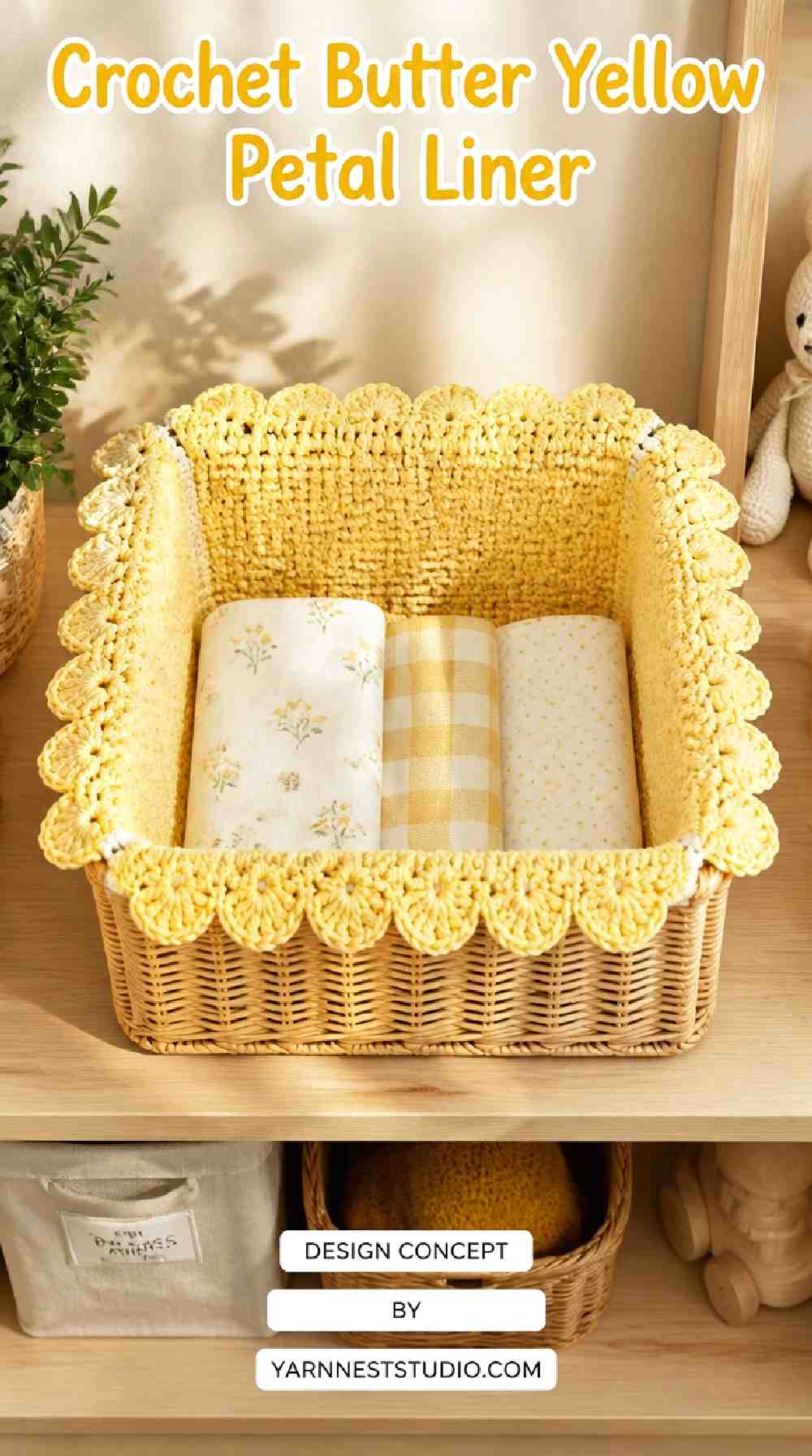
Butter-yellow crochet gives this square rattan basket a light, cheerful character. Its close-textured base rises into short sidewalls and a row of small petal-shaped scallops, with pale cream accents at the four corners. The edging follows the square opening rather than forming one continuous circular border.
Designed for a nursery shelf, the basket holds folded cotton cloths while the crochet petals decorate the rim. The compact scallop size is a useful choice when you want visible detail without long hanging lace or fringe.
Matching Square Corners
Build the liner around the basket’s actual corner angles. Uneven corner shaping can make the sides bunch even when the base fits.
Petal-Shaped Border Planning
Small repeated shells can create a petal-like outline. Test the spacing at each corner before committing to a complete decorative round.
Cream Corner Transitions
The cream corner trim creates a subtle visual pause. Keep these accents compact so they do not interrupt the yellow border’s overall rhythm.
Keeping the Base Covered
A close stitch arrangement helps the crochet appear continuous inside the basket. Wide openings would change the visual purpose of this design.
Choosing Soft Yellow Shades
Butter yellow pairs naturally with cream and pale timber. Check the yarn color in daylight because some yellows appear brighter under artificial lighting.
Safe Nursery Placement
Use the basket on a stable shelf away from a baby’s sleep space. Loose crochet, cords, and small decorative pieces are unsuitable within infant reach.
Fabric Storage Only
Lightweight folded cloths are a reasonable decorative use. Avoid putting wet fabrics inside or treating the liner as a protective storage barrier.
Maintaining the Petal Edge
Short scallops may be easier to arrange than long lace. After washing, gently reshape the points according to the chosen yarn’s care instructions.
4. Crochet Terracotta Checkered Basket Liner
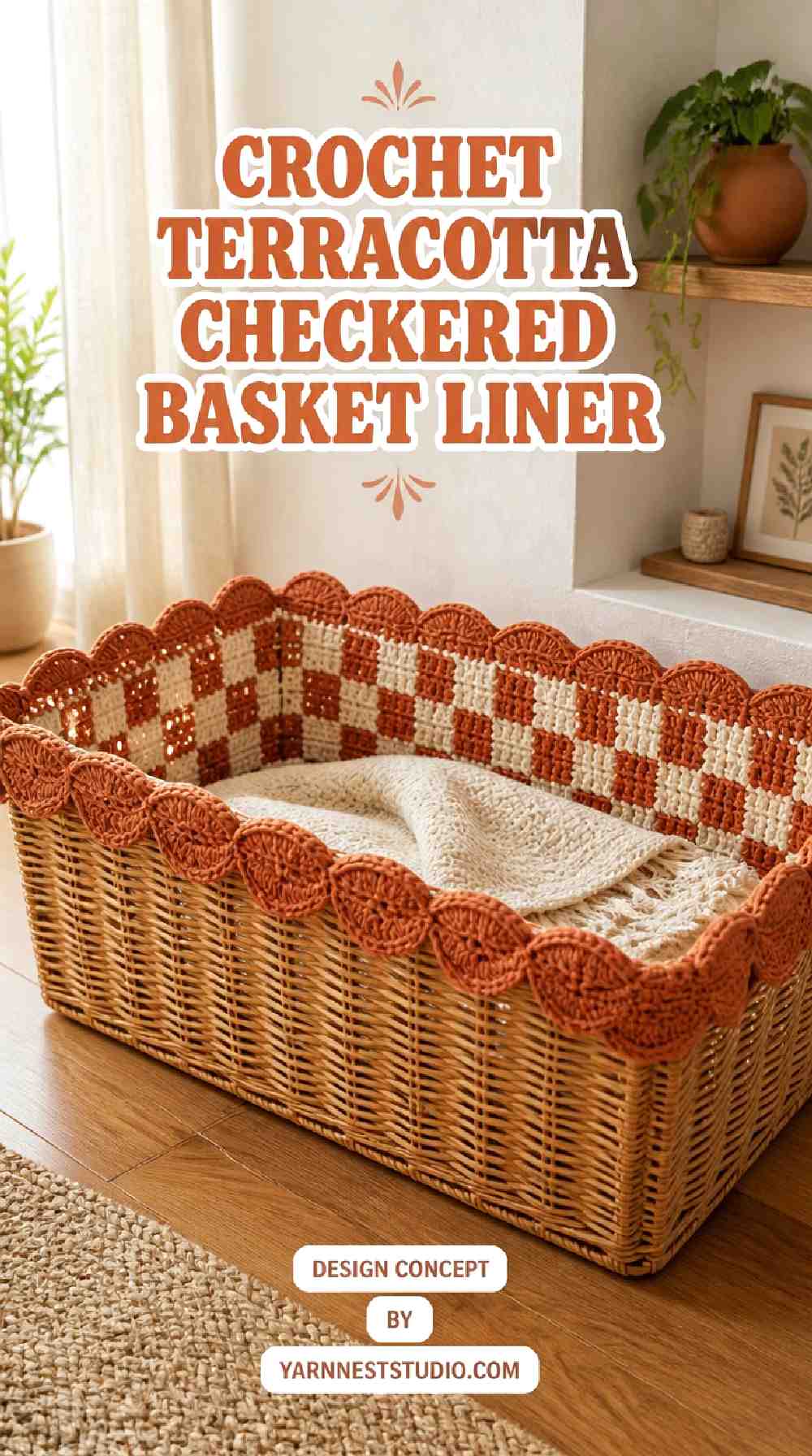
Terracotta and cream crochet checks create the strongest visual feature of this large rectangular rattan basket. Small alternating color blocks cover the interior walls, while substantial rounded terracotta scallops fold over the front and side rims. The close-textured construction gives the pattern a bold, fabric-like appearance.
This is a statement storage idea for folded throws in a living room. The main design challenge is keeping the checkered blocks aligned around rectangular corners so the finished crochet does not appear uneven.
Planning the Checkered Repeat
Choose a checkered stitch layout that divides naturally around the four sides. Test corner transitions before completing the full height.
Rectangular Base Accuracy
Measure the internal width and length separately. The crochet bottom should meet the corners without forcing the fabric into diagonal folds.
Large Scallop Proportions
Broad terracotta scallops create a strong border. Keep their depth proportionate to the basket so they do not hide the rattan body.
Selecting Warm Color Tones
Terracotta suits caramel rattan and cream textiles. A muted clay tone may blend more easily with existing furniture than saturated orange.
Yarn Weight and Bulk
A textured checkered liner can become bulky when folded over the rim. Compare yarn thicknesses before choosing one for a large basket.
Blanket Storage Considerations
Store clean, dry throws with enough room for air movement. Overfilling the basket may hide the checker pattern and distort the scallops.
Keeping Corners Neat
Work corner shaping into the design instead of pulling straight crochet across each turn. This helps maintain the rectangular visual structure.
Long-Term Storage Care
Remove the liner occasionally to inspect the basket beneath. Dust and trapped moisture can accumulate where textile and rattan remain in contact.
5. Crochet Champagne Lace Basket Liner
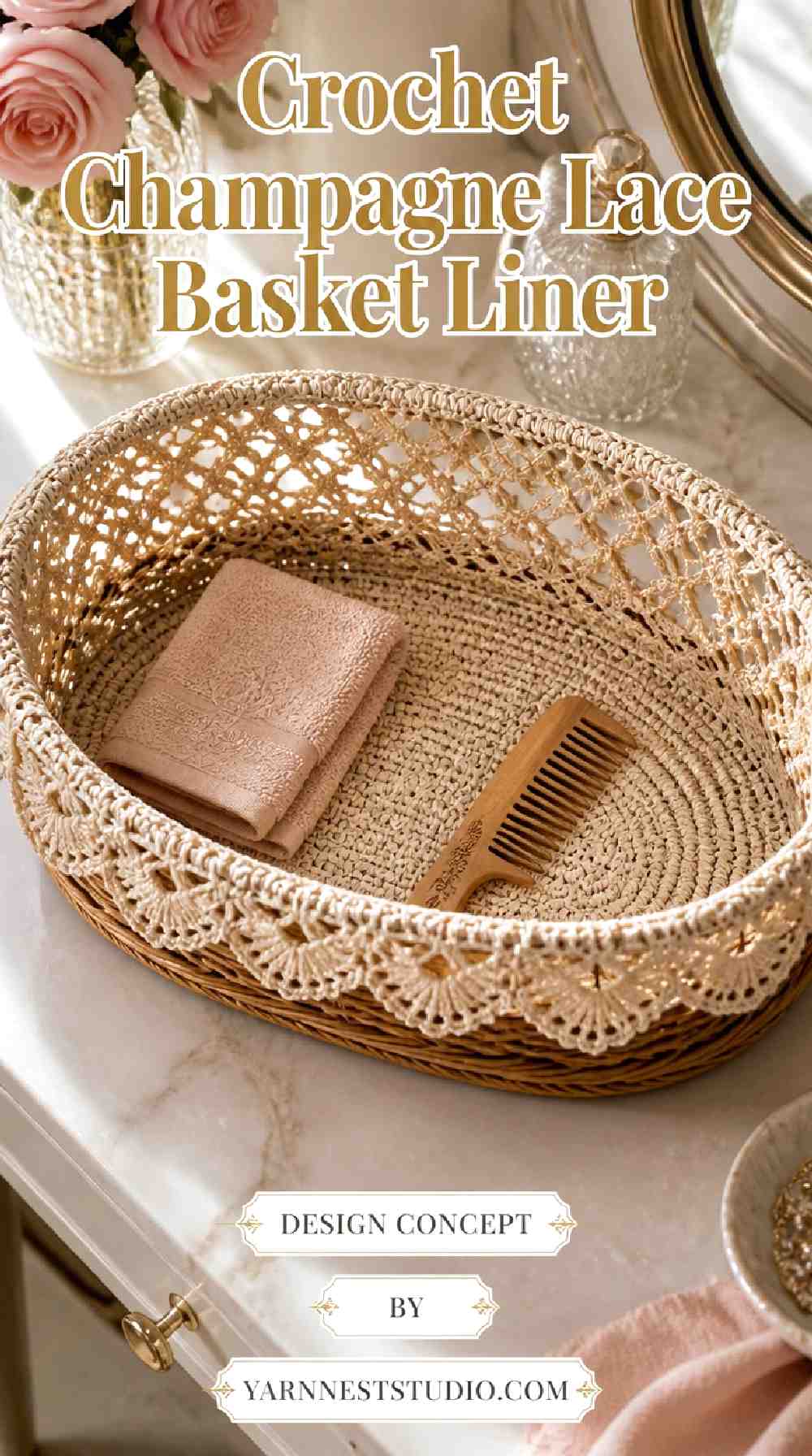
Delicate diamond-shaped crochet openings give this champagne-beige liner a refined appearance. The shallow oval basket has a denser crocheted base, airy lace side panels, and a narrow border of overlapping rounded scallops. The warm champagne shade blends closely with natural rattan while still showing the individual lace stitches.
Placed on a dressing table, the basket can hold a folded cloth and larger grooming accessories. Because the sides contain openwork, it is better treated as decorative organization than a secure holder for tiny loose items.
Selecting a Fine Lace Texture
Choose a yarn that produces clear diamond-shaped openings without excessive fuzz. A sample will show whether the crochet pattern remains recognizable.
Oval Base Stability
The lower section should fit the basket’s floor smoothly. A tighter base can visually support the airy lace used higher up.
Balancing Open and Closed Stitches
Keep the decorative openings in the upper wall area. This preserves contrast between the lace detail and the closely textured bottom.
Scallop Overlap
Small overlapping arches create a delicate rim. Check their spacing carefully so they lie naturally instead of curling into a bulky rope.
Dressing-Table Storage
Folded cloths and larger accessories suit the concept. Small earrings, pins, and sharp objects could pass through or catch in the openwork.
Champagne and Blush Styling
Warm beige crochet coordinates gently with blush, ivory, and honey-toned rattan. Avoid overly yellow yarn if the room uses cool marble surfaces.
Avoiding Excessive Stretch
Fine lace may change shape when pulled. Choose stitch density and fiber characteristics appropriate for a liner that will be removed regularly.
Cleaning the Delicate Edge
Check the yarn label and handle the openwork carefully. Drying the liner flat may help preserve the diamond openings and rounded scallops.
For other decorative edge possibilities, Crochetpedia’s crochet edging guide shows how small trims can change the appearance of textile edges.
6. Crochet Peach Scallop Pantry Liner
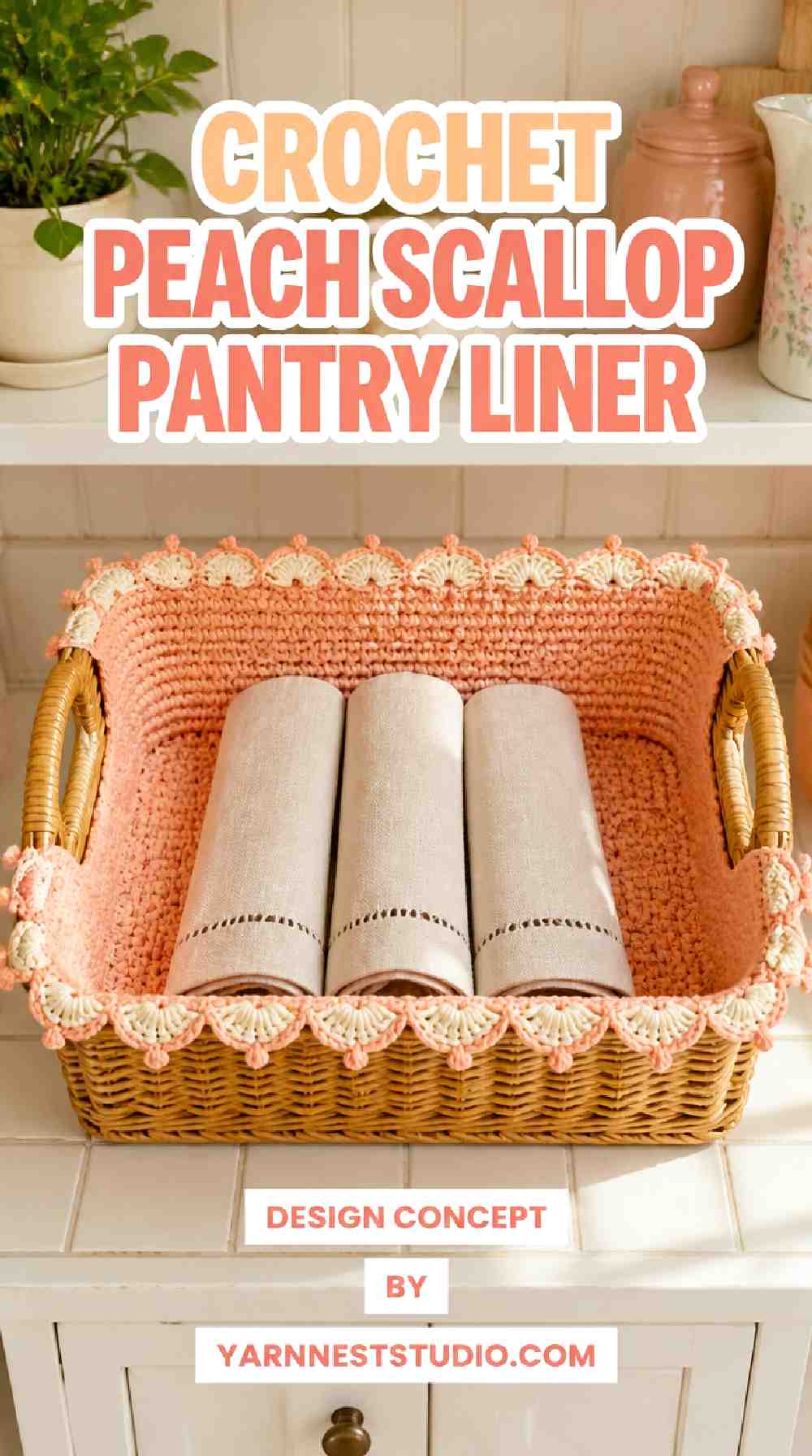
Peach crochet brightens this rectangular pantry basket, while the cream scalloped edging creates a softer contrast. Tiny peach picot tips finish each broad cream shell, adding a delicate detail to the border. The liner covers the basket’s base and internal walls, with its scallops carefully interrupted at the two integrated handles.
Rolled linen napkins suit the arrangement because they allow the crochet trim to remain visible. The handle openings are particularly important when adapting this design: decorative edging should never interfere with how the basket is picked up.
Accounting for Handle Openings
Mark both handle positions before planning the border. The crochet should stop neatly at these openings instead of crossing the carrying areas.
Choosing a Dense Base
A closely stitched base reduces visible gaps beneath folded napkins. It also creates a calmer contrast with the decorative shell edging.
Adding Picot Tips
Small picots can decorate shell peaks without requiring long hanging details. Keep their size consistent across the cream border.
Balancing Peach and Cream
A peach body with cream shells looks light against golden rattan. Use warm, complementary yarn tones rather than several competing accent colors.
Pantry Shelf Clearance
Check the distance between the basket rim and the shelf above. Scallops can catch or fold awkwardly when the basket slides into a narrow opening.
Napkin Storage
Keep clean, dry fabric napkins inside. This visualized liner is not established as a food-safe surface for direct contact with unwrapped food.
Checking the Rattan Surface
Inspect the basket interior for rough ends before adding crochet. Sharp or raised wicker strands may snag threads during repeated removal.
A Practical Washing Routine
Choose a removable construction where possible. Wash the crochet according to its fiber instructions, and allow both basket and liner to dry completely.
For more coordinated kitchen accents, see 28 Crochet Village Kitchen Decor Inspiration Ideas on Yarn Nest Studio.
7. Crochet Olive Moss Basket Liner
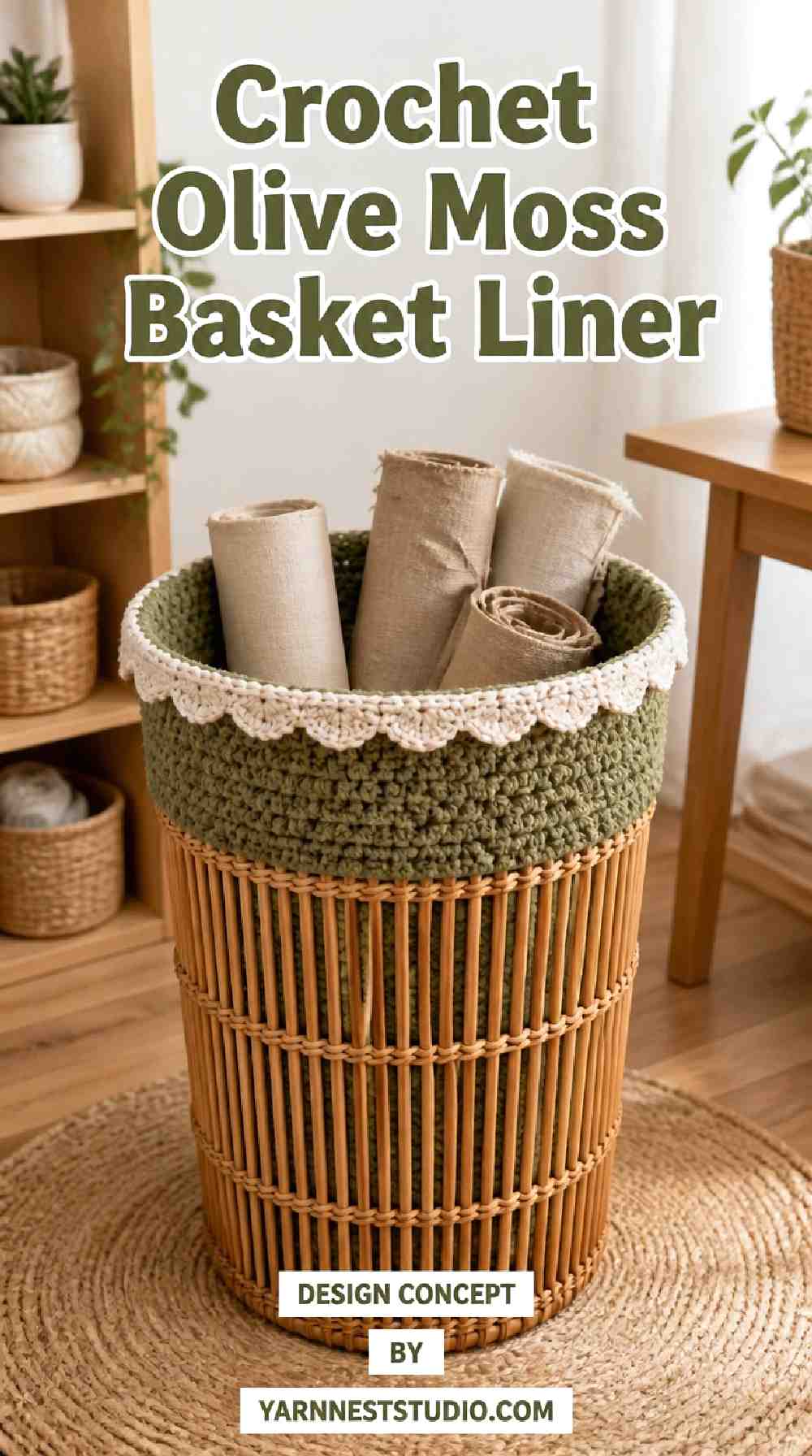
A deep olive-green crochet lining gives this cylindrical rattan basket an earthy, grounded look. Tiny raised moss-like stitch bumps cover the inner walls, while a smooth oatmeal scalloped turnover softens the top. The contrast between the textured olive fabric and the calmer cream border makes the rim particularly noticeable.
This design works well for keeping folded fabric remnants in a craft corner. Its taller shape allows more of the crochet sidewall to show, making consistent stitch texture important throughout the liner.
Matching a Cylindrical Basket
Check whether the basket’s walls remain straight or taper toward the bottom. A tapered shape needs different sizing from a true cylinder.
Raised Crochet Texture
Small raised stitch clusters can create the moss-like surface. Sample the texture to ensure it remains flexible enough to sit against rattan.
Oatmeal Border Width
A narrow cream turnover provides contrast without overpowering the olive lining. Keep the scallops shallow relative to the basket’s height.
Choosing Olive Yarn
Muted olive suits warm natural fibers and pale wood. Compare yarn samples under daylight to avoid a shade that looks muddy.
Interior Storage Capacity
Raised crochet adds some thickness inside the basket. Allow room for stored fabric pieces rather than forcing the liner tightly against the contents.
Preventing Snags
Textured stitches can catch on rough materials. Keep sharp craft tools in separate protective containers rather than loose against the crochet.
Weight and Drape
An overly heavy yarn may cause a tall liner to settle downward. Evaluate the fabric’s weight and fit with a small sample first.
Care Around Natural Fibers
Avoid leaving wet textiles inside. A removable liner makes it easier to clean the crochet without repeatedly soaking the wicker basket.
8. Crochet Dusty Rose Wave Liner
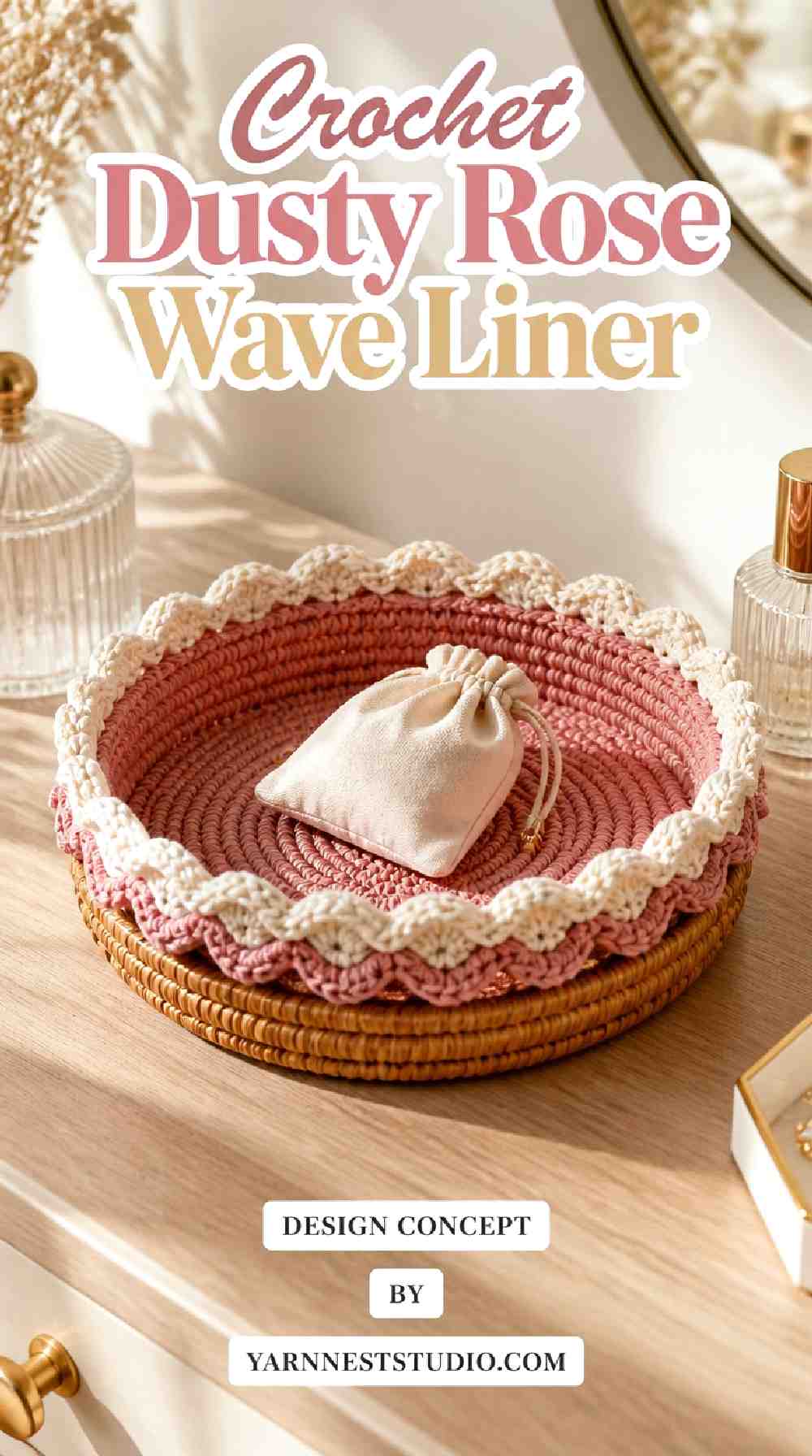
Dusty rose gives this small round jewelry basket a gentle romantic style. The crochet liner has a closely stitched base and smooth sidewalls, finished with two overlapping scalloped rows. Antique cream forms the shorter upper wave, allowing the dusty-rose scallops underneath to remain visible.
The layered border provides the main decorative interest without needing flowers, bows, or additional embellishments. For jewelry organization, the liner is best suited to larger pieces kept in a soft pouch, since fine chains and hooks could catch in the crochet.
Building the Double Wave
Plan the lower dusty-rose scallops first, then add the shorter cream layer. Check that both edges remain visible when folded over the rim.
Fine Round Basket Sizing
Measure the basket’s actual inner diameter. Small differences matter more when the liner has limited space to relax or adjust.
Stitch Density for Jewelry Storage
A dense bottom gives a more continuous surface, but it will not prevent fine jewelry from snagging in exposed crochet loops.
Selecting Gentle Rose Shades
Dusty rose pairs naturally with antique cream and warm rattan. Test both yarns together to avoid an unexpectedly harsh color contrast.
Keeping the Rim Comfortable
The decorative border should not become so thick that it takes up a large part of the basket opening or makes contents difficult to reach.
Avoiding Loose Embellishments
This concept relies on scallops alone. Additional beads or dangling decorations could introduce snagging hazards without improving practical storage.
A Protective Jewelry Pouch
Use a separate soft pouch for delicate pieces. Crochet is decorative here rather than a scratch-tested lining for valuable jewelry.
Maintaining Two Border Layers
After cleaning, arrange the two scalloped layers separately while drying. This helps prevent one wave from folding permanently beneath the other.
9. Crochet Patchwork Rattan Basket Liner
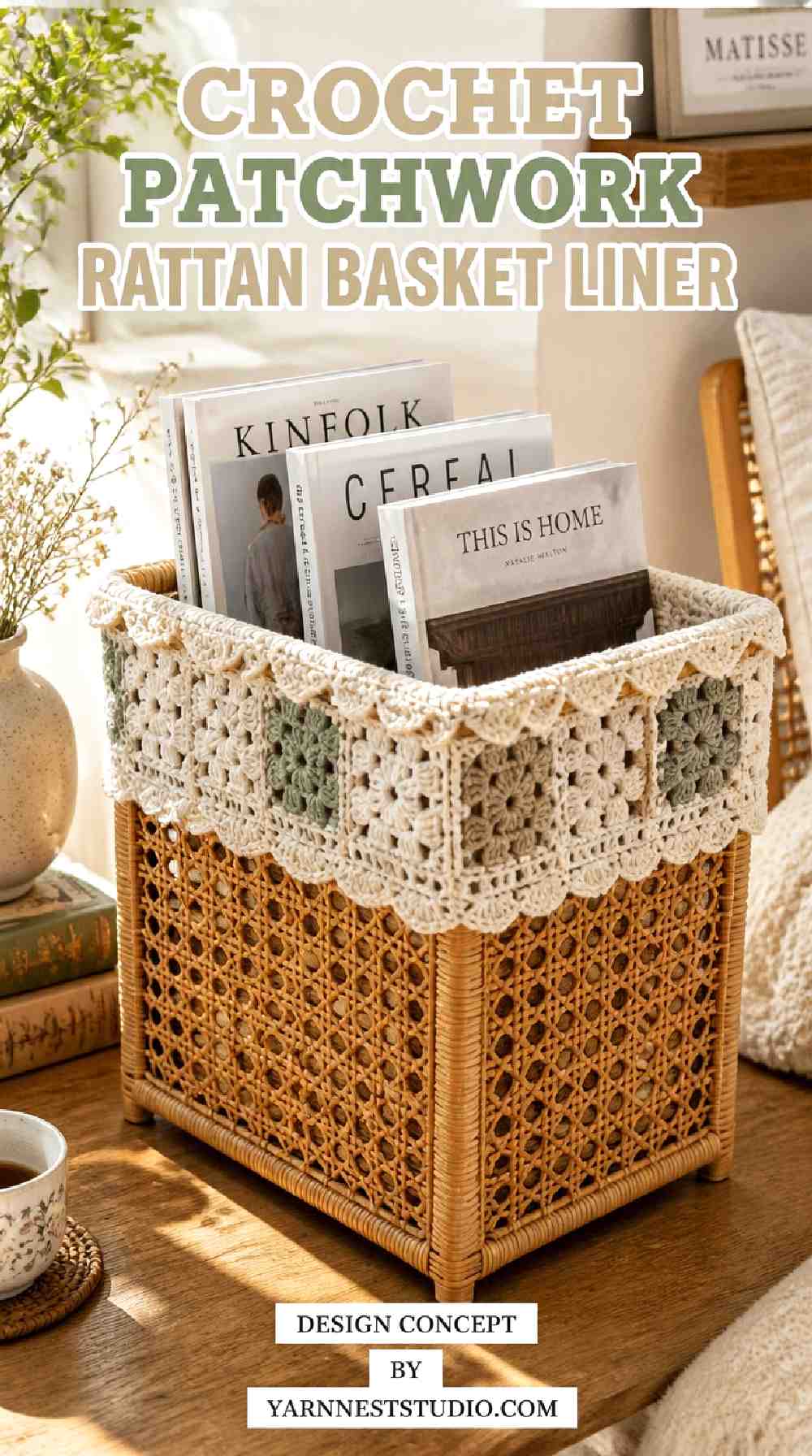
Small granny-square panels bring a patchwork character to this tall rectangular rattan magazine basket. Cream, oatmeal, and muted sage squares form the interior walls, joined with visible crochet seams. A simple cream scalloped border folds over the top rim, creating a tidy finish that complements the varied square pattern.
Unlike a plain liner, this concept makes the construction itself part of the decoration. The main practical consideration is how the joined squares fit around the corners while leaving enough space for magazines.
Planning the Square Layout
Map the granny-square arrangement against the basket’s internal measurements. Avoid assuming that an equal number of squares will fit every side perfectly.
Keeping Joined Panels Even
Consistent joining tension helps prevent raised seams from pulling neighboring squares out of alignment. Check the assembled panel before adding the scalloped border.
Choosing Coordinated Colors
Cream, oatmeal, and sage offer a balanced patchwork palette. Distribute the sage squares rather than grouping every darker patch in one area.
Designing the Base Separately
A continuous rectangular crochet base could be considered if square joins create unwanted bulk beneath the stored magazines.
Keeping the Scallops Simple
The granny squares already introduce noticeable texture. A restrained cream shell border provides definition without adding another complicated motif.
Making Room for Magazines
Allow space for paper edges and covers to slide past the lining. Raised crochet joins may otherwise catch on delicate magazine corners.
Managing Yarn Ends
Secure joined-square yarn ends according to the chosen crochet method. Loose ends could become visible or snag against magazine covers.
Cleaning a Joined Liner
Use consistent yarn fibers if possible. Different fibers may shrink or stretch differently, creating an uneven patchwork after washing.
10. Crochet Coral Fan Basket Liner
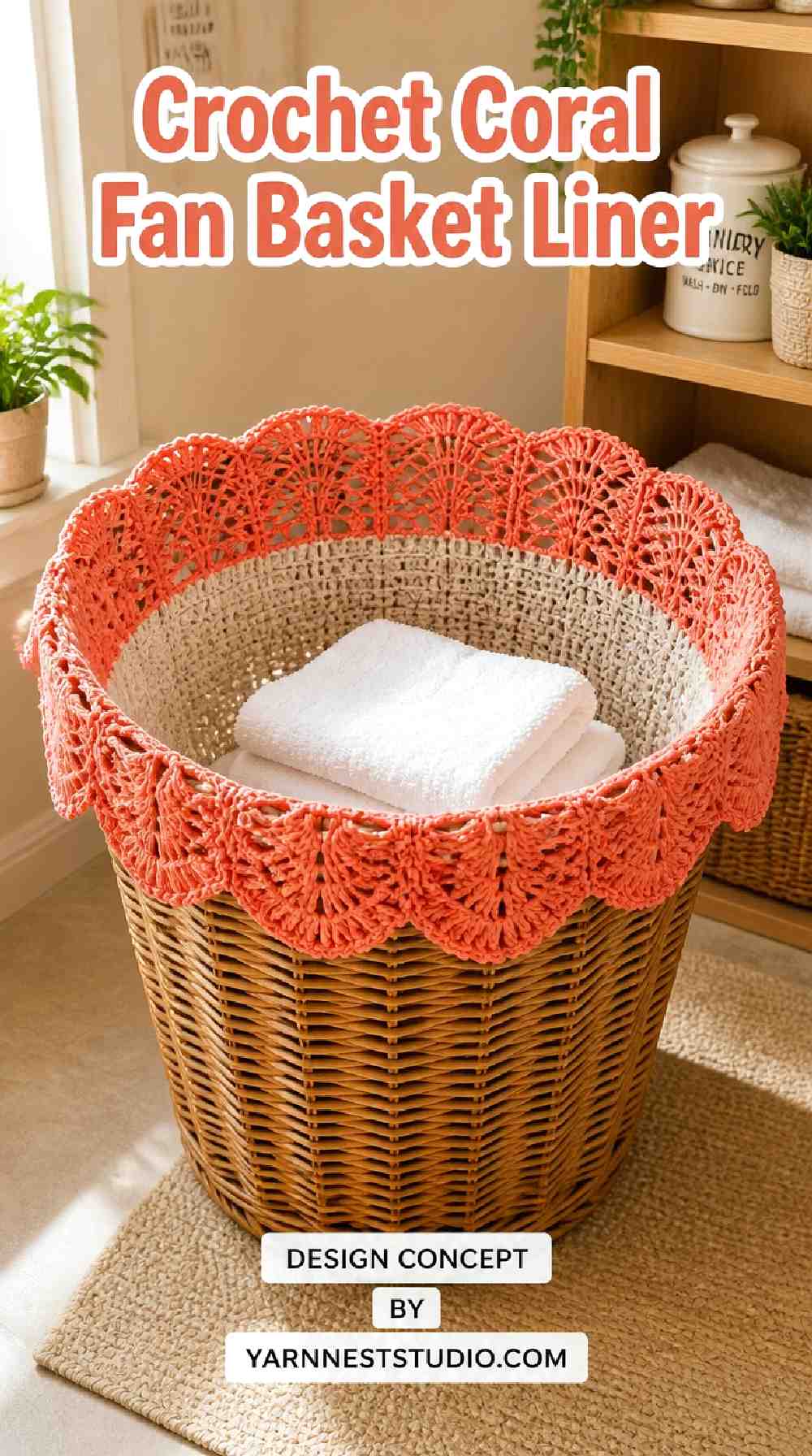
Coral fan-shaped scallops make this generous round laundry basket feel bright and decorative. An oatmeal crochet lining covers the lower interior, while an open coral fan band rises around the upper walls. Broad alternating shell shapes fold gently beyond the rim, forming a clearly defined repeating border.
The combination of solid and openwork crochet gives this basket more texture near its opening without making the entire interior transparent. It looks especially attractive with pale folded towels, provided the basket is kept in a dry, ventilated area.
Planning a Large Round Base
Large baskets need careful diameter measurements. Check the widening rate of the base before continuing upward into the sidewalls.
Open Fan Stitch Placement
Use the coral openwork near the upper sides. This creates a visible decorative band while keeping the lower crochet appearance more substantial.
Scallop Repeat Spacing
Broad fans need enough circumference to spread evenly. A test border can reveal excessive rippling before the full edge is completed.
Controlling the Coral Color
Choose a coral shade that works with oatmeal and golden wicker. A muted coral may be easier to coordinate with neutral laundry-room furniture.
Liner Weight in Large Baskets
More fabric means additional weight. Consider how the chosen yarn behaves when the liner is lifted out for cleaning.
Keeping Towels Below the Border
The pictured concept displays the coral upper band above the contents. Overfilling would conceal the most distinctive part of the crochet.
Ventilation and Moisture
Avoid storing damp towels against crochet and rattan. Natural basket fibers and textile layers should be allowed to dry properly.
Handling a Wide Scalloped Edge
A wide rim trim may bend when the basket is moved. Keep the scallops clear of carrying areas and avoid relying on them as handles.
11. Crochet Honey Sunburst Basket Liner
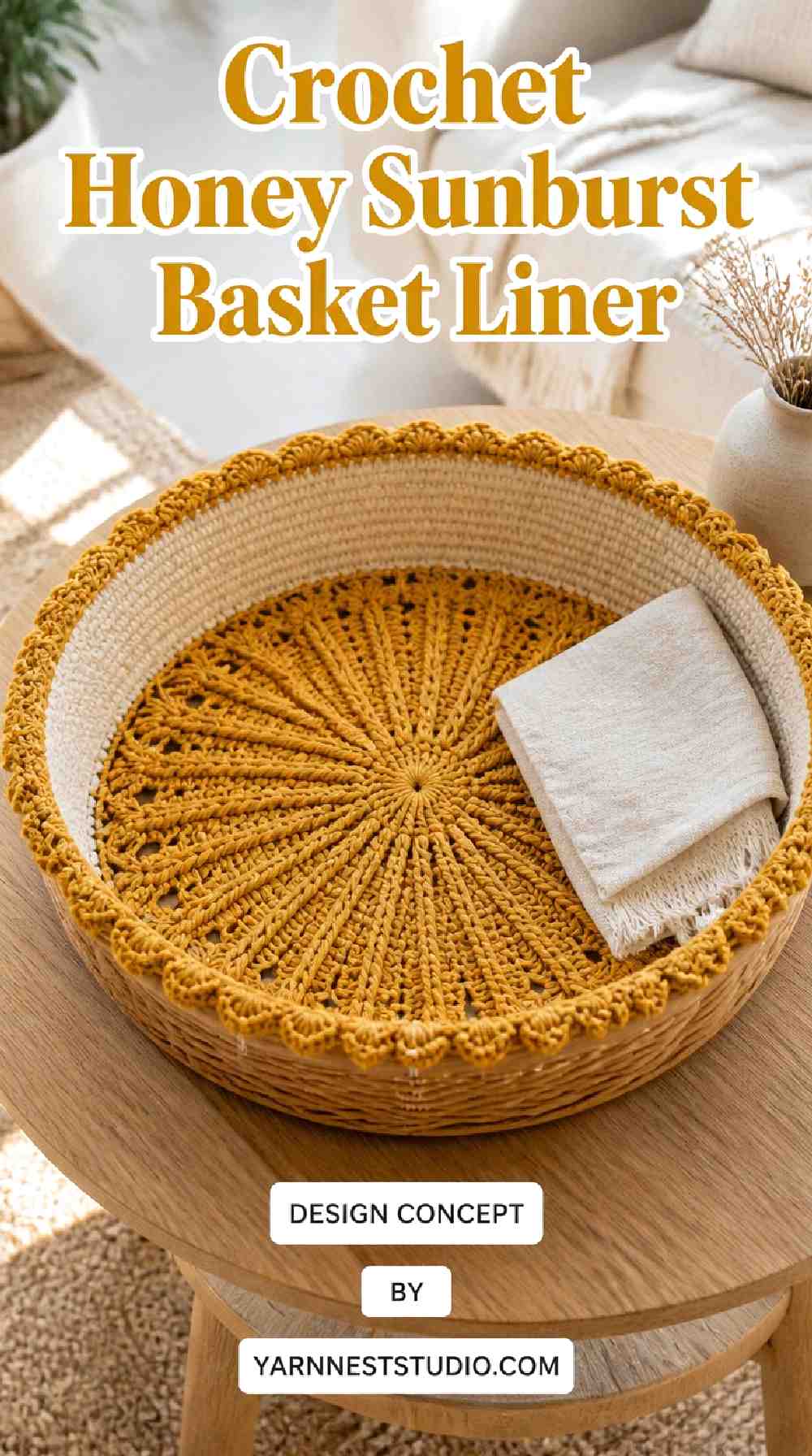
A honey-mustard crochet sunburst gives this shallow round basket an unusual decorative center. Raised stitches radiate outward across the bottom, while cream sidewalls lead to a narrow mustard shell border. The tonal relationship between mustard yarn and golden rattan makes the design feel naturally connected to its container.
The liner works best when the central medallion remains visible. Rather than filling the basket with loose accessories, consider it a decorative coffee-table organizer for one or two lightweight fabric items.
Creating the Radial Layout
Plan the sunburst around the center of the crochet base. Raised stitches should radiate consistently rather than drifting into uneven segments.
Choosing a Shallow Basket
A low basket shows the medallion more clearly than a tall container. Check that the bottom remains visible from normal viewing angles.
Balancing Raised Stitches
Raised crochet can add thickness to the base. Test whether the resulting fabric lies comfortably against the basket floor.
Keeping Cream Sidewalls Simple
Plain cream stitches provide a useful visual break between the detailed mustard center and the matching mustard scalloped rim.
Controlling the Shell Border
A narrow shell finish complements the radial pattern. Excessively large scallops could draw attention away from the interior sunburst design.
Matching Honey Rattan
Honey and mustard can blend closely. Choose enough tonal contrast so the crochet remains distinguishable from the woven basket beneath.
Suitable Coffee-Table Contents
Lightweight folded cloths work with the pictured concept. Avoid using open crochet as a stable platform for spillable drinks or heavy objects.
Caring for Raised Texture
Dust may collect between raised stitches. Follow appropriate yarn-care instructions and gently reshape the medallion after cleaning.
12. Crochet Eucalyptus Scallop Basket Liner
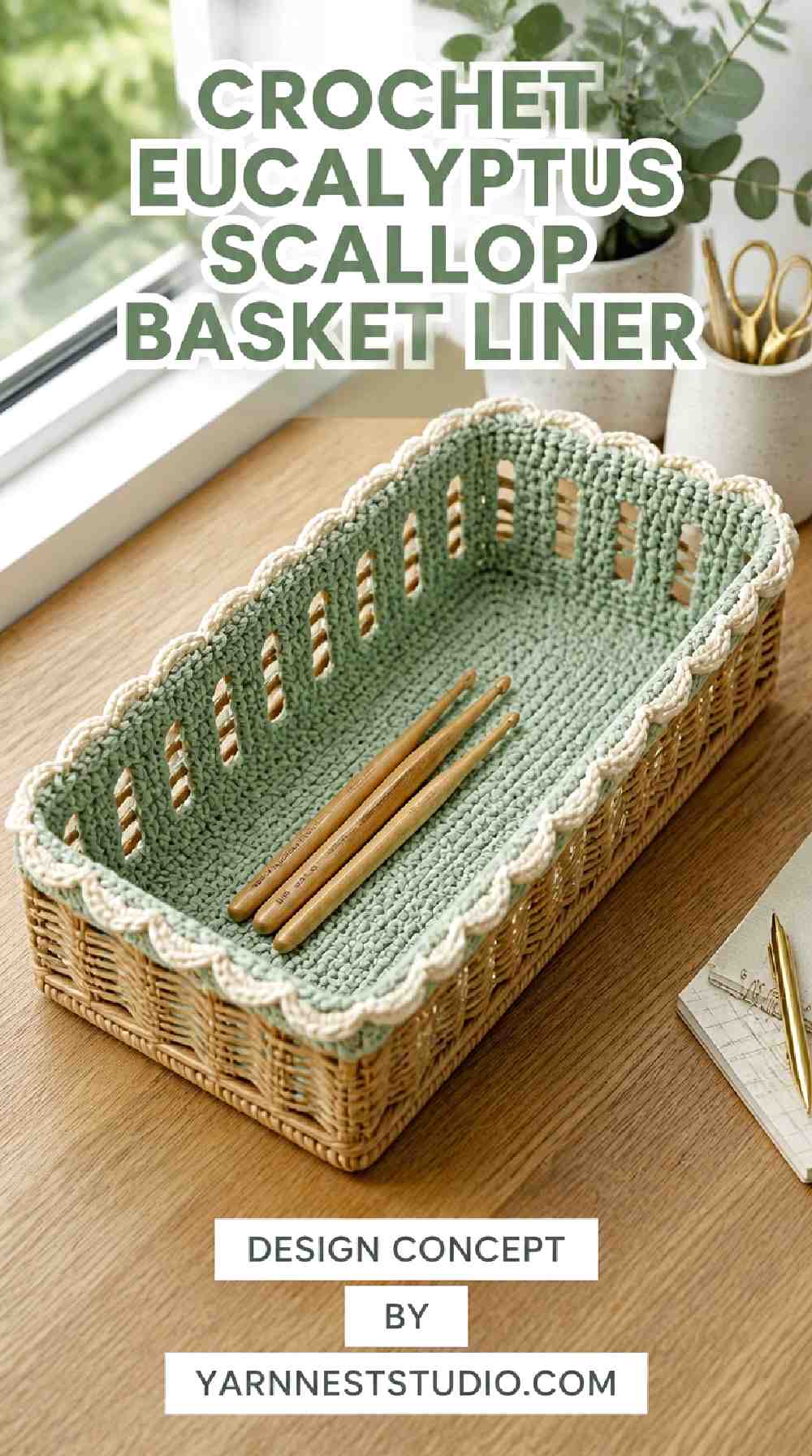
Soft eucalyptus-green crochet gives this narrow rectangular desk basket a fresh, understated appearance. Its flat base uses close stitches, while the upper walls contain evenly spaced vertical chain openings. Tiny cream scallops fold over the rim, adding a light decorative finish without making the basket appear bulky.
The design is intended for craft storage, with a few wooden crochet hooks arranged inside. Its openwork walls introduce a useful visual contrast, although the gaps mean very small supplies would need separate containers.
Choosing a Narrow Base
Measure the desk basket’s internal length and width. The crochet base should follow its rectangular shape without gathering at the corners.
Vertical Chain-Space Pattern
Keep the open chain spaces evenly distributed along the upper wall. Check the pattern repeat where the rectangular sides meet.
Small Cream Scallops
Short shell edging suits a compact desk organizer. Large decorative waves could make the basket harder to position beside other stationery.
Eucalyptus Color Pairing
Muted eucalyptus works gently with pale oak and warm cream. Consider the existing desk accessories before adding stronger green accents.
Organizing Crochet Hooks
Wooden hooks can be displayed in this basket, but sharp or delicate tools may benefit from individual sleeves or protective storage.
Separating Small Notions
Stitch markers and tiny accessories could slip through the openwork. Store them in a separate closed pouch rather than loose against the liner.
Preventing Desktop Clutter
Use the basket for one category of craft supplies. Keeping the contents limited makes the unusual crochet sidewall pattern easier to appreciate.
Removing the Liner for Cleaning
Choose a construction that can be lifted out without catching on the rattan. Check the openwork carefully for snags after each removal.
13. Crochet Rust Chevron Basket Liner
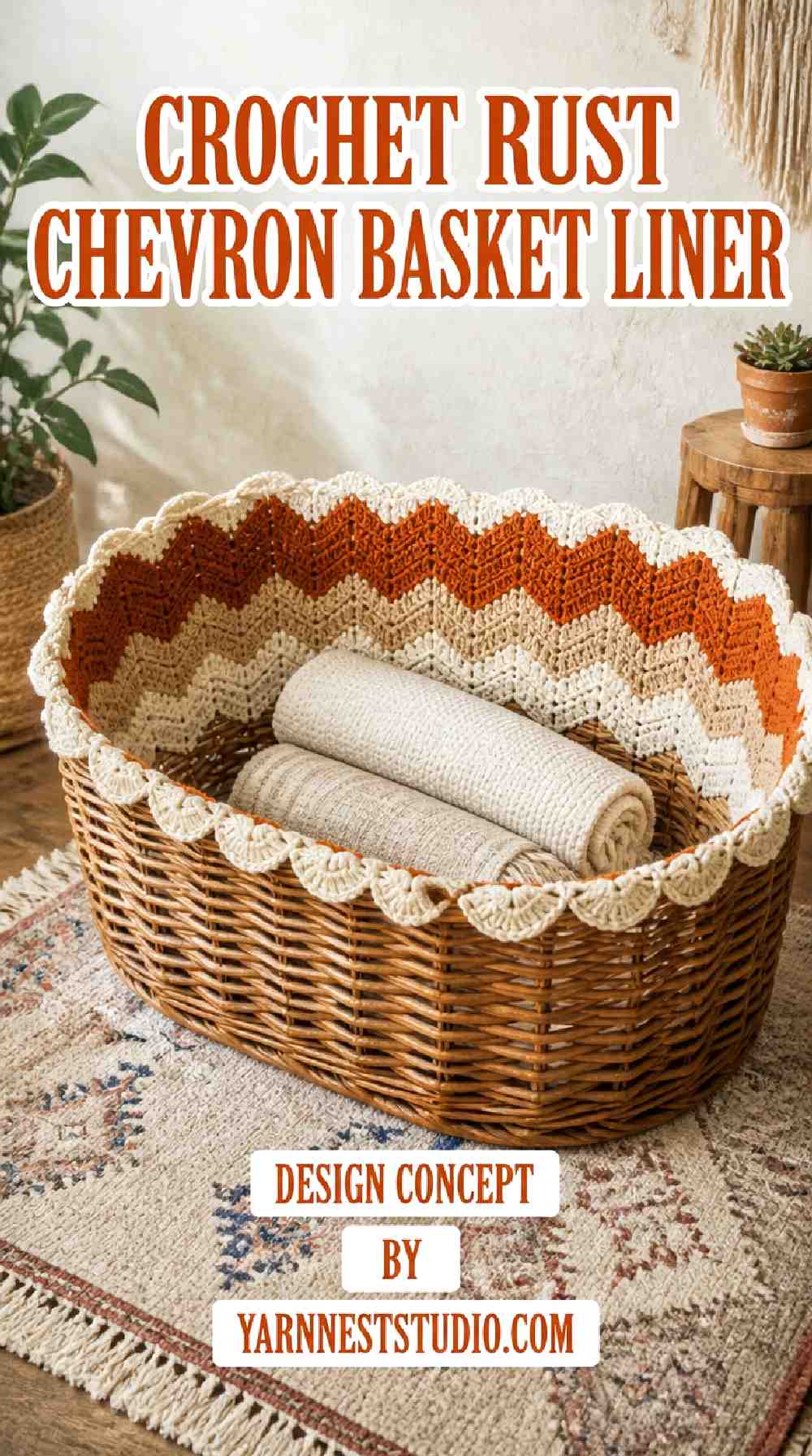
Rust, biscuit, and antique-cream crochet chevrons create a warm patterned interior for this deep oval blanket basket. The zigzag bands wrap around the inner walls, while oversized cream scallops finish the upper rim. A closely worked base visually supports the striped sections above it.
This idea makes a stronger statement than a plain neutral liner, particularly when paired with simple folded throws. The main construction decision is how the chevron pattern turns around the oval ends without disrupting its repeating points.
Planning Chevron Direction
Keep the zigzag bands running around the inner sidewalls as shown. Test the pattern repeat at both rounded basket ends.
Managing Three Yarn Colors
Rust, biscuit, and cream offer enough contrast for visible chevrons. Keep color changes tidy so the inner surface looks intentional.
Measuring an Oval Floor
The rounded ends and longer middle section may need different shaping. Check the floor dimensions before starting the patterned walls.
Oversized Cream Border
Large cream scallops visually balance the bold zigzag design. They should fold comfortably without hanging so far that the rattan disappears.
Choosing a Flexible Fabric
Blanket baskets are often deep. Consider a yarn with enough flexibility to follow the interior without forming rigid folds at the base.
Coordinating Stored Throws
Neutral throws allow the rust chevrons to remain the visual focus. Several competing patterned blankets may make the basket look crowded.
Handling a Deep Liner
Provide enough room to reach the bottom without pulling on the scalloped border. The trim is decorative, not a lifting handle.
Maintaining Color Definition
Check the yarn’s care recommendations, especially when combining dark and pale colors. Test for color transfer before washing the completed liner.
14. Crochet Linen Lace Basket Liner
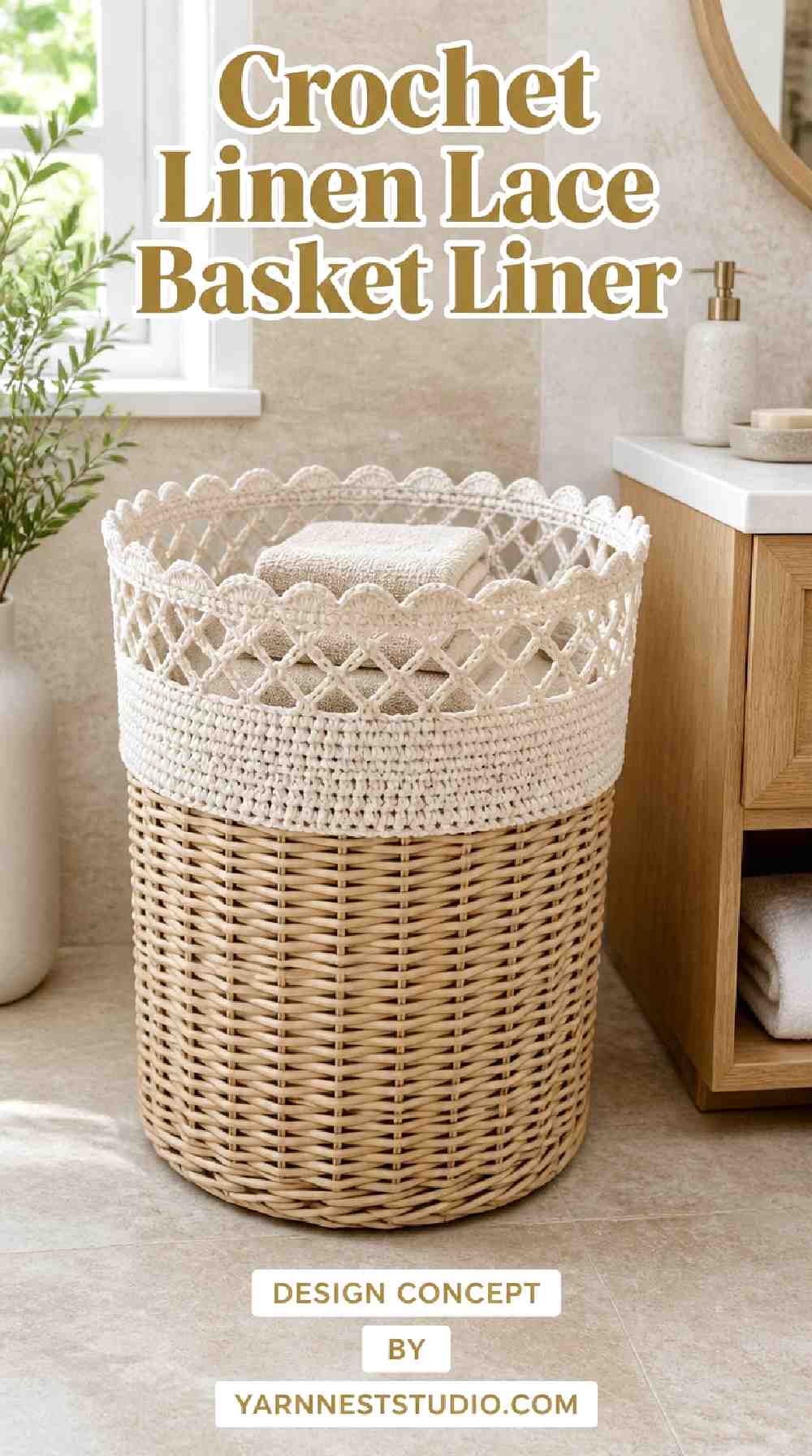
Linen-white crochet gives this tall bathroom basket a clean, airy appearance. The bottom and lower walls are closely textured, while the upper section changes into a broad band of orderly diamond-shaped lace. Small rounded scallops fold over the rim, completing the cylindrical silhouette.
The lace band adds detail at the height where the basket is most visible. Folded washcloths suit the design, but the liner should be kept away from regular splashing and removed whenever the basket needs to dry.
Tall Cylinder Measurements
Measure the basket at the base, midpoint, and rim. Even small changes in diameter can affect how a tall liner hangs.
Diamond Lace Band Height
Place the openwork near the top, above the dense lower section. This keeps the lace visible without making the entire lining open.
Creating a Clear Stitch Transition
Plan a neat boundary between the close-textured body and diamond lace. An uneven transition may distort the openings above it.
Keeping Scallops Rounded
Small rounded shells suit the refined linen-white palette. Keep their spacing consistent around the circular opening.
Choosing Appropriate Bathroom Yarn
Look for fibers with care instructions suited to the intended cleaning routine. Appearance alone cannot establish moisture resistance or washability.
Washcloth Storage
Store completely dry washcloths. Wet textiles may trap moisture against the crochet and natural rattan, particularly in poorly ventilated bathrooms.
Keeping the Basket Ventilated
Position the basket away from direct shower spray. Avoid placing it where water regularly collects on the shelf or floor.
Checking Lace for Snags
Open diamond stitches may catch on rough wicker ends. Inspect the basket’s upper interior before inserting or removing the liner.
15. Crochet Cocoa Cascade Basket Liner
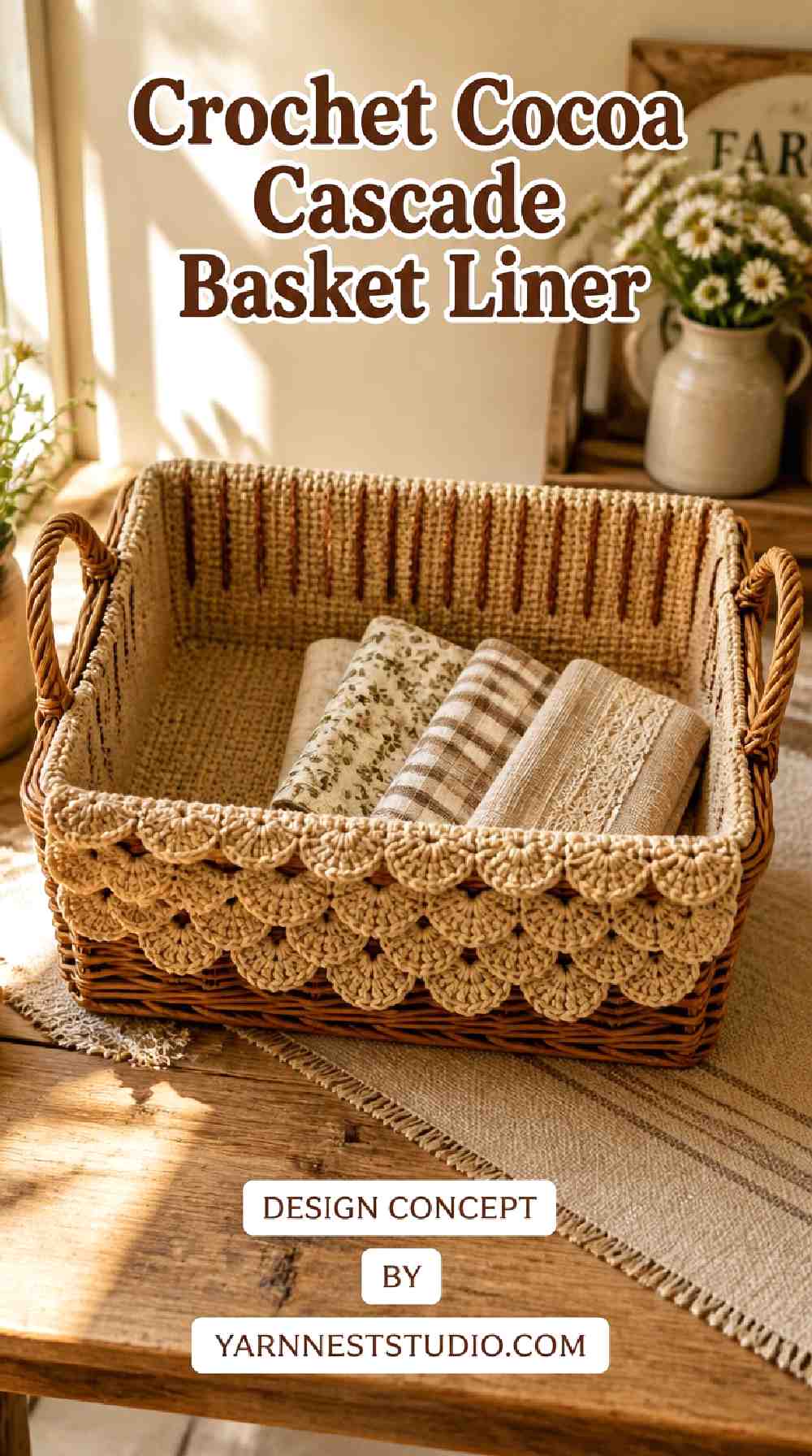
Biscuit-beige crochet and cocoa-brown textured ridges give this rectangular rattan picnic hamper a rustic character. The liner covers the interior with close-textured stitches, while three rows of rounded biscuit scallops cascade down the front rim. Both side edges remain plain, leaving the hamper’s carrying handles unobstructed.
The layered front border is the defining feature of this idea. It looks decorative without requiring an equally elaborate pattern throughout the basket, making the contrast between the simple interior and the scalloped front especially important.
Planning the Cascade Layers
Arrange the three scalloped tiers so each remains visible beneath the previous row. Test the combined weight before finishing the front border.
Keeping Handle Areas Clear
Leave both side handle openings unobstructed. Crochet trim that crosses the handles could interfere with lifting or become damaged during carrying.
Rectangular Base Fit
Check the basket’s inside corners and bottom dimensions. A well-shaped base helps prevent the cocoa ridges from twisting along the walls.
Decorative Cocoa Ridges
The brown vertical ridges add texture without introducing another bright color. Keep their spacing consistent along the interior walls.
Managing Border Thickness
Three scalloped layers can create substantial bulk. Consider a lighter yarn for the border if the sample feels too heavy.
Choosing Rustic Colors
Biscuit and cocoa complement warm wicker naturally. Avoid adding too many contrasting shades because the layered edging already creates visual interest.
Picnic Storage Considerations
Use this concept for folded napkins or wrapped accessories. The crochet liner has not been established as suitable for direct food contact.
Cleaning After Outdoor Use
Remove the liner after a picnic and inspect it for crumbs, dirt, or moisture. Clean according to the selected yarn’s care instructions.
16. Crochet Sea Blue Ripple Liner
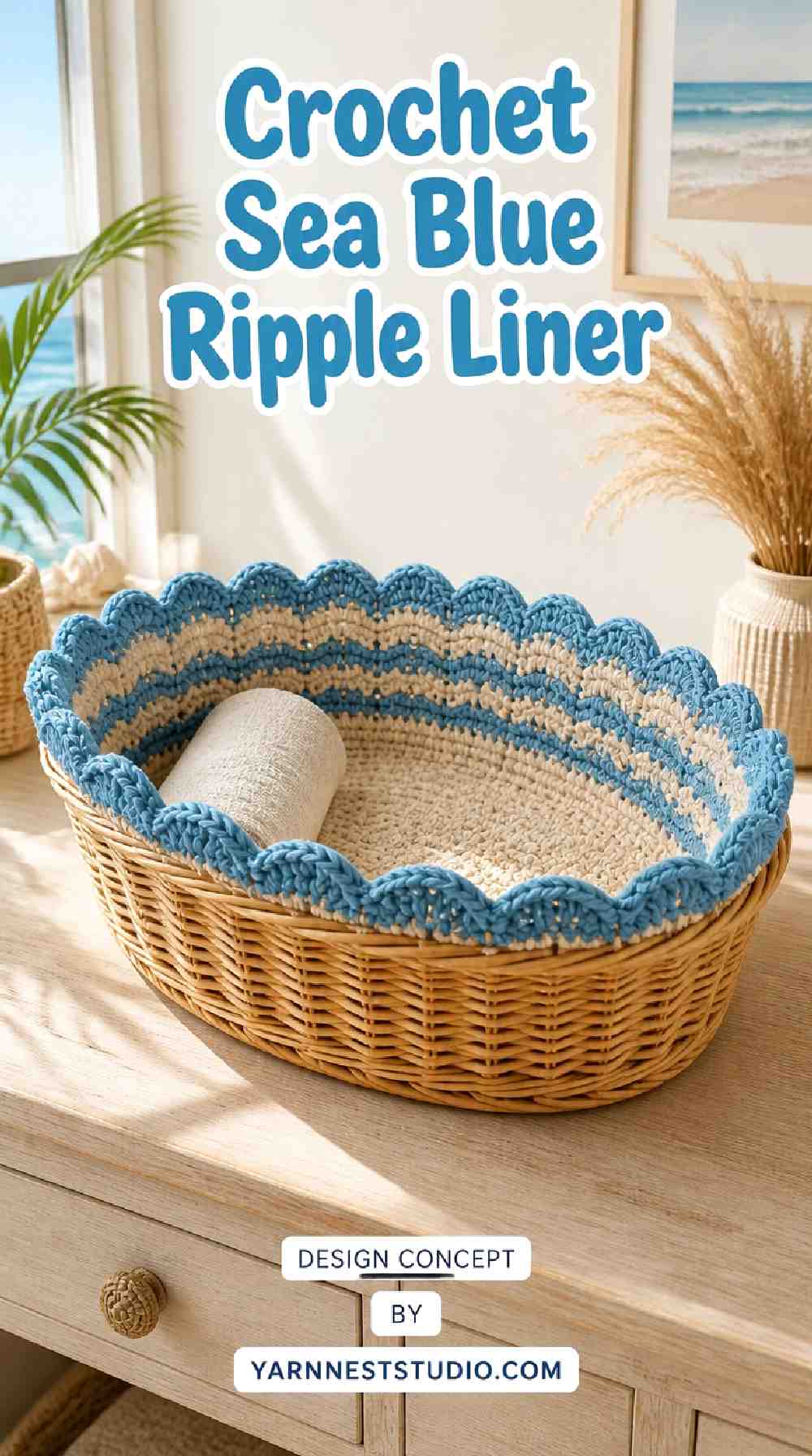
Soft sky-blue and pale-cream ripple stitches bring a relaxed coastal character to this oval rattan basket. The liner has a sand-colored base, gently curved horizontal pattern rows along the interior walls, and a continuous sea-blue scalloped border folded over the rim.
The combination creates a coastal-boho style without relying on seashells or dangling decorations. It suits a guest-room basket holding a folded linen towel, while its uncomplicated scallop finish leaves plenty of natural rattan visible.
Shaping the Oval Base
Begin by checking the proportions of the actual basket floor. The crochet should follow the oval without creating pointed ends.
Planning Horizontal Ripples
Keep the blue and cream ripple bands aligned around the upper walls. Check how the pattern behaves around both curved ends.
Selecting the Blue Palette
Muted sky blue pairs gently with cream and sand. Avoid overly bright turquoise if you want the quiet appearance shown in this concept.
Finishing with Sea-Blue Scallops
The sea-blue rim ties the ripple colors together. Use a consistent stitch repeat so the scallops sit evenly around the opening.
Keeping the Base Simple
A sand-colored base allows the upper ripple design to remain the focus. Additional floor motifs could make the composition feel overly complicated.
Guest-Room Styling
Lightweight folded linens work with the pictured setting. Position the basket somewhere accessible without exposing it to persistent dampness.
Preventing Color Transfer
Blue and cream yarns should be checked for compatible washing instructions. Test colorfastness before cleaning the complete multicolored liner.
Maintaining Ripple Shape
After laundering, gently arrange the curved stripe rows and scallops. Let the fabric dry in a shape that matches the basket opening.
17. Crochet Ivory Tulip Basket Liner
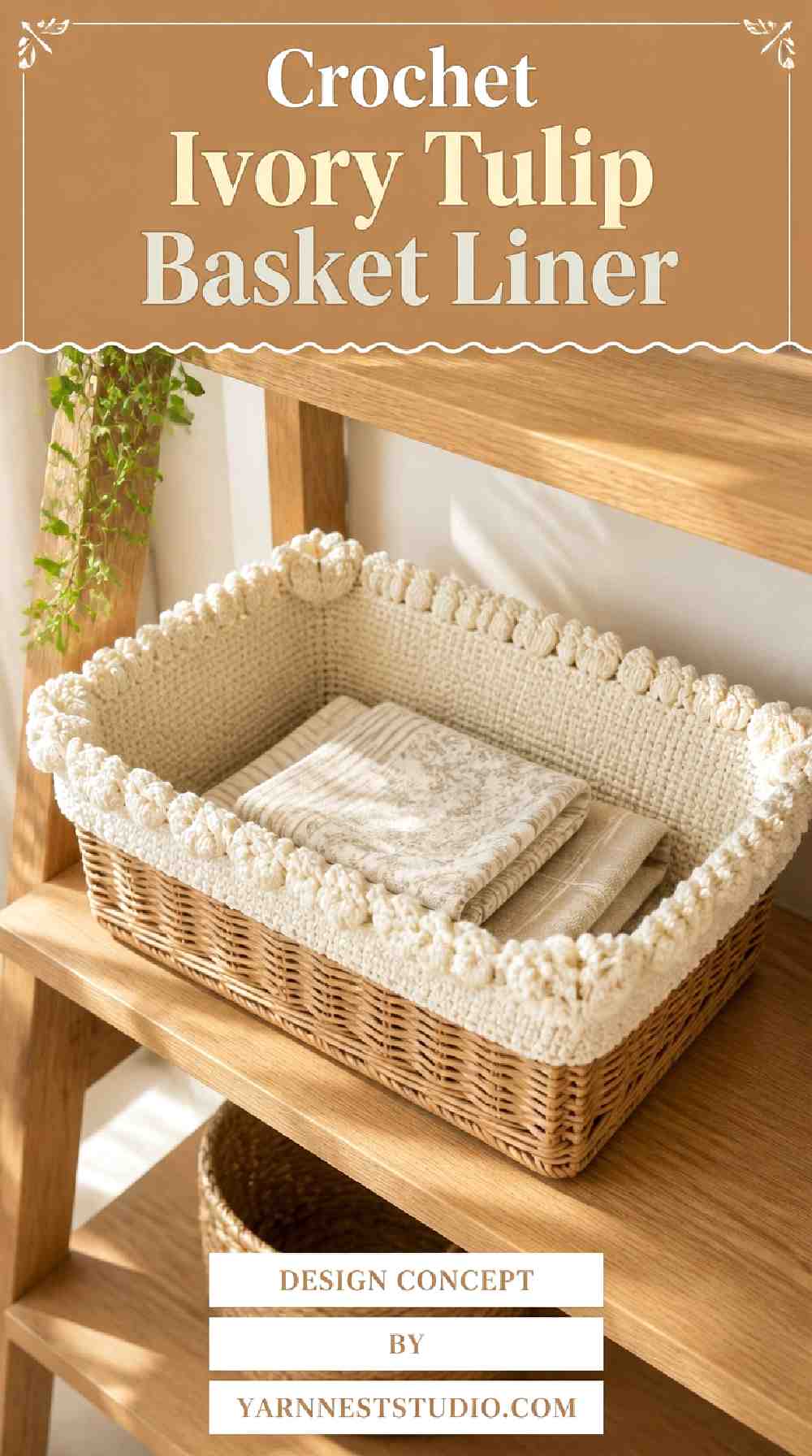
Tightly stitched ivory crochet creates a calm, practical-looking interior for this rectangular rattan shelving basket. Small raised tulip-like clusters form a decorative scalloped border, with a slightly deeper scallop marking each corner. The subtle changes in stitch height give the otherwise simple liner its distinctive outline.
This is a quieter alternative to wide lace borders or colorful patchwork. It suits a shelving basket for folded tea towels, provided the crochet corners fit properly and the raised edging does not interfere with sliding the basket into place.
Measuring Four Corners
Rectangular baskets can have slightly rounded internal corners. Check their actual shape rather than assuming the crochet should form sharp right angles.
Creating Tulip-Like Clusters
Raised crochet clusters can suggest small tulip petals. Keep the shapes compact so they form recognizable scallops without excessive fabric bulk.
Deepening the Corner Scallops
The four corner shells are slightly larger than the others. Plan their positions before starting the repeating border.
Choosing a Dense Stitch Body
A closely stitched main panel allows the raised edging to stand out. Open lace throughout the body would create a different visual effect.
Ivory Yarn Selection
Smooth ivory yarn can highlight the small stitch details. A warm ivory shade blends naturally with light rattan and oak shelving.
Keeping Shelf Clearance
Measure the available space above the basket. Raised scallops may fold or snag if the basket must slide beneath a low shelf.
Storing Tea Towels
Clean, dry folded towels suit the basket. Keep enough space at the top for the decorative crochet border to remain visible.
Reshaping the Corners
After cleaning, gently arrange the corner scallops and straight edges. Their shape may depend on the selected fiber, tension, and finishing method.
For general shell-border construction, The Crochet Crowd’s mini scalloped-edge basket pattern is a useful technique reference, although it makes a small basket rather than this fitted liner.
18. Crochet Apricot Lattice Basket Liner
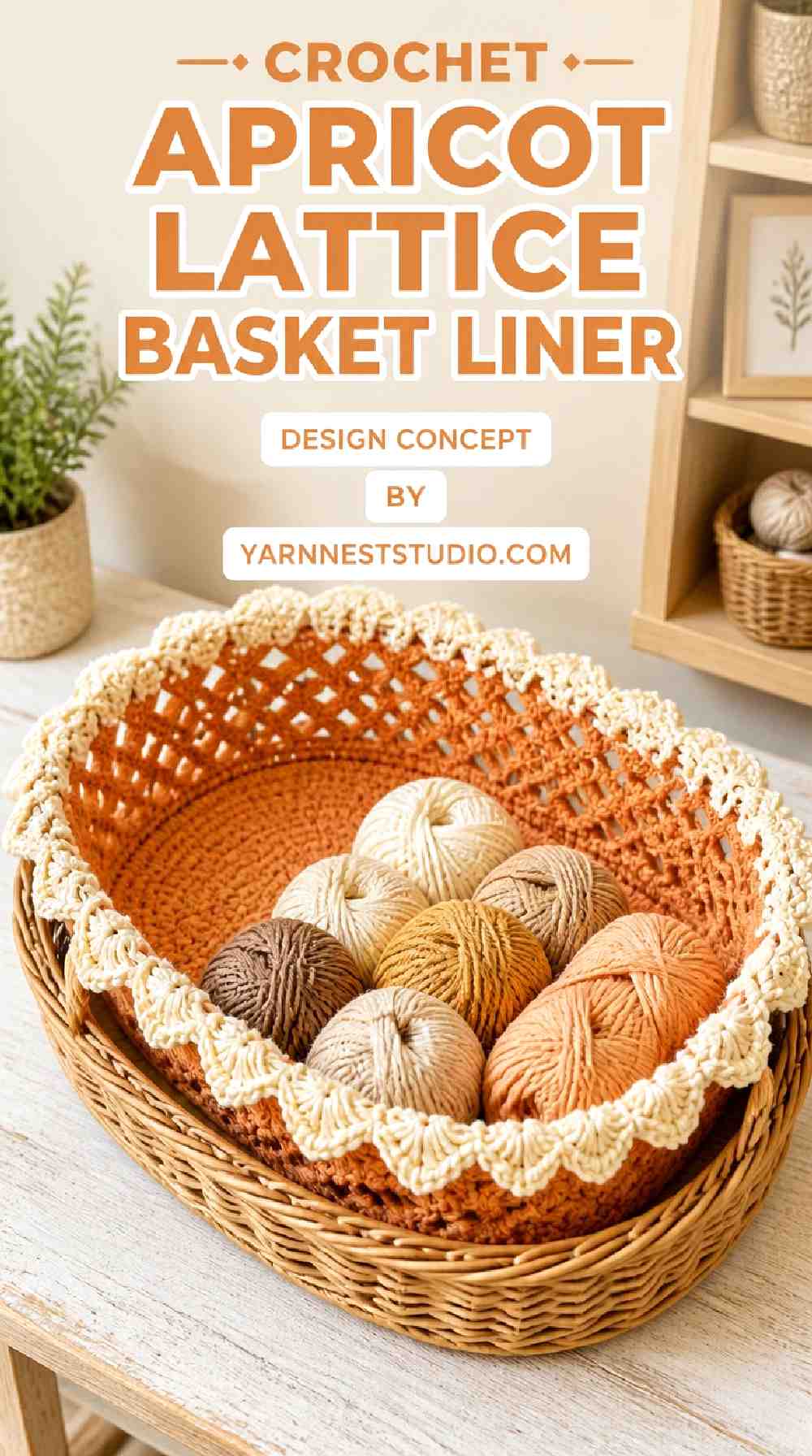
Apricot crochet brings warmth to this broad oval rattan yarn basket. The fitted liner combines a closely stitched bottom, a short solid lower wall, and a taller section of open diamond-lattice crochet. Wide cream shell scallops fold over the rim, creating a clear border between the apricot interior and the golden rattan.
The lattice is especially attractive when the basket contains neatly arranged yarn skeins. It adds openness and texture, but the holes make this concept less suitable for storing tiny craft accessories directly against the sidewalls.
Planning the Oval Structure
Work out the base dimensions before choosing the lattice repeat. The upper openings should follow the oval shape without becoming distorted.
Combining Solid and Openwork
A short solid wall below the lattice creates visual contrast. It also separates the airy design from the closely textured basket base.
Diamond-Lattice Consistency
Keep the crochet openings evenly spaced. Unequal tension may turn the intended diamonds into irregular shapes around the curved ends.
Wide Cream Scallops
Cream shells soften the bright apricot fabric. Their width should suit the basket’s opening without crowding the visible lattice underneath.
Displaying Yarn Skeins
The pictured arrangement uses warm-neutral yarn skeins. Keep them below the rim so the lattice and border remain clearly visible.
Securing Small Craft Accessories
Loose stitch markers, needles, and small tools may pass through the lattice. A separate closed notions pouch is a safer storage choice.
Choosing Apricot Yarn
A soft apricot shade coordinates well with natural timber and cream. Compare the yarn beside the actual basket before choosing the final color.
Checking Stretch and Snags
Open crochet may stretch when pulled repeatedly. Inspect the lattice where it touches the wicker and avoid using the trim as a handle.
19. Crochet Lilac Puff Basket Liner
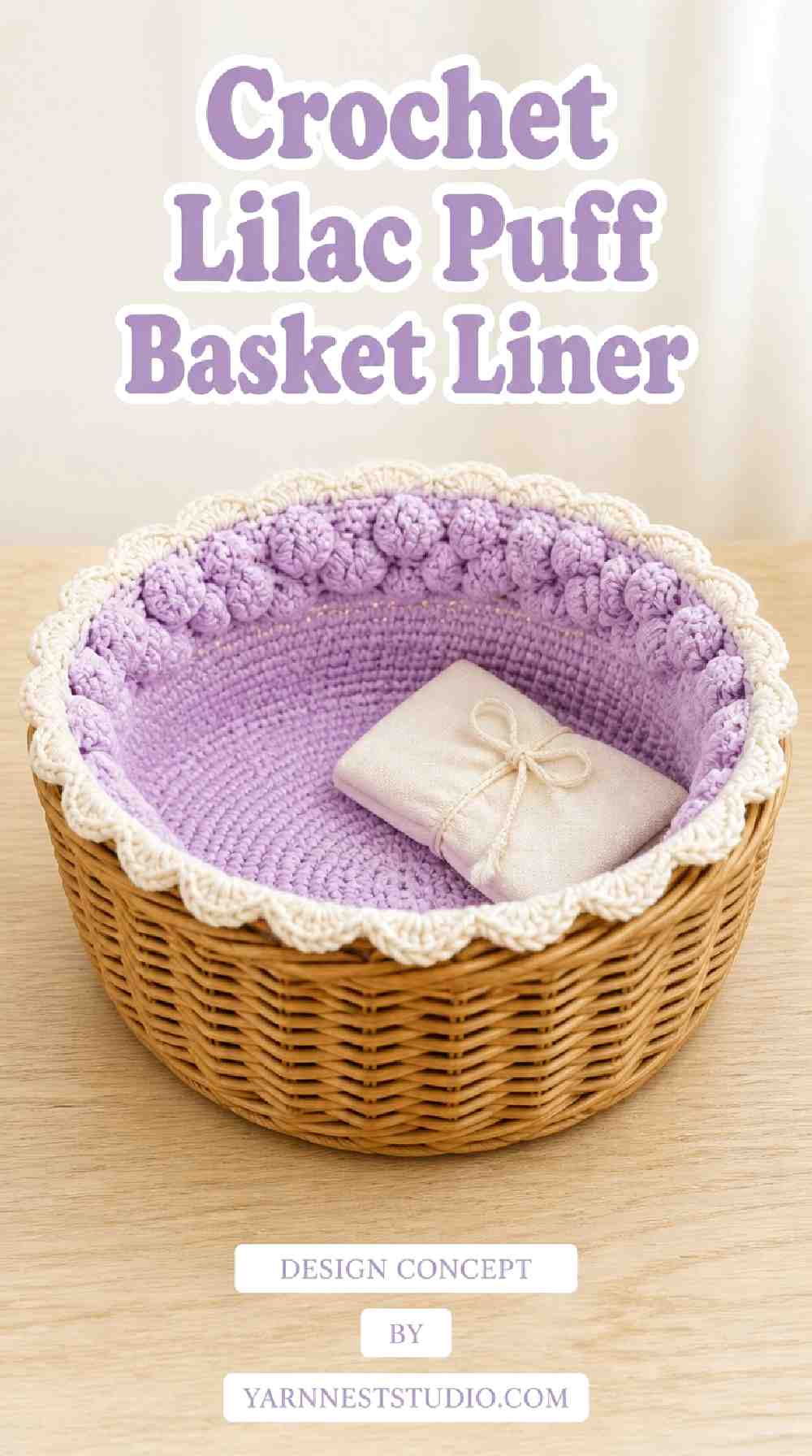
Soft lilac crochet gives this petite round basket a playful but understated appearance. A closely stitched base and simple lower walls lead into a raised ring of compact puff-like clusters. Short cream scallops fold over the top, creating a gentle two-texture effect around the rim.
The design is especially suited to lightweight craft storage. Its small size allows the raised crochet details to remain noticeable without needing large patterns, while the cream edge provides enough contrast to separate the decoration from the basket’s warm rattan weave.
Creating the Puff Ring
Keep the raised crochet clusters close together but clearly defined. Test the texture to avoid a bulky or uneven band.
Small Basket Proportions
Measure the inside diameter carefully. Even a modest amount of extra crochet fabric can create noticeable gathers in a petite basket.
Cream Scallop Placement
Place the short cream shells immediately above the lilac textured band. Their different stitch heights create the intended layered appearance.
Controlling the Lilac Shade
Pale lilac feels gentle beside cream and honey rattan. Choose a muted tone if the room already contains colorful craft supplies.
Keeping the Bottom Smooth
The closely stitched circular base should sit flat inside the basket. Raised clusters belong near the rim, not underneath stored items.
Storage for Craft Notions
Use a separate fabric pouch for sharp needles or tiny loose accessories. Exposed crochet stitches can catch on metal tools.
Limiting Decorative Bulk
Because the basket is small, avoid adding more flowers, tassels, or thick borders. The puff ring and cream scallops already provide texture.
Cleaning Raised Stitches
Dust can collect around textured clusters. Follow the yarn’s washing instructions and gently restore the rounded shape after cleaning.
20. Crochet Burgundy Botanical Basket Liner
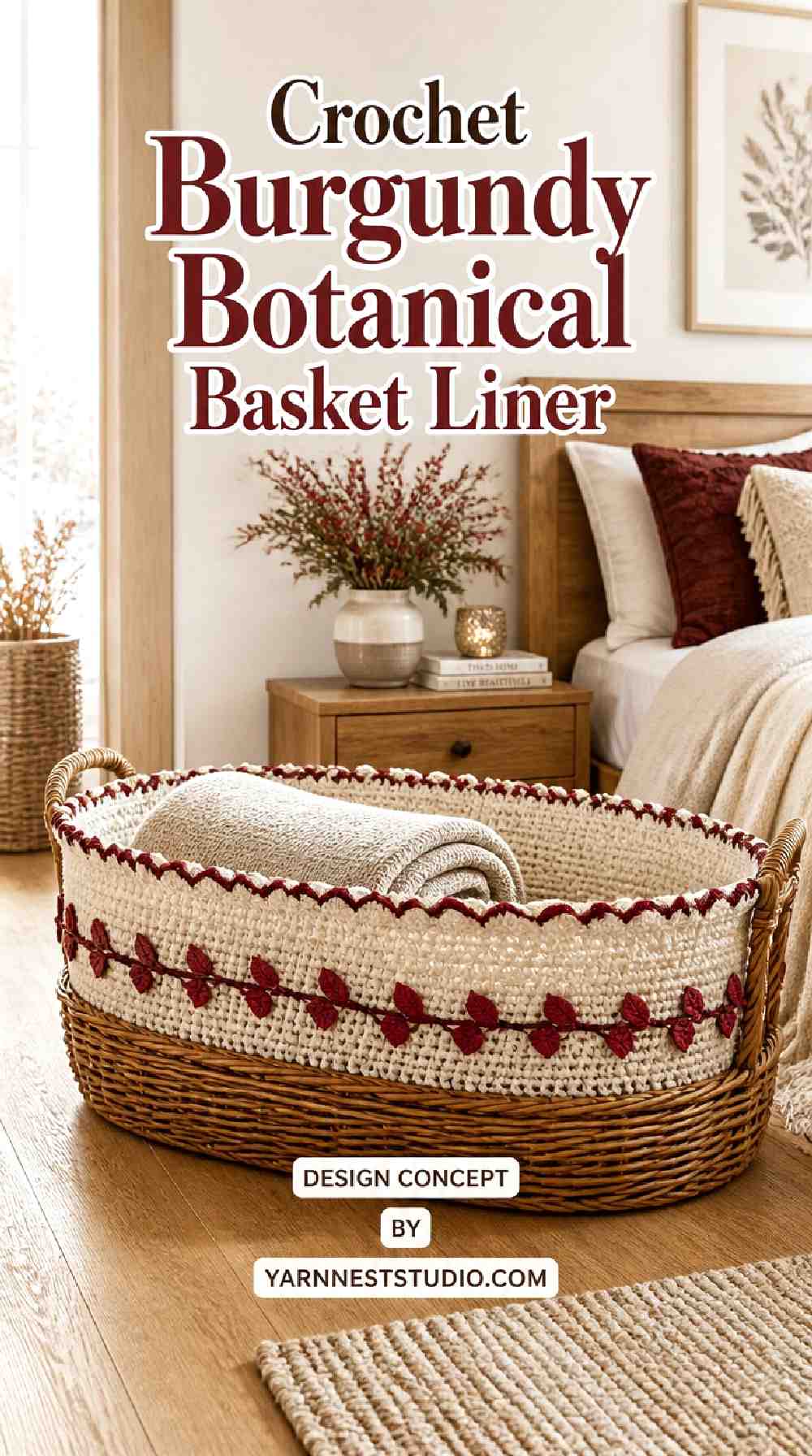
Antique-cream crochet creates a soft background for the small burgundy leaf-shaped appliqués arranged around this oval basket’s inner walls. A narrow botanical band gives the design a seasonal character, while cream scallops tipped in burgundy finish the upper rim. The walnut-toned rattan adds warmth beneath the lighter crochet.
The botanical details offer a decorative alternative to stripes and geometric patterns. For a blanket-storage basket, the important consideration is keeping the attached leaves secure and relatively flat so they do not catch on folded textiles.
Positioning the Leaf Motifs
Arrange the burgundy leaves in one narrow horizontal band. Keep their spacing consistent around both ends of the oval.
Attaching Crochet Appliqués
Secure the leaf motifs with an appropriate joining method. Raised edges that remain loose could catch on stored throws during removal.
Choosing Antique-Cream Yarn
Antique cream offers a warmer appearance than bright white. It coordinates naturally with walnut rattan and muted burgundy details.
Burgundy-Tipped Scallops
Small burgundy accents at the scallop tips tie the border to the botanical band without making the entire rim dark.
Keeping the Base Uncomplicated
A close-textured oval bottom provides visual balance. Additional floral motifs across the floor would compete with the existing leaf border.
Selecting Suitable Textiles
An oatmeal throw complements the pictured colors. Avoid packing rough or heavily fringed fabrics tightly against the raised leaf appliqués.
Maintaining a Bright Appearance
Burgundy can appear heavy in dim rooms. Place the basket where natural light helps reveal both the dark accents and cream crochet.
Washing Mixed Colors
Before cleaning, check the yarns for compatible care instructions and possible color bleeding. Dark burgundy should not transfer onto the cream fabric.
21. Crochet Seafoam Double Scallop Liner
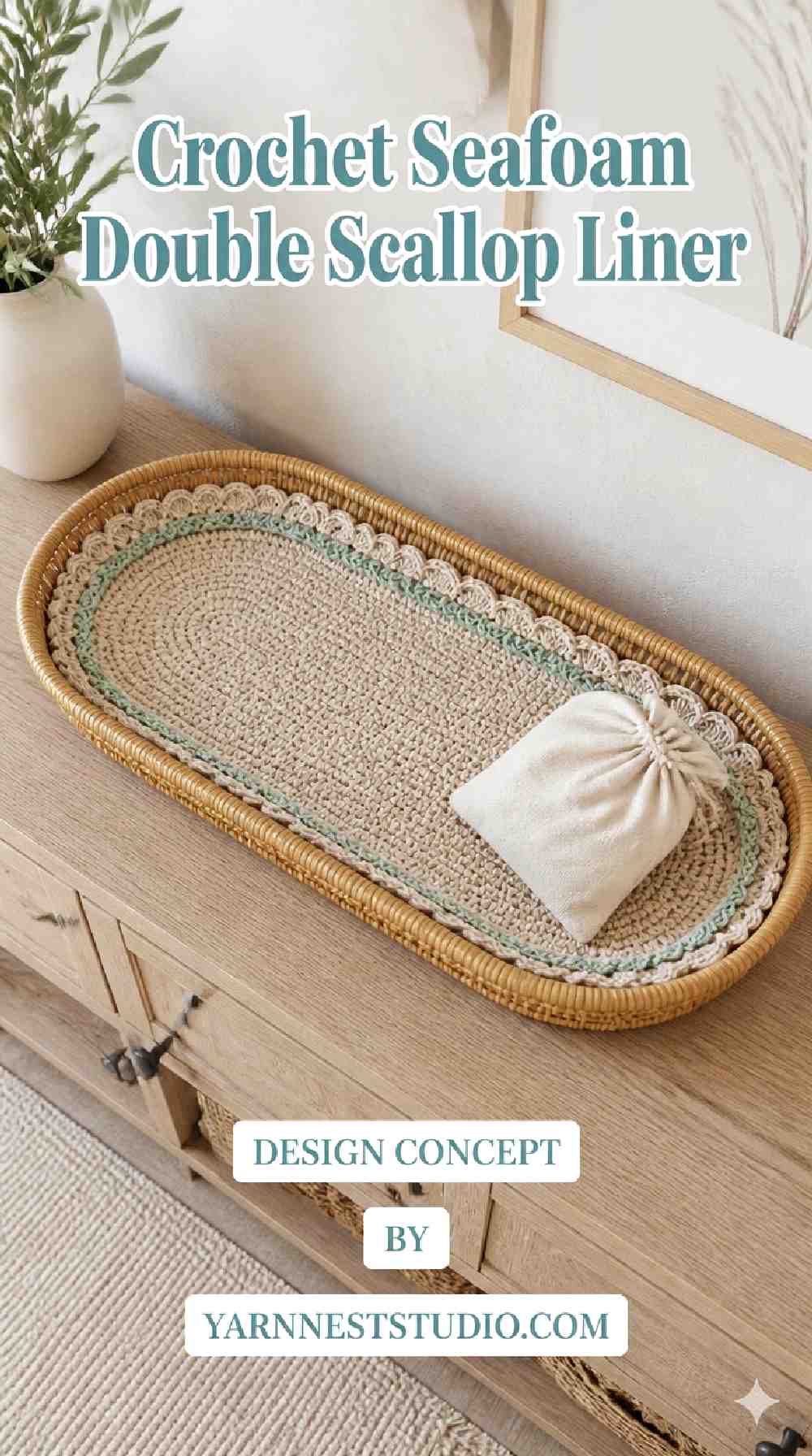
Sand-beige crochet keeps this shallow oval rattan tray looking natural, while two staggered rows of scallops give its rim a more decorative finish. Muted seafoam forms the lower border, with a shorter cream wave overlapping it from above. The dense crochet base remains visible because the tray holds only one small fabric pouch.
This low-profile concept suits an entryway console or dressing table. Its main strength is the carefully layered edge, which introduces color and movement without requiring a tall basket or elaborate interior stitch pattern.
Designing a Low Oval Base
Measure the inner length and width of the tray. A close-fitting base helps the liner sit smoothly without unnecessary folds.
Planning Staggered Scallops
Offset the cream upper shells from the seafoam lower row. Both layers should remain visible around the entire oval rim.
Keeping the Border Shallow
The tray has limited height, so long scallops could overwhelm its proportions. Keep both waves short and relatively flat.
Using Sand and Seafoam Together
Sand-beige provides warmth, while muted seafoam introduces a gentle cool accent. Cream helps connect the two colors without harsh contrast.
Choosing Appropriate Contents
One lightweight fabric pouch suits the open tray. Loose keys and sharp accessories could snag the crochet surface.
Preventing Edge Curling
Test the scallop repeat on a sample. Too many stitches may cause ruffling, while too few can pull the border inward.
Positioning on an Entryway Console
Keep the tray where it will not be knocked or dragged regularly. Decorative scallops are not intended to support lifting.
Maintaining the Double Edge
After cleaning, separate the cream and seafoam layers gently. Their visibility depends on how evenly the overlapping scallops are arranged.
22. Crochet Ochre Tassel Basket Liner
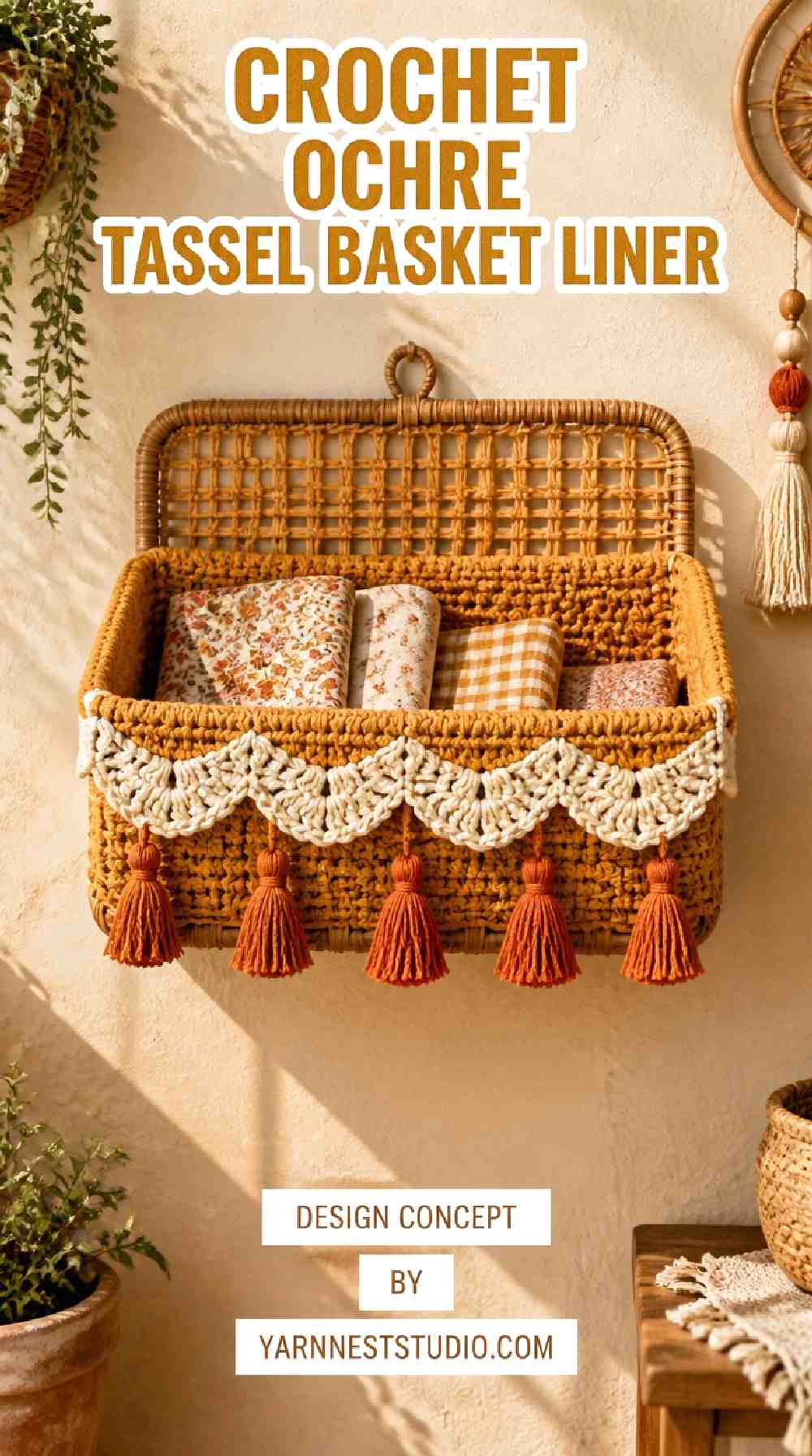
Golden-ochre crochet gives this shallow rectangular wall basket a warm bohemian character. The close-textured liner fits the basket’s base and walls, while broad cream scallops fold over the front rim. Five short copper-colored tassels hang evenly beneath the scallop points, creating the collection’s most visibly decorative finish.
Unlike the floor and tabletop baskets, this concept is intended for wall storage using the basket’s own support. The crochet remains an interior liner rather than a hanging structure, and the tassels should be treated as decorative details only.
Confirming Wall-Basket Support
Choose a basket designed for secure wall mounting. The crochet liner and tassels must not replace its structural support or attachment hardware.
Rectangular Liner Fit
Measure the interior base, back, and sidewalls. The liner should follow the shallow rectangular shape without pulling against the hanging support.
Front-Facing Cream Scallops
Keep the broad scallops along the front edge, as pictured. This allows them to remain visible when the basket hangs against a wall.
Positioning Five Tassels
Space the copper-colored tassels evenly beneath the front scallop points. Keep them short enough to avoid tangling with nearby objects.
Choosing Golden Ochre
Golden ochre works naturally with cream and warm rattan. A copper accent provides a related color without introducing a strong third contrast.
Lightweight Decorative Storage
Folded fabric scraps suit the concept. Avoid heavy contents unless the basket and mounting hardware are specifically rated for the load.
Keeping Tassels Out of Reach
Avoid hanging loose tassels where children or pets could pull or become entangled in them. Their decorative appearance does not establish safety.
Cleaning a Wall-Mounted Liner
Remove the crochet carefully for cleaning rather than soaking the wall basket. Check tassel attachments before returning the liner to its position.
Which Crochet Scalloped Basket Liner Should You Choose?
The strongest choice depends on the kind of basket you own, how often you use it, and how much decorative detail you want.
| Design | Main advantage | Practical trade-off |
|---|---|---|
| Crochet Ivory Shell Basket Liner | Simple shape and classic scallops | Large shells need careful spacing |
| Crochet Champagne Lace Basket Liner | Light, delicate lace appearance | Openwork can snag small accessories |
| Crochet Terracotta Checkered Basket Liner | Bold pattern for large storage | Color changes and rectangular corners need planning |
| Crochet Patchwork Rattan Basket Liner | Distinct granny-square texture | Joined panels must fit the basket |
| Crochet Honey Sunburst Basket Liner | Decorative medallion at the bottom | The design becomes hidden when filled |
| Crochet Linen Lace Basket Liner | Elegant tall bathroom storage | Moisture and ventilation need attention |
| Crochet Seafoam Double Scallop Liner | Soft layered edge in a shallow tray | Both scallop rows must remain balanced |
| Crochet Ochre Tassel Basket Liner | Strong decorative wall accent | Tassel snags and secure mounting matter |
A few useful decisions before choosing
For everyday storage: Start with the Ivory Shell, Sage Stripe, or Ivory Tulip designs. Their relatively simple bodies may be easier to adapt to ordinary household baskets.
For visual impact: Choose Terracotta Checkered, Rust Chevron, or Cocoa Cascade. Each brings a stronger decorative feature to a larger basket.
For delicate detail: Champagne Lace, Linen Lace, and Dusty Rose Wave offer more refined borders. They are better suited to light decorative storage than rough objects.
For existing rattan baskets: Measure first, then select a shape that follows the basket. A well-fitting simple crochet liner can look more polished than an elaborate design that bunches at the corners.
Conclusion
A scalloped crochet liner can turn an ordinary rattan basket into a more personal part of your home decor. Some designs work through their soft colors and simple curves, while others use checkers, floral details, lace, and layered edges to create a stronger decorative effect.
The most useful approach is to start with the basket itself. Consider its shape, the items it will hold, and how easily the lining can be removed. Then choose the crochet details that suit its actual purpose rather than adding decoration everywhere.
Which would you choose for your home: the soft ivory shell border, the terracotta checks, or the delicate champagne lace? Share your favorite design and the room where you would use it.
Frequently Asked Questions
1. What yarn works best for a crochet rattan basket liner?
Smooth cotton yarn is a useful starting option because it can show crochet stitches clearly and is available in many natural colors. However, the best fiber depends on the basket’s purpose, the desired fabric weight, and the care instructions.
For a delicate decorative liner, a finer yarn may suit the design. For a larger storage basket, consider whether the yarn produces enough coverage without excessive bulk. Always test a sample before starting a fitted project.
2. How do you keep a crochet liner from sliding inside a rattan basket?
The first step is accurate sizing. A liner that matches the basket’s inner base, walls, and upper rim is less likely to shift than one with excess fabric.
For additional stability, removable ties or discreet attachments may help, provided they do not damage the rattan or create loose hazards. The attachment method should also allow the liner to be removed for cleaning.
3. Can you add scalloped crochet edging to an existing basket liner?
Yes, it may be possible, depending on the existing liner’s material, construction, and edge. A compatible crochet foundation or another suitable joining method may be needed before working the scallops.
Test a short section first. The number and size of the shells must suit the basket circumference; otherwise, the border can ripple excessively or pull too tightly.
4. Can crochet basket liners be washed?
That depends on the yarn, joining materials, and construction. Some cotton yarns have machine-washing instructions, while delicate crochet, attached decorations, and mixed fibers may need gentler care.
Follow the actual yarn labels rather than assuming every liner is washable in the same way. Remove the crochet from the basket where practical and allow it to dry thoroughly before replacing it.
5. Are these 22 basket liner designs available as crochet patterns?
These 22 designs are original visual inspiration concepts, not finished patterns with verified stitch counts or tested instructions. Their images can help you choose colors, borders, silhouettes, and decorative details.
For an actual project, use a suitable basket-lining pattern or develop measurements and a tested stitch plan for your own basket. Related tutorials can teach individual techniques, but they should not be mistaken for exact instructions for the designs pictured here.