Victorian lace dresser scarves bring delicate crochet texture to bedroom furniture without hiding the beauty of the wood underneath. From ivory rose medallions and intricate diamond trellis to pineapple fans, floral filet lace and softly scalloped borders, these 13 inspiration ideas explore different ways to create an old-fashioned, elegant look. The collection includes narrow rectangular scarves, decorative oval shapes, colorful floral accents and richly detailed heirloom-style finishes.
Whether you’re decorating an antique vanity, a vintage bedroom dresser or a modern chest of drawers, the right crochet scarf depends on more than its appearance. The shape needs to suit your furniture, the lace openings should work with your display, and the edges deserve enough room to be appreciated. These ideas help you compare decorative details, proportions, thread choices and practical placement before planning a similar piece.
These are AI-generated crochet design visualizations for inspiration, not photographs of tested handmade pieces or step-by-step patterns.
Quick Design Selection Guide
- For a traditional heirloom look: Choose Crochet Ivory Rose Medallion Lace Scarf for its connected circular rose motifs and romantic scalloped outline.
- For a narrow dresser: Consider Crochet Ecru Diamond Trellis Dresser Scarf. Its straight rectangular shape and slim border make it easier to plan around limited depth.
- For a romantic vanity: Crochet Blush Cameo Oval Lace Dresser Scarf adds soft color and curved edges, although its oval shape needs careful placement.
- For a detailed lace centerpiece: Crochet Ivory Pineapple Fan Dresser Scarf puts the strongest decoration at both ends, where the fans can remain visible.
- For subtle color: Crochet Sage Ribbon-Laced Victorian Scarf introduces a removable ribbon accent without making the cream lace itself multicolored.
- For a richly decorated wide dresser: Crochet Ivory Double-Scallop Heirloom Scarf offers the most elaborate all-around border, but needs enough free surface to display it properly.
1. Crochet Ivory Rose Medallion Scarf
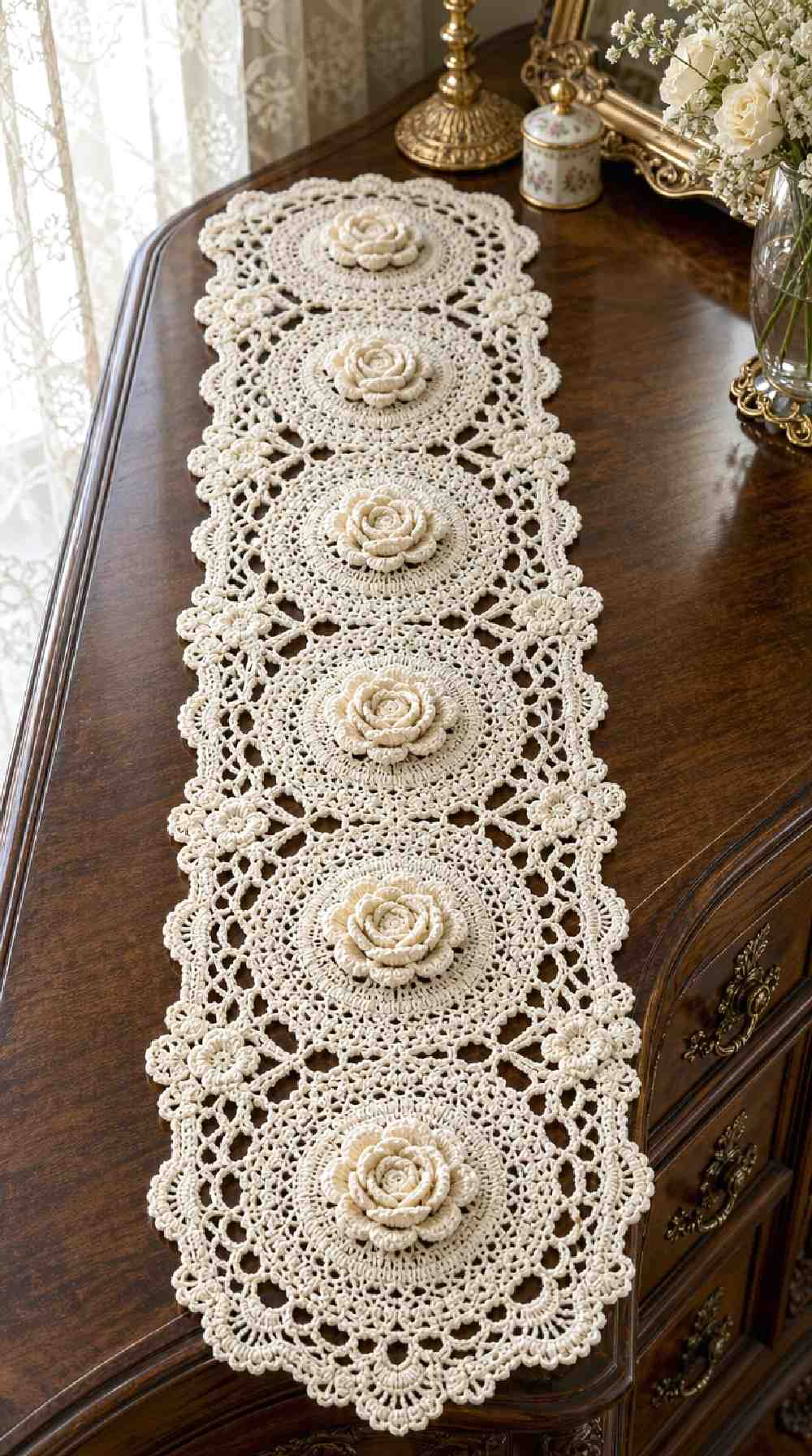
Six large ivory crochet rose medallions form the center of this elongated dresser scarf, linked by delicate open chain loops. Smaller floral connections soften the spaces between the circular motifs, while a continuous scalloped border gives the rectangular design a romantic Victorian finish.
The repeating rose arrangement makes this concept especially attractive on an antique wooden dresser. Because the individual medallions are joined rather than worked as one solid fabric, consistent motif size and careful joining would matter when making something similar.
- Medallion Alignment: Keeping all six circular motifs close to the same finished size would help the connected lace remain centered instead of twisting along its length.
- Open Joining Spaces: The chain-loop bridges create visible gaps. Small jewelry pieces or objects with narrow feet should not be placed directly over those openings.
- Border Balance: The smaller connecting flowers and outer scallops are both decorative, so adding another heavy trim could make the perimeter look crowded.
- Length Customization: A shorter dresser could use fewer rose medallions in a related design, provided the connecting layout and border are planned again.
2. Crochet Ecru Diamond Trellis Scarf
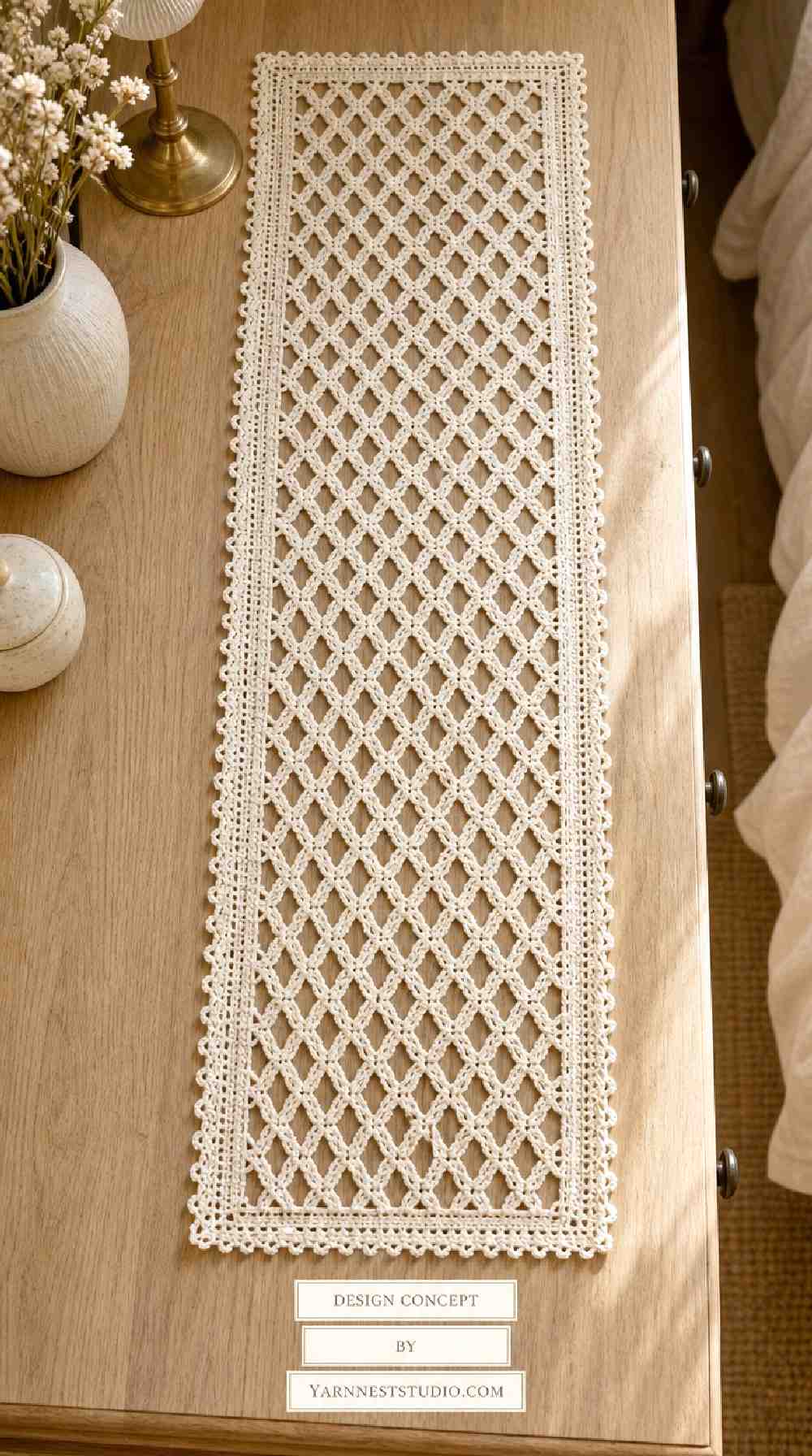
A neat arrangement of open crochet diamonds gives this ecru dresser scarf its distinctive Victorian character. Two slim solid crochet rails frame the trellis field, and tiny picots finish the straight rectangular outline without overwhelming the central lace.
Compared with larger floral designs, the diamond arrangement feels orderly and restrained. Its narrow proportions suit a dresser where the crochet should add texture rather than dominate the entire surface. Even so, the small edge points deserve enough clearance from frequently used drawer handles.
- Diamond Consistency: The trellis pattern depends on regular openings and similar tension. Uneven stitches could distort the diamond shapes across a long piece.
- Narrow Furniture: Check the dresser’s usable depth before choosing a width. A slender scarf can leave more exposed wood along the front and back.
- Picot Placement: Tiny edge points provide a delicate finish, but they may catch on nearby hardware if the scarf hangs too close to drawer pulls.
- Flat Finishing: Suitable blocking may help straighten the crochet rails and define the diamond openings, depending on the thread’s fiber and care instructions.
3. Crochet Blush Cameo Oval Scarf
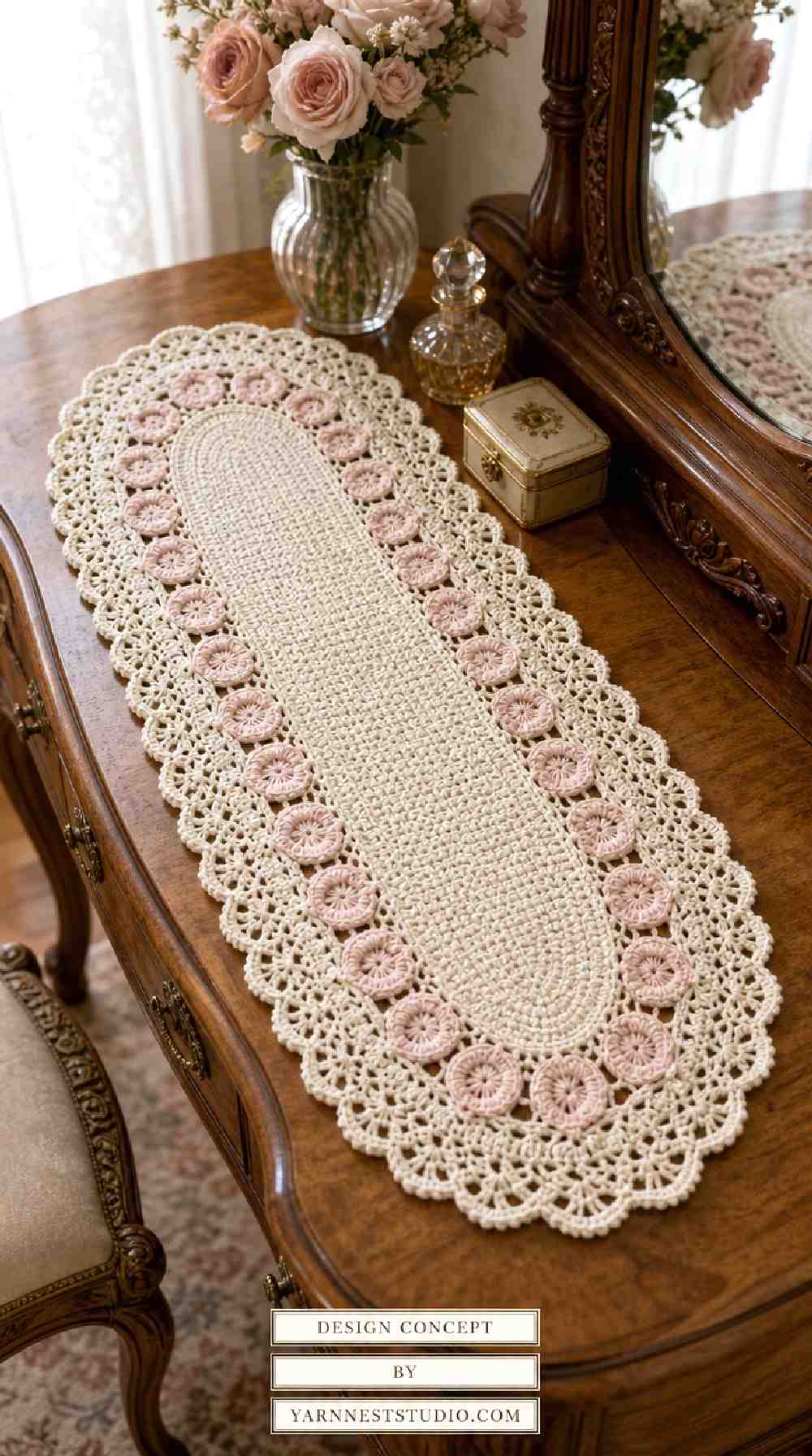
Soft blush crochet petals circle an ivory oval center in this romantic Victorian-inspired dresser scarf. Fine mesh joins the floral medallions, while the outer ivory scallops follow the elongated oval shape from one curved end to the other.
The gently rounded silhouette makes this design different from a conventional rectangular runner. Its petal border is especially important to the overall appearance, so the scarf works best where enough of the outer oval can remain uncovered. The curves also make furniture measurements more important.
- Oval Proportions: Check both the widest middle section and the narrower curved ends. A scarf that fits in length may still look too broad.
- Petal Spacing: Evenly arranged blush medallions are essential to the symmetrical appearance, particularly around the two rounded ends.
- Display Arrangement: A small central jewelry dish could leave the decorative petal ring visible, provided the dish rests securely on an appropriate surface.
- Color Coordination: Blush and ivory create a gentle contrast. A slightly warmer blush is an optional variation for darker wooden furniture.
4. Crochet Ivory Pineapple Fan Scarf
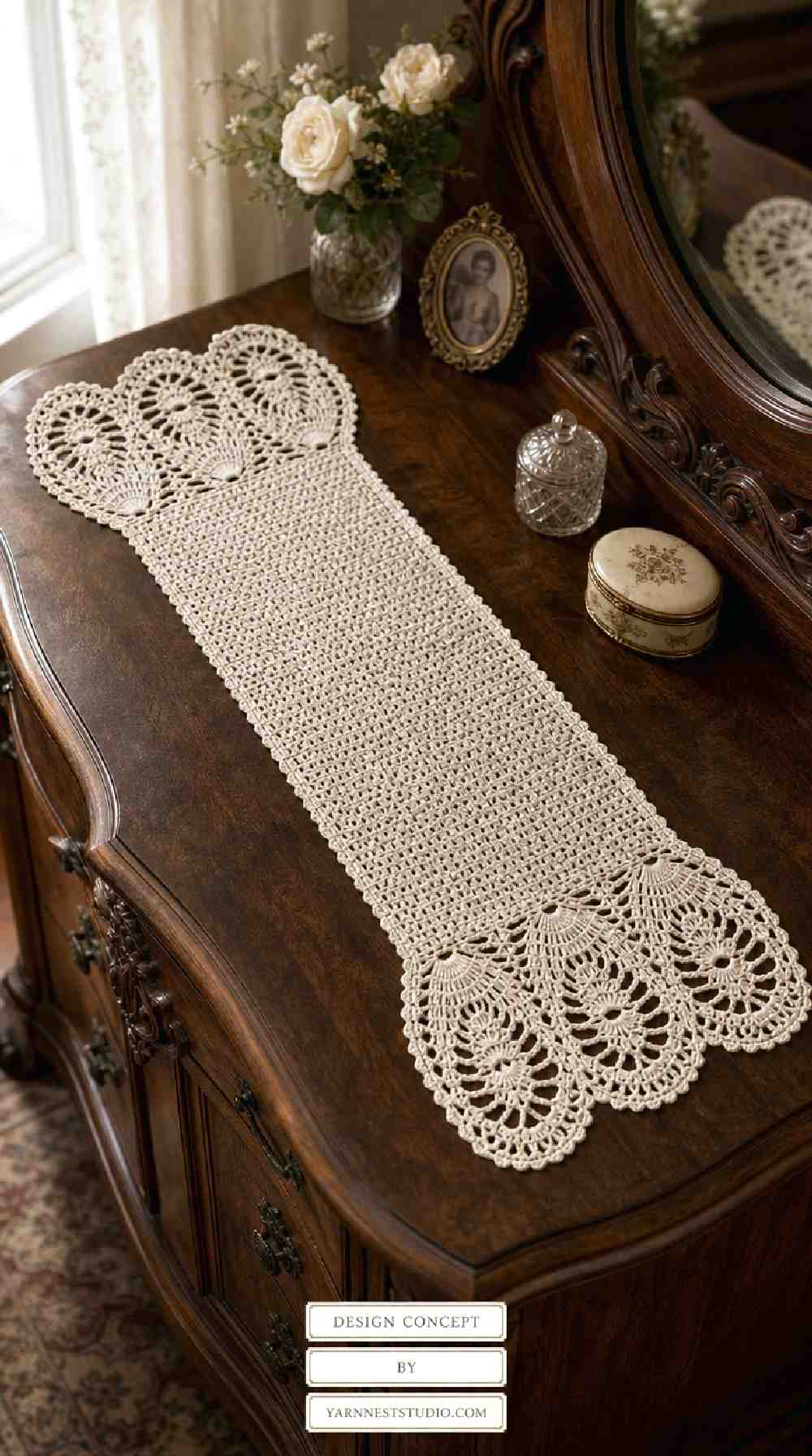
Traditional pineapple-inspired crochet fans decorate both short ends of this ivory dresser scarf. Three open fan motifs spread across each end, surrounding a more closely stitched rectangular center. Their rounded scallops provide the strongest decorative detail.
This arrangement places the most elaborate crochet at the ends rather than along the full length. It offers an interesting balance between a relatively quiet center and ornamental finishing. Positioning matters because covering either fan section would hide much of what makes the design distinctive.
- Fan Visibility: Leave enough unused surface beyond any central display so the matching pineapple sections can be appreciated at both ends.
- Pattern Transition: Moving from the dense center to widely opened fans would require careful stitch planning to avoid unexpected pulling or rippling.
- Delicate Openwork: Broad fan openings can catch pointed objects, so choose display pieces with smooth bases and avoid dragging objects across the lace.
- End Proportions: The fan sections should remain balanced. Enlarging them without adjusting the central panel could make a real scarf disproportionately wide at its ends.
5. Crochet Champagne Filet Lily Scarf
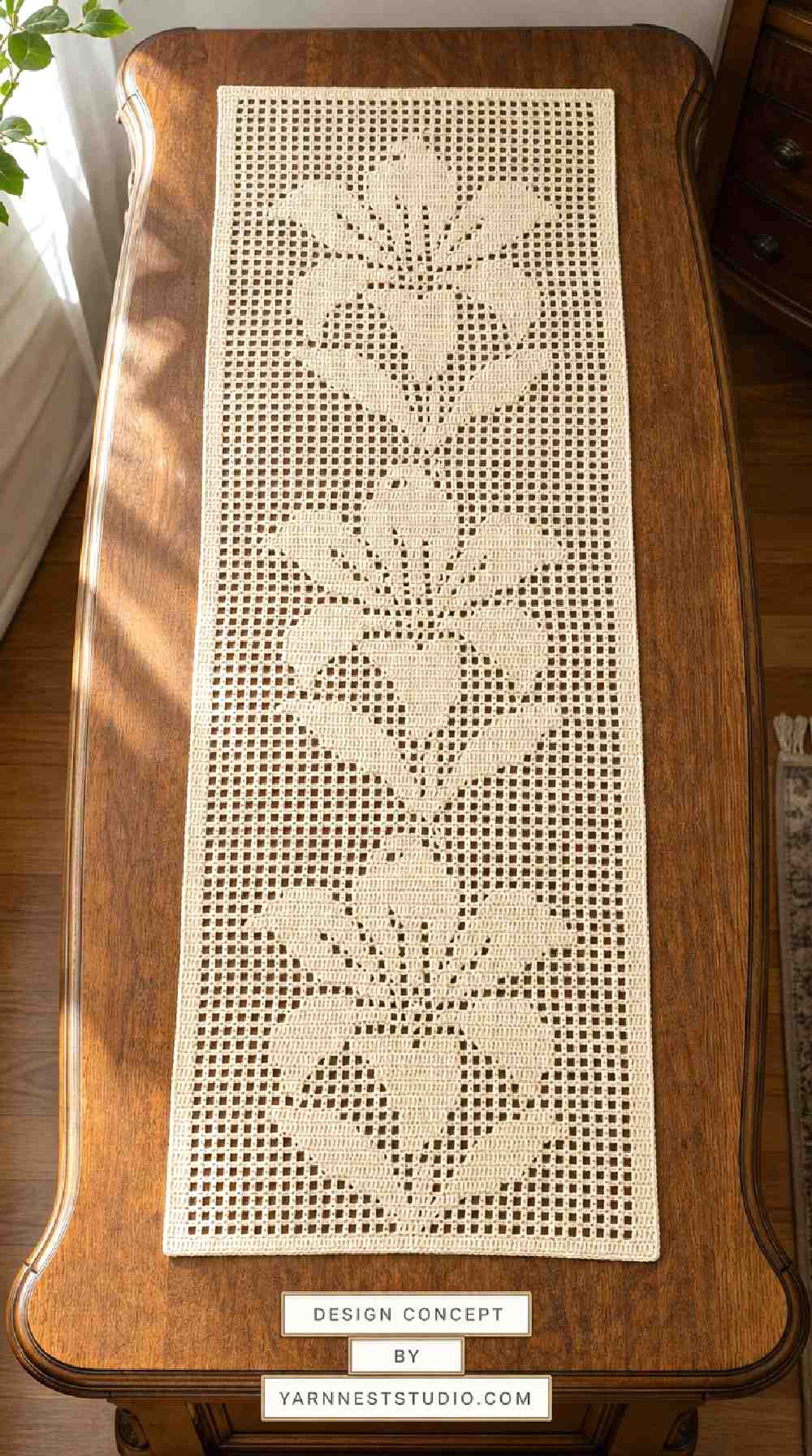
Three lily silhouettes appear along the length of this champagne-cream crochet dresser scarf, created through alternating filled and open squares of filet lace. The rectangular shape has a narrow, continuous border, allowing the floral arrangement to remain the main feature.
Filet crochet gives the lilies a more graphic appearance than raised flowers or joined medallions. Against a contrasting wooden surface, the openings help define the shapes. This style rewards careful chart planning, especially when several floral motifs must remain evenly spaced.
- Filet Chart Accuracy: The lily shapes depend on the relationship between filled and open mesh squares. A consistent chart is important for preserving the design.
- Surface Contrast: Medium or dark wood may make the champagne openings easier to distinguish than a similarly colored pale surface.
- Motif Spacing: Three evenly placed lilies create the central rhythm. A shorter variation could use fewer motifs rather than compressing the existing arrangement.
- Edge Simplicity: The narrow plain border suits the graphic lace. Adding large scallops would be an optional redesign that changes the original understated character.
6. Crochet Sage Ribbon Lace Scarf
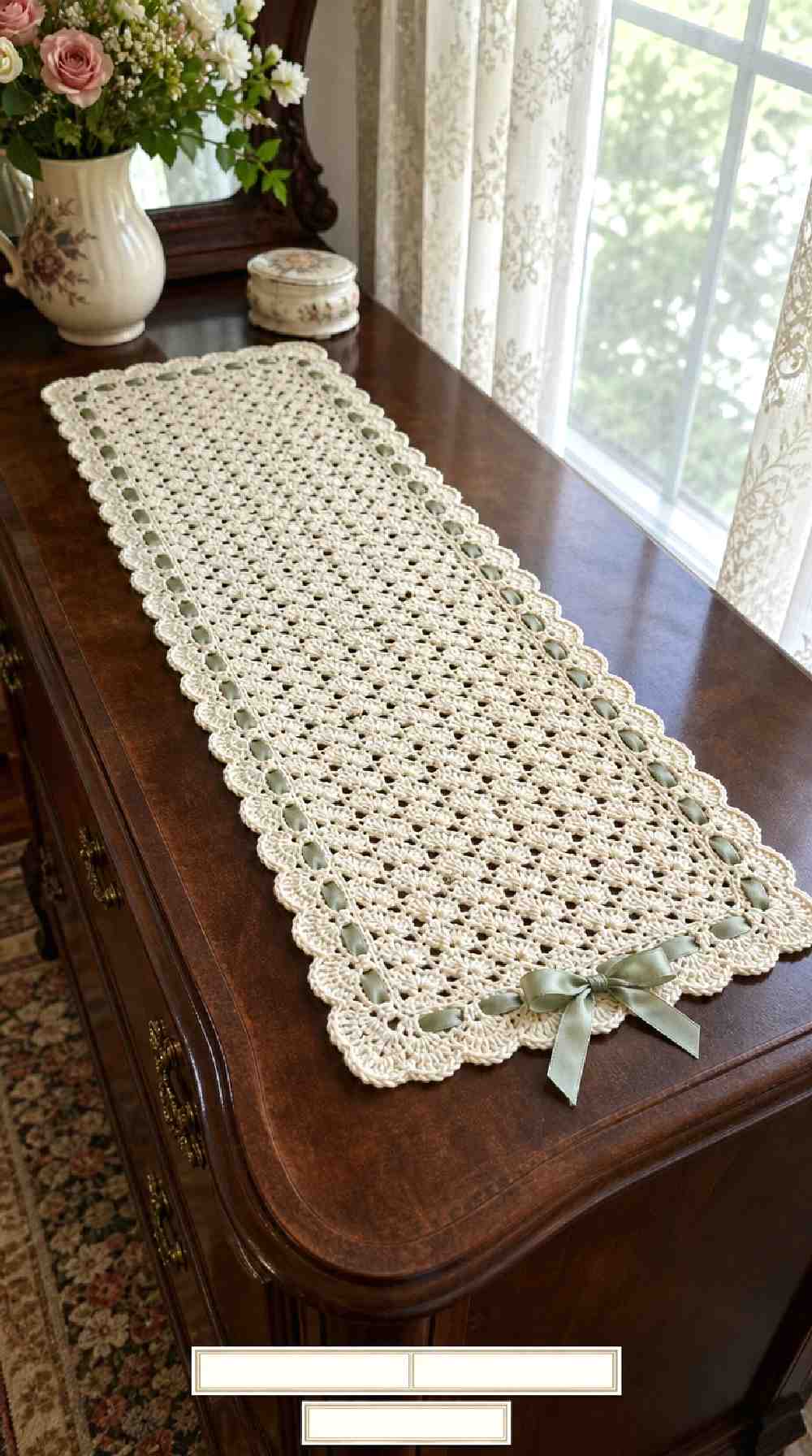
A continuous muted sage satin ribbon passes through small rectangular eyelets around this antique-cream crochet dresser scarf. Repeated open shell stitches form the body, while a scalloped lace perimeter and a small corner bow add a soft Victorian touch.
The ribbon introduces color without interrupting the cream crochet pattern. It also gives the outer border an extra decorative layer, making this concept suitable for a cottage-style vanity. If creating a similar piece, the ribbon should be planned around the openings rather than forced through tight stitches.
- Ribbon Threading: Eyelets need adequate room for the selected ribbon width. Pulling satin too tightly could gather the crochet border.
- Removable Accent: Consider keeping the ribbon removable so it can be taken out before cleaning and replaced without disturbing the surrounding shell stitches.
- Bow Position: The single corner bow should sit away from drawer handles or frequently moved objects to reduce accidental pulling.
- Material Compatibility: Satin ribbon and crochet thread may require different care. Check both materials before choosing a washing or pressing method.
7. Crochet Antique Gold Shell Scarf
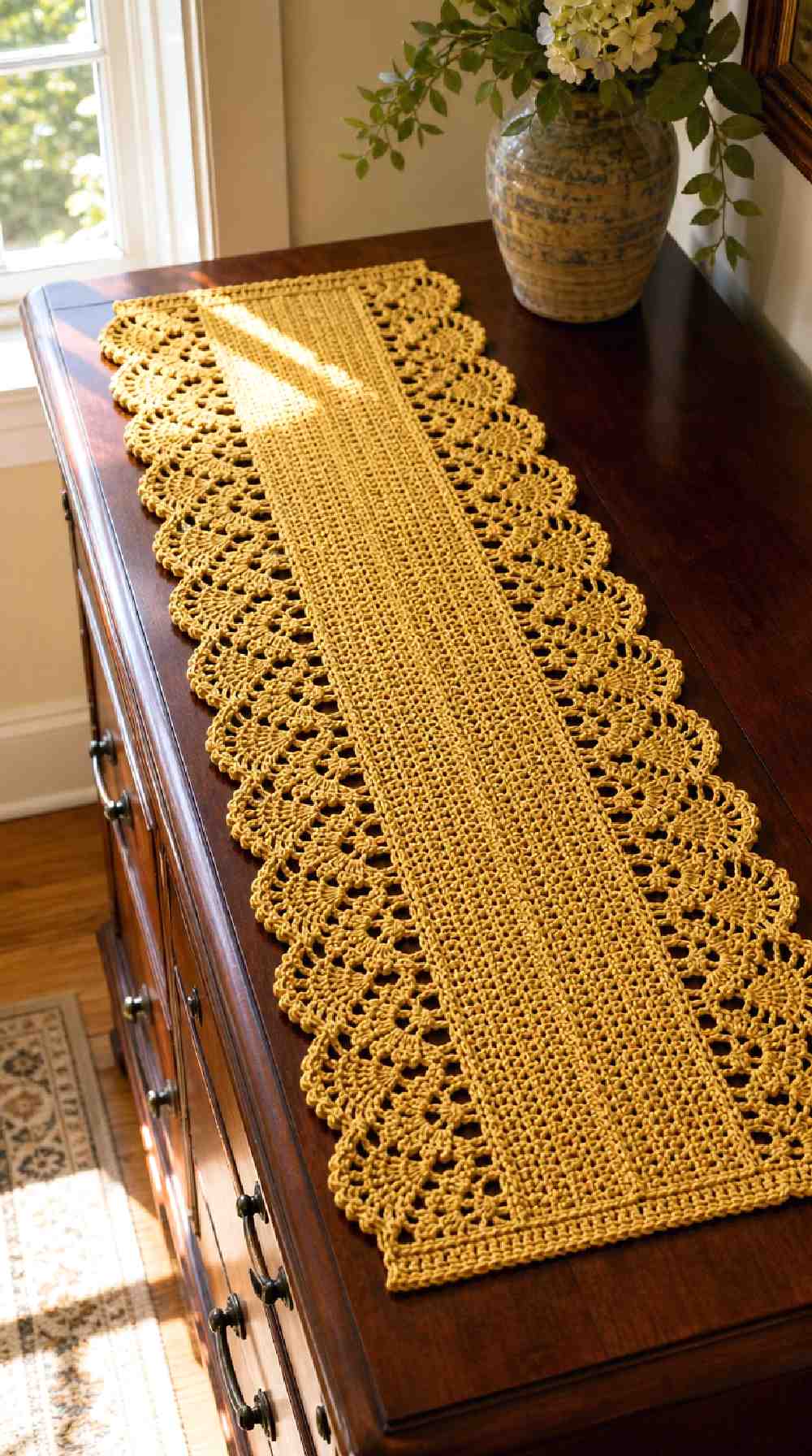
Warm antique-gold crochet gives this dresser scarf a rich vintage appearance. Its closely stitched central strip is bordered by two generous rows of overlapping shell-lace waves, while the short ends finish with simple straight crochet bands.
The broad shell borders make the long sides the main attraction. Rather than relying on flowers or contrasting thread colors, this design uses repetition and curved stitch shapes to create decoration. It would suit a dresser with enough depth to keep the large side borders visible.
- Border Width: Broad shell edging adds visual width beyond the narrow center. Include the complete outer lace when planning the scarf’s finished proportions.
- Shell Repetition: Consistent increases and spacing would help the curved waves appear orderly rather than crowded or uneven.
- Short-End Clearance: The straight ends are less elaborate, making them useful where the scarf finishes close to another piece of furniture.
- Thread Definition: Before selecting antique-gold cotton, compare how its sheen and thickness affect the visibility of the individual shell stitches.
8. Crochet Lavender Rosette Lace Scarf
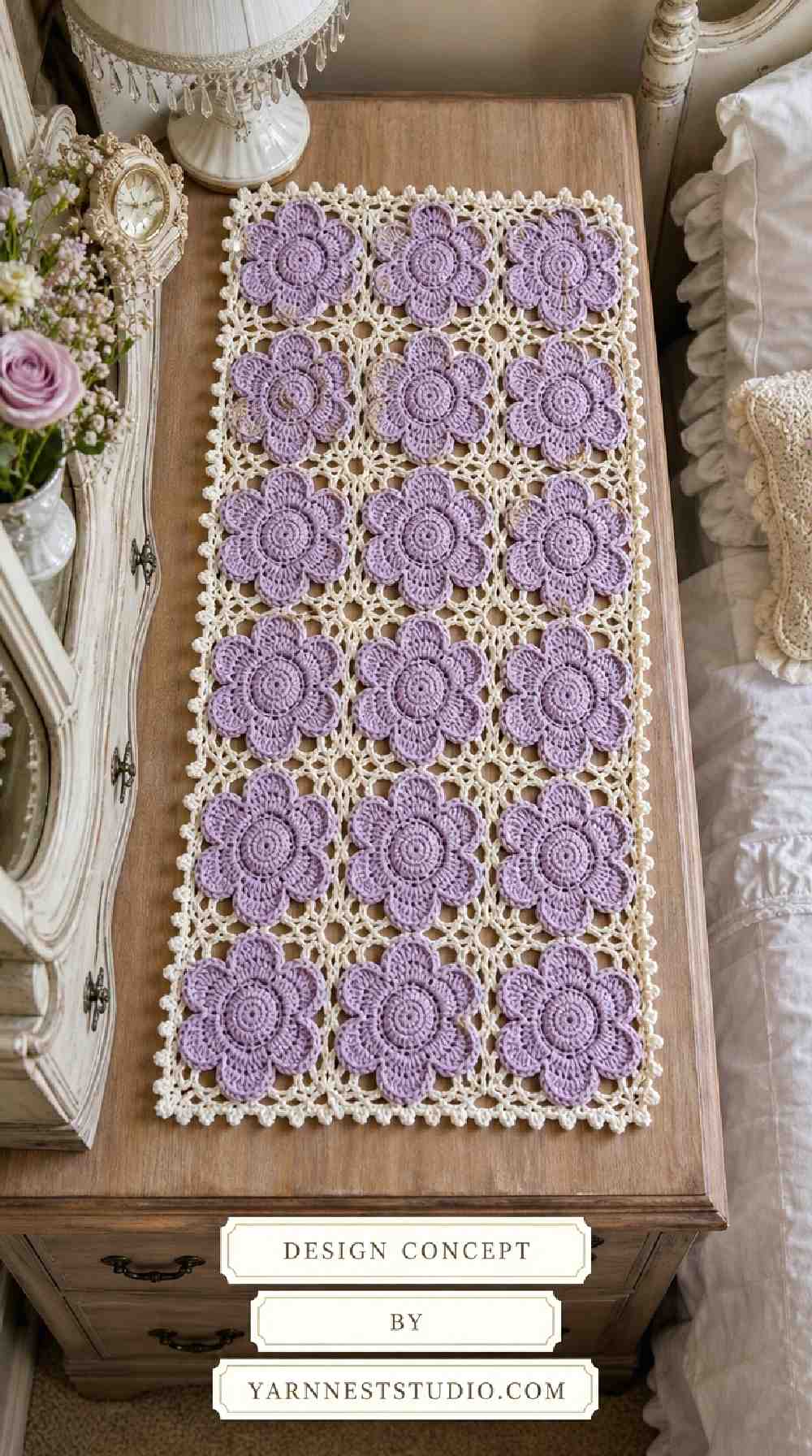
Fifteen dusty-lavender crochet rosettes create a soft floral grid across this dresser scarf. Arranged in three columns and five rows, the six-petal flowers connect through airy ivory mesh, with small picots tracing the rectangular edge.
Unlike a design built around one long central motif, this scarf spreads its flowers across the entire surface. The raised rosette centers give the lace extra texture. That detail creates a romantic appearance but also means the scarf is better treated as decorative fabric than an automatically level base for small objects.
- Joining Accuracy: Three columns and five rows require consistent spacing. Differences between motif sizes could cause the rectangular edges to shift.
- Raised Flower Centers: The rosettes create an uneven surface. Avoid relying on them to support delicate objects with small or unstable bases.
- Color Distribution: Dusty lavender carries the floral detail, while ivory mesh separates the flowers. Maintaining that contrast helps each rosette remain recognizable.
- Flexible Motif Count: For a different furniture length, additional or fewer rows are possible design adaptations, but the perimeter would need corresponding changes.
9. Crochet Ivory Cathedral Arch Scarf
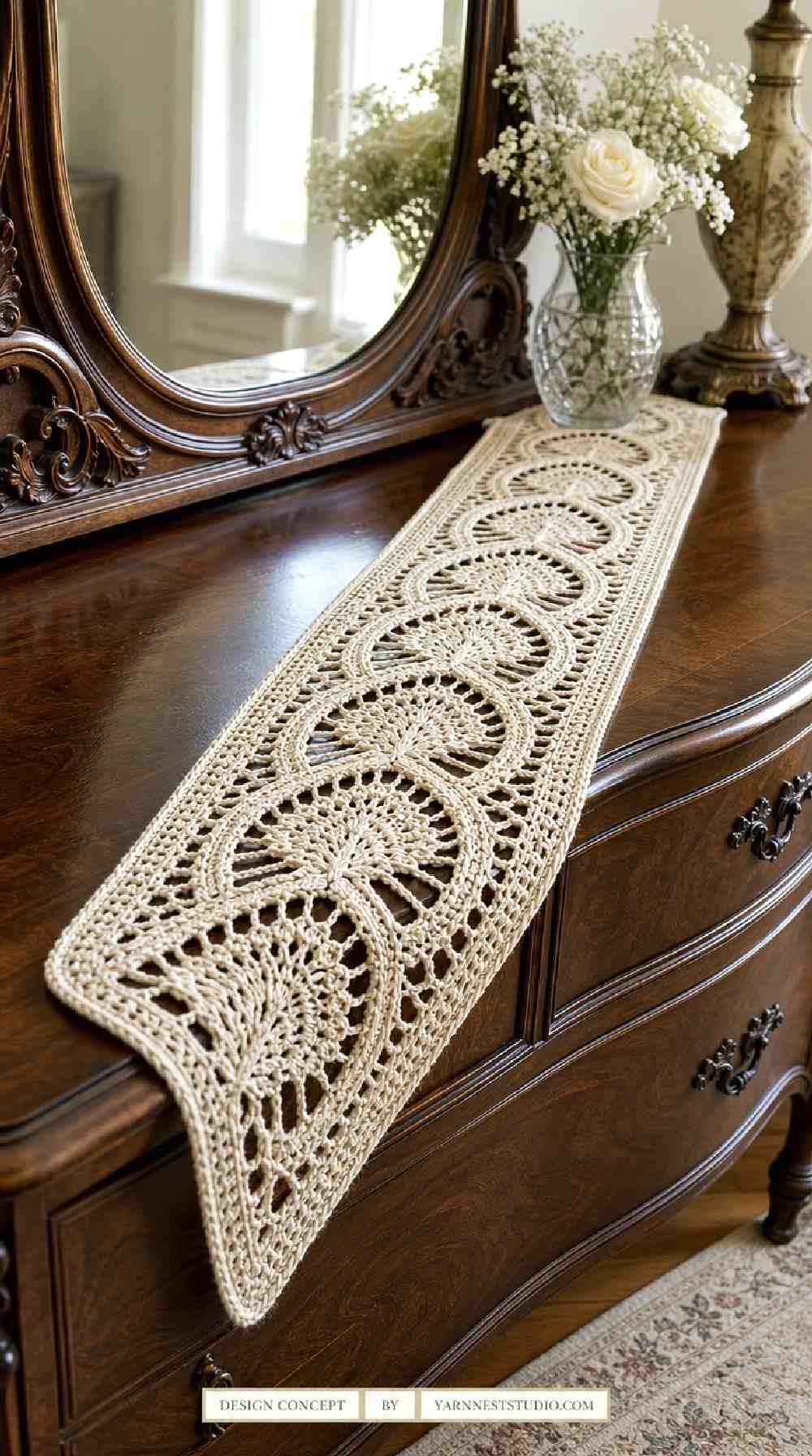
Repeated pointed cathedral arches run along the center of this narrow ivory crochet dresser scarf. Fine chain-loop spaces separate the architectural motifs, while straight crochet bands give both long edges a tidy, continuous finish.
Its inspiration comes from the graceful geometry associated with Victorian Gothic interiors. The open arches create a light lace appearance without adding flowers, fringe or contrasting colors. This makes it a strong option for someone who enjoys historical design but prefers a more controlled and symmetrical arrangement.
- Arch Symmetry: Each pointed opening should follow a consistent shape. Uneven chain spaces may make the repeated architectural pattern appear irregular.
- Visual Length: The uninterrupted row of arches draws attention along the dresser, which can make the design feel especially suited to elongated surfaces.
- Open-Stitch Caution: Fine chains and pointed arches may snag jewelry clasps or decorative objects with rough undersides.
- Background Contrast: Dark furniture can emphasize the ivory openings. An optional contrasting underlay would change the look but could make the individual arches easier to see on pale wood.
10. Crochet Blue Forget-Me-Not Scarf
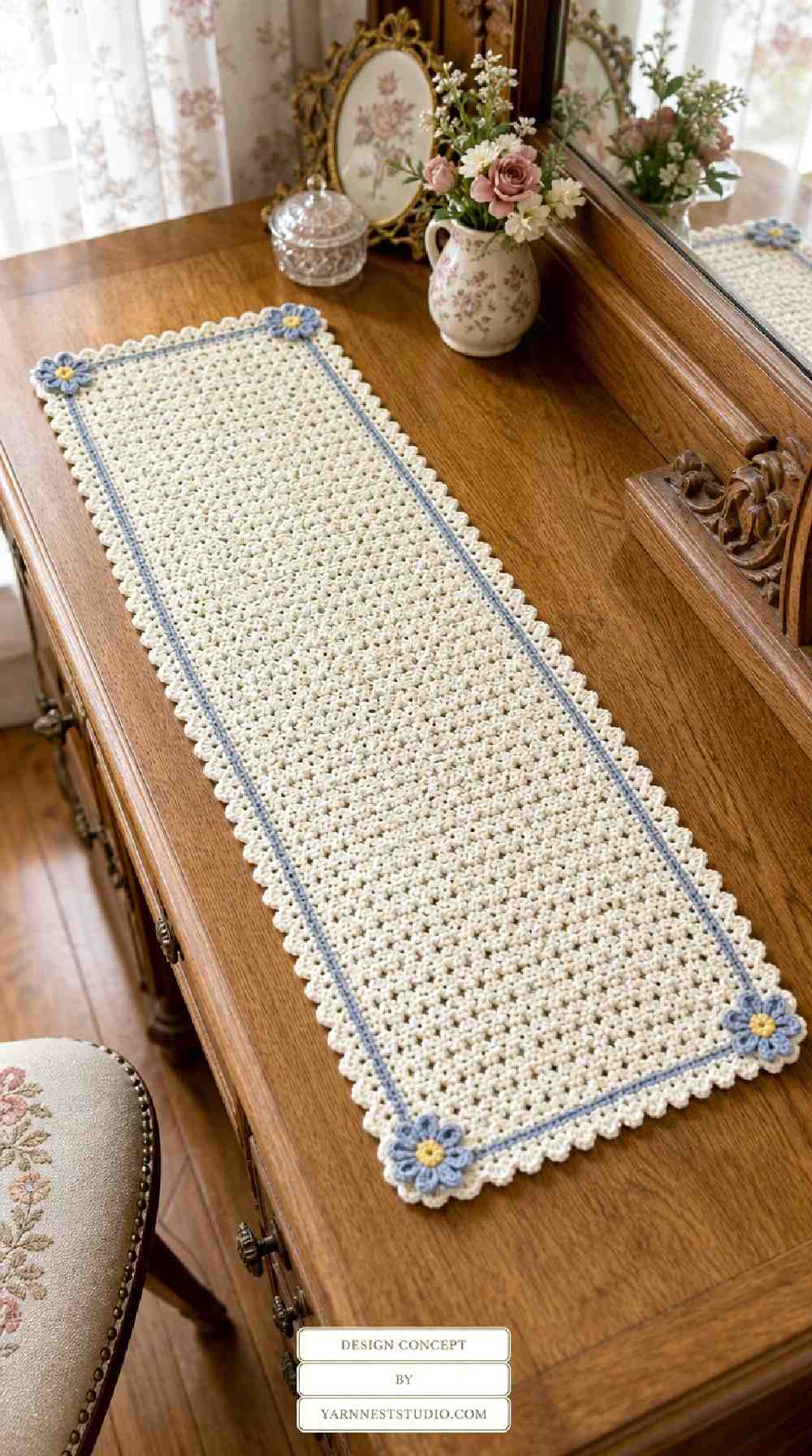
Four small dusty-blue forget-me-not flowers decorate the corners of this warm-ivory crochet dresser scarf. Each flower has five petals and a pale-yellow center, while a powder-blue outline and tiny ivory scallops frame the softly textured mesh body.
The floral details stay near the edges, leaving most of the rectangular center visually quiet. This is an appealing approach when a dresser already contains a few decorative pieces. The blue accents provide character without filling the entire scarf with colorful motifs.
- Corner Flower Placement: Positioning the four flowers evenly would keep the decoration balanced and prevent one corner from appearing heavier.
- Appliqué Security: Attached flowers need secure finishing in a real version, particularly where the scarf may be lifted or moved frequently.
- Central Display Area: The relatively plain mesh center offers space for visual styling, although the actual stitch openings still determine which objects can rest there.
- Accent Variations: Dusty rose or muted lavender flowers are possible alternatives, but changing the small corner motifs would preserve the original restrained layout.
11. Crochet Burgundy Diamond Lace Scarf
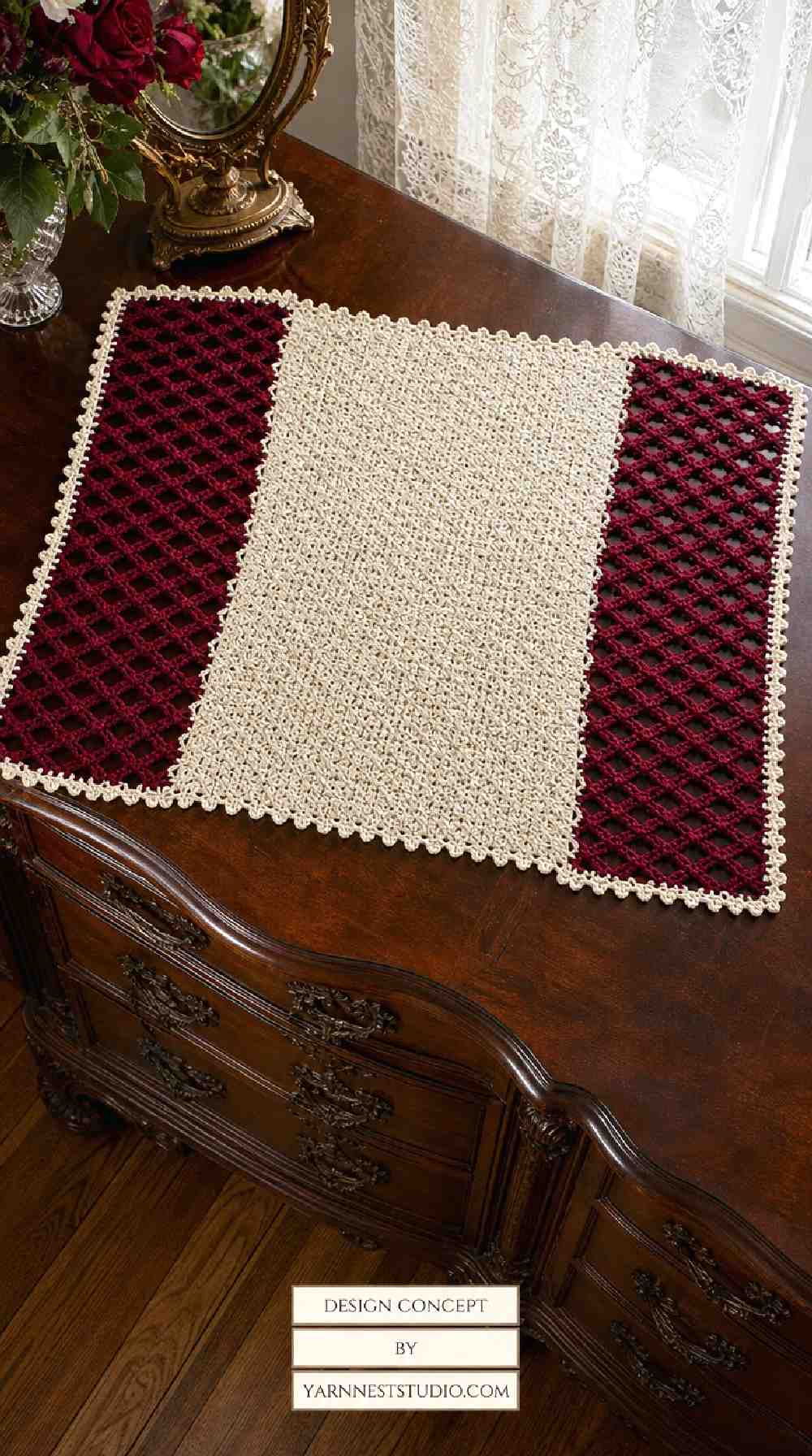
Deep burgundy diamond-lace panels finish both ends of this antique-cream crochet dresser scarf. A wide, closely textured cream section fills the center, while fine picot edging ties the rectangular shape together.
The strong contrast gives the design a more dramatic Victorian appearance than all-ivory lace. Its structure also divides the scarf into a quieter middle and two decorative end sections. Keeping both burgundy panels visible is important because they create the symmetry that defines the whole piece.
- Color Placement: Concentrating burgundy at the ends creates a strong frame. Repeating burgundy throughout the center would produce a noticeably different design.
- Diamond Openings: The end panels need consistent mesh spacing, particularly where the open burgundy lace meets the closer cream crochet.
- Colorfastness: If making a two-color cotton scarf, test the burgundy thread for bleeding before washing it together with the cream section.
- Display Balance: A compact central arrangement could leave both colored end panels exposed, while a very long display might compete with their visual effect.
12. Crochet Oatmeal Fringe Lace Scarf
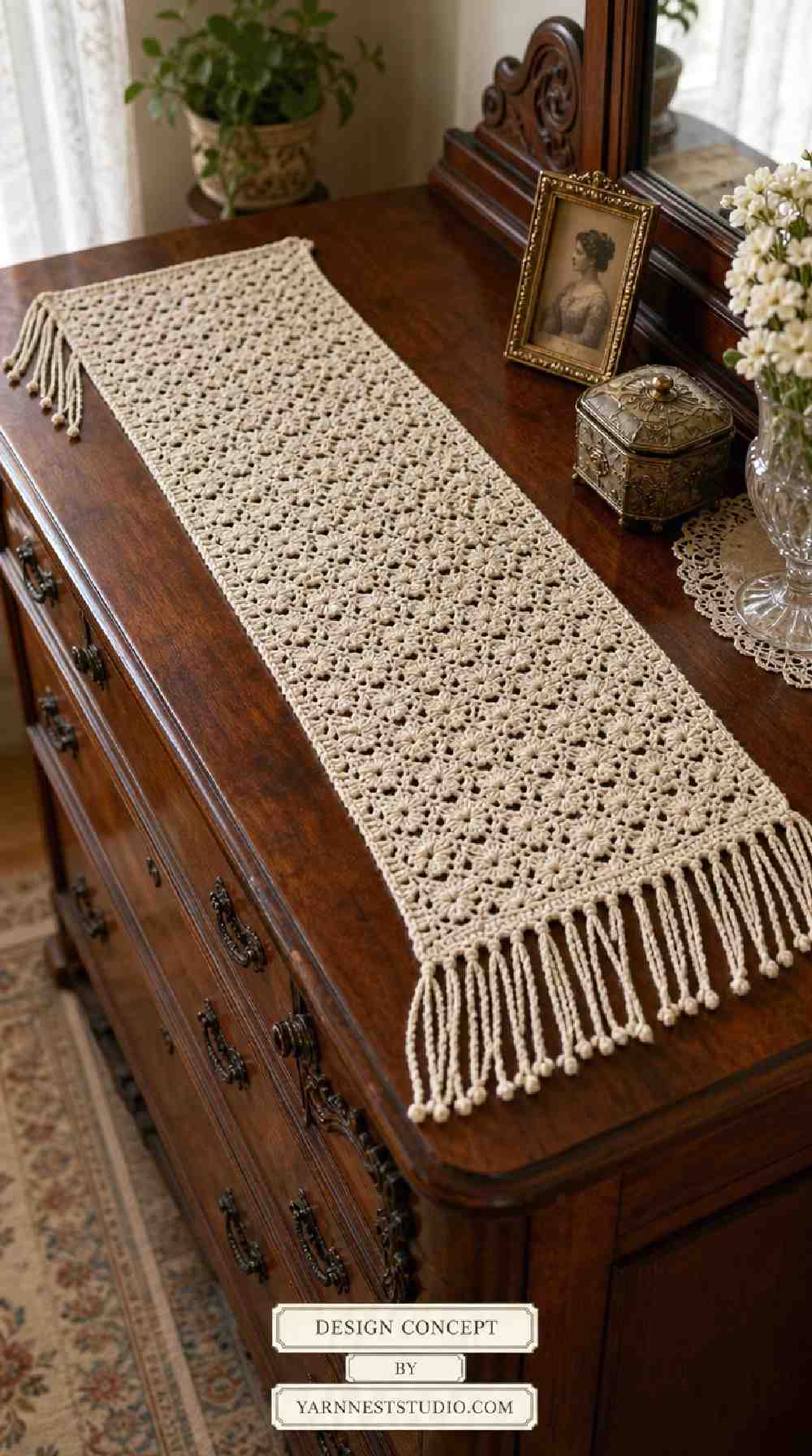
Soft oatmeal-cream crochet gives this Victorian-inspired scarf a warm, understated appearance. Small open fan stitches repeat across its rectangular body, and straight long-side borders provide structure. Short, evenly spaced crochet chain fringe finishes the two ends.
The fringe brings gentle movement to a design that otherwise relies on simple lace repetition. Unlike a heavily scalloped scarf, this concept has a more relaxed silhouette. Its end details should remain visible on the dresser surface rather than catching against hardware or being hidden behind nearby objects.
- Fringe Length: The chain fringe is deliberately short. Longer strands would create more movement but could increase tangling and snagging around a busy dresser.
- End Attachment: Each fringe strand needs a secure connection to the finishing band, especially if the scarf will be moved for cleaning.
- Drawer Clearance: Keep the fringed ends away from drawer openings and handles; loose chains can catch when furniture is used.
- Storage Consideration: Folding the scarf with the fringe lying flat may help reduce unnecessary tangling between uses.
13. Crochet Ivory Double Scallop Scarf
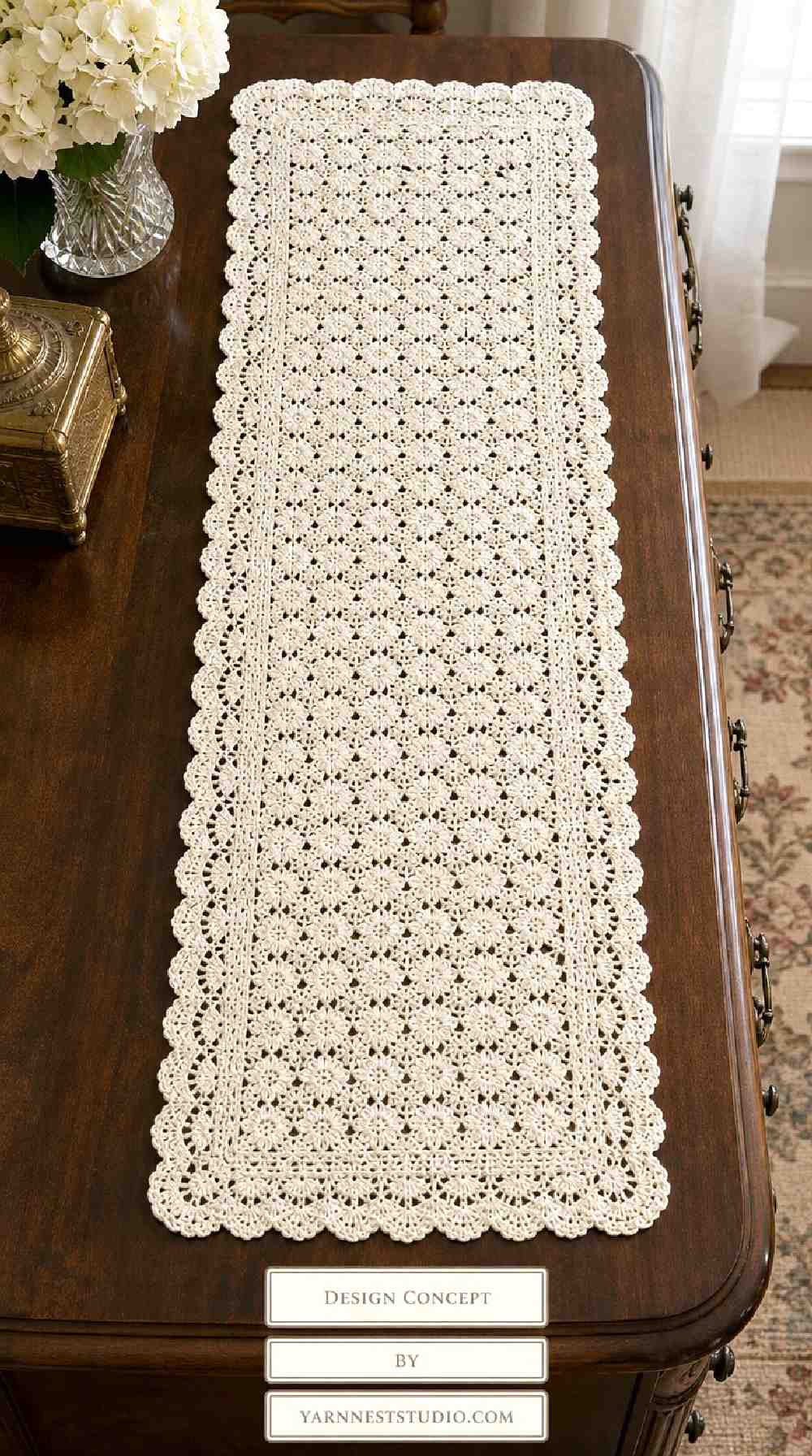
Small four-petal floral shells repeat across this wide ivory crochet dresser scarf, joined by delicate mesh openings. Two separate rows of scallops surround the entire rectangular shape: smaller dense scallops inside and broader airy curves outside.
The layered perimeter gives this design its richly decorated heirloom appearance. Because both edging rows contribute to the overall shape, the scarf needs enough open space to display them. Its detailed flower-and-shell arrangement would suit a dresser where the crochet itself is meant to become the main decorative feature.
- Double-Border Planning: The two scalloped rows need coordinated spacing. Poorly balanced increases could cause the outer layer to ripple or pull inward.
- Furniture Depth: This wide design needs more room than the narrow trellis or cathedral-arch scarves. Measure the full decorative width, including both borders.
- Floral Texture: Small raised shell details can create an uneven surface, making a separate stable base preferable for fragile decorative objects.
- Careful Shaping: Fiber-appropriate blocking may help open the outer scallops and define the inner row, but the correct method depends on the thread.
Practical Guide to Crochet Victorian Lace Dresser Scarves
Measure the furniture before choosing the design
Measure the usable width and depth of your dresser rather than relying only on its overall dimensions. Think about mirror bases, drawer handles and any objects that must stay in place. For a rectangular scarf, decide whether you want every edge to remain on the surface or a small decorative overhang.
Oval designs need their maximum width checked, while broad scallops and fans require extra display space.
Choose thread for the lace effect you want
Fine cotton crochet thread is a common option for detailed filet, pineapple and floral lace. A heavier yarn can create a larger, more substantial result, but it may change the delicate appearance significantly.
Make a small sample to compare stitch definition, flexibility and how clearly the lace openings appear.
Think about the surface underneath
Dark wood often makes light-colored openwork easier to see. Pale wood can create a softer, quieter effect, especially with ecru or champagne-colored crochet.
Remember that fine lace is decorative. It should not be assumed to protect furniture against scratches, heat, moisture or spilled cosmetics. Keep hot styling tools, open flames and damp containers away from the fabric.
Finish and care for the crochet properly
Lace may benefit from blocking to help the edges and motifs settle into their intended shape. Follow the fiber’s care instructions, test an appropriate method on a sample, and avoid pulling delicate openings out of proportion.
For more ideas about shapes and lace arrangements, explore 14 Crochet Lace Table Runner Ideas for Cozy Winter Gatherings and 35 Crochet Lace Doily Ideas for Fall 2026. These related collections offer other ways to compare decorative crochet structures.
Want to Make Something Similar?
The 13 scarves shown here are original design concepts, so the resources below teach related crochet techniques rather than provide exact patterns for the pictured pieces.
- For floral filet lace: Filet Crochet — Crochet.com explains open and filled mesh, reading filet charts and keeping the design clearly defined. It’s useful background for the Champagne Filet Lily Scarf. crochet.com
- For connected lace motifs: Lace Table Runner by TLH Patterns is a free published pattern using joined hexagonal lace motifs, with a related video tutorial. Its joining approach offers a useful learning direction, although it does not recreate the rose or lavender rosette designs above. ravelry.com
- For shaping and finishing: How to Block Crochet — Crochet.com covers blocking methods and material precautions that can help when working with delicate crochet lace. Perfect Your Crochet Projects
Comparison: Which Victorian Lace Dresser Scarf Should You Choose?
The main differences come down to how the crochet is arranged, how much of the surface it decorates and which details need extra care.
| Design | Main advantage | Important trade-off |
|---|---|---|
| Ivory Rose Medallion | Distinct joined rose motifs | Even motif sizing matters |
| Ecru Diamond Trellis | Slim, orderly lace | Fine picots may snag |
| Blush Cameo Oval | Romantic curved silhouette | Requires careful width planning |
| Ivory Pineapple Fan | Ornamental matching ends | Needs visible end space |
| Champagne Filet Lily | Clear floral imagery | Depends on accurate filet charting |
| Sage Ribbon-Laced | Changeable color accent | Ribbon needs separate consideration |
| Antique Gold Shell | Generous curved side borders | Extra furniture depth needed |
| Lavender Rosette | Repeated raised flowers | Less even under small objects |
| Ivory Cathedral Arch | Strong geometric rhythm | Open chain spaces may catch |
| Blue Forget-Me-Not | Subtle corner decoration | Appliqués need secure attachment |
| Burgundy Diamond | Bold contrasting end panels | Colorfastness needs checking |
| Oatmeal Fringe | Soft decorative end movement | Fringe may tangle |
| Ivory Double-Scallop | Rich all-around lace edging | Wide border needs display room |
For a dresser that is used every day, start by looking at the trellis, filet lily or relatively restrained corner-flower concept. For a dedicated decorative display, the rose medallion, pineapple fan and double-scallop ideas put more emphasis on ornamental crochet details.
Conclusion
Victorian lace dresser scarves offer plenty of room for personal style, even when the color palette stays close to ivory and cream. A simple diamond trellis can feel elegant without taking over a dresser, while connected roses, pineapple fans and layered scallops create a more decorative heirloom look.
The most useful starting point is the furniture itself. Decide how much space the scarf can occupy, how open you want the lace to be and which edges deserve attention. Those choices will help you select an inspiration idea that looks attractive and makes sense for your room.
Which design would you choose for your dresser? Would you prefer the delicate ivory rose medallions, the colorful burgundy diamond lace or the richly layered double scallops? Share your favorite and what kind of dresser you’d use it on.
Frequently Asked Questions
1. What is a crochet Victorian lace dresser scarf?
A crochet dresser scarf is a decorative textile placed across the top of a dresser, vanity or similar piece of furniture. Victorian-inspired versions often feature fine openwork, floral motifs, filet patterns, scalloped borders and elongated shapes. The term describes a decorative style rather than one specific stitch pattern or construction method.
2. What type of yarn is suitable for a Victorian lace dresser scarf?
Fine cotton crochet thread is often a good starting point when you want delicate, well-defined lace. The exact thread size and hook depend on the chosen pattern and desired finished dimensions. Heavier yarn can also work for a different interpretation, but the resulting scarf may appear thicker and less delicate than traditional thread lace.
3. How long should a crochet dresser scarf be?
There isn’t one required length. The right size depends on your dresser’s surface, the amount of wood you want to leave exposed and whether you prefer overhanging ends. Measure your furniture and check the actual pattern’s dimensions or your stitch sample before planning a real scarf. Do not treat the proportions in AI-generated pictures as measured sizes.
4. Can Victorian crochet lace dresser scarves be washed?
That depends on the fiber, construction and any extra decorations. Cotton thread may be washable when its care instructions permit, but delicate joins, fringe, ribbons and colored accents may need special handling. Follow the material labels, test colorfastness where appropriate and dry the lace in a way that respects its shape.
5. Are these 13 Victorian lace dresser scarves available as crochet patterns?
These 13 designs are visual inspiration concepts, not tested patterns, and there are no verified exact-pattern instructions for the pictured scarves. The linked resources above can help you learn relevant techniques such as filet crochet, motif joining and blocking. For a real project, use a suitable published pattern or develop and test your own construction plan.