Fall crochet decor does not have to rely on leaves and pumpkins alone. A traditional lace doily can feel distinctly autumnal when its shape, texture, fiber, and color work with the rest of a seasonal table or display.
A few projects in this collection are directly connected to fall, including pumpkin and sunflower designs. Others are lace doily constructions that can be adapted to a fall setting through colors such as cream, antique gold, rust, burgundy, olive, copper, warm brown, or muted orange. The goal is not to pretend every source tutorial was designed specifically for autumn, but to show how different lace structures can support a fall 2026 decorating plan.
The 35 ideas also vary beyond color. You will find round and oval doilies, square filet lace, hearts, star points, pineapple lace, floral medallions, a gothic option, small coaster-scale pieces, and larger table accents. Use the linked creator tutorials for the exact construction details, and check the creator’s material and sizing information before making substitutions.
Quick List
- Crochet Sunflower Lace Centerpiece Doily
- Crochet Pumpkin Shaped Harvest Doily
- Crochet Vintage Scallop Lace Doily
- Crochet Rosette Style Vintage Lace Doily
- Crochet Pineapple Fan Lace Doily
- Crochet Heart Lace Accent Doily
- Crochet Convertible Flower Bouquet Doily
- Crochet Joinable Lace Motif Doily
- Crochet Compact Openwork Round Doily
- Crochet Hazy Flower Lace Doily
- Crochet Mandala Lace Table Doily
- Crochet Star Point Lace Doily
- Crochet Classic Oval Lace Doily
- Crochet Blooming Mini Lace Doily
- Crochet Garden Inspired Lace Doily
- Crochet Old World Vintage Round Doily
- Crochet Placemat Scale Round Doily
- Crochet Gothic Postmortem Lace Doily
- Crochet Heart Shaped Table Doily
- Crochet Multicolor Harvest Lace Doily
- Crochet Square Filet Lace Doily
- Crochet Small Floral Medallion Doily
- Crochet Spiral Lace Doily
- Crochet Clustered Flower Table Doily
- Crochet Radiating Mandala Centerpiece Doily
- Crochet Petaled Lace Motif Doily
- Crochet Carnation Two Way Flower Doily
- Crochet Expandable Oval Lace Doily
- Crochet Large Round Thread Doily
- Crochet Fan Trimmed Cotton Doily
- Crochet Layered Lace Round Doily
- Crochet 1907 Inspired Star Flower Doily
- Crochet Flower Doily Coaster
- Crochet Picot Edged Mini Doily
- Crochet Repeat Growth Round Table Doily
How to Make Crochet Lace Feel Like Fall
Color is the simplest seasonal change, but lace usually looks clearer when the palette does not compete with the stitchwork. Burnt orange, ochre, burgundy, olive, tobacco brown, warm cream, and muted gold can all suggest fall without hiding delicate openings and edges.
Consider the surface underneath the finished piece as part of the color plan. Cream lace can become much more visible against dark wood, while rust or burgundy can stand out against a pale table. A highly detailed doily may need more contrast than a dense, bold design.
You also do not need to combine every traditional autumn color in one piece. A single warm neutral or two coordinated shades can give complicated lace room to remain the focus.
Choose Shape and Lace Density Before You Choose Color
Round doilies naturally frame bowls, vases, and centered table displays. Ovals can make better visual use of long consoles and dining tables, while square and heart-shaped pieces create stronger directional lines. Pumpkin, sunflower, and star-like silhouettes contribute their own decorative theme before color is added.
Lace density changes the mood as well. Large openings allow the table underneath to become part of the design. Denser sections produce a stronger block of color and can feel more substantial.
Yarn or thread substitutions can affect both scale and drape, so do not assume that changing only the fiber will leave the finished dimensions unchanged. Check the creator’s recommended materials, gauge information when supplied, and finished result before deciding how closely you want to follow the original.
Blocking and Placement Matter More Than They Seem
Points, scallops, petals, fans, and open lace can look uneven immediately after crochet. Appropriate blocking can help the finished geometry become easier to see, but the blocking method should suit the fiber being used. Check the yarn or thread care instructions rather than treating every fiber the same way.
Plan the final placement before deciding that a doily needs to be larger. A piece intended beneath a narrow vase has different space requirements from one intended as the main dining-table centerpiece.
For seasonal displays involving candles or serving dishes, remember that a decorative textile is not automatically a heat barrier. Keep crochet away from open flames and direct high heat, and do not treat an ordinary lace doily as a trivet unless the project and materials were specifically intended for that function.
1. Crochet Sunflower Lace Centerpiece Doily
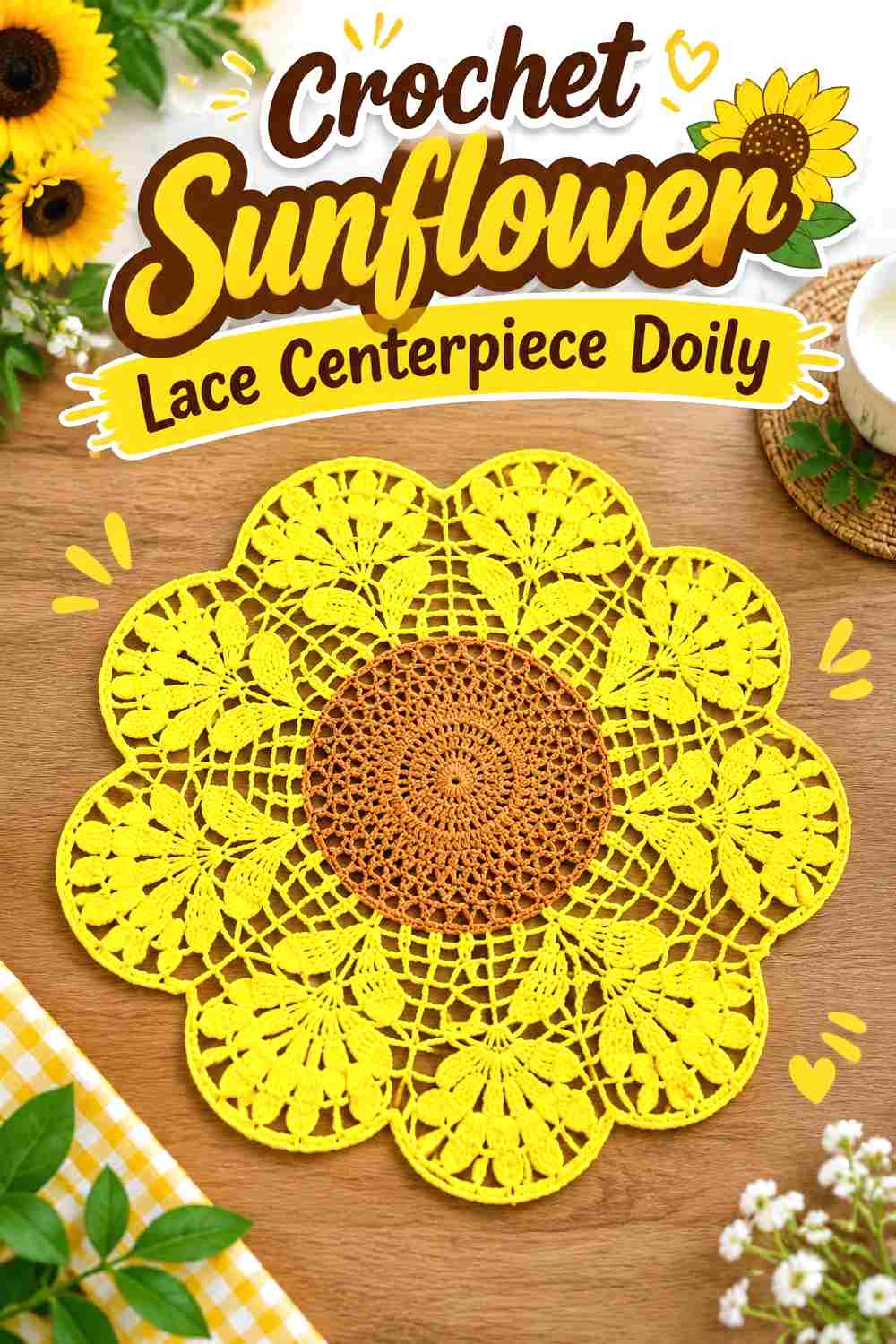
A sunflower is one of the clearest bridges between late-summer florals and fall decorating. This round design creates a strong central focal point, so it can carry an autumn table setting without requiring extra leaf or pumpkin embellishments.
It is particularly useful when you want seasonal imagery while keeping the overall object flat and easy to layer beneath a vase, bowl, or other decorative centerpiece.
The Petal Ring Carries the Seasonal Theme
Because the petal outline is already recognizable, color can remain relatively restrained. Golden yellow is an obvious direction, but antique gold, ochre, rust, or even cream against a dark surface can shift the mood toward a quieter autumn palette.
Before changing colors, look at where the flower center visually ends and the petal area begins. Preserving that contrast usually matters more than using an exact sunflower shade.
Give the Outer Petals Enough Visual Space
A flower-shaped edge loses some of its effect when it is crowded beneath an object nearly as wide as the doily. If the petal silhouette is the feature you want to display, choose a centerpiece that leaves enough of the border visible.
That also makes this option different from a conventional circular doily whose outer edge may serve mainly as framing.
Creator Credit: HandmadebyRaine
2. Crochet Pumpkin Shaped Harvest Doily
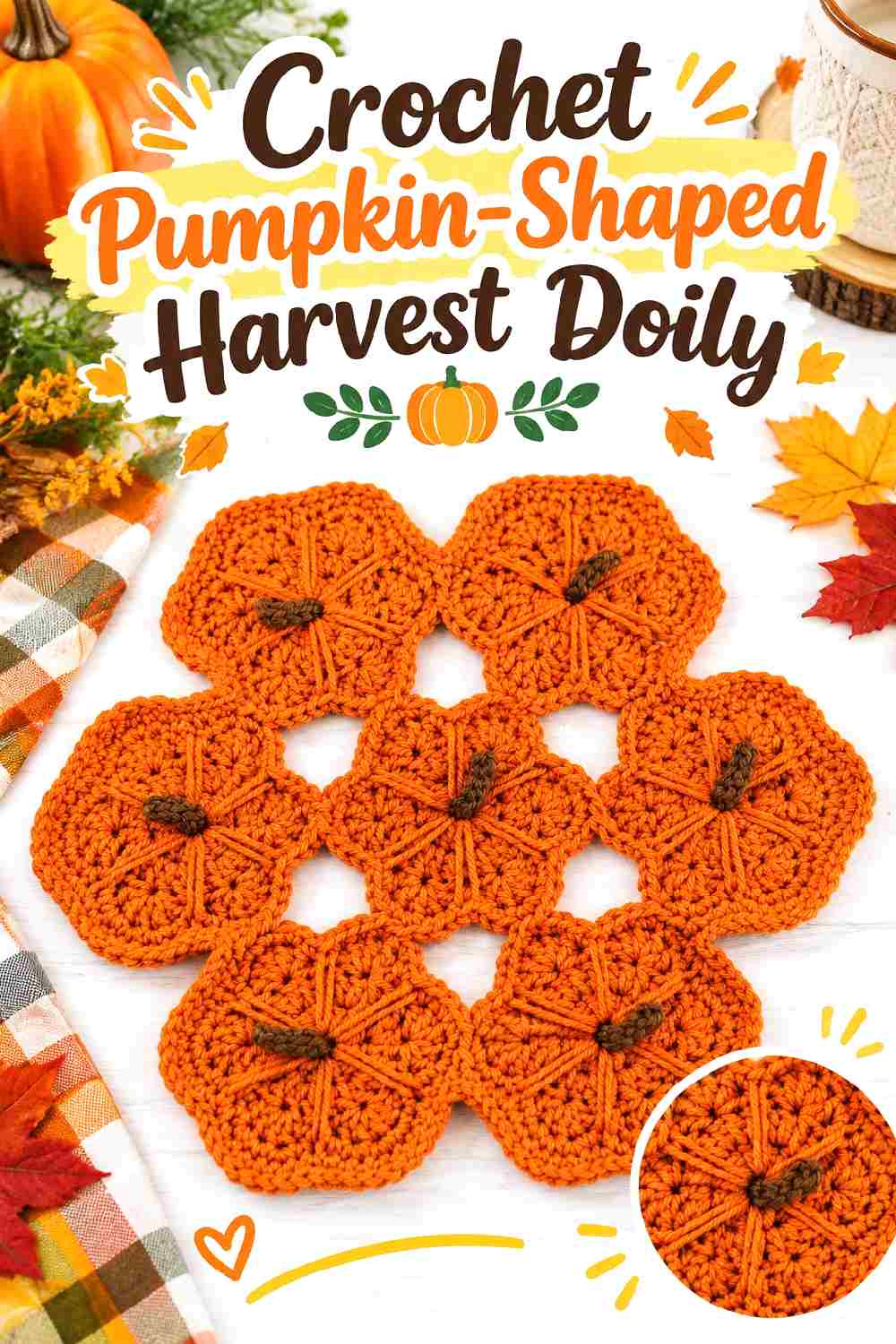
This pumpkin-shaped piece is one of the most explicitly fall-oriented choices in the collection. Instead of relying on a printed motif or attached appliqué, the outline itself supplies the harvest-season identity.
It can work particularly well when a conventional round centerpiece feels too formal for the table you are planning.
The Silhouette Matters More Than Extra Decoration
A defined pumpkin outline already makes a strong statement, so additional fall embellishment is optional rather than necessary. A single orange, rust, cream, or muted green interpretation can keep the shape readable.
If adapting the palette, maintain enough contrast between the doily and the table surface that the outer lobes remain easy to see.
Check the Table Space Before Treating It Like a Placemat
A shaped piece occupies space differently from a circle. The widest area may sit away from the center line, and stem or leaf details can extend beyond the main body.
Compare the finished dimensions given by the creator with your dishes or centerpiece rather than assuming a pumpkin shape will fit wherever a round mat would.
Creator Credit: Sirin’s Crochet
3. Crochet Vintage Scallop Lace Doily
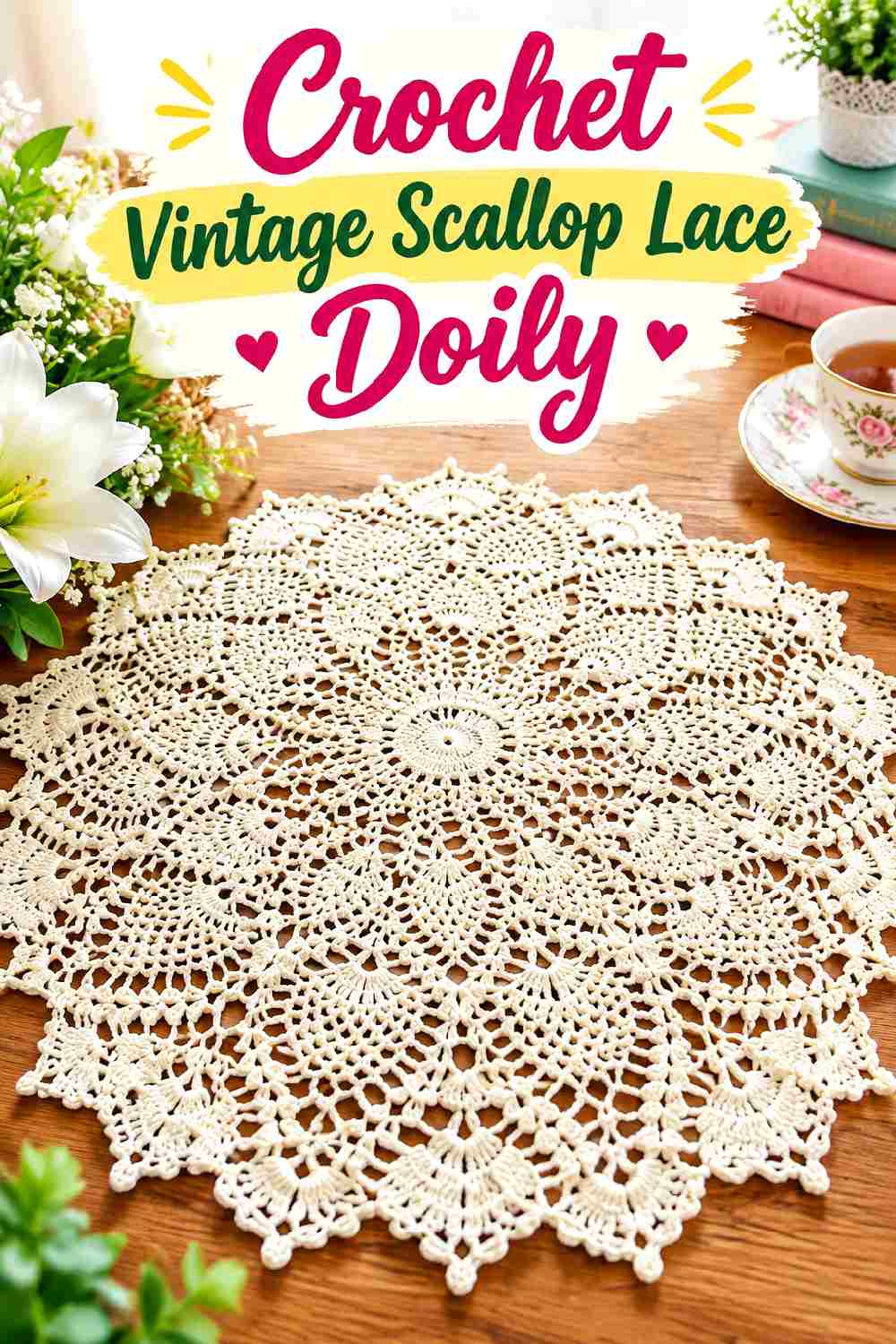
For a more traditional autumn table, vintage-style lace can provide texture without making the seasonal theme literal. This approach suits settings built around wood, brass-toned accents, dried flowers, old books, or heirloom-inspired dishes.
Its decorative value comes from the interaction between openwork and the finished border rather than from a recognizable seasonal motif.
Scallops Become Part of the Table’s Outline
A pronounced scalloped edge works almost like a frame. That makes the amount of visible border important when placing another object on top.
Try to avoid covering every outer repeat with a large centerpiece. Leaving some of the perimeter exposed allows the lace architecture to remain visible.
Dark Surfaces Can Emphasize Fine Openwork
Traditional light-colored lace may appear especially defined over walnut, dark-stained wood, or another contrasting background. Conversely, deeper fall colors can be effective over a light tabletop.
Think about the negative space as part of the finished design rather than judging the thread color in isolation.
Creator Credit: Crochet World Creations
4. Crochet Rosette Style Vintage Lace Doily
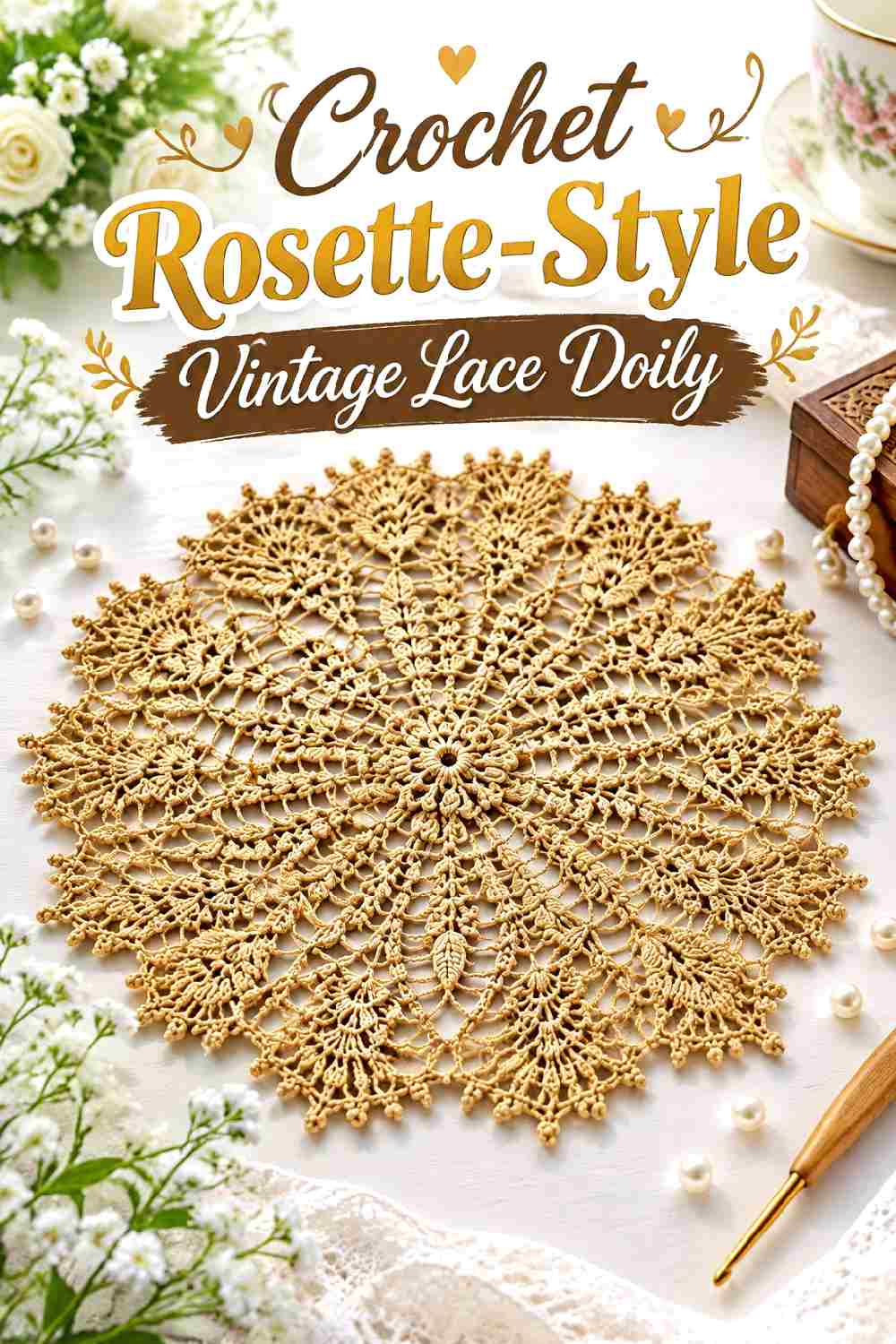
This vintage-inspired round doily offers a more floral interpretation of traditional lace. It can complement fall arrangements that use dried blooms, small gourds, or muted botanicals without duplicating those objects directly in crochet.
The floral geometry also gives it a softer visual center than strongly pointed or highly angular designs.
A Rosette Center Works Well Under Narrow Decor
When the center contains a noticeable floral form, covering it completely can change the look of the piece. A narrow vase or candlestick arrangement can leave both the central texture and much of the border visible.
If you plan to cover most of the middle, decide whether the outer lace alone provides enough of the look you want.
One Antique-Inspired Shade Can Keep It Calm
A vintage doily does not require bright white. Warm cream, oatmeal, faded gold, muted terracotta, or another subdued fall shade can shift the mood while preserving the old-fashioned character.
For detailed lace, a restrained palette can also make individual openings easier to distinguish.
Creator Credit: cc crochet
5. Crochet Pineapple Fan Lace Doily
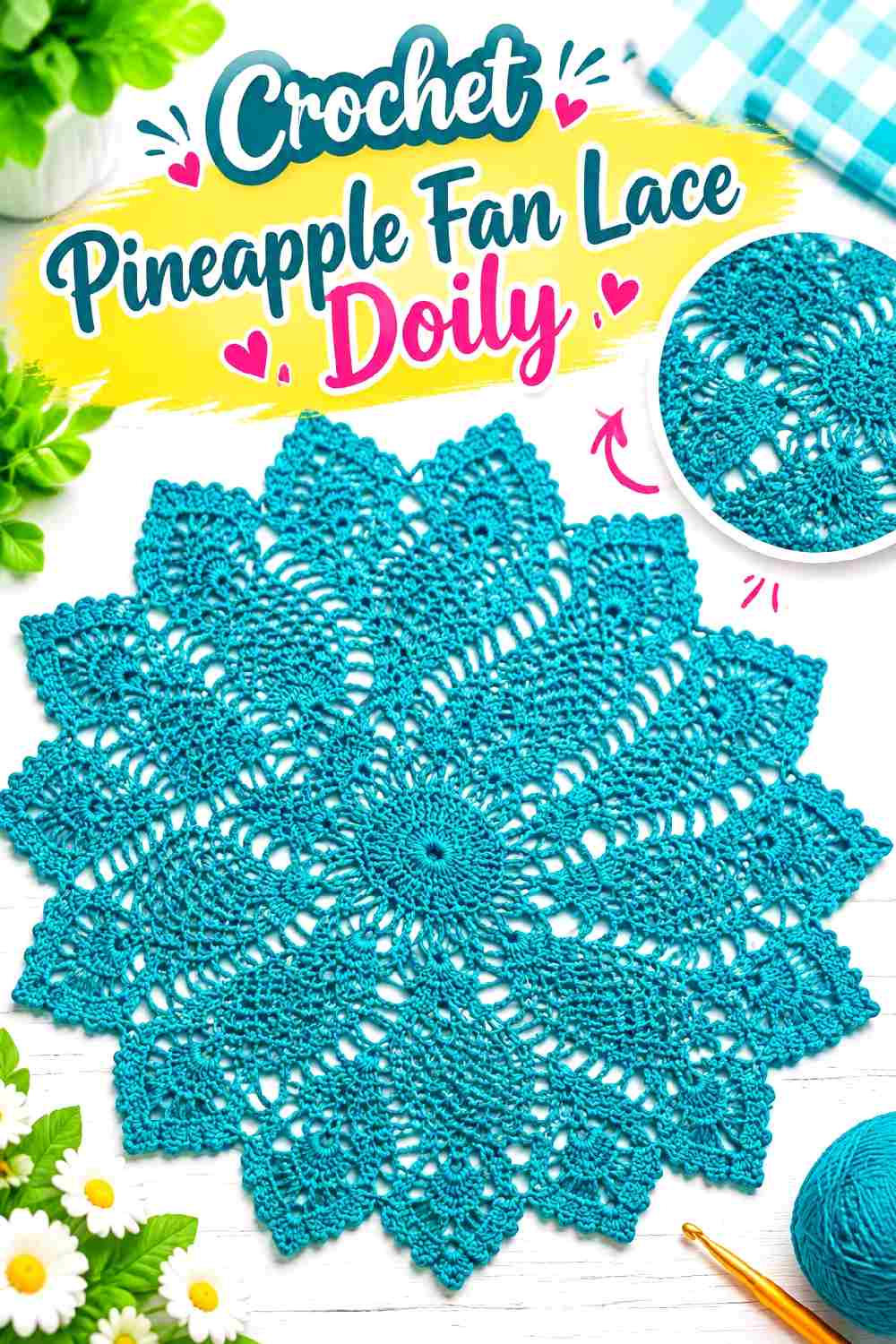
Pineapple lace creates a noticeably different surface from simple circular mesh because the repeated motifs develop into elongated, fan-like forms. That makes it a useful choice when you want the doily itself to supply most of the decorative detail.
For fall, its layered shapes can pair naturally with traditional dining settings and warm solid colors.
Pineapple Motifs Need Room to Read as Motifs
When a large object covers most of the interior, the repeated pineapple forms may become harder to recognize. Before assigning this piece to a centerpiece, look at where the main motifs sit within the finished layout.
A lower, narrower decorative object may preserve more of that patterning than a wide bowl.
Solid Colors Usually Let Complex Lace Speak Clearly
Multicolor crochet can be attractive, but pineapple lace already creates substantial visual movement. A single warm shade or a closely related tonal palette can keep the focus on the motif structure.
If you do introduce color changes, consider whether they reinforce the motif boundaries rather than interrupting them.
Creator Credit: HiruHandmade Crochet
6. Crochet Heart Lace Accent Doily
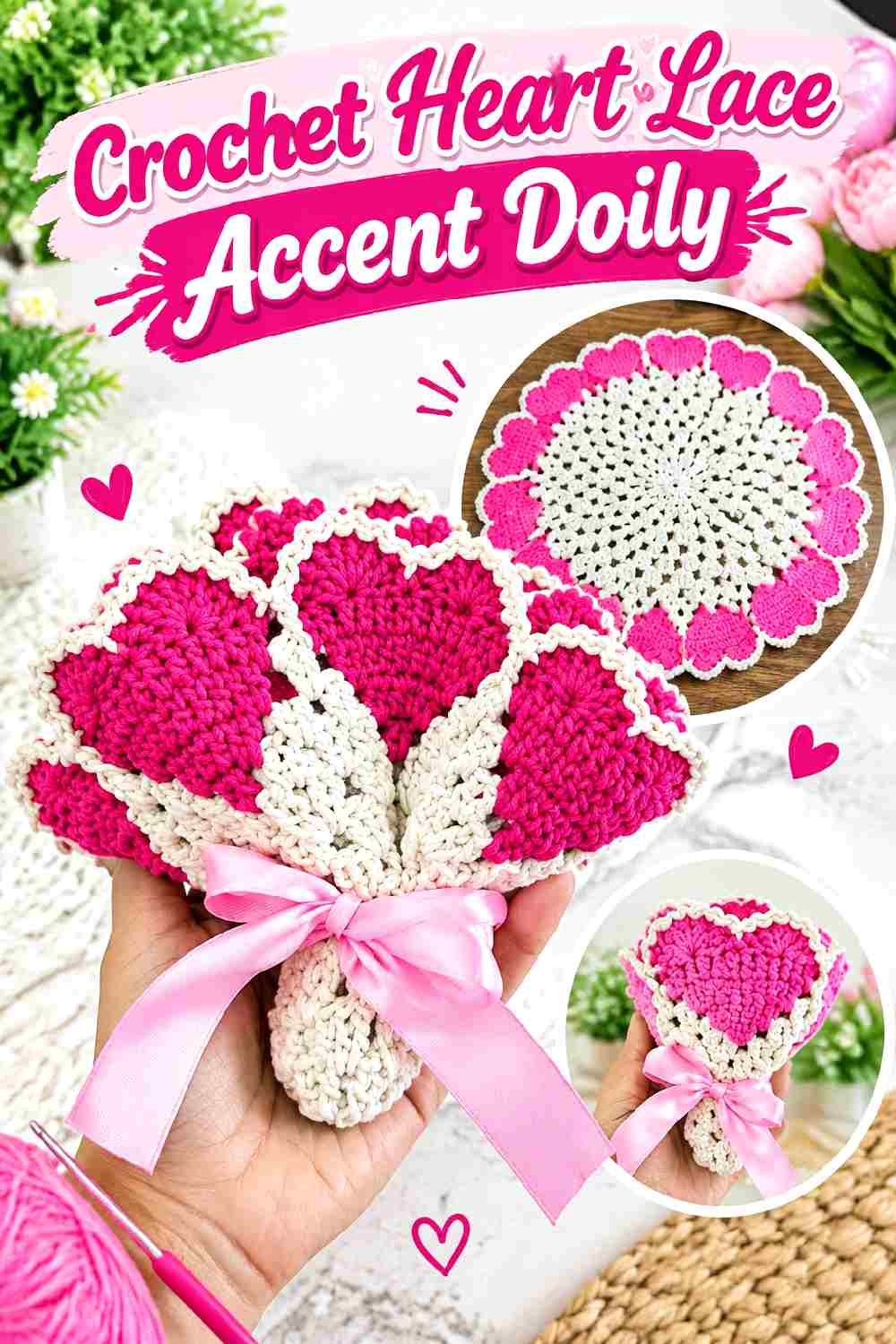
A heart-shaped lace doily can move fall decor away from purely harvest imagery. In burgundy, wine, rust, or warm cream, the shape can work for intimate dinners, family gatherings, or small seasonal vignettes.
Its asymmetrical top and pointed lower edge also make it behave differently on a table from a round centerpiece.
Direction Matters With a Heart Shape
Unlike a circular doily, a heart has a clear top and bottom. Decide which direction the point should face before placing dishes, frames, candles, or a centerpiece around it.
This is especially useful on a console or side table where the doily will primarily be viewed from one direction.
Use Color to Move the Heart Away From Valentine’s Styling
The shape is often associated with February, but the palette can change that context considerably. Dark red, copper, brown-red, or natural cream beside dried foliage can feel much more autumnal than pink or bright red.
The surrounding decor matters just as much as the crochet color.
Creator Credit: Shelen Crochet
7. Crochet Convertible Flower Bouquet Doily
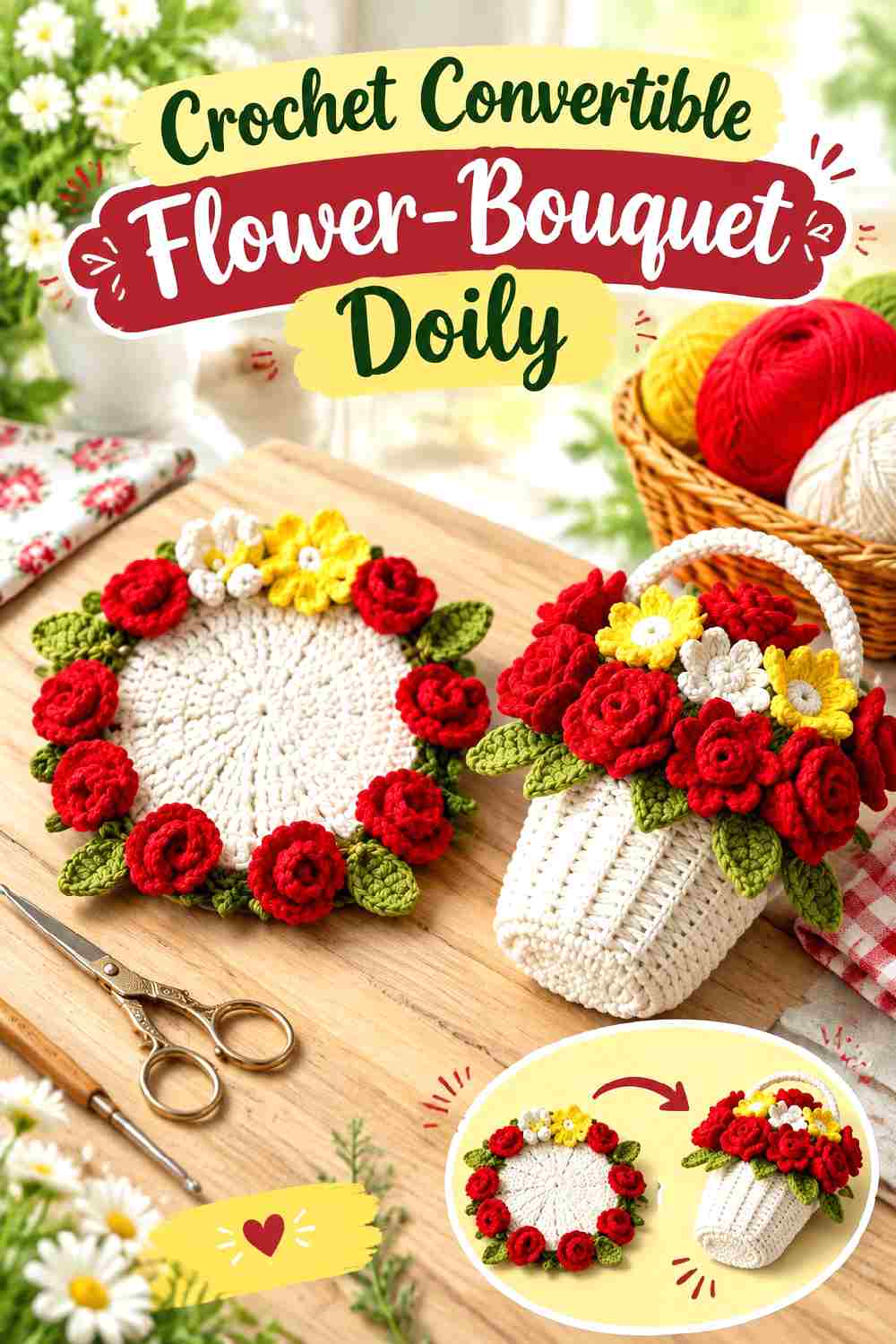
This design stands apart because the round crochet piece can be presented with a flower-like character rather than reading only as a flat table mat. That makes it appealing for a fall display where you want some dimensional interest without creating a full amigurumi centerpiece.
It can also provide a different visual break among conventional circular doilies.
Think About the Flat and Dimensional Looks Separately
A piece designed to suggest a floral arrangement may look quite different when opened flat. Decide which presentation you actually want before selecting its color placement.
If both forms matter, choose colors that remain balanced when the crochet is viewed from either direction.
Keep the Display Method From Hiding the Lace
Dimensional presentation can make the center more noticeable while compressing or folding other areas. Look at the finished tutorial result carefully and decide which lace sections remain visible in the form you intend to use.
This is one project where display planning can matter as much as tabletop dimensions.
Creator Credit: نونا كروشية
8. Crochet Joinable Lace Motif Doily
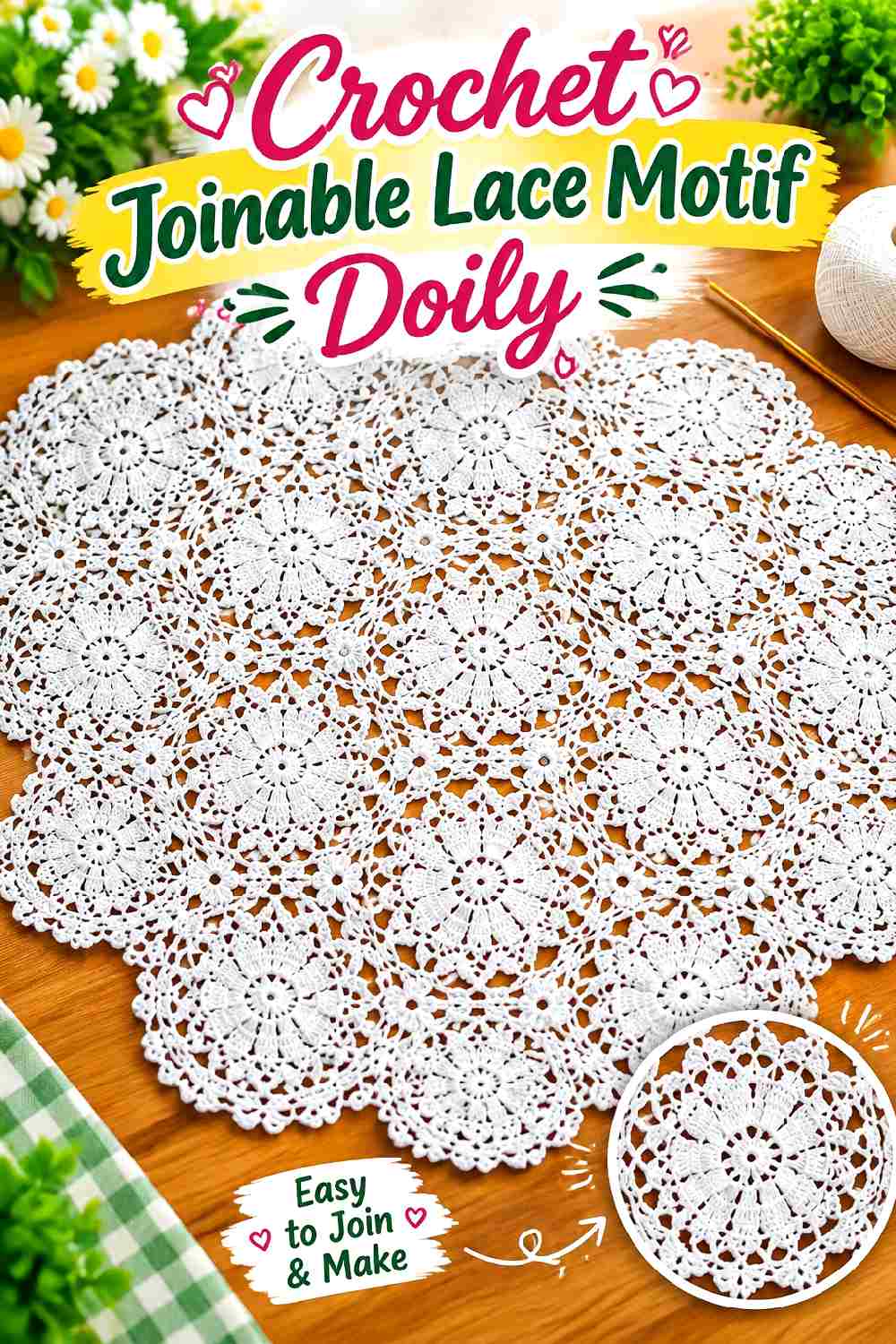
A motif-based lace design gives you a different planning route from a doily worked only as one expanding circle. Individual units can create a tiled or repeated effect that works especially well when you like geometric table decor.
For fall, the repeated motifs can be kept monochrome or arranged in a controlled palette of related autumn shades.
Motif Repetition Makes Alignment More Noticeable
When several units sit next to one another, differences in blocked size or tension become easier to see. Compare the dimensions of completed motifs before committing to a larger arrangement.
Consistent sizing matters more here than it would for a single isolated decorative medallion.
Plan the Final Footprint Before Making Extra Units
A modular idea can tempt you to keep adding motifs, but the finished table area should determine how many are useful. Lay completed units on the intended surface before deciding whether a larger composition would actually improve the display.
This approach can prevent an elegant accent from becoming too wide for its setting.
Creator Credit: Crochet Swan
9. Crochet Compact Openwork Round Doily
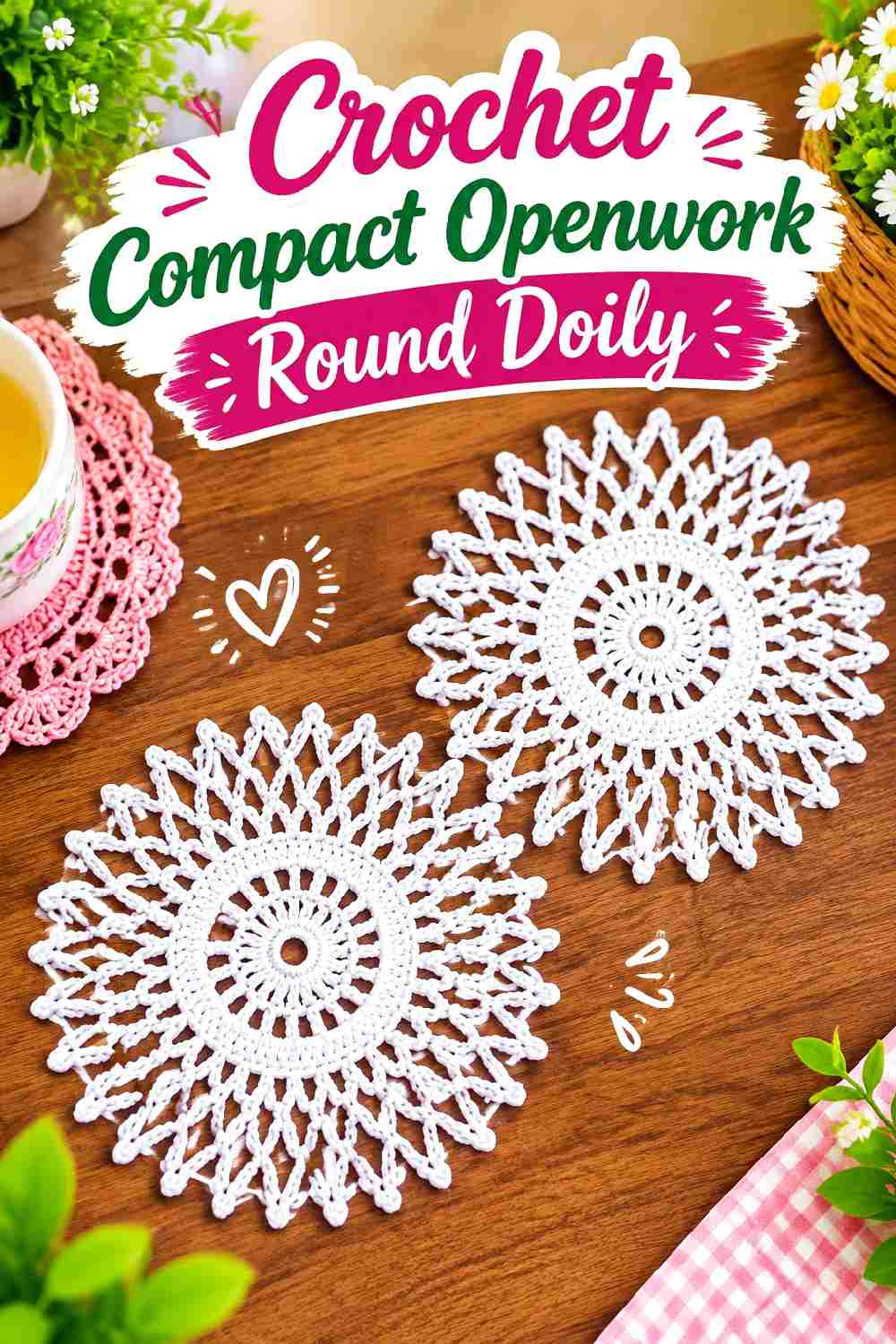
A straightforward round openwork doily is useful when you want fall color to lead the design rather than a strongly seasonal shape. It can sit beneath a small bowl, vase, or decorative object while adding texture without taking over the arrangement.
Its familiar circular footprint also makes placement easier to predict.
Small Openings Let the Table Color Participate
Openwork is partly defined by what can be seen through it. A rust-colored doily over dark brown wood will behave differently from the same piece over cream stone or a pale tablecloth.
Test the thread or yarn against the actual surface whenever possible before committing to the whole project.
A Compact Doily Can Be More Flexible Than a Centerpiece
Smaller pieces can be distributed around a room rather than used only in the middle of a dining table. They may suit a nightstand, shelf, entry table, or individual seasonal display.
That flexibility makes this format useful when you want repeated touches of crochet rather than one large statement piece.
Creator Credit: NotikaLand crochet and knitting
10. Crochet Hazy Flower Lace Doily
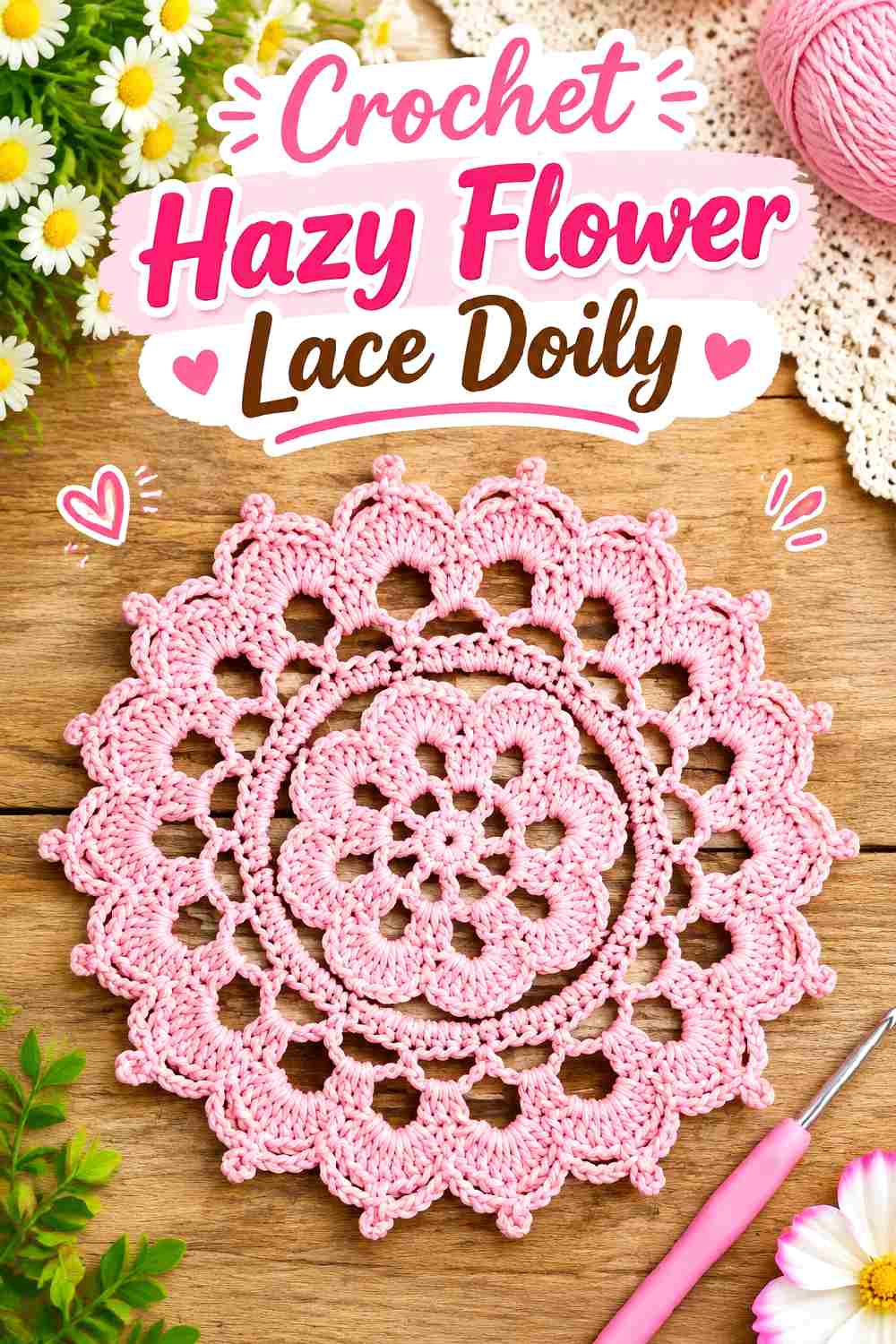
This floral round design offers a softer alternative to highly geometric lace. It can work with fall decorating that leans botanical—dried flowers, seed heads, muted leaves, and natural materials—rather than pumpkin-heavy.
The flower-centered structure gives the eye a clear place to land even when the outer lace becomes more detailed.
Let the Flower Center Influence Color Placement
If you want more than one shade, the transition between the central flower and surrounding lace is a logical place to evaluate it. The goal is not to add color everywhere, but to keep the center distinct enough that the floral form remains visible.
Warm neutrals paired with one richer autumn shade can be more readable than many competing colors.
A Soft Floral Theme Pairs Well With Natural Decor
This type of doily can support fall styling without becoming a novelty seasonal item. Dried grasses, ceramic vessels, wood, and woven textures can reinforce the autumn mood while allowing the crochet to remain useful beyond October.
That makes it a practical direction if you prefer decor with a longer seasonal window.
Creator Credit: Kristines Crochets
11. Crochet Mandala Lace Table Doily
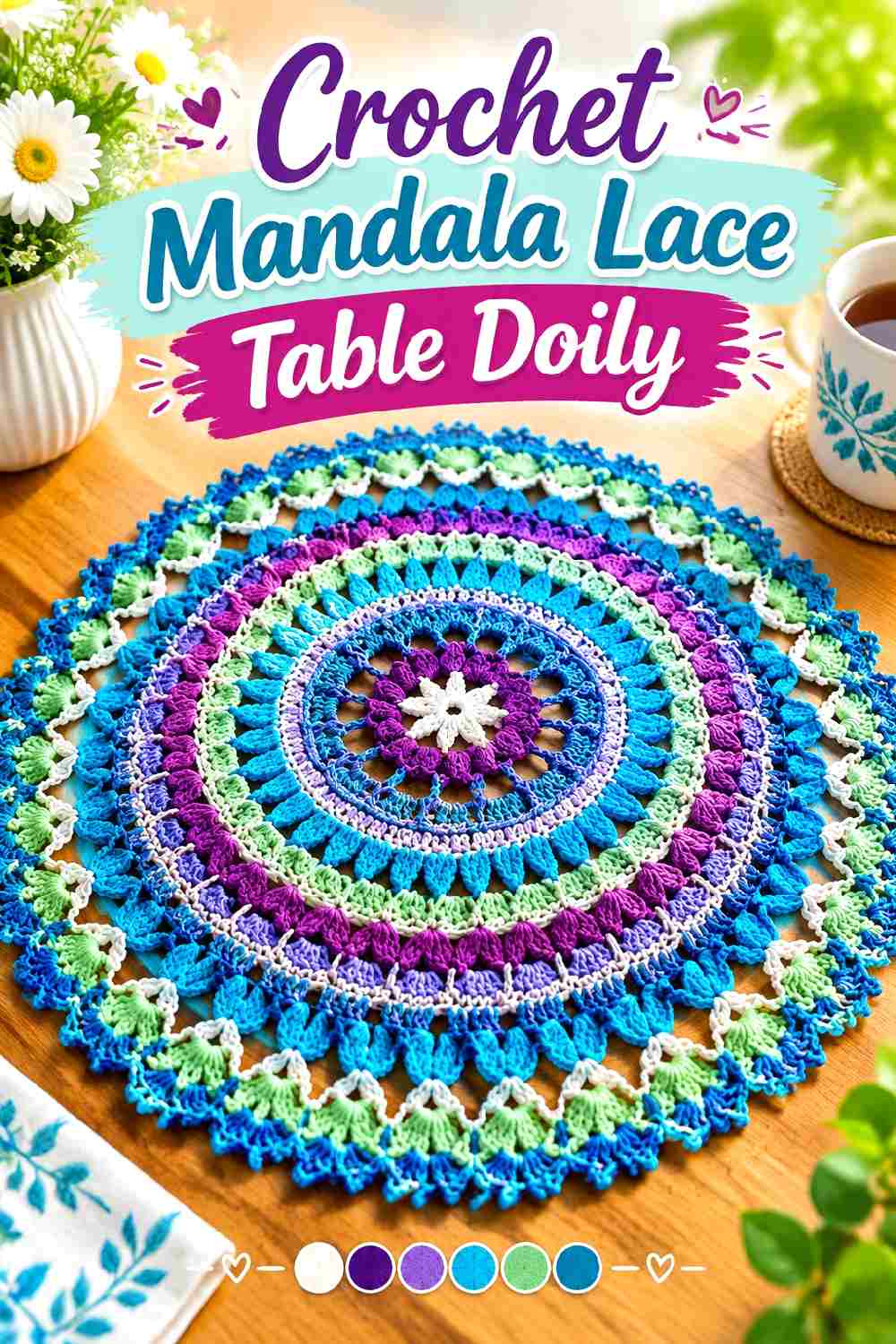
A mandala-style doily emphasizes radial symmetry and repeated rings. Rather than presenting one obvious flower or harvest object, it builds interest through changes that move outward from the center.
This can suit modern fall decor where geometry and color matter more than literal seasonal imagery.
Radial Designs Reward Careful Color Transitions
If you want to use several autumn shades, concentric construction gives you natural places to consider transitions. A palette moving from a darker center toward lighter outer rounds can create a different effect from alternating high-contrast bands.
Keep in mind that every color change emphasizes the circular structure.
Center the Display or Leave the Center Visible
Because the design radiates from one point, an off-center object can interrupt the symmetry more noticeably than it would on irregular lace.
Either center a vase or bowl deliberately or leave the middle open and let the mandala itself serve as the table feature.
Creator Credit: The Crochet Crowd
12. Crochet Star Point Lace Doily
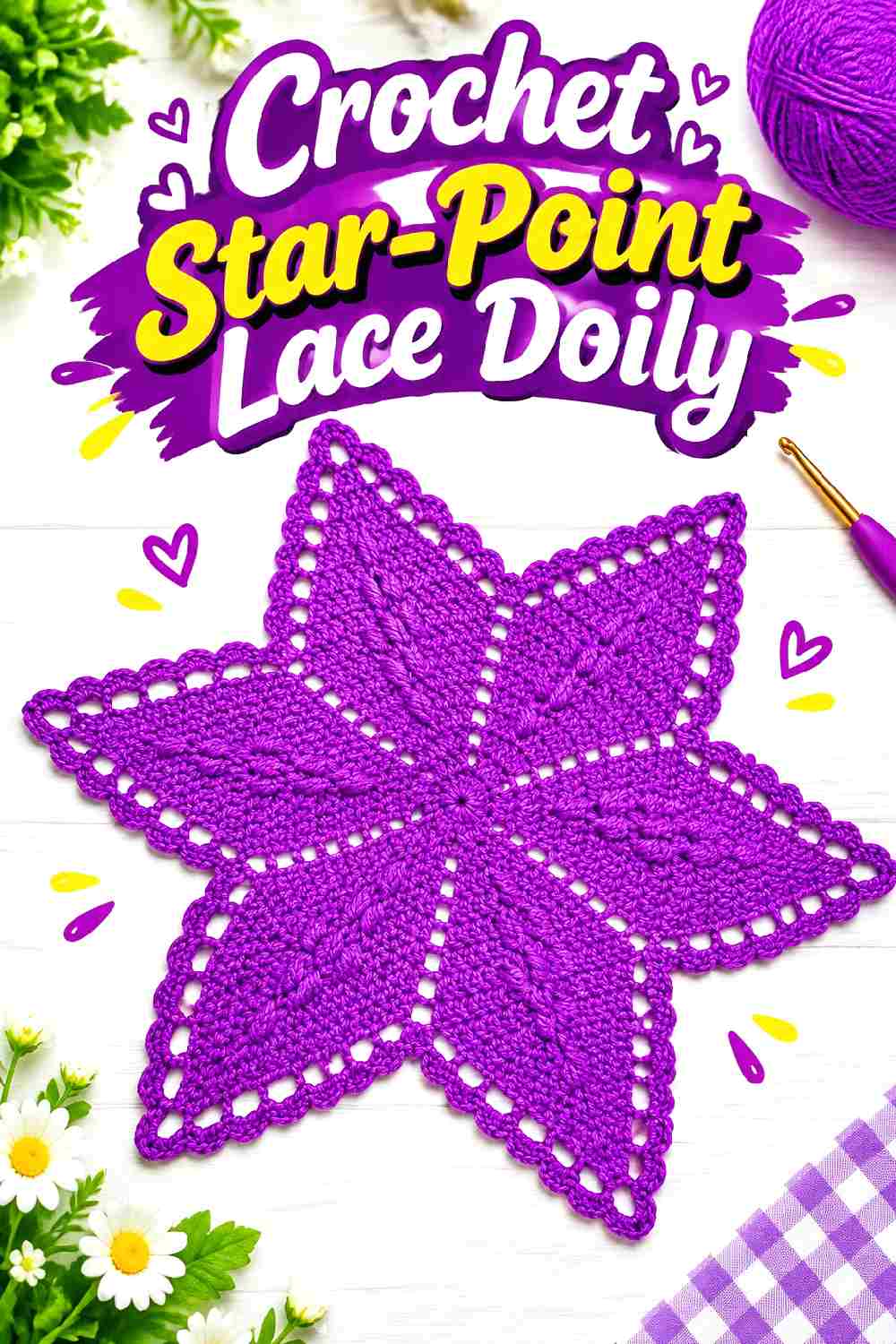
A star-shaped doily introduces sharp points and stronger geometry into a collection dominated by circles and scallops. In muted gold, cream, copper, or brown, those points can echo the crispness of fall decor without relying on a leaf motif.
The silhouette is especially noticeable when the entire perimeter remains visible.
Star Points Need Enough Clearance
A bowl or arrangement that extends close to the edge can visually shorten the points and make the piece look more circular. If the star shape is why you chose the project, plan to leave a band of exposed crochet around the object placed above it.
A relatively open tabletop can show the shape even more clearly.
Yarn Choice Can Shift It From Delicate to Graphic
A fine material can emphasize airy lace, while a thicker interpretation can make the star feel bolder. Changing yarn weight may also change the finished scale, so treat substitution as a new sizing decision rather than a simple color swap.
Check the tutorial’s original material information before adapting it.
Creator Credit: Bag-O-Day Crochet
13. Crochet Classic Oval Lace Doily
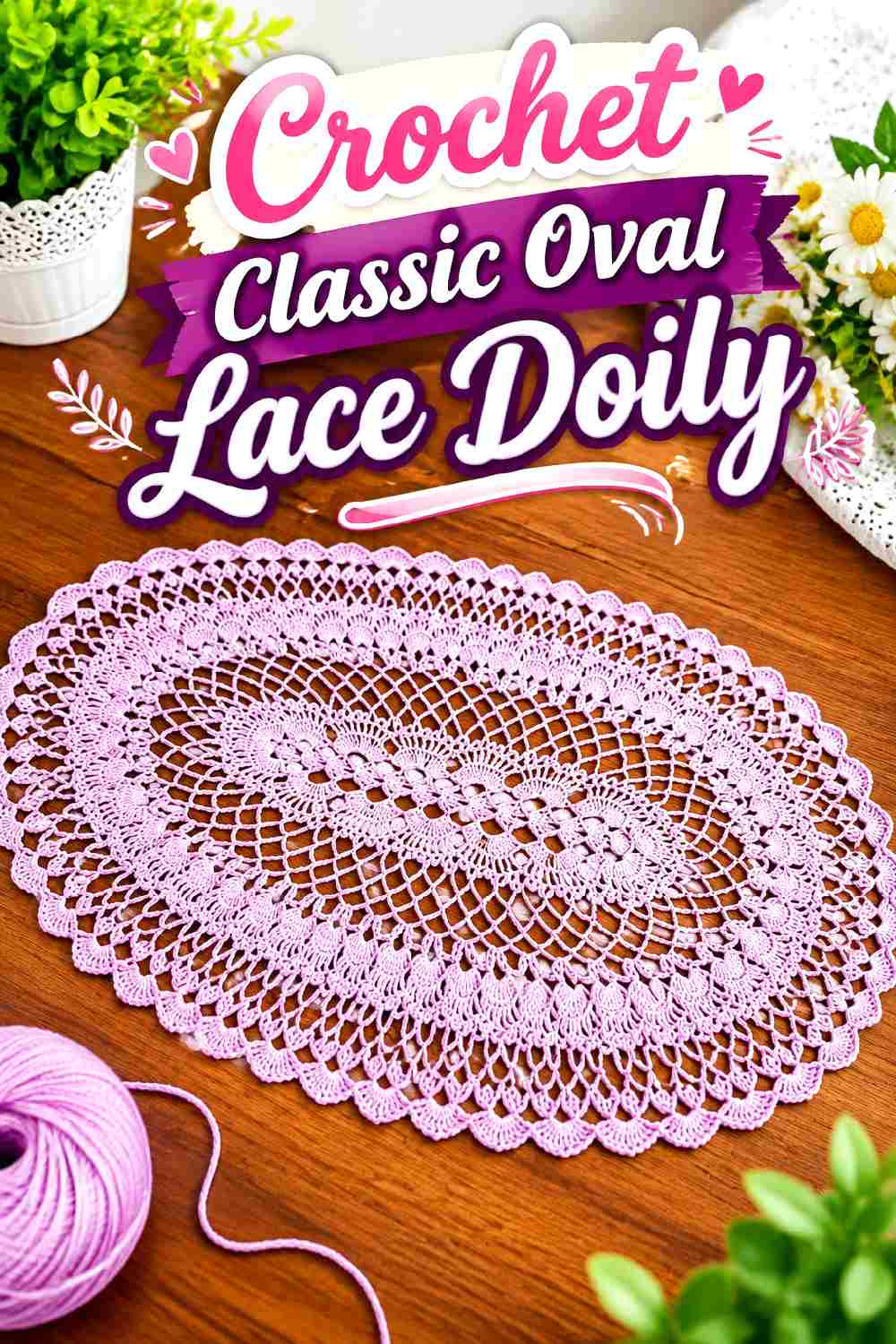
An oval doily naturally follows the length of a rectangular table, buffet, or narrow console. That makes it a practical fall centerpiece base when a circular design leaves too much unused space at each end.
The elongated form can also frame a row of small seasonal objects more naturally than one round mat.
Ovals Suit Long Arrangements
Try this shape beneath a narrow vase grouping, small gourds arranged in a line, or another low horizontal display. The idea is to work with the long axis rather than placing a single oversized object in the center.
A well-proportioned arrangement lets the curved ends remain visible.
Check Both Length and Width
A doily may fit the table length while still being too wide for the intended location. This matters particularly on consoles, shelves, and narrow furniture.
Use the creator’s finished-size information when available and compare both dimensions with your actual surface before beginning.
Creator Credit: Em’s crochet
14. Crochet Blooming Mini Lace Doily
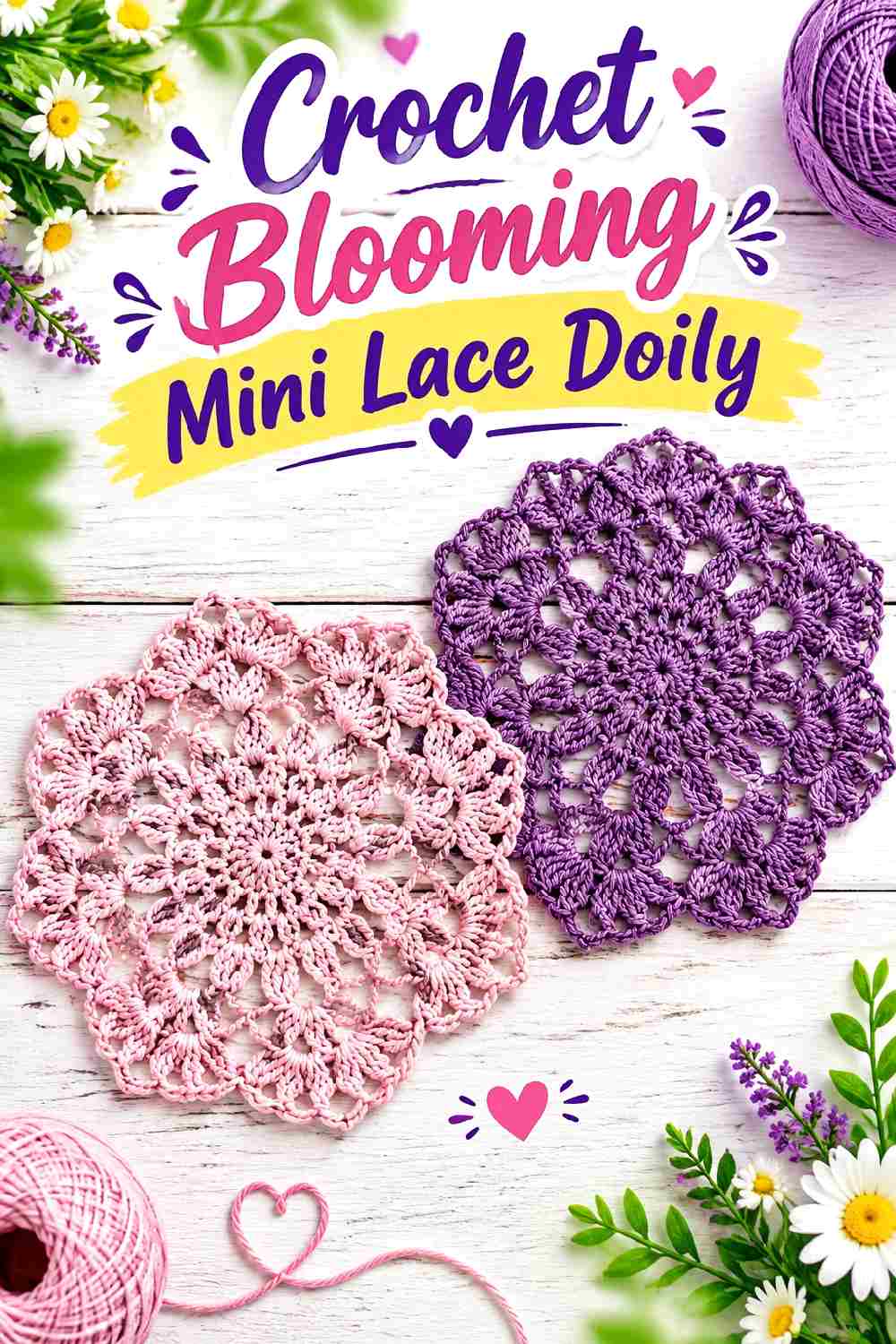
A smaller flower-inspired doily gives you a way to repeat fall crochet in several locations rather than concentrating all the work in one large centerpiece.
It can also serve as a useful scale when you want the decorative object above it to remain the primary feature.
Mini Lace Is Useful for Repeated Vignettes
Instead of making one large table piece, consider several small doilies placed in separate areas—perhaps beneath a bud vase, small bowl, or decorative jar.
Repetition can tie a room together while still allowing each display to stay relatively uncluttered.
Fine Detail Needs Contrast at Small Scale
As the overall piece becomes smaller, closely spaced lace details may be harder to distinguish from across the room. A strong contrast between the crochet and its background can help the outline remain visible.
This is especially worth considering if you choose a muted brown or olive yarn for a similarly colored wood surface.
Creator Credit: Olga Poltava
15. Crochet Garden Inspired Lace Doily
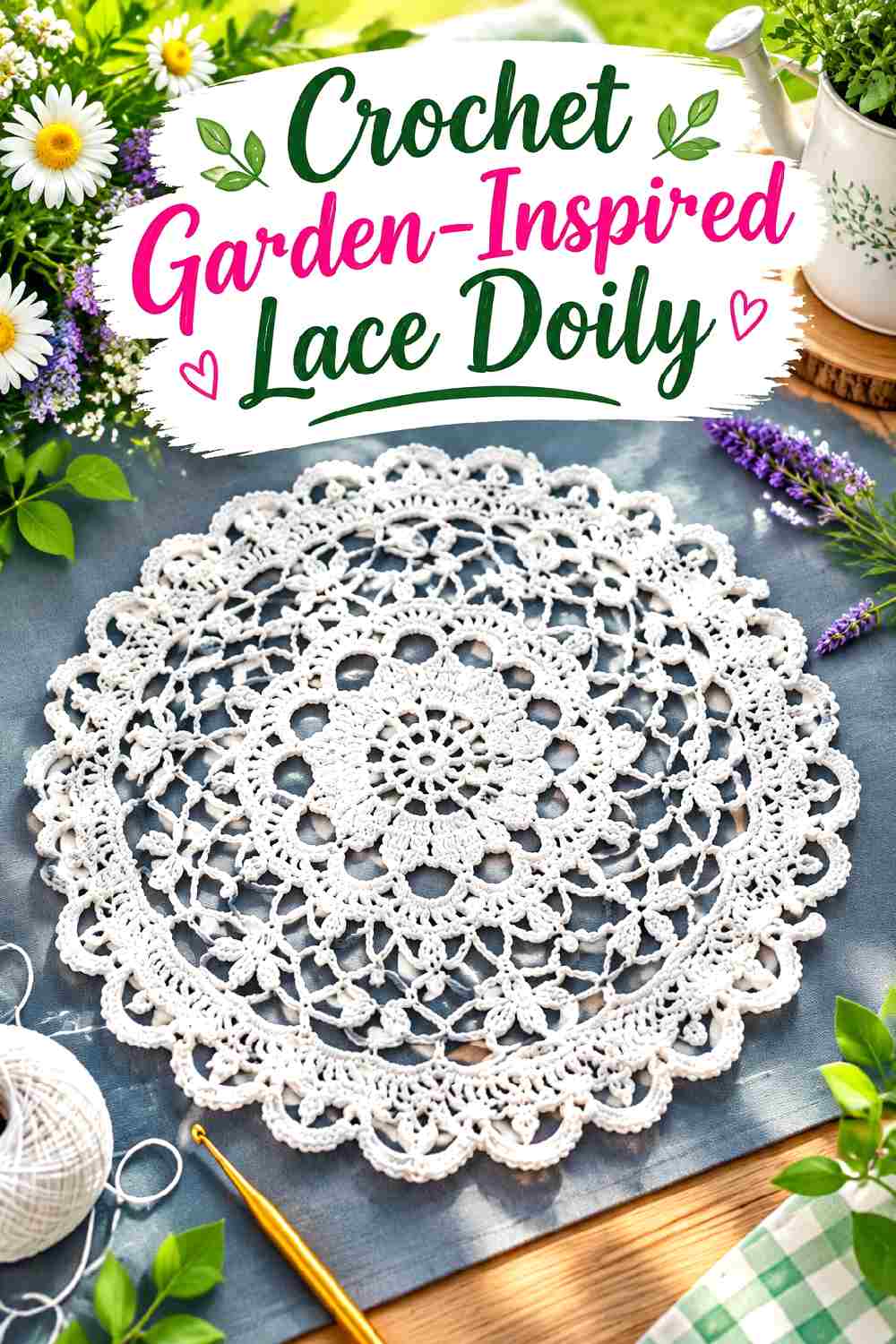
This ornate lace option brings a garden-like quality to the table without relying on one oversized flower motif. It suits fall decor that blends late-season botanicals with traditional lace.
A warm monochrome version can also make the detailed construction feel more unified.
Ornate Lace Benefits From a Simple Surrounding Display
When the doily itself contains many decorative transitions, surrounding it with numerous patterned objects can make both elements compete.
Solid ceramics, clear glass, wood, or other relatively quiet materials can provide enough visual contrast for the lace to remain readable.
Choose Color After Looking at the Negative Space
With open lace, much of the apparent color actually comes from the table showing through. Before selecting a thread shade, imagine the combination rather than the crochet alone.
A low-contrast pairing creates subtle texture, while high contrast makes every opening more pronounced.
Creator Credit: Giani Art
16. Crochet Old World Vintage Round Doily
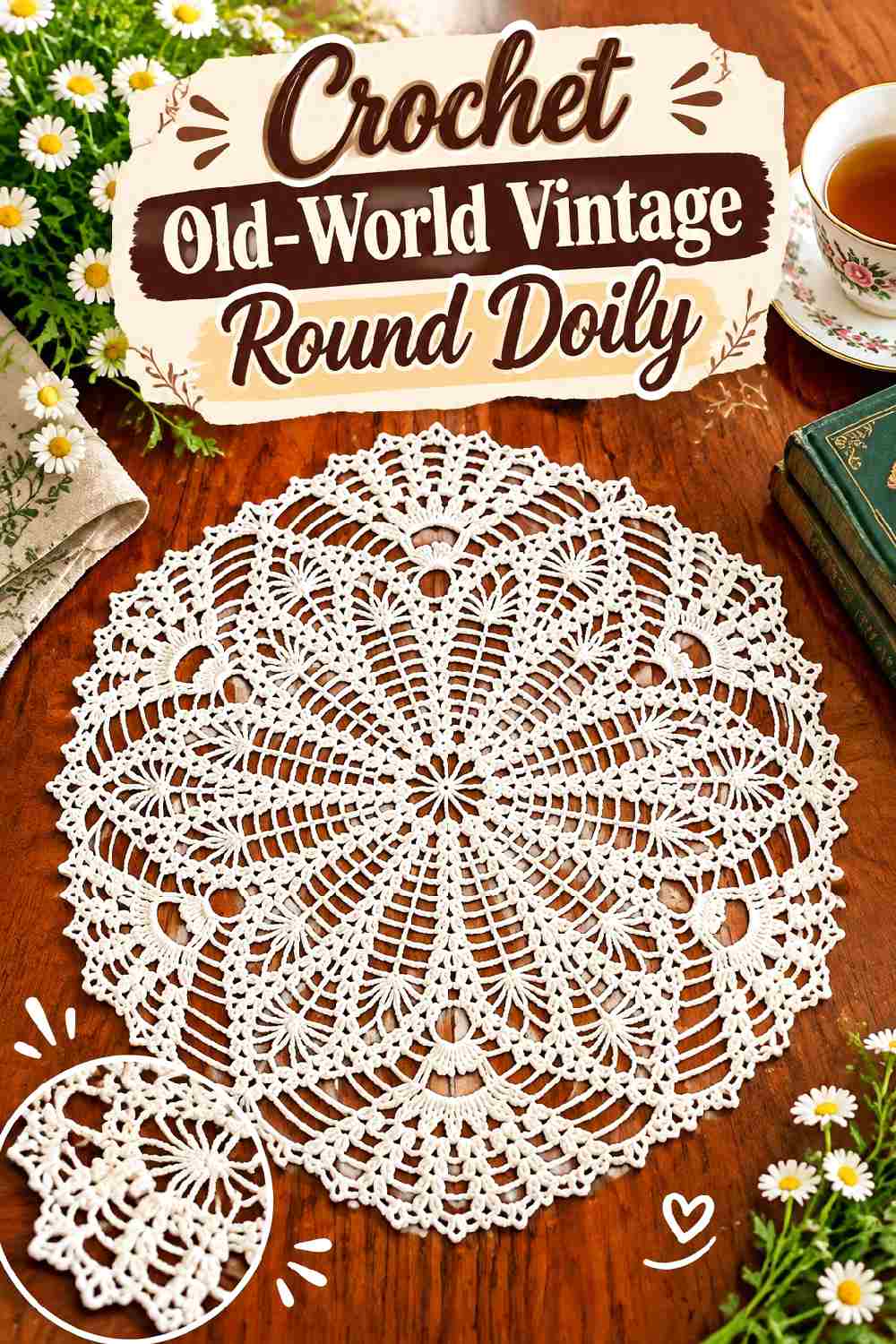
This vintage-style round doily works well for a fall setting built around antique or collected-looking pieces. It can complement brass, aged wood, amber glass, traditional ceramics, or embroidered linens without needing an overt autumn motif.
The round format keeps it flexible while the lace supplies the period character.
Warm Neutrals Can Reinforce the Vintage Mood
Bright white is only one option for traditional lace. Cream, ecru, flax-like neutrals, and muted gold can make a newly crocheted piece feel visually comfortable alongside warmer fall materials.
Avoid assuming a darker shade will automatically appear more vintage; the surrounding objects also shape that impression.
Let the Edge Show Beyond the Centerpiece
Vintage lace often gets much of its identity from its outer decorative treatment. A centerpiece that completely covers the border can reduce the doily to a background texture.
Measure the object that will sit above it as well as the table itself.
Creator Credit: Creaciones Gabriela
17. Crochet Placemat Scale Round Doily
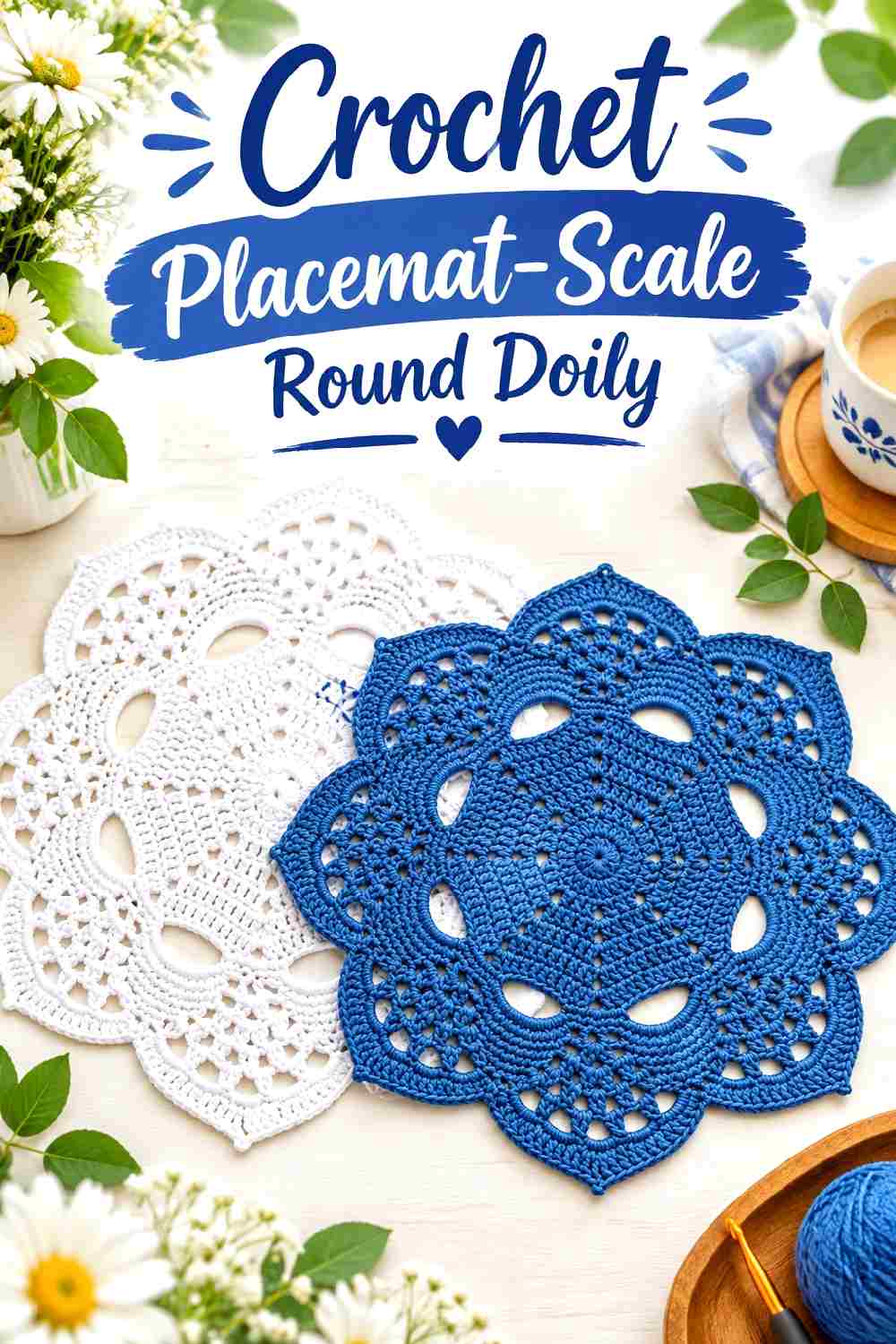
A larger round doily that approaches placemat scale has more visual weight than a small thread medallion. It can be useful for a casual fall table where you want crochet to occupy a meaningful portion of each setting or centerpiece area.
The increased scale also makes color more prominent.
More Surface Area Makes Color More Dominant
A deep rust or olive that feels subtle in a small accent can become a major color block when the doily is larger. Test the shade beside plates, linens, or the table surface before committing to several matching pieces.
This is especially important when planning an entire place-setting set.
Confirm the Intended Function Before Making Multiples
A decorative doily and a dining placemat may look similar in photographs but can have different practical demands. Check the project’s finished dimensions and construction, then decide whether it suits your actual place-setting layout.
Do not assume that a lace mat provides heat protection simply because it fits beneath a plate.
Creator Credit: أميرة و الكروشيه Crochet Princess
18. Crochet Gothic Postmortem Lace Doily
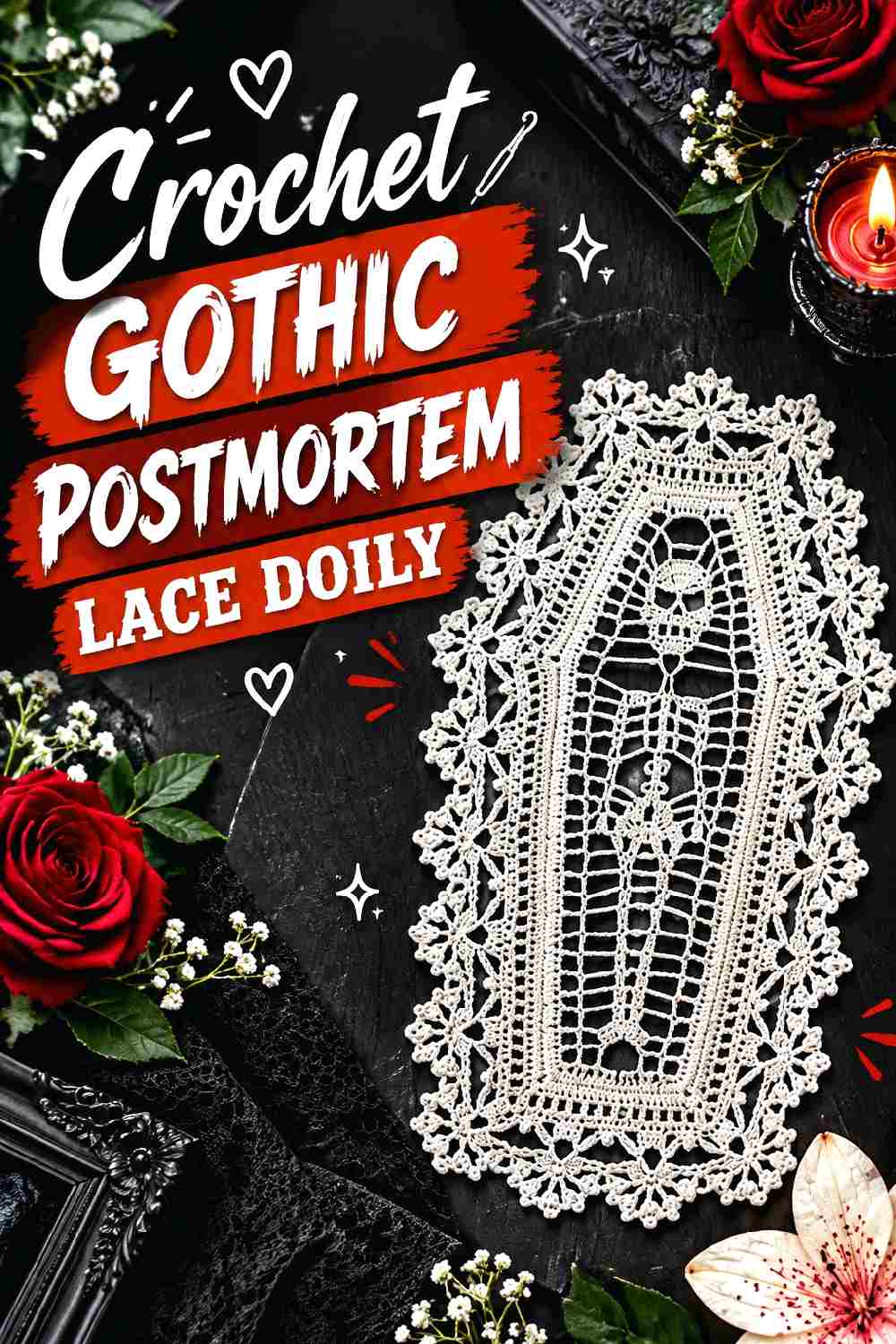
For the darker side of fall decorating, a gothic doily provides a distinct alternative to pumpkins and leaves. It can fit Halloween displays, moody autumn tables, or Victorian-inspired arrangements where conventional floral lace feels too delicate in character.
This is one of the strongest stylistic departures in the collection.
Dark Lace Needs a Surface That Does Not Swallow It
Black, charcoal, deep plum, or another dark yarn can lose detail on equally dark furniture. A lighter wood, pale tray, mirror, or contrasting textile beneath it can make the openings easier to see.
If you prefer a low-contrast look, expect the effect to be more textural and less graphic.
Keep the Supporting Decor Selective
Gothic styling can quickly become visually crowded when lace, patterned fabric, candles, ornaments, and multiple novelty objects all compete.
Allowing some empty table area around the doily can make the unusual lace treatment feel intentional rather than buried.
Creator Credit: Creative Works By Annie
19. Crochet Heart Shaped Table Doily
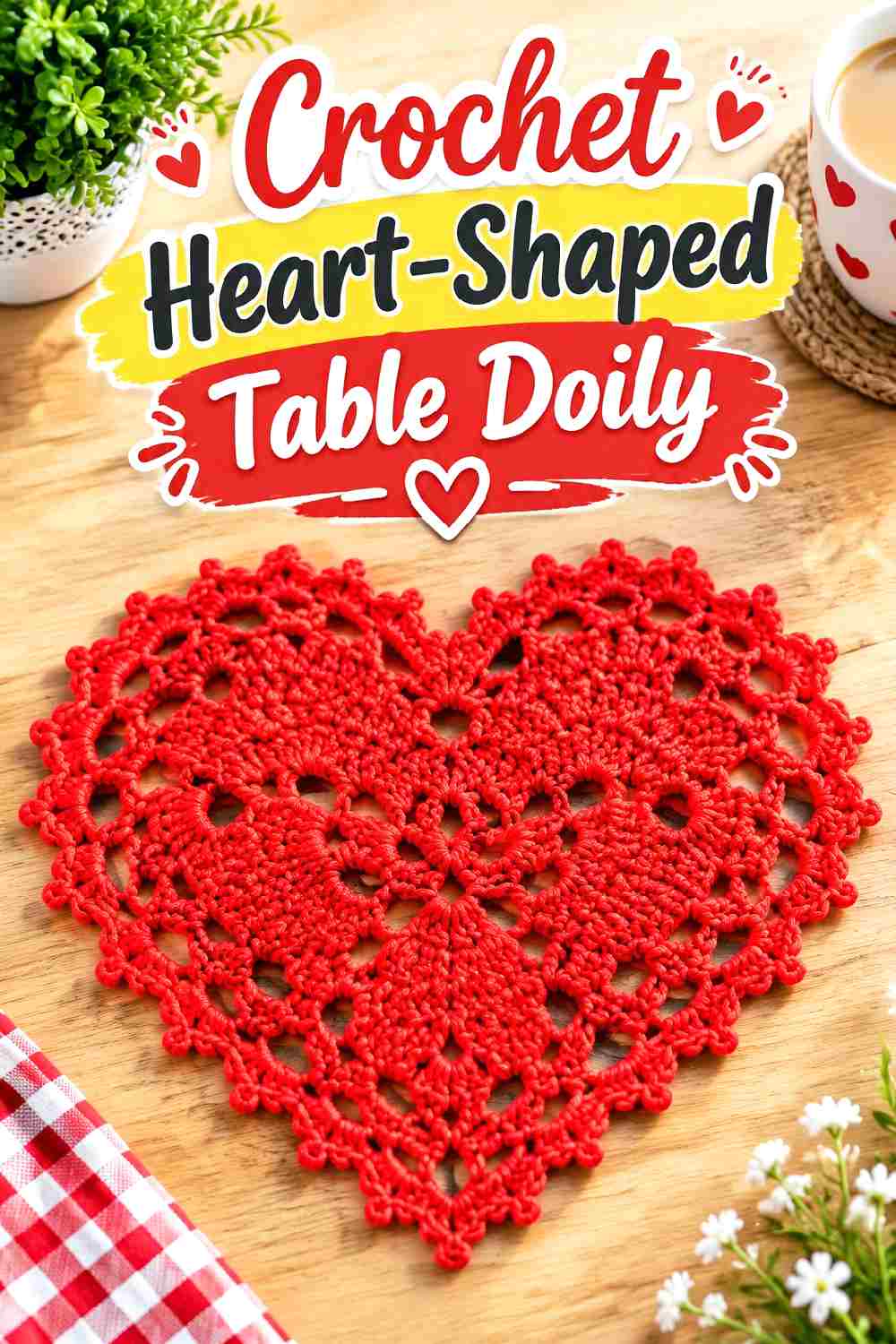
This second heart concept operates at a more substantial decorative scale than a small lace accent, making it suitable when the heart itself should form a major part of the tabletop composition.
A deep wine or russet palette can shift it toward a warm fall dinner setting rather than conventional Valentine’s decor.
Scale Changes How the Heart Functions
A larger heart can serve as the foundation of a display rather than simply an accent beneath one small object. Check its width at the upper lobes because that may determine whether it fits comfortably on a narrow table.
The point also needs enough clearance to remain recognizable.
A Bold Shape Can Replace Multiple Small Decorations
When the crochet already provides a large recognizable silhouette, you may not need many additional seasonal accessories. A simple vase, bowl, or cluster of natural materials can be enough.
This approach can work well when you want handmade texture without a heavily themed table.
Creator Credit: Crochet with Clare
20. Crochet Multicolor Harvest Lace Doily
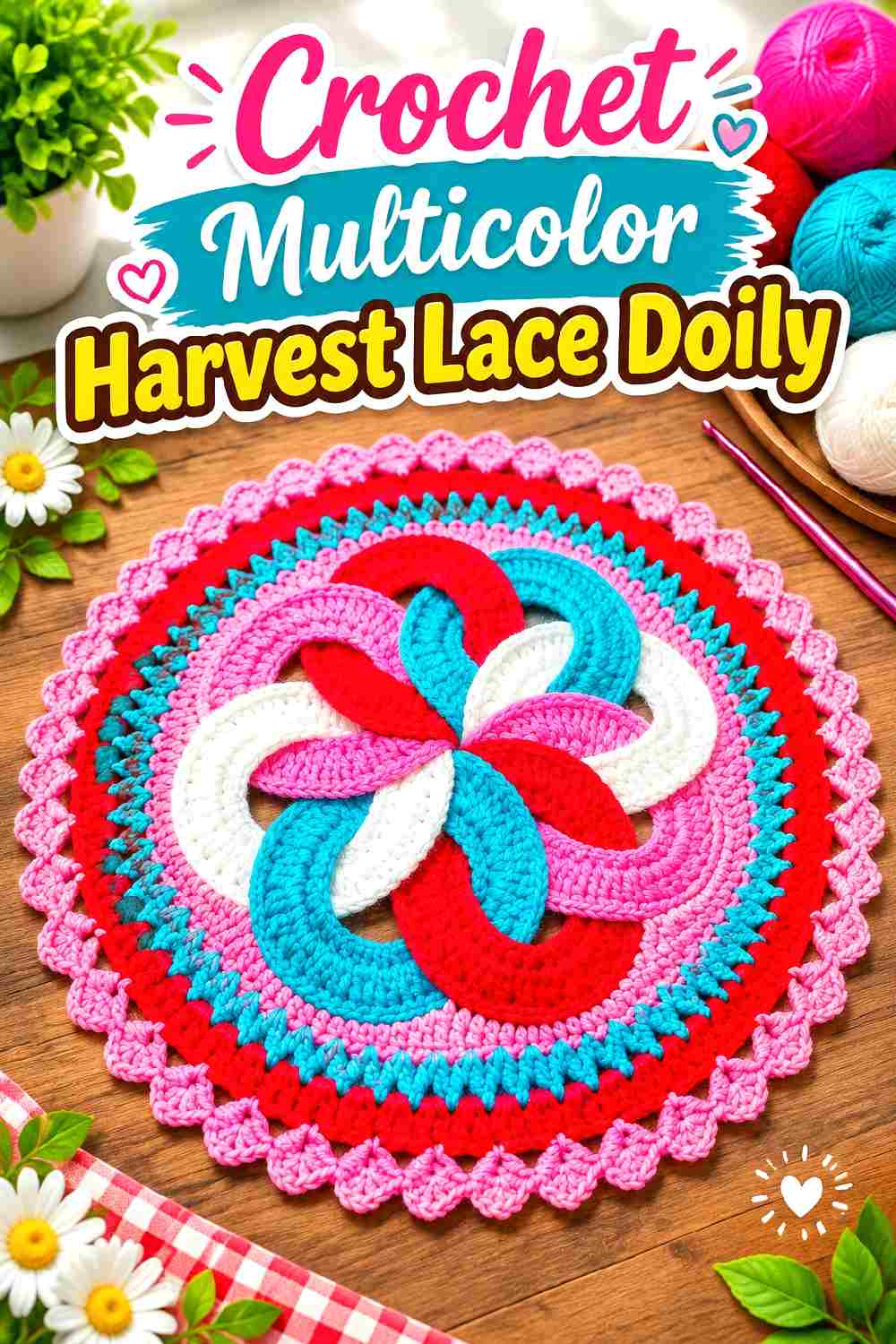
A multicolor doily offers a direct way to build several fall tones into one piece. Rather than adding appliqués afterward, the seasonal palette becomes part of the main crochet surface.
This format is useful if your fall decor already combines several hues instead of relying on one dominant orange or neutral.
Limit the Palette Enough to Preserve the Lace
Rust, mustard, olive, cream, and brown can all work together, but every additional color creates another visual boundary. Intricate lace may become harder to read if those boundaries change too frequently.
A smaller, coordinated color family can keep both the crochet and the autumn theme visible.
Repeat One Shade Elsewhere in the Room
A multicolor doily can become easier to integrate when one of its shades appears in napkins, pottery, flowers, or another nearby object.
The colors do not need to match exactly; the goal is simply to prevent the doily from looking disconnected from the rest of the setting.
Creator Credit: Ammi Crafts
21. Crochet Square Filet Lace Doily
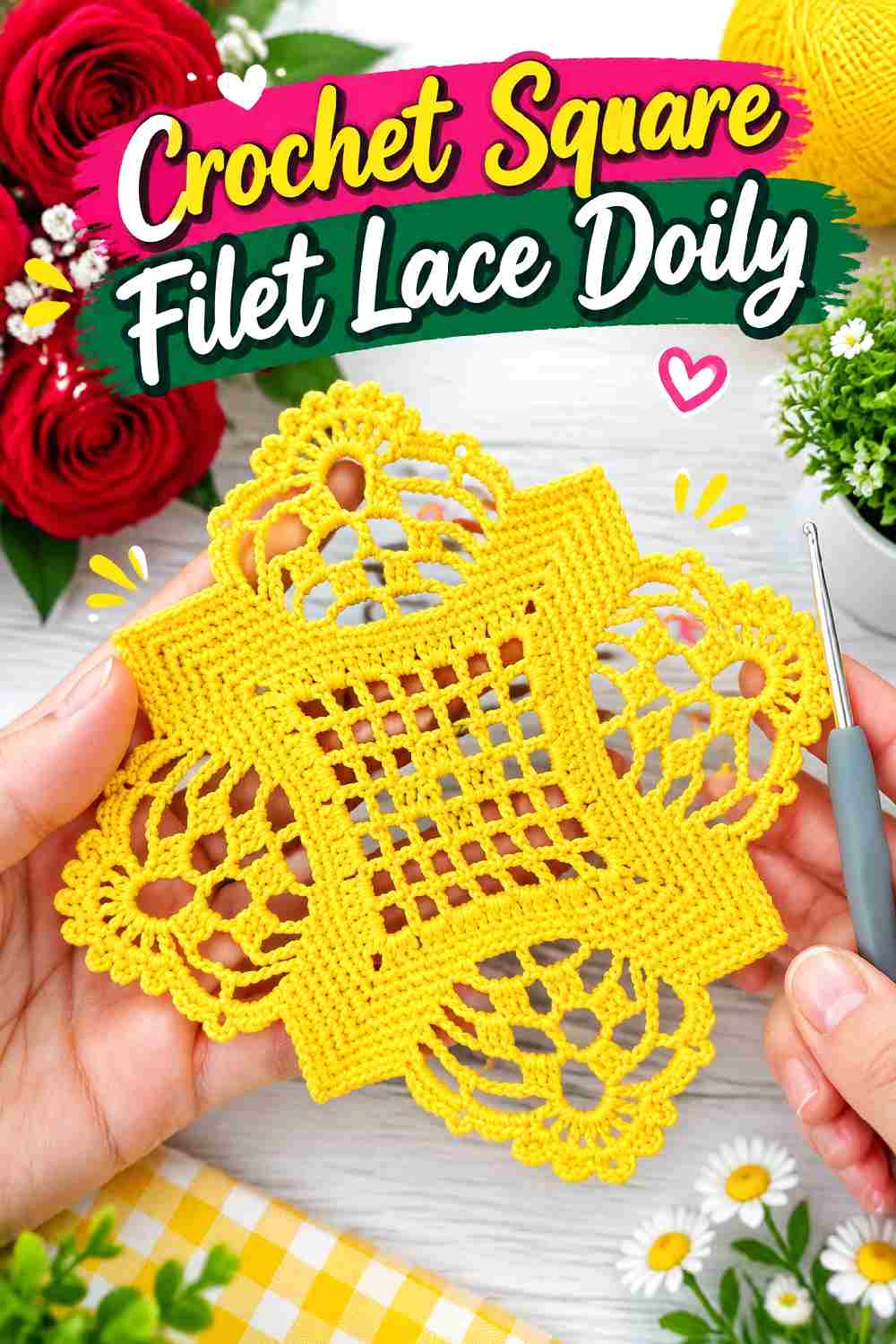
Square filet-style lace brings straight edges and grid-based geometry into a collection dominated by round pieces. It can align neatly with the corners of a square side table, tray, or cabinet top.
That makes it especially useful for more structured fall decor.
Straight Edges Make Alignment Obvious
A square doily can look noticeably off-center when its sides are not aligned with the surface beneath it. Decide whether you want the edges parallel to the table or rotated into a diamond before placing other decor.
Either arrangement can work, but the choice should look deliberate.
Open Filet Areas Highlight the Background Surface
Filet-style openings allow considerable background color to show through. A warm wood surface can become an active part of the design, while a contrasting cloth beneath it can make the grid much more graphic.
Test both orientations and backgrounds before deciding the finished piece needs additional decoration.
Creator Credit: Crochet Magic Studio
22. Crochet Small Floral Medallion Doily
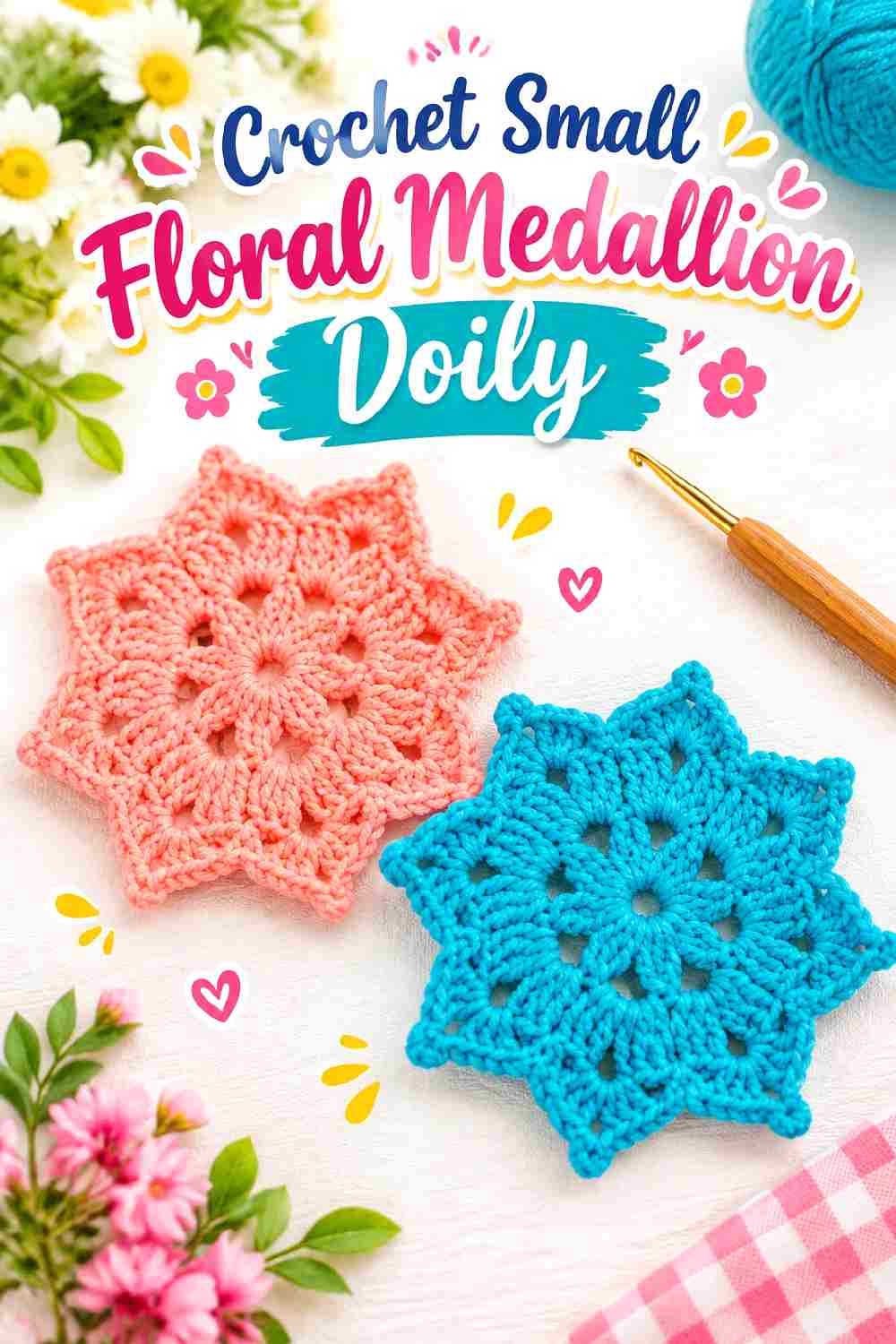
A small floral doily is useful for areas where a full centerpiece would feel oversized. The flower-like center provides enough detail for the piece to stand alone beneath a small decorative object.
It is also a manageable way to repeat the same crochet style across several fall displays.
Small Scale Works Well on Shelves and Side Tables
Large doilies often belong naturally on dining tables, but a compact floral medallion can fit shelves, bedside tables, display cabinets, and small entry surfaces.
Measure the intended location first so the outer lace does not hang awkwardly over an edge.
Muted Flower Colors Can Extend Beyond Fall
Ochre, dusty terracotta, cream, olive, or burgundy can suggest autumn while remaining usable beyond a single holiday.
This is a useful strategy when you want seasonal warmth without making every handmade piece look explicitly temporary.
Creator Credit: Crochet Rainbows & Butterflies
23. Crochet Spiral Lace Doily
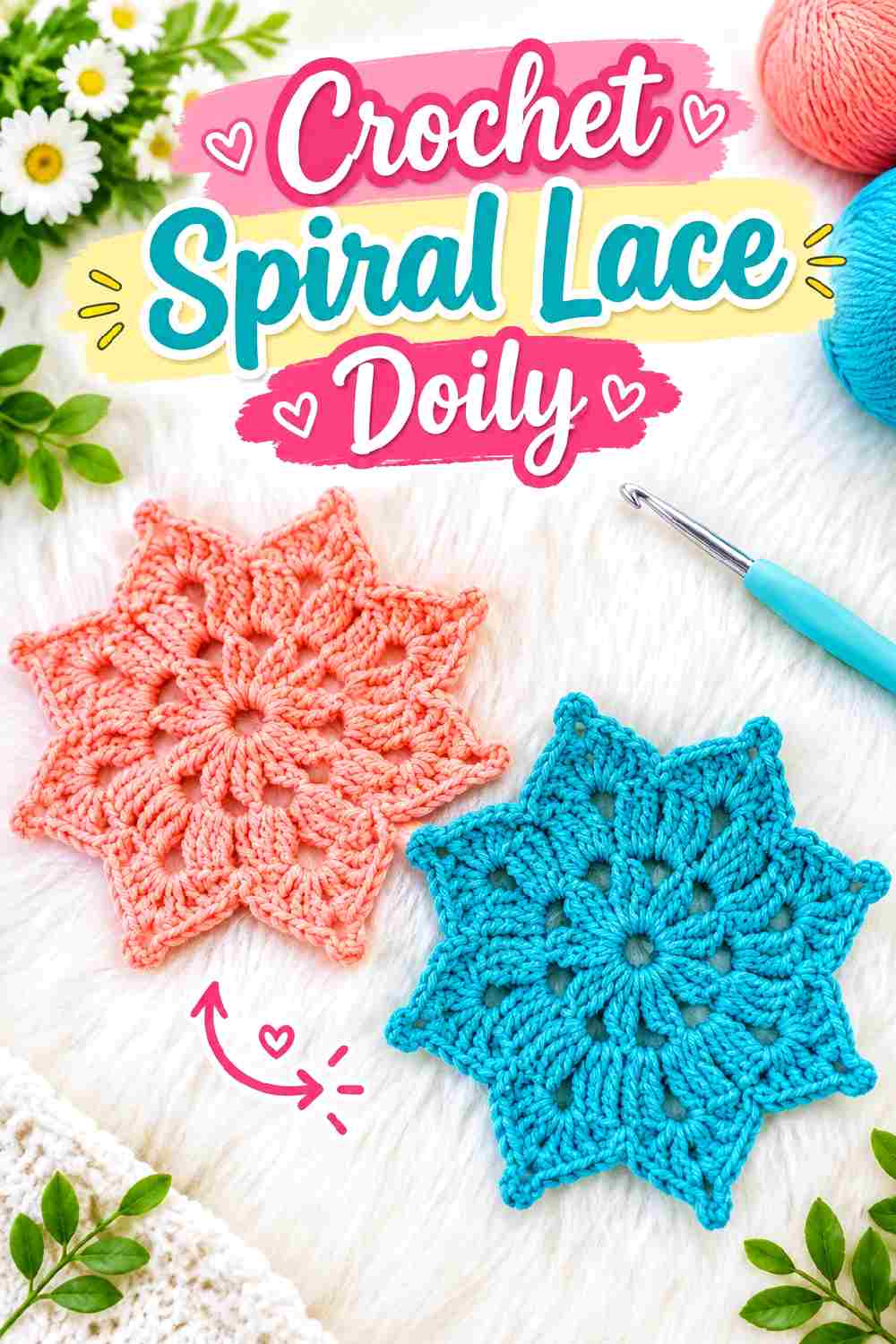
Spiral construction creates movement that differs noticeably from evenly segmented rounds. The eye follows the turning structure rather than simply moving from one concentric ring to the next.
For fall, that movement can give a solid rust, gold, olive, or cream yarn more interest without requiring multiple colors.
The Spiral Is Strong Enough for a Single Color
Because direction is built into the stitch layout, a monochrome version can still look dynamic. This can be useful when the surrounding table already contains several fall colors.
A single shade also avoids breaking the visual flow into unrelated bands.
Material Weight Changes the Personality
A spiral interpreted in a thicker yarn can read more like a bold table mat, while finer material can create a more delicate effect. Changing weight also affects scale and drape.
Use the source materials as your reference point and confirm how any substitution behaves before assuming the final footprint will remain comparable.
Creator Credit: Crochet For You
24. Crochet Clustered Flower Table Doily
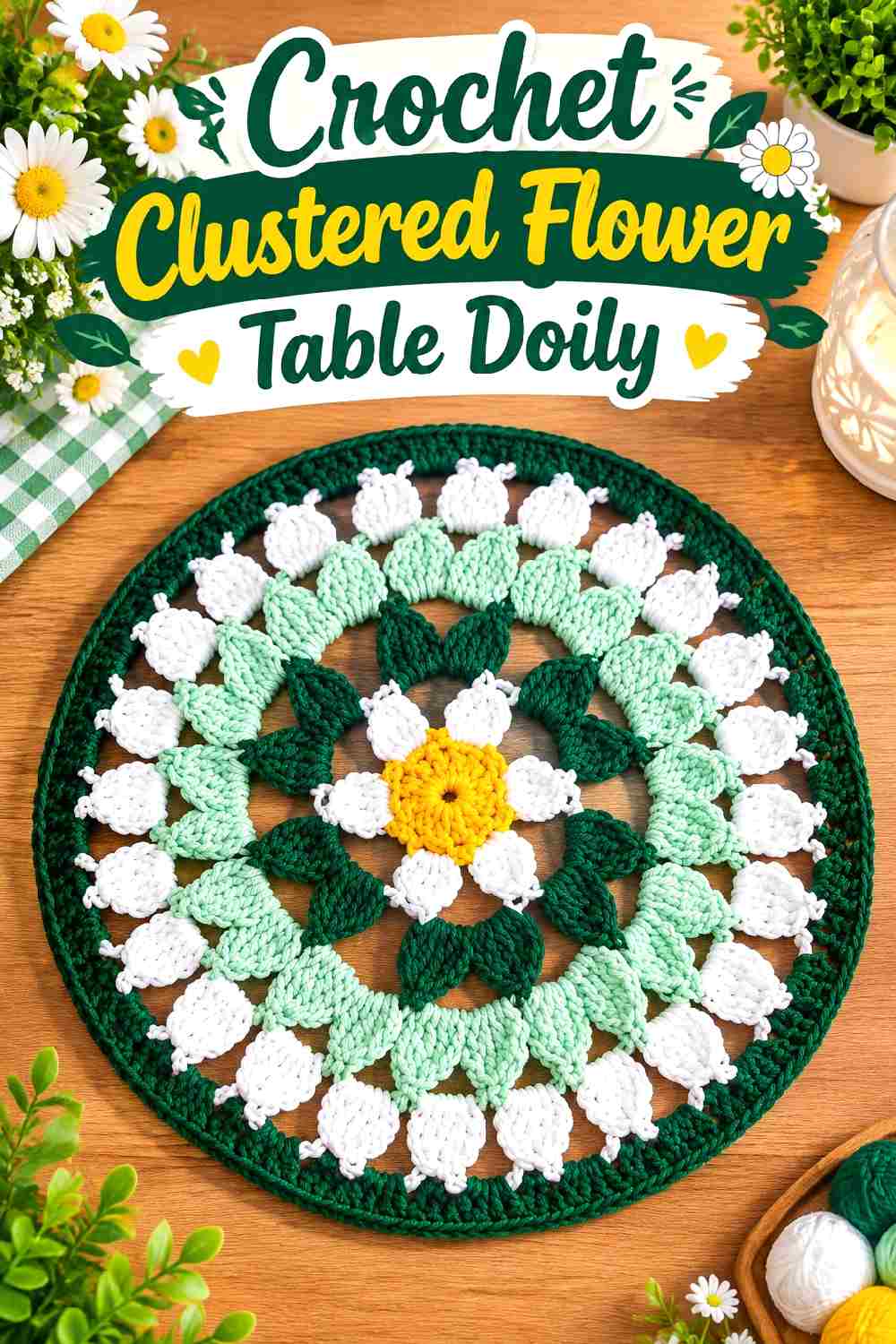
This floral doily has a more substantial, casual table presence than extremely fine heirloom lace. It can suit fall rooms that use chunky ceramics, woven baskets, wood, and other heavier textures.
The floral form keeps the project decorative even when the material gives it more visual weight.
A Heavier Look Can Suit Rustic Fall Decor
Not every autumn table needs delicate thread crochet. A fuller yarn-based interpretation can sit comfortably beside stoneware, natural wood, and textured linens.
The trade-off is that thicker material can obscure very fine detail, so choose the effect intentionally rather than expecting thread-like delicacy.
Check How Far the Flower Shape Extends
Petaled or clustered edges can project unevenly beyond the main circular body. When placing the finished piece on narrow furniture, compare the widest points with the available surface.
That is more reliable than estimating its footprint from the center alone.
Creator Credit: Meladora’s Creations for Crochet
25. Crochet Radiating Mandala Centerpiece Doily
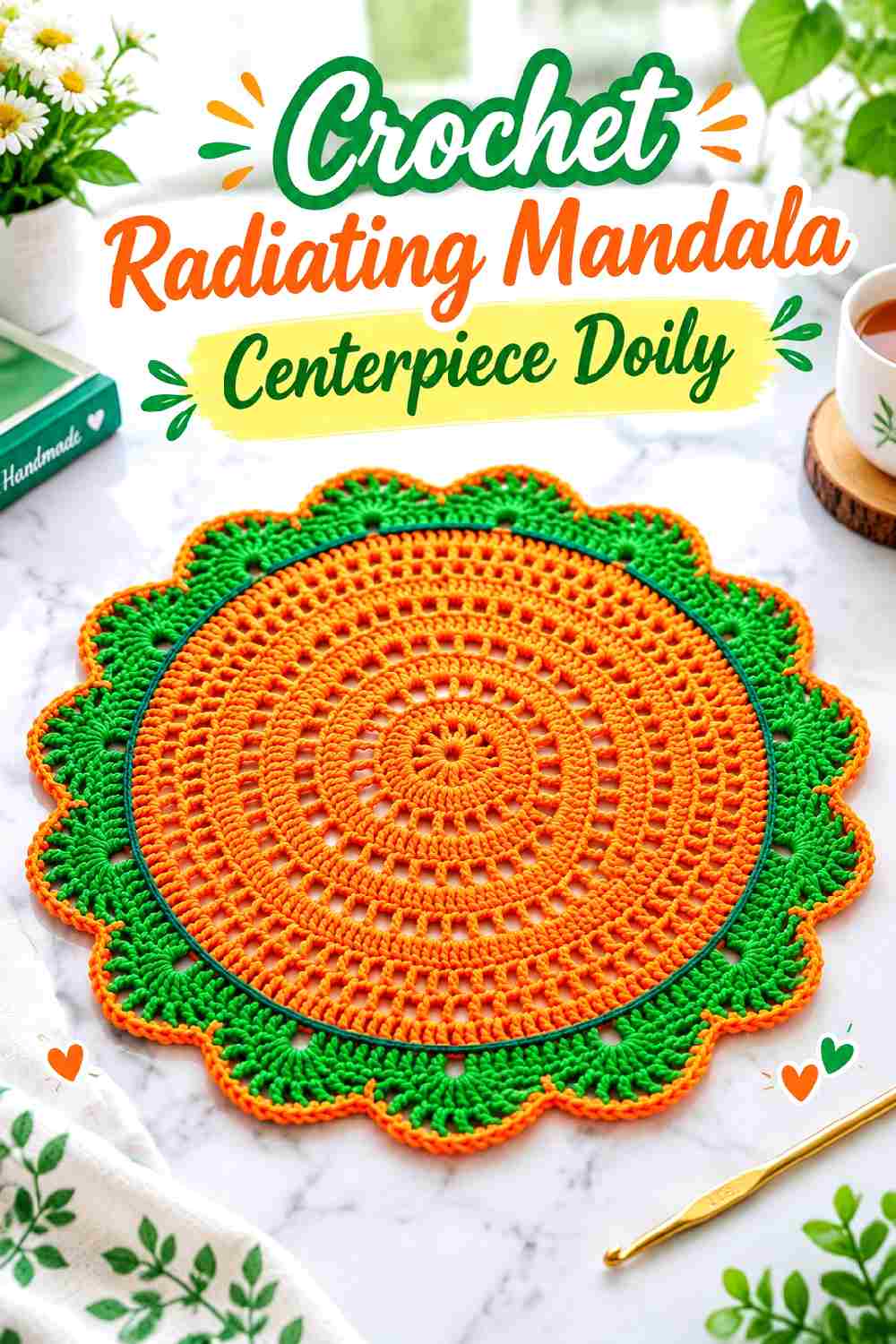
This mandala-style centerpiece uses strong radial organization to make the crochet itself the main decorative object. It is well suited to a relatively uncluttered table where repeating geometry can remain visible.
For fall, earthy tonal changes can emphasize different sections without requiring added motifs.
Radiating Sections Encourage Intentional Placement
A centered bowl or vase reinforces the symmetry, while a deliberately empty middle lets the eye follow the full radial pattern.
If you prefer an asymmetrical arrangement, test it before finalizing because it will create a noticeably different relationship with the doily’s geometry.
Use Several Colors Only When They Clarify the Structure
Mandala designs offer many possible points for color changes, but that does not mean every section needs one.
Repeating two or three related autumn tones can preserve continuity while still drawing attention to the outward progression.
Creator Credit: Jagruti Art Work
26. Crochet Petaled Lace Motif Doily
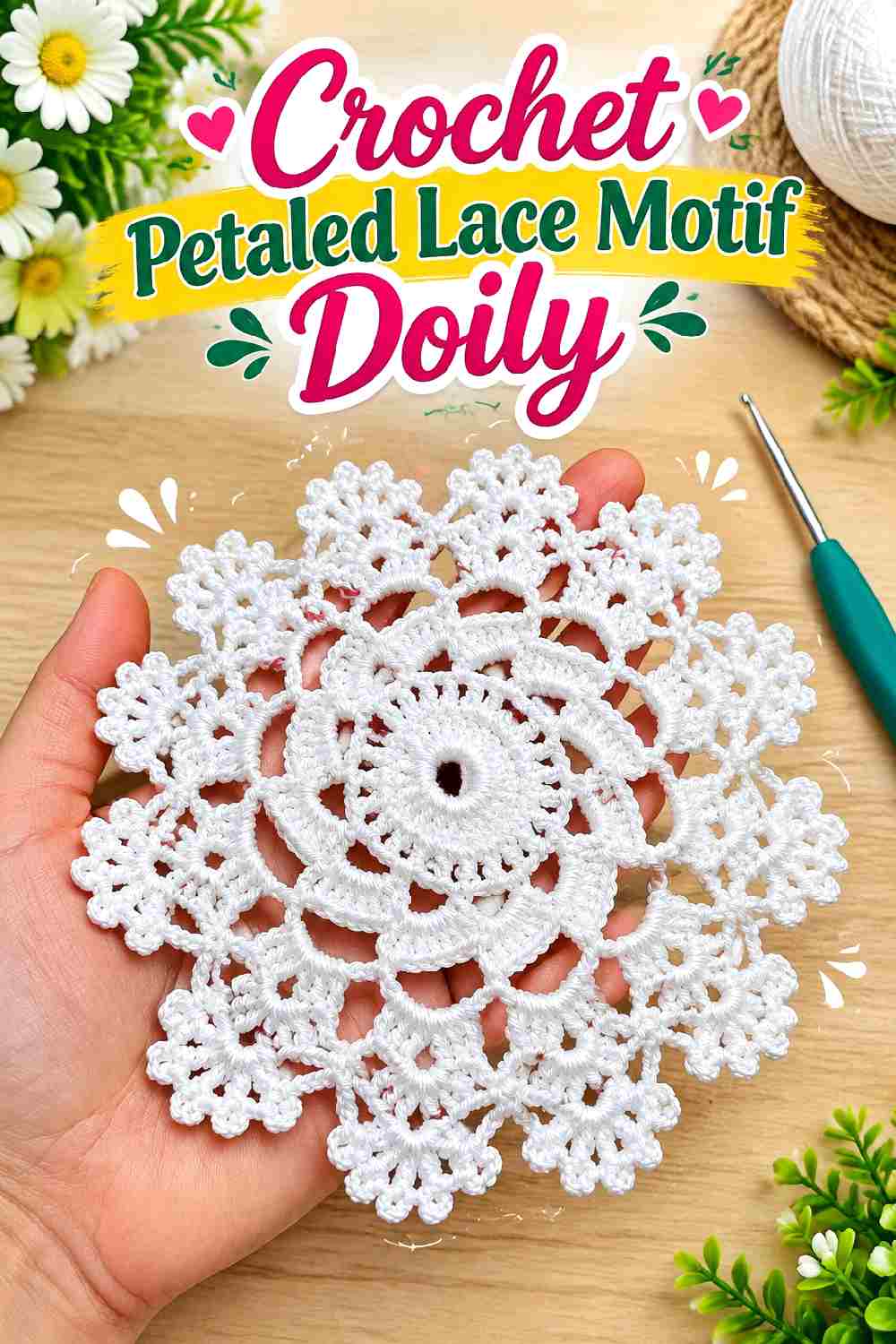
This round motif has a pronounced petaled character that offers a crisp alternative to softer vintage scallops. It can be used alone as a decorative medallion or incorporated into a table arrangement where the repeated points and openings remain visible.
Its geometry makes it adaptable to both traditional and more graphic fall styling.
Petal Definition Depends on the Background
A highly open motif can almost disappear against a similarly colored table. Stronger contrast emphasizes each petal and makes the central structure easier to identify.
Before choosing a subtle neutral, decide whether you want the doily to be a quiet texture or a noticeable design.
Repeat the Motif Only After Checking Scale
If you are considering several matching pieces, make one first and compare its finished size with the planned placement.
That simple checkpoint can prevent a set of decorative motifs from becoming too crowded when arranged together.
Creator Credit: Knitting Love 💗
27. Crochet Carnation Two Way Flower Doily
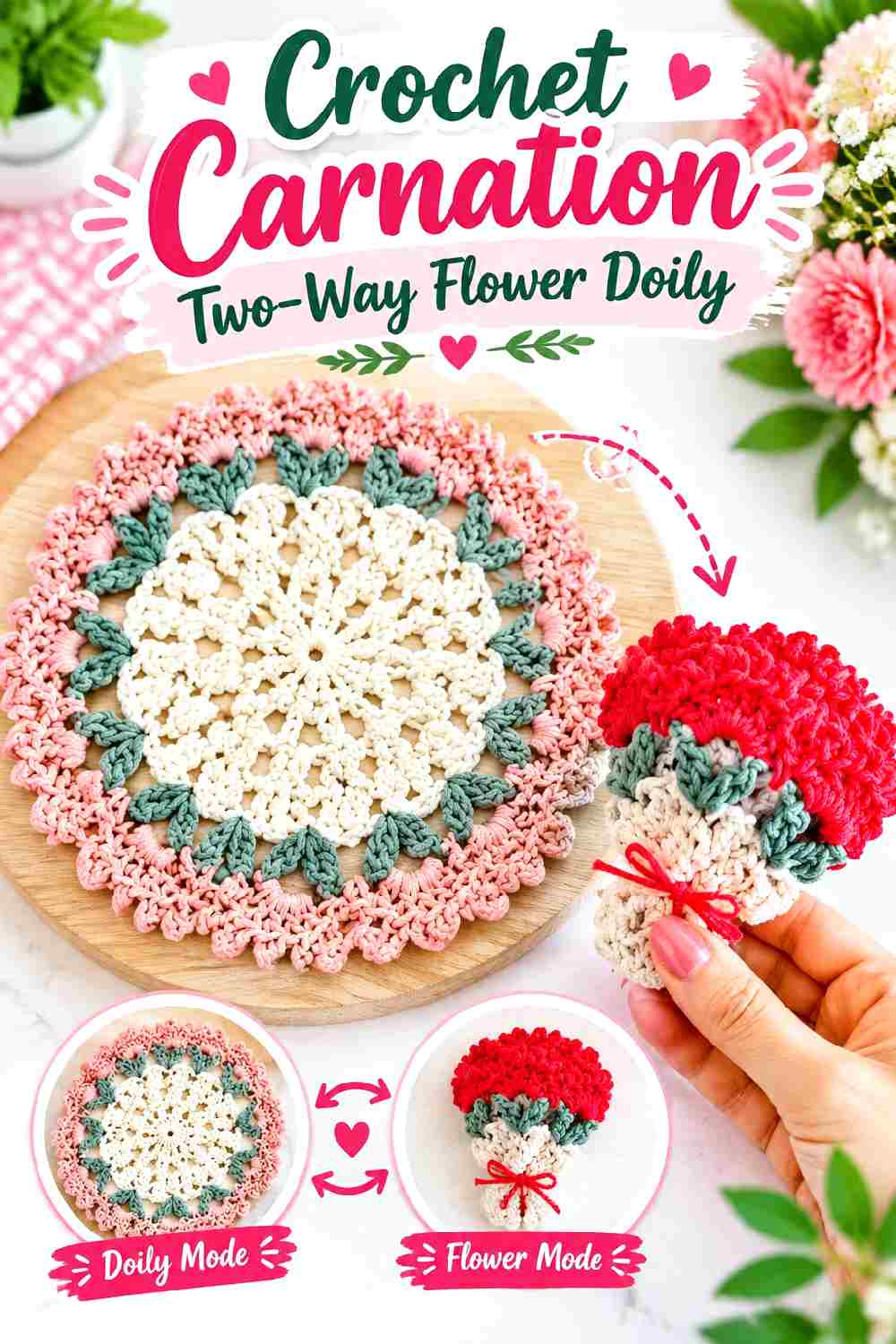
A carnation-inspired design introduces a fuller floral character than a flat geometric medallion. Its convertible presentation gives you another option for bringing dimension into an autumn crochet display.
Deep red, wine, faded rose, rust, or cream can connect the flower idea with fall rather than spring.
Decide Which Presentation You Will Use Most
A design that changes appearance depending on how it is arranged should be evaluated in both forms. Color distribution that looks balanced when flat may concentrate differently when the piece is gathered or displayed dimensionally.
Choose the primary use first if you want to simplify that decision.
Dimensional Flowers Need Clear Surrounding Space
When the crochet itself rises or folds, nearby decorative objects can obscure its shape more easily than they would a flat doily.
A relatively simple surface gives the floral transformation room to be noticed.
Creator Credit: AmiaMikancl Crochet
28. Crochet Expandable Oval Lace Doily
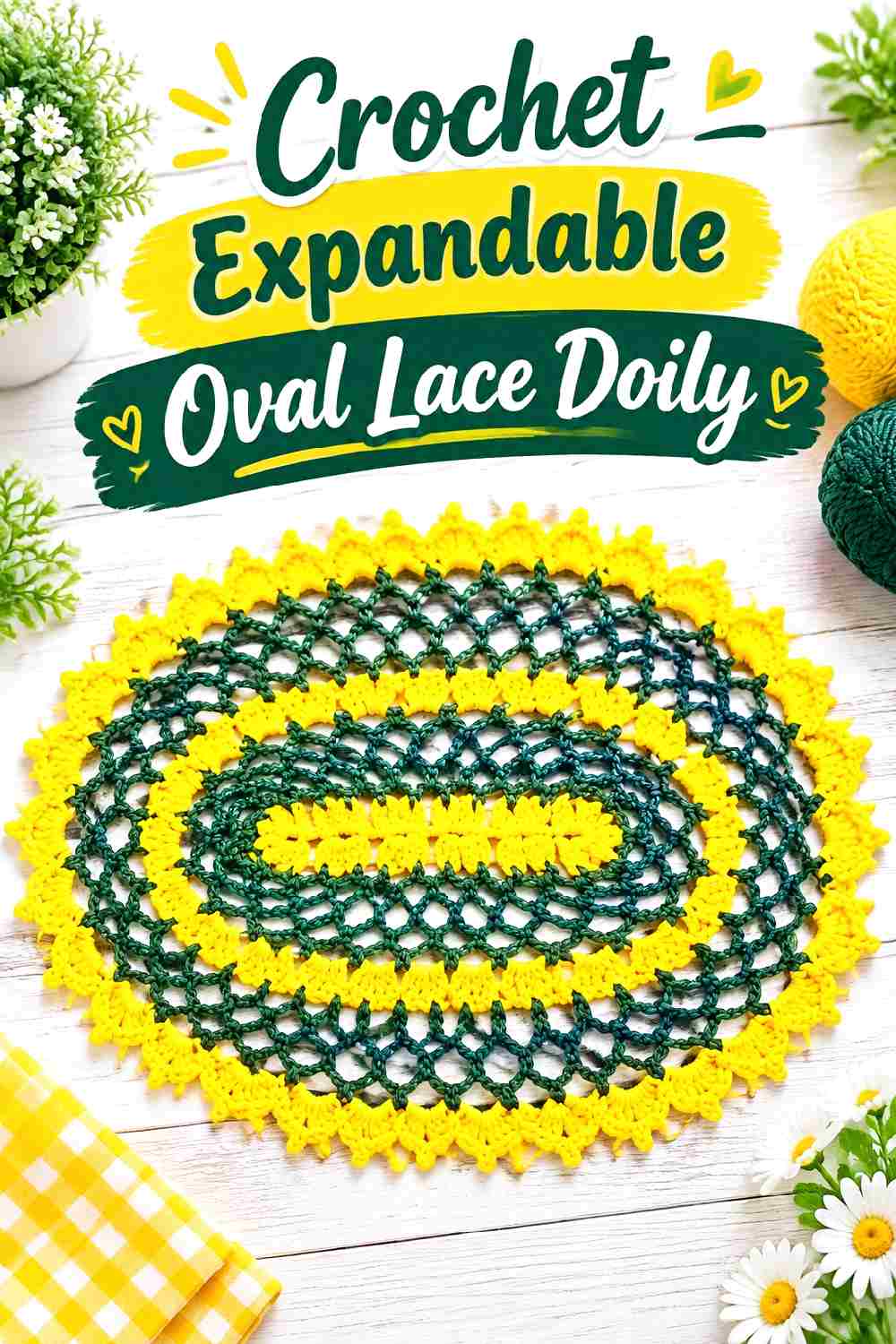
This oval design is useful when you want an elongated piece with more flexibility in planning the final length. It can suit dining tables, narrow cabinets, and other rectangular surfaces where a round doily would leave the composition feeling disconnected.
The shape also lends itself naturally to a centered horizontal arrangement.
Repetition Can Change More Than Length
When adapting an oval through additional repeated sections, remember that visual balance matters as well as dimensions. An increasingly long center may need an arrangement above it that also follows the long axis.
Check the creator’s guidance for where expansion is appropriate rather than inserting repeats arbitrarily.
Two-Tone Color Can Emphasize the Border
An oval already has a clear relationship between its central field and curved ends. A controlled color change can make the edge more visible without filling the entire project with stripes.
For fall, a cream center with rust, olive, brown, or muted gold at the border is one possible planning direction.
Creator Credit: Raji’s Craft Hobby
29. Crochet Large Round Thread Doily
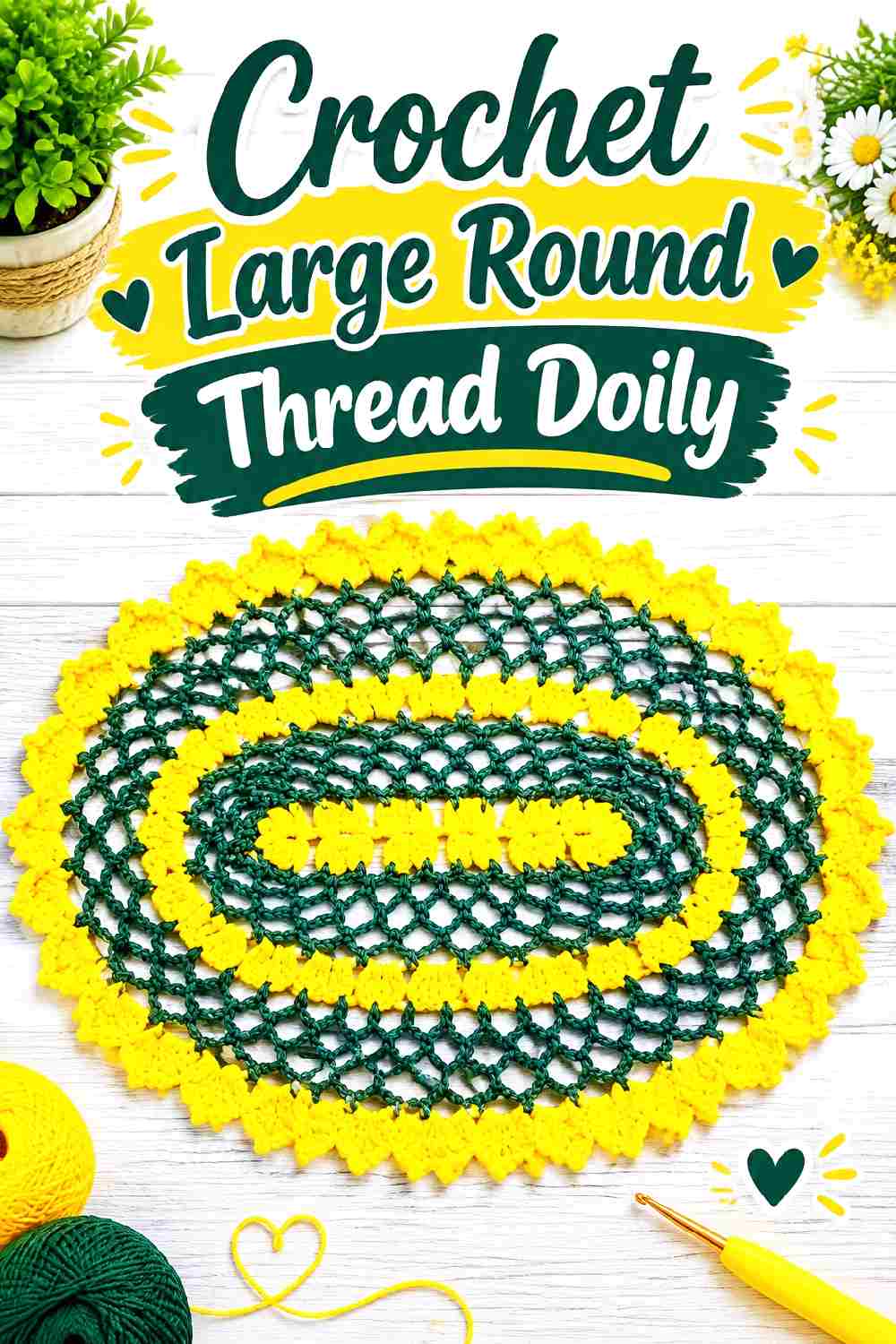
A larger traditional round doily gives fine lace enough area to become a centerpiece rather than a small accent. This is a good direction when you want an heirloom-style object to anchor the table for several months rather than serve only one holiday.
Warm cream or another understated shade can keep it versatile.
Larger Lace Requires More Placement Planning
The finished diameter needs to work with both the table and anything positioned above the crochet. Too large can crowd place settings, while too small may disappear beneath a centerpiece.
Use the creator’s stated finished size when available rather than estimating from the video image.
Detailed Thread Work Benefits From an Uncluttered Surface
A large doily already contains many lines, openings, and edge details. Patterned tablecloths can compete with that structure.
Solid wood, plain fabric, or another quiet background often makes it easier to appreciate the full lace design.
Creator Credit: Crochet with Joanna
30. Crochet Fan Trimmed Cotton Doily
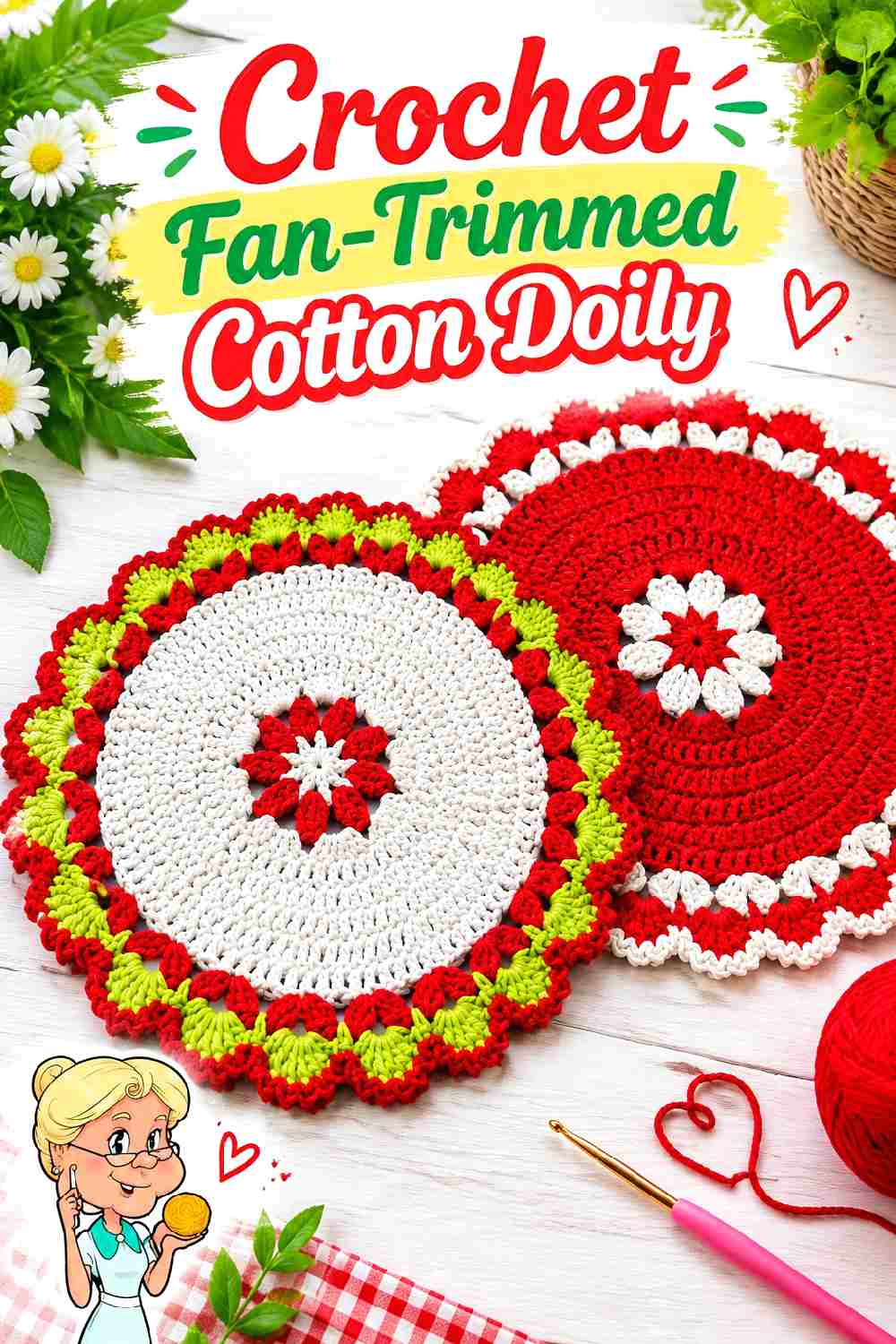
A fan-edged cotton doily puts much of its character at the perimeter. Instead of treating the edge as a minor finishing detail, the repeated fans create a decorative frame around the central area.
That framing can work especially well beneath a compact fall centerpiece.
The Border Deserves to Stay Visible
If a large bowl covers almost the entire doily, the most distinctive part of this design may disappear. Compare the center object’s diameter with the crochet before deciding the combination works.
Leaving a generous ring of exposed fan edging lets the border perform its intended visual role.
Cotton Can Create a More Substantial Table Presence
A cotton doily made at a heavier scale can feel less fragile than fine thread lace, but material substitutions still change drape and dimensions.
Check the tutorial’s material information and the fiber’s care label before making assumptions about stiffness, washing, or final size.
Creator Credit: Creative Grandma
31. Crochet Layered Lace Round Doily
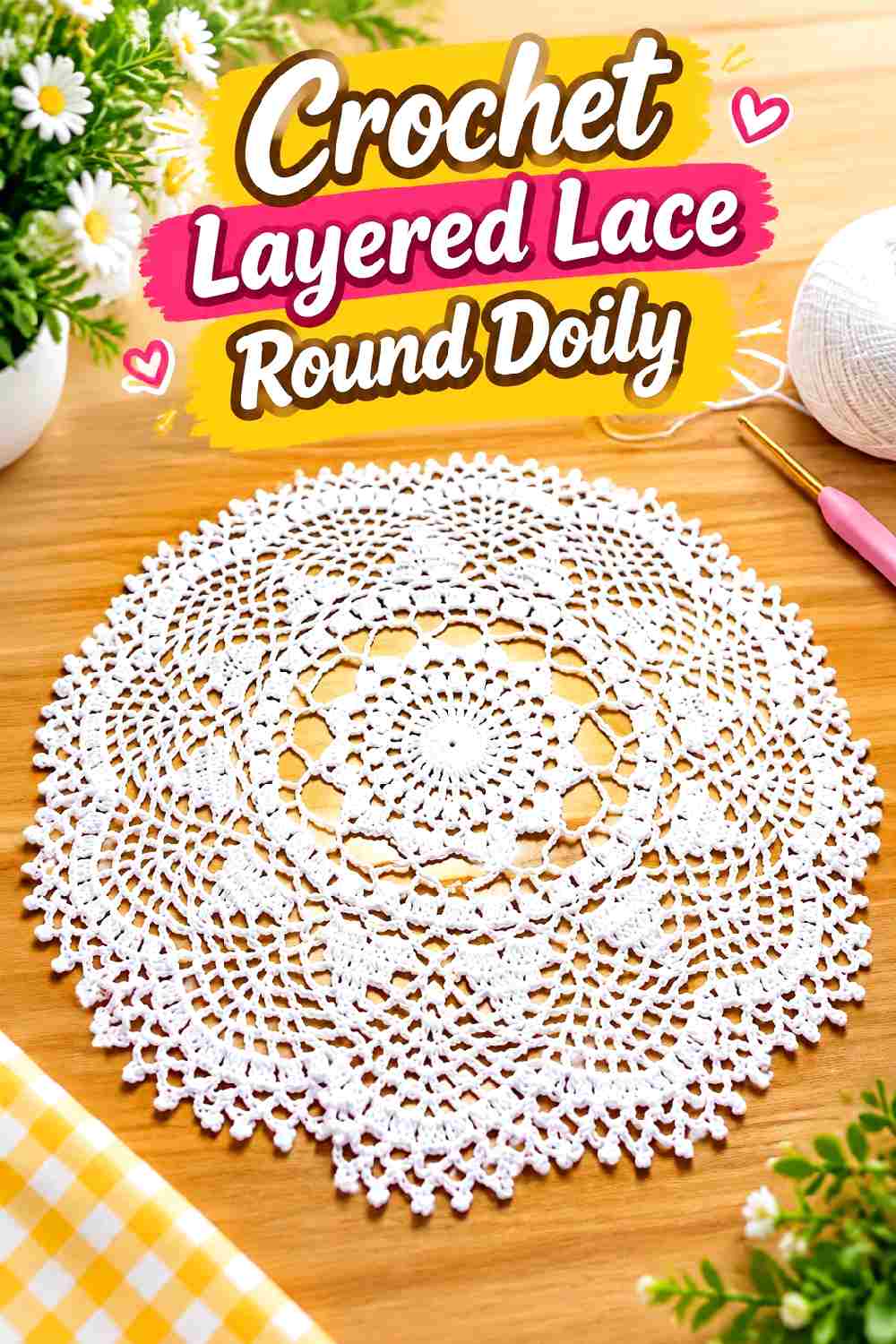
This round lace design offers a more layered visual effect, making it useful when you want plenty of texture in one monochrome piece. The changing sections can supply interest even in a quiet cream, brown, olive, or gold palette.
It works as an alternative to multicolor crochet when the table already contains several seasonal shades.
Layered Texture Can Replace Color Changes
When different lace sections already create clear visual bands, adding many colors may be unnecessary.
A single autumn neutral can reveal those transitions through texture alone and may be easier to coordinate with other decor.
Judge the Piece After the Lace Has Settled
Complex round lace can look compressed or irregular before appropriate finishing. Follow fiber-appropriate blocking or finishing guidance before deciding that the outer sections lack definition.
Points and open spaces often need the final shape to be established before the overall balance is clear.
Creator Credit: Mojina crochet and crafts
32. Crochet 1907 Inspired Star Flower Doily
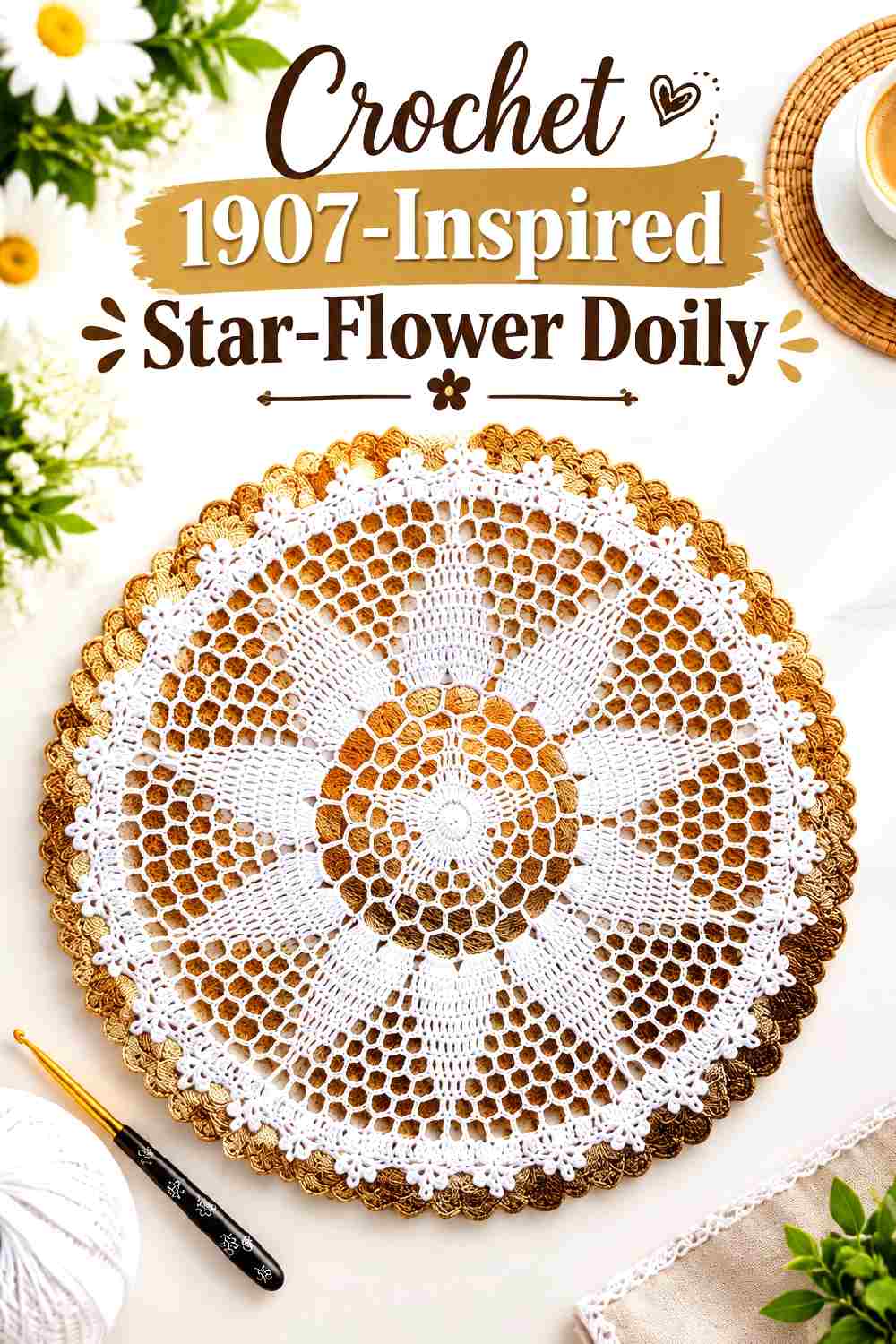
This project draws on an early-20th-century doily source and develops from a star-like center into a more floral finished form. That historical character makes it particularly interesting for an autumn setting with antique dishes, vintage furniture, or traditional textiles.
It offers a different kind of seasonal appeal: not a fall motif, but an old-fashioned object that suits the atmosphere of the season.
The Star-to-Flower Progression Creates Two Visual Layers
The geometry near the center does not need to match the outer shape exactly. That contrast between an angular beginning and floral perimeter gives the design more movement than a uniformly repeated round.
Avoid covering the entire middle if that transition is one of the features you want to show.
Historic Character Does Not Require Historic Colors
Cream and white are natural choices, but muted mustard, brick, olive, or brown can reinterpret the form for a 2026 fall table.
Keeping the color modern while retaining the vintage geometry can prevent the finished piece from feeling like a reproduction display.
Creator Credit: Krampolinka
33. Crochet Flower Doily Coaster
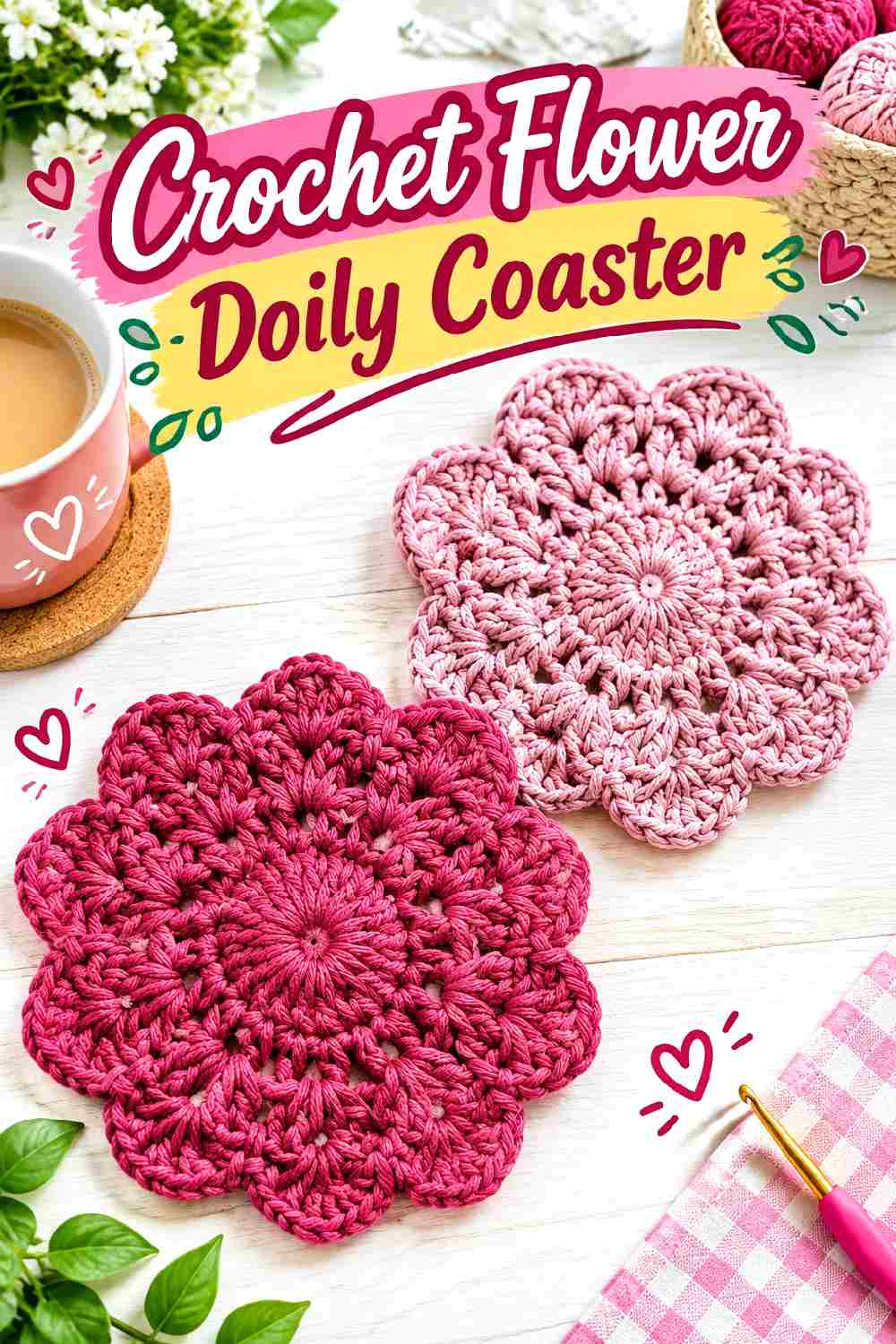
A coaster-scale flower doily is useful when you want the lace idea repeated at individual seats or around a living room rather than concentrated in one centerpiece.
Its smaller size also makes strong fall colors easier to introduce without dominating the entire table.
Small Pieces Make Palette Testing Practical
If you are undecided between rust, mustard, olive, cream, or another shade, a coaster-scale project lets you see how a color behaves in the actual room before committing to a much larger doily.
Compare it under the lighting where the finished pieces will be used.
Match the Object Above It to the Finished Diameter
A coaster or mini doily looks most intentional when some of its decorative edge remains visible. An object much wider than the crochet can hide the flower silhouette completely.
Check the creator’s finished sizing information and compare it with your intended cup or decorative item.
Creator Credit: Crafting With Caylene
34. Crochet Picot Edged Mini Doily
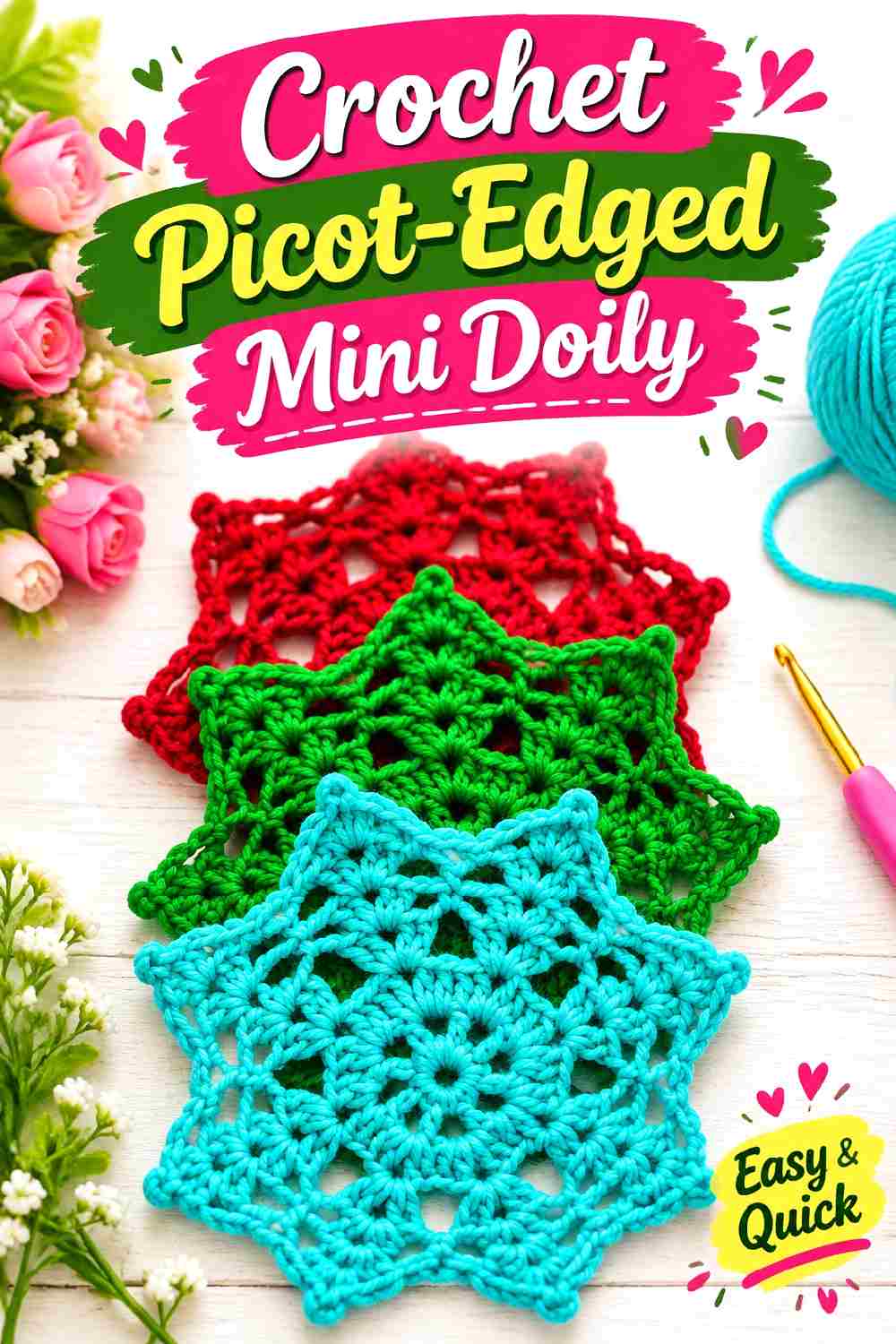
This compact doily emphasizes a decorative outer edge rather than sheer scale. It is well suited to small autumn accents where a large centerpiece would overwhelm the available surface.
Use it beneath a small vase, decorative jar, or other lightweight display object rather than assuming every doily needs a dining-table role.
Tiny Edge Details Need Space Around Them
Picots and other small border points can disappear beneath an oversized object. Leaving even a modest ring of exposed crochet makes the edge much easier to recognize.
That visibility is especially important when the yarn and tabletop are similar in color.
Mini Doilies Can Connect Separate Fall Displays
Several coordinated small pieces can repeat the same handmade texture in different areas of a room. You might keep them the same color for continuity or work within a narrow autumn palette.
What matters is that each one has enough surface space to sit flat and remain visually distinct.
Creator Credit: The Lazy Hobbyhopper
35. Crochet Repeat Growth Round Table Doily
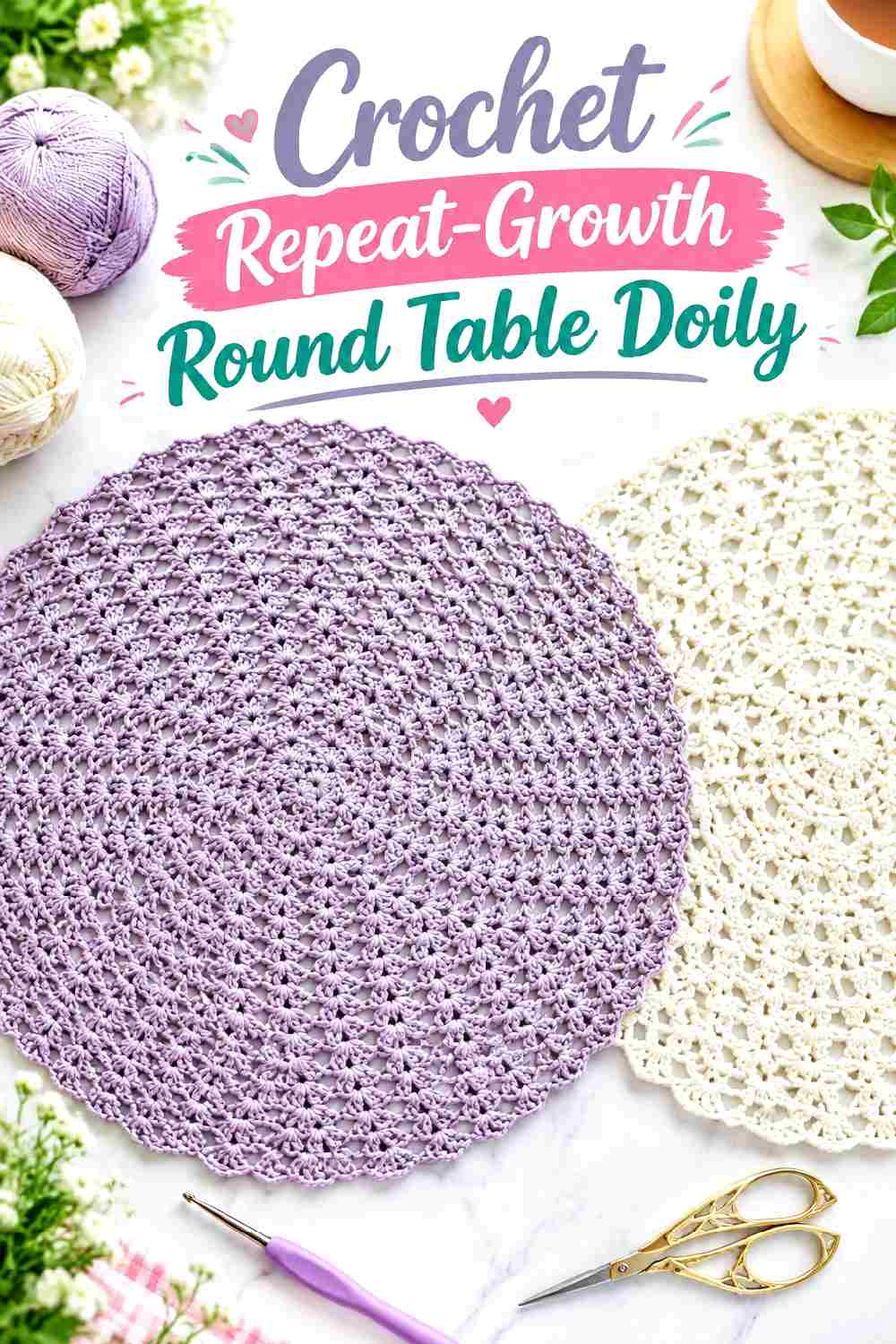
This expanding round table doily is a useful final option for readers who want a classic radial piece while thinking carefully about finished scale. Its growth outward from the center makes the relationship between diameter and table placement particularly important.
It can be adapted visually for fall without changing its fundamental circular character.
Stop Based on the Intended Display, Not an Arbitrary Diameter
When a round design allows size flexibility, bigger is not automatically more useful. Compare the developing piece with the table, centerpiece, or place-setting area as you work.
Follow the creator’s guidance for legitimate stopping or repeating points rather than altering the construction without reference.
A Simple Round Shape Gives Fall Color More Freedom
Because the silhouette is familiar, you can let the color carry more of the seasonal mood. Cream creates a quiet traditional look, while rust, mustard, olive, or brown makes the same general form more autumn-focused.
A restrained multicolor border can also add seasonal contrast without changing the central structure.
Creator Credit: Made by Gootie
Quick Ways to Narrow the 35 Ideas
| If you want… | Consider these project numbers | Why they stand apart |
|---|---|---|
| An obvious fall theme | 1, 2, 18, 20 | Sunflower, pumpkin, gothic styling, and harvest color create the clearest seasonal signals |
| Traditional heirloom lace | 3, 5, 15, 16, 29, 32 | These emphasize vintage, pineapple, ornate, or historically inspired lace |
| A non-round silhouette | 2, 6, 13, 19, 21, 28 | Pumpkin, heart, oval, and square forms change the table layout substantially |
| Small accents | 14, 22, 33, 34 | These work better where a full centerpiece would be oversized |
| Strong geometric impact | 11, 12, 21, 23, 25, 26 | Mandala, star, filet, spiral, and radial structures emphasize shape |
| A more substantial table-mat look | 17, 24, 30, 35 | These can create more visual weight than very fine thread-lace accents |
| Floral fall styling | 1, 4, 10, 22, 24, 27 | Flower structure provides seasonal warmth without relying only on leaves or pumpkins |
Conclusion
The most useful way to choose among these 35 crochet lace doily ideas is to start with the surface and display rather than the yarn color.
For a clearly seasonal piece, the sunflower and pumpkin shapes communicate fall immediately. Vintage, pineapple, oval, and filet designs are stronger choices when you want a traditional doily that can move between autumn and year-round decor. Small floral medallions and coaster-scale pieces make sense when you want handmade details in several areas instead of one large centerpiece. Mandalas, spirals, stars, and square lace offer more geometric alternatives.
After choosing the form, compare the tutorial’s finished scale and recommended materials with your intended placement. Then plan color, contrast, and blocking around that particular construction. For exact stitchwork and assembly, follow the original creator tutorial linked with each project.
Frequently Asked Questions
Can any crochet lace doily be adapted to fall colors?
Many can. A design does not need a pumpkin or leaf motif to work in autumn decor. Cream, rust, ochre, burgundy, olive, brown, muted orange, and antique gold can shift a traditional floral or geometric doily toward a fall palette.
The important limitation is that color changes do not alter the underlying construction. A vintage floral doily remains a vintage floral doily even when crocheted in rust, so choose a shape you already like before planning the seasonal palette.
Which fall colors show crochet lace detail clearly?
That depends heavily on the background. Light cream or gold can show clearly on dark wood, while burgundy, rust, olive, or brown may stand out more strongly on a pale table.
Openwork also reveals a large amount of the surface underneath. Test your planned yarn or thread against the actual tabletop instead of choosing color from the skein alone.
Should I use crochet thread or regular yarn for a lace doily?
Use the tutorial’s specified material when you want a result close to the creator’s example. Fine thread usually produces a different scale and visual delicacy from thicker yarn, while heavier material can create a bolder table-mat effect.
Changing yarn weight or hook size can alter dimensions, drape, and stitch definition. Do not assume a substitution will simply create the same doily in a different texture.
Do crochet lace doilies need to be blocked?
Many lace designs benefit from appropriate finishing because it can help open the lace and define points, scallops, petals, and straight edges. The correct method depends on the fiber.
Check the yarn or thread care information and the creator’s guidance before applying water, steam, heat, or tension. Different fibers do not respond identically.
Can I make a doily larger by changing the yarn or hook?
A thicker yarn or larger hook may produce a larger result, but it can also change the proportion, drape, and appearance of the lace. It is therefore not a precise resizing method.
If size matters, start with the creator’s stated dimensions and gauge information when available. Designs specifically constructed to permit additional repeats provide a more controlled route when the tutorial explains how the expansion works.
Is it safe to place a crochet doily beneath candles or hot serving dishes?
Treat an ordinary crochet doily as decorative textile rather than automatic heat protection. Keep it away from open flames and do not place hot cookware directly on it unless the project and materials were specifically designed for that purpose.
For candles, use an appropriate stable, nonflammable holder and sufficient clearance so the flame and heat cannot contact the crochet.