A black crochet shrug can range from barely-there fishnet sleeves to a fuller lace cocoon that covers most of the upper back. That difference matters more than color alone. Sleeve width, mesh scale, neckline shape, crop point, yarn texture, and construction all change how the finished layer looks and how comfortably it moves.
These 13 ideas cover flared lace, spiderweb openwork, granny squares, mohair, filet-style grids, dramatic bell sleeves, distressed mesh, and more structured bolero shapes. Several source tutorials show their samples in colors other than black; the ideas below treat black as the planned color direction rather than pretending every original tutorial was made in black. The focus is on meaningful differences, fit checks, and adaptation decisions so each option earns its place in the collection.
Quick List
- Crochet Flared Lace Tie Shrug
- Crochet Fine-Lace Sleeve Shrug
- Crochet Bell-Sleeve Mesh Shrug
- Crochet Mohair Collar Bolero
- Crochet Spiderweb Back Shrug
- Crochet Granny-Square Lace Bolero
- Crochet Dragonfly Cocoon Shrug
- Crochet One-Piece Grid Shrug
- Crochet Seamless Mesh Sleeve Shrug
- Crochet Filet-Edge Bolero
- Crochet Cuffed Openwork Bolero
- Crochet Distressed Goth Mesh Shrug
- Crochet Fishnet Sleeve Shrug
Make Sure Black Lace Still Shows Its Stitch Detail
Black yarn can make an openwork shrug look dramatic, but it can also hide stitch definition. Very small lace repeats may visually merge from a distance, particularly with fuzzy yarn or low-contrast styling. Larger mesh openings, clearly shaped shells, geometric grids, and spiderweb lines are easier to recognize when everything is black.
Consider the clothes underneath as part of the design. Black lace over a lighter base emphasizes every opening, while black over black produces a subtler layered texture. Neither is automatically better; they simply serve different styling goals.
When comparing these tutorials, study the finished fabric rather than assuming the same black yarn will create the same effect. A fuzzy mohair-style bolero, a smooth filet grid, and a large fishnet shrug can all be black while looking completely different.
Fit the Shoulders and Arms Before Worrying About Sleeve Length
Shrugs have less body fabric than cardigans, so relatively small fit differences around the upper back, shoulders, armholes, and neckline can become noticeable. A sleeve-focused shrug may feel restrictive if the span across the back is too short even when the sleeves themselves are wide enough.
Made-to-measure tutorials are especially useful here, but “adjustable” does not mean measurement-free. Check which measurements the creator actually uses and compare the work against your body or a well-fitting garment at the major shape changes.
For an open mesh design, also remember that the fabric may stretch differently from dense crochet. Try to judge the garment in the same orientation in which it will be worn rather than relying only on a flat measurement.
Yarn Choice Changes Drape, Openness, and Snag Risk
Smooth yarn makes the geometry of black crochet lace easier to read. Fuzzy fibers soften the openings and can create a hazier, more romantic outline. Heavier yarn can make a short shrug feel more substantial, while a lighter yarn can emphasize airiness—but changing yarn can also change dimensions, stretch, and the amount of structure.
Open mesh deserves another practical check: jewelry, bag hardware, buttons, and other projecting details can catch in large openings. Extremely open fishnet is therefore better chosen for texture and styling than for protection or warmth.
Follow each creator’s material and sizing guidance before substituting yarn. If you want a different fiber, make a small sample first and compare how the fabric hangs, stretches, and reveals the lace.
1. Crochet Flared Lace Tie Shrug
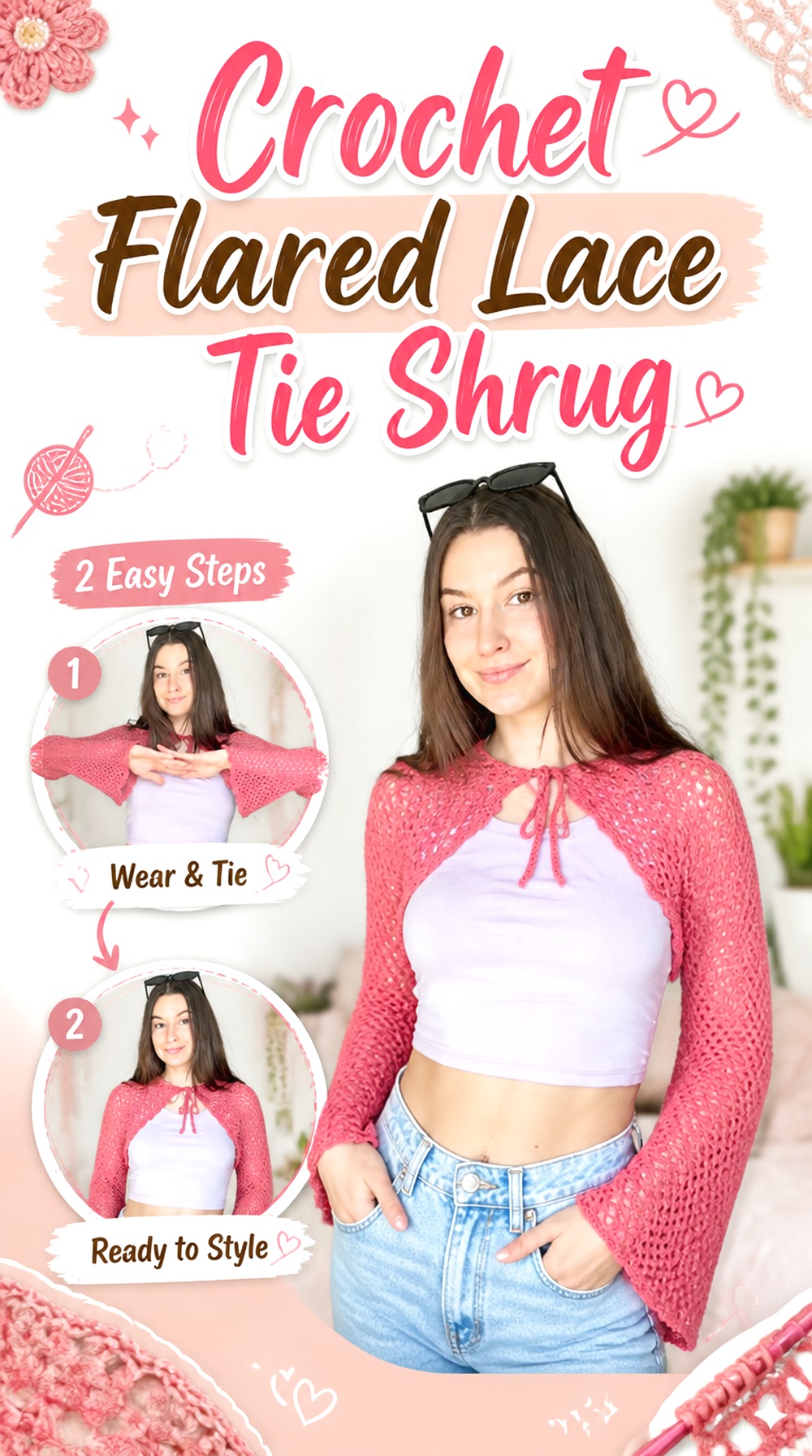
This version treats the shrug as a delicate cropped garment rather than simply a strip of mesh connecting two sleeves. The source tutorial includes front and back sections, lace sleeves, a flare, shell-style border, and a tie, giving the finished piece a more defined front silhouette. HookedOnViktoriya describes the tutorial as adjustable for different sizes and demonstrates a fingering-weight sample.
Worked in black, the changing lace shapes could create a dressier look than a basic square mesh. It is a particularly useful direction when you want the shrug to frame the torso instead of disappearing behind the arms.
Flared Sleeves Put More Visual Weight at the Wrist
A flare makes the lower sleeve part of the design rather than just an endpoint. In black, that extra width can create a strong silhouette, especially over bare arms or a narrow contrasting sleeve underneath.
Check how much hand clearance you want before committing to a dramatic flare. Wide cuffs can look beautiful for occasion wear but may be less convenient around food, desks, crafting tools, or anything that can catch the edge.
The Tie Changes How the Front Sits
A front tie gives the shrug a visible anchor point. That can help it read more clearly as a cropped garment instead of detached-looking sleeves, but it also makes the front placement important.
Before extending or shortening the front sections, compare the planned tie position with the neckline and waistline of your usual base layers. Moving the apparent crop point changes the entire proportion of the shrug.
Fine Black Lace Benefits From a Clear Background
The source uses fine yarn, which allows considerable stitch detail. In black, fine openwork may become understated when worn over another black garment.
If the lace pattern itself is the feature you want people to notice, compare the fabric against both light and dark clothing before deciding how you will style it most often.
Original Tutorial and Creator Credit
Creator: HookedOnViktoriya
2. Crochet Fine Lace Sleeve Shrug
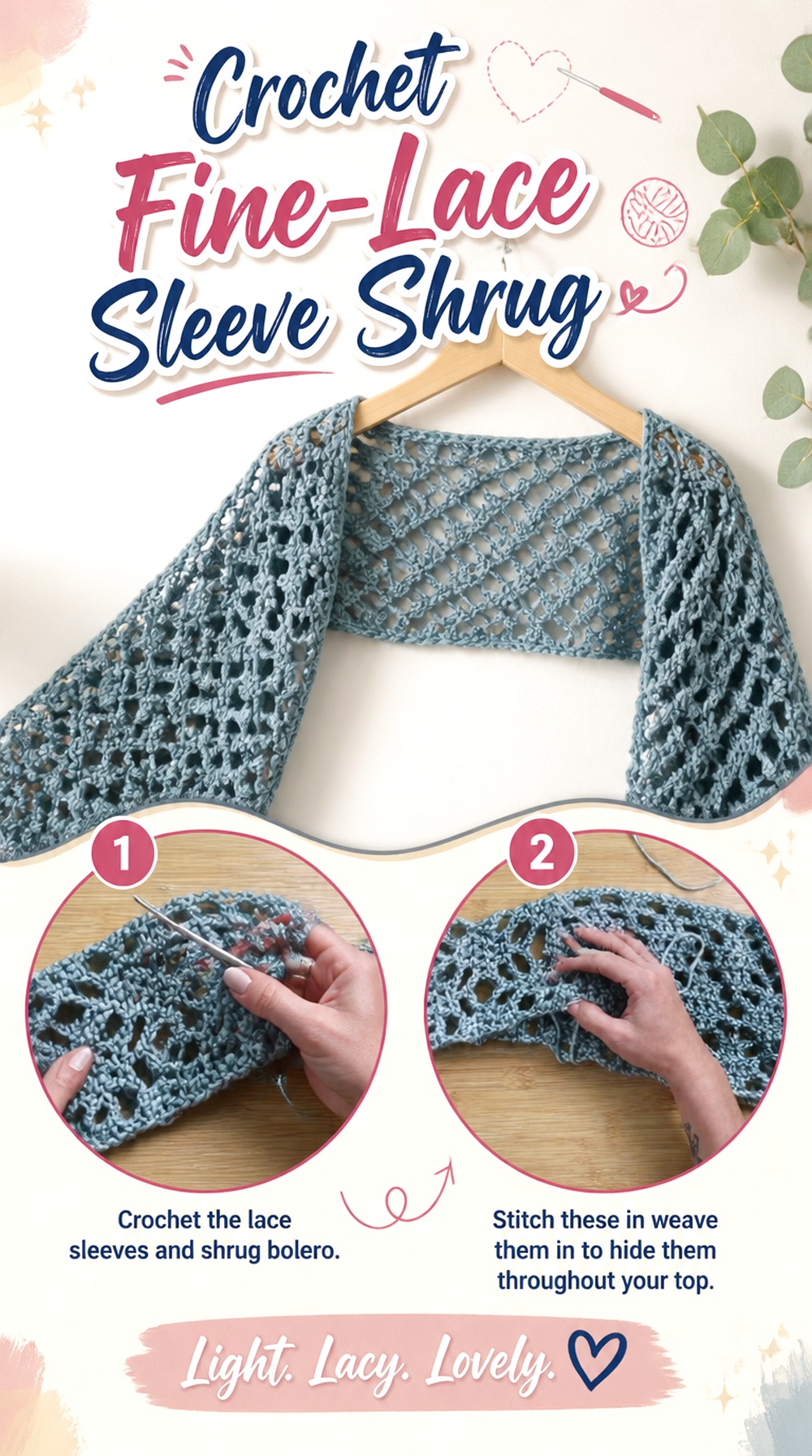
This lace-sleeve design keeps most of the visual attention on the arms. The finished shrug has more decorative stitch character than plain square mesh, making it a useful option when you want black lace to look intricate without adding a full cardigan body.
The creator, it’s erin b., specifically shows lace sleeves that can be adapted in size, with two samples illustrating different amounts of room. That makes this idea well suited to readers deciding between a closer sleeve and a more relaxed interpretation.
Sleeve Ease Changes the Lace Pattern Too
Making a lace sleeve wider does more than increase comfort. It also gives the openwork more room to hang and can change how strongly the pattern is visible around the arm.
Compare the creator’s closer and looser examples before choosing your direction. For a black version, a slightly more open fit may help the negative space remain visible rather than compressing tightly against the base layer.
Decorative Repeats Need Consistent Tension
A regular lace pattern shows unevenness differently from distressed mesh. If neighboring open sections vary noticeably, the eye can pick up the difference even when the yarn is black.
Before building two sleeves, compare the first portion of the fabric with the tutorial’s finished appearance. Consistent openings are more important here than creating a deliberately irregular, torn-looking texture.
Decide Whether the Shrug or Base Layer Is the Feature
Detailed black lace can compete with a heavily patterned garment underneath. A plain dress, camisole, or fitted top gives the crochet more visual space.
If you prefer a quieter effect, black-on-black layering will reduce contrast and turn the lace into surface texture rather than a graphic pattern.
Original Tutorial and Creator Credit
Creator: it’s erin b.
3. Crochet Bell Sleeve Mesh Shrug
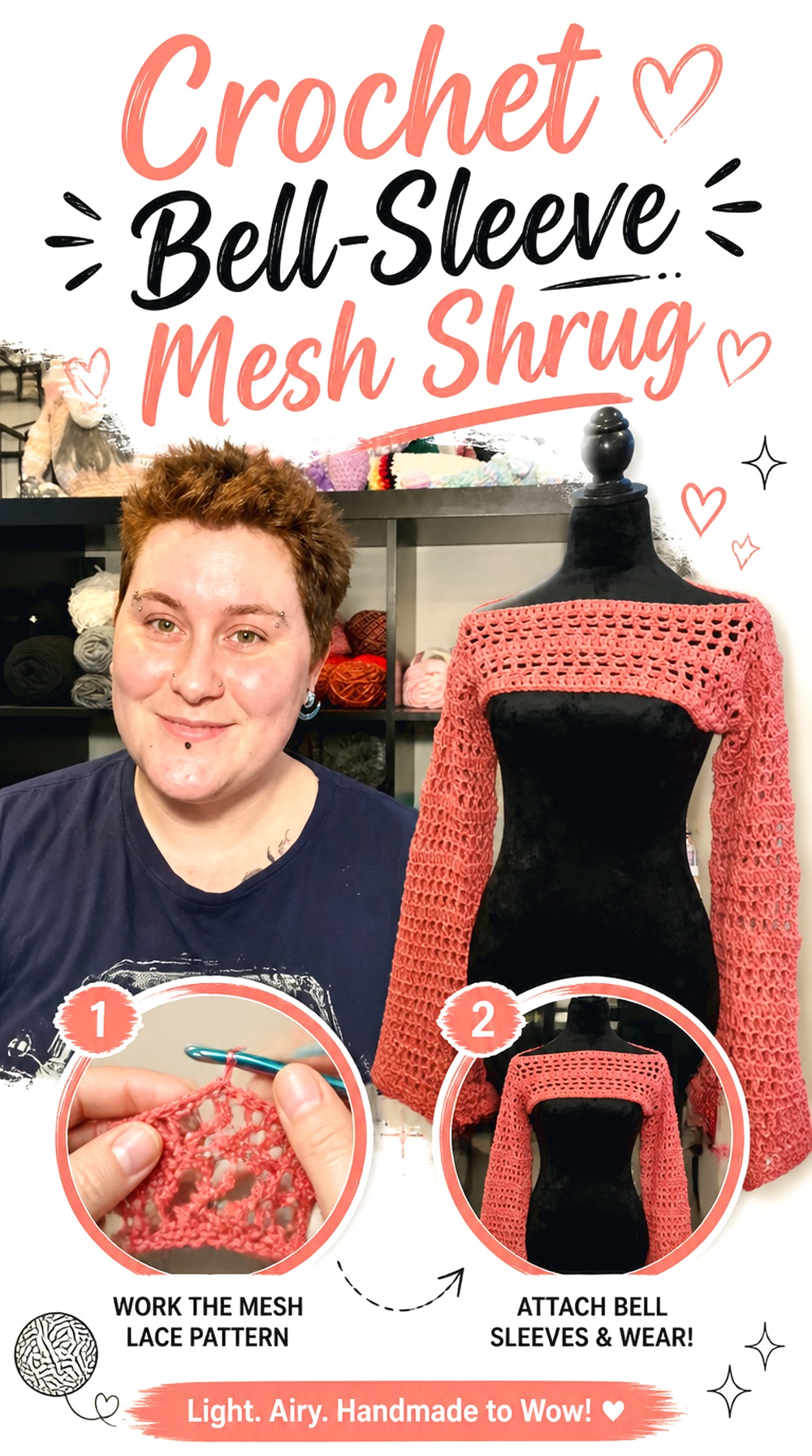
For a stronger silhouette, this black mesh shrug shifts the volume toward long bell sleeves. Crochet Made By Eli’s tutorial is specifically built around a bell-sleeve mesh shrug and uses a weight-4 yarn in the demonstrated project.
That combination produces a different visual result from delicate lace-thread shrugs. Instead of tiny detail, the attraction is the contrast between an open fabric and a dramatic sleeve outline. In solid black, it can suit gothic, festival, or layered evening styling while still leaving most of the garment underneath visible.
Bell Sleeves Need a Practical Length Check
The lower sleeve should be judged while your arm is hanging naturally and while you are using your hands. A dramatic cuff that photographs well can be inconvenient if it falls too far over the fingers.
Before finalizing the length, consider where you expect to wear the shrug. A shorter bell may be easier for regular use; more volume makes sense when the silhouette is the main goal.
Medium-Weight Yarn Makes Mesh Feel More Graphic
The demonstrated tutorial uses weight-4 yarn. In black, a comparatively substantial yarn can create strong outlines around each open space instead of the wispy appearance associated with very fine lace.
If substituting a much thinner yarn, do not expect the same visual weight or dimensions automatically. Check the creator’s construction and make your own fabric sample first.
Keep the Shoulder Area From Fighting the Sleeve Volume
Large sleeves already create movement and width. If the shoulder span is also excessively loose, the shrug may feel less controlled than intended.
Evaluate the upper-arm and back fit separately from the flare. Enough mobility around the shoulder matters, but that does not require making every section equally oversized.
Original Tutorial and Creator Credit
Creator: Crochet Made By Eli
4. Crochet Mohair Collar Bolero
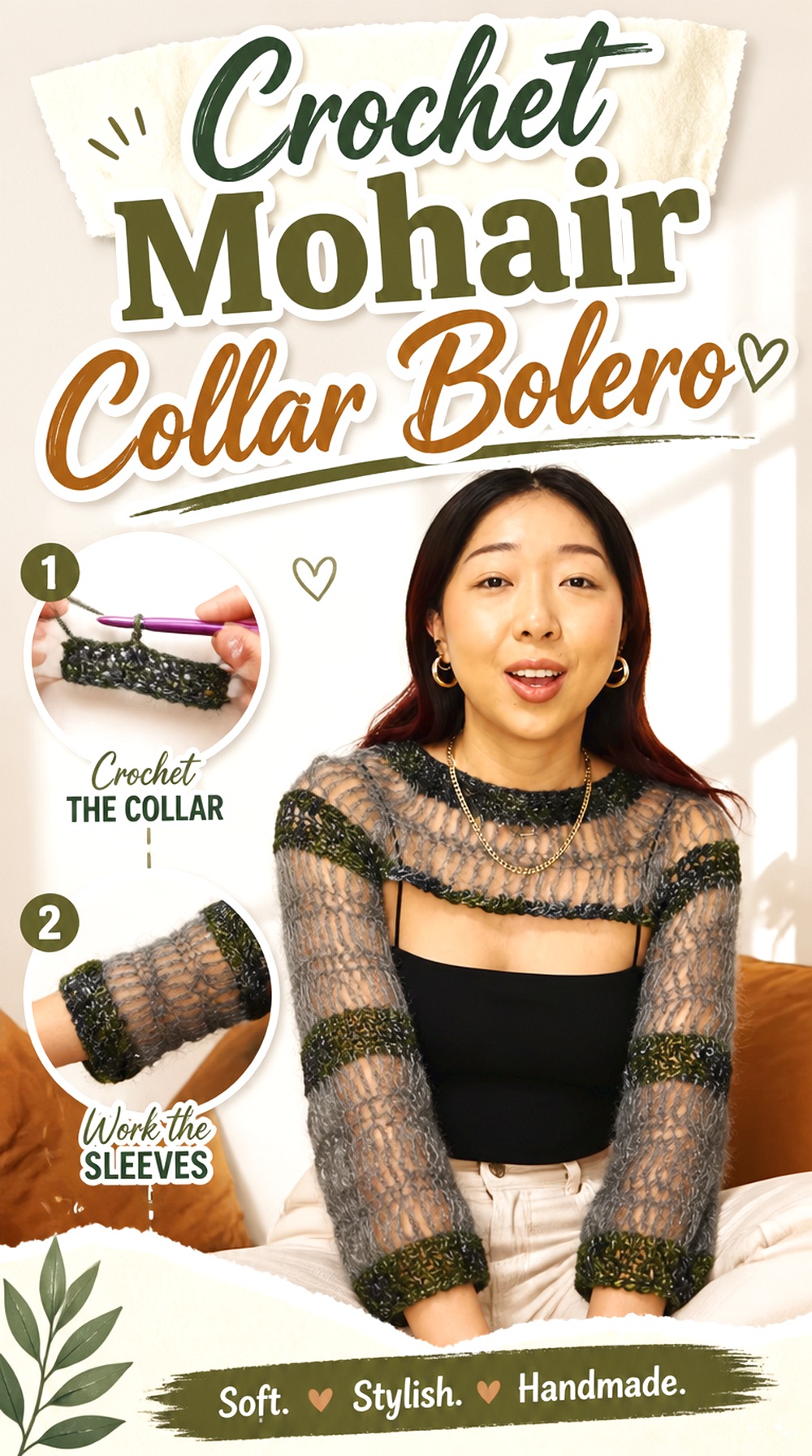
A fuzzy bolero creates a completely different kind of black lace. Instead of crisp grid lines, the texture becomes softened by a halo. amazingishgrace’s tutorial demonstrates a lacy mohair bolero/sleeves design using a combination of thicker yarn and mohair in the sample and describes the associated pattern as made to measure.
In black, this approach can feel less like stark fishnet and more like a hazy, romantic layer. The collar-to-sleeve emphasis also gives it a compact silhouette that works well when you want shoulder and arm texture without covering the center of the outfit.
Fuzzy Fibers Soften Sharp Lace Geometry
A yarn halo partly fills the visual space between stitches. That can be attractive when you want misty, soft black texture, but it is not the strongest choice when your priority is crisp stitch definition.
Place a swatch against the intended base garment. If the openings almost disappear, decide whether that subtle effect is intentional before completing the entire shrug.
A Collar-Led Shape Frames the Neck and Shoulders
This design gives more attention to the area connecting the sleeves than a minimal back strip. The result can emphasize the neck and shoulder line while leaving the torso mostly uncovered.
Think about necklaces, high necklines, straps, and other details you frequently wear. A textured collar can complement a simple base garment but may visually compete with elaborate neck details.
Black Mohair Can Be Harder to Unpick
Fuzzy fibers tend to grip neighboring strands more than very smooth yarn. That makes careful fit checking valuable before progressing too far.
Rather than relying on an assumed size, use the made-to-measure concept from the source and verify the proportions as the garment develops.
Original Tutorial and Creator Credit
Creator: amazingishgrace
5. Crochet Spiderweb Back Shrug
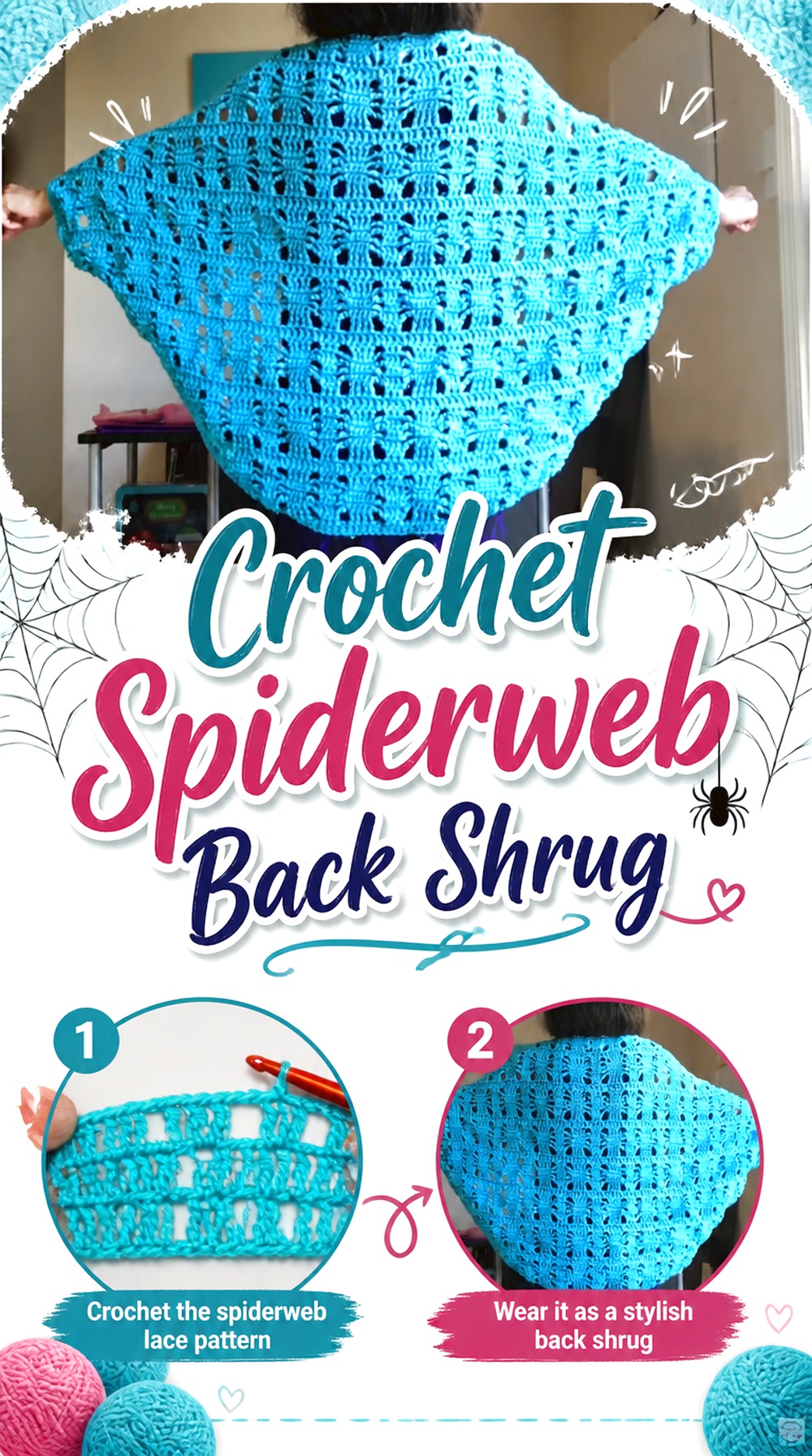
Few openwork structures suit black as naturally as a spiderweb. Instead of repeating a generic mesh over the entire garment, this version uses a recognizable web motif as the main visual feature across the shrug.
Crafting Shed’s tutorial explicitly demonstrates a shrug with a spiderweb design and introduces treble crochet in the project. This makes the idea meaningfully different from all-over fishnet: the negative space forms an image. In black, the web can read clearly over a contrasting top, while black-on-black produces a subtler gothic texture.
The Back Motif Needs to Stay Centered
A statement motif loses impact if it drifts noticeably toward one shoulder after assembly or wear. When checking the flat piece, identify where the visual center of the web will land on the body.
Before finishing the sleeves or edges, try the piece on and look at the back in a mirror or photo. That checkpoint is more useful than judging symmetry only while the fabric is lying flat.
Contrast Determines How Dramatic the Web Looks
A web motif depends on seeing both yarn and empty space. Over white, gray, red, or skin-toned layers, black lines can appear very graphic. Over black, the same motif becomes more textural.
Choose the effect intentionally. If the spiderweb is the entire reason you selected the project, test the intended outfit underneath before assuming the motif will remain equally visible.
Treat the Motif as the Statement
Adding numerous trims, beads, or extra decorations can compete with the central web. If you want further customization, consider concentrating it at the cuffs or edging rather than covering the motif itself.
That preserves the construction’s strongest difference from the other shrugs in this collection.
Original Tutorial and Creator Credit
Creator: Crafting Shed
6. Crochet Granny Square Lace Bolero
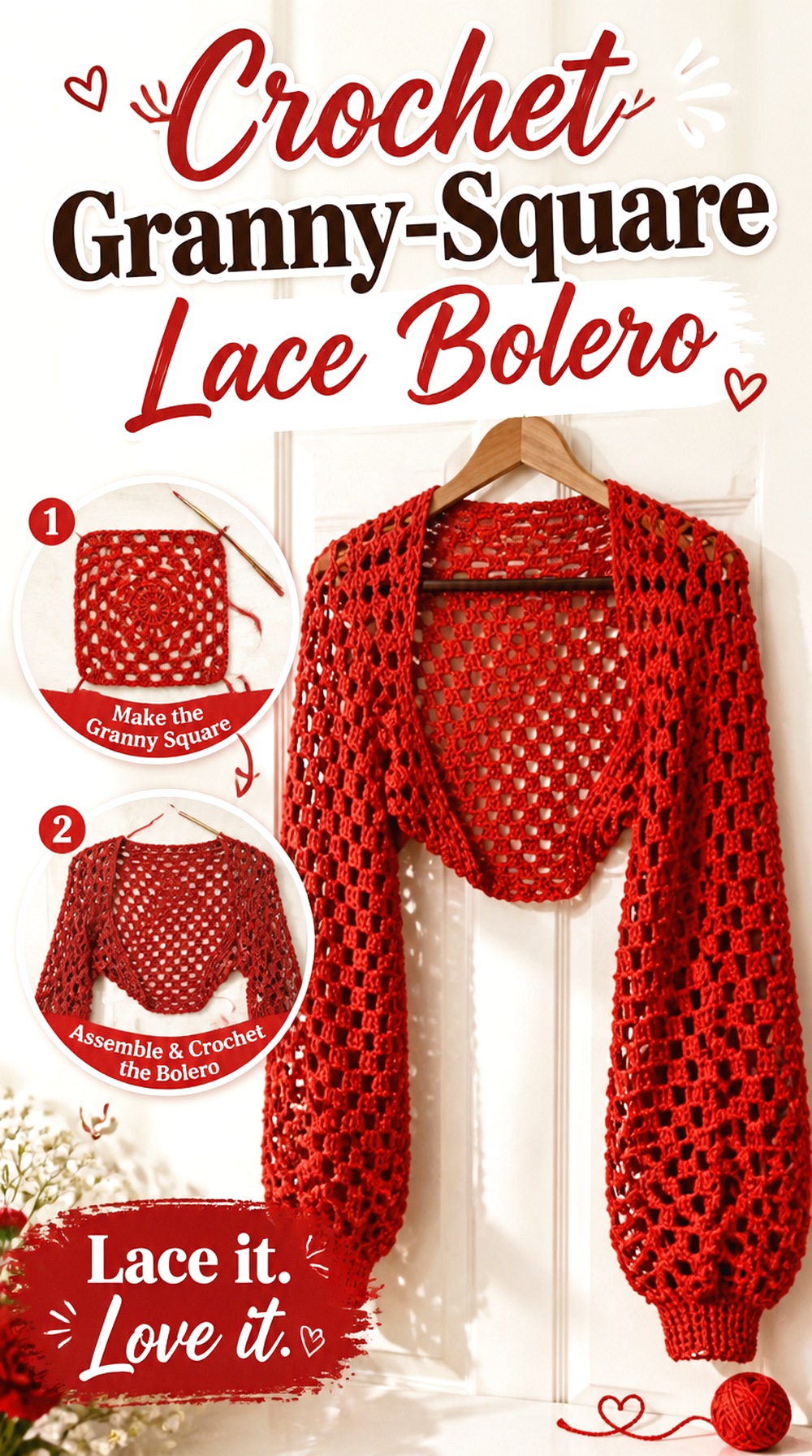
This option breaks away from row-based mesh by building the visual structure around granny squares. DIY FROM HOME CROCHET’s video is specifically a granny-square shrug/bolero tutorial, and the creator also notes a separate written pattern with multiple sizes.
Using black throughout can turn familiar granny geometry into something closer to modular lace. The joins become part of the design, especially when open spaces in the motifs continue visually across neighboring squares. It is a strong choice for crocheters who enjoy working in smaller repeatable units rather than watching one long mesh panel grow.
Block Motifs Before Judging the Garment Layout
Individual squares can differ slightly in dimension or edge behavior. Those small differences become more obvious once many motifs meet.
Before committing to the final arrangement, compare the blocked dimensions and corner shapes of your squares. Correcting inconsistent motifs early is generally cleaner than forcing mismatched edges together during assembly.
Join Lines Become Part of an All-Black Design
With a single color, there is no color blocking to distract from the joins. Their placement and neatness therefore have more visual influence.
Lay the motifs out under good light before joining. Check that the strongest lines lead in directions you like across the back and sleeves rather than creating unintended visual breaks.
Modular Construction Makes Motif Swaps Tempting
You may want to replace the source square with another black lace motif. That can work conceptually, but matching the number of squares is not enough.
Compare blocked dimensions, edge structure, and joining compatibility first. Two motifs that look approximately the same size before blocking may behave differently once incorporated into a wearable.
Original Tutorial and Creator Credit
Creator: DIY FROM HOME CROCHET
7. Crochet Dragonfly Cocoon Shrug
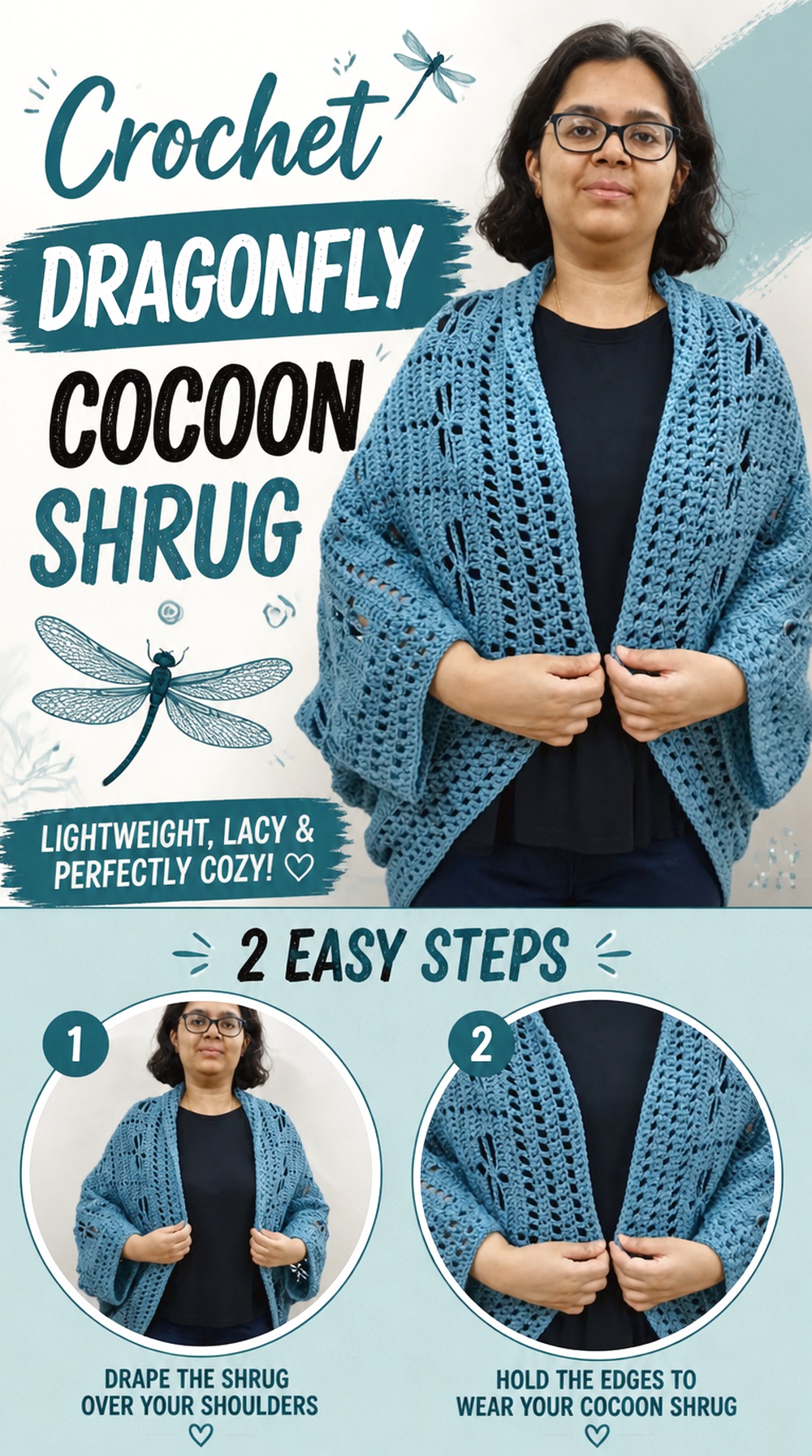
A cocoon shrug offers considerably more back coverage than sleeve-only boleros. Let’s All Crochet’s Dragonfly Garden Shrug is made from a rectangle featuring dragonfly-style openwork that is later formed into the cocoon shape.
In black, this can create a sweeping lace layer rather than a tiny cropped accessory. It is the strongest choice in this list for someone who likes decorative openwork but wants more fabric across the back and sides. The rounded, draping result also behaves differently from fitted or sharply cropped boleros.
Cocoon Depth Controls How Much Fabric Falls Around the Body
The appeal of a cocoon lies partly in its relaxed drape. That means the dimensions of the starting fabric affect more than simple size; they also influence how much material gathers around the sides and back.
Use the source’s schematic and sizing guidance instead of assuming that adding width produces the same effect as adding length.
Dragonfly Openwork Needs Room to Read
Decorative openwork benefits from a fabric that is not stretched so aggressively that its shapes become distorted.
When testing the garment, inspect the motif across the back—the area where viewers are most likely to see it. In black, sufficient negative space can make the dragonfly-inspired pattern clearer.
This Shape Offers More Coverage Than a Bolero
A cocoon is a useful alternative if a fishnet sleeve shrug feels too exposed. It can still look airy while covering a larger portion of the upper body.
That extra material also means more overall fabric weight, so yarn substitution can have a more noticeable effect on drape than it would in a tiny sleeve-only piece.
Original Tutorial and Creator Credit
Creator: Let’s All Crochet
8. Crochet One Piece Grid Shrug
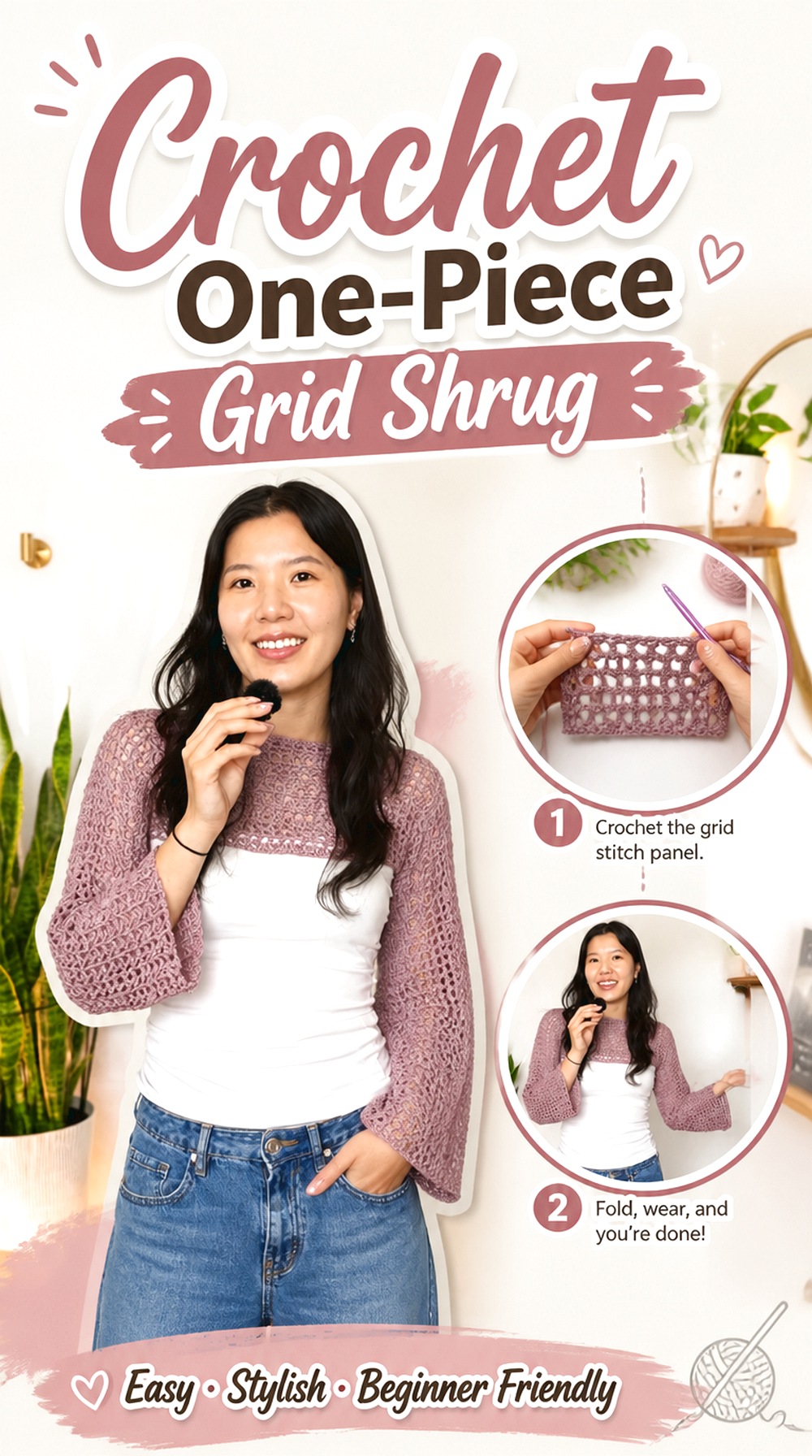
VivCrochets’ mesh shrug takes a notably streamlined construction route: the creator describes it as made in one piece with a small amount of sewing, with the dimensions adjustable during the tutorial.
The regular mesh makes a good foundation for a clean black lace look. It is less decorative than shells or spiderwebs, but that restraint can be useful when you want the shrug to work with many outfits. The long continuous format also puts emphasis on proportion—particularly the relationship between sleeve length, body span, and neckline opening.
A Regular Grid Makes Uneven Tension More Visible
Simple mesh has nowhere to hide a sudden change in opening size. On black yarn, the inconsistency may be subtle in your hands but more obvious when the fabric is stretched over a lighter top.
Periodically hang the work vertically and compare several areas instead of inspecting only the newest row.
Neck Opening Placement Affects the Whole Silhouette
A one-piece design depends on putting the opening in the correct relationship to both sleeves. If the opening feels misplaced, the shrug may pull toward one side even if the total length is sufficient.
Follow the creator’s adjustment method and use your own fit checks rather than copying a finished measurement that was intended for someone else’s proportions.
Minimal Construction Makes Color the Main Statement
Because the shape and mesh are restrained, changing the sample to black can dramatically shift the mood without requiring extra decoration.
This is a useful option for readers who want gothic or monochrome styling but do not necessarily want a literal web, ruffle, or motif.
Original Tutorial and Creator Credit
Creator: VivCrochets
9. Crochet Seamless Mesh Sleeve Shrug
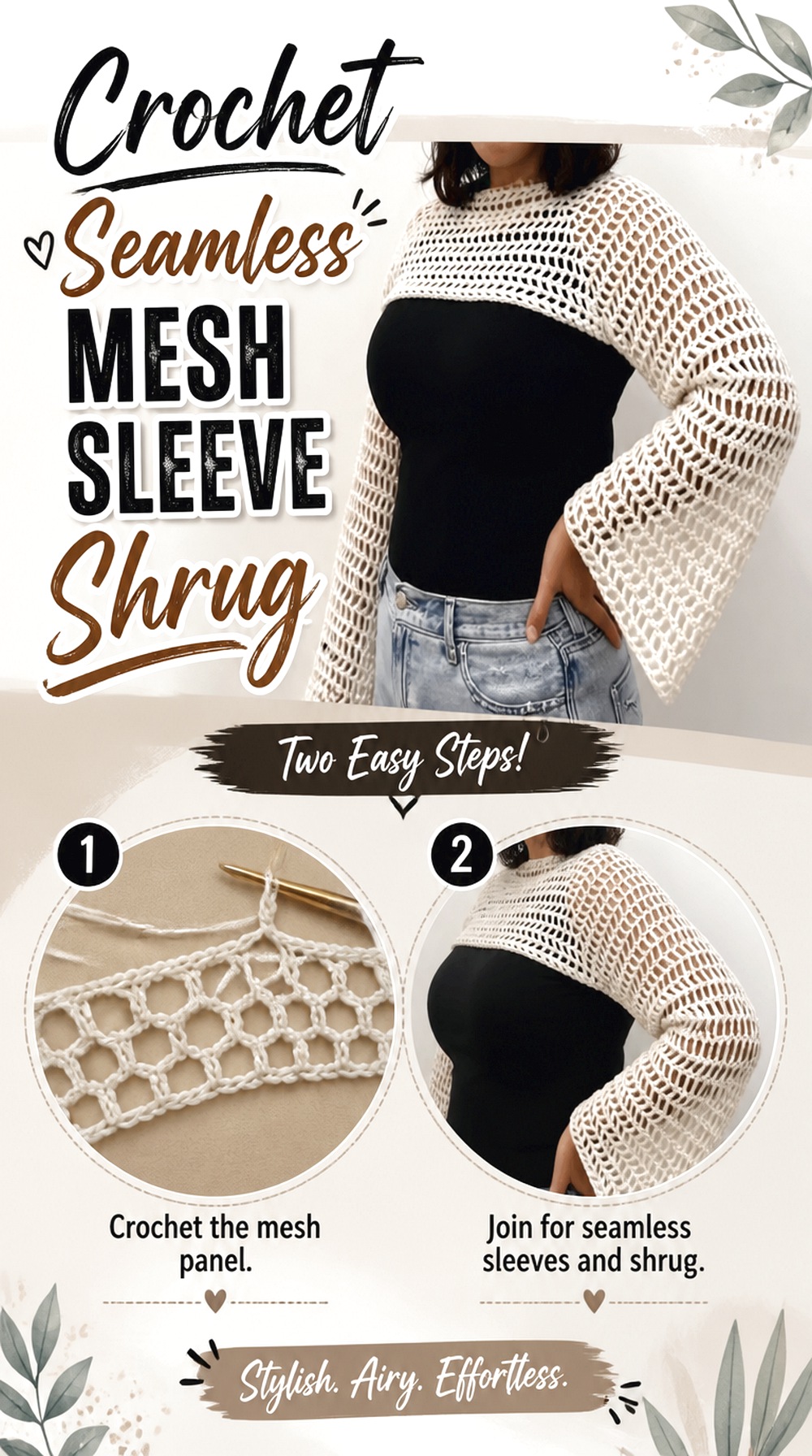
This version is another minimalist mesh idea, but its construction gives it a separate reason to consider. sewsam describes the project as a one-piece mesh sleeve shrug worked without seaming separate pieces and notes that the size and length can be customized.
That makes it appealing if visible seams are something you would rather avoid in a sparse black fabric. The finished look is largely about arms, shoulders, and uninterrupted mesh, which makes it a useful everyday layer over fitted tanks, dresses, or simple tops.
Continuous Construction Keeps the Mesh Visually Unbroken
Openwork can draw attention to joins because light passes directly through the fabric. A continuous approach reduces the number of separate panel seams competing with the grid.
For an all-black piece, that can produce a particularly clean surface where the eye follows the mesh rather than assembly lines.
Custom Sleeve Length Should Match How You Use Your Hands
Long open sleeves are attractive, but their usefulness depends on your routine. Decide whether you want the sleeve to end before the wrist, at it, or extend farther.
Check this while bending the elbow and reaching forward. Shrugs shift across the back as the arms move, so a sleeve that appears perfect while standing still may feel different in motion.
The Base Layer Determines Coverage
This construction is intentionally open. If you need warmth or opacity, choose a different idea from the list rather than expecting black yarn itself to make large mesh behave like solid crochet.
Its strength is uninterrupted texture and light layering.
Original Tutorial and Creator Credit
Creator: sewsam
10. Crochet Filet Edge Bolero
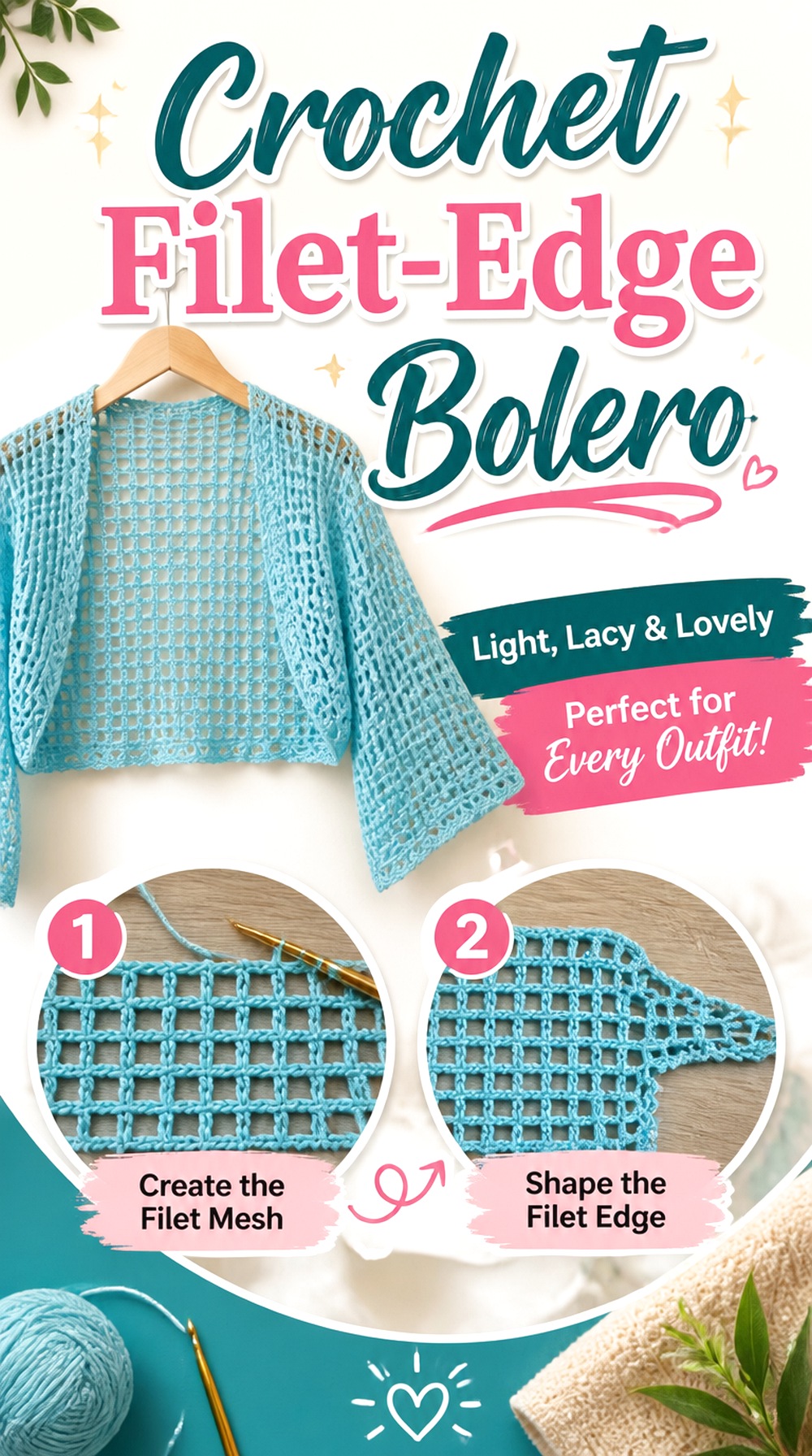
A filet-like grid has a more orderly look than irregular fishnet. Alextitia Tuto Crochet’s bolero tutorial presents an adaptable mesh design with a defined neckline, sleeves worked into the garment, and finishing around the edge.
In black, the regular rectangular openings can feel architectural and clean. That makes this idea a good middle point between very casual fishnet sleeves and more decorative floral or shell lace. The finished border is also important because it gives the airy fabric a clearly recognizable garment outline.
Defined Edging Keeps Black Mesh From Looking Unfinished
On sparse crochet, the outermost line becomes highly visible. A deliberate edge can make the difference between a purposeful bolero silhouette and a fabric that appears to stop abruptly.
Watch how the source finishes the opening, then decide whether that structured outline is part of what you want from the black version.
A Filet Grid Rewards Careful Spacing
Rectangular mesh looks strongest when the openings remain reasonably consistent. Stretching the garment too tightly in one area can make those cells look noticeably different.
Check the shoulder and underarm fit before final finishing. If the grid is being pulled into long distorted openings, the problem may be fit rather than stitch appearance.
The Neckline Separates It From Sleeve-Only Shrugs
This design gives the neck opening a clear role in the construction. That makes it useful if you want the shrug to frame a top or dress deliberately.
Compare the neckline with garments you already own; a beautifully finished bolero can still be awkward if its opening conflicts with the neckline underneath.
Original Tutorial and Creator Credit
Creator: Alextitia Tuto Crochet
11. Crochet Cuffed Openwork Bolero
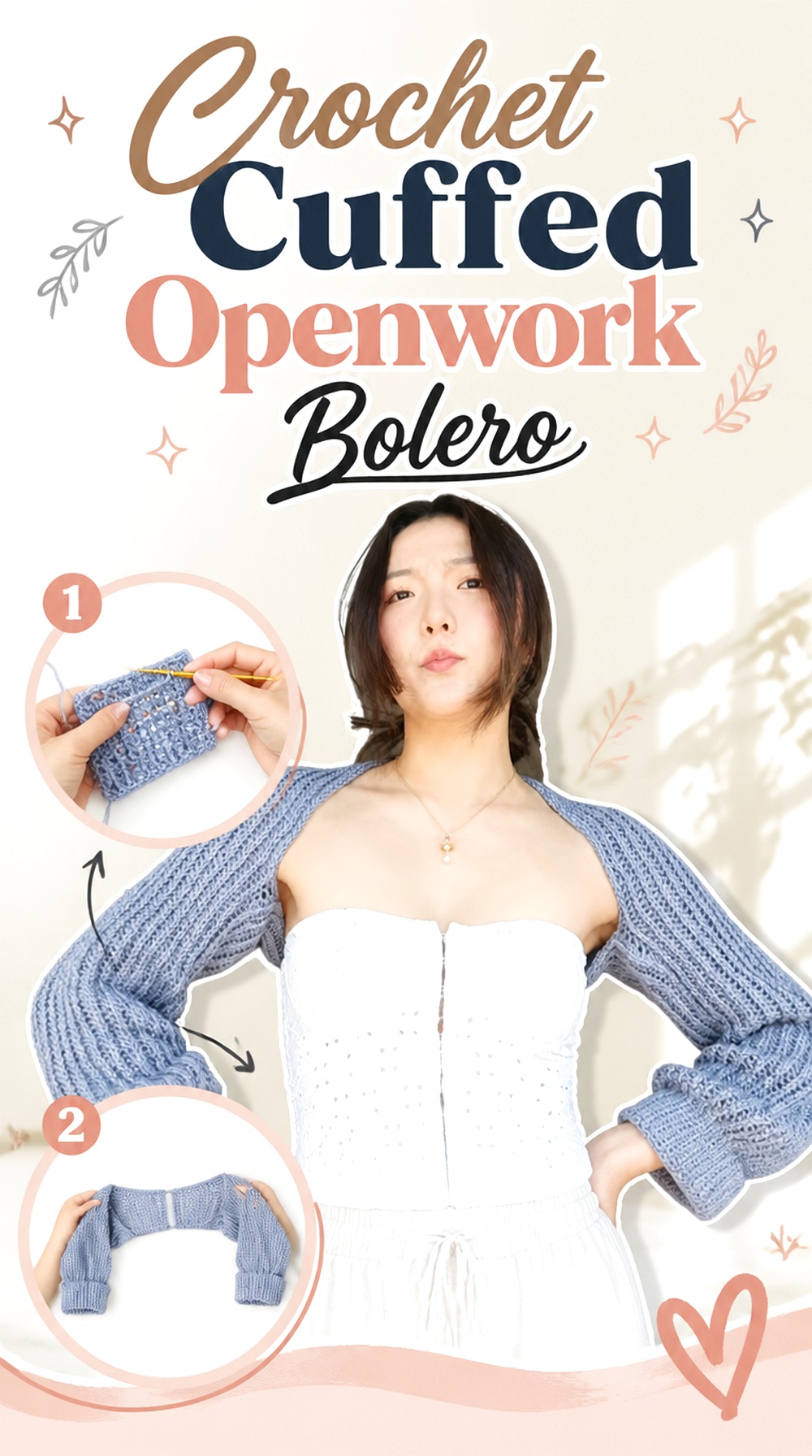
A cuff changes the character of a loose shrug considerably. yaejiyea’s bolero tutorial includes measurement and calculation sections, sleeve assembly, and a substantial cuff stage.
For a black lace interpretation, the contrast between open fabric and a more visually controlled wrist finish can make the garment feel intentional rather than simply loose. This version suits readers who like airy sleeves but want them to end cleanly instead of flaring or continuing as open mesh to the wrist.
Cuffs Visually Anchor Loose Sleeves
When an open sleeve gathers toward a defined cuff, the change in texture creates a clear endpoint. That can balance a wide sleeve without requiring a dramatic bell.
Check that the cuff feels comfortable before completing both sleeves. Wrist fit is a separate decision from the amount of ease you want through the forearm.
Measurement Work Is Part of the Project
The tutorial devotes explicit sections to measurements and calculations. Treat those sections as construction information rather than skipping to the visible crochet.
A short bolero concentrates fit around the upper torso, so inaccurate assumptions can affect shoulder placement and sleeve behavior quickly.
Black Ribbing or Dense Cuffs Increase Contrast
If your cuff fabric is denser than the main openwork, solid black can emphasize the transition strongly. Decide whether you want that graphic contrast or prefer a softer shift.
The effect is especially noticeable over skin or a light-colored base layer.
Original Tutorial and Creator Credit
Creator: yaejiyea
12. Crochet Distressed Goth Mesh Shrug
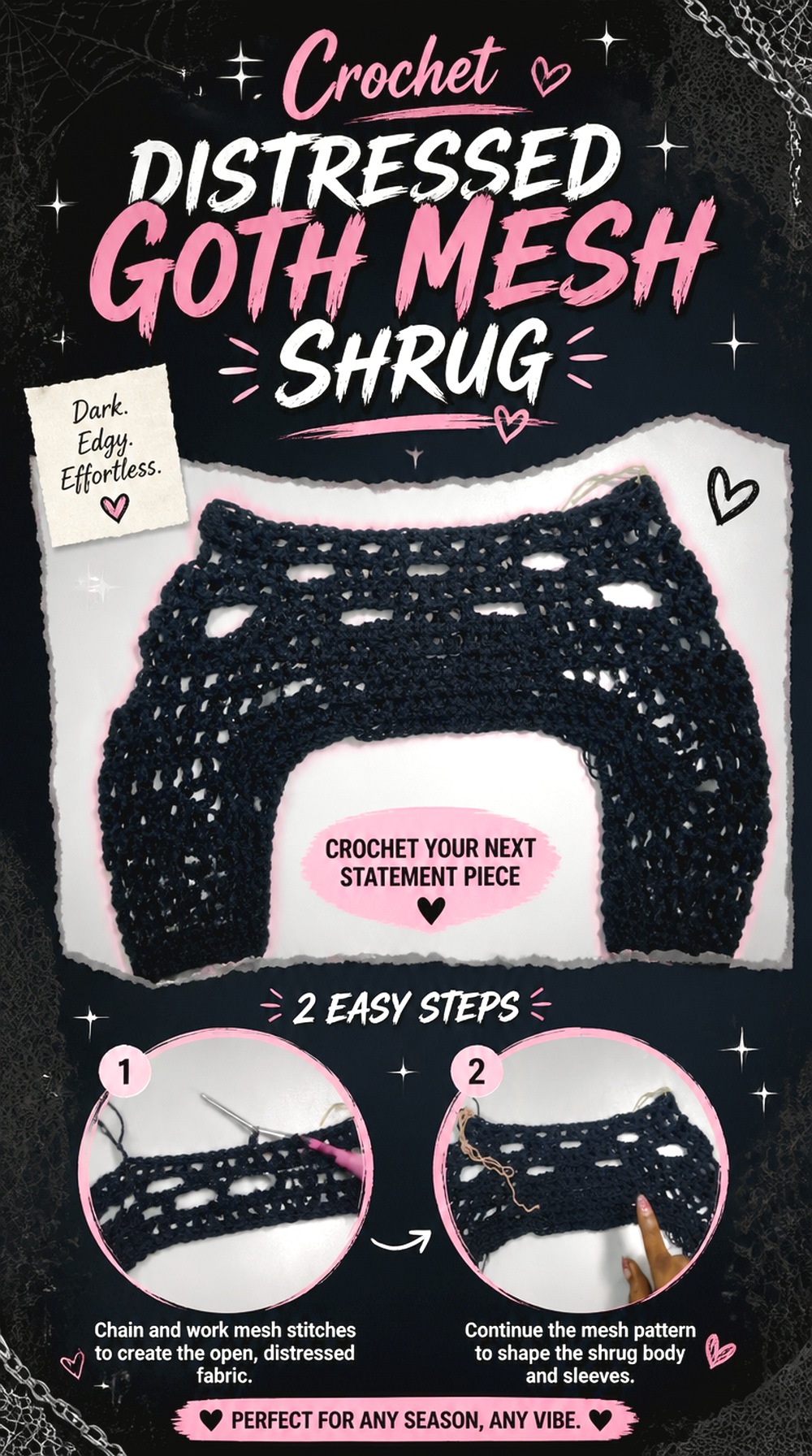
Irregular, distressed-looking mesh takes black crochet in a deliberately rougher direction. Priya Crochets describes this project as a mesh/distressed shrug or bolero and specifically references a goth shrug look, with the construction based on measurements.
That makes it one of the most direct stylistic matches for a black lace collection. Unlike a precise filet grid, the appeal here is a less polished, more deconstructed surface. It can work as a statement layer over simple tanks, fitted dresses, or festival outfits where the open texture is meant to attract attention.
Irregularity Should Still Look Intentional
Distressed does not mean every accidental tension problem improves the garment. The finished fabric should still have a visual rhythm even if the openings are deliberately less orderly.
Compare your work with the overall character of the source rather than trying to make each opening identical.
Measurement-Based Fit Helps Control a Wild Texture
When the fabric itself is visually loose, keeping the garment proportions intentional becomes even more important. Priya Crochets describes the project as measurement based.
Use those fit checkpoints to prevent the shrug from becoming loose everywhere at once. A distressed surface can still have a controlled shoulder span and purposeful sleeve length.
Large Openings Need Accessory Awareness
A distressed shrug may have areas that are easier to catch on bracelets, rings, bag hardware, or projecting buttons.
For an outfit involving many accessories, put the shrug on before the accessories when possible and handle the open fabric deliberately rather than expecting it to behave like dense crochet.
Original Tutorial and Creator Credit
Creator: Priya Crochets
13. Crochet Fishnet Sleeve Shrug
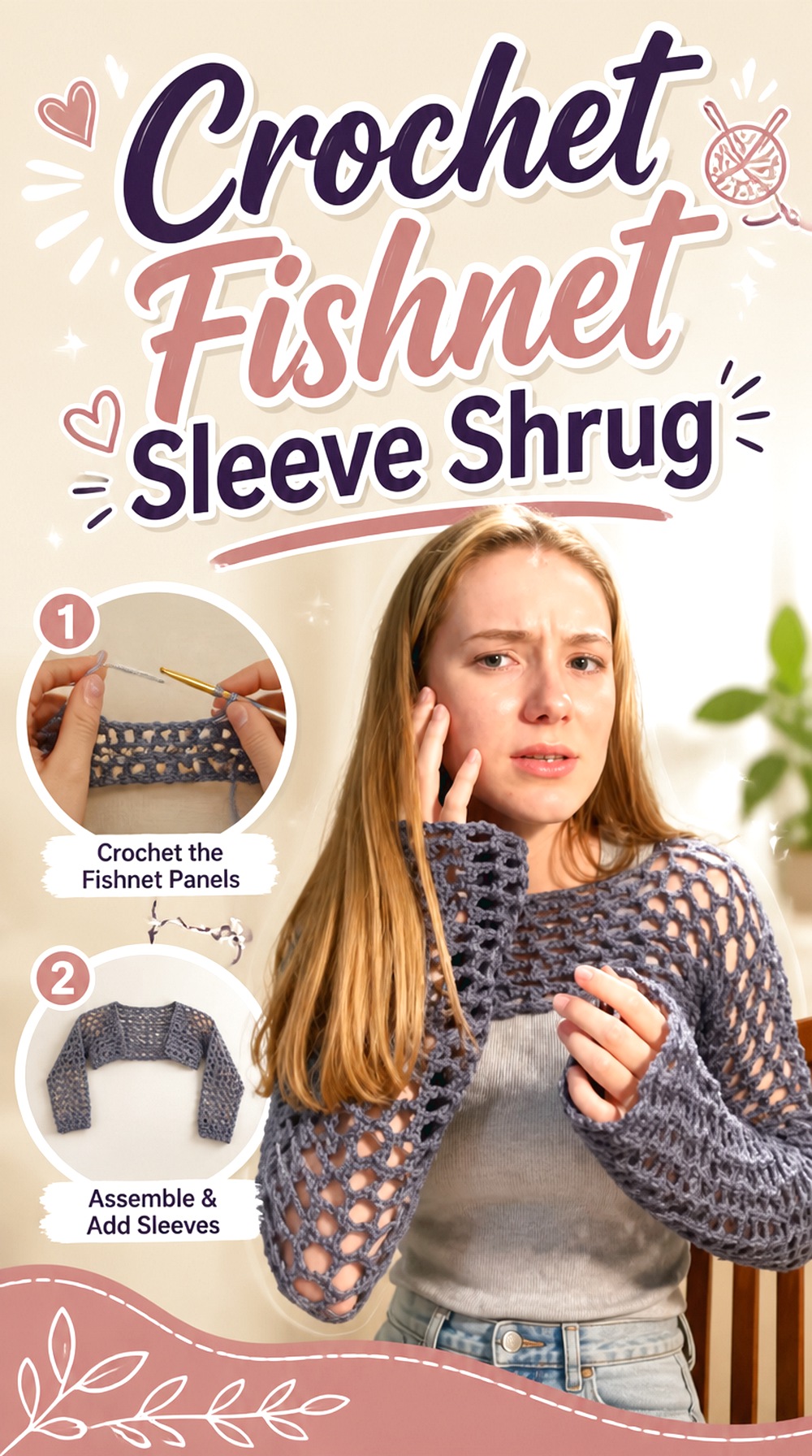
For the lightest-looking option in the collection, a fishnet shrug minimizes fabric and lets the outfit underneath dominate. Anna Greene’s tutorial demonstrates mesh sleeves/bolero construction using a very open repeating fabric, with front, neck, back, and sleeve sections covered in the video.
Made in black, the result can become a strong graphic layer while using far less visual coverage than a cocoon or granny-square bolero. It works particularly well when the goal is arm texture, concert or festival styling, or an extra layer that does not hide the neckline and torso underneath.
Fishnet Is Texture, Not Coverage
The large openings reveal nearly everything underneath. Choose this construction because you want that exposure rather than expecting black to make it visually opaque.
A contrasting base makes the grid prominent; a black base makes it quieter. Testing both combinations can help determine which version fits your wardrobe better.
Back Width Still Controls Comfort
Even though the fabric is sparse, the shrug still has to span the upper body. If that section is too narrow, the sleeves can pull inward when you reach or move your arms.
Use the tutorial’s fitting logic and check mobility before finishing the sleeve length.
Keep Jewelry Simple Around Very Open Mesh
Large openings are more likely than compact lace to catch projecting accessories. Smooth earrings or necklaces that stay away from the sleeves may be easier to manage than bracelets, elaborate rings, or bags with exposed hardware.
That consideration is especially relevant if you intend the shrug for crowded concerts or events.
Original Tutorial and Creator Credit
Creator: Anna Greene
How the 13 Crochet Black Lace Shrugs Compare
| Idea | Main Silhouette | Lace Character | Most Important Check |
|---|---|---|---|
| Flared Lace Tie Shrug | Cropped, tied front | Decorative lace and shell finish | Flare length and front position |
| Fine-Lace Sleeve Shrug | Sleeve focused | Repeating delicate lace | Upper-arm ease |
| Bell-Sleeve Mesh Shrug | Dramatic wide cuffs | Large mesh | Hand clearance |
| Mohair Collar Bolero | Compact shoulder layer | Soft fuzzy openwork | Drape and neckline fit |
| Spiderweb Back Shrug | Motif-centered | Graphic web | Back motif placement |
| Granny-Square Lace Bolero | Modular crop | Joined motifs | Blocked square compatibility |
| Dragonfly Cocoon Shrug | Fuller draped back | Decorative openwork | Cocoon depth |
| One-Piece Grid Shrug | Minimal long sleeve layer | Regular grid | Neck opening placement |
| Seamless Mesh Sleeve Shrug | Clean sleeve-focused shape | Continuous mesh | Sleeve length in motion |
| Filet-Edge Bolero | Defined cropped garment | Ordered rectangular mesh | Neckline and edging |
| Cuffed Openwork Bolero | Loose sleeve with fitted end | Mesh plus dense cuff | Wrist and shoulder fit |
| Distressed Goth Mesh Shrug | Deconstructed crop | Irregular open mesh | Controlled garment proportions |
| Fishnet Sleeve Shrug | Minimal arm layer | Very large open mesh | Coverage expectations |
Conclusion
For the most delicate black-lace look, start with the flared, fine-lace, or filet-style shrugs. The spiderweb option makes the motif itself the statement, while the granny-square version offers modular construction. Bell sleeves and distressed mesh create more dramatic silhouettes; fishnet is the lightest and most revealing. If you want greater back coverage, the dragonfly cocoon is the clear departure from the smaller boleros.
Material matters just as much as shape: smooth black yarn emphasizes geometry, while fuzzy fibers soften it. Once you have chosen the silhouette, use the original tutorials for their exact construction, measurements, sizing decisions, and finishing details.
Frequently Asked Questions
How do I stop black crochet lace from disappearing visually?
Give the open spaces enough contrast. Black lace over a light or medium-colored base makes the holes and stitch lines much easier to see than black over black. Yarn texture matters too: smooth fibers usually reveal geometric mesh more clearly, while fuzzy fibers visually soften the openings. If stitch definition is important, make a small sample and view it against the clothes you expect to wear underneath.
Is fine yarn or thicker yarn better for a black lace shrug?
Neither is universally better. Fine yarn can produce delicate, intricate openwork and a lighter-looking garment. Thicker yarn makes mesh lines more substantial and can create a bolder graphic effect. Changing yarn weight can also change size, stretch, drape, and garment weight, so do not substitute purely by appearance. Start from the tutorial’s recommendations and sample the new combination before committing to the whole shrug.
How should I check the fit of an openwork shrug?
Prioritize upper-back width, shoulder movement, armhole comfort, and sleeve circumference. Put the work in its intended wearing position and move your arms forward, outward, and upward. Open mesh can stretch, so a flat measurement alone may not show how the garment behaves. For made-to-measure tutorials, follow the creator’s measurement method rather than copying the dimensions of their sample.
Can I turn any crochet shrug tutorial into a black lace shrug just by changing the color?
Changing the color is usually straightforward when the yarn itself remains otherwise compatible, but it does not turn dense crochet into lace. For a genuine black lace effect, the source construction needs visible negative space—mesh, shells, filet openings, motifs, spiderwebs, or another openwork structure. Also remember that changing fiber or yarn weight at the same time can alter sizing and drape.
Which black crochet shrug gives the most coverage?
Among these ideas, the cocoon shrug provides considerably more back and side coverage than sleeve-only fishnet or cropped bolero styles. Granny-square and more garment-like lace boleros sit in the middle. Very open fishnet shrugs give the least visual coverage. Choose the construction by how much of your base outfit you want to remain visible rather than assuming all pieces called “shrugs” cover the same area.
What is the main problem to watch for with large black fishnet or distressed mesh?
Snagging is a practical concern because large openings can catch jewelry, bag hardware, buttons, or other projecting objects. The openness also means the shrug offers little warmth or opacity. Those qualities are not flaws when the goal is dramatic layering, but they make fishnet better suited to styling and texture than to situations where you need substantial coverage or protection.