
A brushed mohair shrug can add warmth around the shoulders and arms without covering an entire autumn outfit. The yarn’s fuzzy halo also changes the character of crochet fabric: open mesh can look hazier, granny stitches can appear softer, and even a very simple silhouette can gain noticeable texture.
The 16 ideas below deliberately cover different constructions rather than repeating the same mesh sleeves in different colors. Some source tutorials use mohair themselves, while others demonstrate a shrug or bolero construction that could be considered for a brushed mohair adaptation. When the original project uses another yarn type, treat the tutorial as a construction reference rather than assuming mohair will produce the same gauge, dimensions, or structure.
That distinction matters with wearables. The useful question is not only whether a shrug looks attractive, but whether its shoulder shape, sleeve volume, openings, seams, and fabric density make sense for the yarn and the clothes you want to layer underneath.
Quick List
- High-Collar Crochet Mohair Bolero
- Crochet Mohair Granny-Square Sleeve Shrug
- Crochet Striped Mohair Panel Shrug
- One-Piece Crochet Mesh Shoulder Shrug
- Crochet Top-Down Mesh Sleeve Shrug
- Crochet Lace Tie-Front Shrug with Flared Sleeves
- Crochet Ribbed Ultra-Cropped Shrug
- Crochet Open-Front Banded Shrug
- Crochet Bell-Sleeve Mesh Shrug
- Crochet Floral Motif Shrug
- Crochet Lace Cocoon Shrug
- Crochet Fishnet Sleeve Shrug
- Crochet Convertible Bell-Sleeve Shrug
- Crochet Granny-Stitch Raglan Shrug
- Crochet Filet Mushroom Shrug
- Crochet Airy Ribbed Bolero
What Brushed Mohair Changes in a Crochet Shrug
Brushed mohair and high-halo mohair blends can make relatively open crochet fabric look fuller than the stitch pattern alone suggests. Fine hairs extend into the negative space, softening the edges of chains, clusters, and mesh openings. That can be ideal for an airy autumn layer because you still see the open structure without getting the hard grid effect of a smooth yarn.
The same halo can hide intricate stitch detail. If a project depends on crisp flowers, filet pictures, narrow ribs, or highly defined texture, make a generous swatch before committing to the substitution. Look at the swatch both flat and against the clothing you expect to wear underneath.
High-halo yarn can also be more awkward to unravel cleanly because neighboring fibers may catch. That makes early fit checks particularly useful. Confirm your fabric, opening size, and sleeve feel before working far beyond a section you may later want to change.
Care should come from the yarn label rather than the appearance of the fiber. Mohair yarns and blends vary significantly, so do not assume a finished shrug is machine washable or should be treated exactly like another fuzzy yarn.
Choose the Shrug Shape Around Your Autumn Layers
A sleeve-only shrug behaves differently from a cropped bolero with front panels. Sleeve-only designs leave the torso uncovered and work well when the base garment already provides the coverage you want. A bolero adds a little more fabric around the neck, upper chest, or ribs, while a cocoon can cover much more of the back.
Think about what will normally sit underneath the crochet. A shrug fitted over a camisole may feel restrictive when worn over a long-sleeve knit top. If autumn layering is the purpose, shoulder width, upper-arm room, armhole depth, and sleeve circumference deserve as much attention as the overall look.
Sleeve shape matters too. Straight sleeves are easier to tuck under a coat. Bell sleeves make a stronger visual statement but add fabric at the wrist, while ribbed cuffs keep the ends closer to the hands. There is no universally better choice; the useful choice depends on how you expect to wear the shrug.
Swatch Before Replacing the Tutorial Yarn with Mohair
Do not substitute yarn solely by matching the hook size printed in a tutorial. Two yarns can produce very different fabric even when the same hook is used.
Instead, compare the resulting fabric with the structure the project needs. An open mesh shrug can tolerate considerable drape, while a ribbed band may need enough body to keep its shape. Motif projects require another check: finished squares or flowers need compatible dimensions before joining.
For a wearable, block the test fabric in a manner appropriate for the yarn before making final size decisions. A blocked swatch gives you a more realistic idea of how much the fabric opens, relaxes, or lengthens.
1. High-Collar Crochet Mohair Bolero
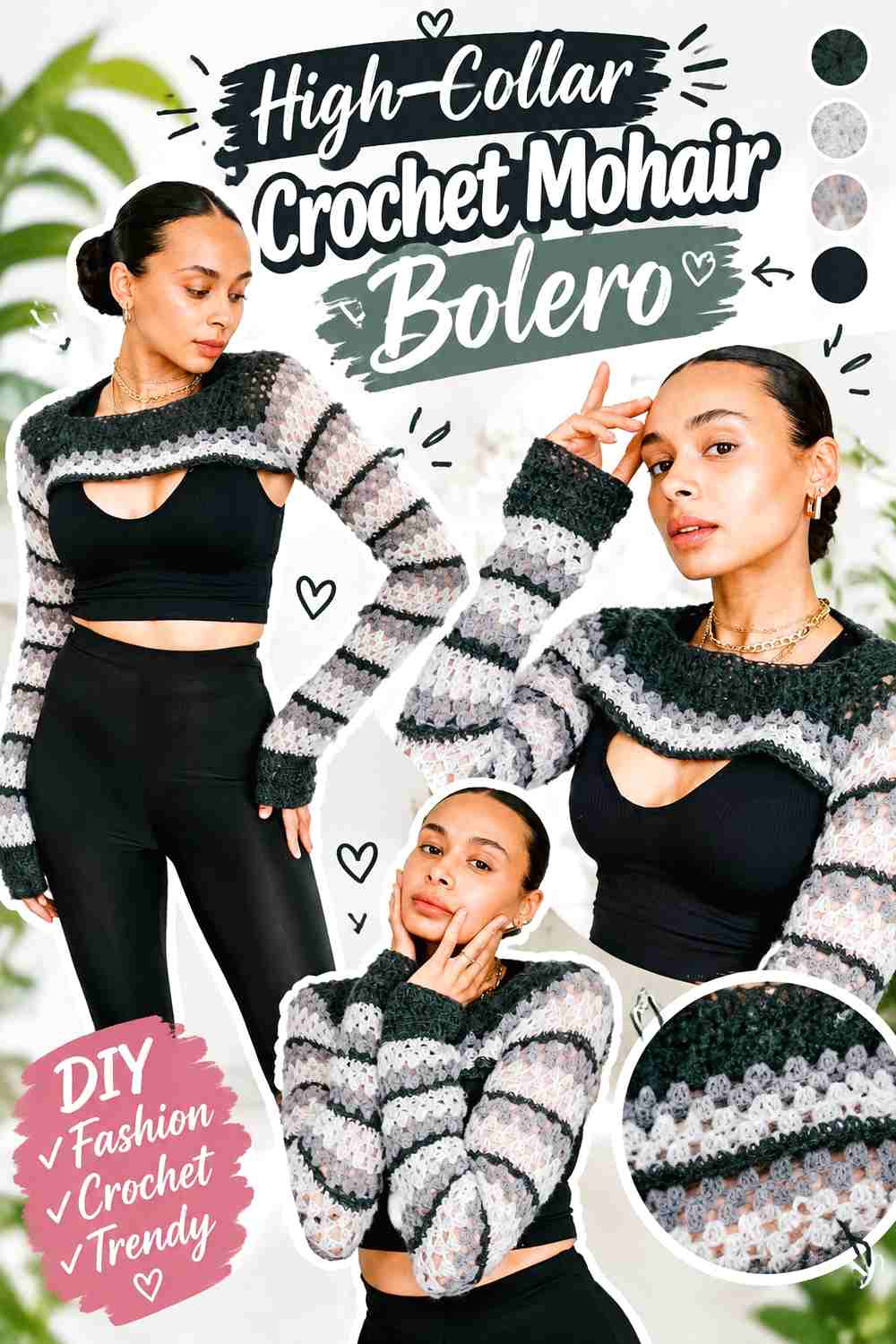
This option starts with a more deliberate neckline than the minimal sleeve-only shrug. Crochet with Aisha’s source project is specifically a mohair shrug/bolero and works from the neck area into the sleeves, with borders completing the garment. The original tutorial uses Hobbii Diablo mohair, making this one of the most direct matches for the brushed-mohair theme.
The extra fabric around the neckline makes the piece feel more like a tiny sweater than disconnected arm warmers. It is a useful direction for autumn when you want softness framing the shoulders while still leaving most of the torso visible.
The Collar Determines Where the Shrug Settles
A collar-led construction places more visual and physical emphasis around the neck and upper shoulders. If the neckline is too loose, the sleeves may sit differently from what you expected; if it is too restrictive, the problem cannot be solved simply by adding sleeve length.
When adapting the idea, prioritize the collar and shoulder fit before spending time on the arms. With high-halo yarn, an early try-on is particularly valuable because repeated unraveling may be less pleasant than with smooth yarn.
Border Tension Can Change a Very Soft Silhouette
A fluffy central fabric can drape freely, but a noticeably tighter border may pull the opening inward. The opposite problem can happen when the edging becomes much looser than the body and starts to flare.
Compare the border against the relaxed body fabric as you work. The aim is not to force mohair into a rigid outline but to give the soft garment enough definition to sit intentionally around the neck and wrists.
Creator Credit: Crochet with Aisha
2. Crochet Mohair Granny-Square Sleeve Shrug
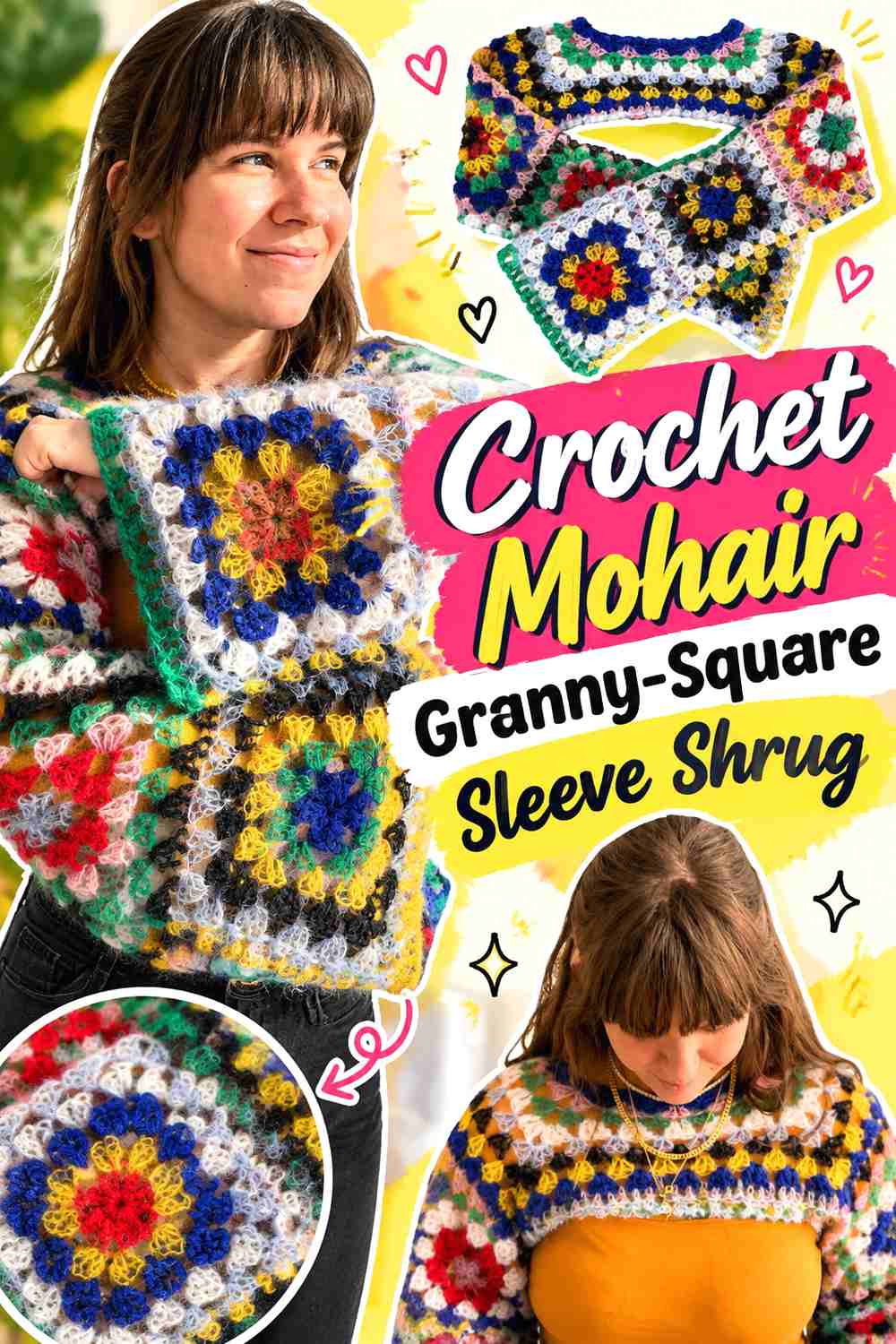
Neon Fuzz Studio combines two ideas that are less common together: a raglan-style yoke and tubes of granny squares. The pattern information specifically identifies mohair as the yarn choice, so the airy, fuzzy fabric is part of the original design rather than an imagined substitution.
This is a strong choice when plain mesh feels too minimal. The square structure creates visible repetition down the sleeves, while the raglan area organizes the garment around the shoulders instead of relying entirely on a rectangular panel.
Block the Squares Before Judging Sleeve Width
Granny-square sleeves introduce more checkpoints than uninterrupted mesh. Individual motifs need to agree closely enough in finished dimensions for the joined sleeve to remain even.
With mohair, judging an unblocked square by eye can be misleading because the halo partly hides the actual stitch boundaries. Compare the underlying crochet dimensions, not just the fuzzy outline, before joining a full run of motifs.
Let the Motif Pattern Stay Visible Through the Halo
The attraction of this design comes partly from recognizing the square structure. If your chosen yarn produces an extremely dense halo, the motif boundaries may become much softer.
That may be exactly the effect you want, but test it first. Hold a completed sample against a dark and a light base layer. The contrast underneath can substantially change how clearly the granny openings register.
Creator Credit: Neon Fuzz Studio
3. Crochet Striped Mohair Panel Shrug
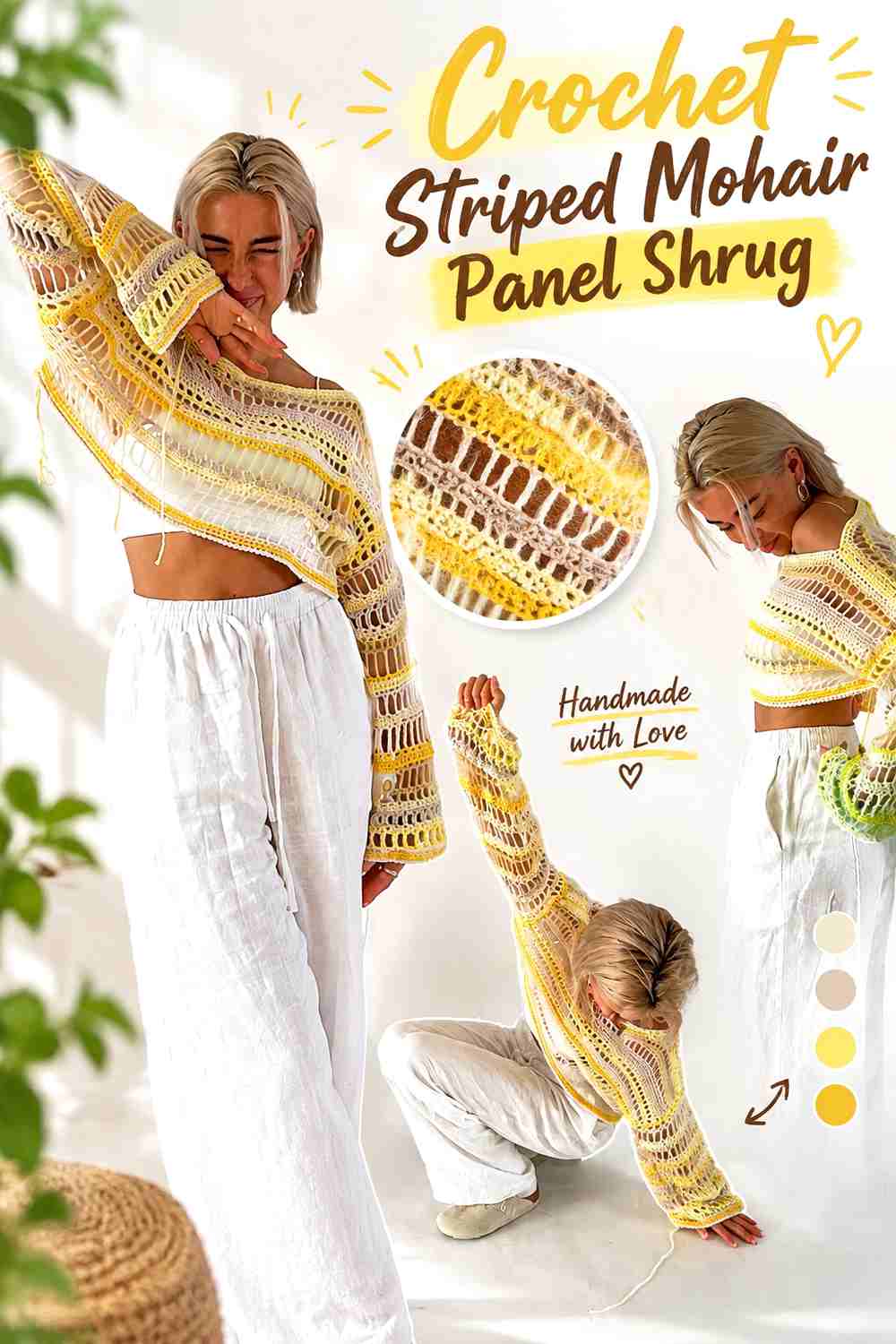
Belina Bellwood’s tutorial presents a sleeve/mesh-shrug direction alongside mohair and uses a panel-based construction. The supporting project description identifies four panels and notes that the body length can be adjusted from ultra-cropped toward longer versions.
For autumn, this provides a useful middle ground between tiny sleeves and a full sweater. Stripes can make the fuzzy surface feel more graphic, especially when adjoining shades have enough contrast to remain distinguishable through the halo.
Flexible Seams Matter in a Panel Construction
A panel shrug places joins where movement occurs around the shoulders and arms. A very stiff seam can feel noticeably different from the soft fabric around it.
Before finishing every join, flex a sample section with your hands. You want the seam to control the panels without turning into a hard ridge that interrupts the drape of a lightweight mohair fabric.
Use Stripes to Organize the Shape, Not Just Add Color
On a very cropped garment, stripe placement can emphasize width, sleeve length, or the transition from body to arm. Plan the visual rhythm after deciding the proportions.
If the shrug will mostly be worn over neutral autumn layers, a restrained tonal sequence can preserve the hazy mohair effect. Higher contrast creates a more obvious segmented look.
Creator Credit: Belina Bellwood
4. One-Piece Crochet Mesh Shoulder Shrug
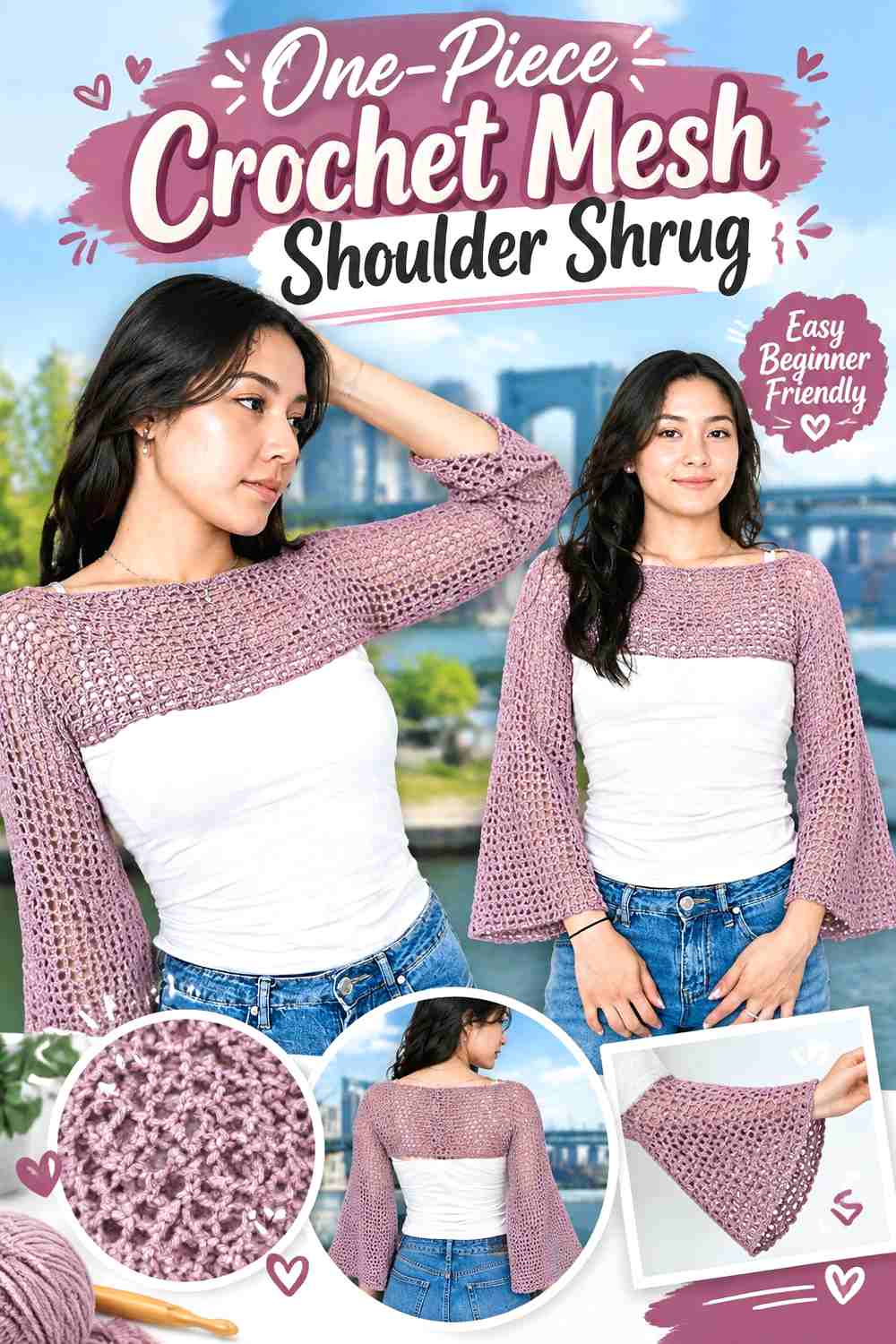
VivCrochets demonstrates a mesh shrug made largely in one piece, with a neck opening incorporated into the fabric and a small amount of sewing used to form the sleeves. The tutorial also emphasizes that the different parts can be adjusted.
This kind of continuous mesh construction is appealing for brushed mohair because the yarn can remain the main visual feature. There are fewer competing motifs, decorative panels, or dense borders, so the soft halo is free to blur the open grid.
The Neck Opening Is a Major Fit Checkpoint
Because the fabric travels across both arms and the upper back, the central opening affects how the entire piece settles. Too little room can pull the sleeves toward the neck; too much can make the shrug slide farther down the shoulders.
Mark or test that central area against your own intended fit rather than assuming another maker’s proportions will transfer exactly.
Mohair Can Make Simple Mesh Look Less Geometric
With smooth yarn, square mesh reads as a clear grid. A fluffy yarn softens those straight edges, creating a more diffuse surface.
That makes this a particularly useful option if you want visible openness without a stark fishnet appearance. Swatch the mesh over the color of clothing you are most likely to wear beneath it, because the base layer becomes part of the final visual effect.
Creator Credit: VivCrochets
5. Crochet Top-Down Mesh Sleeve Shrug
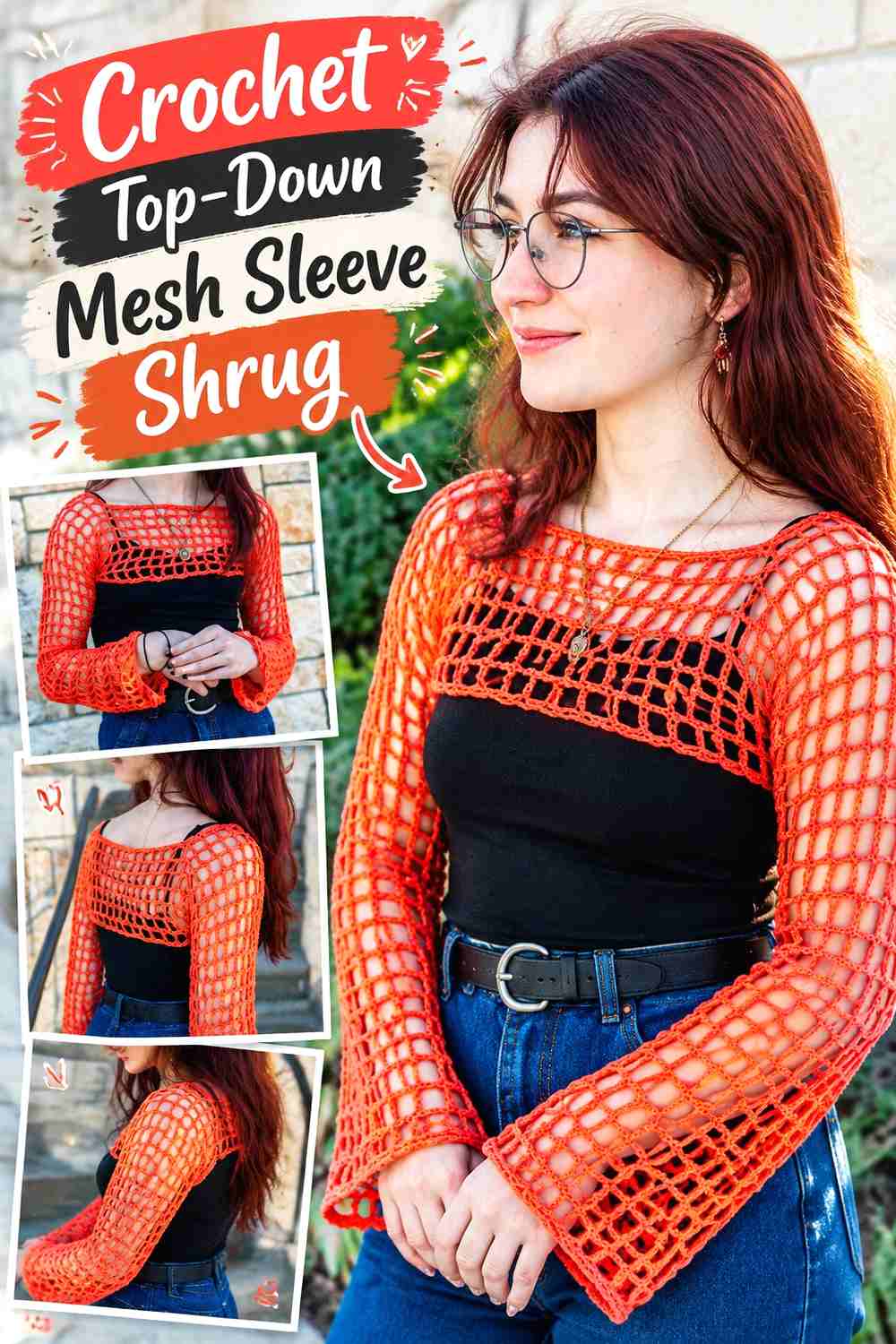
Heart Hook Home’s Chloe construction approaches mesh from the top down rather than beginning with one large flat rectangle. The design is worked around a yoke before separating the armholes and continuing the sleeves, and the published pattern provides multiple sizes.
That makes it useful for readers who prefer a shrug that feels more sweater-like around the shoulders. For a brushed-mohair adaptation, the construction also provides natural stages where the upper-body fit can be evaluated before the sleeves are complete.
A Top-Down Yoke Reveals Shoulder Problems Early
The advantage of starting around the upper body is that you can assess the neckline, shoulder placement, and armhole relationship before investing in two full sleeves.
If your mohair swatch behaves differently from the original yarn, use those early stages to check the actual garment rather than trying to predict every measurement from the ball band.
Tall Mesh Stitches Become Softer in a Halo Yarn
The original design uses an open treble-crochet mesh. In smooth yarn, tall stitches and chain spaces make the grid very visible. A fluffy yarn can visually fill some of that empty area without actually making the fabric dense.
That can be attractive for early fall: the shrug still looks airy, but the surface has more softness. If you want the mesh itself to remain the star, avoid choosing a yarn whose halo completely hides the openings.
Creator Credit: Heart Hook Home
6. Crochet Lace Tie-Front Shrug with Flared Sleeves
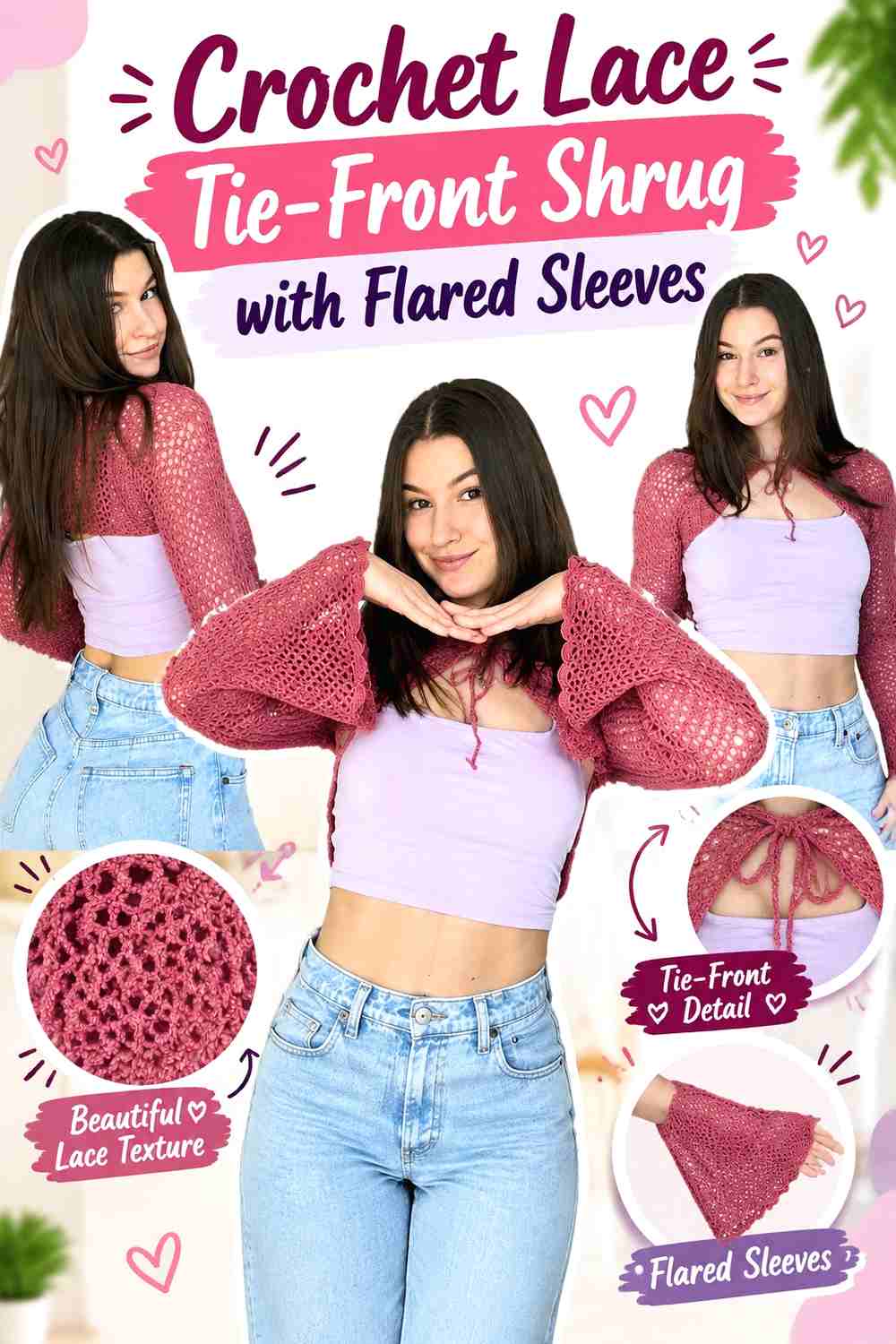
HookedOnViktoriya’s lace shrug is more shaped than the basic sleeve-only options. The tutorial includes separate front and back work, shoulder shaping, lace sleeves, a flare, a shell-style border, and a tie.
Those details make it a good choice when you want the shrug to read as an intentional garment rather than simply an arm layer. A brushed mohair version would soften the lace substantially, while the front ties provide a visual center that many open-front shrugs lack.
Flared Sleeves Need Enough Drape to Fall Cleanly
A sleeve flare can look very different in a stiff fabric and a relaxed one. Brushed mohair often suits the idea visually, but the actual result depends on the yarn construction and the fabric you create.
Make your test fabric large enough to hang rather than judging only a tiny square on a table. If the fabric resists folding and draping, the flare may project outward more than you want.
A Tie Front Concentrates Stress in a Small Area
The ties are not merely decorative because they can affect how the fronts are pulled together. Very delicate, open fabric deserves care around the attachment point.
Check that the finished fronts sit comfortably before relying on the ties to correct the fit. A tie should close or style the shrug, not compensate for panels that are significantly too small.
Creator Credit: HookedOnViktoriya
7. Crochet Ribbed Ultra-Cropped Shrug
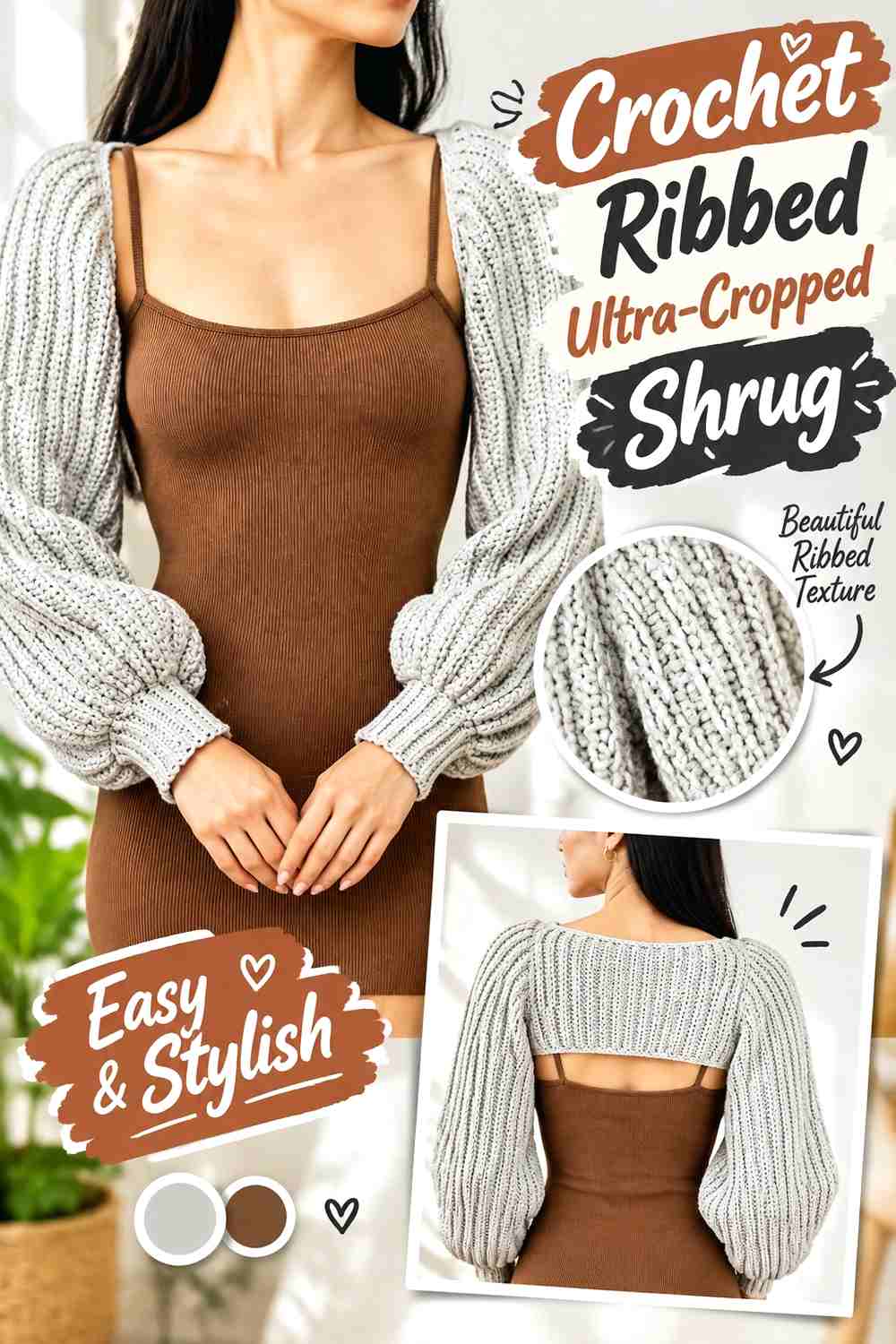
TCDDIY’s shrug has a more structured, very short cardigan character. The tutorial works through back and front areas, sleeve shaping, cuffs, and edge finishing, producing a ribbed look rather than a loose fishnet surface.
This is the direction to consider if you like mohair softness but do not want the entire garment to look transparent. A denser fuzzy fabric creates a warmer visual impression and can pair well with smooth base layers where the contrast between textures is the main feature.
Ribbing Needs More Definition Than Plain Mesh
A high halo can blur shallow ribbing. Before substituting mohair, check whether the texture is still visible after the fabric has relaxed.
If you can barely distinguish the ridges in a generous swatch, decide whether you are comfortable turning the design into a mostly fuzzy surface. If the ribbed effect is important, yarn definition matters alongside softness.
Defined Cuffs Can Control a Fuzzy Sleeve
Cuffs give the wrists a clear endpoint, which can be especially useful when the rest of the sleeve has a soft outline.
For autumn layering, also consider what must fit underneath the cuff. A wrist opening that feels comfortable over bare skin may be less convenient over a fitted long-sleeve top.
Creator Credit: TCDDIY
8. Crochet Open-Front Banded Shrug
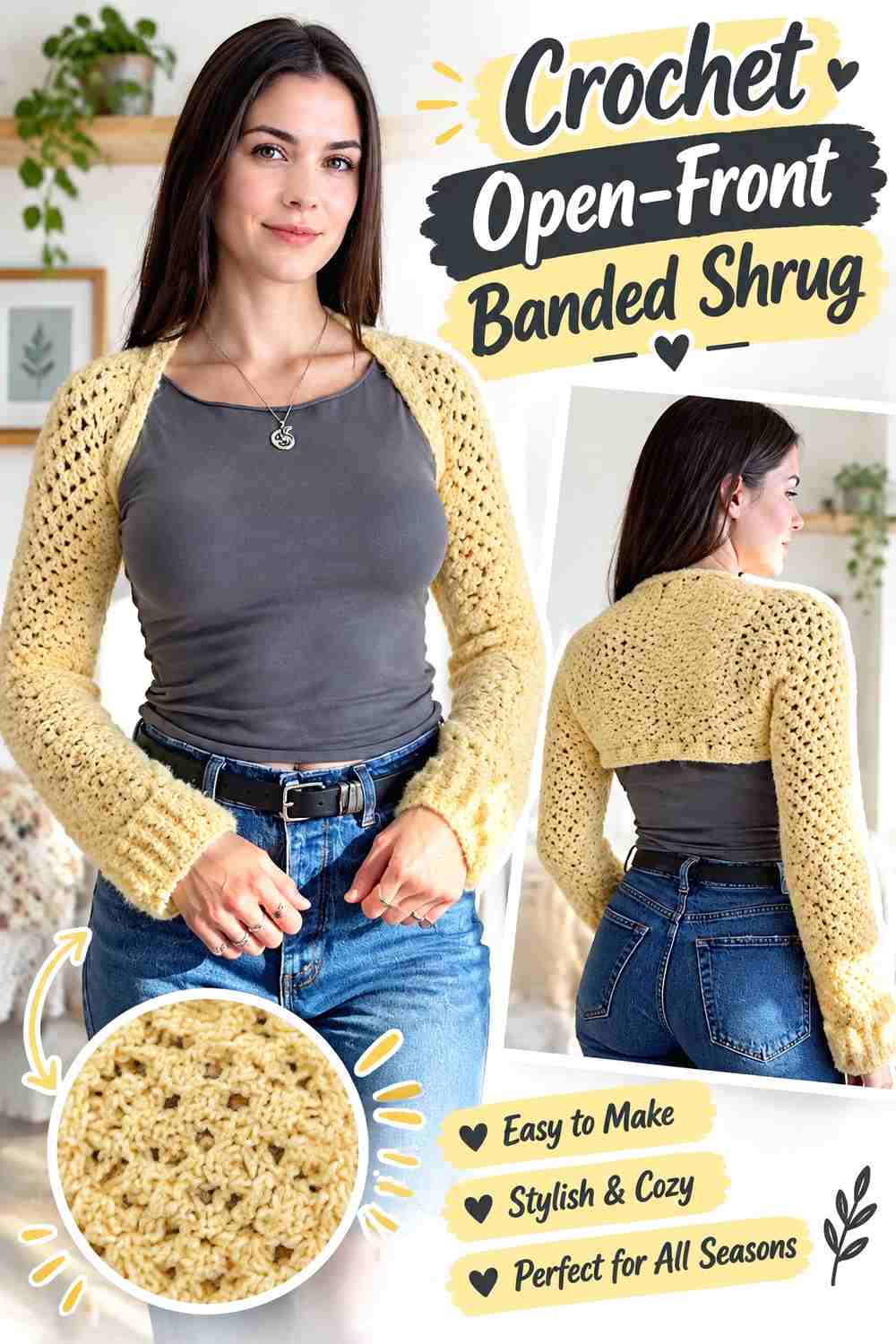
Natalie’s open-front shrug uses a simple repeating fabric, then adds cuffs and ribbing around the center opening. That finishing band distinguishes it from mesh sleeves that have no defined front edge.
For mohair, the combination is interesting because it lets most of the garment remain light while using edging to visually frame the body. It can suit someone who wants an open cardigan feeling without extending the project into a full cardigan.
The Center Band Helps the Opening Read Clearly
Very fuzzy fabric can make edges look visually indistinct. A deliberate center band can solve that by giving the opening an obvious boundary.
Watch how your selected yarn behaves in the band, however. If the ribbed section becomes dramatically firmer than the main fabric, it may alter how the fronts hang.
Decide on Front Coverage Before Lengthening the Sleeves
It is easy to focus on sleeve length in a shrug, but the amount of fabric crossing the upper back and coming toward the chest affects how wearable the piece feels.
Compare that coverage with your intended autumn outfits. Someone layering over a dress may want a different front proportion from someone planning to wear the shrug over a crew-neck top.
Creator Credit: Natalie
9. Crochet Bell-Sleeve Mesh Shrug
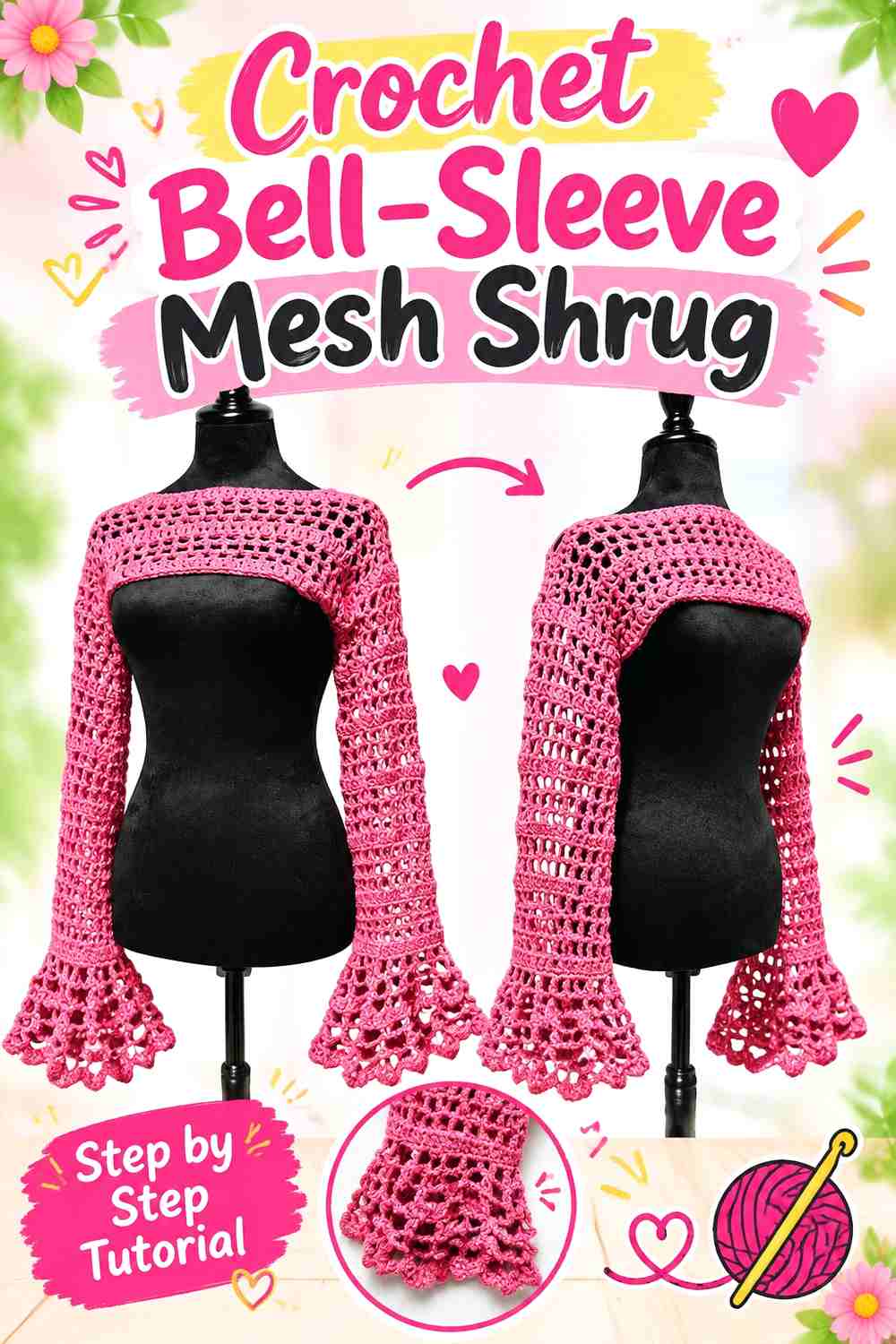
Crochet Made By Eli’s design combines a familiar mesh shrug format with bell sleeves, moving most of the drama toward the lower arms. The source tutorial shows a clear finished shrug and uses a medium-weight yarn in the original project.
The construction can still serve as inspiration for brushed mohair, but the yarn change should be swatched because a lighter, softer fabric can make the sleeve flare hang very differently from the source sample.
A Bell Cuff Makes Drape More Noticeable
Straight mesh sleeves can tolerate a fairly wide range of fabric behavior because they remain tubular. A bell sleeve makes the difference between stiff and fluid crochet much easier to see.
Hold your swatch vertically and watch whether it collapses softly or stays open. That simple observation gives you more useful information for this silhouette than judging the fabric only while it lies flat.
More Sleeve Volume Means More Fabric in Motion
Bell sleeves are visually appealing but can catch on bags, coat cuffs, and nearby objects more readily than narrow sleeves. Openwork plus a fuzzy surface adds another opportunity for snagging.
For an autumn shrug you plan to wear frequently, decide whether you want a dramatic full flare or a more restrained interpretation that still gives the wrist some movement.
Creator Credit: Crochet Made By Eli
10. Crochet Floral Motif Shrug
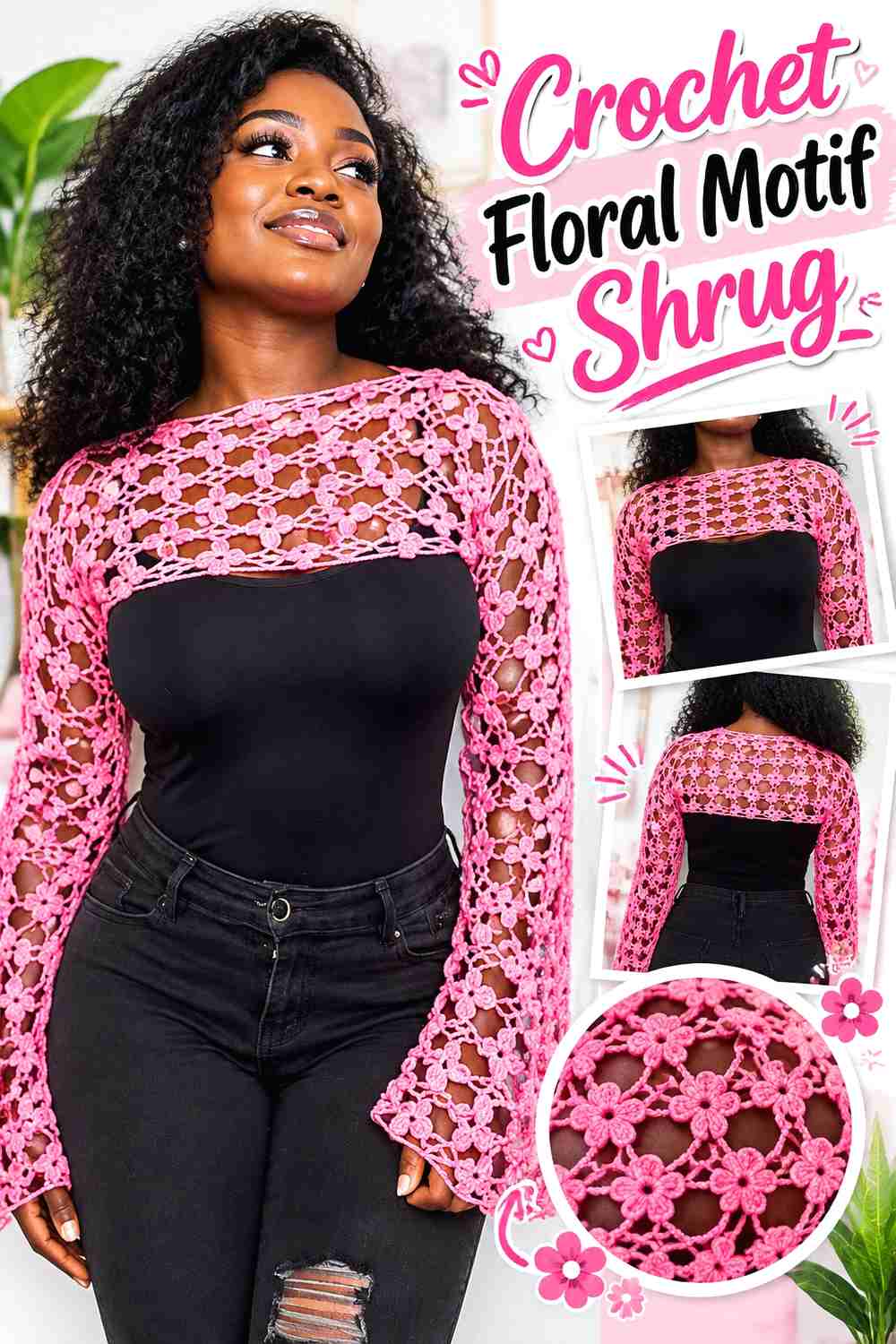
Priya Crochets’ floral bolero shifts the visual emphasis from mesh geometry to flower motifs. The tutorial presents the design as customizable and shows a finished shrug built around repeated floral forms.
This creates a very different autumn layer from a plain grid. In a muted brown, moss, plum, cream, or other seasonal palette, the flowers can provide texture without relying on bright spring color. Mohair can be introduced, but the amount of halo needs careful consideration.
Heavy Halo Can Blur the Flower Shapes
A floral motif depends on recognizable edges. If fuzzy fibers spread across the spaces between petals, the finished flowers may lose some of their definition.
Make one complete motif in the intended yarn before planning the whole shrug. View it from normal wearing distance rather than only close up. If the flower disappears into fuzz, a less hairy blend may preserve the design more effectively.
Consistent Motif Size Matters at the Joins
Repeated motifs function like building blocks. Small differences that seem insignificant in individual flowers can accumulate when many pieces are connected.
Block and compare several motifs before committing to a large joining session. Correcting size inconsistency early is easier than trying to force mismatched motifs into an even sleeve or back panel later.
Creator Credit: Priya Crochets
11. Crochet Lace Cocoon Shrug
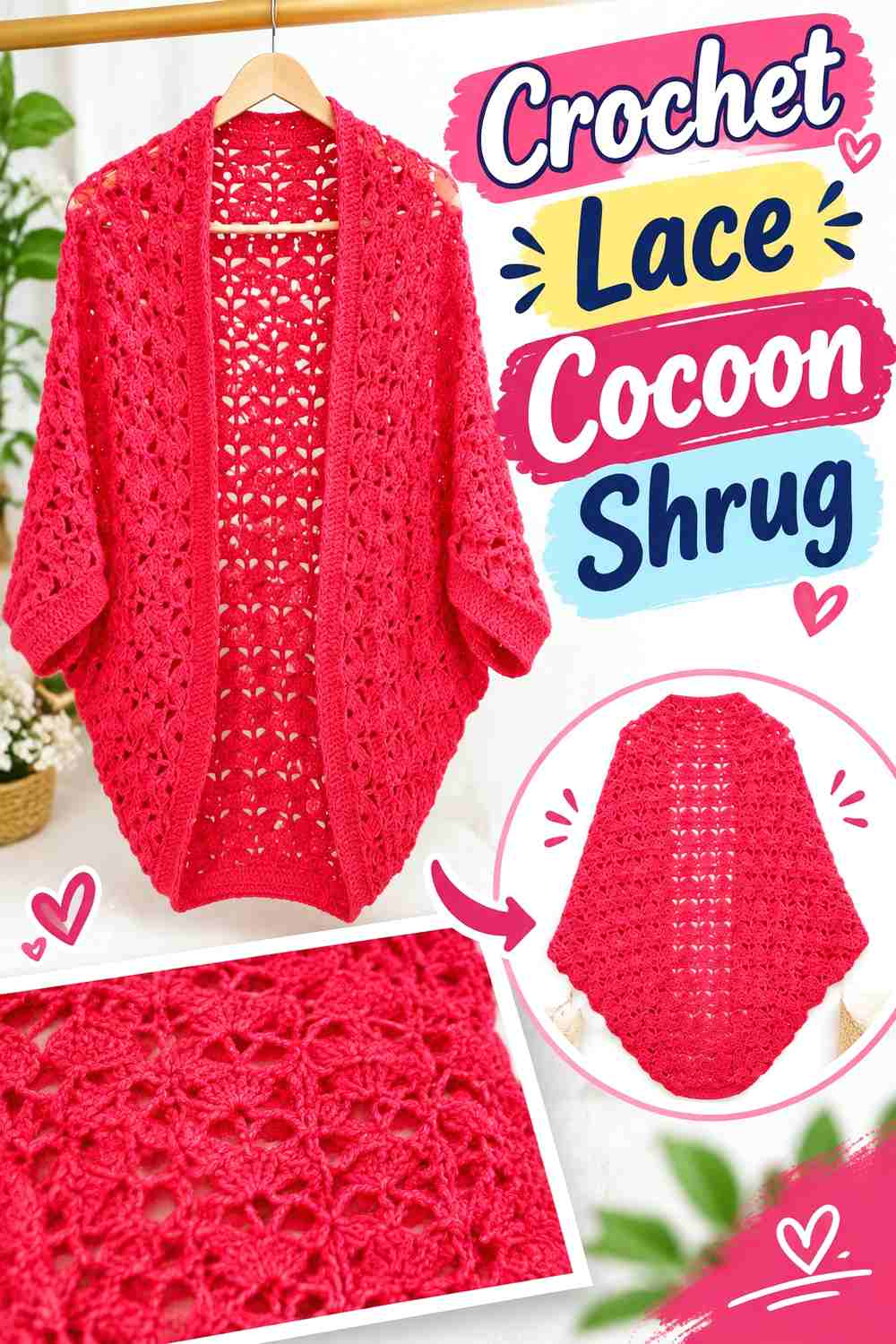
Let’s All Crochet demonstrates a cocoon shrug built from a lace-pattern rectangle. The rectangular fabric is transformed into a roomy cardigan-like shape, giving this project substantially more back coverage than the ultra-cropped sleeve shrugs.
For soft autumn layering, this is useful when you like the idea of mohair but want something closer to a wraparound garment. A lightweight fuzzy yarn can keep a larger silhouette from looking as visually heavy as a dense, bulky fabric.
A Cocoon Carries More Fabric Across the Back
More coverage means more finished fabric weight, even when the yarn feels light in the skein. That weight can pull the garment downward and change the depth of the back and arm openings.
When changing yarn, assess the dimensions after the fabric has had a chance to hang. A rectangle measured only while flat may not tell you how deeply the finished cocoon will settle.
Rectangle Depth Changes the Garment More Than It Seems
A shallow cocoon behaves almost like a broad shrug. A deeper one wraps farther around the body and creates more fabric below the arms.
Choose that depth based on the effect you want with autumn clothing. More depth can be cozy over a slim base layer, while a shorter version keeps the outfit lighter and less cardigan-like.
Creator Credit: Let’s All Crochet
12. Crochet Fishnet Sleeve Shrug
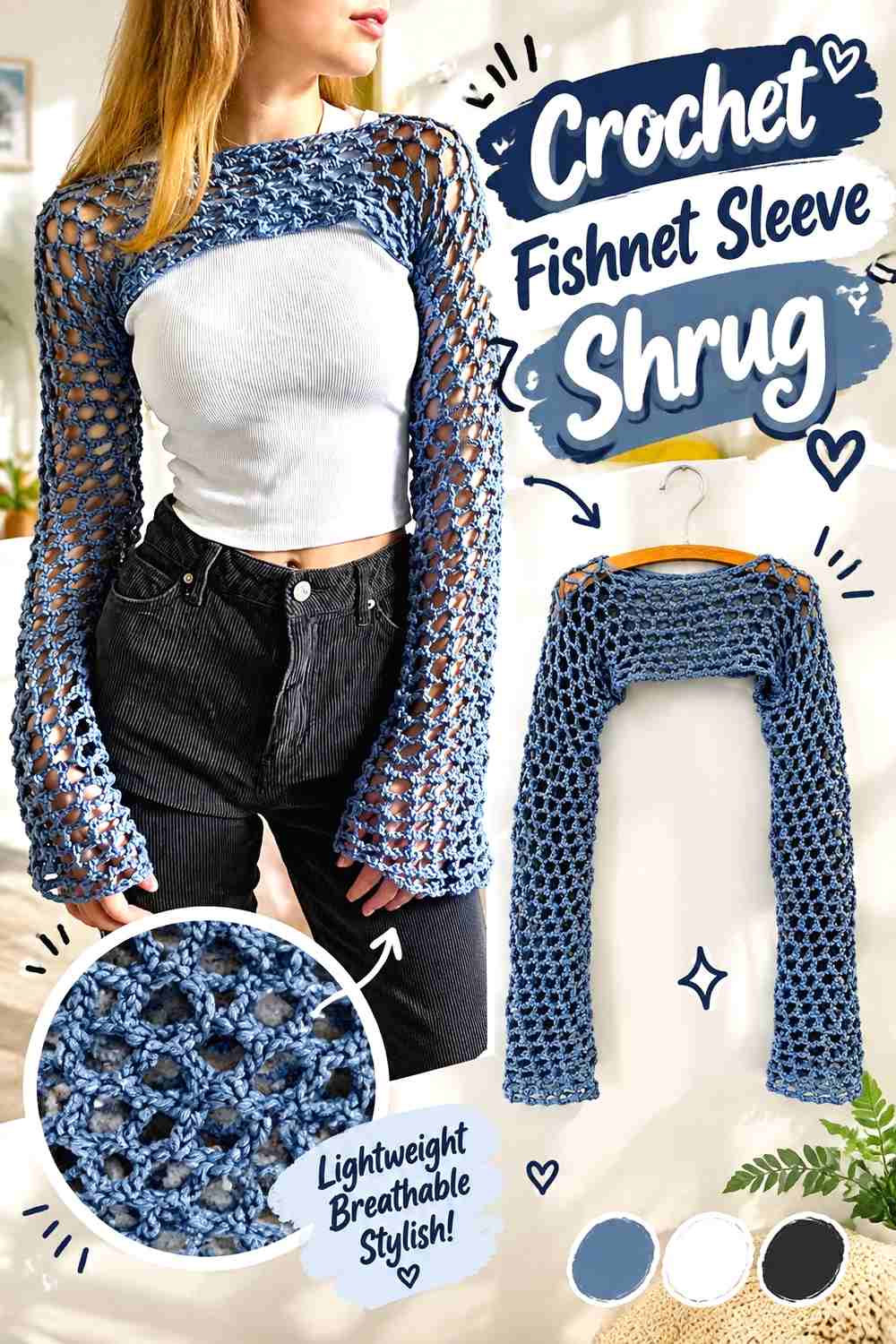
Anna Greene’s fishnet sleeves use a very open structure and are customized around personal measurements. The design is one of the more minimal choices in this collection because the visual effect comes largely from large negative spaces rather than decorative motifs or dense texture.
Mohair changes this style dramatically. With a smooth yarn, fishnet reads boldly and graphically; with a soft halo, the lines can become mistier and the spaces less stark.
Large Openings Make the Base Layer Part of the Design
Whatever you wear under fishnet remains highly visible. Before choosing a mohair shade, consider the colors and necklines already in your autumn wardrobe.
A tonal base layer makes the mesh subtle. Strong contrast emphasizes every opening. Neither is inherently better, but the same shrug can look almost like two different garments depending on what is underneath.
Open Mesh Deserves a Snagging Check
Large loops can catch on hardware, jewelry, bag closures, and rough outerwear. A fuzzy fiber can add friction around those openings.
Think about how the shrug will actually be worn, especially if you routinely carry a shoulder bag or put a fitted coat over it. A slightly smaller mesh may be more practical for frequent use than the most dramatic open grid.
Creator Credit: Anna Greene
13. Crochet Convertible Bell-Sleeve Shrug
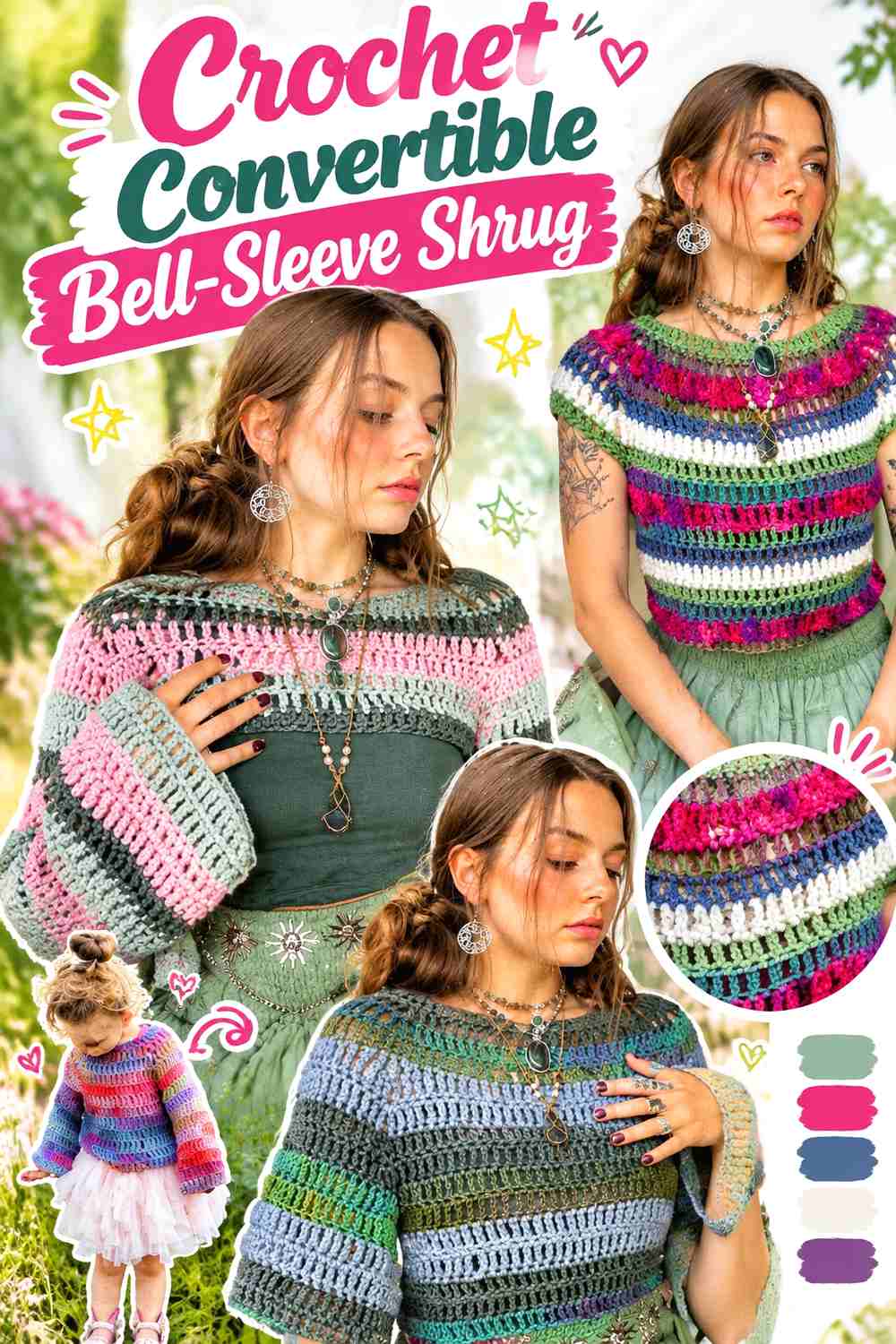
Hannah Drapinski’s tutorial is designed around a construction that can become a sweater, top, or shrug, including a bell-sleeve version. That makes this project particularly useful for readers who enjoy understanding how changing garment length alters the finished category.
For this article, the shrug interpretation is the important one. Keeping the torso extremely short preserves the layering function, while the sleeves supply most of the visual weight.
Decide on the Shrug Proportion Before Following a Longer Version
A convertible construction can tempt you to keep adding fabric because the same basic idea allows it. Decide early whether you actually want a shrug or a cropped sweater.
For autumn layering, leaving the torso minimal can be useful when the base outfit already has texture or bulk. Extending the body changes both the look and the amount of fuzzy fabric stacked over your clothing.
Match Both Bell Sleeves Before Final Finishing
Long flared sleeves make small differences easier to see. Compare the two sides regularly for length, width, and overall drape rather than discovering a mismatch after finishing.
With brushed mohair, count or mark your progress carefully because the halo may make individual stitch features less obvious than they are in a smooth yarn.
Creator Credit: Hannah Drapinski
14. Crochet Granny-Stitch Raglan Shrug
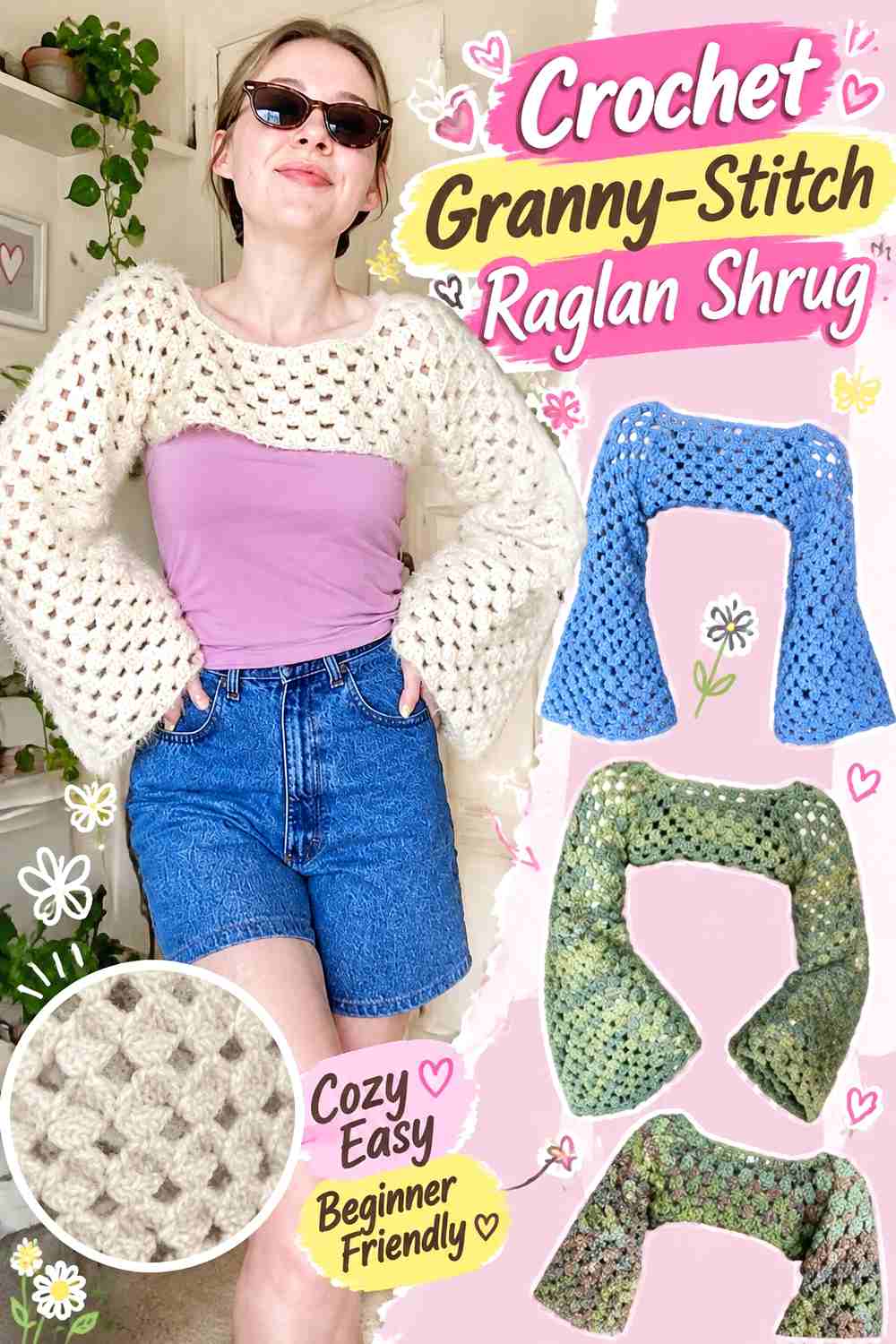
Hayhay Crochet’s Faerie Grannie Shrug uses a top-down raglan-style approach built around granny-cluster texture. The published project also shows that the creator used several yarn types with noticeably different textures, including airy and fuzzy options.
Compared with a granny-square shrug, this version produces the familiar clustered appearance without requiring a sleeve full of individually joined motifs. That can appeal to anyone who likes granny texture but wants continuous construction.
Granny Clusters Become Visually Denser in Fuzzy Yarn
Cluster stitches already place several strands close together. Add a substantial halo and the fabric can look much denser than an open mesh worked from the same yarn.
That can be a benefit for autumn if you want softness and coverage, but swatch first if preserving clearly separated granny groups matters to you.
Raglan Construction Gives You a Useful Try-On Point
Top-down shaping makes it possible to assess how the upper section is sitting before the sleeves become long.
Pay particular attention to the underarm connection and shoulder placement. If the yoke already feels too tight over your intended base layer, completing the sleeves will not solve that problem.
Creator Credit: Hayhay Crochet
15. Crochet Filet Mushroom Shrug

Pops de Milk Crochet’s Shroom Shrug takes the motif idea in another direction by combining filet-style crochet with mushroom imagery. The construction uses grid-based sections, creating a more illustrative finished piece than the plain mesh projects in this list.
It is a particularly natural concept for autumn because the mushroom theme already fits woodland and seasonal styling. The challenge is that image-based filet and high-halo yarn do not automatically cooperate.
Filet Imagery Needs Enough Contrast to Be Read
A filet motif works because filled and open areas form a recognizable picture. If the yarn halo spreads heavily across those spaces, some of that contrast may disappear.
For this idea, a subtle halo may be more useful than the fluffiest mohair available. Make a representative motif sample and view it from several feet away. If the mushroom is difficult to recognize, changing the yarn is more effective than hoping the full garment will make it clearer.
Treat the Motif as the Priority When Choosing Yarn
On a plain shrug, yarn texture can be the star. On a picture-based filet shrug, the crochet image has to compete for attention.
Decide which feature matters more to you. A very fuzzy adaptation can turn the mushroom into a quiet textural detail, while a yarn with greater stitch definition will preserve the graphic woodland effect.
Creator Credit: Pops de Milk Crochet
16. Crochet Airy Ribbed Bolero
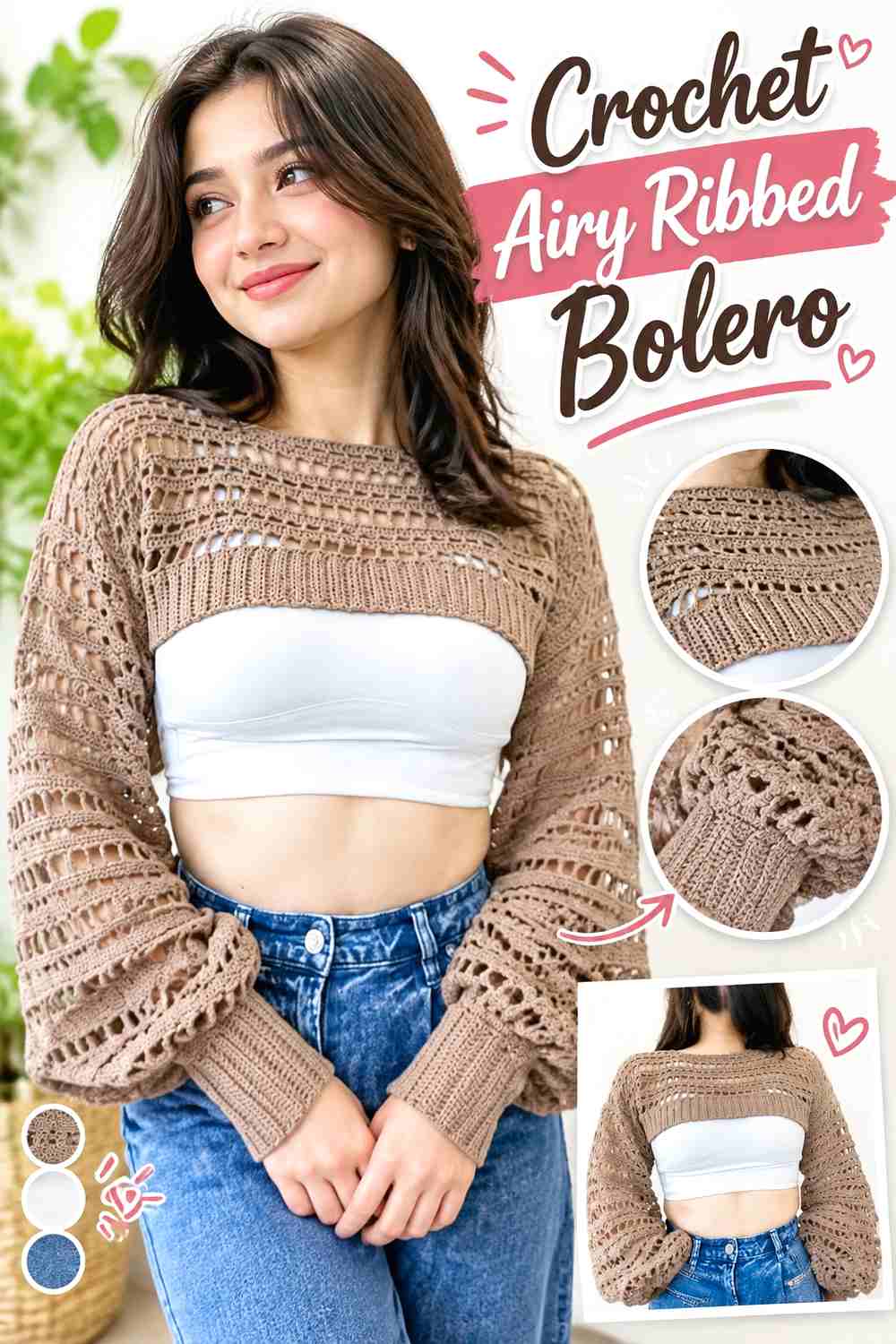
Yarnalina’s summer bolero combines an airy body with ribbed details and is presented across nine sizes. The original uses a light merino yarn rather than mohair, so this is best treated as a construction option for adaptation rather than an exact brushed-mohair project.
Its balance of open fabric and defined edging is especially relevant for autumn. You get a short, breathable layer with more structure at the borders, which can keep an airy garment from feeling visually unfinished.
Ribbing Can Anchor a Very Lightweight Body
Open crochet combined with soft mohair can become extremely fluid. A more defined edge gives the fabric a visual frame and may help the short bolero hold a deliberate silhouette.
The important point is balance. If your ribbing becomes much tighter or heavier than the open body, it can pull on the fabric instead of simply finishing it.
Use the Sized Construction as a Starting Point, Not a Guarantee
Having multiple published sizes is useful, but a major yarn substitution can still change gauge and drape.
Choose the size only after comparing your blocked fabric with the pattern information and the fit you want over your intended autumn layers. A label such as small or medium cannot compensate for a substantially different crochet fabric.
Creator Credit: Yarnalina
Which Crochet Mohair Shrug Style Should You Choose?
For the most direct mohair starting points, the high-collar bolero, mohair granny-square sleeves, and striped mohair shrug already place fuzzy yarn near the center of the original concept.
If you want clean everyday layering, the ribbed ultra-cropped shrug, open-front banded shrug, top-down mesh sleeves, and airy ribbed bolero provide more defined garment edges. They can be easier to coordinate with simple autumn basics than heavily decorative motifs.
For a dramatic sleeve, look toward the lace tie-front shrug, bell-sleeve mesh shrug, fishnet sleeves, or convertible bell-sleeve design. The cocoon is the strongest choice here when back coverage matters more than maintaining an ultra-cropped silhouette.
The floral, granny, and mushroom projects put stitch pattern or imagery at the center. With those options, yarn selection should protect the motif rather than automatically maximizing fuzziness.
Conclusion
A brushed mohair shrug works best when the yarn and construction support the same goal. Large mesh gives the halo room to show, ribbing creates clearer boundaries, granny stitches add visual density, and bell sleeves emphasize drape. Motif projects can also work, but they require more attention to stitch visibility.
Start by deciding how much of the body you actually want covered. Then choose between sleeve-only, bolero, raglan, panel, or cocoon construction before thinking about color. That decision has a much greater effect on autumn layering than shade alone.
Most importantly, treat yarn substitution as a new fabric decision. Swatch, check the blocked result, and compare it with the tutorial’s intended structure before committing to the full garment. Use the original creator tutorial for exact construction details.
Frequently Asked Questions
Can every crochet shrug tutorial be made with brushed mohair?
Not automatically. A tutorial designed for another yarn can provide useful construction guidance, but changing to brushed mohair may alter gauge, drape, opacity, stitch definition, and finished dimensions. Swatch first and compare the resulting fabric with what the construction requires.
Is brushed mohair a good choice for a crochet mesh shrug?
It can be particularly effective for open mesh because the halo softens the grid while leaving visible negative space. The result will depend on how fuzzy the yarn is and how open the crochet fabric becomes after blocking.
Should I use the same hook size when replacing another yarn with mohair?
Not simply because the tutorial uses that hook. Choose the hook based on the fabric and gauge you need with your actual yarn. A mohair strand, a mohair blend, and a thicker brushed yarn can behave very differently.
Which shrug construction works well over long-sleeve autumn tops?
Look for enough room through the shoulders, armholes, upper arms, and cuffs to accommodate the additional layer. Open-front, raglan, and roomier cocoon constructions can all work, but their actual suitability depends on the finished dimensions rather than the construction name alone.
Will mohair hide crochet lace or granny stitches?
A strong halo can soften stitch definition, but it does not always hide it completely. Larger granny clusters and broad openwork usually remain more obvious than small, intricate details. Make a sample in the actual stitch pattern when motif clarity matters.
Should a mohair shrug be blocked before judging the fit?
A finished fabric may change after appropriate blocking, so checking a blocked swatch before making major sizing decisions is useful. Follow the care instructions for the specific yarn rather than assuming all mohair yarns should be washed or blocked in the same way.
How can I make a brushed mohair shrug feel more suitable for autumn?
Focus on construction and layering rather than simply choosing a darker color. Slightly more body coverage, comfortable sleeves, a defined collar or edging, and enough ease for the intended base layer can make a lightweight fuzzy shrug much more practical during transitional weather.