An oversized crochet cloche can lean vintage, sculptural, floppy, playful, or surprisingly modern. The biggest differences are not simply color. Crown depth, brim width, fabric density, motif placement, texture, and the way the brim falls around the face all change how the finished hat looks and feels.
This collection mixes traditional bell-shaped cloches with bucket and wide-brim constructions that can support a larger cloche-inspired silhouette. Some tutorials already produce a pronounced cloche shape; others are useful construction bases that can be adapted only after checking the creator’s sizing guidance. The goal is to help you compare fit, shape, brim behavior, materials, and construction instead of treating color as the only meaningful variation.
Quick List
- Crochet Rounded Chloé Cloche with Rosette
- Crochet Rigid-Form Oversized Bell Cloche
- Crochet 1920s Flower-Band Cloche Hat
- Crochet Irish Rose Flapper Cloche
- Crochet Oversized Ruffle-Brim Cloche Hat
- Crochet Airy Mesh Bell Hat
- Crochet Spiral-Swirl Cloche Bucket Hat
- Crochet Ripple-Side Wavy Cloche Hat
- Crochet Checkerboard Oversized Bucket-Cloche
- Crochet Retro Flower-Square Cloche Hat
- Crochet Granny-Square Wide-Brim Cloche
- Crochet Striped Deep-Crown Bucket Cloche
- Crochet Custom-Brim Embroidered Cloche Hat
- Crochet Structured Raffia Wide-Brim Cloche
- Crochet Raffia Short-Brim Bucket Cloche
How to Make an Oversized Cloche Look Intentional
An oversized cloche should still have a clear relationship to the head. Making every part larger can produce a hat that simply slips downward rather than creating a controlled statement silhouette. A better planning approach is to decide where the extra volume belongs: a deeper crown, a broader brim, a stronger bell flare, or a softer wavy edge.
Check the tutorial’s intended head fit before changing anything. The section that sits around the head usually needs more control than the decorative brim below it. If you want extra drama, compare the hat at the forehead and ears first, then decide how much visual weight the brim can carry without obscuring your face. For motif hats, blocked motif dimensions matter as much as the crown because even small size differences multiply when several squares are joined.
Brim Structure Changes the Entire Cloche
A broad brim can fall softly, ripple, curl upward, or stay almost architectural. Those outcomes depend heavily on yarn behavior, stitch density, and construction. A lightweight open fabric encourages movement; a denser fabric generally gives a more defined edge. Raffia and other structured yarns can create a firmer silhouette, while softer yarns are more likely to produce folds and waves.
Think about the look you actually want before enlarging a brim. A fluid ruffle is not a failed rigid brim, and a crisp wide brim is not necessarily better than a soft one. If a tutorial uses reinforcement, do not assume another fiber will behave identically without it. For an oversized version, inspect the brim while you work rather than waiting until the final round to decide whether its weight and projection suit the crown.
Yarn, Texture, and Crown Depth Need to Work Together
Oversized hats amplify material choices. Thick yarn creates volume quickly, but it can also make a deep crown feel bulky. Open mesh reduces visual weight, yet it gives a completely different kind of coverage from dense crochet. Motif constructions add seams and color changes that become part of the design rather than disappearing into the background.
Before choosing a tutorial, decide whether your priority is a soft fashion cloche, a structured sun-hat interpretation, or a vintage fitted shape with one oversized feature. If substituting yarn, compare the new fabric with the tutorial’s fabric before committing to the entire hat. A material that stretches substantially may change crown depth during wear, while a very rigid substitute can make a brim project farther than expected.
1. Crochet Rounded Chloe Cloche With Rosette
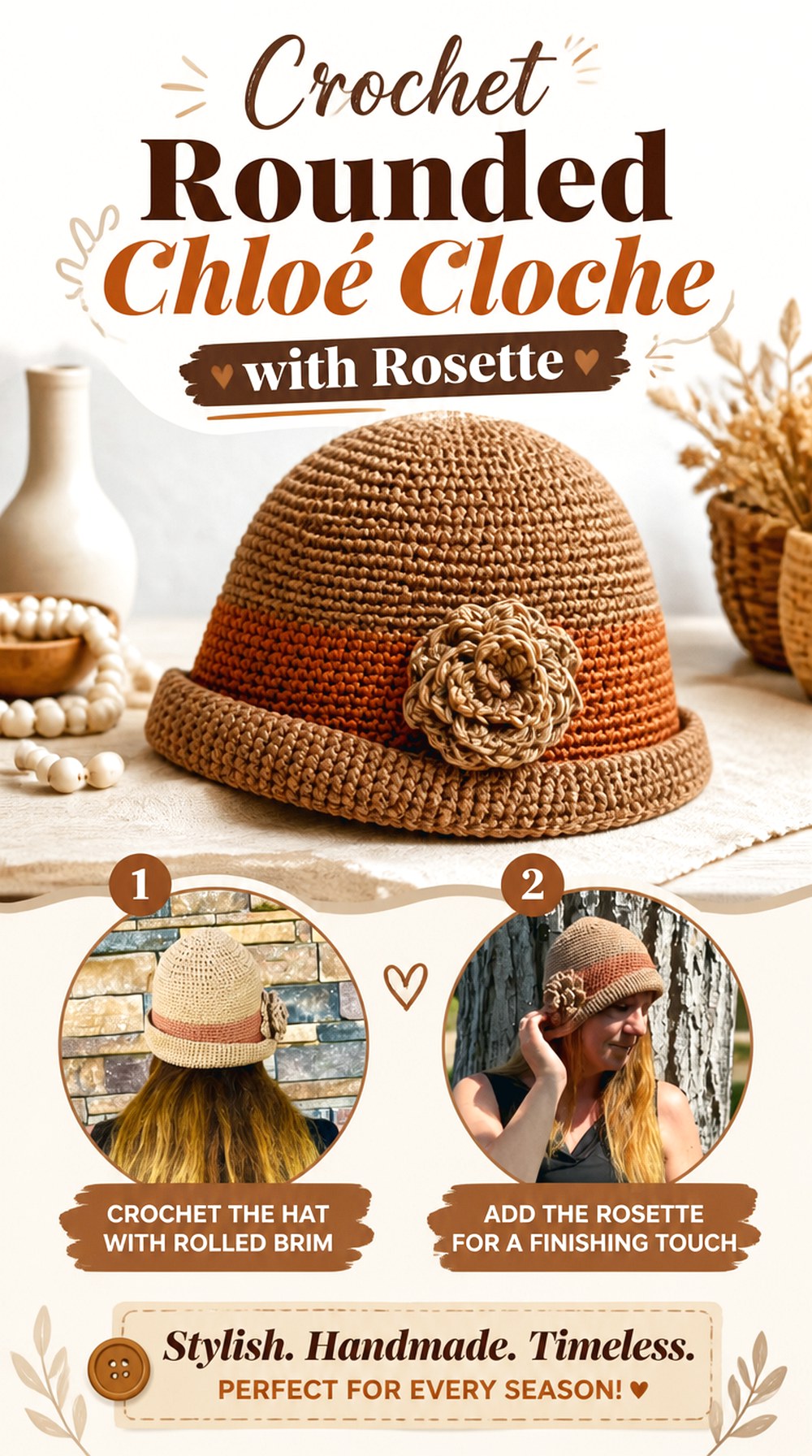
This rounded crochet cloche stays close to the traditional bell silhouette while using a contrasting band and rosette to create a clear focal point. The source design is worked as a fitted cloche rather than an intentionally oversized hat, so it makes a useful foundation when you want the enlarged effect to come mainly from crown depth or brim presence instead of an excessively loose head opening. The tutorial uses a lightweight DK cotton-linen blend, which also makes it a useful reference for a less bulky interpretation of vintage cloche styling.
Keep the Head Fit Separate from the Dramatic Brim
For an oversized adaptation, avoid treating the crown circumference and brim width as the same sizing decision. A cloche still needs enough control around the head to stay where you intend it to sit. Once that relationship looks right, the brim can become the larger visual feature. Try the hat on before committing to extra brim depth so you can see where the edge falls relative to your eyebrows and glasses.
Let the Rosette Define the Hat’s Viewing Angle
A side rosette naturally gives this design a front and a preferred angle. If you enlarge the brim, decide where that embellishment should sit before final placement. A flower positioned too low can disappear against a deeper brim, while one positioned too high may compete with the crown. Pinning or temporarily placing the embellishment first helps you judge the visual balance without permanently attaching it.
Original Tutorial and Creator Credit
2. Crochet Rigid Form Oversized Bell Cloche
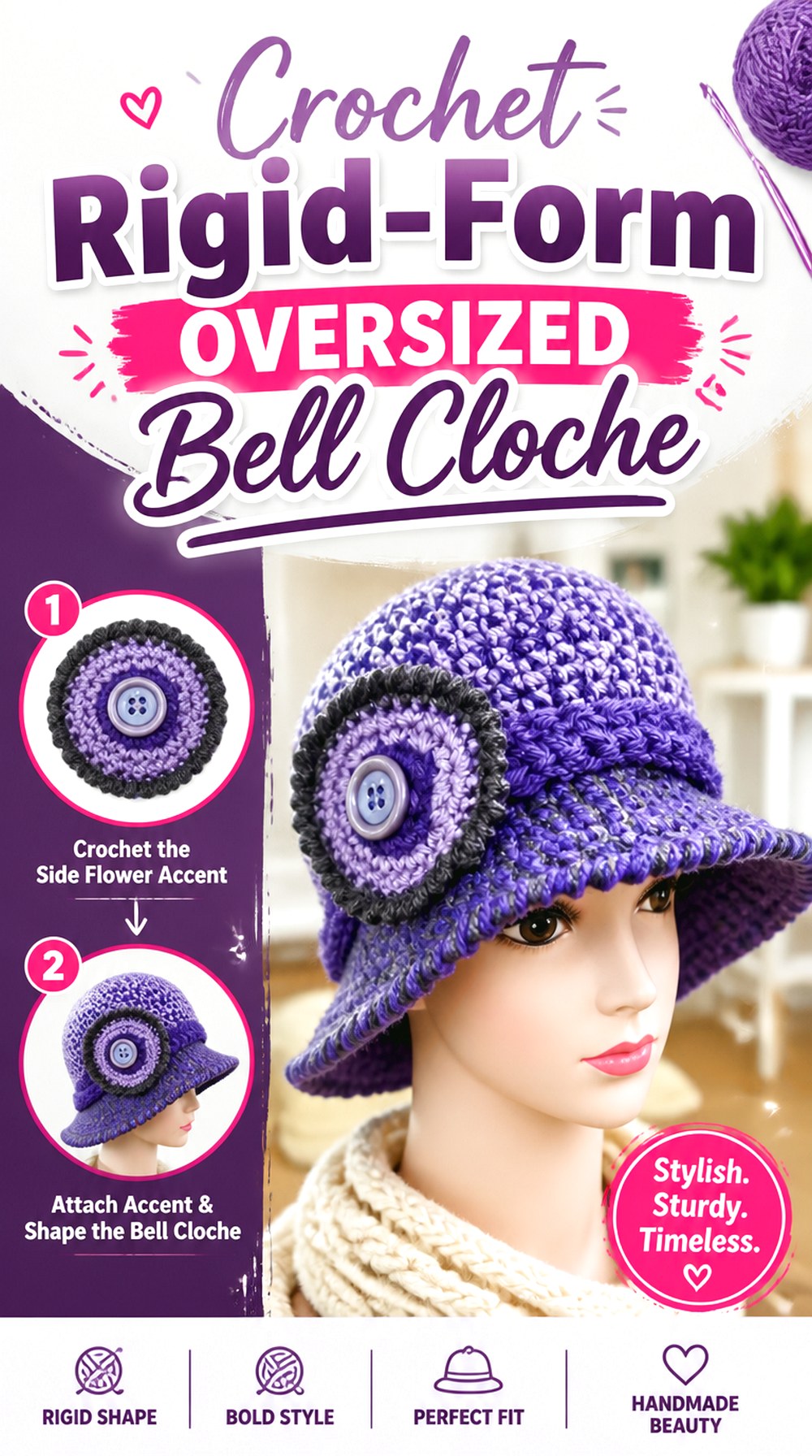
For a more sculpted look, this cloche tutorial is built around keeping a defined, rigid-looking form. That makes it a strong starting point for an oversized hat where you want the silhouette to remain visibly bell-shaped instead of collapsing into a floppy bucket. The creator specifically presents the tutorial as a cloche that maintains a firm shape and includes sizing guidance rather than limiting the concept to one fixed size.
The result feels more architectural than the softer hats in this collection, so it can carry a dramatic crown-and-brim relationship without relying on ruffles or motifs.
A Firmer Fabric Makes Small Shape Changes More Visible
When the fabric holds its form, increases, crown depth, and brim angle become visually obvious. That means enlarging this type of cloche deserves more checking than simply adding length. Look at the side profile as you work. If the hat starts reading as a straight cylinder with a shelf-like brim rather than a bell, the additional scale may be fighting the original construction.
Decide How Much Rigidity You Actually Want
The source tutorial emphasizes a rigid form, but your preferred oversized cloche may need a little more movement. If you change yarn, make a small fabric sample and flex it in your hands. A dramatically stiffer substitute could exaggerate the brim, while a much softer one could remove the defining feature that makes this design different from a floppy bucket hat.
Original Tutorial and Creator Credit
Creator: ALEX CROCHET UNCINETTO MODERNO DI ALEX
3. Crochet 1920s Flower Band Cloche Hat
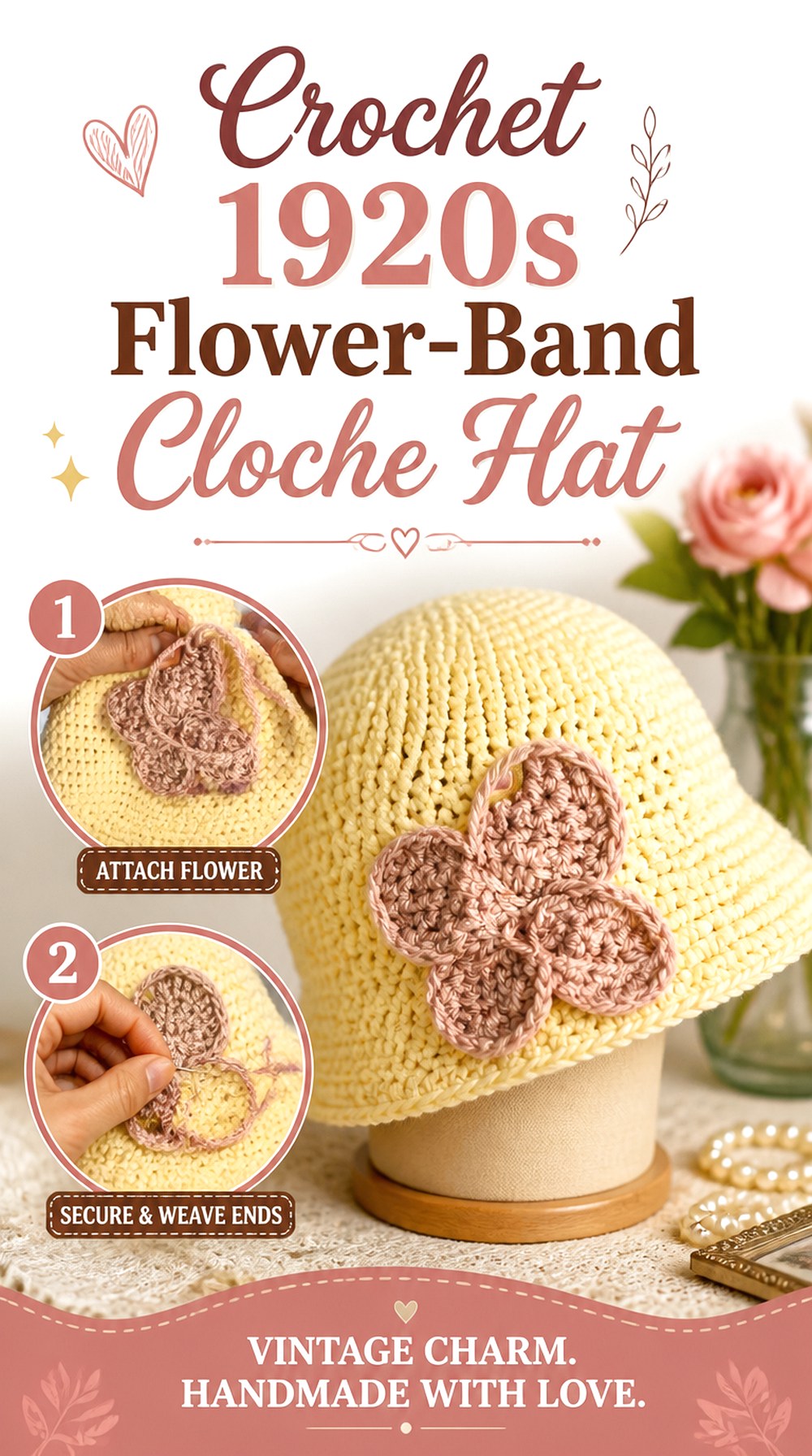
This option leans deliberately into 1920s styling with a shaped cloche crown and decorative flower band. The flowers change the visual weight of the hat before you even enlarge the brim, making it a good choice for an oversized design that feels ornamental rather than minimalist. The tutorial specifically covers crown shaping and creation of the decorative flower detail.
Instead of making the entire hat dramatically large, consider letting the lower silhouette and floral trim create the statement. That approach preserves the recognizable vintage character while still producing a more substantial finished accessory.
Give the Flower Band Enough Empty Space
An oversized brim and a flower band can compete if both occupy the same visual zone. Before attaching embellishments, view the hat from the front and side and identify the area where the flowers remain visible without crowding the brim. Leaving some uninterrupted crochet around the trim can make the decoration look intentional rather than added as an afterthought.
Check Vintage Proportion Before Adding More Depth
A cloche inspired by the 1920s generally relies on a low, enveloping profile. If the crown becomes very tall, the silhouette can drift toward a bucket or elongated beanie. When adapting the concept, try the crown on at several points and judge the overall profile rather than measuring depth in isolation. The best stopping point depends on your yarn, tension, and preferred placement.
Original Tutorial and Creator Credit
Creator: Stringsandthreads
4. Crochet Irish Rose Flapper Cloche
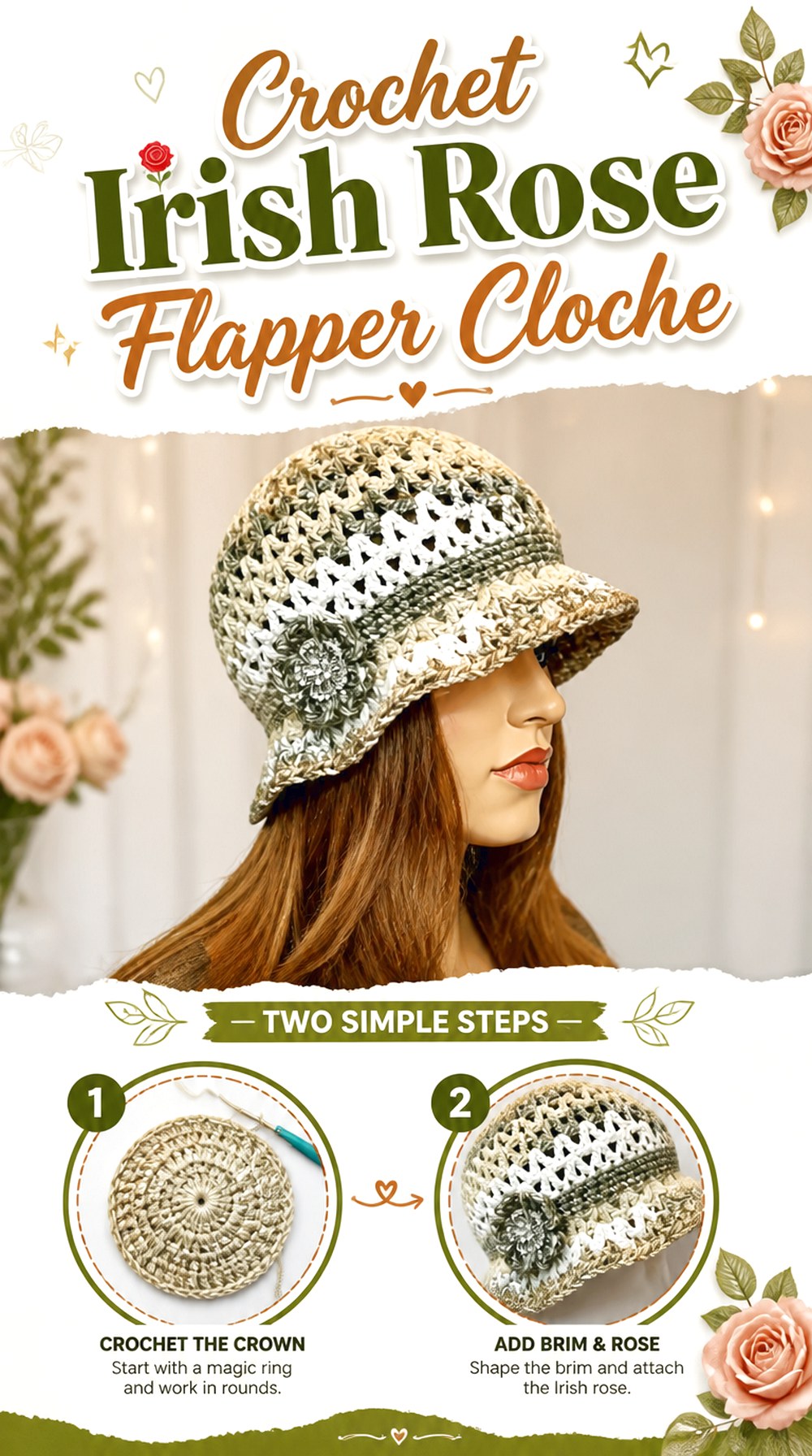
The Irish Rose cloche takes another vintage route, but it differs from the previous flower-band version by using a more concentrated floral accent rather than making multiple flowers dominate the entire lower crown. Bag-O-Day Crochet presents it specifically as a flapper-style cloche, giving this idea a strong vintage identity before any oversized adaptation is considered.
For a larger fashion silhouette, this design works well when the crown remains relatively clean and the brim becomes the stronger statement. The rose can then function as an anchor point that keeps the enlarged shape from looking visually empty.
Use the Rose to Balance an Asymmetrical Brim
A soft oversized brim rarely falls in a perfectly even circle during wear, and that can be an advantage here. Positioning the floral accent near a gentle fold or turned-up section can make the asymmetry feel deliberate. Before sewing it permanently, test several placements while the hat is on a head form or mannequin so the final orientation matches the way you intend to wear it.
Keep Decorative Weight Away from a Weak Edge
A large embellishment adds localized weight. If your oversized version uses a softer yarn or a much broader brim than the source, avoid attaching the flower where it drags the brim downward unless that is the effect you want. The crown or transition area usually gives you a more stable visual base for a substantial floral accent.
Original Tutorial and Creator Credit
Creator: Bag-O-Day Crochet
5. Crochet Oversized Ruffle Brim Cloche Hat
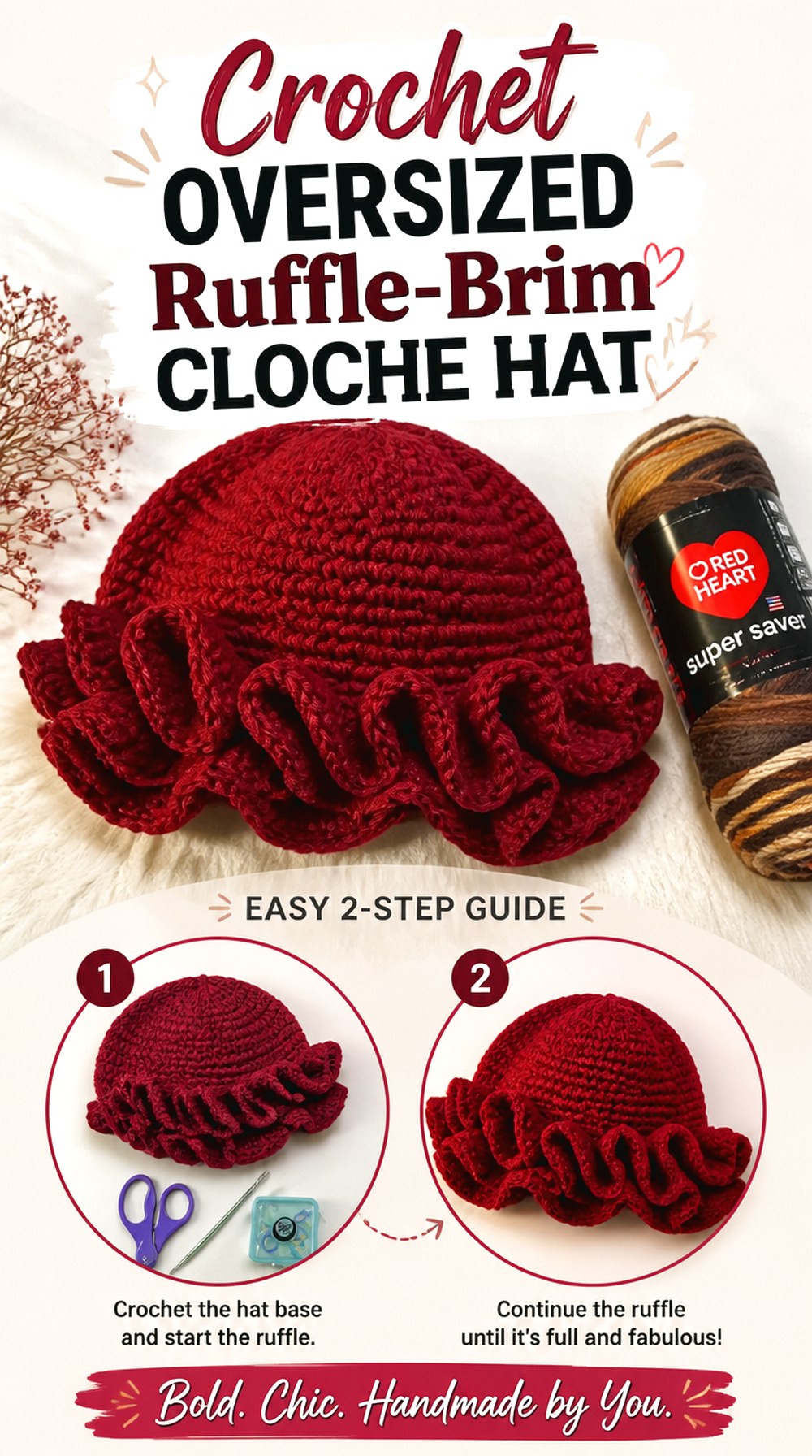
ruffled brim gives the oversized cloche idea a completely different personality. Instead of trying to keep a broad edge flat, this design lets extra fullness become the feature. Kendall Tai’s tutorial focuses specifically on a crochet ruffle hat, making it a useful reference when you want the brim to create movement around the face rather than project outward like a structured sun hat.
This style can look especially dramatic when the crown remains relatively simple. The contrast between a calm upper section and a highly animated lower edge is what separates it from ordinary bucket shapes.
More Ruffle Is Not Always More Flattering
Once a brim begins to wave, every additional increase changes both its circumference and the amount of fabric around the face. Check the hat from the front as well as above. A ruffle that looks attractive lying flat may bunch heavily when worn. Stop based on the worn silhouette rather than assuming that a larger circumference automatically gives a better oversized effect.
Keep the Crown Quiet if the Brim Is the Feature
Texture, stripes, appliqués, and a large ruffle can all work individually, but combining all of them can make the hat visually crowded. If you want the brim to be the main event, consider a relatively restrained crown. That leaves the eye somewhere to rest and makes the oversized edge read as intentional design rather than accidental excess fabric.
Original Tutorial and Creator Credit
Creator: Kendall Tai
6. Crochet Airy Mesh Bell Hat
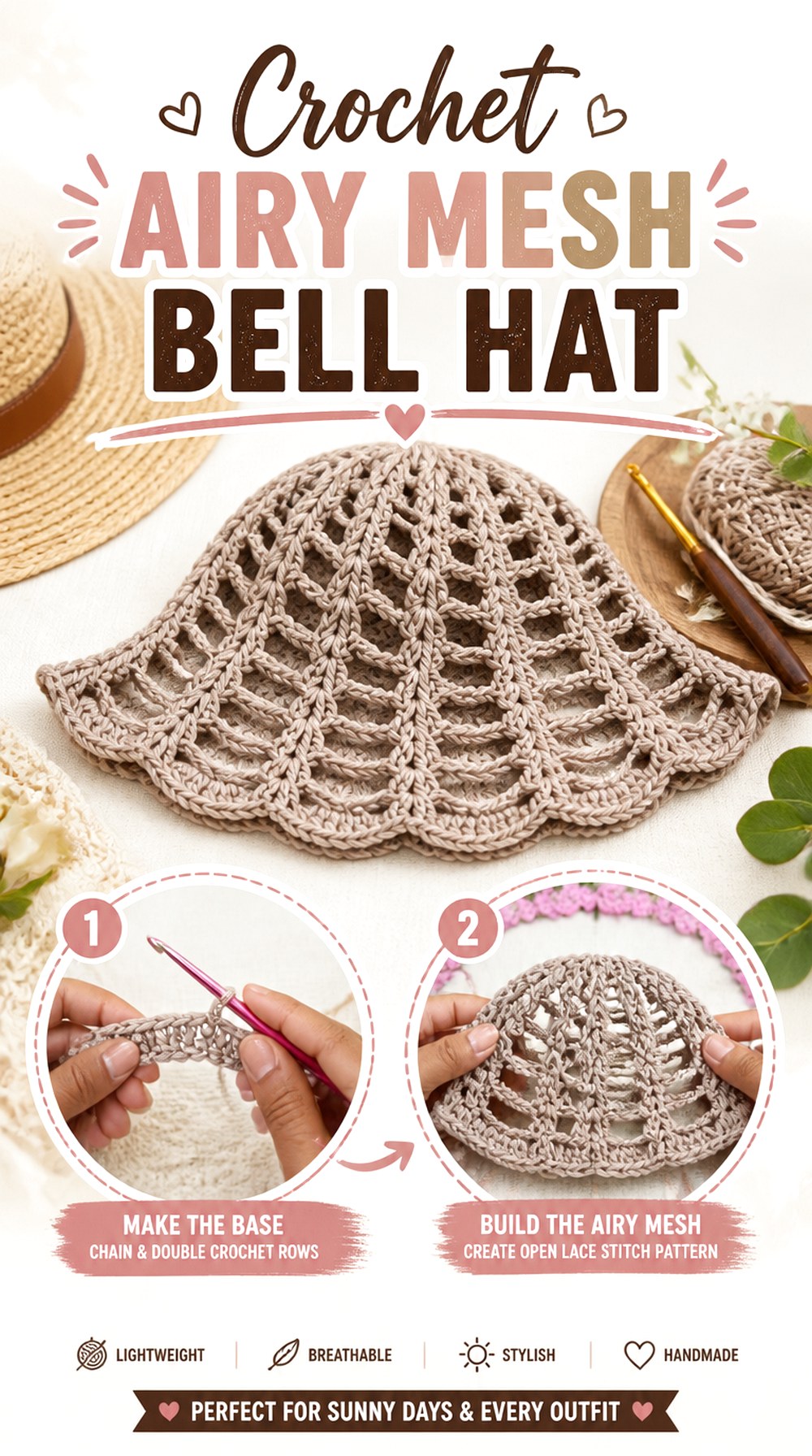
Mesh gives an oversized hat more visual volume without making it look as dense as a solid crochet cloche. Shelen Crochet’s tutorial produces a lightweight-looking openwork mesh hat and includes adjustment guidance, making it a useful source for readers who like the large bell or bucket silhouette but do not want every inch filled with solid fabric.
The negative space becomes part of the design. An enlarged mesh crown can appear softer and less imposing than an equally large dense crown, while the brim can still give the hat a recognizable cloche-like outline.
Openwork Changes What “Oversized” Looks Like
With mesh, scale is perceived through the outer contour rather than solid visual mass. That means a deeper crown may still appear fairly light. Before enlarging the brim as well, check whether the crown already creates enough drama. Combining a very deep mesh body with an extremely broad brim can shift the hat from airy to visually loose unless the proportions remain deliberate.
Remember What You Will Wear Under the Mesh
Because the fabric is open, hair color, hairstyle, scarves, and other layers can become visible through the crown. That affects styling more than it would with an opaque cloche. If you plan to wear the hat over another layer, check the final fit with that layer in place rather than judging circumference on an uncovered head.
Original Tutorial and Creator Credit
Creator: Shelen Crochet
7. Crochet Spiral Swirl Cloche Bucket Hat
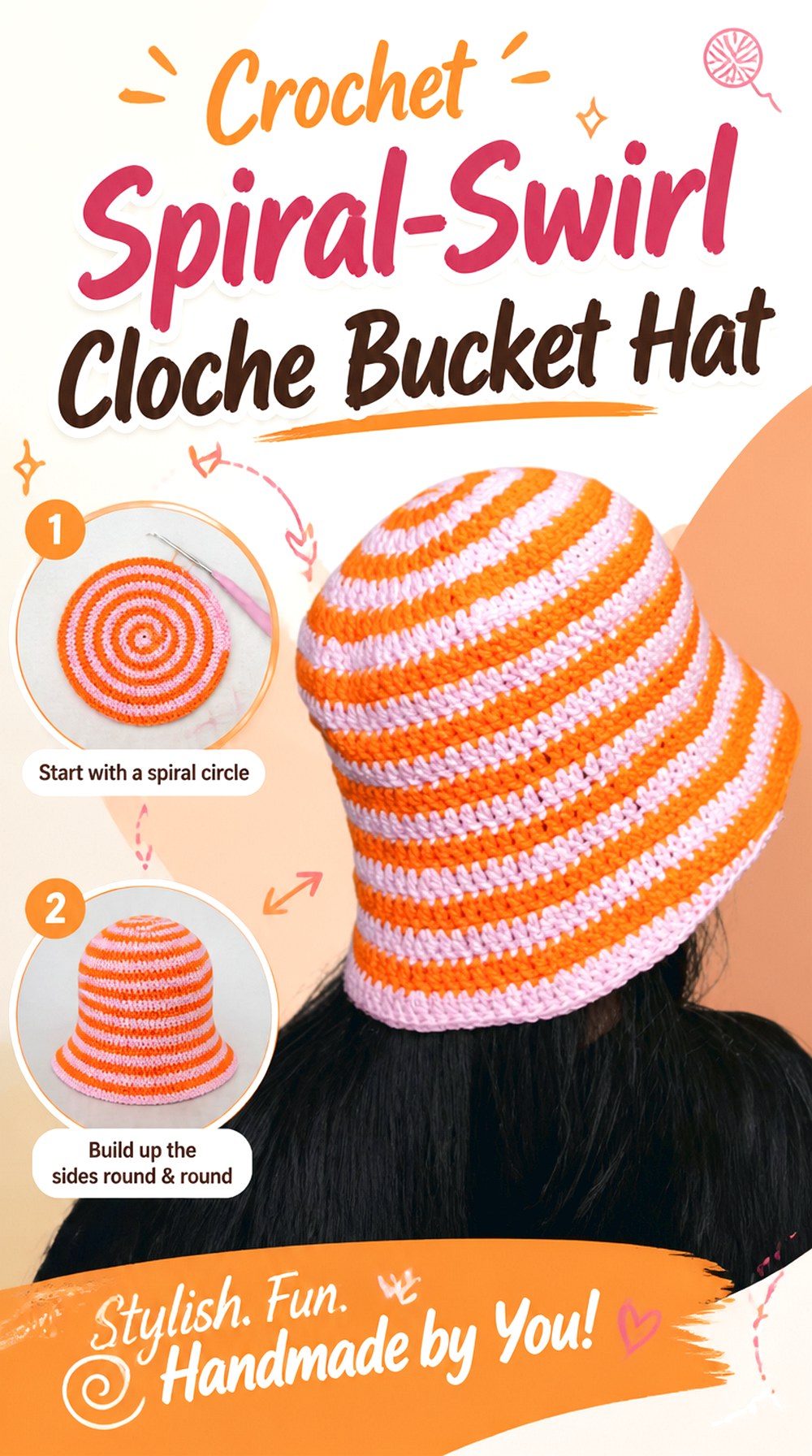
A spiral construction makes this hat interesting before you add any dramatic brim treatment. Cherilyn Q’s tutorial centers on a visible spiral bucket-hat design, creating directional movement around the crown instead of relying on separate appliqués or joined motifs. The creator also notes that the video itself demonstrates one size, while additional sizing information is associated with the written pattern, so the video should not be treated as universal sizing guidance.
For an oversized cloche interpretation, the swirling surface can make a moderate increase in scale look more dynamic than it would on a plain solid hat.
Preserve the Spiral Instead of Stretching It Out of Proportion
The appeal of this design comes from the directional pattern. If you alter the size substantially, pay attention to whether the swirl still reads clearly when viewed from above and from the side. A larger hat is not automatically a stronger spiral. Changes that distort the visual rhythm may remove the feature that made this construction worth choosing.
Use Brim Simplicity to Highlight Crown Movement
A spiral crown already carries significant visual energy, so a relatively uncomplicated brim can give it a stronger presentation. If you also want an oversized lower edge, consider making width the statement rather than adding another competing stitch pattern. This creates a clean hierarchy: movement above, silhouette below.
Original Tutorial and Creator Credit
Creator: Cherilyn Q
8. Crochet Ripple Side Wavy Cloche Hat
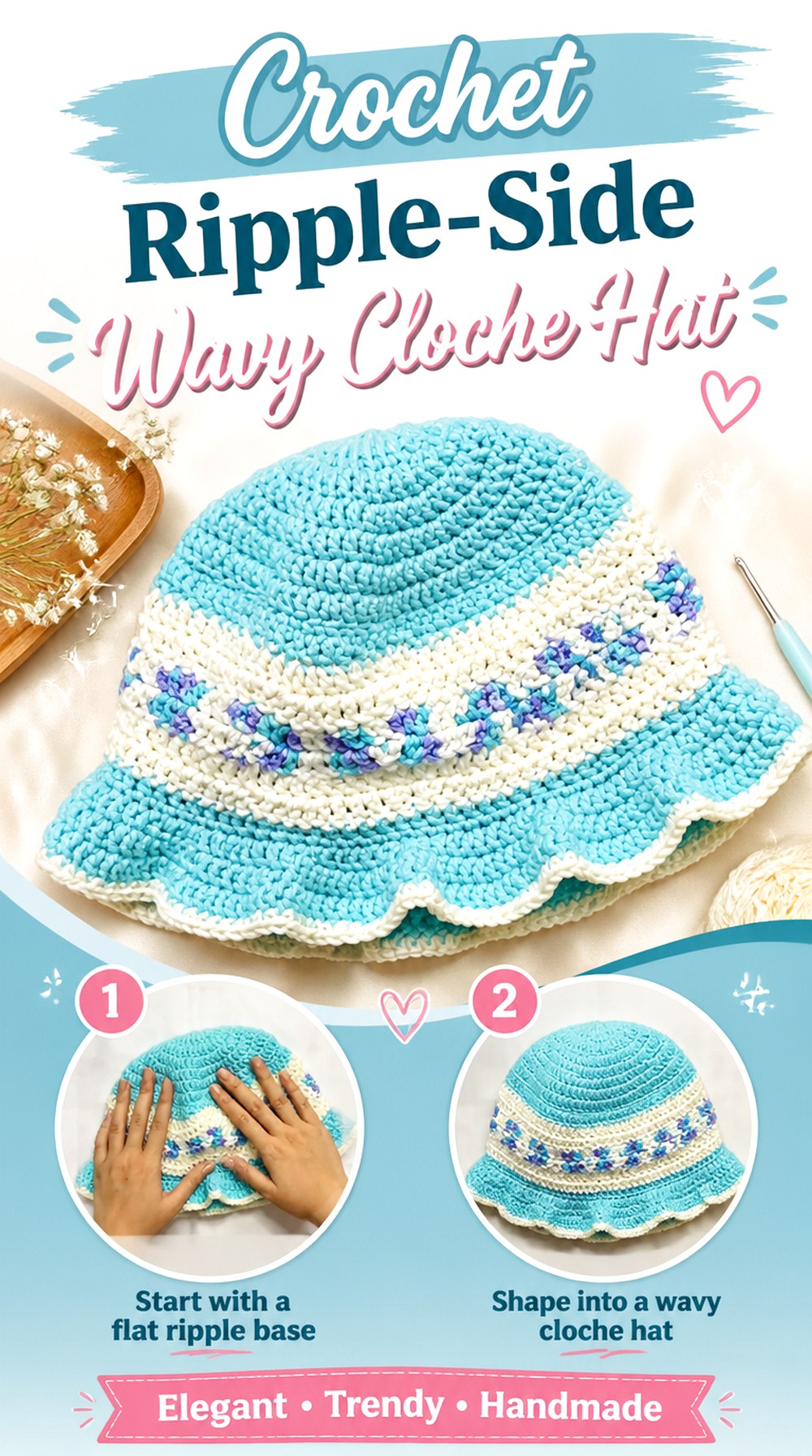
This hat places its main pattern interest around the sides rather than making the brim do all the work. Angela Christine’s tutorial uses a ripple or wave design in the hat body before finishing the brim, giving the silhouette horizontal movement that can be especially effective on a deeper cloche.
Compared with the spiral option, the waves create a more banded look. That makes this a useful choice if you want a visually oversized crown but still prefer the pattern to feel organized around the head rather than radiating outward from the top.
A Deeper Crown Gives the Ripple More Room to Read
If the patterned side section is very shallow, only a small portion of the wave may be visible once the hat is worn. A deeper cloche-style crown can display more of the repeat, but do not extend it blindly. Check where the lower edge reaches around the ears and forehead so the extra pattern space does not turn into unwanted length.
Let Color Contrast Follow the Wave, Not Fight It
Ripple patterns can disappear when adjacent colors have very similar values, while extremely busy combinations can make the wave harder to follow. Before committing to a multicolor version, place the yarns beside one another and decide whether you want the stitch shape or the palette to dominate. Either can work, but the choice should be intentional.
Original Tutorial and Creator Credit
Creator: angela christine
9. Crochet Checkerboard Oversized Bucket Cloche
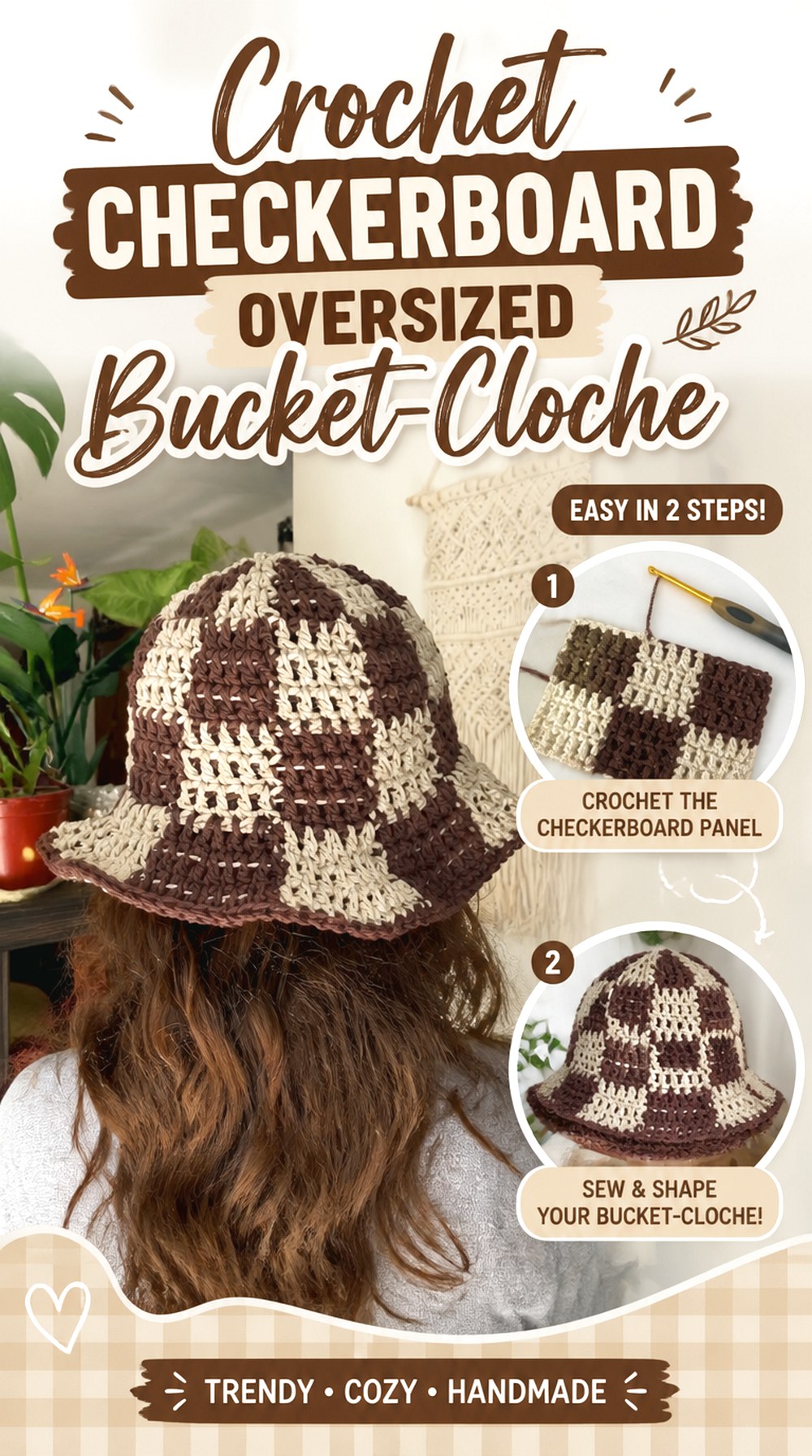
Checkerboard colorwork gives an oversized hat a bold graphic surface without requiring separate motifs. Riana Crafts’ tutorial walks through a checkerboard bucket-hat construction using two colors and a shaped brim. The regular blocks make this design especially useful when you want a large hat to feel deliberate and contemporary rather than soft or vintage.
The patterning also provides a visual scale reference: as the crown becomes deeper or the brim becomes broader, the relationship between the checks and the overall silhouette becomes easier to judge.
Keep the Checks Looking Square
If tension shifts dramatically between colors, the checkerboard may start to look stretched or compressed. On an oversized hat, those differences can become more noticeable because there is more patterned surface. Periodically lay the work flat and compare the apparent height and width of neighboring blocks rather than waiting until the whole crown is complete.
Plan Where the Brim Begins in the Color Story
A graphic crown can transition into a solid brim, continue the checkerboard, or introduce a new arrangement. Each choice changes the visual weight. A solid brim creates a strong frame around the pattern, while continuing the checks produces a more immersive statement. Decide before reaching the brim so the lower section feels like part of the design rather than a last-minute extension.
Original Tutorial and Creator Credit
Creator: Riana Crafts
10. Crochet Retro Flower Square Cloche Hat
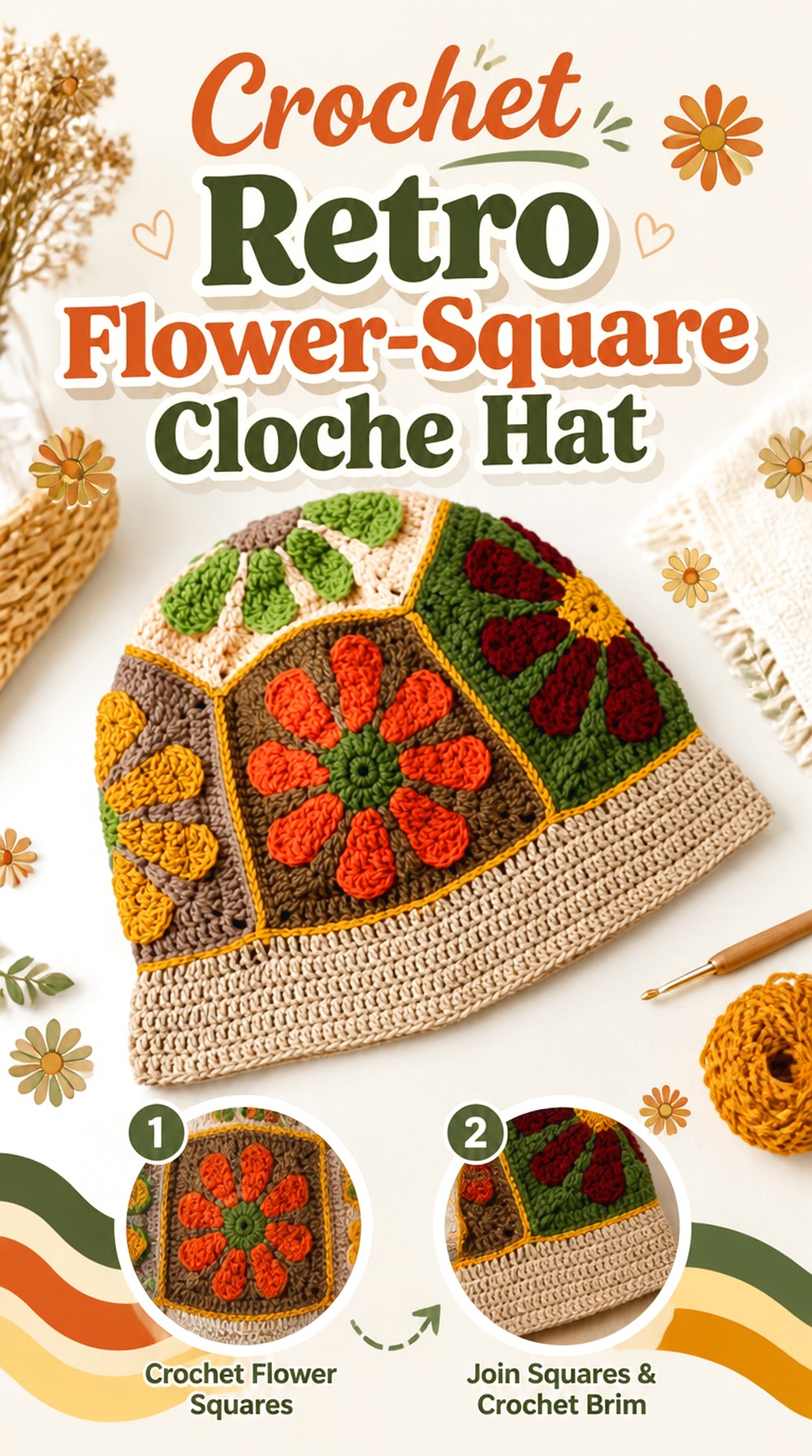
Sirin’s Crochet uses vintage-style flower squares to construct a retro bucket hat, giving this idea a distinctly modular appearance. Reframed as an oversized cloche, the joined floral band can become the visual center while a larger brim extends below it.
This is different from a simple flower appliqué because the motif itself forms part of the hat structure. That means square size, joins, and overall circumference are connected decisions. You cannot casually enlarge one motif without considering what that does to the entire joined band.
Block the Motifs Before Judging the Hat Circumference
Joined squares multiply small measurement differences. If one motif is slightly larger than another, the finished band can develop waves or uneven tension. Compare the motifs after they have been prepared consistently, then arrange them before permanent joining. This gives you a much clearer picture of whether the finished ring will suit the intended head fit.
Make the Brim Support the Retro Motifs
A very complex brim can compete with an already decorative flower band. For a strong cloche interpretation, consider letting the brim contribute mainly through size and shape. A broad, relatively simple lower edge gives the floral squares enough visual space while still producing the oversized silhouette the article is targeting.
Original Tutorial and Creator Credit
Creator: Sirin’s Crochet
11. Crochet Granny Square Wide Brim Cloche
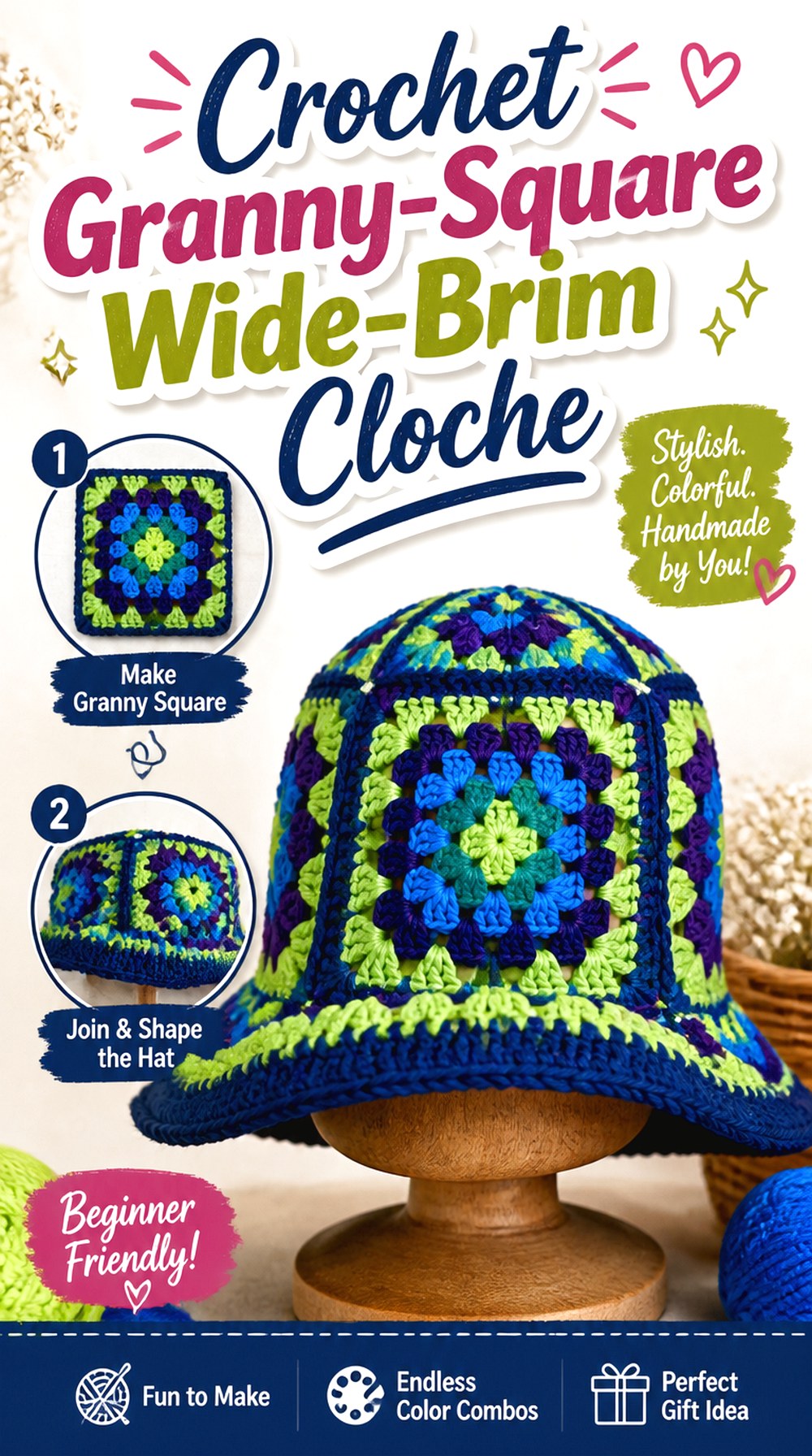
A classic granny-square construction creates a more geometric oversized cloche. Cactus Lady Creation’s tutorial uses joined granny squares with a crocheted brim, making it a clear reference for a hat where motifs form the main body rather than appearing only as decoration.
This construction is useful for stash-led color planning, but color alone should not drive the adaptation. The dimensions of the finished squares determine how much circumference and depth the joined section contributes, so the motifs need to suit the intended hat before you think about making the brim more dramatic.
Motif Scale Controls More Than Circumference
A larger granny square does not only make the hat wider. It can also make the motif band deeper, which changes where the brim begins on the face. Before joining everything, hold or pin the planned motif arrangement around a head form and check both dimensions. If the band is already long, adding an oversized brim could make the entire hat sit lower than expected.
Watch the Join Line on a Curved Shape
Squares naturally want to create straight edges, while a head is curved. The joining area therefore deserves attention. If the motif band looks faceted rather than gently rounded, blocking and yarn behavior may affect the final appearance. Decide whether you enjoy that patchwork geometry or want a softer cloche contour before investing in a large brim.
Original Tutorial and Creator Credit
Creator: Cactus Lady Creation
12. Crochet Striped Deep Crown Bucket Cloche
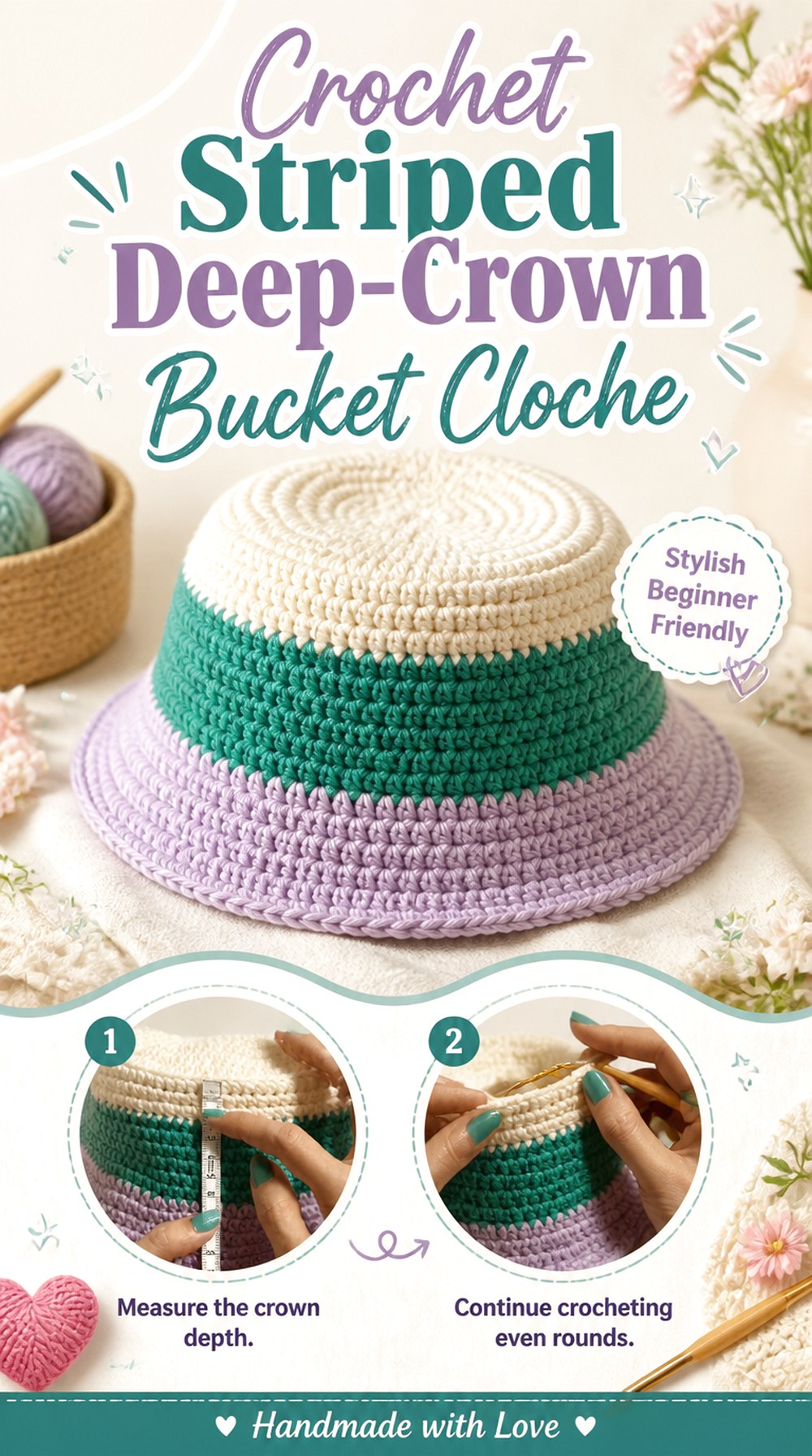
Granny Gaia’s crochet bucket-hat tutorial shows a striped, color-changing construction and includes finished measurements in the source video. Rather than copying those dimensions into an oversized version, use the tutorial as a visual reference for how horizontal color changes interact with crown depth.
A deeper crown gives stripes more space, but it also makes the hat feel longer and more enclosing. This is a strong option if you want oversized impact from the crown rather than from an enormous brim.
Use Stripe Width to Control the Perceived Depth
Narrow stripes make a deep crown look busier, while broader color sections can make the same depth appear calmer and more graphic. Before choosing a sequence, sketch or wrap yarn strands around a neutral hat form to compare the rhythm. The goal is to make the color pattern support the elongated cloche shape rather than visually chopping it into too many small bands.
Test the Lower Edge Before Making It Deeper
A deep crown may already reach low enough to frame the face before an enlarged brim begins. Try the hat on as the body develops and note its position relative to the ears. If the crown is already covering more than intended, adding additional depth simply to make it “oversized” will not improve the silhouette.
Original Tutorial and Creator Credit
Creator: Granny Gaia
13. Crochet Custom Brim Embroidered Cloche Hat
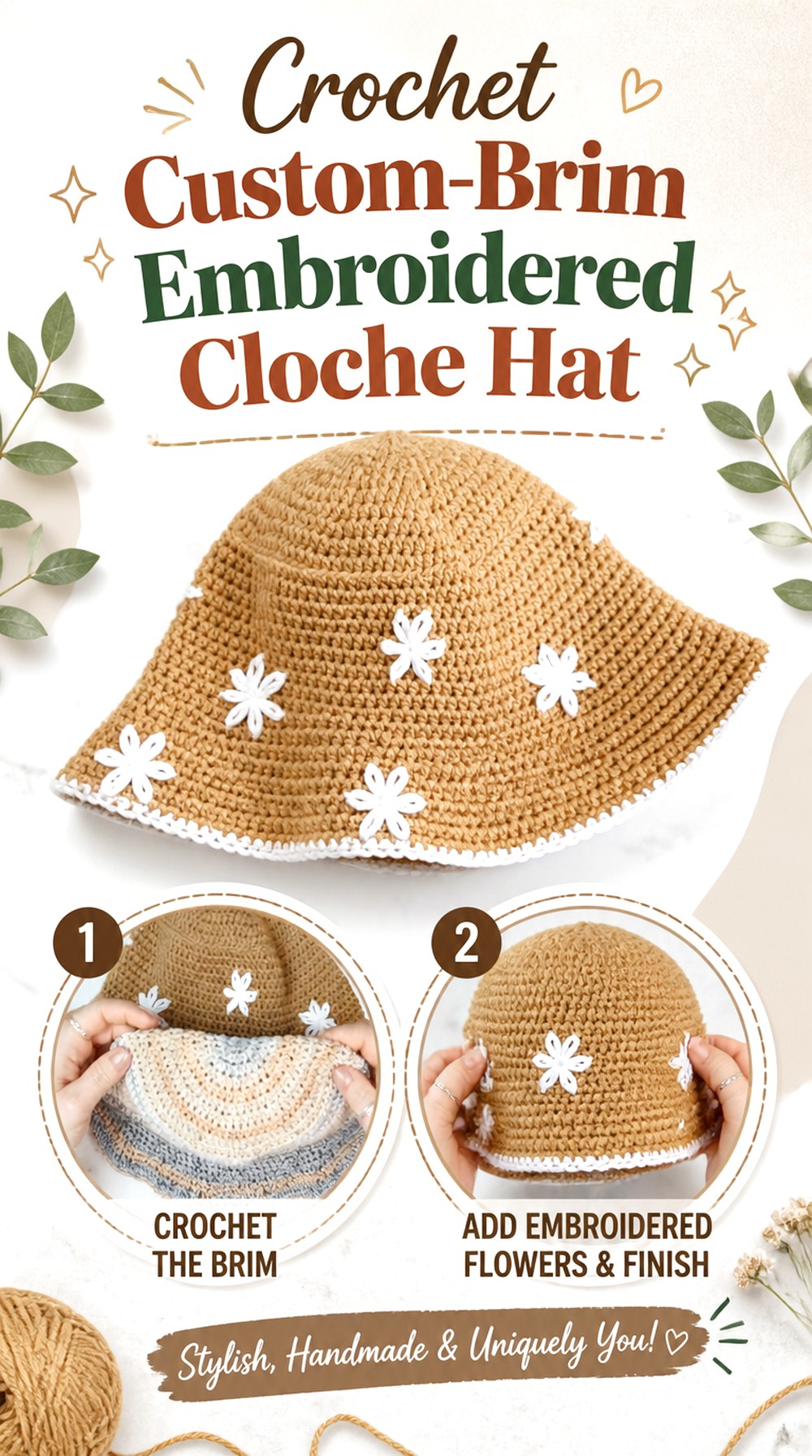
This tutorial stands out because Brunaticality discusses different brim options and finishes the hat with embroidered flower decoration. That combination makes it particularly useful for an oversized cloche article: you can think about the brim as a design choice rather than a fixed endpoint, then decide whether surface embroidery adds enough detail without changing the structure.
The resulting concept is more customizable than a strongly motif-driven hat. Shape comes first, and decorative treatment can be added afterward.
Choose the Brim Personality Before Adding Embroidery
A broad flat brim, a softer downward brim, and a turned or shaped edge all frame embroidery differently. Settle on the hat silhouette first. Once you know where the brim naturally falls, you can place decorative stitching where it remains visible rather than hiding it in a fold or placing it where the hat repeatedly bends.
Surface Decoration Should Not Distort the Crown
Embroidery pulls on an existing crochet fabric. Keep checking the inside and outside as decorative stitches are added so the crown does not pucker. This matters even more on a smooth oversized hat because distortion can be easy to see across a large surface. Lightly marking the intended decorative area before stitching can help maintain balance.
Original Tutorial and Creator Credit
Creator: Brunaticality
14. Crochet Structured Raffia Wide Brim Cloche
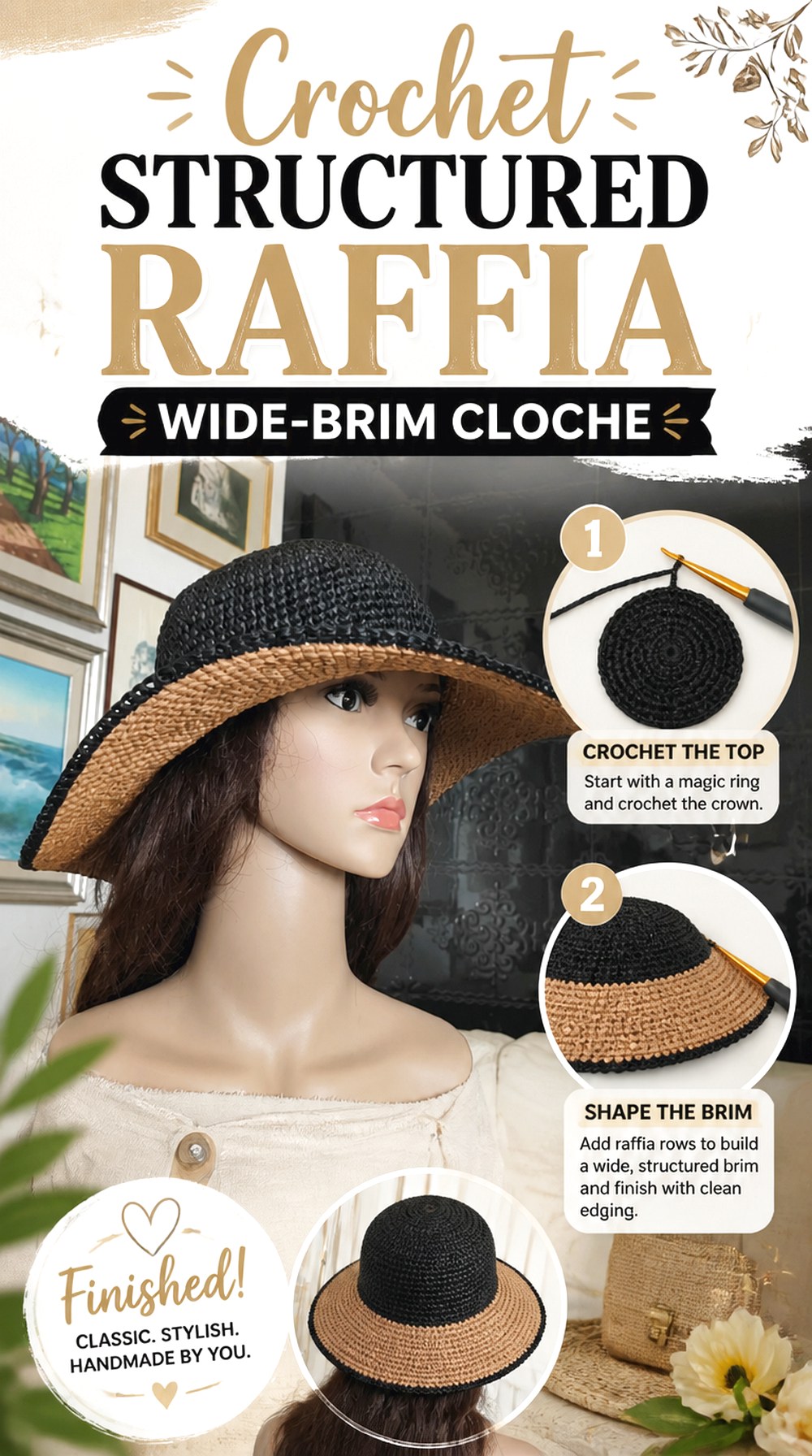
For maximum brim presence, a raffia hat provides a very different route from soft yarn. Annalisa Gretter’s tutorial specifically demonstrates a wide-brimmed raffia crochet hat and references a separate method for incorporating reinforcement into the brim. That makes this a strong source for an oversized cloche that is meant to look sculpted rather than floppy.
The main design question is not simply how wide the brim can become. It is how much structure you want around the face and whether the chosen material and reinforcement approach support that shape.
Reinforcement Turns the Brim into a Structural Element
Once reinforcement is involved, the brim is no longer behaving only according to crochet tension. Its edge can maintain a more deliberate outline. If you plan to adapt the width, check the creator’s reinforcement guidance rather than assuming the same supporting material or finishing method can be extended indefinitely without changing the result.
Check the Side Profile Before Maximizing Width
Wide brims often look dramatically different from the side than from above. Put the unfinished hat on a head form and inspect how far the edge projects past the face and back of the head. A slightly narrower structured brim can sometimes look more oversized than a larger but drooping one because its outline remains clearly visible.
Raffia Changes the Wearing Experience
A structured plant- or paper-like yarn will not behave like soft wool or acrylic. Before committing to a large hat, consider how the material bends, how the edge feels, and how you plan to store the finished piece. If you need a hat that compresses easily into a bag, a heavily structured interpretation may not be the most practical option.
Original Tutorial and Creator Credit
Creator: Annalisa Gretter
15. Crochet Raffia Short Brim Bucket Cloche
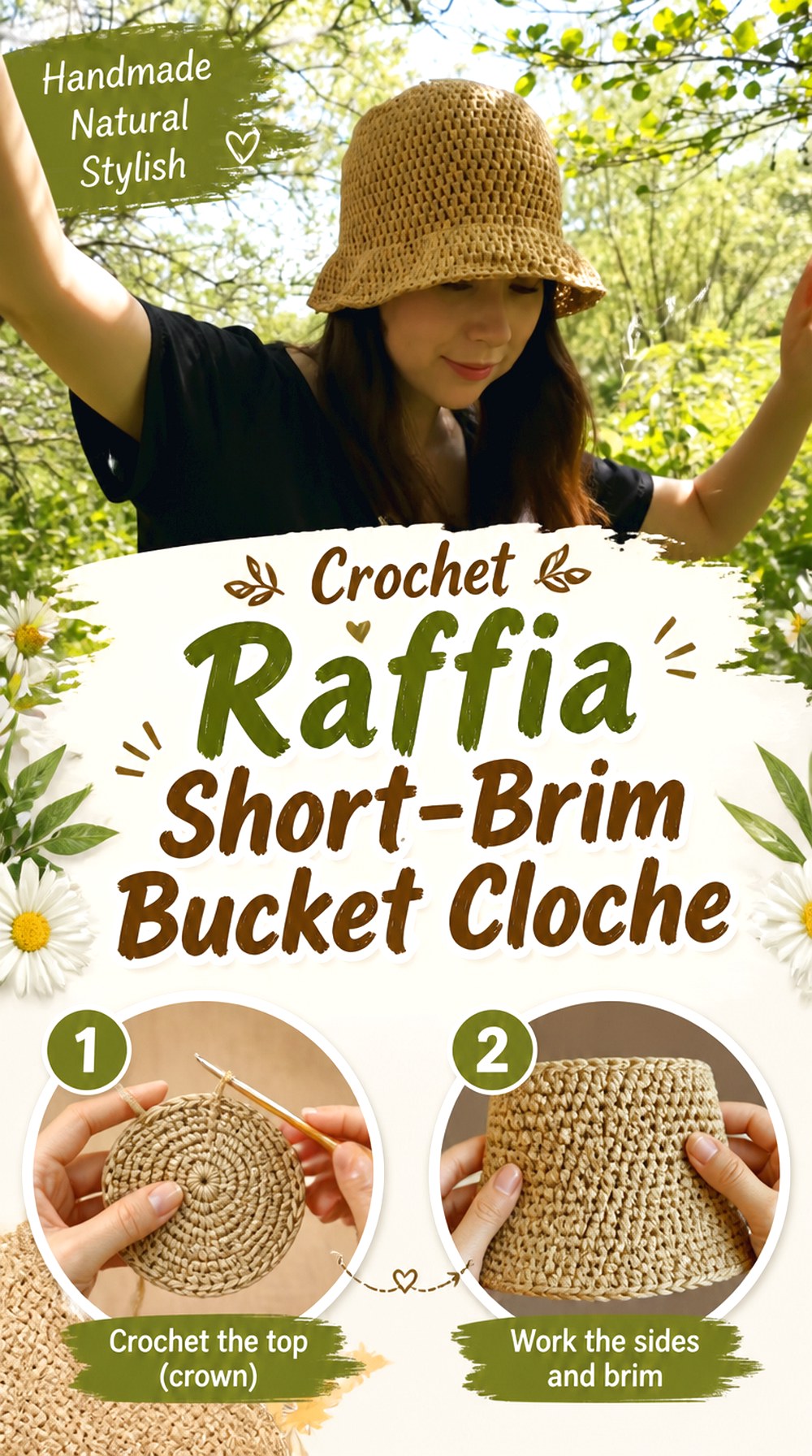
Zeens And Roger Crochet offers a raffia bucket-hat construction with a much more compact brim than the previous wide-brim option. The tutorial works top down in raffia and shows a finished summer hat rather than a decorative vintage cloche. That contrast is exactly why it belongs here: it provides a cleaner base for readers who want an oversized crown or slightly exaggerated bell shape without an enormous sun-hat brim.
This version is a useful reminder that “oversized” can describe the overall proportion and depth, not just the number of inches extending from the face.
Let Crown Volume Do More of the Work
With a restrained brim, you can place more visual emphasis on the rounded crown and lower side section. This produces a hat that still reads as substantial without becoming difficult to style around the shoulders or hair. If adapting the depth, keep checking the head fit so the extra volume remains above or around the head rather than simply sliding downward.
A Short Brim Is Easier to Pair with Strong Styling
Large earrings, collars, scarves, and voluminous hair can compete with an extremely wide brim. A shorter raffia brim leaves more room for those elements while still giving the hat a defined edge. Choose this approach if you like the cloche profile but want the rest of an outfit to remain visible.
Original Tutorial and Creator Credit
Creator: Zeens And Roger Crochet
How the 15 Oversized Cloche Ideas Compare
| If you want… | Start with… | Main thing to watch |
|---|---|---|
| A recognizable vintage cloche | Rounded Chloé, Flower-Band, or Irish Rose | Keep the head fit controlled while enlarging the lower silhouette |
| A highly structured statement hat | Rigid-Form Bell or Structured Raffia | Check side profile and brim support |
| Maximum movement around the face | Ruffle-Brim or Wavy Cloche | Stop before folds become too crowded |
| A lighter-looking oversized shape | Airy Mesh Bell Hat | Judge fit with anything you plan to wear underneath |
| Bold surface pattern | Spiral, Ripple, Checkerboard, or Striped | Make sure added size does not distort the visual repeat |
| Modular color and motif planning | Retro Flower-Square or Granny-Square Cloche | Compare blocked motif dimensions before joining |
| A customizable fashion base | Custom-Brim Embroidered Cloche | Choose silhouette before adding decoration |
| A restrained brim with substantial crown | Raffia Short-Brim Bucket Cloche | Let crown depth provide the oversized effect |
Conclusion
The most useful way to choose an oversized crochet cloche is to decide where you want the drama. Pick the ruffled or wavy options for movement, mesh for a lighter silhouette, checkerboard or spiral designs for graphic impact, and the classic flower-trimmed cloches for a stronger vintage reference. If shape retention matters more than softness, the rigid-form and raffia options deserve closer attention.
Motif hats need more layout planning, while a simple crown gives you more freedom to experiment with brim proportion. Whichever direction you choose, check fit before enlarging decorative areas, and use the original tutorials near the end of your planning for their exact construction details rather than assuming every adaptation will behave the same way.
Frequently Asked Questions
What makes a crochet cloche look oversized instead of simply too big?
An oversized cloche still has deliberate control somewhere in the fit. The hat might have a deeper crown, exaggerated bell shape, broader brim, or extra ruffle, but the section intended to hold the hat on the head should not feel accidentally loose. If the entire hat simply drops downward, reassess the head-fitting portion before adding more volume elsewhere.
Can I use a crochet bucket-hat tutorial to make an oversized cloche?
Yes, when the underlying shape is compatible, but treat the bucket tutorial as a construction reference rather than assuming every modification will produce a cloche automatically. A cloche usually benefits from a rounded, enveloping silhouette. Crown depth, brim angle, and fit around the forehead can matter more than the project label. Make one change at a time and check the worn profile as you work.
Which yarn qualities help an oversized brim hold its shape?
Look at the finished fabric rather than relying only on the fiber name. Dense crochet, less elastic yarns, raffia-like materials, and deliberate brim reinforcement can all contribute to structure. Softer, more elastic fabrics are better when you want folds or movement. Because yarn substitutions can change the result substantially, make a sample before committing to an especially broad brim.
How can I make a cloche deeper without covering too much of my face?
Try the crown on before the brim is finished. Extra crown depth changes where the brim begins, so extending both sections can quickly lower the entire hat. If the crown already reaches the desired point near your ears or forehead, create the oversized impression through brim width, waves, texture, or decoration instead of adding more vertical length.
Does every oversized crochet cloche need brim reinforcement?
No. Reinforcement is useful when you specifically want a broad brim to maintain a defined outline, but many oversized designs are meant to drape, ripple, or curl naturally. A ruffled brim would lose much of its character if forced rigid. Decide first whether your target silhouette is sculpted or fluid, then choose materials and finishing methods that support that result.
How do I keep a wide cloche brim from hiding my eyes?
Check the hat while wearing it rather than judging the brim only when it lies flat. Crown depth, brim angle, yarn weight, and the location of increases all influence where the edge sits. If the brim already falls too low, simply adding more width can make the problem worse. A turned section, controlled wave, or firmer edge may give you drama while keeping the face more open.