Burgundy gives crochet fingerless gloves enough depth to feel distinctly autumnal, but the ruffle is where the color scheme can become much more interesting. A light neutral can sharpen the outline of the cuff, a muted pink can create a tonal transition, and another dark fall shade can make the gloves look richer without turning the design into a high-contrast color block.
The most useful way to plan these gloves is to decide whether burgundy belongs across the hand, in the ruffled cuff, or in both areas. Because ruffles already create extra visual texture, their color does not always need to be dramatically different. Sometimes a small value change is enough to separate the layers.
The tutorial credits below support fingerless-glove, wrist-warmer, lace, shell, scalloped, or textured glove construction. The burgundy palettes and ruffle placements are editorial adaptations, so they should not be interpreted as colors demonstrated by the creators unless the tutorial itself shows them.
Quick List
- Burgundy And Cream Crochet Ruffle Fingerless Gloves
- Burgundy And Dusty Rose Crochet Ruffle Fingerless Gloves
- Burgundy And Camel Crochet Ruffle Fingerless Gloves
- Burgundy And Oatmeal Crochet Ruffle Fingerless Gloves
- Burgundy And Antique Gold Crochet Ruffle Fingerless Gloves
- Burgundy And Charcoal Crochet Ruffle Fingerless Gloves
- Burgundy And Blush Pink Crochet Ruffle Fingerless Gloves
- Burgundy And Forest Green Crochet Ruffle Fingerless Gloves
- Burgundy And Rust Crochet Ruffle Fingerless Gloves
- Burgundy And Sage Crochet Ruffle Fingerless Gloves
- Burgundy And Chocolate Brown Crochet Ruffle Fingerless Gloves
- Burgundy And Copper Crochet Ruffle Fingerless Gloves
- Burgundy And Mauve Crochet Ruffle Fingerless Gloves
- Burgundy And Warm Gray Crochet Ruffle Fingerless Gloves
- Burgundy And Black Crochet Ruffle Fingerless Gloves
- Burgundy And Plum Crochet Ruffle Fingerless Gloves
- Burgundy And Taupe Crochet Ruffle Fingerless Gloves
Keep Burgundy Dominant Without Hiding the Crochet Ruffle
Burgundy is dark enough that small stitch details can visually merge when every part of the glove uses the same shade. If the ruffle is one of the main features, decide whether you want it separated through color, texture, or both.
A cream or blush ruffle produces obvious light-dark separation. Rust, plum, and chocolate create a much softer change, so the ruffle shape itself has to do more of the visual work. Before committing to both gloves, hold the two yarn colors together and look at them from several feet away. If they merge into one dark block, decide whether that is the subtle effect you want.
Placement matters as much as the actual colors. Burgundy across most of the hand with the second shade concentrated around the cuff keeps the pair coordinated and prevents two equally strong colors from competing over a relatively small accessory.
Choose Fall Colors That Give Burgundy Ruffles a Clear Role
A useful palette needs a hierarchy. Burgundy can lead, a neutral or secondary autumn shade can support it, and the ruffle can act as the transition or accent.
For pronounced cuffs, place the lighter or warmer accent where the ruffle folds overlap. For a quieter pair, work the ruffle in burgundy and use the secondary shade underneath it as a cuff band. That approach lets burgundy remain the most visible color while still giving the lower edge enough definition.
When substituting shades, preserve the relationship rather than searching for an exact color name. If the idea calls for a pale supporting neutral, another noticeably lighter warm neutral can perform the same job. If it uses a dark tonal partner, keep that partner close enough to burgundy to remain subdued but different enough to show where the cuff or trim begins.
1. Burgundy And Cream Crochet Ruffle Fingerless Gloves
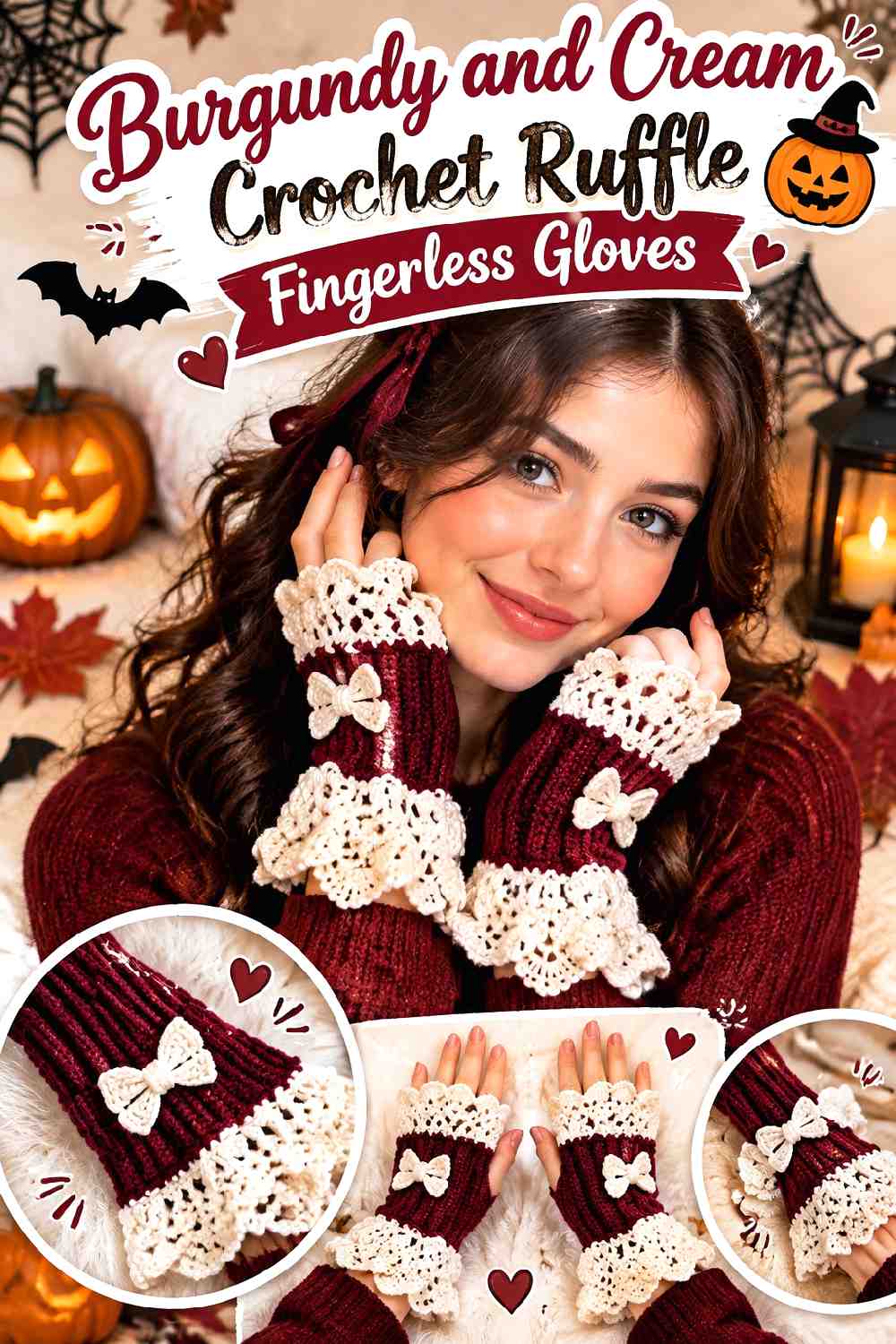
Burgundy and cream create one of the clearest ways to emphasize a ruffled glove cuff. Let burgundy cover most of the hand so the gloves still read as a rich red accessory, then move cream into the ruffle or a narrow line immediately around it. That lighter value makes folded or scalloped edges easier to distinguish, especially when the hand section also contains decorative texture.
This palette works particularly well when you want the cuff to be a focal point rather than simply a continuation of the glove body.
Keep Burgundy Across the Hand and Cream in the Burgundy Ruffle
Using burgundy through the main glove keeps the darkest color visually continuous around the hand and thumb opening. Cream can then be reserved for the outer ruffle, where a smaller amount produces a noticeable change without dividing the glove into equal color blocks.
If the ruffle has several visible layers, you do not need to alternate every layer. A cream outer edge against a burgundy ruffle can be enough to outline the movement while preserving burgundy as the dominant color.
Let Cream Separate Burgundy Crochet Ruffle Texture
Cream is especially useful when the burgundy stitches near the cuff are dense or highly textured. Place it where the ruffle begins or ends so the eye can distinguish the edge from the body of the glove.
For softer contrast, replace bright cream with a warmer off-white while keeping it substantially lighter than burgundy.
Creator Credit: Crochet Decor
2. Burgundy And Dusty Rose Crochet Ruffle Fingerless Gloves
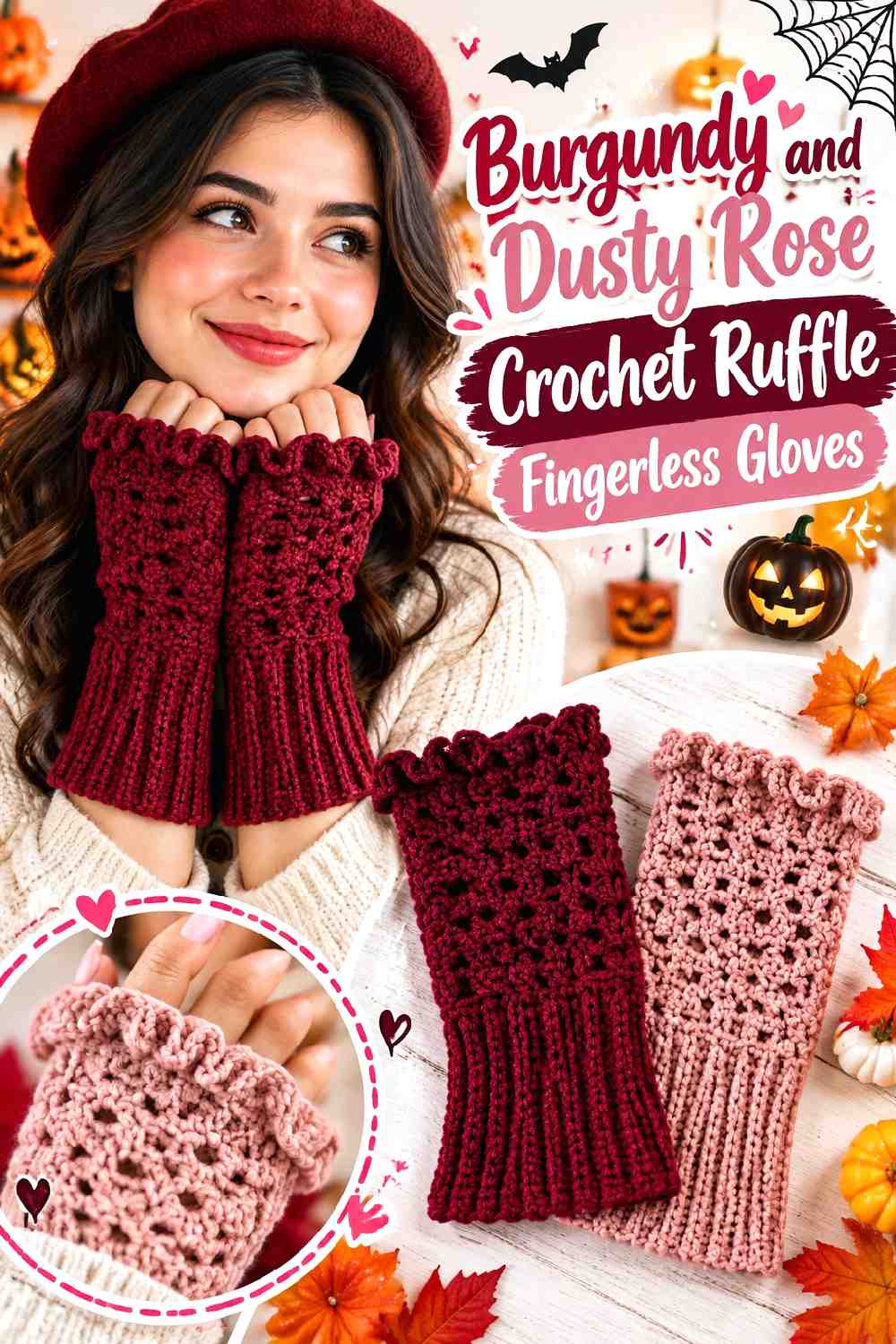
Dusty rose keeps this palette inside the red-pink family, creating a gentler transition than cream. Burgundy can dominate the hand while dusty rose moves around the cuff, ruffle, or narrow upper trim. Because the hues are related, the finished gloves can look layered rather than sharply color-blocked.
The main checkpoint is value. A dusty rose that is almost as dark as burgundy may disappear into the ruffled texture, while a lighter softened pink gives the layers clearer separation.
Use Dusty Rose to Soften the Burgundy Crochet Ruffle
Place dusty rose across the most outward-facing part of the ruffle if you want the cuff shape to remain easy to see without introducing a neutral. The lighter pink pulls individual folds away from the darker burgundy hand section.
Repeating a very narrow dusty-rose edge near the finger opening can also connect the palette, but keep that repeat restrained if the cuff is meant to remain the focal point.
Keep Burgundy Heavier Than Dusty Rose Across the Crochet Gloves
Avoid giving burgundy and dusty rose exactly the same visual area unless a deliberate two-tone effect is the goal. Keeping burgundy across most of the hand and dusty rose around the ruffle produces a clearer hierarchy.
If substituting the pink, choose another muted rose that stays noticeably lighter than burgundy rather than switching to a highly vivid pink that changes the character of the palette.
Creator Credit: Treasurie
3. Burgundy And Camel Crochet Ruffle Fingerless Gloves
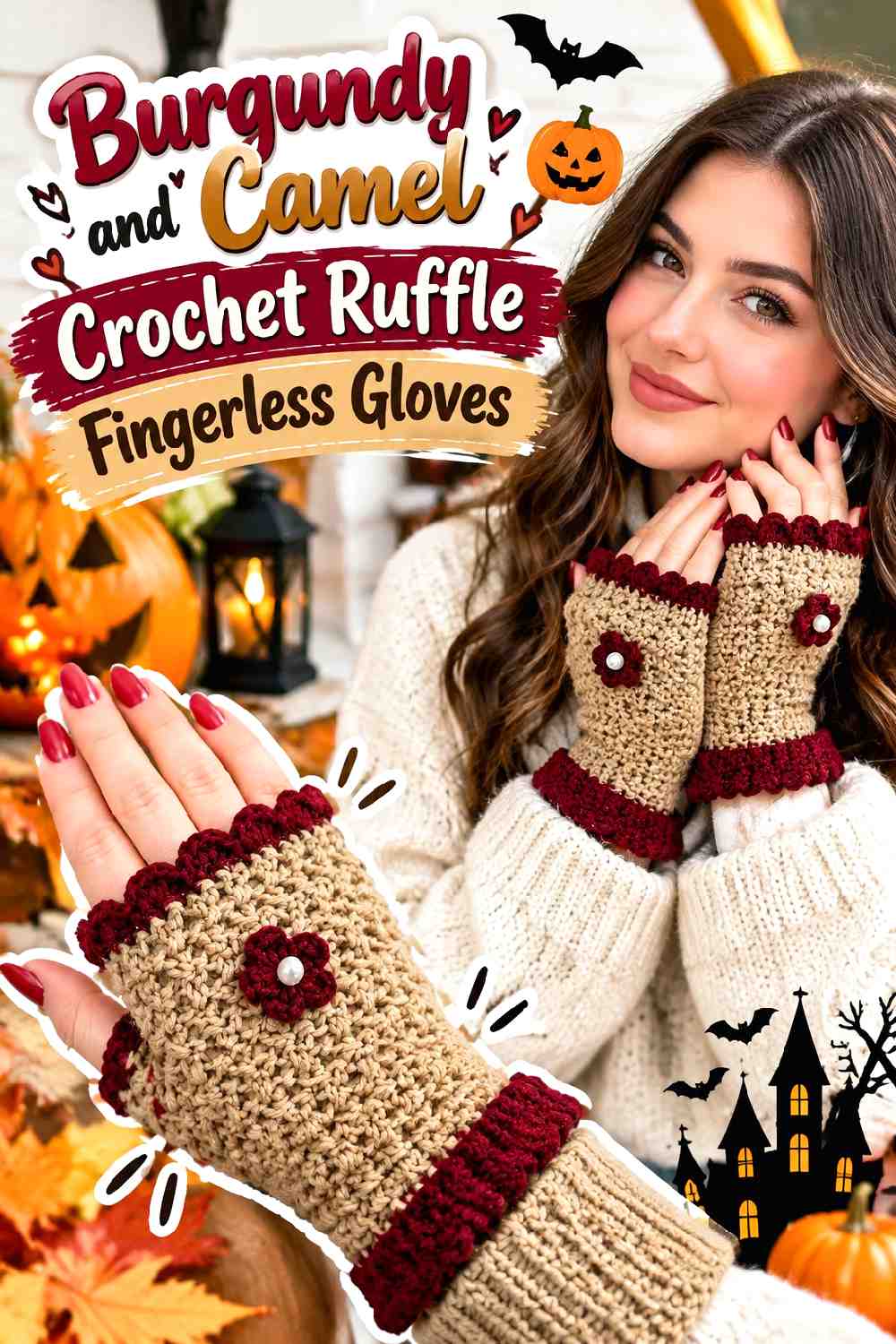
Camel brings a warm golden-brown neutral into the palette without competing strongly with burgundy. It is particularly effective around the wrist because it can separate the dark glove body from a coat or sweater while still staying within an earthy fall range.
For this version, burgundy can cover the hand and most of the ruffle, with camel acting as the lower cuff or ruffle edge. That keeps the gloves burgundy-first while giving the decorative section a warmer outline.
Frame the Burgundy Crochet Ruffle With Camel
A narrow camel boundary under or around a burgundy ruffle can make the cuff look more structured. Instead of turning the whole ruffle camel, use the neutral where the ruffle meets the wrist or along its outer edge.
That placement is useful when you want burgundy folds to remain the star but need enough contrast to stop the ruffle from blending into a burgundy sleeve.
Let Burgundy Stay Darker Than Camel Around the Crochet Cuff
The palette is most legible when camel remains clearly lighter than burgundy. If your camel yarn is very deep, compare the two colors before starting the second glove.
When the values are too similar, the transition can appear muddy from a distance. Choosing a slightly lighter tan or warm beige preserves the earthy relationship while making the cuff easier to read.
Creator Credit: Crochet with Linni
4. Burgundy And Oatmeal Crochet Ruffle Fingerless Gloves
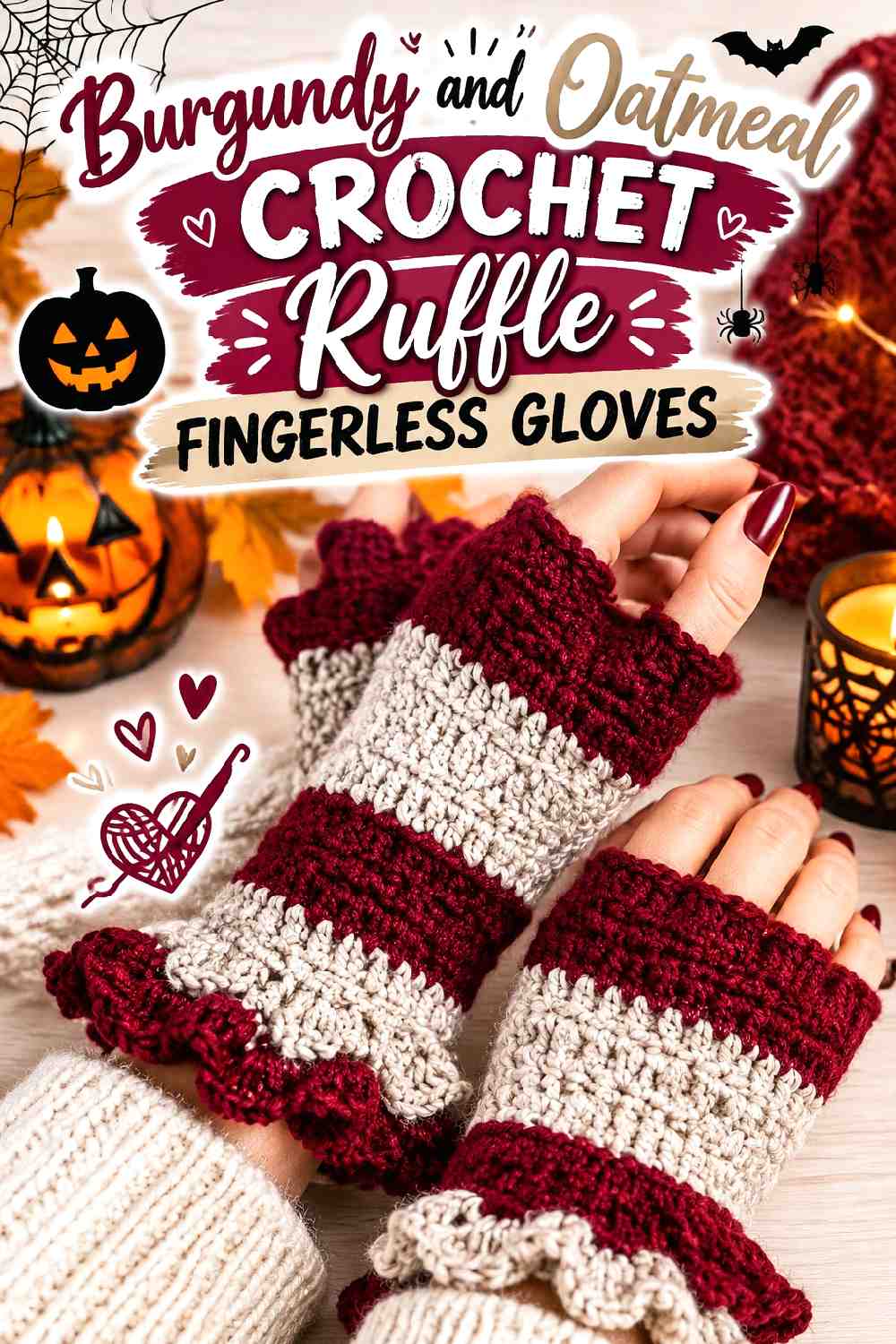
Oatmeal gives burgundy a softer neutral partner than stark white while still providing strong value contrast. On ruffle fingerless gloves, that difference is useful around shell-like, fan-shaped, or scalloped details because the light yarn can visually separate one decorative area from the next.
Keep burgundy across the hand and let oatmeal occupy either the ruffle or its finishing edge. The warmer neutral maintains the fall direction without making the gloves feel overly dark.
Use Oatmeal to Outline the Burgundy Crochet Ruffle
An oatmeal outer edge gives a burgundy ruffle a clear stopping point. This works especially well when the ruffle is layered over another burgundy section, because the pale border prevents the two dark areas from merging.
Keep the oatmeal line narrow if you want a mostly burgundy pair. A wider oatmeal ruffle shifts the design toward a more balanced two-color look.
Repeat Burgundy Around an Oatmeal Crochet Cuff
If oatmeal covers more of the cuff, repeat burgundy at the outermost ruffle edge so the main color returns before the glove meets the sleeve. This can make the palette feel more connected than ending with a large uninterrupted neutral band.
Use the same color sequence on both gloves. Small accessories make mismatched color placement more obvious because the pair is usually seen together.
Creator Credit: Hooked by Robin
5. Burgundy And Antique Gold Crochet Ruffle Fingerless Gloves
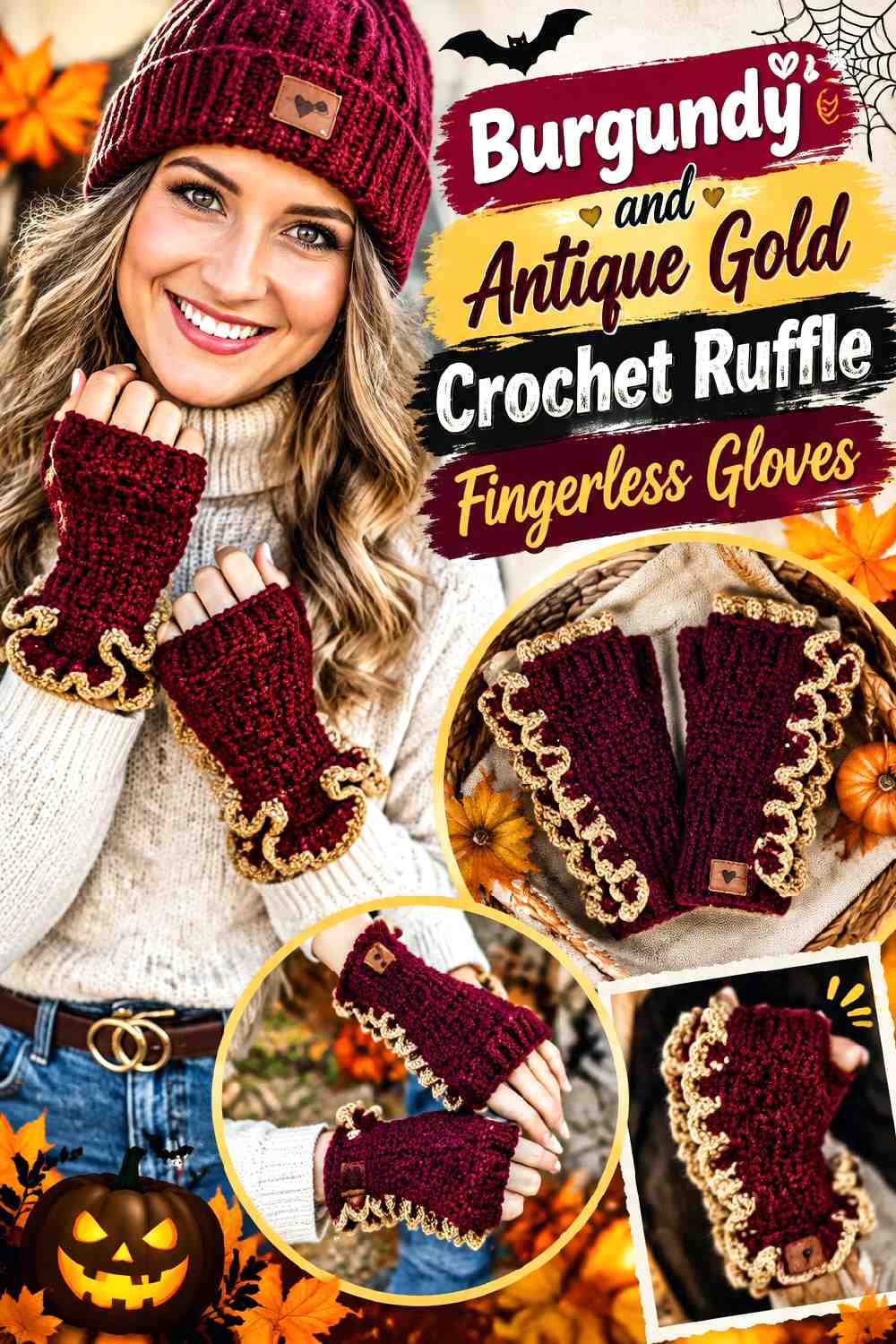
Burgundy and antique gold create a richer fall combination with more color intensity than a neutral-based palette. Burgundy should still carry most of the glove, while the gold shade works best in a controlled area such as the ruffle edge, lower cuff, or one repeated decorative band.
The goal is not to split the glove evenly. Antique gold is visually assertive beside burgundy, so a smaller amount can define the ruffle without overtaking the main color.
Keep Antique Gold Narrow Around the Burgundy Crochet Ruffle
Use antique gold where the ruffle turns outward or along the lower edge. That placement gives the warm accent a specific job: defining the decorative cuff.
If gold covers the hand, cuff, and trim in equal amounts, the palette can lose its burgundy focus. Reducing the accent area usually gives the colors a clearer hierarchy.
Let Burgundy Anchor Textured Crochet Above the Gold Ruffle
Dense cables or other raised texture can already make a fingerless glove visually busy. Keeping those areas burgundy gives the surface one consistent dark field, while antique gold remains concentrated lower on the wrist.
If your gold substitute is especially bright, use even less of it. A muted ochre or aged-gold direction keeps the contrast warm without becoming the dominant visual element.
Creator Credit: HanJan Crochet
6. Burgundy And Charcoal Crochet Ruffle Fingerless Gloves
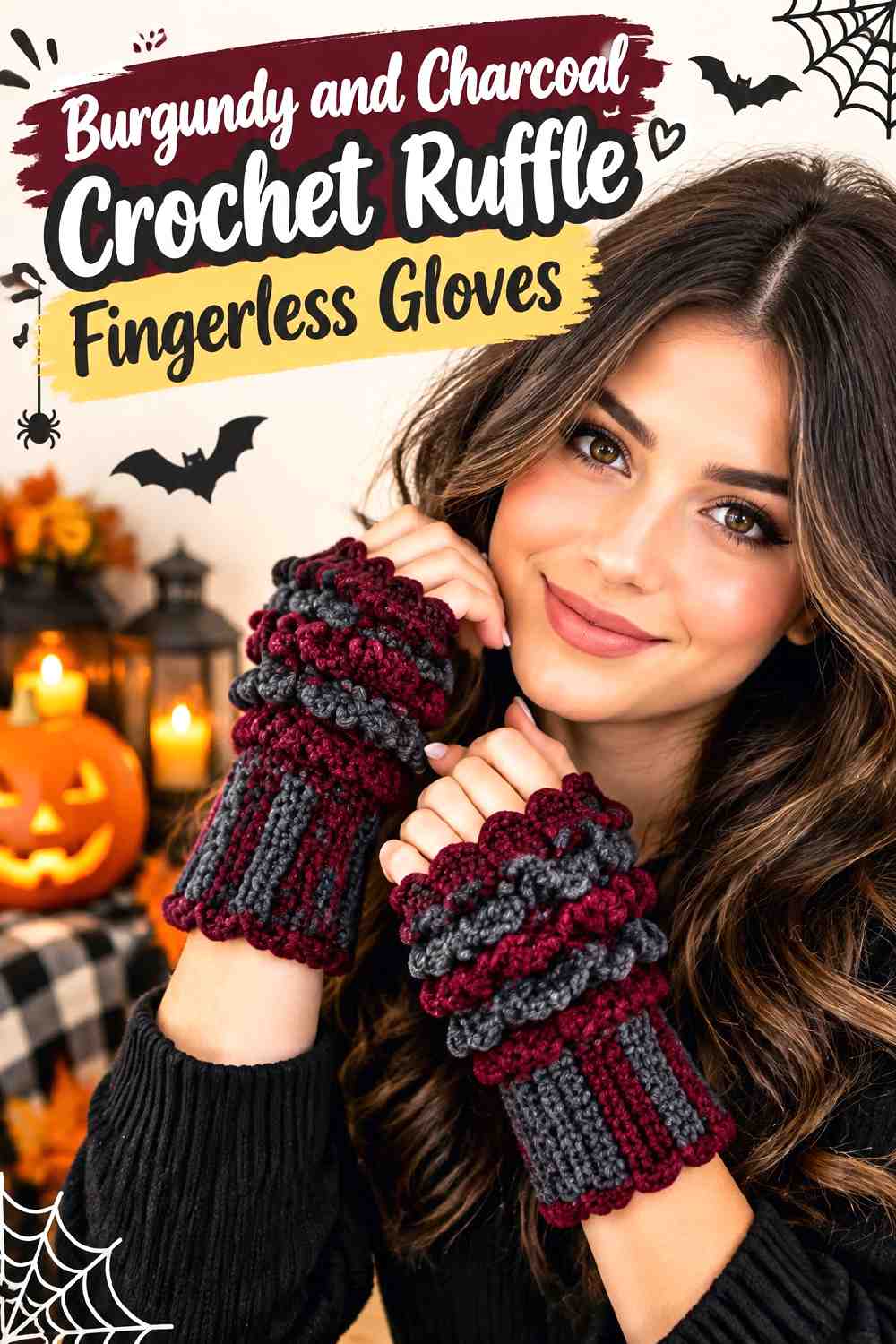
Burgundy and charcoal create a dark, understated fall palette. Because both colors carry substantial visual weight, the ruffle will not stand out through light-dark contrast as strongly as it would with cream or oatmeal.
That makes placement especially important. Let burgundy cover the hand and form the visible ruffle, then place charcoal beneath it as the cuff band. The darker neutral can act like a shadow behind the burgundy folds rather than competing for attention.
Keep Burgundy on Top of the Charcoal Crochet Ruffle Area
Burgundy should occupy the outward-facing ruffle if you want the title color to remain obvious. Charcoal works effectively underneath, where it separates the hand section from the decorative edge without adding another warm hue.
If you reverse the colors, make sure enough burgundy remains visible elsewhere on the glove so the pair does not read primarily as charcoal.
Check Burgundy and Charcoal Value Before Crocheting Both Gloves
Some burgundy yarns are almost as dark as charcoal. Place the two yarns beside each other in ordinary room light and, if helpful, compare a grayscale photo.
If the values are nearly identical, rely on a larger color block or the ruffle’s physical texture for separation. If you want clearer contrast, move the gray slightly lighter rather than adding an unrelated third color.
Creator Credit: B.Hooked Crochet
7. Burgundy And Blush Pink Crochet Ruffle Fingerless Gloves
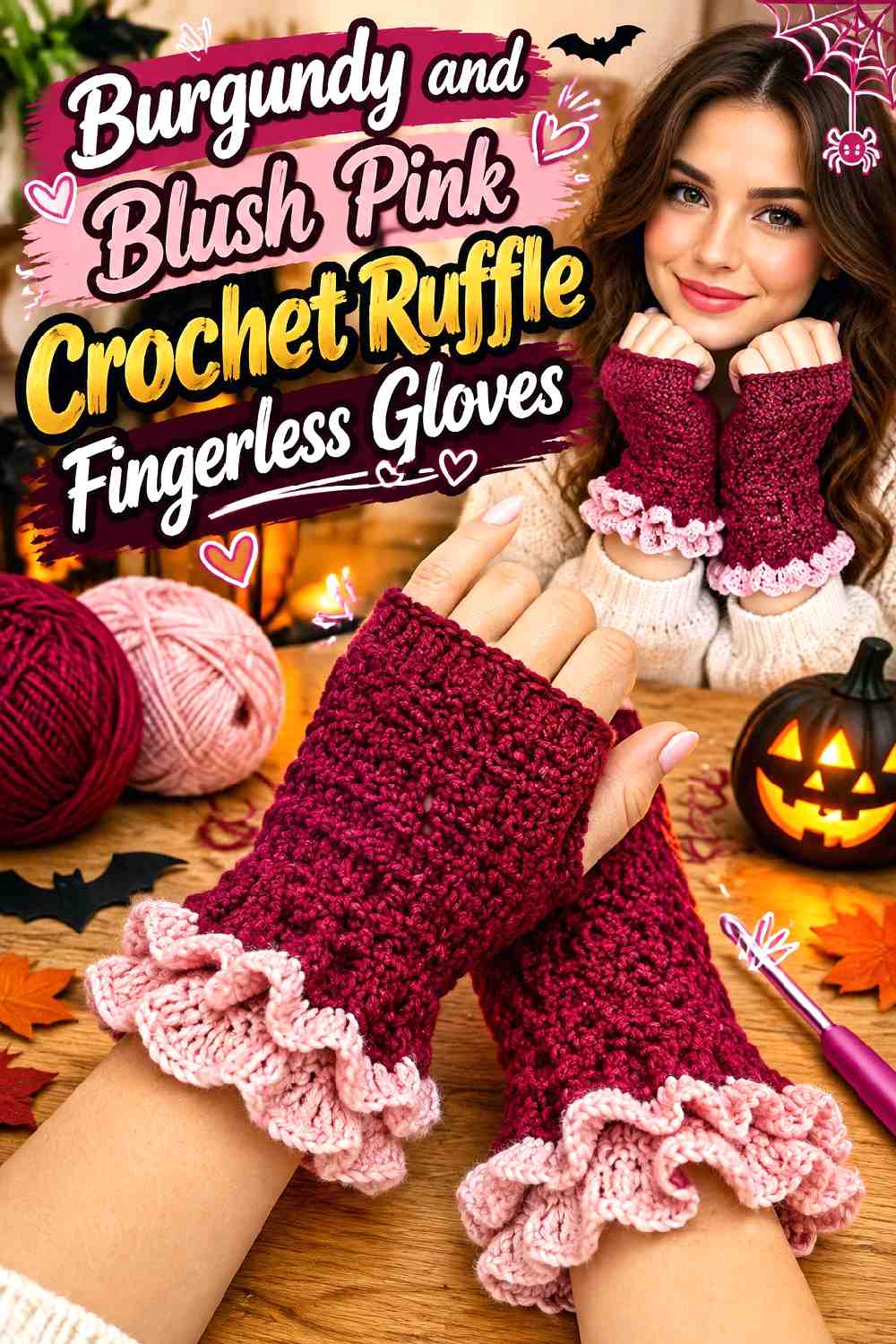
Blush pink gives burgundy one of the lightest and most delicate contrasts in this collection. It can make the ruffle immediately visible while keeping the hand portion deep and autumnal.
For a balanced pair, use burgundy across the glove body and let blush occupy the ruffle itself. The color change then coincides with a structural change, which makes the design easier to read than scattering blush randomly across several small sections.
Let Blush Pink Brighten the Burgundy Crochet Ruffle
A blush ruffle can reveal every outward curve against a burgundy hand. This is particularly useful when the ruffle is relatively narrow and might otherwise disappear into a dark monochromatic glove.
If blush feels too pale for the look you want, shift toward a muted medium pink while retaining a clear value difference from burgundy.
Keep Burgundy Strong Around the Blush Crochet Cuff
Burgundy needs enough uninterrupted area to balance a very pale accent. Keep the hand, thumb-opening area, and possibly a narrow line beneath the ruffle in burgundy.
This prevents the blush cuff from looking visually detached. The repeated burgundy boundary links the pale ruffle back to the rest of the glove.
Creator Credit: Crochet Jewel
8. Burgundy And Forest Green Crochet Ruffle Fingerless Gloves
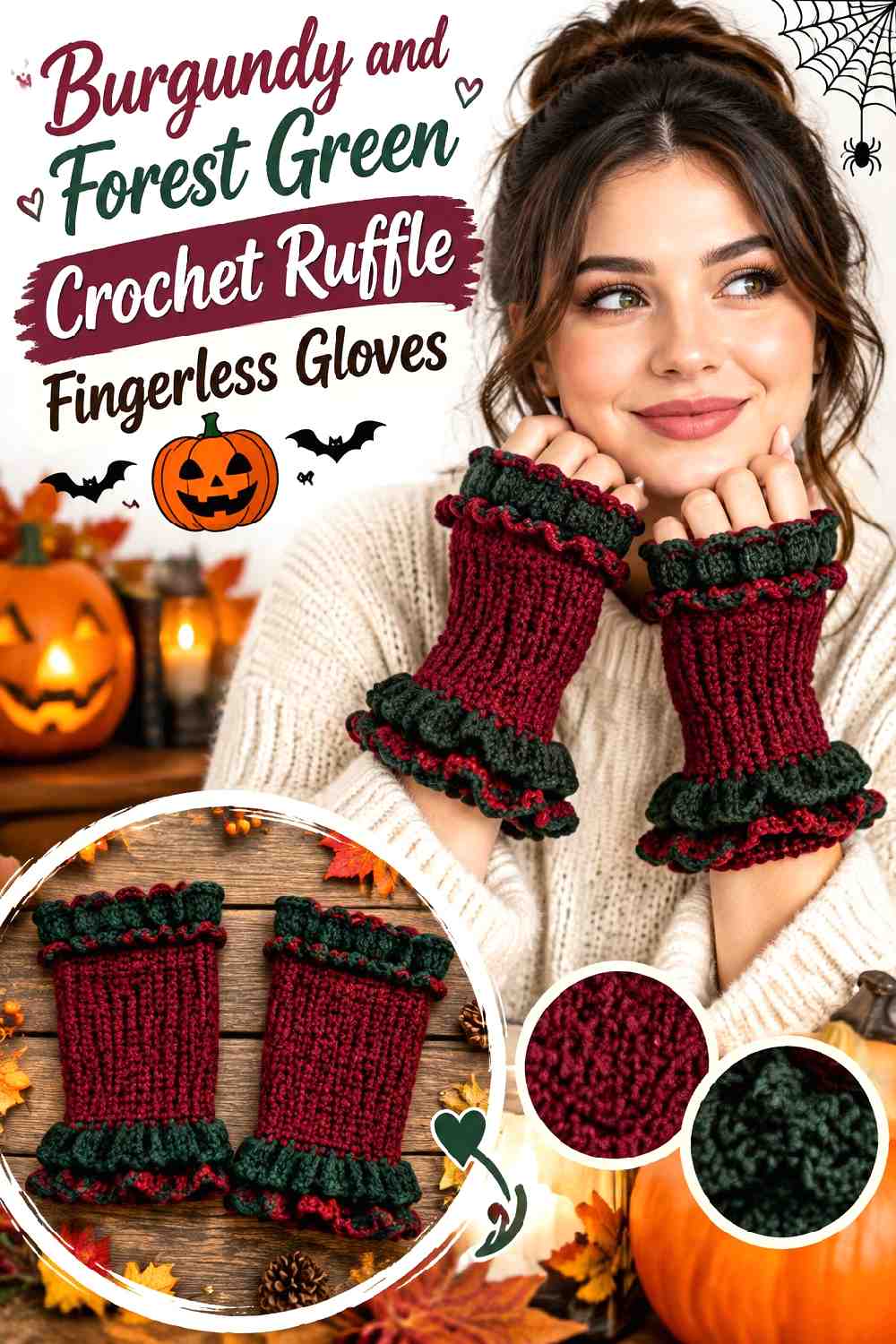
Burgundy and forest green move away from neutrals and create a two-color fall palette with substantial depth. Both shades can feel visually heavy, so give them clearly different jobs instead of alternating them throughout every section.
Burgundy can cover the hand while forest green sits in the cuff beneath a burgundy ruffle. This lets the green show around the wrist without forcing the ruffle to depend on two similarly dark colors for definition.
Let Burgundy Lead Above a Forest Green Crochet Cuff
Keep burgundy continuous across the hand so the glove does not become a checkerboard of two saturated dark shades. Forest green can form a single lower band that grounds the ruffle area.
A burgundy ruffle over that green cuff repeats the main color at the lowest edge and keeps the palette cohesive.
Avoid Equal Burgundy and Forest Green Blocks Around the Ruffle
When two deep colors appear in equal quantities, the eye may not know which area is meant to lead. On a small accessory, that competition can make the ruffled silhouette harder to appreciate.
Reduce the green area or confine it to a distinct cuff section. If you want a softer version, substitute a more muted forest or mossy green while retaining burgundy as the dominant shade.
Creator Credit: Cherilyn Q
9. Burgundy And Rust Crochet Ruffle Fingerless Gloves
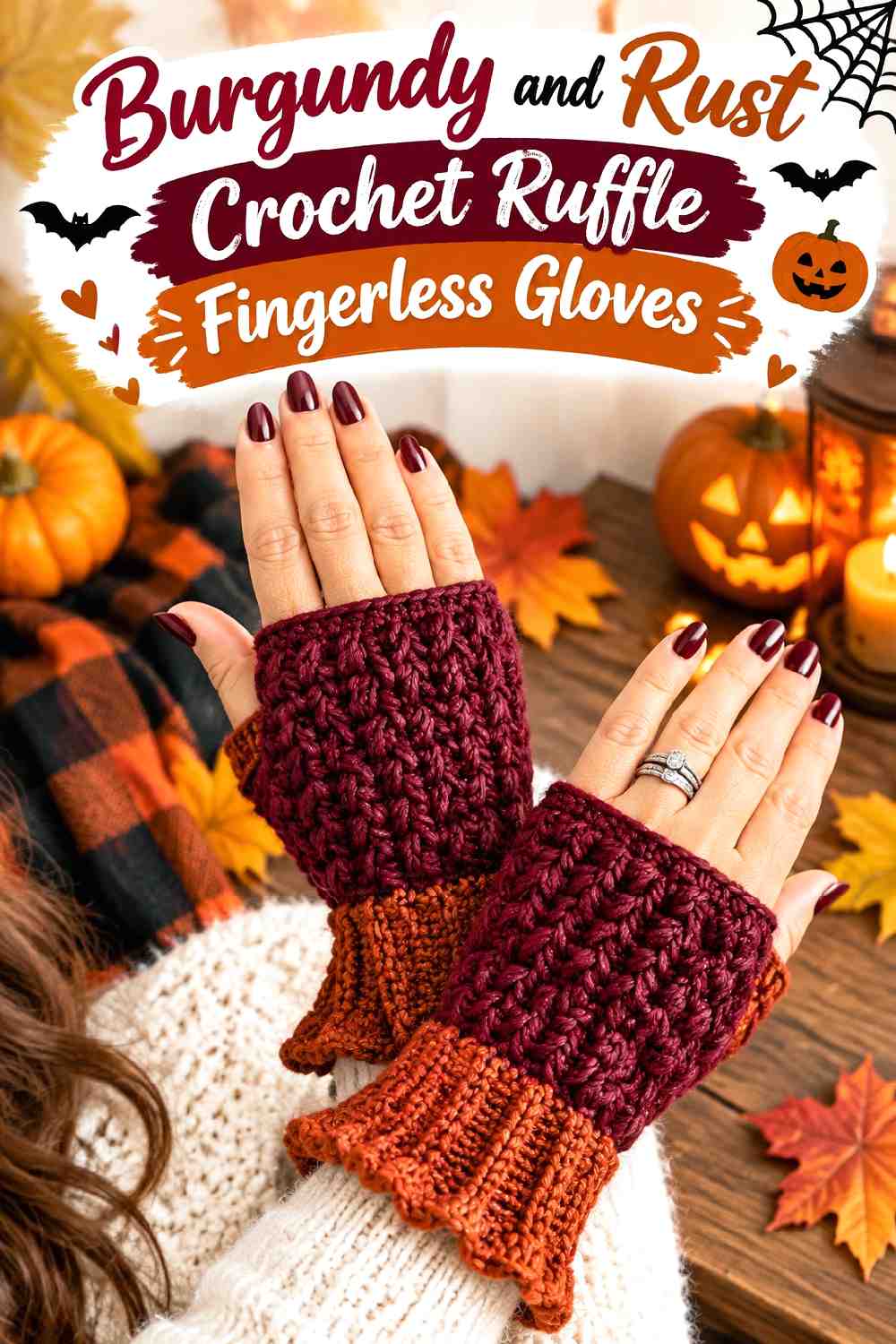
Rust sits close to burgundy in warmth, so this palette creates a blended autumn transition rather than a sharp contrast. It is a useful choice when you want the ruffle to look integrated with the glove instead of outlined like a separate trim.
Use burgundy on the hand and rust in the cuff or outer ruffle. Because both shades are warm and relatively deep, stitch texture and placement will matter more than dramatic value separation.
Use Rust to Warm the Burgundy Crochet Ruffle Without Harsh Contrast
Rust can occupy the outer ruffle while burgundy remains across the hand. The change is noticeable through hue, but the palette stays cohesive because both colors have an earthy red-orange direction.
Keep the boundary between them simple. Too many narrow burgundy-and-rust stripes can make a small ruffle look busier than necessary.
Check Burgundy and Rust From a Distance Before Finishing the Crochet Pair
Two yarns may look clearly different in the skein yet appear almost identical once worked into a dense texture. Make a small comparison or hold the finished first glove at arm’s length before repeating the color placement.
If the rust disappears into burgundy more than you want, choose a slightly lighter or more orange-brown rust rather than introducing a third accent solely for contrast.
Creator Credit: Bella Coco
10. Burgundy And Sage Crochet Ruffle Fingerless Gloves
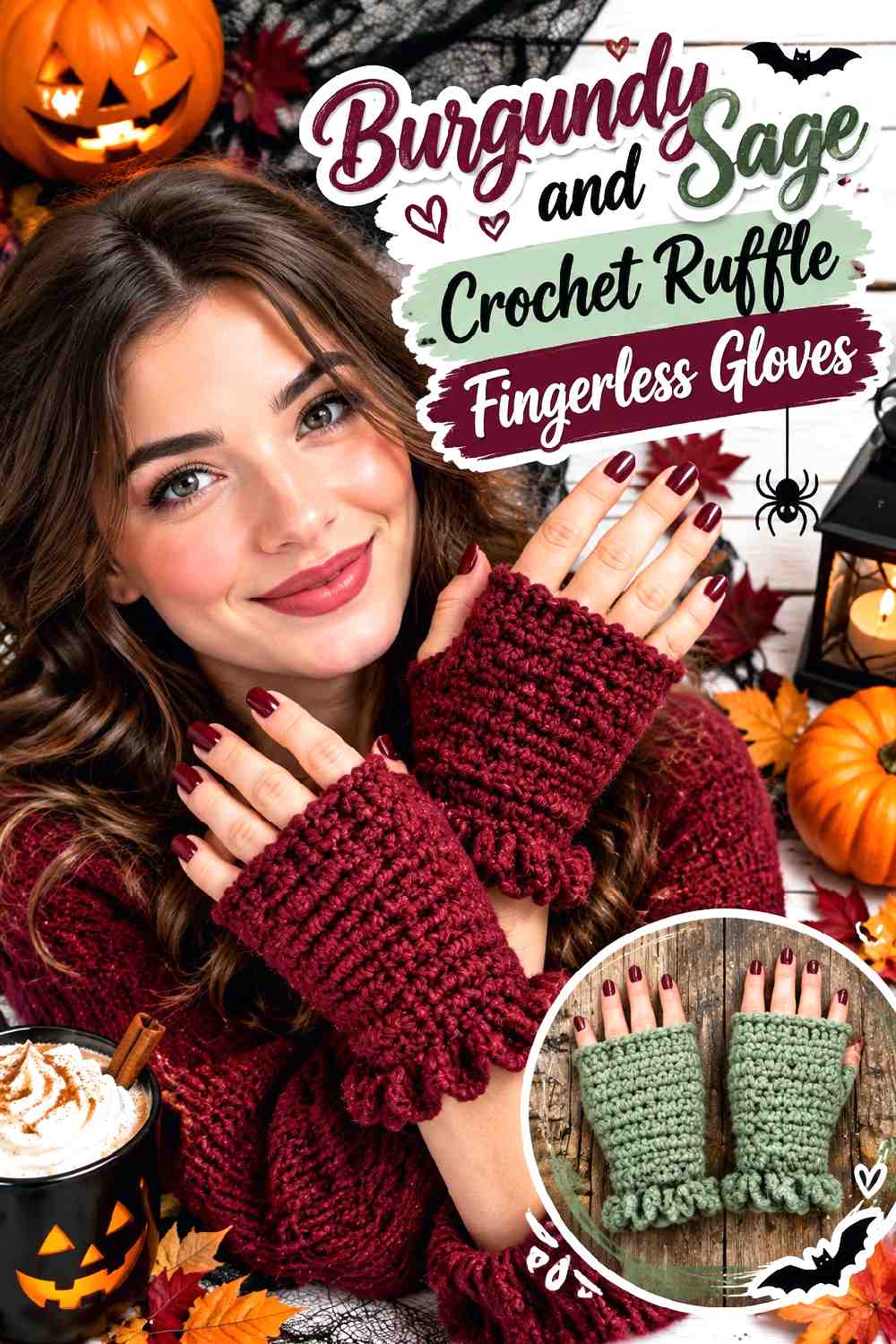
Sage brings a muted green contrast that is lighter and quieter than forest green. This makes it easier to use directly in the ruffle without creating two dark blocks around the wrist.
Burgundy can cover the hand while sage forms a soft ruffled cuff. The difference in both hue and value gives the edge clear definition, yet the muted green keeps the combination less stark than burgundy and cream.
Let Sage Lighten the Burgundy Crochet Ruffle Area
Place sage on the ruffle when you want its folds to remain visible against the burgundy hand. A softer green is particularly useful around fine scallops because it provides separation without looking extremely bright.
If your sage is very pale, keep the ruffle modest in depth so the light accent does not occupy more visual space than the burgundy body.
Repeat Burgundy at the Edge of a Sage Crochet Ruffle
A narrow burgundy finishing edge can tie a sage cuff back into the hand portion. The repetition is especially helpful when the ruffle is broad enough that the two major colors otherwise feel separated.
For substitutions, preserve the muted quality. A highly saturated green will create a much stronger and less restrained contrast with burgundy.
Creator Credit: naztazia
11. Burgundy And Chocolate Brown Crochet Ruffle Fingerless Gloves
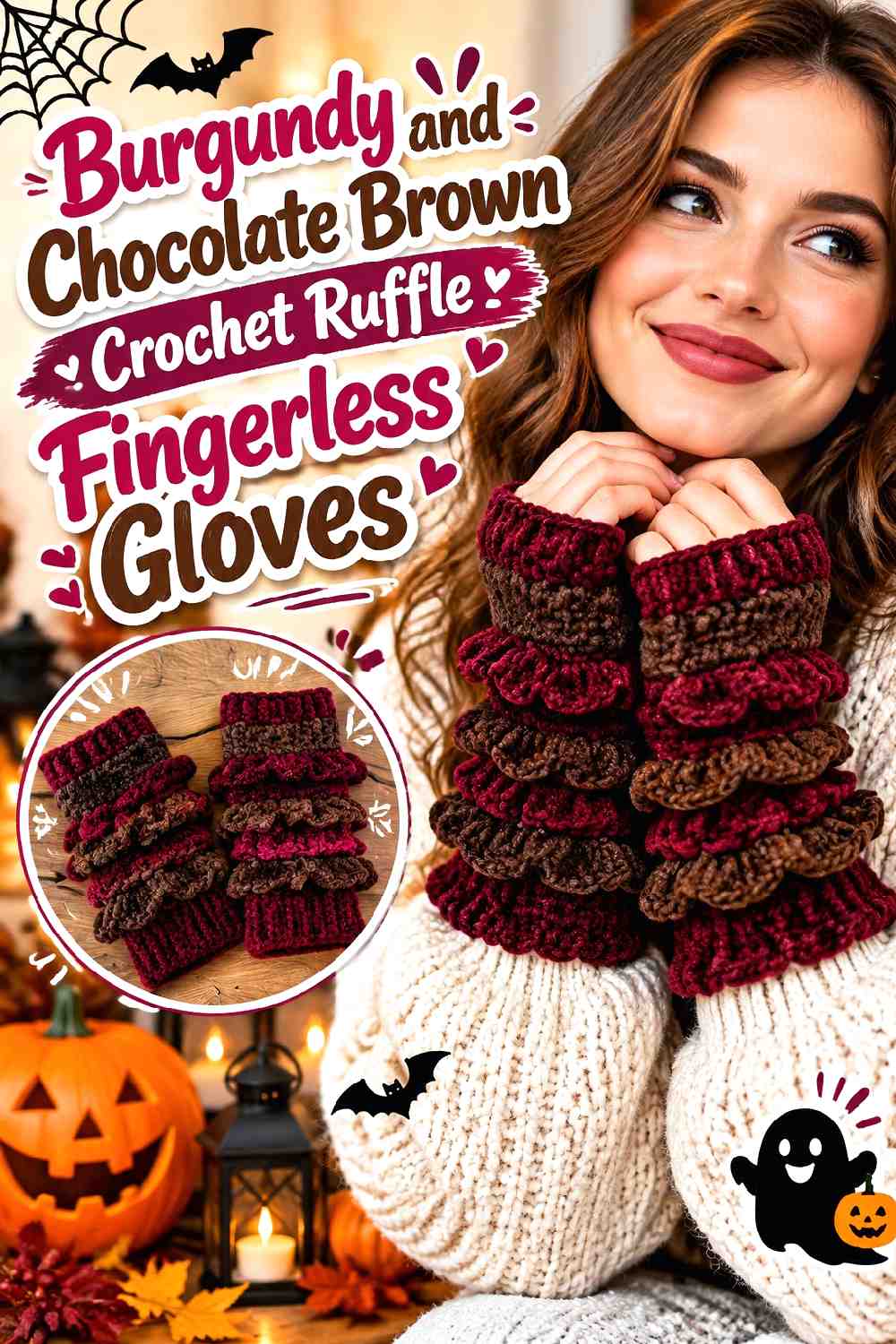
Chocolate brown and burgundy create one of the darkest earthy combinations in the list. Rather than expecting the two colors to create strong visual separation, use them to build depth around the cuff.
Burgundy can remain across the hand and ruffle, while chocolate brown creates a lower wrist band. The brown then works almost like a shadow underneath the decorative burgundy edge.
Place Chocolate Brown Beneath the Burgundy Crochet Ruffle
A chocolate cuff gives the burgundy ruffle a darker base without forcing a new light color into the palette. This approach suits a glove where you want the ruffle shape to be visible mainly through texture.
Keep enough brown exposed to read as an intentional band. A sliver that is almost completely hidden by the ruffle may not contribute much to the finished palette.
Keep Burgundy Distinct From Chocolate Brown in Crochet Texture
Some burgundy shades contain enough brown that the two yarns can merge visually. Check them together before making the full pair.
If you want slightly more separation, move the brown warmer or lighter while leaving burgundy deep. The aim is to preserve the earthy relationship rather than create high contrast.
Creator Credit: The Crochet Crowd
12. Burgundy And Copper Crochet Ruffle Fingerless Gloves
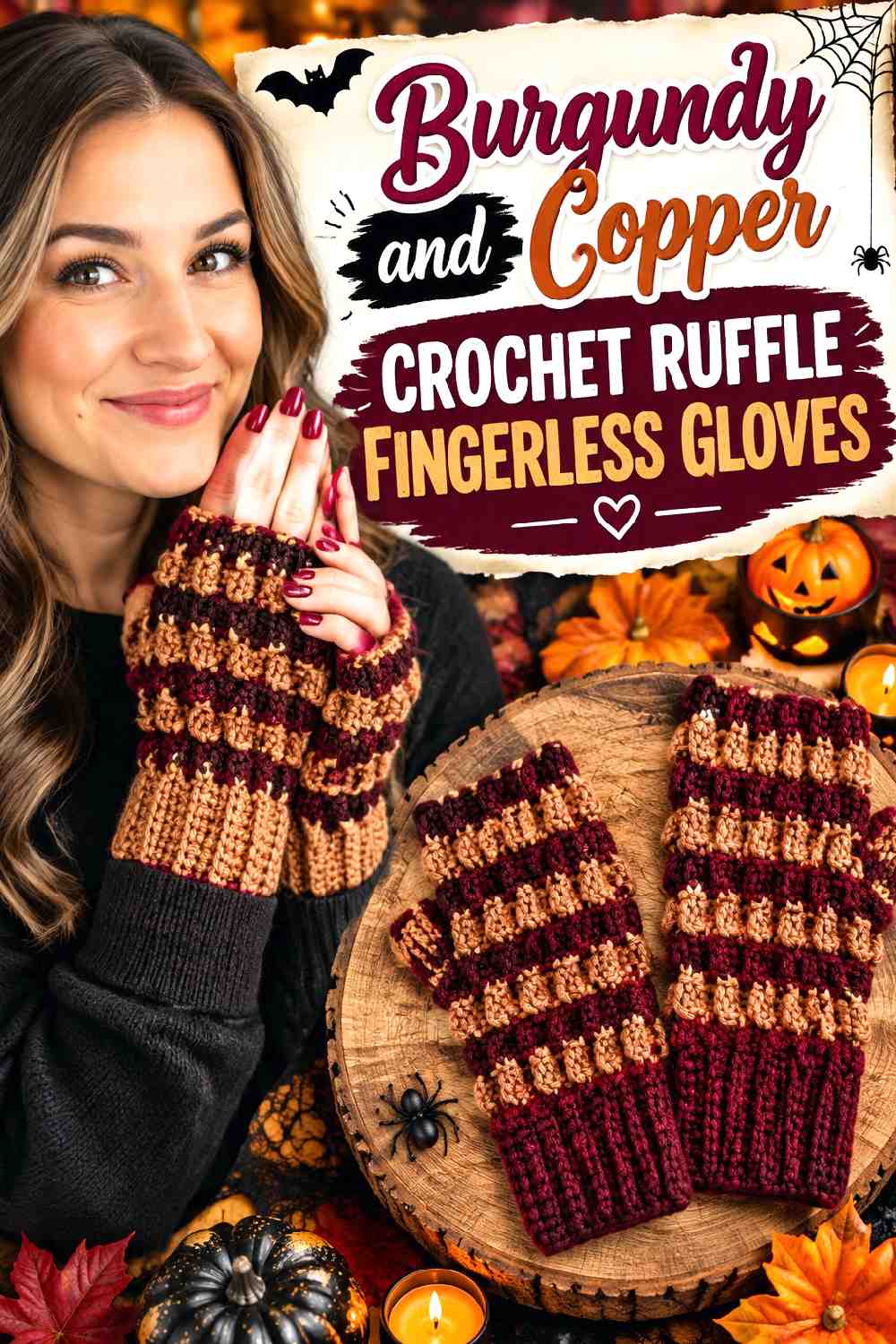
Copper introduces a warm orange-brown accent that can make burgundy feel even deeper by comparison. Because copper has more visual energy than taupe or oatmeal, it works well in smaller quantities around ruffles, joins, or narrow cuff sections.
Let burgundy dominate the glove body and reserve copper for the section where you most want movement to show.
Concentrate Copper Around the Burgundy Crochet Ruffle
A copper ruffle against burgundy produces a noticeable warm shift without using a pale neutral. Keep copper concentrated around the cuff rather than scattering isolated sections across the hand.
That restriction makes the color change look tied to the glove’s construction and helps burgundy retain most of the visual area.
Use Burgundy to Calm a Strong Copper Crochet Accent
If the copper yarn is fairly vivid, surround it with burgundy rather than widening the accent. Burgundy above the cuff and, if appropriate, along a narrow ruffle edge gives the warmer orange-brown shade a clear boundary.
When substituting copper, choose another warm medium-value brown-orange that remains lighter than your burgundy if ruffle definition is important.
Creator Credit: Blue Star Crochet | Veronika Cromwell
13. Burgundy And Mauve Crochet Ruffle Fingerless Gloves
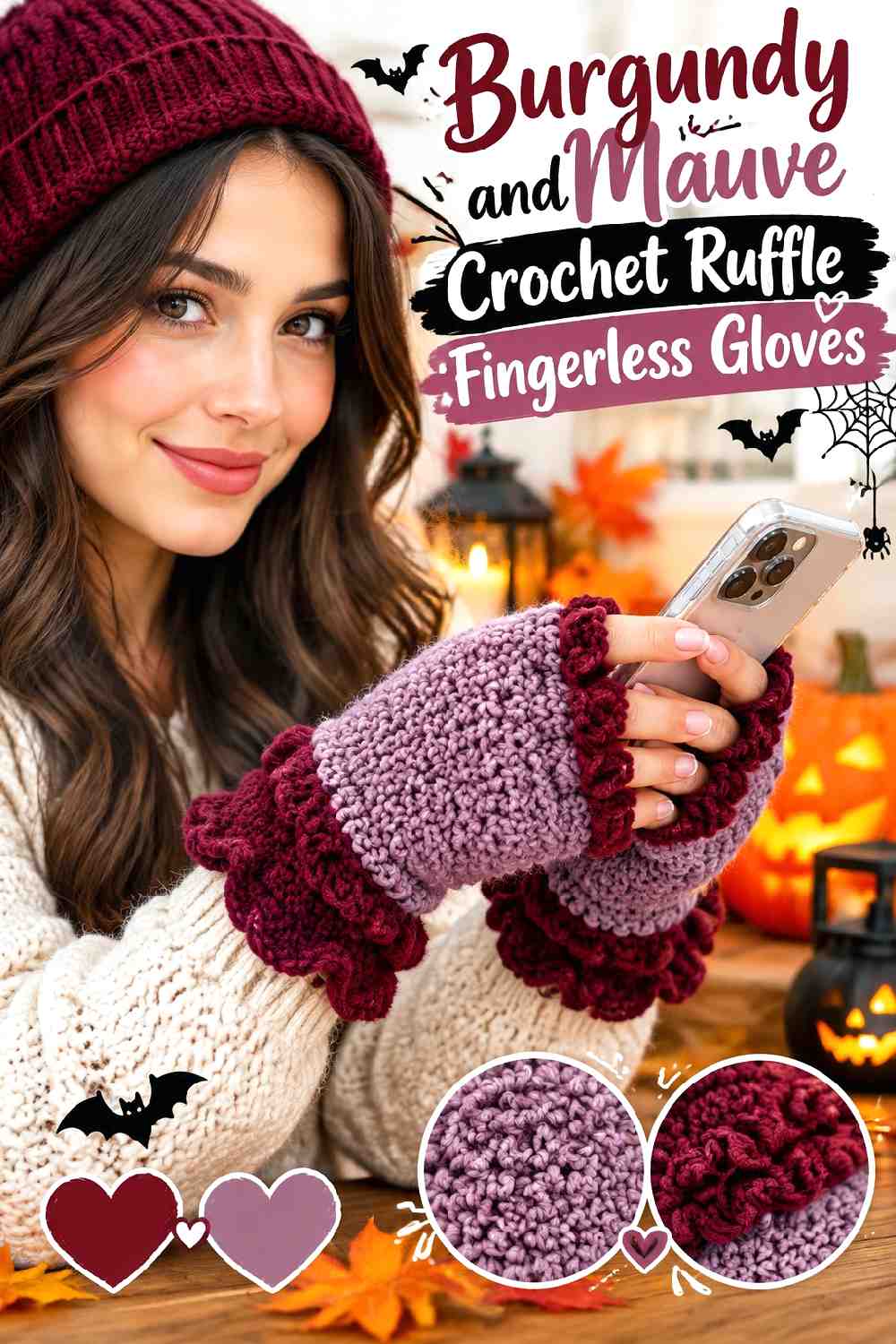
Mauve creates a cool-toned variation on the burgundy-and-pink idea. Because it carries a little more gray and purple character than blush, it can soften the transition around a burgundy glove without becoming extremely pale.
Use burgundy for the hand and mauve for the cuff ruffle. This makes the decorative edge visible while keeping the overall palette close enough to feel tonal.
Let Mauve Create a Softer Burgundy Crochet Ruffle Transition
Mauve works well when you want more separation than burgundy and plum but less contrast than burgundy and cream. Place it where the ruffle projects outward so the change in color reinforces the change in texture.
A dusty mauve is especially useful when you want the accent to remain subdued instead of candy-bright.
Keep Burgundy Darker Than Mauve Across the Crochet Gloves
The tonal effect depends on a recognizable value step. If burgundy and mauve are equally dark, the ruffle can flatten visually.
Choose a mauve that is clearly lighter or more muted than the burgundy hand. When comparing substitutes, pay more attention to that relationship than to matching an exact purple-pink hue.
Creator Credit: Fuad Azmat / YARNutopia by Nadia
14. Burgundy And Warm Gray Crochet Ruffle Fingerless Gloves
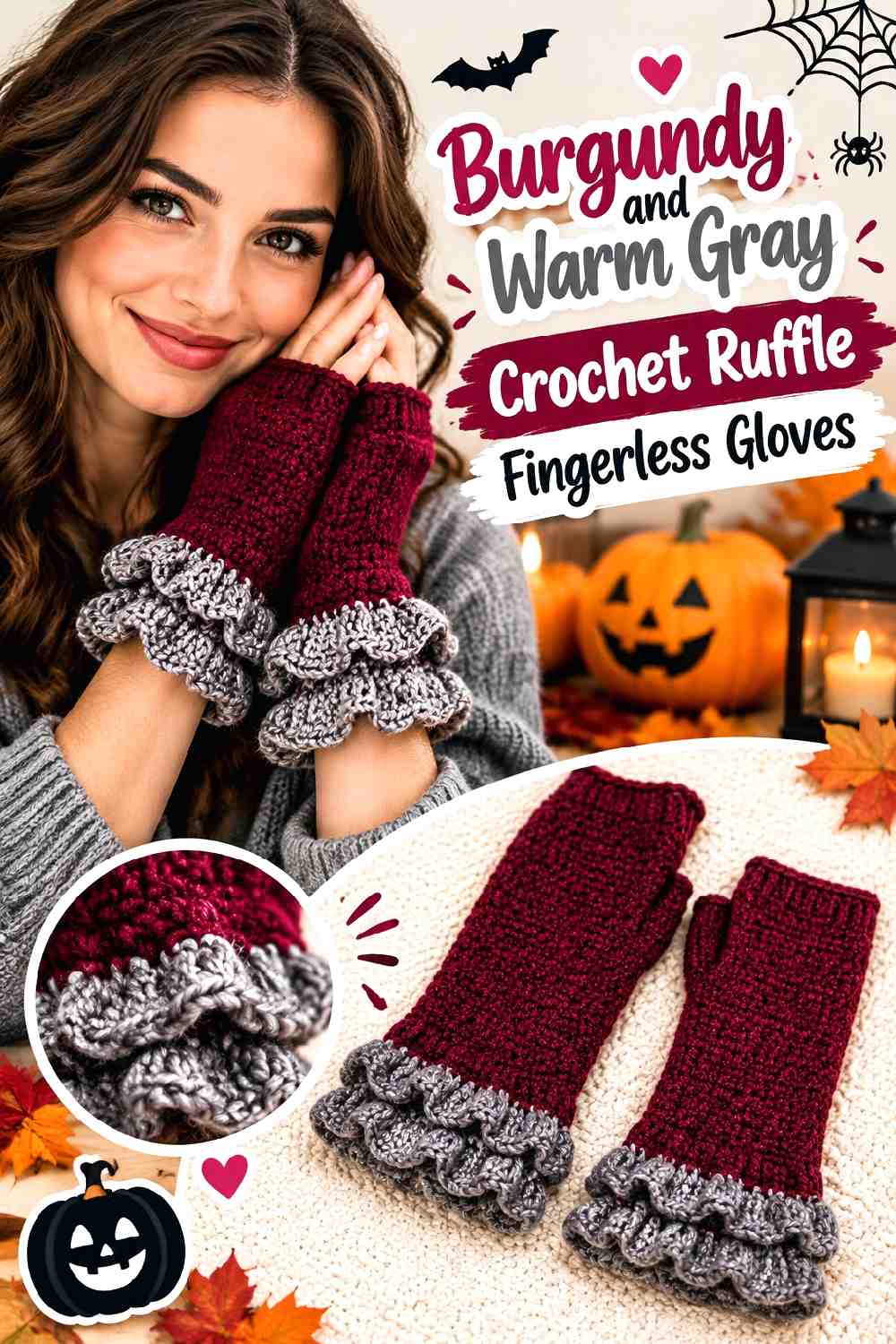
Warm gray gives burgundy a restrained neutral partner without the strong brightness of cream. It can be especially useful when the glove already has substantial texture and you want the palette to remain simple.
Keep burgundy across most of the glove and use gray below or inside the ruffle. The neutral provides a visual break at the wrist while allowing the red tone to stay dominant.
Place Warm Gray Behind the Burgundy Crochet Ruffle
A gray cuff under a burgundy ruffle lets the darker red folds remain the outward-facing feature. The gray acts as a quieter supporting area that marks the transition between glove and sleeve.
Choose a gray that is lighter than the burgundy if you want the edge to remain obvious. A very dark charcoal produces a much subtler effect.
Repeat Burgundy Around a Warm Gray Crochet Cuff
If warm gray covers a wider cuff, bring burgundy back along the outer ruffle. Repetition keeps the pair from looking like a gray wrist warmer with a separate burgundy hand attached.
This placement is also useful when coordinating the gloves with neutral outerwear because the gray is present without taking over the accessory.
Creator Credit: rajiscraft hobby
15. Burgundy And Black Crochet Ruffle Fingerless Gloves
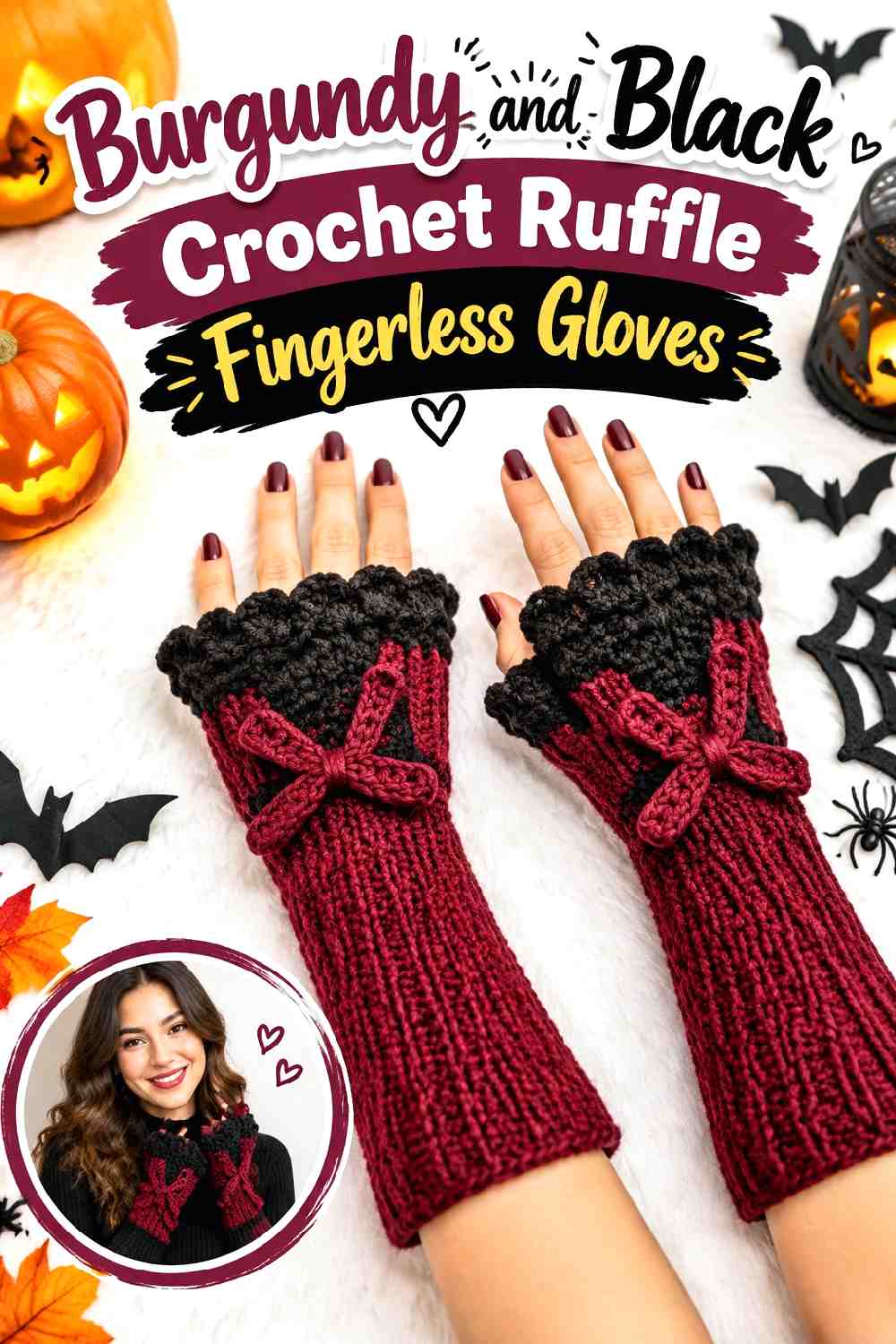
Burgundy and black create the most dramatic dark palette in the collection. Because black can visually overpower other deep shades, use it strategically rather than splitting the gloves into equal sections.
A burgundy hand and burgundy ruffle with a narrow black cuff or outline keeps the wine-red color recognizable. Black then functions as definition rather than a second dominant shade.
Keep Black Narrow Around the Burgundy Crochet Ruffle
Use black as a lower cuff, slim boundary, or finishing detail around the burgundy ruffle. The narrow dark line can make the edge look more deliberate without swallowing the burgundy folds.
If the black section becomes too wide, the eye may read the gloves as primarily black. Reduce it when burgundy needs to remain the central color.
Protect Burgundy Texture From a Heavy Black Crochet Block
Avoid placing a broad black section directly over an area where you want burgundy stitch texture to remain the focus. Let burgundy carry the decorative surface and use black where clean framing matters more than texture.
For a softer variation, replace pure black with a near-black charcoal while keeping the same supporting role.
Creator Credit: The Crochet Channel
16. Burgundy And Plum Crochet Ruffle Fingerless Gloves
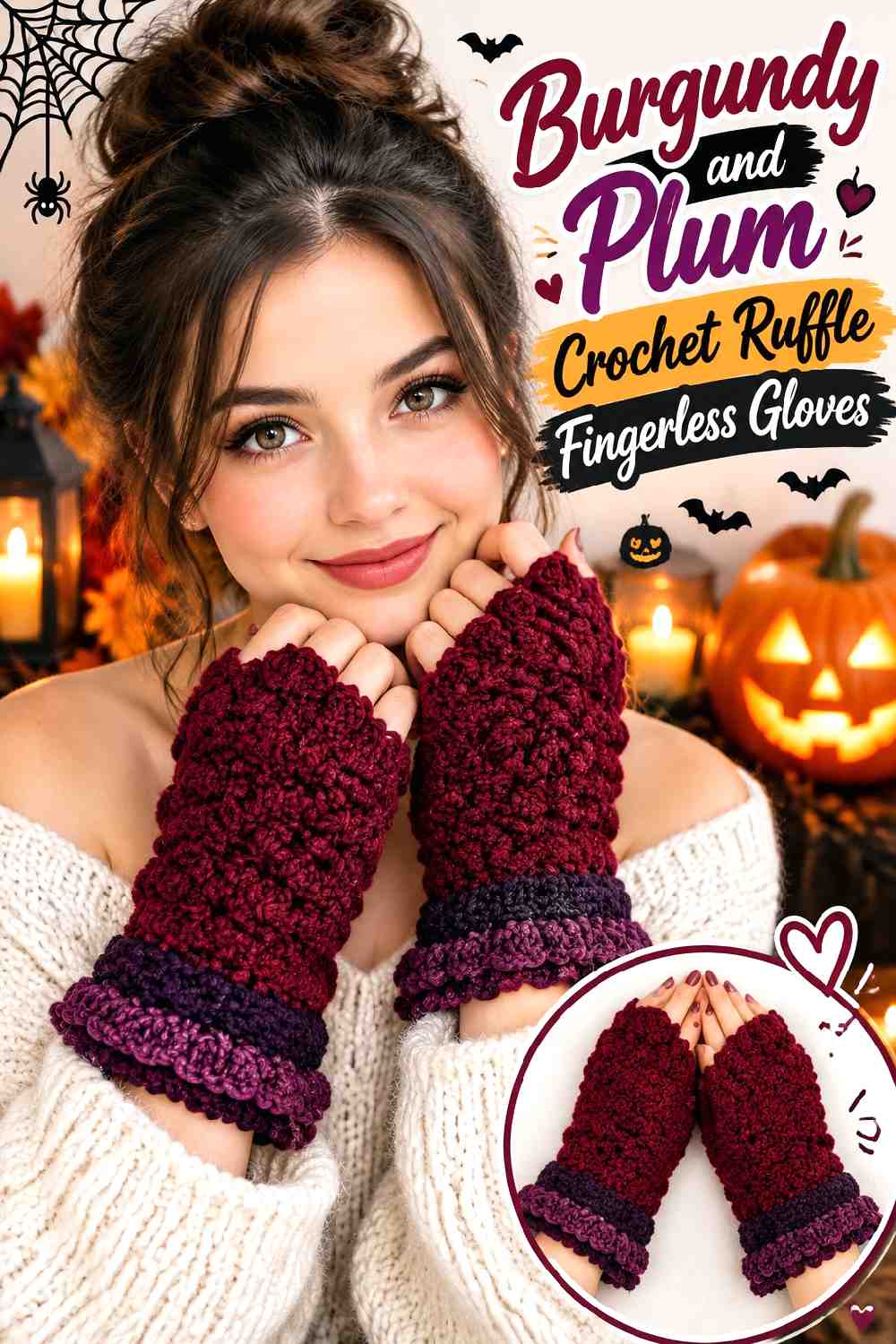
Plum and burgundy make a deep tonal palette with very little dependence on neutral contrast. Burgundy leans toward red while plum introduces a purple direction, giving the ruffle color variation without making it dramatically lighter.
This idea works best when you want the ruffle to reveal itself through shape first and color second. Keep burgundy dominant and let plum sit in the lower cuff or one visible ruffle layer.
Layer Plum Under the Burgundy Crochet Ruffle
A plum band underneath a burgundy ruffle creates depth while preserving the warm red outer edge. The two shades should remain different enough that the cuff does not look accidentally mismatched.
If they are extremely similar, increase the visible width of the plum section instead of adding more colors.
Use Burgundy Repetition to Control a Tonal Plum Crochet Cuff
Repeat burgundy at both the hand and the ruffle edge so plum stays enclosed within the larger palette. This gives the secondary shade a clear supporting role.
For substitutions, choose a plum that leans visibly more purple than burgundy. The hue shift can provide separation even when the two shades have similar darkness.
Creator Credit: Crochet Lessons
17. Burgundy And Taupe Crochet Ruffle Fingerless Gloves
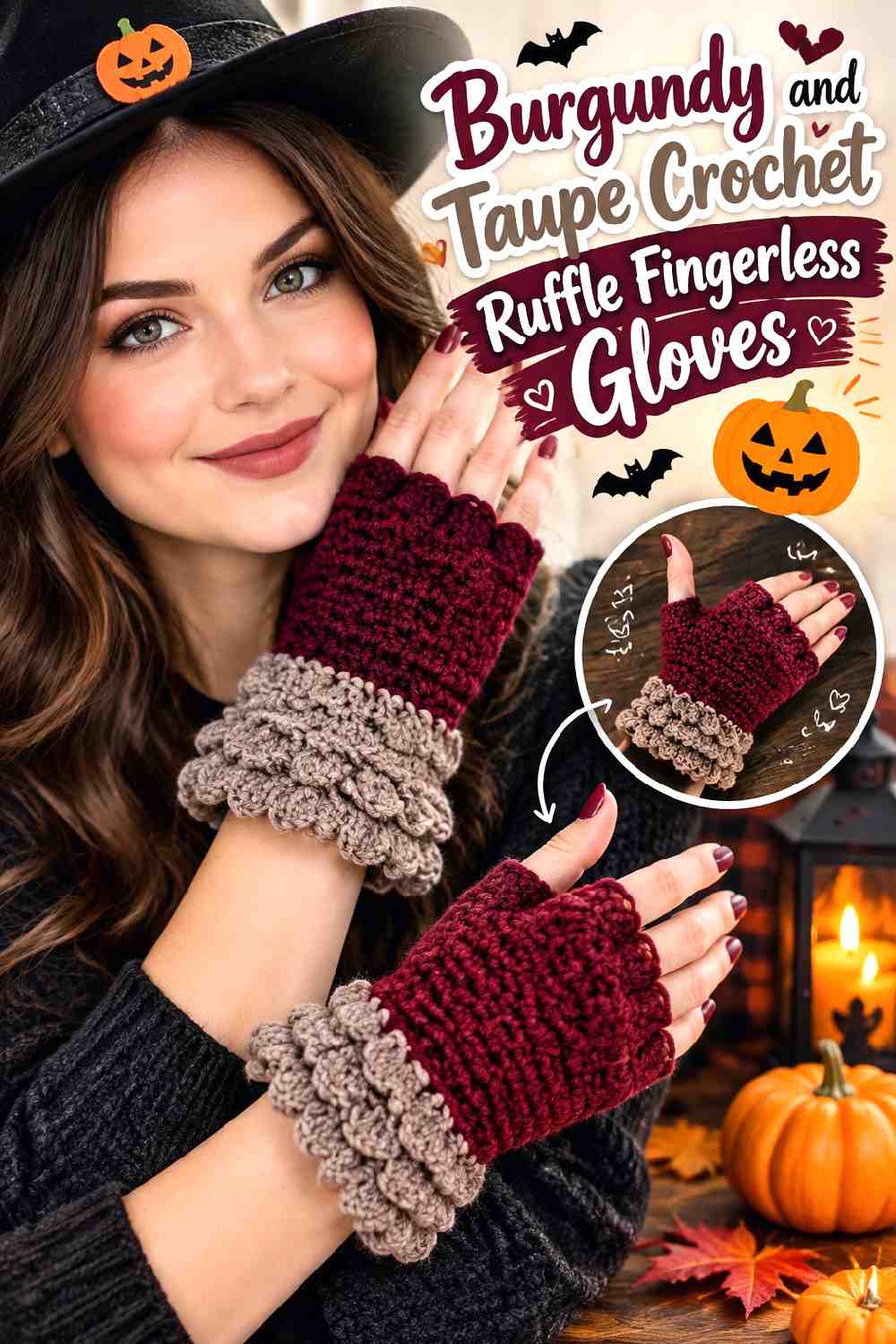
Taupe sits between gray and brown, making it a flexible neutral partner for burgundy. It provides more contrast than chocolate brown but feels less bright than oatmeal or cream.
On ruffle fingerless gloves, taupe is particularly useful as a cuff base. Burgundy can cover the hand and form the visible ruffle, while taupe shows underneath as a softer transition to fall coats and sweaters.
Let Taupe Support the Burgundy Crochet Ruffle
Use taupe in the wrist band and keep the outward-facing ruffle burgundy. The neutral then adds separation without taking the main color away from the decorative edge.
If you want more taupe, extend the cuff rather than adding random neutral stripes across the hand. Concentrated placement usually looks more intentional on a small accessory.
Keep Burgundy Darker Than the Taupe Crochet Cuff
Choose a taupe that is visibly lighter than burgundy if you want the ruffle boundary to show clearly. Deep mushroom brown can work too, but the result will be more blended.
When substituting the neutral, preserve its medium, muted character. A very pale beige moves the palette closer to the higher-contrast cream and oatmeal ideas.
Creator Credit: bobwilson123
Which Burgundy Ruffle Palette Gives the Clearest Fall Look?
If ruffle definition is the priority, burgundy with cream, oatmeal, blush pink, sage, or a lighter taupe gives the cuff the clearest light-dark separation. These combinations are helpful when the ruffle is narrow or when the glove surface already contains detailed crochet texture.
For a more blended effect, burgundy with dusty rose, rust, mauve, or camel keeps the palette warm and layered without making the cuff look sharply outlined. Burgundy with plum, chocolate brown, charcoal, forest green, or black creates the darkest direction; in those combinations, color placement and physical ruffle texture become more important because value contrast is lower.
Antique gold and copper sit between those groups. They create stronger hue contrast without becoming pale accents, so they are useful when you want the cuff to stand out through warmth rather than brightness.
Conclusion
Burgundy works especially well on ruffle fingerless gloves because it can carry most of the hand while leaving the cuff open for a second color strategy. Cream, oatmeal, blush, and sage emphasize the edge clearly. Dusty rose, mauve, rust, and camel create softer transitions. Chocolate, plum, charcoal, forest green, and black produce darker fall palettes where texture does more of the separating work.
Before making both gloves, decide what the second color is supposed to accomplish. It can outline the ruffle, form the cuff underneath it, repeat along a narrow trim, or simply introduce a subtle tonal shift. Giving that color one clear job produces a more controlled pair than distributing every shade evenly.
Use the credited tutorials for their underlying glove and wrist-warmer construction concepts, and treat the burgundy color placements and ruffle treatments here as adaptation ideas rather than creator-specific color instructions.
Frequently Asked Questions
How can I make a Burgundy crochet ruffle stand out more clearly?
Place a noticeably lighter shade such as cream, oatmeal, blush, sage, or taupe immediately beside the burgundy ruffle. The light-dark difference can make the folds easier to see. If you prefer a dark palette, use a clearly defined color block beneath the ruffle and rely more on the ruffle’s physical texture for separation.
What fall colors work well with Burgundy crochet fingerless gloves?
Warm neutrals such as camel, oatmeal, taupe, and chocolate keep the palette earthy. Dusty rose, mauve, and plum create tonal variations, while rust, copper, antique gold, sage, and forest green introduce stronger seasonal color shifts. The most useful choice depends on whether you want high contrast or a blended effect.
Should Burgundy be the dominant color on crochet ruffle fingerless gloves?
It is a practical choice when burgundy is the theme of the pair. Keeping it across the hand gives the gloves a clear main color while allowing the ruffle or cuff to carry a supporting accent. Burgundy does not have to cover every section, but the pair should contain enough of it that the accent color does not become visually dominant by accident.
Can Burgundy and another dark color work on a crochet ruffle?
Yes, but check their values carefully. Burgundy with black, charcoal, chocolate, forest green, or plum can create a rich dark palette, yet the colors may merge from a distance. Use clear color blocks or let the ruffle’s texture provide the separation when the shades are similar in darkness.
How do I check whether Burgundy has enough contrast with another yarn color?
Place the yarns side by side in the lighting where you normally crochet, then look at them from farther away. A grayscale photo can also help you judge light-dark value independently of hue. If two different colors become almost the same gray, expect a softer visual boundary between them.
How can I make the Burgundy color placement match on both crochet gloves?
Decide your color-change locations before beginning the second glove and repeat the same visual sequence. For example, keep burgundy across both hand sections, place the supporting shade in both cuffs, and return to burgundy at both ruffle edges. Matching the distribution matters more than making every small stitch look perfectly identical.
What should I preserve when replacing one of these Burgundy accent colors?
Preserve the color’s role. If cream was included to provide light contrast, replace it with another light neutral rather than a dark brown. If plum was intended as a tonal partner, choose another deep purple-red rather than a bright pastel. Matching lightness, warmth, and visual intensity often matters more than finding an exact named shade.