A crochet skinny scarf can be anything from a very long, narrow strip that wraps several times to a compact tapered neckerchief worn with a simple front tie. The proportions may be small, but construction choices still change how the finished scarf hangs, knots, layers, and feels around the neck.
These 20 crochet skinny scarf ideas cover straight silhouettes, pointed ends, open mesh, lace, Tunisian texture, stripes, fringe, keyholes, and mini-scarf shaping. Rather than treating every narrow scarf as interchangeable, this collection highlights what is worth checking before you choose a tutorial: fabric drape, edge behavior, yarn bulk, shaping, decorative details, and how the scarf is intended to be worn.
Quick List
- Crochet Long-Line Skinny Scarf
- Crochet Scarf-and-Belt Skinny Tie
- Crochet Filet Mesh Skinny Scarf
- Crochet Pointed Ribbed Skinny Scarf
- Crochet Tapered Mini Skinny Scarf
- Crochet Tunisian Purl Skinny Scarf
- Crochet Color-Shift Skinny Scarf
- Crochet Bordered Mini Skinny Scarf
- Crochet Soft Layering Skinny Scarf
- Crochet Summer Lace Skinny Scarf
- Crochet Woven-Fan Skinny Scarf
- Crochet Y2K Striped Skinny Scarf
- Crochet Chunkier-Texture Skinny Scarf
- Crochet Moss-Stitch Skinny Scarf
- Crochet Triangle-Profile Skinny Scarf
- Crochet Long-Fringe Lace Scarflette
- Crochet Textured Mini Neckerchief
- Crochet Pull-Through Keyhole Skinny Scarf
- Crochet Minimal Unisex Skinny Scarf
- Crochet One-Ball Single-Crochet Skinny Scarf
Decide on the Skinny Scarf Proportion Before the Stitch Pattern
“Skinny” does not describe one fixed size. A long narrow scarf needs enough flexibility to wrap or knot without creating a stiff rope around the neck, while a short mini scarf depends more on shaping because its pointed ends often become the ties. A keyhole scarf works differently again because it can stay relatively compact without relying on a knot.
Before choosing a tutorial, decide how you expect the scarf to sit. For a loose drape, prioritize length and fabric movement. For a small neckerchief, examine the center width and how gradually the ends taper. If the design is also intended as a belt or hair accessory, check that its width, stretch, and finishing make sense for those uses rather than assuming every narrow scarf will convert equally well.
Yarn, Drape, and Edge Behavior Matter More on a Narrow Scarf
A skinny scarf puts the edges on display. If the fabric curls, flares, becomes overly stiff, or changes width unintentionally, there is less surrounding fabric to disguise the problem. Smooth, flexible fabric usually knots more comfortably, while very bulky or rigid fabric can make even a narrow strip feel substantial.
Changing yarn can also change the character of a tutorial. Open mesh may lose its delicate appearance in a thick yarn, while a small textured stitch may become difficult to see in fuzzy fibers. If substituting materials, make a small sample and assess the fabric rather than matching the creator’s hook size automatically. Pay particular attention to turning edges and tapered sections; uneven tension tends to be more noticeable when the entire scarf is only a few stitches or motifs wide.
Think About How the Ends Will Be Used
The ends of a skinny scarf often do more work than the center. Long rectangular versions may need clean ends for hanging straight, pointed mini scarves need tips that tie comfortably, and fringed designs need enough visual balance that the fringe does not overwhelm the narrow body.
A decorative edge can also change the apparent width. Fans, ruffles, fringe, or a border may turn a minimalist strip into a statement accessory, while a simple finish keeps attention on color or texture. Before adding an optional embellishment, drape the unfinished scarf around the neck. That quick checkpoint helps you decide whether it needs more visual weight or whether the narrow silhouette already looks complete.
Crochet Long Line Skinny Scarf
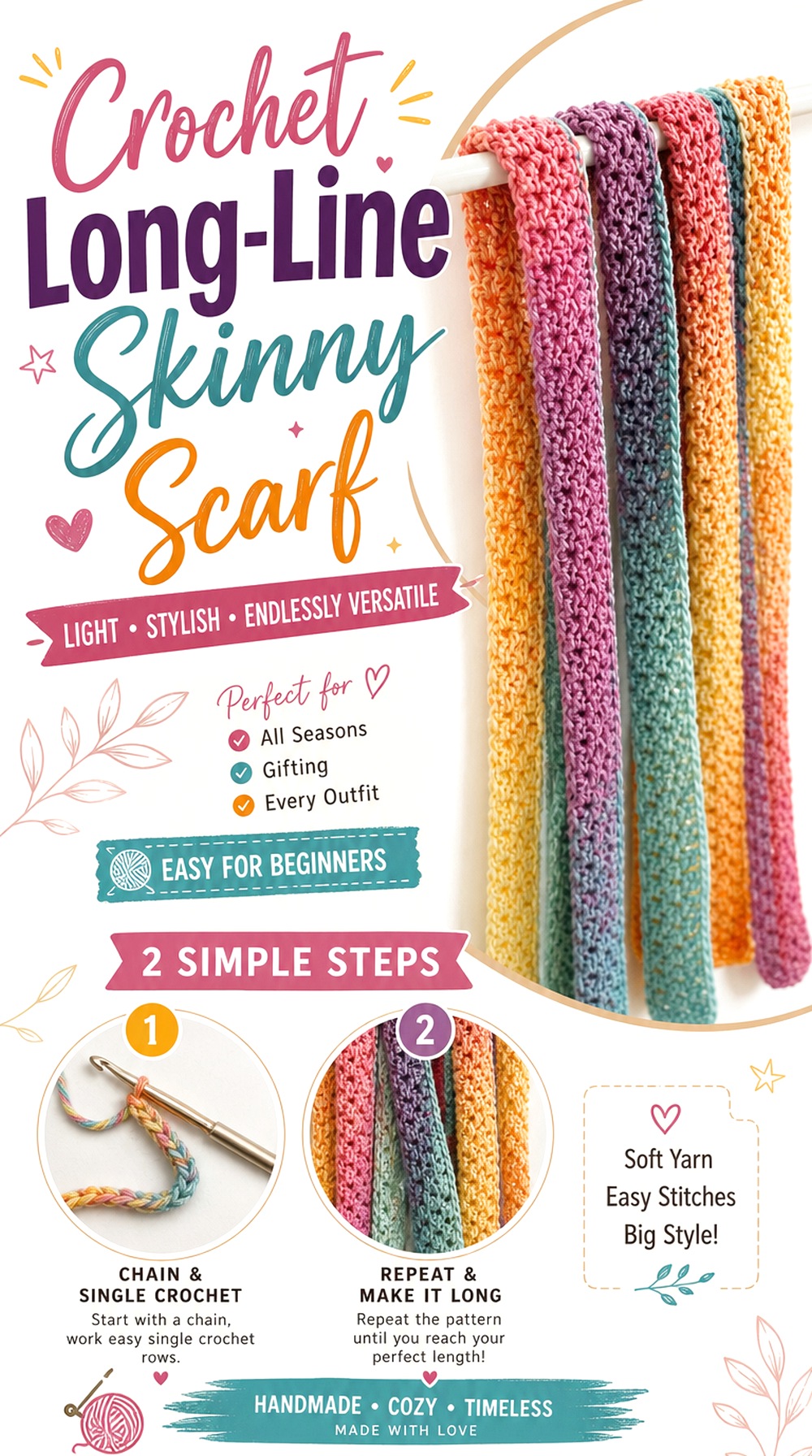
This long-line crochet skinny scarf emphasizes the classic narrow silhouette: plenty of length with very little visual bulk across the neck. It is a useful direction when you want a scarf that can hang vertically, wrap, or form a small knot without looking like a conventional winter scarf.
Because so much of the design depends on proportion, look closely at the finished fabric before changing materials. A narrow scarf made in a more rigid yarn can behave more like a strap, while softer fabric will fall closer to the body. This option stands apart from the shorter mini scarves later in the list because length, rather than dramatic shaping, creates most of its styling flexibility.
Extra Length Changes How the Scarf Can Be Styled
A long skinny scarf can be worn with both ends hanging, wrapped once, or tied closer to the neck, but each styling method consumes length differently. Decide which look matters most before shortening the project. If you substitute yarn, periodically drape the work instead of judging the finished length only while it lies flat.
Keep the Narrow Body From Becoming Too Rigid
The smaller the width, the more important side-to-side flexibility becomes. If your fabric feels board-like in a sample, consider whether a different hook-and-yarn combination would create the movement you want. The goal is not necessarily loose crochet; it is a fabric that bends and knots comfortably without losing the intended skinny profile.
Original Tutorial and Creator Credit
Creator: Krampolinka Crochet Designer and Free Patterns
Crochet Scarf and Belt Skinny Tie
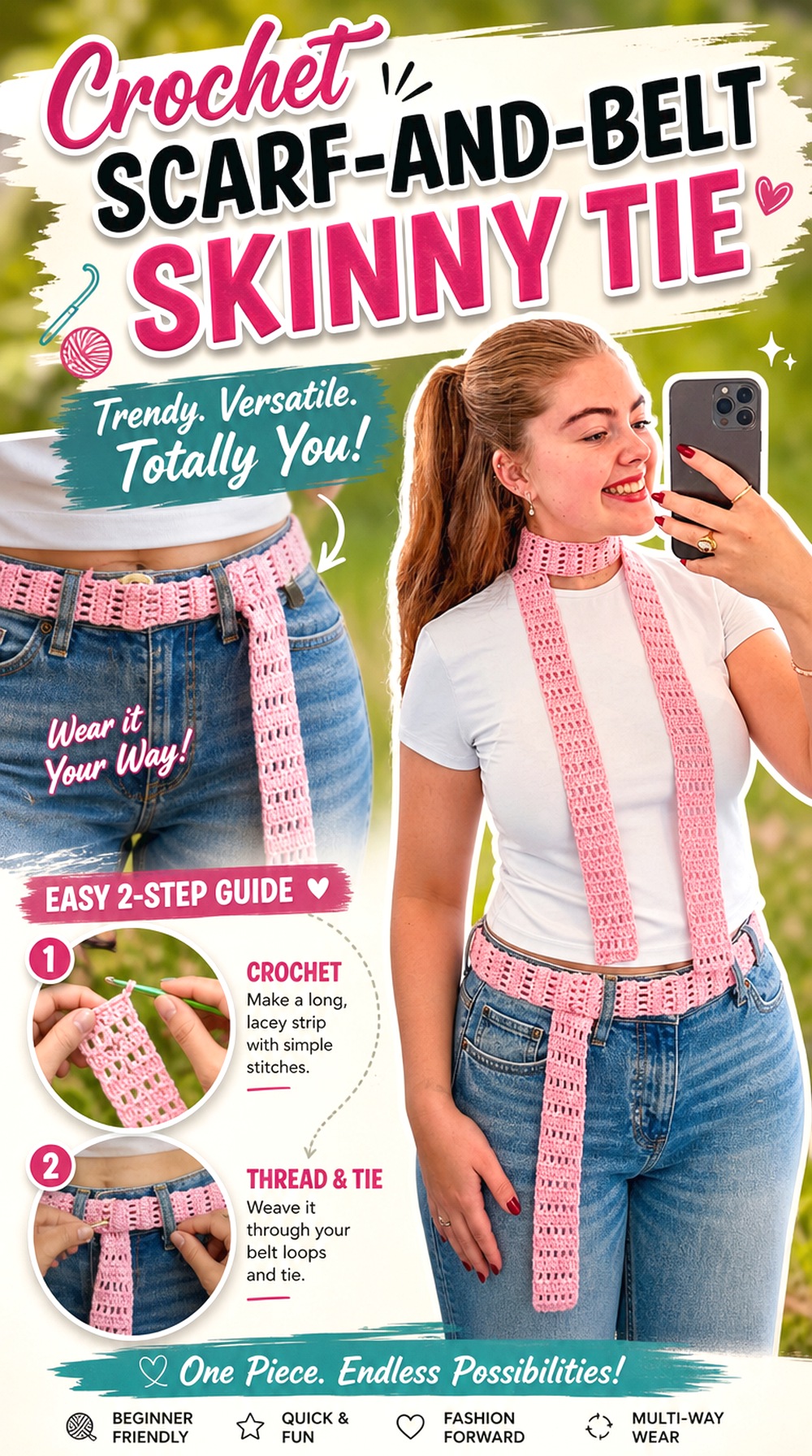
A narrow crochet strip can work as more than neckwear, and this version is built around that versatility. The tutorial presents the project as both a skinny scarf and a belt, making it a good choice for readers who like accessories that can move between outfits rather than having only one styling role.
For that kind of dual use, structure becomes important. A fabric that feels pleasant around the neck may stretch more than you want at the waist, while a firmer strip may feel less comfortable in a snug neck knot. Instead of assuming one material will behave perfectly in both roles, decide which use is the priority and judge the finished fabric accordingly.
Belt Styling Puts More Focus on Stretch
When the scarf is worn around the waist, lengthwise stretch becomes easier to notice because the strip is held under light tension. If belt use matters to you, test the fabric by gently pulling a sample lengthwise. A design that grows substantially may require different styling than a scarf that stays closer to its resting length.
A Clean Tie Finish Keeps Both Uses Practical
Decorative ends can be attractive on neckwear, but bulky tassels or large embellishments may interfere when the same piece is tied at the waist. Keeping the finishing relatively streamlined preserves the two-in-one concept. If you add decoration, place it where it will not become awkward in the secondary styling position.
Original Tutorial and Creator Credit
Creator: Crochet with Linni
Crochet Filet Mesh Skinny Scarf
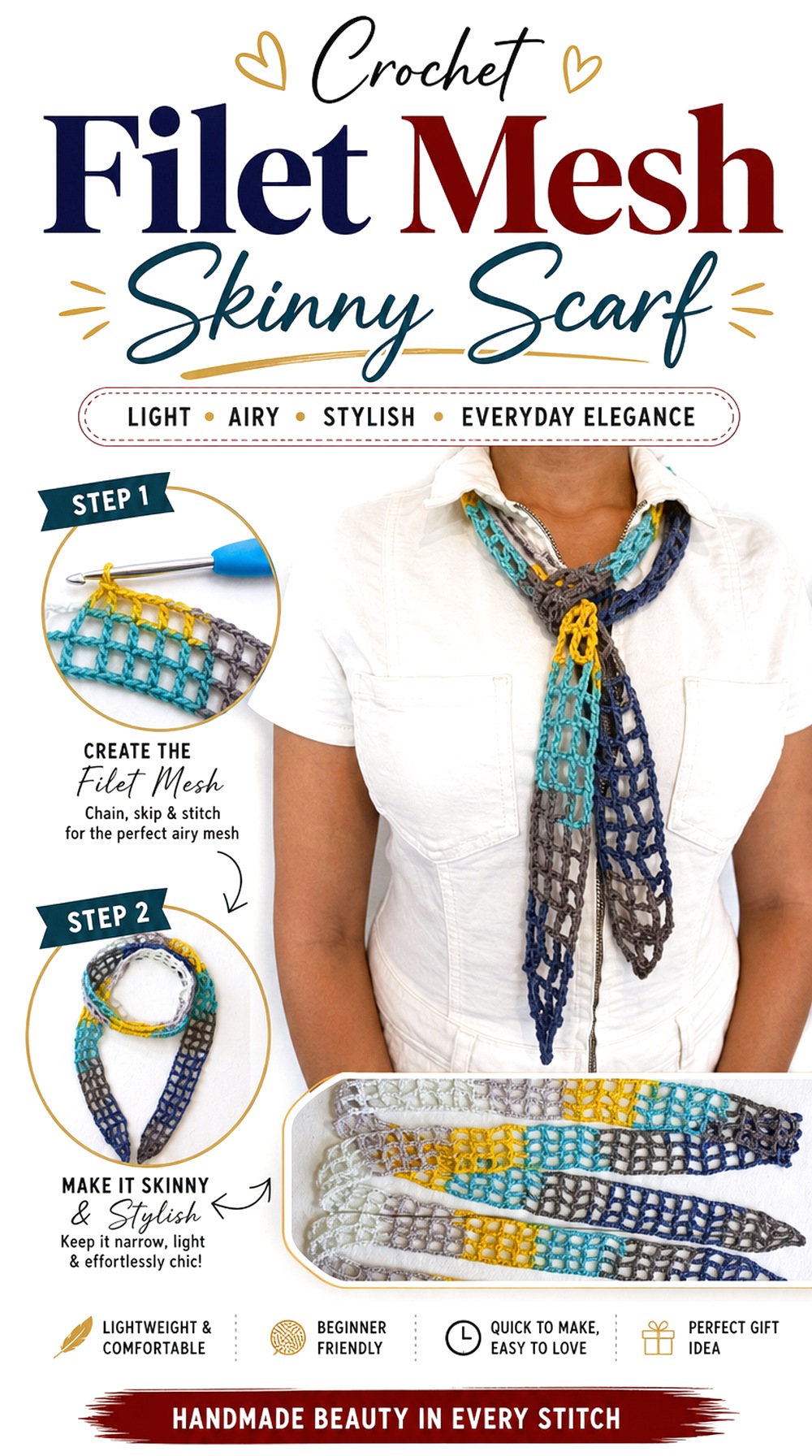
This crochet mesh scarf replaces solid fabric with open space, giving the skinny silhouette a lighter visual presence. Ravella Design presents the narrow mesh piece as an accessory that can also function as a belt or headband, which makes the open construction especially relevant: the scarf reads more like a decorative layer than a conventional warmth-focused scarf.
Mesh also changes how yarn substitutions behave. A thicker fiber can enlarge the openings and make the scarf visually heavier, while a very soft yarn may let the mesh collapse more around a knot. Choose this direction when texture and styling matter more than substantial neck coverage.
Open Spaces Become Part of the Design Scale
With filet-style or mesh crochet, width is not determined only by the number of stitches. The size of the spaces matters visually too. If you change the yarn or hook, make enough of a sample to see several openings together; one enlarged hole can look fine while a whole row of oversized mesh may change the scarf completely.
Mesh Makes Layering More Visible
Because clothing shows through the openings, the scarf interacts strongly with whatever is underneath it. A contrasting top emphasizes the crochet grid, while a similar color produces a quieter texture. That makes this a useful project for readers who want a skinny scarf primarily as a styling accent rather than as a solid band of color.
Check Snagging Risk Before Adding Embellishments
Open fabric gives decorative additions plenty of places to catch. If you plan to add beads, charms, or long fringe, consider whether the scarf will be worn with jewelry, buttons, or textured outerwear. A clean edge may be the more practical choice when the open mesh already provides enough detail.
Original Tutorial and Creator Credit
Creator: Ravella Design
Crochet Pointed Ribbed Skinny Scarf
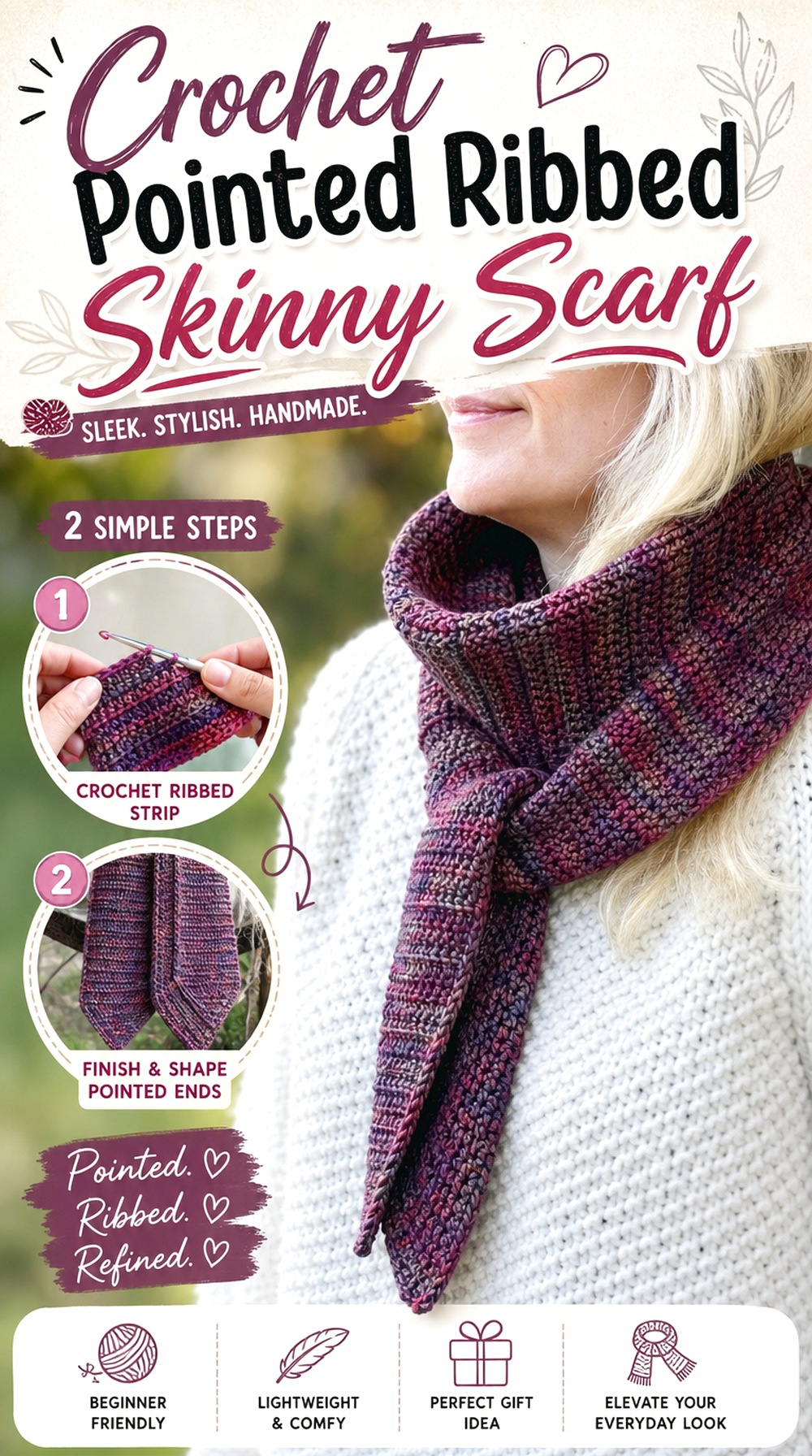
A pointed skinny scarf creates its visual interest through shaping rather than fringe or heavy decoration. Handy Little Me’s tutorial uses increases and decreases in a scarf with pronounced texture, giving the piece a broader center and ends that narrow toward points. That makes it closer to a tie-on neck scarf than to a uniformly rectangular strip.
This is a useful choice if you want the scarf to feel intentional even when worn in a simple front knot. The taper naturally reduces bulk where the ends cross, while the textured body adds definition through the center.
The Center Width Controls the Visual Weight
With a tapered scarf, the widest part determines how much coverage you see at the front or side of the neck. If you adapt the design, do not evaluate only the length of the pointed ends. Drape the growing center section to decide whether it reads as a delicate accent or starts to feel more like a small shawlette.
Gradual Tapering Usually Ties More Neatly
A sharp transition from a wide center to a thin end can create a bulky ridge near the knot. A more gradual visual taper distributes the change across the scarf. When following the tutorial, pay close attention to the shaping rhythm rather than trying to shorten the project by removing an arbitrary portion from the middle.
Texture Can Make the Scarf Feel Thicker Than It Looks
Ribbed or raised fabric may remain visually narrow while feeling more substantial in the hand. If you plan to wear the scarf closely tied, test the fabric around the neck before completing both ends. A softer substitution may be preferable when comfort under a snug knot matters more than pronounced stitch definition.
Original Tutorial and Creator Credit
Creator: Handy Little Me
Crochet Tapered Mini Skinny Scarf
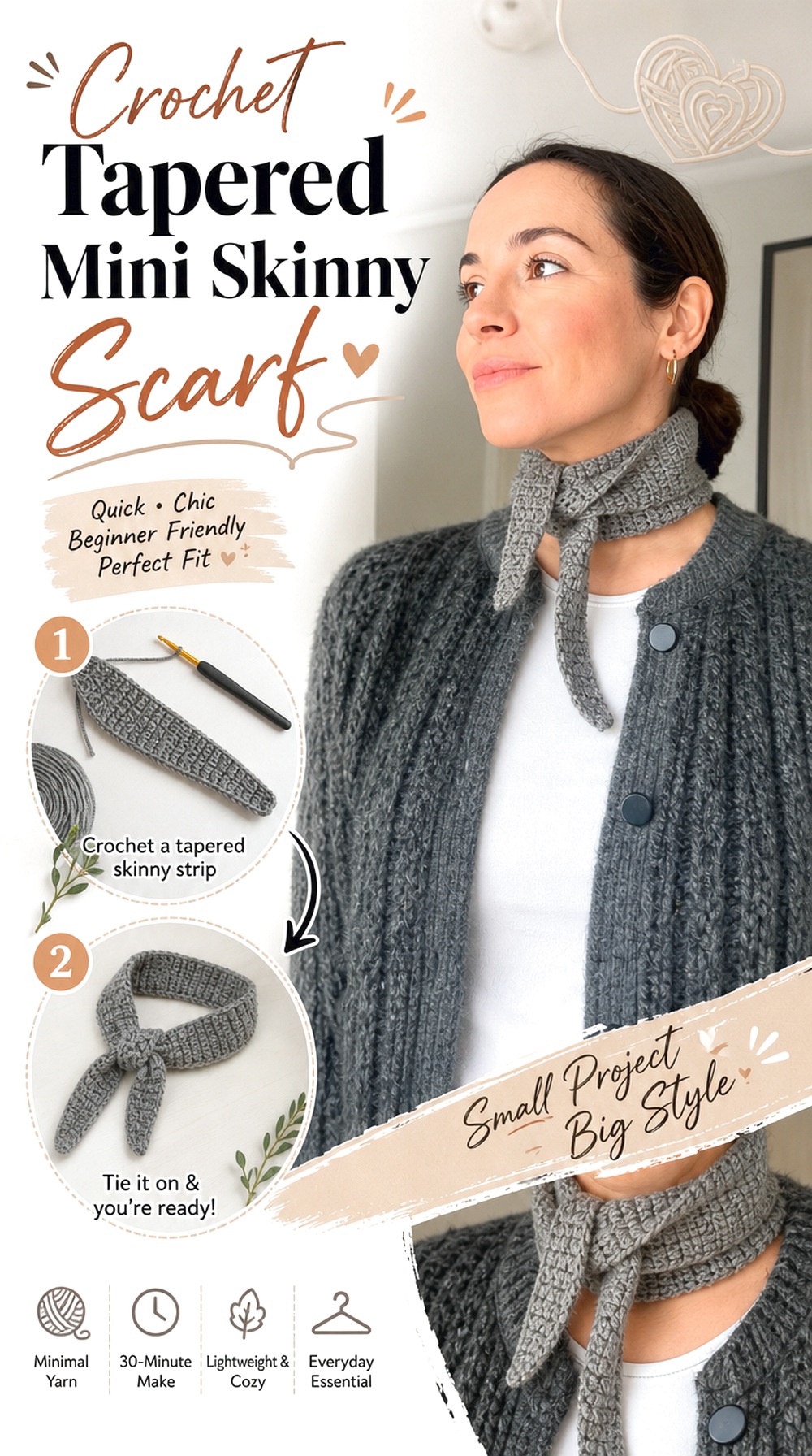
This mini scarf keeps the same general increase-and-decrease logic as larger pointed scarves but reduces the overall visual scale. VIARA’s tutorial clearly separates the growing and narrowing portions, making the finished piece useful for readers who prefer a small neck accent rather than a scarf that hangs far down the torso.
A mini scarf works best when the ends and center are considered together. If the center becomes too wide, the piece begins to resemble a bandana; if the ends are too short for the intended styling, a neat knot may become difficult. Check the scarf on the wearer before deciding that the proportions are finished.
Shorter Ends Need Enough Flexibility to Tie
A mini scarf has less spare fabric to work with than a long skinny scarf. If the tips are stiff, even adequate length can feel awkward in a knot. Before finishing, gently test how the tapered ends cross and bend. This is especially important after substituting a yarn with more body than the one shown.
A Small Border Can Refine the Silhouette
On a compact project, even a modest edge treatment has a noticeable effect. A neat border can visually unify minor differences along shaped edges, but it also adds width. Decide whether the piece needs that extra definition only after the main body is complete and the scarf has been viewed at its intended scale.
Original Tutorial and Creator Credit
Creator: VIARA – tutoriales de crochet
Crochet Tunisian Purl Skinny Scarf
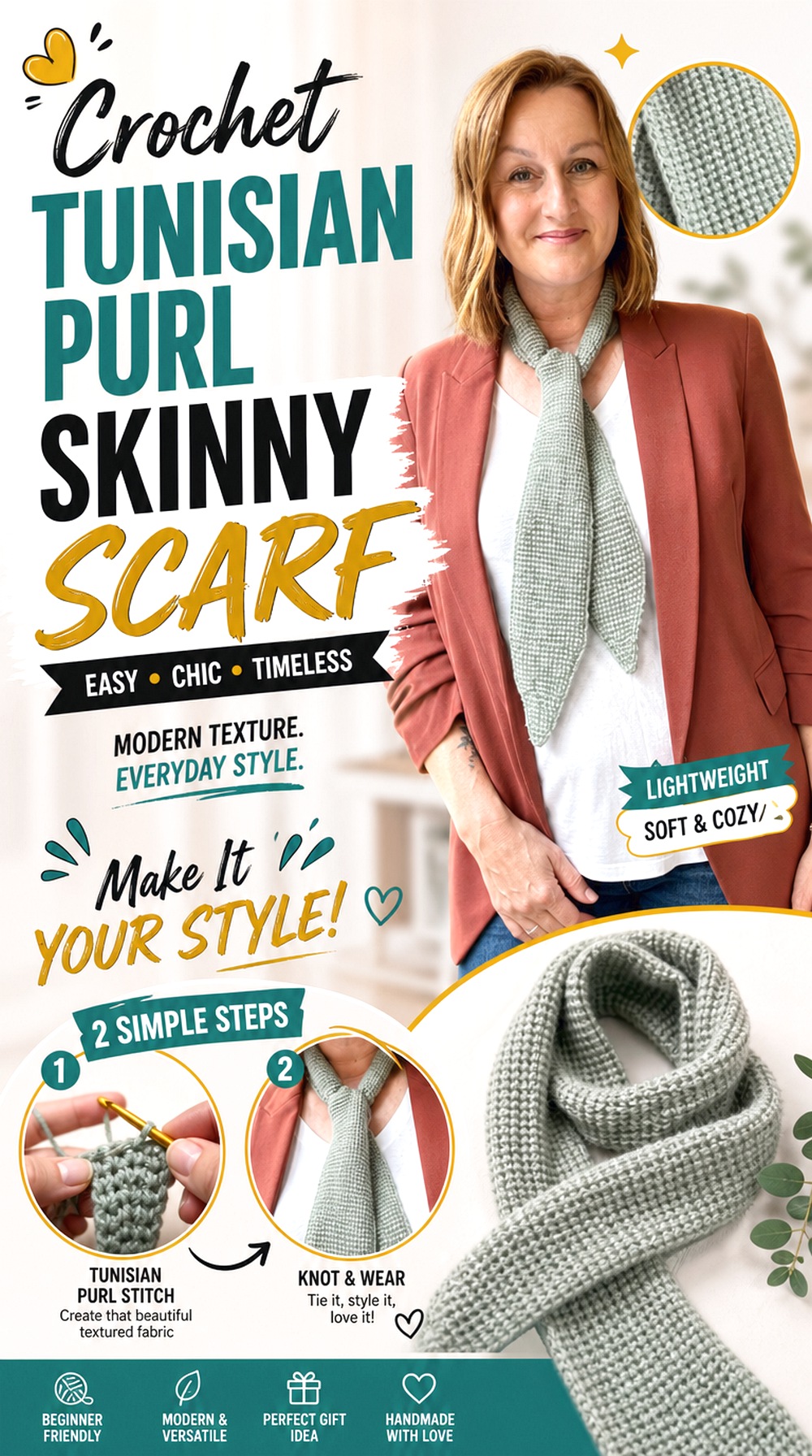
Tunisian crochet gives a skinny scarf a different surface from standard row-by-row crochet. Blue Star Crochet’s design uses Tunisian purl stitch and tapered shaping, producing a narrow accessory with a more knitted-looking texture while remaining a crochet project.
This option is especially useful if the surface texture is the reason you want to make the scarf. Because Tunisian fabric can behave differently from conventional crochet, check both drape and curl before committing to a substitute yarn. The skinny format keeps the project visually light, but a dense fabric can still feel substantial around the neck.
Tunisian Curl Is Worth Checking Early
Some Tunisian fabrics naturally want to curl more than others. Do not wait until the full scarf is complete to see whether the edges behave the way you want. Work enough fabric to evaluate it relaxed on a flat surface, then compare that result with the finishing shown in the tutorial before deciding whether adaptation is needed.
Tapered Ends Soften a Structured Fabric
A dense rectangular Tunisian strip could appear visually rigid, but pointed ends reduce the amount of fabric involved in tying. That pairing is one reason this shape suits a skinny scarf. If you adjust the central width, consider how much additional bulk will sit directly where the scarf crosses.
Stitch Definition Can Be Lost in Very Fuzzy Yarn
The purl-like texture is a major part of this project’s appearance. Highly fuzzy or heavily textured yarn may obscure it. If you want the surface to remain the focal point, swatch enough rows to judge the texture from normal viewing distance rather than only examining individual stitches close up.
Original Tutorial and Creator Credit
Creator: Blue Star Crochet | Veronika Cromwell
Crochet Color Shift Skinny Scarf
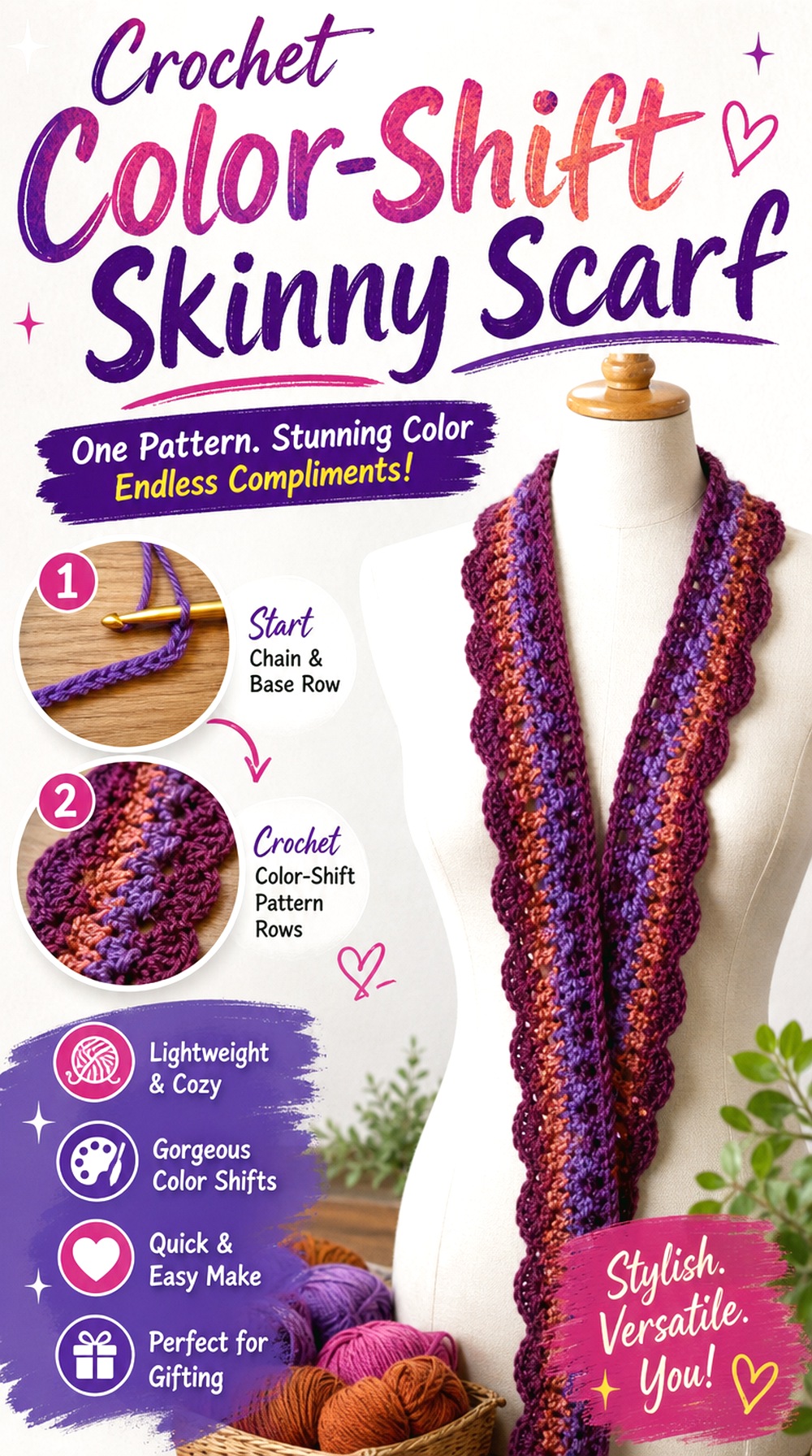
Sara Sach Crochet Designs offers a straightforward skinny scarf direction that works well when yarn color is intended to do much of the visual work. Instead of relying on a large motif or dramatic shaping, the narrow scarf acts as a simple canvas for changing shades and repeated texture.
This approach is useful when you have a yarn whose color progression you do not want to interrupt with complicated construction. Keep in mind that a narrow piece reveals color changes differently from a wide shawl: each shade may travel farther along the length, and abrupt transitions can become a stronger visual feature.
Let the Yarn Decide Whether Extra Detail Is Needed
When a yarn already changes color, additional fringe, contrast edging, or surface embellishment may compete with it. Finish the main scarf first and view it from a distance. If the color movement already provides enough interest, a restrained finish will keep the skinny silhouette clear.
Watch the Edges During Repetitive Crochet
Simple repeats are relaxing, but long narrow projects make gradual stitch-count changes surprisingly visible. Compare both side edges every so often rather than waiting until the end. A scarf that slowly narrows or widens will behave differently when the two ends hang together.
Original Tutorial and Creator Credit
Creator: Sara Sach Crochet Designs
Crochet Bordered Mini Skinny Scarf
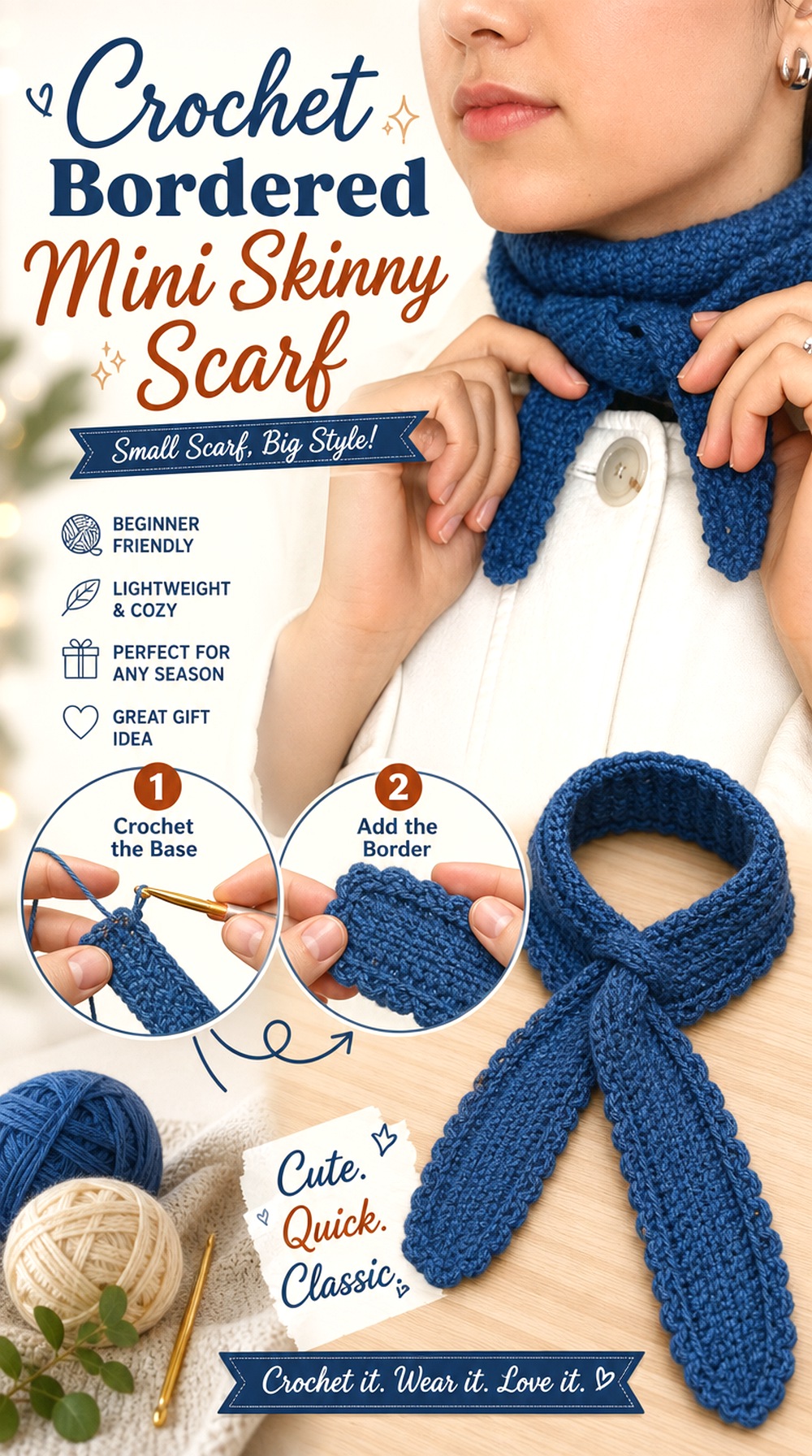
This mini scarf from eliznuts includes shaping followed by a border, making it a useful example of how finishing can change a small scarf’s silhouette. The center gains enough presence to sit visibly at the neck while the tapered ends remain suitable for tying.
A border is particularly noticeable on a mini scarf because it represents a larger share of the finished width than it would on a full-size wrap. If you use a contrasting yarn or a different edge treatment, compare the scarf before and after the addition so that the finishing does not unintentionally overpower the narrow shape.
Border Tension Can Pull on the Tapered Ends
An edge that is worked too tightly may draw the scarf inward, especially around curves or shaped tips. If the finished scarf starts cupping or twisting, compare the border tension with the main fabric before assuming the shaping itself is wrong.
Blocking Is a Useful Final Shape Check
A small shaped scarf can look slightly uneven directly off the hook. Follow the care appropriate for the actual fiber and use finishing to evaluate the final outline before making major corrections. The goal is not to force the fabric into an unrelated shape, but to let the intended taper and border settle evenly.
Original Tutorial and Creator Credit
Creator: eliznuts
Crochet Soft Layering Skinny Scarf
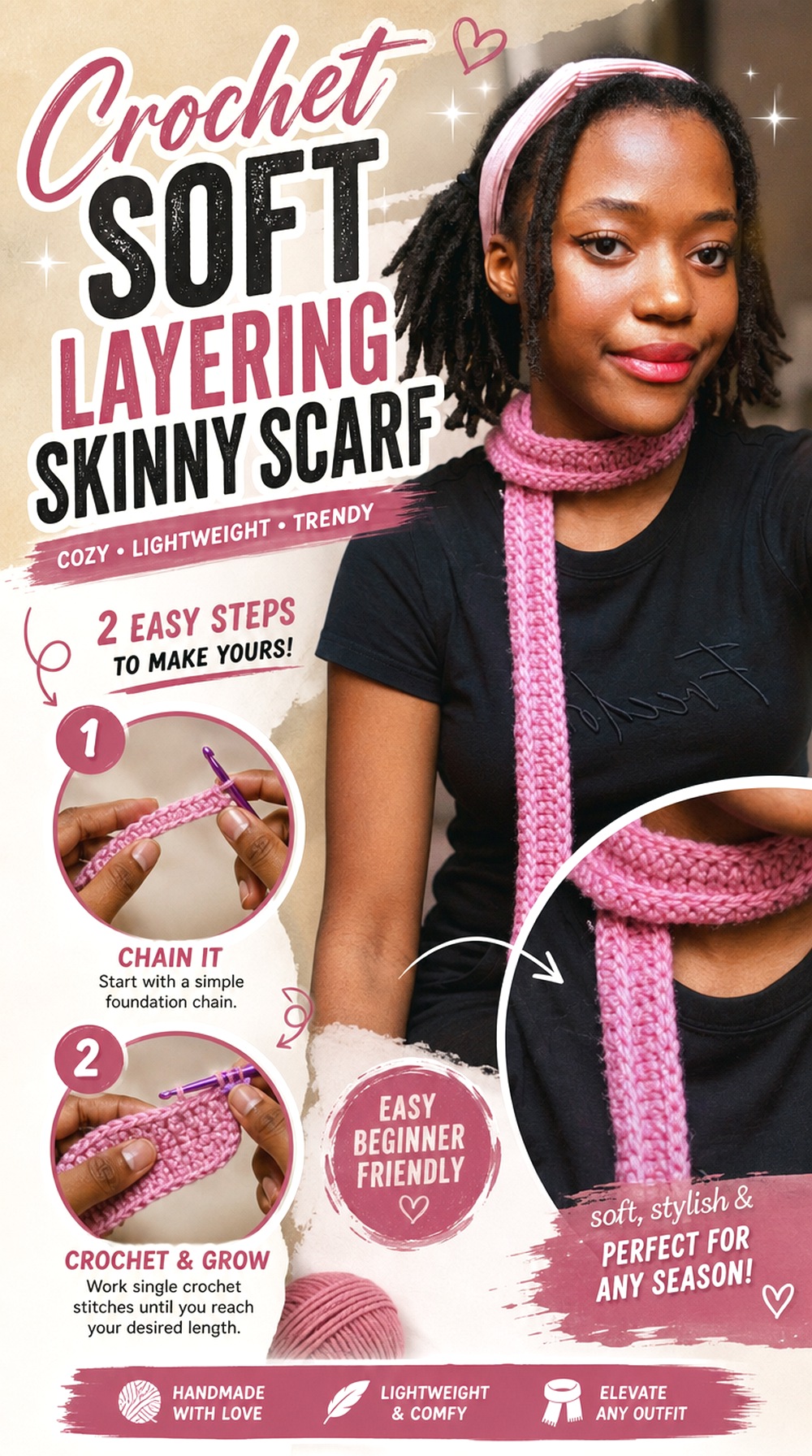
Zoë-Rose’s skinny scarf tutorial centers on a narrow, uncomplicated accessory that can be layered without taking over an outfit. Compared with a highly shaped neckerchief or dimensional ruffle scarf, this style keeps the focus on a slim line of crochet around the neck.
That makes it a practical direction for transitional styling. The main decision is how much visual presence you want: a finer, softer fabric will read as a subtle accessory, while thicker yarn can turn the same general proportions into a much bolder strip.
Layering Works Better When the Scarf Does Not Fight the Neckline
Before finalizing length, try the scarf with the types of tops or jackets you expect to wear. A long vertical drape may complement an open neckline, while a shorter front knot can work better when a coat already adds bulk. The useful length depends on styling, not just a generic scarf measurement.
Consider Both Sides of the Fabric
A skinny scarf twists easily as it hangs, which means the reverse side is often visible. If the stitch pattern has noticeably different faces, decide whether that matters to you. Careful end weaving and a tidy edge become especially valuable on a design that is likely to flip during wear.
Original Tutorial and Creator Credit
Creator: Zoë-Rose
Crochet Summer Lace Skinny Scarf
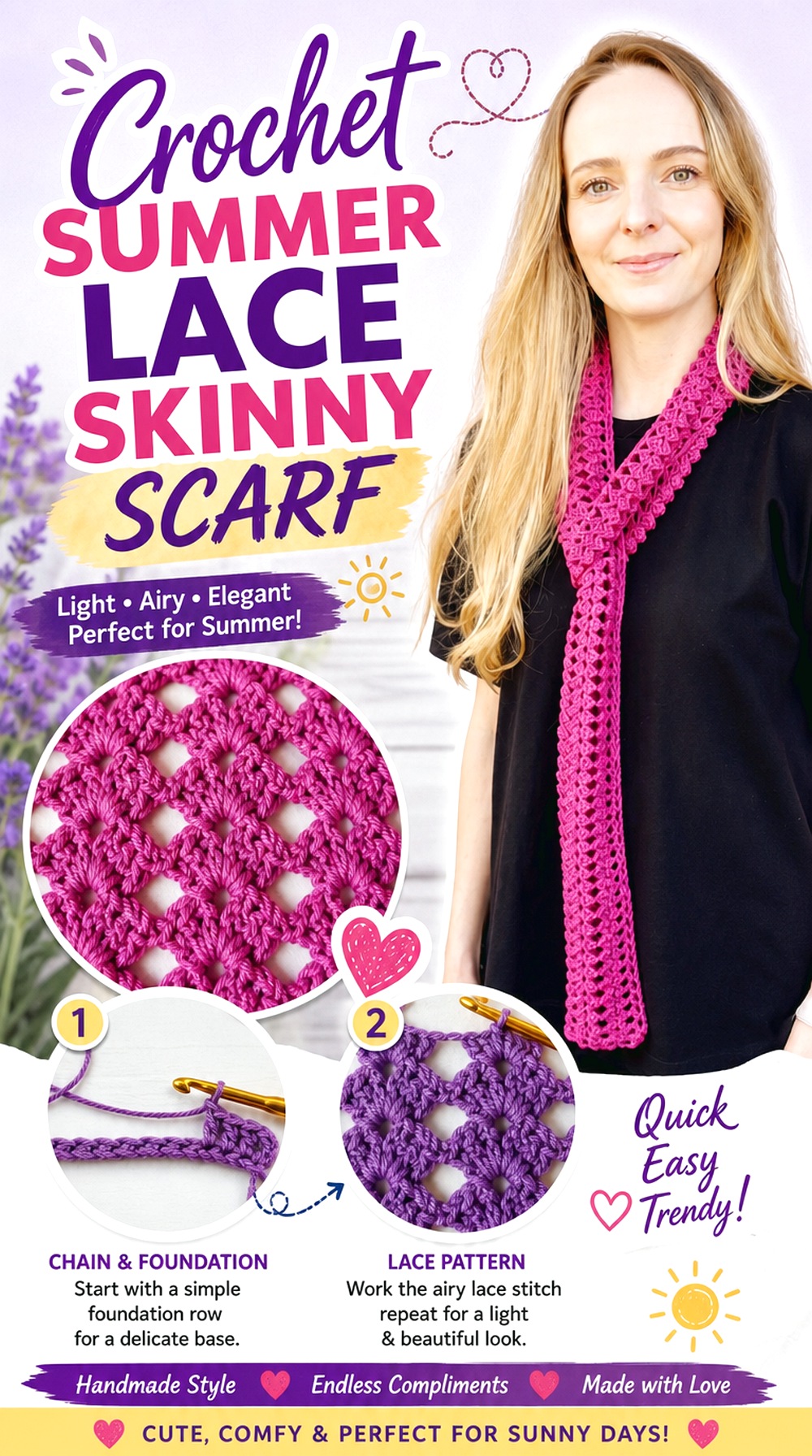
Crochet with Tuula Maaria uses an open lace approach for a narrow scarf suited to decorative warm-weather styling. This differs from the mesh option earlier in the list because the texture reads more as a repeating lace pattern than a simple grid.
A summer skinny scarf benefits from open fabric because it can add color and crochet texture without creating the visual mass of a standard scarf. However, “light-looking” does not automatically mean comfortable in hot weather; actual fiber, humidity, and how tightly the scarf is wrapped will still affect wear.
Lace Needs Enough Contrast to Be Seen
If the scarf will usually be worn over patterned clothing, a delicate lace repeat may visually disappear. Try holding your yarn sample against likely outfit colors. A simple solid background tends to show open stitchwork most clearly, while busy prints may make color more important than the stitch pattern itself.
Keep the Finish Proportional to the Airy Body
Heavy tassels can pull down a very light scarf and change how the ends hang. If you want decoration, compare its weight with the body rather than choosing it independently. A narrow lace strip often needs less finishing than a solid scarf because the stitch pattern already supplies plenty of detail.
Original Tutorial and Creator Credit
Creator: Crochet with Tuula Maaria
Crochet Woven Fan Skinny Scarf
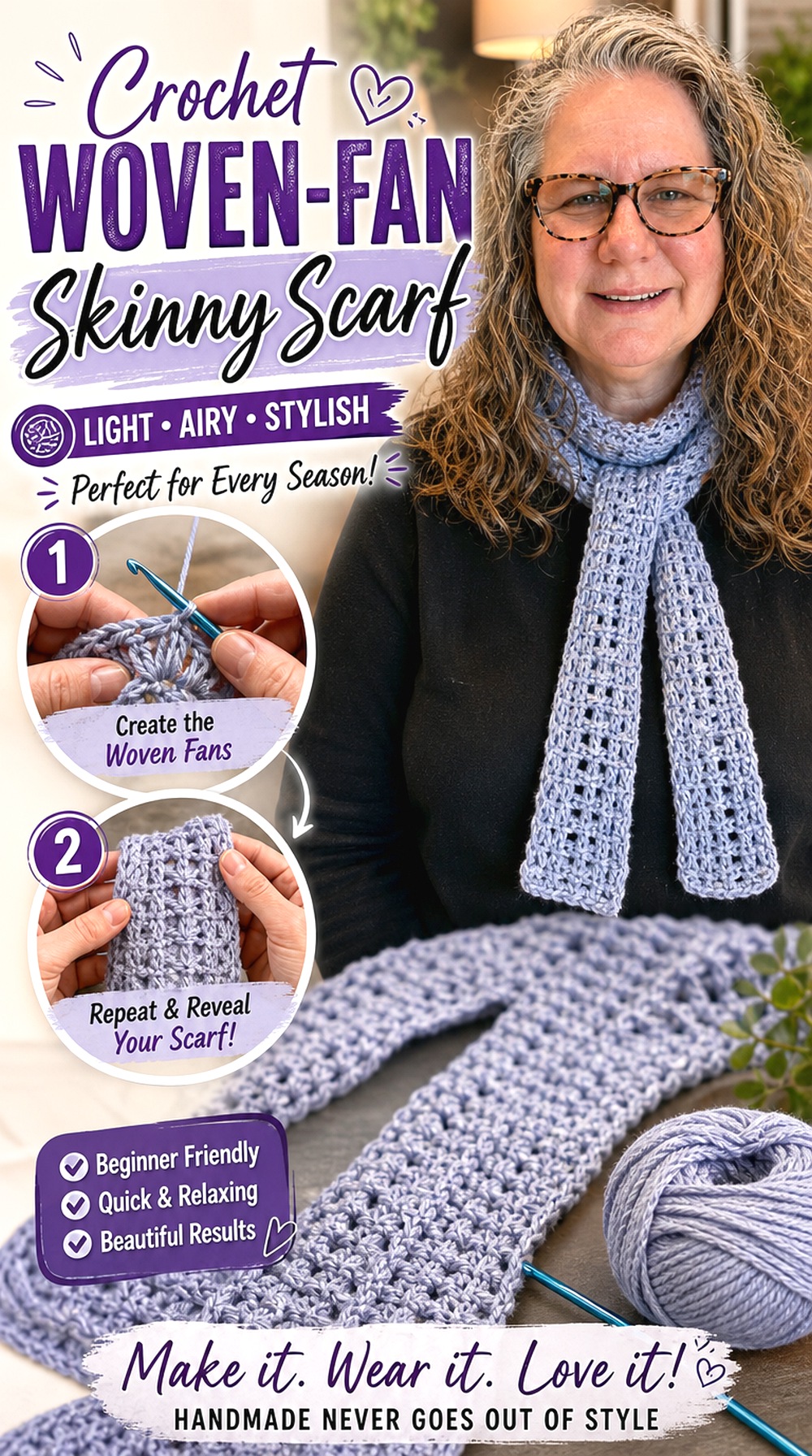
The woven-fans stitch gives this skinny scarf from Stringsandthreads a more decorative repeat while preserving the long, narrow format. It is a good alternative to plain mesh if you want noticeable stitch architecture without making the scarf physically much wider.
Repeated fan shapes naturally create visual rhythm along the length, so color placement can either reinforce that rhythm or compete with it. A solid or gently changing yarn makes the stitch pattern easier to read, while very busy color changes may shift attention away from the fan structure.
Fan Texture Can Change the Apparent Width
A scarf with scalloped or fan-like movement may look wider in some parts than in others even when the underlying stitch count is consistent. Judge the silhouette using the full repeat, not a single row. This is particularly important if you are trying to keep the project distinctly skinny rather than drifting toward a conventional scarf width.
Length Is Easier to Judge After Several Repeats
Decorative repeats can contract or relax differently from basic rows. Once enough of the pattern is established, drape the scarf instead of relying entirely on a flat measurement. That shows whether the fabric hangs fluidly and whether the motif scale feels balanced with the intended length.
Original Tutorial and Creator Credit
Creator: Stringsandthreads
Crochet Y2K Striped Skinny Scarf
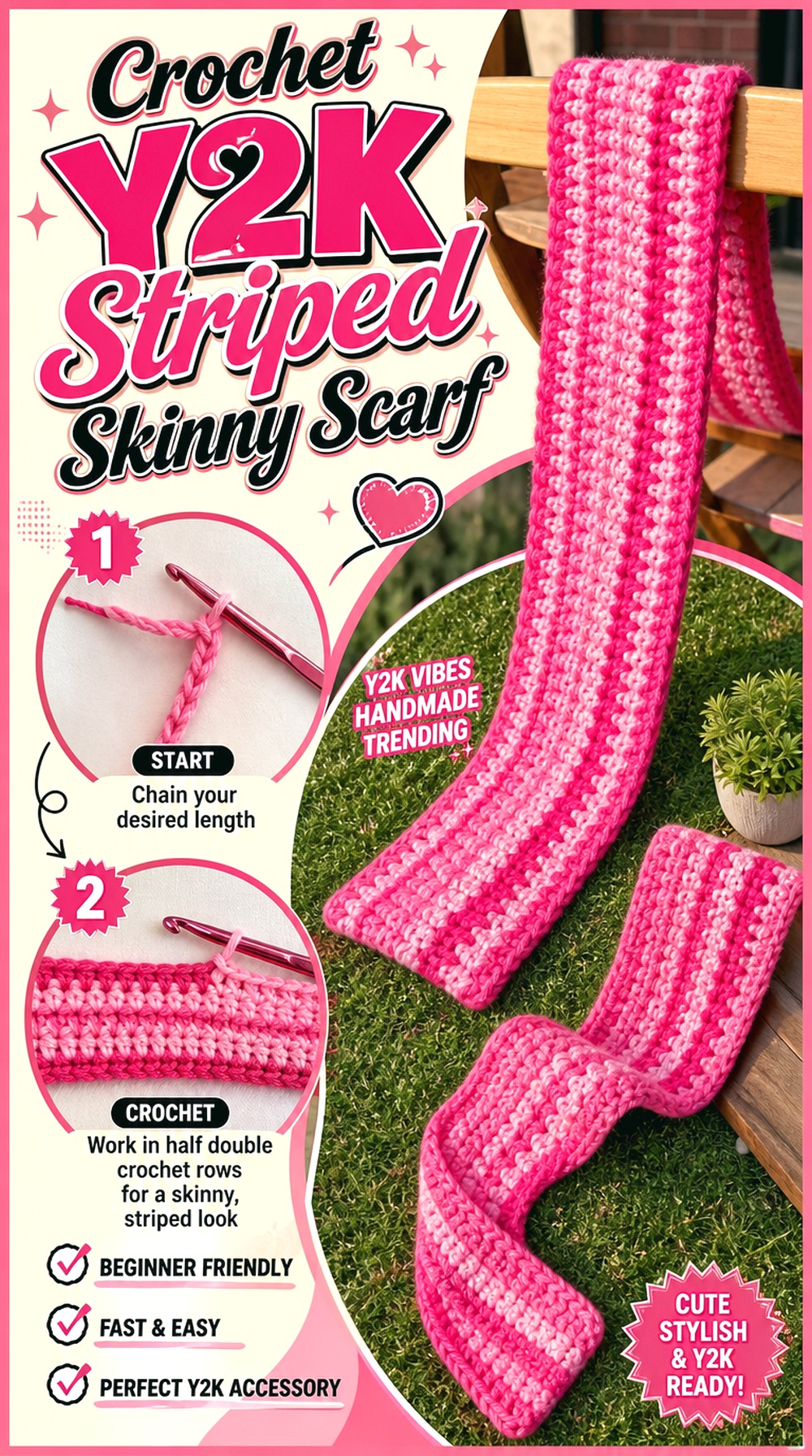
Pittsburgh Crochet Co. takes the skinny scarf in a distinctly Y2K-inspired direction, using a narrow format and color changes to create the elongated striped look associated with that style. Compared with the tapered mini scarves, this one gains its identity from length, stripe placement, and a simple straight silhouette.
This is a strong choice when color planning is part of the fun. Narrow scarves can make even small color blocks highly visible, so decide whether you want regular stripes, uneven sections, or a more spontaneous look before starting multiple colors.
Carrying Color Can Keep the Edges Cleaner
The tutorial demonstrates managing color changes within the project rather than treating every stripe as an isolated piece. When adapting the palette, think about how often colors change: frequent changes can make yarn management more important, while broad blocks may be simpler but create a different visual rhythm.
Stripe Scale Alters the Y2K Look
Thin alternating stripes feel busier and more graphic, while longer color sections let each yarn dominate for more distance. Make a quick color sketch or arrange the yarns side by side before crocheting. That small planning step can prevent two similar shades from merging visually when you wanted contrast.
Fringe Is Optional Visual Weight
If you add fringe to a Y2K-style skinny scarf, it can push the look further toward a dramatic period accessory. Without fringe, the same narrow striped body can feel cleaner and more contemporary. Decide after the main scarf is complete so you can judge how much detail the stripes already provide.
Original Tutorial and Creator Credit
Creator: Pittsburgh Crochet Co.
Crochet Chunkier Texture Skinny Scarf
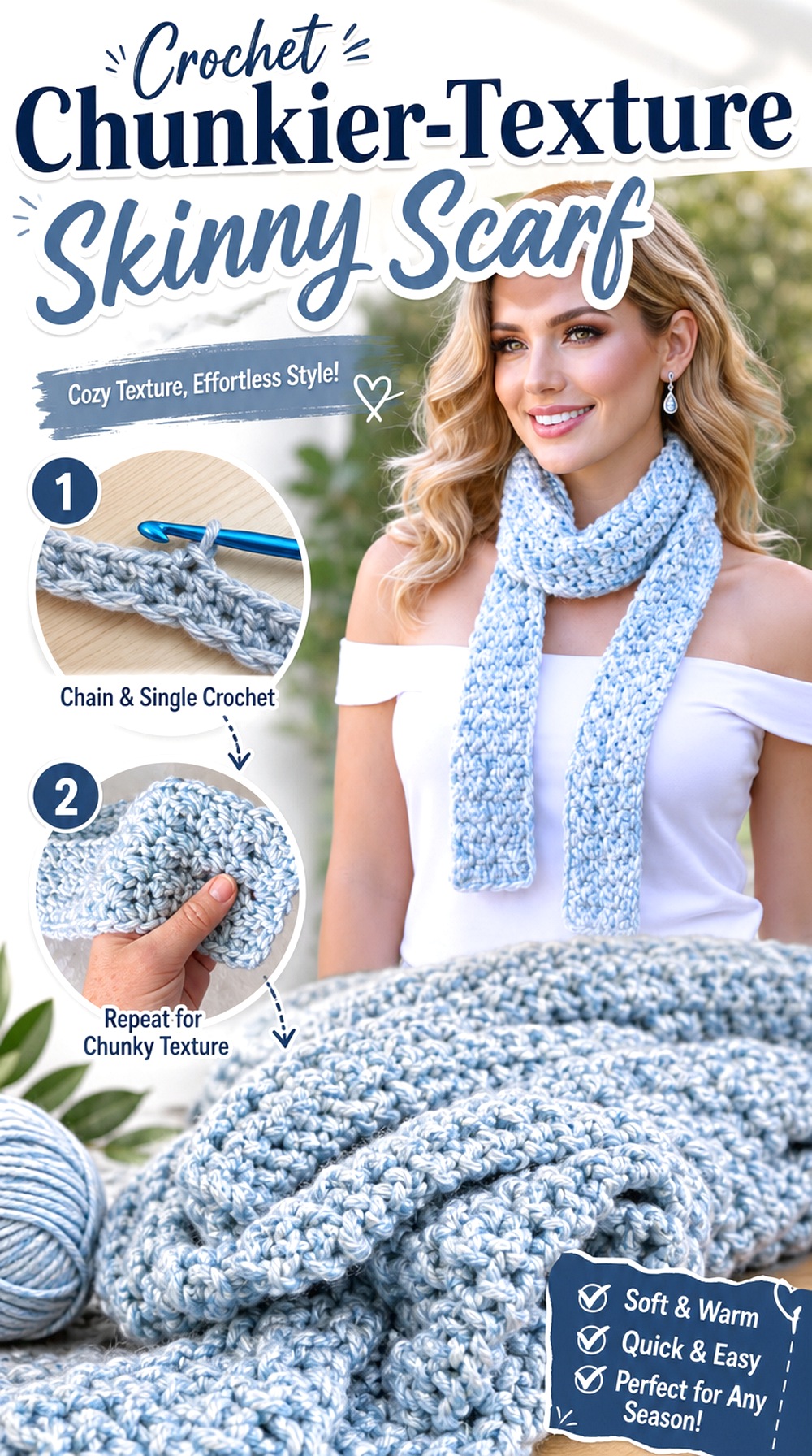
A skinny scarf does not have to use fine yarn. Cindy M’s Crochet Corner demonstrates a narrow scarf with a larger hook and a visually more substantial fabric, offering a useful counterpoint to the lace and mesh projects in this collection.
The key trade-off is bulk. Increasing yarn thickness while keeping the scarf narrow can produce a bold, cozy-looking strip, but it also changes how the scarf knots and wraps. This approach makes the most sense when you want the narrow silhouette without the delicate appearance of a mini or lace scarf.
Thicker Fabric Needs Room at the Knot
Two layers of a substantial scarf can build more bulk than the width suggests. Before committing to extra length for multiple wraps, test how a sample feels when folded over itself. You may prefer a looser single knot or simple drape rather than the tighter styling used with finer skinny scarves.
Width Adjustments Have a Bigger Visual Effect
With larger stitches, adding or removing even a small amount of fabric can noticeably change the scarf’s proportions. Compare the work against the neck as it grows instead of assuming “a few more stitches” will make only a minor difference.
Original Tutorial and Creator Credit
Creator: Cindy M’s Crochet Corner
Crochet Moss Stitch Skinny Scarf
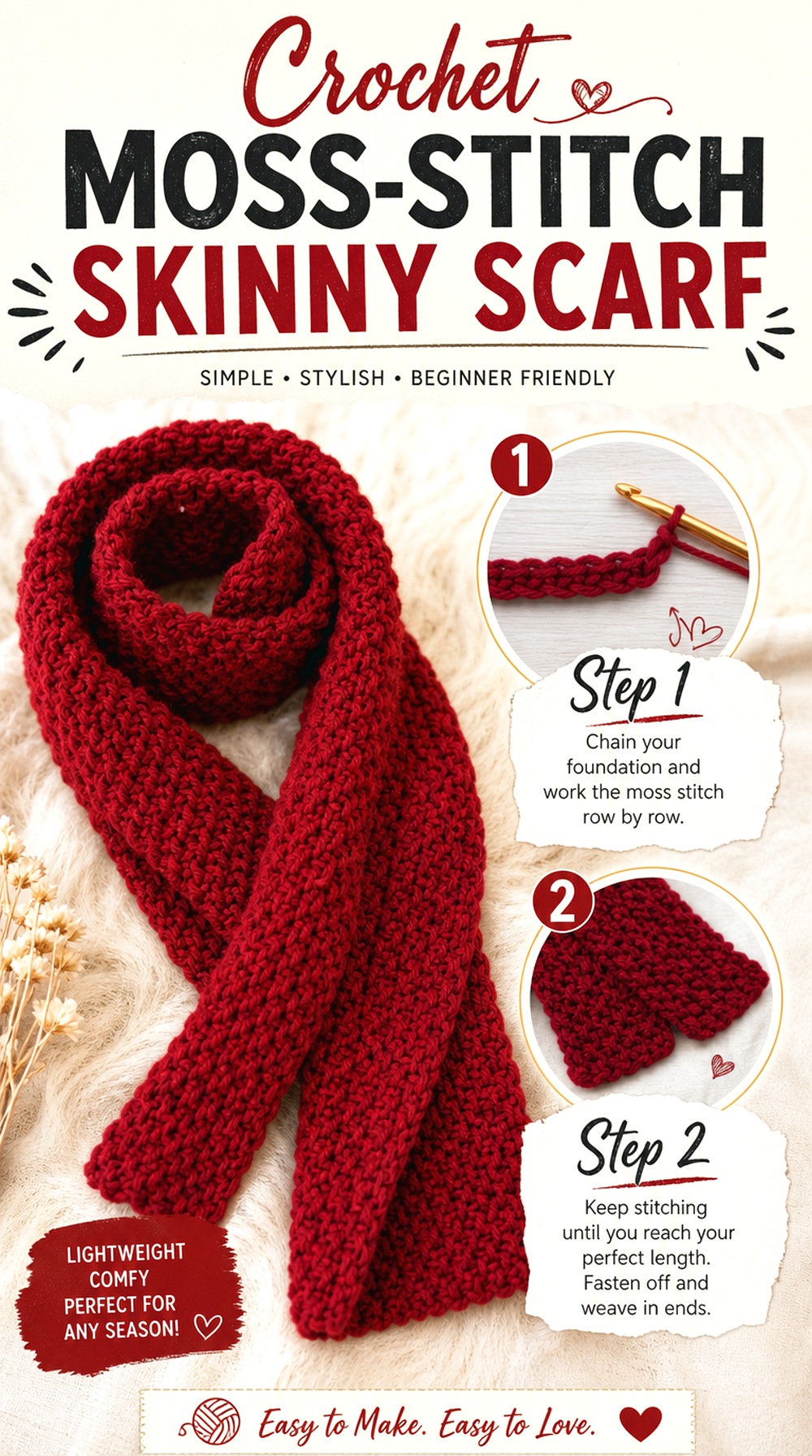
Carroway Crochet’s tutorial uses moss stitch for a clean skinny scarf with a compact, repeating surface. The alternating stitch-and-space structure provides more texture than a completely solid single-crochet strip while keeping the overall appearance restrained.
This option works well when you want the scarf to coordinate with many outfits rather than act as the dominant feature. Moss stitch can also display color changes attractively, but always check your own sample if substituting a variegated yarn because the color distribution will depend on both stitch scale and scarf width.
Straight Side Edges Matter on a Minimal Design
When there is no fringe or dramatic shaping to redirect attention, uneven edges become more apparent. Count consistently and identify the actual edge stitches early in the project. If the scarf begins changing width, correcting it sooner usually produces a cleaner result than trying to disguise the entire edge afterward.
Moss Stitch Balances Texture and Simplicity
The fabric has enough surface variation to avoid looking completely flat, yet it does not require large decorative motifs. That balance makes it useful for a skinny scarf where exaggerated texture could overwhelm the limited width. Choose yarn color based on whether you want the stitch pattern or the color itself to take the lead.
Original Tutorial and Creator Credit
Creator: Carroway Crochet
Crochet Triangle Profile Skinny Scarf
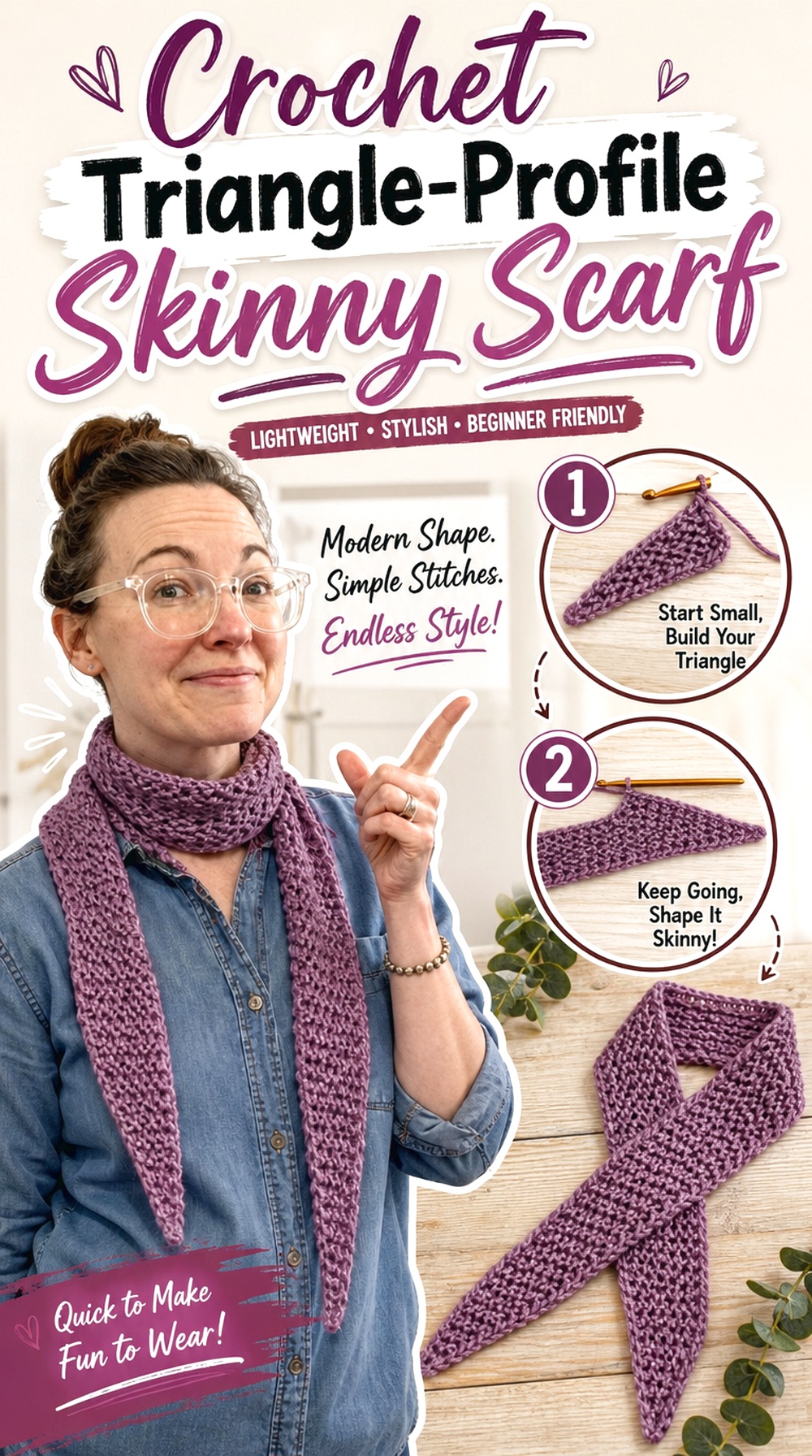
Slow Crochet’s skinny triangle scarf changes width through the body, creating a shallow triangular profile rather than a rectangular strip. The tutorial uses increases followed by decreases, so the scarf reaches its greatest visual weight through the middle and narrows toward both ends.
This shape is useful if you like the pointed look of a neckerchief but still want more length than a tiny bandana. It can frame the neckline without covering as much area as a full triangular shawl.
The Triangle Should Stay Shallow for a Skinny Look
If the center grows too deeply, the finished item begins to read as a shawlette rather than a skinny scarf. When adapting length, distinguish between making the scarf longer and making the center deeper. Those two changes affect the finished silhouette in very different ways.
Linked Tall Stitches Change the Fabric Character
The tutorial identifies linked treble crochet among the stitches used, creating a different surface from ordinary open tall stitches. If that technique is new to you, focus on the creator’s demonstration rather than substituting a superficially similar stitch and expecting identical density or drape.
Color Placement Can Emphasize the Center Point
A contrasting section or carefully positioned stripe can draw attention toward the widest portion of a shallow triangle. If you prefer a quieter accessory, a single color lets the shaping carry the design. Either approach works, but the center is the natural focal point and should be planned accordingly.
Original Tutorial and Creator Credit
Creator: Slow Crochet
Crochet Long Fringe Lace Scarflette
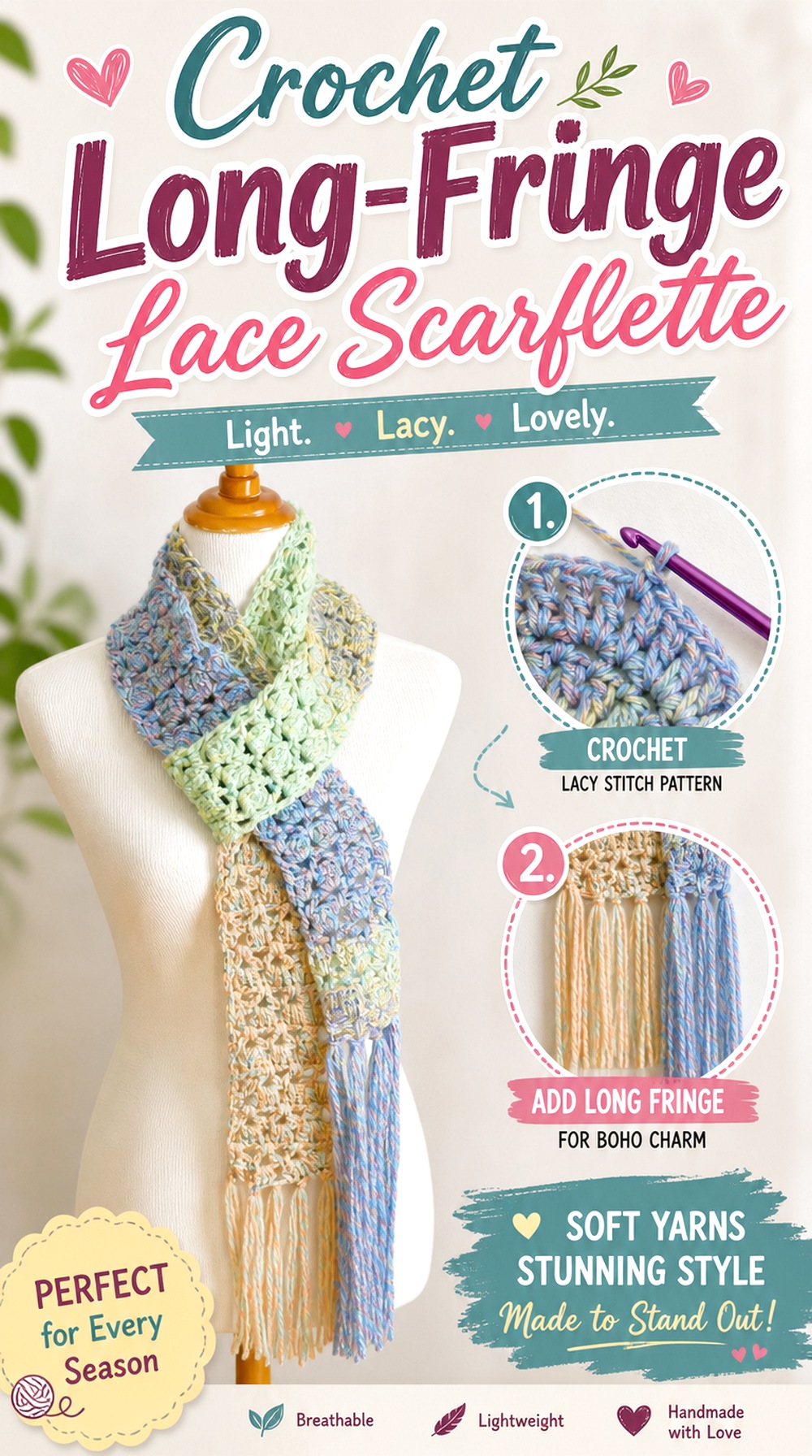
Fiber Flux’s Coastal Scarflette combines a narrow lace body with unusually long fringe, making the finishing almost as visually important as the crochet itself. It is a strong option when you want the scarf to hang as a decorative vertical accent instead of looking like a plain narrow strip.
The open stitch keeps the body relatively airy while the fringe adds motion and length at both ends. Because those two features compete for attention, this design is most successful when their scale feels intentional.
Fringe Changes the Effective Length
When planning how the scarf will hang, remember that the crocheted body is not the only vertical element. Long fringe extends the silhouette and moves independently. If you shorten or lengthen the scarf, reassess the fringe afterward rather than assuming the original proportion will still look balanced.
Trim Only After the Fringe Has Settled
Individual strands can hang differently immediately after attachment. Arrange the scarf as it will normally be worn and let the strands fall naturally before making a final visual judgment. If trimming is necessary, aim for an intentional finish rather than repeatedly cutting individual strands while the scarf is still shifting.
Lace and Fringe Create Two Different Textures
The open body provides an organized stitch pattern, while the fringe introduces loose movement. Adding another strong embellishment may make the scarf visually busy. If you customize the design, changing color is often enough to create a new look without adding a third major texture.
Original Tutorial and Creator Credit
Creator: Fiber Flux
Crochet Textured Mini Neckerchief
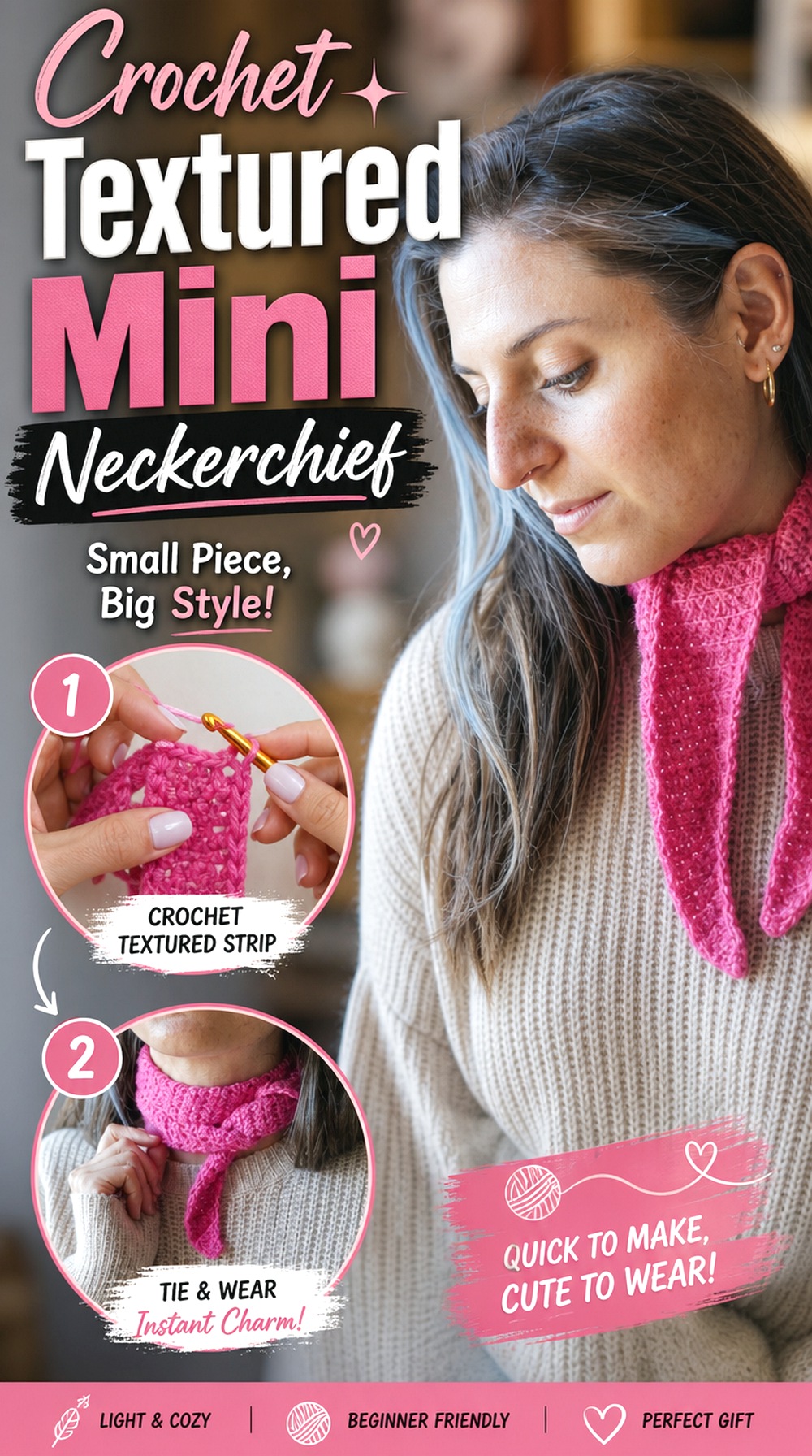
Bloodimaryart Crochet’s mini scarf sits firmly in neckerchief territory, with shaping that allows the piece to wrap close to the neck without the length of a traditional scarf. The tutorial combines a textured fabric with increases and decreases, giving the small accessory enough definition to look finished even without fringe.
This style is particularly useful for a vintage-inspired front or side tie. Because there is relatively little fabric, the quality of the knot and the feel of the yarn at the neck become major considerations.
A Mini Neckerchief Needs a Comfortable Tie Point
The ends should narrow enough to reduce bulk, but the area where they cross still needs flexibility. Try the scarf on during the shaping stage if you are altering the original proportions. A small increase in center width can change where the knot sits and how much fabric gathers underneath it.
Mixed Texture Adds Interest Without Extra Width
The tutorial uses more than a plain flat surface, so the scarf gains visual detail without requiring fringe or a broad lace border. That is useful for small neckwear: texture can provide a focal point while the overall outline remains clean and compact.
Fine Finishing Is More Visible at This Scale
On a mini scarf, loose yarn tails, an uneven tip, or a bulky join can sit directly beside the face. Take time with end weaving and check both sides. Since the piece may rotate while being worn, there is little advantage to treating one face as completely hidden.
Original Tutorial and Creator Credit
Creator: Bloodimaryart Crochet
Crochet Pull Through Keyhole Skinny Scarf
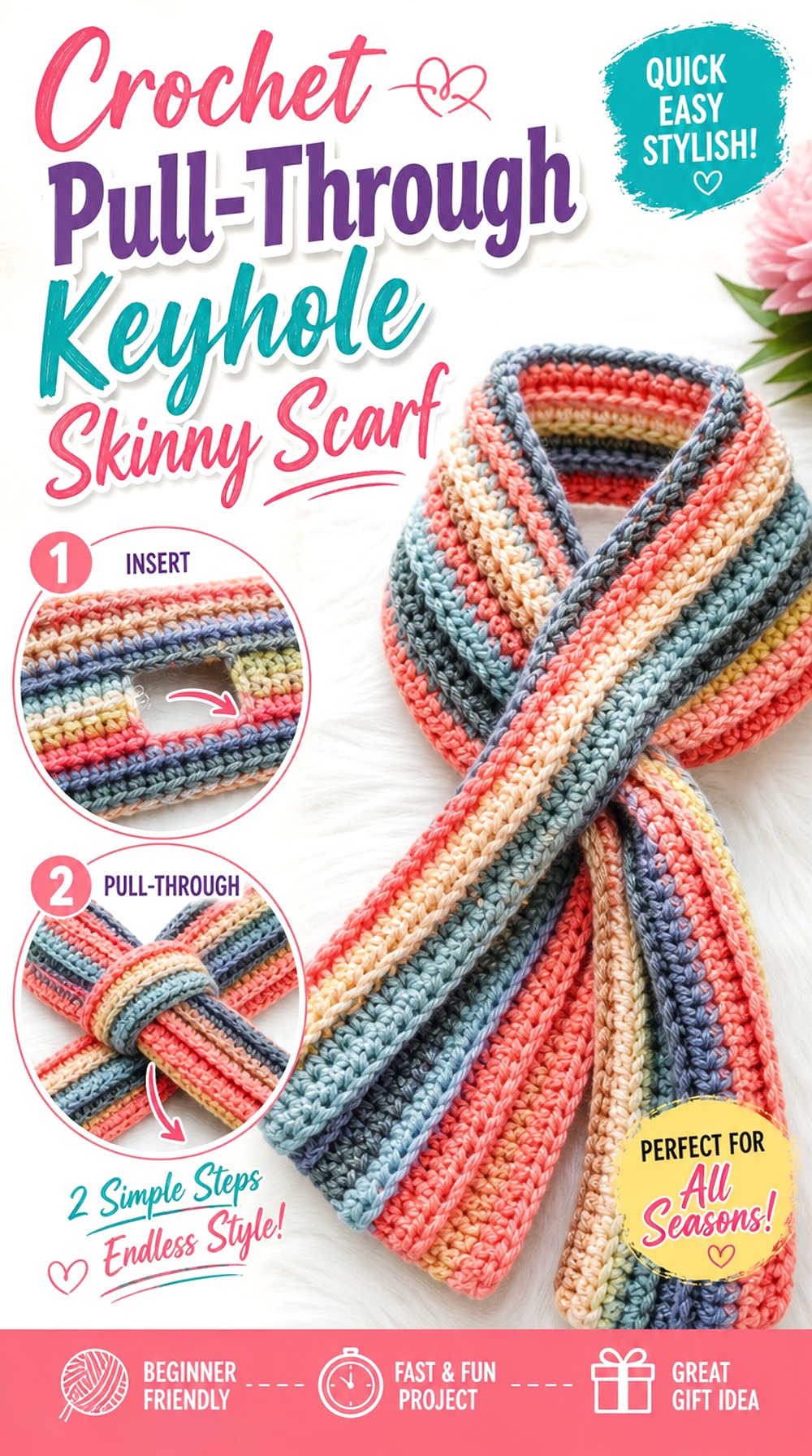
A keyhole changes the way a narrow scarf stays in place. Instead of requiring two long ends and a full knot, Atreyu Crochet’s design allows one part of the scarf to pass through an opening, creating a compact pull-through arrangement.
That makes this a practical option if you like small scarves but dislike repeatedly adjusting a loose knot. It also gives the front of the scarf a cleaner, controlled position. The opening is the functional feature, so adaptations should preserve its relationship with the end that passes through it.
The Opening Must Suit the Scarf End
A keyhole is useful only if the intended section passes through without excessive pulling and then stays reasonably secure. If you change yarn thickness or alter the scarf width, check this relationship before completing the project. A proportion that works in the original materials may behave differently after substitution.
Less Hanging Length Can Reduce Bulk Under a Coat
Because the scarf does not rely entirely on long tie ends, a keyhole style can sit neatly beneath outerwear. If that is your intended use, test it with the actual collar or jacket rather than only in front of a mirror with a lightweight top.
Keep Embellishment Away From the Pull-Through Area
Large tassels, buttons, or dimensional motifs can interfere with the section that moves through the keyhole. If you want extra detail, placing it where the scarf remains stationary will usually preserve the function more effectively than decorating the working end.
Original Tutorial and Creator Credit
Creator: Atreyu Crochet
Crochet Minimal Unisex Skinny Scarf
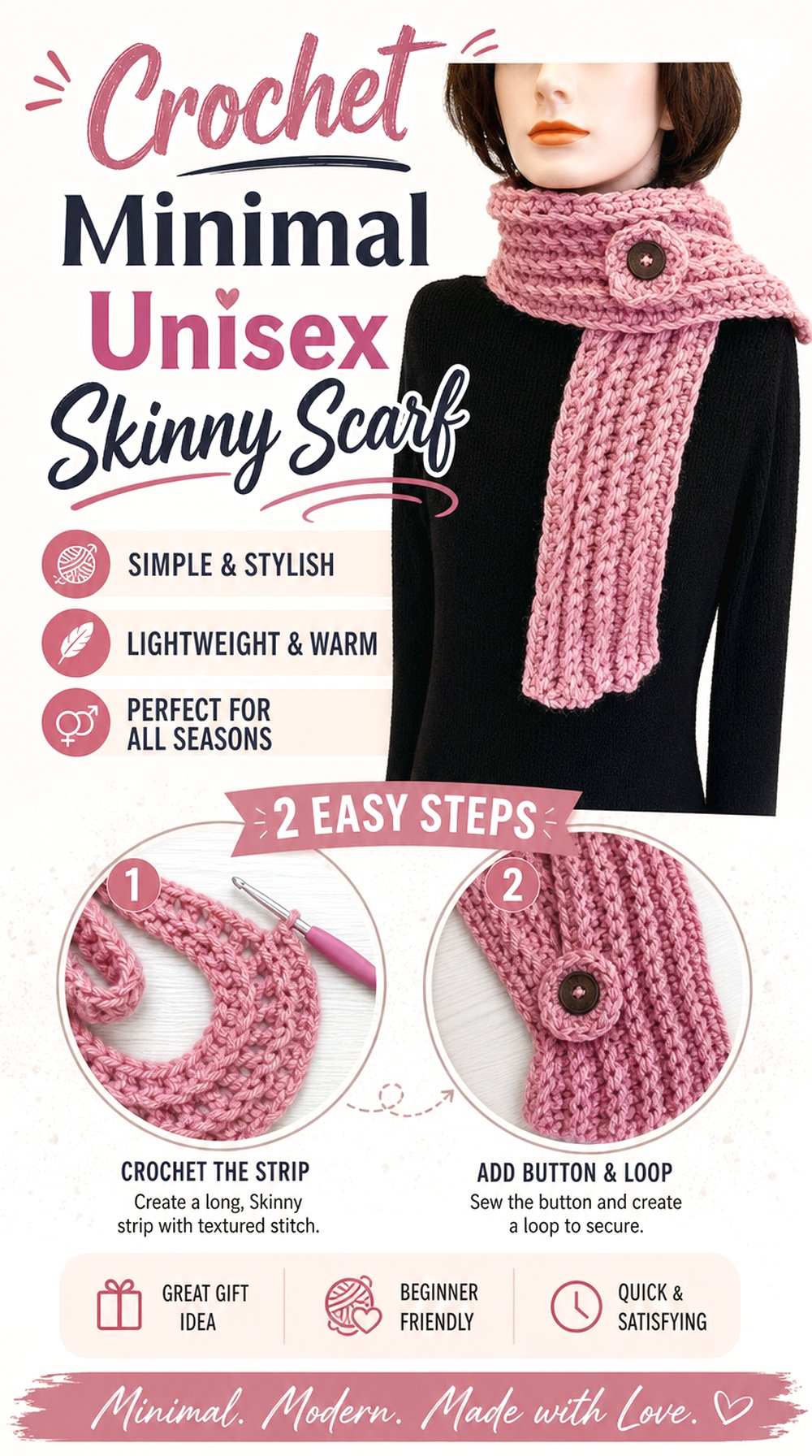
Hectanooga1’s skinny scarf keeps the concept pared back and presents it as a unisex accessory. That makes it a useful choice when you want a straightforward narrow scarf without pointed mini-scarf shaping, pronounced lace, fringe, or overtly decorative details.
A minimal scarf places proportion and yarn choice at the center of the design. Neutral colors can reinforce the understated effect, but a bright shade can turn the same simple silhouette into a stronger accent without changing the construction.
Simple Styling Makes Yarn Choice More Noticeable
With little ornamentation, texture, sheen, fuzz, and color become more prominent. Before substituting yarn, imagine the entire scarf as one narrow band of that surface. A yarn that looks subtle in a small ball may become much more visually dominant once repeated along the full length.
Unisex Does Not Mean One Universal Length
How the scarf will be worn still matters more than a label. Someone who wants a loose vertical drape needs a different useful length from someone who plans a short front knot. Use the tutorial’s construction as the source for exact work, but choose the final styling based on the intended wearer.
Original Tutorial and Creator Credit
Creator: Hectanooga1
Crochet One Ball Single Crochet Skinny Scarf
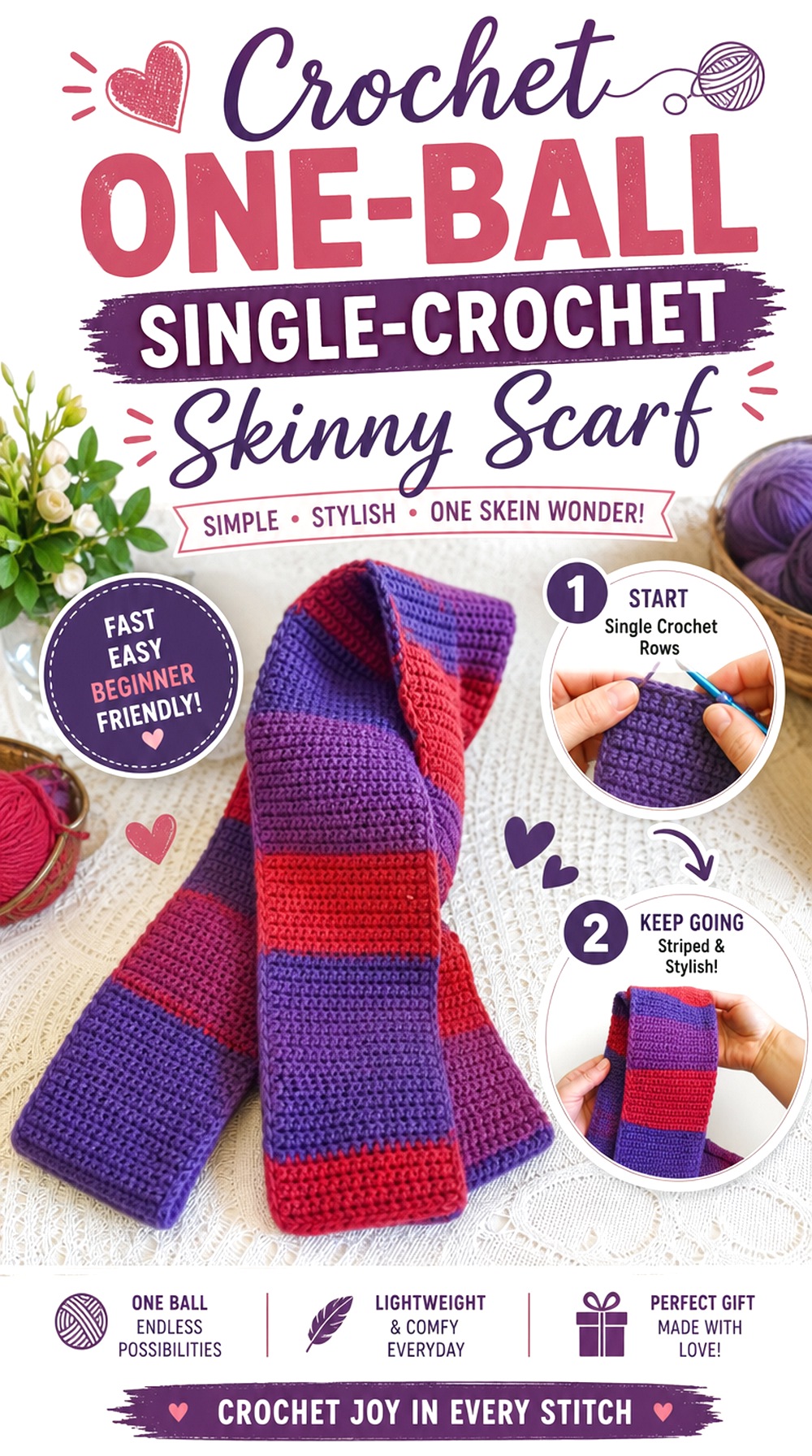
Posh Crafts approaches the skinny scarf through single crochet and a lightweight, narrow format. The tutorial also discusses a one-ball project, making it an interesting direction when you want the scarf shape to remain simple and let a long color-changing yarn provide much of the visual interest.
Single crochet produces a relatively compact fabric, so the main checkpoint is drape. A narrow scarf can still feel stiff if the combination of fiber, hook, and tension produces a dense result. Judge the fabric in your hands and around the neck rather than assuming that a small width automatically makes it light.
Dense Stitches Need a Drape Check
Make enough fabric to fold and bend naturally before deciding that the yarn-and-hook pairing is right. If the scarf springs back rather than hanging, consider whether that behavior suits your intended styling. A long loose drape has different requirements from a crisp, compact neck tie.
One Continuous Yarn Can Simplify the Color Story
A multicolor cake can create gradual color movement without repeated yarn changes. On a skinny scarf, those transitions may extend over considerable length, giving the finished piece a more continuous flow than short manually changed stripes.
Which Crochet Skinny Scarf Style Should You Choose?
If you want the most classic long skinny silhouette, start with the Long-Line, Moss-Stitch, Minimal Unisex, or Y2K Striped options. Their shapes stay relatively linear, so color, length, and stitch texture do most of the design work.
For small neckwear, the Tapered Mini, Bordered Mini, Pointed Ribbed, and Textured Mini Neckerchief place more emphasis on shaping. The Keyhole version is particularly useful if you want a compact scarf without relying on a conventional knot.
Choose the Filet Mesh, Summer Lace, Woven-Fan, or Long-Fringe Scarflette when open stitchwork and decorative texture matter most. The Tunisian Purl scarf offers the clearest change in crochet technique, while the Scarf-and-Belt option makes the strongest case for multi-use styling.
Conclusion
The most useful way to choose among these 20 crochet skinny scarf ideas is to decide what you want the narrow proportion to accomplish. Long rectangular scarves provide more wrapping and hanging options; tapered minis create compact neck ties; mesh and lace emphasize decoration; Tunisian and fan textures put the stitch surface first; and keyhole construction offers a different way to keep a small scarf in place.
Also consider how the yarn behaves when folded or knotted. A scarf can look narrow on a table yet feel bulky at the neck if the fabric is too rigid. Once you choose the silhouette that fits your styling goal, use the original tutorials for the creators’ exact construction details.
Frequently Asked Questions
How narrow should a crochet skinny scarf be?
There is no single width that defines every skinny scarf. The proportion should make sense with the construction and styling. A long decorative scarf can be extremely narrow, while a tapered mini scarf may need a wider center to sit visibly at the neck. Instead of chasing one measurement, compare the width with the yarn thickness and test how the fabric folds or ties.
Is a long skinny scarf better than a crochet mini scarf?
They serve different styling purposes. A long skinny scarf gives you more options for wrapping, loose knots, and long hanging ends. A mini scarf is more compact and depends on shaping or carefully planned tie ends. Choose the long version if versatility in wrapping matters; choose the mini version when you want a small, controlled neck accent with less fabric.
What yarn qualities work well for a crochet skinny scarf?
Look first at the fabric the yarn produces rather than the fiber name alone. A scarf intended to knot closely usually benefits from enough flexibility to bend without feeling stiff. Lace and mesh also need a yarn that lets the stitch pattern remain visible. Make a sample whenever you substantially change the yarn used in a tutorial, because thickness, fuzz, elasticity, and drape can all change the result.
Why is my crochet skinny scarf twisting or curling?
Curling can come from stitch structure, tight tension, uneven edges, or the natural behavior of the chosen fabric. First check that the stitch count remains consistent where it should. Then compare your tension and materials with the tutorial. Appropriate finishing may help some fabrics settle, but severe curling is easier to address early than after completing an entire long scarf.
Can I turn a crochet skinny scarf into a belt or hair accessory?
Some skinny scarf constructions adapt well, but not every one does. A belt may experience more lengthwise tension than a neck scarf, while a hair accessory needs to sit comfortably and securely without excessive bulk. Mesh or long narrow tie designs can be versatile, but check stretch, width, embellishments, and the intended fastening before assuming a neckwear tutorial will suit another use unchanged.
Should I add fringe to a crochet skinny scarf?
Fringe works best when it supports the scarf’s proportions. It can add movement and make a simple narrow scarf feel longer or more decorative, but heavy or very long fringe may dominate a tiny mini scarf. Finish the crochet body first, drape it as you expect to wear it, and then decide whether the ends need additional visual weight.