An oversized crochet bag can feel relaxed without becoming shapeless. The biggest differences come from construction: a tapered hobo settles differently than a broad tote, an open mesh body stretches differently than a lined granny-square bag, and a crescent shape carries its volume closer to the body.
These 19 crochet oversized slouchy bag ideas cover chunky hobo silhouettes, maxi shoulder bags, motif constructions, buckets, mesh totes, drawstring shapes, and more structured options. Some source tutorials are already designed around roomy or maxi proportions; others are useful construction references for a larger adaptation. When changing size, follow the creator’s sizing guidance rather than assuming every stitch repeat or strap can simply be enlarged.
The comparisons below focus on the choices that become especially important in a big bag: drape, base shape, strap support, opening security, lining, and how the bag behaves once it is filled.
Quick List
- Crochet Chunky Macramé Hobo Carryall
- Crochet One-Piece Hardware Hobo Bag
- Crochet Soft Double-Handle Slouch Bag
- Crochet Maxi Ribbon Hobo Bag
- Crochet Deep Boho Bucket Tote
- Crochet Classic Tapered Hobo Bag
- Crochet Net-Texture Snap Hobo Bag
- Crochet Two-Square Lined Slouch Tote
- Crochet One-Piece Longline Shoulder Bag
- Crochet Curved Crescent Sling Bag
- Crochet Hexagon-Panel Slouch Carryall
- Crochet Textured Boho Crossbody Hobo
- Crochet Vintage Pearl-Handle Bucket Bag
- Crochet Multicolor Mesh Slouch Tote
- Crochet Four-Square Zippered Cross Bag
- Crochet Fan-Stitch Drawstring Slouch Bag
- Crochet Paper-Yarn Oversized Summer Tote
- Crochet Relaxed Sack Shoulder Bag
- Crochet Soft-Rim Everyday Bucket Bag
How to Keep an Oversized Crochet Bag Slouchy Without Letting It Collapse
Slouch comes from a combination of shape, fiber, stitch density, and scale. A flexible body can fold attractively around its contents, but the same fabric may also lengthen under weight. That is why it helps to separate the jobs of different parts of the bag. You might want a relatively stable base and handle area while allowing the main body to remain softer.
Yarn choice changes the result considerably. Cord and ribbon yarns can give large bags stronger visual definition, while softer conventional yarns may produce more drape. Open mesh increases flexibility and expansion but offers less containment for small objects. A lining can limit some stretching and keep items from poking through, although it also changes how freely the crochet fabric collapses. Choose the amount of structure according to the silhouette you actually want rather than treating maximum stiffness as the goal.
Plan the Strap, Opening, and Lining Before You Scale Up
Increasing the body of a bag also increases the temptation to carry more in it, so handle and strap design deserves attention before resizing. A wide integrated shoulder section distributes the bag differently from a narrow long strap, while D-rings, clips, and adjusters introduce attachment points that should remain secure. If the tutorial was not designed at your intended scale, check what the creator recommends before altering those areas.
The opening affects usefulness just as much as size. Open totes offer immediate access, drawstrings gather a generous body into a smaller top, magnetic snaps provide a simple central closure, and zippers give more complete containment. Lining is especially worth considering with mesh, granny squares, or other fabrics containing noticeable openings. Decide which of those features matters first; adding a closure after the shape is finished can be more awkward than planning for it from the beginning.
Let the Base Shape Decide How the Bag Will Carry
A wide, relatively flat base encourages an oversized bag to behave like a tote: contents spread across the bottom and the sides rise around them. Round bases create bucket-like volume, while tapered and crescent constructions pull the contents toward the center and produce a closer hobo profile. Motif-built bags add another variable because the seams help define where the fabric bends.
This matters when comparing two bags that look equally roomy in a photograph. One may hang downward in a deep pouch, while another spreads outward and stays broad. Think about what you normally carry and where you want that volume to sit. If you prefer a bag that hugs the hip, curved or tapered shapes deserve attention. If easy visibility inside matters more, a broader tote or bucket opening may be more practical.
1. Crochet Chunky Macramé Hobo Carryall
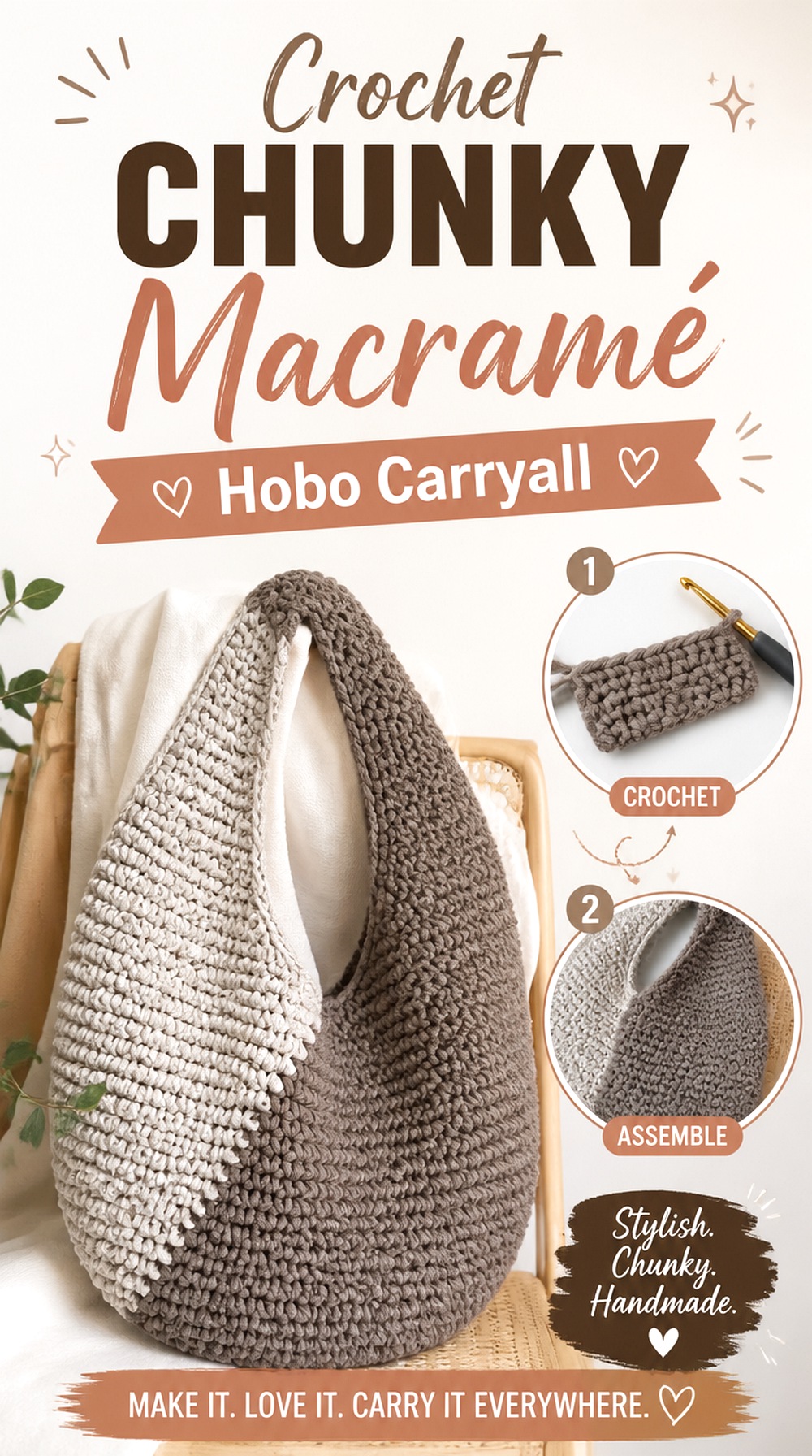
This idea puts the oversized silhouette first: a broad, deep hobo body made with chunky macramé-style yarn and a soft shoulder-bag profile. The source tutorial specifically presents the finished project as an oversized shoulder bag with a slouchy hobo shape, making it one of the closest direct matches in this collection. See the source tutorial
The chunky material gives the stitches a strong visual presence, so this approach suits someone who wants the bag itself to act as a statement accessory. Its generous body also makes proportion important. Before choosing an even larger version, consider how much depth you want below the arm and whether the strap width still feels balanced against the body.
Chunky Cord Creates Slouch With Visible Weight
A thick material can look structured while the overall fabric still bends and folds. That combination is useful for a hobo bag because the surface remains visually defined instead of disappearing into very soft folds. The trade-off is that increasing both yarn thickness and bag dimensions can create a substantial finished piece even before anything is placed inside. Compare the desired scale with the yarn you plan to use rather than enlarging automatically.
Widen the Strap Before You Widen the Body
A very roomy body and a comparatively narrow strap can feel visually mismatched and may concentrate more pressure at the shoulder. If adapting this construction, evaluate the relationship between body width, strap width, and intended carry position together. Do not assume that increasing only the bag panels will preserve the original proportions. The transition where the body narrows toward the handle is also worth checking because that area influences the finished hobo line.
Original Tutorial and Creator Credit
Creator: Magic Knot Bag
2. Crochet One Piece Hardware Hobo Bag
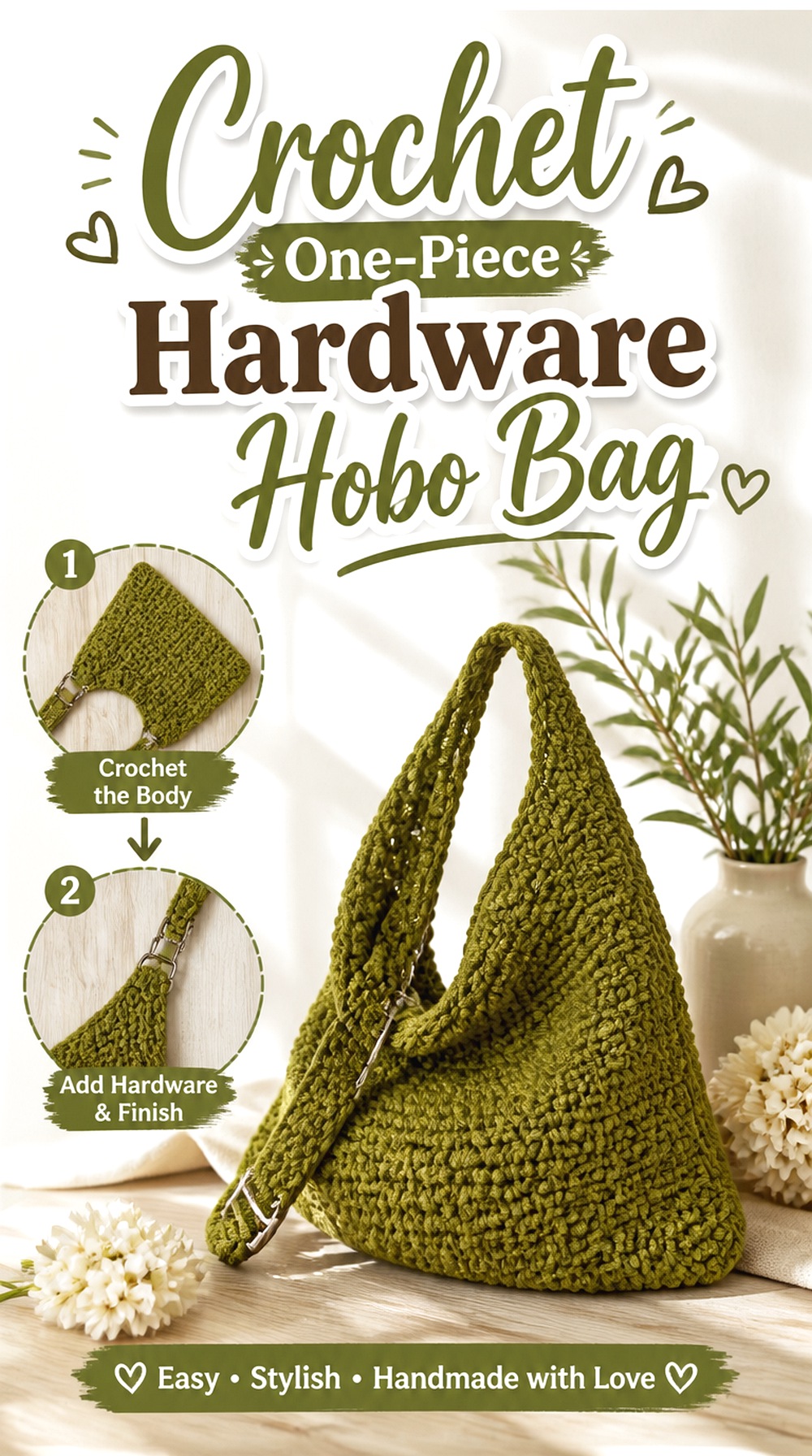
For a cleaner hobo shape, this one-piece construction is a useful contrast to bags assembled from several large panels. The source project combines a slouchy body with separate bag hardware, including an adjustable strap setup and a magnetic closure. See the source tutorial That mix keeps the crochet visually soft while giving the carrying and closing points more definition.
This approach works well for readers who like the casual shape of a handmade hobo but want hardware to make it feel more like an everyday shoulder bag. At oversized scale, the important choice is not simply adding width. The placement of the top opening and strap attachments determines how the larger body will gather when worn.
One-Piece Construction Keeps Seams Out of the Center
A continuous main body changes where the bag naturally folds. Instead of major panel seams controlling the drape, the fabric itself can create much of the slouch. That can produce a particularly fluid center section. When adapting the concept, pay attention to the widest point of the body and the narrowing near the opening; changing those proportions can turn an intentional hobo curve into a more generic pouch shape.
Hardware Gives the Opening More Control
An adjustable strap and magnetic snap address two common problems with very soft bags: carry length and an opening that spreads wider than expected. Hardware does not automatically make an oversized bag secure, though. Check that the attachment areas are appropriate for your yarn and intended use, and reinforce them if the chosen construction calls for it. Also confirm the creator’s installation guidance rather than improvising around components with different dimensions.
Original Tutorial and Creator Credit
Creator: Natessa | Sacred Crochet Art
3. Crochet One Piece Hardware Hobo Bag
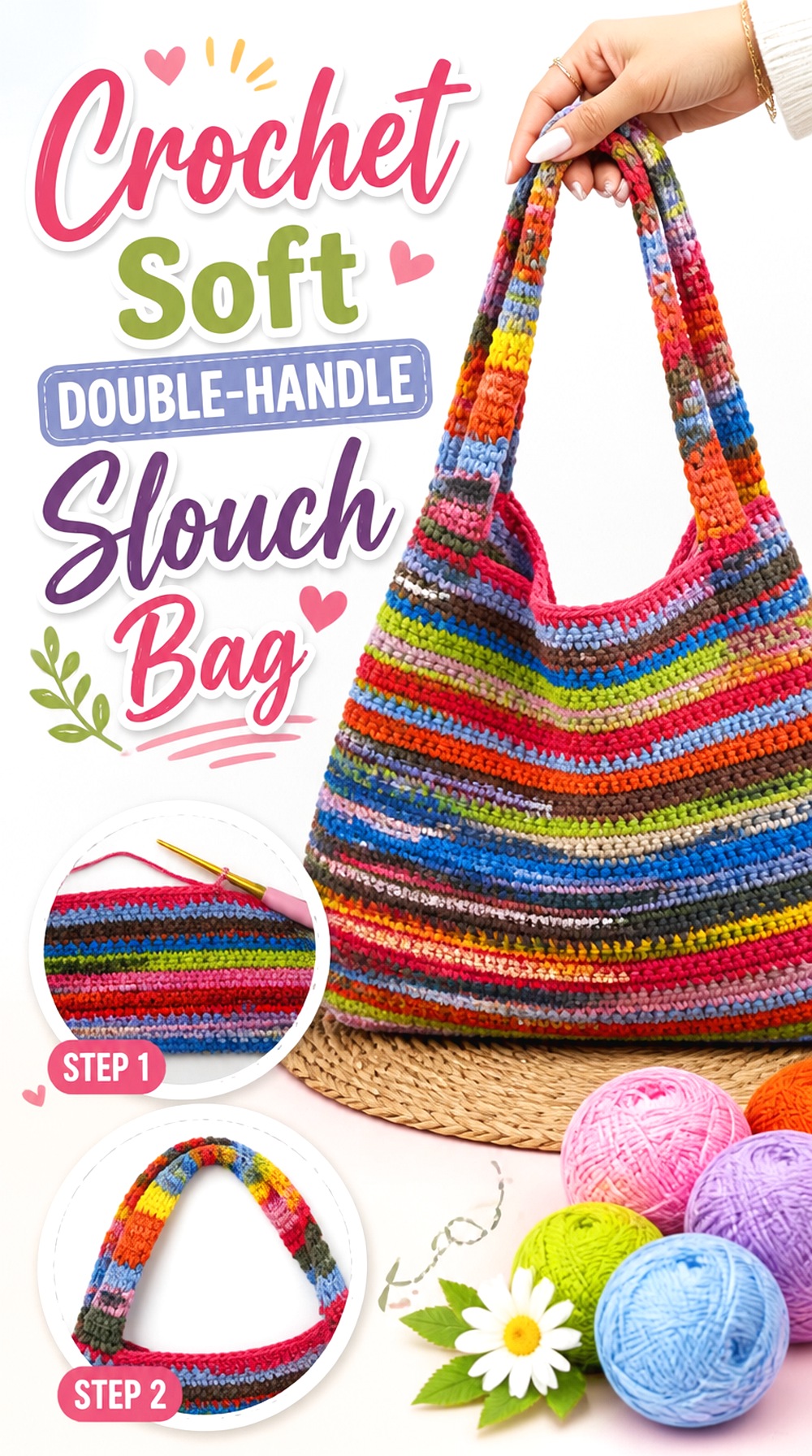
This version moves away from a single continuous hobo strap and uses two handles rising from a soft bag body. Kenikse Crochet’s tutorial separates the project into the base, main body, handles, and handle assembly, making the carrying structure easy to distinguish visually from the roomy body. Watch the source project
The double-handle format can be a good choice when you want a relaxed bag that still reads more like a tote or shoulder bag than a crescent hobo. A soft cotton-based fabric also puts more emphasis on how the handles connect to the body. For an oversized adaptation, those joins deserve as much planning as the bag’s overall width.
Built-In Handles Keep the Silhouette Casual
Two soft crochet handles allow the top of the bag to gather naturally between the carrying points. That can preserve slouch without adding metal hardware or a rigid handle. Before enlarging the body, look at how far apart the handles sit and how much opening remains between them. If the body grows but the handle placement stays unchanged, the top may fold much more dramatically than the original design.
Check the Handle Join Before Loading the Bag
A large bag transfers its carried load through the handle attachment area. Even when a tutorial demonstrates the correct construction for its original size, a significantly enlarged adaptation changes those proportions. Inspect the fabric at each join and make sure your chosen yarn is not creating excessive elongation there. If lining or reinforcement is part of your plan, coordinating it with the handle area can be more effective than treating it as a purely decorative interior finish.
Original Tutorial and Creator Credit
Creator: Kenikse Crochet
4. Crochet Maxi Ribbon Hobo Bag
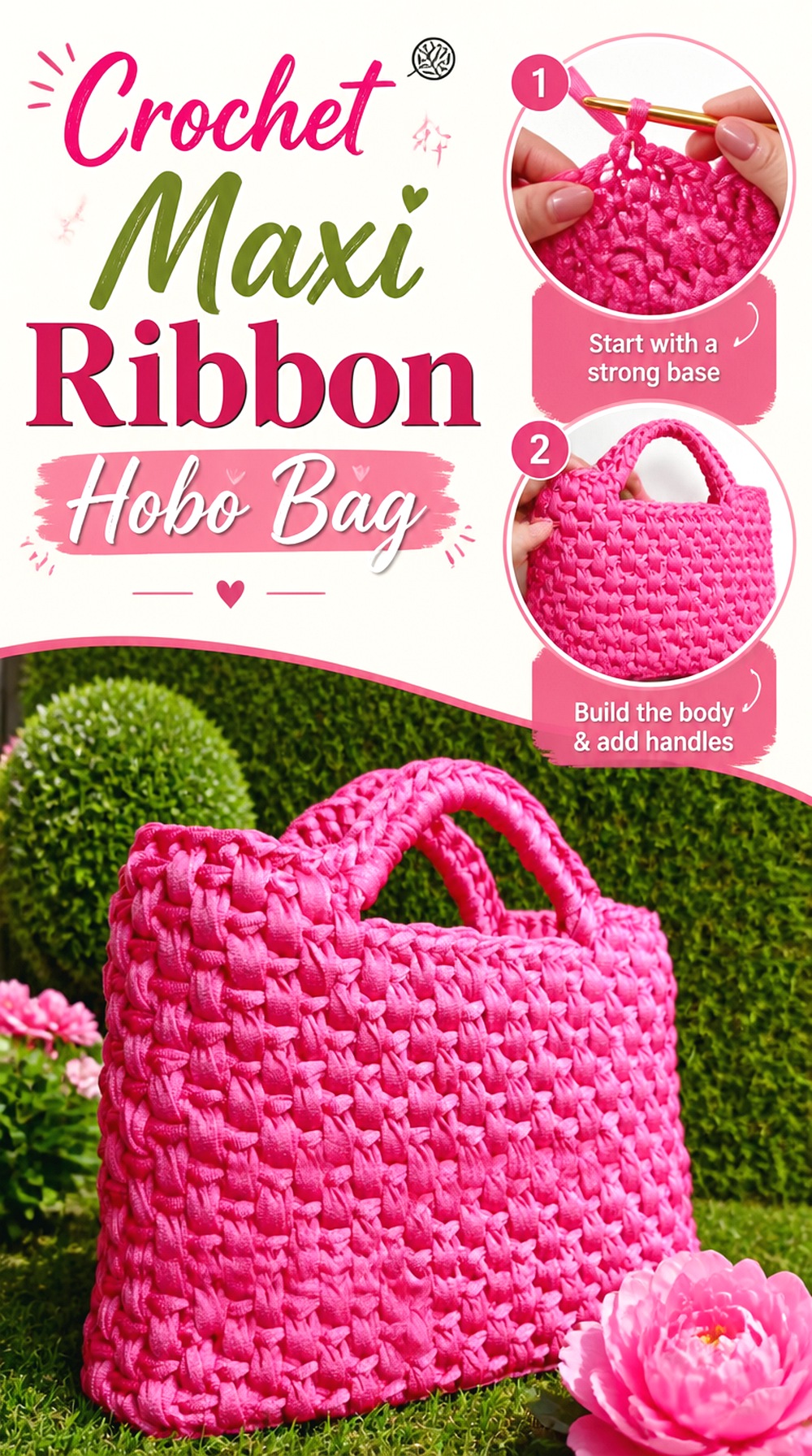
The scale is unmistakable in this maxi hobo concept. Little Creative Lab uses a soft ribbon-style material and builds a generously proportioned shoulder bag, with optional lining and closure hardware included in the project information. View the tutorial This is a strong direction when “oversized” means a deliberately dramatic accessory rather than simply a tote with a little extra capacity.
Ribbon yarn can create broad, readable stitches while remaining flexible enough for a large body to fold. The important styling choice is how low you want that body to hang. A maxi hobo can be visually appealing when empty, but its profile changes once contents settle into the deepest part of the bag.
Ribbon Yarn Makes the Maxi Scale the Main Feature
Wide ribbon-like yarn enlarges the visual texture along with the physical dimensions. That means you do not necessarily need complicated surface details for the bag to have presence. When substituting materials, compare thickness and flexibility rather than choosing only by color. A much stiffer substitute may hold the sides outward, while a very stretchy one may exaggerate the drop and change where the bag sits against the body.
A Lining Can Restrain the Deep Hobo Drop
An optional lining is more than a way to hide the inside of the stitches. In a deep oversized bag, it can also help control how far the crochet fabric expands around the contents and keep small items from working between stitches. If you want maximum puddling slouch, a very restrictive lining may work against that look. Plan the lining dimensions around the desired finished behavior instead of simply copying the outside shape without considering drape.
Original Tutorial and Creator Credit
Creator: Little Creative Lab
5. Crochet Deep Boho Bucket Tote
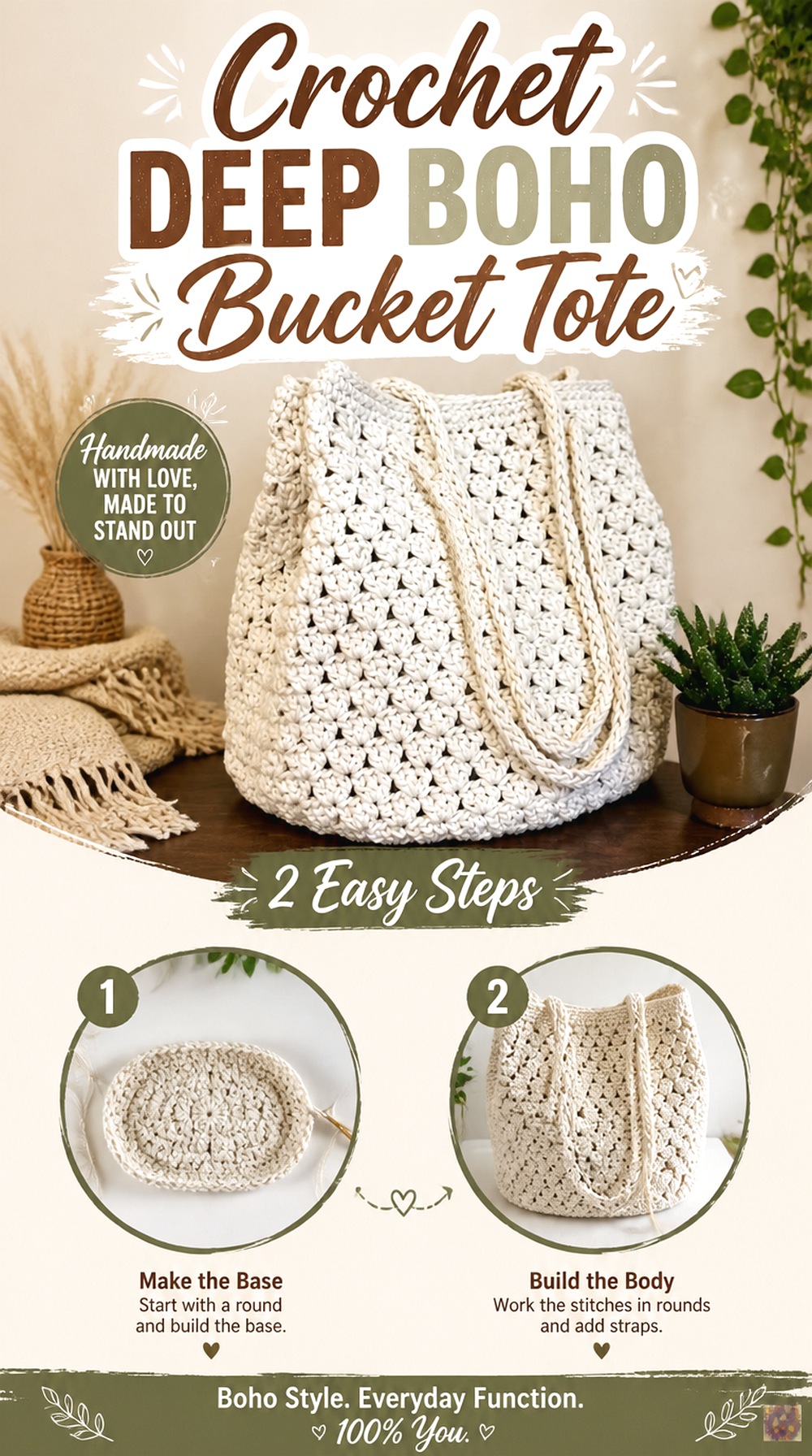
A bucket-inspired body provides roomy vertical storage without the sharply tapered neck of a traditional hobo. Kristines Crochets presents this project as a boho tote, shoulder, or bucket-style bag made with cord-type yarn, giving it a useful middle ground between a casual sack and a more defined tote. See the tutorial
The broad body makes this direction appealing when you want an oversized slouchy bag that is relatively easy to look into. It can accommodate bulk without relying on an extremely wide top. If adapting the scale, pay attention to depth as well as width; a taller bag may look spacious while making small belongings harder to reach at the bottom.
Depth Changes How This Bag Carries Bulky Items
A deep bucket body stacks contents more vertically than a broad shallow tote. That can be useful for soft, bulky belongings, but it also means the bag’s center of mass can settle lower as it fills. Decide whether you want that elongated silhouette before adding height. If everyday access is important, consider how easily you can reach the base while the bag remains on your shoulder rather than judging capacity only from its flat measurements.
The Bucket Shape Benefits From an Intentional Base
The base sets the footprint for the entire bag. If it becomes too flexible relative to the sides, the bottom can narrow around the contents and the finished object will behave more like a sack. That may be exactly the slouch you want, but it is worth choosing deliberately. For a clearer bucket profile, keep the base construction and body transition in mind when making yarn substitutions or considering a larger adaptation.
Original Tutorial and Creator Credit
Creator: Kristines Crochets
6. Crochet Classic Tapered Hobo Bag
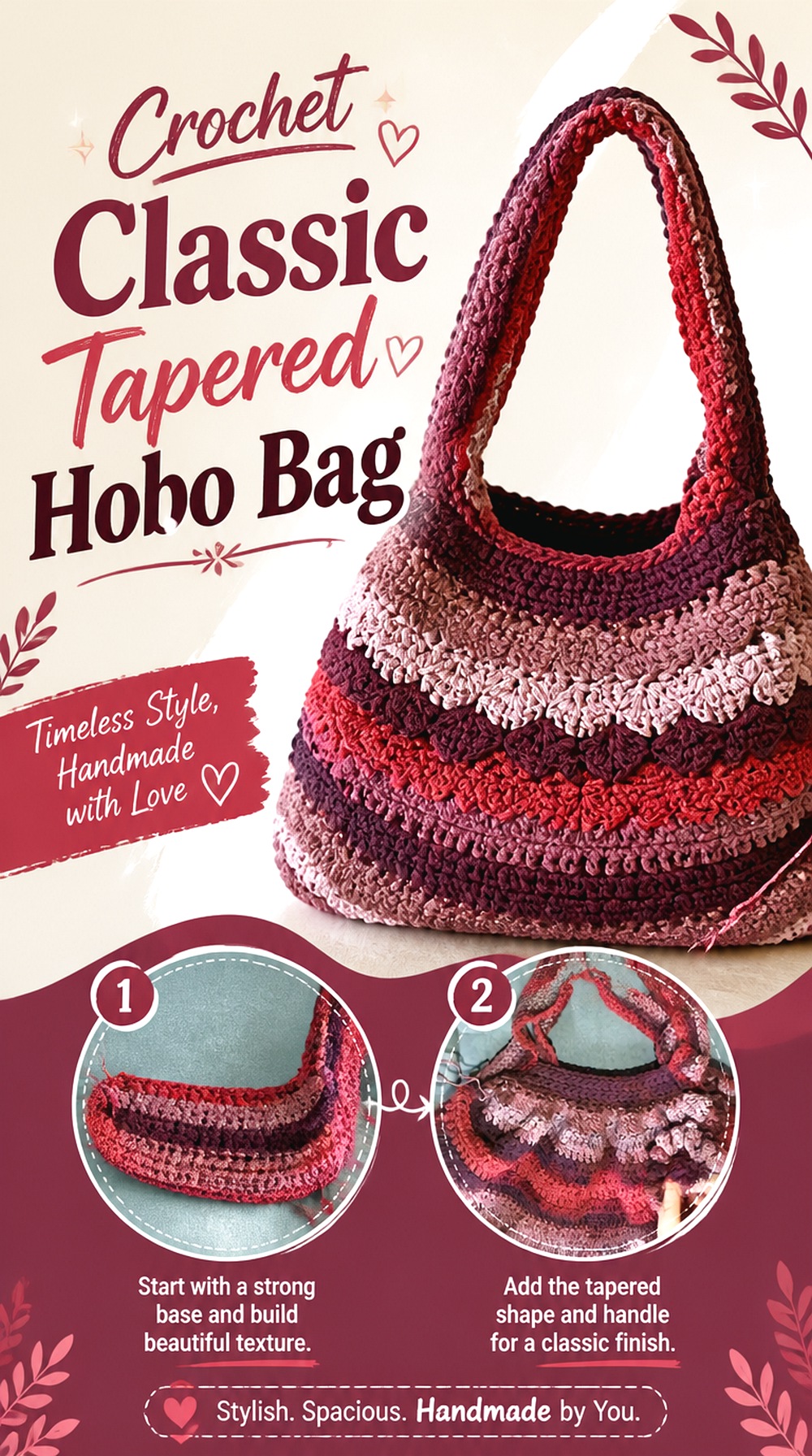
This is the recognizable hobo formula: a broad lower section that narrows as it moves toward the handles. Meladora’s Creations for Crochet demonstrates that classic shape without relying on a rectangular tote body. Open the tutorial The taper is what gives the bag much of its relaxed, gathered appearance even before choosing an especially drapey yarn.
For an oversized interpretation, this construction can be more body-hugging than a wide open tote because the narrower upper portion controls the bulk. It is a useful choice if you want generous capacity without a bag that remains equally wide from base to opening.
Tapering Pulls a Wide Body Into a Hobo Opening
The change in width is doing functional work, not just decorating the sides. A wide bottom gives room for contents, while the narrowing top draws the fabric inward and encourages folds to form. When resizing, preserve that relationship rather than adding the same amount everywhere. If the opening becomes almost as wide as the lower body, the design can lose the visual tension that distinguishes a hobo from a regular tote.
Handle Symmetry Matters More on a Soft Body
A soft bag reveals uneven handle placement quickly because the fabric hangs from those points. Before finishing, compare both sides and check that the handles pull the top edge evenly. This becomes more noticeable at oversized scale, where a small imbalance can influence a larger expanse of fabric. Blocking or careful finishing can improve presentation, but it cannot fully compensate for attachment points that do not mirror one another.
Original Tutorial and Creator Credit
Creator: Meladora’s Creations for Crochet
7. Crochet Net Texture Snap Hobo Bag
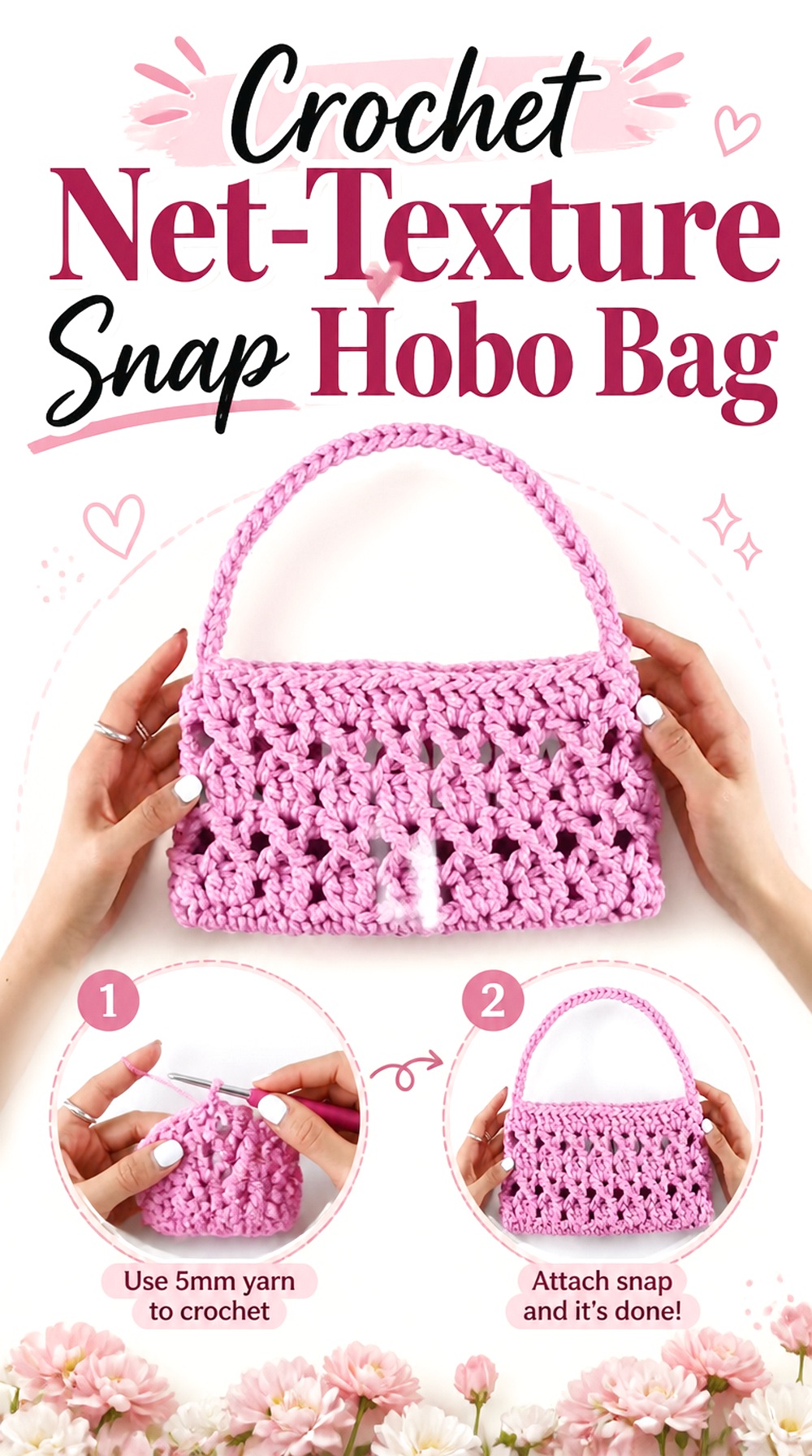
This hobo adds an airy net-textured body to the soft shoulder-bag format. The tutorial from 슈퍼스토리 크로셰 superstory crochet combines a shaped base, open-textured body, narrowing toward the top, shoulder strap, and snap closure. View the source video The result gives the oversized look more visual lightness than a densely stitched chunky bag.
That openness changes function as well as appearance. A netted fabric can expand around larger belongings, but small objects receive less containment unless another layer is added. This makes the idea particularly useful for comparing “slouch” created through openwork with slouch created through soft solid fabric.
Open Texture Adds Drape but Reduces Small-Item Security
A net-style body has space to flex and spread, which can make a large bag look relaxed without requiring an extremely soft fiber. The trade-off is obvious once keys, pens, or other small items enter the picture. If those are part of your daily carry, consider a removable pouch or lining rather than assuming the open crochet will contain everything. Any lining should still allow enough movement for the intended hobo profile.
A Snap Works Differently From a Fully Closed Top
A central snap helps bring the two sides of the opening together while leaving space around it. That is convenient for quick access, but it should not be treated as equivalent to a zipper or drawstring. Think about where and how you will carry the bag. If complete containment matters, the openwork body and partial closure may call for an inner pouch even if you prefer to leave the exterior visually light.
Original Tutorial and Creator Credit
Creator: 슈퍼스토리 크로셰 superstory crochet
8. Crochet Two Square Lined Slouch Tote
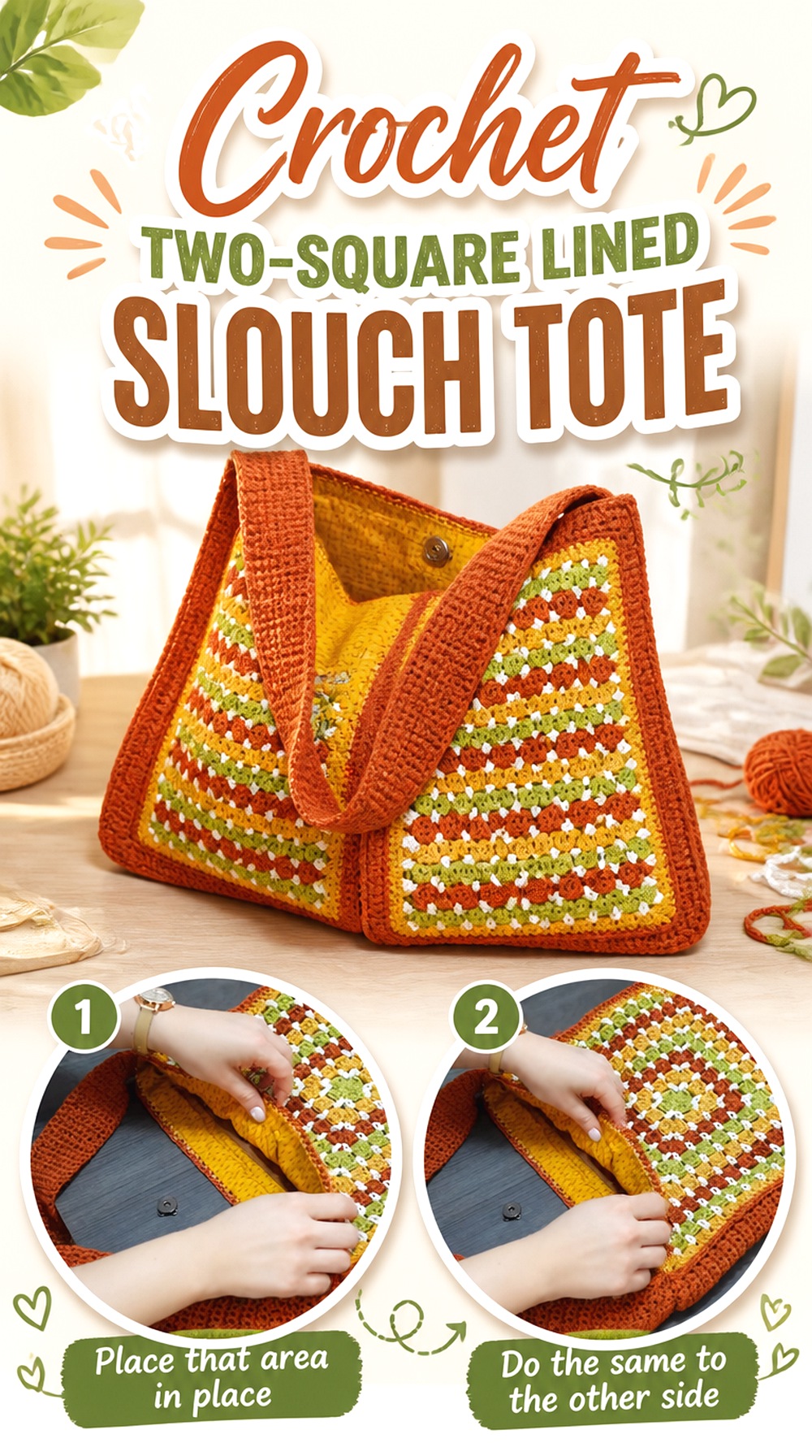
9. Crochet One Piece Longline Shoulder BagThis idea uses large square panels as the visual foundation, then adds the side, bottom, and strap structure around them. Brunaticality’s tutorial also includes a lining, interior pocket, and magnetic closure, which makes it particularly useful for readers who like a handmade slouchy exterior but want more organization inside. See the project video
Compared with a tapered hobo, the two-square format begins with a more geometric body. Slouch develops as those broad panels flex rather than from dramatic side shaping. At a larger scale, the panels create a strong visual field for texture or color while the lining can help keep the finished bag from stretching without control.
Square Panels Make Width Easy to Read
A large panel gives you a clear sense of the bag’s eventual face before assembly, which can make proportion planning more intuitive than a continuously shaped hobo. The important caution is that finished panel dimensions depend on actual blocked fabric, not a guessed size from yarn labels. If adapting the concept, measure your panel after it settles and compare it with the intended bag width before committing to side and strap pieces.
The Lining, Pocket, and Magnet Change Daily Use
This construction shows how interior features can shift a crochet bag from a simple carrier toward an organized everyday tote. A lining helps isolate small items from the crochet fabric, a pocket gives frequently used objects their own place, and a magnet narrows the opening. Those details are especially useful in a large bag, where everything otherwise collects in one space. Decide on them before final assembly so the interior plan matches the exterior dimensions.
Original Tutorial and Creator Credit
Creator: Brunaticality
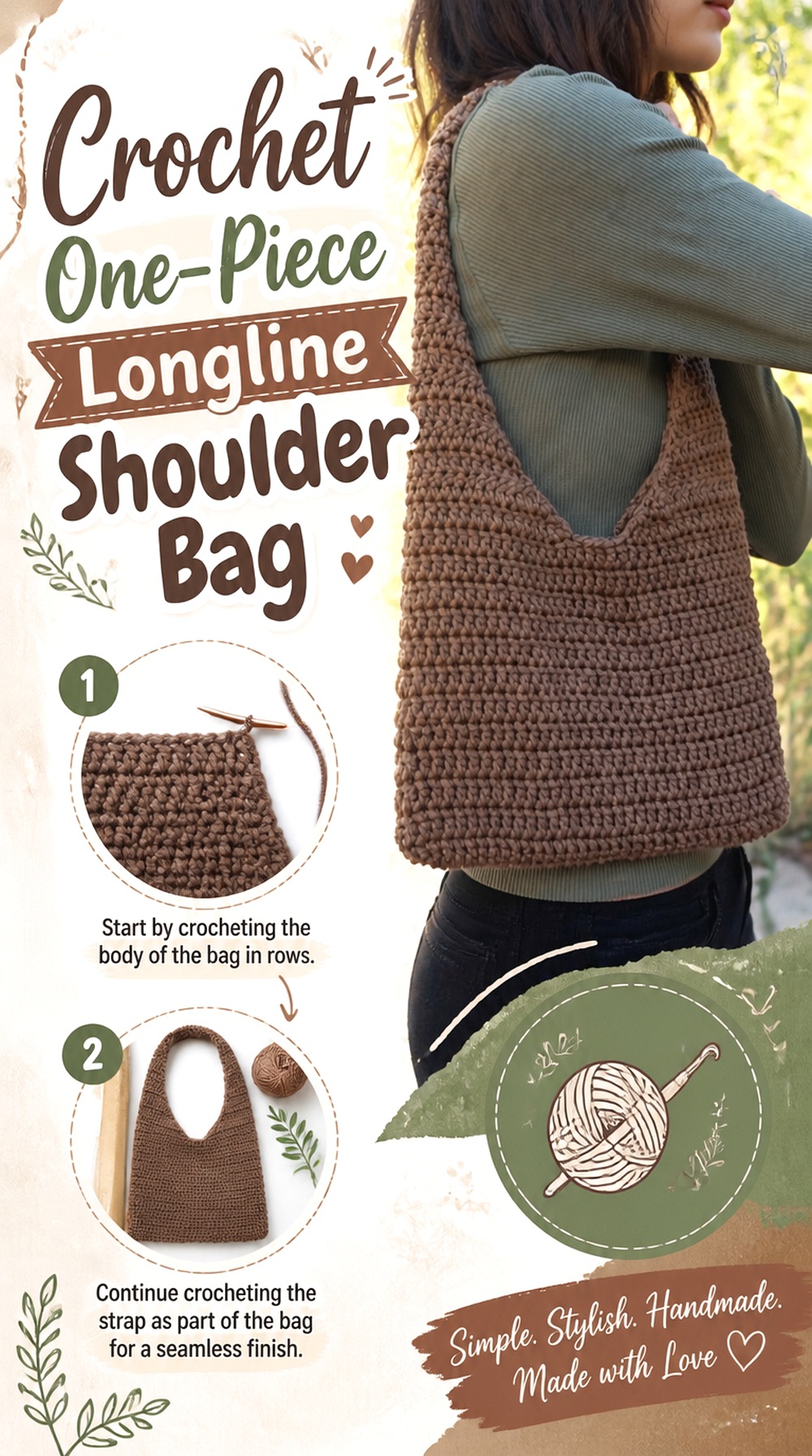
VivCrochets demonstrates a one-piece shoulder-bag construction with minimal sewing and notes that the bag length can be adjusted to create more space. Watch the source tutorial That makes this a useful adaptation route when you want an oversized slouchy profile without assembling several motifs or separate body panels.
A longer body naturally emphasizes vertical drop, so this shape feels different from a broad tote even at similar capacity. The construction is especially appealing if you want the strap and body to flow together visually. The main decision is how much additional length remains practical once the bag hangs from the shoulder and contains real belongings.
Adjustable Length Lets the Body Become Roomier
Adding body length is a straightforward way to increase apparent capacity, but it also moves the lowest part of the bag farther from the shoulder. Before making a dramatic change, compare where you want the bottom to sit against your body. A bag that looks pleasantly elongated when empty may hang much lower after the fabric stretches around its contents. Use the creator’s adjustment guidance rather than assuming unlimited length will preserve the original behavior.
Decreased Straps Create a Softer Shoulder Transition
When the body narrows gradually into the carrying section, the top feels visually integrated rather than like a separate strap attached to a pouch. That transition is part of the bag’s slouchy character. If changing width or yarn, watch how quickly the body narrows. Too abrupt a transition can bunch the fabric near the shoulder, while too little shaping may leave a broad opening that does not gather as intended.
Original Tutorial and Creator Credit
Creator: VivCrochets
10. Crochet Curved Crescent Sling Bag
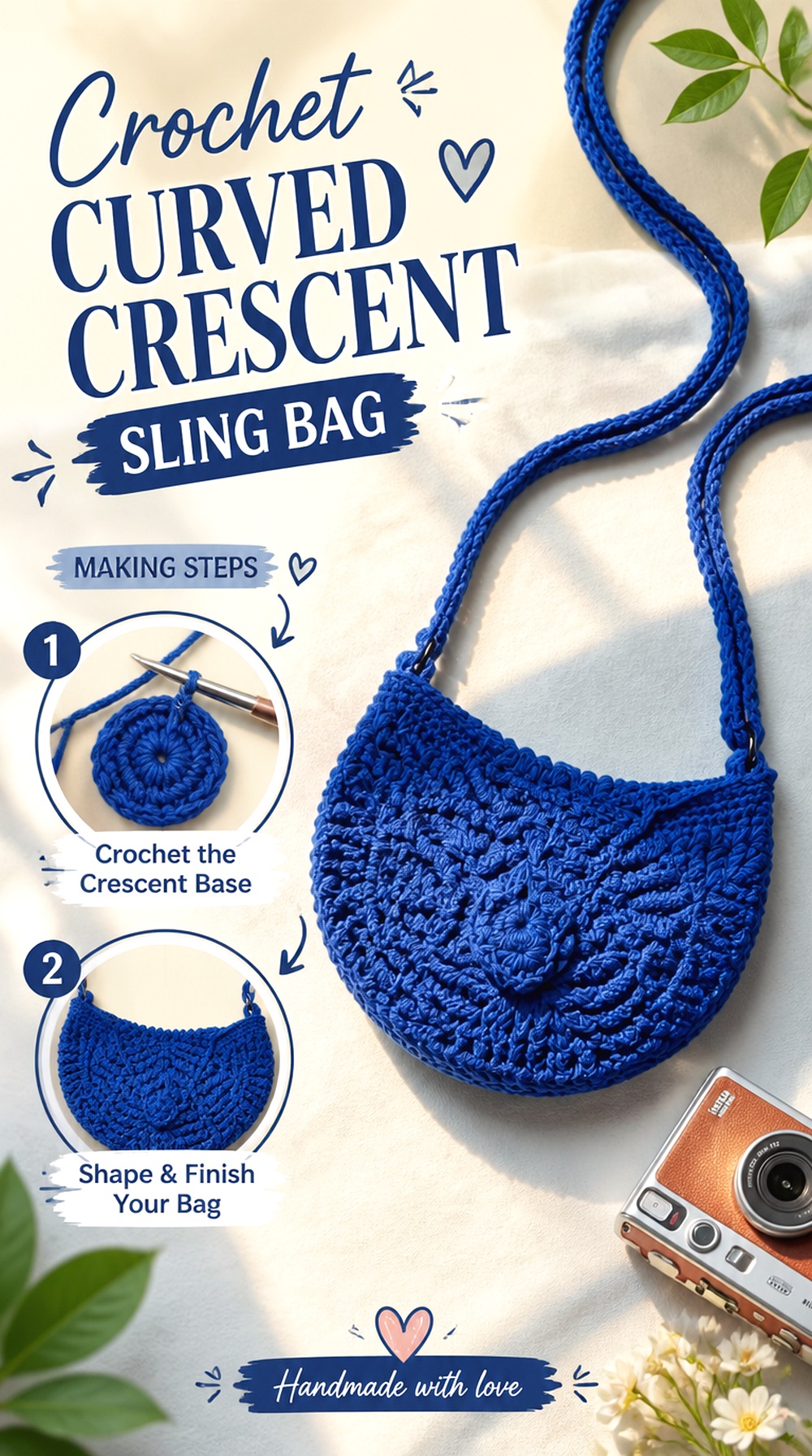
A crescent bag concentrates its volume along a curved lower edge instead of letting a rectangular body hang straight down. tinycrochet’s tutorial demonstrates that curved silhouette with macramé cord, hardware, and an adjustable strap. See the crescent tutorial The source project also incorporates motif construction, giving the surface more character than a plain curved pouch.
For an oversized slouchy version, the crescent shape is attractive because extra width can wrap across the body rather than creating only more vertical depth. It is a good direction for readers who want the relaxed capacity of a hobo with the closer fit of a sling or shoulder bag.
Curved Panels Help the Bag Sit Closer to the Body
A crescent’s lower arc allows the bag to follow the hip more naturally than a flat-bottom rectangle. That means “larger” does not have to mean “farther away from the body.” When adapting the scale, consider width and curvature together. Simply deepening the center can create a pouchier result, while extending the arc changes how broadly the bag wraps. Preserve the relationship that gives the original its crescent identity.
D-Rings and an Adjuster Make Strap Fit More Flexible
Separate hardware lets the strap length become a fitting choice rather than a fixed part of the crochet body. That is useful with a larger bag because the ideal carry position may change depending on clothing layers and how much the body drops when filled. Check that any substituted D-rings, clips, or adjuster components fit the strap width and that the attachment tabs remain secure before relying on them for regular use.
Original Tutorial and Creator Credit
Creator: tinycrochet
11. Crochet Hexagon Panel Slouch Carryall
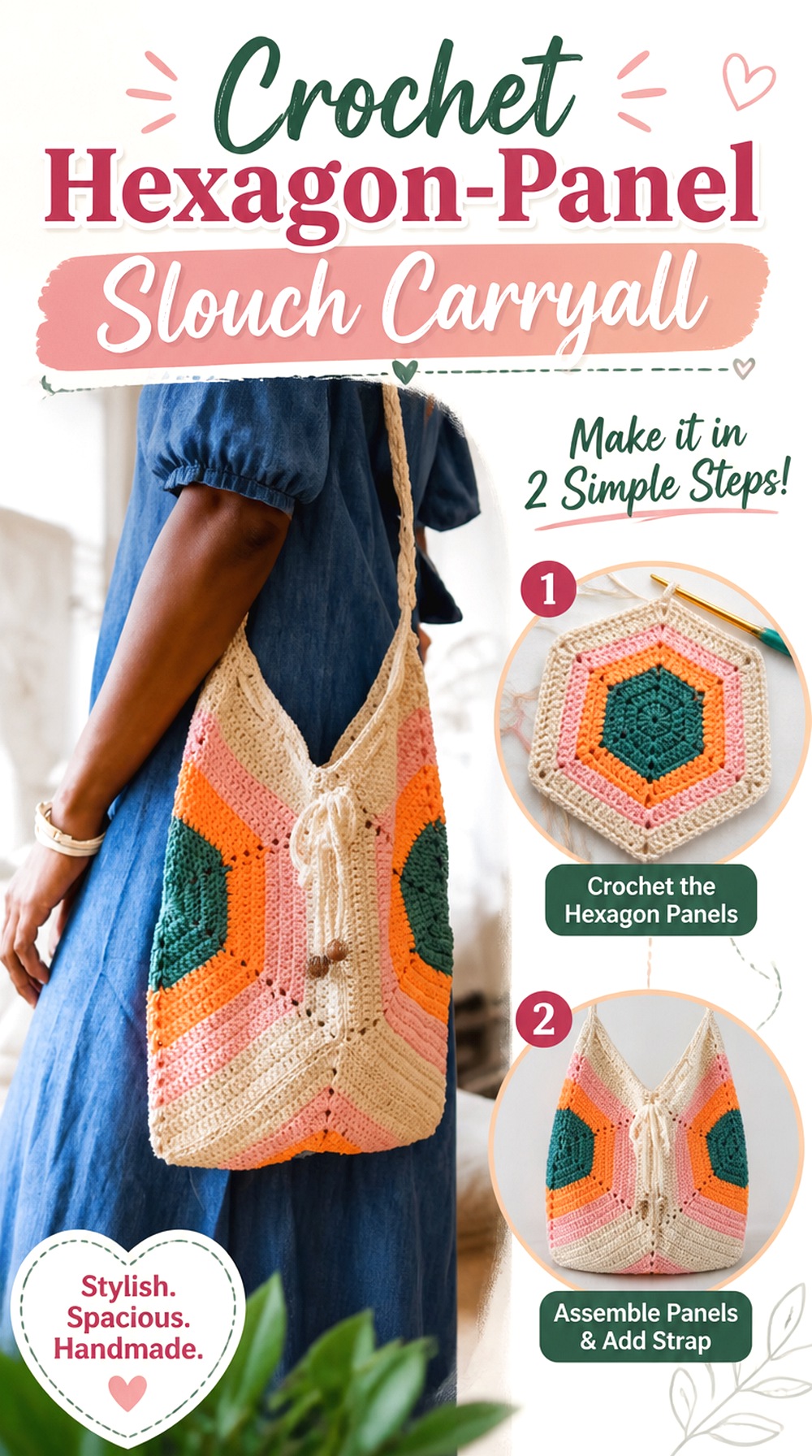
Motif bags do not have to rely on classic square panels. TL Yarn Crafts’ Tobago Bag tutorial uses hexagon-based geometry to create a distinctive bag shape, making it a useful source for a roomy slouchy carryall with more visible construction lines. See the Tobago Bag tutorial
The appeal here is the way the joined shapes create volume. Instead of crocheting one large uninterrupted body, you build recognizable pieces whose edges become part of the finished silhouette. For an oversized adaptation, that means motif dimensions matter immediately. Increasing the number or size of motifs changes not only capacity but also where seams fall and where the bag naturally folds.
Motif Geometry Creates Volume Without a Plain Rectangle
Hexagons introduce angled edges that can produce a more sculptural slouch than conventional square panels. Before changing the size, lay out the blocked motifs in their intended relationship and look at the overall footprint rather than judging each piece separately. A small change to every motif multiplies across the assembly, so total dimensions can shift more than expected. Planning the layout first also helps you decide whether the final bag will feel wide, deep, or both.
Seams Need to Carry Both Shape and Load
In a motif-built bag, joins are structural lines as well as decorative ones. They determine how the pieces bend together and ultimately help transfer the bag’s contents toward the straps. Consistent motif size and joining tension therefore matter more than perfect visual uniformity alone. If one piece blocks noticeably differently from the others, correct that discrepancy before final assembly instead of expecting the joining process to hide it.
Original Tutorial and Creator Credit
Creator: TL Yarn Crafts
12. Crochet Textured Boho Crossbody Hobo
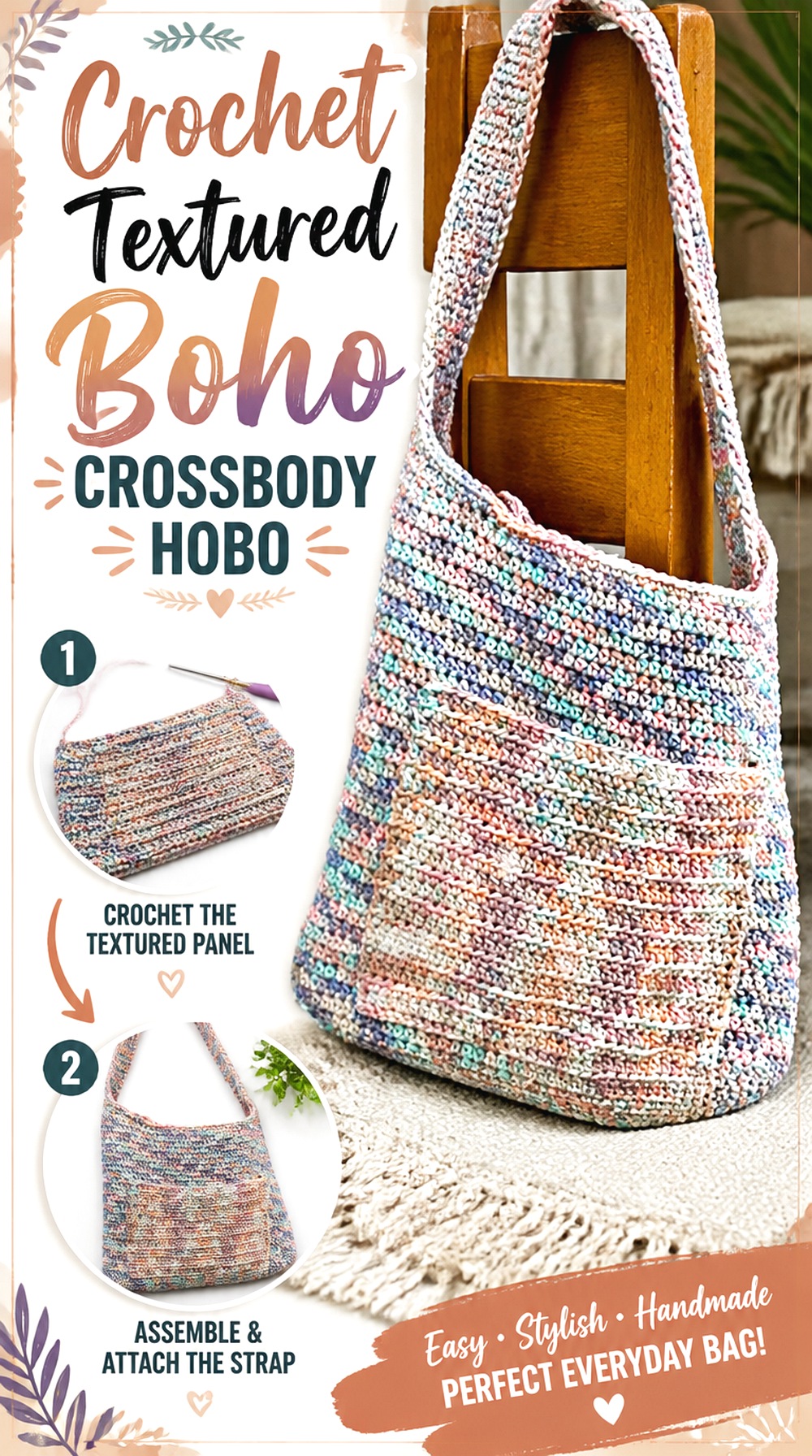
This boho option stretches the slouchy-bag idea into crossbody territory. JolieKnots Handmade’s tutorial features a roomy textured body and pays separate attention to the base, strap, and final assembly. View the tutorial That makes it a worthwhile choice for someone who wants more carrying flexibility than a short shoulder hobo provides.
A crossbody strap changes the way an oversized bag behaves. The body is held against the hip from a longer suspension point, so both strap stretch and bag depth affect the fit. Texture also adds visual density, which can help a large single-color bag look detailed without relying on patchwork or several materials.
A Longer Strap Changes the Slouch Into a Sling
Crossbody length places the body lower and usually closer to the torso than a short hobo handle. With a roomy bag, that makes strap length a practical fit decision. Check the intended wearing position while the bag contains some representative weight rather than measuring the empty strap in isolation. If adapting the tutorial, confirm how the creator builds strength into the strap instead of simply extending a narrow crochet strip indefinitely.
Texture Can Hide Stretch Until the Bag Is Loaded
Raised or strongly patterned fabric can look substantial on the table even when the underlying yarn remains flexible. Once filled, the same fabric may lengthen more than its appearance suggests. Make a small fabric sample if you are substituting yarn and observe how it behaves when gently loaded. This is particularly useful before committing to a large body, because an oversized crossbody bag magnifies any unexpected vertical stretch.
Original Tutorial and Creator Credit
Creator: JolieKnots Handmade
13. Crochet Vintage Pearl Handle Bucket Bag
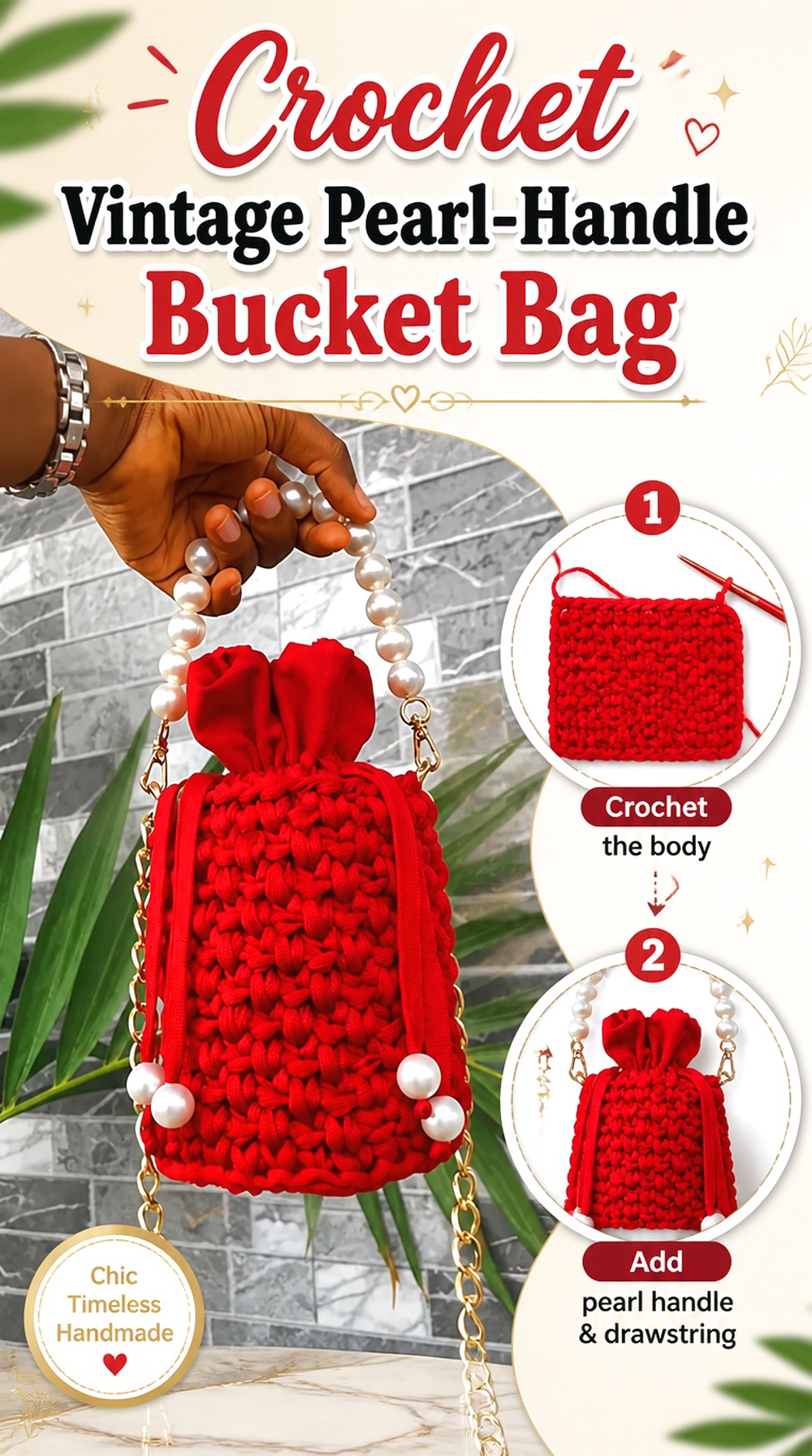
This bucket idea replaces the usual soft crochet handle with a decorative pearl-style handle and additional bag hardware. Craftorria’s tutorial draws on a vintage bag look, combining a circular base, bucket body, rigid decorative handle, rings, and chain elements. See the vintage bag tutorial
For an oversized interpretation, the contrast between soft body and firm handle is the interesting part. Instead of allowing the whole bag to collapse, the upper edge remains visually anchored by the hardware. It is therefore better suited to someone who wants controlled slouch rather than a hobo that folds completely into itself. Scale the decorative components thoughtfully so they do not look undersized against a substantially enlarged body.
A Rigid Decorative Handle Limits the Slouch at the Top
A firm handle creates a fixed visual line above flexible crochet. The body may still gather and fold, but the opening cannot behave exactly like a soft integrated hobo strap. That gives the bag a dressier, more defined profile. When enlarging the body, check whether the chosen handle still spans the opening appropriately. A handle that works at the original scale may look disproportionately small or force excessive gathering on a wider bag.
Round-Base Balance Prevents a Lopsided Bucket
A circular base encourages the body to expand evenly around its perimeter. If the transition into the sides is uneven, the distortion can become noticeable because the decorative handle draws attention to the center line. Before attaching hardware, place the unfinished bag upright and check that the body rises consistently from the base. Correcting obvious asymmetry early is easier than trying to disguise it after the handle and chain are installed.
Original Tutorial and Creator Credit
Creator: Craftorria
14. Crochet Multicolor Mesh Slouch Tote
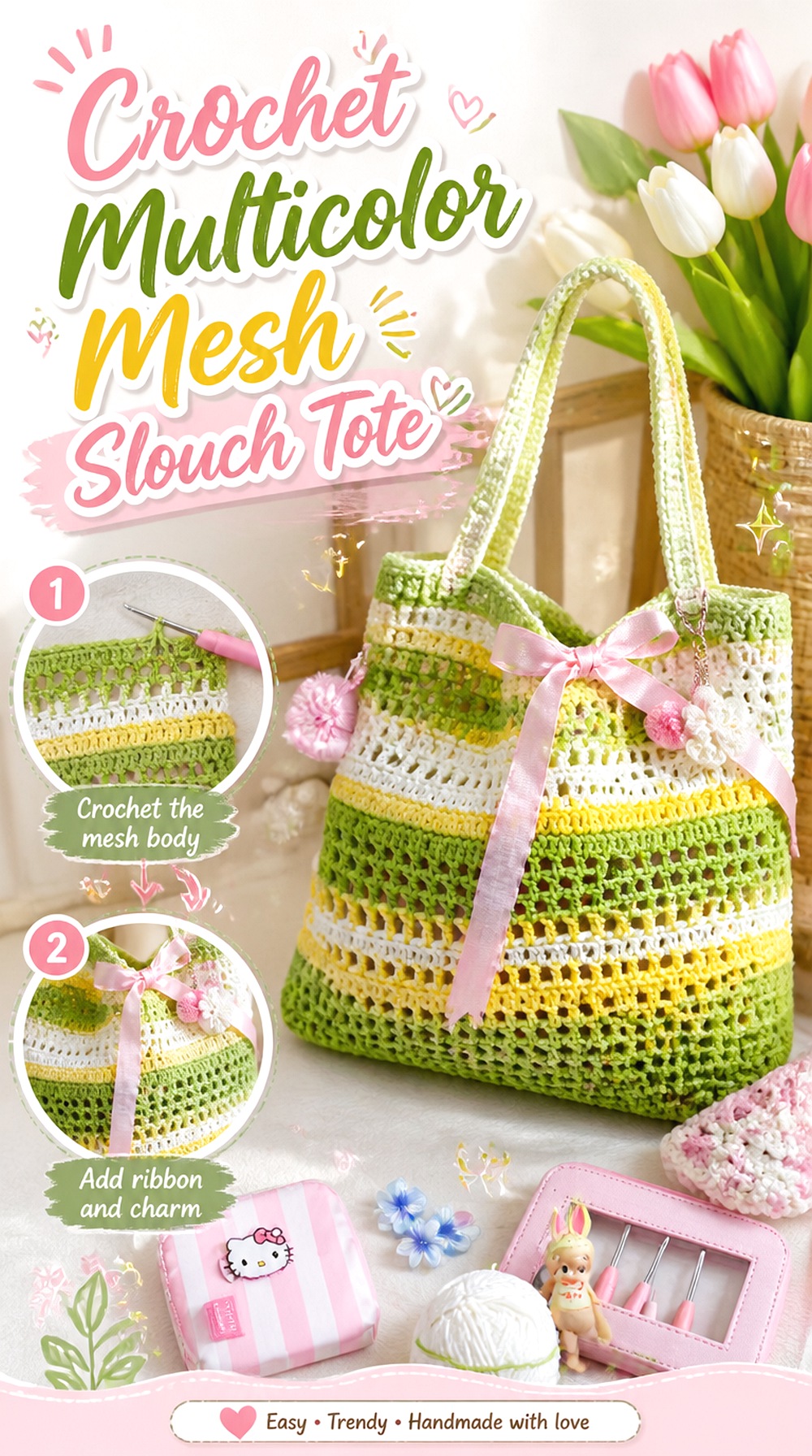
For maximum visual lightness, this mesh tote replaces dense bag fabric with an expandable open structure. mahum 🎀 demonstrates a mesh bag that can be customized in size and incorporates color changes, making it a useful source when the oversized effect should feel airy instead of heavy. See the mesh tote tutorial
Mesh behaves very differently from a solid hobo. It can look relatively compact when empty and then spread significantly around its contents. That flexibility is part of the appeal, but it also means the apparent finished size does not tell the whole story. Choose this idea when expansion is desirable and you are comfortable planning how smaller belongings will be contained.
Open Mesh Expands More Than It Appears Flat
The spaces in mesh give the fabric more room to change shape under load. A bag photographed empty can therefore look narrower or shorter than it becomes during actual use. If you are customizing dimensions, stop periodically and evaluate the fabric’s relaxed and gently stretched states. Making a mesh bag dramatically larger without checking expansion can produce more volume than expected and may also move the bottom lower once filled.
Keep Small Essentials Contained Inside the Openwork
Mesh is excellent for bulky items that are larger than the openings, but it is less forgiving with coins, pens, small cosmetics, or loose accessories. A separate zip pouch, fabric liner, or other inner organizer can solve that problem without changing the exterior concept. Choose an interior solution based on how much expansion you want to retain; a close-fitting non-stretch lining will make the finished bag behave differently from unrestricted mesh.
Original Tutorial and Creator Credit
Creator: mahum 🎀
15. Crochet Four Square Zippered Cross Bag
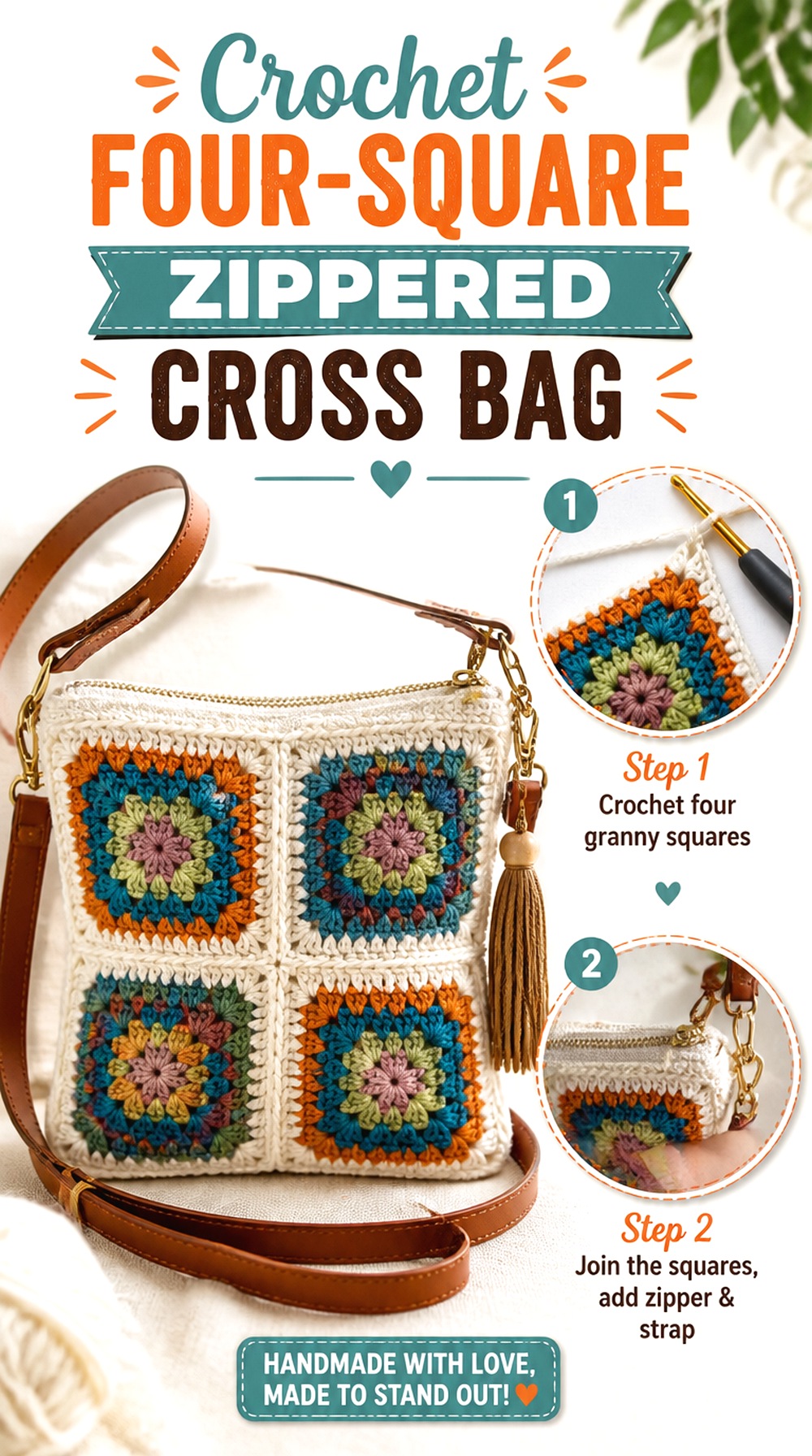
Granny-square bags often lean casual and open, but this version adds features that give the motif construction much more containment. CJ Design’s project uses four granny squares and incorporates a lining, zipper, D-rings, and clip-on strap hardware. That combination makes it a useful direction for an oversized slouchy bag when you want decorative motifs without leaving the top completely open.
Because the body is built from repeated squares, the finished scale begins with blocked motif dimensions. A larger square or expanded layout can increase capacity, but the zipper and lining must still match the resulting opening. Plan those three elements together instead of treating the interior finish as an afterthought.
Four Granny Squares Turn Motifs Into a Secure Bag
Repeated square panels create strong visual structure even when the assembled fabric slouches. For enlargement, measure completed blocked motifs rather than estimating from the hook or yarn alone. If the squares differ noticeably in size, the joins can pull the bag off-center. Keeping the panels compatible also makes later zipper installation easier because the top edges are more likely to align cleanly.
A Zipper and Lining Reduce the Usual Granny-Bag Openness
A lined, zippered interior changes what a granny-square bag can comfortably contain. Small belongings stay separated from motif openings, while the zipper gives a more complete top closure than a single snap. The trade-off is reduced free stretch: the fabric shell can only expand as far as the lining and zipper arrangement allow. For an oversized version, decide whether controlled capacity or maximum flexible slouch matters more before cutting lining fabric.
Original Tutorial and Creator Credit
Creator: CJ Design
16. Crochet Fan Stitch Drawstring Slouch Bag
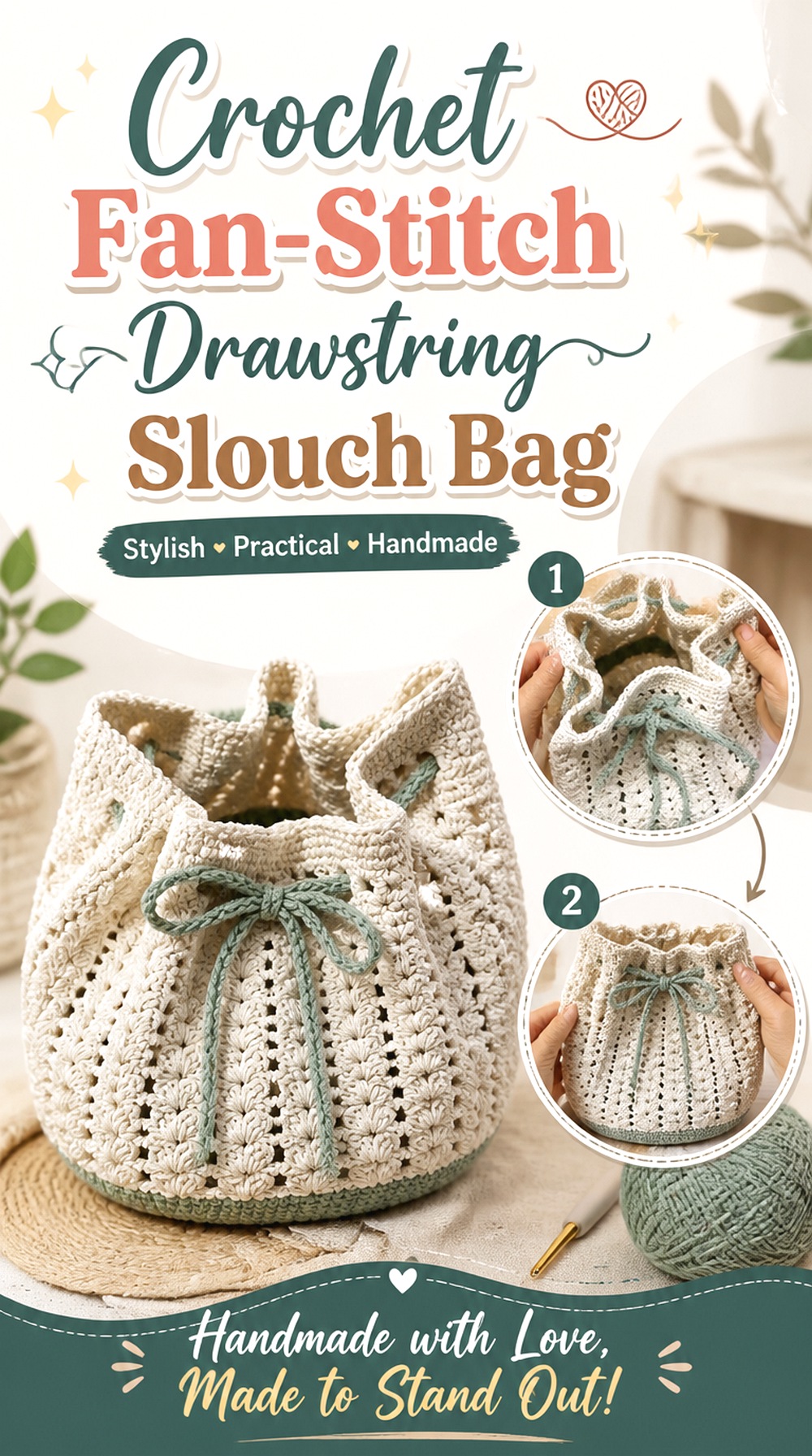
A drawstring gives an oversized soft body an entirely different upper profile. August Craft & Crochet’s tutorial combines a solid round base, decorative fan-style body, and drawstring closure. Instead of tapering permanently into a hobo neck, the opening can gather when closed and relax when access is needed.
This makes the design appealing for readers who like bucket or sack capacity but want a way to control the top. The contrast between a stable-looking base and decorative body also helps visually separate structure from drape. If you enlarge the bag, make sure the closure still gathers the full circumference comfortably rather than leaving an unexpectedly wide gap.
The Drawstring Narrows a Roomy Body Fast
A drawstring can transform a broad opening into a compact gathered top without requiring a zipper. That makes it practical for a bag that needs to open wide for access. On a much larger adaptation, however, the distance the cord must travel also changes. Follow the creator’s construction logic and test the gathering action before final finishing so you can confirm that the opening closes to the degree you expect.
A Solid Base Is Useful Under Decorative Open Texture
Decorative stitches can make the body feel light and flexible, while a more continuous base provides a clearer platform underneath the contents. That combination can help preserve a bucket-like footprint without making the entire bag dense. When substituting yarn, compare how the base and decorative body behave together. If one section is dramatically stiffer than the other, the transition may become more pronounced than in the source project.
Original Tutorial and Creator Credit
Creator: August Craft & Crochet
17. Crochet Paper Yarn Oversized Summer Tote
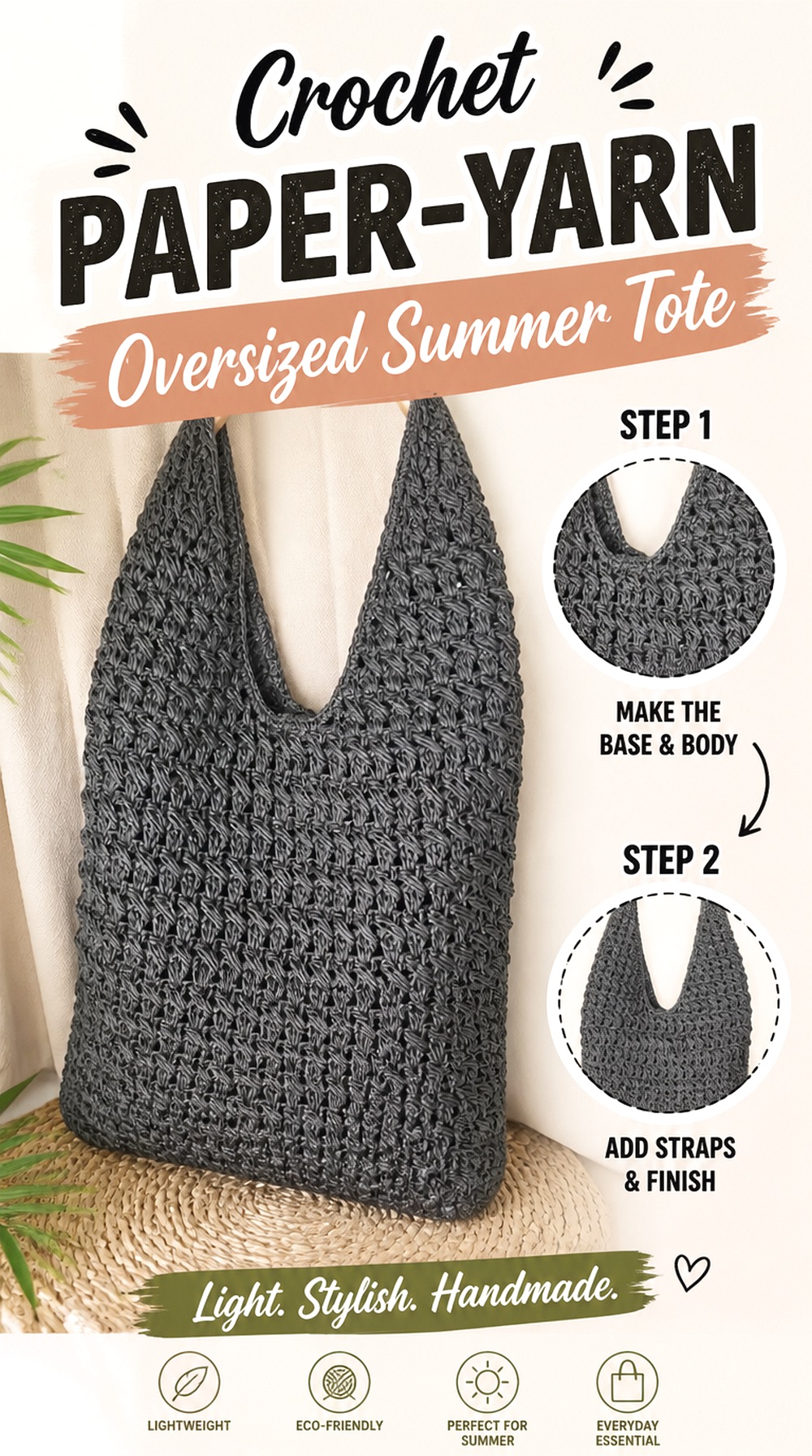
Besma Handmade’s tutorial is explicitly built around a large tote made with paper yarn, giving this list a more structured-looking oversized option. See the large tote tutorial Rather than emphasizing deep hobo folds, the material and broad tote format put more attention on the bag’s overall outline.
This idea suits readers who want generous dimensions but prefer the body to read as a substantial summer tote instead of a floppy sack. Paper-style yarn also deserves deliberate handling because it does not necessarily behave like ordinary soft yarn. If substituting another fiber, expect the amount of collapse, surface definition, and handle behavior to change with it.
Paper Yarn Shifts the Look Toward Structure
A material with more body can preserve the silhouette of a wide tote even when the bag remains flexible enough to carry comfortably. That creates a different kind of slouch: the sides may relax rather than completely puddle. If your goal is a very soft hobo effect, replacing the specified material with a much drapier yarn may move the project away from its original character. Compare fabric samples before committing to the full oversized scale.
Oversized Proportions Need Comfortable Handle Placement
A large tote can look balanced on the table yet feel awkward if the handles are too close together, too short for the desired carry style, or positioned where the upper edge folds excessively. Before finalizing an adaptation, simulate the opening width and shoulder position with the unfinished bag. The goal is not to invent a universal handle length but to make sure the proportions work with your intended carry method and the fabric’s actual flexibility.
Original Tutorial and Creator Credit
Creator: Besma Handmade
18. Crochet Relaxed Sack Shoulder Bag
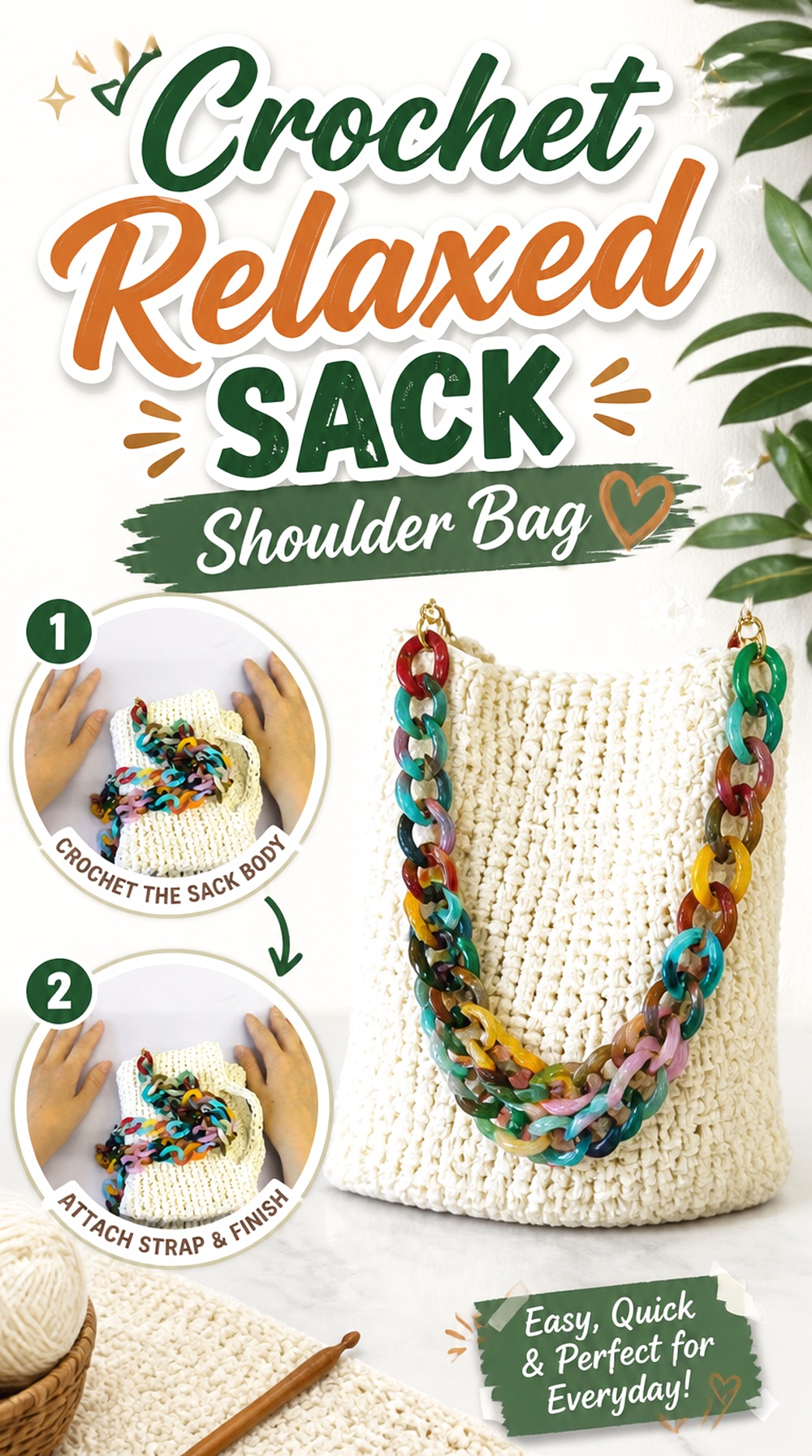
A sack bag is one of the simplest ways to let the fabric itself create the silhouette. Elena Rain Crochet’s tutorial focuses specifically on a crochet sack bag, making it a useful contrast to more engineered crescent, panel, and hardware-heavy designs in this collection.
For an oversized interpretation, the appeal is the natural pooling of a generous body beneath a comparatively controlled top. There is less need for the sides to hold a precise geometric outline. That freedom makes yarn behavior especially noticeable: a flexible fabric emphasizes the sack effect, while a firmer material can make the same construction look closer to a bucket or upright tote.
A Sack Silhouette Lets the Body Pool Naturally
Unlike a rigid tote, a sack does not need every side to remain vertical. The lower section can spread around its contents and form its own folds. If you want a dramatic oversized version, focus on how the depth interacts with the carrying point rather than simply making the circumference larger. Too much downward extension may place the bottom lower than is comfortable once the fabric and contents settle.
Top Finishing Determines Whether the Slouch Looks Intentional
Because the body is deliberately relaxed, the opening and upper edge provide important visual control. A clean top helps the lower folds read as intentional drape rather than general distortion. Before finishing, check whether the opening lies evenly and whether the shoulder section pulls more strongly to one side. Correcting those small alignment issues can make a simple sack silhouette look much more balanced without adding extra structure.
Original Tutorial and Creator Credit
Creator: Elena Rain Crochet
19. Crochet Soft Rim Everyday Bucket Bag
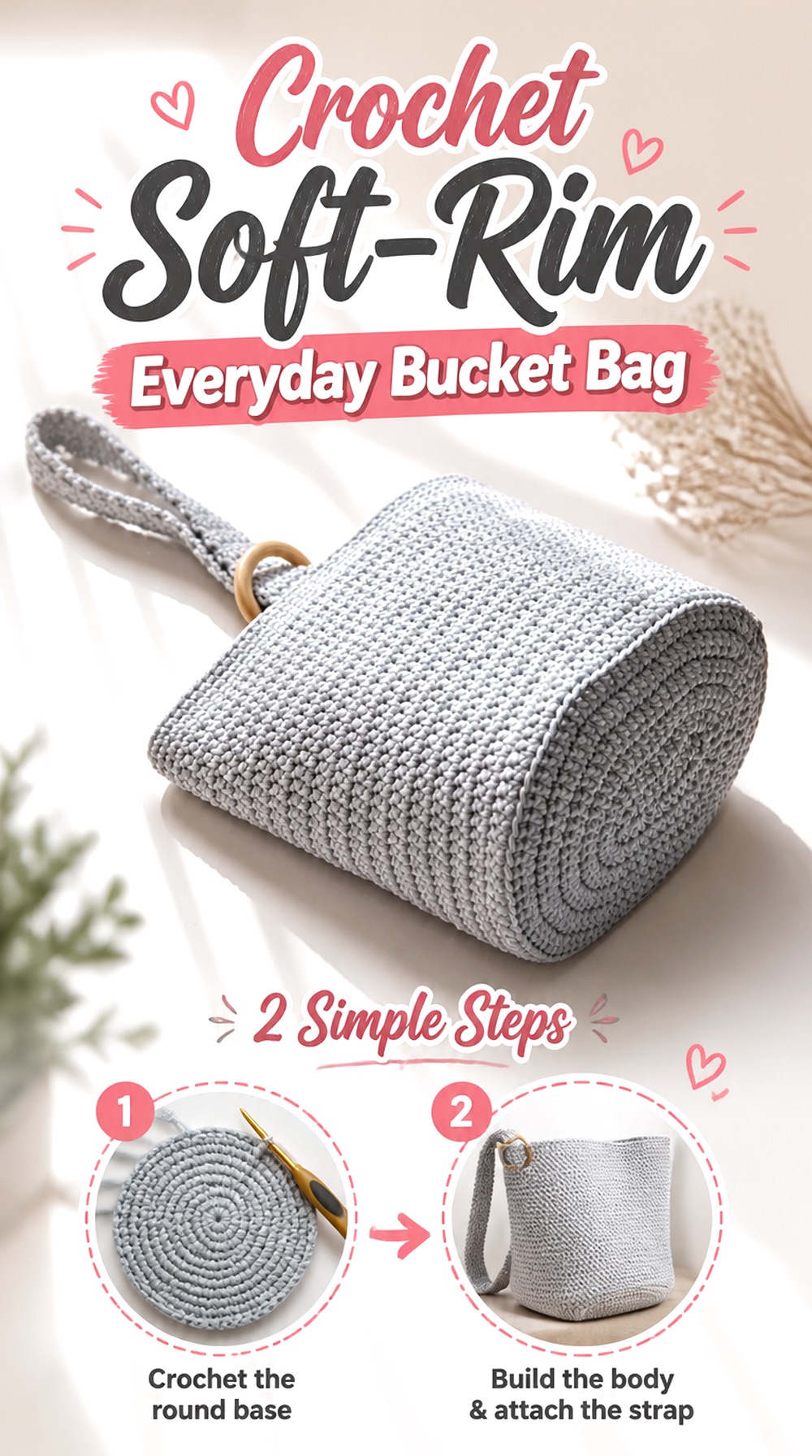
This final idea uses a bucket shape as a foundation for an everyday slouchy bag. Toh Handmade’s tutorial demonstrates a crochet bucket bag with a broad accessible opening, providing another useful alternative to hobo designs that narrow sharply at the top.
The source project does not need to be copied at a dramatically larger scale to be useful here; its construction can serve as a reference for readers considering a roomier bucket adaptation. Confirm sizing changes through the tutorial rather than adding stitches without a plan. The main appeal is access: a bucket maintains a relatively open upper area while still allowing the sides to soften once the bag is carried.
A Bucket Opening Gives Better Access Than a Narrow Hobo Neck
If you dislike searching through a tight opening, a bucket format can be easier to see and reach into. That openness also means contents have less automatic containment, so consider whether you want to add an appropriate closure or inner organizer. At oversized scale, the difference becomes more pronounced: a very broad open rim is convenient at home or while packing but may feel exposed during everyday travel.
Check the Rim Before Increasing the Height
A taller bucket adds depth without necessarily improving the opening. Before increasing the body, decide whether you can still comfortably reach the bottom and whether the rim remains stable enough for the intended silhouette. If the upper edge rolls, stretches, or loses definition in your chosen material, address that behavior before adding more height. The goal is a soft body beneath a deliberate opening, not an uncontrolled cylinder.
Original Tutorial and Creator Credit
Creator: Toh Handmade
Which Oversized Slouchy Bag Shape Fits Your Use?
For the deepest, softest hobo effect, the Crochet Chunky Macramé Hobo Carryall, Crochet Maxi Ribbon Hobo Bag, and Crochet Relaxed Sack Shoulder Bag put most of their emphasis on a body that hangs and folds. If you prefer the bag closer to your body, the Crochet Curved Crescent Sling Bag or Crochet Textured Boho Crossbody Hobo are stronger directions to compare.
For more control over loose belongings, look toward the lined or closable options: the Crochet Two-Square Lined Slouch Tote, Crochet Four-Square Zippered Cross Bag, and Crochet Fan-Stitch Drawstring Slouch Bag. The mesh and net-textured options make more sense when expansion and visual lightness matter. If you want the oversized scale with somewhat clearer shape definition, the paper-yarn tote, pearl-handle bucket, or soft-rim bucket provide useful alternatives to a fully collapsing hobo.
Conclusion
The right oversized slouchy crochet bag depends less on maximum size than on where you want the softness. A tapered or crescent bag gathers volume toward the body, a mesh tote expands around what you carry, a bucket gives easier top access, and a lined or zippered motif bag provides more containment. Chunky cord and ribbon constructions make the oversized silhouette visually prominent, while sack and hobo shapes let drape do more of the work.
Before choosing, decide which feature you would notice most in daily use: strap comfort, opening security, interior organization, or the amount of collapse in the body. Then use the original tutorials for the creators’ exact construction, sizing, materials, and finishing details rather than treating an adaptation idea as a substitute for their instructions.
Frequently Asked Questions
What yarn qualities work best for an oversized slouchy crochet bag?
Start by deciding how much collapse you want. A flexible yarn and fabric can create pronounced folds, while cord, ribbon, paper-style yarn, or a denser fabric may give the body more visible definition. There is no single fiber that is automatically right for every oversized bag. Make a sample when substituting yarn and observe both drape and stretch. Also check the creator’s specified material because changing thickness or fiber can alter dimensions and strap behavior significantly.
How can I reduce strap stretch on a large crochet bag?
First look at the entire carrying system rather than only the strap stitch. Strap width, yarn elasticity, attachment method, hardware, bag scale, and carried load all influence stretching. A wider or appropriately reinforced strap may help in some constructions, and lining can sometimes support the attachment area. Follow the tutorial’s approach where possible. If you enlarge the body substantially, do not assume the original strap proportions can remain unchanged without affecting fit.
Should an oversized crochet bag have a lining?
Not necessarily. A lining is most useful when you want to contain small objects, reduce how much openwork can spread, add interior organization, or create a barrier between belongings and the crochet fabric. Mesh and motif bags often gain the most functional change from one. On the other hand, a restrictive lining can reduce the free drape that makes a hobo feel slouchy. Choose it according to the finished behavior you want rather than treating it as mandatory.
Can I make a regular crochet bag tutorial oversized?
Sometimes, but resizing should follow the construction rather than a blanket rule. Enlarging a rectangular panel is different from changing a crescent, motif layout, shaped hobo, or round bucket. Strap placement, openings, hardware, lining, and decreases may also need to stay proportional. If the creator provides size-adjustment guidance, use that first. Otherwise, work from actual blocked dimensions and make changes cautiously instead of inventing new stitch counts from the finished photograph.
Which closure is most practical for a slouchy crochet bag?
It depends on what you carry. An open top provides the quickest access, a magnetic snap draws the center together without fully sealing it, a drawstring gathers a wide opening, and a zipper offers more complete containment. Large openwork bags may still need an inner pouch or lining even when a central closure is present. Consider your usual belongings and where you carry the bag before choosing a closure based only on appearance.
How do I stop an oversized slouchy bag from losing all of its shape?
Give selected areas more control rather than making the entire bag rigid. The base, opening, handle attachments, or lining can provide stability while the main body remains flexible. Also watch yarn substitution: a fabric that stretches much more than the tutorial’s material can change the finished silhouette dramatically. If the bag already distorts while empty, check dimensions and finishing before loading it. Intentional slouch should still leave the opening, straps, and major shape recognizable.