Crochet vests are especially well suited to folk-inspired styling because the sleeveless shape leaves plenty of room for motifs, patchwork, texture, decorative borders, and strong color combinations without turning every project into a heavy garment. For Fall 2026, that can mean anything from woodland mushrooms and vintage flowers to quieter ribbed vests worked in rust, moss, cream, charcoal, or berry shades.
The projects below do not all interpret “folk” in the same way. Some use obvious motifs or patchwork, while others offer a simpler garment shape that can support an earthy palette, heritage-inspired color placement, fringe, raised texture, or decorative finishing. That range makes it easier to choose a vest that actually fits your wardrobe rather than relying on color alone to create the theme.
Quick List
- Crochet Mushroom Motif Side Tie Folk Vest
- Crochet Pumpkin Patchwork Button Vest
- Crochet Retro Daisy Granny Square Vest
- Crochet Classic Granny Folk Slipover Vest
- Crochet Mini Flower Motif Mosaic Vest
- Crochet Long Open Boho Folk Vest
- Crochet Floral Texture Fall Vest
- Crochet Cable Texture Heritage Vest
- Crochet Mandala Back Statement Vest
- Crochet Fringe Pocket Western Folk Vest
- Crochet Two Hexagon Patchwork Vest
- Crochet Open Mesh Layering Vest
- Crochet Ribbed Crewneck Folk Vest
- Crochet Relaxed Oversized V Neck Vest
- Crochet Cropped Checkerboard Folk Vest
- Crochet Hooded Button Utility Vest
- Crochet Collared Cottage Folk Vest
What Makes a Crochet Vest Feel Folk-Inspired Without Looking Like a Costume?
The strongest folk-inspired vests usually rely on one or two intentional features rather than adding every rustic detail at once. A mushroom motif can carry the theme on its own. A plain vest can move in the same direction through earthy stripes, contrast edging, wooden-looking buttons, or a carefully limited palette.
Motif density matters too. Full patchwork creates a stronger handcrafted statement, while one dramatic back motif or a quieter textured surface is easier to combine with everyday clothing. If you want the vest to work with several fall outfits, consider whether the decorative feature will remain visible over the shirts, dresses, or turtlenecks you already wear.
Plan Fit, Drape, and Motif Placement Before Choosing Colors
For any crochet vest, compare the creator’s sizing or measurement information with a garment that already fits the way you want. Armhole depth is particularly important for fall because the vest may need to fit over sleeves instead of a thin summer top.
For motif garments, work from the blocked motif dimensions rather than assuming every square will match another design. Changing a flower, mushroom, or granny motif can affect panel width, shoulder placement, garment length, and the space available around the armhole. Yarn substitution matters for the same reason: a heavier or stiffer yarn can turn a relaxed patchwork vest into a much more structured garment.
1. Crochet Mushroom Motif Side Tie Folk Vest
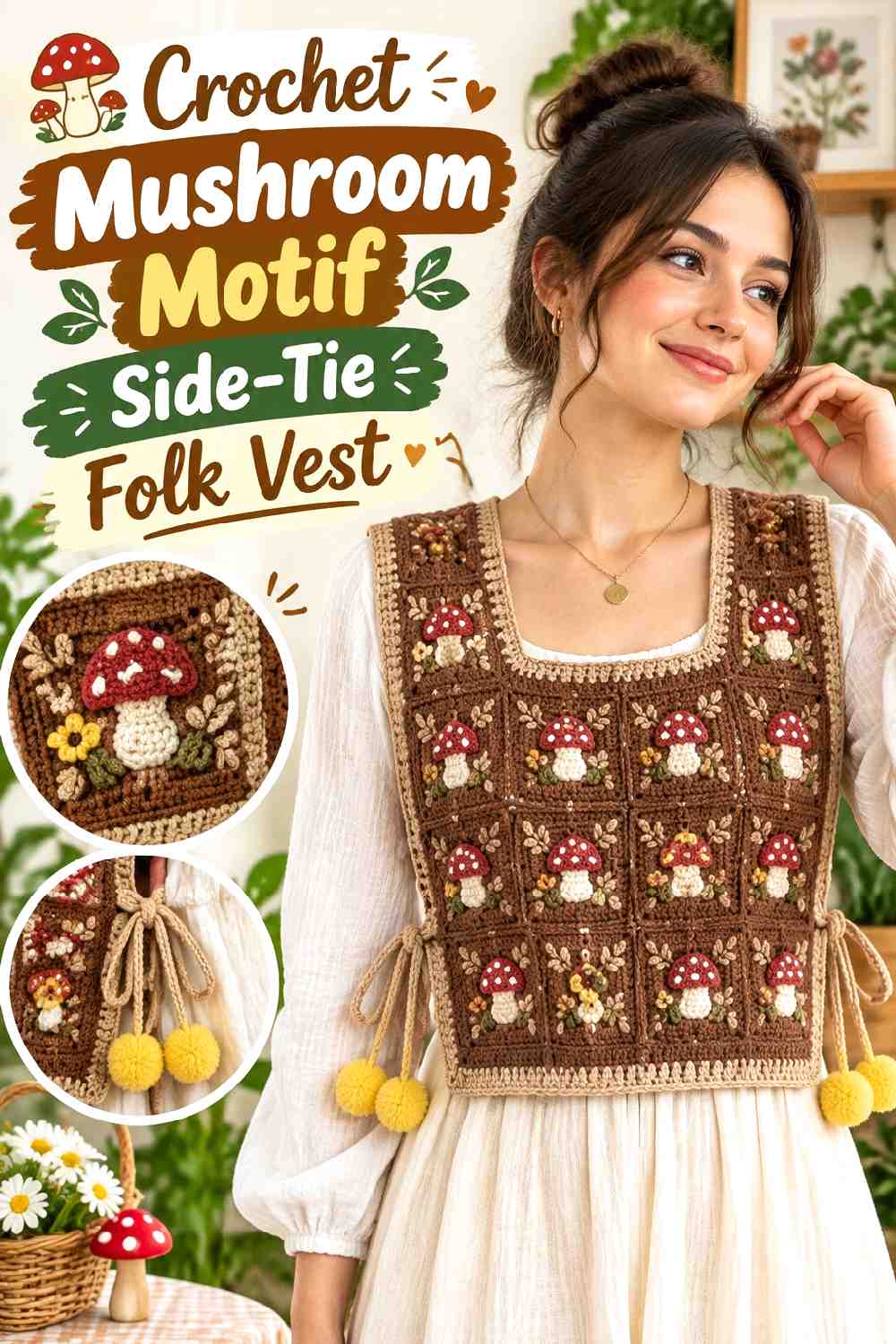
Mushrooms, flowers, and an open side-tie construction make this one of the clearest folk-inspired choices in the collection. Separate motif sections create the front and back, while the tied sides leave more visible space around the garment than a conventional pullover vest. That makes it particularly interesting over dresses, blouses, or fitted long sleeves where the underlayer becomes part of the finished outfit.
The Open Sides Change How the Vest Should Fit
Side ties make the width feel more adjustable visually, but they do not remove the need to check shoulder width, panel dimensions, and armhole placement. Look at how much of the underlayer remains visible at the sides and decide whether that amount of openness suits your fall wardrobe.
Motif Direction Is Part of the Finished Design
Picture-based motifs need more planning than interchangeable color blocks. Before joining anything, arrange the completed pieces flat and confirm which direction the mushrooms and flowers will face. A beautifully crocheted motif can still look misplaced if it turns sideways or becomes visually crowded near a join.
Creator Credit: Susan’s Family 蘇蘇姐家
2. Crochet Pumpkin Patchwork Button Vest
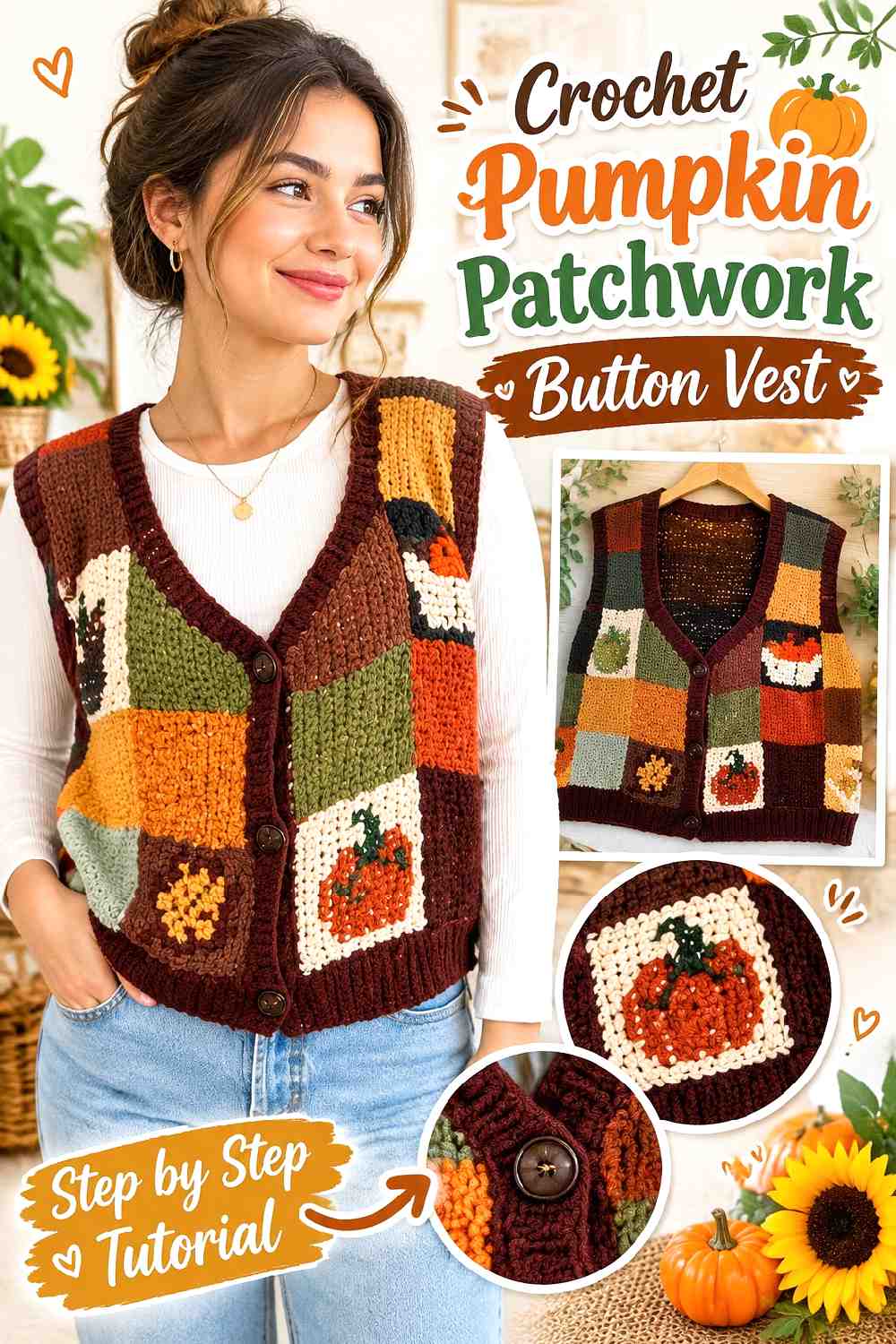
This button-front patchwork vest takes the folk theme in a distinctly autumn direction. Pumpkin-inspired sections are combined with other patch shapes, ribbed finishing, and a functional front opening, giving the garment more structure than an open motif vest. The closure also makes it easier to style as a conventional sweater vest rather than purely decorative patchwork.
Keep the Pumpkin Detail Readable
The featured motif needs enough contrast to remain recognizable once the vest is worn. If you adapt the palette toward rust, tobacco brown, olive, oatmeal, or burgundy, check the colors beside each other before committing to the whole garment. Similar mid-tone shades can soften a picture motif more than expected.
Treat the Button Band as Part of the Fit
A front closure draws attention to alignment. Check whether both front edges hang evenly before adding the final finishing details, and use the creator’s tutorial for the exact buttonhole construction. If you plan to wear the vest closed over a fall shirt, allow that underlayer to influence your size choice.
Creator Credit: thisfairymade
3. Crochet Retro Daisy Granny Square Vest
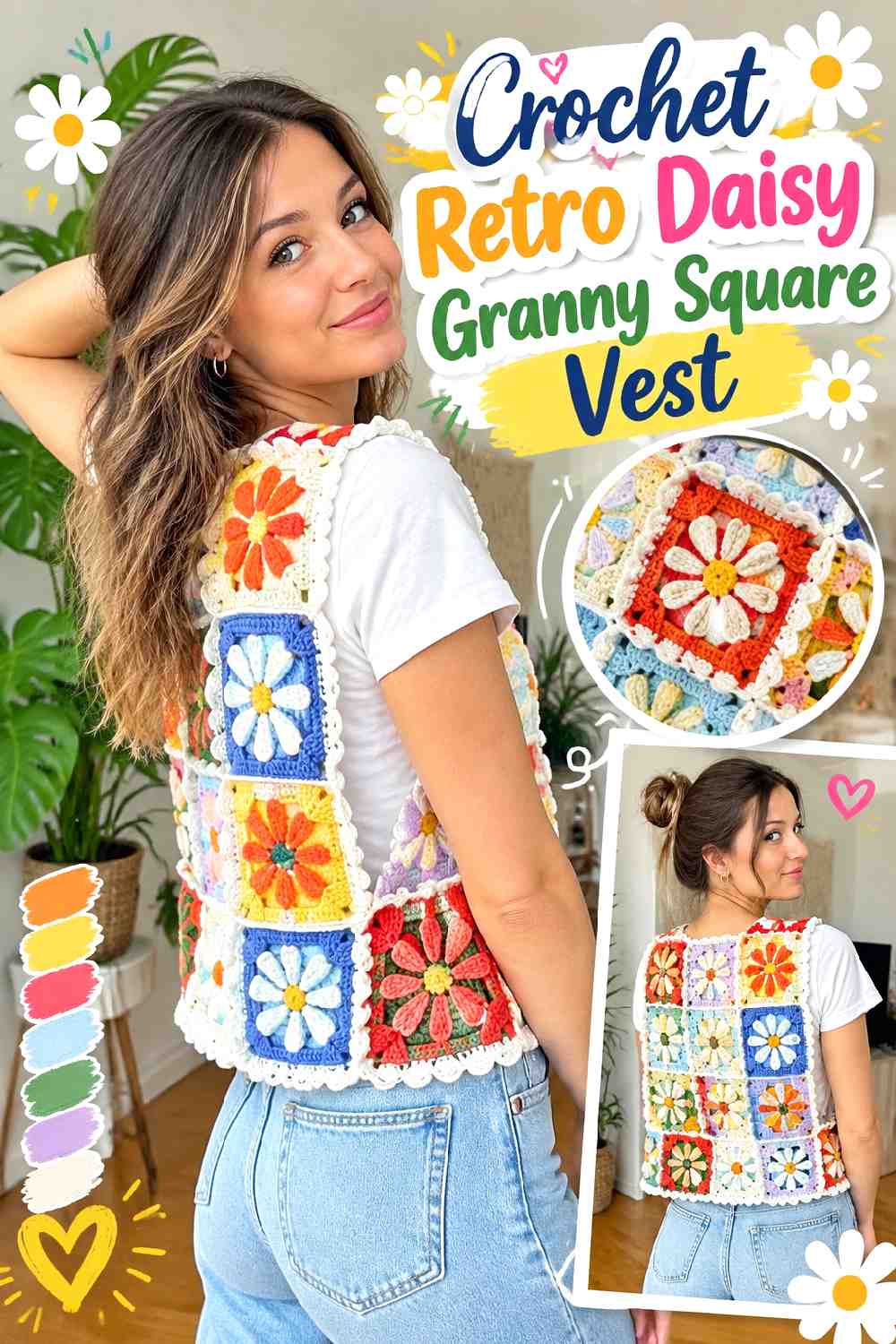
Repeated daisy squares bring a lighter, meadow-inspired version of folk crochet to fall layering. The floral blocks create a clear visual rhythm across the garment, so the vest feels decorative without needing fringe, a hood, or an elaborate closure. The original project provides a genuine floral-motif vest foundation rather than requiring a flower to be added to an unrelated garment.
Color Contrast Determines Whether the Flowers Disappear
A daisy square contains several visual layers: center, petals, and surrounding field. When choosing autumn colors, keep enough separation between those areas for the flower to remain visible. Cream petals against olive or brown, for example, will read very differently from several closely related beige shades.
Match Square Size Before Planning the Garment
If you substitute another floral granny square, block a sample first and compare its dimensions with the motif used by the creator. Even a modest difference can multiply across a panel and change neckline width, overall length, or armhole placement.
Creator Credit: by Kristine
4. Crochet Classic Granny Folk Slipover Vest
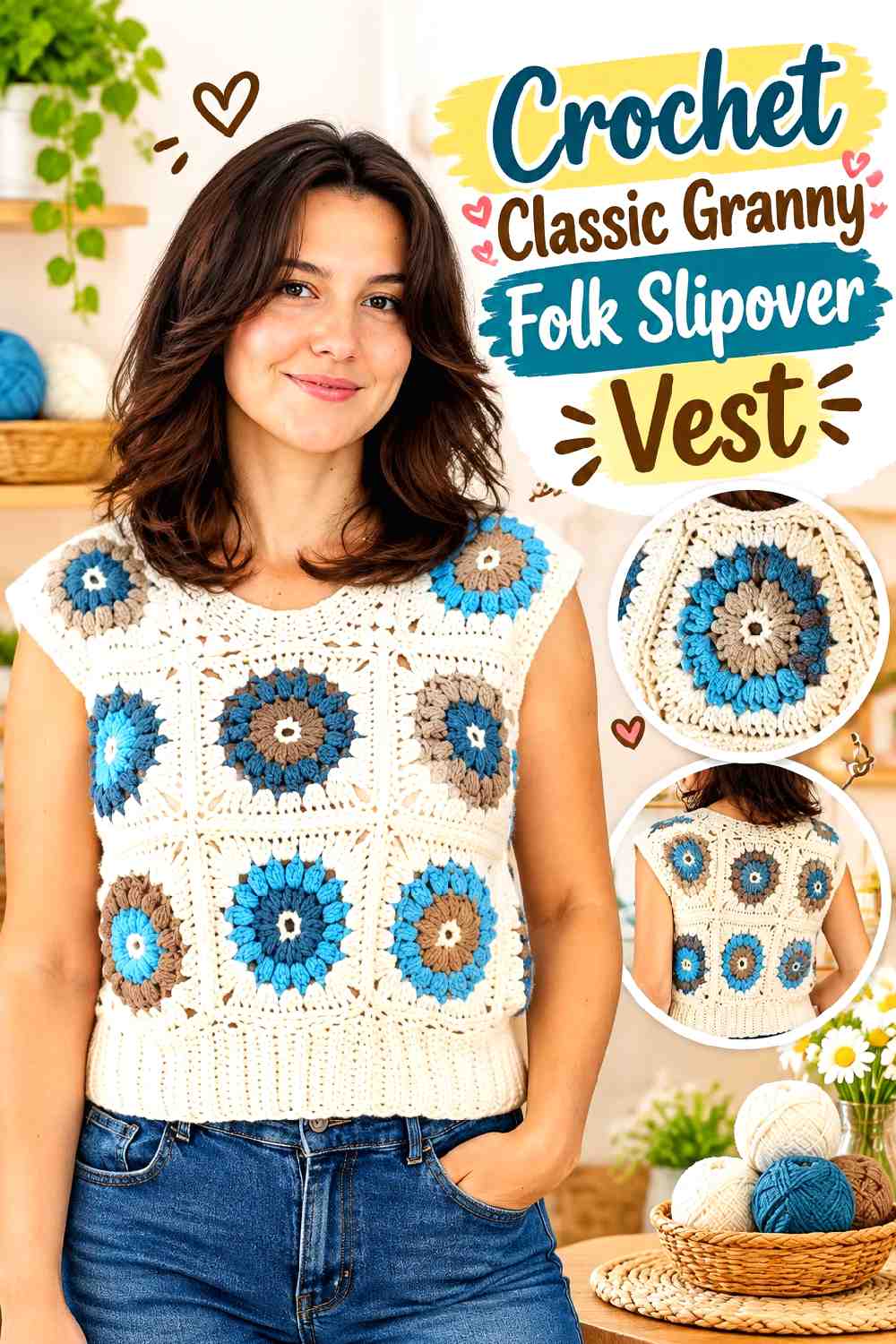
A traditional granny-based vest is useful when you want the folk character to come mainly from color rather than picture motifs. Sirin’s Crochet demonstrates a vest built around classic granny styling, giving you a relatively neutral foundation for arranging clay, ochre, forest green, faded rose, cream, or deep brown into a more heritage-inspired palette.
A Limited Palette Can Make Granny Crochet Feel More Modern
Using many colors is not required. Repeating three or four related shades can make traditional granny construction feel more controlled and easier to layer with contemporary clothing. Plan the color sequence before making a large batch so you can judge the overall rhythm instead of deciding every motif separately.
Check the Garment Outline Before Adding More Motifs
Granny construction can tempt you to focus on individual squares, but the finished vest shape matters more. Periodically arrange the sections as a garment and assess shoulder coverage, neckline shape, and hem position before investing time in additional motifs.
Creator Credit: Sirin’s Crochet
5. Crochet Mini Flower Motif Mosaic Vest
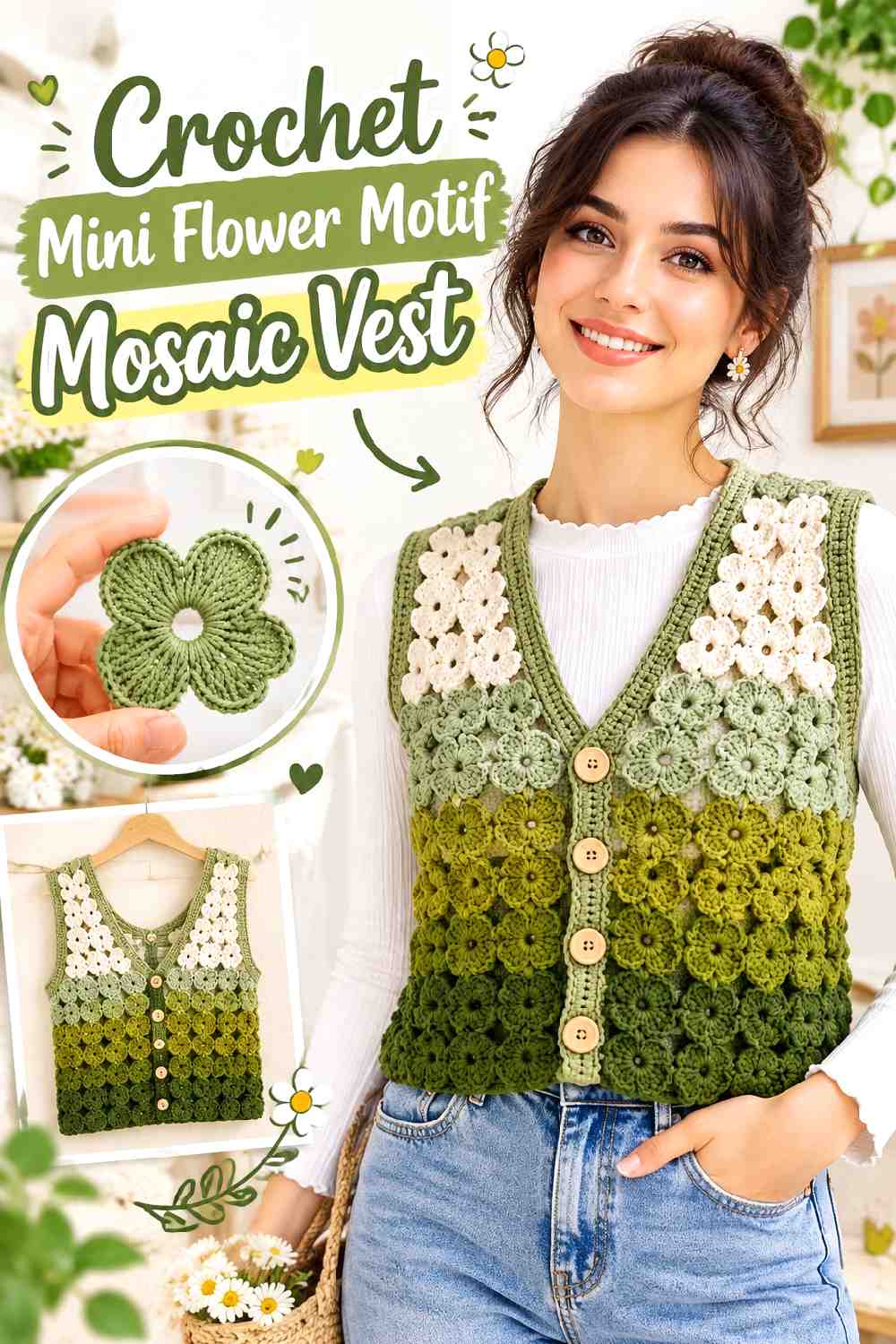
Small floral motifs create a finer visual scale than large granny squares. Crochet My Hobby’s tutorial specifically demonstrates mini flowers that can be joined into a vest, so the finished surface reads more like a mosaic than a series of large blocks. That difference can suit readers who want obvious handmade texture without one oversized motif dominating the garment.
Small Motifs Increase the Importance of Consistency
When a garment contains many repeated pieces, slight size differences can accumulate across a whole panel. Compare motifs after blocking and correct obvious inconsistencies before joining. Waiting until assembly makes uneven rows much harder to disguise.
Use Color Repetition to Prevent Visual Clutter
A mini-motif vest can become busy quickly. Repeating a background shade or keeping the flower centers consistent creates a visual thread through the garment. For fall, one dark joining color can also give lighter flowers a more grounded appearance.
Creator Credit: Crochet My Hobby
6. Crochet Long Open Boho Folk Vest
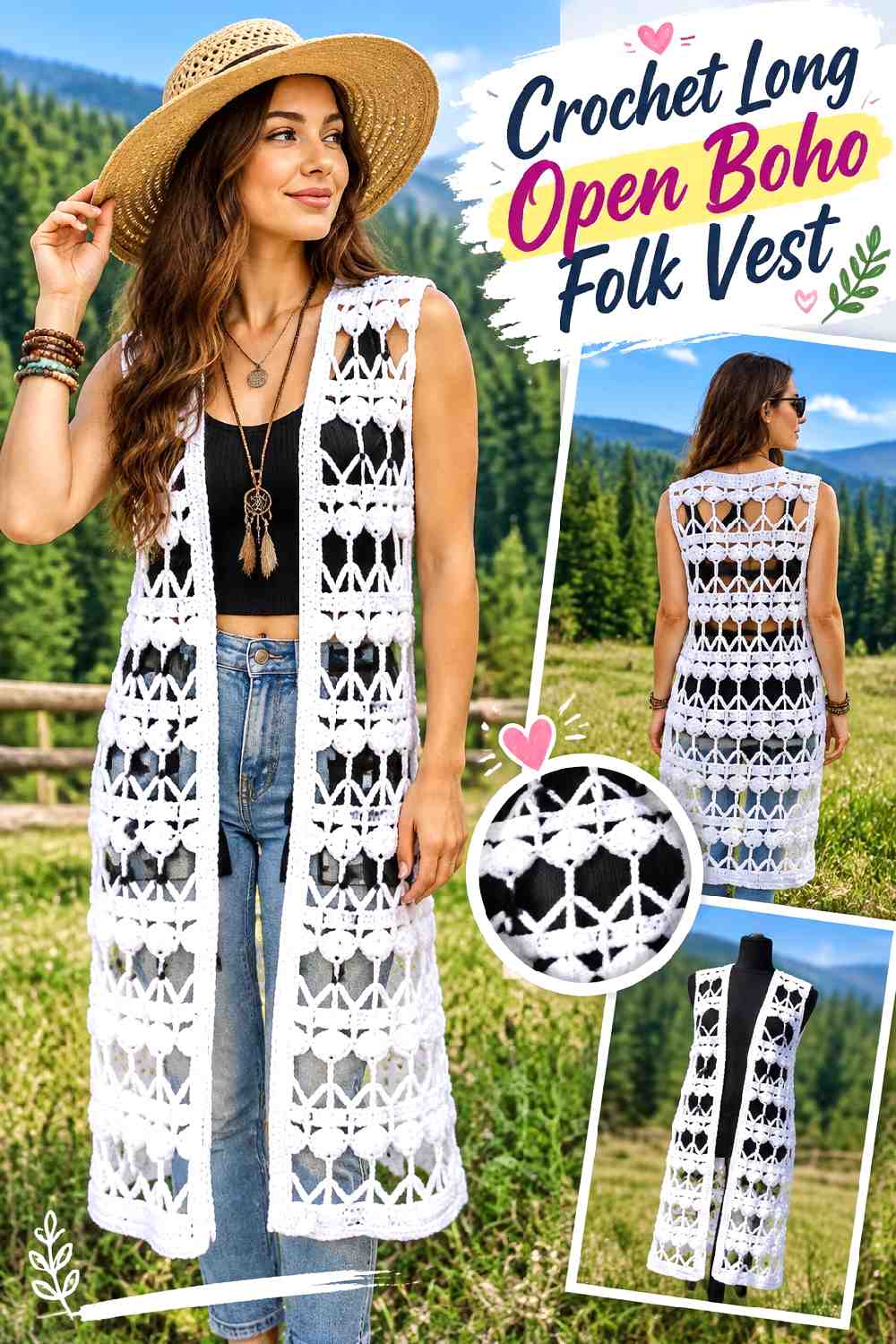
This long, open vest shifts the folk look away from small patchwork and toward silhouette and movement. The Craft Nut’s design is a longer layering piece, which gives it more visual flow than a cropped sweater vest and makes it useful over simple dresses, fitted tops, or long sleeves.
Length Changes the Whole Outfit Proportion
Before committing to a long vest, compare the intended hem position with your height and the clothing you expect to wear underneath. A length that looks dramatic over jeans may interact differently with a midi dress or full skirt.
Drape Matters More Here Than on a Boxy Vest
Long open garments need enough movement to hang cleanly. When considering yarn substitutions, think about how the fiber behaves under its own weight rather than choosing solely by color. A noticeably stiffer yarn can change the flowing character that makes this style distinct.
Creator Credit: The Craft Nut
7. Crochet Floral Texture Fall Vest
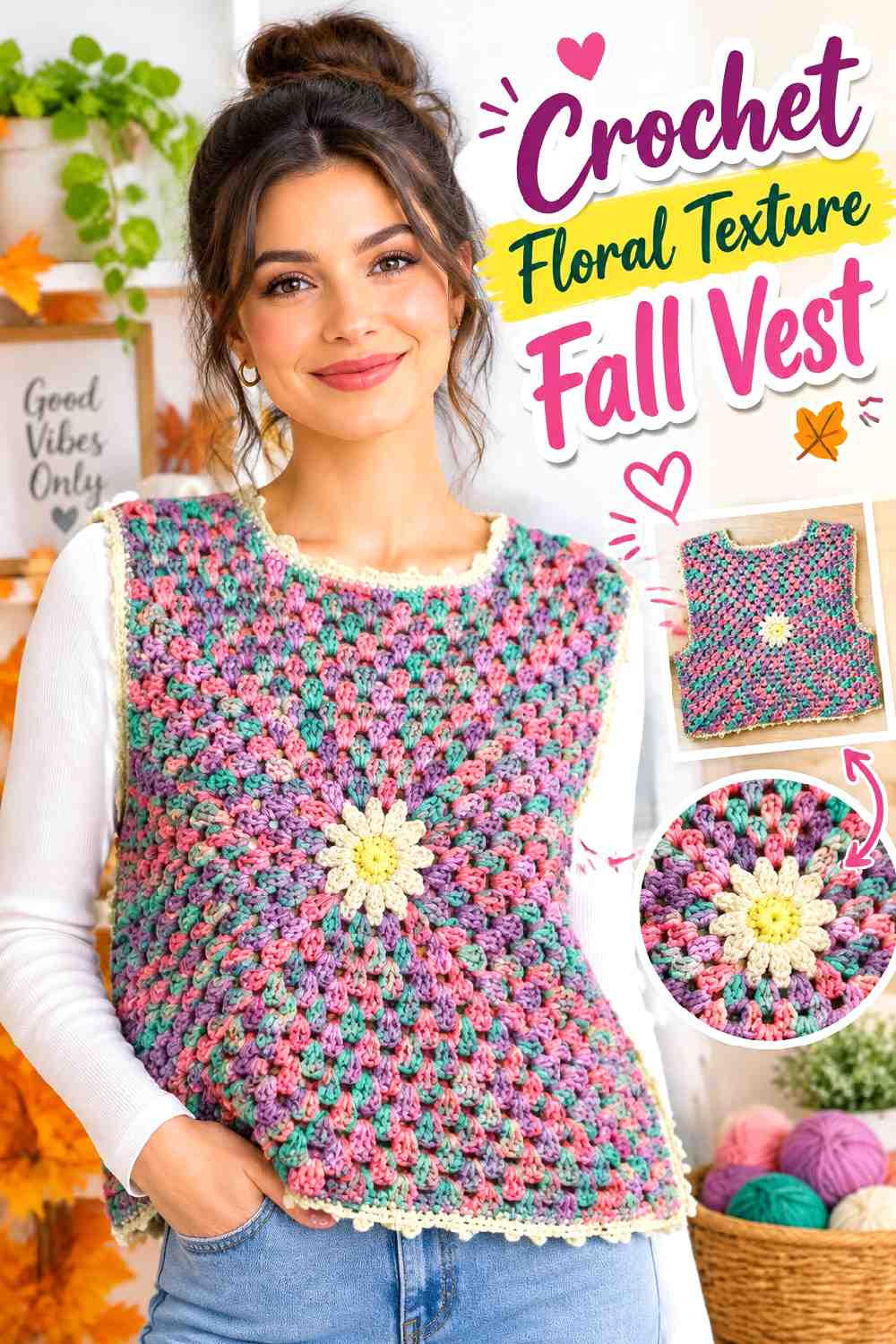
This design brings flowers into the garment through visible surface detail rather than a simple grid of traditional granny squares. That makes it a useful bridge between botanical folk styling and a more conventional vest silhouette. Compared with the mini-flower mosaic, the decorative elements read as stronger individual features.
Let Texture Lead the Color Choice
Raised or dimensional floral details need enough stitch definition to remain noticeable. Highly variegated yarn can compete with the surface texture, while a quieter solid or gently heathered shade lets shadows around the stitches become part of the design.
Repeated Flowers Need Visual Checking as You Work
Decorative repeats make irregular tension more obvious because the eye naturally compares one motif with the next. Pause periodically and lay the vest flat rather than waiting until the end to notice one section that looks noticeably tighter or more open.
Creator Credit: Crochet with Karu
8. Crochet Cable Texture Heritage Vest
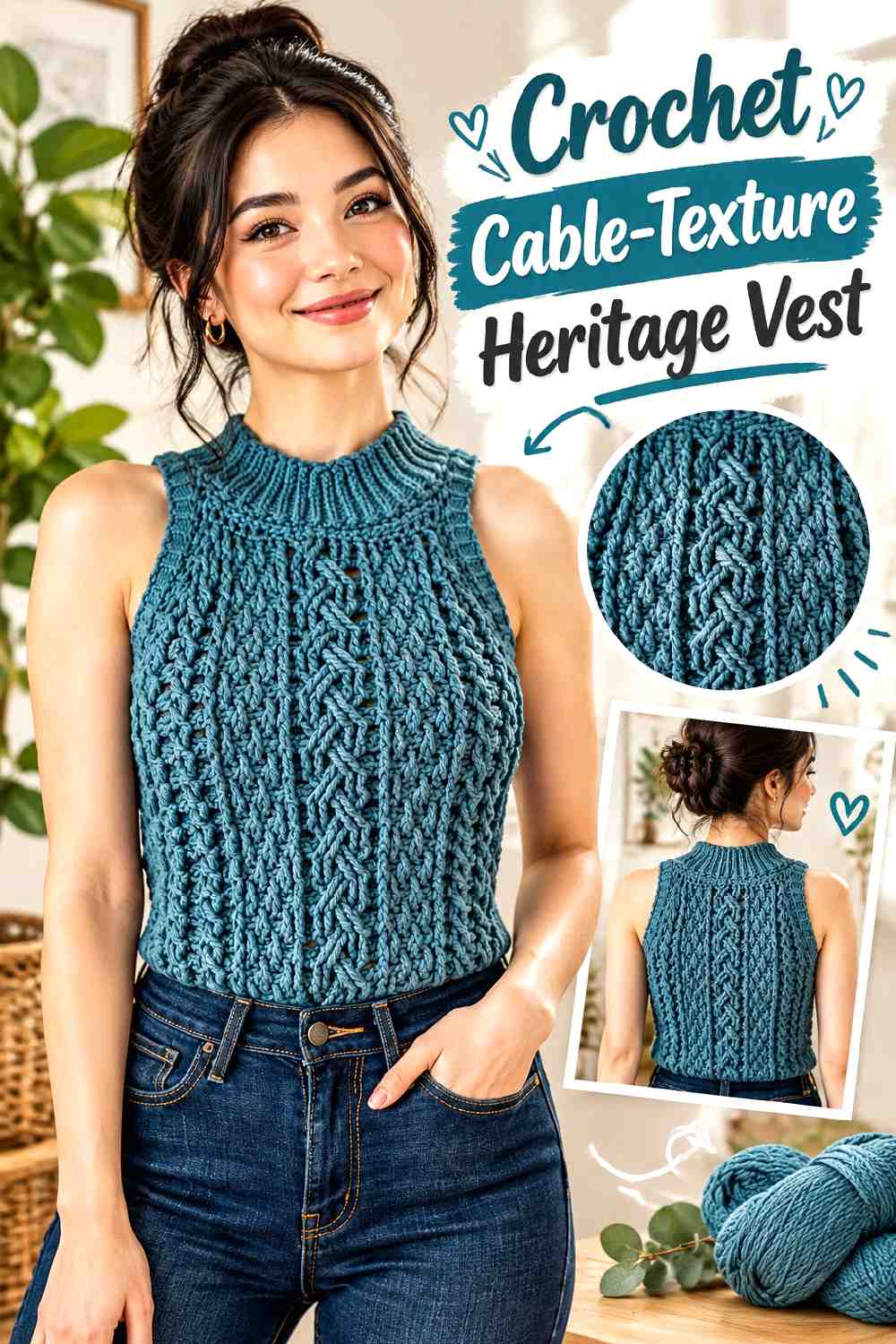
Cable-style crochet gives a vest a more traditional textile feeling without requiring patchwork or multiple colors. TCDDIY’s vest uses prominent cable texture as the main visual feature, making it a strong choice for a quieter folk wardrobe built around oatmeal, peat brown, gray, burgundy, deep green, or other solid shades.
Solid Color Can Make the Raised Pattern Stronger
The appeal here comes from light and shadow across the textured stitches. Before choosing a multicolor yarn, consider whether its color changes might hide the cable definition. A single shade can make a complex surface look more intentional.
Finishing Needs to Support the Texture
When the fabric itself is visually detailed, neckline and armhole edges should not compete with it. Follow the creator’s finishing sections carefully and check that seams and borders sit evenly before deciding whether to add any additional folk-inspired trim.
Creator Credit: TCDDIY
9. Crochet Mandala Back Statement Vest
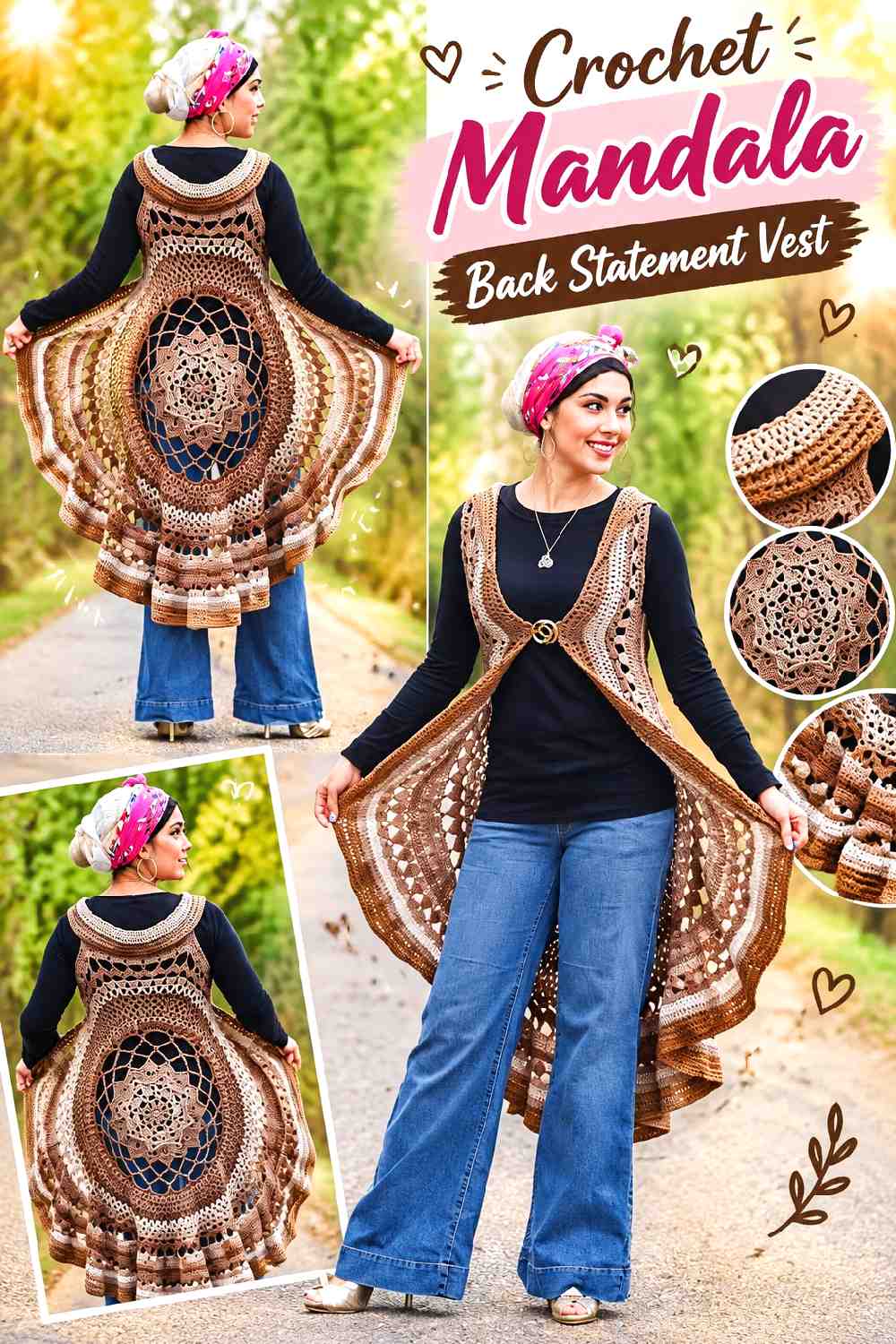
A large circular mandala creates a very different kind of folk-inspired vest. Instead of repeating small motifs, YARNutopia’s design builds the visual focus around one expansive back feature that grows into the garment. The result has a stronger statement quality than a conventional sweater vest and can work particularly well when the rest of the outfit is simple.
The Back Is the Main Design Surface
Because the mandala carries so much visual weight, think about how the color sequence will look from several feet away. Too many equally strong shades can make the circular structure harder to read, while a gradual or limited palette can emphasize the radiating shape.
Do Not Treat Another Mandala as a Drop-In Replacement
A decorative circle intended for a blanket or wall hanging is not automatically compatible with a vest. Armhole placement, overall diameter, fabric behavior, and the transition into the front all matter. Use the garment tutorial for construction rather than assuming any round motif can be substituted without recalculation.
Creator Credit: YARNutopia
10. Crochet Fringe Pocket Western Folk Vest
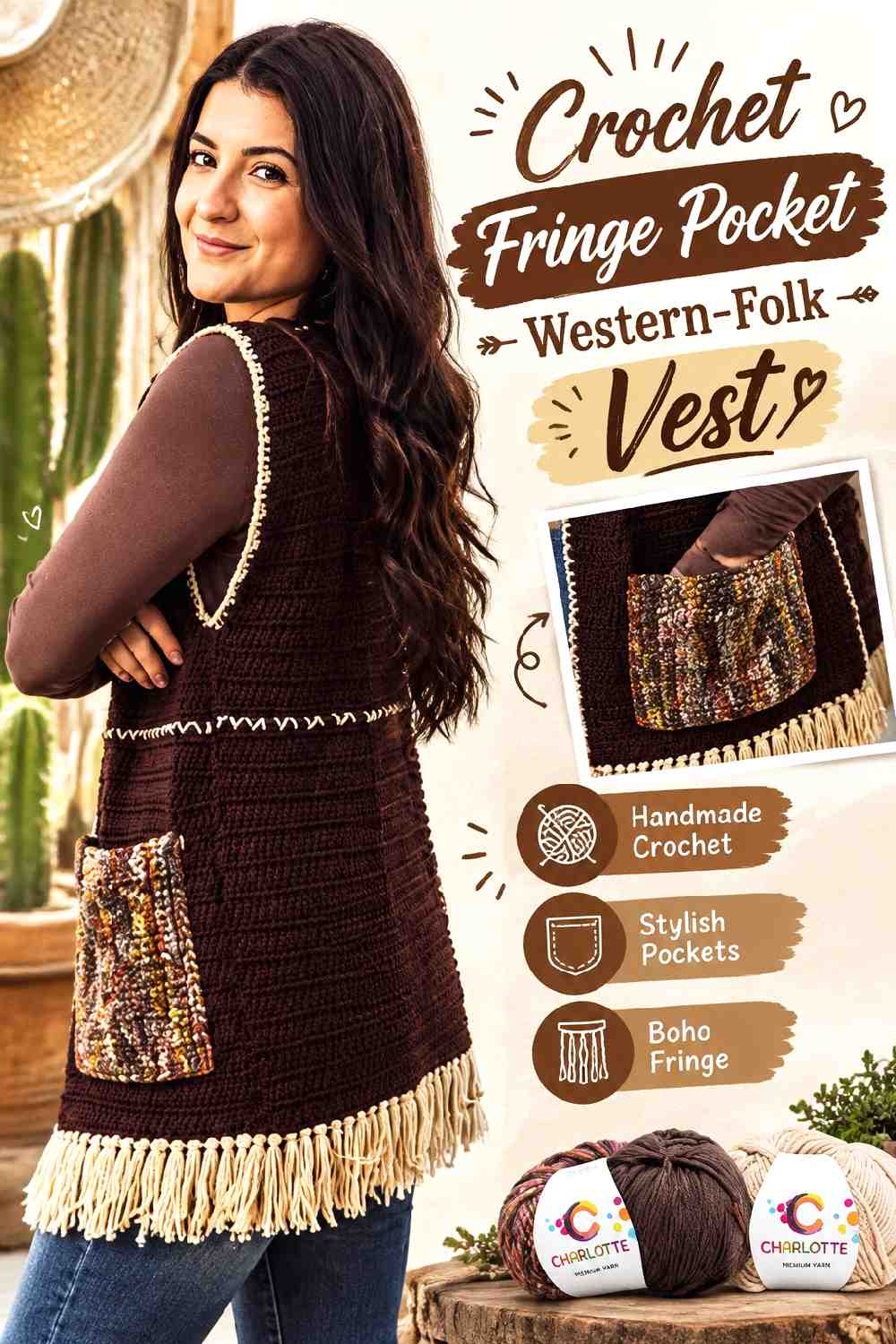
Fringe gives folk styling a different direction from granny squares and flowers. Tessiland’s vest combines a panel-based body with contrasting details, pockets, and a fringed finish, creating a Western-influenced silhouette that can still fit a modern fall wardrobe when the palette is controlled.
Fringe Placement Determines How Dramatic the Vest Feels
A vest with generous fringe behaves differently from a clean sweater vest when walking, sitting, or layering under outerwear. Consider whether you want the fringe to be the main statement or simply an accent along the lower edge.
Pockets Add Visual Weight to the Front
Contrast pockets can become a second focal point alongside fringe. If you prefer a quieter result, reduce the number of competing colors rather than changing the construction without understanding it. Let either the pocket detail or the fringe lead the design.
Creator Credit: Tessiland
11. Crochet Two Hexagon Patchwork Vest
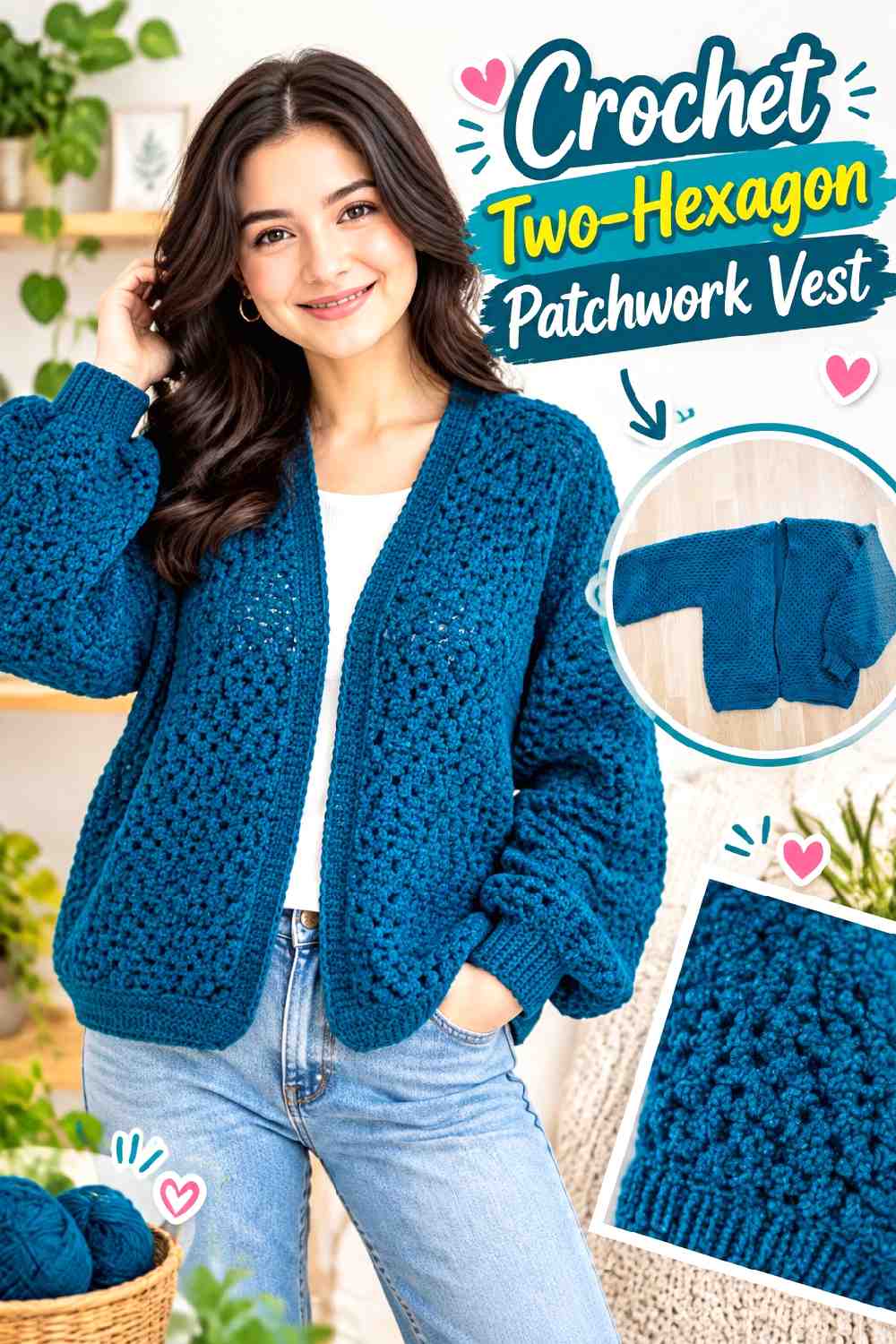
Hexagon construction offers a folk-inspired geometric alternative to square patchwork. Half Double Crochet demonstrates a vest formed from two large hexagon-based sections, giving the garment a construction logic that is visibly different from front-and-back rectangular panels or dozens of individual motifs.
Large Geometry Makes Color Placement More Noticeable
Color changes radiating through a hexagon create broader bands than small granny motifs. Decide whether you want distinct stripes, a softer tonal progression, or one mostly solid fabric before beginning, because the geometry will magnify that choice.
Watch the Fold Before Assuming the Final Shape
A large crochet hexagon can look nothing like a vest while lying flat. Review the creator’s finished construction first so you understand where the shoulders, sides, and opening emerge when the pieces are folded and connected.
Creator Credit: Half Double Crochet
12. Crochet Open Mesh Layering Vest
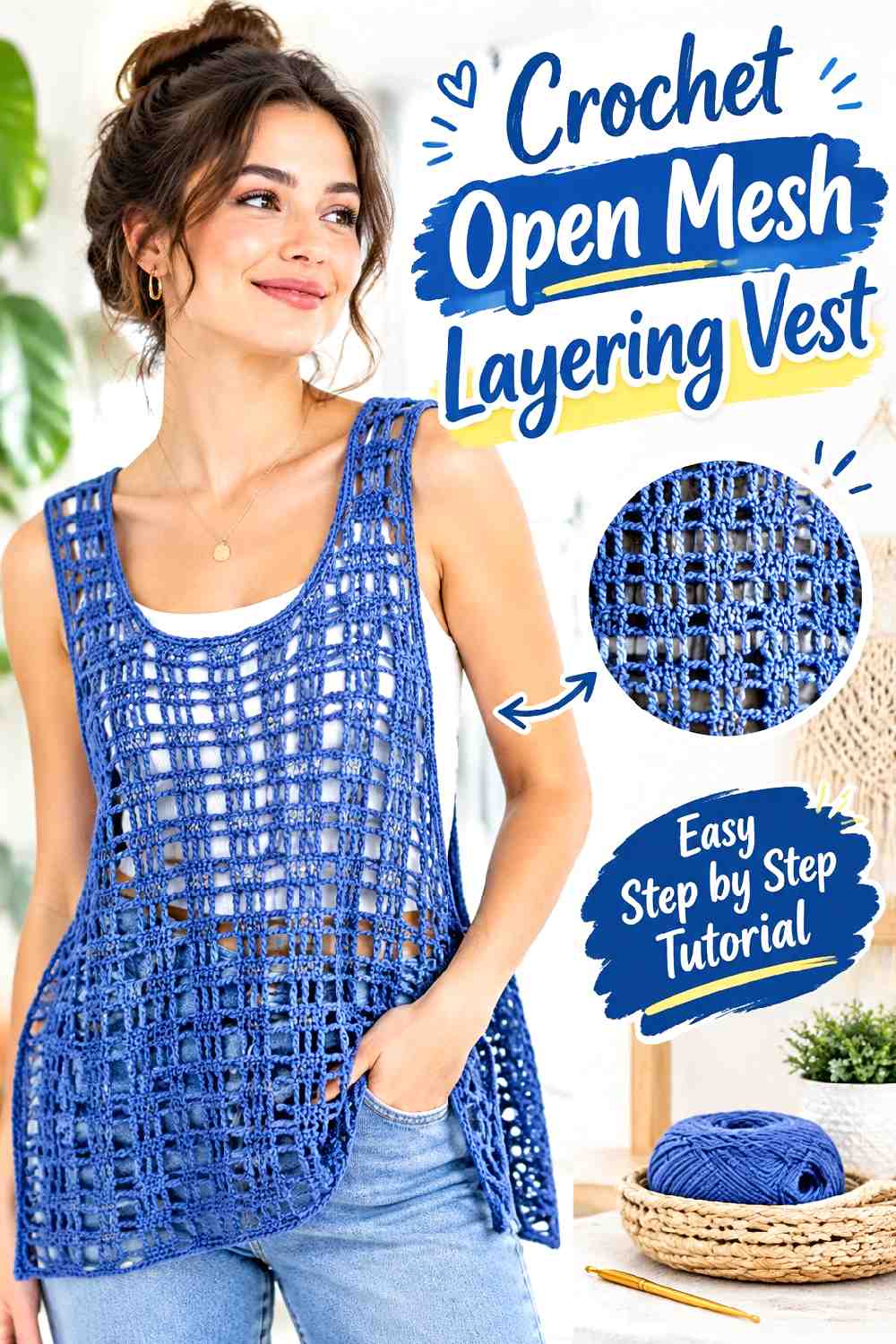
An open mesh vest brings visual lightness to a collection dominated by dense motifs and autumn textures. Atreyu Crochet’s tutorial uses a mesh-style garment construction, making it useful for transitional fall weather or for anyone who wants the underlayer to remain clearly visible.
The Underlayer Becomes Part of the Design
Open crochet does not hide the shirt or dress underneath, so plan the two pieces together. A rust mesh vest over cream creates a different effect from the same vest over black, even though the crochet itself has not changed.
Mesh Requires More Fit Awareness Than It Appears
An airy stitch pattern can stretch and hang differently from dense fabric. Pay attention to the creator’s measurement guidance and compare the work with a garment you already like rather than judging fit only while the crochet is lying flat.
Creator Credit: Atreyu Crochet
13. Crochet Ribbed Crewneck Folk Vest
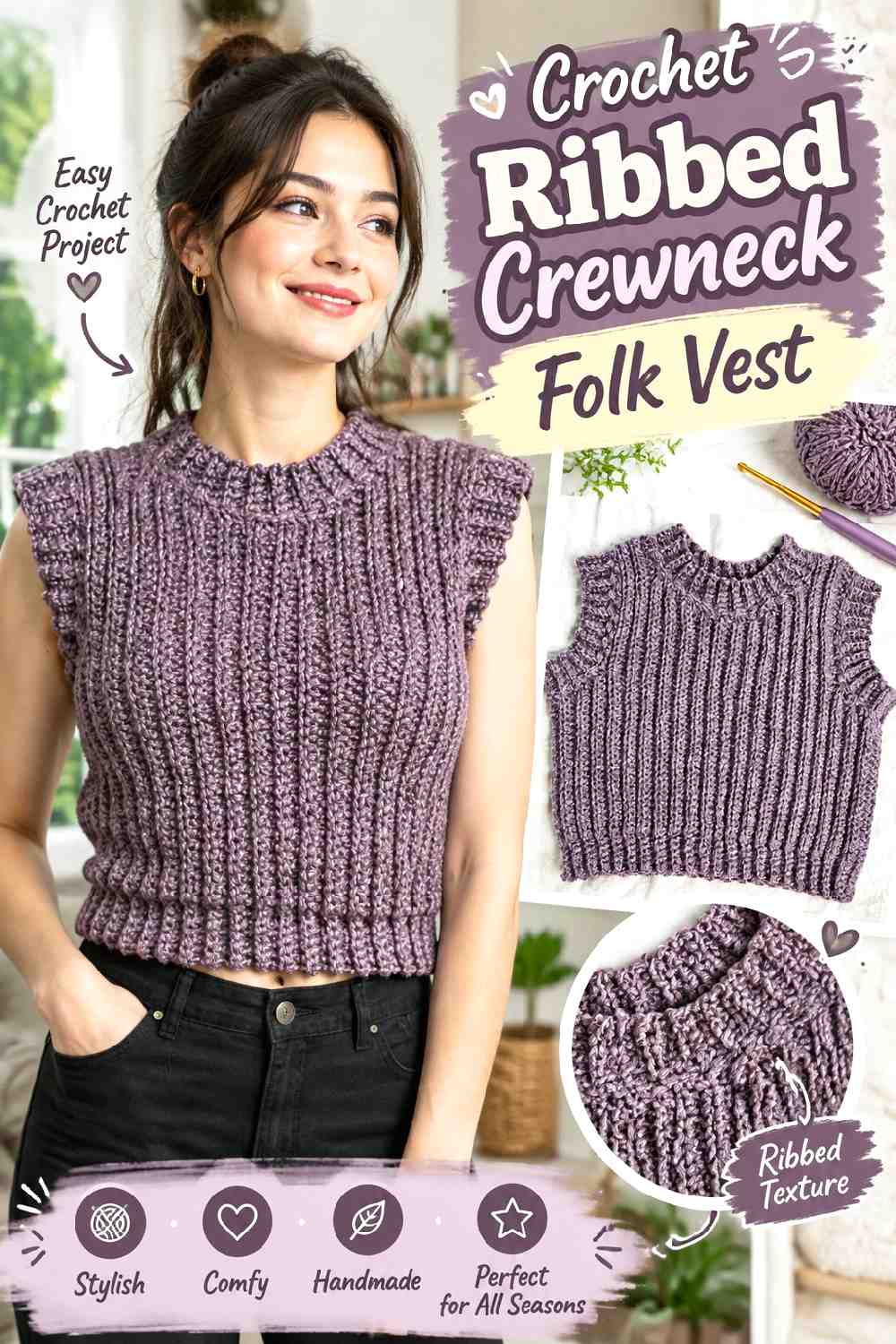
A ribbed crewneck is the quietest option in this list, which is exactly why it can work in a folk-inspired wardrobe. VivCrochets’ vest provides a solid, textured base where yarn color and styling can do more of the thematic work than motifs. A muted ochre, sheep-wool cream, deep spruce, or berry shade can push the garment toward a handcrafted autumn look without making it difficult to pair with everyday clothing.
A Higher Neckline Changes Layering Options
Crewnecks cover more of the chest than V-necks, so check how the opening interacts with collars, turtlenecks, and heavier shirts. If you plan to layer over a bulky blouse, the shoulder and armhole fit deserve as much attention as the bust width.
Ribbing Shows Tension Changes Clearly
Repeated vertical or horizontal texture can make inconsistent tension easy to see. Compare the two sides of the garment regularly and avoid assuming that finishing will correct a panel that has gradually become narrower or wider.
Creator Credit: VivCrochets
14. Crochet Relaxed Oversized V Neck Vest
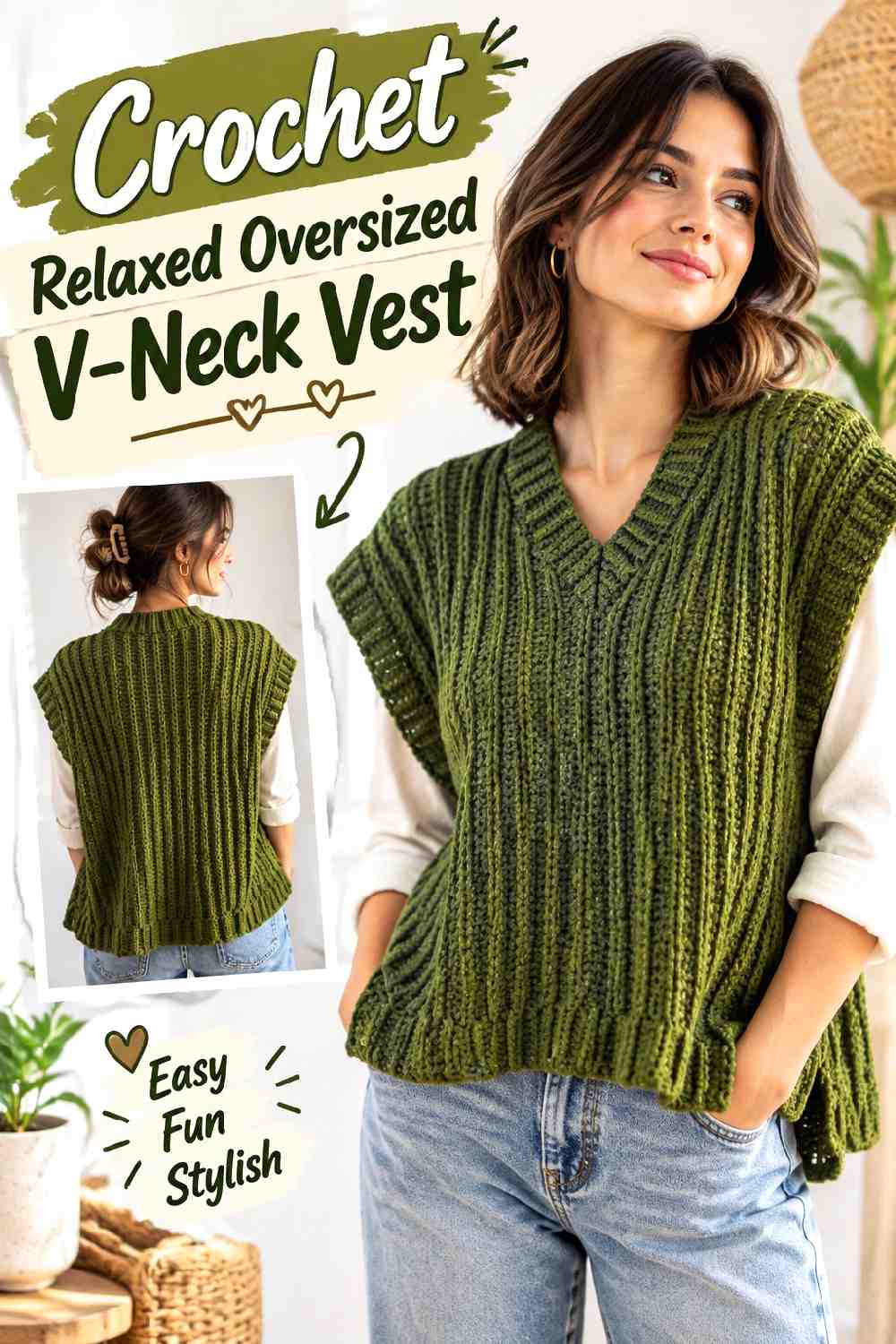
A roomy V-neck provides a modern counterpoint to the more decorative folk projects. The passtschon tutorial includes front and back garment sections, measurement discussion, armhole work, ribbing, and neckline finishing, making it a useful foundation when you want the palette rather than motifs to create the folk feeling.
Oversized Should Still Be Deliberate
Extra width does not automatically create a good relaxed fit. Compare shoulder position and armhole depth as well as chest width. A vest can have plenty of body room while still feeling awkward if the shoulder extends farther than you intended.
Use the V-Neck to Frame the Underlayer
A V-neck leaves space for embroidered blouses, striped shirts, fine turtlenecks, or other folk-influenced base layers. If your wardrobe already contains decorative shirts, a quieter crochet vest like this can prevent the finished outfit from becoming overly busy.
Creator Credit: passtschon
15. Crochet Cropped Checkerboard Folk Vest
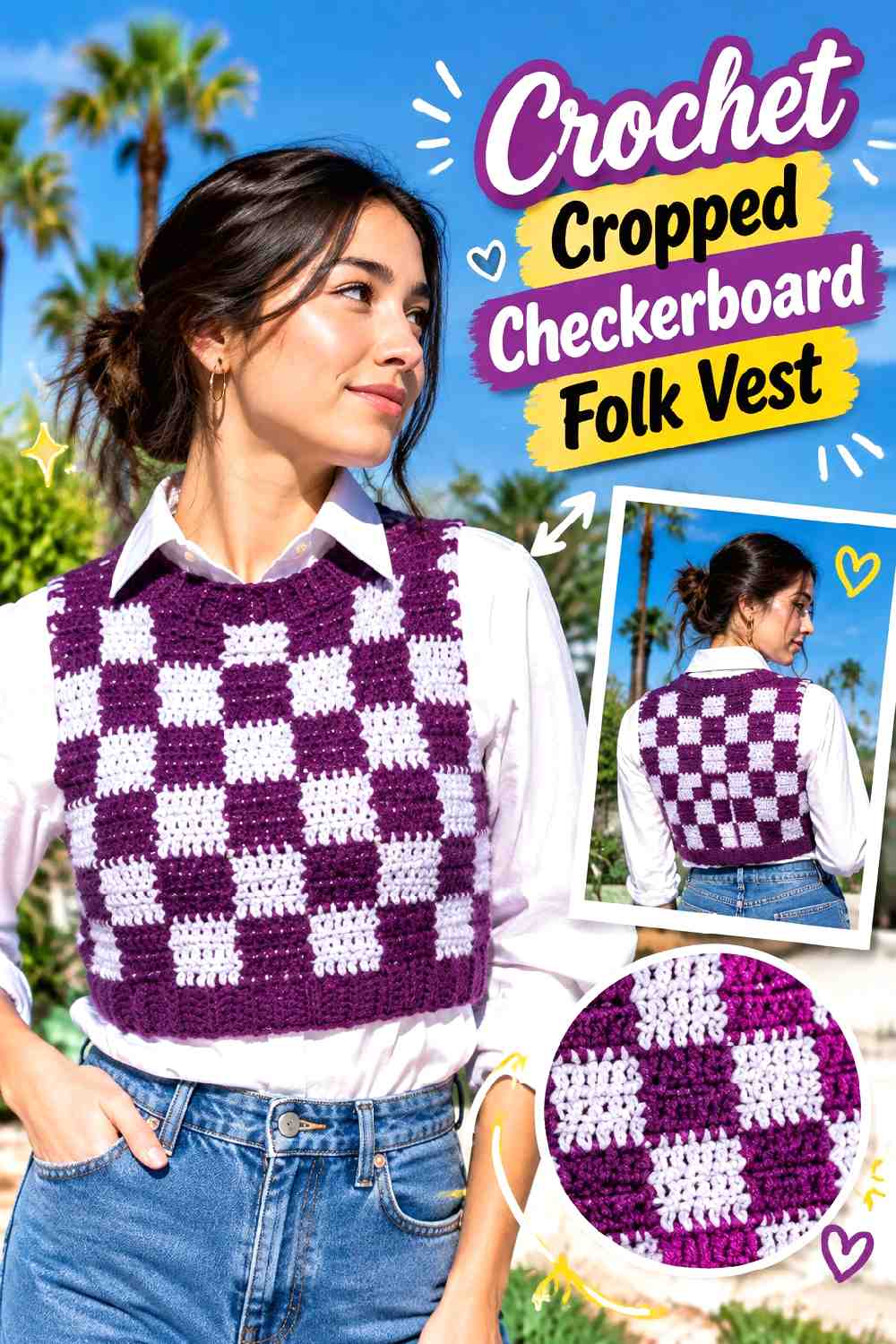
Checkerboard colorwork gives folk crochet a clean geometric direction. The tutorial from it’s erin b. uses a cropped checkered vest shape, so the repeated blocks create the statement while the shorter silhouette keeps the garment visually compact.
Softer Contrast Creates a Different Kind of Checkerboard
Black and white produce a very graphic result, but a folk-inspired fall version can use combinations such as rust and cream, olive and oatmeal, plum and tan, or two related browns. Keep enough contrast for the checks to remain readable.
Decide on Length Before Repeating More Blocks
With a geometric design, changing length often means changing how many visual repeats appear on the body. Compare the intended hem position with your usual trousers, skirts, or dresses before adding extra pattern sections simply because you want more coverage.
Creator Credit: it’s erin b.
16. Crochet Hooded Button Utility Vest
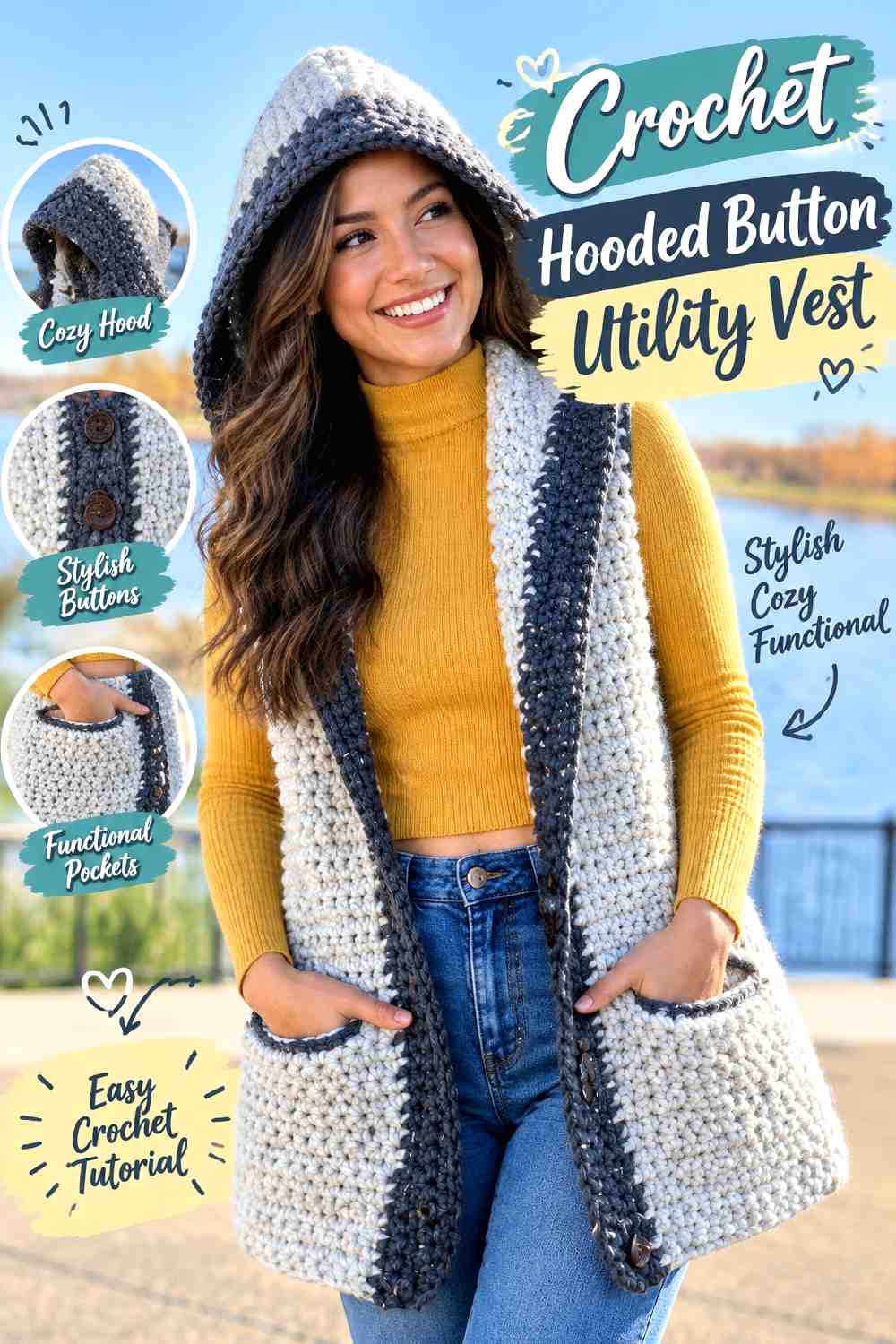
This vest combines a hood, front opening, buttons, and pockets, giving it more functional-looking garment details than the decorative motif projects. KnitcroAddict’s construction makes it useful for a folk-outdoors direction built around practical layers rather than floral ornament.
Extra Features Make Fit More Important
A hood and front closure add weight and structure around the neckline and front edges. Check the creator’s measurements rather than choosing solely from your regular store-bought size, especially if you expect to wear the vest over a substantial fall layer.
Keep Pocket Expectations Realistic
Crochet pockets can change shape when loaded, particularly on a soft garment. Think of them as part of the design and follow the original construction guidance. If carrying heavier items matters to you, assess the finished fabric and pocket support rather than assuming any crocheted pocket will behave like one on woven outerwear.
Creator Credit: KnitcroAddict
17. Crochet Collared Cottage Folk Vest
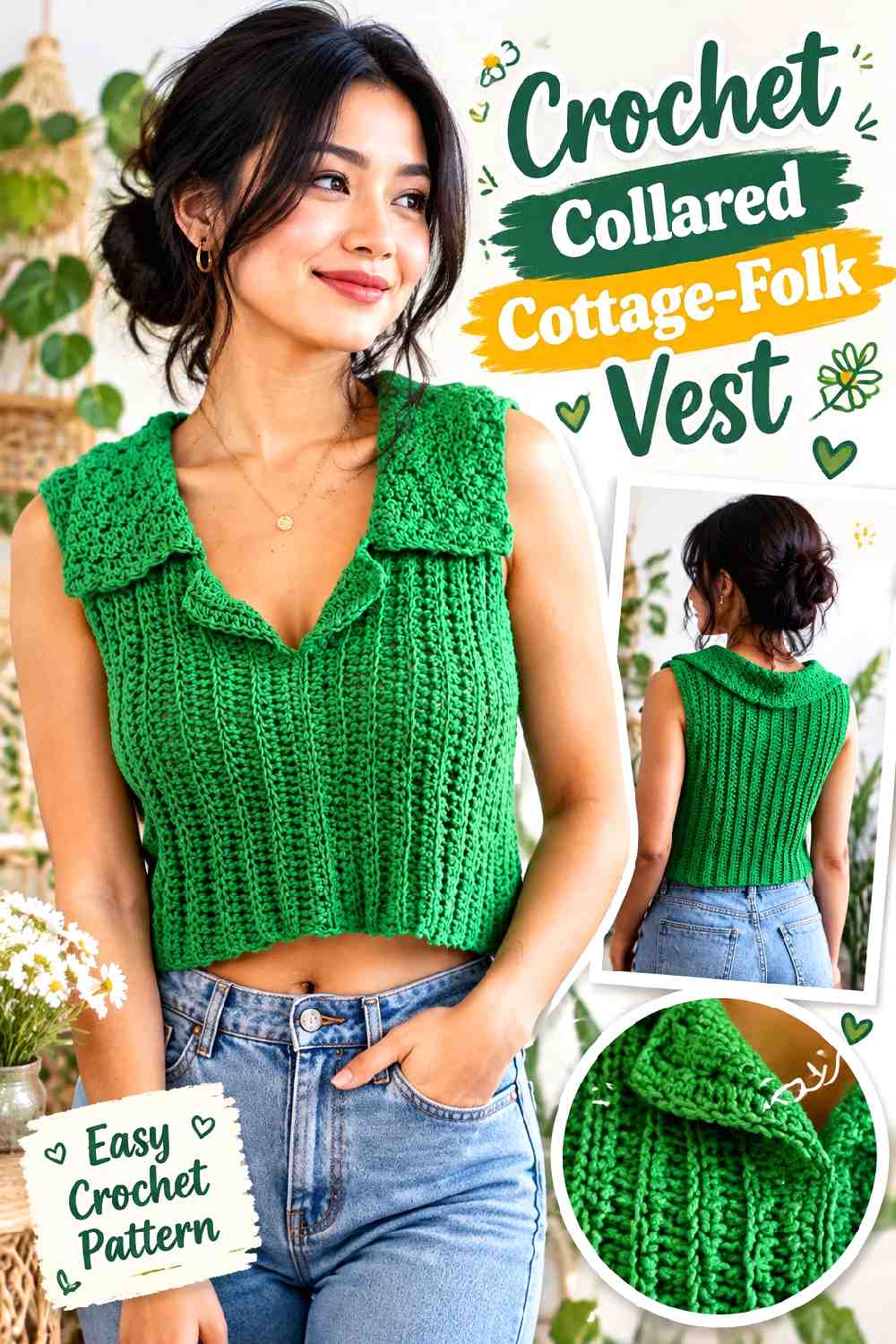
A defined collar gives this vest a softer cottage-folk character without relying on picture motifs. Jennyandteddy’s design combines a sleeveless body with a separate collar detail, creating a silhouette that sits somewhere between a sweater vest and a casual crocheted top.
The Collar Should Be Planned With the Underlayer
If you intend to wear a collared crochet vest over a button-down blouse, two collars may compete visually. It may work more cleanly over a crewneck shirt, fine turtleneck, or dress with a simple neckline.
Decorative Edges Need a Clean Garment Base
Because the collar attracts attention to the upper body, shoulder joins, neckline shape, and armhole finishing become more visible as well. Complete the main fit checks before treating the decorative neckline as the final styling decision.
Creator Credit: Jennyandteddy crochet.
How to Choose Between These Folk-Inspired Crochet Vest Styles
For the strongest woodland look, start with the mushroom, pumpkin, daisy, or mini-flower projects. They build the theme directly into the crochet rather than depending primarily on color.
If you want something easier to mix into an everyday wardrobe, the ribbed crewneck, oversized V-neck, cable vest, or collared vest gives you a quieter surface that can be shifted toward folk style through color and layering.
For a bigger statement, the mandala, fringe, long boho, checkerboard, and hexagon designs change the whole silhouette or visual structure of the outfit. Those projects deserve more planning around proportion because the construction is part of what makes them noticeable.
Conclusion
A modern folk-inspired crochet vest does not have to be covered in flowers or worked in every autumn color at once. The mushroom, pumpkin, floral, and granny-square projects make motifs the focus, while cable texture, ribbing, mesh, fringe, collars, and bold geometry offer less literal ways to bring handmade character into a Fall 2026 wardrobe.
Choose the project by construction and fit first, then build the folk influence through motifs, color, finishing, or styling. Use each original tutorial for its exact sizing, stitch counts, assembly, and finishing details before making structural changes.
Frequently Asked Questions
What colors work well for a folk-inspired crochet vest in fall?
Earthy palettes are an obvious option, but they do not need to be entirely brown. Rust, mustard, moss, pine, burgundy, muted rose, plum, oatmeal, charcoal, and cream can all fit the theme. The more motifs a vest contains, the more useful it becomes to limit or repeat colors so the finished garment does not look visually scattered.
Can I replace a granny square in a vest with a flower or mushroom square?
Not automatically. Compare the blocked width, height, border structure, and density of the two motifs first. A different square can alter the total panel dimensions even when it appears similar in a photograph.
Should crochet vest motifs be blocked before joining?
Blocking before the final layout can make it easier to compare motif dimensions and spot pieces that are noticeably different. Follow the care recommendations for the yarn and the creator’s project guidance rather than assuming every fiber should be treated in the same way.
How do I make a folk crochet vest look more modern?
Use one strong traditional element and keep the rest controlled. A mushroom motif vest can be paired with simple jeans and a plain shirt, while a solid ribbed vest can use an earthy color over a more decorative blouse. Limiting competing details usually makes the handmade feature easier to appreciate.
What should I measure before starting a crochet vest?
Bust or chest width is only part of the decision. Also compare shoulder width, intended garment length, neckline depth, and armhole depth with a vest or sweater that already fits well. For fall layering, take the thickness of the intended underlayer into account.
Which vest type works best if I do not want a heavy garment?
Look first at more open constructions such as the mesh vest, long open boho vest, or side-tie motif vest. Actual weight and warmth still depend on yarn, stitch density, garment size, and fiber, so confirm the creator’s materials before choosing a project based only on appearance.
How can I prevent a patchwork crochet vest from looking unbalanced?
Arrange all major motifs or patches before permanently joining them. Check the distribution of dark and light colors, the direction of picture motifs, the placement of unusually bright squares, and whether the front panels feel visually balanced with the back. A quick layout check is much easier than correcting an assembled garment.