Crochet lace belts can range from narrow openwork strips that disappear easily into an outfit to wide motif pieces that become the main accessory. For Fall 2026, that range makes them especially useful for layering over dresses, tunics, shirts, cardigans, and lightweight knits without relying on one silhouette or closure style.
The projects below include fan lace, shells, flowers, leaves, rings, granny motifs, beads, tassels, buckles, tie closures, and corset-inspired shapes. Some are soft decorative belts, while others use denser sections or hardware for more structure. Those differences matter when deciding whether you need a flexible accent, a defined waistline, compatibility with belt loops, or an adjustable piece that can move between several outfits.
Use the project descriptions to compare construction and practical trade-offs, then follow each credited creator for the exact pattern or tutorial.
Quick List
- Crochet Fan Lace Wrap Belt
- Crochet Tassel Ended Boho Lace Belt
- Crochet Shell Lace Festival Belt
- Crochet Corded Boho Belt With Tassel Ends
- Crochet Floral Tape Lace Statement Belt
- Crochet Irish Lace Cord Tie Belt
- Crochet Open Ring Buckle Belt
- Crochet Flower Square Tie Belt
- Crochet Linked Flower Garland Belt
- Crochet Granny Square Buckle Belt
- Crochet Beaded Lace Accent Belt
- Crochet Flower Chain Denim Belt
- Crochet Slim Ribbon Cord Wrap Belt
- Crochet Continuous Flower Lace Belt
- Crochet Leaf Garland Tie Belt
- Crochet Chain And Charm Jewelry Belt
- Crochet Ribbed Clasp Waist Belt
- Crochet Bean Stitch Floral Tie Belt
- Crochet Metal Ring Circle Belt
- Crochet Raffia Buckle Belt
- Crochet Puffy Spike Texture Belt
- Crochet Openwork Dress Tie Belt
- Crochet Tunisian Buckle Belt
- Crochet Circle Cluster Friendship Belt
- Crochet Center Flower Waist Belt
- Crochet Clamshell Lace Corset Belt
- Crochet Long Stitch Hippie Belt
Choosing the Right Lace Density for a Fall Belt
Not every crochet lace belt needs the same amount of openness. A narrow fan, flower chain, or linked-ring design works mainly as a decorative line, so the garment underneath remains visually important. Wider shell or corset-style lace covers more fabric and can create a stronger waist accent. Denser ribbed or Tunisian sections provide another option when you want crochet texture without relying entirely on open spaces.
Think about the garment before choosing the belt. Large lace openings can look clear against a simple solid dress but may disappear over a busy print or heavily textured cardigan. Conversely, a dense belt can create too much visual weight over a delicate fabric.
Stretch also changes with construction. Open chains, long ties, joined motifs, and soft fibers can lengthen differently under tension. Compare the intended wearing position with the creator’s finished construction before modifying yarn, width, or length.
Match the Closure to How You Plan to Wear the Belt
Tie belts provide the most forgiving adjustment because the ends can accommodate changes in layering and placement. They are useful when the same belt may sit at the natural waist one day and slightly lower another. The trade-off is extra hanging length, which may not suit every outfit.
Buckles, rings, clasps, and laced closures create a more defined finish. These options deserve extra attention to width: a belt intended for denim loops must physically fit through them, while a wide corset belt is normally worn over the garment instead. Hardware also places stress at attachment points, so the transition between crochet fabric and the closure should remain stable.
For Fall 2026 layering, decide whether the belt will primarily sit over a thin dress, a blouse, or a thicker knit. The amount of circumference needed can change noticeably between those uses.
1. Crochet Fan Lace Wrap Belt
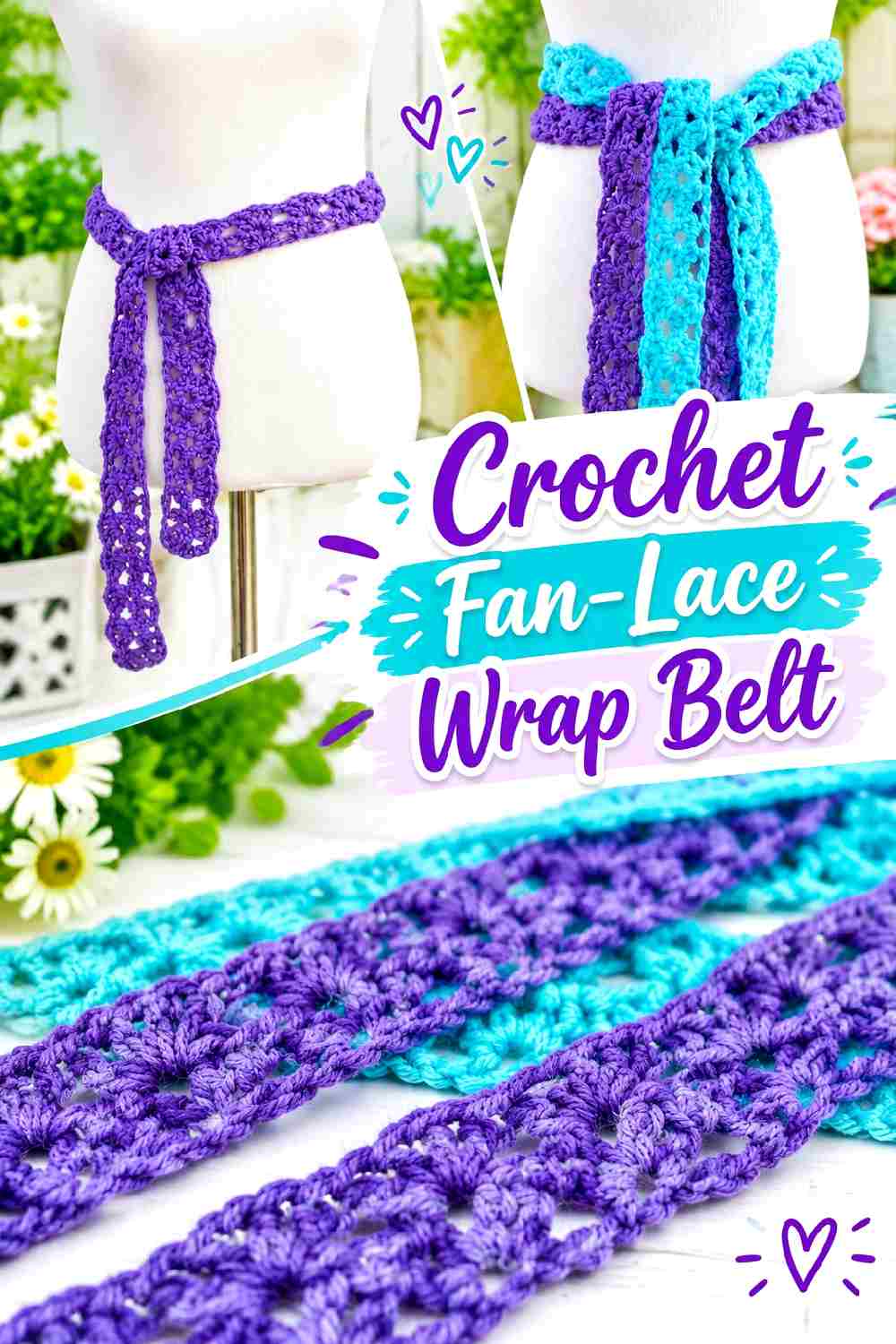
This long openwork belt uses repeated fan-like lace to create a narrow strip that can be wrapped or tied rather than fastened with hardware. Fiber Flux’s project is particularly useful for showing how a straightforward lace repeat can become a complete accessory without additional motifs, buckles, or sewn components. The original design also demonstrates that the same lace construction can be made wider by extending the pattern vertically.
Choose this approach when you want the garment underneath to remain visible through the belt. Because the silhouette is long and flexible, it works more like an ornamental sash than a rigid waistband. Before adapting it, decide whether your priority is a single clean wrap or enough length for overlapping and tying.
Let the Fan Repeat Stay Visible
Open fans need enough contrast with the garment underneath to remain readable. A lace color very close to a patterned dress may visually disappear, while stronger contrast emphasizes the repeated openings.
Yarn texture matters as well. A very fuzzy fiber can soften the edges of an open repeat, whereas smoother yarn tends to preserve clearer negative spaces. Make a small lace sample and view it against the clothing you expect to wear before committing to the full belt.
Measure for the Knot, Not Only the Waist
A tie belt needs more than the circumference of its wearing position. The ends also need enough usable length for the knot or drape you want.
At the same time, excessive openwork length can add stretch and bulk where the ends overlap. Check the belt under gentle wearing tension before deciding that it needs additional length. The creator’s tutorial should remain the reference for changing the repeat correctly.
Creator Credit: Fiber Flux
2. Crochet Tassel Ended Boho Lace Belt
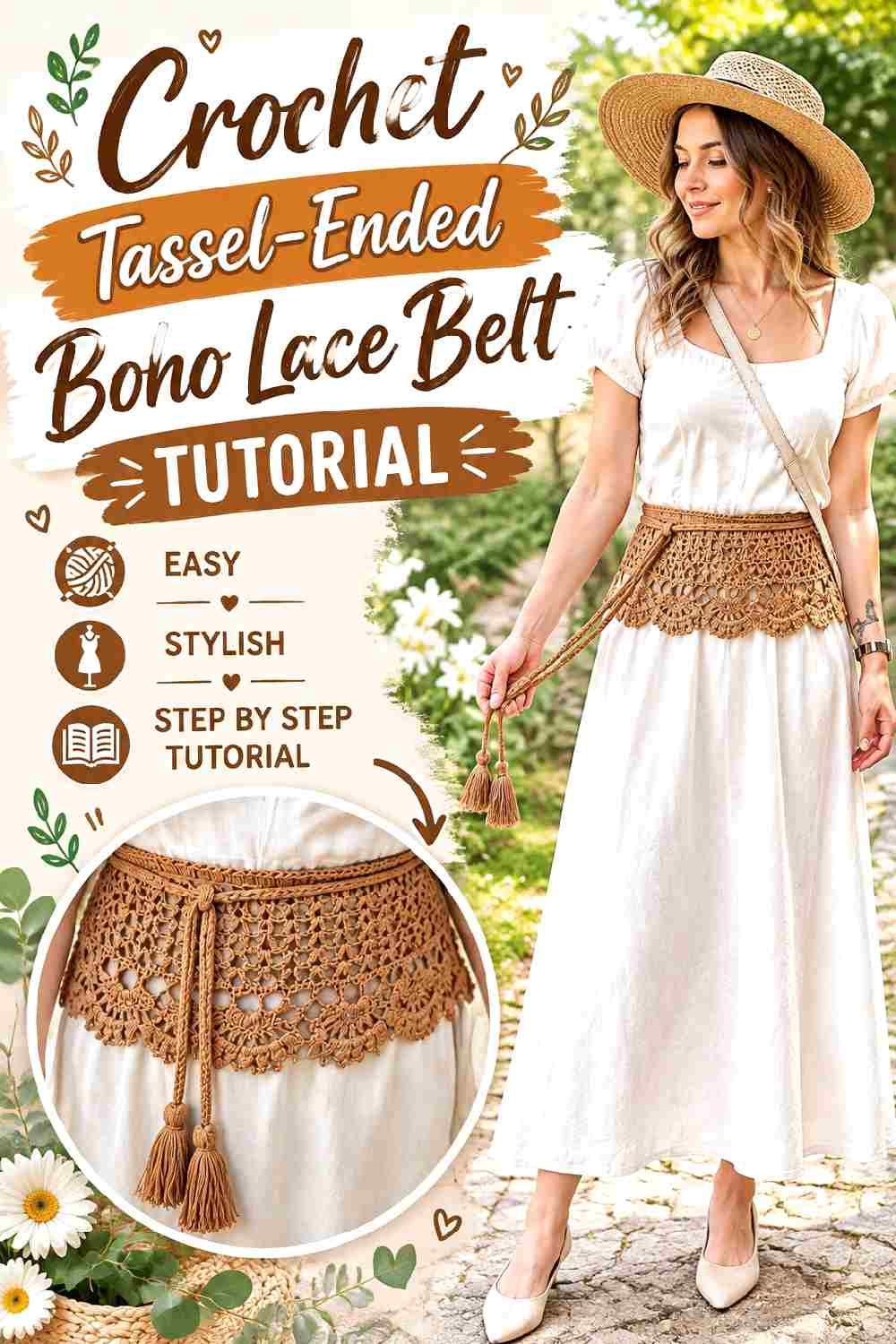
KhrystyK Crochet’s tutorial combines an open crochet belt with prominent tassel ends, giving the ties as much visual importance as the central band. That makes this version different from a plain lace sash: when tied, the finishing details remain visible and continue the line of the belt below the knot.
This shape suits dresses, skirts, tunics, or other garments where long ends can hang freely. It is less suited to situations where dangling ties would interfere with pockets, coats, or tightly spaced belt loops. Before choosing it, decide how much movement you want from the tassels and where you expect the knot to sit. A side tie will display the ends differently from a centered front knot.
Balance Tassel Weight With the Lace
Tassels add concentrated weight at the ends of an otherwise open belt. Depending on the yarn and tassel size, that weight can encourage a soft lace strip to pull downward.
Check how the finished ends behave while the belt is actually tied rather than judging them only when the project is flat. If you substitute yarn, keep both the drape of the lace and the weight of the tassels in mind.
Plan Around Outer Layers
Long decorative ends are easiest to see when worn over an uninterrupted dress or top. A jacket or cardigan can cover them or cause them to bunch.
For fall layering, consider whether the belt will sit outside the outer layer or underneath it. That decision can change the most useful tie position and how much decorative length you want visible.
Creator Credit: KhrystyK Crochet
3. Crochet Shell Lace Festival Belt
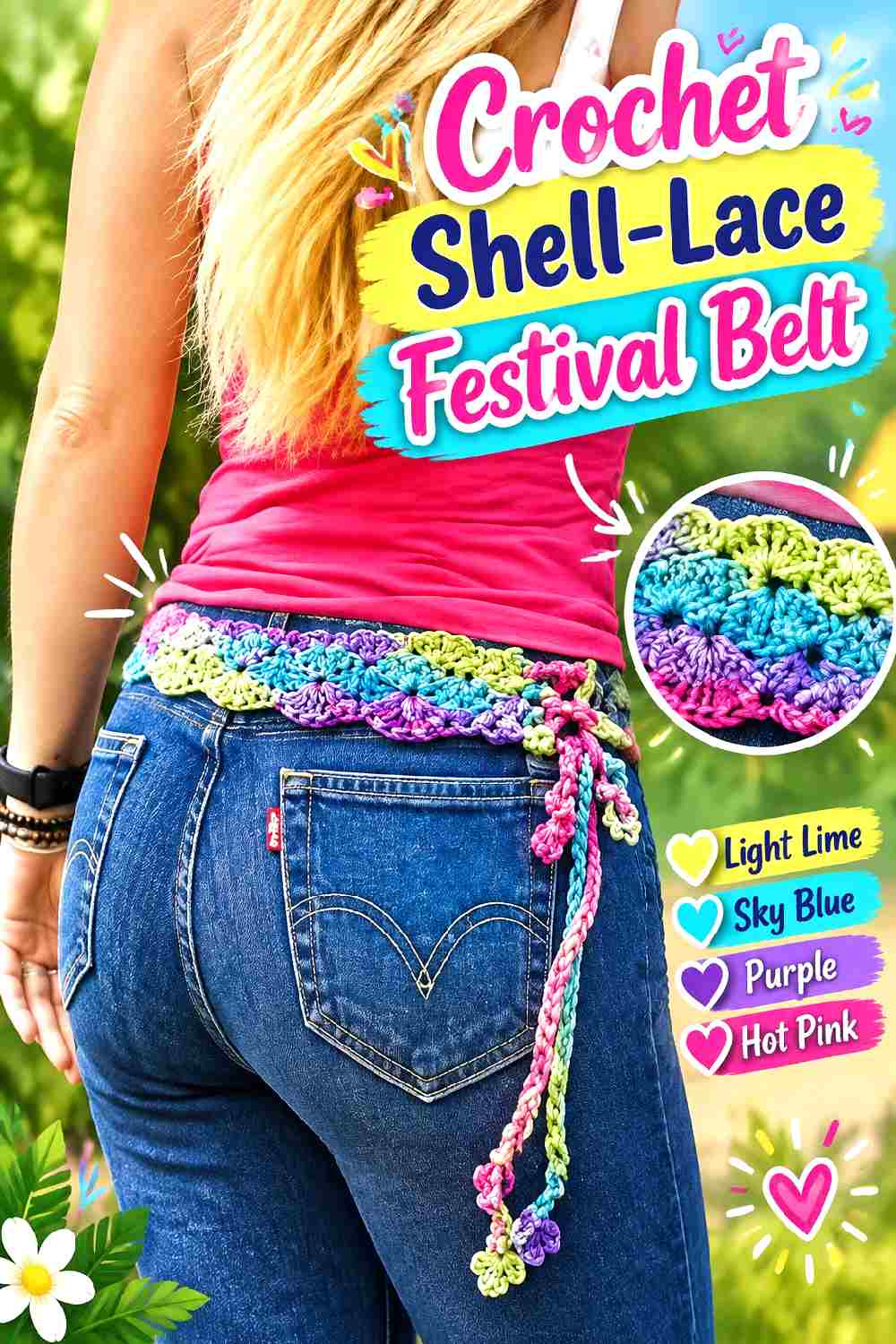
This shell-based belt from Light & Joy Designs uses repeated crochet texture and an adjustable tie format rather than a fixed buckle. The shell construction gives the body more visual density than a very narrow cord belt while still preserving recognizable openwork. Optional fringe in the original design provides another way to emphasize the ends.
The project works well when you want the belt itself to be noticeable but do not need the broad coverage of a corset-style waist piece. Shell repeats also give you a clear design rhythm that can complement plain dresses or tunics. Before changing the yarn, compare how well the new fiber preserves the curved shell definition and whether its weight changes the amount of stretch.
Keep the Shells From Collapsing Visually
A shell pattern depends on individual groups remaining distinguishable. If the yarn is too fuzzy or the fabric is worked too loosely, the repeated shapes can merge into a less defined strip.
Make enough of a sample to include several complete shells. That reveals both stitch definition and the way the edges behave before you invest in the full belt length.
Fringe Changes the Styling Range
Fringe can strengthen the festival or bohemian character of a belt, but it also limits where the accessory sits comfortably. Long fringe can become crowded beneath a coat or interfere with bags worn at the hip.
If you expect to wear the belt frequently under fall outerwear, compare the fringed and unfringed finish before committing to the extra embellishment.
Creator Credit: Light & Joy Designs
4. Crochet Corded Boho Belt With Tassel Ends
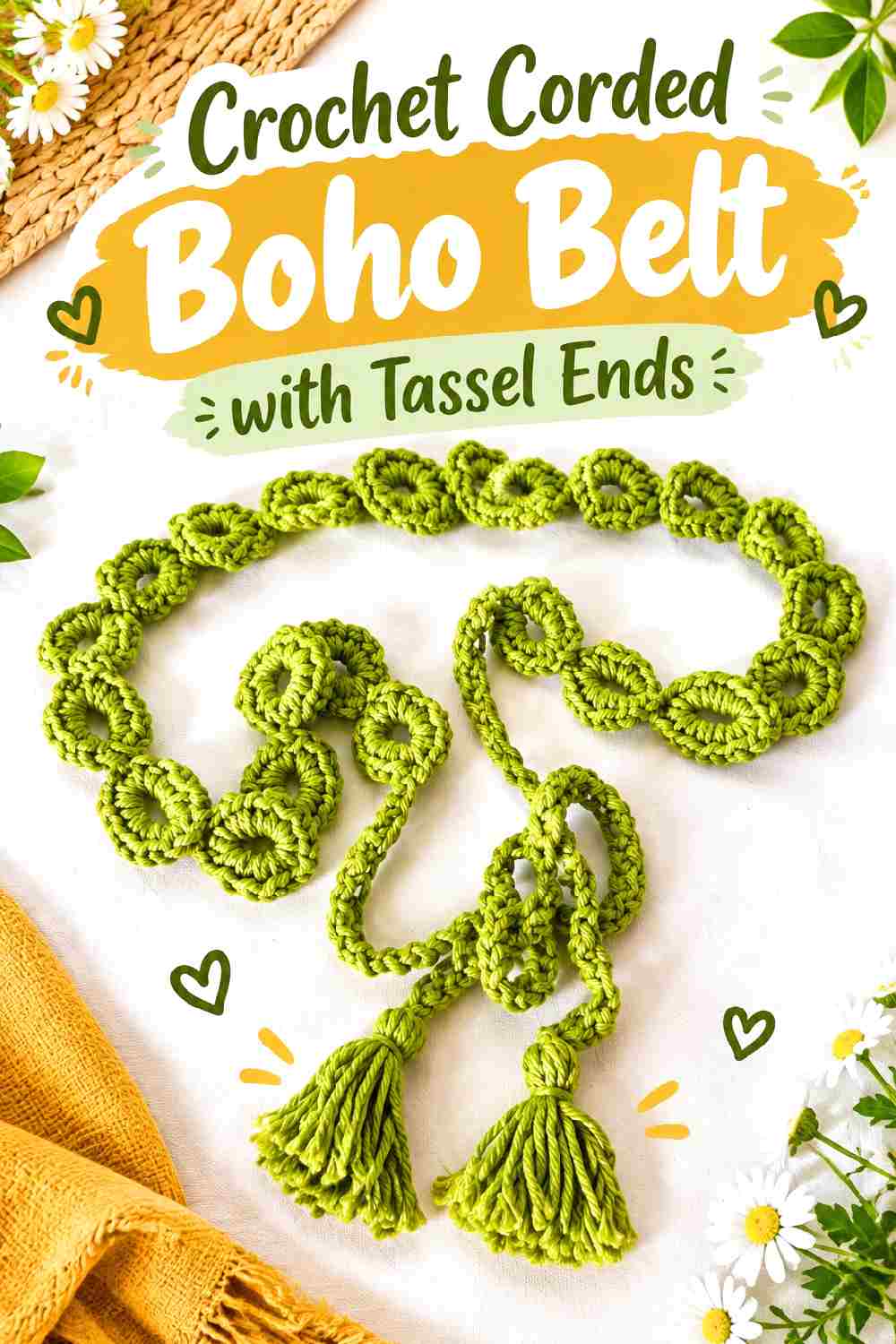
Hook & Loop Crochet Tutorials presents a boho belt that separates the design into a crocheted body, connecting cords, and tassel details. That division gives the accessory a different structure from a continuous lace strip: the center provides the main visual area while narrower extensions handle the tying.
This is useful when you like the appearance of a decorative waist section but do not want the entire circumference to have the same width. Narrow cords can also make the closure less bulky when tied. Before adapting the concept, pay attention to how the transition from the main belt to the cords is handled in the tutorial. That junction takes more tension than a purely decorative edge.
Watch the Main-Band-to-Cord Transition
When a wide section narrows suddenly into a cord, tension becomes concentrated at a smaller area. A very soft yarn or loose joining point may allow that transition to distort with repeated tying.
Check the junction from both sides once the cords are attached. It should remain visually neat without the edge of the main panel pulling into a point more than intended.
Decide Where the Tassels Should Land
Cord length determines not only fit but also where the tassels hang after tying. Longer cords can create a more dramatic drop, while shorter ones keep the finish closer to the waist.
Try the unfinished belt over the type of garment you plan to wear and mark a comfortable cord length before completing permanent end details.
Creator Credit: Hook & Loop Crochet Tutorials
5. Crochet Floral Tape Lace Statement Belt
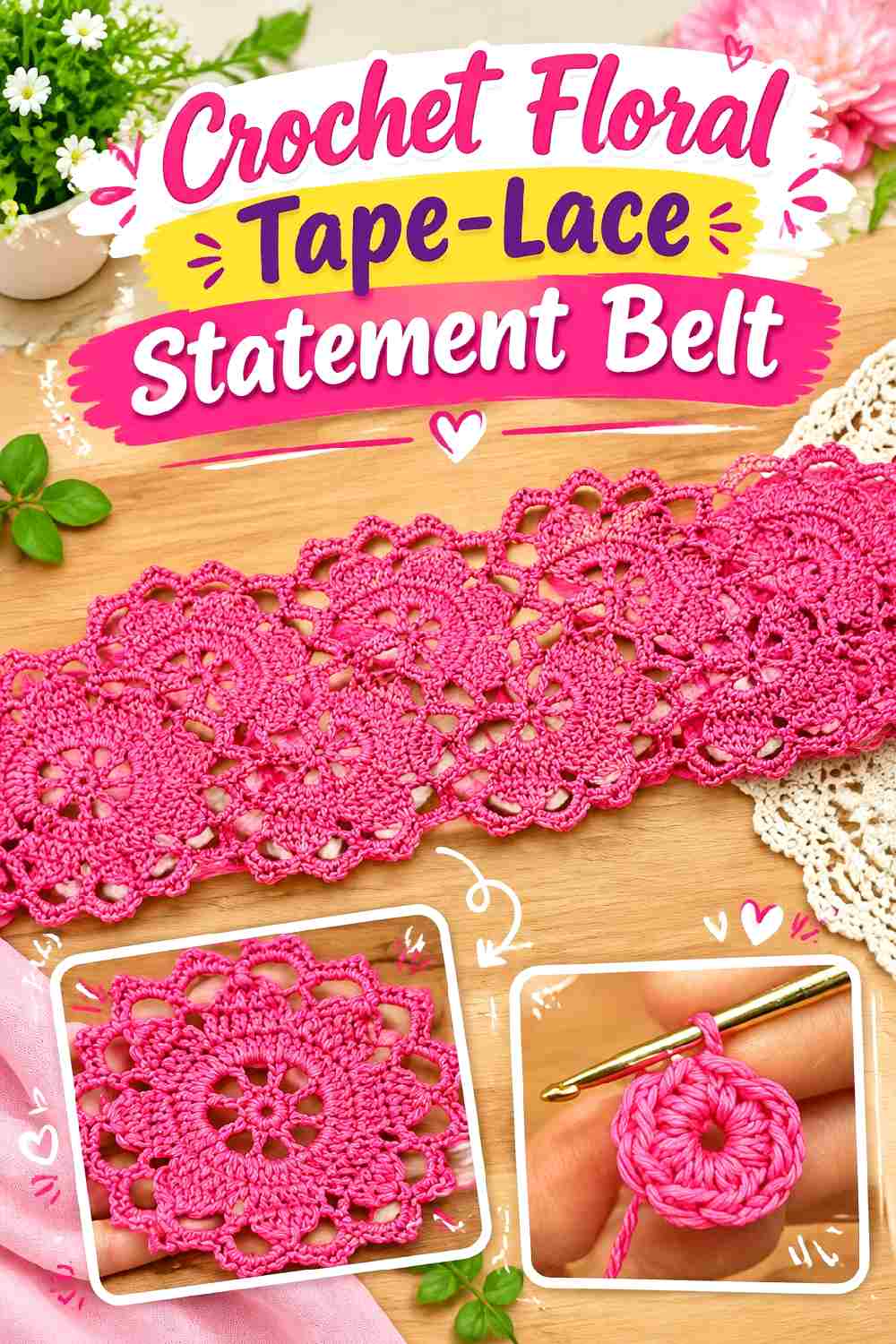
Crochet.ElenaRugalStudio’s design brings tape-lace construction into a belt format, using connected floral forms to create a wider, more elaborate strip. Rather than treating flowers as separate appliqués, this approach makes the repeating lace itself the body of the accessory.
The result is suited to readers who want a belt that functions as a noticeable textile detail rather than a barely visible tie. Its open circular motifs will also show a substantial amount of the garment beneath them. Before choosing a color or width, consider what will sit behind those openings. A simple solid background usually makes complex lace easier to read than an equally intricate print.
Motif Consistency Controls the Edge
Repeated floral sections make small differences in tension easier to spot. If individual motifs gradually change size, both edges of the belt can begin to wave or pull.
Compare completed repeats as you work instead of waiting for the full strip to be finished. Blocking can refine lace when the chosen fiber permits it, but it cannot fully correct large inconsistencies in motif scale.
Wide Lace Needs a Placement Test
A broader belt occupies more vertical space on the torso than a cord or narrow sash. That can change how it interacts with waist seams, pockets, gathered fabric, and the lower edge of a cardigan.
Hold or pin a sample width around the intended position before making the entire length. Comfort and visual proportion are easier to judge on the body than on a flat table.
Creator Credit: Crochet.ElenaRugalStudio
6. Crochet Irish Lace Cord Tie Belt
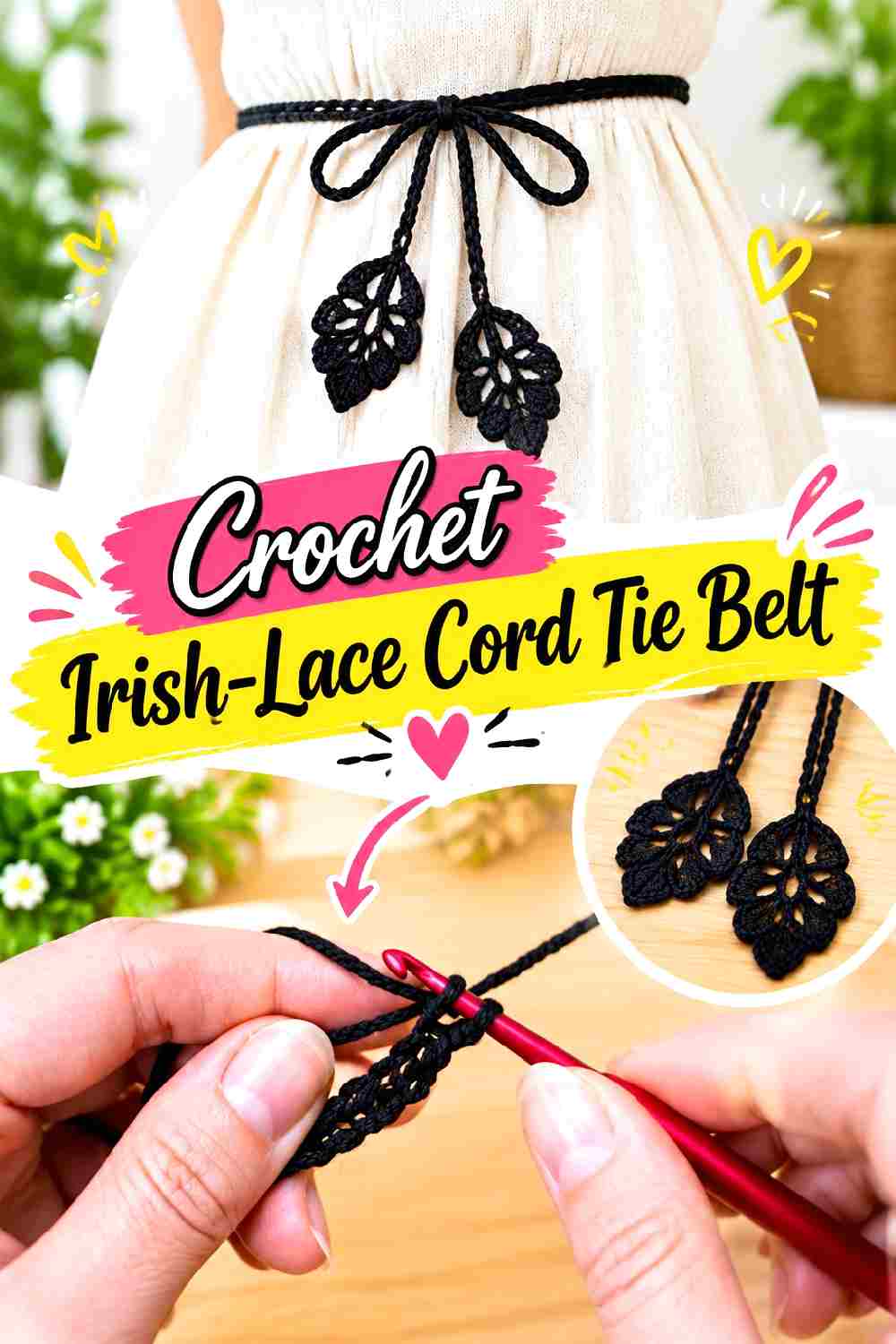
LaceVibes demonstrates a slim crocheted cord associated with Irish-lace-style construction that can function as a belt, tie, or drawstring. Compared with motif-heavy belts, this idea is deliberately minimal: the interest comes from the cord’s structure and the clean line it creates around the body.
Its narrow scale makes it useful when a wider lace band would overwhelm a garment or fail to pass through small loops. It can also be wrapped more than once if the finished length allows. The main consideration is stretch. A long crocheted cord can behave differently under tension than a short decorative sample, especially when made in a softer or more elastic fiber.
Test Stretch at Full-Length Scale
A few inches of cord may feel firm while a waist-length piece stretches noticeably once tied. The longer the piece, the more opportunity there is for cumulative elongation.
Before finishing the ends, wear the cord temporarily and check where the knot settles. If you substitute yarn, repeat that test rather than assuming the original length will produce the same fit.
Keep the Ends Proportional
Because the main belt is so slim, oversized end decorations can dominate the design. Small knots, compact tassels, or simple finished ends preserve the minimal look.
If you do add heavier embellishment, check that it does not pull the cord downward or make the knot loosen during wear.
Creator Credit: LaceVibes
7. Crochet Open Ring Buckle Belt
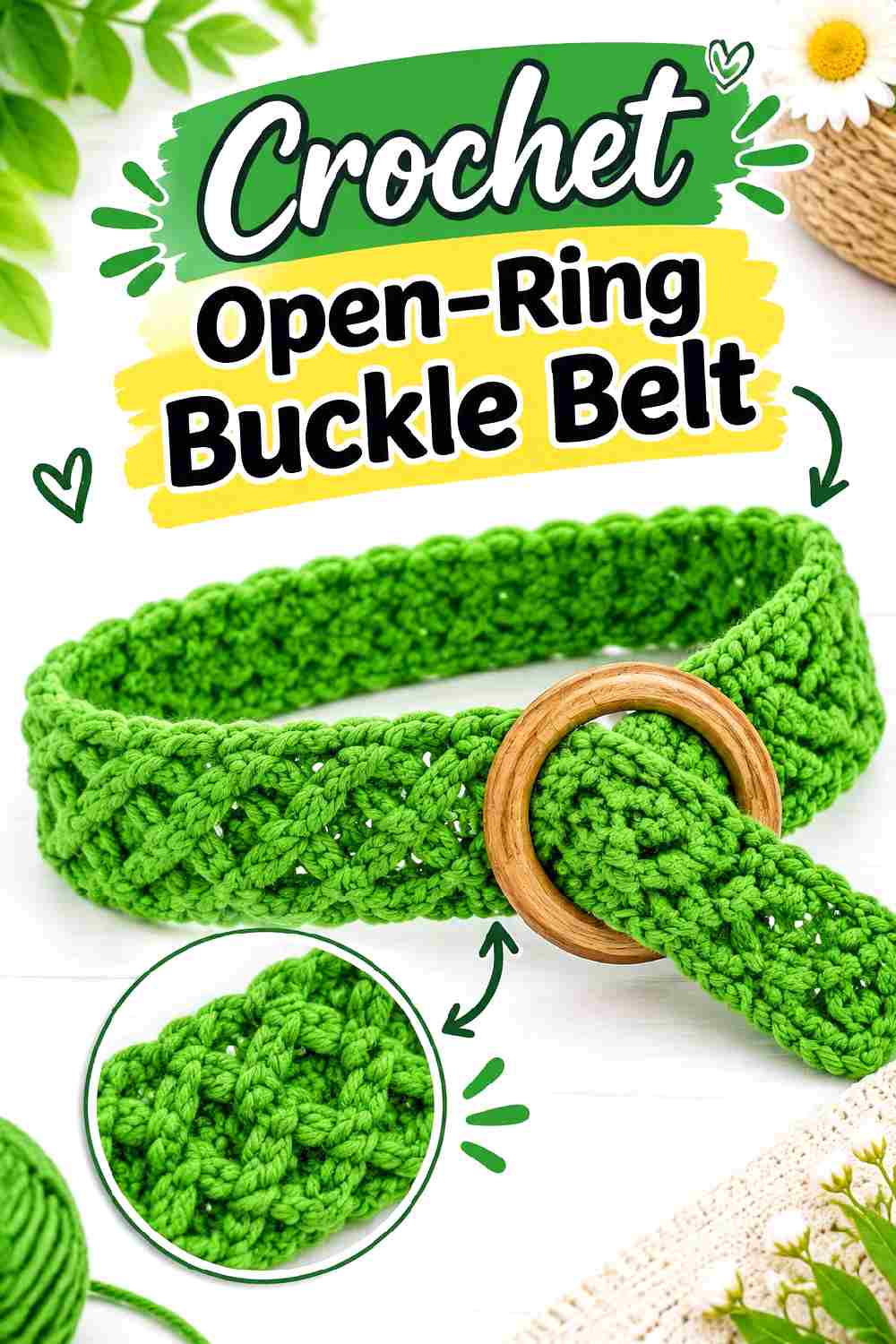
Crochet Bits uses repeated open rings to create a belt body that looks more like linked jewelry than conventional fabric. The circles introduce large areas of negative space while a buckle gives the accessory a defined closure. This combination distinguishes it from soft tie belts because the repeated motifs and hardware both affect fit.
Open rings can be especially effective over a solid dress, where the garment becomes part of the visual pattern. Before choosing this design, think about motif scale relative to your waist and the intended buckle. Larger circles make a stronger graphic statement but also leave fewer connection points across the belt.
Joined Rings Need Even Alignment
With repeated circles, crooked joins are more visible than they would be in a dense strip. Each ring affects the direction of the next, so small alignment differences can accumulate across the finished length.
Lay the work flat periodically and confirm that the center line remains straight. Address twisting while the belt is still short enough to correct comfortably.
Match the Buckle to the Motif Weight
A heavy buckle attached to very light rings can pull the end of the belt downward. Conversely, an extremely delicate buckle may look visually lost beside substantial motifs.
The original tutorial shows the intended relationship. If substituting hardware, compare both physical weight and opening size before building the entire belt around it.
Creator Credit: Crochet Bits
8. Crochet Flower Square Tie Belt
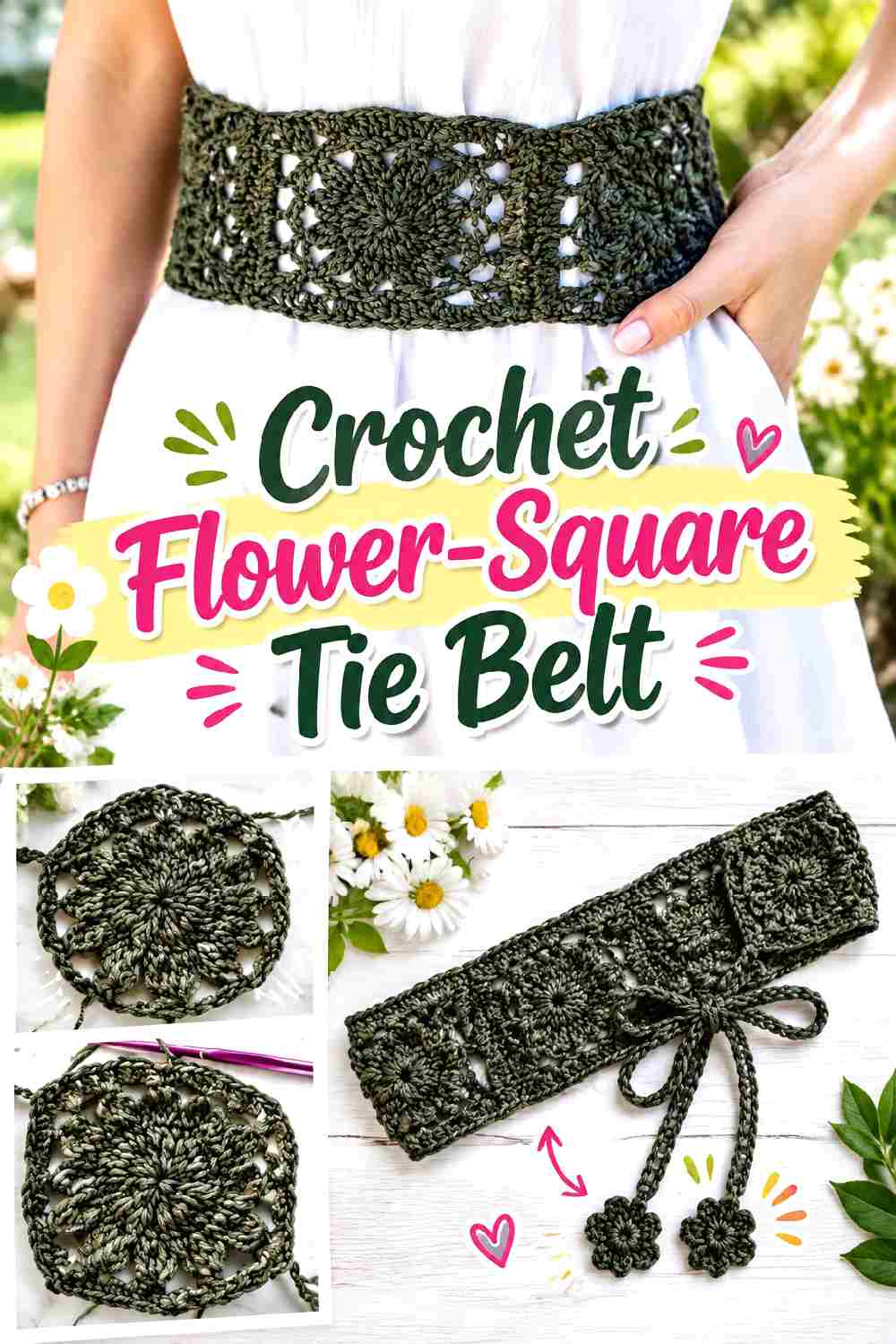
Nebeska Crochet with Love builds this belt around flowers framed by square shapes, creating a more geometric outline than a loose floral garland. The flowers provide the decorative centers while the square boundaries help organize the motifs into a readable band.
This format works well when you want floral crochet without an irregular outer edge. Ties also allow the motif section to remain shorter than the full waist circumference, leaving the fastening area lighter and more adjustable. Before changing motif size, remember that enlarging each square affects both belt width and the number of units required across the body.
Square Borders Help Control Floral Scale
A floral center can vary slightly without immediately disrupting the whole belt, but the surrounding square needs to remain consistent if the units are expected to align cleanly.
Compare completed squares against one another before joining many of them. Consistent finished dimensions matter more here than matching an arbitrary stitch tension that may not reflect your yarn substitution.
Leave Enough Space for the Tie to Work
The decorative section does not necessarily need to meet edge to edge around the waist. Leaving an intentional gap can give the ties room to form a cleaner knot.
Try the motif band before finalizing the tie length and verify the creator’s intended fit rather than automatically extending the squares until they meet.
Creator Credit: Nebeska Crochet with Love
9. Crochet Linked Flower Garland Belt
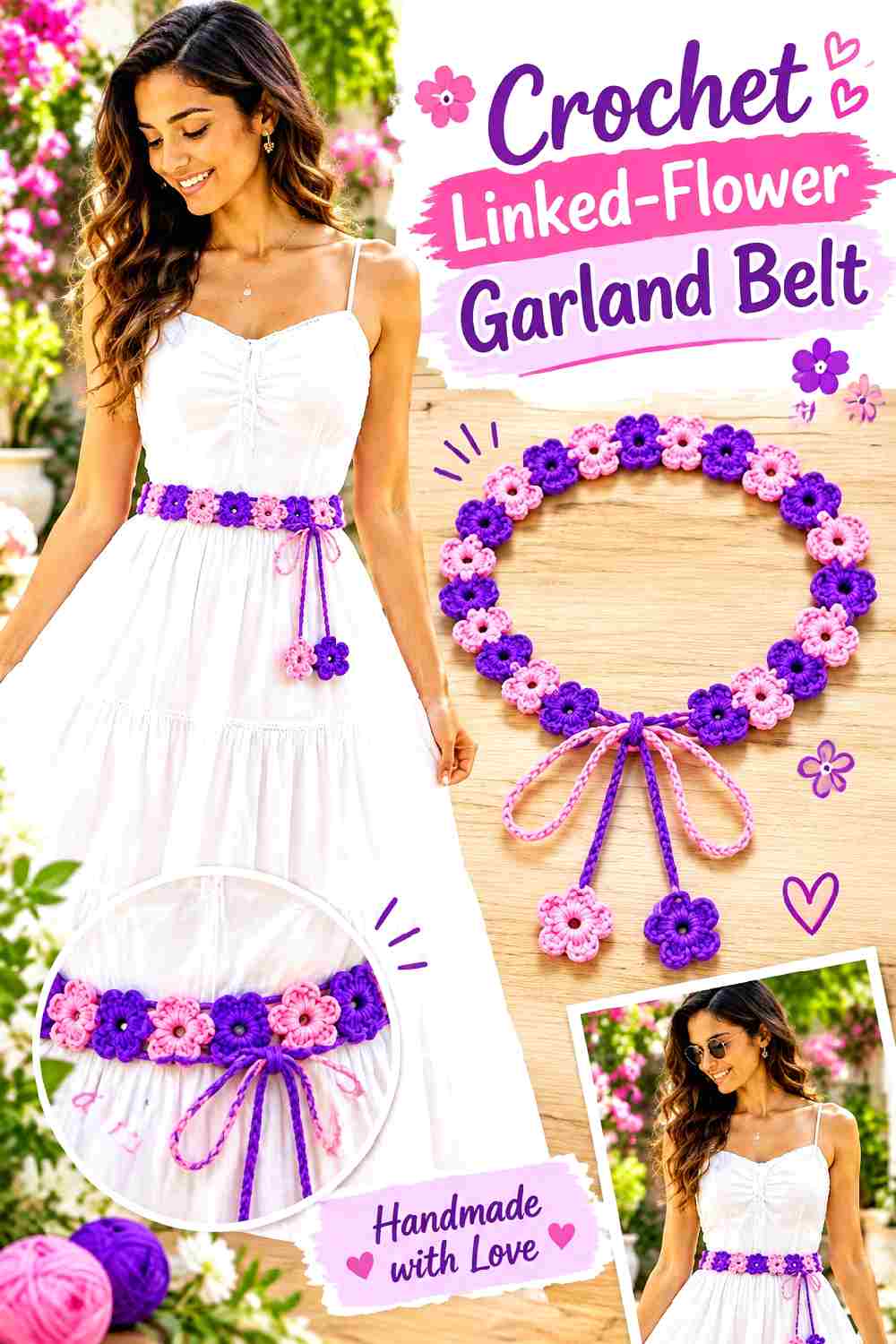
Knitting by Wajida’s belt uses connected flower shapes to form a narrow floral chain. Unlike flowers contained inside squares, these motifs retain a more open silhouette, so the belt reads as a garland wrapped around the body.
That exposed outline makes the design particularly effective when you want the underlying garment to remain visible between petals and joins. It also means the connection points deserve attention: narrow bridges between motifs take much of the strain when the belt is tied. Choose this concept for decorative use rather than expecting it to behave like a dense trouser belt.
Protect Narrow Joining Points
Where one motif connects to another, a small amount of yarn may carry tension from a much larger section. Repeated pulling can affect those connections more than the flower centers themselves.
When trying the belt on, tighten it only as much as the decorative construction comfortably allows. If you want a firm cinching belt, a denser design is a more appropriate starting point.
Use Contrast to Reveal the Garland
Open flowers can blend into heavily patterned fabric. A garment with a quieter surface gives the petal outlines and spaces between motifs more visual separation.
Before settling on yarn color, place a small completed flower against several items in your wardrobe. The same motif can read very differently depending on the background.
Creator Credit: Knitting by Wajida
10. Crochet Granny Square Buckle Belt
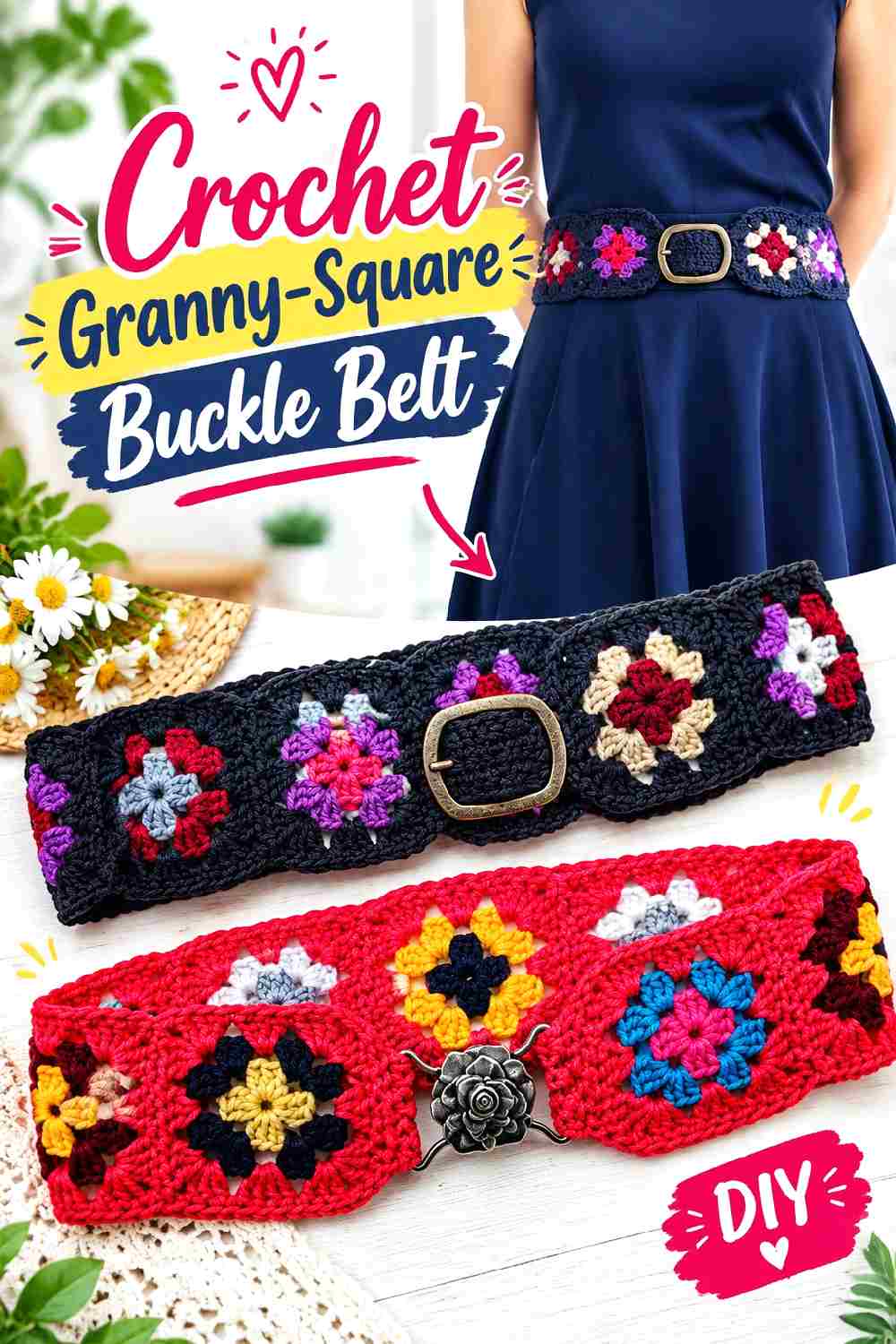
Crochet&Copy combines granny-style square motifs with a buckle, giving a familiar crochet construction a more tailored accessory format. The squares create clear blocks across the belt while the hardware replaces soft ties, so the finished piece has a different visual rhythm from flower chains or continuous lace strips.
This option is useful when you want motif crochet that can coordinate with other granny-square pieces without making an entire garment. Before starting, compare the width of one finished square with both your intended belt loops and buckle. That single dimension determines much of the finished belt’s practicality.
Motif Width Sets the Whole Belt Scale
A granny square cannot be narrowed after joining without changing the motif itself. If one square is wider than your belt loops, the completed belt will be too.
Make one full test motif first. Check it against the buckle, garment, and desired wearing position before committing to the remaining squares.
Keep Joins Flatter Than the Motifs
Bulky seams between squares can create stiff ridges that are uncomfortable when the belt wraps tightly around the waist.
Use the joining method shown by the creator as the baseline, and avoid adding unnecessary bulk when weaving in ends. A neat flat connection keeps the sequence of squares visually continuous.
Creator Credit: Crochet&Copy
11. Crochet Beaded Lace Accent Belt
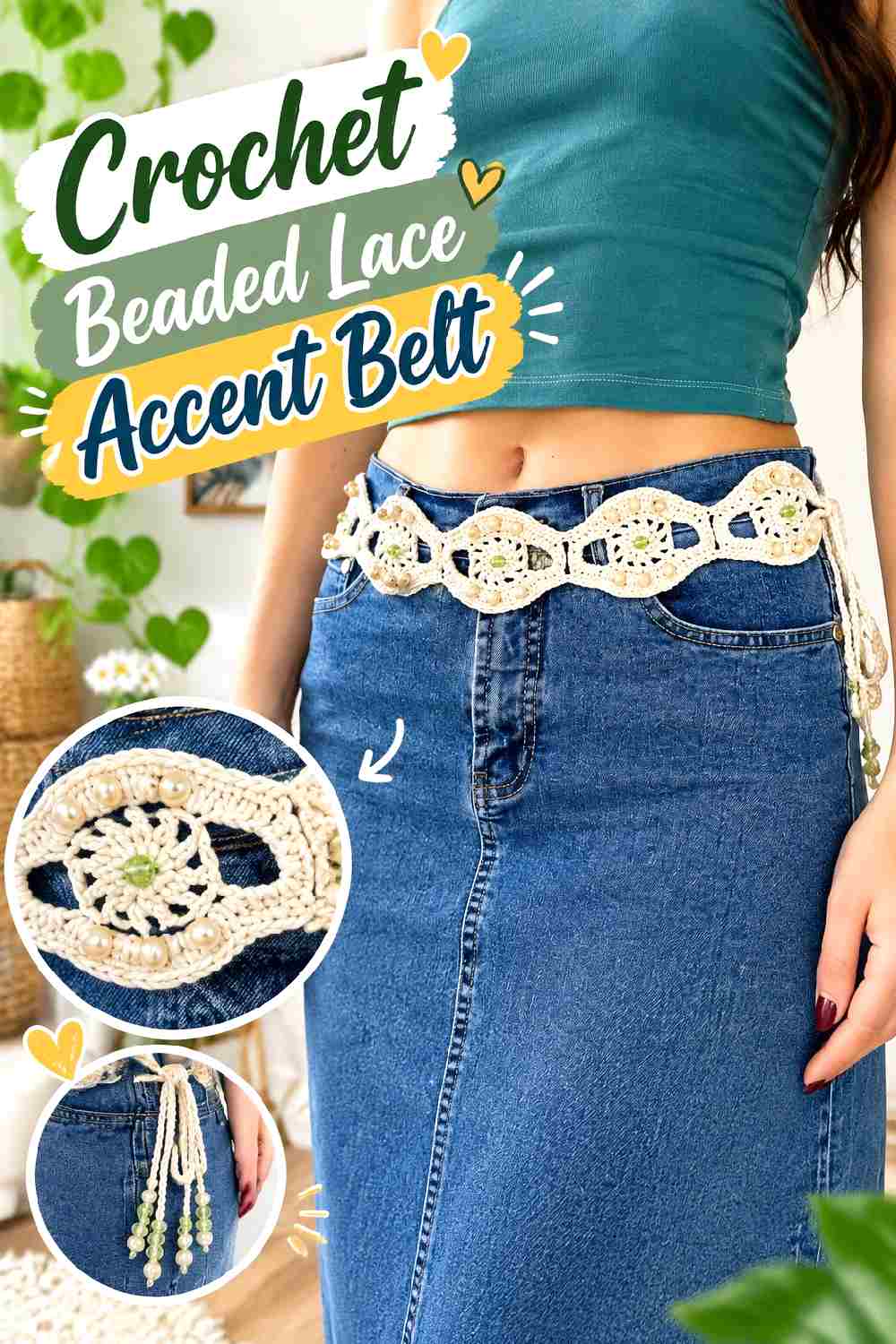
Sarah’s beaded crochet belt brings hard, reflective embellishment into an otherwise soft textile accessory. Beads change more than appearance: they add localized weight and can influence how the belt drapes, especially when placed along long strands or open crochet sections.
This idea works when you want a dressier accessory or a jewelry-like accent around the waist. Before substituting beads, consider hole size, weight, and how their edges interact with the yarn. A bead that technically fits onto the strand may still be too heavy or abrasive for the finished belt.
Distribute Bead Weight Deliberately
A few beads concentrated at one point can make that section hang lower than the surrounding crochet. An even distribution generally keeps the belt visually balanced.
Test a small embellished section vertically rather than only laying it flat. Gravity reveals whether the beads are changing the intended line.
Check Yarn Against Bead Edges
Glass, metal, and other hard materials can create friction where yarn repeatedly moves against them. The risk depends on bead finish, yarn structure, and how the piece is worn.
Inspect each bead opening before use and avoid pieces with visibly rough edges. Care should also follow the yarn and embellishment requirements rather than assuming the belt can be washed like an unadorned crochet accessory.
Creator Credit: Sarah
12. Crochet Flower Chain Denim Belt
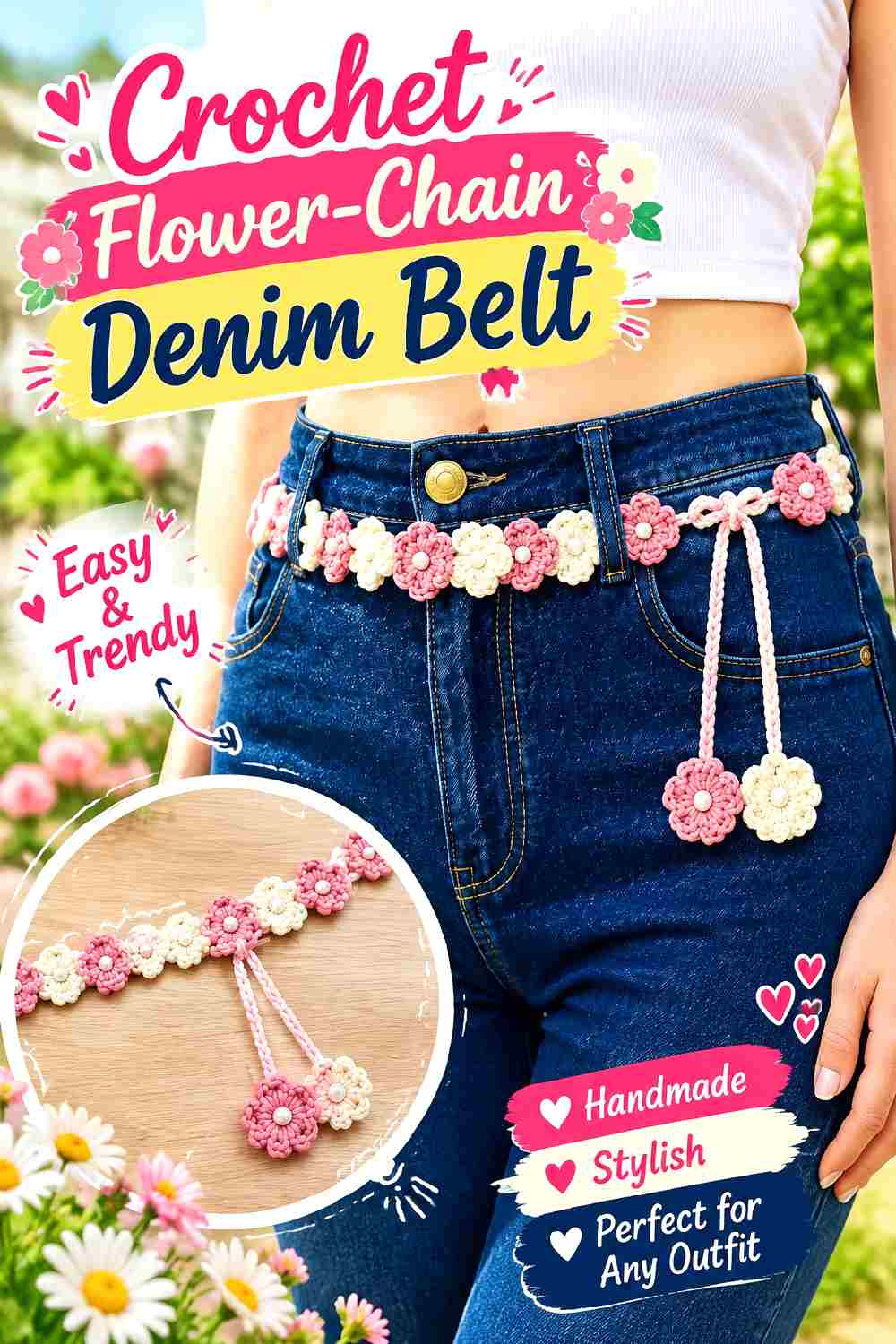
Crochet Kitchen’s flower belt is designed as a chain of clearly recognizable floral units that can be worn with jeans as well as other garments. The narrow motif format gives it more personality than a plain cord without becoming a wide waist panel.
For denim, belt-loop compatibility matters. A flower that is wider than the loop opening may require the belt to be worn over the waistband instead of threaded through it. That is worth checking after the first complete motif. The same design can also work over a dress, where loop width is no longer a limitation and the floral outline is easier to display.
Test One Flower Against the Belt Loops
Do not assume a decorative motif will compress enough to pass through every loop. Forcing a flower through a narrow opening can distort petals or snag yarn.
Finish one representative motif and physically compare it with the jeans you plan to wear. If it is too wide, treat the belt as an over-waist accessory instead.
Preserve the Shape at Connection Points
Flowers connected edge to edge can rotate if the joining areas are very flexible. That can make alternating motifs face different directions during wear.
Before finishing, hold the belt vertically and gently tension it. Check whether the flowers remain aligned under the type of pull they will experience around the waist.
Creator Credit: Crochet Kitchen
13. Crochet Slim Ribbon Cord Wrap Belt
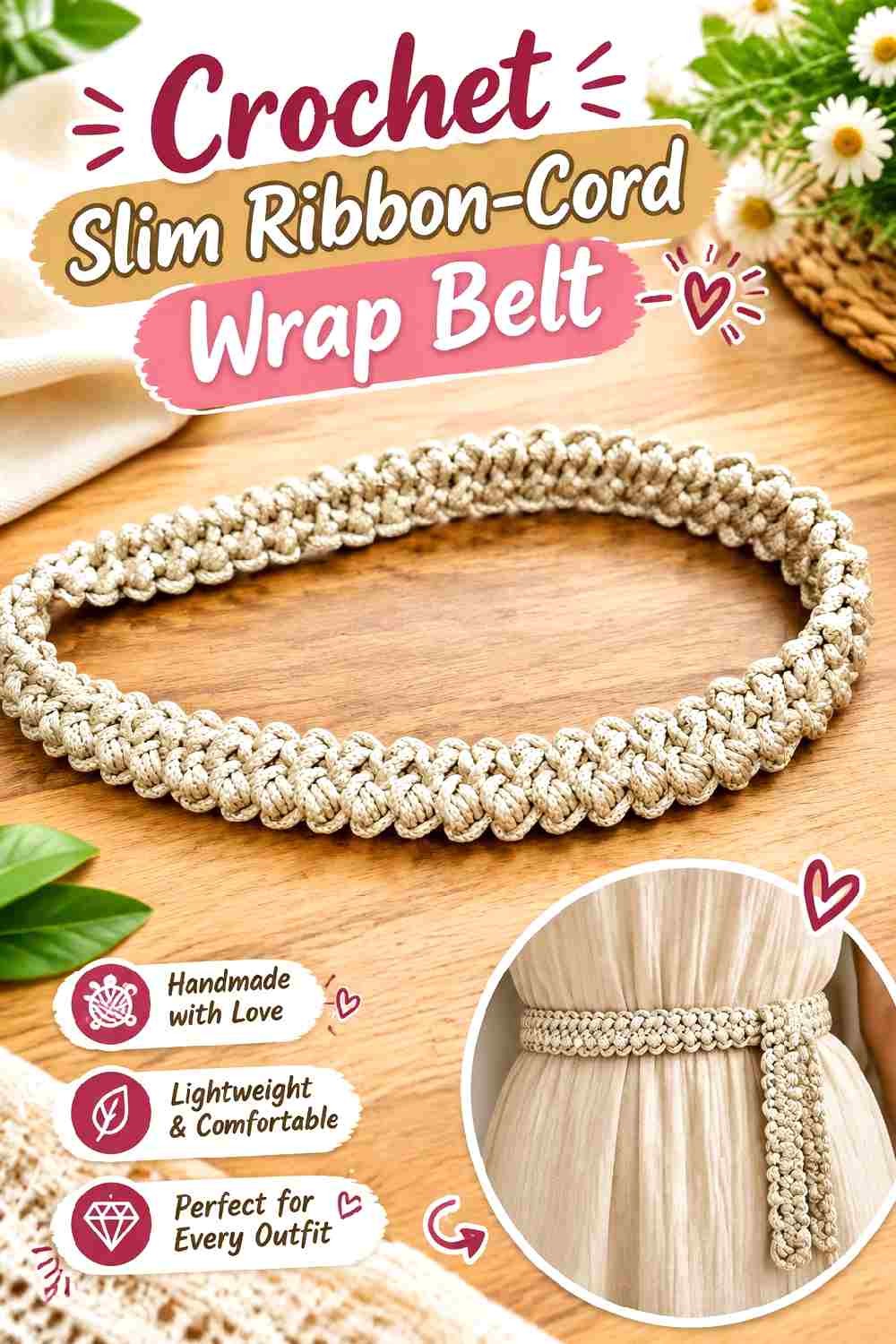
The multi-use crochet strip from crochet with marmara can function as a belt, ribbon, cord, or strap. Its strength as a belt idea is precisely that simplicity: instead of relying on large motifs or hardware, it creates a continuous narrow line that can be wrapped, knotted, or incorporated into other styling.
This approach suits readers who want a low-profile belt that will not compete with patterned clothing. It is also easier to layer than a broad waist piece. Because narrow crochet can stretch significantly depending on fiber and stitch structure, however, the finished length should be evaluated under gentle tension rather than measured only while relaxed.
Narrow Does Not Always Mean Firm
A slim cord can feel dense in the hand yet still lengthen when the entire piece is placed under tension. Soft yarns may exaggerate that behavior.
Before trimming ends or adding embellishments, tie the belt at the intended waist or hip position and observe whether it settles lower after a few minutes.
Use Wrapping to Change the Scale
If the finished cord is long enough, multiple wraps can turn a very narrow belt into a more substantial visual feature.
Keep the layers reasonably flat instead of twisting them unintentionally. Several overlapping strands can also add bulk to the knot, so test the closure before deciding how many wraps you prefer.
Creator Credit: crochet with marmara
14. Crochet Continuous Flower Lace Belt
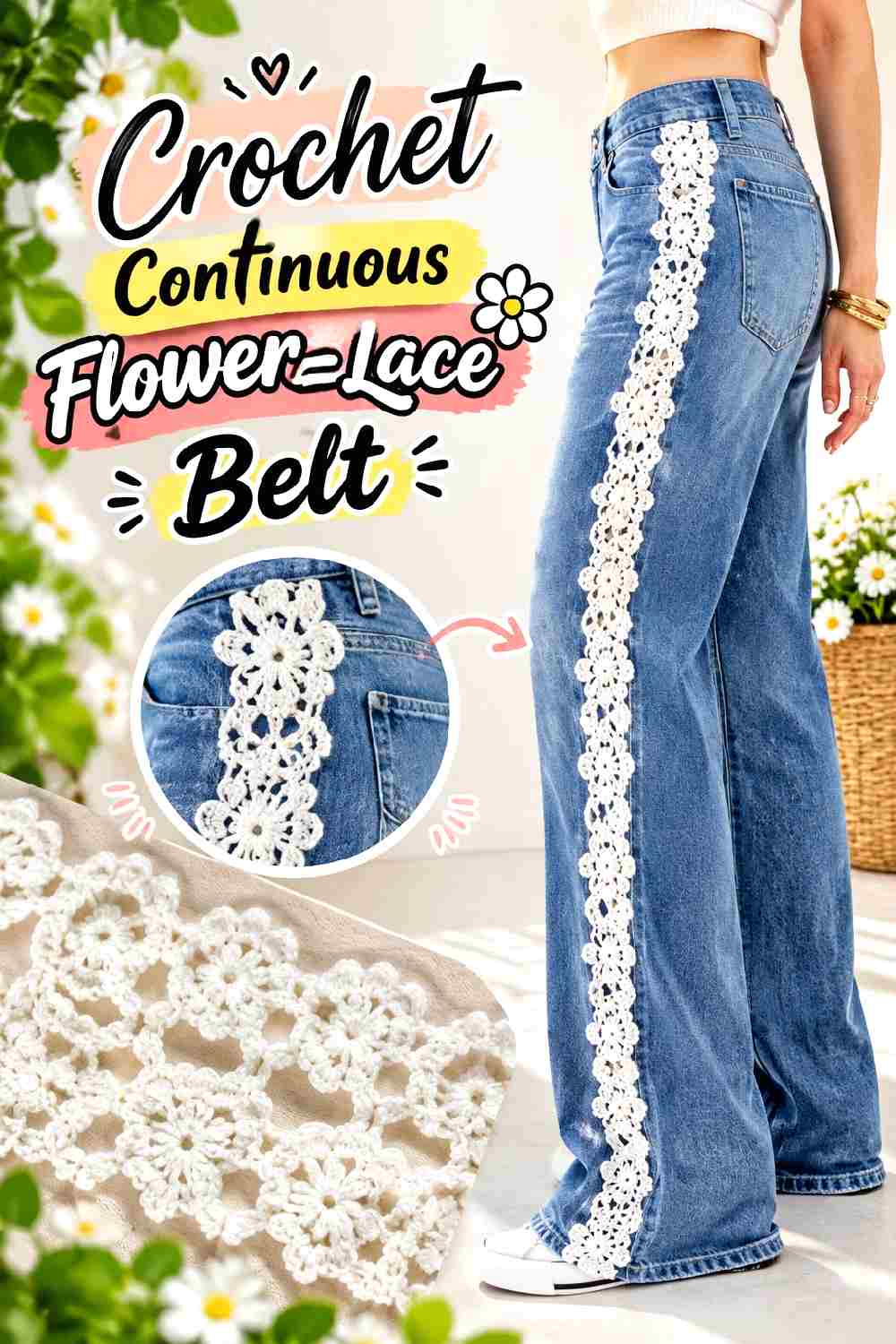
Hobbi CROCHET demonstrates a continuous flower lace that can be extended for uses including a belt. Because the flowers form a repeating trim rather than separate sewn-on appliqués, the finished strip maintains a cohesive lace structure.
This design is useful if you like botanical motifs but want less assembly than a belt made from many independently finished flowers. The lace can remain narrow and decorative, making it suitable over dresses or at the waist of a tunic. Before choosing length, account for how the flower repeat ends; a complete-looking finish is preferable to stopping in a visually awkward portion of the motif.
Plan the Length Around Complete Flowers
Motif lace often adjusts in repeat-sized increments rather than arbitrary fractions. That means your ideal body measurement may not correspond perfectly to the end of a complete flower.
Check the creator’s tutorial for the correct repeat logic, then use the ties or closure area to absorb small fitting differences where appropriate.
Blocking Should Refine, Not Rebuild
Flower lace may benefit from gentle shaping when the selected fiber supports it, especially if petals need to lie more evenly.
However, large differences between motifs usually point to tension variation. Compare the flowers during construction so finishing is used to polish the belt rather than rescue inconsistent sizing.
Creator Credit: Hobbi CROCHET
15. Crochet Leaf Garland Tie Belt
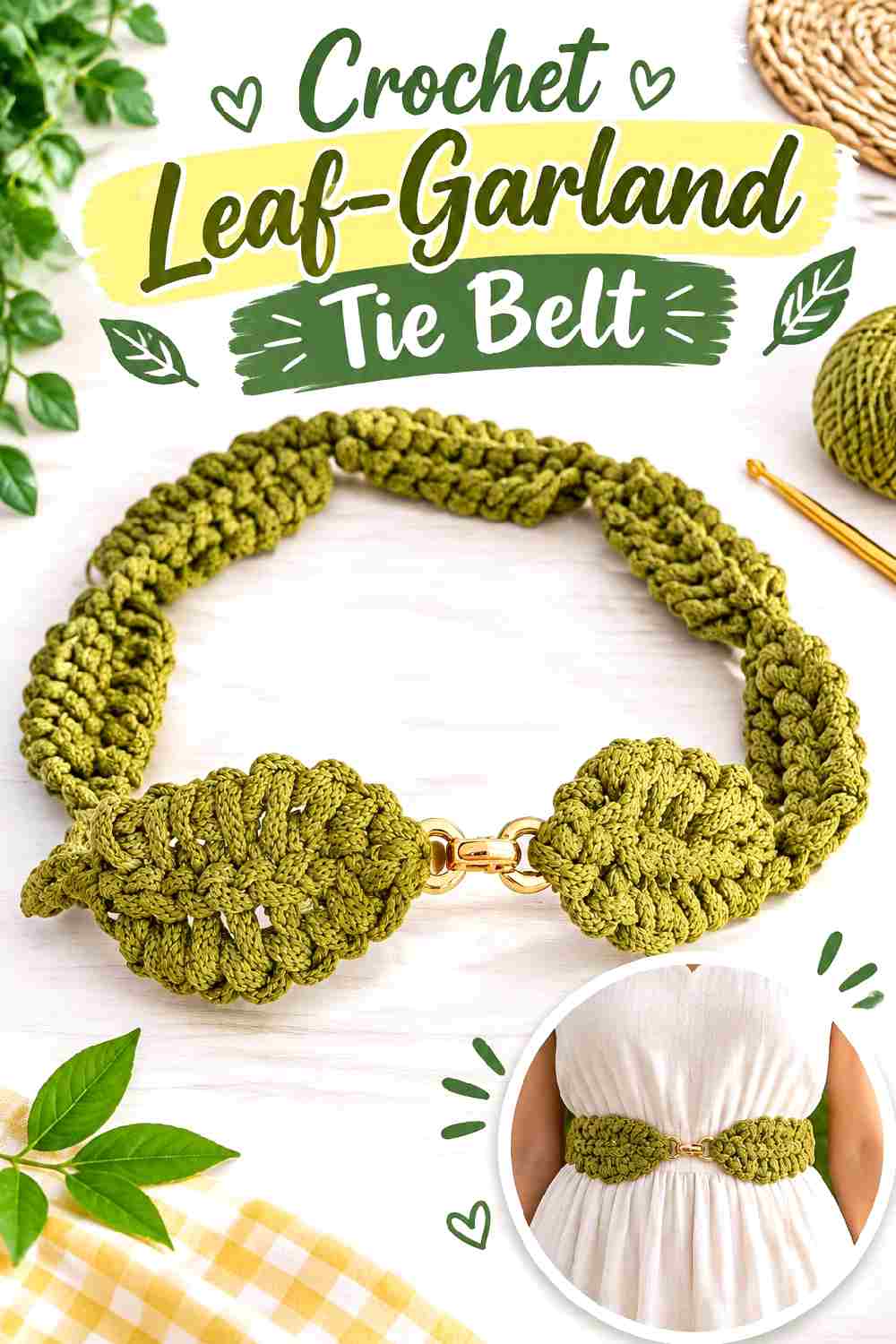
Michelle Duarte Crochê’s leaf belt replaces the more common flower motif with a repeating botanical leaf form. The pointed silhouettes create a directional rhythm that distinguishes it from circular or scalloped lace and gives the belt an organic outer edge.
A leaf garland works especially well as a decorative overlay because plenty of the garment remains visible around the motifs. For fall styling, the botanical shape can pair naturally with dresses, long skirts, or layered tunics without needing a bulky belt body. Before changing the yarn, check whether it has enough stitch definition for the leaf points to remain recognizable.
Direction Matters With Leaf Motifs
Leaves have a clearer top, bottom, or directional flow than simple circles. If motifs rotate unexpectedly, the finished belt can look less intentional.
Lay the belt out at intervals and check the orientation of the leaves before completing additional repeats. This is particularly important if the construction allows individual sections to twist.
Keep Pointed Edges From Curling
Narrow tips can react differently to tension and finishing than broad motif centers. If the leaves curl significantly, check your tension before assuming blocking will solve everything.
Follow fiber-appropriate care and shaping guidance. Different yarns respond differently to moisture, heat, and blocking.
Creator Credit: Michelle Duarte Crochê
16. Crochet Chain And Charm Jewelry Belt
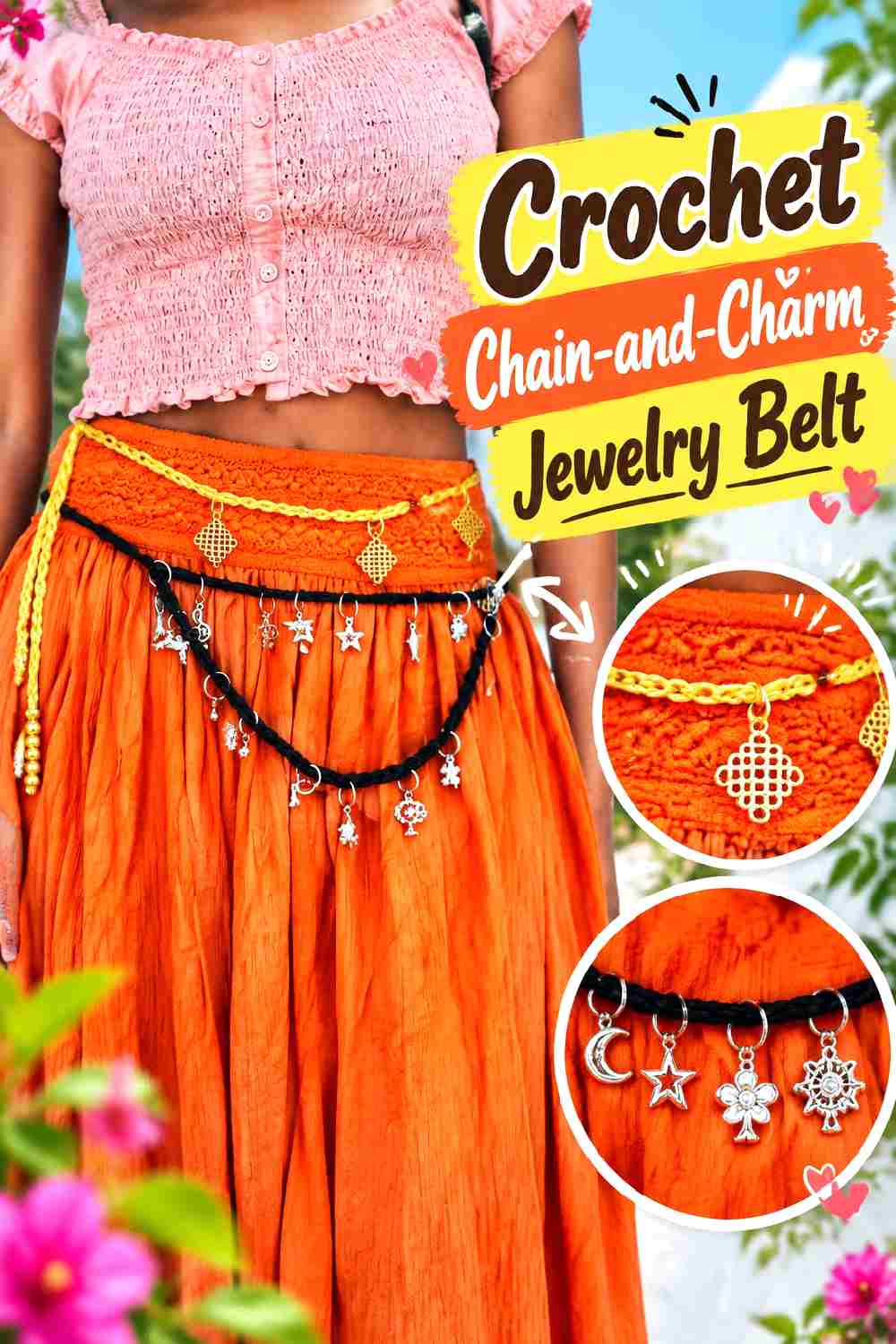
The Dream Crochet Channel treats the waist accessory more like jewelry, combining a crochet chain structure with beads or charms and a clasp-style closure. This makes the belt substantially lighter in visual coverage than a conventional crocheted band.
Choose this direction when you want small decorative elements rather than a textile panel around the waist. It can work over a simple dress, skirt, or tunic where the individual charms have a clear background. Because mixed materials are involved, hardware compatibility matters as much as crochet tension. Clasps, rings, beads, and charms should all connect securely without rough surfaces cutting into the yarn.
Hardware Becomes Part of the Fit
A clasp does not offer the same continuous adjustment as a long tie. The position of attachment points determines where the belt closes.
Before permanently attaching decorative components, check the intended circumference over the actual garment. An extra layer underneath can make a noticeable difference with a fixed closure.
Mixed Materials Change Care
A yarn may tolerate a washing method that beads, plated charms, or metal findings do not. Treat the belt according to the most sensitive component rather than assuming normal crochet care applies.
When specific care instructions are not provided, follow the yarn manufacturer’s guidance and use conservative handling for the hardware.
Creator Credit: The Dream Crochet Channel
17. Crochet Ribbed Clasp Waist Belt
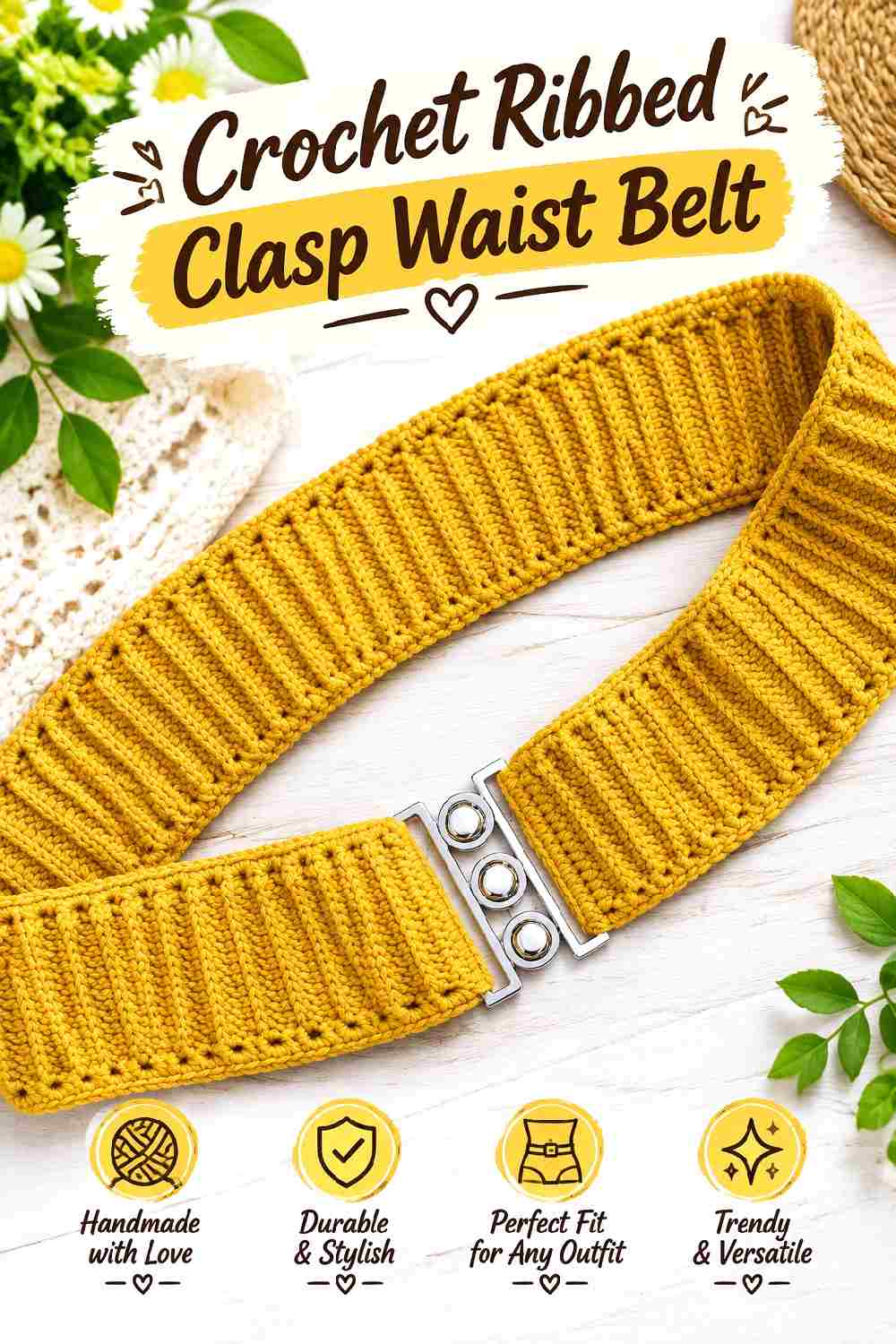
Yarn + Chai’s crocheted waist belt uses a broader, ribbed-looking body and a clasp rather than open lace motifs. Its inclusion here provides a useful structural contrast: readers who like crochet at the waist but need more visual coverage can compare this dense format with the flower chains and fan lace elsewhere in the list. The pattern builds its texture through back-loop work and uses a distinct closure.
A broad ribbed panel can sit cleanly over a simple dress or top, but it will gather more fabric beneath it than a narrow tie. Before adapting the design, check both total width and how the closure sits against the body.
Ribbing Can Affect Stretch
Textured crochet often has directional flexibility. A belt that feels stable across its width may still lengthen around the waist depending on yarn and construction.
Measure and try the panel in the same orientation in which it will be worn. Do not base fit only on an unstretched flat measurement.
A Clasp Needs Stable Edges
Hardware puts repeated tension on a small portion of the crochet fabric. If the edge is too loose, the closure area may become distorted before the rest of the belt shows wear.
Follow the original attachment method carefully and inspect the finished connection before regular use.
Creator Credit: Yarn + Chai
18. Crochet Bean Stitch Floral Tie Belt
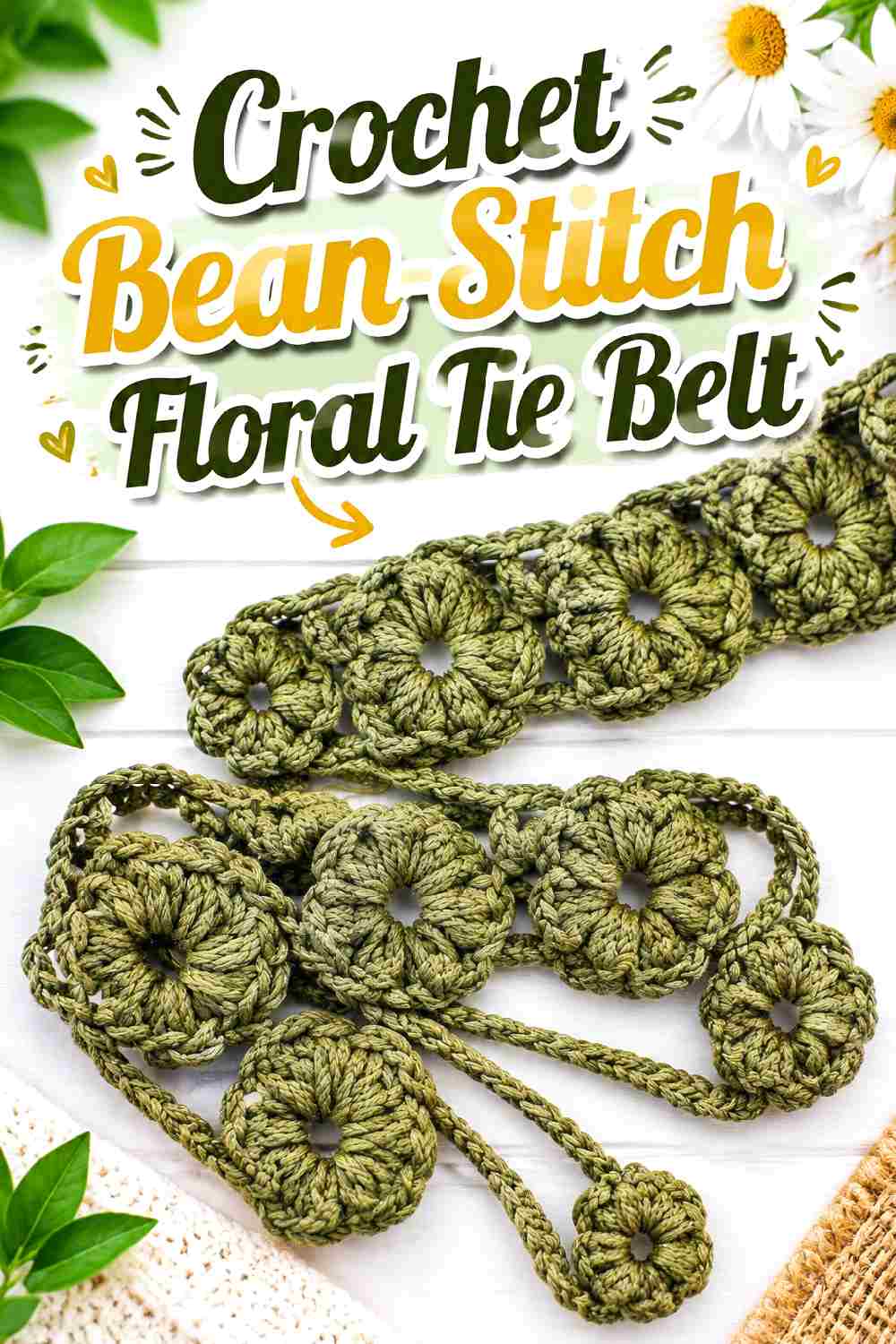
CAAB Crochet’s floral design forms the belt from repeating flowers made as part of the growing strip, then adds an open border and tie ends. The creator notes that the belt length can be adjusted through the number of completed flowers, which makes motif count an important fitting decision rather than merely a decorative choice.
Compared with a loose flower garland, this version has a more defined outer edge around the motifs. It is well suited to dresses where you want recognizable flowers but also want the band to read as one continuous accessory. Before increasing or decreasing length, remember that the ties also contribute to usable circumference.
Count Motifs With the Ties in Mind
Adding flowers until the band completely circles the waist can leave too little room for the tie closure to work as intended.
Instead, compare the decorative section with the creator’s fitting approach and account for the closure before deciding whether another full motif is necessary.
Open Centers Need Consistent Tension
The flower construction intentionally leaves visible negative space. Pulling some motifs more tightly than others can make those centers vary noticeably.
Compare the openings as you progress. Consistency in the visual center can matter as much as the outside diameter when the flowers are lined up side by side.
Creator Credit: CAAB Crochet
19. Crochet Metal Ring Circle Belt
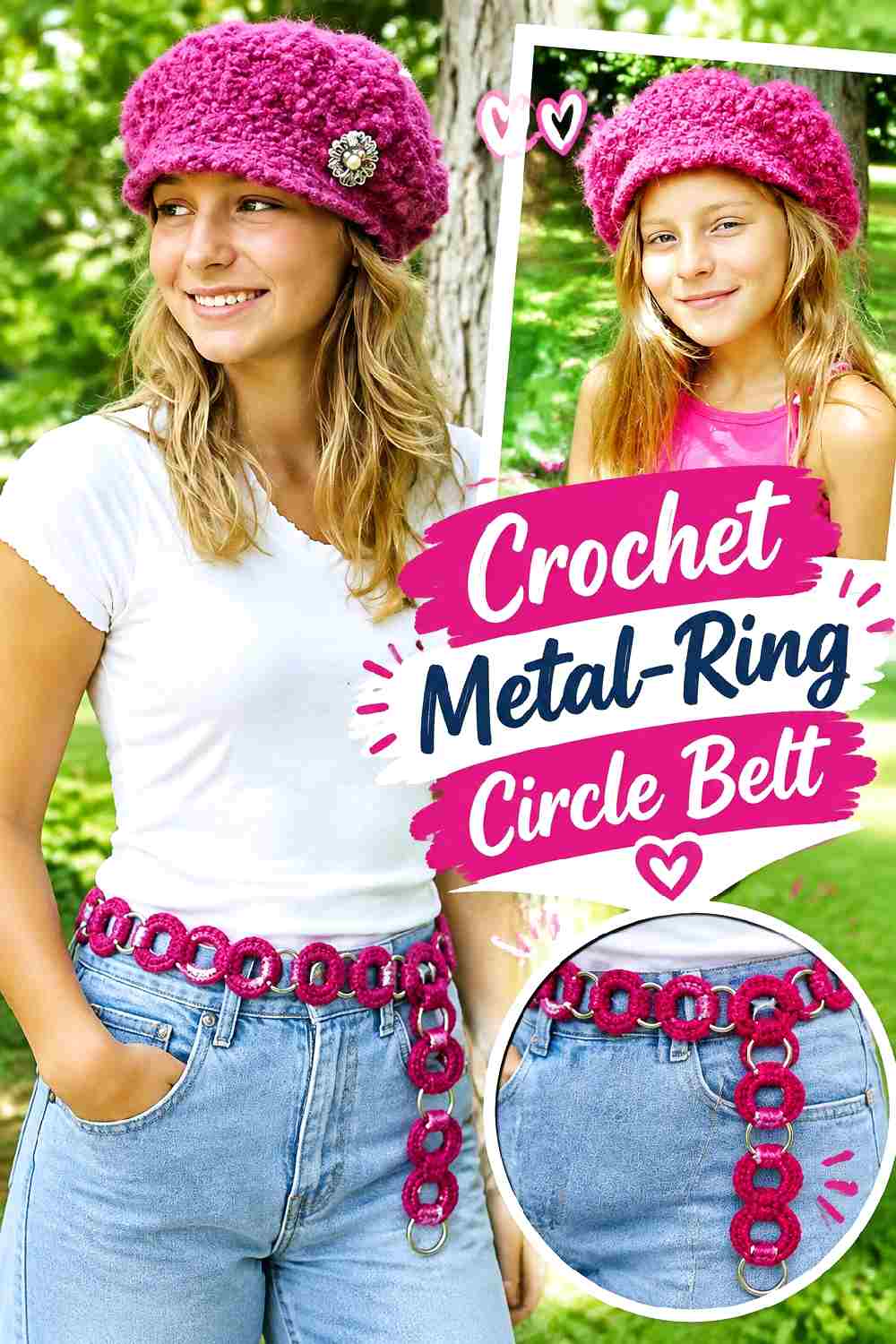
Mary Jane Hall’s Circles Belt uses crochet worked around metal rings, turning rigid circular forms into a linked belt. The original project combines the rings with a fringe-style tie closure and bead details, creating a strong contrast between firm hardware and soft yarn.
This concept is a useful choice when you want very large open spaces without depending on lace stitches alone. The rings preserve the circular shape, so the motifs are less likely to collapse than entirely crocheted loops. The trade-off is additional weight and hardware. Before making substitutions, compare the diameter, weight, finish, and edge smoothness of your rings.
Ring Weight Accumulates Quickly
A single ring may seem lightweight, but a belt uses many of them. The combined weight can change how the accessory sits around the body.
Assemble a short section and hold it vertically before completing every ring. This gives you a better sense of the finished weight than evaluating hardware pieces individually.
Inspect Every Metal Edge
Yarn repeatedly touches the rings during wear. Rough seams, sharp spots, or damaged finishes can abrade the fiber.
Run your fingers carefully around each ring before crocheting over it. Hardware that could catch skin or yarn should be replaced rather than hidden under stitches.
Creator Credit: Positively Crochet!
20. Crochet Raffia Buckle Belt
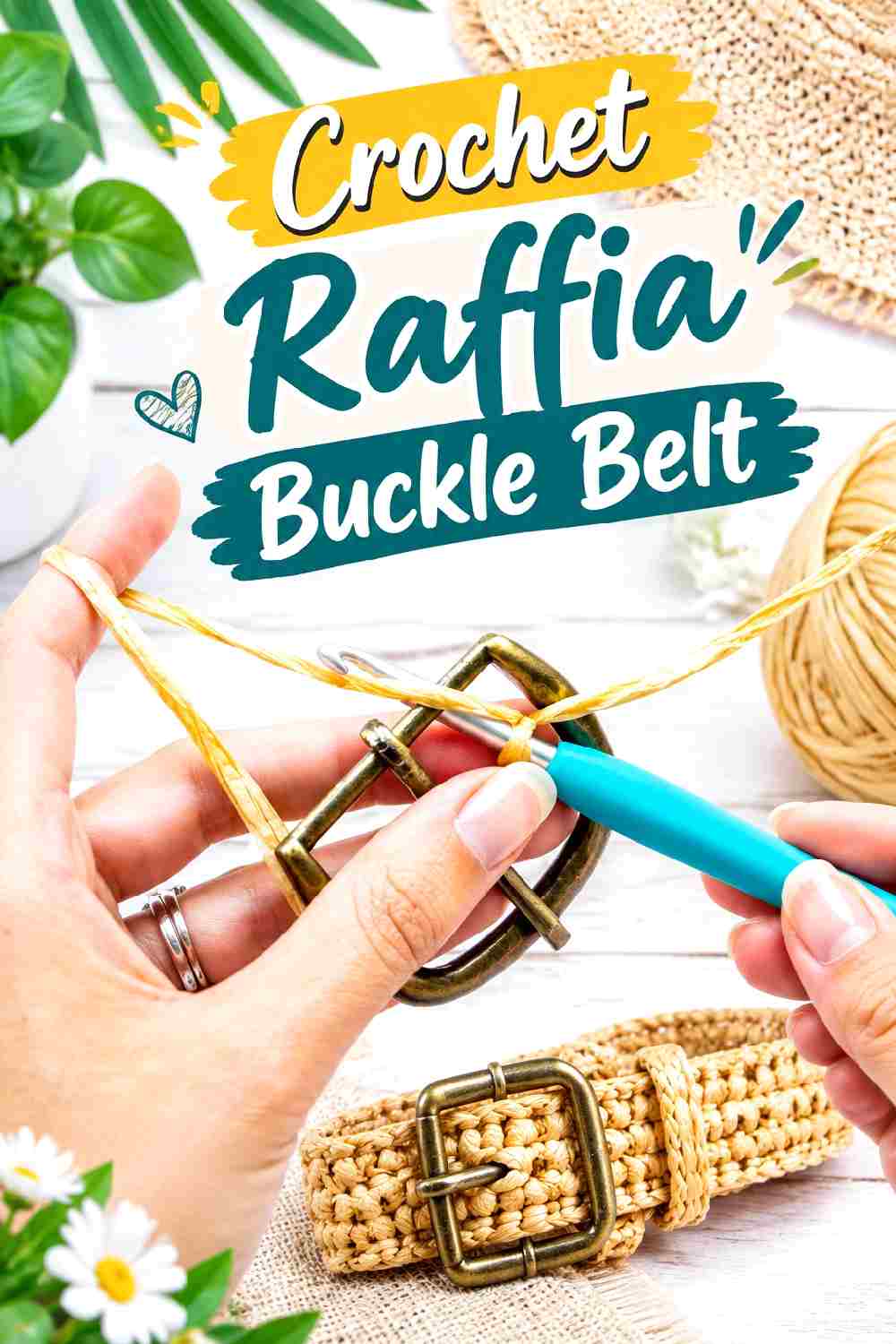
Victoria Bee Designs’ Breeze belt pairs crochet with raffia and a reused-style buckle, creating a firmer accessory than most soft yarn lace. The original design is worked specifically as a belt rather than an ornamental trim, so the buckle and band function together as the primary structure.
Raffia creates a different hand from conventional yarn and can produce clearer structure, but it may also feel less forgiving during both crocheting and wearing. This option makes sense when you want a defined waist accessory with natural-looking texture rather than a drapey sash. Check the selected material and buckle together before starting, because changing either can alter thickness and flexibility.
Test Raffia Against the Garment
A structured fiber can create more friction against delicate or loosely knit clothing than a soft yarn does.
Rub a small finished sample gently against the intended fabric before regular wear. If the garment snags easily, choose another pairing rather than assuming every crochet belt is equally compatible.
Reused Buckles Need a Condition Check
Upcycling hardware can give a belt character, but old buckles may have sharp edges, corrosion, rough prongs, or weakened components.
Inspect and clean the hardware appropriately before building the crochet around it. The buckle should be sound enough for repeated opening and closing.
Creator Credit: Victoria Bee Designs
21. Crochet Puffy Spike Texture Belt
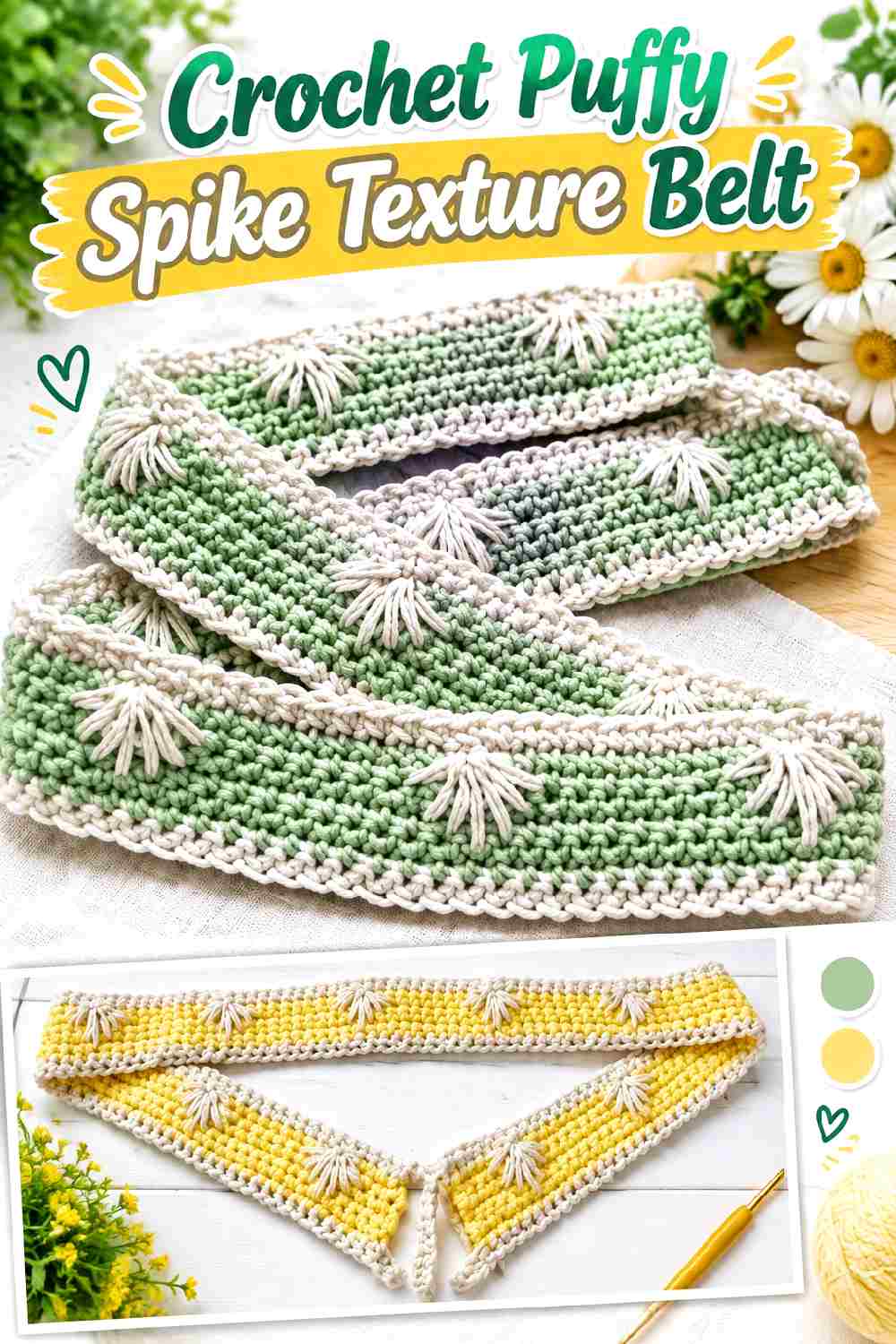
CrochetNCrafts’ belt uses puffy spike-style texture to create decorative raised sections along a narrow band. The design offers a different type of openness from traditional lace: visual interest comes from alternating texture and spaces rather than large floral motifs.
This project is useful if you prefer a straight belt silhouette but want more dimension than a plain strip. Raised stitches can appear especially clear against a smooth garment, although they also make the surface less flat. Before using the belt with tightly fitted outer layers, check whether the texture creates unwanted bumps beneath them.
Raised Stitches Increase Surface Bulk
A belt may still be narrow while having substantial surface texture. That matters if it sits beneath a fitted cardigan, jacket, or coat.
Try a short section under the intended layer. If the texture prints visibly through the garment, reserve the belt for wearing on top instead.
Maintain a Straight Foundation
Decorative spike or puff sections attract the eye, but the underlying belt still needs a stable line. Uneven foundation tension can cause the strip to curve.
Lay the project flat periodically and compare both edges. Correct progressive distortion early rather than relying on the textured stitches to disguise it.
Creator Credit: CrochetNCrafts
22. Crochet Openwork Dress Tie Belt
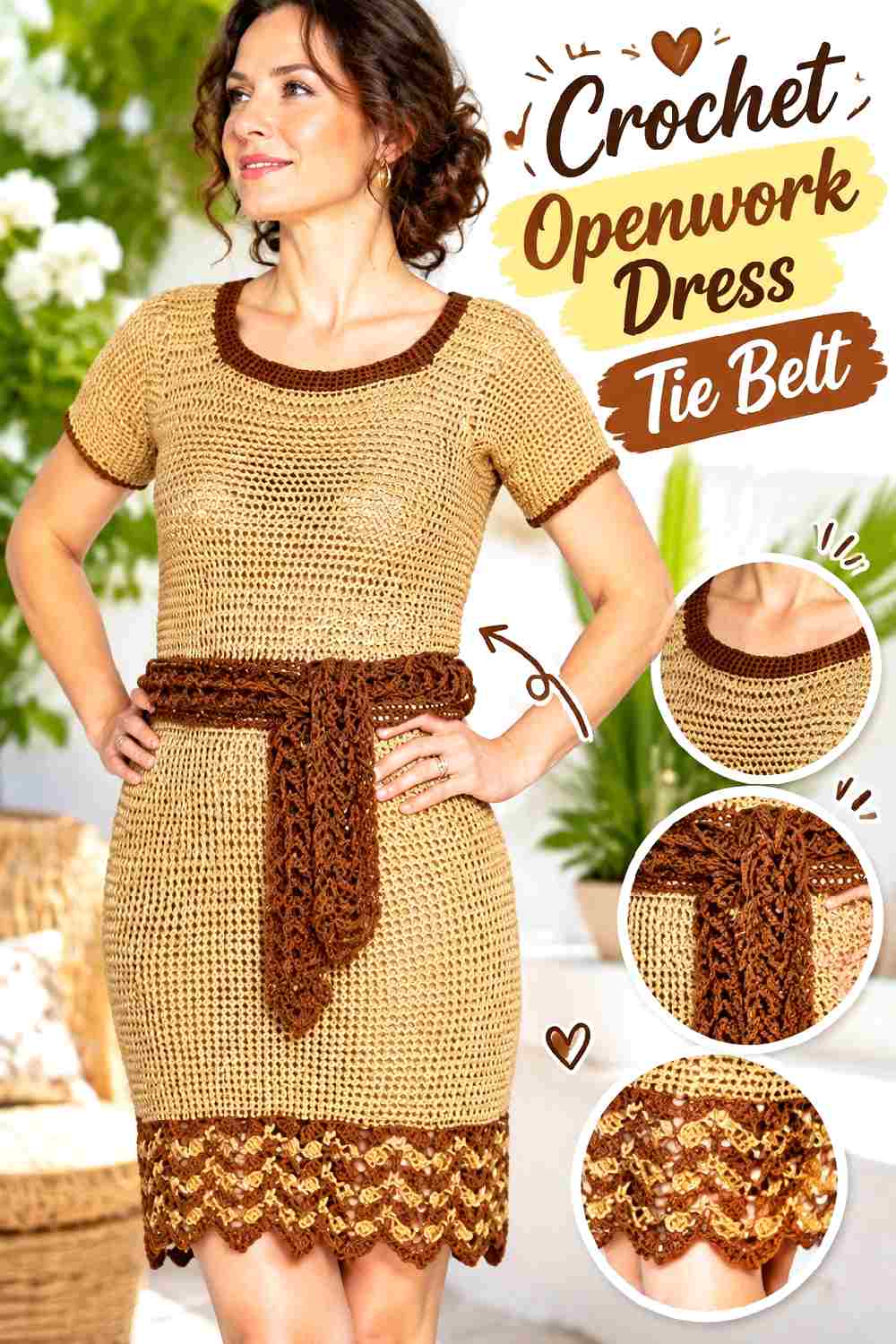
interunet’s dress belt uses a continuous crochet pattern that forms a decorative, open strip intended to coordinate with a garment rather than function like a heavy trouser belt. The tutorial presents the belt as an adaptable dress accessory, making the relationship between lace and the fabric underneath especially important.
This type of belt works when you want a repeated openwork pattern without constructing separate motifs. Because the design is continuous, length adjustments need to respect the pattern repeat. Before starting, decide where the belt will be worn and what type of closure or tie arrangement you want visible.
Let the Dress Determine the Contrast
Openwork becomes part of a two-layer composition: yarn forms one pattern and the dress shows through as the background.
Place a sample directly over the garment in daylight or normal indoor lighting. A combination that looks distinct on the yarn skein may appear much subtler once layered.
Check Repeat Length Before Adjusting
Continuous lace often cannot be shortened cleanly at every possible point. Stopping midway through a visual repeat may leave the end looking unfinished.
Use the original tutorial to determine how the repeat should begin and end, then adjust in complete units wherever the construction requires it.
Creator Credit: interunet
23. Crochet Tunisian Buckle Belt
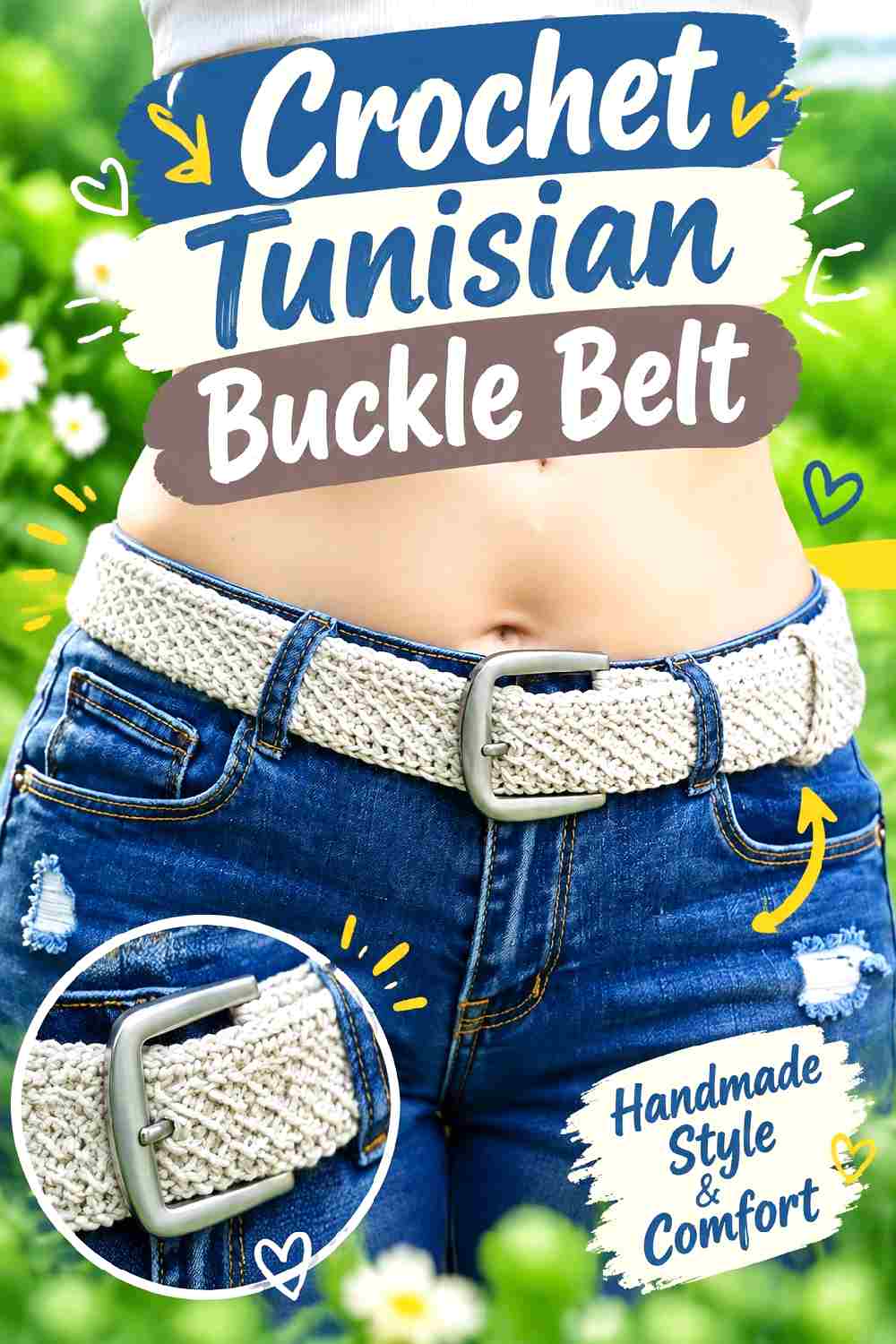
Francesca Uncinettando Crochet&Love demonstrates a belt made with Tunisian crochet and a reused buckle. Compared with the open motifs elsewhere in this collection, the denser fabric offers a valuable contrast for readers who want crochet texture with a more conventional belt silhouette.
The project also highlights how a buckle can be incorporated into handcrafted fabric rather than added to a decorative tie. This design is worth considering if you want a firmer accessory for trousers, skirts, or dresses. Before changing yarn, compare the thickness of the resulting fabric with the buckle opening. A belt that becomes significantly thicker may no longer move through the hardware cleanly.
Buckle Clearance Matters
The finished crochet has to pass through the buckle in the way intended by the tutorial. Added thickness from heavier yarn or tighter fabric can interfere with that movement.
Make a short sample and test it with the actual buckle before completing the whole belt.
Reused Hardware Sets the Design Constraints
An existing buckle may be attractive, but its width determines the practical scale of the crochet band.
Choose the hardware first or verify that your selected buckle suits the tutorial’s proportions. Designing the fabric and shopping for an arbitrary buckle afterward can make the connection more difficult.
Creator Credit: Francesca Uncinettando Crochet&Love
24. Crochet Circle Cluster Friendship Belt
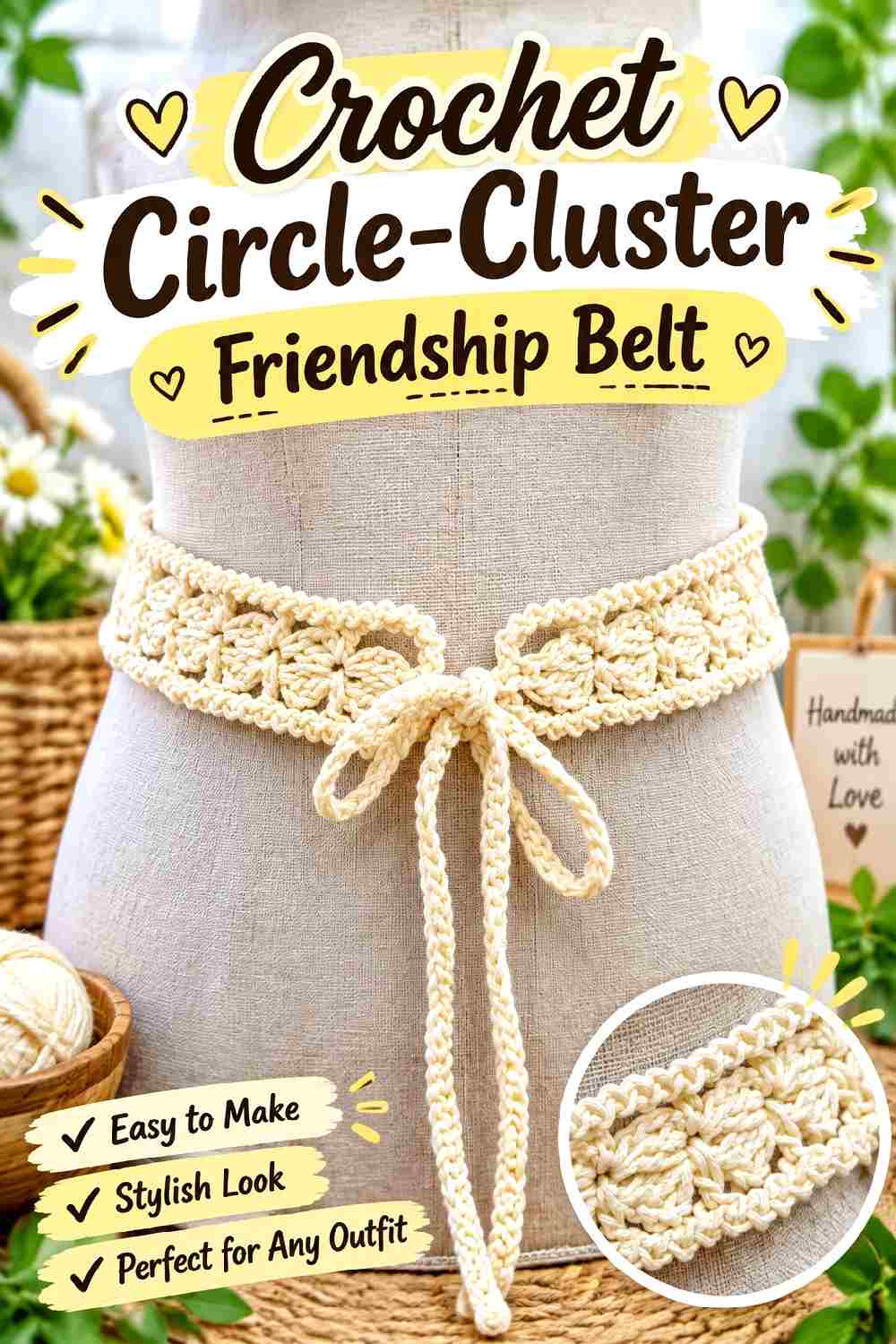
Elisa DeSena’s Friendship Belt, published on Clover Needlecraft, creates a chain of rounded cluster forms and uses tie strings for adjustment. The designer specifically treats the project as made to measurement and notes that the wearing position can be chosen around the waist or closer to the hips.
That makes this option particularly useful for readers who want open circular texture without a fixed buckle. The connected clusters form a narrower line than most square-motif belts, so the piece can remain decorative even when worked in a substantial yarn. Before settling on length, decide exactly where you will wear it; waist and hip measurements should not be treated as interchangeable.
Measure at the Intended Wearing Position
A belt that fits at the natural waist may be noticeably too short lower on the torso. Take the measurement over the clothing you expect to wear most often.
Because the project uses ties, also distinguish between the decorative body length and the extra length needed to fasten it comfortably.
Allow for Crochet Stretch
The original designer cautions that the belt can stretch, which is an important checkpoint for any cluster-based tie accessory.
Before deciding that the finished body needs another repeat, gently tension what you already have. A small difference in each cluster can add up across the full circumference.
Creator Credit: Elisa DeSena
25. Crochet Center Flower Waist Belt
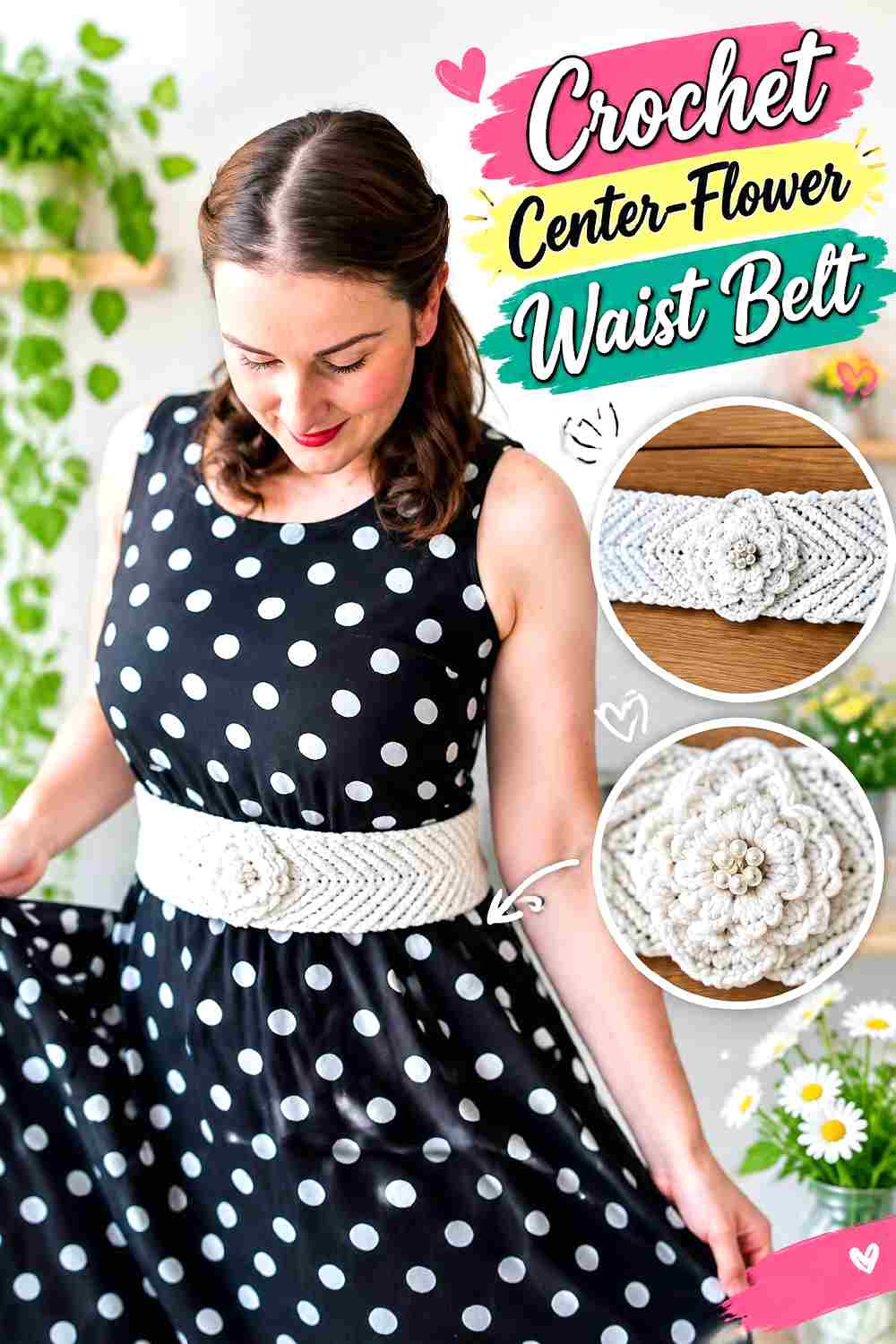
Blue Star Crochet’s Charleston Belt is built around a flower-square center with straps extending in opposite directions. The center motif provides the visual focal point, while the straps use a denser textured construction and taper toward tie ends. The designer also provides multiple sizes and adjustment guidance.
This hybrid construction is useful if you like motifs but do not want a full row of them around the waist. One central flower is easier to position deliberately, and the plainer side sections avoid competing with it. The important decision is where the flower should sit: centered at the front creates a different appearance from shifting it toward the side.
Center the Motif Before Finalizing Length
A symmetrical design exposes small fitting errors because the focal square is expected to sit intentionally on the body.
Try the belt on while the straps are still easy to adjust. Confirm the motif position first, then judge whether both sides provide the closure space you want.
Dense Straps and a Motif Behave Differently
The central square and side bands do not necessarily stretch at the same rate. That can influence where the focal motif settles after the belt is tied.
Check the complete belt under light wearing tension rather than measuring only the individual parts flat.
Width Can Affect Layering Comfort
The flower square determines a substantial portion of the belt’s height. If you prefer wearing belts under jackets, verify that the motif does not create uncomfortable bulk at the front.
For over-garment styling, that same width can become an intentional focal feature.
Creator Credit: Blue Star Crochet
26. Crochet Clamshell Lace Corset Belt
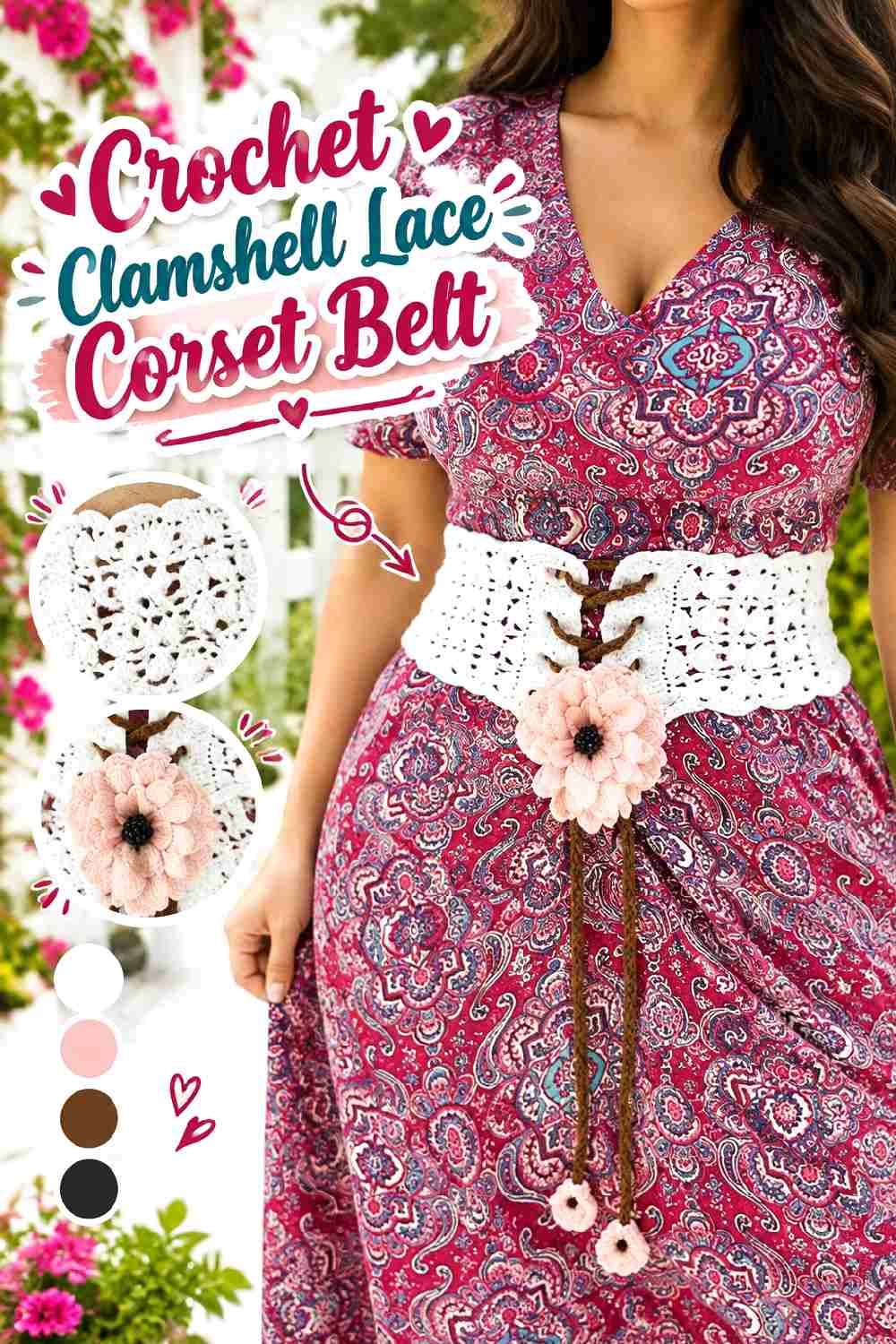
Salty Pearl Crochet’s Clamshell Lace Corset Belt uses a broad openwork panel with a crossed tie closure, combining obvious lace with the silhouette of a waist cincher. The original project uses alternating open sections and shell-like texture, while the closure is threaded through openings at the ends.
This is one of the clearest options in the collection for readers who want a wide belt that still lets the garment show through. Its depth makes fit and comfort more important than they are for a slim sash. Before modifying width, test where the panel sits in relation to your ribs and hips.
The Lacing Is Part of the Fit System
A crossed closure needs enough open space to tighten and release comfortably. If the crochet panel is made too long, there may be very little useful lacing gap left.
Follow the creator’s fitting logic rather than sizing the lace band to meet completely around the body.
Choose the Lacing Material Carefully
Ribbon, cord, or another tie material can change both appearance and friction. A very slippery tie may behave differently from a textured cord, while a thick one may overcrowd the lace openings.
Check that the chosen tie passes through without distorting or abrading the crochet.
Wide Lace Shows Distortion Quickly
A narrow belt can hide small differences in edge tension. A broad panel makes uneven rows or pulling much easier to see.
Lay the work flat during construction and correct progressive narrowing or widening early. Finishing can refine lace but should not be expected to correct major shape changes.
Creator Credit: Salty Pearl Crochet
27. Crochet Long Stitch Hippie Belt
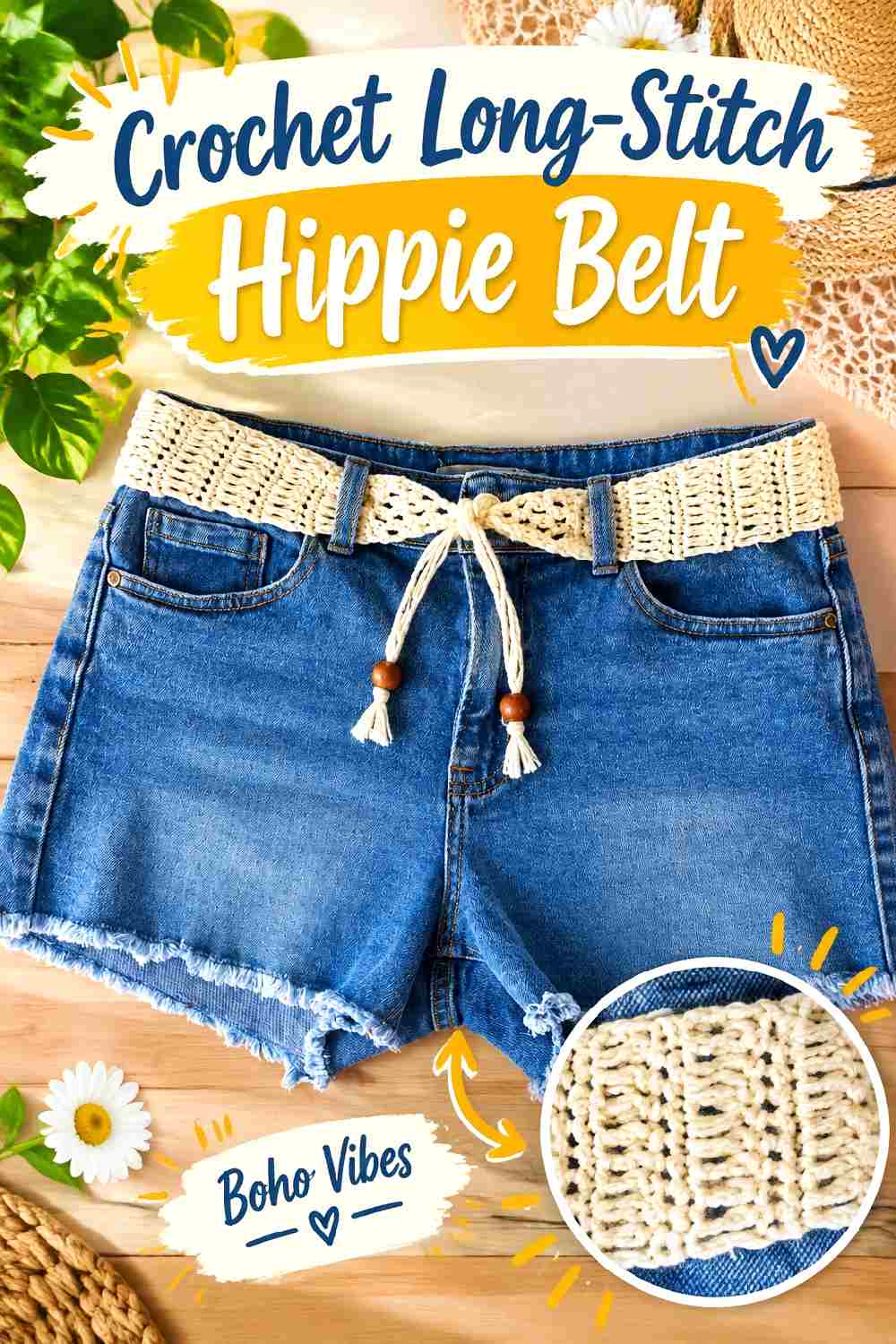
Le coin paisible’s crochet belt uses an elongated stitch pattern to create a narrow band that can also serve as a headband. The original project is designed as a tie accessory, and the repeated long stitches give the fabric a more open vertical appearance than a conventional dense belt.
This idea suits readers who prefer a straight silhouette over flowers or circles but still want visible openwork. Its relatively narrow width makes it easy to position at either the waist or hip, provided the length is measured for that exact location. Because tall stitches can exaggerate tension differences, maintaining regular height is particularly important.
Tall Stitches Make Tension Visible
When neighboring elongated stitches vary noticeably in height, the rows can lose their clean horizontal line.
Practice enough of the stitch pattern to establish a consistent motion before making the full belt. A short swatch is more useful here than discovering irregularity after dozens of repeats.
Waist and Hip Placement Need Separate Measurements
The same belt may be styled high or low, but the circumference changes with position. Do not assume an accessory measured for the waist will also tie comfortably at the hips.
Measure over the clothing you plan to wear and include only as much extra tie length as your preferred knot requires.
Creator Credit: Le coin paisible
Comparing the Main Crochet Lace Belt Styles
The narrowest options—Irish-style cord, ribbon cord, flower chains, and leaf garlands—work primarily as decorative lines and are the easiest to layer without covering much of a garment. Fan, shell, eyelet, and circle-cluster belts add more visible crochet while retaining plenty of negative space.
Motif belts made from granny squares, joined squares, flowers, or rigid rings are better when you want individual units to define the accessory. Their main checkpoint is consistent motif sizing and joining.
Wide corset and center-panel belts create the strongest waist emphasis but require more careful vertical fitting. Buckled, clasped, Tunisian, and raffia designs trade some lace openness for additional structure. If you expect the belt to pass through denim loops, check width first; if it will be worn over dresses or knits, prioritize comfortable circumference and the behavior of the closure.
Conclusion
The most useful way to choose among these 32 crochet lace belt ideas is to start with function rather than motif. A flower chain, slim cord, or fan-lace tie keeps the accessory light and adjustable, while joined squares and rings produce a more graphic belt. Wide clamshell or corset-inspired panels create greater visual coverage, and buckle or clasp constructions provide a more defined closure.
For Fall 2026 layering, also consider the clothing underneath the belt. Open lace needs enough contrast to remain visible, while broad or heavily textured belts need enough room to sit comfortably over thicker garments. Once you have chosen the silhouette, use the credited creator’s original tutorial for its exact construction, fitting method, repeat structure, materials, and finishing details.
Frequently Asked Questions
What yarn works well for a crochet lace belt?
The answer depends on the structure you want. Smoother yarn generally makes open stitches, shells, flowers, and motif edges easier to see, while softer or fuzzier fibers can produce a more blended surface. Stretch is just as important as appearance because a waist-length crochet strip may elongate under tension. Follow the original tutorial’s yarn guidance first. If you substitute, make a representative sample and compare its width, drape, stitch definition, and stretch before crocheting the entire belt.
How long should a crochet tie belt be?
Measure where you actually intend to wear it—natural waist, high hip, or lower hip—and measure over the type of clothing that will sit underneath. Then account for the closure separately. A belt tied in a bow needs different extra length from one fastened with a small knot, buckle, clasp, or short corset lacing. Motif patterns may also need to change in complete repeats rather than arbitrary increments, so consult the original tutorial before altering length.
Can crochet lace belts be worn through jeans belt loops?
Some can, but width is the deciding factor. Slim cords and narrow lace strips may pass easily through standard loops, while flower motifs, granny squares, large shells, tassels, and wide corset panels may not. Make one full-width repeat or motif and test it against the actual jeans before producing the whole belt. Never force a delicate motif through a tight loop, since petals, joins, beads, or raised stitches may snag or distort.
How can I reduce stretching in a crochet belt?
Start by following the creator’s intended yarn, gauge, and construction rather than assuming a smaller hook alone will solve stretching. Fiber, stitch structure, belt length, and closure all affect how the project behaves. Test a representative section under gentle tension and remember that long ties and open chains can accumulate more elongation than a short swatch suggests. For buckled designs, attachment points also need to remain stable because they carry repeated stress.
Should a crochet lace belt be blocked?
Blocking can help even openwork, straighten edges, and improve motif definition when the fiber is suitable, but it should not be used to disguise major sizing or tension problems. Follow the yarn label and any care or blocking instructions supplied by the creator. Mixed-material belts with beads, metal hardware, raffia, or other embellishments may require different handling. Check how every component responds before applying moisture, steam, or heat.
How do I choose between a tie belt and a buckle belt?
Choose a tie when adjustability is important or when the same belt may be worn over garments of different thicknesses. Ties also work naturally with open lace and motif designs. A buckle or clasp creates a more defined closure and can make the accessory resemble a conventional belt, but it requires more precise sizing and a stable attachment area. Hardware dimensions also limit the width and thickness of the crochet that can pass through it.
Can I change the yarn weight in a crochet lace belt tutorial?
Sometimes, but changing weight can affect more than overall size. Larger yarn can make motifs wider, lace openings heavier, ties bulkier, and fabric too thick for the intended buckle or loops. Finer yarn may create a narrower, softer belt and can change how much support the closure receives. Work a complete motif or representative pattern repeat first, then compare it with the intended wearing position and hardware. Use the creator’s instructions for any construction-specific adjustments.