A storage ottoman is useful for keeping blankets, cushions, and everyday living-room items out of sight, but its lid handle is often a plain fabric loop or metal pull. A small crochet cover can add handmade detail to that overlooked feature. These 14 crochet ottoman storage lid handle inspiration ideas explore ribbed grips, granny-square coverings, padded sleeves, geometric colorwork, decorative edging, and removable fastening styles.
The collection focuses on crochet accents fitted over existing manufacturer-installed handles rather than replacing the hardware that supports the lid. Some designs suit soft fabric loops, while others explore covers for metal and wooden bars. You’ll find different textures, colors, and shapes to compare, along with practical points about clearance, attachment, cleaning, and comfort. A decorative crochet cover must never be assumed to increase a handle’s lifting strength or make a heavy lid safer.
These are AI-generated crochet design visualizations for inspiration, not photographs of tested furniture modifications or step-by-step patterns.
Quick Design Selection Guide
- For a simple fabric handle: Crochet Terracotta Ribbed Ottoman Handle Wrap offers a classic textured sleeve.
- For a reversible finish: Crochet Navy Reversible Ottoman Pull Cover uses contrasting navy and cream surfaces.
- For a cottage-style detail: Crochet Blush Granny-Square Ottoman Grip adds small joined motifs.
- For existing rigid handles: Crochet Olive Waffle-Stitch Lid Bar Grip and Crochet Ivory Scalloped Wooden Bar Grip explore two different surfaces.
- For an existing rope loop: Crochet Mustard Braided Rope-Loop Grip uses a short tubular sleeve.
- For a shaped hand-contact area: Crochet Rust Tapered Ottoman Pull Wrap has a wider middle section.
- For easy removal: Crochet Teal Adjustable Tab Ottoman Grip uses fastening tabs underneath the original handle.
1. Crochet Terracotta Ribbed Ottoman Handle Wrap
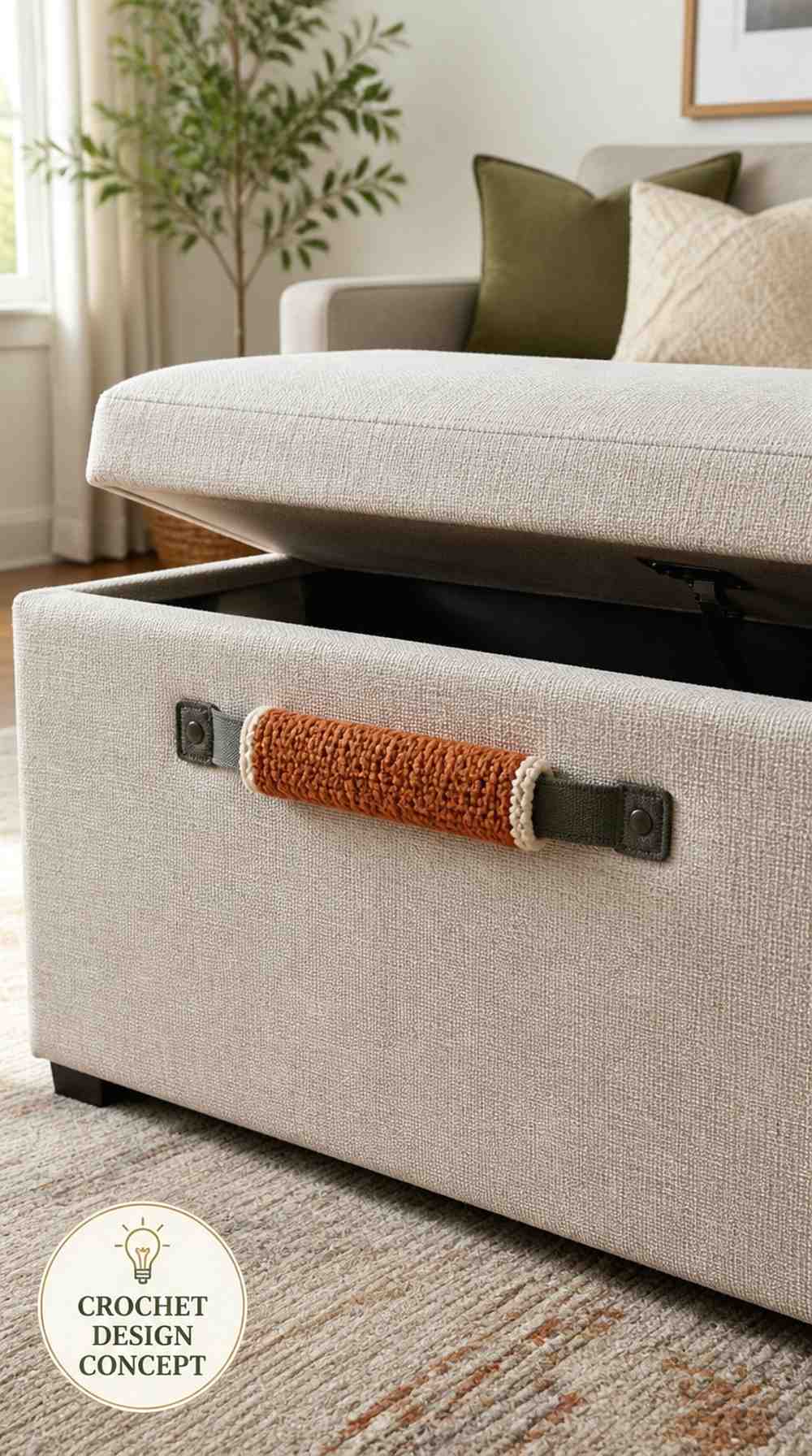
Warm terracotta crochet gives this ottoman handle a natural, welcoming appearance. Fine vertical ribs cover the middle of the original charcoal fabric pull, while narrow cream edging finishes both ends. The surrounding oatmeal upholstery creates a soft contrast with the deeper yarn color.
The crochet remains limited to the part normally held by the hand, leaving both factory stitching points visible. This makes the concept a useful starting point for decorating an existing lid handle without introducing a completely new lifting arrangement.
- Ribbed grip texture: Keep the raised rows low enough that they feel comfortable under the fingers rather than creating hard pressure points.
- Original handle access: Leave both charcoal fabric attachment ends exposed so their condition can still be inspected.
- Sleeve length: Measure the available central section before planning the crochet, allowing room for fingers and the handle’s natural movement.
- Cream edging: Narrow borders define the sleeve without adding bulky stitches near the original attachment points.
2. Crochet Navy Reversible Ottoman Pull Cover
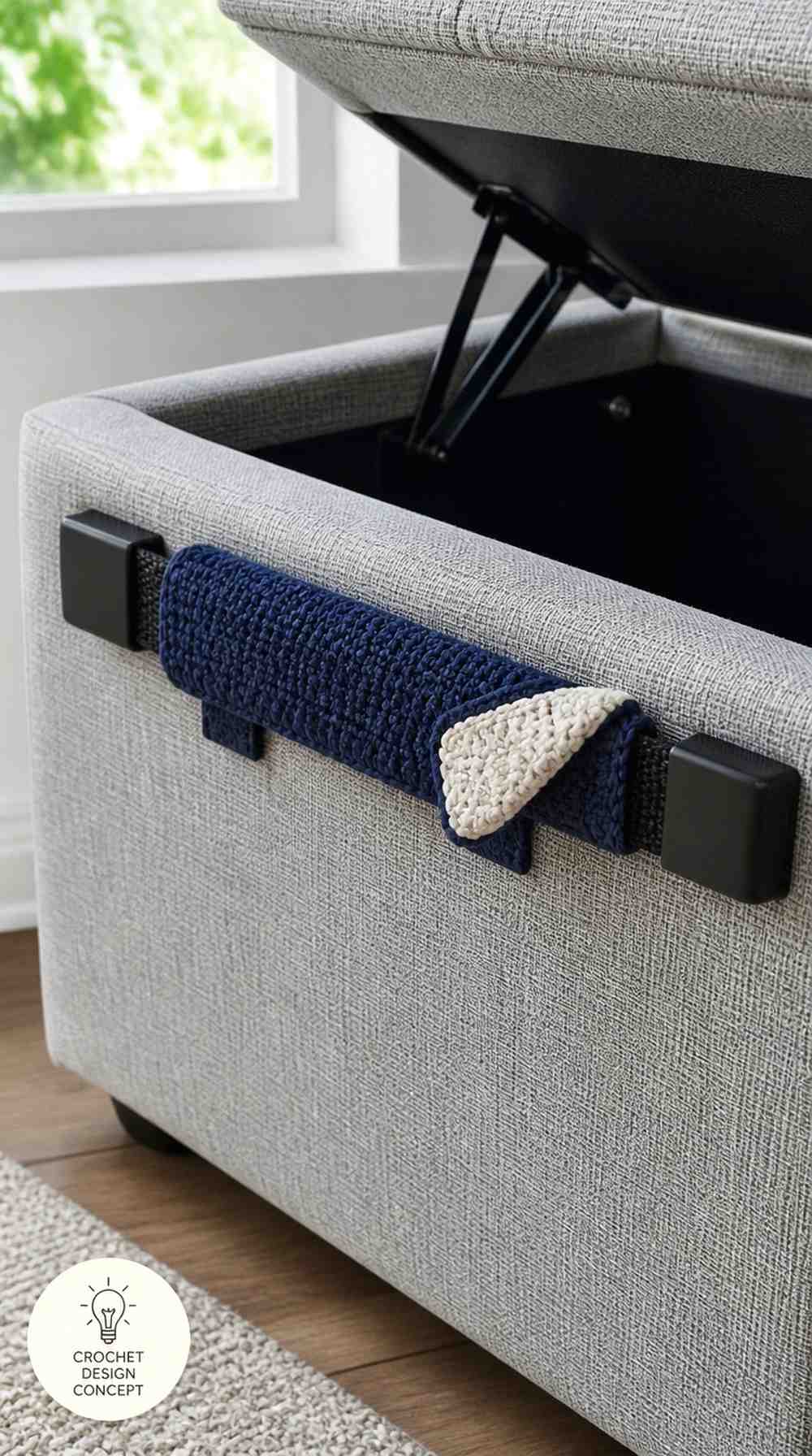
Deep navy and warm cream create a clean two-sided design for this removable crochet handle cover. The outer surface uses dense navy rows, while the cream reverse features a subtle diamond texture. Two flat fastening tabs sit underneath the original black woven pull.
The contrast between both surfaces provides two styling options without changing the existing handle. The light-grey ottoman makes the navy side look especially defined. A real version would need a neat fastening arrangement that allows the cover to be removed without loosening or modifying the factory pull.
- Reversible surfaces: Keep both crochet sides neatly finished so either navy or cream can face outward without exposed yarn ends.
- Hidden fastening tabs: Position the tabs beneath the hand-contact area, avoiding bulky closures where fingers naturally curl.
- Double-layer thickness: Check that the folded crochet still leaves enough space to hold the original pull comfortably.
- Diamond texture: The cream reverse can provide decorative contrast, but its raised stitches should not catch against the underlying handle.
3. Crochet Blush Granny-Square Ottoman Grip
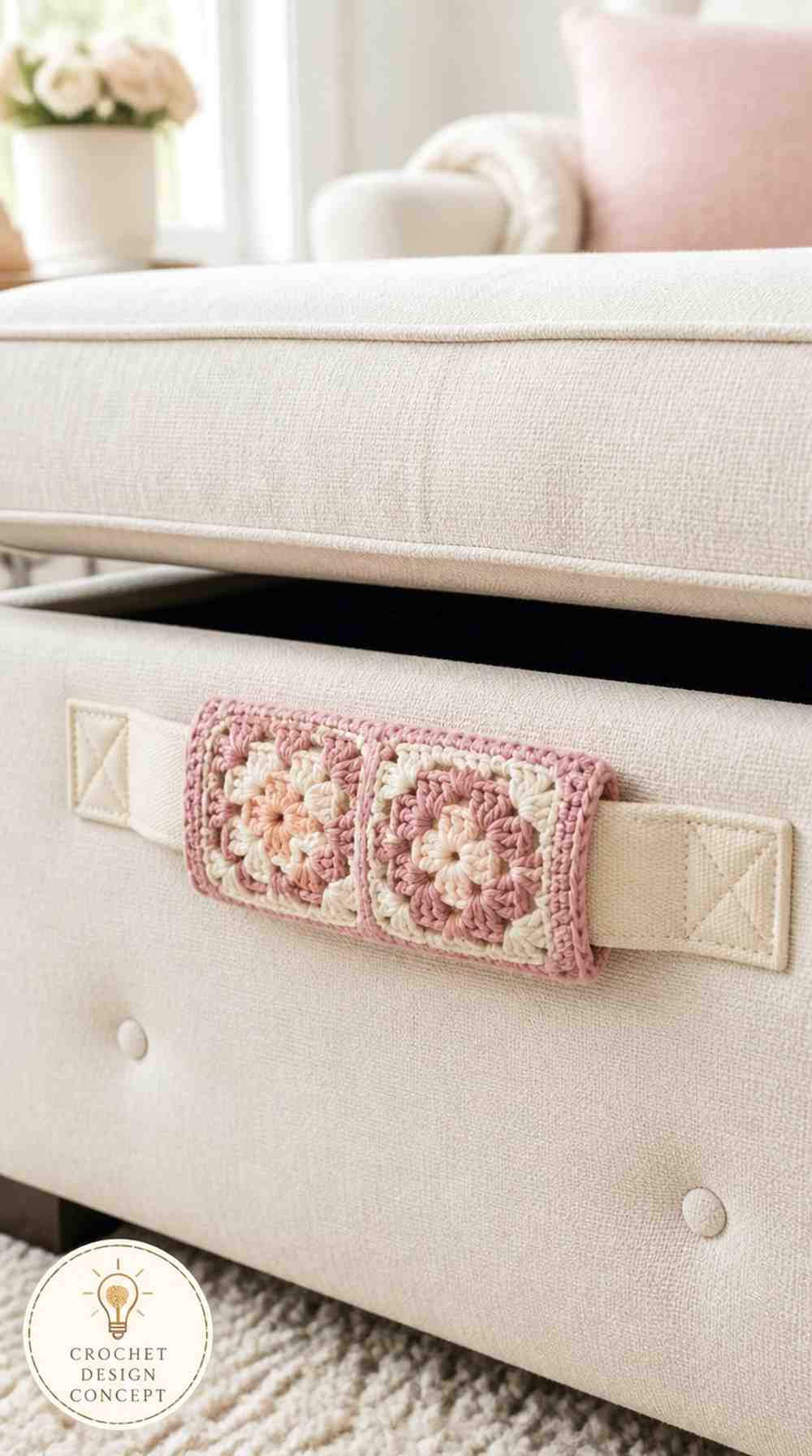
Blush pink, dusty rose, ivory, and peach bring a soft cottage-style look to this ottoman handle cover. Two small granny squares form the decorative outer surface, joined with narrow cream seams. A smooth blush backing wraps around the existing ivory fabric pull.
The joined motifs make this design more decorative than a plain ribbed sleeve. The cream upholstery provides a neutral setting for the pastel crochet, while the original handle remains visible at both secured ends. Keeping the squares small helps preserve the compact appearance of the furniture handle.
- Miniature granny squares: Size both motifs to fit the central handle section without extending over its factory stitching.
- Smooth inner backing: A close-worked blush layer beneath the motifs can help reduce catching against the original fabric.
- Joining seams: Keep the cream connections flat so the grip does not become uncomfortable where the two squares meet.
- Pastel coordination: The peach and ivory accents soften the blush pink without adding dangling embellishments near the moving lid.
4. Crochet Olive Waffle-Stitch Lid Bar Grip
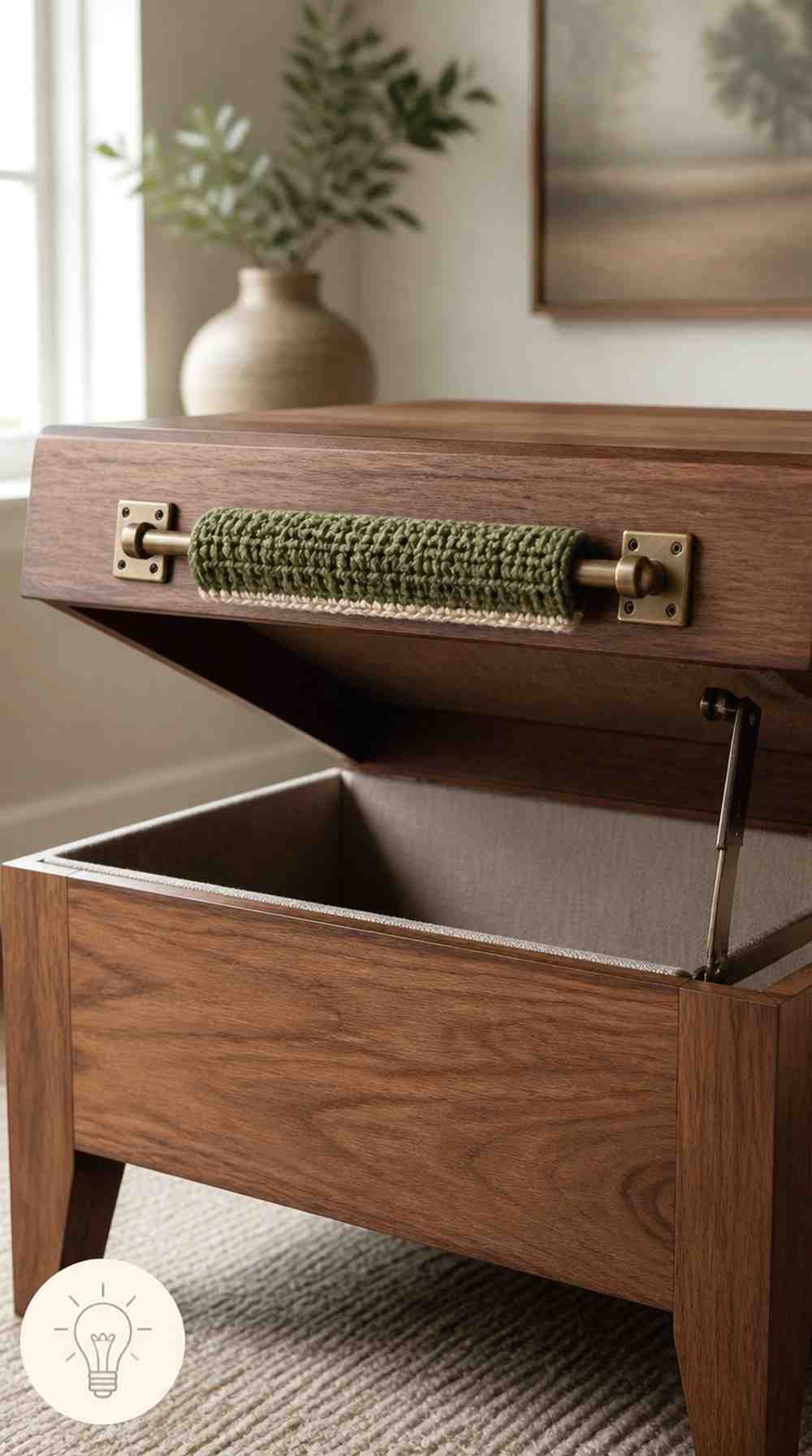
Muted olive-green crochet brings a calm, natural finish to this wooden ottoman with a bronze metal lifting bar. Small waffle-stitch squares create a raised textured surface across the middle of the handle. A simple cream lower edge finishes the sleeve without covering its metal mounting brackets.
The original bronze bar remains the structural lifting component, with crochet limited to the central hand-contact area. The olive color complements the walnut lid, while the textured stitches add a distinctly handmade appearance to an otherwise polished piece of furniture.
- Waffle-stitch relief: Keep the raised squares shallow enough that the grip can be held comfortably without excessive pressure against the palm.
- Metal bracket clearance: Both mounting brackets must remain completely uncovered, with no crochet interfering with their connections.
- Underside seam: A removable closure beneath the bar may make cleaning easier, provided it does not obstruct the handhold.
- Furniture compatibility: Check the manufacturer’s instructions before adding anything to a metal lid handle, especially where grip clearance is limited.
5. Crochet Mustard Braided Rope-Loop Grip
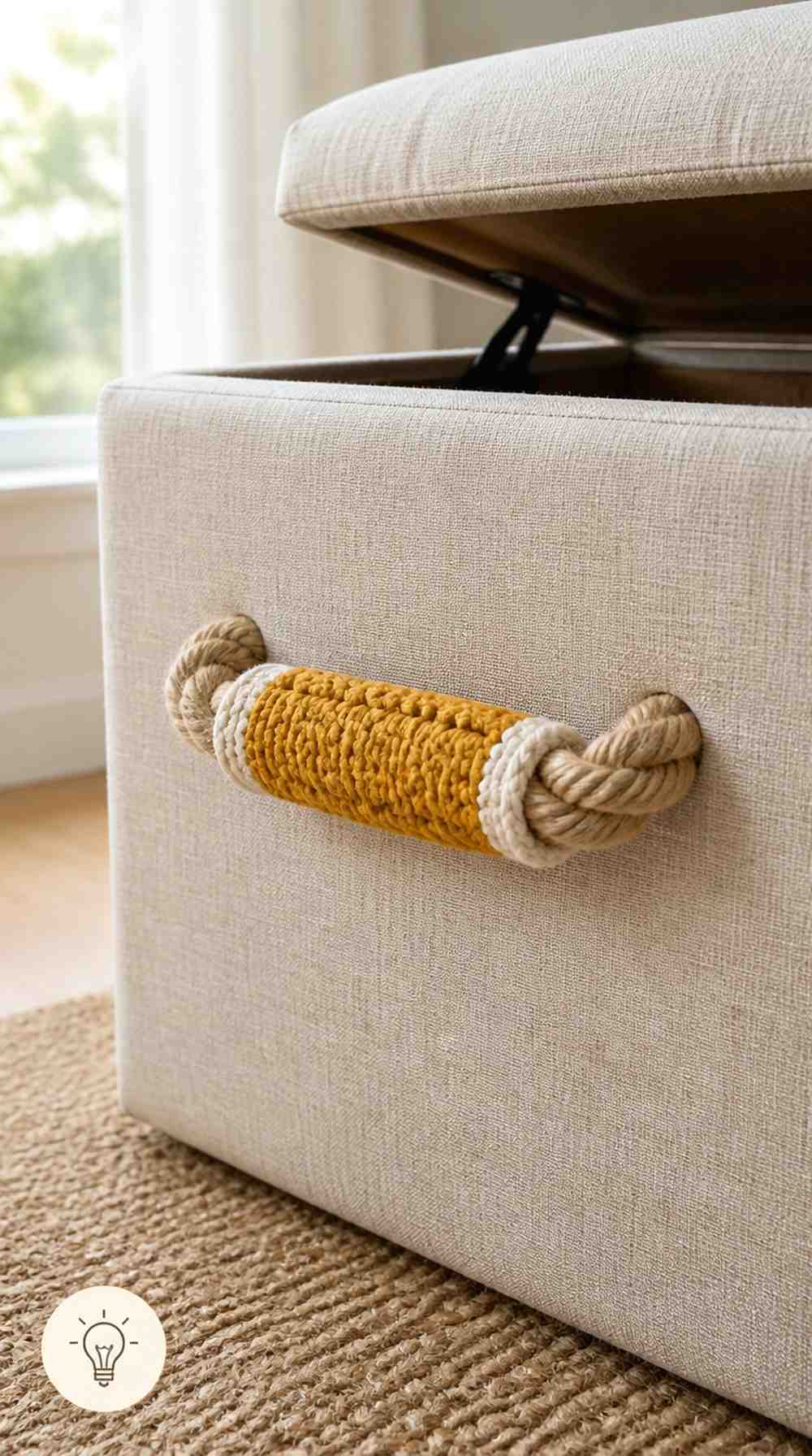
Golden-mustard crochet gives this rope-loop ottoman handle a warm, slightly rustic appearance. Three shallow lengthwise ridges create a braided-looking texture across the tubular sleeve. Narrow ivory bands finish both ends, leaving the original tan rope exposed near its factory attachments.
The crochet covers only the middle of the existing rope rather than replacing it. This creates an attractive contrast between smooth yarn stitches and natural rope fibers. The short sleeve also avoids the loose tassels and long cords that could interfere with a lift-up storage lid.
- Tubular sleeve fit: Match the inner circumference to the original rope so the covering does not slide excessively during ordinary handling.
- Braided-look ridges: Keep the three raised lines neat and low-profile rather than adding actual loose braids around the handle.
- Rope condition: Inspect the original rope and factory anchors before adding the cover; crochet cannot strengthen damaged fibers.
- No loose tassels: Short, secured yarn ends are preferable near a moving lid where hanging cords may become caught.
6. Crochet Dusty-Blue Side-Laced Ottoman Grip
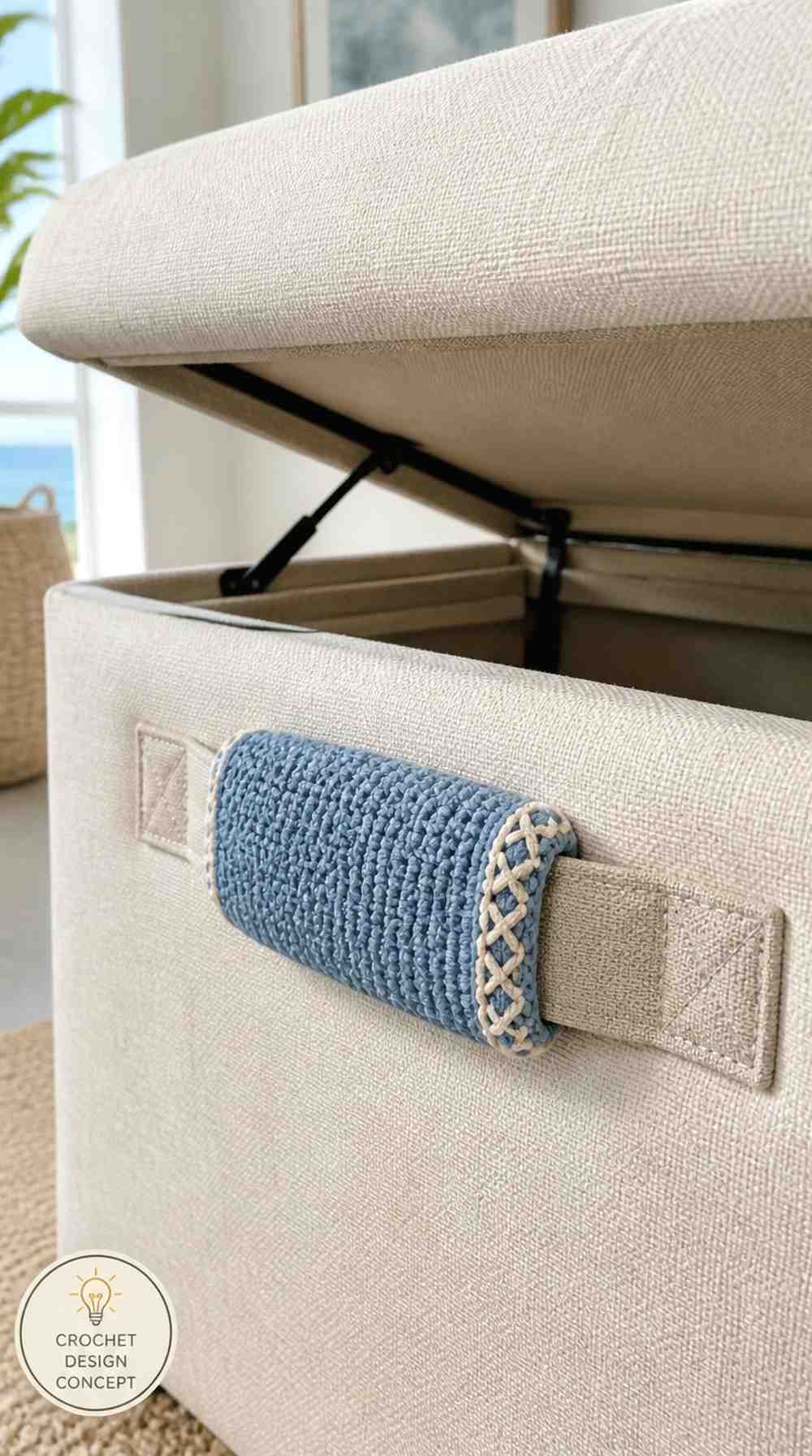
Dusty-blue crochet gives this ottoman handle a relaxed coastal appearance. A broad rectangular front panel wraps over the original natural-linen pull, while shorter side flaps meet along one edge. Small cream crochet lacing joins the flaps, and narrow ivory borders define the outer shape.
The side-laced construction is the main feature, giving the cover a visible fastening detail rather than a hidden seam. Its placement over the middle of the existing strap keeps the factory attachments exposed. A real version would need short, secured lace ends to avoid catching around the handle.
- Saddle-shaped fit: Plan the central panel and side flaps around the actual width and thickness of the linen handle.
- Side lacing: Keep the cream lacing short and securely tied so it does not hang near the ottoman’s closing gap.
- Flat front panel: A dense, relatively smooth surface may offer a more comfortable handhold than an oversized decorative knot.
- Removable cover: The laced sides could allow the crochet to be removed for cleaning without disturbing the original handle.
7. Crochet Rust Tapered Ottoman Pull Wrap
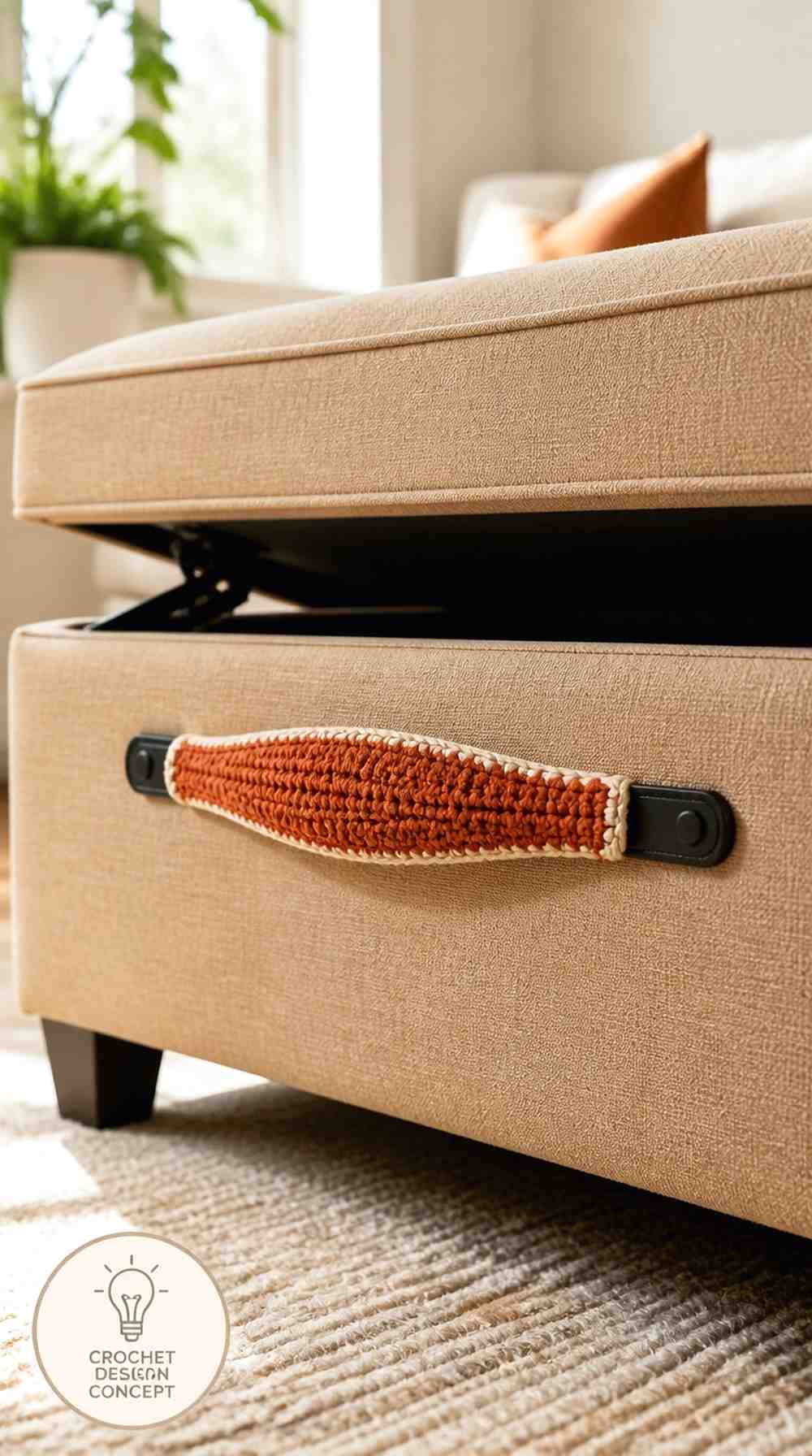
Rust-orange crochet creates a warm, tailored look on this camel-colored ottoman. The cover is wider through the center and gradually narrows toward both ends, forming a small paddle-like silhouette. Fine pearl-ivory edging traces the tapered outline, while a smooth underside seam finishes the shape.
The original black pull remains visible beyond the rust-colored covering, with both secured endpoints left untouched. The wider central section makes the grip visually distinctive without requiring extra motifs. Its proportions would need to suit the available hand-contact area and leave enough room for normal use.
- Tapered outline: Shape the crochet gradually so the wider middle does not create bulky folds around the handle edges.
- Central grip width: Measure the original pull to ensure the expanded section does not crowd the space needed for fingers.
- Underside seam: Keep the joining line smooth and away from any sharp pressure points.
- Pearl edging: A narrow ivory border can define the taper without increasing the thickness significantly.
8. Crochet Ivory Scalloped Wooden Bar Grip
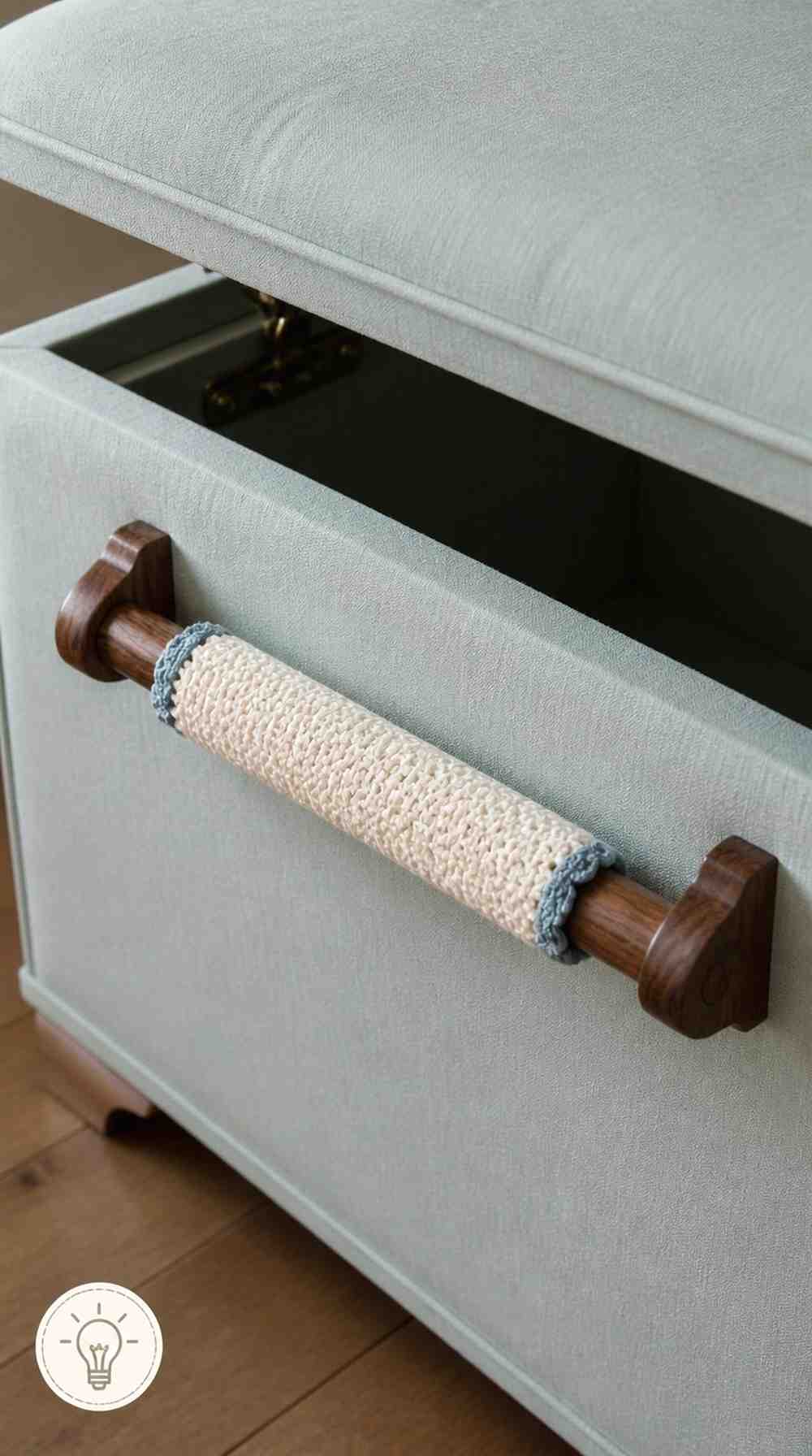
Warm ivory crochet gives this wooden ottoman handle a soft vintage-inspired finish. Dense, closely worked rows cover the central section of the dark-walnut bar, while tiny dusty-blue scallops decorate both sleeve ends. The wooden mounting supports remain uncovered on the pale seafoam storage bench.
The smooth central crochet area provides the main hand-contact surface, with the decorative edging positioned away from the middle. The contrast between ivory yarn and polished walnut creates a simple but distinctive furniture detail without altering the shape of the original handle.
- Wooden bar fit: Measure the circumference and straight usable section of the bar before planning the crochet covering.
- Scalloped ends: Keep the dusty-blue scallops small enough that they do not bunch against the wooden mounting supports.
- Wood finish protection: Choose a smooth inner crochet surface and check for rubbing, dye transfer or trapped moisture against the wood.
- Grip clearance: Leave enough space between the covered bar and the ottoman front for fingers to fit comfortably.
9. Crochet Cobalt Lemon Checkerboard Pull Grip
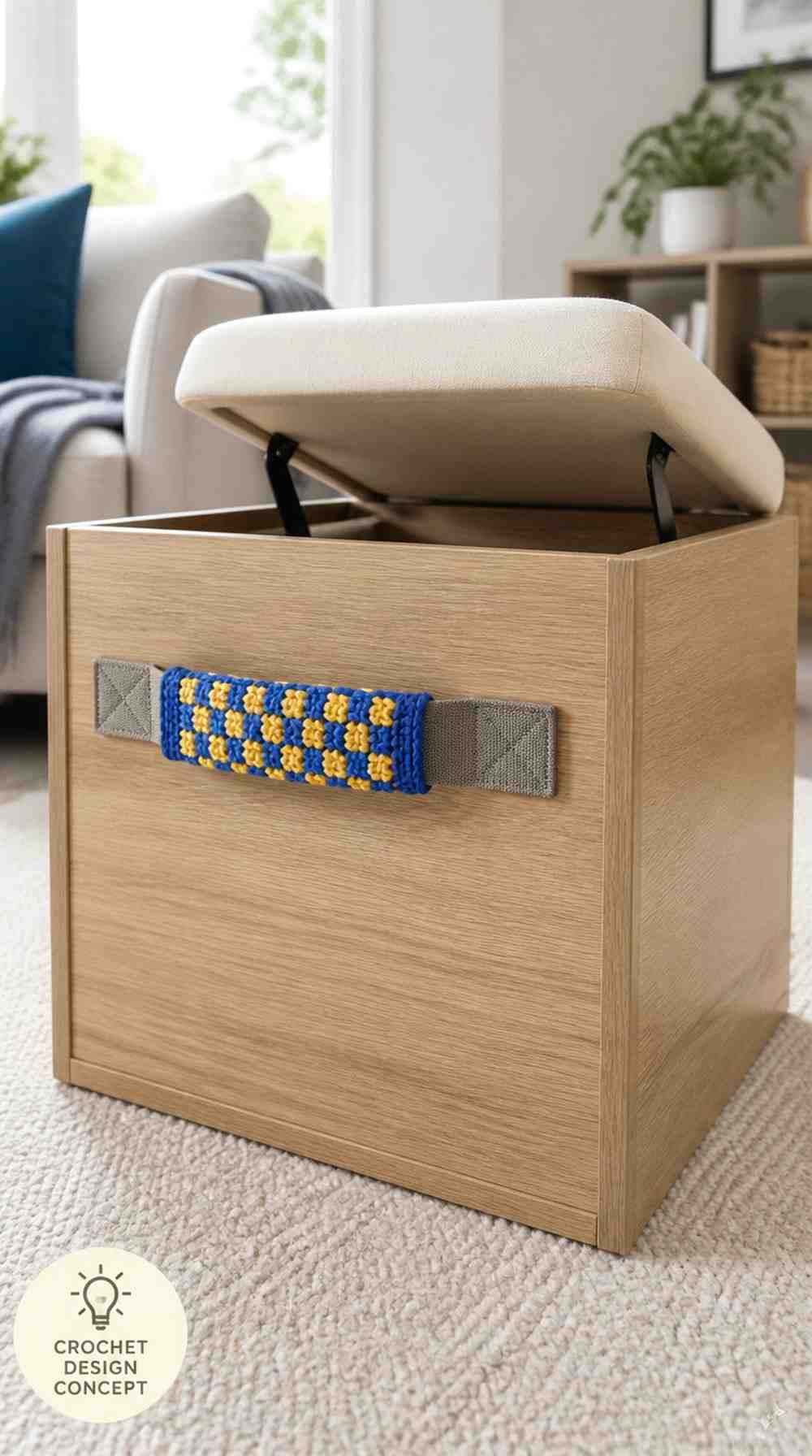
Bold cobalt blue and lemon yellow bring a playful geometric touch to this modern storage cube ottoman. Small checkerboard blocks run across the rectangular crochet grip, while a solid cobalt border finishes both ends. The underlying grey nylon pull remains visible beyond the covering.
The strong color contrast stands out against the light-oak frame and cream cushioned lid. Unlike designs with attached flowers or separate motifs, this concept creates its decoration directly through crochet color changes. That keeps the surface comparatively compact while still giving the handle an eye-catching finish.
- Checkerboard alignment: Plan the color blocks around the handle width so the squares remain visually balanced after the covering is folded.
- Color-change finishing: Secure all yarn ends inside the sleeve to avoid loose strands near the lift-up lid.
- Nylon handle movement: Check that the crochet covering does not prevent the original flexible handle from folding or moving as intended.
- Bold color pairing: Cobalt and yellow suit contemporary furniture, while darker navy and muted gold could be optional alternatives.
10. Crochet Lavender Herringbone Ottoman Grip Pad
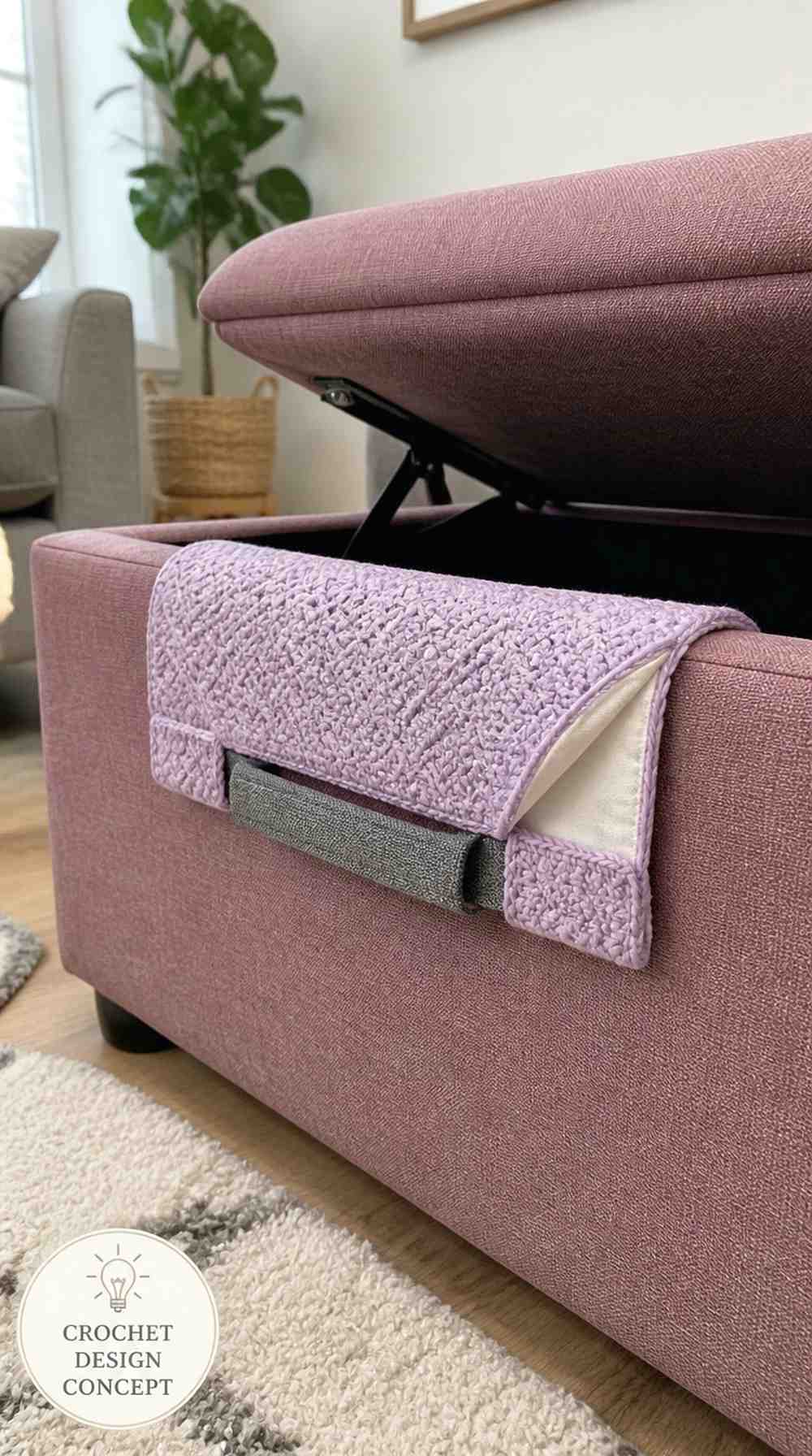
Pale lavender crochet brings a gentle, coordinated appearance to this mauve upholstered storage ottoman. Diagonal herringbone-like stitch ridges run across a rectangular foldover pad, while a smooth ivory cotton lining sits beneath the crocheted surface. Two small fastening tabs are positioned underneath.
The covering wraps around an existing broad grey fabric pull, leaving its original attachments exposed. The subtle diagonal texture makes this design different from straight ribbing or waffle stitches. Its lined construction also offers a way to separate the decorative crochet from the factory handle fabric.
- Diagonal texture: Keep the herringbone-like ridges low and consistent so the pad remains comfortable when gripped.
- Ivory lining: A smooth removable lining may reduce friction against the original handle, provided it stays securely in place.
- Underside fasteners: Position the flat tabs away from the central palm-contact area to limit unnecessary bulk.
- Cover thickness: Check that the combined lining and crochet layers do not restrict the available space beneath the fabric loop.
11. Crochet Mocha Two-Tone Cushioned Bar Sleeve
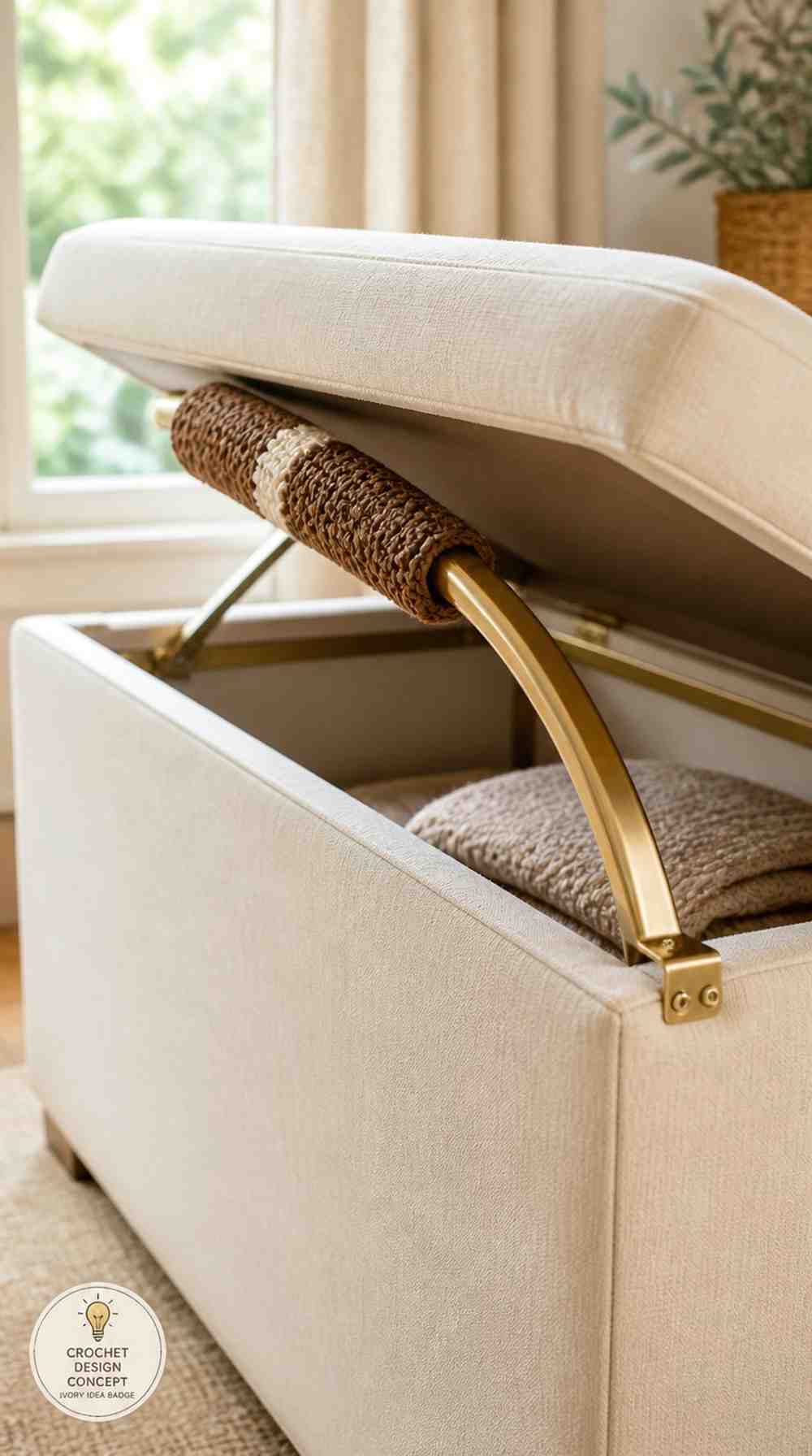
Mocha-brown crochet gives this brass ottoman handle a warm, elegant finish. Two dense mocha sections are separated by a narrow ivory central stripe, creating a balanced color-blocked surface. A thin cream fabric lining sits beneath the crochet, with a concealed removable fastening strip underneath the curved bar.
The original brass handle remains visible at both ends, including its mounting brackets. Against the cream upholstery, the mocha and ivory colors look coordinated without being overly decorative. This concept explores a lightly cushioned covering while preserving the existing metal handle as the lifting component.
- Curved bar shaping: Allow the crochet to follow the handle’s actual curve without bunching or pulling tightly across its underside.
- Thin fabric lining: Keep any additional cushioning modest so the covered handle remains easy to grip.
- Brass mounting clearance: Leave both brackets exposed and ensure the cover cannot slide into the hardware.
- Removable fastening: A concealed closure may simplify cleaning, but it must not loosen during normal handling or obstruct the original grip.
12. Crochet Coral Plaited-Stripe Ottoman Handle
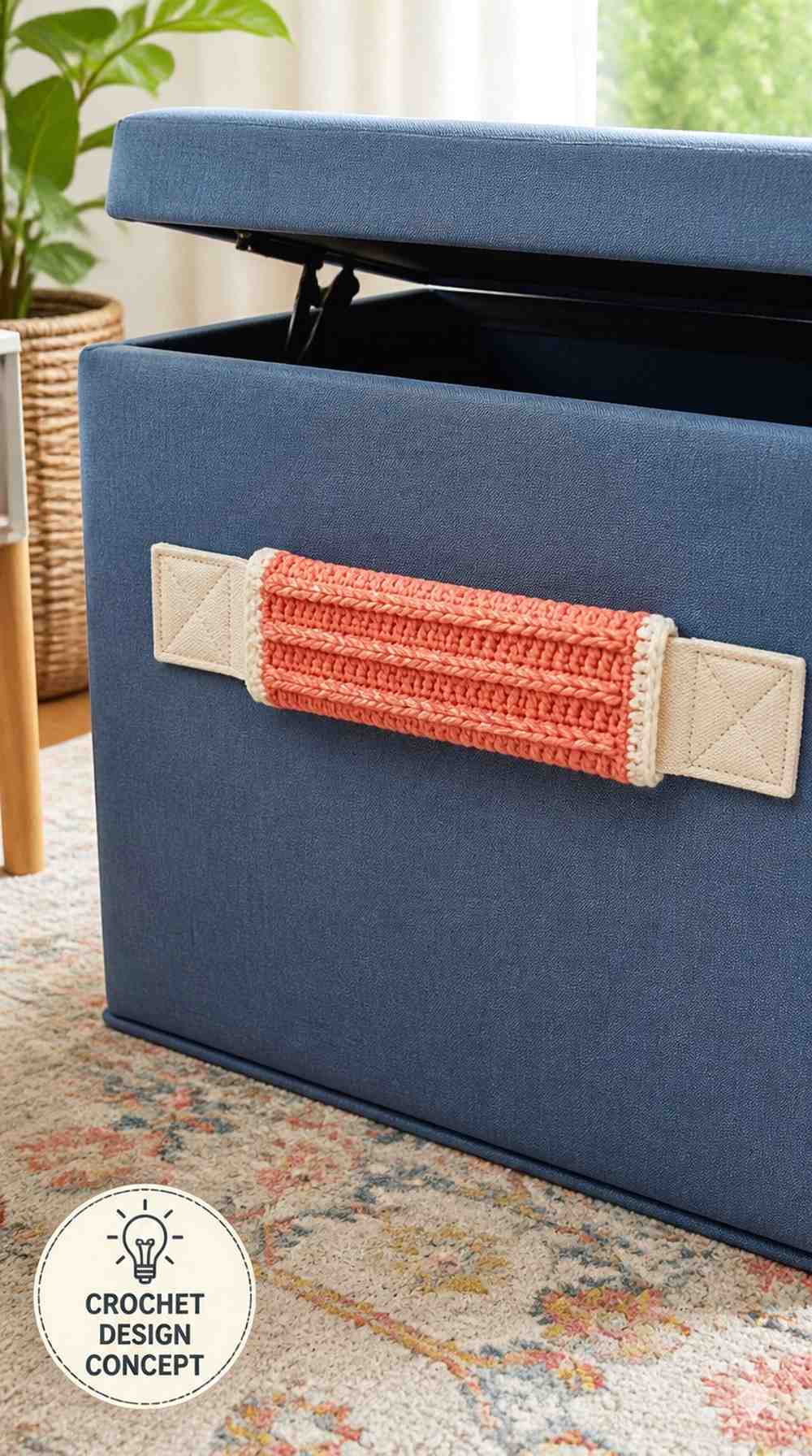
Vibrant coral crochet gives this denim-blue upholstered ottoman a cheerful accent. Three narrow plait-like raised stripes cross the central front of the handle covering, separated by closely stitched plain coral sections. Ivory edging finishes both sides without adding extra decorative pieces.
The original cream canvas pull remains visible beyond the sleeve, preserving the distinction between the manufacturer’s handle and the crochet accent. The horizontal stripes introduce texture across the hand-contact area, making this an interesting option for someone who prefers simple shaping with a little visible detail.
- Raised stripe height: Keep the three plait-like ridges shallow enough that the grip remains comfortable rather than feeling uneven.
- Canvas handle fit: The covering should follow the existing strap without pulling its attachment points inward.
- Horizontal pattern alignment: Arrange the stripes evenly across the visible front section so the texture looks balanced.
- Ivory edging: Narrow borders help frame the coral surface while keeping the overall cover compact.
13. Crochet Plum Rosette Foldover Lid Grip
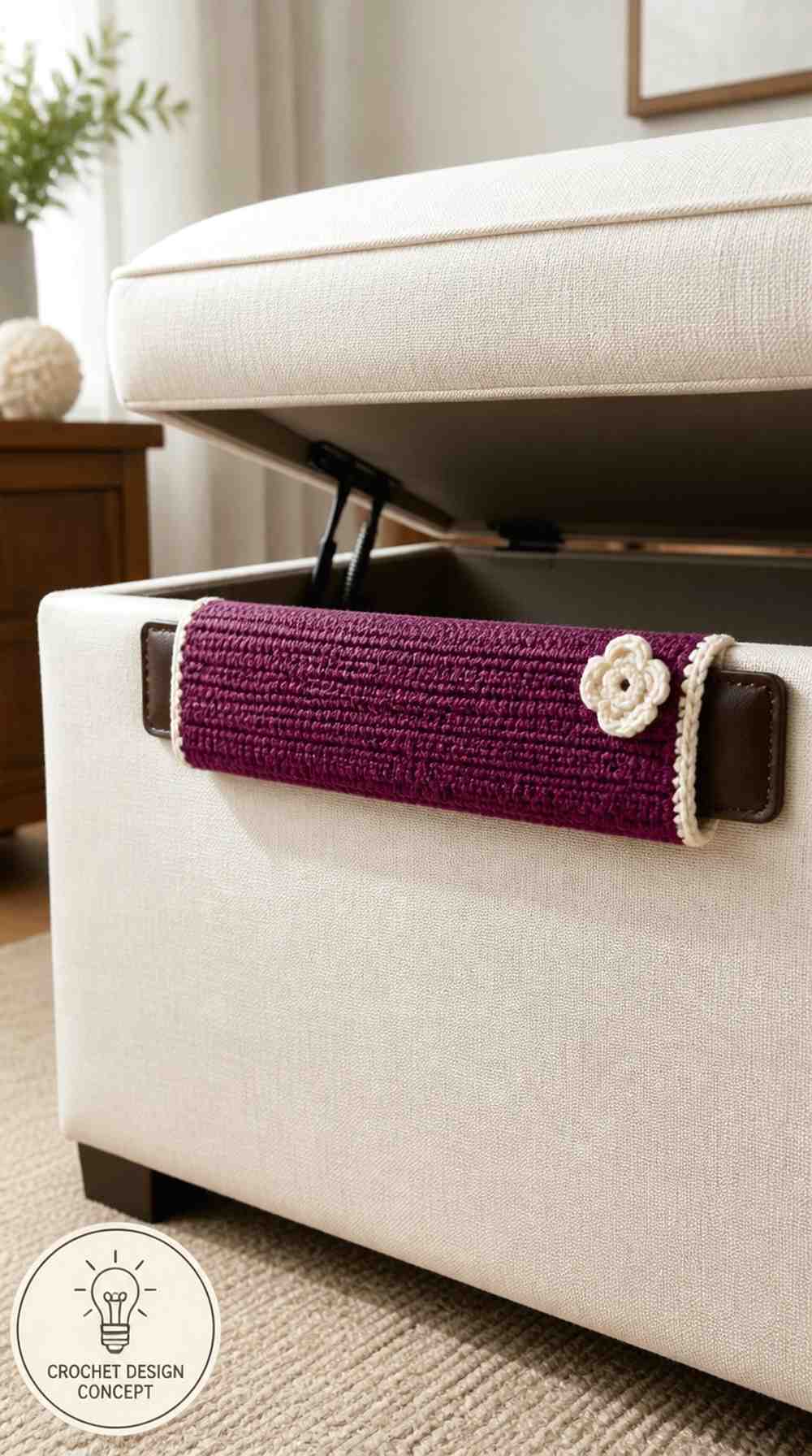
Deep plum crochet adds an elegant handmade detail to this ivory upholstered ottoman. A rectangular foldover cover wraps around the center of the existing dark-brown leather loop, finished with a narrow cream border. One small flat ivory crochet rosette decorates the upper outer corner.
The flower sits away from the main gripping area, keeping the central crochet surface relatively plain. A concealed fabric fastening holds the cover together underneath, while both original leather attachment points remain visible. The combination of plum, ivory and dark leather creates a sophisticated look without requiring a large decorative motif.
- Rosette position: Attach the small flower near the upper outer corner so it does not press against fingers during ordinary use.
- Leather protection: Check whether the covering traps moisture, rubs against the leather finish or causes unwanted color transfer.
- Foldover construction: Keep the closure flat underneath the existing handle rather than adding a bulky fastening to the front.
- Decorative attachment: Secure the ivory rosette firmly, with no loose petals or yarn ends near the moving lid.
14. Crochet Teal Adjustable Tab Ottoman Grip
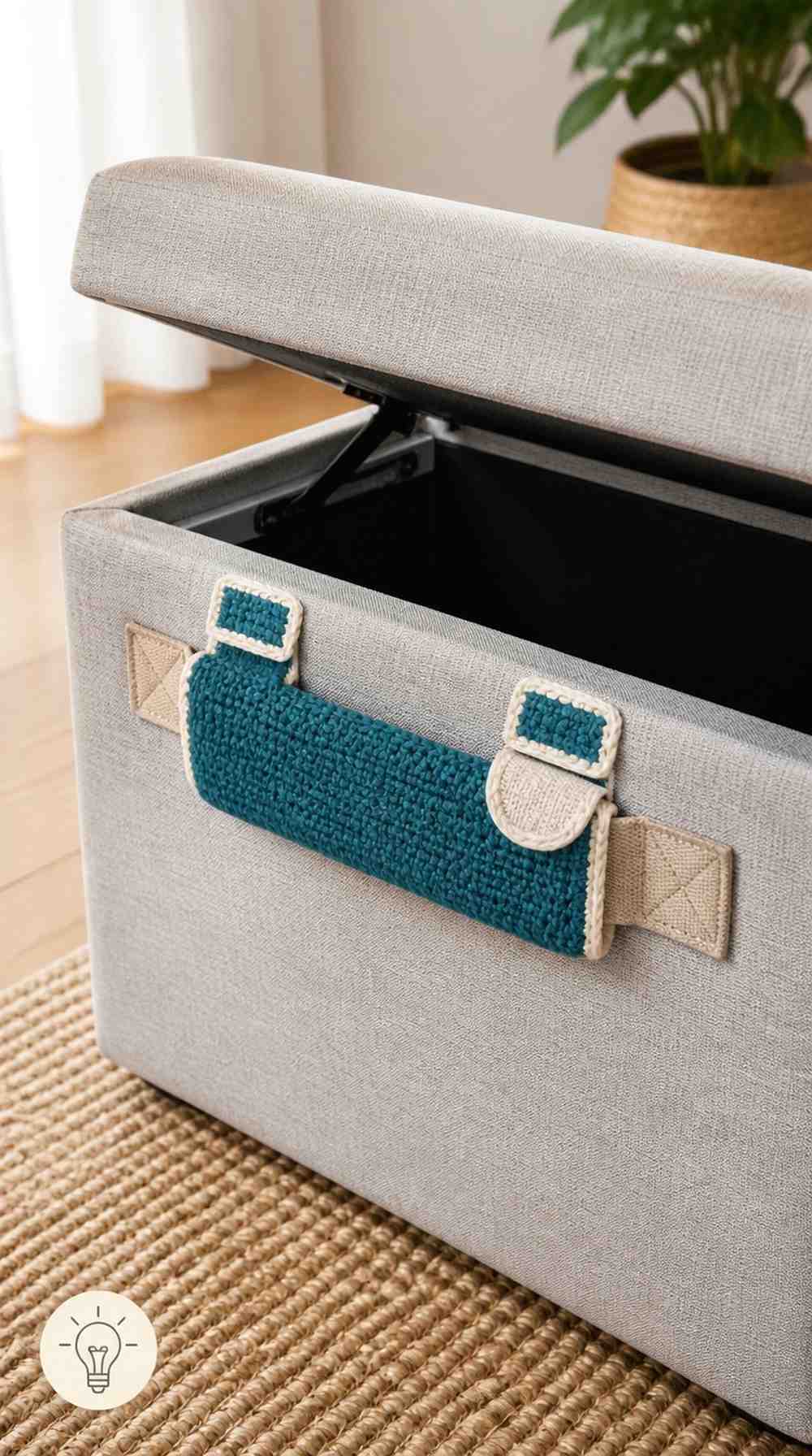
Deep teal crochet gives this removable ottoman handle cover a clean contemporary appearance. Smooth horizontal rows form a rectangular grip, finished with thin cream edging along both sides. Two small cream-lined adjustable fastening tabs sit underneath the existing beige woven pull.
One tab is partly opened to show how the cover could be removed without altering the manufacturer’s handle. The pale-grey upholstery creates a quiet background for the darker teal yarn. This concept places more emphasis on adjustable fitting and cleaning access than on decorative textures.
- Adjustable fastening: Use appropriately sized hook-and-loop tabs that hold the cover in place without wrapping around the original attachment points.
- Smooth hand-contact surface: Closely worked horizontal rows keep the central section relatively even and free from bulky decorative stitches.
- Removable construction: The fastening arrangement may allow the crochet to be cleaned separately without unfastening the factory handle.
- Fit checks: Verify that both tabs stay secure, do not scratch the upholstery and cannot interfere with the lid’s normal movement.
Practical Guide to Crochet Ottoman Storage Lid Handles
Before making a crochet ottoman handle accent, examine the storage lid, its original lifting hardware and the way it opens. These designs are decorative coverings, not replacements for manufacturer-approved handle assemblies.
Keep the original handle intact. The factory handle, bar or pull must remain responsible for lifting the lid. Do not rely on crochet stitches, ties, decorative motifs or handmade seams to support the lid’s weight. If the original handle is damaged, repair it according to the manufacturer’s instructions rather than hiding the damage with crochet.
Check the lid’s movement. Open and close the ottoman carefully while checking the handle area, hinges and gaps. Crochet must not obstruct the lift mechanism, alter the closing clearance or become trapped between the lid and frame. Some storage ottomans have heavy lids that require appropriate support.
Consider grip comfort and clearance. Measure the original handle’s width, circumference and available hand space. A padded or highly textured cover may look attractive but make a small handle harder to hold.
Choose a suitable yarn. Smooth cotton or a suitable cotton blend can create clearly defined stitches and removable coverings. Avoid loose, snag-prone decorations. Follow the yarn’s washing instructions and check for possible dye transfer against light upholstery or leather.
Keep children and pets safe. Lift-up lids can create pinch and trapping hazards. The Castlery storage ottoman instructions specifically warn users to close lids carefully, keep fingers clear of gaps and prevent children from entering the storage compartment. Decorative crochet does not reduce those risks.
Cloudinary
For related furniture-handle styling, explore 16 Crochet Mattress Handle Soft Grip Inspiration Ideas on Yarn Nest Studio. That collection shows removable crochet coverings for existing fabric handles, although mattress handles and ottoman lid handles serve different purposes and have different manufacturer restrictions.
Want to Make Something Similar?
These 14 crochet designs are visual inspiration concepts, not tested furniture modifications. The following resources demonstrate related crochet handle construction techniques:
- DIY Crochet Medium Purse Handles — Crochet With Julie — A tutorial showing how rounded crochet handles can be constructed with connected rows and shaped fabric. The technique is related, but it is not an ottoman lid-handle modification pattern. Crochet With Julie
- Expandable Crochet Market Tote Bag — Make & Do Crew — Includes instructions for folding, seaming and finishing crocheted handle sections, which may help readers understand flat grip construction. Make & Do Crew
These projects are useful for learning crochet techniques, but a furniture lid has different loads, movement and safety requirements from a handbag. Do not use a bag-handle pattern as evidence that a crochet grip can safely replace the original ottoman lifting hardware.
Which Crochet Ottoman Handle Design Should You Choose?
| Design | Main feature | Important consideration |
|---|---|---|
| Terracotta Ribbed | Simple vertical grip texture | Keep factory attachments exposed |
| Navy Reversible | Two contrasting surfaces | Double-layer thickness |
| Blush Granny-Square | Small decorative motifs | Flat joining seams |
| Olive Waffle-Stitch | Textured metal-bar covering | Bracket clearance |
| Mustard Braided Rope-Loop | Tubular rope covering | Original rope condition |
| Dusty-Blue Side-Laced | Visible lace-up side closure | Secure loose lace ends |
| Rust Tapered | Wider central hand-contact area | Shaped fit and finger space |
| Ivory Scalloped | Decorative wooden-bar sleeve | Prevent rubbing on wood |
| Cobalt Checkerboard | Bold geometric colorwork | Fabric handle flexibility |
| Lavender Herringbone | Subtle texture with lining | Added thickness |
| Mocha Two-Tone | Lightly cushioned curved-bar grip | Metal mounting clearance |
| Coral Plaited-Stripe | Three raised horizontal lines | Comfortable ridge height |
| Plum Rosette | Small floral accent | Keep flower away from grip |
| Teal Adjustable Tab | Removable fastening system | Tab security and lid clearance |
For a simple fabric pull, the Terracotta Ribbed or Rust Tapered design offers a comparatively straightforward decorative approach. If the existing handle is made from metal or wood, the Olive Waffle-Stitch or Ivory Scalloped cover may provide a more relevant visual reference.
If removing the covering for cleaning matters most, the Navy Reversible, Dusty-Blue Side-Laced and Teal Adjustable Tab designs offer different fastening ideas. Whichever design you choose, confirm that the furniture manufacturer permits the modification and that it does not change how the original handle or lid operates.
Conclusion
A crochet ottoman storage lid handle can be a small but noticeable part of a living-room design. These 14 ideas show how ribbed stitches, compact granny squares, textured sleeves, contrasting colors and removable closures can change the appearance of an existing furniture handle.
The best option will depend on the original handle’s construction, the space available for fingers and the way the lid opens. Keep the crochet covering modest, removable where practical, and clear of all lifting hardware. A decorative detail should never compromise the everyday safety of the storage ottoman.
Which crochet ottoman lid-handle design would you choose? Would you prefer a simple terracotta ribbed sleeve, a pastel granny-square grip or a removable teal cover with adjustable tabs? Share your favorite and what you would change to suit your furniture.
Frequently Asked Questions
1. Can I use crochet as the main lifting handle on a storage ottoman?
It is not advisable to replace a manufacturer-installed ottoman lid handle with an untested crochet handle. Storage lids can be heavy, and crochet stitches or handmade attachments may stretch or fail under load. These ideas are intended as decorative coverings for existing handles, not structural replacements.
2. Which yarn is worth considering for a crochet ottoman handle cover?
Smooth cotton or an appropriate cotton-blend yarn may suit a removable grip covering because it can provide well-defined stitches and a relatively tidy surface. However, yarn choice does not guarantee strength, comfort or suitability for a particular handle. Check the furniture manufacturer’s instructions and test the covering carefully.
3. Can a crochet handle cover make an ottoman lid easier to open?
A textured or padded cover may change how the existing handle feels, but it does not make the lid lighter or improve the lifting mechanism. An overly thick covering can actually reduce finger clearance. If the lid is unusually difficult to open, check the manufacturer’s guidance and have the hardware inspected rather than relying on crochet padding.
4. Is it safe to add a crochet grip to an ottoman used in a child’s room?
Extra caution is needed around lift-up furniture. Storage lids can create finger-pinch and trapping hazards, and decorative crochet does not provide a safety mechanism. Keep children from playing inside storage ottomans, supervise access and follow the furniture manufacturer’s safety instructions. Do not add cords or decorations that introduce further risks.
U.S. Consumer Product Safety Commission
5. Are these 14 crochet ottoman lid-handle ideas complete patterns?
No. They are original crochet design visualizations intended to inspire colors, textures, cover shapes and fastening arrangements. The linked crochet tutorials demonstrate related stitch and handle techniques, not tested ottoman modifications. Anyone making a real cover should check the original handle, lid clearance, manufacturer restrictions, material care and secure attachment before use.