A crochet lunch napkin carry sleeve is a small but useful way to keep a reusable cloth napkin organized inside a lunchbox, tote or picnic bag. These 13 inspiration ideas explore slim trifold wraps, buttoned envelopes, rolled-napkin holders, soft slip pockets, lined crochet sleeves and practical clip-on designs. Oatmeal, sage, terracotta, navy, butter yellow and muted coral bring different looks to an everyday lunch accessory.
Whether you pack lunch for the office, university, school or an afternoon picnic, choosing the right sleeve depends on how you fold your napkin and where you plan to carry it. Some ideas keep one napkin tightly wrapped, while others offer a wider opening or more complete coverage. This collection helps you compare closure styles, crochet textures, portability and cleaning considerations before planning your own version.
These are AI-generated crochet design visualizations for inspiration, not photographs of tested handmade pieces or step-by-step patterns.
Quick Design Selection Guide
- For the slimmest lunch bag: Choose the Crochet Sage Ladder Strap Napkin Sleeve or Crochet Rust Chevron Slip Tube. Both use simple holding structures without bulky flaps.
- For a rolled cloth napkin: The Crochet Navy Roll Wrap Lunch Sleeve keeps the napkin in a compact cylindrical bundle using two adjustable ties.
- For a more enclosed design: Consider the Crochet Butter Yellow Button Flap Sleeve or Crochet Plum Zip Lunch Napkin Sleeve.
- For a decorative everyday look: The Crochet Blush Scalloped Lunch Pocket and Crochet Olive Leaf Pull Tab Sleeve bring softer details to a practical accessory.
- For easy organization inside a tote: Try the Crochet Slate Blue Book Fold Sleeve or Crochet Coral Clip Loop Lunch Sleeve.
1. Crochet Oatmeal Trifold Lunch Sleeve
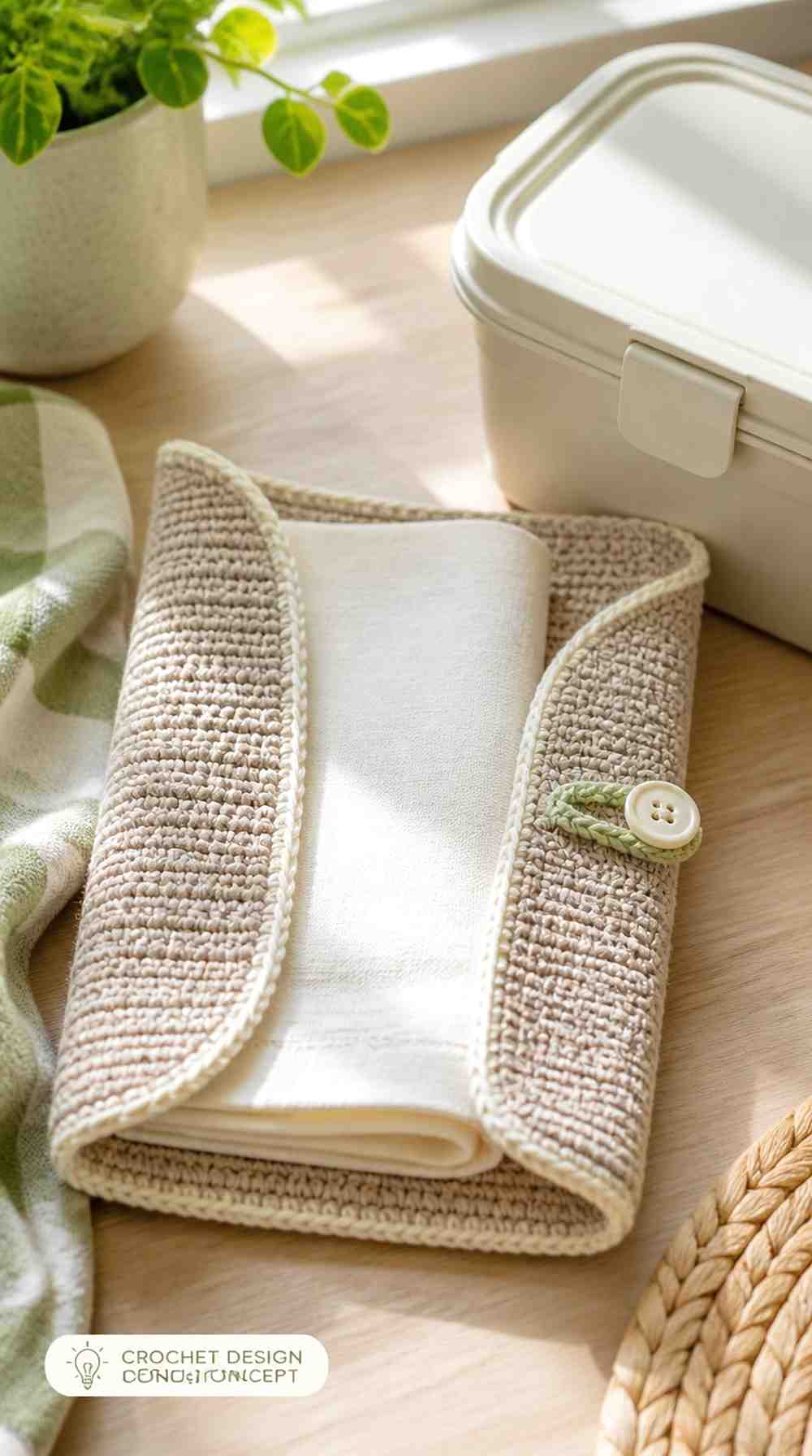
Warm oatmeal crochet creates a rectangular wrap with close horizontal ribs, narrow cream edging and two broad panels that fold neatly around one ivory cloth lunch napkin. A small sage-green loop passes over a bone-colored button at the front, giving the trifold shape a simple, tidy finish.
Unlike a standard open pocket, this design wraps around the folded napkin from both sides. It could work well inside a flat lunch bag, provided the crochet panels overlap comfortably without stretching the button fastening.
- Trifold coverage: Plan the panels around the thickness of your folded napkin. They should overlap enough to stay closed without creating a thick central bundle.
- Button placement: The sage loop needs to reach the front button naturally. Check the position with the actual folded napkin inside before securing it.
- Edge finishing: A narrow cream border can help define the overlapping panels, although its stitch tension should remain compatible with the main crochet fabric.
2. Crochet Sage Ladder Strap Napkin Sleeve
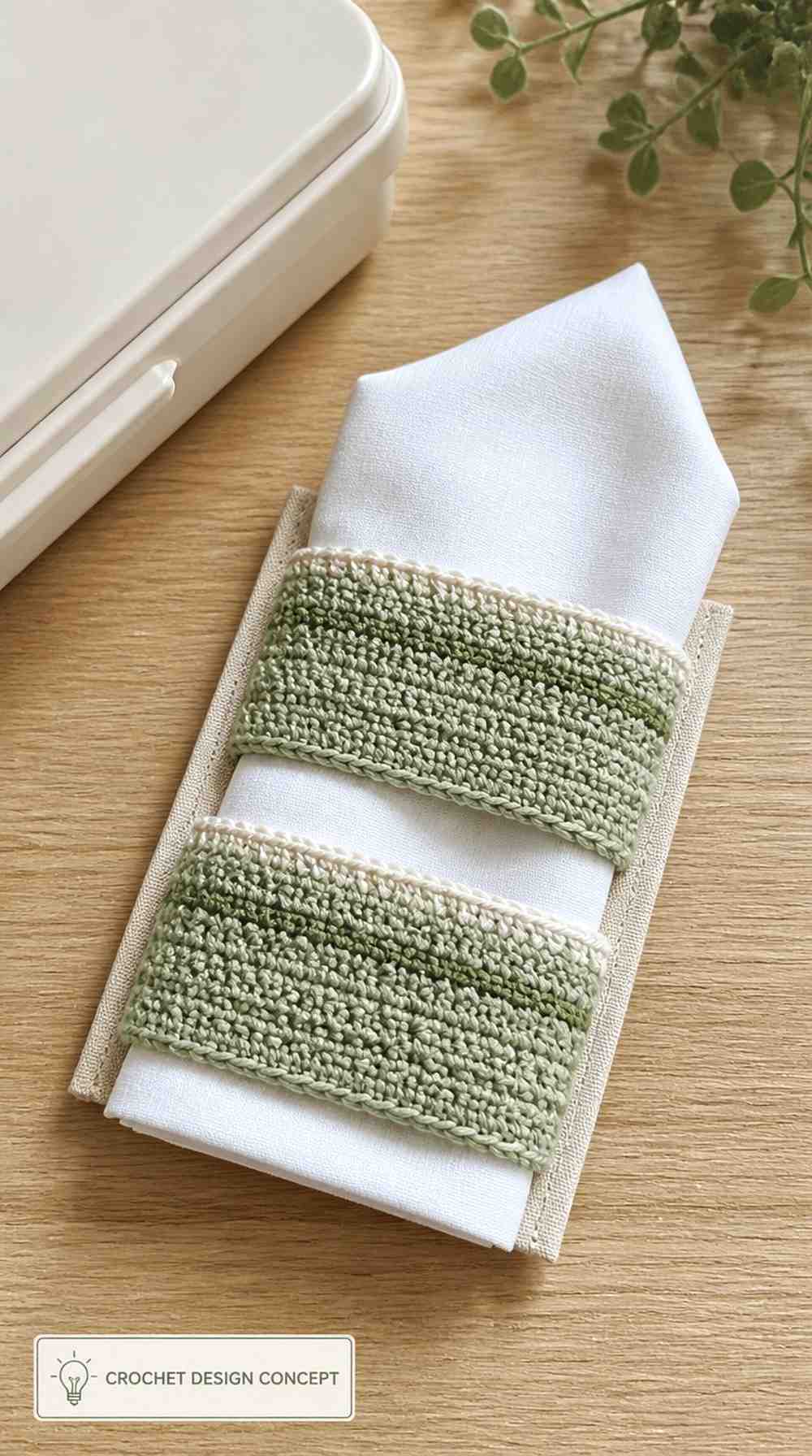
Two broad sage-green crochet bands stretch across a slim sand-colored backing panel, creating a ladder-like arrangement that holds a single folded white linen napkin. The moss-textured bands have subtle darker sage stripes and narrow cream connecting edges, giving the sleeve a clean, understated appearance.
The partly exposed napkin makes this design different from enclosed crochet pouches. It is especially interesting for someone who wants a minimal carrier, but the bands would need careful sizing to avoid letting the napkin slide out during transport.
- Band spacing: Position both horizontal bands far enough apart to hold the folded napkin evenly without allowing its center to bow outward.
- Backing choice: A smooth, securely attached cotton backing could reduce stretching while helping the holder remain flat inside a lunch bag.
- Retention limitation: Since the napkin remains partly exposed, this design is better suited to a separate clean compartment than a bag containing loose food.
3. Crochet Terracotta Diagonal Corner Sleeve
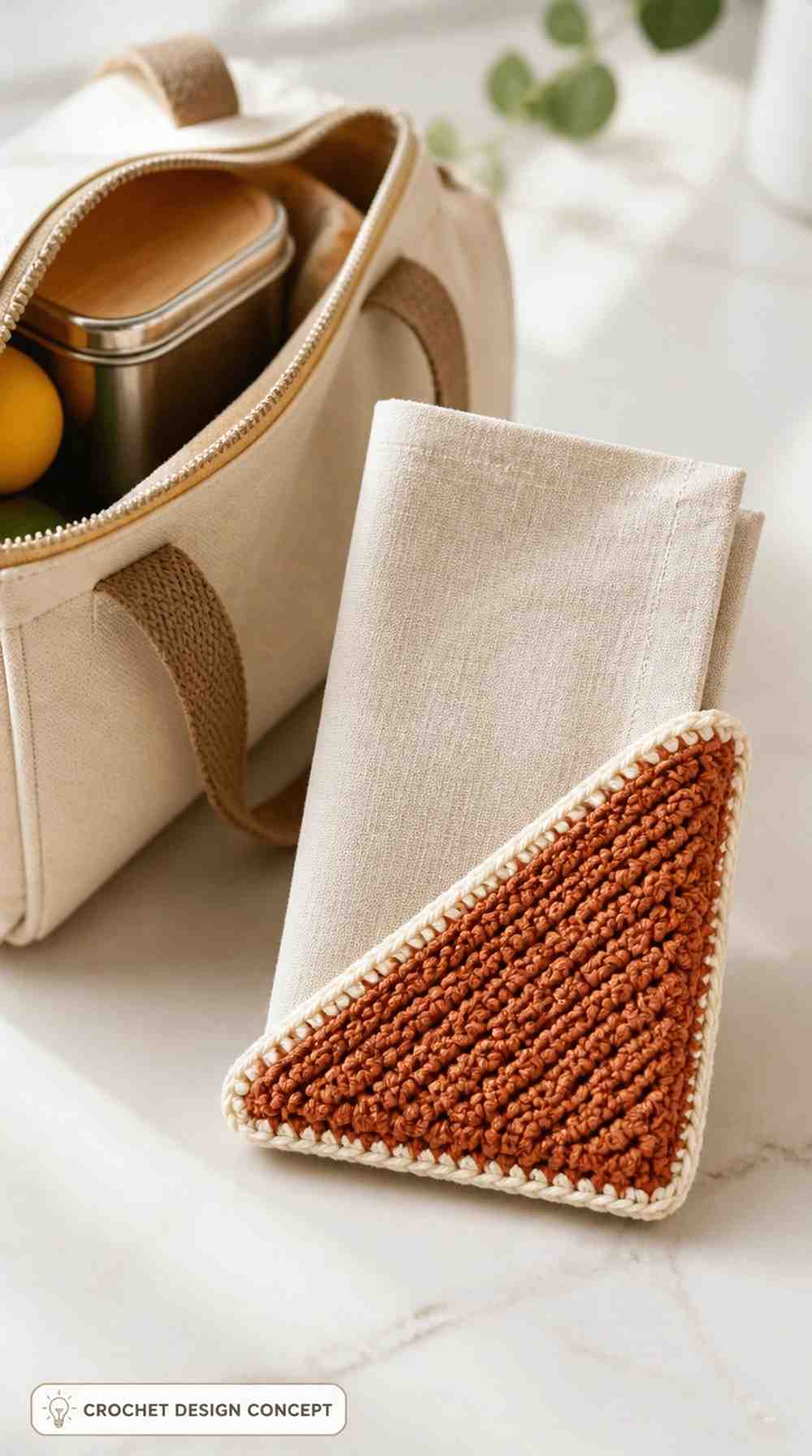
A compact terracotta-orange crochet triangle forms the main pocket of this lunch napkin carrier. Firm diagonal stitch rows create a clearly defined opening, while a narrow cream edging follows the sloping upper edge. The lower corner of a folded oatmeal linen napkin fits inside, leaving most of the fabric visible.
This simple corner-holding design uses much less coverage than a full envelope sleeve. Its appeal comes from the quick-access shape, although the exposed cloth could shift if the pocket is too loose.
- Corner fit: Match the triangular opening to the exact folded corner of the napkin, especially if the fabric has several thick layers.
- Diagonal stability: Keep the sloping edge firm enough to resist curling, but not so tight that inserting the napkin distorts the triangle.
- Practical placement: Use this style inside a clean lunch compartment or another protective pouch because it leaves much of the napkin uncovered.
4. Crochet Navy Roll Wrap Lunch Sleeve
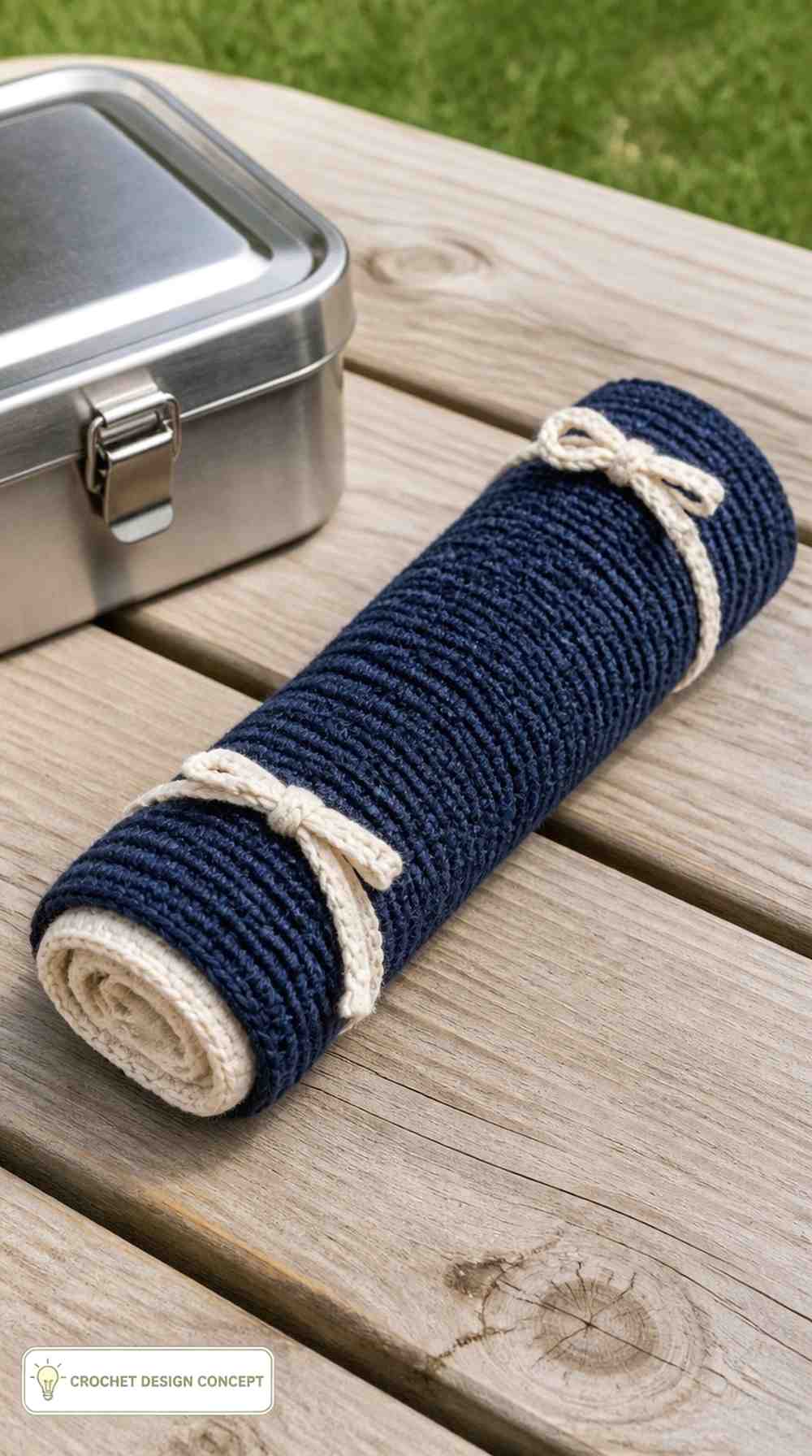
Deep navy crochet forms a flexible rectangular wrap around a single rolled cream cloth napkin. Close vertical ribbing follows the length of the roll, while two narrow ivory ties secure the fabric near its opposite ends. The circular edge of the napkin remains visible, emphasizing the compact shape.
This idea works differently from sleeves designed for flat, rectangular folds. Rolling a napkin can give it a narrower profile, but the completed bundle may be thicker than a flat carrier and requires room inside the lunch bag.
- Rolled diameter: Test the wrap around the actual rolled napkin so the navy crochet reaches around it without needing excessive stretching.
- Two-point fastening: Position the ivory ties near opposite ends to help prevent the wrap from loosening unevenly during handling.
- Tie length: Leave enough length for comfortable knots or bows, while avoiding long loose ends that could snag inside a crowded bag.
5. Crochet Butter Yellow Button Flap Sleeve
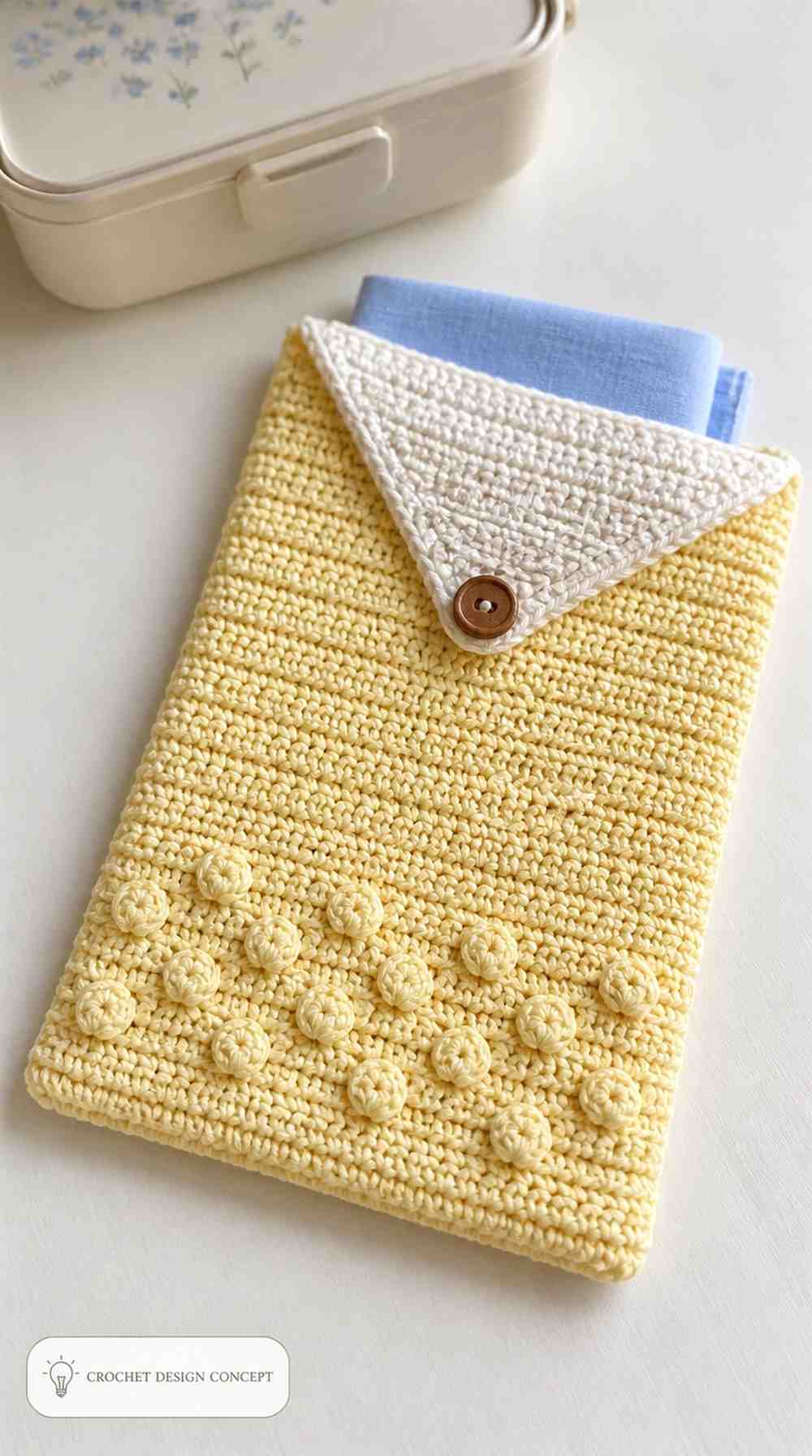
Butter-yellow cotton crochet gives this lunch napkin sleeve a soft, cheerful appearance. Its rectangular body features closely worked rows and tiny raised bobble accents near the lower front. A cream triangular flap folds toward a small walnut-brown button, while a pale-blue cloth napkin sits inside.
The decorative bobbles make the lower panel more textured than a plain envelope sleeve. They add visual interest without covering the entire surface, leaving the buttoned flap as the main feature that needs attention when planning a working version.
- Flap depth: Allow the cream triangular flap to cover the opening without forcing the folded napkin downward or leaving the fastening under strain.
- Bobble placement: Keeping the raised accents toward the lower front may help leave the flap and button area relatively smooth.
- Fastener care: Check whether a wooden button suits your chosen cleaning method; a different washable fastening may be an optional alternative.
6. Crochet Slate Blue Book Fold Sleeve
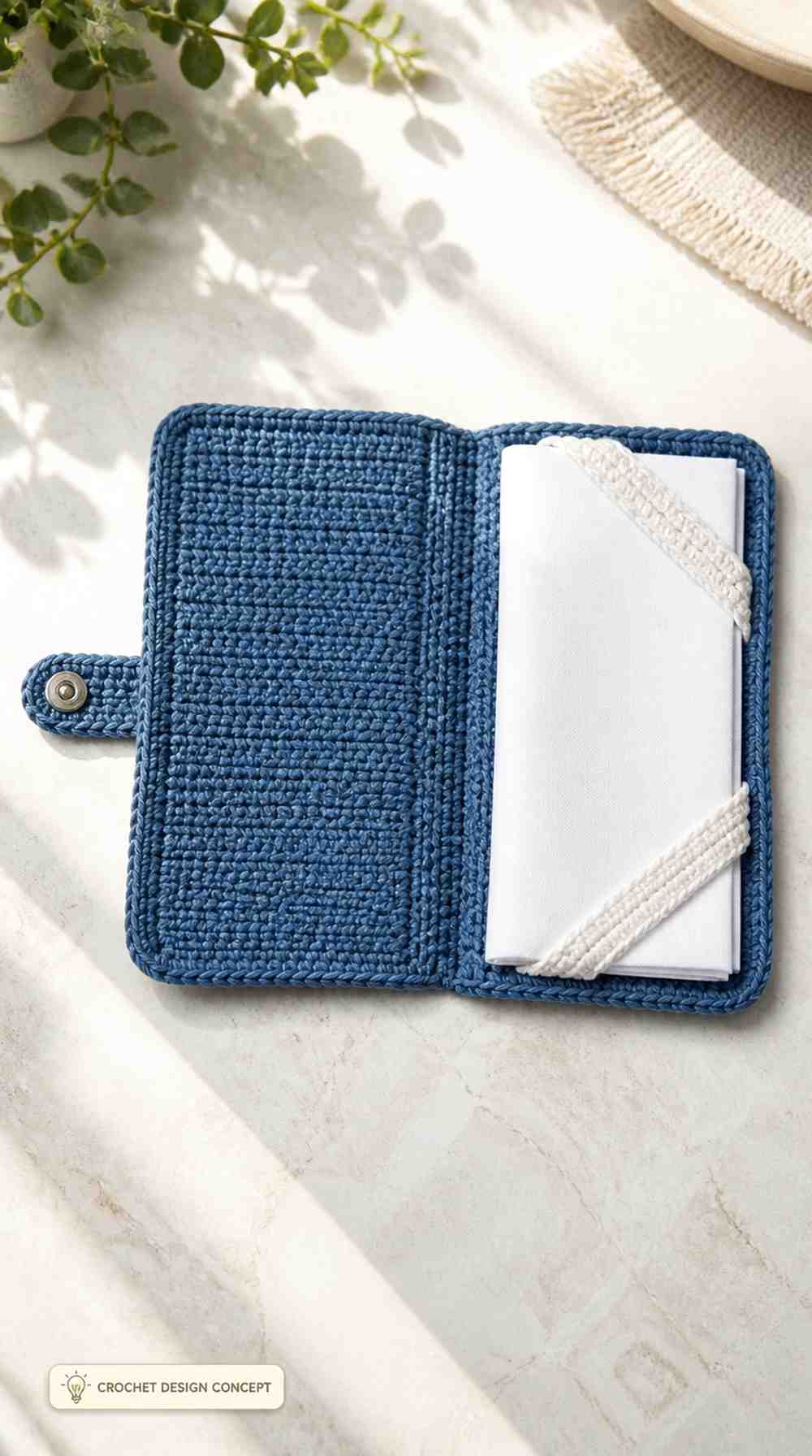
Slate-blue crochet opens like a small fabric book, revealing two connected rectangular panels with a flexible central fold. On the right interior panel, two narrow cream diagonal corner tabs hold a folded white cloth napkin. A short outer strap with a silver snap extends from the edge.
The book-style arrangement makes the napkin easy to position while the sleeve is open. Compared with a simple pocket, however, the hinged construction introduces more fold lines and a separate fastening that would need to sit comfortably around the enclosed napkin.
- Corner tabs: Place the two cream tabs where they can grip opposite napkin corners without compressing or creasing the cloth too tightly.
- Center fold: Allow enough flexibility at the hinge so the panels close around the napkin rather than pulling at their joined edge.
- Snap alignment: Test the outer strap with the sleeve filled. Its snap should meet naturally without stretching the slate-blue panel out of shape.
7. Crochet Blush Scalloped Lunch Pocket
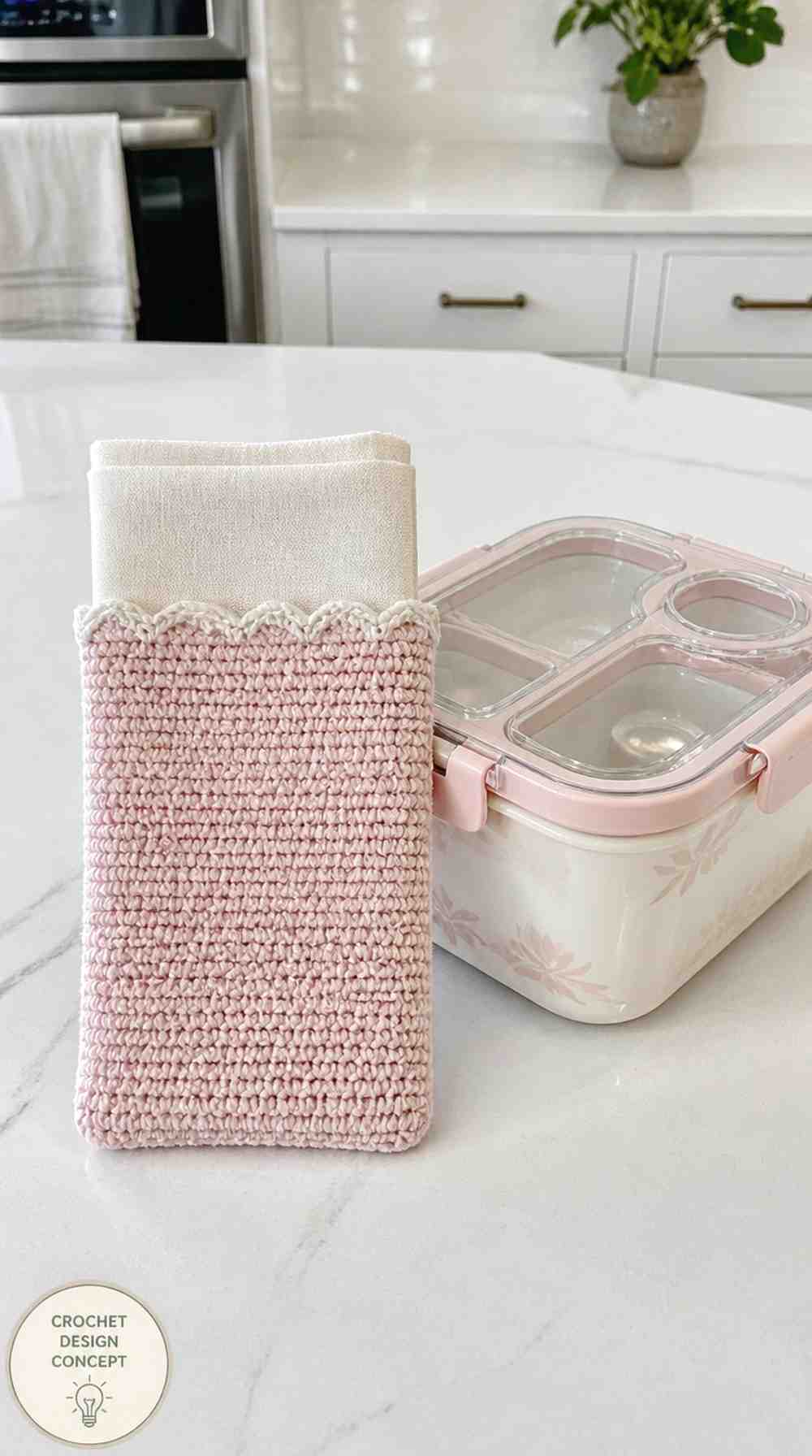
Pale-blush crochet forms a slim rectangular pocket with a closed lower edge and neatly joined sides. Small cream scallops finish the open top, framing the visible upper edge of a single folded ivory cloth napkin. With no separate strap or flap, the overall look remains light and uncomplicated.
The shallow decorative scallops give the sleeve a softer appearance than the straighter band and wrap designs. Its open entry also makes the napkin easy to remove, although the same opening provides less protection during a busy commute.
- Opening width: Size the pocket around the folded napkin so it slides in smoothly without being squeezed at the scalloped rim.
- Scallop scale: Small, even scallops are more suitable for a frequently handled sleeve than oversized loops that could catch on nearby objects.
- Carrying limitation: The open top is convenient for access but does not seal out dust, spills or other items inside a lunch bag.
8. Crochet Olive Leaf Pull Tab Sleeve
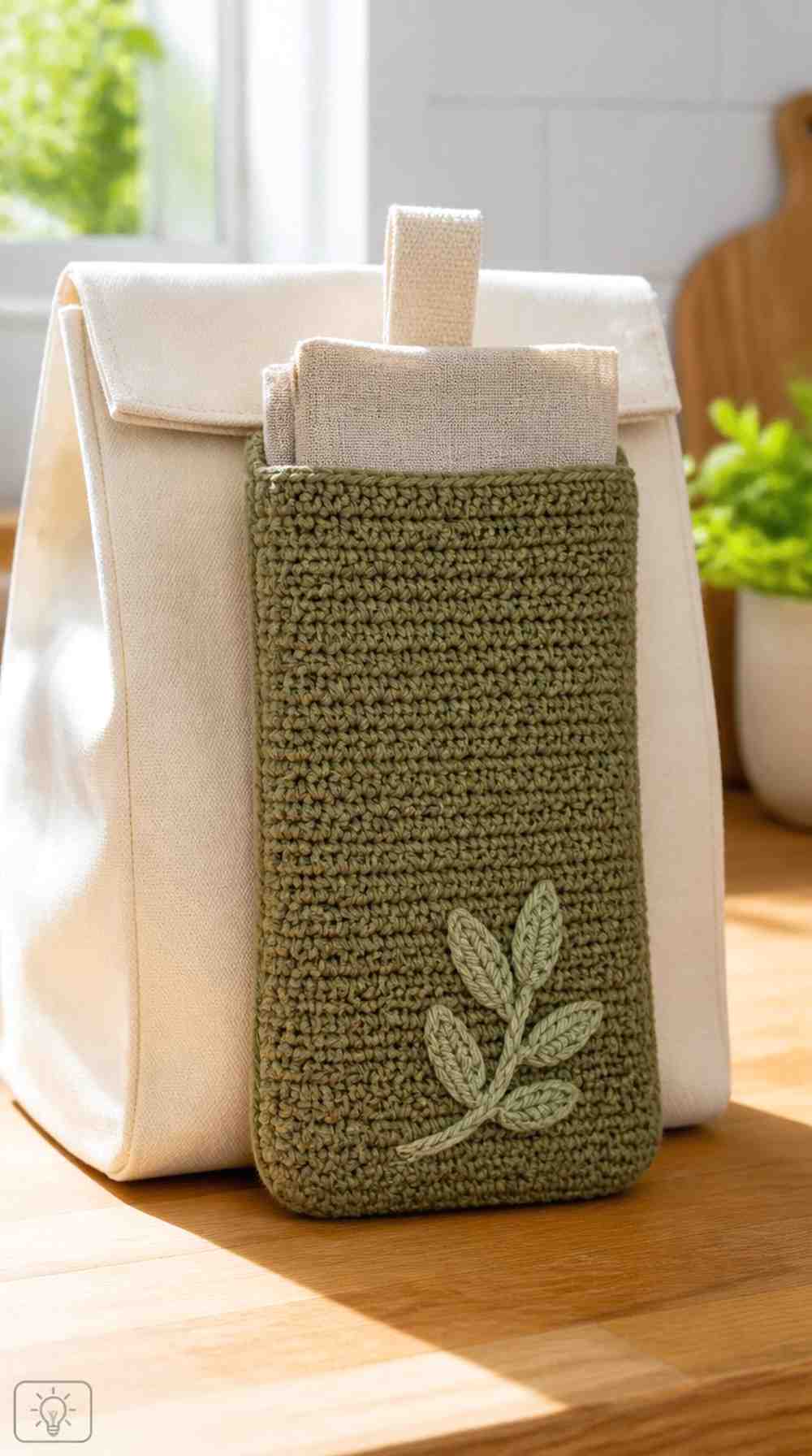
Olive-green cotton crochet creates a narrow top-entry sleeve with fine horizontal rows and softly rounded lower corners. One small raised sage leaf applique decorates its front, while a flat cream fabric pull tab sits behind the folded beige linen napkin and extends above the opening.
The botanical detail makes this a gentle decorative option without changing the basic pocket shape. More importantly, the visible pull tab suggests a way to retrieve a napkin that sits snugly inside the sleeve, provided that feature is constructed to move freely.
- Pull-tab function: A working version could use a securely attached fabric lift strip beneath the napkin; test whether it raises the cloth without bunching.
- Leaf applique: Keep the raised leaf securely stitched and relatively flat so it does not snag against lunch bags or nearby belongings.
- Pocket depth: The napkin should sit low enough to remain supported, while its upper edge and pull tab remain accessible.
9. Crochet Rust Chevron Slip Tube
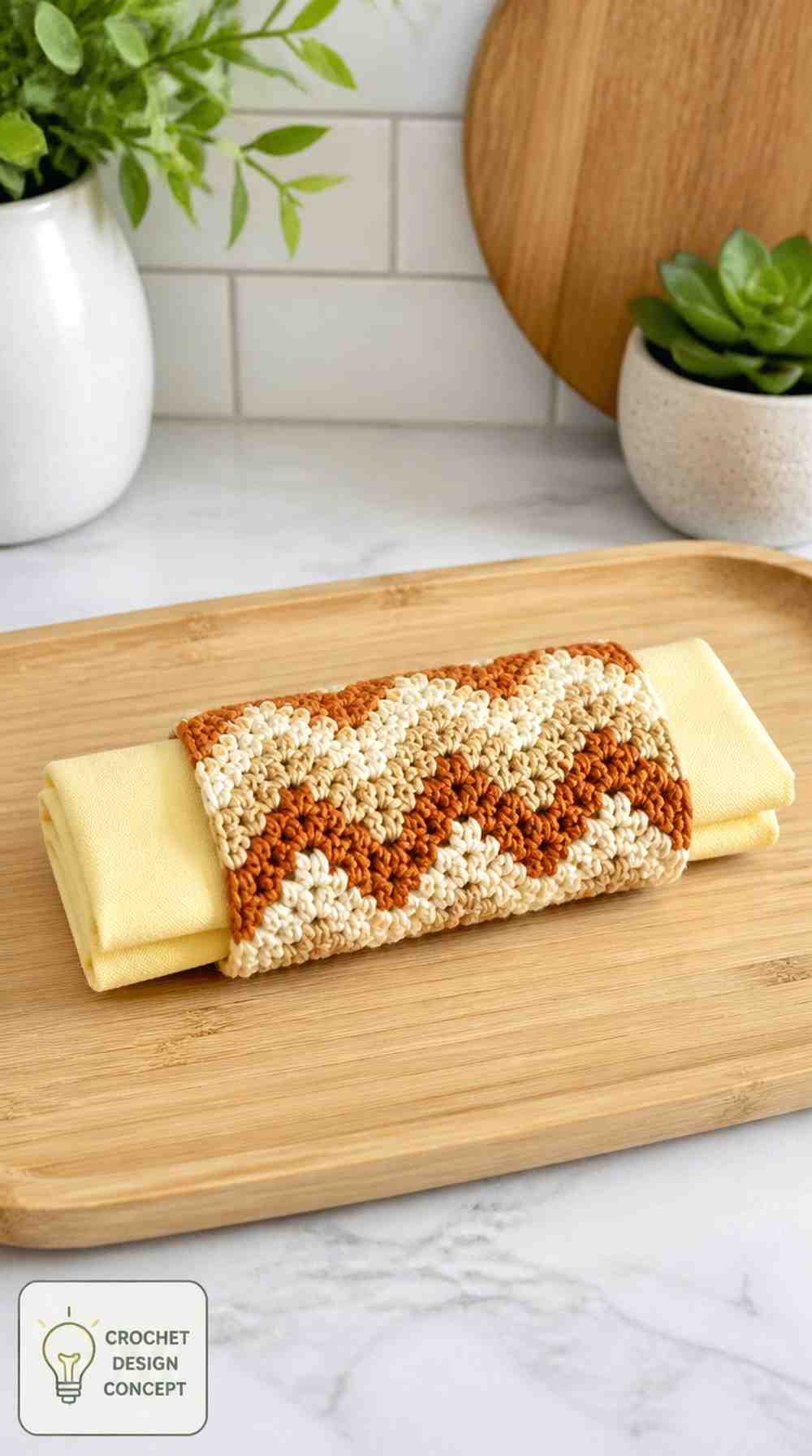
Rust-orange, warm cream and sandy beige chevrons create a bold striped crochet band around the middle of one folded pale-yellow cloth napkin. The tube is open at both ends, allowing the napkin to extend slightly beyond the striped crochet. Its simple shape has no buttons or ties.
This design is closer to a wide reusable napkin band than a fully enclosed pouch. The chevron colorwork provides most of the visual character, while the tube’s circumference determines whether it can hold the folded fabric securely.
- Tube circumference: Check the folded napkin’s thickness and width before planning the band. Excessive looseness could let the cloth slide free.
- Chevron alignment: Keep the diagonal stripes meeting cleanly where the tube joins, since uneven color transitions would be noticeable on this simple shape.
- Quick-access trade-off: The open ends make removal easy but provide little coverage, so the napkin still needs a clean carrying environment.
10. Crochet Cream Mint Lattice Lunch Sleeve
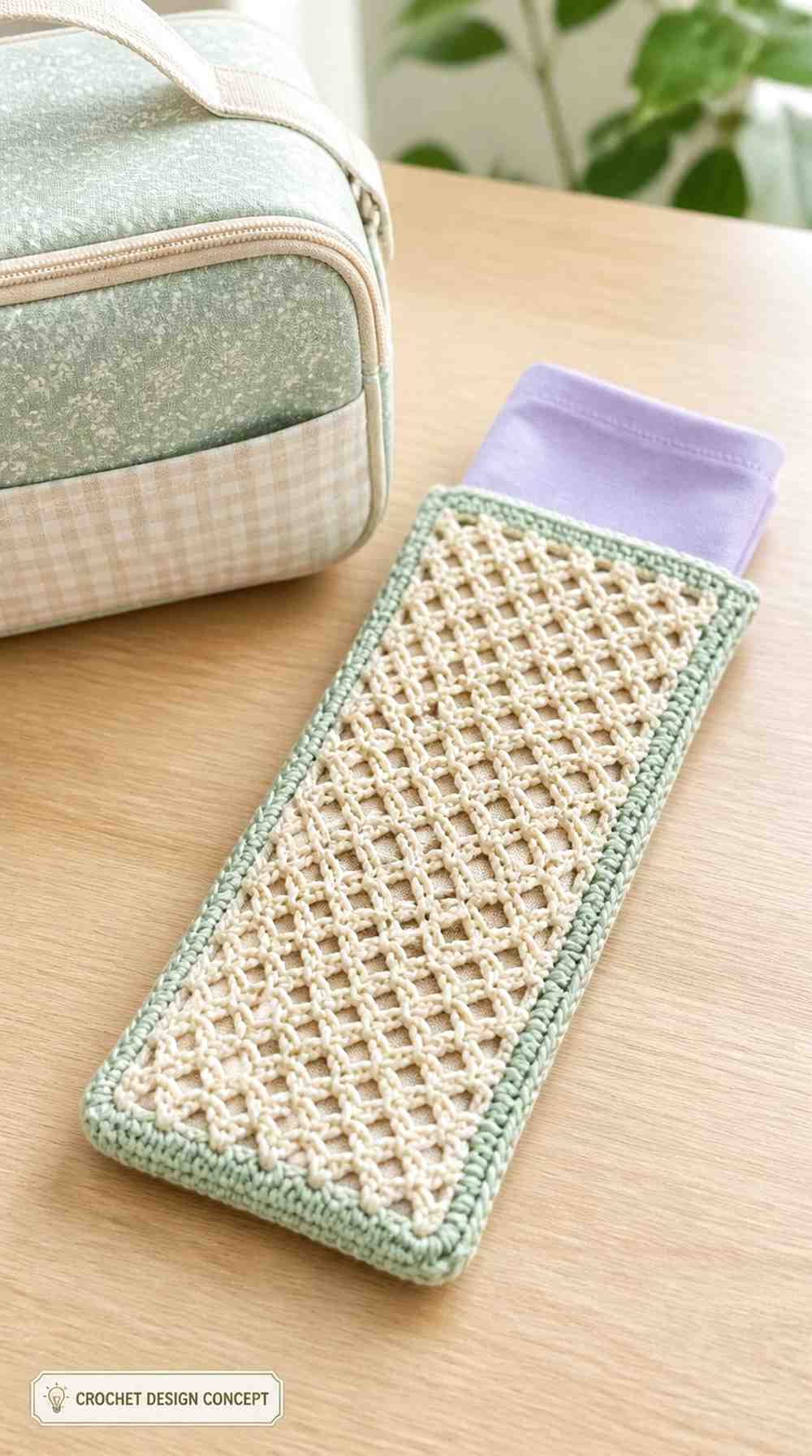
Cream crochet forms a delicate diamond-lattice front on this slim rectangular sleeve. Solid pale-mint edging defines the upper opening and side seams, while a light-beige cotton lining sits behind the openwork. A single folded lilac cloth napkin is visible at the top.
The combination of airy crochet and a smooth backing gives the design a more layered appearance than a dense, single-fabric pocket. The lining matters particularly here because the lattice openings would otherwise leave the napkin exposed and could allow small fabric corners to catch.
- Lattice openings: Keep the diamond shapes reasonably even, with an underlying lining that prevents the napkin from pushing through the crochet gaps.
- Lining attachment: A smooth cotton lining should be secured without pulling the pale-mint edges inward or distorting the outer lattice.
- Fabric bulk: Plan for the additional lining layer when checking the sleeve’s interior fit, especially with a thicker reusable cloth napkin.
11. Crochet Plum Zip Lunch Napkin Sleeve
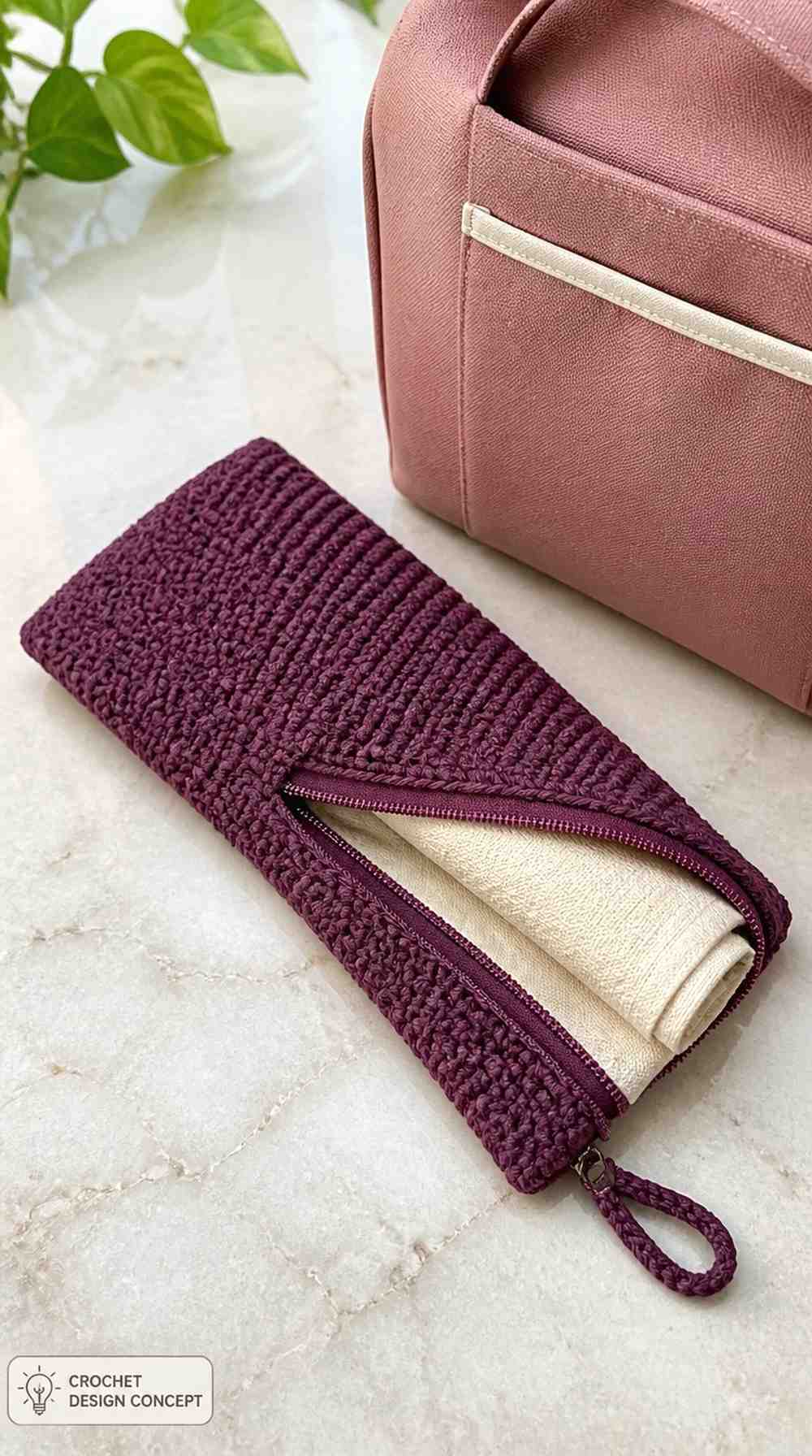
Rich plum-purple crochet creates a slim rectangular carrier with small, closely spaced stitches and straight side seams. A matching zipper closes the top, with a short plum crochet loop attached to the pull. Inside, a pale-cream cotton lining surrounds one folded ivory cloth napkin.
The zippered construction offers a more enclosed carrying option than the open pockets and wrap bands. It may suit a lunch tote with several compartments, although the zipper and lining require additional finishing and careful cleaning.
- Zipper clearance: Leave enough space above the folded napkin so the zipper can move without catching the cloth or the crochet upper edge.
- Lining fit: The pale-cream lining should sit smoothly inside the narrow sleeve without bunching into the zipper opening.
- Cleaning access: Choose materials and a construction method that allow both the lining and the inside of the zipper area to be cleaned and dried thoroughly.
12. Crochet Charcoal Vertical Pull Sleeve
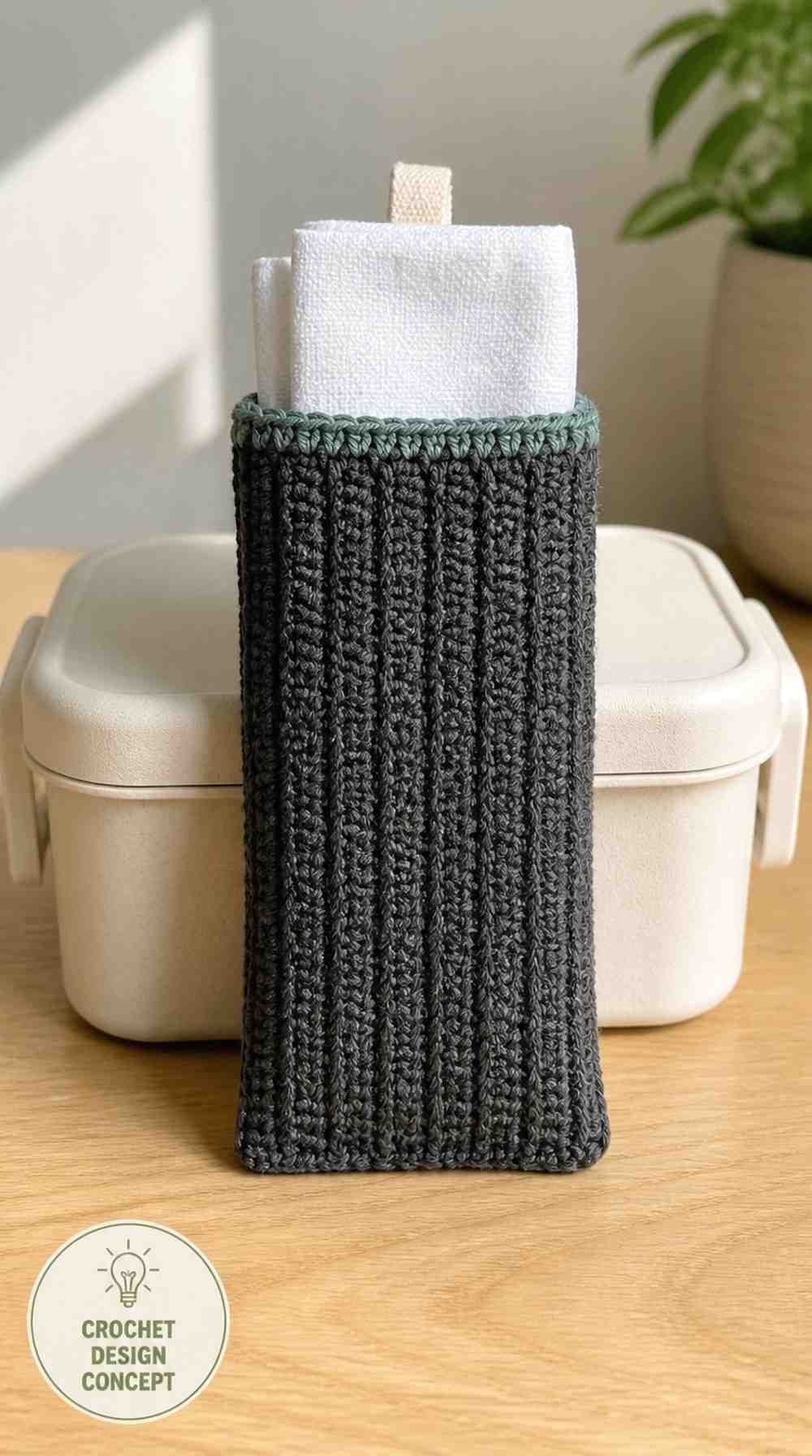
Charcoal-grey crochet forms a narrow upright pocket with closely textured vertical ribs and a straight lower edge. Muted sea-glass green trims the open upper rim, where a single folded white linen napkin rises slightly above the sleeve. A short cream woven pull ribbon is visible behind the cloth.
The vertical layout is useful inspiration for a tall, narrow compartment inside a lunch tote. It looks particularly neat when positioned beside a lunch container, but its soft crochet construction should not be assumed to stand unsupported on its own.
- Upright positioning: Consider placing this design in a narrow interior tote compartment where other items can help prevent it from tipping over.
- Ribbed stretch: Check how much the vertical crochet rows expand with the folded napkin inside; excessive stretch could leave the pocket loose over time.
- Rim finishing: The sea-glass border should support the opening without making it too tight for removing the napkin and its pull ribbon.
13. Crochet Coral Clip Loop Lunch Sleeve
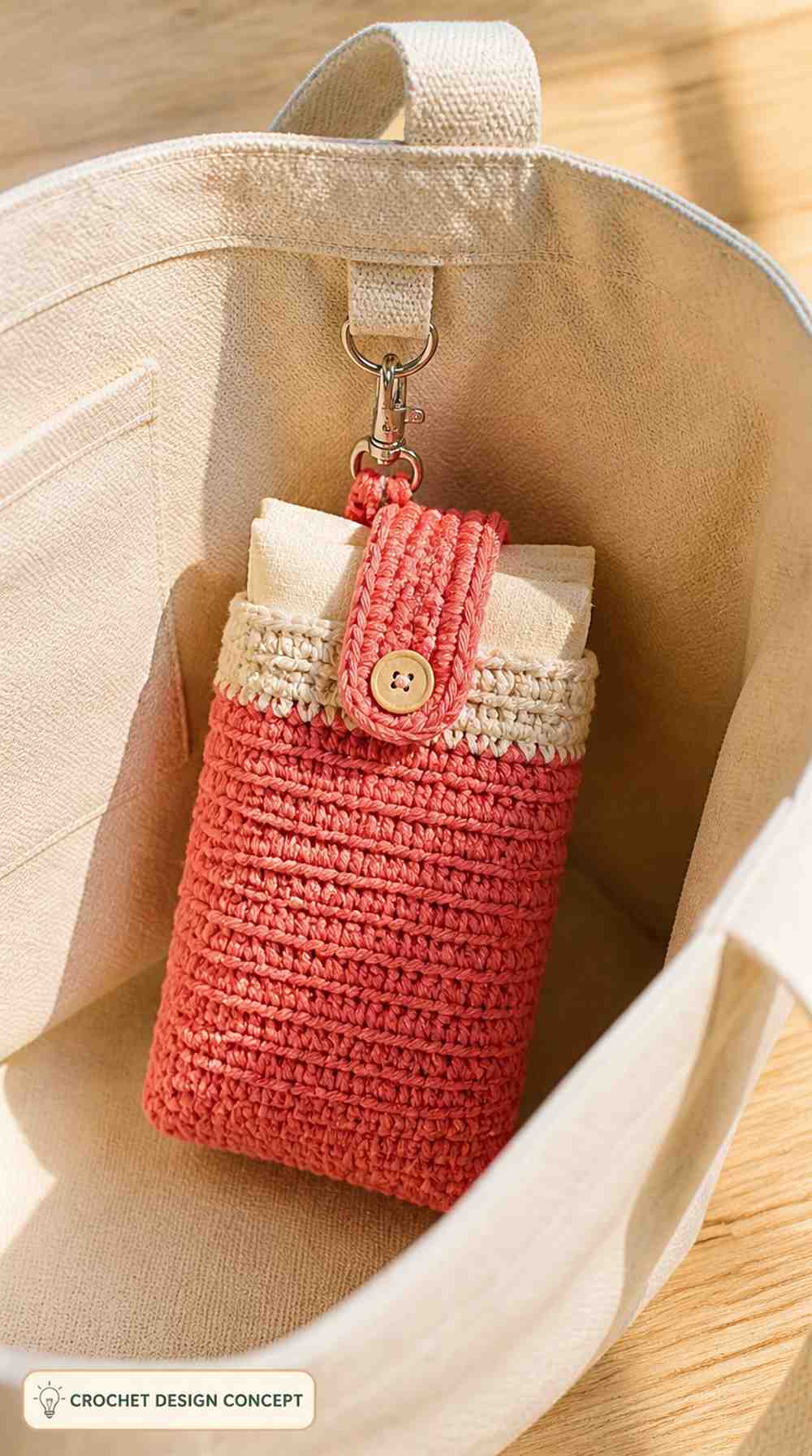
Coral-pink cotton crochet forms a compact rectangular sleeve with close horizontal ridges and a cream ribbed upper band. A short coral buttoned flap covers the opening, where one folded cream napkin is partly visible. A reinforced cream fabric loop holds a removable silver clip attached to the inside of a beige canvas lunch tote.
This design introduces an attachment feature rather than relying only on a pocket or wrap. It could be an interesting way to keep a napkin in a familiar place inside a larger bag, provided the clip and loop are appropriately secured.
- Attachment point: Use a suitable interior bag ring or loop rather than attaching the sleeve where it may drag against dirty outer surfaces.
- Loop reinforcement: Check both the cream attachment loop and its joining seam, especially if the napkin sleeve will be unclipped frequently.
- Buttoned opening: Position the coral flap so the napkin stays covered while leaving enough space to open the sleeve without pulling against the clip.
Practical Guide to Crochet Lunch Napkin Carry Sleeves
A lunch napkin sleeve is small, but the details affect how comfortable and useful it will be during everyday use.
Choose the napkin first. Decide whether you normally carry a small folded cloth, a larger dinner napkin or a rolled reusable napkin. Fold the real fabric into its intended shape before planning the crochet sleeve. A thin cotton napkin and a thick linen napkin can need noticeably different amounts of space.
Consider the yarn. Smooth cotton or a washable cotton blend can be worth exploring because the sleeve may need frequent cleaning. Check the yarn label for actual washing instructions, and avoid assuming the finished accessory is machine-washable if it includes a delicate applique, wooden button, zipper or lining.
Keep clean and used napkins separate. These sleeves are best thought of as organizers for clean, dry napkins. A damp or food-soiled napkin should be carried separately in an appropriate washable container rather than left inside a crochet sleeve.
Check the carrying method. Open bands and corner pockets are light and easy to access, but they leave fabric exposed. Fully lined and fastened styles offer more coverage, though they may be bulkier and take longer to dry after cleaning.
Measure and test. Make a small crochet sample, wash and dry it according to the yarn instructions, then check stretch and stitch density. Use the folded napkin as a sizing reference. Inspect fastenings, seams and any clip attachments before regular use.
For storing several napkins at home rather than carrying one with lunch, explore 18 Crochet Cloth Napkin Storage Pouch Inspiration Ideas. That collection focuses on larger storage arrangements for folded and rolled napkin sets.
Want to Make Something Similar?
These designs are original visual concepts rather than available, tested patterns. The following resources explain related crochet techniques that may help you develop your own lunch napkin sleeve.
- Crochet Napkin Pocket by CyCrochet: A beginner-oriented guide for making a simple cotton pocket that holds one folded napkin. It provides a useful starting point for understanding flat pocket construction. CyCrochet
- How to Crochet an Envelope by Simply Crochet: A guide to crochet envelope construction, including rectangular panels and a shaped flap. Relevant for exploring the oatmeal trifold and butter-yellow flap concepts, although their actual constructions differ. Simply Yarn
Neither source is an exact pattern for the pictured designs. Use the techniques as general guidance and adjust your own construction to the intended napkin and closure.
Which Crochet Lunch Napkin Carry Sleeve Should You Choose?
| Your priority | Design to consider | Main trade-off |
|---|---|---|
| Flat everyday lunch packing | Oatmeal Trifold | Secure wrap, but includes a button |
| Minimal size | Sage Ladder Strap | Slim, but napkin is exposed |
| Quick corner access | Terracotta Diagonal | Very compact, limited coverage |
| Rolled napkin | Navy Roll Wrap | Adjustable, slightly bulkier |
| Decorative flap | Butter Yellow Button | Attractive, needs fastening care |
| Napkin held in position | Slate Blue Book Fold | Organized, more construction details |
| Easy open pocket | Blush Scalloped | Convenient, no top closure |
| Easier retrieval | Olive Leaf Pull Tab | Pull feature needs proper planning |
| Colorful minimal carrier | Rust Chevron Slip Tube | Simple band, open ends |
| Crochet lace appearance | Cream Mint Lattice | Lining adds work |
| More enclosed storage | Plum Zip | Zipper and lining need care |
| Tall bag compartment | Charcoal Vertical Pull | Best with surrounding support |
| Attached inside a tote | Coral Clip Loop | Attachment must be reinforced |
For the simplest starting concept, the Crochet Rust Chevron Slip Tube has a straightforward band shape. If appearance matters as much as organization, the Crochet Cream Mint Lattice Lunch Sleeve introduces delicate openwork and lining. For carrying one clean napkin in a bag with other belongings, the Crochet Plum Zip Lunch Napkin Sleeve offers a more enclosed design worth considering.
Conclusion
These 13 crochet lunch napkin carry sleeve ideas show how a small everyday accessory can take many different forms. Some use a simple band or open pocket, while others introduce fold-over panels, ties, decorative edges, lining or a zipper. The best design is one that suits your actual napkin and lunch bag without making the accessory unnecessarily bulky.
Start with the way you normally fold your napkin, then compare how securely and cleanly each crochet concept could carry it.
Which design would you choose for your daily lunch bag? Would you prefer a slim crochet wrap, a soft open pocket or a fully enclosed zippered sleeve? Share your favorite idea in the comments.
Frequently Asked Questions
1. What yarn is suitable for a crochet lunch napkin carry sleeve?
Smooth cotton yarn is a reasonable option to consider because it can give small crochet accessories clearly defined stitches and may be easier to clean than some delicate fibers. Always check the specific yarn’s washing instructions. Closely stitched cotton is especially worth considering for slip pockets and flap sleeves, while openwork designs may need a separate lining.
2. Should a lunch napkin sleeve be lined?
Not every design requires a lining. A dense trifold or tightly worked pocket may be usable without one, depending on its construction. A sleeve with large crochet openings, such as the Cream Mint Lattice design, benefits from a lining that keeps the napkin from catching through the stitches. A lining also adds thickness, so account for it when planning the fit.
3. Can I put a damp or used napkin back into a crochet sleeve?
It is better to use a separate container for a damp or food-soiled napkin until it can be washed. Crochet fabric may absorb moisture or hold food residue, and a wet napkin can leave the sleeve damp. A clean, dry sleeve is more suitable for transporting a fresh cloth napkin.
4. Which crochet sleeve design is easiest for a beginner to explore?
The Rust Chevron Slip Tube has one of the simplest overall shapes, although the chevron colors introduce additional stitch-planning considerations. A plain-color variation would reduce that complexity. The Blush Scalloped Lunch Pocket also has a basic pocket structure, but its decorative edging requires attention. Beginners can start with a small rectangular crochet sample to check fit and fabric density before exploring these concepts.
5. Are these crochet lunch napkin sleeves actual patterns?
No. The 13 designs are inspiration concepts showing possible shapes, colors, closures and finishing details. They are not tested patterns, and their images do not confirm exact stitch counts, dimensions or construction methods. Anyone wanting to make a similar sleeve should use a suitable crochet guide, measure their actual napkin and test the intended fastening and fabric before use.