A crochet reusable furniture dusting wand cover offers a creative way to give an everyday cleaning tool a washable, handmade exterior. These 15 inspiration ideas explore fitted crochet sleeves, flat paddle wraps, removable microfiber linings, adjustable closures and narrow covers for angled dusters. Soft oatmeal, sage green, terracotta, lavender and rich rust bring different looks to small cleaning accessories designed around common household dusting tools.
Whether you dust bookshelves, bedroom dressers or everyday living-room furniture, choosing a suitable wand cover involves more than finding an attractive crochet texture. The cover needs to fit the actual wand head, stay securely attached and avoid leaving lint or scratches on furniture. Some concepts use smooth separate cleaning panels, while others focus on simple slip-on construction. This collection helps you compare those differences before developing a practical version.
These are AI-generated crochet design visualizations for inspiration, not photographs of tested handmade pieces or step-by-step patterns.
Quick Design Selection Guide
- For a simple fitted sleeve: Choose the Crochet Oatmeal Ribbed Dusting Wand Sleeve or Crochet Charcoal Drawstring Cylinder Duster Cover.
- For broad furniture surfaces: The Crochet Sage Microfiber Lined Paddle Duster, Crochet Mint Fine Stripe Cleaning Sleeve and Crochet Cocoa Crossband Dusting Pad Cover feature flat cleaning faces.
- For corners and narrower spaces: Explore the Crochet Terracotta Tapered Corner Duster Cover or Crochet Olive Angled Detail Duster Cover.
- For removable and adjustable fastenings: Consider the Crochet Navy Side Snap Dusting Wand Wrap, Crochet Teal Hook Loop Paddle Wrap or Crochet Peach Detachable Dusting Cloth Cover.
- For more decorative crochet: The Crochet Cream Granny Patch Dusting Sleeve, Crochet Mustard Honeycomb Paddle Duster Cover and Crochet Rust Raised Rib Dusting Wand Sleeve feature distinctive upper-surface textures.
1. Crochet Oatmeal Ribbed Dusting Wand Sleeve
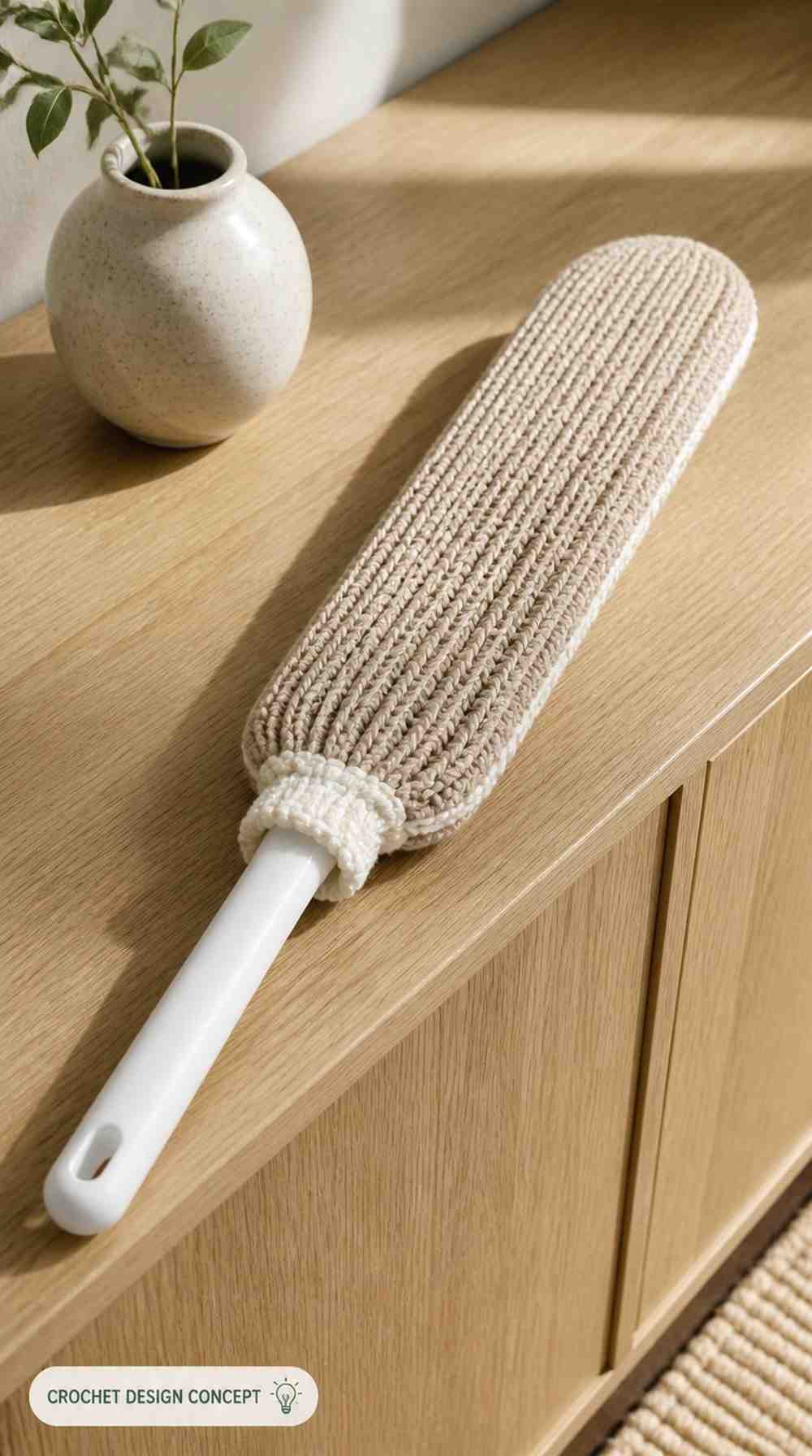
Oatmeal-beige cotton crochet forms a narrow sleeve with lengthwise ribs, a softly rounded front and cream edging around the rear opening. A small elasticized cuff sits near the white handle connection, creating a close-fitting cover around the elongated oval wand head.
The neutral design keeps the emphasis on its simple shape and textured stitches. It could be an interesting starting point for a removable duster sleeve, although the crochet’s softness, lint shedding and effect on the furniture finish would need testing before direct cleaning.
- Oval head fit: Measure the actual wand head from tip to handle connection so the oatmeal sleeve does not slip or stretch excessively.
- Rear cuff: Keep the elasticized cream opening secure without covering the handle joint or restricting the wand’s normal movement.
- Cleaning surface: The raised ribs are decorative in this concept; test any intended contact fabric on a hidden area before using it on finished wood.
2. Crochet Sage Microfiber Lined Paddle Duster
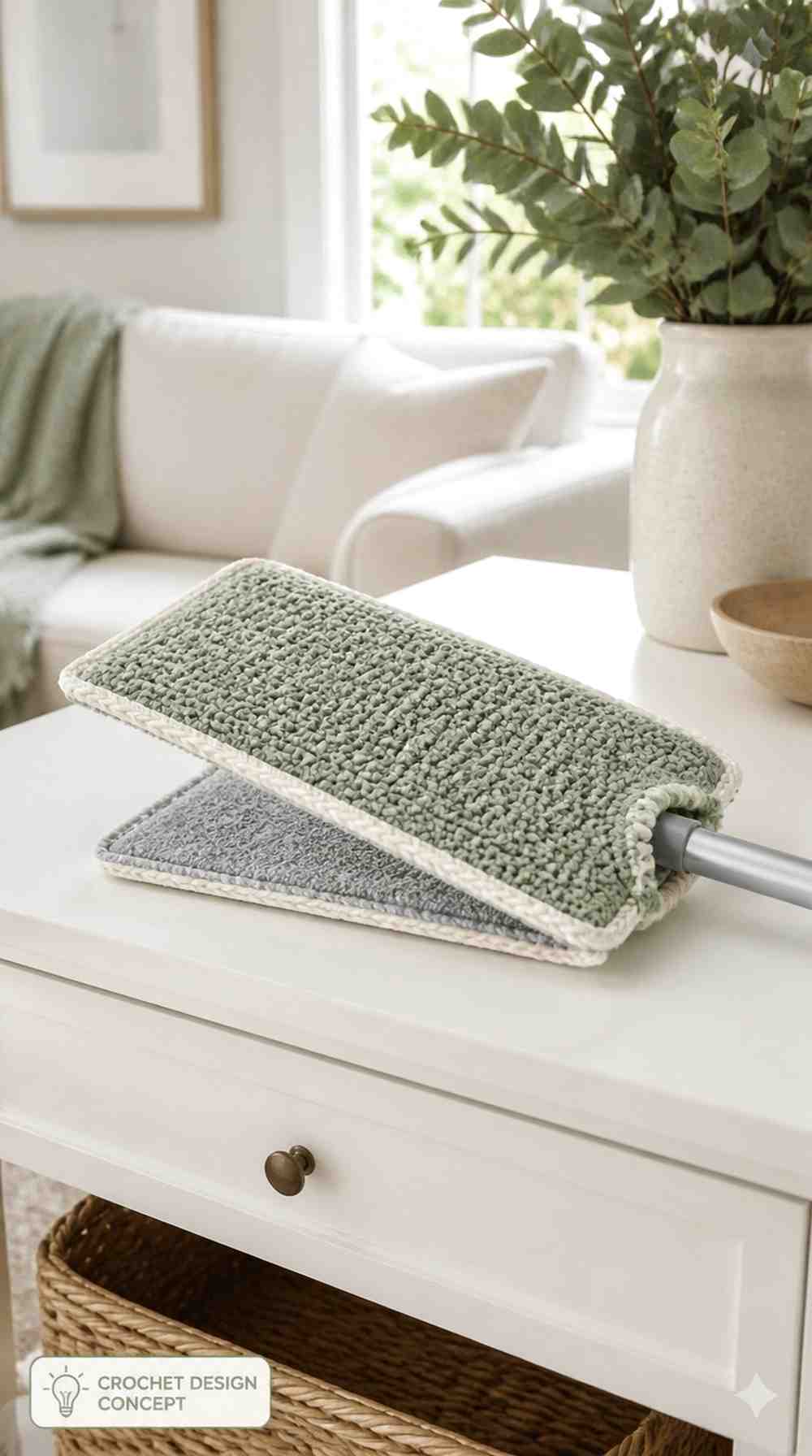
Muted sage-green crochet creates a flat rectangular cover with close moss-stitch rows and a fine cream border. A smooth light-gray microfiber panel covers the underside, while a narrow elasticized opening secures the cover around a broad furniture dusting paddle.
The separate microfiber surface makes this design different from an all-crochet sleeve. It provides a familiar dusting material beneath the decorative sage exterior, while the crochet upper section helps define the removable cover’s shape.
- Microfiber coverage: The gray cleaning panel should extend across the full working underside so the wand’s rigid edges do not contact furniture.
- Paddle alignment: Keep the sage crochet body fitted around the flat head without pulling the microfiber into wrinkles.
- Fabric care: Choose a removable or securely washable construction, checking that both materials can be cleaned without distortion.
3. Crochet Terracotta Tapered Corner Duster Cover
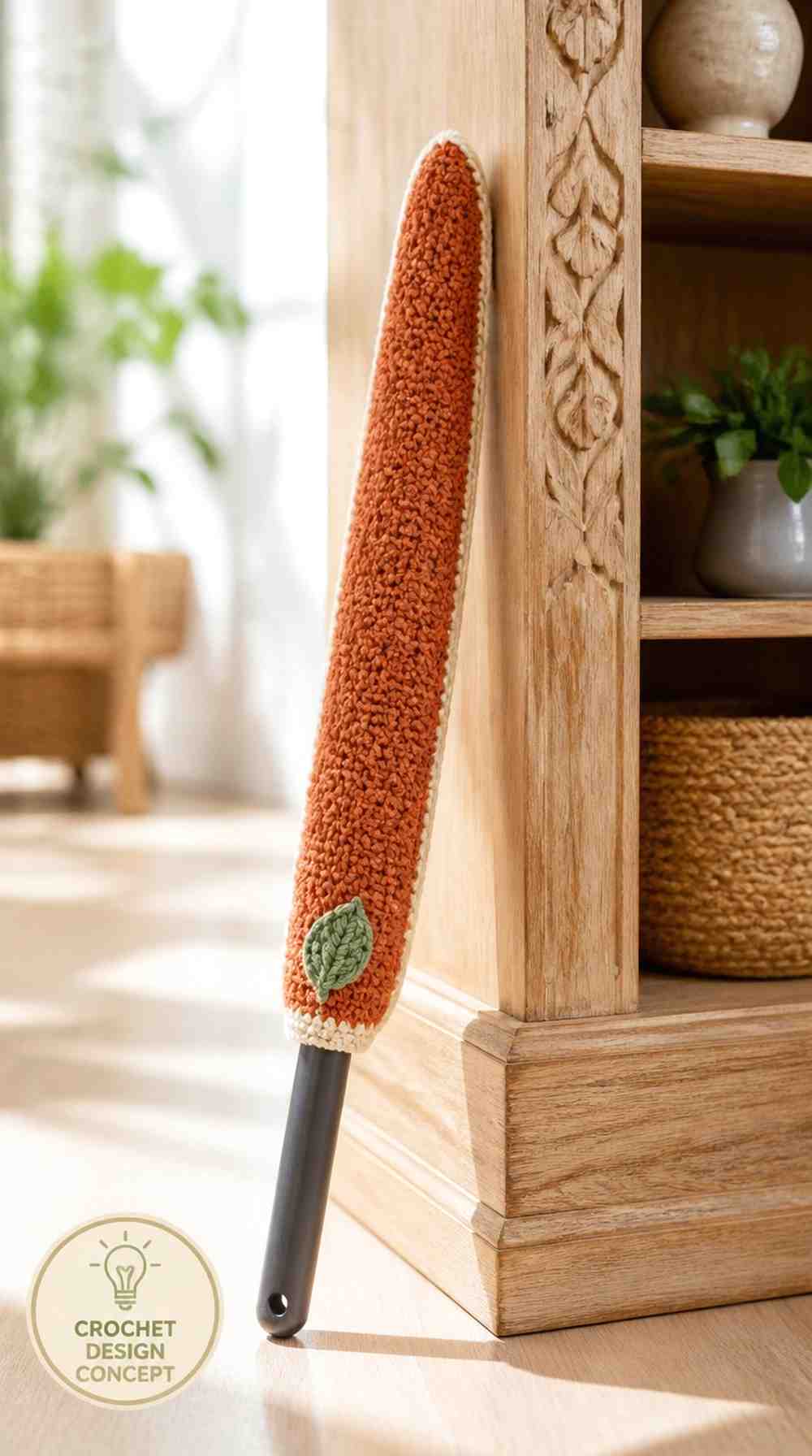
Terracotta-orange crochet forms a narrow sleeve with diagonal stitch rows and a gently tapered tip. Cream edging follows the outside, while a small flat sage leaf accent decorates the upper rear. The underside uses a smooth cream washable fabric panel.
The slender shape is intended as inspiration for a flexible wand used around furniture corners and narrow shelf spaces. Its pointed outline may offer a closer fit to a tapered cleaning head, but it should never force the wand against carved or delicate finishes.
- Tapered shaping: Match the crochet tip to the actual wand head so the fabric does not bunch or twist inside tight furniture corners.
- Leaf placement: Keep the sage accent on the non-contact side and secure it flat to avoid catching on furniture edges.
- Gentle contact: Use only a compatible soft cleaning surface and avoid rubbing rough seams against decorative woodwork.
4. Crochet Navy Side Snap Dusting Wand Wrap
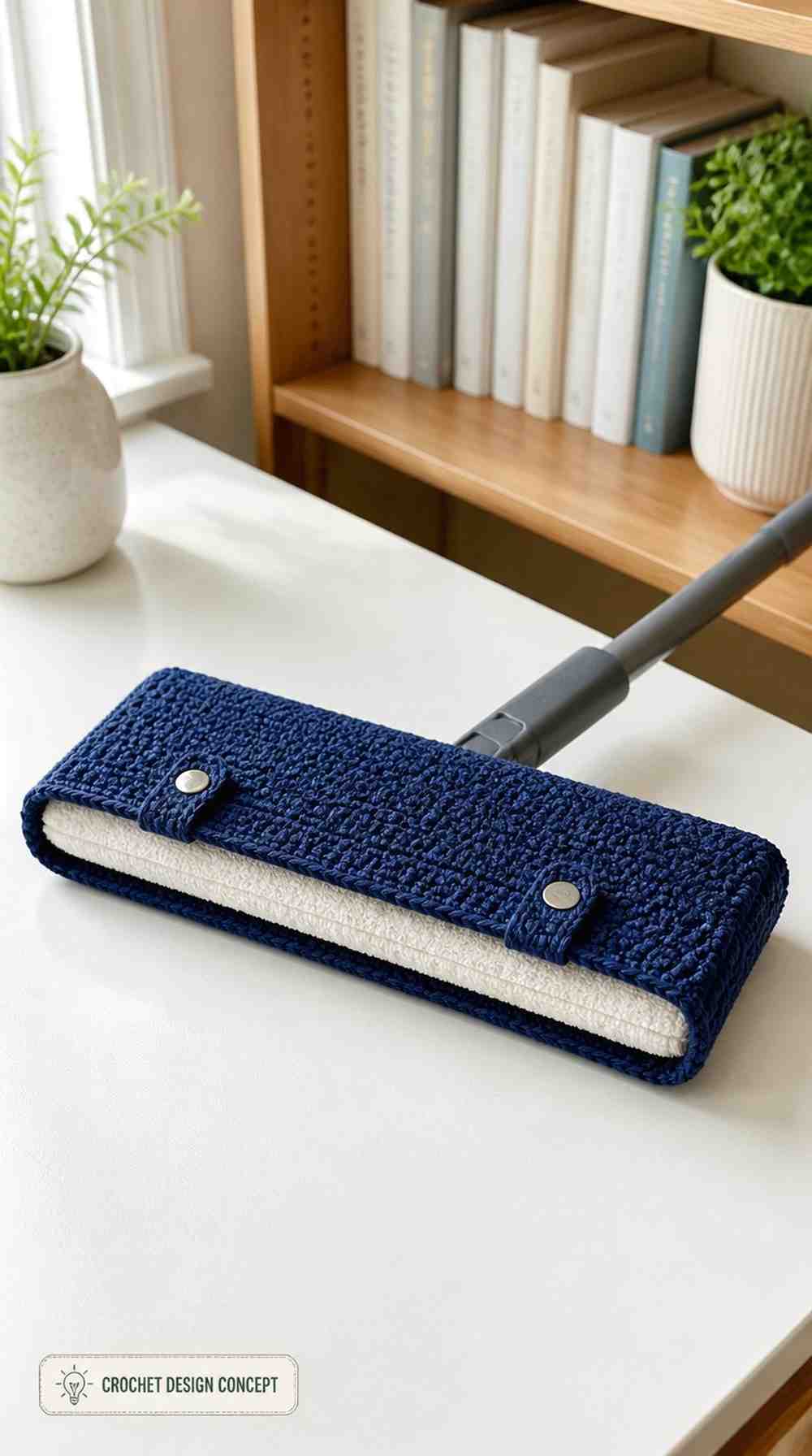
Midnight-navy crochet forms a rectangular wrap with dense horizontal stitches and a smooth cream microfiber interior. Two short navy tabs close along the upper side with small silver snaps, while the dark-gray handle extends through the rear opening.
Instead of sliding over the wand head, the cover folds around it and fastens in place. This could be useful for a broad paddle that is difficult to fit through a narrow sleeve opening, provided the snaps remain completely away from furniture.
- Snap position: Keep the silver hardware on the upper face, separated from any surface that might touch or scrape furniture.
- Wrap width: The navy panel should cover the head without pulling so tightly that the microfiber underside becomes uneven.
- Easy removal: Both snap tabs need enough clearance for opening after cleaning, without requiring force against the wand’s head.
5. Crochet Blush Reversible Dusting Wand Cover
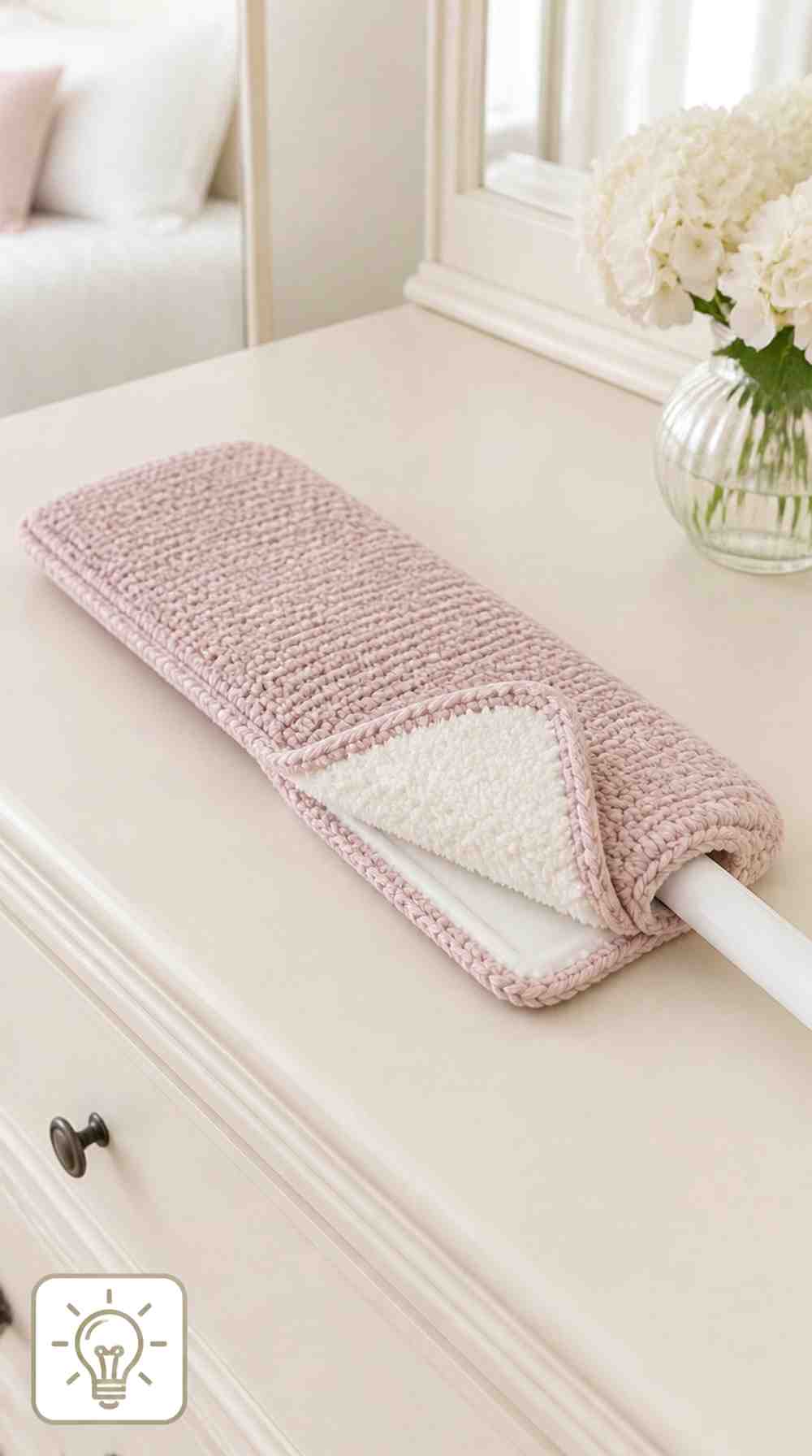
Pale-blush crochet creates a slim rectangular sleeve with a dusty-rose closely stitched face and a smooth ivory microfiber reverse. Narrow blush edging joins the two layers, with one corner turned outward to reveal the contrast between the surfaces.
The reversible appearance is the main feature of this concept. The ivory microfiber side offers a distinct working surface, while the dusty-rose crochet face provides a decorative alternative. Actual dusting performance would depend on the fabrics and how securely the sleeve fits.
- Two-sided construction: Keep the blush and ivory layers evenly joined so neither face wrinkles or folds under the wand head.
- Surface choice: Use the softer, furniture-compatible face for cleaning; decorative crochet should not automatically be treated as safe for every finish.
- Drying both layers: Wash according to the materials’ instructions and allow the complete reversible sleeve to dry thoroughly before storing.
6. Crochet Charcoal Drawstring Cylinder Duster Cover
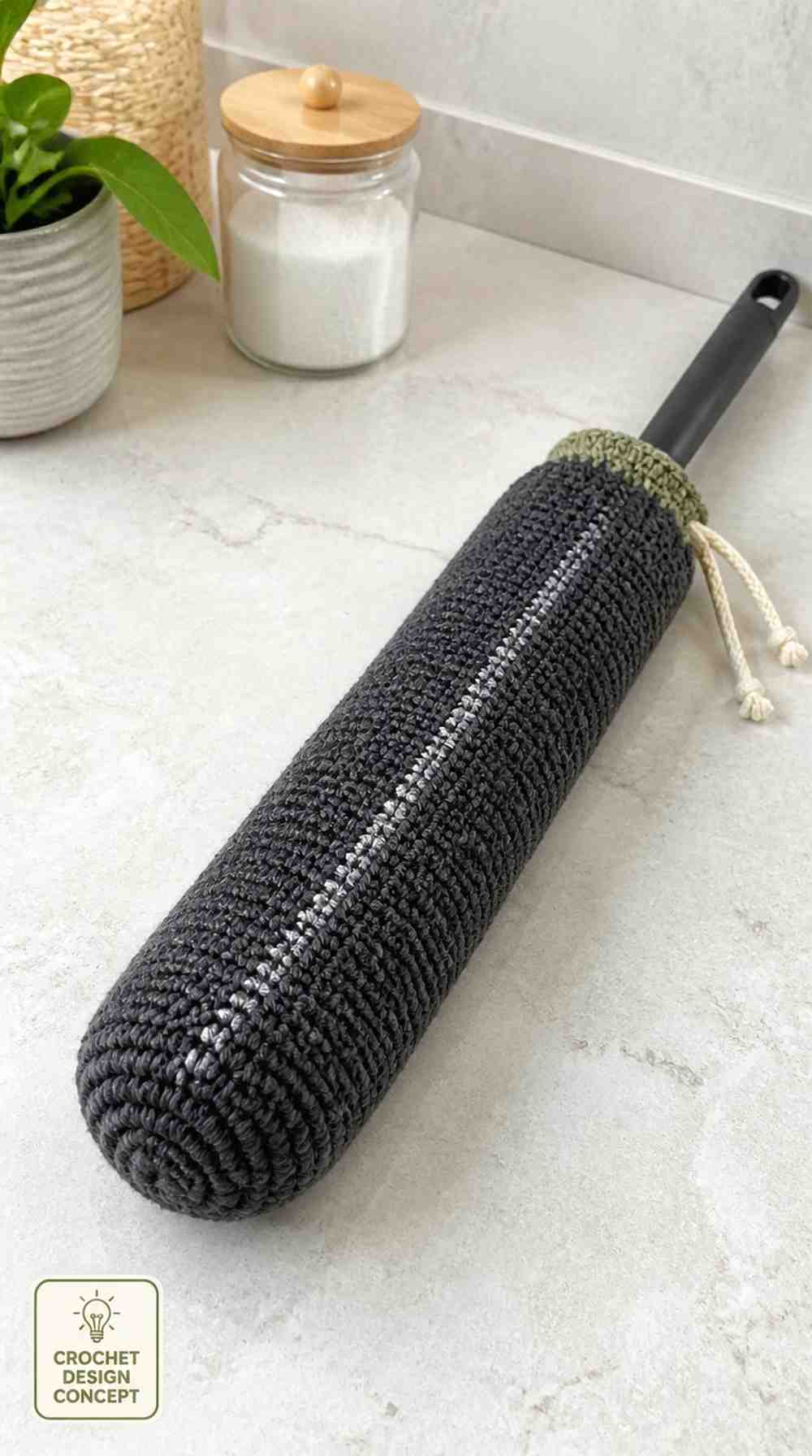
Charcoal-gray crochet forms a slim tubular sleeve with dense horizontal rows, a rounded closed front and one subtle light-gray stripe. A sage-green drawstring channel gathers the rear opening around a long cylindrical dusting wand, with two short cream cords beside the black handle.
This concept suits a round or elongated wand head rather than a broad flat paddle. Its adjustable opening introduces a flexible fitting method, although tightening the drawstring cannot compensate for an incorrectly sized cover.
- Cylinder diameter: Check the wand’s actual head circumference before planning the charcoal tube, allowing the cover to slide on without excessive stretching.
- Drawcord clearance: Keep the cream cords short and away from the wand’s moving connection or extension mechanism.
- Fabric texture: The dense exterior may look tidy, but test for lint, snags and surface compatibility before considering direct furniture contact.
7. Crochet Mustard Honeycomb Paddle Duster Cover
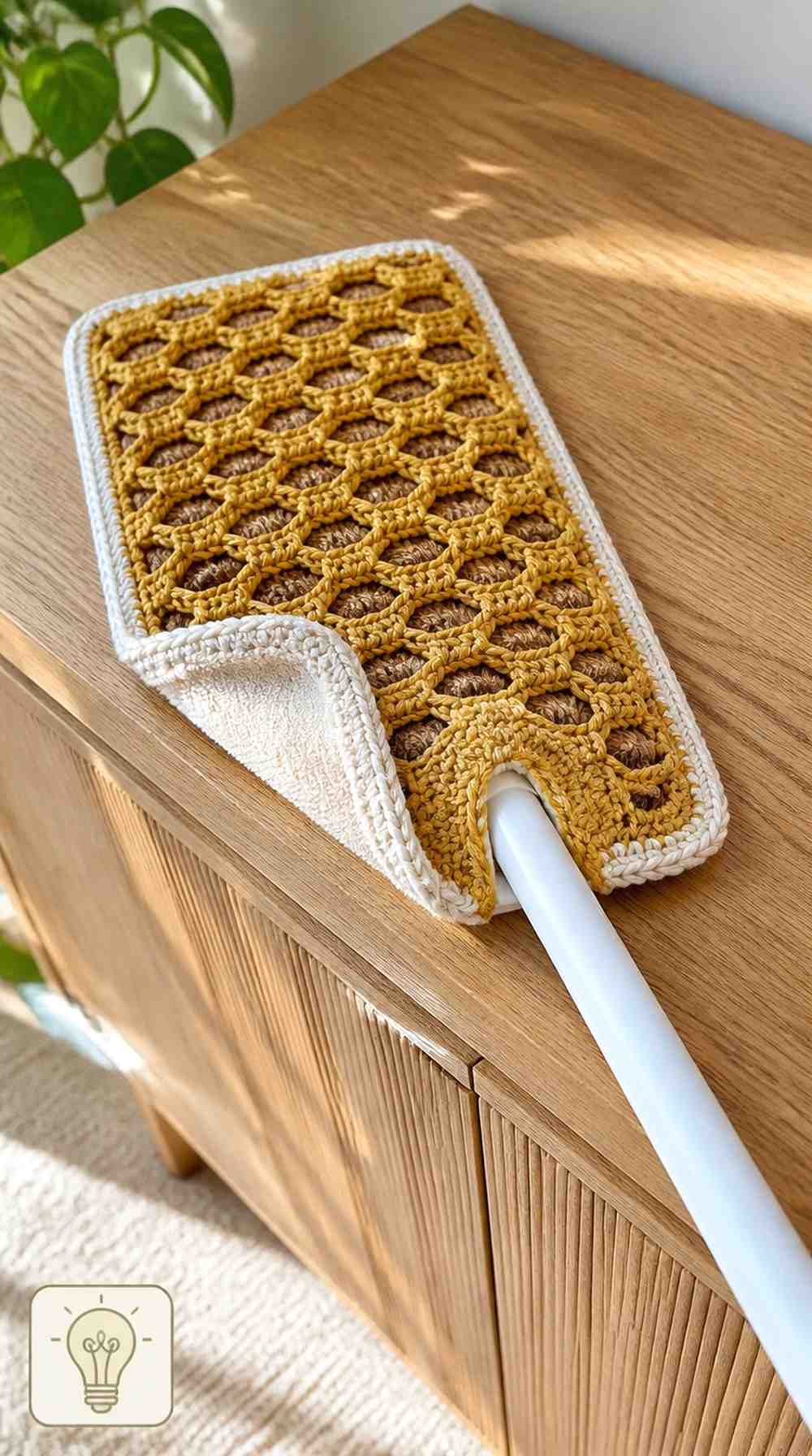
Mustard-yellow crochet forms a broad flat paddle sleeve decorated with small cocoa-colored honeycomb-style texture on its upper surface. Cream edging defines the rectangular shape, while a pale-beige microfiber panel covers the entire underside.
The contrast between the textured top and smooth working surface makes this design visually distinctive. The raised honeycomb stitches remain above the wand head, leaving the underside comparatively simple for contact with suitable household furniture.
- Texture orientation: Keep the raised mustard-and-cocoa honeycomb rows on the upper side rather than underneath the cleaning head.
- Working-side coverage: The pale-beige microfiber layer should cover the complete contact area, including the head’s edges.
- Cleaning access: Consider a removable microfiber panel so the surface collecting dust can be cleaned separately if its construction allows.
8. Crochet Cream Granny Patch Dusting Sleeve
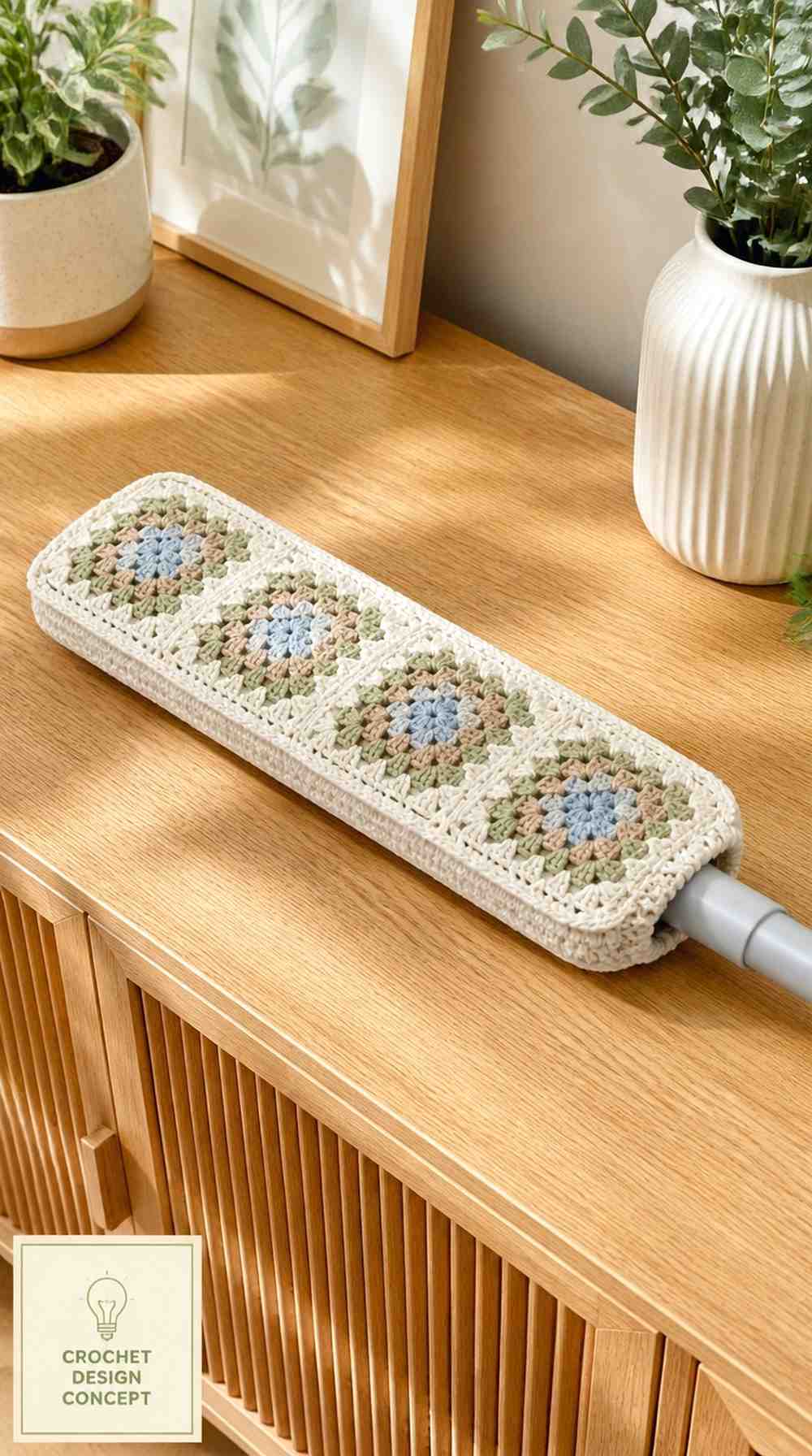
Four small cream crochet granny squares with sage, oatmeal and dusty-blue centers decorate the top of this fitted dusting sleeve. The lower side uses a smooth light-gray fabric cleaning panel, while a fine cream border and elasticized opening complete the cover.
The small patchwork arrangement gives this concept a traditional handmade appearance without placing granny-square joins directly against furniture. Its compact color palette also keeps the upper surface relatively understated.
- Flush joins: Secure the four crochet squares with low-profile seams so their edges do not catch on shelves or other nearby objects.
- Solid underside: Keep the gray cleaning fabric continuous beneath the head, avoiding gaps that could expose the rigid wand structure.
- Patchwork cleaning: Inspect yarn joins after washing because repeated bending and laundering can loosen decorative sections.
9. Crochet Lavender Gusseted Duster Wand Cover
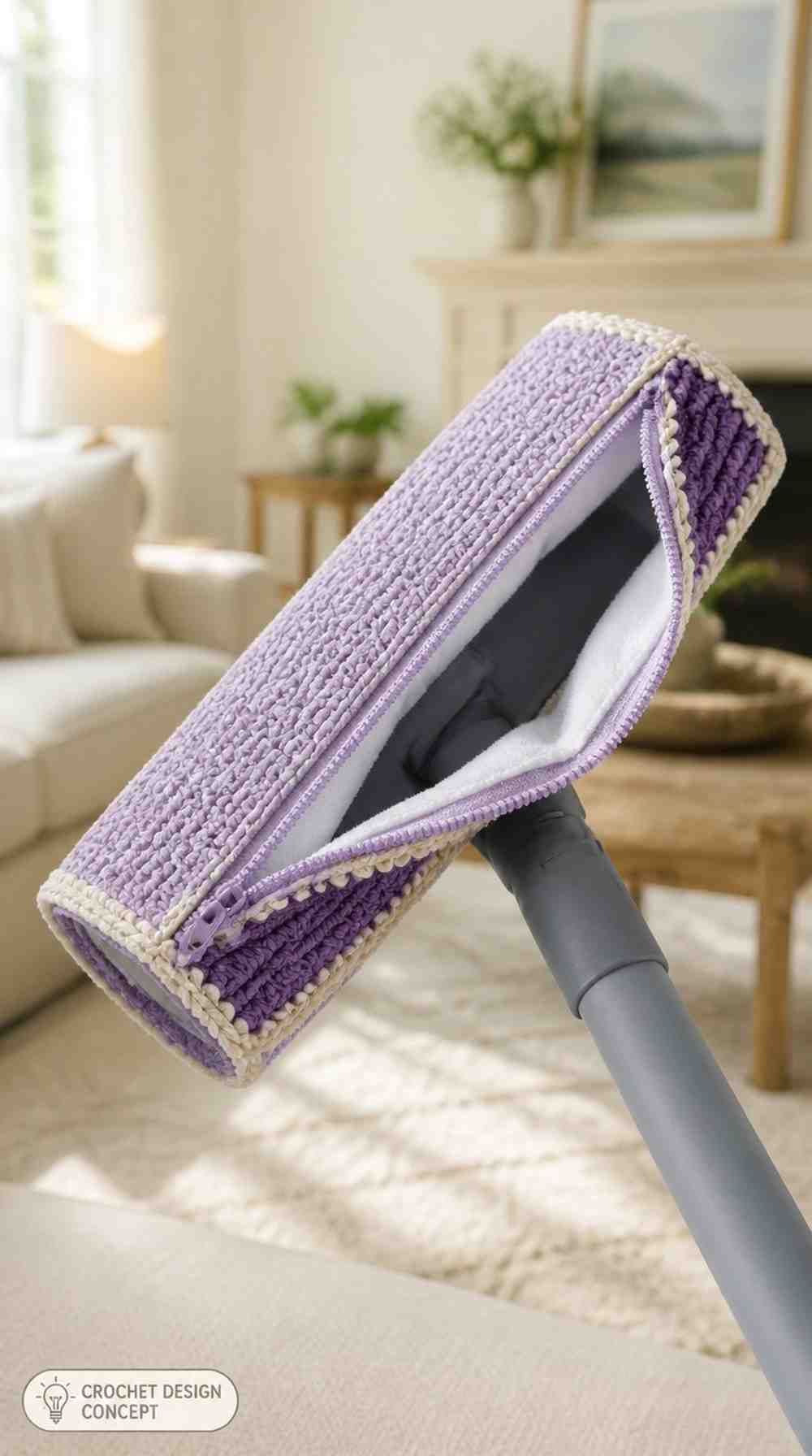
Dusty-lavender crochet creates a rectangular cover with dense upper rows and narrow accordion-style side gussets in darker lavender. Cream edging finishes the perimeter, while a short zipper near the upper rear opens to reveal a removable white microfiber lining.
The folded sides allow the cover to expand around a thicker paddle head. This makes the concept different from tightly fitted flat sleeves, although the extra seams and zipper require careful placement to keep the underside comfortable for furniture contact.
- Side gussets: Size the folded lavender panels to accommodate the wand head without producing loose folds that drag across furniture.
- Zipper clearance: Position the rear zipper fully away from the working surface and any movable handle components.
- Removable lining: The white microfiber insert should remain smooth and securely positioned during cleaning, then detach easily for washing.
10. Crochet Mint Fine Stripe Cleaning Sleeve
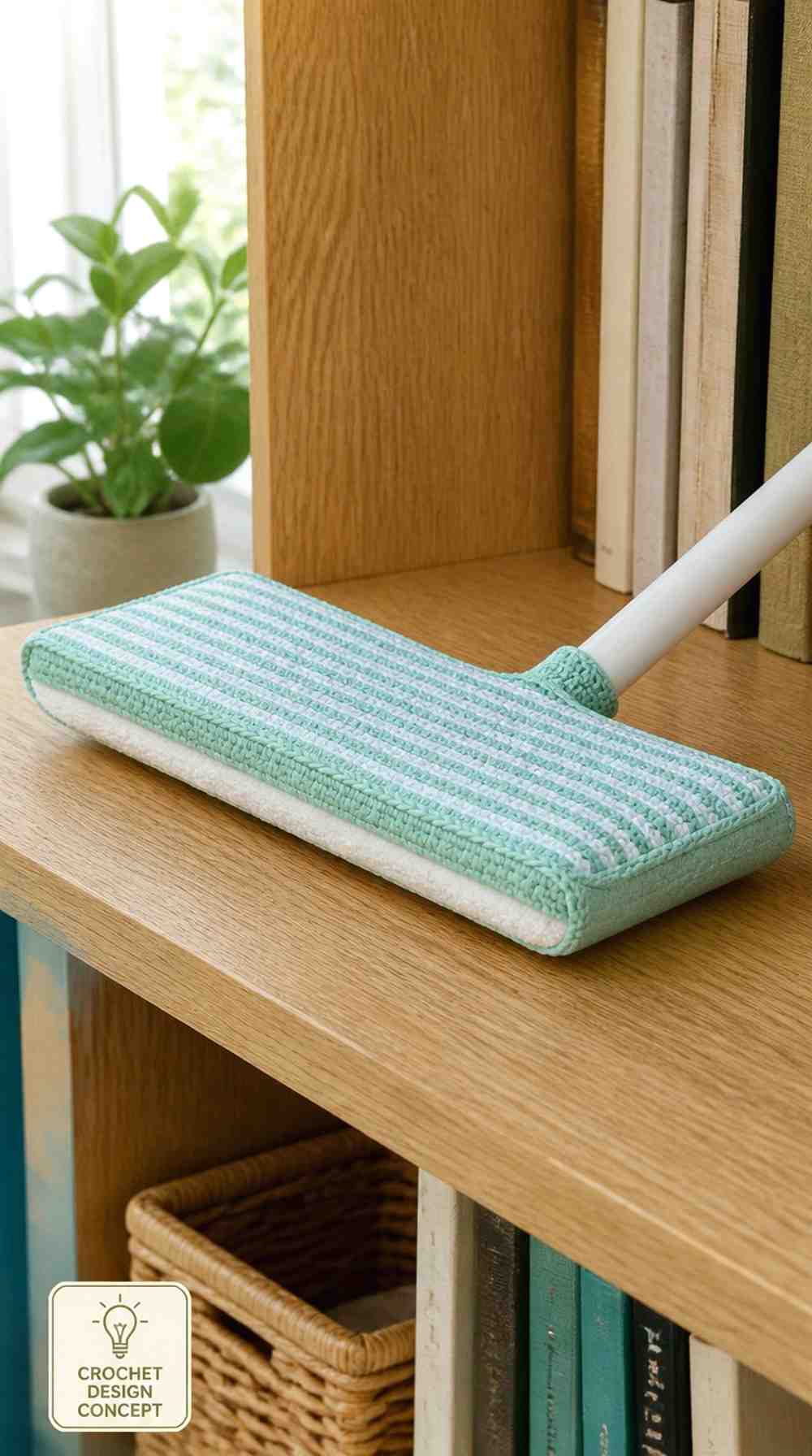
Mint-green crochet forms a slim rectangular wand cover with fine pale-aqua horizontal stripes across its upper face. Solid mint side panels and a small reinforced rear opening surround the white wand handle, while a cream microfiber panel covers the underside.
This concept uses gentle color changes rather than raised stitches or decorative fastenings. Its relatively flat construction may suit someone who prefers a simple removable cover for a broad furniture duster.
- Stripe tension: Keep the mint and aqua rows even so the color changes do not pull the cover into a rippled shape.
- Rear opening: The narrow border should fit securely around the wand without blocking the handle’s normal movement.
- Smooth underside: Ensure the cream cleaning fabric stays flat; wrinkles could bunch up during longer dusting strokes.
11. Crochet Cocoa Crossband Dusting Pad Cover
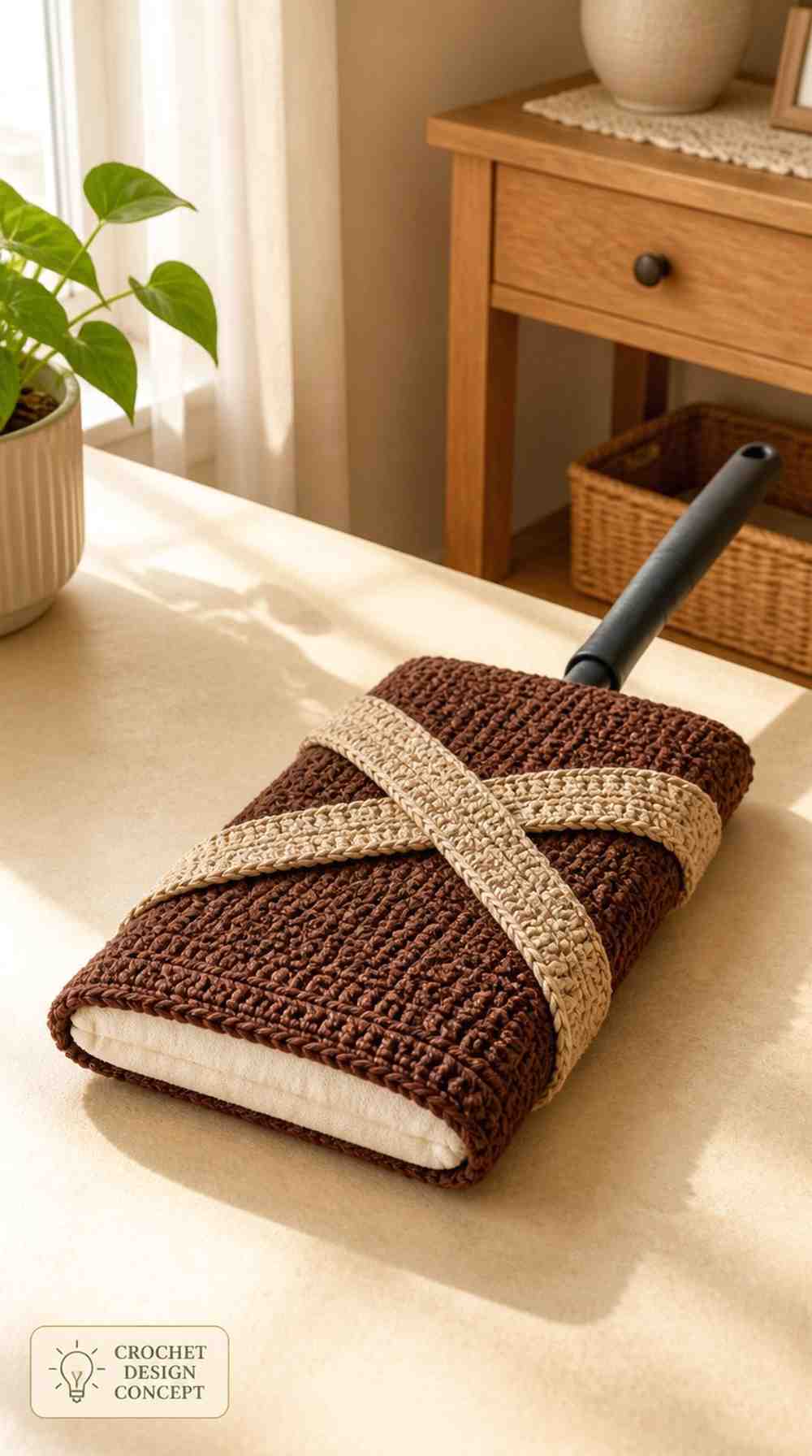
A cocoa-brown crochet panel sits over a broad flat dusting wand head, held by two sand-colored crochet bands crossing in an X arrangement across the upper back. The working underside is a continuous ivory microfiber pad, with the matte-black handle extending from the rear.
The crossed-band structure offers an attachment method without a zipper or buttons. Because the bands remain on the non-contact side, the lower surface can stay smooth, although their stretch needs to be carefully controlled.
- Crossband tension: Make the sand-colored bands snug enough to hold the paddle without pulling its outer edges upward.
- Open upper back: The X-shaped construction leaves part of the wand exposed, making accurate band positioning important for keeping the cover centered.
- Pad replacement: Consider how the ivory microfiber section could be washed or replaced without stretching the crossed crochet bands.
12. Crochet Teal Hook Loop Paddle Wrap
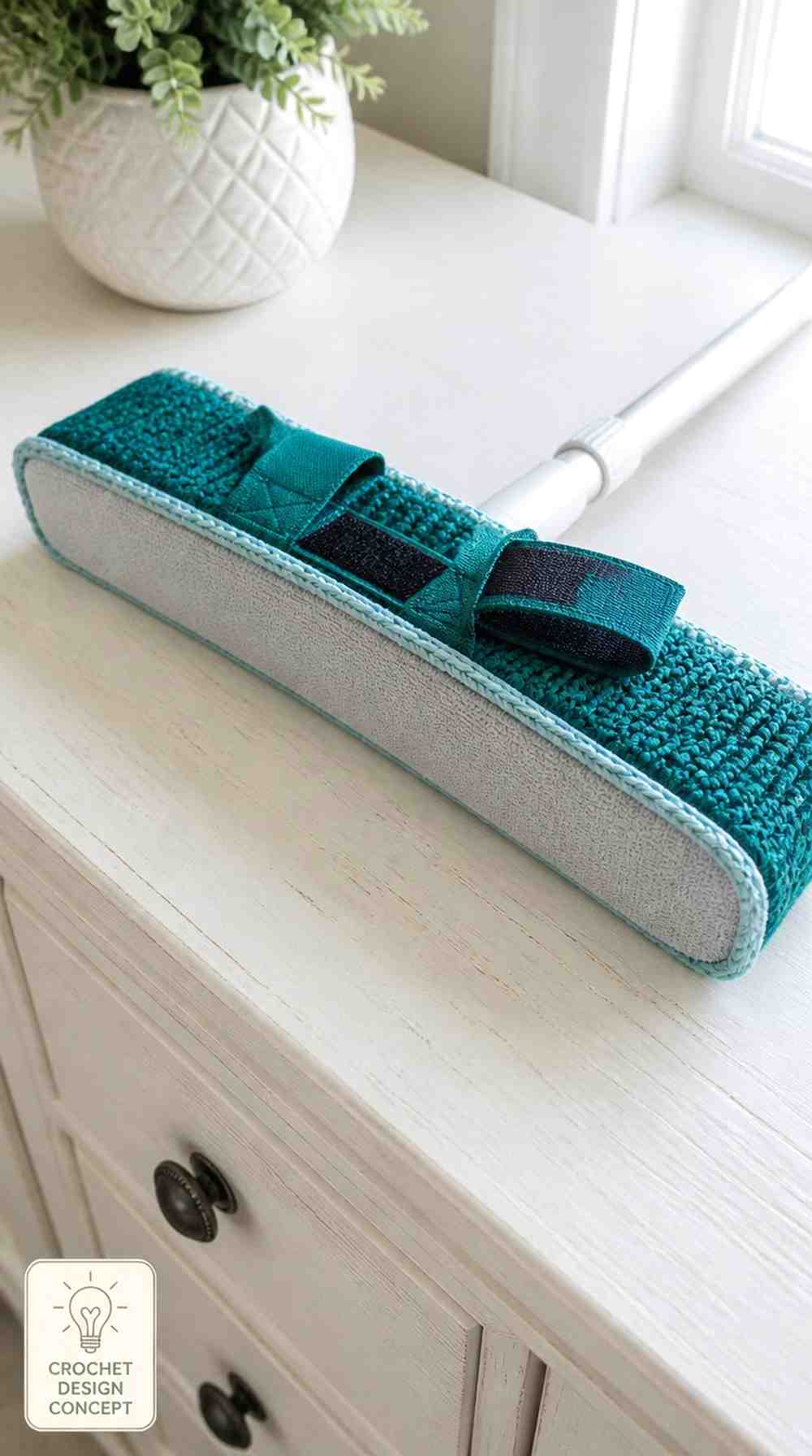
Teal-green crochet forms a broad rectangular wrap with close vertical ribs and light-aqua edging. Two reinforced fabric straps fasten along the upper side with small black hook-and-loop closures, while a pale-gray microfiber layer covers the underside.
The adjustable straps distinguish this design from permanently joined sleeves. They may accommodate small differences in wand-head thickness, although exposed hook-and-loop material should never touch delicate furniture or catch the cleaning fabric.
- Fastener direction: Keep the hook-and-loop surfaces closed and positioned above the wand head, away from the furniture-contact side.
- Adjustable fit: Test both straps around the actual paddle so the cover stays centered without compressing the microfiber.
- Lint buildup: Inspect the fastener surfaces during laundering because dust and loose fibers can collect between the fastening materials.
13. Crochet Rust Raised Rib Dusting Wand Sleeve
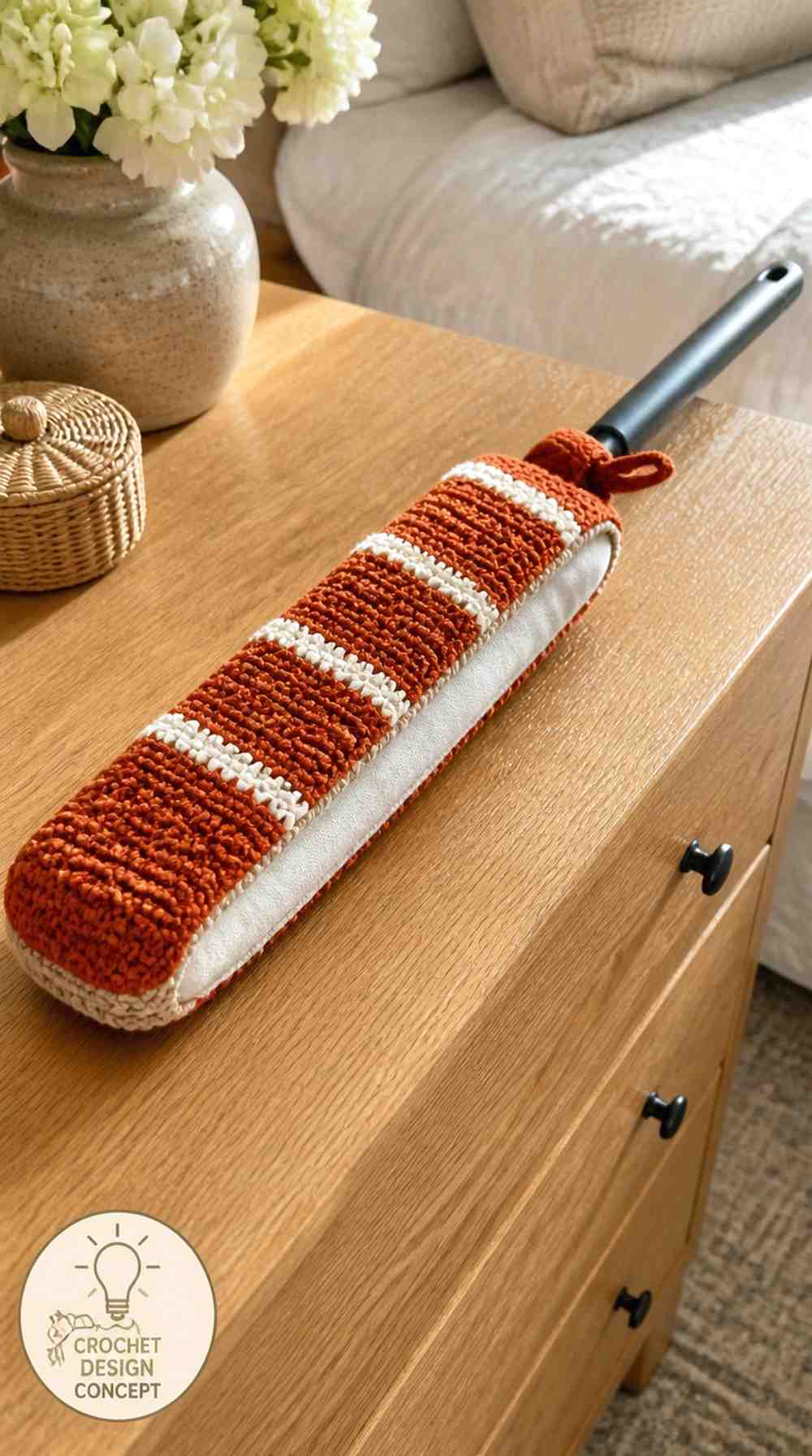
Rust-orange crochet creates a long oval sleeve with three low cream rib bands spaced across its upper surface. Dense rust stitches fill the spaces between them, while an oatmeal rear cuff and short rust pull tab finish the cover. Its underside is smooth pale-cream washable fabric.
The raised ribs add visual character without lying directly beneath the cleaning head. The rear pull tab also provides a practical point for removing the sleeve after use, making this concept different from an ordinary tubular cover.
- Rib height: Keep the three cream bands low and securely finished so they do not catch on nearby furniture corners during handling.
- Pull-tab strength: Attach the rust tab across a supported rear seam to reduce stretching when removing the sleeve.
- Contact-side fabric: Maintain a smooth cream underside rather than allowing raised crochet ribs to fold around the working face.
14. Crochet Peach Detachable Dusting Cloth Cover
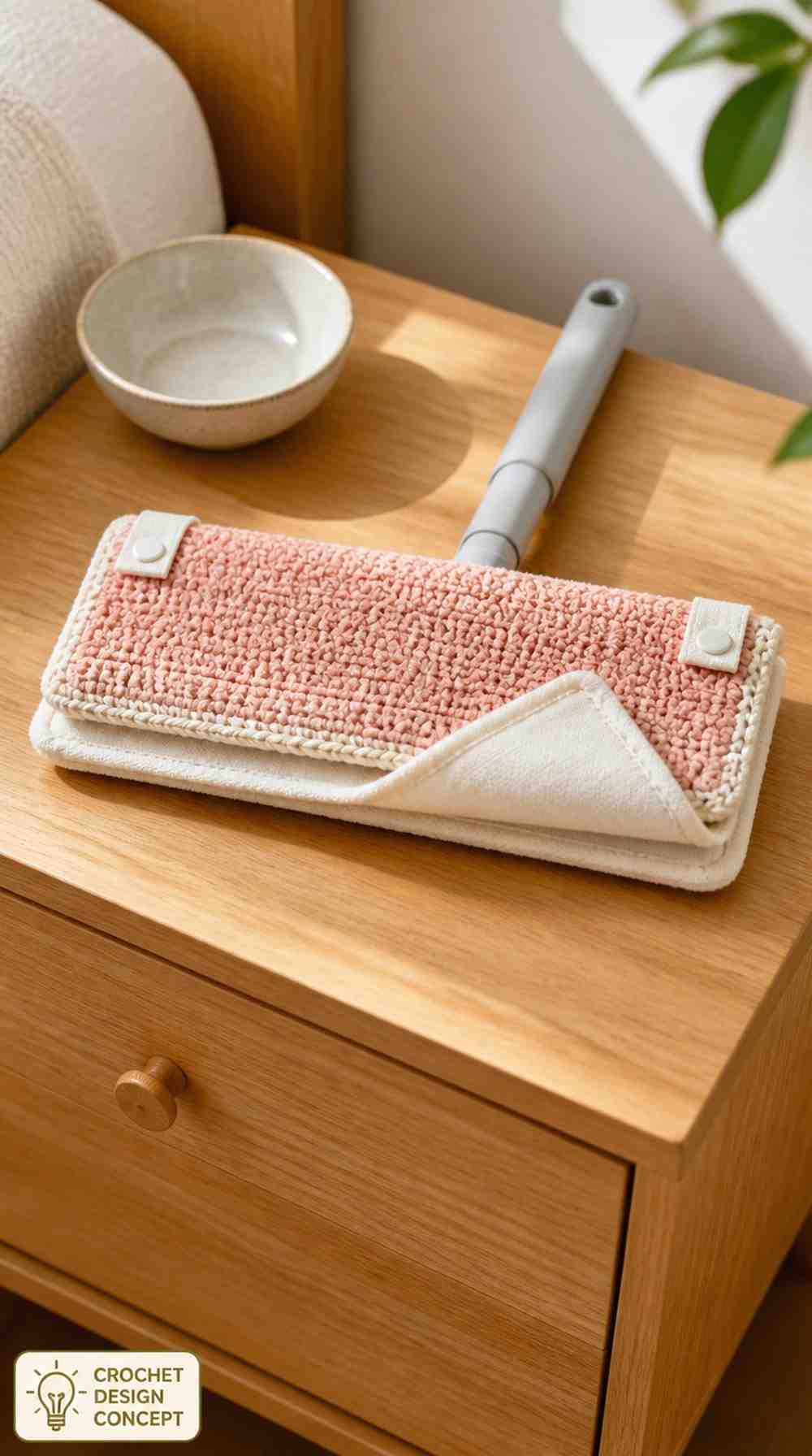
Peach-pink crochet forms a rectangular cover with closely worked upper rows and fine cream edging. Two small cream snap tabs sit at opposite upper corners, securing a removable ivory microfiber cleaning panel underneath. One corner is shown slightly detached to reveal the layered construction.
The replaceable cleaning panel is the central idea here. Separating the dust-contact fabric from the crochet exterior may make washing and maintenance easier, although the fastenings must hold securely during normal wand movement.
- Detachable panel: The microfiber should fasten without sagging or shifting across the paddle head as the wand moves.
- Snap safety: Place all snap hardware above or within protected seams so no hard component touches the furniture surface.
- Replacement fit: If making spare cleaning panels, keep their dimensions and attachment positions consistent with the peach outer cover.
15. Crochet Olive Angled Detail Duster Cover
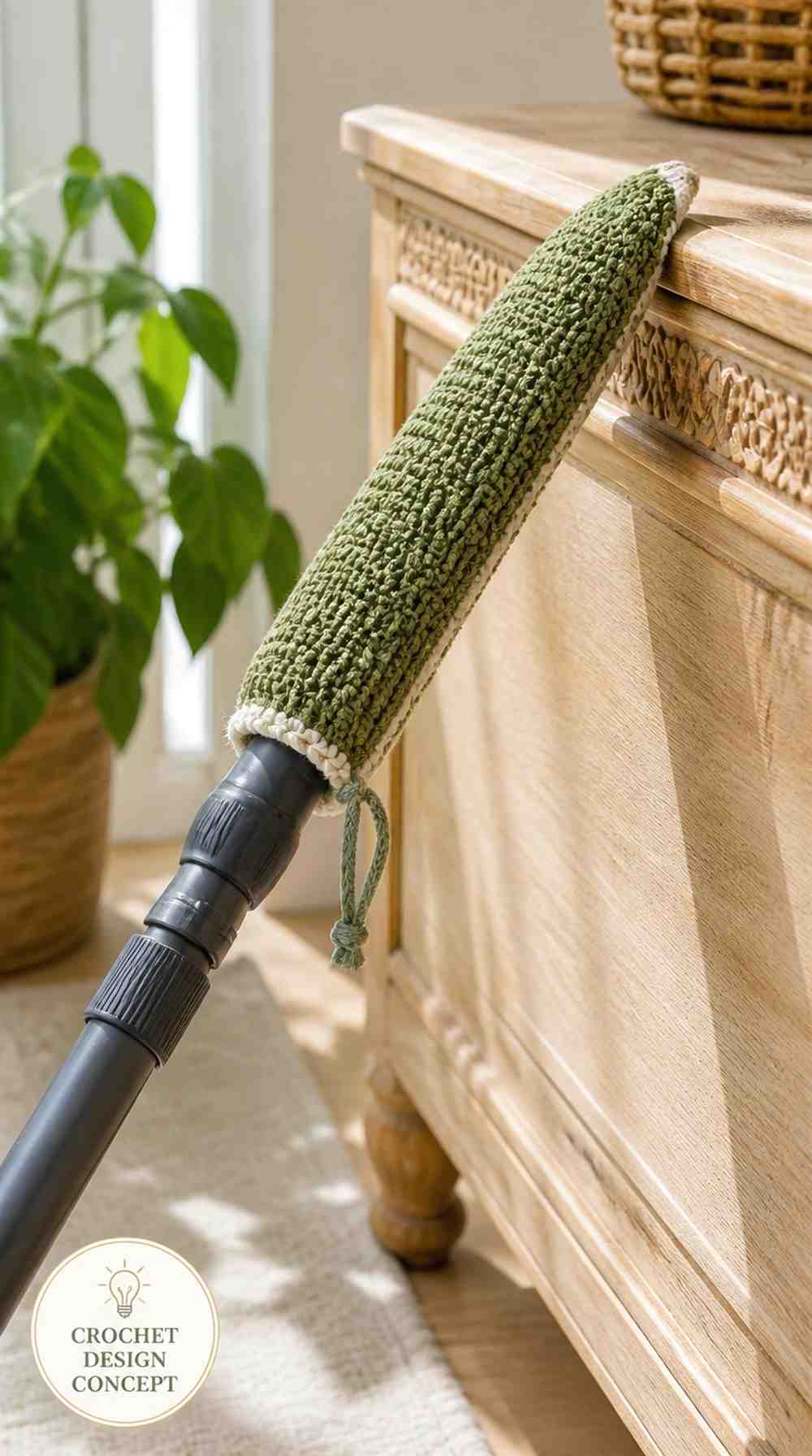
Olive-green crochet forms a slim tapered cover around a flexible angled wand head. Closely worked diagonal ribs decorate the upper side, while cream edging defines the narrow tip. A removable pale-sage microfiber underside follows the head shape, and a sage drawcord gathers near the handle.
This design focuses on the shape of a detail duster rather than a broad flat cleaning paddle. Its tapered end may suit reaching around accessible furniture edges, but it should not be forced into delicate carvings or narrow gaps.
- Angled fit: Measure the flexible wand in its normal working position so the crochet sleeve does not restrict bending or head movement.
- Tapered contact panel: Keep the pale-sage microfiber smooth through the narrower tip to avoid bunching at the point.
- Furniture clearance: Avoid forcing the angled head against fragile trim, loose veneer or rough edges where crochet may snag.
Practical Guide to Crochet Furniture Dusting Wand Covers
A reusable furniture dusting wand cover should be selected according to the cleaning tool and the furniture surface—not simply the stitch pattern.
Check wand compatibility. Dusting wands can have oval, cylindrical, tapered or flat paddle-shaped heads. Measure the head and examine how a cover normally attaches before developing a crochet replacement.
Choose the contact fabric carefully. Crochet yarn can have noticeable loops, seams and loose fibers. A smooth washable microfiber or lint-free fabric panel may be more appropriate for direct furniture contact than decorative raised crochet. Its actual performance still needs testing.
Protect furniture finishes. Avoid dragging rough stitches, buttons, zippers or fasteners across polished wood. The Conservation Center for Art & Historic Artifacts’ housekeeping guidance recommends clean, soft materials and special care around unstable finishes.
ccaha.org
Test a hidden area first. Before using any homemade cover, check whether the selected fabric leaves lint, catches on the surface or affects the finish. Never use it on antique, damaged, flaking or highly delicate finishes without suitable specialist guidance.
Avoid assuming dust-catching performance. Crochet fabric does not automatically capture dust as effectively as a purpose-made microfiber duster. A removable microfiber working panel may help preserve the cleaning function while allowing crochet on the upper side.
Wash and dry between uses. Dusty covers can carry grit that may scratch a surface during later cleaning. Remove the cover and wash it according to its fiber and lining instructions. Allow all layers to dry fully before storage.
Keep hardware clear. Snaps, zippers, drawcords and hook-and-loop fasteners should stay away from the working surface and should not interfere with wand joints or extension mechanisms.
Want to Make Something Similar?
These 15 designs are original visual concepts, not tested furniture-duster patterns. The following sources explain related crochet duster-cover construction.
- Crochet Duster Cover — Left in Knots: A free reusable duster-cover pattern using bulky blanket yarn. It offers a useful starting point for understanding sleeve construction around a duster head. The pictured concepts use different shapes, finishes and optional lining arrangements. Left in Knots
- Reusable Swiffer Dusters — Meg Smith: A free crochet pattern listed on Ravelry that uses ridged crochet texture for a removable duster. It provides general construction inspiration for the Oatmeal Ribbed and Rust Raised Rib concepts. Ravelry
These are related crochet projects, not exact instructions for the 15 designs above. Their materials and finished cleaning surfaces should be assessed for the specific furniture and wand involved.
Which Crochet Furniture Dusting Wand Cover Should You Choose?
| Your priority | Design to consider | Main trade-off |
|---|---|---|
| Simple oval wand sleeve | Oatmeal Ribbed | Crochet contact texture needs testing |
| Flat paddle with soft underside | Sage Microfiber Lined | Two different fabrics to maintain |
| Tapered wand head | Terracotta Corner | Requires accurate pointed shaping |
| Openable side fastening | Navy Side Snap | Hard snaps need careful positioning |
| Two fabric faces | Blush Reversible | Layer alignment matters |
| Cylindrical duster head | Charcoal Drawstring | Drawcord may loosen |
| Decorative stitch texture | Mustard Honeycomb | Raised texture belongs on top |
| Patchwork crochet appearance | Cream Granny Patch | Multiple joins require finishing |
| Thick paddle head | Lavender Gusseted | Extra seams and zipper |
| Simple striped finish | Mint Fine Stripe | Limited adjustability |
| No zipper or buttons | Cocoa Crossband | Band tension needs checking |
| Adjustable paddle fastening | Teal Hook Loop | Fastener can collect lint |
| Textured upper surface | Rust Raised Rib | Ribs may snag nearby objects |
| Removable cleaning panel | Peach Detachable | More attachment hardware |
| Flexible angled wand | Olive Detail Cover | Must allow normal head movement |
For a straightforward design, the Crochet Oatmeal Ribbed Dusting Wand Sleeve provides a simple fitted shape. If the goal is to use a separate smooth cleaning surface, the Crochet Sage Microfiber Lined Paddle Duster or Crochet Mint Fine Stripe Cleaning Sleeve may be more suitable concepts to explore.
The Crochet Peach Detachable Dusting Cloth Cover offers a different approach for readers interested in removable cleaning panels. For a narrow, flexible wand, the Crochet Olive Angled Detail Duster Cover focuses on a specialized shape.
Conclusion
These 15 crochet reusable furniture dusting wand cover inspiration ideas explore how an everyday cleaning accessory can combine handmade crochet with practical removable components. The designs range from simple sleeves and adjustable wraps to textured upper panels, gusseted covers and soft microfiber-backed pads.
A useful cover needs to match the actual dusting wand and remain suitable for the furniture being cleaned. Begin with the right fit and a gentle, washable contact fabric. Add decorative crochet details only where they will not interfere with cleaning or damage household surfaces.
Which design would you choose for your household cleaning tools? Would you prefer a simple oatmeal sleeve, a sage microfiber-backed cover or a peach design with a detachable cleaning panel? Share your favorite idea and the kind of dusting wand you use.
Frequently Asked Questions
1. Can crochet be used as a reusable furniture dusting wand cover?
Crochet can be used to make a removable textile cover for a compatible cleaning wand. However, the yarn, stitch texture and construction affect its suitability. A decorative crochet fabric may shed lint, catch on furniture or perform differently from purpose-made dusting material. Test any functional version carefully before using it on household finishes.
2. Is cotton crochet or microfiber better for dusting furniture?
Microfiber is widely used for dust removal because its fine fibers can help capture particles. Cotton crochet can create a washable cover, but its larger stitch loops may not perform the same way.
Consumer Reports
3. Can a crochet dusting cover scratch wooden furniture?
Yes, it is possible. Rough yarn, trapped grit, bulky seams, loose fibers or exposed hardware may scratch or catch against delicate finishes. Keep the cover clean, avoid pressure and check a hidden area first. Do not use an untested handmade cover on fragile antiques, damaged finishes or highly polished surfaces.
4. Can I wash a crochet dusting wand cover in the washing machine?
That depends on the yarn, lining, fastening hardware and construction. Some washable cotton fabrics may tolerate machine washing, while others need gentler handling. Follow the relevant care instructions, remove detachable parts where practical and ensure the finished cover dries completely. Inspect seams and fastenings before putting it back onto the wand.
5. Are these 15 crochet furniture dusting wand covers actual patterns?
No. These are visual inspiration concepts exploring different fitted shapes, removable cleaning panels, closures and crochet textures. They have not been physically tested, and the images do not establish exact stitch counts, dimensions or cleaning performance. The linked tutorials provide related duster-cover techniques, but any working version must be adapted to the intended wand and tested for furniture safety.