Fresh herbs can quickly become mixed together when you harvest several varieties from the garden. A small crochet herb harvest bunch keeper offers a handmade way to gather cut stems, separate different herbs, and carry a few sprigs from the garden to the kitchen. These 13 crochet herb harvest bunch keeper inspiration ideas explore simple adjustable bands, decorative granny motifs, soft stem collars, double-bunch organizers, and a compact hanging design.
The collection focuses on gathering the lower stems without compressing delicate leaves. Some keepers are designed for sturdy rosemary and thyme sprigs, while others explore gentler arrangements for dill, chives, parsley, basil, and mint. They are intended as temporary harvest organizers or decorative holders, not as a replacement for proper washing, fresh-herb storage, or reliable food-preservation methods.
These are AI-generated crochet design visualizations for inspiration, not photographs of tested handmade herb keepers or step-by-step patterns.
Quick Design Selection Guide
- For a small rosemary harvest: Crochet Terracotta Soft-Loop Rosemary Keeper offers a simple adjustable stem band.
- For two separate parsley bunches: Crochet Navy Twin-Band Parsley Bunch Keeper uses two connected loops.
- For a decorative herb tie: Crochet Blush Granny-Motif Dill Tie adds a small granny-square accent.
- For a textured cuff: Crochet Mustard Basketweave Oregano Cuff pairs raised stitches with a smooth inner lining.
- For fine-stemmed thyme: Crochet Teal Sliding Thyme Stem Keeper uses a flat slider rather than a knot.
- For a loose openwork collar: Crochet Ivory Openwork Sage Stem Collar adds a shallow diamond-stitch border.
- For two herb varieties together: Crochet Apricot Figure-Eight Herb Pair Keeper keeps cilantro and parsley in separate loops.
- For a small drying bunch: Crochet Mocha Dowel-Hanging Rosemary Keeper explores a breathable hanging arrangement.
1. Crochet Terracotta Soft-Loop Rosemary Keeper
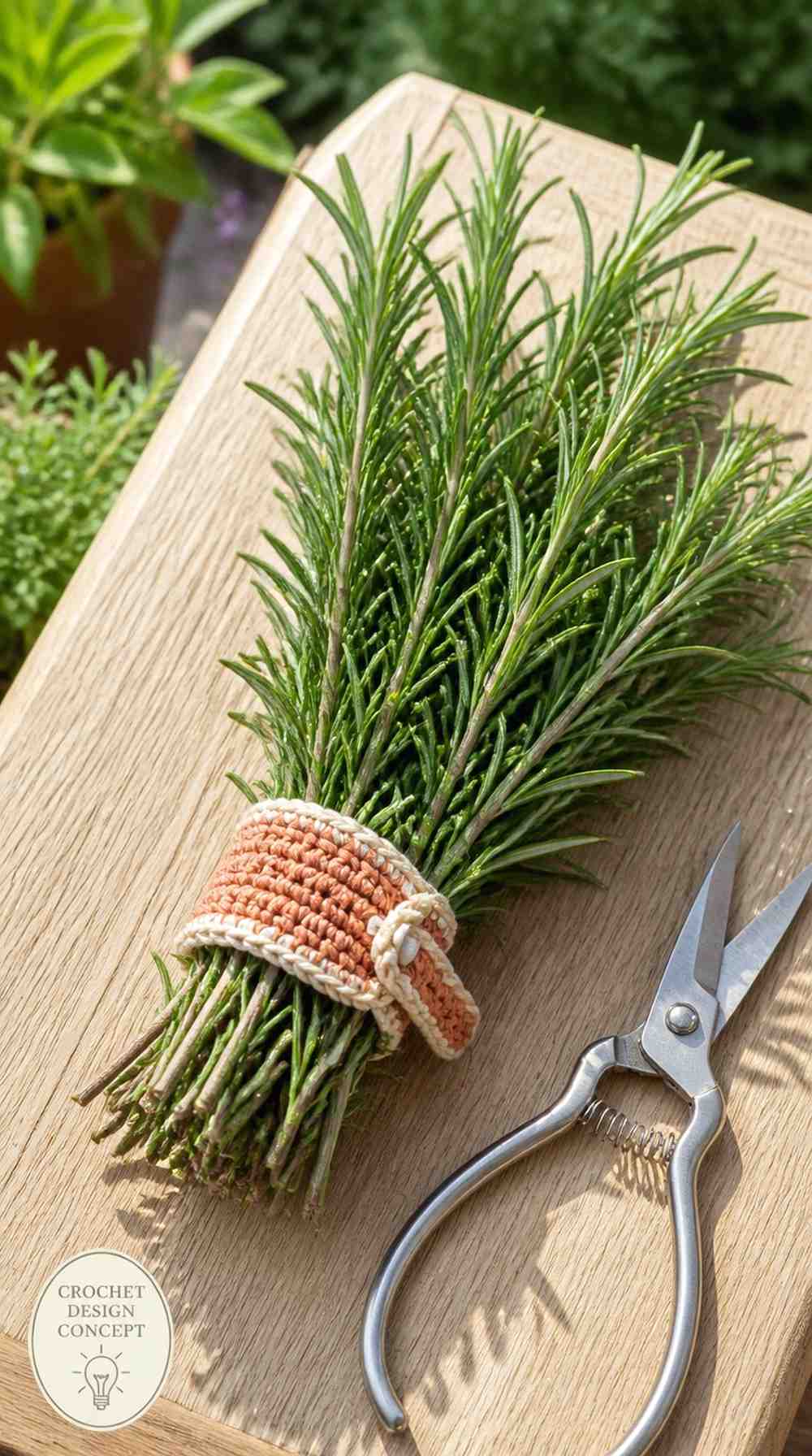
Warm terracotta crochet gives this narrow rosemary keeper a simple, natural appearance. Fine moss-stitch rows form the flat band, while cream edging defines both sides. A small slip-through loop and neatly tucked adjustable tail allow the band to sit around the cut stems without covering the needle-like leaves.
The rosemary bunch rests on a pale wooden harvesting board beside garden snips. Its leaves remain uncovered, making the keeper easy to identify as a temporary stem-gathering accessory rather than an enclosed storage pouch. The uncomplicated design suits small harvests that need only gentle grouping.
- Loose stem fit: Adjust the terracotta band around the lower stems without pulling them tightly together or compressing the rosemary needles.
- Moss-stitch surface: The closely worked rows create a relatively smooth strip that can be wrapped without large openings catching on woody stems.
- Slip-through fastening: Leave enough tail to secure the band without creating a bulky knot against the herbs.
- Cleaning after harvest: Remove the keeper before washing or processing the rosemary, and clean the crochet if it contacts soil or plant residue.
2. Crochet Navy Twin-Band Parsley Bunch Keeper
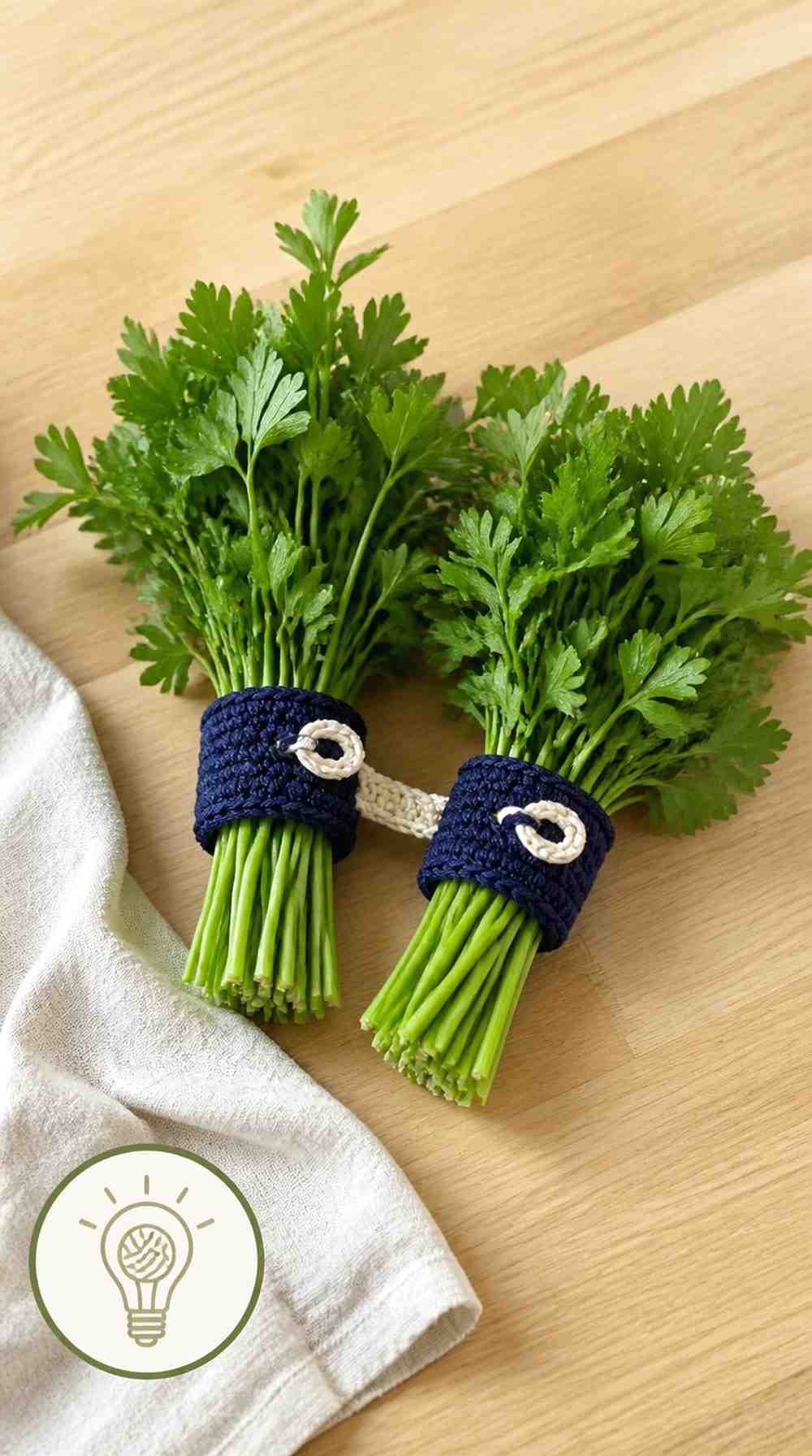
Deep navy crochet creates a tidy arrangement for two small parsley bunches. Two narrow bands sit side by side, connected by a short ivory bridge. Each has its own cream slip-through loop, allowing the stems to be gathered separately.
The flat-leaf parsley spreads above both bands, keeping the leafy portions uncovered. This design is especially interesting when harvesting two small groups that you want to keep distinct. The connecting bridge links the keepers into one accessory without merging the stems into a larger, tightly packed bunch.
- Two independent loops: Adjust each navy band separately so different stem quantities do not have to fit one shared fastening.
- Ivory connecting bridge: Keep the central join short but flexible, allowing the two bunches to rest beside each other naturally.
- Leaf protection: Position the crochet around the lower stalks rather than the delicate parsley leaves.
- Temporary separation: Use the keeper to organize a harvest, then transfer the parsley to appropriate fresh storage rather than leaving it bundled on the counter.
3. Crochet Blush Granny-Motif Dill Tie
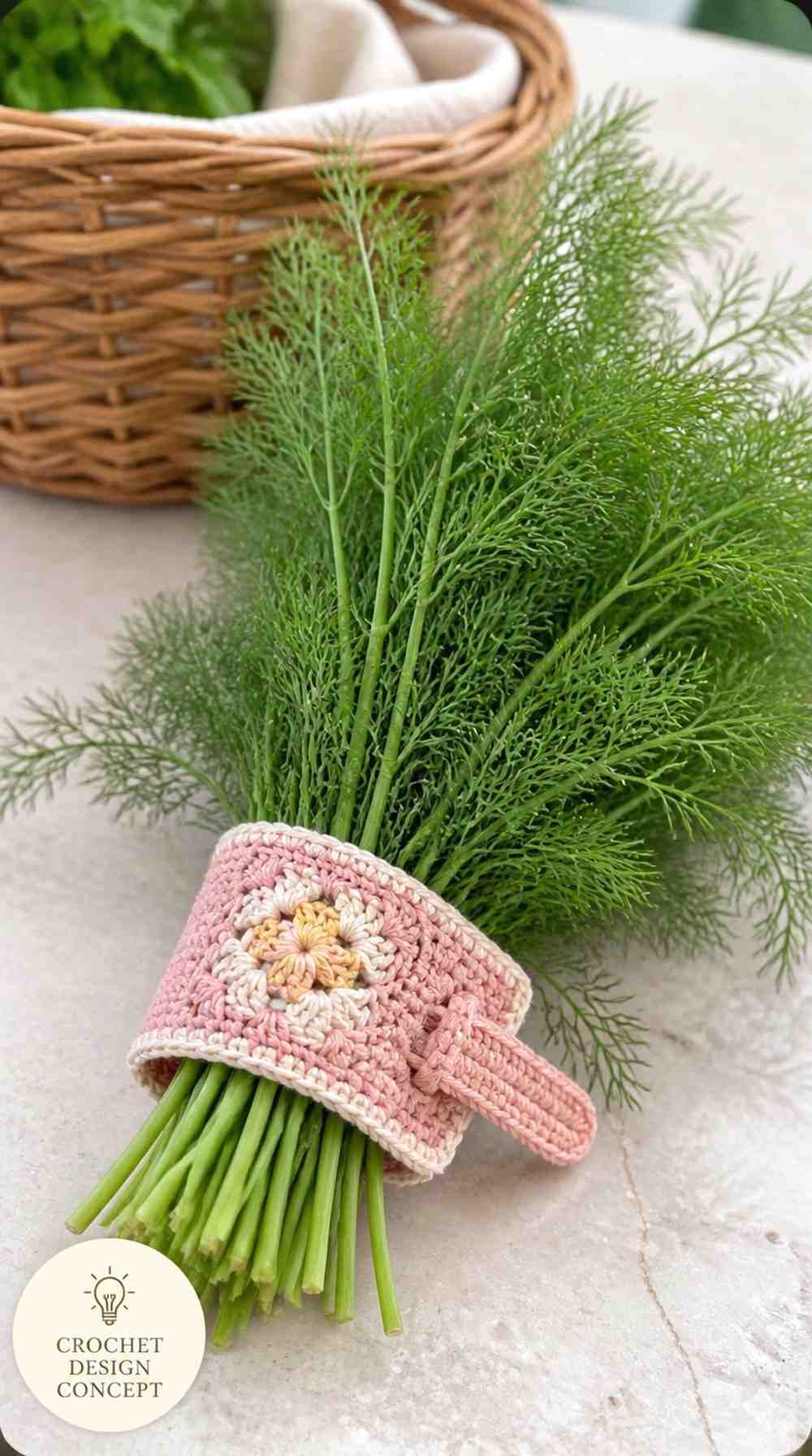
Soft blush crochet gives this dill keeper a cheerful handmade look. A small granny-square motif in blush, butter yellow, and ivory decorates the outside of the narrow band. Cream edging finishes the strip, and a flat tab passes through a matching closure loop.
A bunch of feathery green dill rests above the fastening, with its fine leaves left completely uncovered. The decorative granny motif provides the main detail, while the underlying band remains simple and closely stitched. Its size would need to be planned around the delicate stalks so they are not crushed.
- Small granny motif: Keep the square flat and firmly attached so it does not pull the band sideways or catch the dill fronds.
- Gentle fastening: Avoid tightening the tab until thin dill stalks bend or break.
- Motif placement: Position the square on the outside of the closure rather than between the stems.
- Short-term use: Remove the tie before washing and handling the herbs for food preparation, following appropriate produce-cleaning practices.
4. Crochet Mustard Basketweave Oregano Cuff
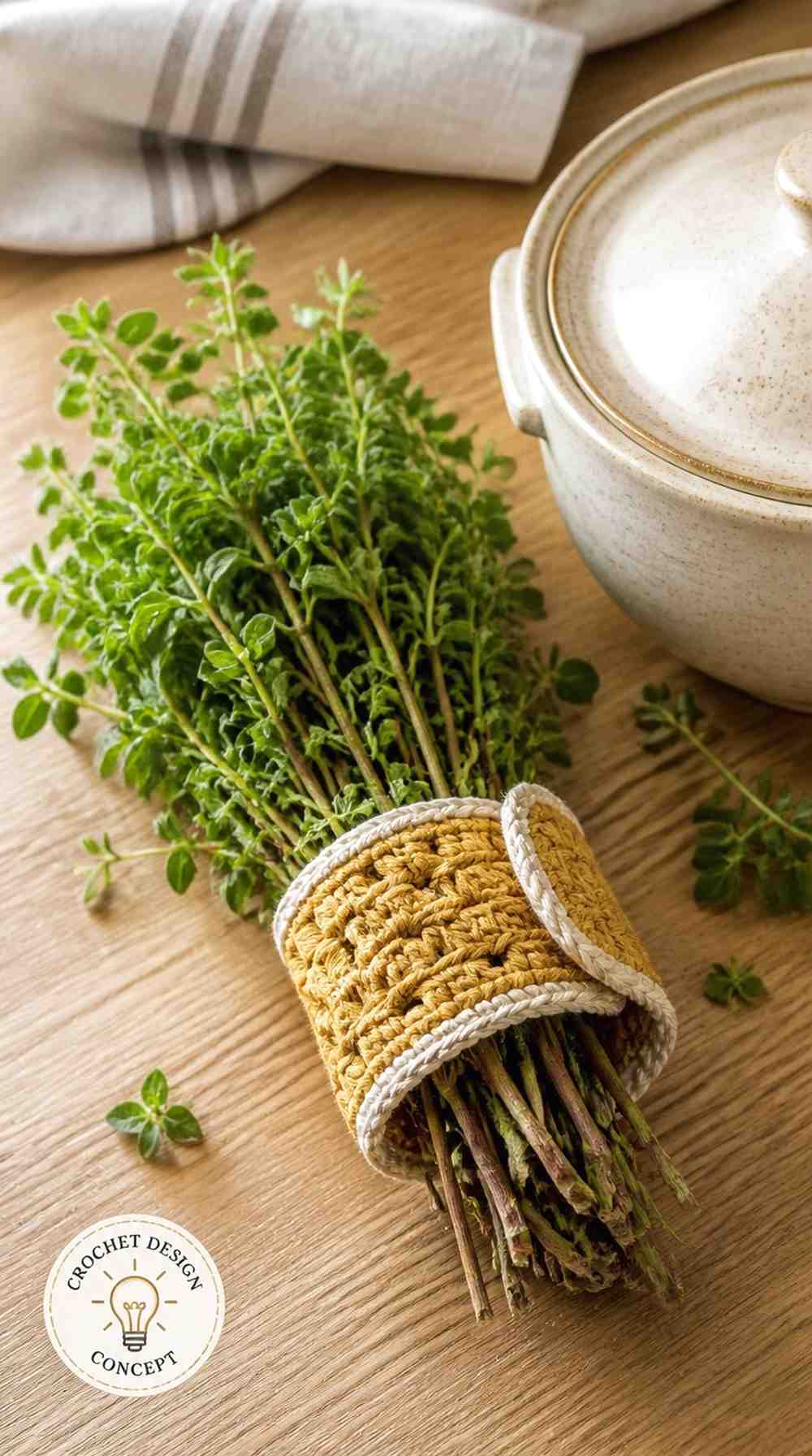
Golden-mustard crochet creates a warm, textured cuff for a small oregano harvest. Raised basketweave stitches cover the outside, while a smooth cream fabric lining sits against the lower stems. Ivory edging and a broad flat tuck-in tab complete the design.
The oregano bunch rests on a pale oak countertop with its leafy upper growth remaining uncovered. Compared with a narrow single-layer tie, the cuff has a wider hand-finished appearance. The lining is a useful design detail to consider when working with woody herb stems, although it would need to be washable and quick to dry.
- Basketweave texture: Keep the raised stitch blocks on the outside where they provide decoration without pressing directly into the stems.
- Smooth inner lining: Choose a washable lining that can be removed or cleaned thoroughly if it collects plant moisture or garden debris.
- Cuff width: A broader band should still leave the leafy oregano tops free rather than enclosing several inches of fresh growth.
- Flat fastening tab: Use the tuck-in closure for gentle grouping, not as a rigid clamp around the stems.
5. Crochet Teal Sliding Thyme Stem Keeper
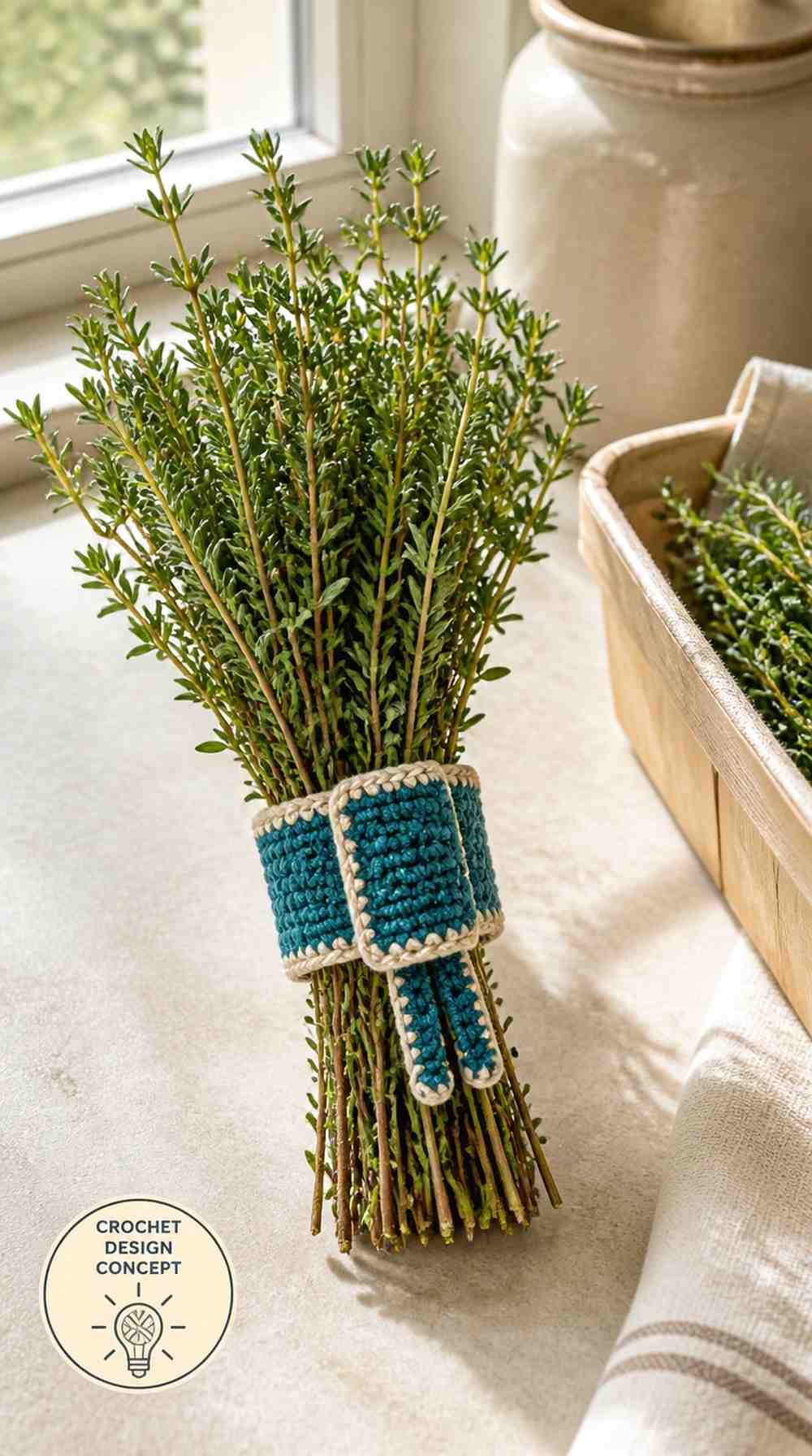
Deep teal crochet gives this slim thyme keeper a clean, contemporary appearance. A narrow cream border frames the closely stitched band, while a small flat crochet slider sits over the doubled strip. The two short ends tuck neatly beneath the slider.
The keeper encircles a modest bunch of cut thyme stems, with the small leaves spreading freely above it. Its sliding arrangement provides a different fastening idea from knots and foldover tabs. Because thyme sprigs can vary in thickness, the slider would need to move gently without slipping or gripping the stems too firmly.
- Slider movement: The small crocheted sleeve should travel smoothly along the band without snagging its stitches.
- Stem allowance: Leave enough space for the woody thyme stems to sit together without being squeezed.
- Tucked ends: Keep both band tails short and secure so they do not trail across the harvested leaves.
- Maintenance: Check the slider for trapped plant fragments and wash the keeper as appropriate before using it with another harvest.
6. Crochet Ivory Openwork Sage Stem Collar
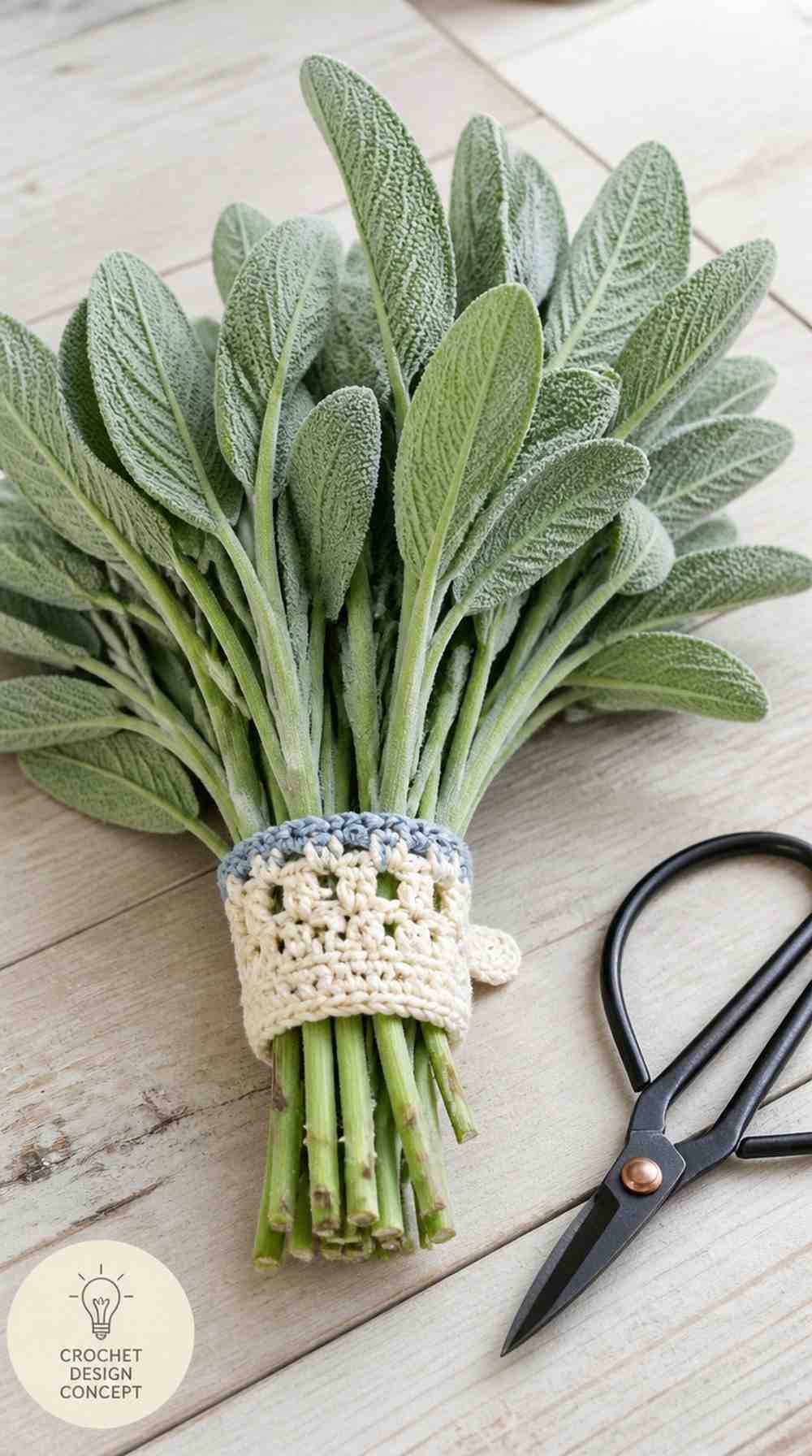
Warm ivory crochet gives this sage keeper a soft cottage-style appearance. The lower portion uses close-worked stitches, while a shallow band of connected diamond openings adds detail above it. Dusty-blue edging and a short slip-through tab complete the collar.
The sage stems sit loosely inside the keeper, with their broad, velvety grey-green leaves left uncovered. The openwork is decorative rather than intended to dry the herb by itself. The narrow, lightweight design makes the collar an appealing option for gathering a small bunch without surrounding the foliage.
- Diamond openings: Keep the openwork connected and relatively small so individual stems cannot slip through the decorative band.
- Sage leaf clearance: Position the collar below the large leaves, avoiding rubbing against their soft surfaces.
- Light-colored yarn: Ivory crochet may show soil and green plant marks more easily, making regular cleaning important.
- Fastening tension: The short tab should hold the stems together loosely, without bending or damaging them.
7. Crochet Coral Foldover Lavender Harvest Tie
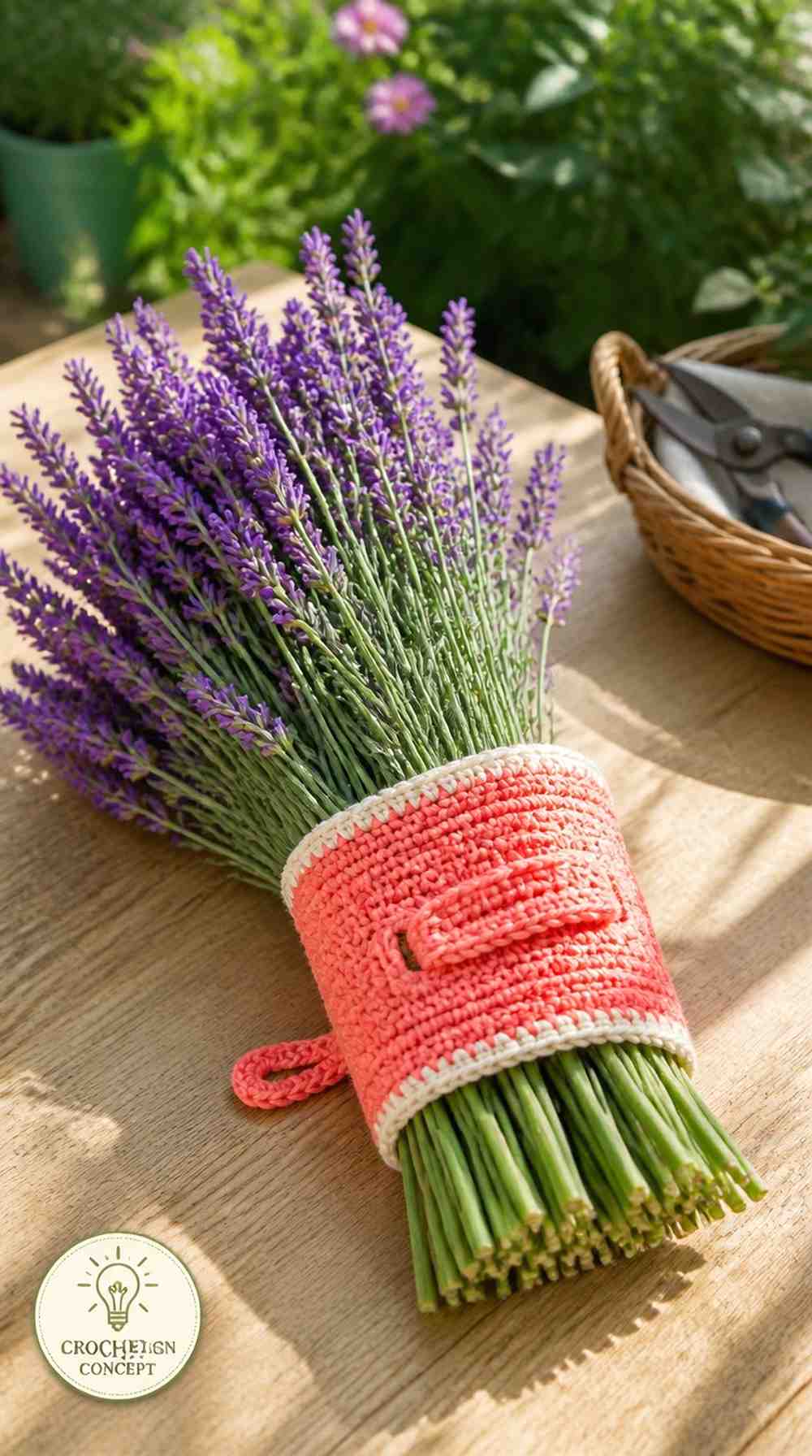
Bright coral crochet creates a cheerful contrast against purple lavender flower spikes. The rectangular band has closely stitched rows, cream edging, and a broad foldover tip held by a flat tuck-through loop. A short reinforced hanging loop sits on the outside.
The keeper gathers the lower stems of a modest culinary lavender bunch, while the flowers remain fully exposed. In the pictured arrangement, the hanging loop lies unused on the harvest table. The design offers two separate visual features—a foldover fastening and a small outer loop—without relying on long dangling cords.
- Flower clearance: Keep the coral band around the cut lower stems rather than the lavender flower spikes.
- Foldover closure: Position the flap so it stays flat without pulling the bunch into a tight bundle.
- Hanging loop: Reinforce the loop if adapting the design for a small drying bunch, and verify that the stems cannot slip free.
- Herb identification: Use only lavender varieties known to be appropriate for culinary use, rather than assuming all ornamental lavender is intended for food.
8. Crochet Olive Leaf-Tab Basil Keeper
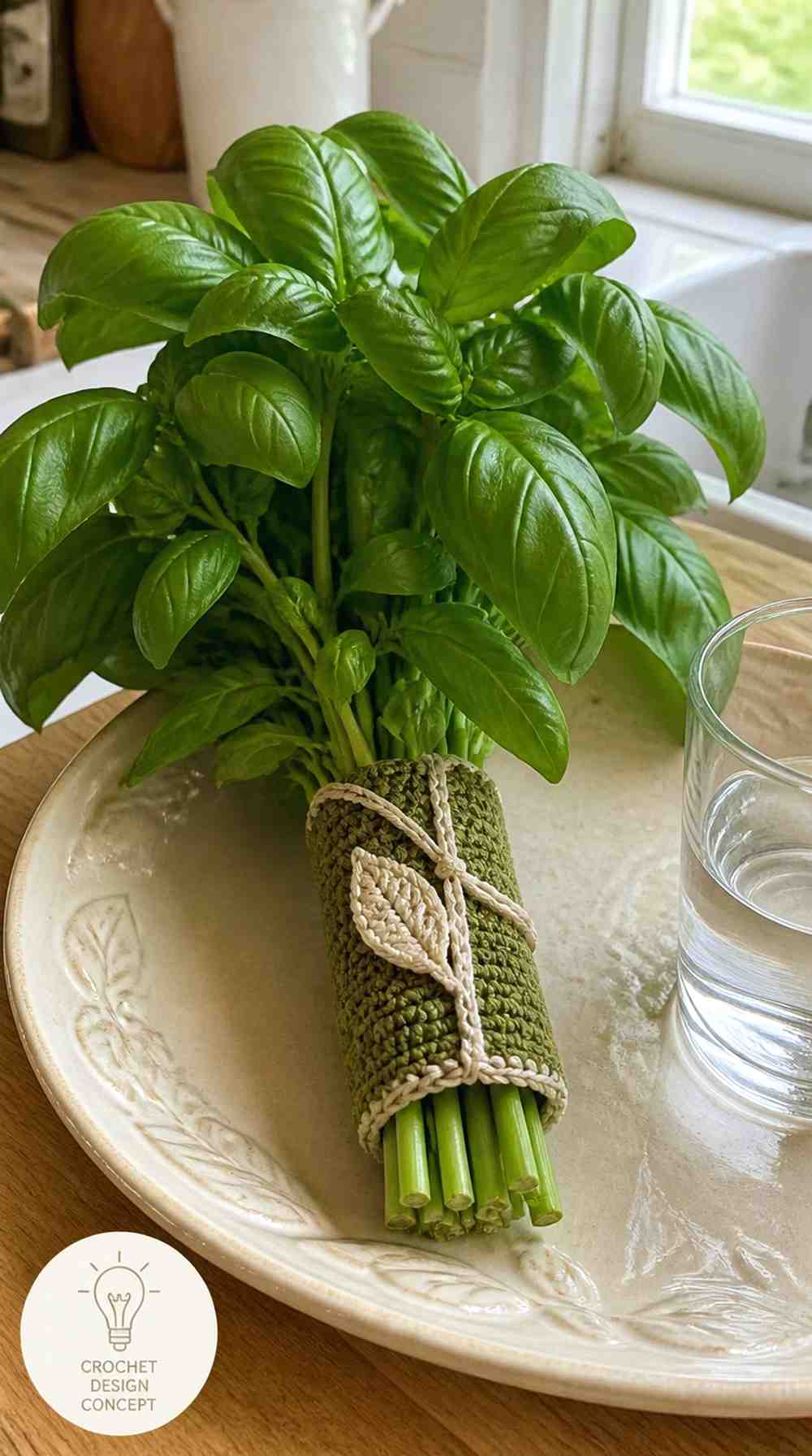
Muted olive-green crochet gives this basil keeper a simple botanical appearance. A closely stitched band has two shallow side ribs, a small flat ivory leaf motif on its closing tab, and a cream loop that holds the fastening. The leaf decoration remains on the outside of the band.
Fresh basil leaves spread above the gathered lower stems, adding a bright natural contrast to the olive yarn. The bunch rests on a ceramic tray beside a glass of water, with the crochet kept outside the water. This design is better suited to brief harvest handling than long-term basil storage.
- Leaf-tab placement: Keep the ivory crochet motif flat and clear of the basil leaves so it does not rub against their delicate surfaces.
- Gentle stem gathering: A loose closure helps avoid crushing the soft basil stems.
- Water clearance: Remove the crochet before putting cut stems in water; damp yarn should not sit against the stems for extended periods.
- Fresh basil care: Basil can be sensitive to chilling. Choose an appropriate storage method based on the herb and your kitchen conditions.
9. Crochet Cobalt Checkerboard Rosemary Band
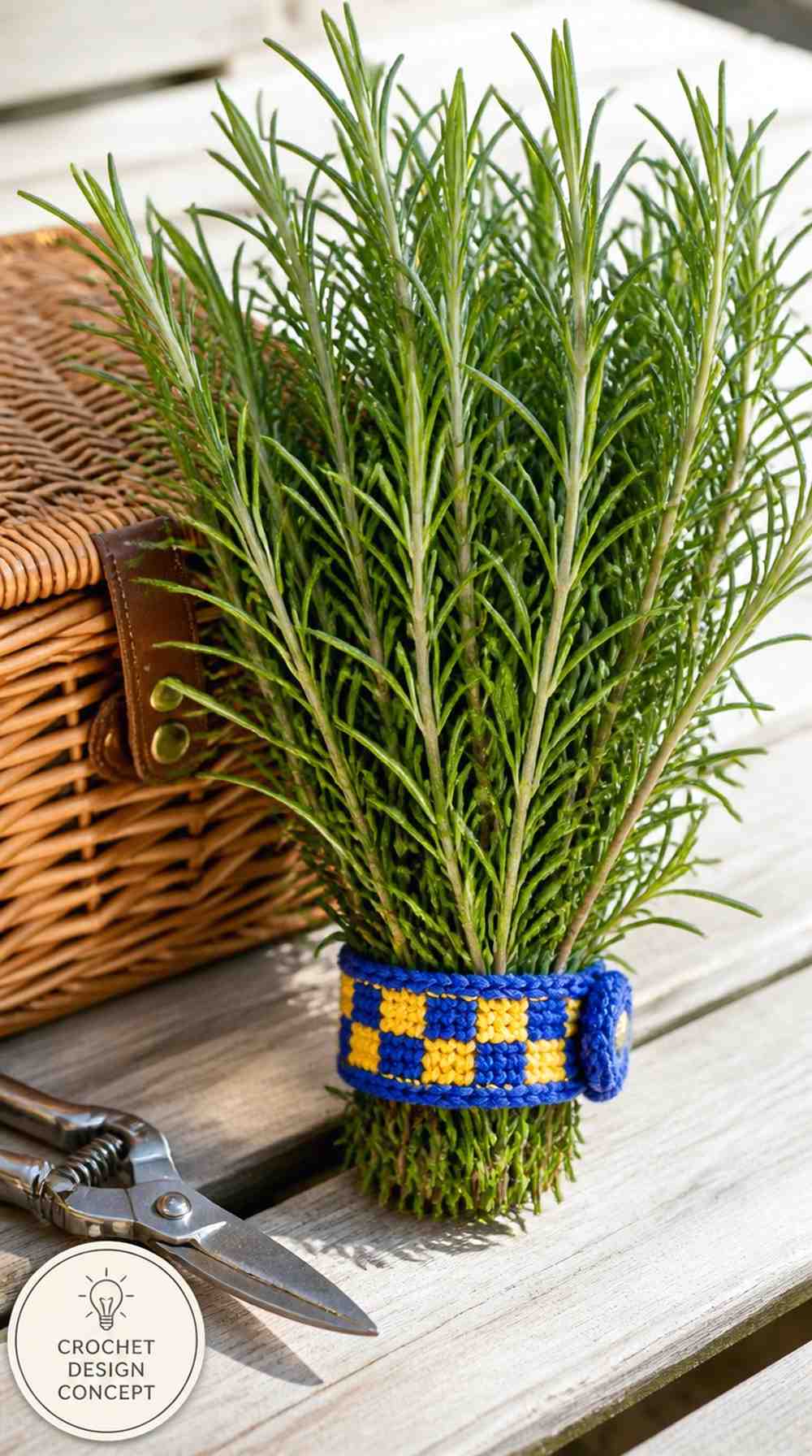
Bold cobalt blue and lemon yellow give this rosemary keeper a cheerful geometric appearance. Small checkerboard blocks run across the narrow crochet band, finished with a solid cobalt border and a flat tuck-through fastening.
A modest rosemary bunch rests on the pale wooden harvest surface, its lower stems grouped inside the colorful band. The patterned yarn makes the keeper easy to distinguish from the herbs themselves. Since the decoration is worked directly into the fabric, there are no separate appliqués near the rosemary needles.
- Checkerboard alignment: Arrange the color changes consistently so the small squares remain recognizable when the band curves around the stems.
- Smooth interior: Keep yarn ends neatly secured, avoiding loose strands against the rosemary.
- Cobalt closure: The flat fastening should hold the band in place without tightly compressing the woody stems.
- Color care: Check the yarn for dye transfer before repeated use around damp plant material.
10. Crochet Lilac Ladder-Stitch Chive Gatherer
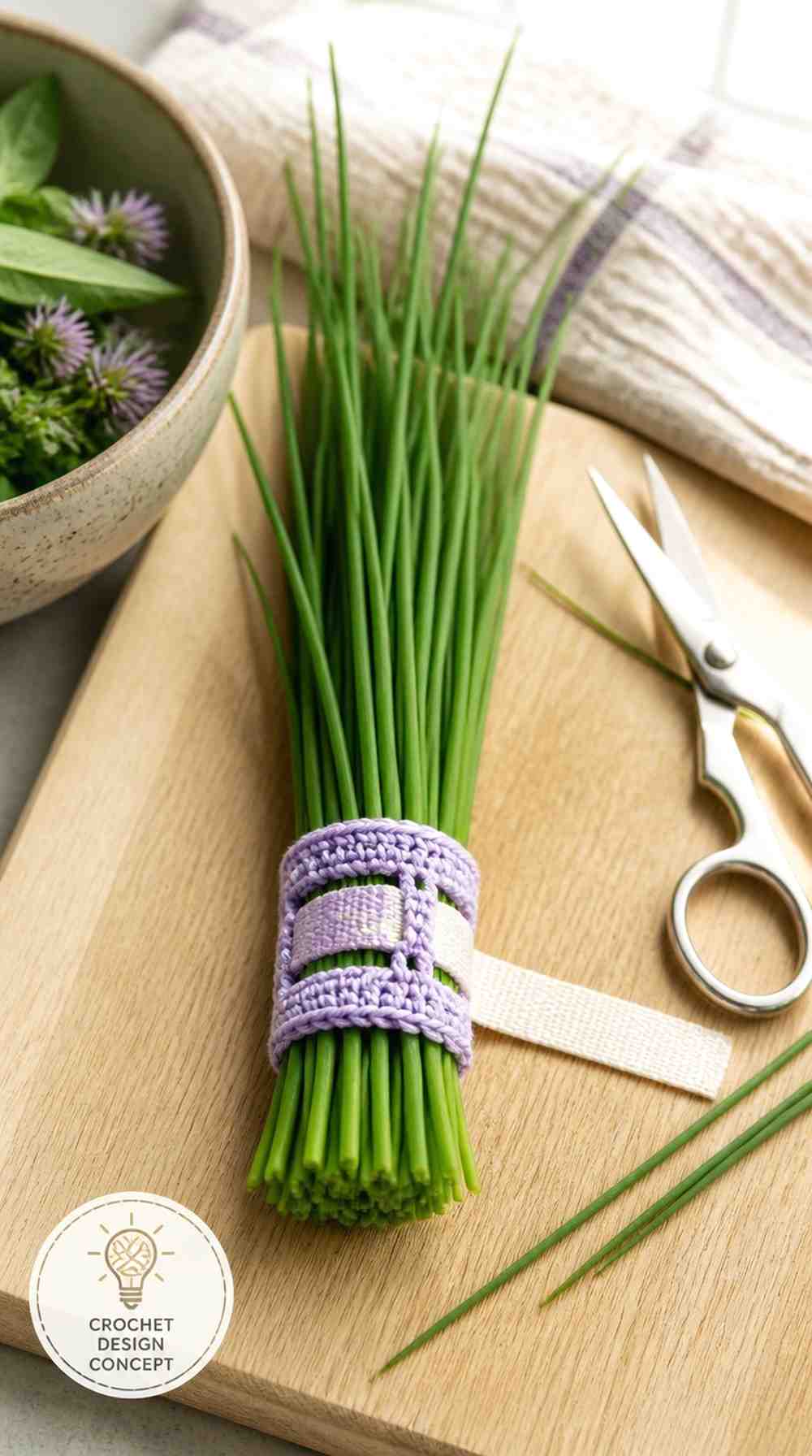
Pale lilac crochet provides a delicate contrast to the long, bright-green stems of freshly cut chives. Three narrow ladder-stitch openings run along the band, offering several possible positions for the cream fastening tab. Lavender edging completes its slim shape.
The chives remain upright with their green blades unbent above the keeper. This design is particularly interesting because the adjustable openings are worked into the crochet itself. Fine chive stems can be easily compressed, so the keeper should function as a very loose grouping band.
- Ladder-stitch openings: Space the three openings so the fastening tab can be adjusted without pulling the band excessively tight.
- Chive protection: Avoid bending the hollow green blades or gathering too many into one small loop.
- Flat closure: Keep the cream tab smooth and short, without a large knot resting against the herbs.
- After harvesting: Release the bunch and transfer the chives to suitable fresh storage rather than leaving them compressed in crochet.
11. Crochet Apricot Figure-Eight Herb Pair Keeper
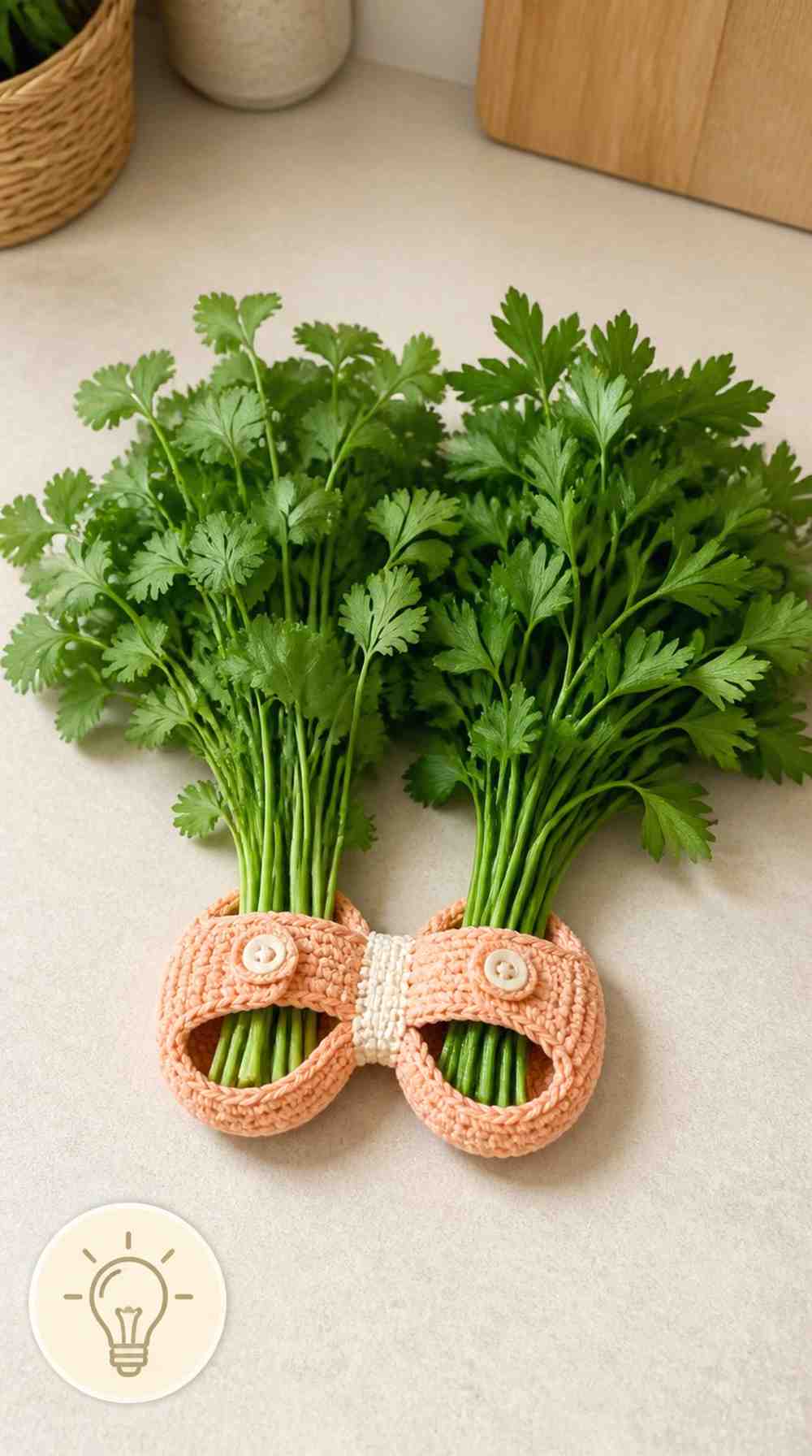
Soft apricot crochet forms two neighboring oval loops joined by a narrow ivory bridge. Each loop has its own adjustable tab, allowing the two sides to hold different small herb bunches independently.
One side gathers cilantro stems, while the other holds flat-leaf parsley. Both sets of leaves remain separate and uncovered above the figure-eight arrangement. The design is especially useful as an inspiration concept for keeping similar-looking herbs apart during harvest handling, although it should not replace clear identification when needed.
- Separate adjustment: Give the cilantro and parsley loops their own closures because the stem quantities may differ.
- Central bridge: Keep the ivory join firm enough to connect the bands but flexible enough for the bunches to rest naturally.
- Herb separation: Leave enough space between both leafy tops so they do not become tangled.
- Identifying the harvest: Do not rely solely on crochet color or position to identify edible plants; confirm the herbs before using them.
12. Crochet Mocha Dowel-Hanging Rosemary Keeper
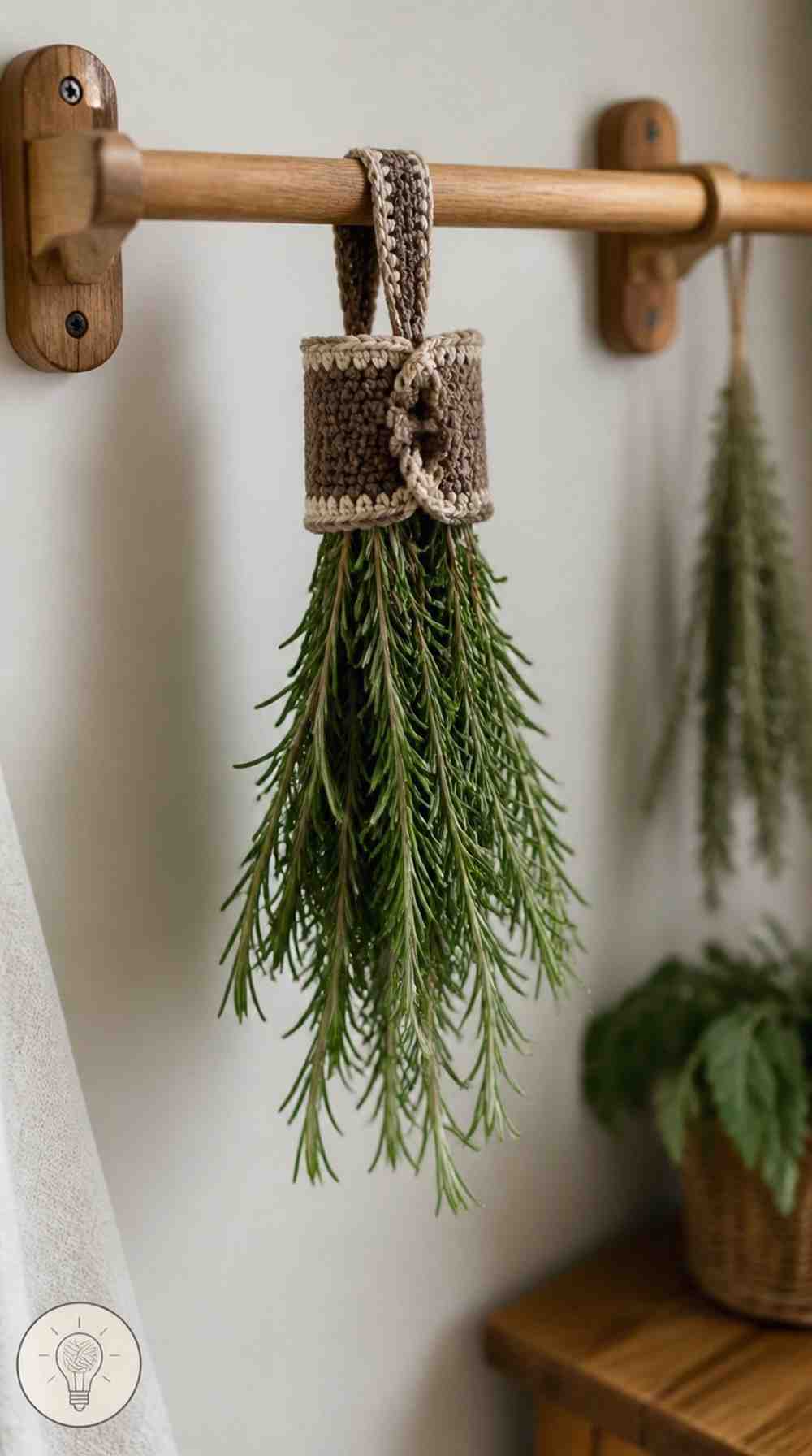
Mocha-brown crochet gives this hanging rosemary keeper a warm, rustic appearance. The short band uses close-worked rows, oatmeal edging, and a flat adjustable stem closure. A reinforced loop attaches directly to the outside of the keeper.
A small rosemary bunch hangs upside down from a wooden dowel, with its leaves pointing freely downward. The room is dry and well ventilated, away from direct sunlight. Unlike the tabletop designs, this concept explores the transition from harvest gathering to a possible herb-drying setup, which requires more careful attention to support and airflow.
- Small hanging bunch: Keep the rosemary bundle modest in size so air can circulate around the sprigs.
- Secure support: Check the wooden dowel, wall brackets, loop and stem fastening to ensure the bunch cannot slip or fall.
- Drying conditions: Use a warm, dry, well-ventilated location away from direct sunlight, following established herb-drying guidance.
- Crochet limitations: A crochet keeper is not a proven drying method by itself. Monitor the herbs for trapped moisture or spoilage and adjust the arrangement if necessary.
13. Crochet Plum Scalloped Mint Bunch Keeper
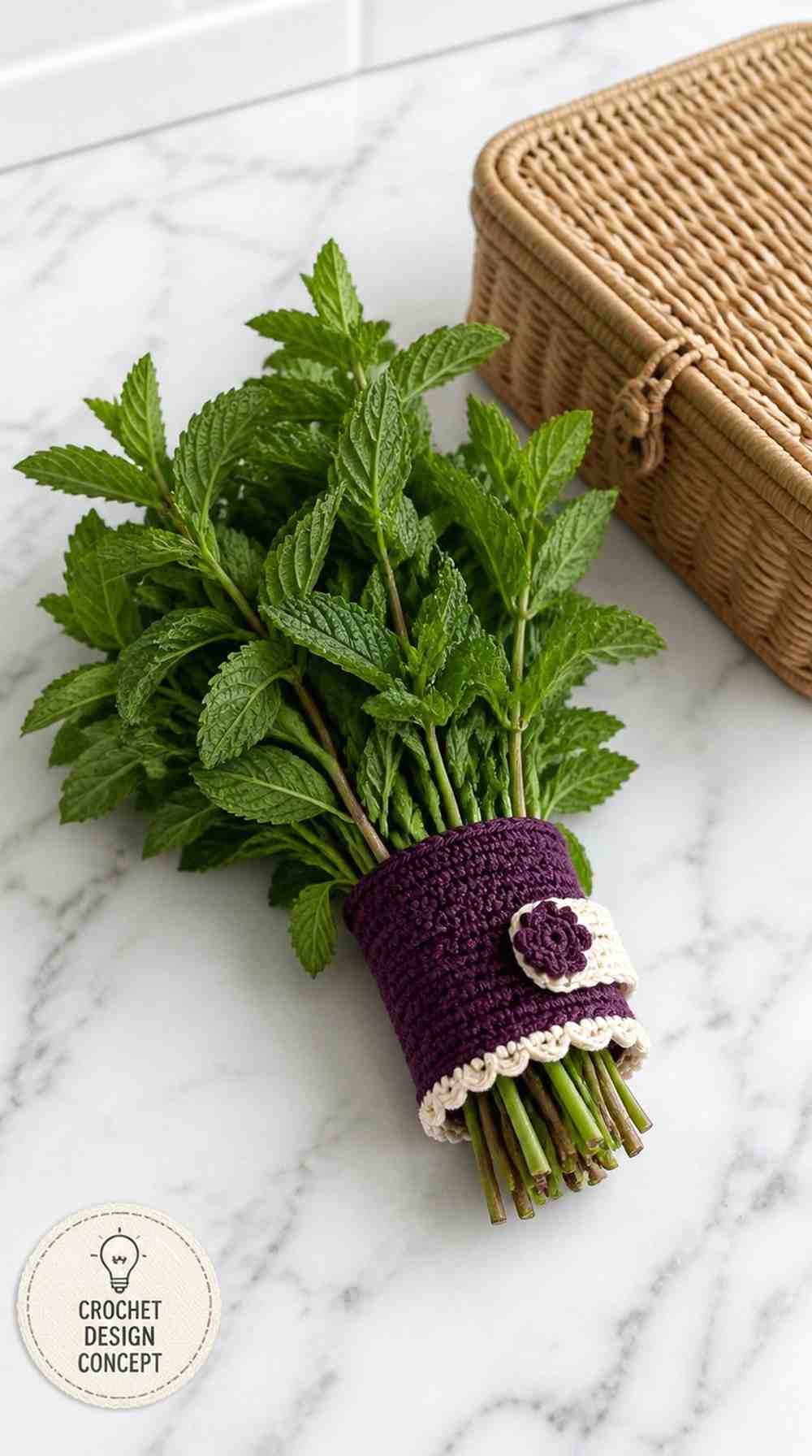
Deep plum crochet creates an elegant contrast against freshly cut mint leaves. The narrow rectangular band features closely worked rows, a small ivory scalloped border, and a flat cream tuck-through fastening. A tiny plum rosette decorates the outer end, away from the stems.
The lower mint stalks sit loosely within the band, while the bright-green leaves remain fully exposed. This concept combines decorative crochet details with a simple harvest tie. The scallops and flower are kept small so they add character without making the bunch difficult to handle.
- Scalloped edging: Keep the ivory border narrow enough that it does not fold into the mint leaves.
- Flat rosette: Secure the flower firmly and position it outside the main stem-contact area.
- Loose mint gathering: Avoid tightening the band around soft young stems, especially when collecting a small bunch.
- Cleaning and storage: Remove the keeper before preparing or storing the mint, and clean the crochet after contact with garden debris.
Practical Guide to Crochet Herb Harvest Bunch Keepers
A crochet herb keeper can help organize a small harvest, but it does not guarantee freshness, food safety, or successful drying. The right approach depends on the herb and whether it will be used fresh or preserved.
1. Gather stems gently. Place the keeper around the lower stalks, away from the leafy parts. Use just enough tension to group the stems without bending or crushing them.
2. Keep bunches small. Large bunches can hold moisture between leaves. The University of Illinois Extension recommends tying herbs loosely to allow good air circulation when preparing them for drying.
Illinois
3. Pick a washable material. Smooth cotton or a suitable washable cotton blend may work for a reusable decorative tie. Crochet can trap soil, moisture, and plant residue, so it should be cleaned and thoroughly dried between uses.
4. Harvest with clean equipment. Use clean scissors or snips, avoid collecting visibly spoiled plants, and follow appropriate produce-washing guidance before eating the herbs. Remove the decorative keeper before washing or food preparation.
5. Match the storage method to the herb. For fresh storage, some herbs benefit from trimmed stems placed in water with suitable refrigeration or room-temperature handling, depending on the variety. The University of California Cooperative Extension describes several short-term storage and preservation methods.
UC Agriculture and Natural Resources
6. Do not assume every herb dries well in bunches. Woody, lower-moisture herbs are often easier to air-dry. Tender, moisture-rich herbs may mold if drying is slow, so a food dehydrator or another appropriate preservation method may be preferable.
UC Agriculture and Natural Resources+1
7. Keep drying areas clean. If you hang herbs, choose a dry space with good ventilation, away from direct sunlight, dust, and moisture. A ventilated paper bag may help protect hanging herbs from contamination.
Illinois
For related kitchen herb organization inspiration, visit 16 Crochet Vintage Kitchen Wall Pocket Ideas for Cozy Cottage Homes on Yarn Nest Studio. The collection includes dowel-mounted herb jar baskets and other hanging kitchen-storage concepts, although those serve a different purpose from these small stem keepers.
Want to Make Something Similar?
These 13 designs are original crochet visual concepts, not tested patterns. The following resources demonstrate related tie construction techniques:
- Crochet Plant Support Tie — CyCrochet — A free tutorial for a soft adjustable cotton plant tie, with instructions and diagrams. It offers useful ideas for narrow bands and looped fastenings, although its intended use is supporting living plant stems rather than harvested culinary herbs. CyCrochet
- Plant and Cable Tie — CraftBits — A free plant-and-cable tie pattern that can help readers explore compact crochet strips and reusable fastening arrangements. CraftBits.com
These patterns are related construction references rather than exact instructions for the pictured herb keepers. A real harvest tie should be adapted for gentle stem contact, easy removal, appropriate cleaning, and the intended handling or preservation method.
Which Crochet Herb Harvest Bunch Keeper Should You Choose?
| Design | Best inspiration use | Main consideration |
|---|---|---|
| Terracotta Soft-Loop | Small rosemary bunch | Loose adjustable fit |
| Navy Twin-Band | Two parsley bunches | Separate fastening tension |
| Blush Granny-Motif | Delicate dill harvest | Motif placement |
| Mustard Basketweave | Woody oregano stems | Smooth washable lining |
| Teal Sliding | Small thyme bunch | Slider grip and movement |
| Ivory Openwork | Sage stems | Leaves clear of mesh |
| Coral Foldover | Lavender stems | Flower-spike clearance |
| Olive Leaf-Tab | Fresh basil bunch | Moisture and fresh storage |
| Cobalt Checkerboard | Colorful rosemary tie | Neat yarn changes |
| Lilac Ladder-Stitch | Fine chive stems | Very gentle fastening |
| Apricot Figure-Eight | Cilantro and parsley | Keeping varieties separate |
| Mocha Dowel-Hanging | Small rosemary drying bunch | Support and airflow |
| Plum Scalloped | Decorative mint gathering | Small secure embellishments |
For straightforward harvest gathering, the Terracotta Soft-Loop or Teal Sliding Keeper offers a relatively simple form with adjustable fastening. If two bunches need to stay separate, the Navy Twin-Band and Apricot Figure-Eight concepts provide different paired arrangements.
For decorative garden styling, the Blush Granny-Motif, Olive Leaf-Tab, and Plum Scalloped keepers add small motifs without enclosing the herb leaves. The Mocha Dowel-Hanging design is the most specialized option because hanging herbs to dry requires attention to conditions beyond the crochet itself.
Conclusion
A crochet herb harvest bunch keeper can make small garden harvests easier to group while adding a thoughtful handmade detail to the process. These 13 concepts explore simple soft loops, decorative motifs, adjustable bands, twin-bunch arrangements, and one hanging design.
The best option depends on the herb’s stem thickness, the quantity harvested, and what you plan to do next. Keep the leaves uncovered, avoid overly tight fastenings, and remove the crochet when washing, preparing, or storing fresh herbs. For preservation, use an appropriate drying or freezing method rather than relying on the decorative keeper alone.
Which crochet herb harvest keeper would you choose? Would you prefer a simple terracotta rosemary tie, a colorful checkerboard band, or a two-loop keeper for separating different herbs? Share your favorite and which herbs you usually harvest.
Frequently Asked Questions
1. Can a crochet band be used to gather fresh culinary herbs?
A soft crochet band may be useful for temporarily grouping freshly cut stems, provided it is clean, loosely fitted, and easy to remove. It should not crush delicate leaves or remain wet against the herbs. Remove it before washing or food preparation.
2. What yarn is suitable for a crochet herb harvest keeper?
Smooth, washable cotton or a suitable cotton-blend yarn is worth considering for a reusable decorative stem band. Choose closely worked stitches, secure yarn ends, and a fastening that does not grip the stems too tightly. Yarn choice alone does not make an item certified for food contact or guarantee hygienic use.
3. Can I use these crochet keepers to dry herbs?
Some small-bunch designs could inspire an adjustable tie for hanging herbs, but the entire drying setup needs to be appropriate. Good airflow, low humidity, clean handling, and careful monitoring are essential. The University of Illinois Extension recommends loose herb bunches in warm, dry, ventilated locations away from sunlight.
Illinois
4. Should basil, mint, parsley, and rosemary all be stored the same way?
No. Different herbs respond differently to refrigeration, moisture, and drying. Tender herbs may require more careful fresh storage and can be harder to dry without spoilage. Choose storage or preservation methods for the specific herb rather than leaving all harvested bunches tied together.
UC Agriculture and Natural Resources
5. Are these 13 crochet herb harvest bunch keeper ideas complete patterns?
No. They are original crochet design visualizations created for inspiration, not tested patterns or finished food-handling accessories. The linked tutorials demonstrate related plant-tie techniques. Anyone making a real version should check the stem fit, ease of release, material care, and suitability for the intended harvest or drying process.