A crochet balcony rail planter identification banner can bring handmade color to a small outdoor garden while making it easier to recognize different herbs, flowers, and leafy plants. These 14 inspiration ideas explore compact hanging labels, divided herb banners, decorative lace frames, reversible panels, and modular identification pockets. With warm terracotta, mustard yellow, lavender, olive, ivory, and burgundy, the collection offers different looks for modern apartment balconies and cozy little garden corners.
A good plant-identification banner needs more than attractive stitches. Outdoor labels should remain readable, removable, and protected from ordinary weather exposure, while the crochet must not interfere with balcony safety or the planters themselves. These concepts use separate weather-resistant cards and short, secure attachment arrangements positioned entirely on the inside of the balcony. Compare their sizes, label windows, mounting methods, and cleaning needs before deciding which style suits your space.
These are AI-generated crochet design visualizations for inspiration, not photographs of tested handmade banners or step-by-step patterns. The illustrated mounting arrangements have not been safety-tested.
Quick Design Selection Guide
- For one herb planter: Crochet Terracotta Twin-Tab Planter Banner provides a compact rectangular label.
- For a round metal railing: Crochet Indigo Curved-Rail Label Wrap follows a curved rail shape.
- For two neighboring planters: Crochet Mustard Twin-Plant Identification Banner offers separate label windows.
- For a decorative balcony corner: Crochet Blush Scalloped Corner Label Banner adds a soft floral-style edge.
- For narrow railing spaces: Crochet Olive Vertical Plant-Name Pennant has a slim upright shape.
- For three herbs together: Crochet Coral Three-Herb Rail Banner and Crochet Burgundy Modular Three-Planter Banners offer different multi-label arrangements.
- For decorative vintage styling: Crochet Ivory Fan-Lace Planter Label Frame surrounds a single card with open crochet lace.
- For changing plant information: Crochet Lavender Flip-Flap Plant Label Banner and Crochet Cobalt Reversible Planter ID Banner focus on replaceable cards.
1. Crochet Terracotta Twin-Tab Planter Banner
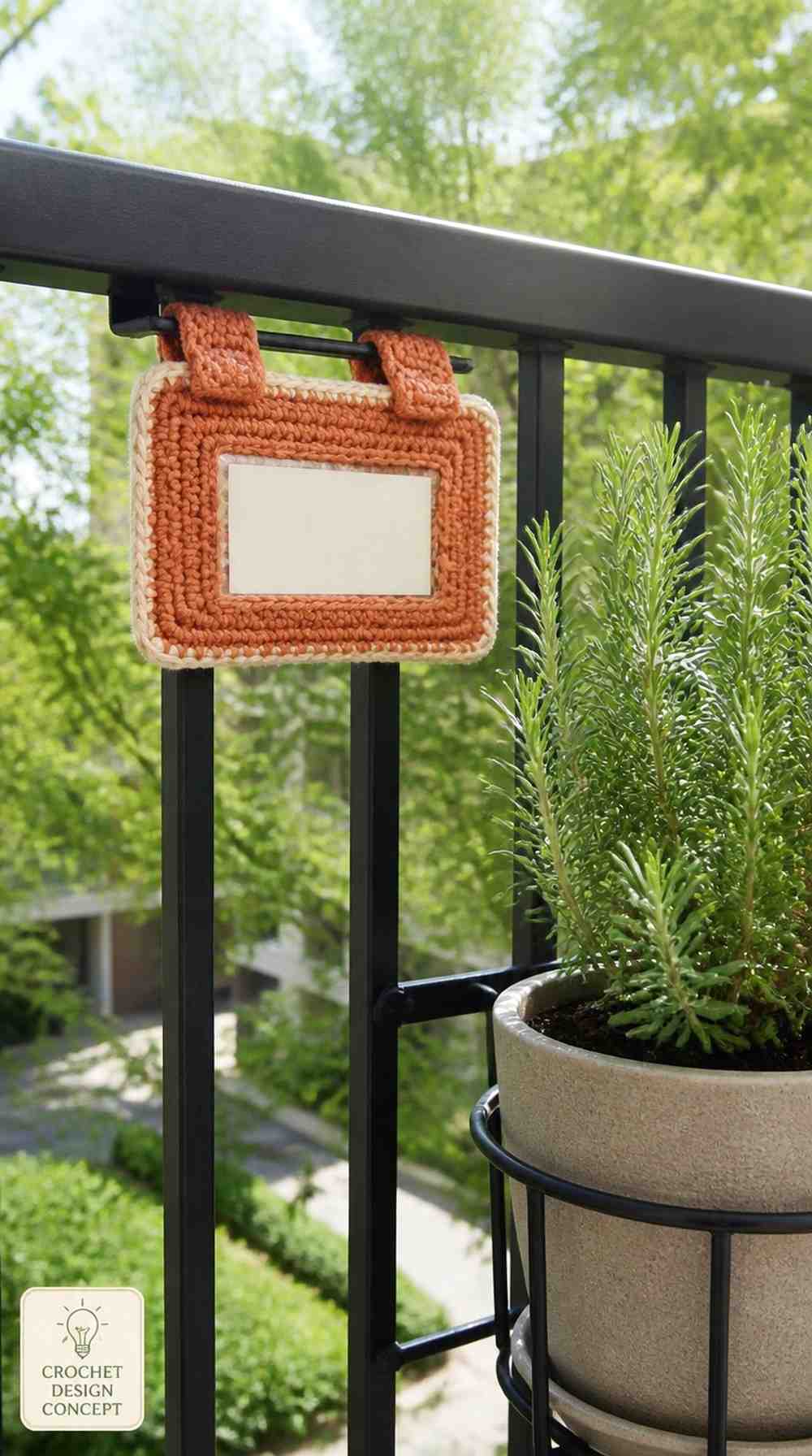
Warm terracotta crochet creates a compact rectangular identification banner with dense horizontal rows and a narrow ivory border. Two short folded tabs connect the banner to an independent inner-side mounting bracket, while a transparent central pocket holds a plain weather-resistant plant label.
The simple shape suits a small balcony with one rosemary planter or another frequently used herb. Its relatively narrow profile keeps the card easy to recognize without introducing a large decorative panel across the railing.
- Label Window: Choose a card size that remains readable from a comfortable standing position inside the balcony.
- Twin-Tab Support: Keep the two reinforced upper tabs evenly spaced so the panel hangs flat rather than twisting.
- Planter Separation: Mount the banner independently of the rosemary pot, avoiding attachments that place additional load on the planter or its support.
2. Crochet Indigo Curved-Rail Label Wrap
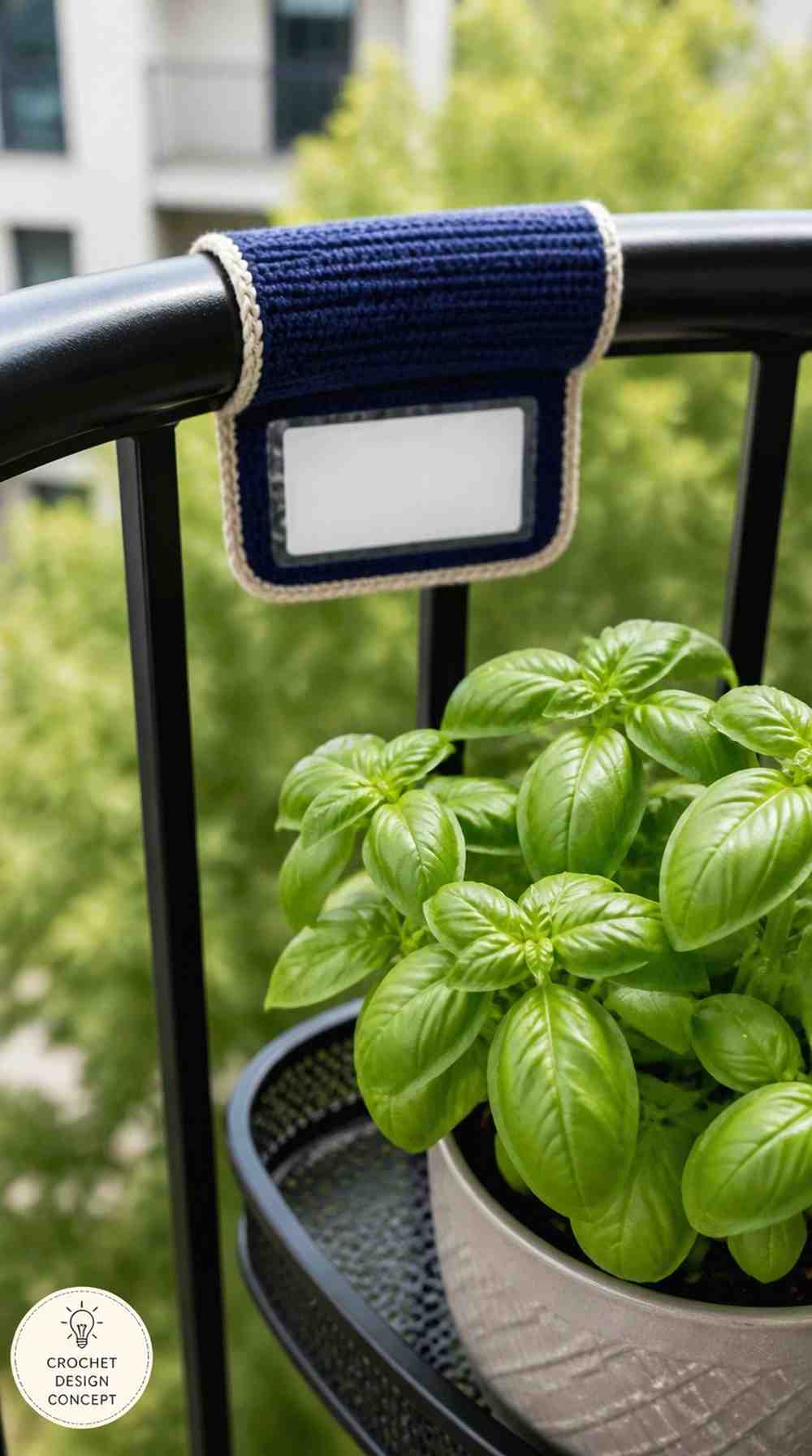
Deep-indigo crochet forms a small banner with a curved upper section, cream edging, and a rounded rectangular label panel below. A flat rear fastening strip follows the shape of an interior round railing, while the transparent card window remains visible on the balcony-facing side.
This concept is intended for round rails rather than broad rectangular bars. It brings a neat handmade accent beside a basil planter without requiring a long hanging sign or decorative cords that could move in the wind.
- Rail Shape: Measure the rail’s diameter and check its permitted attachment points before planning a fitted upper wrap.
- Secure Fastening: A close decorative fit is not enough by itself; the banner needs an approved attachment that prevents slipping or rotation.
- Card Accessibility: Keep the clear window removable so the basil label can be replaced without disturbing the entire upper section.
3. Crochet Mustard Twin-Plant Identification Banner
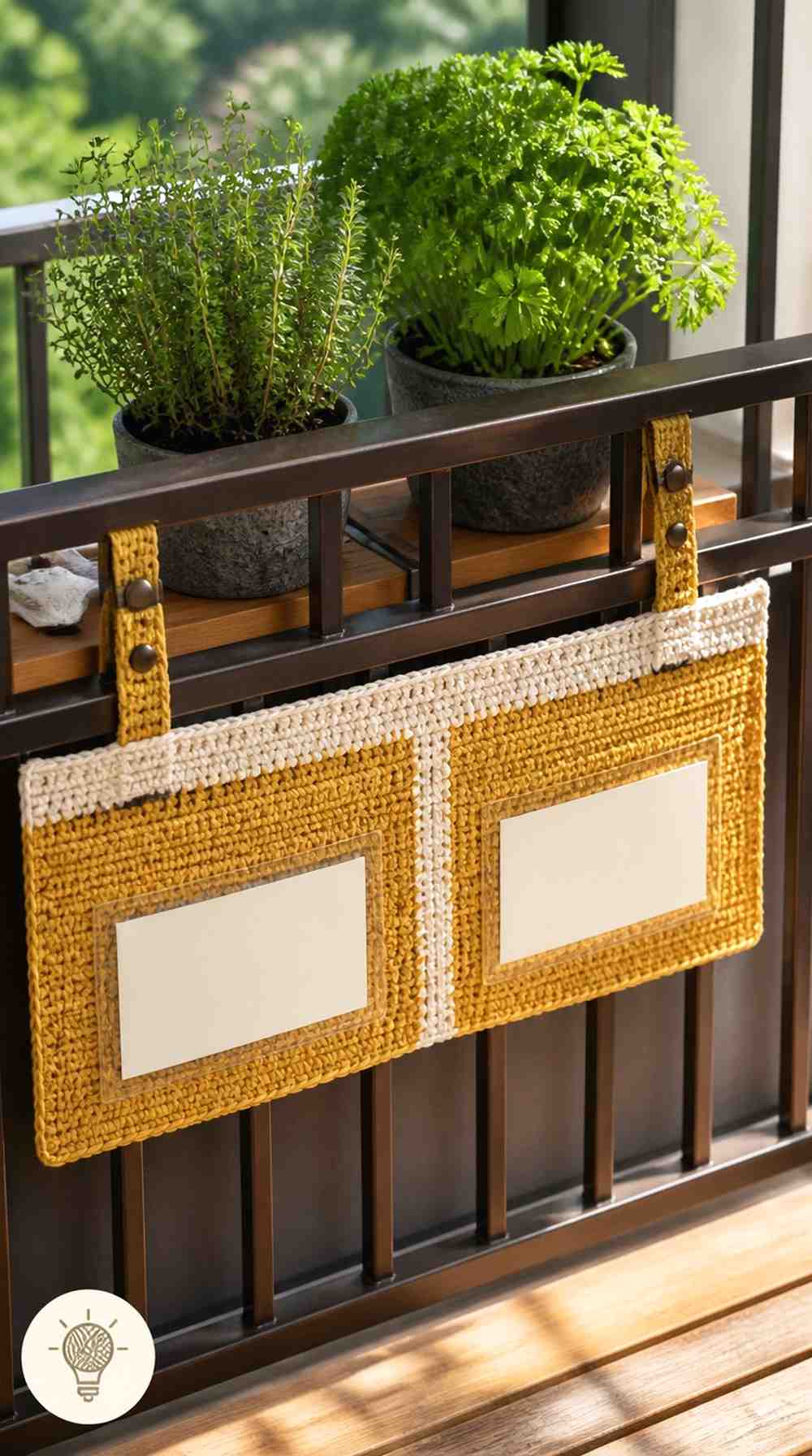
Mustard-yellow crochet creates a broad rectangular banner with two transparent card pockets, cream edging, and a narrow central divider. The panel hangs from a separate rigid mounting bar on the inside of a dark balcony railing.
Two independently supported planters of thyme and parsley sit behind the banner. The paired layout makes it easier to distinguish neighboring herbs without placing a separate hanging sign in front of every pot.
- Two-Card Layout: Keep both pockets equal in size, with enough room for the plant names to remain legible.
- Central Divider: Work the cream divider firmly into the backing so the two label compartments do not overlap or pull toward one another.
- Plant Arrangement: Position each identification window in front of its intended planter, particularly when several herbs have similar-looking foliage.
4. Crochet Blush Scalloped Corner Label Banner
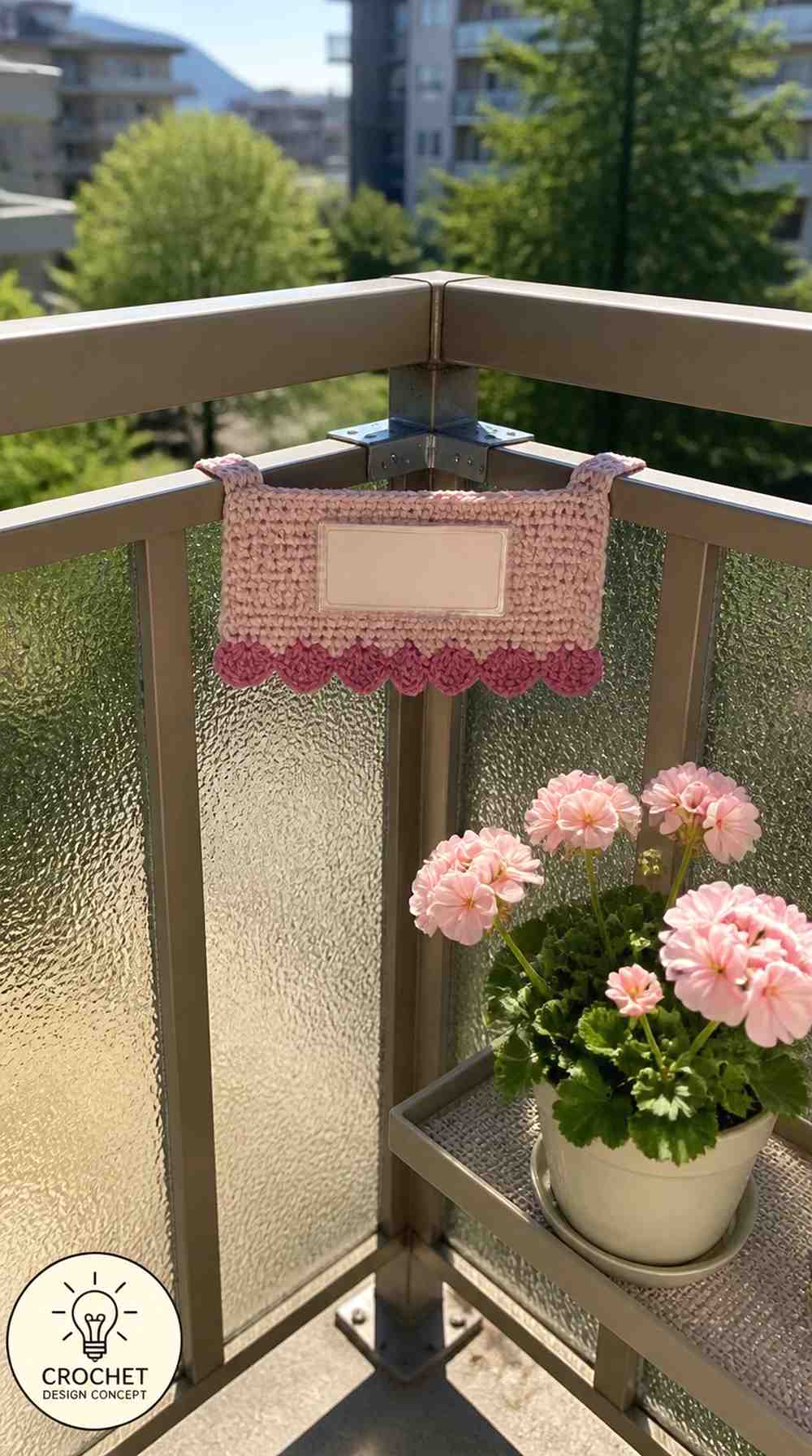
Blush-pink crochet gives this small balcony banner a delicate appearance, with a rounded rectangular body and five dusty-rose scallops along its lower edge. A transparent central pocket displays a weather-resistant label, while two short tabs secure the panel to an inner-side corner bracket.
The design adds a decorative touch near a pot of pale-pink geraniums. Its corner placement makes it visually different from a straight rail banner, although the mounting arrangement needs to follow the actual balcony structure.
- Scalloped Edging: Keep the five scallops flat and closely joined so the lower edge does not develop long wind-catching loops.
- Corner Placement: Check the angle between the railing sections before choosing the supporting bracket or banner width.
- Flower Coordination: Dusty rose and blush can complement soft-colored flowers without requiring a large decorative sign.
5. Crochet Olive Vertical Plant-Name Pennant
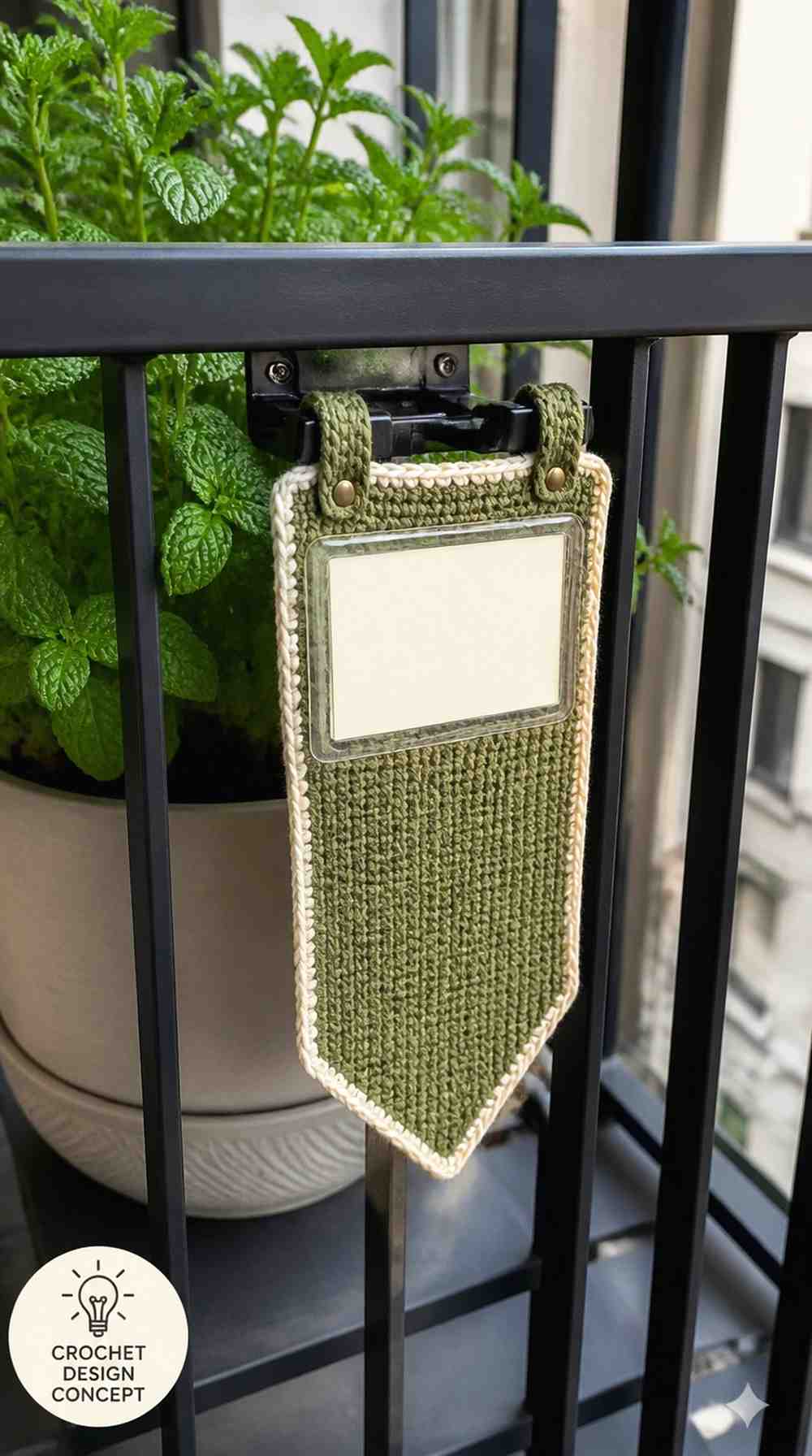
Olive-green crochet forms a narrow vertical identification pennant with dense stitch rows, cream edging, and a short pointed lower section. A rigid transparent card window sits near the top, while reinforced hanging tabs keep the panel close to the inner railing.
The pennant has a more traditional garden-marker appearance than the broad rectangular banners. It could work beside a mint planter where there is limited horizontal space but enough clear room below the rail.
- Pennant Length: Keep the pointed lower section short so it cannot reach the balcony floor, catch on nearby objects, or obstruct access.
- Upper Card Placement: Position the label near the broad upper section where it will remain easy to read.
- Outdoor Movement: A narrow pennant can still move in wind, so a secure, closely fitted attachment is more important than its lightweight appearance.
6. Crochet Coral Three-Herb Rail Banner
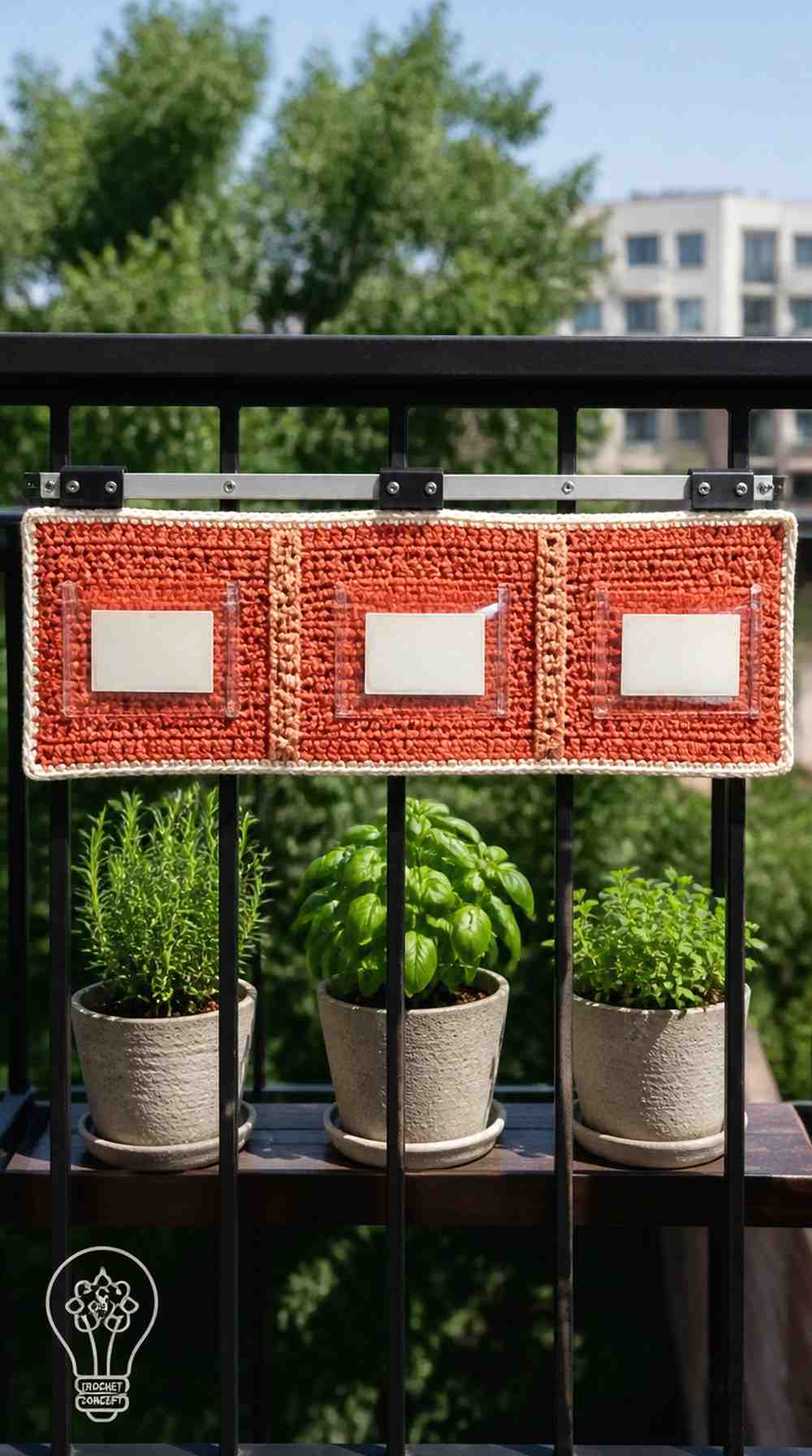
Coral crochet creates a longer identification banner with three transparent card pockets, peach-colored dividers, and an ivory border. Three reinforced upper attachments connect the backing to an independent mounting rail inside the balcony.
Rosemary, basil, and oregano planters sit separately behind the display. The three-card format provides a coordinated way to identify a small herb collection, especially when the plants are arranged along one continuous supported shelf.
- Three-Label Spacing: Align the pockets with the actual positions of the herbs to avoid confusing neighboring plant names.
- Mounting Points: Use appropriate independent support along the banner’s length to reduce sagging and movement.
- Future Changes: Removable cards make it easier to replace an herb or change the planting arrangement without making a new crochet banner.
7. Crochet Lavender Flip-Flap Plant Label Banner
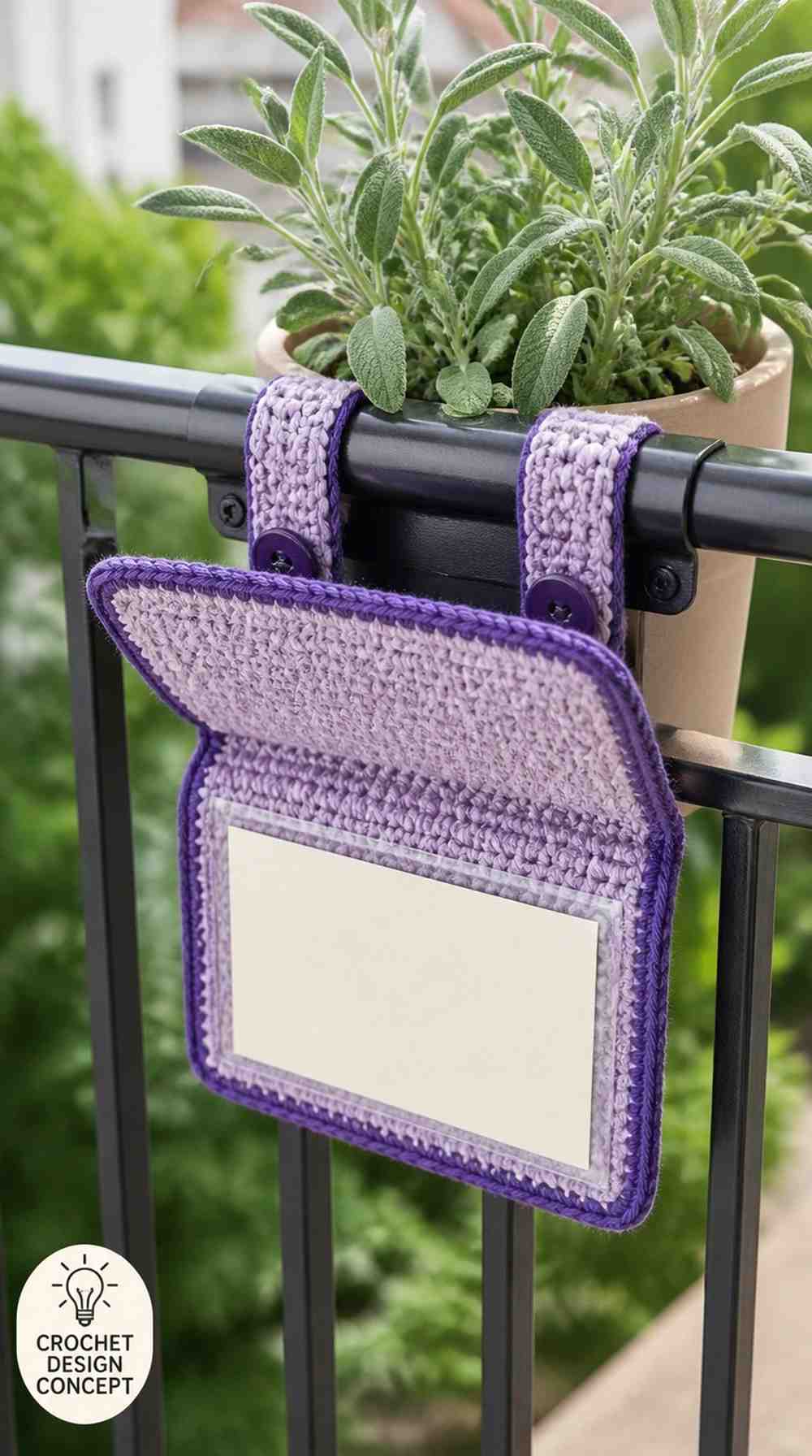
Lavender crochet forms a compact rectangular banner with moss-style rows, deeper-purple edging, and a short rounded foldover flap. The flap opens upward to reveal a weather-resistant plant label inside a transparent sleeve.
The separate rigid backing helps the label section remain flat, while the soft purple crochet adds color beside a sage planter. The foldover detail gives this design a more enclosed appearance than a basic open-window label.
- Flap Clearance: Keep the fold short enough to open without pushing against the rail or nearby foliage.
- Card Replacement: Choose a removable protective sleeve so the plant label can be updated when the planter’s contents change.
- Closure Security: Any real foldover fastening needs to remain closed in outdoor conditions without using loose decorative pieces.
8. Crochet Chocolate Timber-Frame Planter Banner
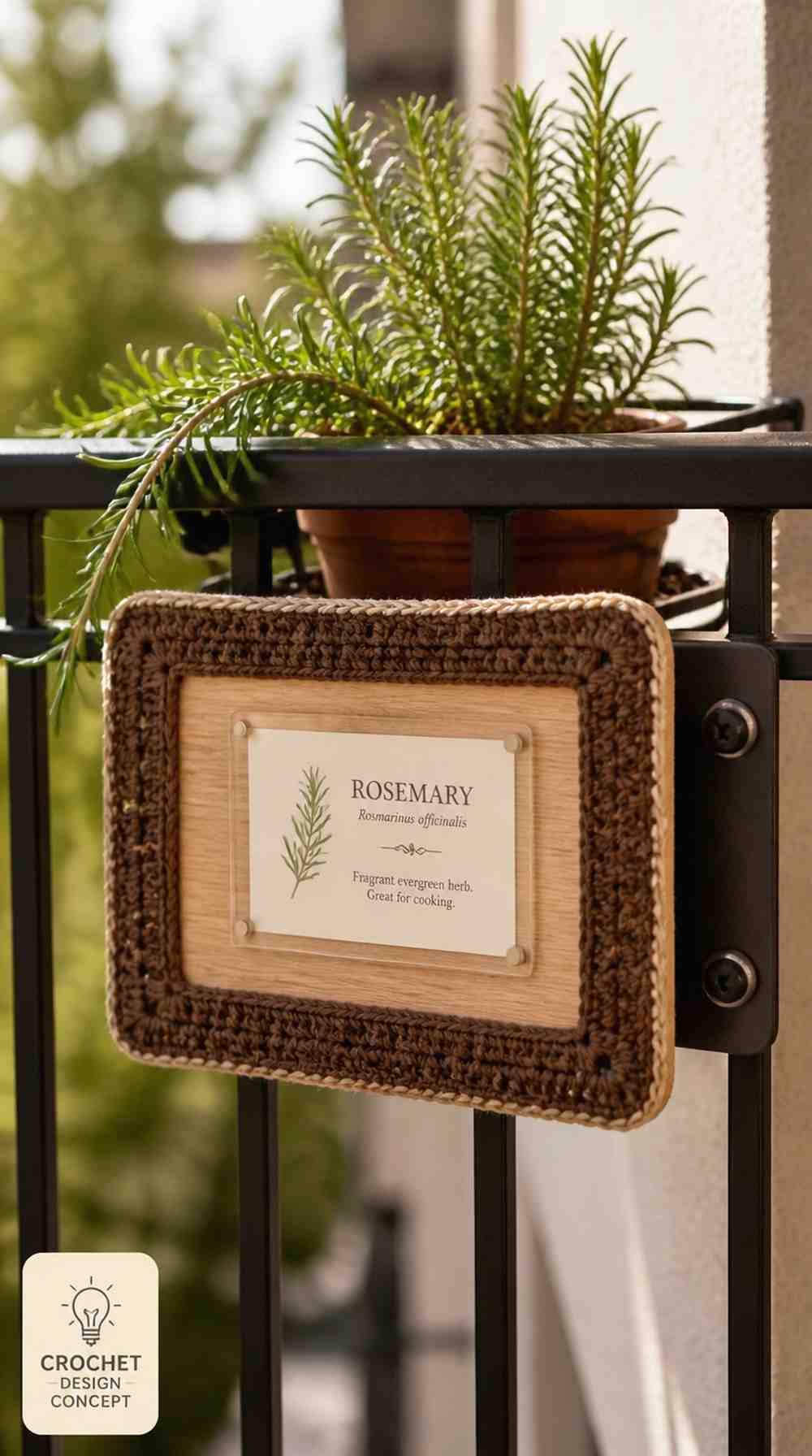
Chocolate-brown crochet surrounds a small horizontal pale-oak identification plaque. Raised basketweave-style stitches create a warm textured border, while tan edging finishes the outside. A weather-resistant card sits behind a transparent rigid central window.
Unlike a fabric-only banner, this concept relies on a separate wooden plaque and mounting bracket for its structure. The crochet remains decorative, bringing handmade detail to the rigid identification display near a trailing rosemary planter.
- Rigid Backing: The wooden plaque should provide structural support, with the crochet border attached only as a removable decorative covering.
- Wood Protection: Choose an appropriately finished material for outdoor exposure and inspect it for moisture damage.
- Clear Label Area: Keep raised basketweave stitches around the outer frame rather than allowing them to cover the card window.
9. Crochet Ivory Fan-Lace Planter Label Frame
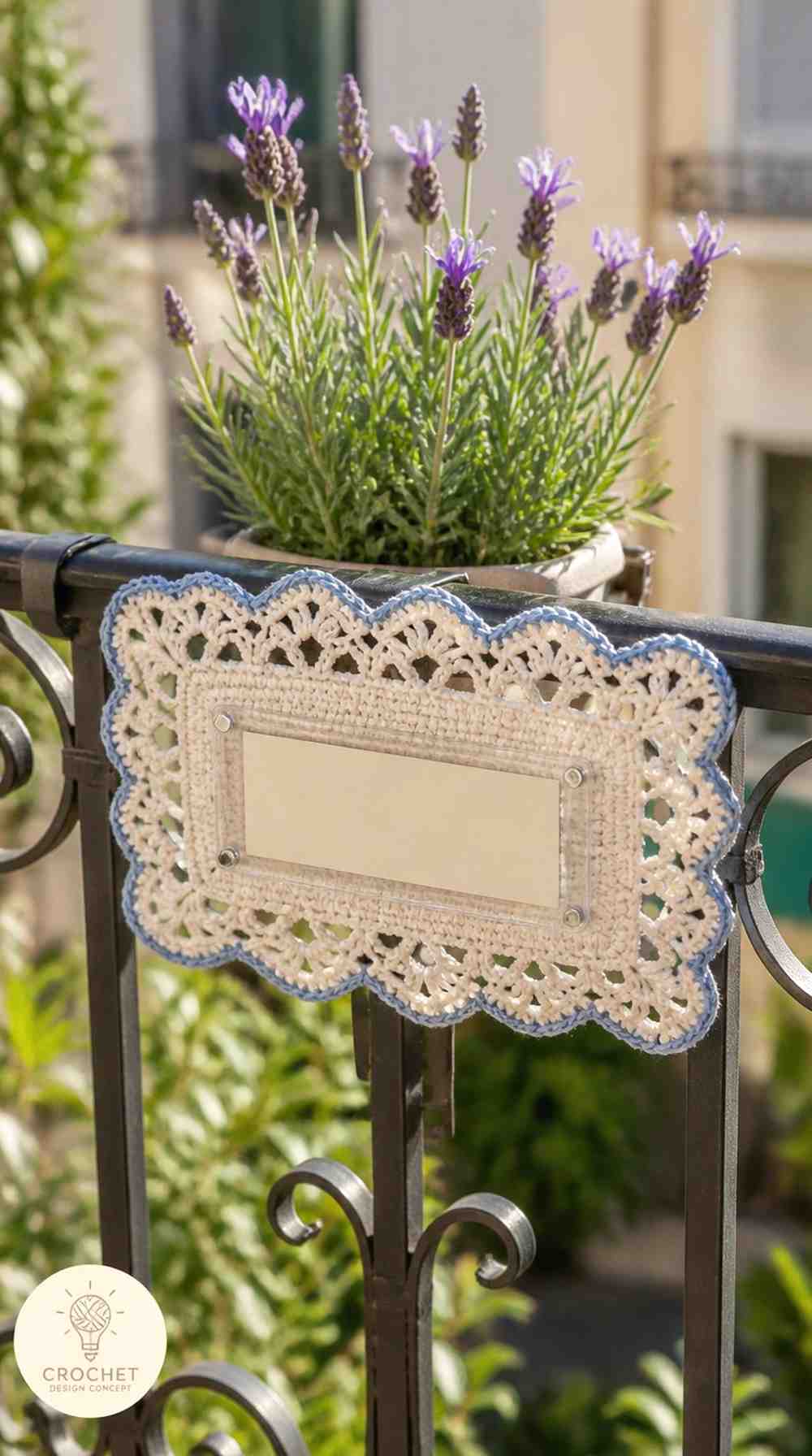
Ivory crochet gives this rectangular identification banner a delicate vintage appearance. A close-stitched center supports a transparent label window, while connected fan-lace motifs form a broad border finished with a thin dusty-blue outer round.
The openwork looks especially attractive beside a lavender planter, but this is primarily a decorative concept. The lace should remain attached to a rigid inner-side support instead of hanging freely where wind could pull it out of shape.
- Fan-Lace Construction: Keep the open motifs consistently connected, with no excessively long loops that could catch on the railing.
- Rigid Support: Use a separate lightweight backing so the lace does not carry the load of the entire identification frame.
- Weather Exposure: Open lace may trap dust and debris, so plan a removable design that can be cleaned and dried away from the balcony.
10. Crochet Teal Two-Tone Rail Label Sash
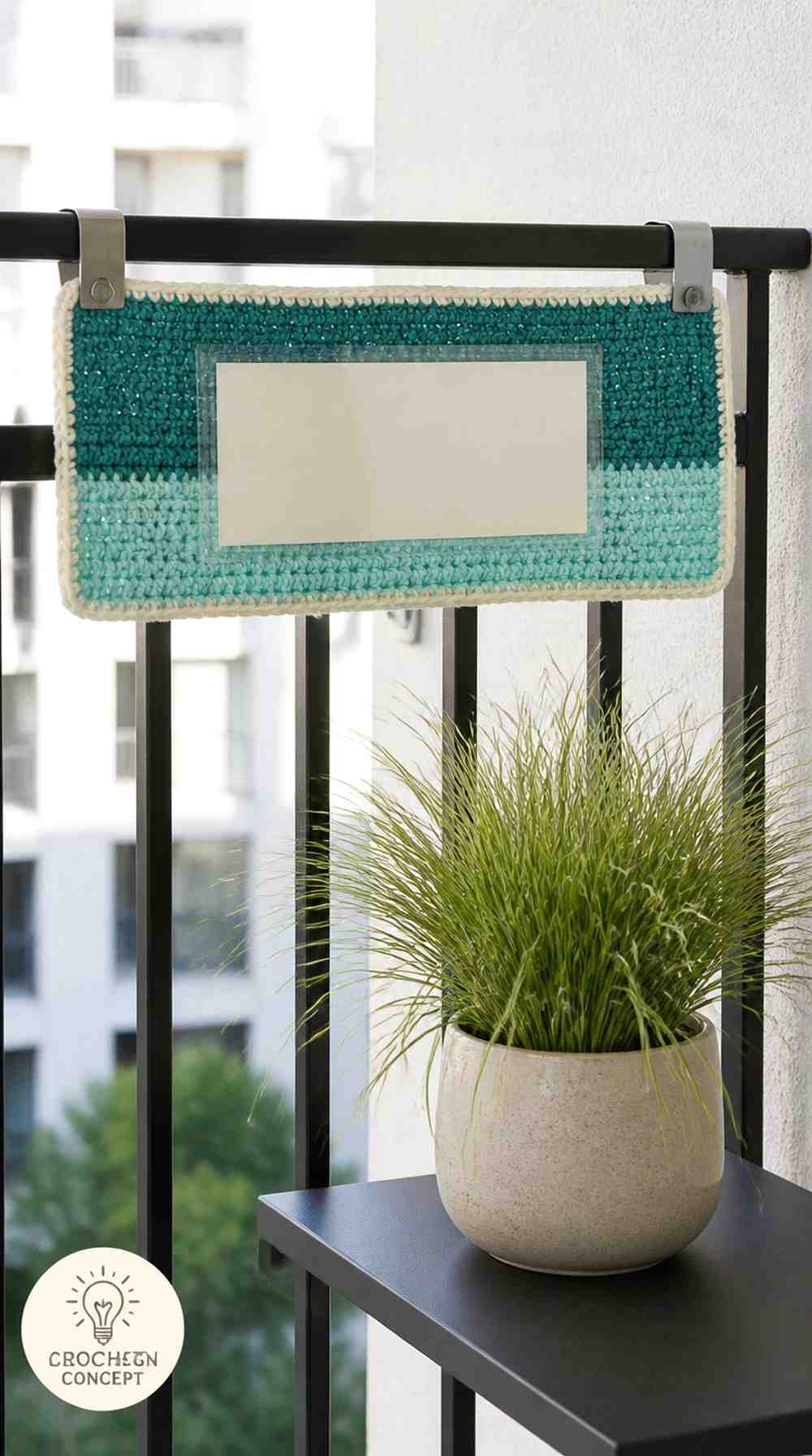
Teal crochet creates a compact rectangular identification sash with two horizontal color bands in deep teal and pale aqua. A thin ivory border outlines the panel, while a transparent central window contains a plain cream plant card.
The sash attaches at its two upper corners to short inner-side metal rail clips. The combination of color blocking and simple rectangular shaping creates a modern look beside a dwarf ornamental grass planter.
- Two-Tone Stitching: Keep the horizontal color transition neat so the sash lies flat without an uneven raised seam.
- Corner Attachments: Use independently approved fittings that hold both upper corners securely against the inside rail.
- Plant Visibility: Position the sash low enough for the ornamental grass to remain visible without allowing the panel to hang loosely.
11. Crochet Rust Chevron-Point Herb Banner
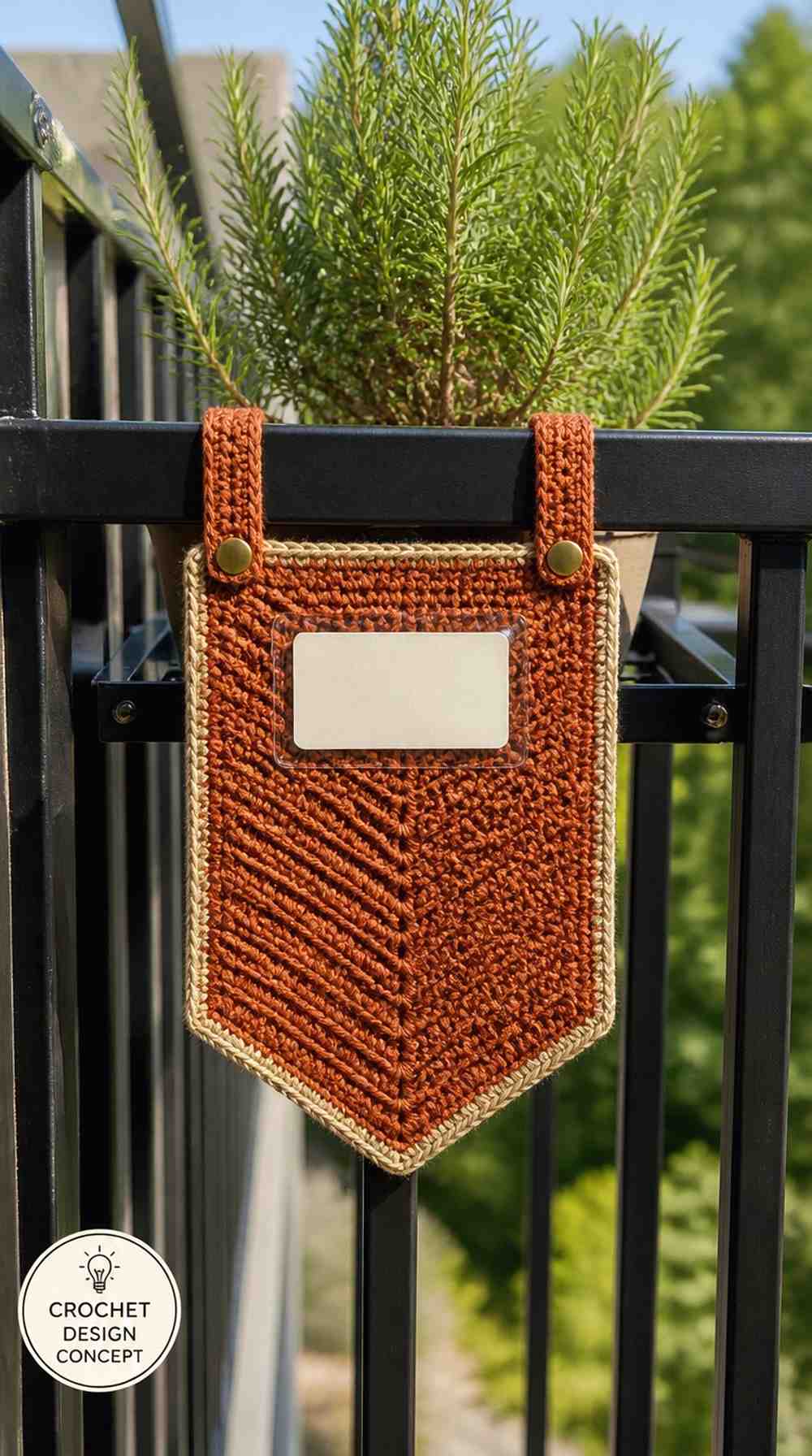
Rust-orange crochet forms a banner with a broad rectangular top and a short V-shaped lower point. Close chevron rows create a clear directional texture, while sand-colored edging defines the outline.
A transparent card window near the upper section identifies the rosemary planter behind it. The pointed lower border gives this concept a traditional pennant appearance without requiring tassels, ribbons, or other dangling embellishments.
- Chevron Shaping: Keep the decreases symmetrical so the short V-shaped tip remains centered below the rectangular section.
- Upper Identification: Place the label above the pointed section where its full surface remains visible.
- Wind Exposure: Avoid extending the point into a long tail; a compact shape is easier to secure close to the supporting rail.
12. Crochet Butter-Yellow Daisy Planter Label Banner
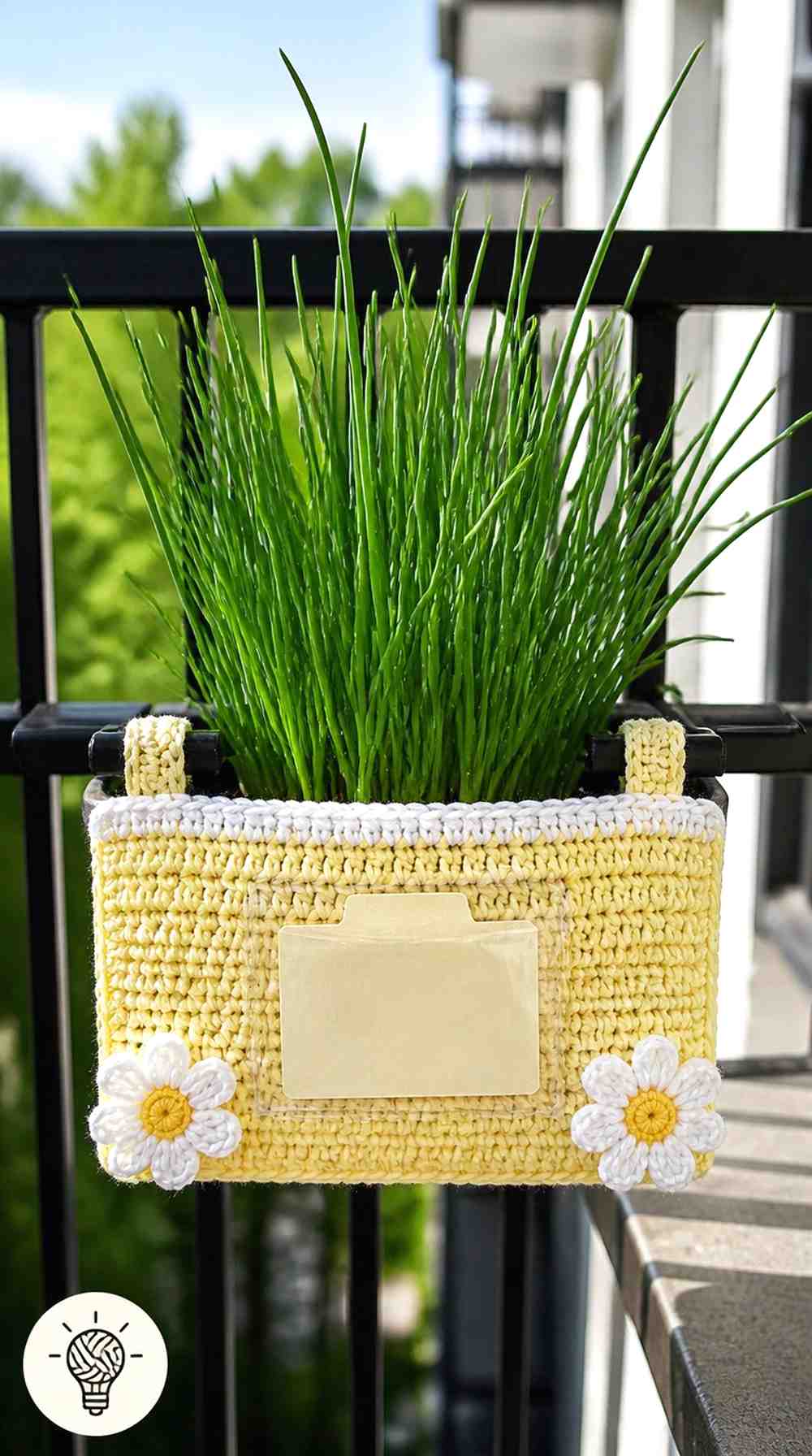
Butter-yellow crochet creates a cheerful rectangular banner with a white upper border and two small crochet daisies near the lower outer corners. The ivory petals and golden centers remain flat, while a transparent central pocket holds a separate weather-resistant identification card.
A pot of green chives provides a natural background for the yellow-and-white design. The floral details give the banner a cottage-garden appearance without needing large decorations that might obscure the plant label.
- Daisy Placement: Keep both flowers below and outside the clear card window so they do not interfere with reading the plant name.
- Secure Motifs: Attach petals and flower centers firmly, avoiding beads or loosely stitched pieces that could detach outdoors.
- Color Contrast: Butter yellow works well with fresh green foliage; a dark, readable label inscription would stand out against the cream card.
13. Crochet Cobalt Reversible Planter ID Banner
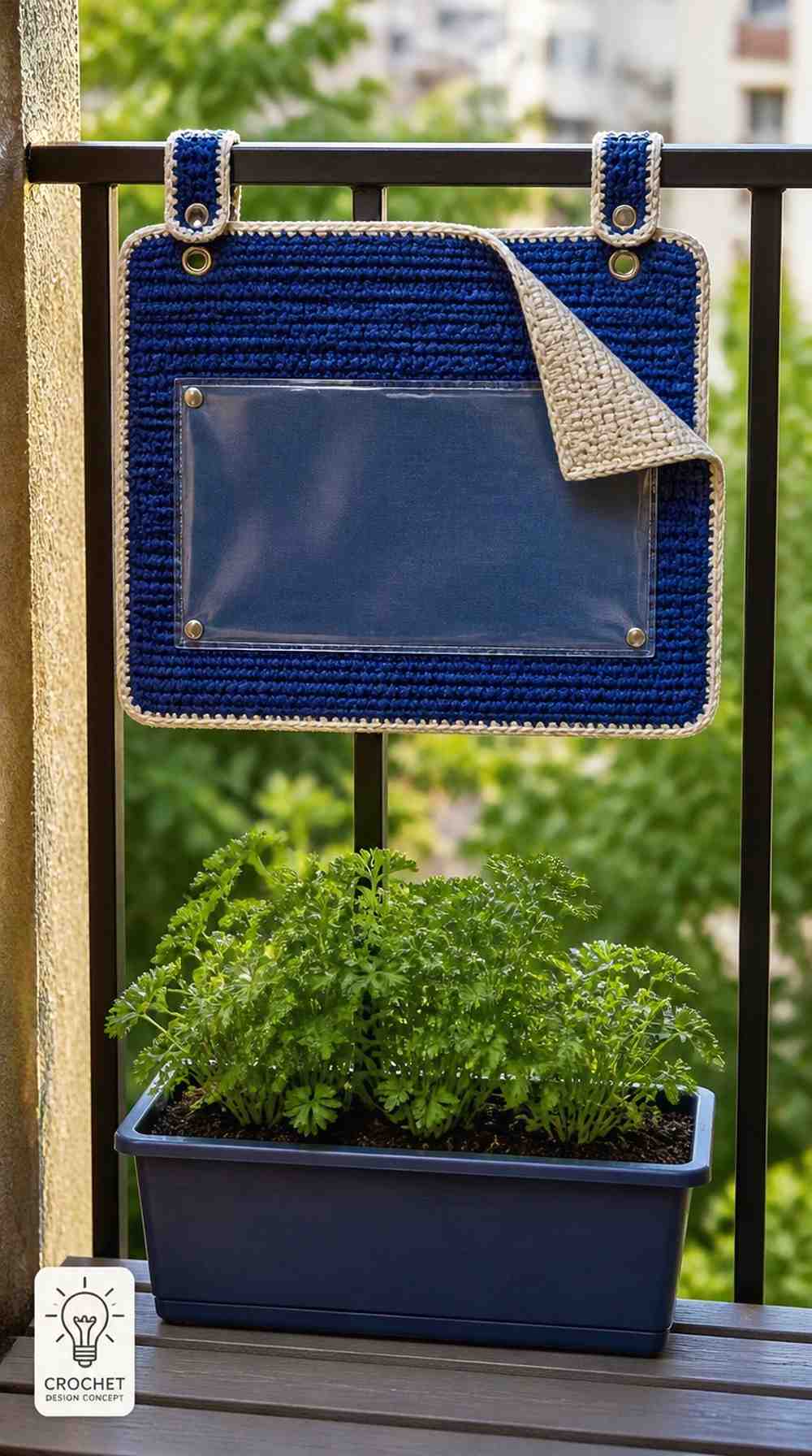
Cobalt-blue crochet forms a compact rectangular banner with cream edging and a smooth oatmeal-colored reverse side. One folded-back corner reveals the second texture, while a rigid two-sided card panel fits inside the visible transparent pocket.
The reversible arrangement offers two decorative looks without requiring separate banners. The panel is intended to be removed and turned by hand, rather than allowed to swing or flip freely when the wind blows.
- Reversible Construction: Keep both crochet faces neatly finished so neither side exposes rough seams or loose yarn ends.
- Card Orientation: Check that the identification card remains readable after the panel is intentionally reversed.
- Secure Display: Use a fixed inner-side rail support rather than a loose rotating attachment that could move unpredictably outdoors.
14. Crochet Burgundy Modular Three-Planter Banners
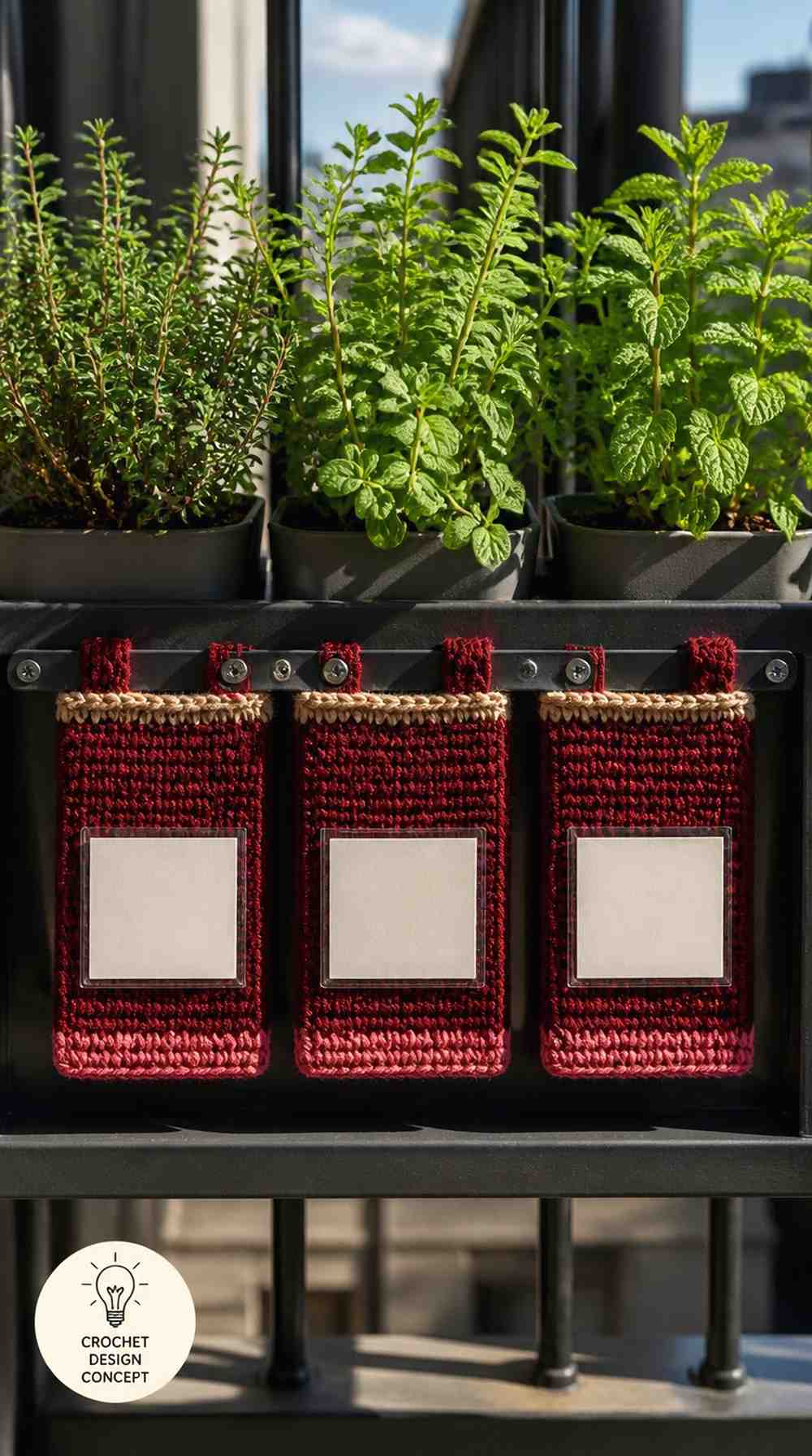
Three separate burgundy crochet identification banners hang along a short rigid mounting rail on the balcony’s inside. Each has a cream upper edge, deep-rose lower border, reinforced tabs, and its own transparent label pocket.
The independent modules identify thyme, oregano, and mint planters arranged on a secure interior shelf. Unlike one continuous three-pocket banner, these sections can be repositioned individually when the plants are moved or replaced.
- Independent Panels: Give each banner its own secure attachment so removing one label does not disturb the others.
- Modular Spacing: Align each section with the corresponding herb pot, allowing enough room for people to identify the correct plant.
- Label Maintenance: Replace individual weather-resistant cards when needed, keeping the reusable crochet modules separate from watering and soil.
Practical Guide to Crochet Balcony Rail Planter Identification Banners
A balcony plant-identification banner should help you recognize your plants without creating an unsafe outdoor attachment.
1. Check balcony rules first. Some buildings do not permit planters, signs, or attachments on railings. The National Trust advises keeping permitted railing planters on the inside of the balcony and preventing objects from falling onto people below. If railing attachments are prohibited, use a freestanding label display safely inside the balcony instead.
nt.global.ssl.fastly.net+1
2. Use independent mounting hardware. Crochet tabs are decorative components, not tested structural anchors. Any real banner needs suitable, approved hardware and a secure arrangement that cannot be dislodged by wind.
3. Keep labels on the balcony-facing side. Never lean over a railing to attach, adjust, or retrieve a banner. All label windows and removable parts should be accessible while standing safely inside the balcony.
4. Protect the plant identification cards. A separate weather-resistant card and suitable outdoor ink are preferable to writing directly on yarn. Transparent sleeves may offer some protection, but their openings and seams can still admit water. Inspect the labels after rain.
5. Choose yarn carefully. Smooth cotton or suitable synthetic yarn may be considered for removable decorative panels, but outdoor exposure can cause fading, stretching, and moisture retention. No crochet material should be assumed weatherproof without checking its properties.
6. Keep drainage clear. Do not place the banner where it blocks planter drainage holes, drip trays, or balcony drainage outlets. Water running through yarn can leave the crochet damp and dirty.
7. Inspect for wind damage. Strong wind can loosen fittings, stretch fabric, or lift lightweight decorations. Remove banners during severe weather rather than assuming their fastenings can withstand every condition.
8. Keep safety routes open. Planters and identification displays must not block access, emergency routes, or the railing’s intended protective function. The National Trust’s balcony-gardening guidance emphasizes these precautions.
nt.global.ssl.fastly.net
For related gardening organization, see 19 Crochet Plant Label Storage Book Inspiration Ideas on Yarn Nest Studio. That collection focuses on storing reusable plant markers between gardening sessions, while these banners are designed as visible identification displays.
Want to Make Something Similar?
These verified resources provide useful crochet techniques for plant labels and hanging marker construction. They are not exact patterns for these 14 balcony banners.
- CyCrochet — Basic Crochet Plant Marker: A free pattern with written instructions and diagrams demonstrating a narrow ribbed marker and folded hanging loop. It also discusses using a separate weather-resistant label. CyCrochet
- HookStitchSew — Crochet Garden Fruit and Vegetable Label Pattern: A free tutorial showing decorative crochet fruit and vegetable markers. It may help with small plant-themed motifs, although its markers are different from balcony rail banners. HookStitchSew
For another related inspiration collection, explore 19 Crochet Cottagecore Hanging Plant Holder Inspiration Ideas. That post focuses on plant holders rather than identification banners, and any real balcony planter still needs appropriate independent structural support.
Which Crochet Balcony Rail Planter Identification Banner Should You Choose?
| Balcony or gardening need | Design to consider | Main consideration |
|---|---|---|
| One compact identification label | Terracotta Twin-Tab Banner | Secure dual attachments |
| Round railing shape | Indigo Curved-Rail Wrap | Suitable rail fit |
| Two neighboring herbs | Mustard Twin-Plant Banner | Matching label positions |
| Decorative balcony corner | Blush Scalloped Corner Banner | Corner bracket clearance |
| Narrow vertical space | Olive Plant-Name Pennant | Short, secure lower tip |
| Three herbs in one display | Coral Three-Herb Banner | Stable continuous backing |
| Protected replaceable label | Lavender Flip-Flap Banner | Flap and card access |
| Structured wooden appearance | Chocolate Timber-Frame Banner | Weather-resistant rigid support |
| Vintage garden styling | Ivory Fan-Lace Frame | Delicate lace maintenance |
| Modern two-tone decoration | Teal Label Sash | Secure corner clips |
| Traditional pointed banner | Rust Chevron-Point Banner | Symmetrical short point |
| Floral cottage decoration | Butter-Yellow Daisy Banner | Firmly attached motifs |
| Two decorative sides | Cobalt Reversible Banner | No loose wind-flipping |
| Three movable herb labels | Burgundy Modular Banners | Independent secure fittings |
For a balcony with one or two planters, the Terracotta Twin-Tab and Mustard Twin-Plant designs are straightforward concepts. They keep the identification cards visible without introducing complicated decorative shapes.
If you have several herbs along a secure interior shelf, the Coral Three-Herb Rail Banner offers a single coordinated display. The Burgundy Modular Three-Planter Banners provide more flexibility when the positions of individual pots change.
For decoration, the Blush Scalloped, Ivory Fan-Lace, and Butter-Yellow Daisy designs add the most distinctive handmade details. Their appearance should still come second to secure mounting and easy maintenance.
Conclusion
A crochet balcony rail planter identification banner can bring handmade character to a small garden while giving herbs and flowers a recognizable label. Whether you prefer a simple terracotta pocket, a delicate ivory lace frame, or a coordinated collection of burgundy banners, the best concept is one that suits the actual plants and available space.
Use separate weather-resistant cards, keep the crochet removable, and pay particular attention to balcony rules and attachment safety. A small, secure label that is easy to read and maintain is more useful than a larger decoration that moves in the wind.
Which of these 14 crochet balcony planter identification banners would you choose? Would you prefer the mustard twin-plant display, the butter-yellow daisy banner, or the burgundy modular labels? Share your favorite style in the comments.
Frequently Asked Questions
1. Can crochet identification banners be attached to balcony railings?
Only where the building’s rules and the railing’s design permit an appropriate attachment. A real banner must be secured against wind and falling, kept entirely on the balcony’s interior side, and positioned without affecting the railing’s safety function. These illustrated mounting arrangements have not been tested.
nt.global.ssl.fastly.net+1
2. Which yarn is best for an outdoor crochet planter identification banner?
There is no universally weatherproof crochet yarn. Smooth cotton can provide attractive stitch detail but may hold moisture, while some synthetic fibers may dry differently or fade with sunlight. Check the yarn manufacturer’s guidance for outdoor exposure, and make the banner removable for cleaning and storage.
3. How can I keep plant names readable outdoors?
Use a separate weather-resistant label with appropriate outdoor marking ink. The label should be large enough to read comfortably and placed inside a suitable protective window. Check periodically for condensation, fading, and dirt, and replace the card when the information becomes unclear.
4. Can I use one banner to identify several herb planters?
Yes. The Mustard Twin-Plant Banner, Coral Three-Herb Banner, and Burgundy Modular Three-Planter Banners illustrate ways to display more than one label. Each card should clearly correspond to its plant, and the complete banner must remain securely supported without placing additional weight on the planters themselves.
5. Are these 14 crochet balcony rail planter identification banner ideas complete patterns?
No. These are original crochet design visualizations intended to inspire different banner shapes, colors, label windows, and arrangements. The linked tutorials demonstrate related plant-marker techniques but do not reproduce the exact illustrated banners. Any real version would need its own measurements, outdoor-material choices, mounting approval, and safety checks.