A crochet window blind cleaning finger mitt is a creative way to explore small handmade dusting accessories for narrow window slats. These 15 inspiration ideas include two-finger mitts, individual fingertip sleeves, thumb-and-finger pinch designs, removable cleaning liners, and decorative floral finishes. With terracotta, indigo, mustard yellow, blush pink, teal, and charcoal among the colors, the collection combines practical-looking shapes with attractive crochet textures.
Cleaning window blinds requires care because thin slats can bend, scratch, or develop marks if handled roughly. These concepts focus on gentle dry dusting, with smooth contact surfaces and crochet used mainly for the mitt’s outer structure. Some designs offer separate finger pockets, while others cover several fingers together. As you compare them, consider comfort, slat width, fabric texture, cleaning method, and the care instructions for your particular blinds.
These are AI-generated crochet design visualizations for inspiration, not photographs of tested handmade products or step-by-step patterns. Their cleaning performance and compatibility with blind finishes have not been tested.
Quick Design Selection Guide
- For two-finger dusting: Crochet Terracotta Twin-Finger Blind Dusting Mitt offers two separate fingertip pockets with smooth cleaning surfaces.
- For a single fingertip: Crochet Indigo Ribbed Index-Finger Dusting Sleeve and Crochet Rust Side-Seam Dusting Finger Mitt have compact shapes.
- For thumb-and-finger control: Crochet Mustard Thumb-and-Finger Pinch Mitt and Crochet Chocolate Oval Thumb-Pinch Mitt offer paired contact surfaces.
- For broader slats: Crochet Olive Three-Finger Flat Dusting Mitt uses one flat compartment across three fingers.
- For easy washing: Crochet Coral Detachable-Liner Blind Mitt features removable cleaning inserts.
- For decorative crochet: Crochet Ivory Granny-Square Finger Dusting Mitt and Crochet Butter-Yellow Daisy Double-Finger Mitt keep embellishments on the outer surface.
- For separate fingertip pieces: Crochet Charcoal Independent Finger Cleaning Pads uses two individual sleeves.
1. Crochet Terracotta Twin-Finger Blind Dusting Mitt
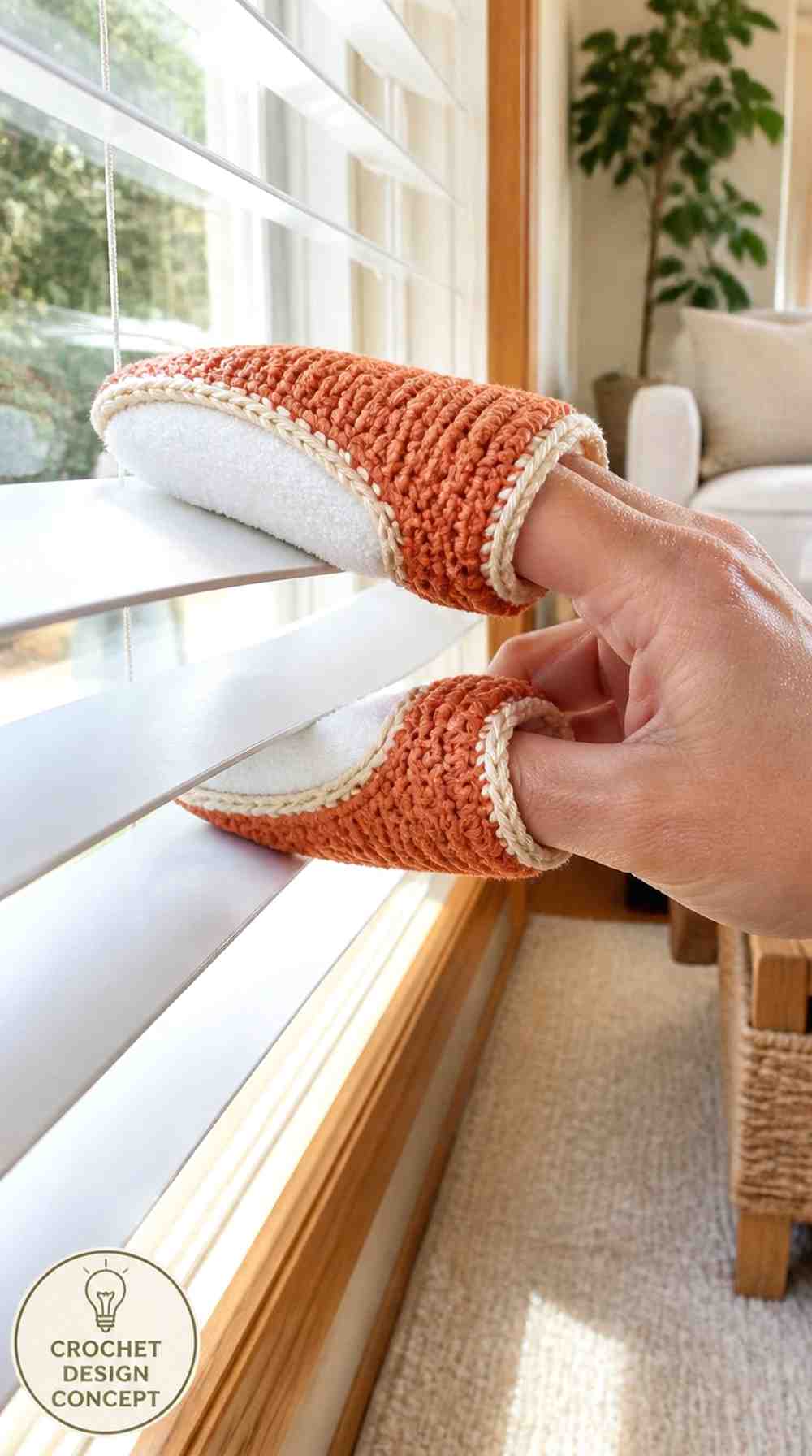
Terracotta crochet forms a compact cleaning mitt with two rounded pockets for the index and middle fingers. Dense single-crochet rows create the outer structure, while cream edging and smooth ivory microfiber panels finish the contact areas. The design is shown gently dusting a white faux-wood blind slat.
The separate pockets allow the fingers to move naturally while keeping the cleaning surfaces relatively small. This arrangement may be worth exploring for broad slats, although the finished mitt must not encourage excessive pinching or bending.
- Finger Fit: Check the length and circumference of both finger pockets, leaving enough room to move without tight pressure at the fingertips.
- Microfiber Contact: A smooth, clean microfiber lining may be preferable to raised crochet stitches for touching a delicate blind finish, subject to manufacturer guidance.
- Slat Support: Move gently along the surface without pulling the slat away from its normal position or placing weight on the lifting cords.
- Washing Access: Consider whether the crochet body and contact panels can be cleaned separately when dust has built up.
2. Crochet Indigo Ribbed Index-Finger Dusting Sleeve
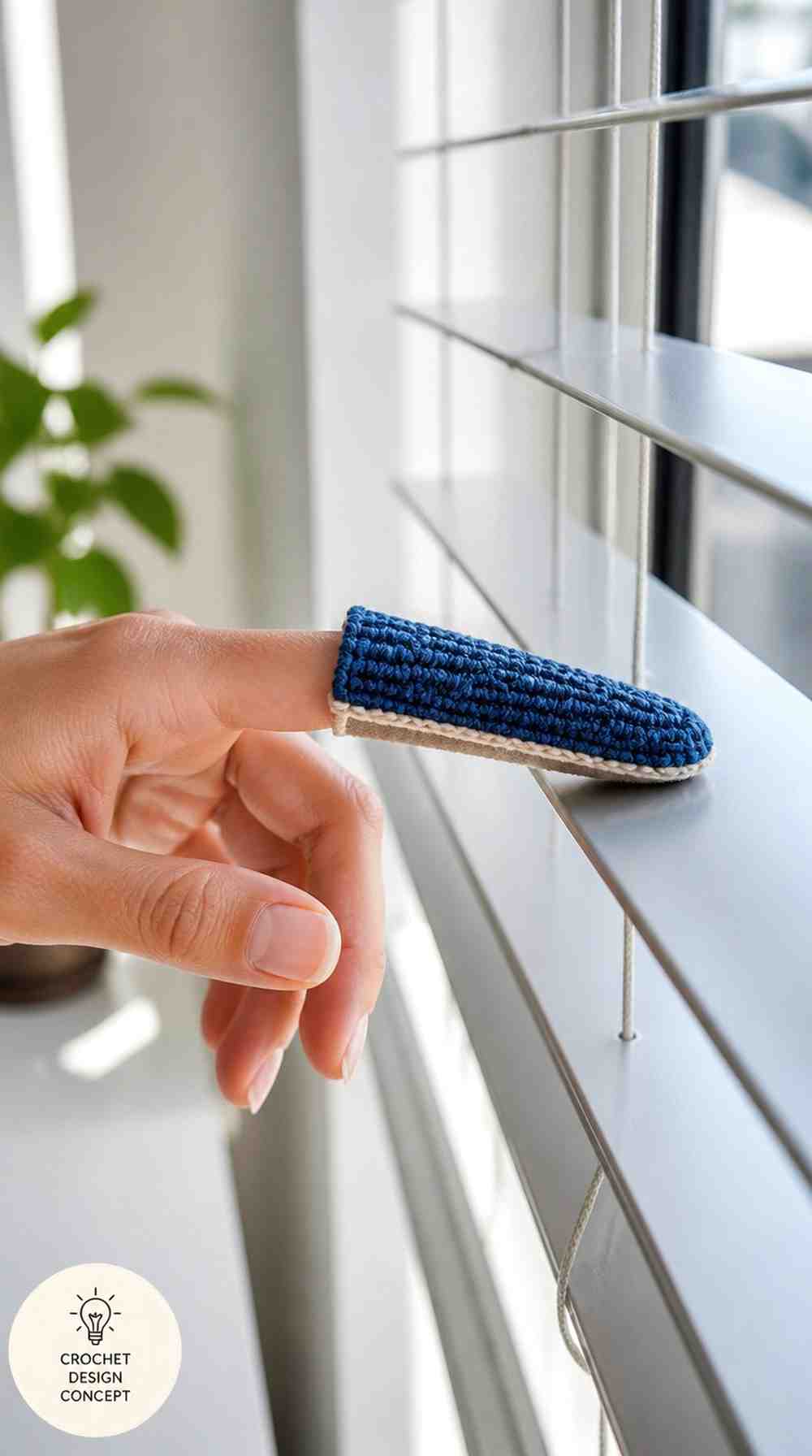
Deep-indigo crochet creates a slim single-finger sleeve with fine lengthwise ribs, a rounded tip, and an oatmeal opening border. A smooth cream fabric strip runs along the underside, forming the intended dust-contact surface.
The narrow silhouette makes this concept different from a whole-hand mitt. It may suit someone who wants to reach a small visible section of a broad blind slat, although the single finger should never be used to force access into a tight or damaged opening.
- Single-Finger Coverage: Fit the sleeve around the actual index finger without making the opening so tight that movement becomes uncomfortable.
- Ribbed Crochet: Keep the textured stitches on the outer surface so raised ridges do not scrape against the blind.
- Gentle Movement: Guide the fingertip along the slat with light pressure rather than pressing against the edge or supporting the blind’s weight.
3. Crochet Mustard Thumb-and-Finger Pinch Mitt
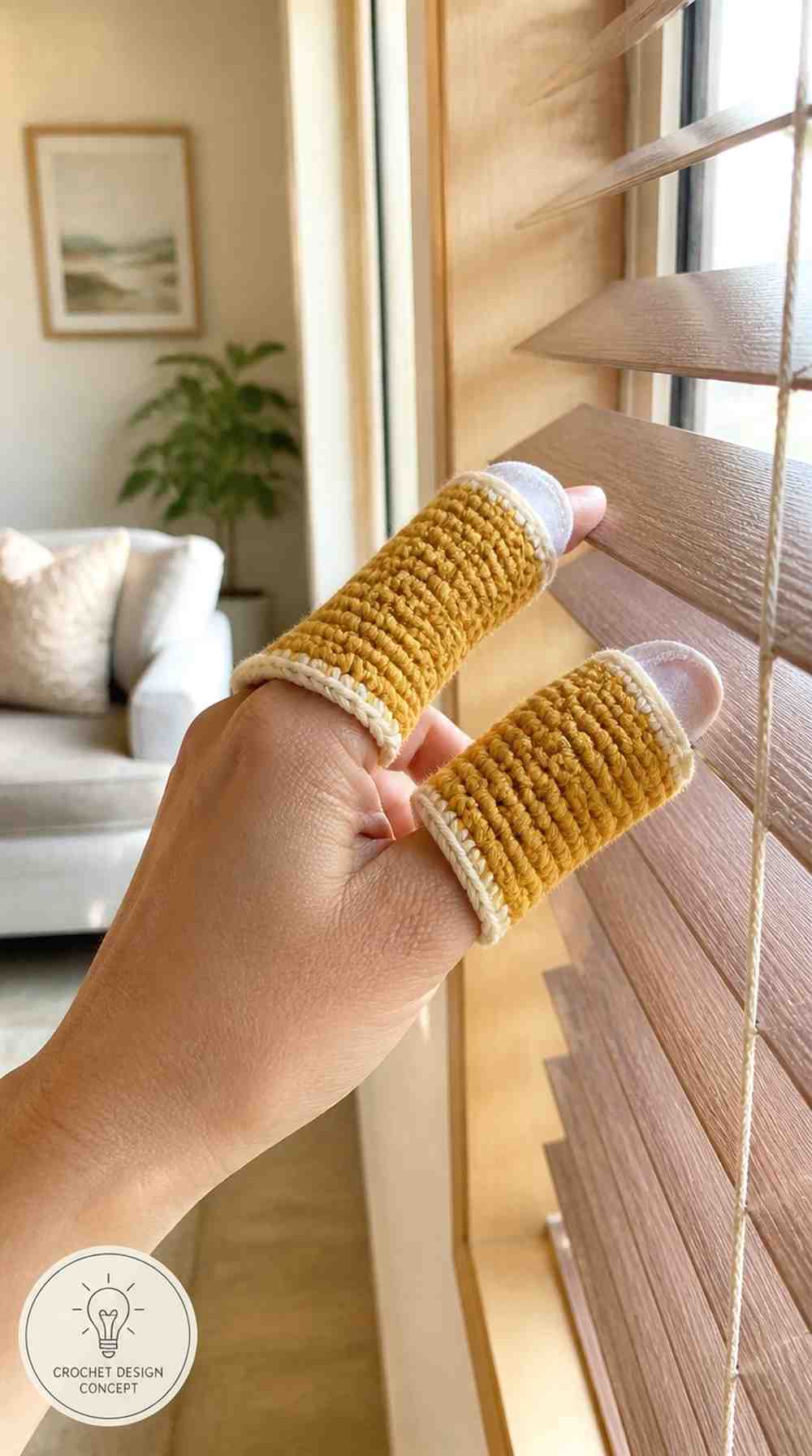
Mustard-yellow crochet creates a paired cleaning mitt with one pocket for the thumb and another for the index finger. A short flexible bridge connects them, while smooth white microfiber surfaces face inward and cream borders define the pocket openings.
The illustrated design lightly supports a wide faux-wood slat between two covered fingertips. This gives it a different structure from neighboring-finger mitts, but the pinch shape must be used carefully to avoid flexing thin slats.
- Thumb Alignment: Shape the two pockets for natural thumb-and-finger movement rather than forcing the hand into a fixed angle.
- Connecting Bridge: Keep the bridge short and flexible so it does not catch on slat cords or interfere with normal hand motion.
- Pressure Control: Treat the pinch as a light dusting position, not a way to clamp, pull, or bend a blind slat.
4. Crochet Blush Scalloped Double-Finger Mitt
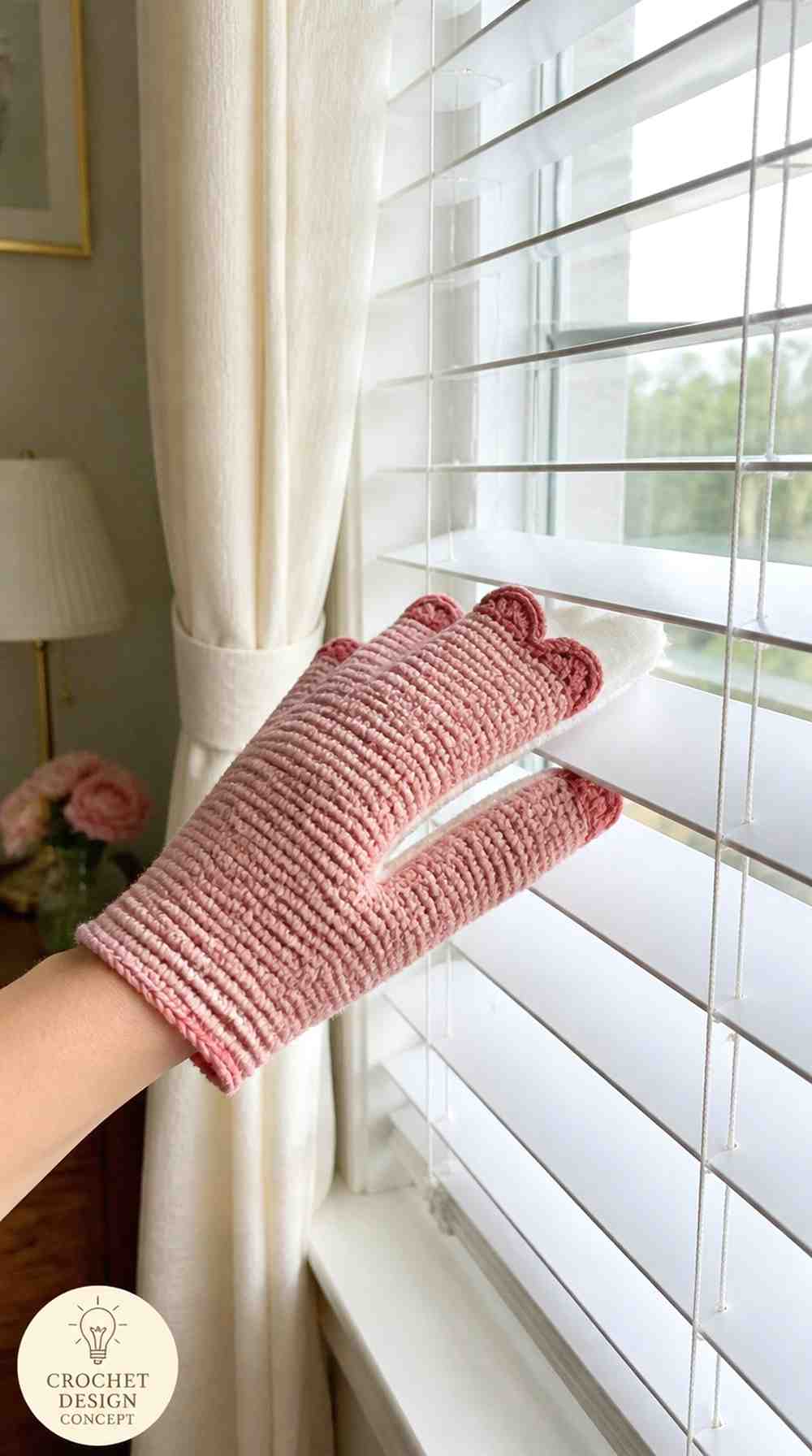
Blush-pink crochet gives this two-finger mitt a softer decorative appearance. Dusty-rose edging and four small scallops finish its upper outside edge, while dense crochet rows and smooth ivory cloth form the main finger pockets.
The scallops add a recognizable handmade detail without sitting on the cleaning surfaces. The design is shown beside a bright bedroom window, where the mitt can contact one broad white slat while remaining separate from blind cords.
- Scallop Placement: Keep the four decorative loops flat and firmly attached to the outer edge, away from surfaces that touch the blinds.
- Smooth Underside: Maintain a low-profile cloth contact area without bulky seams that might leave marks or catch on slat edges.
- Storage and Cleaning: Allow the mitt to dry completely after washing before storing it, particularly if the crocheted border is thicker than the lining.
5. Crochet Olive Three-Finger Flat Dusting Mitt
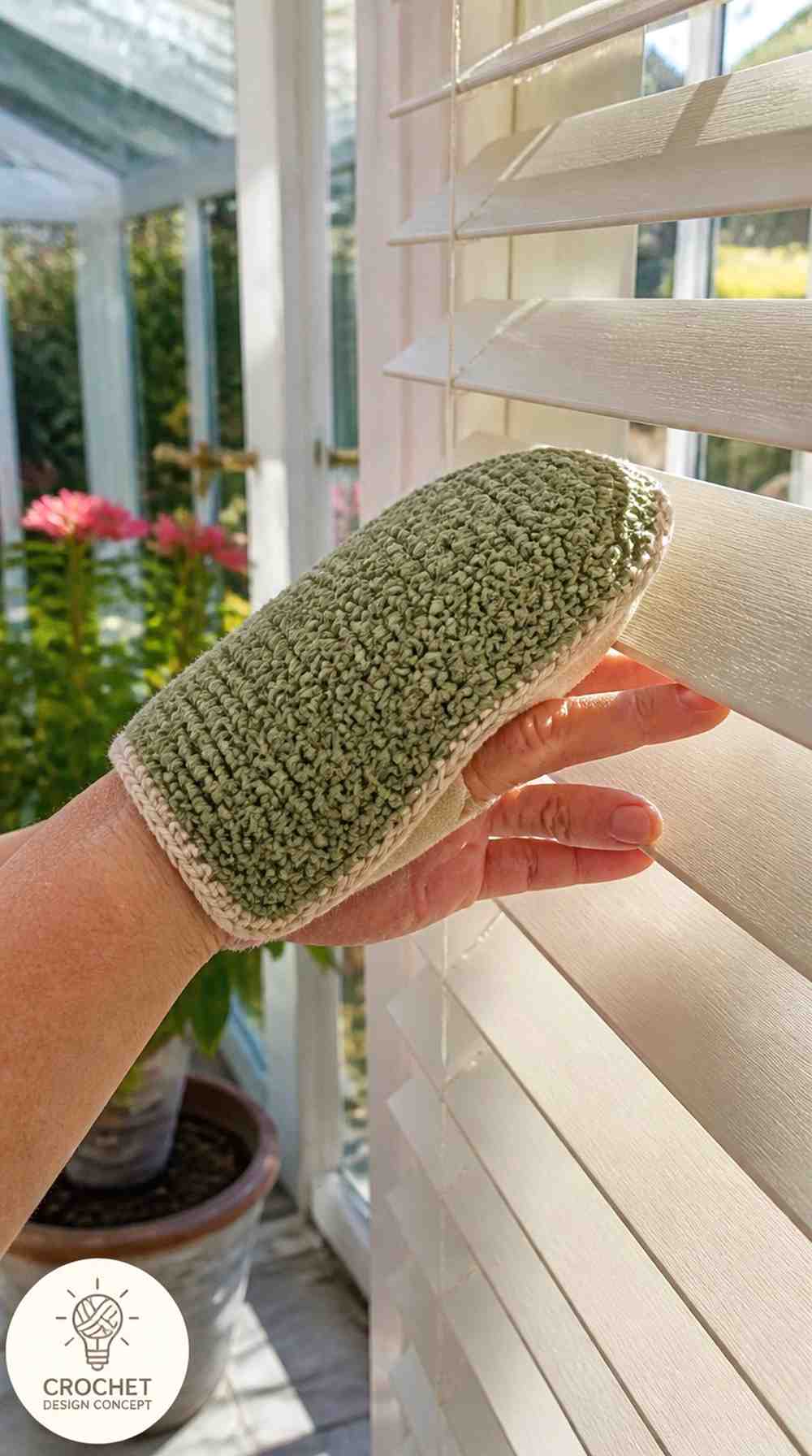
Olive-green crochet creates a broad mitt with one rounded compartment for the index, middle, and ring fingers together. Compact moss-style rows cover the back, while a cream microfiber panel forms the flat underside. Oatmeal edging finishes the opening.
Instead of working through narrow spaces, this design is intended to make gentle contact with a wider portion of one broad blind slat. The grouped-finger arrangement gives the cleaning panel a flatter shape than individual fingertip sleeves.
- Broad Surface: Compare the mitt’s width with the actual slat width, making sure the cleaning panel is not too large for the available space.
- Finger Movement: Keep enough room inside the shared pocket for the three fingers to relax and reposition naturally.
- Surface Compatibility: Check whether the blind manufacturer permits a soft dusting cloth; do not assume textured crochet is suitable for direct contact.
- Avoid Bending: Support the slat only as needed and use light wiping pressure, particularly near its thin outer edges.
6. Crochet Powder-Blue Reversible Finger Mitt

Powder-blue crochet gives this two-finger mitt a fresh appearance, with a cream reverse face and a narrow white border. The design is displayed on a wooden windowsill with its upper edge turned back to reveal the layered construction and removable microfiber liner.
The reversible color arrangement offers two decorative appearances, while the separate cleaning liner is intended to remain the actual contact surface. This design emphasizes maintenance and fabric layering rather than raised decorative stitches.
- Reversible Construction: Keep both crochet faces neatly finished so turning the mitt does not expose rough joins or loose yarn ends.
- Removable Liner: Plan a simple way to remove and replace the microfiber layer without stretching the two finger compartments.
- Material Thickness: Avoid combining so many layers that the fingertips lose comfortable movement or become too bulky for the blind spacing.
7. Crochet Rust Side-Seam Dusting Finger Mitt

Rust-orange crochet forms a narrow single-finger sleeve with compact horizontal rows, sand-colored edging, and a rounded closed tip. One removable side closure is visible on the outer surface, while a pale microfiber panel covers the underside.
The small side opening makes this concept easier to examine than a permanently closed fingertip sleeve. It is designed for gentle cleaning along a wide matte-white slat, with the original blind hardware and operating cords left untouched.
- Side Closure: Keep the fastening low-profile and positioned away from the contact surface so it cannot scrape the blind.
- Finger Opening: The sleeve should feel comfortable without sliding off when the hand is tilted or moved.
- Cleaning Direction: Guide the microfiber panel along the slat gently, keeping the finger clear of exposed sharp or damaged edges.
8. Crochet Lavender Long-Reach Twin-Finger Mitt

Lavender crochet forms an elongated two-finger mitt with rounded fingertip pockets, deep-plum seam detailing, and a narrow cream opening border. The design extends slightly farther toward the knuckles than the shorter finger covers, with microfiber strips along both undersides.
The longer shape gives the mitt more finger coverage rather than extra reach beyond the hand. It may be useful for keeping the two sleeves aligned during light dusting, but the fabric must remain flexible enough for natural movement.
- Extended Coverage: Measure from the fingertips toward the knuckles, avoiding a length that bunches when the fingers bend.
- Pocket Separation: Keep the seam between the two sleeves flat so the fingers can move independently without pulling the crochet sideways.
- Slat Access: Use the mitt only where there is sufficient room to move naturally; do not force covered fingers between closely spaced slats.
9. Crochet Ivory Granny-Square Finger Dusting Mitt
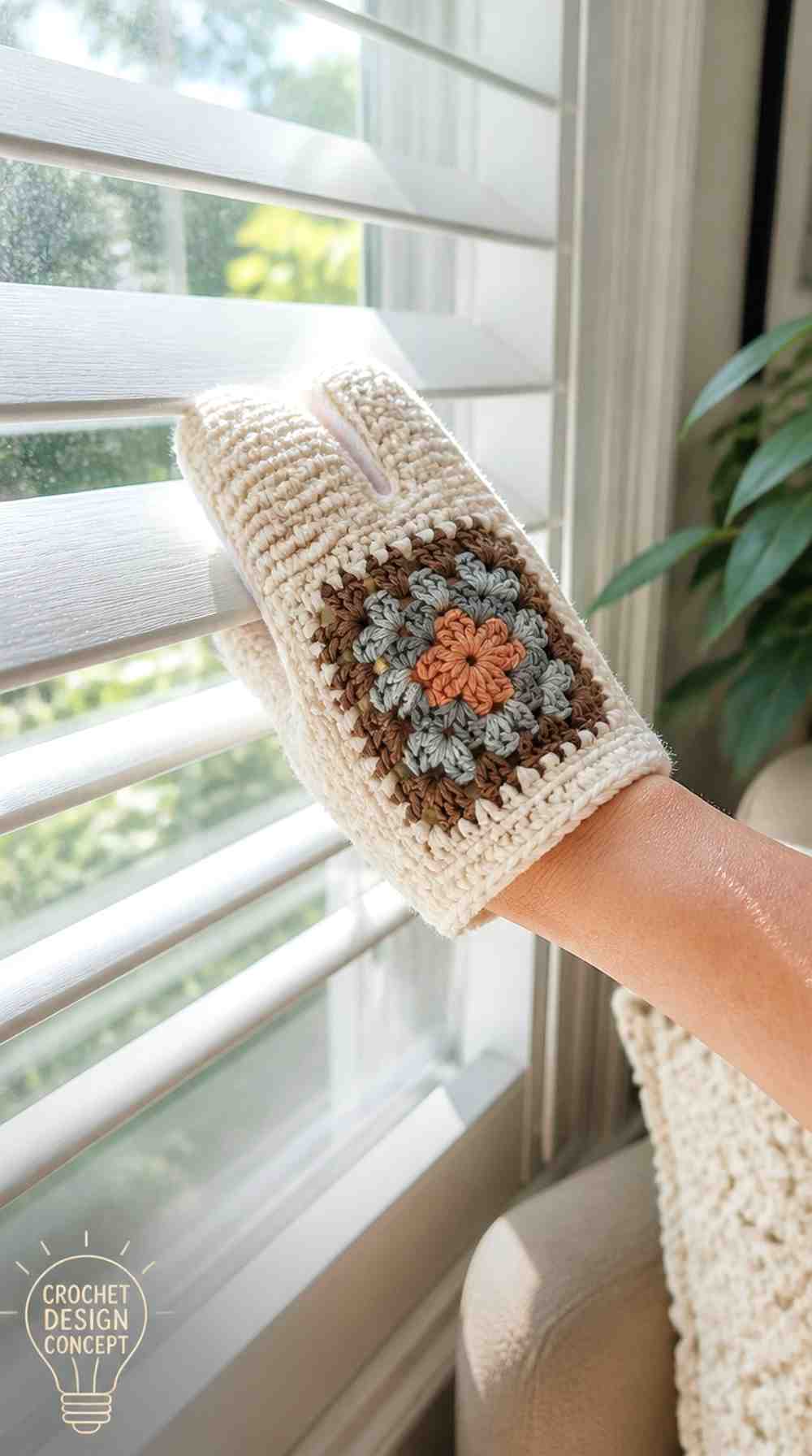
Ivory crochet forms a compact two-finger mitt with a small granny-square motif on its outer back. Muted peach, dusty-blue, and cocoa rounds add a little color, while dense cream side stitches and smooth microfiber undersides complete the finger pockets.
The small granny square makes this design more decorative than an ordinary cleaning sleeve. Its openwork remains on the outside, separated from the white faux-wood blind slat shown in the photograph.
- Motif Placement: Keep the granny-square decoration on the outer back instead of using open crochet clusters as the cleaning surface.
- Secure Joining: Attach the colorful motif with neat, flat stitches that do not create loose corners or raised seams.
- Cleaning Surface: Use a smooth liner against the slat and check that its edges do not expose bulky crochet joins.
10. Crochet Teal Rounded-Three-Finger Cleaning Mitt

Deep-teal crochet creates three separate rounded pockets for the index, middle, and ring fingers. Fine vertical ribs cover the outer surfaces, while ivory edging and smooth microfiber strips finish the underside of each finger.
The three-pocket arrangement provides more individual movement than the broad olive mitt. It could be explored for controlled dusting around wide slats, provided the spacing allows the fingers to move without pushing against the blind.
- Individual Pockets: Shape all three finger tubes to fit comfortably without crowding the fingers together.
- Rounded Tips: Keep fingertip seams smooth and correctly joined so no hard lumps press against delicate blind surfaces.
- Hand Position: Avoid inserting several covered fingers into narrow spaces where they could bend or snag the slats.
- Cleaning Method: Use only gentle contact and follow the blind manufacturer’s instructions for the particular material.
11. Crochet Coral Detachable-Liner Blind Mitt
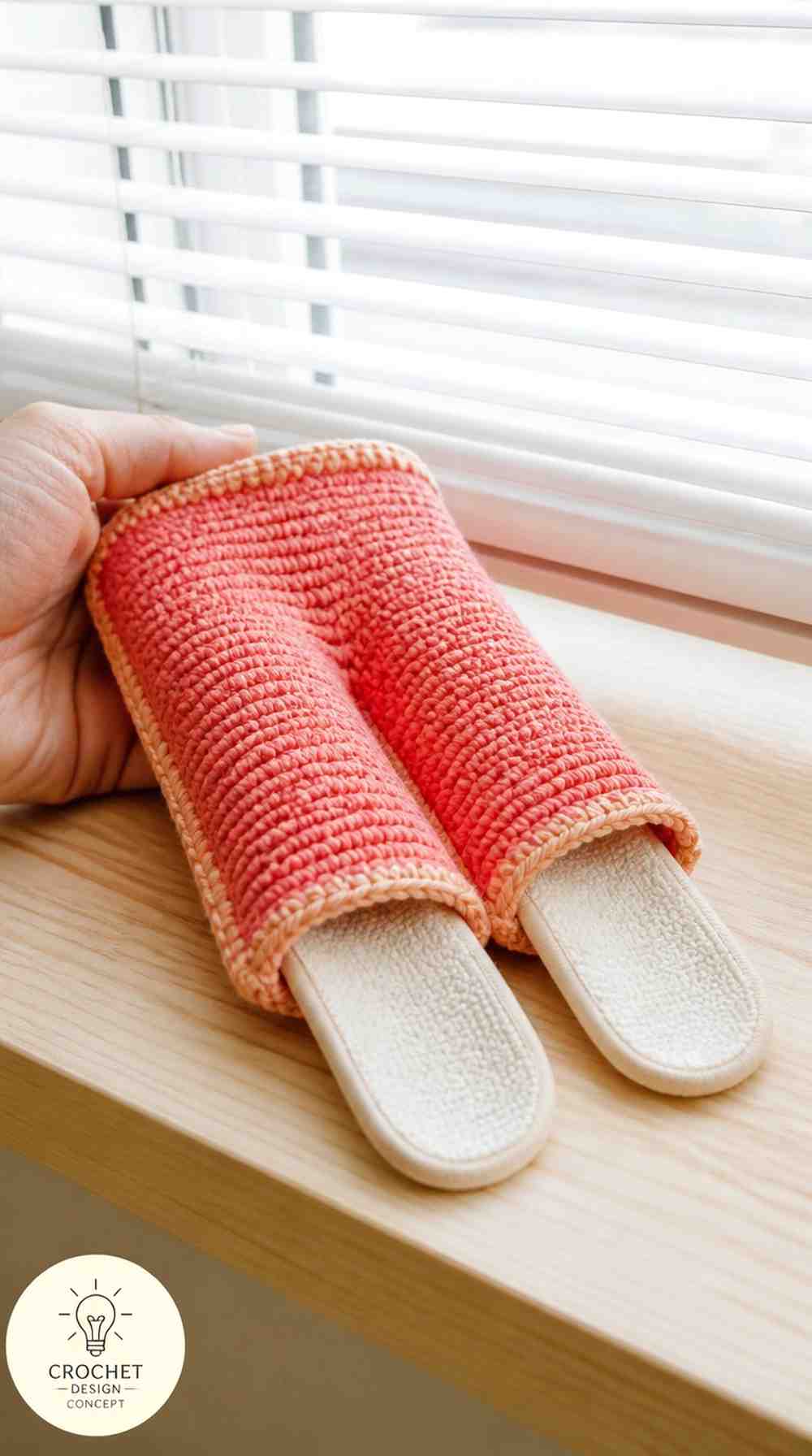
Coral-pink crochet forms a two-finger mitt with compact stitches and a narrow peach border. Two cream microfiber inserts slide into separate underside channels, allowing the cleaning pieces to be removed from the decorative crochet body.
The removable liners are the defining feature of this design. They make it possible to explore a reusable crochet outer mitt while treating the dust-contact fabric as a separate part that may need more frequent washing or replacement.
- Liner Channels: Keep each channel wide enough for the fabric insert to slide in smoothly without bunching or stretching.
- Secure Fit: The inserts need to stay in position during normal movement, without exposed fastening hardware against the blinds.
- Washing Separately: Check the care instructions for both microfiber and yarn before washing, since their requirements may differ.
- Replacement Option: A removable contact panel could be replaced if it becomes rough, worn, or contaminated with cleaning residue.
12. Crochet Chocolate Oval Thumb-Pinch Mitt
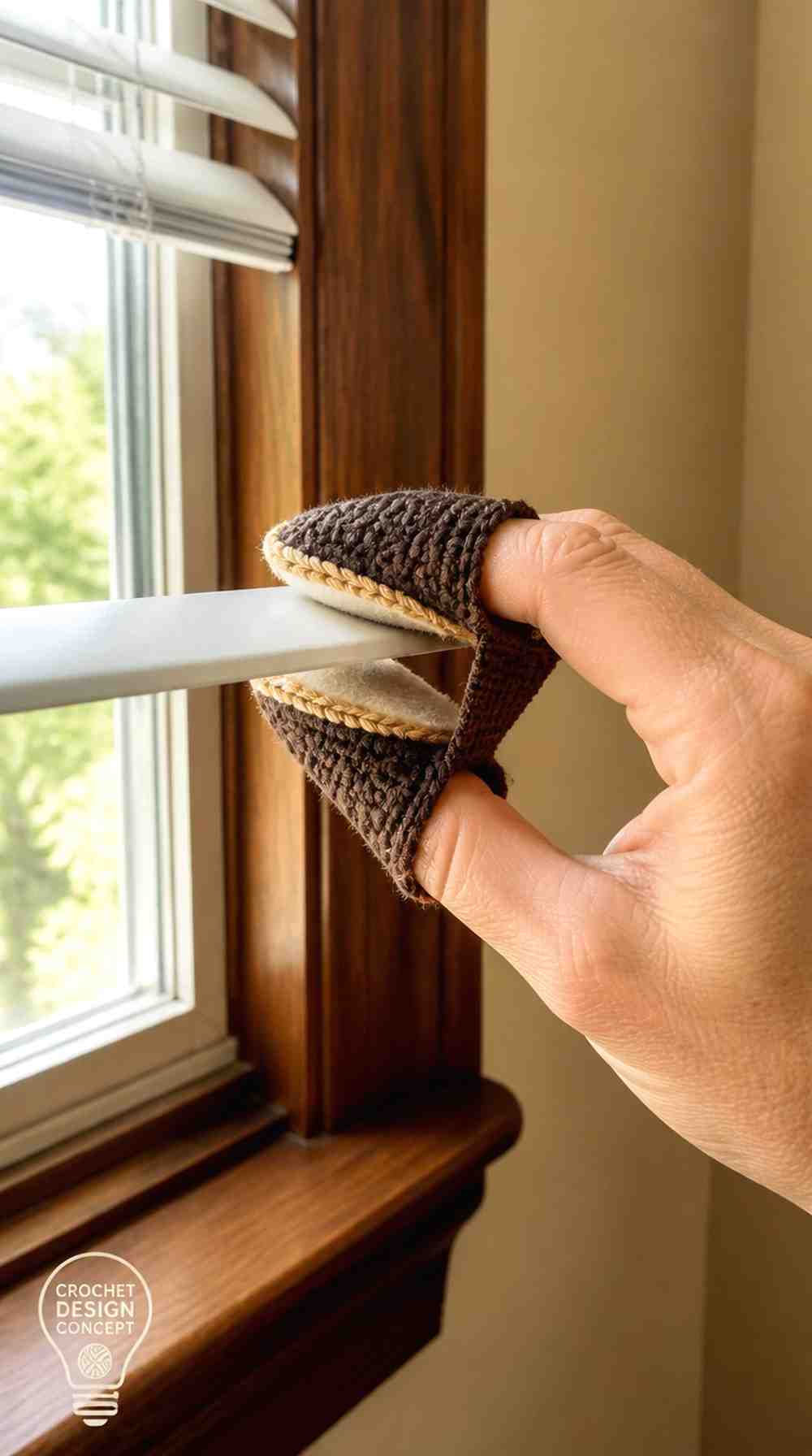
Chocolate-brown crochet creates two softly rounded pockets for the thumb and index finger, joined by a flexible fabric bridge. Tan borders define the openings, while smooth cream microfiber pads cover the inward-facing contact surfaces.
The oval fingertip shape makes this design look slightly fuller than the mustard pinch mitt. It is intended to show how two small cleaning surfaces might approach a broad slat from opposite sides without using hard tools or aggressive pressure.
- Natural Finger Position: Keep the thumb and index finger pockets aligned with normal hand movement rather than forcing the fingertips into an awkward angle.
- Soft Contact Pads: Ensure the microfiber lies flat and does not develop thick seams where it touches the slat.
- Gentle Pinching: Never squeeze the slat firmly or use the mitt to pull blinds into position.
13. Crochet Burgundy Short-Cuff Finger Mitt
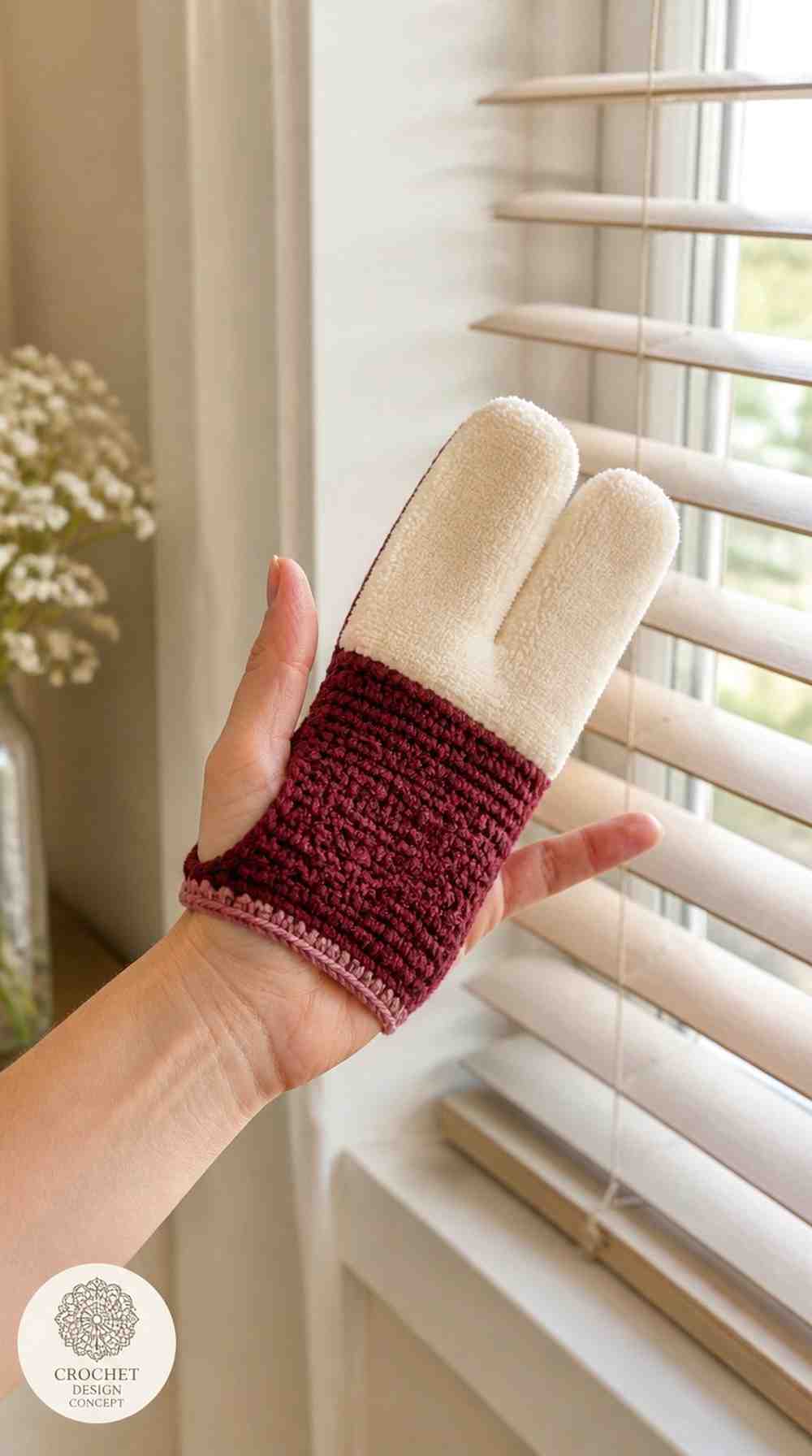
Burgundy crochet creates a two-finger cleaning mitt with rounded fingertip pockets and a small shared cuff ending below the knuckles. Dusty-rose edging gives the opening a soft finish, while one broad cream microfiber panel covers the underside.
The short cuff makes this concept different from individual sleeves that stop close to the fingertips. It holds the two finger sections together without extending around the wrist, leaving the remainder of the hand uncovered.
- Cuff Length: Stop the shared section below the knuckles so the fingers can bend comfortably.
- Opening Fit: Keep the burgundy cuff secure without making it tight enough to restrict circulation or natural hand movement.
- Broad Liner: Smooth out the underside panel so it cannot fold into ridges during contact with the blind.
14. Crochet Butter-Yellow Daisy Double-Finger Mitt

Butter-yellow crochet gives this compact two-finger mitt a cheerful handmade appearance. Two tiny flat white daisies with crocheted golden centers decorate its outer back, while ivory edging and smooth cream microfiber strips finish the finger pockets.
The flowers are a visual detail rather than part of the dusting surface. Their flat placement helps distinguish the decorative side from the side intended to touch a broad white blind slat.
- Daisy Attachment: Secure the small flowers with flat joins and avoid beads, loose petals, or dangling decorative threads.
- Cleaning-Side Separation: Keep the floral motifs away from the blind surface so their raised crochet details cannot catch or scratch.
- Bright-Yarn Care: Light yellow and white fibers may show collected dust more readily, making regular washing and inspection important.
15. Crochet Charcoal Independent Finger Cleaning Pads
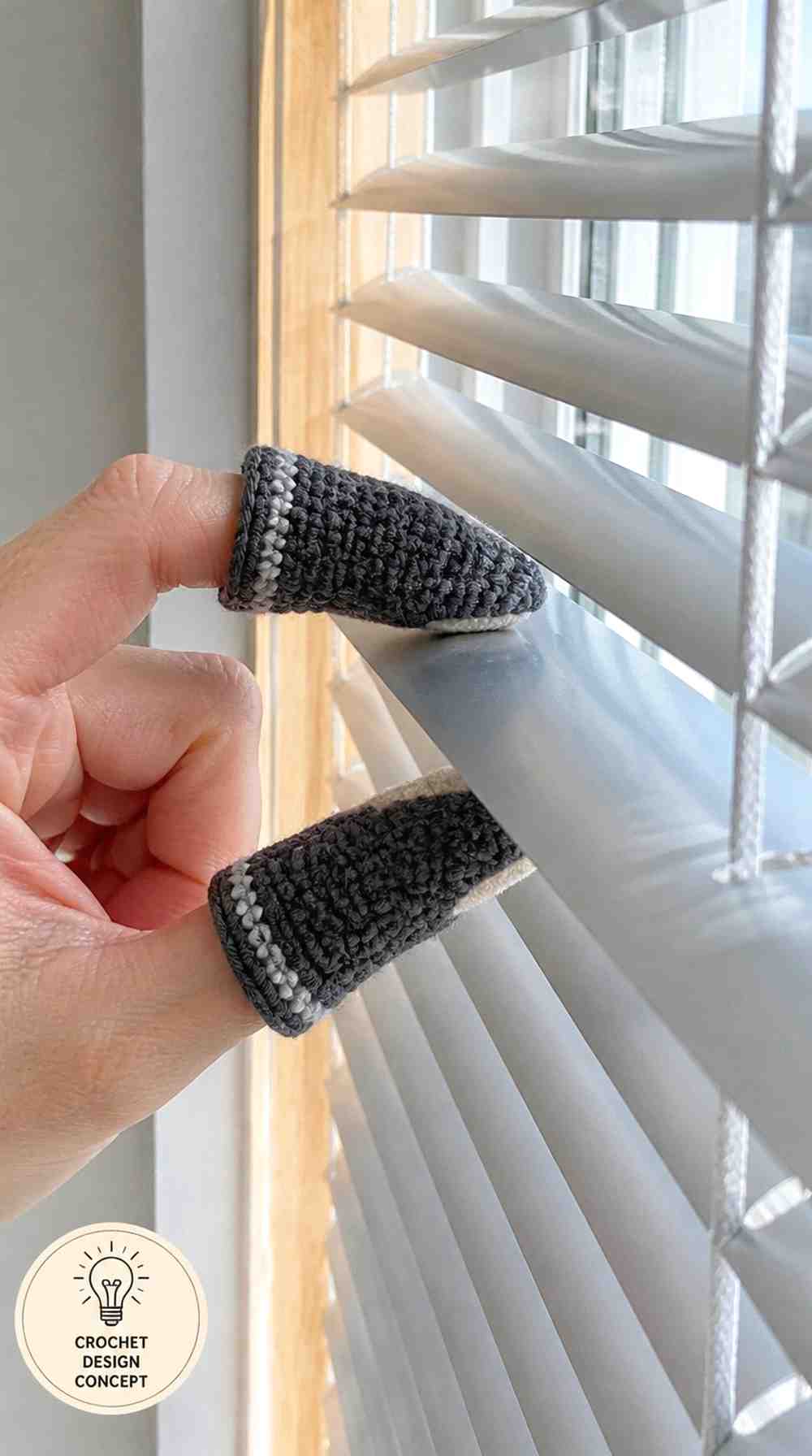
Charcoal-gray crochet creates two independent fingertip sleeves, one for the thumb and one for the index finger. Each has dense stitches, a narrow silver-gray stripe, and a flat ivory microfiber contact pad beneath its rounded tip.
The separate pieces make this concept more minimal than a connected mitt. They allow the fingers to move independently, although each sleeve needs a secure fit so it cannot slip while approaching a horizontal aluminum slat.
- Separate Sizing: Measure the thumb and index finger independently rather than using one tube size for both.
- Stripe Position: Keep the silver-gray accent at the opening, away from the area used for gentle dusting.
- Independent Fit: Check both sleeves for slipping or twisting before using them near blind slats.
- Metal-Slat Care: Avoid sliding the fingers along sharp or damaged aluminum edges, and stop if the fabric catches.
Practical Guide to Crochet Window Blind Cleaning Finger Mitts
A crochet finger mitt needs more care than an ordinary decorative accessory because the cleaning surface may touch delicate blind finishes. Not every type of window covering is suitable for the same cleaning method.
1. Check the blind material. Real wood, faux wood, aluminum, vinyl, fabric, and cellular shades have different care requirements. Hunter Douglas recommends soft cloths or dusting mitts for several slatted blind types, but notes restrictions for certain fabric treatments.
Hunter Douglas+1
2. Start with dry, gentle dusting. Dusting with a soft, clean cloth is commonly recommended for routine blind care. LEVOLOR also suggests microfiber cloths and suitable brush attachments for regular cleaning.
levolor-installer.levolor.com
3. Keep raised crochet away from delicate finishes. Bobbles, dense seams, decorative flowers, and rough yarn ends may catch or mark surfaces. A smooth removable microfiber contact layer is worth considering, but the finished mitt still needs to be checked against the manufacturer’s guidance.
4. Avoid excessive pressure. Thin metal and plastic blind slats can bend. Do not clamp, twist, or pull them with covered fingers. Support the slat gently where appropriate, and stop if the mitt begins to snag.
5. Be careful with wooden blinds. Real wood is especially sensitive to moisture. Hunter Douglas advises protecting fine wood products from steam and high-moisture conditions. Do not assume a damp crochet mitt is suitable for wood.
Hunter Douglas
6. Do not use one method for every window covering. Fabric shades and special finishes may need different cleaning methods. Some Hunter Douglas light-dimming fabrics specifically should not be cleaned with magnetic dusting mitts; these crochet concepts contain no magnets, but product-specific restrictions still apply.
Hunter Douglas
7. Choose washable materials carefully. Smooth cotton yarn may be an option for the outer crochet structure. However, cotton can hold dust and moisture. Follow the yarn and lining care instructions, and let the mitt dry completely before storage.
8. Keep your hands safe. Avoid damaged, sharp-edged slats, blind cords, and moving mechanisms. Keep fingers away from motorized components and do not lean out of a window or climb on unstable furniture to reach high blinds.
9. Replace worn cleaning surfaces. Inspect microfiber panels and crochet seams before use. If a liner develops rough patches, loose fibers, or trapped grit, remove it instead of continuing to rub it against the blind.
For more household cleaning-accessory inspiration, see 16 Crochet Cleaning Spray Bottle Carry Harness Inspiration Ideas on Yarn Nest Studio. That collection explores carrying cleaning supplies, while this article focuses on small dusting mitts.
Want to Make Something Similar?
These verified crochet resources demonstrate related cleaning-mitt construction techniques. They are not exact patterns for the 15 finger mitts illustrated here, and they do not establish that a finished crochet mitt is suitable for every blind finish.
- The Crochet Crowd — Crochet Dusting Mitt Pattern: A free crochet dusting-mitt pattern with a rounded body and decorative fringe. Its construction can provide inspiration for finger coverings, but the fringe should not be assumed suitable for delicate blind slats. The Crochet Crowd
- Snappy Tots — Free Cleaning Mitt Crochet Pattern: A free cleaning-mitt pattern with different material options and sizing instructions, useful for understanding how a crochet mitt can be shaped and fitted. Snappy Tots
For the cleaning method itself, consult Hunter Douglas — How to Clean Blinds and follow the instructions for your own window coverings.
Which Crochet Window Blind Cleaning Finger Mitt Should You Choose?
| Cleaning or design preference | Design to consider | Main consideration |
|---|---|---|
| Two-finger cleaning concept | Terracotta Twin-Finger Mitt | Separate finger-pocket fit |
| Single fingertip sleeve | Indigo Ribbed Sleeve | Narrow contact surface |
| Thumb-and-finger arrangement | Mustard Pinch Mitt | Avoiding slat pressure |
| Decorative scalloped edge | Blush Double-Finger Mitt | Keeping scallops away from slats |
| Broad flat contact panel | Olive Three-Finger Mitt | Suitable for wider slats |
| Reversible crochet colors | Powder-Blue Reversible Mitt | Removable lining |
| Side-opening fingertip cover | Rust Side-Seam Mitt | Low-profile closure |
| Longer finger coverage | Lavender Long-Reach Mitt | Knuckle flexibility |
| Decorative granny square | Ivory Granny-Square Mitt | Solid cleaning underside |
| Three separate finger pockets | Teal Rounded-Three-Finger Mitt | Finger spacing |
| Removable microfiber inserts | Coral Detachable-Liner Mitt | Insert security and washing |
| Rounded thumb-and-finger pockets | Chocolate Oval Pinch Mitt | Gentle contact |
| Shared short cuff | Burgundy Short-Cuff Mitt | Comfortable opening |
| Small floral decoration | Butter-Yellow Daisy Mitt | Flat, secure motifs |
| Two independent fingertip pads | Charcoal Finger Cleaning Pads | Preventing slipping |
For a straightforward two-finger concept, the Terracotta Twin-Finger Blind Dusting Mitt offers a simple structure with distinct contact surfaces. The Olive Three-Finger Flat Dusting Mitt is a broader alternative for examining how a flat cleaning panel might sit against a wide slat.
If easy maintenance matters most, the Coral Detachable-Liner Blind Mitt is the most relevant concept because the cleaning inserts are separate from the crochet body. The Powder-Blue Reversible Mitt also offers removable lining and a two-sided decorative finish.
For a more decorative appearance, the Blush Scalloped, Ivory Granny-Square, and Butter-Yellow Daisy mitts provide distinct visual details. However, smooth, clean contact surfaces should always take priority over decoration.
Conclusion
Crochet window blind cleaning finger mitts offer an unusual way to explore reusable handmade dusting accessories. From simple single-finger sleeves to broader three-finger mitts and small thumb-and-finger covers, these 15 designs show how crochet shaping can be combined with softer contact materials.
The best design is not necessarily the most textured or decorative. It should fit the hand comfortably, remain easy to clean, and suit the actual window blinds without catching or applying excess pressure. Start with the manufacturer’s care instructions, then consider whether a handmade mitt is appropriate for the surface.
Which of these 15 crochet window blind cleaning finger mitt ideas would you choose? Would you prefer the terracotta twin-finger style, coral removable-liner mitt, or butter-yellow daisy design? Share your favorite in the comments.
Frequently Asked Questions
1. Can a crochet finger mitt be used to clean window blinds?
A crochet finger mitt may be suitable for gentle dry dusting on some blind materials, but its suitability depends on the contact fabric, stitch texture, and blind finish. A smooth microfiber layer may be preferable to exposed raised crochet. Always follow the manufacturer’s cleaning instructions and test carefully before broader use.
2. Is crochet safe for wooden blind slats?
Not automatically. Wooden blinds may have finishes that can be scratched or affected by moisture. Hunter Douglas recommends soft dusting materials and protecting fine wood from excessive moisture. If a crochet mitt is rough, damp, or contains trapped grit, do not use it on wooden slats.
Hunter Douglas
3. Should I use a wet or dry finger mitt for blind cleaning?
Dry, gentle dusting is the better starting point for these concepts. Some faux-wood and metal blinds may permit wiping with a lightly dampened soft cloth, but this depends on the product. Do not use water on blinds that require dry cleaning, and never assume a wet crochet mitt is appropriate.
levolor-installer.levolor.com+1
4. Which finger-mitt design is easiest to wash?
A design with removable cleaning inserts, such as the Coral Detachable-Liner Blind Mitt, offers a practical way to separate the dust-contact material from the crochet exterior. However, the finished construction and washing instructions still determine how easy it is to maintain. Always remove trapped dust and dry the components completely before storage.
5. Are these 15 crochet window blind cleaning finger mitt ideas complete patterns?
No. These are original crochet design visualizations showing different finger-pocket shapes, stitch textures, decorative finishes, and removable lining arrangements. The linked tutorials demonstrate related cleaning-mitt techniques but do not reproduce these exact concepts. A real version would need its own measurements, material choices, construction planning, and compatibility checks before use.