A French press handle may be a small part of your coffee setup, but it offers an interesting place to explore crochet texture, color, and handmade details. From warm cinnamon ribbing and miniature checkerboards to tapered oatmeal wraps and delicate scalloped edges, these 15 crochet French press handle grip wrap ideas show how a simple accessory can complement different kitchen styles.
Some designs focus on a slim, understated appearance, while others introduce raised stitches, decorative motifs, contrasting borders, or adjustable-looking closures. This collection is for coffee lovers and crochet enthusiasts who want to compare visual styles, consider how each wrap might fit a real handle, and understand the practical limitations before attempting a handmade version.
These are AI-generated crochet design visualizations for inspiration, not photographs of tested handmade pieces or step-by-step patterns.
Quick Design Selection Guide
| What you're looking for | Design worth exploring |
|---|---|
| A simple everyday appearance | Crochet Cinnamon Rib Grip Wrap |
| A narrow or tapered handle | Crochet Oatmeal Tapered Handle Wrap |
| A bold coffeehouse color scheme | Crochet Espresso Checkerboard Handle Wrap |
| An interesting raised texture | Crochet Cocoa Pebble Texture Wrap |
| A decorative cottage-style accent | Crochet Burgundy Granny Diamond Grip Wrap |
| A wrap with visible adjustable-style details | Crochet Mocha Gradient Button Grip Wrap |
1. Crochet Cinnamon Rib Grip Wrap
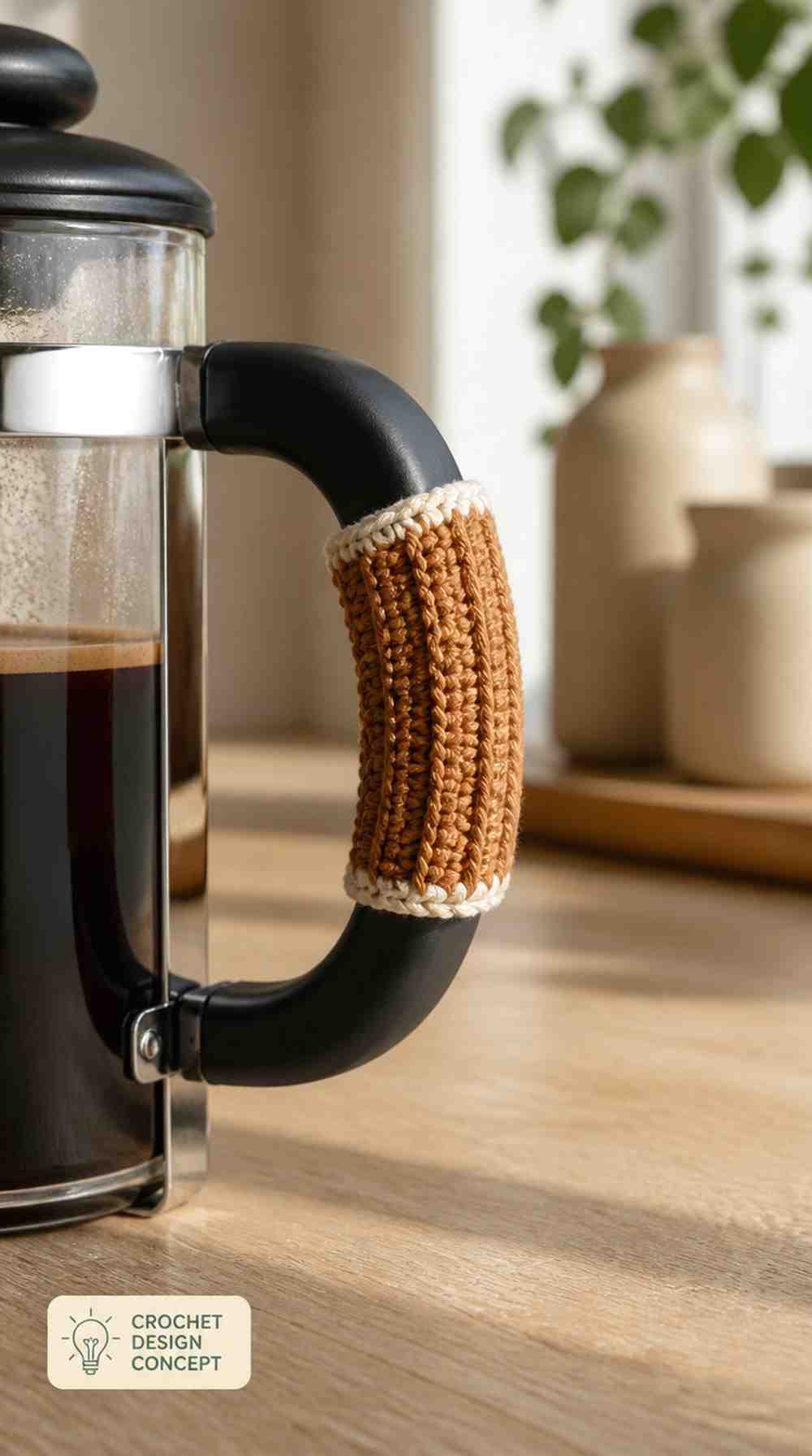
Warm cinnamon-colored crochet gives this compact handle wrap a welcoming coffeehouse appearance. Its neat vertical ribs create a clear textured surface, while a thin ivory border keeps the edges defined. A discreet joining seam sits along the outer side of the curved black handle.
The wrap covers only the middle gripping area rather than the entire handle. That shorter profile leaves more of the original handle visible and provides a useful starting point for comparing ribbing thickness, finger clearance, and the space available around a particular French press.
- Vertical Rib Structure: The close-set ribs give the surface visual depth without needing additional embellishments. Consider how much thickness the chosen stitch adds to a small handle.
- Short Coverage Area: Concentrating the wrap in the middle may suit handles with bulky upper and lower attachment points, provided enough bare handle remains for a secure grip.
- Ivory Edge Definition: The contrasting border makes the cinnamon panel look finished. Keep a real border flat rather than letting it curl or form a raised lip.
2. Crochet Indigo Chevron Grip Wrap
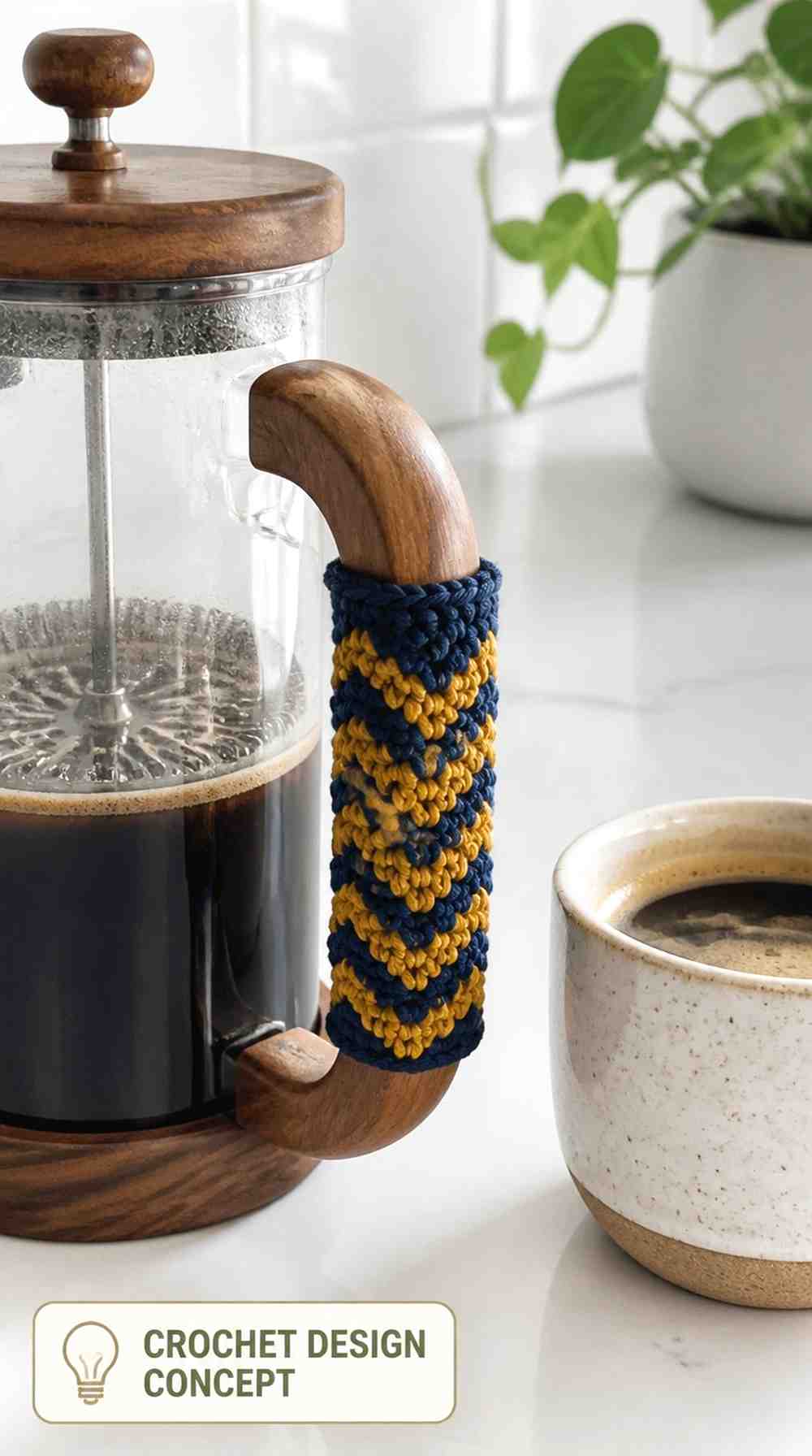
Deep indigo forms the base of this narrow crochet handle wrap, interrupted by muted mustard chevron rows. The tightly worked zigzag pattern gives it a more graphic appearance than a plain ribbed sleeve, and dark navy edging frames the color changes.
Its upper-middle placement on the wooden French press handle makes the pattern easy to see without covering the whole grip. The design suits someone who prefers a bolder accent but still wants a relatively narrow fabric shape rather than a thick decorative sleeve.
- Tapestry Crochet Detail: A dense colorwork approach could create the zigzags without loose appliqués. Check that carried strands do not create uncomfortable ridges on the reverse.
- Wooden Handle Contrast: Indigo and mustard stand out against a brown handle. The same palette may look different against black plastic or polished metal.
- Edge Management: The slim navy border helps define the pattern visually. Keep seam joins and color-change ends tidy so they do not catch against the fingers.
3. Crochet Oatmeal Tapered Handle Wrap
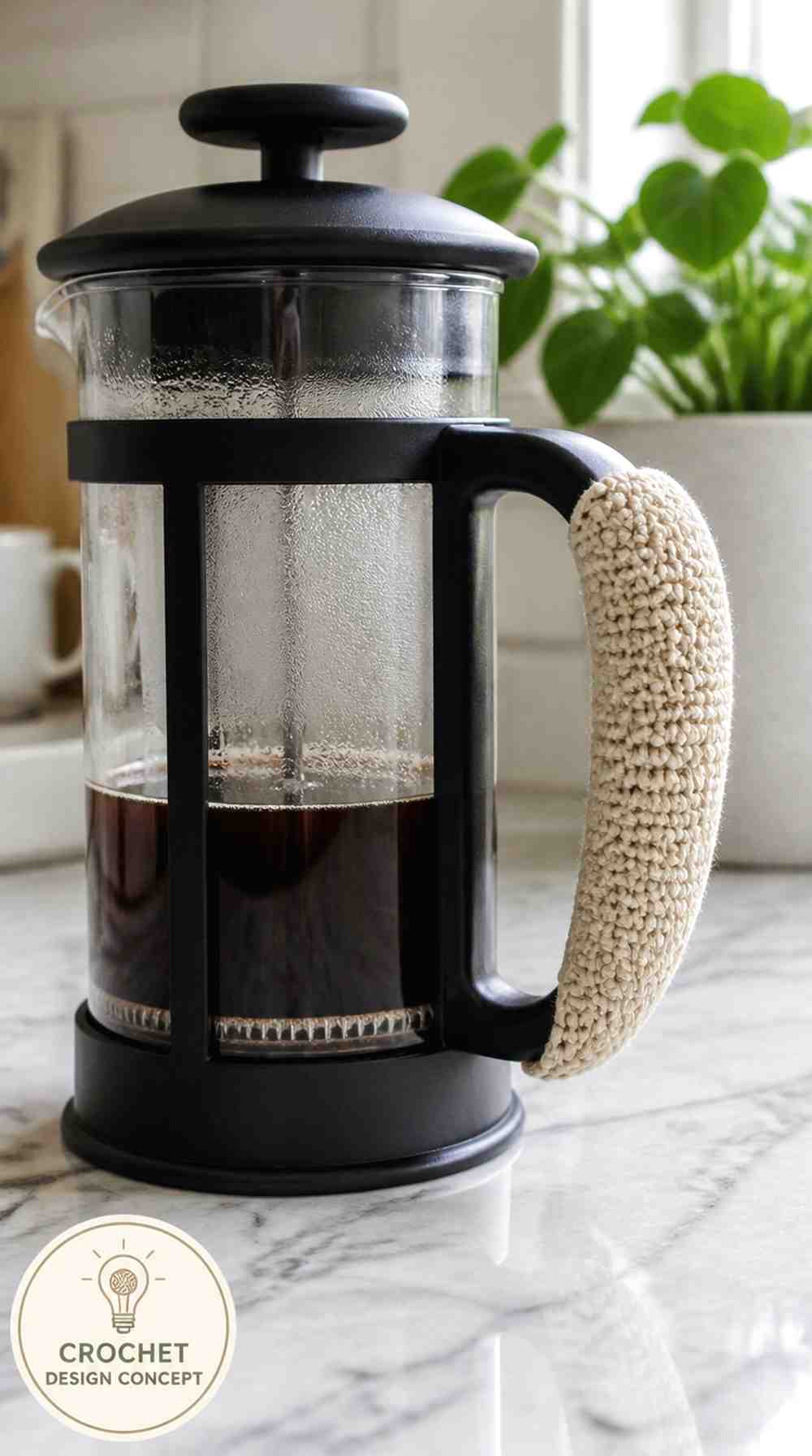
For a quieter design, this oatmeal-colored crochet wrap follows the changing width of a slender French press handle. Its horizontal half-double-crochet rows form a smooth, closely textured panel that becomes narrower toward the bottom.
There are no buttons, motifs, or contrasting decorative trims to interrupt the shape. The focus remains on the gently tapered outline and the natural-looking stitches. Unlike a straight rectangular wrap, this concept suggests adapting the fabric’s shape to the actual handle rather than expecting every handle to have the same width.
- Tapered Fit: Measure the upper and lower gripping sections separately. A wrap shaped for one handle may bunch or leave gaps on another.
- Half-Double-Crochet Texture: The relatively even rows offer a simple-looking surface, although the final thickness will depend on yarn weight and stitch tension.
- Plain-Edge Finish: Without prominent borders or decorations, the outer seam becomes important. A raised or twisted join could change how the grip feels.
4. Crochet Cocoa Pebble Texture Wrap
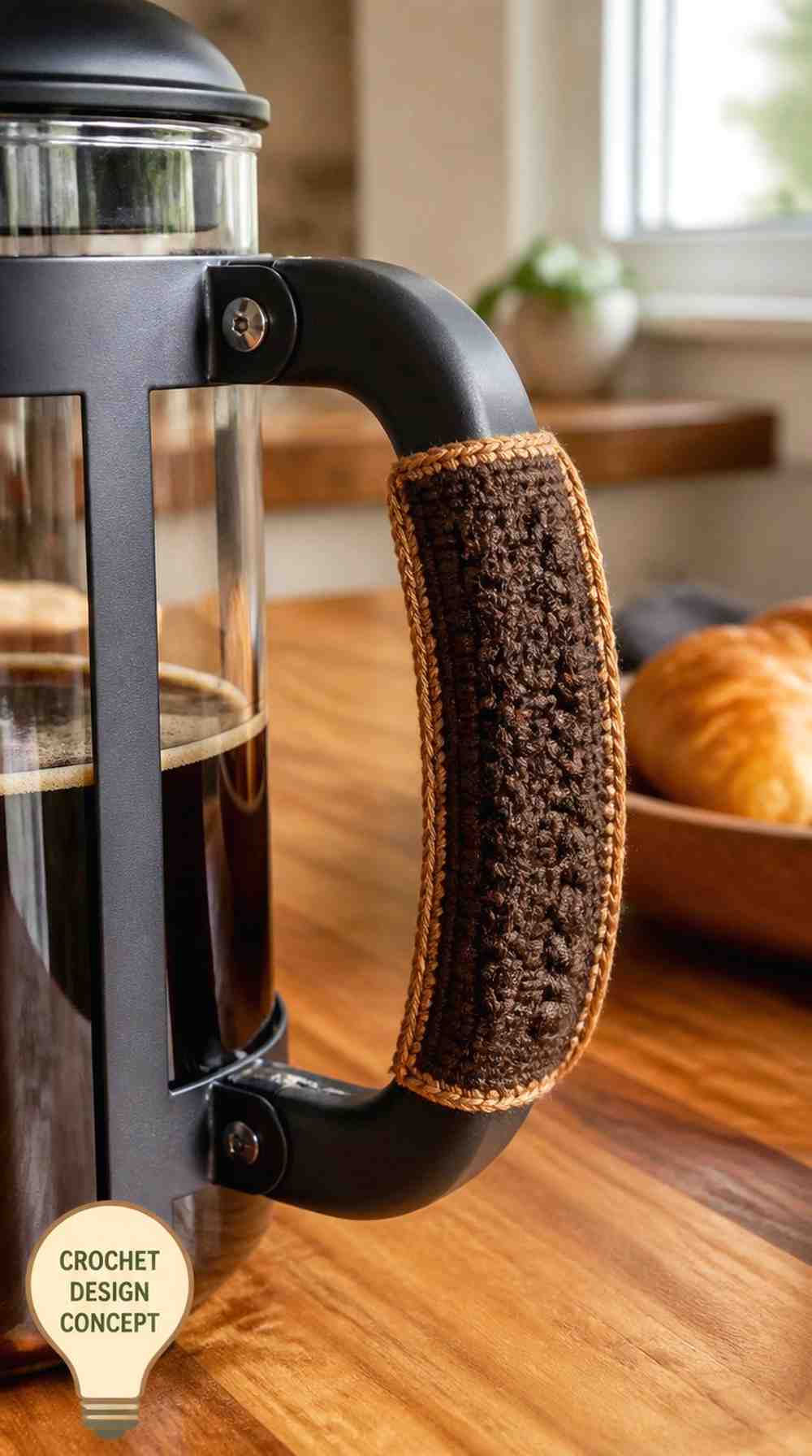
Small raised crochet clusters bring character to this espresso-brown handle wrap. The pebble-like details appear in a narrow band across the outward-facing surface, while flatter single-crochet sections keep the rest of the design understated. A caramel border adds a subtle color difference.
This concept explores the balance between decorative surface texture and comfortable handling. The raised stitches create visible depth, but the idea keeps them compact rather than using oversized bobbles that might make a narrow handle difficult to hold.
- Raised Cluster Placement: Keep the small pebble details on the outward-facing portion. Large bumps or thick knots can change finger placement and should be avoided in a functional grip.
- Smooth Inner Surface: A flatter reverse may help the wrap sit more evenly against the original handle, although it does not guarantee that the fabric will stay in place.
- Caramel Border: The warmer edging separates the dark central texture from the handle. A closely stitched border could also help keep the visual outline neat.
5. Crochet Espresso Checkerboard Handle Wrap
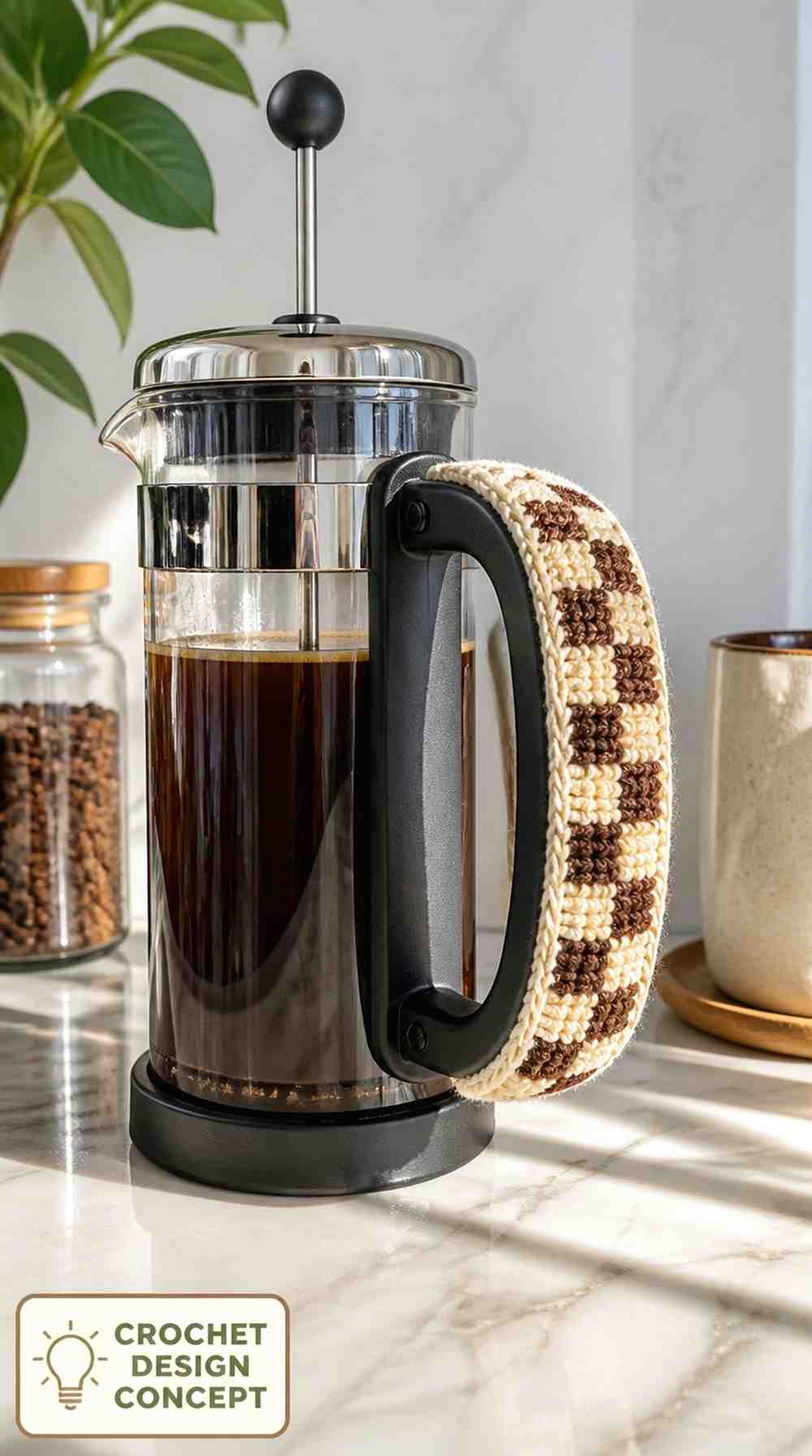
Alternating espresso-brown and vanilla-cream blocks give this crochet handle wrap a miniature checkerboard appearance. Rather than using separate joined squares, the design presents one continuous tapestry-style panel with a narrow cream border and a discreet outer seam.
The closely spaced checks create a recognizable pattern without requiring flowers, buttons, or raised decorations. It is especially appealing as a visual accent on a plain black French press, where the contrast allows individual color blocks to stand out.
- Miniature Color Blocks: Small checks suit the narrow handle surface better than large motifs that would disappear around the curve. Plan the repeat against the available width.
- One-Piece Colorwork: A continuous panel can avoid the extra thickness of individually joined squares. Keep color transitions and carried yarn secure on the reverse.
- Light-Yarn Maintenance: Cream stitches may show coffee drips more readily than dark ones. Consider whether the chosen yarn and construction allow frequent cleaning.
6. Crochet Marigold Thumb Accent Wrap
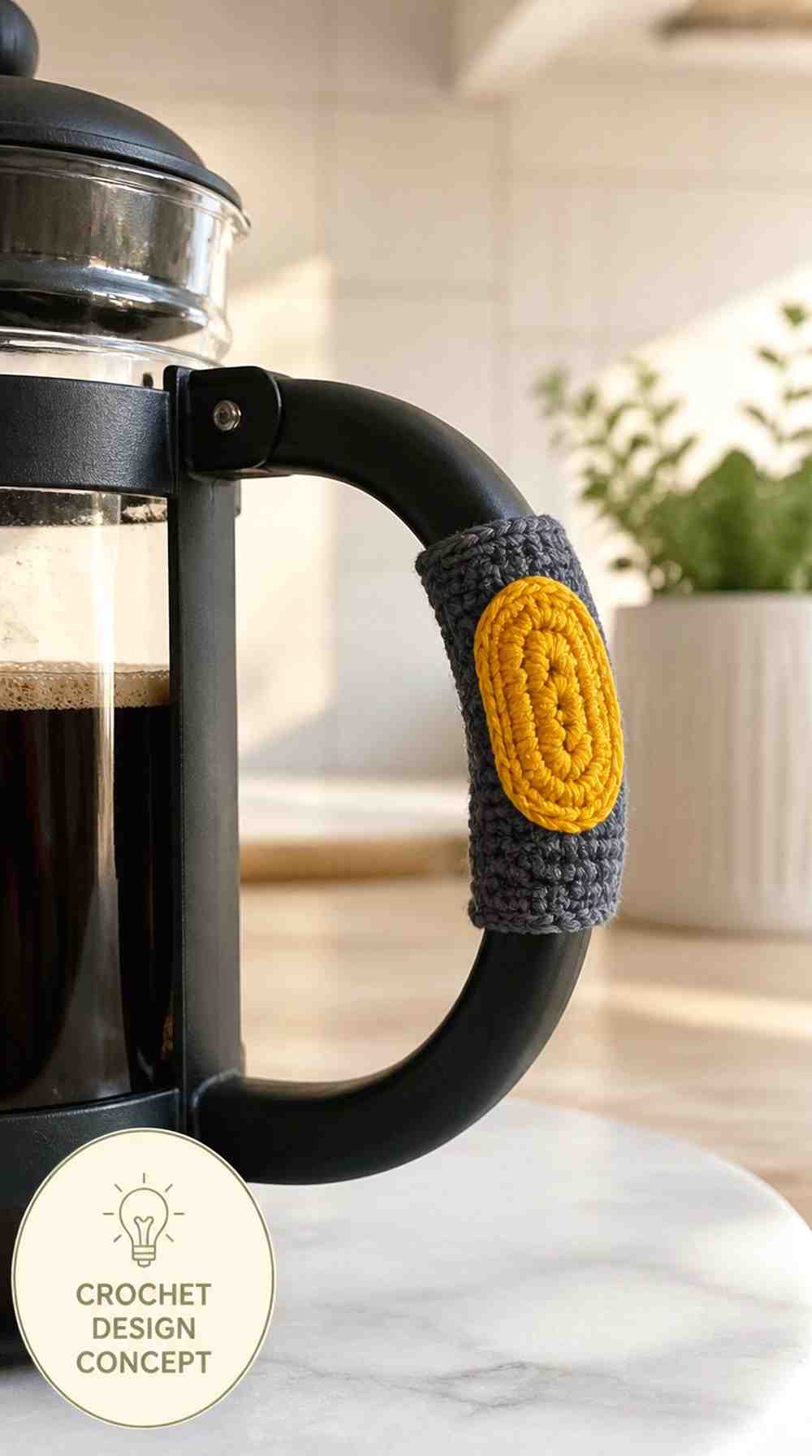
Charcoal-grey crochet provides a restrained background for the small marigold-yellow oval on this handle wrap. The oval is made from closely connected circular crochet rounds and sits on the upper outward-facing surface, creating one concentrated area of color.
Unlike an all-over textured design, this concept gives the eye a single focal point. The oval suggests a place for the thumb, but its actual comfort and usefulness would need checking on the intended handle rather than assuming that a raised patch improves grip.
- Oval Patch Position: The patch should follow the user’s natural thumb placement, not simply the prettiest position. An awkwardly placed raised area can interfere with holding the handle.
- Secure Appliqué: Keep the oval shallow and closely attached if making a similar wrap. Loose edges may catch during handling or washing.
- Contrast Without Bulk: The charcoal and marigold pairing provides a strong visual accent, so additional layers of decoration are unnecessary.
7. Crochet Coral Herringbone Grip Wrap
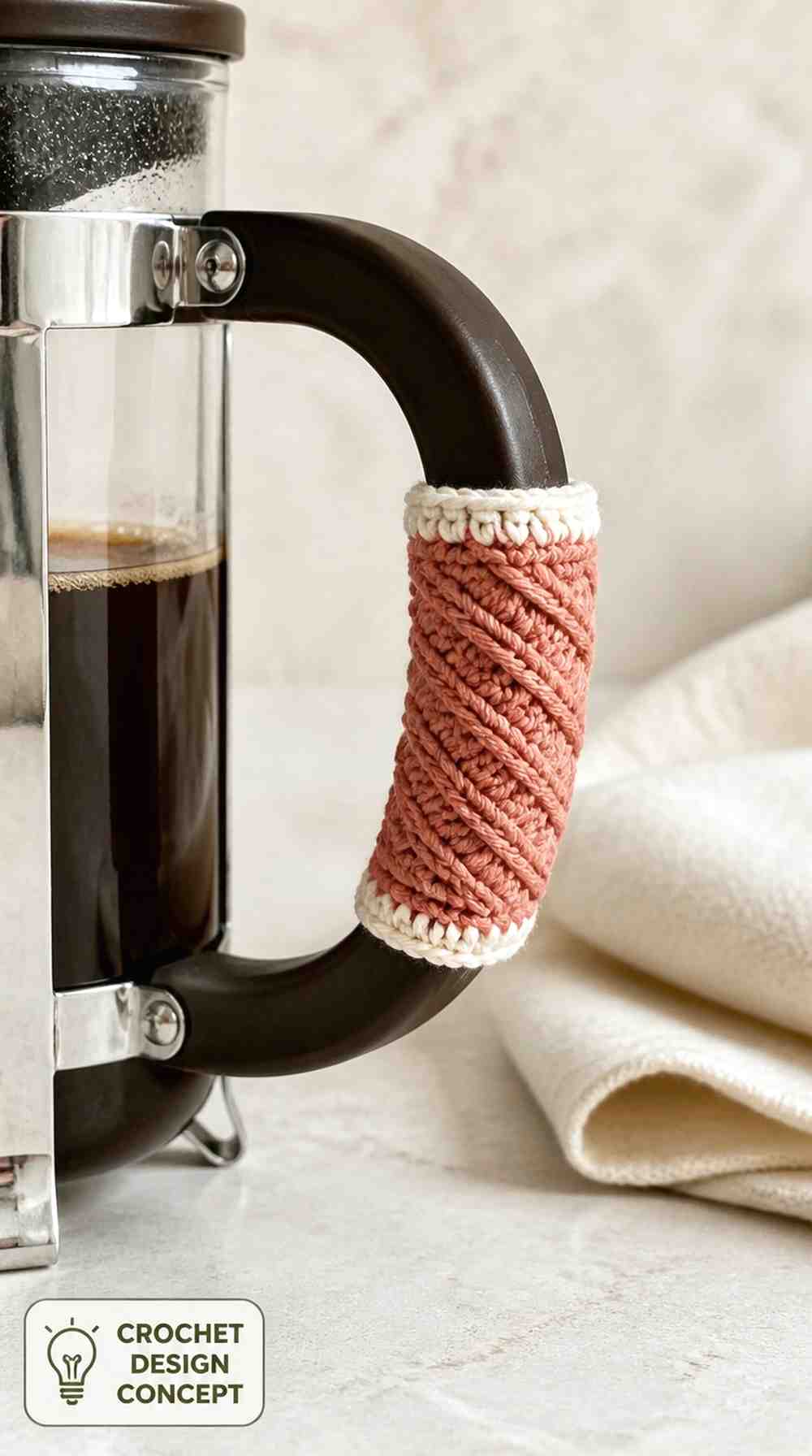
Dusty coral yarn and closely packed diagonal stitches give this short crochet grip wrap a refined, directional texture. Thin ivory borders finish the upper and lower edges, while the side seam remains narrow and unobtrusive.
The diagonal crochet pattern is the main attraction here. Its slanted rows make the fabric look different from the straight ribs and horizontal stitches elsewhere in the collection. The short central coverage also keeps the original dark-brown French press handle partly exposed.
- Diagonal Stitch Appearance: Herringbone-like crochet can provide an attractive slanted surface, but the stitch choice should be checked for thickness and flexibility.
- Border Placement: Narrow ivory edges frame the coral panel. Avoid building them up into stiff bands that could press against fingers.
- Short Wrap Proportions: This approach relies on the texture being noticeable in a limited space. A larger stitch scale might obscure the diagonal pattern on narrow handles.
8. Crochet Forest Basketweave Button Wrap
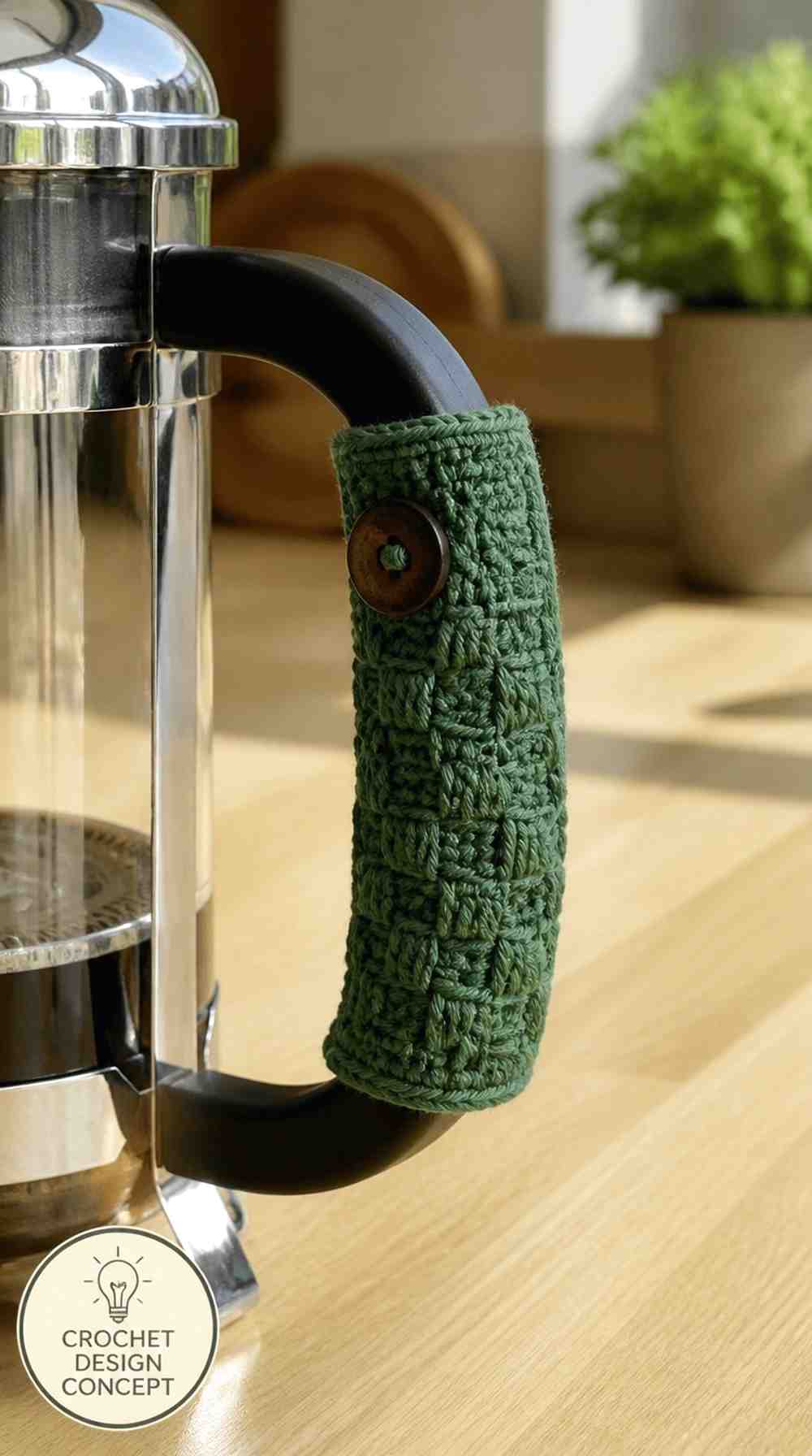
A small basketweave texture gives this forest-green crochet handle wrap a structured, woven appearance. Alternating raised crochet blocks form the main panel, with a matching border running around its edges.
One dark wooden button sits on a short overlapping tab near the upper outer edge. It adds a traditional handmade detail without becoming the central feature. Because a buttoned closure introduces extra thickness and possible snagging, this design is best viewed as an inspiration for careful fit planning rather than a ready-to-use fastening solution.
- Basketweave Thickness: Raised post stitches can create a thicker fabric than plain crochet. Compare the fabric depth against the available finger space.
- Button Location: Keep any closure outside the main finger-contact area. The button and tab must not prevent the hand from closing around the original handle.
- Overlap Stability: A decorative button is not proof of secure attachment. A real wrap needs careful fitting and must not rotate or slip during use.
9. Crochet Burgundy Granny Diamond Grip Wrap
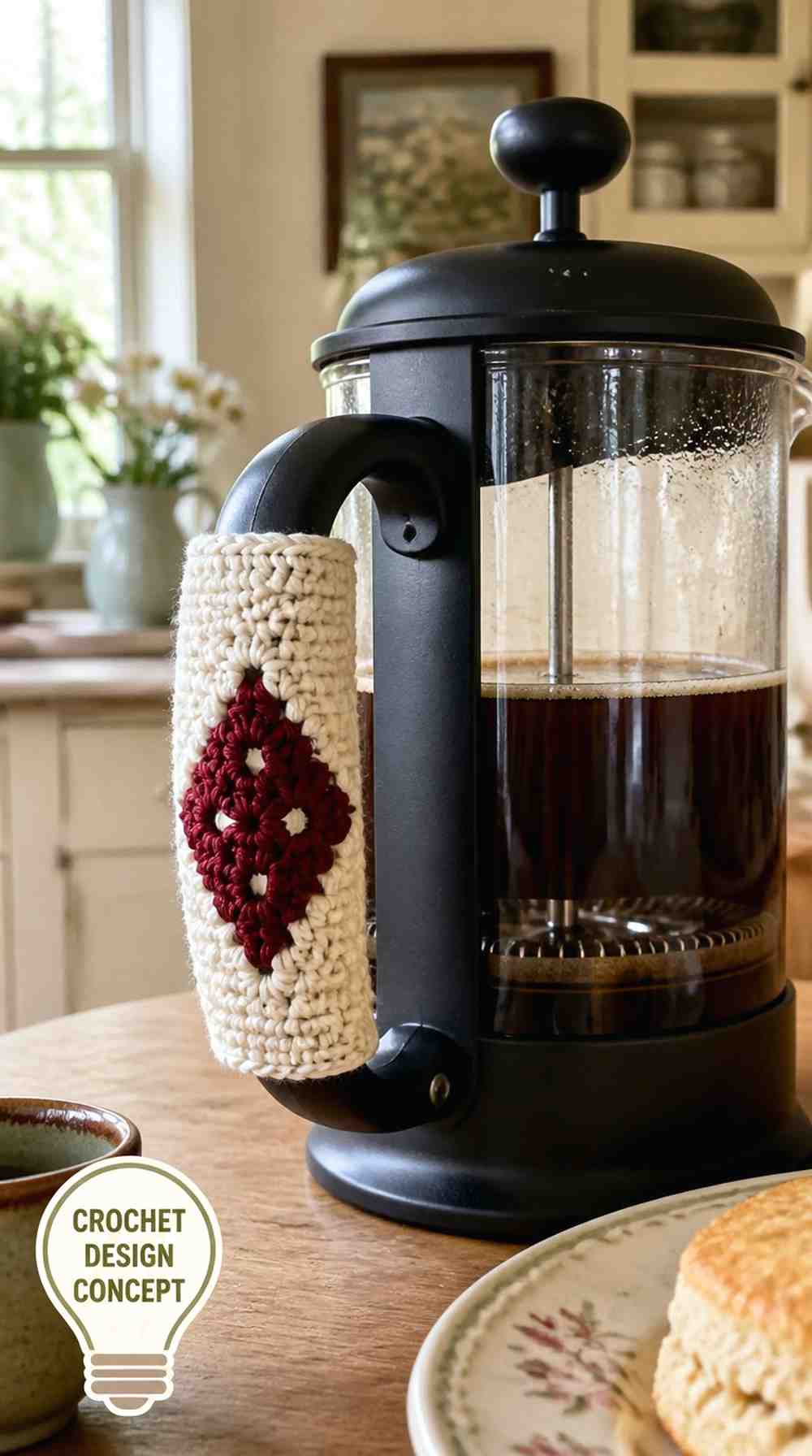
A small burgundy granny-style diamond sits at the center of this cream crochet handle wrap. Its connected clusters and tiny openings create a decorative focal point, surrounded by closely worked cream stitches and a narrow finished edge.
The contrast between the little openwork motif and the denser surrounding fabric makes this design stand out. It brings a traditional granny-crochet detail to a much smaller surface, without turning the entire grip into a bulky joined-square construction.
- Diamond Motif Scale: Keep the motif small enough to remain visible on the outward-facing surface without wrapping awkwardly around the handle’s edges.
- Openwork Limitation: The tiny gaps are decorative. They should not be treated as a protective or insulating layer against heat.
- Secure Motif Border: The denser cream surround gives the diamond a defined shape. Check the join carefully to avoid loose corners or snagging.
10. Crochet Mist Blue Twin Cable Wrap
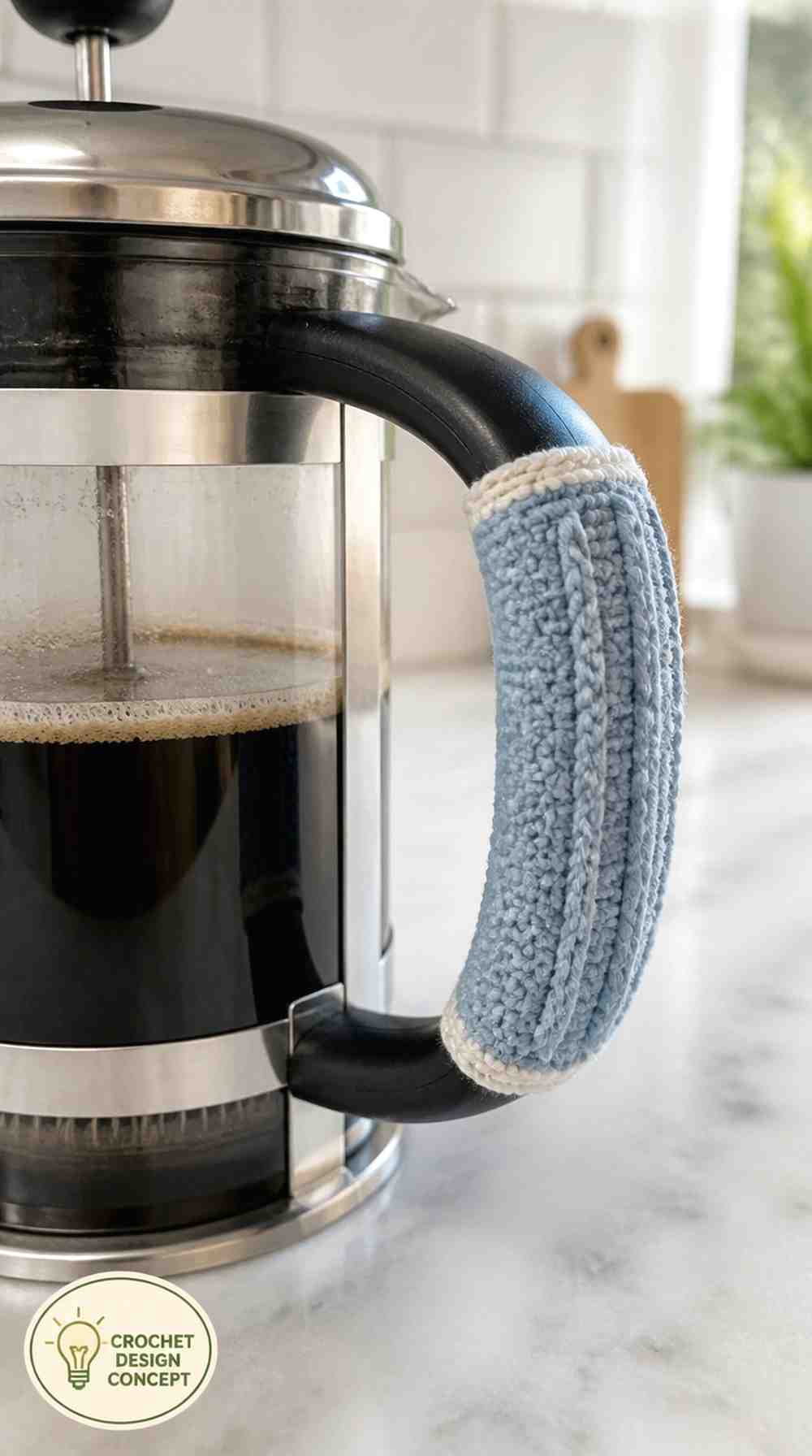
Two parallel raised crochet columns give this mist-blue handle wrap its distinctive look. The vertical details run along the outer surface, separated by a flat center channel, while narrow ivory bands finish the top and bottom.
The result has a cable-inspired appearance without relying on a knitted texture. Compared with the more decorative granny diamond or checkerboard concepts, this design emphasizes repeated stitch relief and a simple two-color finish.
- Raised Post-Stitch Columns: Crochet post stitches can create the twin ridges. Keep their height modest so the fabric does not become unnecessarily bulky.
- Center Channel: The flat area between the columns makes the raised texture easier to distinguish and offers a visual break between the two lines.
- Ivory End Bands: Contrasting edges provide a neat finish, but the real wrap should retain enough flexibility to follow the handle’s curve without flaring.
11. Crochet Sand Linen-Stitch Handle Wrap
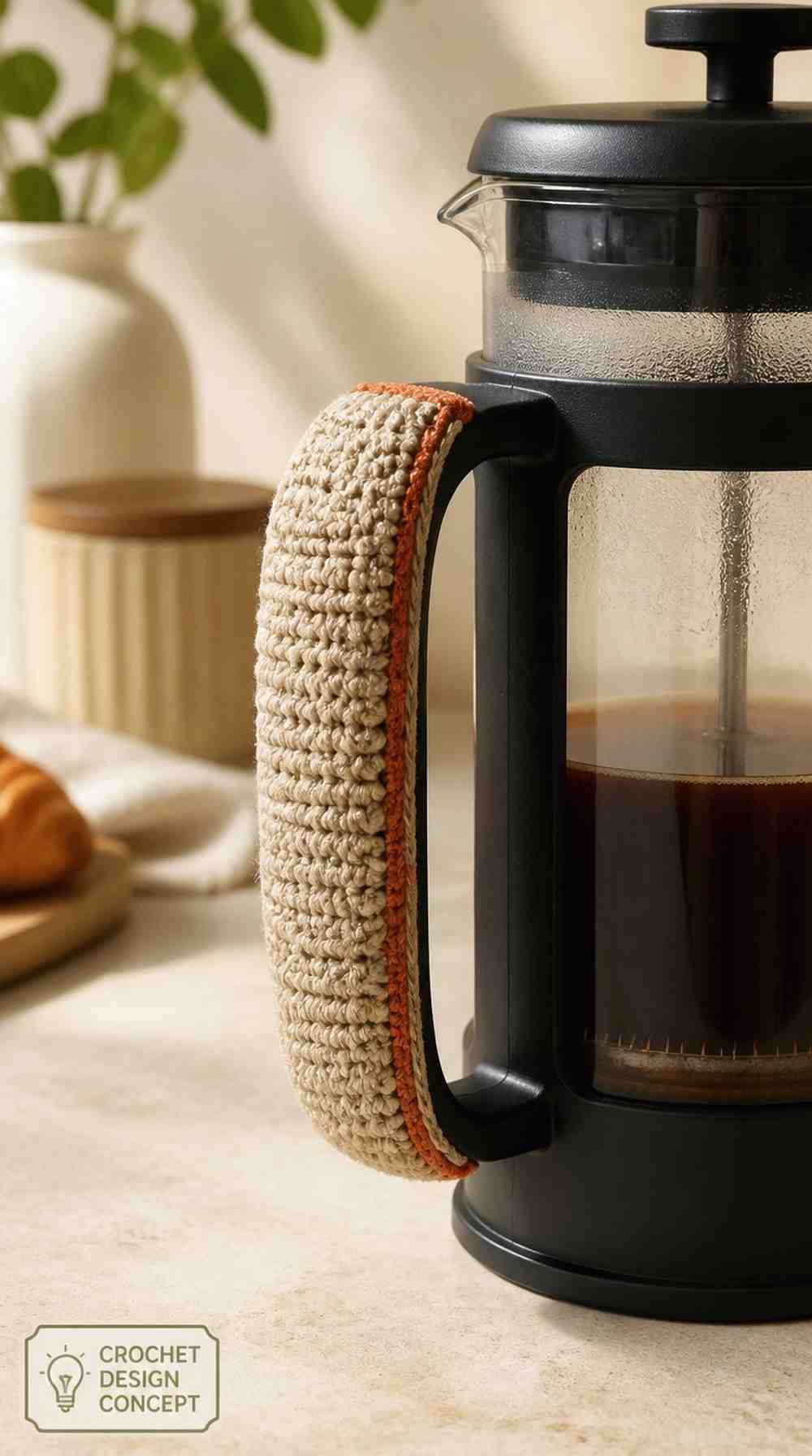
Fine linen-stitch crochet creates an almost woven-looking texture across this sand-beige handle wrap. A single terracotta stripe runs down one outer side, giving the otherwise neutral design a warm accent.
The panel follows the handle’s outer curve and uses a flat overlapping seam at the back. Its appeal comes from the closely connected small stitches rather than dramatic raised details. For someone who wants a calm, natural kitchen accessory, the narrow stripe adds enough color without dominating the surrounding coffee setup.
- Fine Stitch Spaces: Linen stitch has a characteristic interlocking appearance. Use a suitable stitch density to avoid large openings or excessive fabric stretch.
- Single Accent Stripe: The terracotta line gives the panel direction. Keep its placement clear of the overlap so the color remains visible.
- Overlapping Seam: A flat-looking overlap can still add thickness underneath. Check that the finished fabric does not twist around a curved handle.
12. Crochet Pearl Scallop Edge Grip Wrap
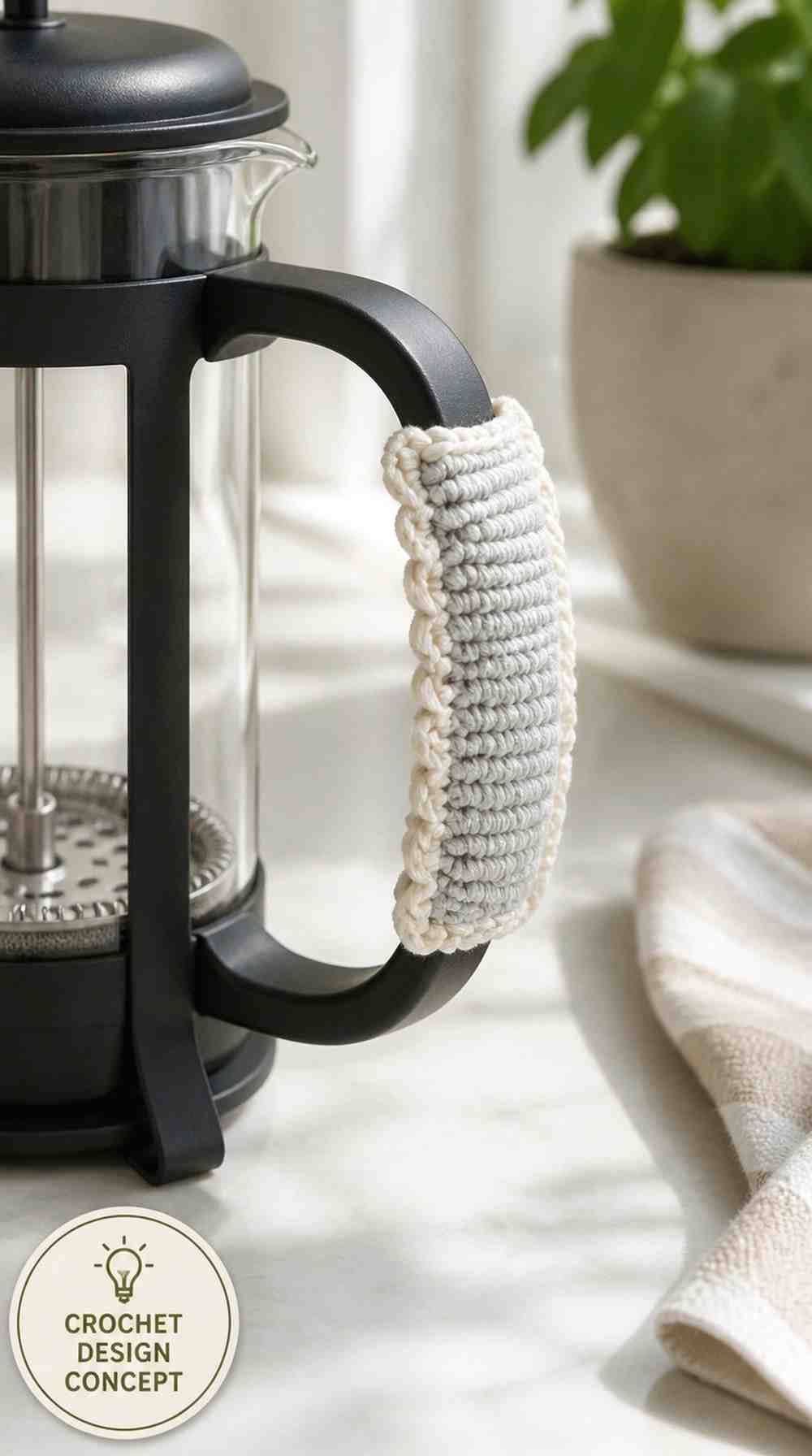
Delicate cream scallops finish the upper and lower edges of this pearl-grey crochet handle wrap. The center stays smooth and closely stitched, allowing the small shell-like details to create the main decorative effect.
Unlike the fuller basketweave and pebble-textured designs, this concept keeps most of the surface plain. The miniature scallops offer a soft cottage-style finish without extending far into the handle opening. It is a useful example of how a small crochet border can change the appearance of an otherwise simple sleeve.
- Small Scallop Scale: Use flat, shallow shell shapes rather than large looping lace. Projecting edges may catch on fingers or nearby parts.
- Smooth Center Panel: The plain middle keeps the edging visually important and avoids mixing several competing textures in one narrow space.
- Border Alignment: Scallops need to sit evenly along both edges. Uneven tension could cause curling or bunching around the curved handle.
13. Crochet Aubergine Cross-Ridge Handle Wrap
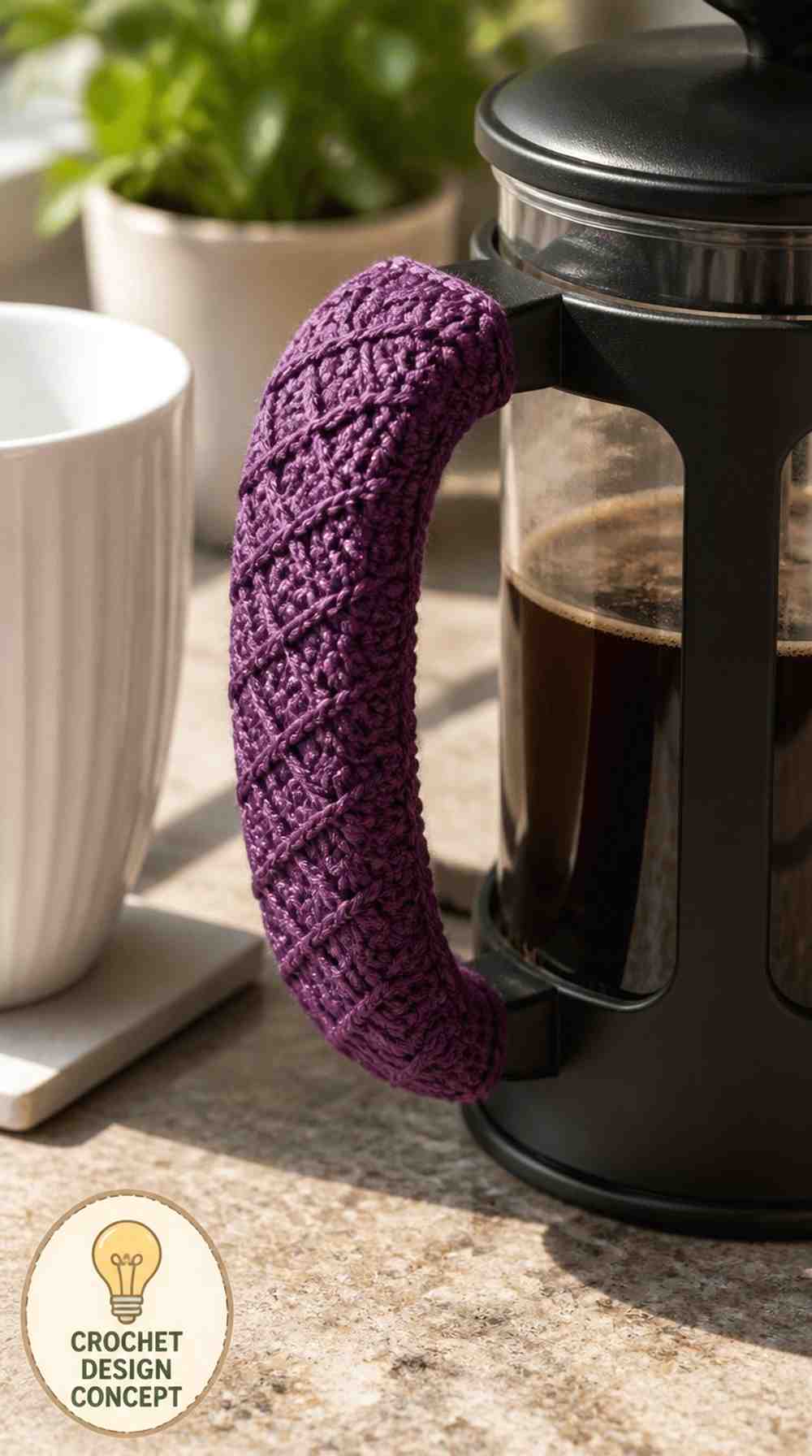
Aubergine-purple yarn gives this full-length crochet wrap a richer, darker appearance. Low diagonal ridges cross over a closely stitched base, forming a repeating X-like texture, while plain dark-plum borders keep the sides visually clean.
The cross-ridge arrangement provides more directional movement than ordinary horizontal rows. Because the pattern runs along much of the gripping area, its stitch height and flexibility would matter particularly when adapting the concept to a real French press handle.
- Cross-Ridge Construction: Keep the crossing ridges shallow and integrated into the base stitches. Separate bulky cords would be less suitable for such a narrow accessory.
- Full-Length Coverage: The longer panel provides more space for the repeating pattern, but must leave the handle’s attachment points and finger opening clear.
- Dark-Plum Borders: Matching dark edges keep the elaborate middle texture contained visually. Choose even stitch tension to prevent the sides from drawing inward.
14. Crochet Two-Tone Split Texture Wrap
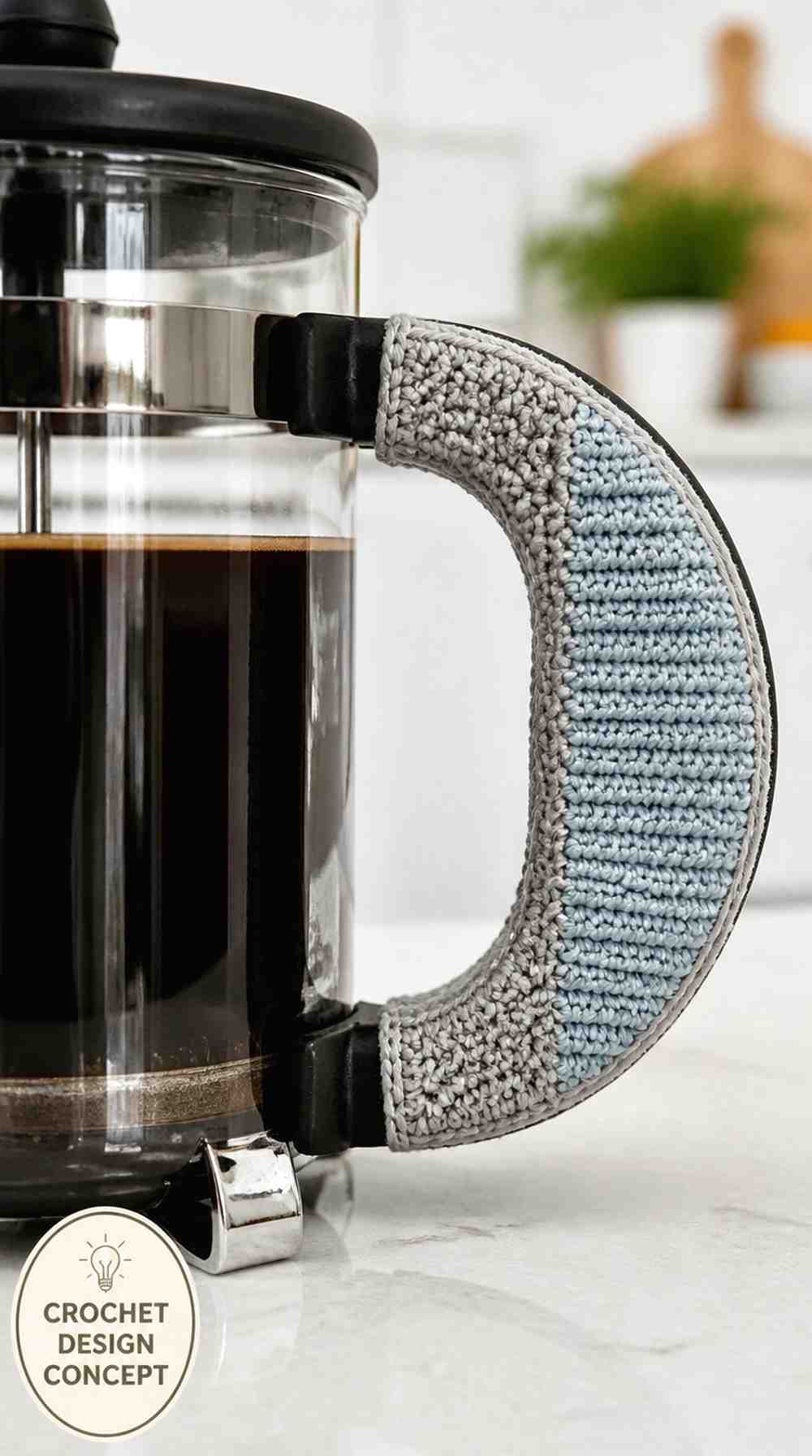
Pebble grey and icy blue divide this medium-length crochet handle wrap into two vertical panels. The grey side uses close single-crochet stitches, while the blue side features fine horizontal ribbing. A neat central join separates the textures.
This design is especially interesting because the two halves differ in both color and surface appearance. Instead of relying on a large motif, the contrast comes from the way two crochet textures meet within one relatively small grip accessory.
- Two Texture Types: The close grey stitches and blue ribbing may stretch differently. Compare their tension before combining them in a real panel.
- Central Joining Line: Keep the visible seam tidy and low-profile. A thick join along the main contact area may feel uncomfortable.
- Balanced Panel Widths: Both colors need enough surface area to remain recognizable. A very narrow handle could make the split difficult to display clearly.
15. Crochet Mocha Gradient Button Grip Wrap
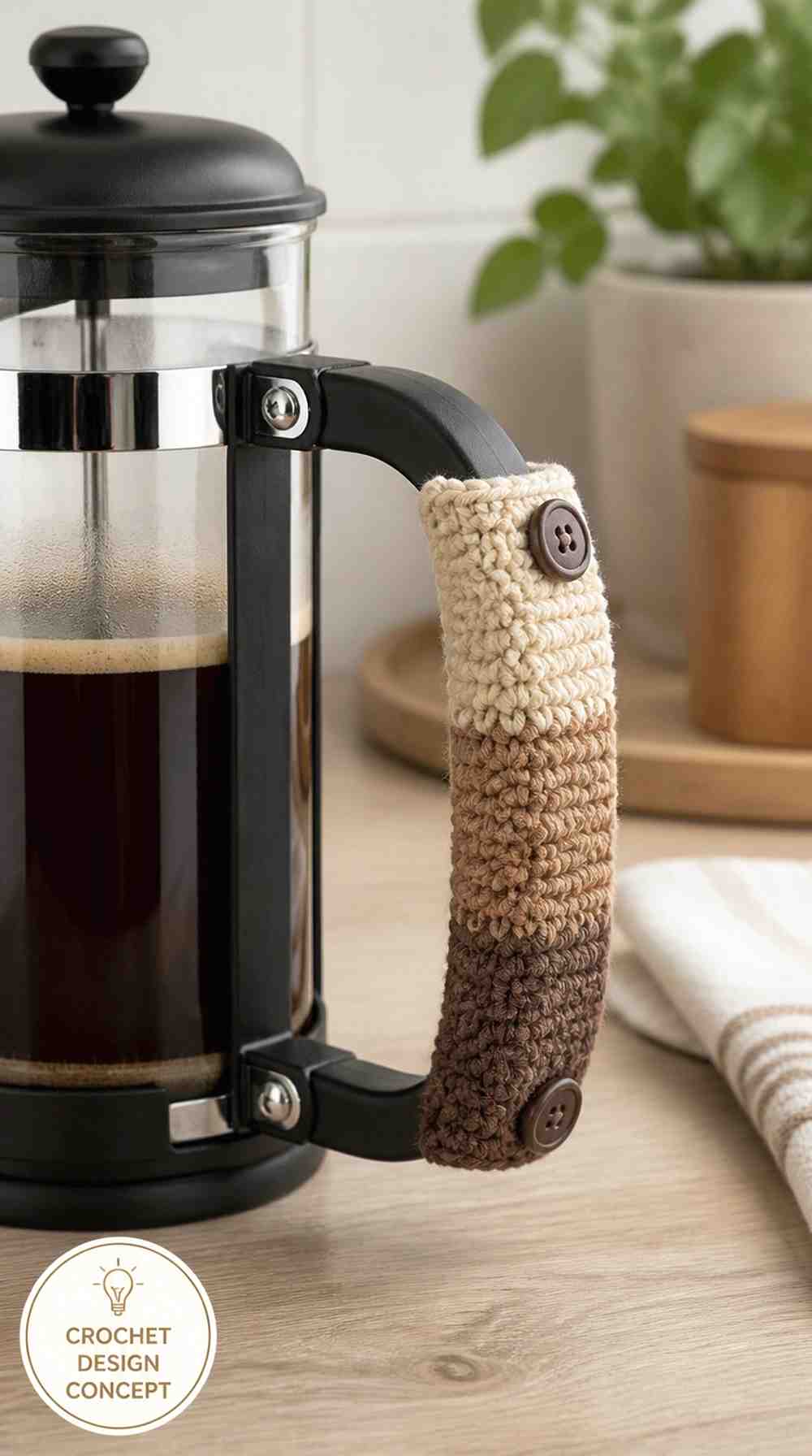
Three horizontal color sections give this crochet handle wrap a gradual coffee-inspired appearance. Warm cream sits at the top, caramel fills the middle, and deep mocha finishes the lower portion. Two small dark-brown buttons appear along a short outer-side overlap.
The color arrangement makes this one of the most directly coffee-themed concepts in the collection. Its relatively plain crochet rows allow the color changes and buttons to remain the focus, although the fastening arrangement would require particular care before being considered for everyday handling.
- Three-Part Color Balance: The cream, caramel, and mocha sections should remain distinguishable once wrapped around the handle. Account for any overlap that hides part of the panel.
- Two-Button Alignment: Both buttons sit on the outer side in the concept. Any real fastening must avoid the hand’s main gripping area and not depend on loose loops.
- Full-Length Fit: The longer wrap gives room for all three colors, but may be unsuitable for handles with narrow gaps near their upper or lower attachment points.
Practical Guide to Crochet French Press Handle Grip Wraps
Start with the actual handle. French press handles vary in shape, width, curvature, surface material, and available finger space. Measure the intended gripping area and identify where the handle joins the brewer. A crochet wrap should never obstruct the lid, plunger, pouring action, or normal hand placement.
Choose your yarn carefully. A smooth, closely worked cotton or suitable cotton-blend yarn may be worth considering for a removable decorative wrap, but yarn type alone does not establish safe heat performance, secure grip, or resistance to slipping. Avoid loose fibers, heavy embellishments, and dangling ties.
Treat the designs as decorative concepts, not protective equipment. A French press can contain dangerously hot liquid, and its body or metal parts can become hot. Follow the manufacturer’s instructions and use the original handle as intended. A crochet covering should never be relied on as heat protection or as a substitute for the handle’s built-in grip. The CRISTEL French press use and care instructions explain relevant hot-surface and pouring precautions.
cristel.com
Check fitting before considering use. Examine a proposed wrap on a cold, empty press. If it rotates, slides, catches, reduces finger clearance, or changes the feel of the handle, it is not suitable for use while carrying hot coffee. A visually attractive concept does not establish practical safety.
Plan for cleaning and drying. A removable design makes washing easier. Follow the yarn’s care instructions, dry the fabric thoroughly, and do not leave damp crochet against the brewer. Keep the fabric away from open flames, heating elements, and hot metal surfaces.
Want to Make Something Similar?
There is no verified exact pattern for the 15 pictured concepts, but these resources offer related crochet inspiration and construction ideas.
- 12 Crochet Pumpkin Spice Mug Cozy Ideas — Yarn Nest Studio explores small coffee-accessory designs and decorative crochet finishes. These are cup cozies, not French press handle grips.
- Half Double Crochet Mug Cozy Pattern — Double Crochet explains how a flat crochet strip can be worked with a button-and-loop closure. It is intended for a mug, so its dimensions and fastening should not be copied directly onto a French press handle. Double Crochet
Both are starting points for learning or exploring ideas, not evidence that these handle-cover concepts have been physically tested.
Which Crochet French Press Handle Grip Wrap Should You Choose?
Your preferred design depends on whether you care most about appearance, stitch detail, or a shape that could potentially be adapted to a particular handle.
For a simple visual starting point, the Crochet Cinnamon Rib Grip Wrap, Crochet Oatmeal Tapered Handle Wrap, and Crochet Sand Linen-Stitch Handle Wrap use relatively restrained surfaces without prominent decorative closures. The oatmeal version is especially interesting where a handle changes width.
If you want a stronger visual accent, the Crochet Espresso Checkerboard Handle Wrap and Crochet Indigo Chevron Grip Wrap make their impact through colorwork. Both need close attention to stitch scale because their patterns must remain readable in a narrow area.
For raised stitch detail, compare the Crochet Cocoa Pebble Texture Wrap, Crochet Mist Blue Twin Cable Wrap, and Crochet Aubergine Cross-Ridge Handle Wrap. Their extra texture is visually appealing but creates more questions about bulk and hand comfort.
The Crochet Forest Basketweave Button Wrap and Crochet Mocha Gradient Button Grip Wrap are appealing for their visible fastening details, although those closures would need independent fit and safety checks. If decoration is the main priority, the Crochet Burgundy Granny Diamond Grip Wrap and Crochet Pearl Scallop Edge Grip Wrap offer a softer, traditional handmade appearance.
For a modern contrast, the Crochet Two-Tone Split Texture Wrap stands apart by combining two stitch surfaces. The Crochet Marigold Thumb Accent Wrap adds a concentrated patch, while the Crochet Coral Herringbone Grip Wrap relies on diagonal stitching.
Conclusion
A French press handle offers a surprisingly small but interesting canvas for crochet inspiration. These 15 concepts show how narrow wraps can take on different personalities through ribbing, colorwork, shaped panels, traditional motifs, raised textures, and decorative borders.
The most useful choice is not necessarily the most elaborate one. A simple, closely stitched design that respects the original handle’s shape may be easier to adapt than a bulky decorative wrap. Whatever style catches your eye, keep practical fit, heat exposure, cleaning, and secure handling ahead of appearance.
Which design would you choose for your coffee corner? Would you prefer the cinnamon ribs, espresso checkerboard, oatmeal taper, or one of the more decorative wraps? Share your favorite style and what you would change.
Frequently Asked Questions
1. Can crochet be used around a French press handle?
Crochet can be explored as a removable decorative covering, but suitability depends on the particular French press and the finished wrap. It must not interfere with the original handle or safe pouring. Because hot liquid presents a burn risk, do not assume that crochet improves insulation, grip security, or carrying safety.
2. Which yarn is worth considering for a French press handle wrap?
Smooth cotton or a suitable cotton blend may be practical materials to explore for a decorative piece because they can produce clearly defined stitches. However, actual washing requirements, heat behavior, stretch, and surface friction depend on the specific yarn. Check the manufacturer’s care information and do not assume any ordinary yarn is heat-protective.
3. Should a crochet handle wrap be thick or thin?
A relatively thin, closely worked fabric is usually the more sensible design direction to explore because a French press handle often has limited space for fingers. Thick raised stitches and bulky borders may interfere with grip. Even a thin wrap must be checked for slipping or twisting before considering practical use.
4. Can I add buttons, lace, or decorative crochet motifs?
Yes, as decorative design ideas. Small buttons, granny motifs, and scalloped borders can give a handle wrap character, but raised or projecting details may catch or press against the hand. Keep decorations away from the main gripping area, and never rely on untested buttons or loops to hold the wrap securely during pouring.
5. Are these 15 crochet French press handle grip wraps available as patterns?
No. These are original visual inspiration concepts rather than published, tested crochet patterns. The photographs described in the prompts are intended as design visualizations, and any real version would require its own stitch planning, fitting, material assessment, and safety evaluation.