Pruning shears are an essential part of many gardening tool collections, but their sharp cutting heads deserve proper care when the tools are stored between gardening sessions. These 18 crochet pruning shear storage sheath inspiration ideas explore decorative covers for rigid blade guards, protected tool cases, and small garden-tool organizers. From terracotta ribbing and oatmeal tapered sleeves to sage lattice work and mocha gradient finishes, each concept offers a different handmade appearance.
Some designs focus on a single blade-guard cover, while others add small flaps, shaped openings, decorative motifs, or compartments for more than one tool. The crochet is intended as an outer decorative layer, never as the sole barrier between sharp blades and someone’s hand. Before exploring any real version, the pruning shears must be closed, properly locked, and protected by a suitable rigid guard or storage case.
These are AI-generated crochet design visualizations for inspiration, not photographs of tested protective sheaths or step-by-step patterns.
Quick Design Selection Guide
| Your storage preference | Design to explore |
|---|---|
| A simple fitted outer sheath | Crochet Terracotta Ribbed Pruning Sheath |
| A narrow tapered blade-guard cover | Crochet Oatmeal Tapered Blade Sheath |
| A decorative removable flap | Crochet Indigo Button Flap Sheath |
| Open crochet over a rigid guard | Crochet Sage Lattice Guard Sleeve |
| Two pruning tools in one organizer | Crochet Mustard Twin Pruner Sheath Station |
| Horizontal drawer storage | Crochet Slate Side Entry Pruner Envelope |
| Keep the original safety lock exposed | Crochet Rust U-Notch Lock-Clear Sheath |
| Decoration for an existing rigid holster | Crochet Teal Rigid Holster Trim |
| A complete protective tool case | Crochet Mocha Gradient Pruner Case Sleeve |
1. Crochet Terracotta Ribbed Pruning Sheath
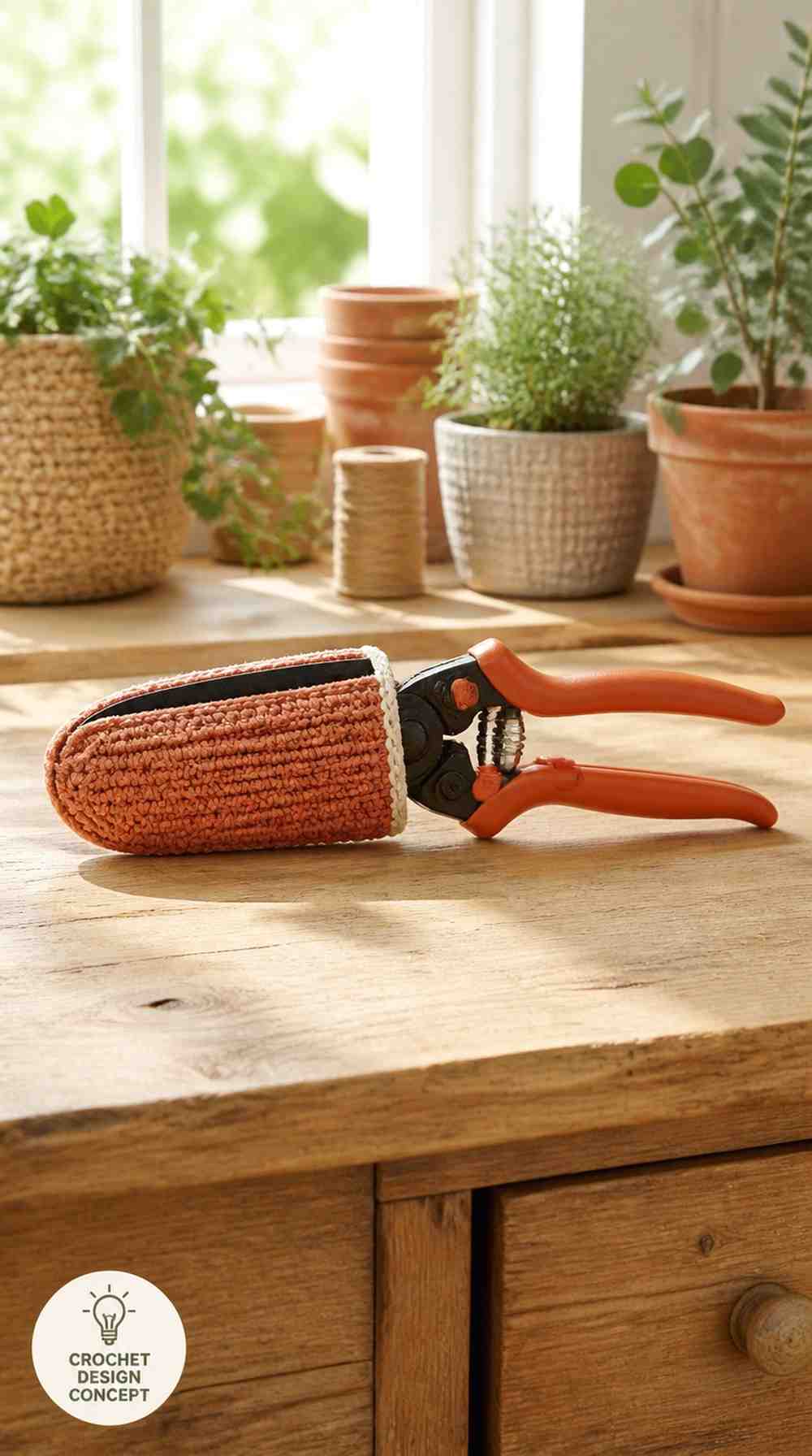
Warm terracotta crochet covers the outside of a black rigid blade guard on a pair of closed bypass pruning shears. Fine vertical ribs run along the narrow fabric, while a slim ivory border finishes the opening. The crochet tapers gently toward a rounded tip.
The pruners’ burnt-orange handles and locking mechanism remain uncovered, making the original tool easy to recognize. The ribbed exterior brings handmade texture to an otherwise ordinary garden accessory. Its usefulness would depend on fitting the existing hard guard without disturbing its attachment.
- Blade-Guard Fit: Measure the existing rigid guard rather than the exposed cutting blades. The crochet should fit over the protective housing without forcing it loose.
- Vertical Ribbing: Fine raised rows suit the narrow sheath shape, but excessive stretch could make the cover slide along the guard.
- Accessible Safety Lock: Keep the original locking mechanism visible and unobstructed so the user can verify that the blades are secured before storage.
2. Crochet Oatmeal Tapered Blade Sheath
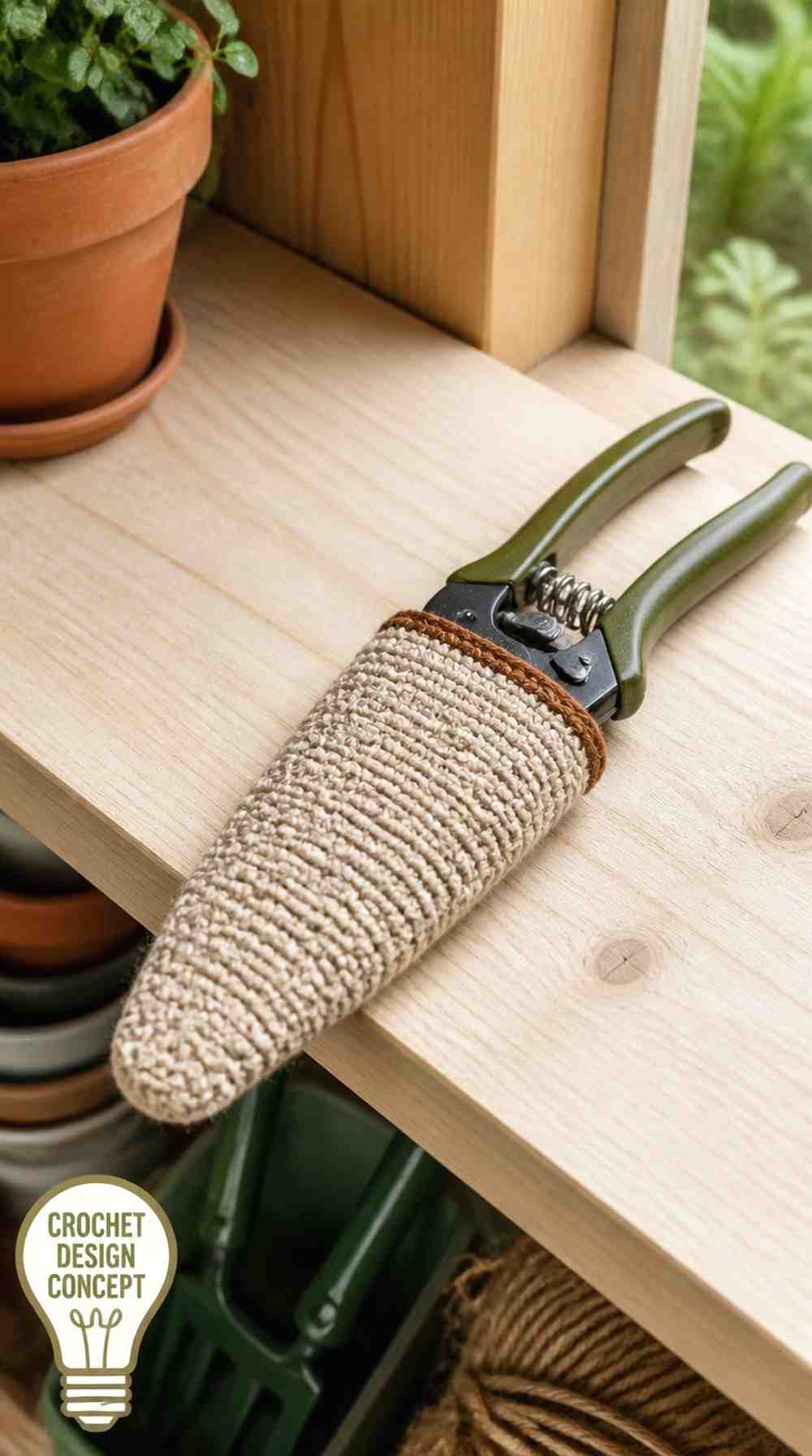
Oatmeal-beige crochet gives this slender blade-guard cover a quiet, natural appearance. Closely worked linen stitches form its surface, while a cinnamon-brown rim marks the opening. The sleeve gradually narrows toward its rounded closed tip.
The underlying rigid guard follows the cutting head of the locked pruning shears, while the olive-green handles remain exposed. Compared with a straight rectangular pouch, this concept focuses on a shape that follows the existing blade protector. The light colors make the stitch structure easy to see.
- Tapered Silhouette: Check the width at several points along the hard guard before considering a shaped crochet cover.
- Linen-Stitch Surface: Close interlocking stitches create a neat fabric appearance without relying on bulky raised texture.
- Cinnamon Opening Border: The contrasting rim defines where the outer crochet ends, leaving room for the original guard and safety lock.
3. Crochet Indigo Button Flap Sheath
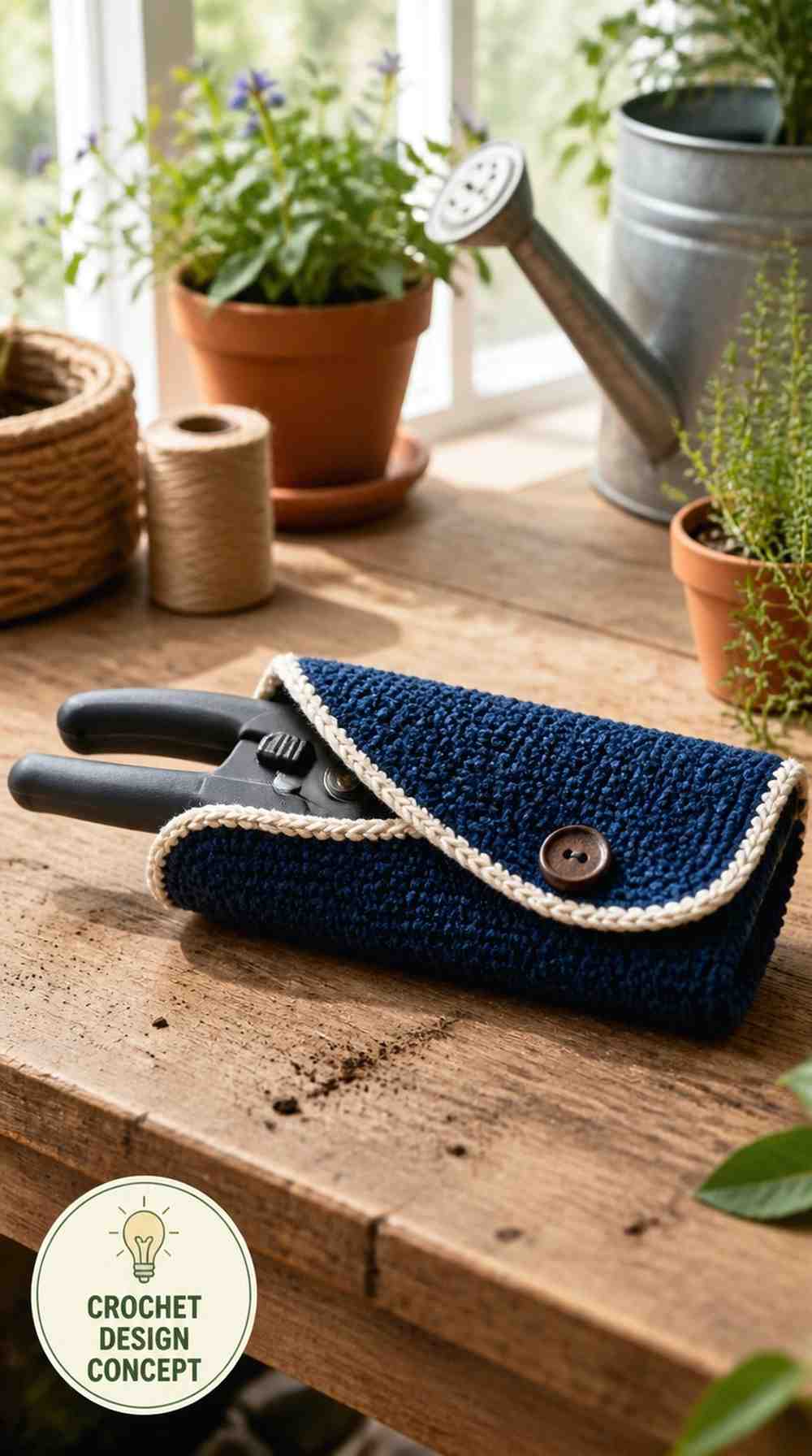
Deep-indigo crochet forms a compact cover with a broad overlapping side flap. Fine linen-stitch rows give the fabric an even surface, while narrow ivory edging highlights the flap. One small dark wooden button provides a decorative fastening detail.
The crochet surrounds a separate rigid black guard already covering the shears’ closed blades. The original safety lock and dark-grey handles remain visible. Unlike a simple slip-on tube, this concept explores a side-opening outer cover that could be removed without changing the underlying blade protection.
- Decorative Button Closure: The button holds only the crochet flap. It must never be relied on to lock the pruning shears or secure their sharp blades.
- Flat Side Overlap: Keep the fabric layers reasonably thin so the cover does not become bulky or interfere with the rigid guard.
- Easy Removal: A removable outer flap should allow access to the original protective case without requiring contact with the cutting edges.
4. Crochet Sage Lattice Guard Sleeve
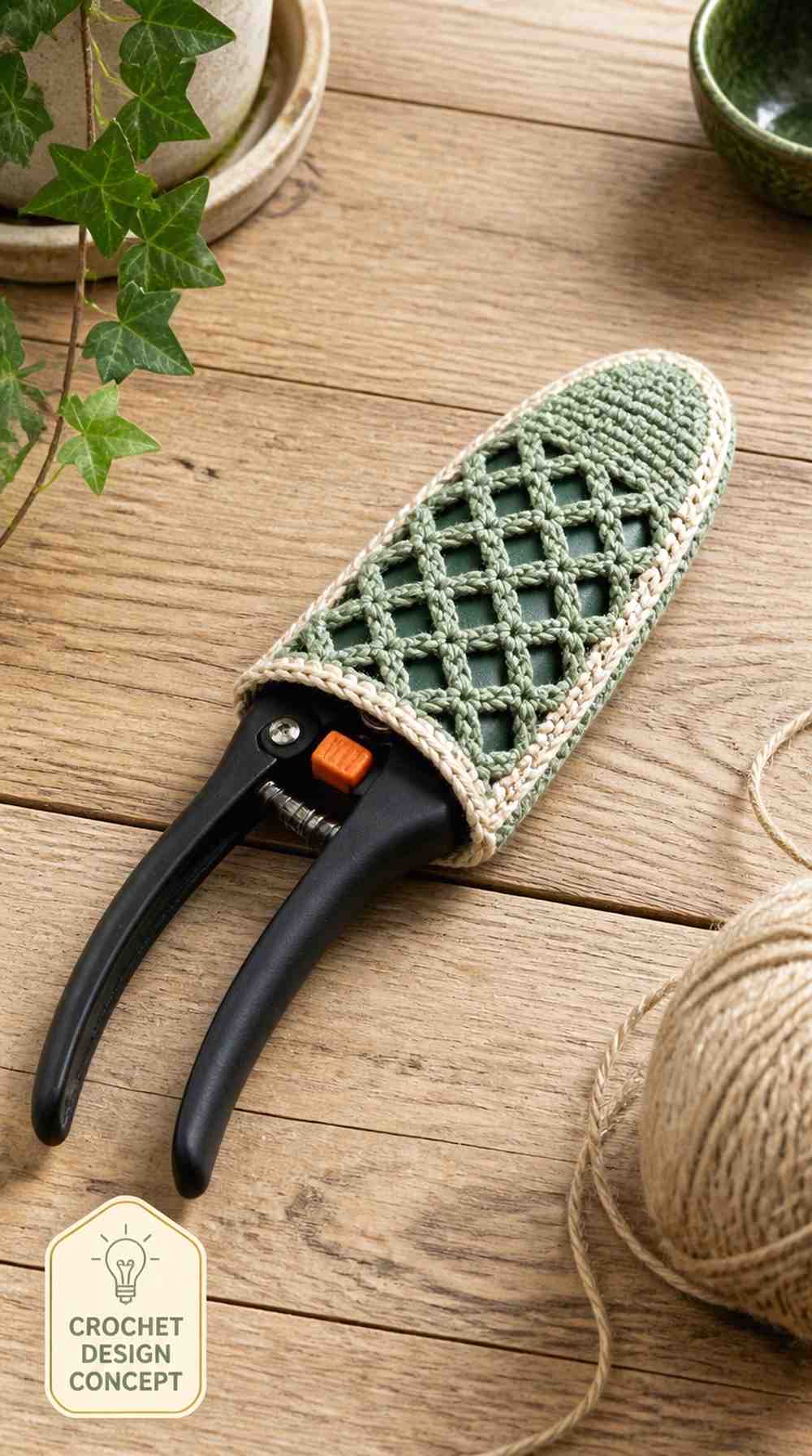
Muted-sage crochet creates an airy diamond-lattice pattern over an opaque forest-green plastic blade guard. Dense side panels and a solid lower section frame the openwork, while a thin cream border finishes the upper opening.
The green rigid guard remains visible through the crochet mesh, with no exposed cutting blades. This design uses the underlying hard material as part of its appearance. Its openwork provides decorative contrast, but the mesh itself offers no reliable protection against a sharp pruning blade.
- Diamond-Mesh Detail: Keep the openings evenly connected to preserve the intended pattern and prevent loose loops from catching on nearby tools.
- Opaque Hard Guard: The solid green protector, not the crochet lattice, must provide the actual barrier around the closed cutting head.
- Cleaning Openwork: Soil and garden debris can collect in small mesh openings, so a removable decorative sleeve would be easier to clean thoroughly.
5. Crochet Mustard Twin Pruner Sheath Station
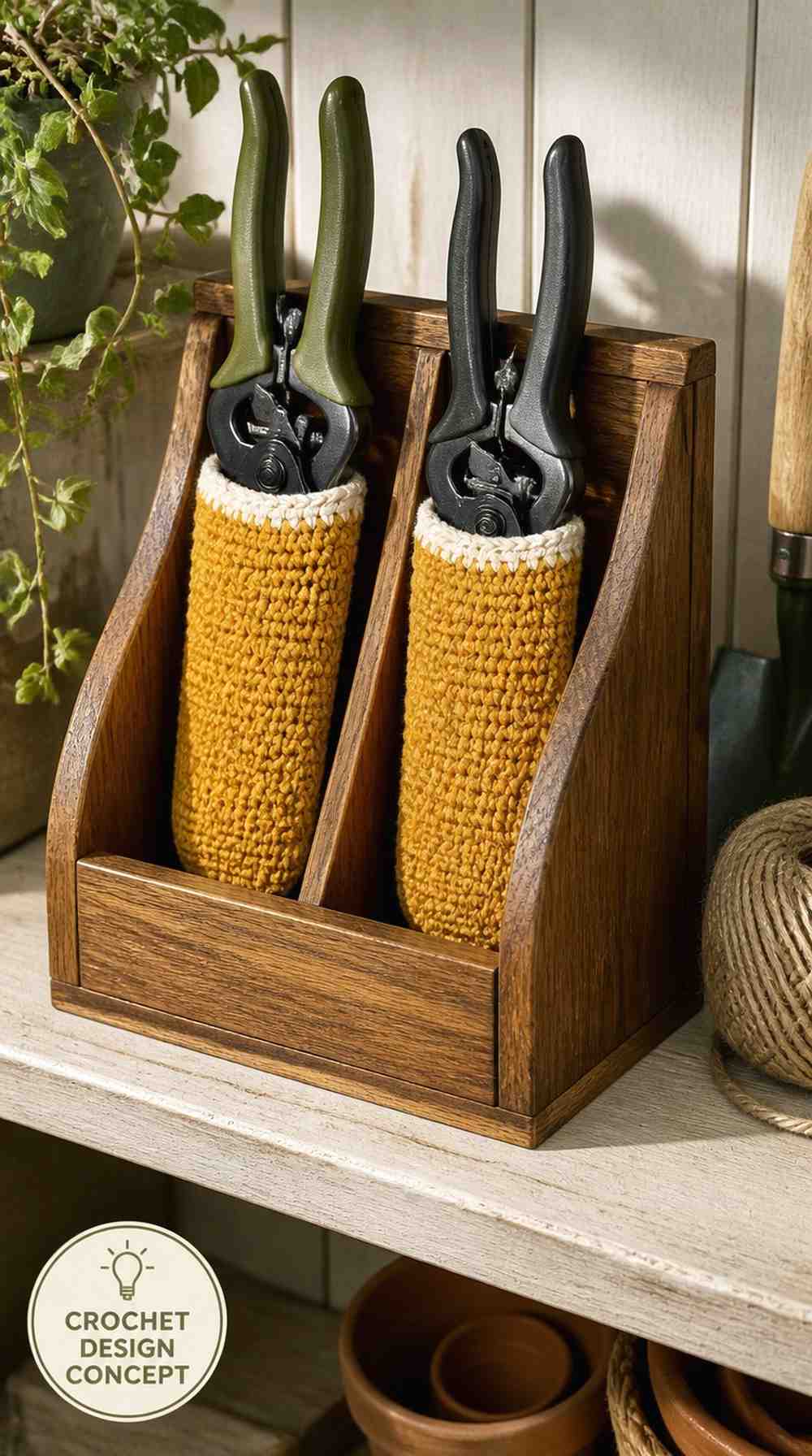
Two matching mustard crochet covers sit over separate rigid blade guards on a pair of pruning shears. Thin cream borders finish the openings, while dense single-crochet rows form the rounded sleeves.
The guarded tools stand handles-up in individual compartments of a sturdy wooden tool organizer. One pair has green handles, while the other has charcoal handles. Rather than connecting the two tools with crochet, the concept uses a rigid station to keep them separated. This makes it interesting for a gardener who maintains different hand pruners.
- Separate Tool Compartments: Each pair of shears should have its own properly fitted guard and stable storage space.
- Handles-Up Arrangement: A rigid organizer must support the tools securely so they cannot tip over or slide out.
- Matching Mustard Covers: Repeated crochet styling creates a coordinated appearance without joining or weakening the original protective guards.
6. Crochet Cocoa Checkerboard Pruner Sheath
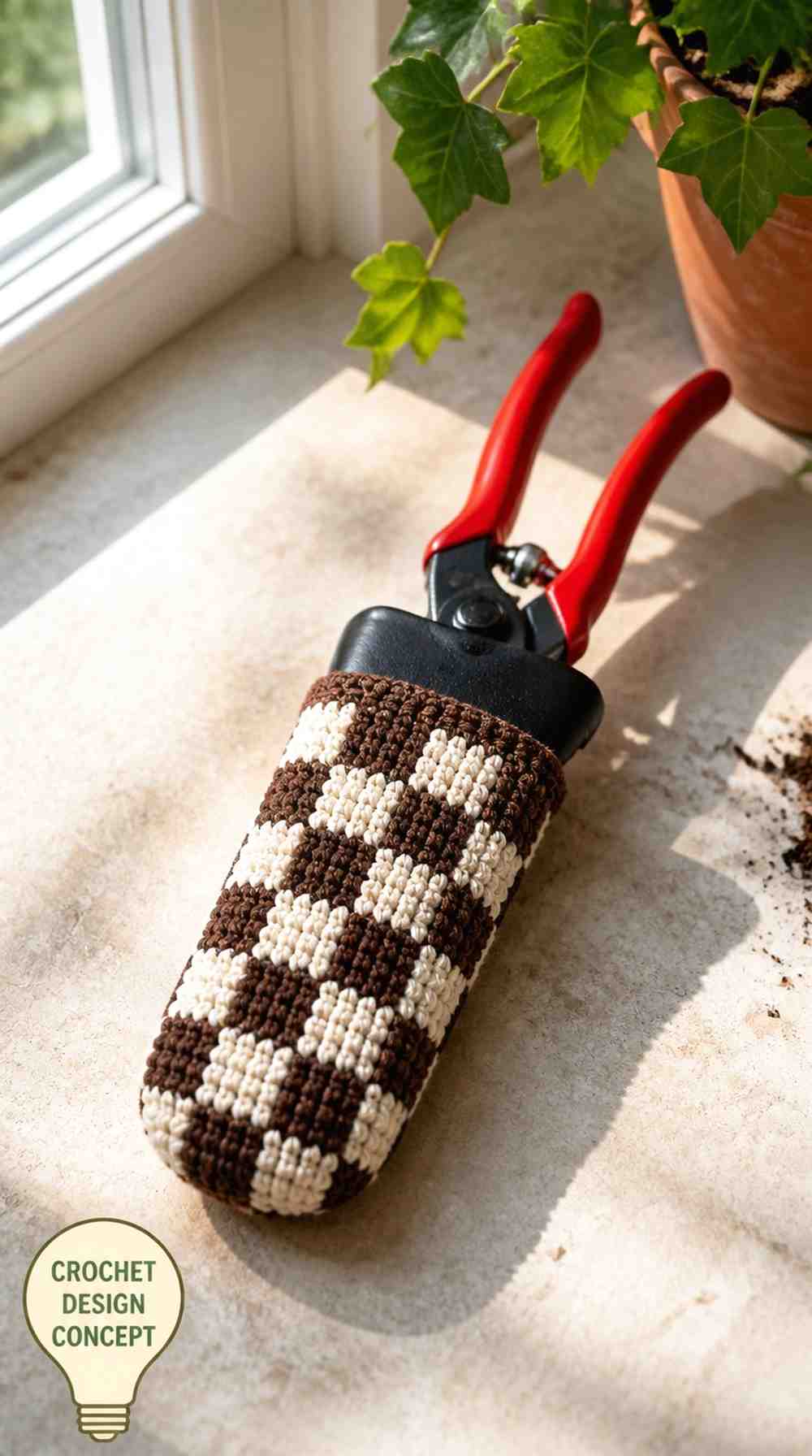
Miniature espresso-brown and vanilla-cream squares decorate this short crochet sheath. A narrow mocha border frames the opening, and a rounded lower tip gives the covering a compact shape.
The checkerboard surrounds the rigid black blade protector of a pair of locked pruning shears, leaving their red handles visible. Compared with the plain ribbed designs, the pattern draws attention to colorwork rather than surface relief. It offers a decorative approach for garden-tool storage without changing the original protective mechanism.
- Miniature Checkerboard: Small tapestry-crochet blocks suit the narrow sheath better than separately joined squares with bulky seams.
- Mocha Opening Rim: The solid dark border helps distinguish the fabric edge from the underlying black guard.
- Colorwork Maintenance: Cream stitches may show soil and grease, so consider how the decorative sleeve can be removed and cleaned separately.
7. Crochet Burgundy Scalloped Sheath Cover
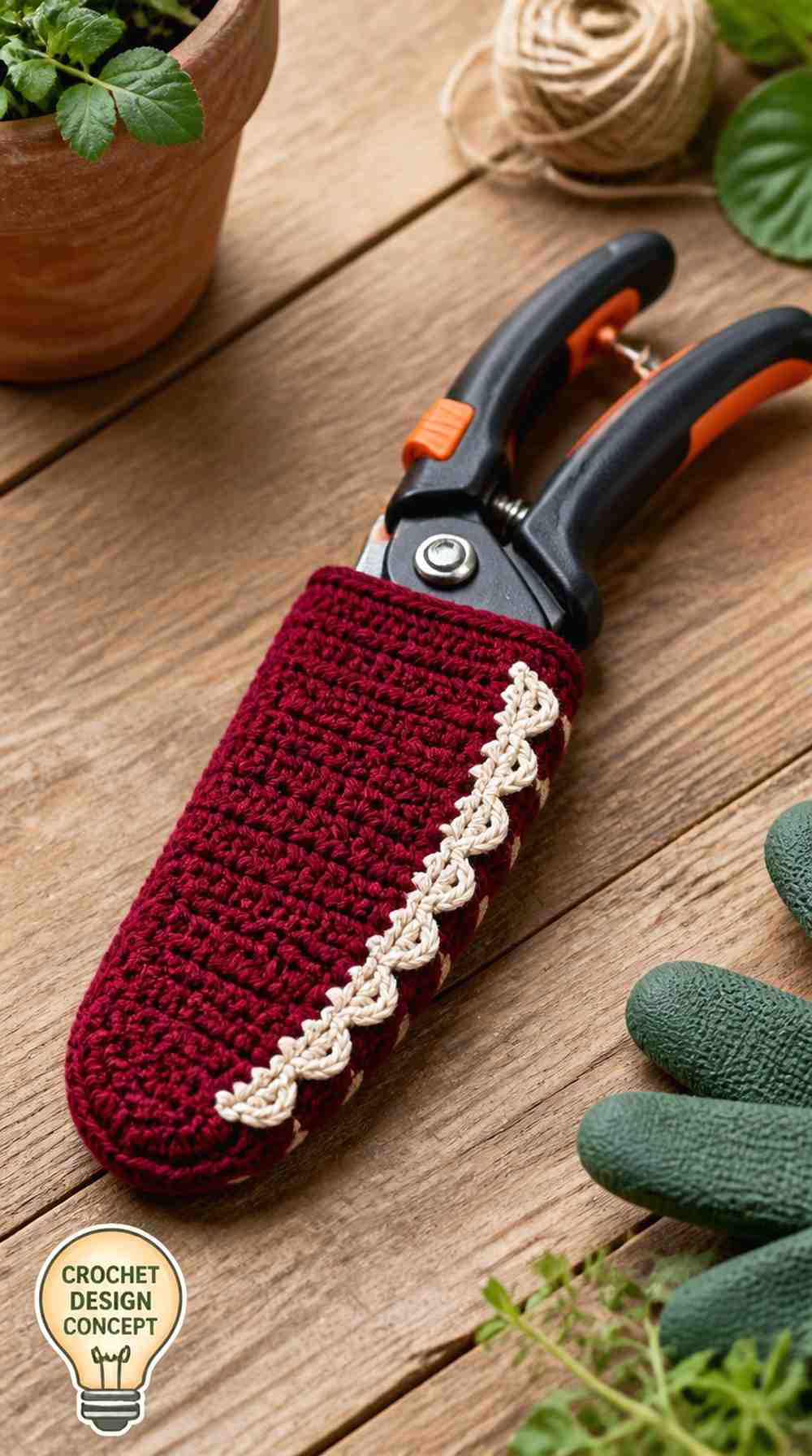
A rich burgundy crochet sleeve covers the outside of a charcoal rigid blade guard. Closely worked horizontal rows form the main body, while tiny ivory scallops decorate one outer side.
The accessory keeps its rounded tip and narrow opening simple, allowing the little shell-like border to become the main detail. The pruning shears’ orange-and-black handles remain exposed, along with the original safety lock. This concept brings a softer decorative style to garden-tool storage while keeping the hard blade protection separate.
- Miniature Scalloped Border: Use small, flat crochet shells rather than dangling loops that could snag on nearby tools.
- Single-Side Decoration: Keeping the scallops on the outward-facing side reduces unnecessary bulk around the entire sheath.
- Lock Clearance: The decorative edging must remain away from the original safety lock and any moving tool components.
8. Crochet Slate Side Entry Pruner Envelope
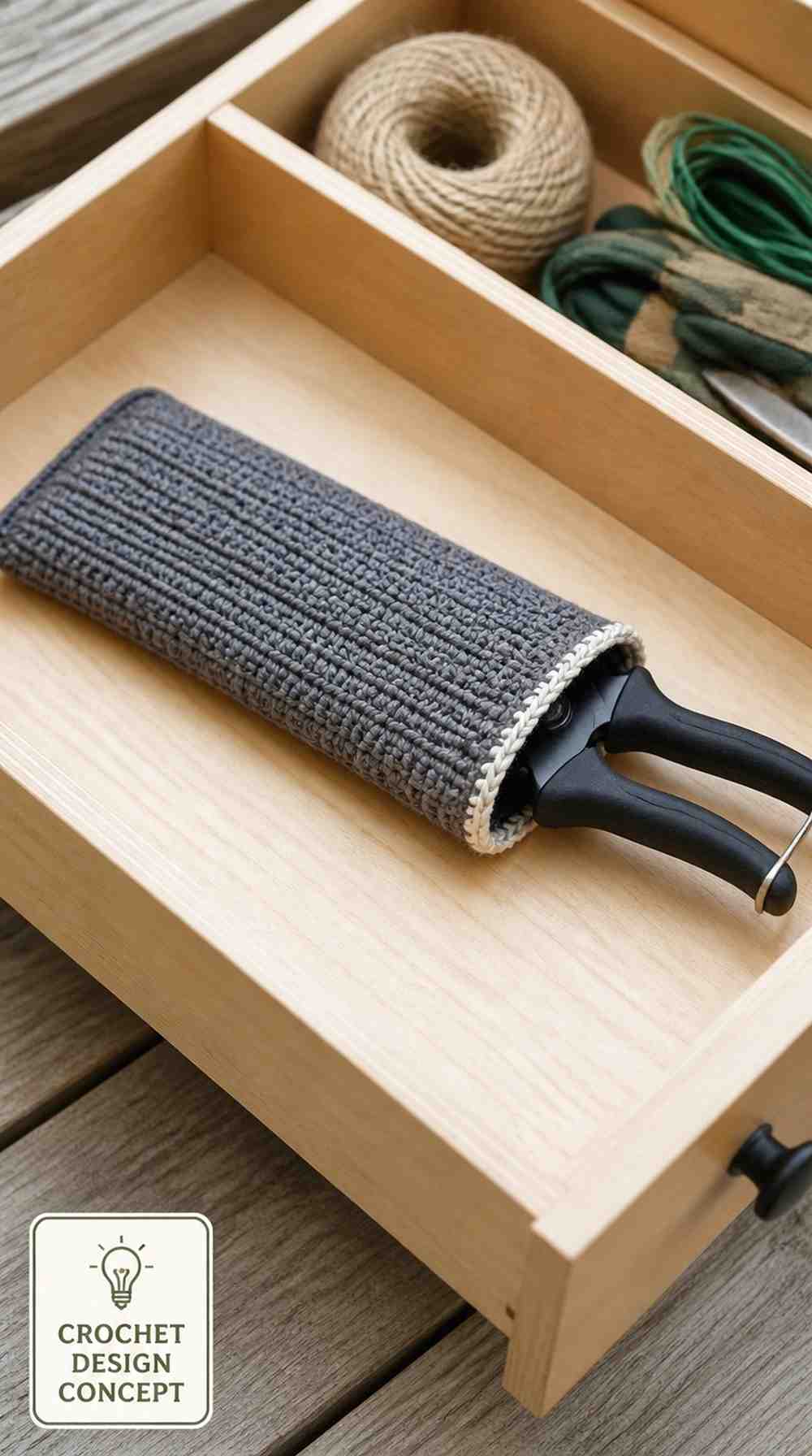
Slate-grey crochet creates a long rectangular envelope with a closed left end and an open right side. Dense half-double-crochet rows form the fabric, while a slim ivory border frames the opening.
The sheath sits inside a shallow wooden tool drawer. A pair of closed, locked pruning shears, already protected by a rigid black guard, rests partly inside the envelope with its handles visible. Unlike the fitted guard covers, this idea explores a larger horizontal storage pocket that surrounds more of the protected tool.
- Horizontal Drawer Fit: Measure the drawer length and the complete closed tool, including the original guard and handles.
- Side Entry Opening: The envelope should allow the protected shears to slide out without snagging the guard or requiring contact with the blade area.
- Drawer Support: The rigid drawer beneath the envelope supports the tool and keeps it separate from loose objects that might damage the protective cover.
9. Crochet Coral Diagonal Guard Envelope
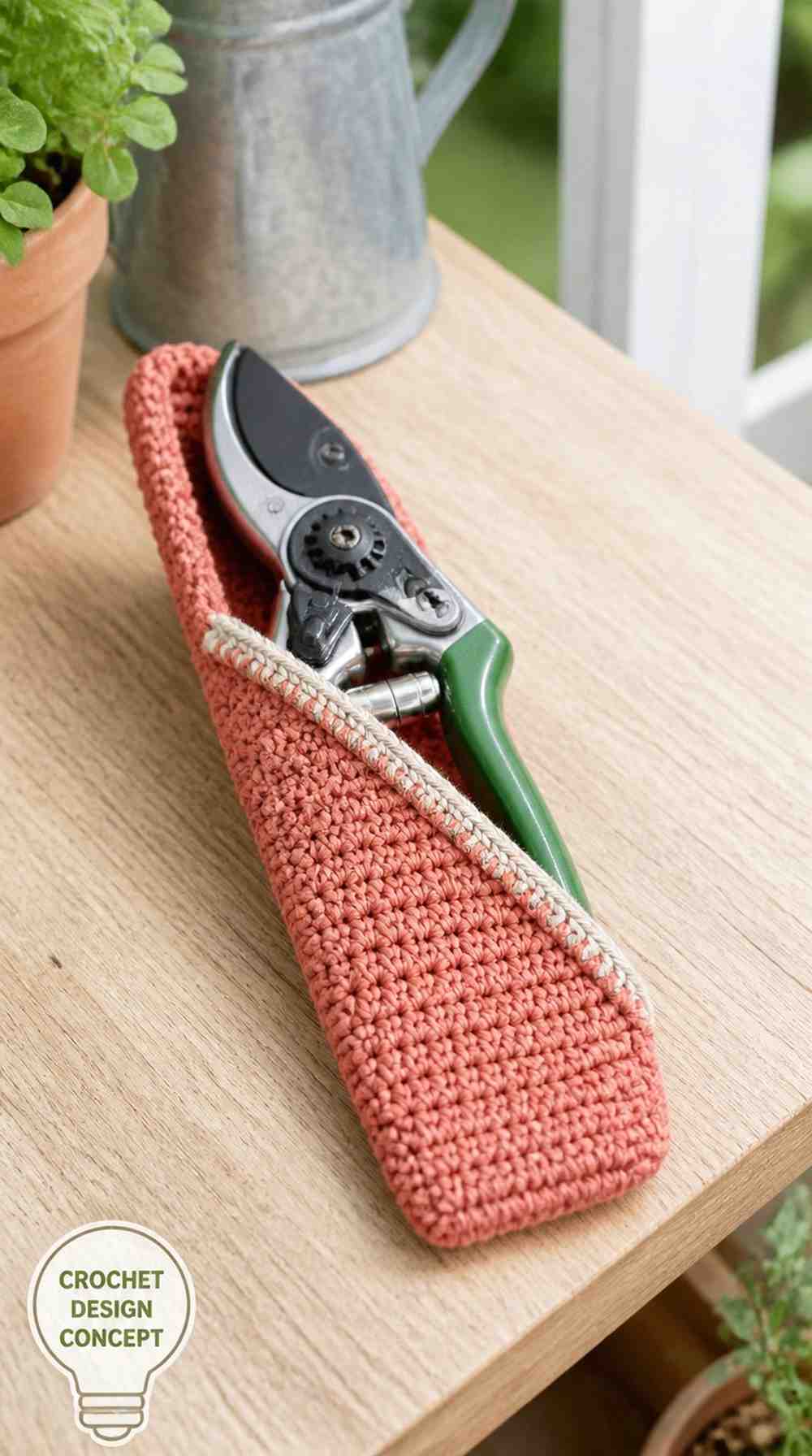
Dusty-coral crochet forms an asymmetrical envelope over the rigid black blade guard of locked pruning shears. Its front edge slopes diagonally, with a narrow cream border tracing the opening. A dense back panel and enclosed lower tip complete the shape.
The diagonal opening leaves part of the original guard visible while the green pruner handles remain exposed. Its clean, angled silhouette creates a more tailored appearance than an ordinary straight-sided sheath. The shape is decorative and should not compromise the rigid guard’s secure fit.
- Angled Opening: Keep the diagonal edge away from the sharp cutting area and the original guard’s locking or attachment features.
- Cream Edge Trim: A narrow border highlights the sloping panel without creating a bulky ridge.
- Rigid Guard Visibility: Leaving part of the hard protector exposed makes it easier to confirm that the proper blade covering remains in place.
10. Crochet Forest Granny Diamond Sheath
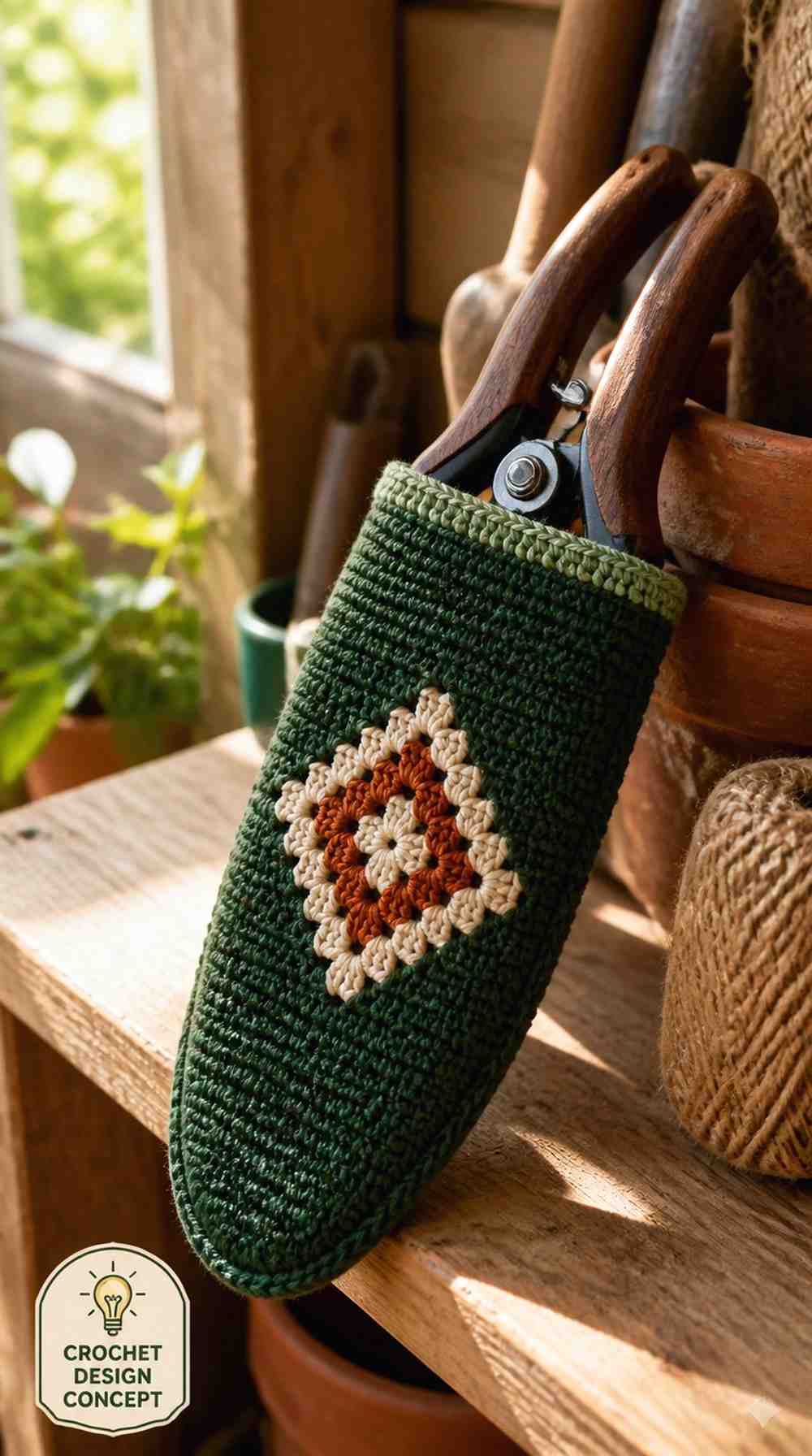
Forest-green crochet provides the background for one small granny-diamond motif in cream and muted rust. The motif lies flat against a closely stitched sheath, with a narrow olive rim and a softly rounded lower tip.
The crochet covers a rigid black blade guard on closed, locked garden pruning shears. Walnut-brown handles and the original safety lock remain visible. This concept combines a traditional crochet motif with a practical-looking garden accessory without allowing the decorative openings to expose the cutting blades.
- Single Granny Motif: Keep the diamond centered on the outward-facing panel so its corners do not disappear into the side seams.
- Dense Supporting Fabric: The solid green crochet beneath the motif provides a clear background and keeps the decorative openings away from the actual blade guard.
- Motif Cleaning: Raised clusters may collect soil and dust, making removable construction particularly helpful.
11. Crochet Plum Foldback Cuff Sheath
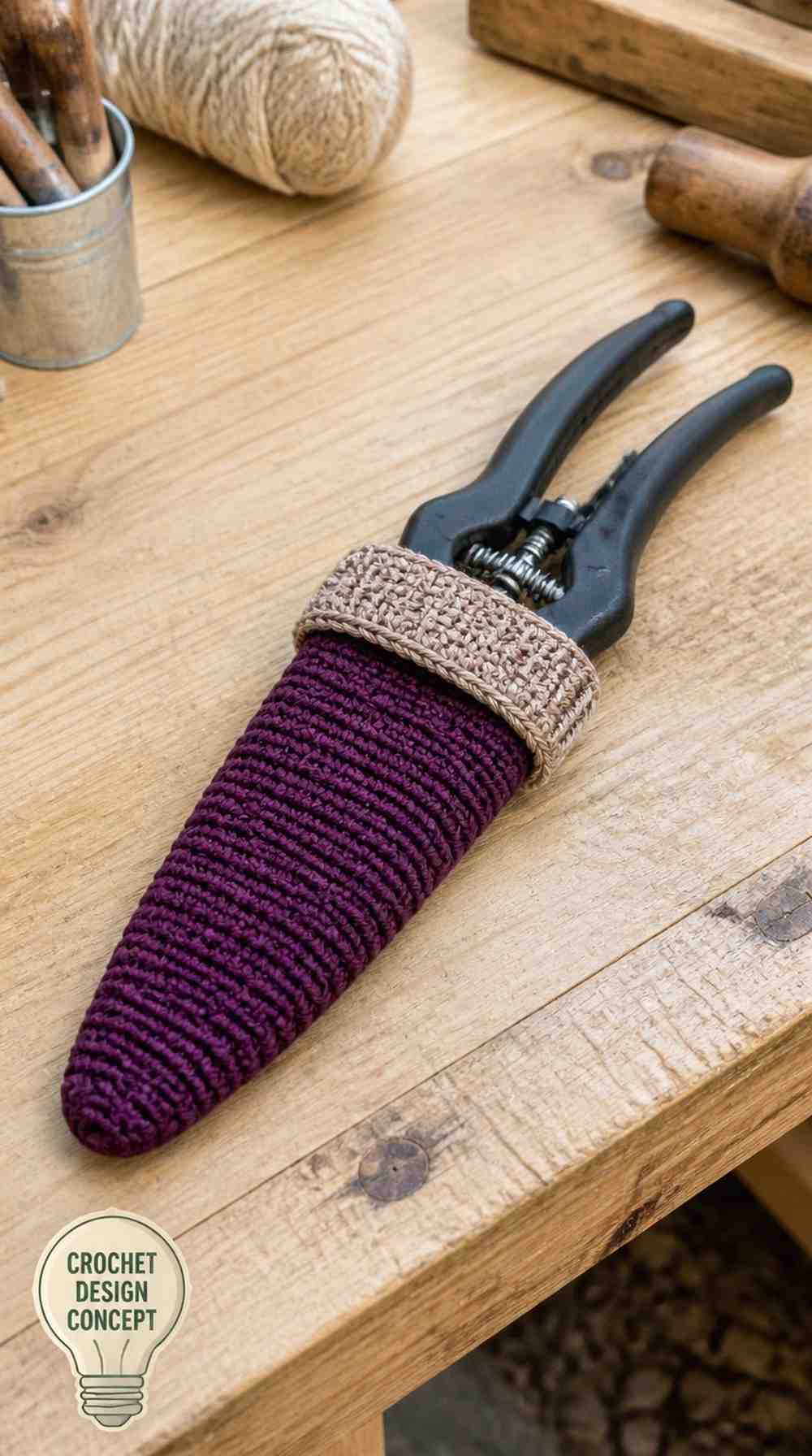
Deep-plum crochet creates a tapered outer sheath with a folded-back beige cuff at its opening. Closely worked horizontal rows cover the main body, while the turned cuff reveals a contrasting ribbed reverse.
The original black rigid blade guard remains visible just above the fold, and the pruning shears’ charcoal handles and safety lock are unobstructed. This design uses the fabric’s reverse surface as its decorative feature rather than adding buttons or motifs. The doubled cuff gives the opening a more substantial appearance.
- Folded Cuff: Keep the turned edge short enough that it does not cover the original guard’s fastening mechanism.
- Contrasting Ribbing: The beige reverse adds texture, but different stitch surfaces may stretch differently around the opening.
- Added Fabric Thickness: A folded cuff requires extra clearance, especially when the guarded tool is stored in a narrow drawer compartment.
12. Crochet Sky Blue Marker Tab Sheath
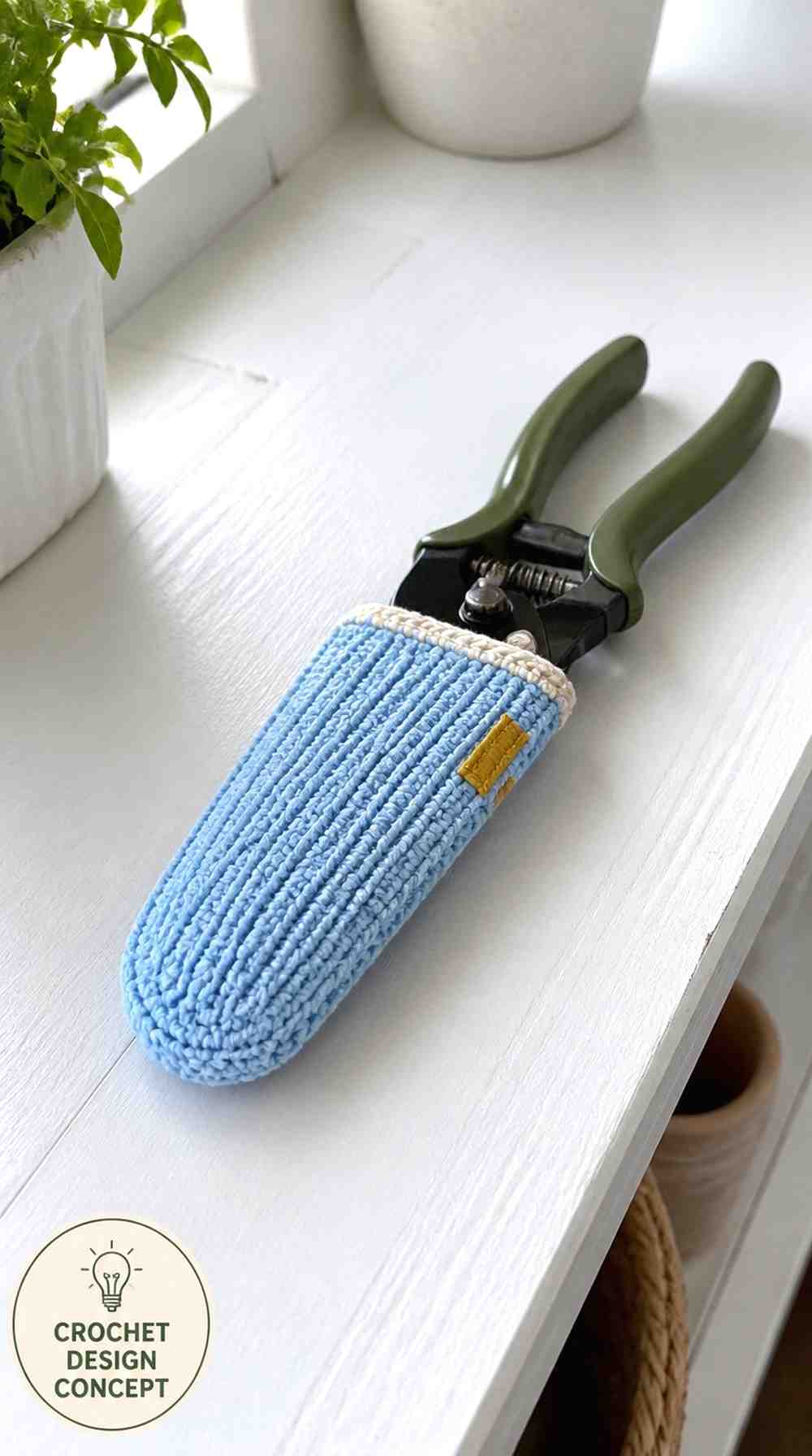
Sky-blue crochet covers the outside of a black rigid pruning-blade guard, with fine vertical ribbing and a narrow cream opening. One small golden-yellow rectangular tab sits near the upper outer edge.
The tab makes this design easy to distinguish from other tool covers. Its bright colors create a light, modern appearance against the pruning shears’ matte-green handles. The tab is decorative rather than a structural pull handle, and the underlying guard remains responsible for protecting the closed blades.
- Yellow Identification Tab: A small color marker could help distinguish similar tool covers, but it should not replace checking the actual tool.
- Vertical Crochet Ribs: Fine ribs add texture without needing loose decorative cords or raised attachments.
- Gentle Removal: Do not pull the rigid guard off by tugging on the crochet tab, as the outer sleeve may separate from the protector.
13. Crochet Charcoal Open-Mesh Guard Wrap
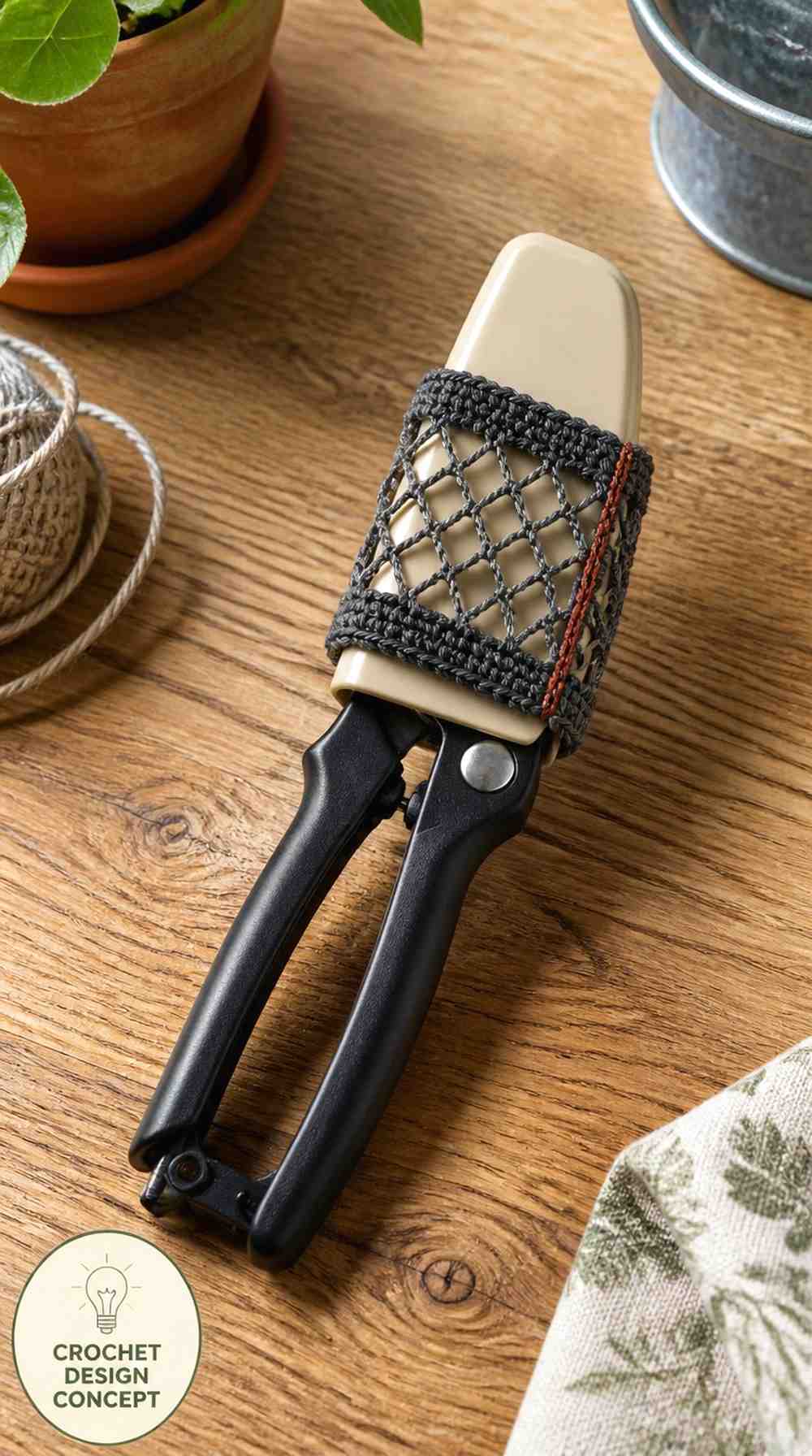
A charcoal crochet band surrounds the middle of an opaque sand-colored plastic blade guard. The central panel uses orderly diamond mesh, while dense charcoal strips form the upper and lower borders. A narrow rust-colored seam completes the wrap.
Unlike the closed-tip sheaths, this concept decorates only a section of the original rigid protector. Both ends of the hard guard remain visible. The result is a lighter-looking design with less crochet coverage, while the opaque plastic continues to enclose the locked pruning blades.
- Open Mesh Band: The crochet lattice is decorative and cannot protect against blade punctures or accidental contact on its own.
- Visible Guard Ends: Leaving the original protector exposed at both ends helps preserve access to its intended fitting and removal points.
- Reduced Fabric Coverage: A shorter band uses less material, but it may move along a smooth plastic surface if not properly fitted.
14. Crochet Ivory Double-Layer Guard Pouch
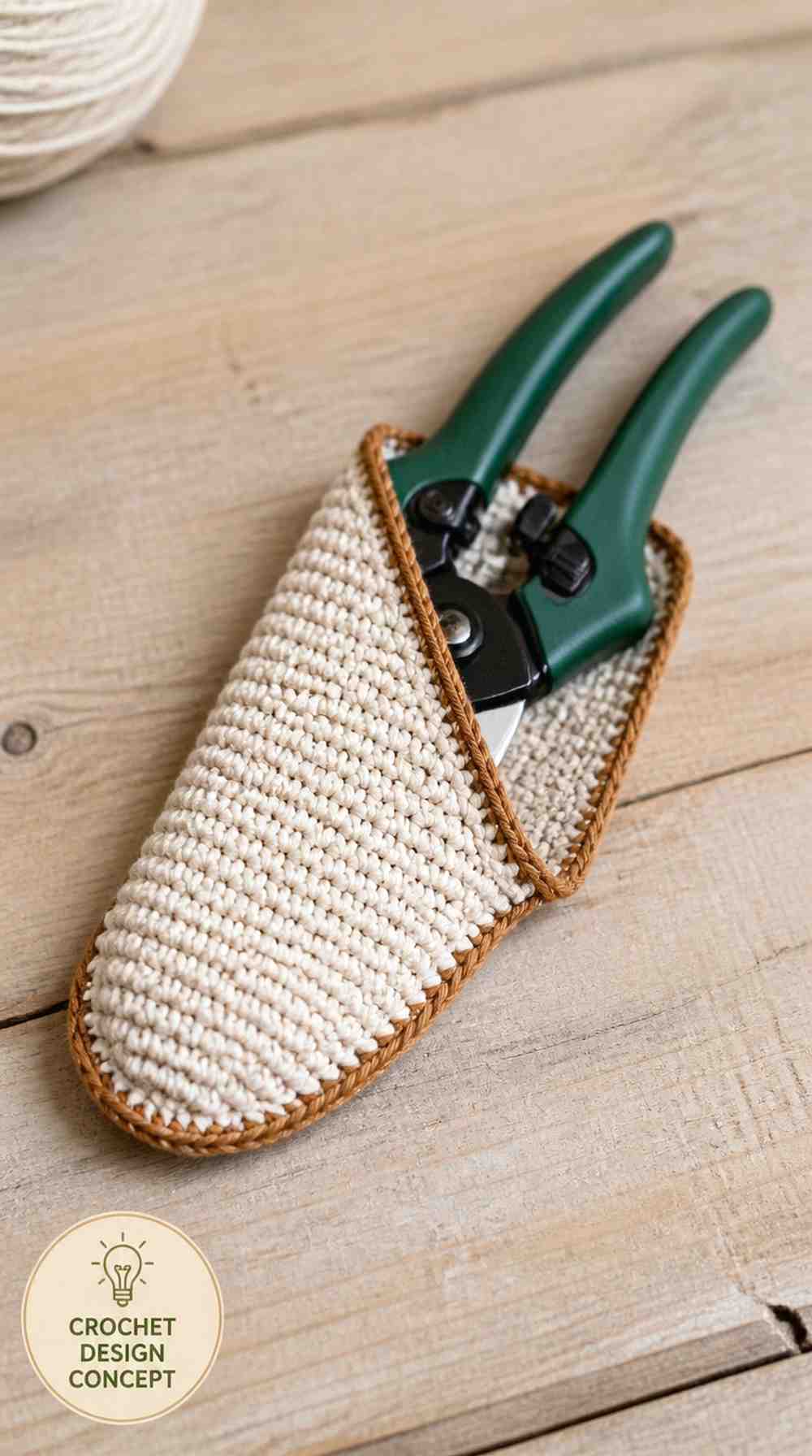
Warm-ivory crochet creates a compact outer pouch with a cinnamon border and a gently rounded tip. A small folded-back corner reveals an oatmeal-colored ribbed inner layer beneath the closely stitched exterior.
The layered pouch surrounds an existing rigid black blade guard on closed, locked pruning shears. Their dark-green handles remain uncovered. This design explores the appearance of a lined protective accessory, although additional crochet layers do not establish resistance to sharp blades, impacts, or punctures.
- Double-Layer Fabric: The contrasting interior adds visual depth but also increases thickness around the original rigid guard.
- Folded Corner Detail: Keep the turned section small and tidy so it does not snag when the tool is returned to storage.
- Protection Limitation: Two crochet layers are still not a substitute for a suitable hard blade cover.
15. Crochet Rust U-Notch Lock-Clear Sheath
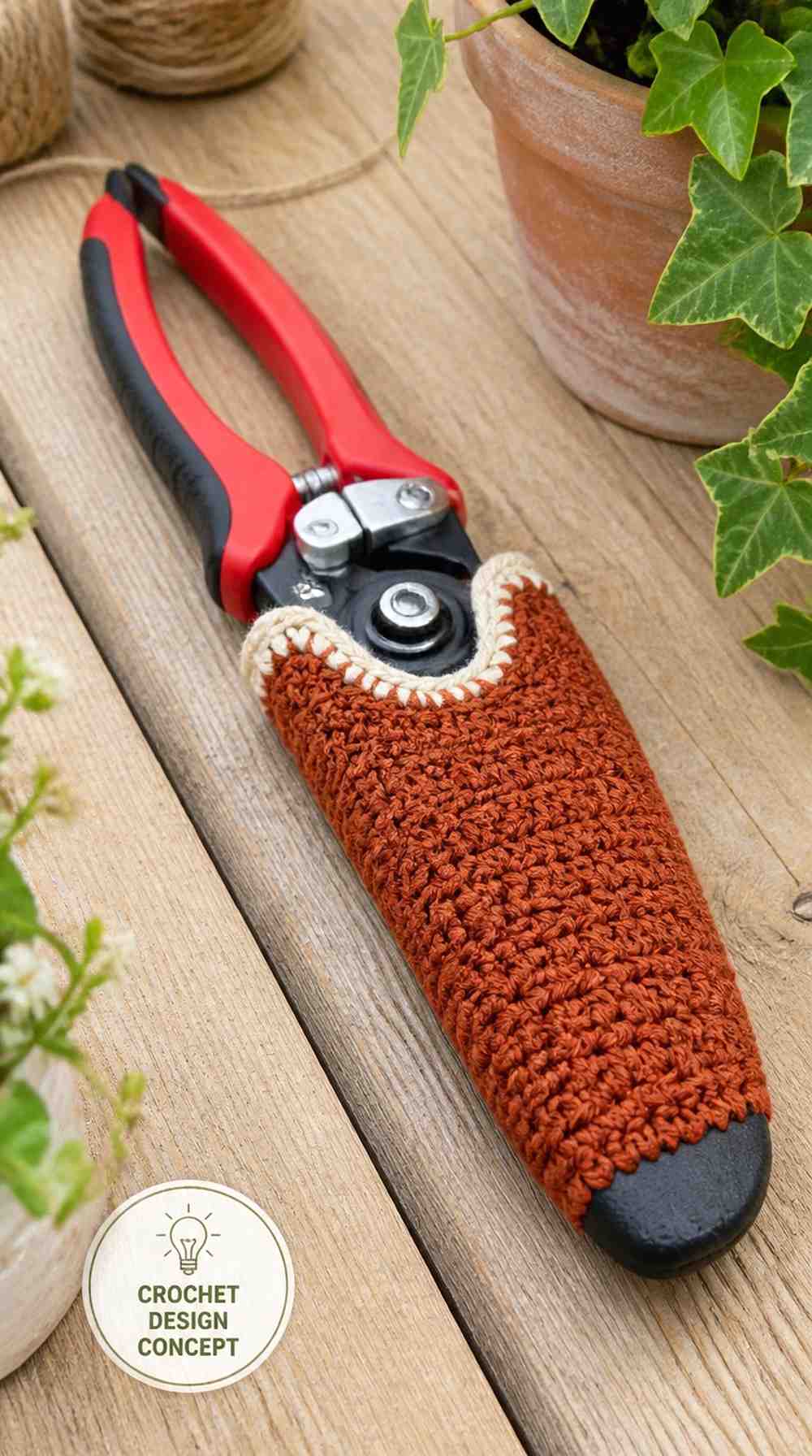
Burnt-rust crochet forms a fitted outer sheath with a carefully shaped U-shaped opening near the rear upper edge. A thin cream border follows the notch, leaving the original silver safety lock clearly visible.
The lower tip covers the outside of a rigid charcoal blade guard, while the shears’ red-and-black handles remain exposed. The design uses the cutout to accommodate an important tool feature rather than adding decoration alone. Its usefulness depends on accurate positioning around the particular pruner’s locking mechanism.
- U-Shaped Lock Clearance: The cutout should leave the original safety lock fully accessible without putting crochet against its moving parts.
- Curved Cream Border: Even edging helps preserve the notch shape rather than allowing it to curl toward the lock.
- Model-Specific Fit: Safety locks appear in different positions on different pruners, so one notch placement will not suit every tool.
16. Crochet Teal Rigid Holster Trim
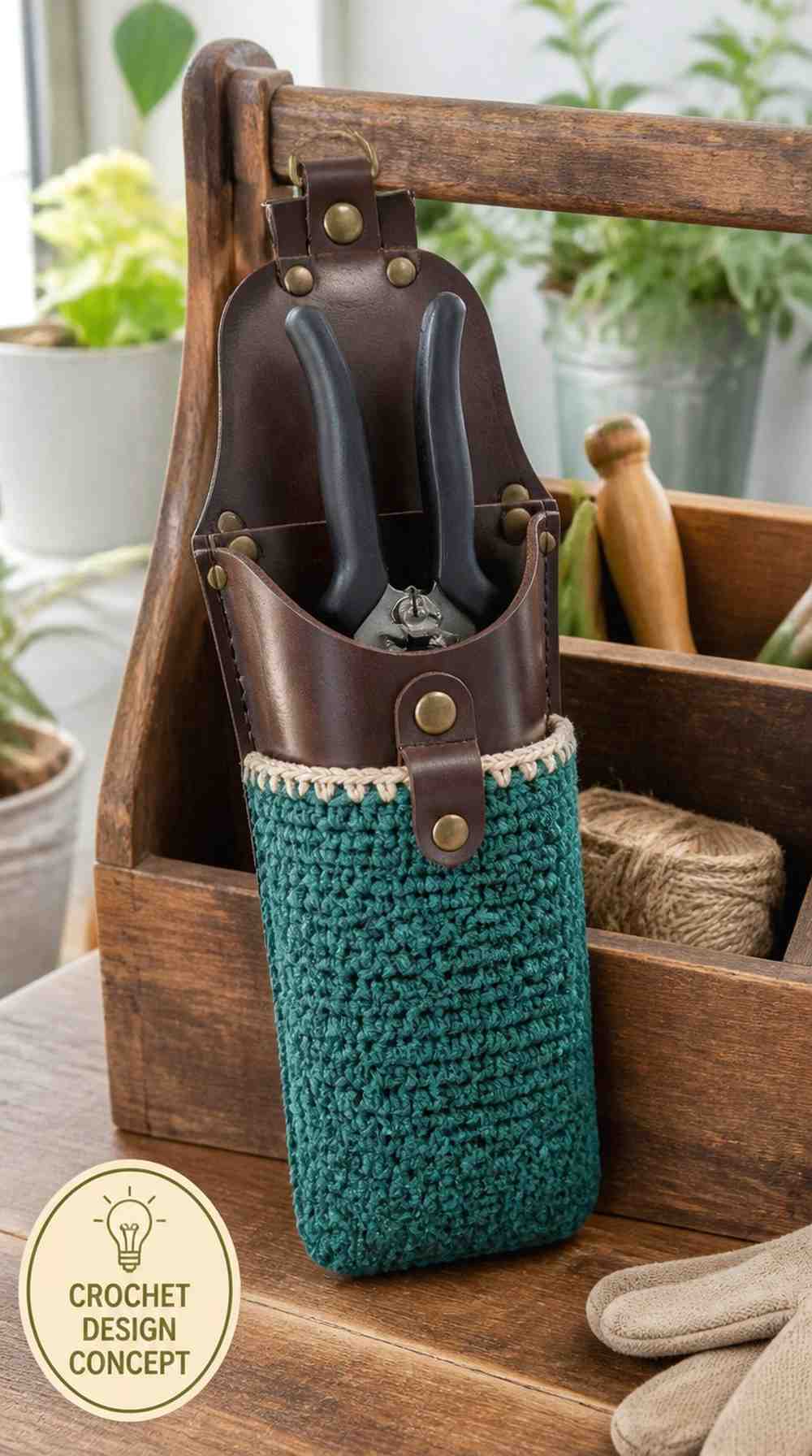
Teal crochet decorates the lower front of a dark-brown rigid garden-tool holster. Fine moss-stitch rows create a compact rectangular covering, while a narrow cream rim finishes its upper edge.
The holster sits in a sturdy wooden workbench organizer with a pair of closed, locked pruning shears inside. Its original protective body and fastening hardware remain visible. Unlike the individual blade-guard sleeves, this concept treats the crochet as decoration for an existing complete holster rather than a replacement for one.
- Existing Holster Compatibility: Start with a rigid case intended for the particular pruning shears, not a loosely shaped decorative pouch.
- Front-Only Crochet Coverage: Keeping the teal fabric away from original closures and attachment points preserves access to the holster’s hardware.
- Workbench Storage: The rigid wooden caddy supports the holster in the pictured arrangement; the crochet does not hold its weight.
17. Crochet Cobalt Split-Texture Blade Sheath
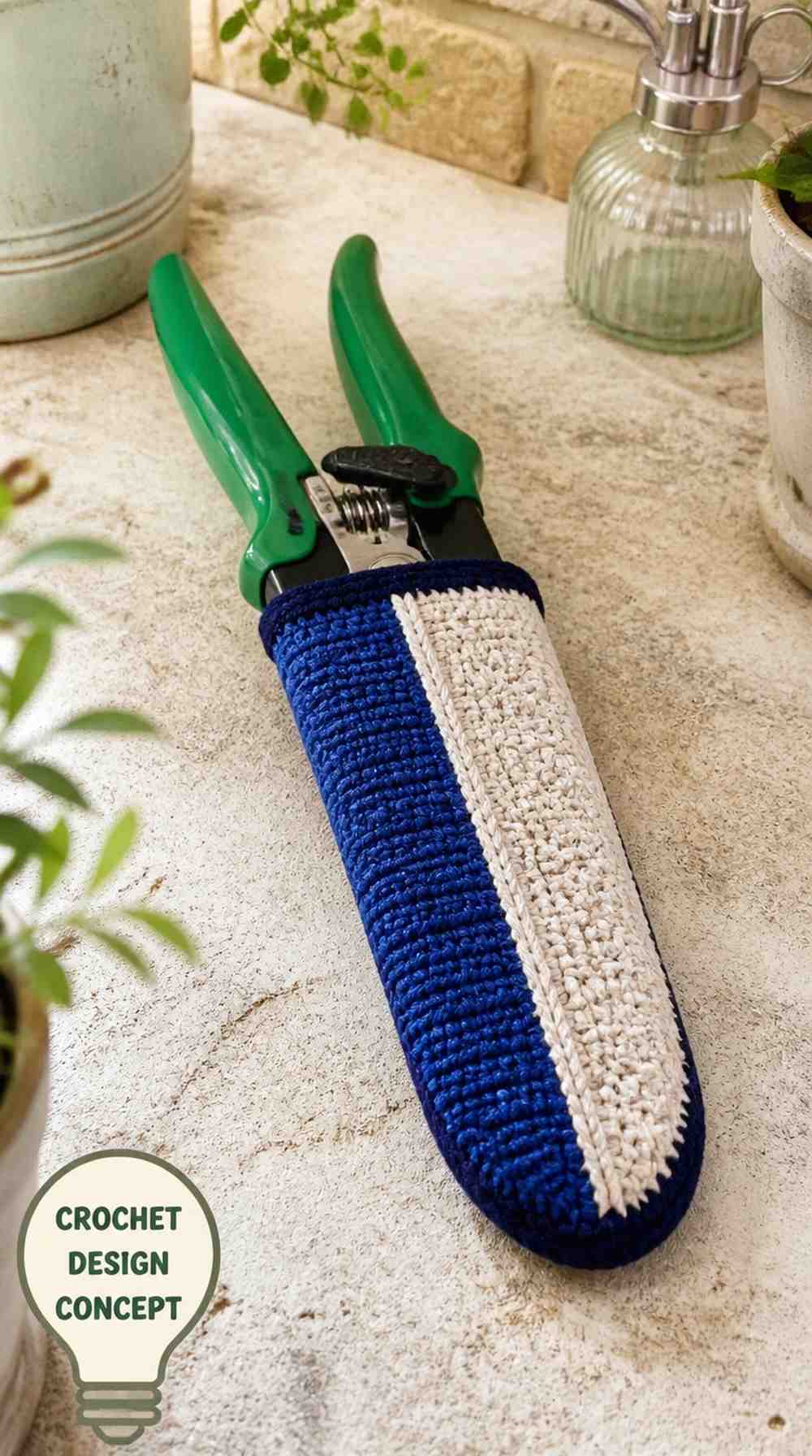
Cobalt-blue ribbing covers the left side of this narrow crochet sheath, while warm-oatmeal linen stitch fills the right. A thin cream seam divides the two textures, and dark-navy edging finishes the opening and rounded tip.
The two-tone sleeve fits over an opaque black rigid guard on locked pruning shears with green handles. The different stitch patterns create visual contrast without requiring buttons, pockets, or attached motifs. Its straight central seam gives the narrow tool cover a clean, modern appearance.
- Two Stitch Textures: Ribbing and linen stitch may stretch differently, so their tension should be compared before joining them.
- Central Cream Seam: Keep the joining line flat to prevent one panel from pulling against the other around the hard guard.
- Navy Outer Edging: Dark borders define the sheath’s shape without introducing additional decorative bulk.
18. Crochet Mocha Gradient Pruner Case Sleeve
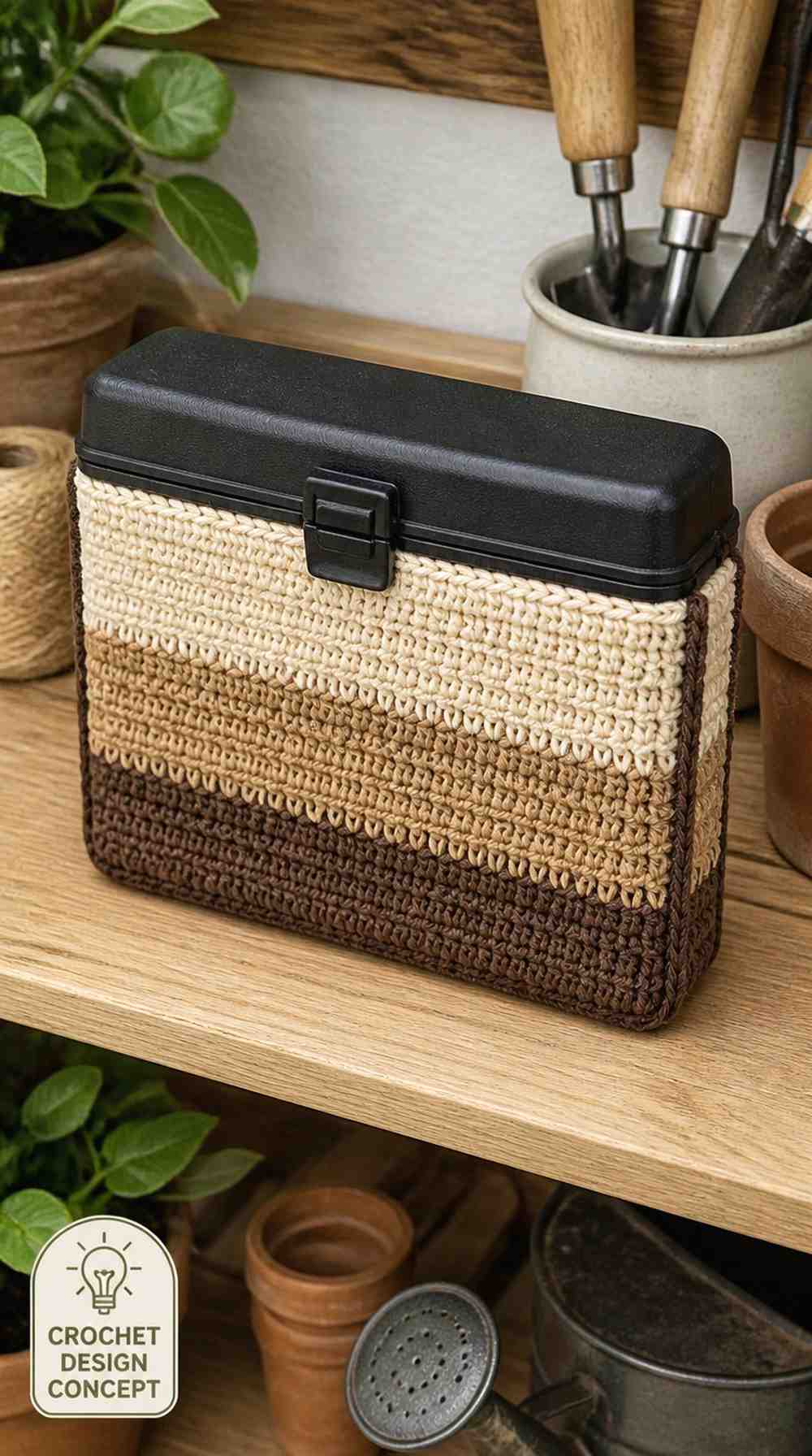
Warm cream, caramel, and deep mocha form three horizontal color sections across the lower half of this rigid black pruning-tool case. Closely connected single-crochet rows create the fabric, while narrow mocha side edging finishes its squared corners.
The complete closed and locked pruning shears remain inside the hard case, with the lid secured. Unlike the earlier fitted blade-guard covers, this concept decorates an enclosed storage box. The case’s original latch and hinge remain accessible, allowing the crochet to act entirely as an exterior accent.
- Three-Color Gradient: Balance the cream, caramel, and mocha sections so each remains visible across the short case sleeve.
- Uncovered Case Hardware: Keep the crochet away from the original lid, latch, and hinge so the box operates as intended.
- Rigid Case Storage: A suitable closed case provides a more complete storage arrangement than a decorative crochet pouch alone.
Practical Guide to Crochet Pruning Shear Storage Sheaths
Always secure the blades first. Close the pruning shears, engage their original safety lock, and use a suitable rigid guard or protective case where required. The crochet designs in this collection are decorative outer coverings. Crochet yarn is not a reliable puncture-resistant barrier.
Check the type of pruning tool. Bypass pruners, anvil pruners, and fine pruning snips may have different cutting-head shapes and locking mechanisms. A sleeve that fits one protective guard may not work with another. Measure the actual hard guard instead of guessing from the pruner’s overall length.
Clean and dry the tool before storage. Pruning shears often collect plant sap, soil, and moisture. The University of Illinois Extension recommends cleaning and thoroughly drying garden tools before storage, and protecting metal surfaces against rust.
Illinois
Keep all safety controls accessible. Crochet should never obstruct the pruning shears’ original safety lock, release mechanism, or proper guard attachment. If a decorative sleeve makes the guard harder to secure or remove, the arrangement is unsuitable.
Use smooth, washable yarn. A closely worked cotton or suitable cotton-blend yarn may be worth considering for decorative covers. However, yarn choice does not guarantee blade resistance, durability, or safe tool storage. Check the actual washing instructions and allow the fabric to dry completely before replacing it.
Store sharp tools securely. Keep pruning shears in a dry, protected place away from children and anyone who might handle them without understanding the hazards. The manufacturer Fiskars specifically advises storing pruning tools safely and out of children’s reach.
cuix-prod.fiskars.com
For related small-tool organization inspiration, explore 13 Crochet Pet Grooming Tool Roll Inspiration Ideas on Yarn Nest Studio. That collection also considers separate rigid protection for sharp grooming scissors, although its tool shapes and storage requirements differ from pruning shears.
Want to Make Something Similar?
These 18 designs are original visual concepts, not tested pruning-shear protectors or exact crochet patterns. The following resources explain related construction methods.
- Crochet Scissors Sheath — CyCrochet offers a free pattern for a small closed-bottom crochet scissors cover. It explains making a narrow tube and shaping its tip. However, the resulting crochet cover is not a rigid safety guard and should not replace one for pruning shears. CyCrochet
- Free Crochet Hanging Storage Pouch — First The Coffee Crochet demonstrates a general-purpose crochet storage pouch. It can help with pocket construction, but it is not designed or tested for sharp garden tools.
Use these tutorials for general crochet techniques, not as proof that a decorative sheath can safely contain pruning blades.
Comparison: Which Crochet Pruning Shear Storage Sheath Should You Choose?
| Design | Main feature | Important consideration |
|---|---|---|
| Terracotta Ribbed | Simple tapered ribbed cover | Fit over existing rigid guard |
| Oatmeal Tapered | Close linen-stitch shape | Needs accurate guard measurements |
| Indigo Button Flap | Decorative side closure | Button is not a safety lock |
| Sage Lattice | Openwork over opaque plastic | Mesh is not blade-resistant |
| Mustard Twin Station | Two separate guarded tools | Needs sturdy tool organizer |
| Cocoa Checkerboard | Miniature tapestry colorwork | Light yarn may show soil |
| Burgundy Scalloped | Delicate flat shell edging | Potential snagging |
| Slate Side Entry | Horizontal drawer envelope | Requires sufficient drawer space |
| Coral Diagonal | Asymmetrical front opening | Keep hard guard secure |
| Forest Granny Diamond | Decorative center motif | Extra joins to clean |
| Plum Foldback Cuff | Contrasting turned-over rim | Adds fabric thickness |
| Sky Blue Marker Tab | Small identification accent | Tab is not a pull handle |
| Charcoal Open Mesh | Short decorative guard band | May slide on smooth plastic |
| Ivory Double Layer | Contrasting lined appearance | Not puncture-resistant |
| Rust U-Notch | Visible safety-lock opening | Depends on lock position |
| Teal Rigid Holster | Decoration for existing holster | Keep original hardware accessible |
| Cobalt Split Texture | Two stitch surfaces | Different stretch |
| Mocha Gradient Case | Three-color hard-case sleeve | Must leave latch and hinge clear |
For a straightforward blade-guard covering, the Crochet Terracotta Ribbed Pruning Sheath, Crochet Oatmeal Tapered Blade Sheath, and Crochet Cobalt Split-Texture Blade Sheath offer relatively simple outer sleeve shapes.
If you want more decorative details, the Crochet Cocoa Checkerboard Pruner Sheath, Crochet Forest Granny Diamond Sheath, and Crochet Burgundy Scalloped Sheath Cover provide three distinct approaches to colorwork and edging.
For a tool with a prominent locking mechanism, the Crochet Rust U-Notch Lock-Clear Sheath is worth considering as a visual concept because its shape leaves that area uncovered. The exact cutout would need to match the actual pruner.
If you maintain several gardening tools, the Crochet Mustard Twin Pruner Sheath Station explores organized storage for two guarded pruners. For a more complete enclosed arrangement, the Crochet Mocha Gradient Pruner Case Sleeve keeps the decoration outside a rigid storage case.
The best choice is one that leaves the original blade protection, locking mechanism, and storage hardware fully functional.
Conclusion
Crochet pruning shear storage sheaths offer a way to add handmade detail to a gardener’s tool organization. From simple ribbed covers and shaped envelopes to checkerboard panels, granny motifs, decorative cuffs, and color-blocked case sleeves, these 18 ideas show how varied a small garden accessory can look.
The essential safety feature, however, is not the crochet. Pruning shears have sharp cutting edges, and they need proper locking, cleaning, blade protection, and secure storage. A decorative outer sleeve should only be considered when it works alongside those existing safeguards without obstructing them.
Which design would you choose for your gardening tools? Would you prefer the terracotta ribbed sleeve, sage lattice, rust U-notch cover, or mocha gradient case? Share your favorite style and whether you use bypass pruning shears, anvil pruners, or smaller garden snips.
Frequently Asked Questions
1. Can a crochet sheath safely cover sharp pruning shear blades?
Not by itself. Ordinary crochet yarn can stretch, separate, or be punctured by a sharp blade. These designs show crochet as an outer decorative covering over a suitable rigid blade guard or protective case. The original pruner’s safety lock must also be engaged according to the manufacturer’s instructions.
2. Which yarn is suitable for a crochet pruning shear sheath?
Smooth cotton yarn or a suitable washable cotton blend may be worth exploring for a decorative outer sleeve. Closely worked stitches can create a neat appearance, but no ordinary yarn should be assumed blade-resistant. Choose materials based on their care requirements and compatibility with the existing rigid guard.
3. Should pruning shears be cleaned before putting them in storage?
Yes. Remove sap, soil, and moisture according to the manufacturer’s instructions, then dry the shears thoroughly before storage. Garden-tool care guidance from Texas A&M also recommends regular cleaning and suitable oiling of tools.
Earth-Kind® Landscaping Earth-Kind® Landscaping
4. Can I make one crochet sheath for different pruning shears?
A decorative sleeve might fit several similar rigid guards, but pruning tools vary in cutting-head shape, guard dimensions, handle design, and safety-lock position. Measure each guard separately. Never force a tight sleeve onto a tool or use one that makes its protective cover less secure.
5. Are these 18 crochet pruning shear storage sheath ideas available as patterns?
No. These are original crochet inspiration concepts, not tested protective equipment or complete crochet patterns. The linked tutorials explain related sleeve and pouch construction, but they do not reproduce the pictured designs or establish blade safety. Any real version would need separate sizing, suitable rigid protection, secure fitting, and tool-specific safety checks.