Ceiling fans can collect dust along their blades, especially in rooms where they run regularly. A long-handled duster makes these areas easier to reach, but the removable cleaning head is also an interesting place to explore handmade crochet. These 17 crochet ceiling fan duster replacement cover inspiration ideas feature ribbed sleeves, flat covers, double-sided cleaning heads, decorative edging, and different stitch textures.
The collection focuses on crochet covers designed around existing padded duster heads, including flat, oval, forked, and U-shaped attachments. Some concepts explore compact single-piece sleeves, while others use removable wraps, small tabs, or different surfaces on opposite sides. Before considering a real crochet cover, check whether your cleaning tool allows replacement fabric, whether the finished material is suitable for the fan’s finish, and how securely the cover stays attached.
These are AI-generated crochet design visualizations for inspiration, not photographs of tested cleaning accessories or step-by-step patterns.
Quick Design Selection Guide
| What you're looking for | Design to explore |
|---|---|
| A classic rounded duster sleeve | Crochet Terracotta Ribbed Fan Duster Cover |
| A flat rectangular cleaning head | Crochet Oatmeal Flat-Head Duster Sleeve |
| A U-shaped blade-cleaning tool | Crochet Indigo U-Channel Fan Duster Cover |
| A short-loop textured surface | Crochet Mustard Low-Loop Dusting Cover |
| Decorative checkerboard colorwork | Crochet Cocoa Checkerboard Duster Sleeve |
| A removable foldover opening | Crochet Burgundy Buttoned Duster Wrap |
| Separate forked-head covers | Crochet Charcoal Split-Prong Duster Covers |
| Two different crochet textures | Crochet Forest Two-Zone Duster Cover |
| A small removal tab | Crochet Cobalt Pull-Tab Duster Sleeve |
1. Crochet Terracotta Ribbed Fan Duster Cover
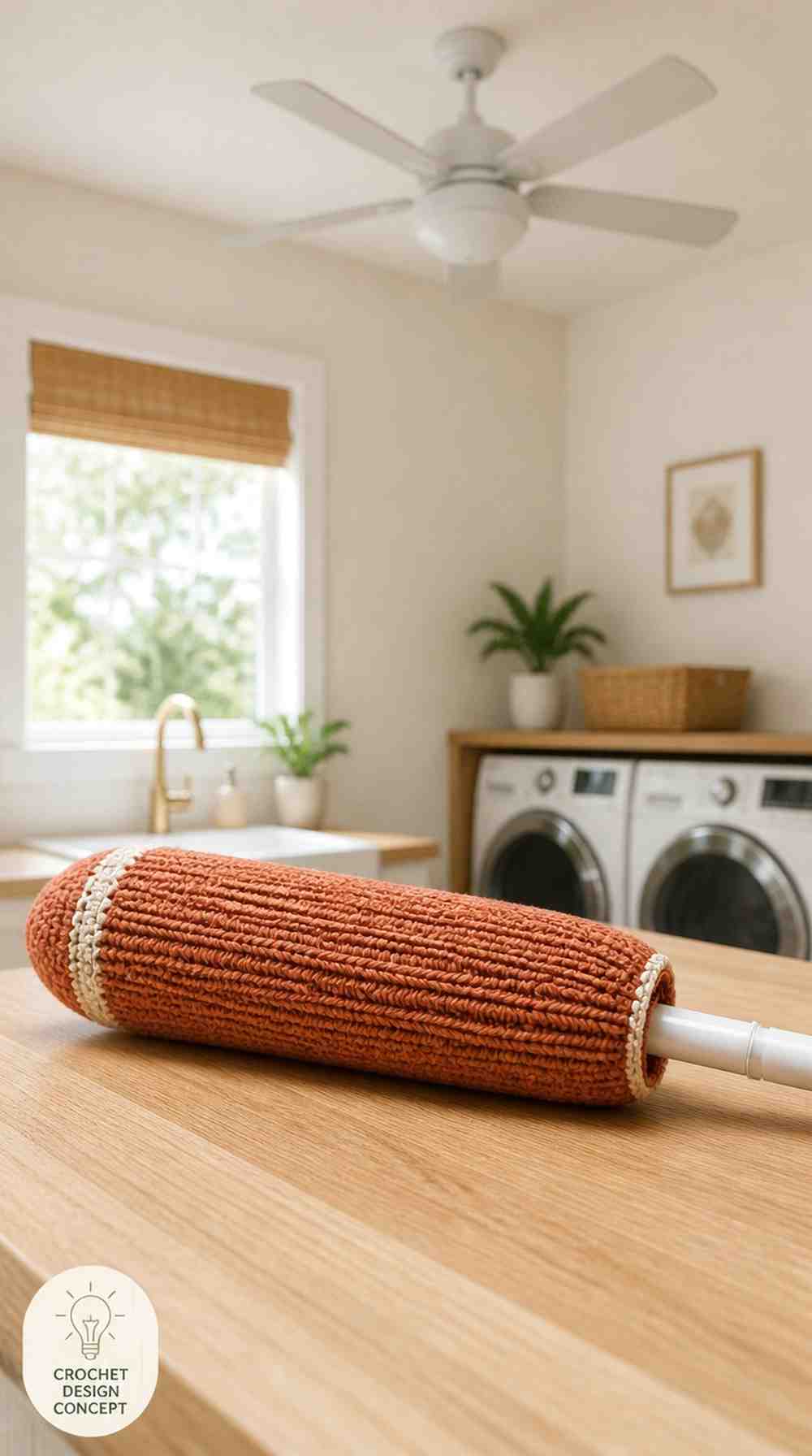
Warm terracotta crochet forms a long rounded sleeve over an existing padded oval duster head. Fine lengthwise ribs create its main texture, while narrow ivory bands finish the rounded tip and opening near the telescopic handle.
The cover keeps the familiar oval shape of a household duster rather than introducing an unusual cleaning attachment. Its simple silhouette allows the crochet stitches to remain the main visual feature. Because it is a removable-looking sleeve, accurate sizing and secure fitting would matter more than decoration in a real version.
- Oval Head Fit: Measure the full padded duster head rather than the pole. The sleeve should not compress the padding or slide away during movement.
- Lengthwise Ribbing: Fine raised rows may alter the contact texture, but they do not guarantee effective dust pickup or a scratch-free cleaning surface.
- Open Handle End: Keep the original pole connection exposed so the cover does not interfere with the duster’s attachment mechanism.
2. Crochet Oatmeal Flat-Head Duster Sleeve

Oatmeal-beige crochet creates a low rectangular cover around a padded flat duster head. Fine linen-stitch rows form its broad face, while a cinnamon-colored border outlines the squared corners and narrow sides.
Unlike the rounded terracotta sleeve, this design follows the flatter shape of a rectangular cleaning attachment. Its simple construction makes the stitch surface easy to see and keeps the decorative details relatively restrained. The flat back and discreet opening near the handle give the piece a tidy replacement-cover appearance.
- Flat-Head Proportions: Check the head’s width, length, and thickness before planning a rectangular cover. Corners should remain properly fitted.
- Linen-Stitch Texture: The close stitch pattern creates a relatively smooth surface, although its actual cleaning performance would need testing.
- Cinnamon Border: Keep the edging flat so thick outer seams do not become pressure points against delicate fan-blade finishes.
3. Crochet Indigo U-Channel Fan Duster Cover

Deep-indigo crochet covers the two padded arms of an existing U-shaped ceiling-fan duster. Each inward-facing surface has closely worked crochet stitches, with narrow cream borders and a short connecting strip around the exterior curve.
The rigid white U-frame remains visible, making it clear that the crochet is not supporting the cleaning head. This concept differs from ordinary single-sleeve dusters because the tool is shaped to approach opposite sides of a fan blade. The open channel must remain wide enough to accommodate the intended blade without forcing it.
- U-Channel Clearance: Check the fan blade’s width and thickness against the original duster head. Additional crochet must not create a tight gripping channel.
- Separate Padded Arms: Both covers need a secure fit on their existing padded sections without bunching at the inner edges.
- Visible Rigid Frame: Keep the original structural connector and pole attachment clear so crochet cannot interfere with the head’s normal movement.
4. Crochet Mustard Low-Loop Dusting Cover
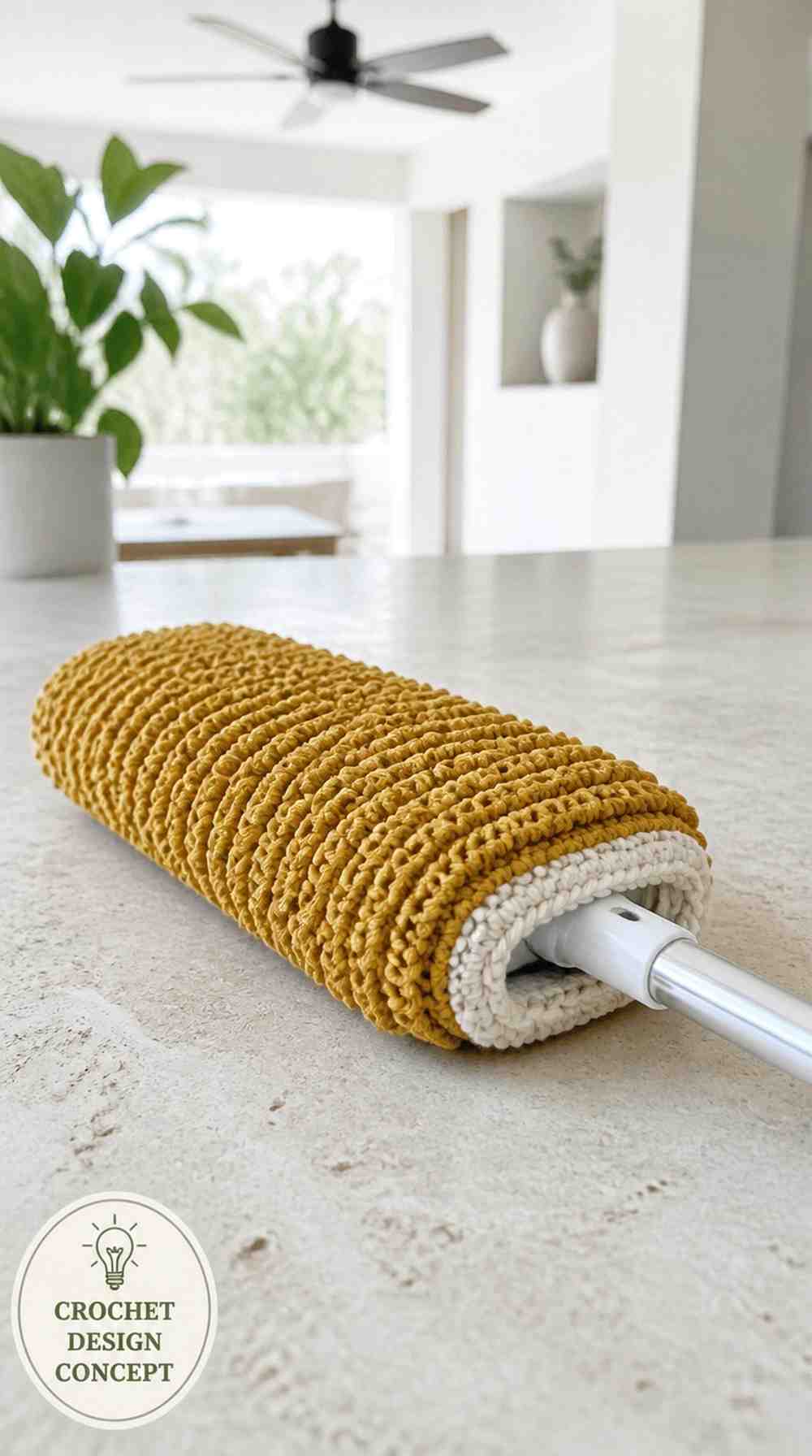
Muted-mustard crochet gives this short oval replacement cover a distinctive textured surface. Small, closely anchored loops rise from a dense single-crochet foundation, while an ivory border finishes the opening.
The repeated loops add visual depth without forming oversized tassels or long hanging strands. Compared with smoother linen-stitch covers, this design explores a more pronounced dusting texture. However, raised loops could snag on fan-blade edges or other hardware, and their ability to collect dust has not been established.
- Short Anchored Loops: Keep surface loops compact and securely formed. Long or loose loops may catch on the fan or detach during cleaning.
- Dense Foundation: The underlying closely worked fabric helps define the cover’s oval shape around the existing padded head.
- Cleaning Limitation: The extra texture may retain dust and debris, making washing and thorough drying important after use.
5. Crochet Cocoa Checkerboard Duster Sleeve
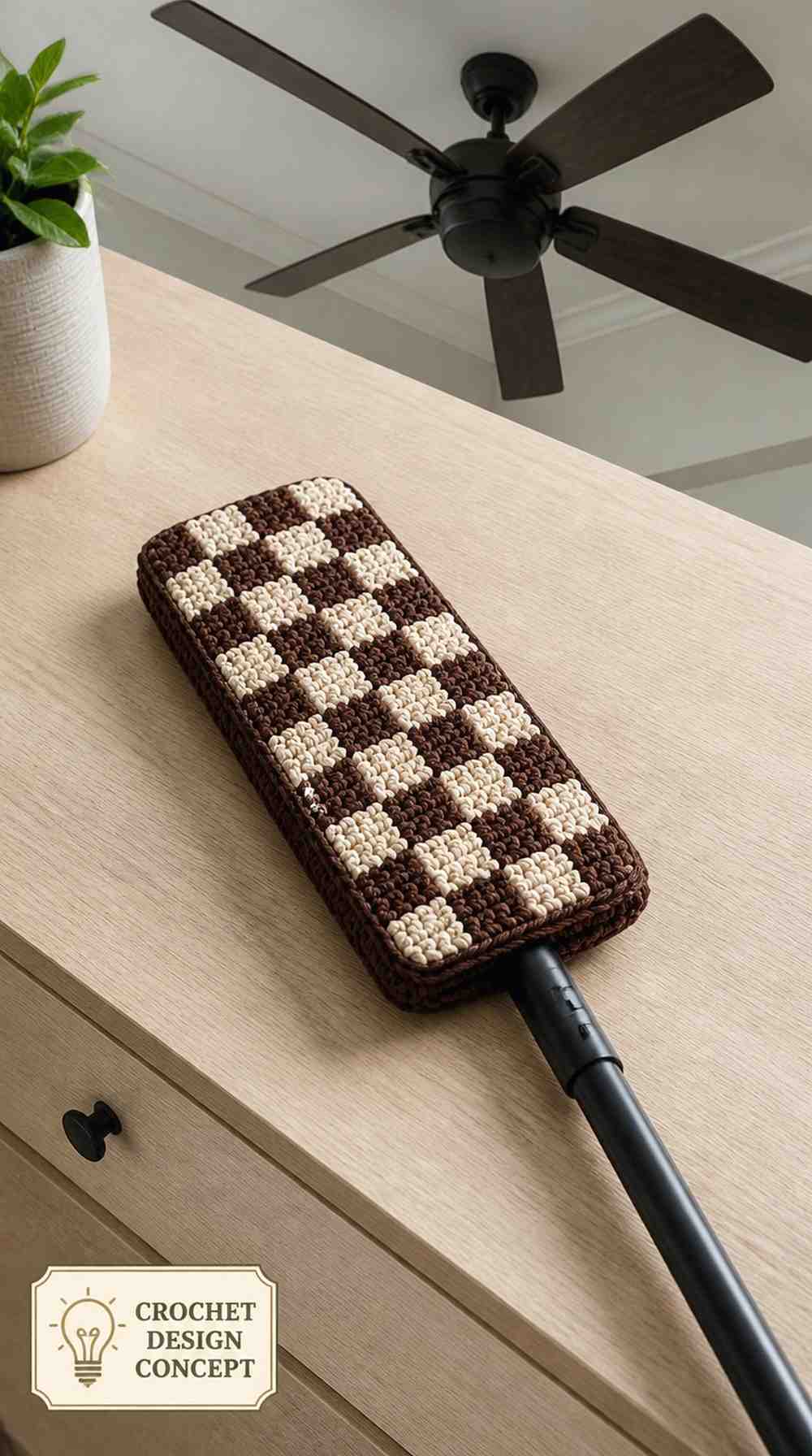
Miniature espresso-brown and vanilla-cream squares form the broad outer face of this flat duster cover. Solid mocha crochet finishes the back, while narrow dark-brown edging defines the rounded rectangular outline.
The checkerboard gives the cleaning accessory a bold, graphic appearance. Its alternating colors are created through continuous tapestry-style stitches rather than separate joined squares. This design focuses on decorative colorwork rather than raised cleaning loops, making the overall shape relatively simple.
- Miniature Checker Pattern: Tapestry crochet can create the small squares without bulky joining seams that would interfere with a flat cleaning-head shape.
- Solid Mocha Back: The plain reverse keeps the checkerboard visually prominent while maintaining a coordinated two-sided finish.
- Light Yarn Maintenance: Vanilla-colored stitches may show dust and discoloration readily, so consider how easily the sleeve can be cleaned.
6. Crochet Sage Mesh-Overlay Duster Cover
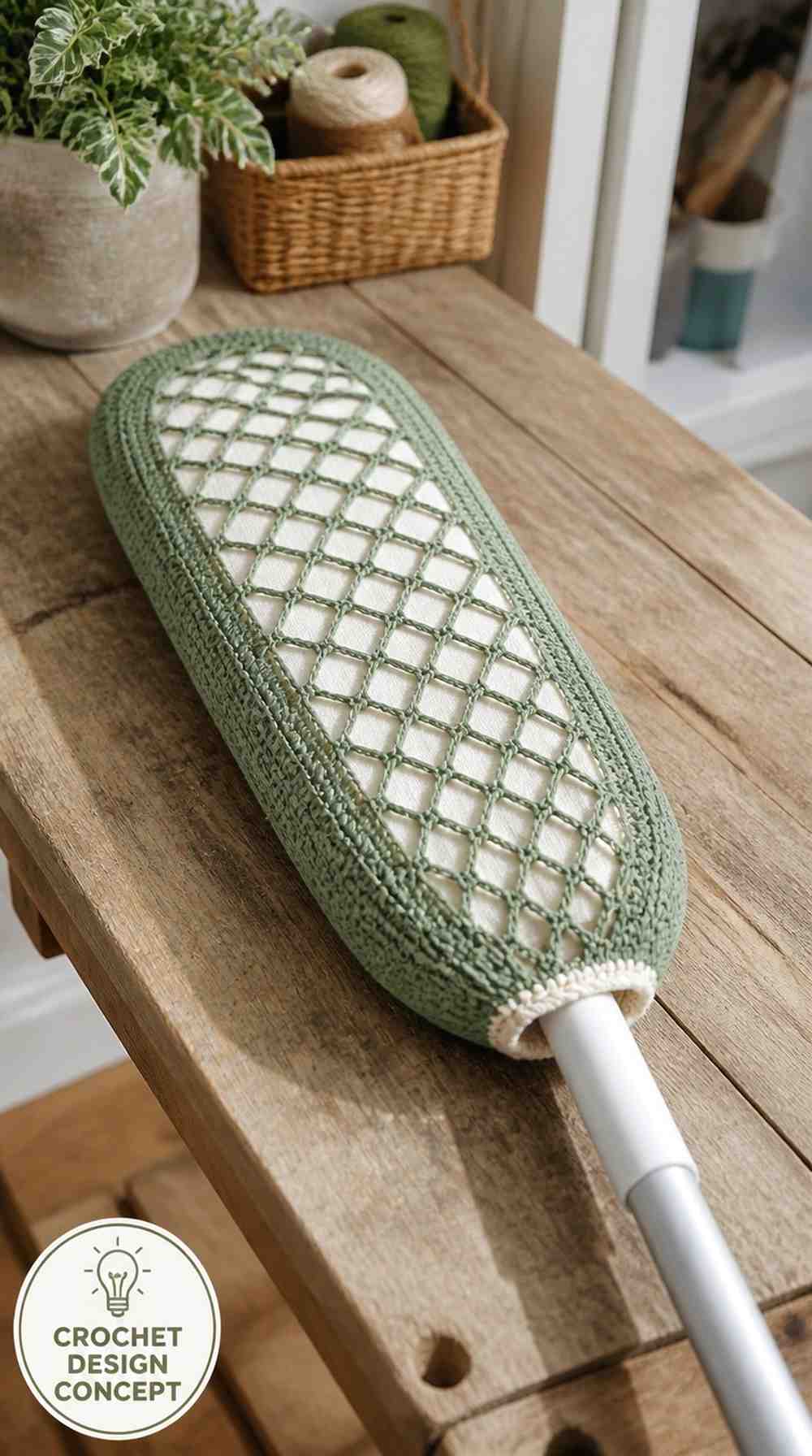
Muted-sage crochet surrounds a cream fabric insert in this oval replacement-cover concept. An orderly diamond-mesh panel runs along the outer face, framed by dense sage strips and a narrow cream opening border.
The mesh creates an airy appearance while allowing the underlying cream material to remain visible. Unlike the mustard looped design, this concept combines two different surfaces rather than concentrating all its texture in raised crochet. The opaque fabric insert would need to be removable or otherwise washable if the cover were developed for actual use.
- Diamond-Mesh Openings: Keep the mesh loops firmly connected to avoid catching on corners, light fittings, or fan hardware.
- Cream Underlying Fabric: An inner layer can change the cover’s surface, but its compatibility and cleaning performance depend on the actual material used.
- Two-Layer Construction: Additional fabric may increase bulk, so check that the sleeve still fits the original padded duster head.
7. Crochet Plum Foldback-Cuff Duster Cover
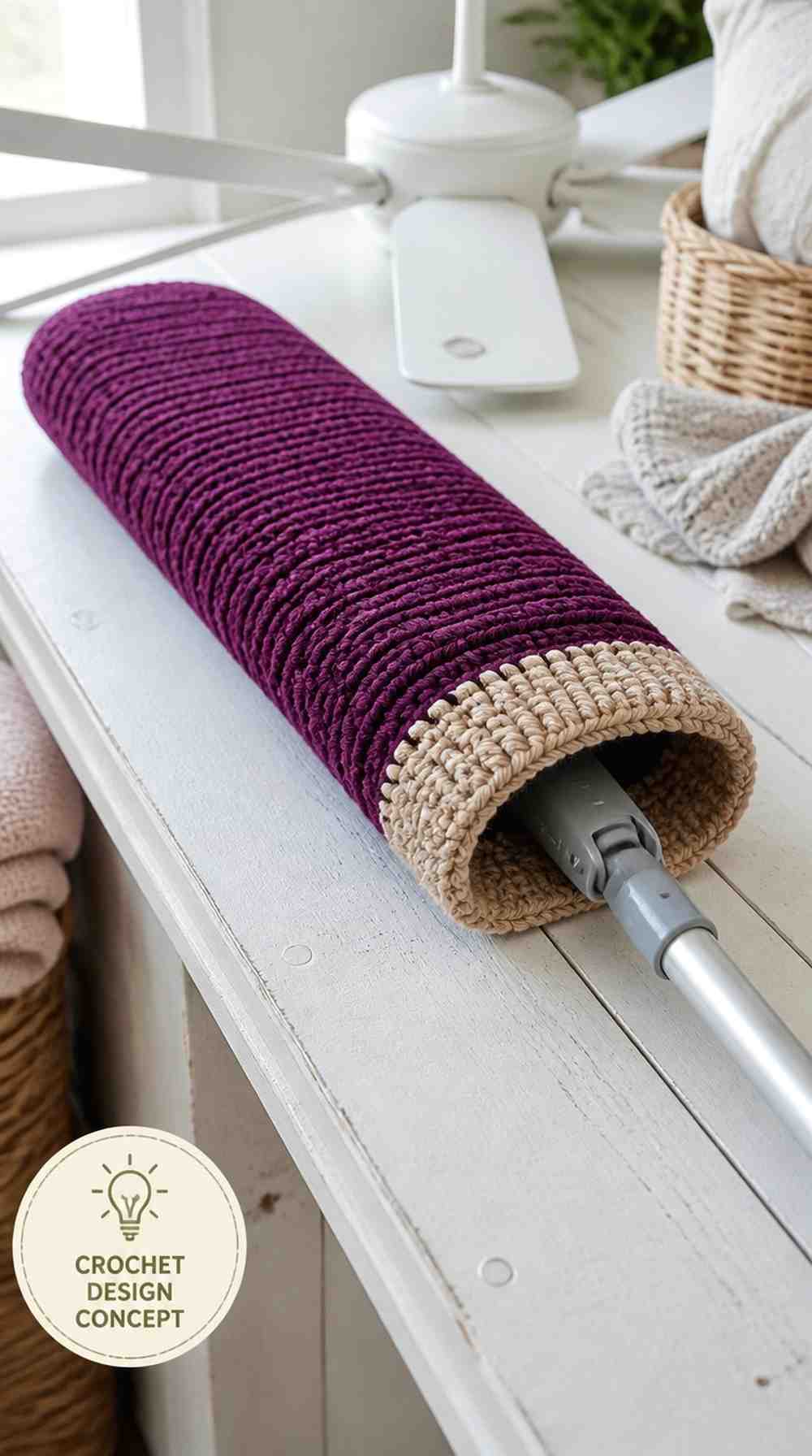
Deep-plum crochet forms a slender oval sleeve with neat horizontal rows and a softly rounded nose. Near the telescopic handle, a short warm-beige cuff folds outward to reveal fine ribbing on the reverse side.
The contrasting folded edge gives this design a tailored appearance without additional buttons or motifs. It also makes the sleeve’s opening more visible. The original pole connector remains uncovered, allowing the decorative cuff to sit around the cleaning head rather than over the handle mechanism.
- Folded Cuff Position: Keep the turned edge away from the pole’s attachment and adjustment controls.
- Contrasting Ribbed Reverse: A different stitch texture can add interest, but check for uneven stretch where the two fabric sections meet.
- Opening Thickness: The folded edge adds bulk near the handle, so consider whether the tool’s existing clearance allows it.
8. Crochet Coral Scalloped Duster Sleeve
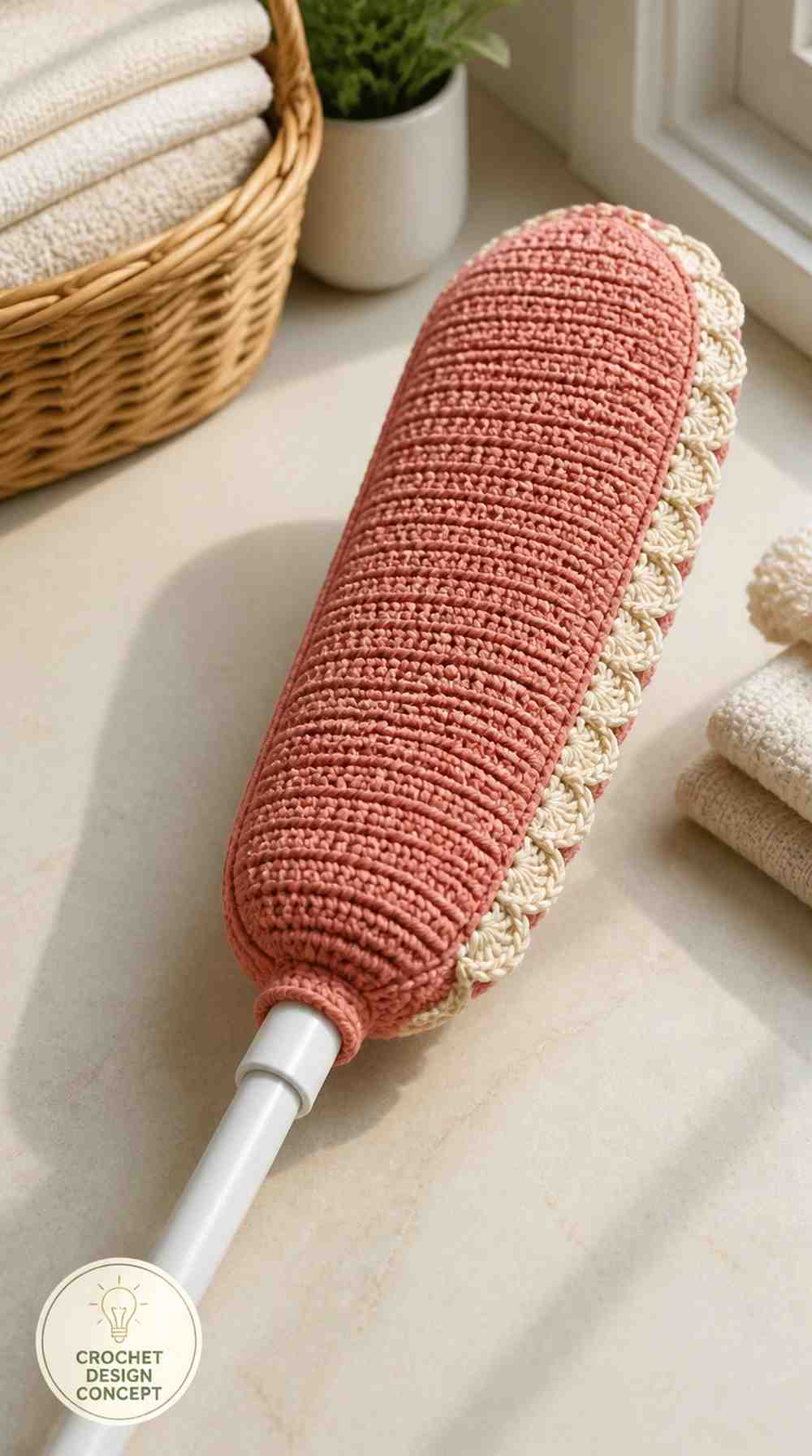
Dusty-coral crochet forms a compact oval cleaning-head cover with closely worked horizontal rows. Tiny ivory scallops decorate one outer upper edge, while the rounded nose and main contact surface remain comparatively plain.
This concept introduces a delicate border without covering the whole duster in decorative motifs. The shell-like stitches sit on the noncontact side, giving them a primarily ornamental role. Their position matters because loose or projecting crochet details could catch against a fan blade.
- Miniature Shell Edging: Keep the ivory scallops small, flat, and securely connected rather than forming dangling lace.
- Noncontact Decoration: Position the border away from the part intended to meet the fan blade, reducing the chance of snagging.
- Smooth Main Body: The close-stitch surface looks tidy, but it should not be assumed to clean as effectively as a purpose-made microfiber cover.
9. Crochet Charcoal Split-Prong Duster Covers
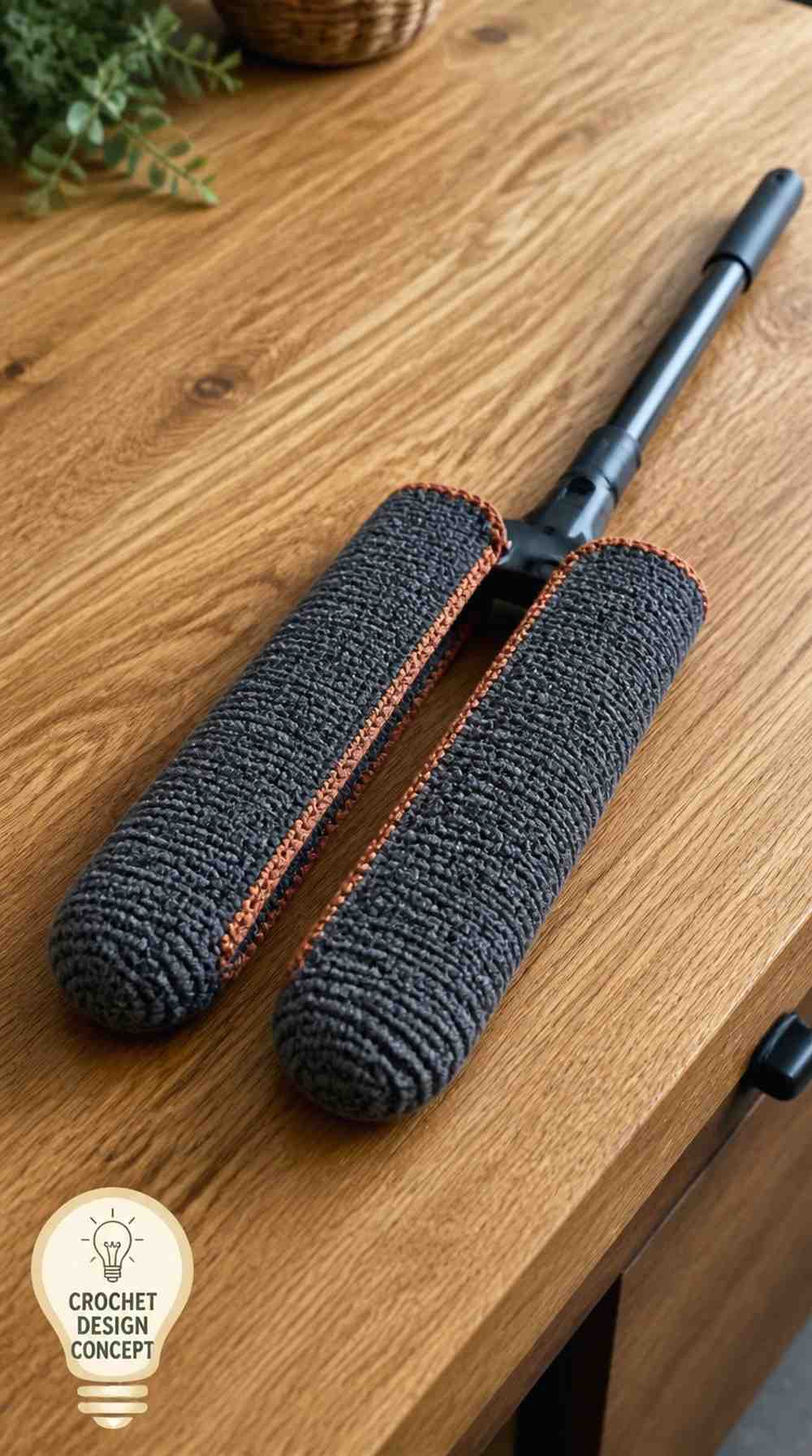
Two matching charcoal crochet sleeves cover the padded arms of a forked ceiling-fan duster head. Fine horizontal ribs form the surfaces, while narrow rust-colored borders finish the inner openings.
The dark-grey rigid connector remains exposed between the two prongs. This gives the design a more technical appearance than a single rounded sleeve and makes the two-part construction clear. Unlike a joined fabric pocket, the paired covers leave the original channel open for the tool’s intended movement.
- Two Separate Sleeves: Size each cover to its corresponding padded arm instead of stretching one large crochet piece across both.
- Central Connector Clearance: Keep the rigid joint and surrounding movement area free from loose yarn.
- Matching Rounded Tips: Both ends should sit neatly over the padded prongs without slipping off when the duster changes orientation.
10. Crochet Sky Blue Diagonal-Ridge Cover

Sky-blue crochet gives this rectangular cleaning-head sleeve a fresh appearance. Two low diagonal post-stitch ridges cross the outward-facing panel, with smooth single-crochet rows forming the background. Thin ivory edging finishes the rectangular shape.
The diagonal details introduce movement without adding separate motifs, buttons, or decorative pockets. The cover remains slim around the padded duster head, and its opening sits near the silver extension pole. The ridges are primarily visual; their effects on fan cleaning would require practical testing.
- Diagonal Raised Stitches: Keep the two ridges shallow because excessive relief may create uneven pressure against the fan surface.
- Smooth Background Panel: A closely worked base helps the diagonal pattern remain recognizable without adding unnecessary bulk.
- Handle Connection: The sleeve must leave the original head-to-pole mechanism clear and fully functional.
11. Crochet Burgundy Buttoned Duster Wrap
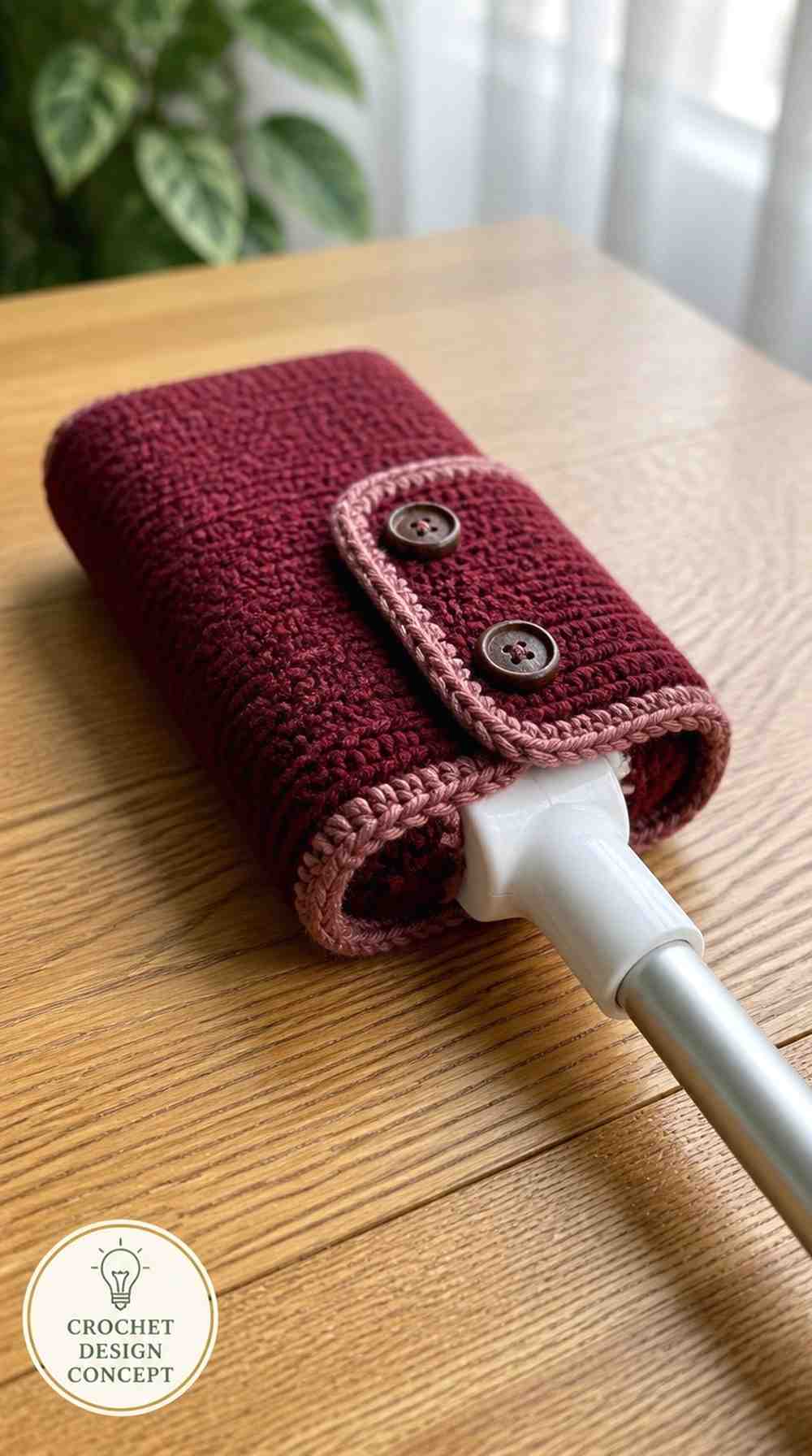
A deep-burgundy crochet panel folds around a flat padded duster head, with a narrow dusty-rose border tracing its outer edges. Two small dark wooden buttons secure a short overlap on the outward-facing back.
Unlike slip-on sleeves, this concept uses a removable wrap arrangement. The buttoned flap creates a decorative detail and suggests another way of fitting crochet around an existing cleaning head. Because small fasteners may loosen or catch, their placement away from the blade-contact surface is particularly important.
- Buttoned Outer Flap: Keep the buttons on the noncontact back, and never let hard fasteners rub against painted fan blades.
- Removable Wrap Shape: A foldover panel may make washing easier, but its closure must remain secure before any real cleaning attempt.
- Dust Around Fasteners: Buttons and overlapping edges can collect debris, so they may require more cleaning than a smooth sleeve.
12. Crochet Forest Two-Zone Duster Cover
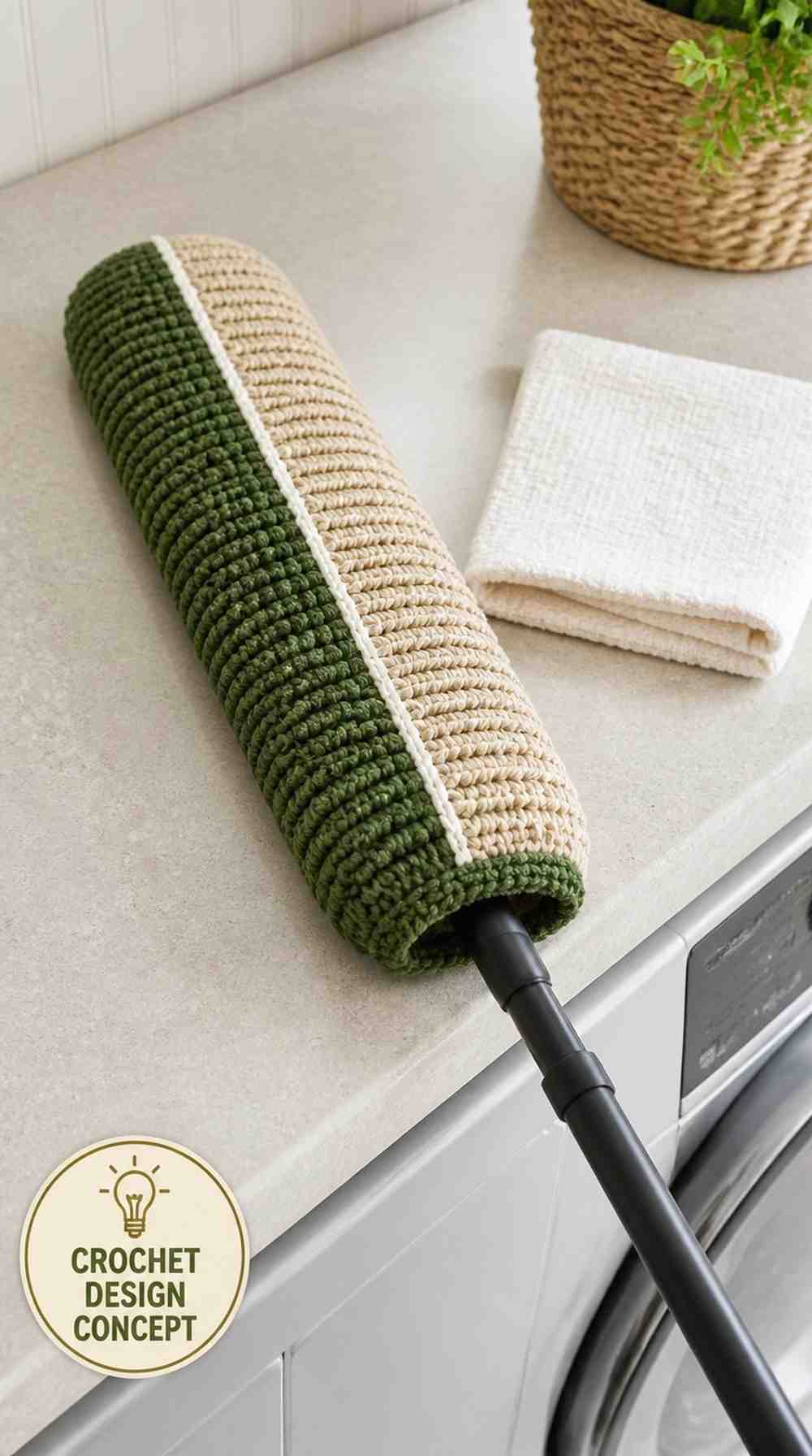
Forest-green moss stitch fills one lengthwise panel of this rounded duster cover, while warm-oatmeal ribbing forms the other. A thin cream seam joins the two textures, and a dark-green band finishes the opening near the pole.
The split surface creates a balanced two-tone appearance without requiring separate appliqués. Its distinction comes from the difference between the close moss stitches and narrow raised ribs. Because the two stitch patterns may stretch differently, maintaining a consistent shape around the padded head would be an important consideration.
- Two Surface Textures: Moss stitch and ribbing can behave differently, so a real cover would need compatible stitch tension.
- Cream Joining Seam: Keep the dividing line flat and secure to prevent a raised ridge along the duster’s outer edge.
- Rounded Nose Shaping: Both panels should taper neatly around the end of the original cleaning head without twisting.
13. Crochet Rust Dual-Face Duster Cover
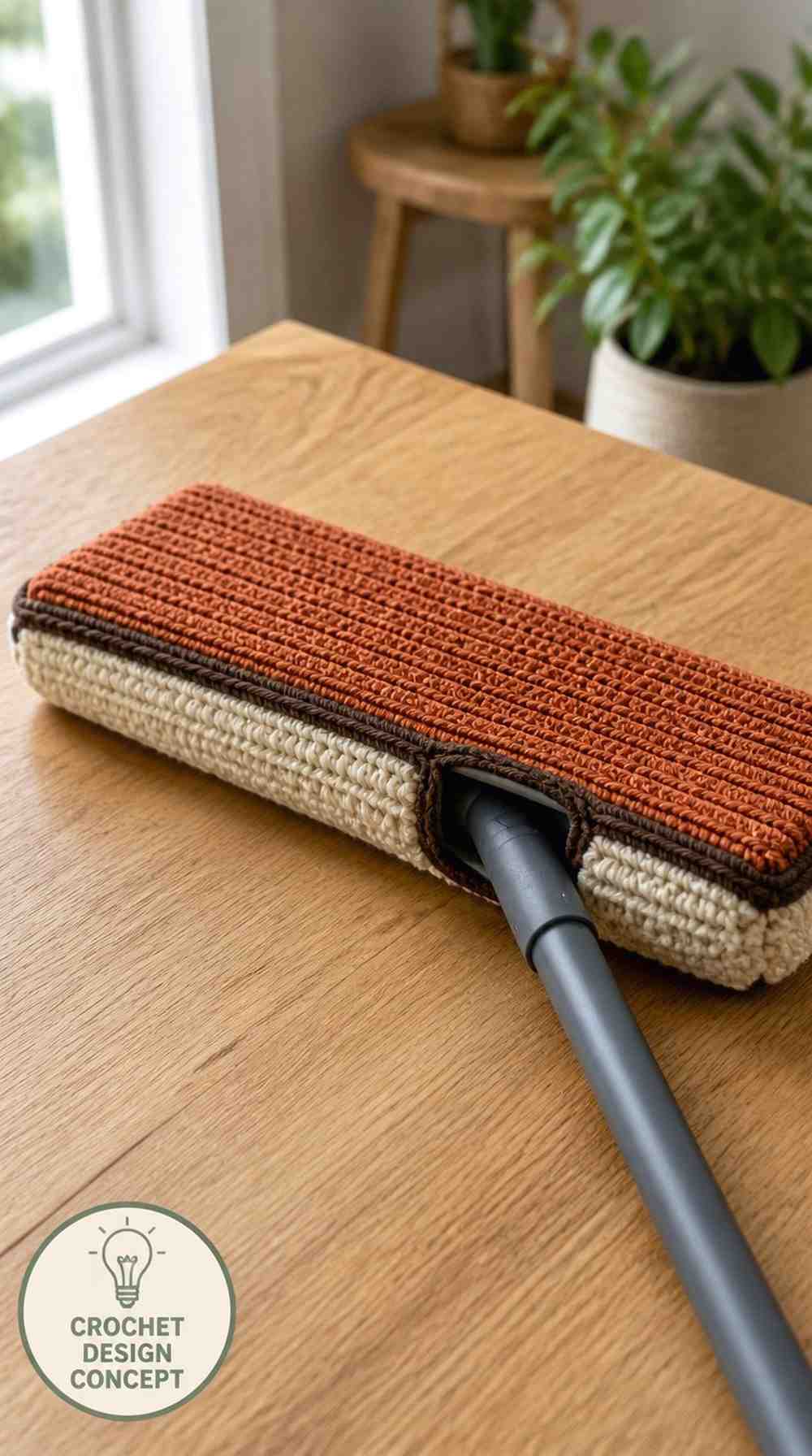
Burnt-rust crochet covers one broad face of this flat padded duster head, while warm-cream linen stitch forms the opposite side. A narrow chocolate-brown border joins the two panels around the edges.
The different colors and stitch textures remain visible from a side angle, giving the design a distinct two-faced appearance. This concept explores a cover that could be turned to show either side, although the two surfaces are not proven to have different cleaning abilities. The original rigid plastic head remains underneath.
- Two-Piece Construction: Both crochet panels need compatible dimensions so the combined sleeve lies flat around the padded head.
- Chocolate Edge Seam: Keep the joining border smooth rather than creating a thick ridge that may scratch or press against the fan surface.
- Cleaning Both Faces: If developed as a real cover, both surfaces would need thorough washing, even if one appears less dusty.
14. Crochet Teal U-Frame Dusting Sleeve
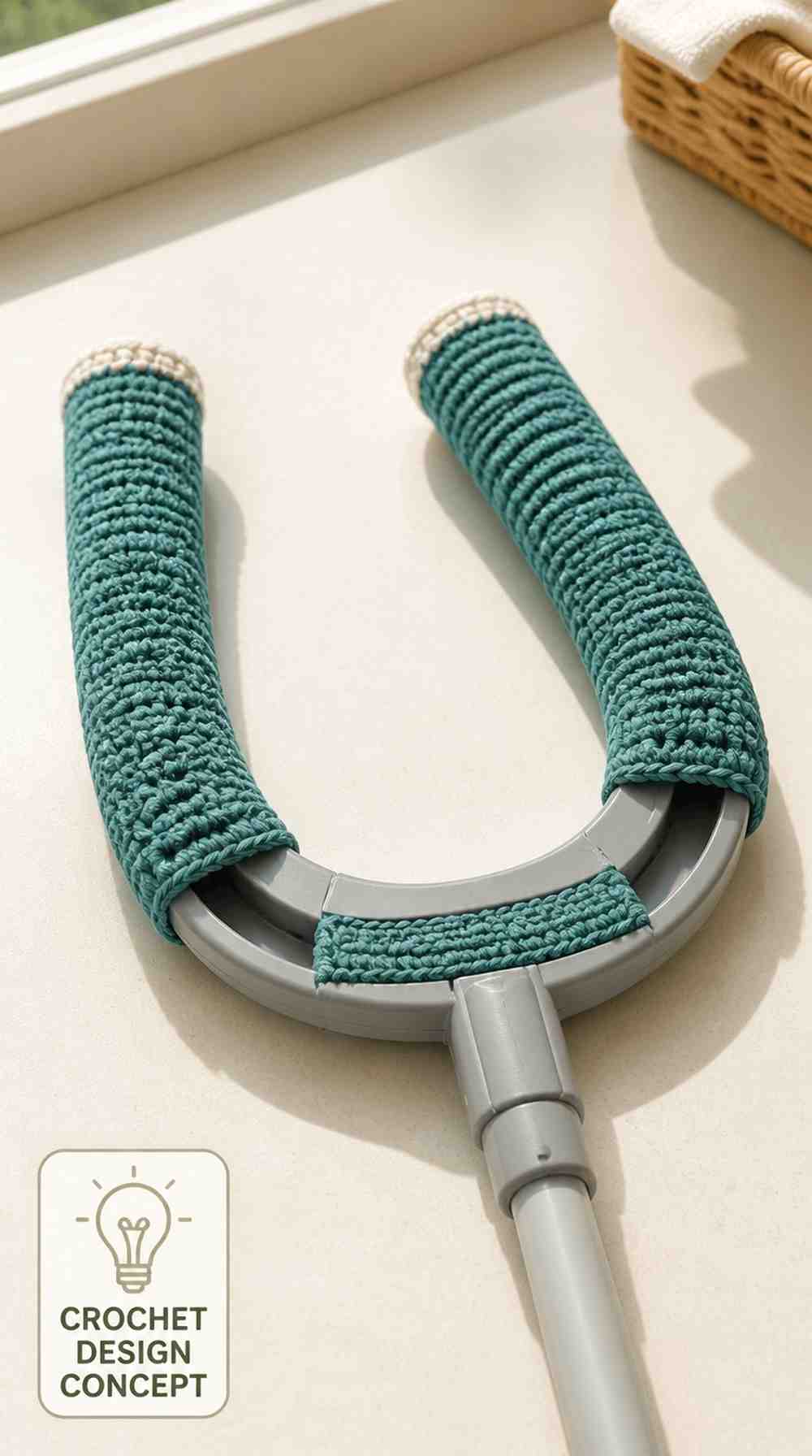
Teal crochet covers the inward-facing padded arms of a rigid grey U-shaped ceiling-fan duster. Fine linen-stitch rows provide an even surface, while cream bands finish the outer ends. A short teal strip decorates the exterior base of the U.
This design is related to the indigo U-channel concept but uses a broader, more open head and a different stitch finish. The original plastic frame remains clearly visible, giving the attachment its shape. Its practicality depends on preserving the tool’s intended blade clearance and movement.
- Broad U-Shaped Head: Measure the original padded arms and opening rather than assuming the same sleeve works on every ceiling-fan cleaning attachment.
- Fine Linen-Stitch Surface: A relatively smooth crochet texture avoids large decorative loops, though suitability for the fan finish remains unverified.
- Exterior Linking Strip: Keep the small teal band clear of the channel and original pole connection.
15. Crochet Cobalt Pull-Tab Duster Sleeve
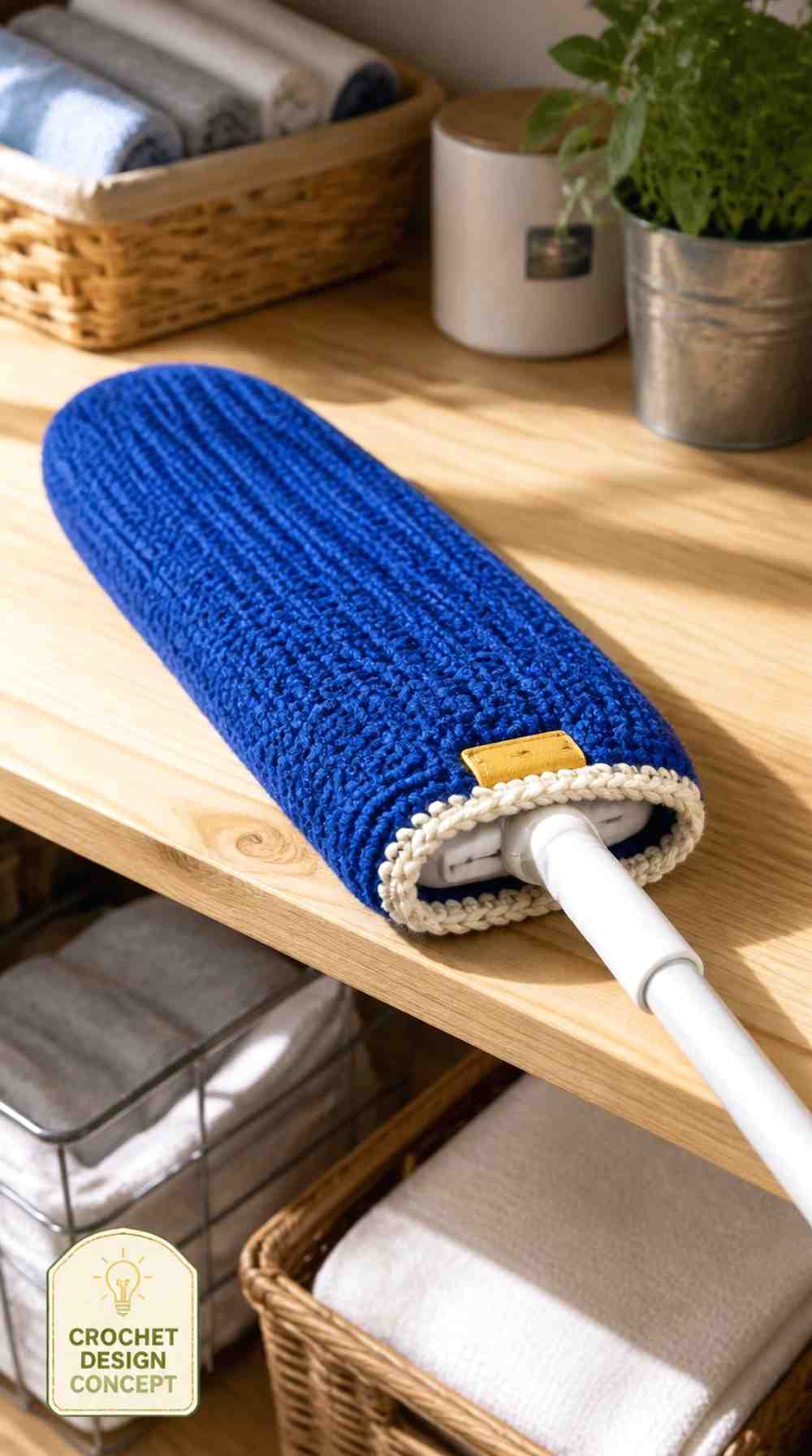
Cobalt-blue crochet gives this oval replacement sleeve a bold appearance, with fine vertical ribbing and a narrow cream opening border. A tiny canary-yellow rectangular tab sits near the handle connection.
The small yellow detail distinguishes this design from ordinary slip-on covers. Its position suggests a place to grasp the sleeve when removing it from the padded cleaning head. The tab is decorative, however, and should not be used to pull forcefully against the head or pole attachment.
- Small Yellow Tab: Keep the extension flat and securely attached so it does not form a loose loop.
- Vertical Ribbed Body: Fine ridges provide texture while maintaining a straightforward oval sleeve shape.
- Gentle Removal: A real cover should come off without tugging the pole connector or damaging the original duster head.
16. Crochet Ivory Granny-Patch Duster Cover

Warm-ivory crochet forms a short flat duster sleeve with dense single-crochet rows. One miniature granny-square patch decorates its outward-facing back, combining terracotta, muted mustard, and cream crochet clusters.
The small motif introduces traditional crochet decoration without covering the intended cleaning face. The patch remains flat and neatly attached, while a thin cinnamon border finishes the opening. This concept is particularly suited to readers who enjoy granny-square details but prefer a simple underlying sleeve.
- Noncontact Granny Motif: Keep the patch on the outward-facing back rather than the surface intended to touch the fan blade.
- Secure Cluster Joins: Small motifs need tidy joining stitches so their corners do not curl or snag.
- Ivory Fabric Care: Light-colored crochet may show accumulated dust quickly, making removable construction and proper washing important.
17. Crochet Mocha Gradient Duster Cover
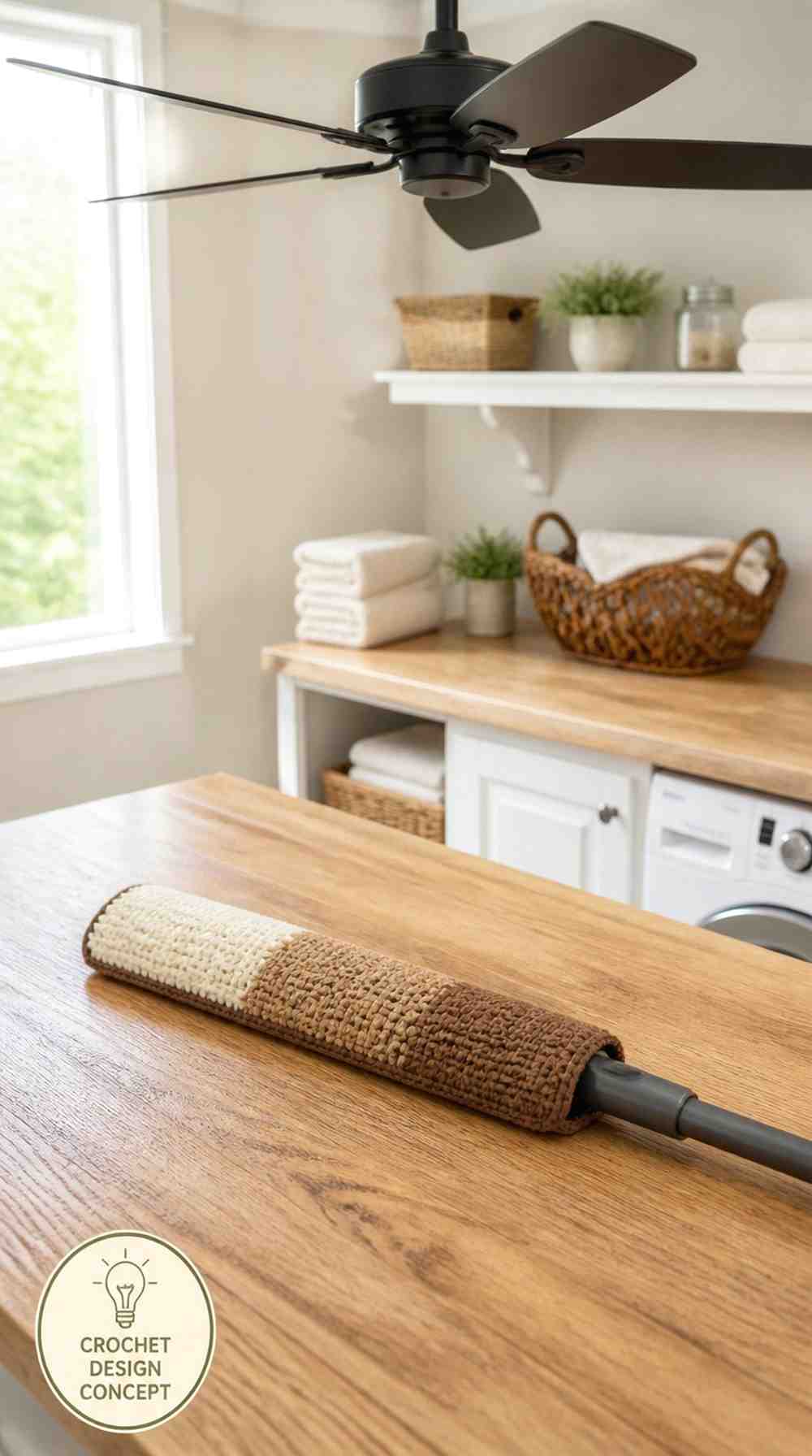
Warm cream, caramel, and deep mocha create three broad color blocks along this rounded rectangular replacement sleeve. Fine single-crochet rows connect the sections, while narrow mocha side edging and a flat underside seam complete the cover.
The gradient runs from the pale rounded nose through the caramel center toward the darker handle end. Unlike the textured or patterned concepts, this design relies almost entirely on color. Its familiar sleeve shape keeps the crochet visually simple while still providing a distinctive handmade appearance.
- Three-Color Placement: Keep the cream, caramel, and mocha sections proportionate so the full sequence remains visible.
- Flat Underside Seam: A smooth join reduces unnecessary thickness along the cleaning head.
- Darker Handle End: The mocha section provides visual contrast near the opening but should not conceal or interfere with the head’s attachment mechanism.
Practical Guide to Crochet Ceiling Fan Duster Replacement Covers
Turn off the ceiling fan before cleaning. Wait until the blades have stopped completely, and ensure any nearby light fixtures are cool. Hunter Fan recommends turning the fan off before cleaning, using a microfiber cloth or suitable extendable duster, and handling blades gently to avoid damage.
Hunter Fan
Check the existing cleaning head. Ceiling-fan dusters come in several shapes, including flat pads, rounded heads, and U-shaped attachments. Not all support removable covers. Do not modify a manufacturer’s fixed head or attachment mechanism simply to fit decorative crochet.
Understand the difference between appearance and cleaning performance. Crochet is not automatically a suitable replacement for microfiber or another manufacturer-approved dusting surface. Some yarns may shed, snag, scratch sensitive finishes, or spread dust instead of retaining it. The 17 concepts are untested, so a purpose-made replacement head remains the more reliable option for everyday cleaning.
Avoid excessive pressure on the fan blades. Kichler recommends a gentle dry, lint-free cloth and warns against applying pressure to blades or using abrasive cleaners.
Kichler Lighting
Use a safe working position. Choose an appropriate extension tool that allows you to reach the fan without overreaching. If the fan is too high or cannot be cleaned comfortably from a stable position, use a suitable professional cleaning service. Do not stand on unstable furniture.
Keep water away from electrical parts. Follow the fan’s care instructions. Avoid spraying liquid directly toward the motor, light fittings, or controls. If a cleaning method requires a damp cloth, use only what the manufacturer permits and dry the affected surfaces properly.
Wash and inspect removable covers. If making an experimental crochet accessory, use yarn that can be cleaned according to its care label. Remove accumulated dust after use, wash as appropriate, dry completely, and inspect for loose loops or stretched seams before storing it.
Want to Make Something Similar?
These 17 designs are visual inspiration concepts rather than tested crochet duster replacements. However, the following resources explain closely related crochet construction techniques.
- Crochet Duster Cover — Left in Knots provides a free crochet pattern for a reusable duster cover. The creator also shows it being used near a ceiling fan, making this a relevant reference for sleeve construction. It is not an exact pattern for the 17 designs shown here. Left in Knots
- Crochet Reusable Duster Cover — The Crochet Crowd demonstrates a crochet duster-cover project and is useful for understanding how a removable piece fits onto a cleaning handle.
- Reusable Swiffer Dusters — Ravelry provides another crochet pattern reference featuring raised texture. It is intended for a particular household duster style, not every ceiling-fan cleaning tool.
These resources belong to their respective creators. Their patterns and tutorials should not be treated as proof that a crochet replacement is compatible with all cleaning heads or fan finishes.
Comparison: Which Crochet Ceiling Fan Duster Replacement Cover Should You Choose?
| Design | Main feature | Important consideration |
|---|---|---|
| Terracotta Ribbed | Rounded sleeve with lengthwise ribs | Ribbing may stretch |
| Oatmeal Flat-Head | Smooth rectangular cover | Needs a matching flat head |
| Indigo U-Channel | Two covered arms on a rigid U-frame | Must preserve blade clearance |
| Mustard Low-Loop | Short raised crochet loops | Potential snagging |
| Cocoa Checkerboard | Miniature tapestry colorwork | Extra color-change ends |
| Sage Mesh-Overlay | Mesh over cream fabric | Multiple layers to wash |
| Plum Foldback-Cuff | Contrasting folded opening | Extra thickness near connector |
| Coral Scalloped | Tiny decorative shell edging | Must stay away from contact surface |
| Charcoal Split-Prong | Two separate arm sleeves | Requires paired-head fit |
| Sky Blue Diagonal-Ridge | Two low raised lines | Uneven contact pressure |
| Burgundy Buttoned | Foldover flap with two buttons | Fasteners must face outward |
| Forest Two-Zone | Moss stitch and ribbing | Different stitch stretch |
| Rust Dual-Face | Two contrasting crochet sides | Edge seam may be bulky |
| Teal U-Frame | Broad two-arm cover | Needs correct head clearance |
| Cobalt Pull-Tab | Small yellow removal detail | Tab is not load-bearing |
| Ivory Granny-Patch | Flat decorative back motif | Extra stitch joins |
| Mocha Gradient | Three color-blocked sections | Fit around handle opening |
For a simple oval cleaning-head concept, the Crochet Terracotta Ribbed Fan Duster Cover, Crochet Plum Foldback-Cuff Duster Cover, and Crochet Mocha Gradient Duster Cover provide different finishes on a similar basic sleeve shape.
If your existing duster has a flat head, the Crochet Oatmeal Flat-Head Duster Sleeve, Crochet Cocoa Checkerboard Duster Sleeve, and Crochet Rust Dual-Face Duster Cover offer rectangular arrangements to compare.
For a manufacturer-designed U-shaped cleaning attachment, the Crochet Indigo U-Channel Fan Duster Cover and Crochet Teal U-Frame Dusting Sleeve explore separate coverings for padded arms. These ideas require especially careful attention to the original head’s clearance and function.
If decorative appearance matters most, the Crochet Coral Scalloped Duster Sleeve, Crochet Ivory Granny-Patch Duster Cover, and Crochet Cobalt Pull-Tab Duster Sleeve offer distinctive details.
For actual fan cleaning, choose an attachment approved for the tool and suitable for the fan’s surface rather than relying on the appearance of an untested crochet design.
Conclusion
Crochet ceiling fan duster replacement covers offer an unusual way to explore handmade household cleaning accessories. From rounded ribbed sleeves and flat rectangular covers to U-shaped arrangements, miniature checkerboards, textured panels, and warm color gradients, these 17 ideas provide several different design directions.
The most important considerations remain the cleaning tool and the ceiling fan. A cover must fit securely, avoid snagging, and be suitable for the fan’s finish. Crochet does not automatically match the performance of a microfiber cleaning head, so the designs are best treated as inspiration until a particular material and construction have been properly evaluated.
Which design would you choose for a reusable duster project? Would you prefer the terracotta ribbed cover, indigo U-channel design, cocoa checkerboard, or mocha gradient sleeve? Share your favorite and whether your current duster has a flat, oval, or U-shaped cleaning head.
Frequently Asked Questions
1. Can a crochet cover replace a disposable ceiling fan duster head?
Some crochet duster-cover patterns are designed for compatible household dusting tools, but suitability depends on the particular handle, cover construction, yarn, and cleaning surface. An untested crochet sleeve should not automatically replace a purpose-made disposable or microfiber head.
2. Which yarn is worth considering for a crochet duster cover?
A washable cotton yarn or another suitable easy-care fiber may be worth exploring for a removable experimental cover. However, different yarns shed, stretch, and collect dust differently. Avoid rough, abrasive, or loose-looped materials that could scratch or catch on a fan blade.
3. Can I use a crochet duster cover on a ceiling fan while it is running?
No. Always switch the fan off and wait until its blades have stopped completely before attempting any cleaning. A crochet cover could catch on moving parts, creating an additional hazard. Never place or leave a removable cover on the fan itself.
4. Are U-shaped crochet duster covers better for ceiling fan blades?
A rigid U-shaped cleaning head may be designed to reach both sides of a fan blade, but adding crochet can change its thickness and how it moves. A U-shaped crochet cover is not automatically better than a compatible microfiber attachment. Follow the original tool and fan manufacturers’ instructions.
5. Are these 17 crochet ceiling fan duster replacement cover ideas available as patterns?
No. These are original visual inspiration concepts, not tested cleaning products or complete patterns. The linked tutorials explain related crochet duster-cover construction, but they do not reproduce the pictured designs exactly. Anyone adapting an idea would need to check head compatibility, yarn care, attachment security, and fan-surface suitability before use.