A crochet seedling tray carry handle wrap can add a handmade touch to gardening supplies while making an existing plastic handle feel different in the hand. These 16 inspiration ideas explore ribbed crochet sleeves, folded cuffs, removable buttoned covers, fabric-backed grips, and decorative granny-square details. From terracotta and oatmeal to navy, dusty rose, teal, and forest green, each design offers a different way to style a seedling carrier tray.
The most important consideration is the tray itself. A crochet wrap can cover an existing rigid handle, but it cannot turn a weak seedling tray into a safe carrying container. These concepts focus on sturdy trays with built-in handles and appropriate support beneath the growing cells. Whether you prefer a simple fitted sleeve or a removable fastening design, the collection helps you compare handle fit, finger clearance, cleaning, and practical limitations.
These are AI-generated crochet design visualizations for inspiration, not photographs of tested handmade accessories or step-by-step patterns. The crochet covers are decorative grip accessories, not structural handles or certified load-bearing equipment.
Quick Design Selection Guide
- For a simple everyday grip: Choose the Crochet Terracotta Ribbed Seedling Tray Handle Wrap or Crochet Oatmeal Folded-Cuff Carry Handle Wrap.
- For a removable fastening: Compare the Crochet Navy Buttoned Seedling Tray Grip Cover, Crochet Charcoal Hook-and-Loop Grip Wrap, and Crochet Peach Tie-End Handle Sleeve.
- For a shaped hand-contact area: The Crochet Olive Contoured Finger-Grip Wrap and Crochet Forest Green Contoured Reversible Handle Wrap provide two different profiles.
- For a coordinated pair of handles: The Crochet Rust Matching Twin-Handle Wraps cover both existing tray handles in the same style.
- For decorative stitch details: The Crochet Denim Chevron Handle Cover, Crochet Cream Granny-Motif Handle Wrap, and Crochet Lavender Mesh-Overlay Grip Sleeve offer contrasting textures.
1. Crochet Terracotta Ribbed Seedling Tray Handle Wrap
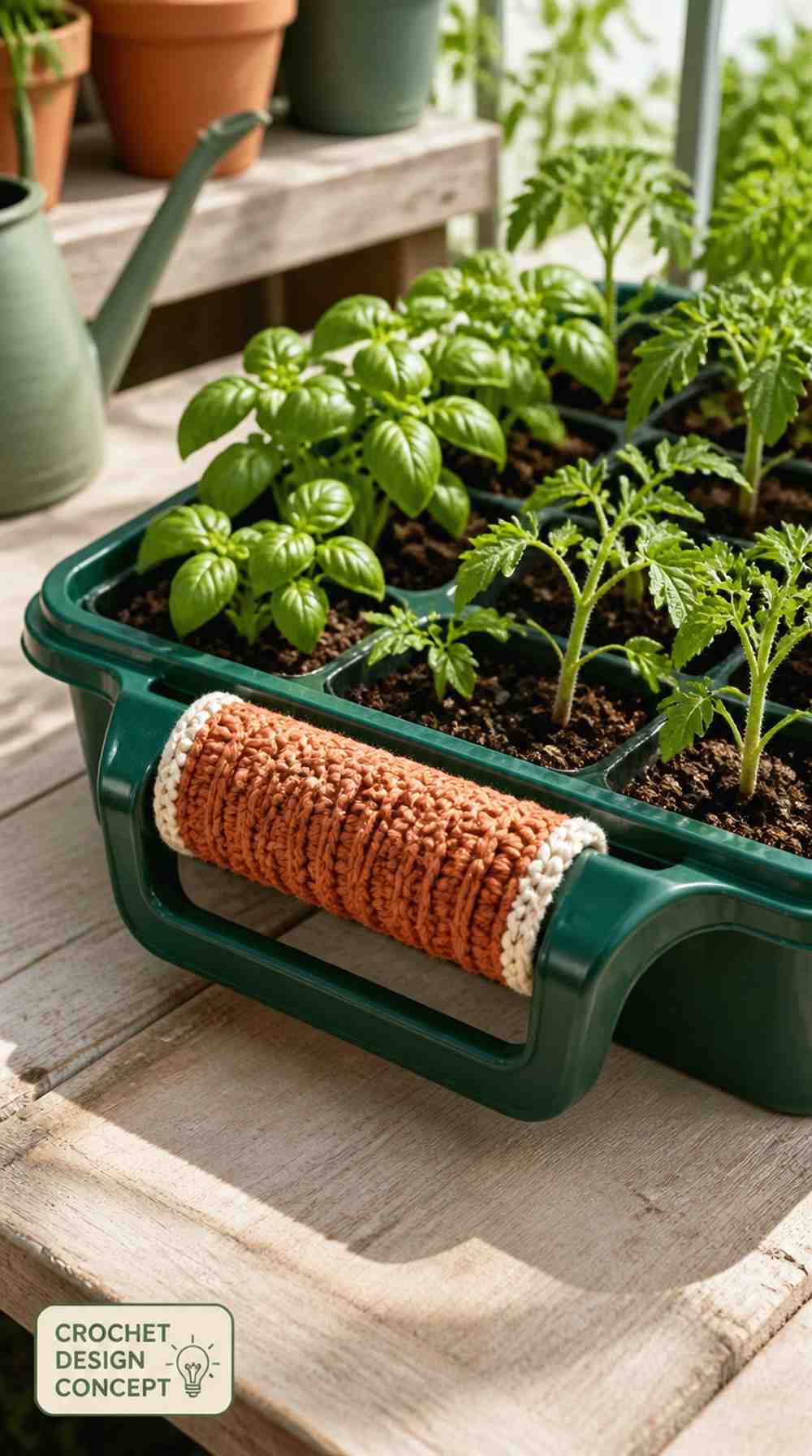
Warm terracotta crochet covers the center of a rigid dark-green seedling tray handle, with narrow cream borders finishing both ends. The closely worked vertical ribs make the grip the main visual feature, while the original molded handle remains visible and its finger opening stays clear.
The earthy color pairs naturally with the basil and tomato seedlings growing in the tray. This simple fitted sleeve is a useful design starting point because it adds texture without buttons, ties, or decorative attachments that could catch during handling.
- Vertical Ribbing: Keep the terracotta stitch columns consistent and relatively low-profile so the grip does not become excessively bulky.
- Handle Clearance: Measure the original molded opening before adding crochet; the finished sleeve must leave enough room for fingers.
- End Position: The narrow cream borders should remain on the handle’s gripping section rather than extending across the tray rim or seedling cells.
2. Crochet Oatmeal Folded-Cuff Carry Handle Wrap
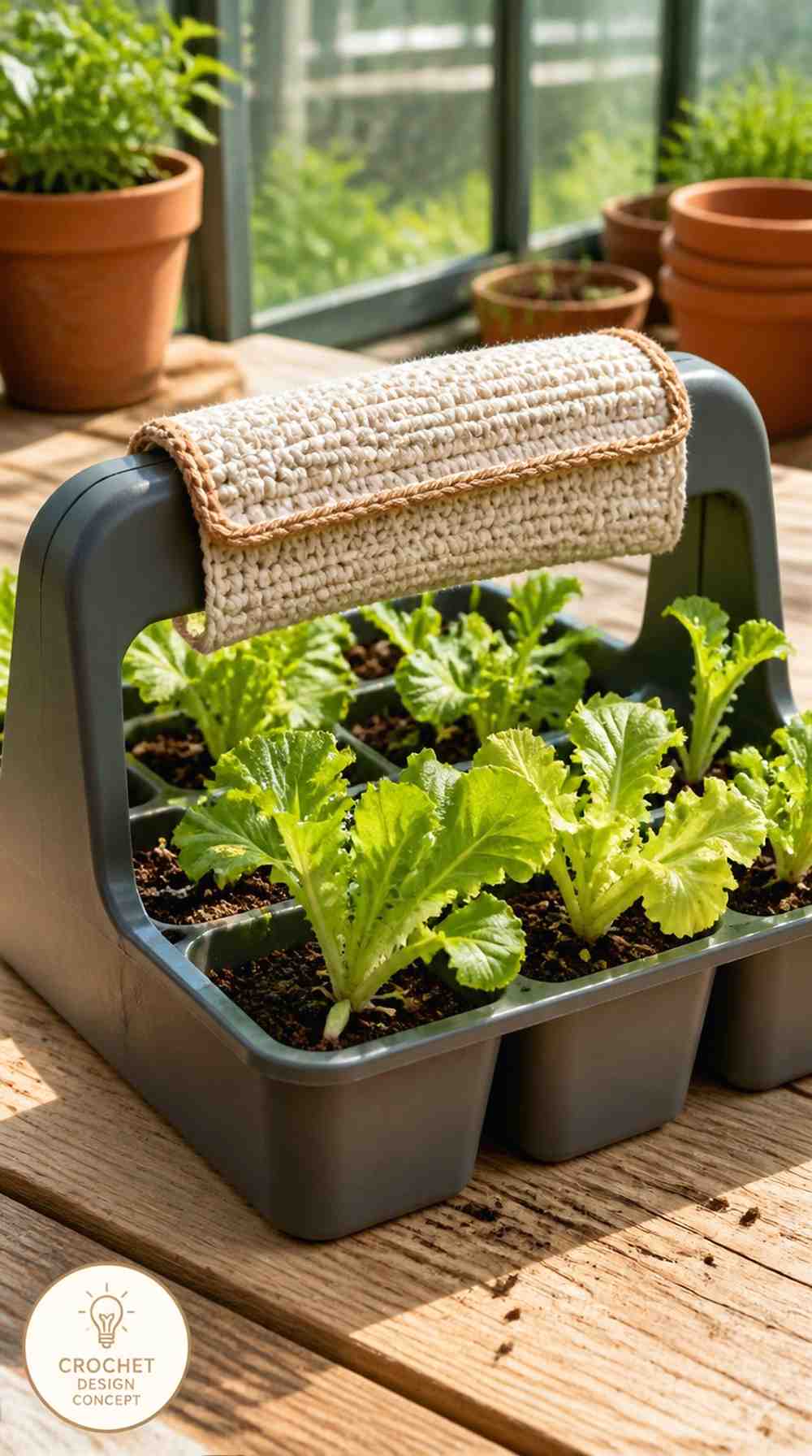
Natural oatmeal cotton forms a compact sleeve around the built-in handle of a charcoal-grey seedling carrier tray. A short outward-folded cuff creates a double-layer upper edge, while a slim caramel border provides contrast against the neutral crochet.
The folded construction gives the grip a softer, more substantial appearance than a single-layer wrap. It may be appealing for a tray with a broad molded handle, although the extra thickness needs to be considered before making a real version.
- Folded Upper Edge: Keep the oatmeal cuff below the limits of the original finger opening so it does not reduce usable gripping space.
- Double-Layer Bulk: The extra crochet layer changes the feel and dimensions of the handle; test comfort before choosing the final width.
- Fold Maintenance: Inspect the layered area for trapped soil or moisture, particularly after working around damp lettuce seedlings.
3. Crochet Navy Buttoned Seedling Tray Grip Cover
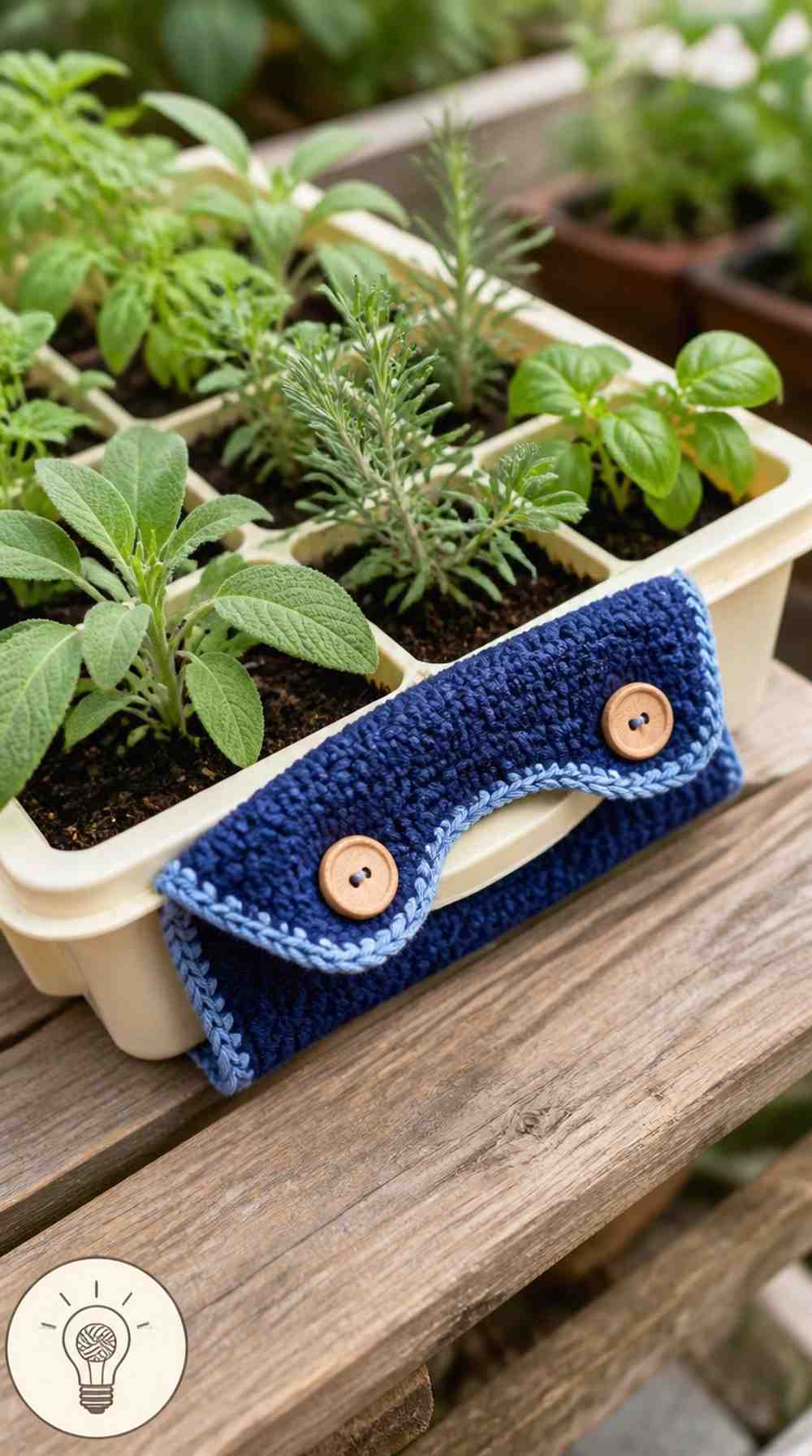
Deep navy crochet creates a removable rectangular cover around a cream-colored plastic tray handle. Two matte wooden buttons secure the overlapping ends underneath, while powder-blue edging gives the wrap a tidy outline.
The buttoned design offers a practical-looking alternative to a permanently joined sleeve. It can be opened without sliding over the handle’s entire length, which may be useful when the handle has wider molded ends.
- Under-Handle Closure: Position both wooden buttons underneath the original plastic grip, away from the main hand-contact surface.
- Overlapping Ends: Allow enough crochet overlap for the buttons to fasten without stretching the navy fabric tightly.
- Removal for Washing: The two-button arrangement allows the cover to be opened, making it easier to remove after gardening.
4. Crochet Olive Contoured Finger-Grip Wrap
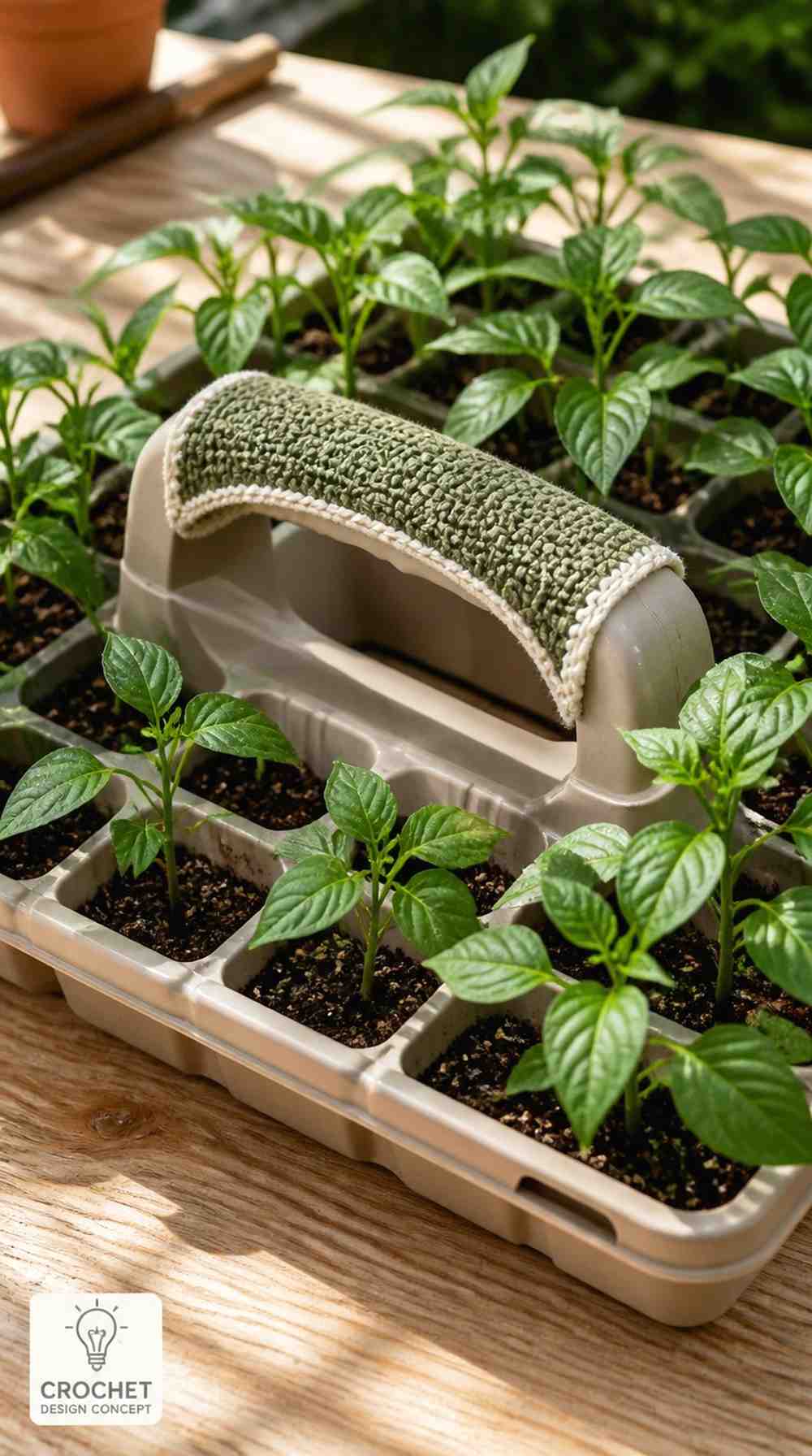
Muted olive crochet creates a gently shaped cover with a narrower middle and broader rounded ends. Its dense low-relief stitches follow the curved plastic handle of a tan seedling carrier tray, with oatmeal edging defining the outer shape.
The contoured silhouette is the defining feature. Instead of making one uniform rectangle, the design follows the handle’s changing width, creating an appearance that is closer to a purpose-shaped grip.
- Contoured Shape: Match the olive crochet outline to the actual molded handle rather than assuming a generic curved profile will fit.
- Rounded Ends: Keep the broader sections neatly shaped so they do not bunch where the plastic handle joins the tray.
- Finger Comfort: Check the narrowed center and finished thickness with an empty tray before using the wrapped handle.
5. Crochet Butter Yellow Lined Handle Cushion
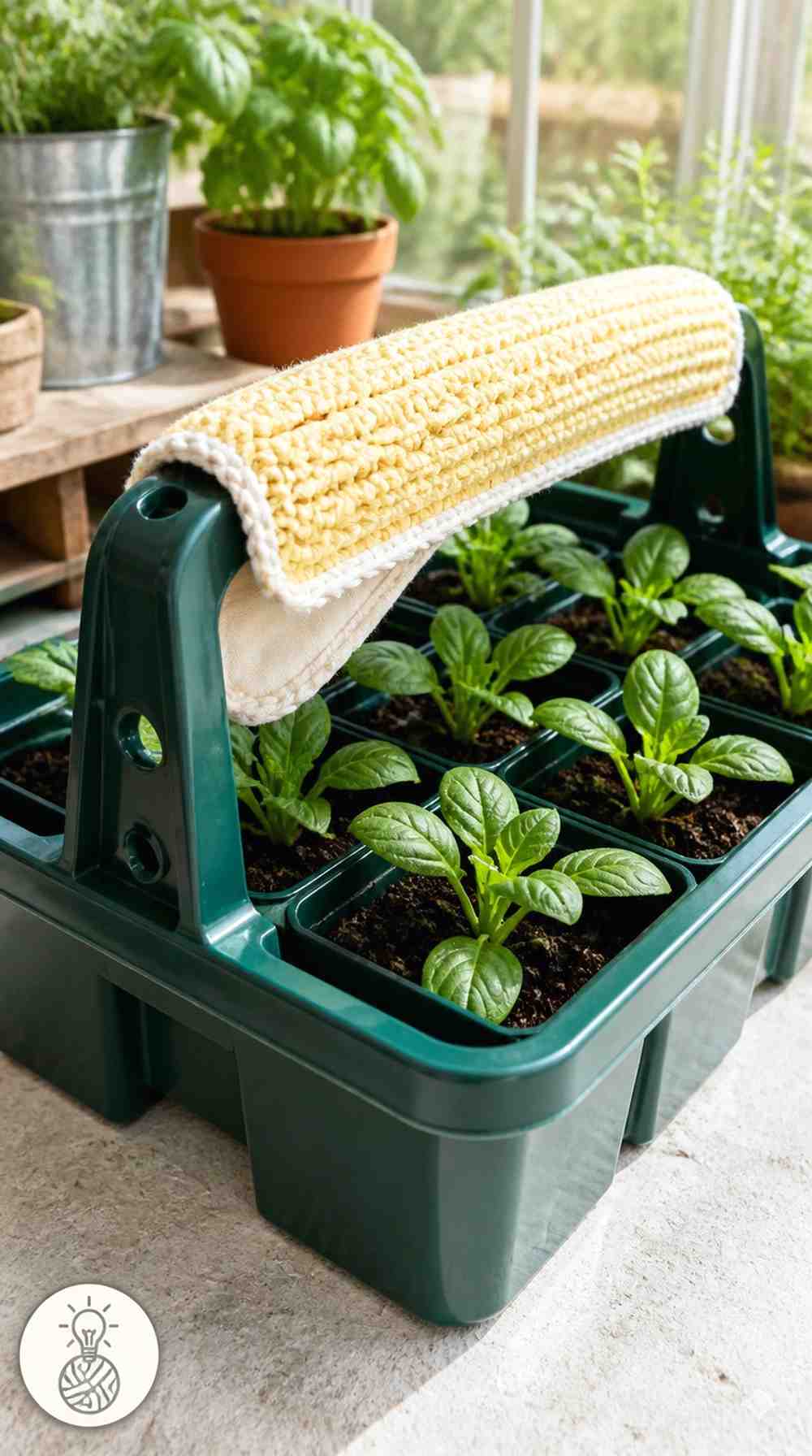
Butter-yellow crochet forms a textured handle covering with raised horizontal ridges and a warm-white border. A smooth cream cotton lining is visible beneath one lifted edge, separating the outer crochet from the rigid green-plastic handle.
The two-layer arrangement gives this concept a more finished appearance than a plain sleeve. The lining may change how the wrap sits against the handle, but its actual comfort and tendency to move would need testing.
- Smooth Backing: Keep the cream lining flat so it does not wrinkle beneath the yellow crochet or create uneven thickness.
- Raised Ridges: Use modest stitch relief on the outer surface, avoiding large raised sections that could feel uncomfortable against the fingers.
- Moisture Exposure: Both layers may retain water after gardening, so remove and dry the wrap thoroughly when necessary.
6. Crochet Dusty Rose Scalloped Handle Sleeve
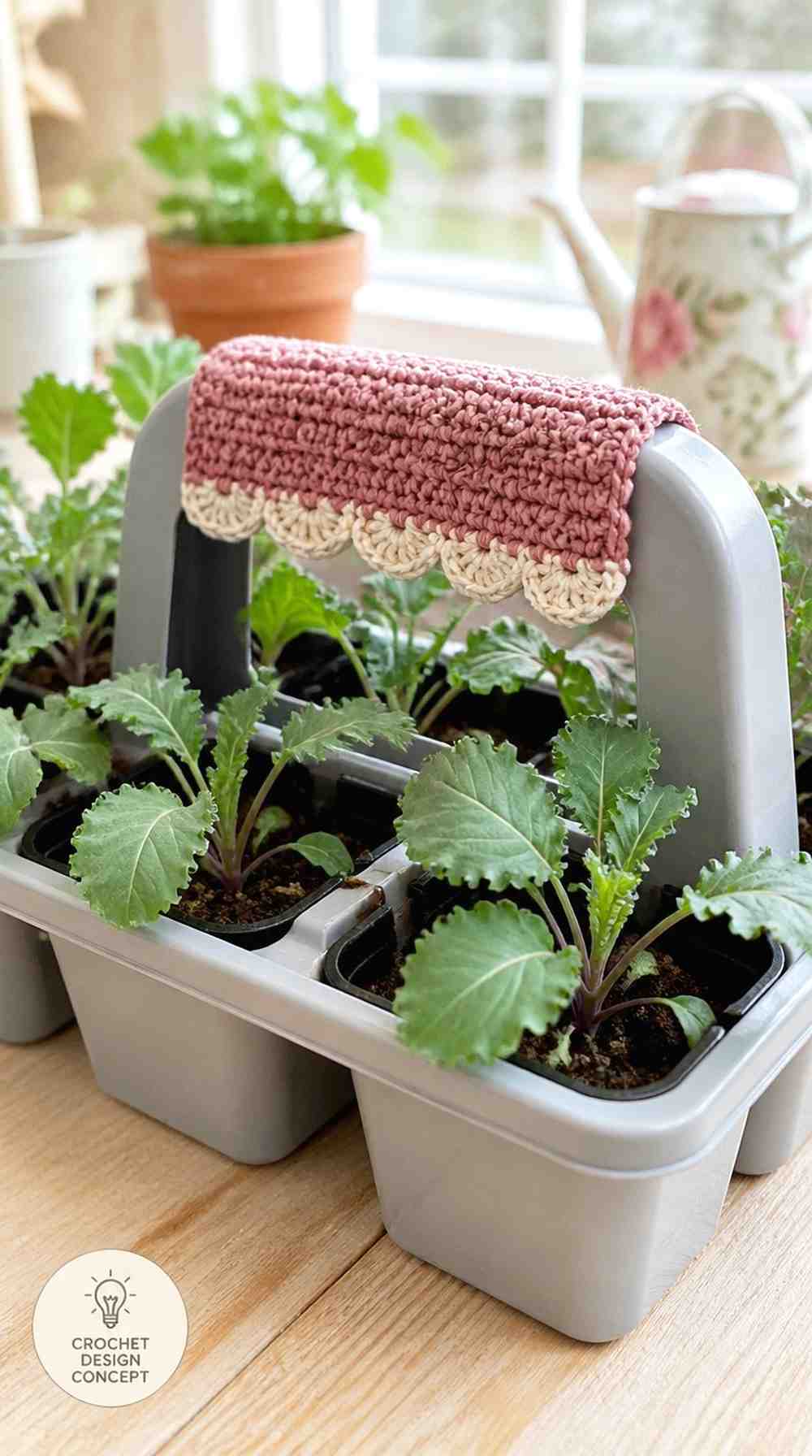
Dusty-rose crochet wraps around the broad side handle of a pale-grey seedling carrier tray. Six small ivory scallops decorate the lower outer edge, while the main sleeve uses dense, evenly worked rows.
The scalloped border gives this handle cover a softer decorative appearance without hiding the original plastic grip. The details work best when kept small and positioned away from the finger opening and growing plants.
- Six-Scallop Border: Keep the ivory scallops evenly joined and close to the sleeve so they do not hang into the tray’s seedling compartments.
- Main Grip Surface: Use the solid dusty-rose section for hand contact rather than relying on decorative scallops.
- Snag Awareness: Small crochet curves can catch on neighboring tray edges or garden tools, so inspect their placement before regular handling.
7. Crochet Charcoal Hook-and-Loop Grip Wrap
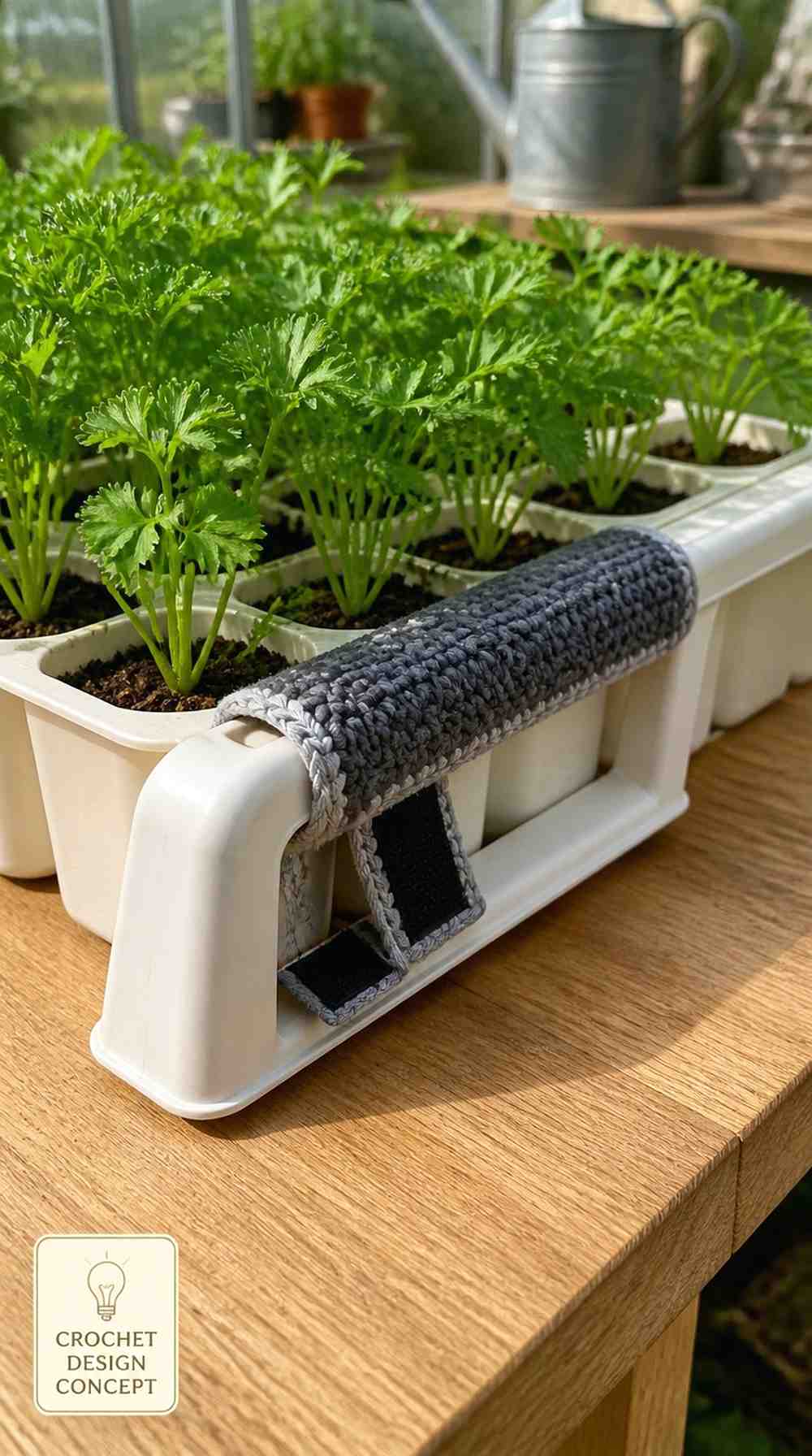
Charcoal-grey crochet forms a slim wrap with silver-grey borders and a low-profile fastening arrangement. Two black hook-and-loop tabs secure the overlapping ends underneath the molded handle of a warm-white plastic seedling carrier tray.
The understated colors suit a modern greenhouse setup. This design is especially interesting for a removable cover because it avoids buttons and tied cords, although the fastening material needs careful positioning against the crochet.
- Fastening Location: Keep the hook-and-loop strips underneath the handle where they do not interfere with the fingers.
- Yarn Snagging: Rough hook surfaces can catch loose crochet fibers, so limit exposed fastening material and check the closure when removing it.
- Wrap Thickness: The charcoal sleeve should remain relatively flat so the existing rigid handle retains a comfortable opening.
8. Crochet Denim Chevron Handle Cover
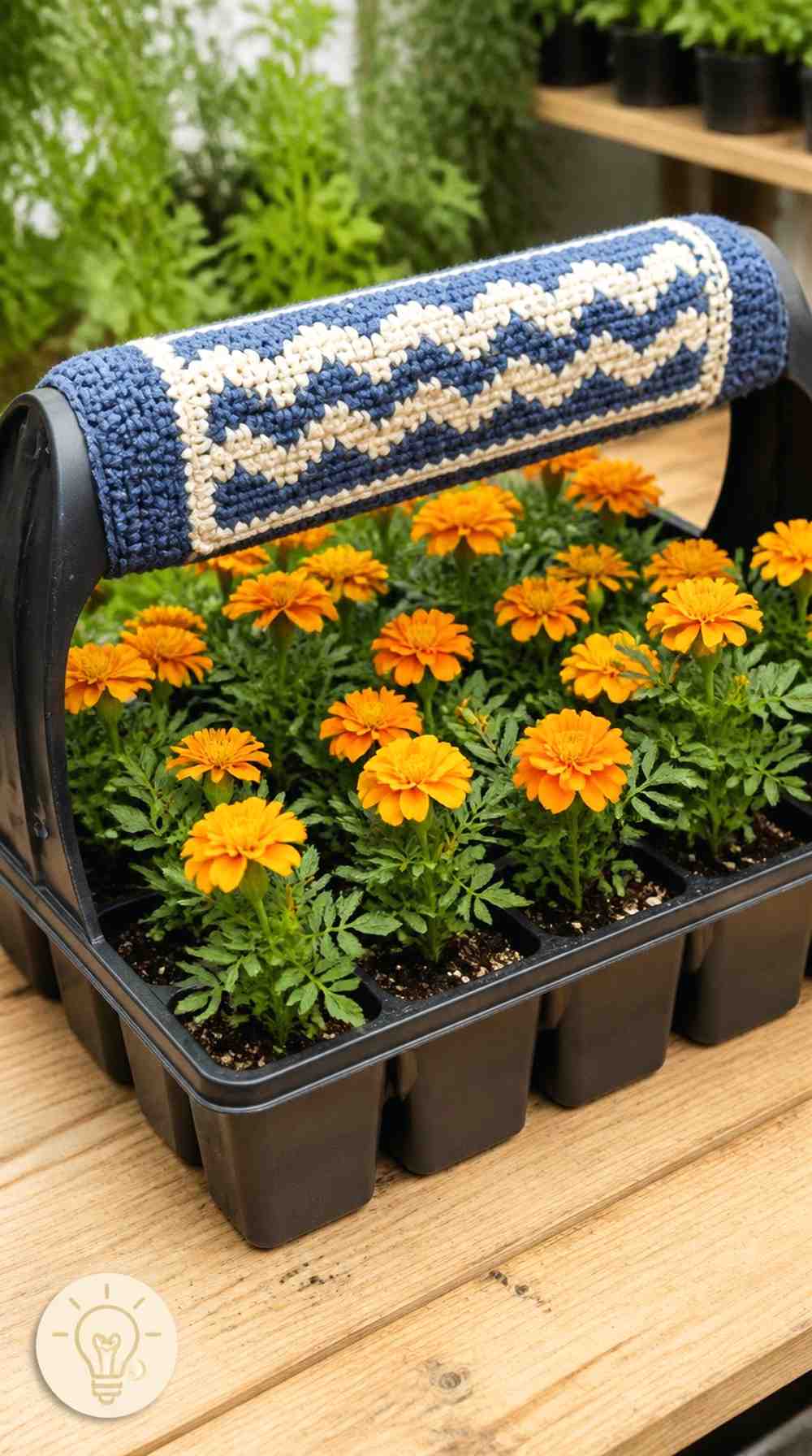
Dusty-denim-blue crochet creates a patterned handle sleeve with a repeating cream chevron motif across the center. Solid blue sections finish both ends, and an ivory border frames the patterned surface.
The chevron layout adds visual interest without requiring separate flowers, buttons, or hanging decorations. Its repeated color changes make stitch consistency especially important, since uneven rows could distort the cover’s rectangular shape.
- Chevron Alignment: Keep the cream zigzag repeat centered across the main gripping section, with the blue ends remaining similar in width.
- Color Changes: Secure yarn transitions neatly so loose strands do not appear inside the handle opening.
- Patterned Surface: Avoid increasing thickness at each color change, as raised joins could make the sleeve feel uneven.
9. Crochet Rust Matching Twin-Handle Wraps
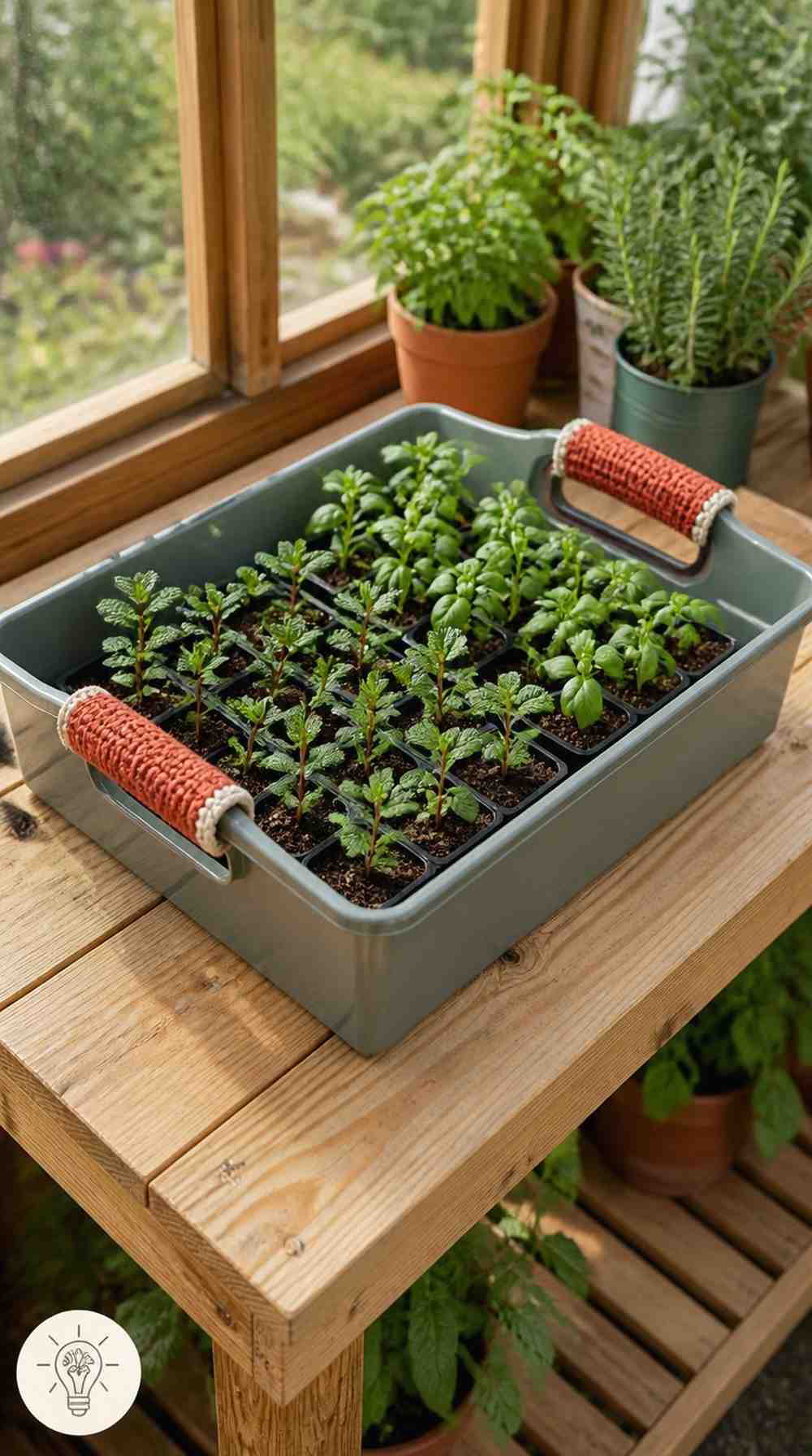
Two matching rust-orange crochet sleeves cover the existing opposite handles of a sage-grey seedling carrier tray. Each cover has dense horizontal stitch rows and an oatmeal border, creating a coordinated pair across the sturdy rectangular tray.
Unlike the single-handle concepts, this design shows both grips together. It may suit a carrier intended to be held with two hands, but the original tray handles and base must provide the actual structural support.
- Matching Pair: Make both rust sleeves the same length and thickness so the two handles have a consistent feel.
- Two-Handed Access: Keep the original finger openings unobstructed on both sides, especially when the tray is held close to the body.
- Tray Balance: Crochet covers do not improve the tray’s structural strength; keep the loaded tray level and support it from underneath when needed.
10. Crochet Teal Fabric-Backed Tray Grip
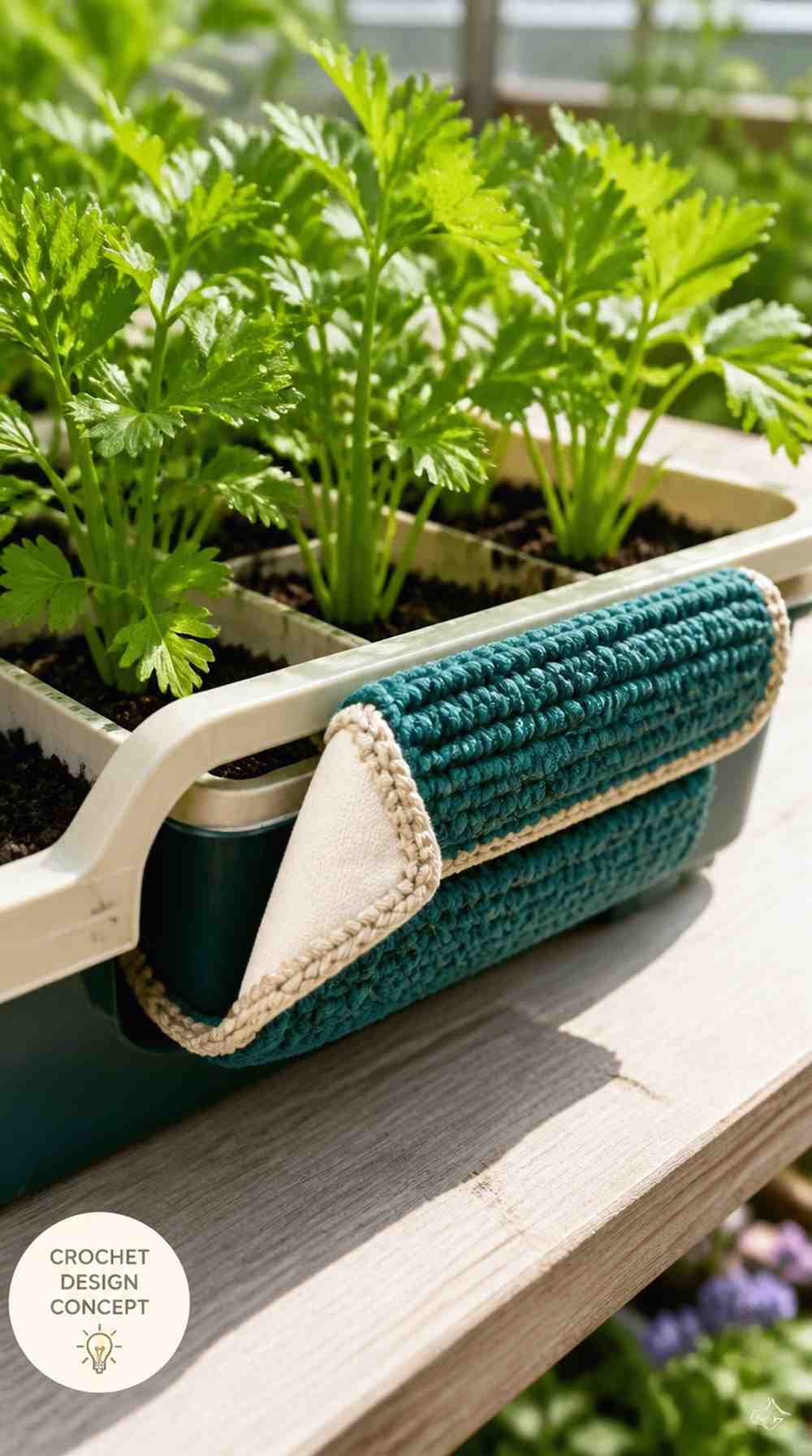
Deep-teal crochet forms a softly textured sleeve around the rigid handle of a cream-colored seedling tray. A warm-ivory cotton backing appears beneath one lifted edge, while fine cream edging follows the compact outer rectangle.
The moss-stitch-like surface gives this design an understated texture. Its fabric-backed construction creates a different contact layer between the crochet and plastic, although the actual grip and tendency to slip would depend on the materials.
- Backing Attachment: Join the ivory fabric securely to the teal crochet so the layers do not separate or bunch around the handle.
- Flat Overlap: Keep the hidden fastening area smooth beneath the rigid grip rather than creating a prominent seam.
- Cleaning Both Layers: Soil and moisture can collect between fabric and crochet, making removable construction preferable for regular gardening.
11. Crochet Cream Granny-Motif Handle Wrap
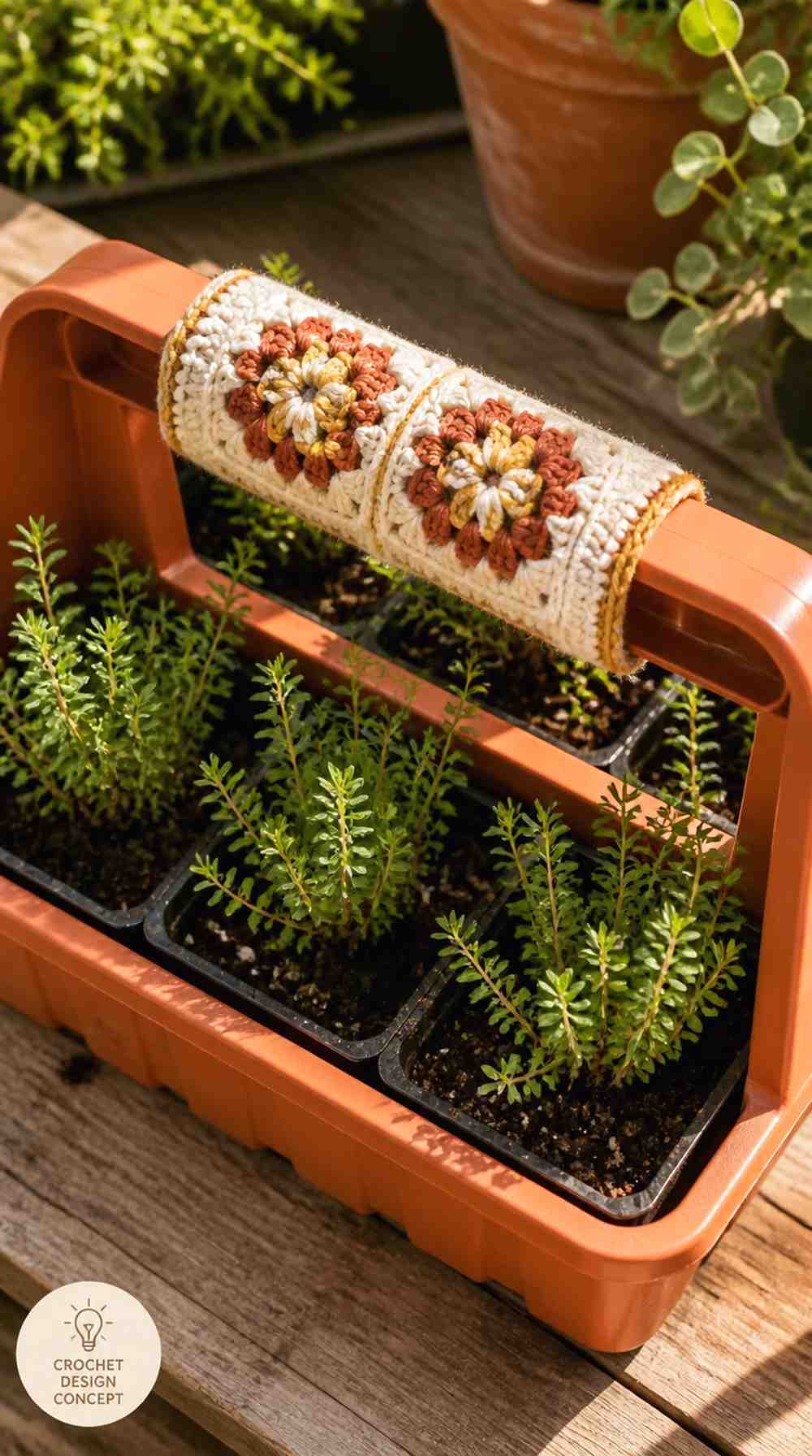
Warm-cream crochet forms a compact band with two small granny-square motifs in muted mustard, rust, and cream. Caramel edging frames the wrap, while the decorative squares sit on the outer face of the terracotta-colored tray handle.
The granny motifs bring a familiar handmade character to an otherwise simple garden accessory. Their raised crochet clusters are best treated as decoration, with a denser foundation band providing the main contact surface.
- Two Motifs: Position both granny squares across the outward-facing section rather than placing thick cluster joins directly beneath the fingers.
- Solid Foundation: The cream base should remain continuous beneath the motifs so the original handle is covered by an even fabric layer.
- Motif Joins: Secure the small squares carefully to avoid loose corners catching on the tray rim or gardening equipment.
12. Crochet Lavender Mesh-Overlay Grip Sleeve
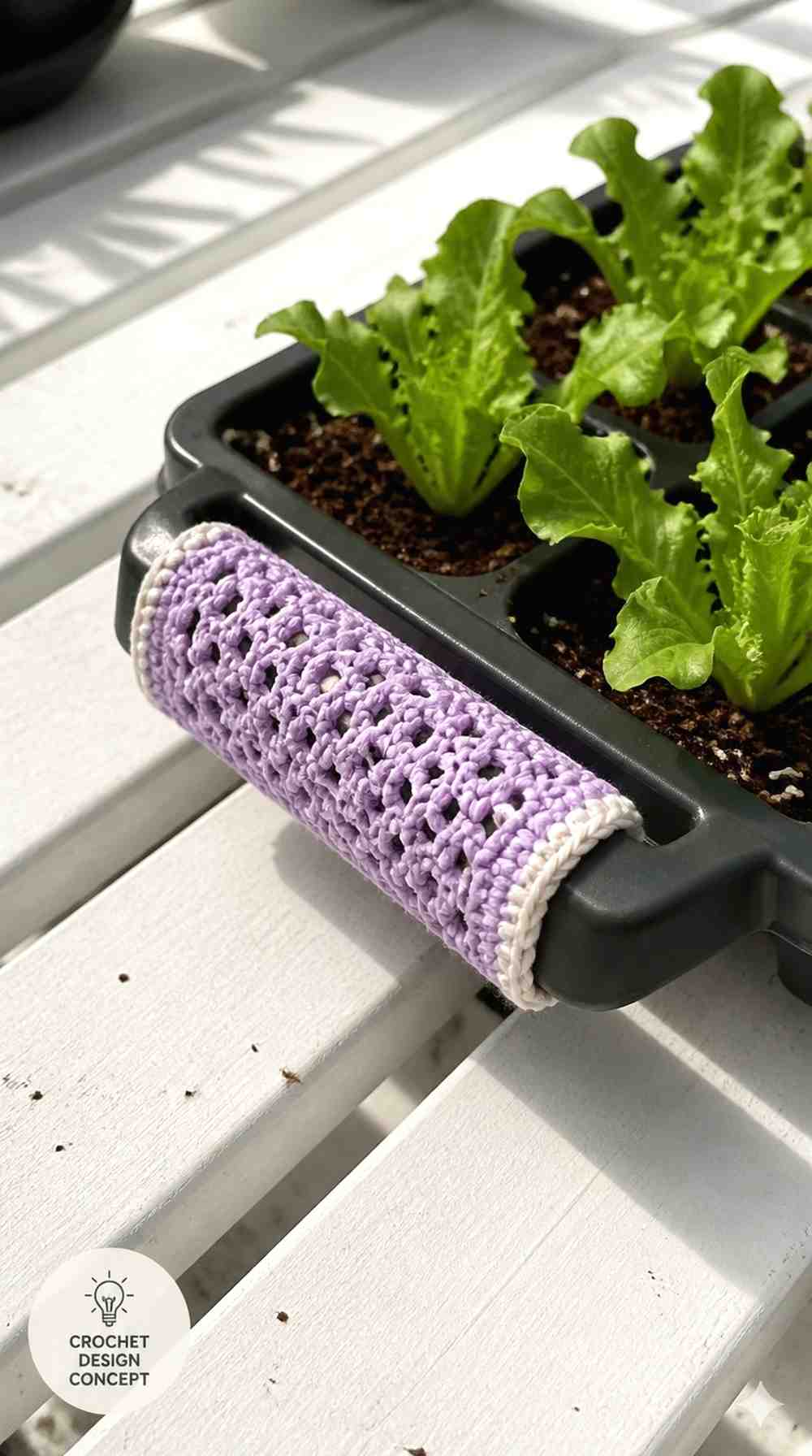
Pale-lavender crochet creates a layered handle sleeve with a dense foundation band and a separate diamond-shaped open-mesh overlay. Cream borders finish both ends, while the original charcoal plastic handle remains visible around the covering.
This concept uses openwork for appearance rather than structural support. The underlying solid crochet creates a continuous surface, allowing the diamond lattice to remain decorative without introducing large gaps directly against the molded handle.
- Mesh Overlay: Keep the lavender diamond openings orderly and connected to the underlying band at suitable points.
- Solid Foundation: The denser lower layer should provide the main wrap shape, rather than expecting open mesh alone to remain stable.
- Debris Collection: Open crochet spaces can trap potting mix and plant fragments, so this design may need more careful cleaning than a plain sleeve.
13. Crochet Caramel Cross-Over Handle Wrap
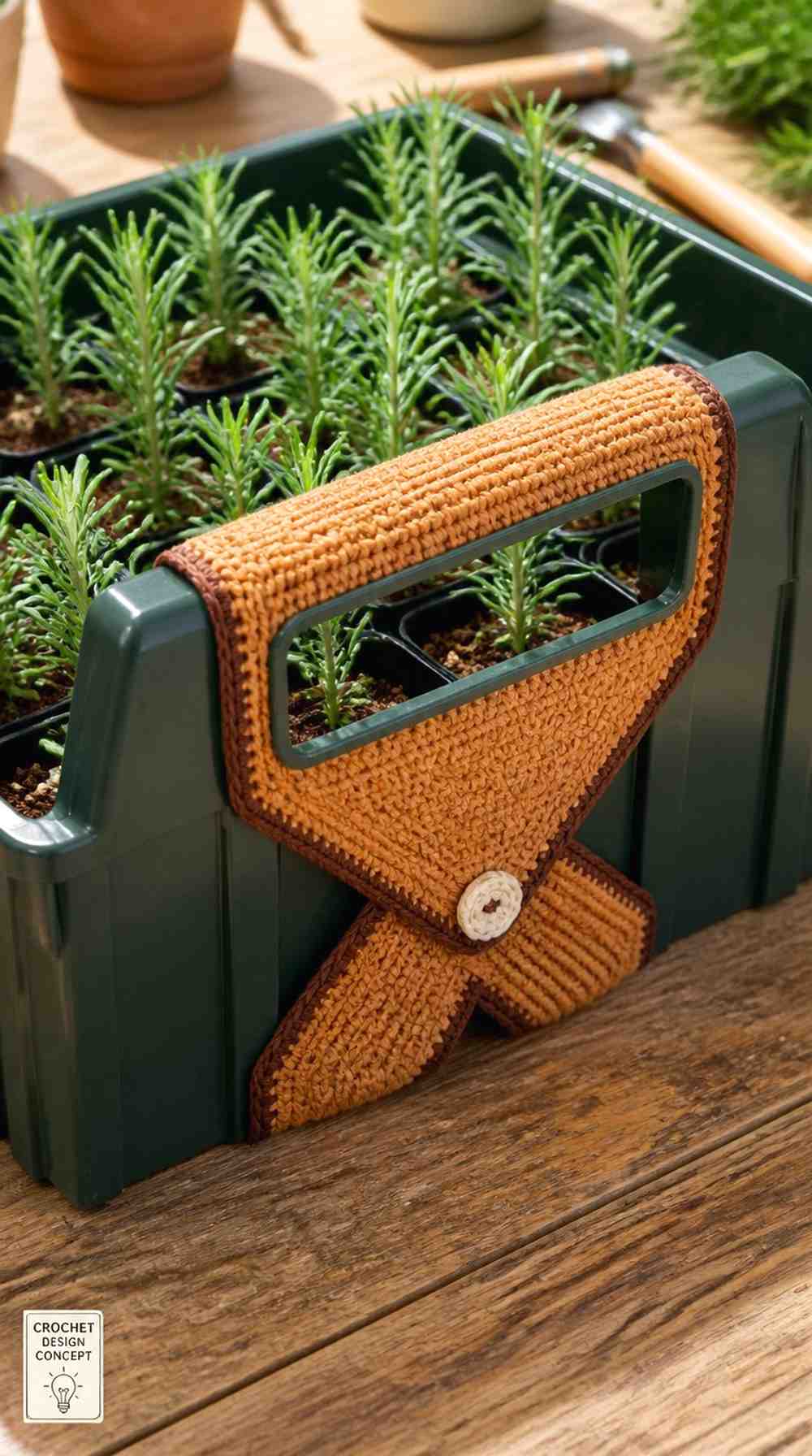
Warm-caramel crochet wraps around a dark-green seedling tray handle, with two short flap ends overlapping diagonally beneath it. A chocolate-brown border defines the X-shaped closure, while one small cream crochet button secures the overlapping section.
The diagonal fastening gives this cover a different construction from straight buttoned sleeves. It also makes the underside visually distinctive, although careful alignment is needed to prevent twisting around the handle.
- Diagonal Overlap: Keep both caramel flap ends aligned so the X-shaped closure sits neatly underneath the rigid handle.
- Button Placement: Position the cream button clear of the main gripping area and away from sharp molded-plastic edges.
- Wrap Stability: Test whether the diagonal closure allows the fabric to rotate, particularly when the handle has a smooth or tapered surface.
14. Crochet Cobalt Split-Pad Finger Wrap
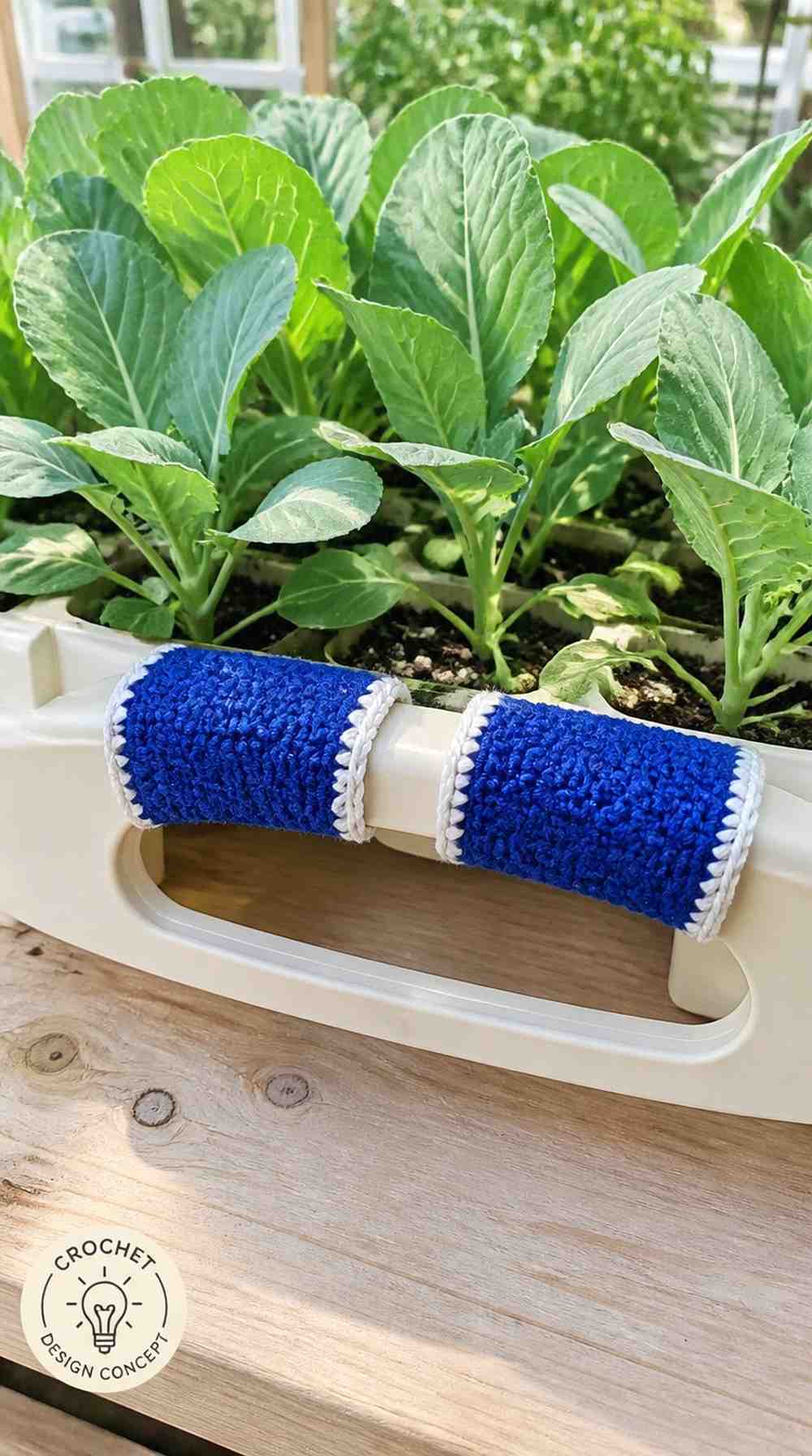
Bright cobalt-blue crochet creates two short grip pads fitted separately along the same cream-colored plastic handle. A narrow exposed section of the original handle remains visible between them, while white edging finishes each pad.
The split arrangement is different from a full-length sleeve. It covers two selected contact areas while leaving the middle uncovered, making it worth considering when the handle has distinct raised sections or a wider center.
- Two Separate Pads: Position both cobalt sections around the parts of the rigid handle where contact is intended, leaving the center opening clear.
- Consistent Thickness: Make the two pads similar in depth so one side does not feel noticeably bulkier than the other.
- Individual Fastenings: Each pad needs its own secure attachment because the two pieces do not form one continuous sleeve.
15. Crochet Peach Tie-End Handle Sleeve
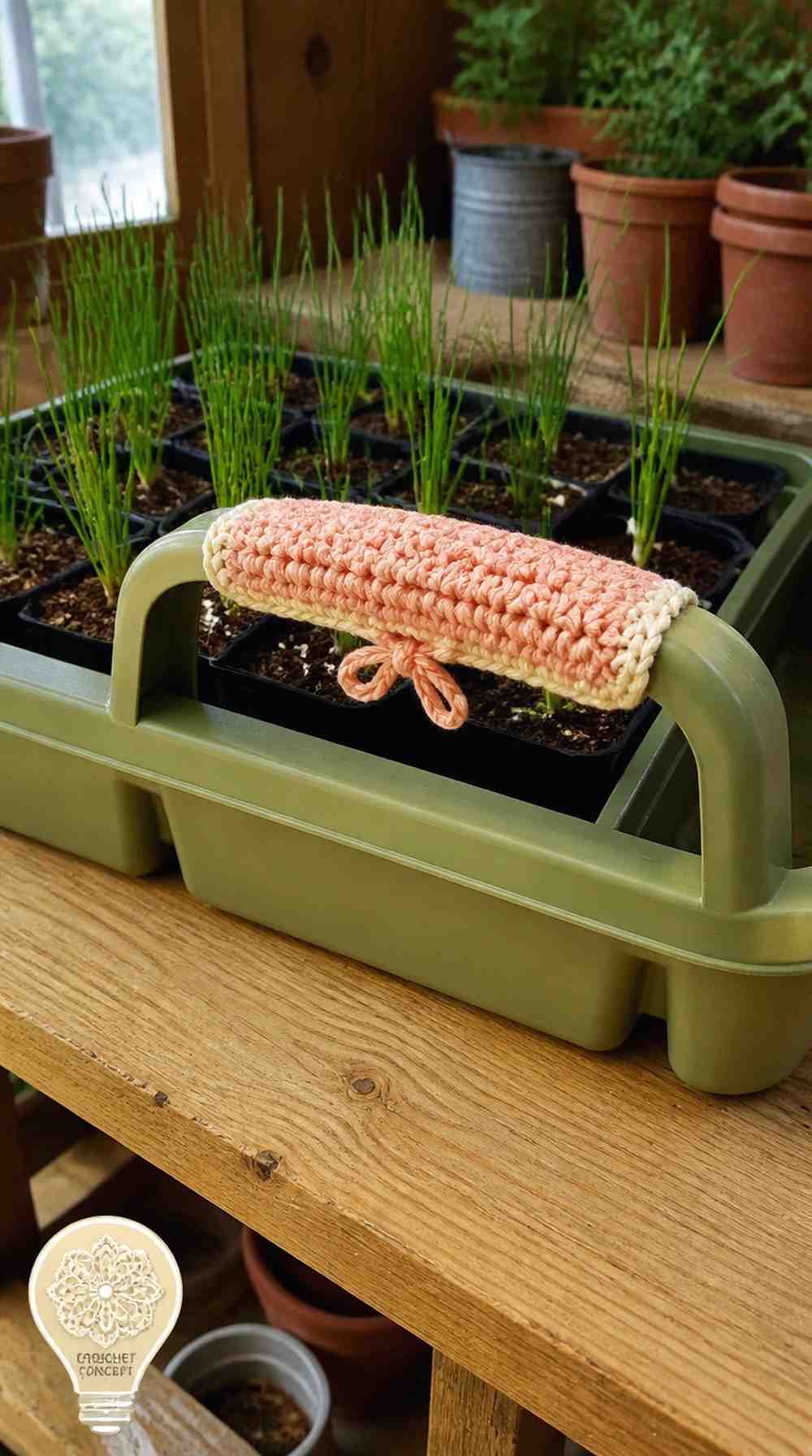
Soft peach crochet forms a rectangular cover with narrow ivory edging and two short matching ties. The ties meet in a compact flat bow beneath the original molded handle of a light-olive seedling carrier tray.
The tie-end construction creates a gentle handmade finish without hard buttons or hook-and-loop material. It may appeal to gardeners who prefer a removable fabric closure, although the bow must remain short and clear of the hand opening.
- Short Ties: Keep the peach crochet ends long enough to fasten but not so long that they dangle toward the seedlings or tray cells.
- Under-Handle Bow: Position the compact knot below the gripping surface so it does not press directly into the fingers.
- Closure Check: Crochet ties can loosen during repeated handling, so inspect the fastening before moving a tray.
16. Crochet Forest Green Contoured Reversible Handle Wrap
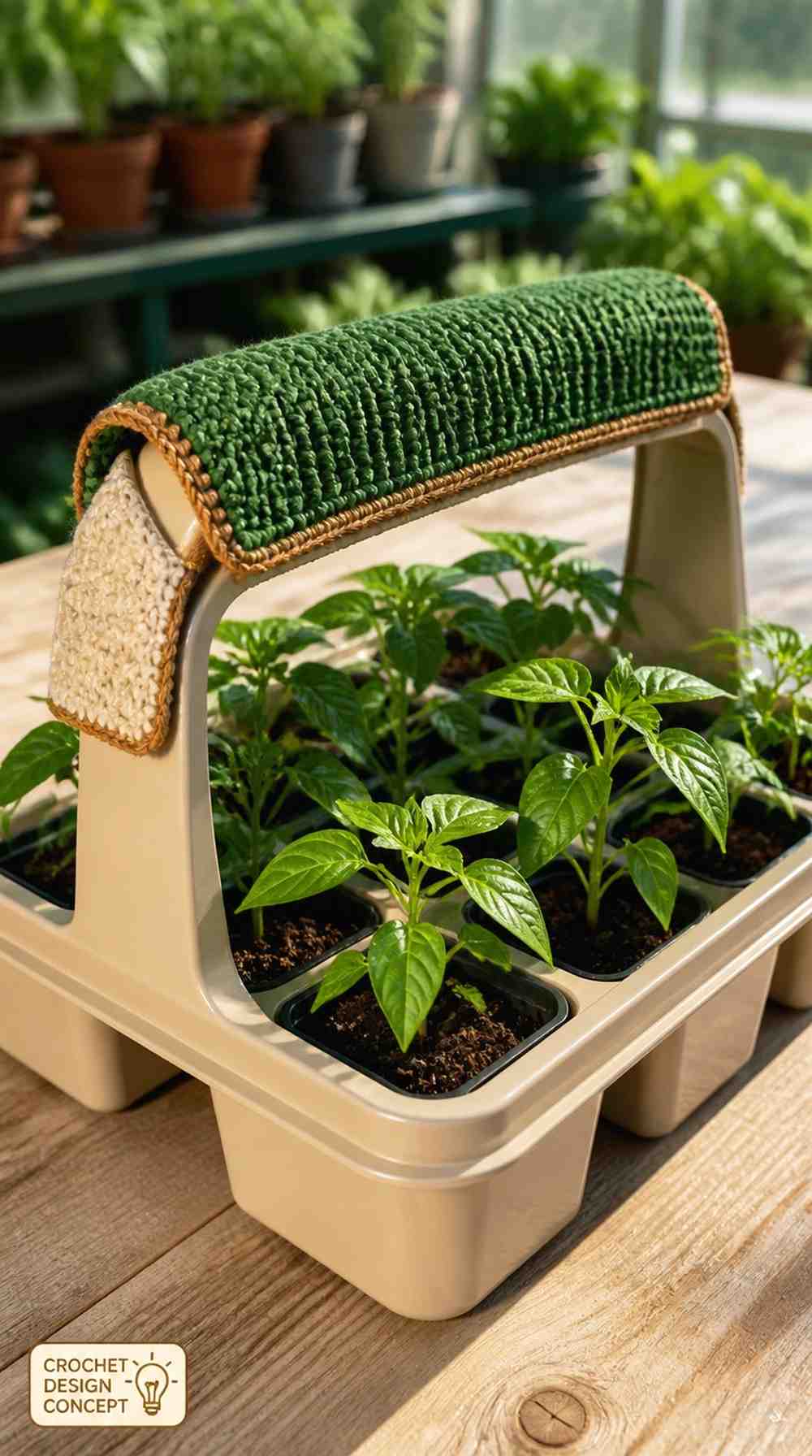
Deep forest-green crochet forms a gently contoured sleeve with dense stitch columns and caramel edging. A turned-back end reveals an oatmeal-colored reverse layer, creating a two-tone wrap around the rigid handle of a sand-colored seedling tray.
The reversible construction offers two styling options while keeping the same basic cover shape. Its layered fabric is more complex than a simple sleeve, making accurate shaping and flat joins particularly important.
- Reversible Layers: Keep the forest-green and oatmeal faces evenly joined so neither layer bunches when the cover is turned.
- Contoured Fit: Match the shaped outline to the original handle without reducing the usable finger opening.
- Layered Thickness: Check whether the two crochet faces create too much bulk for comfortable gripping before using the cover regularly.
Practical Guide to Crochet Seedling Tray Carry Handle Wraps
Check whether the tray is meant to be carried
Not every propagation tray has a strong carrying handle. Thin seedling cell inserts may bend when filled with damp growing mix and young plants.
Some purpose-made support trays include built-in handles and a rigid base. Vego Garden, for example, describes its bottom-watering trays as having built-in handles and a sturdy tray structure.
10″ x 20″
A crochet handle wrap does not create a structural carrying handle. It should only cover an existing suitable grip.
Support flexible trays from underneath
A tray can become considerably heavier after watering, and flexible inserts may bend during lifting. EazyAgro recommends putting flexible seedling trays on a stable support tray and supporting them from below when moving them.
EazyAgro
Keep seedling inserts fully supported, maintain a level tray, and avoid relying on crochet wraps to lift a loaded, flexible tray.
Measure the actual handle
Check the handle’s width, thickness, curvature, and finger opening. Include the wider molded sections at its ends.
A removable buttoned wrap may suit handles with broad end sections, while a slip-on sleeve needs enough clearance to pass over the handle.
Choose materials for garden conditions
Smooth cotton may be considered for clear stitches and a neat appearance, but yarn can absorb water and soil residue.
Removable wraps are easier to wash and dry separately. Avoid leaving wet crochet wrapped around a handle for extended periods, especially where it could conceal damage or make the grip slippery.
Keep watering and drainage unobstructed
A handle cover should not block drainage holes, watering channels, tray connections, or the tops of seedling cells.
Remove the wrap if it interferes with stacking trays, carrying safely, or keeping seedlings upright.
For a related idea involving existing carrying handles, see 14 Crochet Egg Carton Carry Handle Inspiration Ideas on Yarn Nest Studio. That collection explores handle comfort and supporting delicate contents rather than seedling trays.
Want to Make Something Similar?
These 16 crochet handle wraps are original design visualizations, not tested patterns. The following resources teach related techniques that could help when planning a removable cover for an existing rigid handle.
- Big and Little Crochet Basket Set — Moogly includes an actual handle-cover section made from short crochet rows wrapped around existing basket handles and sewn closed. This is a particularly relevant construction reference, though it is not designed for nursery trays. Free Pattern on Moogly
- Cute Cane Handle Cover — Beck Roberts on Ravelry is a free pattern for a shaped crochet cover fitted to an existing cane handle. Its purpose is different, but the emphasis on matching a specific grip shape may be useful. Ravelry
Neither resource supplies an exact pattern for the pictured seedling tray wraps. A real version needs custom measurements, suitable yarn, secure removable fastenings, and a check that the original tray remains safe to handle.
Which Crochet Seedling Tray Carry Handle Wrap Should You Choose?
| Your priority | Designs to consider | Main trade-off |
|---|---|---|
| Simple fitted cover | Terracotta Ribbed | Requires an accurately sized sleeve |
| Folded hand-contact area | Oatmeal Folded-Cuff | Extra fabric thickness |
| Removable button closure | Navy Buttoned | Buttons need underside clearance |
| Curved handle shape | Olive Contoured | More careful shaping |
| Fabric-lined grip | Butter Yellow Lined, Teal Fabric-Backed | Layers can retain moisture |
| Decorative edging | Dusty Rose Scalloped | Scallops may snag |
| Hook-and-loop removal | Charcoal Hook-and-Loop | Fastener can catch yarn |
| Graphic crochet pattern | Denim Chevron | Requires consistent color changes |
| Two matching handles | Rust Twin-Handle | Both covers need matching fit |
| Granny-square decoration | Cream Granny-Motif | Raised motifs add bulk |
| Openwork texture | Lavender Mesh-Overlay | Mesh collects debris |
| Diagonal closure | Caramel Cross-Over | More complex alignment |
| Partial handle coverage | Cobalt Split-Pad | Two separate attachments |
| Soft tied fastening | Peach Tie-End | Ties may loosen |
| Reversible appearance | Forest Green Reversible | Double-layer construction |
For a straightforward existing handle, the Crochet Terracotta Ribbed Seedling Tray Handle Wrap is a simple starting concept.
If easy removal matters, the Crochet Navy Buttoned Seedling Tray Grip Cover or Crochet Charcoal Hook-and-Loop Grip Wrap may be worth considering. For a tray that already has two strong built-in handles, the Crochet Rust Matching Twin-Handle Wraps offer a coordinated appearance.
Conclusion
Crochet seedling tray carry handle wraps can add color and texture to ordinary gardening equipment without replacing the tray’s original hardware. A terracotta ribbed sleeve creates a simple everyday look, a navy buttoned wrap offers a removable closure, and a forest-green reversible grip introduces a more detailed two-color finish.
The best choice depends on the shape of the existing handle, available finger space, and the conditions in which the tray is used. Keep crochet covers clean and removable, support flexible trays from underneath, and never expect a decorative wrap to strengthen a weak carrier.
Which would suit your gardening setup best: the terracotta ribbed grip, the dusty-rose scalloped sleeve, or the forest-green reversible wrap? Share your favorite and the type of seedling tray you use most often.
Frequently Asked Questions
1. Can a crochet handle wrap make a seedling tray easier to carry?
A crochet cover changes the surface and thickness of an existing grip, which some people may find more comfortable. However, comfort and performance depend on the handle shape, yarn, fit, and weight of the tray. The cover does not strengthen the original plastic handle or make an unsupported flexible tray safe to lift.
2. Can I attach crochet handles directly to a flexible seedling tray?
That is not recommended as a general solution. Thin propagation trays may bend or tear when lifted by their edges, especially after watering. Use a suitable rigid carrier or support tray and follow its intended carrying method. Crochet wraps should cover existing suitable handles rather than act as the structural support.
EazyAgro
3. What yarn should I consider for a crochet seedling tray handle wrap?
Smooth cotton or a suitable cotton blend may be worth considering for clear stitch definition and a tidy grip surface. However, crochet yarn can absorb water and collect soil. Choose a removable design that can be washed and dried according to the yarn’s care instructions, and check for slipping during use.
4. How do I size a crochet wrap for a seedling tray handle?
Measure the full gripping section of the existing handle, including its width, thickness, curvature, and any broader molded ends. Check the finger opening with the proposed crochet thickness in mind. If the handle has wider ends, a buttoned or tied wrap may be easier to fit than a fixed tubular sleeve.
5. Are these 16 crochet seedling tray carry handle wraps available as exact patterns?
No. These are original AI-generated inspiration concepts, not tested crochet patterns or finished handmade accessories. The linked handle-cover resources teach related crochet techniques but do not reproduce these particular designs. Any real version requires custom measurements, suitable attachments, and checks that the original seedling tray remains properly supported during handling.