Oxblood gives fall crochet a darker, earthier direction than a bright true red. Depending on the yarn and lighting, it can lean toward wine, burgundy, brown-red, or almost blackened cherry, which makes it useful for everything from a statement cardigan to a small seasonal accent. This collection covers garments, cold-weather accessories, bags, home décor, and smaller projects rather than repeating the same scarf or hat shape.
The tutorials below teach the underlying projects; they do not all use oxblood yarn. Treat oxblood as the color plan, then use each original creator’s tutorial for exact construction, sizing, materials, and finishing. The projects are intentionally varied by shape, structure, fit, function, and display style rather than color alone.
Quick List
- Oxblood Crochet Cropped Button-Loop Cardigan
- Oxblood Crochet Boxy Balloon-Sleeve Pullover
- Oxblood Crochet Chunky V-Neck Vest
- Oxblood Crochet Draped Two-Panel Poncho
- Oxblood Crochet Bordered Wrap Shawl
- Oxblood Crochet Convertible Kerchief Scarf
- Oxblood Crochet Shell-Stitch Infinity Cowl
- Oxblood Crochet Structured Bucket Hat
- Oxblood Crochet Drawstring Balaclava Hood
- Oxblood Crochet Fingerless Hand Warmers
- Oxblood Crochet Ribbed Leg Warmers
- Oxblood Crochet Cozy House Slippers
- Oxblood Crochet Granny-Square Crossbody Bag
- Oxblood Crochet Bow-Accent Mug Cozy
- Oxblood Crochet Color-Block Pillow Cover
- Oxblood Crochet Modern Granny Throw
- Oxblood Crochet Chunky Storage Basket
- Oxblood Crochet Mini Pumpkin Bowl Fillers
- Oxblood Crochet Autumn Leaf Accents
- Oxblood Crochet Everyday Hair Scrunchie
Choose the Oxblood Tone Before You Choose the Project
“Oxblood” is broad enough that two yarns with the same general color description can look surprisingly different. A brown-heavy oxblood can give baskets, pillows, ponchos, and cardigans a grounded autumn look, while a wine-leaning version can read richer on shawls, hats, and smaller accessories. Compare yarn in daylight when possible rather than judging only from a product photo.
Texture matters too. Deep colors can hide low-relief stitch detail, especially in dim indoor light. If the project depends on ribbing, shells, granny clusters, or raised texture, look at a swatch from several feet away. A slightly clearer stitch definition may be more useful than choosing the darkest possible red.
Match Yarn Behavior to the Finished Object
A sweater, scarf, or shawl usually benefits from fabric that moves comfortably, while a basket or bag has a different job: it needs enough body to keep its intended shape. That means the same oxblood yarn is not automatically ideal for all 22 projects.
For wearables, check the tutorial’s yarn weight and gauge information before substituting. A heavier or less flexible yarn can change garment dimensions and make sleeves, shoulders, or necklines feel different. For bags and baskets, pay attention to stretch and whether the original construction uses lining, doubled yarn, or another structural feature. Home décor has its own considerations: pillow covers need to fit an insert cleanly, while a throw should still drape comfortably after the yarn substitution.
Build an Oxblood Fall Collection Without Making Everything Match
A full set of identical oxblood pieces can become visually heavy. One way to use the shade more intentionally is to decide which project will carry the strongest block of color. A cardigan, poncho, blanket, or tote can act as the main piece, while a beanie, scrunchie, leaf accent, or mug cozy repeats the color on a smaller scale.
You can also use oxblood as one part of a controlled palette. Warm cream, camel, muted olive, dusty rose, charcoal, or brown can separate darker red areas and make construction details easier to see. For gingham, granny squares, and color-block pieces, make a small color arrangement first so the oxblood remains the focal shade rather than disappearing into several equally dark colors.
1. Oxblood Crochet Cropped Button Loop Cardigan
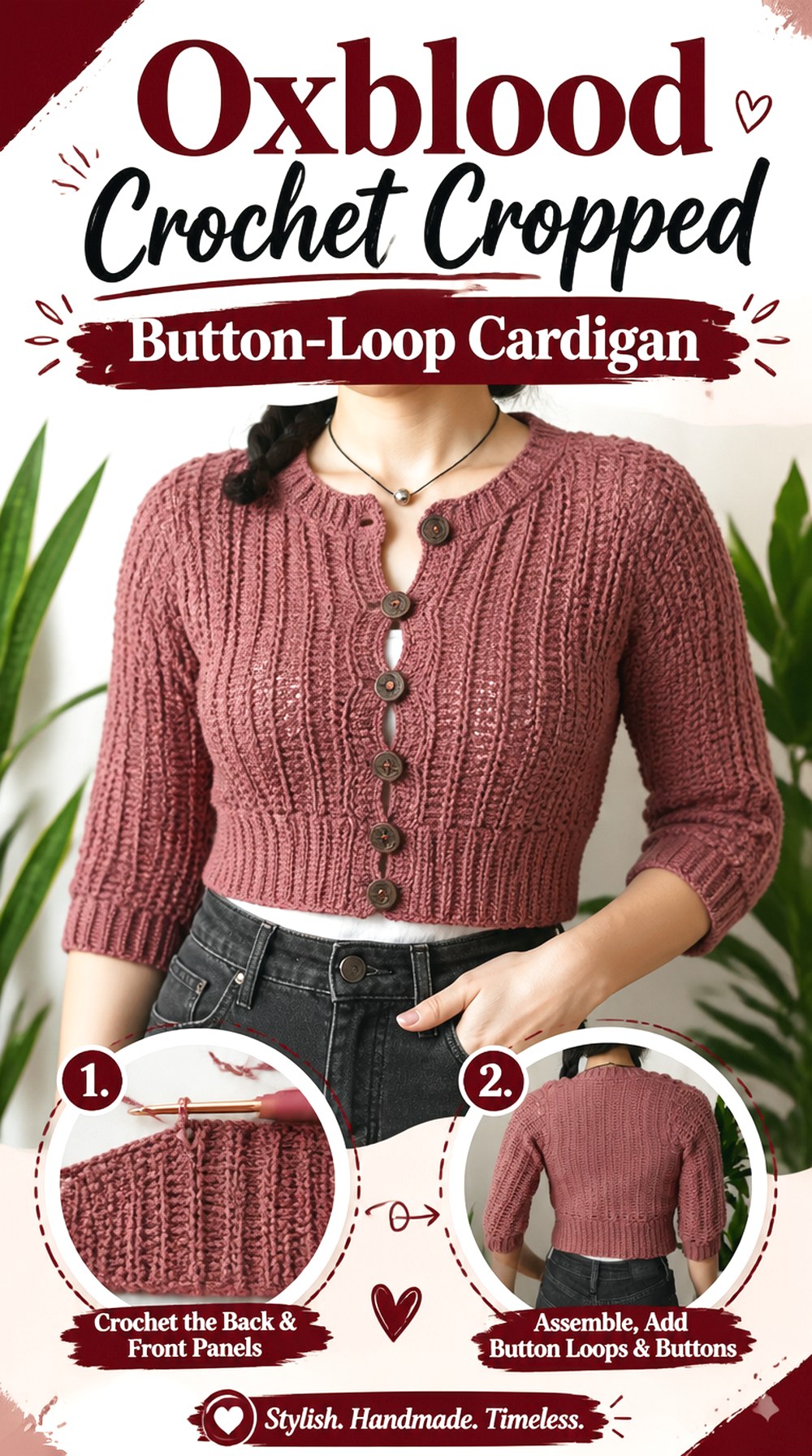
A cropped cardigan turns oxblood into a concentrated upper-body statement without the visual weight of a long coat-style garment. This version is especially useful for fall layering because the short body can sit over dresses, high-waisted pants, or skirts, while the long sleeves keep the silhouette seasonally appropriate. The source cardigan also uses a small button-and-loop closure rather than a full button band, so the front retains an open, lightweight appearance.
If you substitute an oxblood yarn, concentrate first on matching the fabric behavior expected by the tutorial. A noticeably stiffer yarn could change how the front edges hang and how comfortably the sleeves move.
The Closure Keeps the Front Visually Light
A single closure creates a different styling effect from a fully buttoned cardigan. The eye still sees the layers underneath, which can stop a dark oxblood garment from looking like one uninterrupted block of color.
Before finishing the closure, try the cardigan with the type of top you expect to wear under it. The useful checkpoint is not simply whether the button closes, but whether the two fronts meet in the position you want without pulling the neckline or distorting the lower edge.
Check Sleeve Weight Before Final Assembly
Long crochet sleeves can add significant fabric to a cropped body. If your oxblood substitution is heavier than the tutorial yarn, that extra weight may be more noticeable at the shoulder seam.
Make the tutorial’s recommended gauge checks before committing to all the panels. When the first sleeve has enough length to evaluate, compare its weight and drape with the body. If the fabric feels substantially denser than expected, reassess the yarn choice before finishing the second sleeve.
Original Tutorial and Creator Credit
Creator: TCDDIY
2. Oxblood Crochet Boxy Balloon Sleeve Pullover
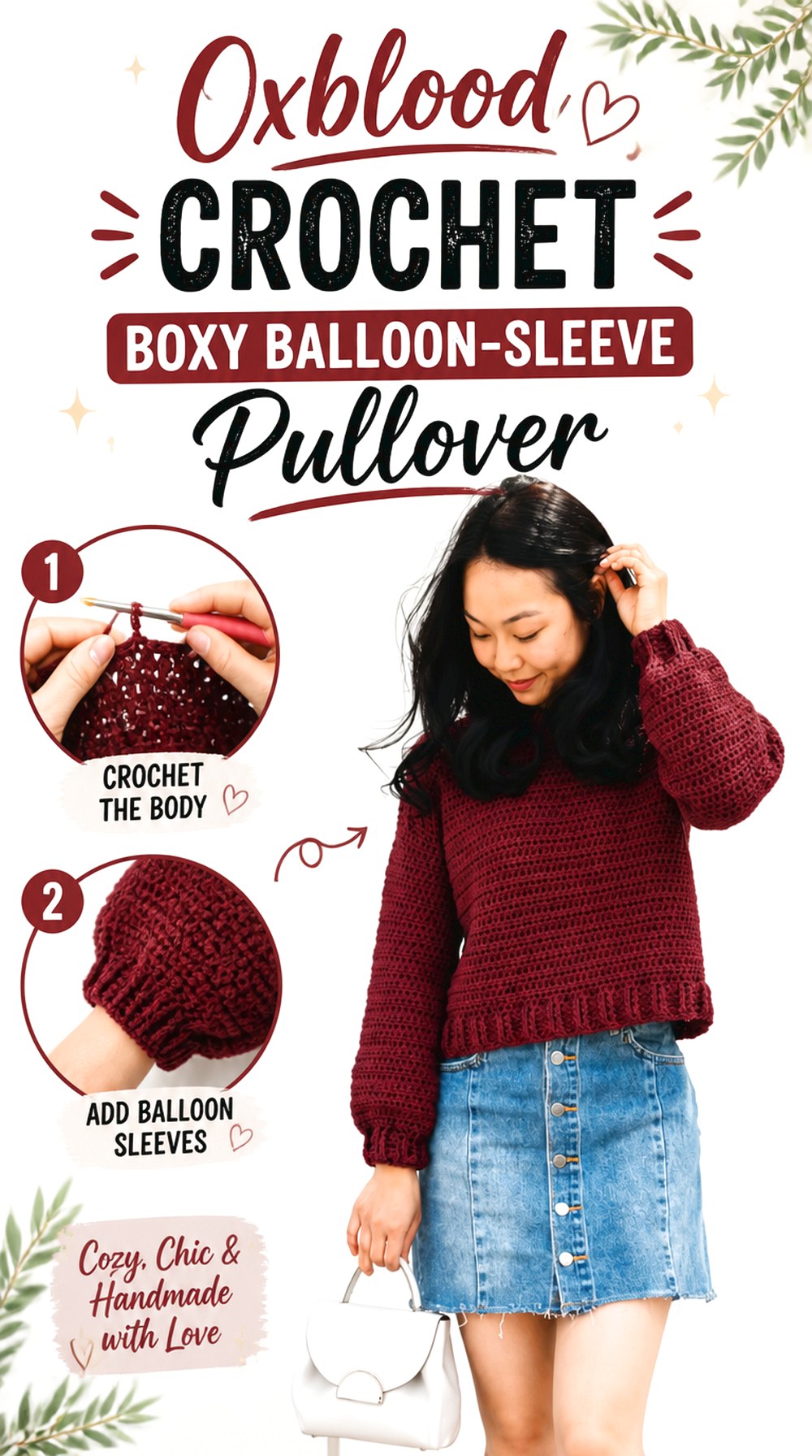
For a larger uninterrupted field of oxblood, a boxy pullover makes more of the color than a small accessory without requiring an open-front fit. The tutorial’s finished sweater combines a roomy body with slightly fuller sleeves, creating a relaxed silhouette that can work as the main color statement in a fall outfit.
The deeper the oxblood shade, the more important stitch definition becomes. View your swatch in normal indoor lighting as well as daylight. If every row visually merges into a flat dark surface, consider whether a slightly clearer or less fuzzy yarn would show the handmade texture better.
Boxy Width Changes How Oxblood Reads
A fitted dark-red sweater emphasizes the body outline; a boxier shape makes the yarn color and fabric texture more prominent. That distinction matters when choosing how much ease you actually want.
Use the tutorial’s sizing information rather than automatically sizing up for an oversized effect. Too much extra width can change the shoulder position and sleeve drop, while too little can remove the relaxed quality that distinguishes this project from the cropped cardigan.
Adjustable Length Gives You a Styling Choice
The source tutorial specifically presents the sweater with adjustable length, which is useful if you are deciding between a cropped fall layer and a longer everyday pullover.
Before extending the body, think about yarn weight as well as styling. Additional length means additional fabric hanging from the shoulders. If your substitute yarn is noticeably heavier, a modest length change can affect drape more than it would in the original sample.
Original Tutorial and Creator Credit
Creator: forthefrills
3. Oxblood Crochet Chunky V Neck Vest
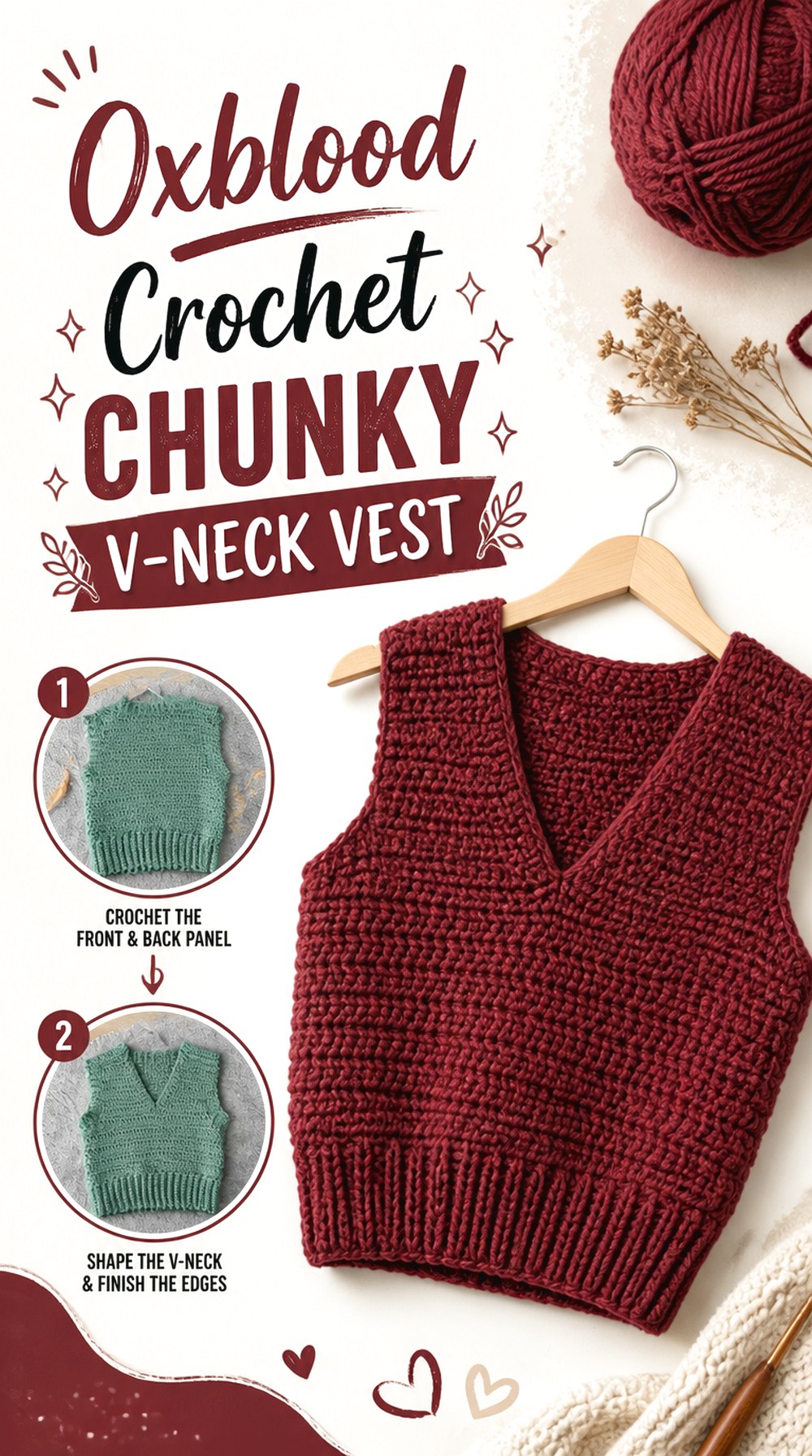
A sleeveless vest is a practical way to use a saturated color while leaving plenty of room for another layer to show. Oxblood can sit over cream, oatmeal, denim blue, charcoal, or a small print without covering the entire outfit. This tutorial uses a chunky vest format with a V-shaped neckline, armhole finishing, and ribbed edges, giving the dark color several strong lines rather than one plain rectangle.
Because the vest is worn over another garment, fit needs to be evaluated with the intended underlayer. A measurement that feels comfortable over a thin tee may be too close over a shirt or lightweight sweater.
V-Neck Depth Affects the Layering Balance
The V shape creates open space around the neck and chest, which is useful when working with such a dark color. A high crew neck would concentrate more oxblood close to the face, while the V reveals the layer underneath.
When checking fit, look at both neckline depth and shoulder width. If you alter one part of a made-to-measure vest, make sure the armholes and shoulder placement still resemble the proportions demonstrated in the tutorial.
Ribbing Frames a Dark Solid Color
Ribbing can keep a monochrome oxblood vest from looking visually flat because the stitch direction creates subtle light-and-shadow changes. This effect is easiest to see when the yarn has clear stitch definition.
Before buying all the yarn, make a ribbed sample with your proposed shade. If the ridges disappear in the darkest areas, compare it with a slightly smoother yarn. The color can remain deep without sacrificing the texture that defines the edges.
Original Tutorial and Creator Credit
Creator: Kenikse Crochet
4. Oxblood Crochet Draped Two Panel Poncho
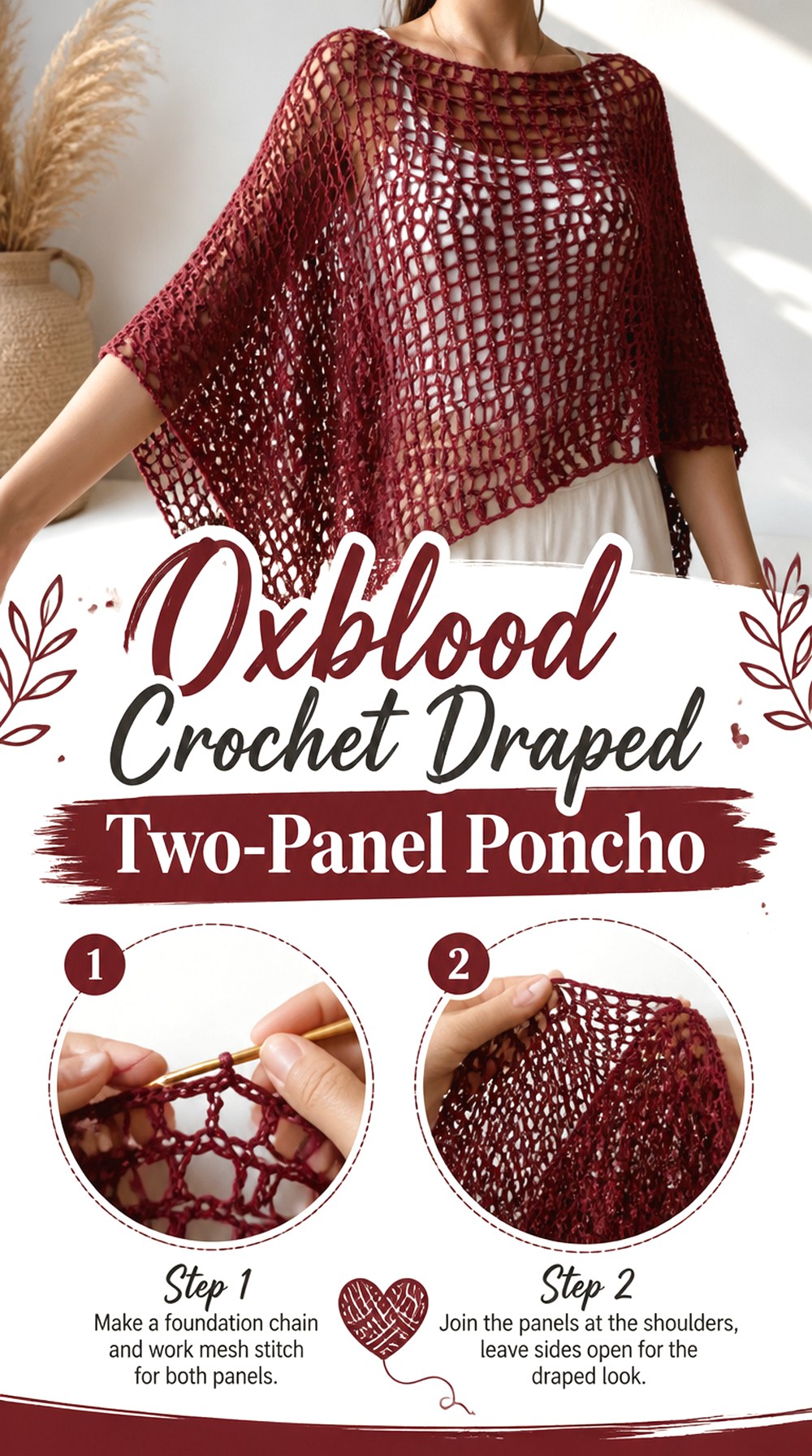
A poncho places oxblood across a broad area but avoids the close sleeve and armhole fit of a sweater. That makes it a different kind of fall layer: the shape is defined more by drape and panel proportion than by fitted garment construction. The source tutorial builds the poncho from two panels, producing a diagonal, flowing silhouette rather than a straight rectangular wrap.
This is a strong option if you want the color to be the main feature. Because the fabric hangs away from the body, however, yarn substitution can noticeably change how sharply or softly the lower edges fall.
Drape Matters More Here Than in the Vest
A vest can tolerate relatively structured fabric because the garment follows the torso. A poncho relies on gravity and movement, so an overly rigid yarn may cause the panels to stand away from the body.
After making a substantial swatch, hold it vertically instead of evaluating it only on a table. That simple check shows whether the oxblood fabric collapses into soft folds or remains board-like. Match the result to the shape you want before making two large panels.
Plan the Neck Opening Around Real Use
The tutorial describes joining two panels while leaving an opening for the neck. The useful decision is how the finished opening works with what you will wear underneath.
A fall poncho may go over a crew-neck tee, collared shirt, or slim sweater. Evaluate the opening with those layers in mind and follow the creator’s construction carefully; altering the joining area can change how the two panels sit across the shoulders.
Original Tutorial and Creator Credit
Creator: Lorena
5. Oxblood Crochet Bordered Wrap Shawl
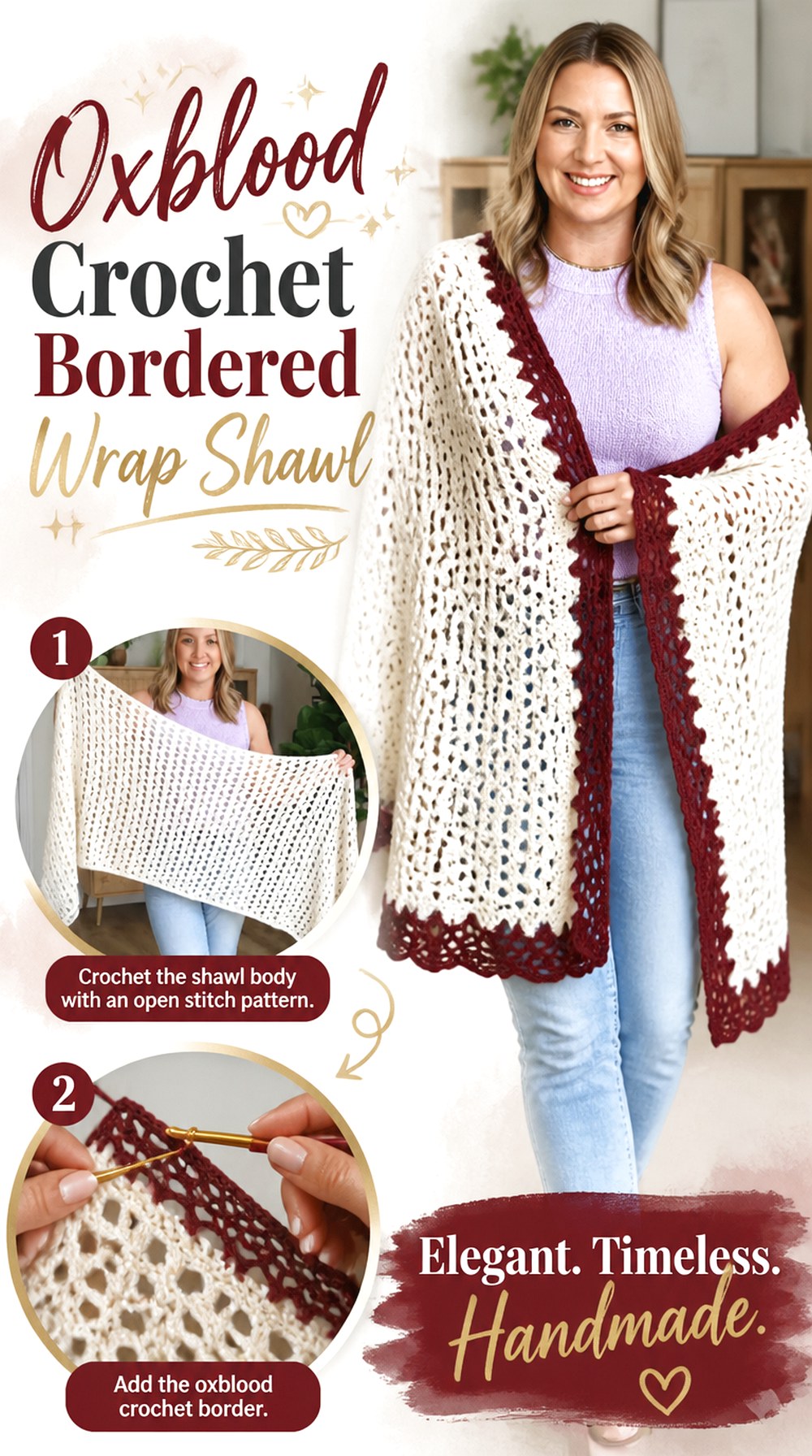
An oxblood shawl is less structured than a cardigan or vest, which makes it useful when you want the color without committing to garment sizing. The finished wrap can sit over a neutral sweater, coat, or dress, and the border gives the piece a defined edge rather than letting a large dark-red surface end abruptly.
This project also gives you more freedom to think about softness and movement. A shawl spends a lot of time directly against the neck, shoulders, and arms, so fiber feel can matter as much as visual appearance. Match the tutorial’s yarn characteristics closely when substituting.
The Border Can Prevent a Monochrome Wrap From Looking Flat
A border changes the direction and rhythm of the stitches near the edge, which can be particularly valuable in a one-color oxblood version. Even without adding a second color, the change in texture can frame the shawl.
Before committing to contrast trim, look at the finished tutorial and decide whether you want the border to remain subtle. A same-color border gives a quieter result; contrast will draw attention to the outline and may make the project feel less purely oxblood.
Think About Contact With the Neck
Deep color is only useful if the shawl is comfortable enough to wear. A yarn that feels acceptable in the hand can be less pleasant against the neck for extended periods.
Rub the swatch lightly against the side of your neck before buying additional yarn. That is not a durability test, but it can reveal whether the fiber feel suits this use. Also check the yarn label for care instructions before making a large wearable.
Original Tutorial and Creator Credit
Creator: Bella Coco
6. Oxblood Crochet Convertible Kerchief Scarf
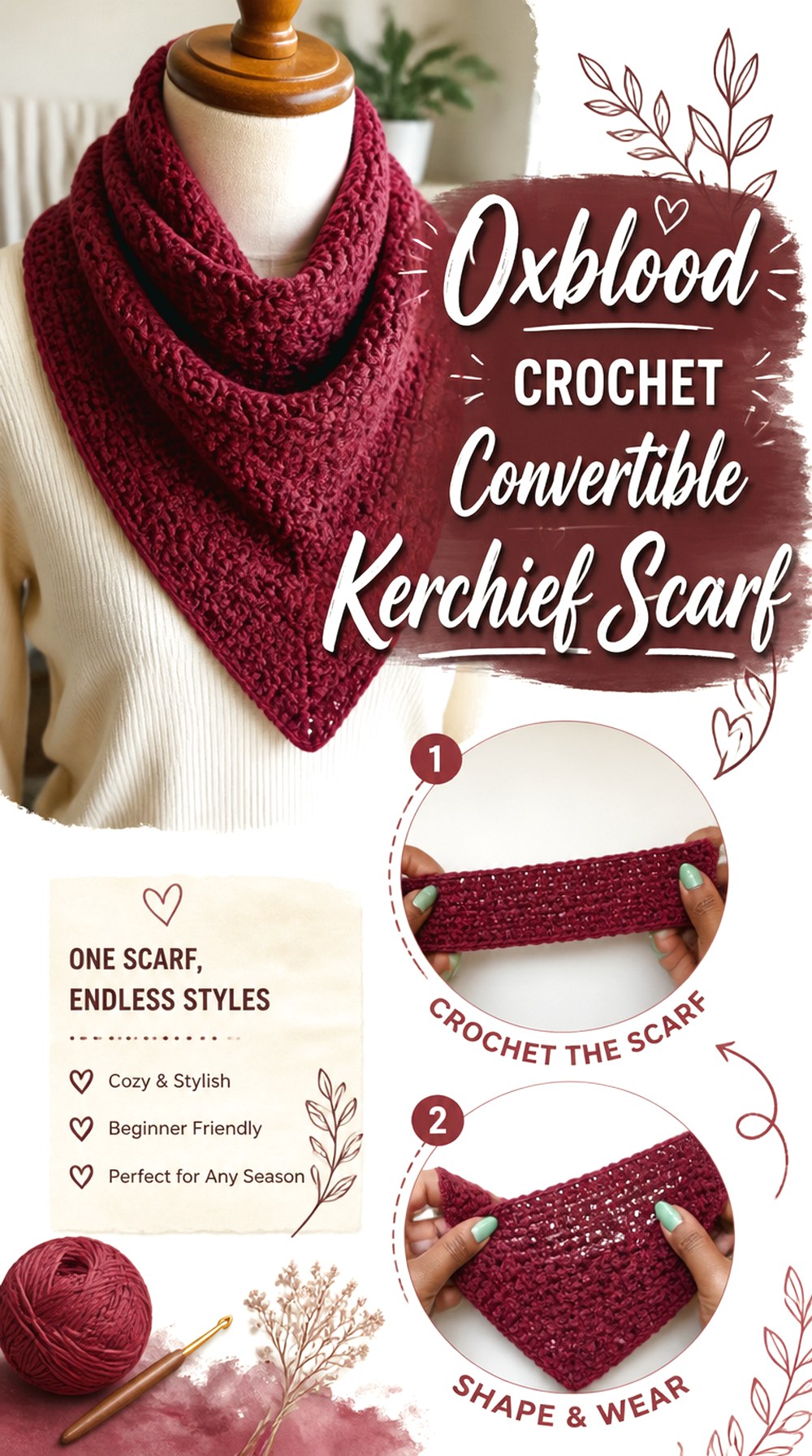
This tutorial gives one basic concept several wearing scales, from a smaller kerchief to a scarf or shawl. That makes it one of the most flexible oxblood ideas in the collection. If a full oxblood wrap feels too dominant, the kerchief version uses the same color closer to the neckline in a much smaller visual area.
Scale also changes function. A compact piece behaves more like an outfit accent, while the larger versions provide more coverage. Decide which role you want before choosing yarn quantity or making color plans.
Pick the Scale Before You Pick the Yarn Effect
A heavily variegated yarn can look busy in a small kerchief but spread out more gradually in a larger shawl. A solid oxblood does the opposite: it creates a strong uninterrupted accent even at the smallest size.
The source presents kerchief, scarf, and shawl variations, so compare all three finished proportions before committing. Your preferred scale should guide whether you want oxblood alone or paired with a quieter border or accent.
Small Neck Pieces Make Color Matching Easier
A kerchief does not need to match every garment in a fall wardrobe. Because it occupies a small area, it can repeat oxblood from shoes, a bag, lipstick, or another accessory without dominating the outfit.
Before adding fringe or decorative finishing of your own, check how the piece sits when tied. Extra weight at the tips can change the way a small scarf hangs, particularly if the base fabric is lightweight.
Original Tutorial and Creator Credit
Creator: TL Yarn Crafts
7. Oxblood Crochet Shell Stitch Infinity Cowl
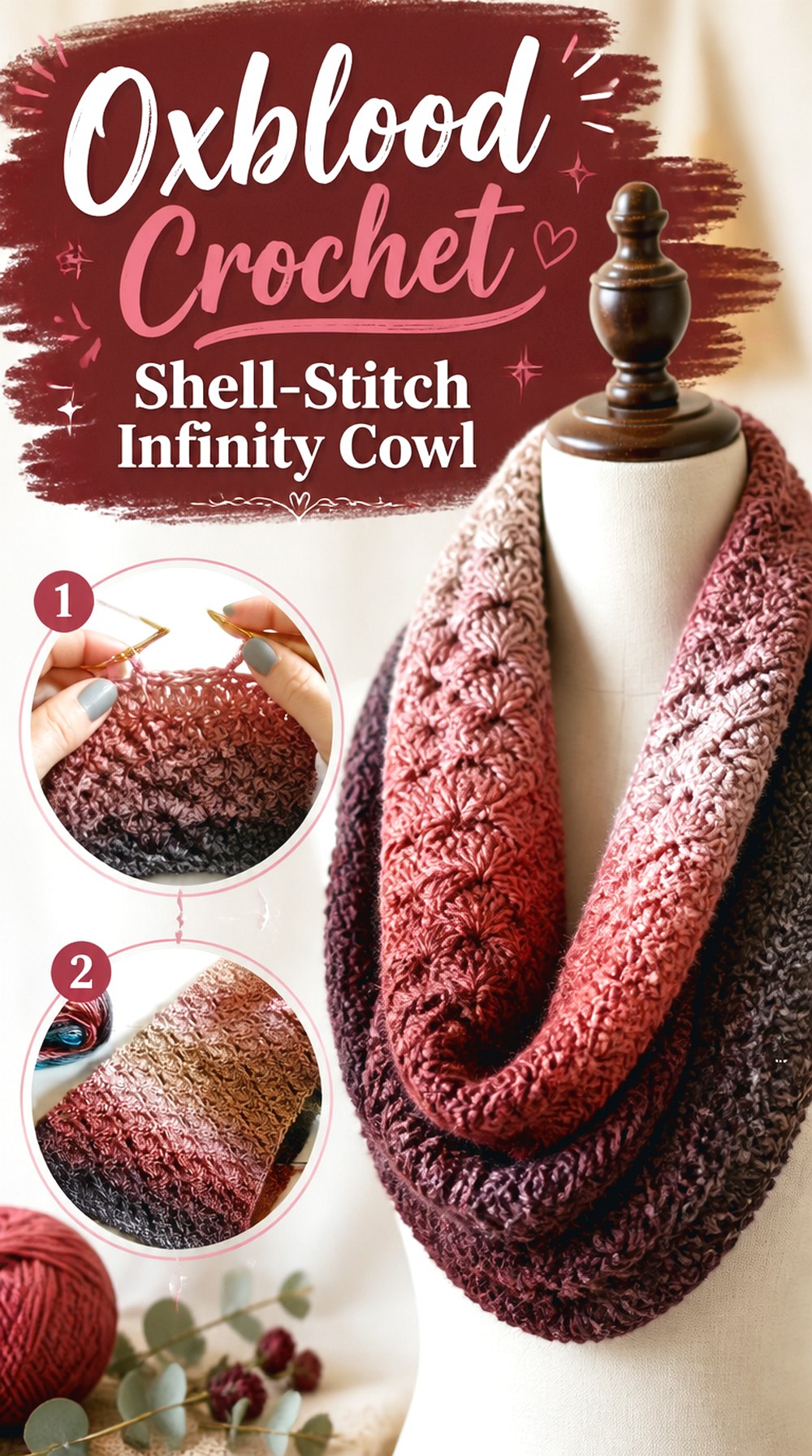
An infinity cowl concentrates both color and texture around the neckline. The source design uses a fantail shell stitch, so the finished surface has more visual movement than the ribbed beanie or plain wearable panels elsewhere in this list. In oxblood, the shell pattern can create subtle highlights where the stitches catch daylight.
Because an infinity cowl forms a continuous loop, circumference and fabric flexibility matter together. A stiff version may not settle naturally when doubled or arranged around the neck, while overly loose fabric can lose the clear shell definition.
Shell Texture Needs Enough Light to Show
Very dark oxblood yarn can make intricate shell sections difficult to distinguish in indoor lighting. A slight sheen or smooth ply may reveal more of the stitch architecture than a fuzzy yarn with the same color value.
Make a small shell swatch and photograph it in the kind of light where you expect to wear the cowl. If the texture disappears completely, consider a clearer yarn before investing in the full project.
Test the Fabric in a Loop, Not Just Flat
A cowl is rarely viewed as a flat rectangle. Once fabric curves and overlaps, the inside and outside surfaces interact, and thick yarn can create more bulk than expected.
After you have enough fabric to judge, gently curve the work into a loop without stretching it. Look at whether the shells retain their definition and whether the thickness suits the amount of layering you want around your neck.
Original Tutorial and Creator Credit
Creator: Hooked by Robin
8. Oxblood Crochet Structured Bucket Hat
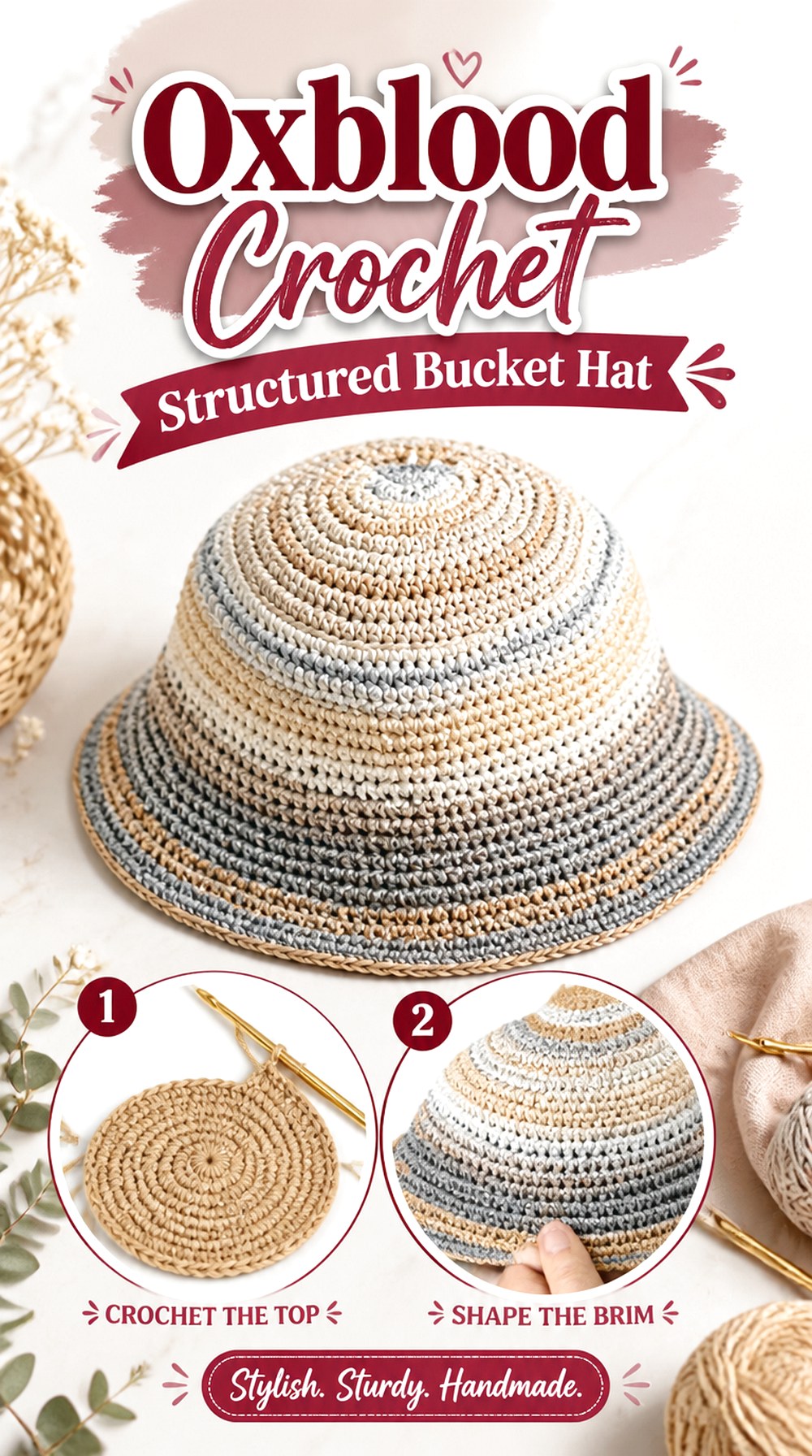
A bucket hat gives oxblood a completely different silhouette from the beanie. Instead of stretch and a gathered crown, this style depends on a defined crown, side band, and brim. The source tutorial also discusses different brim possibilities, so the finished attitude can shift from relatively compact to more pronounced.
Dark red can look especially strong in a structured shape, but the yarn still needs to cooperate. Too much softness can make a brim collapse, while a very rigid substitution may feel uncomfortable around the head.
Brim Shape Changes the Whole Project
The brim is not a minor finishing detail on a bucket hat. A narrow, firm brim keeps the silhouette compact; a wider or softer brim draws more attention and can cast more shadow over the face.
Watch the tutorial’s brim discussion before deciding on your oxblood yarn. If you want a crisp result, pay particular attention to how the original fabric behaves rather than choosing yarn only for softness.
Check Circumference Before the Brim
Once the brim is added, correcting the main hat circumference becomes much less convenient. Use the tutorial’s measurement guidance and check the side band fit at the point the creator recommends.
If your oxblood yarn differs from the original materials, this checkpoint becomes more important. A small gauge difference repeated around the entire hat can produce a noticeably different fit even when the project initially appears close.
Original Tutorial and Creator Credit
Creator: Brunaticality
9. Oxblood Crochet Drawstring Balaclava Hood
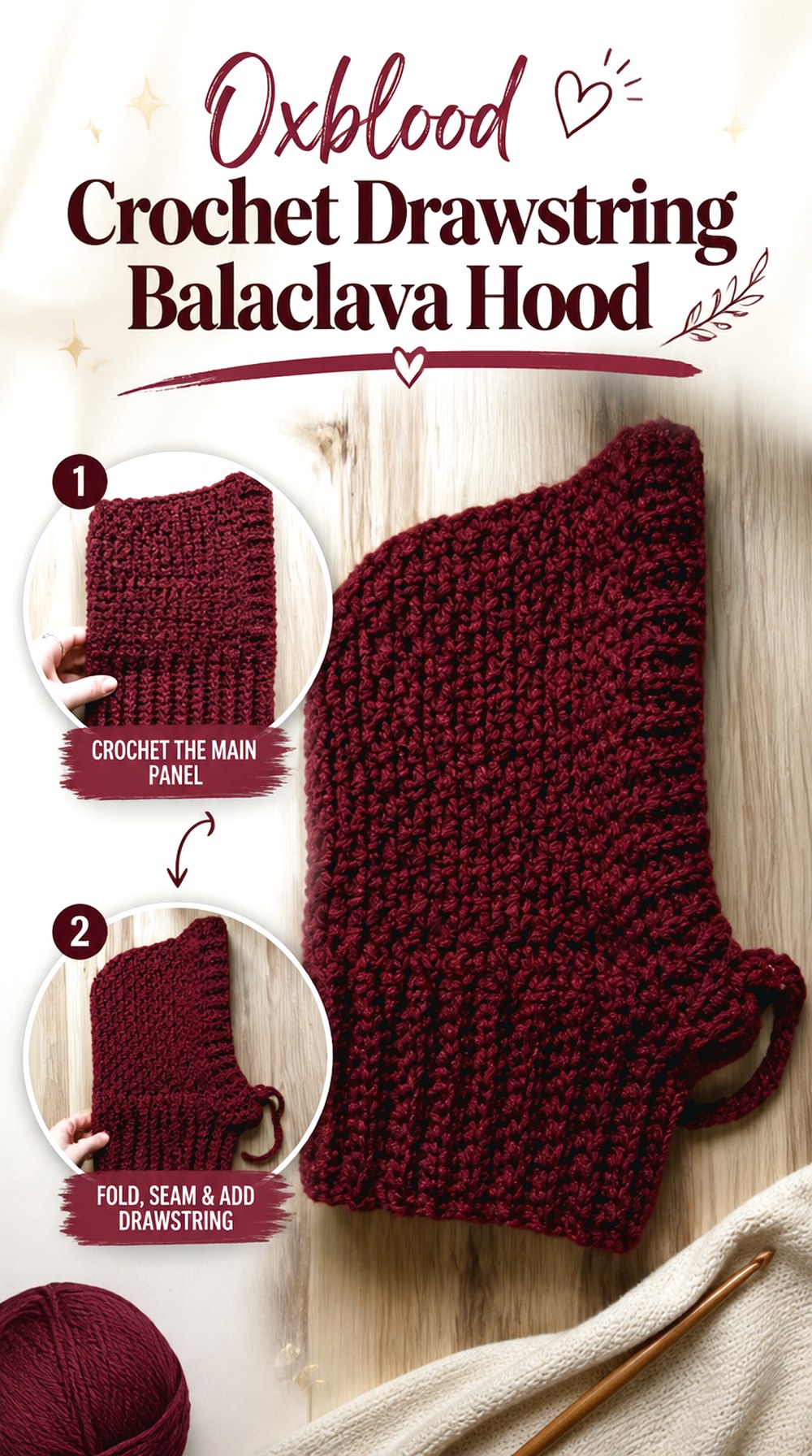
A balaclava uses oxblood across the head and neckline while leaving the face open, creating a much stronger color statement than a standard hat. The source design is made to measure and includes ribbing around the lower edge and face opening plus a drawstring feature.
Fit matters at several points rather than only around the head. The hood needs to work vertically from crown to neck as well as horizontally around the face. A yarn substitution that changes stretch can therefore affect several areas at once.
Face Ribbing Needs to Sit Comfortably
The opening is a focal point, particularly in a dark red hood, so uneven or overly tight ribbing will be easy to notice. More importantly, it needs to sit comfortably without forcing the fabric into the face.
Follow the made-to-measure checkpoints shown by the creator instead of borrowing measurements from another hood. If your yarn is less elastic, test the ribbing against the intended fit before completing the full edging.
Treat the Drawstring as a Functional Detail
A drawstring changes how closely the hood can sit around the face, but it also introduces a hanging cord. Keep its use appropriate to the wearer and situation, and do not assume a fashion accessory with a cord is suitable for every age or activity.
For an adult fashion hood, evaluate the cord length and placement while wearing the finished piece. Use the creator’s construction for the exact finishing method.
Original Tutorial and Creator Credit
Creator: Natalie
10. Oxblood Crochet Fingerless Hand Warmers
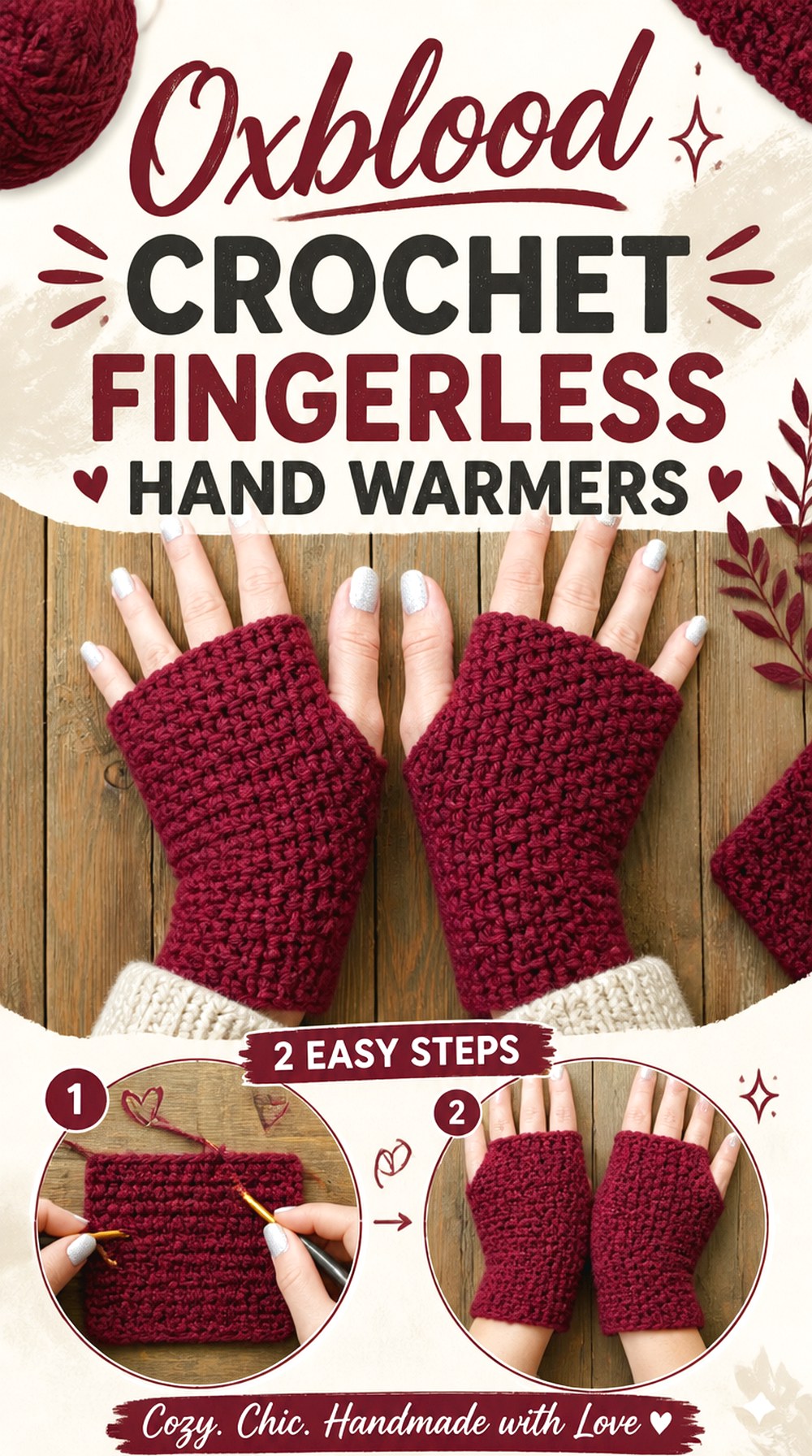
Fingerless mitts are a useful smaller project when you want oxblood close to the hands without making full gloves. They leave the fingers free while adding a dark fall accent around the wrist and palm. This format is also less visually heavy than matching long sleeves, so it can work with neutral outerwear or a lighter sweater.
The tutorial demonstrates a straightforward fingerless glove form. Because hands move constantly, comfort around the palm, thumb area, and wrist matters more than achieving a perfectly rigid shape.
Wrist Fit Should Be Secure Without Feeling Restrictive
A cuff that is too loose can slide toward the hand, while an overly tight cuff may be uncomfortable during normal movement. Evaluate your oxblood fabric while flexing the wrist rather than judging it only with the hand held still.
If you change fiber, pay attention to stretch recovery. Follow the tutorial’s sizing approach and use your own hand as the final fit checkpoint before completing both pieces.
Make the Second Mitt Match the First
Pairs reveal differences more easily than single accessories. Small changes in tension can make one mitt longer, narrower, or less flexible even when the same instructions were followed.
Before starting the second piece, note the hook, yarn, and any fit adjustment you made to the first. Compare them periodically rather than waiting until both are finished. Matching is particularly noticeable when both mitts are worked in one deep solid color.
Original Tutorial and Creator Credit
Creator: naztazia
11. Oxblood Crochet Ribbed Leg Warmers
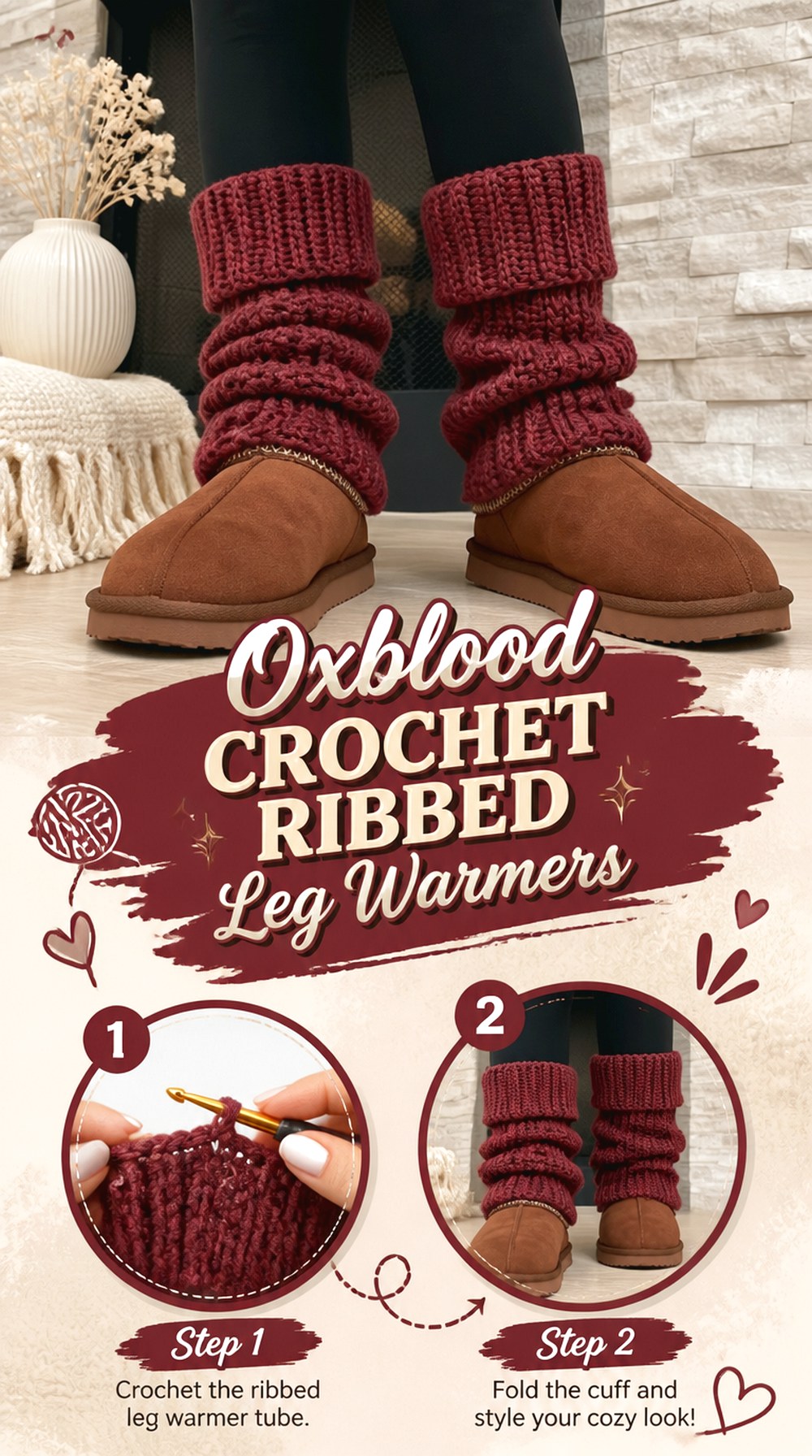
Leg warmers put the color lower in the outfit, which makes oxblood easier to combine with black, brown, denim, or neutral clothing. They also offer a different type of wearable fit because the fabric needs to accommodate the calf while staying in place near the ankle or lower leg.
The source tutorial demonstrates a fall-oriented leg warmer project in worsted-weight yarn. Rather than copying a clothing size, focus on the creator’s construction and compare the piece with the actual leg it is intended to fit.
Calf Fit and Ankle Fit Are Different Decisions
A straight tube may fit the widest part of the calf yet feel loose lower down. Conversely, a narrow tube that looks neat at the ankle can become uncomfortable higher up.
Check the shape at several points while following the tutorial. If you alter dimensions for your own fit, keep both leg warmers consistent and avoid changing so aggressively that the intended stitch pattern becomes distorted.
Oxblood Works Well as a Repeated Outfit Accent
Because leg warmers sit away from the face, they can carry a very deep brown-red even if the same shade feels too strong in a sweater. They can also visually connect to a bag, beanie, or scarf without requiring a perfectly matching set.
If styling with boots, test the finished thickness with the footwear you plan to use. Added crochet bulk can change how a boot shaft feels or closes.
Original Tutorial and Creator Credit
Creator: ElyseCrochets 💌
12. Oxblood Crochet Cozy House Slippers
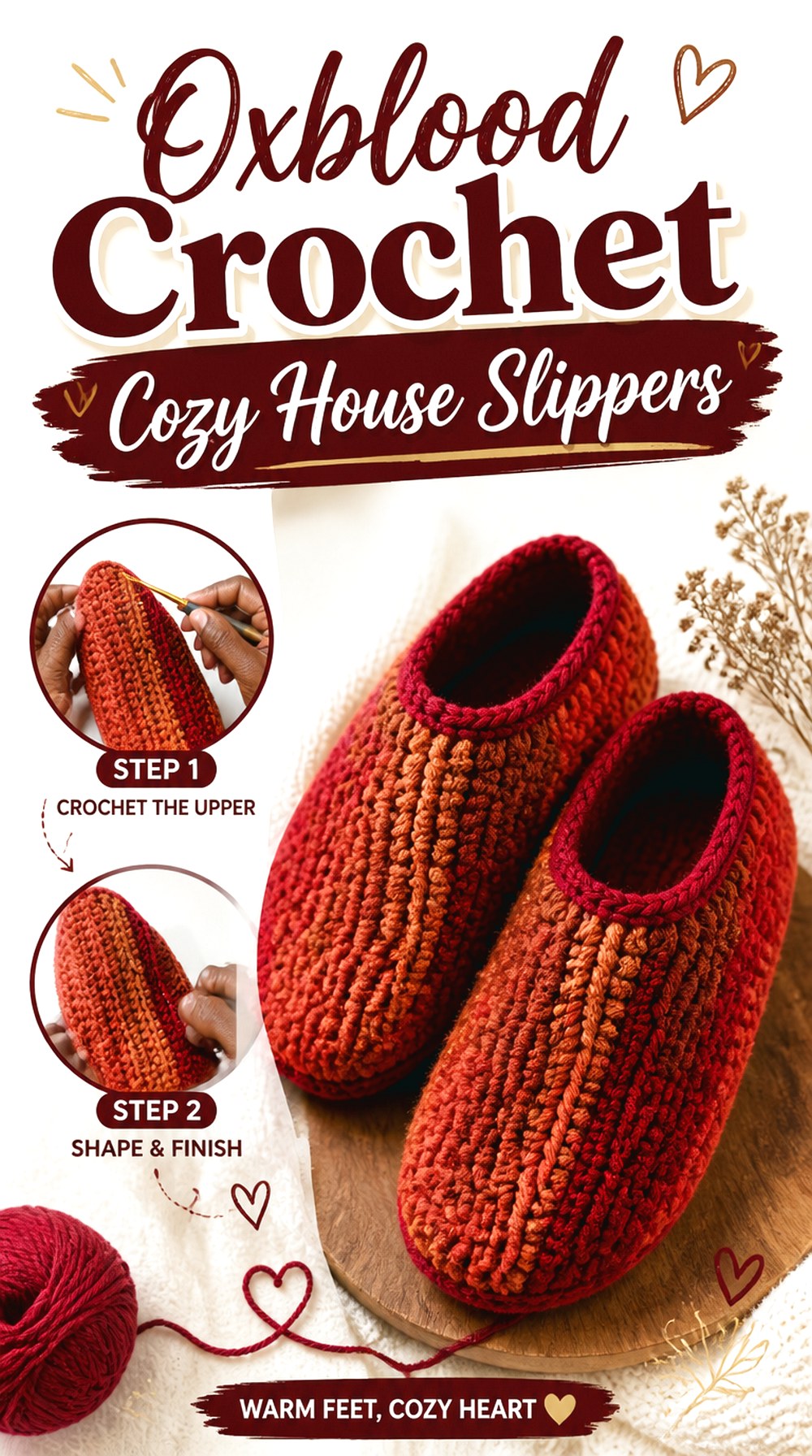
Crochet slippers bring oxblood into a project that is mostly seen at home, making them a good option if you like the color but do not want another visible wardrobe accessory. The finished shape also demands different planning from hats or mitts because foot length, width, toe shaping, and sole behavior all affect comfort.
The source tutorial demonstrates a complete pair of cozy slippers and includes sizing guidance. Follow that tutorial for construction instead of assuming standard shoe sizing will translate directly to your gauge.
Fit Both Length and Width
Two feet with the same shoe size can still differ in width and instep shape. When the tutorial provides try-on or sizing checkpoints, use them rather than relying only on a final number.
If you substitute yarn, make one slipper far enough to evaluate the fit before duplicating it. A thicker yarn may reduce interior space, while a stretchier fabric may loosen more with wear.
Consider Floor Traction Separately
Crocheted yarn alone should not automatically be treated as slip-resistant. Smooth hard floors can create a different risk than carpet.
If traction matters in your home, investigate an appropriate non-slip finishing method that is compatible with the yarn and intended wearer. Do not make safety claims from the look or thickness of the crochet fabric alone, and follow any product instructions for added sole materials.
Original Tutorial and Creator Credit
Creator: Dress it up Debra
13. Oxblood Crochet Granny Square Crossbody Bag
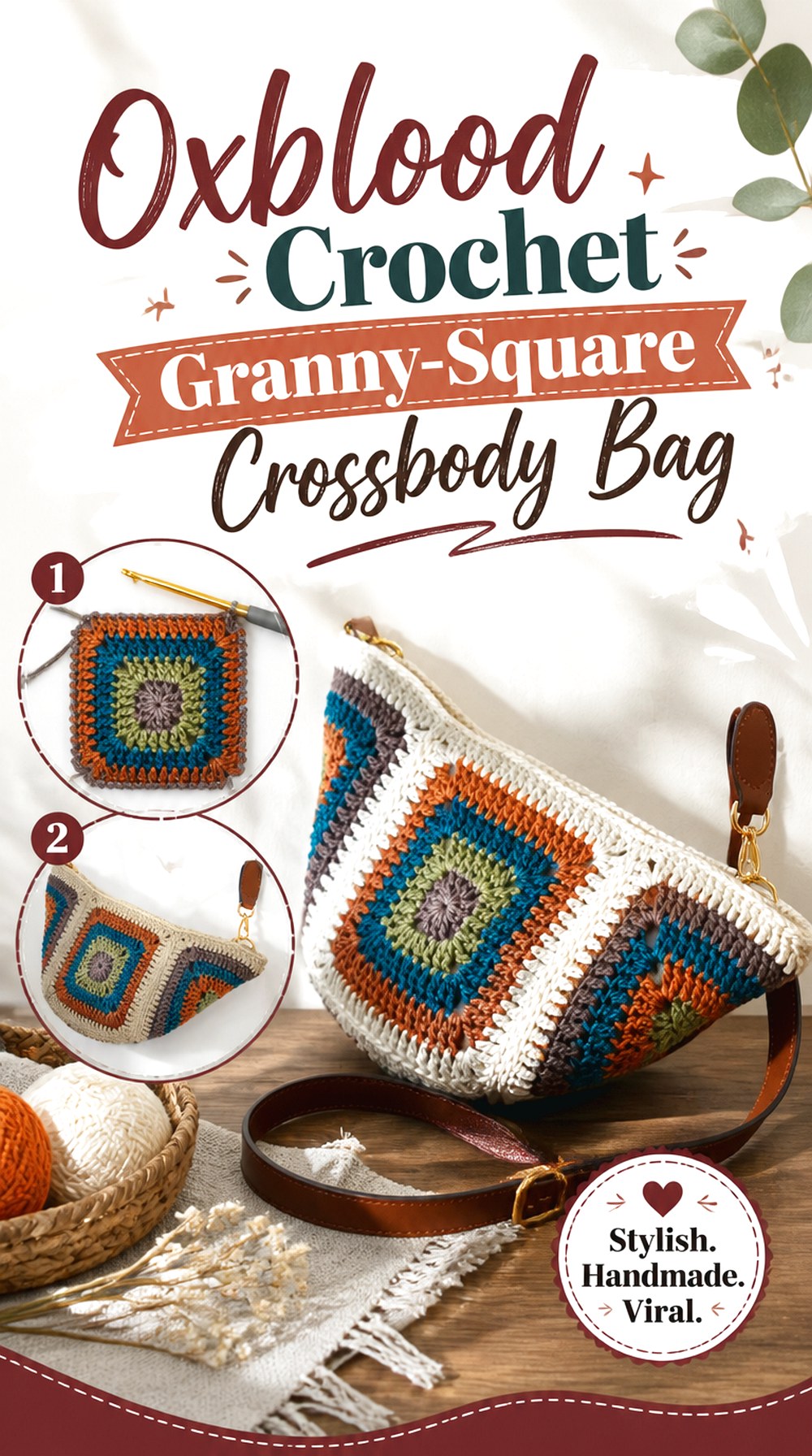
A granny-square crossbody breaks oxblood into motifs rather than using it as a continuous bag fabric. The source project incorporates granny squares along with bag finishing elements such as lining materials and hardware, giving it a more constructed feel than the open tote.
That difference matters for everyday use. The bag hangs from a long strap, so strap length, lining, closure, and the orientation of the joined squares all affect how the finished piece behaves against the body.
Decide Whether Oxblood Is the Background or the Accent
If every granny-square round is dark, the motifs can visually blend together. Using oxblood for the outer rounds or joining areas can create a stronger frame, while placing it in motif centers produces smaller repeated bursts.
Lay several finished or paper-mocked squares together before joining. The useful checkpoint is how the whole panel reads, not whether one individual square looks attractive by itself.
Lining Changes More Than Appearance
The source materials include fabric and zipper components, which indicates a more finished bag construction than an open unlined granny pouch.
If you adapt the colors or dimensions, keep the crochet and lining plans coordinated. The lining should suit the final bag shape rather than a theoretical size. Finish or block the crochet pieces as appropriate before cutting irreversible fabric components.
Original Tutorial and Creator Credit
Creator: CJ Design
14. Oxblood Crochet Bow Accent Mug Cozy
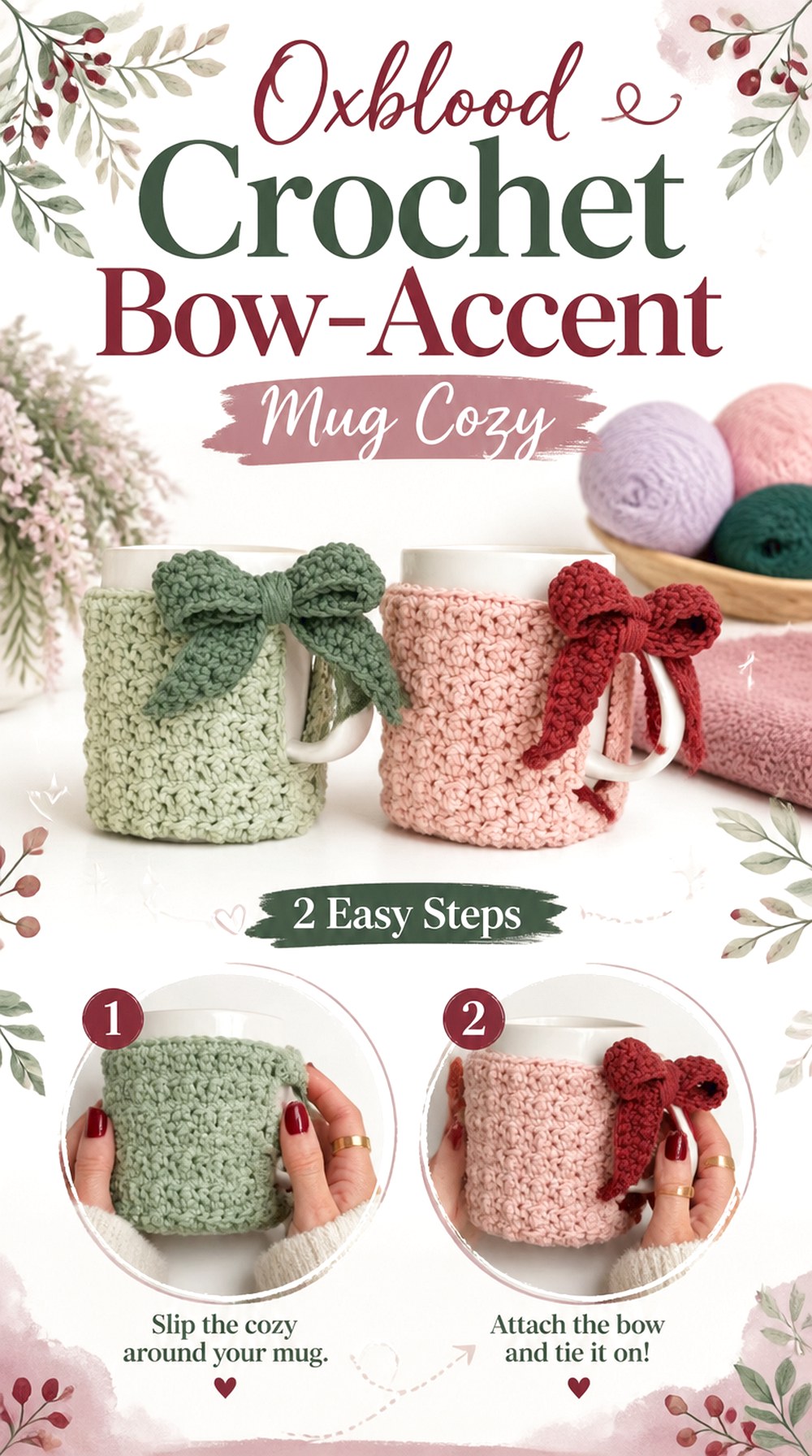
A mug cozy uses very little visible space, which makes it ideal for a deep oxblood yarn that might feel too intense in a large home project. The source design includes a built-in strap and a crochet bow, giving the finished piece a gift-ready look rather than functioning as a plain rectangular sleeve.
Fit is specific to the mug. Even a well-made cozy can sit poorly if the mug diameter, handle position, or body shape differs from the source sample, so check compatibility before planning several as gifts.
Fit the Actual Mug Before Finishing
Mugs vary more than they appear to at first glance. Straight-sided, tapered, oversized, and unusually handled mugs can all affect where a cozy sits.
If you are making this for a specific mug, keep that mug nearby during the project and follow the creator’s template and fit guidance. Do not assume a finished cozy intended for one mug shape will transfer cleanly to every other style.
Use the Bow as a Controlled Accent
A same-color oxblood bow creates texture without introducing another shade. A contrasting bow will become the visual focus and can push the piece toward a more decorative gift style.
Keep embellishments away from areas that interfere with holding the mug securely. Also remember that a yarn cozy does not make a mug heat-proof; continue handling hot drinks according to the mug manufacturer’s normal guidance.
Original Tutorial and Creator Credit
Creator: MJ’s Off The Hook Designs
15. Oxblood Crochet Color Block Pillow Cover
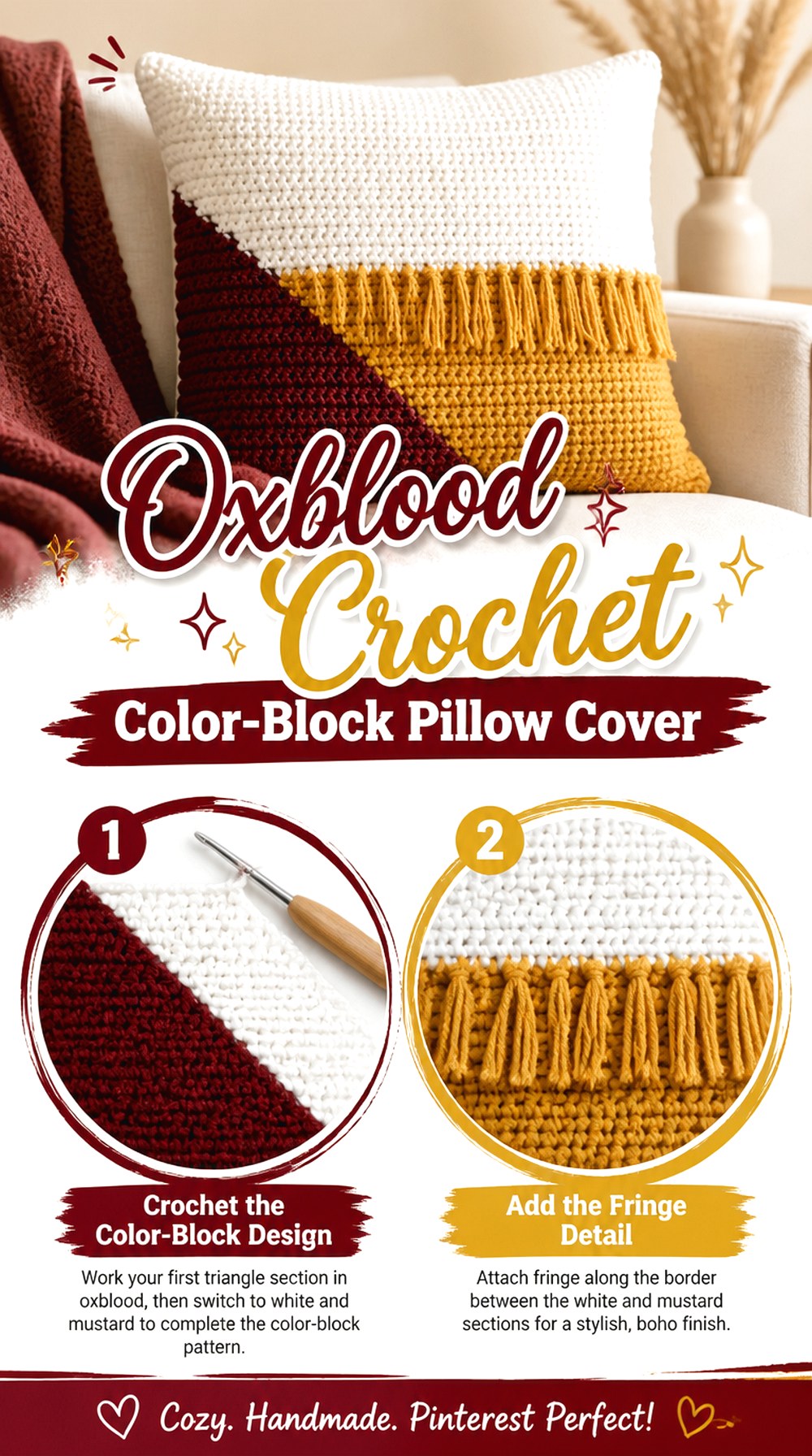
A pillow is one of the easiest places to make oxblood part of a room without committing to a full blanket. This source project uses color blocks and fringe, so oxblood can occupy one major section while lighter or earthier companion shades keep the cushion from becoming visually heavy.
Unlike a purely decorative motif, a pillow cover has to correspond with an insert. The most useful planning step is therefore the finished cover size and fabric stretch, not the number of rows copied from a different yarn.
Measure Against the Insert, Not Another Pillow
Two inserts labeled similarly can still have different fullness. A very soft insert compresses easily, while a firm one needs more room.
If you change yarn or hook, compare the crochet panel directly with the insert as you work. The goal is a cover that fills out neatly without distorting the stitches. Follow the tutorial for its construction while using the physical insert as the fit checkpoint.
Let Oxblood Take One Major Block
Using oxblood in every color section removes the color-block effect. Instead, decide which area should carry the darkest visual weight and select supporting colors with enough contrast.
Fringe adds another opportunity for balance. Matching oxblood fringe can extend the dark section visually, while neutral fringe can soften the transition. Keep the finished room and surrounding upholstery in mind rather than choosing each yarn independently.
Original Tutorial and Creator Credit
Creator: Crazy Cool Crochet
16. Oxblood Crochet Modern Granny Throw
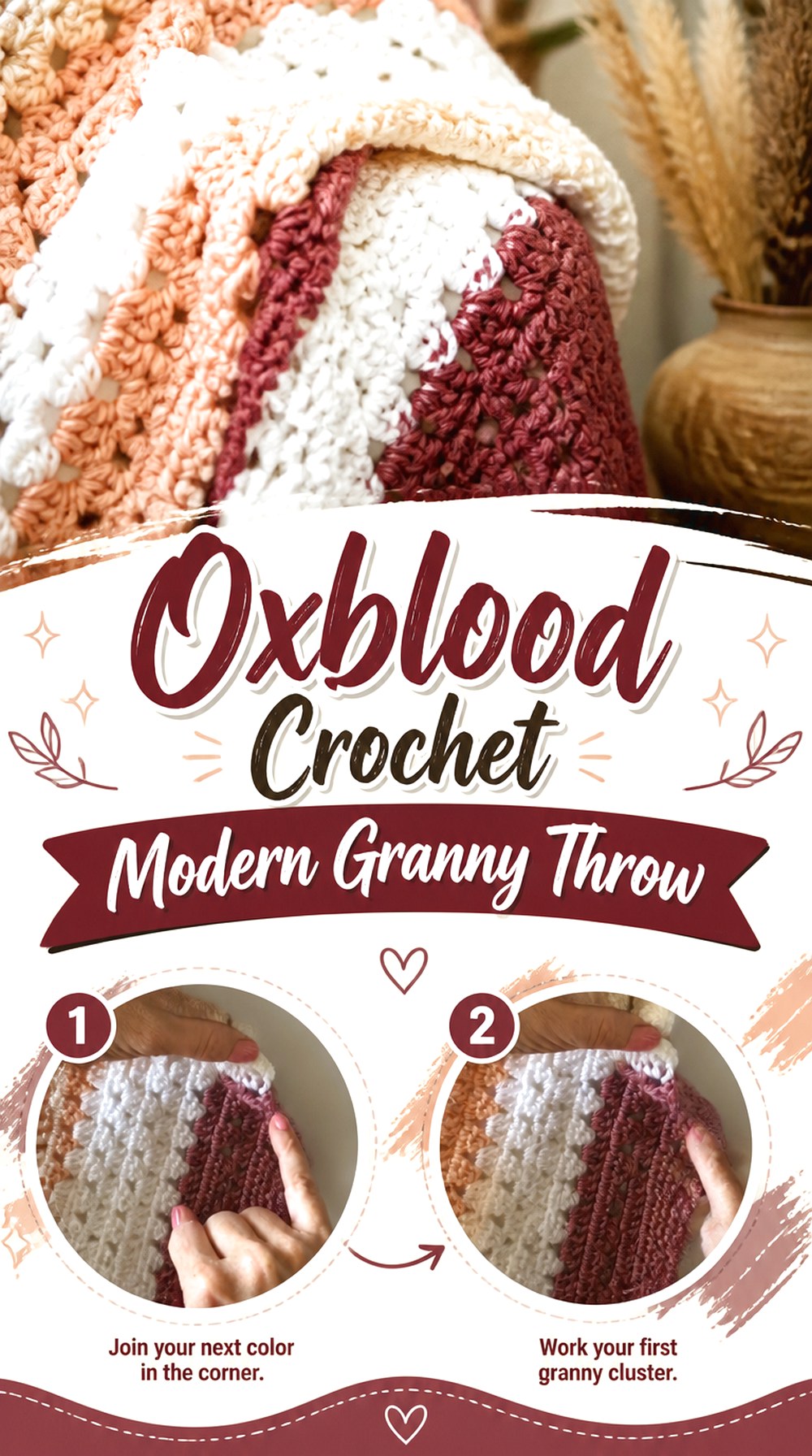
A modern granny blanket turns oxblood into a large-scale home color, but the cluster construction prevents the surface from looking completely solid. The source tutorial demonstrates the modern granny structure and a decorative pom-pom-style border.
For a fall throw, oxblood can be the dominant stripe or one member of a restrained palette. Because blankets magnify every yarn decision, make a sample first. A small difference in weight or drape that seems minor in a swatch becomes much more noticeable across a broad finished piece.
Use Oxblood to Set the Stripe Rhythm
If oxblood appears at regular intervals, it can visually organize several softer colors. If it dominates every other row or section, the blanket will feel darker overall.
Sketch a simple stripe sequence or arrange the yarn balls in order before starting. This is not pattern reconstruction; it is color planning. The tutorial should still guide the exact stitch work and border.
Blanket Weight Builds Gradually
A comfortable swatch does not reveal the full weight of a completed throw. Dense yarn, larger dimensions, and decorative borders all add material.
As the blanket grows, periodically lift and drape the work rather than evaluating it only spread on a surface. If your substitution is producing substantially more weight than expected, reassess the planned final scale before adding many more rows.
Original Tutorial and Creator Credit
Creator: Daisy Farm Crafts
17. Oxblood Crochet Chunky Storage Basket
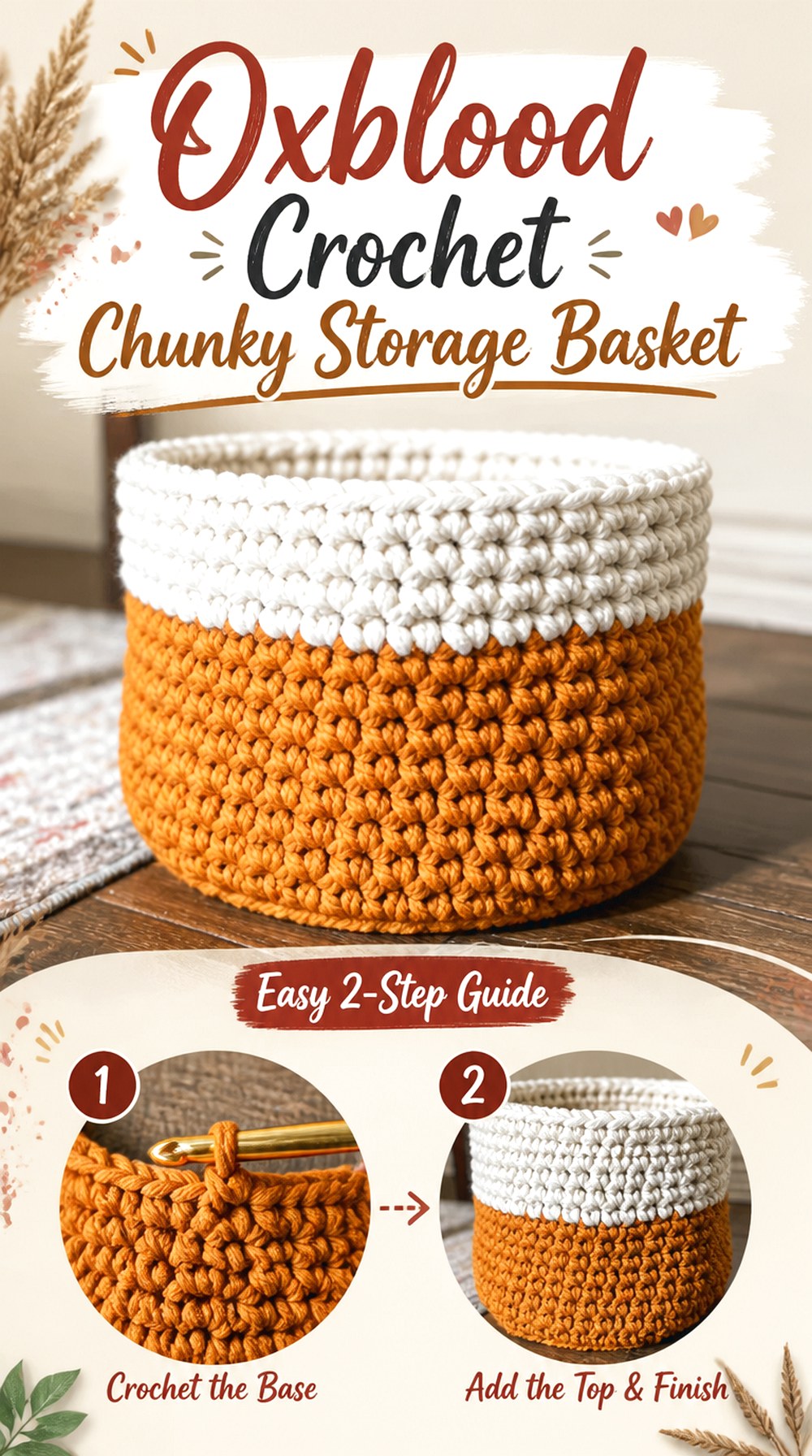
A storage basket gives oxblood a practical home-decor role. The source design uses chunky fabric worked from a circular base into upright sides, so its success depends less on drape and more on maintaining structure.
This is where a soft garment yarn may be the wrong substitution even if the color is perfect. A basket needs enough body to sit in the intended shape when it is not completely full. Compare fiber, yarn weight, and hook relationship with the original tutorial before choosing your oxblood option.
Base Shape Controls the Walls
If the base is not lying as intended, adding tall sides will not automatically correct it. A base that cups or waves can carry that distortion upward.
Follow the creator’s round structure carefully and stop to place the base on a flat surface before beginning the walls. If your substitution behaves differently, resolve the gauge or tension issue first rather than continuing into a larger basket.
Dark Baskets Benefit From Visible Texture
Oxblood can make a large storage basket look almost brown in low light. The source’s thick stitches and color-block possibilities can help keep the handmade texture visible.
If you want a solid oxblood basket, position it where some side light can catch the stitches. For a two-color variation, a lighter upper section or rim can make the opening easier to see and reduce the visual weight on a shelf.
Original Tutorial and Creator Credit
Creator: Life and Yarn
18. Oxblood Crochet Mini Pumpkin Bowl Fillers
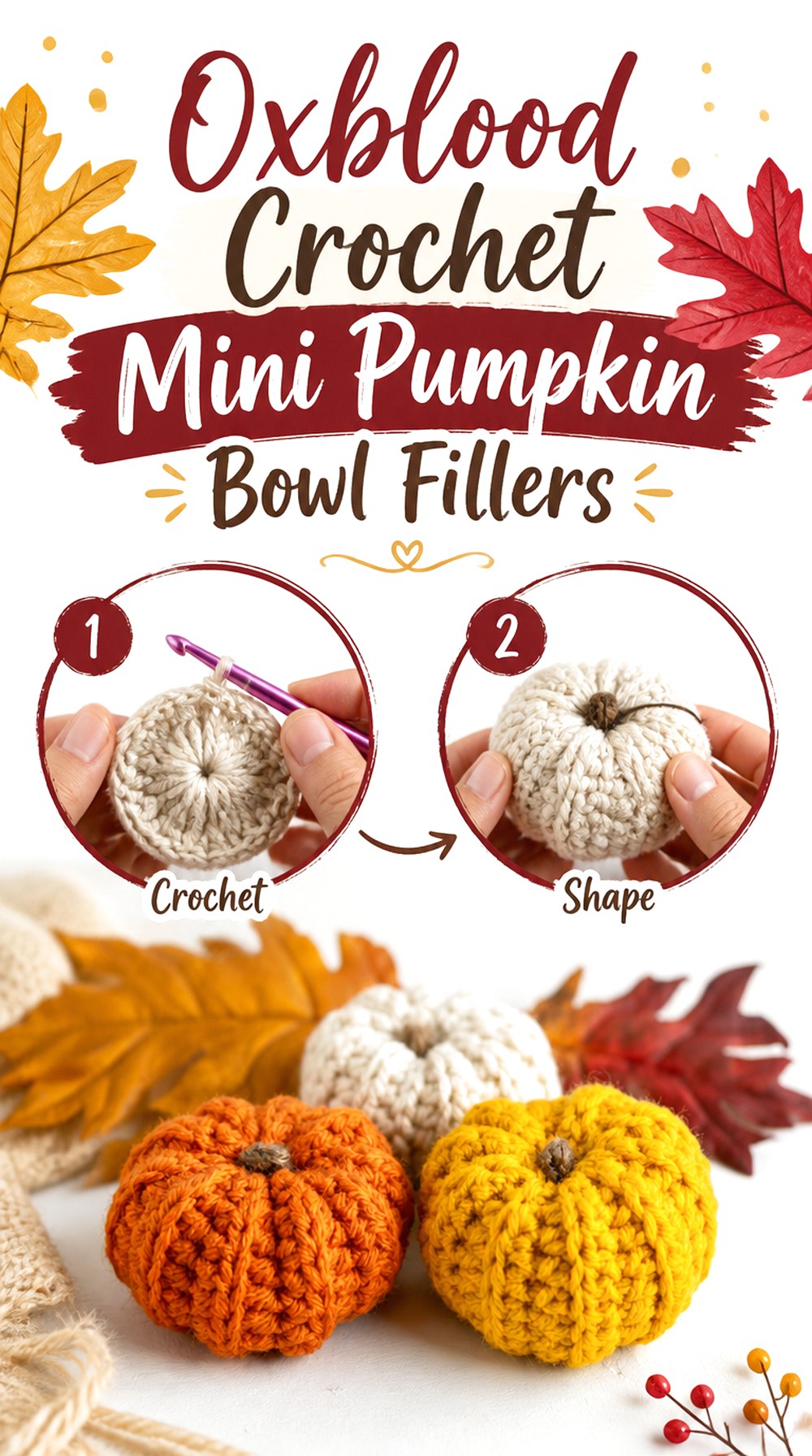
Mini pumpkins let oxblood work as an autumn color without becoming another wearable. A dark red pumpkin can sit alongside cream, rust, olive, mustard, brown, or natural textures in a tray or bowl, giving seasonal décor a less predictable palette than bright orange alone.
The source tutorial specifically demonstrates a mini crochet pumpkin and suggests different decorating uses. Because the project is dimensional, even stuffing and shaping affect the final appearance more than perfectly flat gauge does.
Oxblood Makes the Pumpkin Less Literal
Orange immediately reads as a traditional pumpkin color. Oxblood still feels autumnal, but the darker shade can blend more easily with everyday room décor.
If making a group, vary color before varying construction. Several pumpkins from the same tutorial can look cohesive while still feeling collected when the yarn shades change. Avoid forcing major shape changes without checking how the creator forms the finished object.
Shape Before You Commit to a Whole Set
The first pumpkin is the useful sample. Check how your chosen yarn handles the curves and whether the dark shade shows enough stitch definition.
If the fabric gaps noticeably when stuffed, revisit the tutorial’s material and tension guidance before making several more. For display pieces, keep them away from open flames and other direct heat sources even if they are part of a candle-centered fall arrangement.
Original Tutorial and Creator Credit
Creator: Winding Road Crochet
19. Oxblood Crochet Autumn Leaf Accents
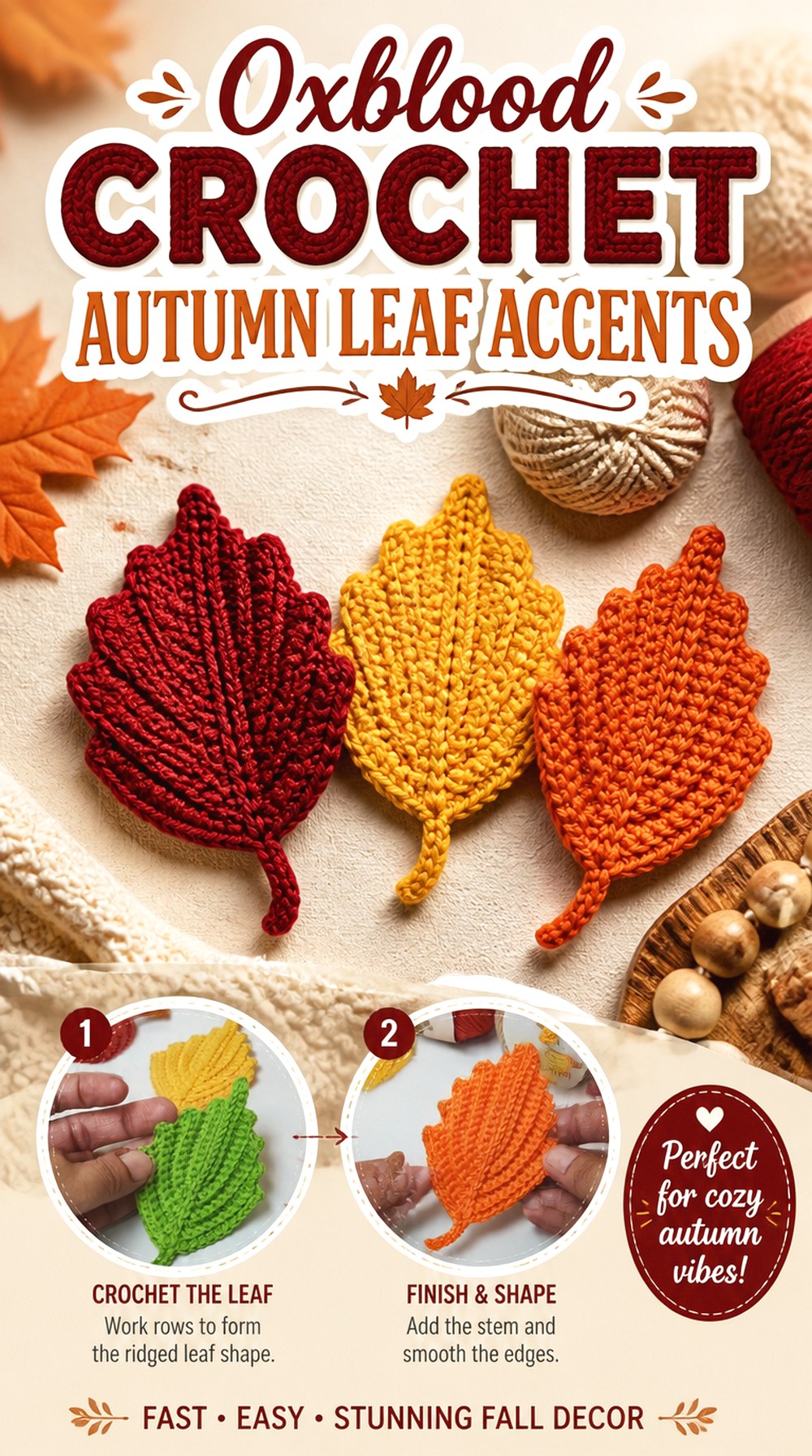
A single crochet leaf is smaller and flatter than the pumpkin, making it easier to repeat across table settings, gift wrapping, garlands, wreaths, bags, or other seasonal displays. Oxblood is especially useful here because dark red already fits naturally among changing-leaf colors without requiring the motif itself to be orange.
The source tutorial demonstrates a fall leaf intended for decorative use. Instead of immediately making a large batch, produce one sample first and decide whether the yarn gives you the edge definition and size you want.
Leaf Definition Depends on the Edges
A leaf motif can lose its recognizable silhouette when fuzzy yarn obscures narrow points or when the stitches relax unevenly.
Smooth yarn generally makes it easier to evaluate the shape, but stay within the material range appropriate to the tutorial. After completing one oxblood leaf, place it on the actual background where you plan to use it. A dark leaf may disappear against brown wood or dark fabric even if it looked distinct on a light work surface.
Plan the Motif Placement Before Repeating
For a garland, decide approximately how much space you want between leaves before making dozens. For a wreath or table display, arrange a few sample motifs with the other objects first.
Oxblood has strong visual weight, so equal numbers of every fall color do not always look balanced. It can be more effective as the repeated dark note among lighter leaves than as the only shade.
Original Tutorial and Creator Credit
Creator: Tuba Crochet
20. Oxblood Crochet Everyday Hair Scrunchie
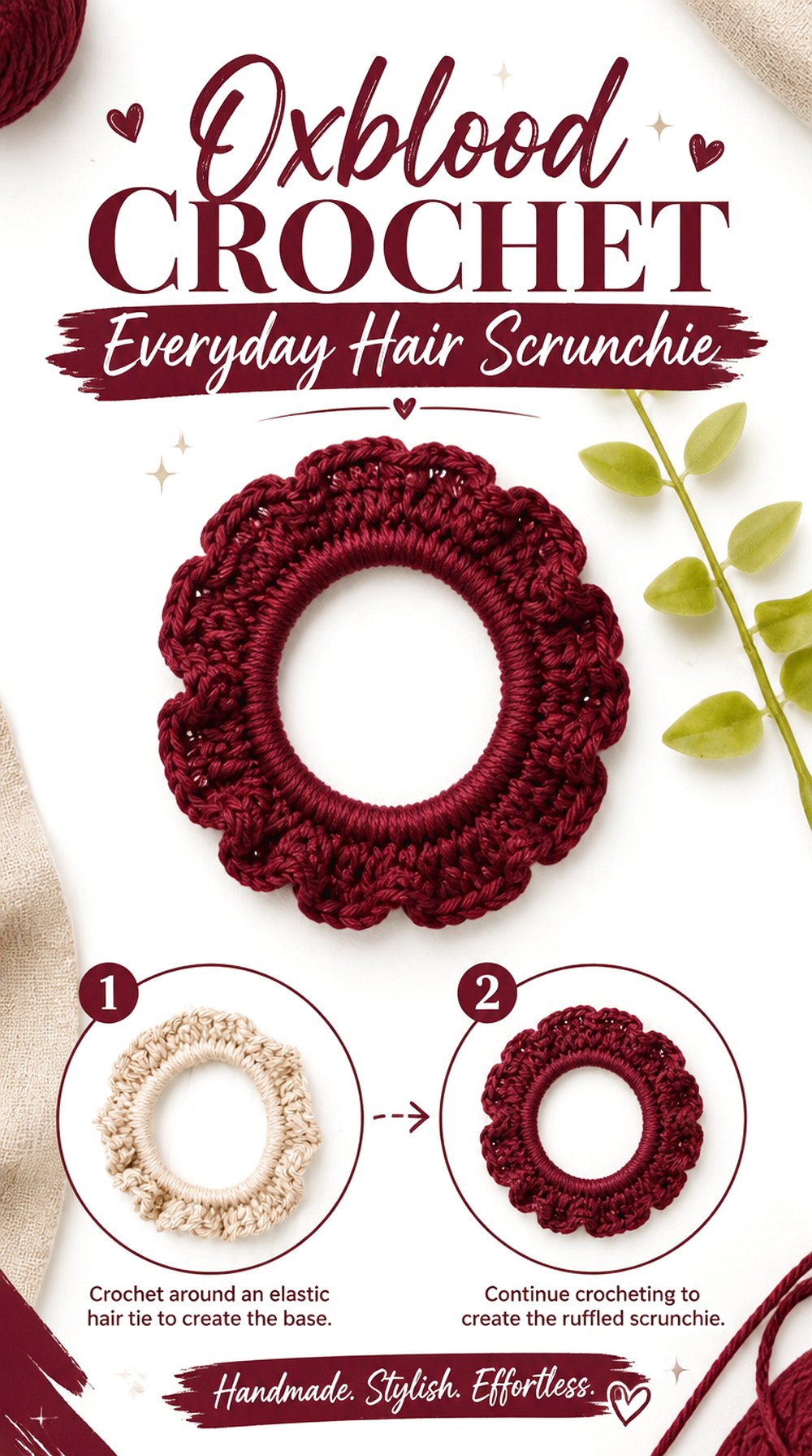
A scrunchie is the smallest wearable color accent in the collection. It gives you a way to use leftover oxblood yarn after a larger project and can repeat the same shade without making an outfit look overly coordinated. The gathered form also creates highlights and shadows that keep a very dark red from appearing completely flat.
The referenced tutorial demonstrates a crochet hair scrunchie built around an elastic. The finished effect depends partly on how much crochet fabric is gathered around that elastic, so the elastic itself is an important component rather than an afterthought.
Match Fullness to the Elastic
A thick elastic with too little crochet fabric can look sparse, while a small elastic covered with excessive fabric can become bulky. Follow the creator’s demonstrated proportions before adapting the project.
If you change yarn weight, make sure the stitches can move around the elastic without creating a stiff ring. The useful checkpoint is how the scrunchie gathers when relaxed and how it behaves when stretched.
Use Leftovers Only When the Yarn Still Suits Hair
Leftover oxblood yarn from a basket or rug-style project is not automatically the best choice for a hair accessory. Very rough, stiff, or highly textured fibers may not interact with hair the way you want.
Choose yarn based on the finished use, then treat stash-busting as a bonus. Also inspect the elastic for wear before covering it; replacing a failed elastic later can require opening the finished crochet.
Original Tutorial and Creator Credit
Creator: Tender Warm Creations
How to Choose Which Oxblood Project to Start First
Choose by how much color you want and how much structure you want to manage. For the strongest wardrobe statement, the cardigan, pullover, poncho, and vest place oxblood across a large area. The shawl, scarf, cowl, beanie, and balaclava keep the color near the face but avoid full garment construction.
For practical accessories, the gingham tote and granny-square crossbody offer very different levels of internal structure and finishing. At home, the blanket provides the largest color field, while the pillow, basket, mug cozy, pumpkins, and leaves let you add oxblood in controlled amounts. If you are still deciding whether you like the shade in crochet, the scrunchie, leaves, mug cozy, or mini pumpkins are sensible small-scale places to begin.
Conclusion
Oxblood works across far more than sweaters and scarves. It can look tailored in a cropped cardigan, graphic in gingham or granny squares, soft in a shawl, structured in a basket, or quietly seasonal in pumpkins and leaves. The most useful choice depends on whether you want the color close to the face, spread across a large garment, carried as an accessory, or repeated through the home.
Before substituting oxblood into any project, compare yarn weight, stitch definition, drape, and structure with the original design rather than choosing by color alone. For exact construction, sizing, materials, and finishing, use the original tutorials credited with each project.
Frequently Asked Questions
Is oxblood the same as burgundy for crochet projects?
Not exactly. The names are often used loosely, but oxblood generally suggests a very deep red with a noticeable brown or dark wine character. Burgundy may lean more purple or wine depending on the yarn brand. Since color names are not standardized across manufacturers, compare the actual skeins or reliable daylight photos instead of assuming two yarns labeled with different dark-red names will match.
What yarn texture shows oxblood crochet stitches most clearly?
A smooth yarn usually reveals ribbing, shells, granny clusters, and raised texture more clearly than a very fuzzy yarn of the same dark value. That does not mean smooth yarn is universally better; the project still needs the correct weight, drape, and structure. Make a swatch and view it in daylight and ordinary indoor lighting before deciding whether the stitch definition is strong enough.
Can I substitute oxblood yarn into any of these YouTube tutorials?
You can change color freely in principle, but changing the actual yarn may affect much more than color. Weight, fiber, twist, elasticity, and gauge can alter dimensions, drape, stretch, and structure. Check the creator’s material and gauge information first. For fitted garments, hats, mitts, slippers, and bags, make the relevant measurement or gauge checks rather than assuming a similarly colored yarn will behave the same way.
Which oxblood crochet ideas use the color without looking too dark?
Projects that break the shade into smaller areas are the easiest options. The gingham tote, granny-square crossbody, color-block pillow, modern granny blanket, leaves, and scrunchie can all combine oxblood with lighter colors or negative visual space. A V-neck vest, open cardigan, or kerchief also leaves other clothing visible, preventing the red from filling the entire silhouette.
How can I combine oxblood with other fall yarn colors?
Start by deciding whether oxblood should be the dominant shade or the darkest accent. Cream, camel, muted olive, dusty rose, brown, charcoal, and soft gold can all create different effects, but actual yarn samples matter more than color names. Place the skeins together in daylight and compare their light-to-dark contrast. For gingham and motif projects, test a small repeat before purchasing large quantities.
Should I use the same oxblood yarn for a matching fall set?
Only if that yarn suits every project technically. A soft draping yarn that works well in a shawl may not provide enough structure for a basket, while a very firm yarn chosen for a tote may feel uncomfortable at the neck. Matching color does not require identical fiber or yarn construction. It is often better to coordinate closely related oxblood shades across project-appropriate yarns than force one yarn into unsuitable uses.