
Temperature blanket crochet projects are such a satisfying way to watch a whole year slowly turn into cozy stripes (or squares!). You choose a handful of colours, assign each to a temperature range, then work a small section for each day or week. By December you’ve got a blanket that literally records your weather and memories. Below are eight different crochet temperature blanket styles: rows, squares, C2C, Tunisian and more. Pick the construction that fits your time, yarn stash, and attention span, then start tracking your temps in yarn.
Crochet Moss Stitch Square Temperature Blanket
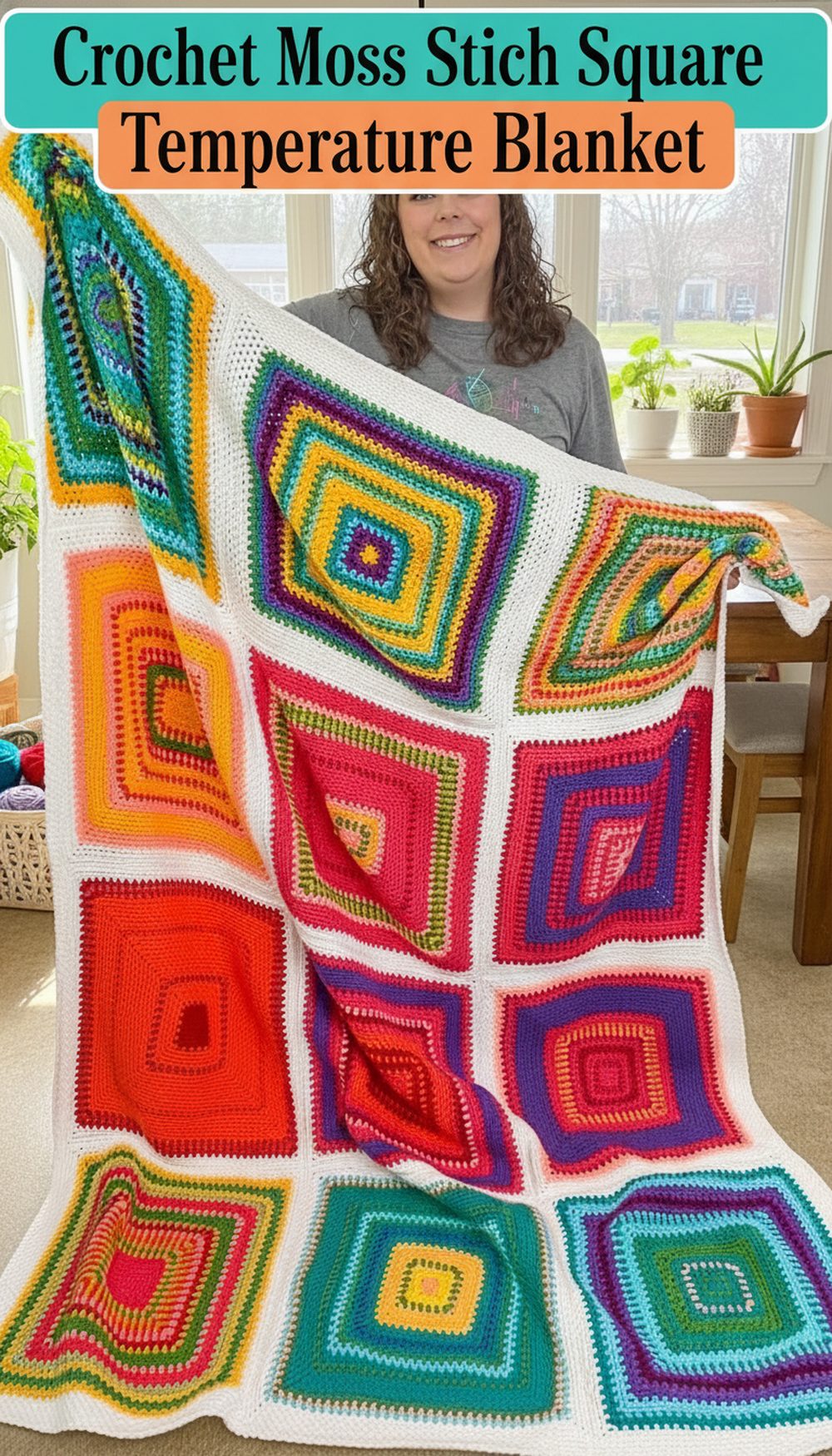
The Crochet Moss Stitch Square Temperature Blanket turns your year into twelve granny-style moss squares, one for each month. Each day’s temperature becomes a short round, then border rows in a neutral colour even out the different month lengths. Worked in Brava Worsted and an H/5.0 mm hook, it finishes around 54″ x 72″ and is easy to join with slip stitches through the back loops only. If daily rows feel overwhelming, this format is much easier to “catch up.” Follow the Okie Girl Bling ’n’ Things Tutorial.
Quick specs: Skill: Confident beginner · Time: Year-long · Construction: 12 joinable squares
Supplies:
- Worsted weight acrylic yarn in 10–12 colours + border shade
- 5.0 mm crochet hook
- Yarn needle for many colour changes
- Scissors
Why it’s great: Short rows per day and modular squares make this temperature project super manageable.
Muted Palette Crochet Temperature Blanket

If rainbow isn’t your vibe, the Muted Palette Crochet Temperature Blanket uses soft neutrals and gentle pastels so it blends with your decor. Burgundy & Blush works moss stitch with aran-weight yarn, chaining 71 and crocheting one row every two days instead of daily, which keeps the length sensible and the project calmer. The palette mixes vanilla cream, spearmint, blush pink, greys, caramel, pomegranate, gold, and parchment. It’s an excellent choice if you want a temperature blanket you’ll happily leave on the sofa. See the Burgundy & Blush Tutorial.
Quick specs: Skill: Beginner · Pace: 1 row per 2 days · Look: Neutral, soft tones
Supplies:
- Aran/worsted weight acrylic yarn in 10 muted shades
- 5.5 mm crochet hook
- Yarn needle
- Scissors
Why it’s great: A subtle, decor-friendly temperature blanket that won’t scream “rainbow” across your living room.
C2C Crochet Temperature Blanket

The C2C Crochet Temperature Blanket grows diagonally from one corner, reaches a wide middle, then decreases back to the final corner—a full year mapped in little pixel blocks. Esther’s pattern uses fine Scheepjes Sugar Rush thread, with about 145 x 220 C2C “pixels” and a finished size around 130 cm x 200 cm, mostly in oranges, reds, and purples thanks to a very warm year. Expect a big time commitment at the center width, but the graphic result is stunning. Follow the It’s All in a Nutshell Tutorial.
Quick specs: Skill: Intermediate · Technique: Corner-to-corner · Size: Large single-bed throw
Supplies:
- Lace or fingering weight cotton yarn in 10–12 shades
- Appropriate C2C crochet hook (often 3.0–3.5 mm)
- Yarn needle
- Blocking tools (optional but helpful)
Why it’s great: Diagonal construction creates a dramatic, temperature-driven gradient that looks like modern pixel art.
Ripple Crochet Temperature Afghan
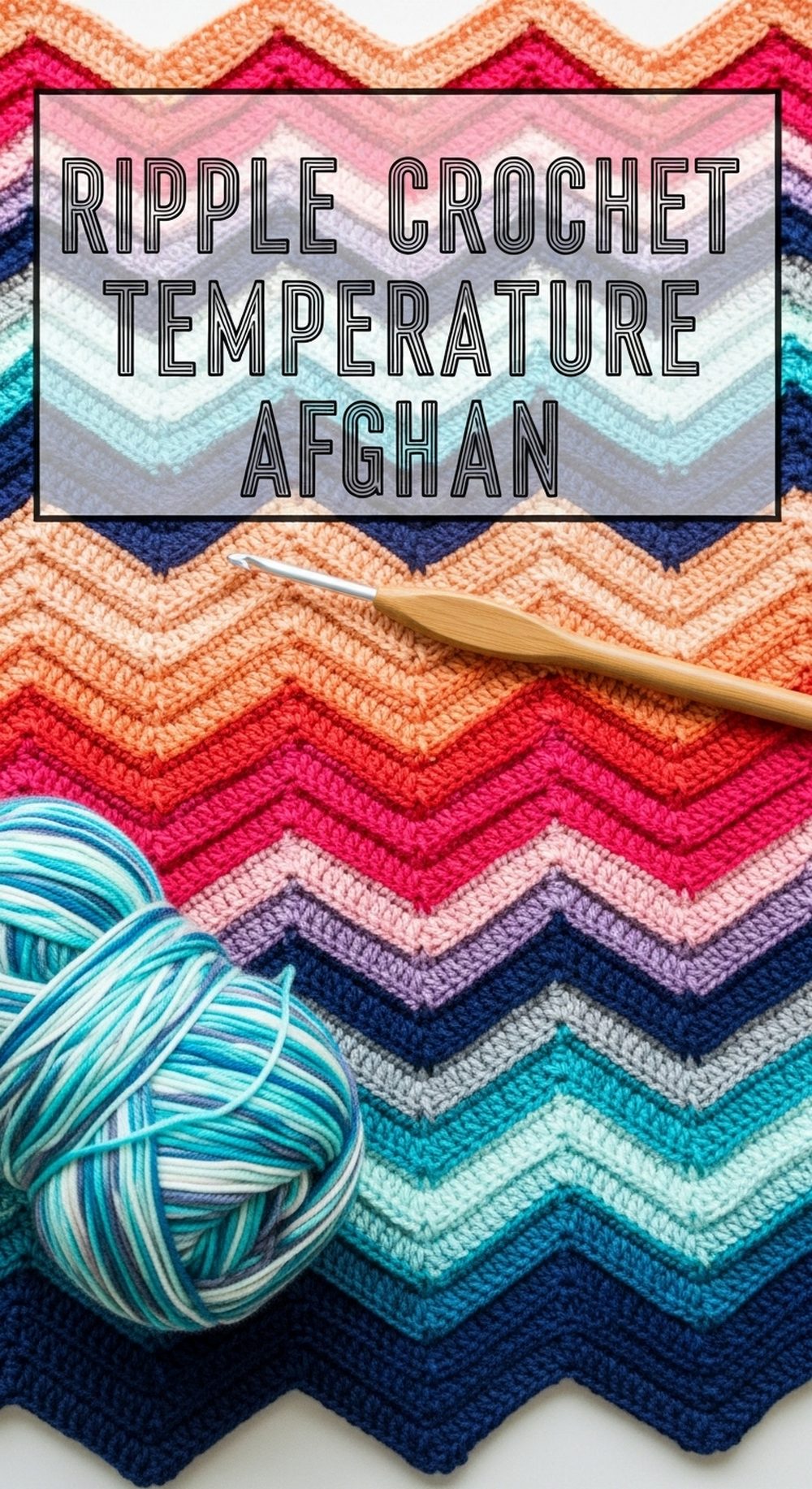
The Ripple Crochet Temperature Afghan uses a custom slip-stitch ripple worked in the back loop, creating a low-profile, drapey texture in DK yarn. CrochetKim’s version records the high temperatures from her birth year instead of the current year, using a 10-colour palette from teal and sage to coral, cherry red, and plum. Estimated size is about 45″ x 72″, with 365 rows of gentle ripples. This is a great option if you prefer a lighter blanket that still feels substantial. Explore the CrochetKim Tutorial.
Quick specs: Skill: Intermediate · Yarn: DK weight · Theme: Historical year temps
Supplies:
- DK acrylic/wool blend yarn (e.g., Stylecraft Batik) in 10 colours
- 5.0 mm crochet hook
- Yarn needle
- Temperature chart or historical data
Why it’s great: The ripple stitch adds movement and interest while staying thin enough for everyday use.
Tunisian Crochet Temperature Blanket Throw
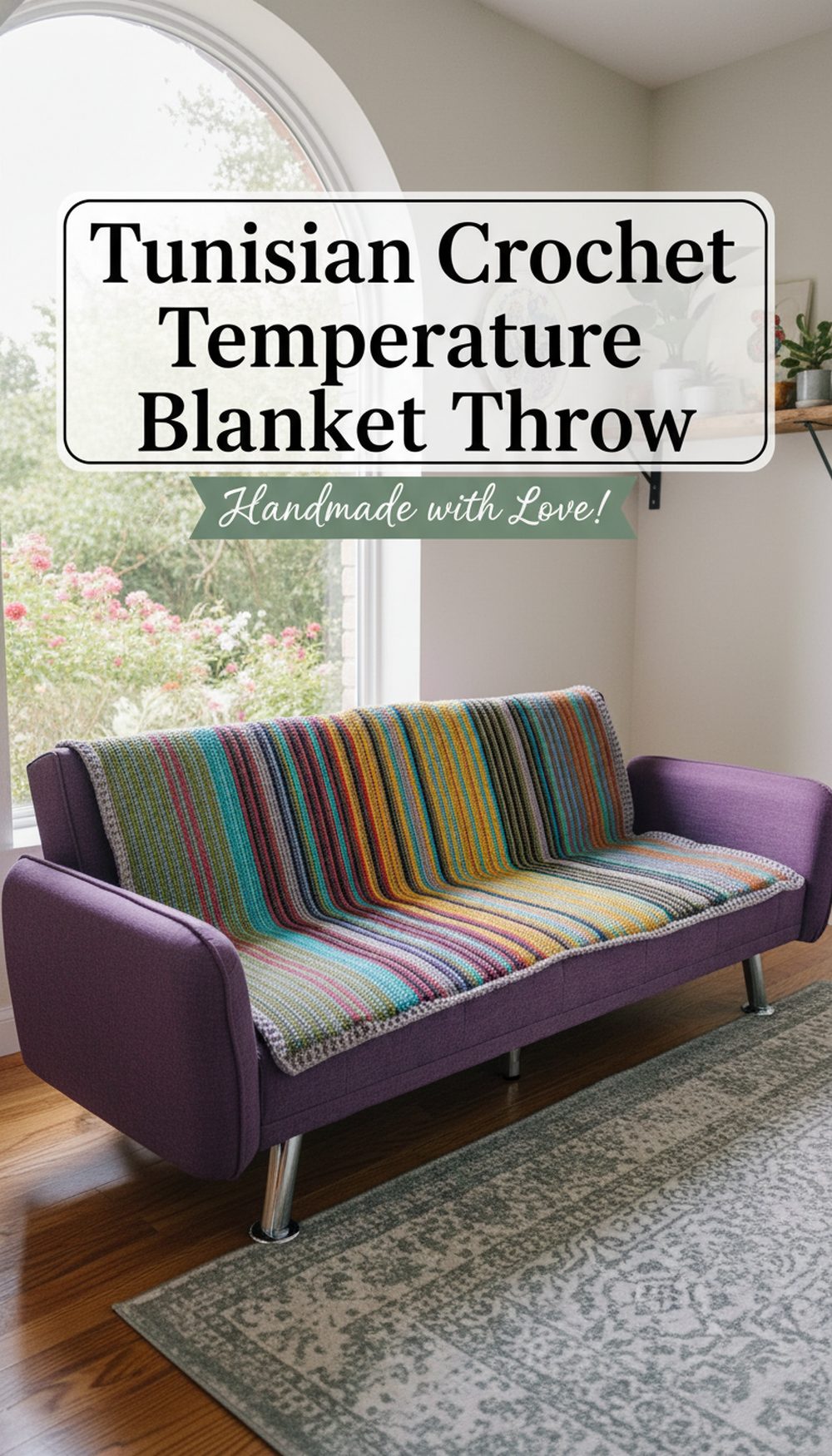
The Tunisian Crochet Temperature Blanket Throw is perfect if you want to try Tunisian without daily pressure. Sam works Tunisian simple stitch in worsted weight yarn, tracking weekly highs and lows in just three rows per week instead of seven. The palette features Knit Picks Brava in Silver, Coral, Avocado, Marina, Mulberry, Caution, and Seraphim, with Seraphim also used as a break colour and border. Finished size is roughly 70″ x 48″, a great one-person throw. Check the Sam Bartley Designs Tutorial.
Quick specs: Skill: Tunisian beginner · Pace: 3 rows/week · Look: Dense, knit-like texture
Supplies:
- Worsted weight acrylic yarn in 6–7 colours + border shade
- 6.5 mm Tunisian crochet hook with 25″+ cable
- Tapestry needle
- Scissors
Why it’s great: Weekly rows make this Tunisian crochet temperature blanket feel achievable and produce a warm, squishy fabric.
Linen Stitch Crochet Temperature Blanket
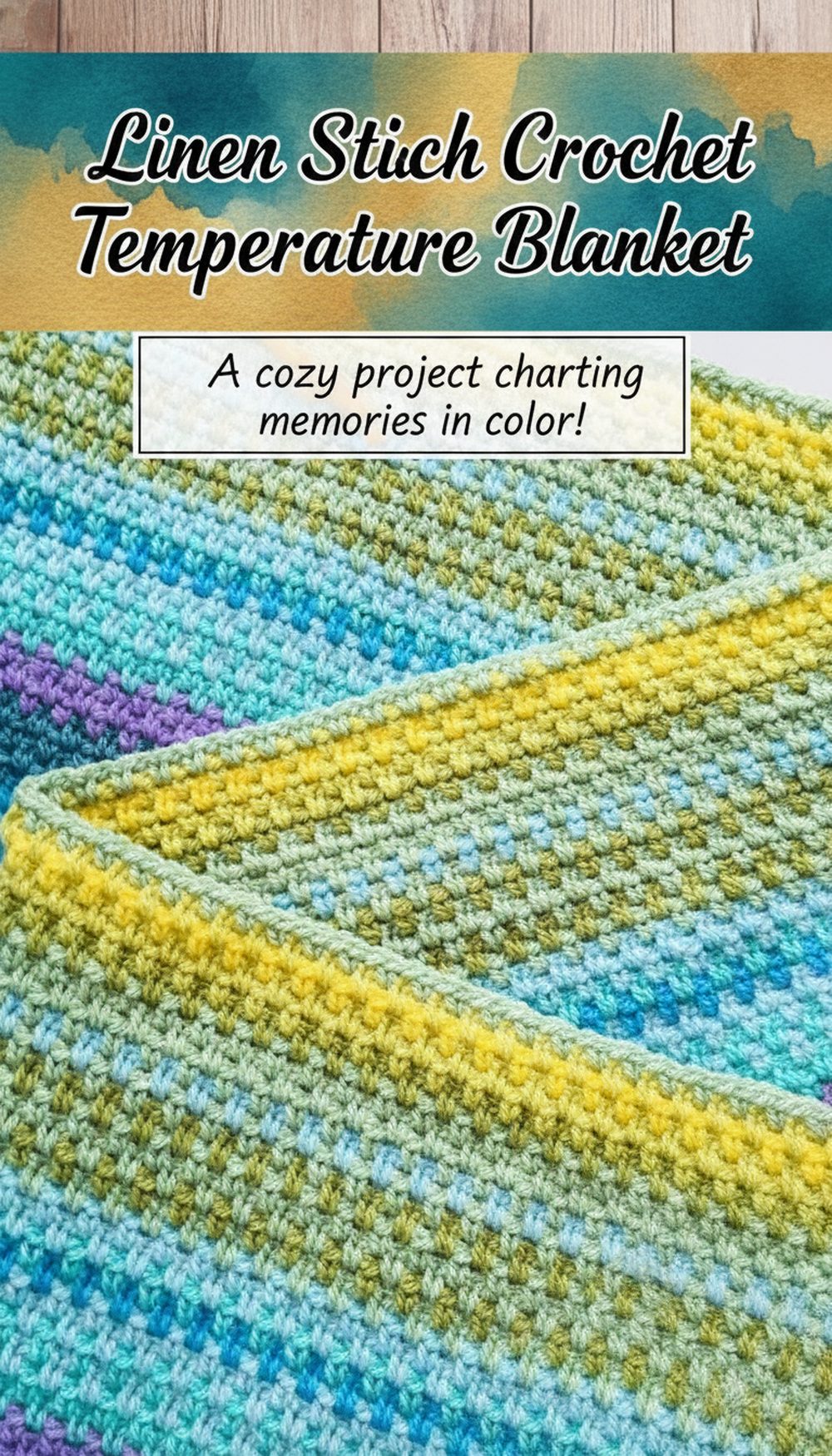
The Linen Stitch Crochet Temperature Blanket is a classic row-a-day design using single crochet and chain spaces (also called linen or moss stitch) in 20 DK colours—10 cool, 10 warm. Lullaby Lodge estimates around 180 cm length with a 4.0 mm hook, and shares clever finishing options: fringe made from your yarn tails, a fabric binding, or an encapsulated border that hides ends inside. If you love bright rainbow stripes and structured edges, this one is fantastic. Dive into the Lullaby Lodge Tutorial.
Quick specs: Skill: Beginner · Yarn: DK · Edge options: Fringe or encapsulated border
Supplies:
- DK acrylic yarn in 20 cool and warm shades
- 4.0 mm crochet hook
- Darning needle
- Scissors
Why it’s great: Simple stitches and smart finishing tricks keep this colourful blanket tidy and durable.
Pink & Blue Moss Stitch Crochet Temperature Blanket
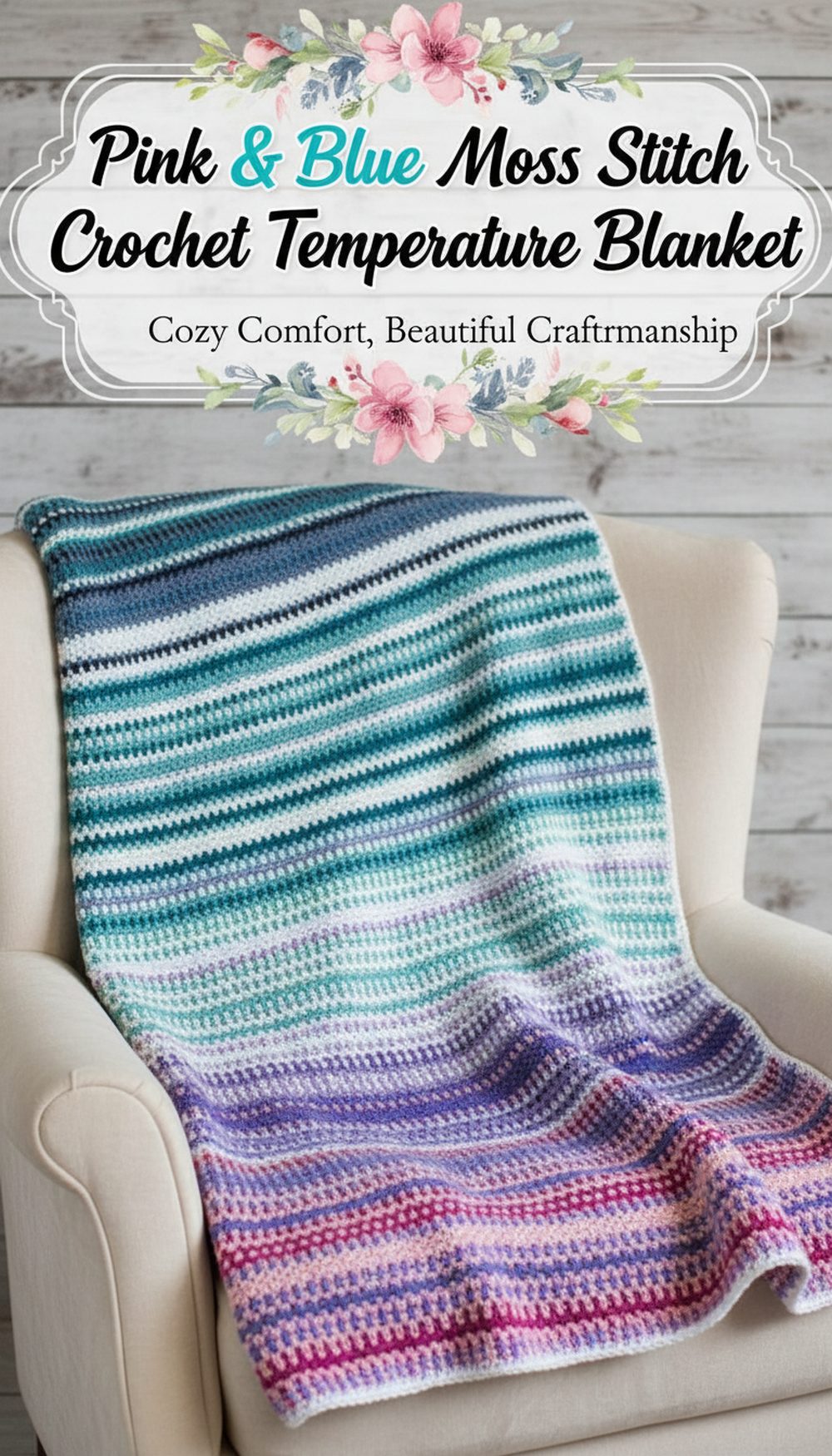
The Pink & Blue Moss Stitch Crochet Temperature Blanket is a beautiful option for softer, bedroom-friendly colours. Fox & Pine Stitches uses Loops & Threads Impeccable in 12 shades—Soft Rose, Rich Orchid, Lippy, Petunia, Lavender, Eggplant, Skylight, Aqua, Teal, Blue Haze, Blue Moon, Navy—with white border. Worked in moss stitch, chained 270, it finishes about 60″ x 80″. The blog includes temp-chart planning tips and encourages weaving in ends monthly. It’s a lovely keepsake for a child’s room or a special year. See the Fox & Pine Stitches Tutorial.
Quick specs: Skill: Beginner · Size: Large throw · Palette: Pinks to deep blues
Supplies:
- Worsted weight acrylic yarn in 12 pink–purple–blue shades + white
- 4.5 mm crochet hook
- Yarn needle
- Printed calendar and colour chart
Why it’s great: A soft, coordinated palette makes this temperature blanket perfect for gifting or bedroom decor.
Conclusion
Temperature blanket crochet projects are long, slow, and incredibly rewarding. Choose the construction style that feels doable—rows, squares, ripples, C2C, or Tunisian—and match your palette to your home or the person you’re making it for. Start with one of these eight tutorials, track your temps however works for you, and let the colours tell the story of your year. Bookmark this list so you can revisit when you’re ready to plan the next blanket.
FAQs
1. What are the best yarns for home-friendly temperature blankets?
Go for easy-care, mid-priced yarns: acrylic, acrylic/wool blends, or superwash wool in DK or worsted weight. They’re durable, widely available, and machine-washable. Avoid very fluffy or novelty yarns, which make it hard to read stitches and weave ends.
2. Should I machine wash or hand wash my crochet temperature blanket?
Check the yarn label first. Most acrylics can be machine washed on a gentle cycle with cool or warm water. Tumble dry low or lay flat to dry to avoid stretching. For wool or wool blends, hand wash in lukewarm water and dry flat to keep the blanket’s shape.
3. How can I scale a crochet temperature blanket pattern up or down?
Make a gauge swatch in the stitch pattern, measure how many rows = 10 cm, then decide how many “days” or “rows per day/week” you want. For width, adjust the starting chain or pixel count (for C2C) by the stitch multiple given. For a baby or lap blanket, use fewer chains or track weekly averages instead of daily rows.
4. What fibers are safest for kitchen, bath, or heat-adjacent projects?
For items near heat (like trivets), use cotton or wool—never acrylic—since acrylic can melt. For general home use, acrylic and cotton are both good; cotton excels in kitchens and bathrooms because it absorbs water and withstands frequent washing.
5. How do I make joins and edgings strong enough for daily use?
Join squares with slip stitch or single crochet through both loops or back loops only, and don’t split plies. For edgings, work at least two or three rounds around the whole blanket, using corners of (sc, ch 2, sc) or similar to keep it flat. A sturdy border protects edges from wear and hides minor tension changes.
6. How much time and yarn do temperature blankets usually take?
Most full-year temperature blankets use roughly 10–15 skeins total (depending on size and yarn weight) and are the equivalent of crocheting two or three regular blankets. Expect a few hours a week during peak width if you’re doing daily rows; modular or weekly designs are quicker to handle in each sitting.
7. Any tips for photographing my crochet temperature blanket?
Use natural light near a window, lay the blanket flat or drape it neatly over a bed, sofa, or rail, and shoot from above or at a slight angle. Show a large area of stripes so the colour progression is visible, and keep the background simple so the Crochet texture and colours stand out.
8. How can I fix curling, stretching, or wavy edges on my blanket?
Curling edges often need blocking: lightly steam or wet-block and pin to shape. If rows pull in or ripple, add an even border of single crochet or linen stitch, adjusting stitch counts at corners. For stretched sections, avoid hanging your blanket while wet and always support its weight fully when drying.