Halloween bag charms can be as simple as one recognizable shape or as detailed as a tiny character with a costume, dangling pieces, and embroidered features. This collection ranges from pumpkins, ghosts, bats, and candy corn to miniature cauldrons, potion bottles, monsters, a crescent moon, and a stitched doll, so there is plenty of visual variety beyond standard round amigurumi.
The projects also behave differently once clipped to a bag. Flat shapes are less likely to catch on clothing, while stuffed figures create more dimension but may need stronger attachment points. Wings, hats, capes, legs, and other projecting details deserve extra attention if the charm will travel on an everyday backpack or purse. Each idea below highlights those practical differences and points you to an original tutorial for the exact construction.
Quick List
- Crochet Ridged Pumpkin Bag Charm
- Crochet Pocket Ghost Bag Charm
- Crochet Wide-Wing Bat Keychain
- Crochet Pointed Witch Hat Bag Charm
- Crochet Candy Corn Keychain
- Crochet Tiny Spider Bag Charm
- Crochet Chubby Black Cat Bag Charm
- Crochet Frankenstein Head Keychain
- Crochet Cape-Wearing Vampire Bag Charm
- Crochet Wrapped Mummy Head Bag Charm
- Crochet Flat Skull Keychain
- Crochet Eyeball Bag Charm
- Crochet Bubbling Cauldron Bag Charm
- Crochet Potion Bottle Keychain
- Crochet Witch-and-Broom Bag Charm
- Crochet Crescent Moon Keychain
- Crochet Ghost-and-Pumpkin Bag Charm
- Crochet Jack-O’-Lantern Bag Charm
- Crochet Horned Pocket Monster Keychain
- Crochet Stitched Doll Bag Charm
Choosing the Right Scale and Attachment for a Bag Charm
A bag charm needs to be large enough to read clearly but small enough that it does not become inconvenient every time you pick up the bag. Long wings, limbs, capes, and pointed hats create more movement than compact pumpkins, skulls, or candy corn, so think about where the charm will hang before choosing a design. A backpack zipper may suit a very small charm, while a tote handle can accommodate something fuller.
Attachment deserves equal attention. The hardware should pull against a stable crocheted area rather than one loose stitch or a delicate embellishment. If a tutorial was originally designed as a miniature ornament but suggests adding keychain hardware, inspect the top carefully and decide whether an additional reinforced loop would better suit repeated bag use. The original tutorial remains the authority for its intended construction.
Yarn, Stuffing, and Finishing for Everyday Handling
Bag charms experience more rubbing and movement than shelf decorations. Smooth yarn tends to make small facial and color details easier to read, while very fuzzy yarn can soften outlines and obscure tiny features. Changing yarn thickness can also alter scale substantially, so a substitution that looks attractive in a skein may turn a compact charm into a much bulkier accessory.
For stuffed designs, aim for a shape that holds its intended silhouette without forcing stuffing through the crochet fabric. Loose fabric may show filling, while excessive stuffing can distort narrow shapes such as crescent moons or small character heads. Embroidered details are often useful where you want a low-profile finish. Buttons, beads, safety eyes, or other attached pieces require more consideration when a charm will rub against a bag or be accessible to young children or pets.
Think About Snagging Before Adding Extra Details
A tiny broom, curved tail, bat wing, cape, spider leg, or pointed witch hat can be the feature that gives a Halloween charm its personality. Those same details are also the parts most likely to catch on a sweater, zipper, or crowded bag interior.
That does not mean decorative shapes should be avoided. Instead, decide whether the bag is primarily decorative or used heavily in transit. For an everyday commuter bag, compact pieces such as a candy corn, pumpkin, skull, or eyeball can be simpler to manage. A witch, spider, or monster with projecting pieces may make more sense on a tote carried occasionally. Before clipping on the finished charm, gently check every sewn join and make sure tails, embroidery, and hardware are secure.
1. Crochet Ridged Pumpkin Bag Charm
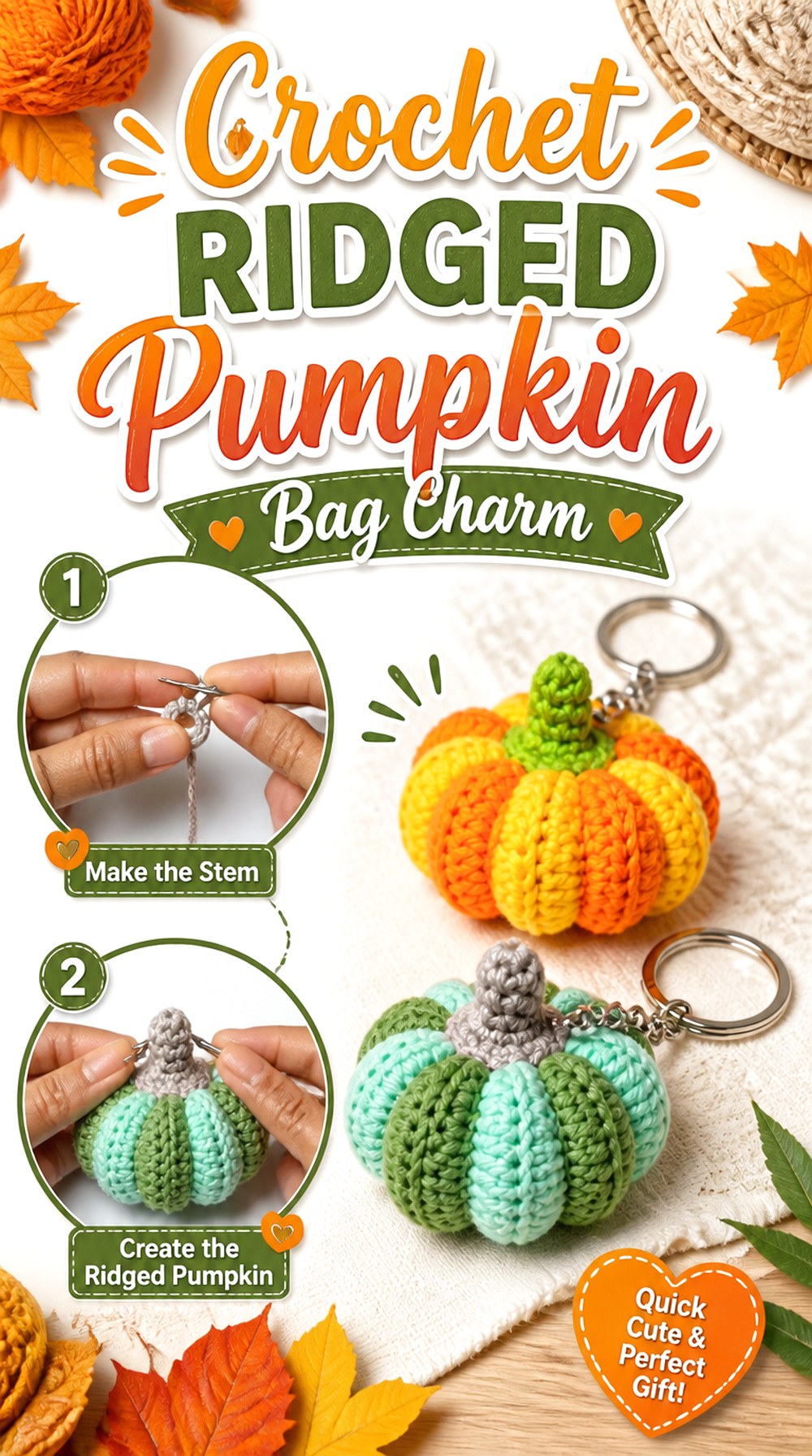
A miniature pumpkin is one of the most adaptable options because its Halloween identity comes largely from the silhouette rather than a large collection of embellishments. The Crochet Craftsman tutorial produces a striped, dimensional pumpkin intended specifically for a keychain or bag charm, with visible ridges and a small stem.
That rounded shape gives the charm more presence than a flat appliqué but keeps protruding pieces to a minimum. It works especially well when you want autumn styling that can remain on a bag after Halloween. Orange is the obvious seasonal choice, but the basic pumpkin form also lends itself to cream, rust, muted green, or other harvest-inspired palettes without changing the construction.
Let the Ridges Carry the Design
A dimensional pumpkin does not need a complicated face to look finished. Defined ridges provide texture and help the tiny shape remain recognizable from different angles. If you substitute yarn, watch how well that shaping remains visible; very fuzzy fibers can blur the grooves, while highly stiff fabric may make the pumpkin look more rigid than rounded.
Reinforce Near the Stem, Not the Stem Alone
The top of a pumpkin feels like the natural place for hardware, but a narrow decorative stem should not automatically become the only load-bearing point. Follow the tutorial’s attachment method and inspect the surrounding fabric before regular use. If you adapt the hardware, make sure the pull is transferred to a stable area of the pumpkin body.
Original Tutorial and Creator Credit
Creator: Crochet Craftsman
2. Crochet Pocket Ghost Bag Charm
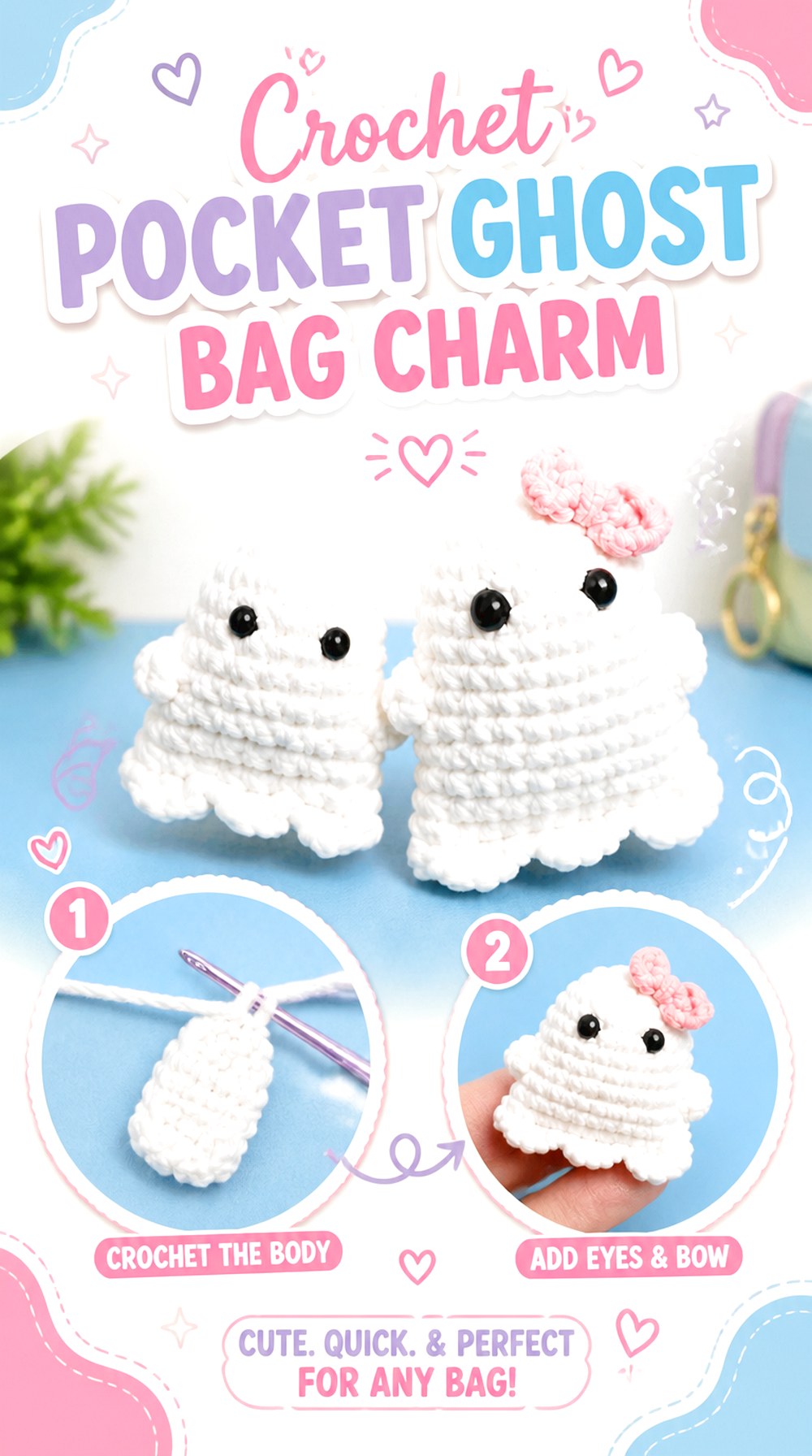
Sweet Softies’ Pocket Ghost offers a different type of silhouette: a soft little spectral figure with a broad lower edge rather than separate dangling legs. The designer specifically presents the smaller ghost as suitable for turning into a keychain, hanging ornament, or bag charm.
For a frequently used bag, that compact body is appealing because there are relatively few narrow extensions to catch on surrounding objects. The rounded shape also gives you a large visual area for a simple face. Compared with the later ghost-and-pumpkin combination, this version is deliberately pared back, making it the stronger choice when you want the ghost itself—not an accessory or costume—to dominate the design.
Decide How Plush You Want the Silhouette
The original design uses plush yarn, but the designer also notes that other yarn types can be tried and that thinner yarn produces a smaller result. For a bag charm, that means yarn choice affects more than texture. A smoother, thinner fiber can make the ghost less bulky, while plush yarn emphasizes softness and volume.
Keep the Face Low Profile
A simple ghost can change character dramatically through facial placement. For a charm exposed to frequent handling, embroidered eyes or other securely worked details can provide a flatter finish than projecting embellishments. If you use attached components instead, consider who will have access to the bag and whether the parts could loosen with wear.
Original Tutorial and Creator Credit
Creator/Site: Sweet Softies
3. Crochet Wide Wing Bat Keychain
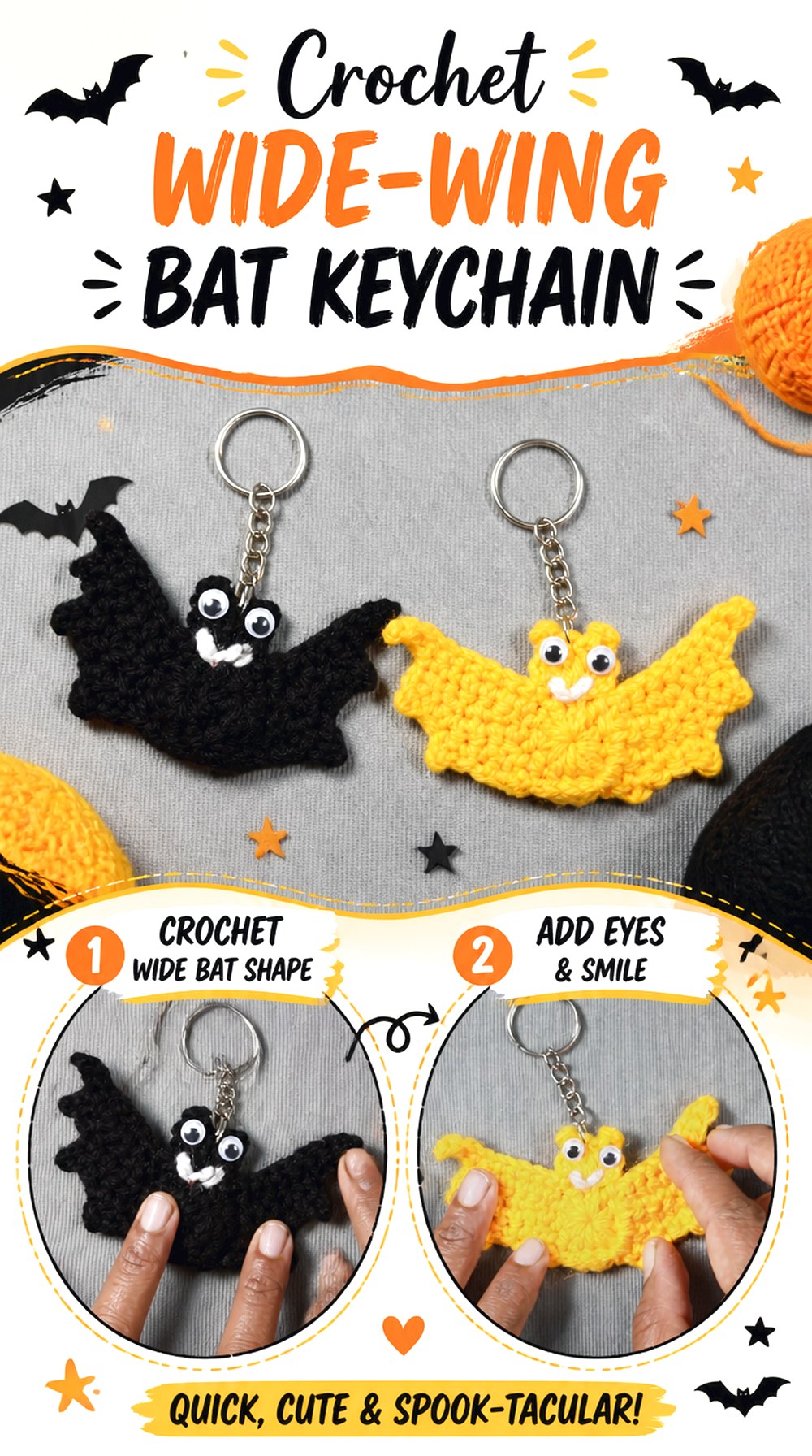
This bat trades the rounded simplicity of a pumpkin or ghost for a wider horizontal silhouette. Knitting Crochet by Sanju’s tutorial is specifically for a crochet bat keychain and includes the recognizable body, face, wings, and keyring format.
The wings are the visual payoff. They make the charm immediately Halloween-ready even in a single dark color, and they create a dramatic outline when the bat hangs from the side of a backpack. That width is also the practical feature to consider. A winged charm needs a little more clearance than a compact ball-shaped amigurumi, so it works best somewhere the wings can hang rather than repeatedly folding beneath a handle.
Check Both Wings Before Finishing
Small differences become easy to see when two wings sit on opposite sides of a tiny body. Before finalizing their position, compare their angle, height, and apparent width from the front. A quick visual check can prevent one side from appearing noticeably heavier once the bat is suspended.
Choose a Hanging Point That Keeps the Bat Upright
A bat reads best when the body hangs vertically and the wings remain visible. If your hardware pulls from an off-center point, the charm may twist sideways. Use the tutorial’s construction as the starting point, then check the finished balance with the actual clasp or keyring before securing any optional decorative additions.
Original Tutorial and Creator Credit
Creator: Knitting Crochet by Sanju
4. Crochet Pointed Witch Hat Bag Charm
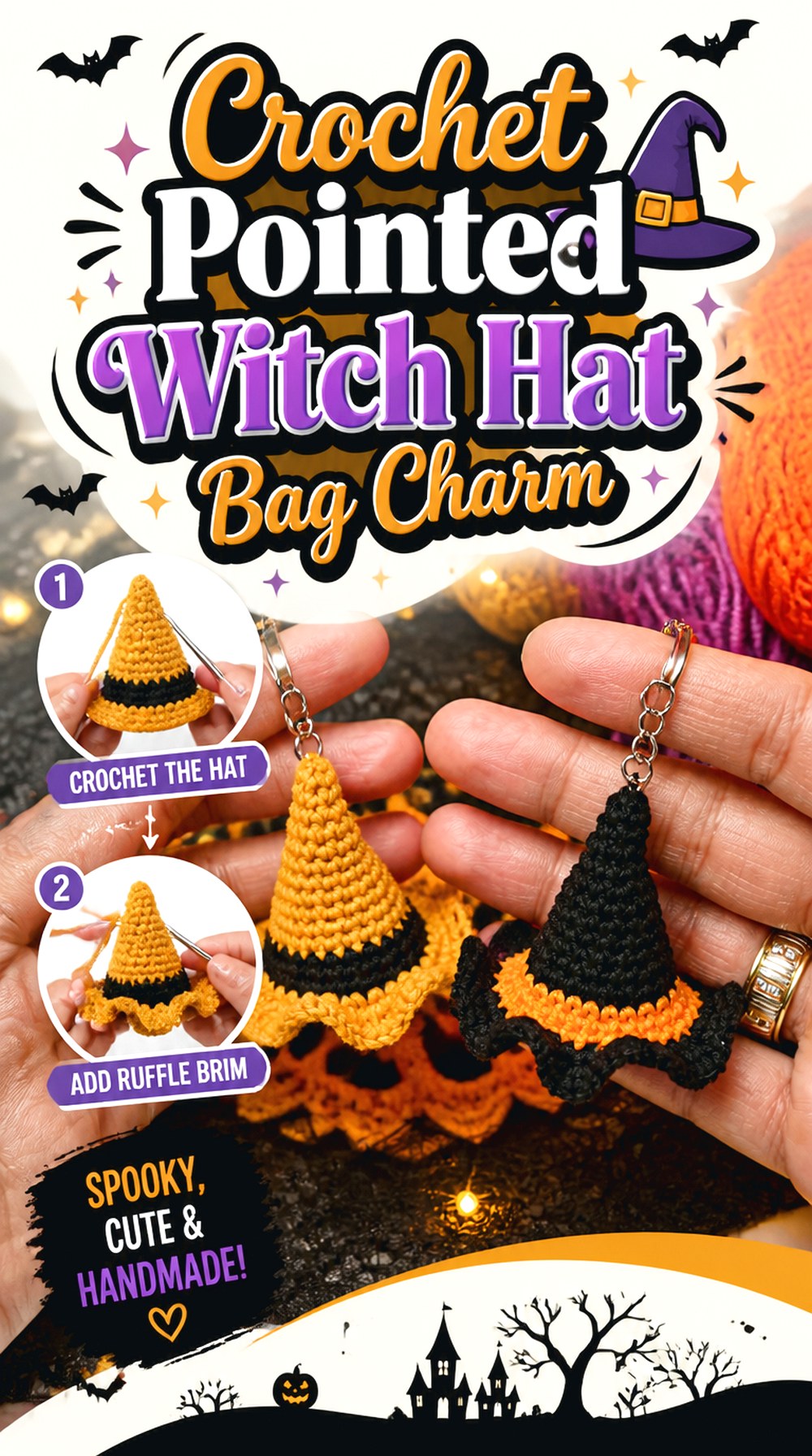
A witch hat gives you Halloween character without requiring a face or full amigurumi body. Tuba Crochet’s tutorial focuses specifically on a witch hat keychain and presents it as a small seasonal accessory that can hang from a bag.
The tall crown and projecting brim make this charm visually distinct from the rounded projects around it. That shape is especially effective on a plain tote or solid-color backpack, where the pointed outline remains easy to recognize. It also gives color blocking more purpose: the main hat, band, and any small accent can be coordinated with the bag instead of relying only on traditional black and orange.
Protect the Point From Looking Crumpled
A pointed crown loses much of its character if it repeatedly folds over. Yarn choice and tension can influence whether a miniature hat appears sharply defined or very soft. If your bag is frequently packed into tight spaces, consider whether a softer hat is acceptable or whether a more compact charm elsewhere in this list would maintain its shape better.
Keep the Brim Visually Balanced
The brim is what separates the witch hat from an ordinary cone. Check it from the front and side before attaching the hardware. If one edge curls or pulls upward, gentle shaping appropriate to the chosen yarn may improve the silhouette; always follow the fiber’s care guidance rather than assuming every yarn can be treated the same way.
Original Tutorial and Creator Credit
Creator: Tuba Crochet
5. Crochet Candy Corn Keychain
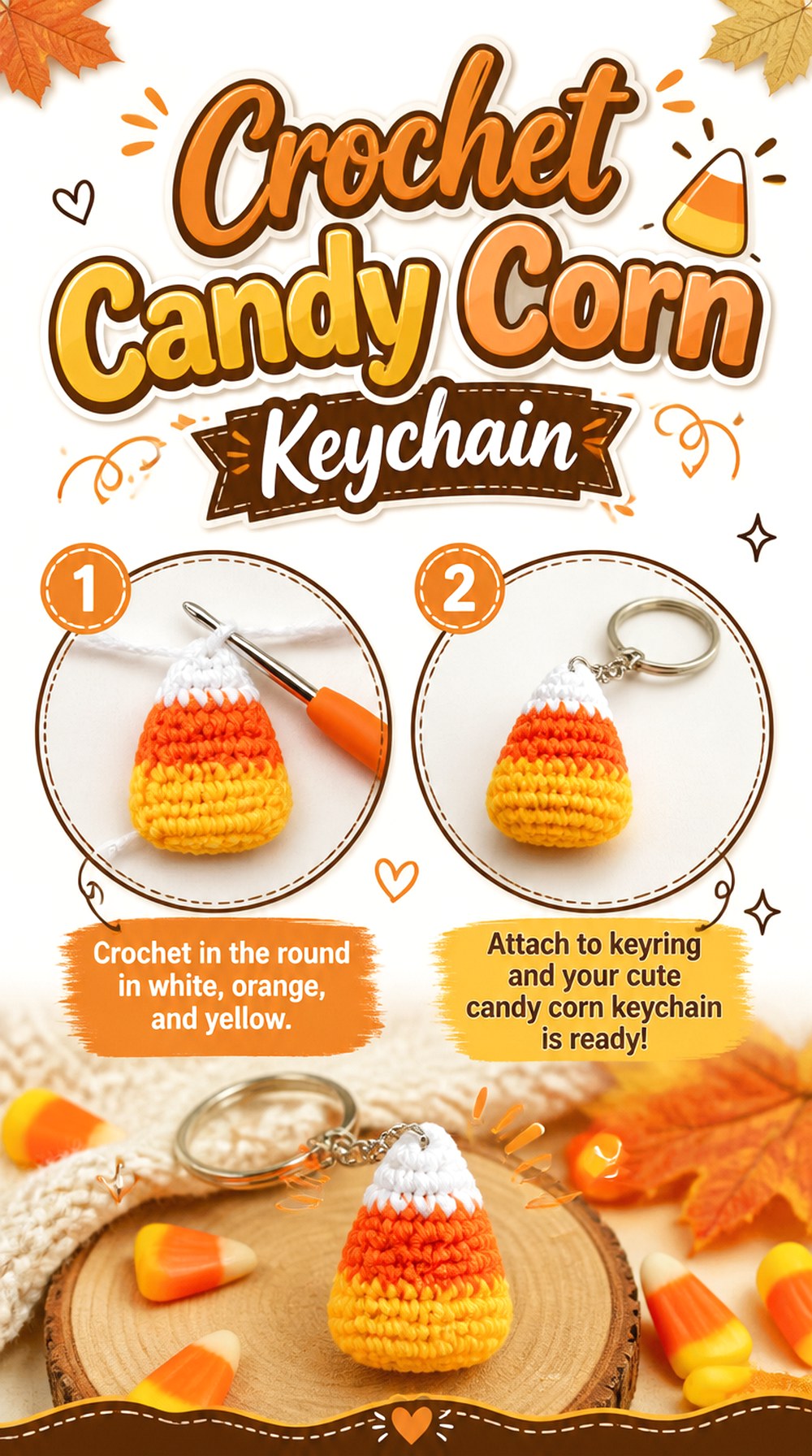
Shooting Star Crafts turns the familiar three-color candy shape into a dedicated crochet keychain. The original tutorial uses the recognizable yellow, orange, and white sections and finishes the piece with keychain hardware.
Its tapered silhouette offers a useful middle ground between flat and very dimensional charms. There are no limbs, wings, hats, or separate accessories competing for space, so it can work well on a backpack zipper or smaller handbag. The color blocking does most of the decorative work, which also makes this a good option for anyone who prefers Halloween motifs without character faces. Because the bands are so visually important, clean transitions matter more here than elaborate embellishment.
Judge the Shape as Well as the Stripes
Candy corn should narrow clearly toward the top. If a yarn substitution changes the fabric density, look at the overall taper rather than concentrating only on whether the three color bands are even. A clean silhouette can make a tiny charm readable from farther away.
A Simple Form Is Useful on Busy Bags
Patterned backpacks and bags with multiple straps can visually overwhelm elaborate charms. Candy corn remains identifiable through a bold, uncomplicated outline and familiar bands. It is therefore an especially practical choice when you want the charm to compete less with existing bag details.
Original Tutorial and Creator Credit
Creator/Site: Shooting Star Crafts
6. Crochet Tiny Spider Bag Charm
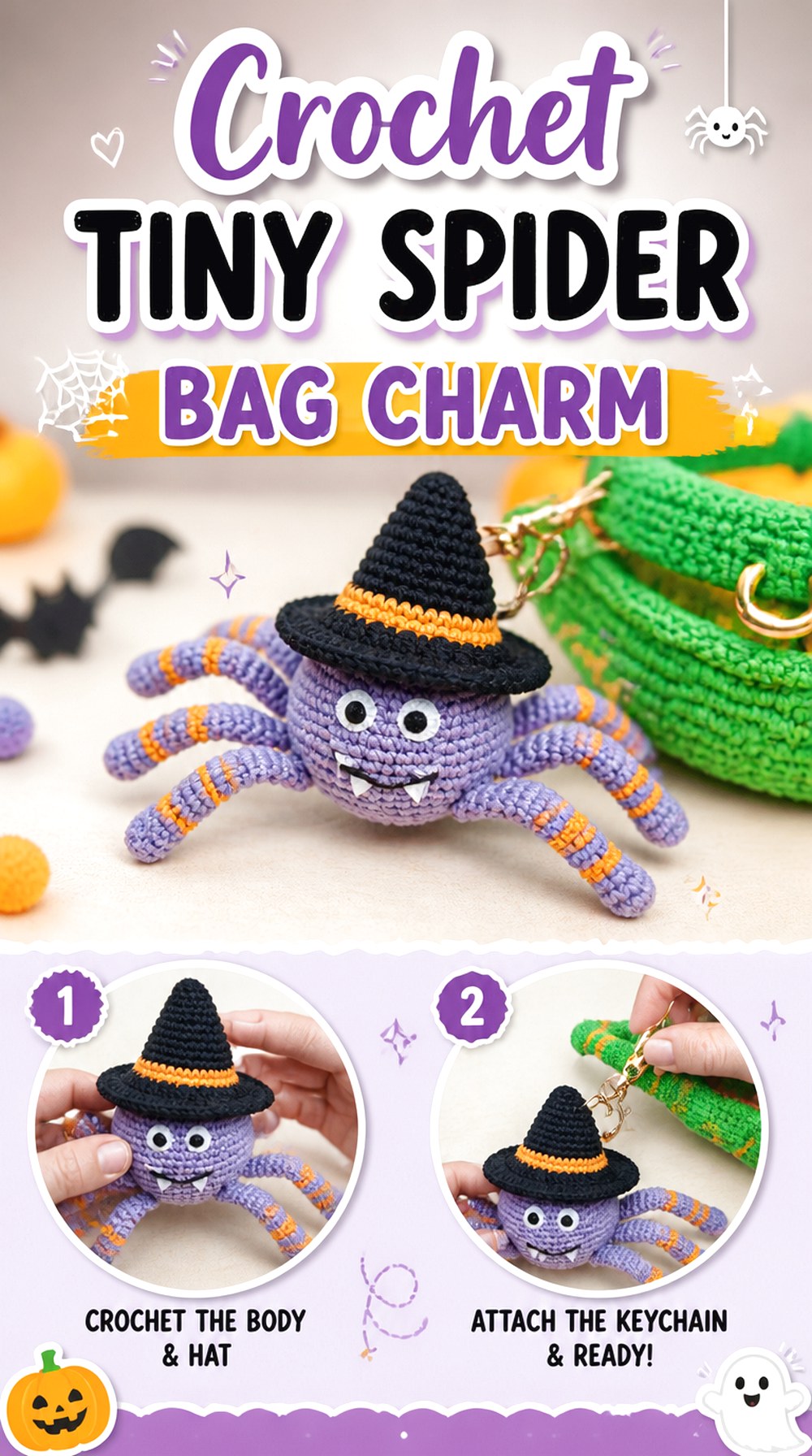
KnittingKitty’s Halloween spider tutorial offers a completely different construction challenge: multiple narrow legs surrounding a compact body, with the option to use the finished spider as a keychain. The source also includes a tiny hat, giving the spider an extra playful seasonal detail.
This is a charm to choose for movement and personality rather than maximum snag resistance. The legs create an animated outline as the spider hangs, which can look especially good against the flat face of a tote. On a heavily used backpack, however, those same extensions deserve a little extra checking. Place the charm where its legs can hang freely instead of being trapped repeatedly beneath a zipper or strap.
Leg Position Changes the Expression
A spider with evenly spread legs reads very differently from one with the legs tucked close to its body. Before permanently settling the final shape, view the charm while it is hanging. Gravity may alter the pose compared with how it looks lying flat on a work surface.
Treat the Tiny Hat as an Embellishment
The hat contributes personality but adds another potential stress point. If your version includes it, make sure the join is appropriate for the way the charm will be handled. For a bag that sees rough daily use, the spider can still work visually without piling on additional beads, bows, or dangling pieces.
Original Tutorial and Creator Credit
Creator: KnittingKitty
7. Crochet Chubby Black Cat Bag Charm
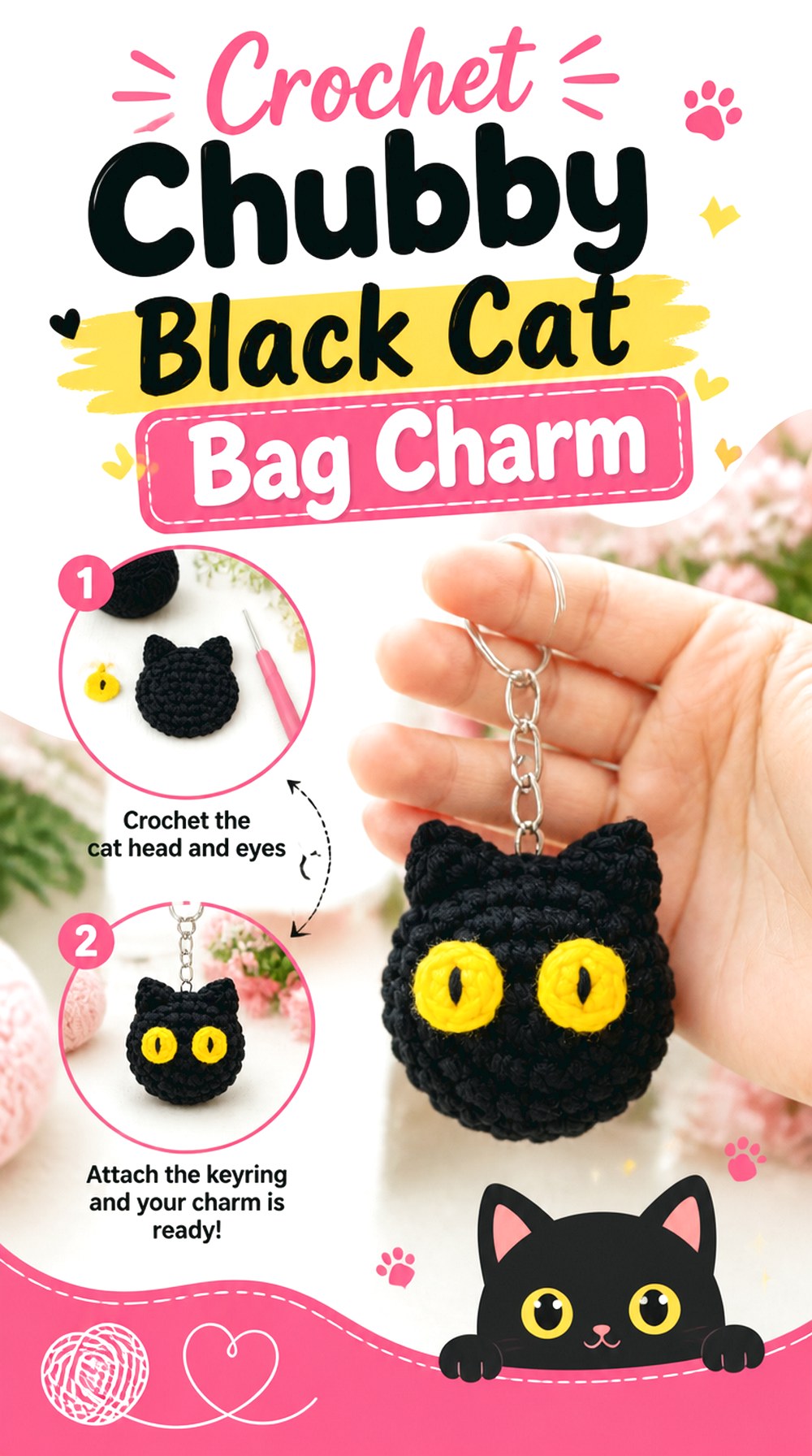
A cat lets you bring Halloween into an accessory without using an overt monster motif. Annie Ahmed’s tutorial teaches a chubby amigurumi cat keychain and specifically lists black among the yarn-color possibilities, making a black version an easy seasonal styling choice rather than a different construction.
This charm has a fuller animal silhouette, complete with ears and small body details, so it feels more character-driven than the flatter skull or candy corn. Black yarn gives it the classic Halloween association, while an orange, purple, or acid-green bow can push the styling further. Because dark yarn can make stitches and facial details harder to see, contrast becomes particularly important when you want the expression to remain readable.
Give Dark Yarn Enough Facial Contrast
Black fabric can swallow small dark embroidery details. If you adapt the source project into a Halloween black cat, think about whether the eyes, nose, or bow provide enough contrast. The goal is not necessarily bright color; even a small controlled accent can prevent the face from disappearing visually.
Watch the Ears at the Attachment Point
The triangular ears carry much of the cat silhouette. If they bend inward or sit unevenly, the head may lose its feline look from a distance. Check both ears after the keyring has been installed because hanging tension can change the way the top of the head sits.
Original Tutorial and Creator Credit
Creator: Annie Ahmed 🧸
8. Crochet Frankenstein Head Keychain
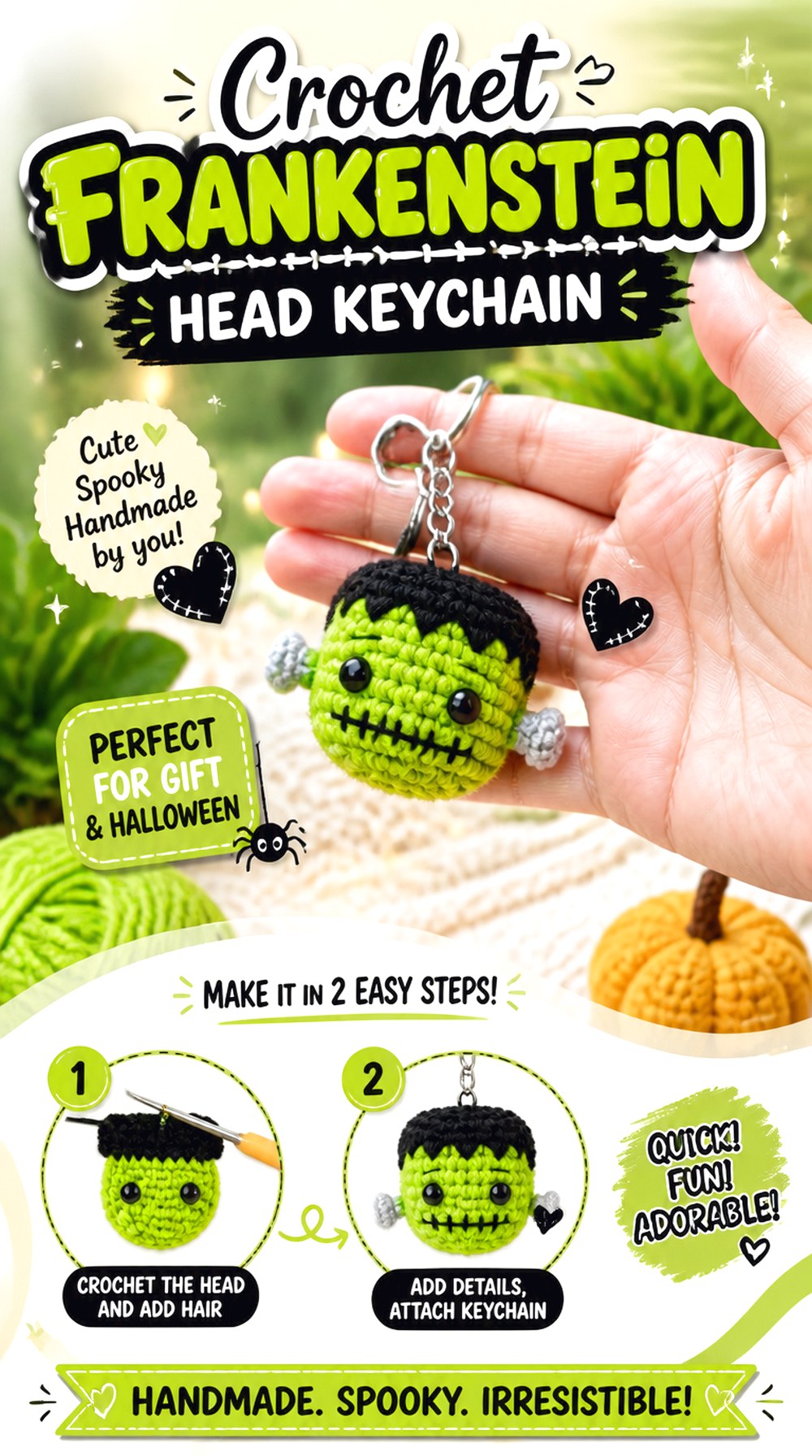
Yarn Society’s Frankenstein tutorial is built specifically around a Frankenstein keychain, giving you one of the strongest graphic faces in the collection. Instead of relying on a complicated full body, the character is concentrated into a compact head with the familiar monster styling.
That head-focused approach suits bags well because the charm has plenty of personality without long limbs. Strong blocks of hair, skin, facial details, and hardware make it easy to read even at small scale. It also differs clearly from the later horned monster: Frankenstein depends on an iconic humanlike face, while the pocket monster is more about exaggerated shape and texture.
Facial Alignment Matters More on a Head-Only Charm
When the entire project is essentially a face, slightly misplaced features become more noticeable. Before securing the final details, view the head from the same angle it will hang on the bag. The hardware can tilt the piece enough to make an otherwise centered face look off balance.
Keep the Top Strong Enough for Repeated Movement
A head charm naturally concentrates hardware near the crown. That area will take repeated movement every time the bag swings. Follow the source attachment closely and make sure decorative hair or other surface details are not accidentally being asked to carry the load.
Original Tutorial and Creator Credit
Creator: Yarn Society
9. Crochet Cape Wearing Vampire Bag Charm
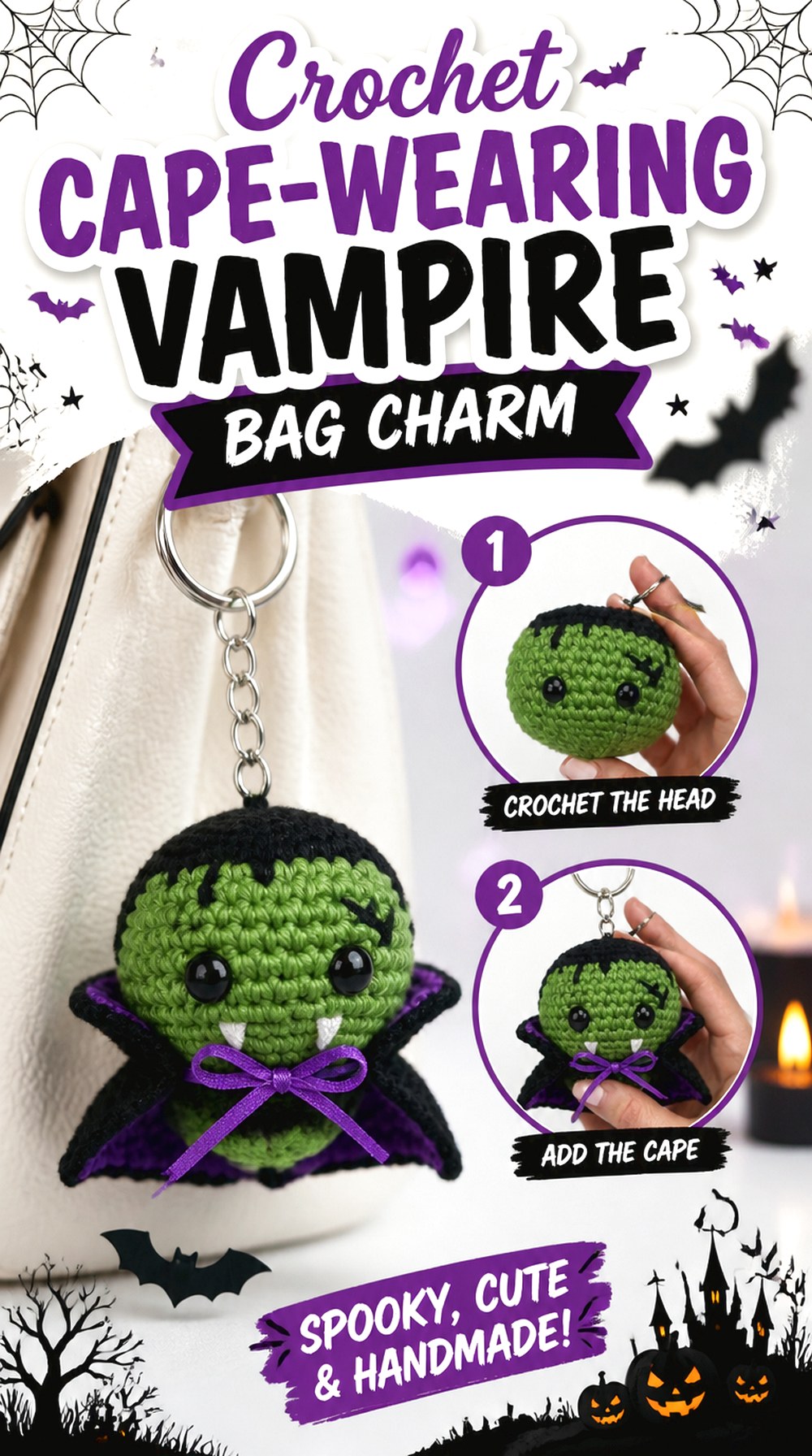
The Stitch by Fay vampire gets its identity from more than a face: the original design includes tiny fangs and a separately made cape, and the designer specifically suggests adding a keychain for a quick gift. That creates more visual layering than the head-only Frankenstein or mummy options.
A miniature cape gives the charm movement and a recognizable Dracula-like outline while keeping the body compact. It is a good choice when you want a character that feels dressed rather than simply shaped. The trade-off is that a cape introduces another edge that can fold or catch, so placement on the bag matters more than it does for a smooth candy-corn or eyeball charm.
Let the Cape Stay Visible
The cape is the main feature separating this vampire from a generic miniature doll. Check the finished charm while hanging and make sure the fabric is not constantly curling around the body. If your chosen yarn creates a markedly different drape, compare the result with the designer’s finished shape before deciding whether further adjustment is needed.
Tiny Fangs Need Visual Space
The original vampire uses small facial details, including fangs. If you change yarn weight or scale, make sure those details remain proportionate instead of crowding the face. A charm does not need more embellishment simply because it is small; preserving a few readable features usually gives a cleaner result.
Original Tutorial and Creator Credit
Creator/Site: Stitch by Fay
10. Crochet Wrapped Mummy Head Bag Charm
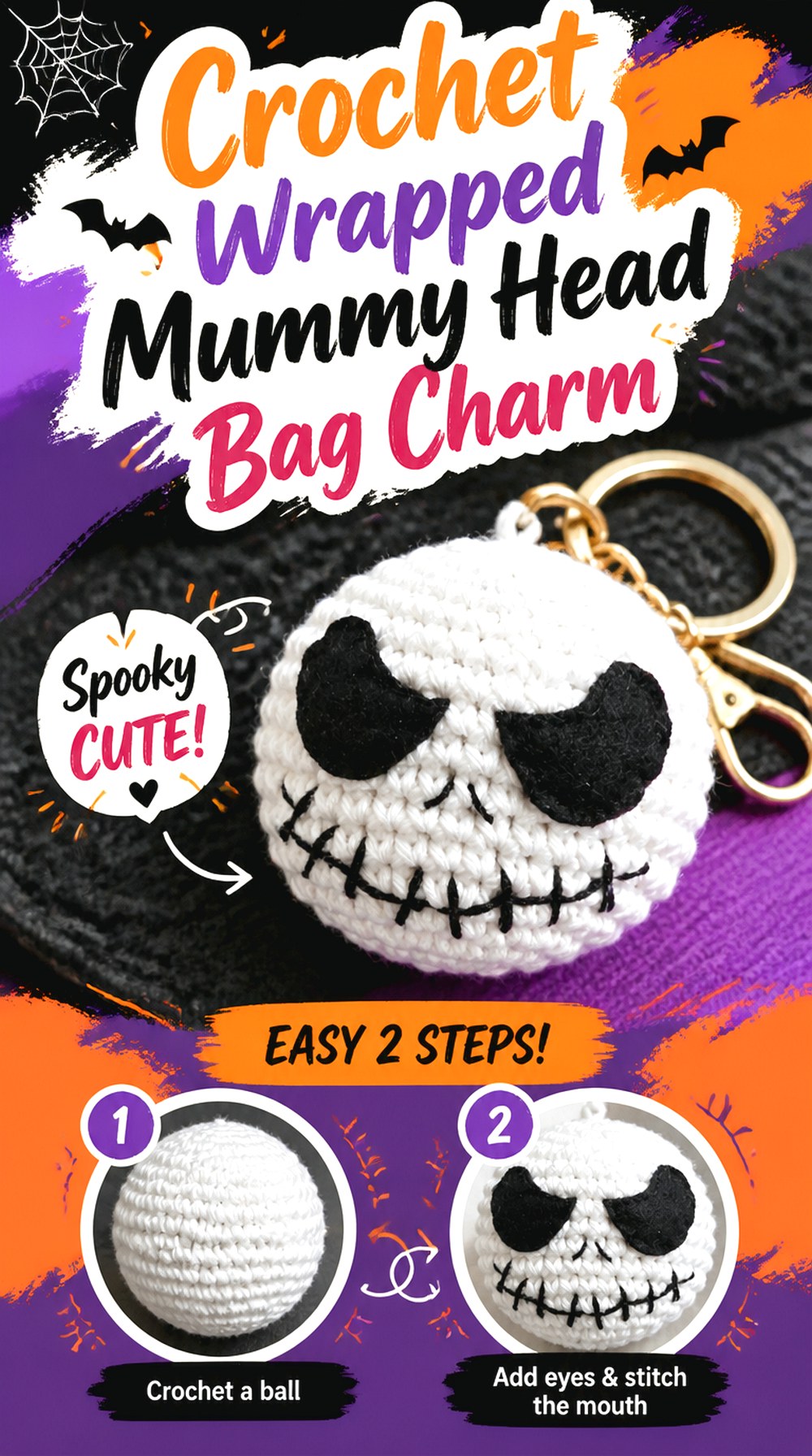
The 7robots monster-head collection includes a mummy alongside Dracula, Frankenstein, and Jack Skellington, and the designer explicitly says the heads can be turned into keychains or bag charms. For this list, the mummy is the most useful choice because Frankenstein and skull-like designs already have their own dedicated sources.
A mummy head gives you visual texture instead of projecting accessories. Bandage-like surface treatment can make a compact round shape feel detailed while remaining relatively bag friendly. It is also an effective place to play with slightly different off-whites, creams, grays, or aged neutrals without depending on orange and black for the Halloween message.
Preserve the Wrapped Effect at Small Scale
The mummy needs enough visible contrast or relief for its wrappings to read as intentional. If everything visually merges into one smooth pale sphere, the character becomes less obvious. Before adding extra decoration, concentrate on whether the wrapping treatment and eye area remain distinct.
Head-Only Characters Can Be Easier to Position
Unlike full figures, a mummy head has no arms or legs swinging against the bag. That makes it a sensible choice for a smaller attachment point. Even so, inspect the top connection after finishing so the hanging force is carried by stable crochet rather than a decorative strand.
Original Tutorial and Creator Credit
Creator/Site: 7robots
11. Crochet Flat Skull Keychain
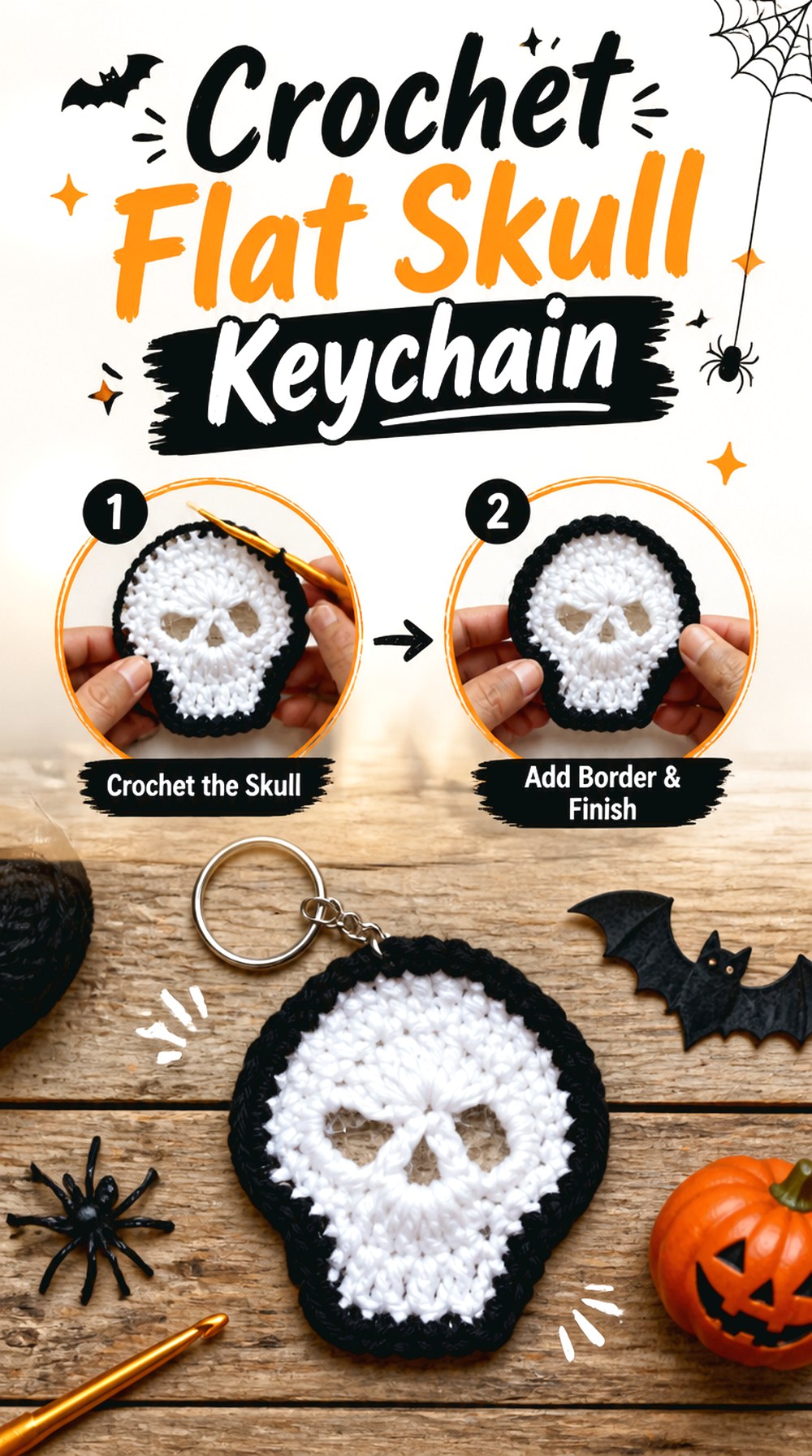
Tukitaki’s skull tutorial shifts the collection away from soft rounded characters toward a flatter, graphic Halloween symbol. The video is specifically presented as a skull keychain tutorial.
A flatter charm can be appealing when you want Halloween styling without a plush object bouncing against the side of your bag. The eye openings and skull outline do most of the work, so clean negative space and edge definition matter. White or bone colors are obvious choices, but the silhouette can also support black, neon, or pastel gothic interpretations as long as the facial structure stays readable.
Flat Charms Have Their Own Finishing Problems
Less stuffing does not automatically mean less attention is required. A flat motif can curl, twist, or lose its intended outline if the fabric is uneven. Assess the finished skull while suspended rather than only on a table, since hanging can reveal distortion that was not obvious when the piece was lying flat.
Use Contrast to Keep the Face Legible
The skull depends on dark and light areas more than a plain pumpkin does. If you change the color scheme, maintain enough difference between the skull shape and its facial features. Otherwise, the design can look like an abstract blob once viewed from a few feet away.
Original Tutorial and Creator Credit
Creator: Tukitaki
12. Crochet Eyeball Bag Charm
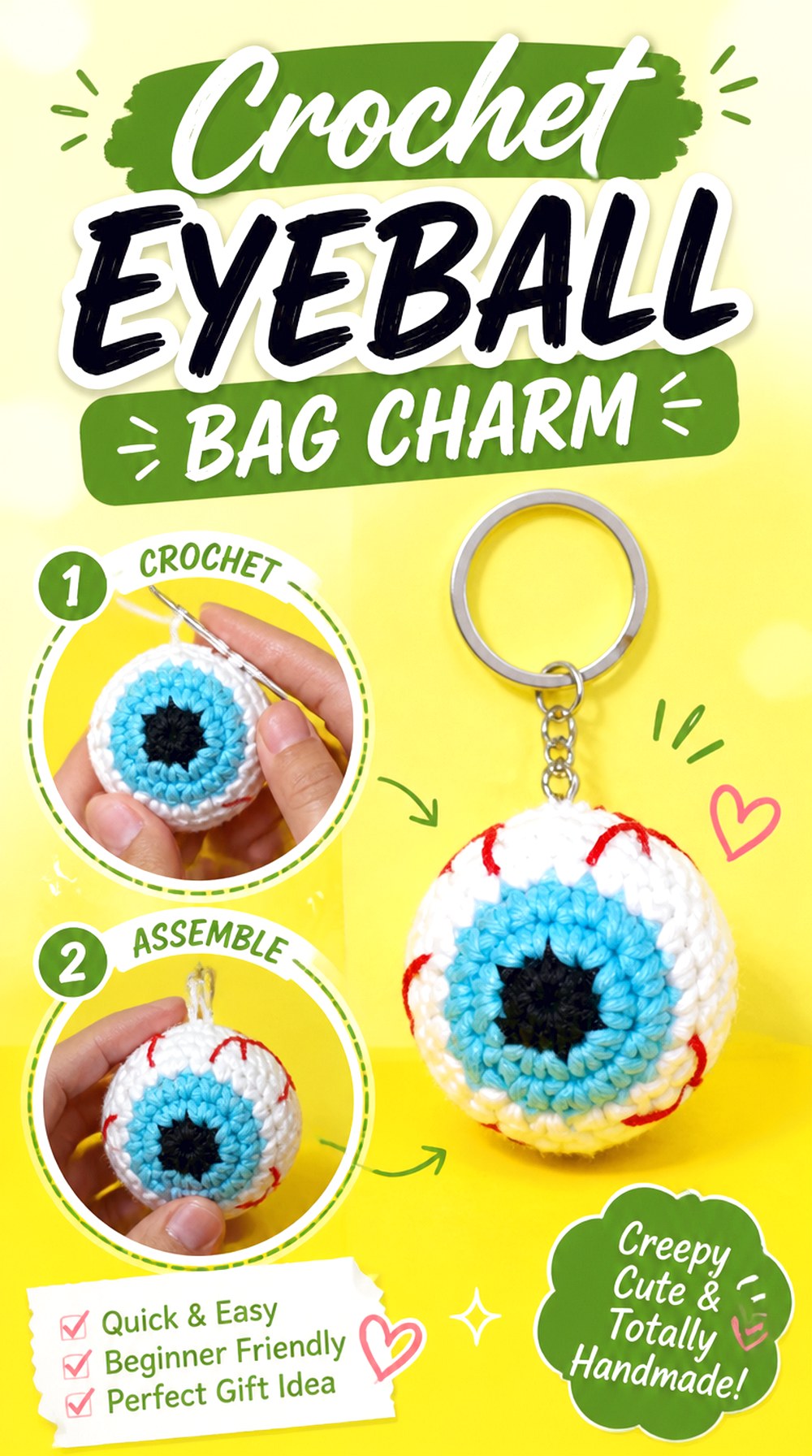
An eyeball is one of the smallest motifs here with a surprisingly strong visual impact. Lemon Crochet’s tutorial is dedicated to an eyeball keychain, so the finished concept already suits a hanging accessory rather than requiring a larger plush to be scaled down.
Its near-spherical form is compact, while concentric eye colors let you create plenty of contrast without separate limbs or clothing. That makes it particularly useful on bags where a wide spider or full witch would be impractical. An eyeball can lean cute, eerie, or graphic depending on the pupil, iris, and surrounding color choices, so it is also one of the easiest motifs to coordinate with a specific bag.
Color Placement Is the Main Design Tool
Because the shape itself is simple, the eye depends heavily on concentric color placement. A high-contrast iris and pupil remain visible at a distance, whereas colors with similar values can merge visually. Before committing to scraps from your stash, hold the yarns together and judge whether each layer will still read separately.
Round Shapes Need a Stable Top Connection
A spherical charm has no obvious flat back to hide hardware. Positioning therefore affects how the eye faces outward when hanging. Check the intended front before securing the attachment so the pupil does not constantly rotate toward the side of the bag.
Original Tutorial and Creator Credit
Creator: Lemon Crochet
13. Crochet Bubbling Cauldron Bag Charm
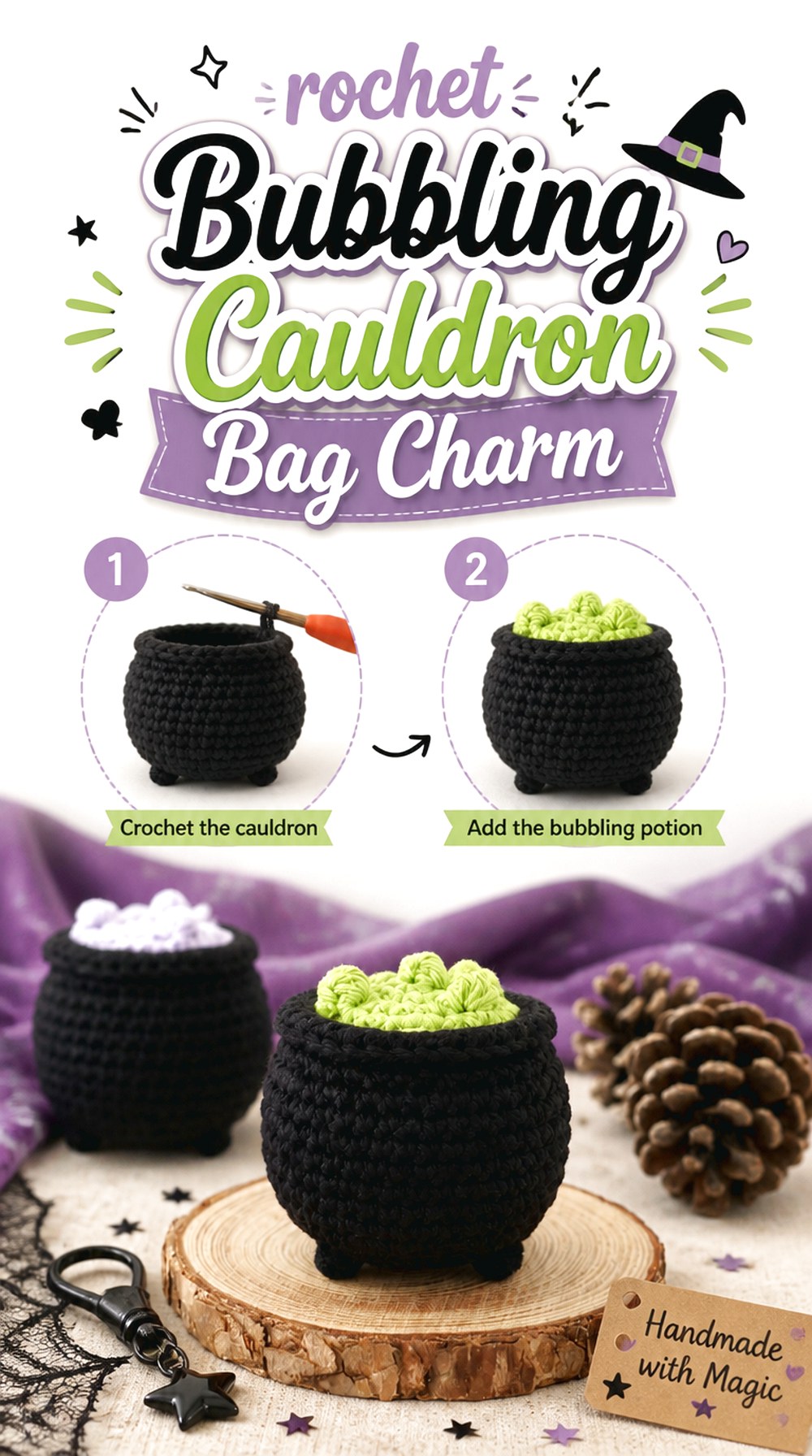
Stitch by Fay’s miniature cauldron is a wonderfully different bag-charm shape because it combines a rounded vessel with small integrated feet and an optional bubbling potion surface. The designer specifically suggests adding a keychain to the finished miniature.
Compared with the potion bottle later in the list, the cauldron is broader and more sculptural. It can carry a strong black-and-neon palette without requiring facial features at all. The raised bubbles are also an effective texture detail, allowing the charm to look animated while keeping most of its volume contained within one compact form.
Decide Whether the Bubbles Suit Your Bag
The optional potion bubbles give the top more dimension, but they are not essential to recognizing the cauldron. If the charm will experience a lot of friction, consider whether you prefer a cleaner top or the extra texture. Either way, make sure decorative surface elements are not being used as the hardware anchor.
The Rim Defines the Vessel
A miniature cauldron needs a clear upper edge to avoid reading as a simple round ball. After stuffing and finishing, look at the rim from multiple angles. If the yarn substitution makes the edge collapse, the silhouette may lose much of its cauldron character.
Original Tutorial and Creator Credit
Creator/Site: Stitch by Fay
14. Crochet Potion Bottle Keychain
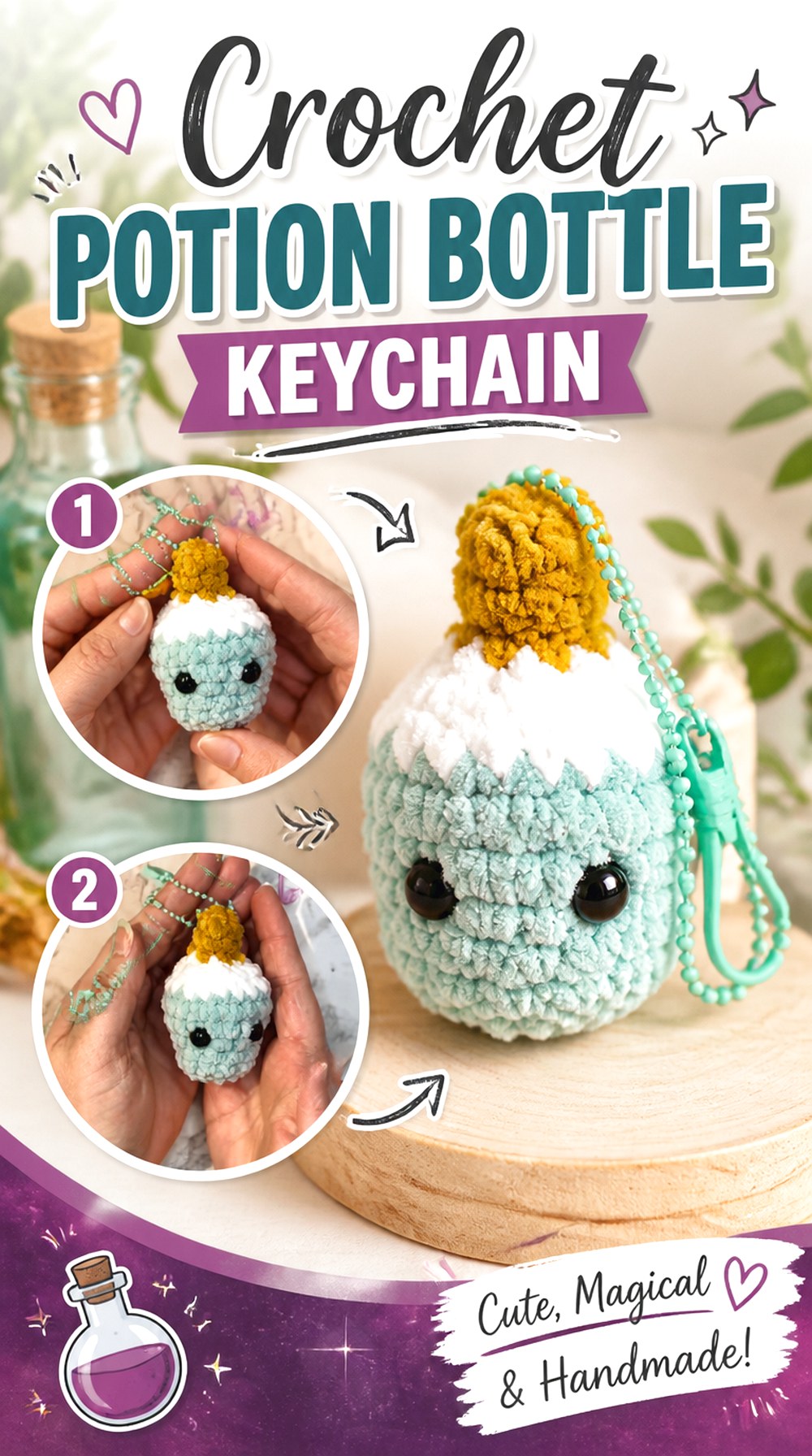
The Crafty Atelier’s potion-bottle tutorial moves the witchy theme into a narrow vertical object rather than another character. The source is explicitly a crochet potion bottle keychain tutorial.
A tiny bottle works particularly well when you want the bag charm to feel magical rather than overtly monster-themed. The neck, body, and contrasting “potion” area create recognizable proportions even without eyes or a face. It can also sit beside another charm without occupying as much horizontal space as a bat or spider. Because bottle silhouettes depend on the transition from narrow neck to wider body, proportion is more important here than sheer decoration.
Preserve the Neck-to-Body Contrast
If the neck becomes too thick relative to the body, the object may stop reading clearly as a bottle. Yarn substitutions can change those proportions visually even when you follow the same construction. Compare the finished outline with the tutorial’s result before adding optional labels, beads, or other surface details.
Keep Extra Decorations From Overloading the Miniature
Potion themes invite embellishment, but a very small charm can become visually crowded quickly. One contrasting liquid color, cork-like top, or small stitched symbol may be enough. Additional dangling pieces also increase snag potential, so choose them according to how the bag will actually be used.
Original Tutorial and Creator Credit
Creator: The Crafty Atelier
15. Crochet Witch and Broom Bag Charm
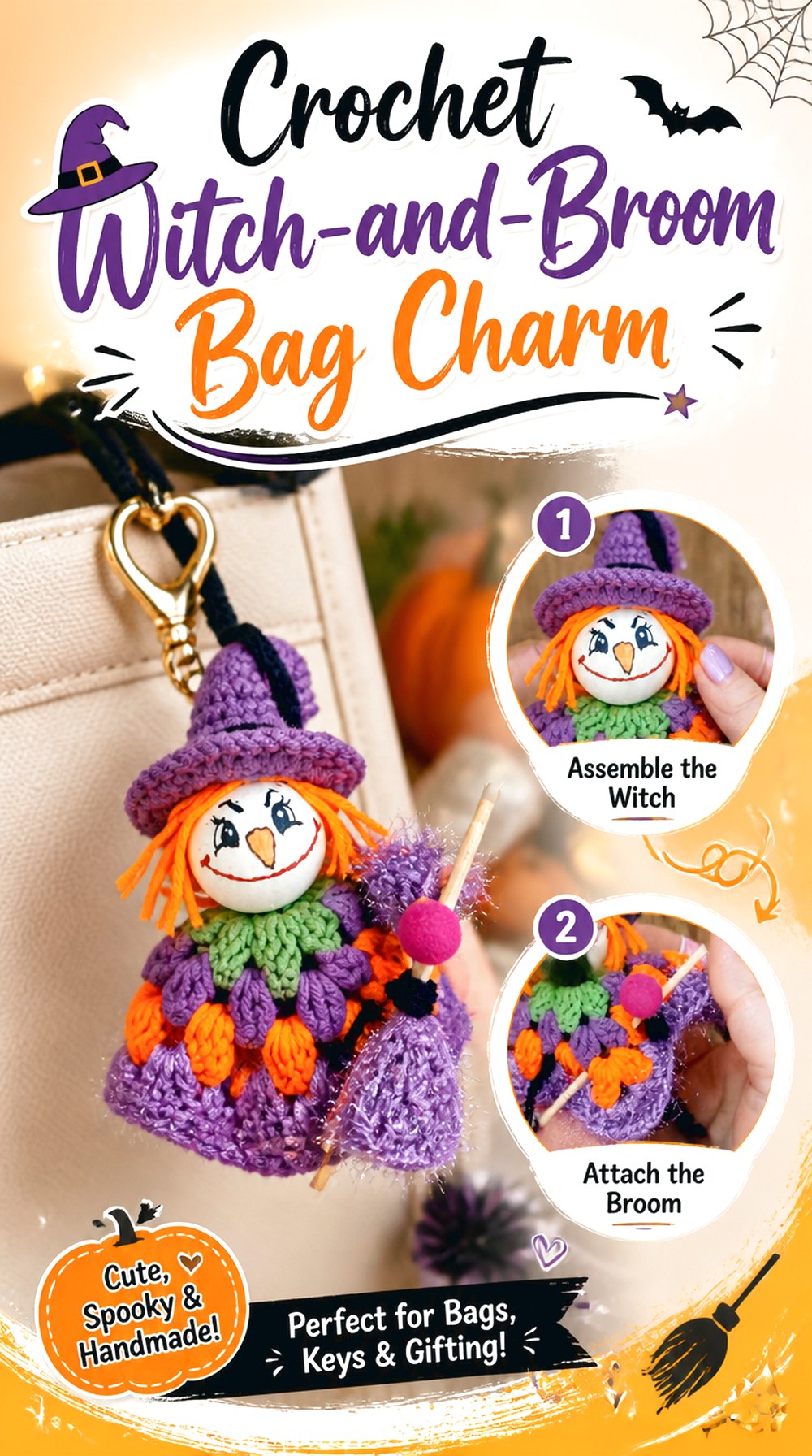
Simple Crochet’s witch keychain is one of the most detailed character options in the collection. The design combines a witch figure with recognizable costume details including a hat and broom, giving you a much more elaborate silhouette than a standalone witch hat.
This is the option for someone who wants the charm to function almost like a miniature hanging scene. Hair, hat, body, and broom create multiple textures and directions, so the finished piece attracts more attention than a compact motif. That same complexity means it is better suited to an attachment point with room to move rather than a zipper that is constantly pulled through a crowded bag.
Check the Broom for Snagging
A narrow broom is visually effective because it extends beyond the body. Before choosing the charm for daily use, see how freely that extension hangs and whether it is likely to catch on clothing or straps. Position can sometimes matter as much as construction: a tote handle may give the broom more clearance than a recessed zipper pull.
Keep the Hat and Hair From Competing
Two strong upper-body details can make the silhouette feel busy. When selecting colors, consider giving either the hat or hair stronger contrast while letting the other recede slightly. This keeps the face area readable rather than turning the whole upper section into one dense patch of color and texture.
Mixed Details Affect Care
The source design includes multiple components, so care may be more complicated than for a plain crocheted candy corn. Follow the relevant yarn and creator guidance, and remember that any non-yarn embellishments can change how safely the finished charm can be washed or handled.
Original Tutorial and Creator Credit
Creator: Simple Crochet
16. Crochet Crescent Moon Keychain
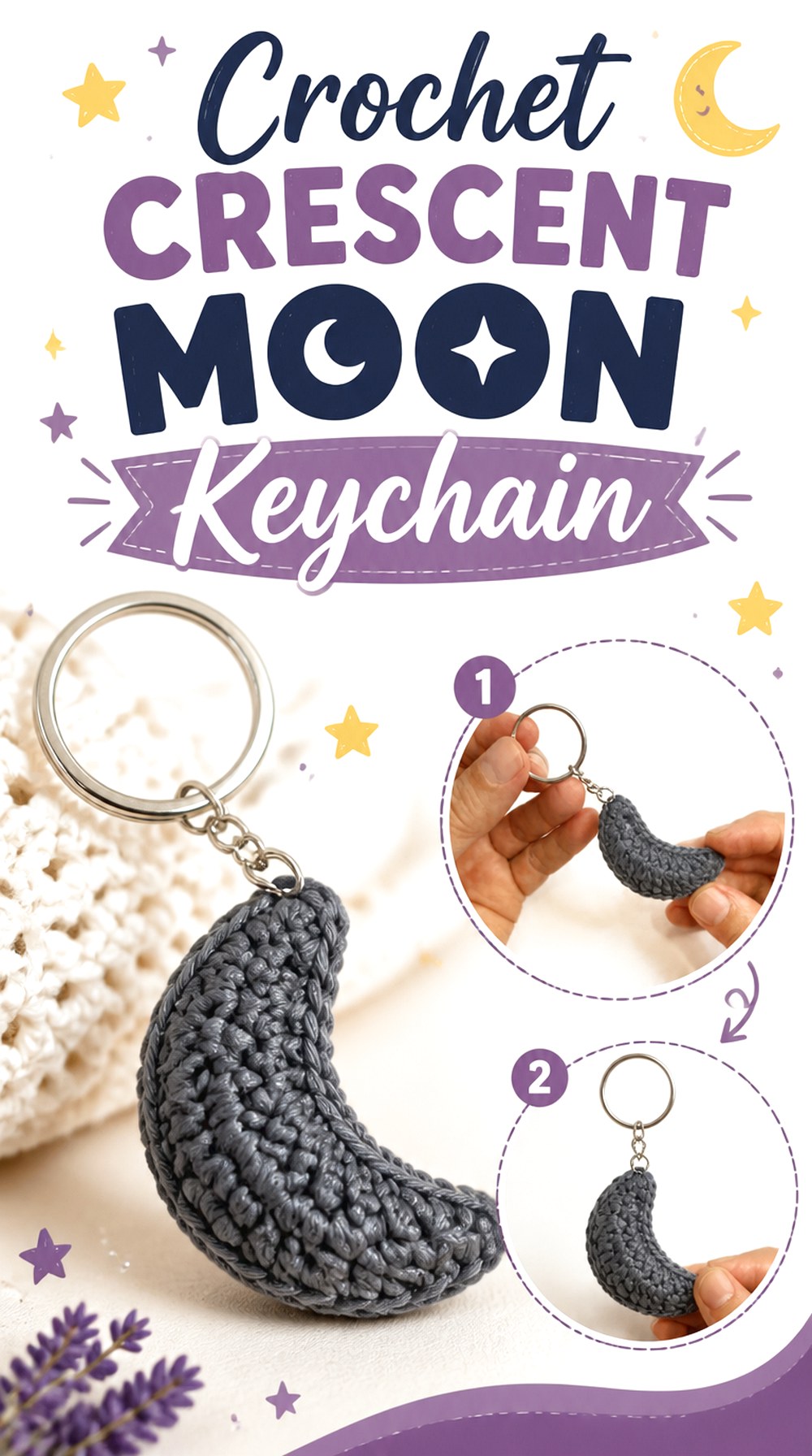
A crescent moon gives the collection a witchy fall accent that does not need to be packed away the moment Halloween ends. Hook & Loop Crochet Tutorials demonstrates a stuffed crescent moon keychain, including joining the shape, filling it, and adding the keyring.
The curved form is quieter than a monster face but still pairs naturally with celestial, gothic, and witch-inspired bag styling. Because the crescent relies on a clean inner curve, stuffing and fabric behavior deserve more attention than they would in a simple sphere. A puffy moon can be appealing, but overfilling may soften the negative space that makes the crescent recognizable.
Protect the Inner Curve
The empty space inside the crescent is part of the design. If stuffing pushes too aggressively into that area, the moon can become closer to a bent oval. Shape it gradually and compare both tips so the curve remains visually intentional.
This Motif Transitions Beyond Halloween
Black, charcoal, gold, cream, or deep blue can move the charm toward celestial styling rather than strict October décor. That makes the crescent a sensible choice if you want one project with a longer seasonal life without changing the original construction.
Original Tutorial and Creator Credit
Creator: Hook & Loop Crochet Tutorials
17. Crochet Ghost and Pumpkin Bag Charm
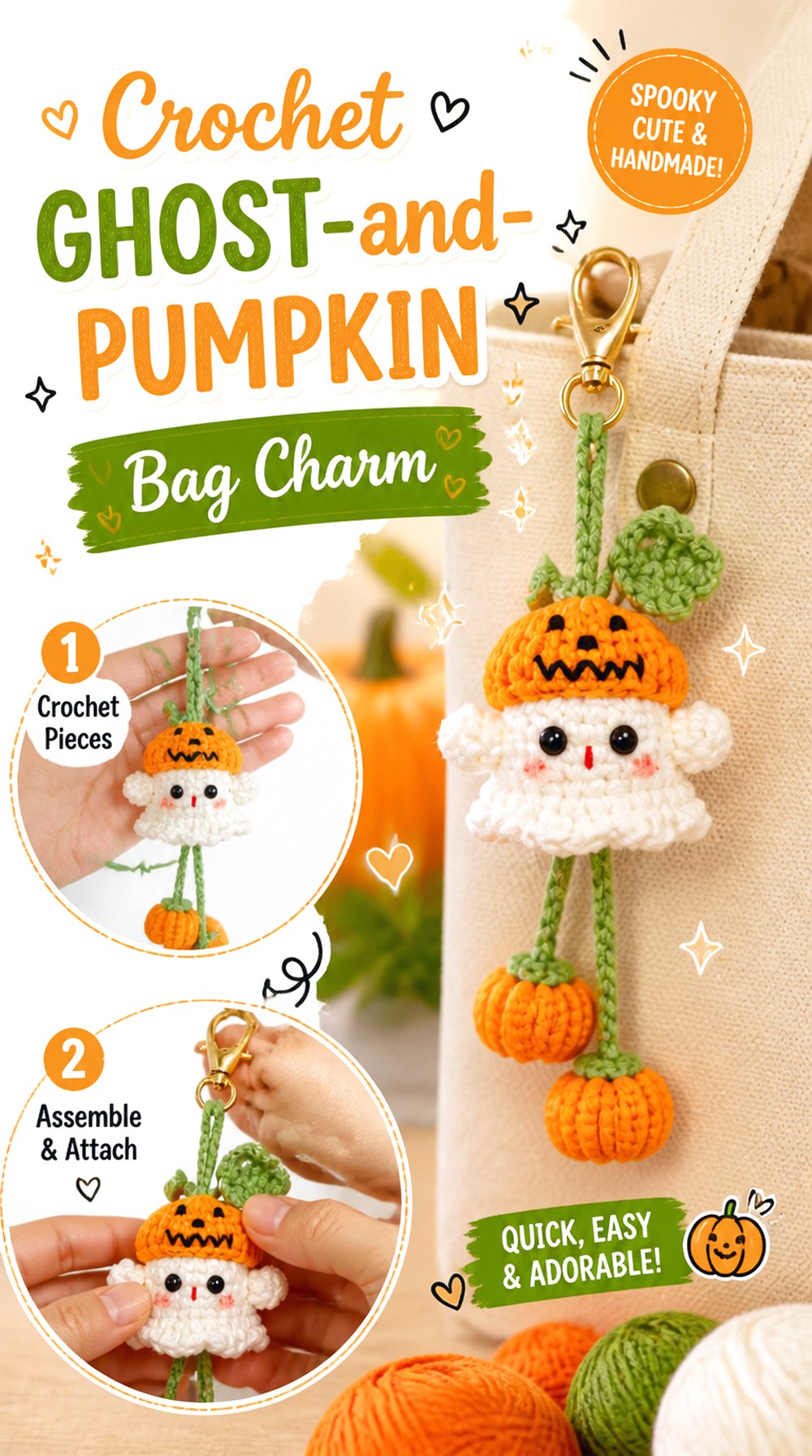
Ngochan Crochet combines two major Halloween motifs rather than making the reader choose between them. The tutorial presents a ghost-and-pumpkin crochet keychain with a ghost figure, pumpkin-themed head detail, and additional seasonal elements.
That layered composition makes this a much busier option than the plain Pocket Ghost. It suits someone who wants a bag charm to act as a miniature focal piece rather than a subtle accent. The combination also lets white and orange balance each other naturally, reducing the need for many extra colors. Because multiple elements occupy the same small accessory, spacing and secure joins deserve particular attention.
Let One Motif Lead
When a project combines several seasonal symbols, visual hierarchy helps. The ghost should still read clearly instead of disappearing beneath pumpkin accents. If you change colors, keep enough contrast between the main body and accessories so the charm does not become one undifferentiated cluster.
More Pieces Mean More Checkpoints
A multi-element charm has additional joins compared with a single pumpkin. Inspect each small attachment after assembly, especially anything that protrudes or dangles. If the bag will be used around young children or pets, small detachable embellishments deserve extra caution.
Original Tutorial and Creator Credit
Creator: Ngochan Crochet
18. Crochet Jack O’ Lantern Bag Charm
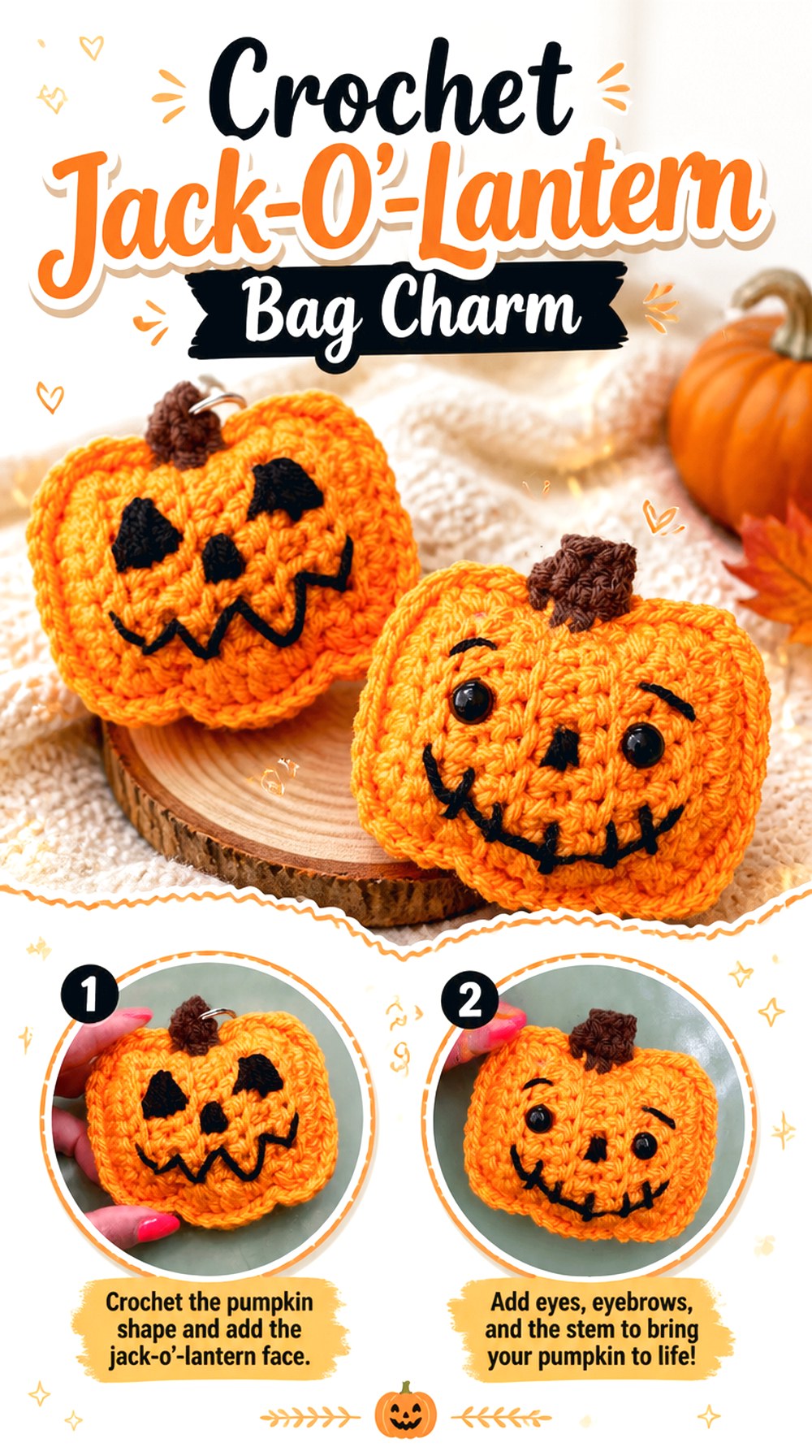
Jennifer Noelle’s jack-o’-lantern takes the pumpkin theme in a more graphic direction. The original pattern uses two pumpkin panels joined into a stuffed form and provides multiple facial options, with an O-ring placement for turning the finished pumpkin into a keychain.
That construction makes it meaningfully different from the fully rounded ridged pumpkin at the beginning of the list. Here, the face is central to the identity, so you can choose whether the expression is cheerful, classic, or slightly eerie. The broader front also makes the charm sit almost like a tiny padded badge against a bag.
Choose the Face Before Final Assembly
Some facial treatments are easier to manage while the working area is still accessible. Follow the designer’s sequence rather than assuming every decorative detail can be added equally well at the end. If you substitute your own embroidery, plan the expression before stuffing changes the front surface.
A Jack-O’-Lantern Needs Strong Contrast
The face is what pushes this project from “fall pumpkin” into Halloween territory. Black against orange gives obvious definition, but other combinations can work if the eyes and mouth remain clearly visible. Low contrast may leave the charm looking like a plain pumpkin from a distance.
Original Tutorial and Creator Credit
Creator/Site: Jennifer Noelle
19. Crochet Horned Pocket Monster Keychain
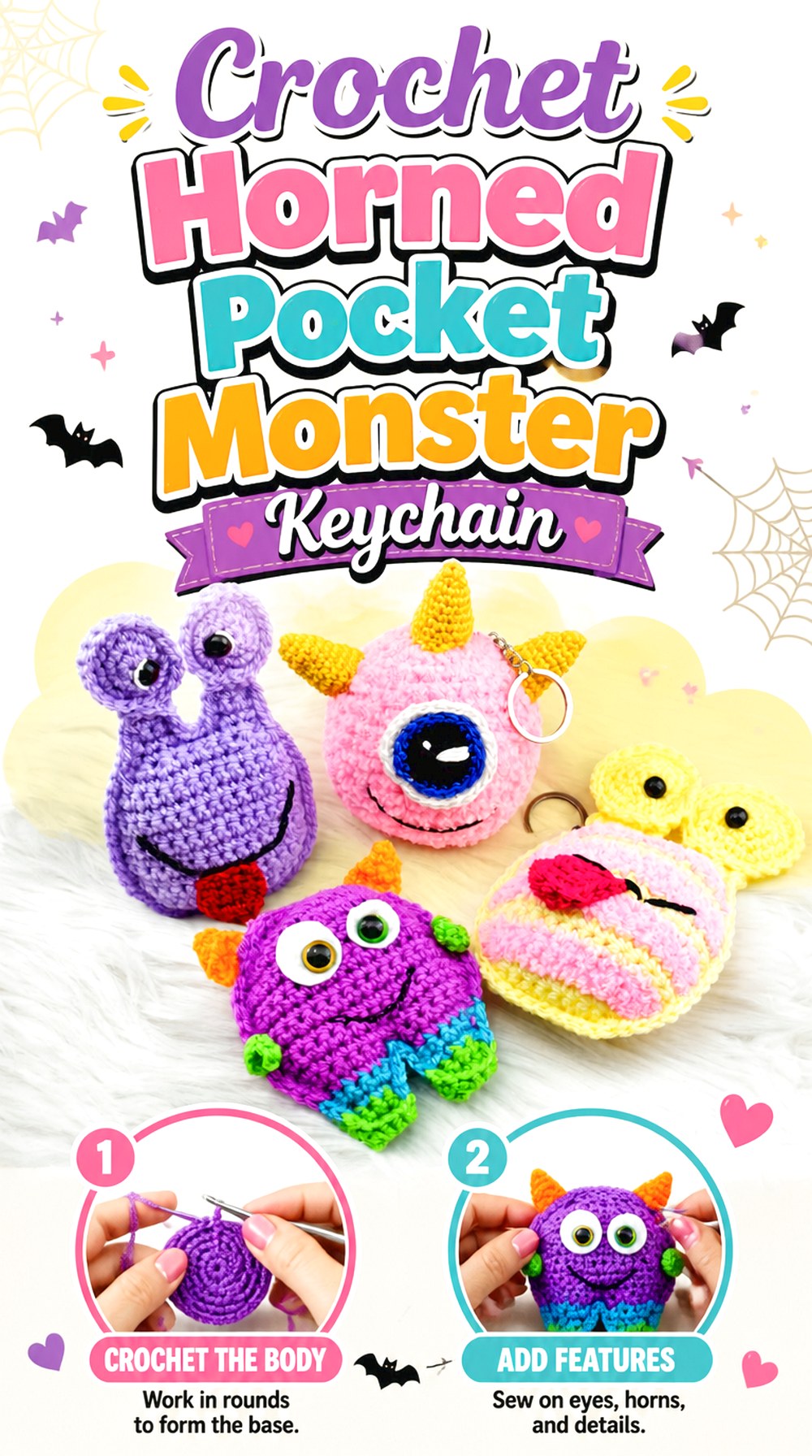
Passionate Crafter’s pocket monsters break away from recognizable Halloween icons entirely. The designer presents the little monsters as keychains for decorating trick-or-treat bags and school bags, with variations that include solid and fuzzy bodies and horn details.
That makes this project ideal if you want a charm that feels Halloween-related without being another pumpkin, ghost, or skull. The monster concept also leaves more room for unexpected color combinations. Lime, violet, turquoise, pink, or mixed fuzzy yarn can all work because the creature itself is imaginary. Horns and texture provide the visual identity.
Texture Can Change the Whole Personality
The original source discusses both solid-color and effect-yarn monsters. A smooth yarn emphasizes the crocheted shape, whereas a fuzzy fiber can make the character look much more unruly. Keep in mind that heavy texture can obscure tiny facial details, so those may need stronger contrast.
Horns Should Read Without Becoming Hooks
Projecting horns are fun, but a bag charm should not behave like a fishing hook around sweaters and straps. Check their final direction and firmness. If you alter the original styling, avoid adding wire or other internal structures unless a trustworthy source specifically supports that construction and it is appropriate for the intended use.
Original Tutorial and Creator Credit
Creator/Site: Passionate Crafter
20. Crochet Stitched Doll Bag Charm
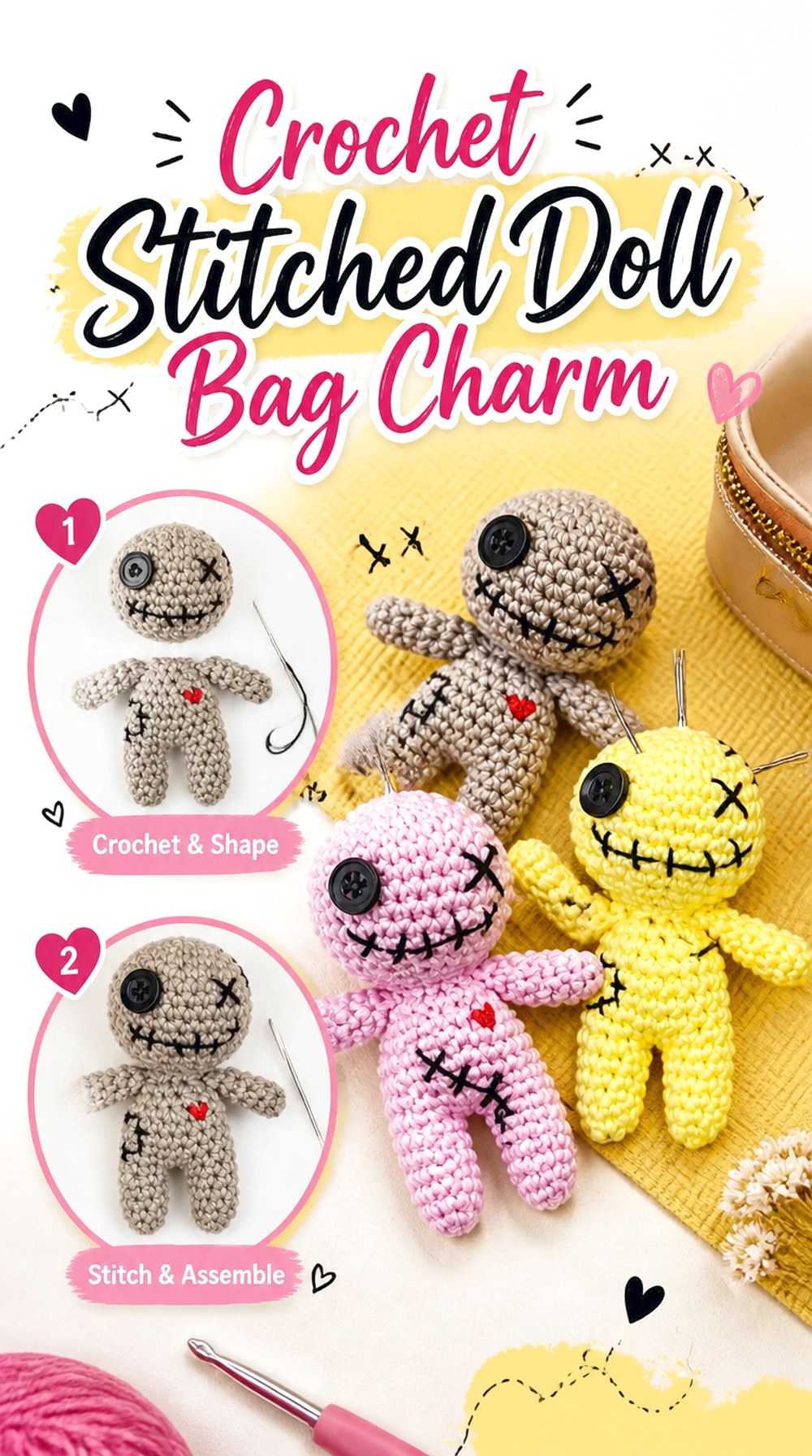
The 365 Days of Dana voodoo-doll keychain closes the list with a narrow humanoid silhouette and deliberately stitched detailing. The original design is presented as both a keychain and pincushion, with customizable button and embroidery details.
As a bag charm, the appeal is the contrast between a simple little doll form and graphic stitched features. It has more vertical movement than a skull or eyeball but a narrower profile than a spread-wing bat. You can keep the Halloween interpretation playful by emphasizing contrasting yarn stitches rather than adding sharper or heavier objects. For a carried accessory, decorative sewing can provide plenty of visual character on its own.
Buttons Are Optional, Not Mandatory
The source uses a button among its customizable facial details. For a bag charm that may be handled by young children or accessed by pets, an embroidered alternative avoids a small detachable component. The safest choice depends on the intended user and environment, not merely on appearance.
Keep Arms and Legs Firmly Attached
A narrow doll naturally has several joins that move independently when the bag swings. Give each one a careful finishing check and hide yarn tails securely. The goal is not to make the limbs rigid, but to make sure ordinary motion does not rely on one loose sewing pass.
Let the Stitching Supply the Halloween Mood
Contrasting X-shaped marks, mouth stitches, or a small embroidered motif can make the doll look suitably spooky without adding multiple three-dimensional accessories. This keeps the silhouette readable while reducing potential snag points.
Original Tutorial and Creator Credit
Creator/Site: 365 Days of Dana
Which Crochet Halloween Bag Charm Style Should You Choose?
For the lowest-profile option, start with the flat skull or candy corn. Their compact silhouettes make sense on smaller bags and zipper pulls. A pumpkin, ghost, eyeball, cauldron, or Frankenstein head adds more volume without many long projecting pieces.
Choose the bat, spider, witch, vampire, or horned monster when movement and silhouette are more important than minimizing snag points. Their wings, legs, cape, broom, or horns create stronger visual character but deserve more room to hang.
For a subtler seasonal accessory, the crescent moon, black cat, pumpkin, or potion bottle can transition into broader fall, celestial, or gothic styling. The ghost-and-pumpkin, zombie, and stitched doll work best when you want the charm itself to become a small character-driven focal point.
Conclusion
These 21 crochet Halloween bag charm ideas cover much more than miniature pumpkins and ghosts. The collection ranges from flat graphic shapes and rounded amigurumi to winged creatures, dressed characters, witchy objects, and multi-part hanging designs.
Choose according to the bag as much as the motif. Compact candy corn, skulls, eyeballs, and pumpkin forms are easier to accommodate, while spiders, bats, witches, monsters, and layered ghost charms create more movement and detail. Yarn texture, stuffing, hardware placement, and securely finished embellishments can all influence how well a miniature works once it leaves the craft table.
When you decide which look fits your fall style, use the linked original tutorials for the creators’ exact construction details rather than trying to reverse-engineer the project from a finished photo.
Frequently Asked Questions
What yarn works well for crochet Halloween bag charms?
There is no single yarn that suits every project. Smooth yarn can make small stitches, faces, stripes, and embroidered details easier to see, while plush or fuzzy yarn creates a softer, fuller look. Changing yarn weight can also change the finished scale considerably. When substituting, compare the new yarn with the tutorial’s intended fabric and make sure the stitches are dense enough for any stuffing the design uses.
How do I keep a crochet bag charm from stretching at the keyring?
Avoid assuming that one exposed crochet stitch is strong enough for repeated pulling. Follow the tutorial’s attachment method and place hardware through a stable area or purpose-made loop when the design provides one. For an adaptation, think about how the force from the clasp will transfer into the main body. Decorative stems, thin hats, wings, or surface embellishments should not automatically become load-bearing points.
Are safety eyes a good choice for Halloween bag charms?
They can work for decorative accessories intended for appropriate users, but they are still small components. If the charm could be accessed by babies, young children, or pets, embroidered facial features are a simpler way to avoid detachable eye parts. Buttons and beads deserve similar consideration. Always evaluate the actual recipient and use rather than assuming that a detail is suitable simply because it appears on an amigurumi project.
Can I use a larger amigurumi tutorial to make a tiny bag charm?
Sometimes changing yarn and hook size can alter the scale, but it does not guarantee that every detail will remain practical or proportionate. Thin limbs may become fiddly, facial components can crowd together, and the hardware attachment may need different consideration. The projects in this list were chosen because their sources either teach keychains directly or explicitly discuss the miniature as a possible keychain or bag charm.
Which Halloween charm shapes are least likely to snag?
Compact forms with few projecting parts generally have fewer snag points. Candy corn, pumpkins, eyeballs, head-shaped charms, and some small ghosts are comparatively contained. Bats, spiders, witches, vampires, and horned monsters intentionally use wings, legs, brooms, capes, or horns to create their silhouettes. Those designs can still work well, but they benefit from a hanging position with more clearance.
How should crochet bag charms be cleaned?
Care depends on the yarn fiber, stuffing, hardware, and embellishments used in the individual project. Follow the yarn label and any care information provided by the original designer. Metal rings, buttons, safety eyes, felt, glue, or mixed fibers can change what cleaning method is appropriate. When the source does not provide care instructions, avoid assuming that machine washing or high heat is safe.
Can I customize these Halloween charms with different colors?
Color is one of the safest ways to personalize a project without reconstructing its pattern. Cream pumpkins, pastel ghosts, neon monsters, purple bats, or celestial black-and-gold moons can all change the mood. Keep contrast in mind when a design depends on facial details or recognizable color blocking. Construction, sizing, and material substitutions should still be checked against the original creator’s tutorial when they affect the finished form.