A crochet triangle headscarf is small enough to work as an outfit detail, but construction makes a major difference in how it looks and wears. An open granny triangle can feel light and relaxed, a joined-motif scarf has more visual structure, and a dense textured design can become a stronger focal point around the hairline.
For Fall 2026, you do not have to rely on pumpkin orange to make a headscarf feel seasonal. Rust, olive, cream, chocolate, burgundy, ochre, charcoal, muted plum, and antique gold can all shift the mood, but shape, texture, edging, and motif placement usually have a bigger effect on the finished accessory.
The 15 ideas below use different approaches to the triangle headscarf rather than repeating the same construction in different colors. Some original tutorials were created for warmer seasons, so the autumn angle comes from thoughtful color, styling, and material choices rather than pretending every source was designed specifically for fall.
Quick List
- Crochet Leaf Lace Triangle Headscarf
- Crochet Fine Granny Autumn Triangle Headscarf
- Crochet Puff Flower Patchwork Triangle Headscarf
- Crochet Checkerboard C2c Triangle Headscarf
- Crochet Layered Shell Triangle Headscarf
- Crochet Scalloped Row Grown Triangle Headscarf
- Crochet Filet Grid Triangle Headscarf
- Crochet Open Mesh Triangle Headscarf
- Crochet Floral Lace Triangle Headscarf
- Crochet Textured Picot Triangle Headscarf
- Crochet Raised Texture Triangle Headscarf
- Crochet Sunflower Motif Triangle Headscarf
- Crochet Scalloped Granny Patch Triangle Headscarf
- Crochet Fringe Edge Triangle Headscarf
- Crochet Skull Motif Triangle Headscarf
Choose Fall Headscarf Construction Before Choosing Color
A seasonal palette can change the mood of a headscarf, but it cannot change how the fabric behaves. Start by deciding whether you want substantial coverage, visible hair through openwork, a smooth silhouette, pronounced texture, or a strong picture motif.
Granny and mesh constructions generally leave more visible space between stitches. Joined granny motifs make the individual blocks part of the finished look. Shells, raised texture, and picot details create interest even in a single color, while checkerboard and picture-motif designs depend more heavily on controlled contrast.
Consider the rest of your fall wardrobe too. A heavily patterned triangle may compete with plaid shirts, printed dresses, or textured jackets. A quieter one-color scarf can add handmade texture without introducing another dominant pattern.
Drape Matters Around the Crown and Tie Area
A triangle headscarf has to bend around the head rather than simply look flat on a table. Yarn substitution can therefore change more than the appearance. A noticeably heavier or firmer fabric may create more bulk near the upper corners, while a very loose fabric may stretch farther than expected once tied.
If you change the yarn recommended by a tutorial, work enough fabric to judge its behavior before committing to the full project. Fold it, curve it, and place it against the head. Pay particular attention to the top edge and the area where the ties begin.
Motif projects require another check. Compare the relaxed or blocked size of repeated squares or flowers before joining them. Small differences can accumulate across the width of a headscarf and leave one side pulling more strongly than the other.
Check Triangle Width, Depth, and Tie Position Separately
A headscarf can be wide enough to reach around the head but still feel too shallow at the back. The reverse can happen as well: a deep point may provide plenty of coverage while the upper corners do not reach comfortably into the tie area.
Instead of judging fit from one dimension, look at three things: how far the upper edge reaches across the head, where the center point falls at the back, and where the ties begin once the fabric is curved into wearing position.
If you want a small kerchief effect, a shallower triangle may be enough. For more hair coverage, pay more attention to depth and upper width. Use the creator’s own sizing guidance whenever it is provided rather than assuming that a different yarn will produce the same proportions.
1. Crochet Leaf Lace Triangle Headscarf
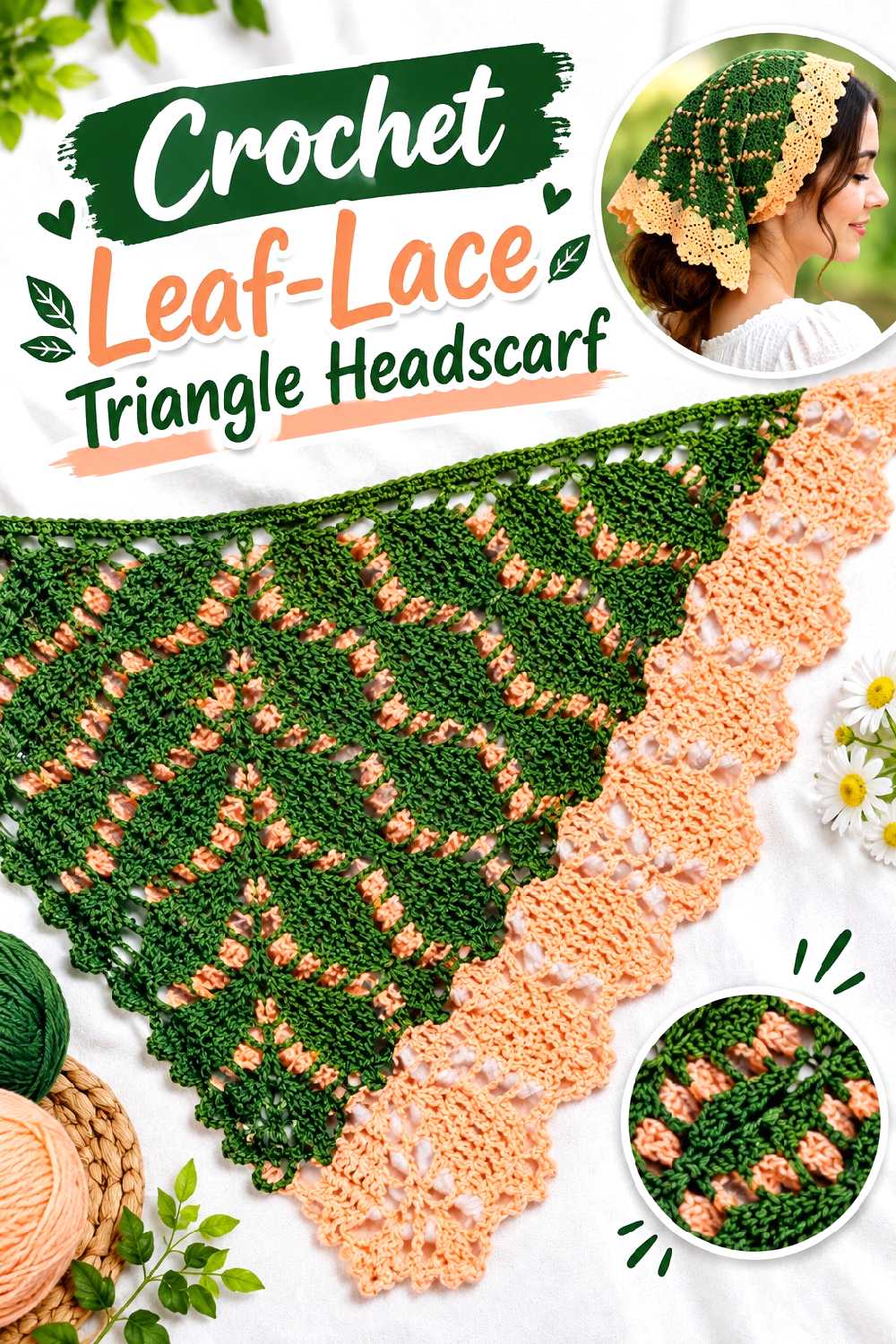
A leaf-based triangle makes the seasonal theme part of the crochet itself. The source project from Nanda Pedreira Crochet uses a recognizable leaf design within the triangular bandana form, creating a different surface from granny clusters or plain mesh.
This style can work particularly well in moss, dark olive, copper, wine, or warm brown because the color supports the botanical idea without requiring several shades. The motif already carries enough detail to become the main feature.
Let the Leaf Shapes Remain Readable
A directional motif needs enough visual clarity for the individual shapes to register. Highly speckled or rapidly changing yarn can compete with the leaves, especially when the scarf is viewed from normal wearing distance.
Before committing to a busy yarn, crochet a representative section and place it against your hair. If the stitch pattern disappears, a solid or gently tonal shade may serve the design better.
Watch the Balance Between Width and Point Depth
A decorative central pattern can encourage you to keep extending the triangle because another repeat looks tempting. More depth, however, changes the amount of fabric at the back of the head.
Test the developing scarf in wearing position before deciding how much coverage you want. The ideal stopping point is a fit decision, not simply the point where the motif looks attractive lying flat.
Keep Fall Styling Around It Relatively Quiet
Because the leaves create their own pattern, this scarf does not need many additional details. It can sit comfortably beside solid cardigans, denim, suede-like textures, simple sweaters, or understated coats.
If the outfit already contains a strong print, compare the patterns together before deciding whether the leaf scarf should be high contrast or more tonal.
Creator Credit: Nanda Pedreira Crochet
2. Crochet Fine Granny Autumn Triangle Headscarf
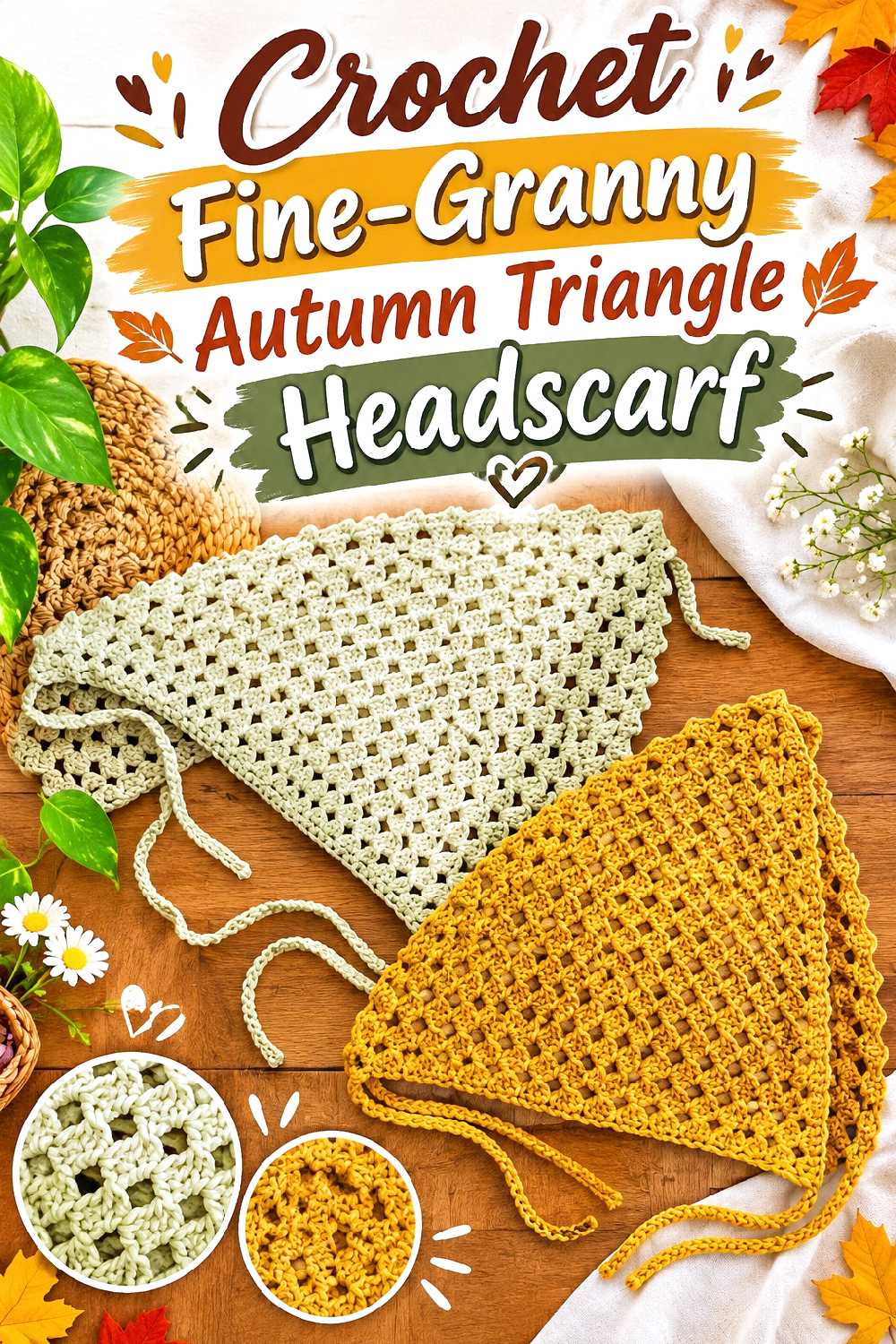
A continuous granny triangle is one of the simplest visual forms in this collection, but yarn scale can change its character substantially. HayHay Crochet’s source version was presented as an autumn bandana and uses a finer approach than many chunkier granny accessories.
That makes this a useful option when you like the recognizable granny look but want something that reads as a head accessory rather than a miniature shawl.
Finer Granny Fabric Can Reduce Visual Bulk
Large clusters in thick yarn can dominate a small triangle. A finer fabric makes the open spaces and repeated clusters appear more delicate and can allow the material to fold more easily around the crown.
If you substitute yarn, do not assume that simply stopping at the same stage shown in the source will reproduce the same fit. Compare the actual dimensions and drape of your fabric.
A One-Color Version Works With Patterned Fall Clothes
Granny crochet is often associated with several colors, but a single rust, burgundy, tobacco brown, oatmeal, or muted green can make the stitch pattern itself provide the visual interest.
This is especially useful if the headscarf will be worn with plaid, stripes, textured knitwear, or patterned outer layers where additional color changes might make the overall outfit feel crowded.
Pay Attention to Bulk Where the Ties Meet the Body
A soft triangle can still become thick at the upper corners if the finishing and ties create several layers of yarn in one place. Temporarily tie or pin the scarf before completing all finishing decisions.
A flatter side profile may matter more if you plan to wear the scarf beneath loose hair, a hood, or a jacket collar.
Creator Credit: HayHay Crochet
3. Crochet Puff Flower Patchwork Triangle Headscarf
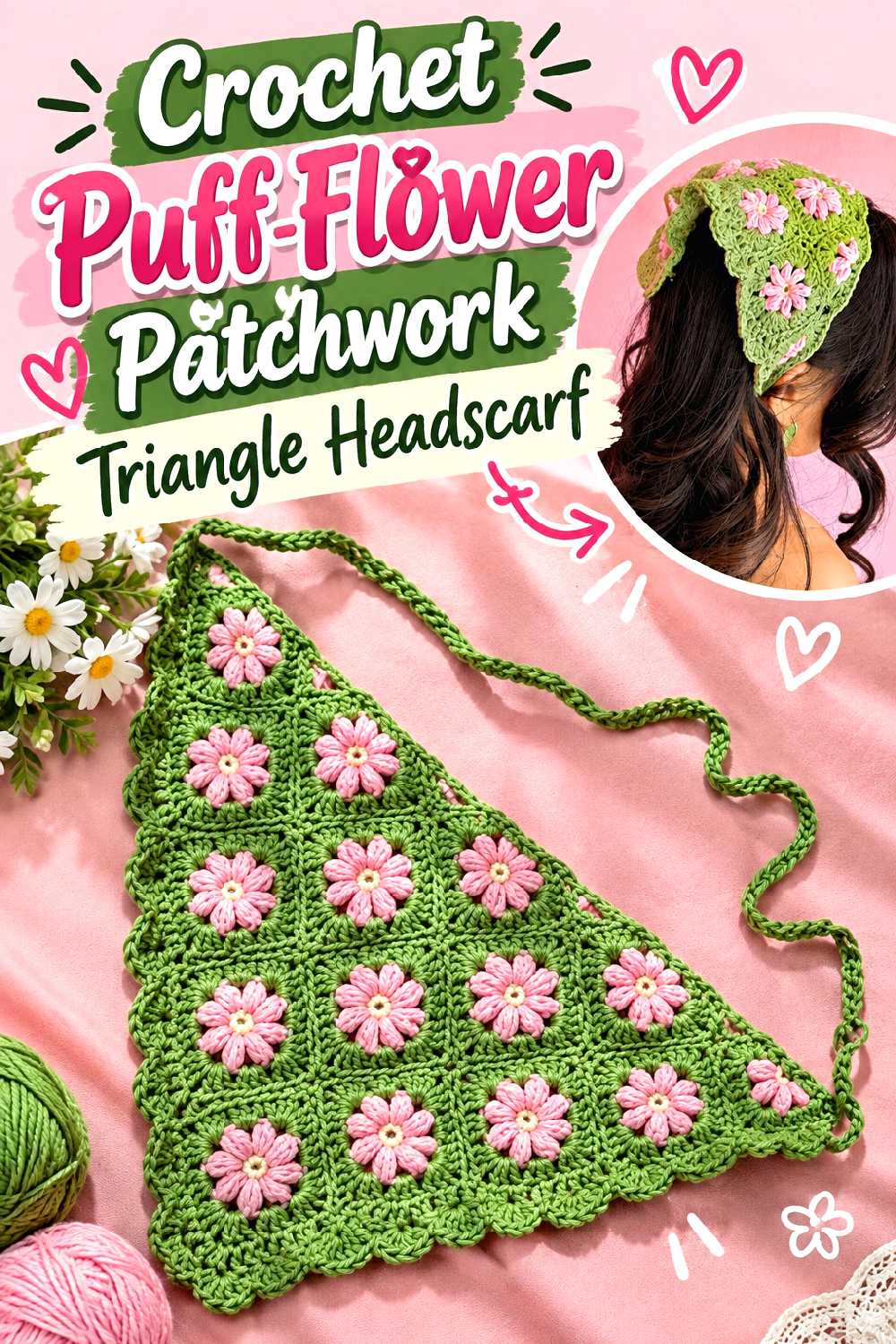
For a more decorative fall accessory, a triangle assembled from flower-centered granny motifs brings pattern and color into the construction itself. Kylie Katsuit’s tutorial uses puff-style flower granny squares, giving the finished scarf a modular appearance rather than one continuous triangle.
The flowers can shift from spring to autumn through color alone. Ochre, faded terracotta, brown, cream, burgundy, and muted gold can suggest dried flowers or late-season blooms without changing the underlying structure.
Treat the First Finished Motif as a Size Reference
Repeated motifs make small tension differences visible. Before producing the entire set, finish one representative unit and use it as a reference when checking the others.
If individual squares differ substantially, joining them can produce a wavy top edge or distorted triangle. It is easier to correct inconsistencies before assembly.
Plan the Color Distribution Before Joining
A patchwork headscarf can become visually lopsided if all the darkest flowers land on one side. Lay the motifs in their intended triangle arrangement and look at the whole piece from several feet away.
You can then decide whether you want a deliberate gradient, symmetrical repetition, or a more random arrangement.
Consider the Seams Part of the Design
Unlike a one-piece granny triangle, this construction visibly divides the scarf into units. That can add charming patchwork character, but it also changes the way the fabric folds.
If you want an almost seamless-looking head covering, a continuous triangle may suit you better. Choose this version when the assembled handmade look is part of the appeal.
Creator Credit: Kylie Katsuit
4. Crochet Checkerboard C2c Triangle Headscarf
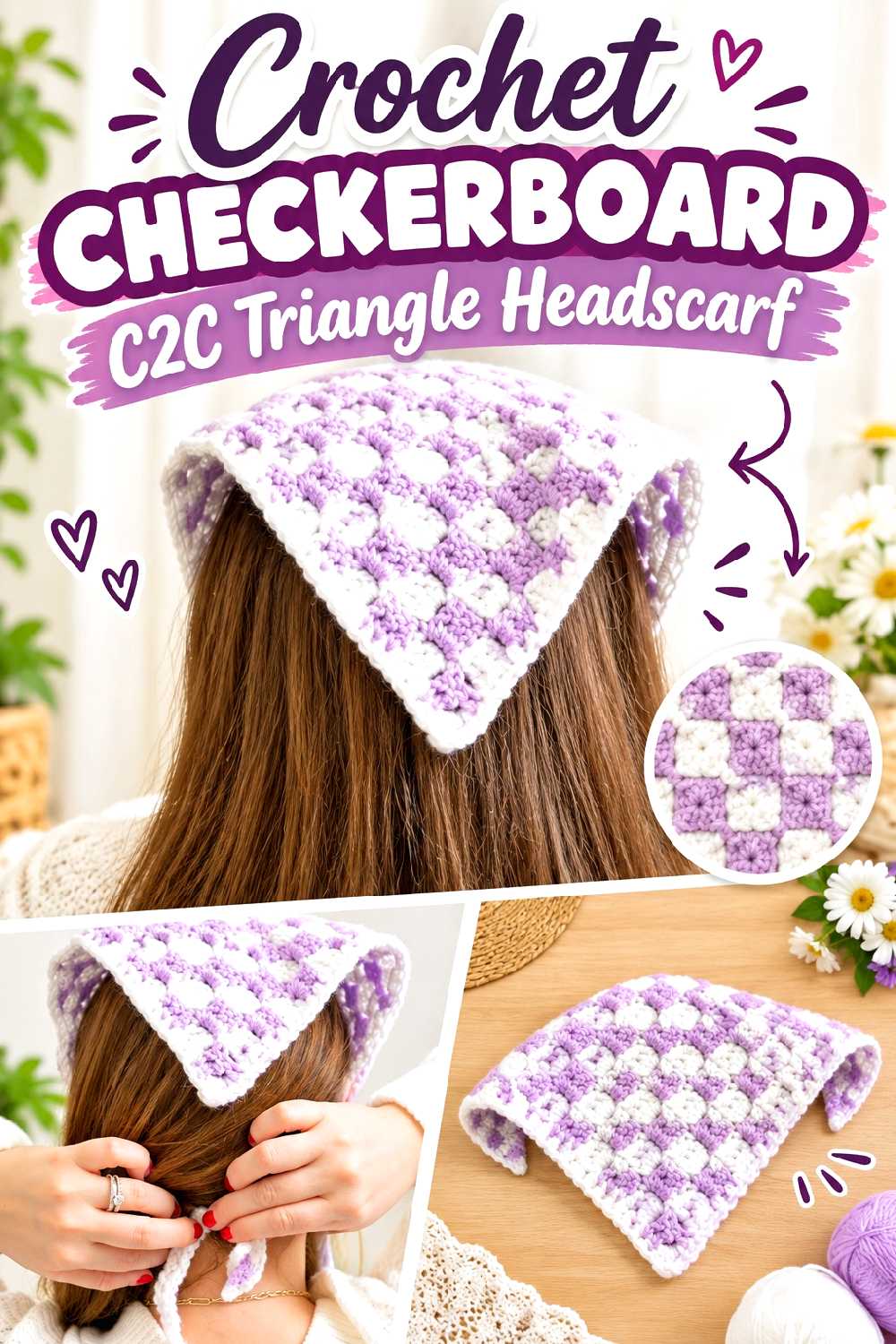
Checkerboard colorwork gives a triangle headscarf a graphic, retro quality that stands apart from floral and lacy designs. Just Be Crafty’s source uses corner-to-corner construction for a checkered triangular hair scarf.
For fall, combinations such as espresso and cream, burgundy and blush, mustard and chocolate, or dark green and oatmeal can keep the checks recognizable without limiting the scarf to Halloween colors.
Contrast Determines How Strong the Checks Look
Two shades with a similar lightness can create a muted, almost plaid-like result. Pairing a very pale yarn with a dark one produces a much bolder grid.
Photograph your yarn choices together and view the image in grayscale if you are unsure. If the two shades become nearly indistinguishable, the checkerboard will probably read more softly.
Straight Geometry Makes Tension Differences More Obvious
Checks and stepped C2C sections rely on repeated geometric shapes. Uneven tension can therefore show more clearly than it might in an irregular lace design.
Lay the scarf flat periodically and check both diagonal sides rather than concentrating only on the color changes.
Decide Whether the Pattern or Your Outfit Gets the Attention
A high-contrast checkerboard can easily become the main element in an outfit. It works particularly well when the clothing underneath is relatively simple.
For patterned jackets or busy sweaters, a lower-contrast pair of fall shades can preserve the checker effect while making it easier to style repeatedly.
Creator Credit: Just Be Crafty
5. Crochet Layered Shell Triangle Headscarf
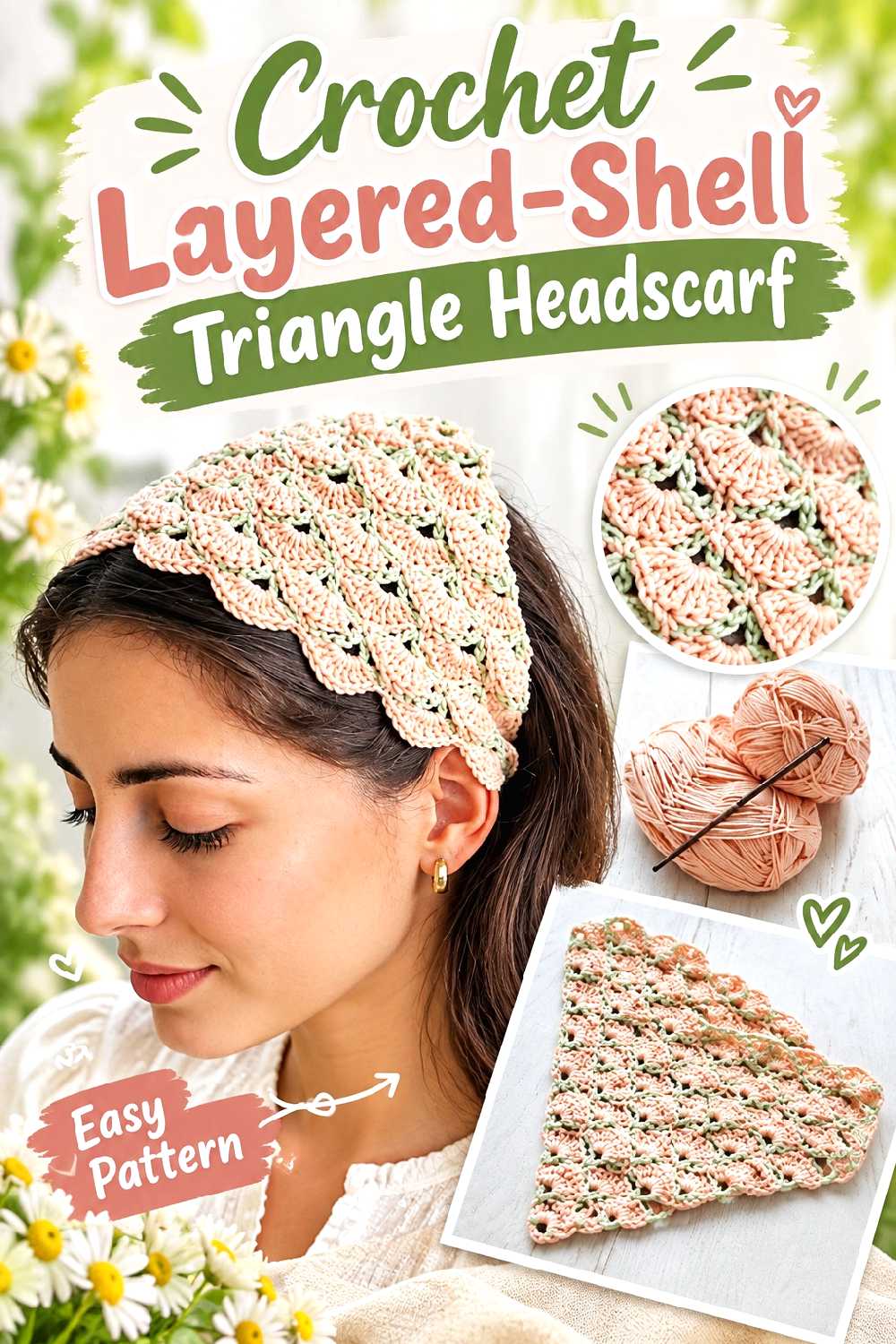
Shell texture creates a curved, dimensional surface that looks noticeably different from open granny clusters. The Snugglery’s source bandana uses the shell pattern as an important part of the finished visual texture.
This is a useful direction for a one- or two-color fall scarf because the fabric can remain interesting even without separate motifs, appliqués, or complicated color placement.
Use Color to Support the Shell Rhythm
If you alternate colors, the transitions can emphasize the layered shape of the shells. Cream with cinnamon, muted pink with burgundy, or sage with oatmeal can create clear separation without becoming excessively bright.
A one-color version shifts the emphasis from stripes to light and shadow across the raised texture.
Check How the Textured Fabric Folds at the Side of the Head
A fabric with strong surface relief may not collapse in exactly the same way as simple mesh. Before final finishing, curve the scarf around the head and examine the upper corners.
If a yarn substitution has made the fabric much firmer, you may notice flaring or bunching that was not obvious while the triangle was flat.
Smooth Yarn Can Make the Texture Easier to See
Very fuzzy yarn can soften the edges of detailed shells. That may be attractive if you want a hazy effect, but it can also hide the feature that made you choose this design.
If stitch definition is the priority, compare a smoother yarn with the fuzzier option before beginning the whole scarf.
Creator Credit: The Snugglery
6. Crochet Scalloped Row Grown Triangle Headscarf
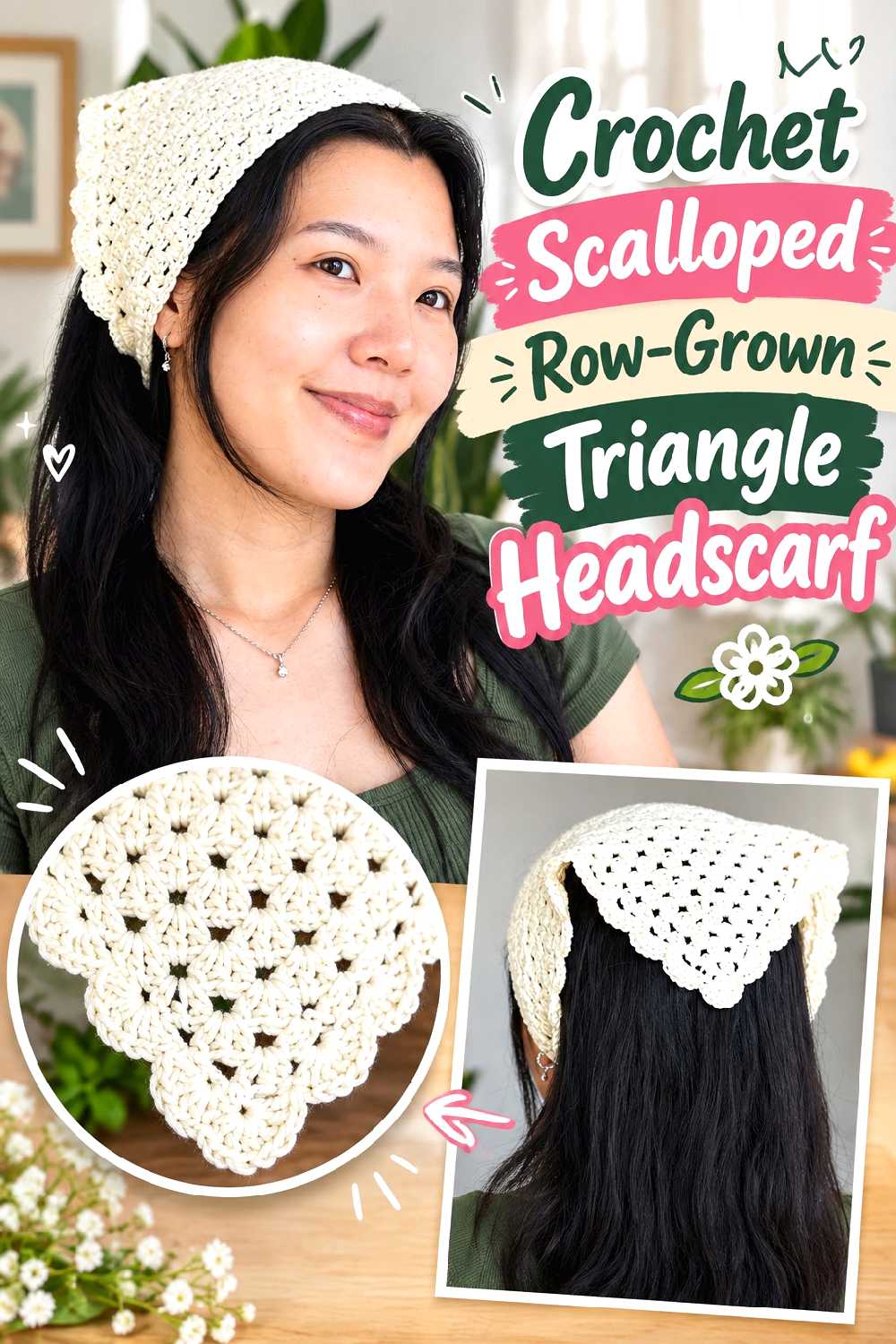
This design changes two things at once: how the headscarf grows and how the outer edge is finished. VivCrochets’ scalloped bandana is worked differently from a conventional center-grown granny triangle and finishes with a rounded scalloped border.
The effect is softer and more decorative than a straight edge, making it easy to imagine in cream, muted plum, moss, cocoa, or dusty rose for fall.
Rounded Edging Changes the Entire Silhouette
A scalloped border draws attention to the outside of the triangle. Even when the body is simple, the repeated curves make the lower edge look intentionally decorative.
Consider whether you want the edging to blend into the body or become a separate feature through contrasting color.
Watch for Rippling Before Fastening Off
Decorative borders add fabric along an existing edge. If the tension between the body and border is mismatched, the sides can begin to wave.
Lay the scarf flat during the edging stage. Catching unwanted rippling early gives you more options than discovering it after every end has been secured.
This Style Can Work Well With Vintage-Inspired Fall Outfits
The soft outline pairs naturally with romantic blouses, cardigans, simple dresses, corduroy, and other autumn pieces that already have a slightly vintage character.
For a more minimal wardrobe, keeping the entire scarf one color lets the scallop shape provide the detail without adding another strong pattern.
Creator Credit: VivCrochets
7. Crochet Filet Grid Triangle Headscarf
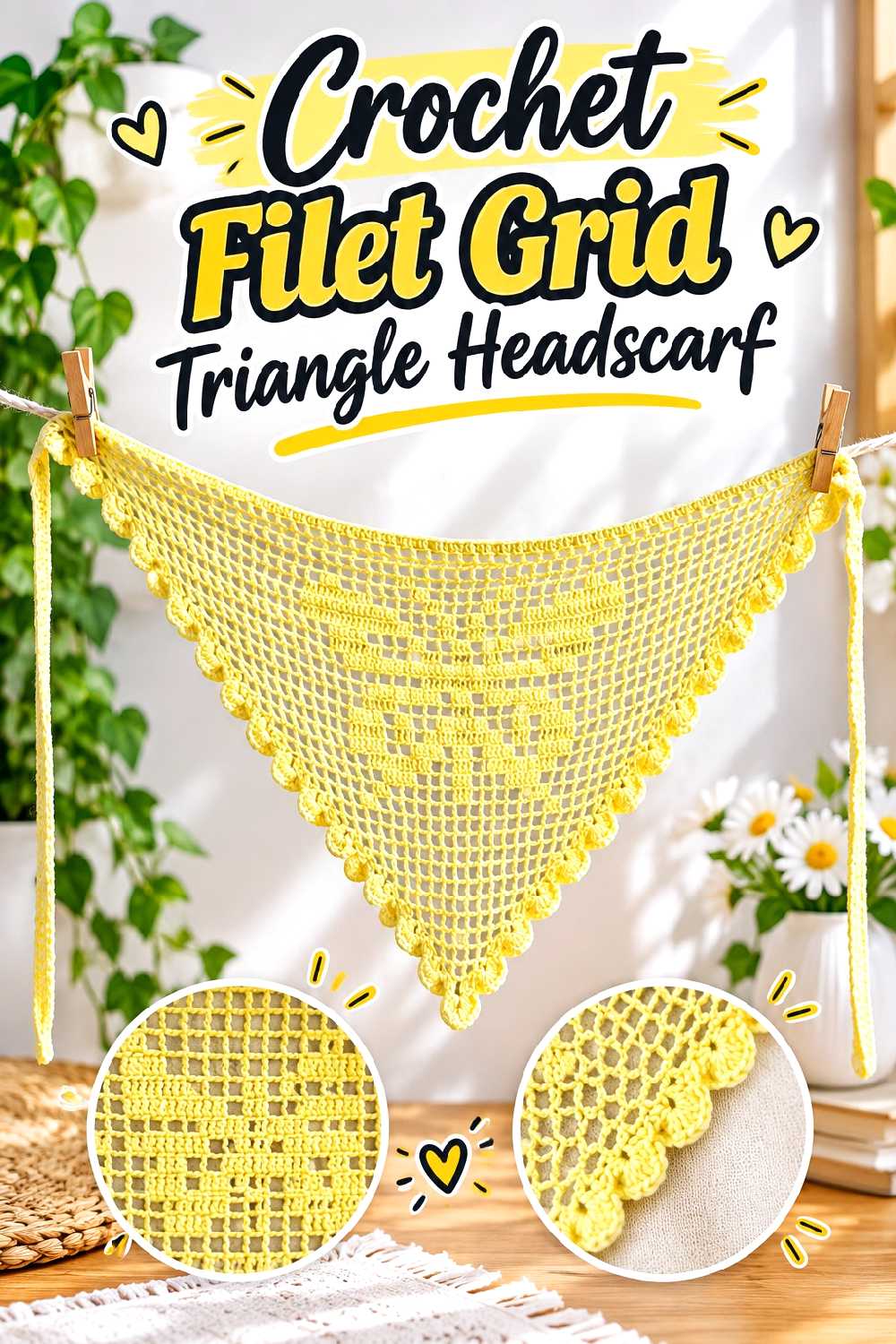
Filet crochet uses open and filled areas to create a more deliberate grid than ordinary mesh. DIYGuru’s tutorial demonstrates a filet triangle scarf that can be worn as a headscarf or bandana, with the open geometry forming a prominent part of the design.
This construction suits fall when you want a dark or earthy color but do not want a dense fabric covering the hair.
Negative Space Is Part of the Pattern
With filet, the openings are not simply empty areas between stitches. They form the visible design. A heavily variegated yarn can make those open-and-solid relationships harder to read.
Forest green, burgundy, espresso, charcoal, ochre, or another mostly solid shade can give the geometry a clearer background.
Open Fabric Gives Less Visual Coverage
A triangle can be physically large while still leaving a substantial amount of hair visible through the openings. Decide whether that airy look is what you want before increasing the size solely for more coverage.
If coverage matters more than the graphic grid, compare this idea with the shell, raised-texture, or motif-based options.
Blocking Has a Visible Effect on Geometric Openwork
Open squares can look inconsistent when tension varies. Once the fabric is complete, use a blocking method appropriate for the yarn fiber and care instructions rather than assuming every material responds to the same treatment.
The goal is not to force the scarf larger, but to help repeated openings settle into a more consistent shape.
Creator Credit: DIYGuru
8. Crochet Open Mesh Triangle Headscarf
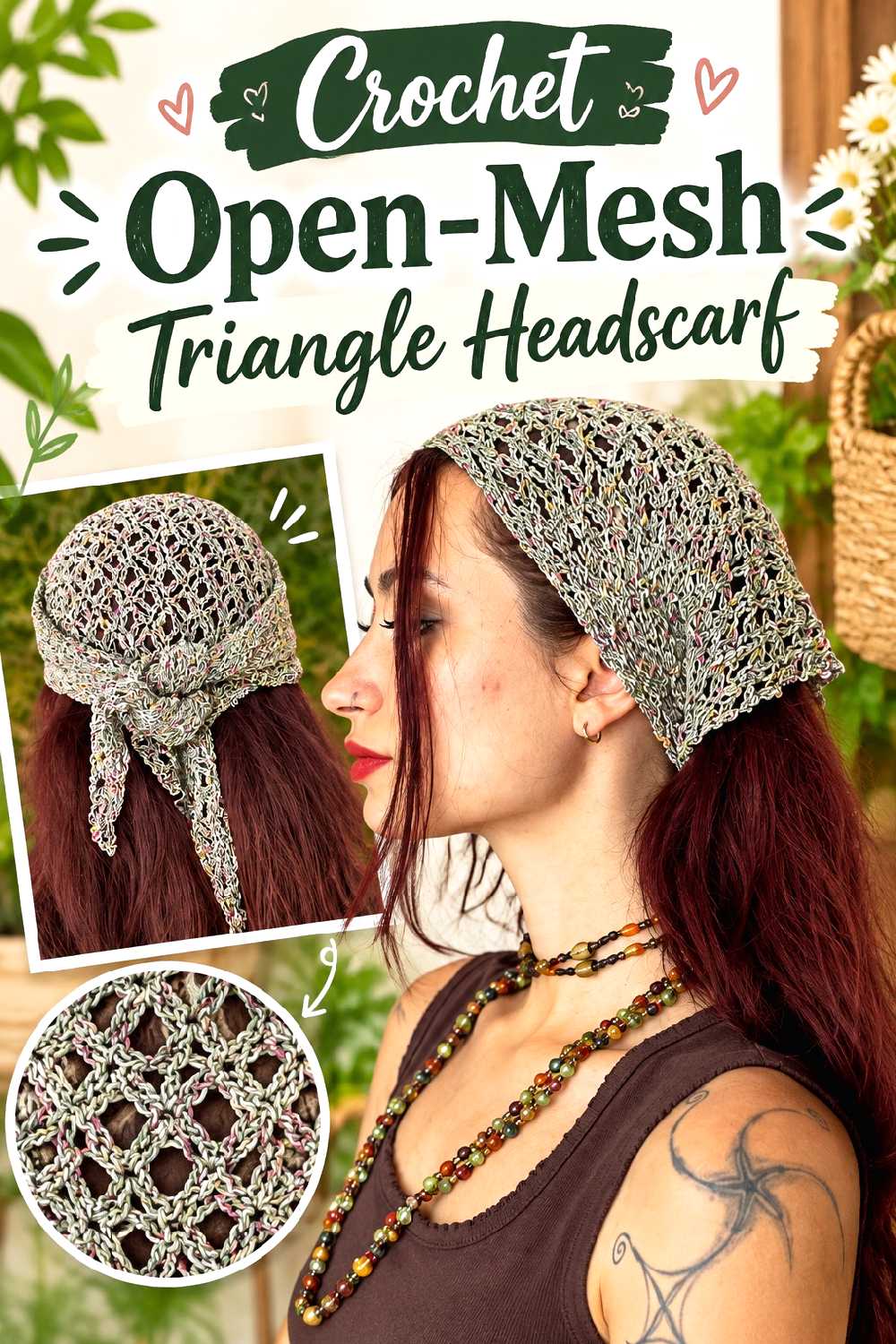
An open net-like triangle is the lightest-looking option in this collection. The knottyverse source uses an airy mesh structure rather than dense motifs or heavy surface texture.
That makes it especially useful during early fall or in warmer climates where you want autumn styling without a heavy accessory around the head.
Hair Becomes Part of the Visual Background
Large mesh openings allow the hair beneath the scarf to show clearly. The same yarn can therefore look different over dark, light, curly, straight, or brightly colored hair.
Try the developing triangle on before deciding whether the mesh should become larger. More fabric does not automatically produce a denser-looking result.
Think About Jewelry and Hair Accessories
Wide openings are more exposed to earrings, claw clips, decorative pins, and rough hardware on jackets. Consider what you normally wear with a headscarf rather than evaluating mesh only from appearance.
A very open scarf may be less convenient if your everyday styling includes accessories that easily catch yarn.
Dark Autumn Neutrals Can Keep Mesh From Feeling Summery
Chocolate, charcoal, deep olive, wine, and warm taupe can move a very airy construction into a fall wardrobe without making the scarf physically heavier.
This is a good example of using color to change seasonality while leaving the functional qualities of the original construction intact.
Creator Credit: knottyverse
9. Crochet Floral Lace Triangle Headscarf
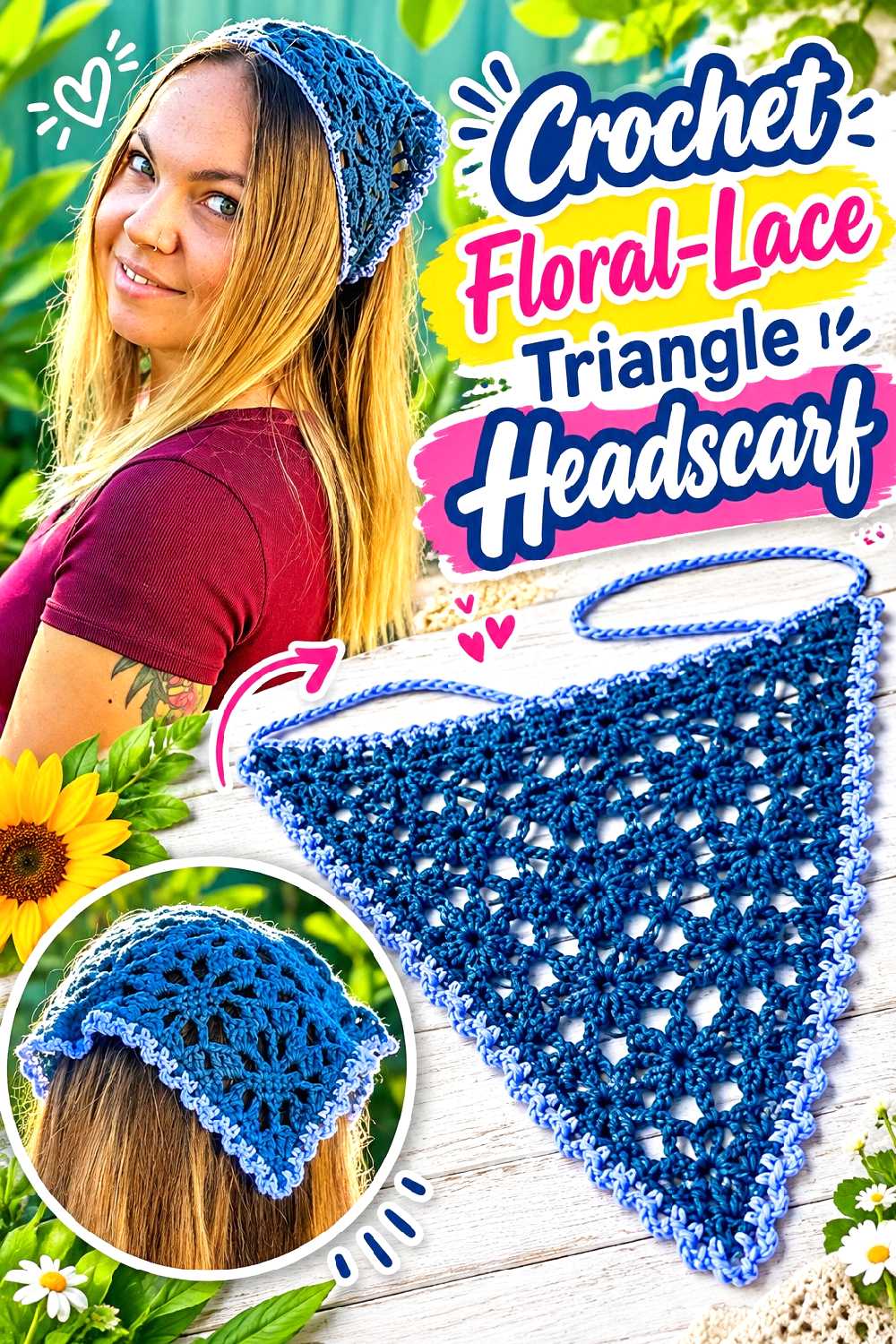
A floral lace triangle offers a botanical effect without the visible joins of separate granny flowers. Carley Rose Studio’s source combines a triangular bandana form with floral openwork.
That makes this option feel finer and more continuous than patchwork flower designs. Muted plum, antique gold, dusty rose, forest green, or cream can move the floral idea comfortably into fall.
Make Sure the Flowers Can Be Seen Against the Hair
Detailed lace may appear very clear on a pale tabletop but lose definition when placed against hair of a similar color.
If the floral pattern is the reason you chose this scarf, evaluate your yarn against the background where it will actually be worn.
Delicate Lace Still Needs Enough Flexibility
Openwork needs definition, but a headscarf also has to curve around the crown. A substitution that creates a stiff lace panel may look attractive while flat yet feel awkward when tied.
Check the developing fabric by gently folding and curving it rather than judging only the stitch pattern.
Keep the Palette Controlled if the Lace Is Complex
Several autumn colors can be beautiful, but frequent color changes may compete with a fine floral pattern. A monochrome or limited palette allows the construction itself to remain the focus.
If you do want several shades, consider repeating them predictably so the scarf still reads as one coherent triangle.
Creator Credit: Carley Rose Studio
10. Crochet Textured Picot Triangle Headscarf
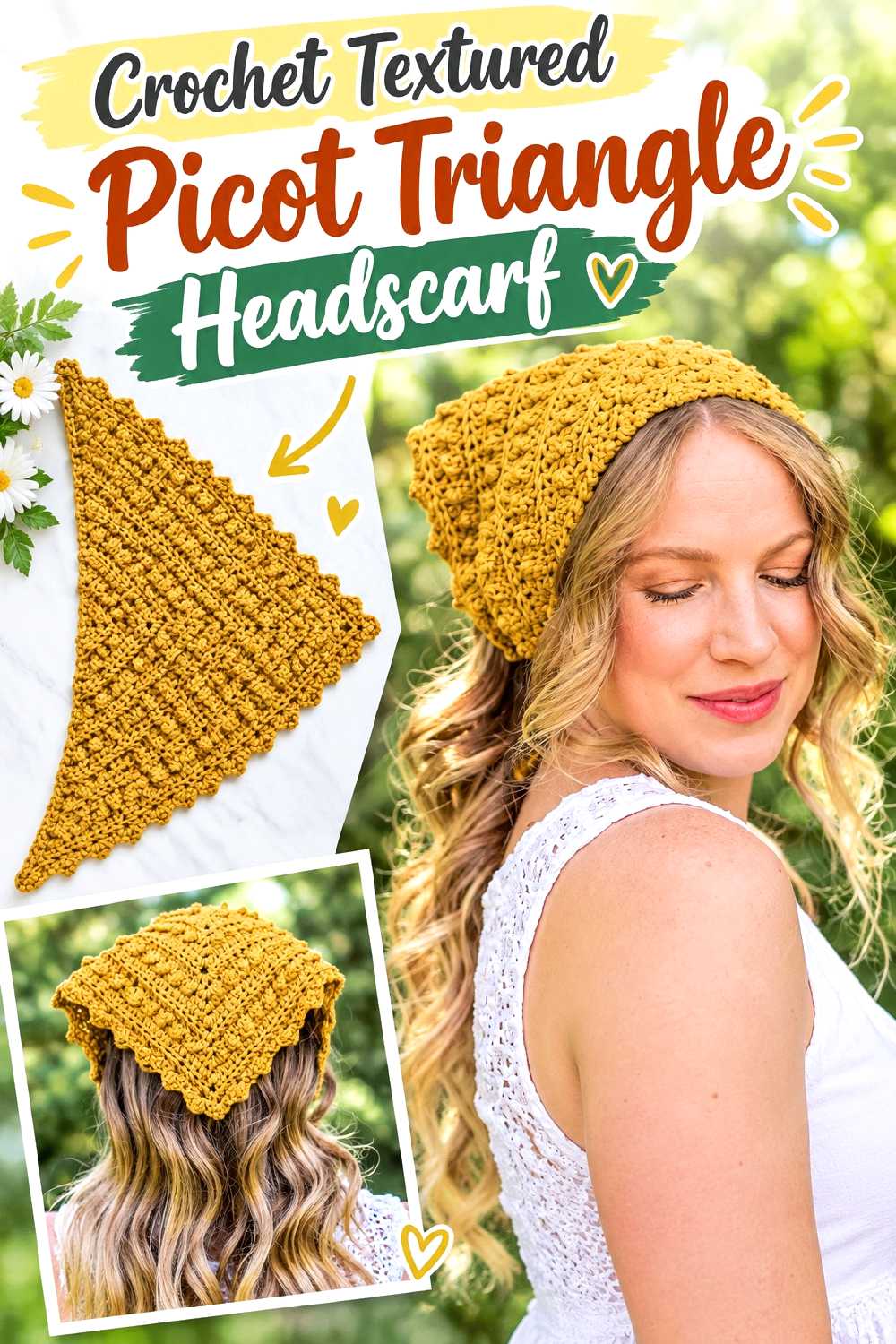
Picots can turn a simple triangle into a noticeably more tactile accessory. The Turtle Trunk’s bandana design uses texture and pointed detailing as major visual features rather than relying on separate appliqués.
A single fall color works particularly well here because the raised details provide enough variation on their own.
Stitch Definition Matters More With Small Raised Details
If the yarn is very fuzzy or highly multicolored, small textural points can become difficult to distinguish. Smooth yarn and relatively clear color often allow the texture to show more effectively.
That does not mean the scarf has to be plain. A rich brick, teal, mustard, wine, or taupe can provide plenty of depth.
Compare Coverage Instead of Relying Only on a Size Name
Head shape, hair volume, preferred tying position, and triangle depth all affect how a bandana fits.
When the source provides sizing choices, compare their actual coverage and proportions with the way you want to wear the scarf rather than assuming a label will automatically produce your preferred fit.
Pointed Edging Gives a Different Mood From Scallops
Scallops create a soft rounded perimeter; picots create smaller, sharper interruptions along the outline. That difference can matter when deciding between a romantic vintage look and a more textural handcrafted finish.
Compare the two from a distance, because border details often look more prominent once the scarf is on the head.
Creator Credit: The Turtle Trunk
11. Crochet Raised Texture Triangle Headscarf
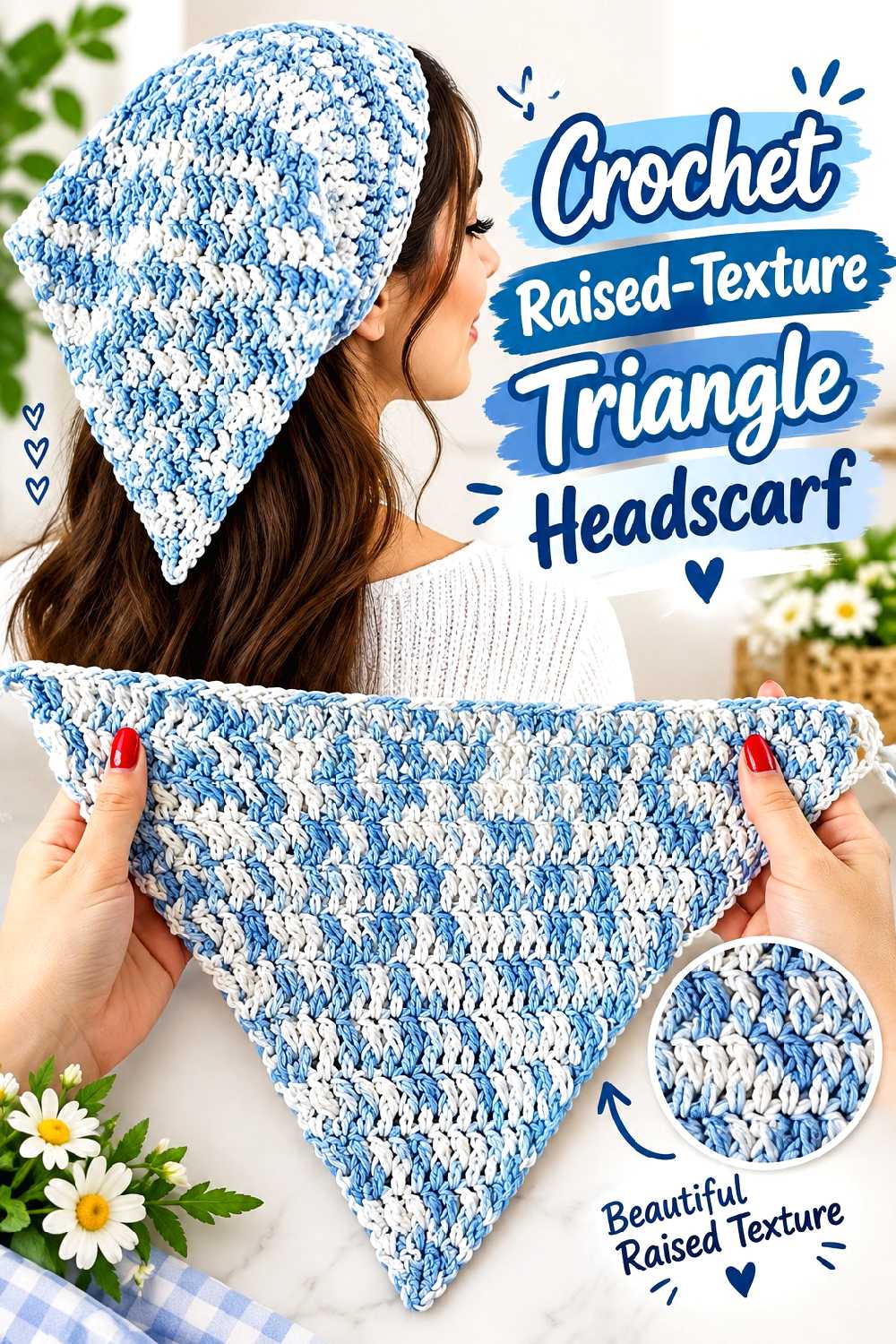
This option is useful when you want surface texture without building the scarf from separate motifs. M’AMI uncinetto’s triangular bandana tutorial incorporates raised crochet texture into the fabric while retaining a straightforward headscarf silhouette.
The resulting idea sits between a plain granny triangle and a heavily decorated motif scarf: the shape remains simple, but the surface has more depth.
Directional Texture Looks Strong in One Color
Raised stitches create their own light-and-shadow pattern. Warm brown, rust, deep red, olive, or cream can therefore look detailed without requiring stripes.
This makes the style useful when you want the headscarf to coordinate easily with a larger fall wardrobe.
Side Bulk Deserves Extra Attention
Texture adds physical thickness as well as visual interest. As the piece develops, check how the upper corners behave when brought around the sides of the head.
A fabric that feels comfortable at the center may still bunch near the ties if your yarn substitution produces more bulk than the source material.
Test the Texture Under Outerwear
If you expect to wear the scarf with a hood, high collar, or jacket, try those layers together before finalizing your styling choices.
Raised crochet may interact differently with outerwear than flat mesh, especially around the back point and knot area.
Creator Credit: M’AMI uncinetto
12. Crochet Sunflower Motif Triangle Headscarf
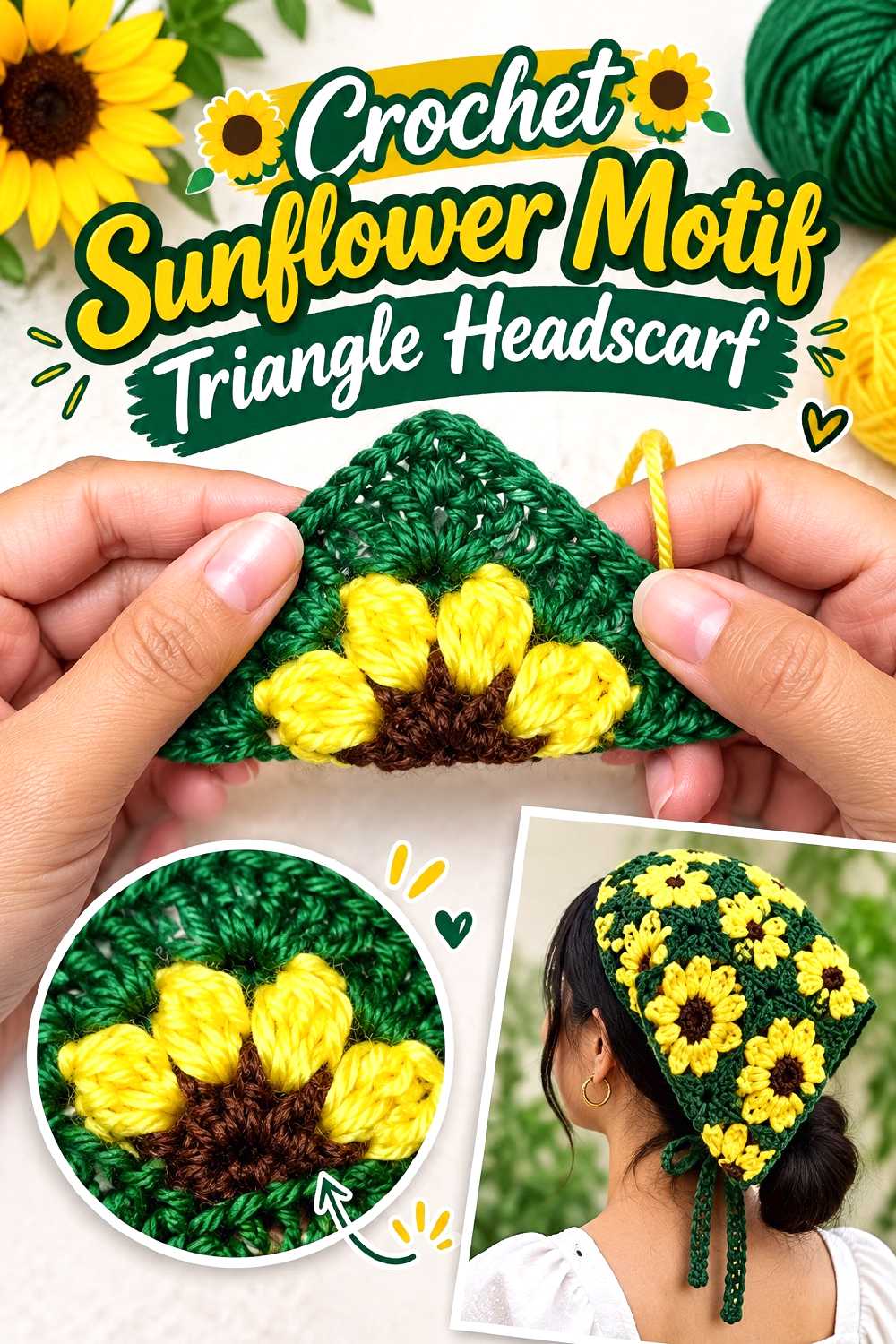
Sunflowers bridge late summer and autumn naturally, making them useful when you want an obvious seasonal motif without moving straight into Halloween imagery. The source tutorial from Angel knits too builds the headscarf around sunflower granny motifs and includes their assembly into the finished accessory.
Mustard, brown, cream, olive, and muted gold can reinforce the fall mood while preserving the flower’s recognizable contrast.
Keep the Flower Center Distinct From the Petals
Sunflower motifs depend heavily on separation between the center and surrounding color. If the shades are too similar, the motif can become difficult to read once the scarf is worn.
Lay yarn colors beside each other before committing to every motif, and view a completed flower from several feet away.
Assembly Is Part of the Project Choice
A motif-based headscarf involves more than creating a single expanding triangle. Repeated components have to relate consistently in size and then form a wearable overall shape.
Preview the assembly portion of the original tutorial before beginning if joining and finishing influence which project you want to make.
Decide Whether You Want a Seasonal Statement Piece
A sunflower bandana draws more attention than a plain olive or brown triangle. That can be ideal for fall markets, casual seasonal outfits, photos, or gifts.
For everyday outfits containing strong plaids or prints, consider a restrained flower palette so the motif remains visible without competing with every other element.
Creator Credit: Angel knits too
13. Crochet Scalloped Granny Patch Triangle Headscarf
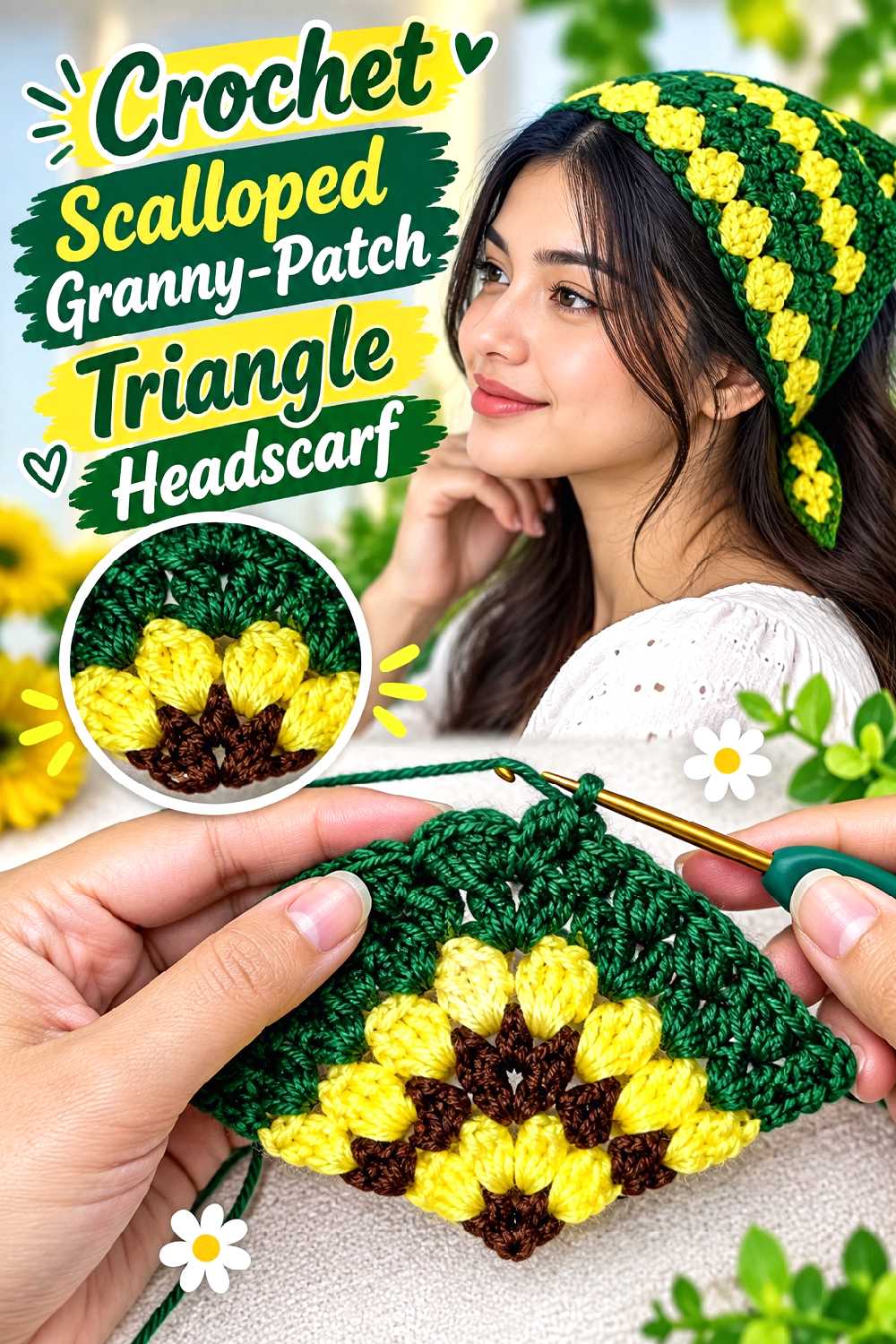
This patchwork option uses granny components to create the triangular form and then adds a softer decorative edge. Michelle Jasek’s source includes square and partial-square elements with scalloped finishing, giving it a distinctly assembled appearance.
Compared with a continuous granny triangle, the visible blocks give you more control over where individual fall colors appear.
Lay Out Every Patch Before Permanent Joining
Patchwork becomes easier to evaluate when you can see the entire color arrangement at once. Place the components in their intended positions and check the distribution of light, medium, and dark colors.
If one corner feels visually heavy, changing the arrangement before joining is much simpler than trying to correct it with edging later.
Partial Motifs Need to Match the Full Squares Visually
When full and partial granny units share one headscarf, differences in tension or border thickness can become noticeable along the outer triangle.
Compare the edges before assembly and make sure the components form the intended silhouette without needing excessive stretching.
Scallops Soften the Geometry
Granny blocks naturally create a strong modular look. A curved edge provides a useful counterpoint by softening the outer silhouette.
If you prefer the patchwork to remain crisp and graphic, keep the border understated. If you want a more decorative vintage finish, let the scallops become part of the visual focus.
Creator Credit: Michelle Jasek
14. Crochet Fringe Edge Triangle Headscarf
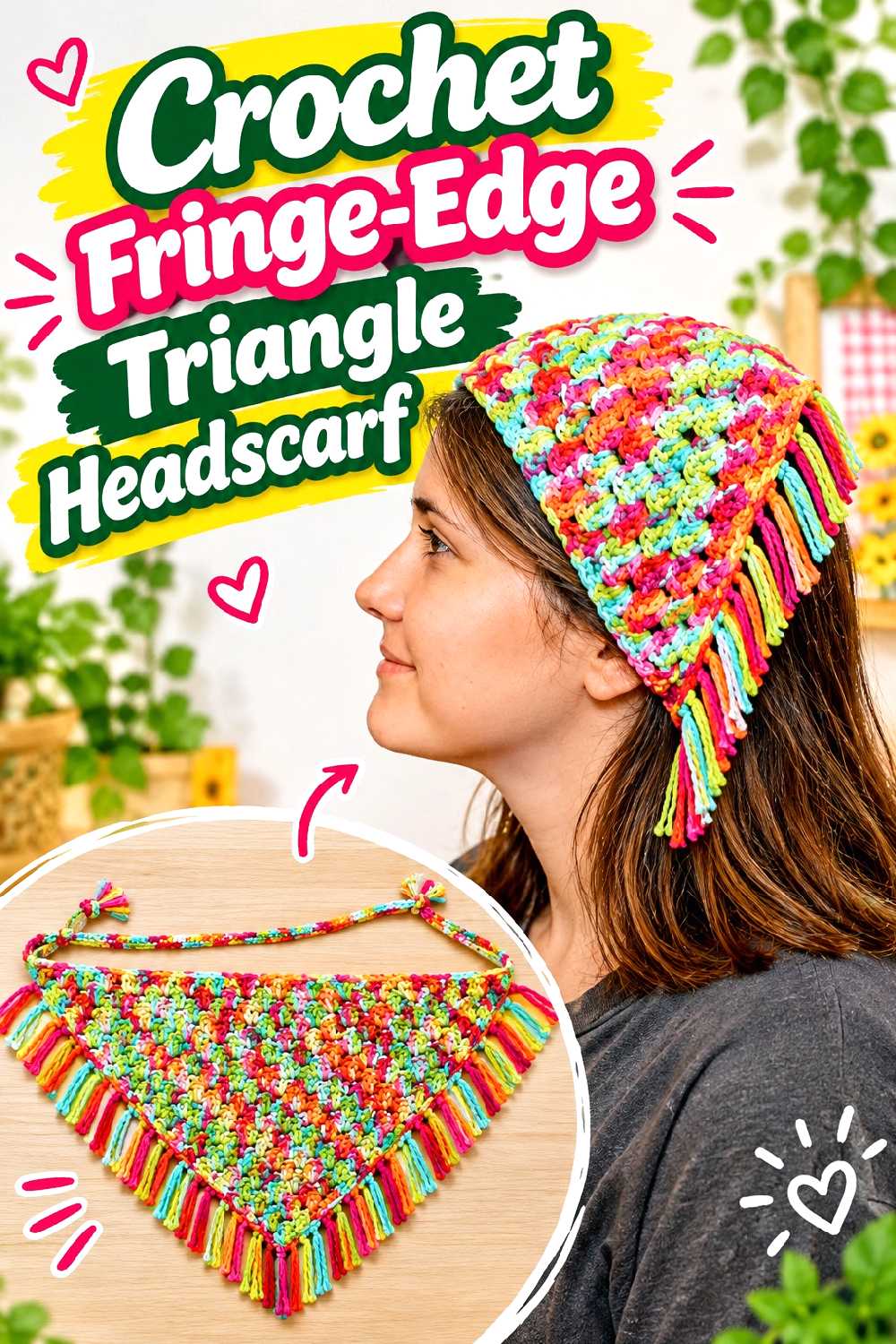
Fringe changes an otherwise simple triangle through movement rather than stitch pattern. Crochet Jewel’s source shows a triangle headscarf with the option of adding fringe, so the same basic form can move in either a cleaner or more bohemian direction.
For fall, this style pairs naturally with denim, long cardigans, suede-inspired pieces, boots, and relaxed layered outfits.
Fringe Adds Visual Length to the Point
Even when the crocheted triangle itself is relatively shallow, hanging fringe can make the center appear longer.
Judge the overall silhouette with the fringe in mind rather than deciding triangle depth as though the edge will remain plain.
Movement Can Be an Advantage or a Distraction
Fringe gives the scarf motion as you walk and makes a simple construction feel more decorative. It can also brush against collars, earrings, or textured outerwear.
Think about the clothing you expect to wear with it before deciding whether a full fringe finish fits your routine.
Tonal Fall Colors Keep the Style Versatile
Because the edge supplies plenty of detail, the main body does not require elaborate colorwork. Camel, chocolate, rust, muted teal, cream, burgundy, or charcoal can all keep the accessory easy to coordinate.
A multicolor fringe is another possibility, but plan the distribution before cutting or attaching large numbers of strands so the color balance looks intentional.
Creator Credit: Crochet Jewel
15. Crochet Skull Motif Triangle Headscarf
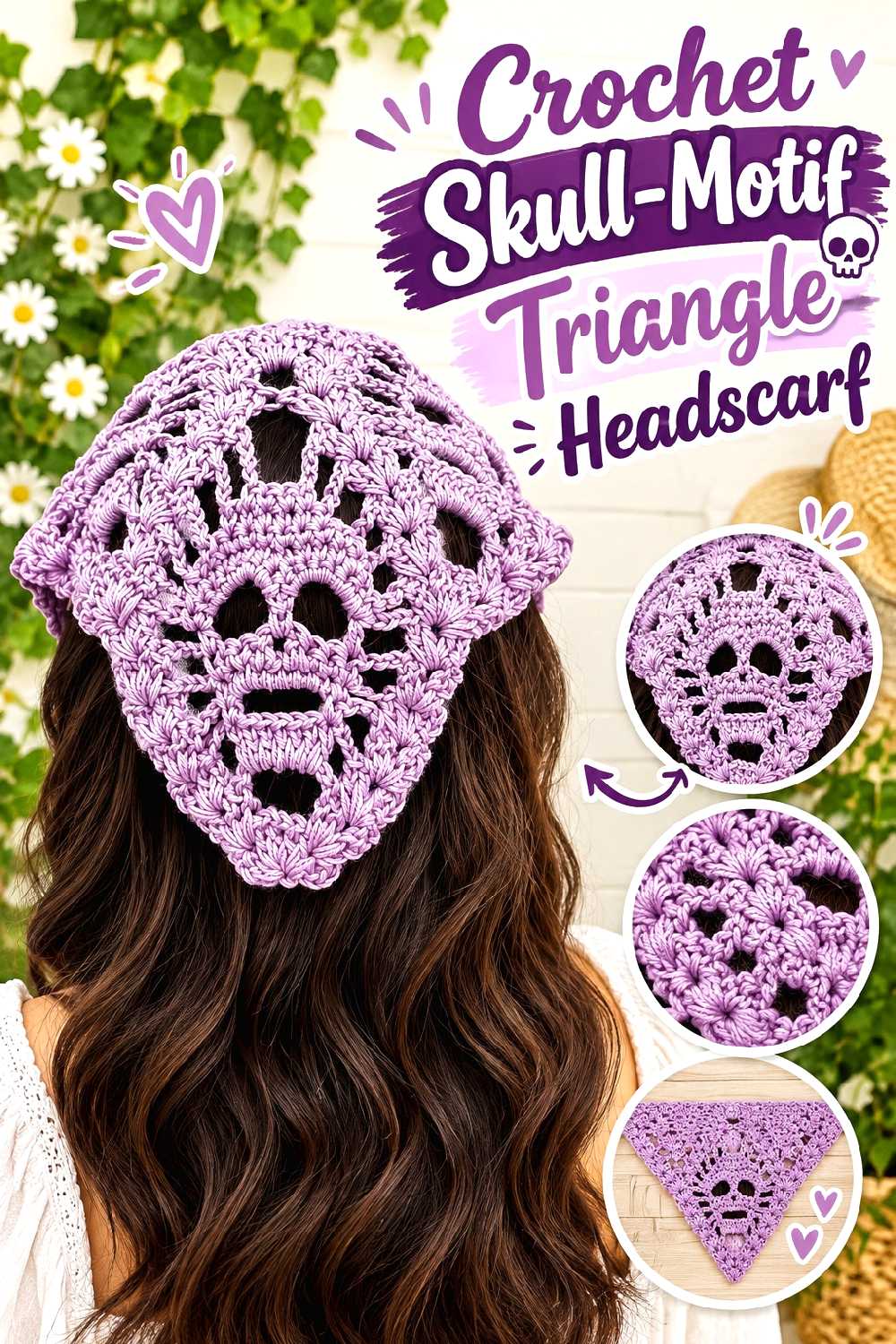
A skull triangle headscarf takes the strongest Halloween direction in this collection. K Rod Crochet’s source centers the bandana around skull imagery, making it clearly different from subtle botanical, granny, and textural fall options.
It can work as an October accessory or as a year-round gothic headscarf depending on the colors you choose.
Contrast Controls Whether the Skulls Are Obvious
Light-on-dark or dark-on-light combinations make graphic motifs easier to recognize. Black with cream is the clearest approach, but burgundy with pale gray, dark brown with oatmeal, or deep green with warm beige can create a less literal fall palette.
Very similar shades can make the skulls more subtle if that is intentional.
Let the Motif Lead the Rest of the Styling
A skull pattern already carries a strong visual theme. Pairing it with relatively simple clothing keeps the headscarf from competing with several other seasonal motifs at once.
If your fall wardrobe already includes Halloween prints, decide whether you want deliberate maximalism or a quieter contrast.
Check the Design From Wearing Distance
Graphic motifs are often viewed closely while being crocheted, but other people usually see a headscarf from farther away.
Periodically place the developing fabric against a contrasting background and step back. This makes it easier to judge whether the skull shapes remain recognizable at the scale and color combination you selected.
Creator Credit: K Rod Crochet
Comparing the 15 Fall Triangle Headscarf Styles
For a lightweight look with plenty of visible hair, the open-mesh, filet, floral-lace, and fine-granny options provide more negative space. They make sense for transitional weather and for readers who want a headscarf mainly as an outfit accessory.
For stronger surface texture without assembling separate pieces, compare the shell, picot, raised-texture, and scalloped row-grown designs. These can create substantial visual interest in a single color, which makes them useful with patterned fall clothing.
The puff-flower, sunflower, and granny-patch options put assembly and motif placement at the center of the design. They are better suited to readers who enjoy planning color distribution and treating each crochet component as part of a larger layout.
Choose the leaf or checkerboard scarf when you want the main pattern built directly into the triangle. Pick fringe when movement and edge treatment matter more than a complicated body pattern. The skull version has the strongest Halloween identity and is the most theme-specific choice in the collection.
Conclusion
The most useful way to choose among these 15 crochet triangle headscarf ideas is to start with the finished effect you actually want.
For a quiet everyday accessory, consider the fine granny, scalloped, open mesh, filet, or raised-texture designs in one autumn shade. For stronger pattern, the checkerboard and leaf versions create interest without requiring separate decorative appliqués. If motifs are the main attraction, the flower, sunflower, granny-patch, and skull scarves provide more obvious visual themes.
Think about coverage and drape before buying yarn for a specific look. A deep triangle behaves differently from a shallow kerchief, and open lace provides a different type of coverage from compact texture even when both pieces have similar overall dimensions.
Once you have chosen the construction that suits your wardrobe and preferred coverage, use the original creator tutorial for its exact stitches, sizing, joins, edging, and finishing details.
Frequently Asked Questions
How large should a crochet triangle headscarf be?
There is no universal finished size that works for everyone. Hair volume, head shape, triangle depth, tie placement, and preferred coverage all affect fit.
Use the tutorial’s sizing guidance when available and test the developing scarf against your head before finishing. Check both the upper width and the distance from the front edge to the lower point rather than relying on only one measurement.
What type of yarn works well for a fall crochet triangle headscarf?
Start with the yarn recommended by the tutorial when you want the closest match to the creator’s finished result. If you substitute, pay attention to softness, thickness, stretch, stitch definition, and how the fabric folds.
A structured yarn may emphasize checks, shells, or motifs, while a softer fabric may follow the shape of the head more comfortably. Always check the specific yarn’s care instructions rather than assuming all fibers can be washed or blocked in the same way.
Can I make a summer crochet bandana look appropriate for fall?
Yes. You can often change the visual season without changing the underlying construction. Rust, olive, burgundy, chocolate, mustard, cream, charcoal, plum, and warm taupe can all shift the mood.
Changing color is usually less disruptive than changing yarn weight. If you substitute a substantially different material, recheck the finished dimensions and drape rather than assuming the source sizing will remain unchanged.
Which crochet triangle headscarf gives the most hair coverage?
Coverage depends on the actual finished width, triangle depth, and openness of the fabric. A dense or motif-based triangle generally hides more hair visually than large mesh or filet openings at a similar physical size.
Do not choose on stitch type alone. Look at the creator’s finished scarf from the front, side, and back when possible and compare that coverage with the way you plan to wear yours.
Should crochet headscarf motifs be blocked before joining?
For joined granny squares, flowers, or other repeated components, checking the finished dimensions before assembly can help prevent uneven joining.
Use a blocking method suitable for the yarn fiber and the creator’s guidance. The important point is consistency: motifs that vary noticeably in size can distort the top edge or triangle shape once several pieces are connected.
How do I stop a crochet triangle headscarf from feeling bulky at the sides?
Side bulk can come from thick yarn, dense fabric, heavy edging, wide ties, or several layers meeting near the upper corners.
Try the unfinished scarf on before completing every finishing detail. If you are substituting materials, pay particular attention to how the corners fold near the ears and knot area. Following the tutorial’s original yarn and finishing guidance generally reduces unexpected fit changes.
Can I add fringe, scallops, flowers, or other details to a different triangle headscarf?
Possibly, but decorative elements are not automatically interchangeable. A border can change the way an edge lies, fringe adds weight and movement, and sewn motifs can affect balance or placement.
Treat adaptations as design changes rather than invisible extras. Finish and evaluate the main triangle first, then consider whether the additional detail suits its scale, fabric behavior, and intended wearing position.