Fall crochet usually gravitates toward rust, camel, burgundy, olive, brown, and cream. Cobalt blue ignores that formula. It is clear, saturated, and noticeably cooler than the traditional autumn palette, which is exactly why it can make a fall crochet project feel fresh.
The trick is not to mute cobalt until it disappears. Let the blue keep its intensity, then use familiar fall shades to control where the eye goes. Camel can soften a cobalt cardigan, espresso can structure a blue tote, rust can challenge cobalt on a sweater, and oxblood can turn a granny-square vest into a deliberate clash of cool and warm color.
These 21 ideas use public YouTube tutorials as construction references. The cobalt blue palettes are independent editorial adaptations, so the creators do not necessarily use these exact color combinations in their original projects.
Quick List
- Cobalt Blue And Camel Crochet Oversized Cardigan
- Cobalt Blue And Espresso Crochet Granny Square Tote
- Cobalt Blue And Oatmeal Crochet Ribbed Beanie
- Cobalt Blue And Charcoal Crochet Balaclava
- Cobalt Blue And Rust Crochet Textured Sweater
- Cobalt Blue And Chocolate Crochet Skirt
- Cobalt Blue And Oxblood Crochet Granny Square Vest
- Cobalt Blue And Cream Crochet Classic Leg Warmers
- Cobalt Blue And Burgundy Crochet Hooded Scarf
- Cobalt Blue And Warm Ivory Crochet Granny Square Cardigan
- Cobalt Blue And Tobacco Brown Crochet Blanket
- Cobalt Blue And Black Crochet Structured Handbag
- Cobalt Blue And Dusty Rose Crochet Lace Shawl
- Cobalt Blue And Pewter Crochet Textured Cowl
- Cobalt Blue And Burnt Orange Crochet Cable Leg Warmers
- Cobalt Blue And Mocha Crochet Poncho
- Cobalt Blue And Mustard Crochet Slouchy Leg Warmers
- Cobalt Blue And Taupe Crochet Hexagon Cardigan
- Cobalt Blue And Olive Crochet Headband
- Cobalt Blue And Garnet Crochet Fingerless Gloves
- Cobalt Blue And Terracotta Crochet Pillow
Why Cobalt Blue Can Work for Fall Crochet
Cobalt does not need to resemble an autumn leaf to belong in a fall project. The season can come through the item itself—cardigans, scarves, cowls, hats, blankets, gloves—and through the colors placed around the blue.
Warm brown, camel, rust, oxblood, mustard, and terracotta create the clearest seasonal tension. Charcoal, black, pewter, and oatmeal produce a quieter result while still letting cobalt remain unusually bright for fall.
Avoid treating every secondary color as an equal partner. Cobalt is strongest when it has enough uninterrupted space to look intentional rather than appearing as scattered blue accents inside a conventional brown palette.
Keep Cobalt Blue Crochet From Looking Overly Busy
Because cobalt is highly saturated, complicated color distribution can become visually crowded quickly. Let crochet texture provide some of the detail.
Cables, ribbing, granny-square rounds, lace, pockets, joins, and raised stitches already create changes across the surface. If the construction is elaborate, keeping cobalt continuous through the detailed areas often works better than changing color at every opportunity.
For multicolor projects, decide which shade is dominant, which supports it, and which appears only in small accents. That hierarchy matters more than simply finding three colors that look attractive beside one another.
1. Cobalt Blue And Camel Crochet Oversized Cardigan
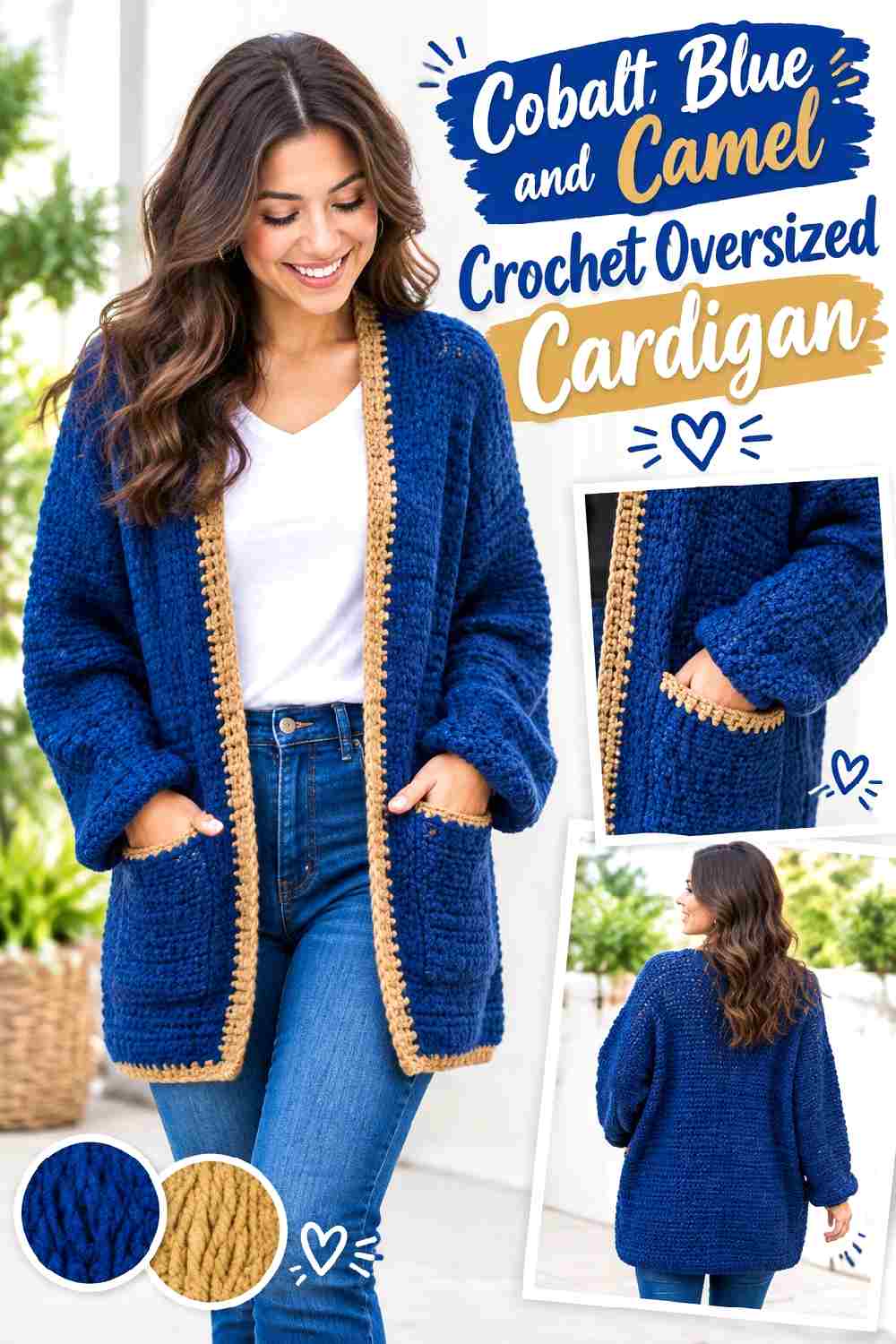
Cobalt blue makes an oversized cardigan feel much sharper than the expected oatmeal or brown fall layer. Let blue occupy the broad body and sleeve panels, then use camel around selected finishing areas. The warm neutral takes some visual heat out of the blue without making the cardigan predictable.
Let Cobalt Blue Control the Crochet Cardigan Panels
Keep cobalt blue across most of the fronts, back, and sleeves so the relaxed cardigan reads as a deliberate blue statement.
An oversized silhouette already creates substantial visual volume. Adding frequent camel blocks through the body can divide that large shape unnecessarily. A continuous cobalt field lets pockets, seams, and ribbing provide the smaller details.
Use Camel to Warm the Cobalt Blue Crochet Cardigan Edges
Camel can work around cuffs, pocket edging, or the front opening where the garment naturally needs definition.
Choose two related finishing areas rather than outlining everything. Camel cuffs plus pocket edges, for example, create repetition while allowing the hem and main opening to stay cobalt blue.
Creator Credit: forthefrills
2. Cobalt Blue And Espresso Crochet Granny Square Tote
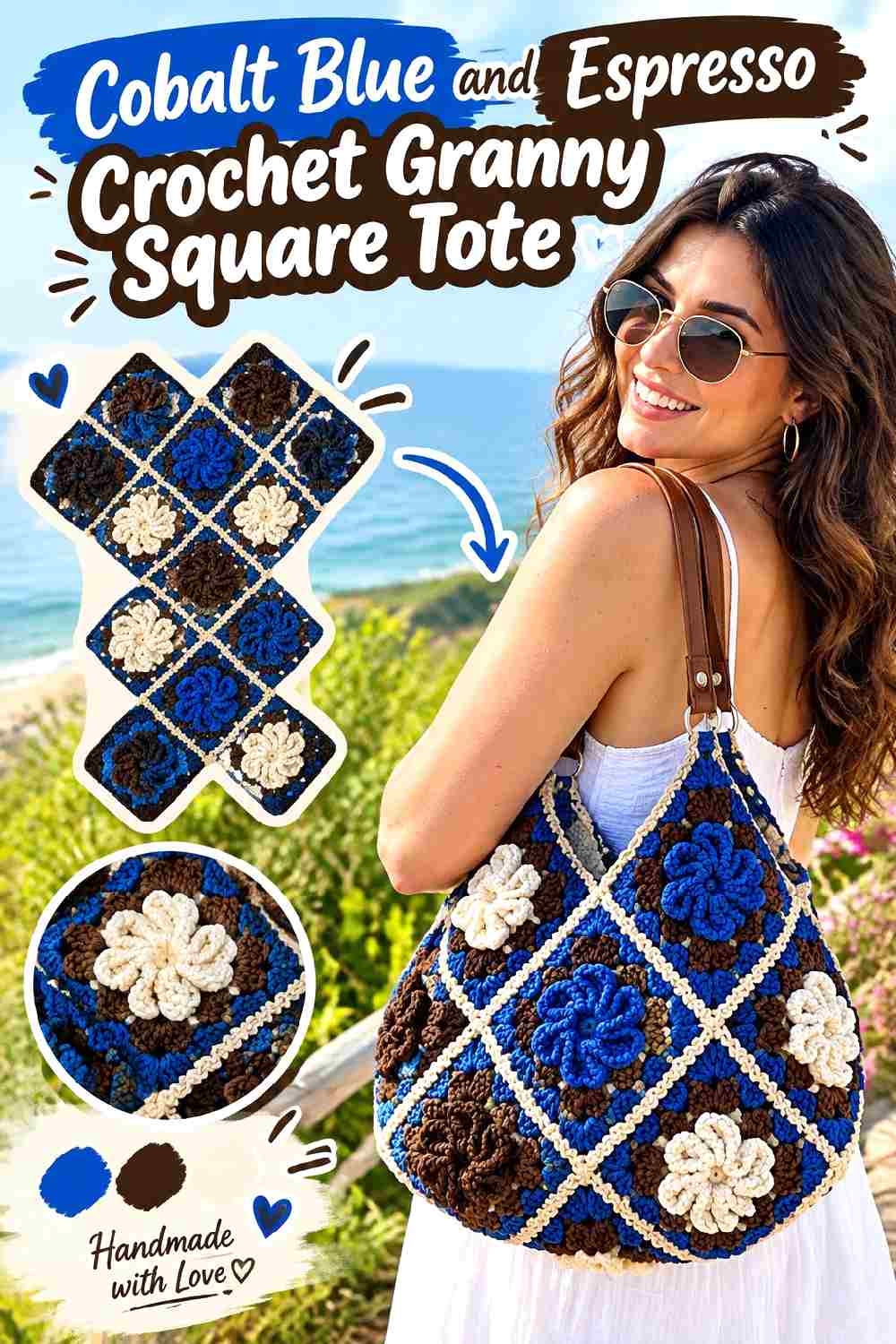
A granny-square tote gives cobalt blue multiple places to repeat without losing the bag’s structure. Espresso brown can carry joins, handles, or outer rounds, giving the bright blue an unexpectedly earthy frame.
Repeat Cobalt Blue Consistently Across the Crochet Tote Squares
Decide where cobalt belongs within each square and repeat that role. Using blue in the centers across several motifs or through corresponding outer sections makes individual squares feel connected.
Avoid rearranging the palette completely from square to square unless a deliberately mismatched effect is the goal.
Let Espresso Structure the Cobalt Blue Crochet Tote
Espresso works particularly well on joins or handles because those parts already create strong lines across the bag.
If every square border, join, handle, and top edge is dark brown, however, espresso may become dominant. Leave enough uninterrupted cobalt visible across the bag faces.
Creator Credit: Brunaticality
3. Cobalt Blue And Oatmeal Crochet Ribbed Beanie
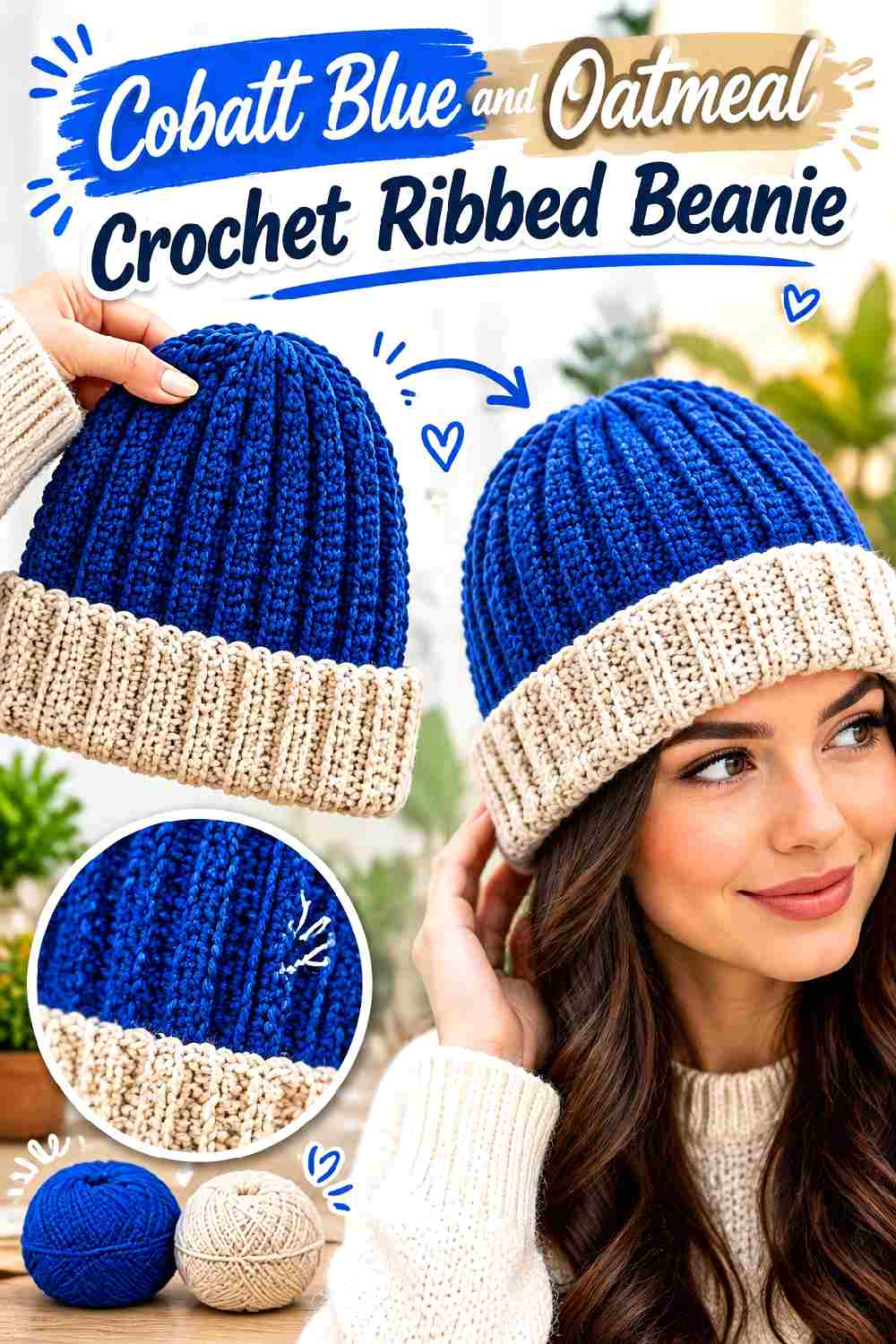
Cobalt blue breaks the usual fall-beanie palette immediately, while oatmeal gives the hat a familiar neutral anchor. Ribbing supplies enough texture that the two colors do not need complicated striping.
Keep Cobalt Blue Continuous Through the Crochet Beanie Ribbing
Long cobalt sections allow the ribbed lines to remain visually uninterrupted.
Frequent oatmeal stripes can cut those lines into short segments and make the hat busier. If texture is the main feature, let color support it instead of constantly interrupting it.
Use Oatmeal to Calm the Cobalt Blue Crochet Brim
A folded or defined lower edge is a natural place for oatmeal because the light neutral separates the bright blue from coats, scarves, and hair.
Keep the oatmeal proportion controlled if you want the finished hat to remain unmistakably cobalt.
Creator Credit: VivCrochets
4. Cobalt Blue And Charcoal Crochet Balaclava
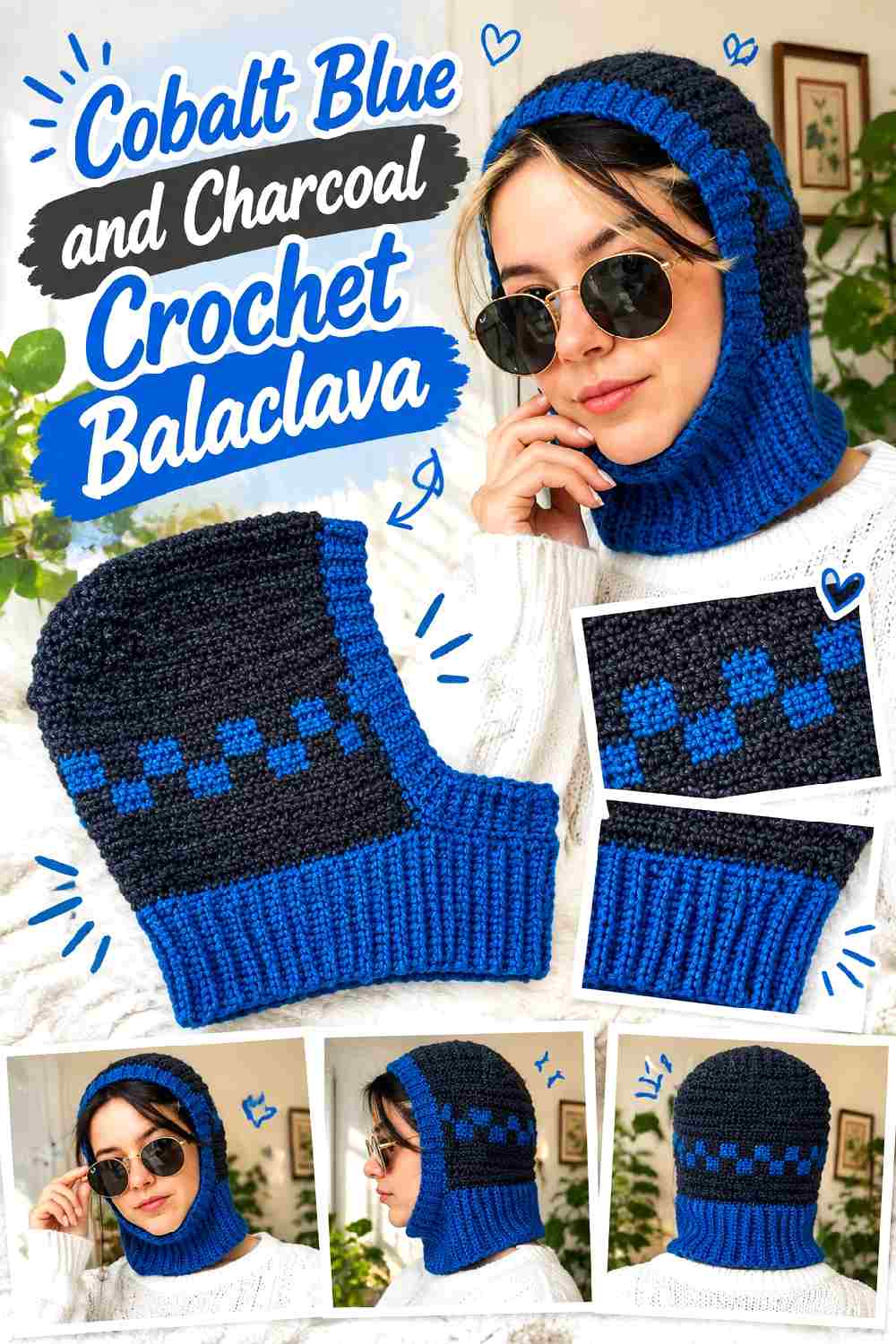
Cobalt blue gives a balaclava a much more graphic direction than conventional winter neutrals. Charcoal can frame the opening and lower edge without producing the extremely hard contrast of pure black.
Let Cobalt Blue Cover the Main Crochet Balaclava Hood
Use cobalt across the crown, sides, and neck section so the accessory reads as one strong block of blue.
A balaclava already creates distinctive lines around the face. It does not need complicated color blocking to remain visually interesting.
Keep Charcoal Narrow Around the Cobalt Blue Crochet Face Opening
The face opening attracts attention automatically, so even a relatively small charcoal area can make a substantial difference.
Use the dark neutral as definition rather than turning the entire front section charcoal. That preserves cobalt as the main color.
Creator Credit: made in the moment
5. Cobalt Blue And Rust Crochet Textured Sweater
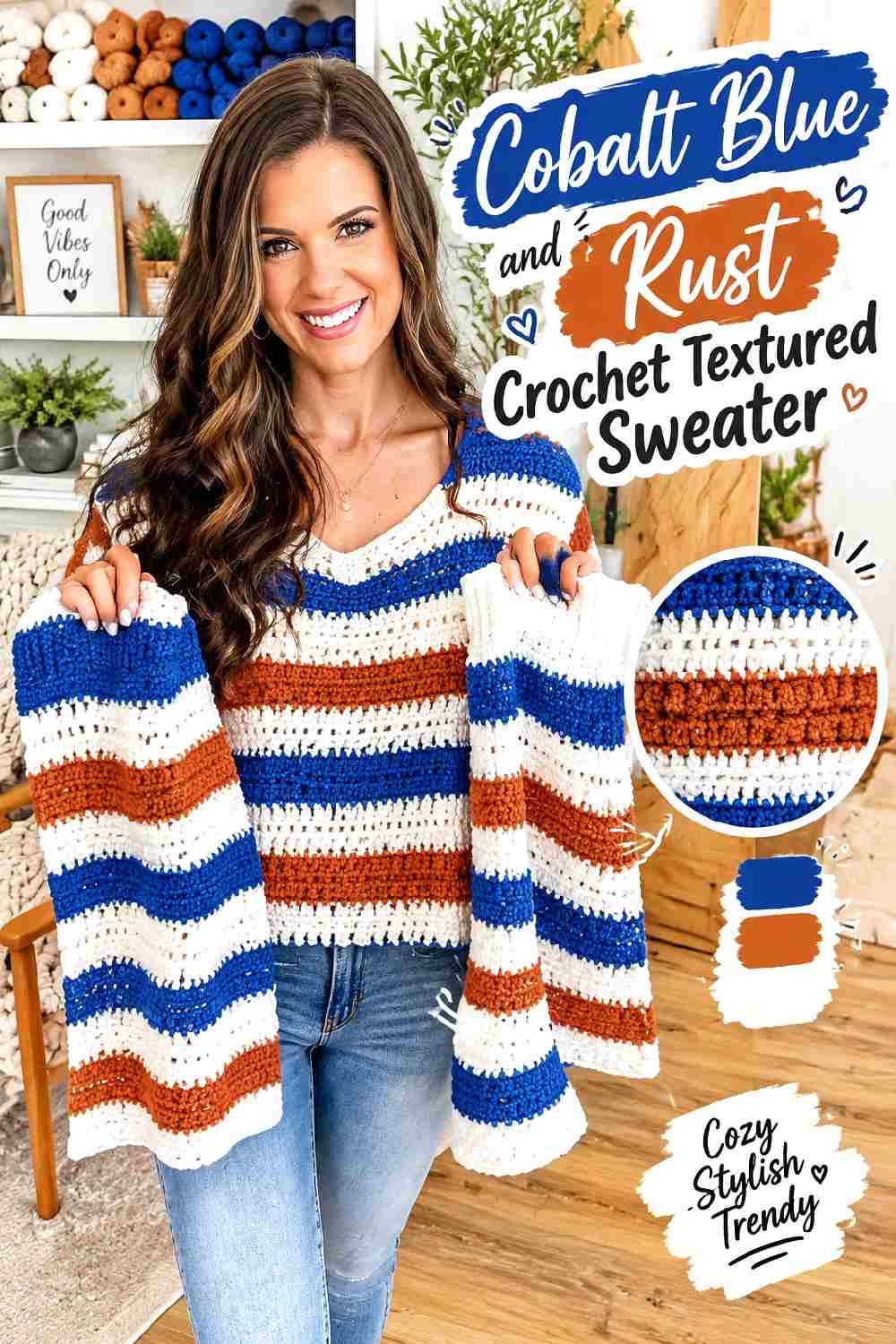
Cobalt and rust openly challenge the traditional warm-or-cool fall palette. One is vivid and cool; the other is earthy and warm. On a sweater, their contrast is strongest when one clearly leads.
Keep Cobalt Blue Across the Main Crochet Sweater Body
Use cobalt through most of the torso so stitch texture remains continuous and the sweater keeps its modern blue identity.
Rust works better as a controlled counterpoint than as an equal checkerboard of color, particularly when the sweater surface already contains visible texture.
Put Rust Where Cobalt Blue Crochet Needs Warm Definition
Cuffs, neckline ribbing, or a lower band can carry rust without disrupting the main body.
Repeating rust in two smaller areas makes the warm color look intentional. If rust becomes too widespread, the sweater loses the color tension that made cobalt unusual in the first place.
Creator Credit: MJ’s Off The Hook Designs
6. Cobalt Blue And Chocolate Crochet Skirt
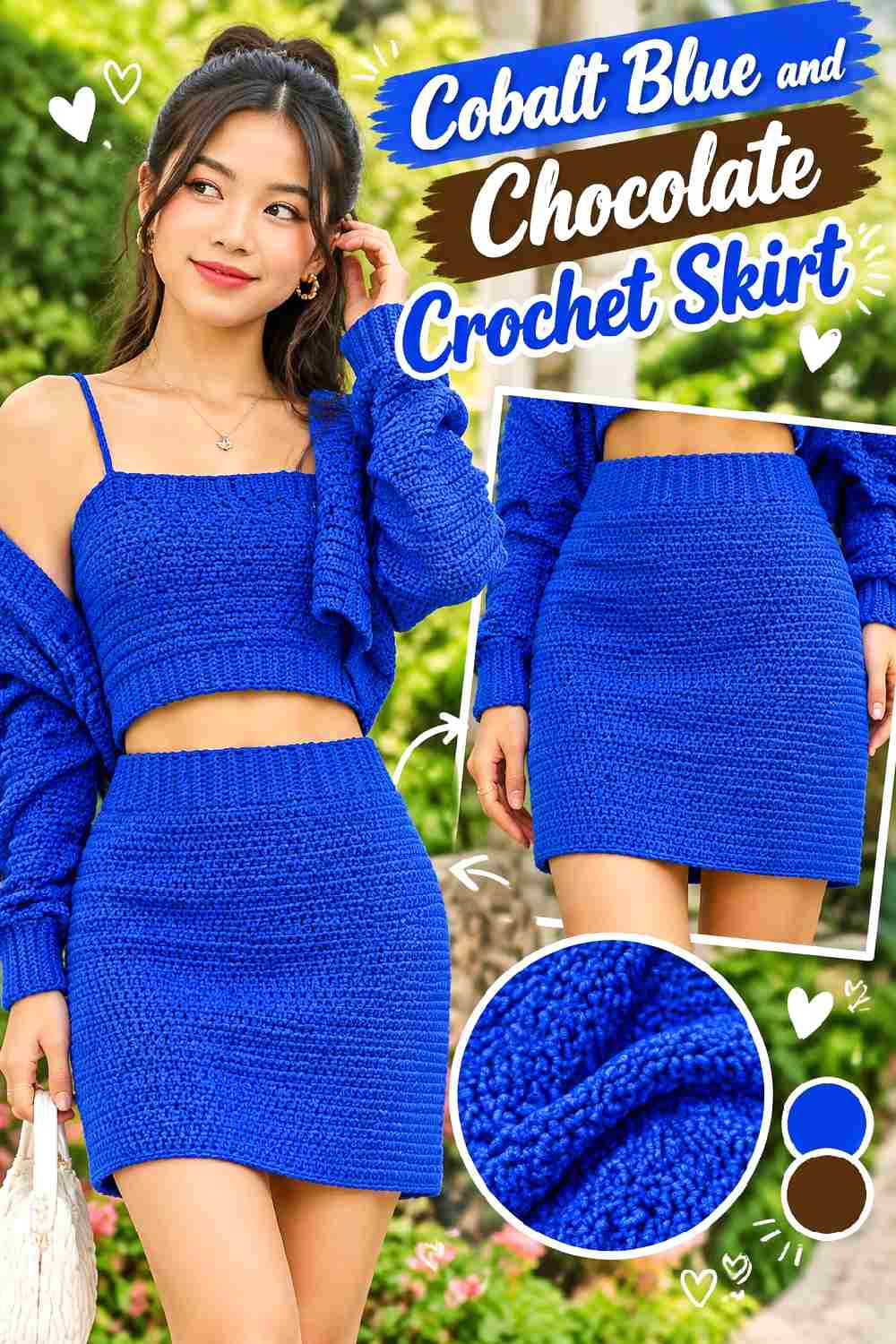
Cobalt blue creates an unexpected fall skirt, while chocolate brown connects it to boots, jackets, and other earthy layers without making the piece neutral-heavy.
Let Cobalt Blue Run Through the Main Crochet Skirt Surface
Keep the largest area cobalt so the skirt silhouette remains visually continuous.
Multiple wide horizontal color blocks can change how the proportions read. If you want a strong blue statement, avoid dividing the body into equal blue-and-brown bands.
Use Chocolate to Finish Cobalt Blue Crochet Waist or Hem Areas
Chocolate can provide definition at the waistband or lower edge.
Using it at one primary boundary creates a more minimal result. Repeating a smaller amount at the opposite end can connect the palette without framing the entire skirt equally.
Creator Credit: Chenda DIY
7. Cobalt Blue And Oxblood Crochet Granny Square Vest
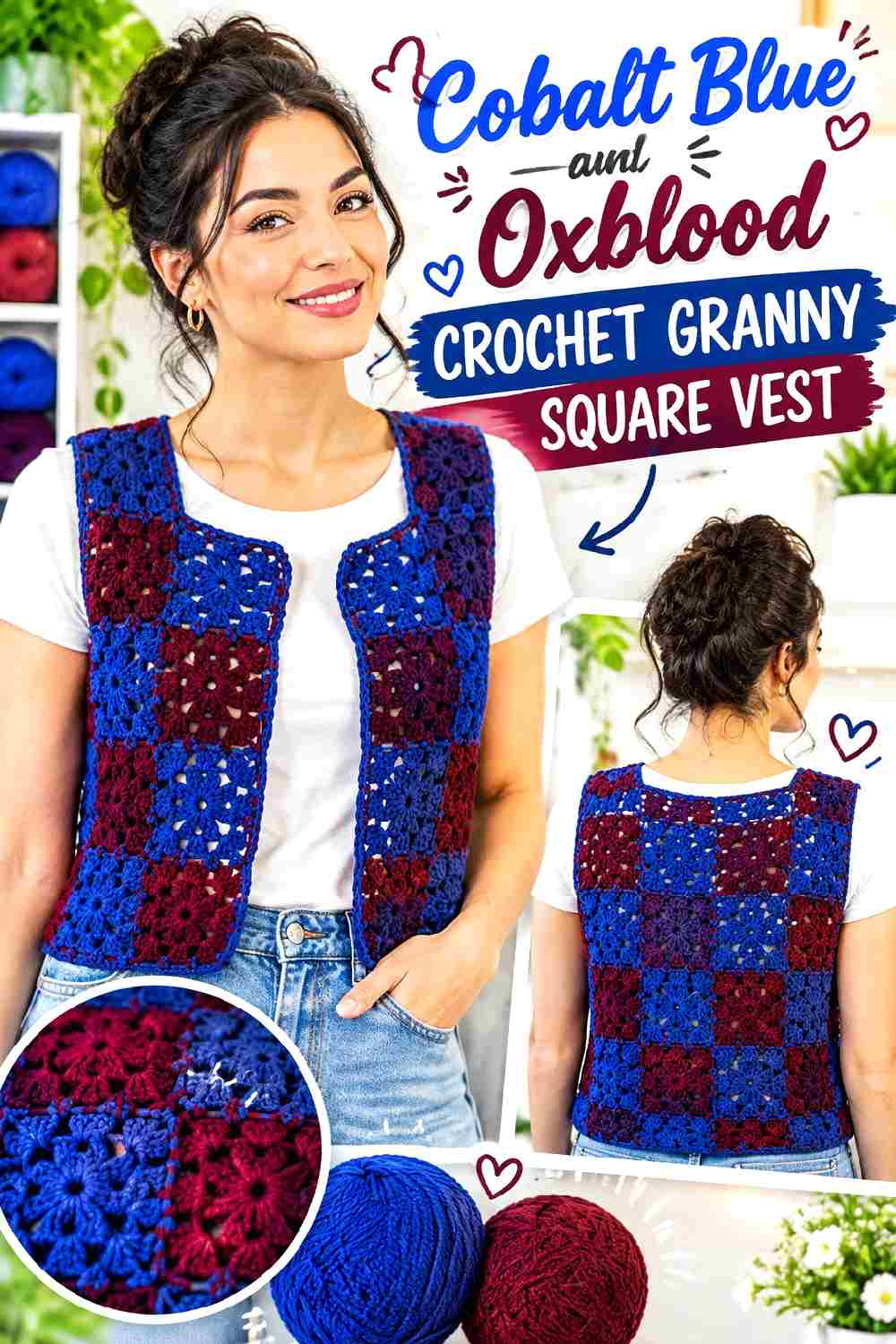
Cobalt and oxblood create a richer clash than blue and bright red. Both shades have considerable visual weight, so granny-square placement needs a clear hierarchy.
Make Cobalt Blue the Connecting Color in the Crochet Vest
Use cobalt consistently across corresponding parts of the motifs or through joining and edging so the separate squares share one recognizable base.
If every square changes dominant color, the vest can become visually fragmented before its shape is noticed.
Keep Oxblood Smaller Against Cobalt Blue Crochet Squares
Oxblood works well in motif centers, selected outer rounds, or a limited set of squares.
Compare the whole layout before joining. A concentration of dark red on only one side can make the vest look unbalanced even when individual squares look successful.
Creator Credit: Alextitia Tuto Crochet
8. Cobalt Blue And Cream Crochet Classic Leg Warmers
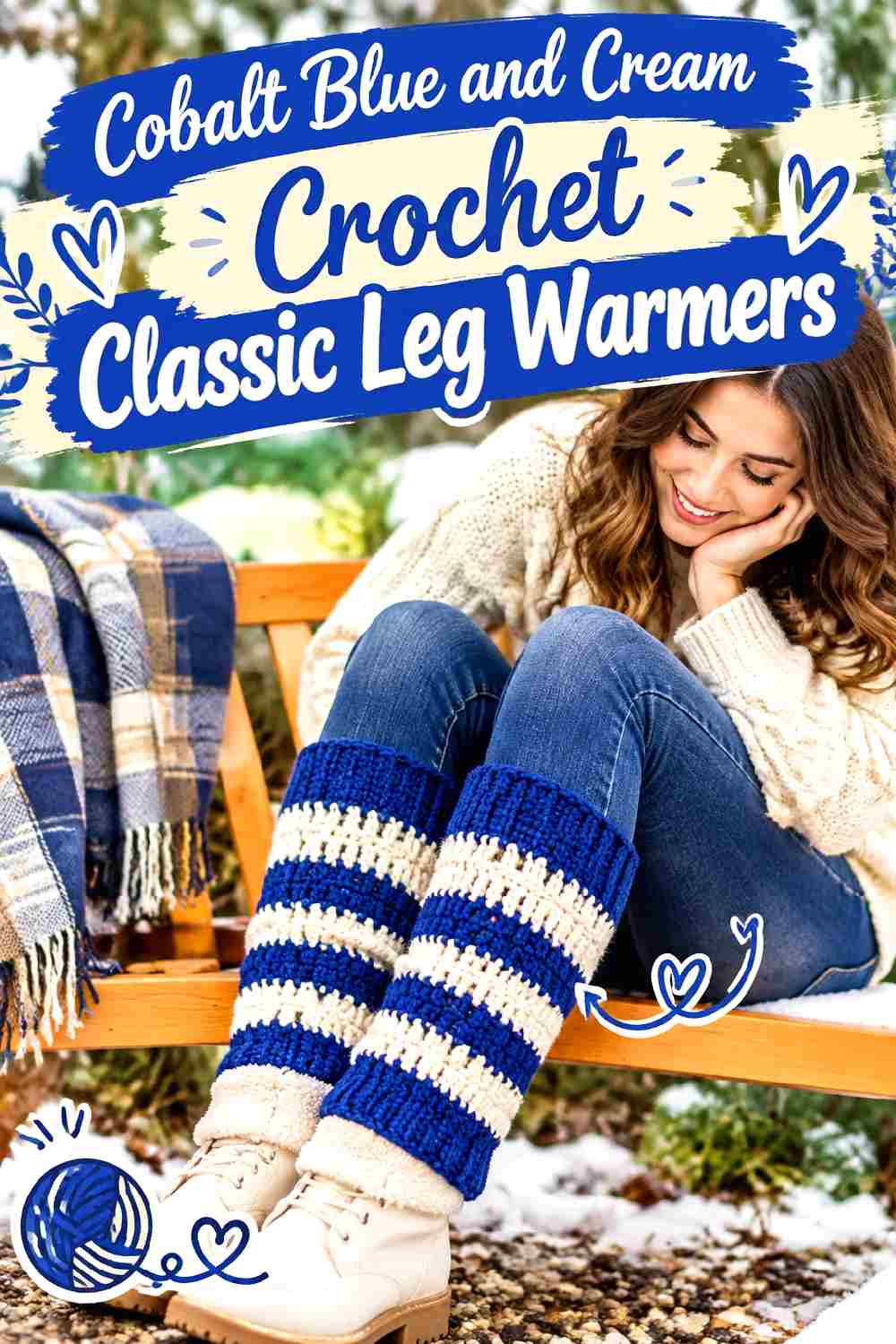
Cream gives cobalt blue one of its cleanest contrasts. On simple leg warmers, that difference can be concentrated around cuffs while the main vertical area remains boldly blue.
Keep Cobalt Blue Through the Main Crochet Leg Warmers
Use cobalt blue across the primary leg sections on both pieces and compare them together as you work.
Matching the color proportions matters because the two accessories are seen as a pair. One noticeably wider cream section can make otherwise similar leg warmers appear mismatched.
Use Cream to Define Cobalt Blue Crochet Cuffs
Cream at the top or bottom creates an obvious stopping point without interrupting the entire blue surface.
Use cream at both ends for a more framed appearance or only at one end when you want the palette to feel more restrained.
Creator Credit: The Crochet Crowd
9. Cobalt Blue And Burgundy Crochet Hooded Scarf
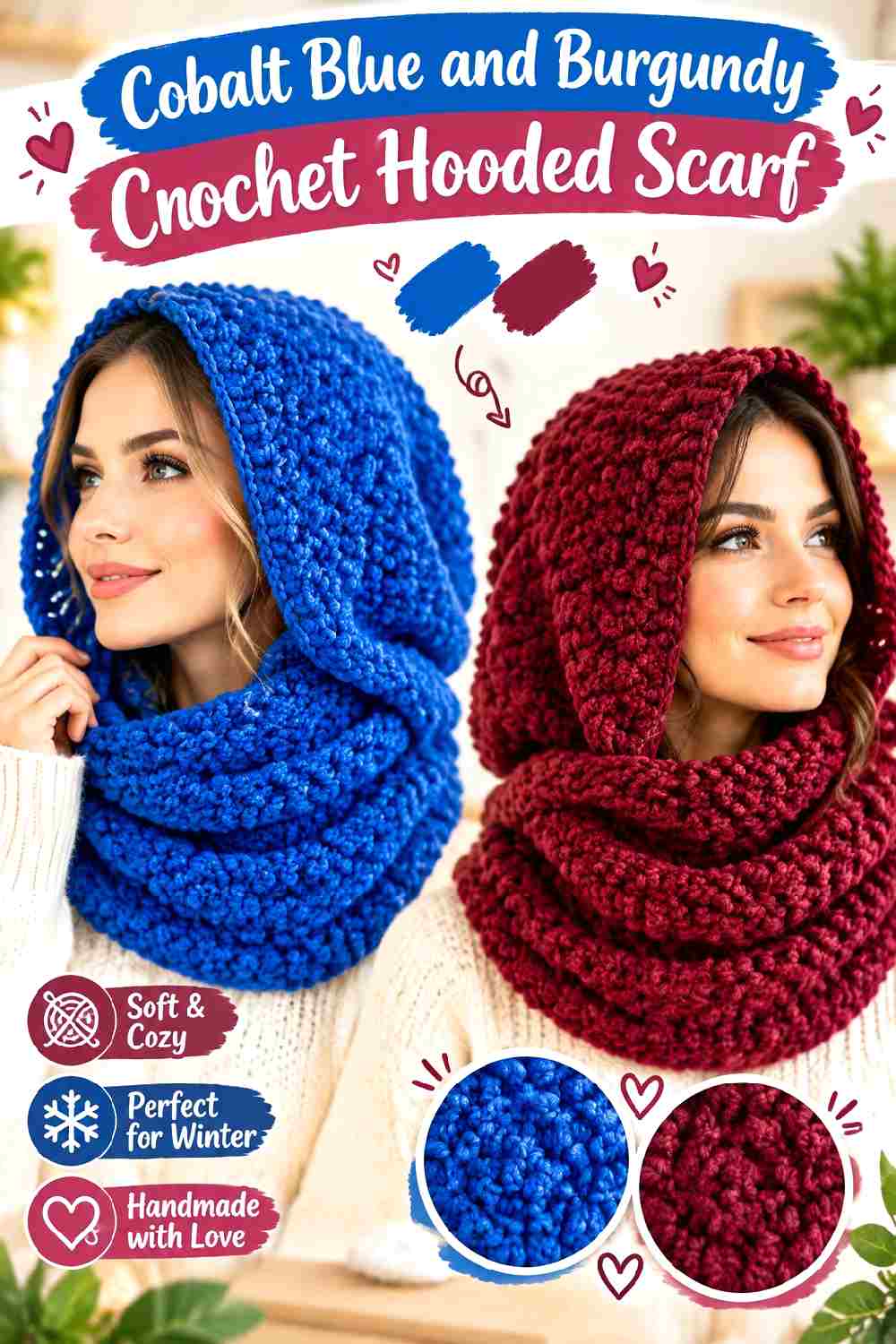
A hooded scarf combines a large hood area with long extensions, giving cobalt blue room to dominate while burgundy repeats at strategic points. The combination is dramatic without relying on black.
Let Cobalt Blue Connect the Crochet Hood and Scarf
Keep cobalt running from the hood into substantial portions of the scarf so the two functional parts look like one design.
If the hood is cobalt but the scarf becomes mostly burgundy, the piece may read as two separate color stories.
Repeat Burgundy Along the Cobalt Blue Crochet Scarf Ends
Burgundy can work at the ends, around selected edging, or near the hood opening.
Repeat the red tone rather than using it once. Controlled repetition prevents a single burgundy section from feeling accidental against a large field of blue.
Creator Credit: Hobby Crochet
10. Cobalt Blue And Warm Ivory Crochet Granny Square Cardigan
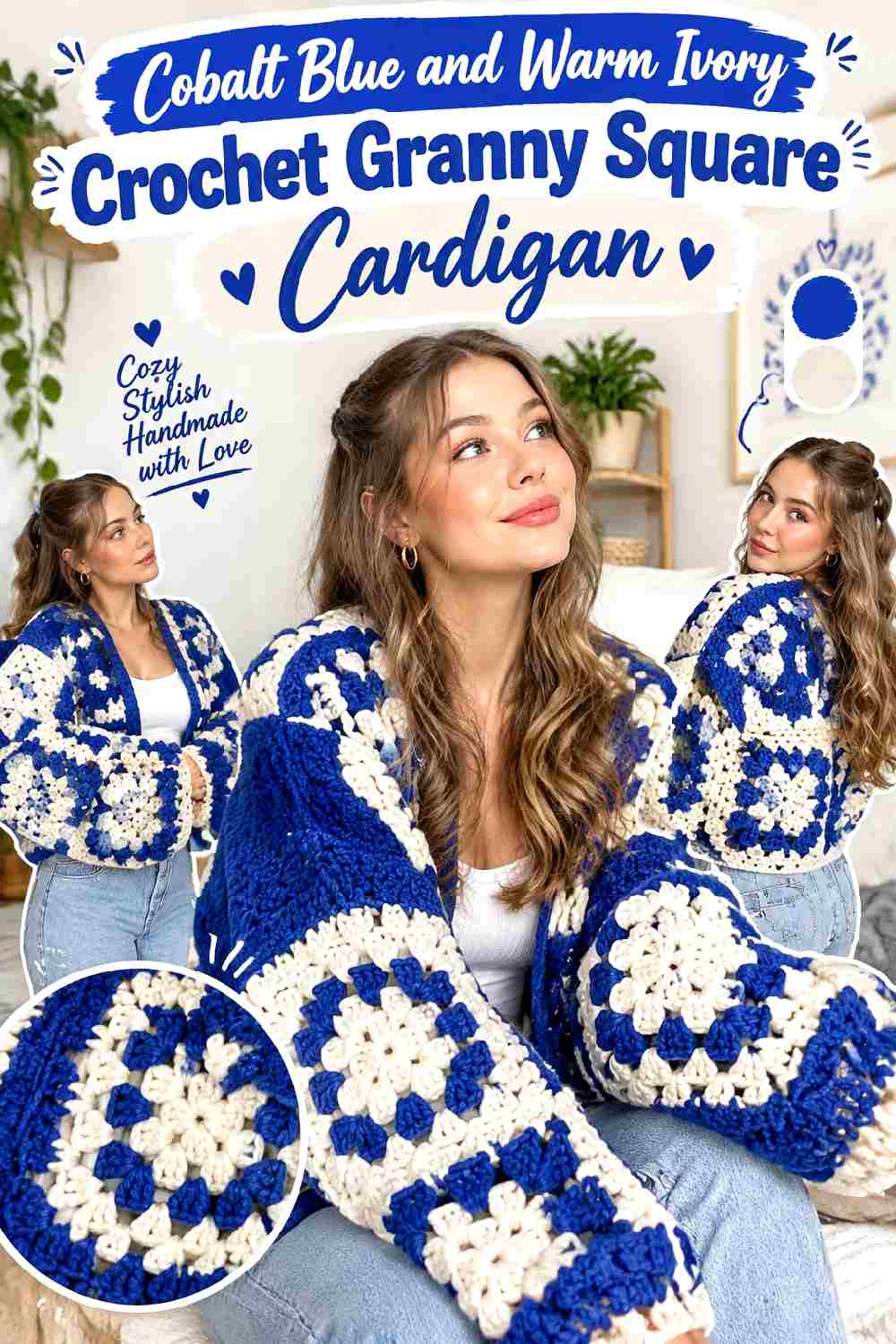
Cobalt blue and ivory make a granny-square cardigan brighter than most fall palettes without pushing it into a multicolor rainbow. Ivory gives motif boundaries enough separation for cobalt to remain clear across a heavily pieced garment.
Keep Cobalt Blue Repeating Across Every Crochet Cardigan Area
Carry cobalt through the front, back, and sleeves rather than concentrating all blue squares in one zone.
Repetition across the entire garment makes the bright color feel intentional and keeps separate sections visually related.
Use Warm Ivory to Separate Cobalt Blue Crochet Granny Squares
Warm ivory can appear around motif edges, joins, cuffs, or the front opening.
Because it is much lighter than cobalt, a small amount already creates strong separation. Avoid expanding every ivory border simply because more contrast is available.
Creator Credit: DIYGuru
11. Cobalt Blue And Tobacco Brown Crochet Blanket
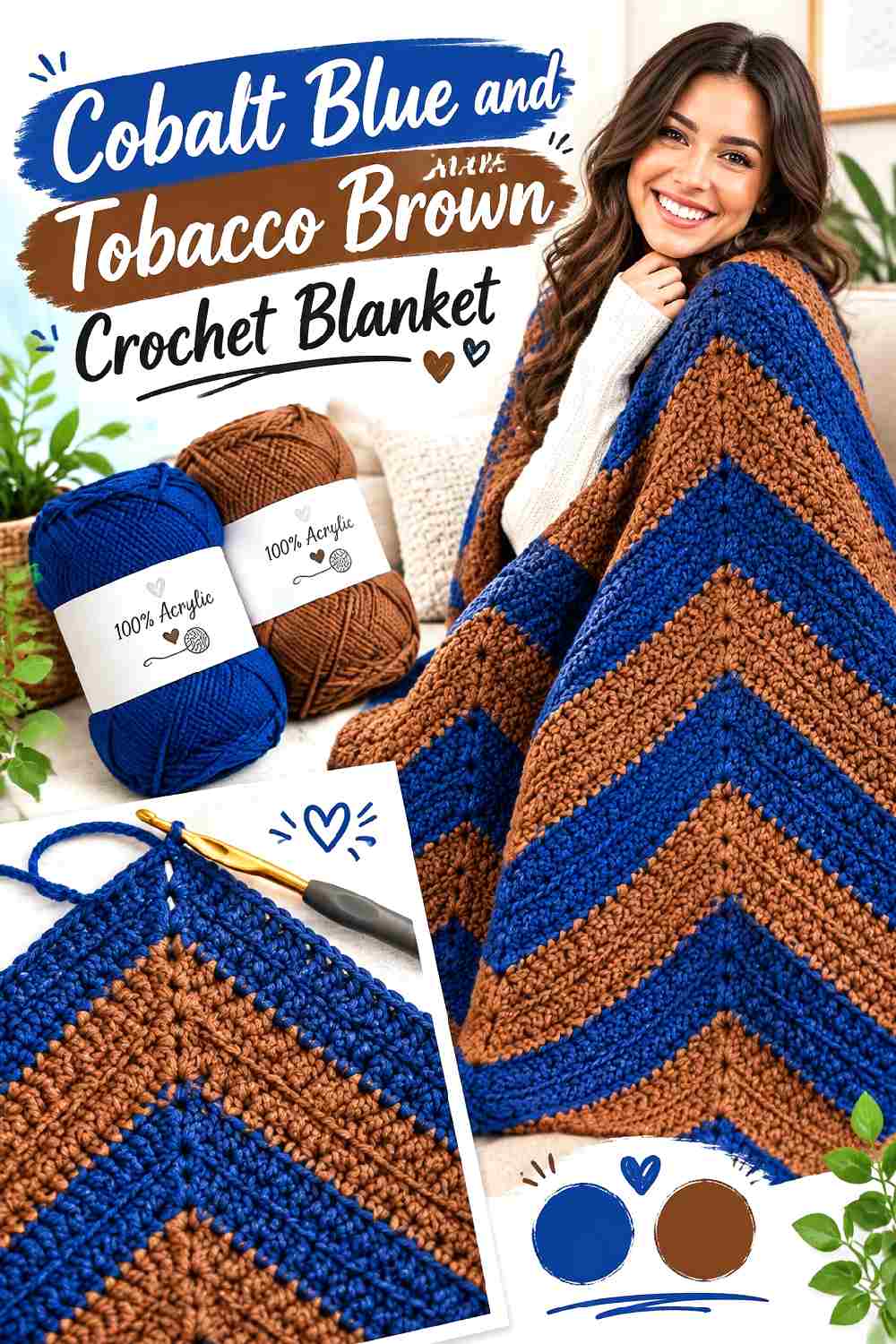
Cobalt blue on a blanket ignores the usual burnt-orange-and-beige autumn formula completely. Tobacco brown brings back enough earthiness to make the palette work around wood tones and other warm neutrals.
Give Cobalt Blue Most of the Crochet Blanket Field
A blanket provides a large uninterrupted surface where cobalt can look intentional rather than decorative.
Keeping the main field blue also gives textured stitches more consistency. Tobacco brown can then be used where it adds structure instead of alternating constantly through the center.
Frame Cobalt Blue Crochet With Tobacco Brown
A brown outer border creates a warm boundary around the cool blue center.
If you repeat brown inside the blanket, keep those repetitions smaller than the border. This allows the outside frame to remain visually meaningful.
Creator Credit: TL Yarn Crafts
12. Cobalt Blue And Black Crochet Structured Handbag
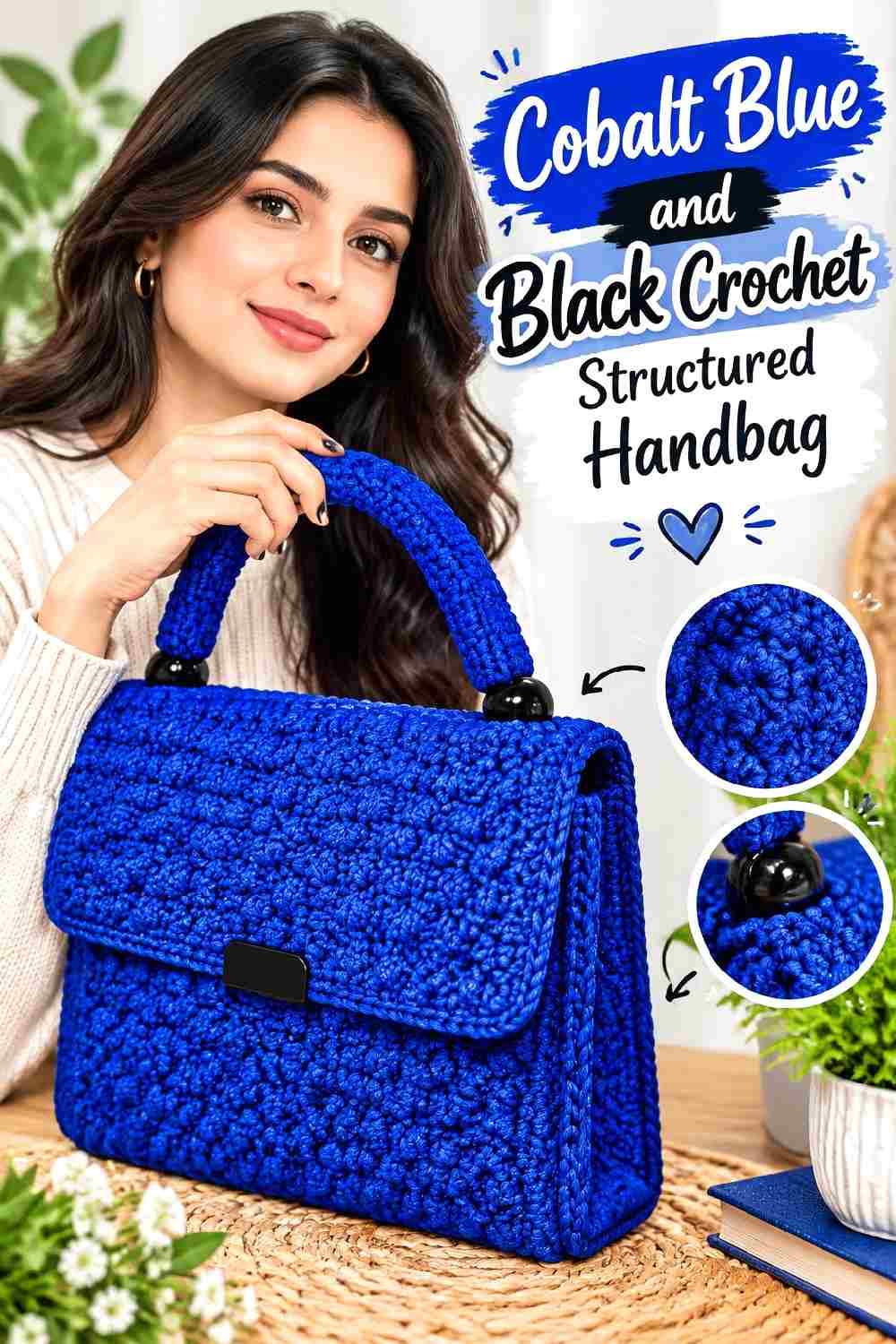
Few combinations make cobalt look sharper than black. On a structured handbag, black can follow practical lines such as handles, sides, opening edges, or reinforcement areas while blue controls the visible faces.
Keep Cobalt Blue Across the Crochet Handbag Front and Back
Reserve the broadest surfaces for cobalt blue so the bag remains a blue accessory when carried.
If both faces become black and blue appears only on trim, the intended color hierarchy reverses.
Use Black to Emphasize Cobalt Blue Crochet Handbag Structure
Black can make handles and side areas appear visually distinct without requiring decorative stripes.
Because black has substantial visual weight, repeat it only where the handbag already changes direction or function. Let the structure determine the placement.
Creator Credit: KnitcroAddict
13. Cobalt Blue And Dusty Rose Crochet Lace Shawl
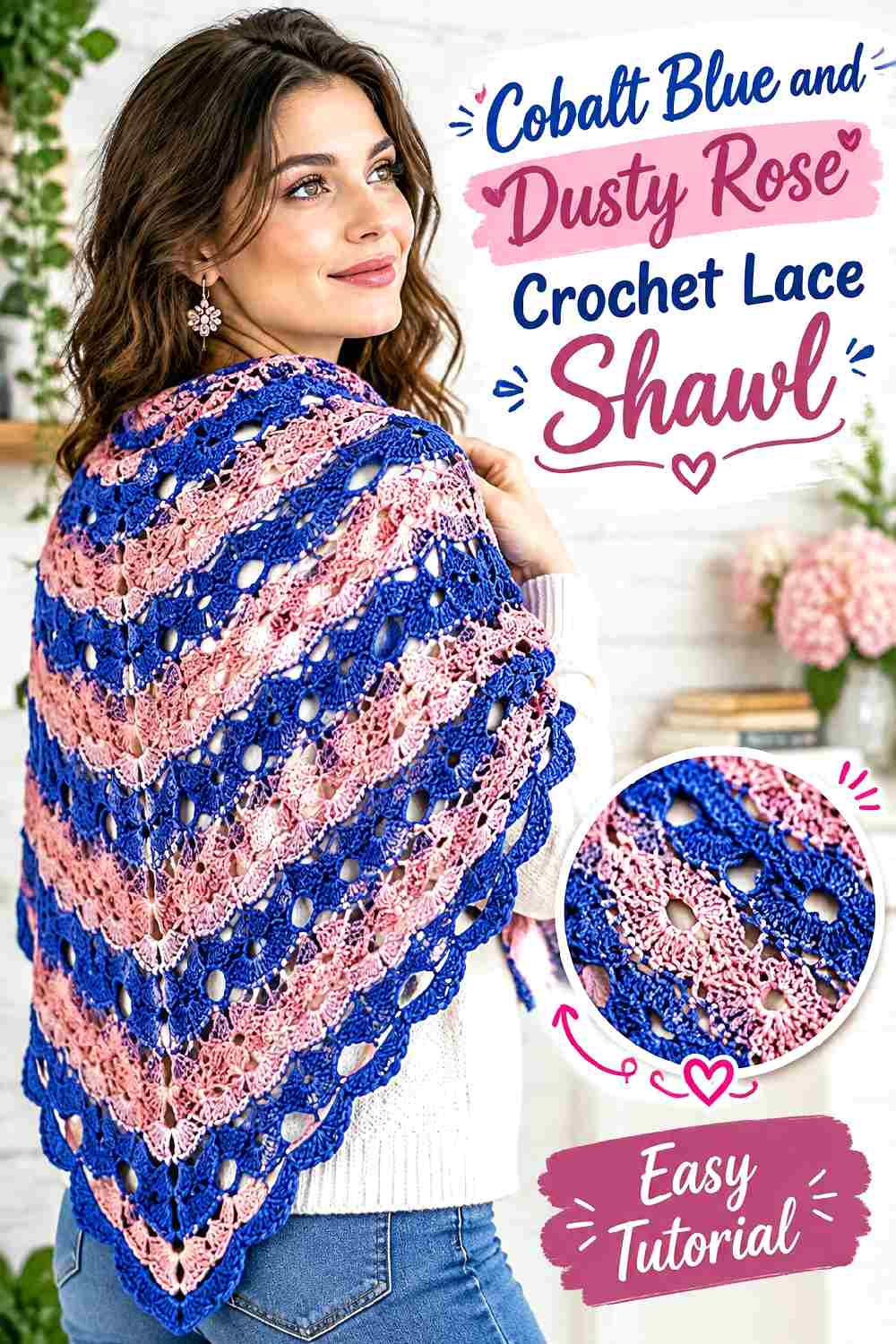
Dusty rose creates an unexpected soft counterpoint to cobalt. Instead of grounding blue with brown or gray, this palette deliberately combines two colors not usually treated as an autumn pair.
Let Cobalt Blue Anchor the Crochet Shawl Shape
Use cobalt through a large central or upper section so the expanding shawl has one recognizable visual anchor.
Openwork already creates gaps and movement. Too many rapid color changes can compete with that lace structure.
Use Dusty Rose to Break Up Cobalt Blue Crochet Lace
Dusty rose can create a softer passage toward the outer portion or appear in repeated bands.
Check value contrast before relying on it for detailed pattern definition. Two clearly different hues can still appear similar in lightness.
Creator Credit: Bella Coco
14. Cobalt Blue And Pewter Crochet Textured Cowl
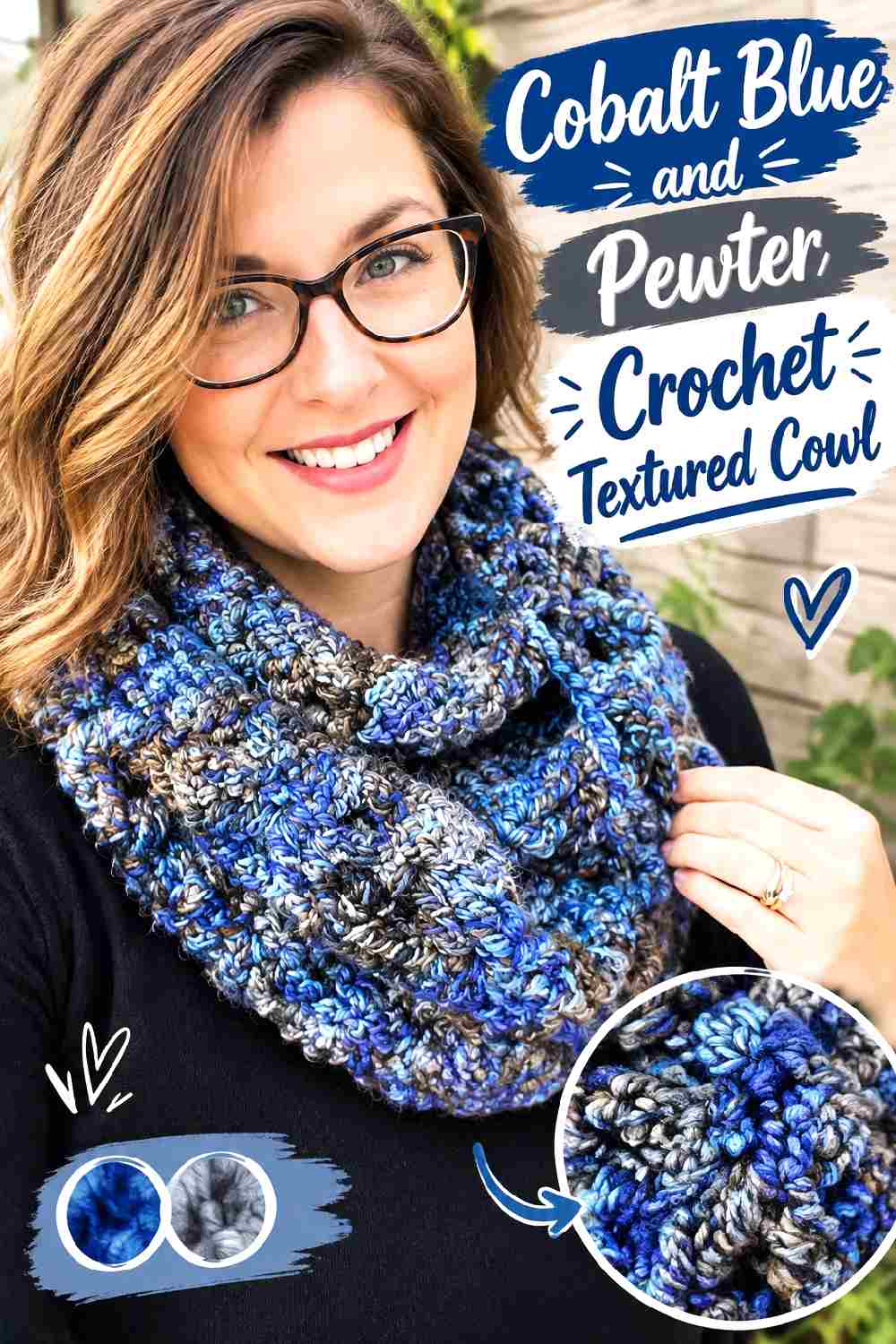
Pewter gray keeps the palette cool while making cobalt blue noticeably more saturated by comparison. This works well on a compact cowl where stitch texture should remain visible.
Keep Cobalt Blue Across the Main Crochet Cowl Texture
Use cobalt across the largest textured area and let shadows from the stitches create variation naturally.
Changing color every time the stitch pattern changes can make a small cowl overly complicated.
Place Pewter Around Cobalt Blue Crochet Cowl Edges
Pewter can define the upper and lower boundaries without creating the severity of black.
Consider how the cowl folds when worn. Put the strongest contrasting edge where it is likely to remain visible rather than disappear inside the fold.
Creator Credit: Rich Textures Crochet
15. Cobalt Blue And Burnt Orange Crochet Cable Leg Warmers
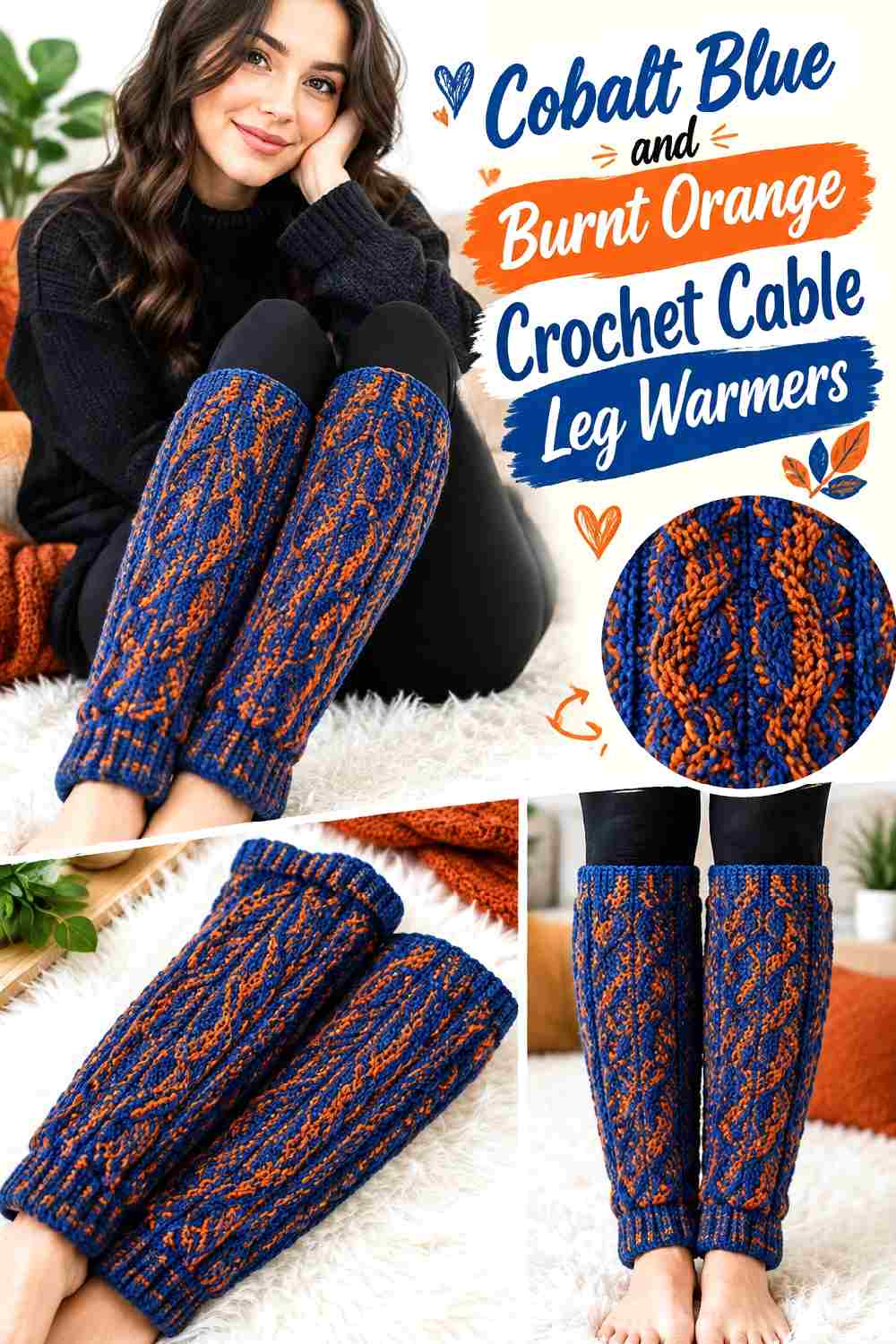
Cobalt and burnt orange make one of the strongest rule-breaking combinations here. Cable texture adds another layer of visual complexity, so the colors need disciplined placement.
Keep Cobalt Blue Continuous Through the Crochet Cable Sections
Let the cables remain cobalt instead of changing yarn inside every raised element.
The shadows around the cable texture already produce enough variation. A continuous blue surface makes those raised lines easier to follow.
Reserve Burnt Orange for Cobalt Blue Crochet Bands
Burnt orange can sit at upper bands, lower edges, or another cleaner structural area where it will not interrupt the cable work.
Repeat it consistently across both leg warmers. Strong orange accents expose mismatched placement quickly.
Creator Credit: TCDDIY
16. Cobalt Blue And Mocha Crochet Poncho
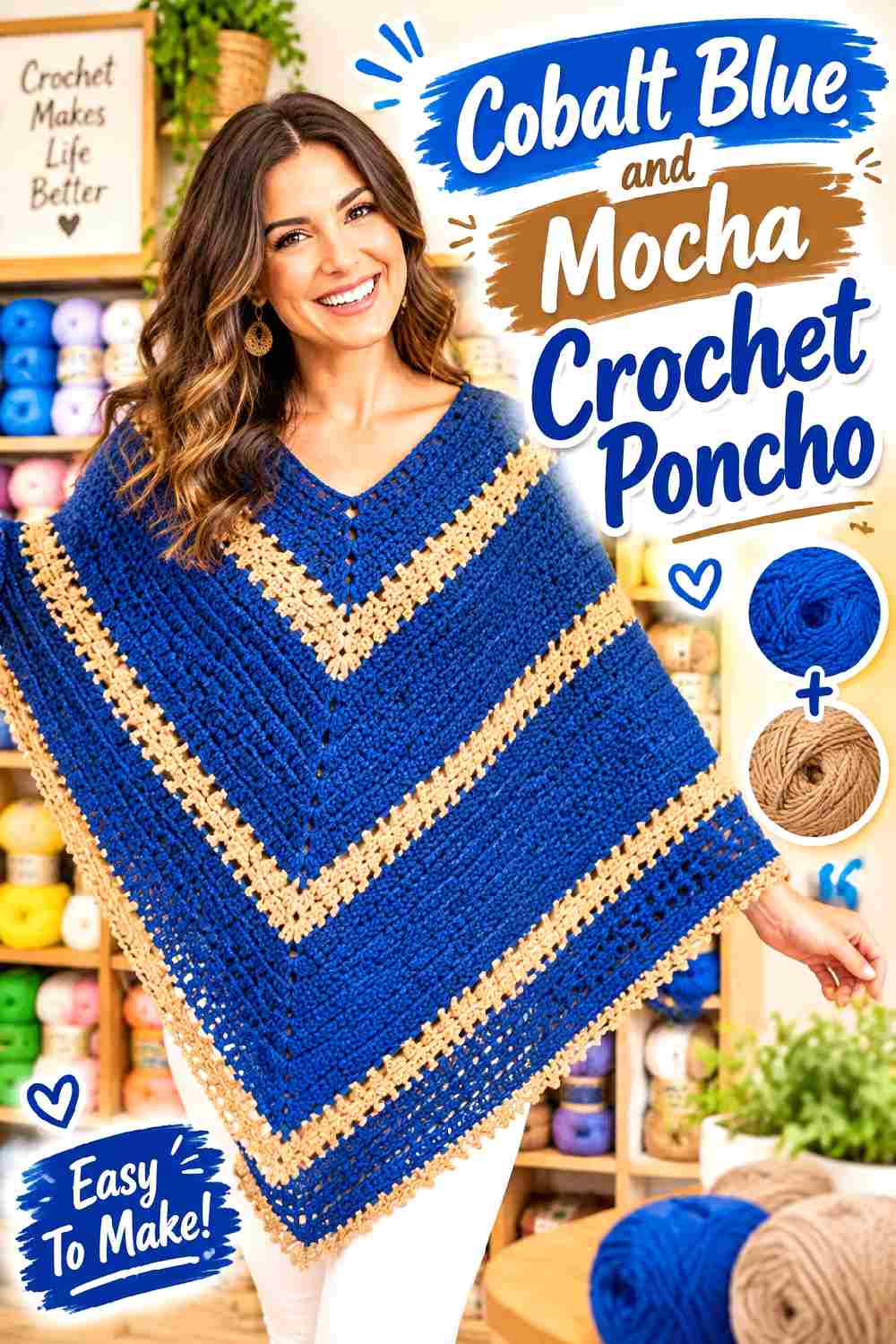
Mocha pulls cobalt blue toward a softer, earthier fall direction without dulling it. A poncho’s broad surface gives the blue room to lead while brown can define major bands or finishing areas.
Let Cobalt Blue Carry the Main Crochet Poncho Surface
Keep cobalt across the largest uninterrupted sections so the poncho has a clear main color from front to back.
A broad garment can tolerate contrast, but too many equal-width brown-and-blue bands may make the silhouette appear heavily segmented.
Use Mocha to Warm Cobalt Blue Crochet Poncho Borders
Mocha can define the neckline or outer border while introducing a traditional fall neutral.
If the neckline already uses a substantial brown area, keep the lower finishing lighter so cobalt remains dominant when the poncho is viewed at full length.
Creator Credit: Secret Yarnery
17. Cobalt Blue And Mustard Crochet Slouchy Leg Warmers
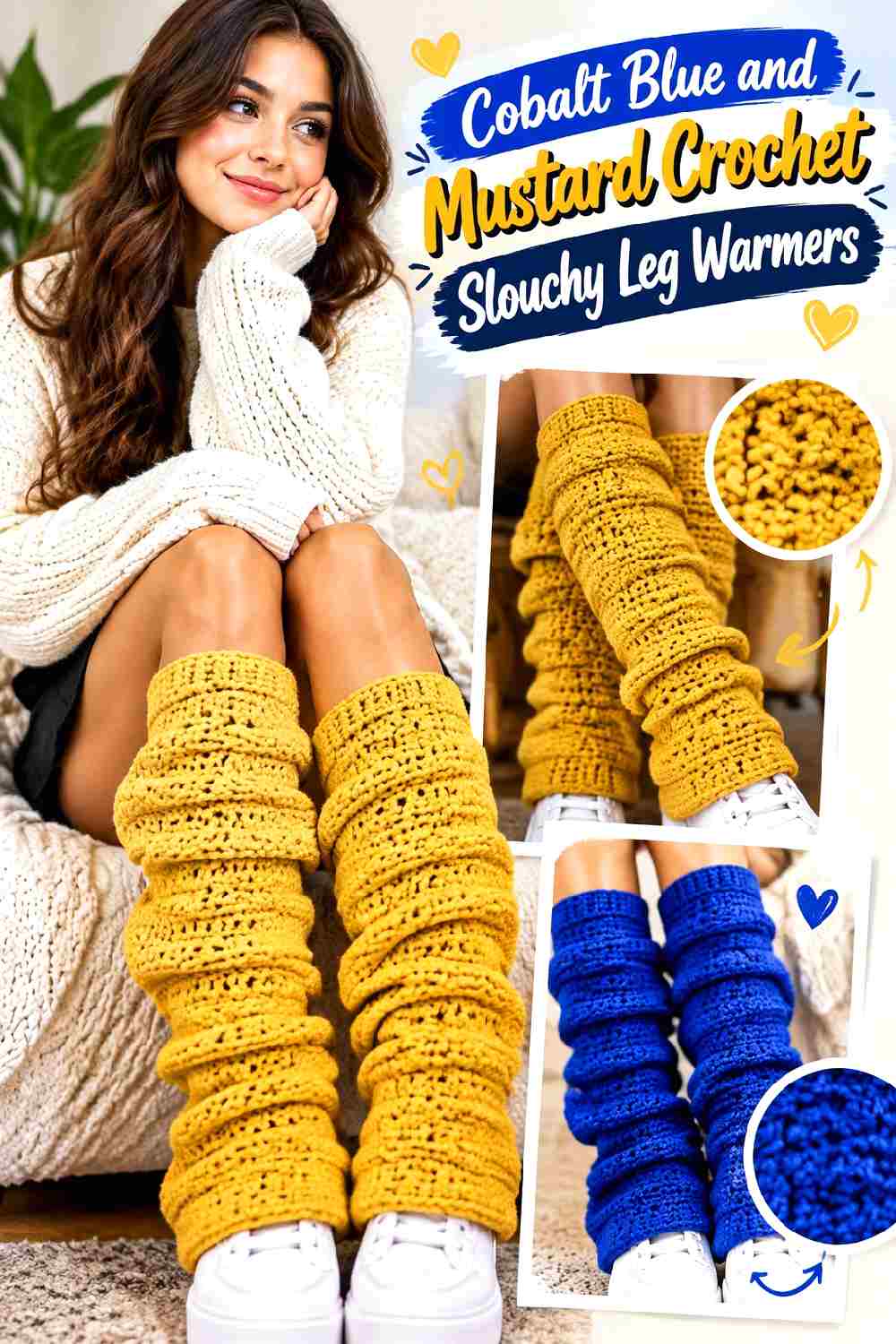
Cobalt and mustard deliberately reject the idea that fall color must be muted. Both hues carry significant saturation, so one should occupy noticeably more area.
Make Cobalt Blue the Main Crochet Leg Warmer Color
Use cobalt through the longer slouchy sections so the folds continue as one blue surface.
The repeated ridges and gathers already create visual variation, making a large amount of additional color blocking unnecessary.
Keep Mustard Smaller Against Cobalt Blue Crochet Folds
Mustard can appear around cuffs or a limited section near one end.
Because both colors are strong, avoid alternating them in equal narrow stripes unless a highly graphic effect is intentional. Let cobalt provide continuity and mustard provide interruption.
Creator Credit: DIY FROM HOME CROCHET
18. Cobalt Blue And Taupe Crochet Hexagon Cardigan
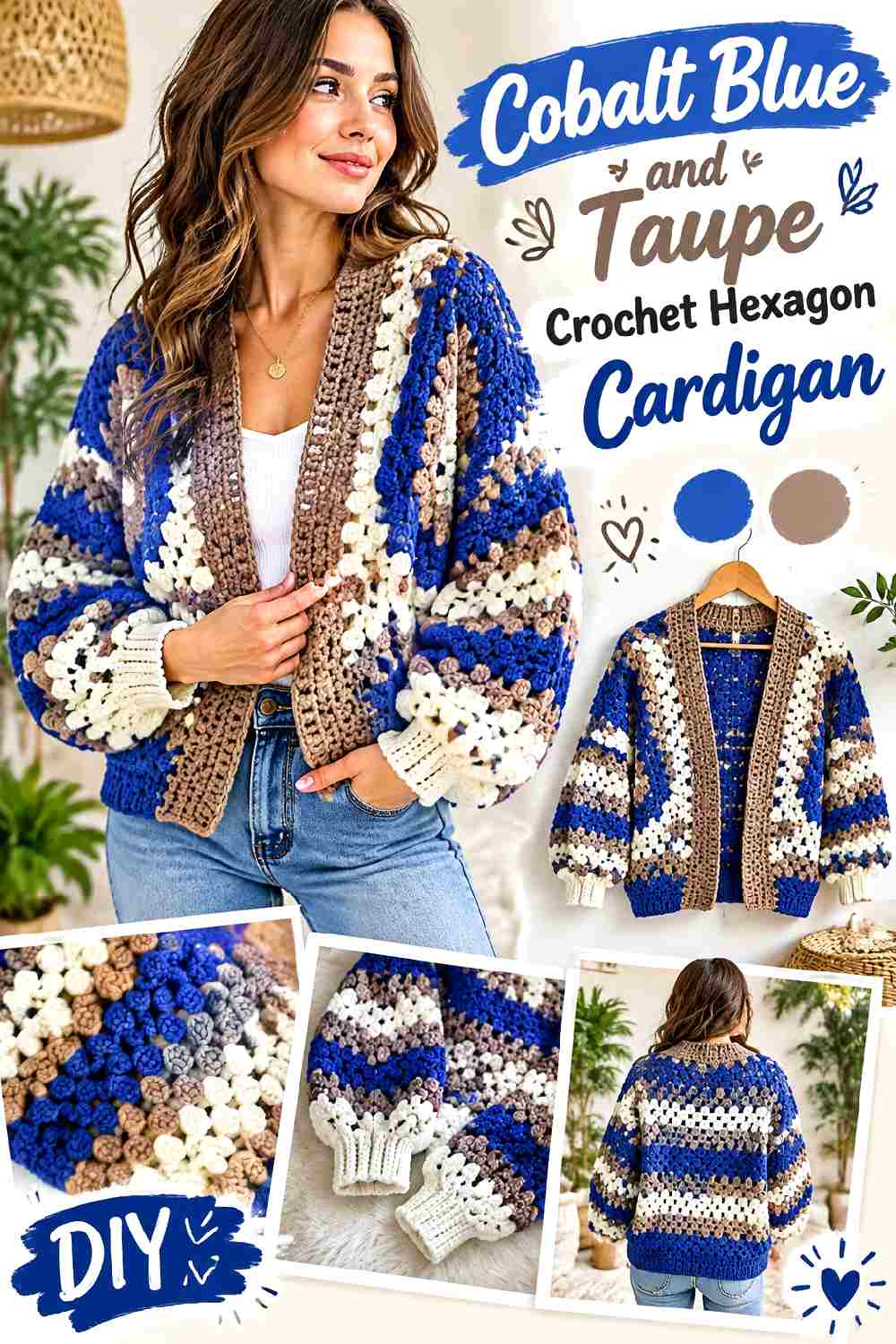
A hexagon cardigan gives cobalt blue repeating geometric structure without requiring a traditional granny-square grid. Taupe softens the contrast and makes the vivid blue less expected for a fall layer.
Keep Cobalt Blue Repeating Through the Crochet Hexagons
Use cobalt in corresponding areas of both main hexagons so the left and right sides share the same visual logic.
Because the garment begins with large geometric sections, inconsistent color proportions can become particularly obvious after the pieces are positioned together.
Let Taupe Quiet the Cobalt Blue Crochet Cardigan Edges
Taupe can be useful around sleeve ends, lower edges, or selected outer rounds.
If you want a calmer garment, increase taupe slightly near finishing areas rather than inserting many thin taupe stripes through the cobalt-dominant sections.
Creator Credit: Tejelu crochet
19. Cobalt Blue And Olive Crochet Headband
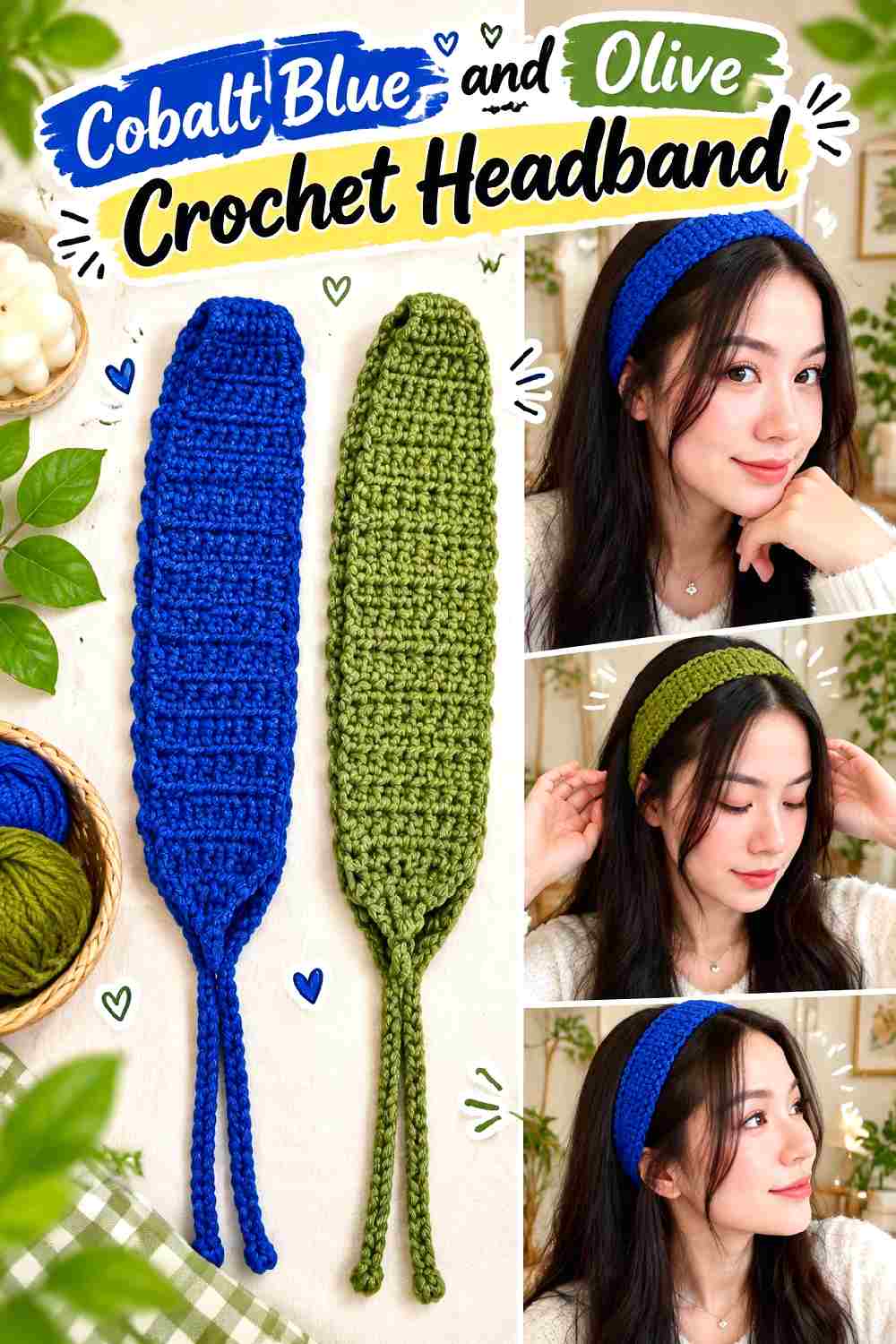
Olive is one of fall’s most familiar greens, which makes it an interesting foil for electric cobalt. A headband has little surface area, so the color hierarchy needs to be simple.
Keep Cobalt Blue Across the Main Crochet Headband
Use cobalt for most of the band rather than dividing the small accessory into several equal sections.
A compact item can look busy much faster than a blanket or cardigan. Let its shape and stitch texture provide most of the detail.
Use Olive as a Controlled Cobalt Blue Crochet Accent
Olive can appear at a twist, join, narrow edge, or another intentional detail.
Check the placement once the headband is worn. An accent that looks centered while flat may shift visually when the band wraps around the head.
Creator Credit: Molina DIY
20. Cobalt Blue And Garnet Crochet Fingerless Gloves
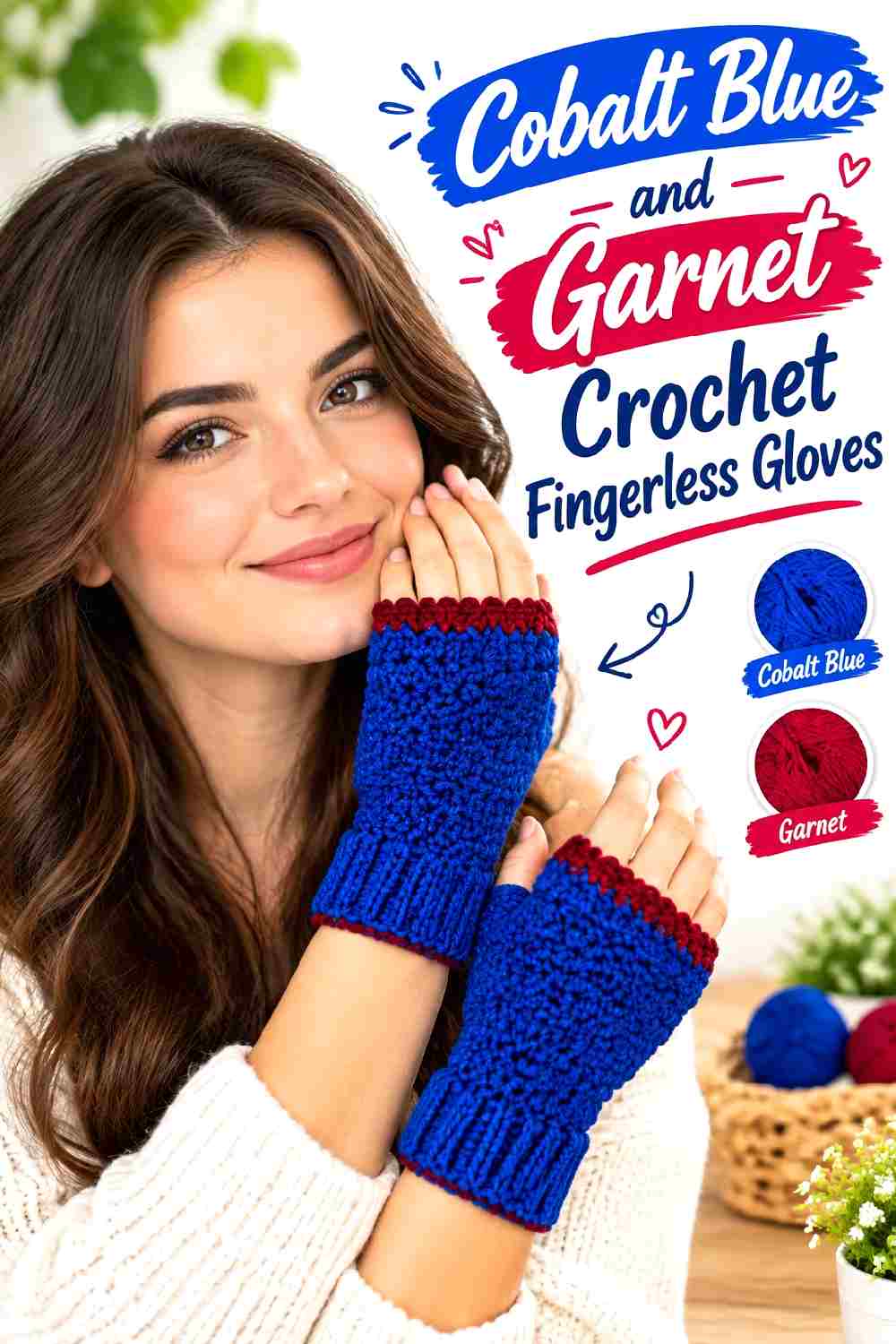
Cobalt and garnet combine two jewel-like colors without relying on a neutral. On fingerless gloves, that intensity works best when cobalt controls the hand and garnet concentrates near cuffs or smaller details.
Match Cobalt Blue Across Both Crochet Gloves
Keep cobalt in the same main areas on each glove and compare them together during construction.
Color symmetry matters strongly on paired accessories. Even when the stitches match, different blue-to-garnet proportions can make the gloves look unrelated.
Keep Garnet Focused Around Cobalt Blue Crochet Cuffs
Garnet can form a deeper boundary around the wrist without interfering with the hand section.
If another small garnet accent is added, place it in a corresponding position on both gloves. Avoid spreading red through every available detail.
Creator Credit: Cherilyn Q
21. Cobalt Blue And Terracotta Crochet Pillow
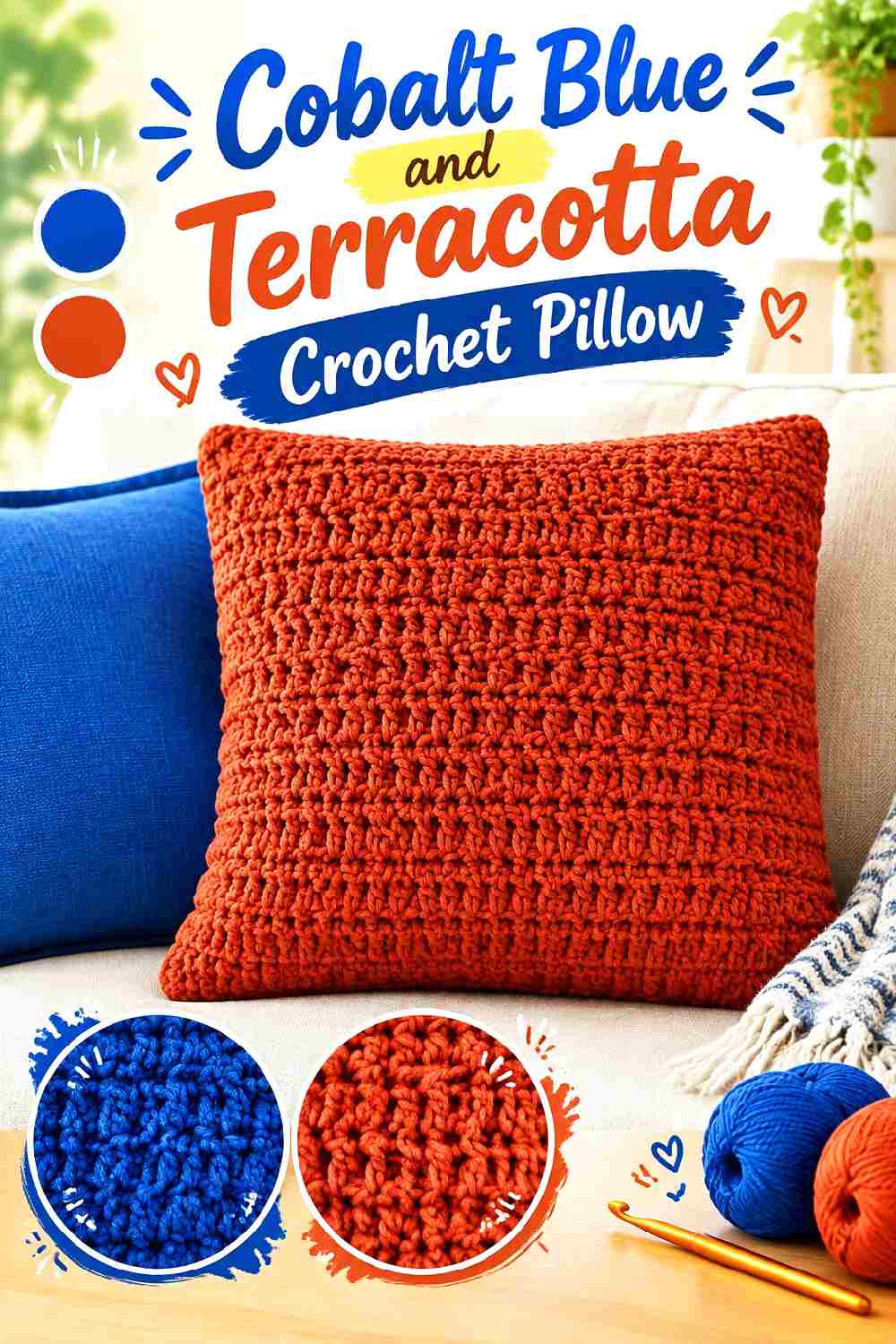
A cobalt pillow with terracotta accents takes one of fall’s most recognizable warm colors and places it against a cool blue surface. The broad pillow face makes it easier to control that contrast than on a small accessory.
Let Cobalt Blue Cover the Main Crochet Pillow Face
Keep most of the visible front cobalt so stitch texture can develop across one continuous field.
A pillow has enough surface for a saturated color to feel substantial. Breaking the face into many small terracotta sections can reduce that impact.
Use Terracotta to Frame the Cobalt Blue Crochet Pillow
Terracotta can work around the edge, corners, or selected decorative sections where the pillow needs a warm counterpoint.
If the border already carries strong terracotta, avoid adding equal amounts through the center. The warm perimeter will have more impact when the cobalt face remains relatively uninterrupted.
Creator Credit: Oficina Dali
Which Cobalt Blue Crochet Combination Breaks the Fall Rules the Most?
Cobalt with camel, espresso, tobacco, taupe, oatmeal, and mocha bends the traditional fall palette without completely abandoning it. The supporting neutrals bring familiar autumn warmth while blue remains the unexpected focal point.
Cobalt with rust, burnt orange, mustard, terracotta, oxblood, or garnet creates more obvious color tension. These combinations work well when you want the contrast itself to become part of the design.
Cobalt with charcoal, pewter, or black is cleaner and more graphic. Those palettes rely less on an obvious autumn color story and more on the seasonal function of the finished item.
Dusty rose is the least conventional pairing in the collection. It creates a softer contrast that moves away from the usual earthy fall palette entirely.
Conclusion
Cobalt blue does not need to be transformed into a muted navy to work in fall crochet. Its strongest quality is precisely what traditional autumn palettes often avoid: clear, saturated cool color.
For a quieter result, combine cobalt with camel, oatmeal, mocha, taupe, or tobacco brown. For stronger contrast, use black, charcoal, or pewter. If the goal is to challenge familiar fall color combinations, pair cobalt with burnt orange, rust, mustard, terracotta, oxblood, garnet, or dusty rose.
Whatever direction you choose, give cobalt enough visual space to lead. Use the secondary shade where the crochet item naturally needs structure—cuffs, joins, handles, borders, necklines, hems, or motif edges—rather than scattering contrast everywhere.
Use the original creator tutorials for exact construction details, and treat these cobalt palettes as independent color-planning directions.
Frequently Asked Questions
Is Cobalt Blue a Fall Crochet Color?
Cobalt blue is not one of the conventional earthy fall colors, which is what makes it useful for a less expected autumn palette.
The seasonal connection can come from the finished item and supporting shades. A cobalt cardigan paired with camel or a cobalt scarf accented with burgundy can still work clearly as a cool-weather project without making the blue look traditional.
What Fall Colors Work With Cobalt Blue Crochet?
Camel, rust, terracotta, tobacco brown, espresso, mocha, mustard, burgundy, oxblood, and olive all create different fall relationships with cobalt.
Use warm colors when you want obvious temperature contrast. Choose charcoal, black, taupe, oatmeal, or pewter when you want cobalt to remain the only strong hue.
How Do I Keep Cobalt Blue Crochet From Looking Too Bright?
You do not necessarily need to darken the blue. Reducing the amount of competing saturated color can be more effective.
Keep cobalt dominant and add a quieter shade around cuffs, borders, handles, joins, or other structural areas. Camel, taupe, oatmeal, espresso, charcoal, and mocha can all moderate the surrounding palette while leaving cobalt intact.
Does Cobalt Blue Look Better With Cream or Brown in Crochet?
Cream produces stronger light-and-dark separation and can make cobalt motifs, borders, and textured areas appear clearer.
Brown creates a warmer and more autumnal relationship. Espresso gives stronger definition, while camel, tobacco, and mocha create progressively softer earthy contrasts.
The better choice depends on whether you want clarity or warmth.
Can Cobalt Blue and Burnt Orange Work in the Same Crochet Project?
Yes, but both colors have enough visual strength that equal distribution can become intense.
Give one shade the dominant role. For cobalt-led crochet, keep blue across the main surface and reserve burnt orange for cuffs, borders, repeated motif centers, or another limited area.
How Can I Check Whether a Cobalt Blue Crochet Accent Has Enough Contrast?
Place the actual yarns beside each other rather than relying on color names. Then look at them from a distance or photograph them in grayscale.
This is particularly useful with charcoal, burgundy, olive, and other medium-to-dark colors. Different hues can still sit close together in value and lose separation once crocheted.
What Is the Simplest Way to Make Cobalt Blue Crochet Look Intentional?
Decide on the color hierarchy before starting. Let cobalt occupy the largest visual area, assign the second color one specific role, and repeat that role consistently.
A camel cuff that repeats at the neckline, an espresso handle that echoes the joins, or a terracotta pillow border that stays outside the cobalt center usually looks more controlled than placing the accent wherever space becomes available.