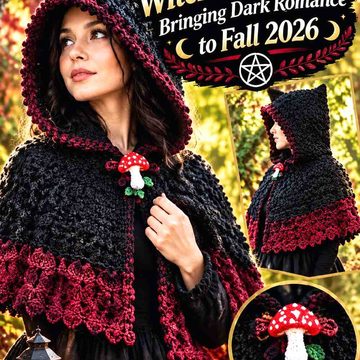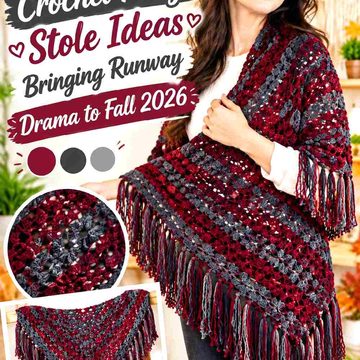
Black and blood red are an especially effective crochet pairing when the goal is Halloween with a romantic rather than playful direction. Black can carry most of the visual weight, while a controlled amount of deep red can define roses, borders, web lines, hearts, cuffs, or other details that would disappear in an all-dark project.
The important decision is not simply choosing two dramatic colors. Placement matters. When black and dark red are close in value, motifs and texture can merge from a distance. Giving blood red a defined job—such as framing a skull, outlining a web, covering a flower, or breaking up a black garment—helps both colors remain intentional.
The 19 ideas below use different crochet forms and different black-to-red balances. The linked tutorials support the underlying project construction; the black and blood red palettes are editorial adaptations unless the creator specifically demonstrates those colors.
Quick List
- Black Crochet Witch Hat With A Blood Red Band
- Blood Red And Black Crochet Corset Top
- Black Spider Web Crochet Decor With A Blood Red Outer Edge
- Blood Red Skull On A Black Crochet Granny Square
- Black Cat Crochet Amigurumi With Blood Red Details
- Black Pumpkin Crochet Garland With Blood Red Accents
- Black Mesh Crochet Sweater With Blood Red Edging
- Blood Red Crochet Bolero With Black Edging
- Black Crochet Choker With Blood Red Detail
- Black Triangle Crochet Shawl With A Blood Red Border
- Black Crochet Snake With Blood Red Markings
- Blood Red Crochet Eyeball With Black Pupil Details
- Blood Red Heart Crochet Bag With Black Structure
- Black Lace Crochet Collar With Blood Red Trim
- Black Crochet Bat With Blood Red Wing Details
- Black Crochet Fingerless Gloves With Blood Red Cuffs
- Blood Red Crochet Roses With Black Leaves
- Black Crochet Star Charm With A Blood Red Center
Let Black Control the Overall Gothic Crochet Palette
Black works most clearly as the visual anchor when several decorative details compete for attention. On a coffin bag, mesh sweater, shawl, or witch hat, giving black the largest uninterrupted area establishes the dark base before blood red is introduced.
That does not mean every project needs mostly black. A blood red rose or heart bag can reverse the hierarchy successfully because the recognizable shape already carries the focal point. The useful question is which part of the finished item should be noticed first.
Keep Blood Red Visible Against Black Crochet
Dark red and black can be closer in lightness than expected, particularly once the yarn is worked into textured stitches. Compare the yarns side by side before committing to a large project. A quick grayscale photo can also reveal whether the two shades provide enough value separation.
If they nearly merge, use blood red on larger shapes rather than tiny details. A broad cuff, bag panel, hat band, rose, or border will remain easier to read than scattered red stitches surrounded by black.
Repeat Blood Red Purposefully Instead of Spreading It Everywhere
Small repeated accents can connect a palette, but equal amounts of black and red can make a detailed crochet piece visually crowded. Decide whether blood red is the focal color, a structural color, or an accent before distributing it.
For gothic-romance styling, repeating red in two or three strategic areas often gives stronger continuity: for example, a corset edge and lacing area, a shawl border and corner detail, or a bag panel and strap attachment.
1. Black Crochet Witch Hat With A Blood Red Band
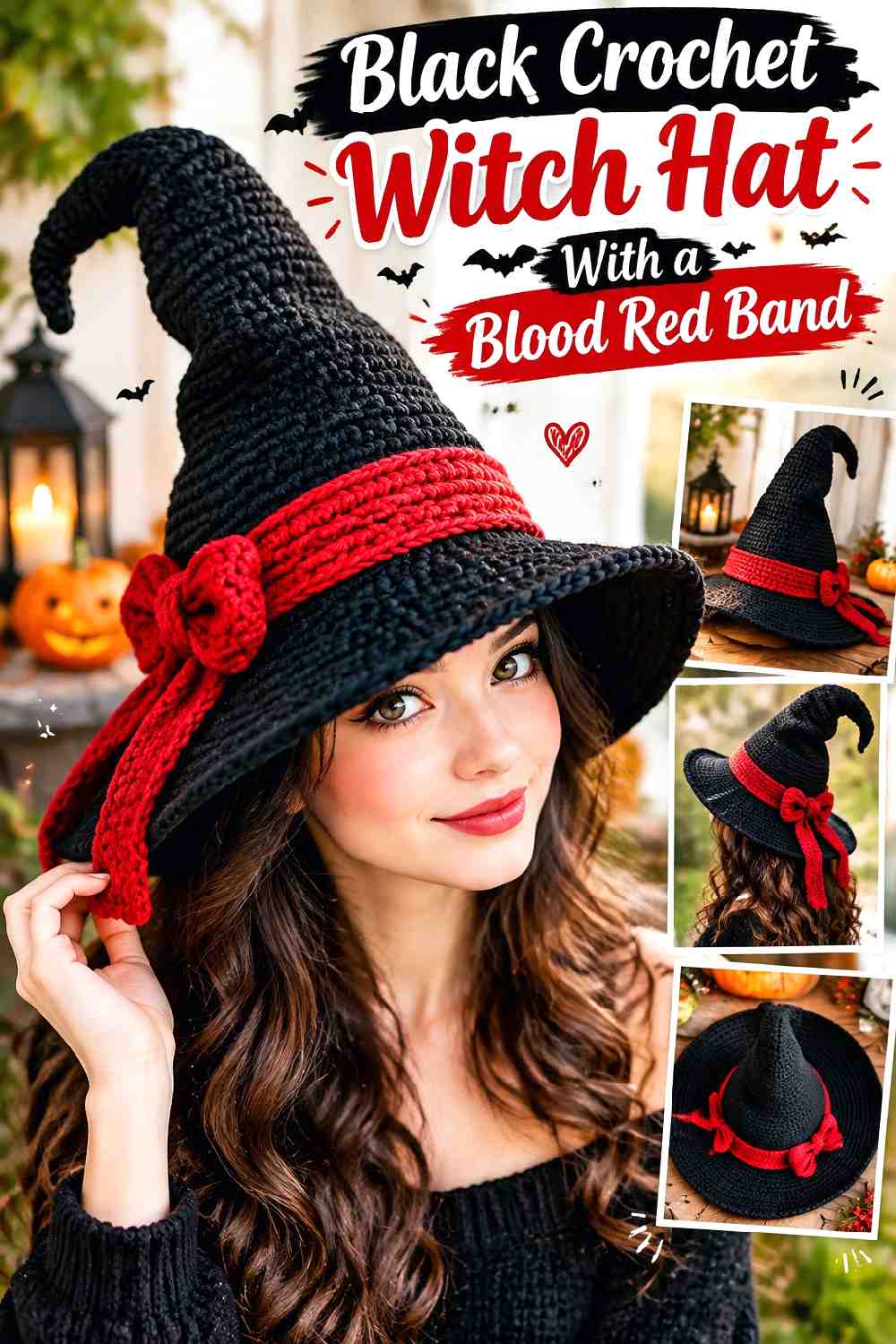
For a pointed witch hat, uninterrupted black through the crown and brim creates the strongest dark silhouette. Blood red can then operate as a band, narrow trim, or decorative detail where the crown meets the brim, giving the palette a clear division instead of alternating colors throughout the whole hat.
Black Should Dominate the Crochet Witch Hat Crown
A mostly black crown keeps the tall pointed shape visually continuous. Large red sections higher on the cone can break that line, so save blood red for an area where the color change has a structural reason.
Blood Red Defines the Crochet Witch Hat Band
The transition between crown and brim is a natural place for blood red because it already acts like a visual boundary. A band also gives the red enough width to remain noticeable without taking over the hat.
Black Keeps Blood Red Crochet Hat Details From Becoming Too Busy
If the band carries strong red contrast, keeping the brim black gives the eye a quieter area. Additional red decorations can be used selectively, but repeating them across every section may weaken the clean pointed silhouette.
Creator Credit: ElyseCrochets YouTube tutorial
2. Blood Red And Black Crochet Corset Top
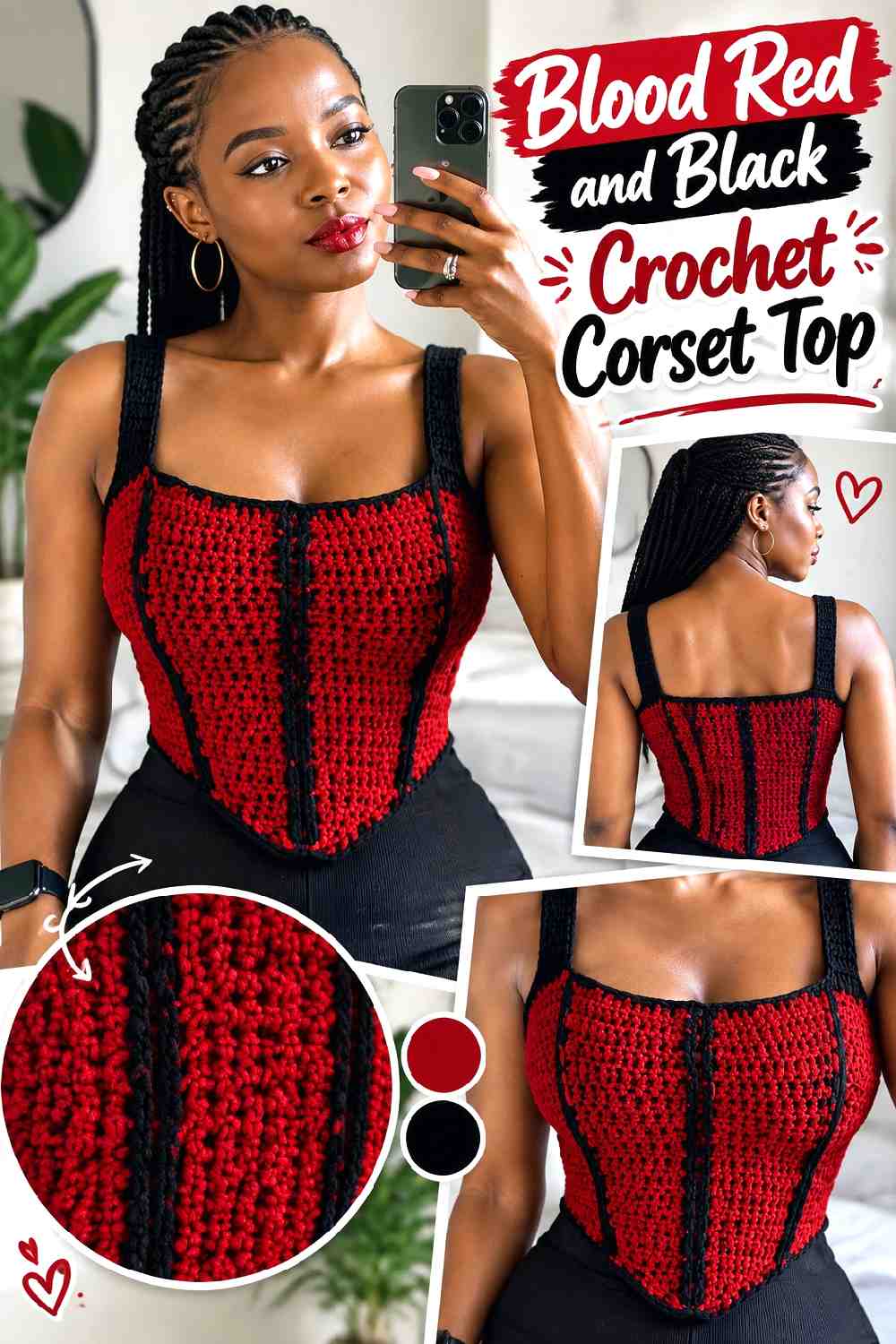
A corset-inspired crochet top offers several natural color zones: the body, ribbed or textured sections, edging, and lace-up area. Blood red can lead across the main panels while black concentrates around the edges and lacing, producing stronger definition than an even stripe pattern.
Blood Red Gives the Crochet Corset Panels a Clear Focal Color
Using blood red across the larger body sections makes the garment read as red first and gothic second. Keep the shade consistent across corresponding panels so the center of the top does not feel visually fragmented.
Black Can Frame Blood Red Crochet Corset Edges
Black along upper edges, lower edges, or panel divisions can outline the red body and emphasize the garment’s structure. This is especially useful when the stitch texture itself is subtle and would otherwise blend into one large red surface.
Black Lacing Can Balance a Blood Red Crochet Corset Back
When the body is red, black around the lace-up area gives that construction feature more definition. Repeating black elsewhere in the edging helps the back detail look connected rather than added as a separate color decision.
Creator Credit: AC Crochets YouTube tutorial
3. Black Spider Web Crochet Decor With A Blood Red Outer Edge
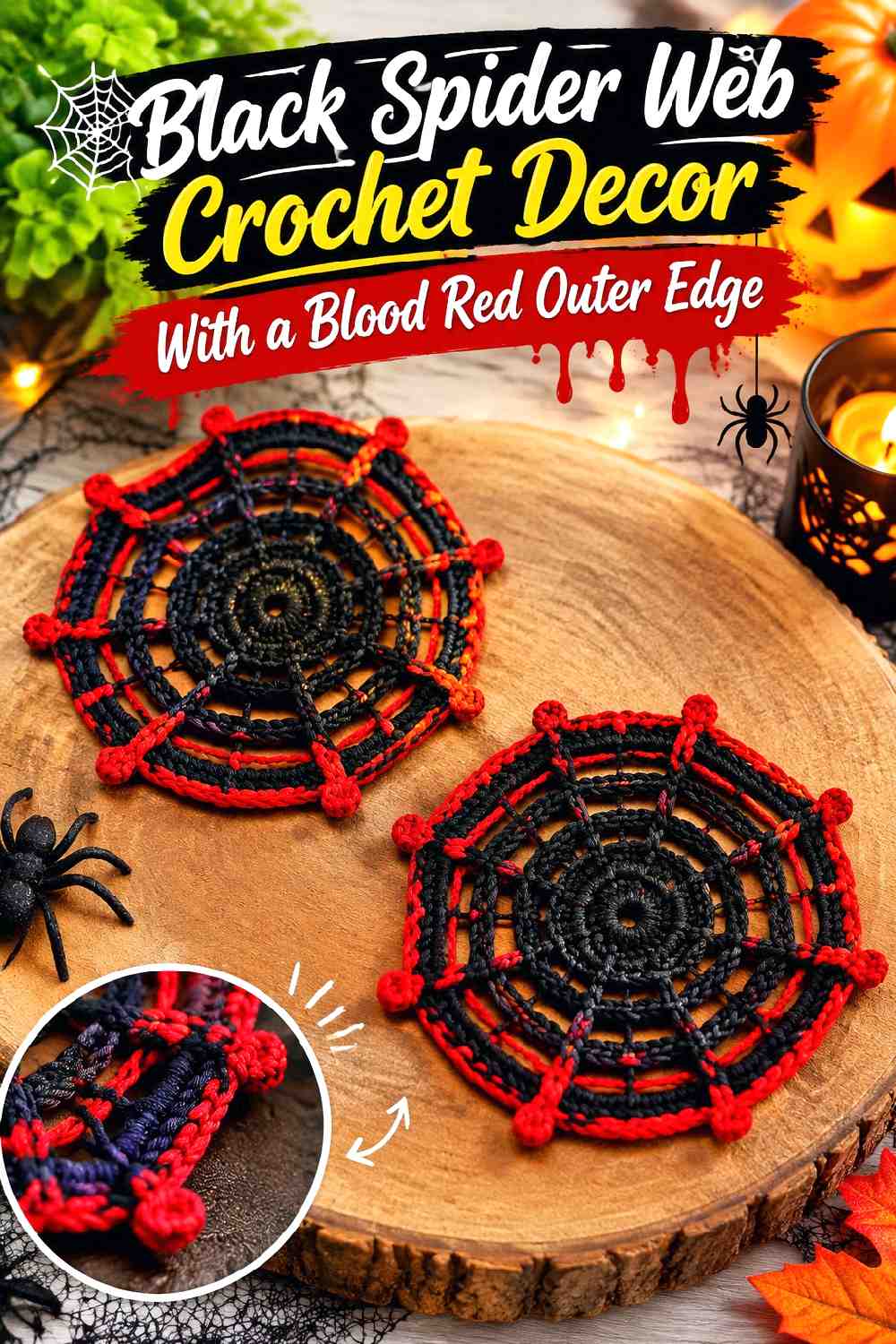
Spider-web crochet relies on open spaces as much as yarn color. Black makes the web feel graphic against a light wall or tabletop, while blood red can define the perimeter or selected rings without filling every open section with competing color changes.
Black Makes the Crochet Spider Web Structure More Continuous
Use black for most of the radiating lines and openwork if you want the web construction to remain visually coherent. Frequent red changes can interrupt the repeated geometry that makes the piece recognizable.
Blood Red Can Define the Crochet Spider Web Perimeter
A red outer round or finishing edge gives the web a visible boundary while leaving the center dark. This placement also keeps red away from the smallest openwork sections, where low value contrast could make the color change harder to notice.
Black and Blood Red Crochet Webs Need Background Contrast
Because both yarn colors are dark, consider where the web will be displayed. Against a dark door or wall, the openwork may disappear. A lighter background gives both black strands and red edging a clearer silhouette.
Creator Credit: Crafty Crochet Castle YouTube tutorial
4. Blood Red Skull On A Black Crochet Granny Square
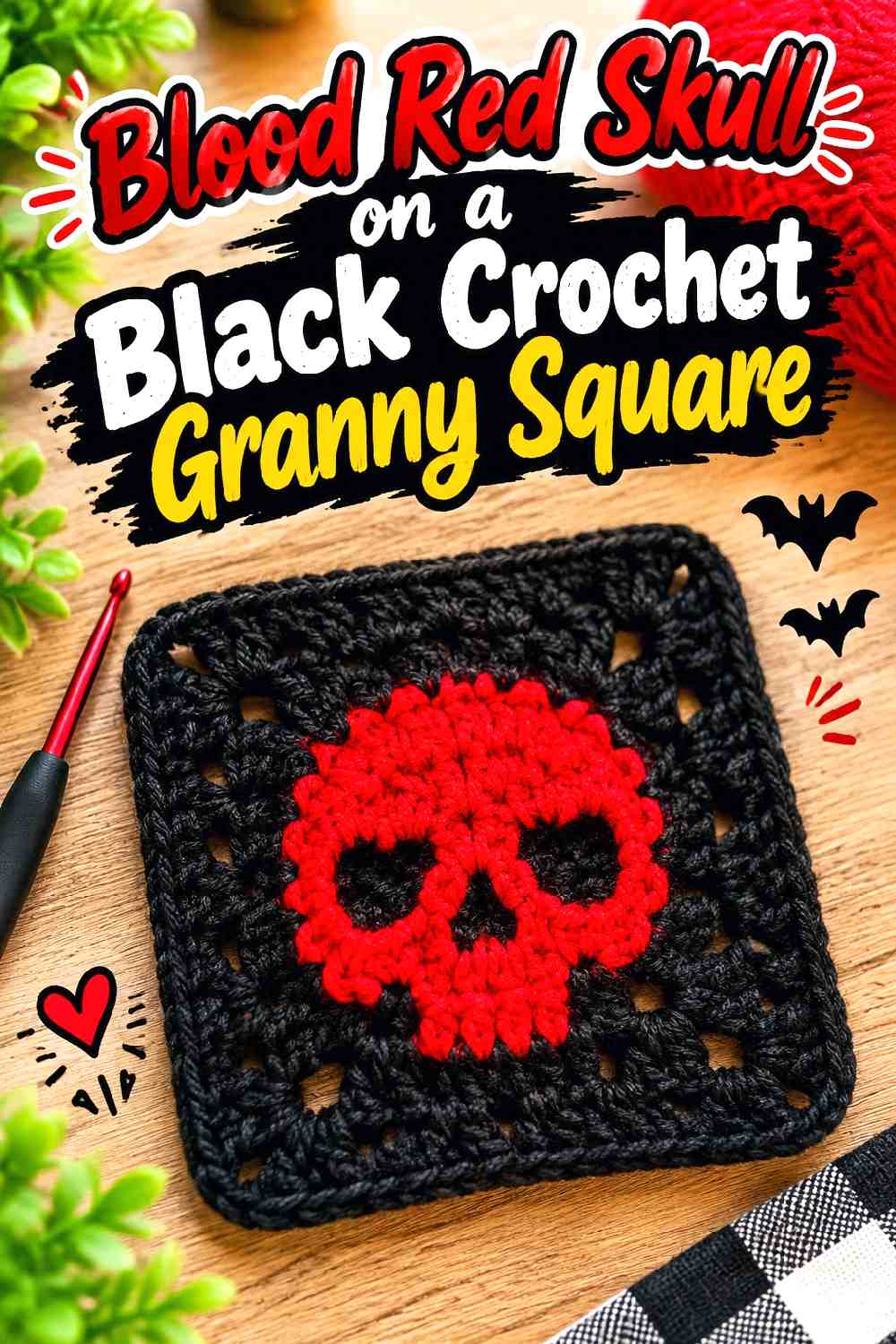
A skull granny square becomes much easier to read when the skull and background have clear visual separation. Blood red can carry the skull motif while black fills the surrounding square, creating a compact Halloween motif that can be repeated across bags, pillows, or larger joined projects.
Blood Red Needs Enough Area to Define the Crochet Skull
Keep the skull shape in a continuous red section rather than introducing black inside too many small features. The clearer the color block, the easier the motif will be to identify from a normal viewing distance.
Black Gives the Blood Red Crochet Skull a Stable Background
Black around the motif contains the stronger red color and makes the square easy to combine with other dark motifs. It also prevents additional bright shades from competing with the skull.
Blood Red Crochet Skull Squares Need Consistent Color Placement
If several squares will be joined, decide whether every skull stays red or whether only selected motifs use the accent. Repeating the same red placement creates a stronger rhythm than moving the accent unpredictably between center, border, and join.
Creator Credit: Purlfectly Plush Co YouTube tutorial
5. Black Cat Crochet Amigurumi With Blood Red Details
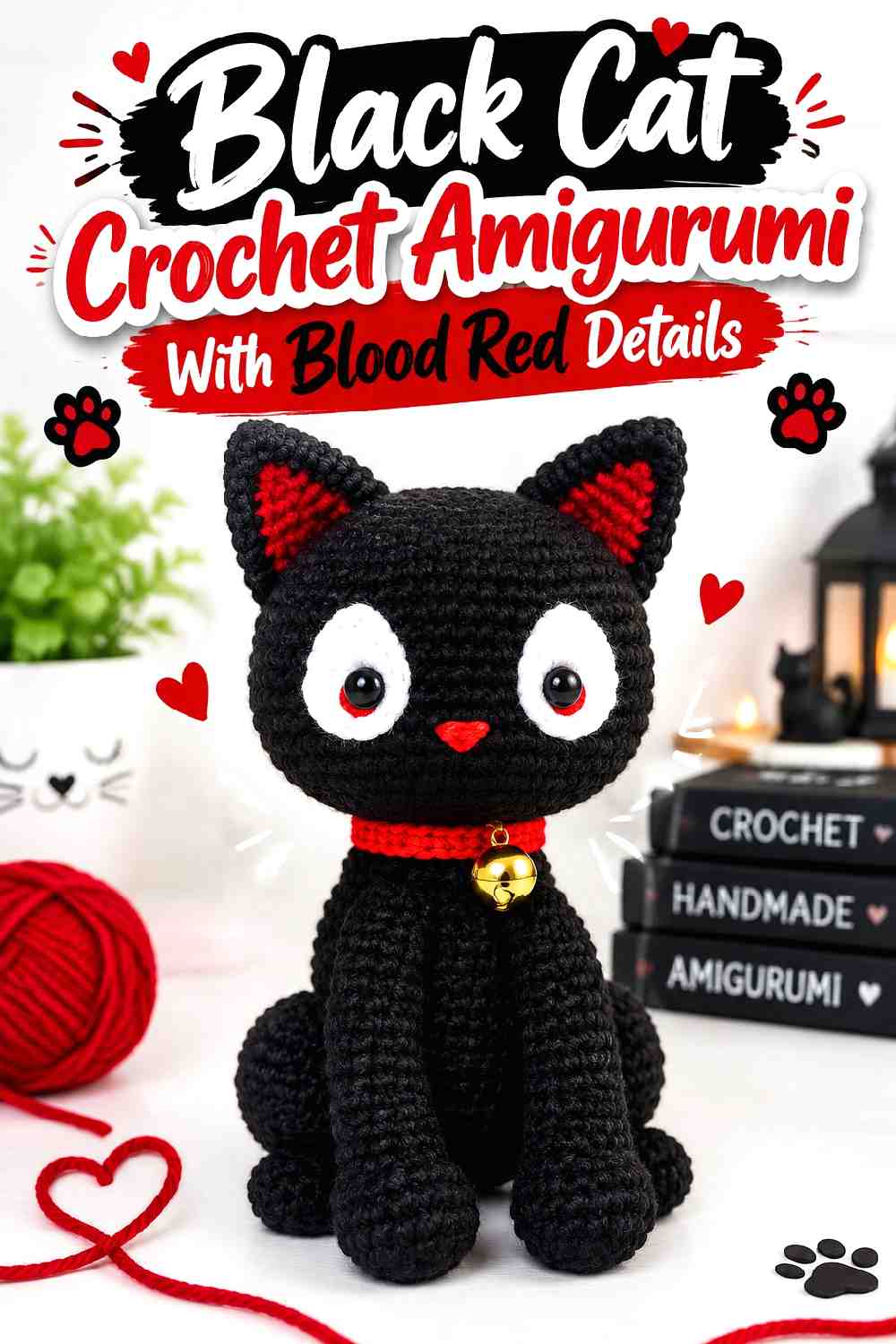
A black crochet cat creates a compact gothic figure without requiring extensive color changes. Blood red works better as a controlled secondary color on a collar, bow, heart, or other visible detail than as tiny scattered stitches across the body.
Black Should Stay Continuous Across the Crochet Cat Body
Keeping the head and body primarily black preserves the recognizable cat silhouette. Large red patches can change the visual emphasis from gothic black cat to general color-blocked toy.
Blood Red Needs a Defined Role on the Black Crochet Cat
Choose one meaningful red feature, such as a collar or small decorative accent. Concentrating the color gives the detail more impact and keeps the amigurumi from looking visually cluttered.
Black Crochet Texture May Hide Small Blood Red Details
Very small red embroidery or surface details can disappear against black if the shades are similar in value. Check visibility from a short distance before adding multiple tiny features.
Creator Credit: amigurumis BIM YouTube tutorial
6. Black Pumpkin Crochet Garland With Blood Red Accents
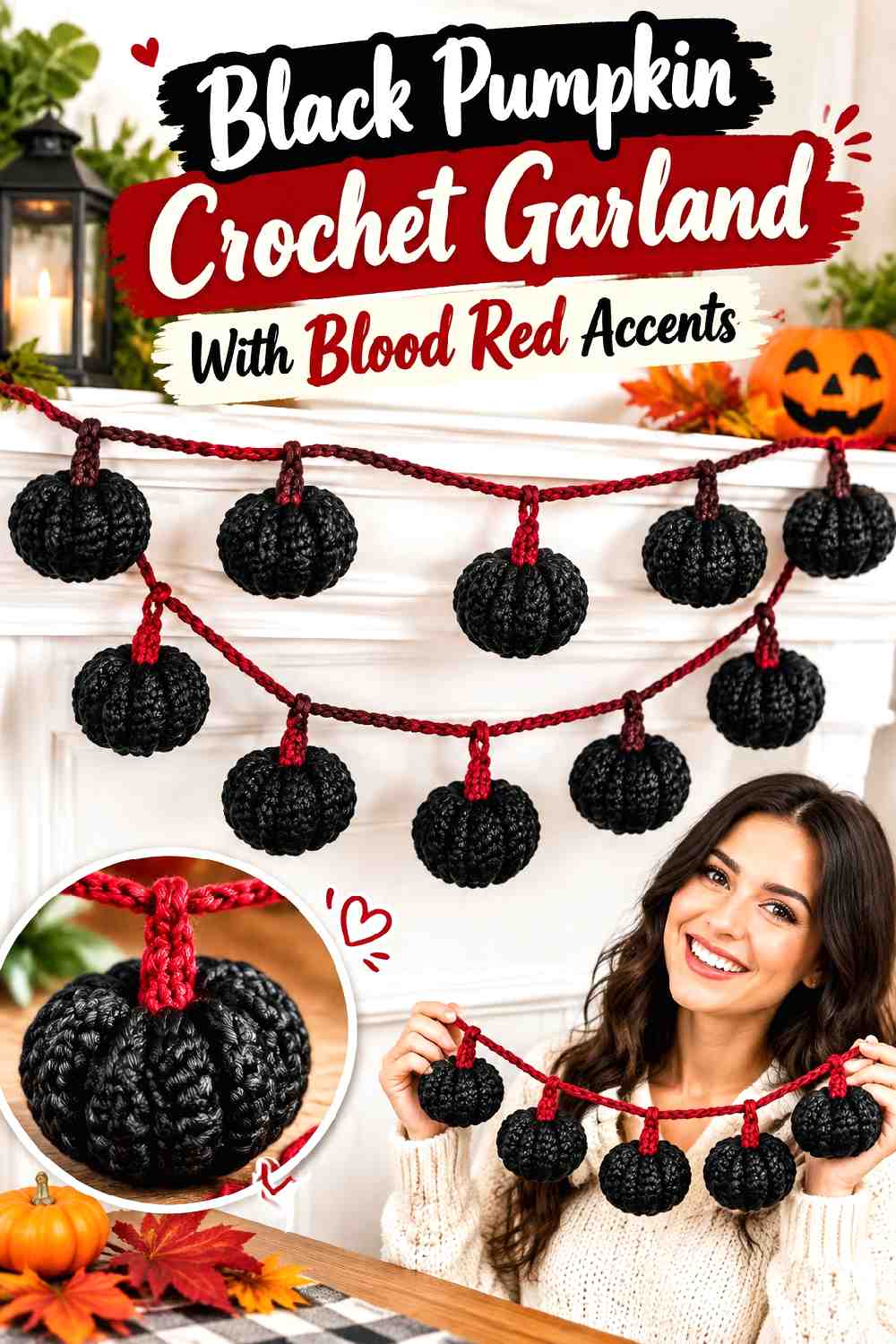
A pumpkin garland does not need traditional orange to read as Halloween decor. Black pumpkins can form the repeated base, while blood red stems, connecting details, or selected contrasting pumpkins shift the strand toward gothic seasonal decor.
Black Pumpkins Give the Crochet Garland a Repeated Dark Base
Using black for most of the motifs creates consistency along the full garland. Because the pumpkins repeat, the silhouette can carry the seasonal message even without the expected orange palette.
Blood Red Should Mark a Repeating Crochet Garland Rhythm
Rather than inserting red randomly, repeat it at predictable intervals. One red motif between several black pumpkins, or the same red detail on each pumpkin, makes the strand look planned from end to end.
Black and Blood Red Crochet Garland Needs Clear Display Contrast
A dark garland can disappear against black shelving or a deep wall color. Test the finished motifs in the intended display area before making the entire strand so you can adjust the amount of blood red if necessary.
Creator Credit: Brambles and Hart YouTube tutorial
7. Black Mesh Crochet Sweater With Blood Red Edging

Mesh fabric makes color behave differently because the background underneath remains visible through the openings. Black works well for the main mesh field, while blood red can define cuffs, neckline, hem, or another edge where the color has enough density to stay visible.
Black Keeps the Crochet Mesh Sweater Visually Unified
Using black through most of the openwork avoids multiple color breaks across the torso and sleeves. The repeated mesh texture already contributes strong visual movement, so the main color does not need additional interruption.
Blood Red Makes Crochet Mesh Cuffs Easier to Notice
Cuffs and other denser boundaries are useful locations for dark red because the yarn is visually concentrated there. Red placed sparsely through very open mesh may look weaker than the same color used across a defined edge.
Black Layers Change How Blood Red Crochet Mesh Appears
The garment worn underneath becomes part of the palette because it shows through the openings. A black layer produces a darker continuous look, while a contrasting layer increases the visibility of both the mesh and the red trim.
Creator Credit: Brunaticality Crochet YouTube tutorial
8. Blood Red Crochet Bolero With Black Edging
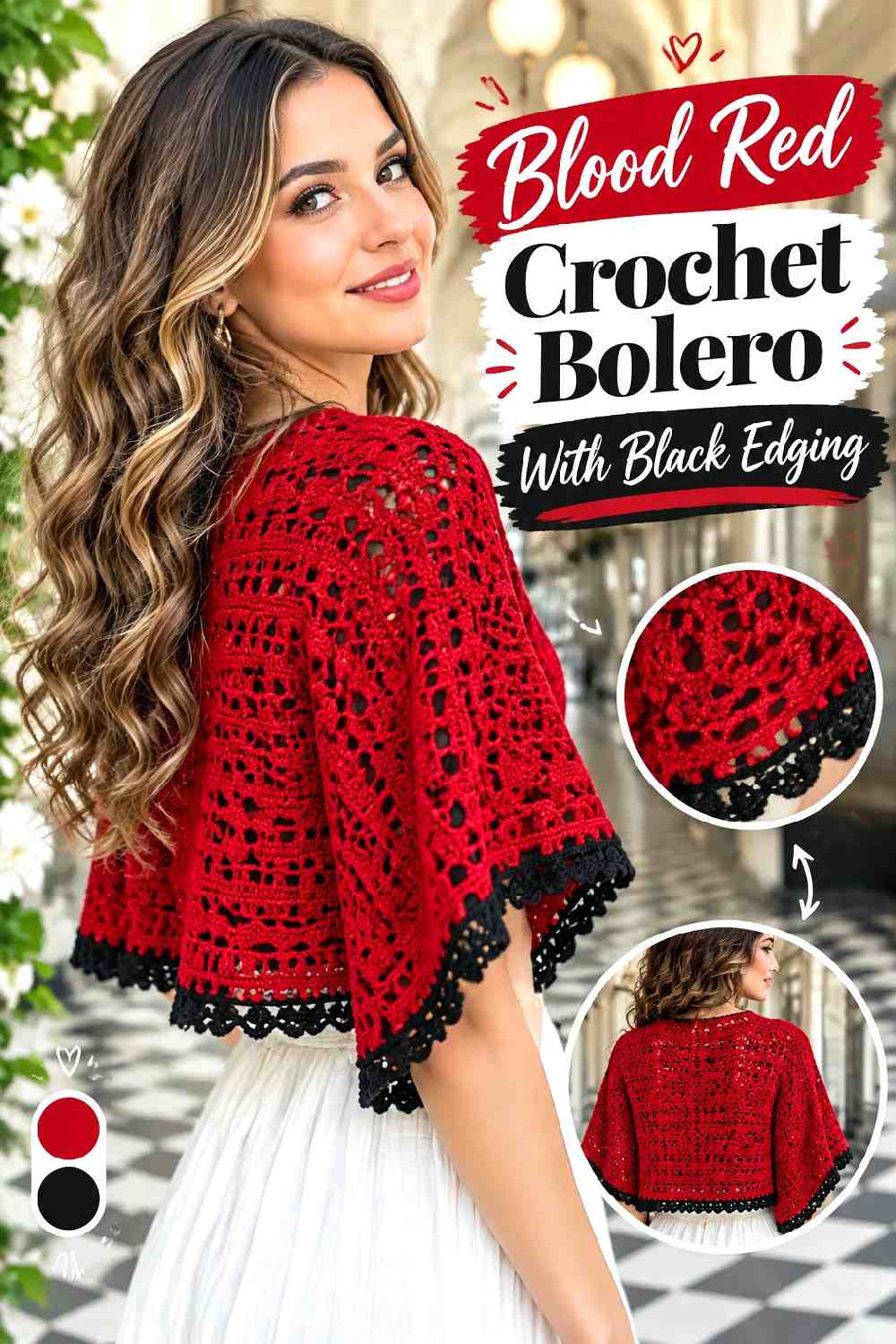
A short bolero provides a smaller wearable surface than a cardigan, making it a good place to let blood red dominate. Black can sit along the neckline, front opening, cuffs, or outer edge to prevent the red garment from becoming one uninterrupted color mass.
Blood Red Can Lead Across the Crochet Bolero Body
Keeping the primary panels red gives the bolero a strong focal role when layered over black clothing. This is a useful reversal for readers who want more red than the mostly-black palettes elsewhere in the list.
Black Defines the Blood Red Crochet Bolero Opening
Black around the open front can create a visible boundary between the red crochet fabric and a dark layer underneath. If that distinction disappears, shift the black edging to a slightly broader area rather than adding unrelated colors.
Blood Red and Black Crochet Bolero Sleeves Need Balance
When sleeves occupy a large share of the garment, repeating black only at the body edge can make the color distribution feel front-heavy. Black cuffs can reconnect the sleeve ends with the darker trim around the torso.
Creator Credit: Ophelia Talks Crochet YouTube tutorial
9. Black Crochet Choker With Blood Red Detail
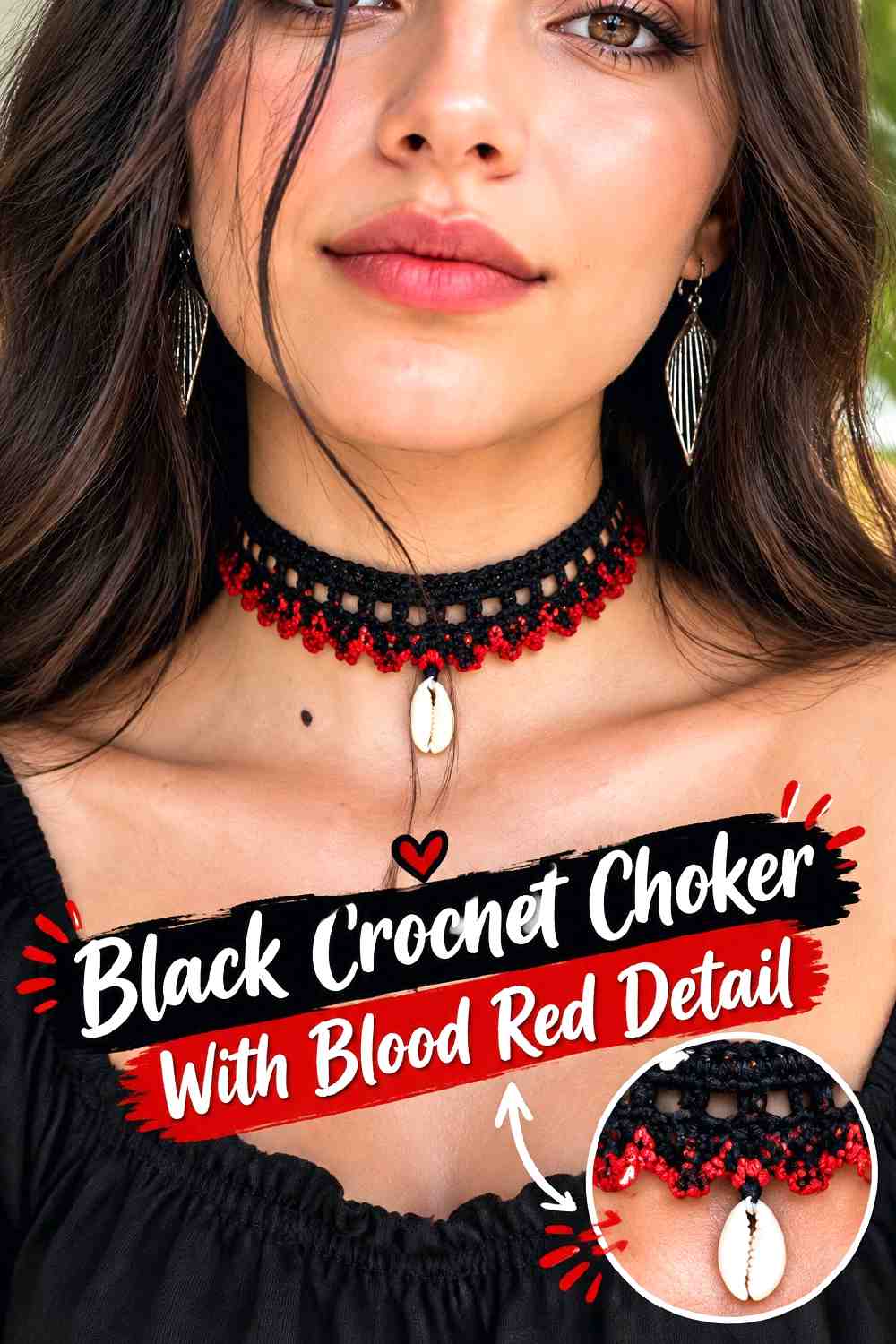
A narrow choker has little surface area, so color hierarchy needs to be simple. Black can form the main band while blood red appears in a central flower, heart, scalloped edge, or other focal section rather than competing with black across every stitch.
Black Gives the Crochet Choker a Continuous Neckline
A single dark band creates the clearest shape and makes the piece easy to combine with other black Halloween layers. It also provides enough uninterrupted space for one red feature to stand out.
Blood Red Should Be Large Enough to Register on the Crochet Choker
A tiny red stitch may vanish at normal viewing distance. A center motif or repeated edge detail gives the red enough presence without requiring a half-black, half-red split.
Black and Blood Red Crochet Chokers Benefit From Restraint
Because the finished accessory is already visually concentrated around the neckline, too many alternating colors can make the edge look irregular. Limit the palette to clear blocks or a consistent repeated detail.
Creator Credit: Heartfelt Crafty YouTube tutorial
10. Black Triangle Crochet Shawl With A Blood Red Border
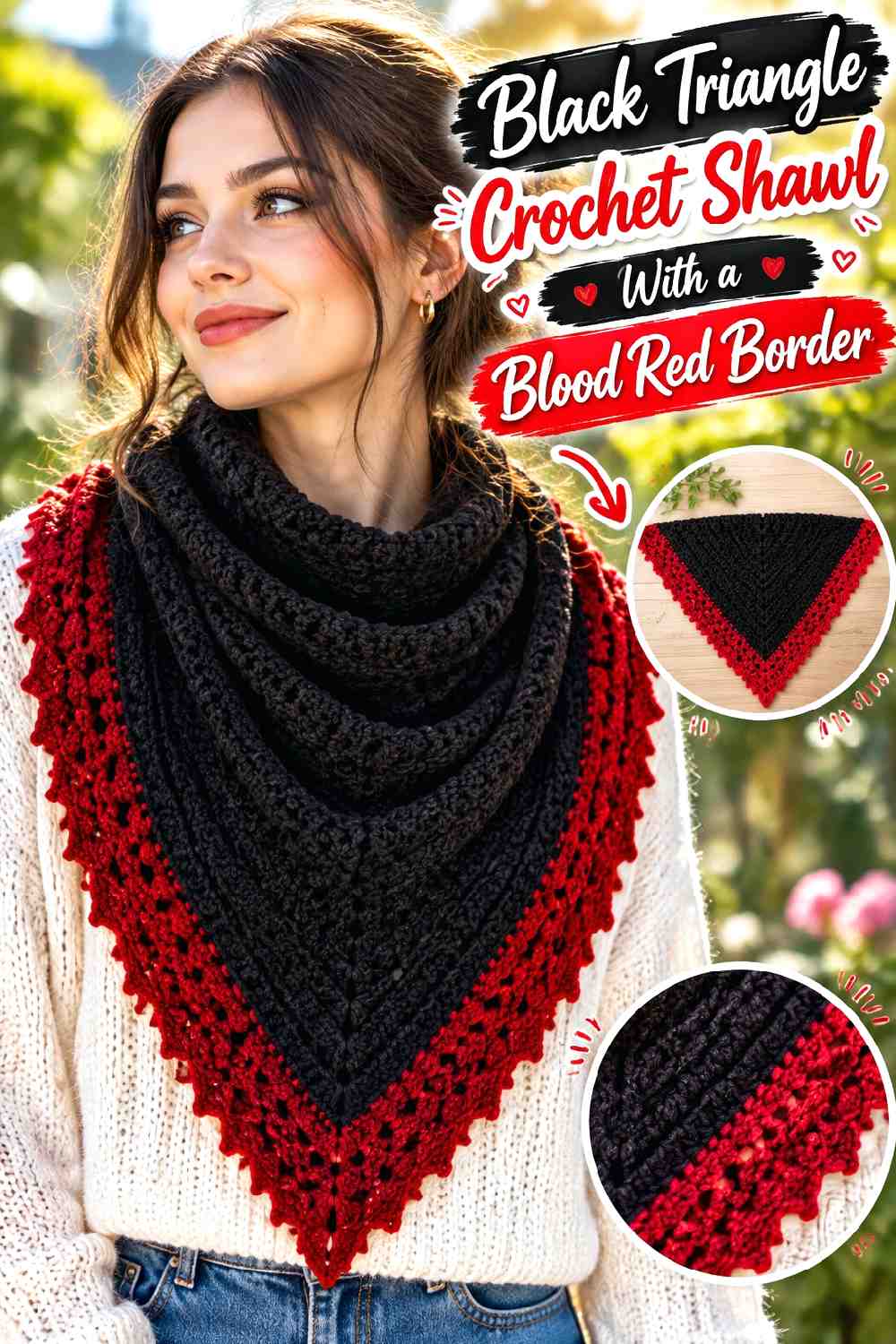
A triangle shawl provides enough surface for a true dominant-and-accent arrangement. Black can occupy the expanding center while blood red follows the outer edge, turning the border into the main decorative color rather than spreading red evenly through every section.
Black Lets the Crochet Shawl Shape Develop Without Color Interruptions
A dark central field emphasizes the triangular outline and any visible stitch texture. It also gives the reader room to decide later how wide the red edge should become.
Blood Red Can Add Weight to the Crochet Shawl Border
A deep red border visually anchors the widest part of the triangle. If only a subtle accent is wanted, keep the red narrow; for a stronger romantic direction, let red occupy more of the outer finishing area.
Black and Blood Red Crochet Shawls Need Texture Visibility Checks
Very dark yarn can obscure delicate stitch definition, especially under low indoor lighting. Check a sample before committing to a large black field if the shawl design depends heavily on visible lace or texture.
Creator Credit: The Lagom Box YouTube tutorial
11. Black Crochet Snake With Blood Red Markings
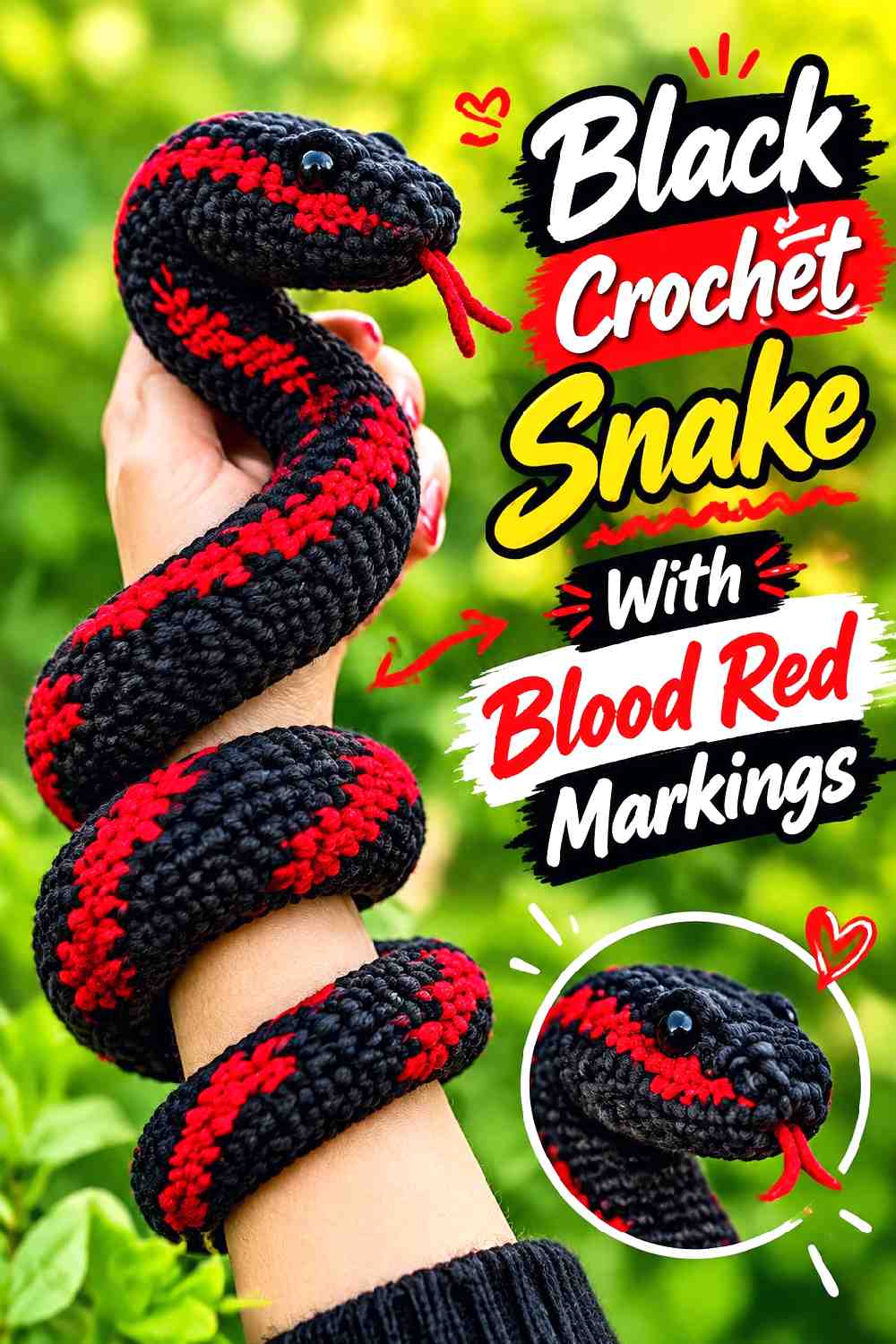
A crochet snake offers an elongated surface where red can be repeated without needing complicated color distribution. Black can form the continuous body, with blood red appearing as bands, spots, or another controlled marking system.
Black Should Connect the Full Crochet Snake Silhouette
Maintaining a continuous black base from head through body keeps the long shape coherent. Large unrelated color blocks can visually shorten the snake by dividing it into separate sections.
Blood Red Crochet Snake Markings Need a Repeat Pattern
Red looks more intentional when the placement follows a recognizable rhythm. Repeat similar red areas rather than changing width and spacing arbitrarily along the entire body.
Blood Red Should Not Overwhelm the Black Crochet Snake Head
If the head carries many small features, too much red there can make facial details harder to distinguish. Keep the strongest color repetition along the body and reserve the head for only the details that need emphasis.
Creator Credit: One Cent Crochet YouTube tutorial
12. Blood Red Crochet Eyeball With Black Pupil Details
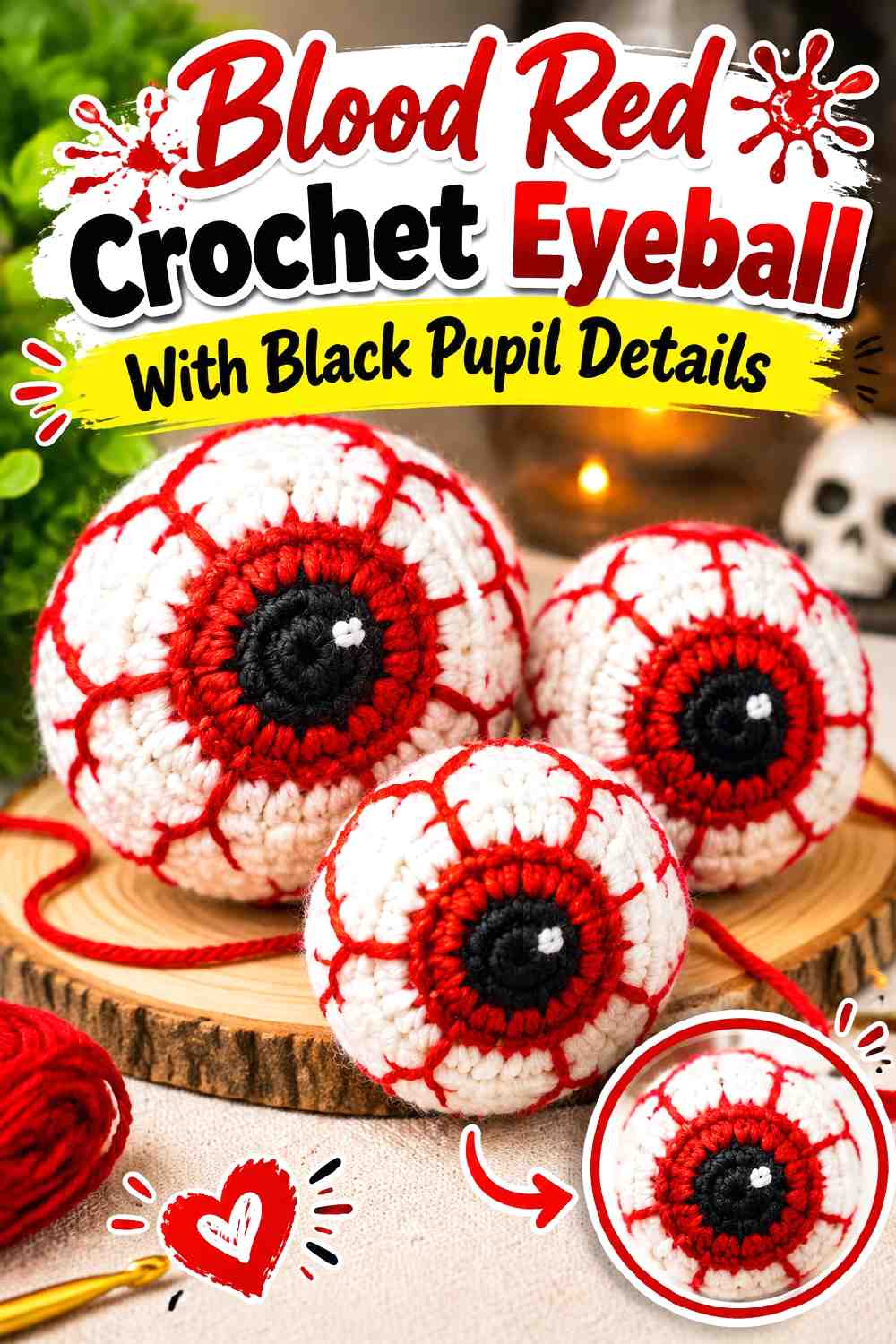
An eyeball decoration provides a natural circular hierarchy. Blood red can replace a conventional iris or appear as surface detailing, while black defines the center and any strong outline that needs to remain readable.
Blood Red Should Carry the Main Crochet Eyeball Focal Ring
Using red in the central colored area immediately separates it from the darker pupil. Keep the red section broad enough that it does not disappear into the surrounding dark details.
Black Gives the Blood Red Crochet Eyeball a Clear Center
A black pupil creates a strong central anchor and stops the red circle from reading as one uninterrupted patch. The contrast works most clearly when the color boundaries remain simple.
Blood Red Crochet Eyeball Details Need Controlled Repetition
If red is also added as veins or surface embellishment, keep those details secondary to the main circular structure. Too much fine red work can make the focal ring less obvious.
Creator Credit: Sharon Ojala YouTube tutorial
13. Blood Red Heart Crochet Bag With Black Structure
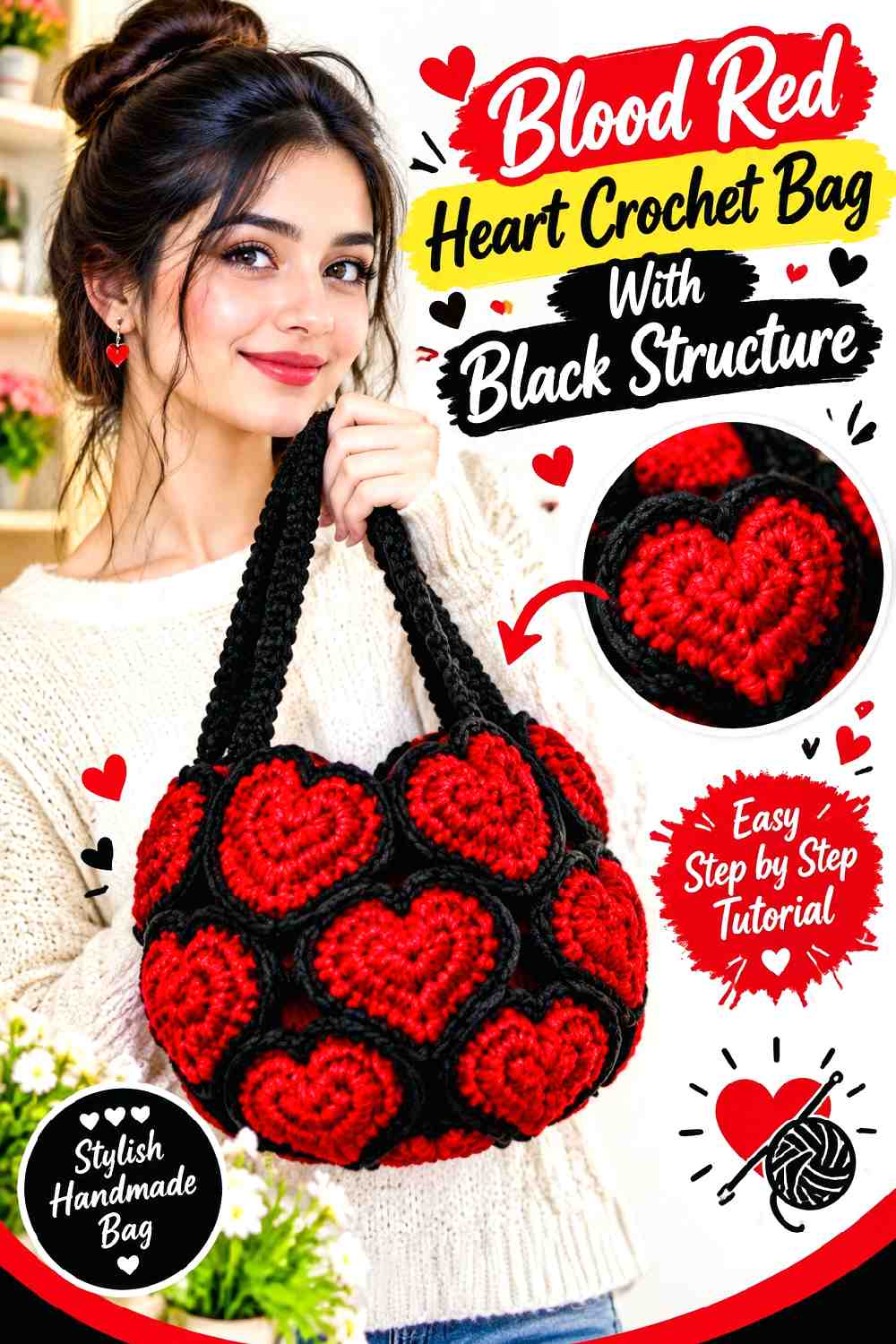
A heart-shaped bag is a natural place to make blood red dominant. Black can then reinforce the edge, strap, joining area, or other structural components, turning a familiar romantic shape into a Halloween-ready accessory without disguising the heart outline.
Blood Red Should Stay Continuous Across the Crochet Heart Face
A large red front makes the heart immediately recognizable. Breaking the face into equal black and red sections can weaken the silhouette, especially near the upper curves and central dip.
Black Can Frame the Blood Red Crochet Heart Bag
Use black around the outer boundary when a more defined graphic edge is wanted. This separates the red heart from similarly colored clothing or backgrounds and gives the bag a darker finish.
Black Straps Keep the Blood Red Crochet Heart as the Main Feature
A black strap is visually quieter than extending blood red through every part of the bag. It leaves the heart itself as the clear focal area while connecting the palette to other dark accessories.
Creator Credit: jadehiacynth YouTube tutorial
14. Black Lace Crochet Collar With Blood Red Trim
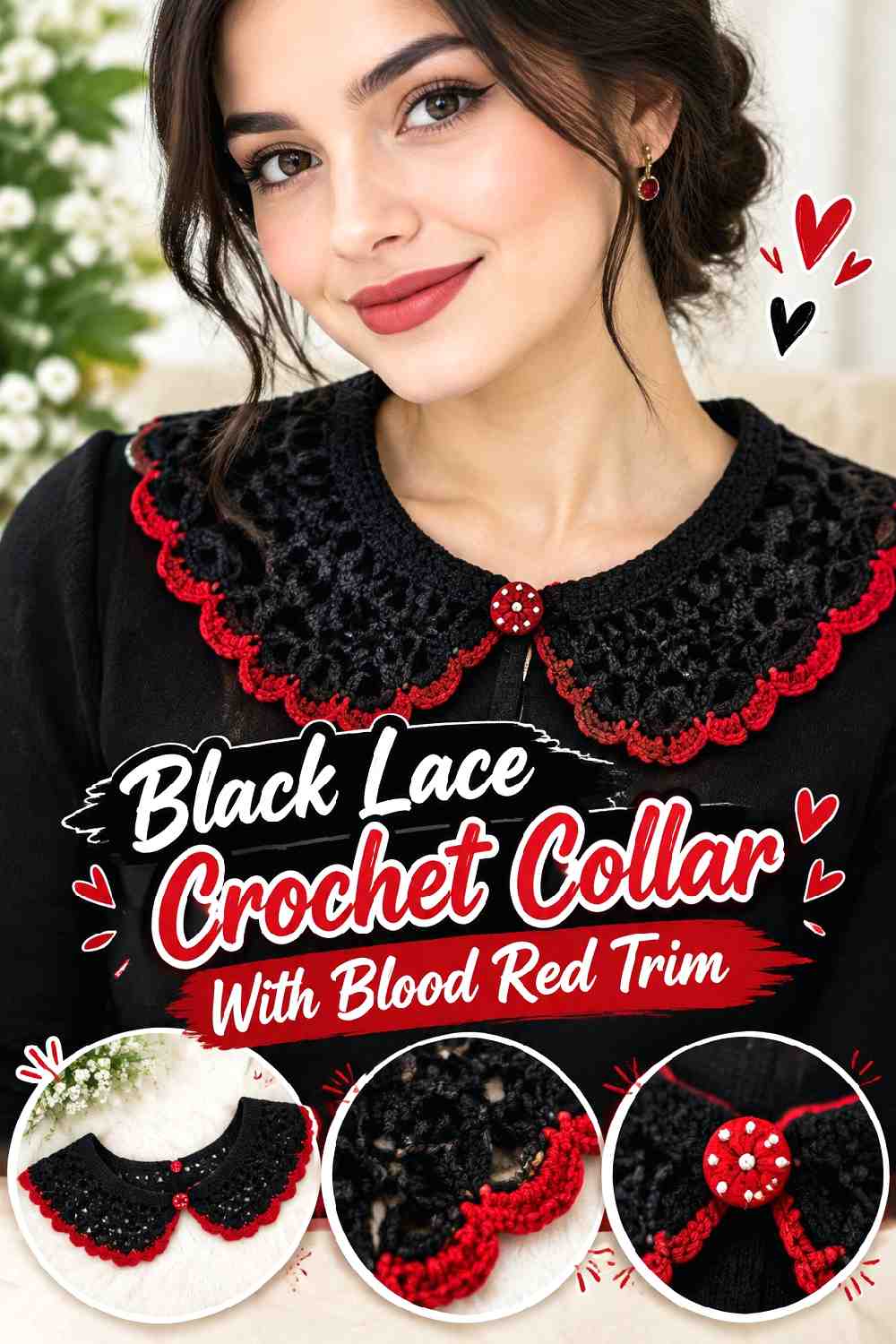
A lace collar suits gothic-romance styling because the openwork already creates a decorative neckline. Black can form the main lace structure while blood red sits around scallops, floral details, or another edge where the accent will remain visible.
Black Makes the Crochet Lace Collar Feel More Continuous
Keeping most openwork black allows the repeated lace shapes to connect visually around the neckline. Alternating red and black too frequently can make individual sections look disconnected.
Blood Red Can Trace the Crochet Collar Edge
The outer edge is one of the most useful places for red because it gives the collar a visible outline against black clothing. If the garment underneath is also dark, widening selected red sections can improve separation.
Black and Blood Red Crochet Lace Needs Enough Value Difference
Lace depends on visible negative space. If both yarn colors are extremely dark and the garment underneath is also black, the red may not read clearly. Compare the finished swatch against the clothing you intend to wear beneath it.
Creator Credit: POSITIVITY WITH CROCHET YouTube tutorial
15. Black Crochet Bat With Blood Red Wing Details
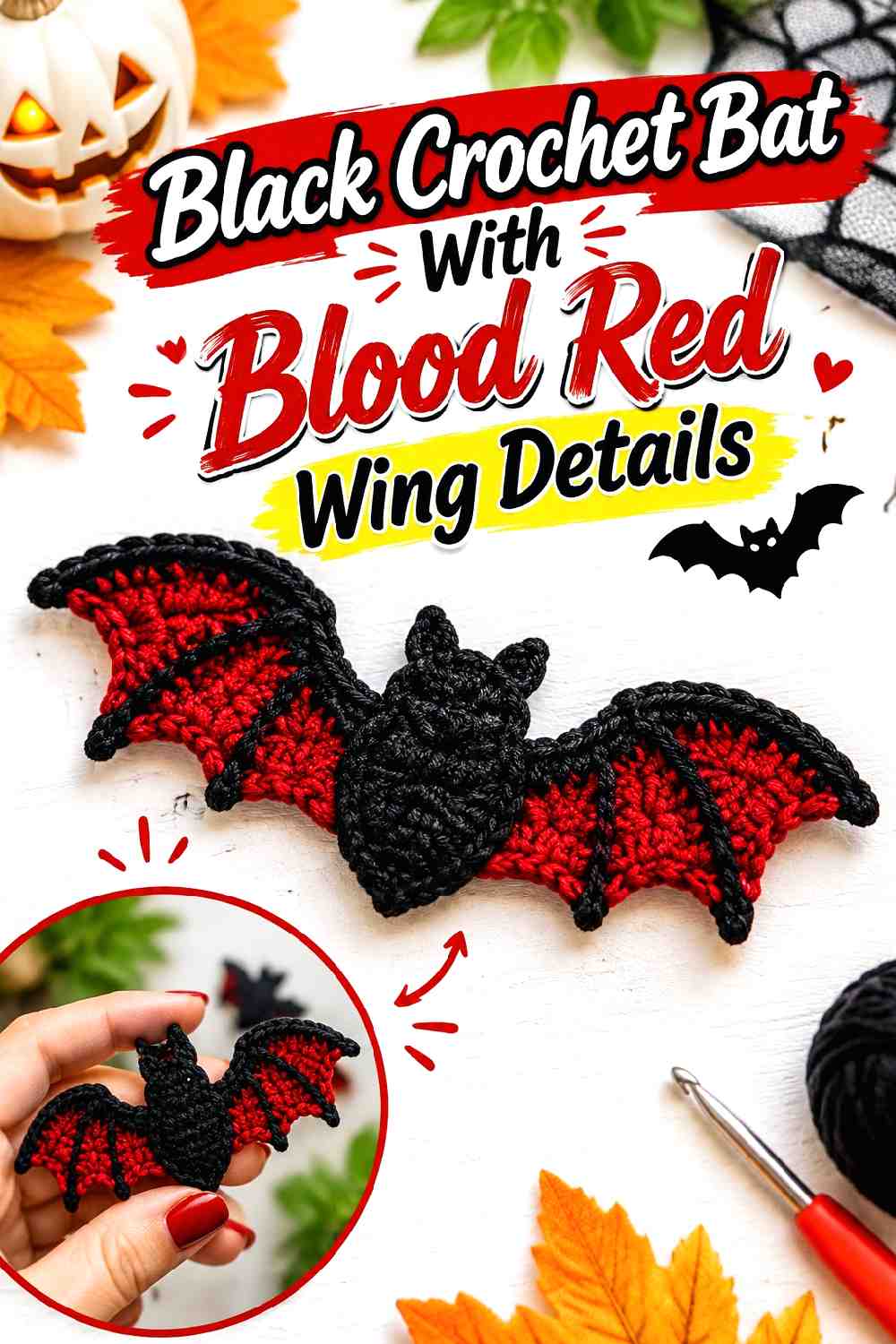
A bat motif or small bat decoration already carries a strong Halloween silhouette. Black should usually remain dominant across the body and wings, while blood red can trace wing sections, ears, or another controlled detail.
Black Preserves the Crochet Bat Wing Silhouette
Continuous black across the wing edges makes the pointed shape easier to recognize. Avoid interrupting every wing section with red if the outer contour is the main visual feature.
Blood Red Can Emphasize the Black Crochet Bat Wings
A small amount of red surface detail can draw attention to the wing structure without replacing the dark base. Repeating the red symmetrically across both wings usually produces a more deliberate result.
Black Should Outweigh Blood Red on Small Crochet Bats
Small motifs have limited space for color hierarchy. If red occupies too much of the body and wings, the bat may lose the dark silhouette that gives this palette its gothic direction.
Creator Credit: Arte Friki YouTube tutorial
16. Black Crochet Fingerless Gloves With Blood Red Cuffs
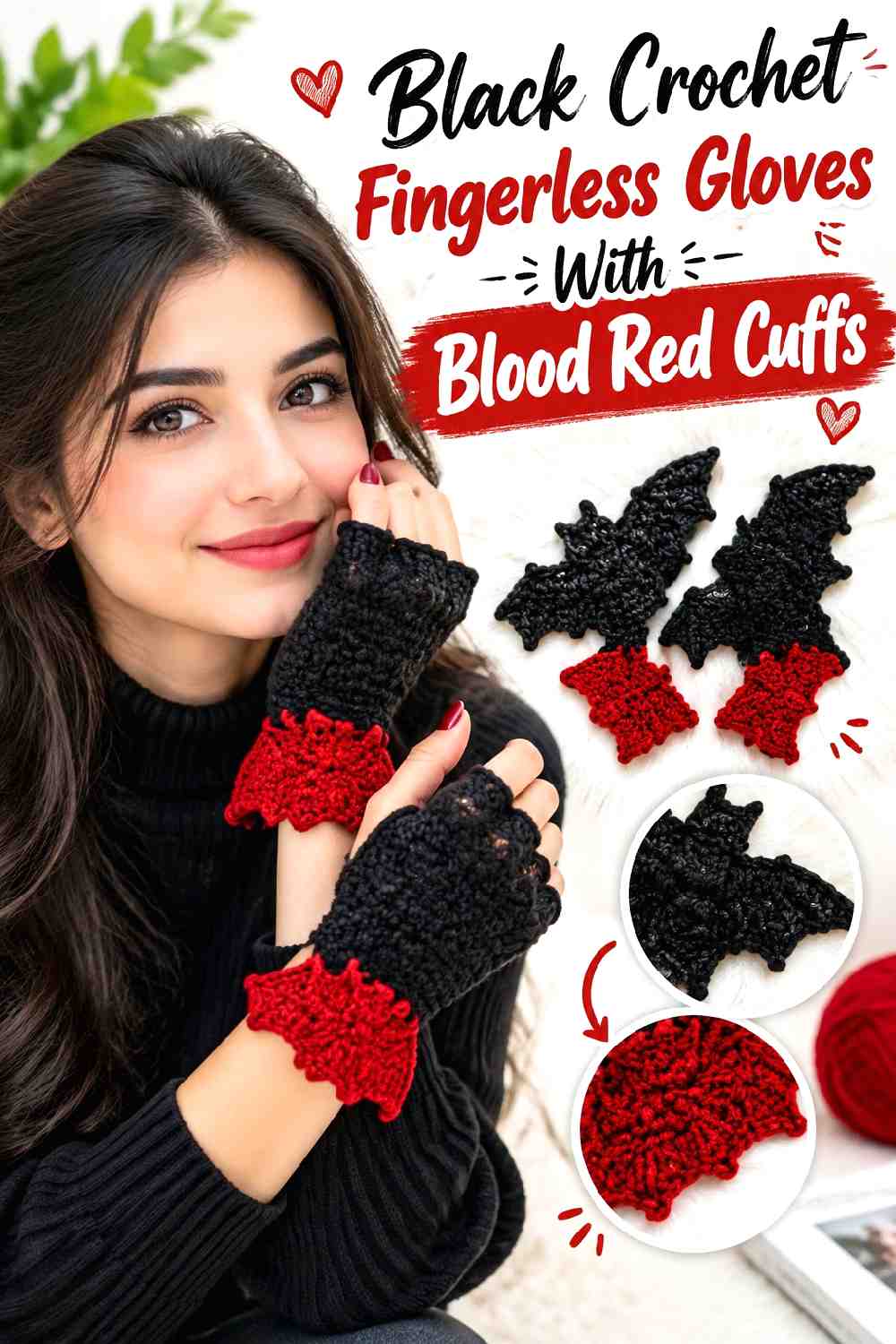
Fingerless gloves provide clear functional color zones. Black can cover the hand while blood red defines the wrist cuff, giving the accent a broad, repeatable location on both gloves.
Black Keeps the Crochet Gloves Easy to Coordinate
A black hand section pairs naturally with dark Halloween layers and prevents the accessory from competing with other red garment pieces. It also makes the cuff the obvious color feature.
Blood Red Crochet Cuffs Create a Strong Pairing Point
Using red at both wrists makes the color repeat symmetrical and immediately readable. This is more cohesive than placing unrelated red patches on different parts of each glove.
Black and Blood Red Crochet Gloves Should Match as a Pair
Check color placement on the first glove before starting the second. A noticeable change in red cuff depth or accent location can make two otherwise matching gloves look visually unbalanced.
Creator Credit: WONDER NETTING YouTube tutorial
17. Blood Red Crochet Roses With Black Leaves
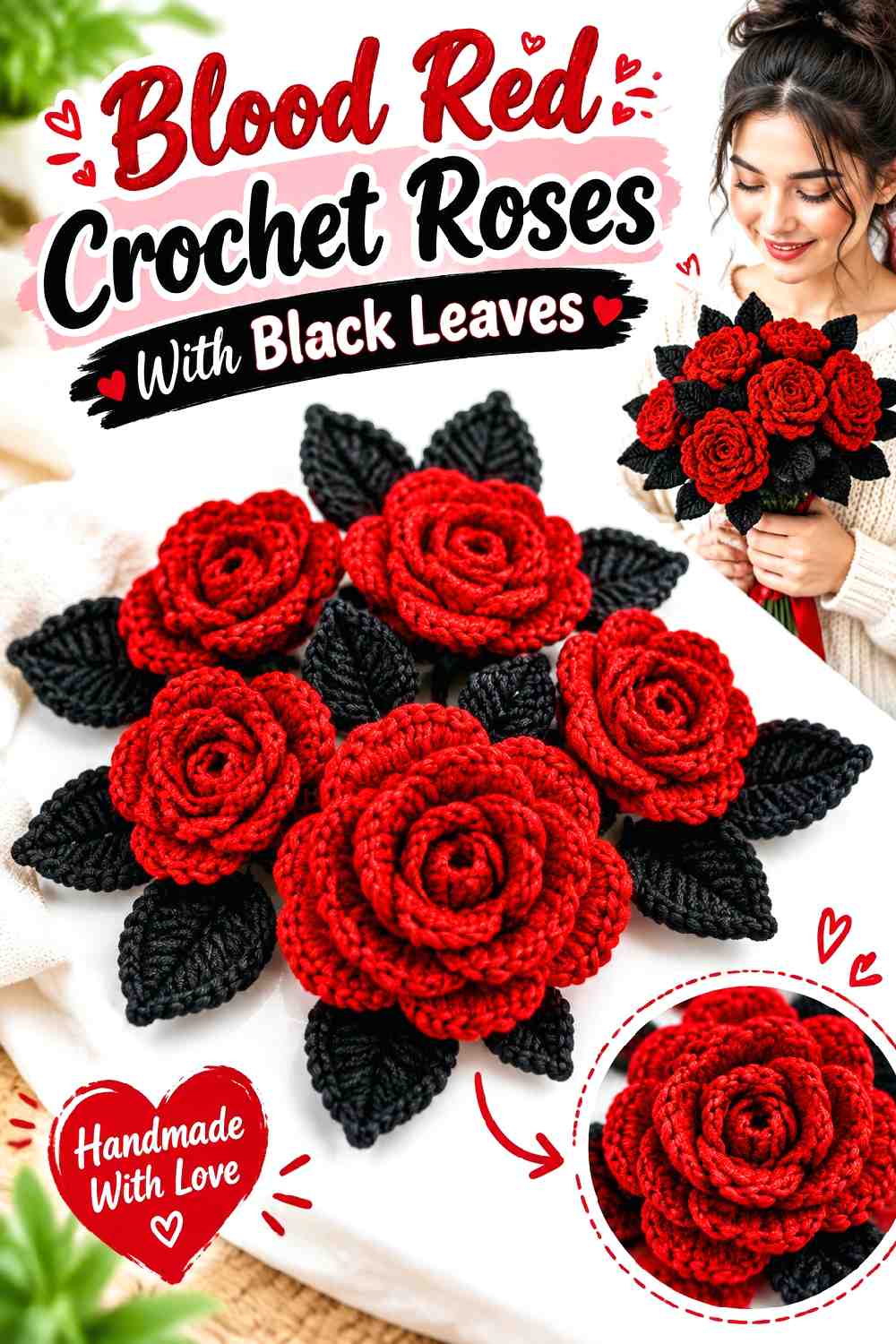
Crochet roses are one of the clearest ways to push this palette toward gothic romance instead of straightforward Halloween imagery. Blood red can dominate the petals while black moves into leaves, stems, or surrounding decorative pieces.
Blood Red Should Lead Across the Crochet Rose Petals
Keeping the petals in one red family makes the flower shape more cohesive. Black inserted throughout the petals can break up the curved layers, so use it only if a deliberately striped or outlined flower is wanted.
Black Leaves Give Blood Red Crochet Roses a Darker Frame
Black foliage keeps surrounding details secondary while still reinforcing the Halloween palette. The contrast is strongest when the leaf shapes are large enough to remain recognizable rather than disappearing beside the flower.
Blood Red Crochet Roses Work Better When Black Repeats Nearby
If the roses will decorate a bag, wreath, hat, or wall piece, repeat black somewhere else in the base object. That connection prevents the dark leaves from looking like an isolated color choice.
Creator Credit: Layla Crochets ♡ YouTube tutorial
18. Black Crochet Star Charm With A Blood Red Center
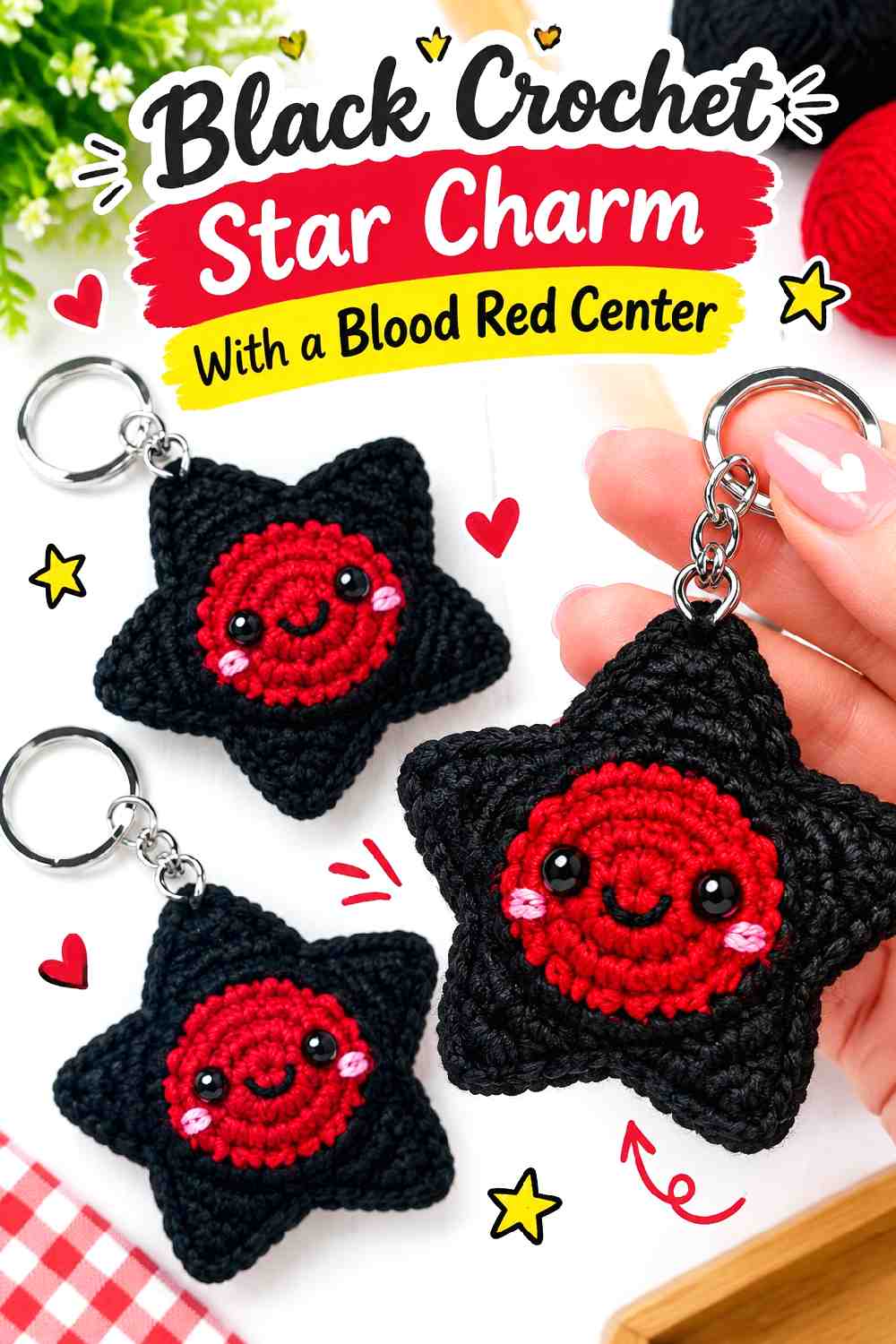
A small star charm offers a quieter gothic option for readers who do not want literal skull, bat, or spider imagery. Black can define the points while blood red occupies the center, creating a compact two-color accent for bags, keychains, garlands, or seasonal accessories.
Black Keeps the Crochet Star Points Clearly Defined
Using black around the outer points gives the motif a crisp silhouette. On a small charm, that uninterrupted border is more useful than changing colors repeatedly along individual points.
Blood Red Should Stay Concentrated in the Crochet Star Center
A central red area gives the eye one focal point and leaves the star shape readable from the outside inward. The center can be expanded or reduced depending on how much red you want visible.
Black and Blood Red Crochet Star Charms Can Repeat Across Decor
For a garland or a set of bag charms, keep the placement consistent from star to star. Repeating the same black edge and red center creates cohesion even when motif sizes or uses differ.
Creator Credit: Hooked by Robin YouTube tutorial
Comparing the Black and Blood Red Crochet Directions
Choose the balance according to what you want the eye to notice first. The coffin bag, witch hat, spider web, cat, mesh sweater, snake, bat, gloves, and star charm keep black dominant, making blood red a controlled accent. The corset top, bolero, heart bag, eyeball, and roses give blood red more surface area for a stronger romantic direction.
The skull square and pumpkin garland work especially well when repeated because their color placement can form a rhythm across multiple motifs. The shawl and lace collar are more dependent on texture and openwork, so checking contrast before making a large section is particularly useful.
For wearables, think about the clothing underneath as part of the palette. Black mesh over black creates a very different result from the same mesh over red, and a red bolero reads differently over a pale layer than over an all-black outfit.
Conclusion
Black and blood red can support many different versions of gothic Halloween crochet without requiring every project to use the colors in equal amounts. Mostly-black projects such as the coffin bag, witch hat, bat, snake, or fingerless gloves keep the mood darker and use red primarily for definition.
For stronger gothic romance, let blood red lead on the corset, bolero, heart bag, roses, or central skull motif, then use black to frame the shape. If the two yarns appear too similar once crocheted, increase the size of the red area rather than adding more tiny red details.
Whichever construction you adapt, use the linked creator tutorial for its exact project instructions and treat the color placement here as a planning layer for your Halloween 2026 version.
Frequently Asked Questions
Is Blood Red Dark Enough to Disappear Against Black Crochet?
It can. Different red yarns vary in lightness, and some deep reds sit quite close to black in value. Place the two yarns beside each other and view them from a distance before committing. A grayscale photo can also help reveal whether the light-dark difference is strong enough for the intended motif.
Should Black or Blood Red Be the Main Color in Gothic Crochet?
That depends on the focal point. Black is useful when you want the silhouette—such as a witch hat, bat, coffin, or web—to dominate. Blood red works well when the focal feature is romantic or decorative, such as a heart, rose, corset panel, or border.
How Can I Stop Black and Blood Red Crochet From Looking Too Busy?
Give the colors different jobs. One can cover the main body while the other handles edging, cuffs, motif centers, bands, or decorative accents. Avoid distributing both colors equally across every small area unless an intentionally alternating design is the goal.
Where Should Blood Red Go on a Mostly Black Crochet Project?
Look for natural boundaries: cuffs, borders, hat bands, bag panels, motif centers, collars, straps, or outer edges. These locations give the accent enough visual area to register while preserving a continuous black base.
Can I Substitute Burgundy for Blood Red in These Crochet Ideas?
Yes, if you want a softer or more muted dark-red direction. Preserve the same role in the palette and check that the substitute remains distinguishable from black. A very dark burgundy may need a larger color area to remain visible.
Does Black Crochet Hide Stitch Texture?
Dark yarn can make subtle texture more difficult to see under some lighting. If visible cables, lace, raised stitches, or detailed motifs are important, work a small sample and check it in the lighting where the finished piece will usually be worn or displayed.
How Can I Make Black and Blood Red Crochet Feel More Romantic Than Costume-Like?
Use the red selectively on shapes associated with the project’s decorative structure—roses, hearts, lace edges, corset-style panels, scallops, or borders—rather than introducing many unrelated Halloween colors. Keeping the palette limited also lets texture and silhouette contribute more of the visual interest.