Hexagon cardigans are especially useful for Halloween crochet because the basic geometric construction can support very different finished looks. A dense solid version can become a practical fall layer, while open granny stitches, puff details, oversized sleeves, hoods, contrasting backs, and spiderweb-inspired construction can push the same general concept toward something much more theatrical.
The ideas below are not simply 25 black-and-orange versions of one cardigan. They include cropped and oversized shapes, lightweight fabrics, short sleeves, balloon and bishop sleeves, pockets, ribbed finishes, hoods, textured panels, decorative borders, child sizing, and a true witchy spiderweb variation. When a creator’s original tutorial is season-neutral, the Halloween direction is an optional styling or color adaptation rather than a claimed feature of the source.
Use the linked creator tutorial for exact sizing, materials, construction, and finishing before changing yarn or proportions.
Quick List
- Crochet Witchy Spiderweb Hexagon Shrug Cardigan
- Crochet Solid Haunted Hexagon Cardigan
- Crochet Balloon-Sleeve Spellcaster Hexagon Cardigan
- Crochet Ribbed Candy Corn Hexagon Cardigan
- Crochet No-Sew Midnight Hexagon Cardigan
- Crochet Oversized Coven Hexagon Cardigan
- Crochet Potion-Pocket Short-Sleeve Hexagon Cardigan
- Crochet Skull-Panel Hexagon Cardigan with Granny-Square Back
- Crochet Pumpkin Orange Double-Crochet Hexagon Cardigan
- Crochet Split-Color Gothic Granny Hexagon Cardigan
- Crochet Lightweight Web-Look Hexagon Cardigan
- Crochet Cinnamon Swirl Halloween Hexagon Cardigan
- Crochet Slouchy Striped Halloween Hexagon Cardigan
- Crochet Tapered-Sleeve Haunted Hexagon Cardigan
- Crochet Hooded Trick-or-Treat Hexagon Cardigan
- Crochet Mirrored Monster Hexagon Cardigan
- Crochet Kids’ Trick-or-Treat Hexagon Cardigan
- Crochet Chunky Tie-Front Halloween Hexagon Cardigan
- Crochet Made-to-Fit Black-and-Orange Hexagon Cardigan
- Crochet Fancy-Border Halloween Hexi Cardigan
- Crochet No-Sew Hooded Witch Hexagon Cardigan
- Crochet Custom-Length Gothic Hexagon Cardigan
- Crochet Puff-and-Lace Halloween Hexagon Cardigan
- Crochet Striped Collar Halloween Hexagon Cardigan
- Crochet Bishop-Sleeve Halloween Hexagon Cardigan
Choose the Halloween Feature Before You Choose the Cardigan
A Halloween hexagon cardigan does not need pumpkins, ghosts, bats, and spiderwebs competing across every surface. Decide first whether the seasonal identity should come from construction, silhouette, texture, color, or an added motif.
Spiderweb openwork already carries a strong theme. A large hood can produce a witchy outline without permanent Halloween graphics. Balloon or bishop sleeves add movement, while a solid cardigan provides a better surface for a small appliqué or carefully positioned patch. Granny-square back panels offer another place for one statement motif without modifying the entire garment.
This decision matters because structural changes are much harder to undo than color choices. If the linked tutorial already has the silhouette you want, follow its garment construction first. Treat pumpkins, skulls, stripes, or contrasting trim as a separate design layer unless the creator specifically incorporates them into the pattern.
Check Fit Before Adding More Hexagon Rounds
A hexagon cardigan grows differently from a cardigan built from independent rectangular body and sleeve pieces. Increasing the geometric base can affect sleeve depth, torso width, and overall scale at the same time. That makes “just add another round” a poor universal solution for every fit problem.
Fold or otherwise position the work as the creator demonstrates and compare it with the intended wearer before committing to substantial extra growth. Pay particular attention to upper-arm space, back width, sleeve length, and where the front edges fall.
Yarn substitution can change those proportions too. A stiffer yarn may make an oversized cardigan feel bulky, while a more fluid yarn can lengthen under its own weight. Use the creator’s measurements, gauge information, and adjustment method rather than assuming two yarns labeled with the same general weight will behave identically.
Plan Halloween Color and Motif Placement Early
Hexagon rounds naturally create rings, stripes, and directional color changes, so the placement of Halloween colors deserves planning before both panels are complete. Frequent alternating colors create a busier result, while larger sections of black, rust, cream, plum, moss, or orange give the geometry more breathing room.
If you want a skull, ghost, pumpkin, eye, moon, or bat motif, consider where it will actually remain readable when worn. A flatter back panel is usually easier to read than a sleeve that curves around the arm. Added appliqués also introduce weight, and heavy decorations can distort open granny fabric.
Before permanently joining or embellishing anything, lay the cardigan sections in their approximate worn positions. This is the easiest time to notice whether one side has become visually heavier or whether your strongest motif is landing somewhere awkward.
1. Crochet Witchy Spiderweb Hexagon Shrug Cardigan
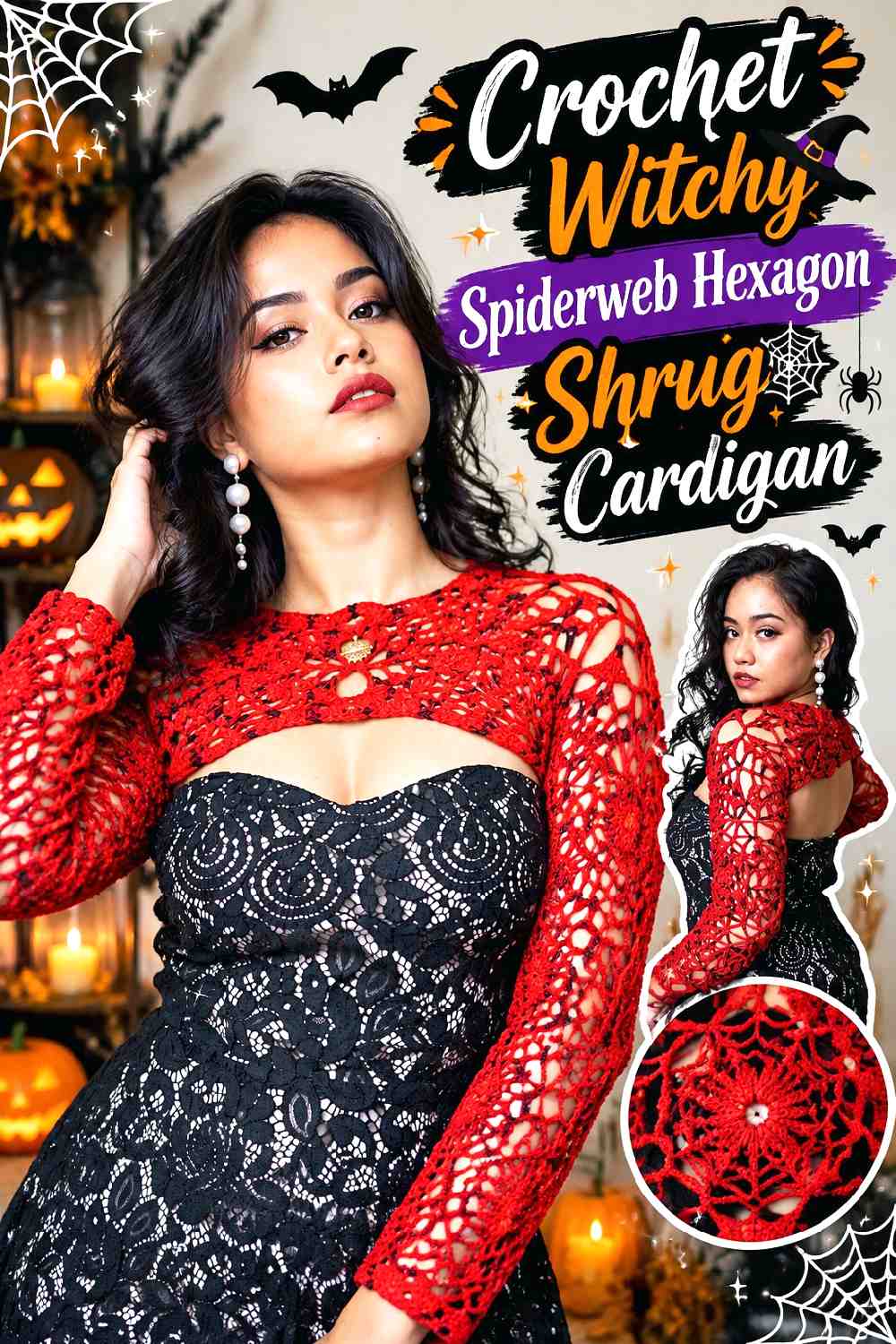
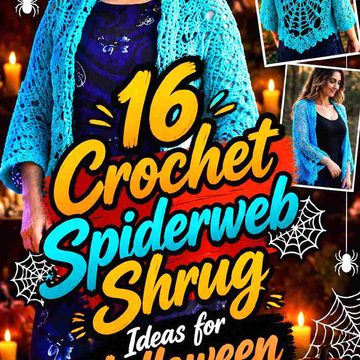
This is the most directly Halloween-focused construction in the collection. Yommycrochetlogy’s witchy spiderweb shrug uses a hexagon-based approach rather than treating the web as a small appliqué placed on an ordinary cardigan. The result is a much more open shoulder layer in which the geometry itself supplies the spooky character.
Choose this direction when you want a Halloween layer that allows a dress, tank, or costume underneath to remain visible. It is substantially different from a dense fall cardigan, so compare the source’s finished coverage with what you actually plan to wear beneath it before beginning.
Let the Underlayer Define the Web
Open spiderweb crochet depends on contrast. A black web over another black textured garment can disappear visually, while the same web over cream, pumpkin orange, acid green, or muted purple becomes much clearer.
Plan the base outfit before choosing yarn. This is especially useful if the shrug is intended for a specific Halloween event rather than general autumn wear.
Watch Several Dimensions as the Hexagon Grows
Increasing a geometric foundation can change shoulder coverage, arm space, and body width together. That makes fit adjustments less isolated than they would be on a simple panel cardigan.
Study the tutorial’s transformation from flat crochet to wearable shrug before enlarging any part. A change intended only to add coverage can also alter where the web lands across the back.
Keep Openwork Joins Relaxed
Spiderweb fabric makes tension differences easy to see. If two corresponding edges are noticeably different before joining, forcing them together can create puckering.
Compare the pieces in a relaxed state first. Yarn weight and tension can change how dramatically the finished web hangs, so substitutions deserve more caution here than they might in a dense solid cardigan.
Creator Credit: Yommycrochetlogy
2. Crochet Solid Haunted Hexagon Cardigan
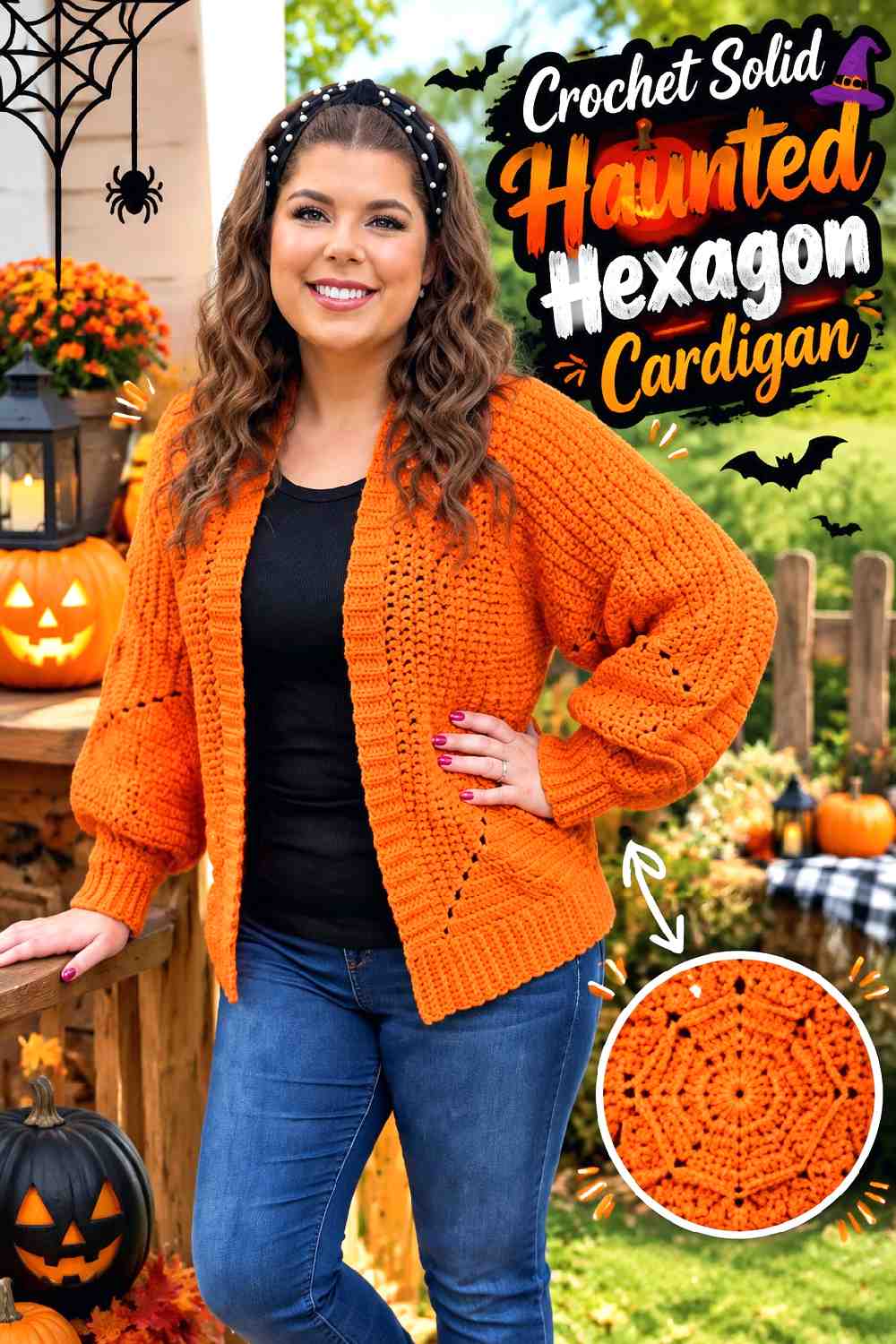
OkieGirlBling’n’Things takes a less open route by building the cardigan from solid hexagons rather than a traditional holey granny fabric. The design still uses two folded geometric pieces, but the denser surface and added ribbing give it noticeably more visual coverage.
That makes this a useful Halloween base if you want one clear motif, dark color blocking, or contrast embroidery without having decorations compete with numerous open spaces. It can also make more sense for cooler fall weather than a web-style shrug. Keep the source construction intact and use seasonal color or removable decorations for the haunted-house direction.
Dense Fabric Changes the Seasonal Role
A more continuous surface visually reads closer to a conventional sweater than an open granny cardigan. It can therefore carry a subtle Halloween palette without looking like costume wear.
The trade-off is that denser crochet may feel more substantial. Compare your yarn choice and intended indoor or outdoor use before assuming a solid version will behave like airy granny fabric.
Use Ribbing as a Frame
This tutorial finishes the body and sleeves with ribbed areas. A dark ribbing color can frame a brighter or variegated body, while matching ribbing creates a quieter finish.
If you plan to add Halloween embellishment, decide on trim color first. Strong contrasting edges plus multiple appliqués can create more visual competition than intended.
Creator Credit: OkieGirlBling’n’Things
3. Crochet Balloon Sleeve Spellcaster Hexagon Cardigan
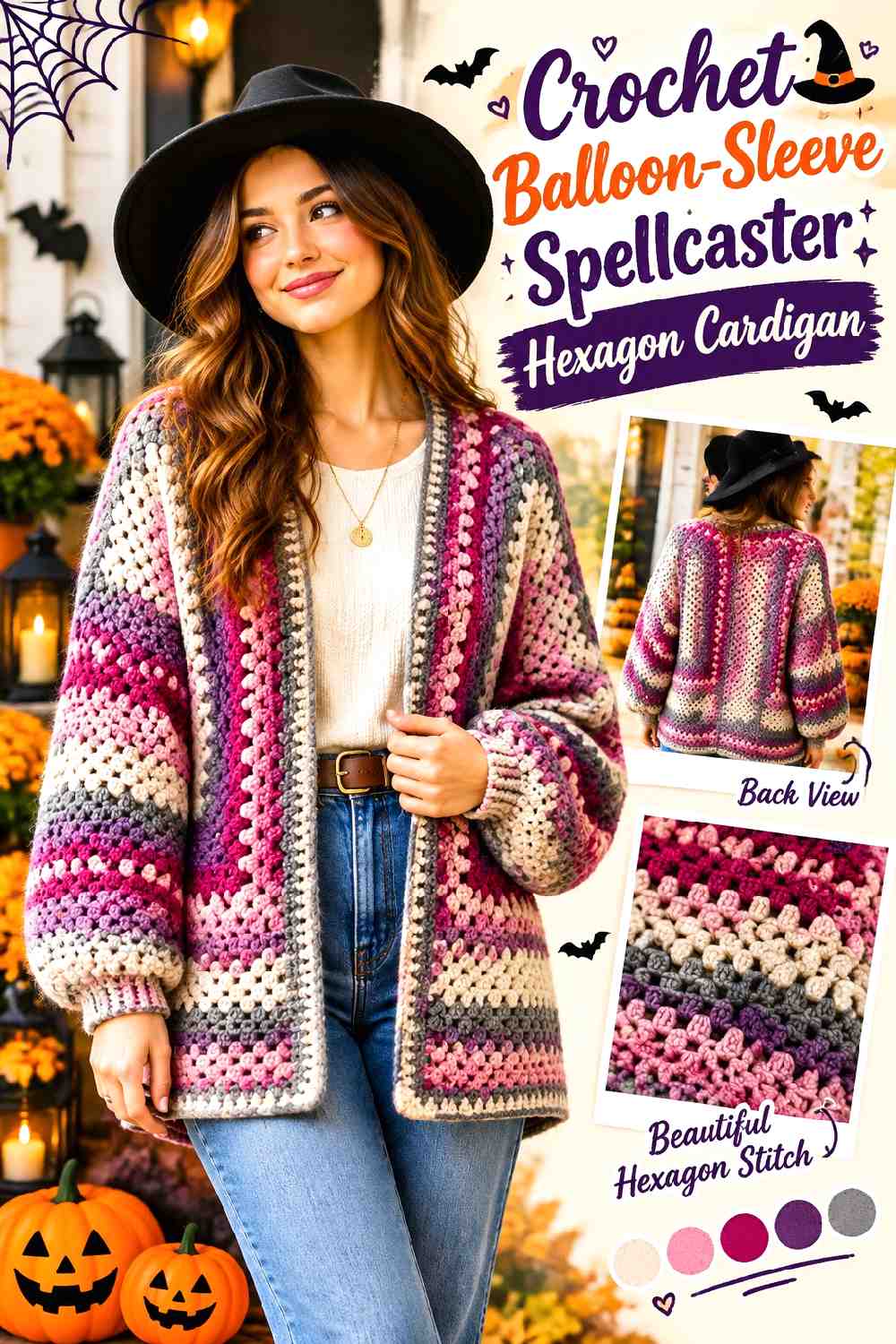
Pembe Düğme’s tutorial demonstrates a hexagonal cardigan with an oversized shape and specifically addresses creating balloon sleeves. That sleeve treatment gives this idea its Halloween identity without requiring permanent skulls or pumpkins.
A dark plum, charcoal, rust, moss, or black version could lean toward a spellcaster silhouette, but the important choice is the sleeve volume rather than color alone. Balloon sleeves change how the cardigan moves and how easily it layers beneath coats, so this direction suits a cardigan intended to be visible as an outer outfit layer.
Treat Sleeve Fullness as the Main Feature
When sleeves have substantial volume, adding equally dramatic pockets, appliqués, and heavy trim can make the whole garment feel visually crowded. Let the sleeves establish the silhouette first.
Try to picture the finished cardigan with your usual bags and outerwear too. A very full sleeve behaves differently around narrow coat sleeves and shoulder straps.
Separate Body Oversizing From Sleeve Drama
The source discusses widening and lengthening the cardigan as well as forming balloon sleeves. These are different design decisions.
Before increasing everything, decide whether you want an oversized torso, dramatic sleeves, or both. Controlling one area can make the other feature more noticeable and can prevent unnecessary yarn weight.
Creator Credit: Pembe Düğme
4. Crochet Ribbed Candy Corn Hexagon Cardigan
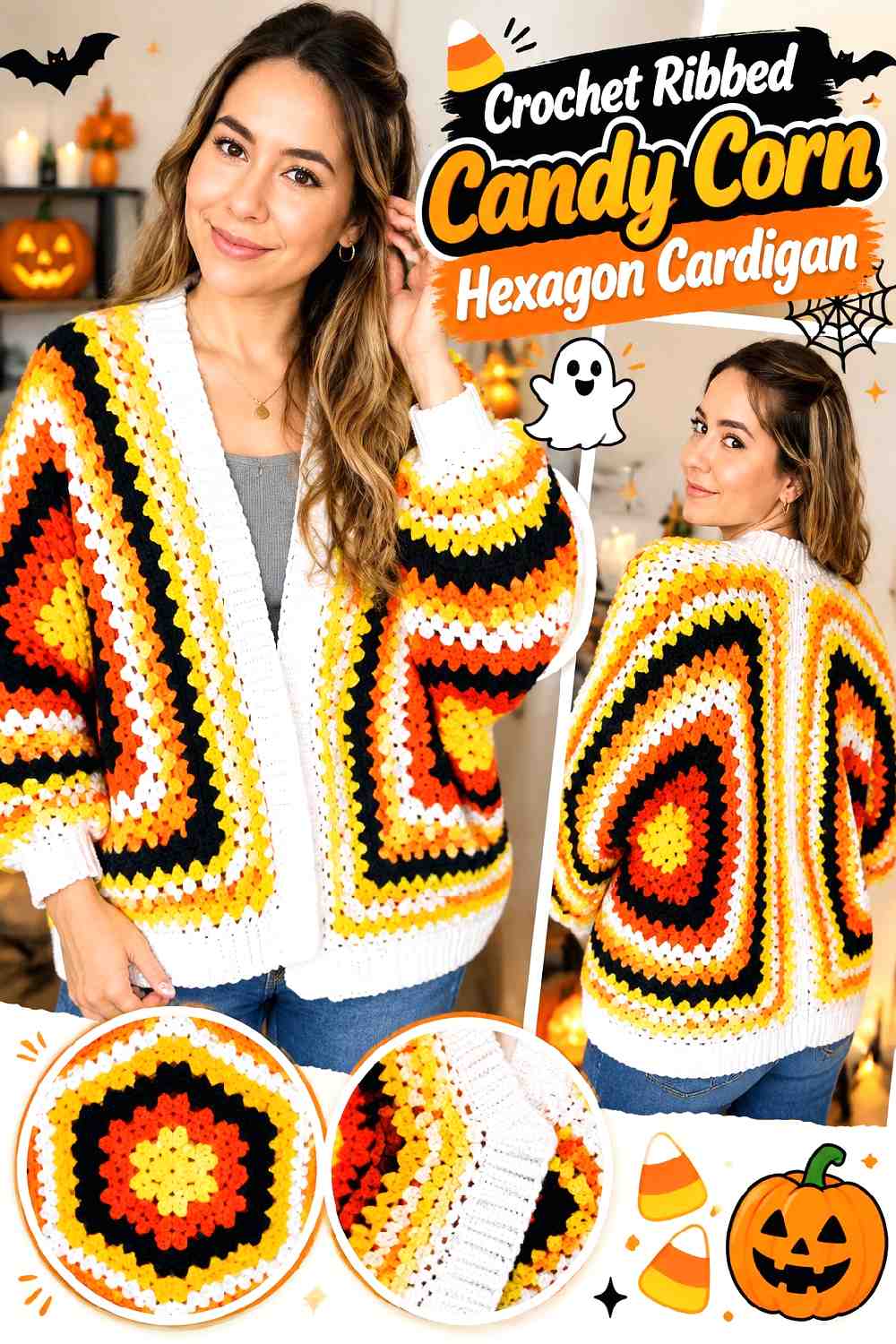
Yarnmaide’s hexagon-cardigan tutorial includes substantial ribbing around the wrists, lower edge, and cardigan opening, giving the finished garment a defined frame rather than leaving the granny edges visually unfinished.
That structure works well for a candy-corn-inspired palette because you can keep the body playful while allowing one consistent trim color to pull everything together. This is not a suggestion to reproduce a literal candy motif. Instead, think in broader blocks of cream, orange, yellow, black, or brown while preserving the source’s garment construction.
Wider Color Bands Look Calmer Than Constant Changes
A hexagon makes frequent stripe changes easy, but too many narrow bands can obscure the overall shape. Larger color sections give the eye time to register both the palette and the geometry.
Before starting the second panel, compare it with the first so the color placement feels intentional when the two halves meet at the back.
Let the Ribbing Control the Visual Edge
A consistent ribbing shade can act like an outline around a multicolor cardigan. Black creates stronger contrast, while brown or cream can make the same Halloween palette feel more autumnal.
Because ribbing also affects how cuffs and borders sit, choose its yarn with both stretch and appearance in mind rather than treating it as decorative only.
Creator Credit: Yarnmaide
5. Crochet No Sew Midnight Hexagon Cardigan
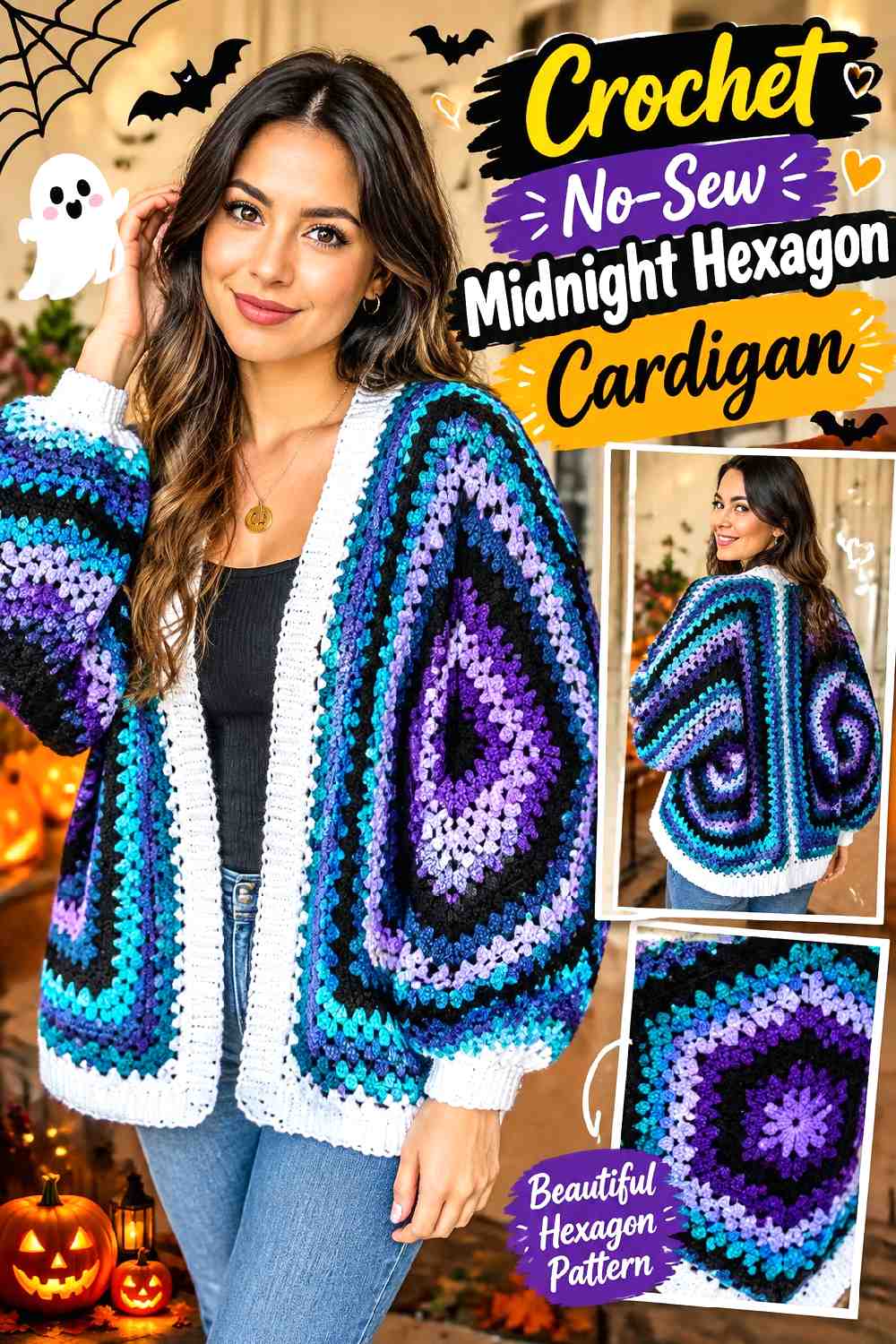
Yarnhild’s cardigan is built around two hexagons and emphasizes a no-sew approach, making the joining method one of the main differences from more traditionally seamed hexagon cardigans.
For a Halloween version, this makes a strong foundation for a midnight palette—black, charcoal, dark blue, aubergine, or muted green—without needing complicated surface decoration. The practical attraction is construction rather than novelty. If you dislike finishing seams after making large crochet pieces, compare this tutorial with the seamed versions elsewhere in the list before choosing.
No-Sew Does Not Mean Fit-Free
Removing sewing from the assembly process does not remove the need to check dimensions. The hexagons still determine how the garment wraps around the upper body.
Pause at the fit checkpoints shown by the creator and compare the folded pieces with the intended wearer. It is easier to control size before additional rounds create excess depth.
Keep a Dark Palette Readable
Very dark yarn can hide stitch structure, especially under indoor evening lighting. If the cardigan is meant for Halloween night, stitch definition may matter as much as color.
A slightly lighter charcoal, heathered black, or dark jewel tone can show the geometric construction more clearly while retaining the same mood.
Creator Credit: Yarnhild
6. Crochet Oversized Coven Hexagon Cardigan
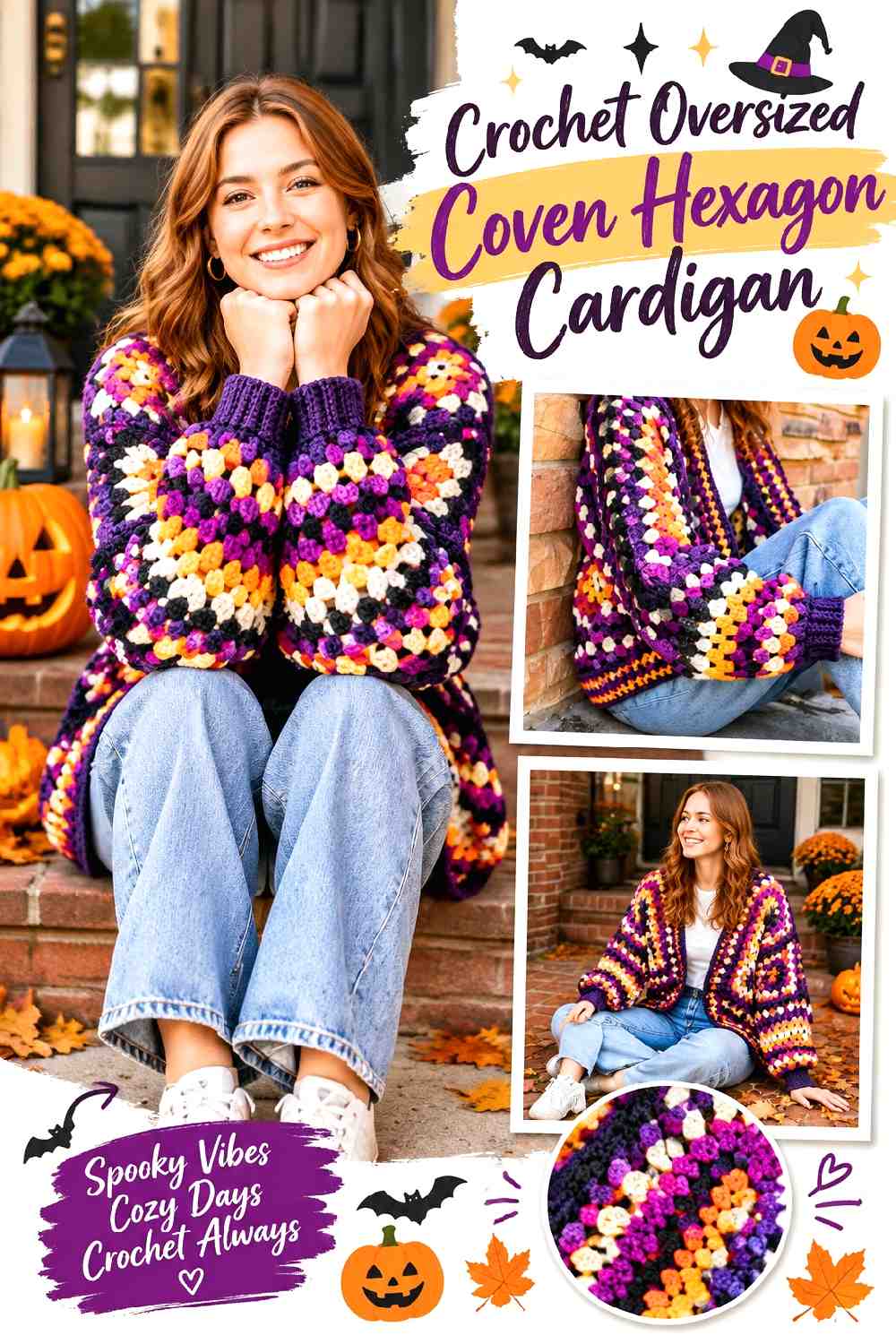
MadameStitch’s Amari cardigan uses granny-stitch hexagons and is intentionally designed with an oversized silhouette, with body and sleeve adjustments built into the broader construction.
That relaxed shape makes a useful “coven cardigan” direction for anyone who wants Halloween character without literal themed graphics. The source also frames the design as unisex, so the concept is less dependent on one narrow styling approach. A restrained dark palette can keep it wearable well after October, while a stronger contrasting scheme can make the geometry more prominent.
Oversized Still Requires a Size Decision
Roomy clothing is not the same as making the largest available size. Too much additional width can move the shoulder and sleeve relationship away from the designer’s intended proportions.
Use the creator’s sizing information and compare your preferred ease with the finished silhouette instead of automatically sizing up for extra slouch.
Decide Where the Contrast Belongs
The source design uses a main color with contrasting colors. For a Halloween interpretation, decide whether contrast should appear as rings within the hexagons or be concentrated at borders and cuffs.
A controlled contrast plan usually makes the oversized silhouette easier to read than changing color at every opportunity.
Creator Credit: MadameStitch
7. Crochet Potion Pocket Short Sleeve Hexagon Cardigan
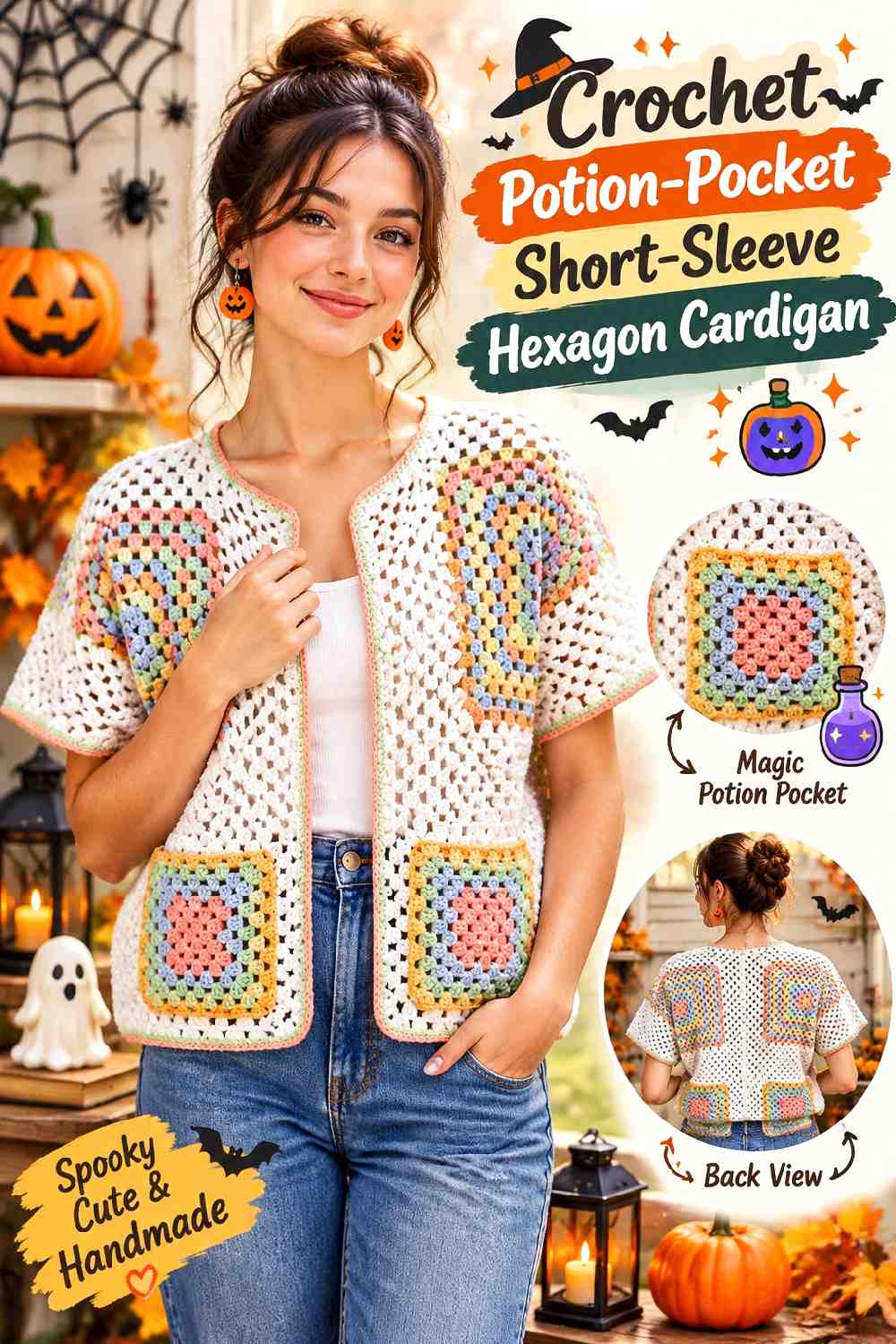
Jera’s Jamboree offers a lighter variation built around classic hexagons, short sleeves, and optional granny-square pockets. Those pockets give this Halloween idea a practical focal point rather than turning the entire cardigan into a novelty piece.
Use them as the visual “potion pocket” area through contrast edging or subtle seasonal motifs, while keeping the rest of the garment quieter. The short sleeves also make this version distinct from the heavier hooded and balloon-sleeve options, particularly for warm fall climates or indoor events.
Pocket Weight Deserves Attention
Crocheted pockets can stretch when filled, particularly on a lightweight cardigan. Treat them as useful for small items rather than assuming they will behave like structured woven pockets.
If you add decorative stitching or appliqués, keep that extra weight in mind too. A pocket that looks balanced while empty can hang differently once embellished.
Short Sleeves Change the Layering Plan
This version leaves more of the underlayer visible, so the shirt or dress beneath becomes part of the Halloween color story.
That can be an advantage. A neutral cardigan over a striped or graphic base layer is easier to reuse beyond the season than a cardigan covered permanently in Halloween imagery.
Creator Credit: Jera’s Jamboree
8. Crochet Skull Panel Hexagon Cardigan With Granny Square Back
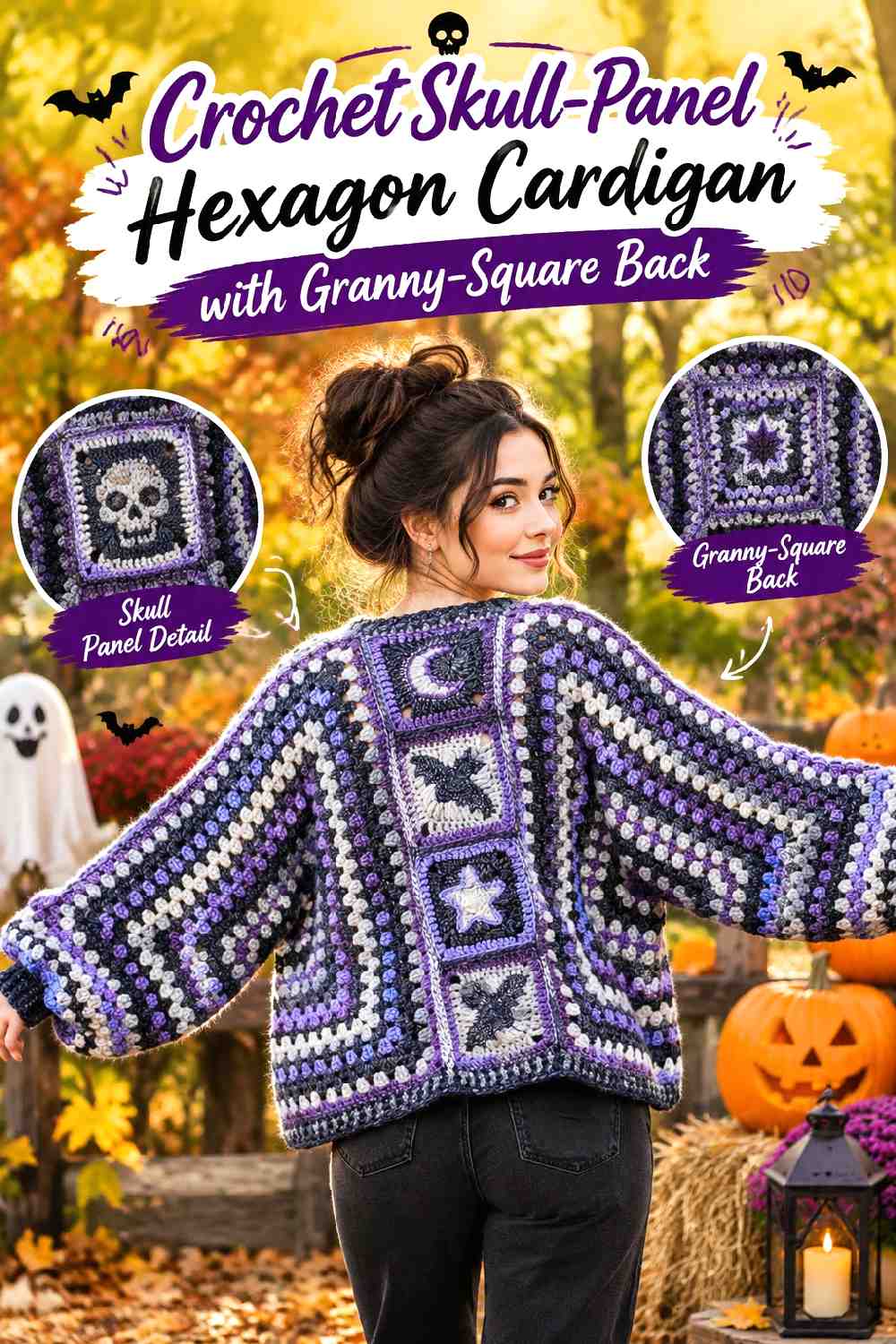
Alyssia Creates combines the standard hexagon-cardigan idea with granny squares placed along the back, creating a built-in area where motif choice can become part of the garment structure.
That makes it a strong foundation for a Halloween back panel. A skull, moon, eye, pumpkin, or simpler geometric square can occupy the high-visibility center-back area while the hexagon sections remain comparatively restrained. Any substituted square must be compatible with the tutorial’s layout, so this is a project where motif dimensions matter more than simply choosing an image you like.
Match Motif Size Before Making the Full Set
A Halloween square should not be treated as interchangeable with the tutorial’s original square solely because both are called granny squares. Stitch density and border structure can change the finished dimensions.
Make and measure a representative motif first. If its scale is significantly different, use the original tutorial’s guidance rather than forcing mismatched pieces into the back layout.
Keep the Strongest Graphic on the Flattest Area
The center back gives a motif more uninterrupted visual space than a curved sleeve. A detailed skull or eye generally remains easier to read there.
Simpler stripes or solid areas around the motif can prevent the cardigan from becoming visually overloaded.
Let the Join Support the Image
A contrasting join can outline the back squares and make them look framed, while a matching join allows several motifs to read as one larger panel.
Choose that treatment before assembly because seam color becomes part of the graphic structure once the squares are attached.
Creator Credit: Alyssia Creates
9. Crochet Pumpkin Orange Double Crochet Hexagon Cardigan
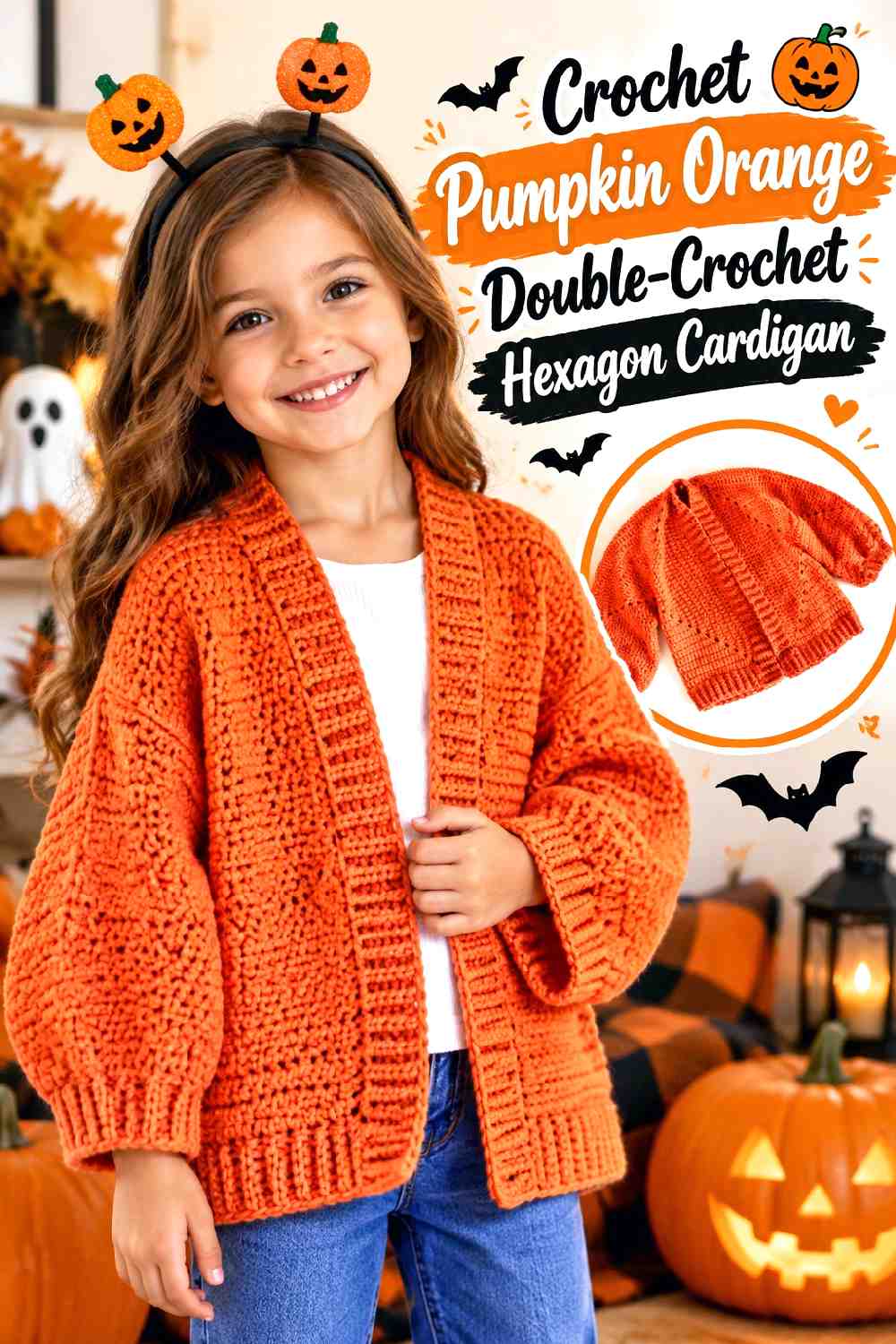
Repeat Crafter Me’s version uses basic double crochet to form a two-hexagon cardigan, and the featured orange sample is specifically presented as a fall wearable that also suits Halloween.
This is the option for readers who want the season to come primarily from color rather than motifs. Pumpkin orange can carry the theme on its own, especially when paired with jeans, black basics, or brown autumn pieces. Because the cardigan itself remains simple, it is more likely to stay useful throughout fall rather than being limited to Halloween week.
One Strong Color Can Be Enough
A full orange cardigan already has considerable visual presence. Adding black bats, green trim, striped sleeves, and pumpkin pockets on top may weaken the cleaner effect.
If you want one additional Halloween cue, concentrate it in a border, button, pin, or removable accessory instead of changing every section.
Compare Density With Your Climate
A double-crochet fabric can still vary substantially in warmth and openness according to yarn and tension.
Think about whether the cardigan is intended for outdoor October evenings or air-conditioned indoor wear. Follow the creator’s yarn and sizing guidance before substituting a much heavier material simply to make it warmer.
Creator Credit: Repeat Crafter Me
10. Crochet Split Color Gothic Granny Hexagon Cardigan
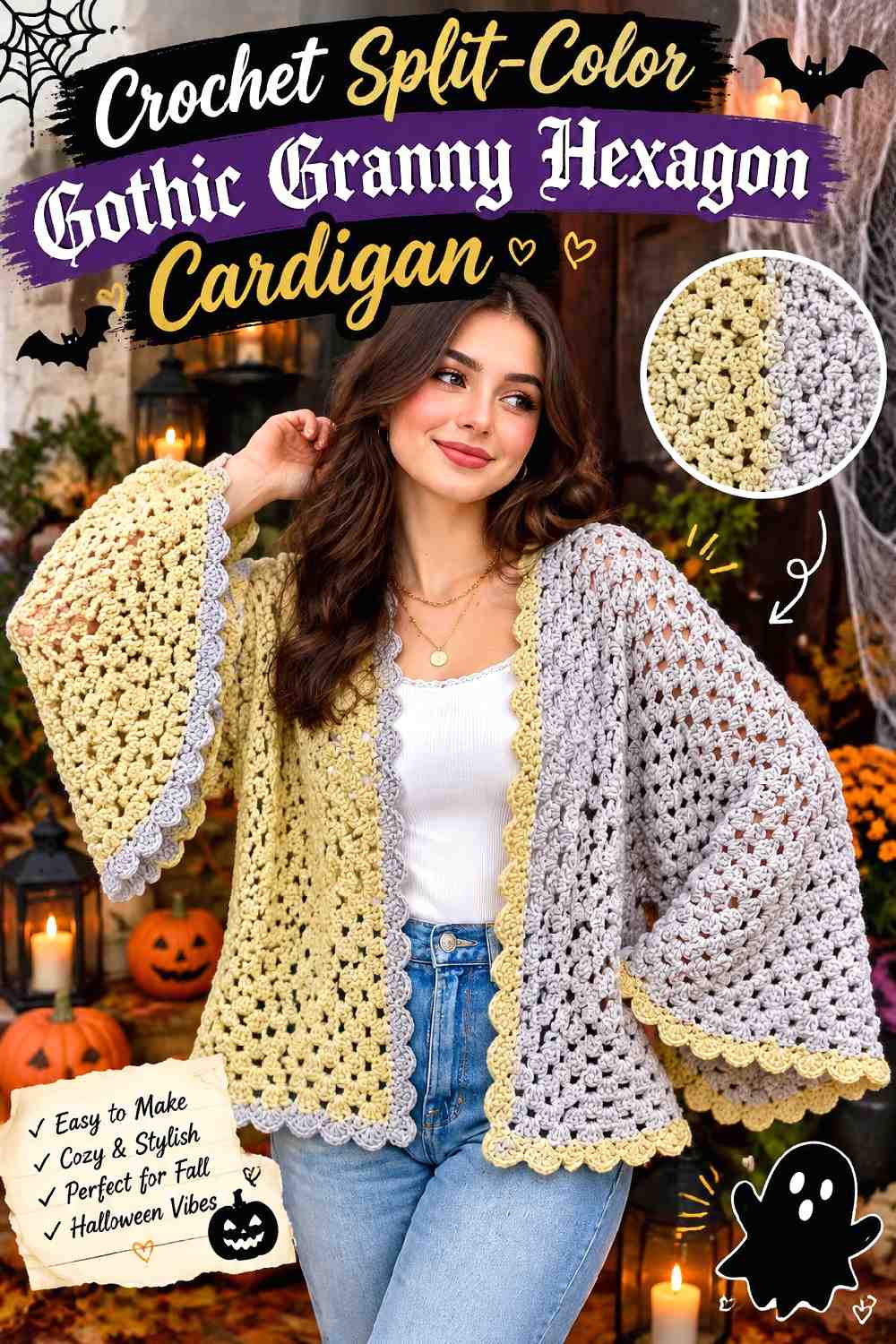
HayHay Crochet’s classic granny hexagon tutorial shows how the familiar two-hexagon construction can work in more than one color treatment, including a two-toned version.
A split-color Halloween adaptation can create much more visual impact than ordinary narrow stripes. Think black on one side and cream, plum, rust, or acid green on the other, or use one controlled color family per panel. Because the two halves eventually meet, color placement should be planned while the pieces are still separate rather than improvised at assembly.
Check the Center Back Before Committing
A dramatic split becomes especially noticeable where the two cardigan halves join. Lay the folded pieces side by side periodically to judge whether the meeting point looks intentional.
If both sides contain many colors already, a strict half-and-half split may become less visible. Reserve the strongest contrast for larger uninterrupted areas.
Let Asymmetry Stay Intentional
A split-color design does not need matching cuffs, borders, and sleeve stripes on both sides. Controlled asymmetry can be the point.
The key is repeating at least one element—such as the same border color—so the cardigan still reads as one garment rather than two unrelated halves.
Creator Credit: HayHay Crochet
11. Crochet Lightweight Web Look Hexagon Cardigan
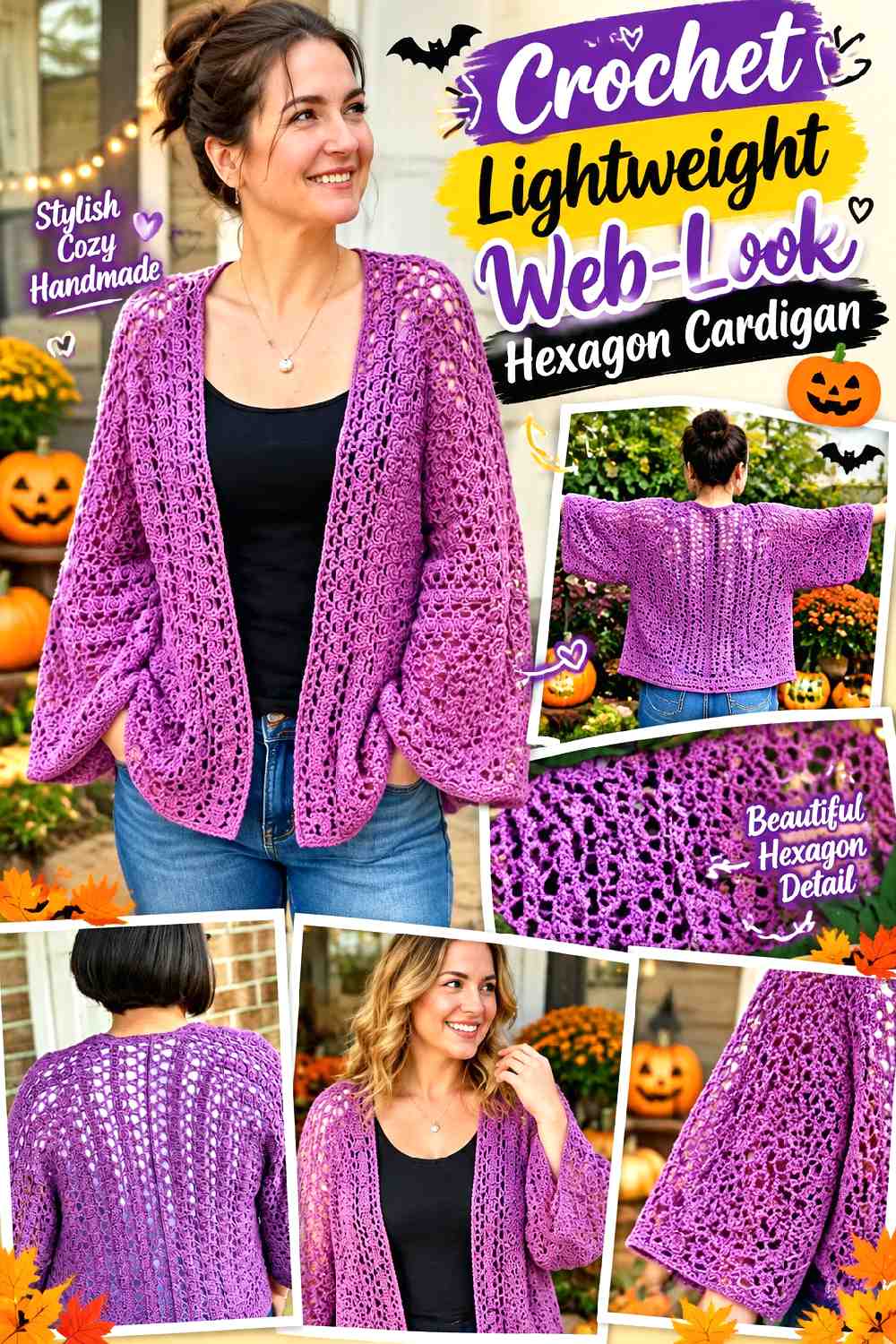
Cosy Rosie Crochet’s Strawberry Sundae design uses multiple stitch treatments to create a lighter summer-oriented interpretation of the hexagon cardigan rather than relying entirely on a conventional dense granny fabric.
For Halloween, that lighter texture can be used to suggest a subtle web-like surface without converting the cardigan into an actual spiderweb garment. This is a practical choice for warmer climates or crowded indoor events where a chunky cardigan would be uncomfortable. Because the original design’s lighter fabric is part of its identity, yarn substitution should preserve that goal rather than simply copying the colors with a much heavier fiber.
Open Texture Makes the Shirt Beneath More Visible
When fabric is lighter or more open, the underlayer becomes part of the finished appearance. Use that intentionally.
A plain contrasting tank or fitted long-sleeve top can make stitch variation easier to see. Busy prints beneath open crochet may compete with the texture you spent time creating.
Avoid Heavy Halloween Appliqués on Airy Fabric
Dense pumpkins, stuffed motifs, large beads, or multiple patches can pull lightweight crochet out of shape.
If you want extra Halloween detail, lighter surface embroidery, a removable brooch, or contrasting edging may be more compatible with the fabric.
Creator Credit: Cosy Rosie Crochet
12. Crochet Cinnamon Swirl Halloween Hexagon Cardigan
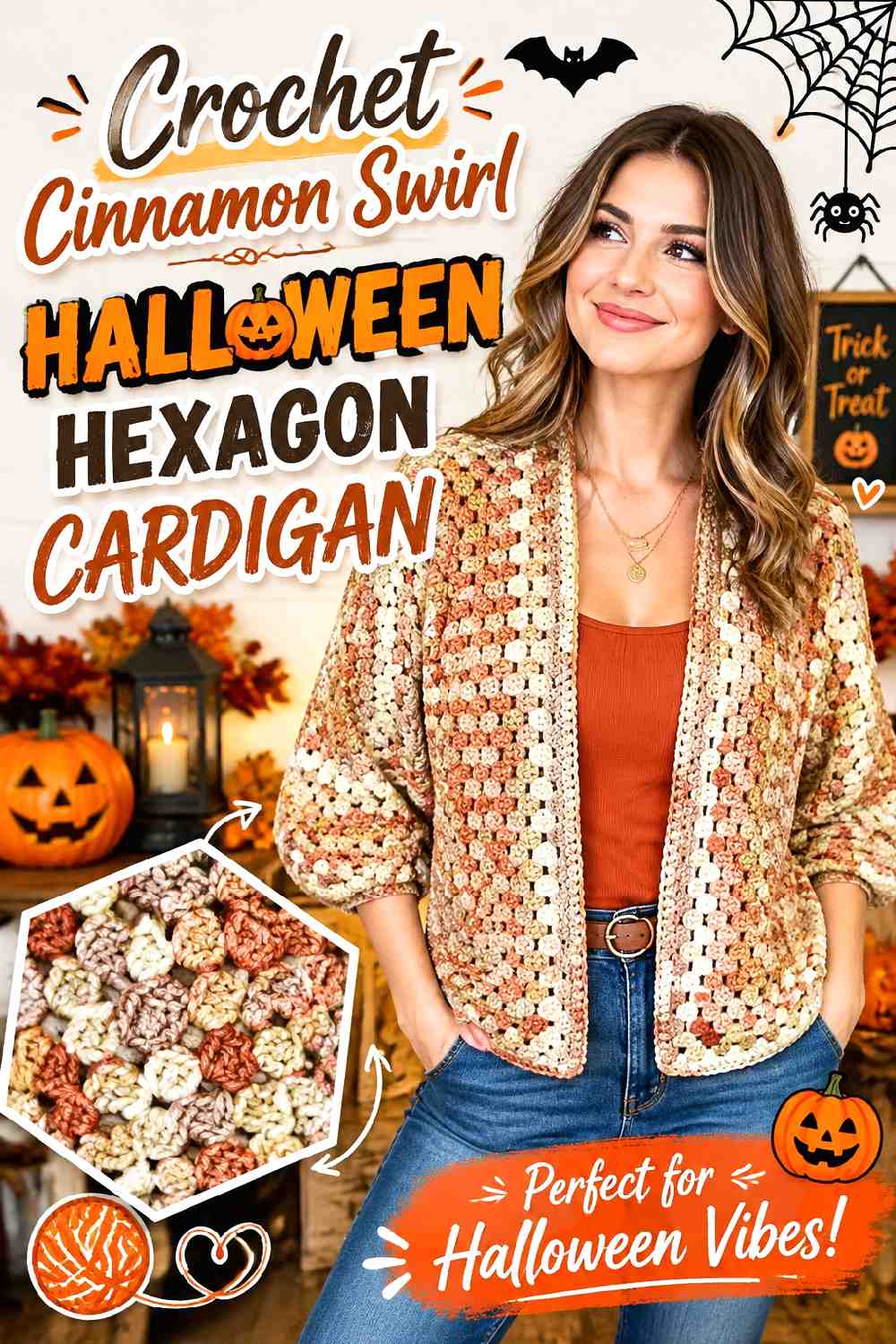
Amy’s DIY Frugal Life provides a straightforward hexi-cardigan tutorial using a granny-inspired construction and a color-changing cake yarn in the featured project.
That natural color flow makes this an interesting Halloween direction when you want variation without manually choosing a new yarn for every stripe. Autumn cake yarns containing rust, brown, cream, muted yellow, plum, or dark green can produce a seasonal result without turning the cardigan into a literal costume. Because self-striping yarn can distribute color differently between two large pieces, however, matching panels should not be assumed.
Decide Whether the Two Halves Need to Match
Cake yarn creates color transitions according to where each skein begins. Two hexagons may therefore develop different-looking rings even when made from the same colorway.
If symmetry matters, inspect the yarn sequence before starting both panels. If not, deliberate mismatch can become part of the cardigan’s character.
Let the Yarn Do Most of the Visual Work
A strongly changing yarn already creates many bands of color. Adding several separate motifs over it can reduce clarity.
Use a consistent edging color or simple solid cuffs if you want to give the changing body a visual boundary.
Creator Credit: Amy’s DIY Frugal Life
13. Crochet Slouchy Striped Halloween Hexagon Cardigan
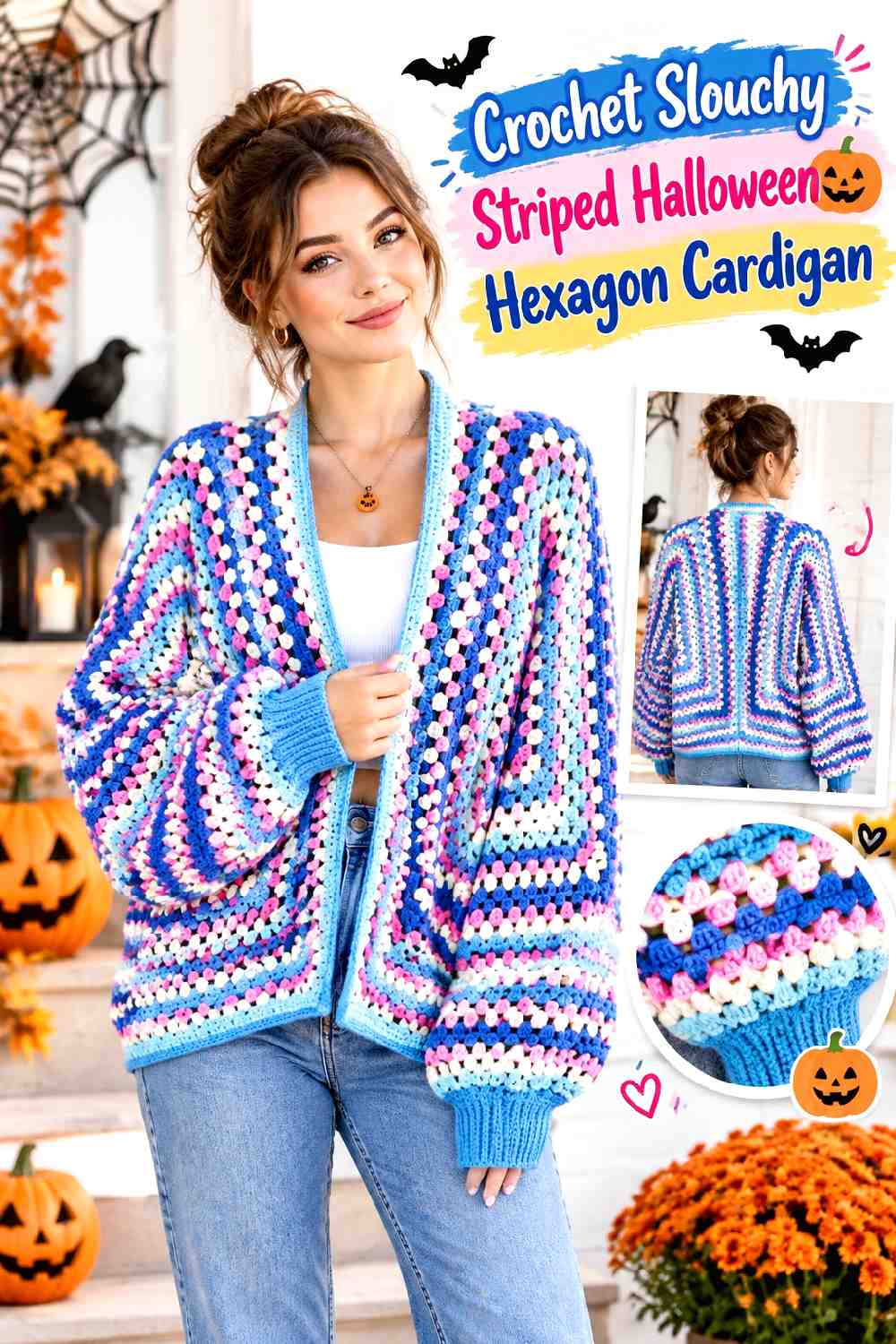
Lynne Rowe’s free hexagon-cardigan pattern uses two motifs, a deliberately slouchy silhouette, a multi-color sequence, body widening, sleeve extensions, and ribbed cuffs.
That combination makes this a useful Halloween option for someone who wants a striped, relaxed cardigan rather than a cropped costume layer. Replace the original color plan only after understanding how the rounds distribute across the folded garment. Deep plum, rust, cream, moss, charcoal, and black can keep the result seasonal without relying on a single stereotypical palette.
Remember That Every Round Travels Around the Hexagon
A stripe chosen for visual impact will not remain only on the cardigan front. It becomes part of several areas after folding.
Periodically fold the panel while planning colors so you can see where a bright orange or light cream band will eventually land.
Slouch Should Still Leave Functional Sleeves
The pattern is intentionally relaxed, but excessive growth can make armholes and sleeves feel larger than intended.
Use the source’s size information rather than relying solely on how wide the flat hexagon looks. The wearable shape becomes much easier to judge after folding.
Creator Credit: Lynne Rowe
14. Crochet Tapered Sleeve Haunted Hexagon Cardigan
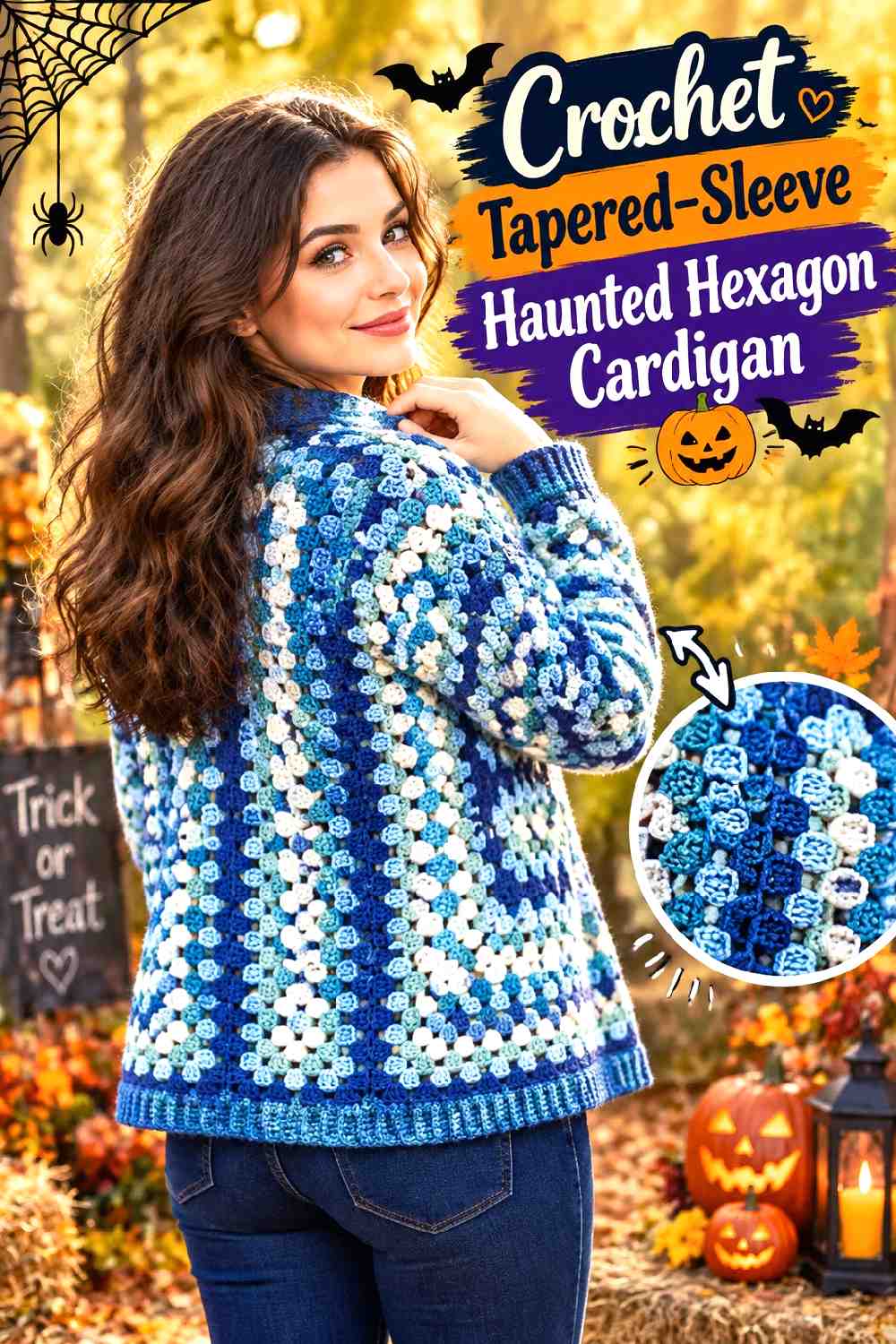
Sarah Maker’s made-to-measure granny hexagon cardigan includes sleeve refinement that creates a slimmer, more tapered result than a completely boxy sleeve.
That makes it appealing for a haunted or gothic cardigan meant for everyday use rather than only Halloween events. A narrower sleeve can sit more comfortably beneath an outer coat and keeps the silhouette controlled if the body remains relaxed. Instead of adding several decorative motifs, let the dark palette and more finished sleeve shape carry the design.
Sleeve Shape Affects Layering
A wide granny sleeve can be comfortable on its own but bulky under another garment. Tapering changes that relationship.
If this cardigan will be a mid-layer throughout fall, compare the finished sleeve with the coats and jackets you actually wear rather than evaluating the cardigan only by itself.
Keep Wrist Decorations Lightweight
Cuffs are tempting places for charms, tassels, or repeated motifs, but anything added there moves constantly and may snag.
Contrast yarn or a small embroidered detail usually preserves the cleaner tapered shape better than heavy hanging embellishment.
Creator Credit: Sarah Maker
15. Crochet Hooded Trick Or Treat Hexagon Cardigan
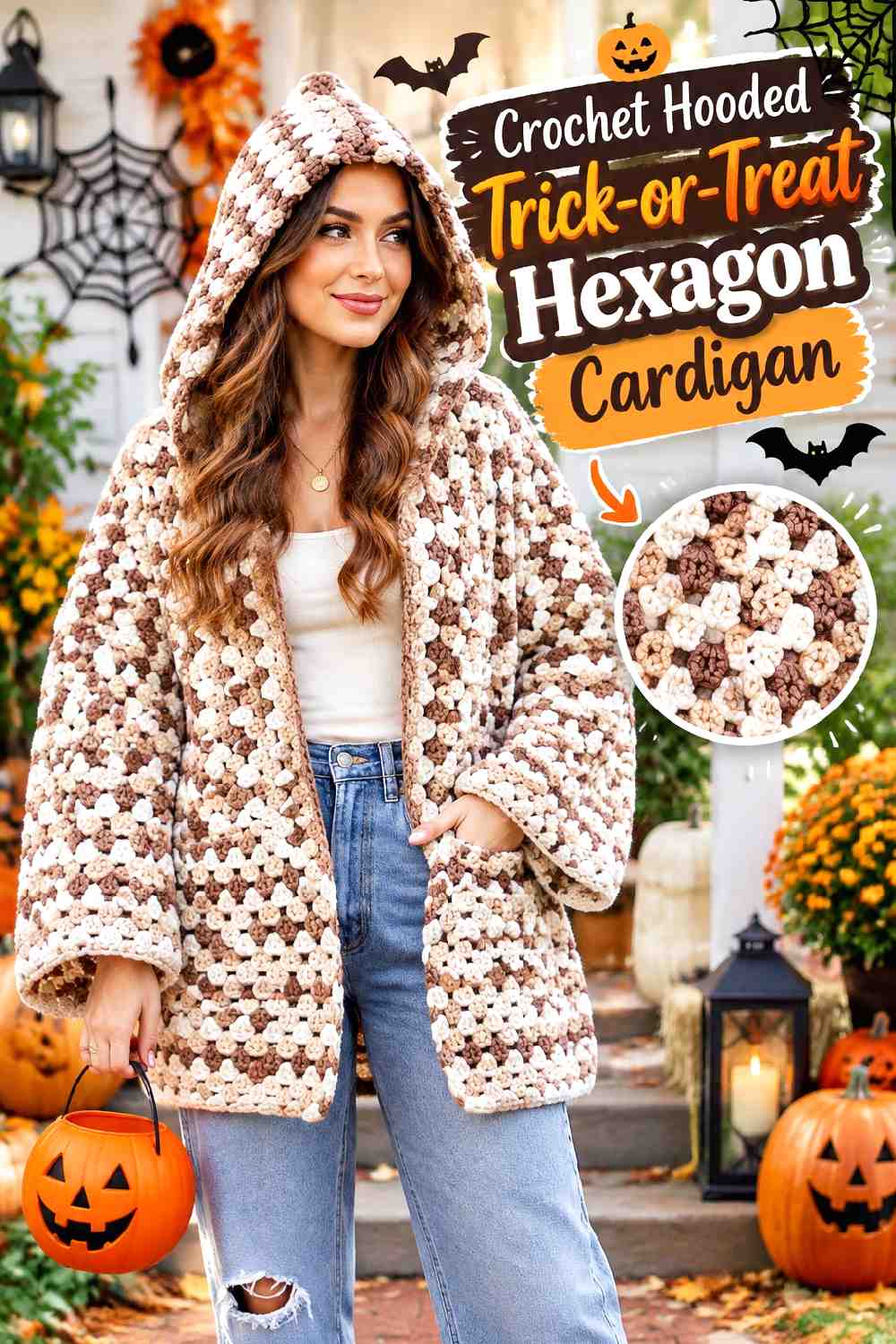
Gina Michele’s hooded hexagon cardigan adds one of the most useful Halloween silhouette changes in this list: a full hood attached to the familiar two-hexagon body.
A hood can make the cardigan feel witchy or cloak-like without altering the body with permanent seasonal graphics. It also creates more fabric around the neckline, which changes the garment’s balance compared with an open-front cardigan. Choose this direction when the hood itself is part of the outfit rather than something you expect to hide beneath a coat.
The Neckline Carries More Weight
A hood introduces extra fabric at the upper back and neck. Heavy appliqués or thick decorative edging in the same area may pull the garment backward.
Keep major embellishments lower on the body if the hood already supplies enough volume and visual interest.
Test the Hood With Your Planned Hairstyle or Hat
A hood that looks ideal lying flat can behave differently over bulky hair, a wig, or a Halloween headpiece.
If the cardigan is for a costume event, make sure the intended styling does not compete physically with the hood before adding more decoration around the neckline.
Creator Credit: Gina Michele
16. Crochet Kids Trick Or Treat Hexagon Cardigan
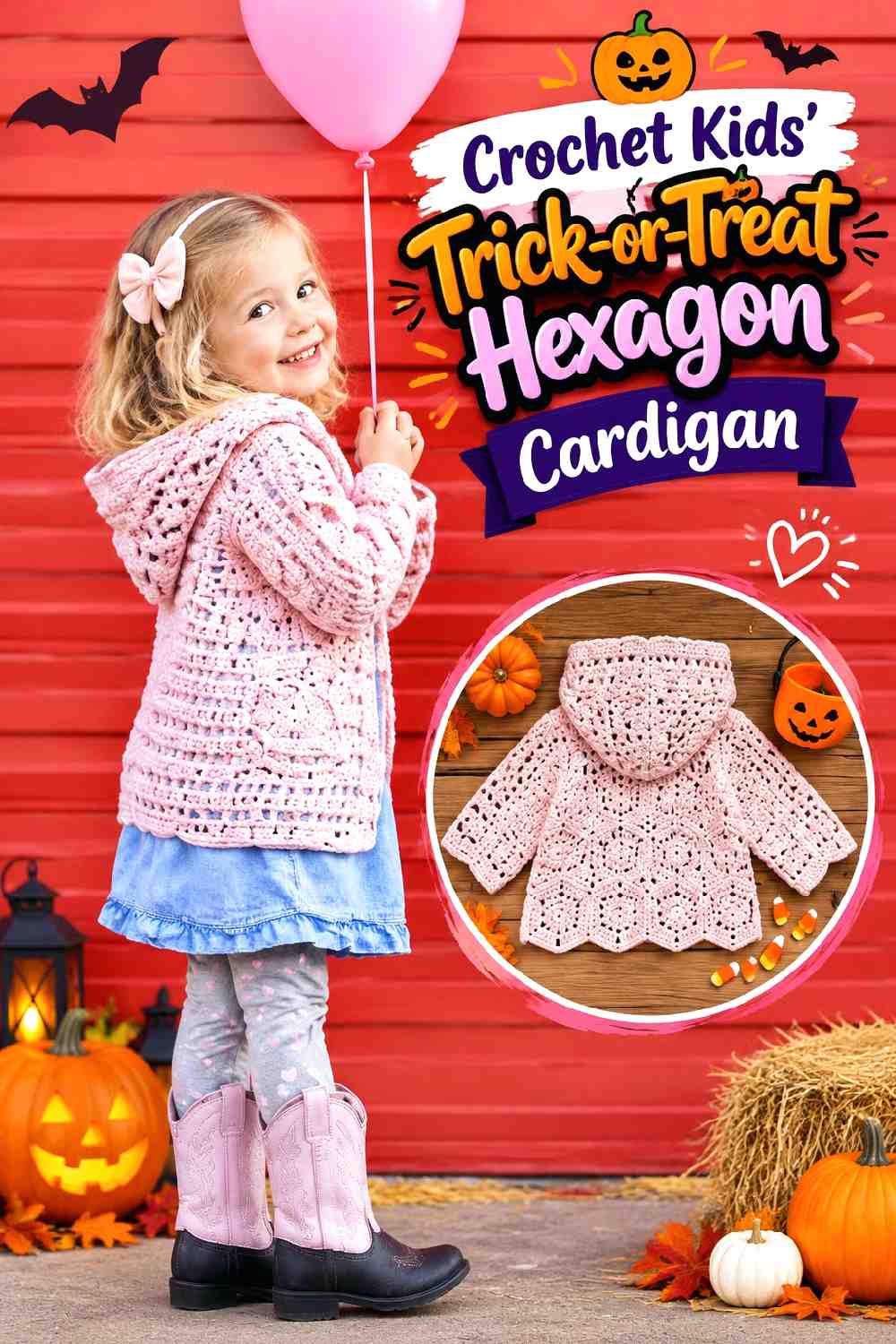
Make & Do Crew’s child-size hexagon cardigan extends the two-hexagon concept across baby, toddler, and older child sizing rather than simply shrinking an adult cardigan by guesswork.
That makes it the most relevant source here for a child’s Halloween layer. A pumpkin-orange, black-and-cream, or subdued autumn version can coordinate with trick-or-treat clothes without requiring a full costume. Fit and safety deserve more attention for children, so use the creator’s age and size guidance rather than estimating proportions from an adult garment.
Keep Added Details Secure and Simple
Avoid loosely attached embellishments or long dangling decorations, particularly for younger children. Decorative elements should not create obvious snagging or small-part concerns.
A color-blocked cardigan or securely worked-in motif can provide plenty of Halloween character without numerous separate accessories.
Plan for Clothing Underneath
A trick-or-treat cardigan may be worn over a shirt, costume, or several fall layers. That changes how much ease feels comfortable.
Compare the tutorial’s finished measurements with the clothing likely to sit underneath rather than sizing from the child’s body measurement alone.
Creator Credit: Make & Do Crew
17. Crochet Chunky Tie Front Halloween Hexagon Cardigan
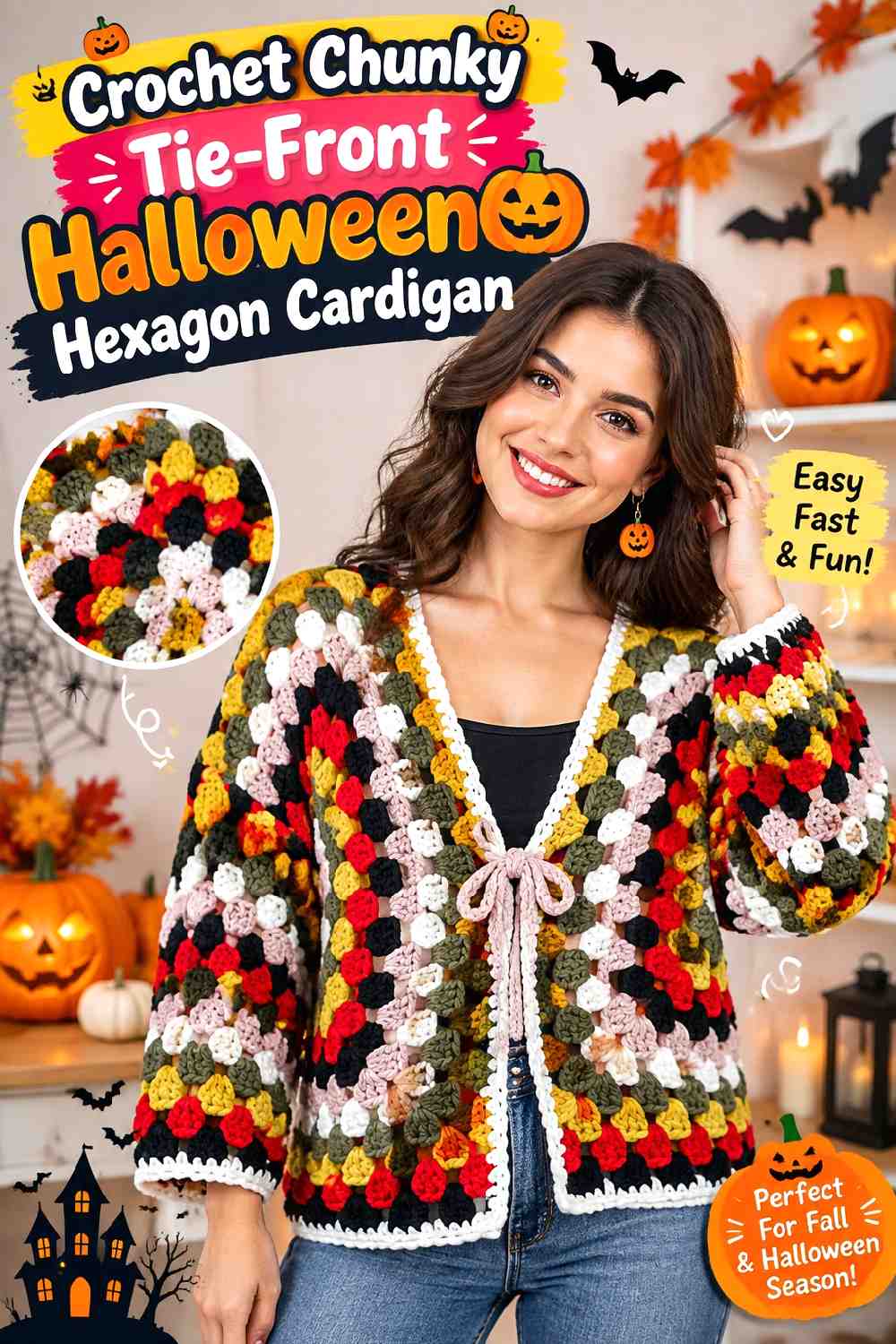
Brunaticality’s chunky hexagon-cardigan tutorial includes front ties as part of the finishing, giving this version a different closure effect from the many fully open cardigans in the collection.
The larger-scale yarn and tie-front shape create a bold fall layer even without Halloween motifs. A dark body with contrasting ties, or a restrained pumpkin-and-black palette, can give it seasonal character while preserving the creator’s structural design. Chunky yarn also changes the garment’s weight and stiffness, so this is not the best source to imitate with a radically different yarn without reviewing the tutorial’s measurements.
Ties Create a Visual Center
Because the front ties meet near the opening, they naturally attract attention. Treat them as a deliberate design detail.
Contrast ties can provide enough Halloween color on their own, allowing the body to remain neutral and easier to wear throughout winter.
Chunkier Fabric Needs Proportion Control
Large stitches and thicker yarn can make extra-long sleeves, wide fronts, and deep borders feel more substantial than the same features in a lightweight cardigan.
Before adding decorative bulk, try the garment in progress and judge whether the existing texture already supplies enough volume.
Creator Credit: Brunaticality
18. Crochet Made To Fit Black And Orange Hexagon Cardigan

ElyseCrochets’ tutorial approaches the granny hexagon cardigan as a made-to-fit garment and covers measurements, joining, sleeves, cuffs, and ribbing.
That makes it a practical base for a classic black-and-orange Halloween version when fit matters more than novelty construction. The palette is familiar, but the project earns its place because the sizing approach differs from fixed-size options elsewhere in the list. Keep the color plan simple enough that measurement checkpoints remain the priority.
Measure Before Color Planning Gets Expensive
It is easy to become committed to a large pile of yarn because the Halloween palette looks exciting. Confirm the measurement method and approximate garment scale first.
This reduces the risk of buying quantities for a highly specific color scheme before knowing how much fabric your chosen fit requires.
Use Black Strategically
Solid black can visually flatten textured stitches, particularly in dim lighting. Alternating it with rust, orange, cream, or charcoal can help the granny geometry remain visible.
You do not need equal amounts of every color. A dominant dark shade with limited brighter bands often looks more controlled.
Creator Credit: ElyseCrochets 💌
19. Crochet Fancy Border Halloween Hexi Cardigan
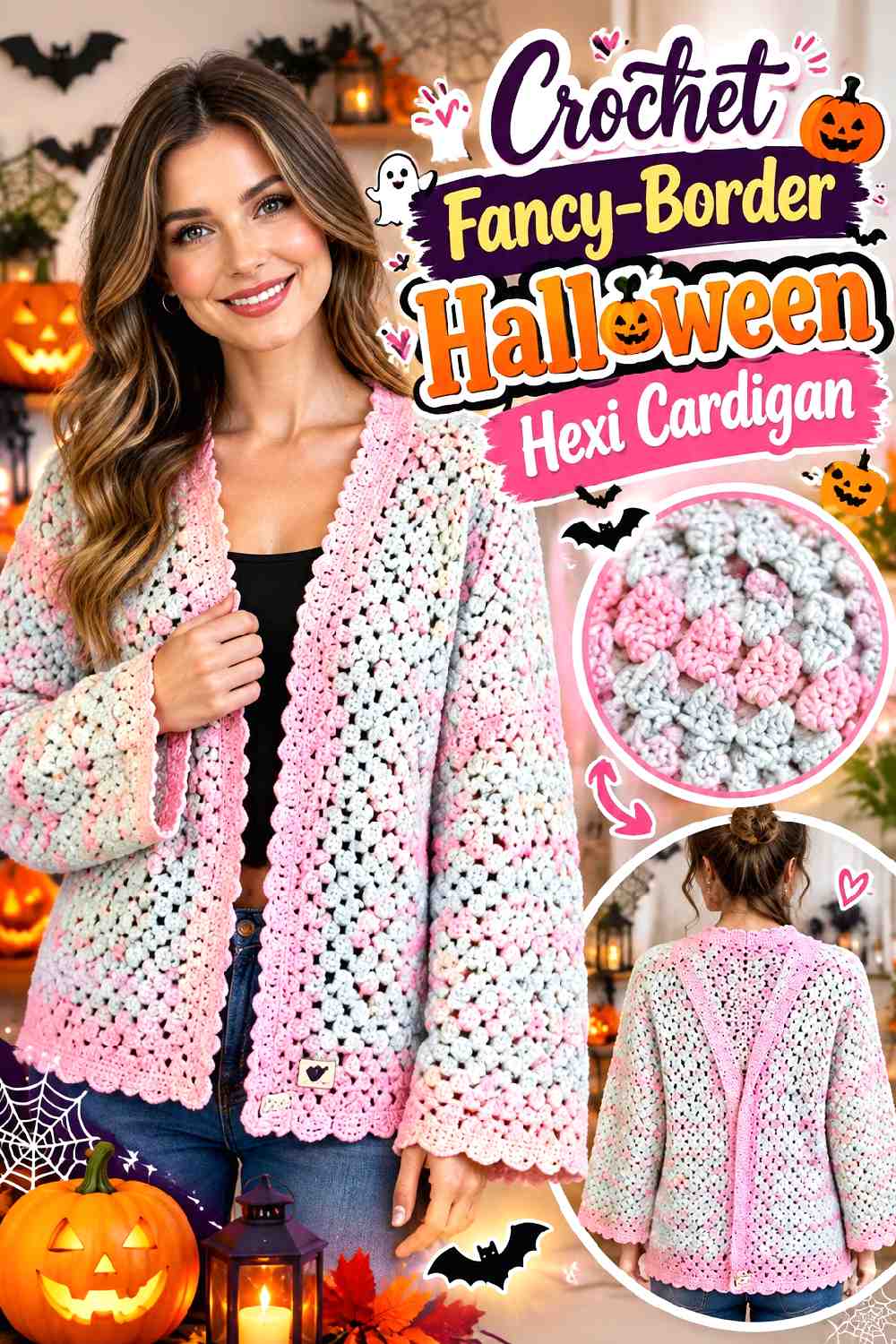
Crochet with Susie’s hexi-cardigan tutorial finishes the garment with an additional decorative border rather than stopping with a plain edge.
That border gives you a useful Halloween focal point without changing the main cardigan structure. A mostly charcoal, brown, or cream body can gain seasonal character through a darker or brighter edge treatment. This approach is especially useful if you want the cardigan to remain wearable after Halloween, because the theme can be concentrated around the perimeter instead of covering every panel.
A Border Changes the Finished Dimensions
Decorative edging is not purely visual. It adds fabric to the front opening and lower edge and may influence how the cardigan hangs.
Judge body length before assuming the border can simply be added without affecting proportion. The creator’s finished example is the best reference for how much presence the edge creates.
Save Your Strongest Accent for the Perimeter
If the border is meant to be the star, keep most internal color changes quieter.
A vivid rust, purple, green, or cream edge can frame a darker body more effectively than scattering the same accent in many unrelated places.
Creator Credit: Crochet with Susie
20. Crochet No Sew Hooded Witch Hexagon Cardigan

Chere Adair Designs combines two major features that are separate in several other projects here: a no-sew hexagon-cardigan method and an added hood. The tutorial also covers ribbed edging and sleeve finishing.
This makes it one of the stronger witch-cardigan foundations for readers who want substantial coverage without relying on graphic Halloween motifs. A dark solid or slowly changing colorway can let the hood and overall silhouette carry the theme. Because a hood, cuffs, and full border all add fabric beyond the basic hexagons, consider final weight as well as appearance.
Balance the Hood Against the Body
A substantial hood already makes the upper portion visually and physically heavier. Avoid automatically adding thick shoulder appliqués or dense decorations near the neckline.
If you want motifs, the lower front or back provides more separation from the hood and often gives the design better balance.
No-Sew Construction Still Has Joining Checkpoints
A crochet join can save sewing without making alignment irrelevant. Corresponding edges still need to meet cleanly.
Compare the two folded halves before joining and address noticeable differences early. Forcing mismatched edges together can affect how the hood and front borders eventually sit.
Think About Total Garment Weight
A hooded cardigan with full edging contains more yarn than a minimal open-front hexi. If you substitute a much heavier material, the shoulders and neckline may hang differently.
Use the tutorial’s material guidance as your baseline instead of evaluating the yarn only by how soft it feels in a skein.
Creator Credit: Chere Adair Designs
21. Crochet Custom Length Gothic Hexagon Cardigan
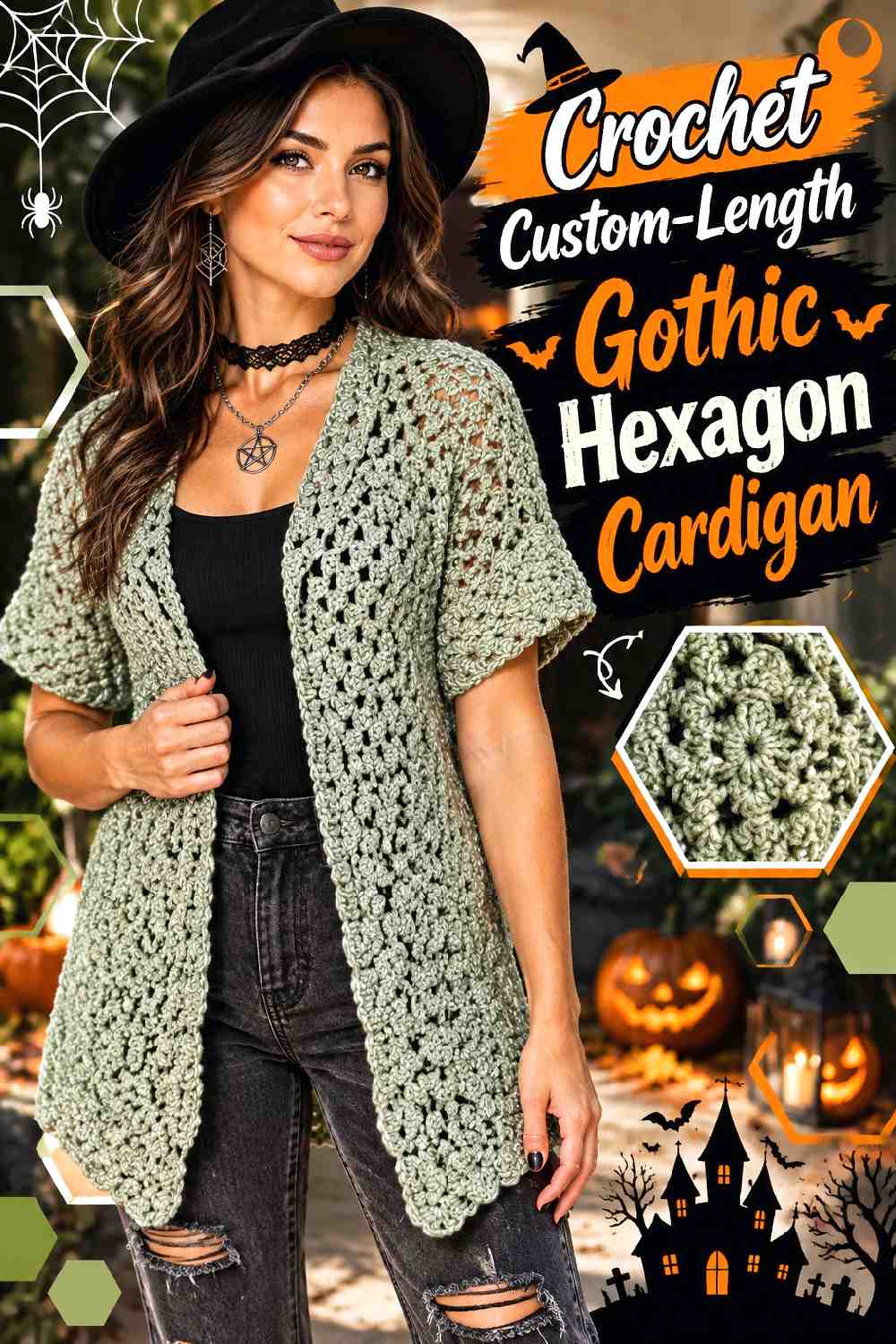
Mainmade Crochet’s tutorial specifically covers modifying the hexagon size and adding width and length to the cardigan after the basic geometric foundation is established.
That separation is useful for a gothic Halloween cardigan because you can aim for a more elongated silhouette without simply enlarging every part of the initial hexagon. A longer dark cardigan creates seasonal drama through proportion rather than permanent imagery, which makes the finished piece easier to wear through late fall and winter.
Add Length Where You Actually Need It
Increasing a basic hexagon indiscriminately can enlarge sleeve depth and body width along with length. A tutorial that separates later adjustments gives you more control.
Decide first whether your goal is a longer hem, wider torso, or larger sleeves. Treating them as different fit problems can prevent an unnecessarily oversized garment.
Long Dark Cardigans Need Visible Texture
Black is not the only gothic option. Deep burgundy, aubergine, charcoal, dark olive, and midnight blue may show the stitches more clearly.
If you choose black, examine the fabric in the lighting where you expect to wear it so the crochet structure does not disappear completely.
Creator Credit: Mainmade Crochet
22. Crochet Puff And Lace Halloween Hexagon Cardigan
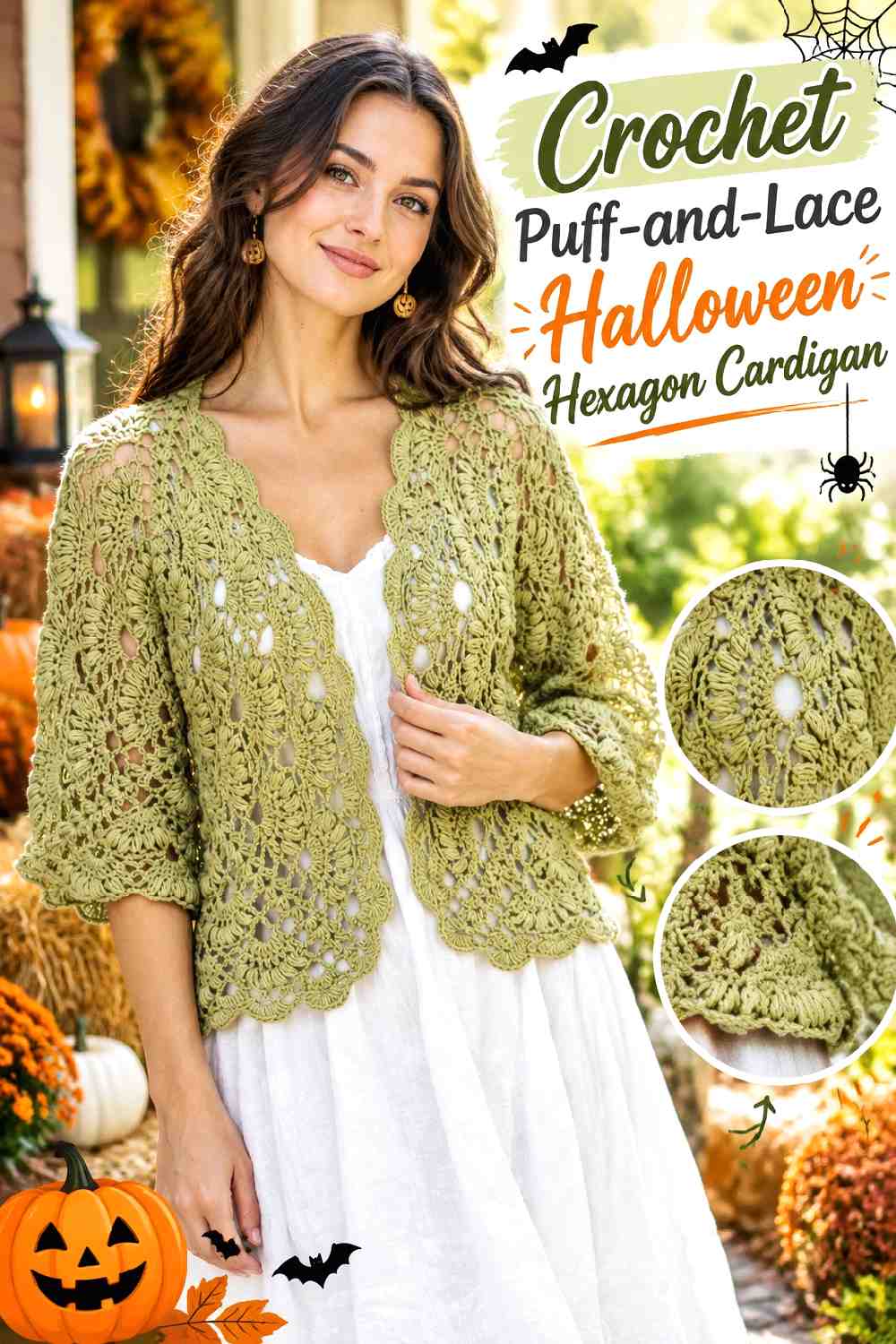
Handmade by Derya’s lightweight hexagon cardigan is structurally different from a standard granny version because its fabric combines open lace sections with raised puff-stitch texture. The designer also presents the project across a broad size range.
Those alternating textures make this an especially useful Halloween idea when you want visual interest without attaching separate motifs. Worked in charcoal, plum, rust, bone, or moss, the contrast between airy areas and raised stitches can provide enough detail by itself. Because texture depends on stitch definition, yarn substitution deserves careful consideration.
Texture Needs Space to Be Seen
A highly variegated yarn can compete with alternating lace and puff sections. If the stitch pattern is the main reason you selected this cardigan, a solid or gently shifting color may show it more clearly.
Reserve extreme contrast for edging or a limited number of sections instead of hiding every raised detail inside color noise.
Open and Raised Sections Can Behave Differently
Lace stretches and drapes differently from dense textured stitches. That means the finished fabric may not respond uniformly to gravity or blocking.
Follow the creator’s material and sizing guidance closely, particularly if you are considering a heavier yarn than the tutorial uses.
Avoid Overdecorating a Detailed Surface
Puff texture plus lace already creates a complex fabric. Extra pumpkins, bats, and heavy patches may have nowhere visually quiet to sit.
If you want a stronger Halloween signal, use color, a removable pin, or one carefully chosen focal motif rather than covering multiple textured sections.
Creator Credit: Handmade by Derya
23. Crochet Bishop Sleeve Halloween Hexagon Cardigan

Make & Do Crew’s Day Date cardigan uses two hexagons but develops them into a lightweight cardigan with roomy bishop sleeves and pockets.
This silhouette offers a softer alternative to the sharper balloon-sleeve spellcaster idea earlier in the list. Bishop sleeves gather visual fullness lower on the arm, so they pair well with a relatively restrained body palette. For Halloween, think charcoal with rust pockets, deep plum with black trim, or cream with a darker sleeve accent rather than covering the entire cardigan in motifs.
Protect the Sleeve Silhouette From Too Much Detail
Bishop sleeves already create movement and volume. Dense appliqués down the arms can interrupt that shape and add weight where the fabric is meant to hang.
Keep motifs on the body or pockets if you want the sleeve line to remain the main feature.
Pockets Can Carry the Seasonal Accent
Because this design includes pockets, you can concentrate color or subtle Halloween detail there instead of altering the whole cardigan.
A contrasting pocket is also easier to coordinate with the cuffs or border, creating a repeated accent that feels intentional rather than randomly added.
Check Sleeve Length in Motion
Full sleeves may look ideal with arms resting at the sides but behave differently while eating, crafting, carrying bags, or working at a desk.
Try the cardigan during construction when the tutorial permits and judge length against real movement rather than appearance alone.
Creator Credit: Make & Do Crew
Which Halloween Hexagon Cardigan Style Fits Your Fall Plan?
For the strongest built-in Halloween effect, the witchy spiderweb shrug is the clearest choice because the open web geometry supplies the theme without extra decoration. Hooded, balloon-sleeve, bishop-sleeve, longline, and oversized versions create a darker seasonal silhouette while remaining easier to wear after October.
If warmth matters, compare the solid hexagon, chunky tie-front, or denser striped options before choosing open lace or web construction. For warmer climates, the short-sleeve pocket cardigan and lightweight mixed-stitch versions provide less coverage.
Motif lovers have the most useful structural opportunity in the granny-square-back cardigan because the center panel provides a defined place for a skull or other graphic. For a quieter result, use color strategically on the two-tone, mirrored, ribbed, or fancy-border designs rather than adding permanent Halloween imagery.
Conclusion
These 25 crochet Halloween hexagon cardigan ideas show how much can change while keeping geometric construction at the center of the project. The real differences are not just black versus orange. Sleeve shape, fabric density, hood weight, pockets, back panels, border treatment, length, texture, and sizing method all affect how the finished cardigan looks and functions.
Choose the structural feature first, then decide how strongly Halloween should appear. A spiderweb shrug or themed back motif can become the centerpiece of an October outfit, while a dark hooded, striped, solid, or oversized cardigan may stay useful through the rest of fall and winter.
For exact yarn requirements, sizing, measurements, joins, adjustments, and construction, follow the linked creator tutorial rather than trying to rebuild the pattern from this inspiration list.
Frequently Asked Questions
Can I turn any hexagon cardigan into a Halloween cardigan?
Usually, color and removable styling can be changed without altering the underlying garment construction. Structural motif substitutions require more caution. A skull granny square, for example, cannot automatically replace a plain structural square unless the dimensions and joining points are compatible. Follow the creator’s cardigan construction first, then treat seasonal color, appliqués, embroidery, or accessories as separate design decisions unless the tutorial specifically incorporates them.
What yarn colors work for Halloween without using only black and orange?
Charcoal, cream, rust, burgundy, aubergine, deep green, brown, mustard, midnight blue, and muted purple can all create an autumn or witchy direction. Contrast matters more than using a particular “Halloween” color. If the cardigan contains openwork, textured stitches, or graphic motifs, choose combinations that allow those details to remain readable instead of blending into one dark surface.
How do I know when a hexagon cardigan is large enough?
Use the fitting method and finished measurements supplied by the specific tutorial. Hexagon construction can enlarge several parts of the garment simultaneously, so adding rounds solely because you want more body width may also deepen sleeves or change other proportions. Fold the work as instructed and check the relevant upper-arm, back, sleeve, and body dimensions before continuing.
Can I add skull, ghost, pumpkin, or bat motifs to a finished hexagon cardigan?
Decorative appliqués can often be added as non-structural accents, but their weight and placement matter. Open granny fabric may distort under a large dense motif, and detailed graphics can become difficult to read on curved sleeves. Flatter back or pocket areas usually provide more visual space. Before permanent attachment, position the motif temporarily and check how the garment hangs when worn.
Should I use a hooded or open Halloween hexagon cardigan?
Choose a hood when you want the silhouette itself to create most of the witchy effect and do not mind additional fabric around the neckline. An open cardigan keeps the underlayer visible and is generally easier to combine with graphic shirts, dresses, or costumes. A spiderweb shrug goes further in that direction by deliberately revealing much of the clothing underneath.
Can I use a heavier yarn to make the cardigan warmer?
Only after checking how the tutorial is sized and whether the creator provides substitution guidance. A heavier yarn can increase stitch size, total garment weight, sleeve bulk, and length under gravity. Those changes may affect a hexagon cardigan more broadly than expected because multiple garment dimensions originate from the same geometric pieces. A swatch and the creator’s gauge or measurement guidance are safer than substituting by yarn-label category alone.