Crochet cable cardigans can look especially polished when the texture, proportions, front bands, and finishing all feel intentional. You do not necessarily need an expensive yarn to get that effect. Clear cable definition, balanced placement, neat ribbing, and a silhouette that suits the weight of the fabric can make a much bigger difference.
The 17 ideas below cover several approaches rather than repeating one traditional cable sweater shape. You will find dramatic dusters, button-front cardigans, mixed-texture panels, round-yoke construction, knit-look faux cables, oversized layers, and more refined lightweight options.
The tutorials also differ in how they create the visual effect. Some use pronounced crossed or post-stitch cables, while others rely on braided, twisted, or knit-like crochet texture. A few are multipart or taught in languages other than English, so check the tutorial format, sizing information, and supporting pattern before buying yarn.
Quick List
- Crochet Mixed Texture Panel Cable Cardigan
- Crochet Diamond Trellis Drop Shoulder Cardigan
- Crochet Round Yoke Cable Cardigan With Shaped Neckline
- Crochet Sideways Faux Cable Button Cardigan
- Crochet Long Front Cable Duster Cardigan
- Crochet Alpine And Cable Tailored Cardigan
- Crochet Fashion Inspired Cable Cardigan With Floral Accent
- Crochet Rectangle Cable Cardigan With Optional Pockets
- Crochet Classic Button Cable Cardigan
- Crochet Plush Cable Cardigan With Soft Volume
- Crochet Knit Look Cascade Cable Cardigan
- Crochet Oversized Cable Cardigan With Long Vertical Lines
- Crochet Braided Cable Cardigan With Classic Proportions
- Crochet Rounded Cable Cardigan With Soft Drape
- Crochet Clean Line Cable Cardigan For Fall Layering
- Crochet Pink Cable Cardigan With Statement Texture
- Crochet Diamond And Braid Statement Cable Cardigan
What Makes a Crochet Cable Cardigan Look More Polished?
An expensive-looking cardigan usually depends more on visual control than ornament. Raised cables already create a lot of surface detail, so the surrounding parts of the garment need enough simplicity to let that detail read clearly.
Pay particular attention to front bands, cuffs, hems, shoulder seams, and button placement. Wavy ribbing or stretched buttonholes can distract from beautifully made cables. Likewise, very busy multicolor yarn can hide a complex cable design that would be obvious in a quieter solid or tonal shade.
Cable placement matters too. A pair of vertical cables along the fronts creates a different impression from dense allover texture. The first can feel restrained and tailored; the second has more of a statement-knit look. Neither is automatically better—the important point is deciding how much texture you actually want before committing to a labor-intensive garment.
Choose Drape Before You Choose the Yarn
Cable stitches often produce thicker fabric than simple rows of basic crochet because raised and crossed stitches add depth. That makes yarn choice particularly important.
A lighter yarn can allow intricate texture without turning the cardigan into an extremely heavy layer. A thicker yarn can create strong sculptural cables, but you need to consider whether that amount of structure suits the length and silhouette you want.
Fiber characteristics matter as well. A fuzzy halo can soften the edges of individual cables, while a smoother yarn can make twists and raised posts more obvious. Neither effect is wrong. Decide whether you want sharply readable texture or a softer, blended surface.
Whenever possible, swatch in the actual cable texture rather than assuming a plain crochet swatch will behave the same way. Let the swatch rest or block it according to the yarn’s care guidance, then look at both its width and its drape before making garment decisions.
Check Fit Where the Cable Fabric Changes Shape
Cable-heavy fabric can contract differently from plain crochet. This is especially important across the chest, upper back, sleeves, and button fronts.
If a cardigan combines plain panels with cable panels, compare their blocked dimensions rather than assuming an equal stitch count will produce equal widths. For made-to-measure designs, measure the finished textured panel itself.
Also consider garment weight. Long dusters and heavily textured cardigans place more material below the shoulders than a cropped design. Before adding extra length, check how the existing fabric hangs. A modification that looks small while the pieces are flat can feel much more significant when the finished cardigan is worn.
1. Crochet Mixed Texture Panel Cable Cardigan
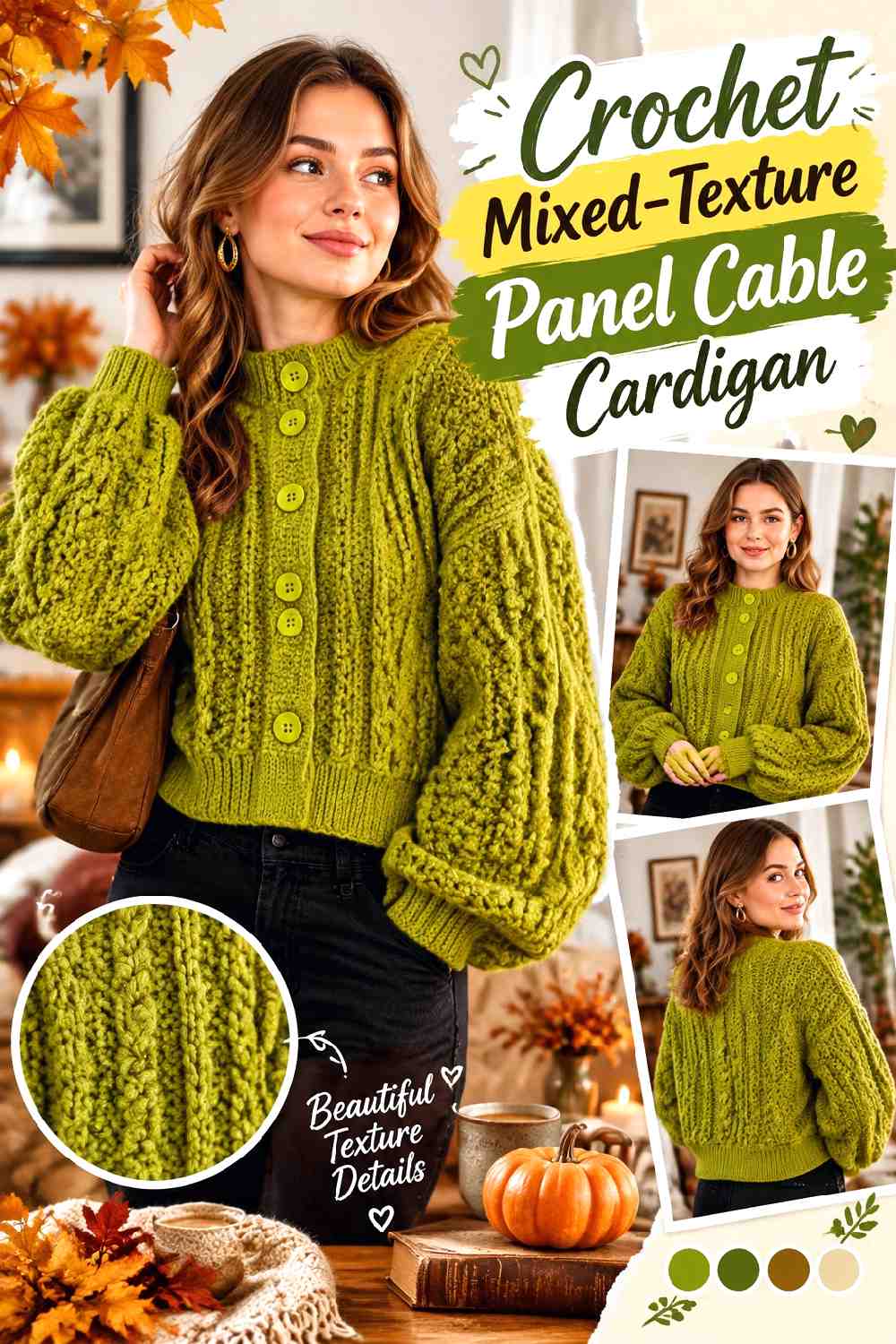
This idea combines distinct cable, ribbed-puff, and twisted-texture panels instead of treating the cardigan as one continuous field of stitches. The tutorial uses separately worked panels that are joined into the garment, making the texture layout part of the construction rather than just decoration. The creator also presents the panel system as adjustable for width, length, and fit.
That makes this a useful direction if you want the richness of an intricate designer cardigan without covering every inch in one cable repeat.
Panel Rhythm Creates the Luxury Effect
The visual strength comes from alternating textures. Because each panel catches light differently, the finished cardigan can look more detailed than a single-stitch garment even in one color.
Before adding extra panels, look at the entire front and back as a composition. Too many equally dominant textures can make the garment feel visually crowded. Allow some narrower or quieter sections to separate the strongest cables.
Measure Every Texture After Blocking
Different raised stitches can relax differently. If you are adapting width or length, compare the actual blocked measurements of the cable, puff, and twisted panels rather than planning only from their starting dimensions.
This is especially useful around the shoulder and sleeve joins, where mismatched panel lengths will be more noticeable.
A Soft Halo Changes Cable Definition
The creator’s sample combines cotton with a mohair-type yarn, producing a softer surface around the pronounced textures. If you substitute a smoother yarn, expect the cable outlines to appear sharper.
Choose according to the finish you want rather than assuming the original visual effect will transfer unchanged to every fiber.
Creator Credit: Katie Joslin
2. Crochet Diamond Trellis Drop Shoulder Cardigan
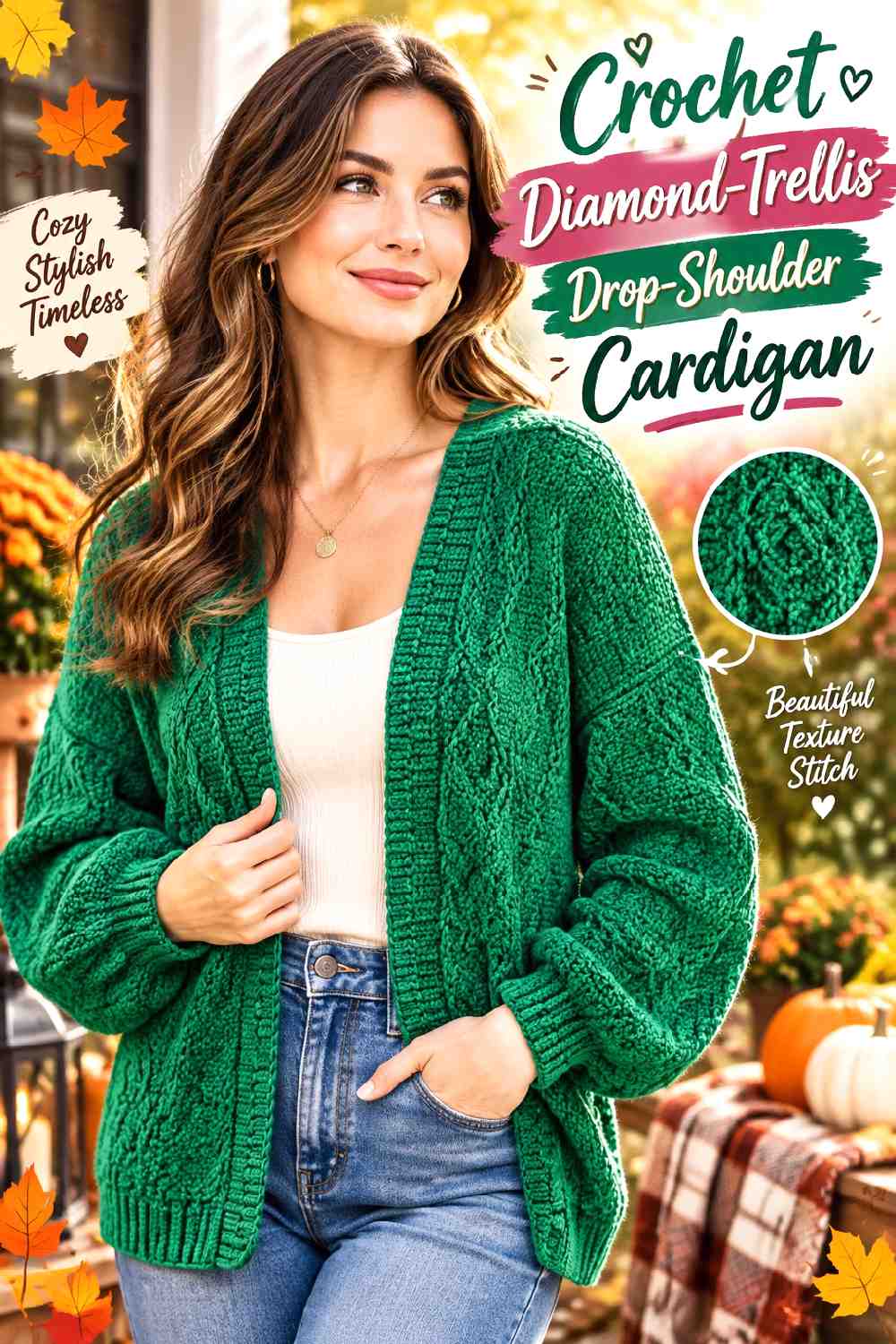
A diamond-trellis cable pattern gives this cardigan a strong allover texture instead of limiting cables to the edges. Combined with a relaxed drop-shoulder silhouette, it creates the look of a substantial heritage sweater while staying clearly crochet.
This direction works particularly well if the cable fabric itself is the main feature and you prefer a cardigan that does not need extra surface embellishment.
Give the Diamond Pattern Enough Space to Read
Large cable motifs need uninterrupted fabric. If you shorten a panel substantially, check whether the remaining motif placement still looks intentional instead of appearing abruptly cut off.
This is one reason to decide on your desired cardigan length before doing extensive cable work.
Drop Shoulders Change Where the Weight Sits
A drop-shoulder cardigan does not depend on a precisely fitted shoulder seam in the same way as a set-in sleeve. That can suit a relaxed fall layer, but the cable fabric may still have considerable weight.
Check the finished shoulder width against the amount of ease you actually want rather than automatically enlarging the body for a more oversized look.
Keep the Edging Quieter Than the Main Texture
When the body already carries a prominent trellis, straightforward ribbing can provide useful contrast. A visually calm hem and front edge frame the cables rather than competing with them.
Creator Credit: Life and Yarn
3. Crochet Round Yoke Cable Cardigan With Shaped Neckline
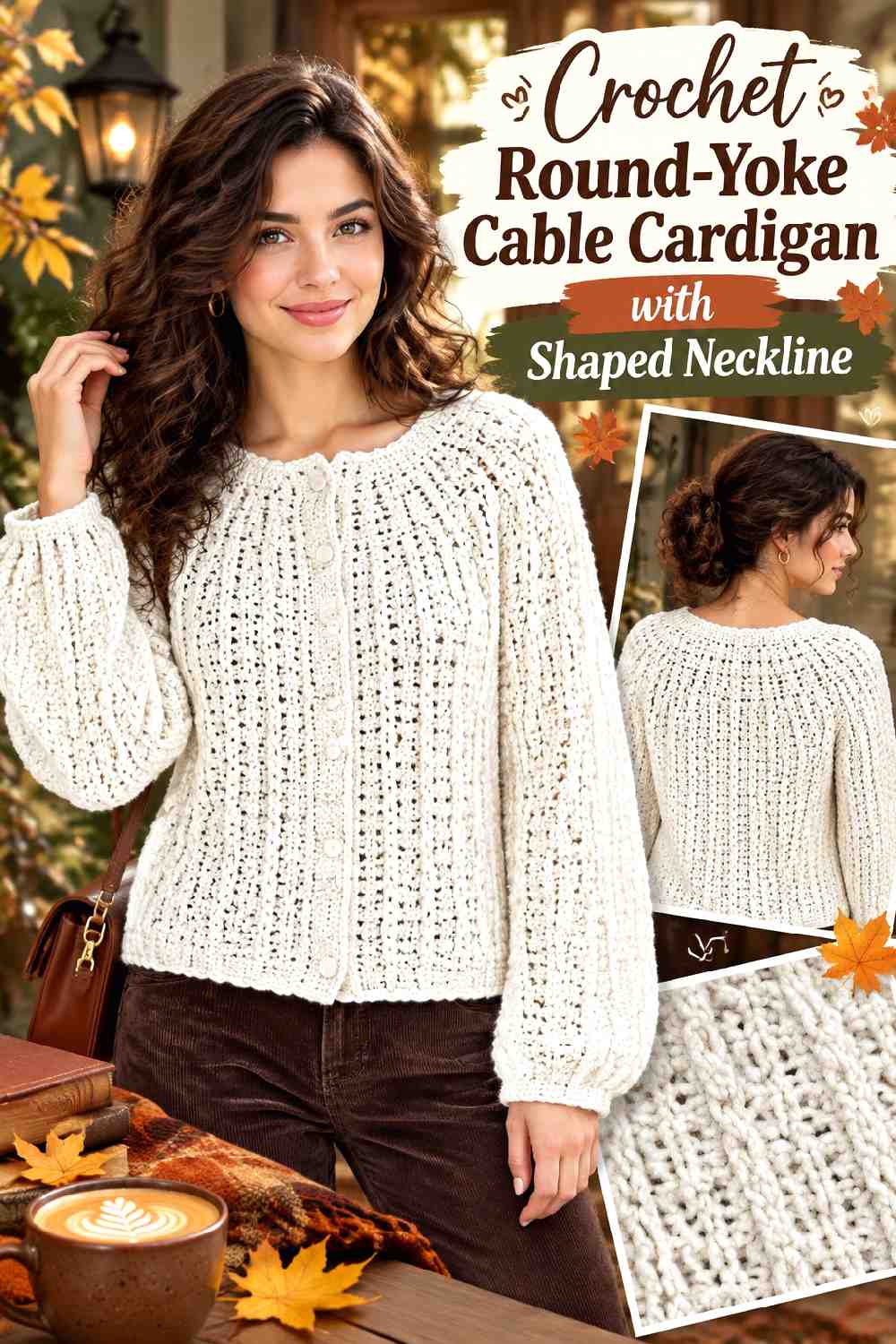
This top-down cardigan uses a round-yoke construction with continuous cable texture and an anatomically shaped neckline created with short rows. The pattern was published in January 2026 and is supported by a multipart video tutorial.
Compared with pieced cable cardigans, this is a useful option when you prefer the texture to flow continuously from the upper body rather than being interrupted by conventional shoulder seams.
Top-Down Shaping Lets You Judge the Upper Fit Early
A round-yoke garment puts a great deal of visual attention around the neck and shoulders. Check how the yoke sits before assuming that extra body ease will solve an upper-fit problem.
With a textured stitch pattern, a small neckline or yoke adjustment can also affect how the cables line up, so use the creator’s sizing information rather than changing several areas simultaneously.
Short Rows Matter More Than Decorative Drama
The shaped neckline is not merely a finishing detail. It influences how the cardigan settles around the neck and shoulders.
If you are attracted primarily to the allover cables, do not overlook this quieter structural feature. Sophisticated-looking garments often depend as much on shaping as on the visible stitch pattern.
Save the Full Tutorial Series Before Starting
Because the video instruction is divided into multiple parts, identify the entire sequence before beginning. That gives you a clearer view of where shaping, sleeves, and finishing appear instead of discovering later that a construction detail is explained in another installment.
Creator Credit: ByKaterina Designs
4. Crochet Sideways Faux Cable Button Cardigan
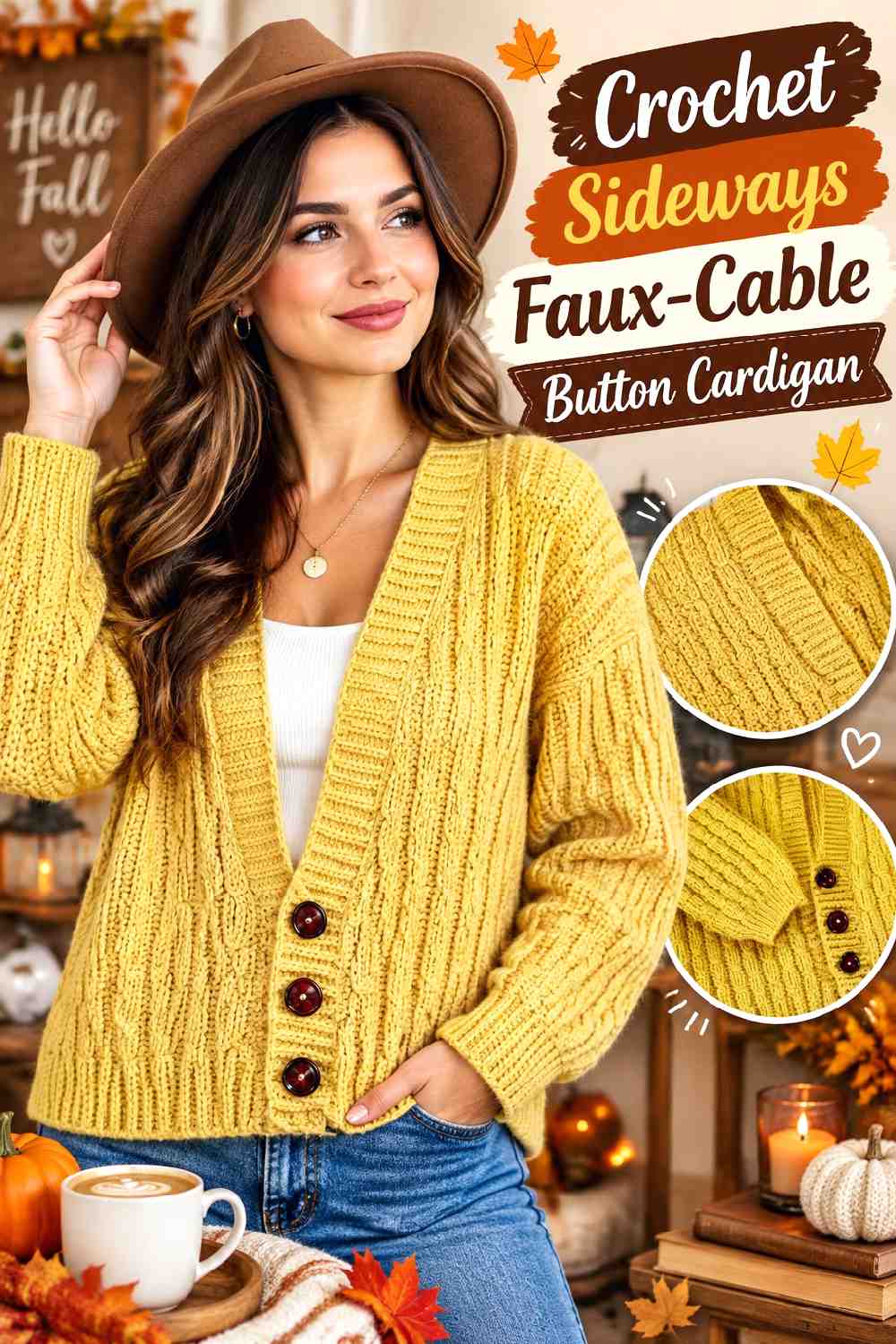
This cardigan takes a different route to the cable look. Its texture is designed to resemble knitted cable or bamboo stitches, and the garment is constructed sideways with functional buttons and ribbed edges.
It is a strong choice for readers who like the polished look of knitted texture but specifically want a crochet construction.
Sideways Construction Changes the Visual Direction
Working sideways means the orientation of the fabric is different from a conventional bottom-up cardigan. That can make the texture and drape behave differently when the garment is hanging vertically.
When substituting yarn, make a generous swatch and hold it in the same direction it will sit in the cardigan. A fabric that looks perfect flat can stretch differently once gravity is acting across the rows.
Faux Cables Can Create a Cleaner Surface
Not every expensive-looking cable cardigan needs deeply raised post-stitch crossings. A flatter faux-cable effect can produce visual complexity without the same degree of sculptural bulk.
This can be useful when you want a cardigan that layers beneath a coat or jacket rather than functioning as the outermost piece.
Button Bands Expose Tension Problems Quickly
A neat button front adds structure, but it also makes uneven edging more visible. Before attaching all the buttons, lay the cardigan flat and check whether both front edges remain the same length without pulling.
Creator Credit: Hey Carrie
5. Crochet Long Front Cable Duster Cardigan
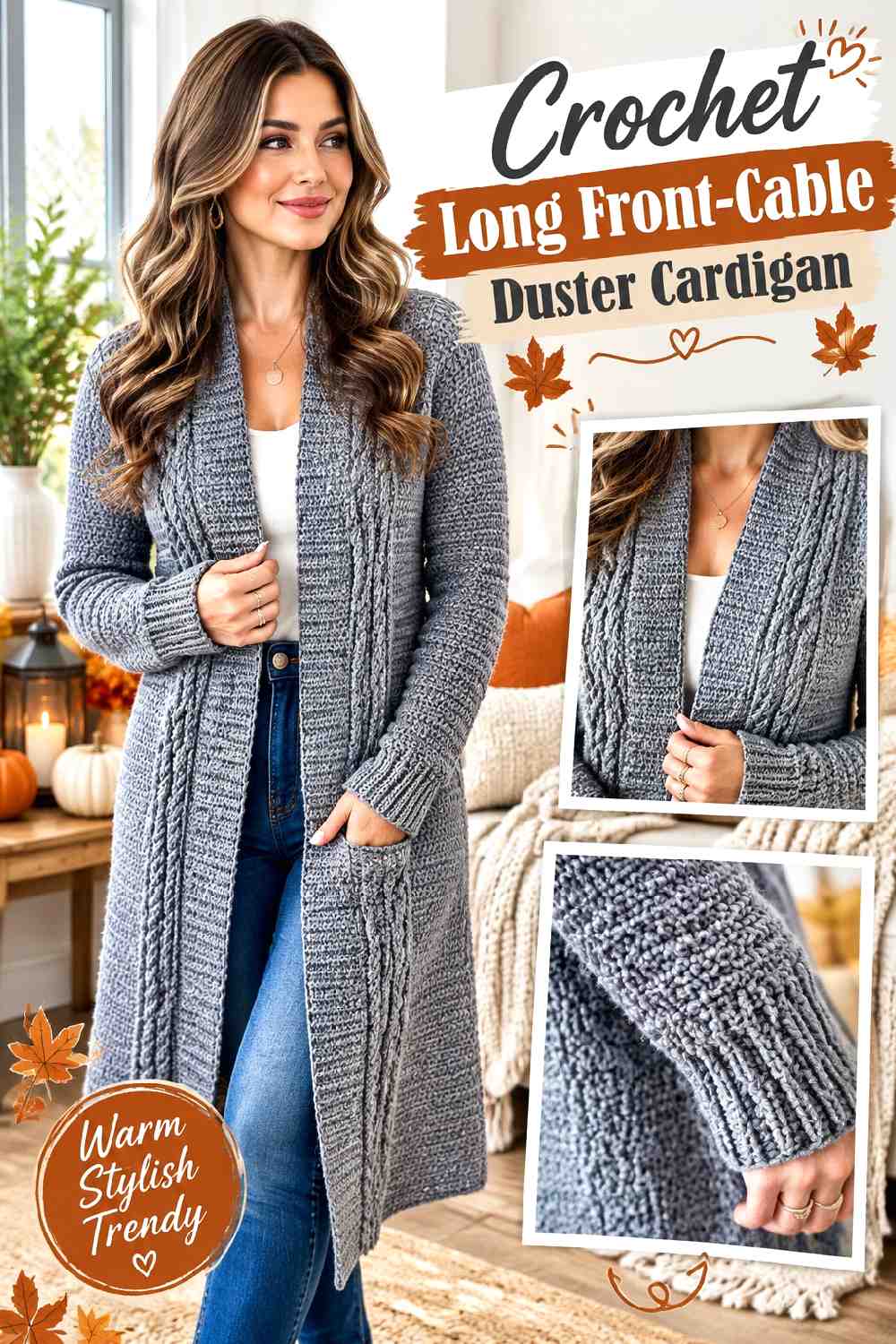
A long duster immediately changes the role of cable texture. Here, cables border the front panels while the cardigan extends into a long, oversized silhouette. The design is worked in separate pieces from the bottom up, and the published pattern supports sizes from XS through 5XL.
Instead of using cables everywhere, this approach treats them like a vertical frame.
Length Makes the Cables Look More Architectural
Long vertical cables naturally guide the eye from shoulder to hem. That can make relatively concentrated cable placement feel more dramatic than an allover motif on a shorter cardigan.
If you alter length, think about where the cable repeat ends as well as where the hem lands.
Lighter Fabric Helps a Duster Stay Fluid
The original design uses sport-weight yarn, which is worth noticing because a floor-skimming or knee-length garment already contains a substantial amount of fabric.
Substituting a much heavier yarn without recalculating gauge and considering total garment weight can change both the drape and the strain on the shoulders.
Match Your Size to the Written Information
The supporting pattern includes a broad size range. Use the size-specific measurements associated with the design rather than copying the proportions you happen to see demonstrated on screen.
Creator Credit: MJ’s Off The Hook Designs
6. Crochet Alpine And Cable Tailored Cardigan
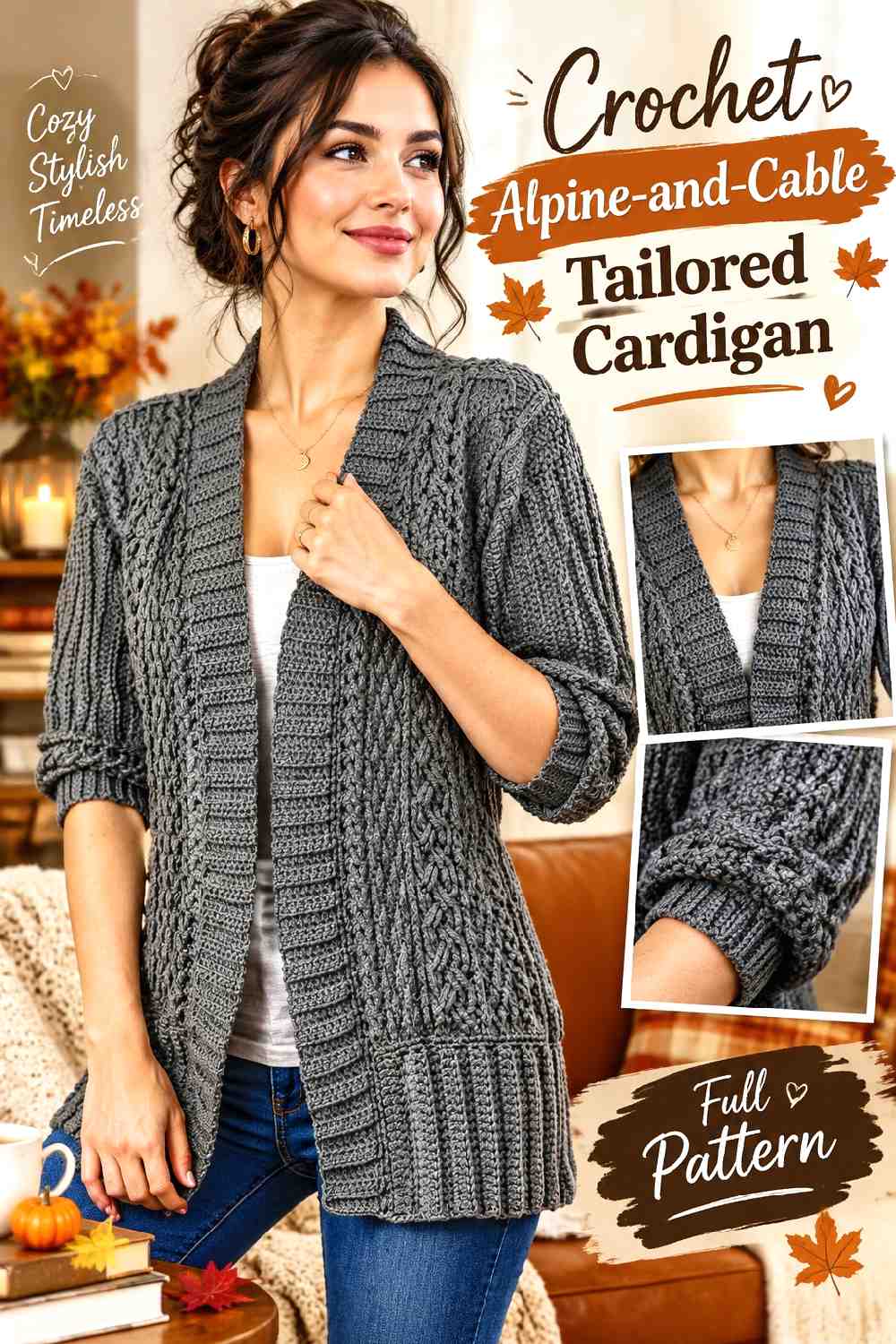
This cardigan mixes several textures across its front panels, including twisted details, alpine texture, and a central cable section. The full tutorial then moves through the neckline, back, seams, bands, sleeves, and cuffs.
The result is a good reference when you want a cable cardigan to feel tailored and deliberately paneled rather than soft and oversized.
Alpine Texture Makes the Cables Feel More Structured
Pairing cables with another dimensional stitch creates a dense visual surface. Because both textures demand attention, color restraint can help the design stay readable.
A solid or subtle tonal shade lets the shadows formed by the stitch relief provide most of the variation.
Mirrored Fronts Reward Consistent Tension
Detailed left and right fronts make differences in gauge easier to notice. Compare their length as you work instead of waiting until seaming.
If one panel grows slightly longer, resolve the tension issue early rather than relying on the front band to disguise it later.
Bands and Cuffs Determine the Final Level of Polish
The tutorial gives separate attention to the lower band, front band, sleeves, and cuffs. That is significant because these quieter areas frame the complicated center texture.
Take the time to keep these edges consistent; clean framing often makes elaborate cable work look more intentional.
Creator Credit: TCDDIY
7. Crochet Fashion Inspired Cable Cardigan With Floral Accent
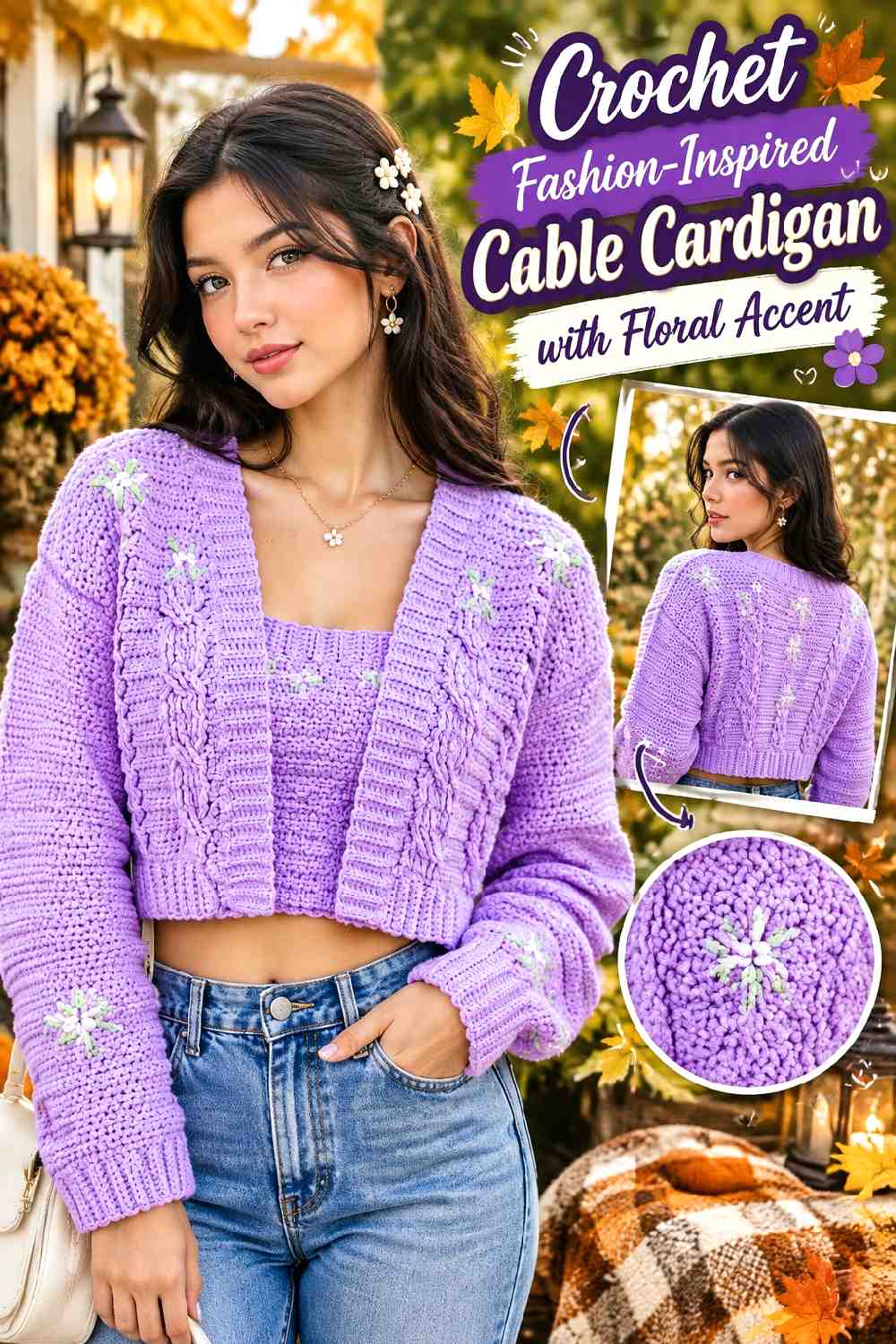
This tutorial combines a cable cardigan with ribbed finishing and an optional floral embellishment. Its construction is covered through the front, back, sleeves, joining, waist ribbing, and neckline treatment.
The interesting part for a Fall 2026 wardrobe is the contrast between classic cable texture and a small decorative accent rather than an allover novelty motif.
Treat the Flower as an Accent, Not a Requirement
If you prefer a quieter, more minimalist cardigan, the floral detail can remain secondary to the cable structure. If you do include embellishment, decide on placement only after seeing the assembled garment.
That makes it easier to judge visual balance across the whole front instead of decorating an isolated panel.
Keep Both Cable Fronts Visually Balanced
Cable-heavy front pieces draw attention to any difference in width or texture placement. Compare the two fronts frequently and check the neckline shaping before assembly.
A few millimeters of inconsistency may not matter in plain fabric but can become much more visible beside strong vertical texture.
Judge the Proportion After Ribbing Is Added
Ribbing changes the visual boundaries of a cardigan. Before deciding that the body looks too long or short, remember that waist and neckline finishing can alter the final proportions.
Creator Credit: Chenda DIY
8. Crochet Rectangle Cable Cardigan With Optional Pockets
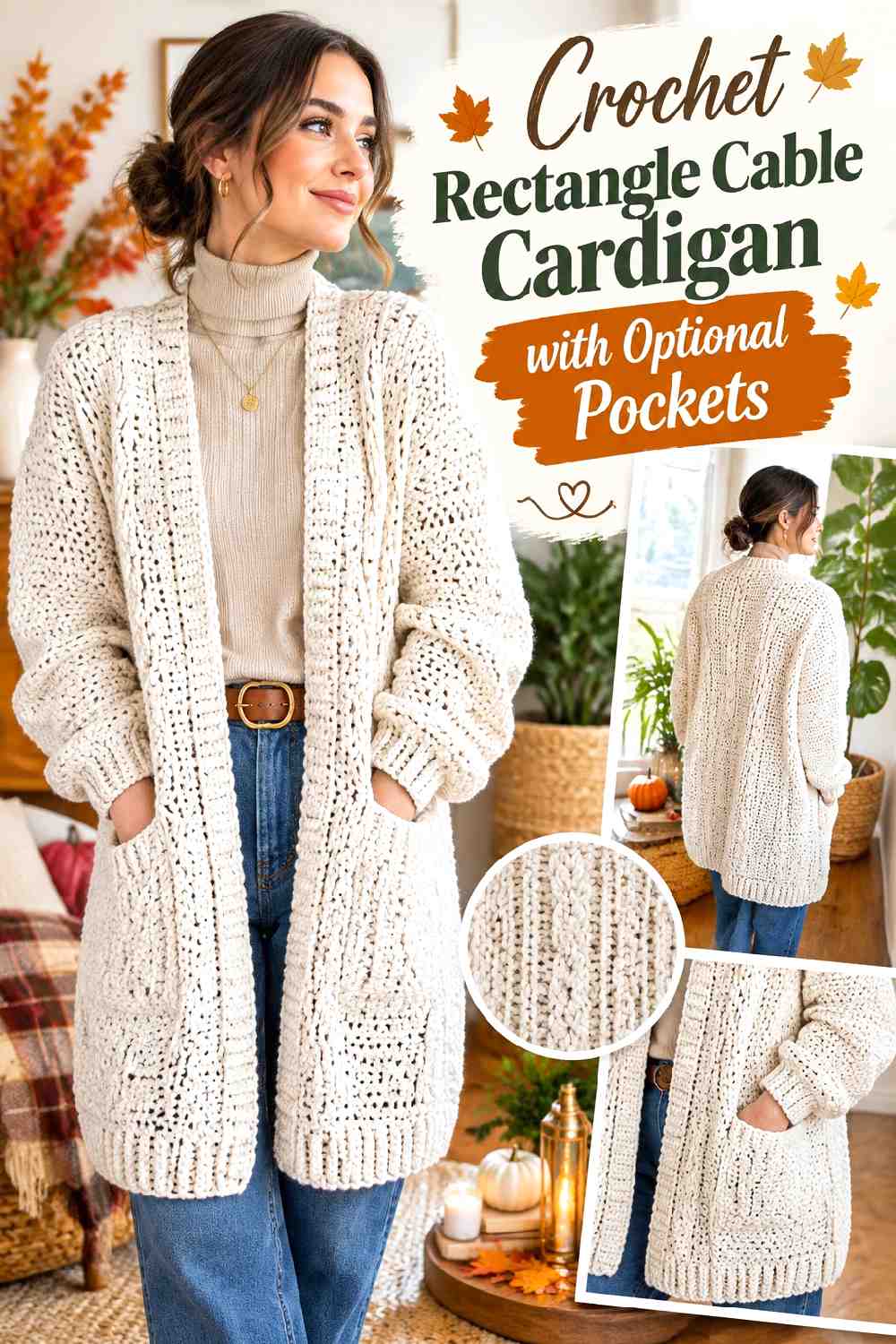
This project takes a comparatively straightforward garment concept and gives it visual depth with cables. The construction is based around rectangular sections, with pockets available as an additional functional detail.
That makes it appealing if you want the surface to look detailed without choosing a garment dominated by complex shaping.
Rectangular Construction Keeps the Silhouette Understandable
Simple panel geometry can be useful when cables are already demanding most of your concentration. You can focus on keeping the texture even and checking dimensions without simultaneously managing elaborate shaping.
The trade-off is that a rectangular construction creates a different shoulder and body silhouette from a fitted cardigan, so compare the finished shape with clothing you already enjoy wearing.
Pockets Add More Than Function
Pockets introduce additional fabric and can interrupt the visual flow of a cable panel. Before attaching them, pin or baste their position temporarily and look at the cardigan from a normal viewing distance.
If the cables are the main design feature, the cleanest pocket placement may be one that blends into rather than competes with the texture.
Use Supporting Instructions for Construction Details
The creator’s video places substantial emphasis on the cable technique and cardigan concept, so consult the accompanying project information when you need exact garment measurements or construction specifics rather than filling in missing details yourself.
Creator Credit: Delia Creates
9. Crochet Classic Button Cable Cardigan
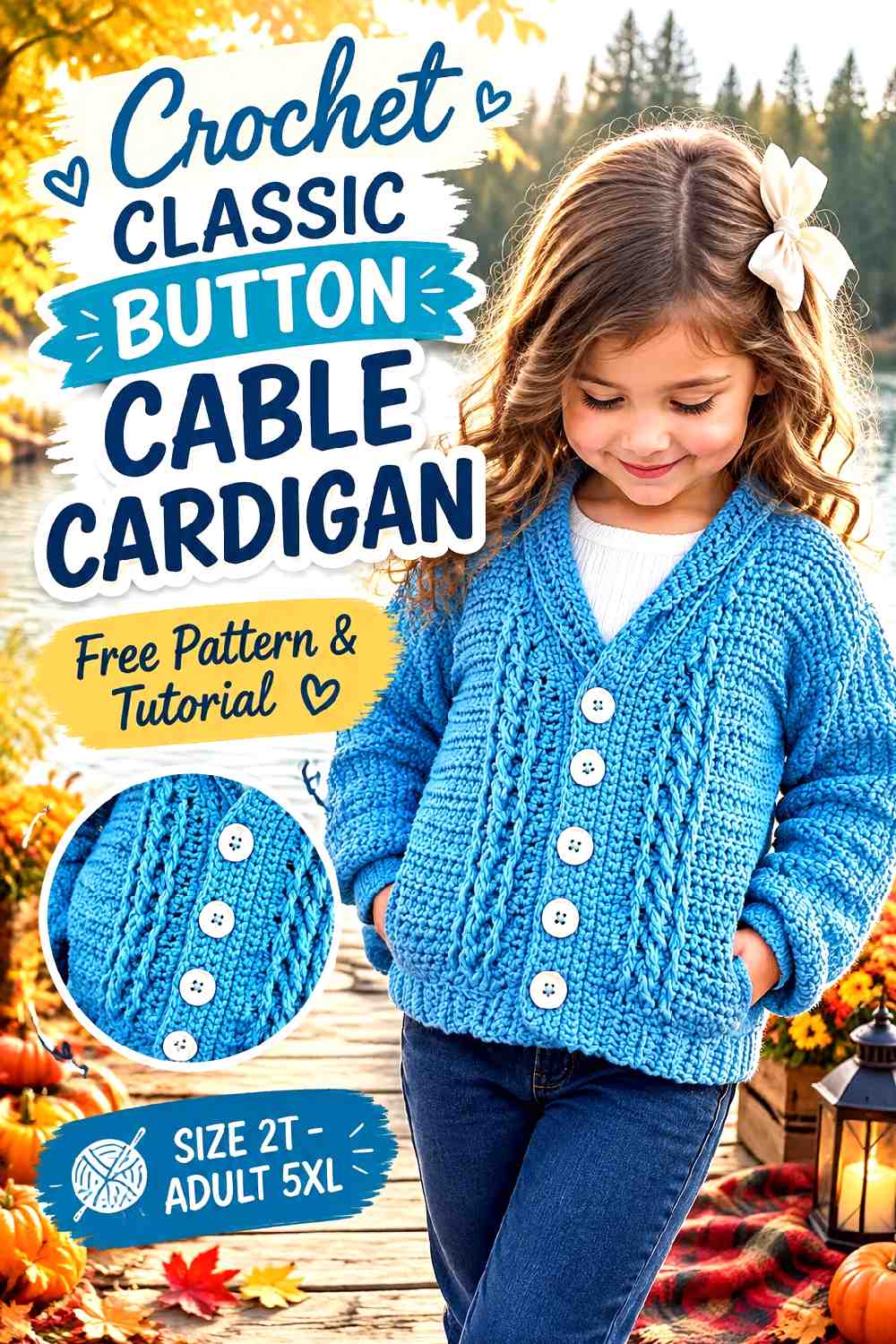
This button-up design places crisscross cable texture on the front while using a quieter base fabric elsewhere. The creator provides sizing from 2T through adult 5XL, while the video itself demonstrates a child-size version.
It is a useful reference for anyone who likes traditional button-cardigan proportions and wants the cables to act as focused accents.
A Button Front Makes Edge Tension Visible
Buttons create a line of repeated visual checkpoints. If the band stretches, twists, or shortens the front edge, the closure can exaggerate the problem.
Lay the fronts together before final button placement and confirm that corresponding points meet comfortably without forcing the fabric.
The Video Sample Does Not Replace Adult Sizing Data
The tutorial demonstration is worked in size 4T, even though the supporting pattern extends through adult 5XL. Adult makers should therefore use the appropriate creator-provided adult measurements rather than enlarging the child sample by eye.
Concentrated Cables Make a Good Compromise
Because the base fabric remains comparatively restrained, this style can give you the recognizable cable-cardigan look without covering the entire body in heavy texture. That may also make styling easier if you plan to wear the cardigan over patterned shirts or dresses.
Creator Credit: TheKnottyLace
10. Crochet Plush Cable Cardigan With Soft Volume
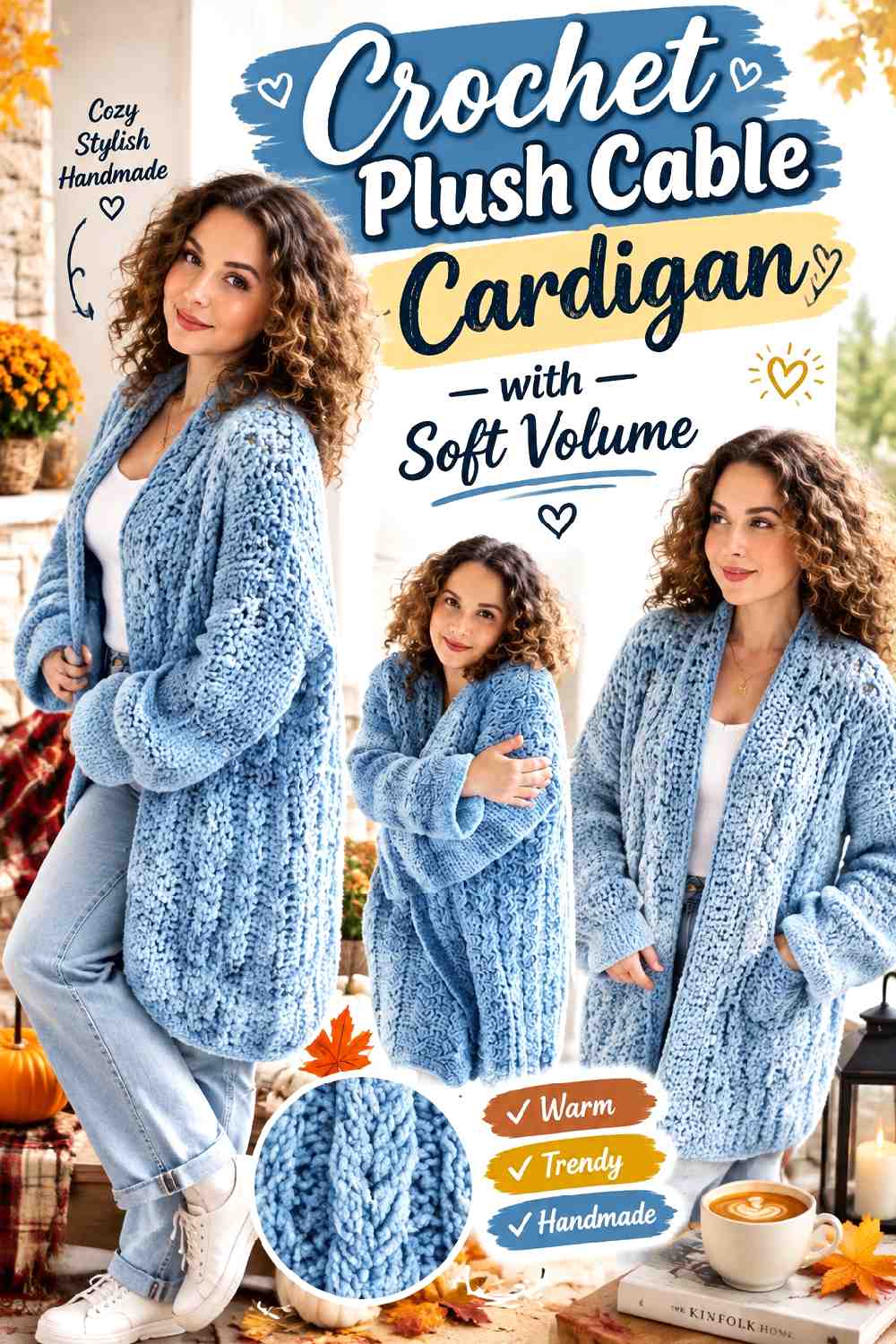
This cable cardigan leans into warmth and volume rather than crisp tailoring. Supporting pattern information describes it as an oversized adult cardigan and notes options for shorter or longer versions.
The softer silhouette is useful if your idea of an expensive-looking fall layer is closer to a plush statement knit than a fitted jacket.
Soft Yarn Can Blur Small Cable Details
A lofty or fuzzy yarn changes how the light reaches the raised stitches. Fine crossings that look dramatic in a smooth yarn can merge into a softer overall texture.
If you are substituting yarn, crochet enough of the actual cable motif to see whether its definition survives the halo.
Oversized Does Not Mean Every Measurement Should Grow
An intentionally roomy body still needs workable sleeves, shoulders, and front proportions. Extra width and extra length also increase garment weight.
Choose the desired finished silhouette first and then follow the size or adjustment guidance rather than simply moving several sizes upward.
Decide on Length Before the Cardigan Becomes Heavy
The design can be made shorter or longer. If you are considering the longer option, evaluate the weight and drape of your fabric early so you do not add a large amount of length to a yarn that already feels dense.
Creator Credit: Annoo and The Unruly Stitch
11. Crochet Knit Look Cascade Cable Cardigan
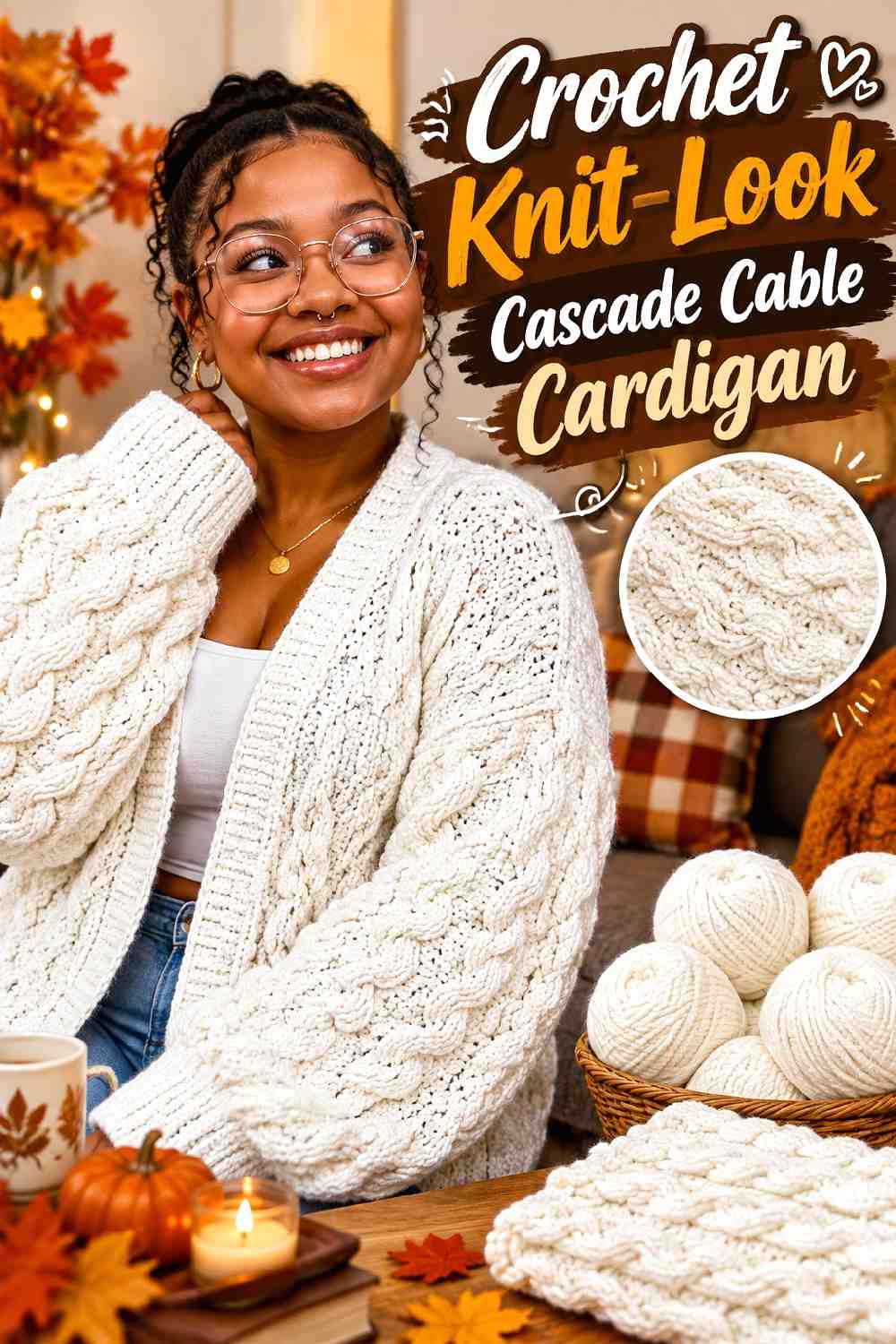
This idea is built around a strong knit-like cable appearance and a panel-based cardigan construction. Supporting pattern information describes five main panels—two fronts, a back, and two sleeves—worked sideways before assembly, with cuffs and a front button band added separately.
That panel arrangement makes it a useful option for crocheters who enjoy constructing garments piece by piece and checking each section independently.
A Knit-Look Finish Rewards Consistency
When crochet deliberately imitates the clean vertical rhythm associated with knitted cables, irregular tension becomes especially noticeable. A smooth edge and consistent cable crossing can matter more visually than adding another decorative detail.
Give yourself room to establish the stitch rhythm before deciding whether your yarn and hook combination is working.
Sideways Panels Need Directional Planning
Because the main panels are worked sideways, length and width adjustments do not necessarily correspond to the same parts of the row that they would in a conventional bottom-up cardigan.
Read through the measurement logic before adapting the silhouette.
Organize a Multipart Tutorial Before Crocheting
When a cardigan tutorial spans several videos or stages, save all relevant parts in advance. This is particularly useful for a pieced project because a later assembly decision may affect how you want to handle earlier edges.
Creator Credit: Kali’s Threads
12. Crochet Oversized Cable Cardigan With Long Vertical Lines
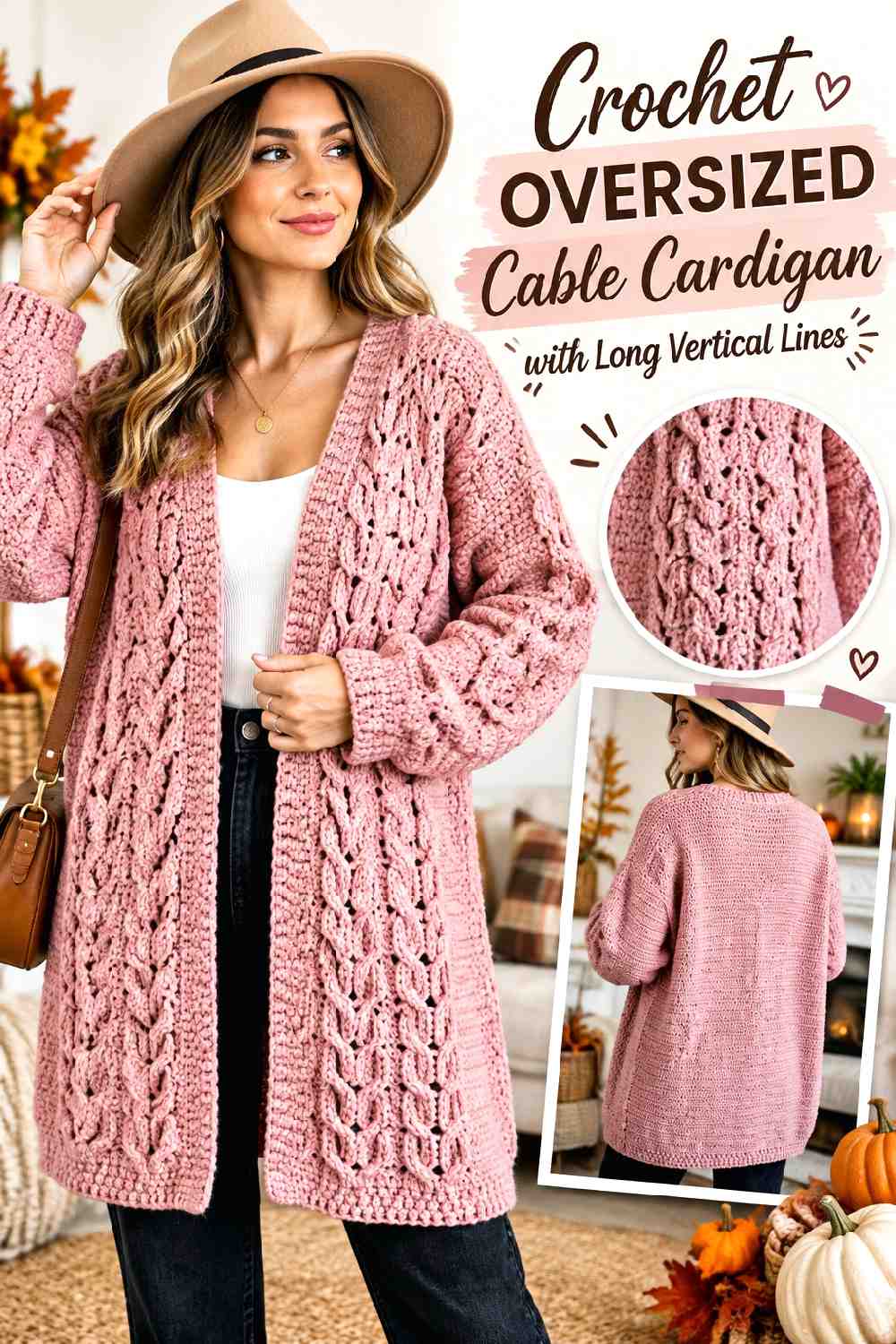
This tutorial focuses explicitly on an oversized women’s cable cardigan, creating the sort of substantial fall layer that can stand in for a light jacket on the right day. The creator identifies the project as an oversized cable design and provides accompanying pattern information.
Long vertical texture makes the relaxed volume feel intentional rather than simply large.
Vertical Cables Help Organize an Oversized Shape
A very roomy cardigan has a lot of uninterrupted surface area. Strong vertical cable lines divide that area and give the eye a clear direction to follow.
If you adjust width, consider what happens to the spacing between those cable columns so they do not end up pushed awkwardly toward an edge.
Fine Yarn Can Still Create a Substantial Garment
The creator lists a comparatively fine yarn for the sample despite the oversized silhouette. That is a useful reminder that oversized does not automatically mean bulky-weight yarn.
Changing to a thicker yarn without recalculating the garment can drastically alter scale, stiffness, and total weight.
Check the Teaching Format Before Committing
For tutorials from international crochet channels, preview enough of the video to determine whether the spoken language, captions, written pattern, and visual demonstration give you the level of support you need.
Creator Credit: Шьем и Вяжем
13. Crochet Braided Cable Cardigan With Classic Proportions
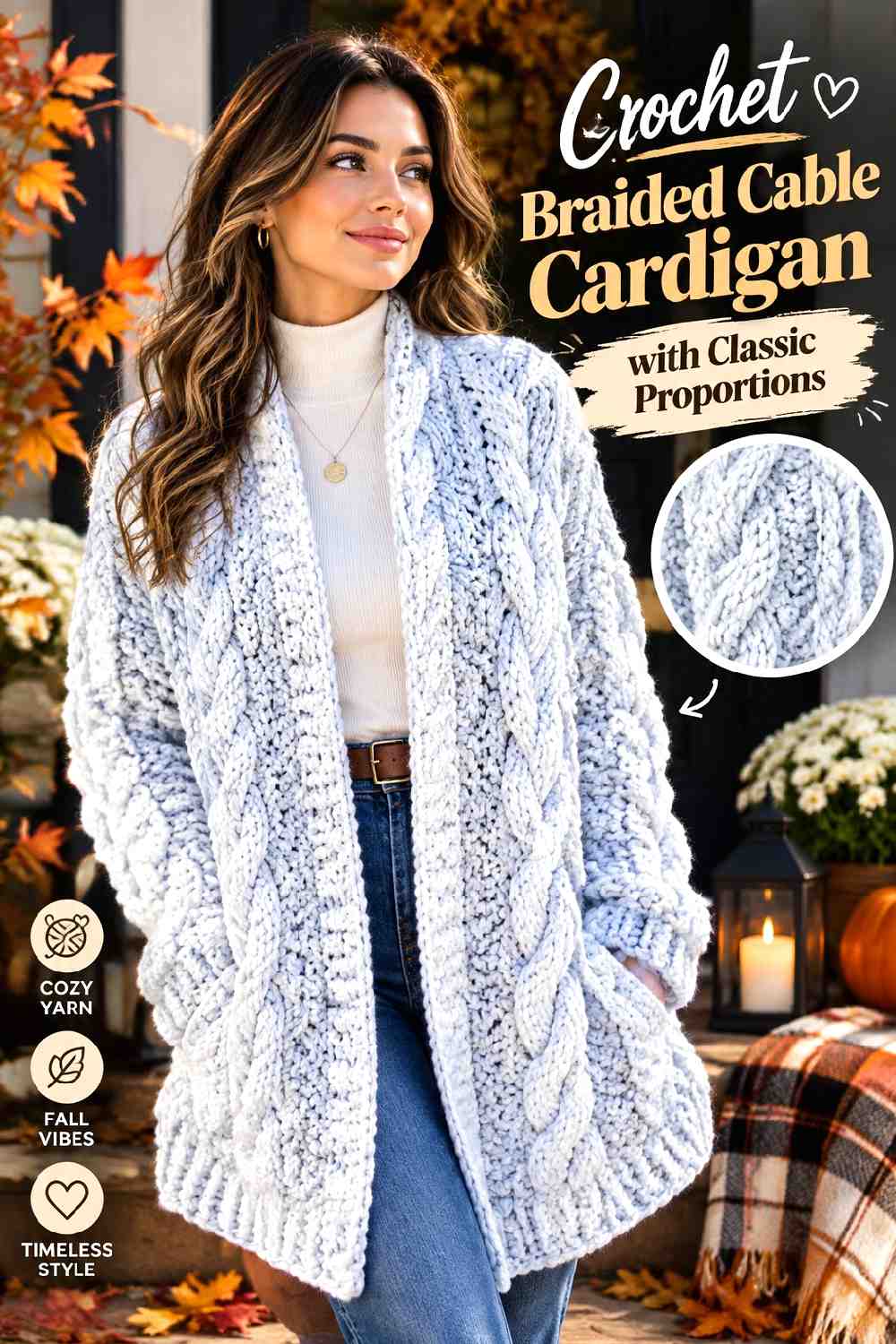
This Spanish-language tutorial centers on a cardigan built around prominent braided cable texture. Rather than relying on an unusual silhouette, the project gets its character from the repeated raised braids.
That makes it worth considering if you want a more traditional cardigan shape where the craftsmanship is concentrated in the stitch surface.
Braided Texture Reads Better Against a Calm Background
Strong braids naturally create alternating highlights and shadows. Allowing quieter fabric around them makes those shadows more visible.
Before introducing variegated or strongly contrasting yarn, consider whether the additional color movement will compete with the cable geometry.
Traditional Proportions Are Easier to Mix Into a Wardrobe
A relatively classic cardigan outline can balance a more elaborate stitch pattern. This is especially useful if you expect to wear the piece repeatedly rather than treating it as an occasional statement garment.
Compare the planned length and sleeve proportions with a cardigan you already reach for frequently.
Preview the Spanish Instruction Format
The teaching is in Spanish, so English-speaking crocheters should check available captions and the clarity of the visual demonstration before buying materials. Experienced visual learners may find the video approachable, but language support is a personal requirement rather than something to assume.
Creator Credit: ELENA´S CROCHET Y PUNTO
14. Crochet Rounded Cable Cardigan With Soft Drape
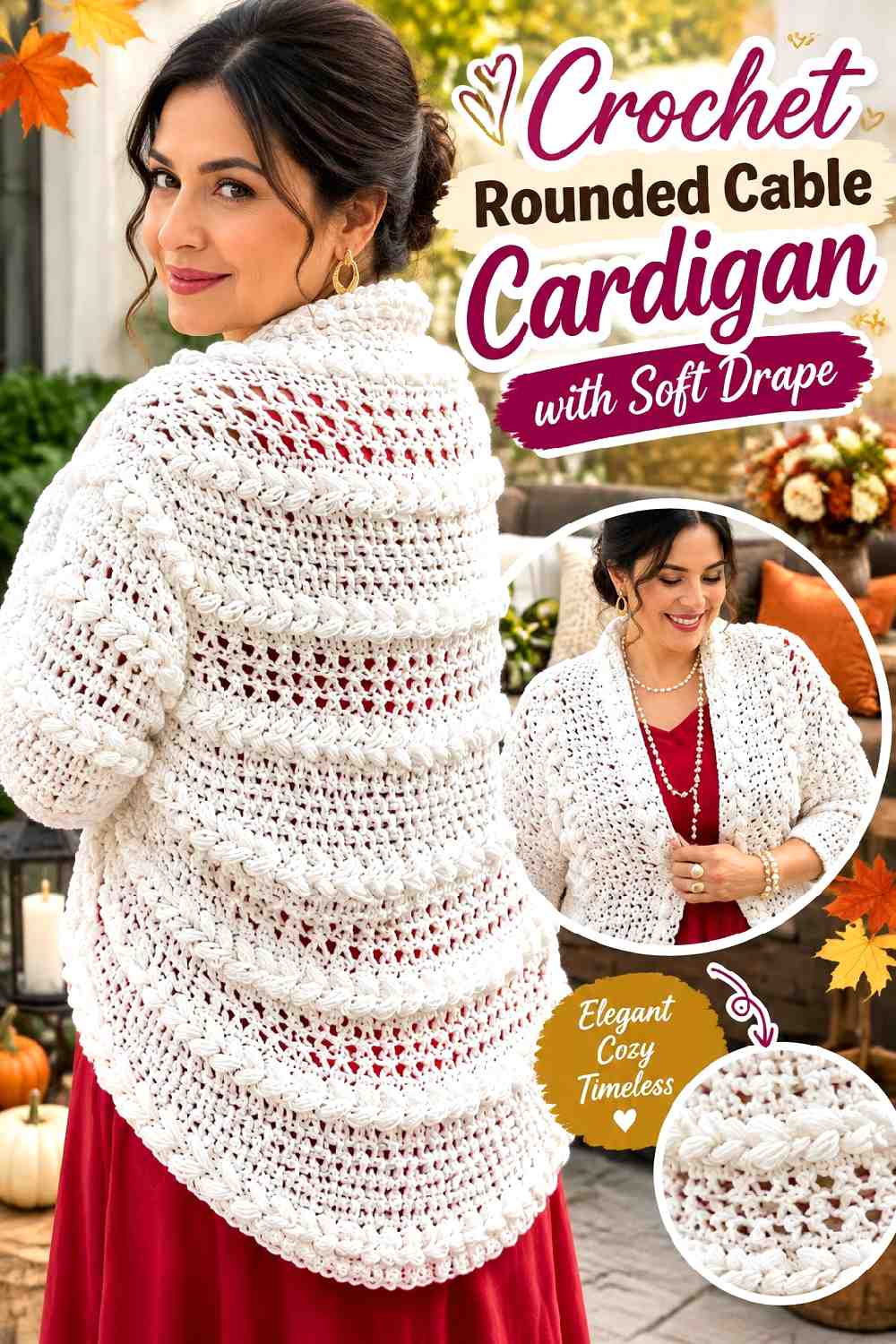
This tutorial from Laura Cepeda offers another Spanish-language interpretation of the crochet cable cardigan, with a softer overall shape than the strongly rectangular or heavily tailored options elsewhere in this list.
It is an interesting direction if you want raised texture without making the cardigan feel rigid.
Rounded Drape Can Soften Heavy Texture
Cables introduce strong lines, while a softer silhouette introduces movement. Putting the two together keeps the garment from looking overly architectural.
When choosing yarn, evaluate whether the finished fabric bends comfortably. A cable can be beautifully defined and still be too stiff for the silhouette you intended.
Refined Texture Does Not Require Maximum Thickness
A finer-looking cable fabric can feel more polished precisely because the stitch relief is controlled rather than enormous.
Instead of automatically increasing yarn thickness for fall, consider layering ability. A cardigan that fits under outerwear may see more use across the season.
Confirm Measurements Before Making Substitutions
Because sizing terminology, yarn availability, and measuring conventions can differ across international tutorials, identify the creator’s actual measurements before replacing yarn or changing hooks.
Creator Credit: Laura Cepeda
15. Crochet Clean Line Cable Cardigan For Fall Layering
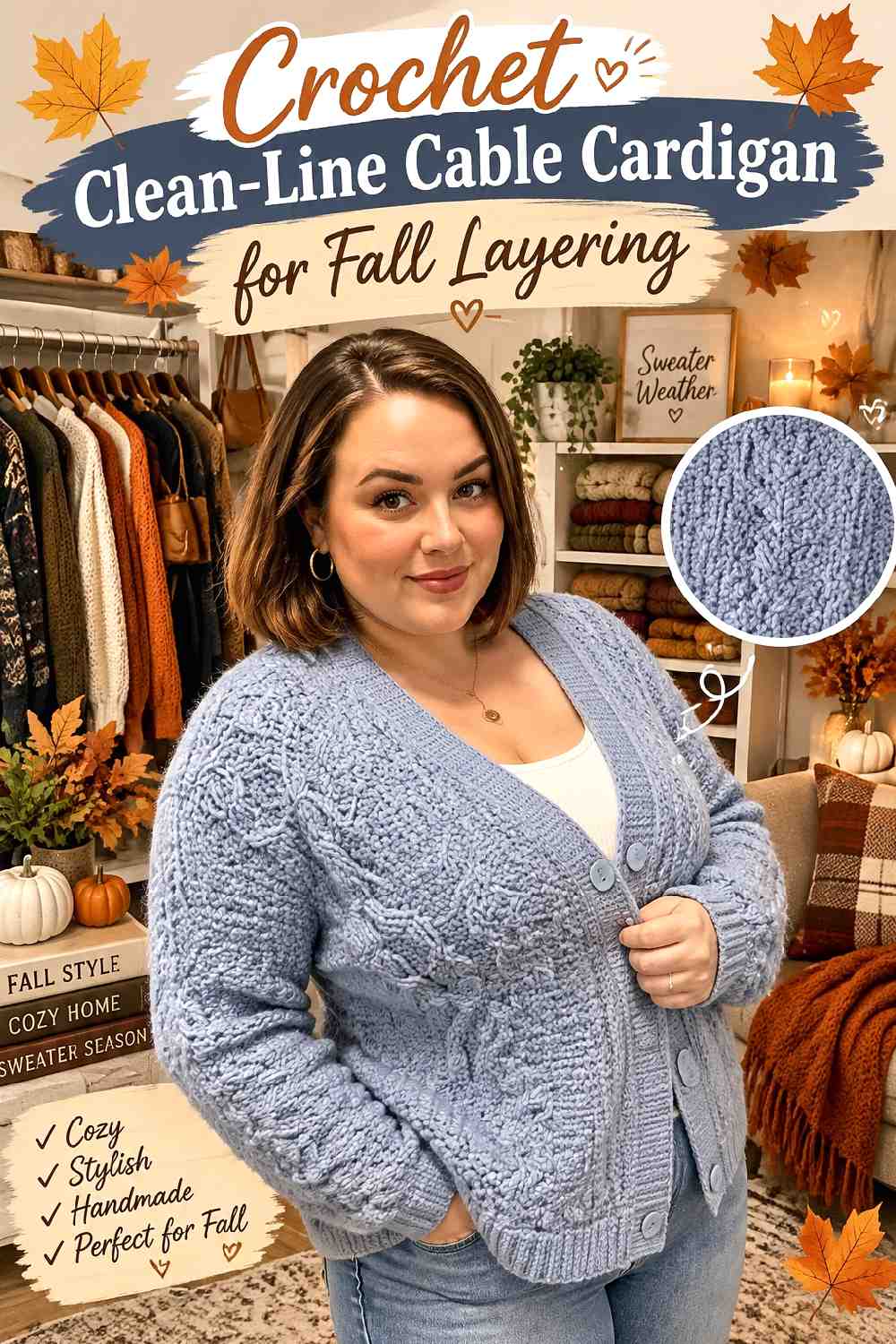
Joy of Motion Crochet’s cable cardigan uses classic raised crochet cables in a slightly cropped, five-piece construction. The supporting pattern includes nine sizes from XS through 5XL and describes separate fronts, back, and sleeves that are assembled after crocheting.
Its restrained shape makes this one of the easier ideas to imagine with jeans, skirts, trousers, or dresses without changing the central cable identity.
A Shorter Silhouette Keeps Dense Texture Controlled
Crochet cables can make a long garment visually and physically substantial. A slightly cropped proportion concentrates that texture into a smaller area.
If you lengthen the body, check both cable placement and overall garment weight instead of adding rows based only on appearance.
Five Separate Pieces Give You Useful Checkpoints
Piece-based construction lets you compare the two fronts and two sleeves before seaming. That can help you catch tension differences while correction is still relatively manageable.
Lay matching pieces together rather than relying only on row counts.
Gauge in the Intended Fabric Matters
The designer specifically provides gauge and sizing guidance with the pattern. Treat that information as part of garment construction, not as an optional preliminary exercise, especially if you substitute yarn.
Creator Credit: Joy of Motion Crochet
16. Crochet Pink Cable Cardigan With Statement Texture
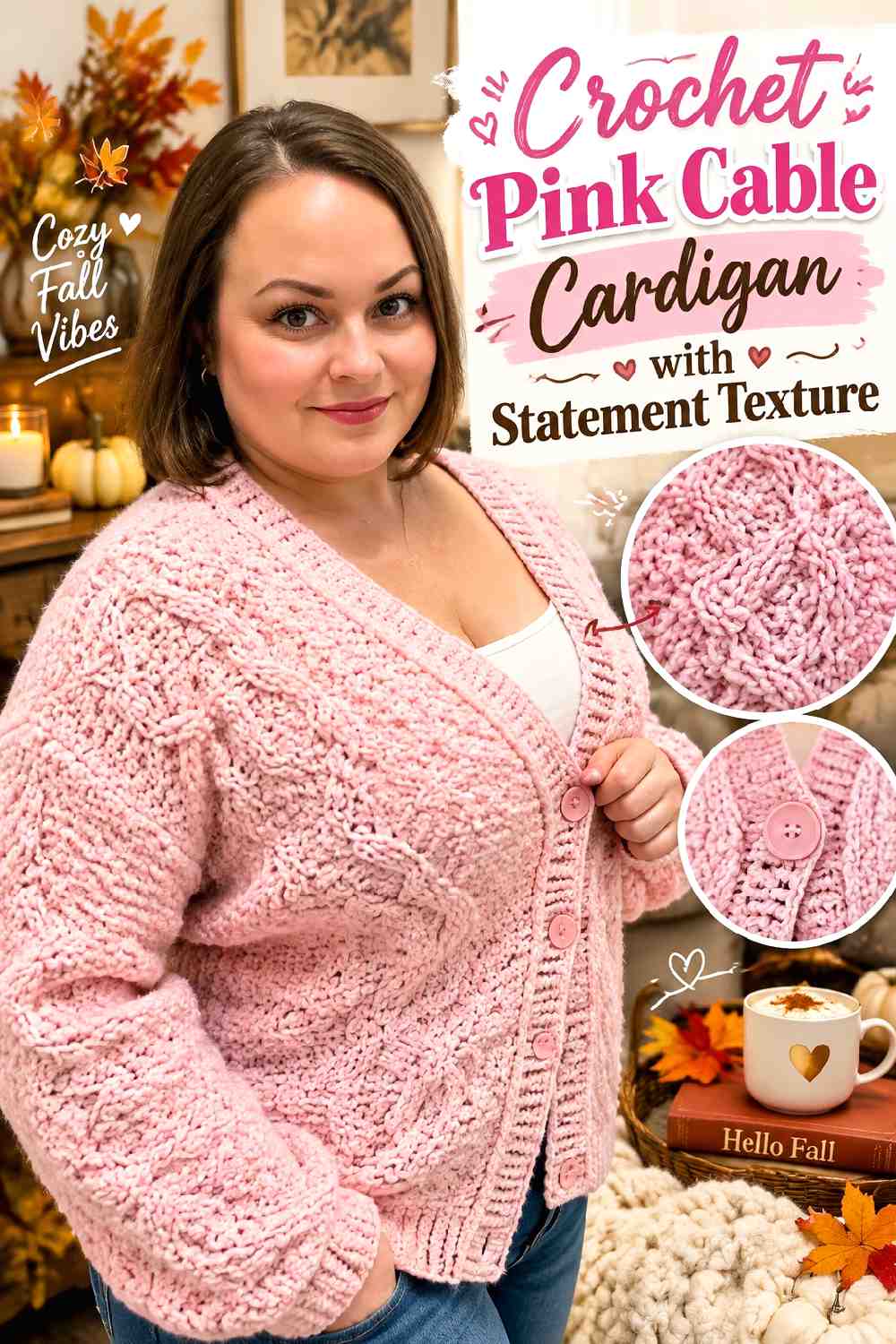
This tutorial presents a cable cardigan in a soft pink palette and is taught in Hindi. The color demonstrates how a lighter solid shade can still make raised cable work visible without relying on dark, traditional fall neutrals.
The concept is easy to translate into cream, camel, burgundy, charcoal, forest green, or another solid shade if you want a more conventional autumn wardrobe.
One Color Lets the Texture Supply the Detail
When the stitch work is already dimensional, a single color can create plenty of visual interest. Light hits the raised sections differently from the recessed fabric, effectively producing tonal variation without changing yarn colors.
That makes yarn texture and stitch definition especially important.
Check Drape Before Treating It Like a Jacket
A cardigan can look jacket-like because of its shape while still needing enough flexibility for comfortable sleeves and layering. Test whether your swatch folds easily and recovers after being stretched.
If the fabric feels board-like, changing hook size or reconsidering yarn may be more useful than continuing and hoping the assembled garment softens.
Preview the Hindi Tutorial Before Buying Yarn
If you do not follow Hindi, watch several construction sections first and check caption availability. Determine whether the visual instruction is sufficient for your learning style before committing to the full project.
Creator Credit: Crochet With Jyoti
17. Crochet Diamond And Braid Statement Cable Cardigan
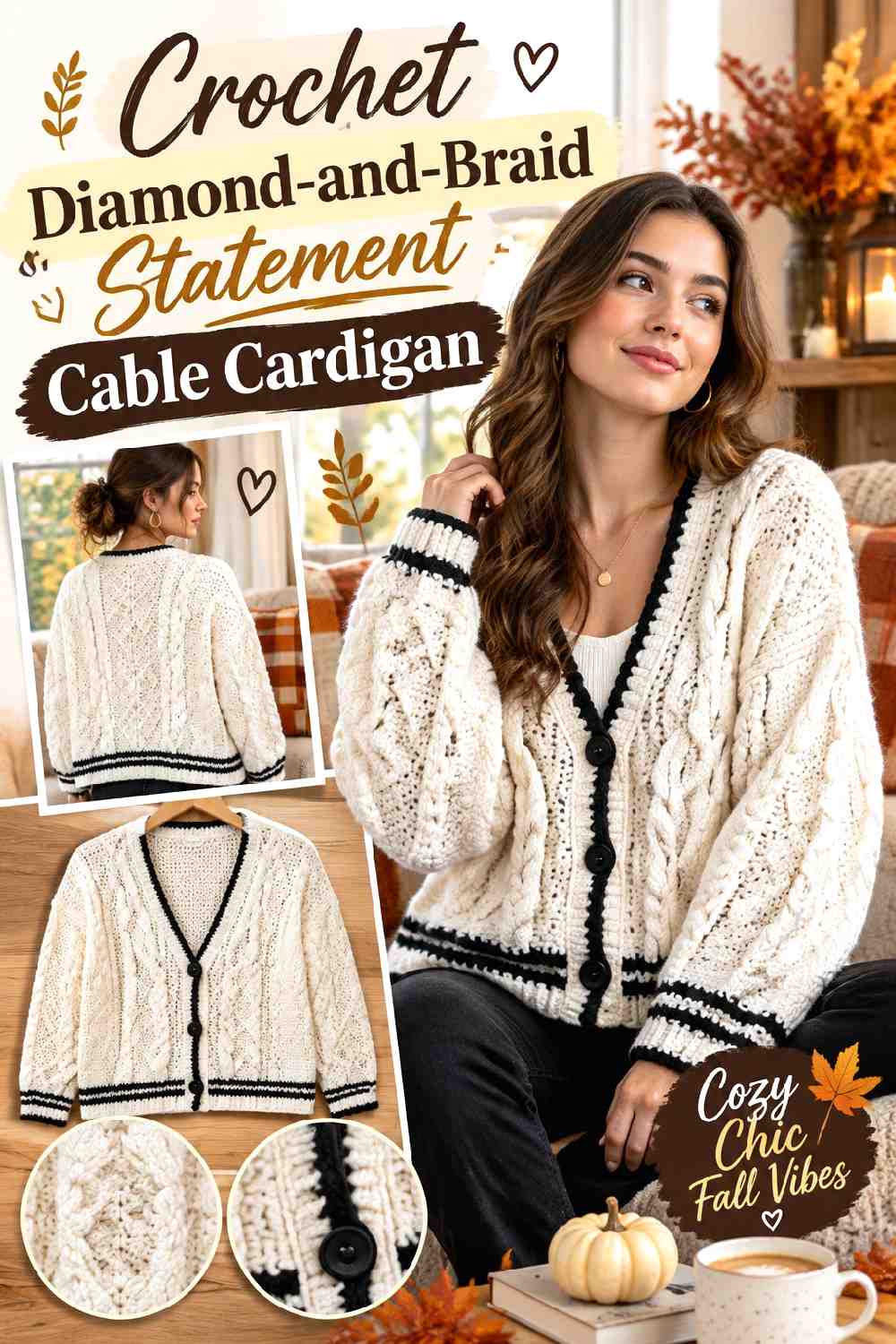
For the final idea, this cardigan pushes cable texture toward a bold, recognizable statement look with large diamond and braided elements.
Rather than trying to make the texture subtle, the design embraces the hand-crafted surface. This is the direction to study if you like oversized heritage-cardigan styling where the front and sleeves are meant to attract attention.
Diamond-and-Braid Texture Needs Visual Breathing Room
Large motifs already introduce several intersecting lines. Keeping the color palette controlled and the surrounding finishing relatively simple allows those motifs to remain the focus.
Before adding patches, embroidery, or contrasting trim, look at the completed cable fabric first. You may find that it already provides enough detail.
Watch the Full Tutorial Before Buying Materials
For a visually complex cardigan, the finished picture alone does not tell you how much shaping, seaming, or repeated cable work is involved.
Review enough of the complete tutorial to understand its construction path and confirm the creator’s material and sizing information rather than estimating those details from another cardigan.
Keep the Finishing Cleaner Than the Main Texture
The more dramatic the cable pattern becomes, the more useful simple cuffs, edges, and seams can be. Think of the finishing as a frame around the texture rather than another opportunity to add complexity.
Creator Credit: CROCHET BY BEV
Which Crochet Cable Cardigan Direction Fits Your Fall Wardrobe?
If you are deciding between several of these ideas, compare the overall garment first and the individual cable motif second.
| If You Want | Look For | Ideas to Compare | Main Check |
|---|---|---|---|
| Dramatic fall layering | Long duster proportions | #5 | Garment weight and length |
| Strong allover texture | Repeated cable or mixed-texture fabric | #1, #2, #6 | Gauge in the actual textured stitch |
| A tailored button front | Defined bands and closures | #4, #9, #15 | Front-edge tension |
| A knit-like appearance | Faux or knit-inspired cable texture | #4, #11 | Stitch consistency and drape |
| Softer statement volume | Oversized or plush construction | #10, #12 | Shoulder weight and ease |
| Continuous upper-body shaping | Round-yoke construction | #3 | Neckline and yoke fit |
| A dramatic cable statement | Large braids and diamonds | #13, #17 | Motif placement and visual balance |
The most useful comparison is not simply “Which cable is prettiest?” A cardigan that suits your preferred length, closure, shoulder shape, and layering habits is usually a better starting point than a stitch pattern you love on a silhouette you rarely wear.
Conclusion
For a polished Fall 2026 cable cardigan, start with silhouette and construction before getting distracted by yarn color.
The mixed-texture panel cardigan, diamond-trellis design, and alpine-and-cable cardigan put texture at the center of the garment. The long duster emphasizes vertical lines and dramatic layering. The sideways faux-cable and Cascade options are useful if you especially like a knit-inspired surface, while the round-yoke cardigan offers a completely different approach to upper-body construction.
For a more traditional wardrobe piece, the classic button-front and clean-line cropped cardigans keep the proportions familiar. If you prefer softer statement layers, the plush and oversized versions give the cables more volume.
Whichever direction you choose, make your yarn decision from a cable swatch rather than the skein alone. Check the creator’s original tutorial and supporting information for exact sizing, gauge, material quantities, stitch sequences, and construction details. The small decisions around drape, front bands, blocking, seams, and cable placement are what help the finished cardigan look intentional rather than merely complicated.
Frequently Asked Questions
What type of yarn makes a crochet cable cardigan look polished instead of bulky?
Look first at stitch definition and drape rather than fiber price. A smooth yarn can make raised crossings look crisp, while a fuzzy yarn softens their outlines. Yarn weight also affects thickness, but the same nominal weight can behave differently depending on fiber and construction.
Make a cable swatch large enough to evaluate the actual texture and let it rest or block it according to the yarn’s care instructions before deciding.
Do crochet cables make cardigan fabric narrower?
They can. Raised and crossed stitches may draw fabric inward compared with a simpler stitch pattern, although the amount varies with the cable design, yarn, hook, and tension.
That is why gauge measured in the relevant textured fabric is more useful than assuming a plain crochet swatch will produce the same width.
Should I block cable cardigan pieces before seaming?
Follow the specific designer’s construction and blocking guidance first. In projects where pieces are blocked before assembly, matching their intended dimensions can make seaming easier. Other garments may be assembled before the final block.
What matters is not stretching the cables aggressively just to force a dimension. You want to settle the fabric while preserving the raised texture.
Why does a crochet cardigan button band sometimes ripple or gape?
The band and cardigan edge may have different tension or effective lengths. Button weight, buttonhole spacing, and the density of nearby cable fabric can also affect how the front sits.
Before finalizing the closure, lay the garment flat and check that the two fronts meet naturally without having to stretch one edge.
Are faux-cable cardigans always less bulky than post-stitch cable cardigans?
No. Faux cables can sometimes create a flatter effect, but bulk depends on the specific stitch pattern, yarn, hook size, and overall fabric density.
Judge the swatch rather than the technique name. Two completely different cable methods can produce surprisingly similar thicknesses.
How can I keep two mirrored cable fronts looking balanced?
Work from the same measuring points, check both pieces regularly, and compare the physical dimensions rather than relying only on counts. Differences in tension can accumulate even when the written instructions are followed correctly.
Pay particular attention around neckline shaping and front bands because those areas sit directly beside one another when the cardigan is worn.
Can I substitute a different yarn weight in a crochet cable cardigan?
Sometimes, but it can turn into a significant redesign rather than a simple substitution. A different yarn weight can change gauge, cable scale, fabric thickness, drape, finished measurements, and total garment weight.
For a sized pattern, matching the designer’s stated gauge with an appropriate substitute is generally more reliable than choosing a different weight and keeping the original stitch counts unchanged. For made-to-measure construction, work from the measurements of your actual cable fabric.