Crochet statement socks can make their impact through much more than bright yarn. A dramatic leg length, open mesh, sculpted ruffles, contrasting sections, a distinctive cuff, or an intentionally chunky house-sock shape can completely change how the finished pair looks and functions.
The 12 ideas below cover that wider range. Some are close-fitting socks intended to behave more like conventional footwear, while others lean toward expressive layering, yoga wear, or cozy slipper socks. Because fit becomes increasingly important around the heel, ankle, and calf, the article also highlights what to measure, where stretch matters, and when a beautiful stitch may be better suited to lounging than wearing inside shoes. Each idea includes an original YouTube tutorial so you can use the creator’s instructions for exact construction.
Quick List
- Crochet Thigh-High Statement Socks
- Crochet Lacy Statement Socks
- Crochet Pineapple-Stitch Yoga Socks
- Crochet Ruffle-Cuff Statement Socks
- Crochet Fishnet Mesh Socks
- Crochet Ribbed Color-Block Socks
- Crochet Toe-Up Contrast Socks
- Crochet Fine-Yarn Fitted Socks
- Crochet Shell-Cuff Slipper Socks
- Crochet Two-Tone Chunky Slipper Socks
- Crochet One-Piece Lounge Socks
- Crochet Low-Cut Ankle Socks
Decide Whether You Want Shoe Socks or Statement Lounge Socks
The first useful distinction is where the socks will actually be worn. A close-fitting pair intended for shoes usually benefits from relatively fine yarn, controlled bulk around the heel and toe, and a fabric that does not create uncomfortable ridges under pressure. A chunky slipper sock has different priorities: warmth, visible texture, and a substantial handmade look can matter more than fitting inside footwear.
Tall fashion socks create another set of decisions. Once fabric extends significantly above the ankle, calf circumference and the weight of the crocheted leg matter. Openwork and lace can reduce visual heaviness, while dense stitches create a bolder surface but may also produce more structure. Before choosing a tutorial, decide whether your priority is shoe compatibility, dramatic styling, indoor comfort, or an open-heel design for activities such as yoga.
Fit the Foot Before Planning the Statement Details
Statement features work best when the basic sock fits first. Foot length alone does not determine fit. Compare the intended sock with the circumference around the foot, the widest heel area, the ankle, and—on tall designs—the calf.
Crochet fabric also behaves differently depending on stitch pattern and fiber. A dense stitch can feel firm even when its measurements appear correct, while lace or mesh can open considerably under tension. Try-on checkpoints are especially useful before completing a heel, closing a cuff, or committing to a long leg.
If you want to add stripes, ruffles, contrasting heels, or decorative cuffs to a basic tutorial, establish the underlying fit before changing the surface. Decorative additions are much easier to adjust than an entire sock that cannot pass comfortably over the heel.
Match Yarn and Texture to the Sock’s Real Job
Fine sock-style yarn usually produces less bulk than heavier yarn, making it a logical direction when the finished pair needs to fit inside shoes. Thicker yarn creates more visual presence and cushioning, which can make it effective for slipper socks and intentionally oversized lounge styles.
Texture also changes how the sock feels against the foot. Raised post stitches, cables, shells, and pronounced seams may look excellent from the outside but can create noticeable pressure in tight footwear. Mesh has the opposite issue: it offers striking openness but less coverage and can catch more easily than a compact fabric.
Color is easiest to change, so choose construction first. Once the silhouette and fabric suit the intended use, contrast toes, heels, cuffs, stripes, and multicolor yarn can provide the statement effect without compromising the shape.
1. Crochet Thigh High Statement Socks
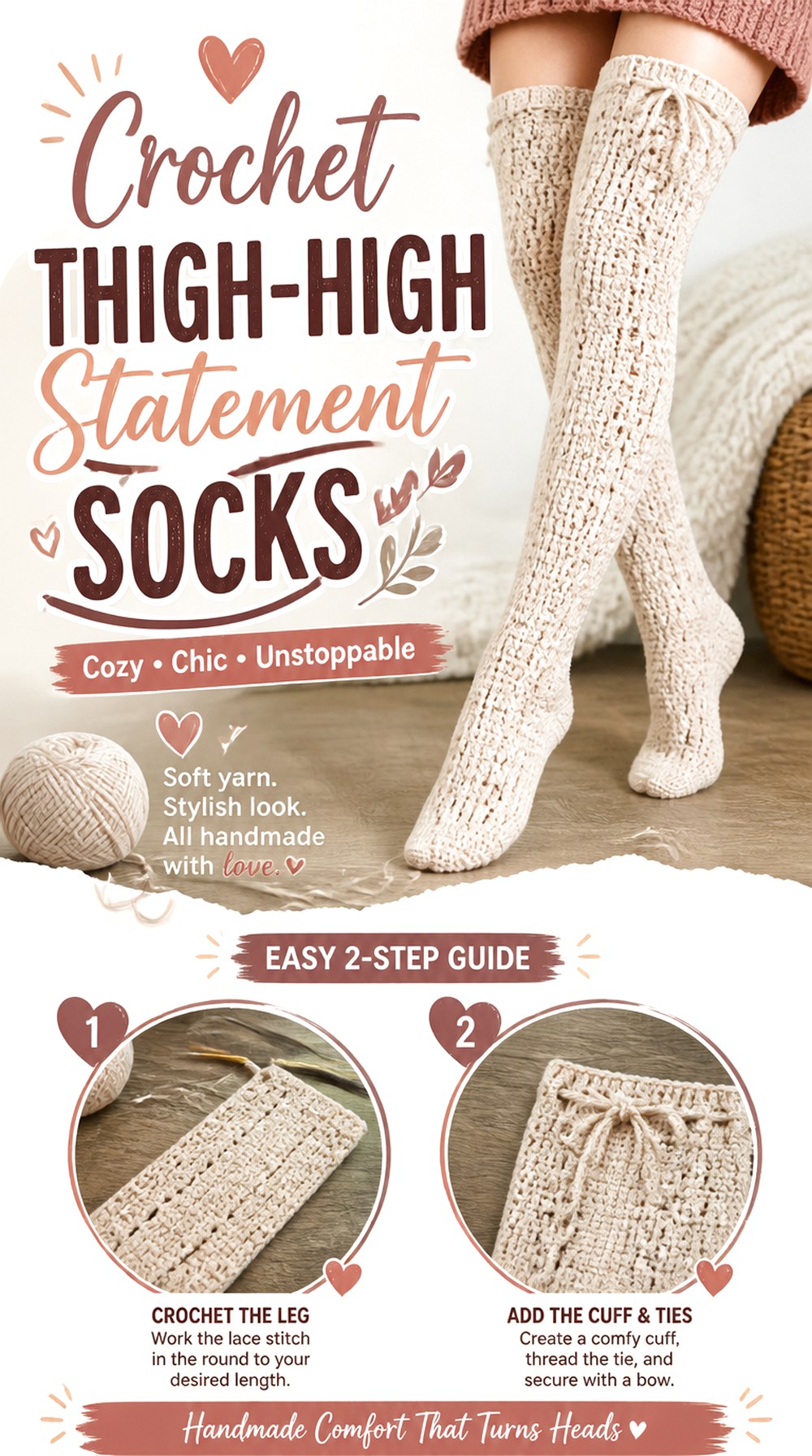
Thigh-high crochet socks create the strongest silhouette in this collection. The long leg turns the socks into a visible part of an outfit rather than a small accessory hidden beneath shoes or pants. They can be styled fully extended for maximum impact or adjusted toward a shorter boot-sock proportion when a less dramatic length is preferred.
Because so much fabric sits above the knee, these are also one of the projects where fit deserves more attention than color. The foot can fit correctly while the upper leg still feels too much around the top and the circumference of each section need to work together.
The Upper Leg Needs Its Own Fit Check
Do not assume that a sock fitting the ankle will automatically fit higher on the leg. Calf and thigh circumference vary independently of shoe size. When adapting the length, try the developing sock on before investing in a large amount of additional leg fabric. The upper opening should stay in place without depending on an excessively tight edge.
Long Crochet Fabric Adds More Weight
A thigh-high pair contains considerably more crocheted fabric than an ankle sock. That makes yarn weight and stitch density important design decisions. A dense fabric may create a bold, substantial look, while a lighter construction can feel less visually heavy. If you substitute yarn, compare the resulting fabric before assuming the original proportions will behave the same way.
Decide Where the Socks Will Meet the Rest of the Outfit
These socks can function as a focal point with shorter garments, or their upper section can disappear beneath a skirt or oversized layer. That placement affects how much of the leg design is actually visible. Before adding decorative color changes, consider which areas will remain exposed so the strongest visual details do not end up hidden.
Original Tutorial and Creator Credit
2. Crochet Lacy Statement Socks
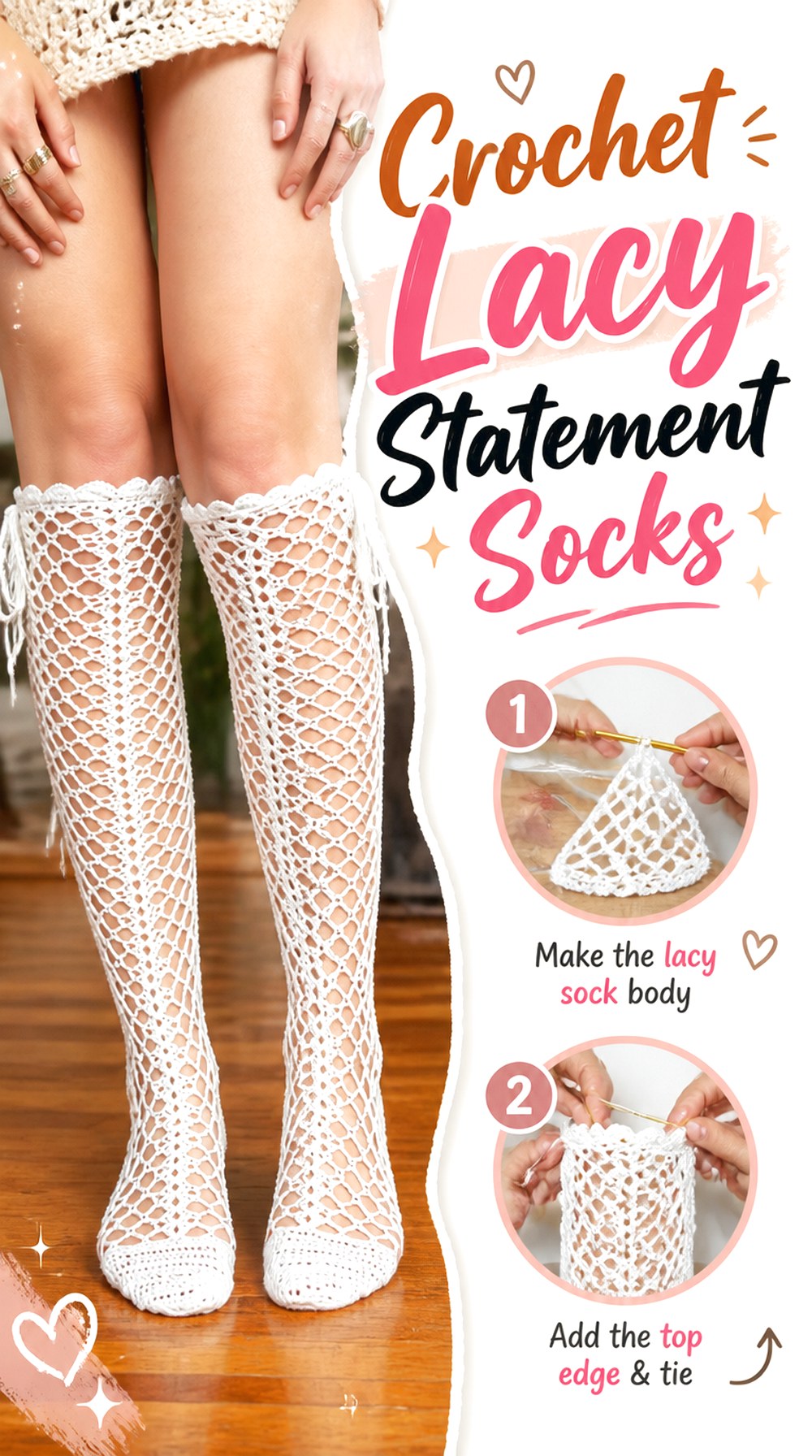
Lacy crochet socks make their statement through negative space rather than bulk. The open texture lets the stitch pattern remain visible across the foot and leg, giving the pair a lighter, more decorative appearance than dense everyday socks. They can work especially well when the sock itself is meant to remain visible rather than disappear inside a heavy shoe.
Lucille Pearl’s tutorial includes an adjustable-length approach, so the same general design direction can move from a shorter sock toward a longer fashion silhouette. The important planning decision is how much lace you want and where the sock will encounter pressure.
Openwork Changes Under Stretch
A lace pattern seen lying flat can look quite different once stretched over a foot or calf. Openings become larger and the motif may elongate. Evaluate the design while worn before deciding that the relaxed fabric is too difficult to contract part of the statement effect.
Shoe Choice Matters More With Decorative Texture
A lace sock may look delicate, but that does not automatically mean it will feel thin inside every shoe. Check the heel, toe, and any textured areas against the footwear you plan to use. If the shoe already fits closely, even modest crochet texture can change the comfort level.
Let the Lace Carry the Visual Interest
These socks do not need several competing decorations. A solid or restrained color can make the open stitch structure more readable, while a highly variegated yarn may compete with a detailed lace repeat. Decide whether you want the eye to notice the yarn first or the lace architecture first.
Original Tutorial and Creator Credit
Creator: Lucille Pearl
3. Crochet Pineapple Stitch Yoga Socks
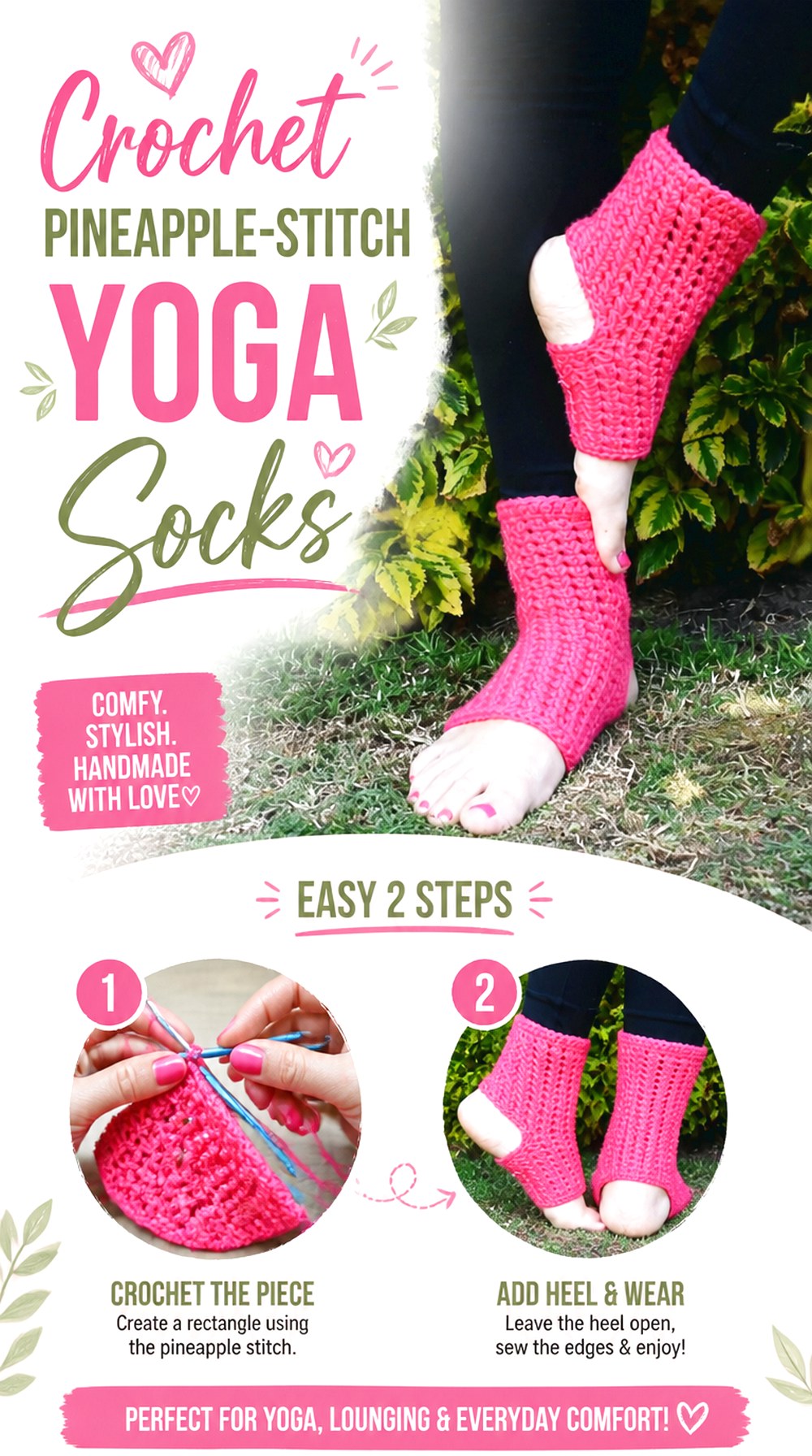
Yoga socks remove the conventional toe and heel coverage, making the openings part of both the design and function. Ahuyama Crochet’s version uses an antique pineapple stitch, giving the upper section a pronounced decorative texture instead of treating the sock as a plain exercise accessory.
This construction also offers a useful alternative for readers who like statement legwear but do not want to tackle a fully enclosed crochet heel and toe. The exposed areas make the finished object visually distinctive, yet the ankle and leg still need a reliable fit so the fabric does not shift excessively during wear.
The Heel Opening Must Land in the Right Place
An open heel works only when the opening aligns naturally with the wearer’s foot. If the leg section is too strong at the cuff, the opening can be pulled out of position. Use the actual foot as the checkpoint instead of judging the tube only while it lies flat.
Pineapple Texture Benefits From Clear Stitch Definition
A dimensional or vintage-inspired motif is easier to read when the yarn lets individual stitches remain visible. Very fuzzy fibers may soften the outline of the design. That can be attractive if you want a hazy surface, but it produces a different effect from a crisp, architectural pineapple texture.
Keep the Intended Activity in Mind
Open-heel socks are structurally different from standard socks. If they are being made specifically for yoga or similar activities, the uncovered areas are part of the concept rather than missing sections. For other uses, decide whether the exposed heel and toes make sense before choosing this silhouette over a conventional sock.
Original Tutorial and Creator Credit
Creator: Ahuyama Crochet
4. Crochet Ruffle Cuff Statement Socks
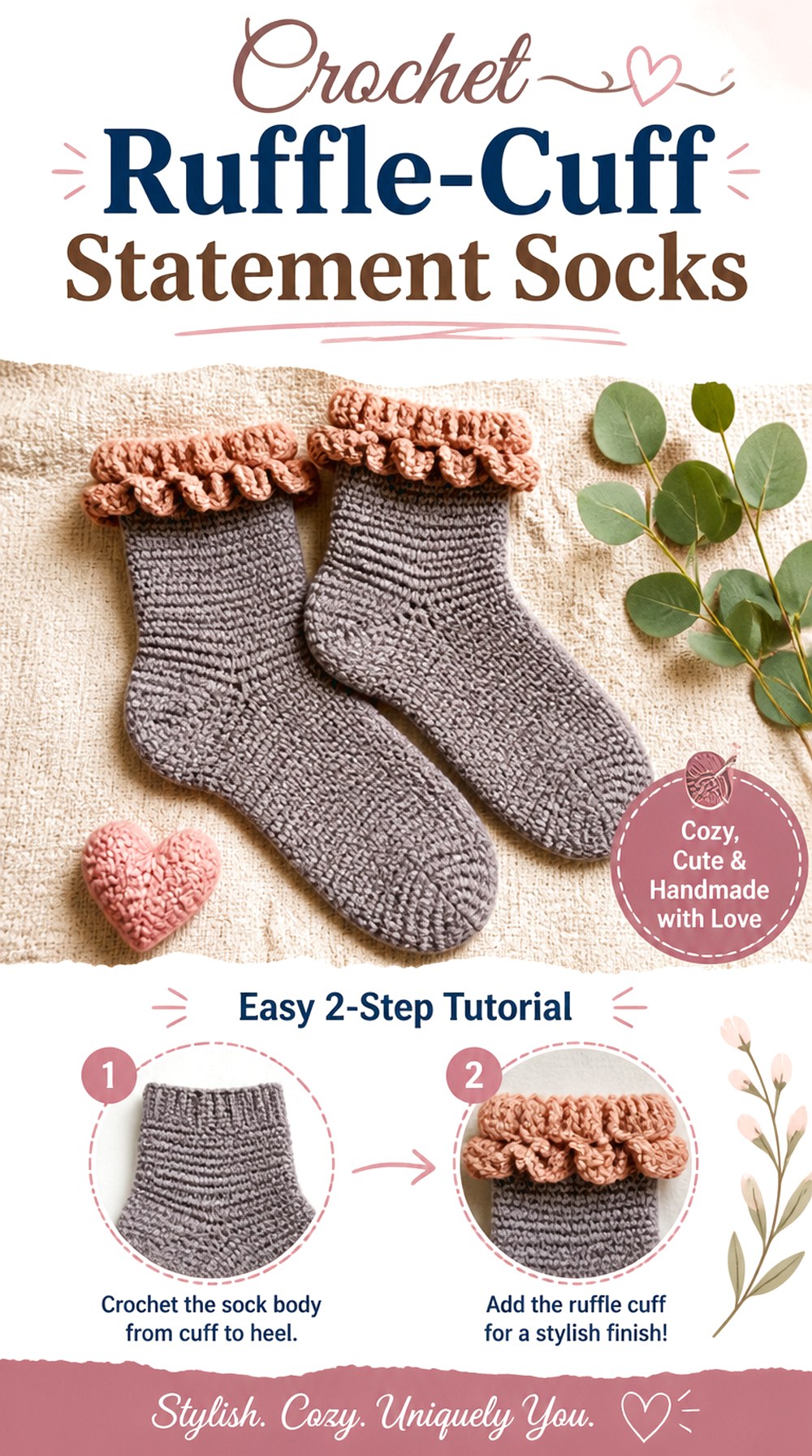
A ruffled cuff concentrates the drama at the top of the sock instead of spreading decoration across the entire foot. This makes it a practical statement choice when you want the decorative section to show above loafers, Mary Janes, boots, or another shoe while keeping the lower portion comparatively streamlined.
The Stitch and Hound Crochet tutorial specifically develops a custom-fit sock with a ruffle topper and covers the toe, foot, gusset, cuff, heel, and decorative top. That complete structure makes it useful for readers who want a recognizable sock shape with one deliberately romantic focal point.
Ruffle Volume Should Match the Shoe Opening
A large ruffle can look balanced above an open shoe but crowded beneath a close boot shaft. Think about the footwear before deciding whether to keep the topper understated or make it more visually dominant. The statement detail works best when it has enough room to sit naturally.
Keep the Decorative Edge From Controlling the Fit
The ruffle should decorate the top rather than become the only feature holding the sock up. Check the underlying cuff first. If the basic cuff slides or pinches, adding more decorative fabric will not solve the underlying fit problem.
Contrast Can Make the Topper More Graphic
Using the same yarn keeps the ruffle integrated with the rest of the sock. A contrasting topper separates it visually and can make the cuff look almost like an attached accessory. Either approach works, but decide before finishing so the color balance appears deliberate across both socks.
Original Tutorial and Creator Credit
Creator: Stitch and Hound Crochet
5. Crochet Fishnet Mesh Socks
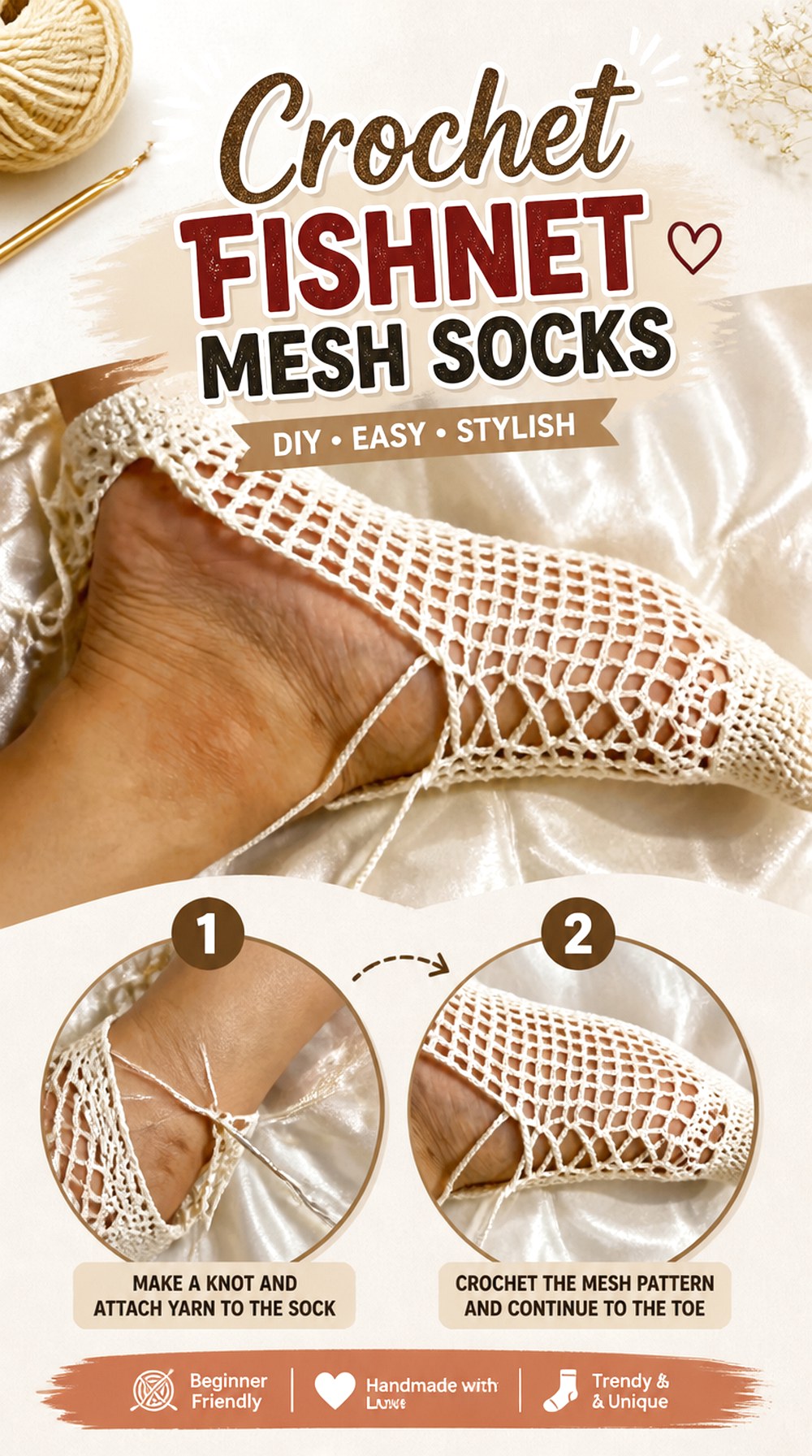
Fishnet crochet socks push the statement idea toward maximum openness. Instead of relying on a surface stitch for decoration, the entire fabric becomes a visible grid. The result is closer to fashion layering than to a conventional insulating sock, which makes this option stand apart from the chunky and fitted pairs elsewhere in the collection.
Knock on knot’s tutorial focuses directly on mesh or fishnet crochet socks. Because the structure is so open, choosing this project is mainly about appearance, stretch, and styling rather than warmth.
Mesh Needs to Be Evaluated While Worn
Open crochet can expand significantly when placed under tension. A mesh tube that appears narrow off the foot may open dramatically once worn. Check the size using the finished behavior of the fabric rather than comparing its relaxed width with a dense sock.
Snagging Is a Real Trade-Off
Large openings create visual impact but provide fewer compact stitches to protect the fabric from catching. Consider where you intend to wear the socks and what they will rub against. A mesh fashion sock and a hard-wearing everyday sock solve different problems.
Layering Changes the Look Completely
These socks can appear graphic over bare skin or take on a new character when layered over tights or another contrasting surface. If the mesh is the main statement feature, test the background color with the yarn before making both socks so the openings remain visually clear.
Original Tutorial and Creator Credit
Creator: Knock on knot
6. Crochet Ribbed Color Block Socks
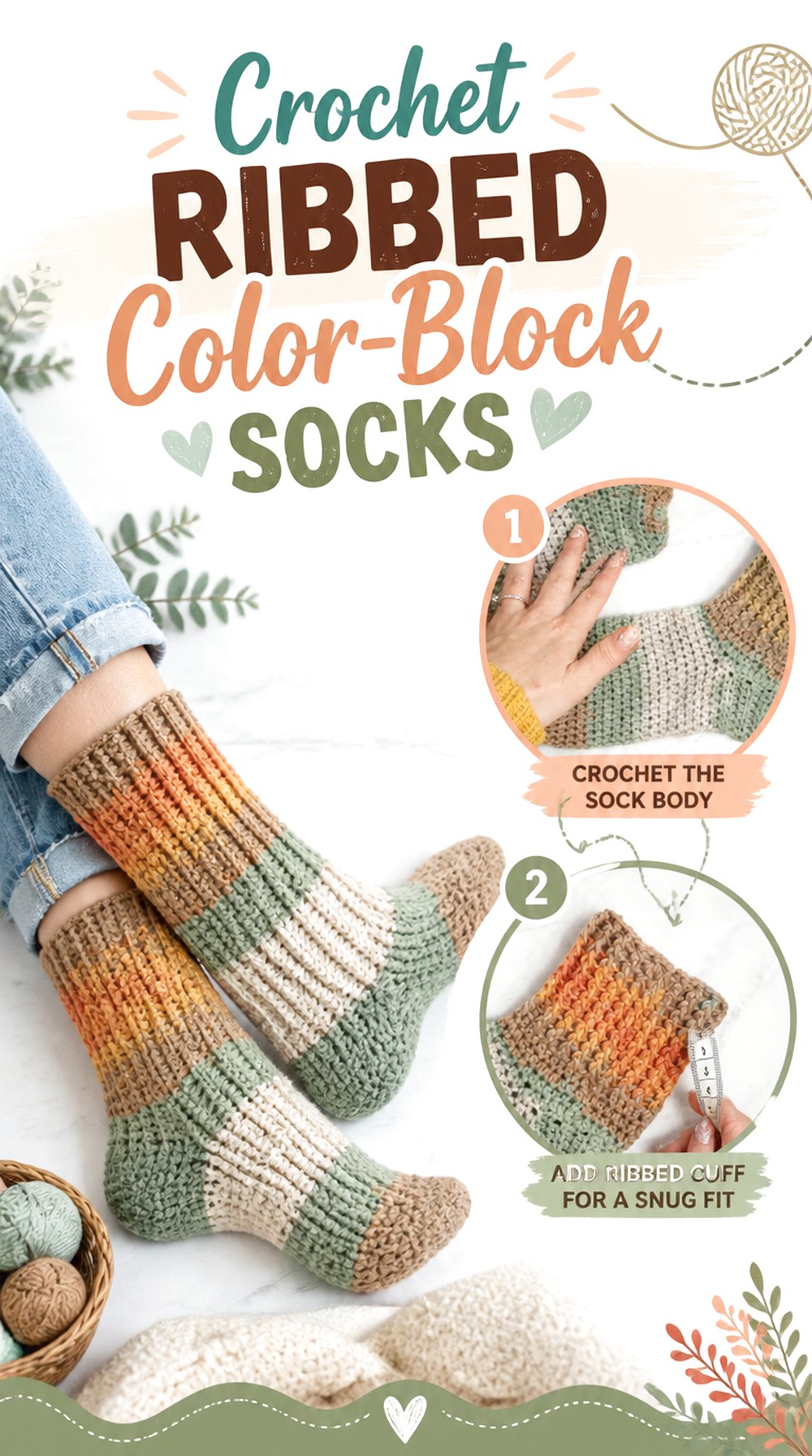
Ribbing gives a crochet sock a strong vertical line and an easy place to introduce contrasting color. Brunaticality’s tutorial works through a complete sock including the toe, body, heel, ankle, and ribbing, making it a useful foundation for a pair where the statement comes from proportion and color placement rather than extreme lace or height.
A simple strategy is to treat the toe, heel, and cuff as separate visual zones. That creates a deliberate color-block effect while leaving the main body quieter. Because these sections also experience different shaping, the color changes naturally emphasize the construction.
Use Ribbing Where Stretch Actually Helps
A ribbed-looking section is most useful when its elasticity supports the opening or leg rather than appearing only as surface decoration. Before changing hook size or yarn to exaggerate the texture, make sure the altered fabric still passes comfortably over the heel.
Contrast the Heel Without Hiding Its Shape
A different heel color can make the sock look more graphic, but it also highlights any shaping irregularities. Work the first sock to a fit you like before committing to a highly contrasting heel on the pair.
Repeat Color Placement Precisely Enough to Look Intentional
Statement socks do not have to be perfectly identical, but accidental differences can read differently from deliberate asymmetry. Decide whether you want matching blocks or a mismatched pair before starting the second sock, then keep notes on where each color appears.
Original Tutorial and Creator Credit
Creator: Brunaticality
7. Crochet Toe Up Contrast Socks
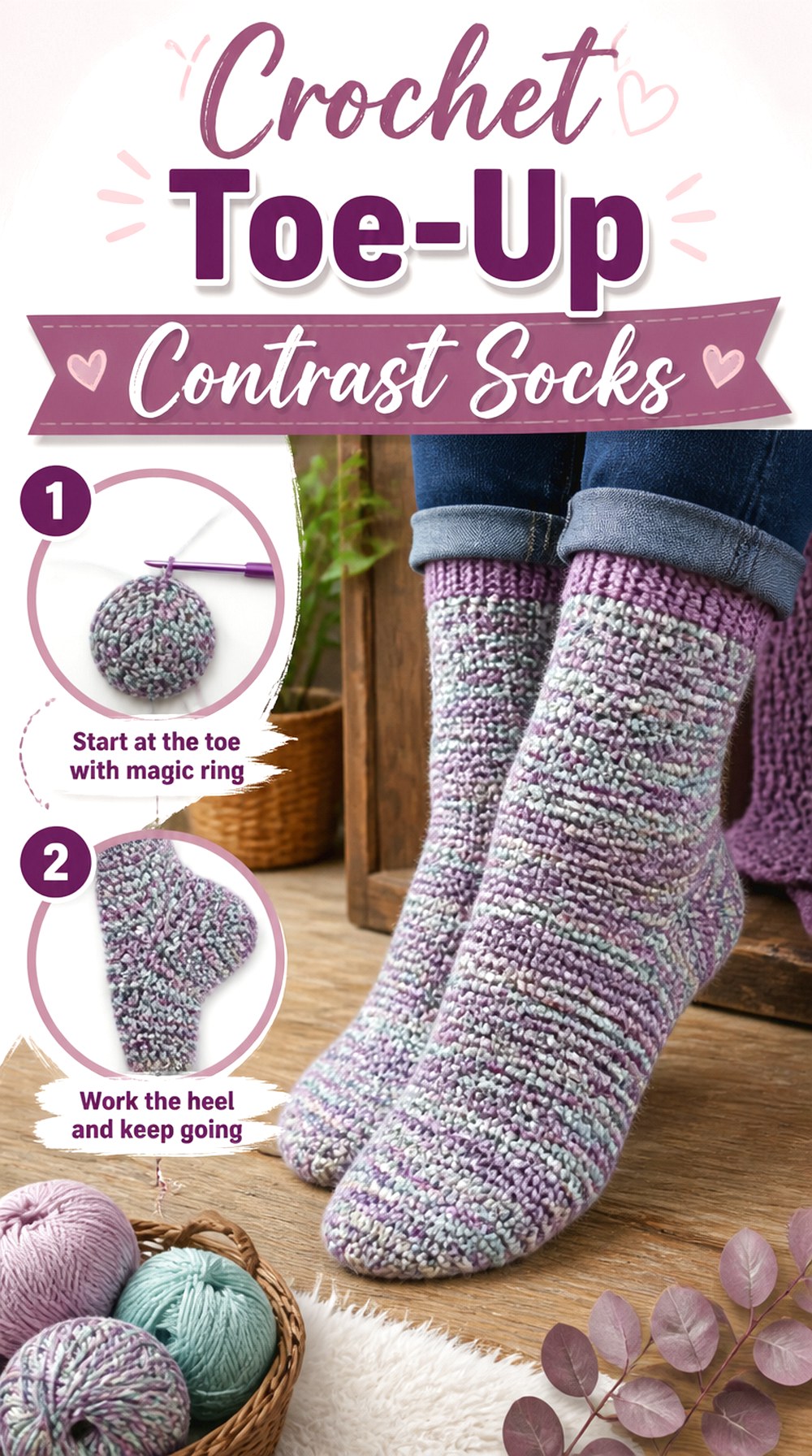
A toe-up construction gives you an early fit checkpoint because the sock begins at the end most likely to disappear inside a shoe. The Crochet Crowd’s tutorial specifically presents toe-up crochet socks and includes several child and adult sizing options in the accompanying project information.
For a statement version, the basic silhouette can act as a controlled canvas. Contrast toes and cuffs, narrow stripes, or a bright leg section can be added without changing the fundamental purpose of the sock. That makes this idea useful for readers who want strong color but still prefer a recognizable everyday sock shape.
Check Width Before Extending the Foot
Once the toe reaches the correct circumference, pause and test the developing sock. Continuing a beautifully colored foot section is wasted effort if the toe is already too thick in the correct one-third of the shape or the fabric stretches less than expected.
A Contrast Toe Creates a Natural Starting Point
Toe-up construction makes a separate toe color easy to plan visually because that area is established before the rest of the foot. You can repeat the same color at the cuff for balance or deliberately choose a third shade for a more eclectic result.
Family Sizing Still Requires Individual Measurements
A tutorial may provide multiple size categories, but actual foot proportions vary. Two people with similar shoe lengths can have different foot and ankle circumferences. Use the tutorial’s sizing as the construction guide while checking the intended wearer rather than relying on the label alone.
Original Tutorial and Creator Credit
Creator: The Crochet Crowd
8. Crochet Fine Yarn Fitted Socks
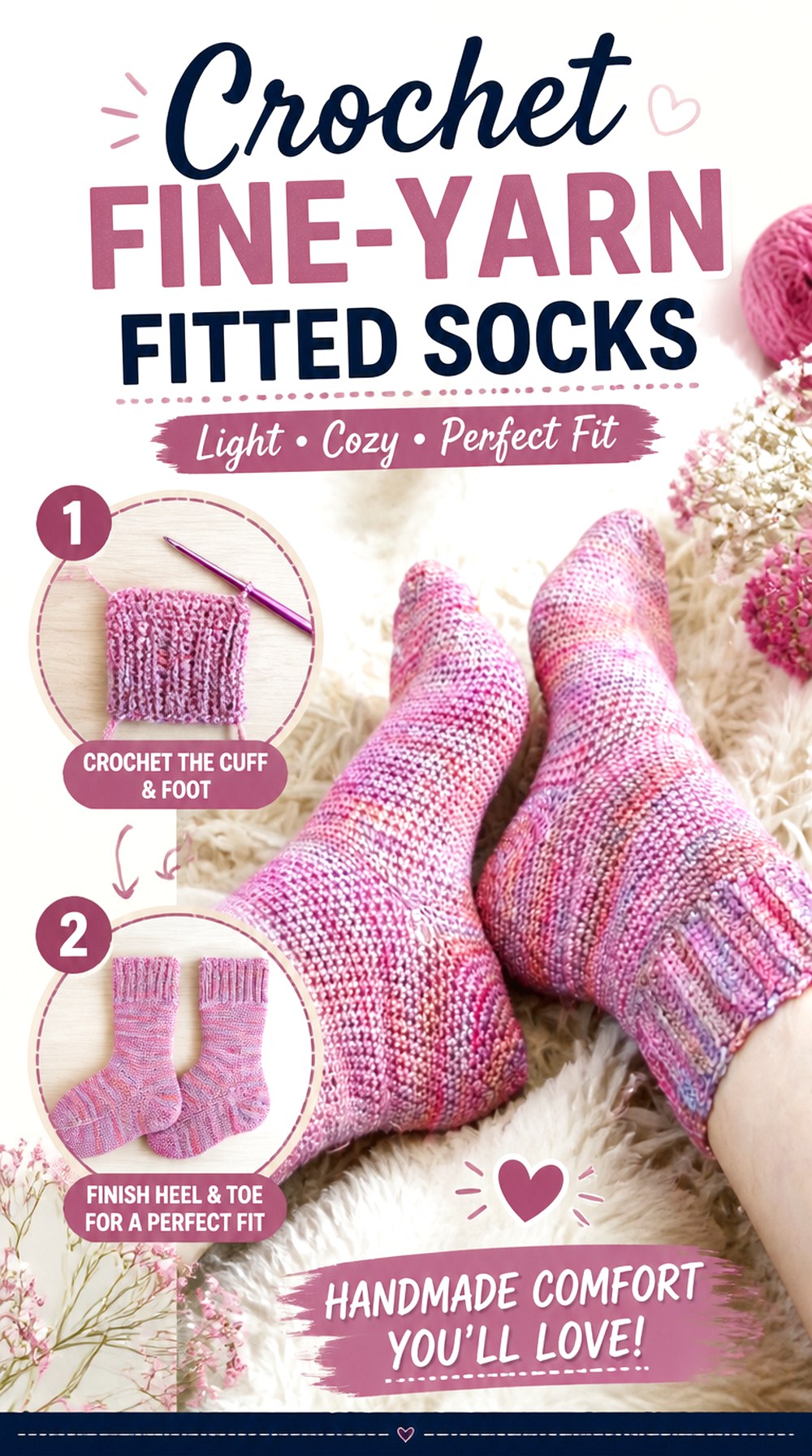
Fine-yarn crochet socks move away from the bulky slipper look and toward a closer, more conventional sock profile. The Graceful Tangle’s Satisfaction Socks tutorial uses fingering-weight yarn and references an afterthought heel, giving this option a different construction feel from the heavier lounge pairs.
This is a good direction for statement socks when you want the color or yarn itself to attract attention without adding thick embellishment. A speckled, self-striping, or sharply contrasting yarn can create plenty of visual energy on a relatively streamlined fabric.
Fine Yarn Makes Gauge Differences More Noticeable
A small change repeated around an entire foot can significantly affect a close-fitting sock. Make a meaningful gauge check before assuming the same hook that works for another fine-yarn project will produce the right sock fabric.
An Afterthought Heel Separates Two Fit Decisions
With an afterthought-style construction, the heel is handled separately from much of the main tube. That can make the architecture appealing if you like clearly defined construction stages. It also means the heel area deserves its own try-on checkpoint instead of being treated as an automatic finishing detail.
Busy Yarn Works Better on a Calm Surface
If the yarn already contains several colors or strong speckles, a relatively simple body can allow those changes to remain readable. Combining a complicated stitch pattern with an equally busy yarn can make both features less distinct. Choose which element should lead.
Original Tutorial and Creator Credit
Creator: The Graceful Tangle
9. Crochet Shell Cuff Slipper Socks
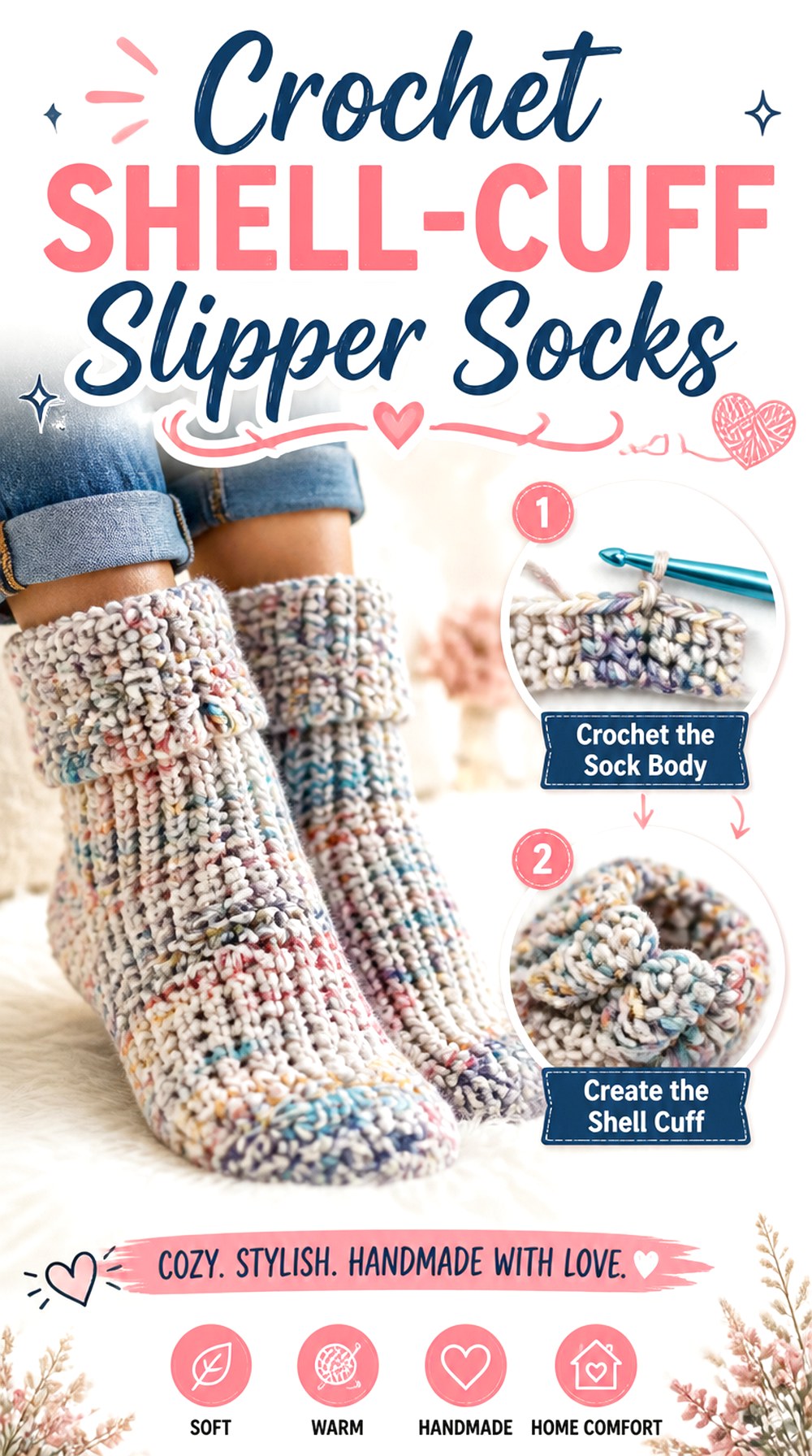
These slipper socks concentrate their visual texture in two different ways: a substantial ribbed-looking body and a shell-textured upper section. B.Hooked Crochet describes the design as a combination of crochet slippers and socks, making it better suited to cozy indoor wear than a thin shoe sock.
That heavier silhouette gives you room to use texture as the main statement rather than depending on dramatic color. The shell cuff is especially noticeable because it sits above the foot, where the decorative stitch does not have to endure the same direct pressure as the sole.
Keep Raised Texture Away From Pressure Points
Decorative texture that feels comfortable around the leg may become uncomfortable beneath the foot or inside a tight shoe. This is one reason a heavily textured project makes sense as a slipper sock. Keep the intended environment in mind instead of judging softness by touch alone.
The Cuff Can Carry the Entire Design
A shell section already introduces strong movement and shadow. Using one color can emphasize stitch structure, while contrasting the cuff creates a more obvious separation between the foot and leg. Both approaches make a statement without adding extra embellishments.
Smooth Floors Need Caution
Crocheted slipper socks may not provide the traction of footwear designed with non-slip soles. Use care on smooth hard flooring and avoid assuming that yarn texture alone creates reliable grip.
Original Tutorial and Creator Credit
Creator: B.Hooked Crochet
10. Crochet Two Tone Chunky Slipper Socks
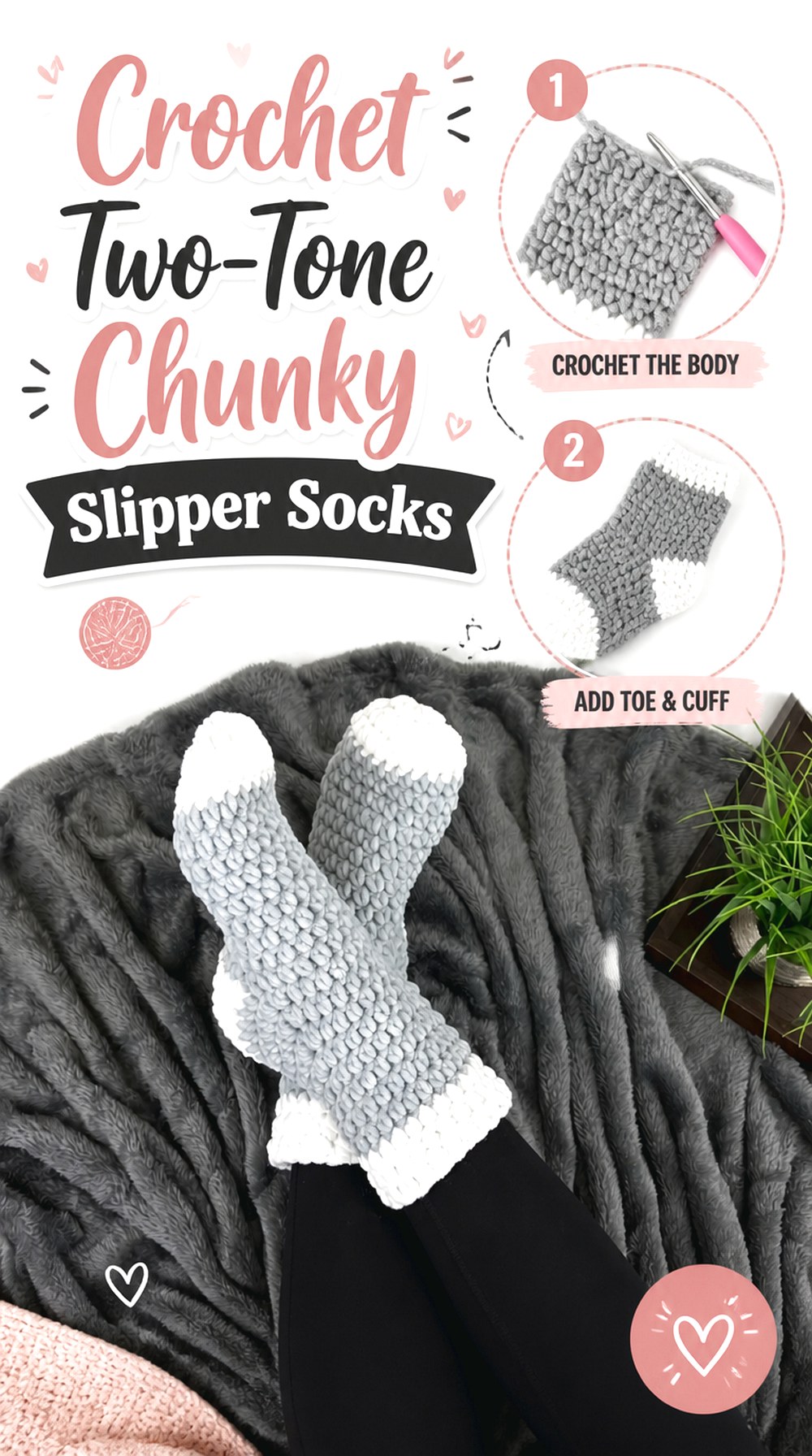
Jo to the World Creations uses super-bulky yarn and contrasting sections to create a substantial slipper sock with an immediately recognizable two-tone appearance. The tutorial covers the toe, heel, leg, color changes, and size adjustment.
This makes the design a strong choice when the statement you want is graphic and cozy rather than delicate. A contrasting toe and upper section can frame the main sock color, while the large-scale stitches keep those blocks visually bold. Because the finished fabric is intentionally thick, think of these primarily as indoor slipper socks instead of trying to force them into regular footwear.
Chunky Yarn Changes More Than Warmth
Increasing yarn thickness also increases stitch scale, seam bulk, and the visual size of each color block. A color combination that feels subtle in fine yarn can become much more dominant in super-bulky fabric.
Roomier Does Not Mean Unmeasured
A slipper sock can have more ease than a fitted shoe sock, but it still needs to stay attached to the foot while walking. Check the heel and leg opening rather than focusing only on toe length.
Plan the Two Colors as One Composition
High contrast makes construction zones obvious. If that is the look you want, repeat the same placement on the second sock. For intentionally mismatched statement socks, invert the two colors rather than making unrelated changes; the pair will still look connected.
Original Tutorial and Creator Credit
Creator: Jo to the World Creations
11. Crochet One Piece Lounge Socks
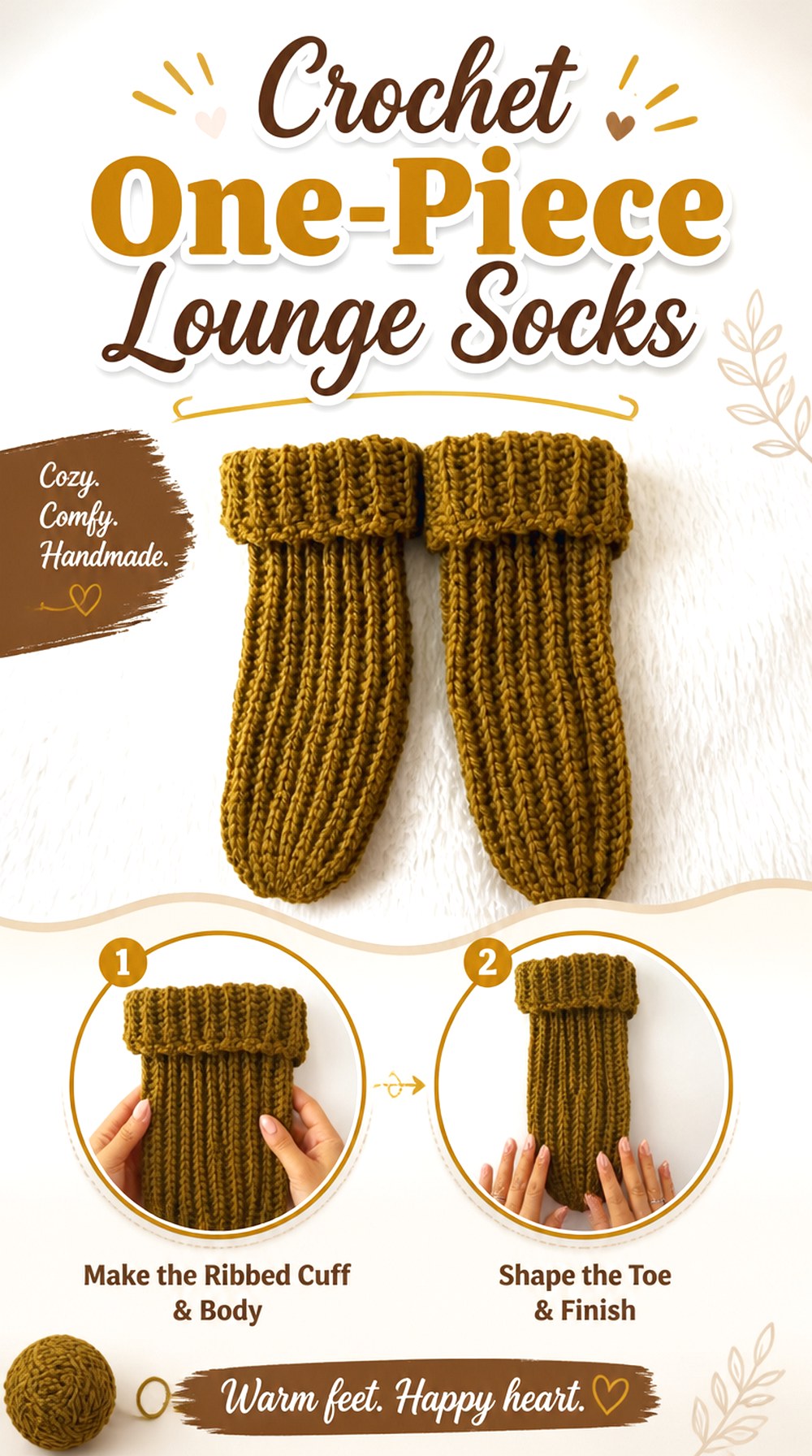
A one-piece slipper construction offers a very different route from carefully shaped fine-yarn socks. Sirin’s Crochet presents a one-piece slipper/sock tutorial, giving this idea a simplified, visibly cozy profile that works well for indoor wear.
The statement potential comes from the broad surface rather than intricate shaping. Bold stripes, a contrasting edge, or marled yarn can turn the simple form into a graphic house sock. It is also a useful option for readers who care more about a relaxed slipper-like result than duplicating the anatomy of a commercially manufactured sock.
Seaming Becomes Part of Comfort
In a one-piece construction, pay attention to where joined edges fall against the foot. Even a neat-looking seam can feel prominent if it lands under sustained pressure. Before making the second slipper, try the first one on and assess the seam from the wearer’s perspective.
Simple Shape Makes Color More Visible
Because the silhouette is straightforward, yarn choice receives more attention. Wide stripes, ombré yarn, or a contrasting border can create a stronger effect here than they might within a highly textured stitch pattern.
Treat It as Indoor Footwear
A slipper/sock hybrid is not automatically interchangeable with a conventional fitted sock. Consider floor use, bulk, and how the finished fabric behaves when walking. On smooth surfaces, extra caution may be appropriate if the sole has no dedicated traction treatment.
Original Tutorial and Creator Credit
Creator: Sirin’s Crochet
12. Crochet Low Cut Ankle Socks
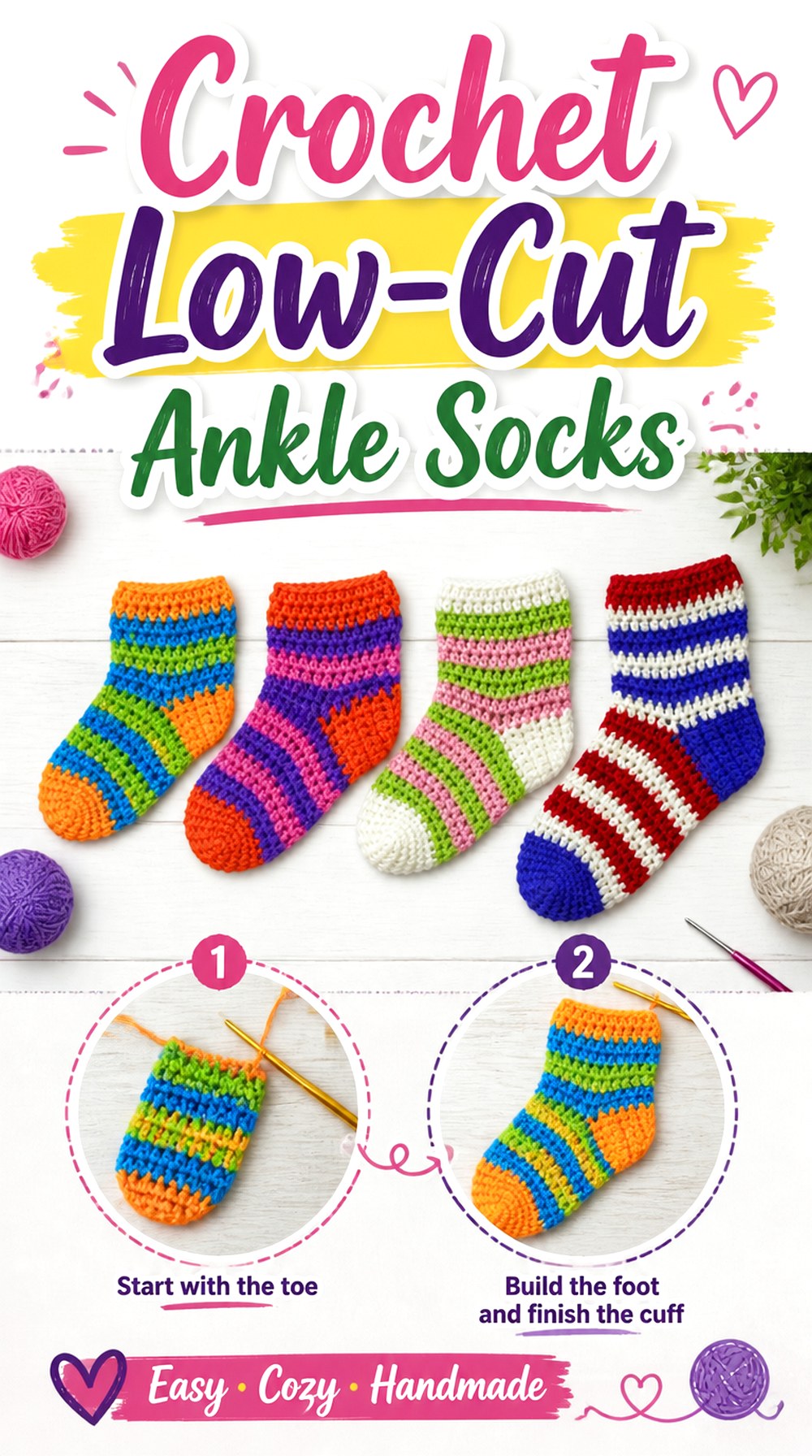
Low-cut ankle socks prove that statement crochet does not need a long leg or oversized cuff. By keeping the upper section close to the ankle, the design puts more attention on the foot itself. That can make bold stripes, contrasting heels, or a bright all-over yarn more visible without adding much height.
The Tejiendo Perú tutorial focuses specifically on crochet ankle socks, giving this final idea a distinctly lower profile than the thigh-high, yoga, and slipper options above. For readers who like the handmade sock look but do not want fabric climbing the calf, this silhouette offers the clearest alternative.
The Opening Has Less Height to Stabilize It
A short sock has less leg fabric helping it remain in position. Pay particular attention to the ankle opening and heel relationship. If either area is too concentratedly held by the first ring, the sock may shift rather than sitting neatly at the desired height.
Put the Strongest Color Near the Foot
Because there is very little visible leg, decorative planning should focus on the toe, heel, foot, and narrow cuff. A contrast heel or stripe around the ankle can be more noticeable than adding a complex detail that disappears inside the shoe.
Check the Shoe Line Before Finalizing the Cuff
Different shoes expose different amounts of an ankle sock. Try the developing pair with the footwear you intend to use. That tells you whether the cuff will remain visible as a statement detail or disappear below the shoe opening.
Original Tutorial and Creator Credit
Creator: Esperanza y Ana Celia Rosas (Tejiendo Perú)
Which Crochet Statement Sock Style Should You Choose?
For maximum visual impact, start with the thigh-high, lace, ruffle-cuff, or fishnet ideas. Their silhouette or surface treatment makes the sock an obvious part of the outfit.
If you want a closer relationship to conventional socks, the ribbed, toe-up, fine-yarn, and ankle designs provide quieter constructions that can become statement pieces through deliberate color placement.
For indoor comfort, the three slipper-oriented options offer more substantial fabric. Choose the shell-cuff pair for decorative texture, the two-tone chunky pair for graphic color blocking, or the one-piece lounge sock when construction simplicity matters most.
The pineapple yoga socks sit in their own category: the exposed heel and toes are functional parts of the design rather than conventional sock shaping.
Conclusion
The most effective crochet statement sock is not necessarily the brightest pair. A thigh-high silhouette creates drama through scale, lace and fishnet create it through openness, ruffles focus attention at the cuff, and chunky slipper socks use texture and proportion instead.
Choose the construction according to where you plan to wear the socks first. Fine, fitted designs make more sense when shoe compatibility matters, while thick or highly textured versions are better approached as visible lounge or slipper pieces. For tall socks, check the calf as carefully as the foot; for openwork, judge the fabric while stretched. Once the underlying form works, color and embellishment can do their job. Use the original tutorials linked above for each creator’s exact construction details.
Frequently Asked Questions
What makes crochet socks “statement socks”?
The statement can come from silhouette, texture, openness, or color rather than one specific stitch. Thigh-high length, fishnet fabric, a large ruffle cuff, contrasting toes and heels, pronounced shells, or oversized chunky stitches can all make a pair visually dominant. Decide which single element should lead before combining several strong details, otherwise the design can become harder to read.
Can crochet statement socks be worn inside regular shoes?
Some can, but construction matters. Fine-yarn socks with controlled seams and moderate texture are more likely to work inside shoes than super-bulky slipper socks or highly raised stitch patterns. Test one unfinished sock with the intended footwear before completing the pair. If the shoe already fits tightly, added crochet thickness may affect comfort.
How do I make tall crochet socks stay up?
Start with accurate calf and upper-leg measurements rather than simply extending an ankle sock upward. Stitch pattern, yarn weight, and the amount of stretch in the cuff also influence how the leg behaves. Try the sock on at several heights while working. Avoid solving a loose leg only by making the top edge extremely tight, since the opening still needs to pass comfortably over the foot and heel.
Is sock yarn necessary for crochet socks?
No single yarn type suits every sock in this collection. Fine sock-style yarn is useful when reduced bulk and a closer fit are priorities, while thicker yarn makes sense for intentionally chunky slipper socks. Instead of choosing by label alone, compare the yarn’s thickness, stretch, stitch definition, and care instructions with the intended use of the finished pair.
Should I block crochet socks before wearing them?
Follow the yarn’s care directions and the original tutorial where specific finishing guidance is given. For fitted socks, aggressive stretching during blocking can change dimensions that were carefully established during construction. A lace pair may benefit from gentle shaping to clarify the stitch pattern, but the final fit should remain the priority.
Can I add ruffles or lace to a basic crochet sock tutorial?
Yes, as an independent adaptation, provided the underlying sock still fits correctly. Establish the foot, heel, ankle, and cuff first. Decorative fabric can add bulk, weight, or extra stretch, so attach or extend it in a location where those changes will not interfere with putting the sock on or wearing it comfortably.
Why does one crochet sock fit differently from the other?
Small tension changes can accumulate across a fitted project, particularly with fine yarn. Compare the two socks at the same construction checkpoints rather than waiting until both are finished. Keeping notes on hook size, yarn, color-change positions, and important measurements also helps prevent the second sock from drifting noticeably away from the first.