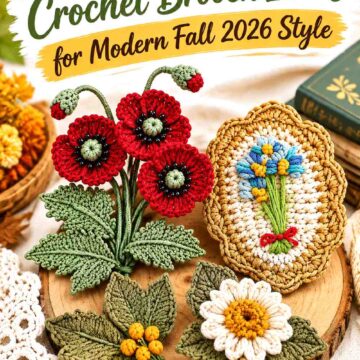
Crochet lace bandanas are especially useful for early fall, when you want an accessory with more texture than a plain headband but less coverage than a hat. The triangle shape keeps the styling familiar, while mesh, filet, granny clusters, flowers, shells, and picots can make each version look completely different.
For a fall 2026 wardrobe, the same openwork that feels light in summer can shift easily into cooler-season styling through color and layering. Espresso brown, cream, moss, burgundy, charcoal, rust, muted plum, and deep green can all give delicate lace a more autumnal character without changing the construction.
The 17 ideas below also differ in practical ways. Some leave plenty of hair visible, some offer more coverage, some use motifs that must be joined, and others put most of the decorative interest around the border. Compare those structural differences before deciding which tutorial fits the way you actually want to wear your bandana.
Quick List
- Crochet Diamond Lattice Lace Bandana
- Crochet Spiderweb Fall Bandana
- Crochet Fine Openwork Headscarf Bandana
- Crochet Airy Mesh Picot Bandana
- Crochet Statement Lace Triangle Bandana
- Crochet Daisy Motif Patchwork Bandana
- Crochet Flowing Flower Lace Bandana
- Crochet Filet Multi Wear Triangle Bandana
- Crochet Mixed Density Scallop Bandana
- Crochet Textured Picot Kerchief Bandana
- Crochet Decorative Edge Bandana With Strap Options
- Crochet Cluster And Shell Lace Bandana
- Crochet Low Bulk Granny Lace Bandana
- Crochet One Piece No Sew Lace Bandana
- Crochet Double Crochet Space Bandana
- Crochet Romantic Open Lace Bandana
- Crochet Dragonfly Motif Lace Bandana
Choose Lace Density for the Amount of Coverage You Want
The word “lace” covers a surprisingly wide range of crochet fabric. Large mesh spaces can leave most of your hair visible, while granny clusters, filet sections, shells, and closely spaced openwork can create a much more noticeable head covering.
Think about the finished bandana against your hair rather than only on a table. Dark yarn over dark hair can make delicate openings disappear visually, while strong contrast makes every gap and motif much more obvious. A smooth yarn usually keeps geometric lace easier to read; a fuzzy yarn can soften the effect but may blur smaller decorative details.
For fall wear, slightly denser lace can also transition more naturally beside knit cardigans, denim jackets, and heavier layers. You do not need a thick bandana, but it helps to decide whether you want the piece to read as a tiny hair accessory or as a visible textile layer.
Check Triangle Depth Before You Finish the Ties
Width and depth affect fit differently. A wide, shallow triangle can reach comfortably around the head while leaving much of the back exposed. A deeper triangle provides more coverage but may gather more fabric underneath the knot.
Try the developing piece in position before relying on the border or ties to correct the fit. Open crochet can distort when it is pulled hard. If the body only reaches the tying position when the lace is stretched noticeably, increasing the main triangle may produce a cleaner result than simply making longer straps.
Tie style matters too. Slim cords keep the fastening discreet, while broad crocheted straps create a more noticeable bow or knot. Neither approach is inherently better; choose according to your hairstyle and how visible you want the fastening to be.
Yarn and Borders Can Change the Fall Look
A border can completely shift the character of a small bandana. Picots add tiny points, shells create a softer scalloped edge, and a simple finish allows geometric mesh to remain the focal feature.
When adapting a tutorial for fall, consider color before adding more stitch detail. Deep solid shades can make diamond, filet, and floral structures look especially defined. Stripes and multicolor yarn already add visual activity, so a simpler border may keep the finished accessory from feeling crowded.
Changing yarn weight can also change the scale of the lace and the final fit. If you substitute materials, use the actual growing bandana as your sizing reference instead of assuming the tutorial’s proportions will transfer unchanged.
1. Crochet Diamond Lattice Lace Bandana
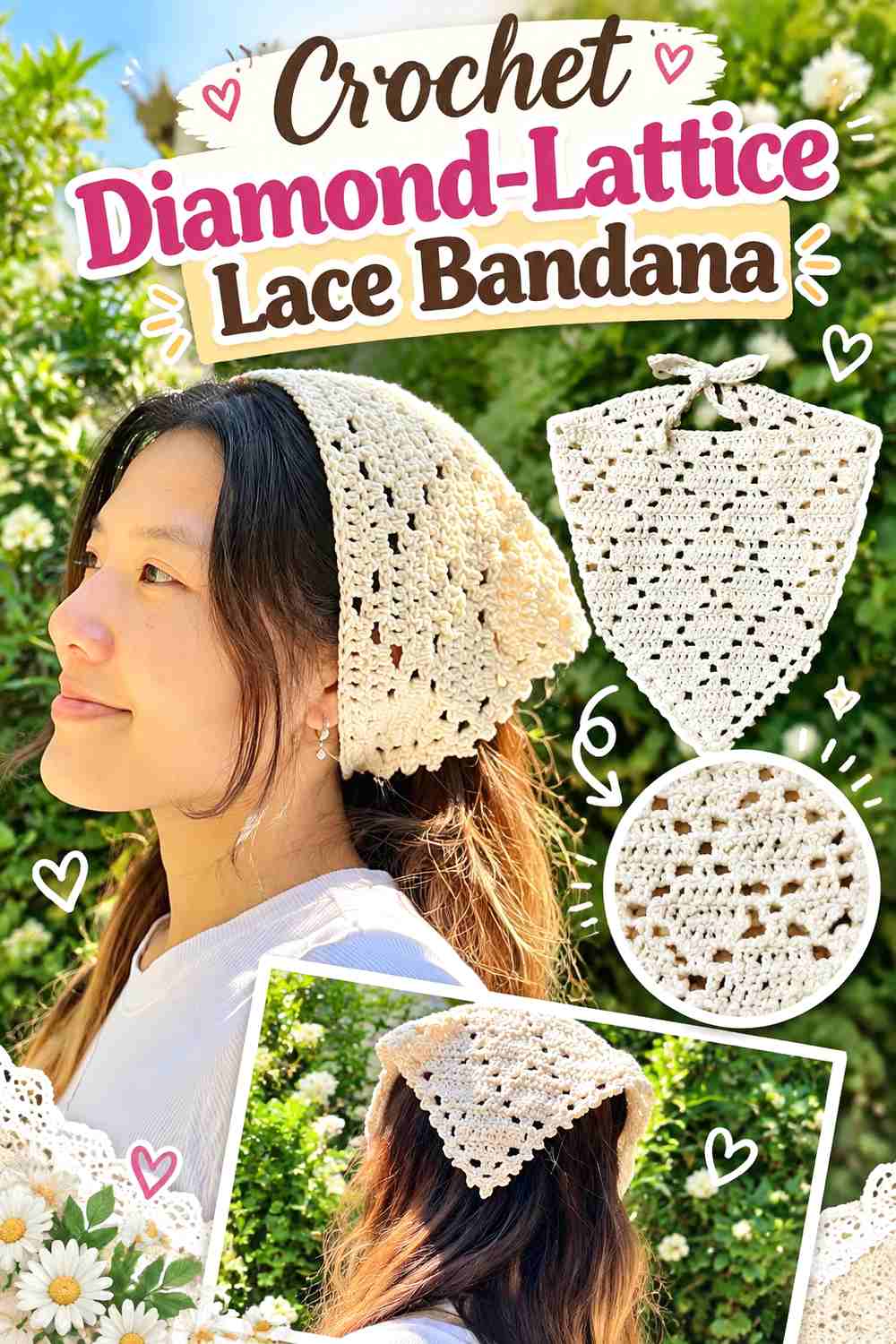
Diamond-shaped negative space gives this bandana a more graphic appearance than ordinary mesh. The geometry can look particularly crisp in one autumn shade, making the lace itself the main decoration rather than relying on stripes or attached embellishments. The supporting tutorial is associated with vivcrochets and specifically demonstrates a diamond-lace crochet bandana.
Keep the Diamond Pattern Easy to Read
A diamond lattice works because neighboring openings create recognizable diagonal lines. Smooth yarn and controlled tension help those lines remain visible.
If you switch to a heavily textured or fuzzy fiber, make a small section first. The yarn may be attractive on its own while hiding the geometry that makes this particular bandana distinctive.
Check Both Sloping Edges Together
Repeated diamonds make asymmetry easier to spot. Occasionally spread the triangle flat and compare both sides rather than looking only at the row currently on the hook.
Correcting a gradually tightening edge early is more effective than expecting a final decorative border to disguise uneven shaping.
Creator Credit: vivcrochets
2. Crochet Spiderweb Fall Bandana
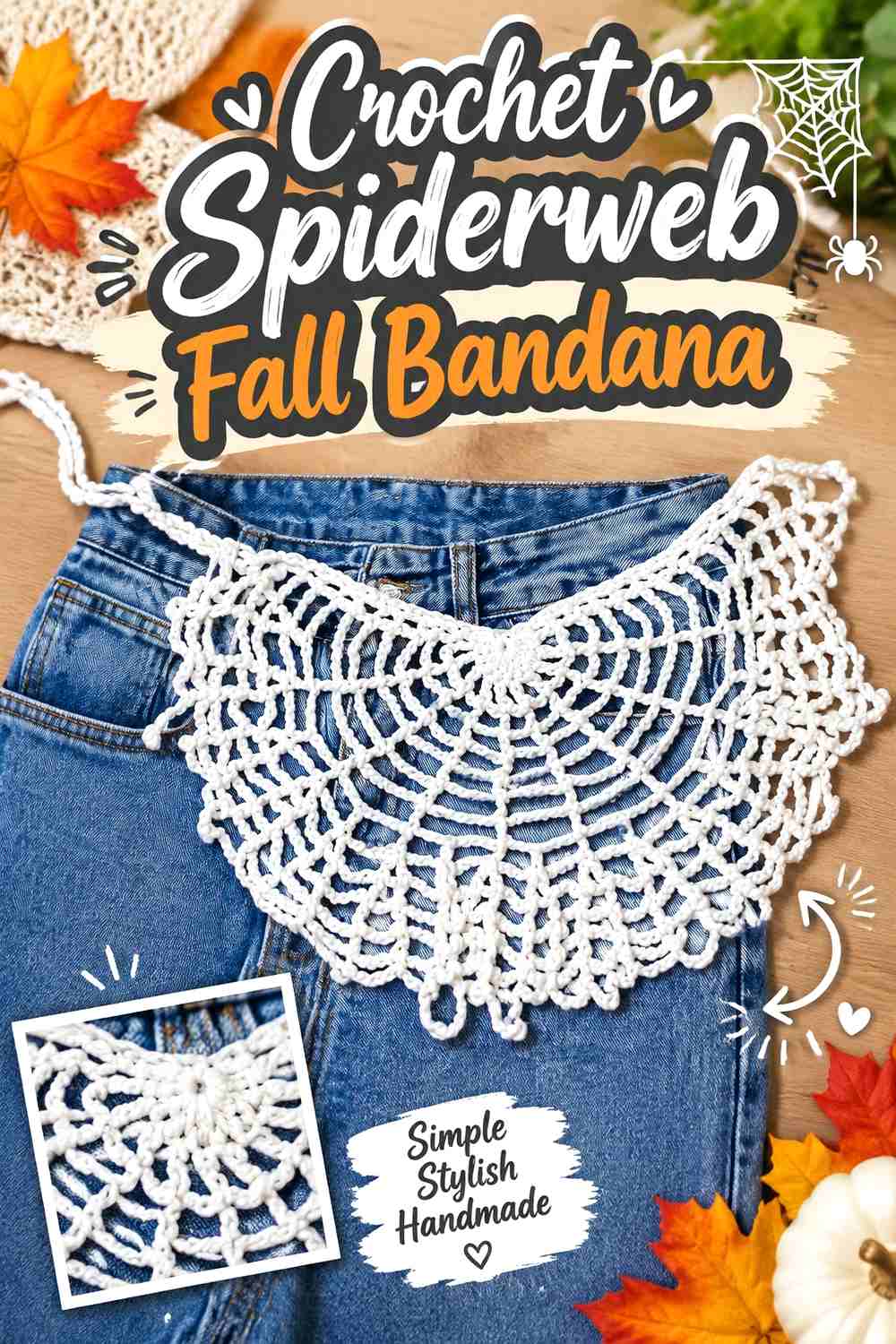
A spiderweb structure immediately gives lace a darker, seasonal personality. Mahamakestuff’s tutorial shows a crochet spiderweb headscarf specifically suited to alternative and fall styling, making this one of the most distinctive choices in the collection.
Let the Web Shape Provide the Drama
The web already contains strong radial lines and large negative spaces. Extra tassels, several contrast colors, and an elaborate edging can compete with that structure.
For a more understated fall version, consider letting one deep color and the web geometry do most of the visual work.
Large Openings Make Fit More Visible
Spiderweb-style lace can distort noticeably if the upper edge is pulled too tightly. Test the width while the fabric is relaxed and confirm that the corners reach the intended tying area without dramatically stretching the web.
That matters especially around the temples, where uneven pulling can change the appearance of the entire motif.
Creator Credit: Mahamakestuff
3. Crochet Fine Openwork Headscarf Bandana
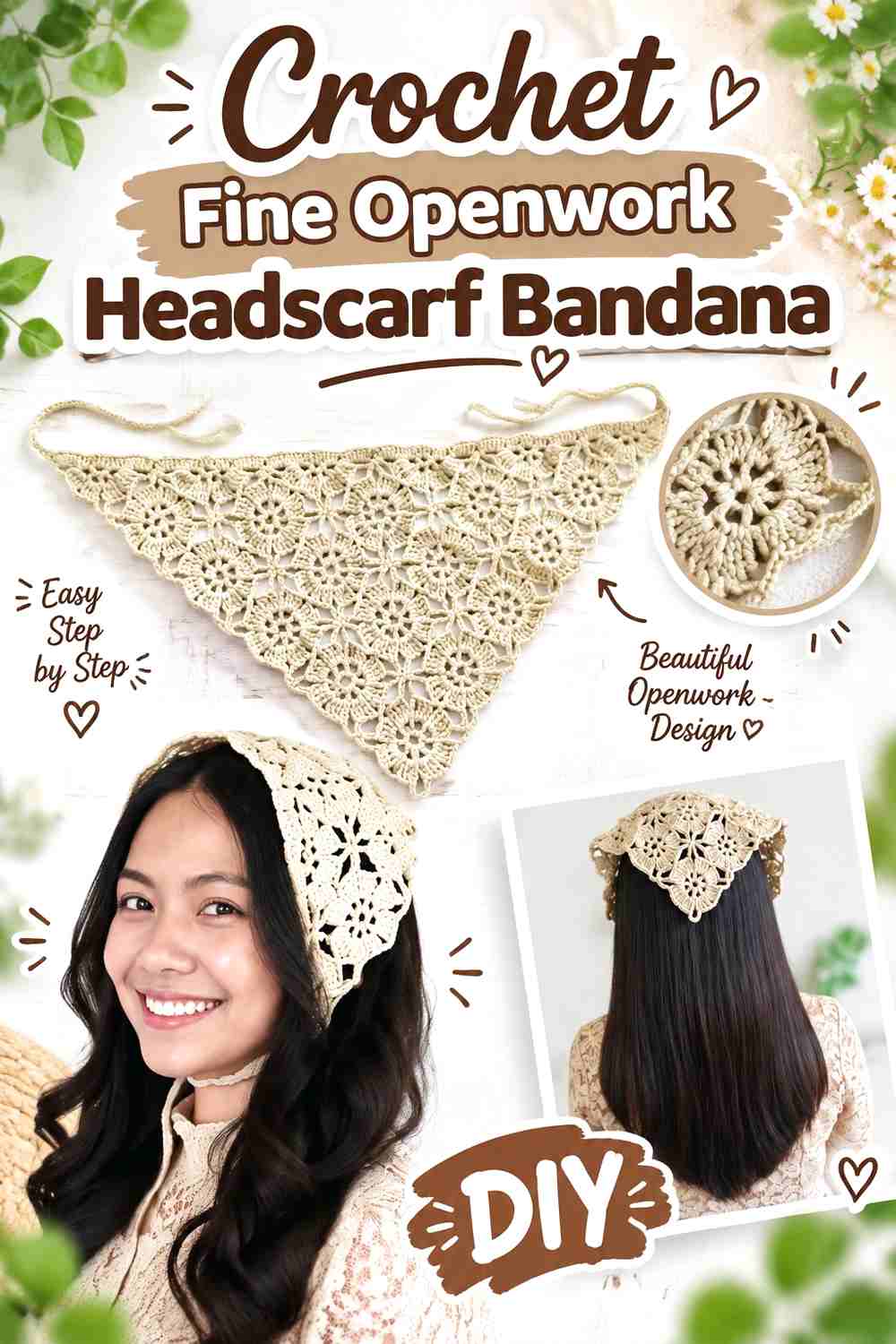
This direction uses smaller-scale lace rather than an oversized mesh effect. The Crochet Channel demonstrates a lightweight lace bandana with fine-looking openwork, creating a delicate textile appearance that can work well when you want fall color without a heavy accessory.
Fine Lace Benefits From Clear Stitch Definition
Small openings can disappear when the yarn has a strong halo. Before committing to a fuzzy autumn fiber, compare a swatch against your hair and from normal viewing distance.
If the lace looks like an indistinct solid surface, a smoother yarn may preserve more of the original character.
Give the Fabric Enough Drape
Delicate-looking lace should still curve comfortably over the head. If a substituted yarn creates stiff fabric, the triangle may stand away from the crown instead of settling naturally.
Judge drape by holding the developing piece vertically as well as laying it flat.
Creator Credit: The Crochet Channel
4. Crochet Airy Mesh Picot Bandana
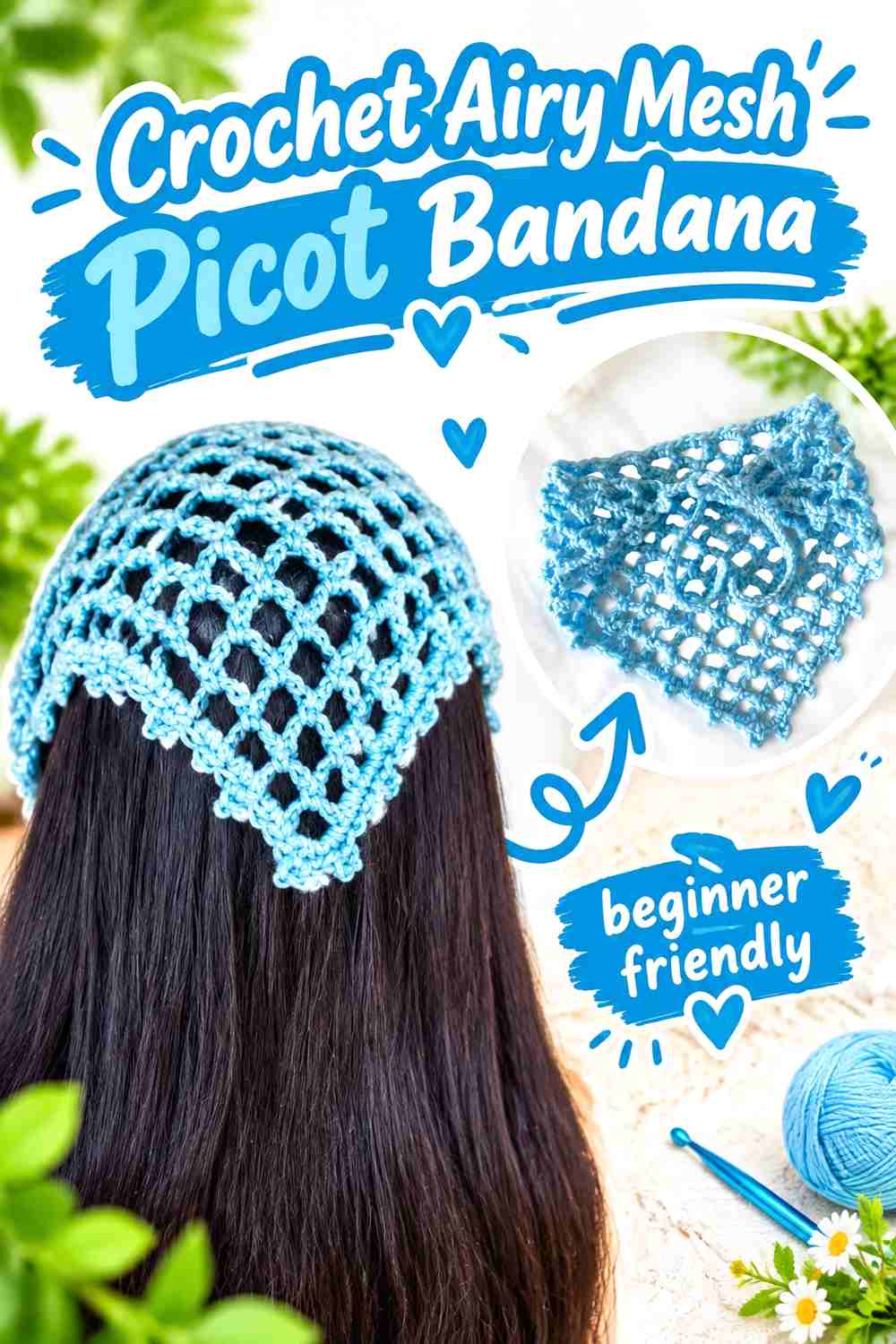
ElyseCrochets 💌 uses a highly open mesh construction and finishes the bandana with additional edge detail. The large openings make this a strong option when you want the accessory to frame a hairstyle rather than cover it.
Decide How Open You Want the Mesh to Look
Changing yarn or hook size can make the same basic mesh appear delicate or surprisingly bold. Work enough fabric to see several openings together before deciding whether the scale suits your fall wardrobe.
A compact mesh can feel textile-like, while larger holes create a more obvious net effect.
Picots Can Finish a Simple Center
Because the main fabric is visually restrained, small pointed edging can add detail without requiring a complicated center motif.
Check the edge after a short section, however. Decorative finishing should follow the existing triangle rather than pull the sides inward or create waves.
Creator Credit: ElyseCrochets 💌
5. Crochet Statement Lace Triangle Bandana
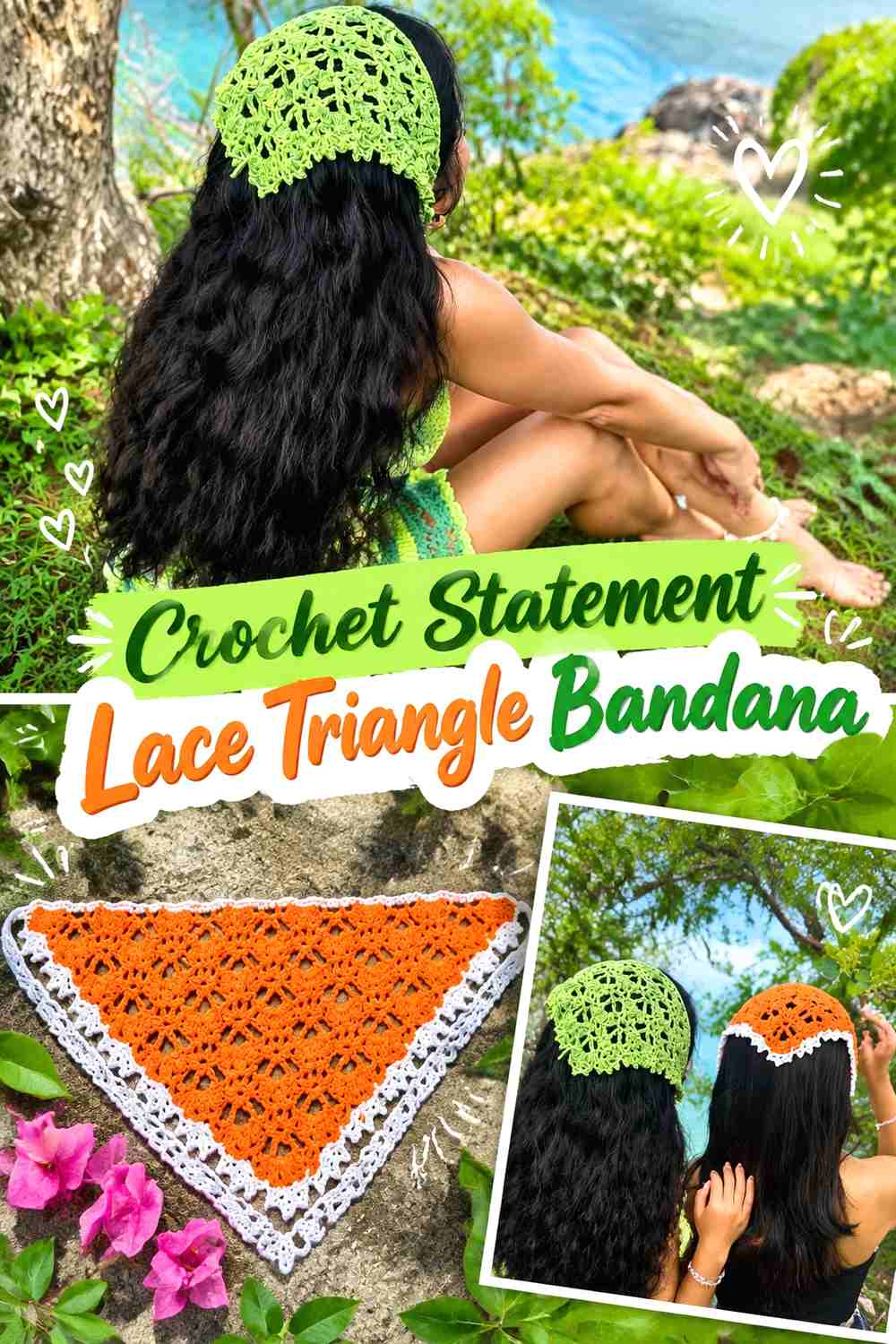
Crochet Corner Ph presents an intentionally detailed lace bandana rather than a basic triangle with a decorative trim. This direction makes sense when you want the stitch structure itself to be the focal point of the finished accessory.
Detailed Lace Rewards a Quiet Color Plan
Intricate openwork already creates plenty of visual movement. A strongly variegated yarn can divide the surface into competing color patches and make the lace harder to appreciate.
A solid rust, olive, cream, plum, or charcoal can keep attention on the changing open spaces.
Use Fit Rather Than Repetition as Your Stopping Point
Decorative repeats can make it tempting to keep enlarging the triangle just to complete another attractive section.
Before continuing, check the bandana on the head. Width and back-point depth should determine whether additional fabric is actually useful.
Creator Credit: Crochet Corner Ph
6. Crochet Daisy Motif Patchwork Bandana
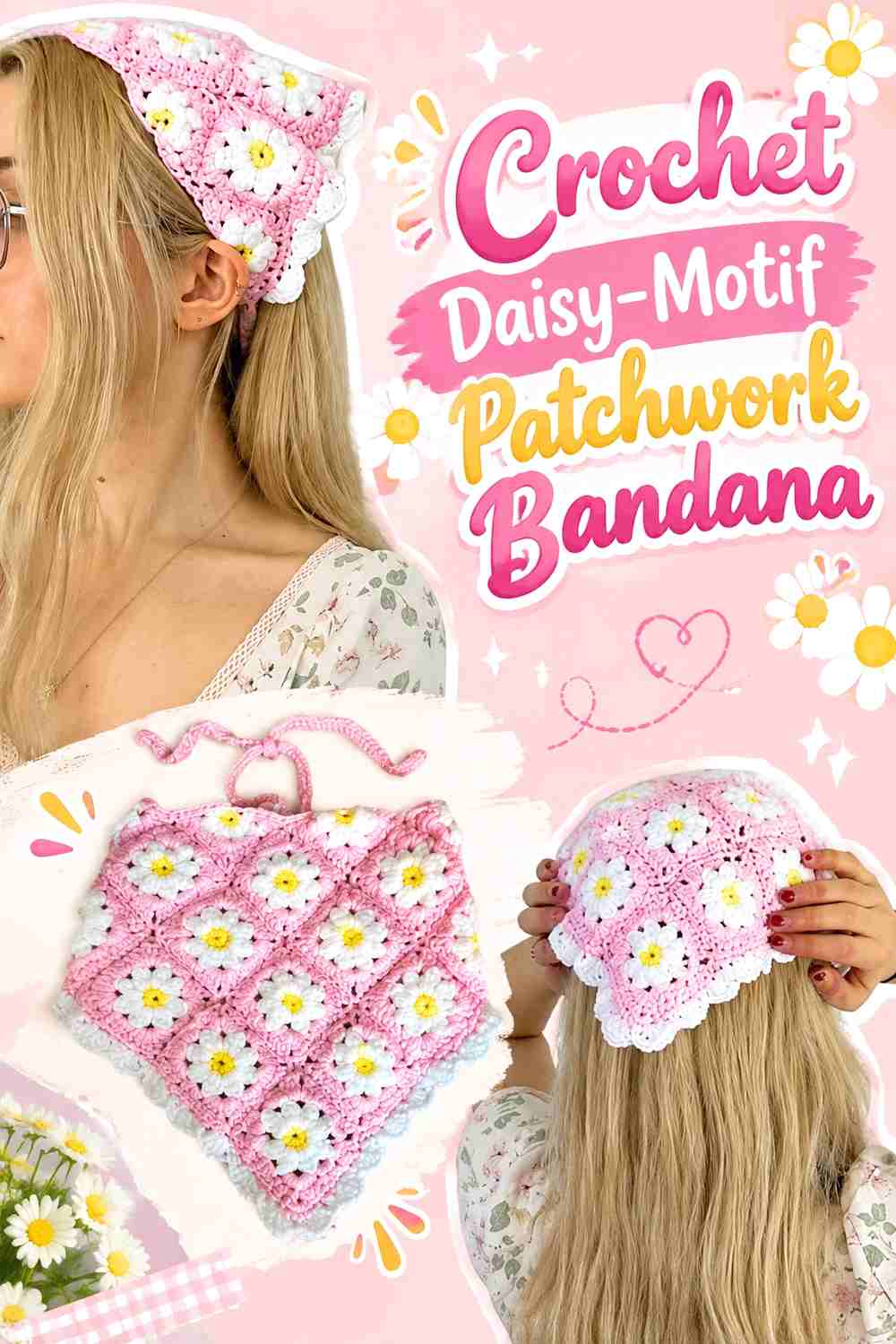
Instead of forming the entire headscarf from continuous rows, cosybearcrochet uses daisy motifs to create the bandana structure. Individual flowers and visible joins give the piece a cottage-inspired character that can transition nicely into fall when the palette moves toward muted cream, ochre, rust, or brown.
Block or Compare Motifs Before Joining
Individual crochet motifs can finish at slightly different sizes even when made from the same instructions. Compare them before committing to the layout.
Forcing mismatched pieces together can create puckering that becomes more obvious once the bandana curves around the head.
Arrange the Whole Color Story First
Motif construction gives you the advantage of moving pieces around before assembly. Use that opportunity to preview the entire triangle.
If several fall colors are involved, check whether one shade unintentionally dominates one corner or the back point.
Creator Credit: cosybearcrochet
7. Crochet Flowing Flower Lace Bandana
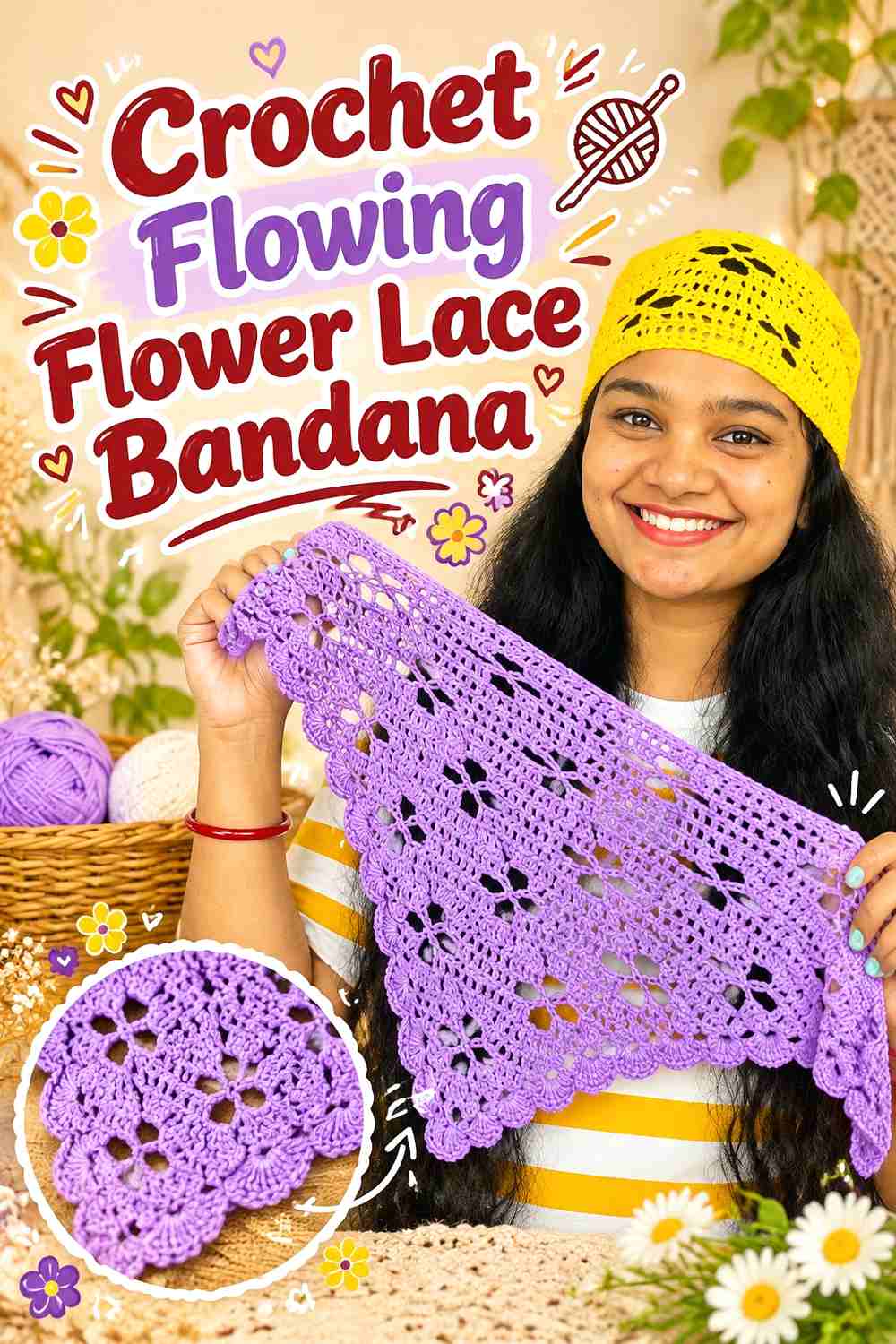
Crochet by Amrita’s floral bandana uses open decorative stitchwork to make flowers part of the fabric itself rather than attaching separate motifs afterward. The result has a softer visual rhythm than strict diamonds or filet grids.
Make Sure the Flowers Still Read as Flowers
When a design depends on curved petal-like sections, yarn thickness can change the motif considerably.
After completing enough fabric to reveal the floral shape, view it from farther away. If the flowers disappear visually, reconsider the yarn before making the entire triangle.
Balance Texture With Flexibility
Floral stitch groups can concentrate more yarn in certain sections than ordinary mesh does. The fabric still needs enough flexibility to follow the shape of the head.
Let the work hang from your hand periodically. A pretty flat swatch is not enough if the completed fabric feels too rigid to wear comfortably.
Creator Credit: Crochet by Amrita
8. Crochet Filet Multi Wear Triangle Bandana
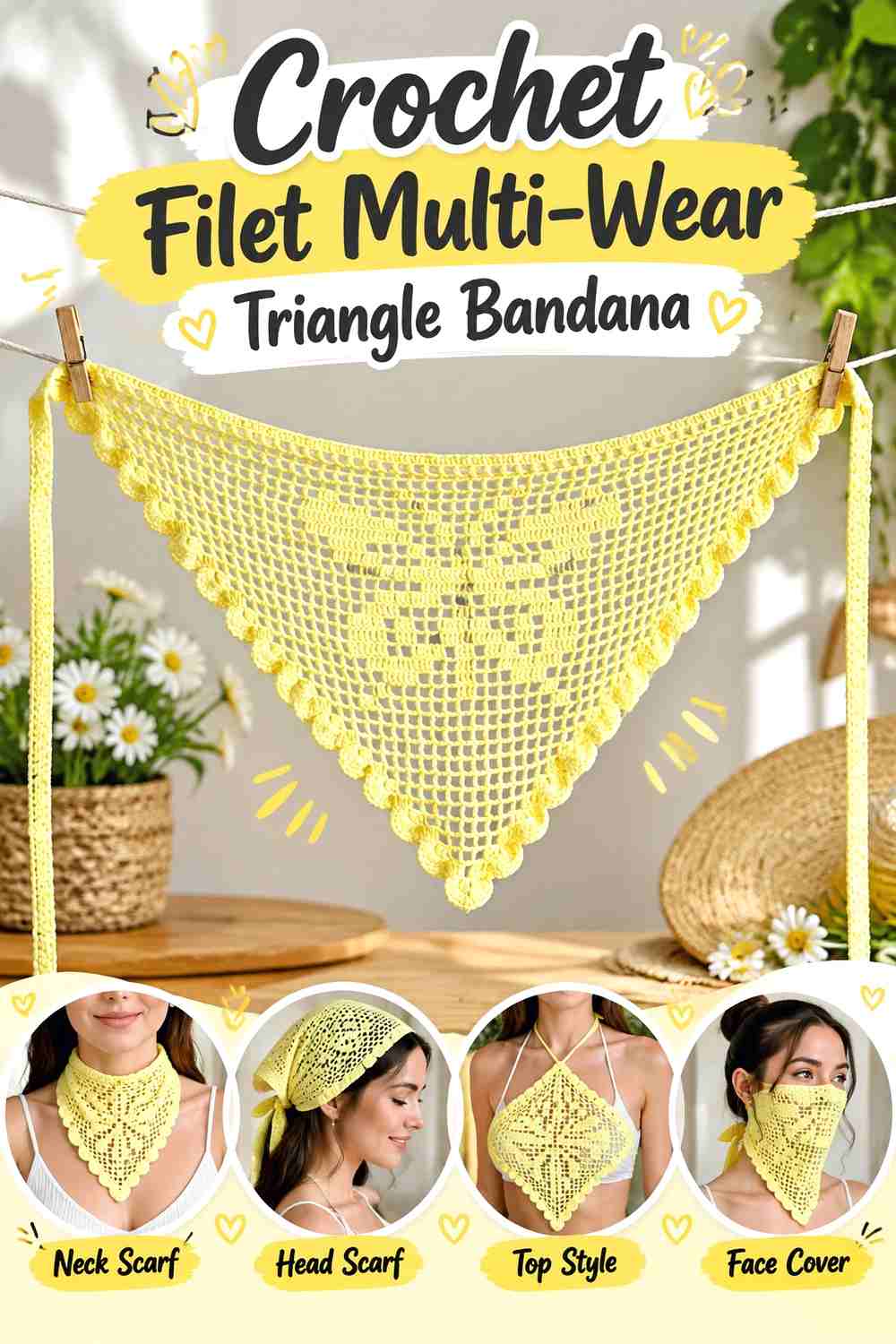
DIYGuru takes filet crochet beyond a tiny hair kerchief by creating a triangle that can be styled in several ways. The tutorial includes a grid-based filet structure as well as finishing details, so this direction suits readers interested in a scarf-like piece with broader styling potential.
Decide Whether You Really Want the Extra Scale
A larger triangle can provide more styling options, but additional width also means more fabric has to gather when it is worn on the head.
If bandana use is your main priority, pay close attention to the amount of fabric behind the ears and beneath the knot.
Filet Makes Irregular Openings Easy to Spot
The grid effect depends on fairly consistent neighboring spaces. Spread the project flat every few sections and look at the design as a whole.
A single unusual opening may be difficult to notice while crocheting but obvious once it interrupts an otherwise regular grid.
Creator Credit: DIYGuru
9. Crochet Mixed Density Scallop Bandana
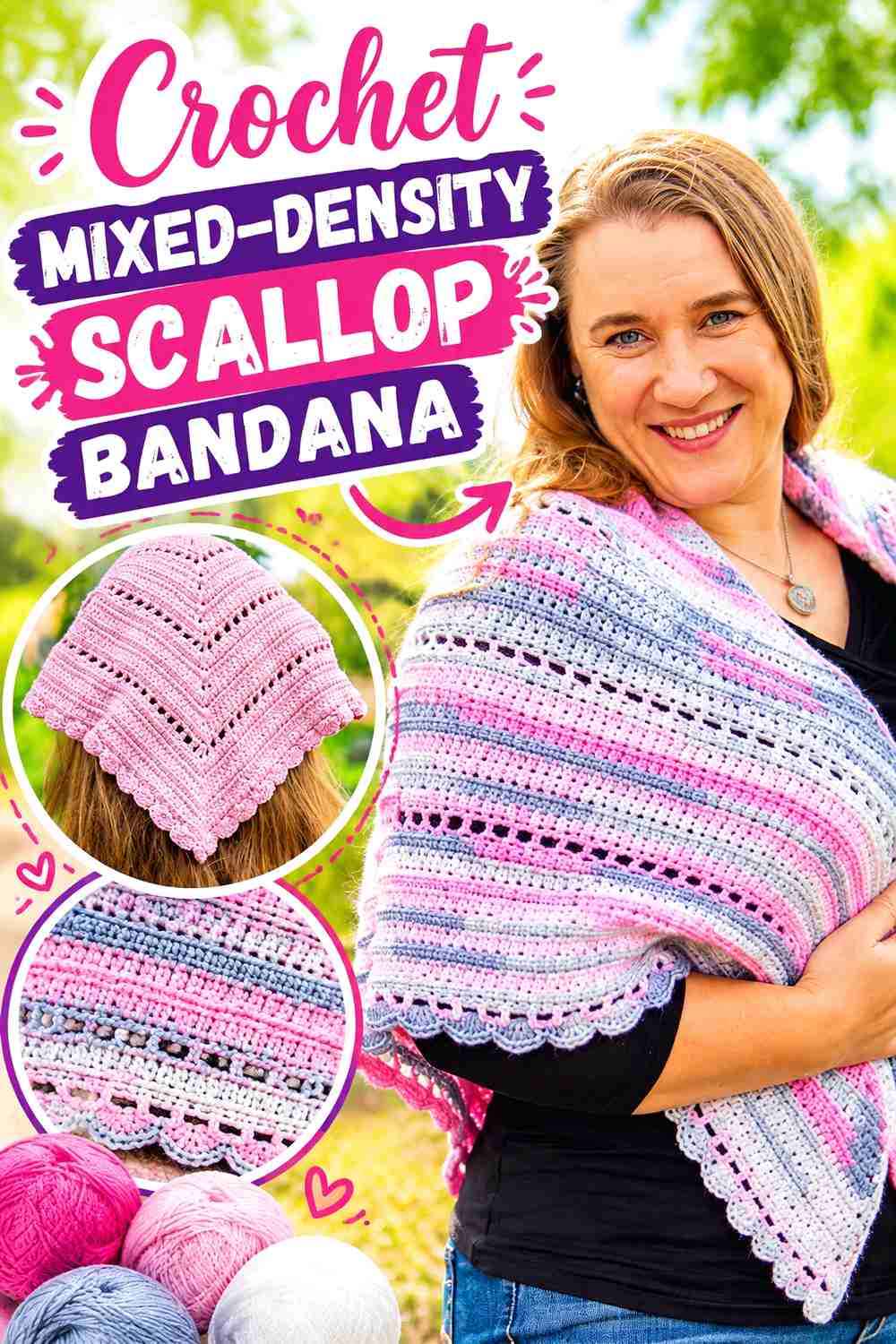
Nicki’s Homemade Crafts combines more substantial crochet with open filet-style sections and a decorative scalloped edge. This creates a useful middle ground for fall: more visual coverage than pure mesh without losing the airy character of lace.
Mixed Fabric Density Changes How the Triangle Hangs
Open sections contain less yarn than denser ones, so combining them can affect the way the point falls.
Before adding the final edging, hold the bandana from its upper corners and see whether the center hangs evenly rather than twisting toward one side.
Give Scallops a Stable Foundation
Large decorative shells can exaggerate an irregular edge. Make sure the underlying triangle looks balanced before treating the border as the finishing feature.
If a test section ruffles strongly, resolve that issue before continuing around the remaining edge.
Creator Credit: Nicki’s Homemade Crafts
10. Crochet Textured Picot Kerchief Bandana
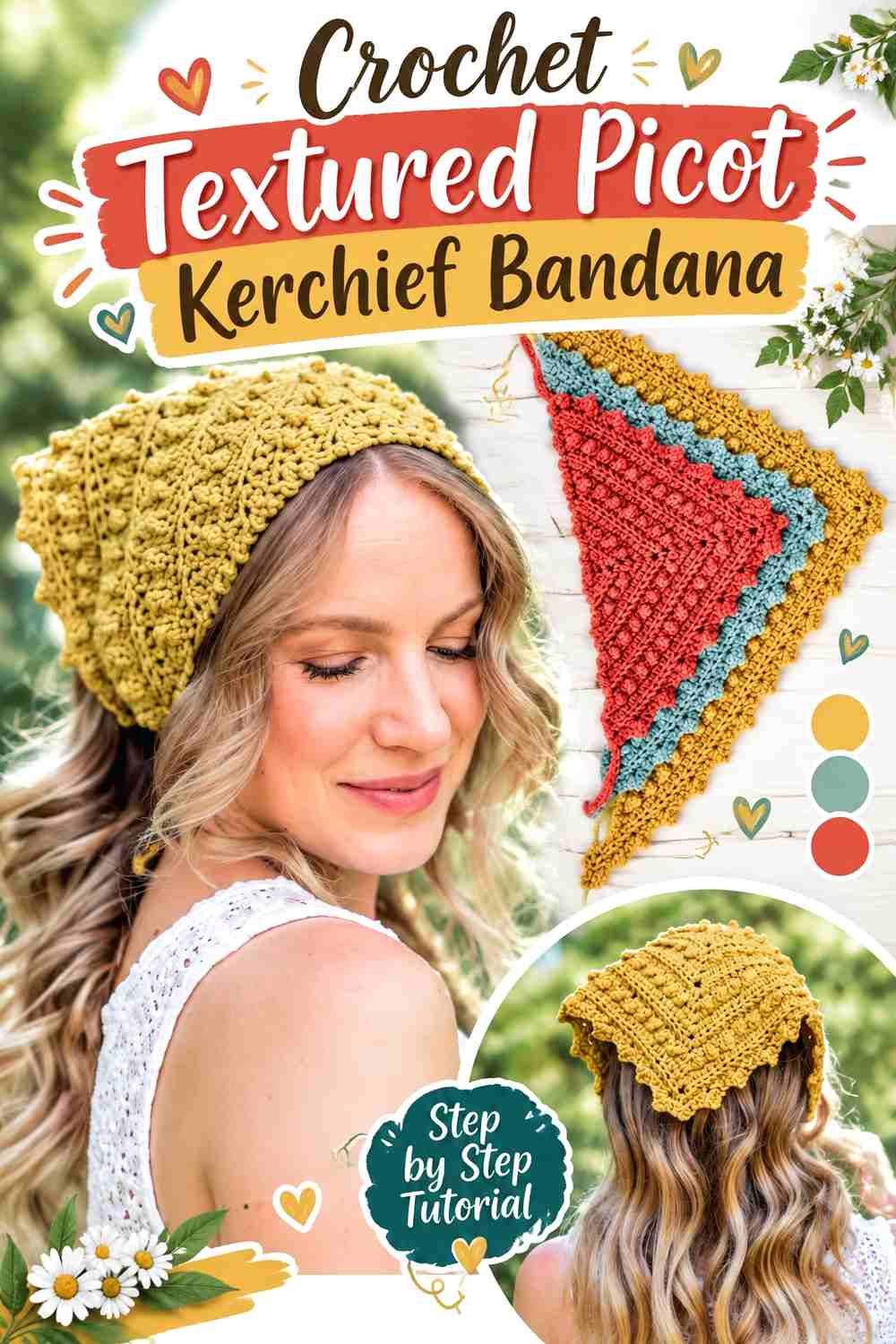
The Turtle Trunk’s picot bandana offers a more substantial alternative to highly transparent lace. Repeated small texture provides delicacy without depending on oversized mesh holes, which can make the finished piece easier to pair with heavier fall layers.
Texture Can Create Delicacy Without Maximum Openness
If you like the decorative character of lace but want more fabric visible against the hair, small repeated details are worth considering.
This approach works particularly well when you want the bandana itself to remain visually present instead of nearly disappearing into the hairstyle.
Judge Size by Placement, Not a Label
How a triangular kerchief sits depends on hairstyle, preferred point depth, and where you want the corners to land.
Try it in position before finishing and make sure the ties are securing a correctly sized body rather than compensating for one that is too narrow.
Creator Credit: The Turtle Trunk
11. Crochet Decorative Edge Bandana With Strap Options
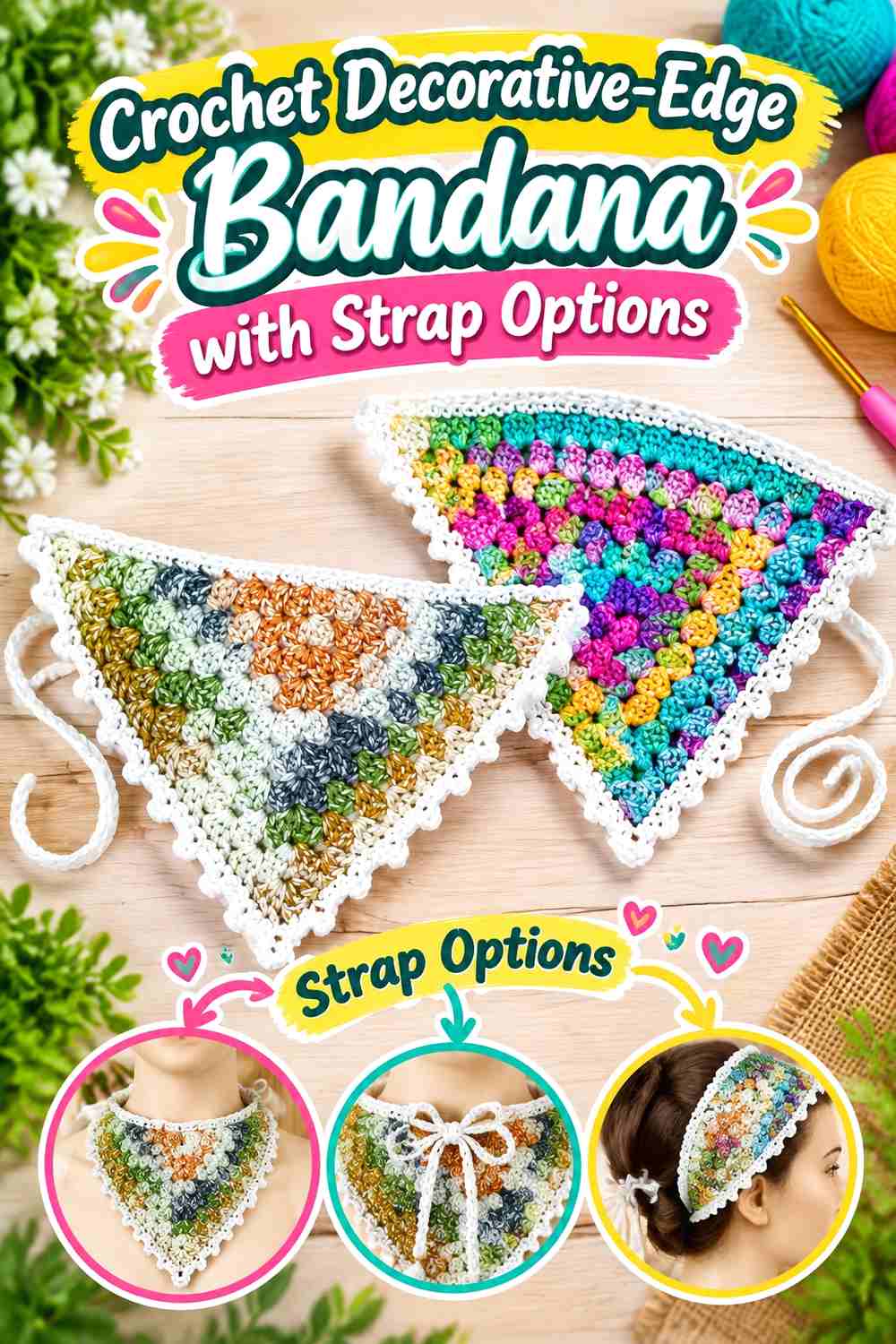
Ashten Stitches demonstrates a picot-style bandana with more than one strap treatment, making the fastening part of the design decision rather than merely the last construction detail.
Let Your Hairstyle Influence the Tie Width
A broader strap produces a more noticeable knot or bow and spreads the fastening across a wider area. A slim tie is easier to conceal beneath loose hair.
Consider that difference before finishing because the ties can noticeably change the proportions of a small triangle.
Keep the Border From Overpowering the Center
Picots create movement along the silhouette. If your yarn already has stripes, speckles, or strong color changes, compare the unfinished triangle with the proposed edge before adding more visual detail.
Sometimes the quieter finish produces the more polished fall accessory.
Creator Credit: Ashten Stitches
12. Crochet Cluster And Shell Lace Bandana
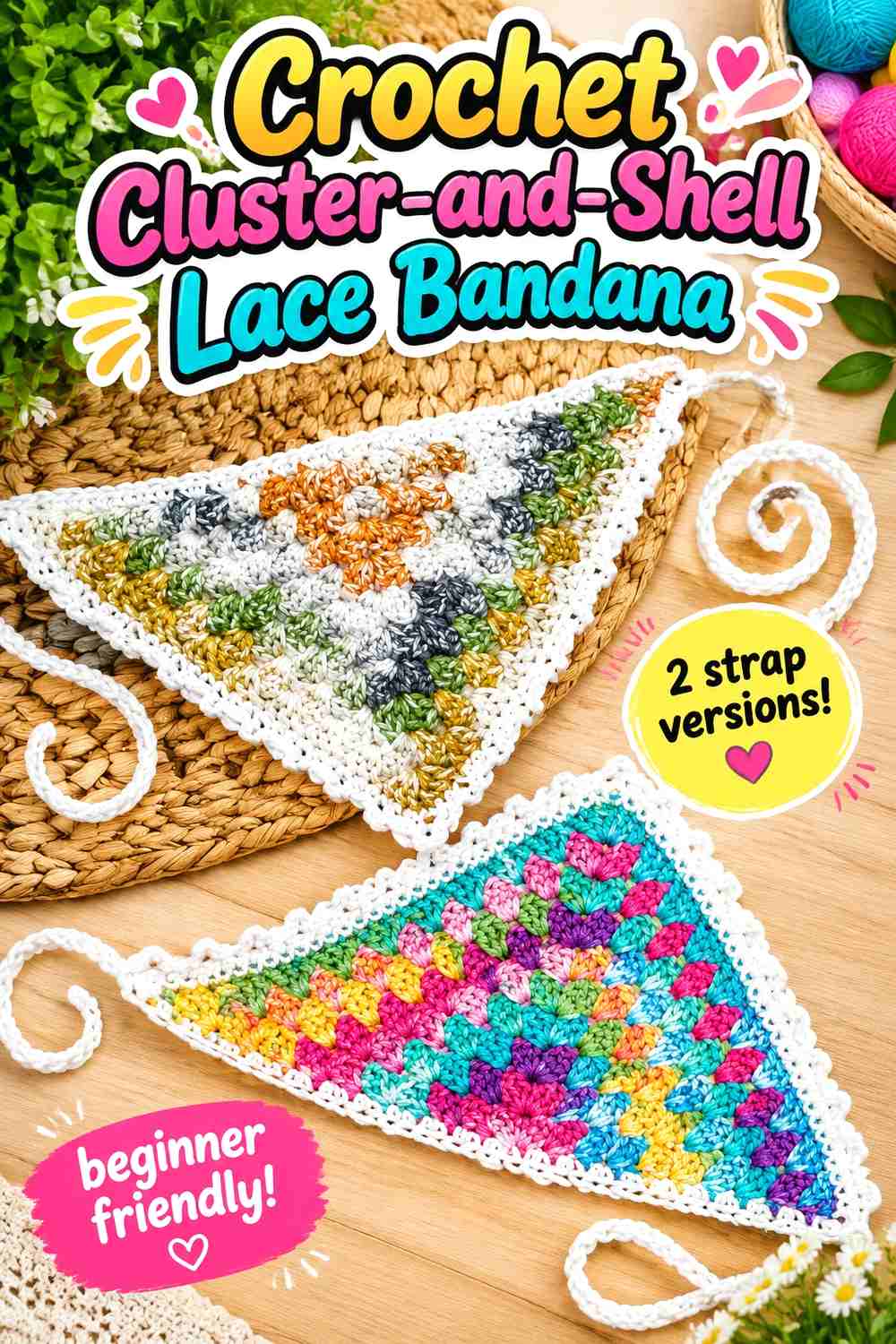
Happy stockist’s bandana uses decorative grouped stitches rather than relying entirely on a wide net. The structure provides more substance through the center while the outer treatment keeps the finished accessory visually light.
Clusters Offer More Presence Against the Hair
Grouped stitches produce stronger solid areas than simple chain mesh. That can be useful with dark fall colors that might otherwise visually disappear against similar hair tones.
If you still want an airy result, let the existing openings provide the contrast instead of adding several additional embellishments.
Watch Shell Edging for Waves
Shells place extra fabric along the perimeter. Work a representative section and let it relax before finishing the whole edge.
If the bandana begins to flare noticeably, resolve the tension or spacing issue early rather than expecting blocking to correct a heavily ruffled border.
Creator Credit: Happy stockist
13. Crochet Low Bulk Granny Lace Bandana
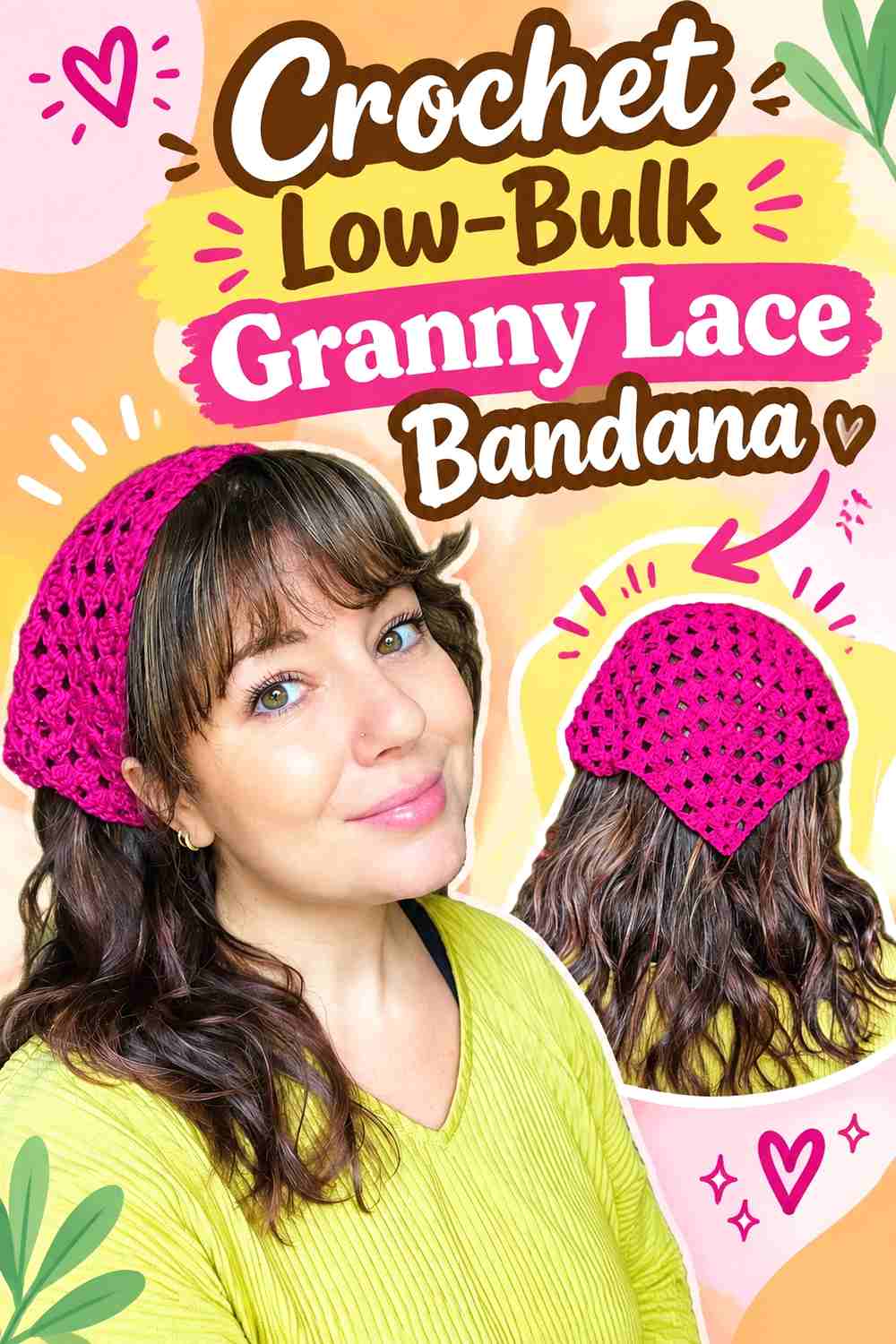
Dorothy Jean Crochet’s version addresses a practical concern with classic granny-style bandanas: excessive bulk around the sides. The tutorial is specifically designed with smaller heads or finer hair in mind, making this a useful alternative to larger granny triangles.
Side Bulk Matters as Much as the Back Point
A bandana can have a perfect-looking triangle and still feel awkward if thick fabric bunches around the temples.
Try the piece from the front and side before finishing. The upper corners should sit naturally rather than creating large folds that must be hidden beneath the hair.
Granny Openings Keep a Familiar Pattern Airy
Granny construction provides noticeable crochet fabric while retaining regular spaces between stitch groups.
For fall, this makes it easy to use a richer single color without losing texture. If changing yarn thickness, however, size the triangle from the actual fit instead of expecting the original proportions to remain unchanged.
Creator Credit: Dorothy Jean Crochet
14. Crochet One Piece No Sew Lace Bandana
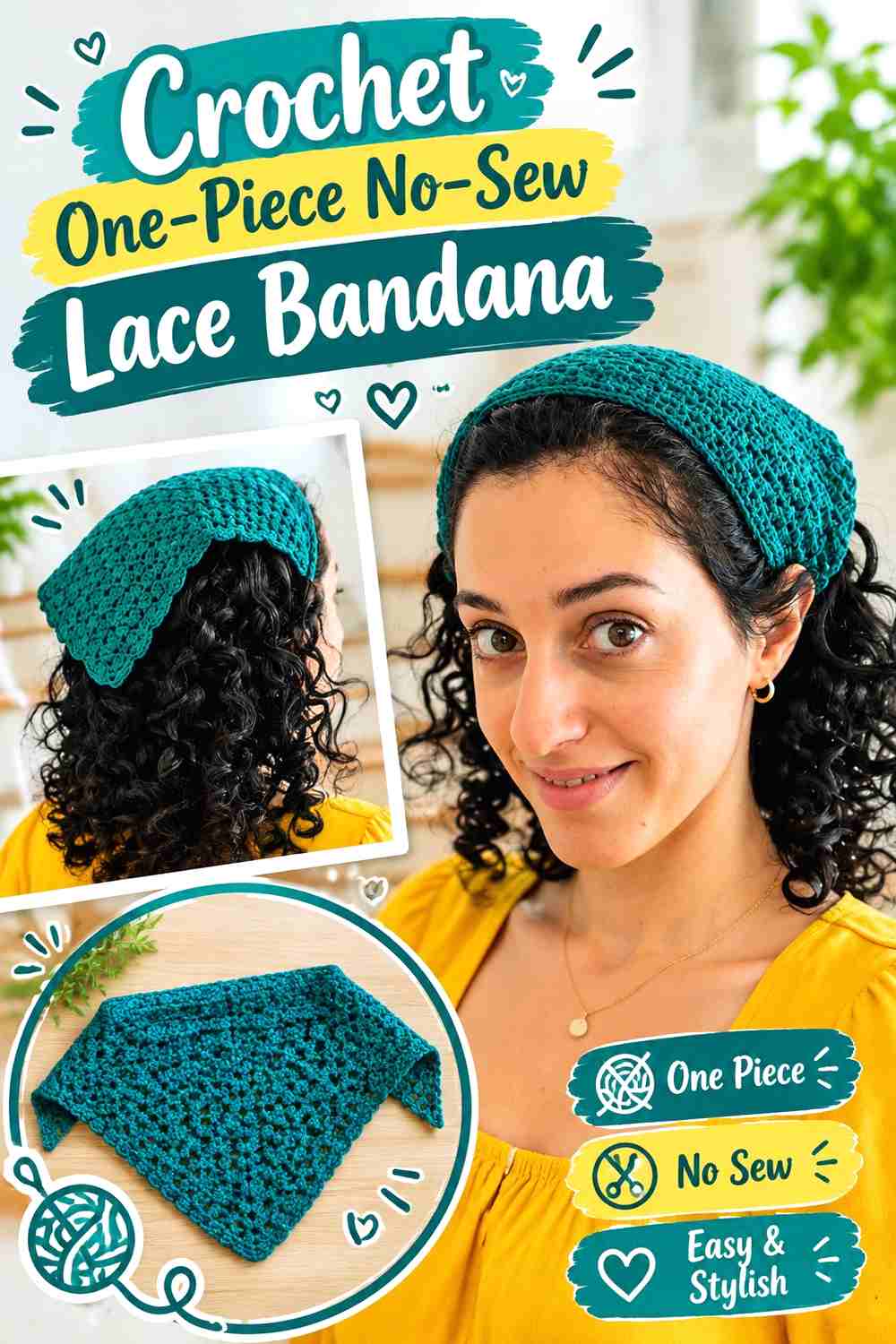
Häkelwelt demonstrates a bandana constructed without a separate sewing stage, making continuous construction one of the defining features rather than an afterthought.
Continuous Construction Keeps the Finish Streamlined
If you prefer not to assemble several motifs or sew separate components together, a one-piece bandana can keep the project visually and structurally straightforward.
That also makes it easier to judge the full triangle while it is growing instead of waiting until individual pieces are joined.
One Piece Still Needs a Fit Check
Construction simplicity does not guarantee universal sizing. Try the growing bandana against the head and check both upper width and point depth.
If you change the yarn, let actual placement guide the finished scale before adding the final edge and ties.
Creator Credit: Häkelwelt
15. Crochet Double Crochet Space Bandana
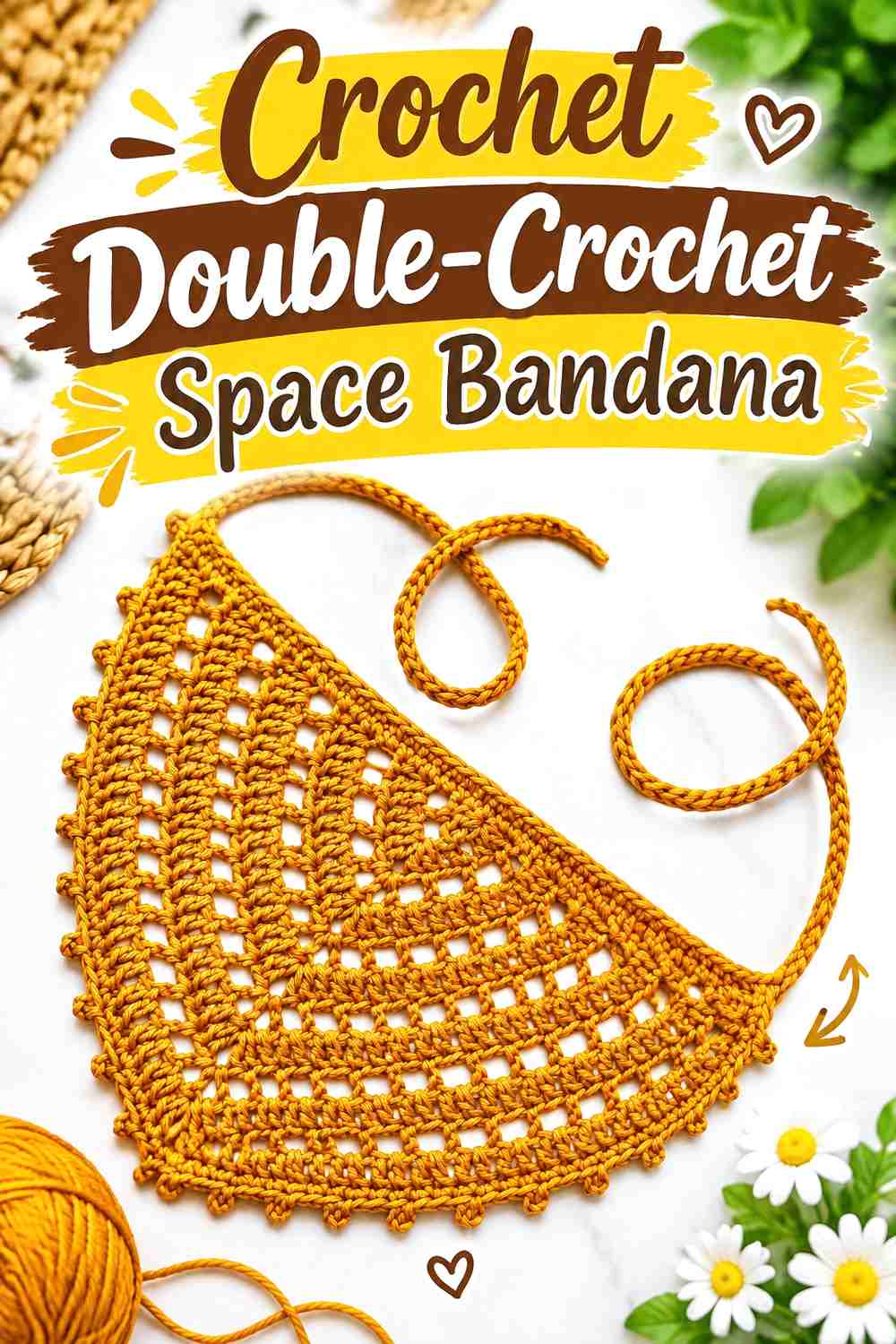
PassioKnit Kelsie’s double-crochet-space approach creates repeated open sections without turning the fabric into extremely loose mesh. It is a useful middle choice for someone who wants obvious lace but prefers an orderly, familiar stitch rhythm.
Repeated Spaces Make Tension Changes Noticeable
Consistent openings create the visual rhythm. If several spaces suddenly become much tighter or taller than their neighbors, the difference can be visible in the finished triangle.
Spread the fabric periodically instead of evaluating one space at a time.
This Structure Handles Simple Fall Colors Well
Regular openwork does not need multiple decorative techniques to look interesting. A single moss, wine, camel, charcoal, or cream shade can let the spaces create the texture.
If you add contrast edging, preview the combination first so the border supports rather than dominates the body.
Creator Credit: PassioKnit Kelsie
16. Crochet Romantic Open Lace Bandana

Crochet Bits offers another lace-centered bandana direction with a soft, decorative appearance. It provides an alternative for readers who want all-over openwork without choosing a strongly themed spiderweb, flower, or graphic filet motif.
Soft Openwork Lets Color Set the Mood
A neutral lace structure can shift easily between seasons. Pale shades emphasize delicacy, while deep fall colors make the same kind of open fabric feel richer and more substantial.
Before adding embellishment, see whether the yarn color already provides enough character.
Keep the Upper Edge Comfortable
Highly decorative lace still has to sit securely across the head. Check whether the upper edge stays reasonably flat instead of curving upward or pulling tight near the corners.
The ties should stabilize the bandana without visibly stretching the main openwork.
Creator Credit: Crochet Bits
17. Crochet Dragonfly Motif Lace Bandana
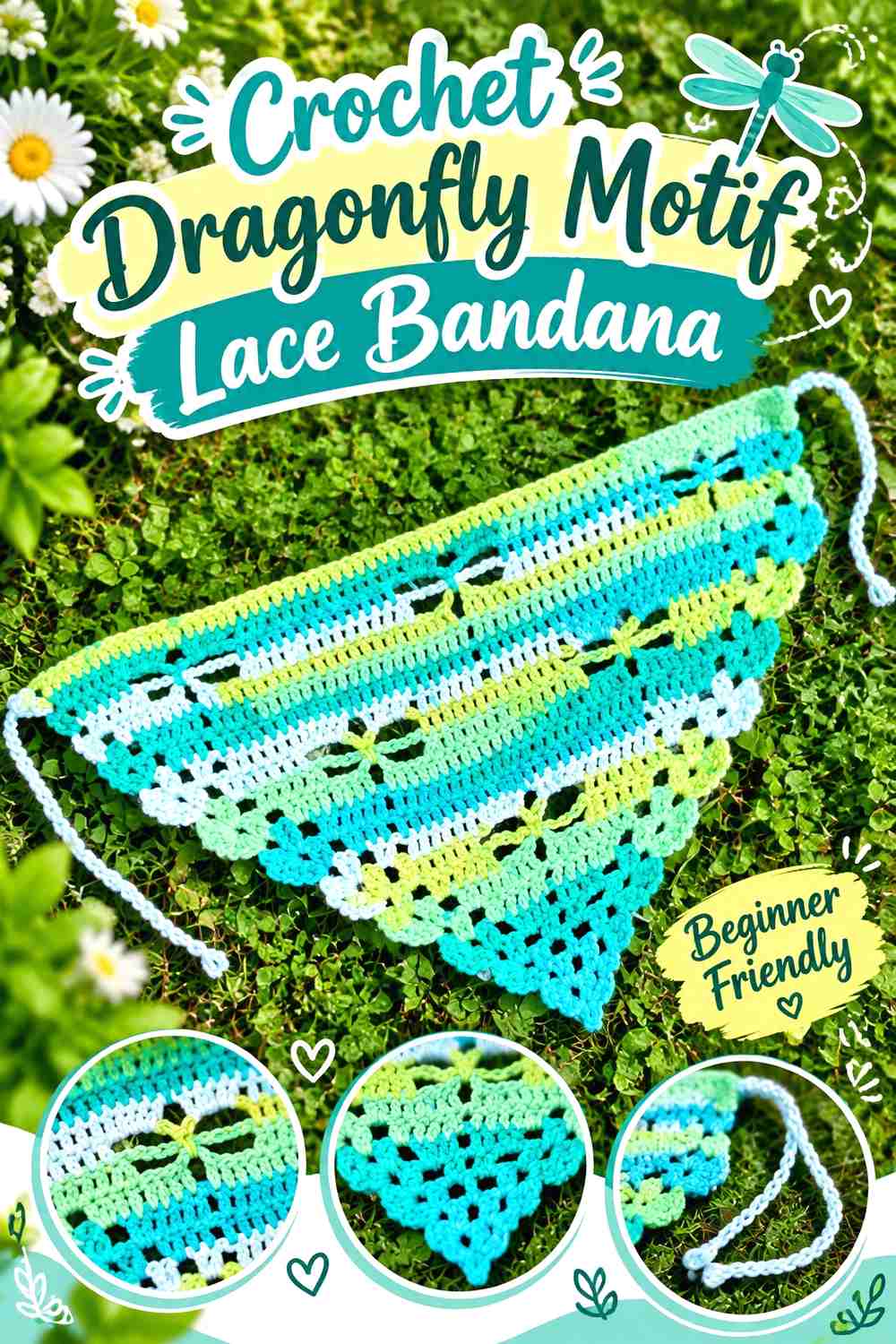
Monica Mabry’s bandana incorporates a recognizable dragonfly into the openwork, giving the negative space a specific focal image rather than treating every section of lace equally.
Check the Motif From a Normal Viewing Distance
Figurative lace has to work from farther away than the hook. Lay the bandana down periodically and step back to see whether the dragonfly remains recognizable.
A smoother yarn can help if fuzzy fibers are obscuring the smaller openings that define the image.
Keep the Central Image Balanced
Because the dragonfly draws attention toward the center, uneven shaping is easier to notice than it might be in random mesh.
Compare both sloping edges and the motif’s relationship to the center point before adding the final border.
Creator Credit: Monica Mabry
Which Crochet Lace Bandana Style Fits Your Fall Wardrobe?
For the lightest visual effect, the airy mesh and double-crochet-space ideas leave plenty of hair visible. Diamond lattice and filet designs create a more graphic result because the negative space forms orderly geometry rather than an irregular net.
For more coverage, the textured picot, granny, and cluster-and-shell options put more crochet through the center. They can sit comfortably beside sweaters and jackets without needing thicker yarn just to feel appropriate for fall.
Floral, daisy, dragonfly, and spiderweb designs make stronger statements. Those are useful when you want the bandana itself to become the focal accessory instead of simply adding texture around a hairstyle.
Modular daisy construction also differs substantially from continuously crocheted lace. Choose motifs when you enjoy arranging and joining individual pieces; choose continuous triangles when you prefer seeing the full shape develop directly on the hook.
Conclusion
The most useful way to choose among these 17 crochet lace bandana ideas is to start with structure rather than color. Decide how much hair you want visible, how deep you want the triangle to fall, and whether you prefer simple ties or a more noticeable fastening.
From there, choose the lace language that suits your fall style. Diamonds and filet feel graphic, flowers and daisies soften the look, spiderweb lace leans into the season, and picot or granny versions offer more coverage without giving up decorative texture.
Before changing yarn weight or enlarging a design, test the developing piece on the head rather than relying on assumed dimensions. Use each creator’s original tutorial for the exact construction details, then make your color and styling choices around the finished form.
Frequently Asked Questions
Can I use a thicker yarn to make a crochet lace bandana for fall?
You can adapt many lace concepts with a different yarn, but thicker yarn changes more than warmth. It enlarges stitch groups and open spaces, can create a larger triangle more quickly, and may make detailed motifs look heavier. Check the actual developing fit instead of relying on the tutorial’s original number of rows or repeats.
Which crochet lace bandana gives the most hair coverage?
Designs with clustered stitches, granny groups, or textured sections generally create more visual coverage than wide mesh. Look at how much solid crochet exists between the openings rather than judging coverage from the triangular outline alone.
Should a crochet bandana be blocked before wearing it?
Blocking can help open lace and refine the triangle, depending on the fiber and its care requirements. It should not be used as the primary fix for major differences in motif size, severely uneven edges, or a border that is dramatically too tight.
How do I know whether the triangle is deep enough?
Place the unfinished bandana where you plan to wear it and look specifically at the back point. A shallow triangle behaves more like a hair accent, while a deeper one provides more coverage and gathers more fabric near the knot. Choose according to the hairstyle and look you want rather than following a universal depth.
Why does my lace bandana stretch when I tie it?
Open crochet contains spaces that can enlarge when tension is applied. If you have to pull the ties hard enough to visibly distort the lace, the main triangle may need additional width. Ideally, the body should already reach a comfortable position before the ties are tightened.
Are motif bandanas harder to adapt than continuous lace triangles?
They involve different planning. With a motif bandana, the dimensions of the individual squares, flowers, or partial motifs determine the dimensions of the assembled piece. Compare completed motif sizes and preview the layout before joining rather than trying to correct significant differences during assembly.
What colors work well for a crochet lace bandana in fall?
The construction does not limit you to a particular palette. Cream, camel, rust, moss, espresso, burgundy, charcoal, muted plum, and deep green are all easy ways to move open crochet into an autumn wardrobe. For very detailed lace, a relatively quiet color treatment can also make the stitch structure easier to see.