Chrysanthemums are especially well suited to fall crochet because their layered petals can be interpreted in several very different ways. A scarf can use individual dimensional mums, flatter flower motifs, floral granny squares, or an all-over stitch pattern that suggests repeated blooms without adding separate appliqués.
That variety is useful because the most dramatic chrysanthemum is not always the most comfortable choice around the neck. A thick sculptural flower works better at the end of a scarf or as a removable accent, while flatter motifs can sit across a broader section without creating as much bulk. Floral lace and mum-inspired stitch patterns offer another route when you want the flower theme to become part of the fabric itself.
Not every tutorial below is an exact chrysanthemum scarf tutorial. Several teach floral scarves or scarf constructions that can be paired with a compatible chrysanthemum motif, while others focus specifically on crochet chrysanthemums. Those differences are noted so you can choose the construction first and adapt the floral treatment without assuming unrelated motifs will automatically fit together.
Quick List
- Crochet Joined-Bloom Chrysanthemum Scarf
- Crochet Repeating Floral Chrysanthemum Scarf
- Crochet Fringed Chrysanthemum Lace Scarf
- Crochet Chrysanthemum Keyhole Scarf
- Crochet Triangle Chrysanthemum Neck Scarf
- Crochet Mini Chrysanthemum Bandana Scarf
- Crochet Chrysanthemum Granny Square Scarf
- Crochet Sculptural Chrysanthemum End-Flower Scarf
- Crochet Button-Center Chrysanthemum Accent Scarf
- Crochet Padded Chrysanthemum Statement Scarf
- Crochet Chrysanthemum Appliqué Scarf
- Crochet Hooded Chrysanthemum Scarf
- Crochet Chrysanthemum-Inspired Floral Wrap Scarf
- Crochet Skinny Chrysanthemum Lace Scarf
- Crochet Chrysanthemum Flower Shawl Scarf
- Crochet Mum-Stitch Chrysanthemum Scarf
- Crochet Long Chrysanthemum Flower-Stitch Scarf
Choose the Scarf Construction Before the Chrysanthemum
Start with how you actually want to wear the finished piece. A long rectangular scarf can carry flowers near the ends without putting them directly against the neck. A triangle scarf creates a natural focal point at the center tip. A keyhole scarf has a defined fastening area where one carefully sized flower can become a feature, while a hooded scarf provides more surface area but also needs to remain comfortable around the face and shoulders.
This matters when adapting tutorials. A flower that looks balanced on a wide wrap may overwhelm a narrow scarf. Likewise, a motif intended for a granny square cannot simply replace another square unless the blocked dimensions and edge structure are compatible.
Choose the scarf form first, then decide whether the chrysanthemum should be structural, repeated, appliquéd, or removable.
Keep Dimensional Chrysanthemums Away From High-Friction Areas
Layered crochet mums can create considerable surface texture. That is attractive visually, but a large flower positioned directly at the back of the neck may flatten, catch on a coat collar, or simply feel bulky.
For dimensional flowers, consider scarf ends, outer corners, pocket fronts, or a removable brooch-style placement. Flatter motifs are better candidates for areas that sit against the neck or underneath outerwear.
Also think about the back of each flower. A neatly finished front does not automatically mean the reverse side will feel comfortable against skin or clothing. Check joins, knots, buttons, and other attachments before deciding where a motif belongs.
Match Flower Scale to the Finished Scarf Width
A chrysanthemum motif should be judged against the blocked scarf rather than against the yarn ball or unfinished fabric. On a narrow scarf, one large flower can become the entire focal point. On a broad wrap, the same flower may look relatively small and work better as part of a cluster.
If you plan to substitute one flower motif for another, make a sample first and measure it after any blocking or shaping you intend to use. Then compare that dimension with the usable width of the scarf.
This is especially important with granny squares and joined motifs. Similar-looking flowers can produce very different outer dimensions, and forcing mismatched motifs together can create rippling, tight joins, or an uneven scarf edge.
1. Crochet Joined-Bloom Chrysanthemum Scarf
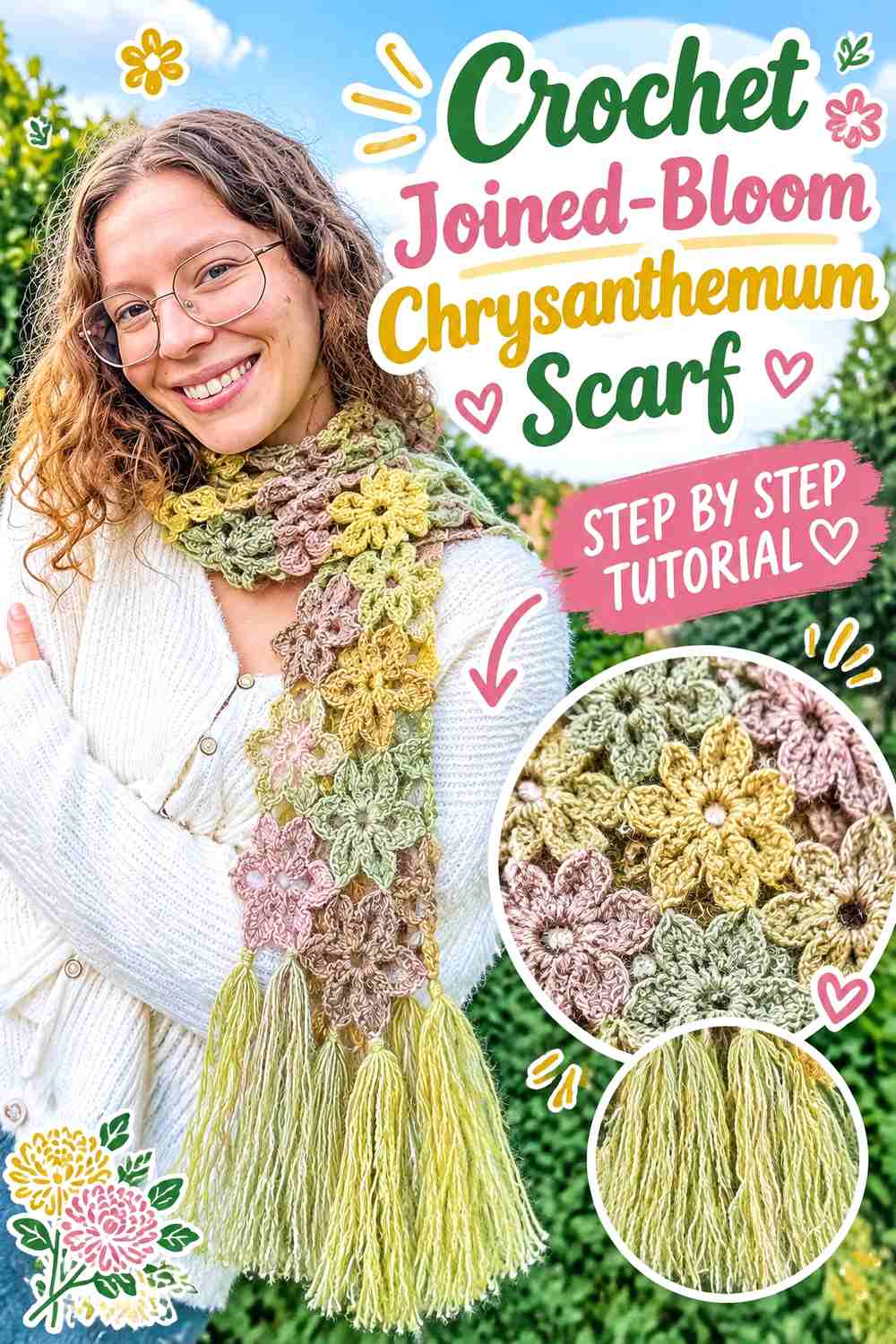
A scarf constructed almost entirely from connected flowers puts the botanical theme ahead of the background fabric. Carlota Fiaño’s tutorial demonstrates a complete floral scarf built from joined blooms and finished with fringe. The demonstrated flower is not specifically presented as a chrysanthemum, so use the tutorial for its floral-scarf construction rather than assuming an unrelated mum motif can be substituted without adjustment.
For a fall version, rust, mustard, burgundy, plum, muted coral, and creamy neutrals can give the joined-flower format a strong chrysanthemum-season character without requiring every bloom to be identical.
Substituting a Mum Changes the Join Geometry
A replacement chrysanthemum needs compatible connection points as well as an attractive center. A very round, heavily layered mum may not join as neatly as a flatter flower designed specifically for repeated scarf construction.
Compare the blocked width and outer edge of the original flower with your proposed motif before making a complete batch. If the shapes differ substantially, preserve the scarf concept while developing a different joining layout rather than forcing the two constructions together.
Fringe Adds Movement Beneath a Busy Floral Surface
A scarf already covered in flowers has plenty of visual detail. Fringe can extend that movement, but very full fringe paired with thick dimensional chrysanthemums may make the ends feel visually heavy.
Lay several proposed fringe strands beside a finished flower before committing to the whole edge. A lighter treatment can allow the flowers to remain the focus.
Creator Credit: Carlota Fiaño
2. Crochet Repeating Floral Chrysanthemum Scarf
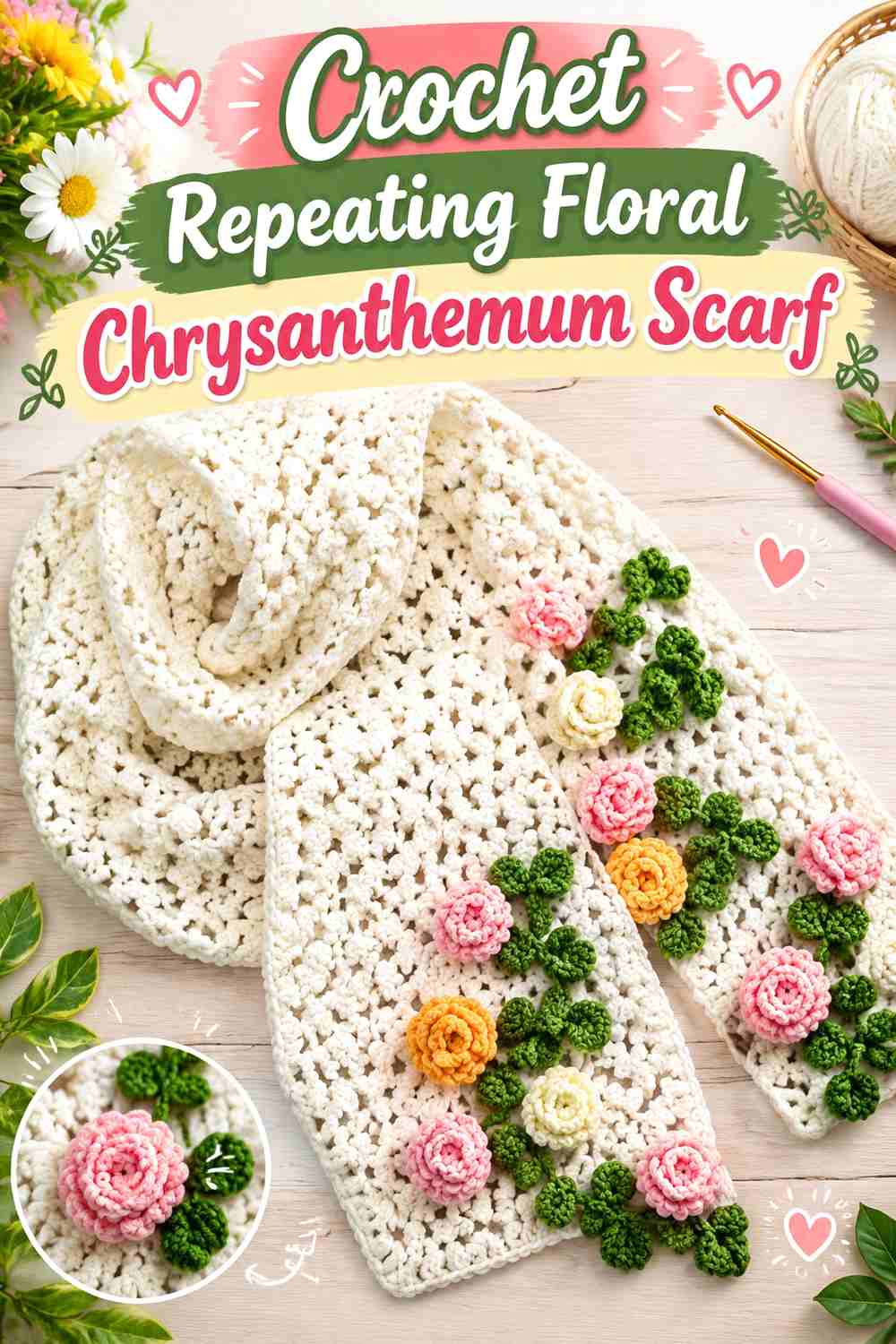
Magic Hook By Maa demonstrates a floral scarf format that can serve as inspiration for a repeated chrysanthemum look. Rather than placing one oversized bloom at each end, this approach suits readers who want the flower theme distributed across the scarf.
The important adaptation question is whether you want literal mums or simply a floral surface that evokes them through fall color and repeated petal shapes. The latter usually keeps the scarf flatter and easier to layer under a jacket.
Repetition Needs a Clear Color Plan
When flowers repeat along a scarf, frequent color changes can become either a feature or a distraction. A controlled palette of two or three related mum colors can make the scarf feel cohesive, while a wide assortment produces more of a garden effect.
Arrange your yarn choices in sequence before beginning the repeated section. This lets you spot awkward clusters of similar shades before they are built into the scarf.
Keep the Neck Area Softer Than the Statement Ends
If you introduce extra-dimensional chrysanthemums to a repeating floral scarf, concentrate them farther from the center neck area.
The main body can carry the floral pattern, while one or two raised blooms at the ends create a stronger focal point without placing unnecessary thickness where the scarf wraps most tightly.
Creator Credit: Magic Hook By Maa
3. Crochet Fringed Chrysanthemum Lace Scarf
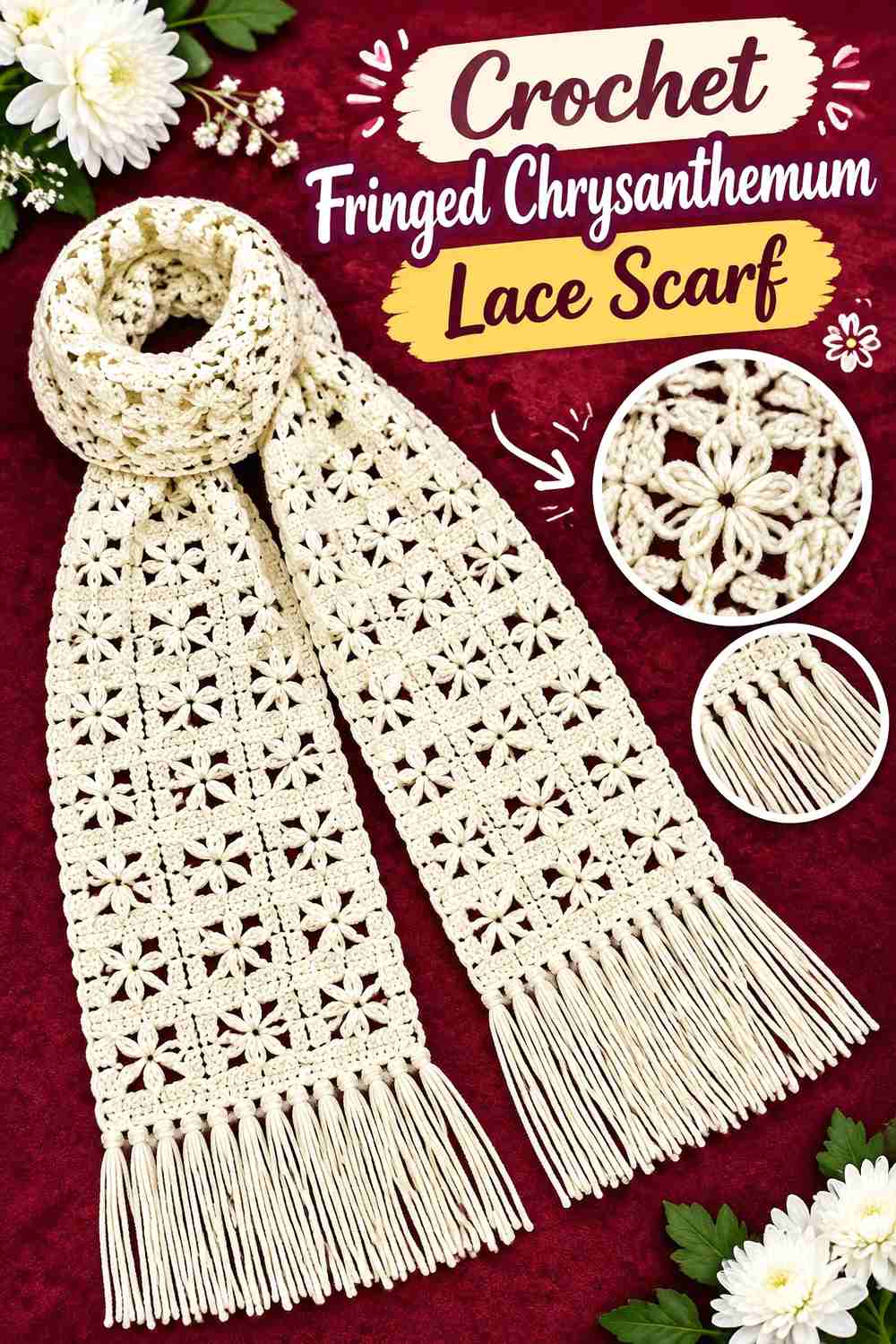
Knit and Crochet Design demonstrates a flower-pattern scarf with fringe, making this a useful choice when you want a traditional long scarf rather than a chain of separate motifs. The floral fabric already provides surface interest, so a chrysanthemum interpretation can come from autumnal color, carefully placed appliqués, or both.
This construction is especially useful if you like flowers but do not want thick petals covering the entire accessory.
Lace Lets the Scarf Stay Visually Light
Open floral fabric creates negative space around the flower shapes. That can keep darker fall colors such as burgundy, aubergine, deep orange, or brown from making the scarf look overly dense.
If you add separate mums, keep their visual weight in proportion to that airy background. A very heavy flower can pull a delicate section out of shape.
Check the Fringe Against the Flower Placement
Fringe and appliqués compete for the same end-of-scarf space.
If the chrysanthemums sit close to the lower edge, temporarily arrange the fringe underneath before permanently attaching either detail. You may prefer shorter fringe, fewer flowers, or a small clear band between the two.
Drape Matters More Than Maximum Texture
A long scarf needs to bend and wrap comfortably. Adding layers of raised petals along its entire length can reduce that flexibility.
Preserve the scarf’s wearable drape first and use the chrysanthemum texture selectively where it will have the most visual impact.
Creator Credit: Knit and Crochet Design
4. Crochet Chrysanthemum Keyhole Scarf
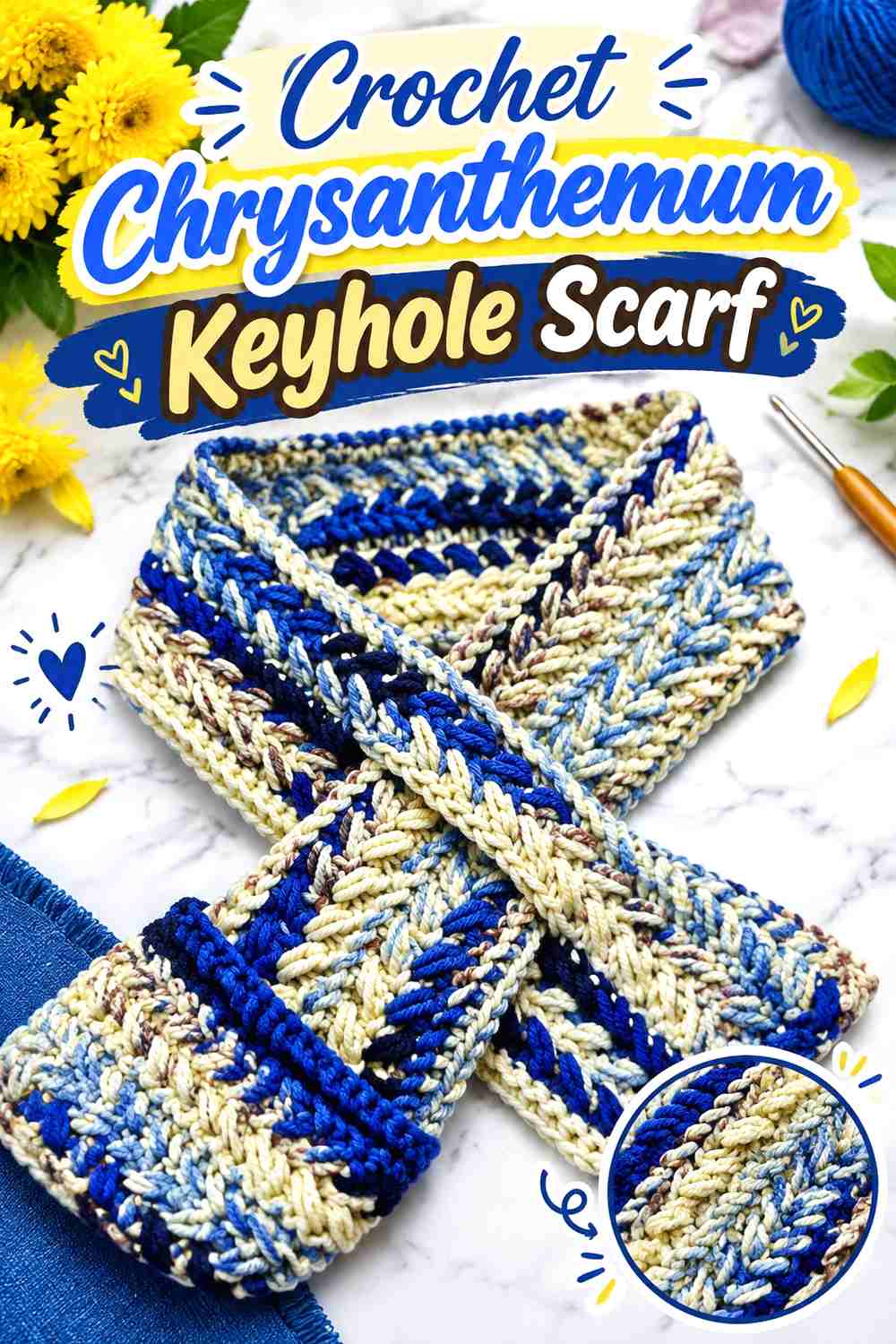
A keyhole scarf stays in place differently from a conventional rectangular scarf because one section passes through an opening rather than relying entirely on wrapping or knotting. Atreyu Crochet’s tutorial provides that underlying construction; the chrysanthemum is an adaptation rather than part of the original design.
One carefully positioned mum near the keyhole can make sense because the fastening point already attracts attention.
Keep the Flower Clear of the Opening
Do not let a dimensional chrysanthemum interfere with the section that needs to pass through the keyhole.
Complete and test the fastening first. Then temporarily place the flower while the scarf is being worn so you can see where it remains visible without blocking normal use.
One Focal Bloom Can Be Enough
A keyhole scarf already has an asymmetric visual feature. Repeating large chrysanthemums across both ends can compete with that shape.
Consider one medium flower near the visible fastening area or a small cluster placed slightly below it. This keeps the floral detail intentional rather than simply filling available space.
Creator Credit: Atreyu Crochet
5. Crochet Triangle Chrysanthemum Neck Scarf
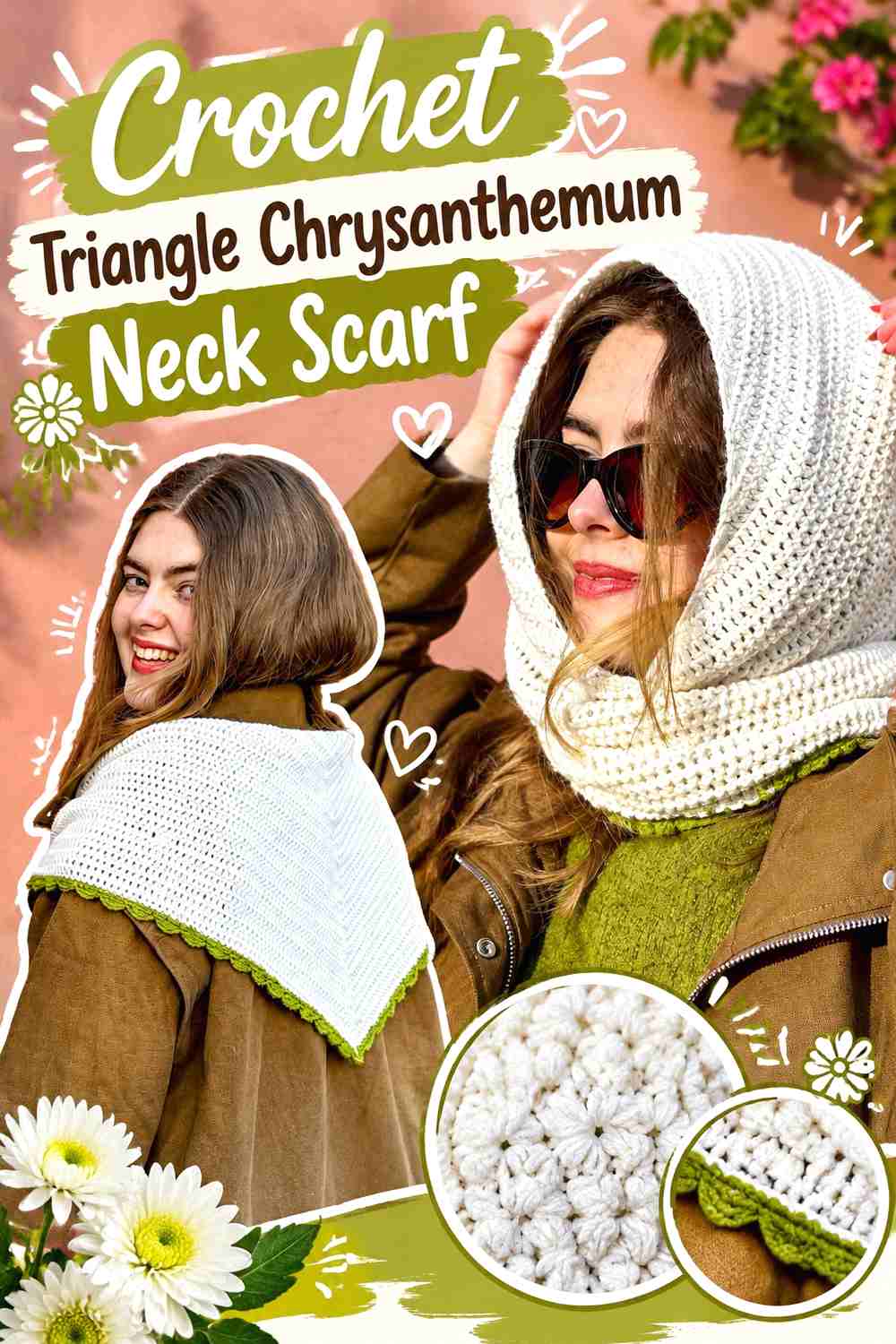
Crochet with Linni demonstrates a triangular scarf that can be worn in several ways and includes a decorative border. That triangle gives a chrysanthemum adaptation a natural focal point: the central point can carry a flower while the upper edge remains comparatively clean.
The source tutorial teaches the scarf rather than a chrysanthemum motif, so treat the flower as a separate embellishment that must be sized to the finished triangle.
The Center Point Naturally Frames a Flower
A flower placed near the lower point remains visible when the scarf is worn with the triangle facing forward.
Before attaching it, put the completed scarf on and mark the location you actually see. The geometric center of the flat triangle is not always the most effective visual position once the fabric curves around the neck.
A Scalloped Edge Already Adds Detail
Decorative borders and layered mums can complement each other, but both attract attention.
If the border is prominent, a single chrysanthemum may be enough. If you want a larger flower cluster, consider simplifying other decorative additions so the point does not become overcrowded.
Test the Added Weight on the Point
A heavy flower can pull the triangle downward and change the way the upper edge sits.
Pin or baste the motif temporarily and wear the scarf before securing it. If the point stretches noticeably, a smaller or flatter mum will usually suit the construction better.
Creator Credit: Crochet with Linni
6. Crochet Mini Chrysanthemum Bandana Scarf
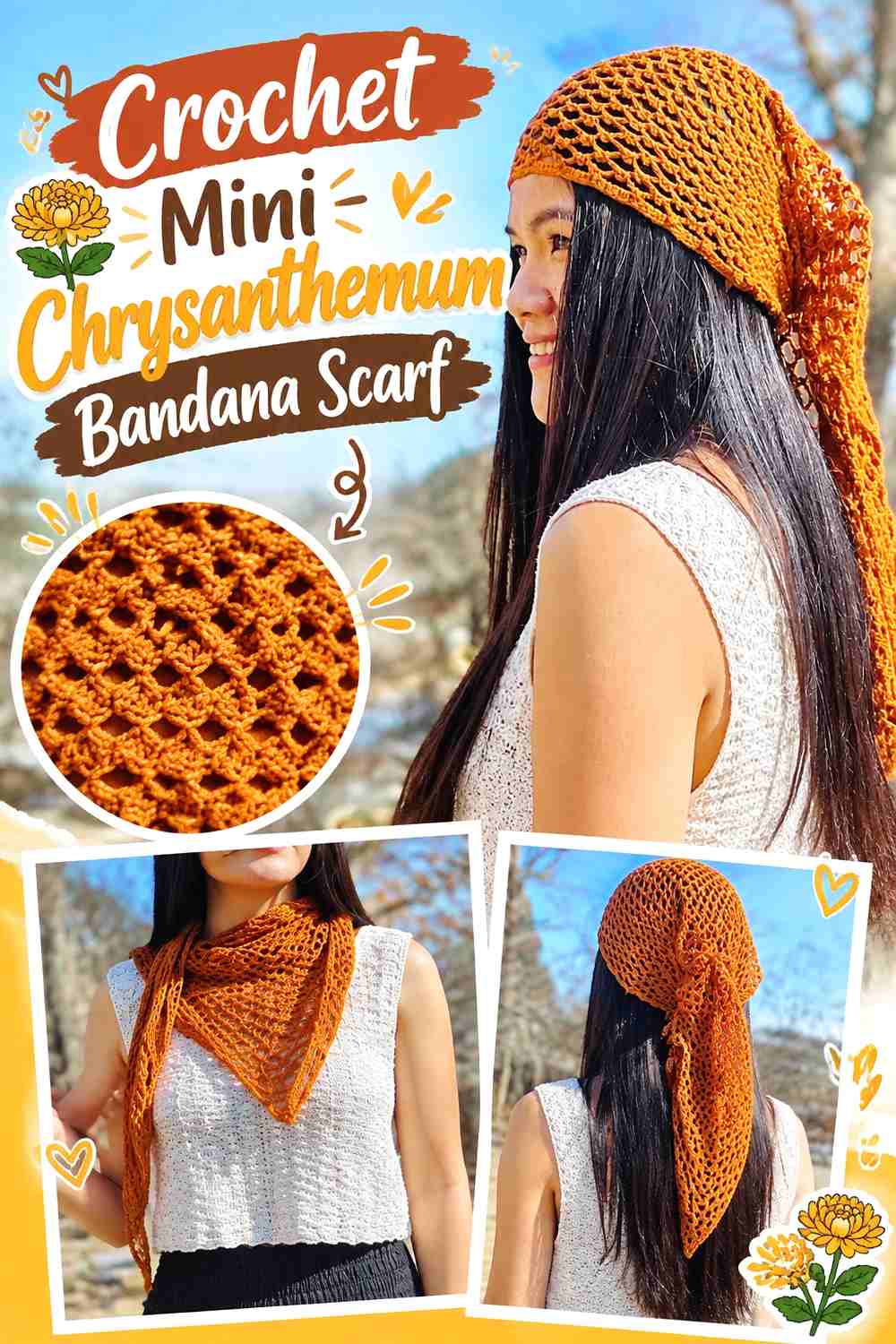
KnitcroAddict’s mini scarf or shawl provides a compact triangular format that works well when you want a fall floral accessory rather than a full winter scarf. Its smaller visual area means a chrysanthemum needs to be chosen more carefully than it would on a large wrap.
This is a good concept for using the flower as a small accent rather than covering the entire scarf in petals.
Mini Scarves Magnify Oversized Embellishments
A mum that seems medium-sized on a table can dominate a small neck scarf.
Place the completed motif on the blocked scarf and compare it with the central triangle. If the flower hides a large portion of the fabric, consider a smaller motif or a single flat flower rather than a dense cluster.
Side Placement Can Feel Less Formal
A flower directly at the center point creates a symmetrical, statement look. Moving it toward one end produces a more casual asymmetry and can keep the bulk away from the center of the chest.
Try both placements with removable pins before deciding.
Creator Credit: KnitcroAddict
7. Crochet Chrysanthemum Granny Square Scarf
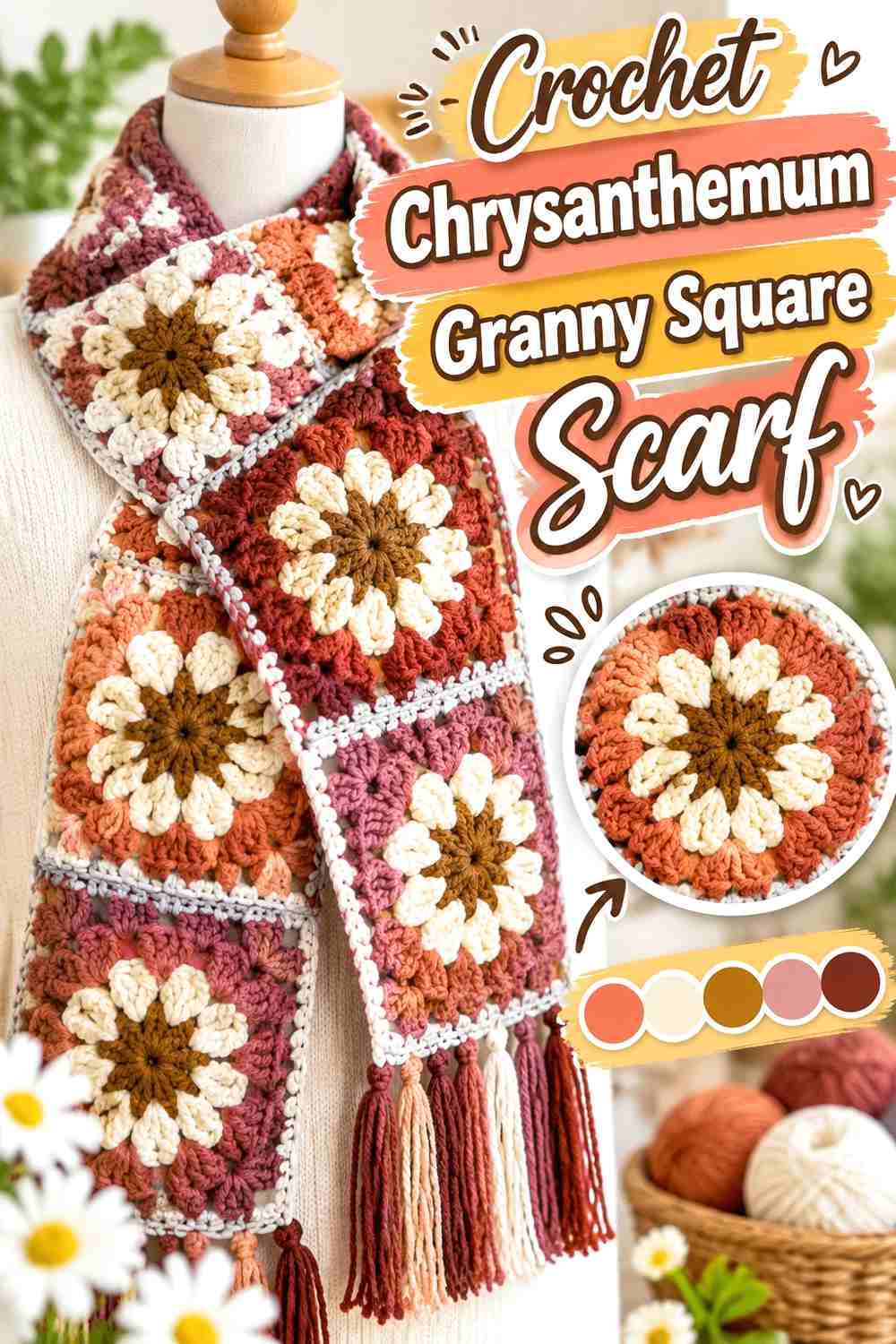
Mama In A Stitch’s flower granny square is specifically presented as a motif that can be used for projects including scarves. Its large central bloom makes it a strong candidate for a fall chrysanthemum interpretation when worked in mum-like shades.
Unlike a separate appliqué, the flower is built into the square, so the scarf can have substantial floral texture without sewing individual blooms onto a finished background.
Blocked Square Size Controls the Scarf Proportions
Before making a complete stack of motifs, finish and block one square using your chosen yarn.
Its width determines how wide a single-column scarf will be and how bulky multiple columns may become. Changing yarn weight simply to make the flowers larger also changes the overall scarf scale.
Alternate Flower Colors Without Losing the Background
Using a consistent background around burgundy, gold, rust, cream, and plum centers can tie varied chrysanthemum colors together.
If every round changes color independently, the individual mums may lose definition. Decide which part represents the flower, foliage, and surrounding field before multiplying the motif.
Joining Becomes Part of the Finished Design
The space between floral squares is visually important because each chrysanthemum has a strong center.
A high-contrast join emphasizes the modular construction, while a join close to the background color makes the flowers appear more continuous. Choose deliberately instead of treating seaming as an invisible technical detail.
Creator Credit: Mama In A Stitch
8. Crochet Sculptural Chrysanthemum End-Flower Scarf
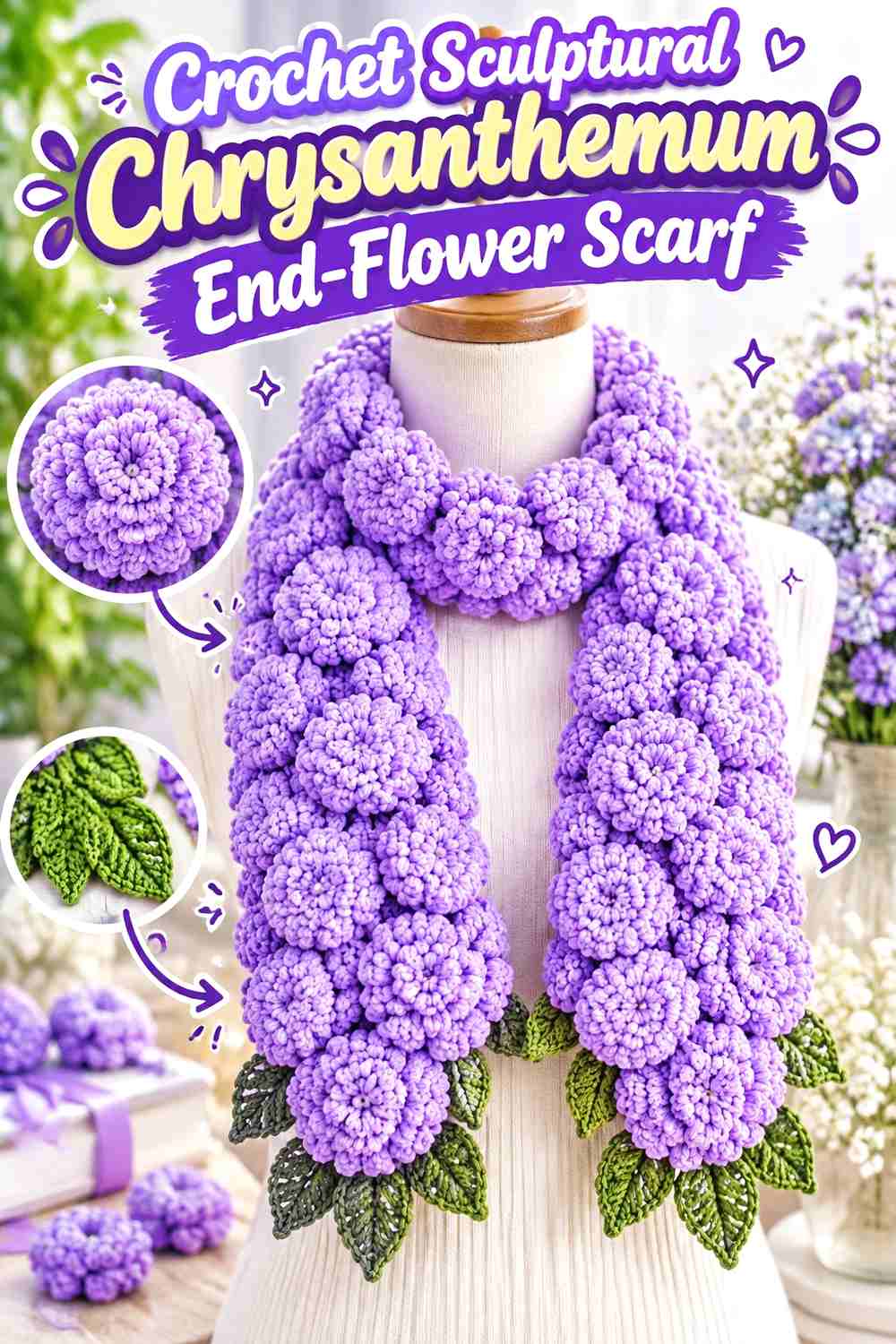
Crochet Craftsman demonstrates a realistic dimensional chrysanthemum with leaves. The tutorial is for the flower rather than a scarf, and its original assembly includes elements suited to a decorative stemmed flower. For a wearable adaptation, use the petal and leaf appearance as inspiration while avoiding rigid stem components in the scarf itself.
A single sculptural mum at each scarf end can create a strong botanical look without covering the neck in raised petals.
Remove Bouquet Structure From the Wearable Version
Materials that help a flower stand upright in a bouquet are not automatically suitable inside a soft scarf.
If you adapt the bloom for clothing, think of it as a flexible textile embellishment rather than a stemmed flower. Check the tutorial’s construction and decide which components belong only to the decorative bouquet version.
Large Petal Layers Need Secure Support
A full chrysanthemum distributes more weight across its attachment area than a tiny flat appliqué.
Rather than catching only one small point on the scarf, make sure the finished flower sits securely and does not cause a narrow section of fabric to sag. Test the scarf hanging vertically before finalizing the placement.
Creator Credit: Crochet Craftsman
9. Crochet Button-Center Chrysanthemum Accent Scarf
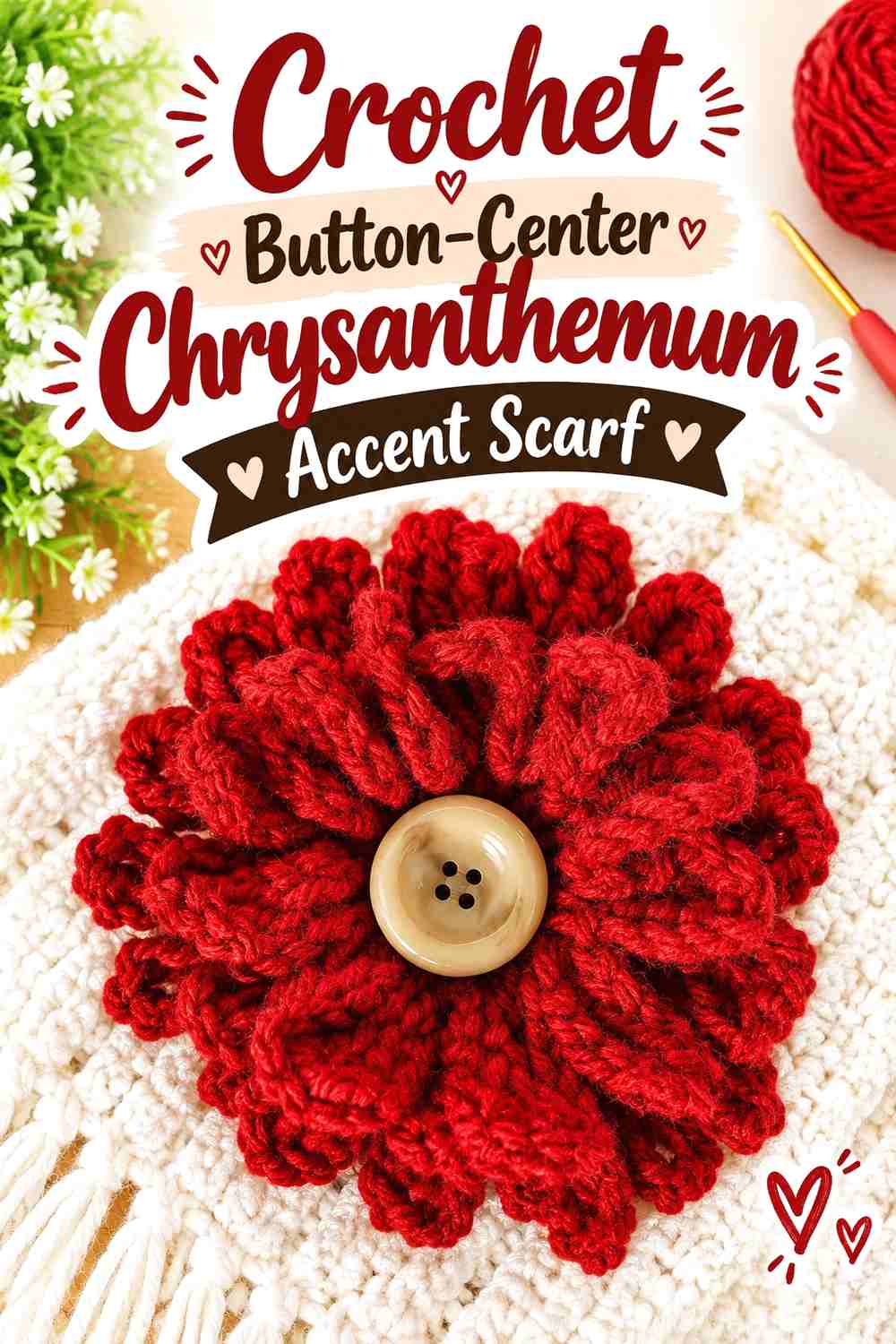
Maggies Crochet Maggie Weldon’s chrysanthemum design uses a button at the center, giving this motif a different character from yarn-only flowers. On a scarf, that firm center can work well as a deliberate decorative accent near an end or lower corner.
Because the tutorial teaches the flower rather than the complete scarf, pair it with a scarf fabric that is stable enough to support the embellishment.
The Button Makes Placement More Important
A button adds a hard component to an otherwise soft accessory.
Avoid placing a prominent button-backed chrysanthemum where it will press directly against the neck or become trapped underneath a tightly wrapped layer. Lower scarf ends generally give it more space.
Coordinate the Center With the Fall Palette
The button can either disappear into the flower or become a clear contrasting focal point.
Before sewing it in place, compare several center options against the finished petals. A highly contrasting center makes the flower more graphic, while a related shade keeps attention on the layered petal texture.
Check the Reverse Side Before Wearing
Secure attachment matters, but so does comfort.
Inspect the back of the finished flower and its connection to the scarf for hard edges or exposed sewing that could catch on clothing. A polished front does not compensate for an uncomfortable reverse side.
Creator Credit: Maggies Crochet Maggie Weldon
10. Crochet Padded Chrysanthemum Statement Scarf
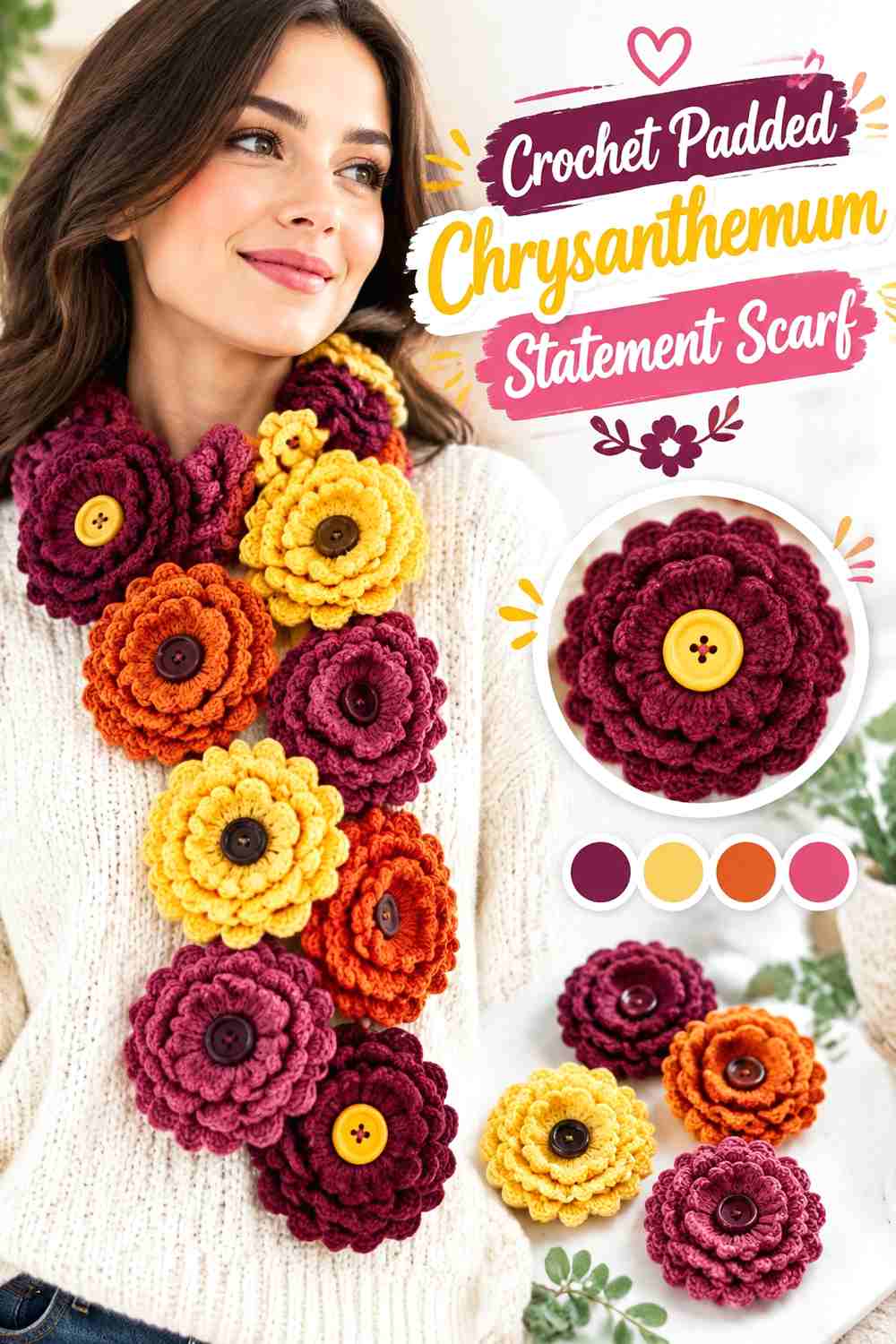
Anita Louise Crochet’s chrysanthemum tutorial creates a dimensional flower using buttons and a small amount of stuffing. That makes it one of the most sculptural options in this collection and better suited to a statement placement than all-over repetition.
The flower itself is the tutorial project; the scarf needs to be selected or crocheted separately.
Stuffing Creates Volume That Should Stay Off the Neck
A padded flower can maintain its rounded form more strongly than a flat appliqué, but that volume may be uncomfortable when pressed between the neck and a coat.
Position it where the scarf hangs freely, such as near a lower end, pocket, or decorative corner.
One Dimensional Mum Can Replace a Whole Cluster
Because the flower projects outward, it already creates depth and shadow.
Before making several, test a single flower on the finished scarf. Multiple padded mums may add more thickness than the accessory needs, particularly if the scarf fabric itself is textured.
Creator Credit: Anita Louise Crochet
11. Crochet Chrysanthemum Appliqué Scarf
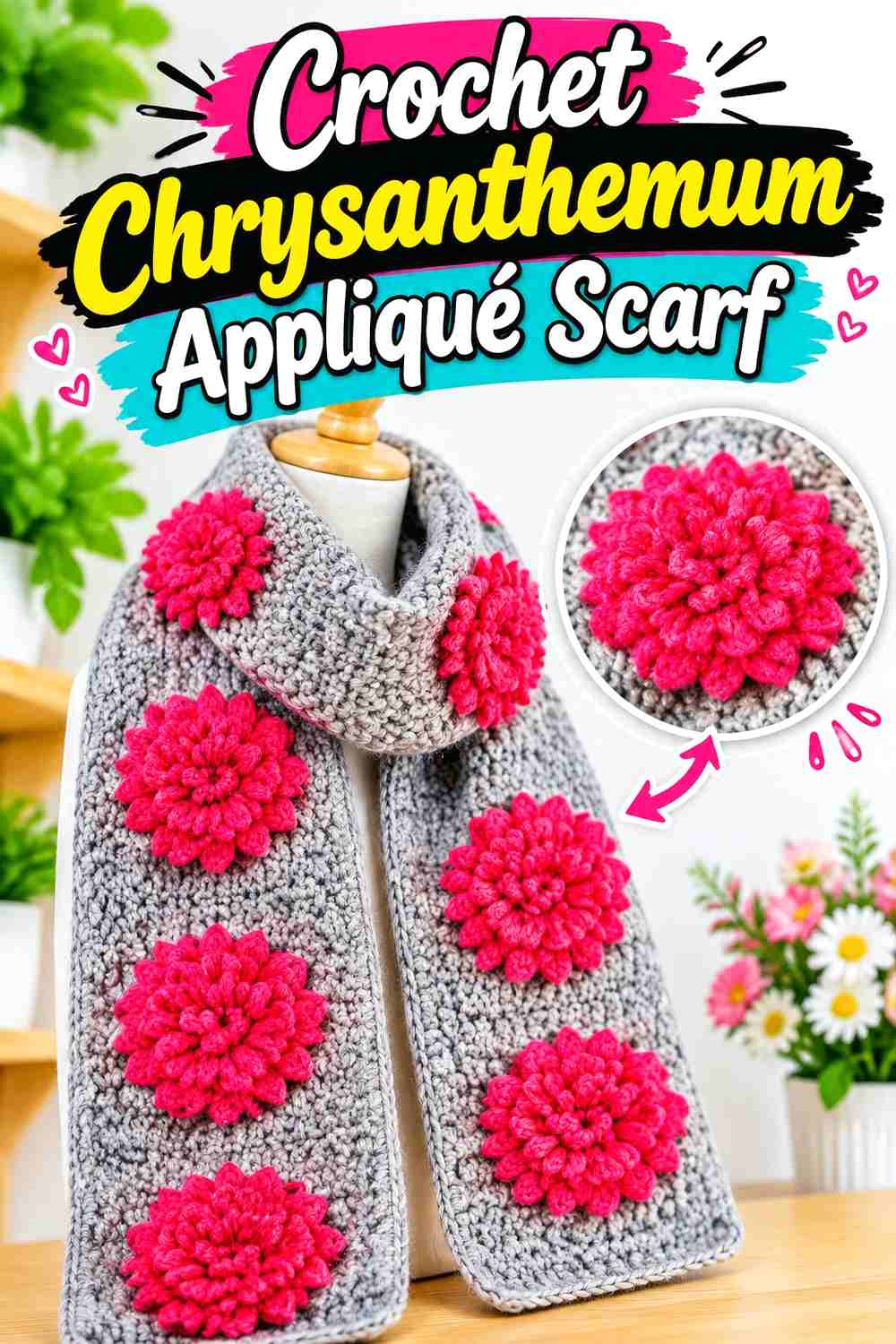
Crochet with Clare’s chrysanthemum is categorized as an appliqué or embellishment, making it a natural option when you already have a scarf construction you like and simply want to introduce a recognizable mum motif.
This approach also gives you more control over placement than a scarf built entirely from flower motifs.
Flat Attachment Preserves More Drape
Even a textured flower can be attached so its base sits relatively close to the scarf.
That makes appliqués particularly useful on scarf ends, broad lower sections, or a pocket front. Keep the central neck area less crowded if you want the scarf to wrap easily.
Repetition Does Not Have to Be Symmetrical
Matching flowers on both ends create a formal balanced look, but an asymmetric cluster can feel more contemporary.
Try one larger mum on one end and a smaller secondary flower farther up the opposite side, or keep all of the flowers on one visible tail. Lay out the whole scarf before stitching anything down.
Metallic or Shiny Yarn Changes the Mood
The source motif has been associated with a yarn containing shimmer, but you do not need shine to create a convincing fall chrysanthemum.
If you do choose a reflective fiber, consider limiting it to the petals or center. Too many competing textures can make a layered flower harder to read.
Creator Credit: Crochet with Clare
12. Crochet Hooded Chrysanthemum Scarf
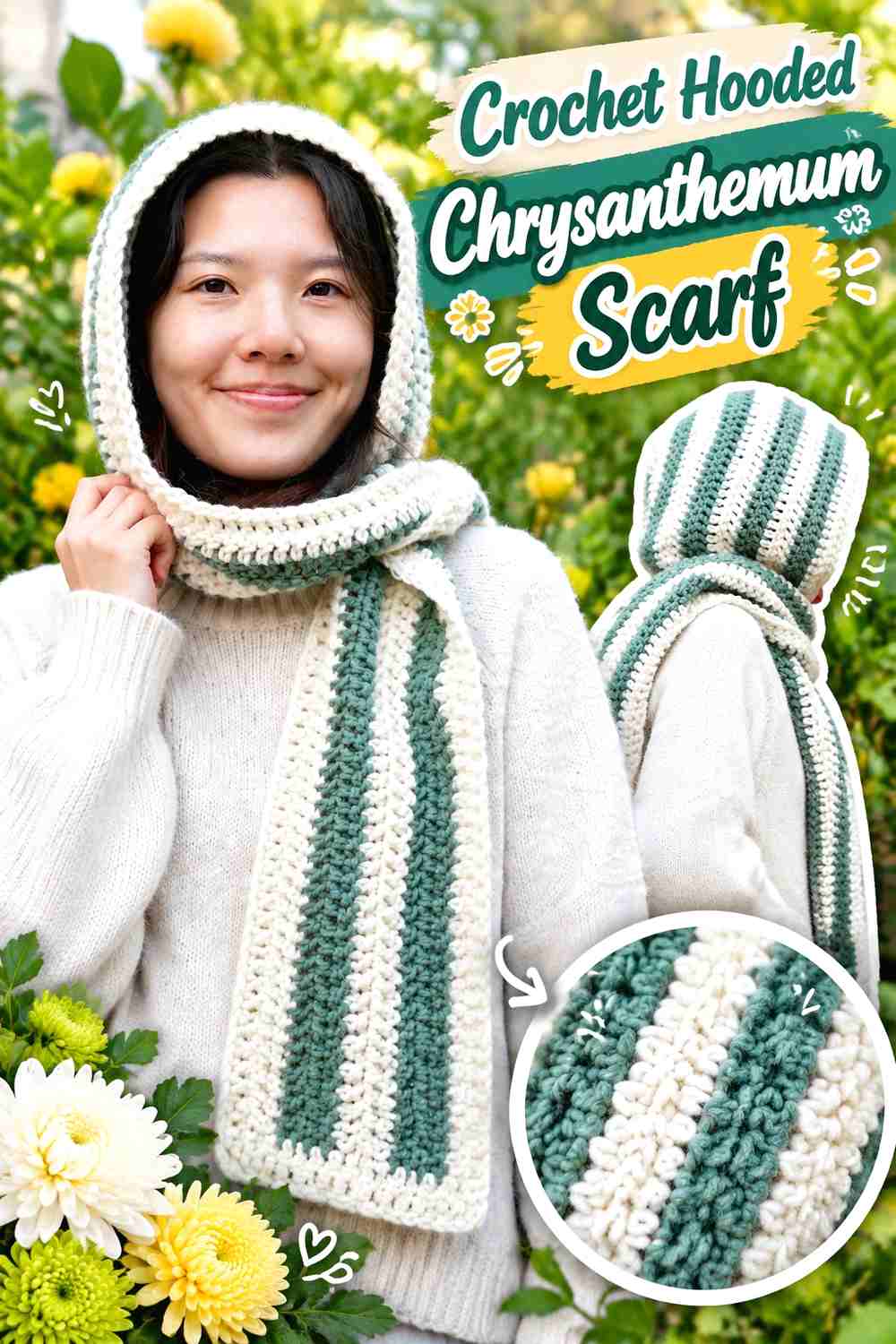
VivCrochets demonstrates a no-sew hooded scarf or scoodie with long scarf sections. The original project is not floral, which is useful here: it gives you an uncomplicated background for chrysanthemum accents without requiring changes to the hood construction itself.
Flat mums can be added to the lower scarf ends, while the hood remains clear and functional.
Keep Raised Flowers Away From the Hood Opening
Flowers near the face can interfere with how the hood folds and may brush against hair or outerwear.
The scarf tails offer a better area for dimensional accents. If you want flowers on the hood itself, flatter appliqués are less likely to distort the edge.
Chrysanthemums Can Anchor the Long Scarf Ends
A flower positioned toward the bottom of each tail creates visual weight away from the face.
Before attaching the motifs, wear the finished scoodie with the tails hanging naturally. This shows where the flowers will actually sit against the body rather than where they appear to belong when the project is laid flat.
Do Not Let Embellishments Hide the Drape
A hooded scarf already contains more fabric than a standard neck scarf.
Large clusters on both tails can make the lower sections feel disproportionately dense. Start with one proposed motif per side and assess the overall silhouette before adding more.
Creator Credit: VivCrochets
13. Crochet Chrysanthemum-Inspired Floral Wrap Scarf
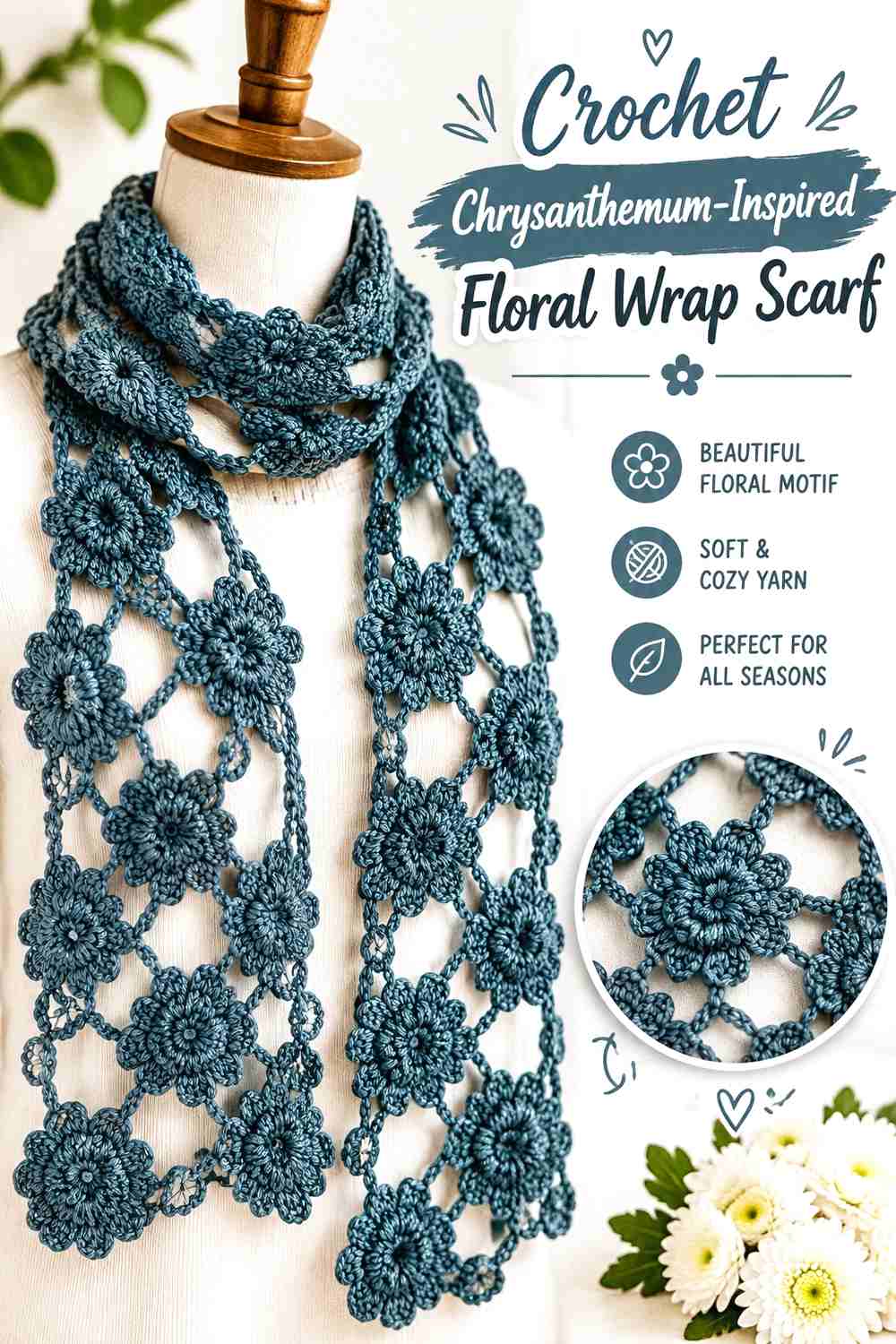
Yarnspirations demonstrates a floral shawl constructed with a flower stitch pattern. The tutorial is floral rather than specifically chrysanthemum-based, so this idea uses color and overall flower density to create a mum-inspired fall wrap rather than claiming the stitch itself is a literal chrysanthemum.
This is a good direction for readers who want the floral theme spread throughout the fabric instead of sewing separate flowers onto it.
An All-Over Flower Pattern Avoids Heavy Appliqués
Because the flowers emerge from the fabric construction, the surface can remain more integrated than a scarf covered with separately attached dimensional blooms.
That is useful when you expect to wrap the scarf several times or wear it underneath outerwear.
Fall Color Can Do Much of the Chrysanthemum Work
Deep gold, brick, wine, mauve, cream, and burnt orange immediately move a floral wrap toward an autumn garden mood.
A multicolor yarn can produce gradual shifts, while solid color makes the stitch structure easier to see. Choose according to whether the petal texture or the palette should dominate.
Creator Credit: Yarnspirations
14. Crochet Skinny Chrysanthemum Lace Scarf
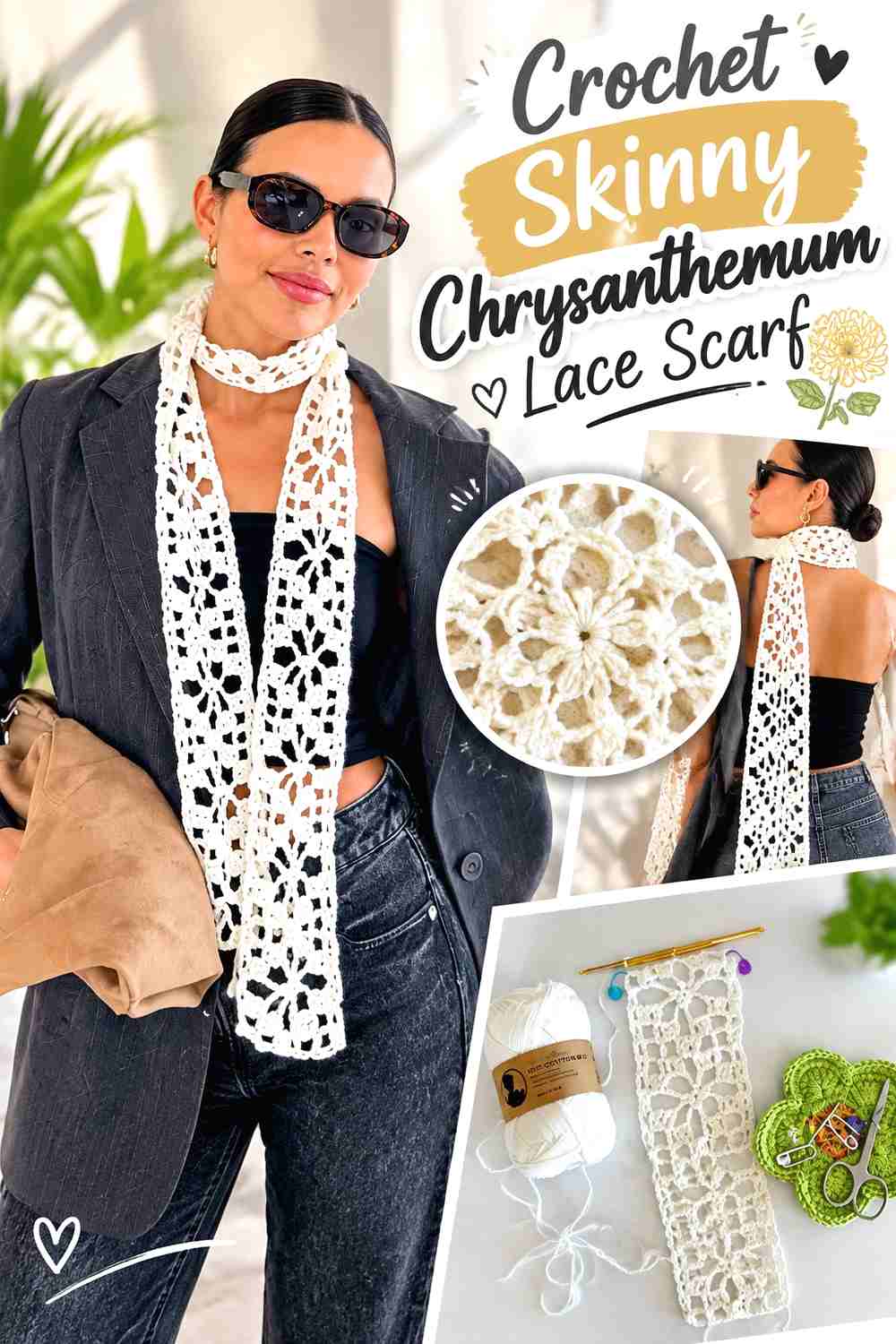
boobair.crochet demonstrates a lightweight scarf with a visible flower pattern. Its narrow, airy format is useful for early fall when you want a decorative layer rather than a bulky cold-weather wrap.
The flower pattern is not specifically identified as chrysanthemum, so treat autumn color and optional mum embellishment as the adaptation layer.
Narrow Width Makes the Floral Pattern More Delicate
A skinny scarf has less room for large decorative elements, which can actually make the flower texture easier to notice.
If you want a literal chrysanthemum accent, choose a small flat motif and place it toward one end instead of covering the full width with an oversized bloom.
Lightweight Fabric Needs Lightweight Finishing
Heavy tassels, large buttons, or stuffed chrysanthemums can pull an airy scarf out of proportion.
Test any embellishment by hanging the completed scarf. If one end drops or stretches noticeably more than the other, reduce the weight rather than relying on blocking to correct it.
Creator Credit: boobair.crochet
15. Crochet Chrysanthemum Flower Shawl Scarf
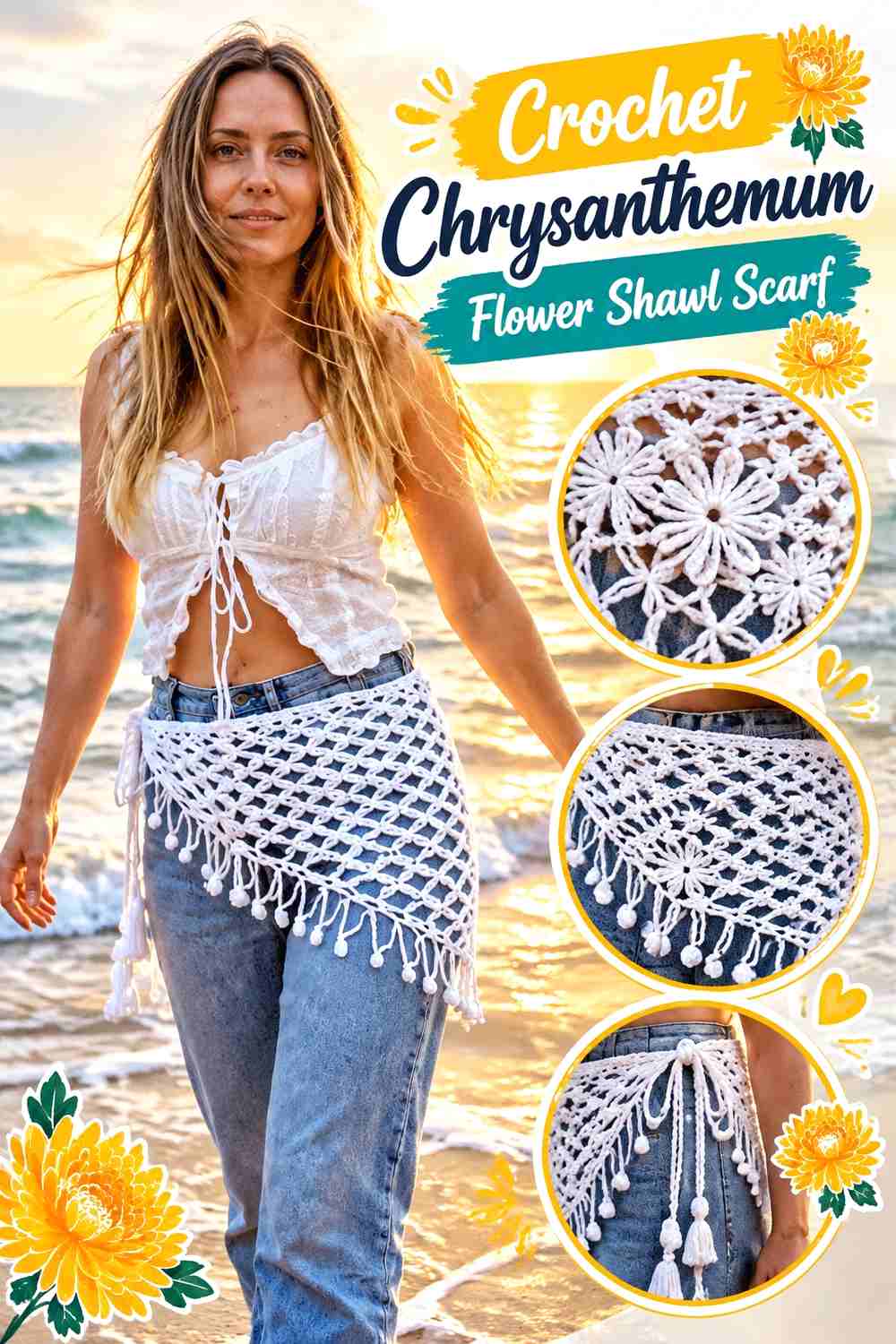
Beautiful Crochet Stuff demonstrates a flower shawl with floral construction, ties, and fringe details. Its broader shape gives you more room than a skinny scarf for a chrysanthemum-inspired fall palette and repeated floral texture.
This option sits between a neck scarf and a small wrap, making it useful if you want the flowers to remain visible across the shoulders rather than disappearing inside several wrapped layers.
A Broader Shape Can Support Larger Floral Scale
A large flower motif that overwhelms a narrow scarf can look more proportional on a shawl-like piece.
Still compare the motif with the finished width before adding separate chrysanthemums. The existing floral pattern may already provide enough detail without extra appliqués.
Ties and Fringe Create Multiple Focal Points
When an accessory already has ties, flowers, and fringe, adding more decoration can quickly make the lower edge busy.
Decide which feature should lead. If the chrysanthemum theme is the priority, keep added finishing relatively restrained so the petal forms remain clear.
Shoulder Drape Changes the Way Colors Are Seen
A wrap shows more fabric at once than a narrow neck scarf.
Plan fall colors in larger areas rather than judging each row in isolation. Step back from the work occasionally to see whether the overall combination still resembles the chrysanthemum palette you intended.
Creator Credit: Beautiful Crochet Stuff
16. Crochet Mum-Stitch Chrysanthemum Scarf
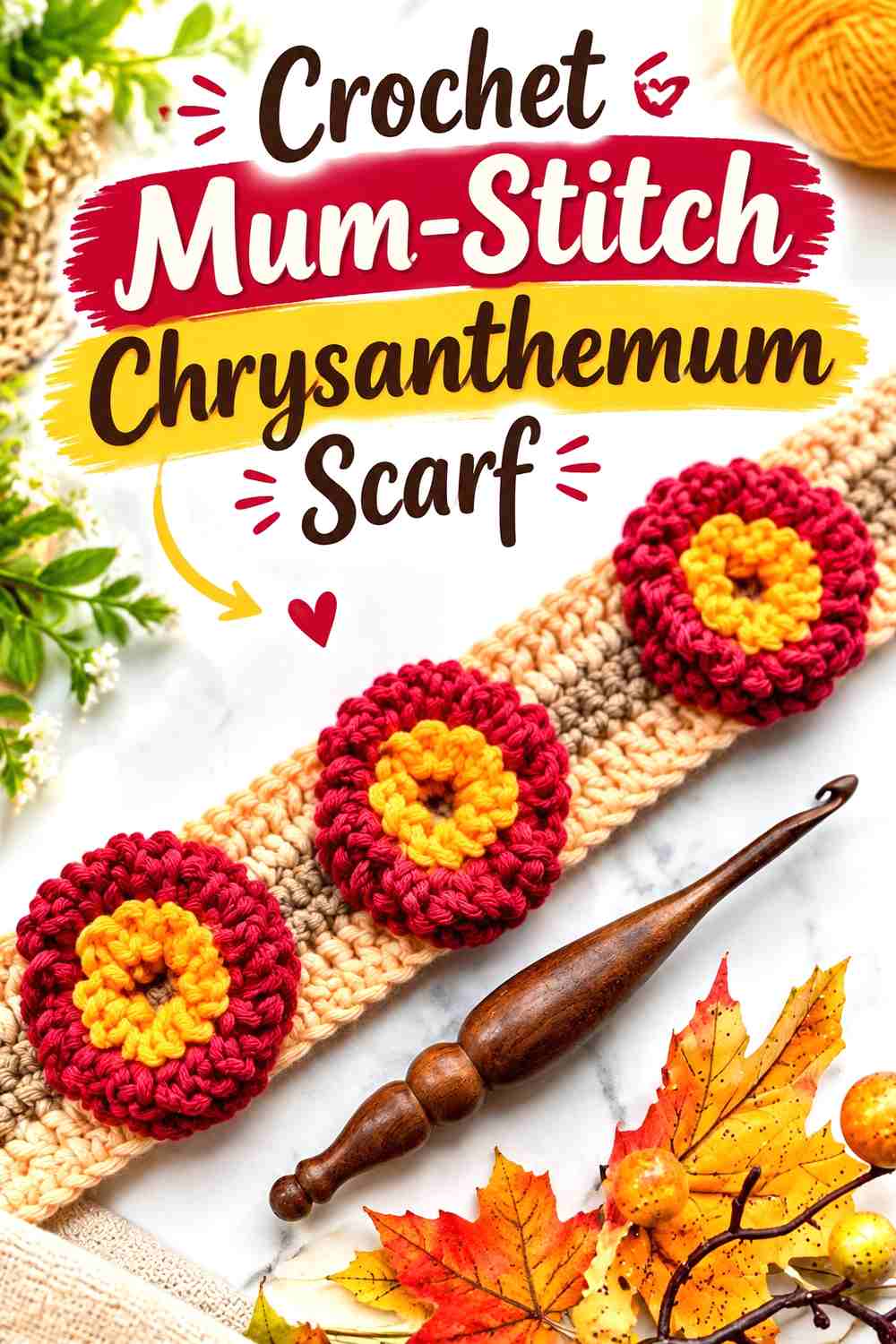
Nana’s Crafty Home | Tonya Bush demonstrates a Mum Flower Crochet Stitch specifically designed to resemble fall-blooming chrysanthemums and notes that the stitch can be used for projects including scarves. That direct connection makes this one of the strongest options in the list when you want chrysanthemums embedded into the fabric rather than added later.
The repeating raised texture can create a scarf that reads as floral even in a single color.
The Mum Texture Is the Main Design Feature
Because the stitch itself creates the flower effect, you do not need additional large appliqués for the scarf to communicate the theme.
Consider keeping borders and fringe relatively simple. This lets the repeated mum texture remain the visual focus instead of competing with several unrelated finishing techniques.
Stitch Definition Affects How Clearly the Mums Read
A heavily fuzzy yarn can soften the edges of dimensional stitches, while a smoother yarn generally makes raised details easier to distinguish.
Make a sample with the actual yarn before committing to a long scarf. Look at it from normal viewing distance as well as up close; the chrysanthemums should still read as intentional texture.
Check Thickness Before Choosing a Long Wrap Style
Raised flower stitches add physical depth as well as visual interest.
If the fabric becomes thick, a shorter scarf or simpler drape may be more comfortable than a very long scarf intended to wrap several times around the neck.
Creator Credit: Nana’s Crafty Home | Tonya Bush
17. Crochet Long Chrysanthemum Flower-Stitch Scarf
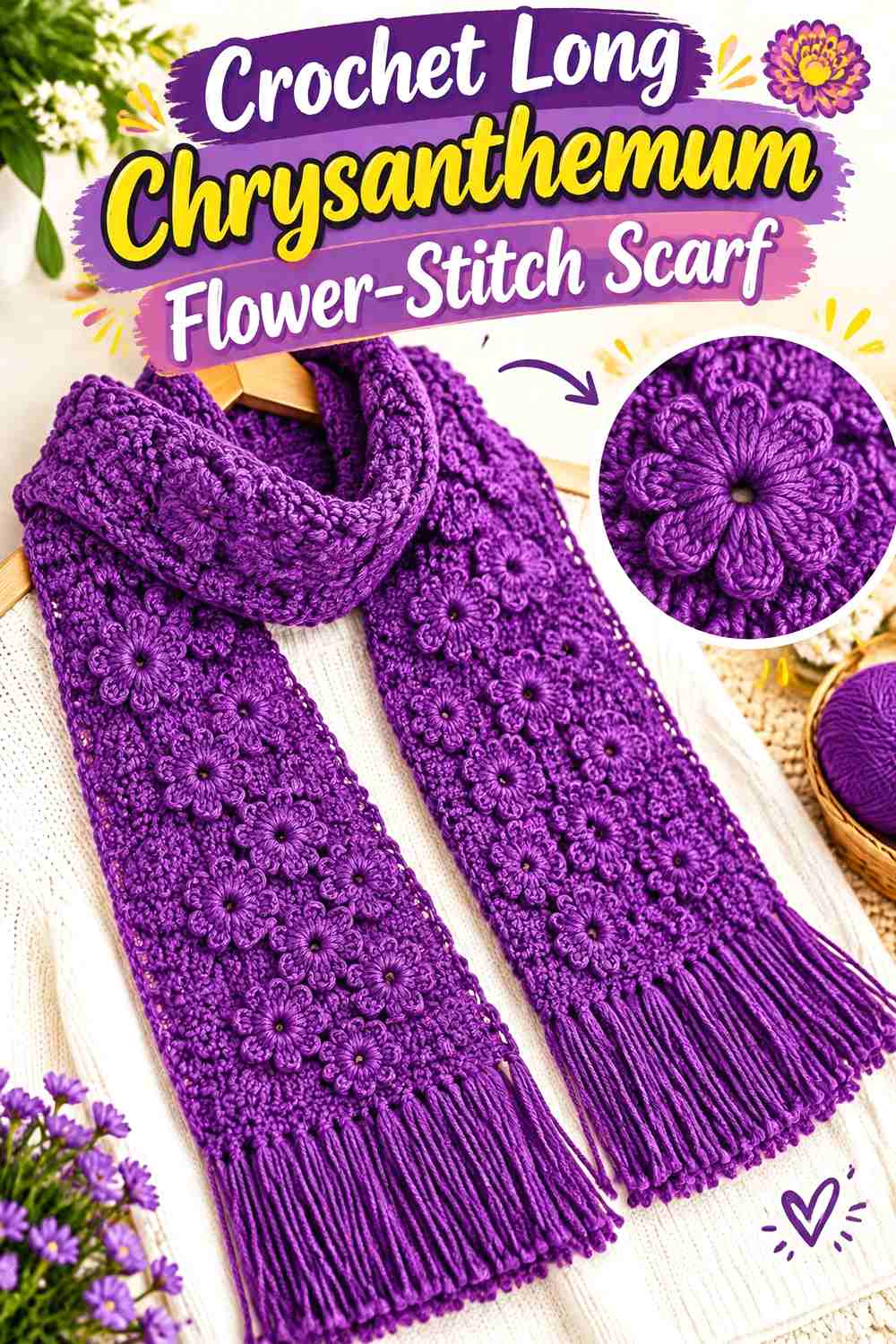
Crochet With Samra demonstrates a long scarf made with a flower stitch and finished as a traditional narrow rectangular accessory. The stitch is floral rather than specifically identified as a chrysanthemum, but the long repeating format makes it well suited to a fall mum-inspired palette.
This option works when you want recognizable flower texture without separate motifs, granny-square seams, or large embellishments.
Length Gives the Pattern Room to Repeat
A long rectangular scarf allows the floral stitch to establish a clear rhythm.
Rather than changing colors every few inches, consider longer color sections or one consistent fall shade if you want the stitch structure itself to remain prominent.
Narrow Proportions Work Well With Repeated Flowers
Repeating flowers across a relatively slim width can keep the scarf from feeling overly ornate.
If you decide to add a literal chrysanthemum motif at an end, keep it related in scale to the flower stitch underneath so it looks like a deliberate focal point instead of an unrelated decoration.
Finish the Ends According to the Fabric Density
A flower-stitch scarf already has a patterned edge and surface.
Before adding fringe, tassels, or extra blooms, hold the scarf as it will be worn. If the repeated flowers already create enough movement, a simpler finish may produce a cleaner fall accessory.
Creator Credit: Crochet With Samra
Which Crochet Chrysanthemum Scarf Style Fits Your Fall Wardrobe?
Choose the Mum-Stitch Chrysanthemum Scarf if you want the clearest chrysanthemum connection built directly into the fabric without sewing on separate flowers. The Chrysanthemum Granny Square Scarf offers a more modular look with individual floral centers and stronger color-blocking possibilities.
For a lighter accessory, the Mini Chrysanthemum Bandana Scarf and Skinny Chrysanthemum Lace Scarf create less bulk around the neck. The triangle version also gives one flower a clear focal position without requiring repeated motifs.
If you want maximum dimensional impact, look toward the Sculptural, Button-Center, Padded, or Appliqué Chrysanthemum Scarves. These ideas treat the mum as an embellishment, which gives you more freedom to control exactly where the extra texture sits.
The Hooded Chrysanthemum Scarf provides the most coverage, while the floral wrap and shawl options display a larger area of flower-pattern fabric. For an unmistakably handmade floral statement, a joined-bloom scarf makes the flowers themselves the structure rather than decoration added afterward.
Conclusion
A crochet chrysanthemum scarf does not need dozens of oversized flowers to capture the look of fall mums. Sometimes one carefully positioned bloom at a scarf end is more wearable than a full field of dimensional petals. In other cases, a mum stitch, floral lace pattern, or flower granny square can carry the theme without separate embellishment at all.
Start by deciding how much warmth and neck coverage you want. Then consider whether the chrysanthemum should be the scarf’s structure, a repeated fabric texture, or a removable focal accent. For dimensional designs, pay particular attention to weight, placement, and the reverse side of the flower so decorative details do not compromise comfort.
Use the credited tutorials for their exact demonstrated construction, and verify motif dimensions before combining elements from different projects.
Frequently Asked Questions
Can I replace the flower in any crochet floral scarf with a chrysanthemum?
Not automatically. Two flower motifs can have very different diameters, outer shapes, connection points, and thicknesses. That matters especially in joined-flower scarves. Make and block one chrysanthemum first, then compare its dimensions and joining edges with the original motif before making a full set.
Where should I place a 3D chrysanthemum on a crochet scarf?
Lower scarf ends and outer corners usually provide more room for dimensional flowers than the center neck area. A triangle scarf also gives you a natural focal point near its lower tip. Temporarily pin the flower in place and wear the scarf before attaching it permanently.
Are chrysanthemum granny squares suitable for a scarf?
They can be, provided the finished squares have the width, weight, and drape you want. Measure a blocked sample before deciding how many motifs to use. A square that works beautifully in a blanket may create a much wider or heavier scarf than expected.
How can I make a chrysanthemum scarf feel less bulky?
Use flatter floral motifs, limit dimensional flowers to the ends, choose an all-over mum stitch instead of separate appliqués, or select a narrower scarf construction. Keeping raised petals away from sections that wrap repeatedly around the neck can also reduce bulk.
Should crochet chrysanthemums be attached before or after blocking the scarf?
For separate appliqués, it is often useful to finish and block the scarf body first so you know its final dimensions and drape before deciding on placement. Follow the flower tutorial’s own finishing guidance for the motif, then arrange the completed components together before permanent attachment.
What colors work well for a fall chrysanthemum scarf?
Real chrysanthemums appear in a broad range of colors, so you are not limited to orange and yellow. Burgundy, rust, gold, cream, plum, mauve, coral, and muted pink can all create an autumnal palette. The more important decision is whether you want one consistent flower color or a mixed-garden effect.
Can I add several different chrysanthemum motifs to the same scarf?
Yes, but compare their blocked size, thickness, and visual style first. Combining a very realistic dimensional mum with a flat graphic flower can look disconnected unless color or placement ties them together. Repeating a background color or center shade can help different motifs feel intentional.