A crochet moon phase shawl can range from a literal lunar design to a subtler piece inspired by crescents, moonlight, night-sky texture, and the repeating rhythm of the lunar cycle. For witchcore fall style, that flexibility is useful: you can choose something airy for early autumn, a sweeping wrap for layering over dresses, or a hooded shawl that makes the silhouette itself feel more mystical.
Not every tutorial below contains moon phases in its original design. Several teach crescent, moon-named, star-textured, hooded, rectangular, or ruana constructions that make useful foundations for a lunar interpretation. When adapting them, keep the creator’s structural instructions intact and treat moon appliqués, contrast colors, embroidery, or other surface details as optional additions rather than replacing important shaping stitches without testing.
Quick List
- Crochet Snow Moon Trellis Triangle Shawl
- Crochet Tuscan Moon Picot Triangle Shawl
- Crochet Three Color Moonlight Lace Shawl
- Crochet Moonlit Shell Panel Shawl
- Crochet Crescent Moon Popcorn Shawl
- Crochet Nina Half Moon Vintage Shawl
- Crochet Full Moon Semicircle Shawl
- Crochet Star Motif Lunar Cycle Shawl
- Crochet Star Stitch Night Sky Shawl
- Crochet Eclipse Fan Lace Shawl
- Crochet Harvest Moon Romany Shawl
- Crochet Moon Cycle Mobius Wrap
- Crochet Hooded Moonwatch Shawl
- Crochet Lunar Ruana Shawl
- Crochet Midnight Moon Phase Pocket Shawl
Decide How Literal the Moon Phases Should Be
A moon phase shawl does not have to display a full row of recognizable crescents, quarter moons, and full moons. You can make the lunar theme obvious with contrasting appliqués or colorwork, or keep it understated by using crescent shaping, circular lace, silvery edging, or sections that move from dark to light and back again.
Literal moon motifs need enough uncluttered fabric around them to remain readable. Dense texture, strong self-striping yarn, and elaborate lace can compete with a small appliqué. If the base shawl is already highly decorative, consider using the lunar idea in the color palette instead of adding several competing surface details.
Placement matters too. A full lunar sequence can work along a straight border or broad rectangular panel, while a triangle often favors one central moon, symmetrical motifs on either side, or a gradual color transition that follows the expanding rows.
Match Shawl Shape to Your Fall Layers
Triangles create a long center point and work well when you want the shawl to become the main feature at the back. Crescents and half circles produce a softer outline across the shoulders and often wrap more naturally around the front. Rectangular wraps and ruanas give you more uninterrupted surface for repeated lunar motifs.
A hood changes the entire mood. It can make a plain shawl feel much more witchcore without needing heavy embellishment, but it also adds bulk around the neck and shoulders. Pocket shawls move in the opposite direction: they are practical, linear, and well suited to casual fall layering.
Before changing the scale of any tutorial, think about where the finished shawl should end when worn. More width, depth, fringe, motifs, or a heavier border can all alter the way it hangs.
Choose Yarn That Keeps Celestial Details Visible
A moon phase design depends on contrast. Black with cream or pale gray creates a recognizable night-sky effect, but deep plum with muted gold, charcoal with silver, forest green with bone, or dark brown with harvest gold can feel equally appropriate for fall.
Very fuzzy fibers may soften the edges of small moon details. That can be attractive for a misty, atmospheric shawl, but it is less useful when crisp crescent silhouettes are important. Smoother yarn usually makes open lace, star textures, and surface motifs easier to see.
Drape is another consideration. A fabric that feels suitable for a structured pocket wrap may be too firm for a large crescent intended to curve around the shoulders. When substituting yarn, compare the tutorial’s intended fabric with the effect you want rather than choosing by color alone.
1. Crochet Snow Moon Trellis Triangle Shawl
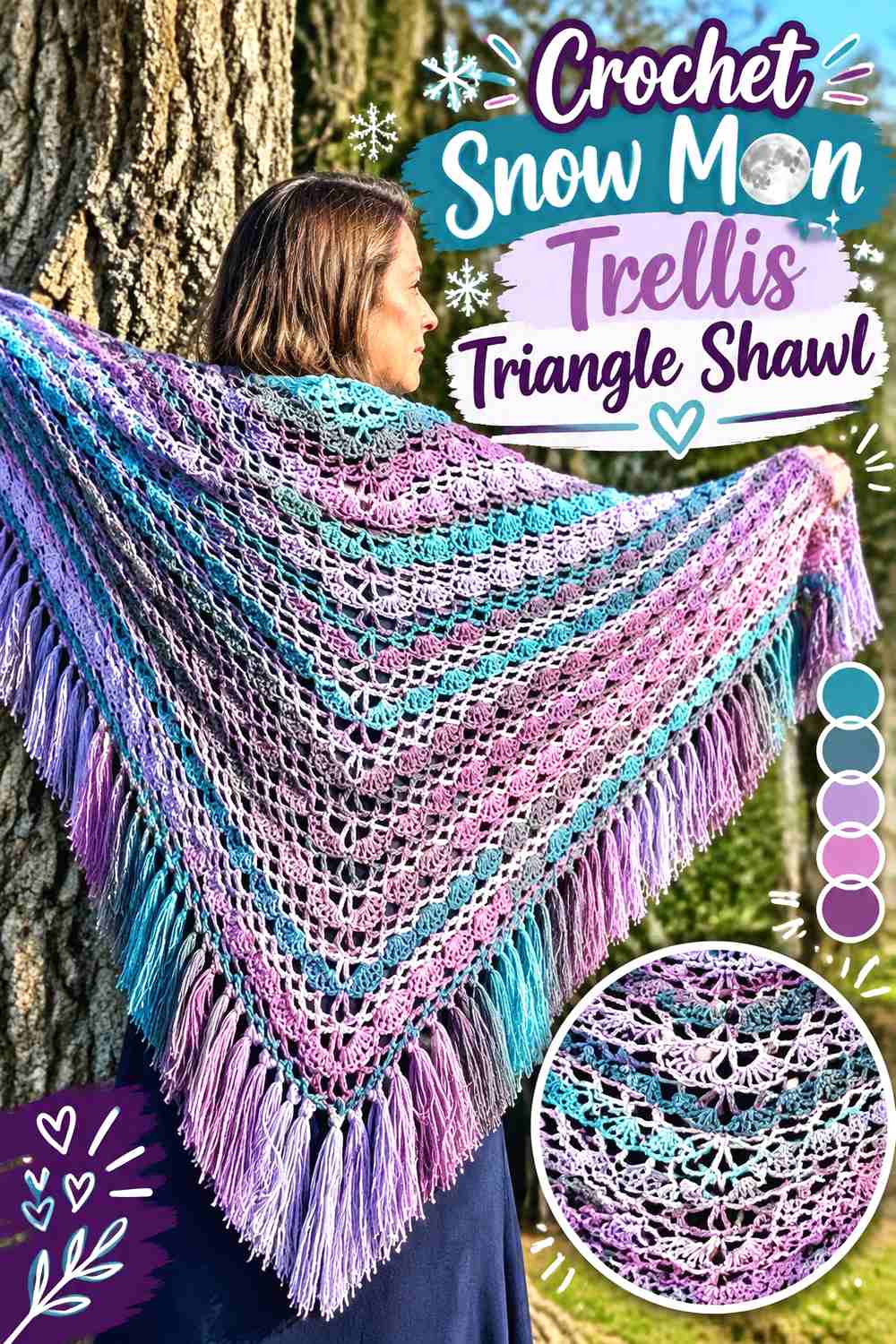
This triangle shawl is especially suited to a winter-moon or late-fall interpretation because its design combines more solid decorative sections with areas of open trellis. The original tutorial is the Snow Moon Shawl, so the lunar connection is already part of the source design rather than being added only through styling.
For witchcore outfits, the triangle provides a clear central point that can sit over a long dress, coat, or fitted sweater. A dark body with a paler border can emphasize the idea of moonlight without covering the existing lace with extra motifs.
Let the Trellis Suggest the Night Sky
Open sections already create visual space between the denser crochet. If you add lunar embellishment, keep it away from the most open areas unless the attachment method can be supported without distorting them. A solid section is generally a more stable location for an appliqué or decorative pin.
Check the Final Point Before Adding Weight
Triangle shawls naturally direct attention toward the lowest point. A tassel, charm, or heavy motif there can lengthen the visual line but may also pull the center downward. Evaluate the finished drape first, then decide whether the point actually needs another detail.
Creator Credit: Ophelia Talks Crochet
2. Crochet Tuscan Moon Picot Triangle Shawl
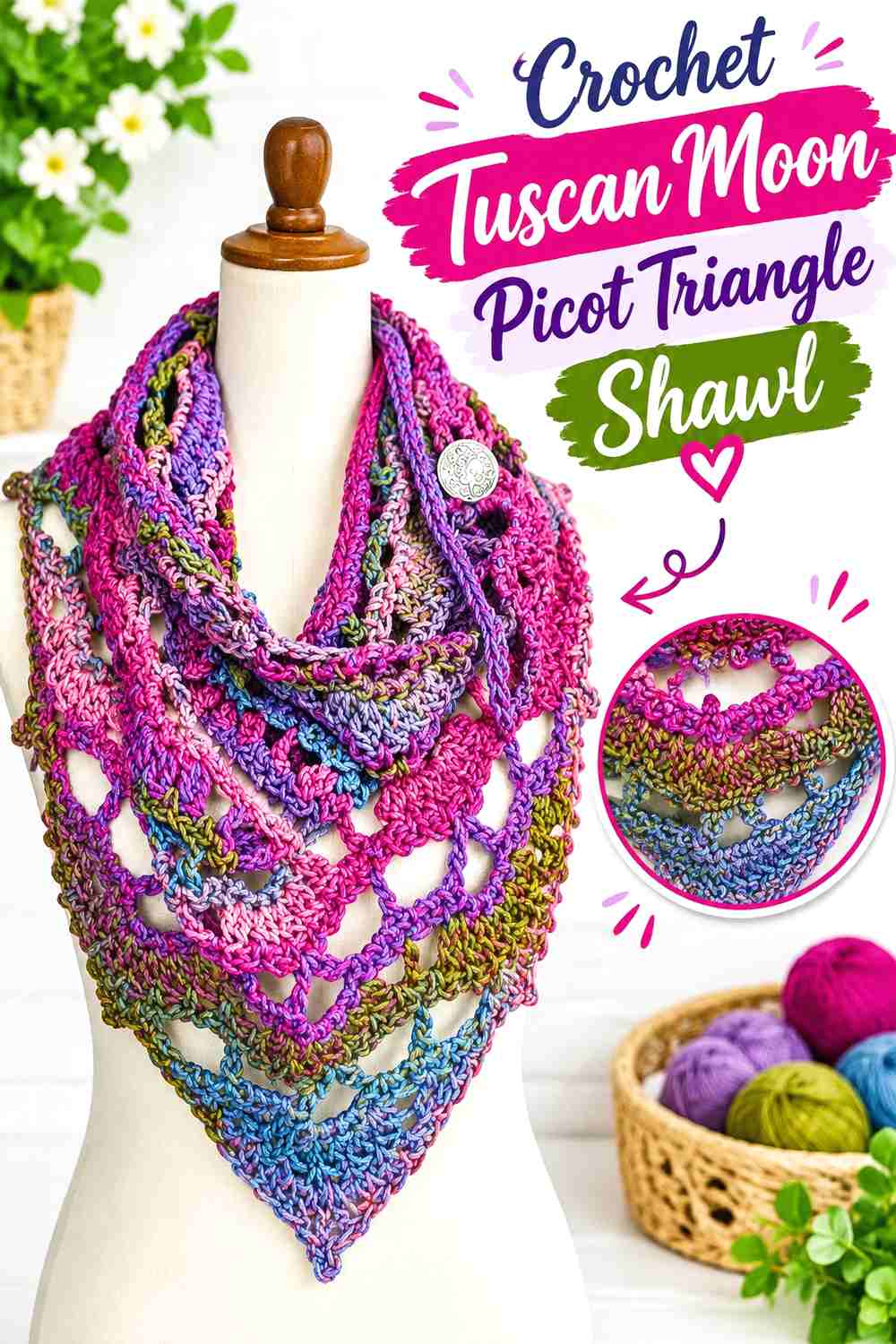
This option provides a broader triangle with open sections and a decorative edge. The source is specifically the Tuscan Moon Shawl tutorial, giving you another moon-named project while offering a noticeably different surface from the trellis-heavy Snow Moon design.
Its pronounced border makes this a useful choice when you want the edge of the shawl—not added moon appliqués—to provide most of the ornament. Autumn gradients can also reinforce the lunar theme without interfering with the stitch pattern.
Keep Moon Motifs Away From a Busy Border
Picot and lace edging already create small points around the perimeter. Adding a row of large motifs directly beside that edge can make the silhouette feel crowded. A central or upper-panel lunar accent leaves more room for the original border to remain visible.
Color Changes Can Replace Extra Decoration
A triangle offers natural horizontal zones as it grows. Instead of attaching motifs, you can plan dark-to-light color areas that suggest waxing and waning light. Keep the transitions broad enough that they read as intentional sections rather than accidental yarn changes.
Creator Credit: Tamara Kelly – Moogly
3. Crochet Three-Color Moonlight Lace Shawl
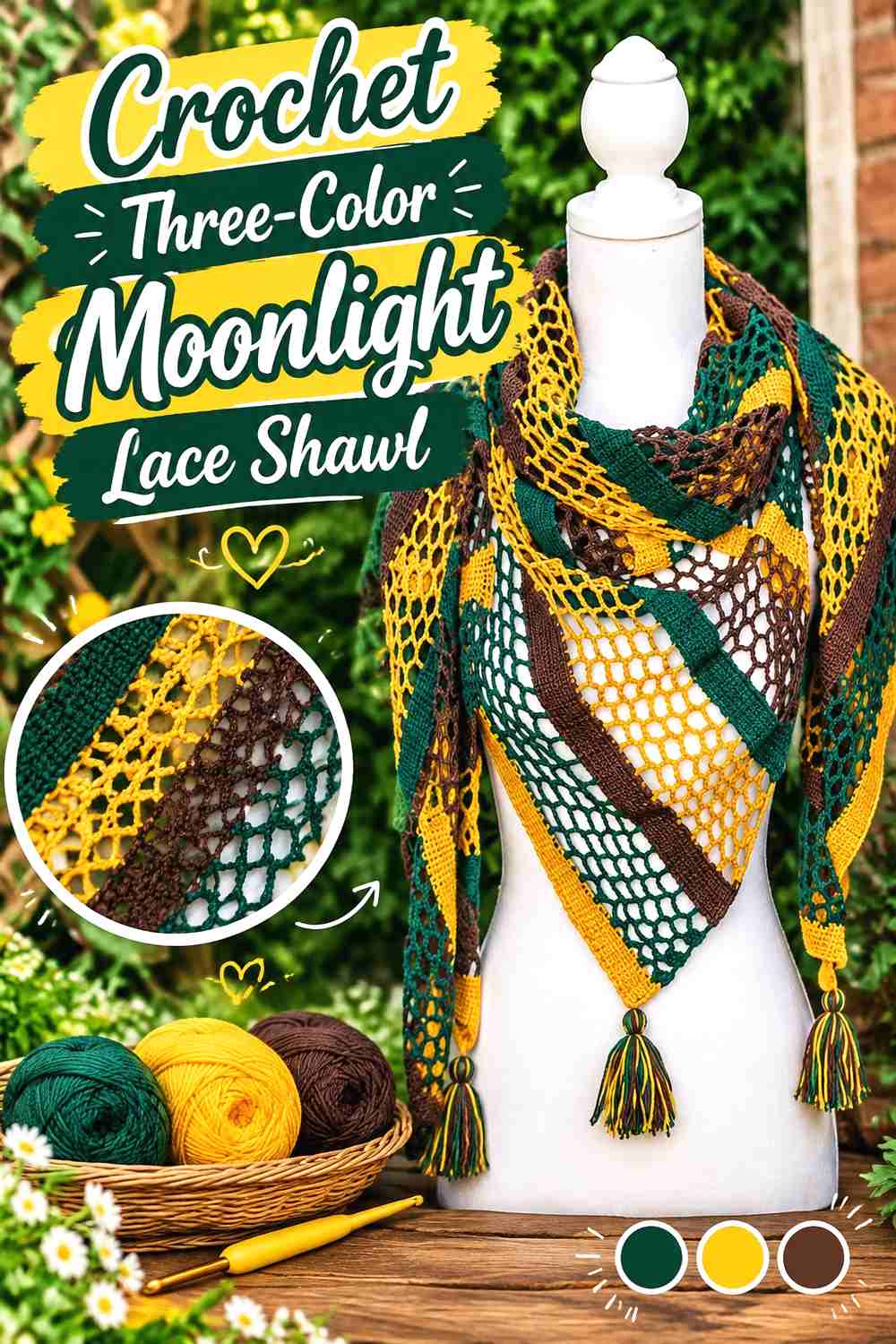
This Moonlight Shawl uses multiple colors together with a mix of solid and more open sections, giving the finished piece a strong basis for lunar color storytelling. The tutorial supports a large triangular shawl rather than a compact scarf, so it offers plenty of visual area for a witchcore palette.
One useful approach is to assign the three colors different roles: background darkness, reflected moonlight, and an earthy accent. That keeps the celestial idea visible without requiring a literal phase motif in every section.
Plan the Three Colors as a System
Three-color shawls can become visually busy when every shade is equally dominant. For a moon-inspired version, decide which color represents the background and which one should attract the eye. A restrained third shade can connect the shawl to the rest of a fall wardrobe.
Large Triangles Need Balanced Placement
A motif that looks substantial while lying on a table may appear quite small once the shawl is spread across the back. Temporarily position any added moons after the main shawl is finished. Check the placement while worn before making permanent attachments.
Creator Credit: It’s all in a Nutshell Craft & Crochet
4. Crochet Moonlit Shell-Panel Shawl
Cinnamon Stitches’ Moonlight shawl provides another lunar-named option, but its construction creates a different visual rhythm through open sections, increases, and shell-like areas.
That variation makes it useful for a moon-phase collection because it does not simply repeat the appearance of the other triangle shawls. Think of the textured areas as changing bands of moonlight rather than forcing separate crescent motifs into every row.
Shell Sections Can Act as Lunar Highlights
A raised or denser decorative section naturally catches the eye. If your colors move between very dark and pale shades, use that existing rhythm to decide where the strongest contrast belongs. The stitch pattern should remain readable even after the palette becomes more dramatic.
Avoid Overloading Open Mesh
Open crochet gains much of its character from empty space. Heavy appliqués or dense embroidery can collapse that light appearance. If you want recognizable moons, place them selectively on more supportive portions of the shawl.
Creator Credit: Cinnamon Stitches
5. Crochet Crescent Moon Popcorn Shawl
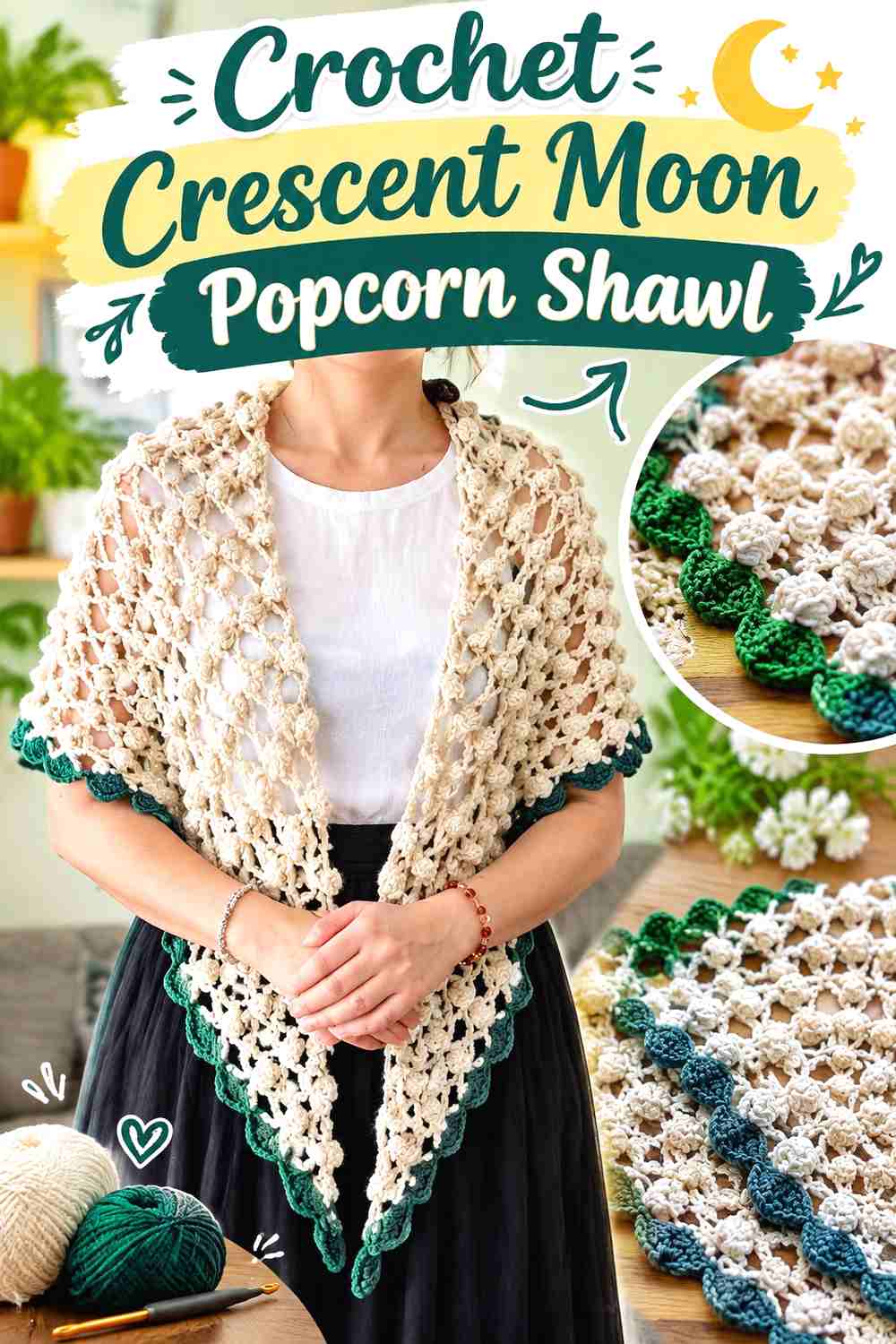
Crochet Builder’s tutorial produces a symmetrical triangle described as a crescent-moon scarf and uses pronounced texture, including popcorn-style detail.
This is a good direction for someone who wants the moon theme to come partly from shape and texture rather than graphic colorwork. In smoky gray, black, muted violet, or deep blue, the raised surface can create a shadowed look that works well with simple fall clothing.
Texture Can Stand In for Printed Detail
Popcorn texture creates light and shadow even in a single color. That means you may not need contrasting moon motifs across the entire piece. A monochrome shawl with one small lunar accent can feel more cohesive than a heavily decorated version.
Keep the Center Line Visually Clean
Symmetrical triangles rely on a clear relationship between both sides. If you add decorative motifs, mirror them or deliberately choose one focal location. Several randomly spaced moons can make an otherwise balanced triangle look unintentionally uneven.
Creator Credit: Crochet Builder
6. Crochet Nina Half-Moon Vintage Shawl
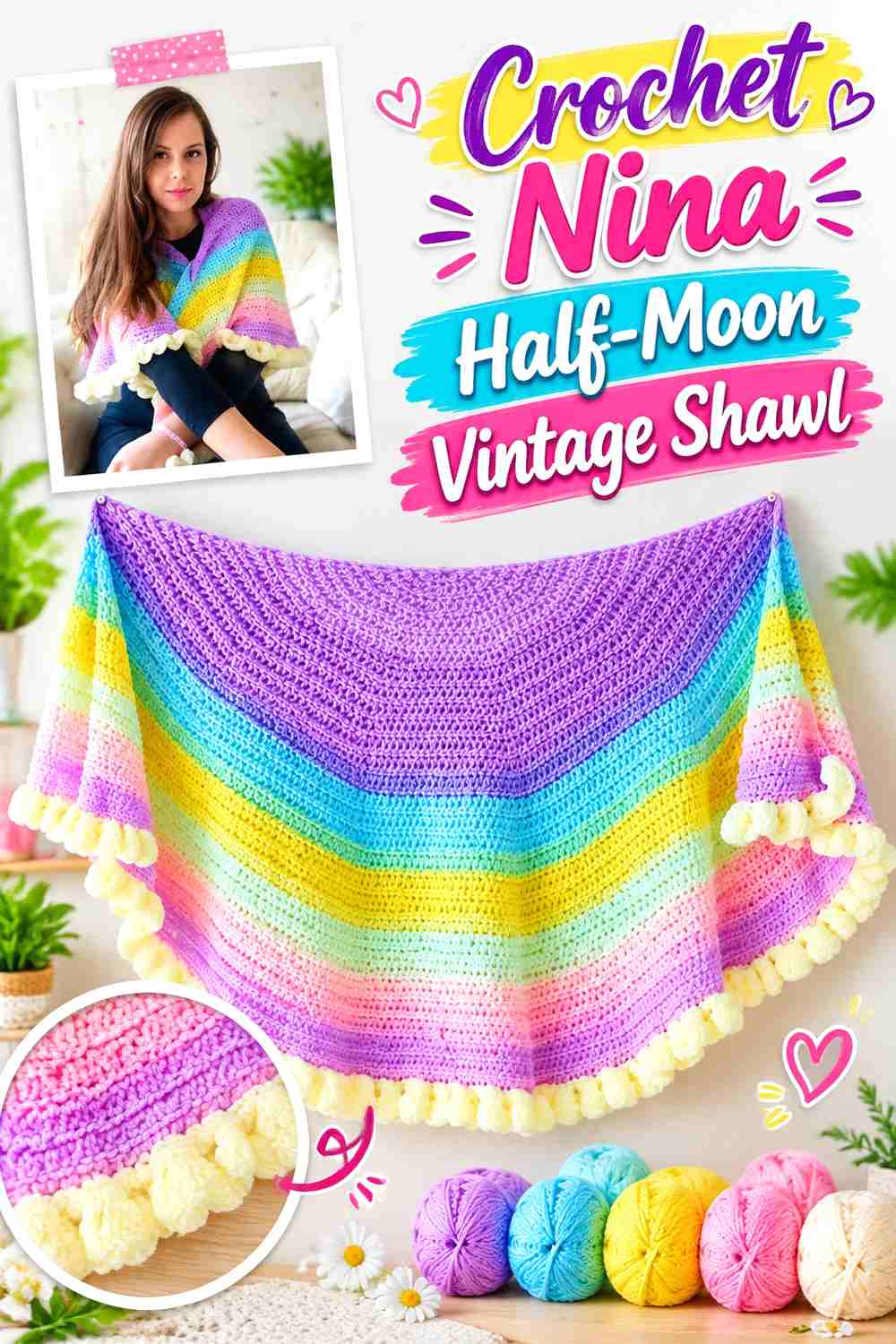
The Nina construction forms a crescent or semicircular wrap rather than a deep V-shaped triangle. The tutorial also includes a contrasting decorative border, which gives the piece a distinctly vintage direction that can translate naturally into romantic witchcore styling.
This shape is especially useful when you want the shawl to curve around the shoulders instead of hanging far down the back. A dark main color and pale edging can suggest the illuminated rim of a crescent moon.
Crescent Shape Changes Motif Orientation
Motifs placed along a curved outer edge will not sit at exactly the same angle. Before attaching a moon sequence, lay the finished shawl flat and rotate each motif to follow the curve intentionally. Otherwise the phases can appear to tilt unpredictably.
A Contrasting Border Can Carry the Theme Alone
If the original border already frames the crescent shape effectively, consider making that contrast your main lunar detail. A pale silver, cream, or muted gold edge around a dark body can evoke moonlight without adding anything to the main fabric.
Creator Credit: Selina Veronique Crochet
7. Crochet Full-Moon Semicircle Shawl
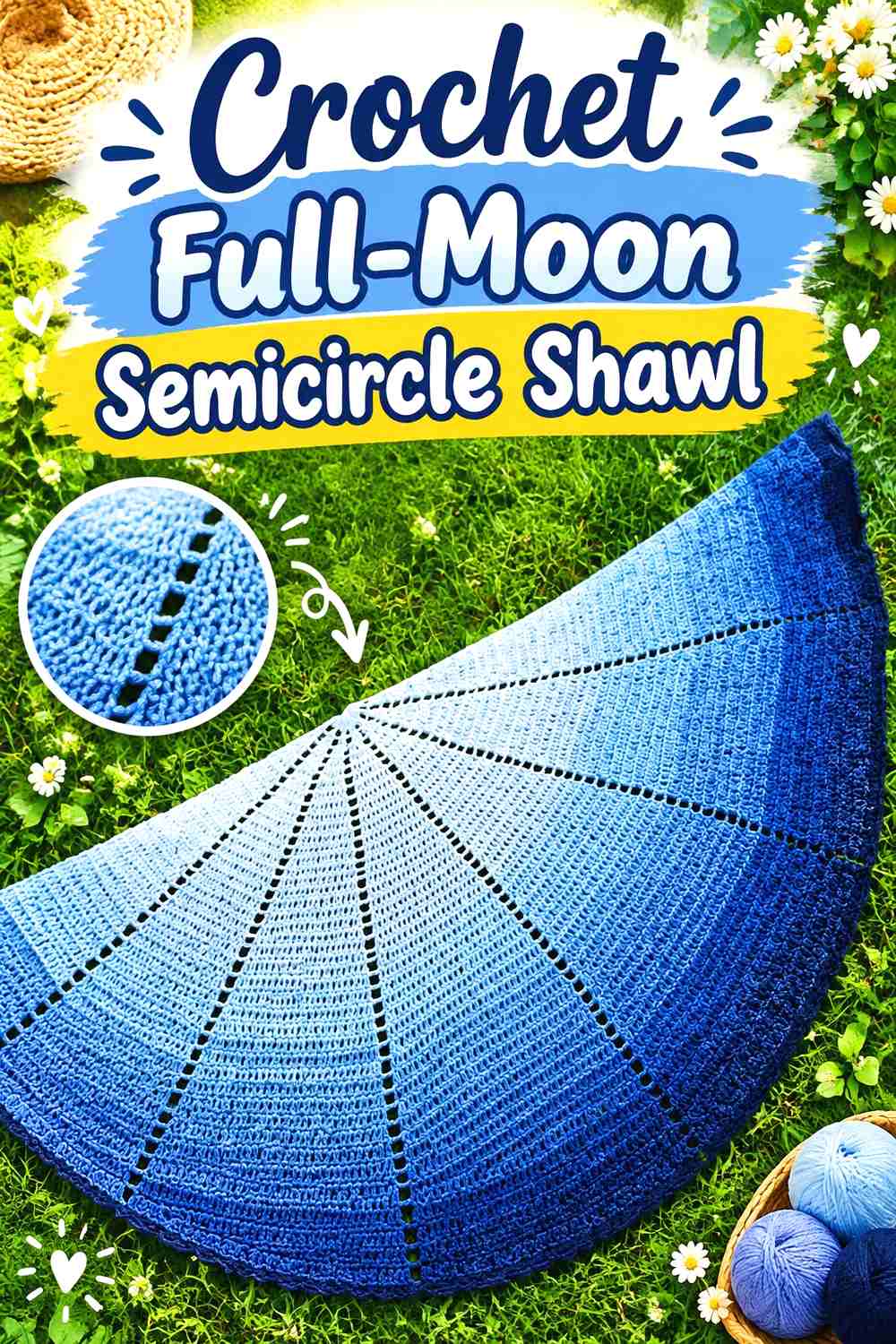
Carolines Welt’s half-circle shawl provides a straightforward semicircular silhouette. The broad arc makes it different from both the narrow crescent and the pointed triangle options.
For a moon-phase interpretation, the curved outline itself can become the central design feature. A pale version can resemble a full moon, while a dark semicircle with a contrasting edge creates a subtler eclipse-inspired effect.
Use the Broad Arc for a Phase Sequence
A wide curved border gives multiple motifs room to breathe. If you want to show several lunar phases, test the spacing with removable markers before attaching anything. The center full moon usually needs more visual breathing room than narrow crescents.
Watch the Shoulder Spread
A semicircle occupies more horizontal space than a narrow scarf. Additional edging can increase that spread and may overlap voluminous sleeves or a coat collar. Check the shawl with the actual outfit before enlarging its outer edge.
Creator Credit: Carolines Welt
8. Crochet Star-Motif Lunar Cycle Shawl
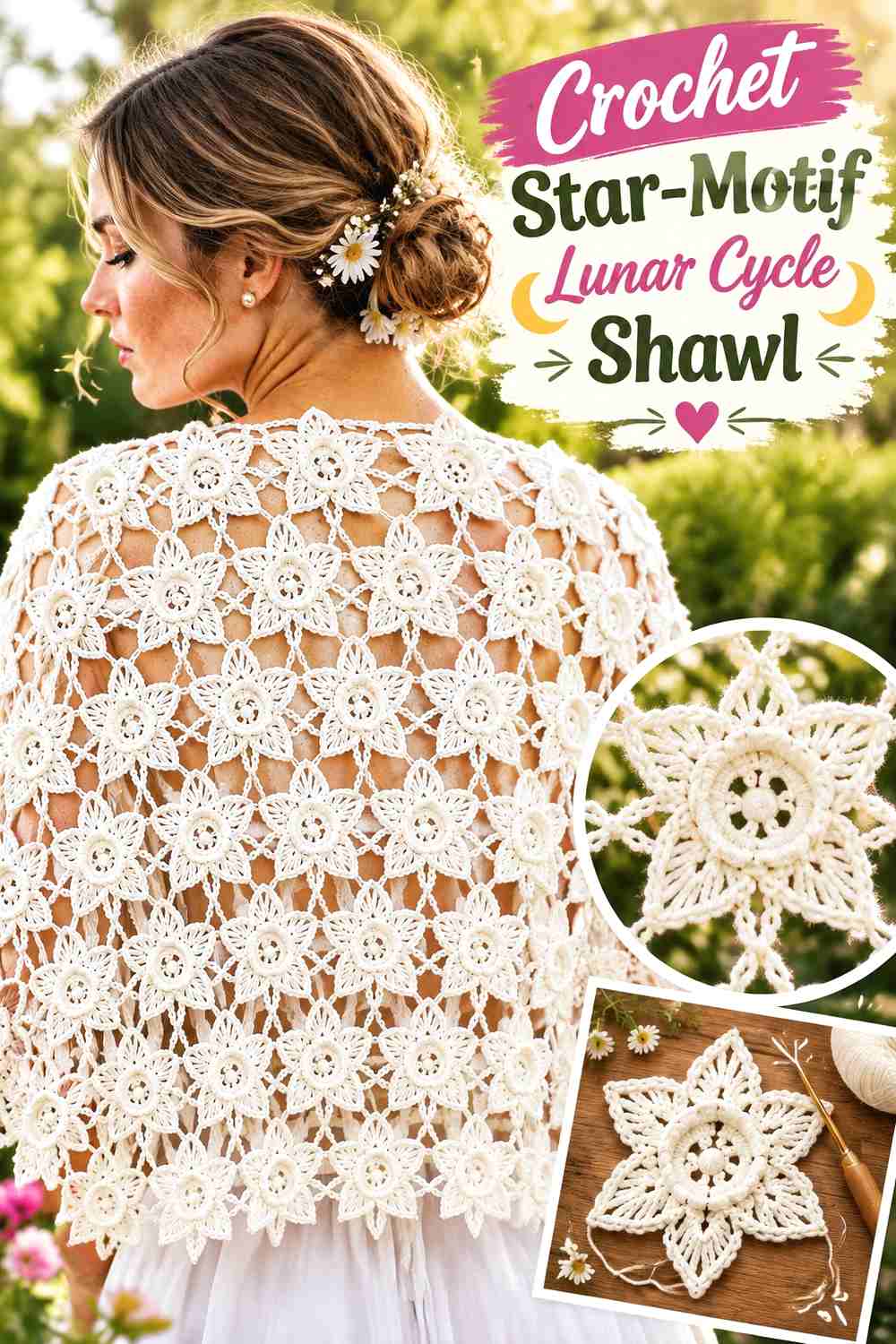
This joined-motif shawl is built around crochet stars rather than moons, making it useful when you want a broader celestial composition rather than a moon-only design. The finished tutorial project is a wrap assembled from connected star motifs.
For witchcore styling, the stars can remain the supporting night-sky element while a small number of moon details become focal points. Because joined motifs affect the structure of the shawl, avoid casually replacing structural stars with differently sized moon pieces.
Match Motif Dimensions Before Substituting Anything
A joined shawl depends on compatible motif edges. If you create or source a moon motif separately, compare its blocked dimensions with the stars before assuming it can occupy the same space. A better option may be to attach the moon as a surface accent rather than changing the join layout.
Repetition Creates a Stronger Celestial Field
Repeated stars produce a clear overall texture. Keep any moons relatively sparse so they remain identifiable as focal motifs instead of competing with every star. One or several deliberately placed lunar accents can be more readable than trying to alternate every motif.
Creator Credit: Knitting World
9. Crochet Star-Stitch Night-Sky Shawl
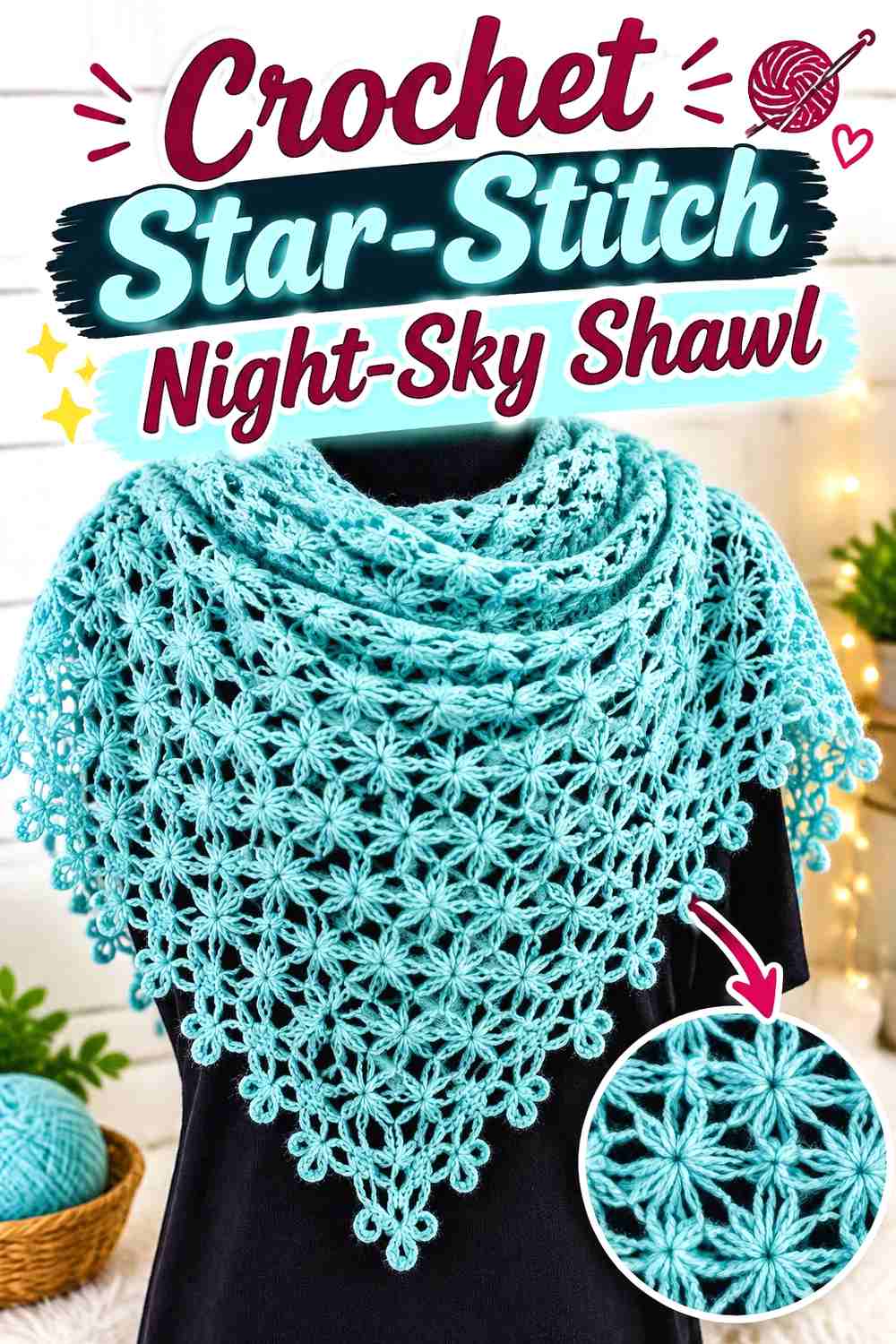
This tutorial uses a star-based crochet texture across a shawl, creating a different celestial effect from the joined star motifs above. Instead of obvious individual shapes, the surface carries a repeated star-like texture.
That makes the project useful when you prefer a moon phase design that feels integrated rather than appliqué-heavy. A small sequence of moons along one edge can sit against the textured body like phases moving across a night sky.
Texture Needs a Yarn That Shows It
A very busy variegated yarn may make a star texture harder to identify. If the stitch pattern is important to your witchcore concept, compare it in a solid or gently tonal yarn before choosing a high-contrast multicolor option.
Put Literal Moons on the Quietest Area
A textured background already creates visual information. If you add recognizable lunar phases, give them a calmer location such as a border or a less textured band. This separation helps both the stars and moons remain legible.
Creator Credit: MamochkinKanal
10. Crochet Eclipse-Fan Lace Shawl
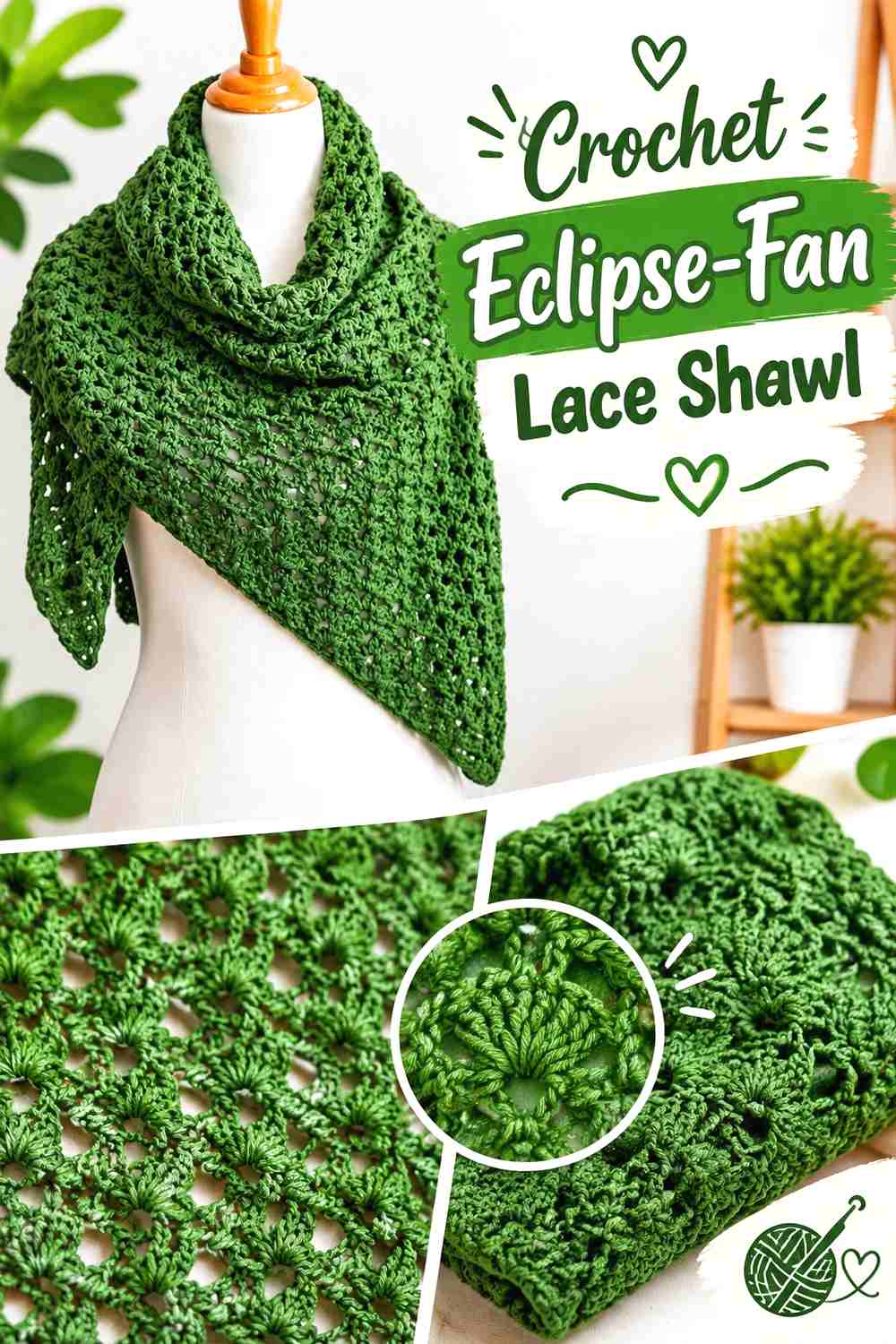
Fiber Flux’s lacy shawl uses repeating fan-like sections that can create an effective eclipse-inspired look when worked in dark and pale tonal changes. The source allows the shawl to be treated as a smaller shawlette or extended into a larger wrap.
This is a good option when you want witchcore style without obvious novelty motifs. The repeated arcs already suggest changing curves, so the lunar theme can stay abstract.
Repeated Fans Work Better With Controlled Color
Strong color changes inside every fan can make the lace look fragmented. Consider keeping each larger visual section coherent and allowing the moon-inspired palette to shift more gradually across the shawl.
Decide Between Shawlette and Full Wrap Early
A smaller version works like an accessory and leaves much of the outfit visible. A larger version becomes a major layering piece. If you plan to add moon motifs, remember that their scale needs to make sense for the final size, not just the first few sections.
Creator Credit: Fiber Flux
11. Crochet Harvest Moon Romany Shawl
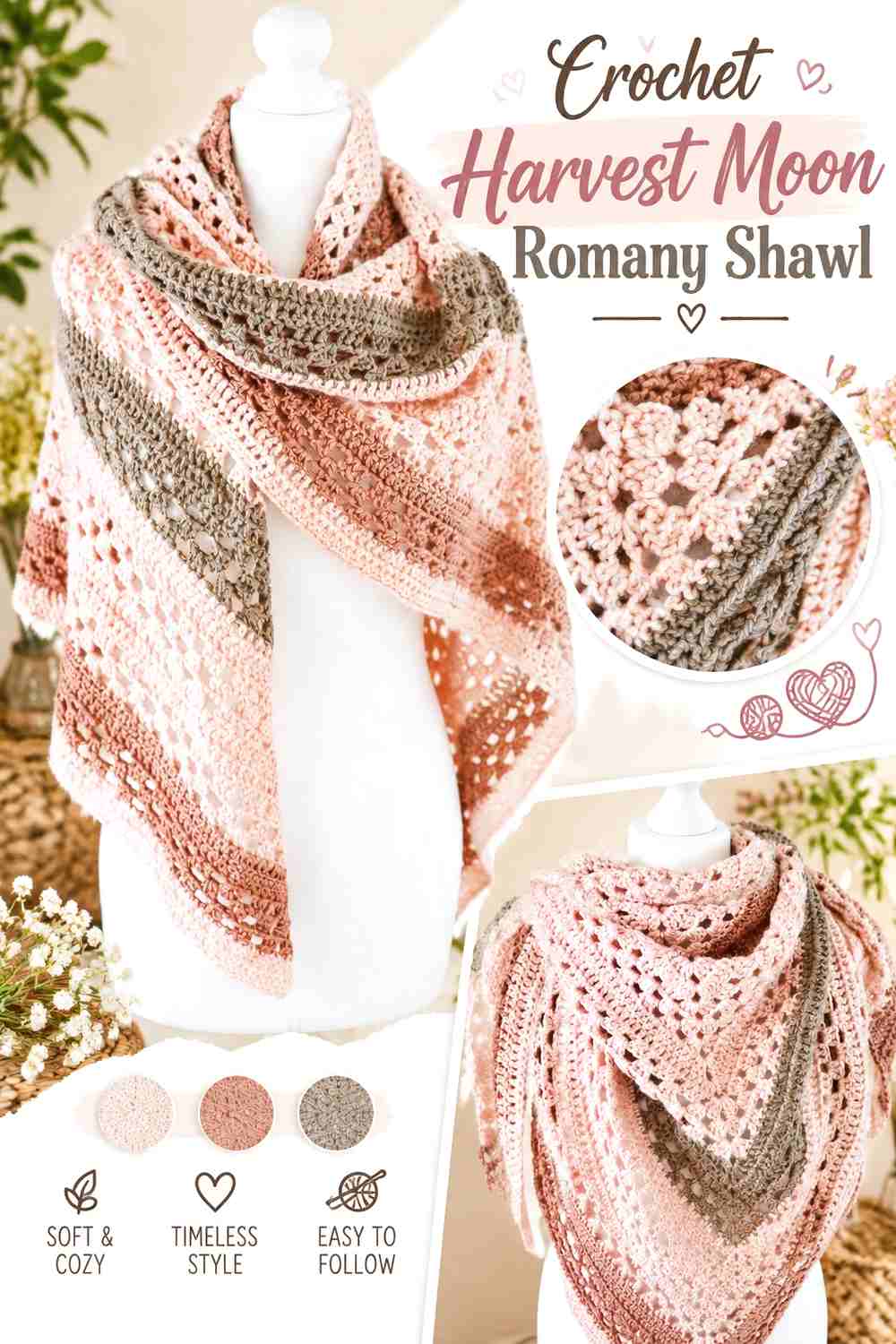
Bella Coco’s shawl tutorial uses a classic triangular form with repeated sections and color changes, making it a practical base for a harvest-moon palette.
Instead of black and silver, this version can lean into late-season colors: dark brown, rust, ochre, charcoal, muted berry, and pale gold. The result still fits witchcore style but feels warmer and more autumnal than a stark night-sky design.
Warm Lunar Colors Change the Mood
Moon-themed crochet does not have to use cool colors. A pale gold full moon against deep rust or brown can reference autumn evenings without looking like a Halloween costume. Keep enough contrast for the main color sections to remain distinct.
Fringe Should Follow the Overall Balance
If you add or emphasize fringe, consider how it interacts with the point of the triangle. A heavily fringed edge already supplies movement, so additional hanging charms or tassels may be unnecessary.
Creator Credit: Bella Coco
12. Crochet Moon-Cycle Möbius Wrap
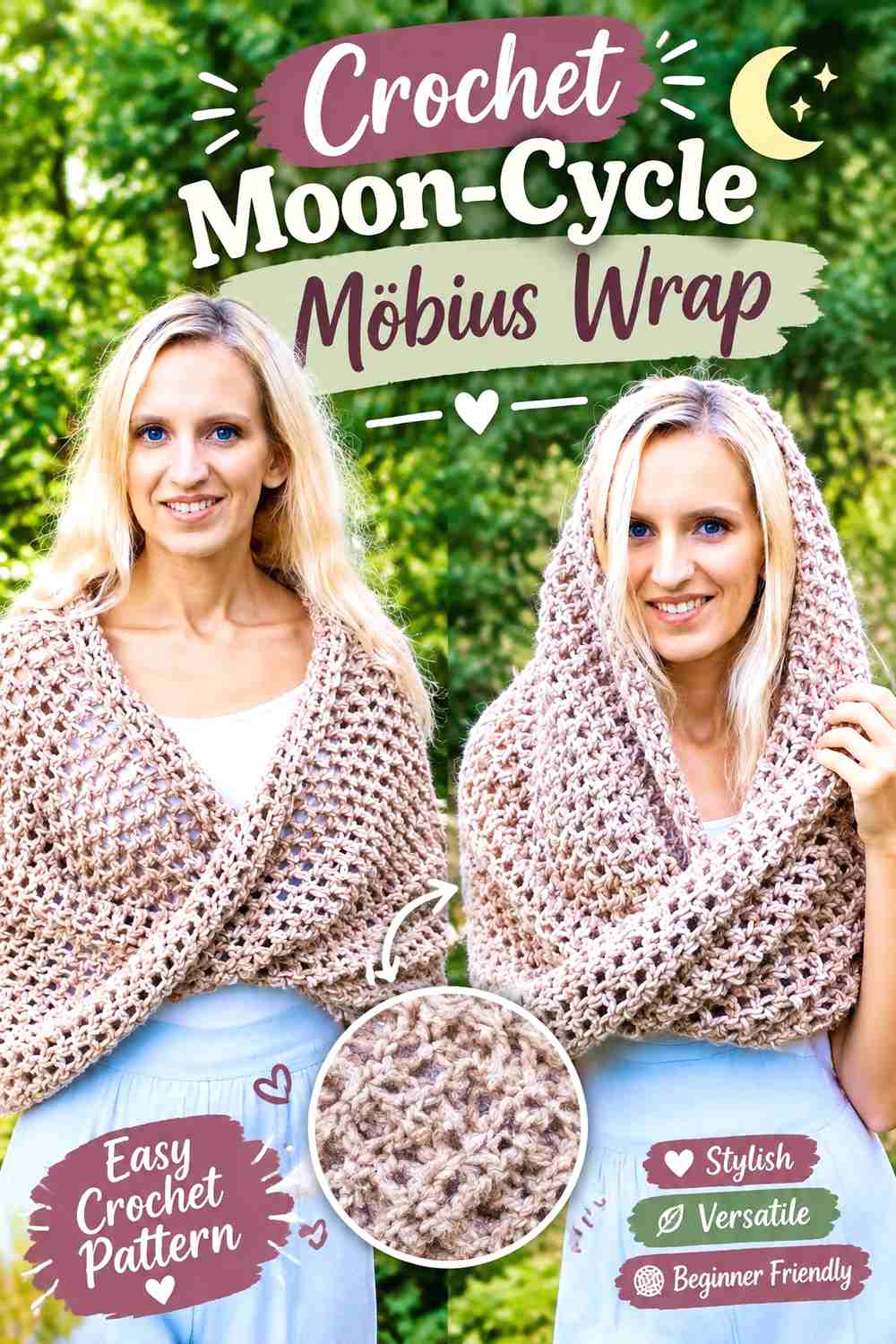
Naztazia’s tutorial creates a seamless Möbius-style wrap with a deliberate twist and demonstrates how the same form can also move toward a hooded cowl. That continuous loop makes it conceptually different from every flat shawl in this collection.
For a lunar interpretation, the circular construction naturally suits the idea of an ongoing cycle. Color sections can move around the loop from dark to light and back again without needing a defined beginning and end.
Use the Twist Deliberately
A Möbius structure changes which portions of the fabric face outward. Before planning decorative moon appliqués, understand where the twist places each surface when worn. A motif positioned perfectly while the wrap is flat may rotate out of view on the body.
A Lunar Gradient Suits the Continuous Shape
This construction is especially compatible with gradual color movement. A sequence from black through gray to cream and back toward dark can imply waxing and waning without literal moon shapes, keeping the project wearable beyond seasonal styling.
Creator Credit: naztazia
13. Crochet Hooded Moonwatch Shawl
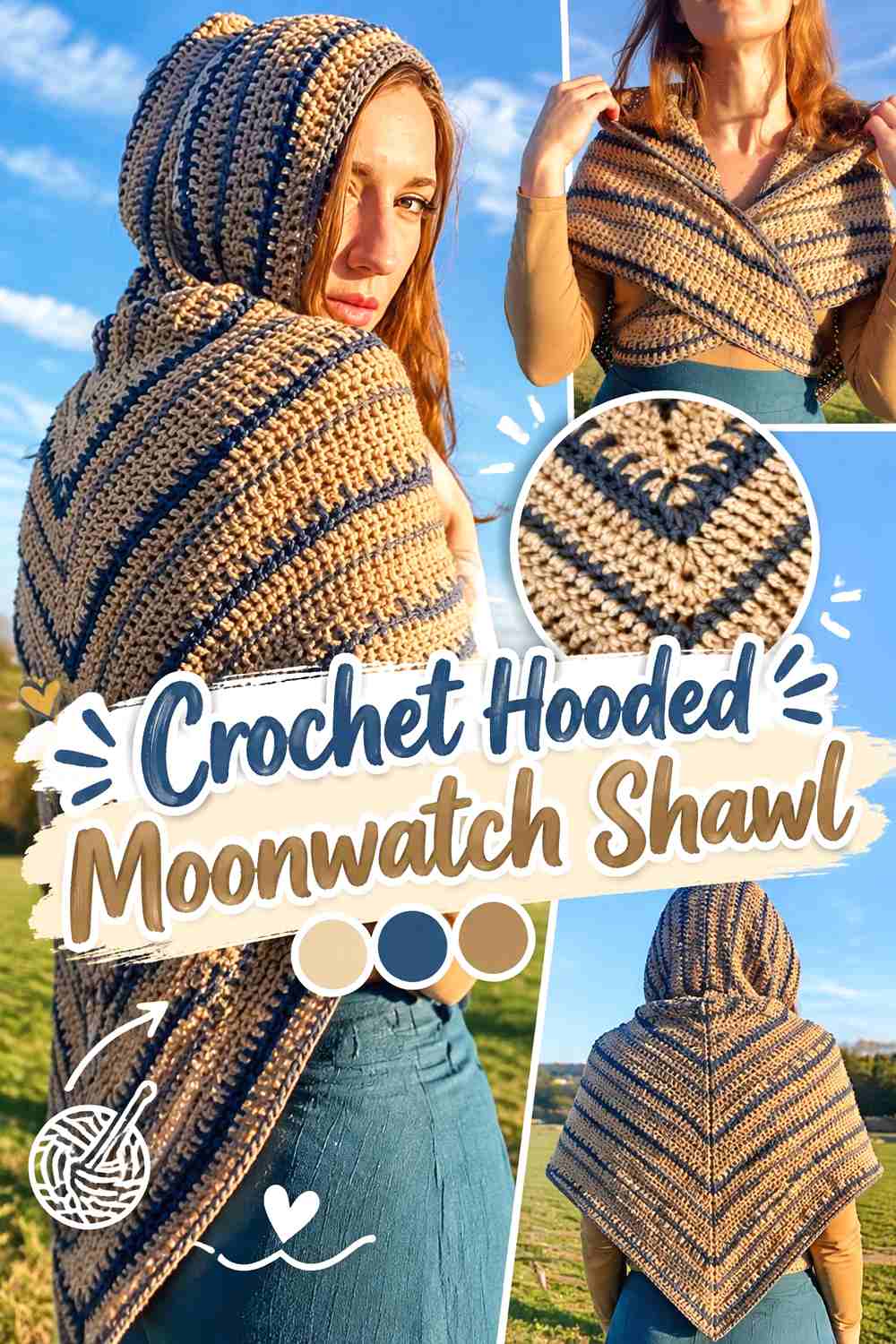
Forest Feather Fashion’s tutorial combines a triangular shawl with a separate hood component, producing one of the strongest witchcore silhouettes in the collection.
Because the hood already creates substantial visual drama, this project does not need dense celestial decoration. A restrained moon phase border or one moon placed near the back point can be enough to establish the theme.
Keep the Hood Comfortable Before Decorating It
Added motifs, ties, edging, or charms can change how the hood falls. Complete the underlying fit and assembly first, then decide where extra detail can sit without pulling the hood backward or crowding the face.
Put the Lunar Story on the Shawl, Not Everywhere
Covering both the hood and the shawl with phases can become visually heavy. Consider keeping the hood dark and relatively simple while concentrating the moon sequence along the back or lower border.
Creator Credit: Forest Feather Fashion
14. Crochet Lunar Ruana Shawl
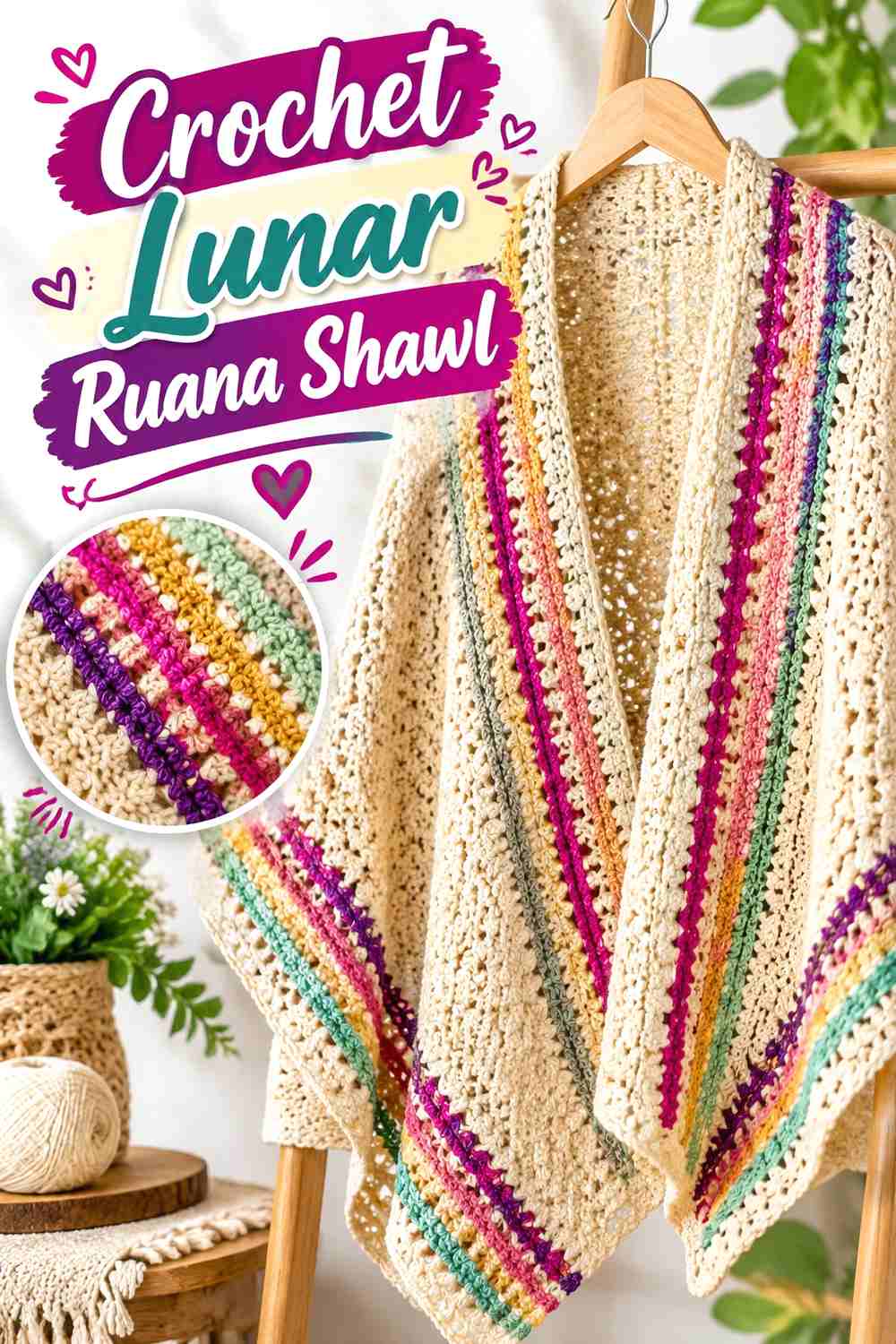
A ruana gives you long, broad panels rather than a single triangle. Nana’s Crafty Home demonstrates a wrap assembled from two rectangular sections, creating a large wearable surface with an open front.
That construction is especially useful for moon phases because a sequence can travel vertically down one panel, mirror across both fronts, or remain concentrated across the back. It also creates a more garment-like layer for cool fall weather.
Decide Whether the Fronts Should Match
Perfectly mirrored moon phases create a formal look. An intentional waxing sequence on one side and waning sequence on the other can create a more narrative design. Plan that relationship before attaching motifs so the two panels do not look accidentally mismatched.
Large Panels Need Motifs With Enough Scale
Tiny moons may disappear on a broad ruana. Test paper circles or temporary yarn shapes against the finished panel to judge proportion before investing time in multiple crochet appliqués.
Creator Credit: Nana’s Crafty Home | Tonya Bush
15. Crochet Midnight Moon-Phase Pocket Shawl
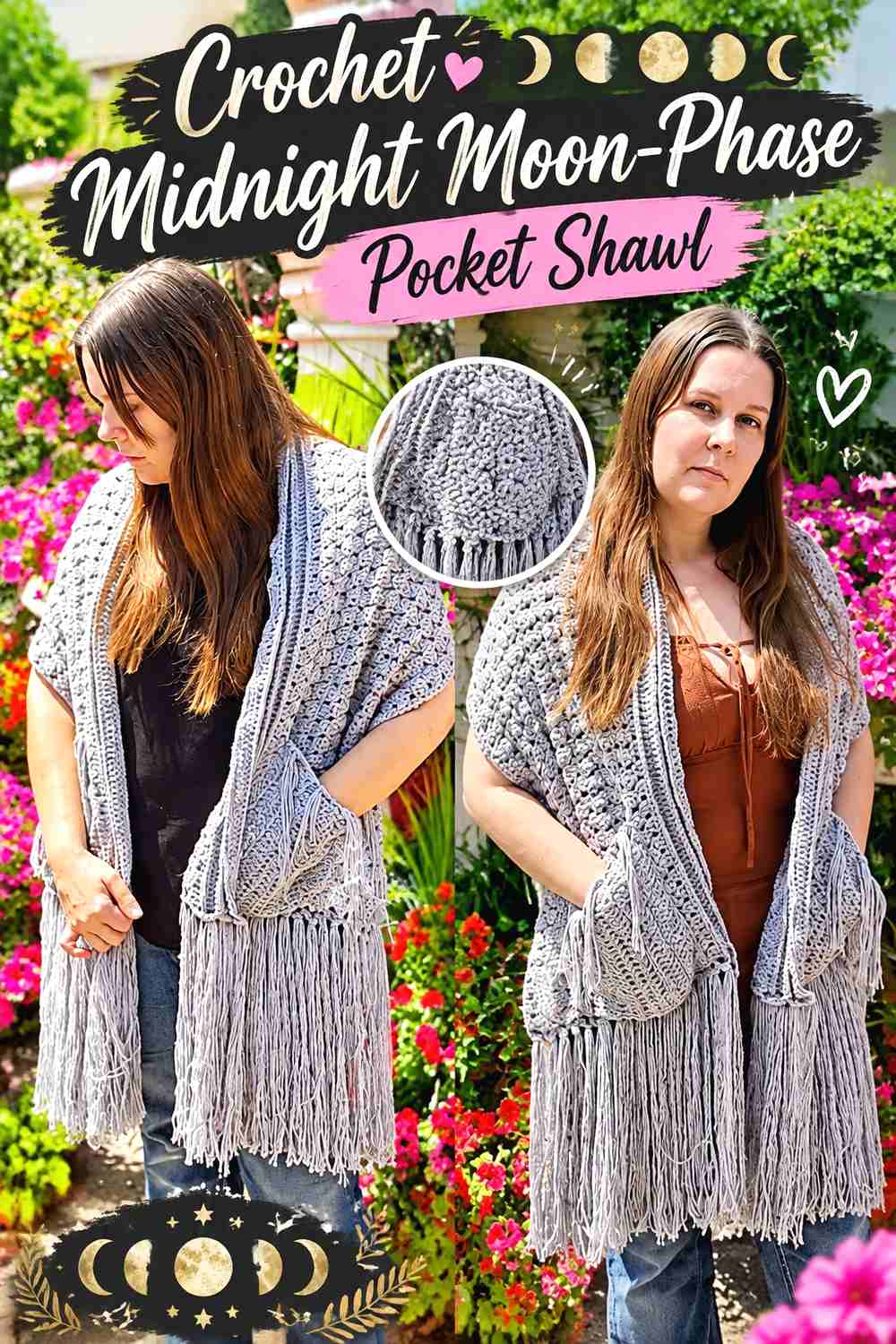
A pocket shawl offers the most practical fall option here. Bag-O-Day Crochet’s tutorial produces a rectangular wrap with pockets and fringe, giving you long straight areas where a lunar sequence can be placed without dealing with curved or triangular shaping.
This construction suits casual witchcore outfits particularly well: it can be worn over jeans, boots, a long skirt, or a plain dress without feeling overly costume-like.
Pockets Are Natural Places for Moon Details
Instead of covering the entire shawl, consider placing a crescent on one pocket and a full moon or complementary phase on the other. The defined pocket panels already frame decorative elements and keep the center of the wrap visually quieter.
Keep Heavy Decoration Away From Pocket Openings
Beads, dense appliqués, and large charms can affect how a pocket hangs or make the opening less comfortable to use. Place embellishment lower on the pocket or on the main wrap if you want the pockets to remain functional.
Creator Credit: Bag-O-Day Crochet
Which Crochet Moon Phase Shawl Shape Fits Your Fall Wardrobe?
| Shawl direction | Strongest feature | Moon-phase approach to consider |
|---|---|---|
| Triangle | Dramatic center point | Central moon or horizontal light-to-dark bands |
| Crescent | Soft shoulder curve | Lunar phases following the outer arc |
| Half circle | Broad decorative border | Evenly spaced phase sequence |
| Star motif | Strong celestial texture | Sparse moon accents among stars |
| Möbius wrap | Continuous loop | Waxing-to-waning color gradient |
| Hooded shawl | Strong witchcore silhouette | Restrained border or single back motif |
| Ruana | Large vertical panels | Mirrored or opposing phase sequences |
| Pocket shawl | Practical straight construction | Moon motifs concentrated on pockets |
Conclusion
For the clearest lunar connection, the Snow Moon, Tuscan Moon, Moonlight, crescent, and semicircle shawls provide natural starting points. Their names, curves, or construction already support the theme before any extra embellishment is considered.
If the witchcore silhouette matters more than literal moons, the hooded shawl and ruana make stronger statement layers. The pocket shawl is a more practical everyday choice, while the star-motif and star-stitch options work well when you want an entire celestial sky rather than a moon-only design.
Whichever direction you choose, settle the size, drape, and fit before adding lunar details. Use the original creator tutorial for exact construction, then make the moon-phase styling serve the finished shawl rather than covering the features that made the design worth choosing.
Frequently Asked Questions
Do all of these tutorials contain actual crochet moon phases?
No. Several sources are directly moon- or crescent-themed, while others teach shawl constructions that can be adapted for a lunar look. For the latter, moon phases can be introduced through color placement, separate appliqués, embroidery, or restrained surface decoration without changing the tutorial’s structural instructions.
Where should moon phases be placed on a triangle shawl?
A triangle works well with a central full moon, symmetrical motifs along the lower edge, or phase-inspired color bands running across the growing rows. Before attaching separate motifs, wear or spread out the finished shawl so you can judge their visual scale accurately.
Is a crescent shawl better than a triangle for a moon theme?
Neither is universally better. A crescent gives you an immediately lunar outer shape and a long curved border, while a triangle provides a larger central field and dramatic point. Choose according to the placement you have in mind and the way you prefer a shawl to sit on your shoulders.
How can I make moon phases visible on black crochet?
Strong value contrast helps. Cream, pale gray, silver-toned yarn, muted gold, or another lighter shade will usually separate more clearly from a dark ground than two similar deep colors. Smooth yarn can also make the outline of small motifs easier to read than very fuzzy fibers.
Can I replace motifs in a joined shawl with crochet moons?
Only after checking compatibility. Joined-motif shawls rely on the dimensions, edge structure, and joining points of the original motifs. A separately designed moon may be better attached as decoration than substituted directly into a structural grid.
What makes a moon phase shawl work for witchcore fall outfits?
Shape and styling matter as much as literal symbols. Deep autumn colors, layered silhouettes, crescent curves, hoods, star textures, open lace, vintage borders, and carefully placed lunar motifs can create a witchcore effect without covering the shawl in decorative elements.