A crochet moon phase garland can bring a celestial focal point to a room without taking up shelf or table space. Depending on the construction, the finished piece can look graphic and modern, soft and bohemian, dimensional and plush, or more like traditional crochet bunting.
Not every useful tutorial for this theme begins as a complete lunar-cycle garland. This collection starts with dedicated moon-phase and celestial garland projects, then includes crescent moons, full moons, granny squares, and other lunar motifs that can realistically be repeated or arranged into a garland. Those projects are identified as adaptations rather than presented as exact moon-phase patterns.
The main planning decisions are motif scale, phase sequence, spacing, background contrast, and whether you want the pieces to hang flat or project away from the wall. Those choices affect the finished display more than simply switching to black, gray, or purple yarn.
Quick List
- Crochet Fringed Moon Phase Panel Garland
- Crochet Mini Tapestry Moon Phase Garland
- Crochet Moon And Star Celestial Garland
- Crochet Crescent And Full Moon Phase Garland
- Crochet Moon And Star Charm Garland
- Crochet Slim Crescent Moon Phase Garland
- Crochet Mixed Scale Moon Phase Garland
- Crochet Graphic Crescent Moon Garland
- Crochet Plush Crescent Moon Garland
- Crochet Delicate Crescent Applique Garland
- Crochet Pendant Style Moon Garland
- Crochet Stuffed Hanging Moon Garland
- Crochet Moon Granny Square Bunting
- Crochet Celestial Granny Square Garland
- Crochet Oversized Crescent Moon Garland
Decide Whether You Want True Phases or a Celestial Interpretation
A literal moon-phase garland normally benefits from a recognizable progression: crescents, partial moons, a full moon, and corresponding phases on the opposite side. That symmetrical rhythm makes the lunar-cycle idea readable even when the colors are unconventional.
A celestial garland can be looser. It might alternate crescents with stars, repeat only crescent moons, combine flat and dimensional motifs, or use moon-centered granny squares.
If accurate phase progression matters to you, start with one of the dedicated moon-cycle tutorials rather than trying to invent partial phases from a single crescent pattern. Motif tutorials are more useful when the goal is witchy celestial decor inspired by the lunar cycle rather than a precise representation of it.
Check Motif Weight Before Choosing the Hanging Cord
Small flat appliqués place relatively little visual and physical weight on a garland. Stuffed moons, dense granny squares, fringe, and larger motifs can pull the support strand downward much more noticeably.
Arrange all finished pieces on the floor or a table before attaching them. That lets you experiment with phase order and spacing without repeatedly removing motifs from the cord.
Also test the finished strand in the actual display position. A garland that appears evenly spaced when flat can sag toward the center once hung.
Use Contrast to Keep the Phases Readable
Moon phases depend on silhouette and contrast. A pale moon against a pale wall can disappear from across the room, while a dark motif against a dark background may lose the shape of its inner crescent.
Witchy decor does not require an all-black palette. Charcoal with bone, muted plum with silver-gray, moss with cream, rust with near-black, or deep navy with soft gold can preserve a dark atmosphere while keeping the shapes readable.
For colorwork panels and granny squares, make one finished sample before committing to the entire sequence. The relationship between foreground and background colors matters more than how either yarn looks by itself.
1. Crochet Fringed Moon Phase Panel Garland
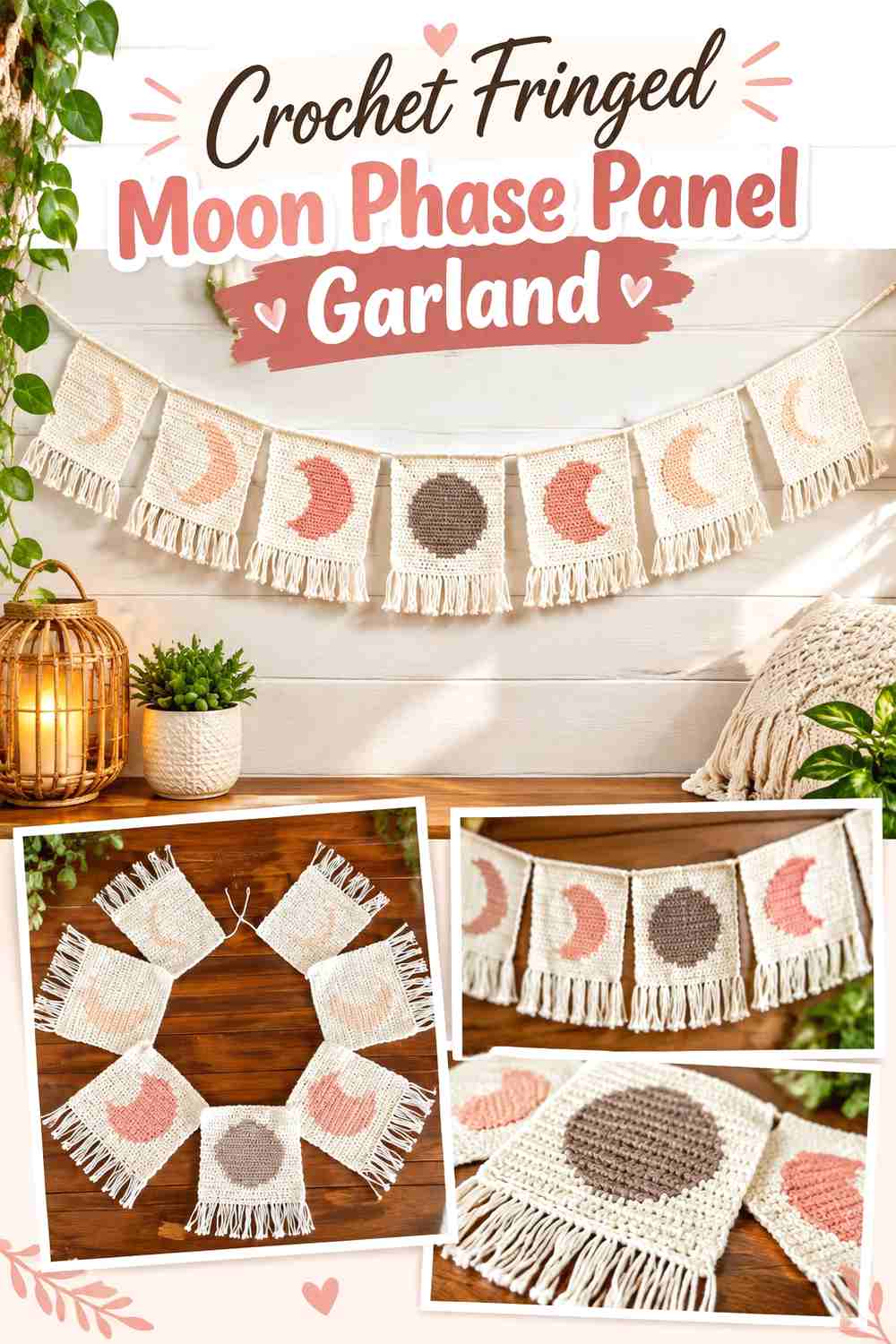
This project is the closest match to the article title. Happy Heartsy’s design uses separate rectangular crochet panels showing different lunar phases, then brings them together on one horizontal hanging strand. Fringe beneath the panels gives the display additional length and movement.
Because every phase sits inside its own background field, the moon shapes remain visually connected even when the individual panels have space between them. This format works especially well when you want the garland to feel more like a row of miniature tapestries than a string of loose appliqués.
Panel Consistency Matters More Than Perfectly Identical Fringe
Repeated rectangular pieces make differences in width especially noticeable. Compare finished panels before permanent assembly so one does not interrupt the visual rhythm of the sequence.
Fringe can be trimmed after the garland is hanging, when gravity has allowed the strands to settle naturally.
Colorwork Gives You More Than One Way to Make the Moons Dark
A witchy adaptation does not have to mean black moons on a pale background. Reversing that relationship can create a night-sky effect, while several muted moon shades can make the phases look more atmospheric.
Keep enough contrast between the moon and its surrounding field that the changing shapes remain obvious from a distance.
Creator Credit: Happy Heartsy
2. Crochet Mini Tapestry Moon Phase Garland
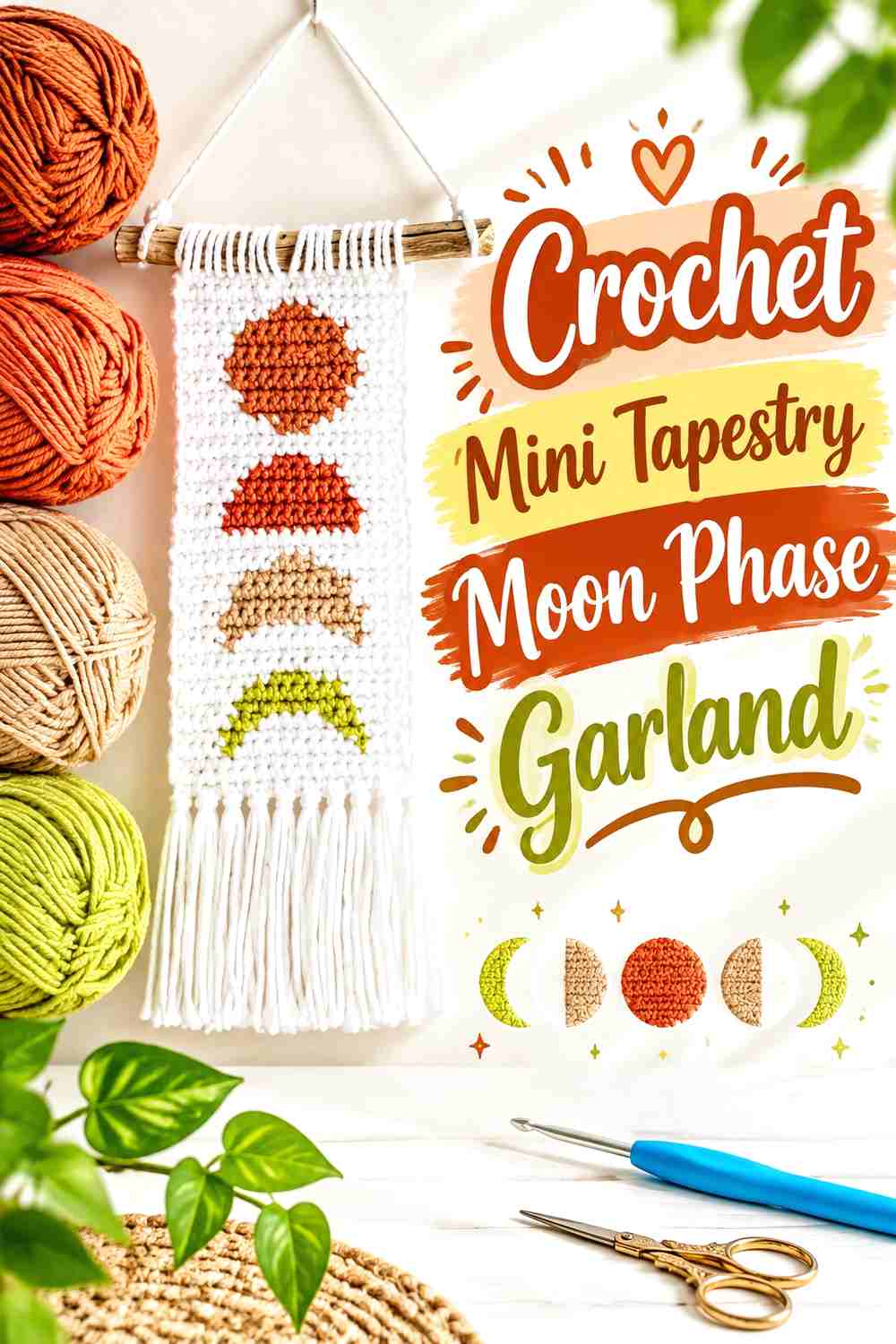
Love & Stitch’s source project is a compact moon-phase wall hanging rather than a ready-made horizontal garland. Its small tapestry format makes it useful as an adaptation idea: several independently made celestial panels could be displayed as a row of miniature hangings instead of one continuous strand.
This approach suits a narrow wall, the space above a shelf, or a gallery-style arrangement where separate pieces are preferable to loose hanging moons.
Small Panels Make the Background Part of the Design
Unlike a standalone moon appliqué, a tapestry motif includes both the moon and the space around it. That gives you an opportunity to establish a consistent night-sky background across the whole display.
Choose the background color first, then make sure the lunar color remains distinct enough to show the phase.
Repeat the Format Rather Than Guessing at New Charts
If you want several related pieces, use the creator’s actual pattern only as instructed rather than reconstructing new phases from protected chart work.
You can create variation through placement, yarn palette, spacing, tassels, or by pairing the finished panel with independently designed compatible motifs.
Creator Credit: Love & Stitch
3. Crochet Moon-and-Star Celestial Garland
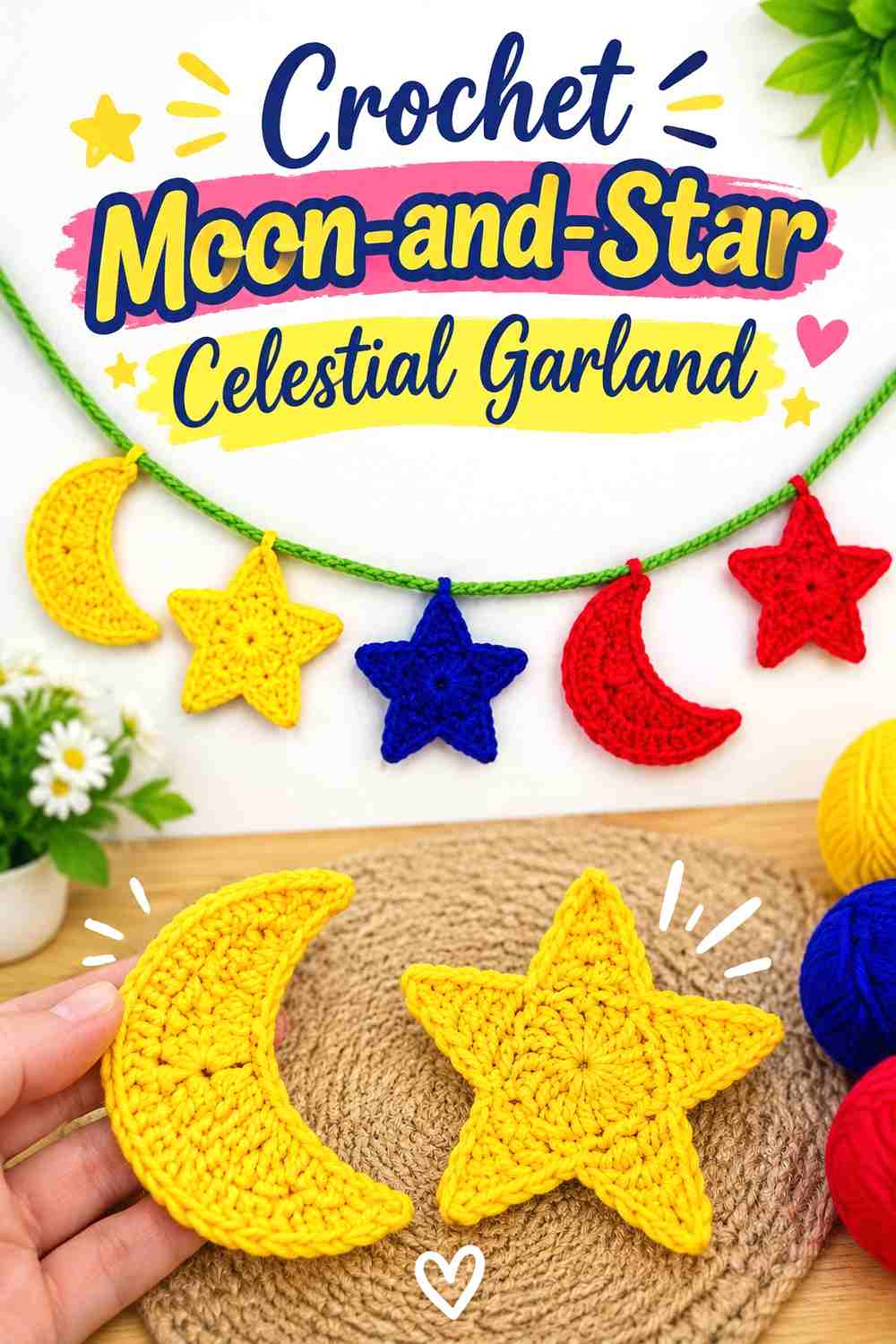
This project already combines moon and star shapes into a crochet garland direction, making it a natural choice when you prefer a celestial strand to a scientifically ordered phase sequence.
Stars can prevent repeated moons from looking too dense and create intentional negative space along a mantel, wall, headboard, or doorway.
Use Stars as Separators, Not Filler Everywhere
A few stars between larger moon motifs can create breathing room. Too many tiny pieces may make the strand look visually busy and can weaken the rhythm of the moons.
Lay the entire sequence out before joining and compare both the motif spacing and the amount of empty cord.
Keep the Moon as the Main Shape
If the goal is specifically moon-phase decor, the moon motifs should still dominate the finished strand.
One practical approach is to reserve stars for the outer sections or place them between major lunar motifs rather than alternating every piece equally.
Creator Credit: sonia’s wool world
4. Crochet Crescent-and-Full-Moon Phase Garland
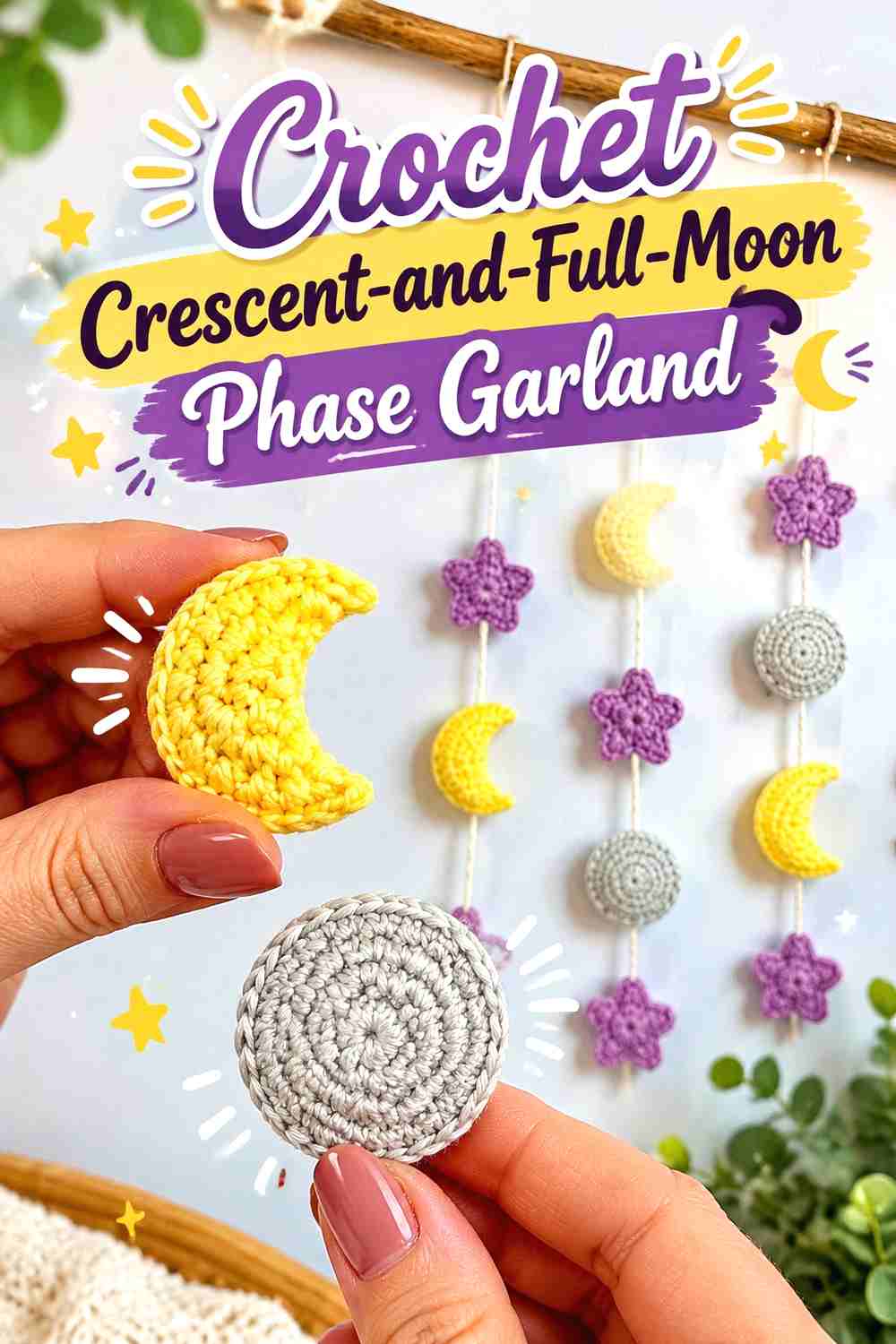
My Rainbow Crochet demonstrates both crescent and full-moon forms in one tutorial. That combination gives you two useful silhouettes for a simplified lunar garland without requiring every piece to be identical.
This is better suited to an interpretive phase display than a complete astronomical sequence. Repeat the motifs in a balanced arrangement and let orientation, color, or spacing suggest waxing and waning movement.
Two Moon Shapes Can Still Create Strong Rhythm
A garland does not need many different motif patterns to look intentional. Alternating a full circle with mirrored crescents creates enough contrast to establish a celestial sequence.
Test both left- and right-facing placement before attaching the crescents so the two halves of the garland feel balanced.
Full Moons Make Useful Visual Anchors
A circular moon naturally carries more visual weight than a narrow crescent.
Positioning the full moon near the center can create a clear focal point, while the smaller-looking crescents lead the eye outward toward the ends.
Creator Credit: My Rainbow Crochet
5. Crochet Moon-and-Star Charm Garland
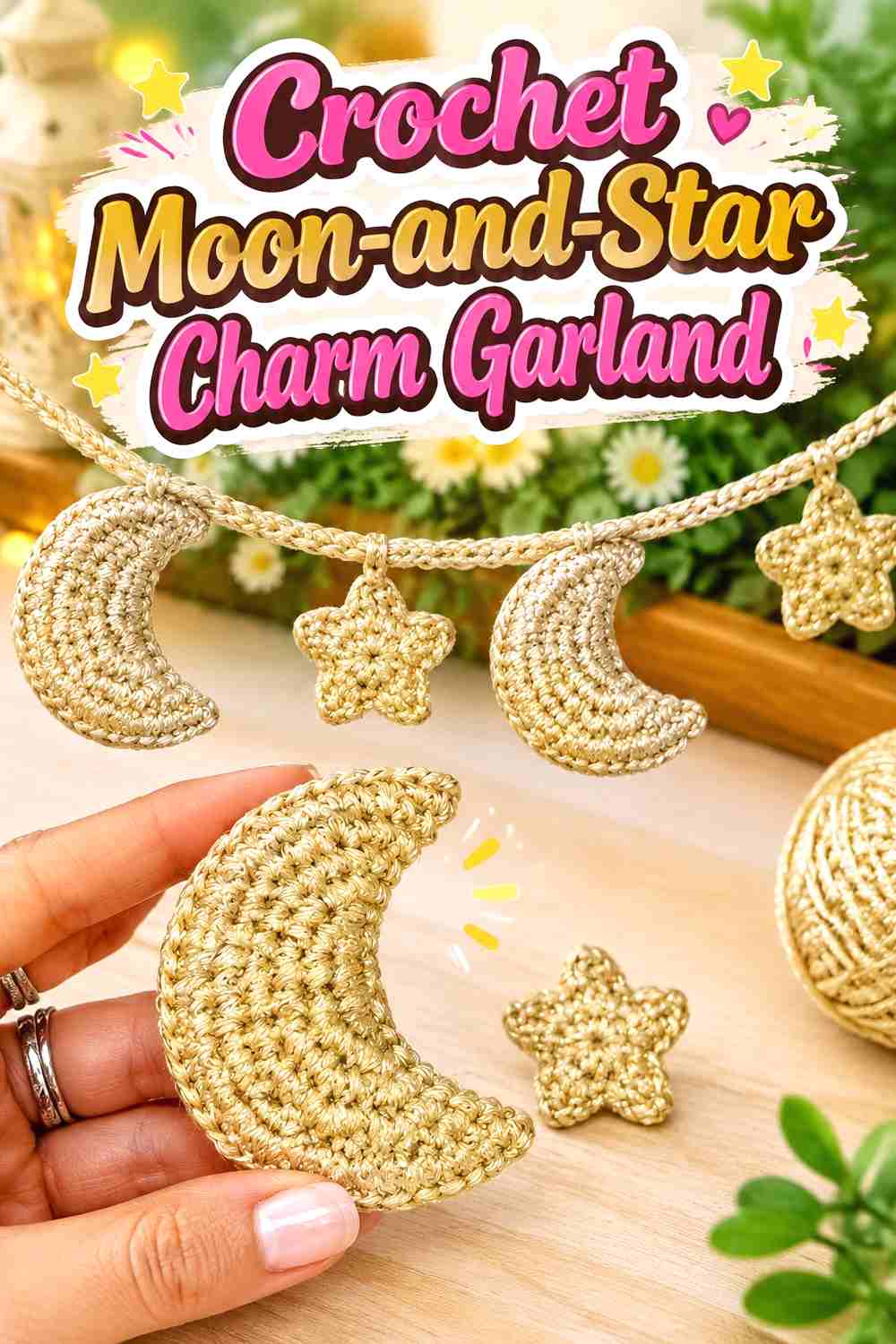
Blossom Crochet’s tutorial pairs compact moon and star motifs designed for uses such as appliqués, charms, or mobile elements. Their small scale makes them particularly adaptable to a garland where you want many pieces without making the finished display oversized.
Instead of treating every motif equally, the moon can remain the dominant repeating shape while the stars provide smaller accents.
Smaller Motifs Allow Closer Spacing
A tiny celestial strand can work in spaces where large tapestry panels would overwhelm the wall.
Consider a bookshelf edge, small mirror, narrow mantel, or compact decorative nook rather than assuming every moon garland needs to span a large wall.
Hanging Method Can Change How Flat Motifs Face
A flat appliqué attached at only one point may twist rather than face forward.
Before assembling the entire garland, attach one test motif to your chosen cord and hang it. If it rotates too freely, reconsider the attachment position or use a method that gives the motif more stability.
Creator Credit: Blossom Crochet
6. Crochet Slim Crescent Moon Phase Garland
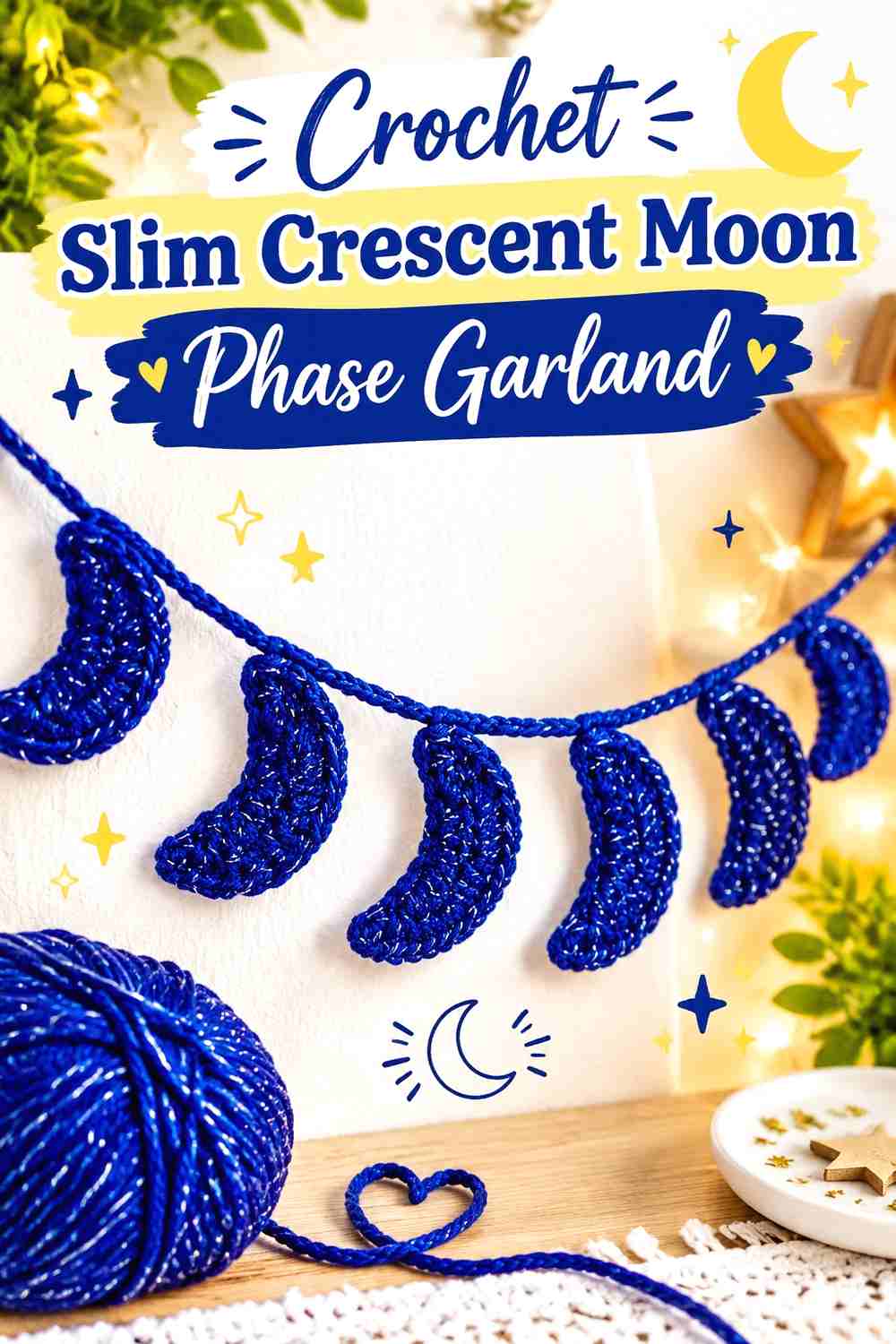
Cute & Cozy Crochet’s crescent appliqué offers a clean, recognizable moon silhouette that can be repeated into a minimalist lunar strand.
This idea works particularly well for monochrome witchy decor. Instead of changing the crochet pattern for every piece, the display can use repeated crescents facing in opposite directions around a central full-moon motif from a compatible independent source.
Orientation Carries Much of the Phase Effect
When identical crescent shapes are used, direction becomes important. Left- and right-facing crescents can imply opposite sides of the lunar cycle.
Arrange every motif before joining so you do not accidentally place two mirrored sections inconsistently.
Flat Appliqués Suit Shallow Display Areas
A thin moon strand can sit close to a wall and generally creates less depth than stuffed ornaments.
That makes this direction useful where projecting decorations would interfere with doors, shelves, or other wall decor.
Creator Credit: Cute & Cozy Crochet
7. Crochet Mixed-Scale Moon Phase Garland
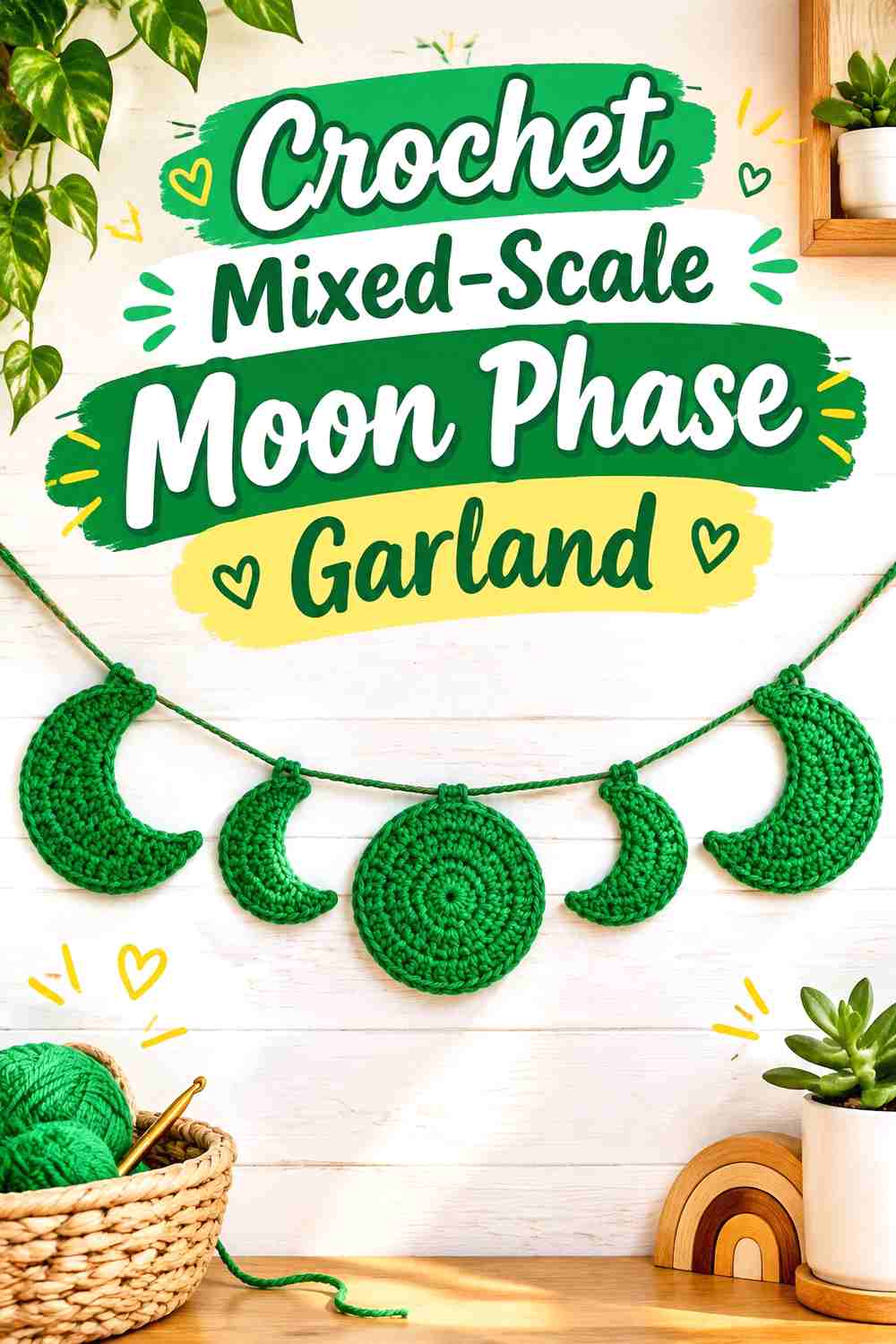
Crochet With Samra demonstrates moon appliqués in two sizes. Using multiple scales gives you another way to establish hierarchy in a celestial garland without relying on many different stitch patterns.
Larger moons can mark the center or major points in the display, while smaller crescents can fill the outer sections.
Size Variation Needs a Deliberate Pattern
Randomly alternating large and small moons can look accidental.
Try a symmetrical arrangement first—for example, increasing motif size toward the center and decreasing it again toward the opposite end. You can adjust the exact layout without changing the creator’s motif construction.
Match Yarn Behavior Across Both Sizes
If the motifs use different fibers or substantially different tensions, their edges may not behave consistently.
Using related yarns makes it easier for the large and small pieces to look like part of the same collection even when the colors vary.
Creator Credit: Crochet With Samra
8. Crochet Graphic Crescent Moon Garland
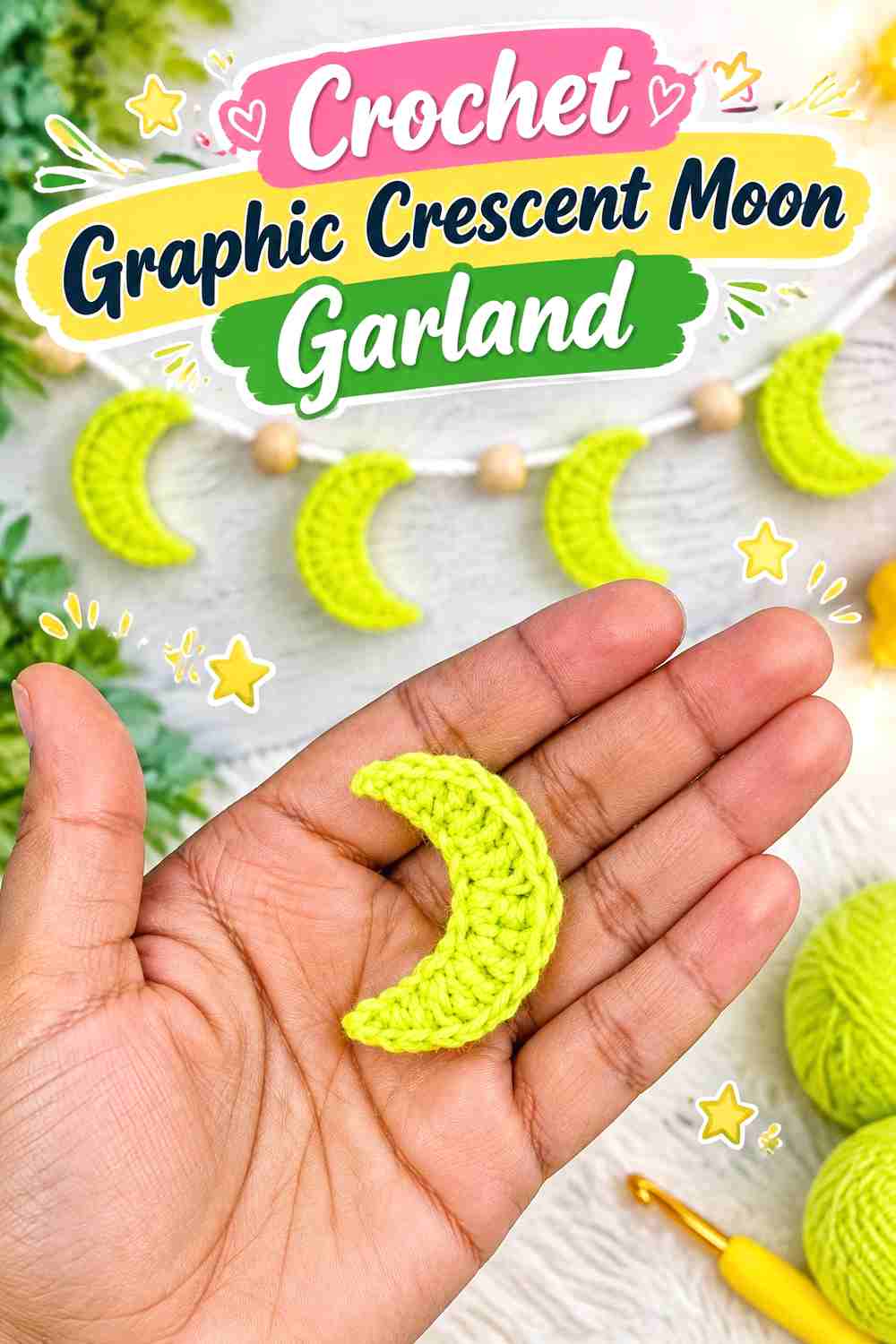
Creggy’s Crochet provides another flat crescent-moon construction, but its value in this collection is as a bold repeated silhouette rather than as one element within a complex tapestry.
A row of identical crescents can create strong graphic repetition, especially when the motifs contrast sharply with the wall behind them.
Repetition Can Look More Modern Than a Detailed Phase Sequence
Not every witchy moon display has to document every lunar stage.
Using the same crescent repeatedly creates a simpler decorative rhythm that can blend more easily with existing wall art, plants, candles, or framed prints.
Keep the Gaps Consistent
With identical shapes, inconsistent spacing becomes easier to notice.
Measure between attachment points rather than relying entirely on visual judgment while the garland is lying loose on a table.
Creator Credit: Creggy’s Crochet
9. Crochet Plush Crescent Moon Garland
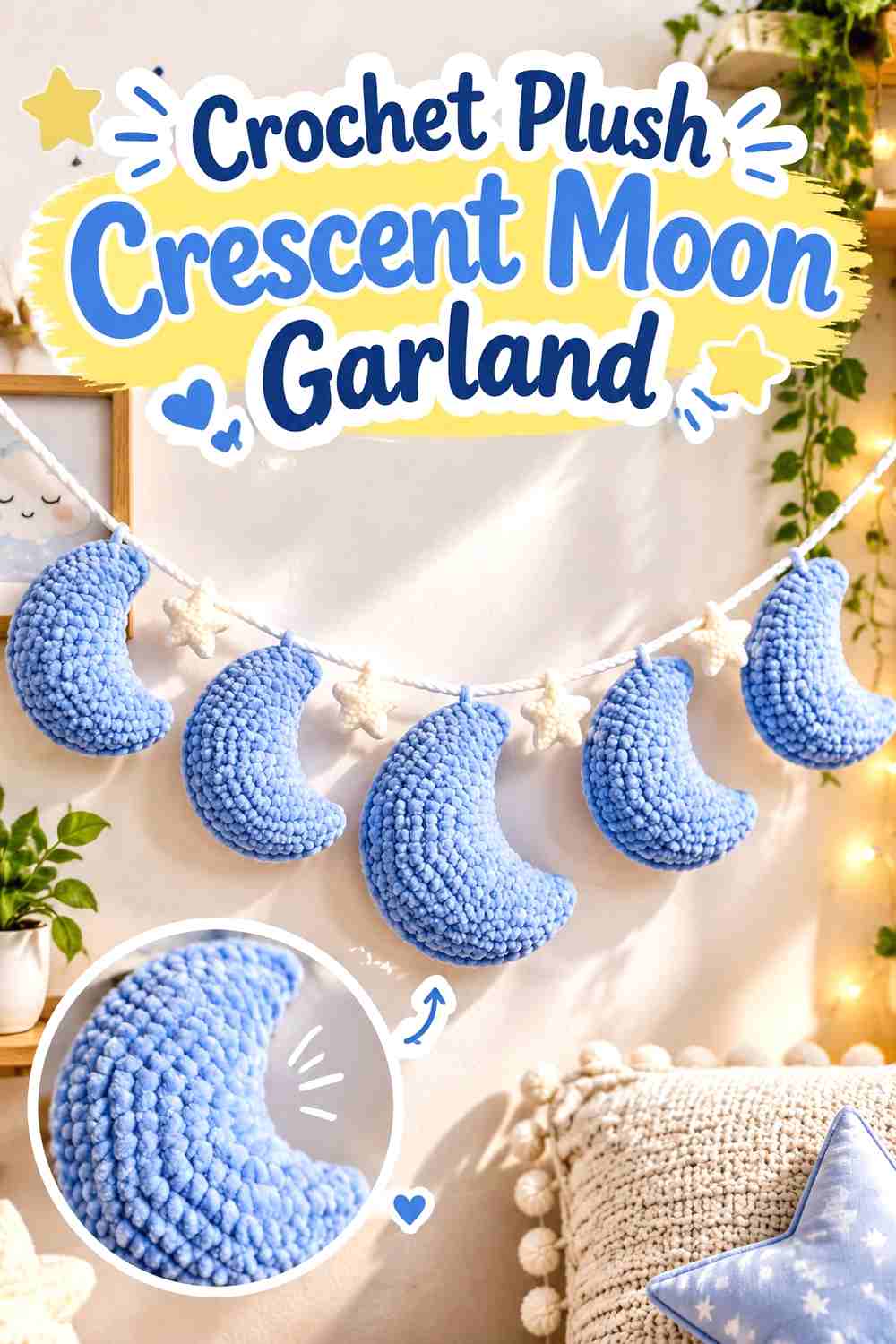
The crescent tutorial from chantelle offers a dimensional direction for readers who prefer stuffed celestial decorations over flat appliqués.
A plush garland will project farther from the wall and cast more noticeable shadows, giving it a different character from tapestry or granny-square designs.
Stuffed Motifs Need a Stronger Hanging Plan
Dimensional pieces generally ask more of the connecting strand than thin appliqués.
Make one finished moon and test how it hangs before making the full set. Pay attention to whether the motif rolls forward, twists sideways, or pulls the cord downward.
Avoid Overcrowding Dimensional Moons
Plush crescents need more physical space between them.
Leave enough room for each silhouette to remain visible rather than allowing adjacent moons to overlap whenever the cord sags slightly.
Creator Credit: chantelle
10. Crochet Delicate Crescent Appliqué Garland
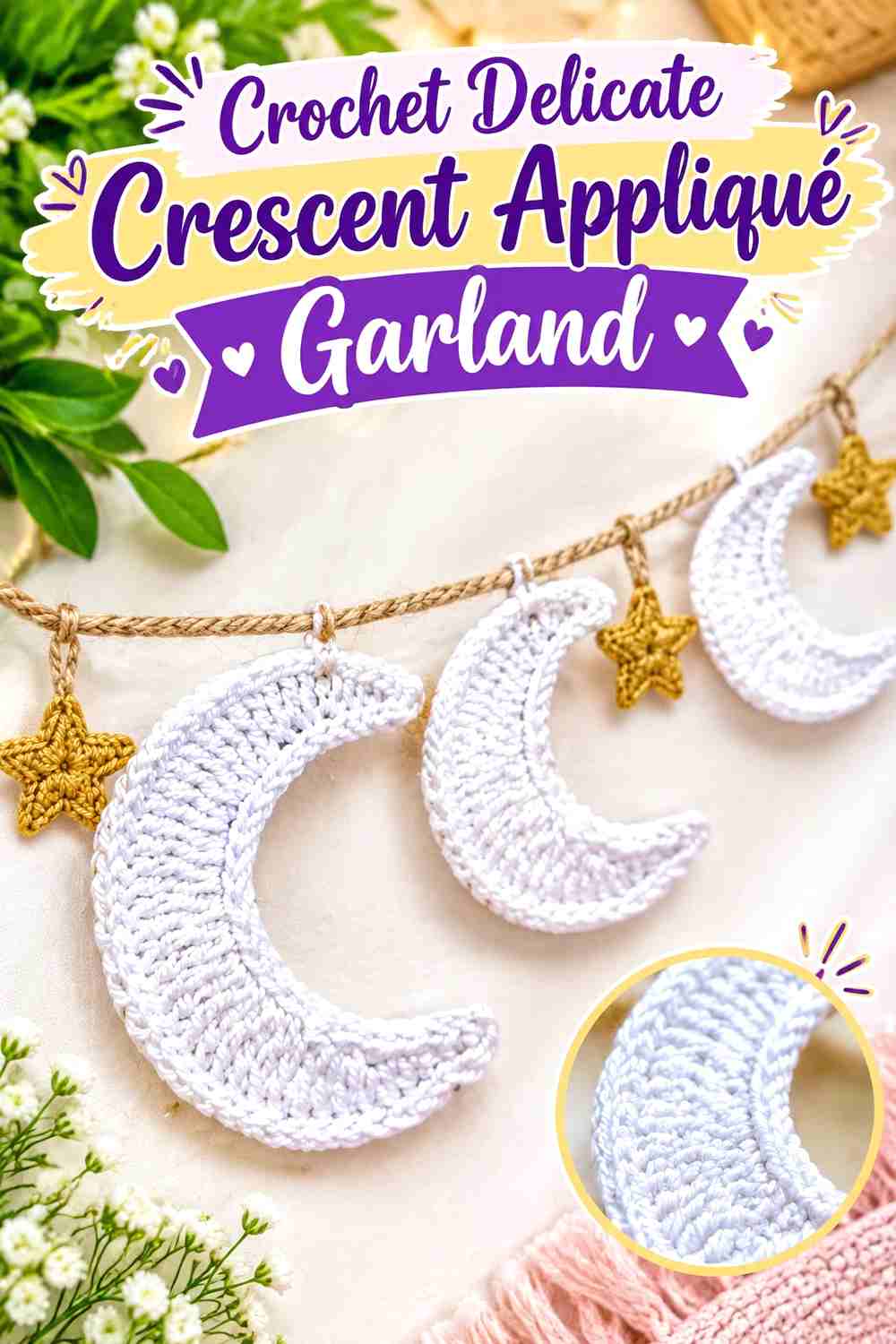
KTejidos’ crescent appliqué provides a lighter-looking motif direction for a strand where fine repeated moons are more important than dimensional volume.
This could suit a subtle celestial display above a desk, mirror, reading corner, or small altar-style decorative shelf.
A Delicate Motif Benefits From a Quiet Support Cord
A heavy or strongly contrasting rope can overpower small crochet moons.
Test the strand and motif together before final assembly. The support should visually connect the pieces without becoming the first thing you notice.
Blocking Helps Repeated Crescents Match
Small differences in curvature become obvious when several identical motifs sit next to each other.
Finish and shape the moons consistently before deciding which pieces will sit beside one another.
Creator Credit: KTejidos
11. Crochet Pendant-Style Moon Garland
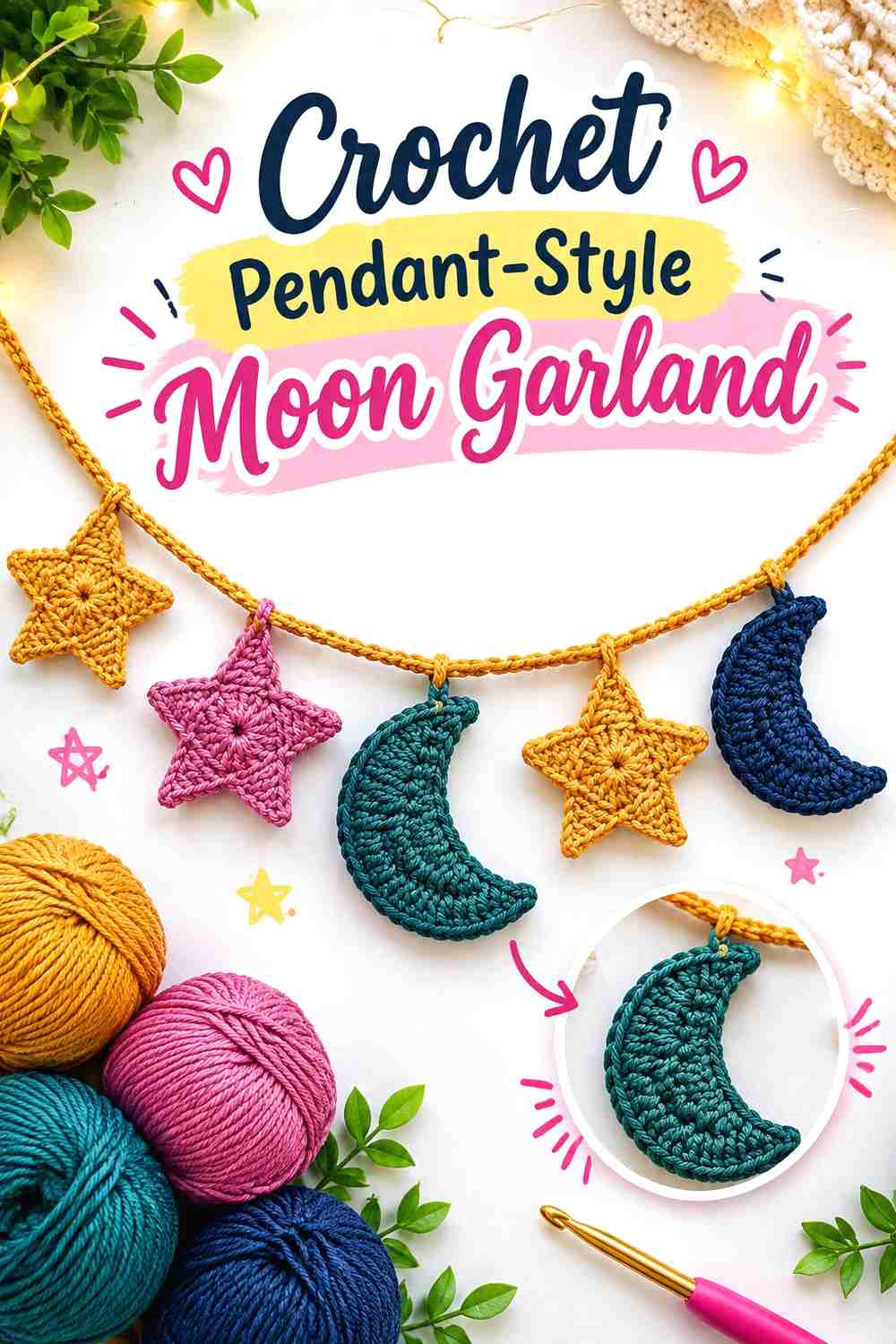
Warmi Sulata’s moon is presented as a crochet appliqué, decoration, or pendant, making the hanging orientation particularly useful for a garland adaptation.
Instead of sewing moons directly along a horizontal cord, you can treat each as an individual pendant suspended below it. That produces more vertical movement and makes the strand feel closer to jewelry-inspired wall decor.
Varying Drop Lengths Changes the Entire Composition
Moons hanging at one level create a neat horizontal line. Different suspension lengths produce a looser constellation effect.
Test the arrangement before cutting all hanging strands because the central drops often need more visual space than the outer ones.
Pendants Need Room to Swing
A pendant-style moon can rotate or move more readily than a motif sewn directly to the cord.
Keep enough distance between pieces so they do not constantly overlap, especially if the garland will hang near an open window or frequently used doorway.
Creator Credit: Warmi Sulata
12. Crochet Stuffed Hanging Moon Garland
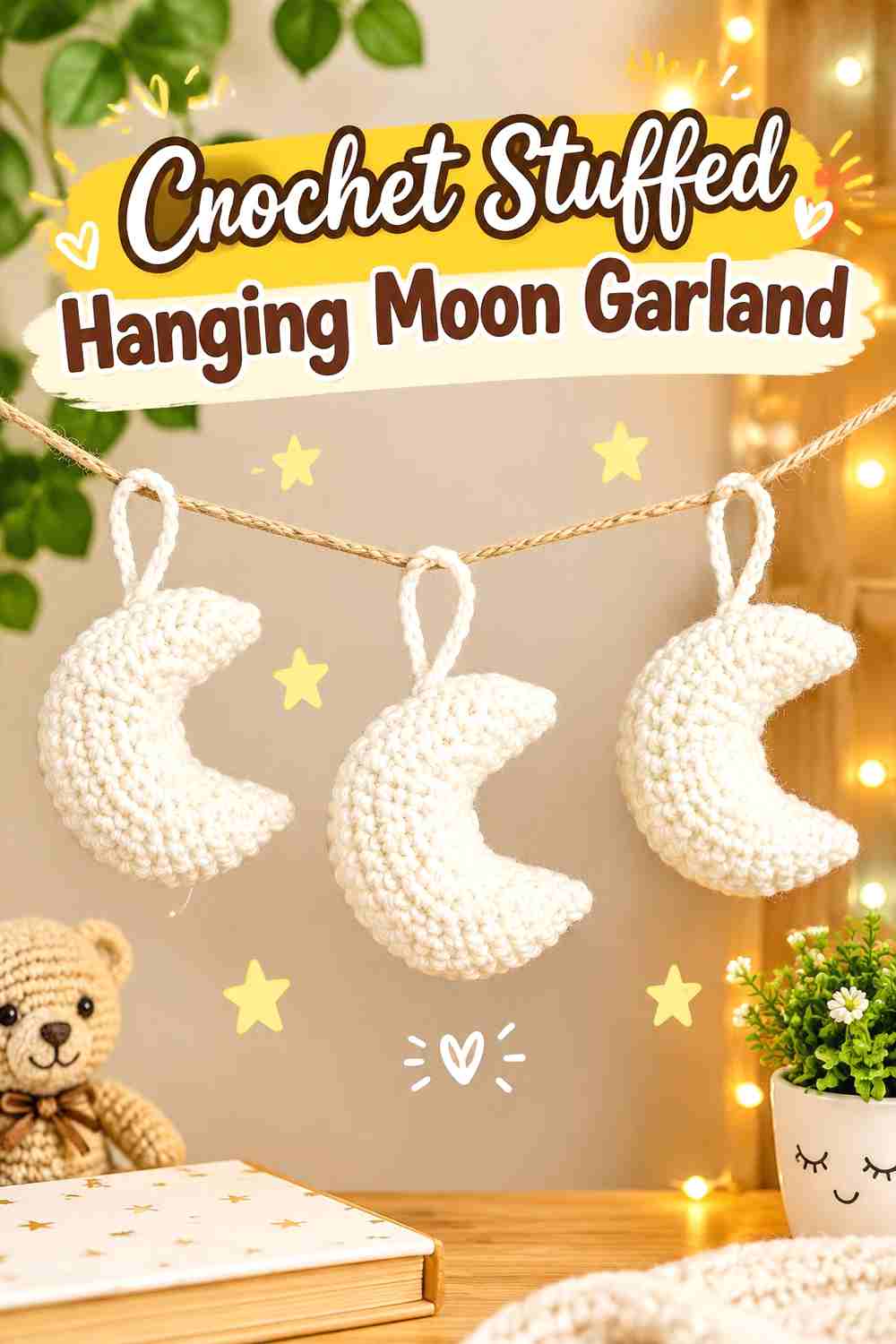
Alextitia Tuto Crochet demonstrates a moon that is assembled, stuffed, and finished with an optional hanging element. That makes it a strong source for a garland made from individual hanging ornaments rather than flat connected motifs.
A strand of padded moons can feel softer and more sculptural, especially against a dark painted wall or solid curtain.
Stuffing Consistency Keeps the Set Cohesive
If one moon is packed much more firmly than another, their outlines may look noticeably different.
Aim for a similar degree of fullness throughout the set rather than trying to maximize stuffing in every motif.
Dimensional Moons Can Work as Removable Ornaments
Individual hanging loops give you the option to treat each moon as a separate decoration.
If you want seasonal flexibility, consider a garland system where motifs can be removed and rearranged rather than permanently stitched to the support cord.
Creator Credit: Alextitia Tuto Crochet
13. Crochet Moon Granny Square Bunting
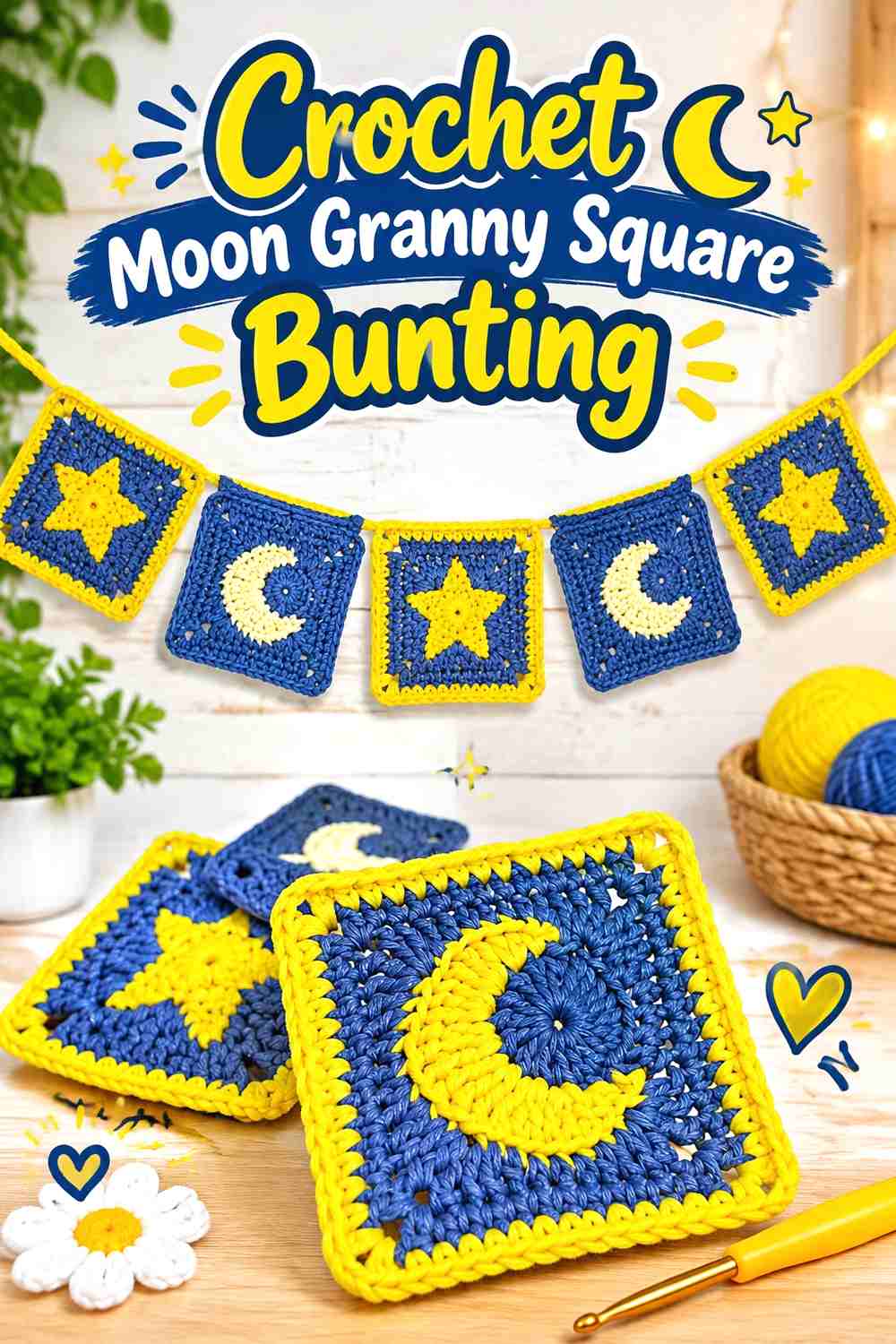
Hopeful Turns’ crescent moon granny square moves the lunar motif into a framed square rather than leaving it as an isolated shape. Several squares joined or individually suspended can form a structured bunting-style garland.
The background color becomes especially important here because every moon sits within a defined field.
Square Bunting Creates a Stronger Edge Line
Loose moons produce an irregular lower outline. Granny squares create repeated straight sides and corners, which makes the garland look more architectural.
This style can work particularly well above a headboard, shelf, or long piece of furniture where a clear horizontal structure suits the space.
Compare Blocked Square Dimensions Before Joining
Granny-square bunting looks uneven quickly if one panel finishes larger than another.
Block and measure the motifs first, particularly if you change yarn colors or combine squares from different patterns.
Creator Credit: Hopeful Turns
14. Crochet Celestial Granny Square Garland
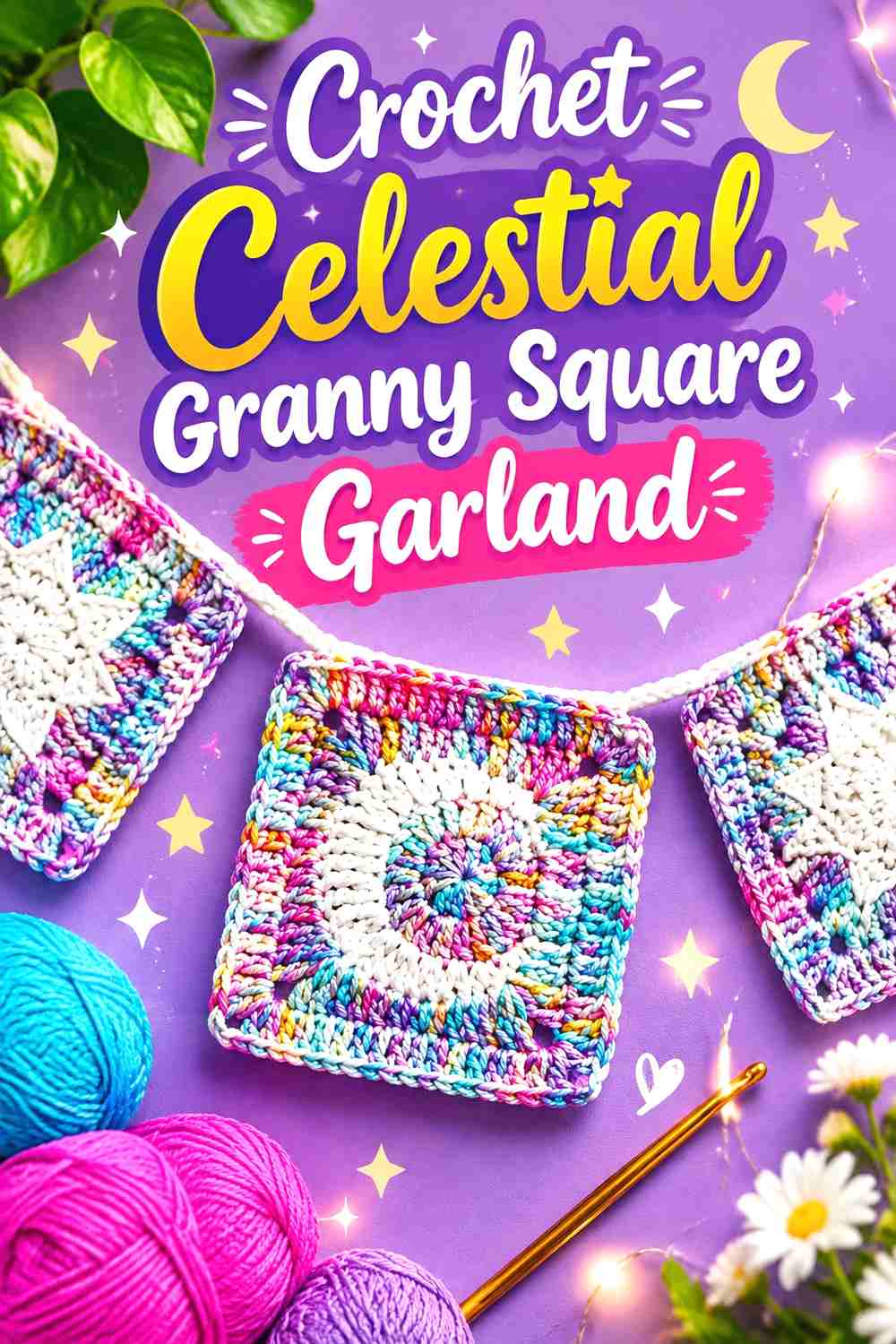
Craft Folk’s moon square is designed as part of a coordinating celestial set that also includes sun and star square concepts. That makes it useful for a garland where the moon phases sit within a broader night-sky theme rather than appearing alone.
You could emphasize lunar imagery by using moon squares as the main pieces and placing coordinating celestial squares more sparingly.
Matching Square Formats Make Mixed Motifs Easier to Organize
Different pictures feel more cohesive when their outer dimensions and basic framing are related.
Before combining celestial squares, compare their finished blocked dimensions and border structure rather than assuming designs from separate tutorials will automatically align.
Decide Whether the Sun Belongs in a Witchy Palette
A sun motif can create an intentional day-and-night story, but it changes the mood.
For a darker display, you may prefer moon and star squares only, or reinterpret the overall palette with rust, antique gold, gray, plum, and near-black rather than bright daytime colors.
Creator Credit: Craft Folk
15. Crochet Oversized Crescent Moon Garland
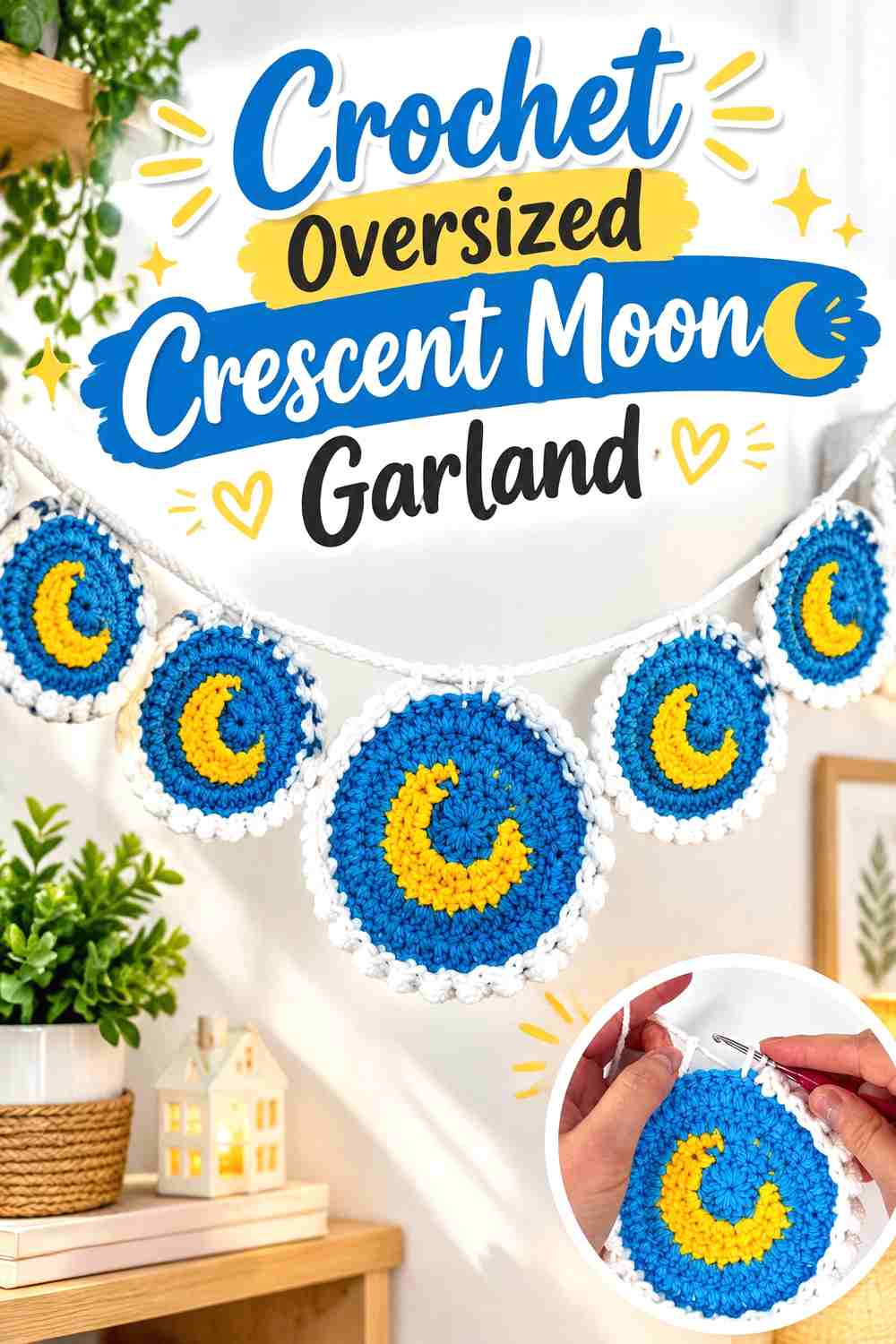
Create by K’s moon coaster offers a substantially broader flat shape than a tiny appliqué, making it useful as inspiration for an oversized garland with fewer, more prominent motifs.
Instead of filling a long cord with many little moons, this direction works best when each lunar piece has enough room to act as a small wall decoration by itself.
Larger Motifs Need More Empty Space
Increasing motif scale without increasing the spacing can make a garland look crowded.
Arrange the moons on the floor at roughly the width of the planned wall before deciding how many pieces actually belong in the finished strand.
A Coaster-Origin Motif Should Be Treated as an Adaptation
The source project is not a dedicated moon-phase garland. Its value here is the crescent shape and larger flat format.
Use the tutorial for its demonstrated moon construction, then make your own display decisions about cord, orientation, spacing, and how the motif fits into a broader lunar sequence.
Creator Credit: Create by K
Which Moon Phase Garland Style Works Best for Your Room?
For the clearest lunar-cycle story, the Fringed Moon Phase Panel Garland is the most direct choice because the phases are already central to the construction. The Mini Tapestry direction also works well when you prefer colorwork and defined backgrounds.
Choose the Slim Crescent, Graphic Crescent, or Delicate Appliqué approaches if you want a lightweight strand that sits close to the wall. These options put more emphasis on silhouette and spacing than on texture.
For more dimension, compare the Plush Crescent and Stuffed Hanging Moon ideas. They create stronger shadows and a softer sculptural effect but require more attention to weight and hanging stability.
The Moon Granny Square Bunting and Celestial Granny Square Garland offer the strongest geometric structure. They make sense when you prefer framed motifs instead of irregular silhouettes.
If your decor is more eclectic than literal, the Moon-and-Star, Mixed-Scale, and Pendant-Style options provide more freedom to treat lunar imagery as part of a larger celestial arrangement.
Conclusion
The most successful crochet moon phase garland starts with the display format, not the yarn color. Decide whether you want accurate lunar progression, repeated crescent symbolism, a moon-and-star theme, framed granny-square panels, or dimensional hanging ornaments before choosing the tutorial.
For a clearly recognizable moon cycle, dedicated phase projects reduce the amount of adaptation required. For a looser witchy look, crescent motifs provide much more freedom with orientation, spacing, scale, tassels, stars, and hanging height.
Whichever style you choose, assemble the motifs temporarily before securing them permanently. Check the sequence from normal viewing distance, test how the cord sags under the finished weight, and use the original creator’s tutorial for the exact construction of each sourced motif.
Frequently Asked Questions
Do all the moons in a crochet moon phase garland need to be different shapes?
Not necessarily. A literal lunar-cycle display benefits from distinct phases, but a decorative celestial garland can use repeated crescents, mirrored orientations, or a combination of crescents and full moons. The important point is to be clear whether you are representing the lunar cycle accurately or creating a moon-inspired decorative strand.
How do I keep crochet moon motifs from twisting on the garland?
The attachment position matters. A motif suspended from one small point can rotate more easily than one secured across a wider section. Test one finished moon on the actual hanging cord before assembling the complete strand.
Should I block crochet moons before attaching them?
Blocking can be particularly helpful for flat appliqués, tapestry panels, and granny squares because it lets you compare their finished shapes and dimensions before assembly. Follow the care requirements of the yarn you are using rather than assuming every fiber should be treated the same way.
What colors work well for witchy moon phase decor besides black?
Charcoal, cream, bone, deep plum, moss, burgundy, rust, muted navy, gray, and subdued metallic-looking shades can all create a darker celestial mood. Contrast is more important than following one specific palette because the moon shapes still need to remain readable.
How far apart should crochet moon motifs be on a garland?
There is no universal spacing because motif size and weight vary. Lay out the complete sequence across the intended display width first, then adjust the gaps until the individual silhouettes remain clear. Dimensional moons generally need more breathing room than small flat appliqués.
Can I mix moon patterns from different crochet tutorials?
You can combine independently made motifs for your own display, but check their blocked size, thickness, yarn behavior, and visual style first. Two crescent patterns may be technically compatible yet look mismatched because one is dense and dimensional while the other is thin and delicate.
Are crochet moon garlands suitable for a nursery?
They should be treated as decorative hanging items rather than toys. Keep cords, strands, beads, tassels, stuffed pieces, and other hanging components well out of a baby’s or young child’s reach, and do not position a garland where it can be pulled into a crib or sleep space.