Cold-weather dog sweaters need to do more than look cute. For a sweater that will actually be worn on winter walks, fit around the chest, shoulders, front legs, belly, collar, and walking gear matters just as much as stitch texture or color.
The 19 tutorials below take different approaches to that problem. Some use simple pullovers, while others add raglan shaping, buttons, long sleeves, textured stitches, colorwork, a cowl collar, granny squares, or made-to-measure construction. There are options aimed at tiny dogs, large dogs, and pets whose proportions do not line up neatly with a standard size chart.
A crochet sweater can add a useful layer for a dog that tolerates clothing, but it should still allow normal walking, sitting, turning, and toileting. Check the fit during construction, secure every yarn end and removable detail, and remove the garment if the dog appears uncomfortable or starts chewing at it.
Quick List
- Crochet Top-Down Raglan Dog Sweater
- Crochet Classic Single-Crochet Dog Sweater
- Crochet Ribbed-Neck Custom Dog Sweater
- Crochet Everyday Winter Walking Dog Coat
- Crochet Button-Closure One-Piece Dog Sweater
- Crochet Large-Dog One-Piece Pullover Sweater
- Crochet Puff-Stitch Chihuahua Dog Sweater
- Crochet Chunky Long-Sleeve Dog Sweater
- Crochet Made-to-Measure Dog Sweater for Unique Proportions
- Crochet Tailored Cold-Weather Dog Coat
- Crochet Nordic Colorwork Dog Sweater
- Crochet Cowl-Neck Buttoned Dog Coat
- Crochet Cross-Texture XS Dog Sweater
- Crochet Harness-Opening Wheat-Stitch Dog Sweater
- Crochet Crossover-Stitch One-Piece Dog Sweater
- Crochet Ruffle-Trim or Straight-Hem Dog Sweater
- Crochet Make-Any-Size Dog Coat
- Crochet Granny-Square Small-Dog Sweater
- Crochet All-Size Puppy Walking Sweater
Measure for Movement, Not Just a Close Fit
Chest circumference is an important starting measurement, but it does not tell the whole story. Two dogs with similar chest measurements can have very different necks, shoulder positions, body lengths, and chest depths.
Check the neck opening, widest part of the rib cage, back length, space between the front legs, and the location of the leg openings required by the chosen tutorial. Long-haired dogs may also need enough room for their natural coat rather than a measurement taken with the fur compressed.
A useful fitting session includes movement. Let the dog walk, sit, turn, and lie down while the unfinished garment can still be adjusted. A sweater that looks smooth while the dog is standing still may pull behind the legs or creep backward once the dog starts walking.
Plan Around the Harness, Leash, and Belly
Do not assume a leash opening will line up with your particular harness. Put the actual harness on the dog and note where its attachment point sits before deciding whether a sweater needs an access opening.
The leash should remain attached to properly fitted walking equipment rather than relying on crochet fabric to restrain the dog. If the sweater covers the harness, the access opening should provide enough clearance for the hardware without forcing the fabric to bunch around it.
The underside also needs practical clearance. A long back panel does not mean the belly panel should extend equally far. Check the tutorial’s shaping against your dog’s anatomy so the sweater stays clean and does not interfere with toileting.
Choose Yarn for Fabric Behavior as Well as Winter Style
Thicker yarn can make a substantial fabric, but bulk alone does not determine whether a sweater will be comfortable. A dense stitch can restrict movement if the garment is too tight, while a very loose fabric can stretch and shift during an active walk.
For a frequently worn dog sweater, consider softness, washability, stitch recovery, and how the fabric behaves after cleaning. Check the yarn manufacturer’s care instructions instead of assuming every acrylic, wool, or blend can be treated the same way.
Crochet fabric is also not automatically waterproof. For wet snow, freezing rain, or other harsh weather, a crochet sweater may need to function as one layer within a broader cold-weather plan rather than as a replacement for suitable weather protection.
1. Crochet Top-Down Raglan Dog Sweater
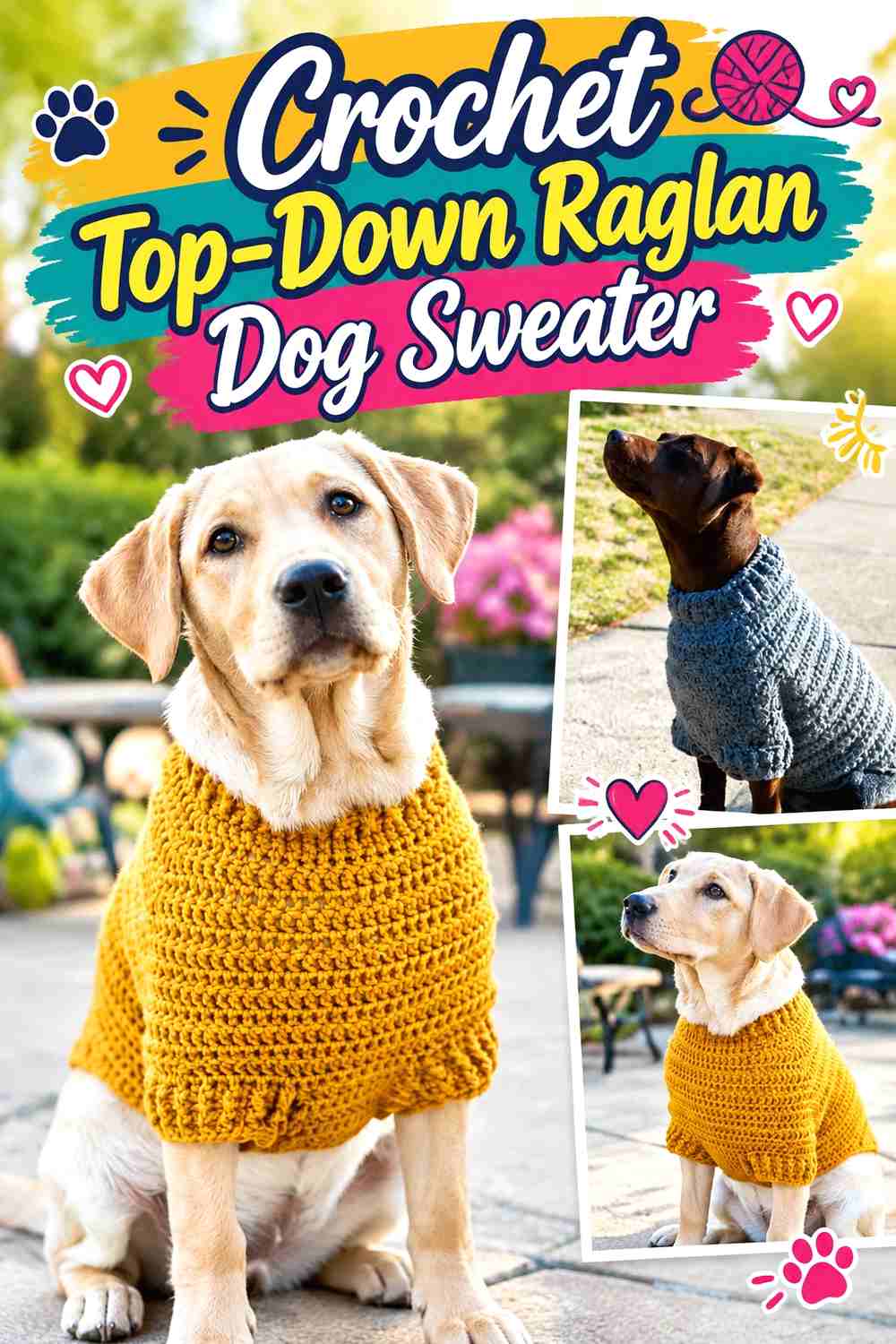
Heart Hook Home’s raglan design offers a particularly useful approach when you want gradual shaping through the chest instead of a simple rectangular body. The source includes sizes from XXS through 2XL and works from the top down, making it one of the more versatile starting points in this collection.
The raglan construction also creates a different visual line from a standard tube-shaped sweater. That makes this project worth considering when the chest and shoulder area is the part you most want to evaluate carefully.
Raglan Shaping Gives the Chest Its Own Structure
The increasing sections around the upper body allow the sweater to expand from the neck toward the chest rather than expecting one circumference to serve both areas.
That can be useful for dogs whose rib cage is noticeably broader than their neck. Still, select the source size according to the creator’s measurements rather than assuming raglan shaping automatically fits every breed.
Check the Front Legs Before Extending the Body
Once the upper portion fits, watch how the fabric behaves directly behind the front legs. There should be enough room for a natural stride without a hard edge rubbing repeatedly in the same spot.
Resolve that fit before adding unnecessary length farther down the back.
Creator Credit: Heart Hook Home
2. Crochet Classic Single-Crochet Dog Sweater
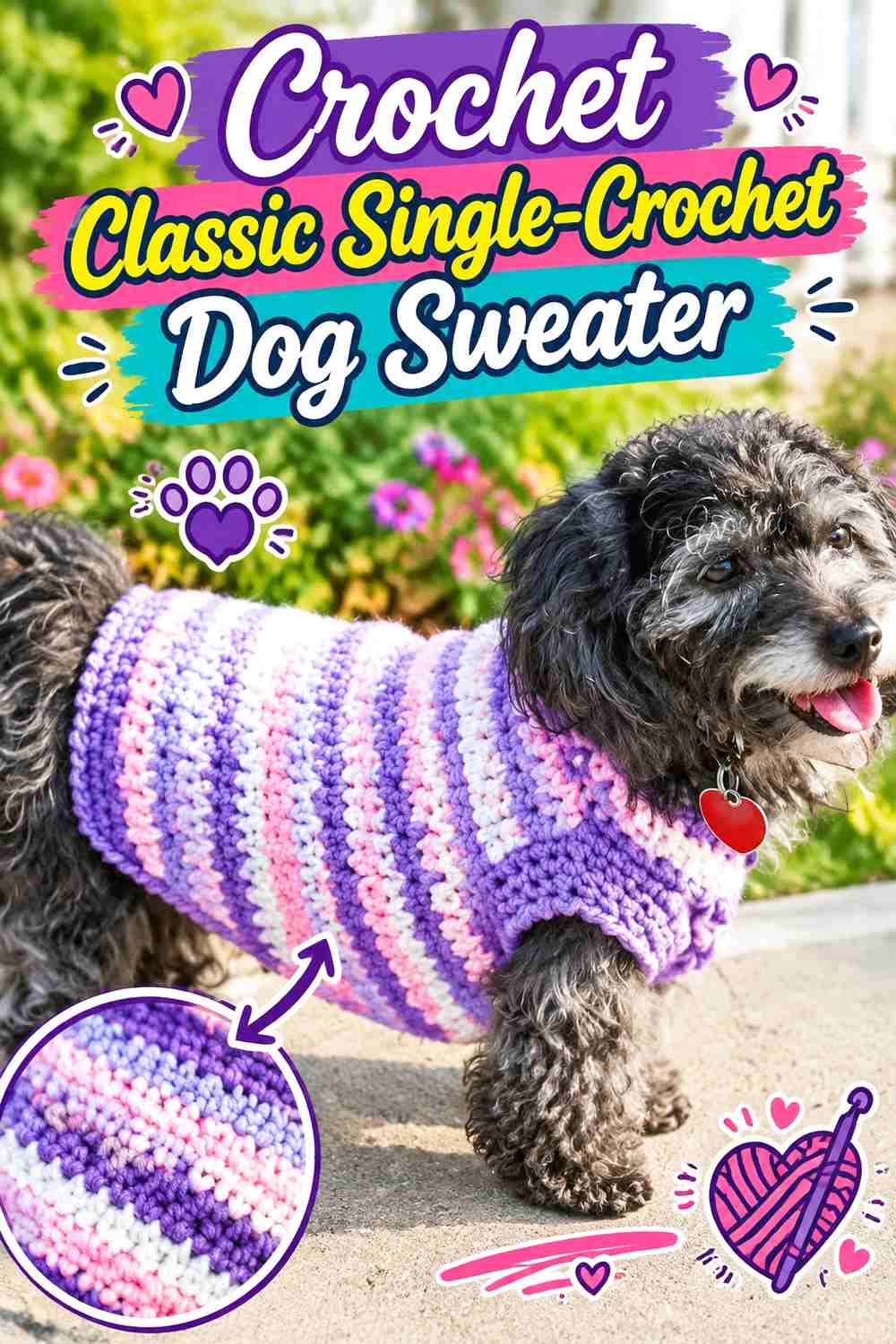
The Crochet Crowd demonstrates a straightforward dog-sweater construction while keeping the tutorial fabric focused on basic single crochet. This makes the finished sweater noticeably different from the heavily textured, colorwork, and chunky options later in the list.
A simple surface is also useful when fit is your main concern. Without large motifs or raised textures competing for attention, changes in chest width, leg placement, and overall length are easier to see.
A Basic Fabric Makes Color Changes Optional
The accompanying design can support color changes, but you do not need complicated texture to make this silhouette useful.
For winter visibility or styling, stripes can be considered separately from the fit. Finish the measurement decisions first, then decide whether multiple colors improve the look you want.
Watch for Stretch Around the Neck Opening
Single crochet can create a relatively firm fabric depending on yarn, hook, and individual tension. Check that the finished neck opening passes comfortably over the head if the design is worn as a pullover.
Do not rely on forceful stretching every time the sweater goes on.
Creator Credit: The Crochet Crowd
3. Crochet Ribbed-Neck Custom Dog Sweater
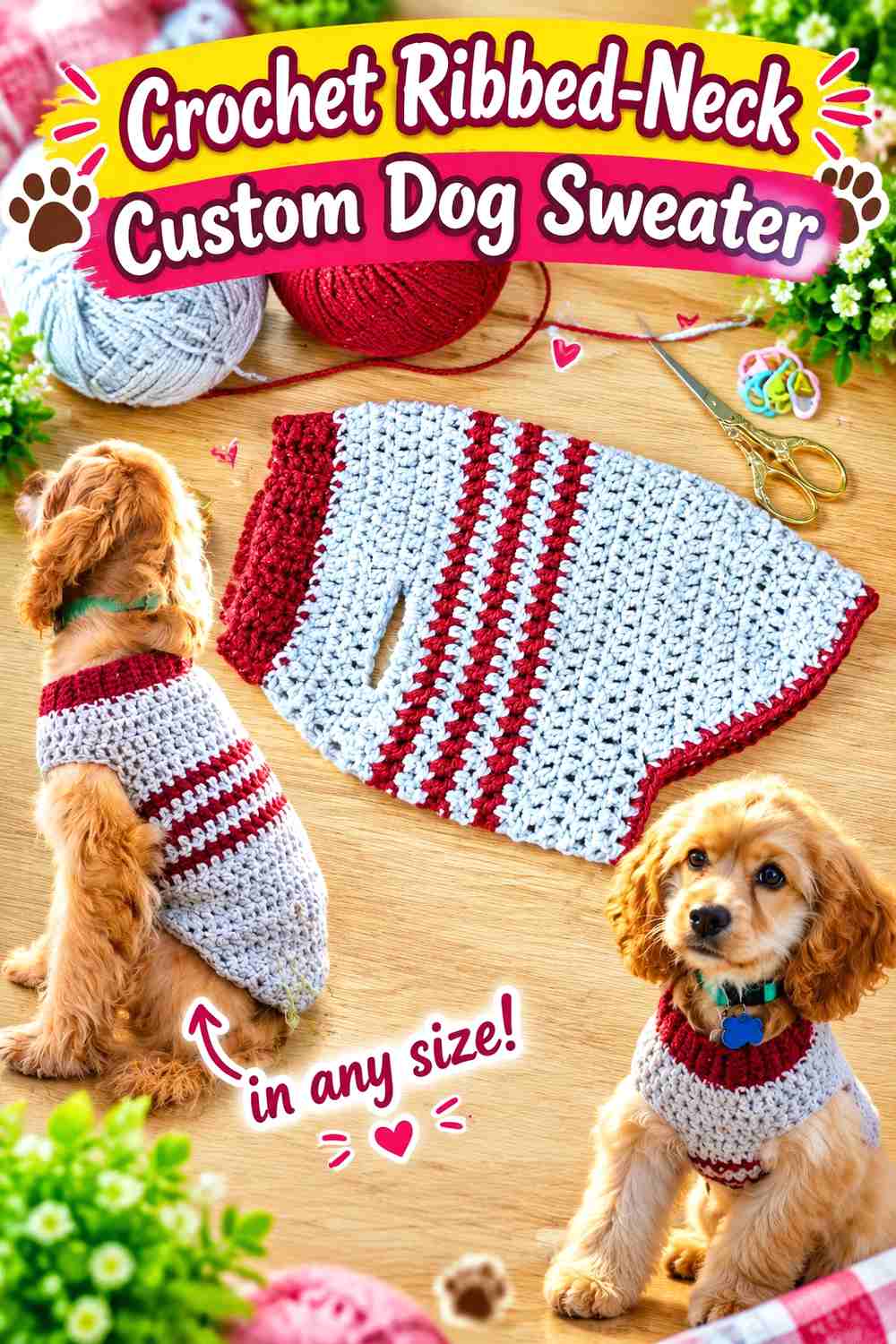
It’s erin b. uses a customizable approach that includes a neck band, body shaping, armholes, and belly decreases. That combination makes this a useful choice when you want a familiar pullover silhouette without being locked into one fixed dog size.
The defined neck also gives the garment a sweater-like appearance without the additional bulk of a tall cowl.
Belly Shaping Matters During an Active Walk
The underside of a dog sweater has different requirements from the back. A long dorsal section may provide useful coverage, while the belly usually needs to finish sooner.
Evaluate that lower edge with the dog standing and moving. A sweater that is simply made equally long all the way around can create practical problems.
Use Custom Sizing to Follow the Dog, Not a Label
“Small,” “medium,” and “large” can mean very different proportions across breeds.
If you use the tutorial’s customization approach, compare the evolving garment with the actual dog rather than choosing dimensions because they resemble the label on a store-bought coat.
Creator Credit: it’s erin b.
4. Crochet Everyday Winter Walking Dog Coat
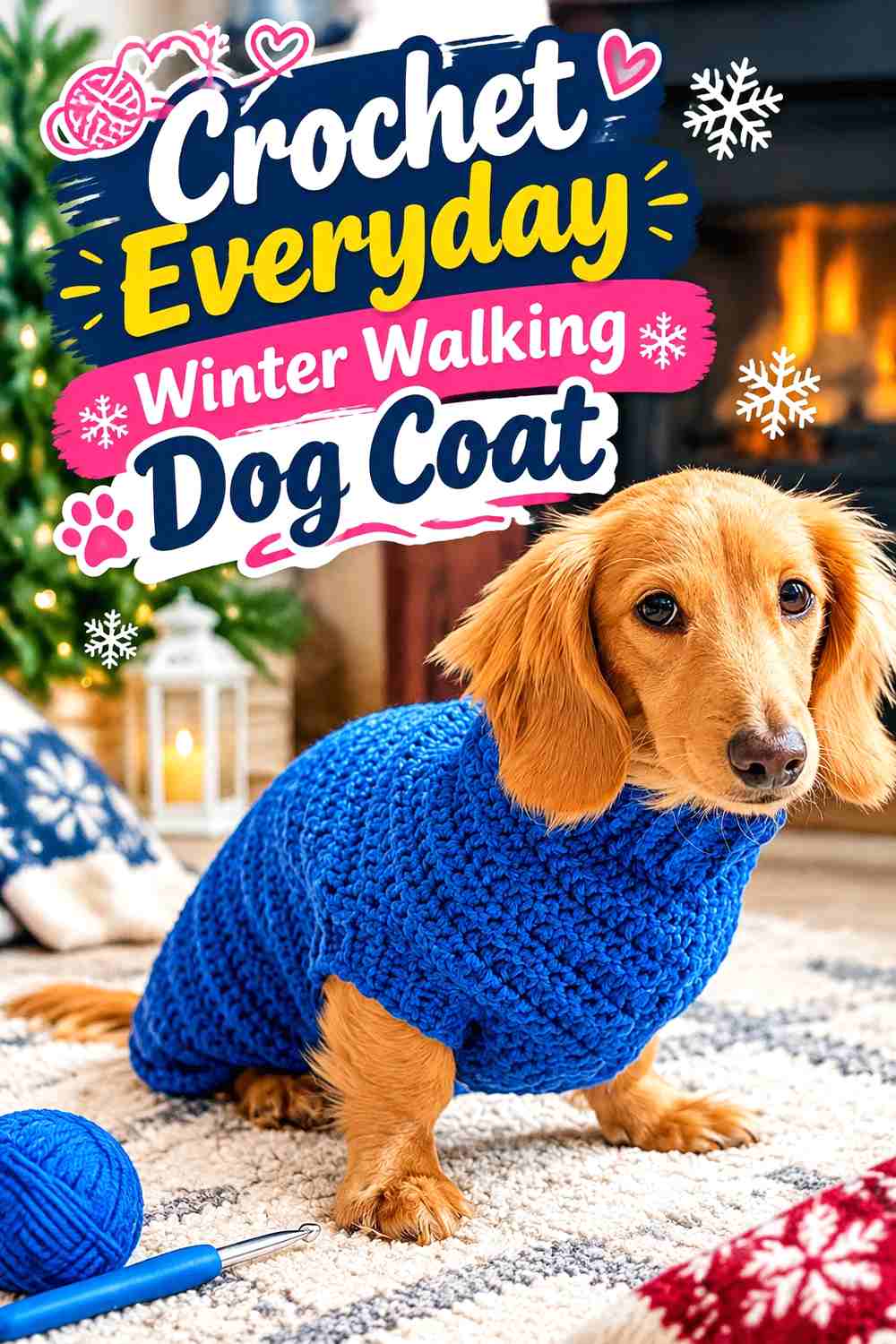
Crochet with Tiffany provides a coat tutorial covering several sizes with guidance for adjustment. Its uncomplicated silhouette makes it a practical candidate for an everyday walking sweater where movement and repeat wear matter more than decorative complexity.
It also sits comfortably between the tiny-dog-specific tutorials and the larger custom constructions in this roundup.
Give the Front Legs Room to Reach Forward
A leg opening can seem generous while the dog is standing yet become restrictive when the leg extends.
After establishing the opening, gently evaluate a normal walking motion. Pay attention to the rear edge of the opening, where repeated rubbing is particularly easy to miss during a static fitting.
Simple Construction Makes Yarn Substitution More Visible
Changing yarn can alter both thickness and finished measurements. A denser substitute may make the coat feel much more substantial but can also reduce flexibility.
If substituting, match the tutorial’s gauge requirements rather than choosing solely by the number printed on the yarn label.
Creator Credit: Crochet with Tiffany
5. Crochet Button-Closure One-Piece Dog Sweater
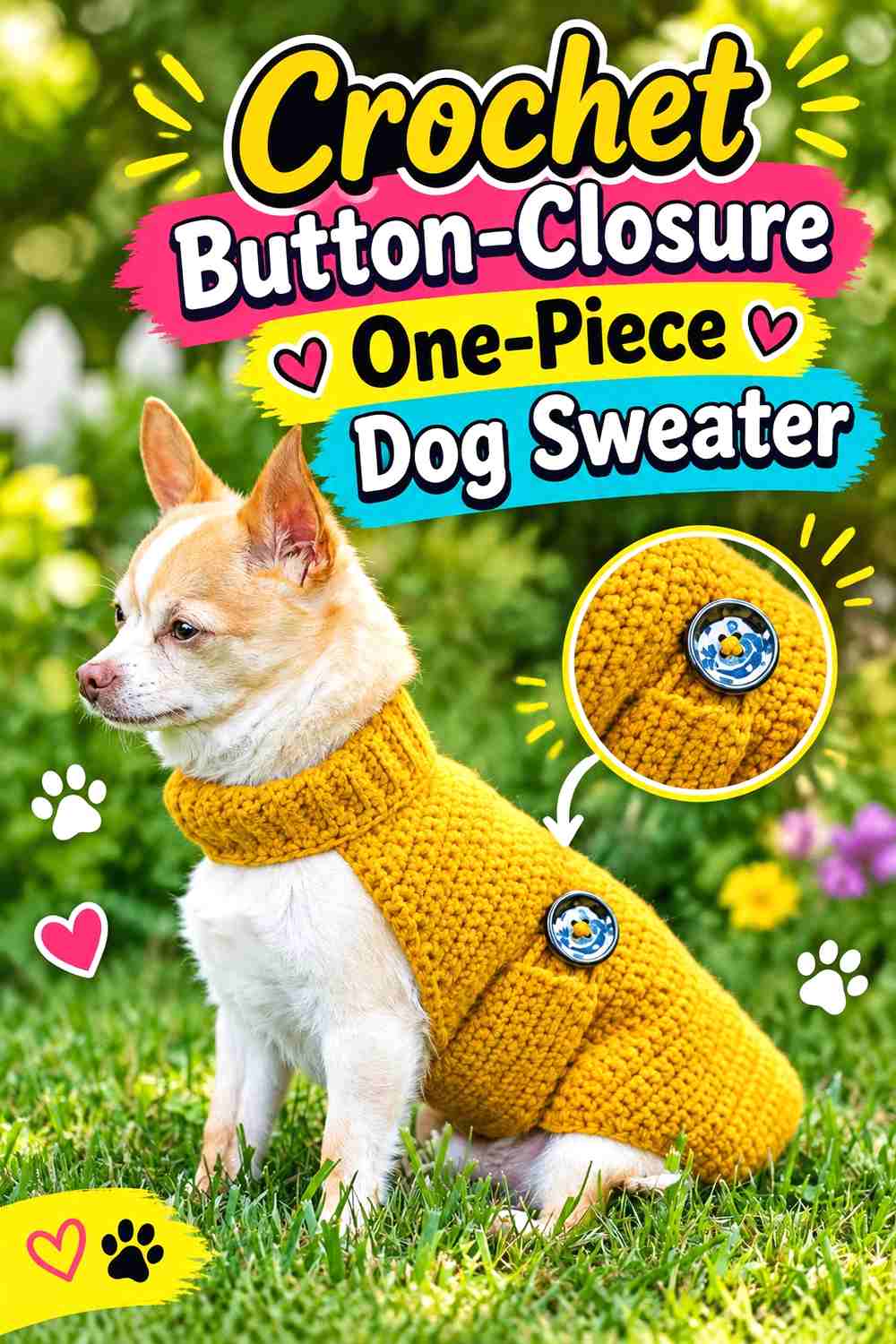
Last Minute Laura’s custom-fit sweater is worked in one piece and incorporates a button closure, offering an alternative to designs that must be pulled fully over the dog’s torso.
That makes the project especially interesting for readers comparing dressing methods rather than simply looking for another pullover.
A Closure Can Make Dressing Less Awkward
For some dogs, placing legs through fitted openings or pulling a sweater into position is the least convenient part of using pet clothing.
An opening changes that process. Before choosing it, consider where the closure will sit and whether it can remain away from areas of repetitive rubbing.
Treat the Button as Functional Hardware
A decorative button on a pet garment still needs secure attachment. Check it regularly for loosening, particularly if the dog scratches at clothing or can reach the fastening with its mouth.
For dogs likely to chew removable parts, a different sweater construction may be the better choice.
Creator Credit: Last Minute Laura
6. Crochet Large-Dog One-Piece Pullover Sweater
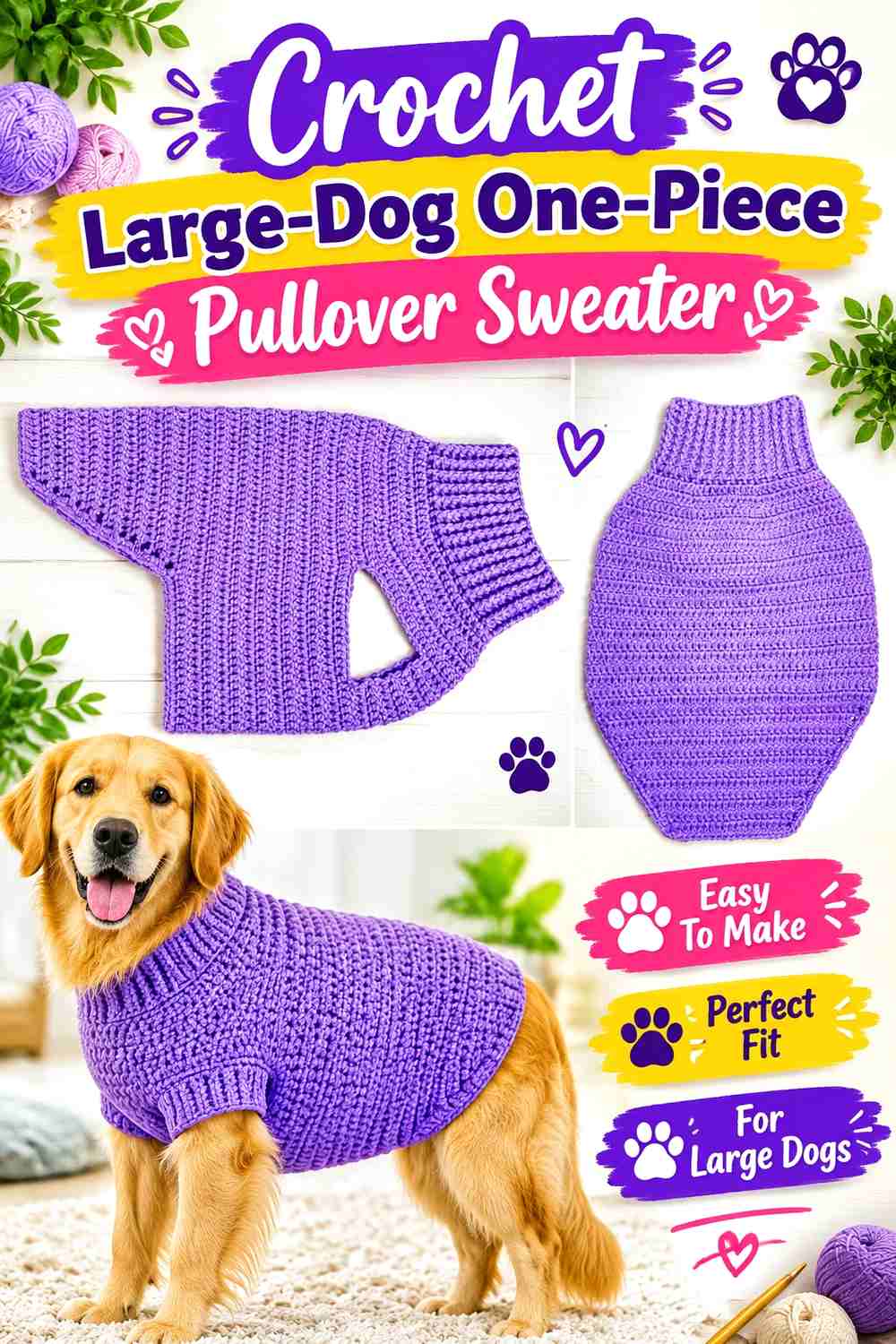
Crochet It demonstrates a large dog sweater worked as a continuous project, which gives larger-dog owners a useful reference rather than requiring them to extrapolate from a Chihuahua-sized sample.
Scaling matters because increasing a sweater is not simply a matter of making every dimension longer. Chest depth, neck size, body length, and front-leg spacing all need to remain proportionate to the individual dog.
Large Sweaters Add Fabric Weight Quickly
A material that seems light in a small swatch can feel considerably heavier across a large torso.
Before committing to a bulky substitute, consider the finished garment as a whole. The sweater should remain flexible enough for walking rather than hanging like a rigid blanket.
Compare Back Length With Tail Clearance
Large dogs can have widely different body proportions even at similar chest sizes.
Check where the finished back is intended to stop and make sure it does not crowd the tail base or shift forward as the dog walks.
Creator Credit: Crochet It
7. Crochet Puff-Stitch Chihuahua Dog Sweater
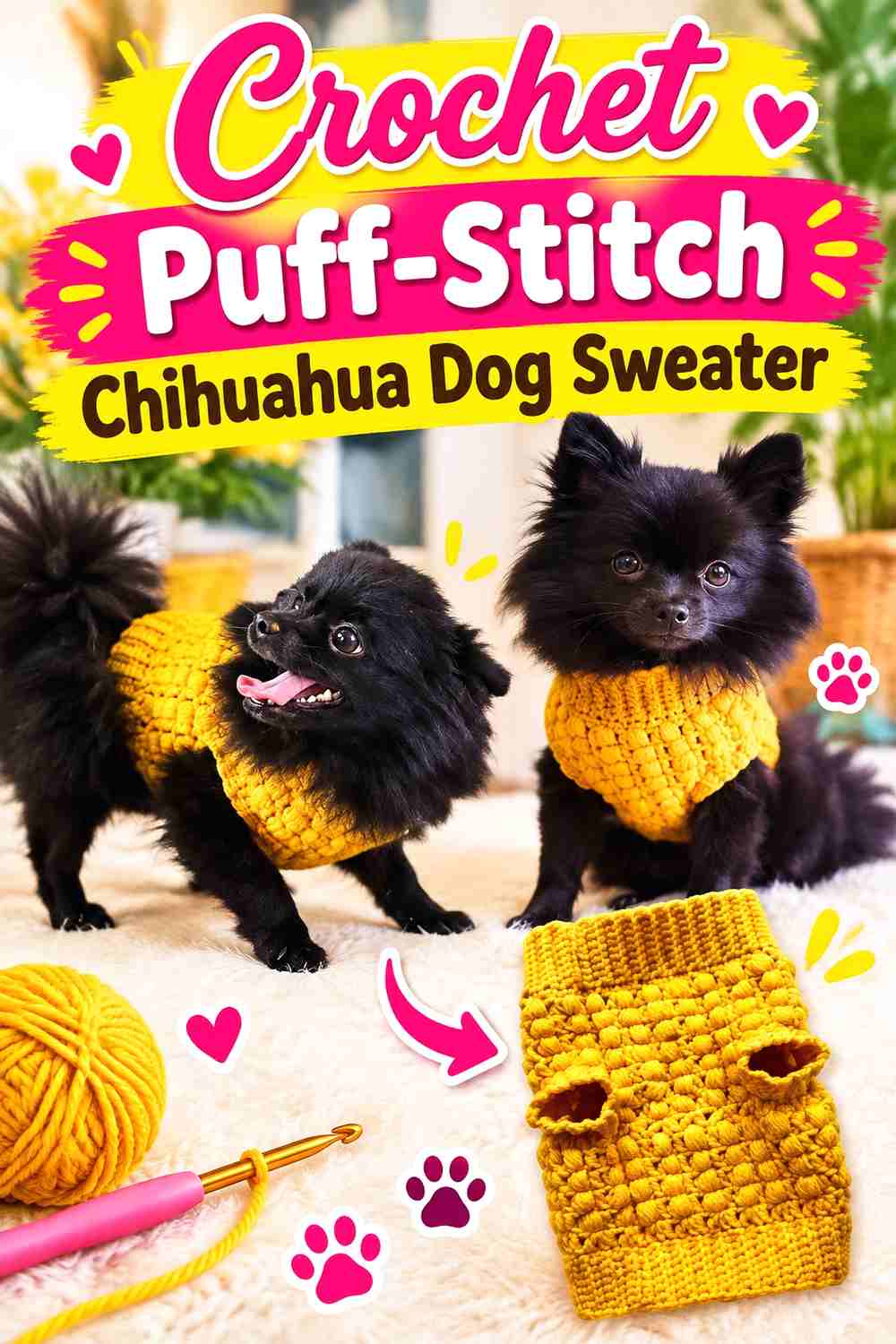
SheiLa Teré’s Chihuahua sweater uses puff and V-stitch texture, immediately separating it from smoother winter pullovers. Raised texture creates a strong handmade look and can make a small garment visually substantial without adding colorwork.
Because the tutorial is demonstrated for a Chihuahua, it is most useful as a small-dog reference rather than a universal size claim.
Puff Texture Changes Thickness Without Changing the Outline
Raised stitches add depth to the fabric. That can be appealing on a tiny sweater, but it also means the garment may feel thicker than a plain fabric made from similar yarn.
Check clearance under a harness before combining pronounced texture with snug walking equipment.
Tiny Leg Openings Need Precise Placement
On a small dog, even a modest placement error represents a large proportion of the body.
Try the garment on at the stage recommended by the creator and examine both front openings from above. One should not sit noticeably farther forward or closer to the chest than the other.
Creator Credit: SheiLa Teré
8. Crochet Chunky Long-Sleeve Dog Sweater
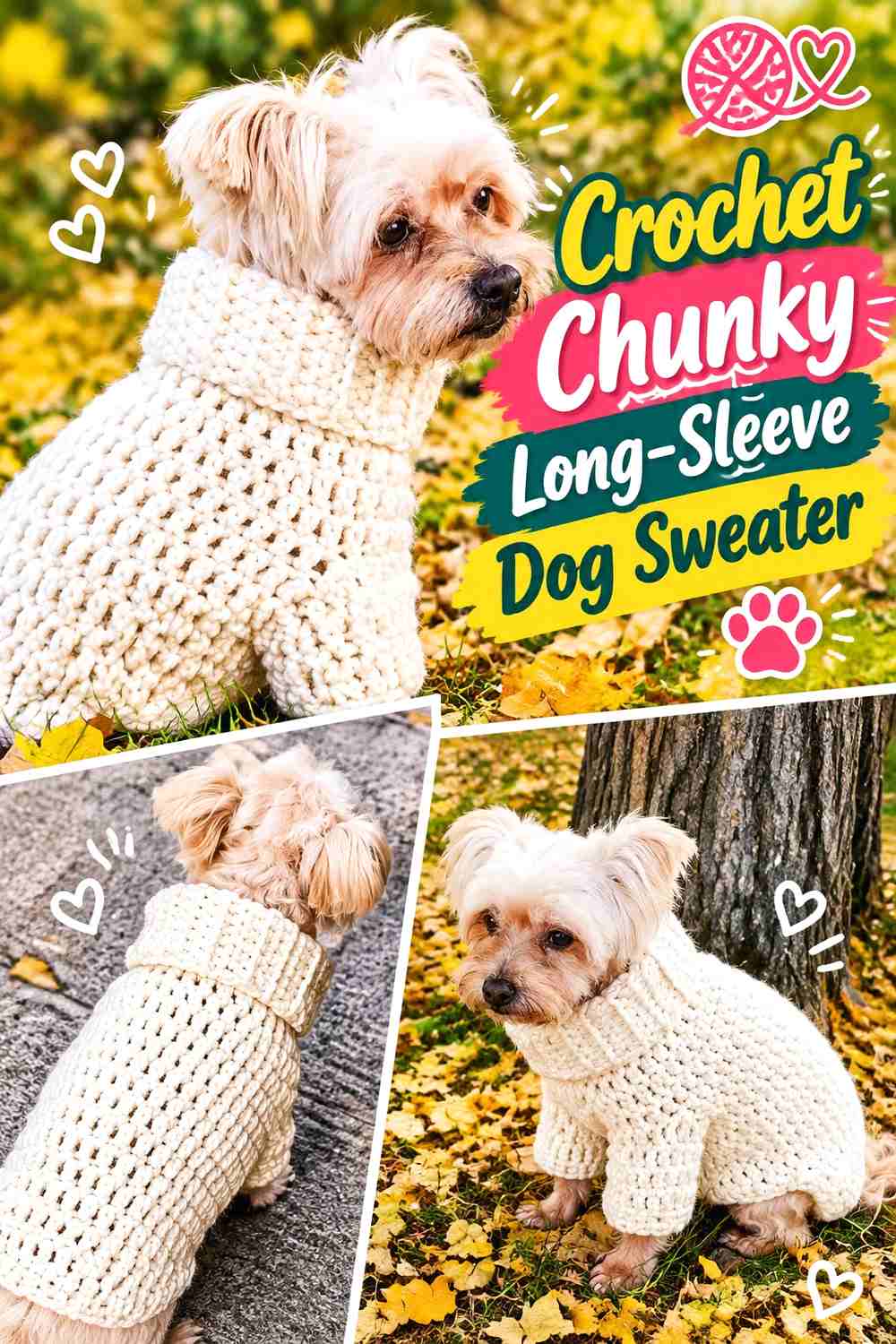
Vibes with Dani takes winter coverage in a different direction with chunky yarn and long front sleeves. This is the most substantial-looking sleeve treatment in the collection and is useful for readers specifically interested in more coverage than a sleeveless dog vest provides.
Long sleeves also introduce extra fit questions, so the additional coverage should be chosen for function rather than appearance alone.
Sleeve Length Has to Survive a Full Stride
A sleeve that looks correct while the dog stands can bunch at the joint when walking.
Watch several natural steps and confirm that the cuff remains clear of the paw. Any sleeve that slips too low creates a different problem from a sleeveless sweater.
Chunky Fabric Needs Space at the Armpit
Bulky crochet stacked close to the body can become uncomfortable where the front leg meets the chest.
Check this area before assuming that a thicker yarn automatically makes a better winter sweater. Mobility still comes first.
Creator Credit: Vibes with Dani
9. Crochet Made-to-Measure Dog Sweater for Unique Proportions
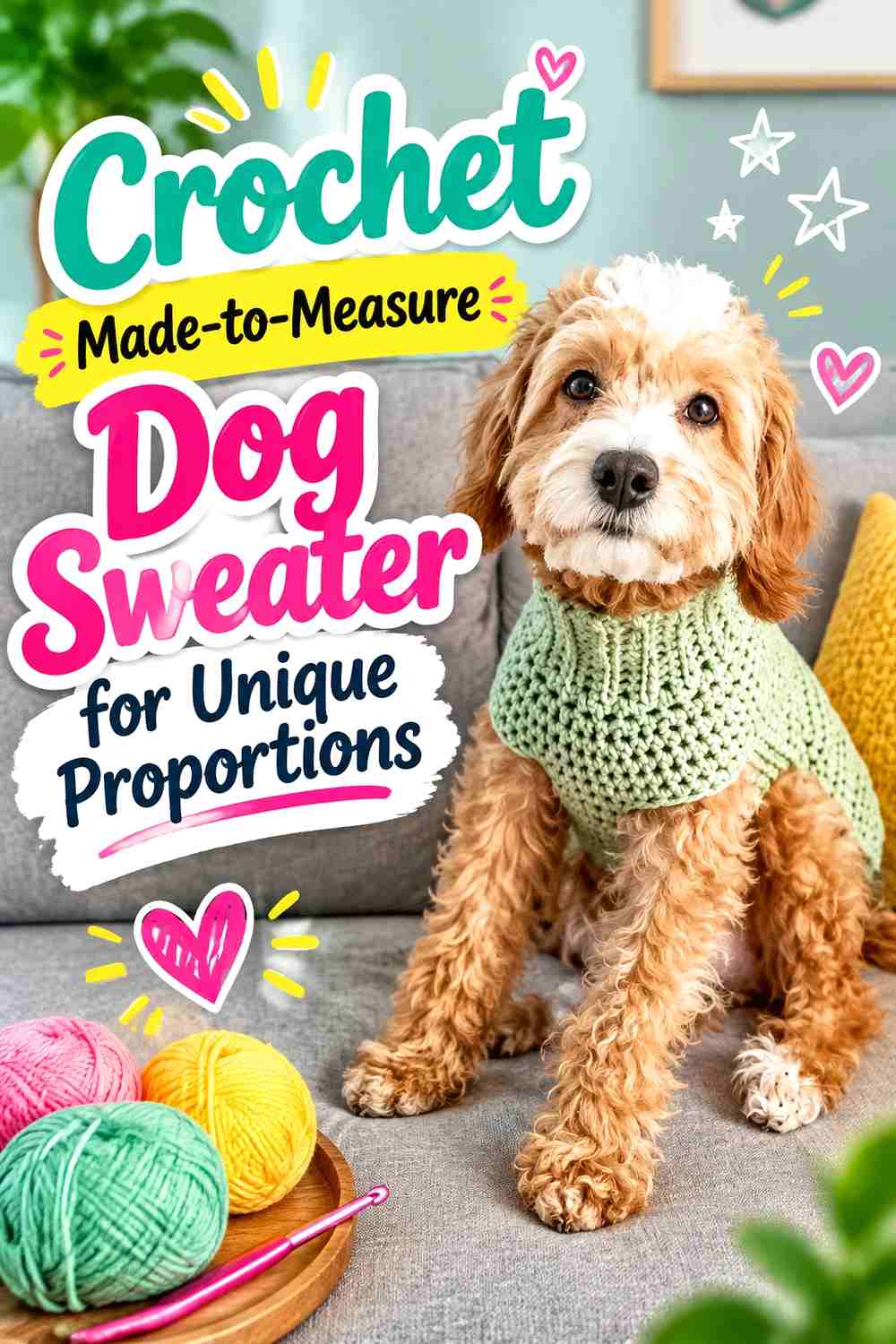
Maria’s Blue Crayon’s custom-fit tutorial is specifically useful for dogs that are unusually small, particularly large, between standard sizes, or simply not shaped like a typical size-chart sample.
That makes it one of the strongest choices in this roundup when proportion matters more than choosing from preset measurements.
Long Bodies and Deep Chests Need Different Adjustments
Adding back length does not automatically solve a deep-chested fit problem, and adding circumference does not fix a dog with a long narrow torso.
Break the fit into separate areas and adjust only the measurement that needs changing.
Recheck Fit After the Fabric Has Settled
Crochet can change with handling and washing. Before treating the first successful try-on as final proof of fit, follow the yarn’s care guidance and see whether the fabric relaxes or grows.
That matters particularly with a custom piece because small changes can alter the location of leg openings.
Creator Credit: Maria’s Blue Crayon
10. Crochet Tailored Cold-Weather Dog Coat
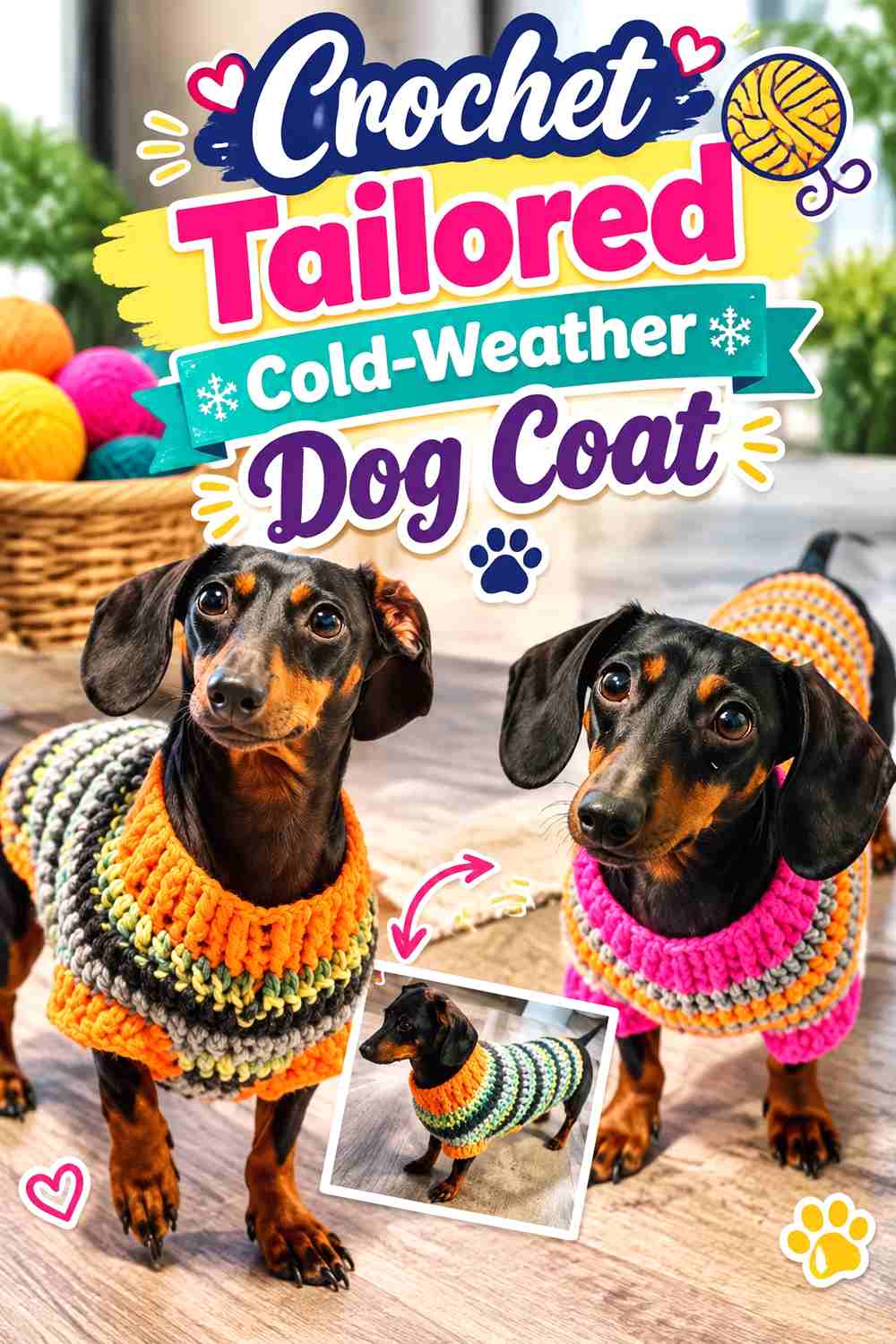
Crochet y dos agujas de Pat bases the coat around the pet’s measurements and presents it specifically as a garment for colder conditions. This makes the project a useful counterpoint to rigid size charts.
A measurement-led coat is especially attractive when you want to control how much of the back is covered without making the neck or chest unnecessarily loose.
Start With the Dog Standing Naturally
Measurements taken while the dog curls up, stretches, or is held can distort the result.
Use the measuring method shown by the creator and keep the tape comfortably against the body rather than pulling it into the fur.
More Coverage Should Not Mean More Belly Length
Cold-weather styling may tempt you to extend every part of the garment.
Keep the practical underside clearance appropriate for the dog. Back coverage and belly coverage serve different purposes and do not have to end at the same point.
Creator Credit: Crochet y dos agujas de Pat
11. Crochet Nordic Colorwork Dog Sweater
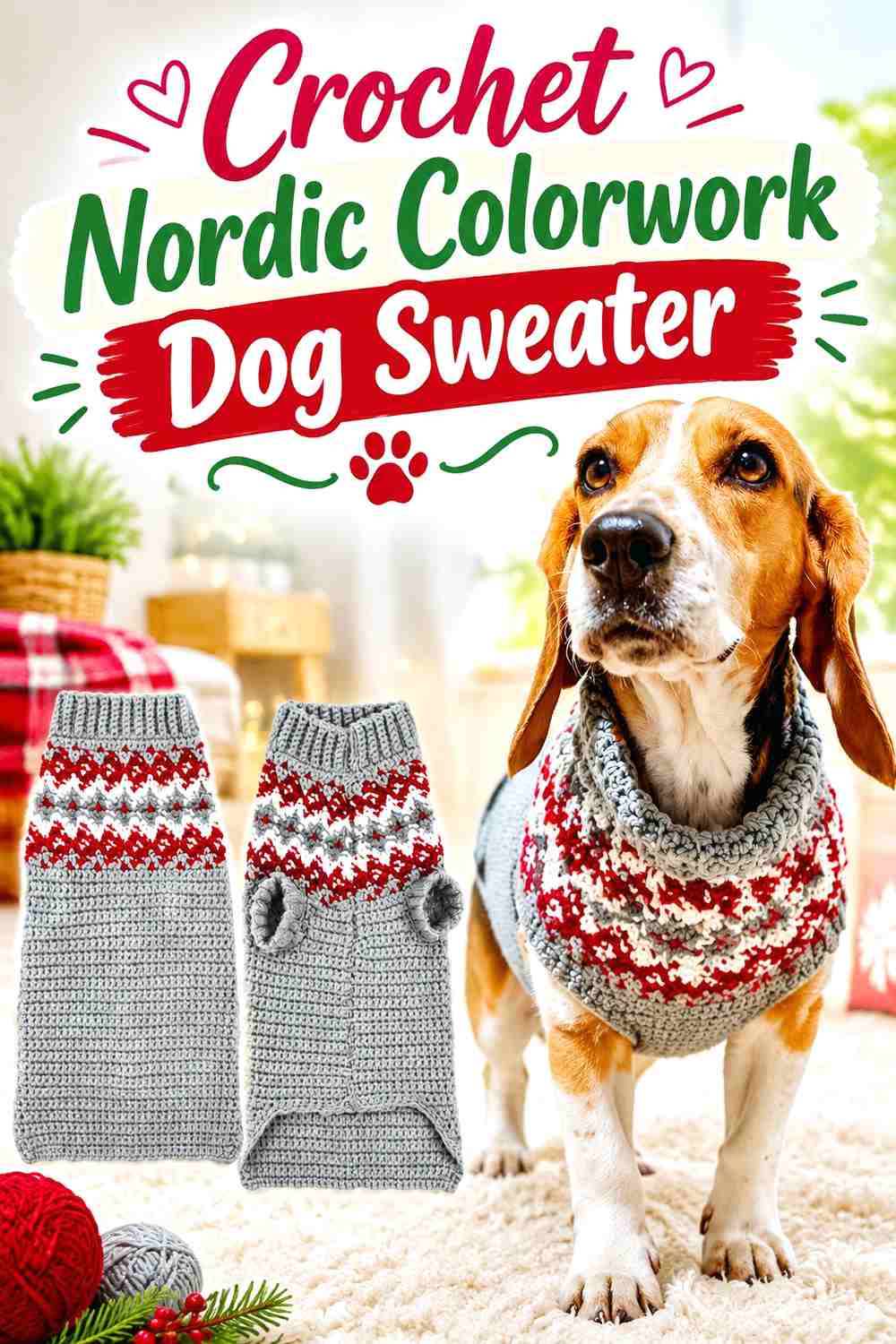
Marly Bird’s stranded colorwork dog sweater offers a clear change from solid-color textures. The Fair Isle-inspired yoke turns the upper body into the visual focus and provides a useful project for crocheters who want winter styling to come from color rather than bulky surface stitches.
The creator also emphasizes measuring the dog carefully when selecting the source size.
Colorwork Can Change Fabric Flexibility
Carrying multiple colors through a section may make that area behave differently from a single-color crochet fabric.
Pay particular attention to the yoke and neck. The finished section still needs enough give for comfortable dressing and movement.
Check the Charted Section Before Changing Colors
If you want a different palette, change the colors rather than casually changing the placement of the motif.
Preserving the original chart structure avoids accidentally creating a different tension pattern or reconstructing the design without understanding how it fits the garment.
Creator Credit: Marly Bird
12. Crochet Cowl-Neck Buttoned Dog Coat
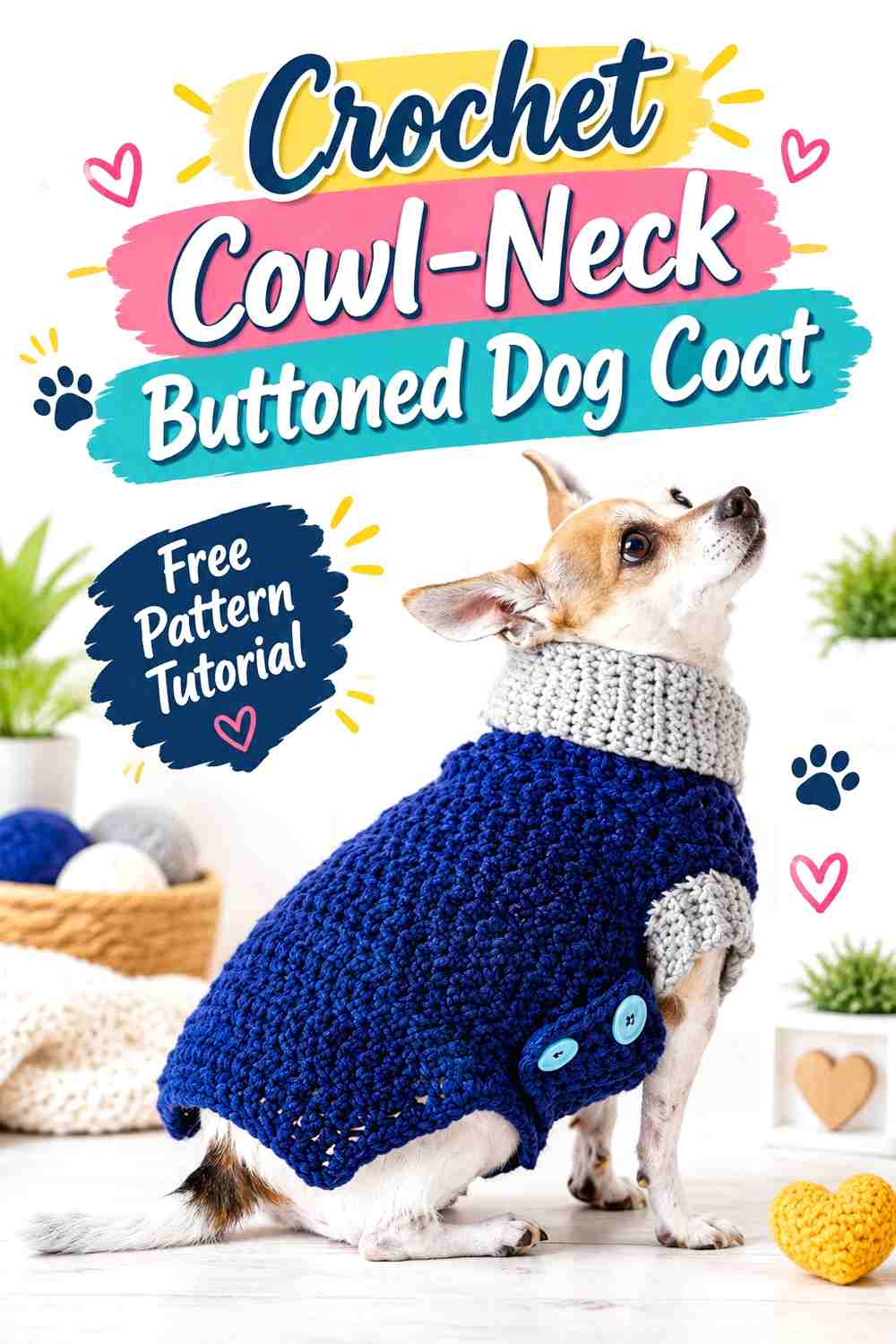
Yarnspirations’ cowl-neck coat combines a taller mock-rib collar with an underside button closure. That combination provides two meaningful differences from an ordinary pullover: more visual neck coverage and a dressing method that does not depend solely on stretching the body over the dog.
For cold walks, the tall collar creates a particularly winter-oriented silhouette.
A Tall Collar Should Not Crowd the Jaw
A cowl can be folded or worn higher depending on its design, but more height is not automatically more comfortable.
Observe the dog turning its head in both directions. The collar should not push into the lower jaw or force the head into an unnatural position.
Underside Buttons Need Periodic Checks
A buttoned belly section can simplify dressing, but every fastening should remain secure.
Inspect the thread or yarn holding the buttons and make sure the closure stays away from direct leg friction.
Creator Credit: Yarnspirations
13. Crochet Cross-Texture XS Dog Sweater
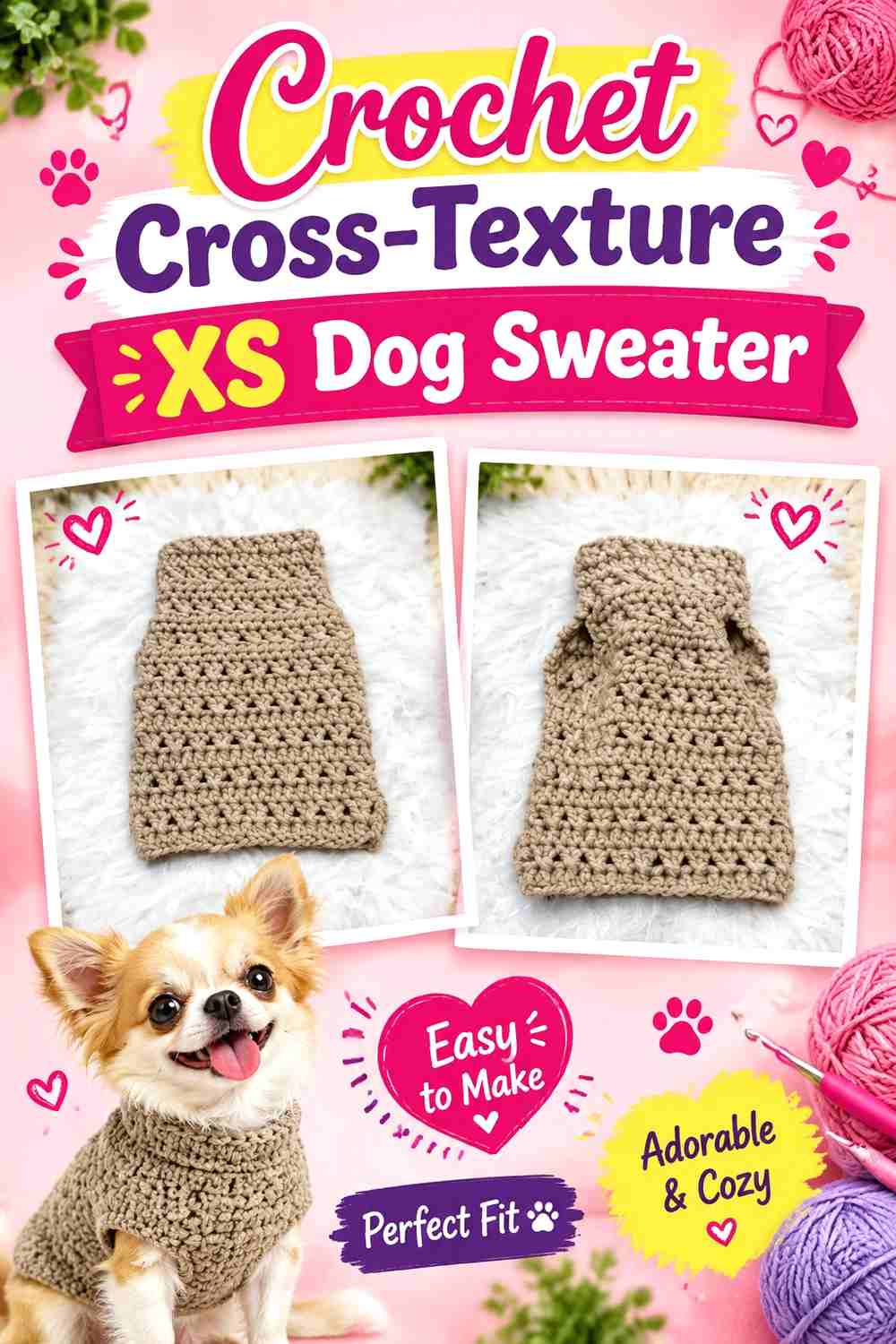
LittleGemsCreations – Fibre Artist uses cross-double-crochet texture in an extra-small sweater. That makes this project useful for readers who want noticeable stitch definition without moving into puff stitches or multicolor Fair Isle.
The size focus also makes it easier to compare against the Chihuahua-oriented project while still getting a different surface and construction direction.
Texture Can Hide Small Fit Ripples
A pronounced stitch pattern may visually disguise areas where the fabric is slightly too loose or stretched.
Do not judge the fit from photographs alone. Feel along the neck, chest, and leg edges and watch the sweater while the dog moves.
Extra-Small Sweaters Leave Little Room for Hardware
If you plan to add tags, decorative buttons, bows, or other embellishments, remember how large those additions become relative to a tiny dog.
For a walking sweater, a clean textured surface may be more practical than extra detachable decoration.
Creator Credit: LittleGemsCreations – Fibre Artist
14. Crochet Harness-Opening Wheat-Stitch Dog Sweater
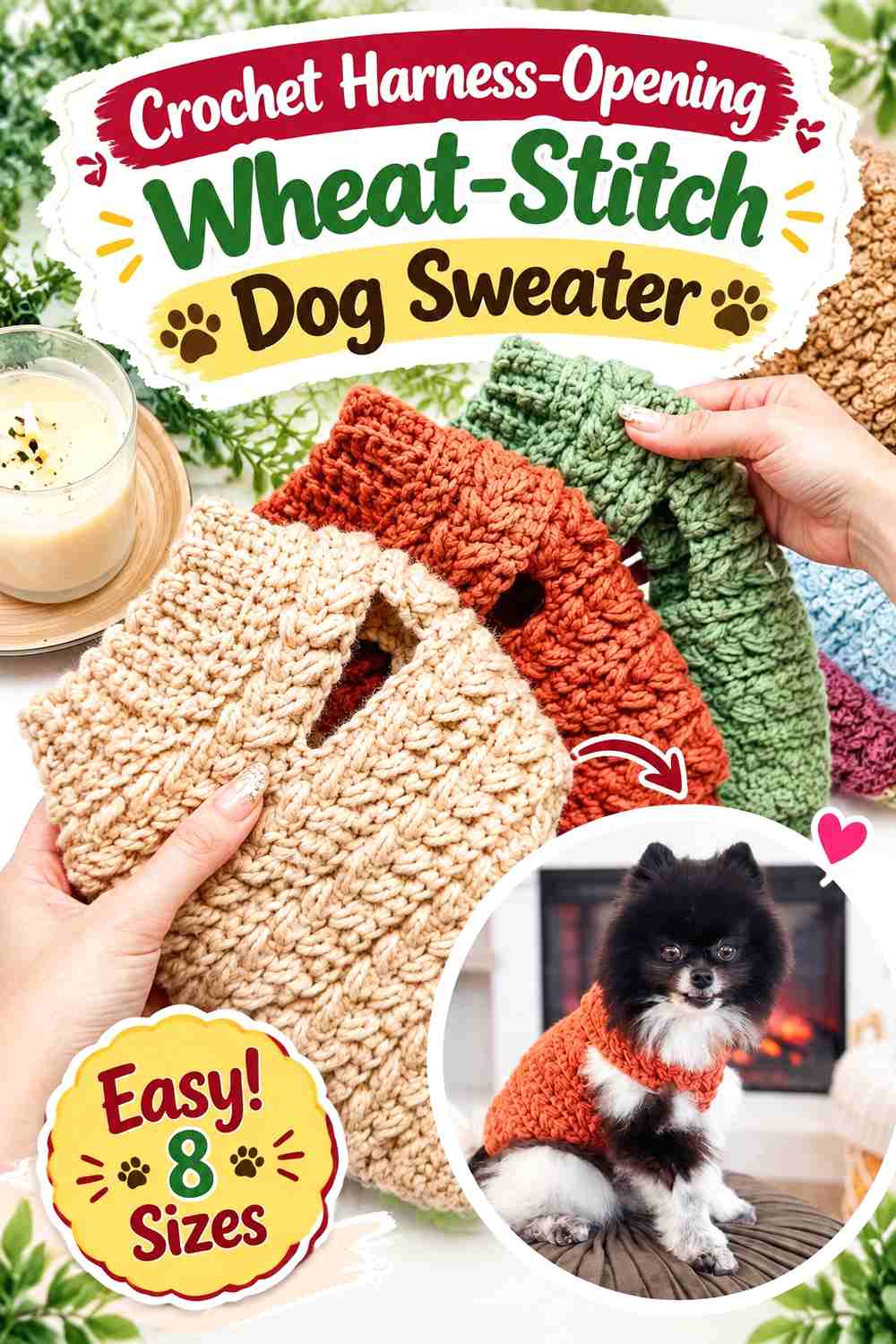
Briana K’s Wheat Stitch dog sweater stands out because the broader pattern range includes multiple sizes and a harness opening incorporated into the garment design. That is much more useful for regular walks than improvising a random slit after the sweater is finished.
The one-piece construction also keeps the overall silhouette relatively clean despite the textured fabric.
Match the Harness Opening to the Equipment You Use
Even a deliberately designed access point should be checked against your dog’s actual harness.
Different harnesses place their leash attachment at different points along the back. Put both items on together before assuming that every setup will align identically.
Do Not Clip the Leash to Crochet
A harness opening is access to walking hardware, not a crochet attachment point.
The leash should connect to the appropriate ring on the properly fitted harness underneath the sweater.
Creator Credit: Briana K
15. Crochet Crossover-Stitch One-Piece Dog Sweater
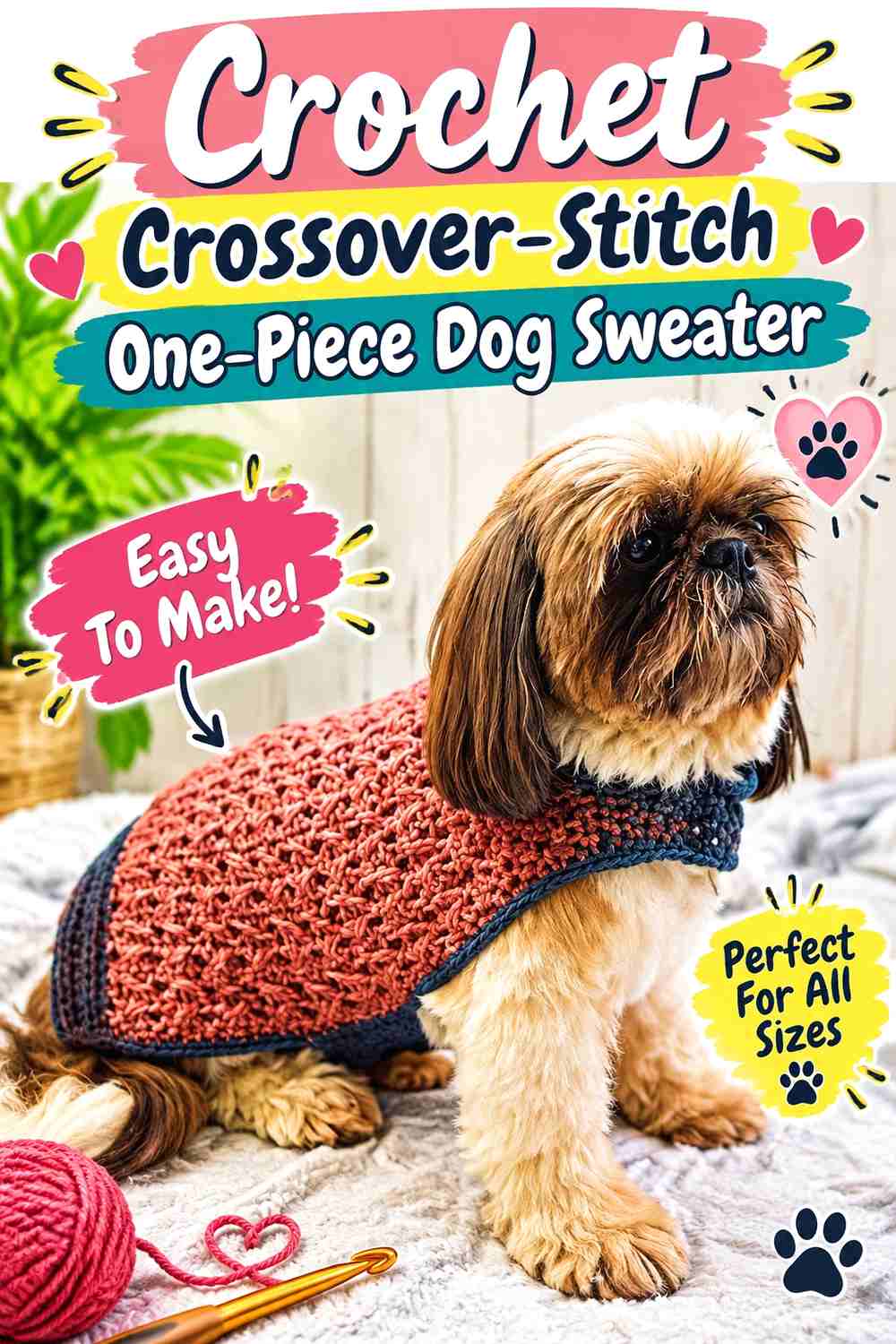
Ninja Bunny Crochet’s design uses a variation of crossover stitch and is worked as one piece, offering another route to texture without the raised bulk of puff stitches.
The tutorial is demonstrated on a Shih Tzu and discusses altering the fit, making it especially relevant when you want to adapt a sweater to a small dog’s individual proportions.
One-Piece Construction Reduces Seams, Not Fit Decisions
Fewer seams can produce a smooth garment, but the neck, chest, and leg openings still need careful sizing.
Do not continue a long body section until the upper portion has been checked on the dog.
A Crossover Surface Deserves Room to Be Seen
Strong texture can get visually lost when a sweater is covered by a wide harness.
If the garment will always be worn with one, compare the harness position with the main textured area before choosing where to place contrasting colors.
Creator Credit: Ninja Bunny Crochet
16. Crochet Ruffle-Trim or Straight-Hem Dog Sweater
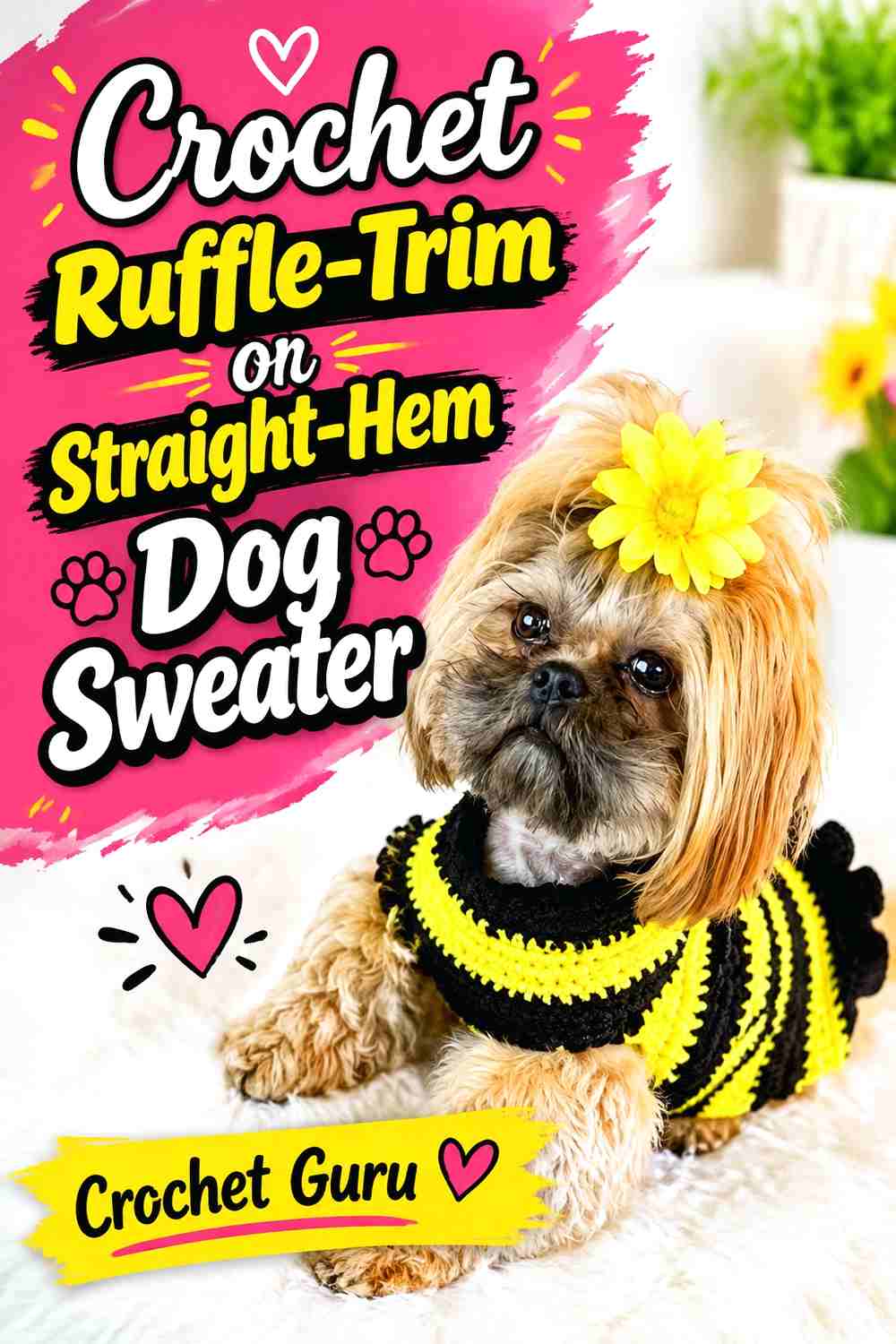
Crochet Guru’s left-handed tutorial gives this collection an important instructional alternative while also presenting a finishing choice: a decorative ruffle can be used, or the edge can remain straight.
That makes the design useful for comparing decorative finishing against a cleaner walking sweater without changing the main garment concept.
Choose the Hem by Use, Not by Gender
A ruffled finish is simply a styling choice. The more useful question is whether extra fabric along the edge makes sense for the intended walks and for the individual dog.
For dogs moving through brush, snow, or wet ground, a simpler hem may be easier to keep clear.
Left-Handed Instruction Can Remove an Unnecessary Barrier
If mirrored demonstrations are difficult to translate mentally, using a tutorial already taught for left-handed crochet can make construction easier to follow.
The finished fit still deserves the same measurement checks as any right-handed tutorial.
Creator Credit: Crochet Guru
17. Crochet Make-Any-Size Dog Coat
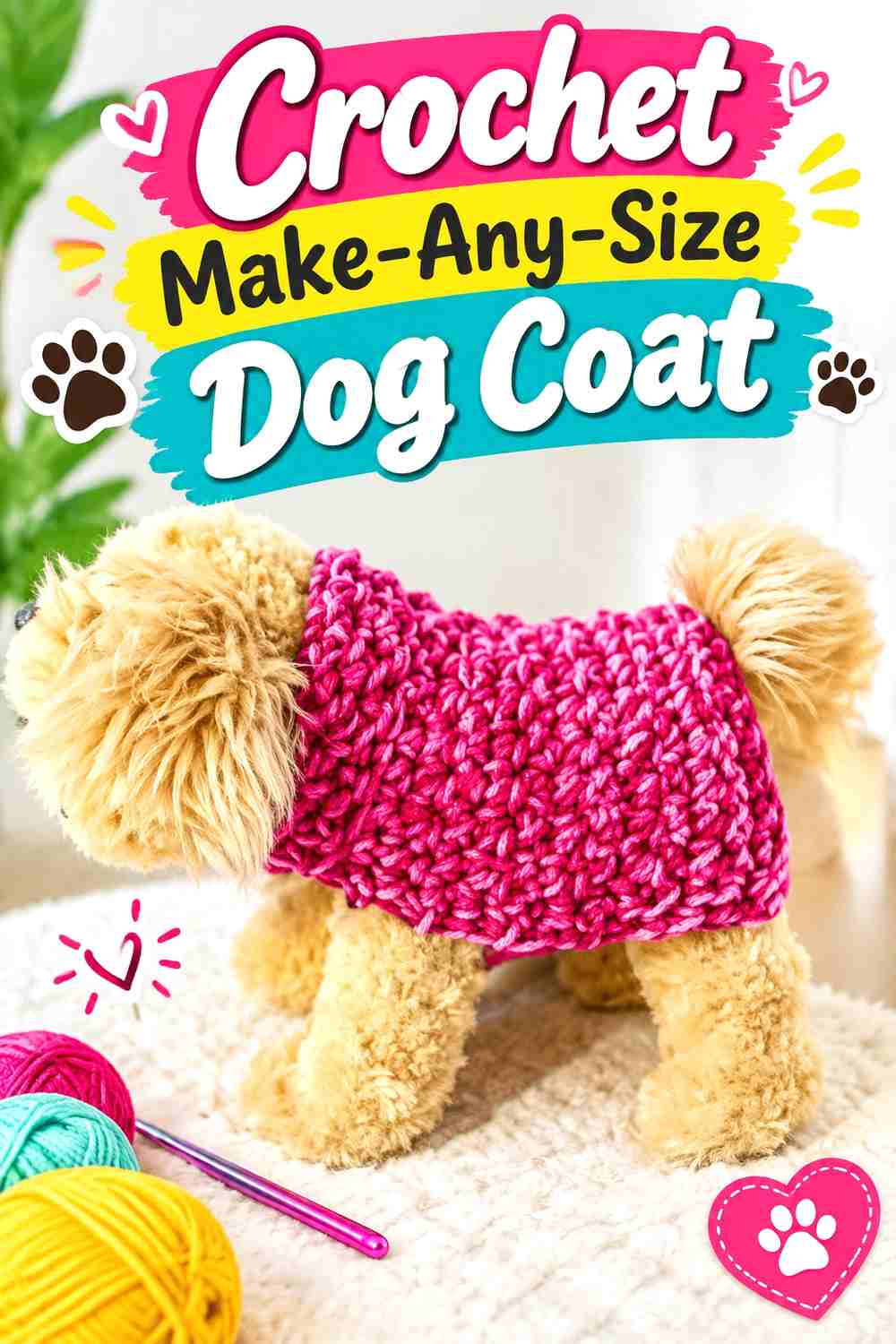
Hectanooga1’s dog coat tutorial is built around adapting the project to different sizes rather than presenting only one narrow finished measurement. It offers a useful route for crocheters who prefer a flexible sizing concept.
Because “make any size” still depends on accurate decisions, this is a project where measuring and repeated try-ons are especially important.
Scaling Up Requires More Than Extra Length
When adapting the coat, keep chest circumference, neck opening, leg placement, and back length as separate decisions.
A proportion that works for a tiny dog should not simply be multiplied uniformly for a broad-chested large dog.
Use an Existing Comfortable Coat as a Comparison
If the dog already owns a well-fitting sweater, compare its major dimensions with the crochet project.
That does not replace following the tutorial, but it can reveal an obvious problem before you finish a large amount of fabric.
Creator Credit: Hectanooga1
18. Crochet Granny-Square Small-Dog Sweater
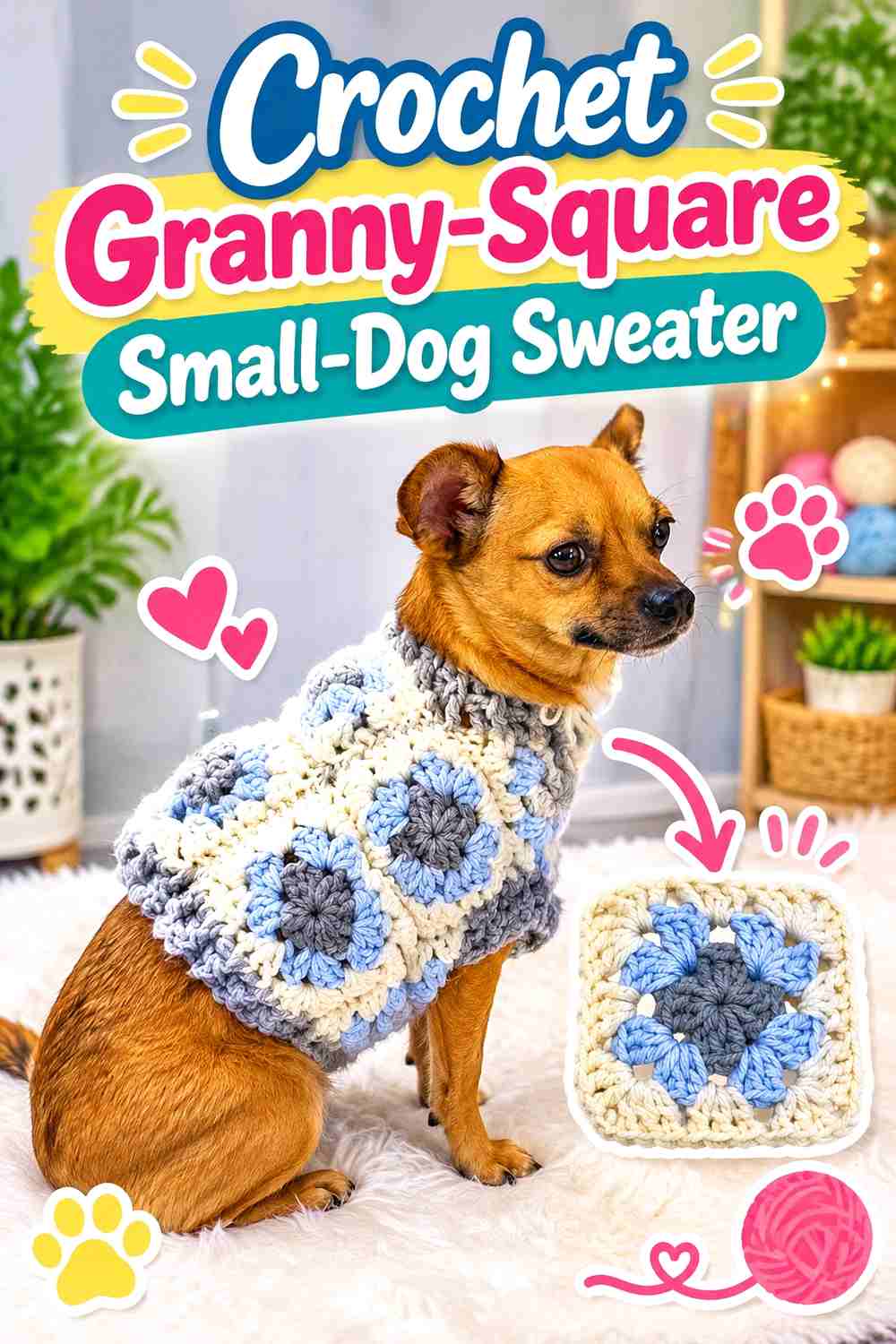
Kaylin Cierra Rose brings a completely different construction style to the collection with a granny-square dog sweater demonstrated for a small Chihuahua. Instead of relying on one continuous body texture, individual motifs become a visible part of the garment architecture.
This is especially appealing when you have coordinated leftovers and want color placement to be as important as stitch texture.
Measure the Finished Squares Before Joining
Motifs can change dimensions after handling or blocking.
Lay the completed squares out and compare them before assembly. Small inconsistencies become much more obvious when the motifs have to form a fitted pet garment rather than a forgiving blanket.
Keep Joins Away From High-Friction Areas When Possible
Granny-square seams add their own thickness.
As you evaluate the source construction, notice where the joins sit relative to the harness, front legs, and underside. A visually attractive motif arrangement should still feel smooth enough for movement.
Creator Credit: Kaylin Cierra Rose
19. Crochet All-Size Puppy Walking Sweater
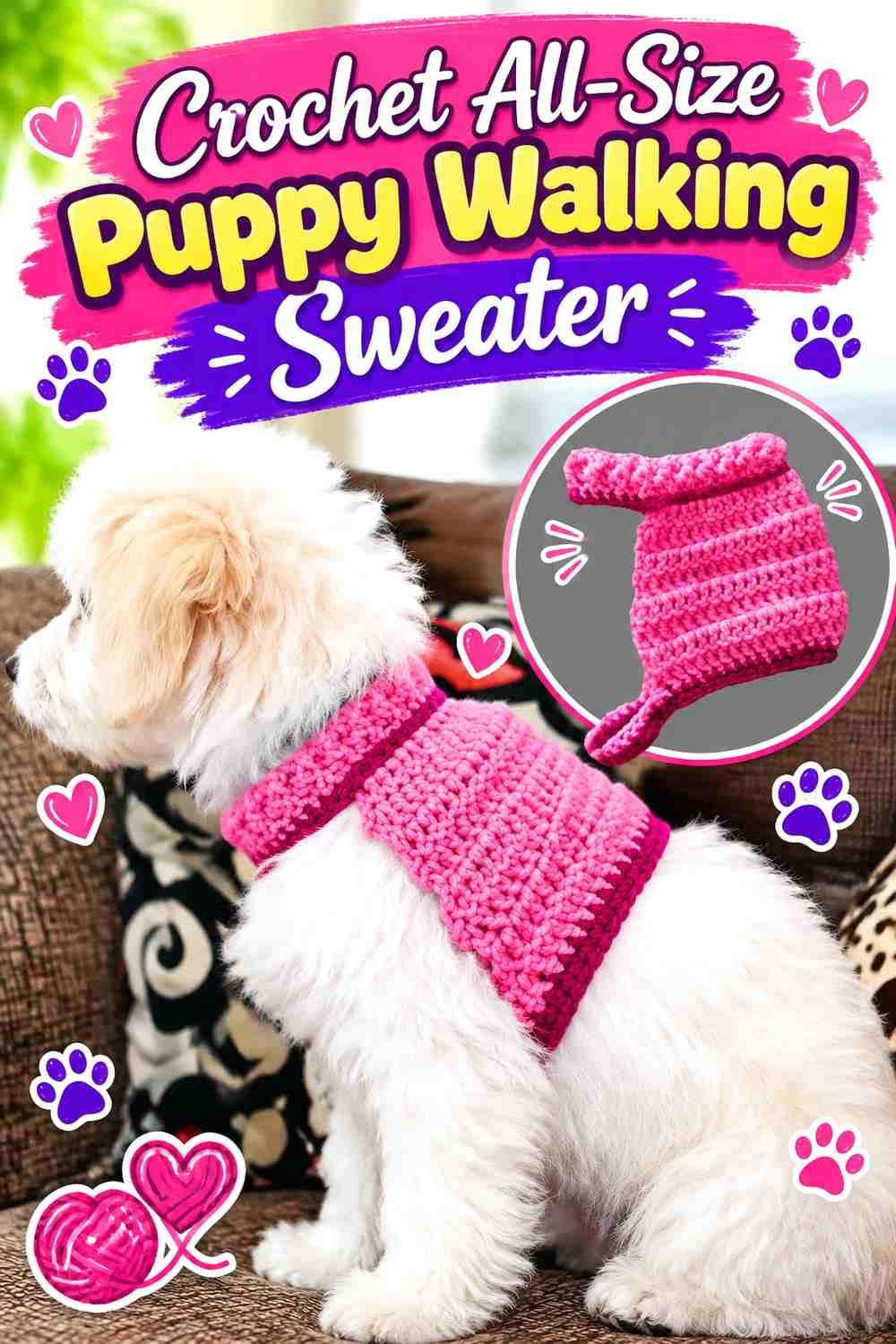
Enredados Entre Hilos presents a crochet clothing tutorial intended to accommodate pets in multiple sizes. This gives the final idea a flexible sizing focus and makes it useful for households where you may want to apply the same overall concept to dogs with different measurements.
Rather than treating the tutorial as permission to use one set of numbers universally, use its size-adjustment logic together with measurements from each individual animal.
Re-Measure Every Dog Separately
Two dogs that appear similar in overall size can have very different chest depth, neck circumference, and body length.
Record each pet’s measurements independently instead of assuming the sweater made for one dog can simply be repeated for the other.
Test the Finished Shape on a Short Indoor Walk
Before using a new sweater outside for an extended outing, let the dog move around indoors while supervised.
Watch for twisting, fabric migrating toward the tail, restricted front legs, persistent scratching, or attempts to bite the garment. Fit problems are easier to correct before the sweater becomes part of a winter walk.
Creator Credit: Enredados Entre Hilos
Which Crochet Dog Sweater Style Fits Your Winter-Walk Priorities?
| If you need… | Projects worth comparing | Main point to check |
|---|---|---|
| A broad size range | Raglan, Wheat Stitch, Crochet It, make-any-size designs | Choose by actual measurements, not breed label |
| More front-leg coverage | Chunky long-sleeve sweater | Cuff position and unrestricted stride |
| Harness access | Wheat-Stitch sweater | Alignment with your specific harness ring |
| Easier dressing | Button-closure or cowl-neck buttoned coat | Secure closures and friction points |
| Strong winter styling | Fair Isle, puff stitch, cross texture | Added texture must not compromise flexibility |
| A nonstandard body shape | Maria's Blue Crayon or other custom-fit options | Adjust chest, length, and leg spacing independently |
| Small-dog construction | Puff-stitch, XS cross-texture, granny-square designs | Tiny changes in opening placement matter more |
| Minimal seams | Raglan and one-piece constructions | Seam reduction does not eliminate fitting checks |
For a dog that wears a harness on every walk, start by looking at the Briana K option because harness access is incorporated into the design rather than added afterward. For larger dogs, compare the Heart Hook Home size range with Crochet It’s large-dog tutorial. If standard proportions are consistently a problem, Maria’s Blue Crayon’s custom-fit direction is the more useful place to begin.
The cowl-neck Yarnspirations coat and Vibes with Dani long-sleeve sweater provide noticeably different cold-weather silhouettes, while Marly Bird, SheiLa Teré, LittleGemsCreations, and Kaylin Cierra Rose are stronger choices when stitch or color design is part of the appeal.
Conclusion
A useful winter dog sweater begins with the dog’s body and walking routine, not with a favorite color. Decide whether you need a pullover or an opening, whether a harness must sit underneath it, how much front-leg coverage makes sense, and where the belly portion needs to stop.
Then choose construction accordingly. A raglan sweater gives you gradual upper-body shaping; a buttoned coat changes the dressing process; a harness-opening sweater solves a specific walking-equipment problem; and custom-fit tutorials are valuable when the dog is long, deep-chested, unusually tiny, or otherwise poorly served by standard sizing.
Whichever idea you choose, use the original creator’s tutorial for the actual construction and measurements. Try the sweater on during the process whenever the tutorial permits, and judge the finished garment by how comfortably the dog moves in it rather than by how closely it fits in a still photograph.
Frequently Asked Questions
How do I know whether my dog needs a crochet sweater for winter walks?
Cold tolerance varies with factors such as coat type, body size, age, health, weather, and activity level. A sweater can provide an additional layer for a dog that tolerates clothing, but it should not be used to justify prolonged exposure to unsafe weather. For individual health or cold-tolerance concerns, ask your veterinarian.
What measurements matter most for a crochet dog sweater?
The tutorial you choose should determine the exact measurements required. Commonly important areas include the neck, widest part of the chest, back length, front-leg spacing, and leg-opening circumference. Avoid substituting weight alone for actual body measurements.
Can my dog wear a harness underneath a crochet sweater?
Often yes, provided the two pieces fit comfortably together. Check whether the tutorial includes harness access and compare that opening with the actual location of your harness attachment ring. Do not attach a leash directly to the crochet sweater.
How tight should a crochet dog sweater fit?
It should stay in position without compressing the chest, neck, or front legs. The dog should be able to walk, sit, turn, and lie down normally. If the fabric pulls sharply, leaves pressure marks, restricts movement, or causes persistent scratching or biting, reconsider the fit.
Is chunky yarn always better for a winter dog sweater?
No. Chunkier fabric may create a more substantial layer, but it can also become bulky around the shoulders, legs, or harness. Yarn softness, fabric flexibility, fit, stitch density, and the conditions in which the sweater will be worn all matter.
Can I make the back longer for extra winter coverage?
Possibly, if the construction allows it, but check tail clearance and make sure added length does not cause the sweater to shift. Do not automatically lengthen the belly section by the same amount.
What should I avoid adding to a dog sweater?
Be cautious with loose pom-poms, dangling cords, poorly secured buttons, beads, bells, or other small components that could be chewed or caught during a walk. Secure yarn ends thoroughly and supervise the dog while it is wearing handmade clothing.