Crochet sashiko patchwork bags cover more than one construction style. Some projects begin with dense crochet fabric and add genuine running-stitch embroidery over the surface. Others use overlay or inset mosaic crochet to create the repeated lines and geometric contrast associated with stitched textiles, while motif-based bags build the patchwork effect from individually crocheted squares.
That distinction matters when choosing a winter 2026 project. An embroidered single-crochet bag gives you direct control over the surface pattern, but it adds a second craft stage after crocheting. Mosaic bags build the pattern into the fabric itself, while joined-square bags make color placement, seams, and motif arrangement the dominant features. For winter use, also consider whether the strap will fit comfortably over a coat, whether open motifs need lining, and how much weight the finished crochet can carry without stretching.
Quick List
- Crochet Kaki-no-Hana Sashiko Project Bag
- Crochet Reversible Sashiko Mosaic Wristlet
- Crochet Side-Tie Mosaic Tote Bag
- Crochet Brickwork Mosaic Tote Bag
- Crochet Rose Mosaic Chain-Strap Bag
- Crochet Diamond Mosaic Notions Bag
- Crochet Structured Mosaic Handbag
- Crochet Zigzag Mosaic Zipper Pouch
- Crochet Mosaic-Square Patchwork Bag
- Crochet Scrap-Panel Patchwork Tote Bag
- Crochet Flat-Seam Floral Patchwork Bag
- Crochet Daisy Patchwork Shoulder Bag
- Crochet Mixed-Scale Motif Patchwork Tote
- Crochet Five-Square Tulip Trapeze Tote
What Sashiko Means in a Crochet Bag
Traditional sashiko is stitched textile work, so it is useful not to treat every blue-and-white geometric crochet bag as sashiko automatically. In crochet, there are several legitimate ways the visual ideas can cross over. A crocheted base can be embroidered afterward with running stitches, as in the first project below. A designer may deliberately translate sashiko-inspired geometry into mosaic crochet. Other bags simply use mosaic or patchwork construction and should be described as such rather than being relabeled.
For readers seeking the strongest sashiko connection, start with the embroidered or explicitly sashiko-inspired projects. If you mainly want the visual rhythm—indigo-like contrast, repeated geometry, visible joins, patch divisions, and straight decorative lines—the mosaic and motif bags provide more crochet-native alternatives.
Choose Structure Before Choosing the Patchwork Palette
Bag fabric has to do more than display a motif. Dense single crochet, overlay mosaic, and closely worked panels generally provide more body than an airy granny-square fabric, although the exact behavior depends on yarn, gauge, construction, and contents. Motif bags introduce another variable: every seam becomes part of the structure.
Before committing to a palette, decide whether you want a soft tote, firm handbag, zipped notions bag, sling, or coat-friendly shoulder bag. Lining can help contain small items and limit how much an open motif stretches, but it should not be assumed to solve weak strap attachments or an unsuitable yarn automatically. When changing materials from the tutorial, make one motif or fabric sample first and compare its density and flexibility with the creator’s original construction.
Plan Winter Straps, Closures, and Surface Details
Winter clothing changes how a bag fits. A strap that sits comfortably over a T-shirt may feel short over a thick sweater or coat, so compare the finished strap drop with a bag you already carry in colder weather before altering the tutorial. Short-handled market totes are less affected, while crossbody and shoulder designs need more careful checking.
Closures also matter when the bag will carry gloves, keys, small electronics, or crochet tools. Zippers provide more containment than broad open tote tops, whereas drawstrings and flaps create different access and shaping trade-offs. For embroidered surfaces, avoid pulling decorative stitches so tightly that the crochet base puckers. On joined patchwork bags, decide whether the seams should recede into the background or become a deliberate visible-grid feature.
1. Crochet Kaki-no-Hana Sashiko Project Bag
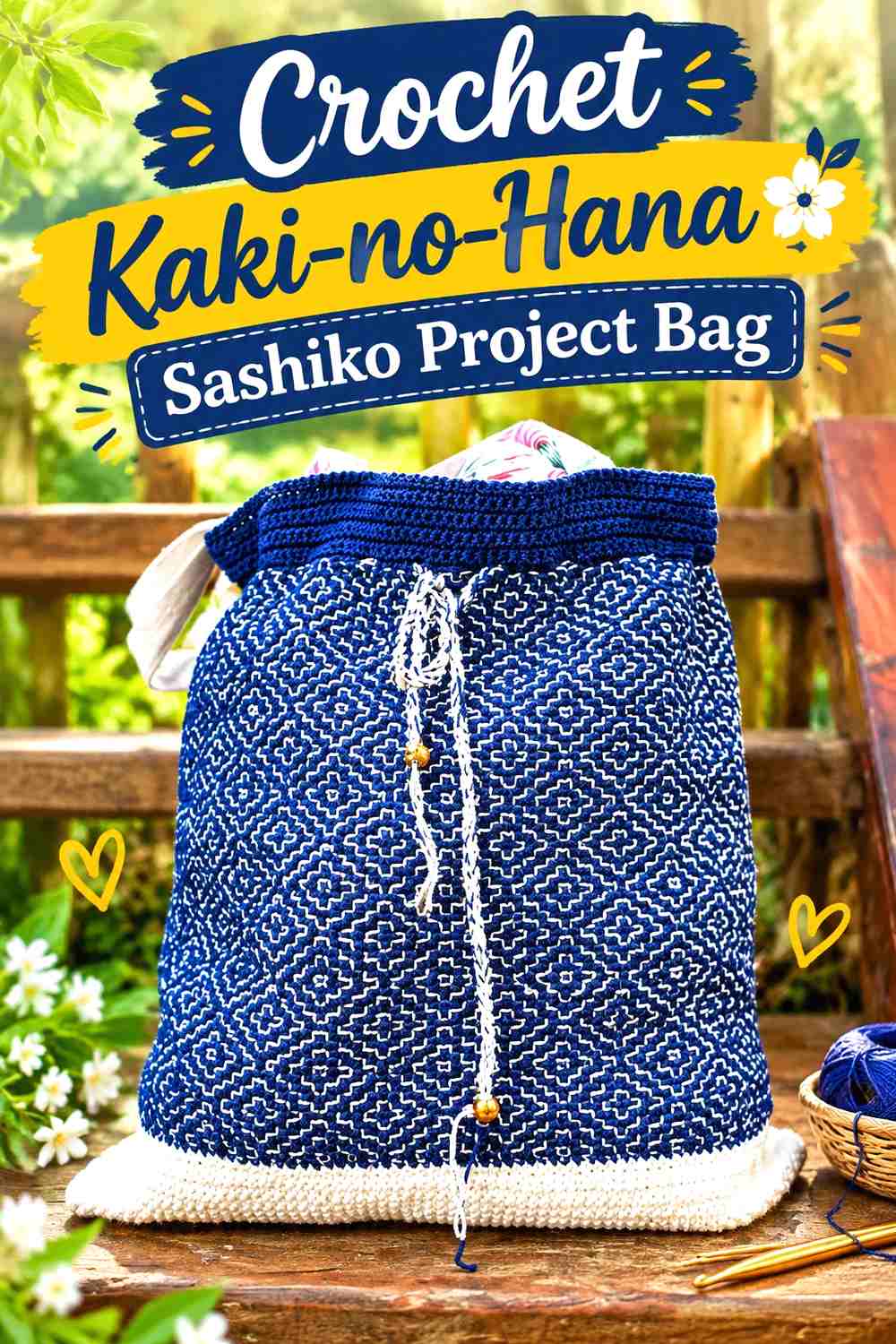
This project gives the list its clearest meeting point between crochet and actual sashiko-style embroidery. A Spoonful of Yarn builds the bag from a dense crocheted base and then works a running-stitch pattern through the crochet fabric, using the stitch openings as a placement grid. The project is finished as a drawstring bag and includes a lining component.
Choose this direction when the embroidered surface is more important to you than patchwork color changes. The result allows the crochet fabric to remain visually quiet while contrasting lines create the pattern afterward. That makes it particularly useful for an indigo-and-light-thread winter palette, although there is no requirement to reproduce the creator’s colors.
Keep the Crochet Ground Consistent
Embroidery exposes inconsistencies that a plain crocheted bag may hide. If the base fabric changes noticeably in gauge, the holes used for the running stitches also shift, which can distort repeated geometric lines. Check stitch count and fabric width before beginning the embroidery stage rather than expecting the surface stitching to disguise an uneven foundation.
Avoid Pulling the Embroidery Too Tight
The decorative thread should sit against the crochet instead of gathering it. Excessive tension can narrow sections of the bag and make horizontal or vertical lines bow inward. Work on a flat surface periodically and check that the crocheted fabric still rests naturally while the embroidered pattern develops.
Consider the Lining Part of the Structure
The original project incorporates a canvas lining, which is especially relevant for a project bag that may hold hooks, needles, yarn, or other objects. If you alter that component, consider what the crochet fabric itself can reasonably contain. A lining can also prevent pointed tools from working through stitch openings.
Creator Credit: A Spoonful of Yarn
2. Crochet Reversible Sashiko Mosaic Wristlet
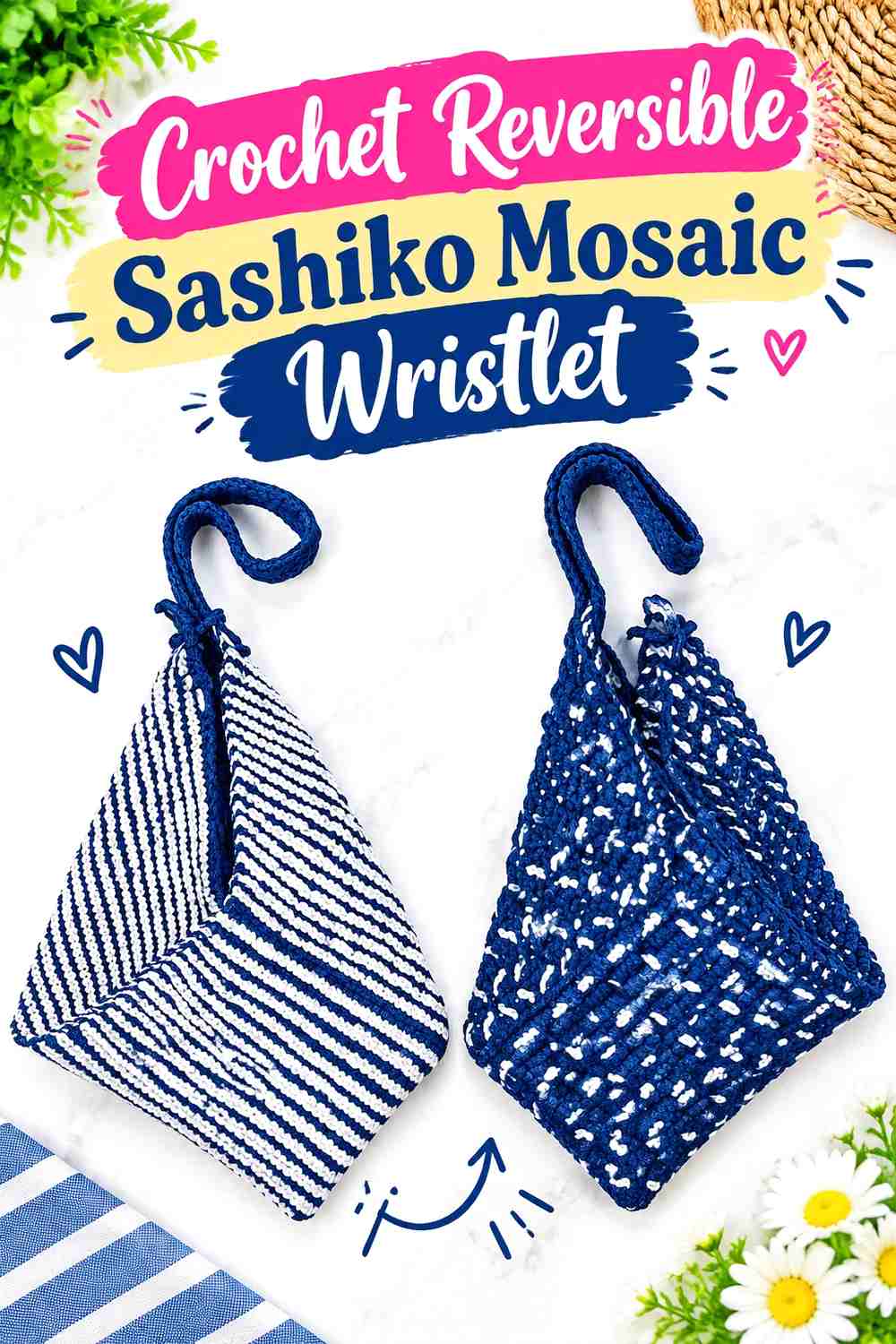
Ana Torradinhas takes a different route by translating sashiko inspiration into overlay mosaic crochet rather than embroidering a completed crochet surface. Her bag uses continuous overlay mosaic methods and anchored stitches, with the design conceived around strong geometric sections and a reversible result. The creator’s support page demonstrates the special techniques used with the pattern.
This is the stronger choice if you want the sashiko influence embedded directly into the crochet construction. It also differs from a conventional tote because the smaller wristlet format makes the patterned textile itself the focal point instead of spreading the motif over a large carrying surface.
Treat Both Sides as Finished Fabric
A reversible construction gives less freedom to ignore the reverse side of colorwork. Yarn management and finishing become part of the visible result, so evaluate both faces as you work. This is especially important if you substitute colors with very different values because the reverse may emphasize the contrast differently.
Let Geometry Lead the Color Choice
Highly organized lines generally need enough contrast to remain readable. Two nearly identical shades can soften the pattern until it becomes texture rather than graphic patchwork. That can be intentional, but decide before starting whether you want quiet tonal stitching or crisp dark-and-light divisions.
Check Wristlet Proportions Before Enlarging
A compact bag can tolerate a relatively dense patterned fabric because there is less weight pulling on the body. Enlarging the design into a large tote changes that relationship. If you adapt scale, consider strap construction, total fabric weight, and whether the mosaic panel needs additional support.
Creator Credit: Ana Torradinhas
3. Crochet Side-Tie Mosaic Tote Bag
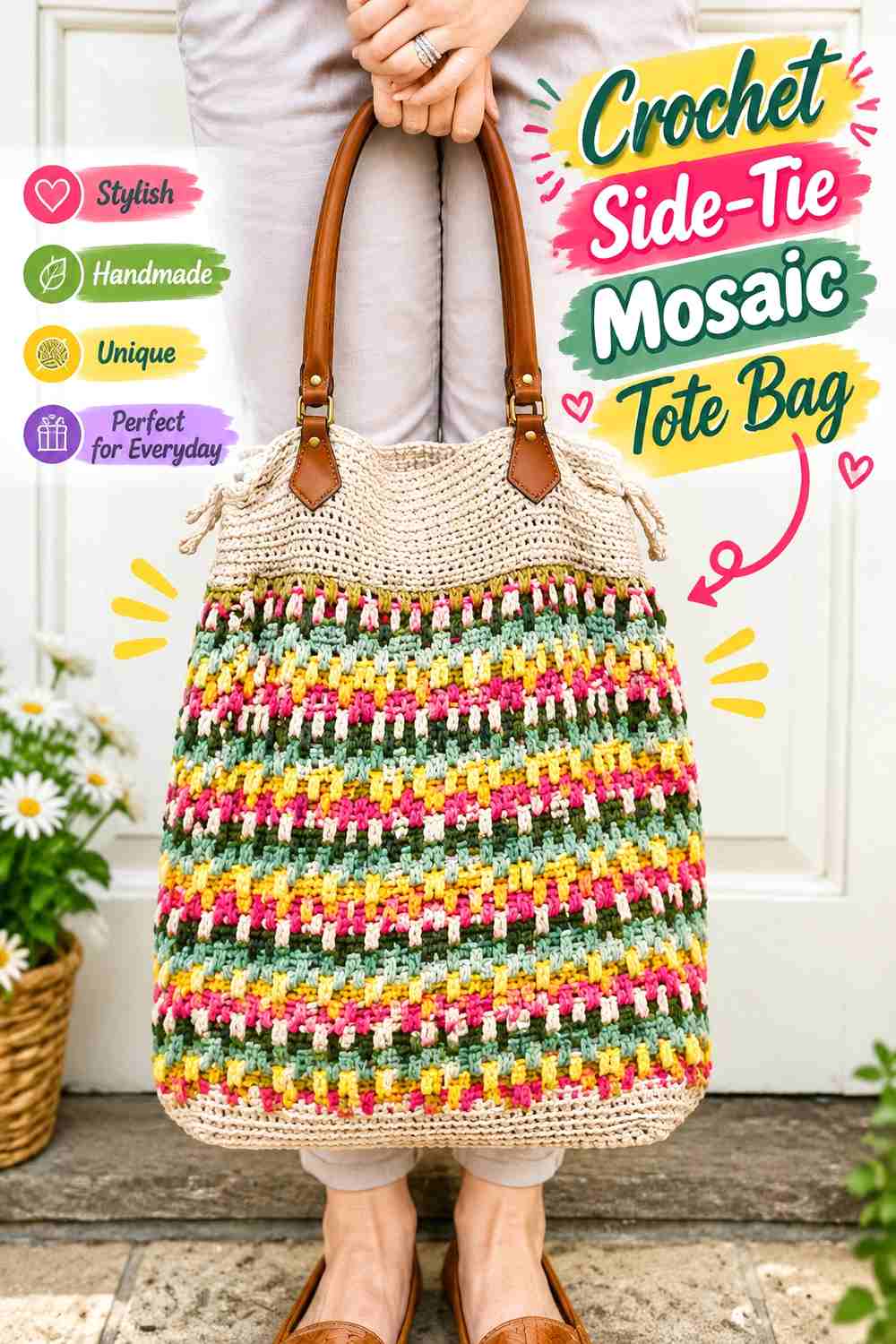
HanJan Crochet’s Hayden bag works mosaic crochet into a roomy tote assembled from a row-based base and a patterned section worked in rounds. Side ties and customizable straps give the finished bag a different silhouette from rigid handbags or motif-only totes.
This option suits readers who want sashiko-adjacent geometric rhythm without adding post-crochet embroidery. The mosaic itself supplies the visual line work, while the side details soften the otherwise graphic surface. Before choosing it for winter, decide whether you want short handles, shoulder carrying, or a strap arrangement that needs to clear heavier clothing.
Side Ties Change the Bag’s Outline
Decorative ties can pull the side profile inward and make a wide tote appear more gathered. If you prefer maximum interior capacity, avoid tightening them simply for appearance. Judge the bag filled with the type of items you actually carry before deciding how much shaping you want.
Swatch the Mosaic Before the Full Tote
The creator specifically introduces overlay mosaic technique alongside the bag. A small test is worthwhile if you have not used the method before because dropped stitches and back-loop work can produce a fabric that feels denser than ordinary crochet. That density will influence both weight and flexibility.
Choose Strap Length With Outerwear in Mind
A tote meant to sit comfortably beneath the arm in summer may require a different drop over a winter coat. Compare the tutorial’s strap approach with your preferred carrying position before changing anything. Lengthening a crocheted strap can also increase the amount of stretch it experiences.
Creator Credit: HanJan Crochet
4. Crochet Brickwork Mosaic Tote Bag
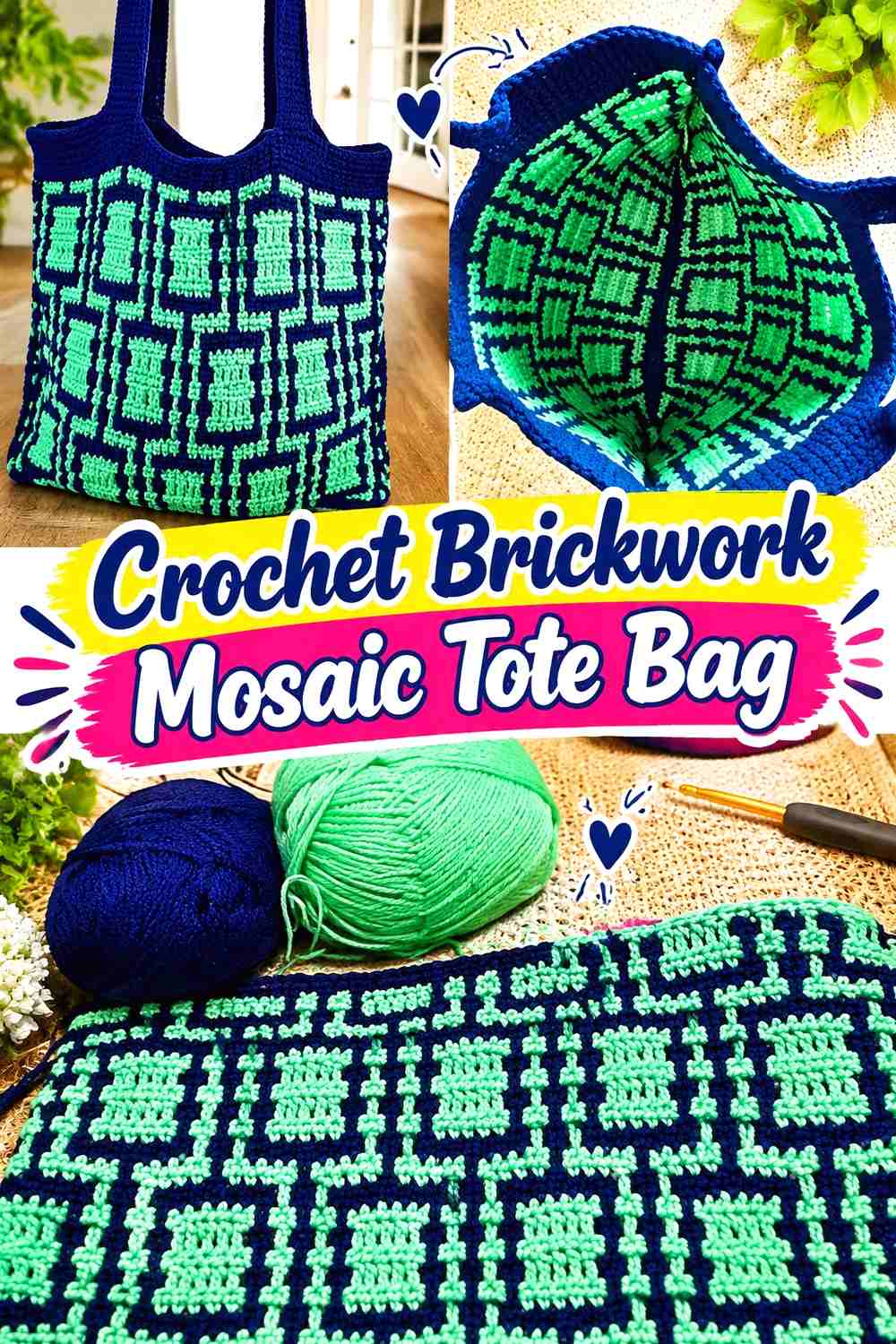
Jera’s Jamboree uses inset mosaic crochet for a tote with a repeating brick-like surface. The bag is made from separate panels that are joined, while the handles are integrated into the upper construction rather than attached as unrelated hardware.
The blocky repeat makes this one especially relevant to a patchwork theme because the eye reads the surface as interlocking rectangular units. Unlike individual granny squares, however, the grid is created within continuous crochet fabric, so there are fewer motif seams to manage. A limited two-color palette can make the structure feel particularly crisp for winter.
Check Both Panels Before Joining
Separate front and back panels need to agree in width and height. Count rows and compare them physically before seaming because even a small difference can twist the top edge once the bag is assembled. Blocking can refine shape, but it should not be relied on to correct major size differences.
Let the Brick Repeat Stay Rectangular
If your mosaic tension tightens whenever you work the contrasting stitches, the repeating blocks can become narrower than intended. Periodically place the panel flat and check whether the side edges remain reasonably straight. Consistency is more useful than trying to force every stitch tighter for structure.
Consider Seam Visibility as a Design Choice
A joined-panel tote naturally creates side and bottom seams. Decide whether you want those joins to disappear in matching yarn or contribute to the handcrafted patchwork appearance. A contrasting seam can look intentional, but it will draw attention to any uneven joining tension.
Creator Credit: Jera’s Jamboree
5. Crochet Rose Mosaic Chain-Strap Bag
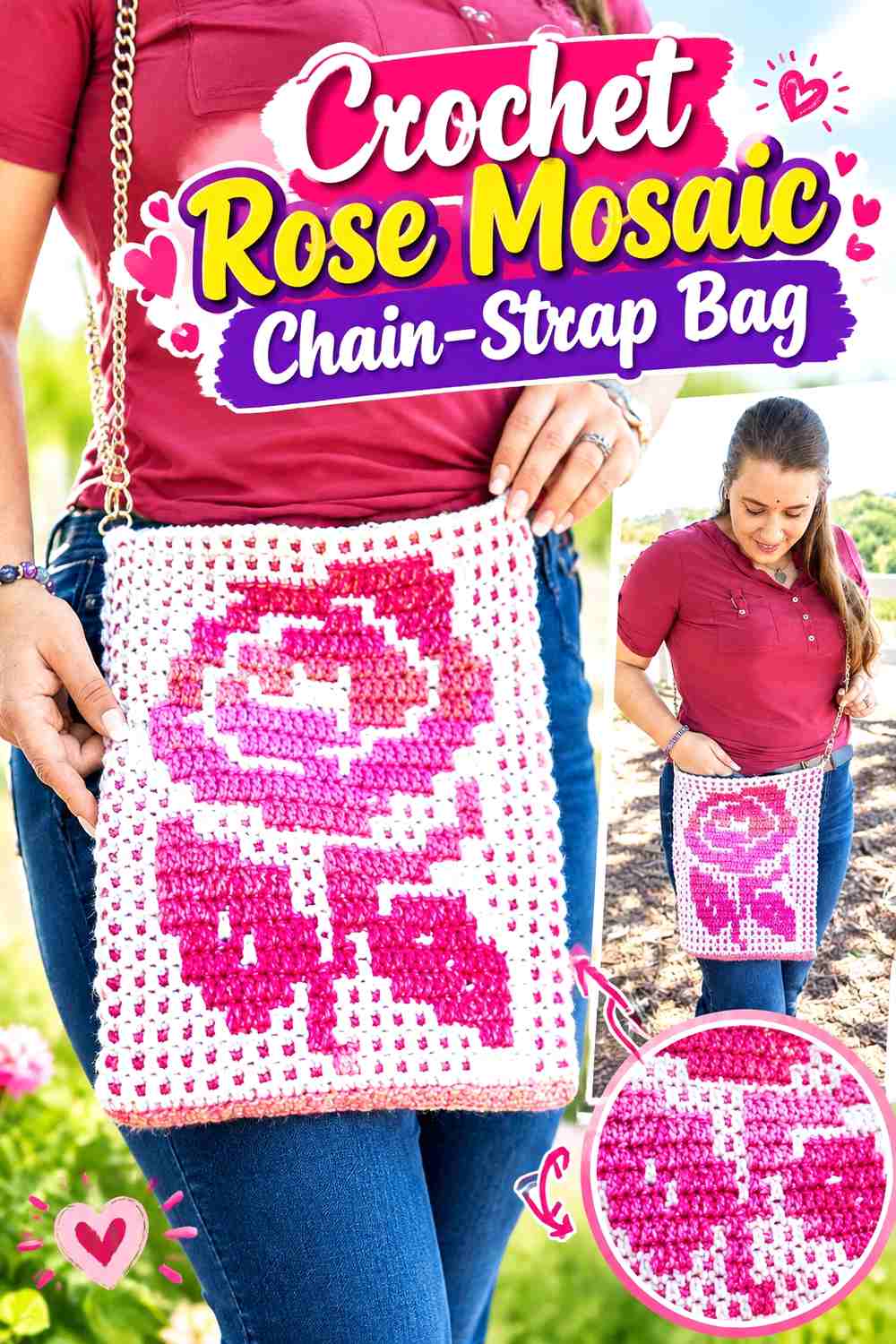
Nicki’s Homemade Crafts combines overlay mosaic crochet with a large rose graphic and metal chain handles. The result is more pictorial than the strictly geometric mosaics above, with the flower filling much of the bag surface rather than repeating as a small all-over motif.
This design works when you want patchwork-like color blocking but prefer one strong central image. The chain handles also shift the overall impression toward a handbag rather than a market tote. For winter use, consider how the metal and crochet behave together: the chain adds hardware weight, while the crocheted body still needs enough structure to hang neatly from its attachment points.
Keep the Rose Legible
A large mosaic picture relies on clear value differences. Multicolored or highly variegated yarn may compete with the flower outline even if the colors look attractive separately. If the rose is the reason you chose the project, prioritize color separation over using every scrap in the stash.
Check Hardware Attachment Carefully
Metal chain concentrates carrying force at relatively small attachment areas. Follow the original construction for attaching the hardware, and inspect those areas periodically if the bag will carry more than light essentials. Decorative handles should not encourage treating a crocheted handbag as a heavy-load tote.
Lining Can Change How the Graphic Sits
A supportive lining may help a broad mosaic panel remain flatter when the bag is filled. If you add one, avoid making it noticeably smaller than the crochet shell because that can pull the surface inward and distort the flower. Fit the lining to the completed bag rather than relying on an assumed dimension.
Creator Credit: Nicki’s Homemade Crafts
6. Crochet Diamond Mosaic Notions Bag
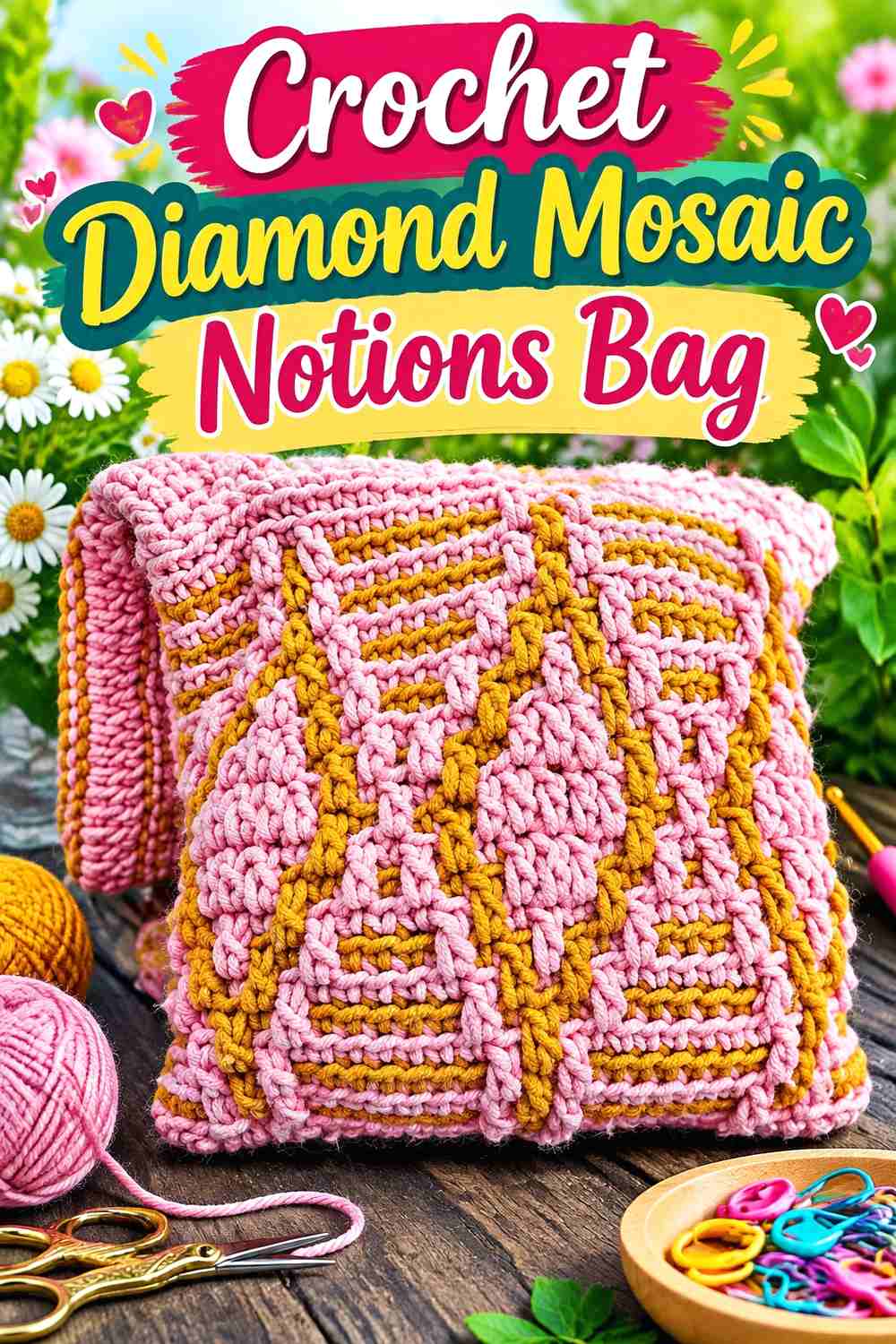
Fiber Fox Studios teaches an overlay mosaic diamond pattern in the round and specifically develops it into a makeup or notions bag. The repeated diamonds create a compact geometric surface with no need for separate patch motifs, making it a useful small-scale introduction to patterned bag fabric.
Because the bag is smaller than a tote, the motif repeat remains easy to see without requiring a large amount of fabric. It is a practical option for crochet hooks, small supplies, or personal items. If you want a winter patchwork collection, several small diamond bags could coordinate with a larger indigo or charcoal tote without repeating the exact same construction.
Small Bags Expose Pattern Alignment
On a narrow circumference, the point where the repeat meets itself can be more visible. Pay close attention to the tutorial’s stitch multiple and joining method rather than casually altering the starting count. A misaligned diamond can become the first thing the eye notices.
Decide Whether It Needs a Closure
A notions bag that travels inside a larger tote has different security needs from a pouch carried on its own. If you add a zipper or other closure not included in your chosen version, check how much additional firmness is required around the upper edge.
Use the Scale as a Technique Test
This compact project is a sensible place to discover whether you enjoy working overlay mosaic in rounds before committing to a large winter tote. You can evaluate tension, color contrast, fabric thickness, and the feel of dropped stitches with much less material invested.
Creator Credit: Fiber Fox Studios
7. Crochet Structured Mosaic Handbag
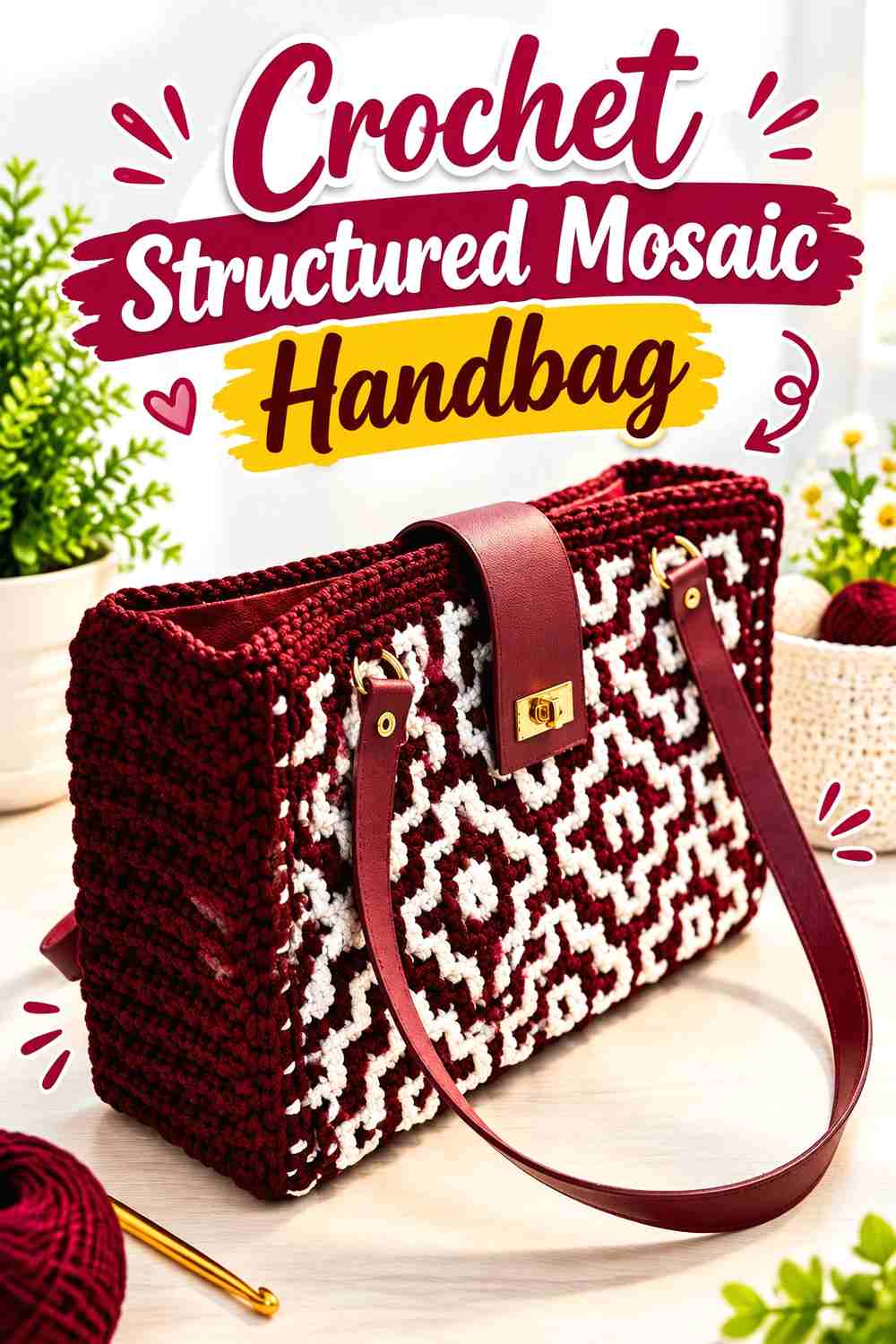
Luciana Fressato’s multipart mosaic bag tutorial moves beyond a soft tote by incorporating a structured handbag format with lining and bag hardware. The published materials include a closure flap, separate shoulder straps, internal support, and a firm fabric component, so structure is central to the project rather than an optional finishing thought.
This makes the design relevant when you like sashiko-inspired geometry but want a bag that looks more tailored with winter coats. The body has enough visual presence to work with a restrained two-color palette, while the hardware provides contrast without requiring extra crochet embellishment.
Treat Internal Support as Part of the Design
A structured bag behaves differently from a flexible market tote. Removing stiffening or support components can change the silhouette substantially, so verify which parts of the original construction create the finished shape before simplifying the materials list.
Match Hardware Weight to the Crochet Body
A substantial flap, clasp, feet, or strap attachment adds localized weight. If you substitute hardware, compare size and heaviness rather than choosing solely by color. Oversized metal pieces can pull on crochet fabric that was designed around lighter components.
Plan Coat-Friendly Carrying Length
A detachable or separate shoulder strap gives more flexibility than fixed crochet handles. Before final attachment, compare the intended carrying length over the heaviest outerwear you expect to use. The same handbag can sit at a very different height once a coat adds several inches around the body.
Creator Credit: Luciana Fressato
8. Crochet Zigzag Mosaic Zipper Pouch
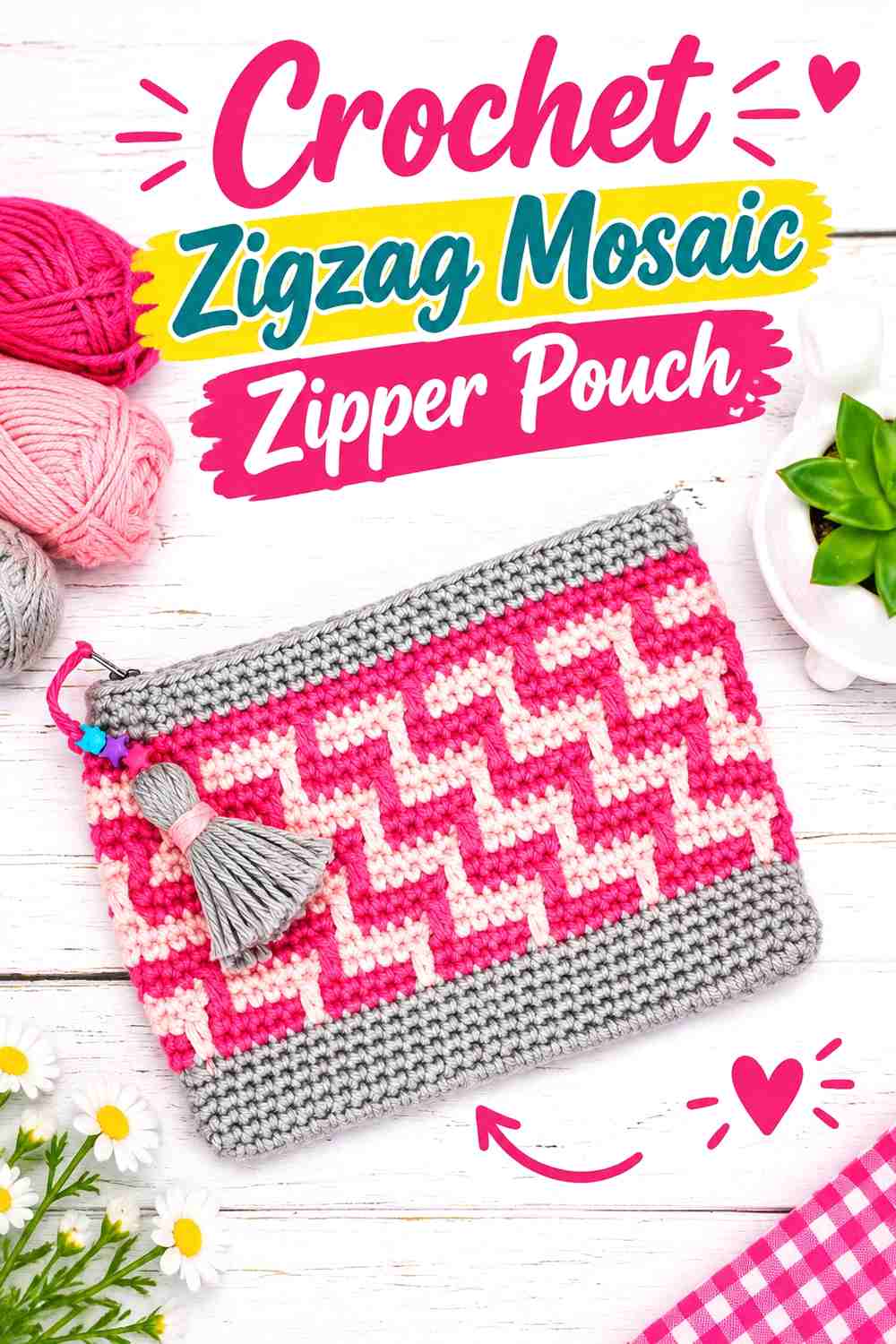
Loops and Love Crochet’s compact bag combines mosaic zigzags with a zipper and optional fabric lining. The creator works the pouch in joined rounds and provides both written and video support for the mosaic section and finishing components.
This design belongs in a sashiko patchwork collection because the repeated linear zigzags provide strong stitched-looking movement without requiring actual embroidery. It also fills a different practical role from the totes: use it for hooks, cosmetics, chargers, or small essentials that would otherwise disappear inside a larger winter bag.
Fit the Crochet to the Zipper
A zipper has a fixed length, while crochet width can vary with tension. If you already own the zipper, check the pouch width before completing the full body. It is easier to adjust early than to force a finished crochet edge onto hardware that is noticeably too short.
Keep the Joining Seam From Wandering
Joined rounds can create a visible diagonal drift when the beginning and end of each round are not handled consistently. Follow the creator’s joining guidance closely, especially if the seam falls near a strongly geometric section where misalignment becomes more noticeable.
Use the Lining for Small Contents
Openings between crochet stitches may be perfectly acceptable for bulky objects but inconvenient for pins, stitch markers, or tiny notions. An optional lining can improve containment while also hiding the zipper tape and reverse side of the mosaic work.
Creator Credit: Loops and Love Crochet
9. Crochet Mosaic-Square Patchwork Bag
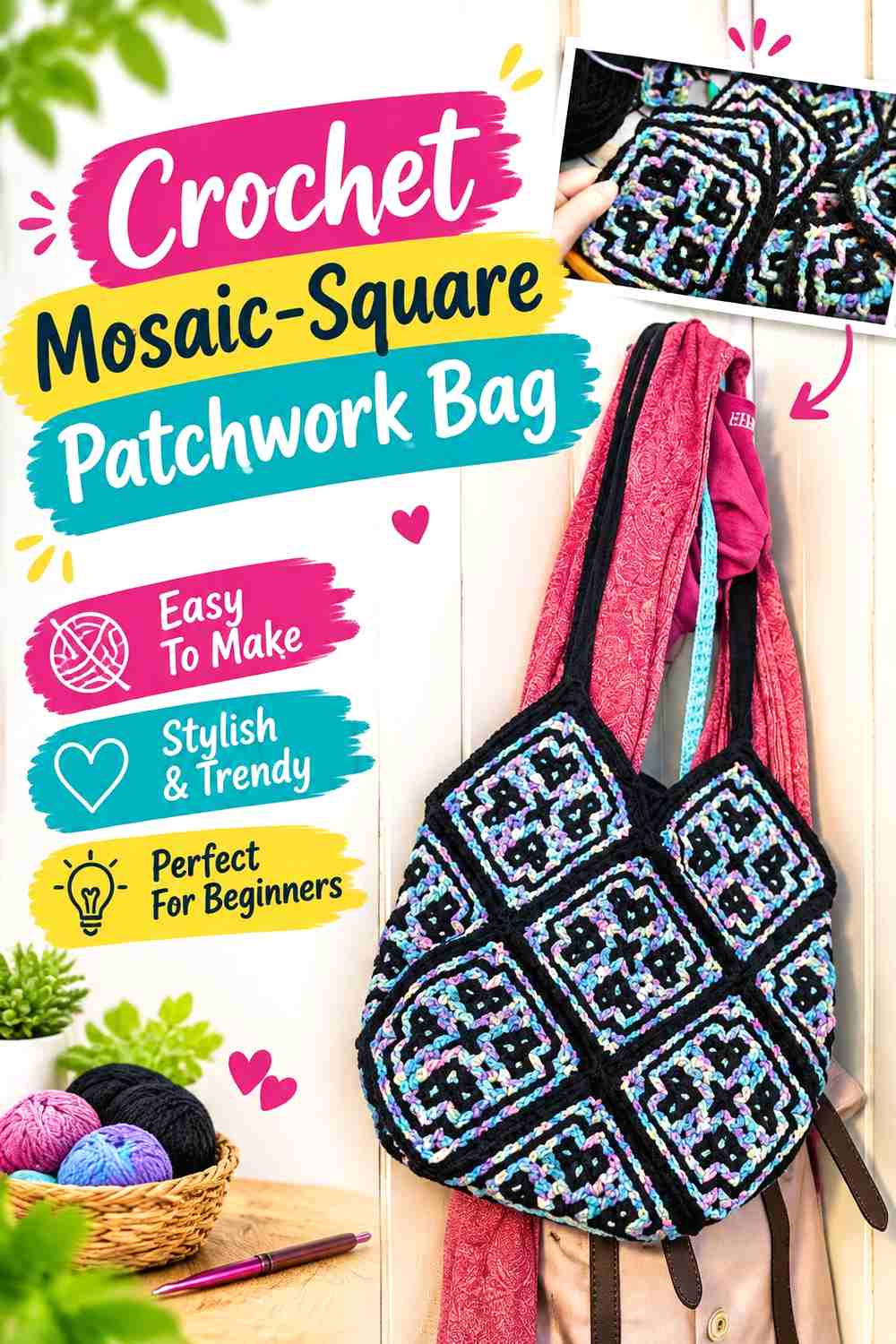
Ashlee Brotzell Designs approaches patchwork literally by showing how crocheted squares—including mosaic and interlocking crochet options—can be joined into a bag. The tutorial emphasizes turning separate geometric units into a usable structure rather than treating the squares as stand-alone samples.
This is one of the most adaptable ideas in the collection because the motif grid can become the visual focus. It is also an effective bridge between sashiko-inspired geometry and traditional crochet patchwork: individual squares create the “patches,” while the mosaic designs supply the internal stitched-looking lines.
Standardize Motif Size Before Joining
Mosaic squares with different internal patterns still need compatible outer dimensions. Block and compare every piece before assembly. Trying to stretch one undersized square while joining can distort the seam and pull the surrounding motifs out of alignment.
Decide Whether Joins Should Show
A visible seam reinforces the patchwork grid and can resemble deliberate mending or panel construction. A quieter join makes the internal mosaic designs dominant instead. Test a short join in both matching and contrasting yarn before assembling the full bag.
Plan Motif Direction on the Finished Shape
A square that looks upright while lying on a table may rotate once the flat layout folds into a bag. Arrange the full construction exactly as the tutorial requires and photograph it before joining so directional motifs remain oriented the way you intended.
Creator Credit: Ashlee Brotzell Designs
10. Crochet Scrap-Panel Patchwork Tote Bag
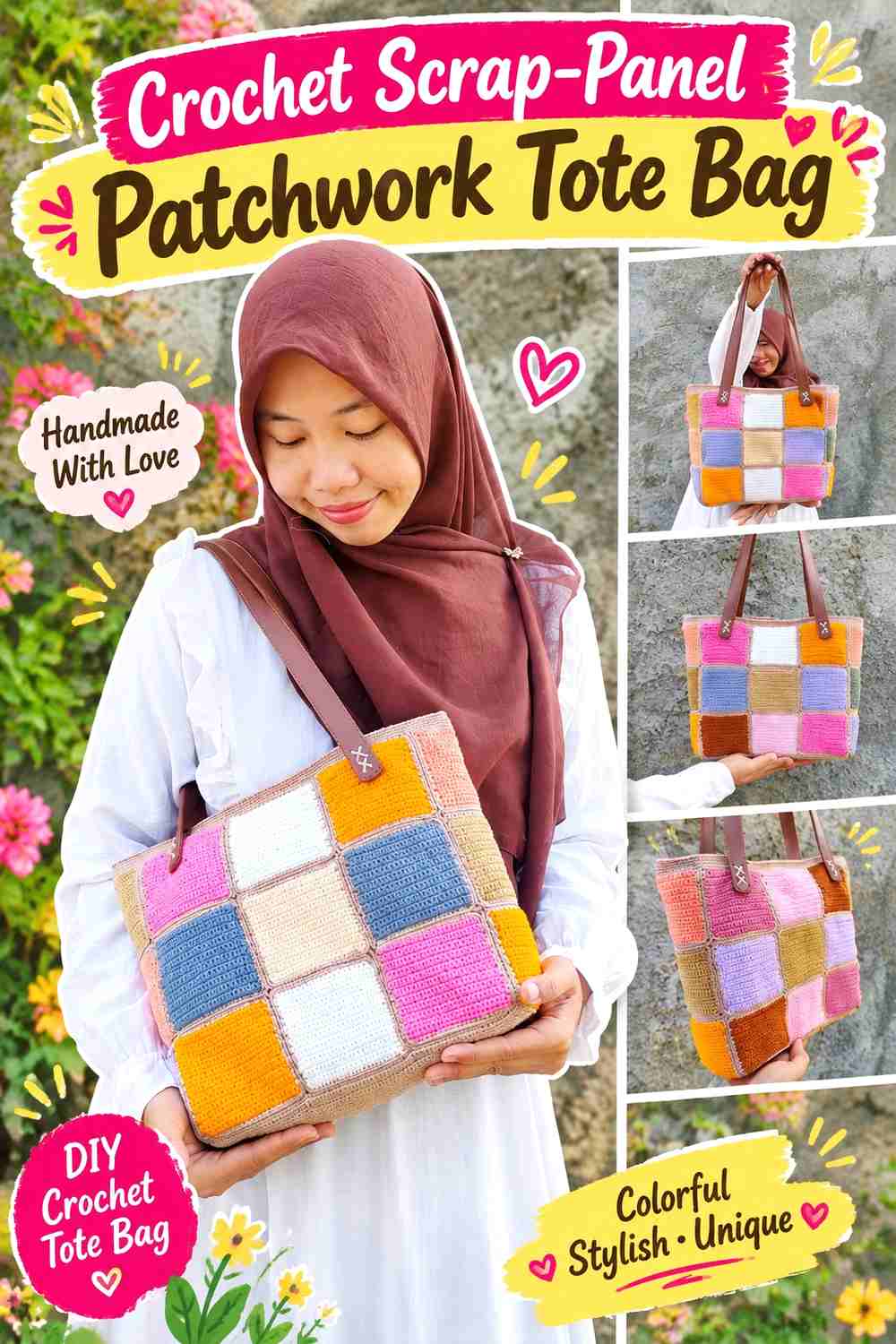
Tutorial Rajut’s bag is built around separate crocheted patches that are assembled into the body, making it one of the more literal patchwork constructions in this list. The tutorial covers the base, the individual patch sections, their joining, and the finishing edge.
This is a practical direction when you want visible blocks but do not need every patch to contain an intricate mosaic motif. For a sashiko-influenced winter interpretation, the strongest choice may be a restrained collection of navy, faded blue, gray, cream, and charcoal rather than a purely random scrap arrangement. That is a styling choice, not a requirement of the original tutorial.
Sort Scraps by Behavior, Not Just Color
Two yarns that look compatible can differ greatly in stretch, thickness, or surface texture. Patchwork exaggerates those differences because neighboring pieces must join cleanly. Group leftovers with reasonably similar weight and behavior before deciding which colors belong together.
Make the Joining Grid Deliberate
When many patches are involved, seam consistency matters as much as the individual motifs. Decide whether joining yarn should blend with each patch or create one continuous grid across the bag. A strong contrast can provide the visible-mending character associated with patchwork.
Check the Base Against the Panel Width
The patchwork body and crocheted base need to meet without puckering. Before permanently joining them, pin or temporarily align the pieces and compare their circumferences. Small motif variations accumulate quickly when several patches are placed side by side.
Creator Credit: Tutorial Rajut
11. Crochet Flat-Seam Floral Patchwork Bag
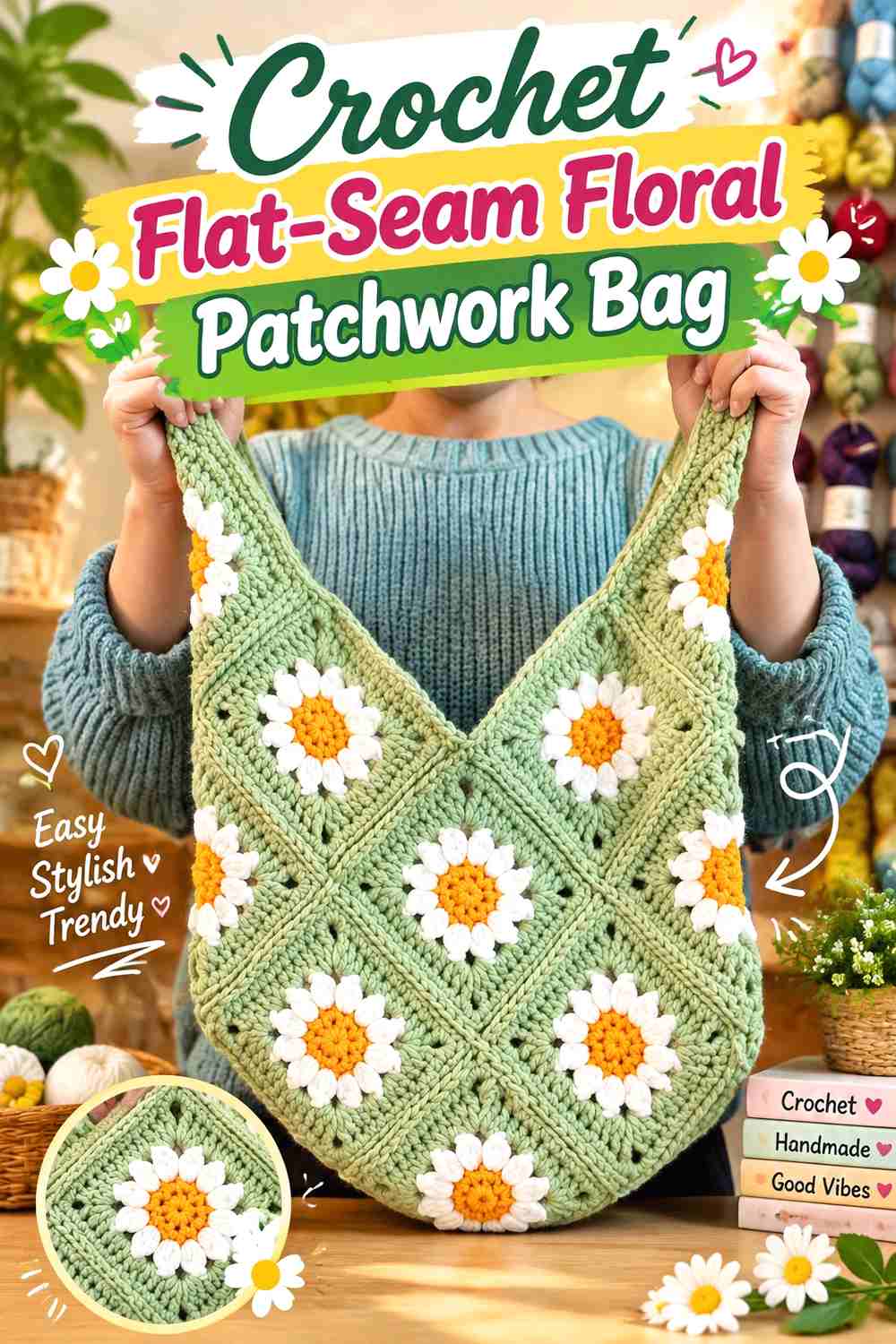
Textile Indie’s bag uses 15 granny squares and a flat slip-stitch joining method, creating a broad field of motifs with an intentionally neat seam structure. The tutorial also covers the bag layout, folding, handle, edging, and optional lining considerations.
For this article, its strongest feature is the seam treatment. Sashiko and visible mending aesthetics often rely on repeated lines, and a carefully executed crochet join can provide a similar sense of structural rhythm without pretending to be embroidery. Floral squares soften that geometry and produce a bag that feels more textile-rich than strictly graphic mosaic designs.
Flat Seams Still Need Accurate Squares
A neat joining method cannot compensate for motifs that vary substantially in size. Block the squares and compare edge stitch counts before assembly. If one square is consistently larger, correct the motif rather than trying to absorb the difference into the join.
Use Seam Color to Set the Mood
Matching seam yarn makes the floral motifs merge into one larger panel. Contrasting yarn emphasizes each patch and gives the surface a more repaired or pieced appearance. Lay several squares together with strands of candidate seam colors between them before deciding.
Add Lining Based on the Motif Openings
Floral granny squares can leave visible gaps. Whether that matters depends on what you plan to carry. A lining is especially useful for small objects, but if the bag will hold only bulky yarn or a folded scarf, you may prefer to keep the crochet fabric lighter.
Creator Credit: Textile Indie
12. Crochet Daisy Patchwork Shoulder Bag
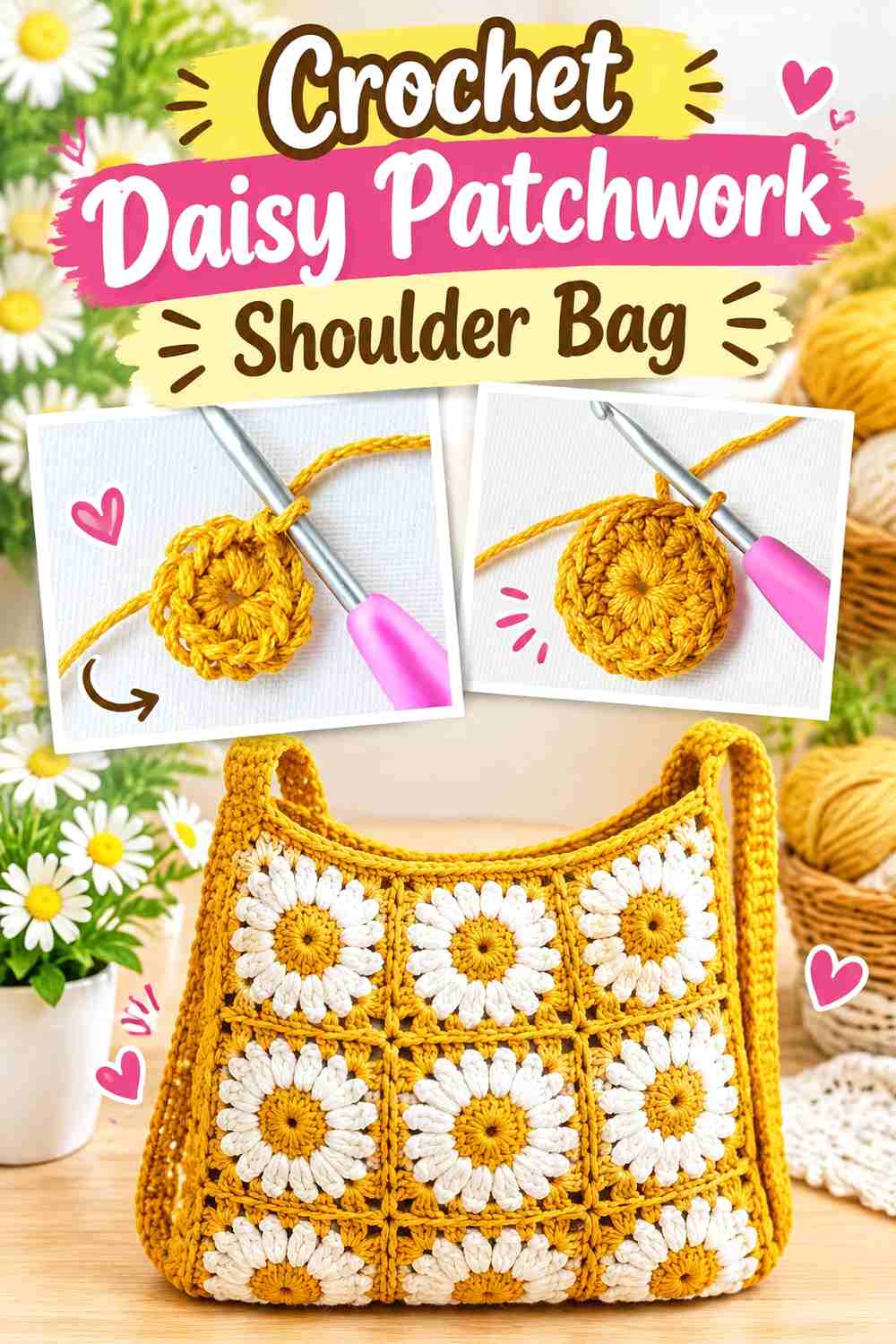
All About Ami’s bag uses 13 daisy granny squares arranged and seamed into a medium-sized shoulder bag. The creator also discusses an optional organizer insert, which can add compartments and closure inside the crocheted shell.
This design works well when you want patchwork to remain unmistakably decorative rather than abstract. The repeated flowers create their own grid, and a limited winter palette can shift the mood away from the brighter colors often associated with daisy motifs. Because the bag is carried on the shoulder, strap length is an important checkpoint if you expect to wear it over sweaters or outerwear.
Keep Flower Orientation Consistent
Once multiple squares fold around a three-dimensional bag, orientation becomes easy to lose. Arrange all motifs according to the final assembly layout before seaming, particularly if your color placement makes the daisy clearly directional.
Test the Shoulder Drop With a Coat
The finished bag may sit differently over thick sleeves than over lightweight clothing. Before permanently finishing an adapted strap, pin or baste the intended length and try it with your winter layers. Avoid adding excessive length without considering crochet stretch.
Use an Insert When You Want Removable Structure
A removable organizer can provide compartments without permanently sewing a lining into the crochet shell. Check its dimensions against the completed bag rather than assuming the named size will fit after yarn or gauge substitutions.
Creator Credit: All About Ami
13. Crochet Mixed-Scale Motif Patchwork Tote
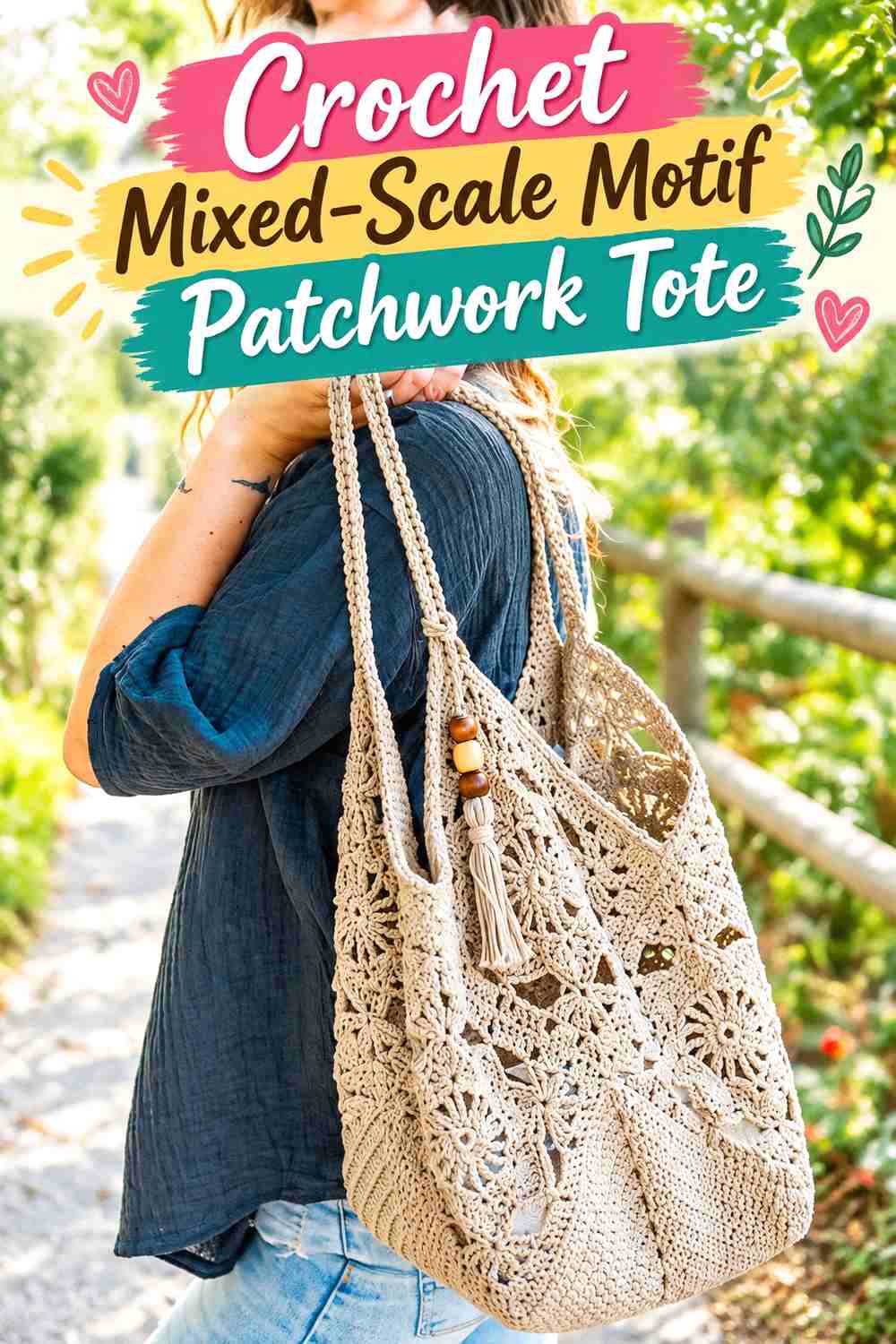
A Crocheted Simplicity’s Aisling bag combines eight smaller motif squares with one substantially larger square used in the bag structure. That mixed scale makes the patchwork arrangement very different from totes built from identical repeated units. The design also includes crocheted straps and optional decorative tassels.
Choose this project when you want patchwork that looks assembled rather than uniformly tiled. A large base element can visually anchor the smaller motifs, while the repeated side squares provide opportunities for controlled color variation. In a winter palette, you can keep the large square neutral and let smaller patches carry deeper indigo, rust, moss, or charcoal accents.
Mixed Sizes Require More Layout Planning
Large and small motifs have different visual weight. Spread the smaller color accents across the bag before joining instead of deciding one square at a time. A quick photograph of the final flat layout helps preserve the arrangement during assembly.
Treat the Base as a High-Stress Area
The larger square contributes to the bottom structure, where carried weight concentrates. Follow the designer’s construction and yarn recommendations carefully before experimenting with a much softer or stretchier substitute.
Tassels Can Change Everyday Practicality
Decorative tassels reinforce the handmade look, but they also add movement and potential snag points. If the bag will brush against coats, scarves, or public-transit seating frequently, decide whether you want the embellishment before attaching it permanently.
Creator Credit: A Crocheted Simplicity
14. Crochet Five-Square Tulip Trapeze Tote
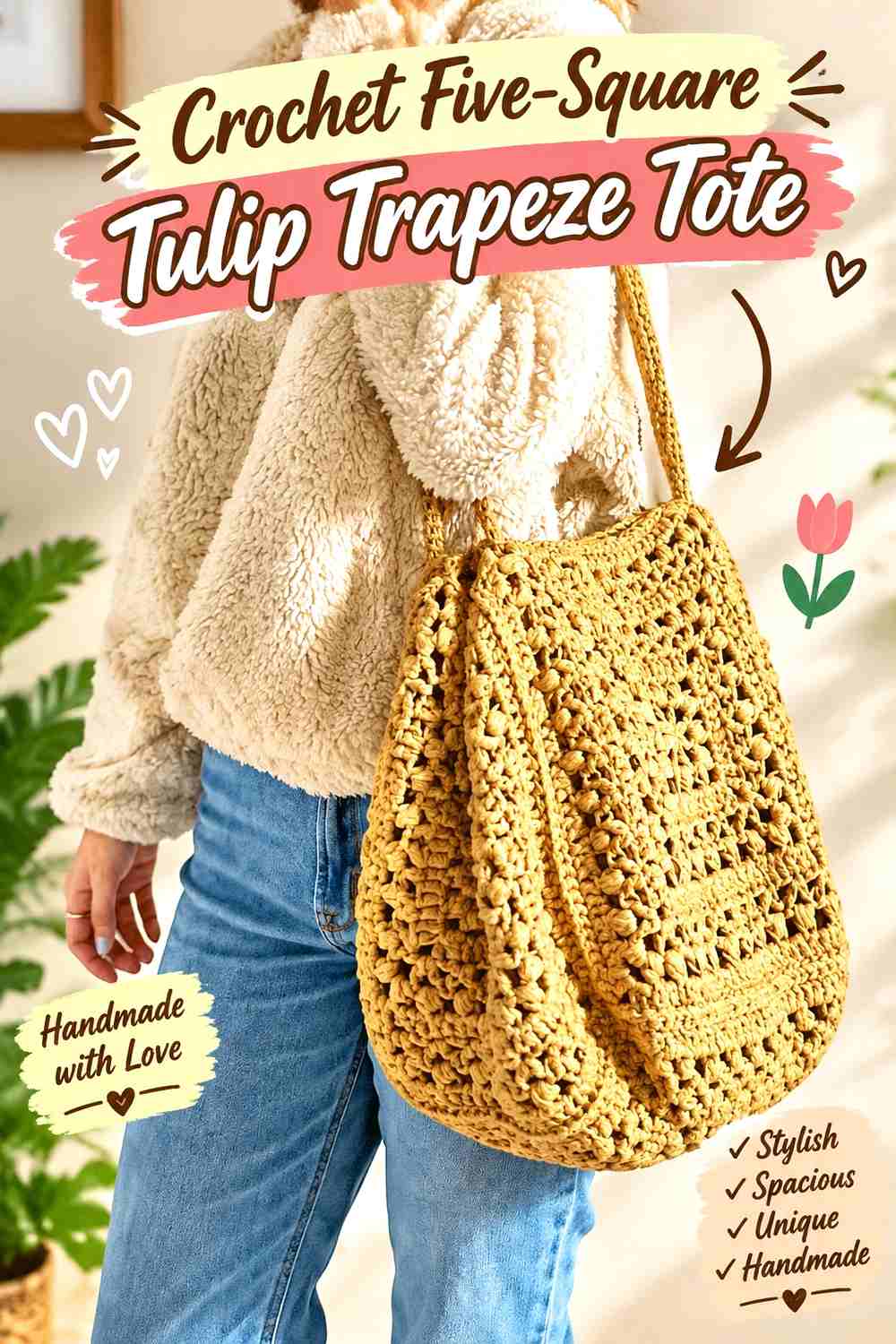
Wilmade’s tote creates its body from five tulip-inspired squares joined with slip stitches, then adds tubular straps worked separately from the motif field. Optional fabric lining gives the crocheter a choice between a lighter all-crochet bag and a more contained interior.
Five larger motifs produce a completely different patchwork scale from a 13- or 15-square bag. Each square becomes a major design element, so color decisions have more impact and there are fewer joins to manage. The trapeze shape also makes this a useful closing project for the list because silhouette—not just stitch pattern—distinguishes it from the rectangular totes.
Large Motifs Put More Pressure on Blocking
When only five squares form the body, a distorted corner affects a larger portion of the finished bag. Block the motifs to comparable dimensions and confirm that the sides meet cleanly before beginning the slip-stitch joins.
Tubular Straps Need Their Own Fit Check
A tube-style crochet strap behaves differently from a flat band. Check both the finished length and how comfortably the rounded strap sits on the shoulder, especially over winter clothing. If you change the yarn, monitor whether the tube becomes noticeably heavier or softer.
Lining Should Follow the Trapeze Shape
A rectangular lining forced inside an angled bag can bunch at the corners or pull the shell out of shape. If you add fabric, fit it to the completed crochet body and preserve enough ease for the bag to sit naturally rather than making the lining smaller in an attempt to add structure.
Creator Credit: Wilmade
Which Crochet Sashiko Patchwork Bag Style Should You Choose?
For the closest relationship to actual sashiko surface work, start with the Kaki-no-Hana Project Bag, Reversible Sashiko Mosaic Wristlet, or Foldover Sashiko Clutch. Choose the mosaic totes when you want geometric lines created entirely through crochet rather than an embroidery stage.
If the patchwork assembly itself interests you most, the Mosaic-Square, Flat-Seam Floral, Daisy, Harlow, Aisling, and Tulip bags all approach joined motifs differently. For a more structured everyday handbag, Luciana Fressato’s mosaic construction stands apart, while the Fiber Fox and Loops and Love projects suit small-item organization. The strongest choice depends on whether you prioritize embroidery, colorwork, modular assembly, closure security, coat-friendly straps, or firm structure.
Conclusion
Crochet sashiko patchwork bags can move from genuine running-stitch embroidery on crochet to mosaic colorwork and visibly joined motifs without those techniques becoming interchangeable. That distinction gives you useful choices rather than eighteen versions of the same tote.
Start with the surface you most want to make: embroidered lines, crochet-built geometry, or assembled patches. Then consider practical winter details such as strap clearance over outerwear, lining, closure, fabric density, and how much weight the bag will carry. When adapting yarn, scale, or hardware, use the linked creator tutorial as the construction reference and test major substitutions before committing to the full project.
Frequently Asked Questions
Is sashiko crochet the same as traditional sashiko embroidery?
No. Traditional sashiko is a textile stitching practice, while crochet creates fabric through loops of yarn. Some crochet projects intentionally add running-stitch embroidery over a crocheted base, producing a genuine crossover between the crafts. Others use mosaic crochet to create a related geometric visual effect without embroidery. When a designer describes a project only as mosaic or patchwork crochet, it is more accurate to keep that terminology rather than automatically calling it sashiko.
What yarn works well for a sashiko-inspired crochet bag?
The right yarn depends on construction. A smooth yarn can make embroidery and mosaic lines easier to see, while highly fuzzy yarn may soften those details. Bag fabric also benefits from enough stability for its intended load. Instead of assuming one fiber is universally best, compare the tutorial’s yarn weight, fabric density, and structure with your substitute. Make a sample first when changing fiber type or yarn thickness significantly.
Should a crochet patchwork bag be lined?
Not always. A dense mosaic handbag may already contain everyday items well, while open granny-square motifs can allow small objects to poke through. Lining can improve containment and may support the crochet shell, but it should fit without pulling the bag out of shape. Closures, hardware, straps, and yarn behavior also affect whether lining is worthwhile, so evaluate the completed crochet fabric before making the decision.
How can I make a crochet bag comfortable over a winter coat?
Compare strap drop with a shoulder or crossbody bag you already use over your thickest outerwear. Crochet straps may also stretch after use, so increasing length aggressively can create a bag that later hangs lower than expected. Where the pattern uses separate straps or hardware, test placement before permanently attaching them. Short market-tote handles may be better carried by hand if coat sleeves make shoulder placement uncomfortable.
Can I add sashiko-style embroidery to any crochet bag?
A dense, regular crochet surface is generally easier to embroider than very open lace because it provides predictable anchoring points. However, adding embroidery can change flexibility and may distort fabric if the thread is pulled too tightly. If the original tutorial does not include embroidery, first test your idea on a swatch made with the same yarn and stitch pattern rather than experimenting directly on the finished bag.
How do I stop patchwork crochet bags from stretching?
Stretch depends on yarn, stitch density, seam construction, strap design, lining, and the amount of weight carried. Keep motif dimensions consistent, join patches securely using the original tutorial’s method, and pay particular attention to handles and their attachment points. A lining can help share some load, but it does not make an otherwise delicate bag suitable for heavy contents. Avoid hanging a wet crochet bag by its straps while drying.