A narrow textile across the foot of a bed can change the character of a winter bedroom without covering an entire quilt or duvet. Crochet is especially useful for this look because colorwork, mosaic techniques, interlocking layers, crossed stitches, and dense textured repeats can suggest the visual depth of hand-woven blankets while remaining distinctly crocheted.
These 17 ideas range from actual bed-runner tutorials to blanket, throw, and stitch constructions that can be adapted into a narrower runner. Not every source begins as a bed runner, so check the creator’s sizing and construction before changing proportions. For colorwork patterns in particular, narrowing a design may affect how complete motifs fit across the fabric.
For a heritage mood, concentrate on structure before decoration. Kilim-like geometry, restrained plaid, tapestry blocks, winter trees, woven-looking ribs, tasseled ends, and deep natural colors usually contribute more than adding numerous embellishments after the runner is finished.
Quick List
- Crochet Rust-and-Natural Tassel Bed Runner
- Crochet Heritage Lattice Bed Runner
- Crochet Paintbox Motif Bed Runner
- Crochet Block-Color Tapestry Bed Runner
- Crochet Old-Kilim Motif Bed Runner
- Crochet Winter Forest Mosaic Bed Runner
- Crochet Reversible Interlocking Bed Runner
- Crochet Mixed Mosaic-and-Tapestry Bed Runner
- Crochet Geometric Overlay Mosaic Bed Runner
- Crochet Gray Plaid Heritage Bed Runner
- Crochet Woven Mosaic Sampler Bed Runner
- Crochet Knit-Look Ribbed Bed Runner
- Crochet Basket-Woven Texture Bed Runner
- Crochet Tunisian Loom-Look Bed Runner
- Crochet Two-Color Moss-Weave Bed Runner
- Crochet Open-Weave Heritage Bed Runner
- Crochet Southwest Motif Bed Runner
Decide What “Hand-Woven” Should Mean in Your Bedroom
A crochet runner does not have to imitate one particular type of woven textile. You can create the impression in several ways.
Tapestry crochet uses controlled color changes to build pictures or geometric blocks directly into the fabric. Mosaic crochet creates stronger graphic lines and can produce a tile, rug, or woven-band appearance. Interlocking crochet uses layered mesh to create a reversible patterned fabric, while plaid and crossed-stitch textures suggest woven cloth through the arrangement of horizontal and vertical-looking lines.
Texture can create a woven mood even without elaborate colorwork. Dense crossed stitches, Tunisian crochet, moss-style fabric, ribs, and elongated stitch patterns can all make a runner look substantial enough to sit comfortably beside quilts, wool blankets, paneled headboards, and traditional wooden furniture.
Choose the method according to the room rather than simply choosing the most complicated pattern.
Plan the Runner Around the Bed Before Choosing the Motif
A bed runner is usually much narrower than a blanket, which creates an important design problem: a motif that looks balanced across a full throw may not fit neatly into a narrow strip.
Check the pattern repeat before adapting any blanket tutorial. Large diamonds, trees, stars, or medallions may need a certain minimum width before the complete design becomes visible. A small repeating geometric pattern is generally easier to narrow without losing its identity.
Length also affects the final mood. A runner that remains mostly on top of the mattress reads as a decorative textile panel, while one that extends down both sides makes tassels, fringe, and patterned ends much more noticeable.
Make a sample when changing yarn or construction. The finished width of colorwork can be particularly sensitive to tension, and a slightly different stitch gauge can become significant across a long strip.
Build a Heritage Winter Palette With Contrast, Not Excess Color
A heritage room does not require brown yarn everywhere. Deep red, rust, ochre, forest green, charcoal, indigo, cream, oatmeal, muted gold, faded blue, and dark plum can all suit a winter textile.
The important question is whether the pattern remains legible. Tapestry and mosaic designs generally need enough value contrast for the motifs to separate. Two beautiful colors that look nearly identical in grayscale can produce a pattern that disappears from across the room.
For a more collected appearance, consider one dominant neutral with one or two strong accent shades. If the bedroom already contains patterned quilts or curtains, a two-color runner may integrate more easily than an elaborate multicolor piece.
1. Crochet Rust-and-Natural Tassel Bed Runner
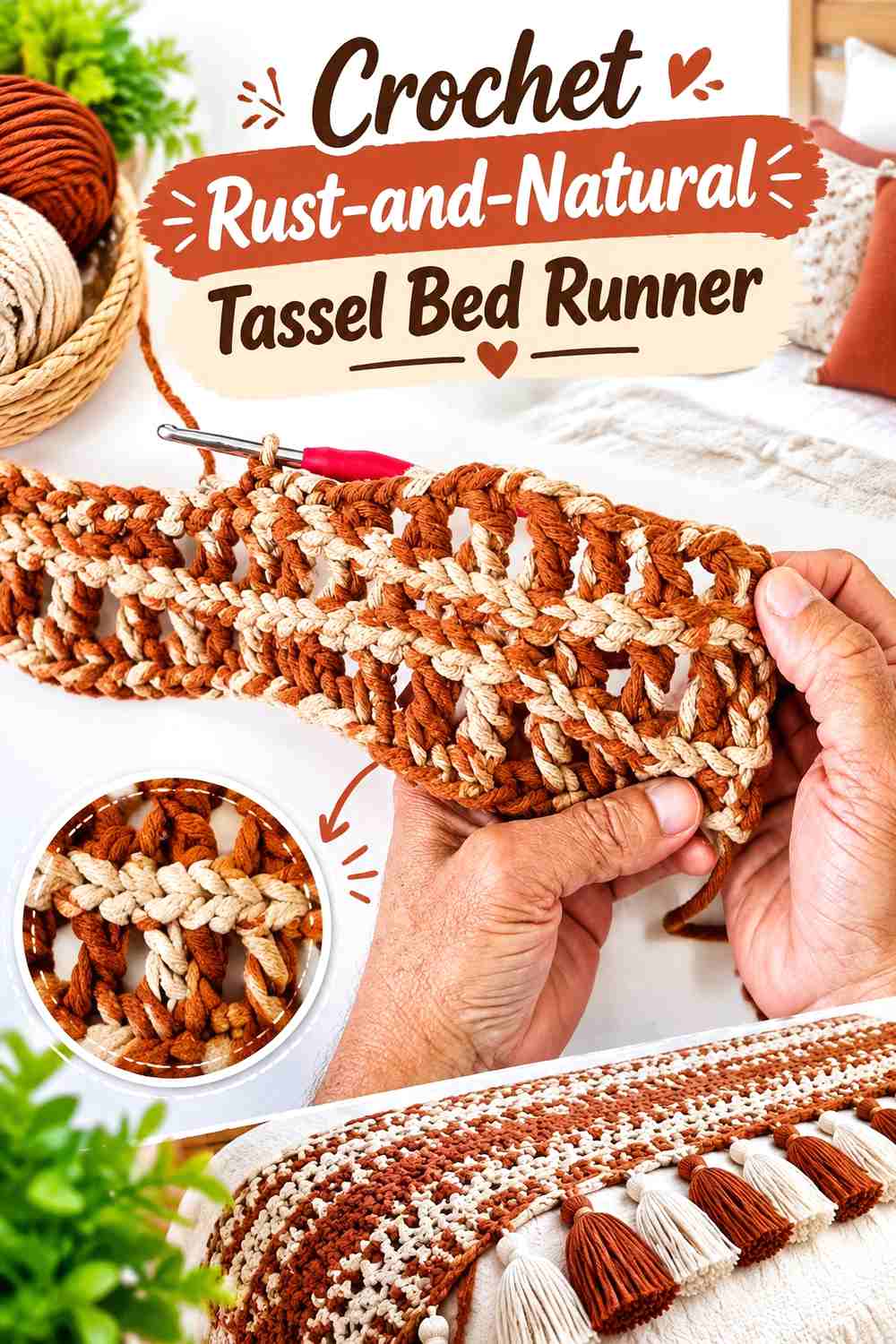
This project starts with an actual bed-runner construction rather than requiring a blanket conversion. Its long, narrow shape, contrasting bands, pronounced texture, and tasseled ends make it a useful foundation for a heritage winter bedroom. Rust and natural tones already suit an earthy setting, although the important feature is the relationship between the two colors rather than those exact shades.
Tassels Make the Side Drop Part of the Design
If the runner extends beyond both sides of the mattress, the tassels become much more visible than they appear when the piece is laid flat. Measure with the intended drop in mind before deciding that the crochet body itself needs to reach the desired final length.
A runner that stops on top of the bed can use the same construction, but the tasseled ends will create a different visual effect.
Raised Texture Can Hold Its Own Against Heavy Bedding
Winter bedding often includes quilting, brushed fabrics, wool-like textures, or multiple folded layers. A substantial crochet surface is less likely to disappear visually beside those materials than very fine lace.
If the bed already has a highly patterned quilt, consider keeping the runner palette restrained so texture rather than additional color becomes the focal point.
Creator Credit: Blog do crochê
2. Crochet Heritage Lattice Bed Runner
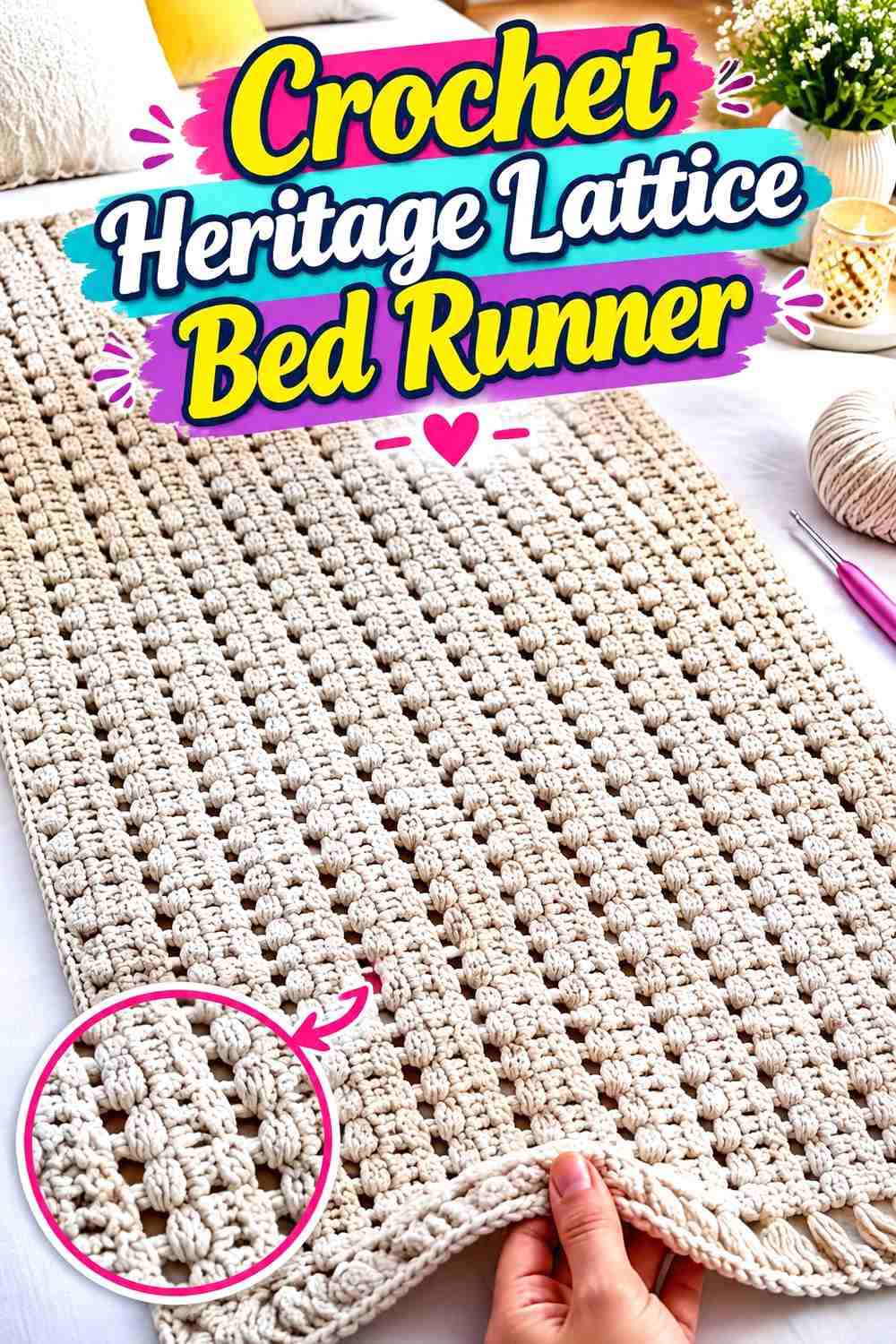
This source is also designed as a bed runner, with an open but clearly structured repeating fabric. It offers a lighter alternative to dense tapestry colorwork and can suit heritage rooms where the bedding already carries the dominant pattern.
Open Spaces Reveal the Bedding Underneath
The duvet or quilt effectively becomes part of the runner’s color scheme because it remains visible through the crochet. A cream runner over deep green bedding will read quite differently from the same crochet over ivory linen.
Place a sample over the actual bed before committing to a large amount of yarn. This is more informative than judging the color with the crochet held in your hand.
Decorative Ends Need Enough Visual Space
Tassels or other end treatments can look crowded if they land directly against heavily patterned side blankets or furniture. If the ends are intended to hang, check how they relate to the bed frame and floor clearance before finishing them.
Creator Credit: Crochet by Nora
3. Crochet Paintbox Motif Bed Runner
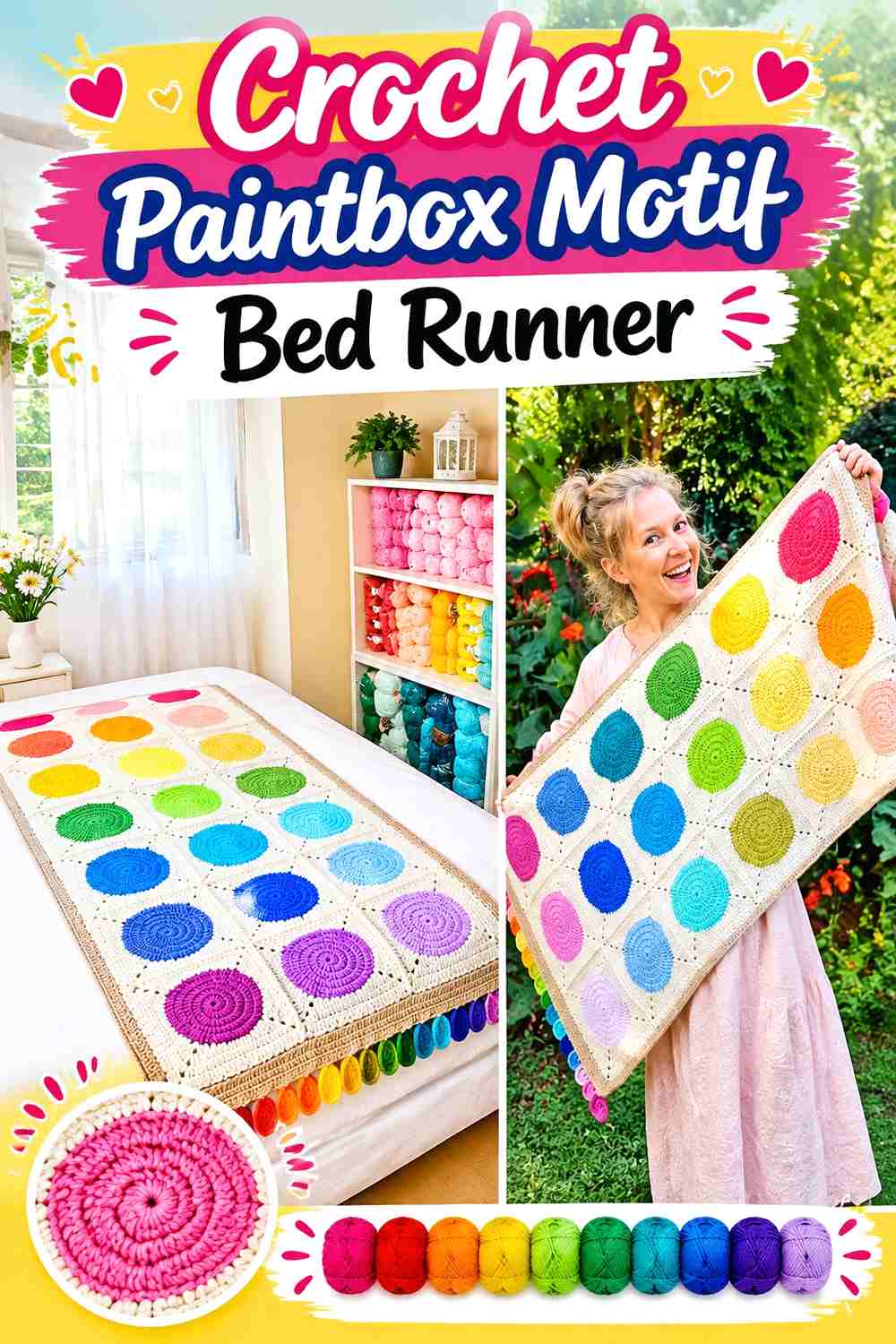
A joined-block runner creates a completely different heritage effect from continuous rows. The tutorial is specifically designed as a bed runner and wrap, using individual circle-to-square units joined into a long composition.
For a heritage winter bedroom, the bright paintbox idea can be translated into a quieter collection of brick, moss, cream, charcoal, mustard, and faded blue.
Modular Construction Makes Color Placement Easier to Test
Individual blocks can be arranged directly across the bed before final assembly. This is useful when working with several colors because you can correct an area that feels too dark or too repetitive without unraveling a long section of colorwork.
Photographing different arrangements can also make subtle balance problems easier to notice.
The Join Becomes Part of the Tapestry Effect
When motifs are surrounded by a consistent joining color, the seams form a visible grid across the runner. That grid can make the piece resemble a patchwork textile rather than one uninterrupted crochet fabric.
Decide whether you want the joins to contrast strongly or visually recede before assembling the full strip.
Creator Credit: Secret Yarnery
4. Crochet Block-Color Tapestry Bed Runner
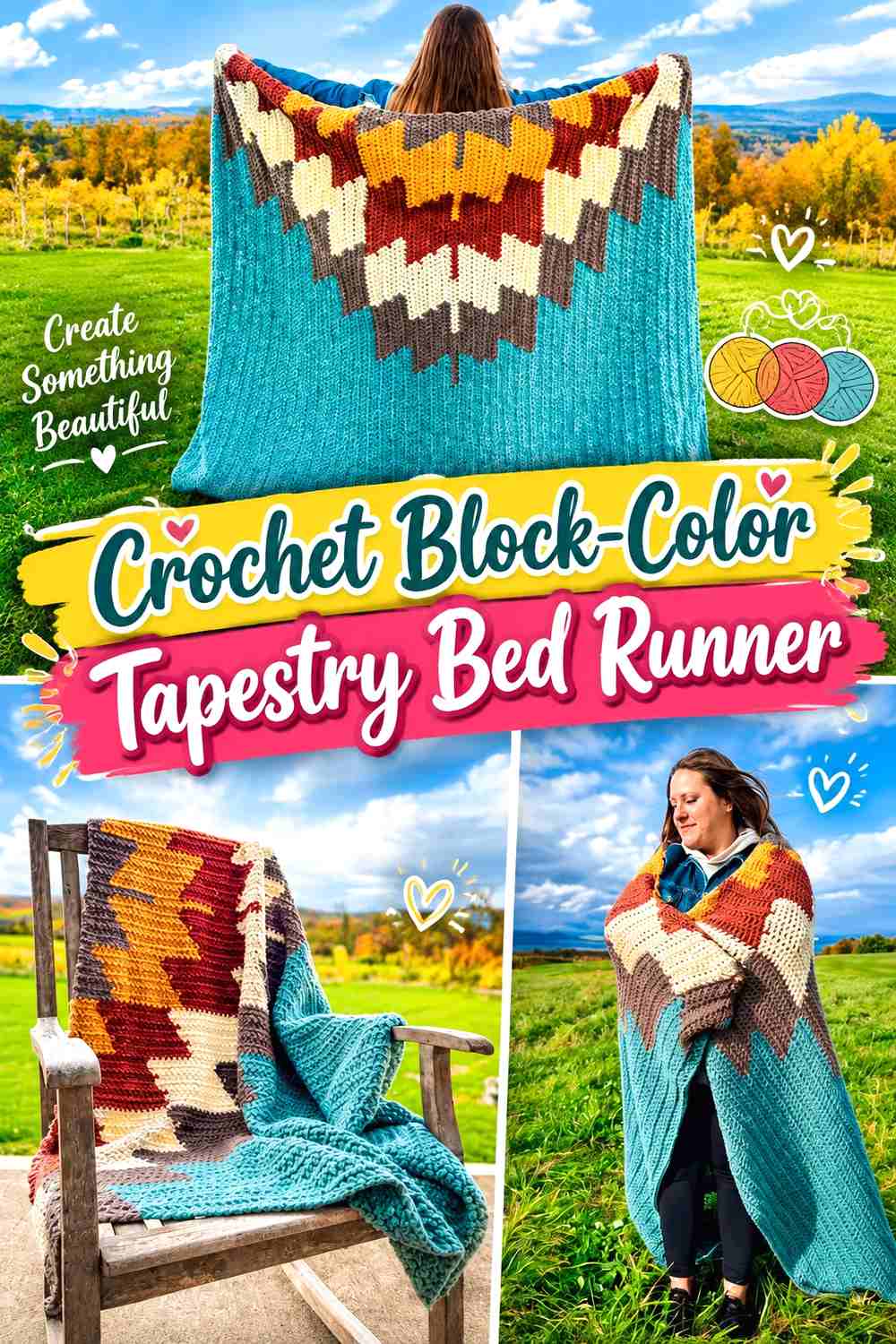
This blanket tutorial uses true tapestry crochet colorwork, making it one of the closest matches to the tapestry part of the theme. Rather than reproducing the complete blanket at full width, a runner adaptation can focus on a narrower arrangement of compatible color blocks.
Narrowing Tapestry Crochet Requires Motif Planning First
Do not simply remove stitches from each side of a pictorial or geometric chart. Doing so can cut through the intended design.
Determine which complete motif section can fit across the runner width, then plan the surrounding background from that point. Use the creator’s original construction guidance for the actual colorwork.
Carried Yarn Can Affect Fabric Firmness
Tapestry crochet encloses or carries additional yarn as the colors change, which can produce a more substantial fabric than an ordinary single-color crochet strip.
That extra body can be desirable for a decorative runner because it helps the piece feel visually closer to a woven textile. Swatching is still important if you change yarn because excessive tightness can reduce drape.
Creator Credit: Spotted Horse Design Co.
5. Crochet Old-Kilim Motif Bed Runner
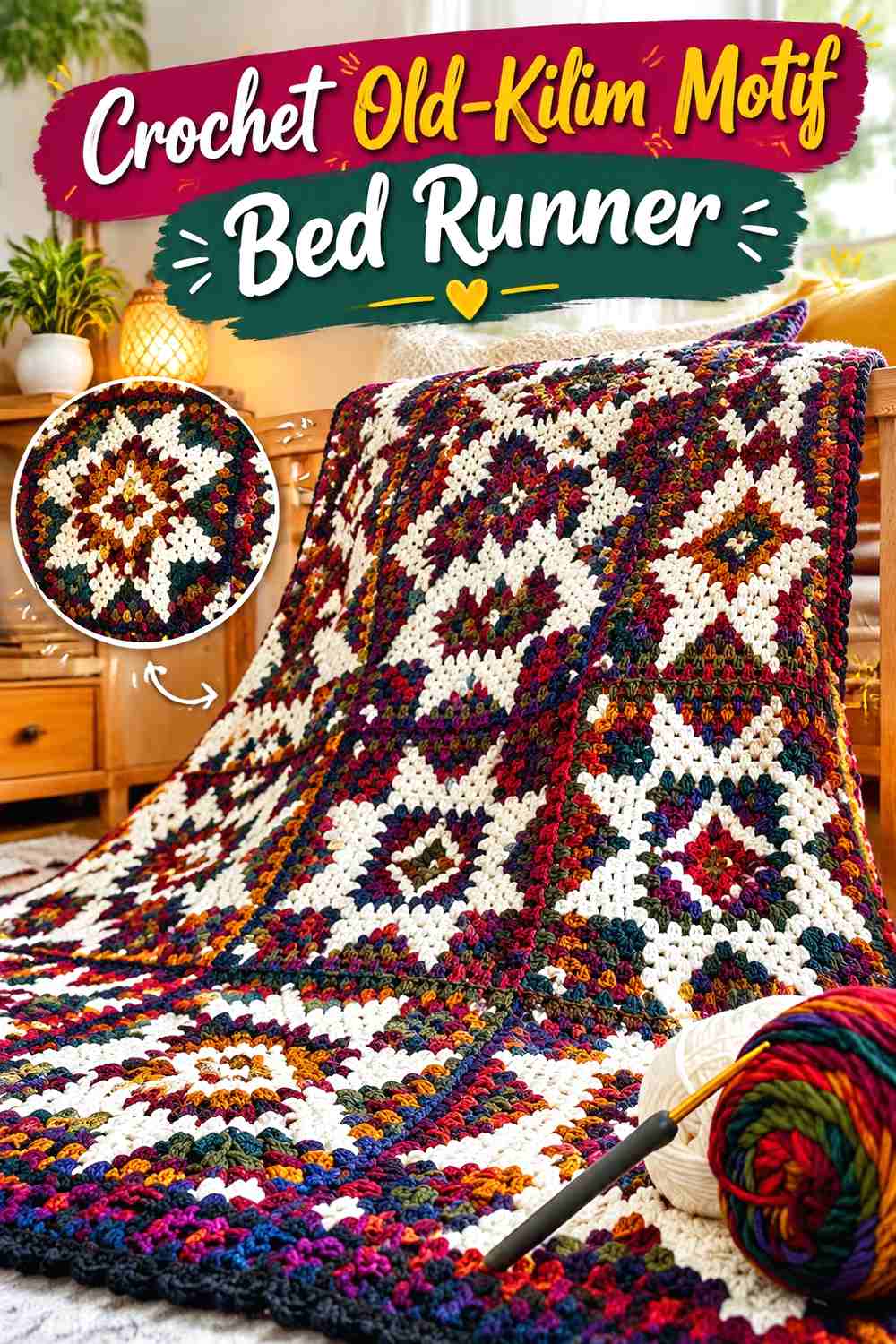
This tutorial is especially well suited to the requested heritage direction because the crochet blanket is explicitly inspired by old kilims. Its mosaic rug-like motifs offer a strong route toward a runner that feels collected rather than newly coordinated with a bedding set.
Repeating Fewer Motifs Can Create a Stronger Runner
A bed runner does not need the full variety of a large blanket. Repeating one or two compatible kilim-inspired motifs along a narrow strip can create a more deliberate banded composition.
Before joining multiple motifs, place them in a row across the bed to judge whether the pattern feels too busy at the intended viewing distance.
Aged-Looking Color Does Not Mean Low Contrast
Muted colors still need enough separation for geometric motifs to remain readable. Deep rust beside dark burgundy, for example, may create less definition than expected.
Compare yarn choices in ordinary bedroom lighting, including evening light, because heritage palettes can look considerably darker after sunset.
Creator Credit: ÖRGÜ MÜ DEDİNİZ
6. Crochet Winter Forest Mosaic Bed Runner
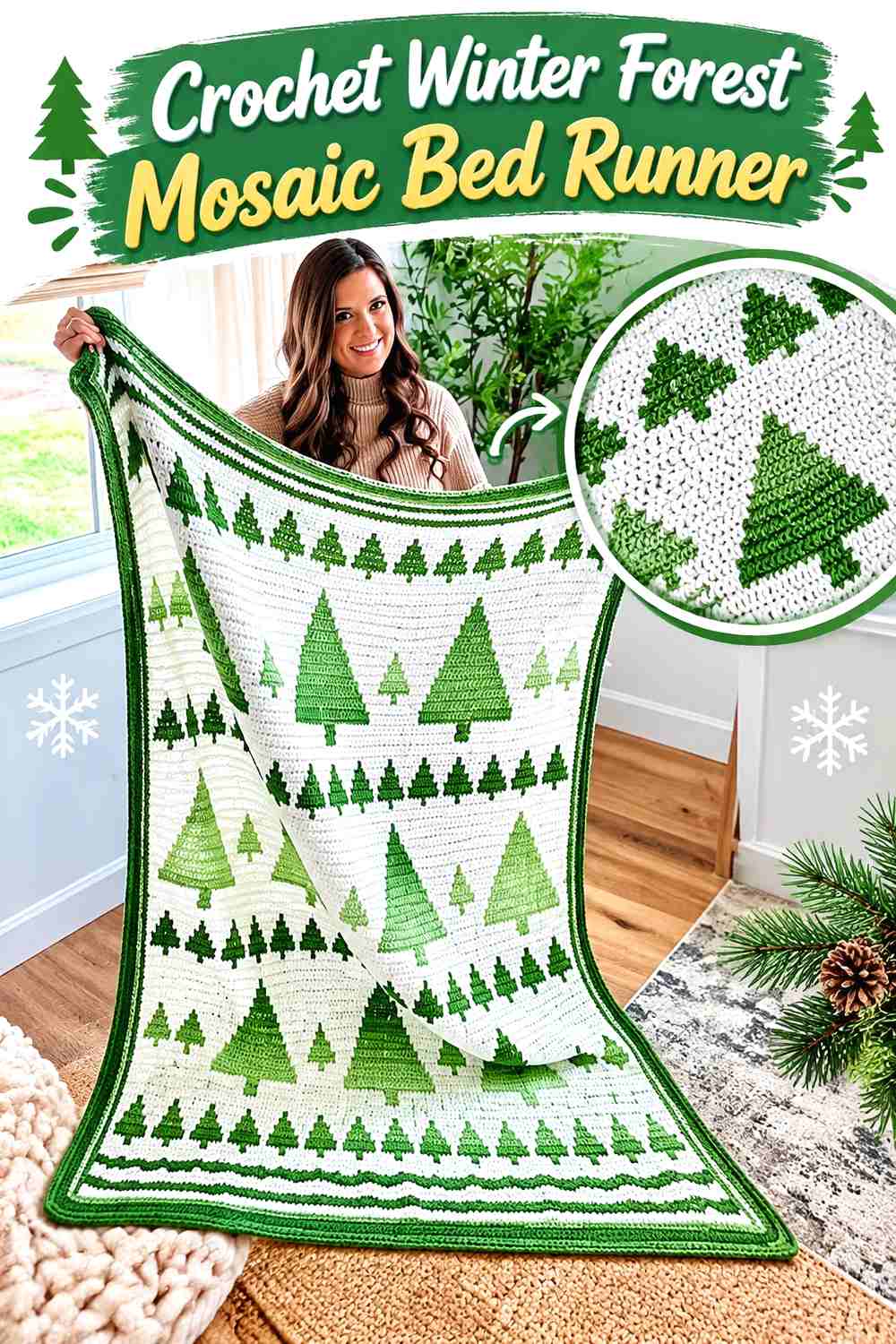
A repeating evergreen motif connects the runner directly to winter without relying on temporary holiday decorations. The source is a mosaic blanket, so this idea works as an adaptation: use the creator’s mosaic technique and assess whether the tree repeat can be arranged successfully within your chosen runner width.
Tree Bands Create a Clear Viewing Direction
Some geometric designs can be viewed comfortably from either side of the bed. Recognizable trees have a more obvious top and bottom.
Decide which side of the room provides the main view before planning orientation, especially if the runner will hang farther down one side than the other.
A Narrow Runner Can Benefit From One Strong Motif Band
Trying to compress too many decorative bands into a limited width can make the trees difficult to distinguish. A broader central motif with simpler bordering can give the design more presence.
Check the original repeat and border structure rather than reducing it arbitrarily.
Creator Credit: MJ’s Off The Hook Designs
7. Crochet Reversible Interlocking Bed Runner
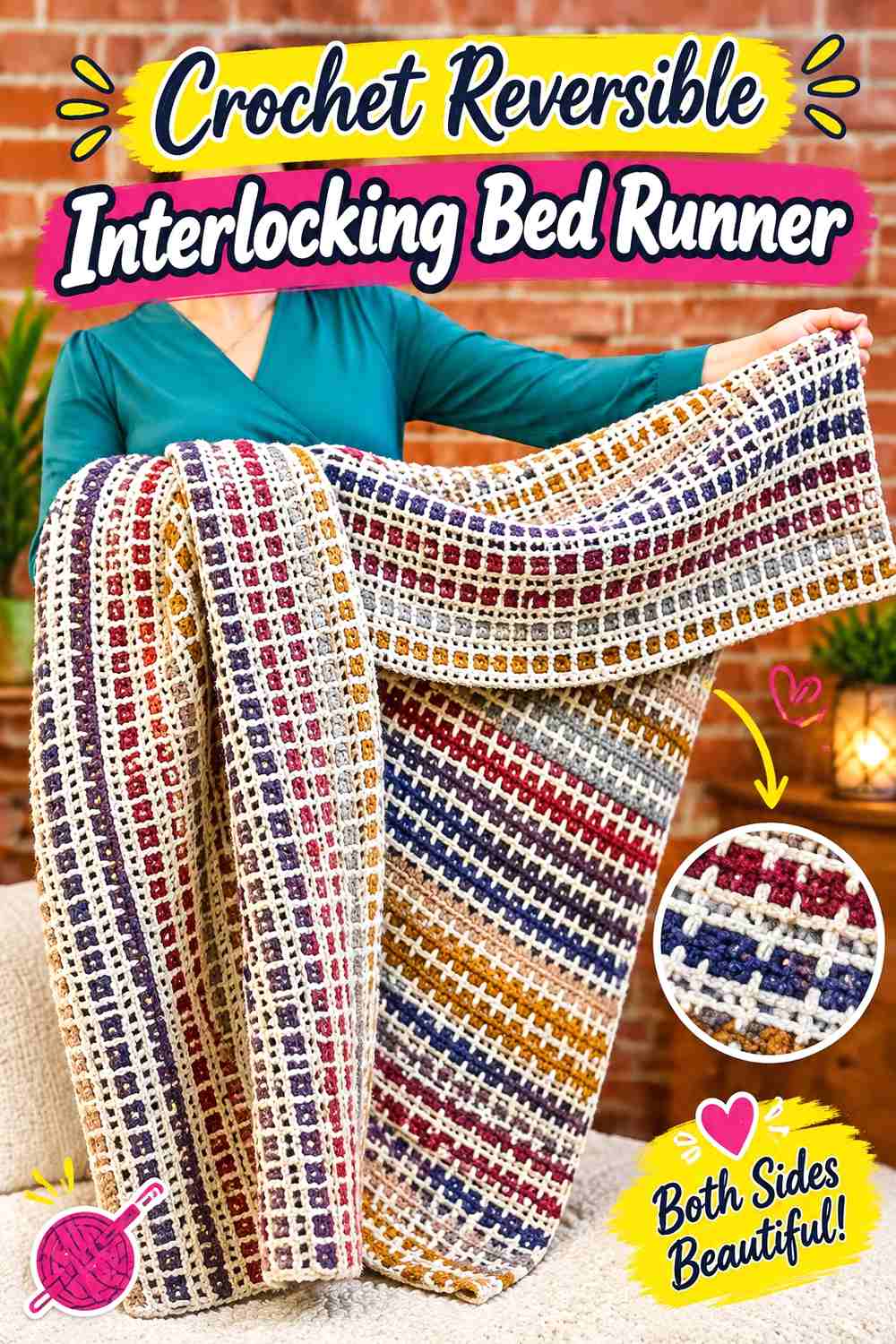
Interlocking crochet produces two layers of mesh worked together, creating patterned fabric with a different appearance from ordinary tapestry or overlay mosaic crochet. The source project is a blanket, but the reversible quality is particularly interesting for a bed runner because both surfaces may become visible when the ends drape.
Reversibility Matters at the Bed Sides
A runner that hangs over the mattress edge naturally exposes parts of the reverse surface. A double-sided construction can make this less visually disruptive than a technique with a clearly unfinished-looking back.
Before adapting the blanket, confirm how the repeat can be narrowed while retaining the interlocking pattern.
Two Layers Create More Visual Substance
An interlocked fabric can feel more substantial than a single-layer open crochet strip. That can work well with heavy winter bedding, but it also means you should consider overall weight and drape before increasing the runner width unnecessarily.
Make a representative section first rather than estimating the final behavior from the yarn alone.
Creator Credit: Life and Yarn
8. Crochet Mixed Mosaic-and-Tapestry Bed Runner
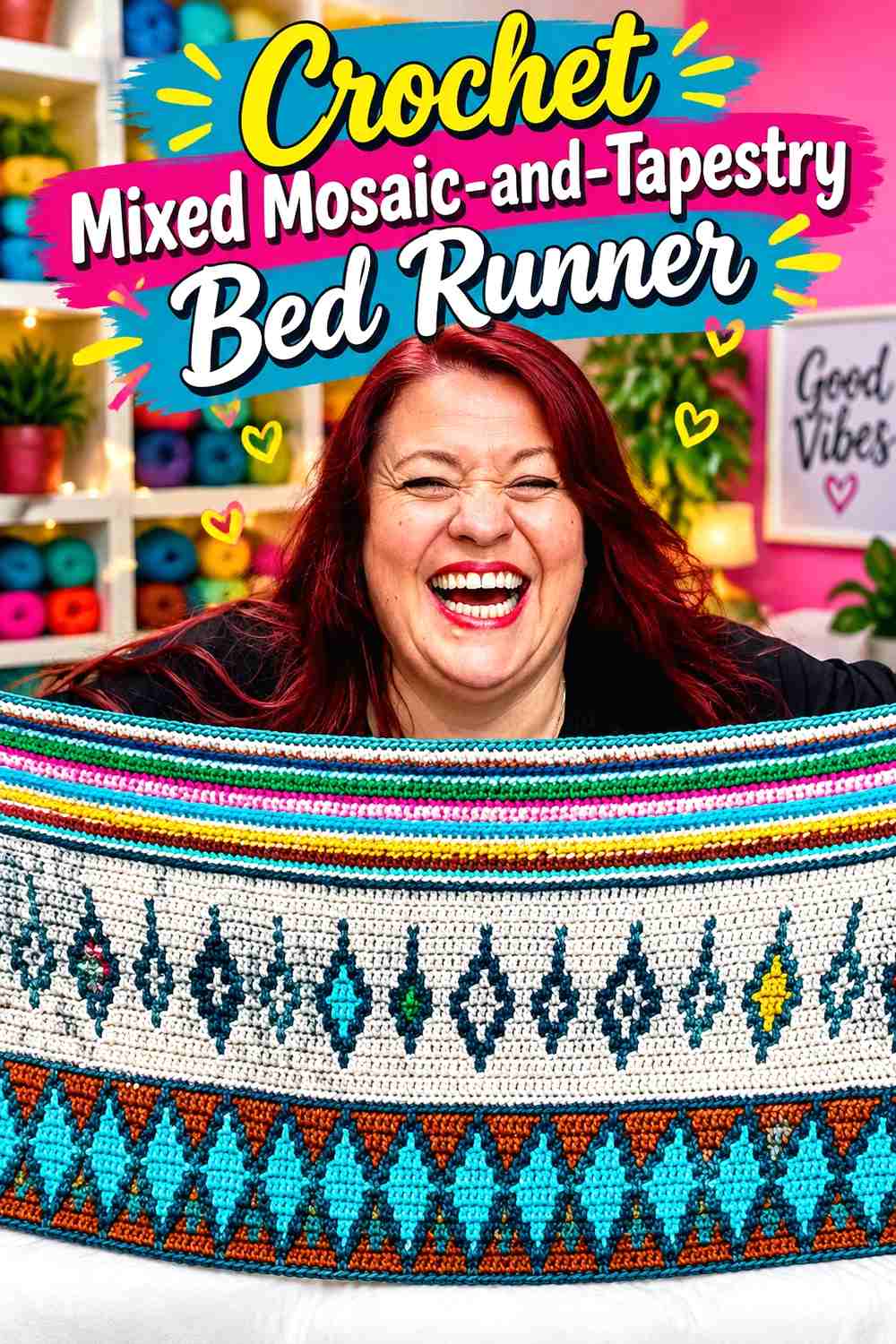
Combining mosaic and tapestry techniques creates more color flexibility than a conventional two-color mosaic repeat. This source teaches how the two approaches can work together, making it useful for a runner where small accent colors appear inside a larger geometric framework.
Extra Colors Are Most Effective When They Have a Purpose
A heritage runner can become visually chaotic if every motif introduces another shade. Instead, reserve additional colors for small focal details while allowing one dominant pair to organize the overall pattern.
That produces variation without losing the strong banded character associated with woven decorative textiles.
Test the Reverse Before Committing to a Long Side Drop
Different colorwork approaches handle unused yarn differently. If both surfaces of the runner will be exposed, examine your sample from the front, back, and edge before deciding how far the ends should hang.
A runner can also be positioned primarily on top of the bed if the reverse is less decorative.
Creator Credit: Tinna Thorudottir Thorvaldar
9. Crochet Geometric Overlay Mosaic Bed Runner
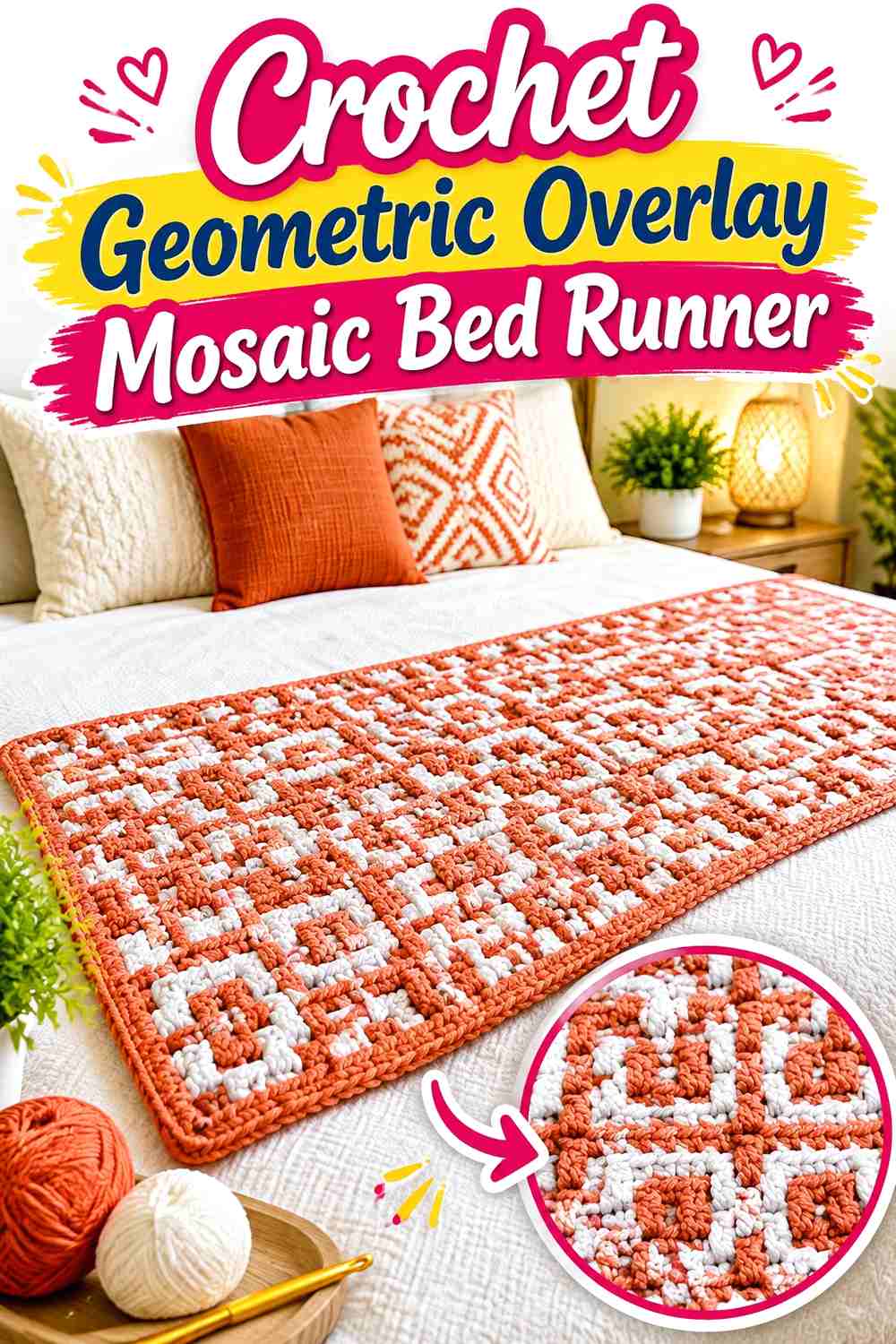
A repeatable overlay mosaic pattern gives you the visual impact of geometric weaving without requiring one large pictorial chart. This tutorial demonstrates a repeating design that can be extended, making the technique particularly relevant to a long runner adaptation.
Small Repeats Are Easier to Fit Across a Narrow Strip
A runner benefits from pattern units that can complete themselves within limited width. Repeating geometry generally adapts more gracefully than a very large central image.
Before choosing the final width, determine how many complete repeats create the proportion you want rather than stopping at an arbitrary measurement.
The Edge Treatment Needs to Deal With the Color Changes
Overlay mosaic construction can leave many yarn ends depending on the method being used. Some projects deliberately incorporate those ends into fringe or conceal them within a border.
For a heritage runner, either solution can work visually. Decide on the finishing strategy before the runner becomes long enough for the accumulated ends to feel unmanageable.
Creator Credit: Fiber Fox Studios
10. Crochet Gray Plaid Heritage Bed Runner
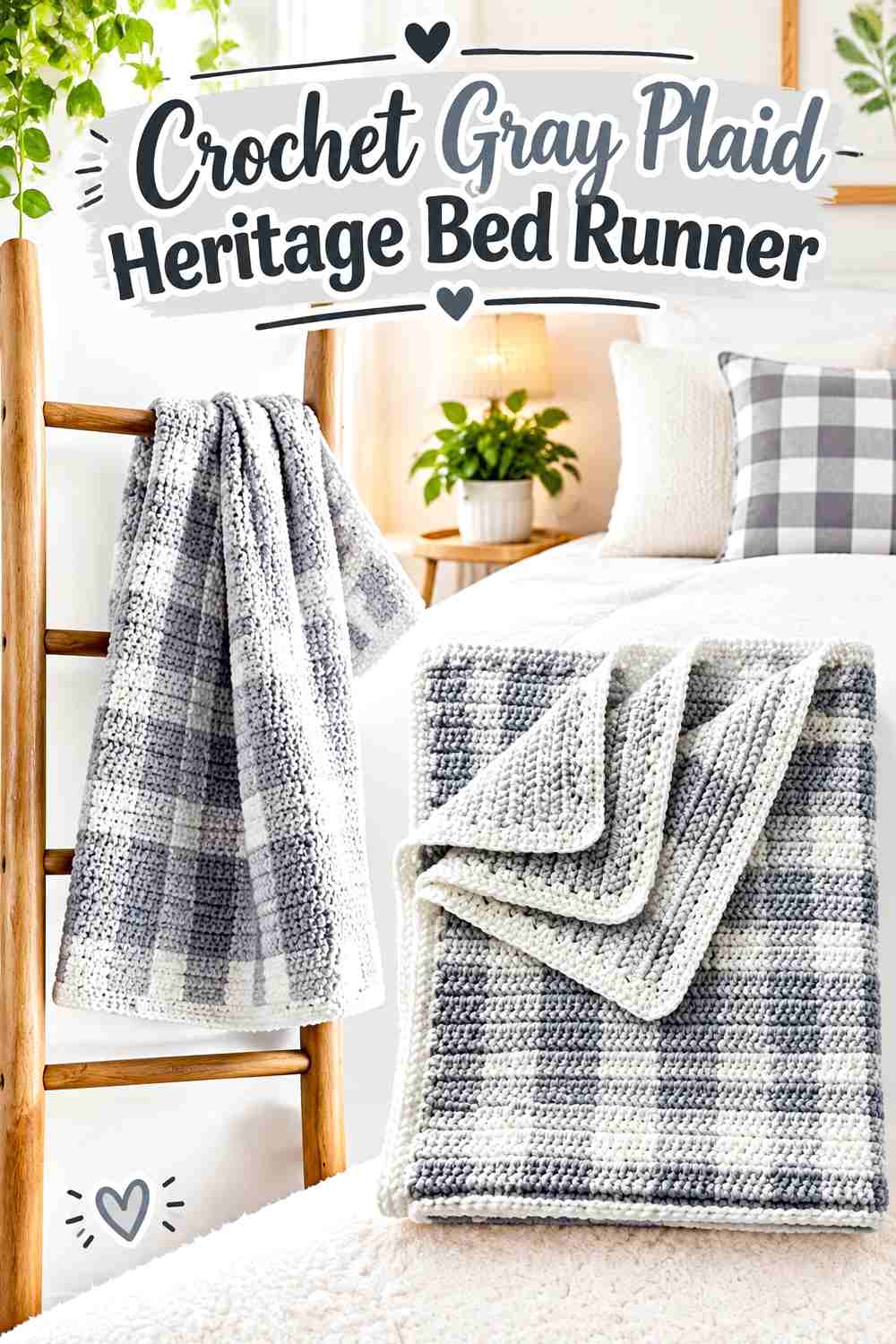
Plaid immediately introduces a familiar textile reference without requiring a complex pictorial motif. The source is a plaid blanket rather than a runner, so the most important adaptation is deciding how many checks can fit cleanly across the narrow width.
Plaid Needs Enough Squares to Read as Plaid
A strip containing only one broad color block across may lose the checked effect and look more like ordinary stripes. Work from the pattern repeat and make sure the intended runner width still shows a meaningful horizontal color relationship.
The exact number depends on the creator’s construction and your gauge, so test rather than guessing.
Neutral Plaid Can Sit Beside a Patterned Quilt
Gray, cream, brown, deep green, or another restrained plaid can provide heritage character without competing with floral or patchwork bedding.
If the quilt is already multicolored, pulling two quieter shades from it often creates a more coherent room than introducing an unrelated tartan palette.
Creator Credit: Daisy Farm Crafts
11. Crochet Woven Mosaic Sampler Bed Runner
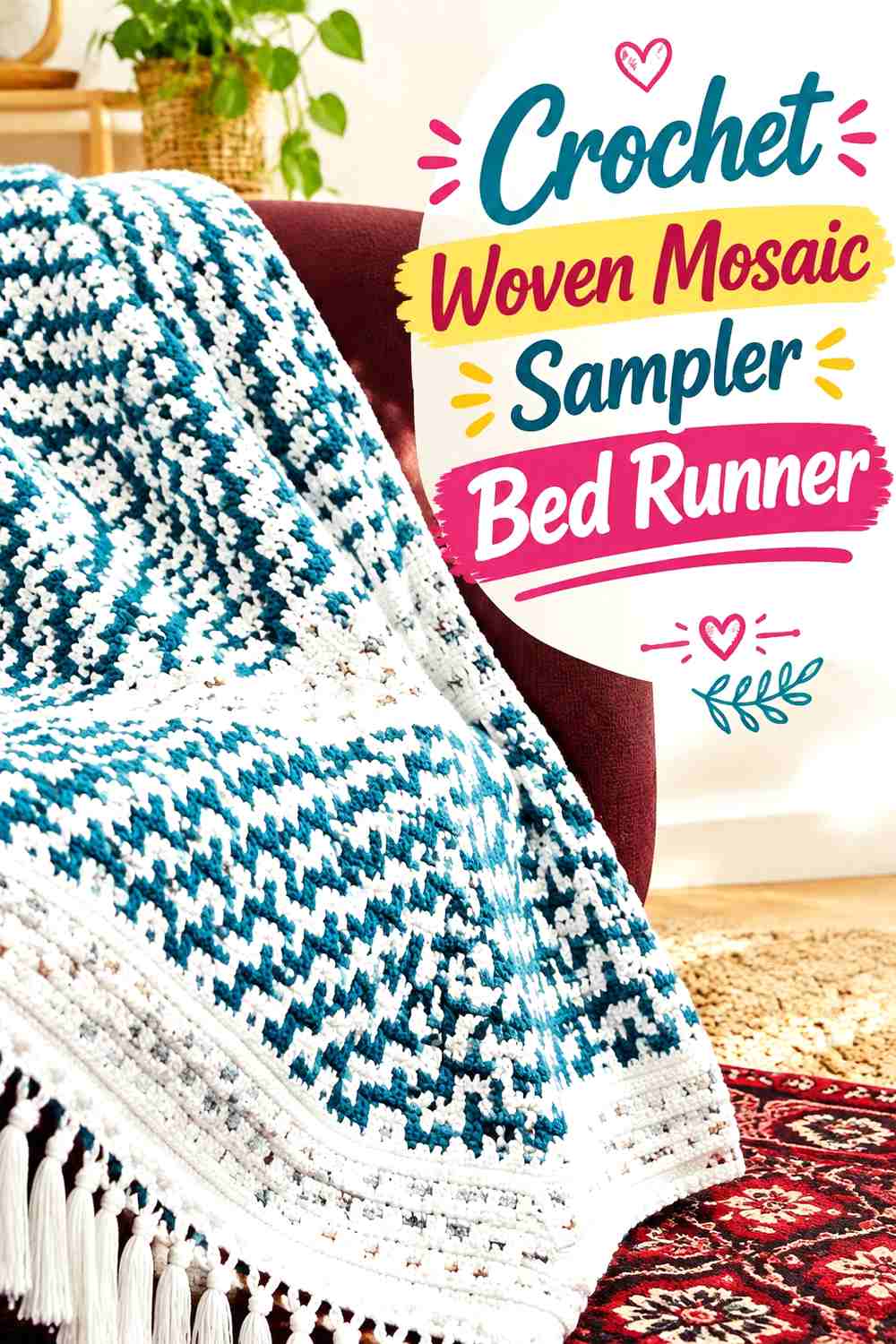
This mosaic blanket combines several graphic sections rather than relying on a single repeat. Adapted into a runner, that idea can produce something resembling bands in a hand-woven sampler textile: one geometry followed by another along the length.
Banded Patterns Reward Careful Sequence Planning
A full blanket has enough space to accommodate many sections. A runner gives you less visual area, so choose a sequence that still has a beginning, middle, and end rather than stopping wherever the length happens to reach the mattress edge.
You can plan the visible bands on paper without reproducing the creator’s stitch instructions.
Keep the Width Stable Across Different Pattern Sections
Changes in stitch structure can subtly alter fabric width even when the stitch count remains planned correctly. Lay the work flat periodically and watch for sections that pull inward or flare.
Address tension differences while the runner is still manageable rather than relying entirely on final blocking.
Creator Credit: The Crochet Crowd
12. Crochet Knit-Look Ribbed Bed Runner

This source creates a crochet throw with a surface that resembles knitted fabric. It is not tapestry crochet, so the adaptation belongs in the collection for its woven-textile appearance rather than colorwork.
Worked as a narrower strip in subdued winter shades, the resulting runner can suit a bedroom where the heritage feeling comes through texture, wool-like color, and layering rather than obvious motifs.
Linear Texture Can Make a Small Room Feel Calmer
Strong pictorial motifs are not always desirable on a bed that already carries quilts, pillows, and patterned curtains. Long ribbed or knit-looking lines provide handcrafted texture without introducing another dominant image.
Position the direction of the texture intentionally so it reinforces the long horizontal line at the foot of the bed.
Solid Color Makes Stitch Structure More Important
When the runner uses one main shade, uneven edges and tension differences become easier to notice because color does not distract from the surface.
Make enough of the fabric to understand its natural drape before choosing a border that might change the edge behavior.
Creator Credit: Leelee Knits
13. Crochet Basket-Woven Texture Bed Runner
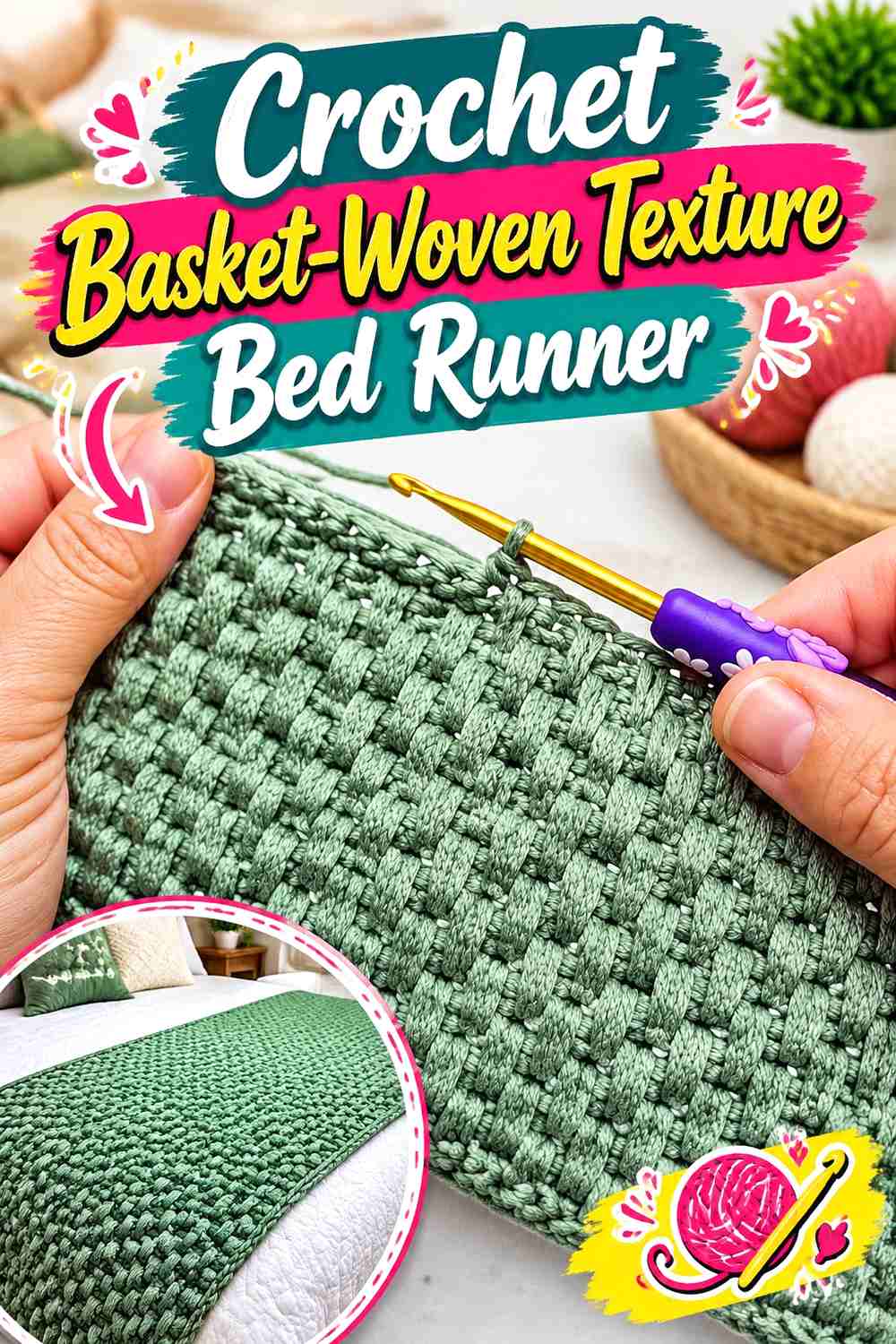
Crossed stitches in this source produce a dense surface with a distinctly woven appearance. The original tutorial is shown as blanket fabric, but the repeat can inspire a narrow runner where texture substitutes for tapestry colorwork.
Crossed Texture Looks Strongest When It Is Not Buried Under Décor
A runner with raised woven-looking stitches already contributes substantial surface interest. Avoid covering most of it with decorative pillows at the foot of the bed.
Allow a broad section to remain visible so the texture can be read from the doorway.
Dense Fabric Needs Drape Testing
A stitch can look flexible in a small sample yet become noticeably heavier across the full width of a bed. If you change the yarn or hook, make a larger swatch and let it hang over an edge before deciding whether the fabric suits a long side drop.
A runner does not need to be stiff simply because the texture is dense.
Creator Credit: Knitting Works
14. Crochet Tunisian Loom-Look Bed Runner
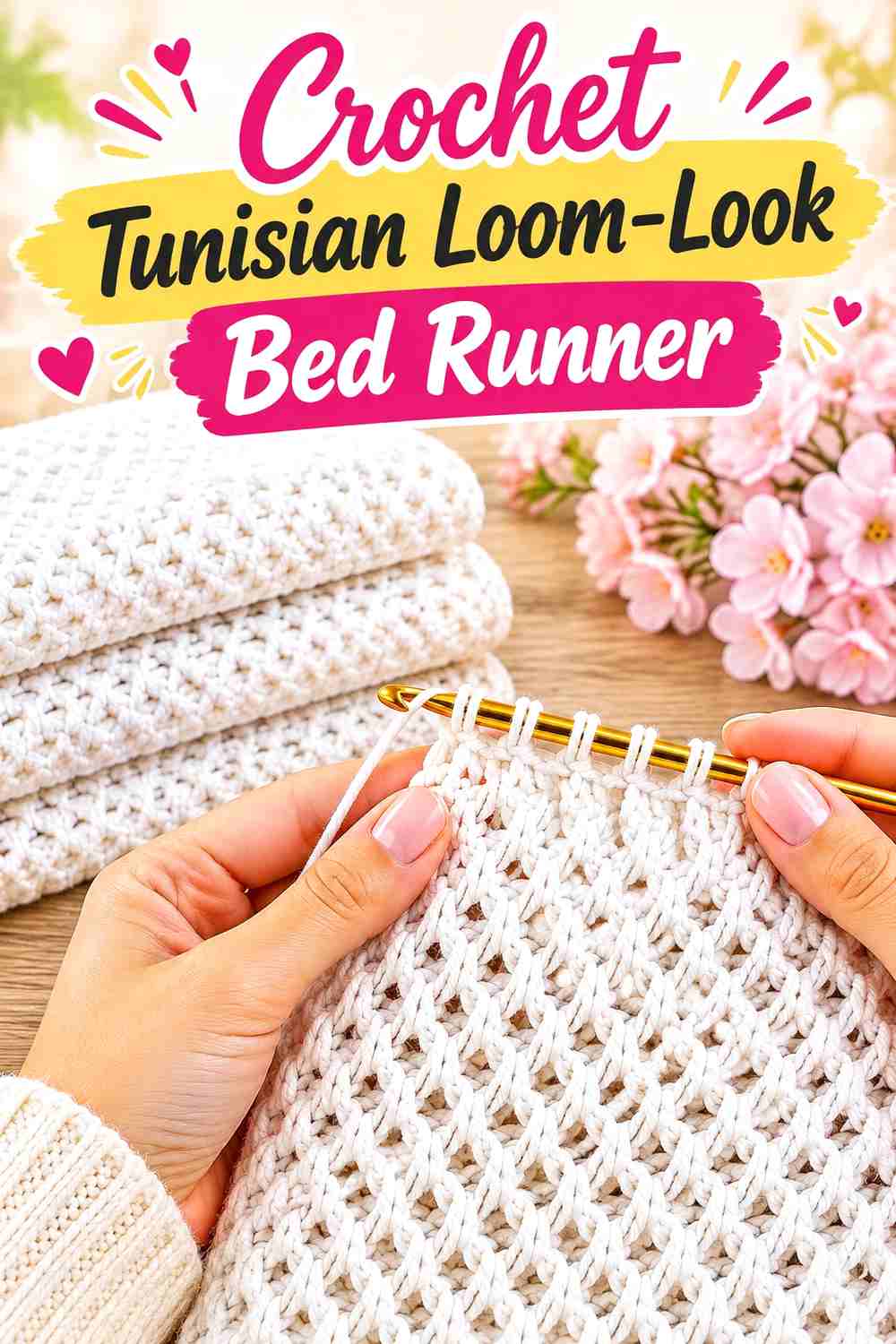
Tunisian crochet builds fabric differently from conventional crochet and can create a particularly convincing woven or loom-worked appearance. This source demonstrates a textured Tunisian fabric that can be extended into a long strip when the construction and equipment suit the required width.
Runner Width Determines the Tool Requirement
Tunisian crochet holds multiple loops during the work, so a wider piece can require different hook capacity than a narrow sample.
Before adapting the stitch into a runner, make sure the intended width works with the Tunisian hook setup you plan to use rather than assuming an ordinary short hook will accommodate it.
A Single Neutral Can Emphasize the Woven Surface
Cream, oatmeal, charcoal, camel, or another subdued shade allows the repeating Tunisian structure to create the heritage mood without extra color changes.
If you want stripes, sample them first because different color placement can make the fabric appear much more contemporary.
Creator Credit: World Of Crochet
15. Crochet Two-Color Moss-Weave Bed Runner
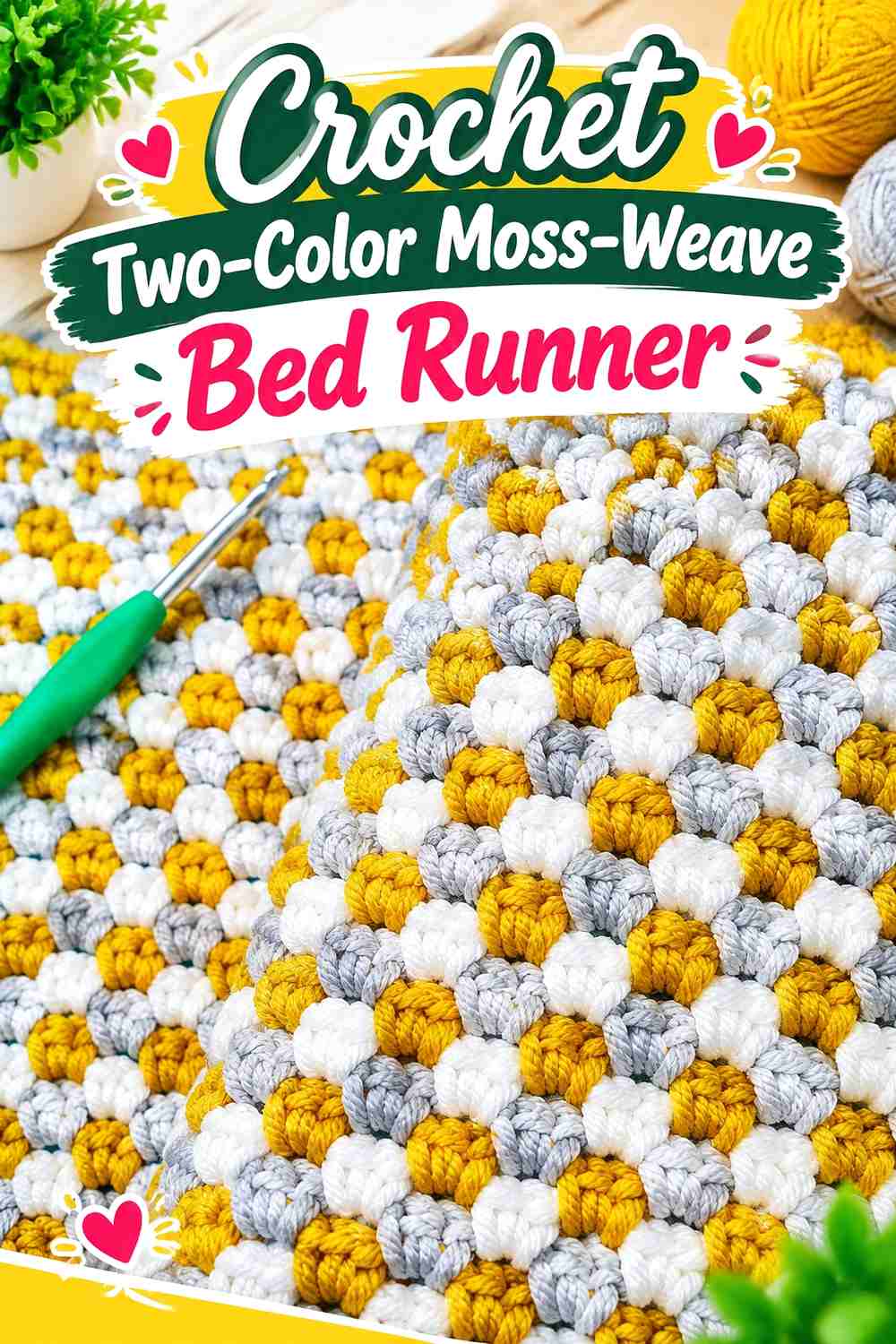
A modified moss-style stitch gives this runner concept a small-scale woven rhythm. Because the tutorial teaches a repeatable stitch rather than a finished bed runner, use it as a fabric-construction source and calculate your own runner dimensions from a finished sample.
Frequent Color Changes Can Mimic Woven Flecks
Alternating two subdued shades can emphasize the over-under visual rhythm of the stitch. For an older textile mood, try combining colors with moderate contrast rather than a very sharp black-and-white effect.
A monochrome version can work too when the room already contains strong color elsewhere.
Straight Edges Become Important Over a Long Span
Small edge inconsistencies are easy to overlook in a swatch. Across a runner that spans an entire bed, gradual increases or decreases become much more obvious.
Count and compare the edges periodically instead of waiting until the full length is finished.
Creator Credit: Hooked By Robin
16. Crochet Open-Weave Heritage Bed Runner
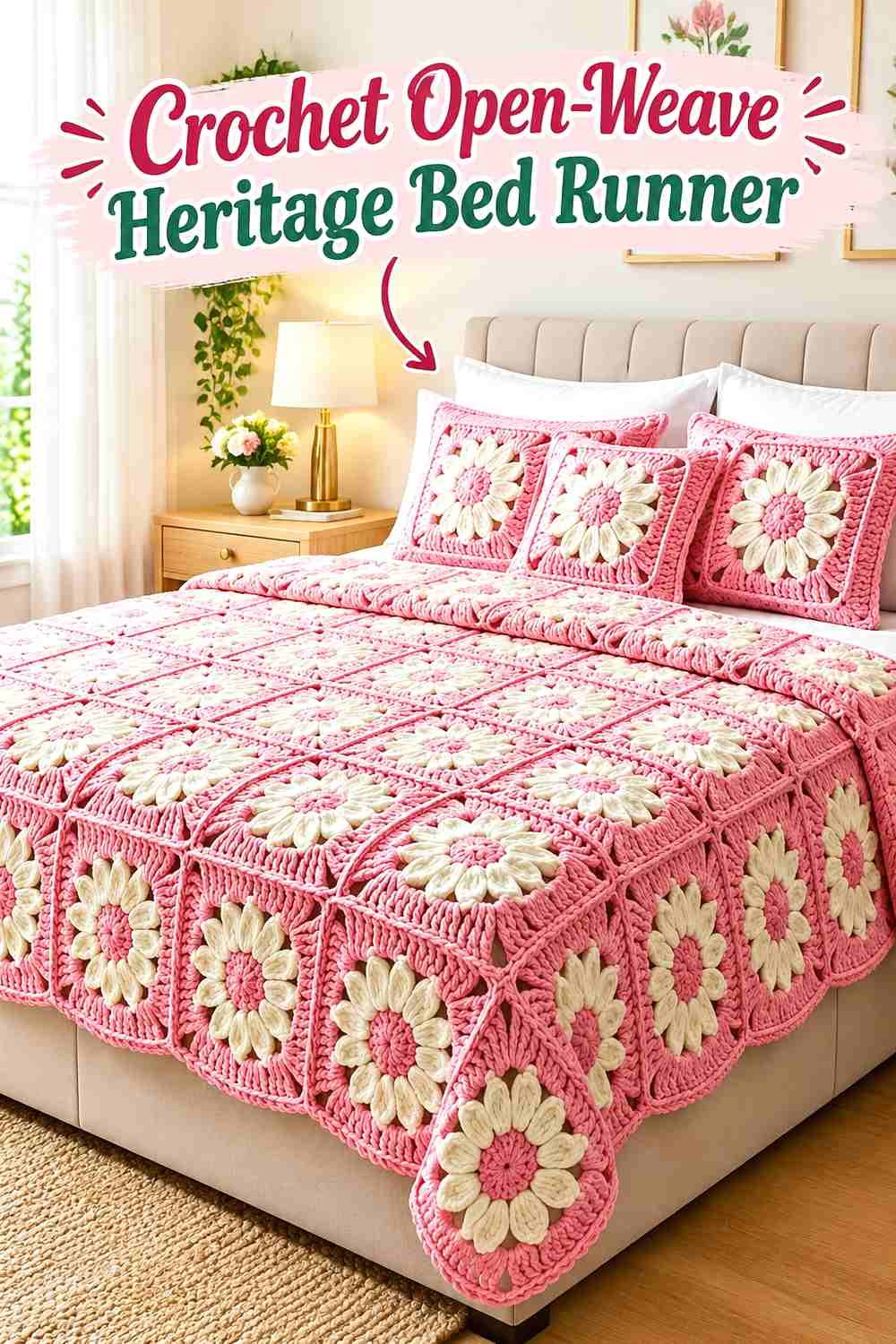
This blanket tutorial uses a more open decorative fabric and fringe, providing a lighter interpretation of the hand-woven theme. It can be adapted into a runner when you want visible bedding underneath rather than a dense tapestry band.
Openwork Works Better as a Decorative Layer Than a Heavy Cover
Large openings reduce visual mass and allow the quilt or duvet beneath to contribute to the design. This can be especially useful on a bed with dark solid bedding where a lighter runner needs contrast without feeling bulky.
If the existing bedding is highly patterned, test whether the openwork still reads clearly against it.
Fringe Can Carry More of the Heritage Character
A relatively simple central fabric can look much more textile-like once the ends receive a deliberate fringe treatment. Keep the fringe proportionate to the width and side drop rather than choosing its length separately.
Check how it falls beside the bed frame before finishing both ends.
Creator Credit: Majovel crochet english
17. Crochet Southwest Motif Bed Runner

Joined granny-style motifs with a Southwest color direction offer another way to suggest collected woven textiles. The source is a full blanket tutorial, so adapting it into a runner means changing the motif layout rather than shrinking the motifs themselves.
A Single Row of Large Motifs Creates a Different Runner From a Grid
If the squares are visually substantial, one long row may be enough for a narrow bed runner. Smaller motifs can be arranged in two or more rows to create greater width.
Make several units first and place them across the foot of the bed before deciding which layout gives the right proportion.
Let the Palette Connect the Motifs to the Room
Southwest-inspired color can be bold, but a heritage winter bedroom may call for a quieter interpretation. Rust, dark teal, muted gold, cream, brown, and charcoal can preserve the geometric character while relating more easily to wooden furniture and layered winter bedding.
Avoid making color the only source of variety; the joined-block construction should remain visibly different from the continuous tapestry and mosaic runners elsewhere in this collection.
Creator Credit: Montana Crochet Creations
Comparing the 17 Crochet Tapestry Bed Runner Styles
For the closest connection to traditional woven patterning, start with the old-kilim motifs, tapestry colorwork, mixed tapestry-and-mosaic design, geometric overlay mosaic, or woven mosaic sampler. These use color and geometry to build the decorative surface rather than relying mainly on raised texture.
For a winter-specific statement, the forest mosaic runner introduces recognizable seasonal imagery without requiring temporary ornaments. Plaid also has a strong cold-weather association and works particularly well when the bedroom already includes wool, tartan, wood, or quilted elements.
If you want a runner that can look attractive when the reverse is exposed, investigate the interlocking construction carefully. For a quieter bedroom, the knit-look, basket-woven, moss-weave, or Tunisian options create textile character through surface structure rather than large motifs.
The Paintbox and Southwest designs are the most modular. They allow you to arrange completed units before assembly, which can be useful when you want precise control over the runner’s final width, length, and color distribution.
Conclusion
A crochet tapestry bed runner works best when it looks intentional beside the rest of the bedding rather than functioning as a miniature blanket chosen in isolation.
For a pronounced heritage effect, the old-kilim, plaid, tapestry, and mosaic options provide the strongest geometric identity. Choose interlocking crochet when a two-sided patterned surface appeals to you, or a Tunisian, crossed-texture, or knit-look runner when you want the room to feel quieter and more tactile.
Modular motifs are especially useful when you need to test proportions directly on the bed. Continuous colorwork creates a more unified textile, but its motif repeat deserves careful planning before you change the width.
Whichever direction you choose, make a representative sample before committing to the full bed span and follow the original tutorial for the creator’s exact construction. The most convincing heritage runner is not simply the most detailed one; it is the one whose scale, palette, drape, and finishing make sense with the bed and the room around it.
Frequently Asked Questions
Is tapestry crochet the same as mosaic crochet for a bed runner?
No. Both can create strong color patterns, but they build those patterns differently. Tapestry crochet typically involves managing multiple colors within the same row or round, while many mosaic methods create the design by working stitches into earlier rows and changing the active color between rows. Follow the chosen tutorial’s method rather than treating the techniques as interchangeable.
Can I turn a crochet blanket pattern into a narrow bed runner?
Sometimes. Repeating stitch patterns are usually simpler to narrow than large pictorial charts. Before changing the width, identify the pattern repeat and confirm that complete motifs can still fit. A blanket with one large central image may be a poor candidate for a narrow runner.
How do I know how wide to make a crochet bed runner?
Measure the actual bed and decide how much of the lower mattress you want covered. There is no universal width that suits every bed or every design. A wide motif may require more fabric than a small repeating texture, so consider both bed proportions and the minimum width needed for the pattern to look complete.
Should a crochet bed runner hang down both sides of the mattress?
It can, but it does not have to. A long runner with tassels or decorative ends benefits from a visible side drop, while a heavier runner can sit mostly on top of the bed. Test the unfinished length on the bed before adding fringe or final edging.
What yarn qualities work well for a tapestry-style winter bed runner?
Look for qualities that suit the specific construction. Clear stitch definition helps geometric colorwork remain visible, while adequate drape prevents a long runner from feeling board-like. Smooth yarn generally displays mosaic and tapestry motifs more clearly than highly fuzzy yarn, but always follow the source pattern’s requirements when making the tutorial as written.
Why is my crochet colorwork runner becoming narrower?
Colorwork tension is a common place to look. Carrying yarn too tightly or tightening stitches during color changes can pull the fabric inward. Compare the runner with an earlier section regularly and address tension changes before working a large additional length.
Should I block a crochet tapestry bed runner?
Blocking can help many runners settle into a straighter shape and clarify motifs, but the appropriate method depends on the fiber and project. Check the yarn’s care instructions and the creator’s finishing guidance rather than applying heat or moisture automatically.