Crochet argyle throws bring the orderly geometry of traditional knitwear and woven textiles into a softer handmade form. Classic diamonds, crossing lines, restrained winter colors, and repeating checks can sit comfortably beside wood furniture, leather seating, wool rugs, and other heritage-style home details.
True crochet argyle is often created through planned pooling, where the color sequence in variegated yarn is deliberately aligned to form diagonal diamonds. Several tutorials below demonstrate that approach directly. Others use closely related diamond, tartan, gingham, plaid, or check constructions that can be adapted when you want an argyle-influenced winter throw without depending on a particular pooling yarn.
That distinction matters. A planned-pooling blanket asks you to manage the yarn’s color repeat and your tension, while a crocheted or woven check gives you more direct control over where each color appears. Textured diamonds offer another route when you want the heritage geometry without extensive colorwork.
Quick List
- Crochet Granny-Stitch Planned-Pooling Argyle Throw
- Crochet Variegated-Yarn Argyle Diamond Throw
- Crochet Single-Crochet Color-Pooled Argyle Throw
- Crochet Moss-Stitch Heritage Argyle Throw
- Crochet Chunky Buffalo-Check Argyle-Inspired Throw
- Crochet Graph-Style Heritage Plaid Throw
- Crochet Three-Color Gingham Argyle-Inspired Throw
- Crochet Small-Scale Gingham Heritage Throw
- Crochet Modular Plaid Argyle-Inspired Throw
- Crochet Pieced Diamond Heritage Throw
- Crochet Tunisian Gingham Argyle-Inspired Throw
- Crochet Textured Diamond Winter Throw
- Crochet Woven-Grid Gingham Throw
- Crochet Velvet Plaid Winter Throw
- Crochet Granny-Square Tartan Throw
- Crochet Half-Double-Crochet Plaid Throw
- Crochet Panel-Built Gingham Heritage Throw
Know Which Kind of Argyle Look You Want
Planned pooling is the closest route here to classic argyle. Instead of manually changing colors for every diamond, you work with a repeating multicolor yarn and control where those color changes land. Small differences in tension can shift the developing pattern, which is why swatching has much more value here than it does for a casual striped throw. Both Naztazia and Marly Bird demonstrate how color placement and consistent repeats affect the resulting diamond formation.
Plaid and gingham tutorials solve the visual problem differently. Some carry colors through the fabric, some assemble panels or squares, and others crochet a mesh before weaving additional strands through it. These approaches can be easier to recolor because you decide where the contrasting blocks or lines appear instead of relying on the dye sequence of one skein.
Textured diamond blankets are different again. They create the geometry through stitch relief rather than through color placement. These make sense when your room already has patterned upholstery or rugs and another multicolor textile would feel too busy.
Choose Construction Before Settling on a Winter Palette
A charcoal, cream, forest green, burgundy, camel, or muted navy palette can certainly create a heritage mood, but construction affects the finished throw more than color alone.
A bulky carried-color blanket can feel substantial and visually bold. Tunisian panels produce a different surface and may require careful joining. Granny-square tartan involves many separate components, but it also gives you opportunities to adjust the final layout before permanent assembly. Woven-grid plaid creates clear vertical and horizontal lines without requiring every line to be crocheted into the base fabric.
Before substituting yarn, check how the tutorial’s construction depends on yarn thickness, color-repeat consistency, stitch definition, or drape. This is especially important for planned pooling: a similarly colored yarn is not automatically a suitable replacement if its color sections repeat differently.
Think About the Finished Throw as Home Decor
Argyle and related heritage patterns already contain a lot of visual information. Large diamonds usually read more calmly from across a room than many tiny checks, while high-contrast black-and-white designs become strong focal points.
For a room with tartan upholstery, patterned rugs, or busy wallpaper, a tonal diamond blanket may provide enough heritage character without competing with everything around it. On a plain leather sofa or solid upholstered chair, stronger burgundy, evergreen, charcoal, cream, or traditional buffalo checks can carry more of the decorative work.
Borders also change the presentation. A quiet solid frame can contain complicated colorwork, while fringe or tassels push a throw toward a more rustic woven-textile look. Decide which role you want the blanket to play before adding finishing details simply because the tutorial uses them.
1. Crochet Granny-Stitch Planned-Pooling Argyle Throw
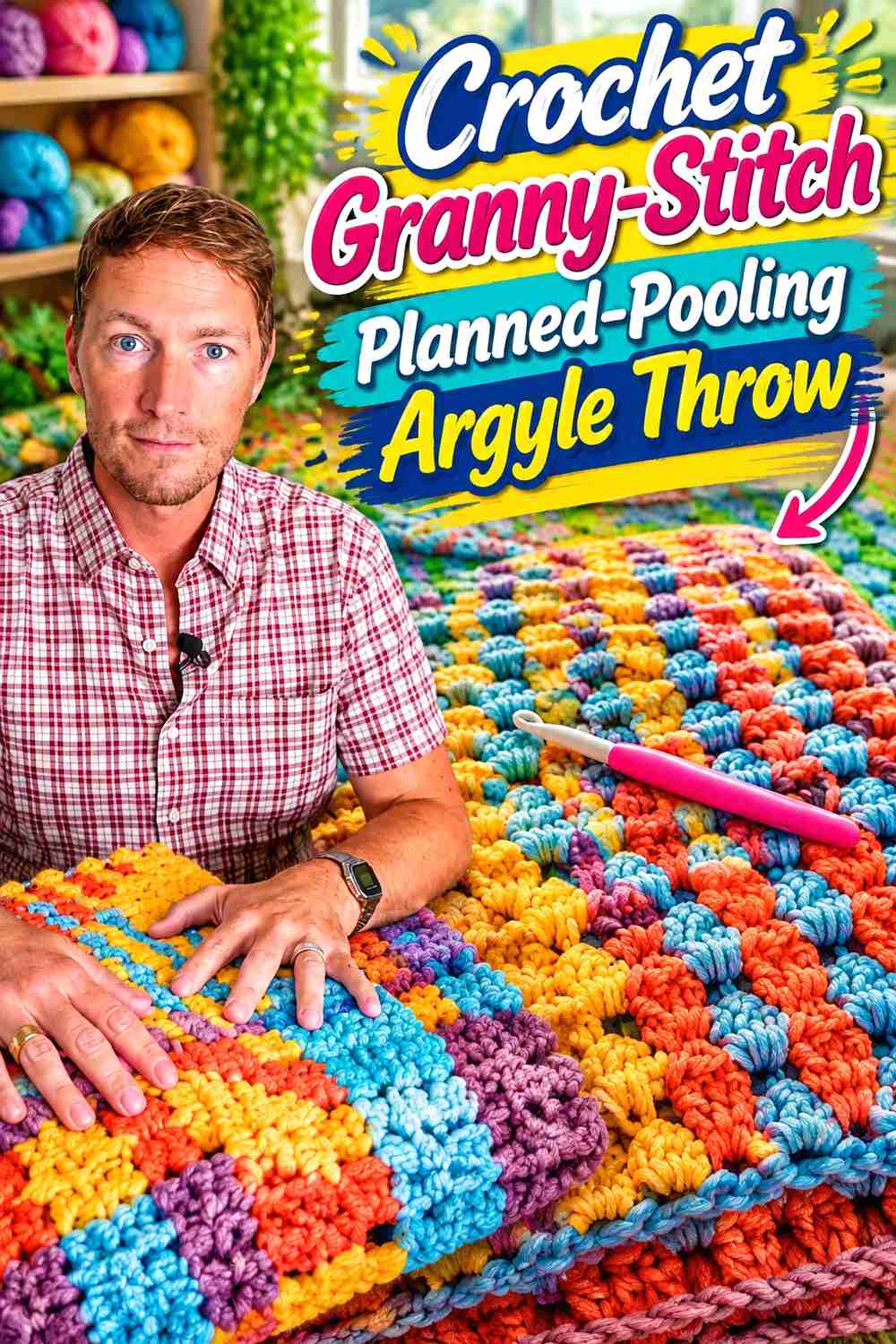
This direction uses planned pooling with granny-style clusters, giving the familiar diamond rhythm a noticeably different texture from the finer moss-stitch versions. The finished blanket shown in the tutorial demonstrates how a color-changing yarn can form broad argyle movement while retaining the recognizable openness of granny crochet.
For a heritage winter room, this is a useful option when you want the geometry to feel relaxed rather than tailored. The larger stitch texture can also keep a large-scale diamond pattern from looking too formal.
The Yarn Repeat Has to Work With the Clusters
Do not choose yarn for this approach solely because the colors look appropriate. Planned pooling depends on the order and relative length of repeating color sections.
Before committing to a throw quantity, test enough of the yarn to see whether the sequence behaves predictably with your granny clusters. If the color change repeatedly lands in an awkward place, changing the palette may be less frustrating than forcing an unsuitable skein to behave like the tutorial yarn.
Watch the Developing Diagonals, Not Just Individual Rows
Pooling problems become easier to see when you look at several rows together. A single row may appear reasonable while the overall diamond is gradually drifting.
Lay the work flat periodically and view it from farther away. If the diagonal edges no longer track consistently, address the tension or color placement while the affected area is still small.
Large Diamonds Suit Statement Placement
Because the graphic pattern is strong, this kind of throw can work especially well as the main patterned textile on a plain sofa, reading chair, or bed bench. If the room already contains multiple checks and tartans, a quieter colorway can keep the large argyle from competing with them.
Creator Credit: Nick & Andrew | URBAN FARMBOYS
2. Crochet Variegated-Yarn Argyle Diamond Throw
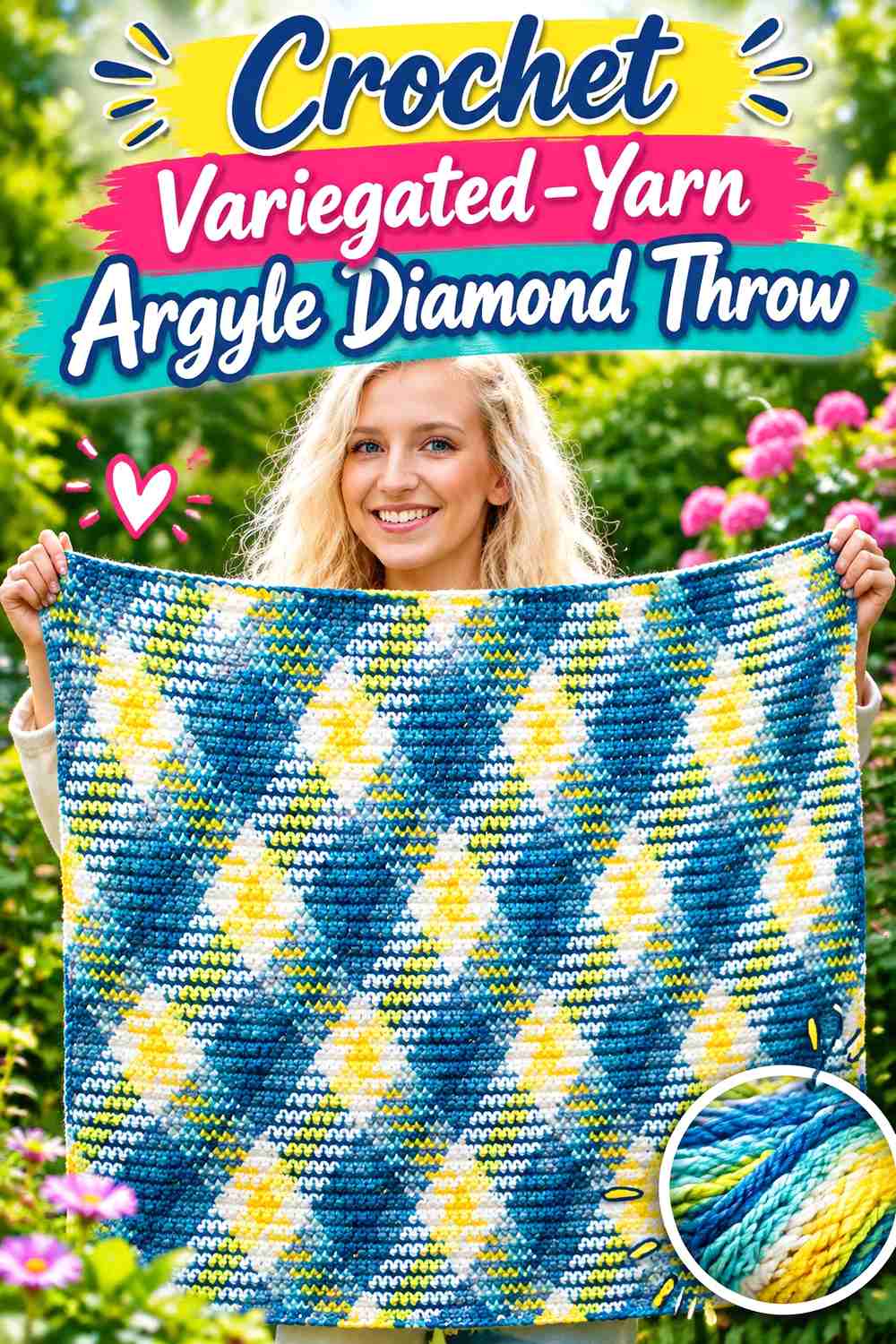
This planned-pooling direction puts the repeating yarn sequence at the center of the design. The tutorial specifically demonstrates an argyle or diamond effect suitable for an afghan, making it a strong reference when the classic diagonal formation matters more than a particular type of cluster texture.
The appeal for winter interiors is that one variegated yarn can create surprisingly complex-looking color movement without turning the blanket into conventional stripes.
Swatching Is Part of the Design Process Here
With ordinary solid-color blankets, a swatch often focuses mainly on dimensions and fabric feel. For pooling, it also tells you how the colors interact with the stitch width.
That makes the test piece a design checkpoint rather than wasted yarn. Confirm that recognizable diagonal movement appears before calculating a full throw width.
Skein Changes Deserve Extra Attention
Even when two skeins share a colorway name, inspect the sequence as you move from one to another. The new skein needs to continue the developing visual logic rather than introduce an abrupt interruption.
If the color order starts at a different point, determine where it corresponds to your existing sequence before continuing the main fabric.
Creator Credit: naztazia
3. Crochet Single-Crochet Color-Pooled Argyle Throw
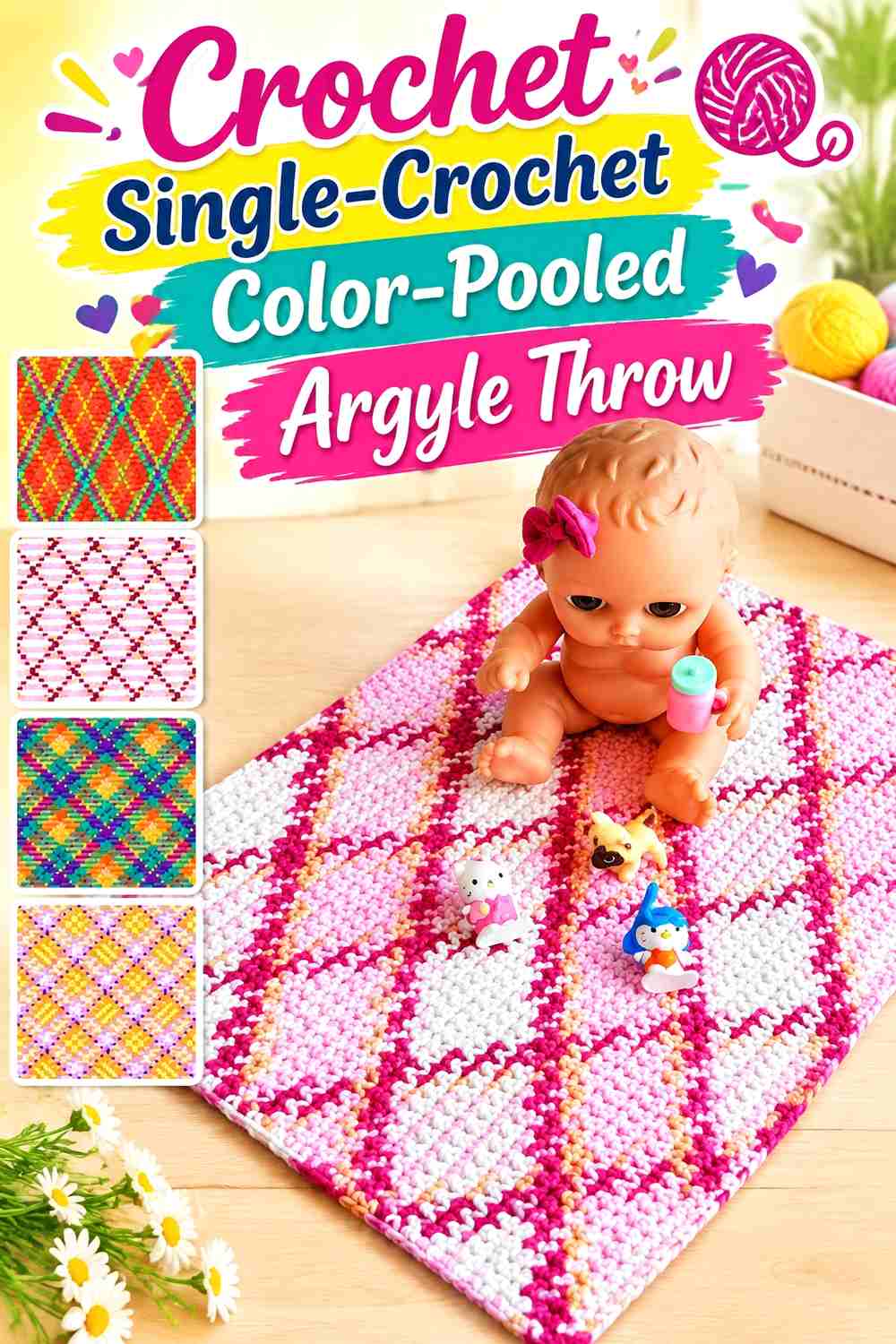
This variation uses compact stitches to create pooled rhombus and argyle effects. Compared with a more open granny construction, the denser surface can make the individual color areas read more clearly and give the throw a flatter graphic quality.
It is a useful direction for a room where you want argyle to resemble a traditional textile rather than an airy motif blanket.
Dense Fabric Makes Color Placement Very Visible
A compact surface gives every misplaced color change more visual weight. That means consistency matters throughout the project, not only when the first diamonds appear.
Check the pattern after interruptions or long breaks in crocheting. Your natural tension can change slightly from one session to another, and planned pooling makes those changes easier to notice.
Consider the Finished Weight Before Scaling Up
Dense crochet uses more fabric structure than an open stitch. If you are adapting the concept into a substantially larger throw, make a meaningful sample and assess its hand and weight first.
A fabric that feels pleasantly substantial in a small swatch may become heavier than expected when multiplied across a large sofa blanket.
Creator Credit: MamochkinKanal
4. Crochet Moss-Stitch Heritage Argyle Throw
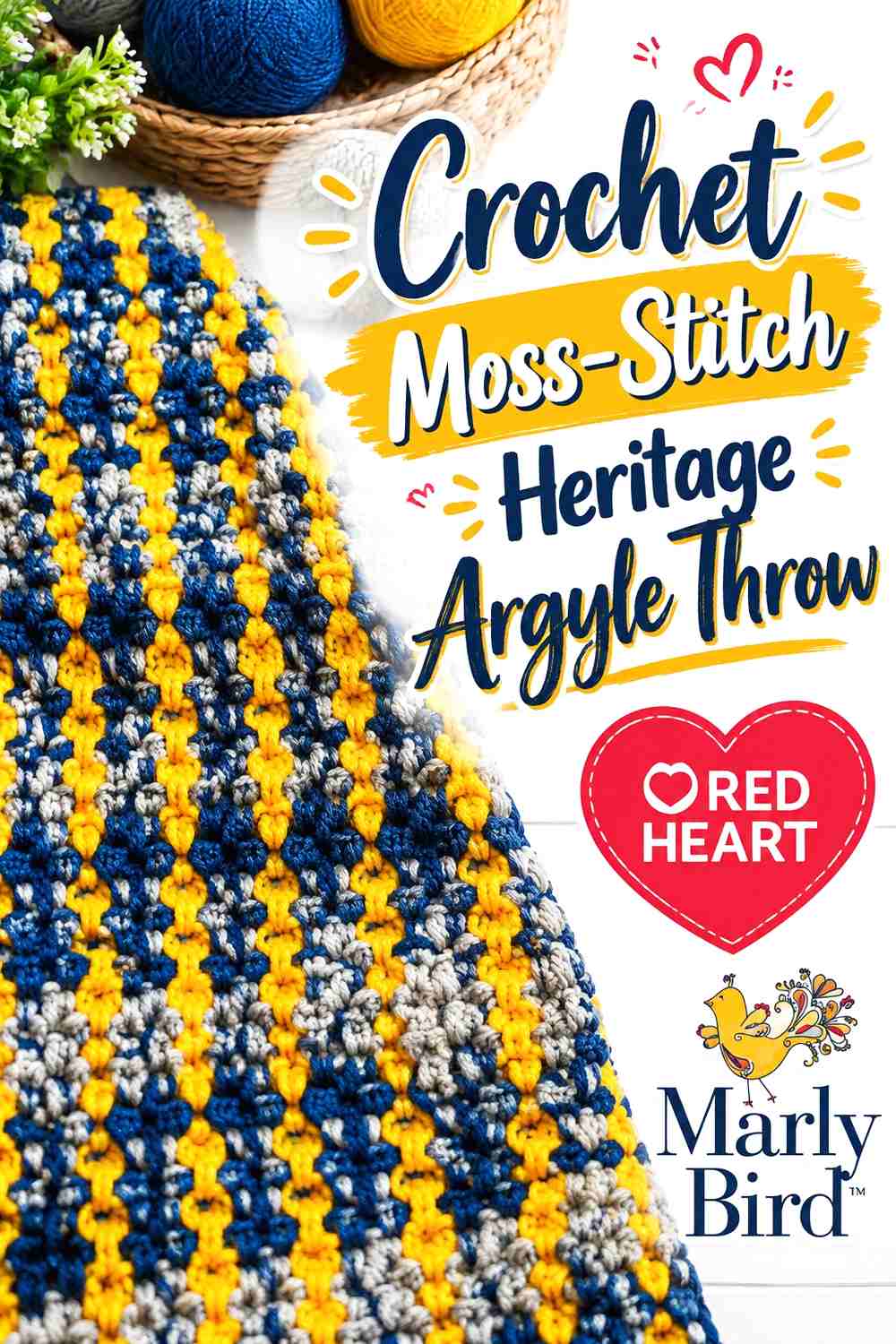
Moss stitch is closely associated with crochet planned pooling because its small stitches and spaces create clear locations for repeating colors to shift across the fabric. Marly Bird’s tutorial focuses on understanding those relationships and adjusting color placement rather than treating pooling as ordinary variegated crochet.
For a heritage-style throw, the result can resemble a fine woven or knit argyle more closely than chunkier interpretations.
Consistency Matters More Than Speed
This is not a project where racing through repetitive rows necessarily saves time. If faster crocheting changes your tension enough to move a color transition, correcting the resulting drift can cost more time than working steadily.
Treat the established diamond as a reference. Each new section should support the same diagonal rhythm.
Moss Stitch Can Keep a Busy Palette Under Control
Because the stitch texture itself is relatively understated, the colors remain the main design element. That can be useful with variegated yarns containing several shades.
For a traditional winter look, consider how the entire repeat reads together rather than choosing based on one favorite shade within the skein.
Creator Credit: Marly Bird
5. Crochet Chunky Buffalo-Check Argyle-Inspired Throw
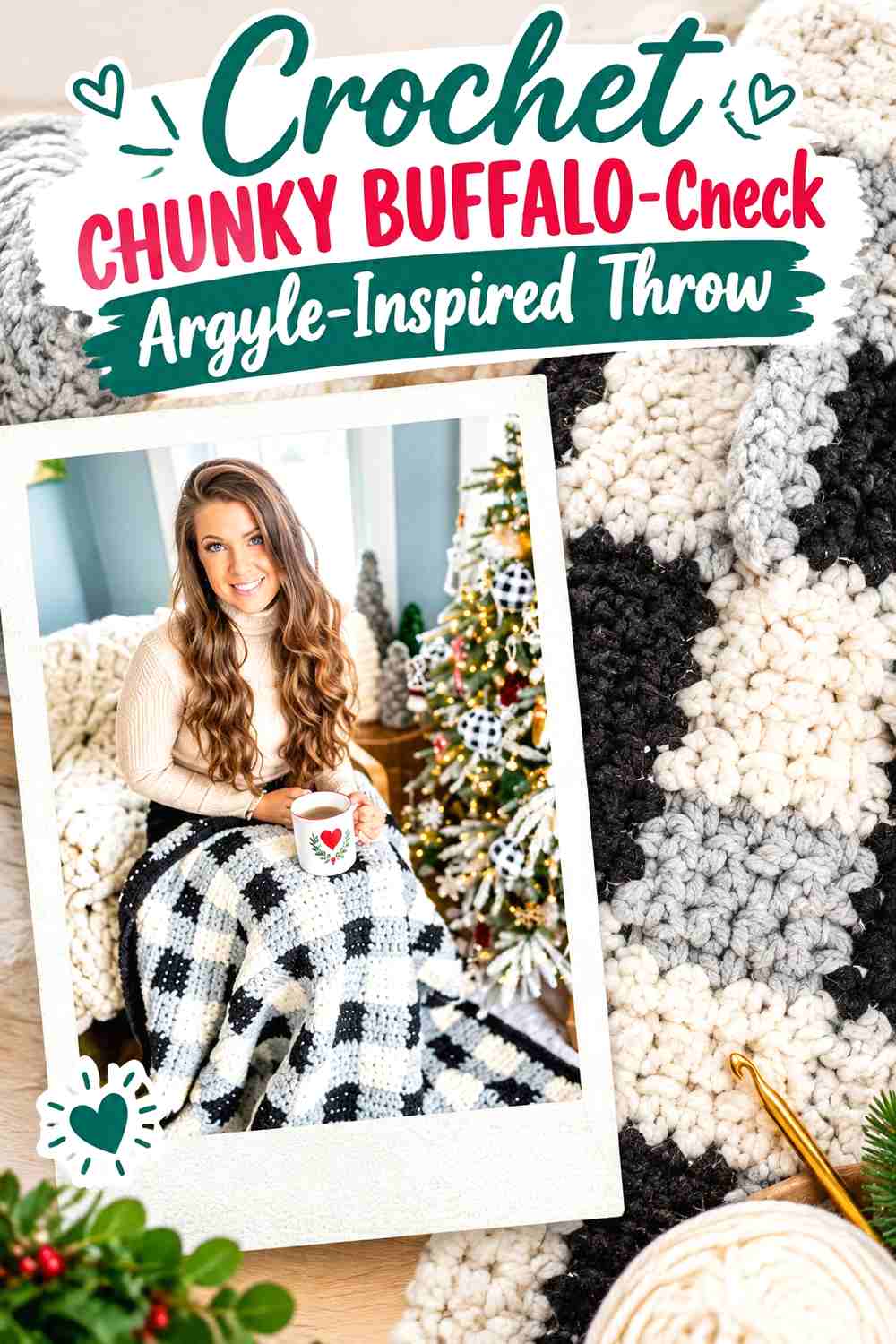
Buffalo check is not true argyle, but its large intersecting blocks share the same heritage-home vocabulary and offer a useful alternative when you want strong geometry without planned pooling. This tutorial creates a substantial plaid throw through deliberate color changes and carried yarn.
The large blocks are particularly suitable for rustic rooms where a delicate diamond might disappear among heavier furniture and wood textures.
Chunky Yarn Changes More Than the Working Speed
Thicker yarn enlarges the visual scale of every check and increases the physical bulk of the blanket. If you substitute a different weight, do not assume the original block proportions will create the same effect.
Make a sample large enough to see a full color transition, then judge both the pattern scale and drape before planning the throw.
Contrast Determines How Bold the Check Feels
Black, cream, and gray produce a strong graphic result, but the same construction can look quieter when the values sit closer together.
For a heritage room rather than holiday-specific decor, muted brown, oatmeal, moss, charcoal, or deep blue combinations can make the throw easier to leave out throughout winter.
Creator Credit: MJ’s Off The Hook Designs
6. Crochet Graph-Style Heritage Plaid Throw
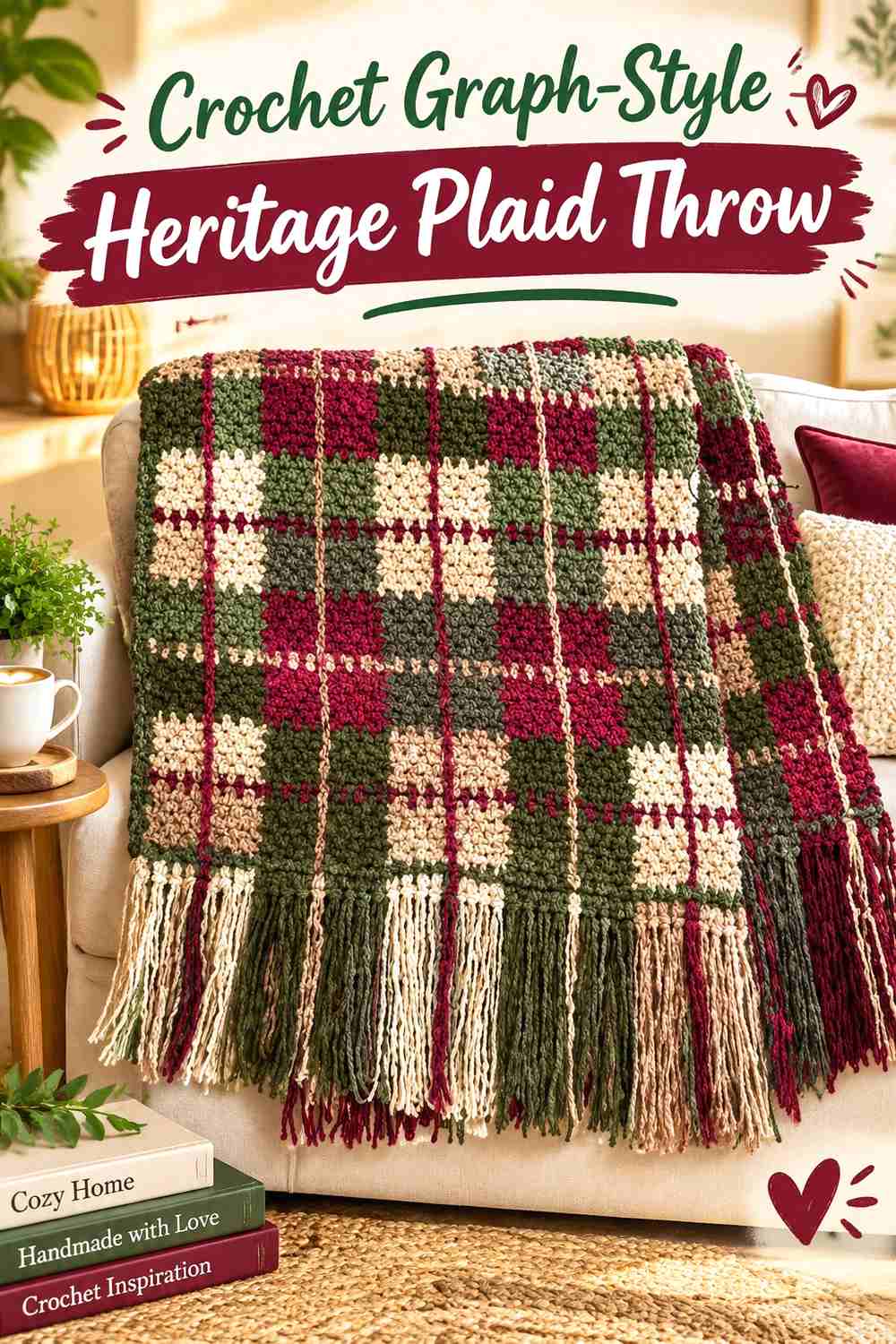
This plaid construction approaches the blanket almost like a graph-based colorwork project, then adds vertical surface lines to complete the plaid effect. That distinction makes it useful for readers who want precise control over the geometry instead of depending on a self-striping yarn.
It can be adapted toward an argyle mood by working with restrained traditional colors and emphasizing orderly intersections rather than bright patchwork.
Extra Yarn Management Is Part of the Trade-Off
Controlled color placement means handling multiple working sections or yarn sources. Before starting a sofa-size throw, decide whether you are comfortable organizing several active colors without tangling them.
A tidy yarn setup can make this construction much less frustrating than trying to manage every strand directly from a full skein.
Surface Lines Need to Stay Relaxed
Added vertical lines should visually define the plaid without pulling the blanket shorter or creating ridges.
After working a test section, lay it flat. If the overlay changes the fabric’s dimensions, the added stitches may need more slack before the technique is repeated across the full throw.
Creator Credit: The Crochet Crowd
7. Crochet Three-Color Gingham Argyle-Inspired Throw
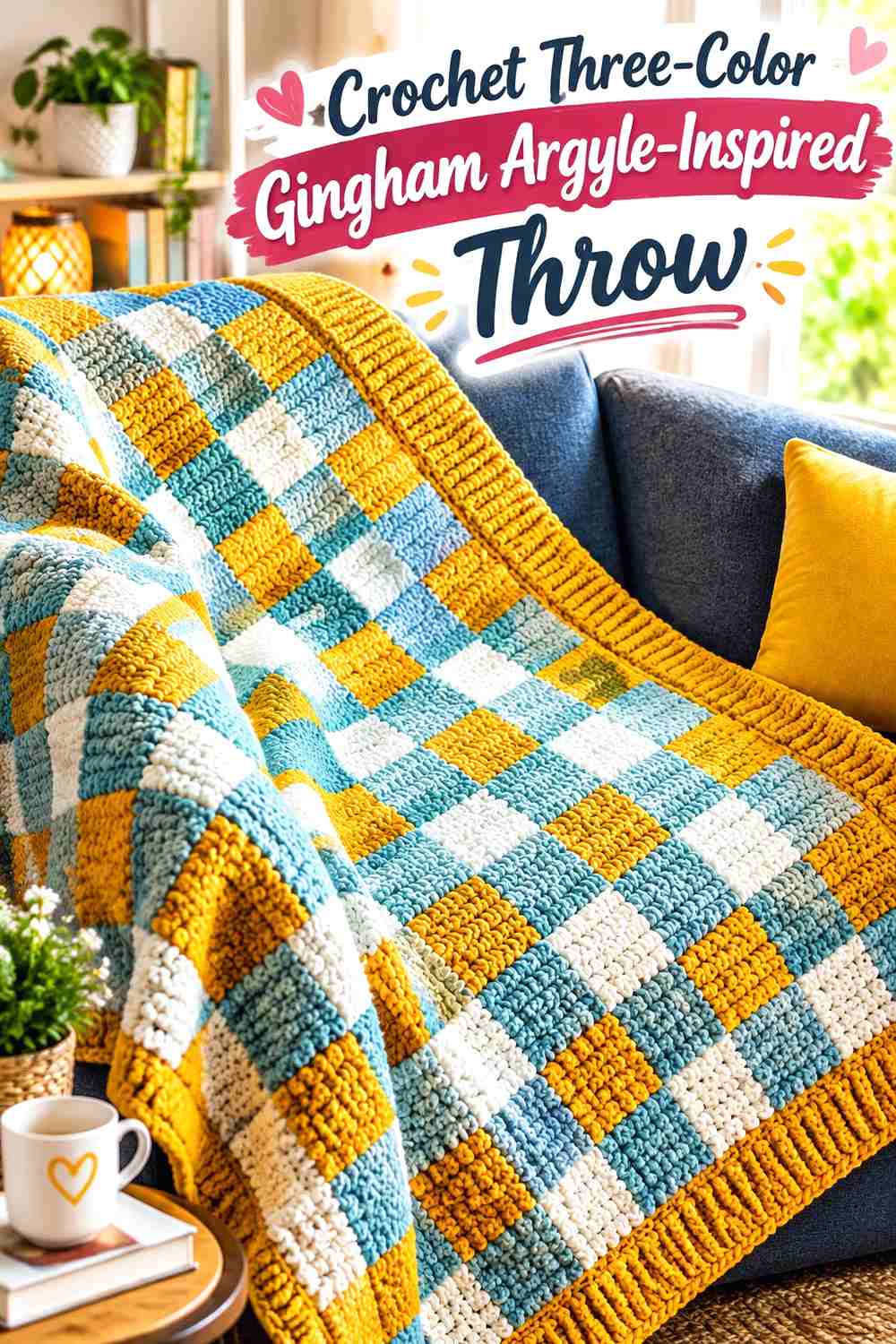
Gingham substitutes tidy square blocks for argyle diamonds, but it delivers the same traditional, orderly quality and can be easier to customize. This tutorial focuses on three-color gingham construction and explains how the color relationships create the check effect.
For heritage winter styling, the technique is especially useful if you want something quieter than large diagonal argyle.
Choose Colors by Value as Well as Hue
A convincing gingham effect usually depends on readable differences between light, middle, and darker areas.
Before buying the full quantity, place the proposed colors together and photograph them in grayscale if necessary. If they collapse into nearly the same value, the check structure may become much less obvious from across the room.
Block Proportion Controls the Visual Scale
Small checks create a busier textile effect; larger ones read more like bold modern plaid. If you adapt the blanket size, consider whether you also want to preserve the apparent scale of the checks.
Simply enlarging every component can change the style even when the same three colors are used.
Creator Credit: Hooked by Robin
8. Crochet Small-Scale Gingham Heritage Throw
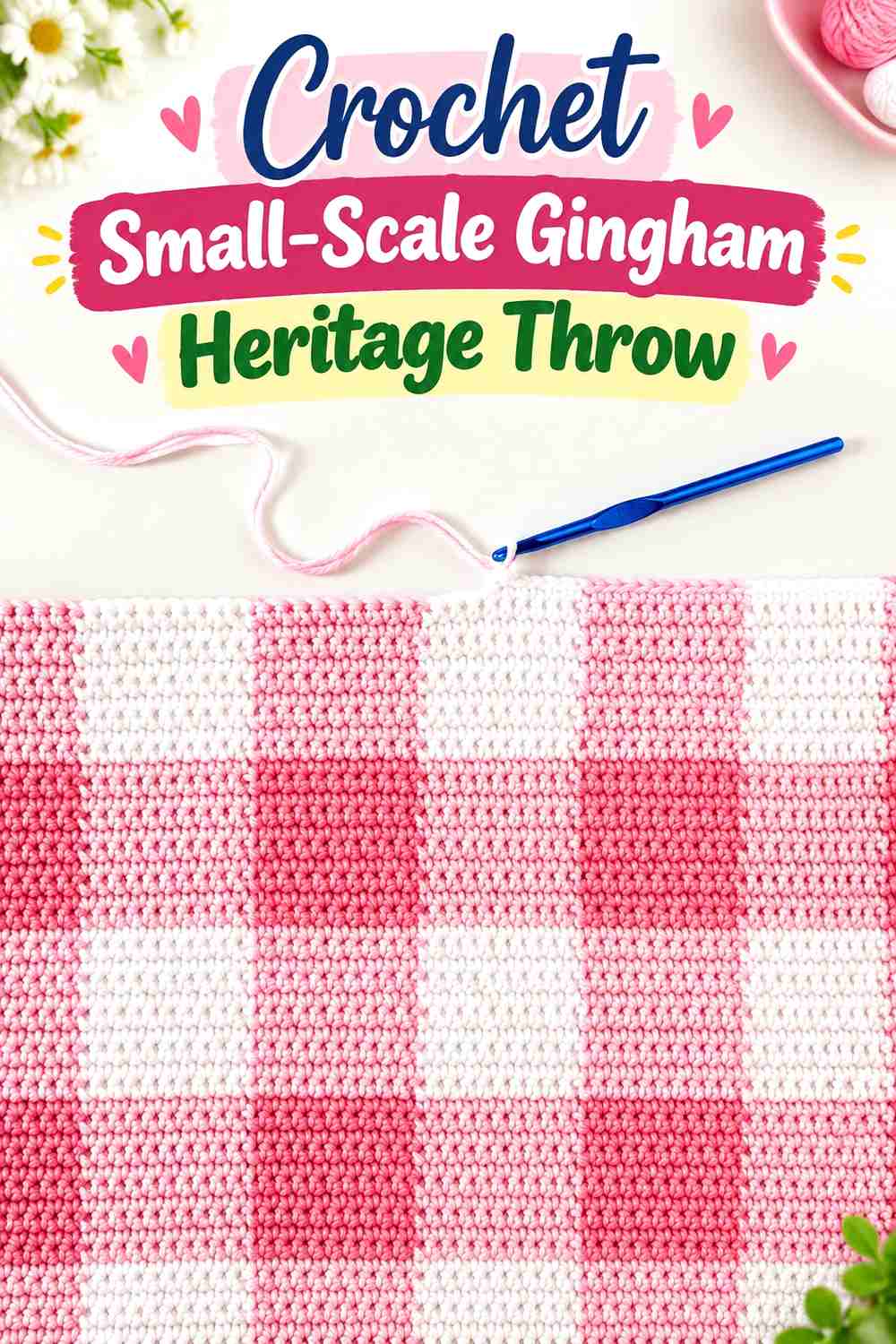
This gingham approach uses a straightforward two-color working method that is helpful for understanding how alternating color sections build a check. The technique can be expanded into a throw while maintaining a finer visual scale than chunky buffalo plaid.
That smaller pattern is a useful companion to large argyle motifs when the room already contains strong architectural details or patterned furnishings.
Carrying Yarn Can Affect Fabric Thickness
When unused yarn travels inside or along the working fabric, the check sections may feel different from a single-color swatch.
Test the actual colorwork technique rather than assessing drape from one strand alone. The finished throw should still fold comfortably if it is intended for everyday sofa use.
Straight Edges Matter in Repeated Checks
A slight change in stitch count or tension can gradually make an otherwise orderly checkerboard lean.
Use the repeated blocks as visual measuring points. If one side begins moving inward or outward, investigate the edge before many additional rows reinforce the problem.
Creator Credit: Daisy Farm Crafts
9. Crochet Modular Plaid Argyle-Inspired Throw
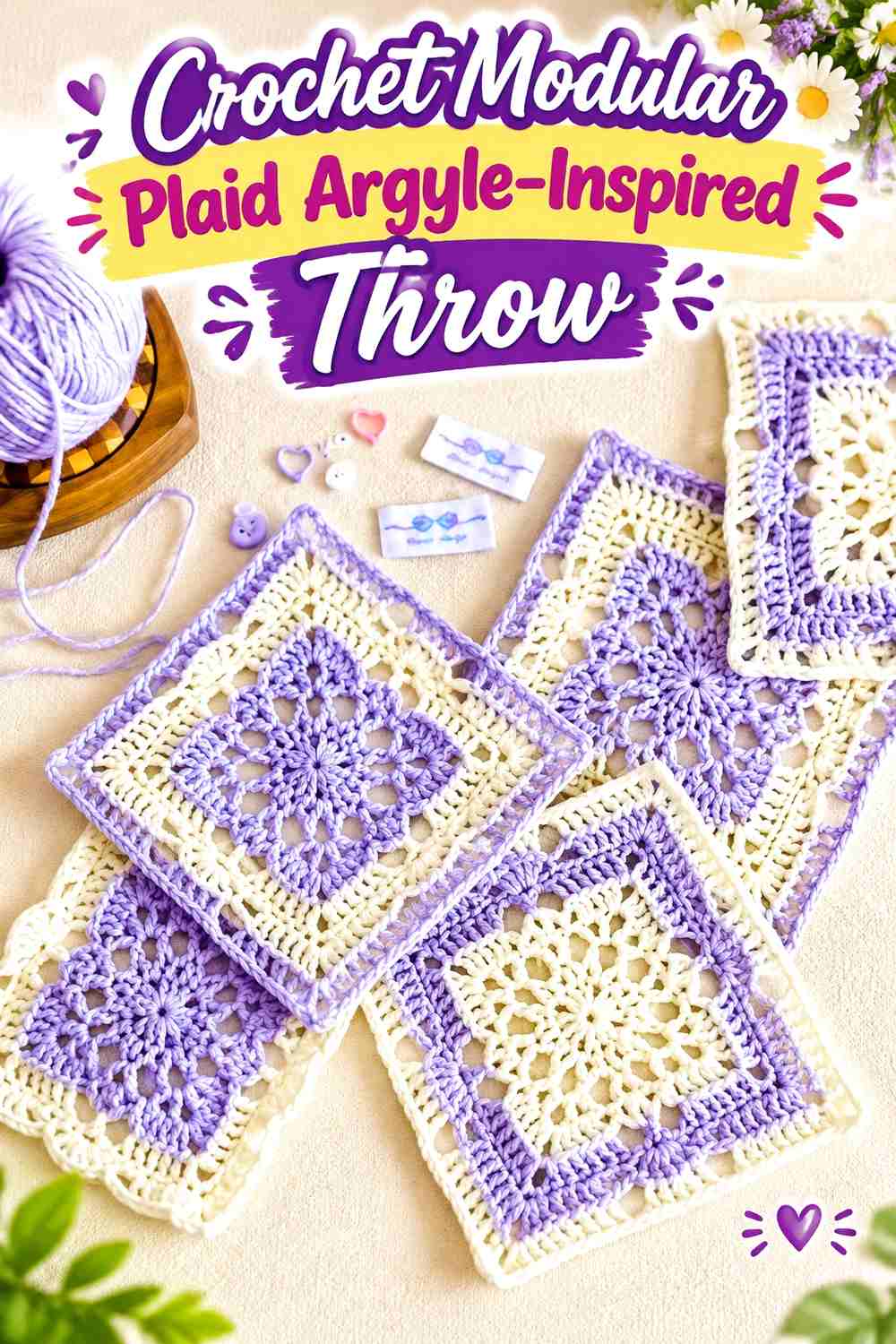
A modular plaid changes the planning process because the pattern is assembled from repeated units rather than created entirely within long horizontal rows. The tutorial presents an interlocking-square style blanket that can be adjusted for different uses and dimensions.
This is appealing when you prefer working in manageable sections or want the opportunity to inspect the layout before committing to the complete blanket.
Modular Construction Gives You a Layout Checkpoint
Before final assembly, arrange enough completed components on a flat surface to see whether the color balance is working.
A palette that looks evenly distributed in your notes may create unintended dark or light clusters when the actual pieces are placed together.
Consistent Units Make Finishing Easier
Joined blankets reveal size differences quickly. If individual sections vary noticeably, seams can ripple or pull.
Measure completed units periodically and correct tension differences before producing a large stack of pieces that no longer align cleanly.
Creator Credit: Majovel crochet
10. Crochet Pieced Diamond Heritage Throw
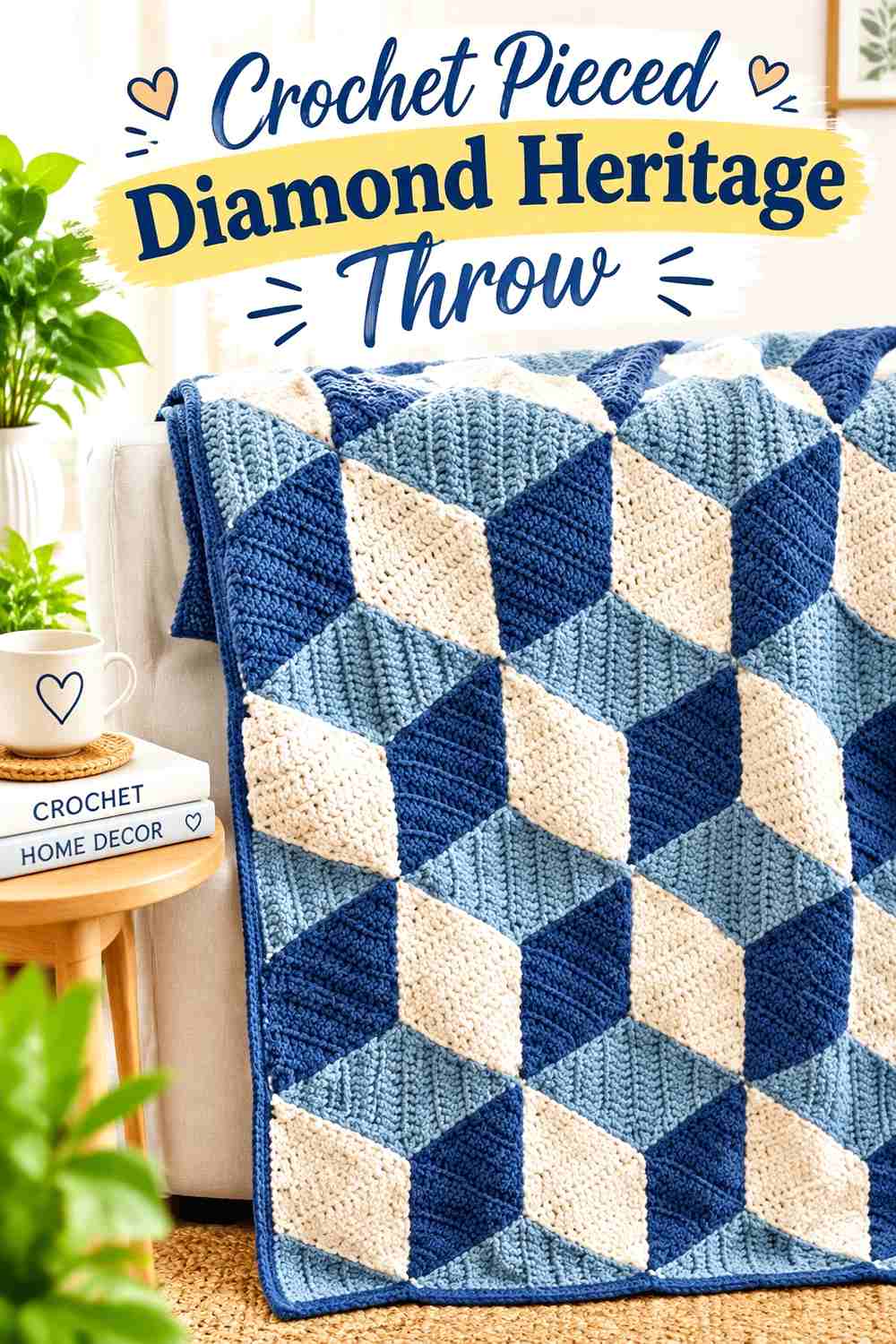
Instead of creating diamonds through pooling, this blanket builds the geometry from crocheted pieces. That makes the diamond placement explicit and gives you far more control over color than a variegated-yarn technique.
It is an especially useful route if the argyle diamond itself is what you love but you do not want to search for yarn with a compatible pooling sequence.
Pieced Diamonds Let You Plan Color Before Joining
Lay out the completed pieces before assembly and photograph different arrangements. This lets you compare symmetrical, alternating, tonal, or deliberately irregular layouts without undoing finished seams.
For a traditional argyle impression, repeating the same diagonal color logic across the blanket will generally look more intentional than random placement.
Seams Become Part of the Geometry
Joining is not merely structural in a pieced diamond blanket. The lines between components can either reinforce the argyle grid or visually interrupt it.
Before selecting a joining color, test it between two finished pieces. A high-contrast seam becomes another graphic line; a matching seam lets the diamonds dominate.
Creator Credit: Lanas y ovillos
11. Crochet Tunisian Gingham Argyle-Inspired Throw
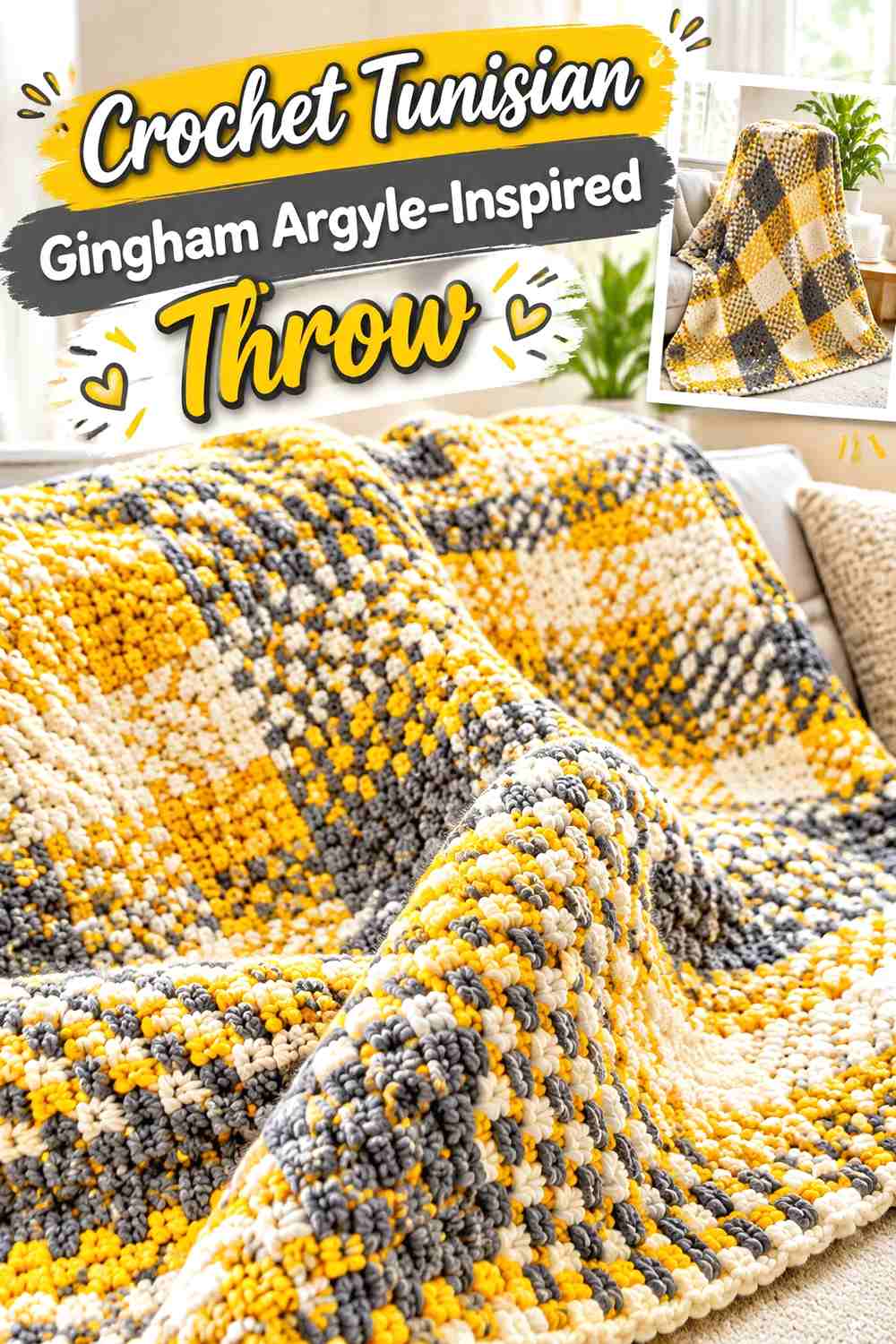
Tunisian crochet gives a check blanket a different surface from conventional crochet. This tutorial builds the throw in panels and uses join-as-you-go construction, offering a practical alternative for anyone drawn to a more woven-looking heritage fabric.
Although the finished design is gingham rather than true argyle, its structured geometry works naturally with muted winter palettes.
Panels Reduce the Amount of Fabric on the Hook
A panel construction can be more manageable than holding an entire blanket width in Tunisian crochet. It also divides a large project into clear stages.
The trade-off is that panel dimensions need to remain consistent. Measure after the fabric has relaxed rather than relying only on the number of completed rows.
Joining Should Support the Check Pattern
Because the blanket is built in sections, the joins affect the visual rhythm. Make sure corresponding blocks meet cleanly across adjacent panels.
If the joins shift the check noticeably, correcting alignment before completing the entire seam will preserve the orderly heritage look.
Creator Credit: Exquisite Crochet UK
12. Crochet Textured Diamond Winter Throw
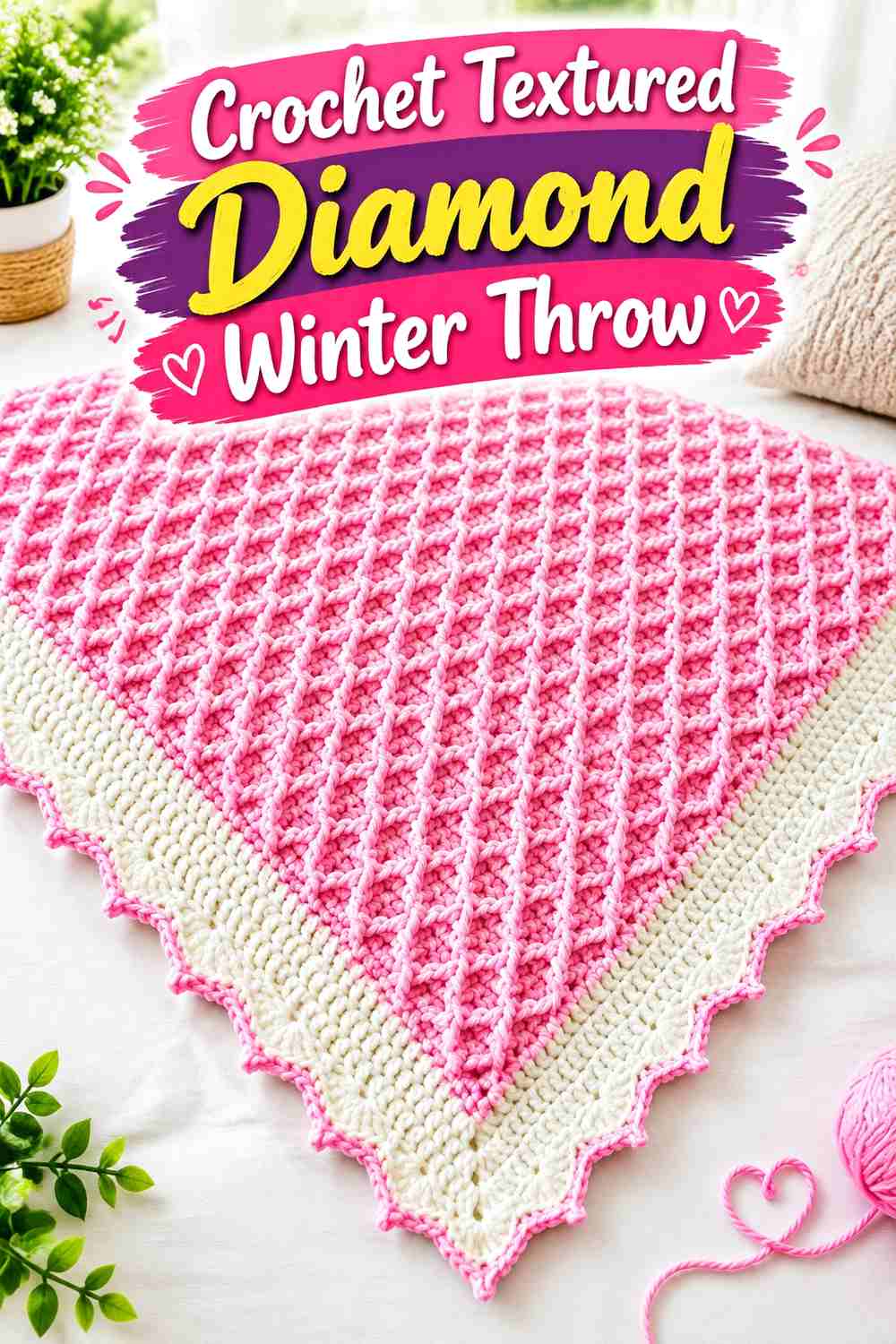
This project moves away from plaid completely and uses stitch texture to establish the diamond idea. That makes it valuable in an argyle-inspired collection because it keeps the traditional geometry while removing the need for multiple working colors.
A solid or nearly solid throw can be easier to combine with tartan cushions, patterned curtains, or an oriental-style rug where another strong color pattern would compete for attention.
Stitch Definition Becomes the Main Design Tool
When diamonds are created through relief instead of color, fuzzy or heavily variegated yarn can obscure the structure.
Make a sample and view it in normal room lighting. If the diamond disappears unless you look closely, a yarn with clearer stitch definition may serve the design better.
Tonal Color Can Add Depth Without Adding Another Pattern
A deep forest, oxblood, oatmeal, charcoal, or navy fabric can feel distinctly wintery even without a multicolor repeat.
This is a useful compromise for a heritage room that already contains visible plaid but still needs a crocheted throw with geometric character.
Creator Credit: Sirin’s Crochet
13. Crochet Woven-Grid Gingham Throw
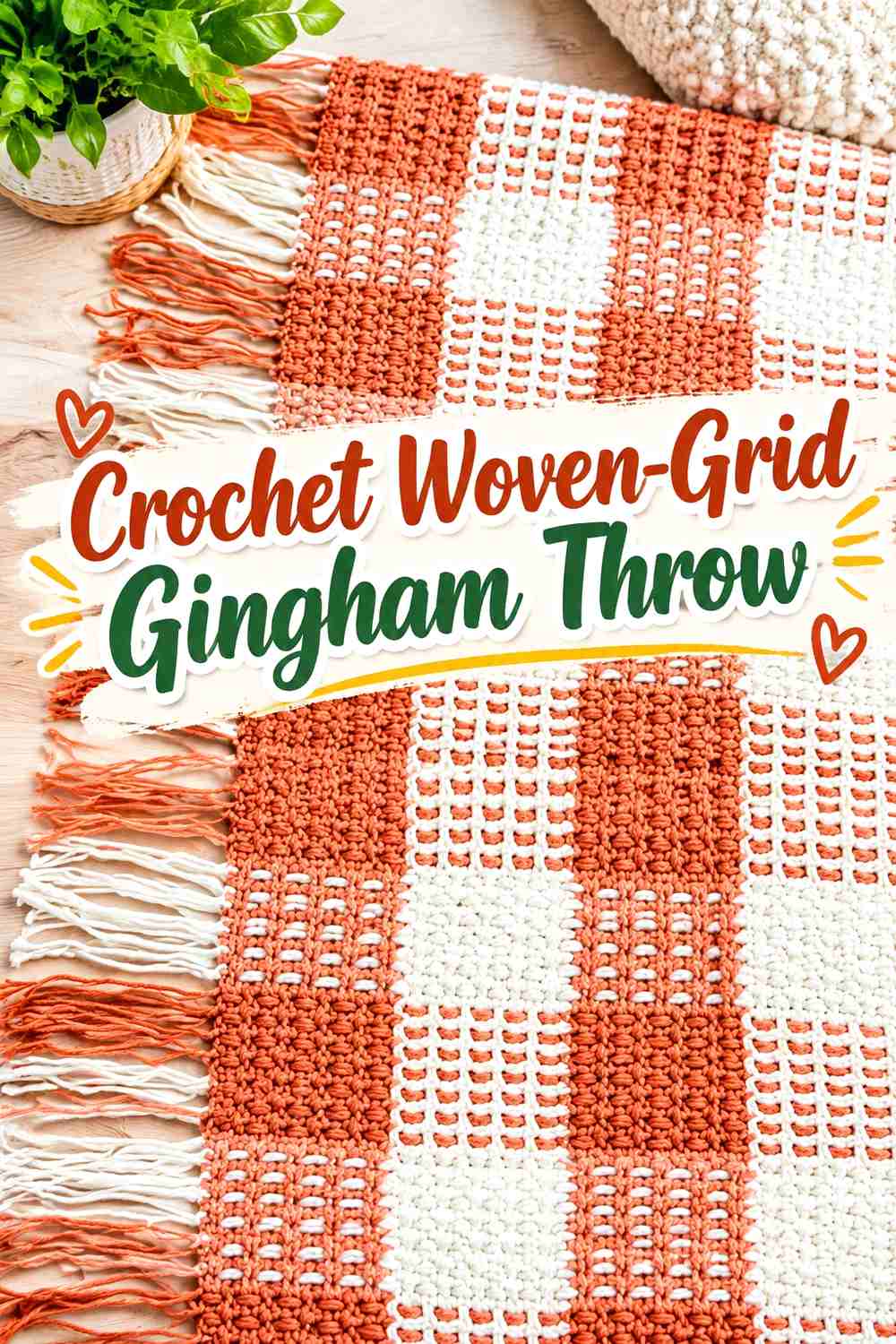
This construction begins with a crocheted grid and then weaves yarn through it, creating the vertical component of the check after the base fabric is complete. The method produces a convincing textile-like gingham while separating much of the horizontal crochet work from the vertical patterning.
For an argyle-inspired winter collection, it offers an interesting alternative to both carried color and modular construction.
The Grid Needs to Stay Square Before Weaving
A woven overlay will not automatically correct a distorted base. If the underlying mesh narrows or stretches unevenly, the finished checks can become visibly irregular.
Lay the grid flat before adding the woven strands and confirm that its edges and openings are behaving consistently.
Woven Strands Should Not Cinch the Blanket
The inserted yarn needs enough freedom to follow the fabric when the throw bends or folds.
After weaving a few columns, handle the sample as you would a blanket. If the base bunches or refuses to lie flat, loosen the woven strands before continuing across the remaining width.
Creator Credit: Delia Creates
14. Crochet Velvet Plaid Winter Throw
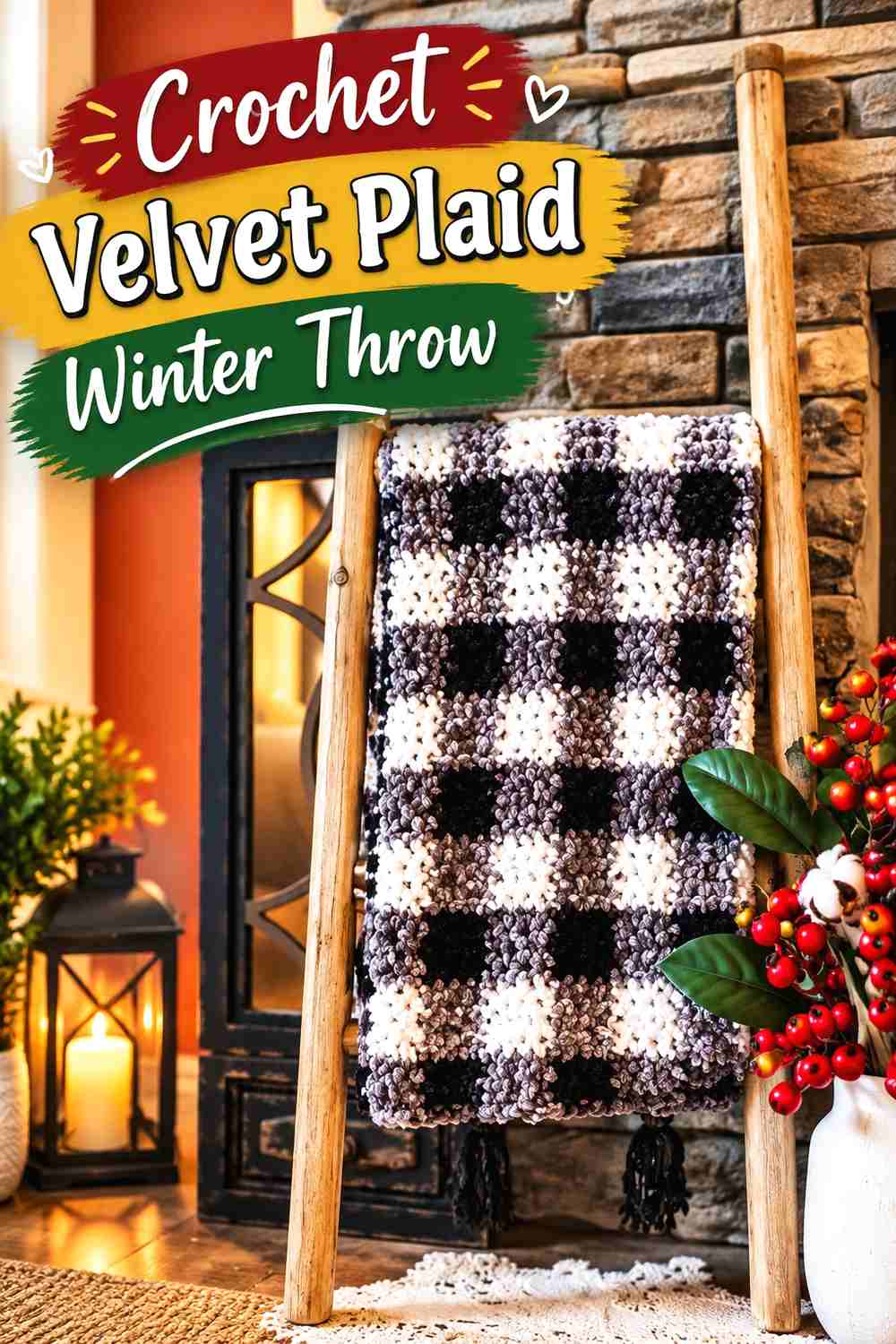
A velvet plaid emphasizes softness and visual depth rather than crisp traditional wool-like texture. The tutorial demonstrates a carried-color plaid blanket in plush yarn, giving this idea a noticeably different finish from finer gingham and planned-pooling options.
It suits a winter room where the throw needs to look substantial even when folded over the arm of a sofa.
Plush Yarn Can Hide Individual Stitches
The softness that makes velvet visually inviting can also make stitch placement harder to read.
If you change yarn, decide whether the project matters more for its plush surface or its sharp check definition. A smoother yarn may make the plaid clearer, while velvet pushes the design toward soft blocks of color.
Check the Fabric Before Adding Decorative Weight
Tassels can reinforce the blanket’s traditional textile character, but they are not necessary for every room.
If the plaid already creates enough visual weight, a cleaner edge may suit a more restrained heritage interior. Treat fringe or tassels as a design decision rather than an automatic final step.
Creator Credit: love.life.yarn. by Amanda Saladin
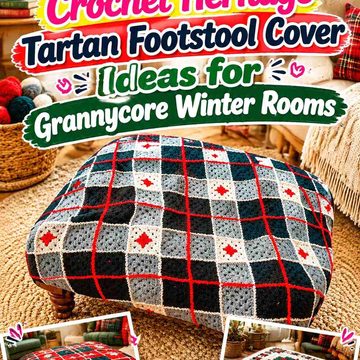
15. Crochet Granny-Square Tartan Throw
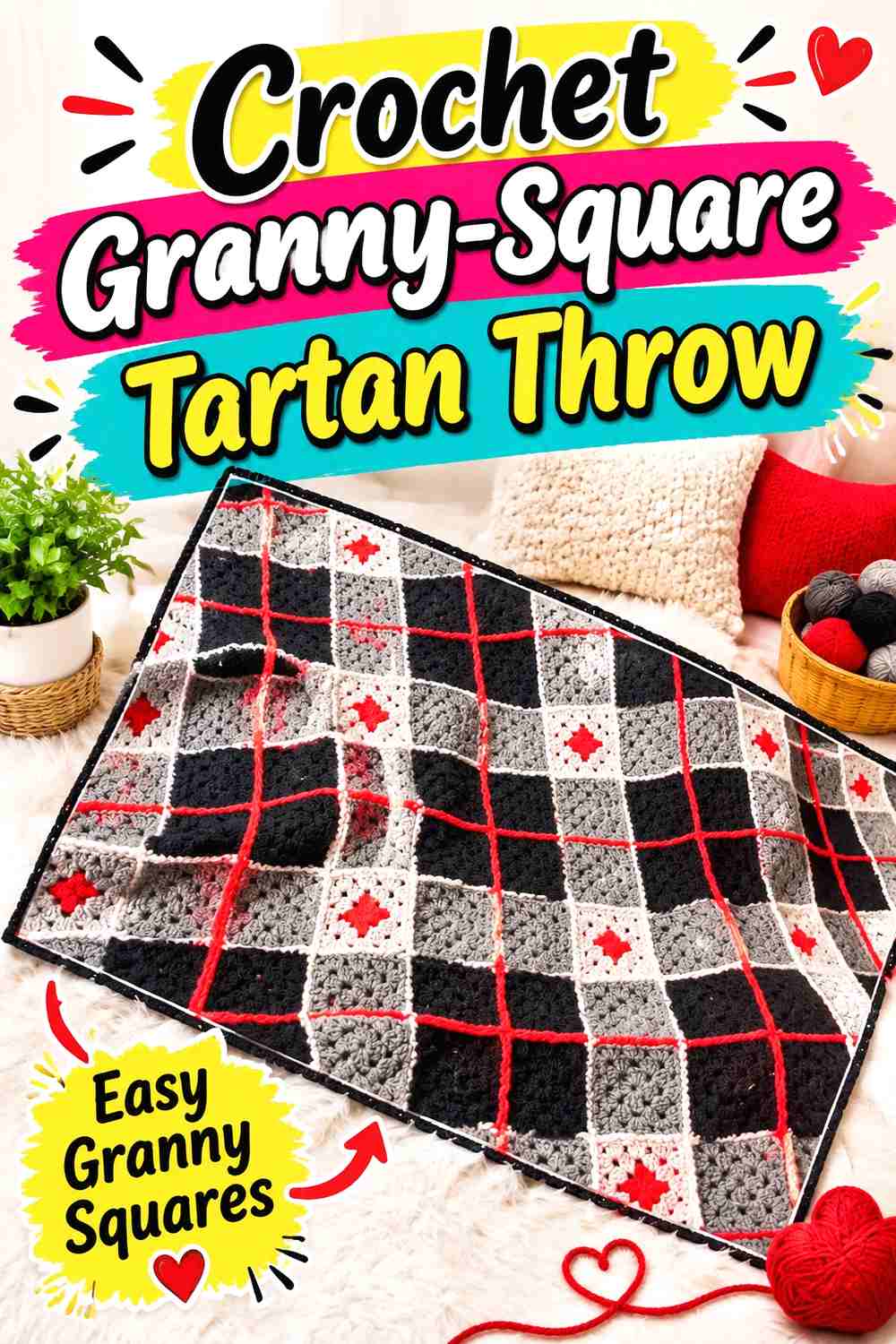
This tartan blanket uses granny-square construction to build the larger check arrangement. That immediately separates it from continuous-row plaid and provides a useful way to create layered heritage color without relying on planned pooling.
For an argyle-inspired winter home, it works particularly well when you like traditional textile references but also want the unmistakably handmade character of joined crochet motifs.
The Joining Colors Carry Part of the Tartan Effect
In modular tartan, seams and joining shades contribute to the larger pattern instead of disappearing completely.
Lay out a representative group of squares with the planned joining yarn between them before assembling the whole throw. A join that looks insignificant on one square may become one of the dominant lines once repeated across the blanket.
Repetition Makes Small Size Differences Accumulate
One slightly larger granny square is manageable. Many of them can create noticeably uneven strips.
Block or otherwise settle the motifs consistently before major assembly, then group pieces of similar size rather than discovering large variations only after several rows have been joined.
Creator Credit: Sooz In The Shed
16. Crochet Half-Double-Crochet Plaid Throw
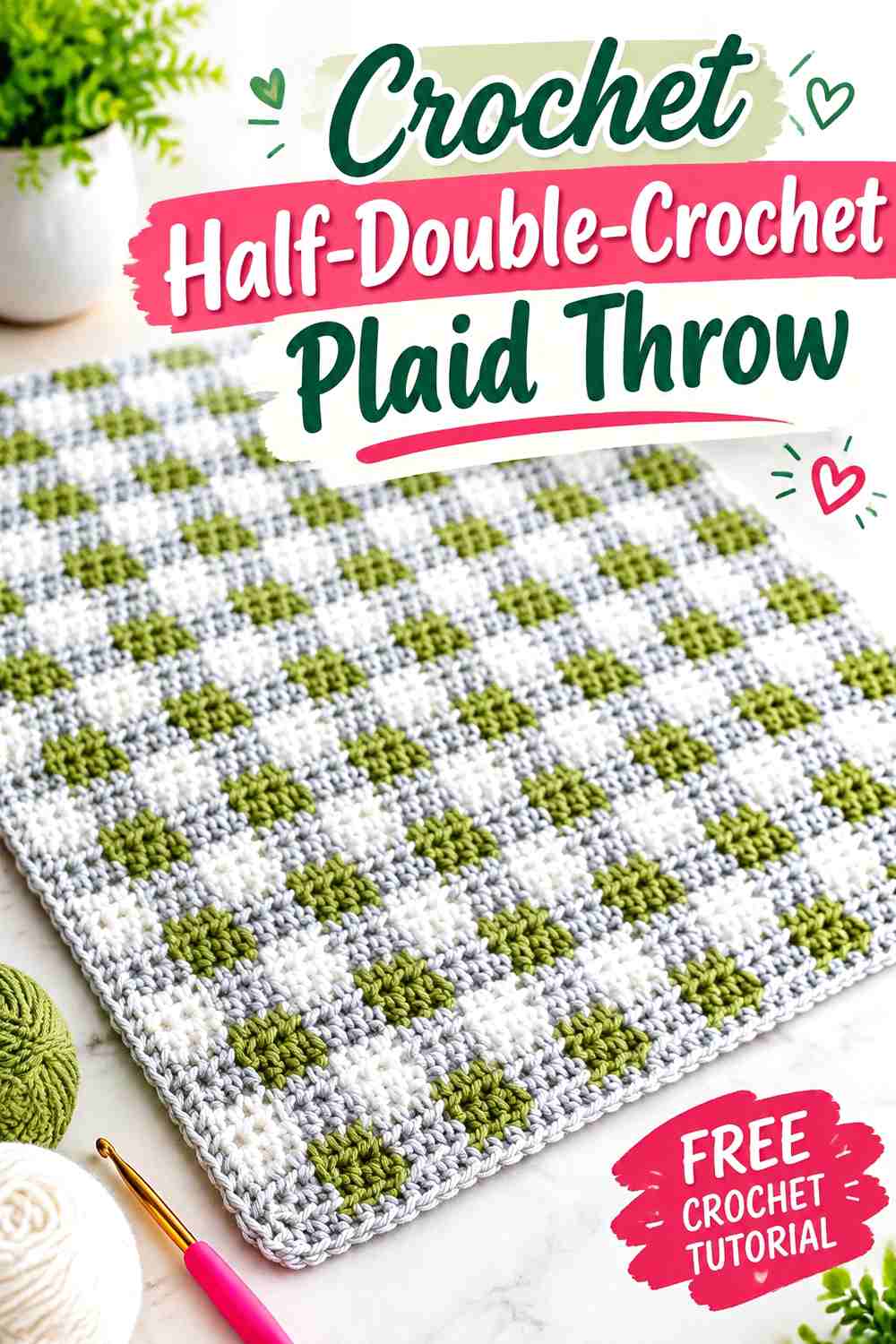
This plaid design uses half double crochet and controlled colorwork, keeping the stitches comparatively simple while allowing the arrangement of colors to create the main visual interest. The tutorial presents the blanket as an introduction to crochet colorwork with two colors active in a row.
That construction makes a useful bridge between straightforward striped blankets and more demanding argyle or graph-based designs.
Two Active Colors Still Require Yarn Management
Even without a large collection of bobbins, carried or alternating colors can twist as you work.
Develop a consistent system for where each yarn sits when it is inactive. Preventing tangles early is much easier than stopping after every few rows to untwist full skeins.
Half Double Crochet Creates a Different Check Surface
The stitch gives the blocks a fuller texture than very fine single crochet while remaining less open than granny clusters.
If you are adapting the palette toward argyle-inspired decor, compare the finished sample with nearby textiles. A dense traditional rug may pair better with a simpler, larger plaid than another highly detailed pattern.
Creator Credit: HanJan Crochet
17. Crochet Panel-Built Gingham Heritage Throw
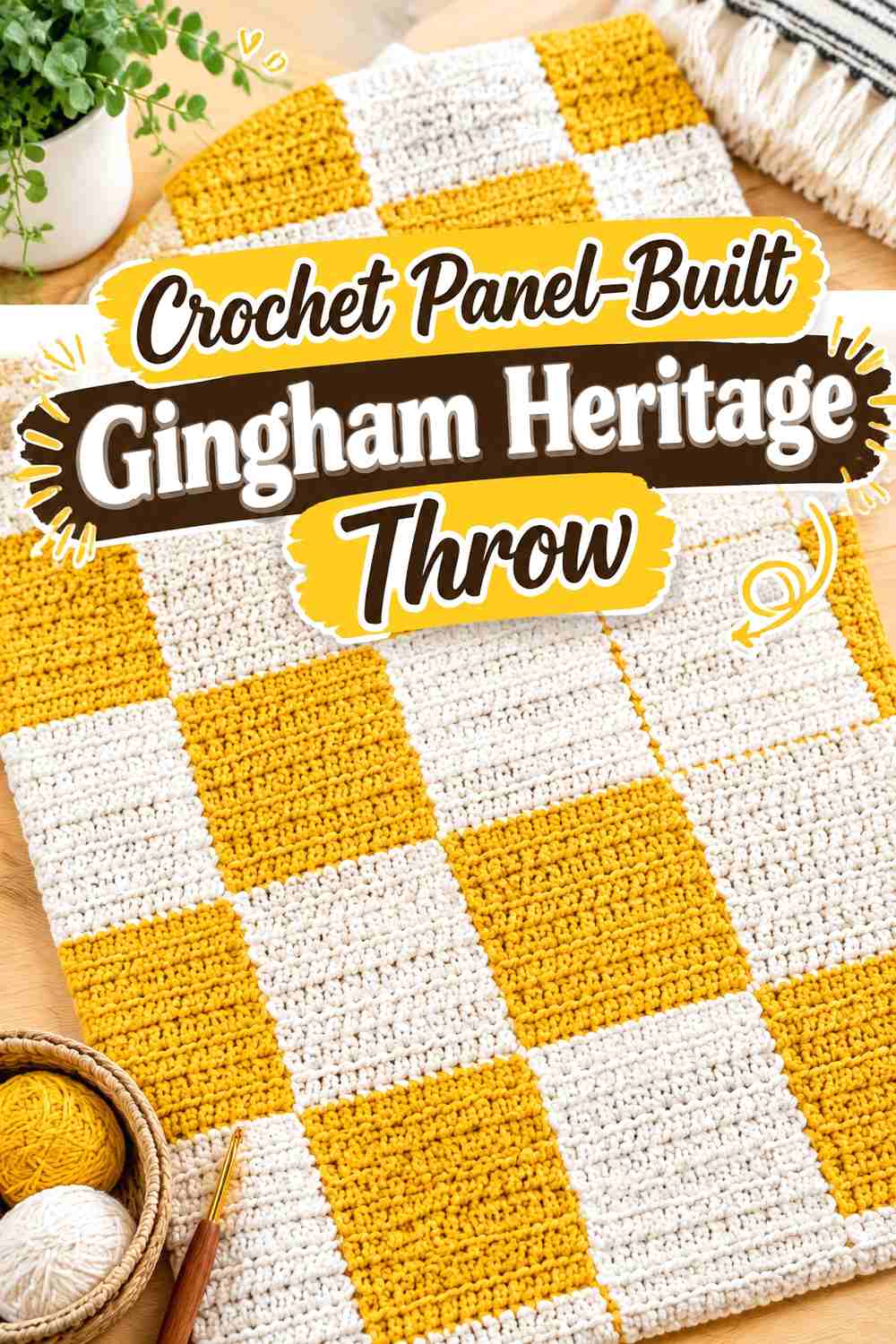
This gingham blanket avoids constructing the entire check through repeated carried-color changes. Instead, separate sections are made and later combined to form the larger pattern. The tutorial series begins with the individual panel construction, making this one of the more modular choices in the collection.
That approach can appeal if you like portable crochet sessions or want to build a winter blanket in smaller batches.
Panels Let You Correct Tension Before Assembly
Compare completed sections as you go instead of waiting until every component is finished.
If later panels begin coming out narrower or shorter, identifying the difference early gives you a chance to adjust your working tension before it affects the entire blanket.
Seaming Is a Major Part of the Finished Appearance
Panel edges must meet cleanly for the checkerboard to look intentional. A seam that pulls too tightly can distort neighboring squares; a loose seam can create visible gaps.
Test the chosen joining method on two completed sections and examine both the front and back before repeating it throughout the blanket.
Creator Credit: Sigoni Macaroni
Which Crochet Argyle Throw Style Fits Your Home?
For the most recognizable argyle result, start with one of the planned-pooling options. The granny-stitch version gives the diamonds a larger, more relaxed texture, while the finer pooling methods create a surface closer to traditional patterned cloth.
If predictable color placement matters more than true argyle construction, the graph-style plaid, half-double-crochet plaid, carried-color gingham, or velvet check options put the color decisions directly in your hands.
Choose the woven-grid design when you want crochet and weaving to share the construction. The Tunisian and modular-panel options make sense when you prefer building a large blanket in sections. Granny-square tartan offers the most overtly handmade interpretation of heritage checks.
For a room that already has plenty of plaid, the textured diamond throw may be the easiest design to integrate because it keeps the geometric reference without adding another multicolor surface.
Conclusion
The strongest crochet argyle throw for a heritage winter home is not necessarily the one with the most complicated diamond pattern. It is the construction that fits both the room and the way you prefer to crochet.
Choose planned pooling if watching a variegated yarn develop into intentional diamonds is the main attraction. Choose controlled plaid or gingham when you want more freedom over color placement. Try modular squares or panels when portability and layout flexibility matter, or use a textured diamond design when your room already has enough patterned textiles.
Whichever route you take, make a representative sample before scaling up. Check color relationships, fabric weight, drape, pattern scale, and any joining or weaving technique on that smaller piece first. Then use the original creator’s tutorial for the exact construction details of the design you select.
Frequently Asked Questions
Is planned pooling the same as ordinary crochet argyle?
Planned pooling is one way to create an argyle effect. It relies on intentionally aligning the repeated colors in variegated yarn so that diagonal shapes emerge. Argyle can also be interpreted with individually controlled colors, motifs, tapestry-style work, or other geometric construction methods.
Can every variegated yarn make an argyle throw?
No. A yarn can contain attractive colors and still be unsuitable for planned pooling. The sequence and length of its color sections need enough consistency to form a repeat that can be controlled through the chosen crochet technique. Test the actual skein before purchasing a large quantity for a throw.
Why does my planned-pooling diamond start drifting?
Tension changes are a common reason the colors stop landing where expected. Variations between skeins can also affect placement. Compare the developing fabric with an earlier successful section and identify where the color transition first began to move before continuing many additional rows.
Should I choose argyle, gingham, or tartan for a traditional winter room?
Argyle gives you prominent diagonal diamonds. Gingham creates an orderly grid, usually with a softer visual rhythm. Tartan adds intersecting lines and often feels more overtly rustic or heritage-inspired. Look at the other patterns already in the room and choose the geometry that adds contrast rather than duplication.
Can I replace a planned-pooling yarn with solid colors?
Not directly if you expect the same construction to create the diamonds automatically. Planned pooling depends on the yarn’s color repeat. You can still make an argyle-inspired throw with solid colors, but you would need a construction designed for controlled color placement, motifs, or textured diamonds instead.
How can I make an argyle-style throw look less busy?
Reduce the contrast between shades, enlarge the scale of the pattern, limit the palette, or choose a textured diamond design in one color. A simple solid border can also visually contain a multicolor center.
Should I block crochet squares or panels before joining a heritage throw?
When consistent component size matters, letting the pieces settle to comparable dimensions before major assembly can make alignment easier. Follow the care requirements of your chosen yarn and the creator’s finishing guidance rather than assuming every fiber should be treated the same way.